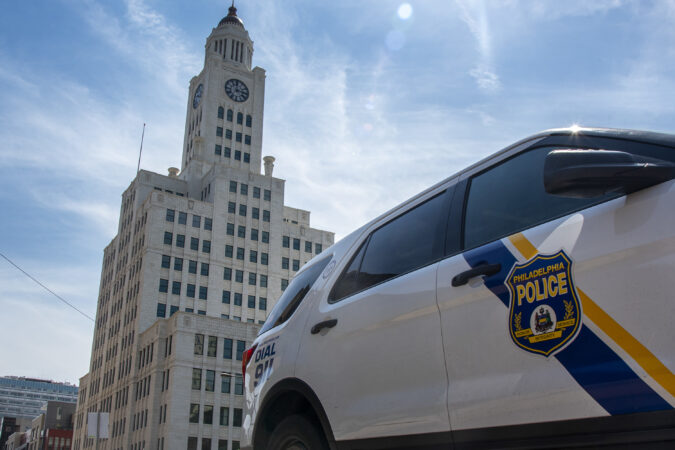
A man was stabbed several times on a SEPTA train in Center City early Friday evening, police said.
The stabbing occurred shortly before 5:25 p.m. and the victim was taken by SEPTA Transit Police from the 13th Street Station on the Market-Frankford Line to Thomas Jefferson University Hospital, police said.
“Two people were engaged in an argument that escalated into a fight and then a stabbing that left one of them in critical condition,” SEPTA spokesperson Andrew Busch said in an email.
The victim was stabbed in the neck, police said. No further information was available about him.
HARRISBURG — An unknown amount of mail from Pennsylvania state agencies to residents has gone undelivered, Gov. Josh Shapiro’s administration discovered this week.
The Pennsylvania Department of General Services said in a statement Friday that it has ended its contract with an unidentified vendor that pre-sorts state agency mail before delivering it to the U.S. Postal Service to be sent to residents around the state. The department discovered in the last 48 hours that the vendor “had been failing to deliver Commonwealth mail to constituents,” said Paul Vezzetti, a spokesperson for the department.
The state is still determining how much and what type of mail was not delivered to Pennsylvania’s residents. It was unclear Friday why the vendor failed to send the state’s mail, where the mail was located when it was not in the state’s possession,how long the mail went unsent, and how the failure was not identified sooner.
The unsent mail could prove to be a major headache for Shapiro’s administration, depending on the magnitude of the issue and which state communications were not delivered to residents.
After discovering the backlog, the Department of General Services rapidly hired a new vendor to sort and deliver the unsent mail “as quickly as possible,” Vezzetti said. The unsent mail has already been transferred to the new vendor and the state estimates that it will be mailed by early next week.
According to an emergency contract made public Friday, the state hired technology solutions company Pitney Bowes for $1 million, citing its preparedness to process and resume mail operations. If the services were not immediately restored, it “could result in missed deadlines, loss of services, delayed benefits, legal exposure, and operational disruptions for multiple agencies and constituents,” according to contract.
The unsent mail from unspecified state agencies could include critical communications relating to state services, such as health benefits or food assistance, among other potential communications. State agencies send communications by mail about an individual’s eligibility for services or benefits, renewals and appeals, and whether a person is due to appear at a hearing about that eligibility, and more.
Vezzetti declined on Friday to confirm which agencies were impacted by the stalled mail, or to name the vendor that had been fired.
Pennsylvania lawmakers last month ended a 135-day-long state budget impasse that required counties, schools and social service organizations to take out loans or limit their services during the protracted budget fight.
The state is now taking steps to “carefully assess and mitigate impacts” of the mail delay and adjust deadlines for impacted residents.
Staff writer Ximena Conde contributed to this article.
More than 130 drug cases were dismissed Friday — and hundreds more are expected to collapse in the coming months — after prosecutors said three Philadelphia narcotics officers repeatedly gave false testimony in court.
Common Pleas Court Judge Lillian Ransom vacated 134 cases during the first in a series of hearings that could see nearly a thousand criminal prosecutions collapse because the testimony of three officers on the Narcotics Strike Force has been deemed unreliable.
Philadelphia Police Officers Ricardo Rosa, Eugene Roher, and Jeffrey Holden were found to have repeatedly given false testimony against people suspected of selling drugs after lawyers with the Defender Association of Philadelphia recovered video footage that contradicted their statements, the district attorney’s office said.
The defenders said the officers regularly watched surveillance cameras to monitor suspects in drug investigations in real time, then didn’t disclose it to prosecutors or defense attorneys in court, officials said. The video footage later showed they also testified to things that never happened or that they could not have seen from where they were positioned, according to court filings.
Prosecutors later conceded that they could no longer vouch for the officers’ credibility and are expected to dismiss scores of cases built on their testimony.
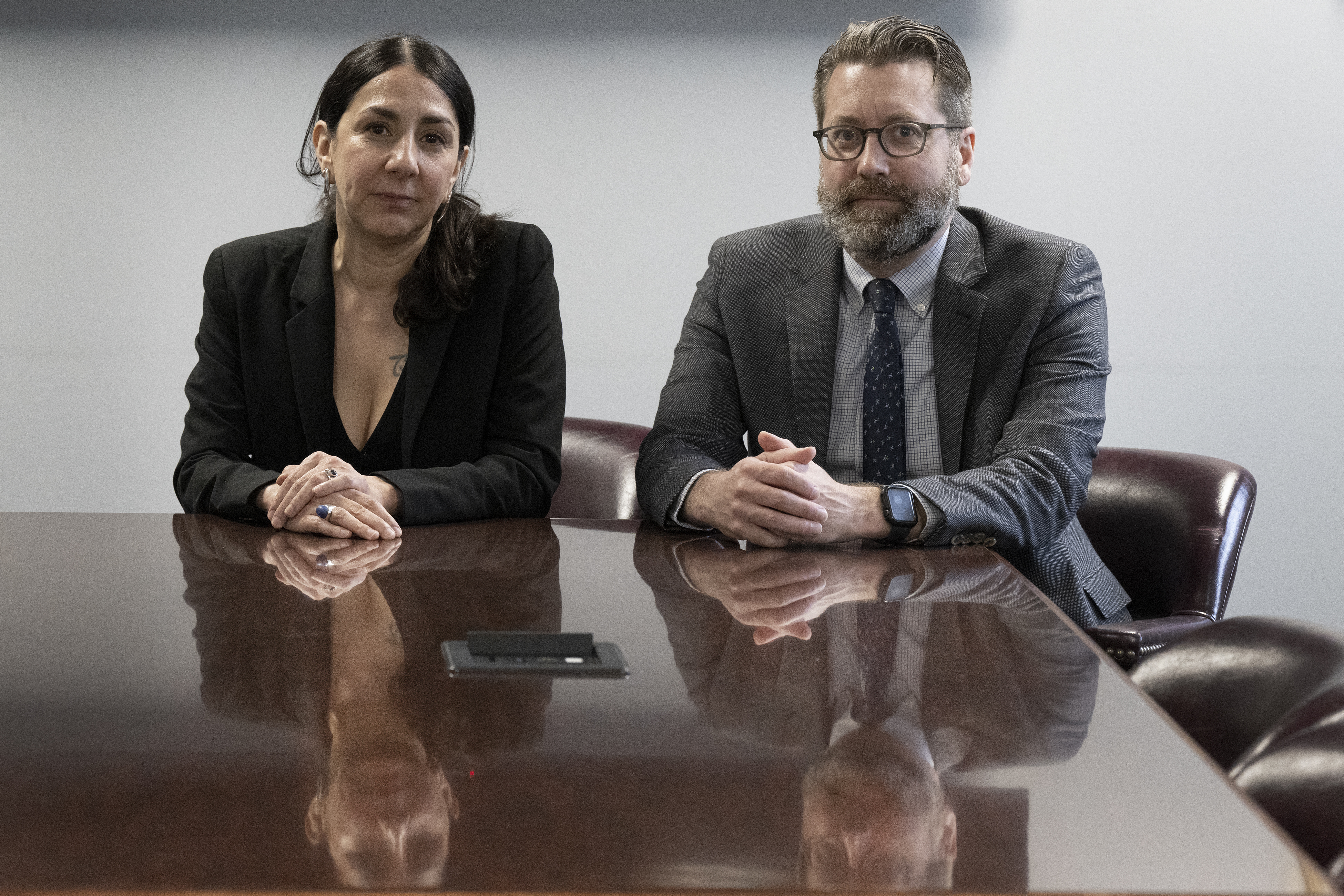
Michael Mellon and Paula Sen, of the Defender Association, began looking into whether officers on the narcotics squad were lying in court starting in 2019.
After a review of cases and convictions involving the officers’ testimony, lawyers for the defender association and prosecutors identified more than 900 cases and expect to ask the judge to dismiss them over the next year. It was not immediately clear how many people, if any, served time in jail, or are still in custody, as a result of the prosecutions that are now in question.
Holden, reached by phone Friday, said he was shocked to learn that his cases and testimony were under scrutiny, and said he had not been told of the move to end the cases at Friday’s hearing. He declined to comment further.
Rosa and Roher did not immediately respond to requests for comment. The officers remain assigned to their narcotics squads.
The district attorney’s office said it provided the police department’s internal affairs unit with details of the officers’ false statements in multiple cases last March.
Police Commissioner Kevin Bethel, in a statement, said the department takes “potential credibility issues with our officers extremely seriously.”
An internal affairs investigation into the matter was launched last March and remains ongoing, he said.
The department requested and reviewed cases flagged by prosecutors, he said, but “thus far we have not identified any evidence that would raise concerns of misconduct or criminal behavior on the part of those officers.”
He added: “We will, as always, take appropriate action if and when evidence supports such action, but we will not preemptively sideline officers absent some verified findings.”
Bethel said he learned of the plans to dismiss the cases on Thursday, and has asked prosecutors to provide additional information to assist with their review. He also said the police department has been working with the district attorney to develop a clearer protocol on how officers can use surveillance cameras during investigations.
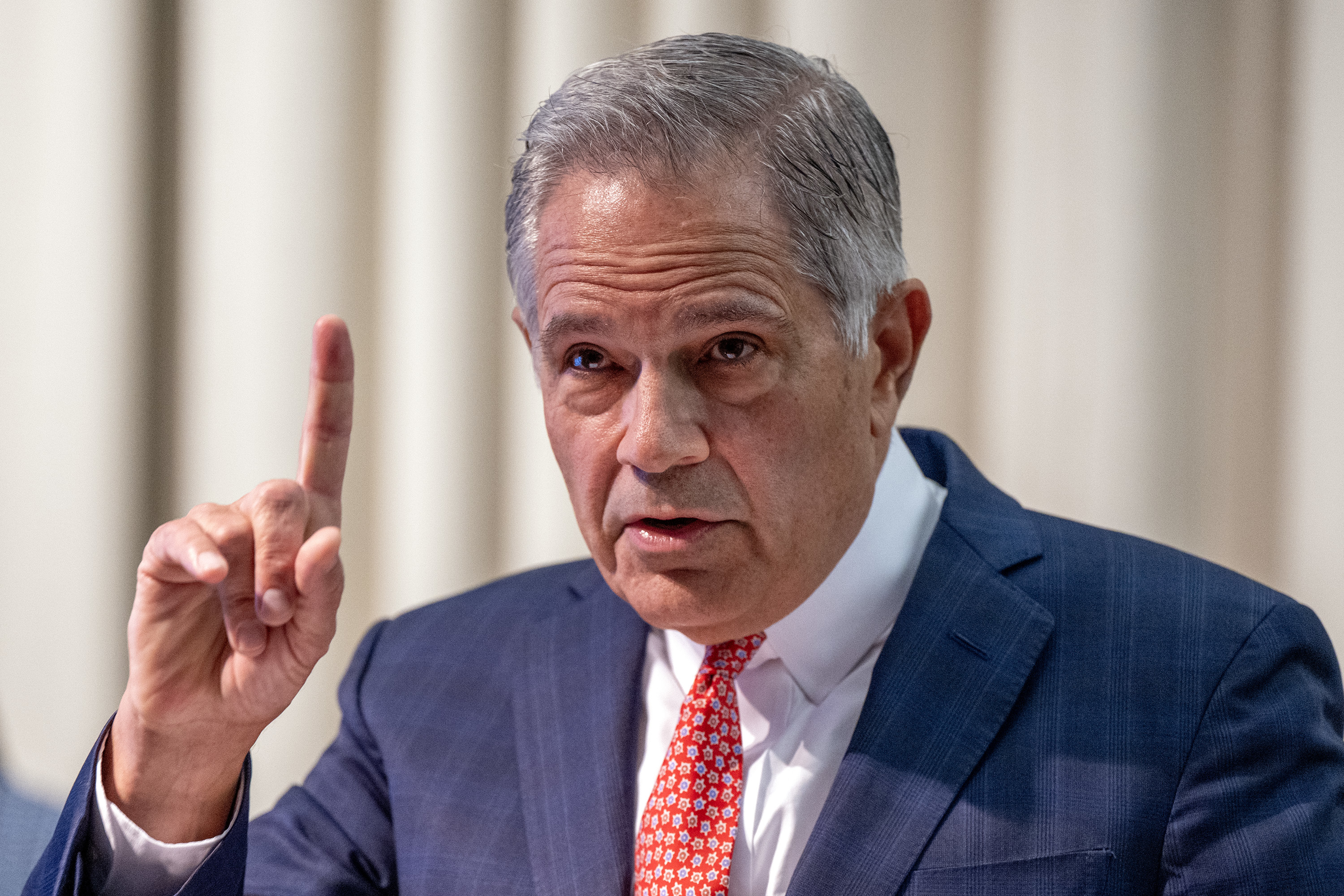
District Attorney Larry Krasner on Friday declined to say whether his office was investigating the officers’ conduct, but noted that “the statute of limitations for police officers in their capacity is much longer than the statue of limit for other offenses.”
“I have dealt extensively with Commissioner Bethel. I know he and the mayor are committed to rooting corruption, lying, stealing, and cheating out of the police department,” he said.
District Attorney Larry Krasner declined to say whether his office was investigating the officers’ conduct as criminal in nature.
‘They’re lying’
Assistant District Attorney David Napiorski, who reviewed the cases for the office, stopped short of accusing the officers of lying, but said “there’s enough of a pattern of inconsistencies across testimony that we can’t rely on them as critical witnesses in court.”
But Paula Sen and Michael Mellon of the Defenders’ Police Accountability Unit disagreed.
“It’s a fancy way of saying they’re lying,” said Sen, who has worked with Mellon to uncover the officers’ credibility issues since 2019.
The unfolding scrutiny is the latest in a series of large-scale conviction reversals in Philadelphia tied to misconduct in the narcotics unit. Over the past three decades, judges have thrown out thousands of drug cases after officers were found to have fabricated evidence, lied on the stand, or stolen money from dealers.
Bradley Bridge, a longtime public defender, was often the driving force behind those reviews and estimates he’s worked to overturn about 2,500 drug convictions since 1995.
In 2015, Bridge filed a petition to vacate more than 1,400 drug convictions tied to six ex-narcotics cops after they were charged with robbing and beating drug dealers, then altering police paperwork to cover their tracks. The officers were later acquitted by a jury and got their jobs back through arbitration, but more than 950 cases were thrown out after officials agreed they couldn’t trust their testimony.
Bridge, who returned from retirement to handle the cases tied to Rosa, Roher, and Holden, said, “Tragically, nothing is unique about this. It’s exactly the same problems that keep arising since 1995, including the lack of supervision and oversight of police officers on the street.”
A video camera used by Philadelphia police located at Somerset Street in Kensington.
Sen and Mellon said they first noticed a pattern of false testimony in 2019 after they reviewed surveillance footage that contradicted statements Rosa gave about drug cases. As time passed, they said, they continued to monitor his narcotics squad, and found inconsistencies with Holden and Roher’s testimony, too.
They said the officers used the city’s surveillance camera systems to monitor suspected drug activity in real time, but didn’t disclose it as part of their investigation — a violation of due process because the evidence wasn’t shared with defense attorneys.
In court, the officers denied using the cameras, Mellon said, and often said they witnessed hand-to-hand drug transactions that video later showed either never happened or that they could never have seen because the suspect was out of sight.
“They just straight up lied and invented acts of criminality,” Sen said.
‘Who are they gonna believe?’
In one case, Roher said he was seated in an unmarked police car when he saw Darrin Moss sell drugs to two people near Somerset and Helen Streets in Kensington in April 2022. He said he could see Moss inside the fenced lot retrieve drugs, then hand them to a buyer and accept money in return.
Prosecutors later said in court filings that video footage captured by a surveillance camera on the end of the block showed that one drug deal never happened, and the other supposed deal was behind a building and would have been impossible to see.
The charges against Moss were withdrawn.
When prosecutors learned of the discrepancies, they asked Roher to meet and discuss the case, but he failed to appear in court twice without explanation, they said in a court filing.
Prosecutors said this became a pattern — once the officers seemed to learn their testimony was under scrutiny, they stopped showing up to court.
Court filings identify at least nine cases in which the three officers allegedly gave false testimony. Napiorski, of the district attorney’s office, said prosecutors reviewed a few dozen videos from other cases that suggested a systemic pattern of false information in court.
Sen, of the defenders association, said it was troubling that the officers remained assigned to the narcotics squad and have been able to continue making arrests.
“How is the public supposed to have trust in a department that continues to employ people who have so clearly proved themselves to be liars, that has resulted in thousands of people being arrested and jailed?” she asked.
Most of the cases dismissed Friday were drug crimes that led to a sentence of probation, prosecutors said. Seven included a gun charge.
The drug charge against Ramoye Berry was among them.
Berry, 29, from North Philadelphia, said that in April 2023, he was standing on the 1300 block of West Boston Street talking to some friends when a group of officers tackled him and accused him of selling drugs.
When they searched his car, he said, they found a small amount of weed, but he wasn’t selling it. He was charged with possession with intent to sell drugs.
Berry couldn’t recall which officer testified against him in court, but he said he remembered telling his lawyer that the officer wasn’t telling the truth.
He said he pleaded guilty to drug possession and accepted a year of probation because he didn’t think he could prove his innocence, and the court dates were challenging to keep up with. It kept him from being able to get a job, he said.
When he learned on Friday that the officer had a history of giving false information and that his conviction would be vacated, he said he felt vindicated — but frustrated by the time and jobs he lost to the case.
“This is what I was saying from the beginning,” he said, shaking his head. “But who are they gonna believe? The cops, or me?”
KERRVILLE, Texas — In an instant, frantic voices overwhelmed the two county emergency dispatchers on duty in the Texas Hill Country as catastrophic flooding inundated cabins and youth camps along the Guadalupe River.
A firefighter clinging to a tree who watched his wife be swept away. A family breaking through their roof, hoping for rescue. A woman calling from an all-girls camp, waters swirling around and unsure how to escape.
Their panic-stricken pleas were among more than 400 calls for help across Kerr County last summer when unimaginable floods hit during the overnight hours on the July Fourth holiday, according to recordings of the calls released Friday.
“There’s water filling up super fast, we can’t get out of our cabin,” a camp counselor told a dispatcher above the screams of campers in the background. “We can’t get out of our cabin, so how do we get to the boats?”
Amazingly, everyone in the cabin and the rest of campers at Camp La Junta were rescued.
The flooding killed at least 136 people statewide during the holiday weekend, including 117 in Kerr County alone. Most were from Texas, but others came from Alabama, California and Florida, according to a list released by county officials.
One woman called for help as the water closed in on her house near Camp Mystic, a century-old summer camp for girls, where 25 campers and two teenage counselors died.
“We’re OK, but we live a mile down the road from Camp Mystic and we had two little girls come down the river. And we’ve gotten to them, but I’m not sure how many others are out there,” she said in a shaky voice.
A spokesperson for the parents of the children and counselors who died at Camp Mystic declined to comment on the release of the recordings.
Calls came from people on rooftops and in trees
Many residents in the hard-hit Texas Hill Country have said they were caught off guard and didn’t receive any warning when the floods overtopped the Guadalupe River. Kerr County leaders have faced scrutiny about whether they did enough right away. Two officials told Texas legislators this summer that they were asleep during the initial hours of the flooding, and a third was out of town.
Using recordings of first responder communications, weather service warnings, survivor videos and official testimony, the Associated Press assembled a chronology of the chaotic rescue effort. The AP was one of the media outlets that filed public information requests for recordings of the 911 calls to be released.
Many people were rescued by boats and emergency vehicles. A few desperate pleas came from people floating away in RVs. Some survivors were found in trees and on rooftops.
But some of the calls released Friday came from people who did not survive, said Kerrville Police Chief Chris McCall, who warned that the audio is unsettling.
“The tree I’m in is starting to lean and it’s going to fall. Is there a helicopter close?” Bradley Perry, a firefighter, calmy told a dispatcher, adding that he saw his wife, Tina, and their RV wash away.
“I’ve probably got maybe five minutes left,” he said.
Bradley Perry did not survive. His wife was later found clinging to a tree, still alive.
Moving higher and higher to survive
In another heartbreaking call, a woman staying in a community of riverside cabins told a dispatcher the water was inundating their building
“We are flooding, and we have people in cabins we can’t get to,” she said. ”We are flooding almost all the way to the top.”
The caller speaks slowly and deliberately. The faint voices of what sounds like children can be heard in the background.
Some people called back multiple times, climbing higher and higher in houses to let rescuers know where they were and that their situations were getting more dire. Families called from second floors, then attics, then roofs sometimes in the course of 30 or 40 minutes, revealing how fast and how high the waters rose.
The 911 recordings show that relatives and friends outside of the unfolding disaster and those who had made it to safety had called to get help for loved ones trapped in the flooding.
One woman said a friend, an elderly man, was trapped in his home with water up to his head. She had realized his phone cut out as she was trying to relay instructions from a 911 operator.
Dispatchers gave advice and comfort
Overwhelmed by the endless calls, dispatchers tried to comfort the panic-stricken callers yet were forced to move on to the next one. They advised many of those who were trapped to get to their rooftops or run to higher ground. In some calls, children could be heard screaming in the background.
“There is water everywhere, we cannot move. We are upstairs in a room and the water is rising,” said a woman who called from Camp Mystic.
The same woman called back later.
“How do we get to the roof if the water is so high?“ she asked. “Can you already send someone here? With the boats?”
She asked the dispatcher when help would arrive.
“I don’t know,” the dispatcher said. “I don’t know.”
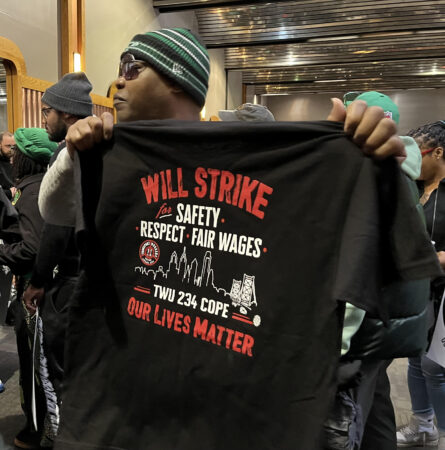
Transport Workers Union Local 234, SEPTA’s largest union, may soon strike, according to president Will Vera.
At a Friday afternoon news conference at TWU headquarters in Spring Garden, Vera said his “patience has run out,” and he said the union’s executive committee was meeting to decide when to call a strike.
“I’m tired of talking, and we’re going to start walking,” said Vera, who was elected president in October.
Local 234’s latest contract expired Nov. 7, and the 5,000-member local voted unanimously on Nov. 16 to authorize leaders to call a strike if needed during contract negotiations.
The union represents bus, subway, and trolley operators, mechanics, cashiers, maintenance people, and custodians, primarily in the city.
John Samuelsen, president of TWU International and former president of NYC’s local, joined Vera at the news conference.
“A strike is imminent,” Samuelsen said. “SEPTA is the most incompetent transit agency in the country … SEPTA is triggering a strike.”
In an email sent Friday evening, Samuelsen called on leaders and staff members of TWU locals to travel to Philadelphia to help Local 234 in the event of a strike.
Andrew Busch, spokesperson for SEPTA, said negotiations were “at an impasse,” noting that the negotiating committees met only twice this week. He said SEPTA’s leaders hoped TWU would “take us up on the offer to continue to talk so we can avoid a strike and the massive service disruption it would cause.” No meetings are scheduled for the weekend as of Friday evening.
Vera agreed there was room for the two groups to keep talking, if SEPTA provided “a fair and reasonable” contract proposal.
The union says it is looking for a two-year deal with raises and changes to what it views as onerous work rules, including the transit agency’s use of a third party that Vera said makes it hard for members to use their allotted sick time.
SEPTA officials have signaled they are open to a two-year deal as a step toward labor stability.
In recent weeks, TWU and SEPTA have been negotiating contributions to the union’s healthcare fund. Pensions have arisen as a sticking point.
Union sources told The Inquirer that TWU leaders are increasingly frustrated with the pace of negotiations.
Vera said the executive board meeting began at 4:30 p.m. on Friday. He hoped the board would reach a decision on when members would walk off the job.
TWU last went on strike in 2016. It lasted for six days and ended the day before the general election. Democrat Hillary Clinton’s presidential campaign was worried about voter turnout, and the city sought an injunction to end the strike. It proved unnecessary.
SEPTA’s financials
TWU’s contract negotiations are happening as SEPTA is emerging from what it has called the worst period of financial turmoil in its history.
Like many transit agencies, SEPTA was facing a recurring deficit due to inflation, fewer federal dollars, and flat state subsidies. It reported a $213 million recurring hole in its operating budget.
Following a prolonged and contentious debate over mass transit funding in the state budget, Gov. Josh Shapiro in September directed PennDot to allow SEPTA to tap $394 million in state money allocated for future capital projects to pay for two years of operating expenses.
And last month, he allocated $220 million to SEPTA, the second time in two years he’s flexed state dollars to support the financially beleaguered transit agency. While the $220 million is expected to go primarily toward capital expenses related to Regional Rail, the move helps SEPTA’s overall balance sheet.
What riders should know
SEPTA riders are no strangers to service disruptions.
A former top Philadelphia labor official claims in a lawsuit that she was passed over for a promotion because she’s a woman, and was later fired afterraising concerns about gender-based discrimination spanning two mayoral administrations.
Monica Marchetti-Brock, the former first deputy director of the Department of Labor, said in a federal lawsuit filed Wednesday that Mayor Cherelle L. Parker fired her last year, days after Marchetti-Brock had reiterated complaints about gender bias at the top rungs of the city government that had occurred before Parker took office.
Marchetti-Brock had worked for the city since 2013. Under former Mayor Jim Kenney, she rose to the city’s No. 2 labor role.
The man hired for the position was Basil Merenda, a former top state labor official whom Marchetti-Brock claims “had a problem with women.”
What started as a change in boss under then-Mayor Jim Kenney culminated in spring 2024 with Parker firing Marchetti-Brock after she complainedof sex-based discrimination, according to the suit. The lawsuit says an outside investigator probed Merenda’s behavior and in 2023 recommended he undergo implicit bias training.
The lawsuit accuses the city of minimizing the results of that investigation and of terminating Marchetti-Brock and a second woman who was mistreated by Merenda.
“When [Marchetti-Brock] asked if her termination had anything to do with her sex discrimination complaints, [the city] refused to answer the question,” the complaint says.
Merenda is currently one of two commissioners of the Department of Licenses and Inspections. Parker announced his appointment in February 2024, a few weeks before Marchetti-Brock says she was fired. It is common for there to be significant turnover in personnel at the beginning of a new mayoral administration.
A city spokesperson declined to comment, citing the pending litigation.
Attempts to reach Kenney were unsuccessful. The former mayor appointed many women to his top staff through his more than two decades in City Hall. When he took office as mayor in 2016, the majority of his cabinet were women.
Marchetti-Brock began reporting to Merenda in January 2023. He ignored his deputy, excluded her from meetings and communications, yelled, and “unjustly” criticized her, the suit says.
Marchetti-Brock says she complained of sex discrimination in the labor department to a long list of officials, some of whom still work for the city, including City Solicitor Renee Garcia and Chief Administrative Officer Camille Duchaussee. Marchetti-Brock “described how she was treated compared to how male employees were treated, including that Merenda ignored what female employees said and focused on what male employees said,” according to the lawsuit.
The city opened an investigation in the spring of 2023, the suit says.
After Parker was elected in November 2023, Marchetti-Brock again expressed her interest in the top labor role. However, the incoming mayor ultimately tapped Perritti DiVirgilio, who was previously the city’s director of labor standards. Marchetti-Brock described DiVirgilio in the suit as a “noncomplaining, male employee.”
In February 2024, Marchetti-Brock received a letter summarizing the findings of the investigation into Merenda. The letter said that the probe concluded that “no violation” of the city’s sexual harassment prevention policy occurred. According to the complaint, Marchetti-Brock was told that Merenda had received a warning and the investigator recommended he undergo implicit bias training.
The policy says city employees are protected from sexual harassment regardless if it’s “unlawful,” and it prohibits retaliation against employees who raise concerns or complain. Marchetti-Brock had a role crafting the policy following a critical 2018 City Controller report that said the city’s sexual harassment reporting protocols were inadequate.
According to the suit, Marchetti-Brock pushed back on the summary letter in an email to Andrew Richman, a city attorney, saying that even though no unlawful behavior was found, “there were findings of bias toward me and other women.”
“As you are aware, our policy holds our leaders to a higher standard than the law,” Marchetti-Brock wrote, according to the complaint. “It is misleading to say there are no findings under our policy.”
Three days later, in early March 2024, top officials from Parker’s administration informed Marchetti-Brock that her employment would be terminated, according to the complaint. The suit states that another female employee who had complained about Merenda was terminated as well.
The lawsuit asks the federal court to find that the city violated antidiscrimination laws and award Marchetti-Brock an unspecified amount of damages.
A Philadelphia journalist was sentenced Friday to 20 years in federal prison for possessing thousands of images and videos of child pornography.
Michael Hochman, whose work was published over the years by outlets including Visit Philadelphia, the sports website Crossing Broad, and The Inquirer — where he once contributed a freelance column — came to the attention of investigators in 2022 after they learned that he exchanged explicit messages with a teenage girl. Authorities later found that he had downloaded more than 2,000 photos and videos of children being sexually abused onto his computers and other devices, prosecutors said.
Hochman, 52, of Huntingdon Valley, compiled that collection over the course of more than a decade, prosecutors said, and did so even after he’d served prison time for sexually assaulting a teenager in Kansas in 2002.
In sentencing Hochman on Friday, U.S. District Judge Kelley B. Hodge cited that conviction as she imposed a prison term five years longer than prosecutors sought.
Calling Hochman’s actions “shameful” and “vile,” the judge said, “The level of depravity … is without words.“
Hochman was convicted of child sex crimes two decades ago after prosecutors say he had sex with a 13-year-old girl he met online. He was convicted of aggravated indecent liberties with a child and sentenced to 55 months in prison, court documents said.
In 2022, prosecutors said, a Missouri woman discovered that her 15-year-old daughter, who had developmental disabilities, had been exchanging explicit messages with an older man online. The mother alerted law enforcement, and authorities traced the messages back to Hochman.
After investigators seized six devices from Hochman’s home, the documents said, four were found to contain sexually explicit images and videos of children being abused.
In all, prosecutors said, Hochman possessed about 1,900 photos and 130 videos of child pornography, many of which depicted rapes, and some of which had been downloaded more than a decade ago.
Assistant U.S. Attorney Michelle Rotella said it was “very troubling” that Hochman began downloading materials of children being abused not long after he’d been punished for similar crimes.
“The seriousness of his crimes can in no way be argued with,” Rotella said.
Hochman’s attorney, Michael Diamondstein, said no one should be defined by their best or worst actions, but acknowledged the gravity of Hochman’s misdeeds.
“This is a bad case,” he said.
The judge noted that some of the images on Hochman’s computer depicted children as young as three.
Moreover, she said, Hochman’s exchanges with the 15-year-old girl in Missouri were “beyond offensive.”
And Hochman, she said, had a solid upbringing and was a working professional with a college degree, who had opportunities to avoid acting on criminal impulses.
“You knew better,” she said. “You know how to access help.”
Hochman apologized for his actions, saying he recognizes the harm he’s caused and will work the rest of his life to avoid doing so again in the future.
“I made these choices, and I must accept the consequences,” he said.
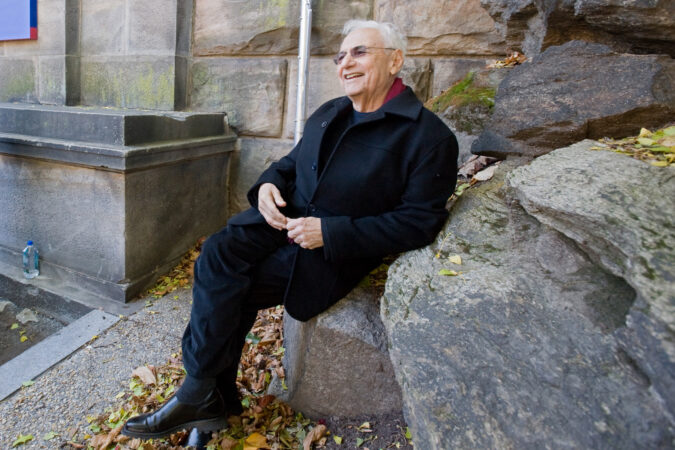
LOS ANGELES — Frank Gehry, who designed some of the most imaginative buildings ever constructed and achieved a level of worldwide acclaim seldom afforded any architect, has died. He was 96.
Mr. Gehry died Friday in his home in Santa Monica after a brief respiratory illness, said Meaghan Lloyd, chief of staff at Gehry Partners LLP.
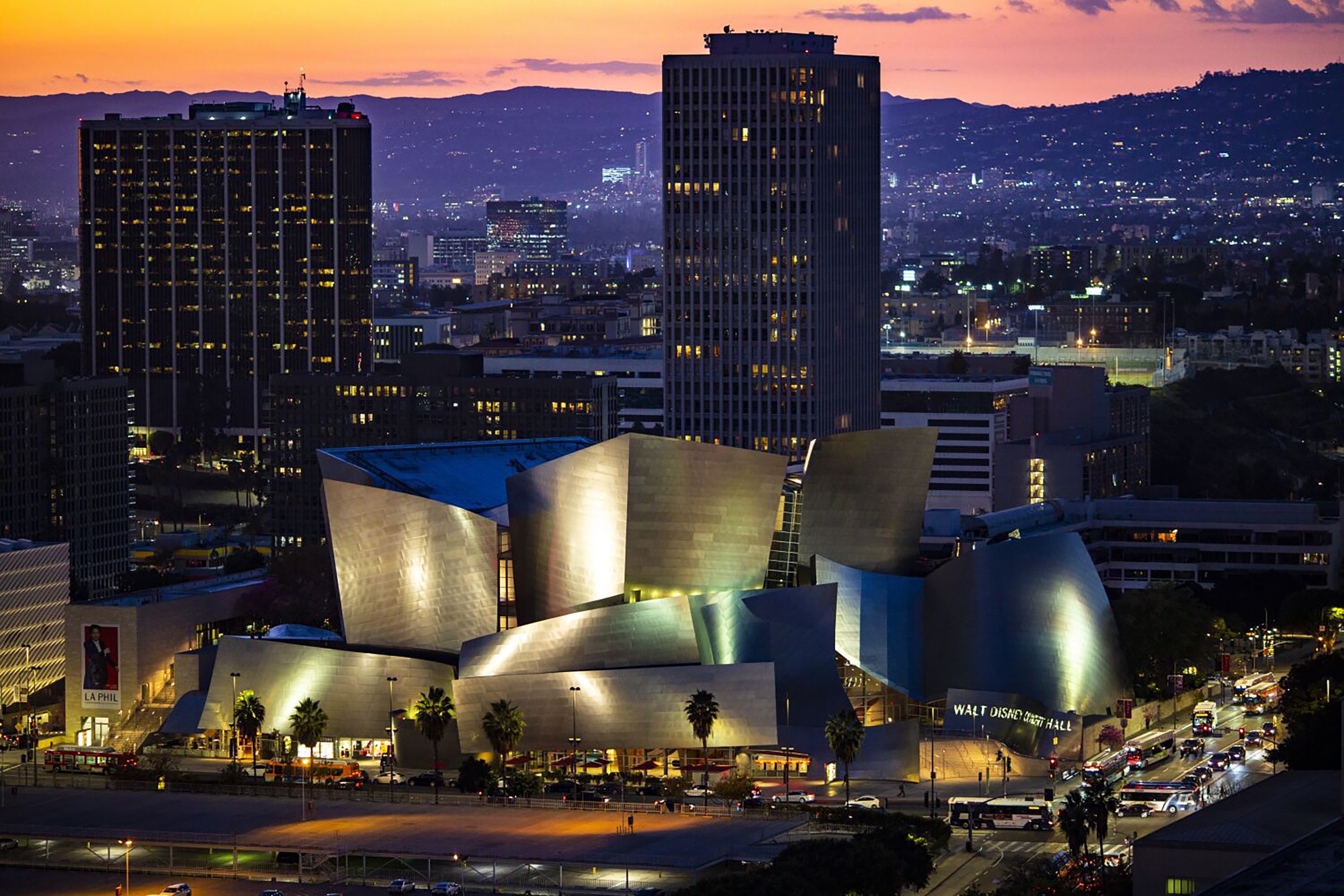
Mr. Gehry’s fascination with modern pop art led to the creation of distinctive, striking buildings. Among his many masterpieces are the Guggenheim Museum in Bilbao, Spain; the Walt Disney Concert Hall in Los Angeles; and Berlin’s DZ Bank Building.
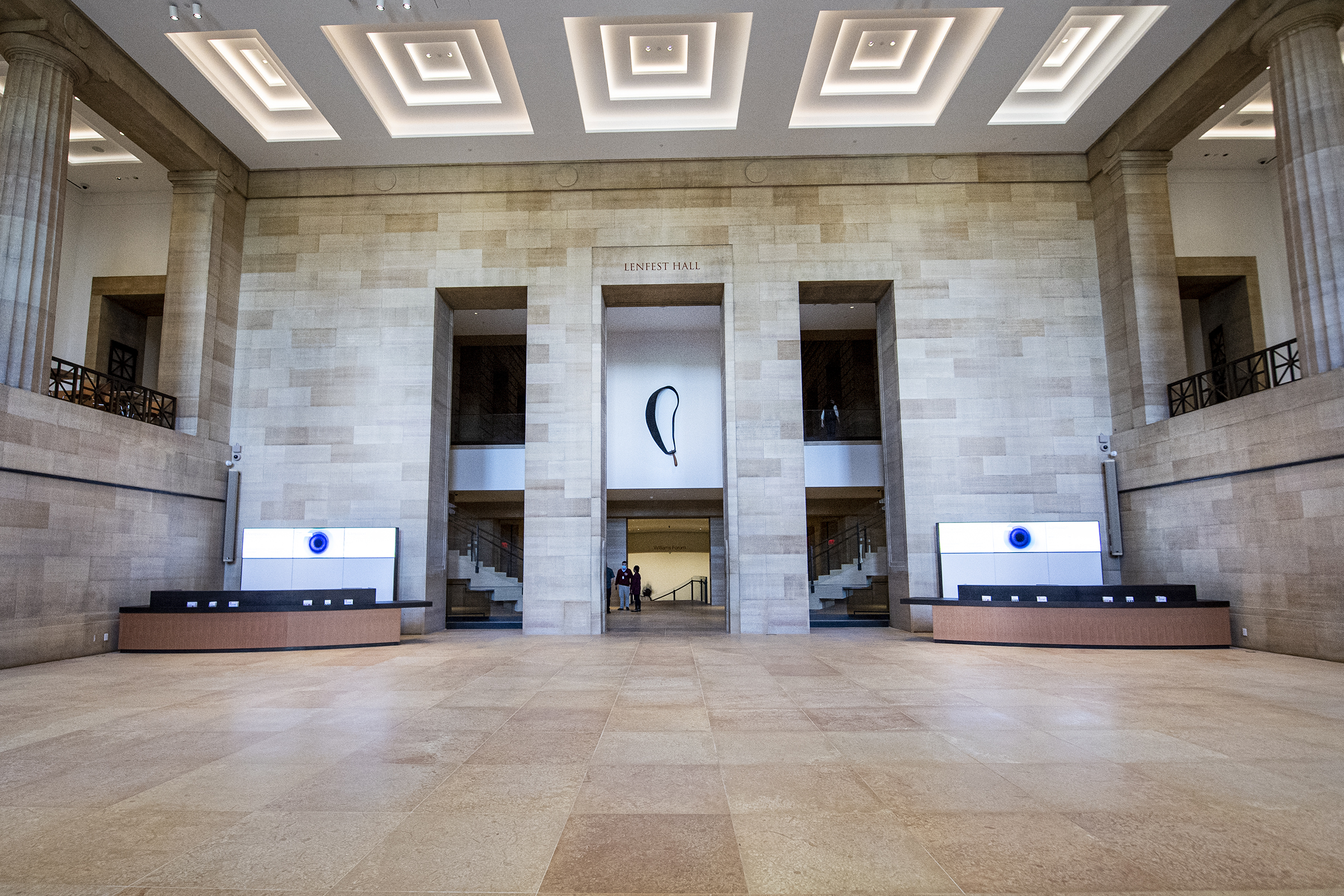
He also oversaw a $233 million renovation of the Philadelphia Museum of Art that stuck with tradition. “Instead of wreaking havoc, the 92-year-old architectural radical has played against type and given museum officials precisely what they wanted: clarity, light, and space,” Inquirer architecture critic Inga Saffron wrote when the new galleries and public spaces opened in 2021.
He also designed an expansion of Facebook’s Northern California headquarters at the insistence of the company’s CEO, Mark Zuckerberg.
Mr. Gehry was awarded every major prize architecture has to offer, including the field’s top honor, the Pritzker Prize, for what has been described as “refreshingly original and totally American” work.
Other honors include the Royal Institute of British Architects gold medal, the Americans for the Arts lifetime achievement award, and his native country’s highest honor, the Companion of the Order of Canada.
To improve the flow and sight lines into the Philadelphia Museum of Art, architect Frank Gehry took down the wall where Chagall’s theater backdrop hung and streamlined the space.
The start of his career in architecture
After earning a degree in architecture from the University of Southern California in 1954 and serving in the Army, Mr. Gehry studied urban planning at Harvard University.
But his career got off to a slow start. He struggled for years to make ends meet, designing public housing projects, shopping centers, and even driving a delivery truck for a time.
Eventually, he got the chance to design a modern shopping mall overlooking the Santa Monica Pier. He was determined to play it safe and came up with drawings for an enclosed shopping mall that looked similar to others in the United States in the 1980s.
To celebrate its completion, the mall’s developer dropped by Mr. Gehry’s house and was stunned by what he saw: The architect had transformed a modest 1920s-era bungalow into an inventive abode by remodeling it with chain-link fencing, exposed wood, and corrugated metal.
Asked why he hadn’t proposed something similar for the mall, Mr. Gehry replied, “Because I have to make a living.”
If he really wanted to make a statement as an architect, he was told, he should drop that attitude and follow his creative vision.
Mr. Gehry would do just that for the rest of his life, working into his 90s to create buildings that doubled as stunning works of art.
As his acclaim grew, Gehry Partners LLP, the architectural firm he founded in 1962, grew with it, expanding to include more than 130 employees at one point. But as big as it got, Mr. Gehry insisted on personally overseeing every project it took on.
The headquarters of the InterActiveCorp, known as the IAC Building, took the shape of a shimmering beehive when it was completed in New York City’s Chelsea district in 2007. The 76-story New York By Gehry building, once one of the world’s tallest residential structures, was a stunning addition to the lower Manhattan skyline when it opened in 2011.
That same year, Mr. Gehry joined the faculty of his alma mater, the University of Southern California, as a professor of architecture. He also taught at Yale and Columbia University.
The Walt Disney Concert Hall is the fourth hall of the Los Angeles Music Center and was designed by Frank Gehry. Here, it’s photographed from the Los Angeles City Hall Observation Deck on Feb. 14, 2018, in Los Angeles.
Imaginative designs drew criticism along with praise
Not everyone was a fan of Mr. Gehry’s work. Some naysayers dismissed it as not much more than gigantic, lopsided reincarnations of the little scrap-wood cities he said he spent hours building when he was growing up in the mining town of Timmins, Ontario.
Princeton art critic Hal Foster dismissed many of his later efforts as “oppressive,” arguing they were designed primarily to be tourist attractions. Some denounced the Disney Hall as looking like a collection of cardboard boxes that had been left out in the rain.
Still other critics included Dwight D. Eisenhower’s family, who objected to Mr. Gehry’s bold proposal for a memorial to honor the nation’s 34th president. Although the family said it wanted a simple memorial and not the one Mr. Gehry had proposed, with its multiple statues and billowing metal tapestries depicting Eisenhower’s life, the architect declined to change his design significantly.
If the words of his critics annoyed Mr. Gehry, he rarely let on. Indeed, he even sometimes played along. He appeared as himself in a 2005 episode of The Simpsons cartoon show, in which he agreed to design a concert hall that was later converted into a prison.
He came up with the idea for the design, which looked a lot like the Disney Hall, after crumpling Marge Simpson’s letter to him and throwing it on the ground. After taking a look at it, he declared, “Frank Gehry, you’ve done it again!”
“Some people think I actually do that,” he would later tell the AP.
Gehry’s lasting legacy around the world
Ephraim Owen Goldberg was born in Toronto on Feb. 28, 1929, and moved to Los Angeles with his family in 1947, eventually becoming a U.S. citizen. As an adult, he changed his name at the suggestion of his first wife, who told him antisemitism might be holding back his career.
Although he had enjoyed drawing and building model cities as a child, Mr. Gehry said it wasn’t until he was 20 that he pondered the possibility of pursuing a career in architecture, after a college ceramics teacher recognized his talent.
“It was like the first thing in my life that I’d done well in,” he said.
Mr. Gehry steadfastly denied being an artist though.
“Yes, architects in the past have been both sculptors and architects,” he declared in a 2006 interview with the Associated Press. “But I still think I’m doing buildings, and it’s different from what they do.”
His words reflected both a lifelong shyness and an insecurity that stayed with Mr. Gehry long after he’d been declared the greatest architect of his time.
“I’m totally flabbergasted that I got to where I’ve gotten,” he told the AP in 2001. “Now it seems inevitable, but at the time it seemed very problematic.”
The Gehry-designed Guggenheim Museum in Abu Dhabi, first proposed in 2006, is expected to finally be completed in 2026 after a series of construction delays and sporadic work. The 30,000-square-foot structure will be the world’s largest Guggenheim, leaving a lasting legacy in the capital city of the United Arab Emirates.
His survivors include his wife, Berta; daughter, Brina; sons Alejandro and Samuel; and the buildings he created.
Another daughter, Leslie Gehry Brenner, died of cancer in 2008.
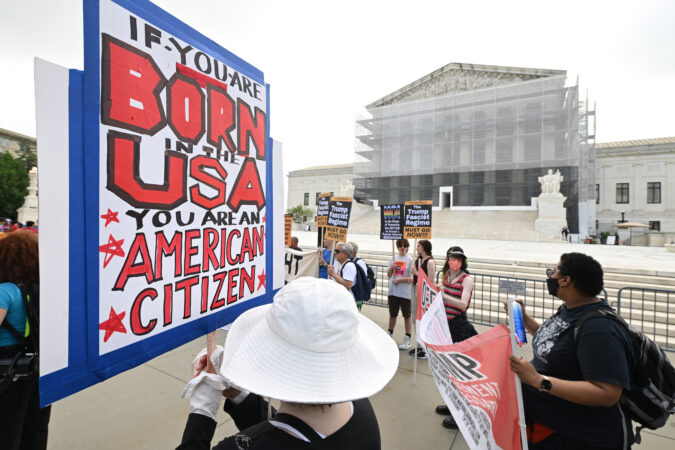
WASHINGTON — The Supreme Court agreed on Friday to take up the constitutionality of President Donald Trump’s order on birthright citizenship declaring that children born to parents who are in the United States illegally or temporarily are not American citizens.
The justices will hear Trump’s appeal of a lower-court ruling that struck down the citizenship restrictions. They have not taken effect anywhere in the country.
The case will be argued in the spring. A definitive ruling is expected by early summer.
The birthright citizenship order, which Trump signed Jan. 20, the first day of his second term, is part of his Republican administration’s broad immigration crackdown. Other actions include immigration enforcement surges in several cities and the first peacetime invocation of the 18th-century Alien Enemies Act.
The administration is facing multiple court challenges, and the high court has sent mixed signals in emergency orders it has issued. The justices effectively stopped the use of the Alien Enemies Act to rapidly deport alleged Venezuelan gang members without court hearings. But the Supreme Court allowed the resumption of sweeping immigration stops in the Los Angeles area after a lower court blocked the practice of stopping people solely based on their race, language, job or location.
The justices also are weighing the administration’s emergency appeal to be allowed to deploy National Guard troops in the Chicago area for immigration enforcement actions. A lower court has indefinitely prevented the deployment.
Birthright citizenship is the first Trump immigration-related policy to reach the court for a final ruling. His order would upend more than 125 years of understanding that the Constitution’s 14th Amendment confers citizenship on everyone born on American soil, with narrow exceptions for the children of foreign diplomats and those born to a foreign occupying force.
In a series of decisions, lower courts have struck down the executive order as unconstitutional, or likely so, even after a Supreme Court ruling in late June that limited judges’ use of nationwide injunctions.
The Supreme Court, however, did not rule out other court orders that could have nationwide effects, including in class action lawsuits and those brought by states. The justices did not decide at that time whether the underlying citizenship order was constitutional.
Every lower court that has looked at the issue has concluded that Trump’s order violates or likely violates the 14th Amendment, which was intended to ensure that Black people, including the formerly enslaved, had citizenship. Birthright citizenship automatically makes anyone born in the United States an American citizen, including children born to mothers who are in the country illegally, under longstanding rules.
The case under review comes from New Hampshire. A federal judge in July blocked the citizenship order in a class-action lawsuit including all children who would be affected. The American Civil Liberties Union is leading the legal team representing the children and their parents who challenged Trump’s order.
“No president can change the 14th Amendment’s fundamental promise of citizenship,” Cecillia Wang, the ACLU’s national legal director, said in a statement, adding, “We look forward to putting this issue to rest once and for all in the Supreme Court this term.”
The administration had also asked the justices to review a ruling by the 9th U.S. Circuit Court of Appeals in San Francisco. That court, also in July, ruled that a group of Democratic-led states that sued over Trump’s order needed a nationwide injunction to prevent the problems that would be caused by birthright citizenship being in effect in some states and not others. The justices took no action in the 9th Circuit case.
The administration has asserted that children of noncitizens are not “subject to the jurisdiction” of the United States and therefore not entitled to citizenship.
“The Fourteenth Amendment’s Citizenship Clause was adopted to grant citizenship to newly freed slaves and their children — not … to the children of aliens illegally or temporarily in the United States,” top administration top Supreme Court lawyer, D. John Sauer, wrote in urging the high court’s review.
Twenty-four Republican-led states and 27 Republican lawmakers, including Sens. Ted Cruz of Texas and Lindsey Graham of South Carolina, are backing the administration.
Wilmington received its first measurable snow of the season — a mighty 0.4 inches — and snow coated roads in parts of southern Chester County Friday.
But Philly once again had to settle for a “trace,” as the flakes that appeared at Philadelphia International Airport failed to meet the minimum requirements for a snowfall — a tenth of an inch.
Yes, PennDot was aware of the potential flake invasion, and crews and trucks were on standby, said spokesperson Krys Johnson. But evidently they can save that salt for another day.
It is possible that the city may see a few flurries this evening, or perhaps freezing rain, said Eric Hoeflich, meteorologist at the National Weather Service in Mount Holly.
But you aren’t going to pull a back muscle shoveling. Philadelphia stayed to the north of the snow line as the dry, cold air refused to give it up.
Snow in early December does happen around here, but lack of it is the norm. The “normal” value for snowfall through a Dec. 5 is 0.4 inches at PHL.
Philly’s snow season typically peaks in late January into February as the prime moisture source — the Atlantic Ocean — has a chance to chill, and the cold air in the upper atmosphere ripens.
It’s certainly cold enough for snow. Lows overnight fell into the 20s, officially 25 degrees at PHL. Mount Pocono set a Dec. 5 record with a reading of 4 below zero. That’s Fahrenheit.
Temperatures may not get above freezing Friday, and no higher than the low 40s Saturday and Sunday, which would be several degrees below the long-term daily averages. Another cold front is due Sunday, and readings likely won’t get out of the 30s on Monday and Tuesday.