Category: News

Latest breaking news and updates

  • Kathleen A. Case, longtime writer, pioneering medical journal editor, and award-winning historian, has died at 80

    Kathleen A. Case, longtime writer, pioneering medical journal editor, and award-winning historian, has died at 80

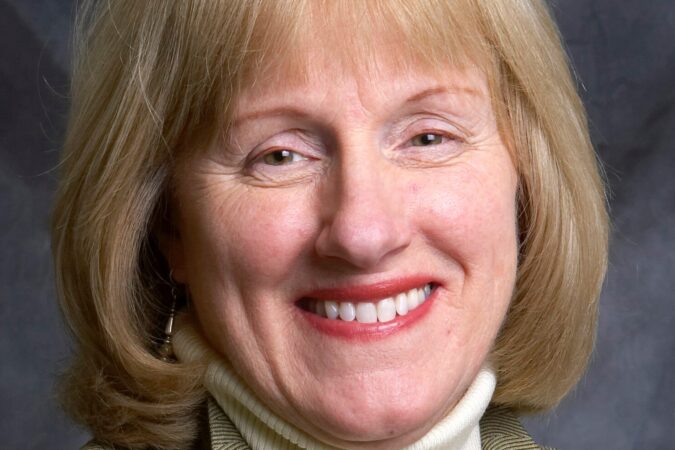
    Kathleen A. Case, 80, of Bryn Mawr, longtime writer, pioneering medical journal editor, award-winning historian, researcher, and volunteer, died Friday, Nov. 14, of heart failure at Bryn Mawr Hospital.

    A natural wordsmith who was interested in the origins and nuances of language as well as its use, Ms. Case spent 24 years as a top editor for the Annals of Internal Medicine and vice president for publishing at the Philadelphia-based American College of Physicians. Later, for 15 years, she was publisher, archivist, historian, and director of strategic planning for the publishing division of the Philadelphia-based American Association for Cancer Research.

    She was adept at understanding and organizing complex research and other medical information, and helped Annals of Internal Medicine digitize its production process and content, expand its reach, and become one of the world’s most influential and cited medical journals. “She loved precise, concise, and unambiguous writing,” her family said in a tribute.

    She was one of the few female editors in the medical publishing industry when she joined Annals as an assistant editor in 1977, and she rose to managing editor, executive editor, and senior vice president for publishing by 1998. She attended many international medical publishing conferences around the world, and other journals tried unsuccessfully to lure her away from Philadelphia.
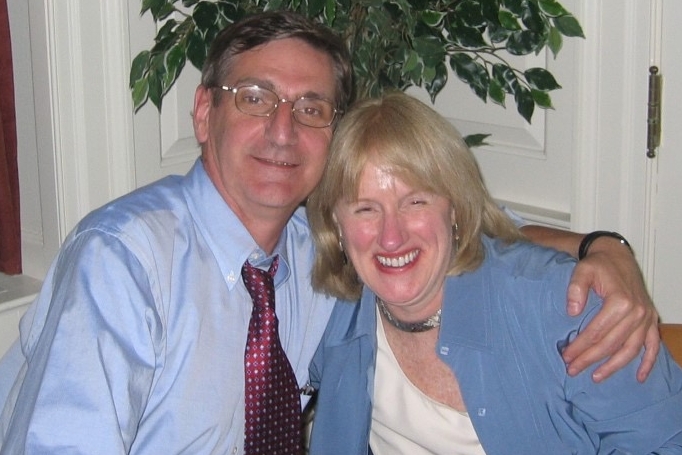
    Ms. Case and her husband, Jacques Catudal, married in 1995.

    “She set the highest editorial standards in medical publishing and expected the best from everyone around her,” a former colleague said in an online tribute. “But she also took the time to teach. … The lessons I learned from her have shaped my work ever since.”

    Ms. Case joined the American Association for Cancer Research in 2001, served two stints as head of the publishing division, and supervised its marketing campaigns, advertising sales, and product development. She retired in 2008 but continued part time as the AACR archivist, historian, and director of strategic planning until retiring for good in 2016.

    Away from her day jobs, Ms. Case was past president of the Society for Scholarly Publishing and what is now the Council of Science Editors. She also served on boards and committees for the American Medical Association, the American Chemical Society, the American Heart Association, and the International Committee of Medical Journal Editors.

    Even in retirement, she continued to work as a board member, writer, researcher, and historian for the Haverford Township Historical Society. She served on the Haverford Township Historical Commission, was a member of the Historical Society of Pennsylvania, chaired the Friends of the Polo Field, and helped establish the Brynford Civic Association.
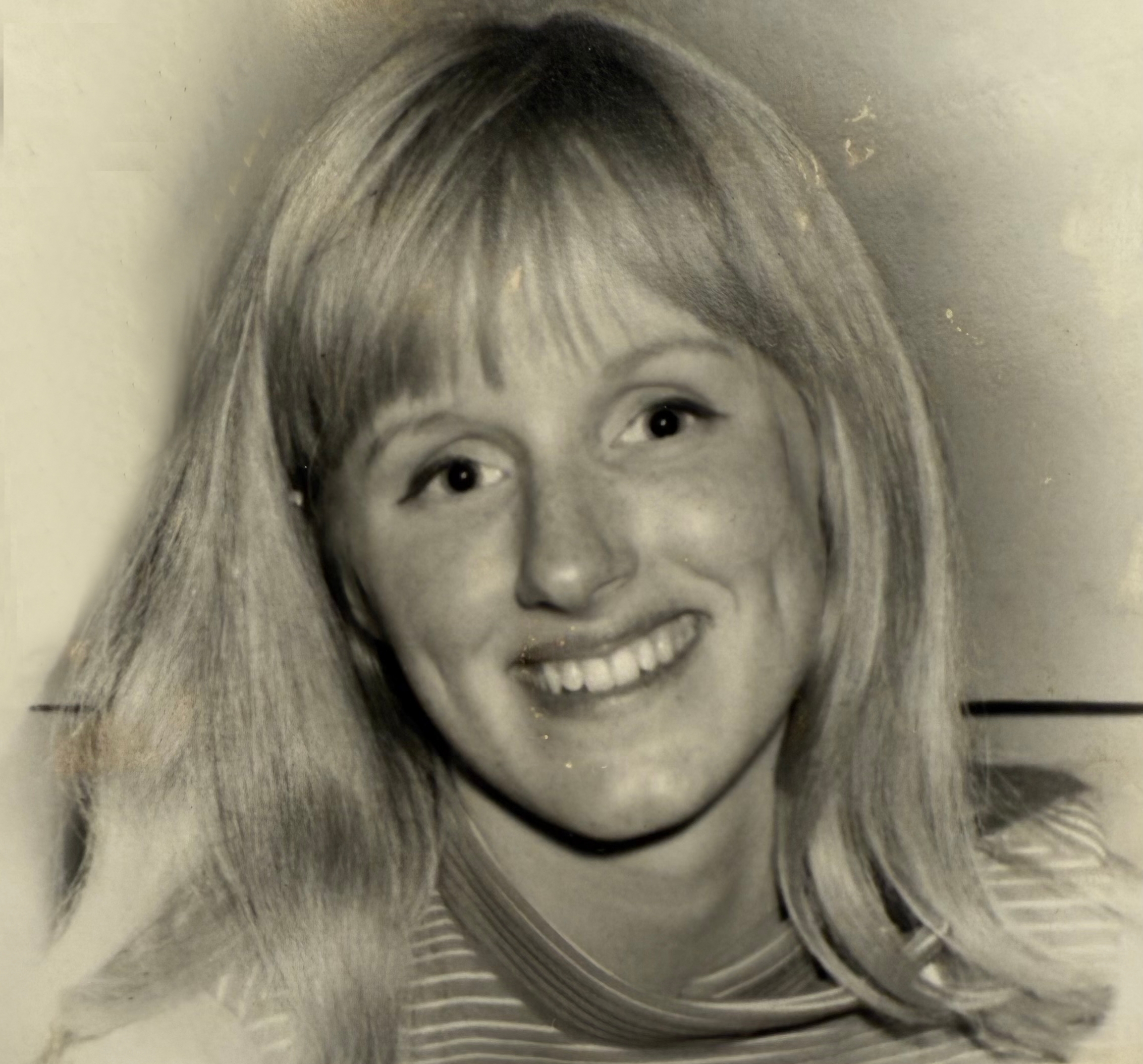
    Ms. Case graduated from Radnor High School and Pennsylvania State University.

    “She was always busy, always involved with some project,” said her husband, Jacques Catudal. She edited his published academic papers, he said, and routinely marked up her two sons’ school reports in red ink for years.

    In 2019, she won a historic preservation award from the Heritage Commission of Delaware County. “She was an endlessly inspiring woman whose intelligence was matched only by her sharp wit and her extraordinary cultural sensitivity,” a friend said in a tribute.

    Kathleen Ann Case was born Sept. 13, 1945, in Westfield, N.J. The youngest of three children, her family moved to Omaha, Neb., and then Radnor when she was young.

    She graduated from Radnor High School, studied journalism at Pennsylvania State University, and earned a bachelor’s degree in English in 1967. She was a reporter and editor for the Penn State student newspaper and so active that school officials waived their prohibition of female students living alone off campus so she could reside near the paper’s office. In 1987, she earned a master’s degree in technical and science communication at Drexel University.
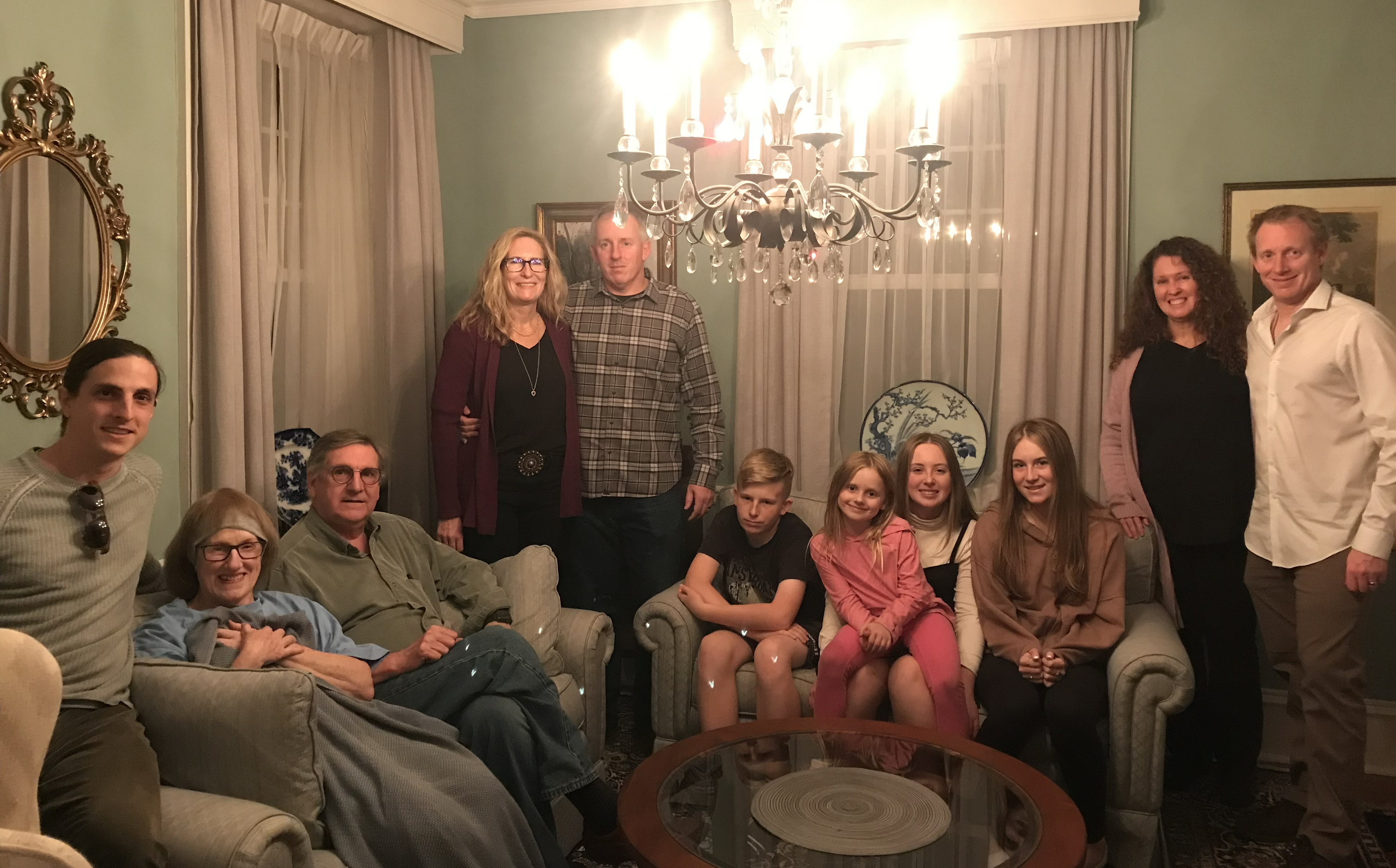
    Ms. Case (second from left) enjoyed time with her family

    She married D. Benjamin van Steenburgh III, and they had sons Ben and Jason. After a divorce, she married Peter Moor. They divorced, and she married Catudal in 1995.

    Ms. Case raised her sons as a single mother in Avondale, Chester County, for years and moved to Bryn Mawr in 1979. She read voraciously about history, collected antiques, and enjoyed travel, classic rock, and Irish folk music.

    She rode horses, was an expert archer, and followed the local sports teams. She tended her garden and investigated her genealogy.

    She liked to refinish and paint furniture and discuss current events. She and her husband camped, hiked, and canoed all over the world.
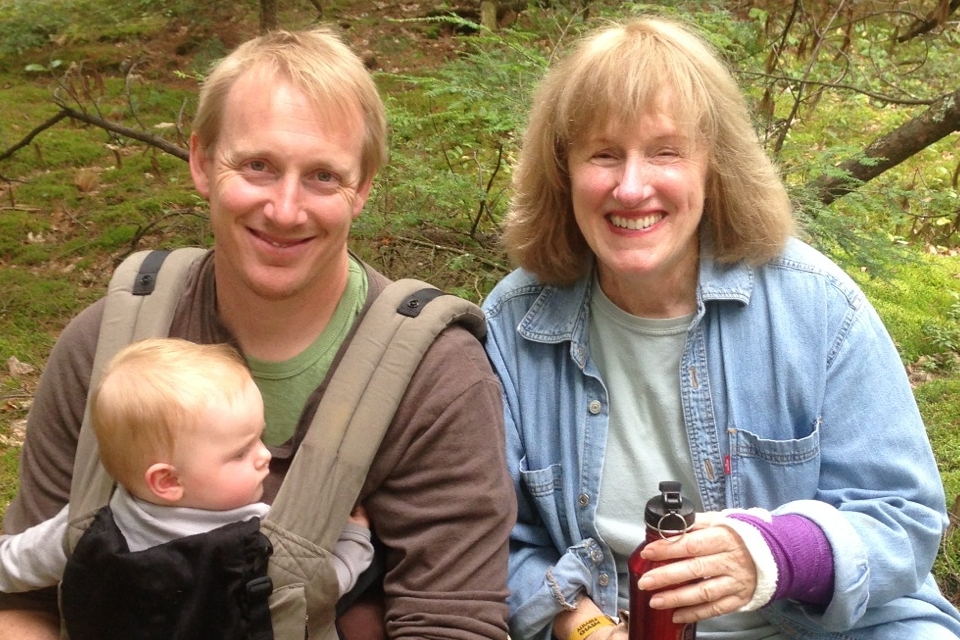
    Ms. Case enjoyed hiking and the outdoors.

    She also dealt with metastatic breast cancer and three heart attacks. “She always gave as much honesty, opinion, perspective, experience, literary acumen, word knowledge, help, advice, comfort, and love as could be needed,” said her son Jason.

    Her husband said: “She was brilliant and extremely funny. She was an organizer and always giving of herself.”

    In addition to her husband, sons, and former husbands, Ms. Case is survived by four grandchildren, a sister, a brother, and other relatives.

    A celebration of her life was held earlier.

    Donations in her name may be made to The American Association for Cancer Research, 615 Chestnut St., 17th Floor, Philadelphia, Pa. 19106; and the Haverford Township Historical Society, P.O. Box 825, Havertown, Pa. 19083.
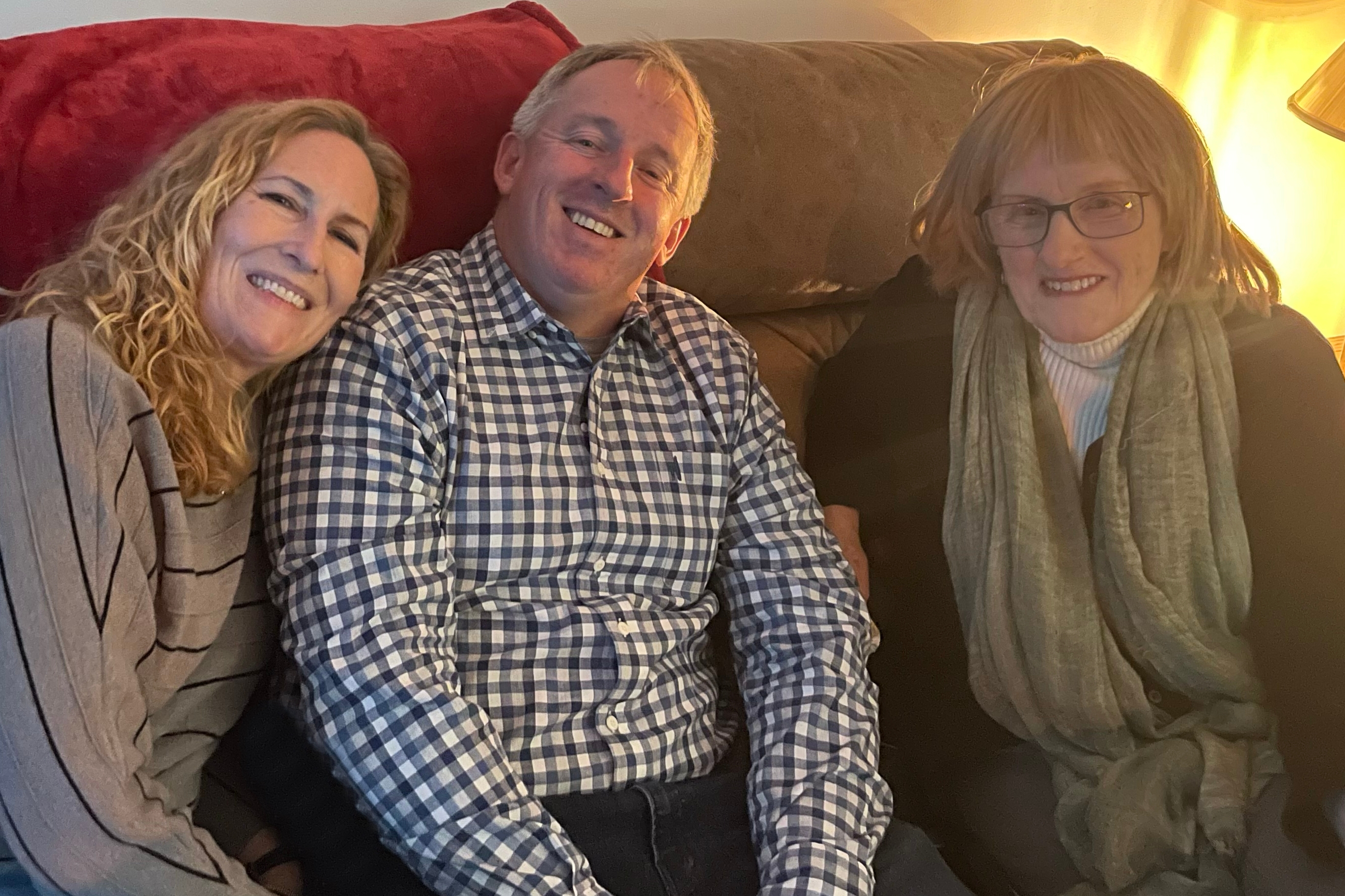

    Ms. Case (right) rode horses, was an expert archer, and followed the local sports teams.
  • A man died driving on Northwest Philly’s winding, wet roads. The neighborhood has tried addressing the danger for decades.

    A man died driving on Northwest Philly’s winding, wet roads. The neighborhood has tried addressing the danger for decades.

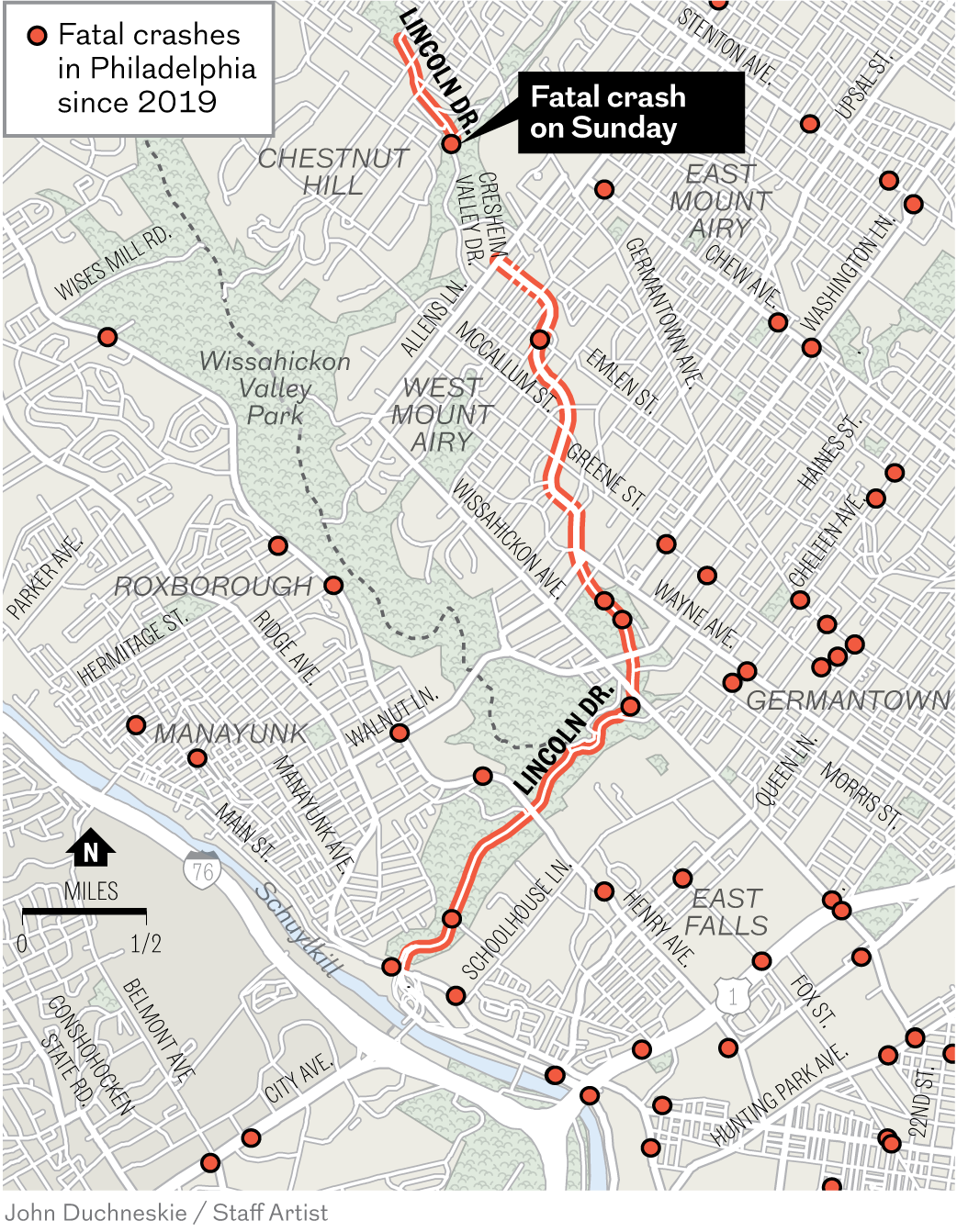
    A 65-year-old man died Sunday after he lost control of his vehicle on Cresheim Valley Drive in Chestnut Hill, striking a downed guardrail and flipping the car upside down into a creek. Just weeks before, another driver veered off the same road but survived.

    Compounding this latest traffic death is the fact that the guardrail meant to prevent cars from swerving off the road was broken and nearly flattened from previous crashes, leaving a gap in the guardrails for months, said Josephine Winter, a Mount Airy resident and executive director of West Mount Airy Neighbors (WMAN). “The guardrail was down, and it was previously crumbled so it’s a frequent site of crashes,” she said. Images from Google Maps show the guardrail down as far back as July.

    The Philadelphia Streets Department is aware of the recent crash and is conducting an assessment of the guardrail on Cresheim Valley Road. “The streets department’s top priority is public safety,” a spokesperson said.

    A screenshot of a Google Map’s street view captured in July 2025 shows the downed guardrail on Cresheim Valley Drive in the Chestnut Hill neighborhood of Philadelphia. On Nov. 30, 2025, a 65-year-old man crashed and went over the guardrail, later succumbing to his injuries.

    Neighbors say accidents, sometimes fatal, have plagued the winding roadways in Chestnut Hill and Mount Airy for decades. These traffic safety concerns came to a head with Sunday’s deadly crash.

    “It’s a curvy, tricky road, especially when it’s wet, and people tend to speed on that road,” Winter said of roadways like Lincoln and Cresheim Valley Drives, which are lined with trees, have swooping dips and hills, and are prone to flooding.

    Map of fatal crashes in Northwest Philadelphia since 2019.

    Since 2019, according to city crash data, at least five people have died while driving on the dark, winding sections of Lincoln Drive, which intersects with Cresheim Valley Drive, prompting many neighbors to fear walking down their street or leading them to invest thousands on giant boulders to protect their home and lawn.

    Winter, who leads WMAN’s traffic-calming committee, and other neighborhood organizations have petitioned for city support, urging the streets department to slow the speed of traffic on Cresheim Valley Drive, Lincoln Drive, and Wissahickon Avenue. The group’s efforts are so ingrained in the fabric of the neighborhood that, when digging through Temple University’s Urban Archives, Winter found an advertisement from 1968 stressing the need for cars in Mount Airy to “slow down to keep kids safe.”

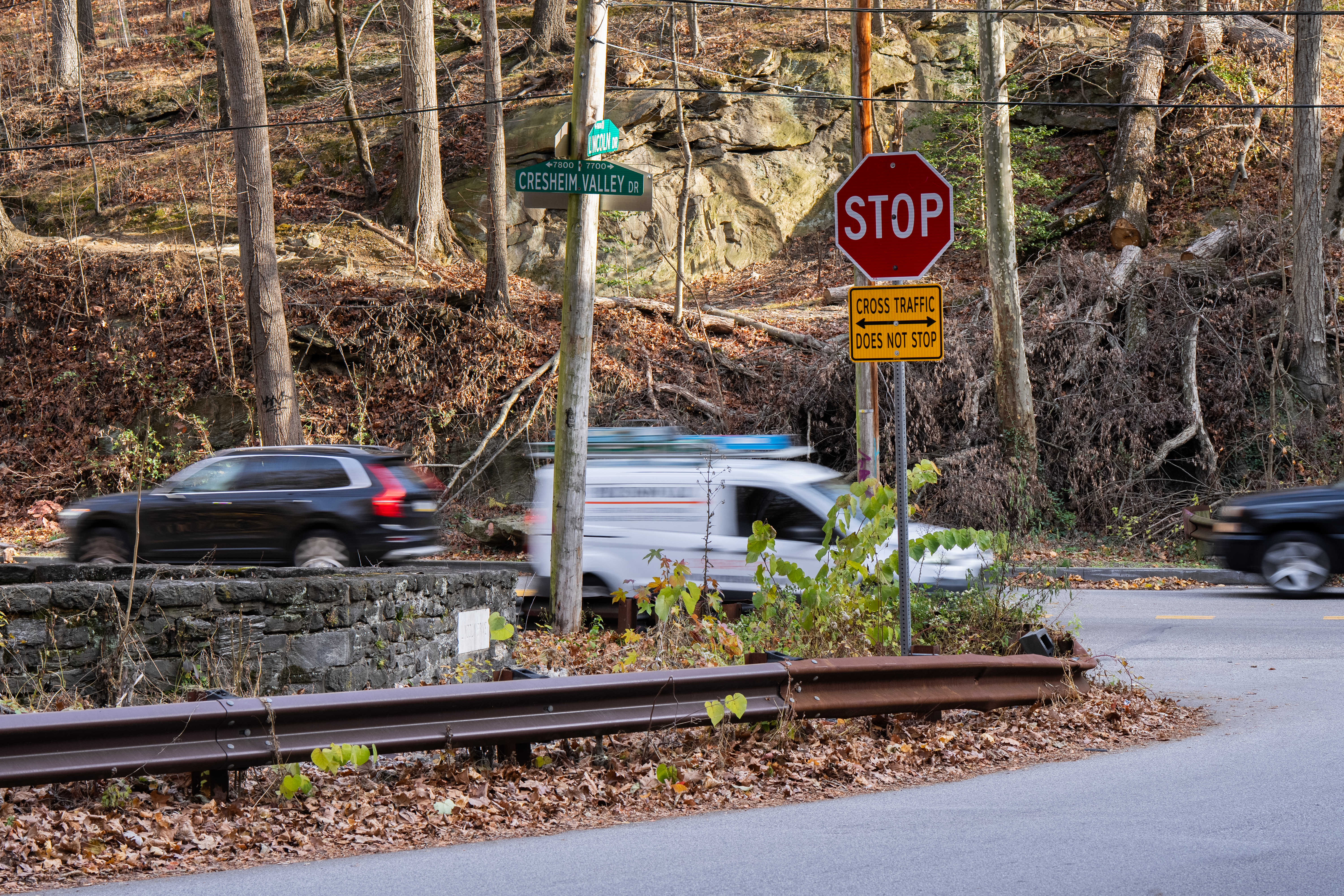
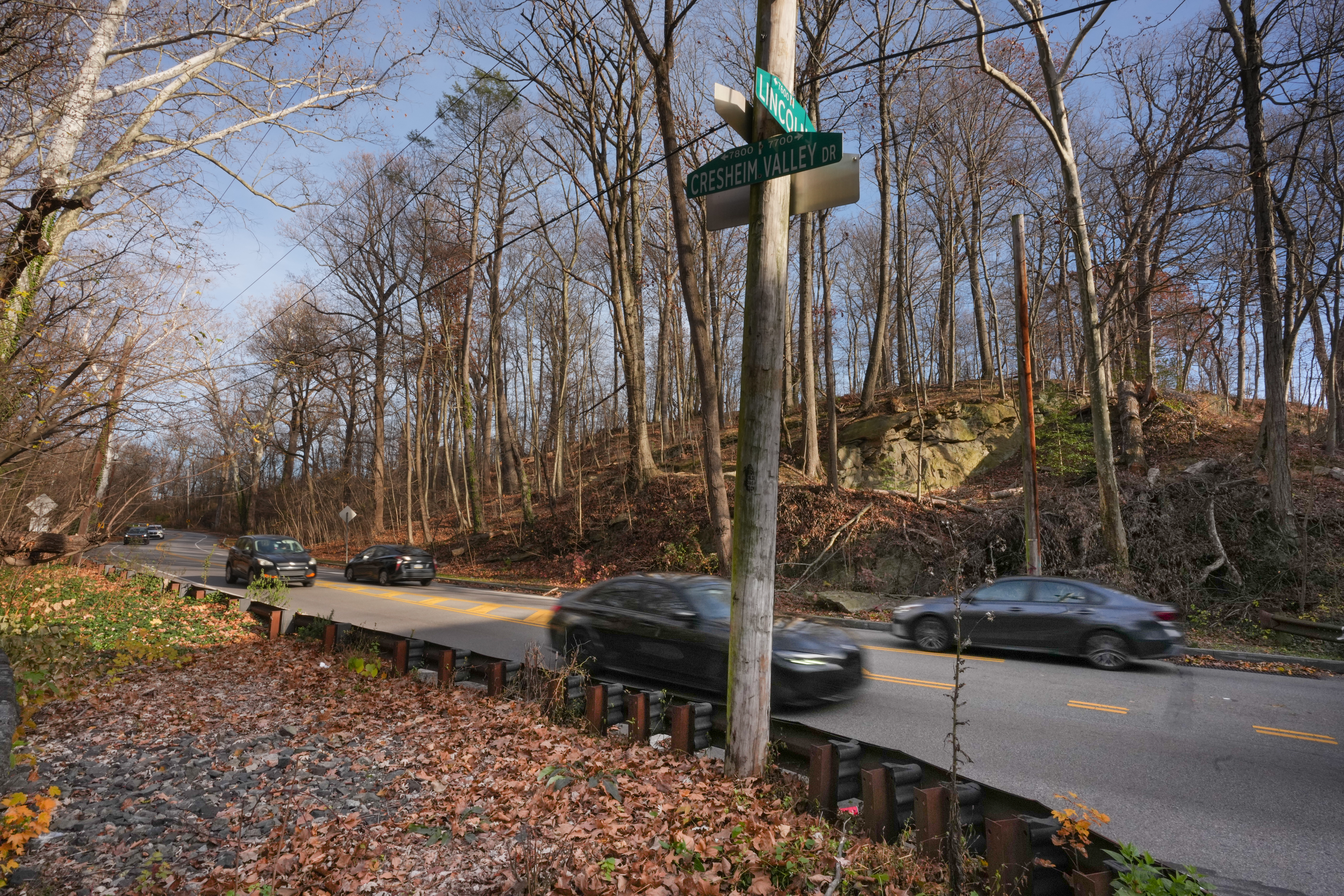
    The intersection of Cresheim Valley Drive and Lincoln Drive, in Philadelphia, PA, Dec. 1, 2025.

    The streets department installed “speed slots,” traffic-calming structures similar to speed bumps, earlier this year along Lincoln Drive between Allens Lane and Wayne Avenue. Along the same stretch of road, the Pennsylvania Department of Transportation installed rumble strips and speed tables to slow drivers down in 2023, in addition to traffic lane separators to keep drivers from using center lanes to pass other vehicles.

    In addition to the recently completed speed slots and traffic-calming measures on sections of Emlen Street, which becomes Cresheim Valley Road, signal upgrades are planned for Lincoln Drive as well.

    However, the work to improve these streets is not over, Winter said. Additionally, the streets department plans do not include changes to Cresheim Valley Drive, where Sunday’s crash happened.

    “We’ll need a collaborative approach as soon as possible to temporarily address the downed guardrail, and then see what the options are moving forward,” Winter said.

    The intersection of Cresheim Valley Drive and Lincoln Drive, in Philadelphia, PA, Dec. 1, 2025.

    Throughout the last decade, locals have suggested better-timed signals, more speed tables, and reducing the number of driving lanes from two in either direction down to one. They also want to see more roundabouts and curb bump-outs in the neighborhood to keep traffic flowing, but at a reasonable speed.

    A mere 50 to 100 feet from Cresheim Valley Drive is a parallel bike trail, where trail organizers like Brad Maule are accustomed to the crashes on the road nearby. Before Sunday’s fatal crash, he remembers two other cars that drove off the side of the road in recent months, not counting the crashes on the roadway itself. The city recently installed pedestrian crossing signs and repainted the crosswalk on nearby Cresheim Road, but Maule hopes speed bumps will follow.

    Cresheim Valley Drive near where it intersects with Lincoln Drive, in Philadelphia, PA, Dec. 1, 2025.

    While Winter said that engineers from the Philadelphia Streets Department were among the first calls she received Monday morning responding to the crash, and that the community appreciates the response, she, Maule, and other neighbors hope that more safety improvements will be considered to save more lives.

    “I’m just looking forward to the new measures of safety that come here,” Maule said. “Hopefully, people will abide by them.”

    Staff writers Max Marin and Dylan Purcell contributed to this article.

  • Eastern University to purchase nearly half of Valley Forge Military Academy’s property

    Eastern University to purchase nearly half of Valley Forge Military Academy’s property

    Eastern University has entered an agreement to buy nearly half the Valley Forge Military Academy property, which is less than a mile from the Christian university’s St. Davids campus in Delaware County.

    The planned purchase, announced by Eastern on Tuesday, includes 33.3 acres encompassing the football stadium, track, and athletic field house, as well as multiple apartment buildings that will be used to house students. Eastern had been leasing the athletic properties from the academy since 2021. The purchase also includes additional fields, buildings, and a pickleball court, the school said.

    The academy announced in September that it planned to close at the end of the 2025-26 academic year amid declining enrollment, financial challenges, and lawsuits over alleged cadet abuse, but that its college would continue to operate on the main campus. The boarding school announced last month it would go virtual after Thanksgiving and resume in-person classes on the 70-acre campus in January.

    Eastern’s current campus is 114 acres, so the addition of the Valley Forge property will substantially increase its footprint.

    “For Eastern, expanding our campus through this new property is a pivotal step in EU’s growth and vision for a flourishing future,” said Eastern president Ronald A. Matthews. “… We will be able to provide the space for our expanding student body to call Eastern’s campus ‘home.’”

    The sale is subject to approvals and regulatory requirements and is expected to be completed over the next five months, the school said.

    “Valley Forge Military Academy & College has enjoyed a mutually beneficial relationship with our neighbors at Eastern University for many years,” academy president Col. Stuart B. Helgeson said in a statement.

    Eastern’s enrollment has continued to grow over the last six years, reaching nearly 10,000 students this fall, up 14% from last year. The growth is largely fueled by its low-cost, online “LifeFlex” programs, including a $9,900 master of business administration. But on-campus enrollment also has been rising in part due to the addition of new athletic and arts programs, the school said. Its football team is competing in the NCAA Division III championships on Saturday.

  • Pope Leo XIV shares his thoughts on the conclave, reflects on spirituality and future travels

    Pope Leo XIV shares his thoughts on the conclave, reflects on spirituality and future travels

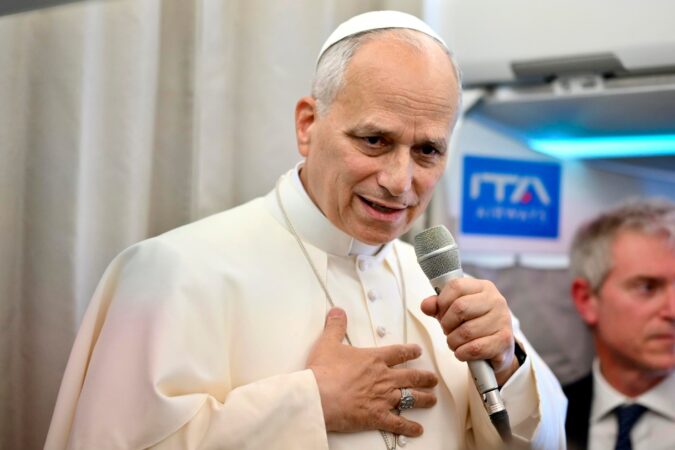
    ABOARD THE PAPAL PLANE — Pope Leo XIV on Tuesday shared for the first time what he was thinking when the votes started going his way during the conclave that elected him, saying he resigned himself to the inevitable and put the rest in God’s hands.

    “I took a deep breath. I said ‘Here we go Lord. You’re in charge and you lead the way,’” Leo told reporters during a wide-ranging airborne news conference coming home from his inaugural trip to Turkey and Lebanon.

    Leo fielded questions for a half-hour, responding easily in English, Spanish, and Italian about a variety of church and international news. He hinted at behind-the-scenes discussions about Hezbollah and Israel in Lebanon, urged dialogue rather than U.S. military threats on Venezuela and discussed his hoped-for future travels in Africa and South America, among other topics.

    But it was his remarks about the conclave and his papal learning curve that shed new light on Leo the man and what makes him tick. His responses, after seeming timid with the media early in his pontificate, showed he is much more comfortable now, is paying close attention to what is being reported about him, and that he has a good sense of humor about it.

    Leo was asked what he was thinking when he saw a huge crowd of people at one of his events in Lebanon, where it seemed as if the size had taken him by surprise. Leo suggested that wasn’t necessarily the case.

    “My face is very expressive but I’m oftentimes amused by how the journalists interpret my face,” he said. “It’s interesting. Sometimes I get really great ideas from all of you because you think you can read my mind or my face.”

    “You’re not always correct,” he added, to laughs.

    A spirituality that leaves everything up to God

    More instructive to understanding what he’s thinking, Leo said, would be to read up about his spirituality. Beyond St. Augustine, the fifth-century theologian who inspired his religious order and is Leo’s most-frequently cited church father, Leo recommended a book The Practice of the Presence of God, by a 17th-century Carmelite friar, Brother Lawrence.

    “It describes, if you will, a type of prayer and spirituality where one simply gives his life to the Lord and allows the Lord to lead. If you want to know something about me, that’s been my spirituality for many years,” he said.

    “In midst of great challenges — living in Peru during years of terrorism, being called to service in places where I never thought I’d be called to serve — I trust in God,” he said.

    That held true in the May conclave, he said, when the former Cardinal Robert Prevost was elected in a remarkably fast four ballots on the second day of voting. According to cardinals who participated, it was clear already by the third ballot that morning that the votes were going his way and that Prevost would be elected history’s first American pope.

    “I resigned myself to the fact when I saw how things were going and I said ‘This could be a reality,’” Leo said.

    Speaking to a reporter who is about to retire, Leo said he had had different plans for his future.

    “Just a year or two ago, I too thought about retiring some day,” he said. “You’ve received that gift apparently. Some of us will continue to work.”

    In Lebanon, Leo had a taste of what it’s like to be a pope on the road, and he said the enthusiasm of young Catholics was “awe-inspiring.”

    “I think to myself, ‘These people are here because they want to see the pope.’ But I say to myself, ‘They’re here because they want to see Jesus Christ and they want to see a messenger of peace,’” he said. “Just to listen to their enthusiasm and to hear their response to that message is something that I think is — that enthusiasm — is awe-inspiring.”

    “I just hope I never get tired of appreciating everything that all these young people are showing,” he said.

    On pressing international issues

    • Leo urged the United States to pursue dialogue and even exert economic pressure on Venezuela’s leaders to achieve its goals, rather than threats of military action. “The voices coming from the United States change, with a certain frequency at times,” he said. “I believe it’s better to look for ways of dialogue, perhaps pressure — including economic pressure — but looking for other ways to change, if that’s what the United States wants to do.”
    • Leo said he hopes to make his second trip as pope to Africa next year, visiting several countries but especially Algeria because of its important role in Christian-Muslim relations and its significance to St. Augustine, who inspired his religious order.
    • Leo also said he hoped to visit three countries in Latin America in either 2026 or 2027: Argentina, Uruguay and Peru, where he lived for two decades as a missionary. Argentina especially has been waiting for a papal visit after Pope Francis never went home after his 2013 election.
  • RFK Jr.’s vaccine advisers plan biggest change yet to childhood schedule

    RFK Jr.’s vaccine advisers plan biggest change yet to childhood schedule

    Federal vaccine advisers selected by Health Secretary Robert F. Kennedy Jr. are planning to vote on ending the practice of vaccinating all newborns for hepatitis B and to examine whether shots on the childhood immunization schedule are behind the rise of allergies and autoimmune disorders, the newly appointed chair of the group told the Washington Post.

    Kirk Milhoan, a pediatric cardiologist and critic of coronavirus vaccination who recently took over as chair of the influential vaccine panel, said members meeting Thursday and Friday are broadly scrutinizing vaccines recommended for children. The wide-ranging discussions on the timing of vaccines and ingredients could signal major changes to how children in the United States are vaccinated, marking the latest flash point in an accelerating reshaping of immunization policy under Kennedy.

    For decades, the childhood and adolescent immunization schedule has called for administering vaccines at set milestones. But Kennedy, the founder of an anti-vaccine group, has long linked the rise of chronic disease, autism, and food allergies in the U.S. to what he calls the “exploding vaccine schedule” — claims that have been rebutted by medical associations and extensive research into the safety of shots.

    The members of the Advisory Committee on Immunization Practices are preparing to make their most significant change to the childhood vaccine schedule yet since Kennedy purged the panel and replaced members with experts who have largely been critical of public health vaccination practices.

    The new members plan to vote Thursday on scrapping the recommendation to give babies a dose of hepatitis B vaccine within 24 hours of birth if their mothers test negative for the virus. Instead, the panel is weighing a delay in that first dose byan interval that is “still being finalized,” Milhoan said. Vaccine advisers pushed back a vote on hepatitis B vaccine recommendations at their September meeting following disagreement.

    The birth dose has been credited for a 99% drop in infections in children and teens since the 1991 recommendation from the Centers for Disease Control and Prevention and the American Academy of Pediatrics, according to a 2023 study in the official journal of the U.S. Surgeon General.

    Critics of the birth dose, including Kennedy, say that it is unnecessary to vaccinate all children for the virus when the vast majority are not at risk for infection.

    Clinicians say the birth dose acts as a safety net to give infants immediate protection if they acquire the infection from mothers whose infection status is unknown, incorrectly documented or whose test results are delayed.

    ACIP makes recommendations to the CDC director on how approved vaccines should be used. CDC directors have almost always adopted the committee’s recommendations, which compel insurers to pay for vaccines and have traditionally guided pediatricians and medical organizations.

    The committee also plans to begin public discussions on its effort to review the childhood immunization schedule and the cumulative health effects of the dozens of shots children receive.

    “We’re looking at what may be causing some of the long-term changes we’re seeing in population data in children, specifically things such as asthma and eczema and other autoimmune diseases,” Milhoan said in an interview Monday.

    “What we’re trying to do is figure out if there are factors within vaccines,” he said, such as their ingredients or unintended substances contaminating them during manufacturing.

    Milhoan said the panel is focusing on the use of aluminum as an adjuvant, an ingredient added to vaccines to help the body produce an immune response strong enough to protect the person from the disease.

    Aluminum salts are in more than a dozen routinely recommended vaccines such as hepatitis A, hepatitis B, diphtheria-tetanus-containing vaccines, Haemophilus influenzae type B, HPV, and meningococcal B and pneumococcal vaccines. Adjuvants are essential because without them, the vaccine might not be able to trigger adequate immune responses.

    Aluminum salts have been used safely in vaccines for more than 70 years, according to the CDC. Aluminum-adjuvant-containing vaccines have only uncommonly been associated with severe local reactions, according to the Food and Drug Administration, which tests vaccines containing adjuvants extensively in clinical trials before they are licensed. The agency notes that the most common source of exposure to aluminum is food and drinking water.

    Public health and medical experts have raised alarms that the panel is moving toward recommending that only vaccines without aluminum adjuvants be used, a move that health and industry experts have said would be expensive and difficult on a practical level and could lead to shots being pulled from the market. Milhoan said the panel is not calling for the removal of aluminum from vaccines.

    “We’re not saying that at all,” he said. “We’re just starting to have the discussion.”

    The FDA generally has the responsibility to direct manufacturers to remove ingredients from vaccines. Some high-level FDA officials think that it would be infeasible to take aluminum adjuvants out of vaccines and that it cannot be done on any practical timeline, according to a senior federal health official who spoke on the condition of anonymity to be candid.

    Vaccine industry officials said that removing aluminum adjuvants from vaccines would cost billions of dollars and that finding a replacement would take years, according to people involved in the drug industry who spoke on the condition of anonymity to avoid publicly antagonizing the administration. The costs and technical complexities of doing so are enormous, one of the people said.

    The two-day ACIP meeting this week follows intense upheaval in the federal vaccination system.

    The committee has come under intense criticism from public health groups who accused the new members of botching and misstating science to further an agenda to undermine vaccines.

    Sean O’Leary, who chairs the infectious-diseases committee of the American Academy of Pediatrics, said revisions to the childhood immunization schedule by the newly reformulated ACIP “should not be trusted.”

    “Any changes they do make could be devastating to children’s health and public health as a whole,” O’Leary said in a briefing with reporters.

    Andrew Nixon, a spokesman for the Department of Health and Human Services, said in a statement that the vaccine panel “remains committed to evidence based decision making, and will carefully consider all data before any recommendation is made.”

    HHS announced Monday that Milhoan would be chair because his predecessor Martin Kulldorff, a Swedish biostatistician and prominent critic of the public health response to COVID, is joining the health agency in a staff role.

    Milhoan is affiliated with an organization that promoted ivermectin as a coronavirus treatment despite trials finding it is not effective, and in March, he called for mRNA vaccines to be halted.

    Former CDC director Susan Monarez said she was fired in August after refusing to rubber-stamp recommendations from the reformulated committee, and several top CDC officials resigned in protest.

    Last week, the CDC revised its website to contradict its longtime guidance that vaccines don’t cause autism. Kennedy told the New York Times he personally directed the change.

    On Friday, the nation’s top vaccine regulator, Vinay Prasad, announced plans to impose a more stringent approach to approving vaccines, including the annual flu shot, citing his team’s conclusion — without detailing the underlying evidence — that coronavirus vaccines had contributed to the deaths of at least 10 children.

    With the exception of the vote on hepatitis B vaccine, the federal vaccine advisers have not scheduled any other votes on the childhood vaccine schedule this week. According to the draft agenda, there are no presentations about vaccine effectiveness, access, equity or practical consequences of disrupting well-established schedules, which were always included before panel membership changed.

    Milhoan said vaccine benefits are well known and have been extensively discussed.

    “Not enough attention is being paid to risk,” he said.

  • Philly gets its first winter storm of the season, but hold the shovels

    Philly gets its first winter storm of the season, but hold the shovels

    The region is experiencing a classic Philadelphia early winter storm — a touch of ice and snow, rinsed away by plenty of ice water.

    Some light freezing rain, sleet, and random snowflakes were reported across the region around daybreak Tuesday, and several school districts in Chester and Montgomery Counties opted for two-hour delays.

    Small accumulations of freezing rain, under a tenth of an inch, were measured in the Doylestown and Pottstown areas.

    For the record, the National Weather Service in Mount Holly reported that the city recorded its second official “trace” of snow, defined as a trained spotter’s sighting at least one flake at Philadelphia International Airport.

    That duly noted, Philly’s chances for its first measurable snowfall of the season remained minimal or less.

    “It’s cut and dried,” said Tyler Roys, senior meteorologist with AccuWeather Inc.

    Quite wet, actually. As temperatures rise quickly above freezing, plain, old liquid rain, possibly heavy at times, is expected to persist into the afternoon throughout the region.

    PennDot anti-icing crews have been mobilized, said spokesperson Krys Johnson, but they are also clearing leaf-clogged drains to mitigate road flooding.

    The precipitation should shut off well before the peak afternoon commuting period. However, it appears that the meteorological winter, which began officially Monday, is going to get off to a livelier start than last year’s.

    “We’re changing the script already,” said Roys, noting another storm threat later in the week. “It’s definitely an active start.”

    NOAA’s Climate Prediction Center has the odds favoring below-normal temperatures and above-normal precipitation in the Northeast in the Dec. 7 through 15 period.

    What time will any snow and ice change to rain?

    The changeover to rain should proceed quickly, forecasters say, and it should be raining everywhere by midmorning.

    Winds are from the east, and that is importing warm air off the ocean, where sea-surfaces temperatures off Atlantic City were in the upper 40s on Tuesday morning.

    How much for Philly?

    For Philly, Johnson’s reading of the forecast — “A chance of one snowflake” — was essentially correct. In fact, from King of Prussia eastward, said Roys, “You’re looking at nothing.”

    What is the outlook for the rest of the week?

    The weather community divides the seasons into tidy three-month increments, with Dec. 1 as opening day for winter.

    It will feel that way, with temperatures several degrees below normal into the weekend, with daytime highs Tuesday and Wednesday mostly in the 30s and lows in the 20s.

    A wild card would be the arrival of an Arctic front Thursday morning, said Roys, which might set off snow squalls in parts of the region.

    Another winter storm is possible on the weekend, however computer guidance has been showing just about everything and not much, said Zach Cooper, a weather service meteorologist in the Mount Holly office.

    Welcome to winter in Philly.

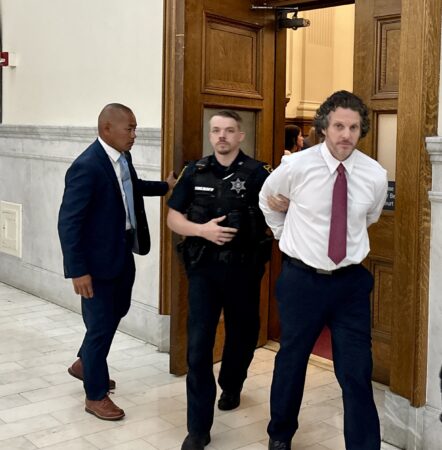
  • Pottstown man who shot officer during domestic violence call sentenced to state prison

    Pottstown man who shot officer during domestic violence call sentenced to state prison

    A Pottstown man who shot an officer in the leg with his own firearm during a scuffle last year was sentenced Tuesday to 22½ to 45 years in state prison.

    William Ciccoli Jr., 43, showed little emotion as he learned his fate, shaking his head as Montgomery County Court Judge Thomas DelRicci handed down his sentence.

    The judge told Ciccoli he was shocked by his “lack of remorse and accountability.”

    “We all saw the video, yet you claim the ‘gun went off,’” DelRicci said. “It went off because of the defendant’s actions. No other reason.”

    After the hearing, Ciccoli denied pulling the trigger on Cpl. Anthony Fischer’s sidearm as they grappled inside Ciccoli’s apartment in November 2024.

    “If I disarmed him, my prints would’ve been on that gun,” he said. “I just feel sorry for my family for what has happened, that is all.”

    When pressed, Ciccoli said he feels sorry for Fischer, but insisted that he did not shoot him.

    Ciccoli’s attorney, Frank Genovese, said he wasn’t surprised by the sentence, which he said he would appeal.

    In June, a jury convicted Ciccoli of assault on a law enforcement officer and related crimes, but acquitted him of attempted murder, ruling that he did not intend to kill Fischer when he fired the gun.

    Fischer went to Ciccoli’s home on Chestnut Street to respond to a report of a domestic-violence dispute between him and his girlfriend, prosecutors said. While speaking with the officers, Ciccoli became combative and fought with Fischer.

    During the scuffle, Ciccoli wedged his hand into the holster on Fischer’s hip and pulled the trigger on his department-issued .40-caliber handgun, according to bodycam footage played during Ciccoli’s trial in June. During the video, Fischer yells “he’s going for my gun,” shortly before a single gunshot rings out.

    The shot struck Fischer in his leg, nicking his femoral artery and causing severe injuries that the officer said still prevent him from moving without pain.

    District Attorney Kevin Steele, who prosecuted the case, said Tuesday he appreciated that the judge “recognized the seriousness of the case.”

    “I think it’s very important for everyone to understand that if you try to disarm a police officer, if you shoot at a police officer you’re going to jail for 20 years,” Steele said, adding that Ciccoli’s repeated profession of innocence is “nonsense.”

    “This is a guy that’s not taking accountability for his actions,” Steele said. “We’re here because of his actions.”

  • ‘Franklin the Turtle’ publisher slams Hegseth post joking about boat strike

    ‘Franklin the Turtle’ publisher slams Hegseth post joking about boat strike

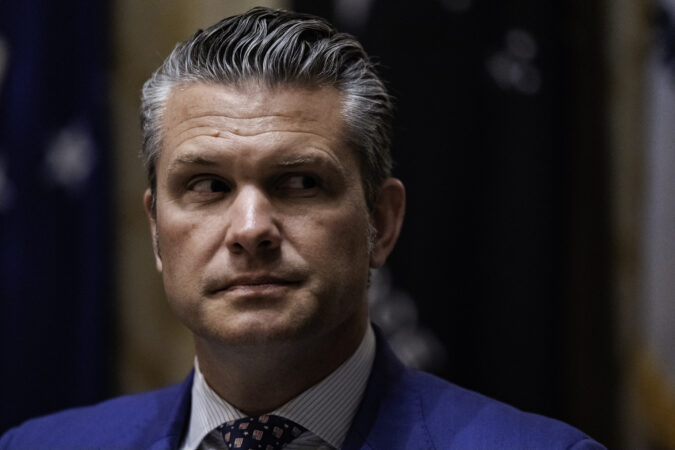
    The publisher of Franklin the Turtle, a Canadian book franchise aimed at preschoolers, has expressed criticism after Defense Secretary Pete Hegseth appeared to make light of deadly boat strikes in Latin America by posting a doctored image that showed the well-known turtle character attacking the crew of a narcotics vessel.

    The Washington Post reported exclusively Friday that Hegseth gave a spoken order to kill the entire crew of a vessel thought to be ferrying narcotics in the Caribbean Sea, the first of more than 20 such strikes carried out by the administration since early September. When two survivors were detected, a military commander directed another strike to comply with Hegseth’s order that no one be left alive, the Post reported.

    In a post on X over the weekend, Hegseth shared an image of a doctored book cover, titled “Franklin Targets Narco Terrorists,” that depicted the elementary-school-aged turtle firing a rocket-propelled grenade at apparent drug traffickers. “For your Christmas wish list …” Hegseth wrote.

    In a statement late Monday, the cartoon’s publisher, Kids Can Press, issued a statement that did not name Hegseth, but said: “Franklin the Turtle is a beloved Canadian icon who has inspired generations of children and stands for kindness, empathy, and inclusivity. We strongly condemn any denigrating, violent or unauthorized use of Franklin’s name or image, which directly contradicts these values.”

    In an emailed response to a request for comment Tuesday, chief Pentagon spokesman Sean Parnell said, “We doubt Franklin the Turtle wants to be inclusive of drug cartels … or laud the kindness and empathy of narcoterrorists.”

    The Franklin the Turtle franchise began in 1986 and spans over 30 books, as the young turtle embarks on familiar coming-of-age milestones including falling in love, celebrating Thanksgiving and having a sleepover. The series has sold more than 65 million copies in over 30 languages, according to its publisher, and has been made into two educational television series and multiple movies.

    On Monday, Senate Minority Leader Charles E. Schumer described Hegseth’s post as a “sick parody of a well-known children’s book,” and accused Hegseth of being childish and unserious. “This man is a national embarrassment. Tweeting memes in the middle of a potential armed conflict is something no serious military leader would ever even think of doing.”

    Pressure has been mounting on the Pentagon to provide a full accounting of its orders to target alleged narcotics traffickers in the Caribbean Sea with lethal force, in strikes that have killed more than 80 people to date. Following the Post’s report, lawmakers in the House and Senate pledged to open inquiries to see if a war crime was committed during the first strike, where the two survivors were targeted. Legal experts have said the survivors did not pose an imminent threat to U.S. personnel and thus were illegitimate targets.

    On Monday, White House press secretary Karoline Leavitt acknowledged Hegseth had authorized the commander, Adm. Frank M. Bradley, to conduct the Sept. 2 strikes, while saying Bradley had “worked well within his authority and the law, directing the engagement to ensure the boat was destroyed.” Writing on social media Monday night, Hegseth said he stood by the admiral and “the combat decisions he has made.”

    The statements were seen as an attempt to distance Hegseth from the growing fallout from the strikes, with military officials expressing concern that he was attempting to insulate himself from any legal recourse and leave Bradley to face the fallout alone, the Post reported.

  • Michael and Susan Dell donate $6.25 billion to encourage families to claim ‘Trump Accounts’

    Michael and Susan Dell donate $6.25 billion to encourage families to claim ‘Trump Accounts’

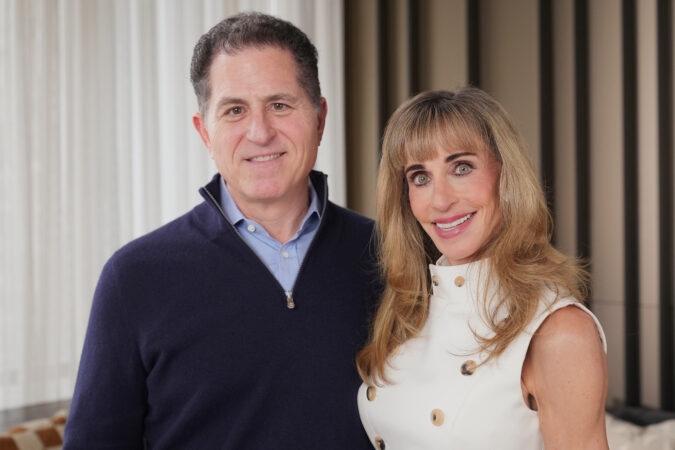
    NEW YORK — Billionaires Michael and Susan Dell pledged $6.25 billion Tuesday to provide 25 million American children 10 and under an incentive to claim the new investment accounts for children created as part of President Donald Trump’s tax and spending legislation.

    The historic gift has little precedent, with few single charitable commitments in the last 25 years exceeding $1 billion. Announced on GivingTuesday, the Dells believe it’s the largest single private commitment made to U.S. children.

    Its structure is also unusual. Essentially, it builds on the “Trump Accounts” program, where the U.S. Department of the Treasury will deposit $1,000 into investment accounts it sets up for American children born between Jan. 1, 2025, and Dec. 31, 2028. The Dells’ gift will use the “Trump Accounts” infrastructure to give $250 to each qualified child under 11.

    “We believe that if every child can see a future worth saving for, this program will build something far greater than an account. It will build hope and opportunity and prosperity for generations to come,” said Michael Dell, the founder and CEO of Dell Technologies whose estimated net worth is $148 billion, according to Forbes.

    Though the “Trump Accounts” became law as part of the president’s signature legislation in July, the Dells say the accounts will not launch until July 4, 2026. Michael Dell said they wanted to mark the 250th anniversary of U.S. independence.

    “We want these kids to know that not only do their families care, but their communities care, their government, their country cares about them,” Susan Dell told the Associated Press.

    Under the new law, “Trump Accounts” are available to any American child under 18 with a Social Security number. Account contributions must be invested in an index fund that tracks the overall stock market. When the children turn 18, they can withdraw the funds to put toward their education, to buy a home or to start a business.

    The Dells will put money into the accounts of children 10 and younger who live in zip codes with a median family income of $150,000 or less and who won’t get the $1,000 seed money from the Treasury. Because federal law allows outside donors to target gifts by geography, the Dells said using zip codes was “was the clearest way to ensure the contribution reaches the greatest number of children who would benefit most.”

    The Dells hope their gift will encourage families to claim the accounts and deposit more money into it, even small amounts, so it will grow over time along with the stock market.

    There is a political benefit for Trump and fellow Republicans. The accounts will become available in the midst of a midterm election, providing money to millions of voters — and a campaign talking point to GOP candidates — at a critical time politically. The $1,000 deposits are slated to end just after the 2028 presidential election.

    At the White House on Tuesday, Trump praised the Dells saying their gift was, “truly one of the most generous acts in the history of our country.”

    Trump said many companies and many of his friends would also be donating, adding “I’ll be doing it, too.”

    Brad Gerstner, a venture capitalist, who championed this legislation, said the accounts will give all children renewed hope in the American dream.

    “It’s hard to give effective dollars away at scale, particularly to the country’s neediest kids in a way that you have confidence that those dollars are going to compound with the upside of the U.S. economy,” said Gerstner, who is also the founder of Invest America Charitable Foundation, which is supporting the Treasury in launching the accounts.

    “Fundamentally, we need to include everybody in the upside of the American experiment. Otherwise, it won’t last. And so, at its core, we think it can re-energize people’s belief in free market, capitalist democracy,”″ Gerstner said of the accounts.

    About 58% of U.S. households held stocks or bonds in 2022, according to the U.S. Securities and Exchange Commission, though the wealthiest 1% owned almost half the value of stocks in that same year and the bottom 50% owned about 1% of stocks.

    In 2024, about 13% of children and young people in the U.S. lived in poverty, according to the Annie E. Casey Foundation, and experts link the high child poverty rates to the lack of social supports for new parents, like paid parental leave.

    While the funds in the Trump Accounts may help young adults whose families or employers can contribute to them over time, they won’t immediately help to diminish childhood poverty. Cuts to Medicaid, food stamps and childchildcare were also included in the spending package are likely to reduce the support children from low-income families receive.

    Ray Boshara, senior policy adviser with both the Aspen Institute and Washington University in St. Louis, said he is excited about the idea that the Trump Accounts will be able to receive contributions from the business, philanthropic and governmental sectors.

    “We would like to see this idea continue and get better over time, just like any big policy,’ said Boshara, who co-edited the book The Future of Building Wealth. “The ACA, Social Security — they start off fairly flawed, but get much better and more progressive and inclusive over time. And that’s how we think about Trump Accounts. It’s a down payment on a big idea that deserves to be improved and there’s bipartisan interest in improving them.”

    Through the Michael & Susan Dell Foundation, the Dell’s have reported giving $2.9 billion since 1999, with a large focus on education.

    Michael Dell said they had not initially envisioned committing so much to boost the child investment accounts, but Susan Dell said that changed over time.

    “We’re thrilled to be spearheading this in the philanthropy sector and are so excited because we know that more people are going to jump on board because really, we can’t think of a better idea and better way to help America’s children,” she said.

  • Trump’s push to end the Russia-Ukraine war raises fears of an ‘ugly deal’ for Europe

    Trump’s push to end the Russia-Ukraine war raises fears of an ‘ugly deal’ for Europe

    BRUSSELS – However Donald Trump’s latest push to end the war in Ukraine pans out, Europe fears the prospect of a deal – sooner or later – that will not punish or weaken Russia as its leaders had hoped, placing the continent’s security in greater jeopardy.

    Europe may well even have to accept a growing economic partnership between Washington, its traditional protector in the NATO alliance, and Moscow, which most European governments – and NATO itself – say is the greatest threat to European security.

    Although Ukrainians and other Europeans managed to push back against parts of a 28-point U.S. plan to end the fighting that was seen as heavily pro-Russian, any deal is still likely to carry major risks for the continent.

    Yet Europe’s ability to influence a deal is limited, not least because it lacks the hard power to dictate terms.

    It had no representatives at talks between U.S. and Ukrainian officials in Florida at the weekend, and will only watch from afar when U.S. Special Envoy Steve Witkoff visits Russian President Vladimir Putin on Tuesday.

    “I get the impression that, slowly, the awareness is sinking in that at some point there will be an ugly deal,” said Luuk van Middelaar, founding director of the Brussels Institute for Geopolitics think tank.

    “Trump clearly wants a deal. What is very uncomfortable for the Europeans…is that he wants a deal according to great-power logic: ‘We’re the U.S., they are Russia, we are big powers’.”

    Rubio seeks to reassure Europeans

    U.S. Secretary of State Marco Rubio has said Europeans will be involved in discussions about the role of NATO and the European Union in any peace settlement.

    But European diplomats take limited comfort from such reassurances. They say that just about every aspect of a deal would affect Europe – from potential territorial concessions to U.S.-Russian economic cooperation.

    The latest initiative has also triggered fresh European worries about the U.S. commitment to NATO, which ranges from its nuclear umbrella through numerous weapons systems to tens of thousands of troops.

    German Defence Minister Boris Pistorius said last week that Europeans no longer know “which alliances we will still be able to trust in future and which ones will be durable.”

    Despite Trump’s previous criticism of NATO, he affirmed his commitment to the alliance and its Article 5 mutual defense clause in June in return for a pledge by Europeans to ramp up their defense spending.

    But Rubio’s plans to skip a meeting of NATO foreign ministers in Brussels this week may only fan European jitters, amid fears that an eastern member of the alliance may be Moscow’s next target.

    “Our intelligence services are telling us emphatically that Russia is at least keeping open the option of war against NATO. By 2029 at the latest,” German Foreign Minister Johann Wadephul said last week.

    Europeans fear territorial concessions will embolden Putin

    European officials say they see no sign that Putin wants to end his invasion of Ukraine. But if he does, they worry that any deal that does not respect Ukraine’s territorial integrity could embolden Russia to attack beyond its borders again.

    Yet it now seems likely any peace accord would let Moscow at least keep control of Ukrainian land that it has taken by force, whether borders are formally changed or not.

    The Trump administration has also not rejected out of hand Russian claims to the rest of the Donbas region that Moscow has been unable to capture after nearly four years of war.

    Moreover, Trump and other U.S. officials have made clear they see great opportunities for business deals with Moscow once the war is over.

    European officials fear that ending Russia’s isolation from the Western economy will give Moscow billions of dollars to reconstitute its military.

    “If Russia’s army is big, if their military budget is as big as it is right now, they will want to use it again,” EU foreign policy chief Kaja Kallas told reporters on Monday.

    Europe struggles to exert leverage

    But European leaders have struggled to exert a strong influence on any peace settlement, even though Europe has provided some 180 billion euros ($209.23 billion) in aid to Ukraine since Russia’s invasion in February 2022.

    The EU has a big potential bargaining chip in the form of Russian assets frozen in the bloc. But EU leaders have so far failed to agree on a proposal to use the assets to fund a 140-billion-euro loan to Ukraine that would keep Kyiv afloat and in the fight for the next two years.

    To try to show they can bring hard power to bear, a “coalition of the willing” led by France and Britain has pledged to deploy a “reassurance force” as part of postwar security guarantees to Ukraine.

    Russia has rejected such a force. But even if it did deploy, it would be modest in size, intended to bolster Kyiv’s forces rather than protect Ukraine on its own, and it could only work with U.S. support.

    “The Europeans now are paying the price for not having invested in military capabilities over the last years,” said Claudia Major, senior vice president for transatlantic security at the German Marshall Fund of the United States think tank.

    “The Europeans are not at the table. Because, to quote Trump, they don’t have the cards,” she said, referring to the U.S. president’s put-down of Ukrainian President Volodymyr Zelenskiy in February.

    ($1 = 0.8603 euros) (Additional reporting by Lili Bayer, John Irish and Sabine Siebold; writing by Andrew Gray; editing by Mark Heinrich)