Category: News

Latest breaking news and updates

  • Trump’s campaign of retribution: At least 470 targets and counting

    Trump’s campaign of retribution: At least 470 targets and counting

    In his second term, Donald Trump has turned a campaign pledge to punish political opponents into a guiding principle of governance.

    What began as a provocative rallying cry in March 2023 — “I am your retribution” — has hardened into a sweeping campaign of retaliation against perceived enemies, reshaping federal policy, staffing and law enforcement.

    A tally by Reuters reveals the scale: At least 470 people, organizations and institutions have been targeted for retribution since Trump took office — an average of more than one a day. Some were singled out for punishment; others swept up in broader purges of perceived enemies. The count excludes foreign individuals, institutions and governments, as well as federal employees dismissed as part of force reductions.

    The Trump vengeance campaign fuses personal vendettas with a drive for cultural and political dominance, Reuters found. His administration has wielded executive power to punish perceived foes — firing prosecutors who investigated his bid to overturn the 2020 election, ordering punishments of media organizations seen as hostile, penalizing law firms tied to opponents, and sidelining civil servants who question his policies. Many of those actions face legal challenges.

    At the same time, Trump and his appointees have used the government to enforce ideology: ousting military leaders deemed “woke,” slashing funds for cultural institutions held to be divisive, and freezing research grants to universities that embraced diversity initiatives.

    Reuters reached out to every person and institution that Trump or his subordinates singled out publicly for retribution, and reviewed hundreds of official orders, directives and public records. The result: the most comprehensive accounting yet of his campaign of payback.

    The analysis revealed two broad groups of people and organizations targeted for retaliation.

    Members of the first group – at least 247 individuals and entities – were singled out by name, either publicly by Trump and his appointees or later in government memos, legal filings or other records. To qualify, acts had to be aimed at specific individuals or entities, with evidence of intent to punish. Reuters reporters interviewed or corresponded with more than 150 of them.

    Another 224 people were caught up in broader retribution efforts – not named individually but ensnared in crackdowns on groups of perceived opponents. Nearly 100 of them were prosecutors and FBI agents fired or forced to retire for working on cases tied to Trump or his allies, or because they were deemed “woke.” This includes 16 FBI agents who kneeled at a Black Lives Matter protest in 2020. The rest were civil servants, most of them suspended for publicly opposing administration policies or resisting directives on health, environmental and science issues.

    The retribution took three distinct forms.

    Most common were punitive acts, such as firings, suspensions, investigations and the revocation of security clearances.

    Reuters found at least 462 such cases, including the dismissal of at least 128 federal workers and officials who had probed, challenged or otherwise bucked Trump or his administration.

    The second form was threats. Trump and his administration targeted at least 46 individuals, businesses and other entities with threats of investigations or penalties, including freezing federal funds for Democratic-led cities such as New York and Chicago.

    Trump openly discussed firing Federal Reserve Chair Jerome Powell for resisting interest rate cuts, for instance. Last week, he threatened to have six Democratic members of Congress tried for sedition – a crime he said is “punishable by DEATH” – after the lawmakers reminded military personnel they can refuse “illegal orders.” This week, the Defense Department threatened to court-martial one of them, U.S. Senator Mark Kelly, a former Naval officer.

    The third form was coercion. In at least a dozen cases, organizations such as law firms and universities signed agreements with the government to roll back diversity initiatives or other policies after facing administration threats of punishment, such as security clearance revocations and loss of federal funding and contracts.
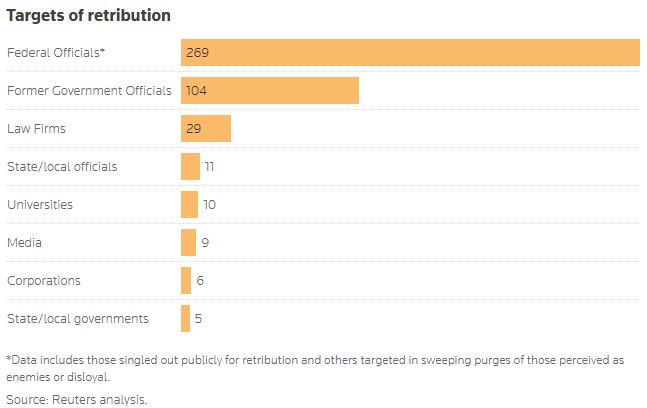
    It’s a campaign led from the top: Trump’s White House has issued at least 36 orders, decrees and directives, targeting at least 100 individuals and entities with punitive actions, according to the Reuters analysis.

    Trump openly campaigned on a platform of revenge in his latest run for the presidency, promising to punish enemies of his Make America Great Again movement. “For those who have been wronged and betrayed, I am your retribution,” he said in a March 2023 speech. Weeks later, while campaigning in Texas, he repeated the theme. “I am your justice,” he said.

    Today, the White House disputes the idea that the administration is out for revenge. It describes recent investigations and indictments of political adversaries as valid course corrections on policy, necessary probes of wrongdoing and legitimate policy initiatives.

    “This entire article is based on the flawed premise that enforcing an electoral mandate is somehow ‘retribution.’ It’s not,” White House spokesperson Abigail Jackson said. There is no place in government for civil servants or public officials “who actively seek to undermine the agenda that the American people elected the president to enact,” she added. Trump is abiding by campaign promises to restore a justice system that was “weaponized” by the Biden administration, Jackson said, and “ensure taxpayer funding is not going to partisan causes.”

    Trump’s actions have been cheered by his staunchest backers. Right-wing commentator and former Trump advisor Steve Bannon told Reuters the use of government power to punish Trump’s enemies is “not revenge at all” but an attempt to “hold people accountable” for what he said were unfair investigations targeting Trump. More is on the way, he said.

    “The people that tried to take away President Trump’s first term, that accused him of being a Russian asset and damaged this republic, and then stole the 2020 election – they’re going to be held accountable and they’re going to be adjudicated in courts of law,” he said in an interview. “That’s coming. There’s no doubt.” There’s no evidence the 2020 election was stolen.

    Trump’s allies point to actions former President Joe Biden took upon taking office. After Trump’s supporters attacked the U.S. Capitol on January 6, 2021, in a failed bid to overturn his election loss, Biden revoked Trump’s access to classified information, a first for any former president. Biden also won a court battle to dismiss Senate-confirmed directors of independent agencies serving fixed terms, such as the Federal Housing Finance Authority, and removed scores of Trump-era appointees from unpaid advisory boards.

    Yet the scale and systematic nature of Trump’s effort to punish perceived enemies marks a sharp break from long-standing norms in U.S. governance, according to 13 political scientists and legal scholars interviewed by Reuters. Some historians say the closest modern parallel, though inexact, is the late President Richard Nixon’s quest for vengeance against political enemies. Since May, for instance, dozens

    of officials from multiple federal agencies have been meeting as part of a task force formed to advance Trump’s retribution drive against perceived enemies, Reuters previously reported.

    “The main aim is concentration of power and destruction of all checks against power,” said Daron Acemoglu, Nobel laureate in economics and a professor at the Massachusetts Institute of Technology, which faces an ongoing federal investigation for embracing diversity and equity programs. “Retribution is just one of the tools.”

    Dozens of Trump’s targets have challenged their punishments as illegal. Fired and suspended civil servants have filed administrative appeals or legal challenges claiming wrongful termination. Some law firms have gone to court claiming the administration exceeded its legal authority by restricting their ability to work on classified contracts or interact with federal agencies. Most of those challenges remain unresolved.

    Investigating foes of Trump

    The administration has moved aggressively against officials in the government’s legal and national security agencies, institutions central to investigations of Trump’s alleged misconduct during and after his first term.

    At least 69 current and former officials were targeted for investigating or sounding alarms about Russian interference in U.S. elections. U.S. intelligence agencies concluded soon after the 2016 election that Moscow sought to tilt the race toward Trump, a finding later affirmed by a bipartisan Senate Intelligence Committee report in August 2020. Acts of retribution tied to the Russia probe include the September 25 indictment of former FBI Director James Comey, a break from Justice Department norms meant to shield prosecutions from political influence.

    Comey, who led the FBI’s investigation into Trump’s 2016 campaign, was charged after Trump demanded his prosecution. The Justice Department has cast the case as a corruption crackdown. Comey and his lawyers said in court documents that the case was “vindictive” and motivated by “personal animus.” Comey, who pleaded not guilty, declined to comment. A federal judge dismissed the case on Monday, ruling that Trump’s handpicked prosecutor had been unlawfully appointed.
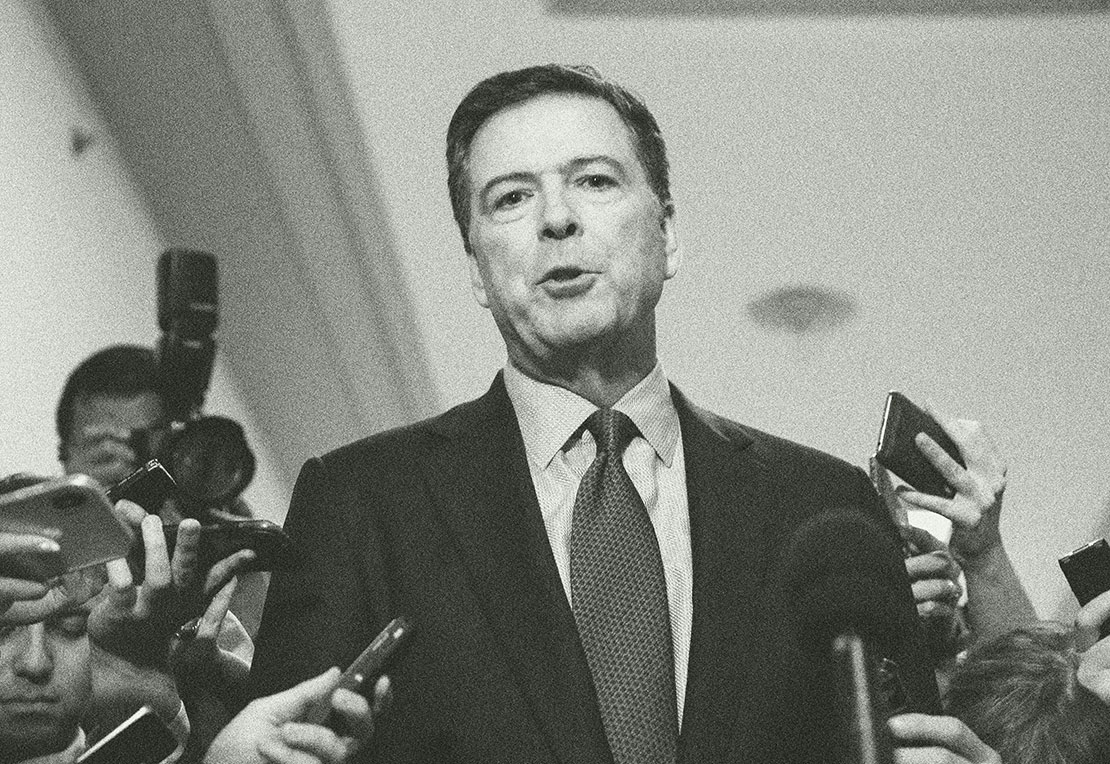
    Acts of retribution tied to the Russia probe include the indictment of former FBI Director James Comey. His lawyers say he is the target of a “vindictive” prosecution.

    At least 58 acts of retribution have targeted people Trump viewed as saboteurs of his election campaigns, including Chris Krebs, the top cybersecurity official during his first term. Trump fired him in 2020 for disputing claims that the election was rigged. In April, Trump stripped Krebs’ security clearance and ordered a federal investigation into his tenure. Krebs, still asserting that Trump’s defeat was valid, has vowed to fight the probe. He did not respond for this story.

    Reuters documented 112 security clearances revoked from current and former U.S. officials, law firms and state leaders – credentials needed for work that involves classified information. In August, Director of National Intelligence Tulsi Gabbard announced she was revoking 37 clearances.

    In a response to Reuters posted on X, an agency spokesperson said Gabbard and Trump are working “to ensure the government is never again wielded against the American people it is meant to serve.” She added: “President Trump said it best, ‘Our ultimate retribution is success.’”

    Leon Panetta, CIA director and defense secretary under former President Barack Obama, had his security clearance revoked in January along with others who signed an October 2020 letter suggesting Russia may have been behind reports about emails on Hunter Biden’s laptop. At the time, Joe Biden — Hunter’s father — was Trump’s Democratic rival in the 2020 election. An executive order Trump signed in January claimed: “The signatories willfully weaponized the gravitas of the Intelligence Community to manipulate the political process and undermine our democratic institutions.” Panetta has said he stands by signing the letter.

    Panetta told Reuters he had already surrendered his clearance after leaving government nearly a decade ago. Trump’s retribution campaign is hurting CIA morale and wrecking the bipartisan trust that allows Washington to function, Panetta said. “What I worry about is that our adversaries will look at what’s happening and sense weakness,” he said. “This kind of political retribution leads to a loss of trust, which ultimately leads to a failure of governing.” The CIA did not respond to a request for comment.
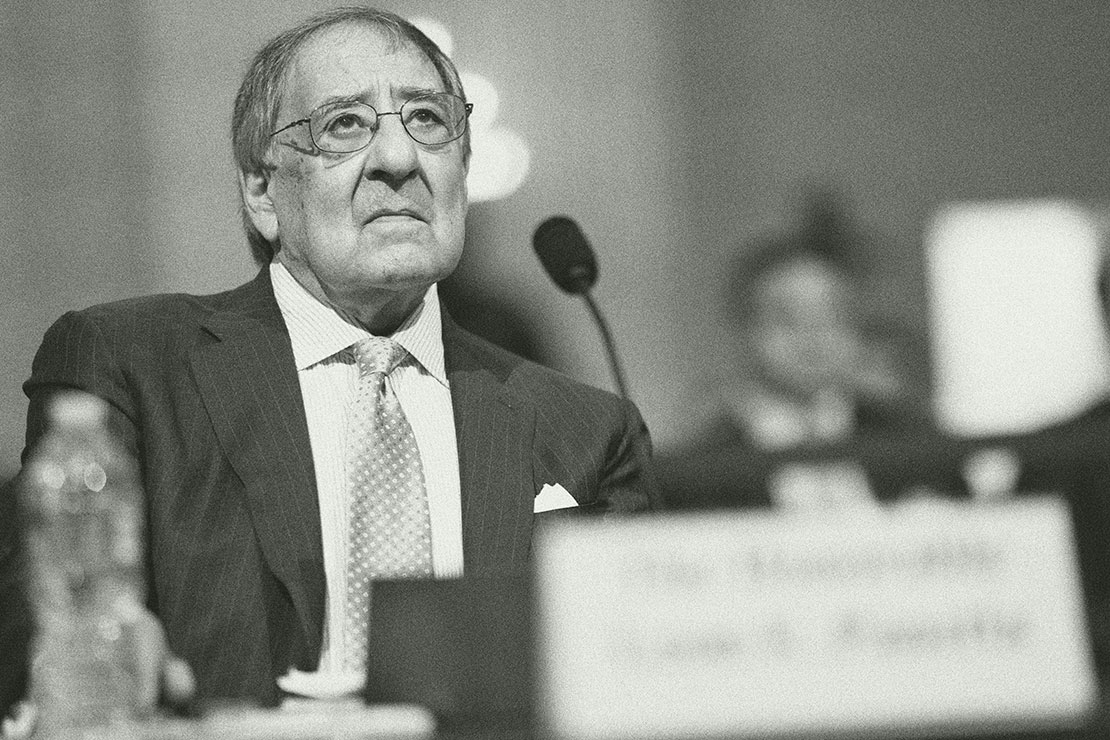
    Former CIA director Leon Panetta had his security clearance revoked along with others who signed a letter suggesting Russia may have been behind reports about emails on Hunter Biden’s laptop.

    The revenge effort also reaches deep into the civil service, punishing employees who speak out against Trump’s policies and turning forms of dissent that were tolerated by past administrations into grounds for discipline.

    This summer, hundreds of Environmental Protection Agency staffers wrote an open letter protesting deep cuts to pollution control and cleanup programs. The fallout was swift. More than 100 signers who attached their names were placed on paid leave. At least 15 senior officials and probationary employees were told they would be fired. The rest were informed they were under investigation for misconduct, leading to at least 69 suspensions without pay. Many remained out of work for weeks.

    “They followed all the rules” of conduct for civil servants, said Nicole Cantello, one of the signers and an officer with the American Federation of Government Employees, a union that represents many affected workers. She called the punishments an attempt to “quell dissent,” stifle free speech and “scare the employees.” In a statement, the EPA said it has “a zero-tolerance policy for career officials using their agency position and title to unlawfully undermine, sabotage, and undercut” administration policy.

    At the Federal Emergency Management Agency, about 20 staffers were put on leave and now face misconduct investigations after signing a letter criticizing the agency’s decision to scrap bipartisan reforms adopted years ago to speed disaster relief.

    Cameron Hamilton, a Republican who served briefly as acting head of FEMA, was fired in May, a day after telling Congress he didn’t believe the agency should be shut down, contradicting the administration.

    Hamilton told Reuters he still supports Trump. But he said too many senior officials are firing people in the name of retribution, trying to impress the White House. “They want to find ways to really launch themselves to prominence and be movers and shakers, to kick ass and take names,” said Hamilton. “They’re trying to show the president ‘look at what I am doing for you.’”

    In a statement to Reuters, the Department of Homeland Security, which includes FEMA, said it is building a “new FEMA” to fix “inefficiency and outdated processes.” Employees “resisting change” are “not a good fit,” the statement said.

    Dr. Jeanne Marrazzo, former head of the National Institute for Allergy and Infectious Diseases, sees her firing in October — three weeks after filing a whistleblower complaint alleging politicization of research and vaccine policy — as a warning shot. She told Reuters the administration’s purge of dissenting health officials is breeding “anticipatory obedience” — a reflex to comply before being asked. “People know if they push back … this is what happens,” she said. The effect, she says, is an ecosystem of fear: those who stay in government self-censor; those who speak out are branded “radioactive, too hot to handle.”

    The Department of Health and Human Services, the agency that oversees NIAID, did not respond to a request for comment.

    Federal agency leaders have dismissed a wide array of officials they deemed out of step with Trump’s MAGA agenda, including employees involved in diversity, equity and inclusion initiatives and those working on transgender issues.

    David Maltinsky, a Federal Bureau of Investigation employee, says he was fired by Director Kash Patel for displaying a Pride flag at work — one of at least 50 bureau personnel dismissed on Patel’s watch. Maltinsky sued the FBI and Justice Department, alleging violations of his constitutional rights and seeking reinstatement. The Justice Department has yet to file a formal response.

    In his 2023 book, “Government Gangsters,” Patel named 60 people that he said were members of an “Executive Branch deep state” that opposed Trump, including former Democratic government officials and Republicans who served in Trump’s first administration but eventually broke with him. He called for firings and said that anybody who abused their authority should face prosecution. In his 2025 confirmation hearing before Congress, Patel denied that it was an “enemies list.”
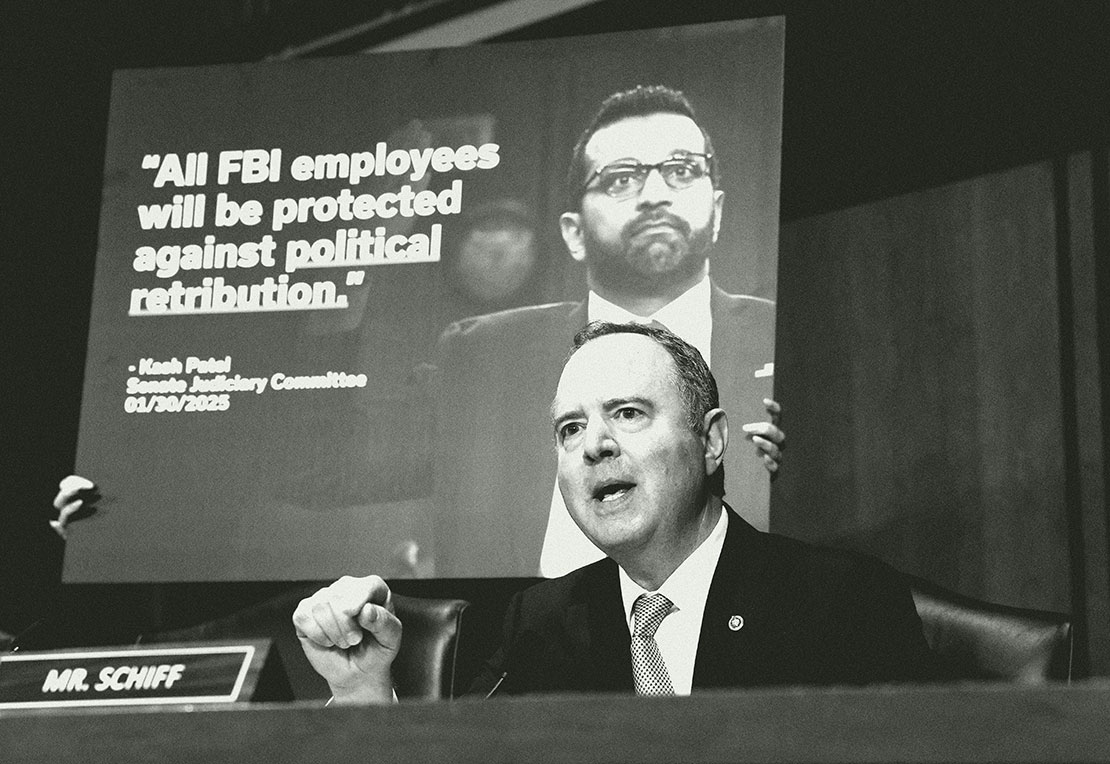
    Under FBI Director Kash Patel’s watch, at least 50 FBI personnel have been dismissed. In this photo, U.S. Senator Adam Schiff speaks in front of an image of Patel at a Senate hearing on FBI oversight.

    Reuters found that at least 17 of the 60 people on Patel’s list have faced some sort of retribution, including firings and stripping of security clearances. The FBI did not respond to a request for comment.

    Against perceived foes in the private sector, the administration has wielded financial penalties as leverage. At least two dozen law firms faced inquiries, investigations or restrictions on federal contracting, often for employing or representing people tied to past cases against Trump. Eight struck deals to avoid further action.

    Nine media organizations have faced federal investigations, lawsuits, threats to revoke their broadcast licenses and limits on access to White House events. Trump has also suggested revoking broadcast licenses for networks whose coverage he dislikes.

    The targets include universities, long cast by the president and his allies as bastions of left-wing radicals.

    Officials froze more than $4 billion in federal grants and research funding to at least nine schools, demanding policy changes such as ending diversity, equity and inclusion programs, banning transgender athletes from women’s sports and cracking down on alleged antisemitism amid pro-Palestinian protests. Five universities have signed agreements to restore funding. Harvard University successfully sued to block a freeze on $2.2 billion in federal aid for the school, which Trump accused of “pushing political, ideological, and terrorist inspired” dogma. Harvard declined to comment.

    The administration has described the funding freezes and other efforts to force policy changes at colleges and universities as a necessary push to reverse years of leftward drift in U.S. education. “If Reuters considers restoring merit in admissions, reclaiming women’s titles misappropriated by male athletes, enforcing civil rights laws, and preventing taxpayer dollars from funding radical DEI programs ‘retribution,’ then we’re on very different planes of reality,” said Julie Hartman, a spokesperson for the U.S. Education Department.

    A historical parallel: Nixon’s enemies

    It’s impossible to predict, of course, how far the Trump revenge campaign will go, or whether it will be affected by a recent slide in popular support. Trump has been hurt by public frustration with the high cost of living and the investigation into late convicted sex offender Jeffrey Epstein.

    Nixon resigned in 1974 over the Watergate scandal, in which aides to his re-election campaign broke into Democratic Party headquarters and the president himself later directed a cover-up. While in office, he kept a list of more than 500 enemies. But while Trump has conducted his retribution campaign in the open, historians note, Nixon’s enemies list was conceived as a covert tool.

    John Dean, chief counsel in the Nixon White House, wrote a confidential memo in 1971 addressing “how we can use the available federal machinery to screw our political enemies.” The planned methods included tax audits, phone-tapping, the cancellation of contracts and criminal prosecution. Yet the execution faltered: IRS Commissioner Donald Alexander refused to conduct mass audits, and most targets escaped serious punishment.

    Other recent presidents, to be sure, have been accused of seeking to punish opponents, though on a smaller scale. The Obama administration pursued “aggressive prosecution of leakers of classified information,” the Committee to Protect Journalists said in a 2013 report. Two IRS employees alleged they were retaliated against during the Biden administration for raising concerns about the handling of the tax-compliance investigation of Hunter Biden.

    Nixon’s plotting remained a secret until the Watergate hearings exposed it, turning his enemies list into a symbol of presidential abuse. The secrecy reflected a political culture in which retaliation was whispered, not broadcast, and where institutional checks blunted many of Nixon’s ambitions.

    Trump’s approach reverses that pattern, historians say. He has openly named his perceived enemies, urged prosecutions in public and framed vengeance as a campaign vow. Some say today’s “enemies list” politics are in that sense farther-reaching than Nixon’s, possibly signaling a shift toward a normalization of retribution in American political life.

    Corey Brettschneider, a political science professor at Brown University who has written a book on power grabs by American presidents, said Nixon was ultimately checked and forced to resign by Congress, including members of his own Republican Party. “That’s just not happening now,” he said.
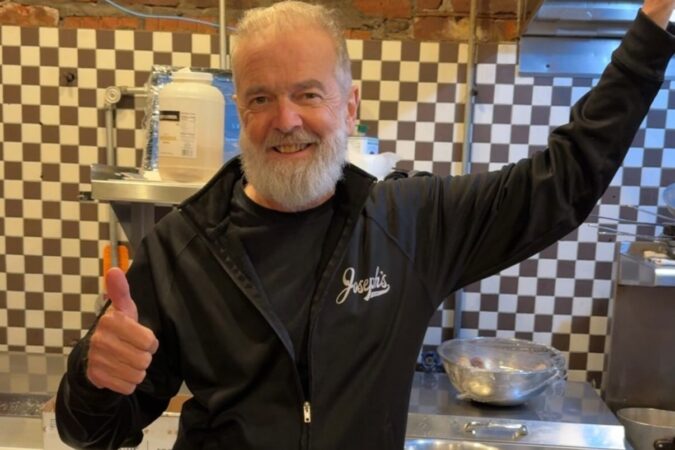

  • Steve Sillman, beloved Joseph’s Pizza Parlor manager and a fixture of the Northeast Philly restaurant scene, dies at 70

    Steve Sillman, beloved Joseph’s Pizza Parlor manager and a fixture of the Northeast Philly restaurant scene, dies at 70

    In his prime, Steve Sillman worked nights, Thursday through Monday.

    And he was usually late coming in, despite only a 10-minute walk separating the front door of his impeccably preserved Fox Chase twin and the double red doors of Joseph’s Pizza Parlor.

    The dayside managers would be tapping the toes of their dark work shoes, and Mr. Sillman would just glide in. He’d start turning radio dials in search of disco hits or a 1970s station, resetting the vibe with work-appropriate dancing to classic hits from Carole King and James Taylor. He’d remind anyone listening that he wanted disco played at his funeral.

    And at the end of the night, hours after the other staff members had gone home, he’d pour himself a glass of red wine and close out the register, and then he’d call a few of the staffers and leave a message. He’d tell them to call back: “It’s important.” And when they called back, he’d say they missed a spot sweeping.

    “You work with people so long,” said current Joseph’s co-owner Matt Yeck, “that you become like family.”

    For the better part of four decades, and until the 70-year-old received a terminal brain cancer diagnosis earlier this year, Mr. Sillman was the face of the neighborhood’s trademark pizza place.

    He started working there shortly after graduating from Northeast High School in the 1970s, and floated among the pizza parlor, neighboring Italian restaurant Moonstruck, and the once-wild Ciao nightclub above it.

    He’d often speak of waiting on entertainment icon Elizabeth Taylor. (He would say he got lost in her transfixing blue eyes.) Over the course of those 40ish years, he became intimately familiar with the building’s quirks, and attended to its every need, from fixing broken faucets to decorating it for Christmas.

    At the front of the house, he was the manager who would chat up customers before their order was ready. They always remembered his name, and sometimes he’d have to pretend to know theirs. In the back of the house, he was a peacekeeper, confidant, psychiatrist, dance partner, friend, and brother.

    It was Mr. Sillman who raised an entire generation of neighborhood kids who came to Joseph’s for work. He watched them grow up, and then he folded them into his restaurant family.

    He met his best friend of 40 years, Jane Readinger, through her siblings. They worked with Mr. Sillman at the restaurant, and over the years they folded him into their wider familial unit.

    “A lot of his friendships came through that building,” said Jane, who is eight years younger. “And he had those friendships for life.”

    It started with “P.L.P.’s,” or parking lot parties, after Joseph’s closed for the night. It grew into group ski trips and shared shore houses.

    As his friends started getting married and having kids and growing up, Mr. Sillman, a lifelong bachelor, bought a Sea Isle house so they all had a place to stay.

    But it was the twin on the corner of Jeanes Street and Solly Avenue that was his legacy. His grandparents built the house in 1914, and only his family — three generations — had called it home. He maintained its original layout and finishes and flourishes from the turn of the 20th century.

    The home was a marvel at Christmas, as Mr. Sillman would decorate his and the adjoining twin together. Draping them in handmade ribbons, and bestowing showstopper wreaths made of fresh fruit.

    After he was diagnosed in the spring with glioblastoma, members of that restaurant family would stop and see him on Jeanes Street, even as Mr. Sillman could no longer climb the three flights of stairs, and after he transitioned from the recliner to a bed setup in the dining room.

    Even the new owners came. Yeck and his partner, Jimmy Lyons, awkwardly inherited Mr. Sillman when they bought Joseph’s in 2021. But it didn’t take long for both to see his indistillable value.

    “Steve came with the building,” Yeck said.

    As Mr. Sillman took his last breaths on the morning of Sunday, Nov. 23, with Jane cradling his head in her arms, Carole King’s 1971 classic played through the house: “You’ve Got a Friend.”

    The outpouring of support in person and on social media was a nice reminder to Jane that people don’t need to be blood to be family. There’s family you’re born with, and then there’s family you collect along the way.

    “He was never alone during this fight,” Jane said. As a registered nurse, she volunteered to help attend to Mr. Sillman as he entered hospice care at home.

    Mr. Sillman is survived by his sister-in-law, Harriet Sillman; nieces and nephews; great nieces and nephews; and generations of former co-workers. His neighbors are planning to decorate the twin Jeanes Street houses in his absence this holiday season.

    Services for Mr. Sillman will be held Saturday, Nov. 29, at the Wetzel and Son Funeral Home, 419 Huntingdon Pike in Rockledge. The viewing will be held from 8 to 10 a.m., followed by a funeral ceremony.

    And then his extended family will honor Mr. Sillman’s wishes with an appropriate send-off: They’re throwing a disco party.

    Donations in his name may be made to the American Cancer Society, Box 970, Fort Washington, Pa. 19034, or to the Alex’s Lemonade Stand Foundation, 333 E. Lancaster Ave., Suite 414, Wynnewood, Pa. 19096.

  • After Manayunk’s Bridget the Dino statue was decapitated, neighbors will decide the name for a new dinosaur

    After Manayunk’s Bridget the Dino statue was decapitated, neighbors will decide the name for a new dinosaur

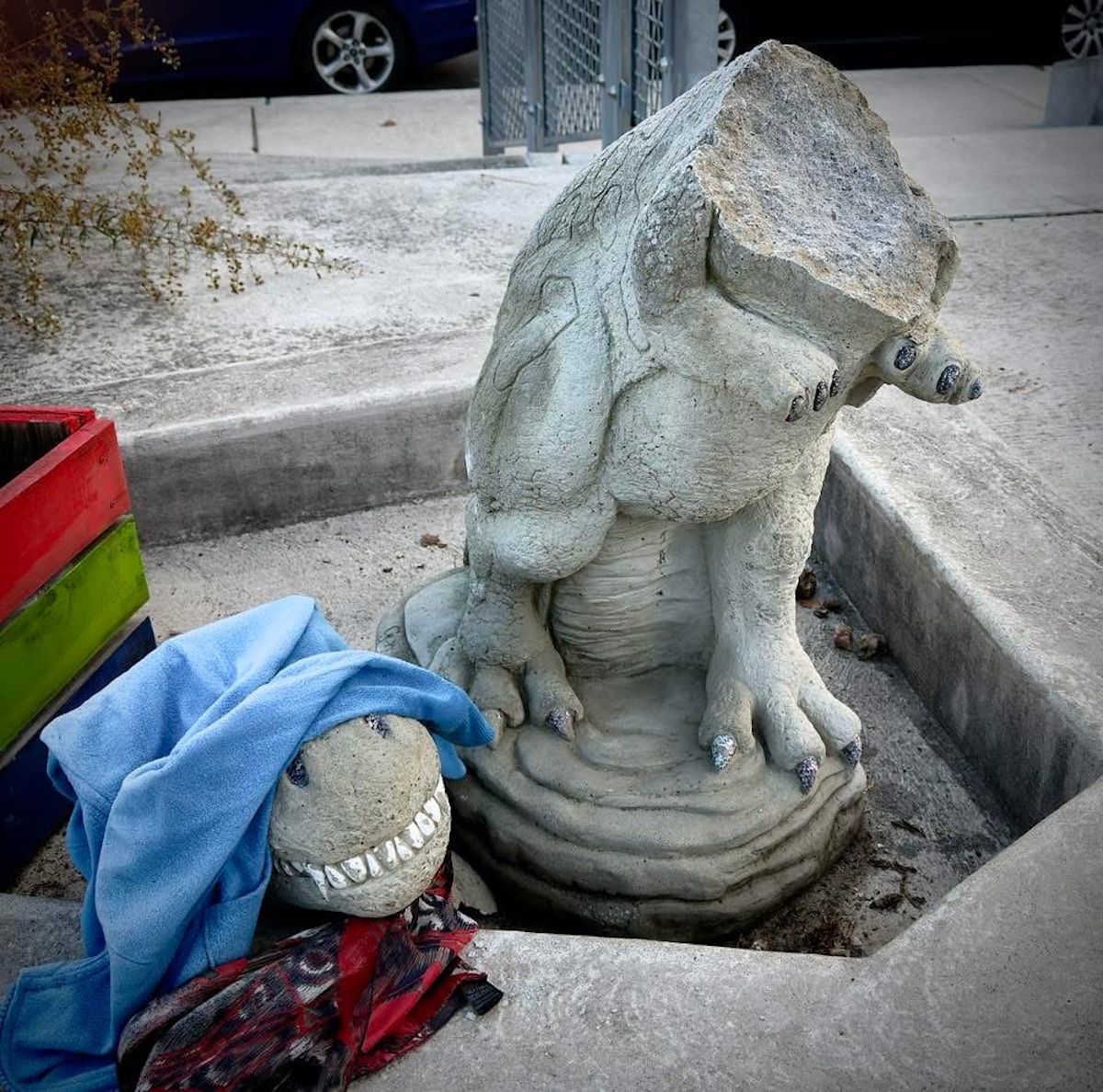
    The decapitation of a beloved stone garden dinosaur in Manayunk left the community reeling earlier this week.

    Bridget the Dino was a symbol for the neighborhood’s green spaces and neighborly affection, who oversaw the Manayunk Bridge Trail gardens.

    When all hope was lost, the original owners of Bridget, and other neighborhood dinosaurs that have become a staple to Roxborough and Manayunk, saved the day.

    Holod’s, the Lafayette Hill home and garden store, donated a brand new stone dinosaur to the Manayunk gardens at Dupont and High Streets, taking over Bridget’s yearslong watch as the garden guardian.

    “After the heartbreak of seeing Bridget damaged, this unexpected act of kindness means more than words can say. The neighborhood love is real, and this Dino is already feeling it,” park organizers announced on Tuesday.

    Now that the difficult task of placing a new 300-pound stone garden dinosaur is complete, the fun part comes: choosing a name for the new dino. When park organizers learned they would be getting a brand new dino, they decided they couldn’t just name the new statue Bridget, as she is “irreplaceable,” said park volunteer and Roxborough resident Juliane Holz.

    “The community is so much a part of this that they can help us name this new one,” Holz said. “I like Manny. But we also have to decide whether she is a girl or a boy dino. I do like ‘Holly’ for Holod’s.”

    Park organizers have already posted a list of suggested names for the new statue. This reporter is partial to “Yunker.”

    Potential dinosaur names:

    • Manny (for Manayunk)
    • Archie (for the arch of the bridge)
    • Roxie (for the Roxborough side)
    • Schuylie (for the Schuylkill)
    • Ivy (garden vibes)
    • Rocky (Philly and Roxborough)
    • Ledger (bridge and connection vibes)
    • Petra (means “rock”)
    • Yunker (play on Manayunk)

    Residents from Manayunk, Roxborough, and beyond can drop a comment below the park’s latest Instagram post to vote on one of the above names or suggest a new one.

    Last Sunday, a neighbor found Bridget’s head lying at the feet of her stone body after it was smashed between late Saturday evening and early Sunday morning. The vandalism came as a shock to the community that welcomed Bridget with open arms, as she grew into a beacon for the ever-growing green spaces that the families of Manayunk and Roxborough have come to revitalize.

    Bridget the Dino, a beloved stone garden statue at the Manayunk Bridge Garden, had its head smashed off between late Saturday night, Nov. 22, and early Sunday morning, Nov. 23, 2025. The 300-pound stone statue would be hard to move, neighbors say, leading some to believe an adult purposefully broke the statue.

    “It seems like something silly to be upset about, but someone put a lot of effort and money — these statues and improvements are not cheap — into making that bridge garden a really nice place,” Manayunk resident Annie Schuster said. “I hate the fact that somebody did that.”

    Neighbors believe the cowardly act to have been perpetrated by an adult who intended to destroy the iconic statue. Holz believed the statue proved too heavy for someone to mistakenly bump into it. Police reached out to Holz and park organizers to let them know they will investigate the crime, Holz said.

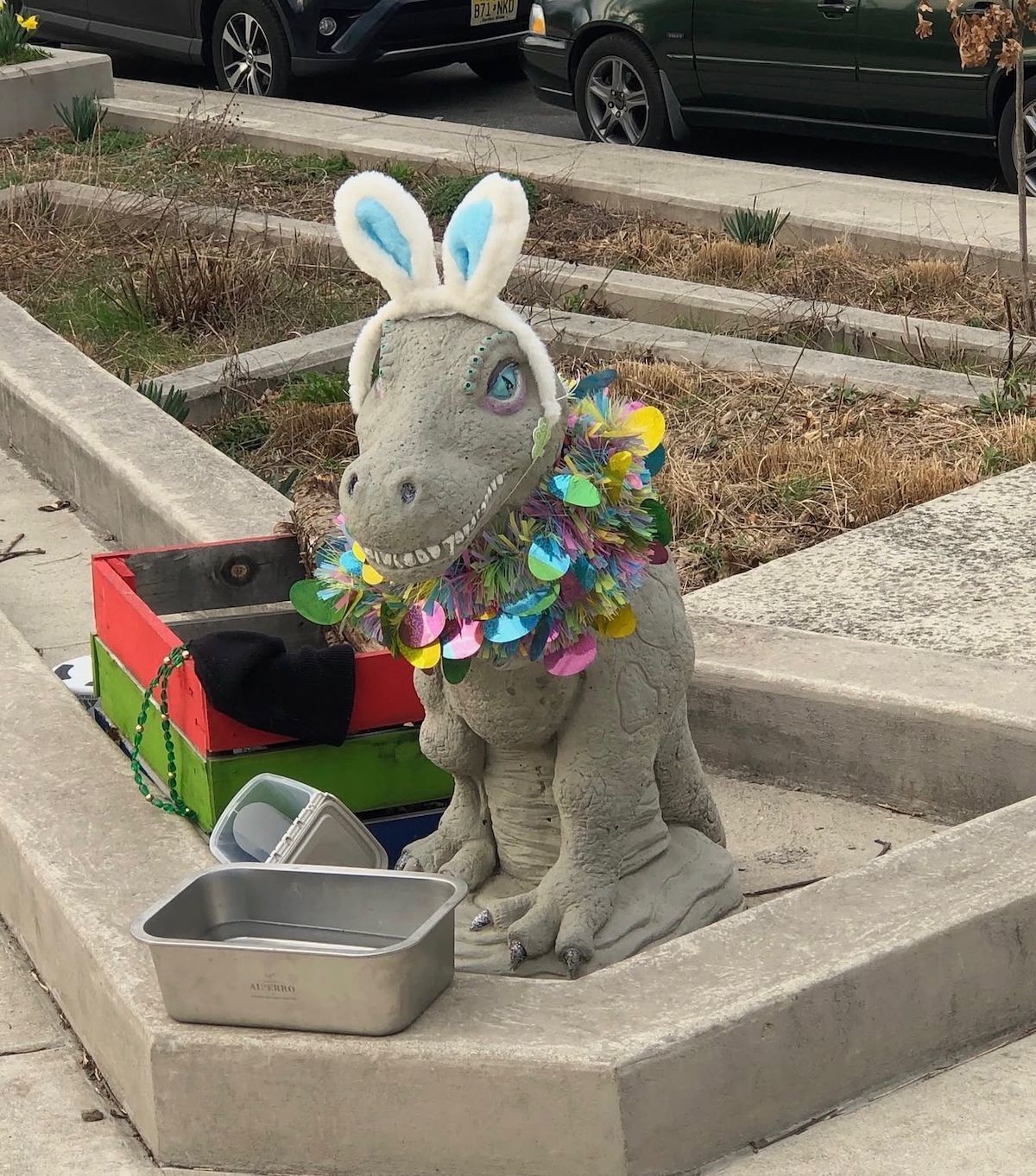
    Bridget the Dino, a beloved stone garden statue at the Manayunk Bridge Garden, pictured in an Easter Bunny costume for Easter. The community often dresses up Bridget during different holidays and themed events. In November 2026, her head was smashed off her body.

    Meanwhile, they’ll repurpose Bridget elsewhere among the garden beds and usher a new dinosaur dynasty with Holod’s latest statue. Holz said perhaps Bridget’s new iteration will be as a bird bath installation or an addition in a new sensory garden.

    The Manayunk Bridge Garden is one of the many public spaces being transformed into neighborhood gardens and pedestrian thoroughfares. Since COVID-19 lockdowns, residents have donated their time, alongside the Roxborough Manayunk Conservancy, to making this place special for local families. Bridget and her new friend encapsulate all of that passion.

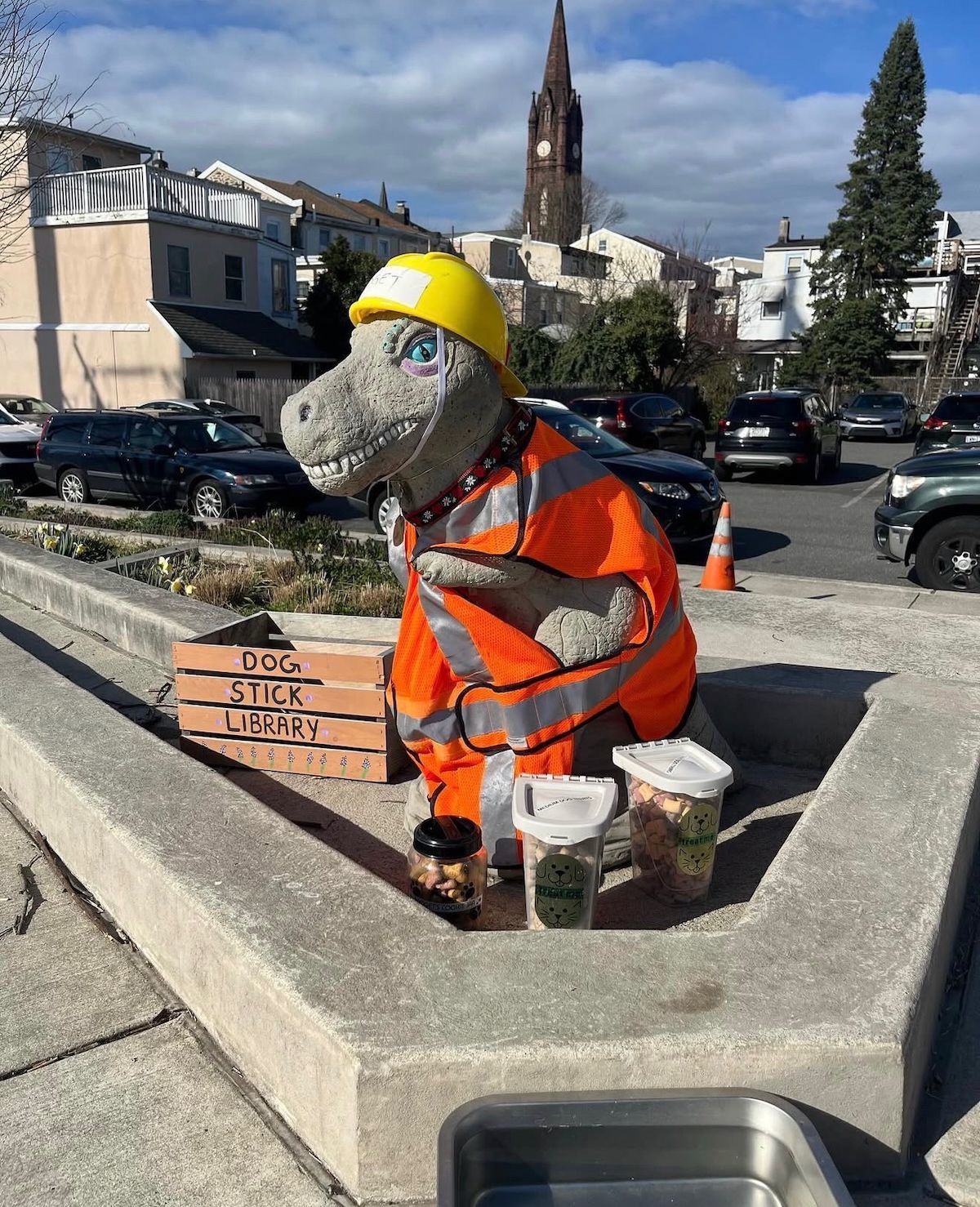
    Bridget the Dino, a beloved stone garden statue at the Manayunk Bridge Garden, pictured in a construction worker’s uniform. The community often dresses up Bridget during different holidays and themed events. In November 2026, her head was smashed off her body.

    “We are focused on improving the park’s ecology and creating opportunities for the community to enjoy and use the space. The gardens are stunning in autumn with their masses of purple asters and yellow goldenrod,” said Avigail Milder of the Roxborough Manayunk Conservancy.

    Along with the welcoming stone dinosaur, volunteers have been planting native shrubs and herbaceous plants that bloom through spring and summer. A new sugar maple tree was planted for much-needed shade. And most recently, Opus Piano donated a mini grand piano to be enjoyed and played by all parkgoers.

  • Two Camden Housing Authority employees win $1.7 million in lawsuit after wrongful termination: ‘I feel vindicated.’

    Two Camden Housing Authority employees win $1.7 million in lawsuit after wrongful termination: ‘I feel vindicated.’

    A slip of paper slid under Gary Evangelista’s office door at the Camden Housing Authority — a document that showed a tenant owed the agency $10,000 in unpaid rent. Evangelista, a retired police officer who oversaw security, was puzzled. Instead of being evicted, as policy required, the woman had been moved into another unit. So, Evangelista flagged the discrepancy to the top.

    That episode was one of several times over the course of a year that Evangelista and a colleague, Kaberia Fussell, brought reports of possible wrongdoing inside the agency — including allegations of theft, fraud, and favoritism — to its highest officials, according to a lawsuit they later filed.

    But rather than investigating, the lawsuit said, the housing authority fired Evangelista and Fussell in 2018.

    The two challenged their terminations in federal court, arguing that the housing authority had violated their First Amendment right to free speech without retaliation.

    And last week, after a five-year legal battle in federal court in Camden, a jury agreed, awarding Evangelista and Fussell a combined $1.7 million.

    It was unclear Wednesday whether the Camden Housing Authority and three officials named as defendants in the lawsuit — Victor Figueroa, its former executive director; Katheryn Blackshear, its former deputy executive director; and Debbie Person-Polk, chair of its board of commissioners — would appeal the jury’s verdict. Attorneys for the agency did not respond to calls and emails.

    Evangelista and Fussell’s lawyer, Joseph Guzzardo, said his clients are “good people” who were wrongfully terminated for “doing the right thing.”

    In all, Evangelista and Fussell, who worked as a housing specialist, brought at least five allegations of illicit activity to officials between 2017 and 2018, according to the lawsuit, including an employee scheme to steal scrap metal from housing villages and reports of sexual harassment against a tenant.

    They were fired on Dec. 19, 2018.

    “My reputation was ruined,” Evangelista said in an interview this week.

    Fussell, a union employee, successfully appealed her termination and returned to the agency. But Evangelista, a nonunion employee, could not appeal. He said he struggled to find steady employment.

    The verdict, he said, “gave me my life back after six years.”

    Fussell still works at the housing authority. Even so, before the verdict, “I still felt like a loser, even though I did nothing wrong. Because when you’re fired, people look at you like, ‘What did you do?’” Fussell said.

    But now, she said, “I feel vindicated.”

  • The time Philly almost didn’t have a Thanksgiving Day parade

    The time Philly almost didn’t have a Thanksgiving Day parade

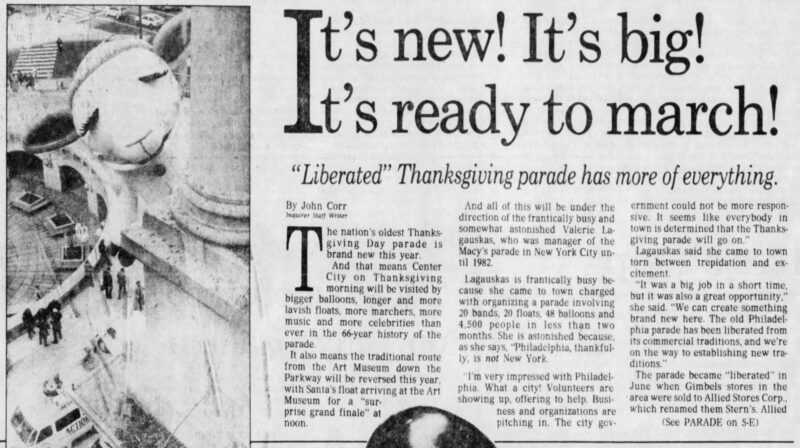
    Since 1920, Philadelphia has gone without a Thanksgiving Day parade only twice — once because of poor weather, and once because of a global pandemic. But nearly four decades ago, another formidable foe — corporate sponsorship — threatened the city’s beloved holiday tradition.

    That’s not a bad record for the country’s oldest Thanksgiving Day parade, which Gimbel Brothers Department Store launched with a humble procession through Center City. For more than 60 years, the festivities ended with Santa Claus climbing a ladder into the window of the Gimbels store at Ninth and Market Streets, signaling the start of the holiday season.

    Until 1986, that is. Gimbels by then had fallen on hard times and, following its sale to the highest bidder, was liquidated. Its Philadelphia-area locations were to be converted into Stern’s department stores, and Gimbels hoped to pass the baton to that chain to keep the Thanksgiving Day tradition alive.

    The problem was that Stern’s and its parent company, Allied Stores Corp., were not interested.

    “I think the best we could do this fast is to buy the Mummers some T-shirts,” Allied Stores chairman Thomas Macioce told the Daily News in 1986.

    The parade that year, however, became bigger and better than it had ever been. Here is how The Inquirer and Daily News covered it:

    https://www.newspapers.com/article/philadelphia-daily-news/185403993/

    Article from Jun 18, 1986 Philadelphia Daily News (Philadelphia, Pennsylvania) <!— –>

    ‘We can’t be ready in time’

    A deal in the Gimbels sale emerged in June 1986 and, right away, the Thanksgiving Day parade was on the chopping block, at least for that year. Allied officials claimed no planning had yet been done and there was no way to put it together in time.

    That, it turns out, wasn’t true. Ann Stuart, a Gimbels executive, told the Daily News that parade organizers had been proceeding as though the parade would be held as scheduled. And Barbara Fenhagen, the city’s special events coordinator, said planning was going ahead as usual.

    Either way, Stern’s and Allied’s lack of interest left the city in a tight spot. Aug. 15 was the last day orders could go in for the floats to be ready on time, marking a hard deadline to find a sponsor. Whoever took up the role would be expected to spend hundreds of thousands of dollars.

    “We will do everything we can to make sure that [the parade’s] appearance is not interrupted, even for one year,” Fenhagen said at the time.

    https://www.newspapers.com/article/philadelphia-daily-news/185404572/

    Article from Jul 16, 1986 Philadelphia Daily News (Philadelphia, Pennsylvania) <!— –>

    ‘Don’t rain on our parade’

    As the controversy wore on, Philadelphians and the local press grieved and snarled at the potential loss of a holiday tradition. The Daily News seemed to plead for Stern’s to reconsider.

    “Please don’t rain on our parade,” the People Paper wrote in an editorial. “To Philadelphians of all ages, it launches the holiday season in a special and heartwarming way.”

    Business columnist Jack Roberts struck a more combative tone, likening Stern’s to a houseguest who begins a conversation “by spitting in your face.” He later suggested that readers send back Stern’s junk mail to the company’s “Scrooge” executives with the phrase “I want the parade” scrawled across it.

    Special events professionals, meanwhile, warned that forgoing the sponsorship might create a bad name for Stern’s that would be difficult to overcome.

    “Philadelphians have a way of remembering,” special events consultant Shelly Picker said.

    https://www.newspapers.com/article/philadelphia-daily-news/185404234/

    Article from Nov 21, 1986 Philadelphia Daily News (Philadelphia, Pennsylvania) <!— –>

    ‘We’re delighted’

    The search for a new lead sponsor was arduous, with city officials approaching “most every local company that breathes,” according to a Daily News report. A number of bigger local outfits — ranging from Meridian Bancorp to Kiddie City — bowed out over cost and branding concerns.

    Then, after 56 days of limbo, the Thanksgiving Day parade was back on. And it was thanks to WPVI (Channel 6), better known today as 6abc.

    “When it became clear that because of the time frame and other commitments most were unable to assume that mantle, we decided to do it — and we’re delighted,” said the station’s general manager, Rick Spinner.

    The station had been airing the parade locally for 19 years and seemed to be a natural fit to take over. And, as the Daily News reported, the city had been pressuring Channel 6 to come up with a plan, seeing as the station benefited significantly from broadcasting the day’s festivities.

    The parade would go on to be known as the “Channel 6 Thanksgiving Day Parade.” But that was not the only — or even the biggest — change afoot.

    https://www.newspapers.com/article/philadelphia-daily-news/185404169/

    Article from Sep 24, 1986 Philadelphia Daily News (Philadelphia, Pennsylvania) <!— –>

    ‘Establishing new traditions’

    Channel 6 brought in the big guns straight away. Namely, by hiring a parade coordinator named Valerie Lagauskas, who previously managed the Macy’s parade in New York and wrote a book on parade planning.

    A number of changes came under Lagauskas’ leadership, including a new route. Instead of starting at the Philadelphia Art Museum and marching toward City Hall, as had been tradition, the parade would reverse direction and end at the Art Museum. The route would allow for the use of larger balloons, bigger floats, and better camera angles for the parade’s telecast.

    The full parade that year would also be broadcast nationally for the first time, appearing on the Lifetime network, in which ABC was part owner.

    In total, there would be 20 bands, 20 floats, 8 gigantic balloons, and 40 other balloons that were merely very large, The Inquirer reported. A massive balloon of the cartoon cat Heathcliff would make its debut. The theme, fittingly, would be “We Love a Parade.” And leading it all as parade marshal would be Sixers legend Julius “Dr. J” Erving,

    “The old Philadelphia parade has been liberated from its commercial traditions and we’re on the way to establishing new traditions,” Lagauskas said.

    https://www.newspapers.com/article/the-philadelphia-inquirer/185404381/

    Article from Nov 28, 1986 The Philadelphia Inquirer (Philadelphia, Pennsylvania) <!— –>

    ‘The best ever’

    On parade day, more than 500,000 spectators were expected to attend. And, according to reports from the time, they were not disappointed.

    Not only were there better floats and a more picturesque route, but paradegoers also were met with unseasonably warm temperatures.

    “It’s the first time we’ve been to a Thanksgiving Day parade where you could get a sunburn,” one attendee joked.

    The parade itself seemingly went off without a hitch, concluding on the steps of the Art Museum as Santa Claus pulled up to a rendition of “Happy Holidays.” Musicians and dancers let go of green and white balloons that drifted out over the Benjamin Franklin Parkway to cheers.

    And at least one Philadelphian didn’t forget who saved the day. Donna Harris, 30, of Audubon, who had attended the parade yearly since she was 5, was spotted holding a sign that read “Thank You WPVI.”

    “This parade was the best ever,” she said.

  • 17 holiday events happening near you | Inquirer Cherry Hill

    17 holiday events happening near you | Inquirer Cherry Hill

    Hello, Cherry Hill! 👋

    Happy Thanksgiving! While you’ve probably got your sights set on Turkey Day, the winter holidays aren’t far behind. We’ve rounded up over a dozen events you’ll want to add to your calendar. Also this week, we pay a visit to a recently opened interactive gaming spot, the mall has added a new luxury shop, plus why a Say Yes to the Dress Star was in town last weekend.

    If someone forwarded you this email, sign up for free here.

    Over a dozen holiday events in Cherry Hill you won’t want to miss

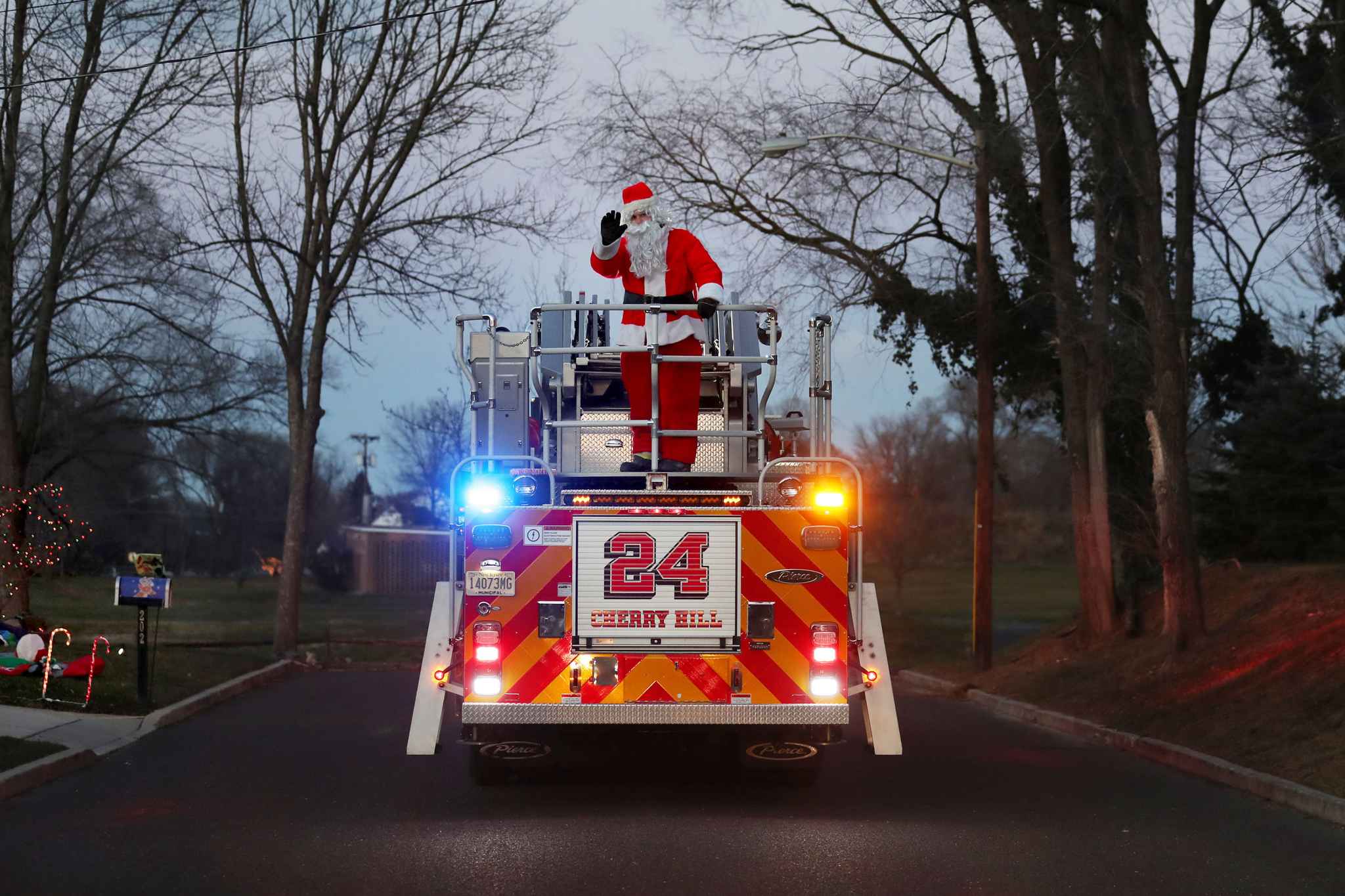
    Santa Claus will again make his way through town alongside the fire department starting next month.

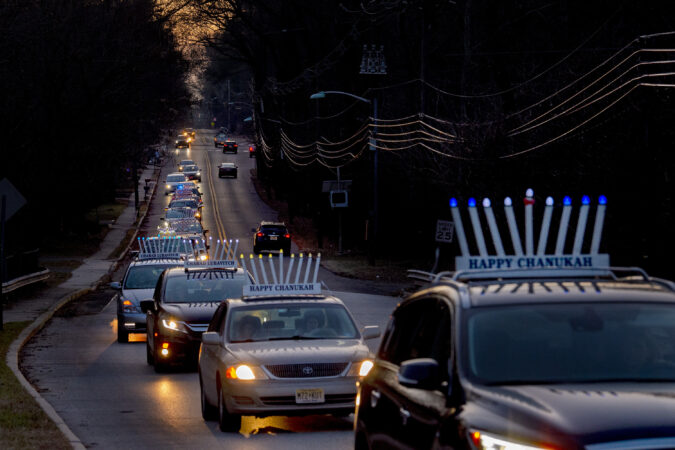
    The holiday season is officially upon us and with it, a slew of festive events. Whether you’re looking to snag a picture with Santa Claus, go ice skating on an outdoor rink, see a menorah parade, or tour a historic house decked-out for the season, there’s no shortage of events in Cherry Hill.

    We’ve rounded up more than a dozen holiday festivities this season, including shopping pop-ups, ornament workshops, and seasonal concerts.

    See the full list of holiday events here.

    Childhood games get a modern twist at this new gaming spot

    Activate’s “Mega Grid” game is similar to the popular childhood game, “The Floor is Lava,” but instead of cushions, players follow LED lights.

    Activate, a new immersive gaming spot, opened on Friday at 1509 Route 38, taking over a former Rite Aid. The 14,000-square-foot chain lets users bring to life old-school games like hide-and-seek and “The Floor is Lava,” and more modern ones, like a Mission Impossible-esque laser gauntlet, all in giant LED-filled spaces. In total, there are 13 stalls with different games that last one to three minutes each.

    Reporter Henry Savage took a look inside Activate’s first South Jersey location.

    💡 Community News

    • Reminder: Trash and recycling pickups will operate on an altered schedule this week for the holiday. See how your pickup is impacted here.
    • A 36-year-old man was hospitalized last week after he was found with a gunshot wound inside a Cherry Hill recording studio. He was listed in stable condition.
    • Bridal wear royalty was in town last weekend for the opening of a wedding dress shop’s second storefront. TV star and designer Randy Fenoli, who is known for his years-long tenure on TLC shows Say Yes to the Dress and Randy to the Rescue, helped brides at the new Cherry Hill location of Dress 2 Impress find the perfect gown for their big day as part of his cross-country tour promoting his Keepsake Kollection. He also imparted some wisdom about finding the right fit.
    • In other shopping news, handbag and accessories store Coach is now open at the Cherry Hill Mall. If you’re planning to shop this week, the mall is closed tomorrow and reopens at 7 a.m. on Friday.
    • Big Blue Swim School is set to open its doors on Monday at 2100 Route 38, near the mall. The swimming lesson chain will offer programs for kids as young as 3 months old and will be open every day but Friday.
    • Need a little help tackling your gift list? We’ve put together a guide to over 70 very Philadelphia ideas, complete with a quiz to find the perfect one for yourself or your hard-to-shop for friends and family.

    🏫 Schools Briefing

    • Reminder for families: There’s an early dismissal today, and schools are closed tomorrow and Friday.
    • Last year, 62.2% of township residents’ taxes went toward the school district. Cherry Hill’s average property taxes were $9,383, just shy of the $10,000 average property tax bill statewide, according to a new NJ Advance Media analysis. (NJ.com)

    🍽️ On our Plate

    • A new Korean restaurant specializing in hot lava pots is taking over the former Ten Hot Pot and Crabby Crab on Route 70. A timeline for the new eatery hasn’t been announced yet. (A View From Evesham)

    🎳 Things to Do

    🛼 Wicked Skate Party: Whether you’ve already seen Wicked: For Good or are planning to catch it in theaters soon, share your love of the movies at this themed skate party, which includes trivia, a soda bar, and a glam station where you can add tinsel to your hair. ⏰ Friday, Nov. 28, 10 a.m.-4 p.m. and 6:30-9:30 p.m. 💵 $12 admission, $6 skate rental 📍 Hot Wheelz

    🖤 18th Annual All Black Holiday Affair: Celebrate the holiday season at this annual 21-and-over event featuring DJs and dancing. There will also be a holiday toy drive collection. All black attire is encouraged at this Black Friday event. ⏰ Friday, Nov. 28, 7 p.m.-12 a.m. 💵 $87.30-$201.06 📍 DoubleTree by Hilton

    🎴 Cherry Hill Card Expo: Card collectors can browse everything from sports art and memorabilia to trading, playing, and collectible cards, including for Pokémon, during this two-day event. There will also be on-site authentications available. ⏰ Saturday, Nov. 29, 10 a.m.-5 p.m., and Sunday, Nov. 30, 10 a.m.-4 p.m. 💵 $10-$25 📍 DoubleTree by Hilton

    🎧 Cherry Hill Record Riot: Shop from an array of vinyl albums and CDs from dealers. ⏰ Sunday, Nov. 30, 10 a.m.-5 p.m. 💵 $4.26-$26.66 📍 Holiday Inn Philadelphia-Cherry Hill

    🏡 On the Market

    An updated Olde Springs home

    A walkway leads to the home’s entryway.

    This renovated Olde Springs home has an elegant rounded front entryway that sets the tone for the interior, where some of its highlights include a crystal chandelier, marble-inspired tiles, and a stone wall fireplace. It has five bedrooms, including a first floor suite, an updated kitchen, and a new deck.

    See more photos of the home here.

    Price: $719,000 | Size: 3,441 SF

    🗞️ What other Cherry Hill residents are reading this week:

    By submitting your written, visual, and/or audio contributions, you agree to The Inquirer’s Terms of Use, including the grant of rights in Section 10.

    This suburban content is produced with support from the Leslie Miller and Richard Worley Foundation and The Lenfest Institute for Journalism. Editorial content is created independently of the project donors. Gifts to support The Inquirer’s high-impact journalism can be made at inquirer.com/donate. A list of Lenfest Institute donors can be found at lenfestinstitute.org/supporters.

  • Elfreth’s Alley is getting a park to honor woman who saved it from demolition

    Elfreth’s Alley is getting a park to honor woman who saved it from demolition

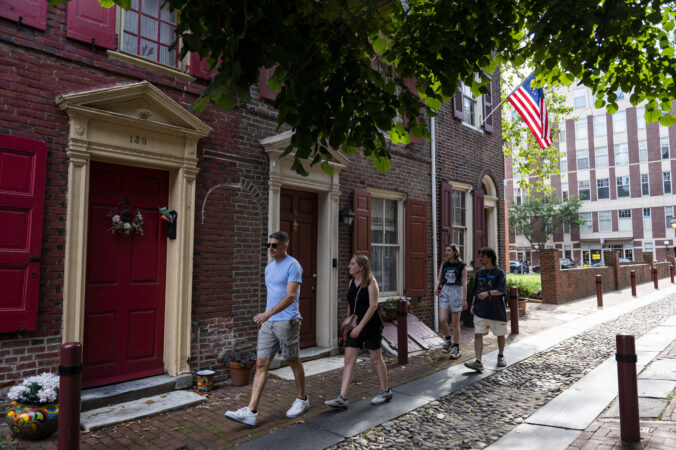
    Few Philadelphians may recognize the name Dolly Ottey, yet nearly all know Elfreth’s Alley — the nation’s oldest residential street — which she helped rescue from decline and demolition starting in the 1930s.

    Now, after years of wrangling, a long-neglected vacant lot that some have derided as an eyesore at the historic location is slated for a transformation in time for the 250th anniversary of the Declaration of Independence.

    Plans call for the lot at North Second Street and Elfreth’s Alley to be reborn as Dolly Ottey Park, honoring the woman who first championed preservation of the narrow cobblestone passage starting in the 1930s.

    window.addEventListener(“message”,function(a){if(void 0!==a.data[“datawrapper-height”]){var e=document.querySelectorAll(“iframe”);for(var t in a.data[“datawrapper-height”])for(var r,i=0;r=e[i];i++)if(r.contentWindow===a.source){var d=a.data[“datawrapper-height”][t]+”px”;r.style.height=d}}});

    Job Itzkowitz, executive director of Old City District, said the project took eight years of sporadic effort to get multiple parties to sign off on an agreement to create the park. Old City District is a nonprofit registered community organization.

    “We want it to be a place where residents, tourists, visitors, employers, and employees can take a bit of a respite,” he said. “It’s going to be a drastic improvement.”

    A conceptual rendering of Dolly Ottey park at Second Street and Elfreth’s Alley in Old City, Philadelphia. Organizers hope to transform the existing vacant space into a park by spring.

    On a recent day, families and couples toured Elfreth’s Alley, taking pictures and discussing the history of the area. But none ventured into the vacant lot. Later, a lone woman could be seen walking her dog there.

    Itzkowitz credited a renewed spirit of collaboration for breaking the stalemate.

    He said changes in leadership at the real estate advisory board for the National Old City Apartments, which abuts the park, and crucial support from the nonprofit Elfreth’s Alley Association paved a path for agreement.

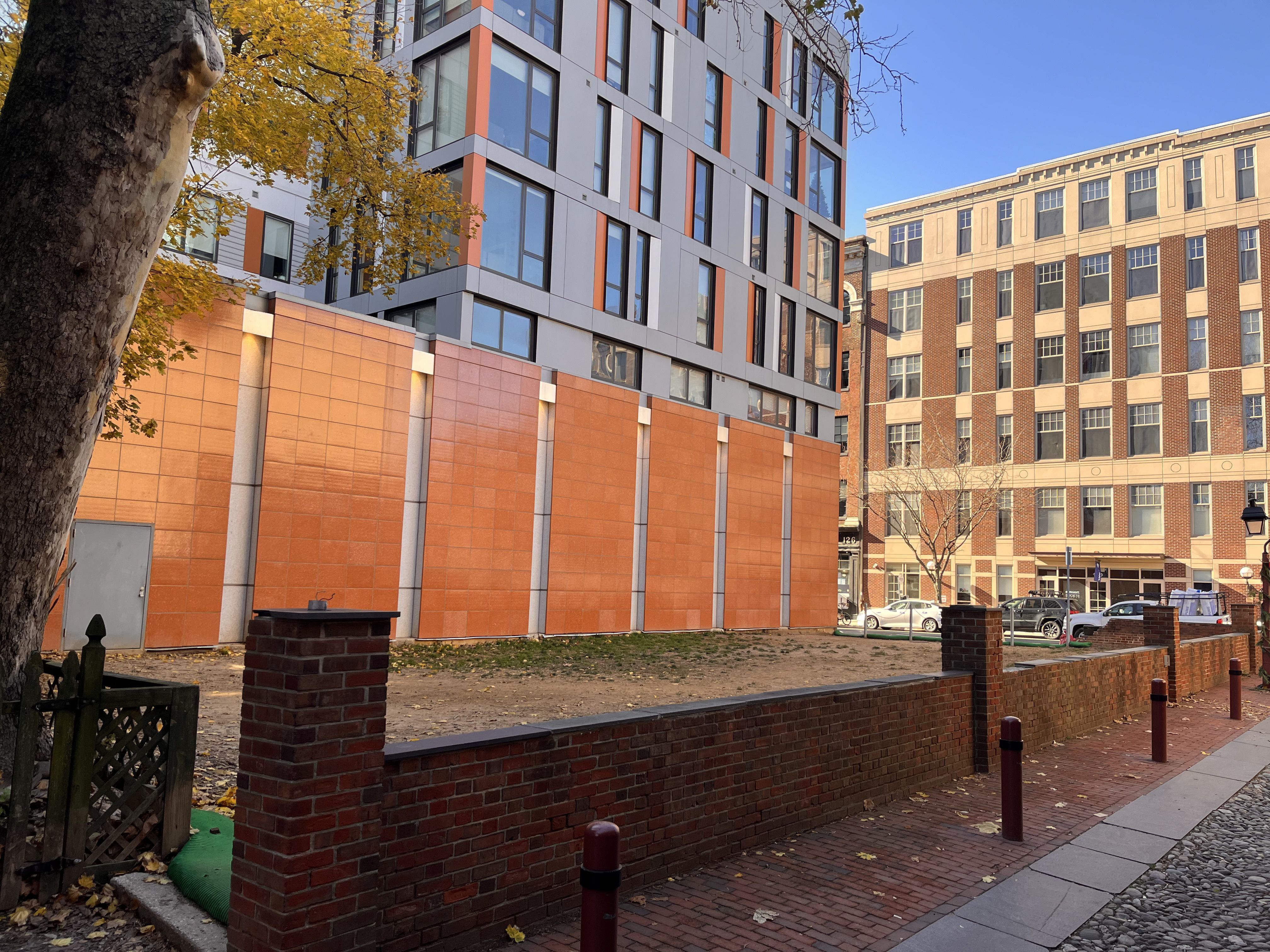
    A view of a vacant lot at Second Street and Elfreth’s Alley in Old City Philadelphia. Plans for creation of Dolly Ottey Park at the location and named after an advocate who helped save Elfreth’s Alley in the early to mid 20th Century.

    The lot is owned by Bit Investment Seventy-Eight LLC, according to city records, and is part of that company’s holdings for National Old City Apartments along North Second Street.

    A usable space by spring

    The pocket park will rise in two phases: an interim stage featuring a crushed stone base, picnic tables, planters, wild grasses, and repairs to a crumbling brick wall, followed by a more permanent design.

    An architect has been hired to craft a cost-effective plan to deliver a usable public space by spring 2026.

    The interim plan design for Dolly Ottey Park carries a modest $60,000 budget, with fundraising to break ground in February and finish by March. Old City District has set up an online link for public contributions.

    Itzkowitz said the timing for the interim phase would ensure the park provides a welcoming experience for visitors during the Semiquincentennial as part of a significant historical landmark.

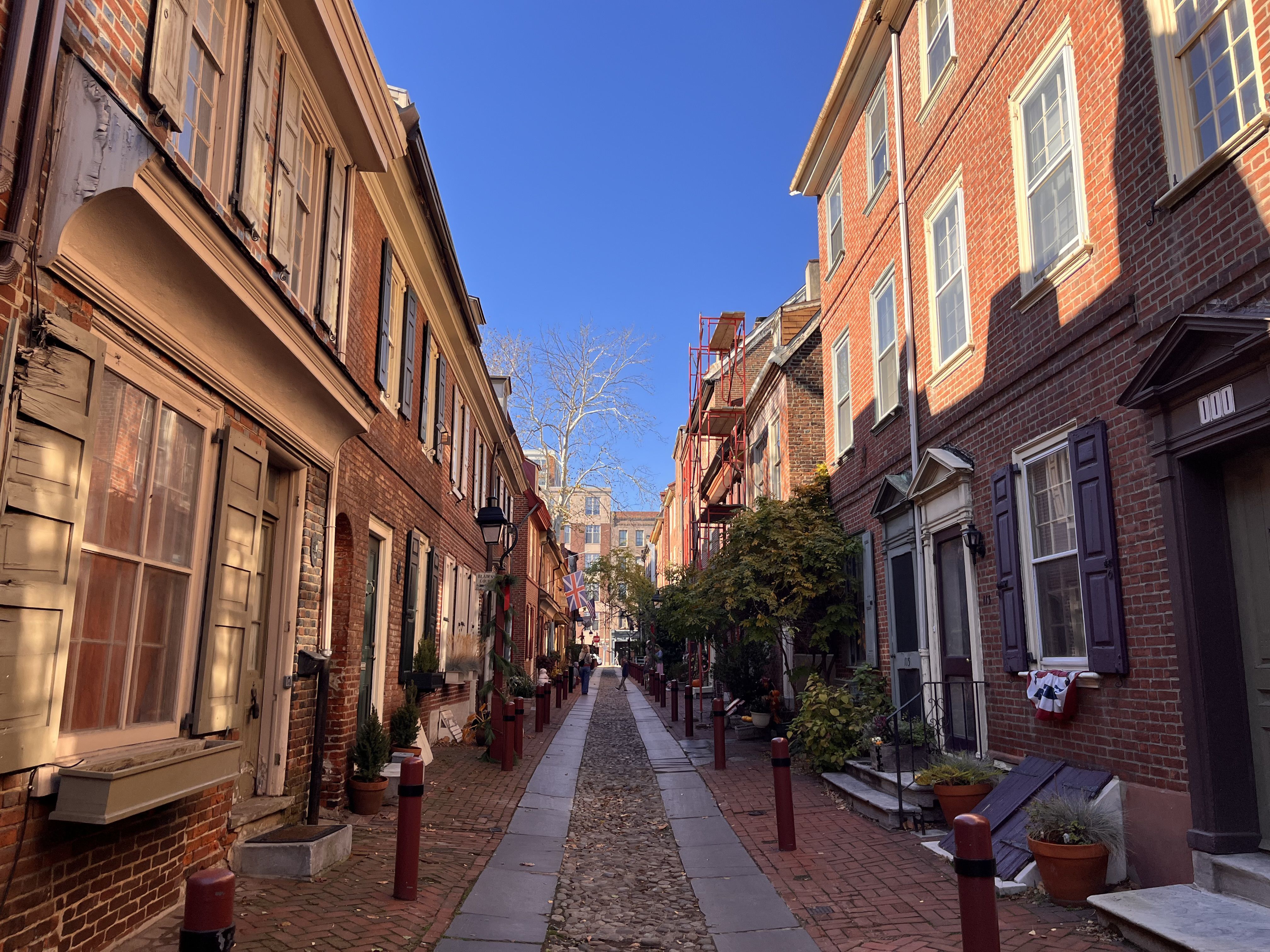
    A view of Elfreth’s Alley.

    Elfreth’s Alley is believed to be America’s oldest continuously inhabited residential street. Its origins trace to the early 1700s, when two landowners combined properties to create a cart path leading to the river. People have been living there since 1713.

    The cobblestone alley, about 400 feet long and lined by 30 brick buildings, was named for Jeremiah Elfreth, an 18th-century blacksmith. It originally housed artisans and merchants, serving as a base for business ventures. Notable figures such as Stephen Girard, who helped finance the War of 1812, are believed to have lived here.

    However, Elfreth’s Alley faced demolition due to neglect and development pressure. From the 1890s to the 1930s, part of the block was rebranded as Cherry Street, leading to the loss of at least one historic home.

    Who is Dolly Ottey?

    Ottey, a resident and owner of the Hearthstone restaurant at 115 Elfreth’s Alley, formed the Elfreth’s Alley Association in 1934 to protect the unique street and save it from destruction.

    A view from Elfreth’s Alley facing a vacant lot at Second Street that will be transformed into Dolly Ottey Park.

    Elfreth’s Alley faced an even bigger existential threat in the 1950s and 1960s when proposed construction of I-95 would have demolished at least half the block.

    The demolition was vehemently opposed by Ottey and the Elfreth’s Alley Association. The community gathered 12,000 signatures for a petition presented at City Hall, successfully pleading for the street to be spared.

    Elfreth’s Alley was protected as a National Historic Landmark in the 1960s as a result and is listed on Philadelphia’s historic register.

    Ottey died in 1996, in South Jersey, at age 85.

    Elfreth’s Alley remains not only a residential area but also a cultural and historical attraction. It holds a museum that educates visitors on its history and the lives of early inhabitants.

  • Philly wants to set its own speed limits, and other highlights of the city’s new Vision Zero report

    Philly wants to set its own speed limits, and other highlights of the city’s new Vision Zero report

    Philadelphia can’t set the speed limits on roads within its own borders. Only the state can.

    So city transportation officials want to persuade Harrisburg to give it the power to set speed limits more appropriate to the density of Philadelphia.

    That is a top action item in the city’s new Vision Zero report, released Tuesday, which will guide traffic safety efforts for the next five years.

    “We’re looking to work with the state legislature to make our roads safer,” said Christopher Puchalsky, director of policy and strategic initiatives at the Philadelphia Office of Transportation and Infrastructure Systems.

    In Pennsylvania, as in many states, speed limits are based on the 85th percentile rule. Engineers measure speeds in a study area and set the limit based on how fast 85% of the drivers there are traveling.

    “It just sort of got adopted and enshrined in law,” Puchalsky said of the principle developed from studies of rural roads in the 1950s and ’60s.

    In recent years, traffic engineers, many states, and federal agencies in charge of traffic safety have been moving away from the approach and toward speeds that help prevent injuries and deaths.

    “It’s one of those things we’ll look back on and say, ‘Why did people think that was a good method?’” Puchalsky said. “And we’ll all scratch our heads — or at least our grandchildren will scratch their heads.”

    Pennsylvania’s legislature would need to amend the state’s vehicle code to grant Philadelphia the authority.

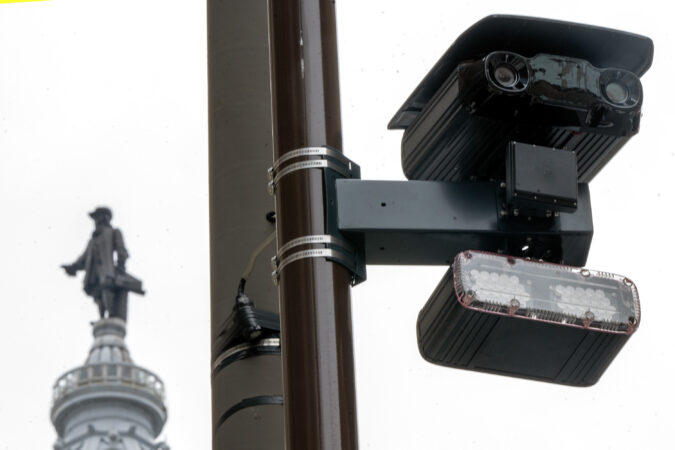
    Similarly, the city wants to expand the use of automated speed enforcement cameras and red-light enforcement cameras. That would also require legislation.

    The speed cameras on Roosevelt Boulevard are now permanent, and the city was authorized to put them on five other dangerous roads on a trial basis.

    Speed cameras also went up on most of Broad Street.

    Here are other takeaways from the Vision Zero report:

    Traffic deaths are still high in Philly

    In 2024, 120 people were killed in vehicle crashes in the city. The number of fatalities has been trending down slightly since 2020, but that figure is still 41% higher than it was in 2015, when the Vision Zero program began.

    “I think we’ve unfortunately hit a higher set-point post pandemic than we would like,” said Kelley Yemen, director of multimodal planning for the city. “We’re seeing encouraging news with this year, but we’ve got two months to go and are holding our breaths.”

    Yemen said the city has seen a 20% reduction in crashes on corridors where Vision Zero has been able to do traffic-calming projects such as installing speed cushions, implementing road diets that slow drivers, and installing separated bike lanes.

    “As we get further out from the pandemic, we’re also hoping we reset some cultural norms on our streets, whether it’s through automated speed enforcement, red-light cameras, or working with [the police department],” she said.

    The size of Philly’s problem

    Philadelphia is an old, dense city with a robust transit system, similar to New York and Boston. But its rate of traffic-related deaths per 100,000 people is many times New York’s — and most closely resembles that of Los Angeles, the Vision Zero report noted, citing federal data from 2019 through 2023.

    Philadelphia had 8.48 traffic deaths per 100,000 people, and Los Angeles had 8.11 per 100,000 residents.

    “We are still reviewing the plan, but our initial reaction is that the goals set forth are not transformational enough to address the climbing traffic death statistics,” said Jessie Amadio, an organizer with Philly Bike Action.

    “Vision Zero safety interventions work in the places they are installed,” but annual progress is too slow, she said.

    Factors that make a crash severe

    Speeding was the leading contributing factor in serious injury and fatal crashes between 2020 and 2024, present in 19%, the report said. Drivers impaired by alcohol or drugs were involved in 8% of the crashes, and 8% ran a red traffic light. Distracted driving was responsible in 4% of crashes, and running stop signs in 2%.

    People walking or using a personal mobility device were involved in 6% of crashes from 2002 through 2024 but were 40% of those who were killed, the report found.

    Thirty-eight percent of people who died were in motor vehicles.

    What were residents’ biggest concerns and asks?

    The Philadelphia Office of Transportation and Infrastructure Systems heard from about 3,000 city residents about their biggest concerns and preferred responses, said Marco Gorini, the Vision Zero program manager.

    Speeding was the topmost concern, cited by 24% of the people participating, followed by drivers running red lights and stop signs, cited by 23%.

    People were reached at roundtables involving more than 80 community groups, by online services, and through a polling firm that randomly queried 1,500 Philadelphians representative of the city’s overall population.

    Participants supported tough enforcement by automated cameras and police against those violations by wide margins.

    Infrastructure-related changes work best to protect people and change driver behavior, residents said, and they clamored for more traffic-calming measures and street redesigns, according to Gorini. They want to prioritize changes around schools, senior centers, and public parks.

    Besides enforcement and traffic-slowing infrastructure, residents expressed strong support for more safety education — instruction for high school students on safe driving (76%) and education for young students on safe walking and biking (71%).

    And another thing: People want transparency with safety efforts.

    “It’s very important that we regularly report on the state of traffic safety in Philadelphia and the results of Vision Zero interventions,” Gorini said. “This ensures accountability and helps the public understand what the issues are and how efforts to address them are going.”

    Next steps

    The city will be developing a spending plan for new safety projects for the next annual budget, due in the first quarter of 2026. And figuring how to pay for them from city funds and state and federal grants.

  • These professors say they’re part of a growing movement banning laptops from the classroom

    These professors say they’re part of a growing movement banning laptops from the classroom

    Biology professor Jody Hey was lecturing on human evolution one recent day at Temple University.

    His students vigorously took notes by hand in paper notebooks.

    There wasn’t a laptop in sight. Nor an iPhone. No student’s face was hidden by a screen.

    Hey said he stopped allowing them about a year and a half ago after seeing research that students are too often distracted when laptops are open in front of them and actually learn better when they have to distill lectures into handwritten notes.

    “The clearest sign that it’s making a difference is that students are paying attention more,” said Hey, who has taught at Temple for more than 12 years. “And they want to participate much more than before.”

    Hey is among a seemingly growing number of professors who have chosen to keep laptop and phone use out of class, with exceptions for students with disabilities who require accommodations. Several said they made the decision after seeing what some students were doing on their laptops during class.

    Temple University biology professor Jody Hey stopped allowing laptops to be used in class about a year and a half ago. He said he’s noticed improvement in student performance.

    Jessa Lingel, an associate professor of communication at the University of Pennsylvania and director of the Gender, Sexuality, and Women’s Studies Program there, stationed teaching assistants in the back of her room to observe.

    Students “were out there booking flights and Airbnbs,” Lingel said. “Fun fall cocktail recipes. They were online gambling in class. I thought, ‘This is not acceptable.’”

    She originally disallowed laptops in 2017, but decided to go easy in 2021 as students returned after the pandemic, she said. She reinforced the ban after her teaching assistants’ observations.

    “It’s a movement,” Lingel said. “More and more people are headed in this direction.”

    In Hey’s class, students have warmed up to the laptop ban.

    “At first I didn’t like it,” said Jess Nguyen, 20, a junior genomic medicine major from Broomall, “because I kind of organize all my notes on my laptop. But I feel I’ve been learning better by writing my notes.”

    When she took notes on her iPad, she sometimes got distracted and played computer games, she said. In Hey’s class, that’s not an option.

    Students said it takes more time to write notes and sometimes their hands get tired.

    “After a couple classes, you kind of get used to it,” said Sara Tedla, 22, a senior natural sciences major from Philadelphia.

    She’s on the fence about which way she prefers to take notes.

    “It’s good that for an hour and 20 minutes you can just sit down and, without any technological distractions, focus because that’s a part of your brain you can work on,” said Quinn Johnson, 20, a senior ecology major from Philadelphia. “The more you do it, the easier it becomes to focus on something for a long period of time.”

    ‘Students learn better’

    Professors say laptops are pretty ubiquitous in the classroom when they are permitted.

    Hey conducted research on laptop use and presented it at a Temple department faculty meeting earlier this year.

    “As early as 2003, a study was done contrasting the retention of lecture material by two groups of students, one who had laptops and unrestrained internet access and a second who worked without laptops,” he said. “In that study, students with laptops scored 20% lower on average in the subsequent exam.”

    Four of every five students who used laptops in a general psychology class said they checked email during lectures, another study showed, while 68% used instant messaging, 43% surfed the net, 25% played games, and 35% said they did “other” activities.

    He also cited studies showing students who took notes by hand performed better on tests. Others cited that research, too.

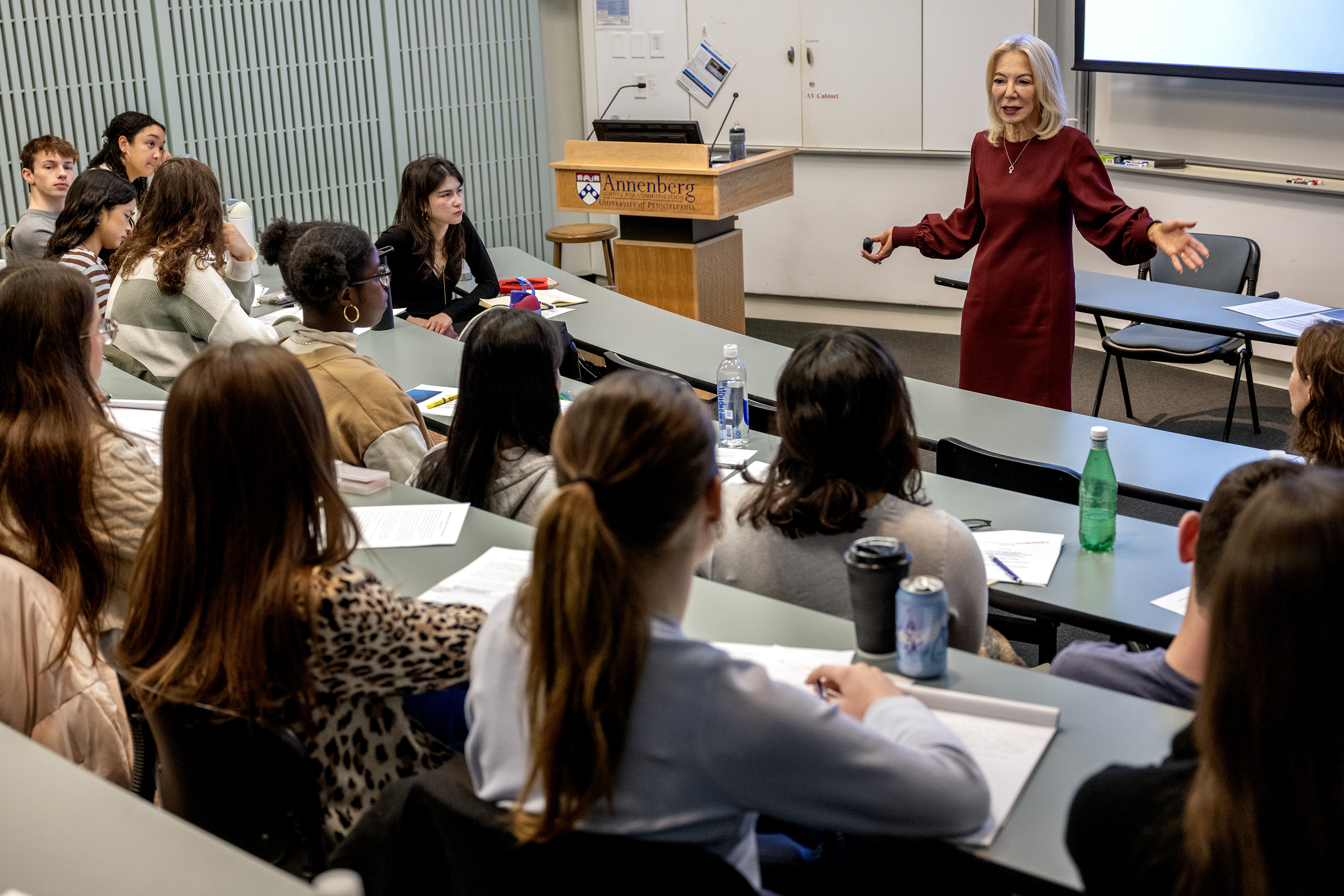
    Penn President emerita Amy Gutmann co-teaches a class at Penn’s Annenberg School for Communication with the dean Sarah Banet-Weiser. They don’t allow laptops or phones to be used in the classroom.

    “I read the literature on it and it really showed that students learn better when they’re taking notes rather than trying to type as fast as they can verbatim what you say,” said Amy Gutmann, Penn president emerita, who is co-teaching a class at the Annenberg School for Communication this fall.

    Gutmann and co-teacher Sarah Banet-Weiser, dean of Annenberg, do not provide students with copies of their lecture slides, either.

    “We give them time to write down what’s on the slides,” Banet-Weiser said.

    Benefits of technology

    Some professors say laptop use in class can be beneficial.

    Sudhir Kumar, a Temple biology professor, said he asks his class of 150 students to respond to questions on their laptops every 10 minutes. Their answers count toward their grades.

    “It’s constantly keeping them on their toes,” he said.

    He would not want to see everyone give up on laptop use in class.

    “We cannot fight technology,” he said. “Teachers have to embrace technology, whether it is artificial intelligence or computers. That is a standard mode of operation for most people today.”

    (Left to Right) Jess Nguyen, 20, a junior from Broomall, Allan Thomas, 22, a senior from Philly, and Sara Tedla, 22, a senior from Philly, in a class taught by Temple University biology professor Jody Hey last month.

    In Cathy Brant’s social studies methods class of 20 to 25 students at Rowan University, laptops are key. Brant, an associate professor of education, said there are lots of hands-on group projects, and she frequently asks students to check New Jersey standards online as they prepare their lessons. She also teaches them how to use AI appropriately in the classroom.

    One of her students, she said, recently handed in a paper with very detailed notes from Brant’s lecture that she probably got only because she was able to type quickly on her computer.

    “You’re responsible for paying attention in class,” she said. “Maybe it’s a little harsh, but I’m just like, ‘If you want to be on Facebook the entire time during class, that’s on you.’”

    Jordan Shapiro, an associate professor at Temple, more than a decade ago used to make a point of having his students post on Twitter, now X, during class and counted it toward classroom participation.

    Now, he tells students to put their laptops away during class.

    “I tell them I have no problem with tech or laptops,” he said. “I just think that none of us get enough time in our lives to just focus on ideas or to listen in a sustained way to the people around us.”

    He also became concerned about students doing homework during class, he said, and using artificial intelligence to supply them with questions and comments to ask in class. They were “outsourcing class participation to the robots,” he said.

    Mark Boudreau, a biology professor at Penn State Brandywine, disallowed laptops for the first time this semester.

    “I thought I would get real pushback … or people might even drop the class,” he said. “But … a lot of students have had other faculty who have this policy.”

    Exam scores in his three courses are better this year, he said.

    Hey noted student grades have gone up, too. But he can tell some students struggle with note-taking; some just listen and don’t take notes.

    “That’s better than sitting there and going on Facebook,” he said.

  • Meet the people who use Pennsylvania’s rivers to create art

    Meet the people who use Pennsylvania’s rivers to create art

    MONTOURSVILLE, Pa. — The rocky shores of Loyalsock Creek looked a bit drab to the untrained eye on a blustery, overcast November afternoon.

    There were browns and grays, along with flurries of yellow and orange leaves across the turbid water when the wind whipped through the trees.

    Sierra Weir, an artist from Pittsburgh, stepped gingerly across the mud and rocks. When she got to the water’s edge, Weir saw the landscape in a completely different way.

    “It’s not as visually stunning as synthetic colors, but I would say the depth and variation within one tiny spectra is so much deeper,” she said. “I’ve gained such an appreciation for all the different ways brown can be brown.”

    Sierra Weir of Pittsburgh was an artist-in residency of the Susquehanna River Watershed.

    Weir, who has a background in biochemistry, is a pigment artist and community outreach coordinator for Three Rivers Waterkeeper, a nonprofit organization in Pittsburgh that advocates and protects the Monongahela, Allegheny, and Ohio rivers.

    In June, the Pennsylvania Environmental Council, selected Weir and two others for its new artist-in-residency program, “Reflections through Art: Inclusive Access on Water Trails in the Susquehanna Basin.”

    “It’s a new way to get people to engage with the environment,” Weir said.

    Painter Spencer Verney of Coatesville was also chosen as a resident by the PEC. He focuses on preserved lands and protected waterways in historic settings. Meg Lemieur of Port Richmond was chosen to illustrate a map for the Swatara Creek Watershed.

    “My art celebrates the diversity and amazing features of the natural world,” Lemieur told The Inquirer. “I’m definitely drawn to all the living animals, including animals of the watershed like turtles, owls, and gophers, but lately I’ve been getting more into flora and understanding plants.“

    Tali MacArthur, a senior program manager for the PEC, said the residency program was created as another way to get the public involved in watershed conservation.

    “There are people who don’t really see themselves as scientists or fishermen, but maybe they see themselves as artists, as musicians, or visual learners,” MacArthur said. “I’ve kind of been chasing this approach for some time now.”

    The residency program was funded by the National Park Service’s Chesapeake Gateways Grant Program and the Pennsylvania Department of Conservation and Natural Resources Community Conservation Partnership Program.

    When Weir was in college, in Ohio, she spent a year studying the pigments of Betta fish and contributed a sculpture based on the majesty of jeweled beetles. She’s also created various paintings made with natural pigments like goldenrod, black walnut, and pokeberry, which fade quickly.

    “It’s in opposition to synthetic pigments, which are made from petrochemicals, and I do a lot of work to reduce pollutants,” she said. “This was a natural fit.”

    Sierra Weir of Pittsburgh was an artist-in-residency of the Susquehanna River Watershed. She’s pictured along Loyalsock Creek in Montoursville.

    Weir, 28, said her goal of combining art and waterways was to help people hone their “noticing skills” and provide new ways to engage with the environment and, perhaps, repair broken connections to the natural world.

    “What I do is help people notice the relationship between water, earth, plants, and themselves and how inherently connected we are to this place,” Weir said. “We’re made of this same stuff, biologically and chemically.”

    Sierra Weir of Pittsburgh was an artist-in-residency of the Susquehanna River Watershed.