Category: News

Latest breaking news and updates

  • Phil Sumpter, celebrated sculptor, artist, and teacher, has died at 95

    Phil Sumpter, celebrated sculptor, artist, and teacher, has died at 95

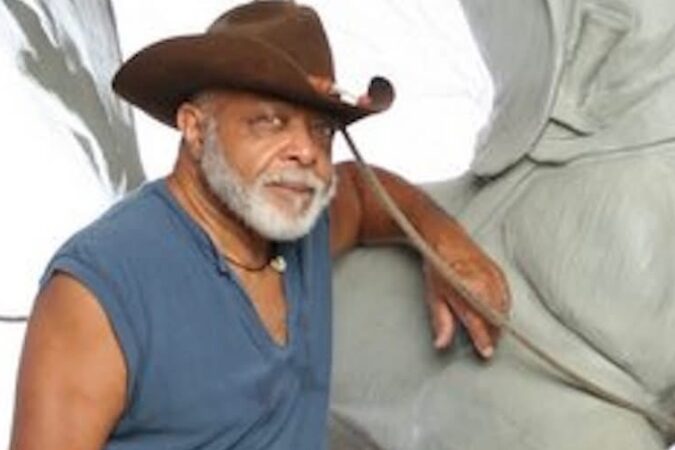
    Phil Sumpter, 95, formerly of Philadelphia, celebrated sculptor, artist, art teacher, TV station art director, veteran, mentor, urban cowboy, and revered raconteur, died Thursday, Jan. 1, of age-associated decline at his home in San Juan, Puerto Rico.

    A graduate of John Bartram High School and the old Philadelphia College of Art, Mr. Sumpter taught art, both its history and application, to middle and high school students in Philadelphia for 27 years. He was an engaging teacher, former students said, and a founding faculty member at the Philadelphia High School for the Creative and Performing Arts in 1978.

    He started teaching in 1955 and, after a break in the 1960s and ’70s, finally retired in 1992. “You are very lucky to have a teacher in your life that believed in you, nurtured you, challenged you, and loved you,” a former student said on Facebook. “Mr. Sumpter did all that and more.”

    Other former students called him their “father” and a “legend.” One said: “You did a lot of good here on earth, especially for a bunch of feral artist teenagers.”
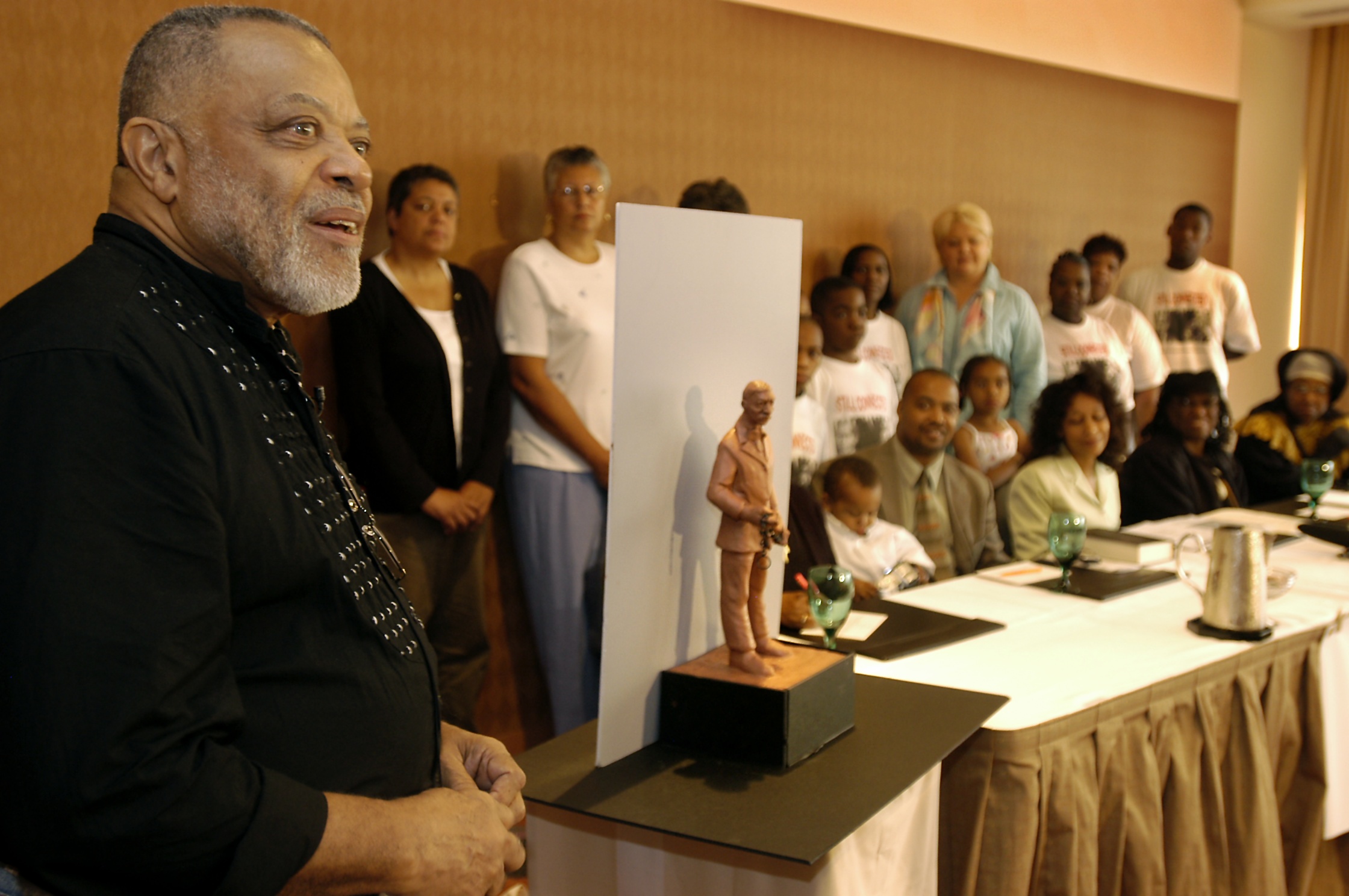
    Mr. Sumpter (left) talks about his sculpture of Underground Railroad organizer William Still in 2003.

    Outside the classroom, Mr. Sumpter sculpted hundreds of pieces and painted and sketched thousands of pictures in his South Philadelphia stable-turned-studio on Hicks Street. Prominent examples of his dozens of commissions and wide-ranging public art presence include the bas-relief sculpture of Black Revolutionary War soldiers at Valley Forge National Historical Park in Montgomery County, the action statue of baseball star Roberto Clemente in North Philadelphia, the Negro Leagues baseball monument in West Parkside, and the Judy Johnson and Helen Chambers statues in Wilmington.

    He worked often in clay and paper, made murals, and designed commemorative coins and medals. He especially enjoyed illustrating cowboys, pirates, Puerto Rican jibaros, and landscapes.

    His statue of Clemente was unveiled at Roberto Clemente Middle School in 1997, and Mr. Sumpter told The Inquirer: “I think I’ve captured a heroic image, an action figure depicting strength plus determination.”

    He was among the most popular contributors to the Off the Wall Gallery at Dirty Franks bar, and his many exhibitions drew crowds and parties at the Bacchanal Gallery, the Free Library of Philadelphia, the Plastic Club, and elsewhere in the region and Puerto Rico. He hung out with other notable artists and community leaders, and collaborated on projects with his son, Philip III, and daughter, Elisabeth.

    Mr. Sumpter worked often in clay and paper, made murals, and designed commemorative coins and medals.

    He even marketed a homemade barbecue sauce with his wife, Carmen. His family said: “He is remembered for mentorship, cultural fluency, and presence as much as for material works.”

    He founded Phil Sumpter Design Associates in the 1960s and worked on design and branding projects for a decade with institutions, educational organizations, and other clients. He was art director for WKBS-TV, WPHL-TV, and the Pyramid Club.

    “The word for him,” his son said, “is expansive.”

    Mr. Sumpter was friendly and gregarious. He became enamored with Black cowboys and Western life as a boy and went on to ride horses around town, dress daily in Western wear, and depict Black cowboys from around the world in his art. His viewpoints and exhibits were featured often in The Inquirer, the Philadelphia Tribune, Philadelphia Magazine, Dosage Magazine, and other publications.

    Mr. Sumpter (in white cowboy hat) views his statue of Roberto Clemente in 1997.

    He was an air observer for the Air Force during the Korean War and later, while stationed in England, studied sculpture, ceramics, and drawing at Cambridge Technical Institute. His daughter said: “He taught me how to open the portal to the infinite multiverse of my own imagination, where every mind, every soul can be free.”

    Philip Harold Sumpter Jr. was born March 12, 1930, in Erie. His family moved to segregated West Philadelphia when he was young, and he earned a bachelor’s degree in art education at PCA.

    He married and divorced when he was young, and then married Florence Reasner. They had a son, Philip III, and a daughter, Elisabeth, and lived in Abington. They divorced later, and he moved to Hicks Street in South Philadelphia.

    He met Carmen Guzman in Philadelphia, and they married in 2001 and moved to San Juan for good in 2003. He built a studio at his new home and never really retired from creating.

    Mr. Sumpter (second from left) enjoyed time with his family.

    Mr. Sumpter enjoyed singing, road trips to visit family in Pittsburgh, and bomba dancing in San Juan. He was a creative cook, and what he called his “trail chili” won cook-offs and many admirers.

    “He was a larger-than-life person,” his son said. “He was fearless in his frontier spirit.” His wife said: “His joy for life was contagious, as was his laughter.”

    In addition to his wife, children, and former wife, Mr. Sumpter is survived by other relatives.

    A celebration of his life was held earlier in Puerto Rico. Celebrations in Philadelphia are to be from 2 to 5 p.m. Saturday, March 14, at Dirty Franks, 347 S. 13th St., Philadelphia, Pa. 19107, and from 2:30 to 4:30 p.m. Sunday, March 15, at the Plastic Club, 247 S. Camac St., Philadelphia, Pa. 19107.


    Mr. Sumpter’s work was featured in The Inquirer in 1994.
  • J&J’s baby powder caused a woman’s fatal cancer, a Philly jury finds, awarding her family $250,000

    J&J’s baby powder caused a woman’s fatal cancer, a Philly jury finds, awarding her family $250,000

    A Philadelphia jury ordered pharmaceutical and cosmetics giant Johnson & Johnson to pay $250,000 to the family of a York County woman after finding the company’s baby powder product led her to develop cancer.

    Gayle Emerson sued Johnson & Johnson in 2019 as part of a nationwide wave of litigation accusing the company’s talc-based baby powder of causing ovarian cancer. Emerson, who was diagnosed with cancer in 2015, died at age 68, months after filing the complaint.

    The complaint accused the New Jersey-based company of selling a defective product and failing to warn about its risks.

    After a three-week trial, which Common Pleas Judge Sean F. Kennedy presided over, the jury began deliberating Tuesday afternoon and reached its verdict Friday around 2 p.m. During deliberations, jurors asked the judge questions that suggested they grappled with how strongly the evidence showed that external use of baby powder could allow a cancer-causing substance to reach the ovaries.

    The verdict was comprised of $50,000 in compensatory damages and $200,000 in punitive damages.

    “This token verdict reflects the jury’s appreciation that the claims were meritless and divorced from the science,” Erik Haas, Johnson & Johnson’s worldwide vice president of litigation, said in a statement.

    The company plans to appeal the verdict, Haas said.

    Johnson & Johnson specifically advertised the product for women, the suit says, stating on the bottle: “For you, use every day to help feel soft, fresh, and comfortable.”

    Studies have connected talc to ovarian cancer since the early 1970s, according to the complaint. The mineral is excavated from the mines that also contain asbestos, risking contamination from the cancer-causing substance.

    The Federal Drug Administration asked condom manufacturers in the 1990s to stop dusting their product with talc because of the risk to women.

    Johnson & Johnson stopped selling its talc-based baby powder in the United States and Canada in 2020.

    The company was aware of the research about the increased risk of cancer for women who use the powder on their genital area, the suit says, based on internal documents and public statements.

    “Gayle Emerson trusted Johnson & Johnson, and Johnson & Johnson betrayed that trust,” Leigh O’Dell, a Beasley Allen attorney representing Emerson’s family, said in her opening statement.

    Attorneys in Pennsylvania aren’t allowed to advise jurors on how much to award in damages, but O’Dell noted in her closing argument that Johnson & Johnson’s net worth is $72.3 billion and a verdict should be “enough” to get the attention of the company’s boardroom.

    Emerson didn’t rely on any false statement or misrepresentation by Johnson & Johnson before purchasing the baby powder, the company said in court filings. Further, the FDA considered and rejected requests to add a cancer warning to talc powders in the 1990s.

    During the trial, attorneys for Johnson & Johnson said the baby powder, which Emerson used externally, wasn’t responsible for the cancer. Other parts of her feminine care routine, such as douching, are also associated with increased risk of ovarian cancer, the attorneys said, and Emerson had other risk factors such as family history, obesity, and age.

    Emerson’s attorneys ignored those risk factors because they have “talc blinders” on, Shaila Diwan, a Kirkland Ellis attorney representing the company, said to the jurors at the outset of the trial.

    “Ms. Emerson would have still developed cancer if she never used Johnson’s baby powder,” Diwan said in closing.

    It’s important that the jury found that Johnson & Johnson was directly responsibe for Emerson’s cancer but the award is “significantly less than the amount necessary to punish J&J,” O’Dell said in a statement.

    Friday’s verdict follows a $40 million December verdict out of Los Angeles for two women who similarly claimed the talc-based powder caused their cancer.

    While the Philadelphia trial was proceeding, a three-judge panel of a New Jersey appeals court disqualified Beasley Allen from the baby powder litigation in the state for ethical violations. The Alabama-based firm has been accused of receiving privileged information from an attorney who previously represented Johnson & Johnson. The firm said it would appeal the decision.

    It’s unclear if the ruling will impact the Pennsylvania verdict, or future Beasley Allen cases outside New Jersey.

    Emerson’s is the second talc-related lawsuit to reach a verdict in Philadelphia, after a 2021 trial concluded with the jury siding with Johnson & Johnson.

    There are 176 lawsuits similar to Emerson’s pending in the Philadelphia court, and thousands across the nation. Another trial against Johnson & Johnson in a City Hall courtroom is scheduled for April.

    The city has a significant and dark place in the history of talc.

    Records from a 2021 case in California revealed that Johnson & Johnson hired in the 1960s a University of Pennsylvania dermatologist to study talc on the bodies of people incarcerated in Philadelphia’s now-defunct Holmesburg Prison.

    In 1971, Albert Kligman injected asbestos, talc, and other substances into the backs of incarcerated Black men for payments as low as $10 a shot. The study was one of hundreds of human experiments conducted by Kligman, with funding by entities such as Dow Chemicals and the U.S. government.

  • Gifts and soup from ‘Uncle Jeffrey’: The Epstein ties that ended Kathy Ruemmler’s run at Goldman

    Gifts and soup from ‘Uncle Jeffrey’: The Epstein ties that ended Kathy Ruemmler’s run at Goldman

    NEW YORK — Goldman Sachs general counsel Kathy Ruemmler has had a storied legal career. As a federal prosecutor, she helped successfully prosecute Enron executives including Ken Lay and Jeffrey Skilling. She was part of President Barack Obama’s administration, working in various roles for much of his two terms in office, including as White House counsel.

    She was even briefly considered by President Obama as a candidate for attorney general.

    On Thursday, Ruemmler, 54, announced that she plans to resign from the top legal post at Goldman after a trove of emails and correspondence between her and disgraced financier Jeffrey Epstein showed the two individuals were especially close, years after Epstein’s 2008 conviction on sex crimes charges, when he became a registered sex offender.

    Ruemmler previously downplayed her relationship with Epstein. She called him a “monster” and said she regretted ever knowing him. Ruemmler has repeatedly described their relationship as professional, citing her job as a private defense attorney before she ever joined Goldman Sachs.

    But documents released in recent weeks and reviewed by the Associated Press depict a deeper relationship than had previously been characterized by Ruemmler and Goldman Sachs. These included intimate email exchanges, social plans and gifts that went beyond formal legal work.

    Roughly 8,400 documents involved Ruemmler or referenced her. Some correspondence shows that Ruemmler was aware of the extent of the allegations that Epstein had faced involving underage girls in Florida. In some instances, she advised Epstein on how he might go about trying to repair his image and defend himself publicly against new claims of misconduct.

    The gifts Epstein gave to Ruemmler have been documented in news reports: the spa treatments, the handbags from Hermes, an Apple Watch, a Fendi coat, among many others. But some of the interactions between Epstein and Ruemmler described throughout their correspondence indicates that Epstein and Ruemmler did not simply have a lawyer-client transactional relationship, as Ruemmler previously attested to.

    “It makes him happy to see you happy,” Epstein’s assistant wrote to Ruemmler in 2016, after Epstein prepaid for a spa treatment for her.

    In October 2018, Epstein directed one of his assistants to send flowers and chicken soup to Ruemmler because she has “not been feeling well.” It would not be the first time that Epstein would send her a small token of appreciation when she was sick. They talked about dating issues, made jokes about both the wealthy and everyday people, and shared laments about their careers and dating lives.

    They would message each other about mundane things like their mutual distaste for seeing babies in business class on flights and would repeatedly plan to have dinner or drinks in various places. Epstein even had Ruemmler as a backup executor of his will at one point.

    Setting aside the immense wealth and privilege and Epstein’s legal troubles, many of the emails between the two would look no different from the banter that many Americans would share to in their own text messages, emails, or group chats.

    “Well, I adore him. It’s like having another older brother!” she wrote in an email in 2015.

    During her time in private practice after she left the White House in 2014, Ruemmler received several expensive gifts from Epstein, including luxury handbags and a fur coat. The gifts were given after Epstein had already been convicted of sex crimes in 2008 and was registered as a sex offender. Ruemmler was also involved in Epstein’s legal defense efforts after he was arrested a second time for sex crimes in 2019 and later killed himself in a Manhattan jail.

    “So lovely and thoughtful! Thank you to Uncle Jeffrey!!!” Ruemmler wrote to Epstein in 2018.

    She later joined Goldman Sachs in 2020 and became the investment bank’s top lawyer in 2021.

    The firm’s leadership backed her publicly amid the revelations. But the embarrassing emails raised questions about Ruemmler’s judgment. Historically, Wall Street frowns on gift-giving between clients and bankers or Wall Street lawyers, particularly high-end gifts that could pose a conflict of interest. Goldman Sachs requires its employees to get pre-approval before receiving gifts from or giving them to clients, according to the company’s code of conduct, partly in order to not run afoul of anti-bribery laws.

    Bloomberg News, the Wall Street Journal, and other media outlets reported that Goldman’s partners, who are the firm’s most senior and well-regarded members going back to when the investment bank was privately held, had begun to question why the firm was holding Ruemmler in such high regard when other lawyers were just as qualified to hold the top legal job.

    In her statement Thursday, Ruemmler said: “Since I joined Goldman Sachs six years ago, it has been my privilege to help oversee the firm’s legal, reputational, and regulatory matters; to enhance our strong risk management processes; and to ensure that we live by our core value of integrity in everything we do. My responsibility is to put Goldman Sachs’ interests first.”

    Goldman CEO David Solomon said he respected Ruemmler’s decision to resign. The firm isn’t rushing Ruemmler out the door, saying in a statement that she would wind down her work at the bank “to ensure a smooth transition,” before her last day on June 30.

  • Trump pardons 5 former NFL players for crimes ranging from perjury to drug trafficking

    Trump pardons 5 former NFL players for crimes ranging from perjury to drug trafficking

    WASHINGTON — President Donald Trump on Thursday pardoned five former professional football players — one posthumously — for various crimes ranging from perjury to drug trafficking.

    The pardons were announced by White House pardon czar Alice Marie Johnson. Ex-NFL players Joe Klecko, Nate Newton, Jamal Lewis, Travis Henry, and the late Billy Cannon were granted the clemency.

    “As football reminds us, excellence is built on grit, grace, and the courage to rise again. So is our nation,” Johnson wrote on the social media site X, as she thanked Trump for his “continued commitment to second chances.”

    Klecko, a former star for the New York Jets, pleaded guilty to perjury after lying to a federal grand jury that was investigating insurance fraud.

    A defensive lineman, Klecko played high school football at St. James Catholic High School for Boys in Chester and at Temple. He was inducted into the Pro Football Hall of Fame in 2023. He was a two-time Associated Press All-Pro player and a four-time Pro Bowler.

    Johnson said Dallas Cowboys owner Jerry Jones “personally” shared the news with Newton, who won three Super Bowls with the team.

    The White House did not return a request for comment Thursday night on why Trump, an avid sports fan, pardoned the players.

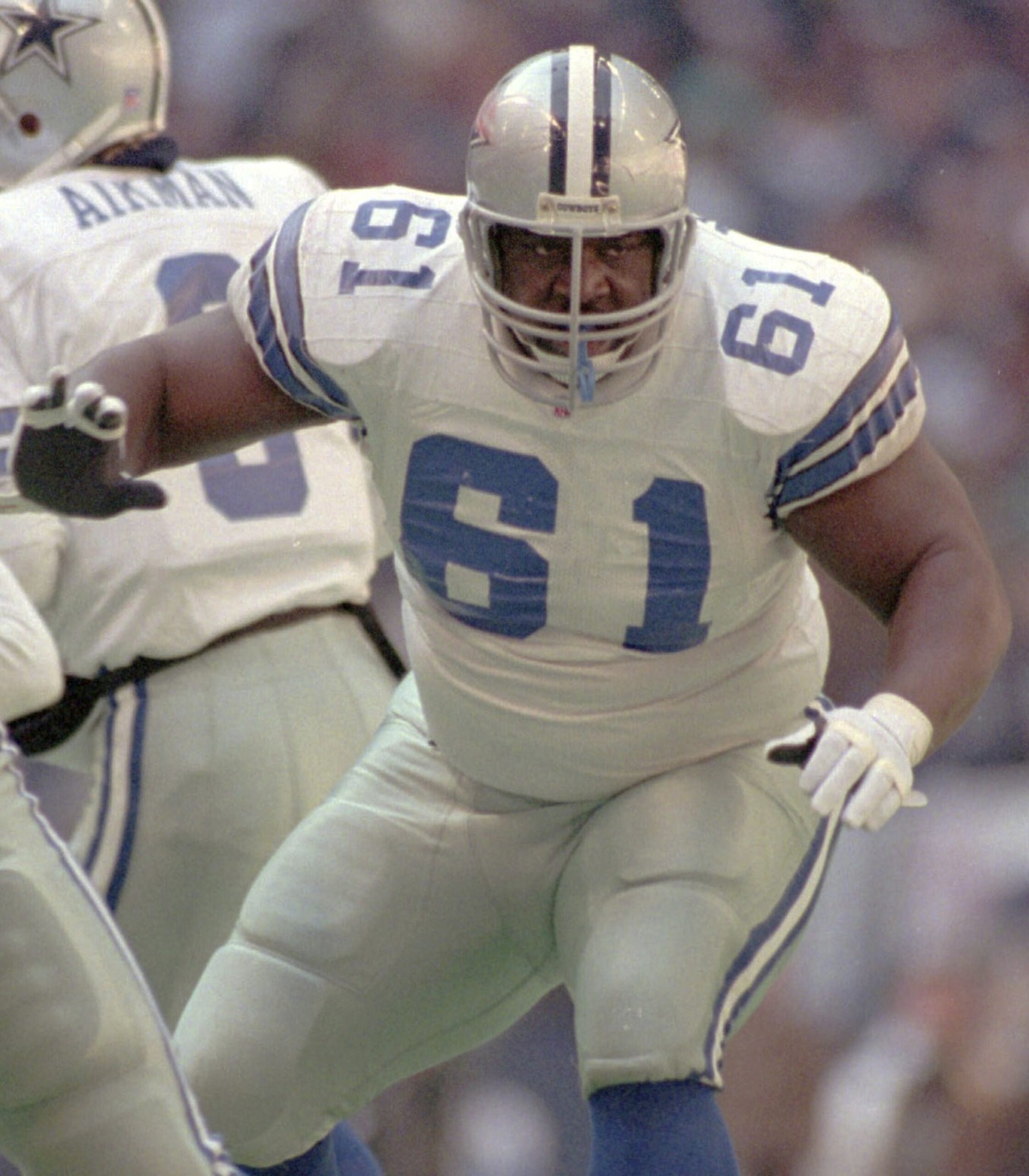
    Dallas Cowboys offensive lineman Nate Newton is in action against the Philadelphia Eagles during the NFC divisional playoffs in Irving, Texas, Jan. 7, 1996.

    Newton, an offensive lineman, pleaded guilty to a federal drug trafficking charge after authorities discovered $10,000 in his pickup truck as well as 175 pounds of marijuana in an accompanying car driven by another man. Newton was a two-time All-Pro player and six-time Pro Bowler.

    Lewis, formerly of the Baltimore Ravens and the Cleveland Browns, pleaded guilty in a drug case in which he used a cellphone to try to set up a drug deal not long after he was a top pick in the 2000 NFL draft. Lewis, a running back, was named an All-Pro once and was a one-time Pro Bowler. He was named the 2003 AP Offensive Player of the Year.

    Henry, who played for the Denver Broncos, pleaded guilty to conspiracy to traffic cocaine for financing a drug ring that moved the drug between Colorado and Montana. He was a running back for three teams and a one-time Pro Bowler.

    And Cannon — who played with the Houston Oilers, Oakland Raiders, and Kansas City Chiefs — admitted to counterfeiting in the mid-1980s after a series of bad investments and debts left him broke.

    Cannon was a two-time All-Pro player and a two-time Pro Bowler. Cannon also won the 1959 Heisman Trophy while starring for Louisiana State University, where he had one of the most memorable plays in college football history: an 89-yard punt return for a touchdown against Ole Miss. He died in 2018.

  • Transfer of ISIS suspects concludes as Trump pursues Syria exit

    Transfer of ISIS suspects concludes as Trump pursues Syria exit

    The U.S. military has completed the transfer of thousands of suspected Islamic State fighters to the Iraqi government, setting the stage for the expected withdrawal of many — perhaps even all — American troops from Syria within months despite concerns about the Syrian government’s ability to prevent a resurgence of the group, officials familiar with the issue said.

    The movement of 5,700 detainees, underway for weeks, was completed Thursday night with a flight from northeastern Syria to Iraq, U.S. military officials said in a statement. The effort signals a forthcoming end to a yearslong mission overseen by the U.S.-backed Syrian Democratic Forces (SDF), a Kurdish militia group that had managed the detention facilities in territory it controlled in northeastern Syria.

    The transfer began Jan. 21 as U.S. troops teamed with SDF and Iraqi counterparts to move the detainees using aircraft and armed ground convoys. It marks one of the most significant developments in years for the remnants of the Islamic State, the militant group whose bloody campaign across Syria and Iraq resulted in a multinational military intervention beginning in 2014. A smaller number of Syrians, fewer than 2,000, are expected to remain in Syria in the SDF-run detention centers until they are turned over to the Syrian government.

    Many of the detainees who have been transferred are expected to be held at the Al-Karkh prison, an Iraqi facility near Baghdad International Airport, said U.S. officials, who like some others spoke on the condition of anonymity to discuss sensitive military operations. It was once called Camp Cropper and used by the U.S. military to house detainees during the Iraq War. Iraq’s supreme judicial council said Friday that about 3,000 Syrians are among the detainees transferred.

    In a statement, the White House said Trump is committed to a Syria that is “stable, unified and at peace with itself and its neighbors.” That requires Syria not being a base for terrorism or to pose a threat in the region and beyond, it says.

    The United States is monitoring the situation in Syria and working with all sides, the statement says, to ensure that “ISIS detainees remain in detention,” including an organized transition of other detention centers in Syria to Syrian government control.

    The shift underscores a major shift in U.S. policy toward Syria, as President Donald Trump, who has aligned himself with Syrian President Ahmed al-Sharaa, seeks to extricate the roughly 1,000 American troops who have remained there functioning as a backstop to prevent a resurgence by the Islamic State.

    A report by the Director of National Intelligence last year said that the Islamic State will attempt to “reconstitute its attack capabilities,” including plotting against the West, and free prisoners to rebuild its ranks. Three U.S. troops were ambushed and killed by a suspected Islamic State member in Syria in December, prompting Trump to approve retaliatory airstrikes days later.

    Sharaa, a former al-Qaeda militant who broke with the group in 2016, has sought to unify his country since his forces forced the December 2024 ouster of Syrian President Bashar Assad, a dictator whose 24-year rule was marked by mass atrocities and a civil war that killed hundreds of thousands of people. The Islamic State has repeatedly attempted to assassinate Sharaa over the last year, according to a United Nations report released this week.

    One step in the withdrawal occurred Wednesday, as U.S. troops at the Tanf garrison in the southeastern part of Syria turned control over to Sharaa’s forces. Adm. Brad Cooper, the top officer overseeing U.S. operations in the region, said in a statement that U.S. forces retain the ability to respond to any threats posed by the Islamic State in the region.

    Other bases could be transferred to Sharaa’s forces in coming days or weeks as conditions warrant, two officials familiar with the issue said. Doing so could allow Trump to fully end the U.S. mission there, a goal since his first administration that consistently collided with challenges posed by Syria’s fractured state.

    Trump has downplayed Sharaa’s past as a jihadist, telling reporters in January that the Syrian leader was “working very hard.” He’s characterized him as a “tough guy” with a “pretty tough resumé.”

    “You’re not gonna put a choir boy in there and get the job done,” Trump said at the time.

    Still, U.S. officials said, Washington had privately delivered warnings to their Iraqi counterparts about Sharaa’s ability to ensure security over the ISIS detention camps. One senior U.S. official said in an interview with the Washington Post that the Trump administration had told Baghdad in the fall that it was “entirely likely” that if Sharaa’s government took control of the alleged terrorism suspects, they could be freed or break loose at some point and attack Iraq again.

    Sharaa could not be reached for comment.

    Iraqi officials acknowledged then that there was cause for concern, the senior U.S. official said. But those anxieties accelerated last month, as Sharaa’s forces pressed forward with an armed offensive into SDF-held territory, forcing the group to abandon two major facilities, the Shaddadi prison and al-Hol camp, allowing about 200 detainees to escape on Jan. 19.

    The detainees were considered “low-level” fighters, and dozens were later recaptured, U.S. officials said. But the episode triggered alarm in Washington and Baghdad and prompted numerous phone calls from senior U.S. officials to Sharaa, officials said, including at least one by Cooper on Jan. 21 and one by Trump on Jan. 27, these people said.

    Abdulkarim Omar, a representative with the SDF’s civilian government, called the moves of Sharaa’s forces in the region “aggression.” The Kurdish people, he said, “became victims of international arrangements concluded over their heads” and have seen “international silence.”

    Cooper also made a visit to northeastern Syria on Jan. 22, as his team attempted to ensure that Sharaa’s forces and the SDF adhered to a ceasefire as the detainees were transferred from Syria to Iraq, according to a U.S. military statement at the time.

    “It definitely could have gone completely sideways, to be completely honest with you,” a senior U.S. official told the Post, noting that U.S. soldiers remained in the region as tensions were high between the SDF and Sharaa’s fighters.

    Trump acknowledged calling Sharaa, saying his team had “solved a tremendous problem in conjunction with Syria and saved many lives.” He did not elaborate.

    The undertaking has triggered mixed feelings in the region, even as officials there appear to cooperate with U.S. desires.

    Hussein Allawi, an Iraqi security adviser, said his government is urging other governments to take back ISIS suspects from their countries so that Iraq is not overwhelmed. Iraq, he said is “totally capable” of handling the issue, but will face infrastructure challenges.

    Jiwan Soz, a Kurdish researcher, said that “despite the interference of the Americans” in the dispute between the SDF and Sharaa’s fighters, the Syrian president “cannot control the situation.” The armed groups Al-Sharaa relies on have a variety of tribal affiliations and allegiances, he said, and armed skirmishes have continued.

    “There are huge challenges there, and I don’t believe al-Sharaa can succeed,” he said.

    Nawar Rahawie, a Syrian official, said the ceasefire is fragile and will require persuasion. Tribal fighters who aligned with both the SDF and the Syrian government have kept their fighters out of the fray, he said, and Sharaa has “a certain level of control over the tribes and fighters.”

    He added that people of all kinds were “harmed by the Assad regime,” and credited Sharaa’s government for offering a new way. Syrian officials are investigating “crimes and murder” that have emerged, and will seek accountability, he said.

    James Jeffrey, a former U.S. ambassador who focused on Syria during the first Trump administration, told the House Foreign Affairs Committee this week that he is “wary” of Sharaa, but has watched him push Iranian influence away from Syria and combat Islamic State fighters who remain — both core U.S. goals.

    U.S. troops in Syria have worked with both the SDF and Sharaa’s forces in recent months, Jeffrey said, and Washington will have a better understanding of what occurs in the region the longer they remain.

  • Justice Department sues Harvard for data as it investigates how race factors into admissions

    Justice Department sues Harvard for data as it investigates how race factors into admissions

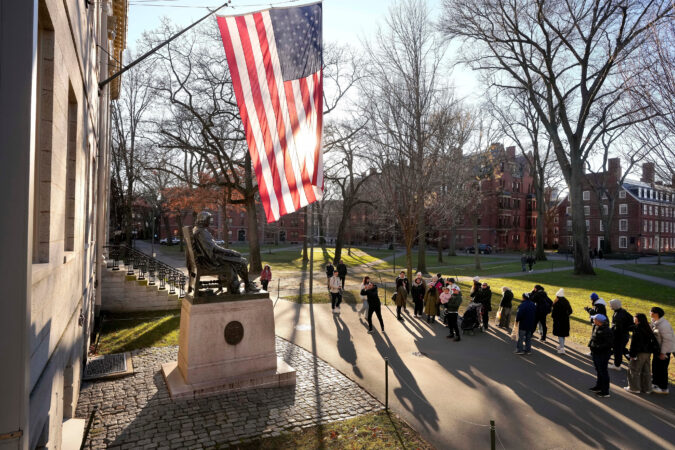
    WASHINGTON — The Trump administration is suing Harvard University, saying it has refused to provide admissions records that the Justice Department demanded to ensure the Ivy League school stopped using affirmative action in admissions.

    In a lawsuit filed Friday in federal court in Massachusetts, the Justice Department said Harvard has “thwarted” efforts to investigate potential discrimination. It accused Harvard of refusing to comply with a federal investigation and asked a judge to order the university to turn over the records.

    Harmeet Dhillon, who leads the department’s Civil Rights Division, said Harvard’s refusal is a red flag. “If Harvard has stopped discriminating, it should happily share the data necessary to prove it,” Dhillon said in a statement.

    A statement from Harvard said the university has been responding to the government’s requests. It said Harvard is in compliance with the Supreme Court decision barring affirmative action in admissions.

    “The University will continue to defend itself against these retaliatory actions which have been initiated simply because Harvard refused to surrender its independence or relinquish its constitutional rights in response to unlawful government overreach,” the university said.

    The suit is the latest salvo in President Donald Trump’s standoff with Harvard, which has faced billions of dollars in funding cuts and other sanctions after it rejected a list of demands from the administration last year.

    Trump officials have said they’re taking action against Harvard over allegations of anti-Jewish bias on campus. Harvard officials say they’re facing unconstitutional retaliation for refusing to adopt the administration’s ideological views. The administration is appealing a judge’s orders that sided with Harvard in two lawsuits.

    The Justice Department opened a compliance review into Harvard’s admissions practices last April on the same day the White House issued a series of sweeping demands aligned with Trump’s priorities. The agency told Harvard to hand over five years of admissions data for undergraduate applicants along with Harvard’s medical and law schools.

    It asked for a trove of data including applicants’ grades, test scores, essays, extracurricular activities and admissions outcomes, along with their race and ethnicity. It asked for the data by April 25, 2025. The lawsuit said Harvard has not provided that data.

    Justice Department officials said they need the data to determine whether Harvard has continued considering applicants’ race in admissions decisions. The Supreme Court barred affirmative action in admissions in 2023 after lawsuits challenged it at Harvard and the University of North Carolina.

    Trump officials have accused colleges of continuing the practice, which the administration says discriminates against white and Asian American students.

    The White House is separately pressing universities across the U.S. to providing similar data to determine whether they have continued to factor race into admissions decisions. The Education Department plans to collect more detailed admissions data from colleges after Trump signed an action suggesting schools were ignoring the Supreme Court decision.

    Trump’s dispute with Harvard had appeared to be winding down last summer after the president repeatedly said they were finalizing a deal to restore Harvard’s federal funding. The deal never materialized, and Trump rekindled the conflict this month when he said Harvard must pay $1 billion as part of any deal, double what he previously demanded.

  • ICE plans to spend $38.3 billion turning warehouses into detention centers

    ICE plans to spend $38.3 billion turning warehouses into detention centers

    U.S. Immigration and Customs Enforcement expects to spend $38.3 billion on its plan to acquire warehouses across the country and retrofit them into immigrant detention centers that can hold tens of thousands of immigrants, according to documents the agency provided to New Hampshire’s governor and published on the state’s website Thursday.

    ICE plans to buy and convert 16 buildings across the country to serve as regional processing centers, each holding 1,000 to 1,500 immigrant detainees at a time, according to one of the documents, an overview of the detention plan. Another eight large-scale detention centers will hold 7,000 to 10,000 detainees at a time, and serve as “the primary locations” for international removals.

    Detainees would spend an average of three to seven days at the processing sites before being transported to the larger facilities, where they would be held about 60 days before being deported, according to the document. The additional detention space is necessary, the document states, due to ICE’s hiring of more agents and an expected surge in arrests.

    The documents offer the most complete picture to date of the Trump administration’s plan to overhaul immigrant detention using buildings that were originally designed for industrial purposes — an expansive effort aimed at boosting ICE’s ability to arrest more immigrants and deport them faster. Rather than moving people around the country to any detention center with available beds, the new system of warehouses is designed to funnel them into a series of large-scale holding centers where they will await deportation, ICE documents show.

    They also demonstrate the scale and resources the Trump administration has devoted to building a mass deportation network. The plan’s $38 billion budget is more than the total annual spending for 22 states, according to state budget data.

    The Washington Post first reported on an earlier, draft solicitation document in December. Warehouses in Berks and Schuylkill Counties would be converted into detention centers as part of the plan.

    ICE has offered little information about the effort, prompting concern from state and local officials who have cited several logistical and humanitarian concerns of building large-scale detention centers in their regions.

    New Hampshire Gov. Kelly Ayotte said in a news release that the Department of Homeland Security shared the documents for the first time with her office on Thursday. Her statement appeared to contradict a claim made by Todd M. Lyons, ICE’s acting director, who testified at a Senate hearing earlier that day that DHS officials had previously spoken to the governor about the project and provided “an economic impact summary” to her.

    A spokeswoman for DHS did not immediately respond to an email seeking comment. The ICE document says all new facilities will need to comply with federal detention standards and provide for the “safe and humane civil detention of aliens.”

    In recent weeks, ICE has spent more than $690 million acquiring at least eight industrial buildings in Maryland, Arizona, Georgia, Texas, Pennsylvania, and Michigan, according to real estate deeds and internal ICE records reviewed by the Post. The agency has confirmed its interest in at least four additional buildings in Georgia, New Hampshire, New York, and New Jersey, according to statements made by local officials in those places.

    The government plans to hire contractors to carry out extensive renovations, turning vacant shells into holding facilities featuring lobbies, recreational space, dormitories, courtroom spaces, and cafeterias. At a building ICE plans to acquire in Merrimack, N.H., the agency expects to spend $158 million retrofitting the facility, according to an ICE economic impact assessment Ayotte posted to her website.

    It’s not clear which companies will be hired to renovate and operate the new facilities. George Zoley, the founder and executive chairman of ICE detention contractor Geo Group, said on a quarterly earnings call with Wall Street analysts Thursday that his company wants to be supportive of the new initiative, but cautioned that renovating warehouses would be “more complicated than you may think.”

    Geo Group once converted a warehouse into a holding center for 500 people about 30 years ago — nothing like the enormous size of the facilities being proposed now, Zoley said. “The operational implications of how you manage such a facility, particularly a large-scale facility, is going to be concerning,” Zoley said.

    The Post previously reported that some warehouses are expected to accept detainees as soon as April. ICE appears to have given multiple deadlines for when it expects the centers to be operational, according to the overview document. The agency will “fully implement a new detention model” by Sept. 30 and will “activate” all facilities by Nov. 30.

    Manchester Ink Link, a local news outlet, reported earlier on some of the details in the Manchester documents.

    Details of the expensive warehouse renovation effort have come to light as Democratic lawmakers in Washington have blocked bills to fund DHS in an attempt to force lawmakers to include new restrictions on federal immigration agents. Though the federal government was hurtling toward a partial shutdown beginning this weekend, the closures would not impact ICE’s funding because Republicans sent the agency tens of billions of dollars last year — including a historic $45 billion for immigrant detention.

    In several of the towns targeted for the project, local officials have said their water and sewer infrastructure would not be sufficient for a new facility holding thousands of people. For example, in Social Circle, Ga., a town with a population of 5,000, the town is permitted to pump up to 1 million gallons of water per day, and for much of the year, its peak usage is already above 800,000 gallons, according to data the city’s manager shared with the Post.

    In the project overview document, ICE says it reviewed the water supply at all of the proposed buildings, and found that “the capacities currently at the sites are sufficient to support the new facilities.” However, at the larger sites, the document said, “additional infrastructure” would be needed to support wastewater systems, and “numerous solutions” will be implemented. The document did not providing any more details.

    Federally owned real estate is often exempt from local permitting and zoning rules, but elected officials in some of the locations have pressed DHS to adhere to these requirements anyway. The detention plan overview states that the department will comply with the National Environmental Policy Act, federal law that requires environmental review of federal real estate projects before they can be built.

    DHS is pitching the New Hampshire project as “a major economic investment” that will help create 1,252 jobs during renovations and 265 jobs each year of operation, according to the economic impact document. The department said it expects to spend $146 million on the first three years of the facility’s operation.

    The analysis for New Hampshire contained what appeared to be a copy-and-paste error in describing “ripple effects to the Oklahoma economy.” ICE’s plans to buy a warehouse in Oklahoma City were scrapped last month, after the building’s owner decided not to sell.

    At least two other proposed deals — in Kansas City, Mo., and in Virginia — have also fallen through.

    These cancellations have revealed how the agency has pursued the projects. The owner of the Kansas City warehouse, a firm called Platform Ventures, said Thursday that it had begun negotiating a deal to sell its warehouse after being approached by a “third-party private enterprise” that it did not name.

    Platform Ventures said it learned DHS was the buyer only once the deal got closer. When the public also learned about the buyer, the city council quickly passed a five-year ban on all new nonmunicipal detention facilities. The company said Thursday that it exited negotiations because it said “the terms no longer met our fiduciary requirements for a timely closing.”

    The federal government also plans to take ownership of 10 existing detention centers where ICE currently operates in buildings owned by private contractors or local governments, the overview document said, without providing more detail.

    These facilities, combined with the new warehouses, would accommodate a total of 92,600 detainees at a time, the documents said.

  • Abington’s high school principal was placed on leave over social media posts

    Abington’s high school principal was placed on leave over social media posts

    The Abington School District has placed Abington Senior High School Principal Alice Swift on administrative leave amid an investigation into social media posts.

    “I am writing to inform you that, effective Feb. 12, 2026, Dr. Alice Swift has been placed on administrative leave,” Superintendent Jeffrey Fecher wrote in a message to parents Thursday. “The district received allegations of inappropriate social media posts and is investigating the matter.”

    It was not immediately clear what Swift had posted on social media that led to the district’s action. Attempts to reach Swift for comment Friday were unsuccessful.

    Fecher declined to comment further Friday, calling the issue a personnel matter. He said support was in place at the high school to ensure stability for students.

    Swift, a 1983 Abington graduate and former teacher and administrator in Maryland schools, became principal of Abington Senior High School in 2024.

    Fecher said the district “will share additional updates regarding Dr. Swift’s return as more information becomes available.”

  • Daughter of man who prosecutors say ran human trafficking ring in Northeast Philly pleads guilty to helping with finances

    Daughter of man who prosecutors say ran human trafficking ring in Northeast Philly pleads guilty to helping with finances

    The daughter of a Northeast Philadelphia man who prosecutors say ran a human-trafficking ring for years that trapped vulnerable women, supplied them with drugs, then forced them to have sex with men across the region pleaded guilty Friday to helping manage the finances of the criminal organization.

    Natoria Jones, 30, pleaded guilty to promoting prostitution after prosecutors with the Pennsylvania Attorney General’s Office said she helped her father, Terrance Jones, manage the payments of his sex-trafficking scheme for at least three weeks in 2023.

    In exchange for Jones’ plea, Senior Deputy Attorney General Zachary Wynkoop withdrew felony charges of conspiracy, participating in a corrupt organization, and promoting unlawful activities.

    Wynkoop asked Common Pleas Court Judge Zachary Shaffer to defer Jones’ sentencing until after the June trial of her father, Terrance Jones — the alleged ringleader of the criminal enterprise — and three of his associates.

    The plea marks the latest development in the sweeping indictment brought by the attorney general’s office in 2024 in which officials charged Terrance Jones, 54, and several of his associates with operating a human-trafficking ring across the region for more than a decade.

    For 12 years, Terrance Jones, of Lawndale, marketed what he called “GFE” or “the Girlfriend Experience” online and recruited women in their 20s — many battling addiction and struggling to find stable housing or income, authorities said.

    When women contacted the operation, prosecutors said, Terrance Jones would impersonate a woman, raising the pitch of his voice and introducing himself as “Julie” or “Julia” to build trust. He promised to send a driver to pick them up for “dates” where they could earn more than $250 and obtain drugs, officials said. He used the women to lure other victims who were addicted to drugs into the scheme, telling one confidant that he “could ‘wash em up’ and make money with them,” according to the affidavit of probable cause for Jones’ arrest.

    “He made these women feel worthless. He controlled them, manipulated them, and, in a way, programmed them to feel like this was their only option,” then-Attorney General Michelle Henry said in announcing the charges.

    Prosecutors and Pennsylvania State Police began investigating in 2021 after a woman who they said had been trafficked by Terrance Jones reported the abuse.

    After meeting with the woman, officials conducted wiretaps, acted as undercover sex workers and buyers, and tracked down his clients, the affidavit said. Across the three-year investigation, officials said they found that the operation crossed through the Philadelphia suburbs and into New Jersey, and that over just 10 days in 2023, Terrance Jones arranged 78 “dates” — and pocketed most of the funds.

    He was charged with trafficking individuals, involuntary servitude, running a corrupt organization, conspiracy, and related crimes. He remains in custody, held on $2 million bail.

    Three of Terrance Jones’ business partners — Thomas Reilly, Joseph Franklin, and Raheem Smith — are charged with running a corrupt organization, conspiracy, and related crimes, and are scheduled to go to trial with him in June.

    Another associate, James Rudolph, a driver who officials said transported women to their “dates,” pleaded guilty to conspiracy to promote a house of prostitution last year. He’s scheduled to be sentenced later this month.

    In a rare move, prosecutors as part of the indictment also criminally charged 16 men who paid Terrance Jones for sex with the women. While the charges against some of the men have been dismissed, at least nine have pleaded guilty to promoting or patronizing prostitution and are scheduled to be sentenced next month.

    Among Terrance Jones’ business partners, was also his daughter, Natoria, who handled some of the financials and payments between the women and customers. Her attorney Jonathan D. Consadene declined to comment Friday.

    Senior Deputy Attorney General Erik Olsen said several factors influenced the plea agreement.

    “There’s some mitigation as to how she got pulled into this,” Olsen said, adding that more details would emerge at trial in June.

  • DOJ’s targeting of Trump critics ramps up with attempt to indict lawmakers

    DOJ’s targeting of Trump critics ramps up with attempt to indict lawmakers

    The Justice Department’s efforts to prosecute President Donald Trump’s critics entered a new phase this week, when federal prosecutors failed to indict six Democratic lawmakers who recorded a video reminding military service members of their duty to refuse illegal orders.

    Department lawyers, under pressure from the president, previously targeted several of Trump’s most outspoken foes, including former FBI director James B. Comey and New York Attorney General Letitia James. Both faced since-dismissed charges last year over alleged conduct unrelated to their political views.

    But the case federal prosecutors put before a grand jury Tuesday — seeking to charge Sens. Mark Kelly (D., Ariz.), Elissa Slotkin (D., Mich.) and four others over their 90-second video message — marked the first time the department has directly sought to classify critical speech from prominent Trump detractors as a crime.

    The other lawmakers who participated in the video included Reps. Jason Crow, a former Army ranger from Colorado, and Maggie Goodlander, a Navy veteran from New Hampshire, as well as Chrissy Houlahan, a former Air Force officer, and Chris Deluzio, a former Navy officer, both from Pennsylvania.

    Grand jurors roundly rejected the effort, the Washington Post reported. But legal observers and the lawmakers at the center of the probe have argued in the days since that the panel’s decision is almost beside the point.

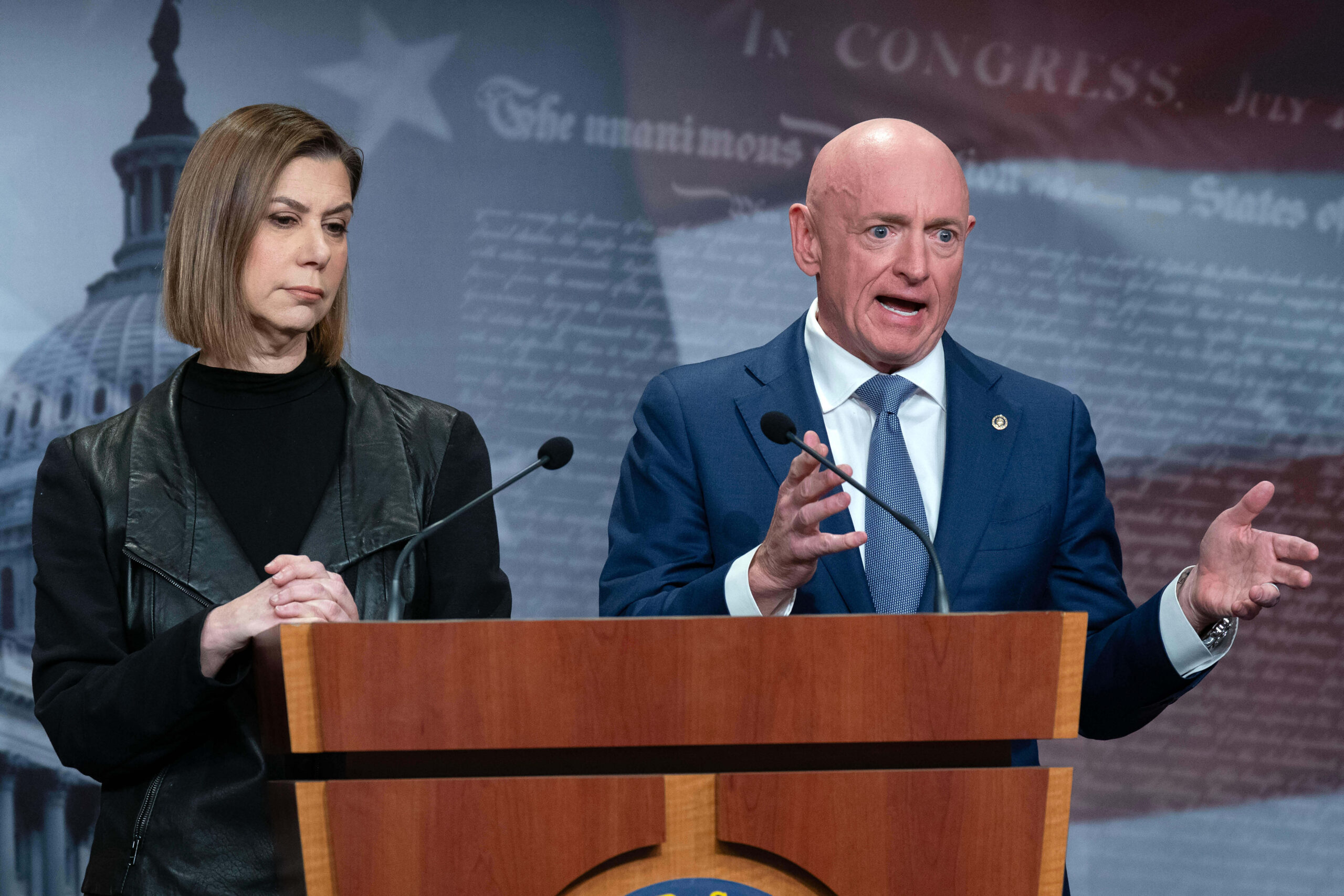
    Rep. Elissa Slotkin (D., Mich.) and Sen. Mark Kelly (D., Ariz.) speak during a news conference Wednesday on Capitol Hill.

    “This is not a good news story,” Kelly, a retired Navy captain and astronaut, told reporters during a news conference this week. “This is a story about how Donald Trump and his cronies are trying to break our system to silence anyone who lawfully speaks out against them.”

    The attempt to charge the lawmakers represents an evolution of the campaign that began last year with cases against James and Comey, said Brendan Nyhan, a professor of government at Dartmouth College.

    “Prosecuting people for speech criticizing the president is in some ways even more dangerous,” Nyhan said, “especially given these are legislators acting in their public role and especially given that they were calling for the military and national security state to follow the law.”

    Still, some Trump allies in Congress, including House Speaker Mike Johnson (R., La.), defended the administration’s efforts. He told reporters that Slotkin, Kelly, and the others “probably should be indicted.”

    “Any time you’re obstructing law enforcement and getting in the way of these sensitive operations, it’s a very serious thing, and it probably is a crime,” he said.

    The Justice Department’s criminal investigation into the lawmakers began after the video organized by Slotkin, a former CIA analyst, was posted online in November. In it, she and the others, all of whom served in the military or with intelligence agencies, reminded service members of their duty, spelled out in the Uniform Code of Military Justice, to resist unlawful directives.

    “This administration is pitting our uniformed military and intelligence community professionals against American citizens,” the lawmakers said. “Our laws are clear. You can refuse illegal orders.”

    The video did not single out any specific Trump administration policies. But Slotkin and Kelly, both of whom serve on the Senate Armed Services Committee, have sharply criticized the president for military strikes he authorized on alleged drug trafficking boats in the Caribbean Sea and Pacific Ocean and his decision to deploy the National Guard to cities run by Democratic officials.

    Their video drew an immediate reaction from Trump, who demanded on social media that the lawmakers face prosecution for sedition and suggested they should even, perhaps, be punished with execution.

    “SEDITIOUS BEHAVIOR, punishable by DEATH!” Trump wrote in one social media post soon after the video was posted. He said in another: “IT WAS SEDITION AT THE HIGHEST LEVEL, AND SEDITION IS A MAJOR CRIME.”

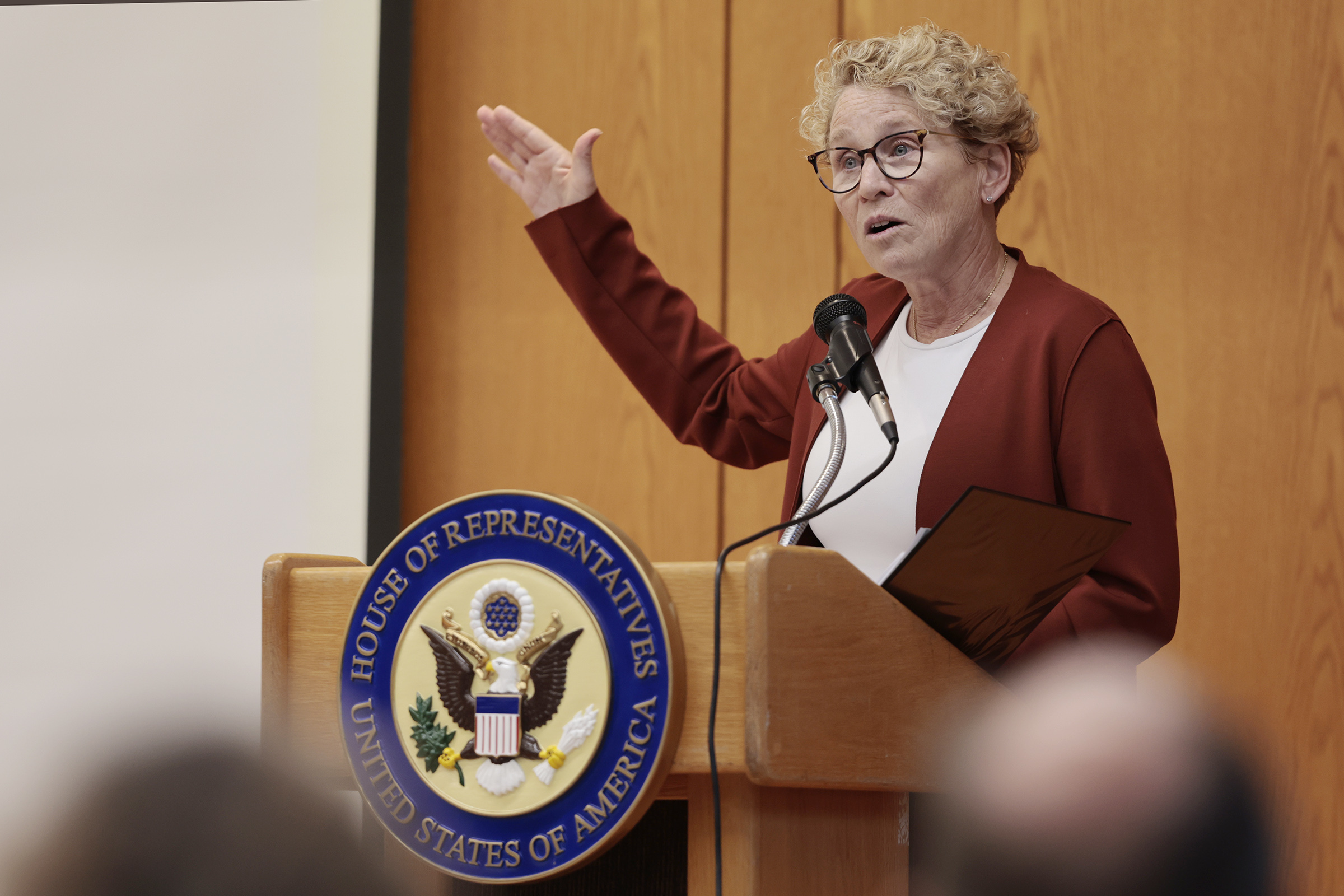
    Rep. Chrissy Houlahan, a former Air Force officer and a Democrat who represents Chester County, was one of six lawmakers targeted over a 90-second video message.

    The messages echoed another Trump post from last year in which he, in a missive addressed to “Pam,” an apparent reference to Attorney General Pam Bondi, insisted the Justice Department move swiftly to prosecute Comey, James, and others.

    “We can’t delay any longer, it’s killing our reputation and credibility,” he wrote then, adding, “JUSTICE MUST BE SERVED, NOW!!!”

    Within months, James was indicted on counts of mortgage fraud, while Comey was charged with lying to Congress. Both denied the accusations and their cases were later dismissed by a federal judge over technical issues with the appointment of the prosecutor who had charged them.

    Slotkin, Kelly, and the other lawmakers have maintained they did nothing wrong — even as top administration officials have accused them of using the video to encourage service members to take actions tantamount to mutiny.

    Earlier this month, four of the lawmakers in the video disclosed that they had been approached by FBI agents and declined to give voluntary interviews to prosecutors.

    “It was clearly, when our lawyers sat down with them, just about checking a box and doing what the president wanted them to do,” Slotkin said Wednesday. “Their heart wasn’t even in it.”

    It is not clear whether the FBI took other steps to investigate. But on Tuesday, prosecutors under the supervision of D.C.’s U.S. Attorney Jeanine Pirro, a former Fox News host and staunch Trump ally, presented a case against the lawmakers to the grand jury.

    Two political appointees led that presentation, according to two people familiar with the matter who spoke on the condition of anonymity to describe sealed court proceedings.

    The prosecutors — Steven Vandervelden, a former colleague of Pirro’s in the district attorney’s office in Westchester, New York, and Carlton Davis, a former staffer for House Oversight Committee Chairman Rep. James Comer (R., Ky.) — sought to charge the lawmakers with a felony crime that makes it illegal to “interfere with, impair, or influence the loyalty, morale, or discipline of the military or naval forces of the United States,” the people said.

    But when it came time to vote, none of the grand jurors agreed there was sufficient probable cause to charge any of the lawmakers with a crime, one of the people familiar said.

    Spokespeople for the Justice Department and for Pirro have declined to comment on the matter in the days since. Amid that silence, the effort has drawn an impassioned response from Capitol Hill.

    “The fact that they failed to incarcerate a United States senator should not obviate our outrage,” Sen. Brian Schatz (D., Hawaii) said during a heated session Wednesday in which Democratic senators implored their Republican colleagues to openly condemn the Justice Department’s actions. Senate Democrats held a special caucus meeting Thursday morning to further discuss the situation.

    “They tried to incarcerate two of us,” Schatz said. “I am not entirely sure the United States Senate can survive this if we do not have Republicans standing up.”

    Sen. Thom Tillis (North Carolina) has emerged as one of the few Republicans to publicly rebuke the department. He described the failed attempt to prosecute as exactly the type of weaponization of the justice system that the Trump administration has said it is fighting against.

    “Political lawfare is not normal, not acceptable, and needs to stop,” Tillis wrote in a post to X.

    At their news conference Wednesday, Kelly told reporters that he and Slotkin learned about the attempt to indict them Tuesday through media reports.

    “If things had gone a different way, we’d be preparing for arrest,” Slotkin said.

    Since then, lawyers for several of the targeted lawmakers have sent letters to Pirro and Bondi seeking assurances that the investigation is over and that prosecutors will not seek to indict them again. They’ve also instructed the department to retain all records of the investigation threatening potential legal action for violating the lawmakers’ free-speech rights.

    In a separate suit filed by Kelly, a federal judge Thursday halted Defense Department efforts to formally censure the senator over his video remarks, saying the effort to do so “trampled on Senator Kelly’s First Amendment freedoms and threatened the constitutional liberties of millions of military retirees.”

    “The intimidation was the point — to get other people beyond us to think twice about speaking out,” Slotkin said Wednesday. “But the real question is if the president can do this to us — sitting senators — who else can he do it to?”