Category: News

Latest breaking news and updates

  • In dozens of cases, Philly’s federal judges have found Trump’s mandatory detention policy unlawful

    In dozens of cases, Philly’s federal judges have found Trump’s mandatory detention policy unlawful

    Federal judges in Philadelphia have ruled dozens of times against a Trump administration policy that mandates detention for nearly all undocumented immigrants — joining a nationwide wave of decisions criticizing the government for applying the policy in unlawful ways.

    In the Eastern District of Pennsylvania, U.S. District Judge Juan R. Sánchez wrote in a memorandum this week that more than 40 people who have been detained in the region under that policy, which was rolled out by Immigration and Customs Enforcement last summer, have sought relief in the courts — and judges have ruled against the government in every case.

    Chief Judge Wendy Beetlestone was even more blunt in an opinion filed last month, writing that “the law is piled sky high against the government’s position” to mandate detention and deny bond hearings for all undocumented immigrants — even those seeking to stay here via appropriate legal channels.

    The administration’s insistence on employing the policy and defending it in court, Beetlestone wrote, was akin to the Greek myth of Sisyphus pushing a boulder up a hill.

    “The Government’s hope, presumably, is that if it keeps pushing the boulder of its argument up the hill, at least one judge may rule against the weight of the authority,” Beetlestone wrote. “But the tale before the courts is the traditional one of Greek mythology: the Government returns again and again to push the same theory uphill, only for courts to send it rolling back down again.”

    The pushback has added to a chorus of similar decisions in courts nationwide. Sánchez, appointed by George W. Bush, wrote in his memo that people challenging their detention in federal district courts “have prevailed, either on a preliminary or final basis, in 350 … cases decided by over 160 different judges sitting in about fifty different courts spread across the United States.”

    A Politico analysis of court dockets published this week put that tally even higher, reporting that over the last six months, more than 300 federal judges — comprising appointees of every president since Ronald Reagan — have ordered some form of relief in mandatory detention cases to about 1,600 challengers.

    Spokespeople for ICE did not reply to questions about the judicial rebukes, and many of the government’s court filings in cases challenging detention have been made under seal.

    Still, the Trump administration has made no secret of its desire to boost the number of people in federal immigration detention. And the mandatory detention policy has helped push the number of confined immigrants past 65,000, a two-thirds increase since Trump took office in January.

    Lilah R. Thompson, an immigration attorney in the community defense unit at the Defender Association of Philadelphia, said in an interview that mandatory detention “plainly violates the law and is an illegal policy.” But she said most challenges to it so far have come in individual cases, and the potential legal avenues seeking to strike it down nationwide are protracted and legally complex.

    In the meantime, Thompson said, the government has seemed content to use the policy in its attempt to apply pressure to immigrants and, ultimately, increase deportations.

    “[Authorities] are applying a blanket policy because when people are in detention, they aren’t able to withstand the horrors of detention,” Thompson said. “It makes their circumstances much more difficult.”

    A dramatic change in precedent

    ICE’s detention mandate was rolled out amid the Trump administration’s aggressive push to crack down on immigrants nationwide.

    It came as the Board of Immigration Appeals — the highest administrative body for interpreting the nation’s immigration laws — issued three precedential rulings that made it dramatically harder for detainees to be released on bond.

    In one of those rulings, the board held that immigration judges lack the power to hear or grant bond requests to people who entered the United States without permission — even if they had been in the country for years, or had few other infractions that might warrant detention as their cases wound through the immigration system.

    That upended decades of established government practice, which typically allowed otherwise law-abiding people who entered the country illegally to at least receive a bond hearing and determine if they could remain in the community as their cases moved forward.

    The decision also meant that thousands of detained immigrants who previously would have been eligible for bond hearings could be released only if they filed and won a federal lawsuit.

    For many detainees that created an impossible situation because they have neither a lawyer nor the money to hire one.

    “There are so many people that are getting picked up [under] the unlawful mandatory detention policy, but because they don’t have an attorney to file a [legal challenge], they’re still experiencing the consequences of the policy,” said Maria Thomson, another attorney in the Defender Association’s community defense unit.

    Officials at the federal Executive Office for Immigration Review, which oversees the BIA, declined to answer questions about the rulings.

    “The Executive Office for Immigration Review does not comment on federal court decisions,” spokesperson Kathryn Mattingly said in a statement.

    Detainees who have been able to hire attorneys and appear before federal judges have been winning relief at near-universal rates, with the courts ordering their freedom or directing the immigration court to hold a bond hearing.

    “The district courts have been overwhelming on this question. It’s been extremely lopsided,” said Jonah Eaton, a veteran immigration attorney who teaches law at Temple University and the University of Pennsylvania, adding that even some Trump-appointed judges “have said this is nonsense.”

    Earlier this week, District Judge John Murphy said in a court filing that judges had sided with detainees in all 50 cases filed so far in Pennsylvania’s Eastern District.

    And in November, District Judge Paul Diamond wrote that he’d found 288 district court decisions nationwide addressing the issue — and that judges had ruled against the administration in 282 of them.

    Diamond then went on to criticize the government’s attempts to justify its policy using what he said were competing interpretations of the law.

    It is “difficult to credit the Government’s squarely contradictory position here,” Diamond wrote.

    Significant challenges

    Still, not all wins for detainees are comprehensive.

    In some instances, immigrants are granted bond hearings before an immigration judge. But Eaton said some of those immigration judges will either deny bond or set an impossibly high figure. In Philadelphia, he said, it’s become common for attorneys to ask the federal judges to order release themselves, “because immigration judges won’t do it.”

    Immigration Court is part of the executive branch, not the judiciary, run by the Department of Justice. That has for years called the courts’ impartiality into question.

    “Even when we’re seeing bond hearings happening, they’re being denied at a higher rate,” said attorney Emma Tuohy, a deportation-defense specialist at Simon, Choi & Tuohy in Philadelphia. So immigrant defenders “are going straight to district court and filing habeas corpus, on the premise that people are being unlawfully detained.”

    Habeas corpus, Latin for “you have the body,” is a demand that the government bring a detained person to court and prove that they have been legally imprisoned. It’s considered a fundamental protection against arbitrary detention.

    Beyond bond hearings, Thompson, of the Defender Association, said there are challenges in seeking to provide ample legal assistance to people who have solid grounds to fight their detention: Many can’t afford lawyers, she said, there is no statewide funding to support lawyers pursuing such challenges, and ICE can move detainees to different jurisdictions at its discretion, increasing the difficulty of petitioning for release.

    “They are doing it because they can, and because the consequences are that most [immigrants] cannot fight this and will end up being deported,” she said.

    Cases that might threaten the overall detention policy, meanwhile, are likely to take time to wind through appellate courts, she said — and the administration could seek to litigate the matter in jurisdictions that have been more traditionally conservative.

    In the meantime, federal judges are going to continue having to confront the issue in district courts. Murphy wrote this week that there are approximately 25 petitions awaiting a ruling in Philadelphia’s federal courthouse.

    If Beetlestone’s opinion is any guide, the judges would prefer that ICE change its position — rather than continuing down the same path and hoping the ruling will be different next time.

    Relying on hope in the courts, Beetlestone said, “resembles a game of whack-a-mole, in which the mole (here, the Government) insists on repeatedly volunteering to get struck by the judicial gavel.”

  • ICE shooting reinforces Minnesota’s grim role as Trump’s target

    ICE shooting reinforces Minnesota’s grim role as Trump’s target

    MINNEAPOLIS — Federal officers have encountered opposition in nearly all of the cities targeted by President Donald Trump’s immigration enforcement campaign. But it was in Minnesota — a state in daily conflict with the Trump administration this year — that a 37-year-old woman was shot and killed by an immigration officer.

    Trump has focused on several blue states in the divide-and-conquer campaign that has characterized his second term, and now he has turned to Minnesota, where the killing of George Floyd and the protests it sparked stained his first presidency.

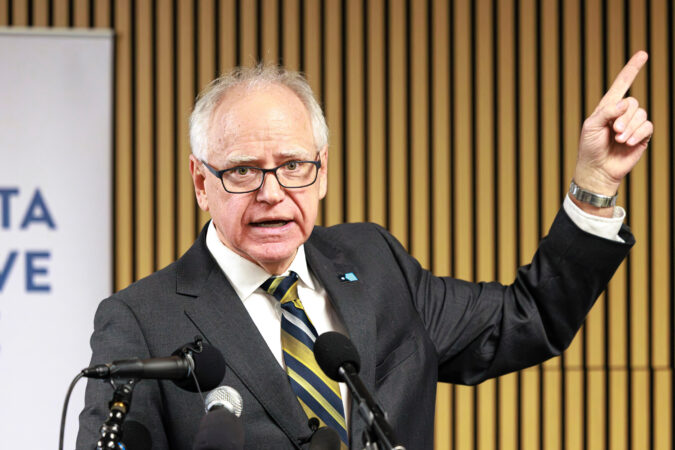
    Trump last month called the state’s Somali population “garbage” in the wake of a massive federal investigation into COVID-19 and medical aid fraud tied to organizations serving Somali immigrants, among others. The fraud cases led Minnesota’s Democratic governor, Tim Walz — former Vice President Kamala Harris’ 2024 running mate — to announce this week he will not run for reelection.

    In June, a Democratic state lawmaker and her husband were assassinated by a Trump supporter, although conservatives insist the gunman was actually a leftist working at Walz’s behest. On Sunday, the victims’ family begged Trump to take down a social media post echoing those conspiracy theories.

    Memories of the chaos that followed the killing of George Floyd

    Amid that mounting tension, the Trump administration announced Tuesday that it was sending more than 2,000 federal officers to the Twin Cities of Minneapolis and St. Paul in what it claimed would be the biggest immigration enforcement operation in history.

    The Immigration and Customs Enforcement officer who killed Renee Good during a protest Wednesday against the immigration raids opened fire just blocks from where, in 2020, a Minneapolis police officer killed George Floyd. The parallels were painful and frightening for many in the area, including Stephanie Abel, a 56-year-old Minneapolis nurse, who is keeping her gas tank full and cash handy in memory of the chaos that followed that slaying.

    “I thought the federal government would realize that now is not the time to be toying with people,” Abel said. “What are they going to try to do to get Minneapolis to ignite?”

    Floyd’s death sparked the biggest protests of Trump’s first term. The president, who is still publicly bitter about the unrest, contends it should have been met with a stronger show of force.

    That’s the approach Trump has adopted in his second term, trying to cow blue states by surging military and immigration agents into their cities and insisting that anyone who doesn’t comply with federal demands will face severe consequences.

    Immigration operations that started last summer in liberal strongholds such as Chicago,Los Angeles and Portland also generated large protests. Good is at least the fifth person killed during ICE enforcement efforts.

    On Thursday, Vice President JD Vance said Good’s death was “a tragedy of her own making,” blamed “leftist ideology” and said the media had encouraged protests against Trump’s immigration crackdown. Vance spoke at the White House to announce a new assistant attorney general position to prosecute the abuse of government assistance programs that will focus on Minnesota.

    Federal investigators have Somalis in their sights

    The Twin Cities operation is intertwined with a conservative effort to make Minnesota the poster child for government fraud. Though prosecutions for the fraudulent use of hundreds of millions of dollars of federal COVID-19 and health aid by social service groups began in the Biden administration, Trump and conservatives have seized on the scandal in recent weeks.

    In November, Trump called Minnesota “a hub of fraudulent money laundering activity” after a report by a conservative news site, City Journal, claimed federal money was fraudulently flowing to the militant group al-Shabab. There has been little, if any, evidence, proving such a link. Nevertheless, the president said he would end Temporary Protected Status for Somalis in Minnesota.

    The allegations got a new charge late last month when conservative influencer Nick Shirley posted an unconfirmed video claiming that day care centers in Minneapolis run by Somalis had fraudulently collected over $100 million in government aid.

    Jamal Osman, a Somali immigrant and Minneapolis city councilman who lives just a few blocks from the location of the ICE shooting, said he and other prominent Somalis in the area have been swamped with angry calls and messages since Trump made his statements. The vitriol, he said, mainly comes from out of state.

    “We have whole groups of people who’ve never been to Minnesota,” Osman said in an interview. “Minnesota is probably one of the nicest places to live. It’s a beautiful area with very nice people and we blended in, it’s all very nice. We don’t really see bad things happening here normally.”

    The Trump administration on Tuesday said is withholding funding for programs that support needy families with children, including day care funding, in five Democratic-led states over concerns about fraud. Joining Minnesota on the list were California, Colorado, Illinois and New York.

    ‘Leave our state alone’

    Minnesota’s place on a list of targeted blue states is not unexpected.

    Under Walz, Minnesota has become something of a beacon for liberals as an example of a state that expanded the public safety net even as the nation swung to the right. Since Trump’s first election, the state has seen large increases in education spending, free school breakfasts and lunches, and improved protection of abortion rights.

    Trump lost Minnesota by only 4 percentage points in 2024, making it significantly less liberal than California and New York. Still, it has been reliably Democratic throughout the Trump years, a rarity in the swingy upper Midwest.

    The state’s political tilt reflects the size of the Twin Cities metro area and its robust population of college-educated liberals, which overwhelm the state’s more conservative rural reaches.

    It’s the sort of cleavage that has defined national politics during Trump’s years in office.

    “Minnesota is a microcosm of a lot of the tensions we have in our society,” said David Schultz, a political scientist at Hamline University in St. Paul. “We’re a country that’s hugely polarized, Democrats-Republicans, urban-rural.”

    On Thursday, Minnesota was an ominous indicator of the damage those divisions can inflict. Minneapolis schools remained closed after immigration agents clashed with high school students at one campus on Wednesday. The state’s National Guard remained on standby at Walz’s directive.

    Walz begged Trump to ease up, saying Minnesota’s residents are “exhausted” by the president’s “relentless assault on Minnesota.”

    “So please, just give us a break,” Walz said during a news conference Thursday. “And if it’s me, you’re already getting what you want, but leave my people alone. Leave our state alone.”

  • Somalia denies U.S. allegation that it destroyed food aid warehouse

    Somalia denies U.S. allegation that it destroyed food aid warehouse

    MOGADISHU, Somalia — Somalia’s government on Thursday denied an allegation by the U.S. government that authorities in Mogadishu destroyed an American-funded warehouse belonging to the World Food Program and seized food aid earmarked for impoverished civilians.

    The U.S. State Department said Wednesday that it has suspended all assistance from Washington to Somalia’s federal government over the allegations, saying the Trump administration has “a zero-tolerance policy for waste, theft and diversion of life-saving assistance.”

    A senior U.S. State Department official said authorities at the Mogadishu port demolished the warehouse of the World Food Program, a Rome-based U.N. agency, at the direction of President Hassan Sheikh Mohamud “with no prior notification or coordination with international donor countries, including the United States.” The official spoke on condition of anonymity to discuss private reporting from American diplomats in the region.

    Somalia’s foreign ministry said that the food in question wasn’t destroyed and that “the commodities referenced in recent reports remain under the custody and control of the World Food Program, including assistance provided by the United States.”

    The foreign ministry said expansion and repurposing works at the Mogadishu port are underway as part of broader developments, but ongoing activities there have not affected the custody and distribution of humanitarian assistance.

    Somalia “remains fully committed to humanitarian principles, transparency, and accountability, and values its partnership with the United States and all international donors,” it said. It gave no other details.

    The WFP told The Associated Press in a statement that its warehouse in Mogadishu port had been demolished by port authorities. The organization said the warehouse contained 75 metric tones of specialized foods intended for the treatment of malnourished pregnant and breastfeeding women and girls and young children.

    In a later update, the WFP said it had “retrieved 75 metric tons of nutritional commodities” without explaining further details on how the material was retried.

    The U.S. State Department said: “We’re glad to hear reports that certain commodities have been recovered and continue our investigation into diversion and misuse of assistance in Somalia. We’ve urged the Federal Government of Somalia to promptly follow through on their commitment to provide an account of the incident.”

    Located in the Horn of Africa, Somalia is one of the world’s poorest nations and has been beset by chronic strife and insecurity exacerbated by multiple natural disasters, including severe droughts, for decades.

    The U.S. provided $770 million in assistance for projects in Somalia during the last year of Democratic President Joe Biden’s administration, but only a fraction of that went directly to the government.

    The U.S. suspension comes as the Trump administration has ratcheted up criticism of Somali refugees and migrants in the United States, including over fraud allegations involving child care centers in Minnesota. It has slapped significant restrictions on Somalis wanting to come to the U.S. and made it difficult for those already in the United States to stay.

    It wasn’t immediately clear how much assistance would be affected by the suspension because the Trump administration has slashed foreign aid expenditures, dismantled the U.S. Agency for International Development and not released new country-by-country data.

    South Sudan, another African country facing conflict and food shortage, is also heavily affected by U.S. aid restrictions. On Thursday, the U.S. suspended foreign assistance to a county in South Sudan’s Jonglei state, and similar assistance to Western Bahr el-Ghazal state was under review, the U.S. Embassy in South Sudan said in a statement.

    That statement charged that South Sudanese officials “take advantage of the United States instead of working in partnership with us to help the South Sudanese people.”

    The U.S. measures “follow continued abuse, exploitation, and theft directed against U.S. foreign assistance by South Sudanese officials at national, state, and county levels,” it said.

    There was no immediate comment from South Sudan’s government.

  • Senate pushes back on Trump’s military threats against Venezuela with war powers vote

    Senate pushes back on Trump’s military threats against Venezuela with war powers vote

    WASHINGTON — The Senate advanced a resolution Thursday that would limit President Donald Trump’s ability to conduct further attacks against Venezuela, sounding a note of disapproval for his expanding ambitions in the Western Hemisphere.

    Democrats and five Republicans voted to advance the war powers resolution on a 52-47 vote and ensure a vote next week on final passage. It has virtually no chance of becoming law because Trump would have to sign it if it were to pass the Republican-controlled House. Still, it was a significant gesture that showed unease among some Republicans after the U.S. military seized Venezuelan leader Nicolás Maduro in a surprise nighttime raid over the weekend.

    Trump’s administration is now seeking to control Venezuela’s oil resources and its government, but the war powers resolution would require congressional approval for any further attacks on the South American country.

    “To me, this is all about going forward,” said Missouri Sen. Josh Hawley, one of the five Republican votes. “If the president should determine, ‘You know what? I need to put troops on the ground of Venezuela,’ I think that would require Congress to weigh in.”

    The other Republicans who backed the resolution were Sens. Rand Paul of Kentucky, Lisa Murkowski of Alaska, Susan Collins of Maine and Todd Young of Indiana.

    Trump reacted to their votes by saying on social media that they “should never be elected to office again” and that the vote “greatly hampers American Self Defense and National Security.”

    Democrats had failed to pass several such resolutions in the months that Trump escalated his campaign against Venezuela. But lawmakers argued now that Trump has captured Maduro and set his sights to other conquests such as Greenland, the vote presents Congress with an opportunity.

    “This wasn’t just a procedural vote. It’s a clear rejection of the idea that one person can unilaterally send American sons and daughters into harm’s way without Congress, without debate,” said Senate Democratic leader Chuck Schumer of New York.

    Lawmakers’ response to the Venezuela operation

    Republican leaders have said they had no advance notification of the raid early morning Saturday to seize Maduro and his wife, Cilia Flores, but mostly expressed satisfaction this week as top administration officials provided classified briefings on the operation.

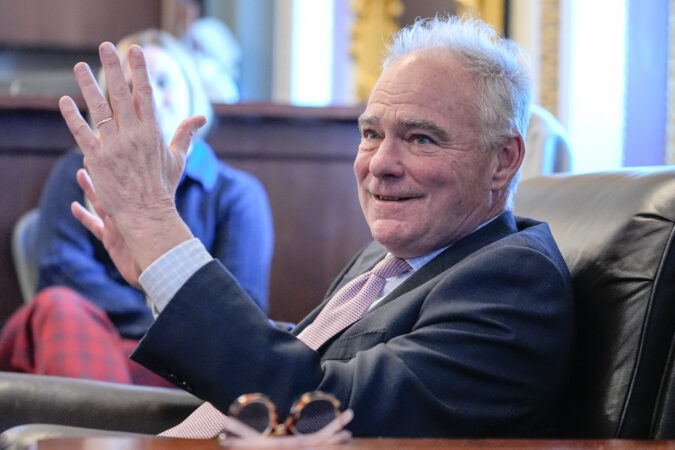
    Sen. Tim Kaine, D-Va., who forced the vote on the resolution, said he believes many Republicans were caught off guard by the outcome. He said that Trump’s recent comments to The New York Times suggesting U.S. oversight in Venezuela could last for years — combined with details revealed in the classified briefings — prompted some lawmakers to conclude that “this is too big to let a president do it without Congress.”

    The administration has used an evolving set of legal justifications for the monthslong campaign in Central and South America, from destroying alleged drug boats under authorizations for the global fight against terrorism to seizing Maduro in what was ostensibly a law enforcement operation to put him on trial in the United States.

    Republican leaders have backed Trump.

    “I think the president has demonstrated at least already a very strong commitment to peace through strength, especially in this hemisphere,” said Senate Majority Leader John Thune, R-S.D. “I think Venezuela got that message loudly and clearly.”

    A vote on a similar resolution in November narrowly failed to gain the majority needed. Paul and Murkowski were the only Republicans voting in favor then.

    Young in a statement said he supported the operation to capture Maduro, but was concerned by Trump’s statements that his administration now “runs” Venezuela.

    “It is unclear if that means that an American military presence will be required to stabilize the country,” Young said, adding that he believed most of his constituents were not prepared to send U.S. troops to that mission.

    House Democrats were introducing a similar resolution Thursday.

    The rarely enforced War Powers Act

    Trump criticized the Senate vote as “impeding the President’s Authority as Commander in Chief” under the Constitution.

    Presidents of both parties have long argued the War Powers Act infringes on their authority. Passed in 1973 in the aftermath of the Vietnam War — and over the veto of Republican President Richard Nixon — it has never succeeded in directly forcing a president to halt military action.

    Congress declares war while the president serves as commander in chief, according to the Constitution. But lawmakers have not formally declared war since World War II, granting presidents broad latitude to act unilaterally. The law requires presidents to notify Congress within 48 hours of deploying forces and to end military action within 60 to 90 days absent authorization — limits that presidents of both parties have routinely stretched.

    Democrats argue those limits are being pushed further than ever. Some Republicans have gone further still, contending congressional approval is unnecessary altogether.

    Republican Sen. Lindsey Graham of South Carolina, a close Trump ally who traveled with the president aboard Air Force One on Sunday, said he would be comfortable with Trump taking over other countries without congressional approval, including Greenland.

    “The commander in chief is the commander in chief. They can use military force,” Graham said.

    Greenland may further test the limits

    Graham’s comments come as the administration weighs not only its next steps in Venezuela, but also Greenland. The White House has said the “military is always an option” when it comes to a potential American takeover of the world’s largest island.

    Republicans have cited Greenland’s strategic value, but most have balked at the idea of using the military to take the country. Some favor a potential deal to purchase the country, while others have acknowledged that is an unlikely option when Denmark and Greenland have rejected Trump’s overtures.

    Democrats want to get out in front of any military action and are already preparing to respond. Arizona Sen. Ruben Gallego said he expected soon to introduce a resolution “to block Trump from invading Greenland.”

    Greenland belongs to a NATO ally, Denmark, which has prompted a much different response from Republican senators than the situation in Venezuela.

    On Thursday, Sen. Roger Wicker, chairman of the Senate Armed Services Committee, met with the Danish ambassador to the United States, Jesper Møller Sørensen. Also in the meeting were the top Democrat on the Senate Foreign Relations Committee, New Hampshire Sen. Jeanne Shaheen, and the head of Greenland’s representation to the U.S. and Canada, Jacob Isbosethsen.

    “There’s no willingness on their part to negotiate for the purchase or the change in title to their land which they’ve had for so long,” Wicker, R-Miss., said afterward. “That’s their prerogative and their right.”

    Wicker added that he hoped an agreement could be reached that would strengthen the U.S. relationship with Denmark.

    “Greenland is not for sale,” Isbosethsen told reporters.

  • Internet and phones cut in Iran as protesters heed exiled prince’s call for mass demonstration

    Internet and phones cut in Iran as protesters heed exiled prince’s call for mass demonstration

    DUBAI, United Arab Emirates — People in Iran’s capital shouted from their homes and raIran’s government cut off the country from the internet and international telephone calls Thursday night as a nighttime demonstration called by the country’s exiled crown prince drew a mass of protesters to shout from their windows and storm the streets.

    The protest represented the first test of whether the Iranian public could be swayed by Crown Prince Reza Pahlavi, whose fatally ill father fled Iran just before the country’s 1979 Islamic Revolution. Demonstrations have included cries in support of the shah, something that could bring a death sentence in the past but now underlines the anger fueling the protests that began over Iran’s ailing economy.

    The demonstrations that have popped up in cities and rural towns across Iran continued Thursday. More markets and bazaars shut down in support of the protesters. So far, violence around the demonstrations has killed at least 42 people while more than 2,270 others have been detained, said the U.S.-based Human Rights Activists News Agency.

    The growth of the protests increases the pressure on Iran’s civilian government and its Supreme Leader Ayatollah Ali Khamenei. CloudFlare, an internet firm, and the advocacy group NetBlocks reported the internet outage, both attributing it to Iranian government interference. Attempts to dial landlines and mobile phones from Dubai to Iran could not be connected. Such outages have in the past been followed by intense government crackdowns.

    Meanwhile, the protests themselves have remained broadly leaderless. It remains unclear how Pahlavi’s call will affect the demonstrations moving forward.

    “The lack of a viable alternative has undermined past protests in Iran,” wrote Nate Swanson of the Washington-based Atlantic Council, who studies Iran.

    “There may be a thousand Iranian dissident activists who, given a chance, could emerge as respected statesmen, as labor leader Lech Wałęsa did in Poland at the end of the Cold War. But so far, the Iranian security apparatus has arrested, persecuted and exiled all of the country’s potential transformational leaders.”

    Thursday’s demonstration rallies at home and in street

    Pahlavi had called for demonstrations at 8 p.m. local (1630 GMT) on Thursday and Friday. When the clock struck, neighborhoods across Tehran erupted in chanting, witnesses said. The chants included “Death to the dictator!” and “Death to the Islamic Republic!” Others praised the shah, shouting: “This is the last battle! Pahlavi will return!” Thousands could be seen on the streets before all communication to Iran cut out.

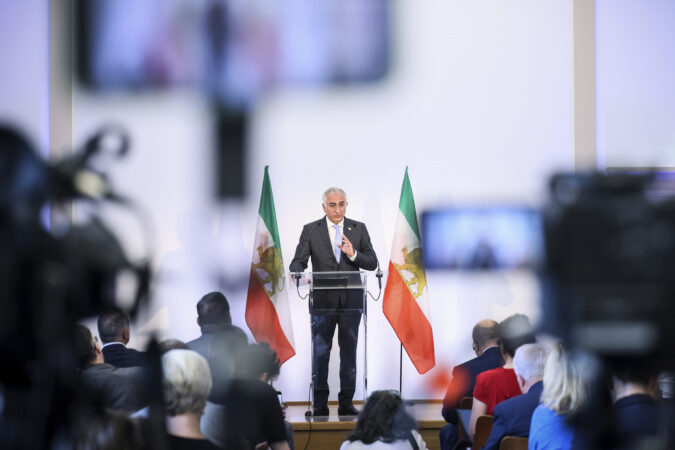
    “Iranians demanded their freedom tonight. In response, the regime in Iran has cut all lines of communication,” Pahlavi said. “It has shut down the Internet. It has cut landlines. It may even attempt to jam satellite signals.”

    He went on to call for European leaders to join U.S. President Donald Trump in promising to “hold the regime to account.”

    “I call on them to use all technical, financial, and diplomatic resources available to restore communication to the Iranian people so that their voice and their will can be heard and seen,” he added. ”Do not let the voices of my courageous compatriots be silenced.”

    Pahlavi had said he would offer further plans depending on the response to his call. His support of and from Israel has drawn criticism in the past — particularly after the 12-day war Israel waged on Iran in June. Demonstrators have shouted in support of the shah in some demonstrations, but it isn’t clear whether that’s support for Pahlavi himself or a desire to return to a time before the 1979 Islamic Revolution.

    Iranian officials appeared to be taking the planned protests seriously. The hard-line Kayhan newspaper published a video online claiming security forces would use drones to identify those taking part.

    Iranian officials have not acknowledged the scale of the overall protests, which raged across many locations Thursday even before the 8 p.m. demonstration. However, there has been reporting regarding security officials being hurt or killed.

    The judiciary’s Mizan news agency report a police colonel suffered fatal stab wounds in a town outside of Tehran, while the semiofficial Fars news agency said gunmen killed two security force members and wounded 30 others in a shooting in the city of Lordegan in Chaharmahal and Bakhtiari province.

    A deputy governor in Iran’s Khorasan Razavi province told Iranian state television that an attack at a police station killed five people Wednesday night in Chenaran, some 700 kilometers (430 miles) northeast of Tehran. Late Thursday, the Revolutionary Guard said two members of its forces were killed in Kermanshah.

    Iran weighs Trump threat

    Iran has faced rounds of nationwide protests in recent years. As sanctions tightened and Iran struggled after the 12-day war, its rial currency collapsed in December, reaching 1.4 million to $1. Protests began soon after, with demonstrators chanting against Iran’s theocracy.

    It remains unclear why Iranian officials have yet to crack down harder on the demonstrators. Trump warned last week that if Tehran “violently kills peaceful protesters,” America “will come to their rescue.”

    Speaking to talk show host Hugh Hewitt, Trump reiterated his pledge.

    Iran has “been told very strongly, even more strongly than I’m speaking to you right now, that if they do that, they’re going to have to pay hell,” Trump said.

    Trump demurred when asked if he’d meet with Pahlavi.

    “I’m not sure that it would be appropriate at this point to do that as president,” Trump said. “I think that we should let everybody go out there, and we see who emerges.”

    Meanwhile, Nobel Peace Prize laureate Narges Mohammadi remains imprisoned by authorities after her arrest in December.

    “Since Dec. 28, 2025, the people of Iran have taken to the streets, just as they did in 2009, 2019,” her son Ali Rahmani said. “Each time, the same demands came up: an end to the Islamic Republic, an end to this patriarchal, dictatorial and religious regime, the end of the clerics, the end of the mullahs’ regime.”

  • Anger and outrage spills onto Minneapolis streets after ICE officer’s fatal shooting of Renee Good

    Anger and outrage spills onto Minneapolis streets after ICE officer’s fatal shooting of Renee Good

    MINNEAPOLIS — As anger and outrage spilled out onto Minneapolis’ streets Thursday over the fatal shooting of a woman the day before by an Immigration and Customs Enforcement officer, a new shooting by federal officers in Oregon left two people wounded and elicited more scrutiny of enforcement operations across the country.

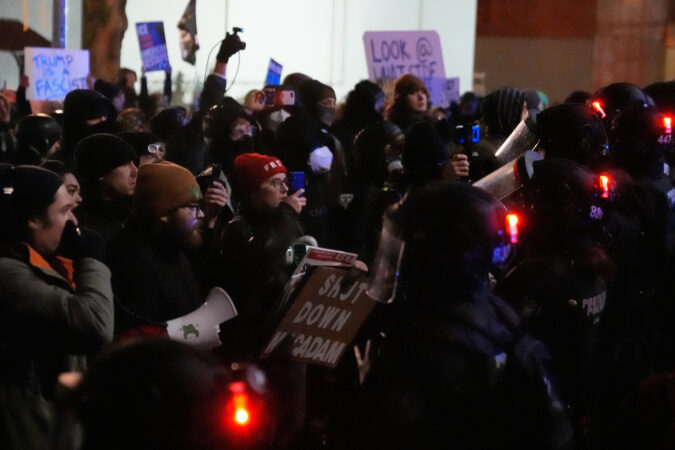
    Hundreds of people protesting the shooting of Renee Good as she tried to drive away marched in freezing rain Thursday night down one of Minneapolis’ major thoroughfares chanting “ICE out now” and holding signs saying, “killer ice off our streets.” Protesters earlier vented their outrage outside of a federal facility that’s serving as a hub for the administration’s latest immigration crackdown on a major city.

    The shooting in Portland, Oregon, took place outside a hospital Thursday afternoon and the conditions of the two people wounded were not immediately known. The FBI’s Portland office said it is investigating.

    Just as it did following the Minneapolis shooting, the Department of Homeland Security defended the actions of the officers in Portland, saying the shooting occurred after a Venezuelan man with alleged gang ties and who was involved in a recent shooting tried to “weaponize” his vehicle to hit the officers. It wasn’t clear yet if witness video corroborates that account.

    Homeland Security Secretary Kristi Noem, President Donald Trump and others in his administration have repeatedly characterized the Minneapolis shooting as an act of self-defense and cast Good as a villain, suggesting she used her vehicle as a weapon to attack the officer who shot her.

    Vice President JD Vance said the shooting was justified and that Good, a 37-year-old mother of three, was a “victim of left-wing ideology.”

    “I can believe that her death is a tragedy while also recognizing that it is a tragedy of her own making,” Vance said, noting that the officer who killed her was injured while making an arrest last June.

    But state and local officials and protesters rejected that characterization, with Minneapolis Mayor Jacob Frey saying video of the shooting shows the self-defense argument was “garbage.”

    An immigration crackdown quickly turns deadly

    The shooting happened on the second day of the Trump administration’s immigration crackdown on the Twin Cities of Minneapolis and St. Paul, which Homeland Security said is the biggest immigration enforcement operation ever. More than 2,000 officers are taking part, and Noem said they have already made more than 1,500 arrests.

    It provoked an immediate response in the city where police killed George Floyd in 2020, with hundreds of people turning up to the scene to vent their outrage at the ICE officers and the school district canceling classes for the rest of the week as a precaution.

    Good’s death — at least the fifth tied to immigration sweeps since Trump took office — has resonated far beyond Minneapolis, as protests took place or were expected this week in many large U.S. cities.

    “We should be horrified,” protester Shanta Hejmadi said. “We should be saddened that our government is waging war on our citizens.”

    Who will investigate?

    On Thursday, the Minnesota agency that investigates officer-involved shootings said it was informed that the FBI and U.S. Justice Department would not work with the department, effectively ending any role for the state to determine if crimes were committed. Noem said the state has no jurisdiction.

    “Without complete access to the evidence, witnesses and information collected, we cannot meet the investigative standards that Minnesota law and the public demands,” Drew Evans, the bureau’s superintendent, said.

    Gov. Tim Walz publicly demanded that the state be allowed to take part, repeatedly emphasizing that it would be “very difficult for Minnesotans” to accept that an investigation that excludes the state could be fair.

    Noem, he said, was “judge, jury and basically executioner” during her public comments about the confrontation.

    “People in positions of power have already passed judgment, from the president to the vice president to Kristi Noem — have stood and told you things that are verifiably false, verifiably inaccurate,” the governor said.

    Frey, the mayor, told The Associated Press: “We want to make sure that there is a check on this administration to ensure that this investigation is done for justice, not for the sake of a cover-up.”

    Deadly encounter seen from multiple angles

    Several bystanders captured footage of Good’s killing, which happened in a neighborhood south of downtown.

    The videos show an officer approaching an SUV stopped across the middle of the road, demanding the driver open the door and grabbing the handle. The Honda Pilot begins to pull forward, and a different ICE officer standing in front of it pulls his weapon and immediately fires at least two shots at close range, jumping back as the vehicle moves toward him.

    It isn’t clear from the videos if the vehicle makes contact with the officer, and there is no indication of whether the woman had interactions with ICE agents earlier. After the shooting the SUV speeds into two cars parked on a curb before crashing to a stop.

    Officer identified in court documents

    Noem hasn’t publicly named the officer who shot Good. But a Homeland Security spokesperson said her description of his injuries last summer refers to an incident in Bloomington, Minnesota, in which court documents identify him as Jonathan Ross.

    Ross got his arm stuck in the window of a vehicle of a driver who was fleeing arrest on an immigration violation, and was dragged roughly 100 yards (91 meters) before he was knocked free, records show.

    He fired his Taser, but the prongs didn’t incapacitate the driver, according to prosecutors. Ross was transported to a hospital, where he received more than 50 stitches.

    A jury found the driver guilty of assaulting a federal officer with a dangerous weapon.

    DHS assistant secretary Tricia McLaughlin said the officer involved in the shooting had worked more than 10 years as a deportation officer and had been selected for ICE’s special response team, which includes a 30-hour tryout and additional training.

    McLaughlin declined to confirm the identity of the officer as Ross. The AP wasn’t immediately able to locate a phone number or address for Ross, and ICE no longer has a union that might comment on his behalf.

  • Family and neighbors mourn woman who was shot by ICE agent and had made Minneapolis home

    Family and neighbors mourn woman who was shot by ICE agent and had made Minneapolis home

    MINNEAPOLIS — Before Renee Good was fatally shot behind the wheel of her vehicle by a U.S. Immigration and Customs Enforcement officer, the 37-year-old mother of three had dropped off her youngest child at an elementary school in Minneapolis, the newest city she called home.

    While Trump administration officials continued Thursday to paint Good as a domestic terrorist who attempted to ram federal agents with her Honda Pilot, members of her family, friends and neighbors mourned a woman they remembered as gentle, kind and openhearted.

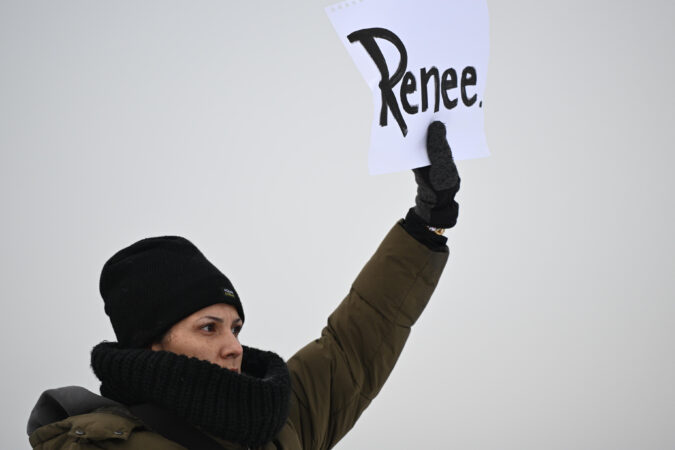
    Good, her 6-year-old son and her wife had only recently relocated to Minneapolis from Kansas City, Missouri. The family settled in a quiet residential street of older homes and multifamily buildings, some front porches festooned with pride flags still twinkling with holiday lights. A day after her death, neighbors had grown weary of talking to reporters. A handwritten sign posted to one front door read “NO MEDIA INQUIRES” and “JUSTICE FOR RENEE.”

    Far from the worst-of-the-worst criminals President Donald Trump said his immigration crackdown would target, Good was a U.S. citizen born in Colorado who had apparently never have been charged with anything beyond a single traffic ticket.

    In social media accounts, she described herself as a “poet and writer and wife and mom.” She said she was currently “experiencing Minneapolis,” displaying a pride emoji on her Instagram account. A profile picture posted to Pinterest shows her smiling and holding a young child against her cheek, along with posts about tattoos, hairstyles and home decorating.

    Her ex-husband, who asked not to be named out of concern for the safety of their children, said Good was no activist and that he had never known her to participate in a protest of any kind. He said she was simply headed home before the encounter with a group of ICE agents on a snowy street.

    State and local officials and protesters have rejected the Trump administration’s characterization of the shooting, with Minneapolis Mayor Jacob Frey saying video of the shooting shows the self-defense argument was “garbage.”

    Video taken by bystanders posted to social media shows an officer approaching her car, demanding she open the door and grabbing the handle. When she begins to pull forward, a different ICE officer standing in front of the vehicle pulls his weapon and immediately fires at least two shots into the vehicle at close range.

    The entire deadly incident was over in less than 10 seconds.

    In another video taken immediately after the shooting, a distraught woman is seen sitting near the vehicle, wailing, “That’s my wife, I don’t know what to do!”

    Calls and messages to Good’s wife received no response.

    By Thursday, a few dozen people had gathered on the one-way street where Good was killed, blocking the roadway with steel drums filled with burning wood for warmth to ward of a pelting freezing rain. Passersby stopped to pay their respects at a makeshift memorial with bouquets of flowers and a hand-fashioned cross.

    Good’s ex-husband said she was a devoted Christian who took part in youth mission trips to Northern Ireland when she was younger. She loved to sing, participating in a chorus in high school and studying vocal performance in college.

    She studied creative writing at Old Dominion University in Virginia and won a prize in 2020 for one of her works, according to a post on the school’s English department Facebook page. She also hosted a podcast with her second husband, who died in 2023.

    Kent Wascom, who taught Good in the creative writing program at Old Dominion, recalled her juggling the birth of her child with both work and school in 2019. He described her as “incredibly caring of her peers.”

    “What stood out to me in her prose was that, unlike a lot of young fiction writers, her focus was outward rather than inward,” Wascom said. “A creative writing workshop can be a gnarly place with a lot of egos and competition, but her presence was something that helped make that classroom a really supportive place.”

    Good had a daughter and a son from her first marriage, who are now ages 15 and 12. Her 6-year-old son was from her second marriage.

    Her ex-husband said she had primarily been a stay-at-home mom in recent years but had previously worked as a dental assistant and at a credit union.

    Donna Ganger, her mother, told the Minnesota Star Tribune the family was notified of the death late Wednesday morning. She did not respond to calls or messages from the AP.

    “Renee was one of the kindest people I’ve ever known,” Ganger told the newspaper. “She was extremely compassionate. She’s taken care of people all her life. She was loving, forgiving and affectionate. She was an amazing human being.”

  • Federal immigration officers shoot and wound two people in Portland, authorities say

    Federal immigration officers shoot and wound two people in Portland, authorities say

    PORTLAND, Ore. — Federal immigration agents shot and wounded two people in a vehicle outside a hospital in Portland on Thursday, a day after an officer fatally shot a woman in Minnesota, authorities said.

    The shooting drew hundreds of protesters to the U.S. Immigration and Customs Enforcement building at night, and Oregon Attorney General Dan Rayfield vowed to investigate “whether any federal officer acted outside the scope of their lawful authority” and refer criminal charges to the prosecutor’s office if warranted.

    The Department of Homeland Security said the vehicle’s passenger was “a Venezuelan illegal alien affiliated with the transnational Tren de Aragua prostitution ring” who was involved in a recent shooting in the city. When agents identified themselves to the occupants during a “targeted vehicle stop” in the afternoon, the driver tried to run them over, the department said in a statement.

    “Fearing for his life and safety, an agent fired a defensive shot,” it said. “The driver drove off with the passenger, fleeing the scene.”

    There was no immediate independent corroboration of that account or of any gang affiliation of the vehicle’s occupants. During prior shootings involving agents from President Donald Trump’s immigration crackdowns in U.S. cities, including the fatal one Wednesday in Minneapolis, video evidence has cast doubt on the administration’s characterizations of what prompted the shootings.

    Trump and his allies have consistently blamed the Tren de Aragua gang for being at the root of violence and drug dealing in some U.S. cities.

    The Portland shooting escalates tensions in a city that has long had a contentious relationship with Trump, including due to his recent failed effort to deploy National Guard troops there. The city saw long-running nightly protests outside the ICE building.

    According to the Portland Police bureau, officers initially responded to a report of a shooting outside Adventist Health hospital at 2:18 p.m. Thursday.

    A few minutes later, police received information that a man who had been shot was asking for help in a residential area a couple of miles away. Officers went there and found a man and a woman with gunshot wounds. Officers determined that they were injured in the shooting with federal agents, police said.

    Their conditions were not immediately known. Portland police said officers applied a tourniquet to one of them.

    City Council President Elana Pirtle-Guiney said during a meeting that “as far as we know, both of these individuals are still alive, and we are hoping for more positive updates throughout the afternoon.”

    At a nighttime news conference, Police Chief Bob Day said the FBI was leading the investigation and he had no details about the events that led to the shooting.

    Mayor Keith Wilson and the City Council called on ICE to end all operations in Oregon’s largest city until a full investigation is completed.

    “We stand united as elected officials in saying that we cannot sit by while constitutional protections erode and bloodshed mounts,” they said in a statement. “Portland is not a ‘training ground’ for militarized agents, and the ‘full force’ threatened by the administration has deadly consequences.”

    Wilson also suggested at a news conference that he does not necessarily believe the federal government’s account of the shooting: “There was a time we could take them at their word. That time is long past.”

    Democratic State Sen. Kayse Jama, who lives near where it took place, said Oregon is a welcoming state — but he told federal agents to leave.

    “You are not welcome,” Jama said. “You need to get the hell out of Oregon.”

    The city officials said “federal militarization undermines effective, community‑based public safety, and it runs counter to the values that define our region. We’ll use every legal and legislative tool available to protect our residents’ civil and human rights.”

    They urged residents to show up with “calm and purpose during this difficult time.”

    Several dozen people gathered in the evening near the scene where police found the wounded people.

    “It’s just been chaos,” said one, Anjalyssa Jones. “The community is trying to get answers.”

    U.S. Sen. Jeff Merkley, an Oregon Democrat, urged protesters to remain peaceful.

    “Trump wants to generate riots,” he said on the social platform X. “Don’t take the bait.”

  • House passes bill to extend health care subsidies in defiance of GOP leaders

    House passes bill to extend health care subsidies in defiance of GOP leaders

    WASHINGTON — In a remarkable rebuke of Republican leadership, the House passed legislation Thursday, 230-196, that would extend expired healthcare subsidies for those who get coverage through the Affordable Care Act as 17 renegade GOP lawmakers joined every Democrat in voting for the measure.

    Forcing the issue to a vote came about after a handful of Republicans signed on to a so-called “discharge petition” to unlock debate, bypassing objections from House Speaker Mike Johnson. The bill now goes to the Senate, where pressure is building for a bipartisan compromise.

    Together, the rare political coalitions are rushing to resolve the standoff over the enhanced tax credits that were put in place during the COVID-19 crisis but expired late last year after no agreement was reached during the government shutdown.

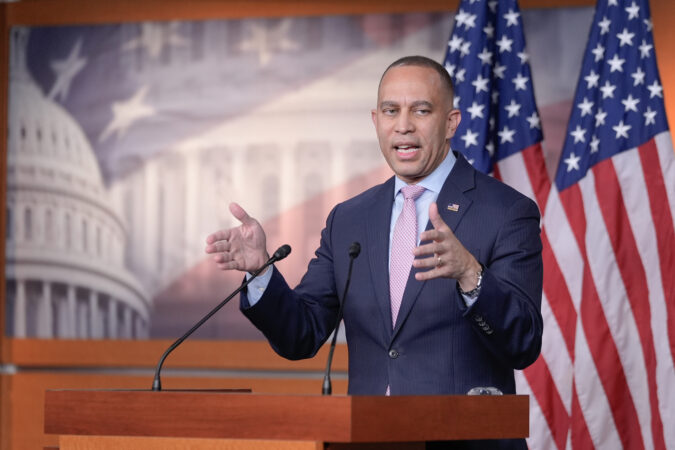
    “The affordability crisis is not a ‘hoax,’ it is very real — despite what Donald Trump has had to say,” said House Democratic Leader Hakeem Jeffries, invoking the president’s remarks.

    “Democrats made clear before the government was shut down that we were in this affordability fight until we win this affordability fight,” he said. “Today we have an opportunity to take a meaningful step forward.”

    Ahead of voting, the nonpartisan Congressional Budget Office estimated that the bill, which would provide a three-year extension of the subsidy, would increase the nation’s deficit by about $80.6 billion over the decade. At the same time, it would increase the number of people with health insurance by 100,000 this year, 3 million in 2027, 4 million in 2028 and 1.1 million in 2029, the CBO said.

    Growing support for extending ACA subsidies

    Johnson (R., La.) worked for months to prevent this situation. His office argued Thursday that the federal healthcare funding from the COVID-19 era is rife with fraud and urged a no vote.

    On the floor, Republicans also argued that the lawmakers should be focused on lowering health insurance costs for the broader population, not just those enrolled in ACA plans.

    “Only 7% of the population relies on Obamacare marketplace plans. This chamber should be about helping 100% of Americans,” said Rep. Jason Smith, the Republican chairman of the House Ways and Means Committee.

    While the momentum from the vote shows the growing support for the tax breaks that have helped some 22 million Americans have access to health insurance, the Senate would be under no requirement to take up the House bill and has already rejected it once before.

    Instead, a small group of senators from both parties has been working on an alternative plan that could find support in both chambers and become law. Senate Majority Leader John Thune, (R., S.D.) said that for any plan to find support in his chamber, it will need to have income limits to ensure that the financial aid is focused on those who most need the help. He and other Republicans also want to ensure that beneficiaries would have to at least pay a nominal amount for their coverage.

    Finally, Thune said there would need to be some expansion of health savings accounts, which allow people to save money and withdraw it tax-free as long as the money is spent on qualified medical expenses.

    Sen. Jeanne Shaheen (D., N.H.), who is part of the negotiations on reforms and subsidies for the Affordable Care Act, said there is agreement on addressing fraud in healthcare.

    “We recognize that we have millions of people in this country who are going to lose — are losing, have lost — their health insurance because they can’t afford the premiums,” Shaheen said. “And so we’re trying to see if we can’t get to some agreement that’s going to help, and the sooner we can do that, the better.”

    Trump has pushed Republicans to send money directly to Americans for health savings accounts so they can bypass the federal government and handle insurance on their own. Democrats largely reject this idea as insufficient for covering the high costs of healthcare.

    Republicans go around their leaders

    The action by Republicans to force a vote has been an affront to Johnson and his leadership team, who essentially lost control of what comes to the House floor as the Republican lawmakers joined Democrats for the workaround.

    After last year’s government shutdown failed to resolve the issue, Johnson had discussed allowing more politically vulnerable GOP lawmakers a chance to vote on another healthcare bill that would temporarily extend the subsidies while also adding changes.

    But after days of discussions, Johnson and the GOP leadership sided with the more conservative wing, which has assailed the subsidies as propping up ACA, which they consider a failed government program. He offered a modest proposal of healthcare reforms that was approved, but has stalled.

    It was then that rank-and-file lawmakers took matters into their own hands, as many of their constituents faced soaring health insurance premiums beginning this month.

    Republican Reps. Brian Fitzpatrick, Robert Bresnahan and Ryan Mackenzie, all from Pennsylvania, and Mike Lawler of New York, signed the Democrats’ petition, pushing it to the magic number of 218 needed to force a House vote. All four represent key swing districts whose races will help determine which party takes charge of the House next year.

    Jeffries said in a celebratory press conference after the vote that Thune should bring the Democratic bill to the Senate floor for an immediate vote.

    “Stop playing procedural games that are jeopardizing the health and safety and well-being of the American people,” Jeffries said.

    Trump encourages GOP to take on healthcare issue

    What started as a long shot effort by Democrats to offer a discharge petition has become a political vindication of the Democrats’ government shutdown strategy as they fought to preserve the healthcare funds.

    Democrats are making clear that the higher health insurance costs many Americans are facing will be a political centerpiece of their efforts to retake the majority in the House and Senate in the fall elections.

    Trump, during a lengthy speech this week to House GOP lawmakers, encouraged his party to take control of the healthcare debate — an issue that has stymied Republicans since he tried, and failed, to repeal Obamacare during his first term.

  • Hundreds protest in Philadelphia against Minneapolis ICE shooting

    Hundreds protest in Philadelphia against Minneapolis ICE shooting

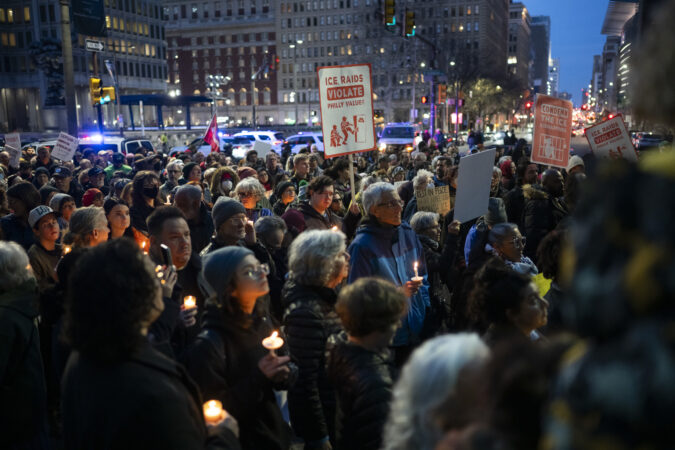
    Several hundred people gathered Thursday evening in Center City to protest the death of Renee Nicole Good, a 37-year-old mother of three whom a U.S. Immigration and Customs Enforcement officer in Minneapolis shot and killed on Wednesday.

    Good, who had recently moved to Minnesota, died a few blocks from where she lived, and about a mile from where police killed George Floyd in 2020.

    Protesters near City Hall held candles and signs saying, “We saw the video. Stop the cover up!” and “ICE raids violate Philly values.”

    “We arrive at tonight’s vigil with deep anger and grief for the murder of Renee Good at the hands of the state,” Erika Guadalupe Núñez, Juntos executive director, told the crowd. “ICE equals death; it’s the death of family, of connection, of love.”

    Núñez said the actions in Minneapolis reflect a reality Philadelphia has experienced with the mistreatment of legal aid organizations and immigrant associations at the hands of immigration agents.

    “Let us be honest, if ICE was willing to shoot an ally, a white woman, in the face for documenting abuse. It is our duty to expose and condemn what they have done and will continue to do to Black and brown people behind closed doors and out of the sight of cameras,” Núñez said.

    Video taken by bystanders in Minneapolis posted to social media shows an officer approaching Good’s car from the driver’s side, grabbing the door handle and reaching inside the vehicle. When the Honda Pilot begins to move, a different ICE officer who had positioned himself in front of the SUV immediately fires into the vehicle at close range.

    The Department of Homeland Security said the officer fired in self-defense as Good allegedly tried to run down officers with her vehicle. Minneapolis Mayor Jacob Frey said video of the incident showed the shooting was reckless and unnecessary.

    The fatal shooting of Good was at least the fifth death to result from the aggressive U.S. immigration crackdown President Donald Trump’s administration launched last year.

    The federal agency has been escalating immigration enforcement operations in Minnesota by deploying an anticipated 2,000 agents and officers.

    An ex-husband of Good’s, who asked not to be named out of concern for the safety of their children, told the Associated Press that Good had just dropped off her 6-year-old son at school Wednesday and was driving home with her current partner when they encountered a group of ICE agents on a snowy street in Minneapolis, where they had moved last year from Kansas City, Mo.

    At the Center City protest, Julie Stewart, 71, said a wave of shock took over her body after learning an ICE agent had killed a woman she didn’t know, in a different state, and the pain felt close to home.

    The feeling brought her to the vigil holding a sign reading: “ICE murdered Renee Nicole Good.”

    “They are twisting the story; it’s a lie. ICE needs to be shut down, held accountable, and all of their people need to be unmasked,” Stewart said.

    Aniqa Raihan told the crowd the names of the people who have died in connection with ICE need to be remembered.

    Raihan, a No ICE Philly volunteer, named more than 30 victims, Good being the latest.

    “We are here to remember these beloved community members, whether we know their names or not. We are here to mourn, to grieve, to lean on one another, and to know that we are not alone in the anger and pain we are feeling,” Raihan said.

    Addressing elected officials present in the crowd, she said: “We can’t wait. If you don’t act, Renee Good will not be the last person murdered with impunity. If you don’t act, it will happen here. If you don’t act, ICE will continue to kidnap and disappear members of our community every day.”

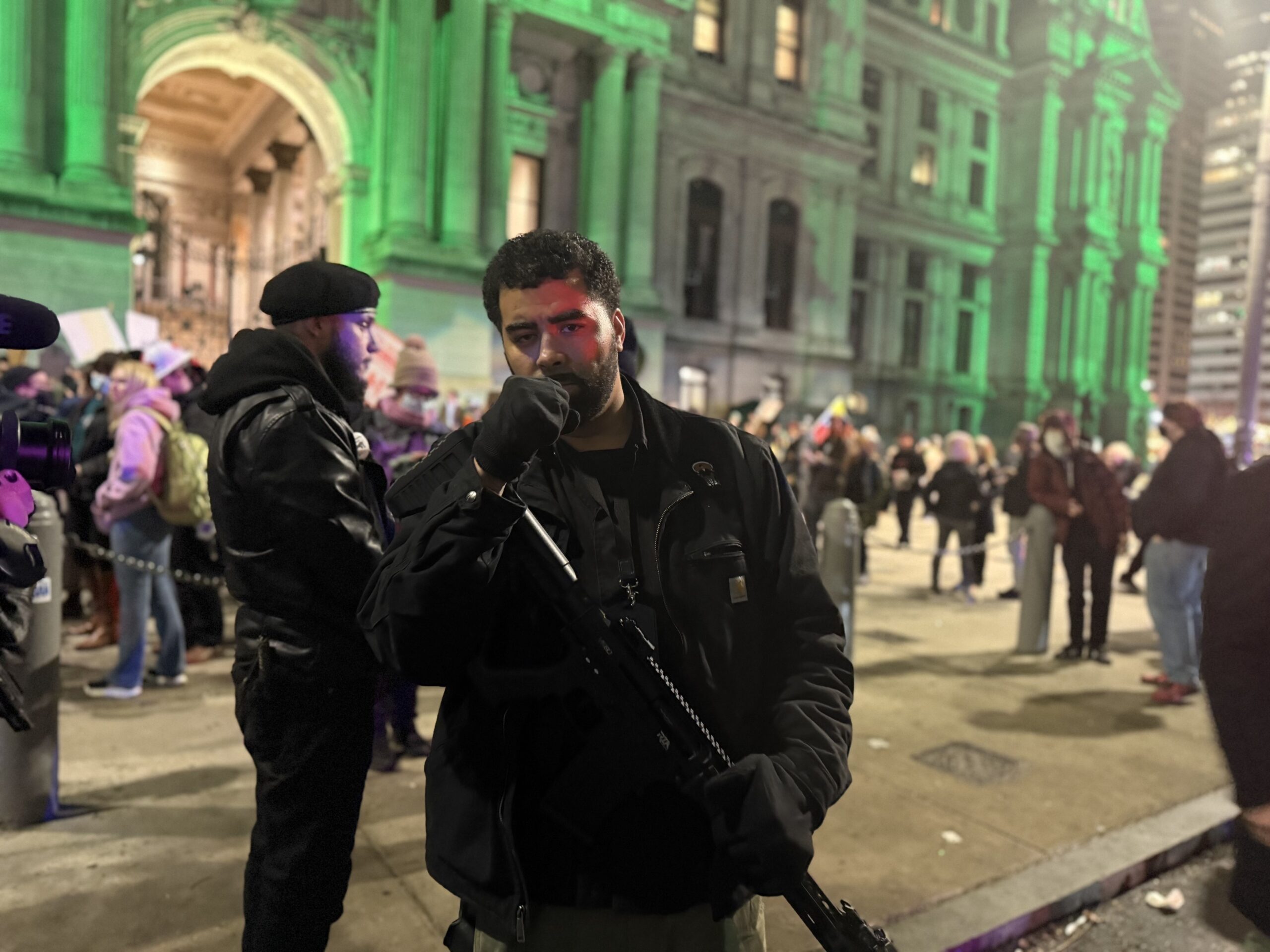
    While the protest was underway, several men identifying themselves as members of the Black Panther Party for Self-Defense and armed with rifles walked down Broad Street toward City Hall and stopped at John F. Kennedy Boulevard.

    Several armed men who identified themselves as the Black Panther Party for Self-Defense, including Paul Birdsong, stood outside a protest at City Hall against an ICE shooting in Minneapolis.

    They said they came to protect the protesters.

    “I’m here because it’s my duty,” said a man identifying himself as Paul Birdsong, 39, while holding his firearm tightly.

    Birdsong said the group’s members were legally carrying their firearms and they viewed themselves as “guards of the revolution.”

    “To ICE, we will respond with whatever force is use on the people,” Birdsong said.

    Police closely monitored the Black Panther members and reported no problems.