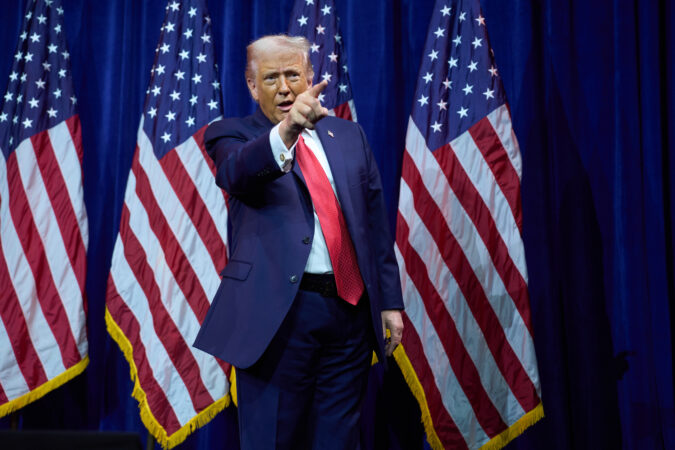
The Trump administration is preparingan executive order focused on housing — with special attention to first-time buyers — as the White Houseattempts to address voter concerns about affordability.
An order could include policies that President Donald Trump has already floated, like a 50-year mortgage or a ban on institutional investors buying single-family homes, according to five people close to the deliberations, who spoke on the condition ofanonymity to discuss private conversations. Other proposals are newer, like helping home buyers withdraw from their 529 or 401(k) savings accounts to make down payments without incurring tax penalties.
Exact timing or language is not final, and plans have been in flux over the past few weeks, the people said. But it’s clear the White House increasingly sees housing policy as central to its broader affordability agenda. More details are expected when Trump speaks at the World Economic Forum in Davos, Switzerland, later this month, according to the president’s social media posts and housing officials.
Bill Pulte, head of the Federal Housing Finance Agency and a close Trump confidant, told the Washington Post on Thursday that an executive action was coming and would later need to be “codified by Congress.”
“We’ve got 30 to 50 different ideas that are in front of the president,” Pulte said. “He’ll be releasing a handful of them in Davos.”
Officials havebeen planning an executive order aimed at housing for months. But timing stalled as different factions within the administration clashed over an approach. Two of the people close to the talkssaid internal divisions sometimes boiled down to how much the federal government should tell states and cities what to do. Other disagreements centered on what role Congress should play.
White House spokesperson Davis Ingle said in a statement that Trump hadpledged to slash red tape, cut interest rates, and tackle unfair business practices that make it harder for Americans to buy homes.
“As the President indicated over Truth Social, he will be unveiling more details about his housing proposal in Davos — any discussion from unnamed sources until then is baseless speculation,” Ingle said.
For much of last year, the administration’s policyagenda has involvedblaming undocumented immigrants for housing shortages and clawing back fair housing regulations. Officialsalso want to take mortgage giants Fannie Mae and Freddie Mac public after years of government control — a tremendously complicated endeavor that could leadto a massive stockoffering but, if not done carefully, roil the mortgage market.
Yet fresh momentum appeared to pick up this week after a meeting of top housing and White House officials on Tuesday. Trump announced the ban on institutional investors on Truth Social on Wednesday, saying he would call on Congress to seal the deal, and drawing favorable reaction from GOP lawmakers. On Thursday, he said Fannie and Freddie would use some $200 billion in cash to buy mortgage bonds — whichhe said would drive mortgage rates and monthly payments down.
Administration officials are also looking at ways to implement so-called “portable mortgages,” where homeowners can take their old mortgages with them when they move to a new house, the people close to the discussions said. They are considering “assumable mortgages,” where home buyers take overthe sellers’mortgage. Both of those ideas could help offset the rise in mortgage rates over the past several years, and they could also entice homeowners with low rates to sell without fear of taking on a higher mortgage, opening up more supply in the process. Officials are discussingexpanding Opportunity Zones — an economic tool for investing in distressed areas — and other deregulatory policies as a means of boosting homeownership, as well.
Pulte also teed up more actions related to home builders this week, saying on X that they “need to start building out their lot supply, including optioned land which is ‘ready to go.’”
Builders have been in talks with the administration for the past year on ways to cut environmental regulations, energy codes, and permitting restrictions, including those that make it harder to turn land from raw to developable lots and pile on costs, said Jim Tobin, president and chief executive of the National Association of Home Builders.
“If there is an executive order, I don’t expect it to be narrow,” Tobin said. “I expect it to be broad.”
But Trump’s announcements have come with few details or clarity on Congress’s role. Some proposals could also work against affordability goals; many mainstream economists say a 50-year mortgage would likely increase overall costs for borrowers, because they’ll pay far more in interest over five decades than they would with the conventional 30-year loan.
Inside the administration, officials see a two-pronged approach to addressing home prices, according to a GOP pollster close to the White House, speaking on the condition of anonymity to discuss private conversations. One path is to increase housing supply through construction; another is decreasing the number of buyers by disincentivizing investors and making it easier to sell homes without paying capital gains taxes. Under current law, most married couples can exempt the first $500,000 in capital gains on the sale of their primary residence from taxes.
White House officials have reviewed polling that shows voters aged 18 to 24 see affordability through a housing lens, said the GOP pollster. That age group helped deliver the presidency to Trump in 2024, which makes the White House especially sensitive to its political standing with them. The pollster said administration officials are focused on first-time home buyers, which often are adults 40 or younger.
“This voting cohort who is deeply concerned about this and worried about housing prices delivered, in a lot of ways, the election to President Trump in 2024,” the pollster said. “Affordability means housing in every bit of data we’ve seen.”
The pollster expects the final plan to pave the way for Trump to take Fannie Mae and Freddie Mac public. He also said he expects the administration to “play around” with the step-up in cost basis, a U.S. tax rule that adjusts the value of inherited assets to their market price at the time of death, which can reduce capital gains taxes for heirs. That would include taxes on homes.
David Dworkin, president and chief executive officer of the National Housing Conference, said making it easier for younger buyers to withdraw from their 401(k)s penalty-free “will have a bigger impact than any down payment program ever proposed.” At the same time, the way to make homes more affordable is to build more of them.
“Everything the president does to help us build more units is going to have an impact,” Dworkin said. “Some of these ideas are going to be more impactful than others. Some may have unintended consequences we want to be careful about. But it’s too easy to say, ‘Oh this is risky, let’s not do anything.’ We’ve got to make progress here.”
Fannie and Freddie’s new bond purchases could be part of the strategy aroundtaking them public, because the move would addvalue to their balance sheets and help the companies make more money. But the broader effect on affordability could be more muted. Mortgage rates typically track Treasury yields, which fall in times of economic uncertainty. In a Thursday analyst note, Gennadiy Goldberg, head of U.S. Rates Strategy at TD Securities, said that based on the projections for Treasury yields, the 30-year mortgage rates could drift down toward 5.25% by the end of the year, compared to 6.16% this week.
But if Fannie and Freddie’s vast securities purchases happen quickly, mortgage rates could tick down a bit more,to 5% by year-end, Goldberg wrote.
Democrats this week criticized the Trump administration for promoting policies those on the left have tried before, likebanning institutional investors from the single-family market. Buthousing is one of the only policy areas with bipartisan support lately. A popular bill from Sens. Tim Scott (R., S.C.) and Elizabeth Warren (D., Mass.) would increase housing supply and pare back regulations that slow new construction. Its progress slowed late last year after House Republicans pressed to keep it out of the annual defense policy bill. But a similar bill is moving forward in the House, and there’s hope a breakthrough will come eventually.
“My focus is on advancing meaningful solutions that expand housing supply and lower costs — including building on our unanimously passed ROAD to Housing Act — because that’s how we make the American Dream more attainable,” Scott, who chairs the Senate Banking Committee, said in a statement.
DUBAI, United Arab Emirates — Iran signaled Friday that security forces would crack down on protesters, directly challenging U.S. President Donald Trump’s pledge to support those peacefully demonstrating as the death toll rose to at least 62.
Supreme Leader Ayatollah Ali Khamenei dismissed Trump as having hands “stained with the blood of Iranians” as supporters shouted “Death to America!” in footage aired by Iranian state television. State media later repeatedly referred to demonstrators as “terrorists,” setting the stage for a violent crackdown like those that followed other nationwide protests in recent years.
Protesters are “ruining their own streets … in order to please the president of the United States,” the 86-year-old Khamenei said to a crowd at his compound in Tehran. “Because he said that he would come to their aid. He should pay attention to the state of his own country instead.”
Iran’s judiciary chief Gholamhossein Mohseni-Ejei separately vowed that punishment for protesters “will be decisive, maximum, and without any legal leniency.”
There was no immediate response from Washington, though Trump has repeated his pledge to strike Iran if protesters are killed, a threat that’s taken on greater significance after the U.S. military raid that seized Venezuela’s Nicolás Maduro.
Internet cut off
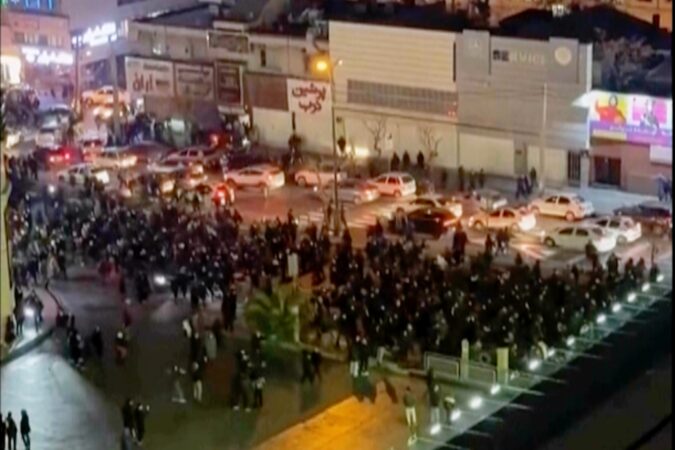
Despite Iran’s theocracy cutting off the nation from the internet and international telephone calls, short online videos shared by activists purported to show protesters chanting against Iran’s government around bonfires as debris littered the streets in the capital, Tehran, and other areas into Friday morning.
Iranian state media alleged “terrorist agents” of the U.S. and Israel set fires and sparked violence. It also said there were “casualties,” without elaborating.
The full scope of the demonstrations couldn’t be immediately determined due to the communications blackout, though it represented yet another escalation in protests that began over Iran’s ailing economy and that has morphed into the most significant challenge to the government in several years. The protests have intensified steadily since beginning Dec. 28.
The protests also represented the first test of whether the Iranian public could be swayed by Crown Prince Reza Pahlavi, whose fatally ill father fled Iran just before the country’s 1979 Islamic Revolution. Pahlavi, who called for the protests Thursday night, similarly has called for demonstrations at 8 p.m. Friday.
Demonstrations have included cries in support of the shah, something that could bring a death sentence in the past but now underlines the anger fueling the protests that began over Iran’s ailing economy.
So far, violence around the demonstrations has killed at least 62 people while more than 2,300 others have been detained, said the U.S.-based Human Rights Activists News Agency.
“What turned the tide of the protests was former Crown Prince Reza Pahlavi’s calls for Iranians to take to the streets at 8 p.m. on Thursday and Friday,” said Holly Dagres, a senior fellow at the Washington Institute for Near East Policy. “Per social media posts, it became clear that Iranians had delivered and were taking the call seriously to protest in order to oust the Islamic Republic.”
“This is exactly why the internet was shut down: to prevent the world from seeing the protests. Unfortunately, it also likely provided cover for security forces to kill protesters.”
Thursday night protests preceded internet shutdown
When the clock struck 8 p.m. Thursday, neighborhoods across Tehran erupted in chanting, witnesses said. The chants included “Death to the dictator!” and “Death to the Islamic Republic!” Others praised the shah, shouting: “This is the last battle! Pahlavi will return!” Thousands could be seen on the streets before all communication to Iran cut out.
On Friday, Pahlavi called on Trump to help the protesters, saying Khamenei “wants to use this blackout to murder these young heroes.”
“You have proven and I know you are a man of peace and a man of your word,” he said in a statement. “Please be prepared to intervene to help the people of Iran.”
The White House did not immediately respond to a request for comment on Pahlavi’s appeal to Trump.
Pahlavi had said he would offer further plans depending on the response to his call. His support of and from Israel has drawn criticism in the past — particularly after the 12-day war Israel waged on Iran in June. Demonstrators have shouted in support of the shah in some demonstrations, but it isn’t clear whether that’s support for Pahlavi himself or a desire to return to a time before the 1979 Islamic Revolution.
The internet cut also appears to have taken Iran’s state-run and semiofficial news agencies offline. The state TV acknowledgment at 8 a.m. Friday represented the first official word about the demonstrations.
State TV claimed the protests were violent and caused casualties, but did not offer nationwide figures. It said the protests saw “people’s private cars, motorcycles, public places such as the metro, fire trucks, and buses set on fire.” State TV later reported that violence overnight killed six people in Hamedan, some 175 miles southwest of Tehran, and two security force members in Qom, 75 miles south of the capital.
The European Union and Germany condemned the violence targeting demonstrators as new protests were reported in Zahedan in Iran’s restive southwestern Sistan and Baluchestan province.
It remains unclear why Iranian officials have yet to crack down harder on the demonstrators. Trump warned last week that if Tehran “violently kills peaceful protesters,” America “will come to their rescue.”
In an interview with talk show host Hugh Hewitt aired Thursday, Trump reiterated his pledge.
Iran has “been told very strongly, even more strongly than I’m speaking to you right now, that if they do that, they’re going to have to pay hell,” Trump said.
He demurred when asked if he’d meet with Pahlavi.
“I’m not sure that it would be appropriate at this point to do that as president,” Trump said. “I think that we should let everybody go out there, and we see who emerges.”
Speaking in an interview with Sean Hannity aired Thursday night on Fox News, Trump went as far as to suggest Khamenei may want to leave Iran.
“He’s looking to go someplace,” Trump said. “It’s getting very bad.”
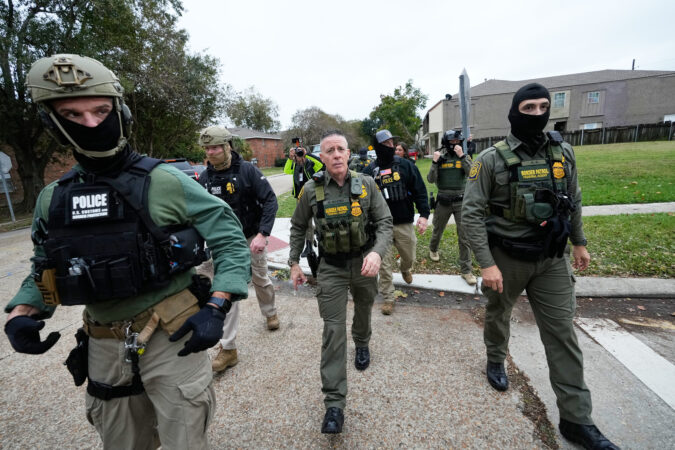
NEW ORLEANS — Federal immigration officers are pulling out of a Louisiana crackdown and heading to Minneapolis in an abrupt pivot from an operation that drew protests around New Orleans and aimed to make thousands of arrests, according to documents obtained by The Associated Press.
The shift appeared to signal a wind-down of the Louisiana deployment that was dubbed “Catahoula Crunch” and began in December with the arrival of more than 200 officers. The operation had been expected to last into February and swiftly raised fears in immigrant communities.
The Trump administration has been surging thousands of federal officers to Minnesota under a sweeping new crackdown tied in part to allegations of fraud involving Somali residents. More than 2,000 officers are taking part in what the Department of Homeland Security has called the biggest immigration enforcement operation ever.
The officers in Minneapolis have been met with demonstrations and anger after an ICE officer fatally shot a woman on Wednesday.
Documents obtained by the AP indicated that federal officers stationed in Louisiana were continuing to depart for Minneapolis late this week.
“For the safety of our law enforcement, we do not disclose operational details while they are underway,” DHS said Friday in response to questions about whether the Louisiana deployment was ending in order to send officers to Minnesota.
In December, DHS deployed more than 200 federal officers to New Orleans to carry out a monthslong sweep in and around the city under Border Patrol Cmdr. Gregory Bovino, who was also the face of aggressive operations in Chicago, Los Angeles, and Charlotte, North Carolina. Bovino has been seen in Minneapolis this past week.
“Catahoula Crunch” began with a target of 5,000 arrests, the AP first reported. The operation had resulted in about 370 arrests as of Dec. 18, according to DHS.
The operation heavily targeted the Hispanic enclave of Kenner just outside New Orleans, leading immigrant-run businesses to close down to protect customers and out of a fear of harassment.
Documents previously reviewed by AP showed the majority of people arrested in the Louisiana crackdown’s first days lacked criminal records and that authorities tracked online criticism and protests against the deployment.
Republican Louisiana Gov. Jeff Landry welcomed the crackdown. But New Orleans’ Democratic leaders called the 5,000-arrest target unrealistic and criticized videos that showed agents arresting or trying to detain residents, including a clip of a U.S. citizen being chased down the street by masked men near her house.
New Orleans’ Democratic leaders have been more welcoming of a National Guard deployment that President Donald Trump authorized after Landry asked for help fighting crime. The troops arrived just before the New Year’s Day anniversary of a truck attack on Bourbon Street that killed 14 people.
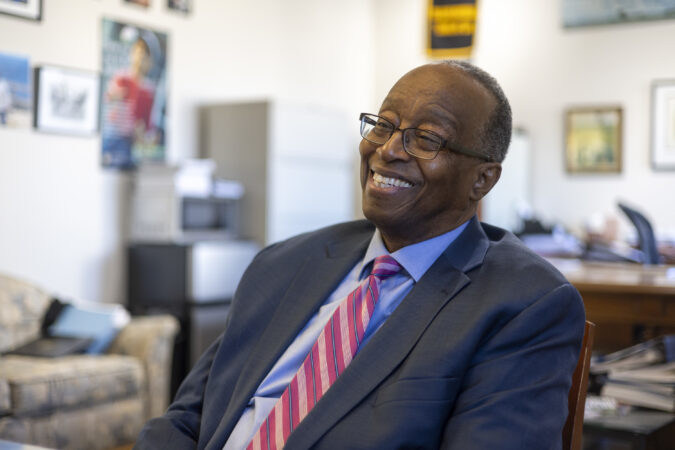
Robert Listenbee, the first assistant district attorney under Larry Krasner and a largely behind-the-scenes enforcer of the office’s progressive agenda, is retiring after nearly eight years as the office’s second-in-command.
Listenbee, 77, is expected to announce Friday that he is stepping down, marking the first shift in Krasner’s leadership team as the top prosecutor begins his third term.
A longtime public defender and juvenile justice advocate, Listenbee joined the administration at the outset of Krasner’s first term in 2018 — even as Krasner openly questioned whether the role of first assistant was necessary beyond its statutory requirement.
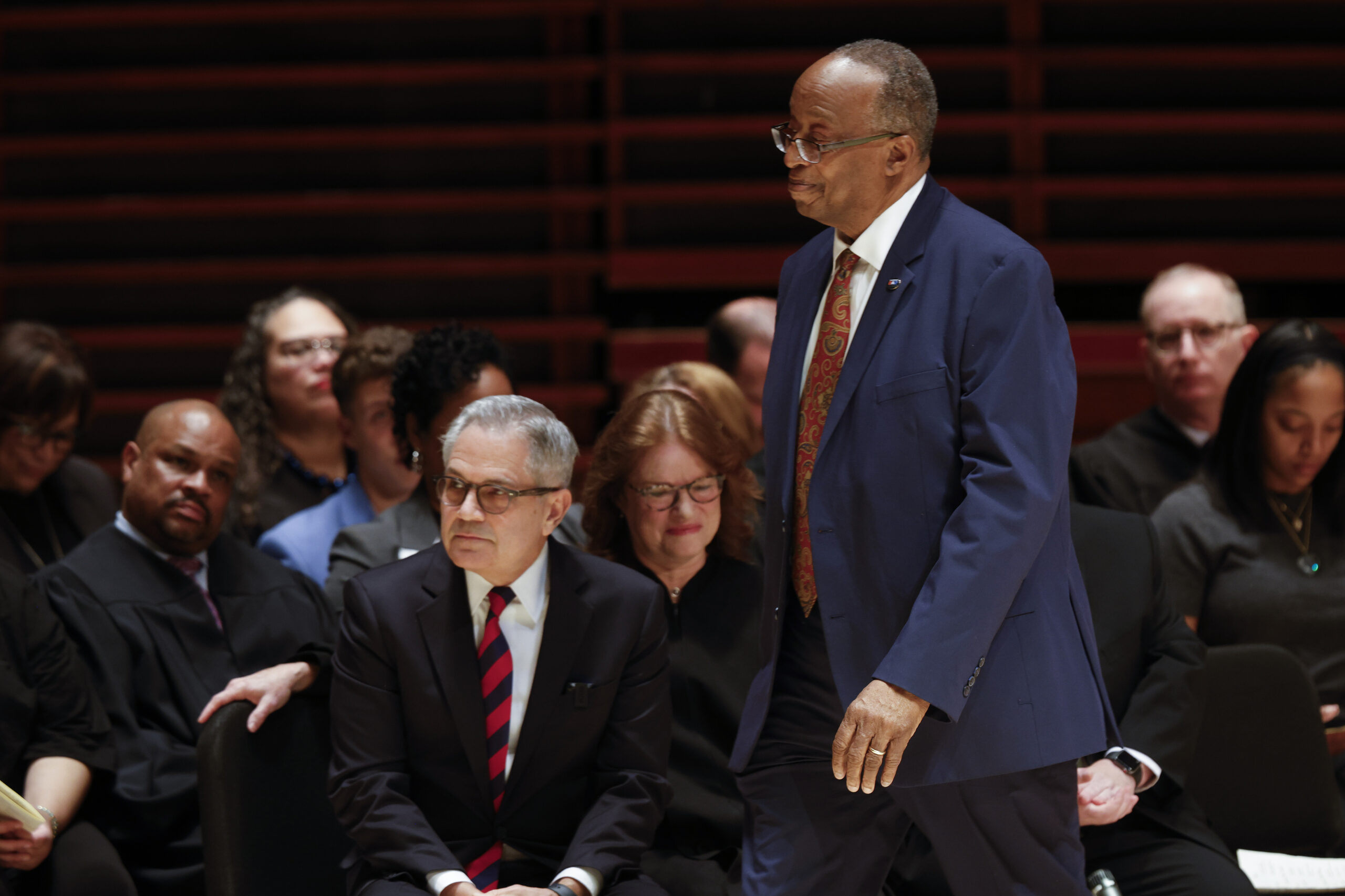
Robert Listenbee joined District Attorney Larry Krasner at the 2026 inaugural ceremony.
Over the course of Krasner’s tenure, Listenbee rarely served as the public face of the office on major cases, focusing instead on juvenile work, recruitment, and personnel matters.
Some prosecutors in the office said that often translated into a lack of visible management compared to previous first assistants, and that he served more as an internal messenger of Krasner’s often controversial agenda than the traditional day-to-day overseer of the office.
Listenbee has said his role was never set up to operate traditionally, and his goal was to carry out Krasner’s vision and reform the office.
Krasner declined to say who might replace him but he said he was evaluating candidates.
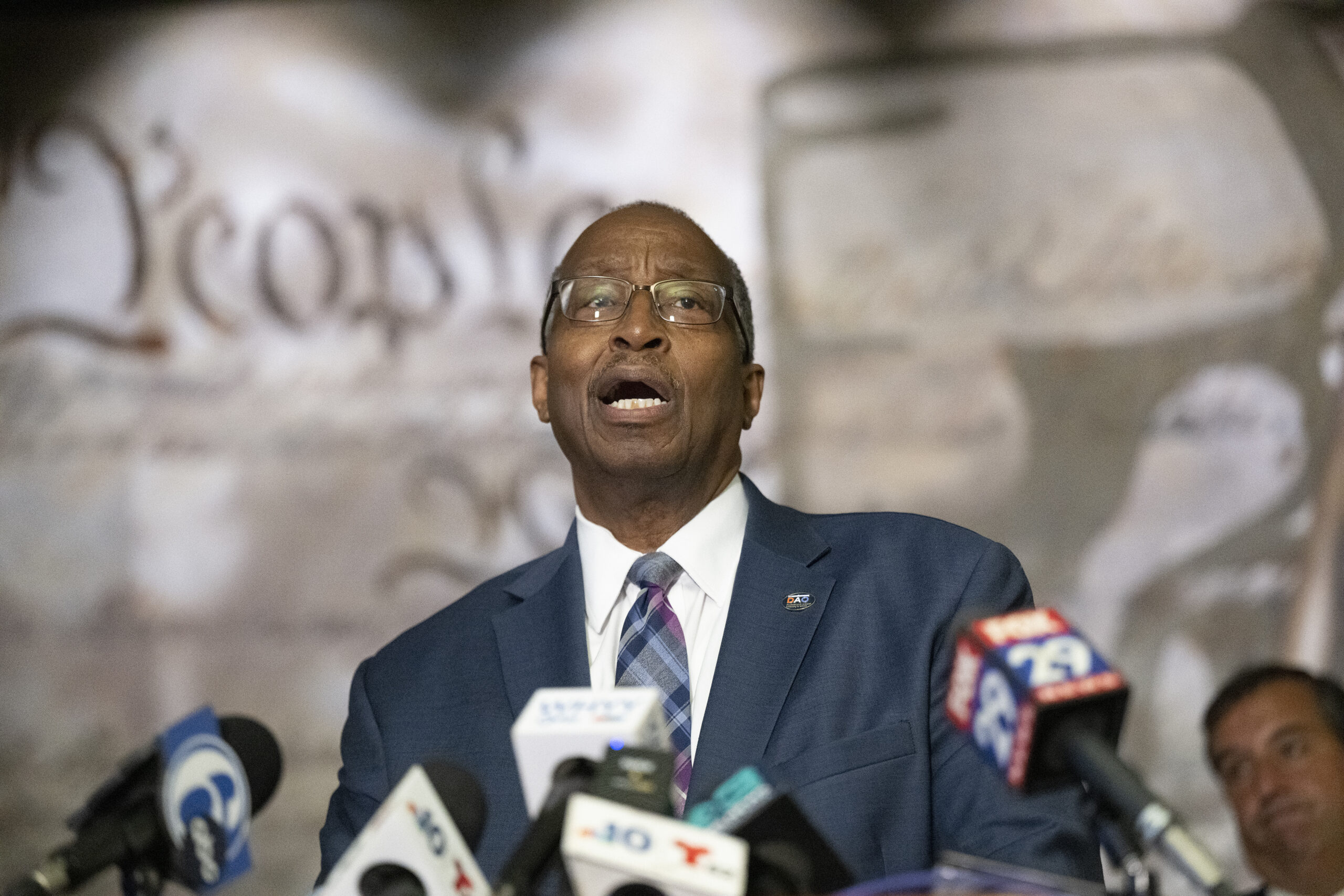
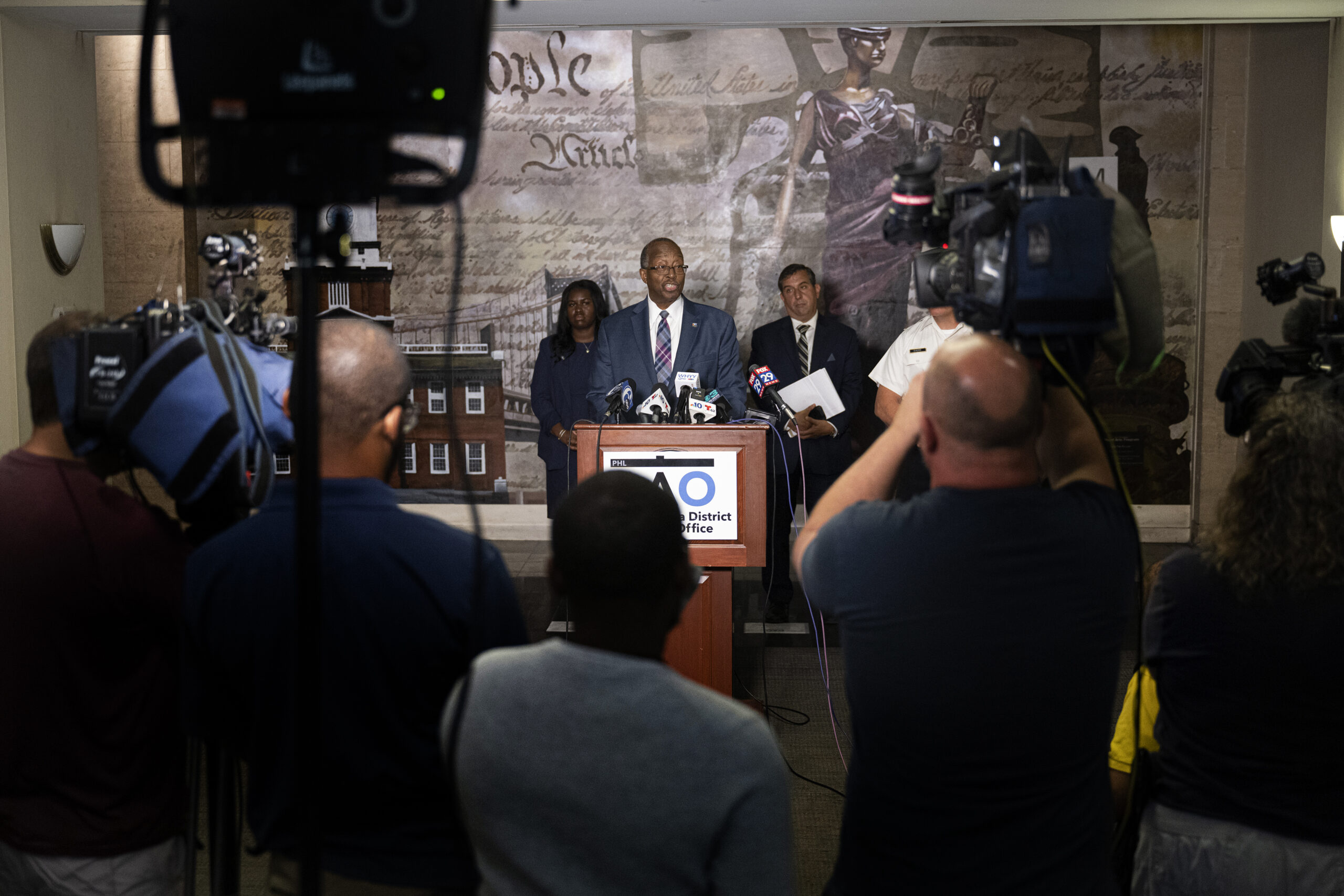
Robert Listenbee, first assistant district attorney, announced developments in the case against a West Philadelphia teen who was planning a terrorist attack.
Before joining the district attorney’s office, Listenbee spent decades as a public defender, including 16 years as chief of the juvenile unit at the Defender Association of Philadelphia. He later led the U.S. Department of Justice’s Office of Juvenile Justice and Delinquency Prevention during the Obama administration, and worked at Drexel University before returning to Philadelphia to join Krasner’s team.
We spoke with Listenbee about his unconventional path to the law, his years reshaping juvenile justice, internal tensions within the DA’s office, and his advice for Krasner’s third term.
This interview has been edited for length and clarity.
Tell me about your life growing up.
I was raised in Mount Clemens, just north of Detroit. My father worked in the auto industry. We were poor and lived in the projects. I went to a public high school, and was the first in my family to go to college.
I came from a small African American community where people look out for one another. This community saw something in me very early. When I was only planning to go to Kalamazoo College, a mom at my school decided my life was going to be different. She contacted the recruiter at Harvard University, and they visited me out in my little home in the projects when I hadn’t even applied. I got a full ride to Harvard.
I was among the first large group of African Americans at Harvard. It was 1966. We were in the middle of the Civil Rights Movement and the Vietnam War.
How was that?
There was total upheaval in this nation. Demonstrations everywhere, college campuses being taken over.
I worked on the committee that helped establish the African American Studies Department at Harvard, one of the first in the nation.
This was also at a time when African countries were becoming independent. I spent 16 months as a teacher in the rural area in western Kenya.
Robert Listenbee spent 16 months in Africa teaching English, and then traveled the continent before going to law school.
Instead of coming back from Africa, I decided to hitchhike around the world. I spent six months in Asia — Thailand, Laos, even as the war was going on. I rode a motorcycle into the Mekong Delta in Vietnam and had experiences that make me grateful to be alive. I hitchhiked across Africa and traveled 8,000 miles by train across India. I did all of this on about $600.
After a two-year gap year, I returned to Harvard and finished my degree.
I ended up getting a full-ride scholarship to Berkeley law school.
Where did you go after law school?
I had job offers but I had this crazy idea that I wanted to build a road across Africa, from Nairobi to Lagos, but I was broke and needed money to do it.
This was when the pipeline was being built across the North Slope of Alaska, and you could make gobs of money in a short period of time. So in 1976, I went to Anchorage without a job and lived in the YMCA. I shoveled snow, washed dishes, and worked at McDonald’s.
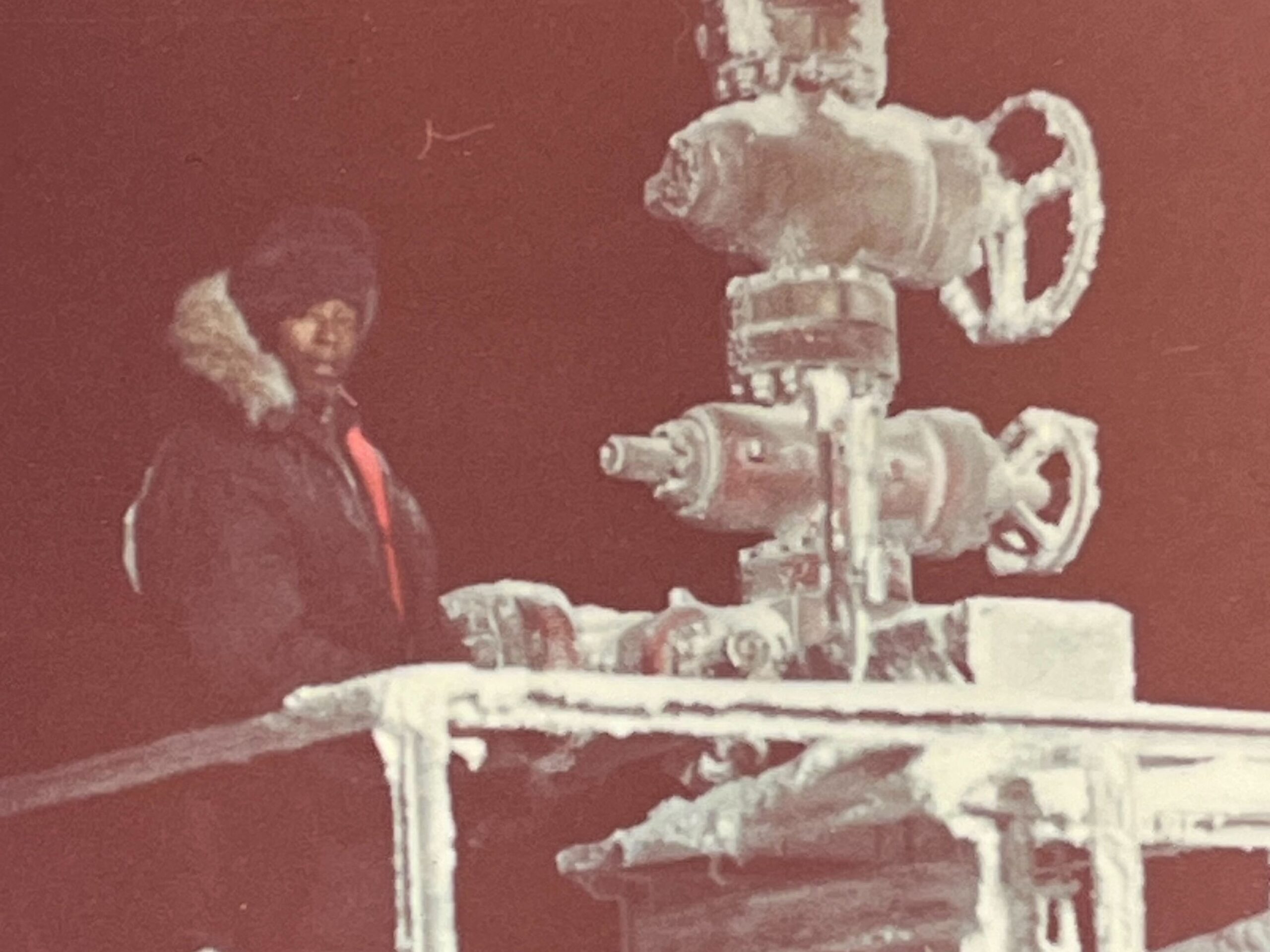
Robert Listenbee worked in the oil fields building the pipeline on the North Slope of Alaska for several years beginning in 1976.
Finally, I got a job on the pipeline.
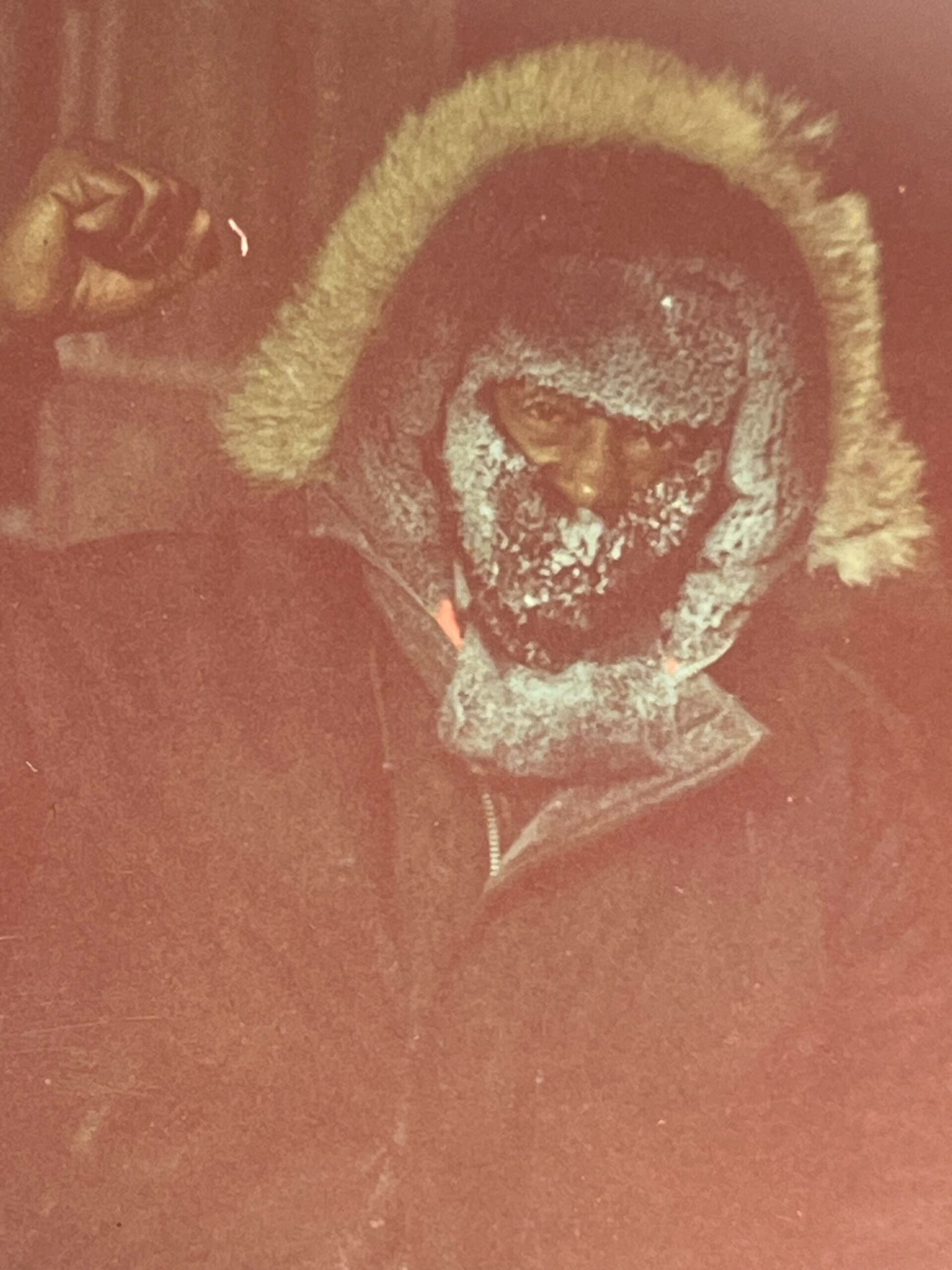
I was there for a couple of years. I was a laborer in the oil fields. I worked trucks that rode across the Arctic Ocean in the middle of the winter. I worked on wildcat wells 50 miles from base camp. I had to relieve pressured gas to keep it from blowing up. It was 50 degrees below zero.
Robert Listenbee worked in the oil fields building the pipeline on the North Slope of Alaska for several years beginning in 1976.
I got into fights. People were trying to kill me at different points in time, and I was trying to kill other people, too. So I mean, the reason I know a little bit about criminal justice is because I was almost a criminal.
I never built the road in Africa. I eventually came back to Philadelphia, and worked construction until 1986.
So what about being a lawyer?
After my construction company failed, I was broke again. I ended up going back to legal work, and got a job working at the Defender Association.
You were the head of the juvenile unit for 16 years, and then you finished your career here on the other side — going from defending young people to prosecuting them. How was that transition for you?
Working for the U.S. Department of Justice’s Office of Juvenile Justice and Delinquency Prevention under President Obama helped prepare me for prosecutorial work.
I was adamant I would never work for this office. I thought it was corrupt. Krasner called me three times before I agreed to join as first assistant.
We were engaging in culture change. Some of the behavior of the people who were here was absolutely outrageous, especially in the homicide unit. They had a sense that this office belonged to them. It didn’t belong to the people. They were willing to cheat and do it and hide evidence in the process of doing it. That’s the feeling that I had when I first got here, and that’s what we found.
Robert Listenbee, first assistant district attorney, takes questions from the media after announcing developments in the case against a West Philadelphia teen who investigators say purchased materials including chemicals, wiring, and tactical equipment associated to become a terrorist.
There has been criticism of your juvenile work — some have said that it was too lenient during the period of intense gun violence and that kids went on to commit worse crimes. Others say the office hasn’t gone far enough to treat kids as kids. How do you assess your record?
We’ve reduced the number of kids in out of home placements. We’ve expanded juvenile diversion programs. In 2024, we created a juvenile homicide unit to review all cases of juveniles charged with murder.
I’m satisfied that we’re being as fair as we can and taking the time to carefully evaluate every issue in a case.
The first assistant is typically the person who manages the office day-to-day. Some prosecutors have said that, in this administration, that role functioned differently — that much of the management flowed directly from Krasner. Do you think that perception is fair, and how did you approach leadership in that environment?
The DA did not want the imperial first assistant that had been here before. He would prefer a flat structure to a hierarchical structure, which means you get assigned a lot of odd jobs depending on what he wants you to do.
If I were running the office, I would have run it completely differently. But I have to tell you that, having been here as long as I have, we never would have gotten this far without the DA’s serious concerns about what people around here were doing, whether they were implementing his policy or not. His skepticism, his oversight, is what’s kept this place moving in the direction that he wanted to go in. I wasn’t tuned in enough to the office to understand that from the very beginning, but I listened to him.
We hire people, we fire people, we move people around. That’s happened a lot. We sometimes end up with younger and inexperienced supervisors, because we haven’t really developed a program for training supervisors really well. We’re working on that.
I wish I had worked on juvenile issues earlier than I did.
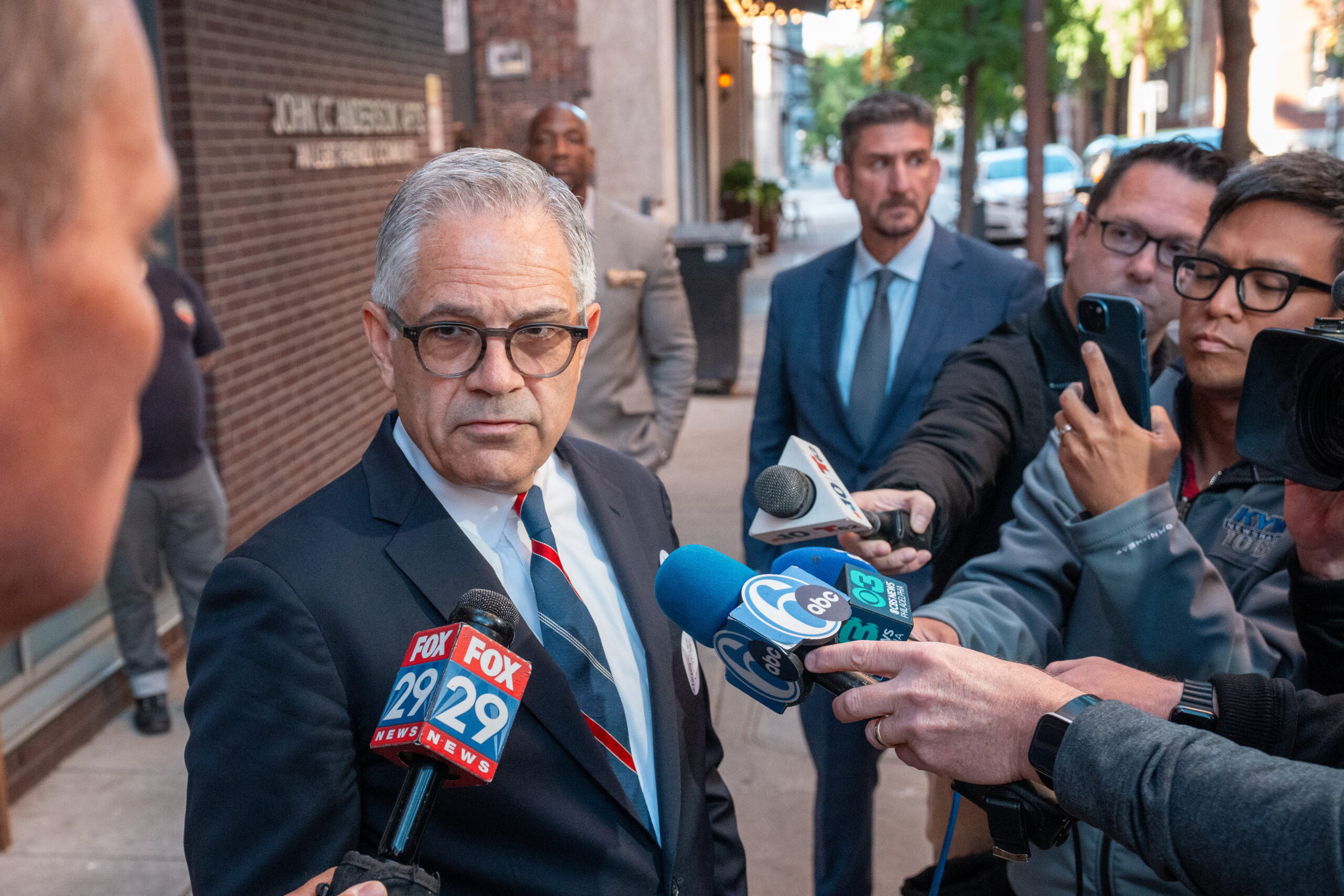
District Larry Krasner speaks with the media after casting his vote in the 2025 primary.
What’s your advice for the next first assistant?
You have to understand the DA’s goals and purposes and how he operates.
So, listen to Larry?
Not that. The DA is not a micromanager. But there’s no written directives on most of the things he wants, and there’s no organizational chart or hierarchy. If we have issues, we often go to him.
Do you have a piece of advice for Krasner in his third term?
This is a city that has a chip on its shoulder. The DA is a person who has a chip on his shoulder. They respect him for that when he speaks out. A lot of the things he says may not be politically astute, but they’re things he believes in. They like that about him.
He is the Donald Trump of the progressive era.
He needs to continue surrounding himself with people who can understand him and help him implement his policies.
A lot of people don’t like him, and I understand that. A lot of people don’t like me because I work for him. A lot of people don’t like what we do. That never mattered to me. I know that the people we have seen in court, the victims and the defendants and the witnesses, I know that we’re doing right by them. That’s my North Star.
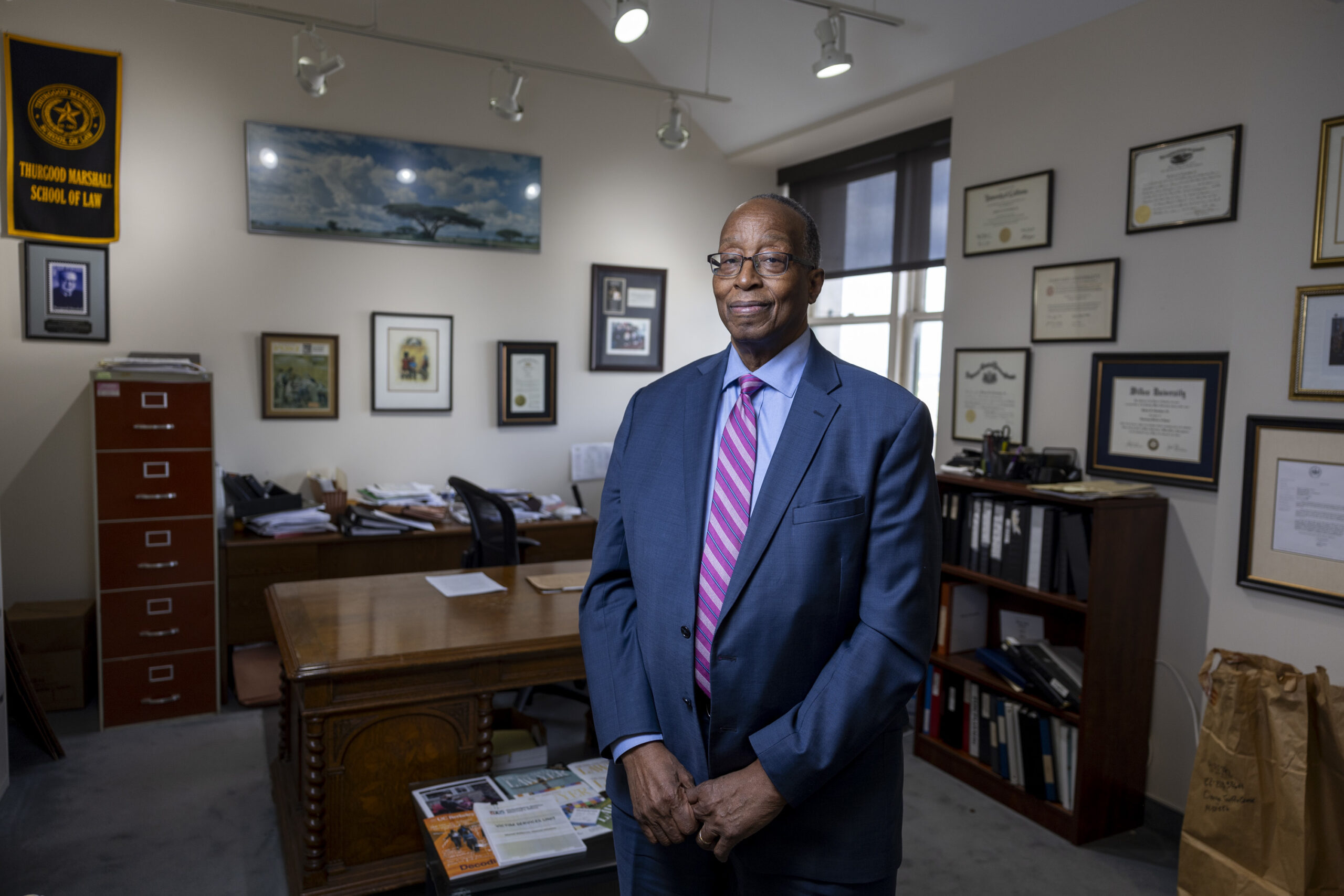
Robert Listenbee, the first assistant to District Attorney Larry Krasner, retired on Friday.
MINNEAPOLIS — As anger and outrage spilled out onto Minneapolis’ streets over the fatal shooting of a woman by an Immigration and Customs Enforcement officer, a new shooting by federal officers in Oregon left two people wounded, sparked additional protests and elicited more scrutiny of enforcement operations across the U.S.
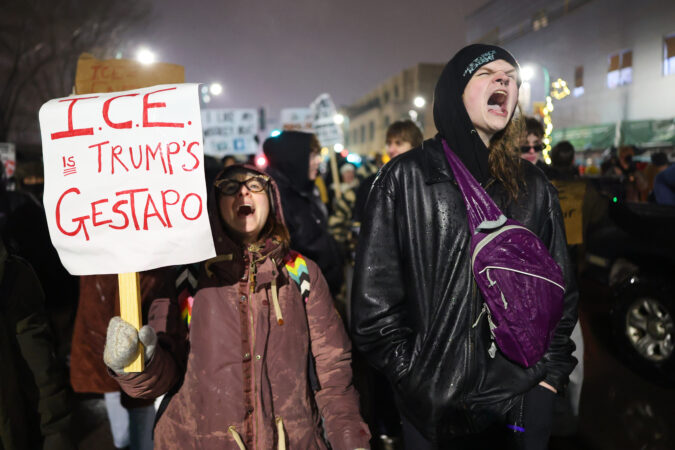
Hundreds of people protesting the shooting of Renee Good marched in freezing rain Thursday night down one of Minneapolis’ major thoroughfares, chanting “ICE out now” and holding signs saying, “killer ice off our streets.” Protesters earlier vented their outrage outside a federal facility that is serving as a hub for the administration’s latest immigration crackdown on a major city.
Early Friday, city crews removed makeshift barricades made from debris including garbage cans and Christmas trees that blocked streets in the area of Wednesday’s shooting to keep streets open, but Minneapolis officials said they would not remove the memorial the community created there. An estimated 15 tons (13.6 metric tonnes) of debris including metal and tires were removed, officials said.
The shooting in Portland, Oregon, took place outside a hospital Thursday afternoon. A man and woman were shot inside a vehicle, and their conditions were not immediately known. The FBI and the Oregon Department of Justice were investigating.
Portland Mayor Keith Wilson and the city council called on ICE to end all operations in the city until a full investigation is completed. Hundreds protested Thursday night at the ICE building. Early Friday, Portland police reported that a handful of arrests were made after officers asked protesters to move to the sidewalk, as traffic remained open in the area.
Just as it did following Wednesday’s shooting in Minneapolis shooting, the Department of Homeland Security defended the actions of the officers in Portland, saying it occurred after a Venezuelan man with alleged gang ties and who was involved in a recent shooting tried to “weaponize” his vehicle to hit the officers. It was not yet clear if witness video corroborates that account.
Homeland Security Secretary Kristi Noem, President Donald Trump and others in his administration have repeatedly characterized the Minneapolis shooting as an act of self-defense and cast Good as a villain, suggesting she used her vehicle as a weapon to attack the officer who shot her.
Vice President JD Vance said the shooting was justified and Good, a 37-year-old mother of three, was a “victim of left-wing ideology.”
“I can believe that her death is a tragedy while also recognizing that it is a tragedy of her own making,” Vance said, noting that the officer who killed her was injured while making an arrest last June.
But state and local officials and protesters rejected that characterization, with Minneapolis Mayor Jacob Frey saying video recordings show the self-defense argument is “garbage.”
The Minneapolis shooting happened on the second day of the Trump administration’s immigration crackdown on the Twin Cities of Minneapolis and St. Paul, which Homeland Security said is the biggest immigration enforcement operation ever. More than 2,000 officers are taking part and Noem said they have made more than 1,500 arrests.
It provoked an immediate response in the city where police killed George Floyd in 2020, with hundreds of people turning up to the scene to vent their outrage at the ICE officers and the school district canceling classes for the rest of the week as a precaution.
Good’s death — at least the fifth tied to immigration sweeps since Trump took office — has resonated far beyond Minneapolis, as protests took place or were expected this week in many large U.S. cities.
Who will investigate?
The Minnesota agency that investigates officer-involved shootings said Thursday that it was informed that the FBI and U.S. Justice Department would not work with the it, effectively ending any role for the state to determine if crimes were committed. Noem said the state has no jurisdiction.
“Without complete access to the evidence, witnesses and information collected, we cannot meet the investigative standards that Minnesota law and the public demands,” said Drew Evans, head of the Minnesota Bureau of Criminal Apprehension.
Minnesota Gov. Tim Walz demanded that the state be allowed to take part, repeatedly emphasizing that it would be “very difficult for Minnesotans” to accept that an investigation excluding the state could be fair.
Several bystanders captured video of Good’s killing, which happened in a neighborhood south of downtown.
The recordings show an officer approaching an SUV stopped across the middle of the road, demanding the driver open the door and grabbing the handle. The Honda Pilot begins to pull forward and a different ICE officer standing in front of it pulls his weapon and immediately fires at least two shots at close range, jumping back as the vehicle moves toward him.
It is not clear from the videos if the vehicle makes contact with the officer, and there is no indication of whether the woman had interactions with agents earlier. After the shooting, the SUV speeds into two cars parked on a curb before crashing to a stop.
The federal agent who fatally shot Good is an Iraq War veteran who has served for nearly two decades in the Border Patrol and ICE, according to records obtained by AP.
Noem has not publicly named him, but a Homeland Security spokesperson said her description of his injuries last summer refers to an incident in Bloomington, Minnesota, in which court documents identify him as Jonathan Ross.
Ross got his arm stuck in the window of a vehicle whose driver was fleeing arrest on an immigration violation. Ross was dragged and fired his Taser. A jury found the driver guilty of assaulting a federal officer with a dangerous weapon.
Attempts to reach Ross, 43, at phone numbers and email addresses associated with him were not successful.
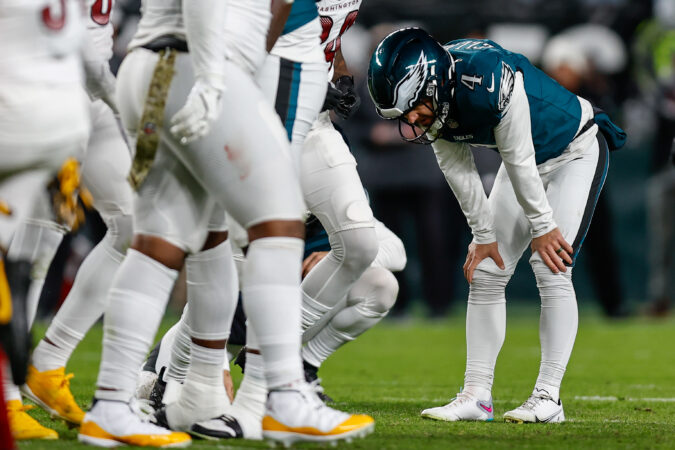
The winds evidently won’t be taking sides: The stadium’s orientation is more or less north-south, and the winds will be blowing from the west and then “swirling around in the Linc,” said Matt Benz, a senior meteorologist with AccuWeather Inc.
In any event, they won’t be much help to the quarterbacks or the kickers — San Francisco’s Eddy Piñeiro or Elliott, whose 74.1% field goal percentage this season was the second-lowest of his nine-year career. Piñeiro hit on 28 of 29 attempts.
Temperatures at the 4:30 p.m. kickoff are expected to be in the mid-40s and drop into the upper 30s during the game, and steady winds of 20 mph may drive wind chills into the upper 20s.
“At least it will be dry,” said Benz.
That won’t be the case around here Saturday.
The winds are to follow some drought-easing rains
After temperatures again climb well into the 50s on Friday, showers are possible at night, but the rains will be more “widespread” on Saturday, said Zach Cooper, a meteorologist with the National Weather Service office in Mount Holly.
No severe weather is expected, although rumbles of thunder are at least possible, he said.
Said Benz, “It’s going to be soaking rain Saturday afternoon into the evening.”
While rainfall amounts remain uncertain, about an inch was likely, the weather service said. Given the local rain deficits and the low water levels in the streams, no flooding was expected.
The only precipitation measured this month at Philadelphia International Airport, all of 0.1 inches, came from a dusting of snow on New Year’s Day.
Snow prospects are not exactly robust
Rain is possible the middle of next week, but the extended forecast remains flakeless, in least in the reliable range.
Temperatures on Monday will top out near 40 degrees, close to normal for the date, and reach the mid and upper 40s Tuesday and Wednesday. Another cooldown is expected late next week.
NOAA’s Climate Prediction Center has chances favoring below-normal temperatures in the Northeast in the Jan. 16-22 period, which would be approaching the season’s climatological peak snow season.
As for winter storm potential, its Thursday afternoon discussion that accompanied the extended outlook foresaw “an overall more active pattern.”
Think you know your news? There’s only one way to find out. Welcome back to our weekly News Quiz — a quick way to see if your reading habits are sinking in and to put your local news knowledge to the test.
Question 1 of 10
A Facebook Marketplace listing is selling signage from this iconic Philly spot:
CorrectIncorrect. XX% of other readers got this question right.
Signage from the now-closed Melrose Diner was listed on Facebook Marketplace over the weekend. The diner, which opened at the intersection of 15th Street, West Passyunk Avenue, and Snyder Avenue in 1956, was demolished in 2023 to pave the way for a new six-story apartment building.
Question 2 of 10
The former CEO and President of this beloved — yet contentious, depending on your region — Pennsylvania empire died on Sunday.
CorrectIncorrect. XX% of other readers got this question right.
Stephen G. Sheetz, the former Sheetz president and CEO who popularized the Altoona convenience store chain, died Sunday. His legacy — and the Wawa vs. Sheetz rivalry — lives on.
Subscribe to The Philadelphia Inquirer
Our reporting is directly supported by reader subscriptions. If you want more journalism like this story, please subscribe today.
Which article of clothing or accessory did CBS Philadelphia anchor Jim Donovan set the Guinness record for having the largest collection of?
CorrectIncorrect. XX% of other readers got this question right.
Guinness World Records verified that the 15-time Emmy winner is now the owner of the world’s largest sock collection at 1,531 pairs, many of which have eccentric designs, including Friends and Star Trek-themed socks, and every color of the rainbow. Many of the socks were sent to him by fans during the span of his career as a journalist.
Question 4 of 10
The USWNT will play against this team at the SheBelieves Cup tournament in March:
CorrectIncorrect. XX% of other readers got this question right.
The Americans will play Colombia on March 7 at Sports Illustrated Stadium in Harrison as part of the annual SheBelieves Cup tournament. Canada and Argentina are the other teams in this year’s field, both of which are familiar foes for the U.S. team.
Question 5 of 10
The FDA issued a warning to an adult boutique on South Street, along with other shops nationwide, because it sells this item:
CorrectIncorrect. XX% of other readers got this question right.
Passional Boutique on South Street sells breast binders, mostly to trans men, online and at the store. The FDA says the store is violating its regulations because it's not registered to sell them. Critics say the warnings are a concerning attempt to police self-expression.
story continues after advertisement
Question 6 of 10
Why is the Trump store in Bensalem closing?
CorrectIncorrect. XX% of other readers got this question right.
The Trump Store is closing after six years in business. Mike Domanico's store thrived during the Biden administration, but Trump's return to the White House has been bad for business. Citing lagging sales, the store began its closeout sale on Tuesday, Jan. 6.
Question 7 of 10
The third-generation owner of Donkey's Place — the Camden eatery that’s been visited by Anthony Bourdain — says a penis bone that has sat on the bar for years was stolen. What animal did the bone belong to?
CorrectIncorrect. XX% of other readers got this question right.
Donkey’s ambience has not changed much since Bourdain’s visit. It’s cozy and packed to the gills with random decor, from beer memorabilia, boxing gloves, a megalodon tooth, and of course, the 27-inch-long walrus penis bone, also known as a walrus baculum.
Question 8 of 10
The mother of this Philly icon made her debut on Peacock’s Traitors this week:
CorrectIncorrect. XX% of other readers got this question right.
Jason and Travis Kelce’s mom, Donna Kelce — who earned recognition over the years for supporting both of her NFL sons with split-allegiance jerseys — appeared on the fourth season of The Traitors this week. The show has a similar premise to “Mafia” or “Clue.”
Question 9 of 10
“The Henriot Family (La Famille Henriot),” an oil painting completed around 1875, was removed from display last year at The Barnes Foundation to be restored. It’s back now and more vibrant. Who is the painting by?
CorrectIncorrect. XX% of other readers got this question right.
The oil painting, completed around 1875, is an impressionist work depicting three people and two long-haired dogs relaxing in a forest. A young woman in a white dress gazes directly at the viewer while a man to her right appears to be drawing her. The central figure is Henriette Henriot, one of Pierre-Auguste Renoir’s frequent models, and her admirer is the painter’s brother, Edmond Renoir.
Question 10 of 10
This TV personality will be performing with his band at Manayunk’s annual Sing Us Home festival in May:
CorrectIncorrect. XX% of other readers got this question right.
The political pundit funnyman playing the drums will be Jon Stewart, who sits on the throne behind his kit with Church and State™, the new band with whom he has played only a handful of gigs. Last month, Stewart told the audience on TheDaily Show that he picked up the sticks after failing to master the guitar or piano, and that playing in his first band at age 63 was extremely fun.
Your Results
You have skipped .
You scored XX out of 10.
The average reader scored XX out of 10
Seems like you’ve been skimming more than reading there, buddy. There’s always next week.
You’ve read some articles (or made some educated guesses) but we wouldn’t come to you first for our local news recaps. Better luck next week!
Do you work here? You’re a local news stan with the latest updates on Philly happenings. Your friends definitely ask you for summaries on what’s going on and it shows.
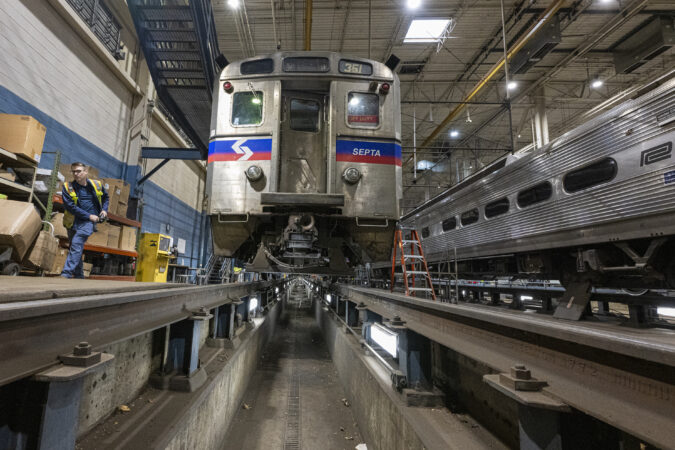
Regional Rail trains are operating with fewer canceled trips and are running with more cars after months of service disruptions while SEPTA rushed to inspect and repair 223 Silverliner IV cars after five caught fire last year.
Yet packed two-car trains and skipped stops persist on some lines during peak travel times.
“It’s been three months and our customers had reason to believe things would be better sooner and they’re frustrated — understandably,“ SEPTA spokesperson Andrew Busch said. ”There is still some catching up to do.”
SEPTA decided late Thursday to restore 24 Regional Rail express trips on the Lansdale/Doylestown, Media, Paoli, West Trenton, Norristown, and Wilmington Lines, Busch said. The restored expresses had been running as locals.
An Oct. 1 federal mandate to inspect and mitigate Silverliner IV fire risks required the transit authority to take the workhorse of Regional Rail offline, leading to shorter trains and furious riders.
SEPTA’s records show it canceled 2,544 Regional Rail trains from October through Dec. 31, though the number steadily droppedover time — from 1,324 to 752 to 468.
As of Thursday, 180 of the Silverliner IV cars had met all the milestones set by the Federal Railroad Administration to return to service.
Regulators demanded each car pass a safety inspection, have necessary repairs made, and have a modern thermal-detection circuit installed.
So far, however, just 78 of those 180 Nixon-Ford era rail cars have been returned to service.
That means work is yet to be completed on35 Silverliner IVs.All together, the carsmake up 57% of the Regional Rail fleet.
(function() { var l = function() { new pym.Parent( ‘regional-rail-return__graphic’, ‘https://media.inquirer.com/storage/inquirer/ai2html/regional-rail-return/index.html’); }; if(typeof(pym) === ‘undefined’) { var h = document.getElementsByTagName(‘head’)[0], s = document.createElement(‘script’); s.type = ‘text/javascript’; s.src = ‘https://pym.nprapps.org/pym.v1.min.js’; s.onload = l; h.appendChild(s); } else { l(); } })();
“Over the last couple of days, we’ve been adding more three and four-car trains,” Busch said. With the restoration of express service, that should continue, he said.
To keep Regional Rail service running in its slimmer form, SEPTA has been using its 120 Silverliner V cars, which arrived between 2009 and 2011, as well as 45 coach cars, which have no motors and are pulled by locomotives.
The Silverliners have onboard motors, carrying passengers and providing propulsion at the same time. The 78 returned to service will also add capacity.
In addition, SEPTA plans to use an additional 10 passenger coaches leased from Maryland’s commuter railroad. They are here, but train crews are undergoing training, which was delayed by vacations and work schedules over the holidays. They should be ready to go a couple of weeks, Busch said.
The transit agency is seeking to buy 20 used passenger cars from Montreal but has not heard whether it won the bidding.
Back-ordered shipments arrived around Christmas, and now there is plenty of wire to finish the job, SEPTA says. The deadline for the installations was Dec. 5, but under the circumstances, federal authorities did not punish SEPTA.
Pennsylvania’s race for governor has officially begun. And 10 months before the election, the November matchup already appears to be set.
Democratic Gov. Josh Shapiro formally announced his reelection campaign Thursday — not that anyone thought he wouldn’t run. And Republicans have rapidly coalesced behind thestate party’s endorsed candidate, Pennsylvania Treasurer Stacy Garrity.
The racewilldominate Pennsylvania politics through November,but it could also havea national impact as Democrats hope Shapiro at the top of the state ticket can elevate the party’s chances in several key congressional races.
Here’s what you need to know about the high-stakes contest.
Shapiro was elected state attorney general in 2016, a year when Pennsylvania went for Republican Donald Trump in the presidential contest. The position put Shapiro in the national spotlight in 2020 when Trump sought to overturn his loss in the state that year through a series of legal challenges, which Shapiro’s office successfully battled in court.
He went on to decisively beat Trump-backed Republican State. Sen. Doug Mastriano for the governorship in 2022. Despite an endorsement from Trump, Mastriano lacked the support of much of Pennsylvania’s Republican establishment and spent the election cycle discouraging his supporters from voting by mail.
Throughout Shapiro’s first term as governor, he has highlighted his bipartisan bona fides and ability to “get stuff done” — his campaign motto — despite contending witha divided legislature. His launch video highlights the quick reconstruction of I-95 following a tanker explosion in 2023.
A strong supporter of Trump, Garrity is one of the only women that has been elected to statewide office in Pennsylvania history. If elected, she would be the first female governor in state history.
Garrity is a retired U.S. Army colonel who was executive at Global Tungsten & Powders Corp. before she was elected treasurer in 2020. Running a relatively low-key state office, Garrity successfully lobbied Pennsylvania’s General Assembly to allow her to issue checks to residents whose unclaimed property was held by her office, even if they hadn’t filed claims requesting it.
Anyone else?
While Shapiro and Garrity are the likely nominees for their parties, candidates have until March to file petitions for the race. That theoretically leaves the possibility of a primary contest open for both candidates, but it appears unlikely at this point.
The outcome of Pennsylvania’s gubernatorial race could hold wide-ranging impacts on transportation funding, election law, and education policy, among other issues.
The state’s governor has a powerful role in issuing executing actions, setting agendas for the General Assembly, and signing or vetoing new laws. The governor also appoints the secretary of state, the top Pennsylvania election official who will oversee the administration of the next presidential election in the key swing state.
Throughout the entirety of Shapiro’s first term, he has been forced to work across the aisle because of the split legislature. Throughout that time the balance of power in Harrisburg has tilted toward Democrats who hold the governor’s mansion and the Pennsylvania House. But many of the party’s goals — including expanded funding for SEPTA and other public transit — have been blocked by the Republican-held Senate.
If Garrity were to win that dynamic would shift, offering Republicans more leverage as they seek to cut state spending and expand school voucher options (while Shapiro has said he supports vouchers, the policy has not made it into any budget deals under him).
Shapiro coasted to victory against Mastriano in 2022, winning by 15 points. The 2026 election is expected to be good for Democrats with Trump becoming an increasingly unpopular president.
But Garrity is viewed as a potentially stronger opponent to take on Shapiro than Mastriano, even though her political views have often aligned with the far-right senator.
When the midterms conclude, the 2028 presidentialcycle will begin. If Shapiro can pull off another decisive win in a state that voted for Trump in 2024, it could go a long way toward aiding his national profile. But if Garrity wins, it could endthe governor’s chances of putting up a serious campaign for the presidency in 2028.
Every other race in Pennsylvania
The governor’s contest is the marquee race in Pennsylvania in 2026. Garrity and Shapiro have the ability to help or hurt candidates running for Pennsylvania’s statehouse and Congress.
The momentum of these candidates, and their ability to draw voters to the polls could play a key role in determining whether Democrats can successfully flip four competitive U.S. House districts as they attempt to take back the chamber.
Democrats also narrowly hold control of the Pennsylvania House and are hoping to flip three seats to regain control of the Pennsylvania Senate for the first time in decades. If Democrats successfully flip the state Senate blue, it would offer Shapiro a Democratic trifecta to push for long-held Democratic goals if he were to win reelection.
Strong Democratic turnout at the statewide level could drive enthusiasm down-ballot, and vice versa. Similarly, weak turnout could aid Republican incumbents in retaining their seats.
The dates
The election is still months away but here are days Pennsylvanians should put on their calendars.
May 4: Voter registration deadline for the primary election.
May 19: Primary election.
Oct. 19: Voter registration deadline for the general election.
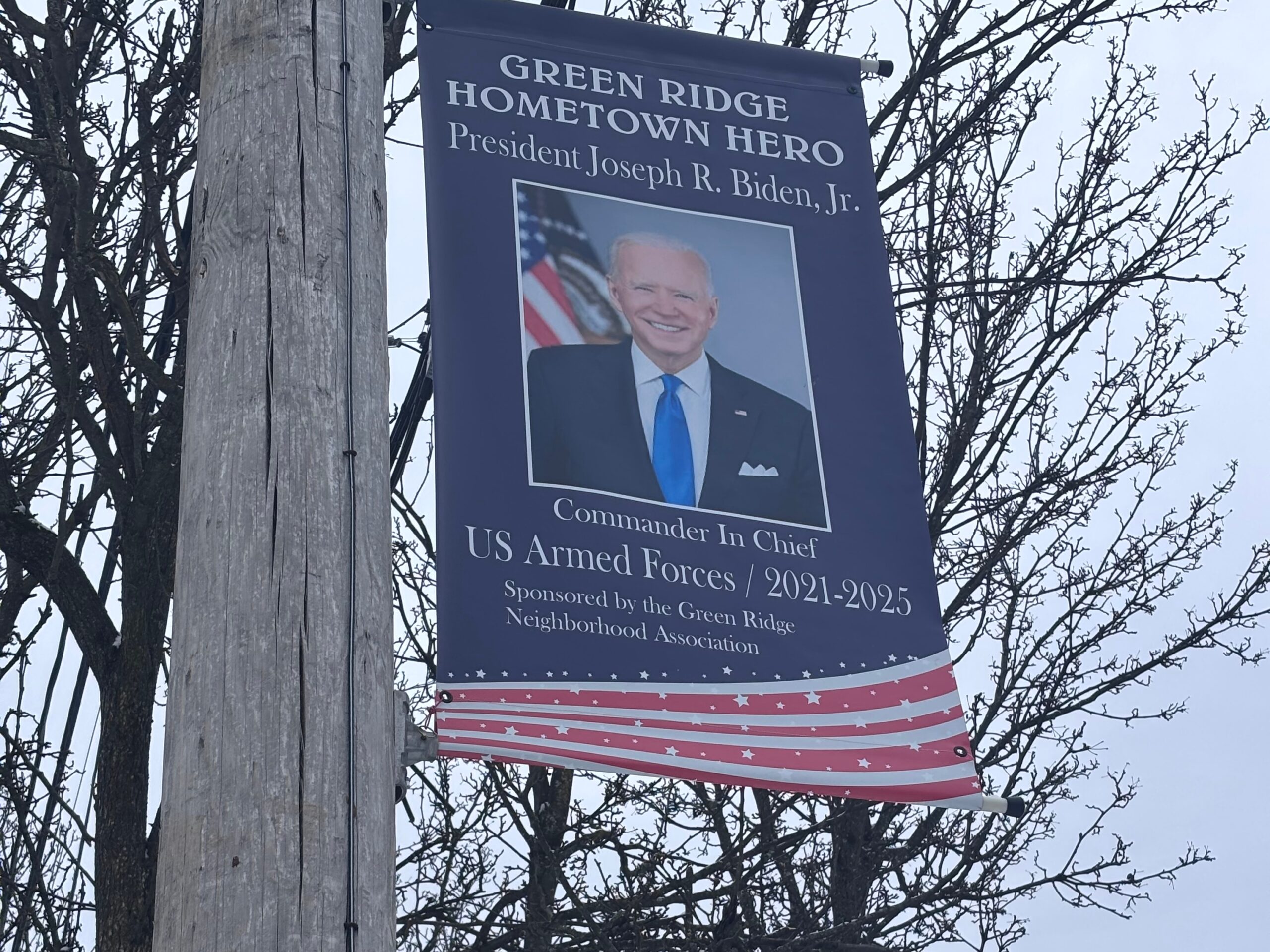
When a Scranton neighborhood group decided to honor Joe Biden with a “hometown hero” banner outside the 46th president’s childhood home recently, they expected a little bit of blowback.
But members of the Green Ridge Neighborhood Association say they’re dumbfounded by the number of complaints and even threats, both locally and abroad.
“Someone in Guam has been very vocal,” Roberta Jadick, the association’s secretary, said beneath the banner on North Washington Avenue on a recent snowy weekday.
“Hometown Heroes” banners first appeared in Harrisburg in 2006, according to the program’s website, and they’ve become ubiquitous in small-town and suburban Pennsylvania. Most appear as black-and-white photos of men and women in uniform, thousands of veterans honored in nearly every corner of the Commonwealth.
While most of the banners honor veterans, no rule prohibits municipalities, civic groups, or veterans’ groups from honoring others, said Laura Agostini, president of the Green Ridge group. Some towns have put up banners of high school athletes or law enforcement officials.
“I mean, teachers are heroes, aren’t they?” Jadick said.
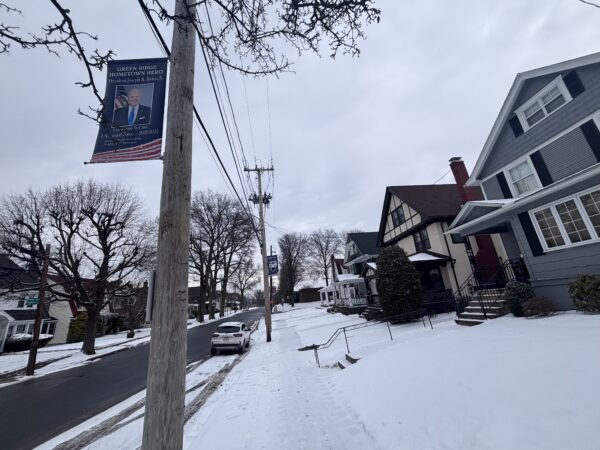
The banner on North Washington Avenue near Biden Street depicts the former president in a suit, with the title “Commander in Chief, U.S. Armed Forces, 2021-2025″ written beneath it. Agostini said the group was aware that “Commander in Chief” was a civilian title.
A banner featuring former president Joe Biden as a “hometown hero” has sparked controversy in Scranton. The neighborhood group that put it up plans to vote on its future Monday after getting criticism from veterans.
Agostini said the initial blowback was political but that the issue “morphed” into a veterans’ issue.
“We never intended to portray him as a veteran,” Agostini said. “There’s only been 46 presidents in the United States, and each one had a hometown, and we thought this is a unique honor.”
A Dec. 21 Facebook post about the banner by the Green Ridge Neighborhood Association received nearly 250 comments, ranging from supportive to critical to crude.
“He’s an embarrassment!” one commenter wrote.
A similar controversy erupted in 2021, when a four-lane highway in Scranton was renamed President Joe Biden Expressway.
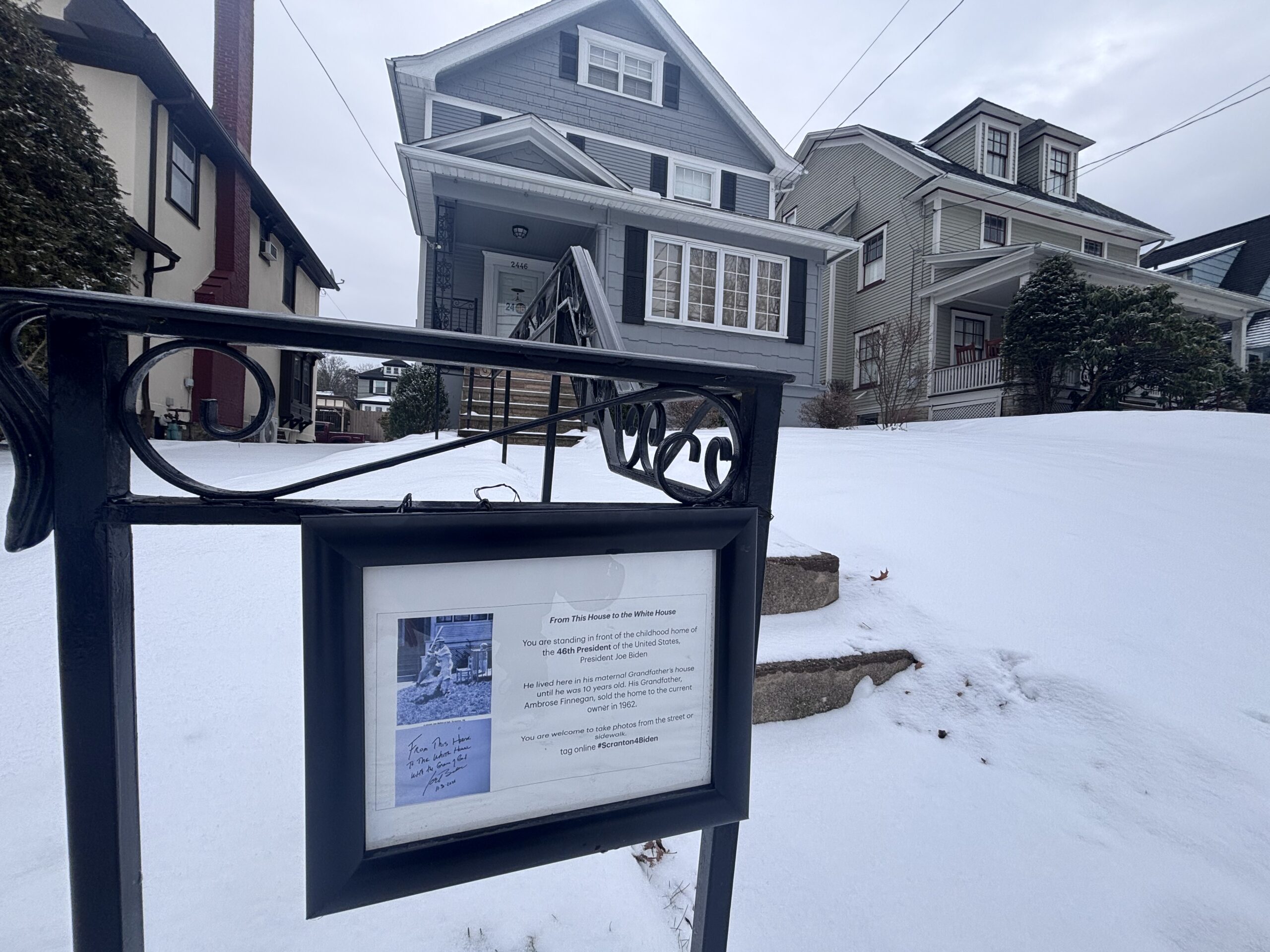
Biden was born in Scranton in 1942 and lived there on and off, and he repeatedly mentioned Scranton as a formative place. A plaque outside the home where Biden lived with his maternal grandfather, Ambrose Finnegan, said he moved out when he was 10 years old.
A Hometown Heroes banner honoring the Finnegans is just one light pole down from Biden’s. No one from the Hometown Heroes Banner Program returned requests for comment on Wednesday.
One local veteran, Andy Chomko, said he doesn’t have a problem with Biden being honored in Scranton, but his banner should not look like veterans’ banners.
“It’s a great thing that he lived here and had roots here,” Chomko said. “But the banner makes it look like he’s a veteran, and every one of those people on those other banners put their lives at risk for their country.”
Navy veteran Harold Nudelman told WNEP-16 that Biden “didn’t put his life on the line.”
“Don’t portray him as a veteran. He didn’t serve. He didn’t take that oath to serve as we did,” he told the news station.
Chomko, who served in Iraq and Afghanistan with the Army, believes the Green Ridge group should remove the banner and “rethink it.”
That could happen after Monday, the group will vote on the future of the banner at a public meeting.
“I would say the vast majority of people support it or really don’t care,” Agostini said. “I don’t take any of this lightly, though, and while we were hoping it would be dying down, we’ll have an open discussion about it.”
Jadick said the banner was never meant to divide the public even more than it is.
“If Trump was from here, he’d have a banner up after he was out of office,” she said. “This is where Joe Biden is from. Those are his uncles on the other banner.”
A banner featuring former president Joe Biden as a “hometown hero” has sparked controversy in Scranton. The neighborhood group that put it up plans to vote on its future Monday after getting criticism from veterans.