It doesn’t look like the Trump administration will begin holding undocumented immigrants at a South Jersey military base anytime soon.
Democratic elected officials said Wednesday that they received a letter from the administration saying there is currently no approved construction plan, nor a timeline, for confining people at Joint Base McGuire-Dix-Lakehurst.
Estimates are that the base, which spans parts of Burlington and Ocean Counties, could hold 1,000 to 3,000 detainees. Specifics surrounding the when, where, and how of that undertaking remain unknown.
New Jersey U.S. Reps. Donald Norcross and Herb Conaway, Democratic members of the House Armed Services Committee, announced that they received a response earlier this week from the Department of Homeland Security after requesting more information about the administration’s plans.
“The Trump Administration’s ongoing disregard for due process and humane treatment of undocumented immigrants has required us to press repeatedly for answers and fulfill our congressional oversight responsibilities,” the lawmakers said in a joint statement. “While we acknowledge that the Department of Homeland Security has finally responded to our questions, we will continue to monitor for any further developments.”
Their priority, the lawmakers said, is to uphold standards of human rights to ensure that plans to detain immigrants do not interfere with military readiness.
The administration’s response said the government’s need for more detention space “reflects the Trump administration’s commitment to restoring the rule of law and ending the catch-and-release policies of prior years that jeopardized American communities.”
Trump administration officials earlier named the base as one of two sites in the country now certified to assist in the president’s plan to remove millions of immigrants. The other is Camp Atterbury in Indiana.
Former U.S. Treasury Secretary Larry Summers abruptly went on leave Wednesday from teaching at Harvard University, where he once served as president, over recently released emails showing he maintained a friendly relationship with Jeffrey Epstein, Summers’ spokesperson said.
Summers had canceled his public commitments amid the fallout of the emails being made public and earlier Wednesday severed ties with OpenAI, the maker of ChatGPT. Harvard had reopened an investigation into connections between him and Epstein, but Summers had said he would continue teaching economics classes at the school.
That changed Wednesday evening with the news that he will step away from teaching classes as well as his position as director of the Mossavar-Rahmani Center for Business and Government with the Harvard Kennedy School.
“Mr. Summers has decided it’s in the best interest of the Center for him to go on leave from his role as Director as Harvard undertakes its review,” Summers spokesperson Steven Goldberg said, adding that his co-teachers would finish the classes.
Summers has not been scheduled to teach next semester, according to Goldberg.
A Harvard spokesperson confirmed to The Associated Press that Summers had let the university know about his decision. Summers decision to go on leave was first reported by The Harvard Crimson.
Harvard did not mention Summers by name in its decision to restart an investigation, but the move follows the release of emails showing that he was friendly with Epstein long after the financier pleaded guilty to soliciting prostitution from an underage girl in 2008.
By Wednesday, the once highly regarded economics expert had been facing increased scrutiny over choosing to stay in the teaching role. Some students even filmed his appearance in shock as he appeared before a class of undergraduates on Tuesday while stressing he thought it was important to continue teaching.
Massachusetts Sen. Elizabeth Warren, a Democrat, said in a social media post on Wednesday night that Summers “cozied up to the rich and powerful — including a convicted sex offender. He cannot be trusted in positions of influence.”
Messages appear to seek advice about romantic relationship
The emails include messages in which Summers appeared to be getting advice from Epstein about pursuing a romantic relationship with someone who viewed him as an “economic mentor.”
“im a pretty good wing man , no?” Epstein wrote on Nov. 30, 2018.
The next day, Summers told Epstein he had texted the woman, telling her he “had something brief to say to her.”
“Am I thanking her or being sorry re my being married. I think the former,” he wrote.
Summers’ wife, Elisa New, also emailed Epstein multiple times, including a 2015 message in which she thanked him for arranging financial support for a poetry project she directs. The gift he arranged “changed everything for me,” she wrote.
“It really means a lot to me, all financial help aside, Jeffrey, that you are rooting for me and thinking about me,” she wrote.
New, an English professor emerita at Harvard, did not respond to an email seeking comment Wednesday.
An earlier review completed in 2020 found that Epstein visited Harvard’s campus more than 40 times after his 2008 sex-crimes conviction and was given his own office and unfettered access to a research center he helped establish. The professor who provided the office was later barred from starting new research or advising students for at least two years.
Summers appears before Harvard class
On Tuesday, Summers appeared before his class at Harvard, where he teaches “The Political Economy of Globalization” to undergraduates with Robert Lawrence, a professor with the Harvard Kennedy School.
“Some of you will have seen my statement of regret expressing my shame with respect to what I did in communication with Mr. Epstein and that I’ve said that I’m going to step back from public activities for a while. But I think it’s very important to fulfill my teaching obligations,” he said.
Summers’ remarks were captured on video by several students, but no one appeared to publicly respond to his comments.
Epstein, who authorities said died by suicide in 2019, was a convicted sex offender infamous for his connections to wealthy and powerful people, making him a fixture of outrage and conspiracy theories about wrongdoing among American elites.
Summers served as treasury secretary from 1999 to 2001 under President Bill Clinton. He was Harvard’s president for five years from 2001 to 2006. When asked about the emails last week, Summers issued a statement saying he has “great regrets in my life” and that his association with Epstein was a “major error in judgement.”
Other organizations that confirmed the end of their affiliations with Summers included the Center for American Progress, the Center for Global Development and the Budget Lab at Yale University. Bloomberg TV said Summers’ withdrawal from public commitments included his role as a paid contributor, and the New York Times said it will not renew his contract as a contributing opinion writer.
Philadelphia police are seeking to question two men in connection with the death of an American Airlines flight attendant who investigators believe was attacked inside his South Philadelphia home last week, then fell — or was thrown — out of his third-floor window.
Amadou Thiam, 50, was found lying naked on the pavement behind his home, on the 2400 block of Federal Street, with severe injuries to his face, neck, and body on the night of Nov. 10, police said. He was rushed to Penn Presbyterian Medical Center, where he later died from his injuries, they said.
The medical examiner has not yet determined the cause or manner of Thiam’s death, but homicide detectives are investigating, said Deputy Police Commissioner Frank Vanore. Vanore stopped short of saying Thiam was attacked, pending the coroner’s decision, but law enforcement sources familiar with the investigation said Thiam’s injuries, coupled with witness interviews and evidence recovered inside his home, suggest he was assaulted.
Residents of the Grays Ferry block this week recalled the harrowing moments when they found Thiam — and the chilling departing words of the men police are now looking to question.
Two neighbors, who asked not to be identified for fear of reprisal, said they heard loud noises coming from Thiam’s condo around 6:30 p.m. last Monday but assumed he was having guests over.
Then, they said, they heard a loud crash behind the building.
Shortly after, they said, they saw two men walk out of Thiam’s home.
“Is everything OK?” one neighbor recalled asking the men. “They just kind of chuckled and said, ‘We hope so.’”
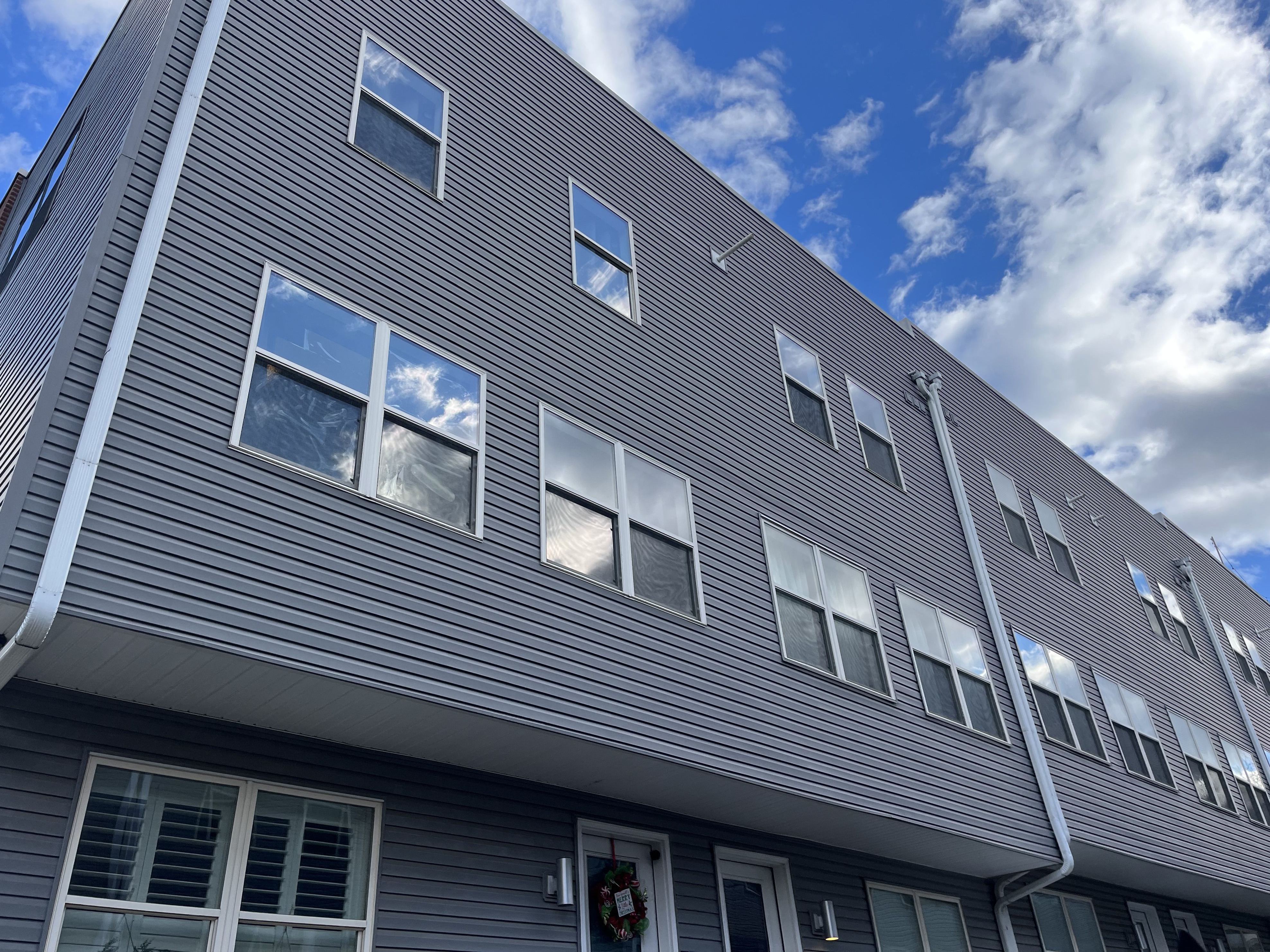
Amadou Thiam lived on the 2400 block of Federal Street. This image shows the third-story window, second from left, from which neighbors say Amadou Thiam fell on Nov. 10.
The neighbors said they approached Thiam’s door, which was left cracked open, and found blood smeared across his kitchen and third-floor bedroom. Thinking Thiam was not home, they called the police to report a burglary.
As the couple waited for police, they said, they noticed a stream of blood on the sidewalk outside. And then, they said, they saw Thiam’s body on the pavement.
Vanore said it was not clear how Thiam ended up on the ground, but police believe he went through a third-story window.
“We still don’t know if he fell or was thrown,” he said.
Thiam suffered injuries throughout his body, including fractures to his face, ribs, and skull, Vanore said.
Detectives have recovered video from the block showing two men — one older, one younger — in the area around the time Thiam’s body was found, he said.
Vanore described one of the men as a thin Black male wearing a black leather jacket over a red hoodie and jeans and carrying a bag. The second man, he said, was older, bald, and wearing a gray jacket.
Philadelphia police are seeking to question two men who they believe could be connected to the death of Amadou Thiam in South Philadelphia last week.
“We’re looking to talk to them to see if they had anything to do with this,” he said.
Law enforcement sources, who asked not to be identified to discuss an ongoing investigation, said the men appeared to be carrying clothes out of the building. There were no signs of forced entry into Thiam’s home, the sources said.
Relatives of Thiam, who was originally from Côte d’Ivoire, could not be immediately reached.
His Instagram account showed a man who enjoyed exploring the world: standing before Hôtel de Paris Monte-Carlo and the Arc de Triomphe in Paris, and eating in Key West, Fla., and Las Vegas.
His death has shocked many who knew him, including his colleagues at American Airlines.
A spokesperson for the airline did not respond to a request for comment. But in a memo shared online, an operations manager for the Philadelphia region said Thiam had worked as a flight attendant with the airline since 2011 and, as a French speaker, he frequented international flights to Paris and Zurich.
“His presence and natural charisma was always something felt throughout a room,” the employee wrote. “He was a loyal friend whose kindness, positive attitude, and radiant smile touched everyone around him.”
John Stanley, a fellow American Airlines flight attendant, said that every July, there is a benefit for flight attendants at Voyeur, a nightclub in the Gayborhood, with dancers and drag performers. He recalled how one year, Thiam dressed up as Glinda from Wicked and performed for the crowd.
“He was as well-liked a flight attendant in Philadelphia as I know exist,” Stanley said.
Thiam’s neighbors also said he was exceptionally friendly, and loved to dress in eccentric clothing. He was also a dog lover, a passion that neighbor Nicole Colamesta said they bonded over.
“Everybody is having a really hard time processing it. This is a really quiet block. Everybody just looks out for each other here,” Colamesta said. “You can’t stop thinking about it because it’s right in our backyard.”
Police asked anyone with information to contact homicide detectives at 215-686-3334 or to call the police tip line at 215-686-8477.
Staff writer Maggie Prosser contributed to this article.
An affordable housing project slated for a junkyard in Cedar Park took a step forward Wednesday, when a Philadelphia judge rejected a neighbor’s challenge. The courtroom victory brings the 104-unit, two-building project, which was conceived in 2020, closer toreality.
Common Pleas Court Judge Idee Fox ruled that the new zoning of a triangular group of parcels on Warrington Avenue, which allows for buildings up to seven stories, was legal.
Melissa Johanningsmeier, who lives next to the planned development, sued the city to stop the project in 2023, arguing that the building was inconsistent with the city’s goal of preserving single-family homes in Cedar Park.
Johanningsmeier said in court filings she would be harmed by the parking, traffic, and loss of green space if the project were to proceed.
The homeowner told Fox during a two-day October bench trial that there was widespread discontent with the project in the neighborhood.
The judge seemed skeptical, as Johanningsmeier’s attorney didn’t provide witnesses or evidence to support claims ofwidespread backlash to the project that has been promoted by City Councilmember Jamie Gauthier.
It was not for her to decide whether the project was the best idea, Fox said, but whether the zoning was constitutional.
“If the community is unhappy with what’s being done, they have the right to express their concerns to the councilwoman at the ballot box,” Fox said.
Junkyard controversy
The project dates to 2020, when New York affordable housing developer Omni formulated plans to add 174 reasonably priced apartments to the West Philadelphia neighborhood.
But the developer’s plans for the junkyard at 50th and Warrington met opposition due to theproposed buildings’ height — six stories — and parking spaces for less than a third of the units.
Omni’s plan required permission from the Zoning Board of Adjustment to move forward, which was more likely to succeed with neighborhood support. So they compromised.
A new design unveiled in 2021 pushed the buildings back to the edge of the site,to avoid putting neighboring homes in shadow. A surface parking lot would offer 100 spaces for the 104 affordable apartments.
These concessions appeased almost all of the critical neighbors and community groups.Many of them supported Omni before the Zoning Board of Adjustment, which granted the project permission to move forward.
But Johanningsmeier remained a critic. She lives on the border of the property and challenged the zoning board’s ruling in Common Pleas Court. Judge Anne Marie Coyle ruled in her favor, arguing the new building “would unequivocally tower over the surrounding family homes.”
In the aftermath, Gauthier passed a bill to allow the project to move forward without permission from the zoning board. Johanningsmeier then sued over that legislation as well.
Councilmember Jamie Gauthier in City Council in 2024.
Affordable housing and fruit analogies
The issue at the heart of the case was whether a zoning change to allow for large multifamily buildings was considered spot zoning on the small parcel, which Johanningsmeier’s lawyer argued was inconsistent with the types on buildings on surrounding properties.
Just because the “mega apartment buildings” are for residential use doesn’t make the project similar to the surrounding zoning, which mostly allows single-family homes and duplexes, Edward Hayes, a Fox Rothschild attorney representing Johanningsmeier, toldJudgeFox on Wednesday.
“A cranberry and a watermelon are fruit,” Hayes said. “They are not the same.”
And while affordable housing is a laudable cause, the attorney said, that doesn’t mean that the city should “shove it down the throat of a community” in the form of large buildings that are out of character with the rest of the neighborhood.
An attorney representing the developer, Evan Lechtman of Blank Rome, told the judge existing buildings of similar height are nearby, across the railroad track in Kingsessing.
“We are transforming a blighted, dilapidated junkyard into affordable housing,” the developer’s attorney said.
Johanningsmeier’s lawyer, Hayes, declined to comment after the ruling, which could be appealed.
Gauthier celebrated the outcome as a victory against gentrification.
“Lower-income neighbors belong in amenity-rich communities like this one, where they can easily access jobs, healthcare, groceries, and other necessities,” said Gauthier. ”I hope the court’s ruling puts an end to gratuitous delays.”
Housing advocates note that the years of neighborhood meetings and lawsuits over the project are an example of why housing, and especially affordable units, has become so expensive to build in the United States.
In the face of determined opposition from even a single foe, projects can incur millions in additional costs.
“It’s a travesty that one deep-pocketed opponent has been able to block access to housing for over 100 families in my neighborhood for years,” said Will Tung, a neighbor of the project and a volunteer with the urbanist advocacy group 5th Square. “It’s more expensive than ever to rent or buy here, and this project would be a welcome change to its current use as a derelict warehouse.”
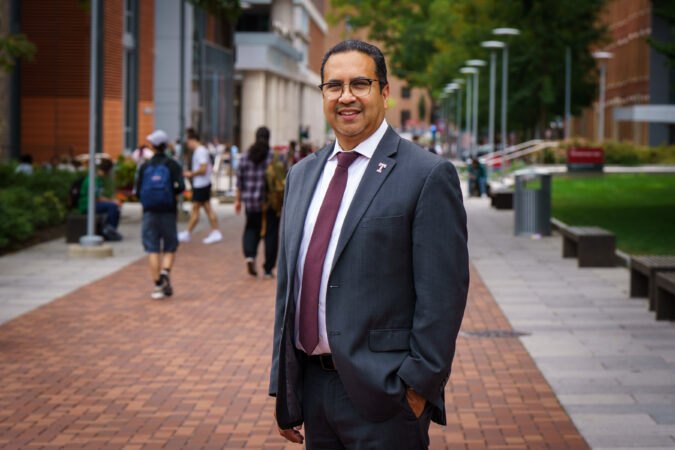
Temple University’s vice president for enrollment and student success resigned abruptlythis week after only 2½ years in the post.
Jose Aviles’ resignation is effective Dec. 2, the university said in a message to the campus Wednesday.
“It is very difficult to leave, but I have a life-changing opportunity that awaits me,” Aviles said, adding that he would share details when able. “Serving the Temple University community has been an extreme honor, as I am deeply grateful to have had the chance to fulfill the mission of Russell Conwell and expand access and opportunity to this world-class institution.”
Temple did not respond to questions on why Aviles is leaving midyear, with the university in the midst of another application cycle.
“Jose has reimagined enrollment management at the university over the last couple of years, helping move us to a modern, technology- and data-driven approach that has delivered results,” Temple president John Fry and interim provost David Boardman said to the campus community.
They noted the university achieved growth in first-year enrollment the last two years, with this year’s group reaching a record high of 5,379.
The university also under his tenure started the Temple Promise program, which makes tuition and fees free for first-time, full-time college students from low-income families who live in Philadelphia, and the Temple Future Scholars program, a mentoring and college-readiness program.
Aviles, who came to Temple from Louisiana State University, where he had served as vice president for enrollment management and student success since 2017, was recently promoted from a vice provost to a vice president.
He said in his statement that he “received great support from this university and its leaders” and would “continue to cheer on Temple from the sidelines.”
While Temple’s first-year class was strong, the school fell short of its initial overall enrollment projection by about 700 students, which translates to about $10 million in lost revenue.
The university had been estimating it would enroll a total of 30,100 to 30,300 students, which would have been its first enrollment increase since 2017.
Instead, enrollment came in at 29,503, down about 500 from last year and further declining from its high of more than 40,000 eight years ago. (That does not include enrollment on its Japan and Rome campuses, which increased. Including those campuses, Temple’s overall enrollment was over 33,000, a slight increase from last year.)
There have also been concerns about sophomore retention and a higher percentage of third- and fourth-year students not returning.
And in September, the Temple News, the student newspaper, reported that more than 25 admissions counselors, directors, and staff left the department or were laid off over the two years that Aviles led enrollment. Students experienced delays in receiving their admissions decisions, problems with credit transfers, and difficulty with advising and financial aid packages, the Temple News reported.
“I’m proud of the work that we’ve done,” Aviles told the Temple News at the time. “We definitely walked into a challenging time for admissions but when you look at what’s really happened in the last two years, I think I’m most proud of the foundation that we’ve set.”
Representatives behind Philly’s three Michelin starred restaurants are lauded for their culinary skills, hospitality, and showmanship. But the men involved with each of them also have this shared trait: They’re all certified Wife Guys.
For those uninitiated, a wife guy is a colloquial way to refer to someone who is all about their marriage and finds ways to talk about their devotion whenever possible. (There are some instances where this phrase is used snarkily, but in this case, we mean it genuinely as a compliment and in earnest.)
When chefs Amanda Shulman and Alex Kemp stepped on stage to receive Her Place Supper Club’s one-star honor, Kemp stepped to the side, opting not to be photographed alongside the Michelin Man.
“Amanda is the hardest working woman in show business,” Kemp told The Inquirer on Wednesday. “She deserves this. I felt super proud of her, but I didn’t want to take her thunder.”
While Kemp is part-owner of Her Place, Shulman founded the restaurant and is the face (and chef) of the project.
Emcee for the night, Java Ingram, remarked on stage how Kemp’s gesture to step aside was “classy.”
He wasn’t the only one paying tribute to his wife that night.
Power couple Chad and Hanna Williams, who are behind star-winning restaurant Friday Saturday Sunday, also displayed their love for each other. Chad Williams could be seen on stage holding his wife and kissing her cheek after they received their award and Michelin jackets.
“Love and partnership is the foundation of this restaurant,” Williams later told The Inquirer of his display. “We got married in the kitchen for God’s sake. To have earned a Michelin star is my greatest accomplishment but to have done it with my wife is a dream come true.”
Finally, there was Provenance, the surprise of the night, pulling off a star within the atelier’s first year of opening.
Michelin international director Gwendal Poullennec asked Nicholas Bazik on stage what his inspiration was. While holding the mic, he pointed to his wife, Eunbin Whang. “She’s right over there,” Bazik said as the crowd erupted in “aws.” Whang demurely approached Bazik on stage, covering her face, tearful and proud as Bazik draped his arm around her.
“There would be no Provenance without my wife,” Bazik told The Inquirer, citing her influence on his “culinary identity,” blending French and Korean culture and cuisine.
So is love a prerequisite to getting a star?
Bazik seems to think so.
“Everybody needs a constant, something that can help center them. This is a hard job that oscillates between insanity and reality checks. Love is that thread.”
Kemp concurs.
“Or maybe it’s being a ‘family guy,’” he quipped when asked by The Inquirer for his take. “Amanda is a very easy person to love. She’s my best friend. We do everything together. We spend every moment of the day talking or working together.”
He added, “I love being a wife guy. It’s cool being a wife guy.”
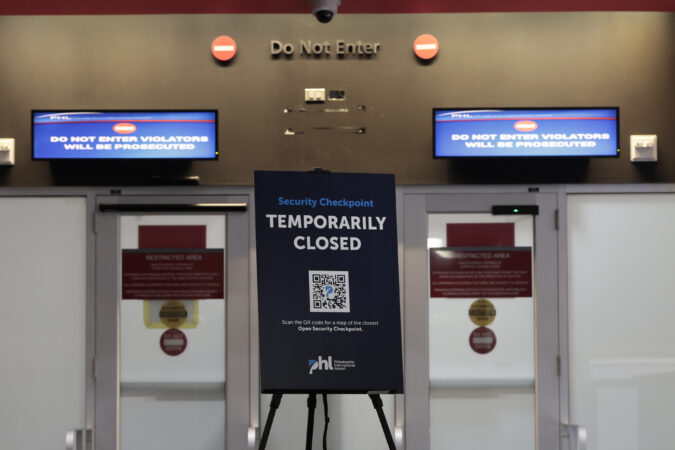
Philadelphia International Airport will reopen two U.S. Transportation Security Administration-run security checkpoints that were closed two weeks ago amid the government shutdown.
PHL’s Terminal A-West and Terminal F security checkpoints are slated to reopen Thursday, the airport announced via social media. Once opened, the checkpoints will operate on their regular schedules, with Terminal A-West running from 5 a.m. to 10:15 p.m., and Terminal F running from 4:30 a.m. to 9:30 p.m.
“We appreciate your patience as we collaborated with the TSA to maintain efficient security operations,” the airport said. “And thank you to our staff for supporting travelers throughout the closure.”
The airport closed those terminals on Nov. 5 at the request of the TSA, which was affected by the then-ongoing shutdown of the federal government. Amid the shutdown, which began Oct. 1, roughly 800 TSA officers continued screening luggage and staffing airport checkpoints without pay, and employees with the agency missed their first full paychecks on Oct. 24, The Inquirer reported.
The checkpoints’ closures, airport officials said, were temporary, though no date for their return was provided at the time they were shuttered. Checkpoints at Terminals A-East, B, C, and D/E remained operational.
The shutdown also brought a flight-reduction order from the Federal Aviation Administration, which required airlines to, in phases, eliminate 10% of their scheduled trips at 40 of the nation’s busiest airports — PHL included. Designed to ease pressure on air traffic controllers, who were experiencing staffing shortages, that order caused a number of flight delays and cancellations at PHL and other airports around the country.
The flight-reduction order was lifted Sunday, when the FAA retracted its mandate following the end of the shutdown last week. Federal legislators on Nov. 12 reached a deal to fund the government through at least Jan. 30, stopping the shutdown after 43 days — the longest stoppage in history.
Flight schedules at PHL were expected to return to normal quickly. That return to normal, as well as the reopening of the two formerly closed TSA checkpoints, comes just ahead of the holiday travel season, which the airport expects to bring about 1 million passengers through its gates between Friday and Dec. 2.
An array of dishes were set out for the critics — whole-wheat lasagna rollups, veggie samosas, cheeseburger bites with dill pickle ketchup.
The jurists did not hold back.
“That’s bussin’,” one student said of the lasagna, indicating his approval of the dish.
Semia Carter, a student at Crossroads Academy, tastes a burger bite while taste testing potential school lunch food on Wednesday at at Philadelphia School District headquarters.
“Mid,” another commented on the cheeseburger dish, shrugging his shoulders to emphasize how very mediocre it was.
Hundreds of city students descended on Philadelphia School District headquarters Wednesday for a food show — their chance to weigh in on dishes that might show up on their school breakfast and lunch plates next year. Thirty-three manufacturers showed off 55 products not yet in district cafeterias, from whole-grain onion rings to turkey sausage bites.
It’s one of the biggest days of the year for Lisa Norton, the district’s executive director of food services.
“We give the students voice to select the menu that they will eat every day,” Norton said. “It’s the dietary fuel that students need to learn.”
Norton knows her critics won’t hold back. She was prepared for that.
“They will tell the vendors, ‘We don’t like this,’” she said. “But that’s what we need. We want to buy food they’ll eat.”
All around Norton, students scoped out offerings, tasted things that looked good, then recorded their thoughts after scanning QR codes on their phones. At one station, a man dressed as Elvis danced and encouraged students to try more.
Three friends from Hancock Elementary in the Northeast said everything they tried was “really good” — an improvement from the food offered in their cafeteria now. (Though Philadelphia is a “universal feeding” district, so every student receives free breakfast and lunch regardless of income, the Hancock students were like most who spoke to The Inquirer — they said they eat school food only sometimes, preferring to bring lunch from home most days.)
“Sometimes it’s mystery mush,” sixth grader Alina Leone said of current school food offerings.
“Sometimes it’s not bad,” said her classmate Calie Sharpe.
“There’s pizza almost every day,” said Aislee Blaney, another Hancock friend.
Havyn Nelson, a seventh-grade student at Lingelbach Elementary in Germantown, found the brownie bars and the taco meat tasty.
Peyton Sanders, Havyn’s classmate, scrunched her nose when asked to describe the dishes her school offers now.
“It’s prison food,” Peytonsaid.
Jannette Carpentier of Acxion Foodservice serves Southern hush puppies to students during a taste test at the Philadelphia School District headquarters on Wednesday.
Angelo Valvanis, who works for the company Grecian Delight, offered students beef gyro with what he marketed as “white sauce” — tzatziki sauce. His firm has dishes that students in Chicago, Detroit, and New York eat, and it was hoping to break into Philly.
“You guys ever get gyro from food trucks? It’s really good. You know, the meat that turns, and you cut it with a knife? It’s from Greece,” Valvanis said.
The idea of school lunch still conjures the image of tasteless, lukewarm, floppy food — hot dogs, pizza, chicken nuggets — but school meals have changed, Valvanis said.
“These kids are much more open,” he said. “They all see these things on YouTube.”
In front of him, a group of students nodded.
Gabby Swaminathan, a sixth grader from Meredith Elementary in Queen Village, nibbled the gyro. It was good, she said.
“Our food at school right now is not that good,” Gabby said. Her strategy was to rate the food she liked — the gyro, the lasagna roll-ups — really highly, with hopes those will eventually replace the food she doesn’t like.
Chef Tony Rizzo of Chase Franklin Food Company shows Marieta pasta ahead of a student tasting session at the Philadelphia School District headquarters on Wednesday.
Wednesday’s event was timely. Several members of Philadelphia City Council grilled district officials about the food at a Tuesday hearing on school matters, saying constituents had concerns about the quality of the meals served to students. The elected officials said they want to come to a Center City school to eat the same lunches students eat.
Superintendent Tony B. Watlington Sr. explained the district’s conundrum — its food service program must be funded completely by reimbursements fromthe U.S. Department of Agriculture.
“The dollars are not robust enough to have filet mignon everyday, but it is sustenance, and I say that very respectfully,” Watlington told Council.
Kameron Garrick and Amaud Burton-Bullock, students at Martin Luther King High, can say definitively they have never been served filet mignon at school.
They mostly skip school lunch, they said, and buy food at a corner store or eatathome.
But sure, they were game to try the offerings.
The cheeseburger bites? OK.
“I would say it’s mid,” Kameron said. “It needs more seasoning.”
But they found a bright spot — the cornbread bowls with chicken.
“I would take that cornbread,” Amaud said. “It was nice and moist.”
Kervens Orelus, a student at Lingelbach, gets a corn dog from Elvis during a testing session at the Philadelphia School District headquarters on Wednesday.
The Wallingford-Swarthmore School District is headed for a $2.6 million budget deficit, district officials said during a presentation on Tuesday night.
At a meeting of the district’s finance committee on Nov. 18, Superintendent Russell Johnston and business administrator DeJuana Mosley presented a dire picture of the school district’s finances. Increased staffing costs, subpar inventory management, and costly building repairs have coincided with a shrinking revenue base in the district, officials said. Without implementing a “cultural shift” around spending, Mosley said, the district is staring down major fiscal problems for the 2027-28 school year.
“Bottom line, the district has a spending problem,” Mosley said.
Why is Wallingford-Swarthmore facing a budget deficit?
District administrators say Wallingford-Swarthmore‘s fiscal issues are largely related to runaway spending and insufficient recordkeeping.
The school district’s budget has increased by 18%, or around $16 million, over the last five years. Administrators said the district has had to pour resources into its security, nursing staff, and costly building repairs that had been put off for years. On top of that, Mosey outlined a lack of inventory management, describing a culture across the district of “just ordering stuff.”
Johnston was hired earlier this year to replace former Superintendent Wagner Marseille. The school district parted ways with Marseilles in 2024 amid mounting criticism of his management style and spending decisions.
The district’s unsustainable spending has been set to the backdrop of a decreasing tax base, officials said. The 2025 taxable assessed value in the school district is $2.6 billion, a $5.8 million decrease from 2024. The decrease resulted in a $174,000 loss in revenue.
School districts in Pennsylvania are limited by the Act 1 Index, a formula used to determine the maximum tax increase a district can levy (without voter approval). The index is calculated using the statewide change in wages, the nationwide change in school employee compensation costs, and an individual district’s relative wealth. Wallingford-Swarthmore’s 2026-27 Act 1 Index is 3.5%.
Unlike neighboring school districts like Rose Tree Media, which has seen continued population increases and new construction, Wallingford-Swarthmore is small and almost entirely residential. Limited construction and growth leaves few opportunities to increase the district’s tax base.
Around 20% of the district’s revenue comes from state and federal subsidies. Mosey said poor recordkeeping had impacted state subsidy and grant revenue (the issue has since been cleaned up, she added).
How is the district planning to balance the budget?
If no changes are made, the school district is set to be short about $2.6 million for the 2027-28 school year. Mosley recommended the district cut the budget by double that amount ($5.2 million).
“I know it’s alarming and it’s aggressive and it’s a lot,” she said. “We’re trying to change the trajectory of what we’re doing.”
Johnstonsaid the district should look at cost savings that are “furthest away from the classroom,” citing examples like professional development and travel for staff, a reduction of the size of the district’s capital plan, and a review of “potential redundancies in services and staffing.” He also suggested evaluating which services the district is required to provide and which are optional.
“I almost have to take a deep breath when I say this out loud, but kindergarten transportation is not required,” he said, offering cutting buses for kindergartners as an example.
Johnston emphasized that he was not making a suggestion to cut kindergarten transportation from the get-go, but was offering it as an example of an optional service the district provides.
What happens next?
The district has to present a 2027-28 budget draft by June of next year. Johnston and Mosley said they were deliberately bringing the budget process to the public months in advance to allow for ample conversations with teachers, staff, parents, and the school board.
In early December, Johnston will host optional community forums with school faculty and the community. The school board’s finance committee will present a potential budget reallocation strategy at its Dec. 16 meeting. On Dec. 22, the board is set to vote on its reallocation expectations.
This suburban content is produced with support from the Leslie Miller and Richard Worley Foundation and The Lenfest Institute for Journalism. Editorial content is created independently of the project donors. Gifts to support The Inquirer’s high-impact journalism can be made at inquirer.com/donate. A list of Lenfest Institute donors can be found at lenfestinstitute.org/supporters.
SNAP benefits are restored, and the program is funded through next year. But the Trump administration is now looking to “completely deconstruct the program,” its top USDA official said.
Agriculture Secretary Brooke Rollins said that millions of low-income Supplemental Nutrition Assistance Program recipients will have to reapply for their benefits as part of an effort to crack down on “fraud.”
“It’s going to give us a platform and a trajectory to fundamentally rebuild this program, have everyone reapply for their benefit, make sure that everyone that’s taking a taxpayer-funded benefit through SNAP or food stamps, that they literally are vulnerable, and they can’t survive without it,” she told Newsmax last week.
On Tuesday, Rollins told Fox Business that her plan is for the U.S. Department of Agriculture to “completely deconstruct” SNAP.
Agriculture Secretary Brooke Rollins speaks to the media in the Oval Office of the White House in June. Rollins had various roles in the first Trump administration.
However, there is no official guidance from USDA on the plans Rollins spoke of and the rules have not changed, said Community Legal Services staff attorney Mackenzie Libbey.
“Most SNAP recipients in Pennsylvania are already required to reverify household and income information every six months. SNAP recipients should continue submitting their semiannual reports and annual renewals as the current rules require,” Libbey said.
In a statement, the USDA did not confirm the existence of new changes to SNAP. Instead, a spokesperson for the agency said the “standard recertification processes for households is a part of that work.”
Jeff Garis, Outreach and Patnership Director, Penn Policy chants during rally along side SNAP recipients, clergy members, and other advocates at a rally and news conference outside of Reading Terminal Market, to urge the Trump administration to restore full SNAP funding, Wednesday, November 12, 2025.
Are SNAP benefits changing?
There are a few changes to SNAP work requirements that were implemented on Sept. 1 and Nov. 1.
On Nov. 1, some older low-income Americans were forced back to work when Congress and Trump passed additional work requirements, raising the maximum working age cap from 54 to 64 years old.
Parents with dependents age 14 and over also must go back to work or lose benefits. Previously, SNAP recipients with dependents under 18 did not have to meet work requirements. Veterans and former foster youth ages 18 through 24 are no longer exempt from work requirements either, under new federal law.
Do you have to reapply for SNAP benefits?
SNAP recipients do not currently need to reapply to the program. SNAP recipients should continue filing their semiannual reports every six months to recertify their income and household.
Lisa Mellon, 59, of Bridesburg, Pa., is walking her groceries to her friends car, who was kind enough to driver her around 40 minutes to the Feast of Justice at St. John’s Lutheran Church and back home on Tuesday, Nov. 11, 2025.
Will snap benefits be issued in December?
Yes. The SNAP program is funded through Sept. 30, 2026, after Congress reached an agreement on a spending deal last week. Most other federal government agencies and programs are funded only through Jan. 30.
Congress will need to strike another spending deal before the January deadline; otherwise the federal government could be shut down again.
However, SNAP benefits have been guaranteed through next September regardless of another shutdown.
How do you qualify for SNAP benefits?
SNAP requirements are based on your work hours and income. Other factors, like whether a member of your household is disabled, elderly, or a veteran, can provide households with additional benefits.
SNAP recipients must be working, volunteering, or participating in an education or training program for at least 20 hours a week (or 80 hours a month). They also must report those work hours.
These rules apply to you if you:
Are ages 18 through 64.
Do not have a dependent child under 14 years old.
Are considered physically and mentally able to work.
Income requirements
Households cannot exceed these monthly income limits to be eligible for SNAP benefits.