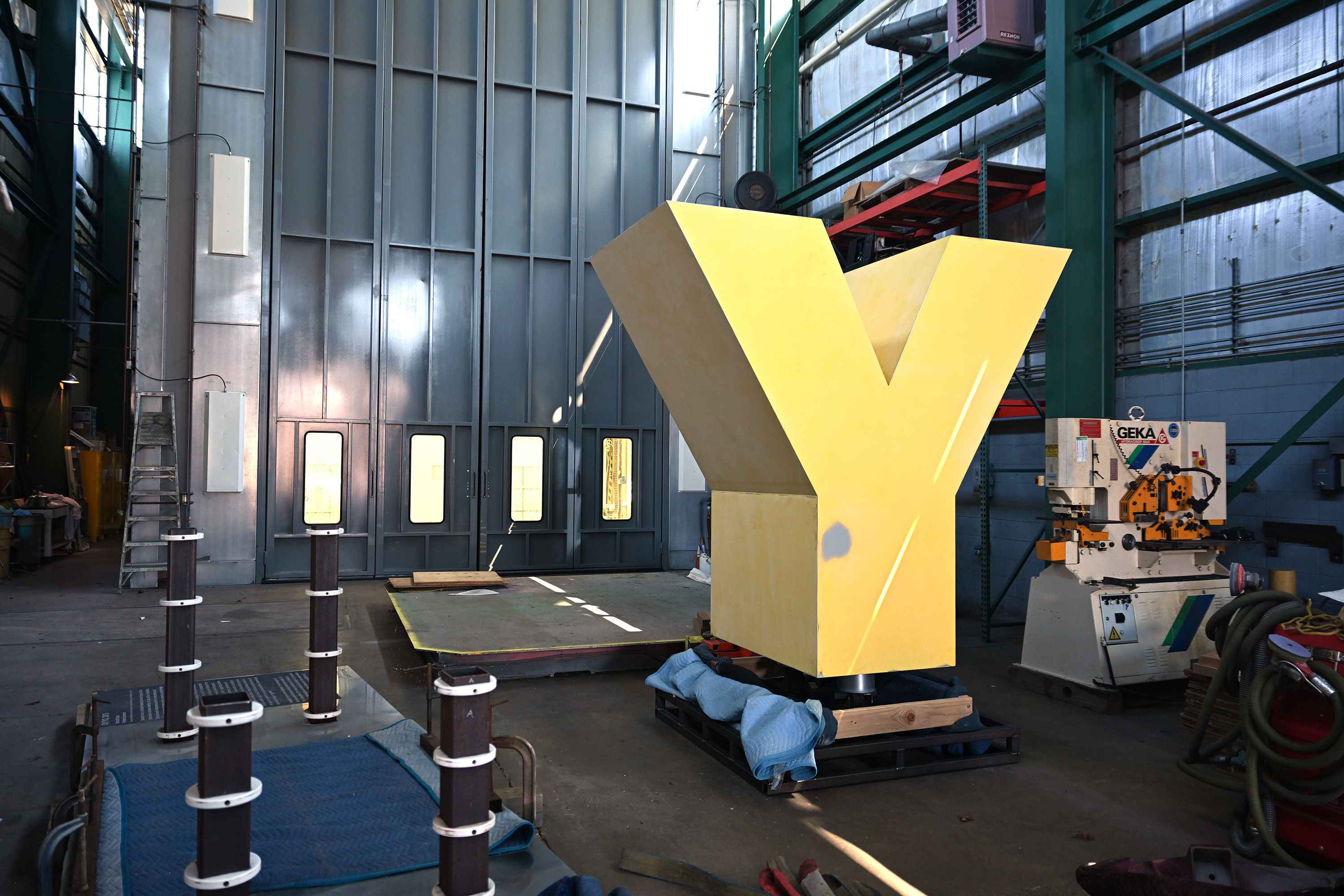
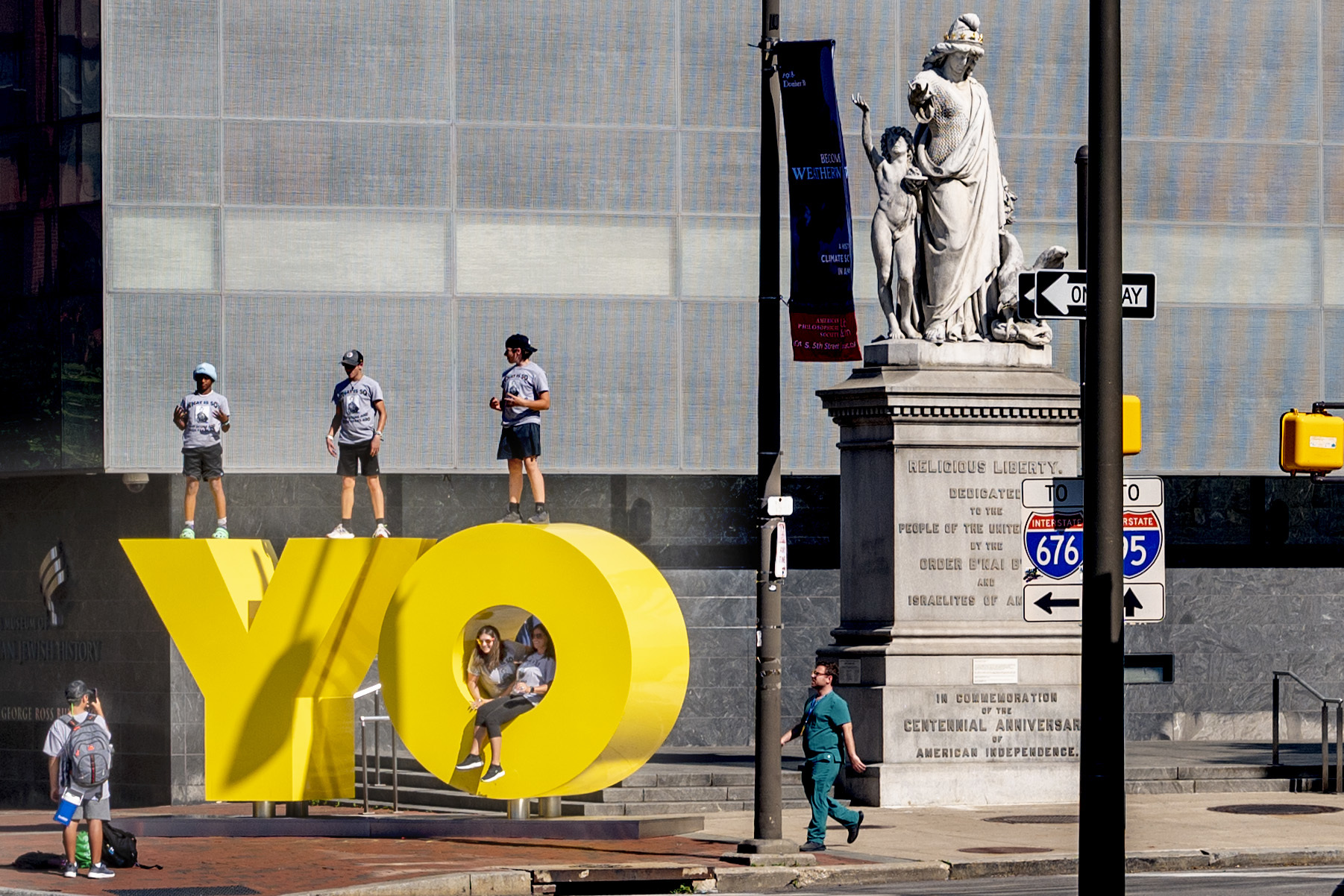
No longer at its home outside the Weitzman National Museum of American Jewish History on the corner of Fifth and Market Streets, the bright “Lamborghini yellow” sculpture that then-curator Josh Perelman called “an ongoing love letter to the city,” had gone away for some R & R — removal and refurbishment.
The “Y” waits to be refurbished at the Johnson Atelier in September.
Installed in 2022, the work by Brooklyn, N.Y.-based artist Deborah Kass quickly became one of our city’s most selfied spots — right up there with that bell just across Independence Mall.
It was only supposed to be here a year, but it stayed around (although the museum is hopeful, it’s still not officially permanent).
Students from Hillwood Middle School in Ft. Worth, Texas visit in 2022.
After years on the busy corner (and all those field-tripping middle-schoolers climbing on it) the museum scheduled a removal in May of the eight foot tall Y and O letters for freshening up, planned to coincide with the continuing construction along Market Street through Old City.
Knowing my feelings for their sculpture, the folks at the museum invited me to photograph the refurbishment.
The letters did not require extensive work, and the aluminum was treated not unlike body work on a car: removing dents, priming, painting and leaving a durable finish.
At the Johnson Atelier, a facility established by Seward Johnson in 1974 to give artists greater involvement in the production of their work, I was not allowed to photograph from any angle that showed any other art works in the background. And there were plenty (sigh), like an eight-foot tall metal hand sitting on the floor, right across from the “Y” (I had to sign an NDA).
Looking over the fence from a public area at Grounds for Sculpture in 2019. A collection of trompe-l’œil painted sculptures by Seward Johnson in the yard at the adjacent Johnson Atelier.
Adding to the lack of visual variety, the letters went into the painting booth one at a time, so I couldn’t make a picture of them in the same frame. And I could only see the workers in the booth from outside – through a couple of windows. But that is exactly the kind of photographic challenge I most enjoy.
Now, after a few months the two giant letters are both as good as new and are scheduled to be reinstalled this Saturday.
Weitzman president and CEO Dan Tadmor, looking forward to its return to their corner heading into the nation’s 250th says, “Deborah Kass’s OY/YO celebrates the spirit of a city that’s always spoken in its own voice: bold, funny, and full of heart.”
Since 1998 a black-and-white photo has appeared every Monday in staff photographer Tom Gralish’s “Scene Through the Lens” photo column in the print editions of The Inquirer’s local news section. Here are the most recent, in color:
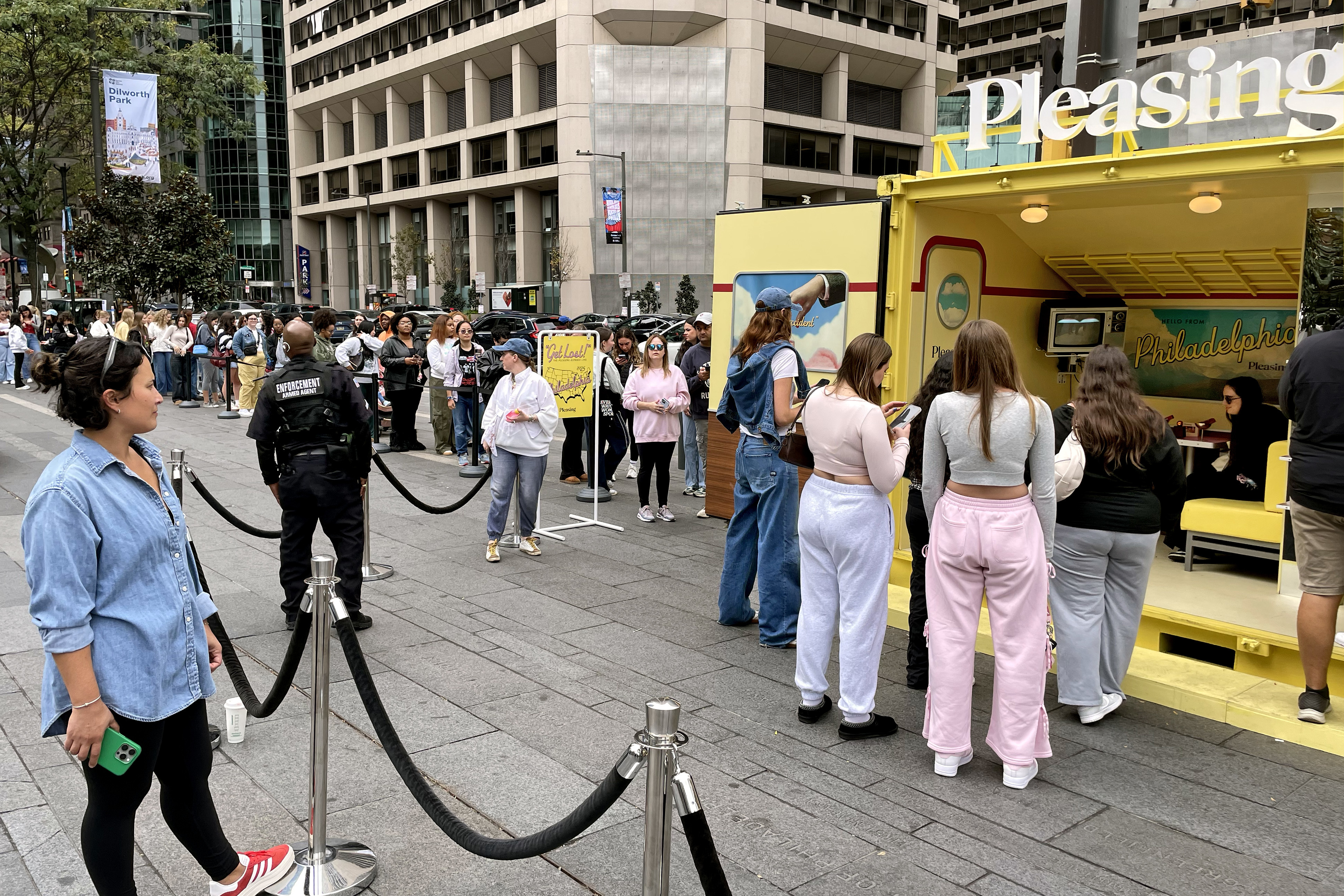
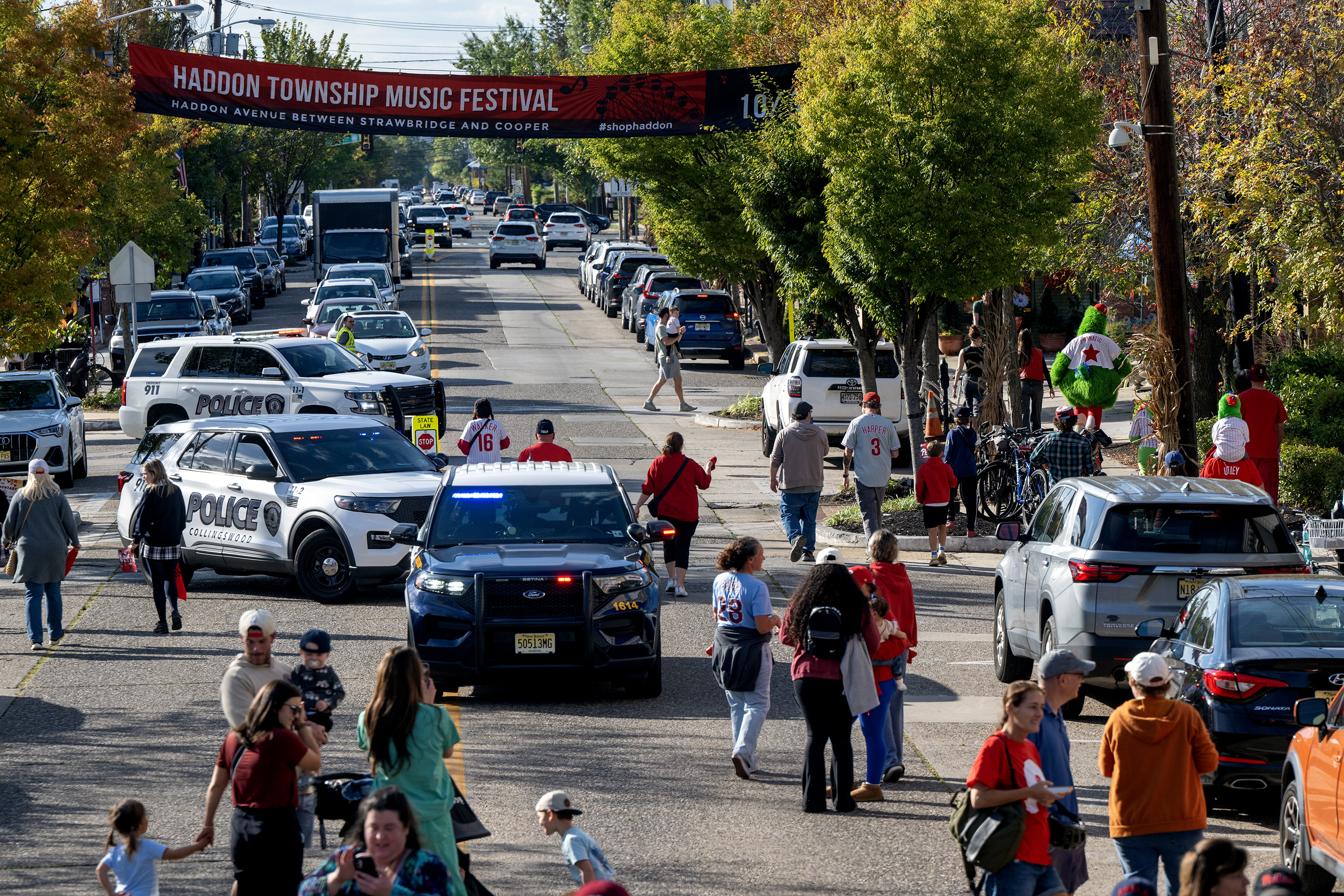
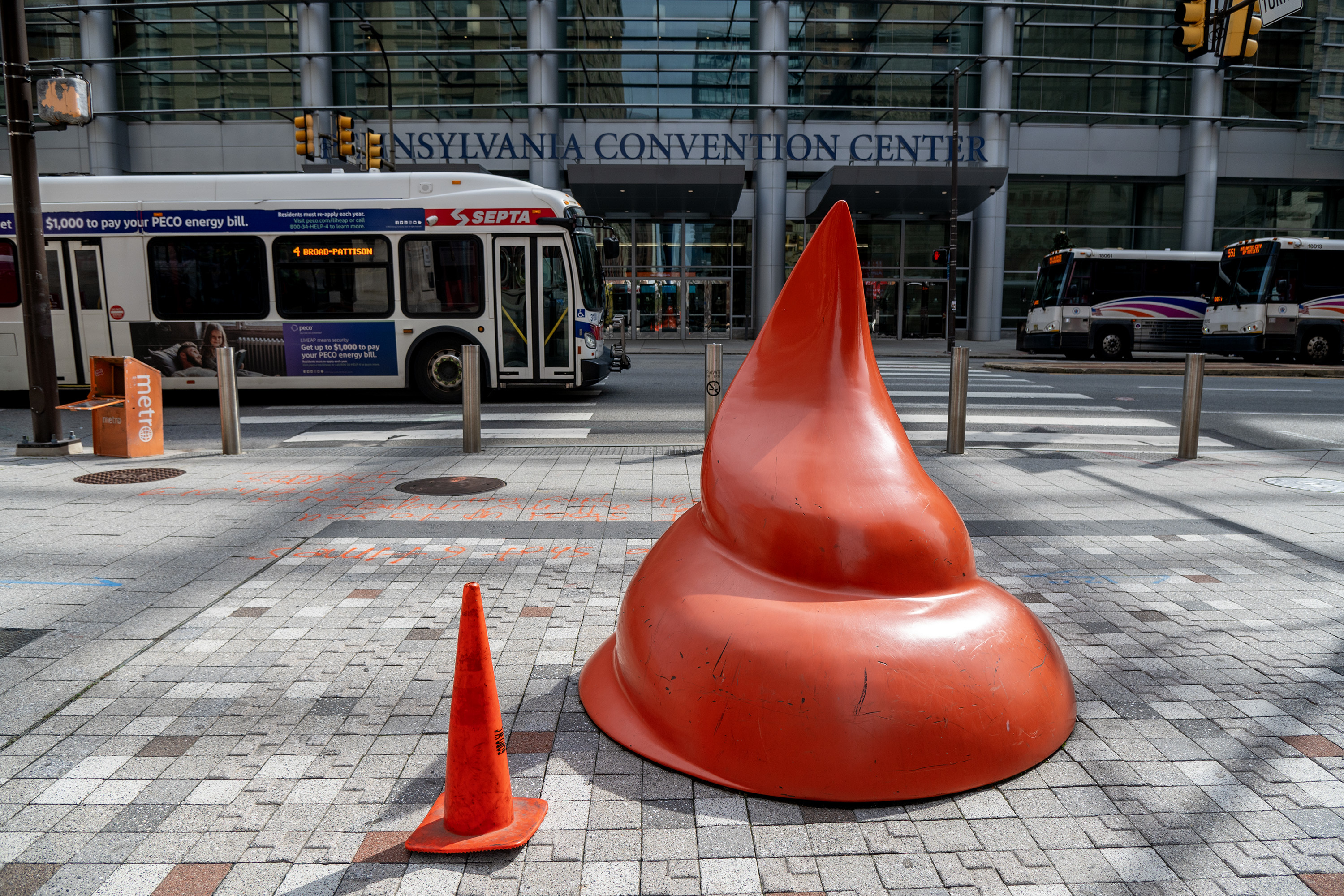
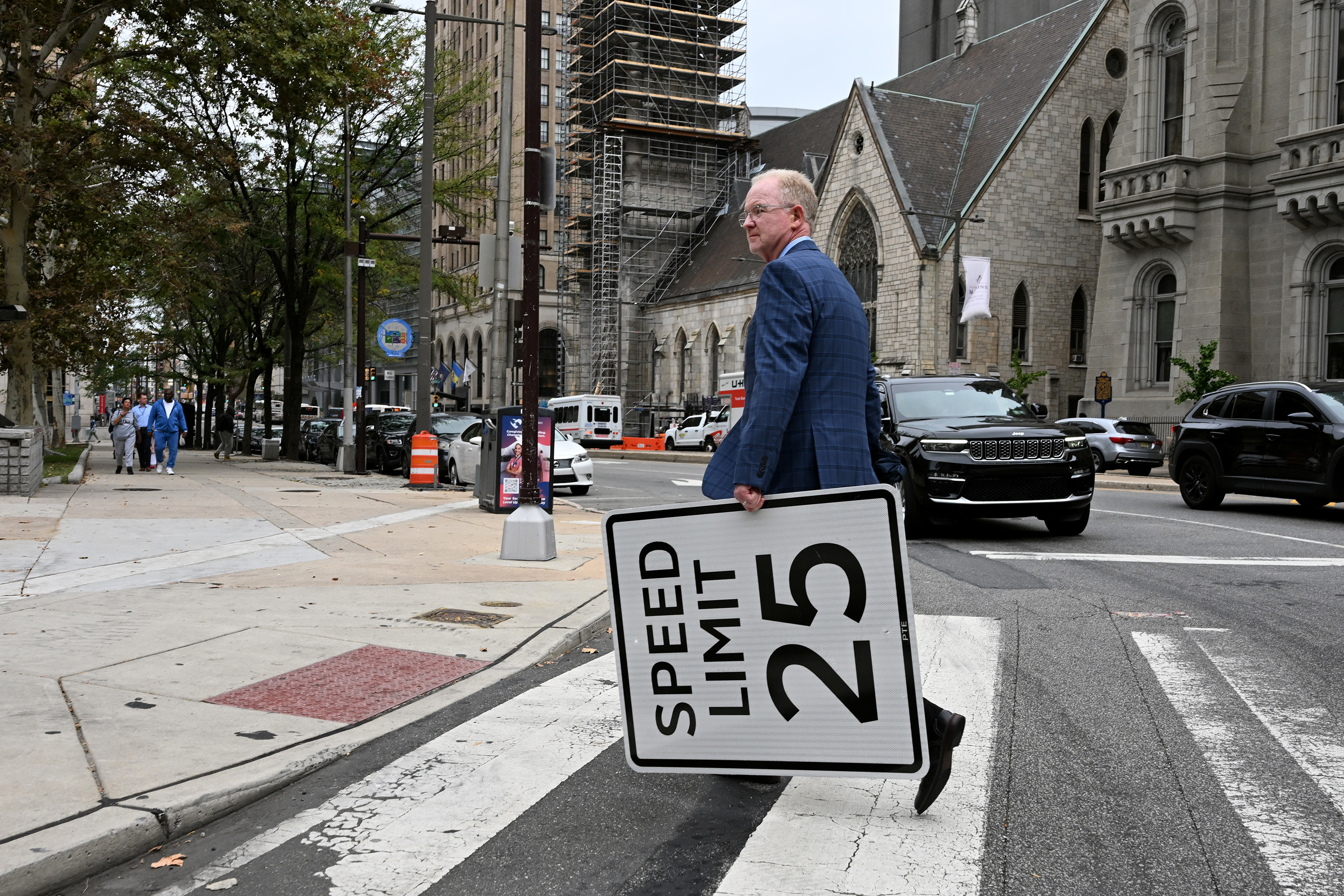
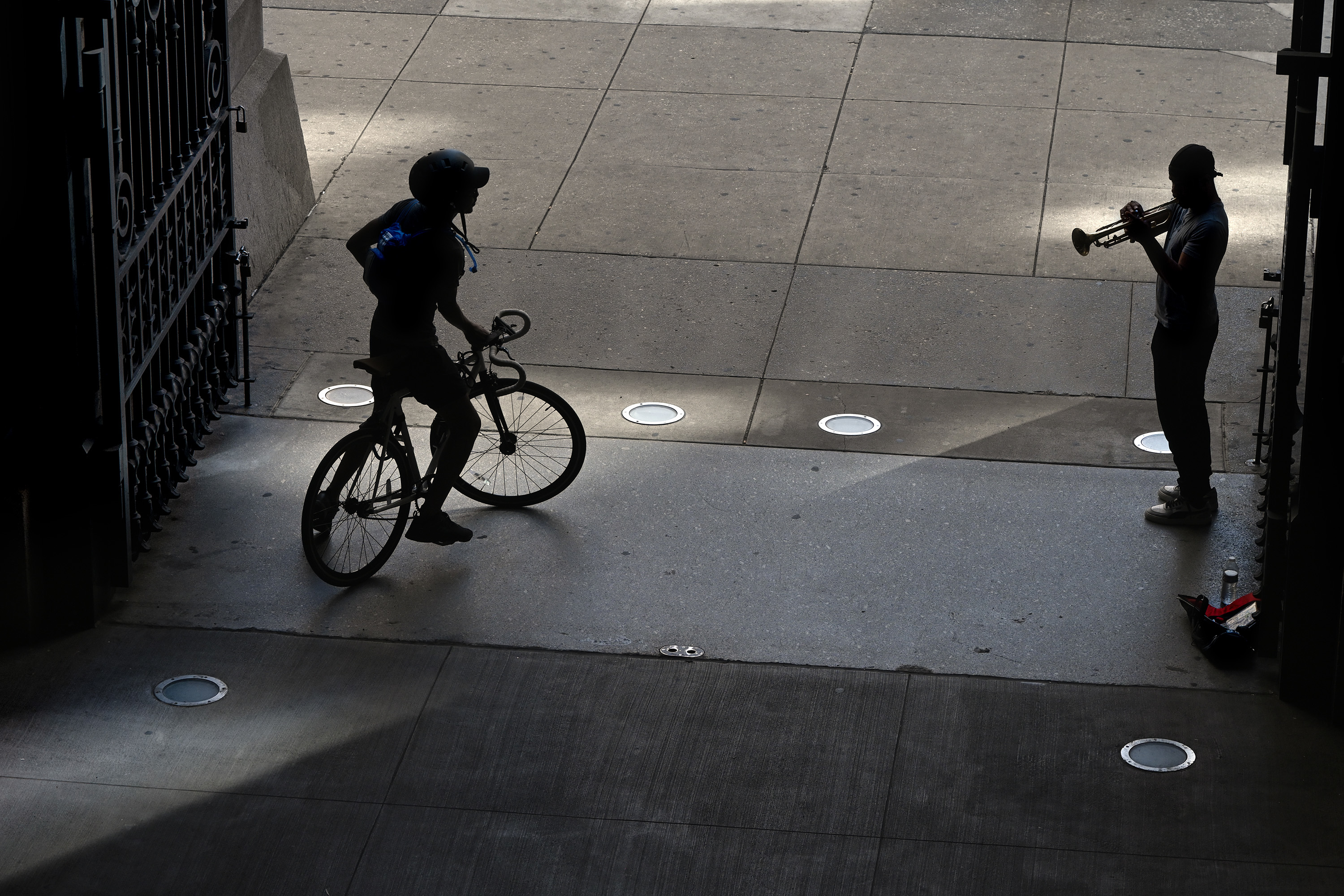
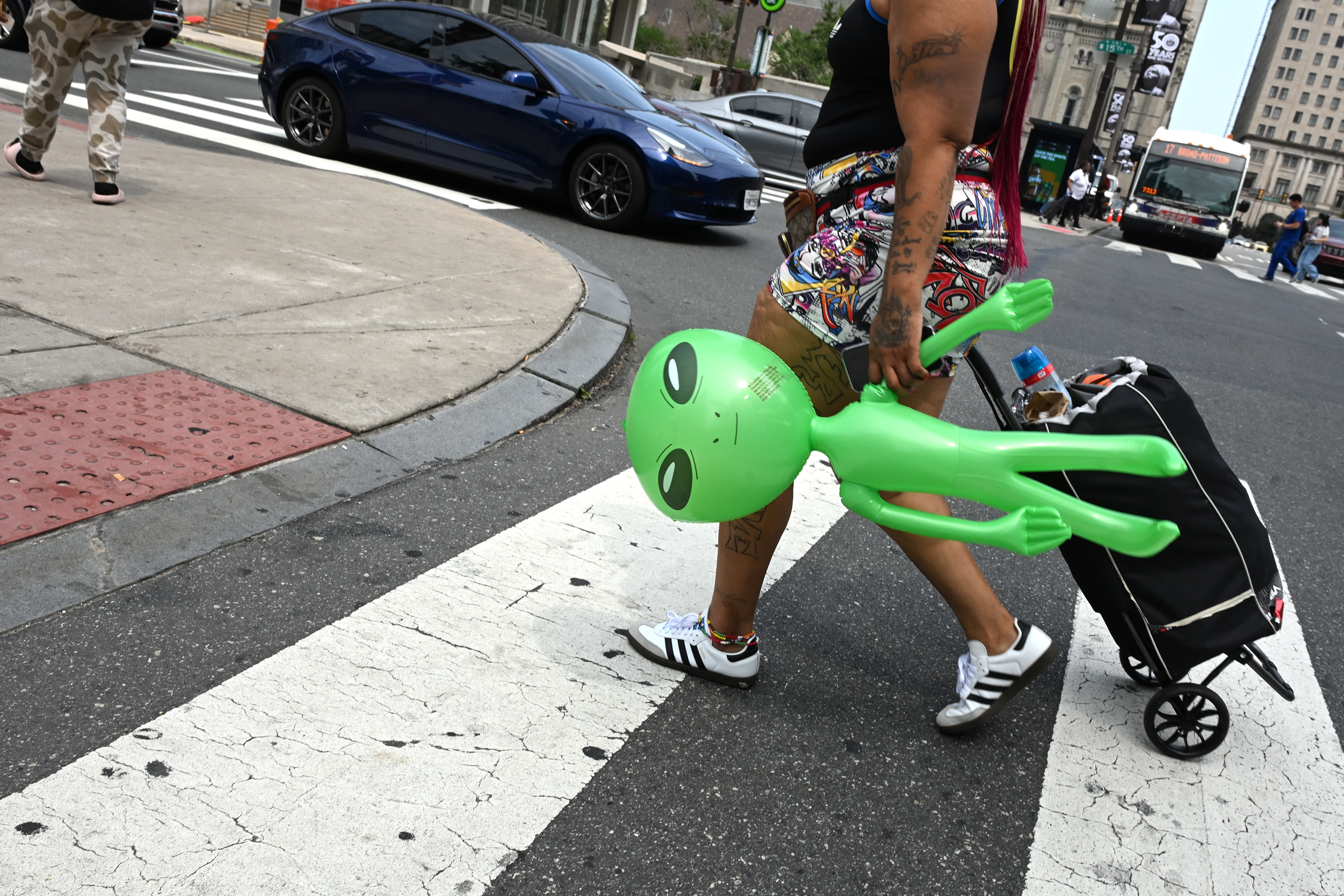
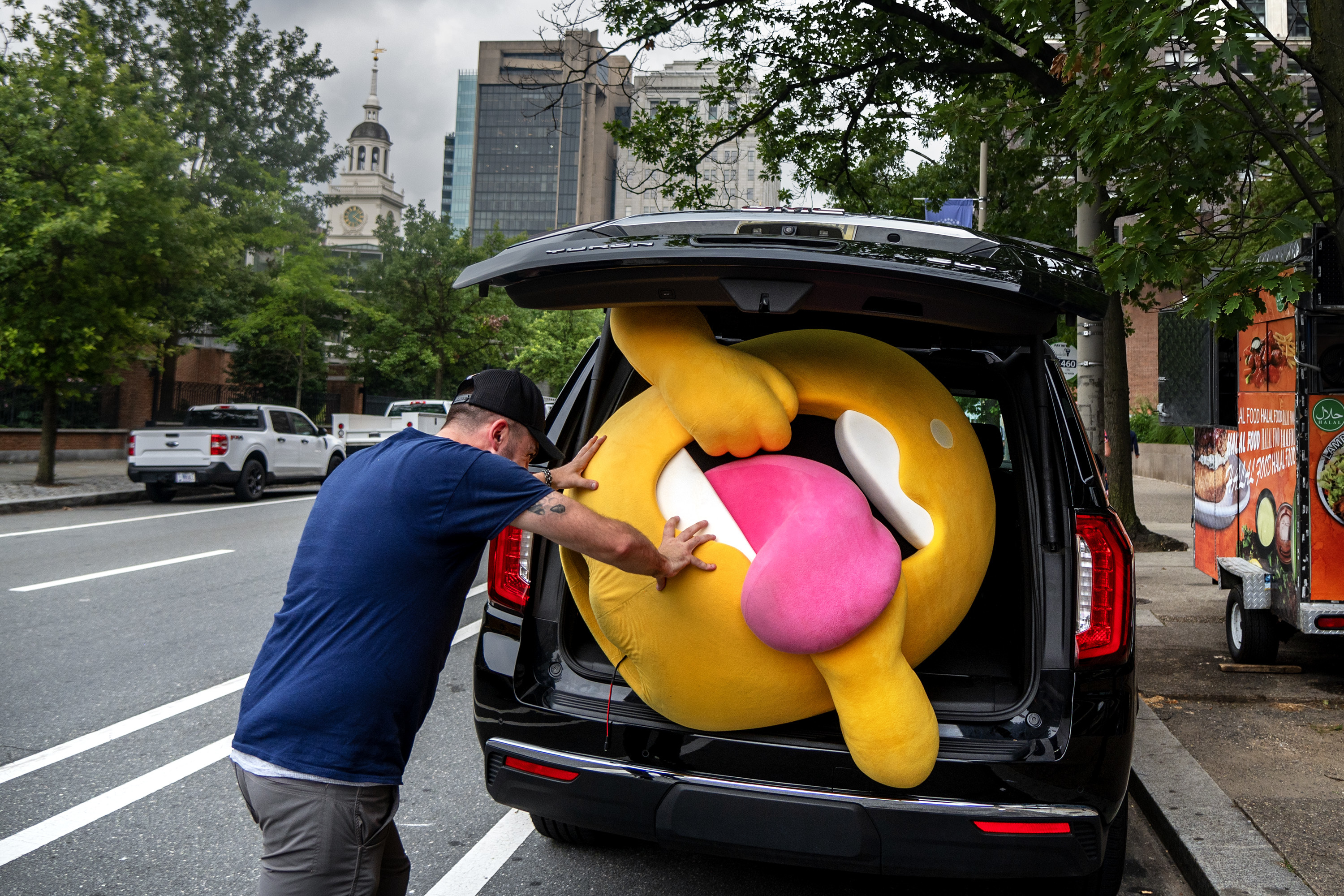
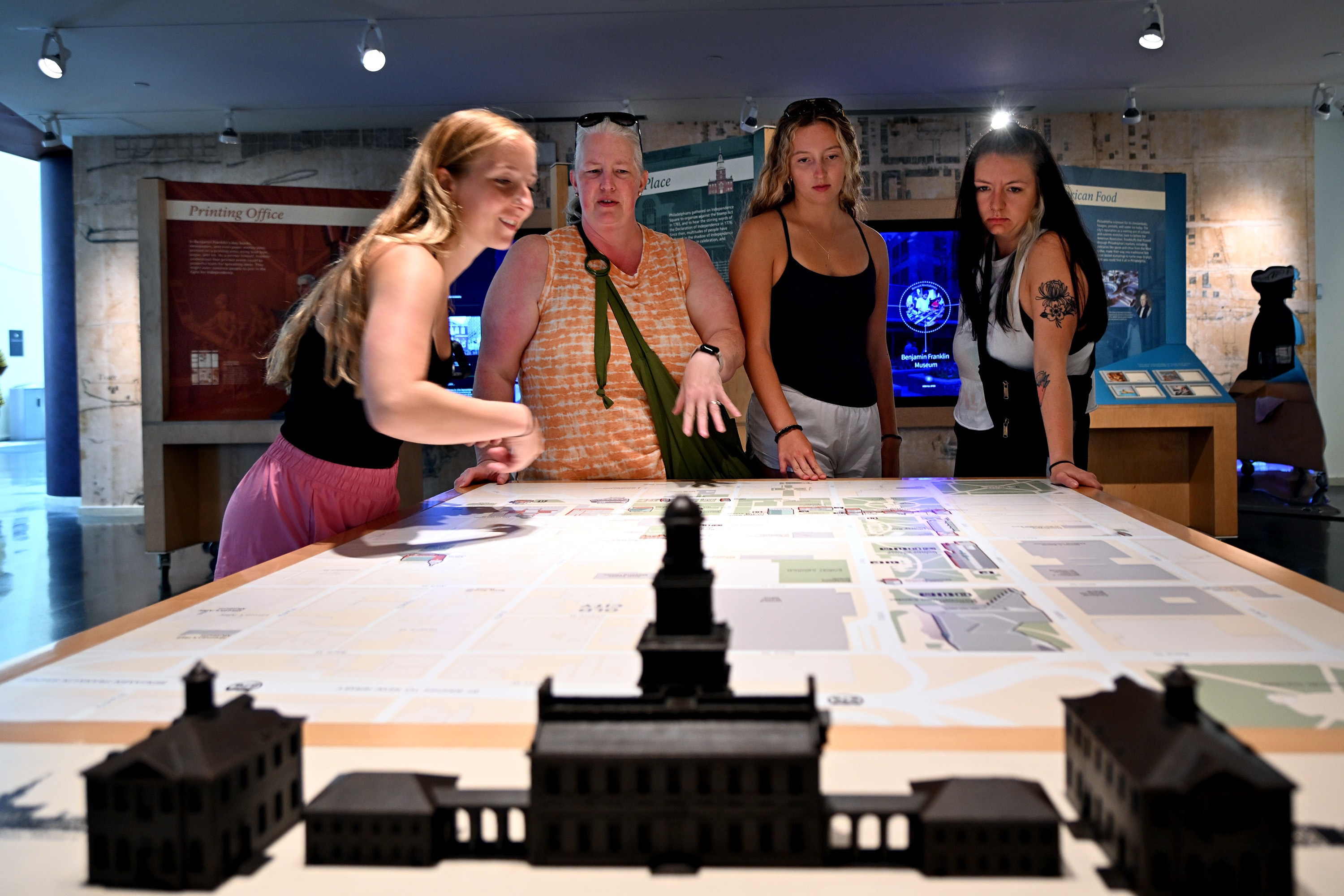
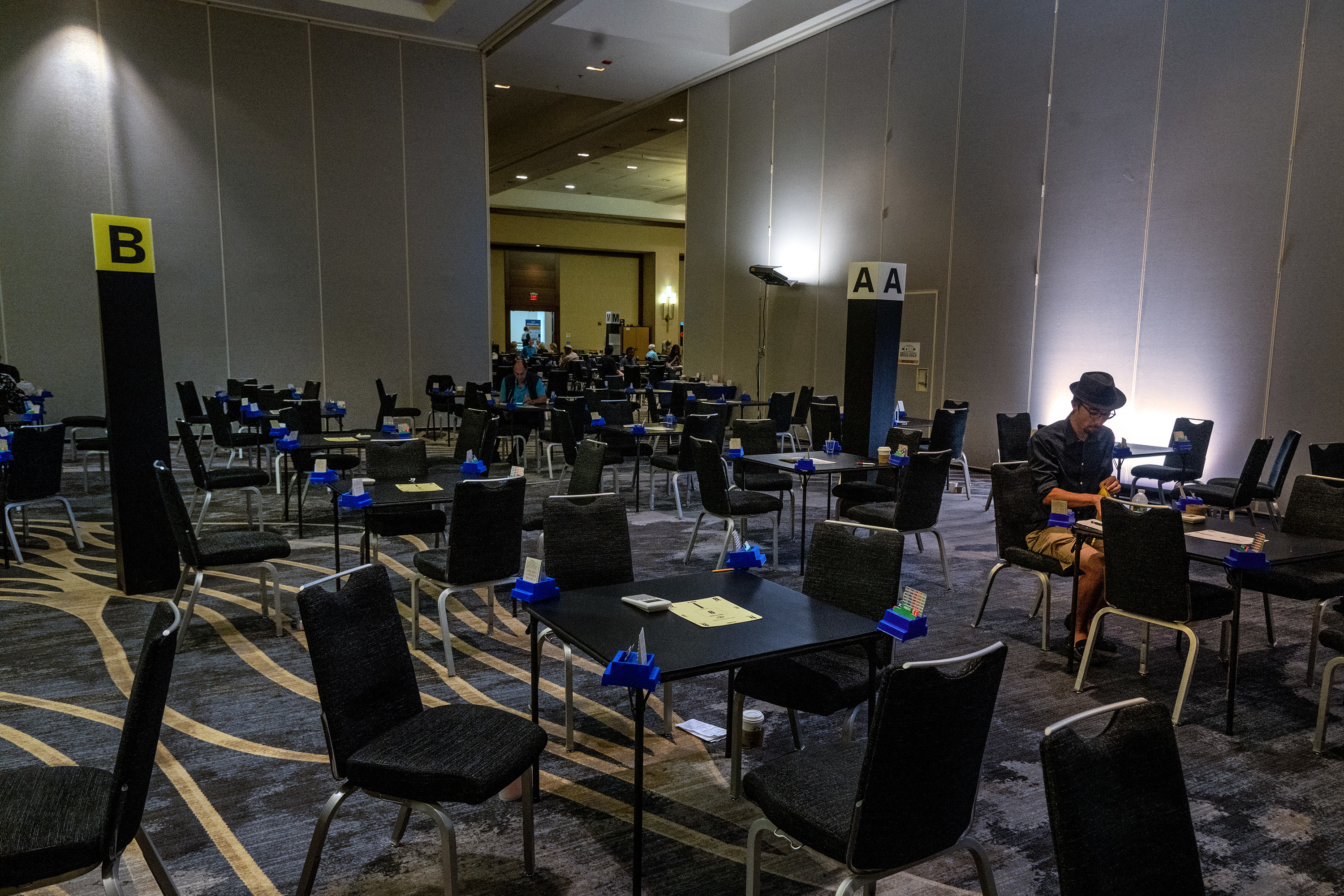
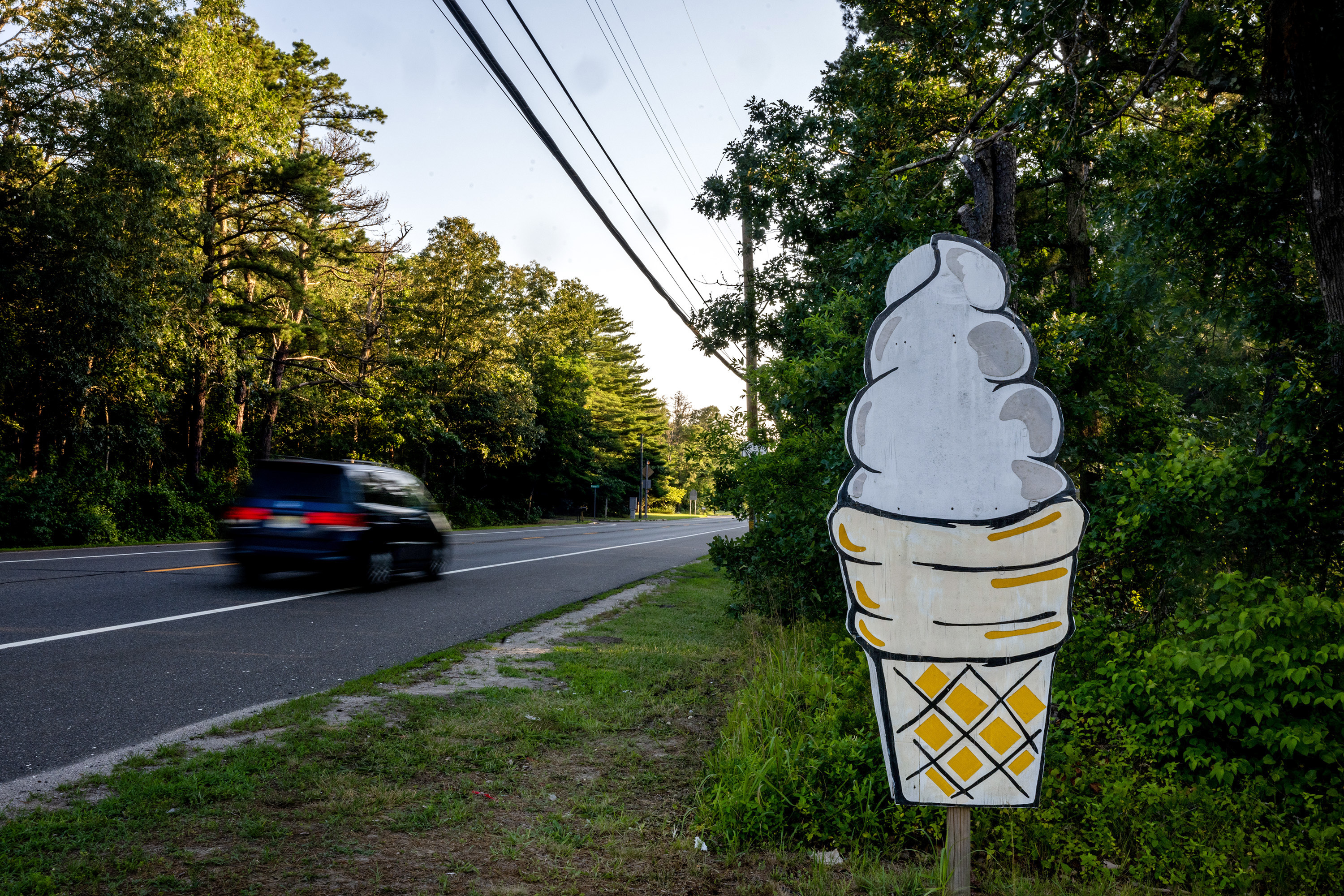
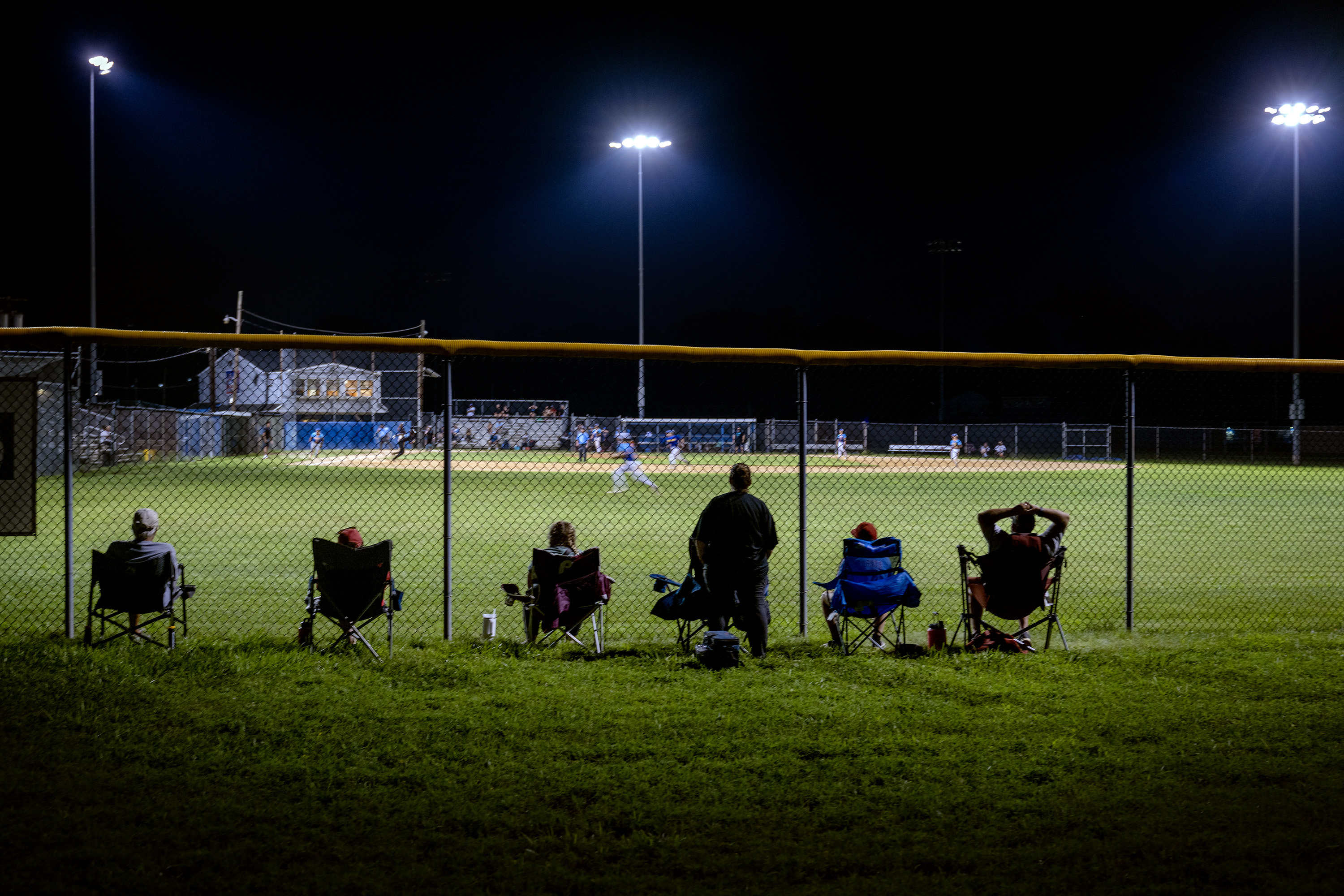
October 20, 2025:The yellow shipping container next to City Hall attracted a line of over 300 people that stretched around a corner of Dilworth Park. Bystanders wondered as they watched devotees reaching the front take their selfies inside a retro Philly diner-esque booth tableau. Followers on social media had been invited to “Climb on to immerse yourself in the worlds of Pleasing Fragrance, Big Lip, and exclusive treasures,” including a spin of the “Freebie Wheel,” for products of the unisex lifestyle brand Pleasing, created by former One Direction singer Harry Styles.October 11, 2025: Can you find the Phillie Phanatic, as he leaves a “Rally for Red October Bus Tour” stop in downtown Westmont, N.J. just before the start of the NLDS? There’s always next year and he’ll be back. The 2026 Spring Training schedule has yet to be announced by Major League Baseball, but Phillies pitchers and catchers generally first report to Clearwater, Florida in mid-February.October 6. 2025: Fluorescent orange safety cone, 28 in, Poly Ethylene. Right: Paint Torch (detail) Claes Oldenburg, 2011, Steel, Fiberglass Reinforced Plastic, Gelcoat and Polyurethane. (Gob of paint, 6 ft. Main sculpture, 51 ft.). Lenfest Plaza at the Pennsylvania Academy of the Fine Arts on North Broad Street, across from the Convention Center.September 29, 2025: A concerned resident who follows Bucks County politics, Kevin Puls records the scene before a campaign rally for State Treasurer Stacy Garrity, the GOP candidate for governor. His T-shirt is “personal clickbait” with a url to direct people to the website for The Travis Manion Foundation created to empower veterans and families of fallen heroes. The image on the shirts is of Greg Stocker, one of the hosts of Kayal and Company, “A fun and entertaining conservative spin on Politics, News, and Sports,” mornings on Talk Radio 1210 WPHT.September 22, 2025: A shadow is cast by “The Cock’s Comb,” created by Alexander “Sandy” Calder in 1960, is the first work seen by visitors arriving at Calder Gardens, the new sanctuary on the Ben Franklin Parkway. The indoor and outdoor spaces feature the mobiles, stabiles, and paintings of Calder, who was born in Philadelphia in 1898, the third generation of the family’s artistic legacy in the city.September 15, 2025: Department of Streets Director of Operations Thomas Buck leaves City Hall following a news conference marking the activation of Automated Speed Enforcement (ASE) cameras on the Broad Street corridor – one the city’s busiest and most dangerous roads. The speed limit on the street, also named PA Route 611, is 25 mph.September 8, 2025: Middle schoolers carry a boat to the water during their first outing in a learn-to-row program with the Cooper Junior Rowing Club, at the Camden County Boathouse on the Cooper River in Pennsauken. September 1, 2025: Trumpet player Rome Leone busks at City Hall’s Easr Portal. The Philadelphia native plays many instruments, including violin and piano, which he started playing when he was 3 years old. He tells those who stop to talk that his grandfather played with Billie Holiday, Duke Ellington, Nina Simone, and Dizzy Gillespie. August 25, 2025: Bicycling along on East Market Street.August 18, 2025: Just passing through Center City; another extraterrestrial among us. August 11, 2025: Chris Brown stows away Tongue, the mascot for a new hard iced tea brand, after wearing the lemon costume on a marketing stroll through the Historic District. Trenton-based Crooked Tea is a zero-sugar alcoholic tea brand founded by the creator of Bai, the antioxidant-infused coconut-flavored water, and launched in April with former Eagles defensive end Brandon Graham as a partner.August 4,2025: Shanna Chandler and her daughters figure out their plans for a morning spent in Independence National Historical Park on the map in the Independence Visitor Center. The women (from left) Lora, 20; Shanna; Lenna, 17; and Indigo, 29, were stopping on their way home to Richmond, Virginia after vacationing in Maine. The last time they were all in Philadelphia Shanna was pregnant with Lenna. July 28, 2025: Louis-Amaury Beauchet, a professional bridge player from Brittany, France, takes a break between game sessions in an empty ballroom during the North American Bridge Championships at the Center City Marriott with some 4000 people in town over week of the tournament. The American Contract Bridge League is hosting the week of meetings and tournaments with bridge players from all over the world. The ACBL is the largest bridge organization in North America, with over 120,000 members (down from around 165,000 before COVID). Bridge draws players of all ages and walks of life – fictional characters James Bond and Snoopy both played as do billionaires Bill Gates and Warren Buffett (who sometimes play as partners).July 21, 2015: Signage for the Kustard Korner in Egg Harbor City, on the way to the Jersey Shore. President Ronald Reagan designated July as National Ice Cream Month and the third Sunday of the month.July 14, 2025: Fans watch a game at the Maple Shade Babe Ruth Field, part of the 20th Annual Franny Friel Summer Classic, on a cool(er) night with a refreshing breeze, the weekend before the MLB All-Star Game (with Kyle Schwarber the lone Phillies representative).
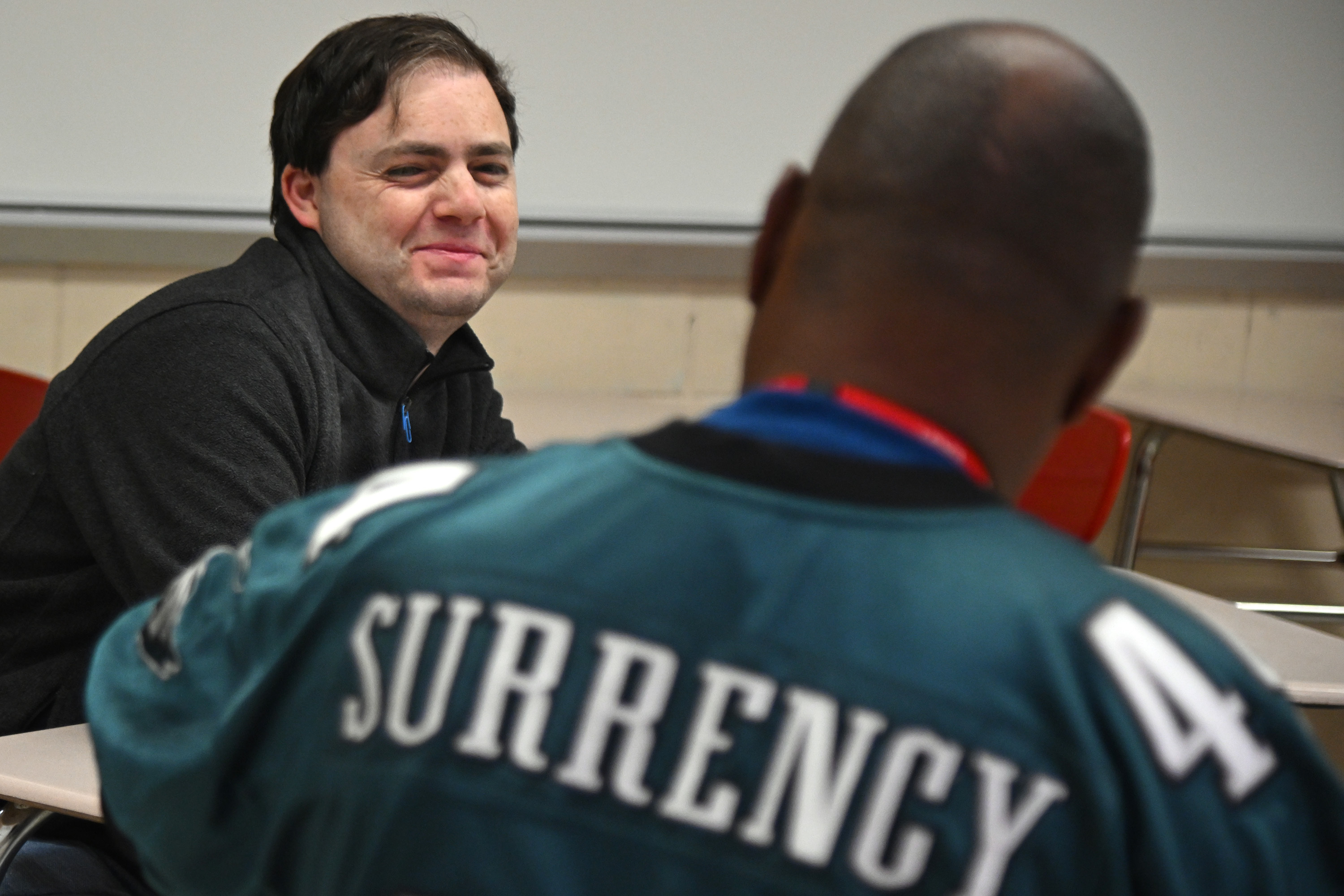
When special education teacher Mike Surrency decided to use football to connect with sophomore Dave Siegel, there was only one problem.
Surrency is a big-time Philadelphia Eagles fan. Siegel is a die-hard New York Giants fan.
Despite cheering for rival teams, the two forged a friendship that began in 2009 in history class at Cherry Hill High School East and has expanded beyond school and football.
“I can’t get him to start liking the Eagles. I tried,” Surrency said. “He loves the Giants.”
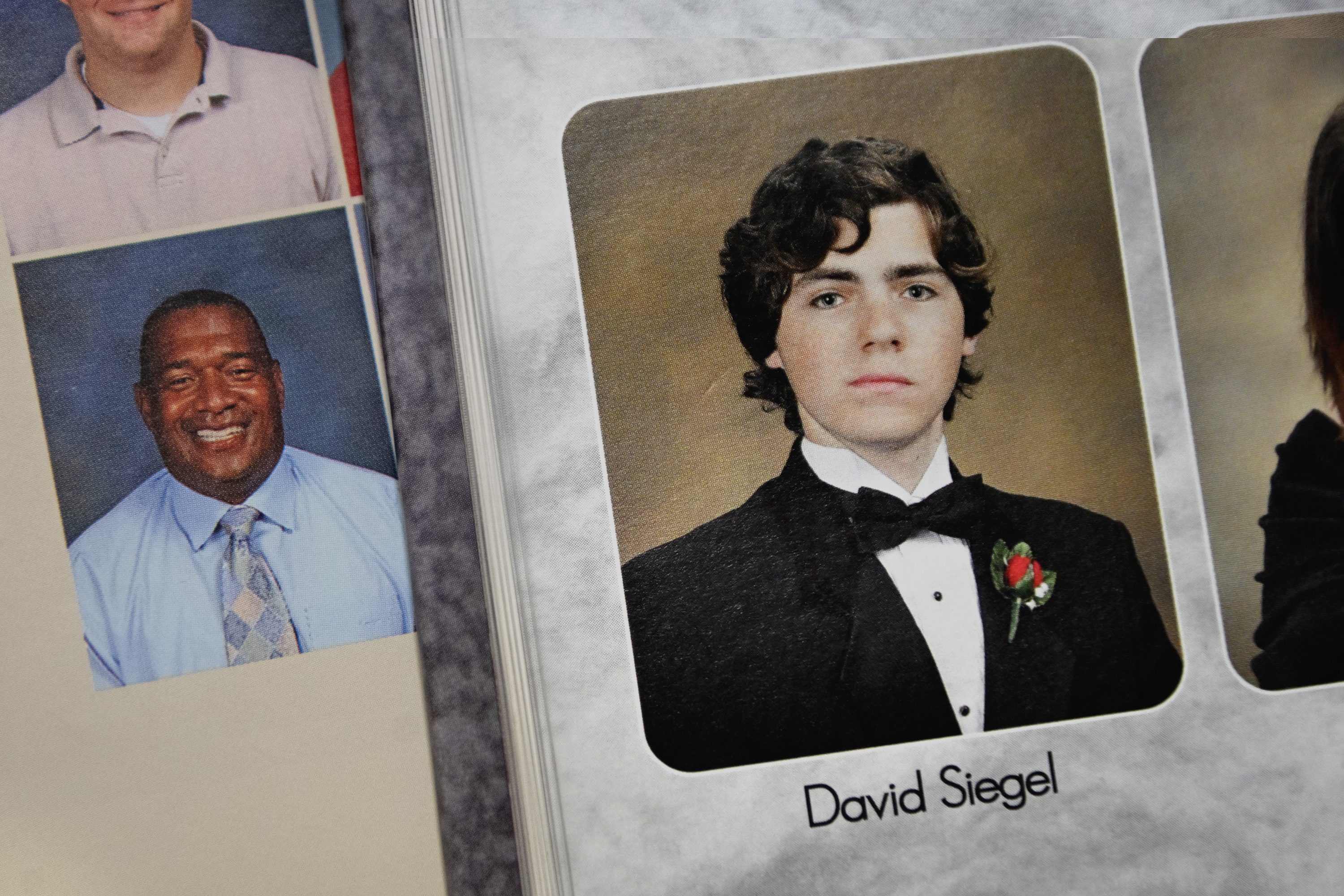
Senior class yearbook photo of Cherry Hill High School East Class of 2010 student and New York Giants fan David Siegel (right) next to page with teacher and Eagles fan Mike Surrency. The two developed a special bond while supporting rival football teams and began attending games together when the NFC teams played in Philadelphia. They will be at the Linc Sunday for the second game between the Eagles and Giants.
A former high school football player and coach, Surrency has been an Eagles season ticket holder since 1990. Siegel took notice when Surrency wore an Eagles jersey to school on Fridays during football season.
Surrency thought football would help him bond with hisstudents. As the inclusion teacher, Surrency helped ensure all students were integrated into the classroom.
“By far, the best teacher I ever had,” Siegel said.
One day, Siegel, then 15, asked his teacher to take him to an Eagles-Giants game at Lincoln Financial Field. (The Eagles won, 40-17.) That began a tradition that continued long after Siegel graduated in 2011.
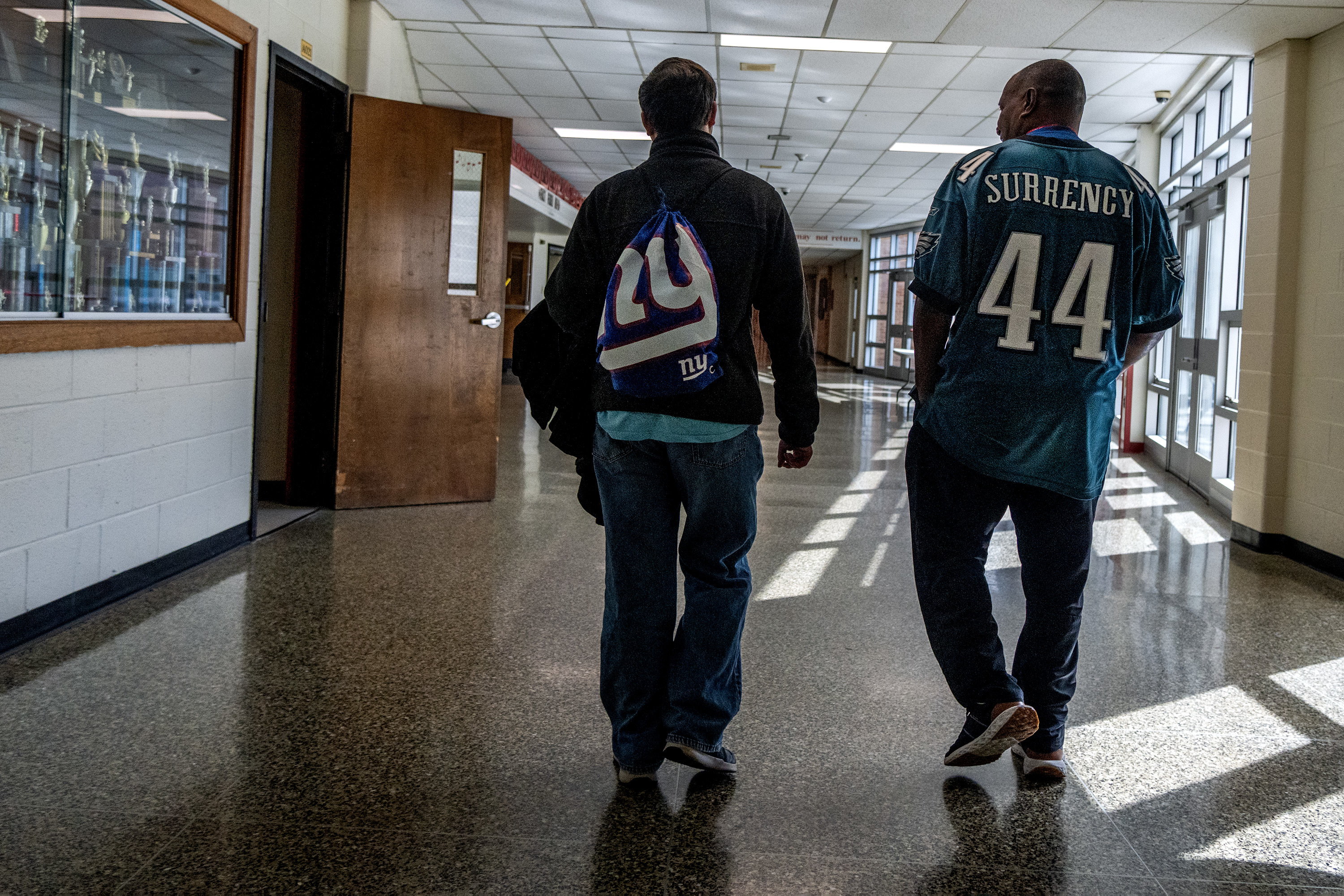
Cherry Hill High School East class of 2010 graduate and New York Giants fan David Siegel visits teacher and Eagles fan Mike Surrency at the school this week. The two developed a special bond while supporting rival football teams and began attending games together when the NFC teams played in Philadelphia.
‘He’ll protect me’
There will be plenty of traditions and trash-talking before Sunday’s game. The two plan to stop for hoagies on the way to the stadium.
Surrency plans to wear his favorite Eagles jersey. Siegel, 33, usually doesn’t wear Giants fan gear to a game, and especially not this time.
“As a Giants fan, I’m predicting an Eagles blowout,” Siegel said matter-of-factly. “The Eagles are at home and they want revenge.” (The Giants last won in Philadelphia in October 2013, 15-7).
Surrency said his fellowEagles fans in Section 228 have welcomed Siegel. At games leading up to the Giants showdown, they often ask if Siegel will be attending the big contest against their rival team.
“Of course he’s coming. This is his seat,” Surrency responds.
Siegel said he has no worries about possible backlash from zealous Eagles fans. He plans to wear a 76ers jersey — a favorite team for both him and Surrency.
“I’m not afraid of the fans,” Siegel said. “I know I have Surrency. He’ll protect me.”
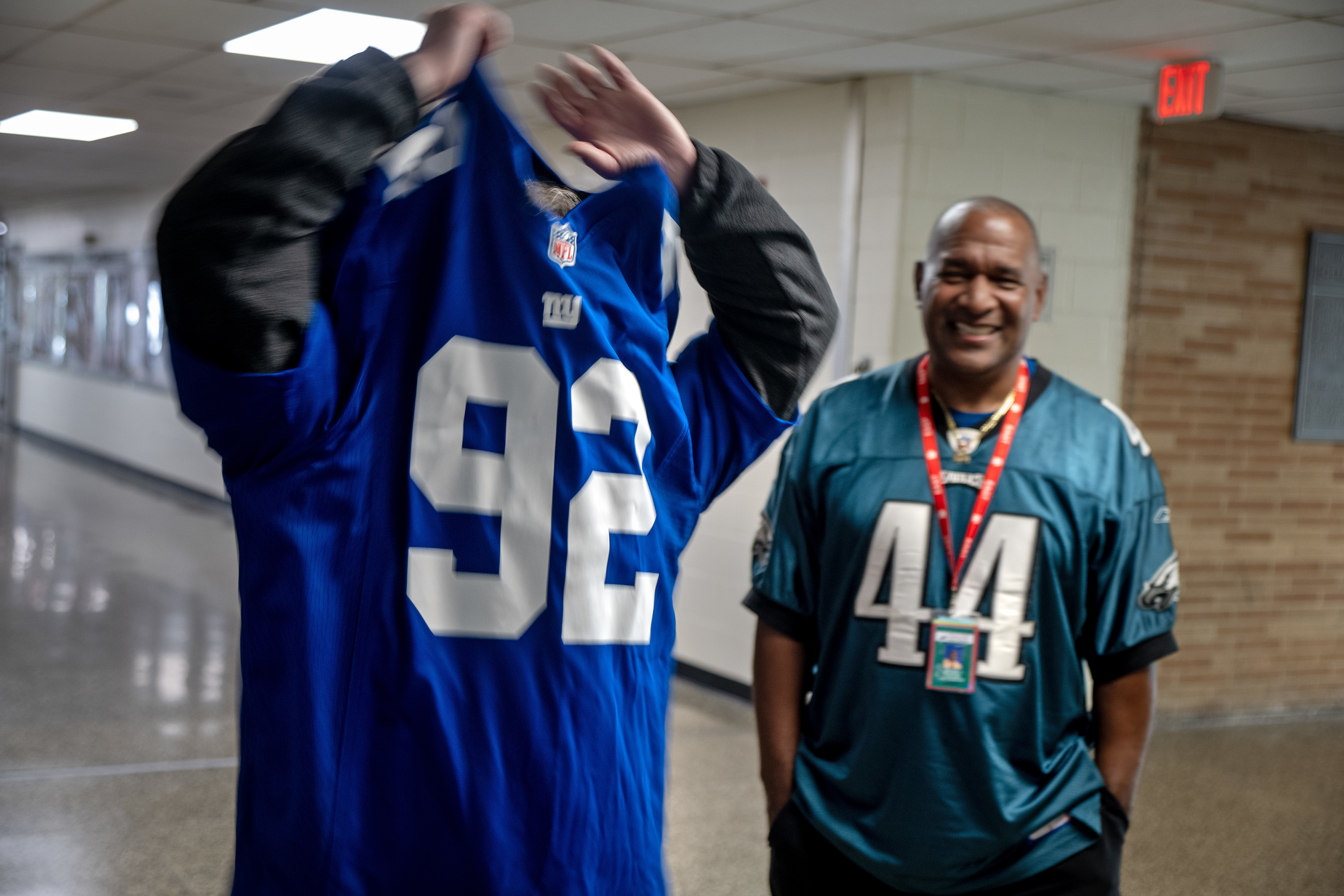
Cherry Hill High School East Class of 2010 student and New York Giants fan David Siegel quickly removes his jersey after posing for a photo with teacher and Eagles fan Mike Surrency during a visit at the school Monday. Seigel says he “never wears the apparel after they lose,” which they did the day before to the Denver Broncos.
Siegel can easily rattle off statistics about the Eagles-Giants rivalry. He has attended 14 games with Surrency; the Eagles won 12 of those.
The two occasionally travel up the New Jersey Turnpike to attend Eagles-Giants games at MetLife stadium in East Rutherford. They also attend baseball and basketball games.
Cathleen Lynch, a counselor at East, began sharing their story when she learned recently about the special bond between Surrency and his former student.
“It gave me goose bumps,” Lynch said. “It’s amazing that they’re still doing this every year.”
During a recent visit at East, Siegel and Surrency traded jabs about their teams. Surrency wore a custom-made Eagles jersey with his last name and No. 44 — from his high school football-playing days. Siegel wore former Giants defensive end Michael Strahan’s No. 92.
“I always tell people that Surrency is my mentor. I don’t see him as a teacher.”
“This thing we have is definitely bigger than football,” said David Siegel of his former Cherry Hill High School East teacher Mike Surrency. “It’s a blessing to have someone like him in my life.”
‘Bigger than football’
No matter the outcome of an Eagles-Giants game, Siegel and Surrency have a rule that they follow religiously on the ride home afterward: no trash-talking about who won.
“This thing we have is definitely bigger than football,” Siegel said. “It’s a blessing to have someone like him in my life.”
Siegel met Surrency in 2007 while taking summer classes. The two became close, talking about sports. They have opposing baseball teams, too. Siegel is a Mets fan, Surrency a Phillies fan.
Two years later, Siegel was pleasantly surprised to land in Surrency’s U.S. history I class. Surrency took notes provided to all students that helped him pass all four marking periods with two A’s and two B’s and a final grade of a B, Siegel said.
A former Sony sales rep, Surrency, 62, became a teacher when the company downsized. He has been at East for his entire 22-year teaching career.
“It was the best thing to happen,” Surrency said.
Surrency, the father of an adult daughter and a grandfather, said he has invited other students to Eagles games. Siegel, by far, has attended the most games with him.
Over the years, their relationship has changed from teacher-student, he said. Siegel, a recreation therapist at a nursing home, often calls Surrency for advice.
“I just want to make sure he’s fine in the outside world. I’m there if he needs me, no matter what,” Surrency said.
Philly’s favorite running path is at it again. A “chasm”-sized sinkhole has swallowed part of the Schuylkill River Trail between Race and JFK — big enough, officials say, that you could almost park a car in it. (“Almost” feels like a challenge.)
The Schuylkill Banks crew fenced it off and called in Parks & Rec, the Water Department, and engineers — basically the full Avengers lineup of Philly infrastructure — to figure out what caused the hole and how to patch it before joggers start treating it like a new obstacle course.
The Schuylkill Trail might be cursed. Every year it’s something — floods, fallen trees, now this. Until it’s fixed, cyclists and runners are being detoured, which in Philly terms means “good luck.”
In Task, Robbie (Tom Pelphrey) uses Sixpenny Creek Quarry as a meeting place.
Delco goes “rural”…at least according to the NYT — C-
Somehow, the New York Times looked at Delco — home of Villanova, Swarthmore, and approximately 47 Wawas — and decided, “Ah yes, rural America.” Because nothing says “farm country” like the Blue Route at rush hour and a Target every three miles.
To be fair, Task creator Brad Ingelsby does paint parts of Delco as working-class, gritty, and hollowed-out, which, yeah, that’s real. But “rural”? Come on. The county has fewer farms than vape shops. The only livestock most Delco residents see are on a roast pork sandwich.
Still, the show does get something right: that weird in-between space so many towns around Philly live in — not city, not country, just post-industrial limbo where people are hustling to hang on. It’s not the backwoods. It’s just… us. Blue-collar, blunt, and way too online to ever be called rural again.
Philly’s 52-week flex — A-
For America’s 250th, Philly’s not settling for a parade — we’re throwing a 52-week-long brag about how we basically invented everything. Every week in 2026 will spotlight something that started here: the first hospital, zoo, flag, computer, hot-air balloon, even the penitentiary (because nothing says “city of firsts” like also being the first to lock people up).
It’s peak Philly — proud, weird, and wildly specific. Some of these firsts are legitimately world-changing (first medical school, first abolitionist society), while others are pure “only in Philly” energy (first Slinky, first ice-cream soda). The lineup’s got range. We went from inventing democracy to inventing dessert.
The ‘Six-Seven’ confusion — C-
Philly might’ve given the world democracy, the cheesesteak, and now… “six-seven,” a phrase that means absolutely nothing and somehow everything to a generation of teens who can’t stop saying it. It possibly started with Kensington rapper Skrilla’s song “Doot Doot (6 7)” and spiraled into TikToks, classrooms, and apparently South Park.
It’s not code, it’s not deep — it’s just two numbers. Maybe it’s a street, maybe it’s a mindset, maybe it’s proof that the internet’s broken our brains. Teachers hate it, parents are confused, and kids are out here saying “six-seven” like it’s a personality trait.
Still, if you hear it echoing down Broad Street, just nod and say it back. Six-seven. Whatever that means.
Philly drama doesn’t get juicier than this. Someone plastered a flyer around Fishtown calling out Two Robbers for serving a sad, gray burger — complete with a date stamp and the caption, “This is literally the burger that came out.”Reddit, of course, lost its mind.
Comments ranged from pure joy (“I f***in love love love this level of petty”) to the perfectly Philly (“This is what you get for ordering a burger at a craft seltzeria”). One guy even chimed in with, “They got robbed — by two robbers.” Another declared the poster was “doing the Lord’s work.”
But plot twist: the burger wasn’t theirs. The photo was actually from 9GAG, posted seven years ago under the title “Nasty Burger.” The owner jumped into Reddit like a man defending his honor, posting receipts side-by-side — the fake, the meme, and their actual burger, which, to be fair, looks great — and calling the whole stunt “diabolical.”
Now the thread’s full of conspiracy theories that the whole thing was a genius marketing stunt (“If it is, it worked on me”) and locals promising to stop by just to try the burger. So whether this was sabotage, performance art, or Philly’s pettiest PR move — Burgergate proves one thing: in this town, we don’t do calm, we do chaos. And we’ll probably Yelp about it after.
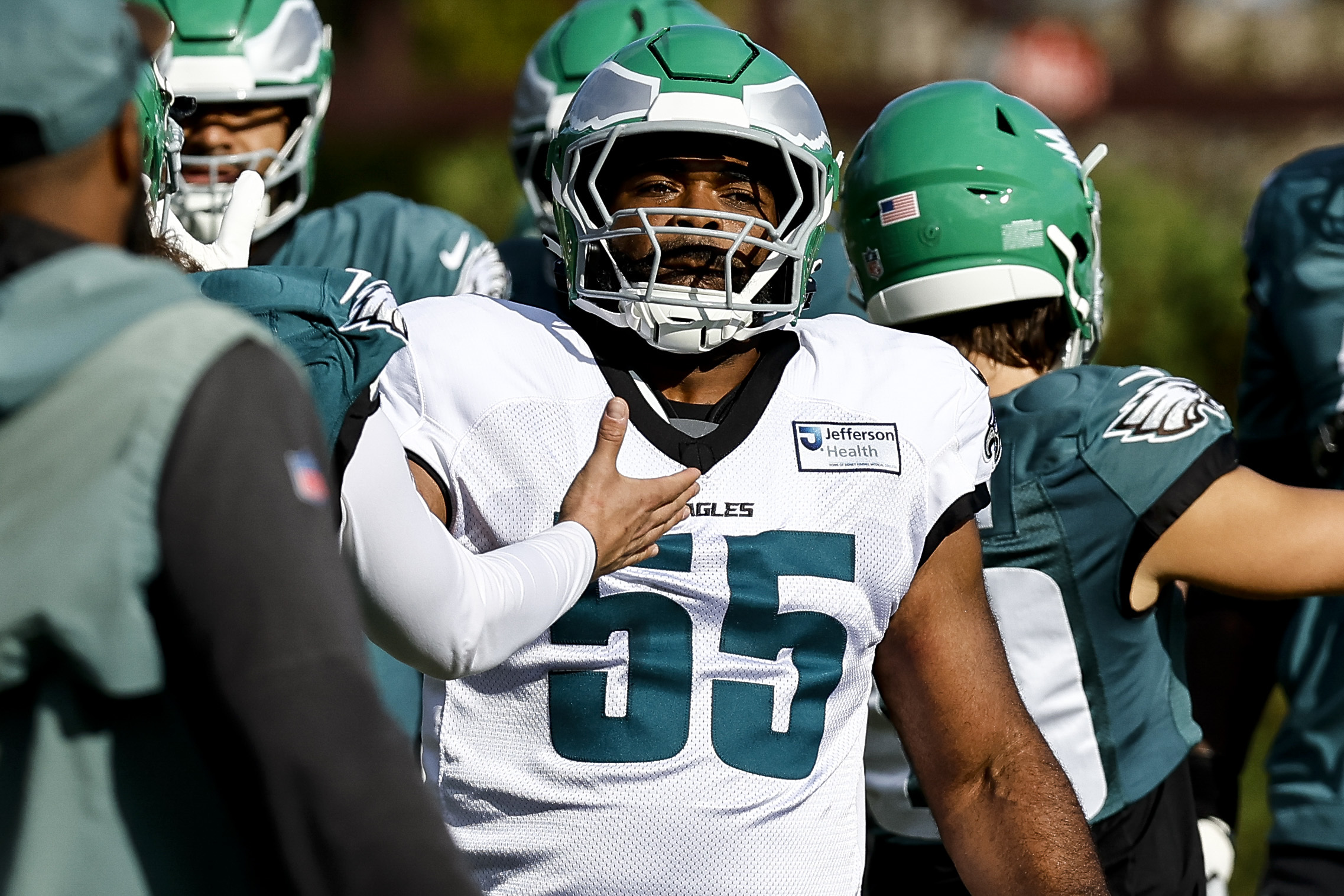
Philadelphia Eagles defensive end Brandon Graham during practice at the NovaCare Complex on Wednesday, Oct. 22, 2025 in Philadelphia.
Brandon Graham’s encore — A+
Philly’s loudest legend just couldn’t stay away. After seven whole months of “retirement,” Brandon Graham is back in midnight green for his 16th season, saying he’s still got “juice left.” The Eagles desperately needed both sacks and smiles, and no one brings either like BG.
At 37, rookies call him “the OG,” veterans call him the engine, and everyone calls him the guy who won’t stop talking in practice. “You thought you wasn’t gonna have to deal with me?” he said on his podcast. That’s the guy who strip-sacked Brady — not a man easing into retirement.
And honestly? The timing couldn’t be better. Missed tackles, blown assignments, no spark — the Eagles’ defense has been ugly. BG can’t fix everything, but he can sure as hell remind the Birds what fight looks like.
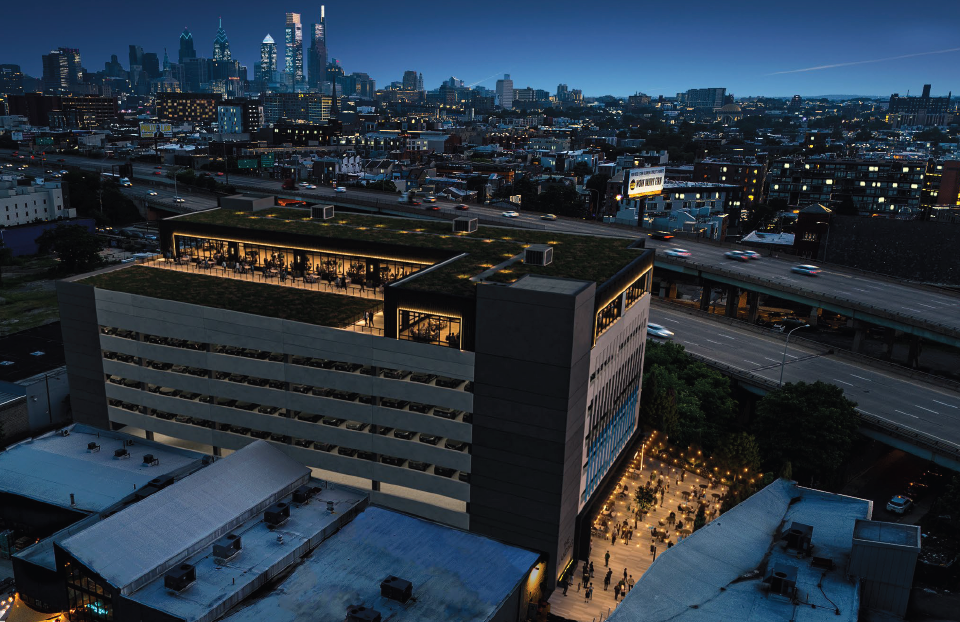
A rendering of the garage planned for Fishtown, looking west towards Center City.
Philly’s year of the parking garage — D+
In a city that loves to say it’s all about bikes, buses, and tree-lined streets, somehow 2025 has turned into the Year of the Parking Garage. Three new standalone garages are in the works — in Fishtown, University City, and Grays Ferry — because apparently we looked at the skyline and thought, “You know what’s missing? More concrete boxes for cars.”
Developers say people need somewhere to park near all the shiny new apartments, but urbanists are screaming into their reusable coffee cups. We’re talking a 1,000-car garage from CHOP (in a neighborhood already struggling with air quality), a 495-space one in University City (for a city lab and staff), and a Fishtown “garage-with-a-view” that’s trying to make rooftop parking sound sexy.
Parking pros say it’s a losing game — sky-high taxes, slim profits, and way too many empty spaces already. Even Parkway Corp. and E-Z Park, the kings of concrete, have looked at the numbers and said, “Good luck, you’ll need it.”
It’s the most Philly thing ever: everyone agrees it’s a bad idea, but someone’s still building it.
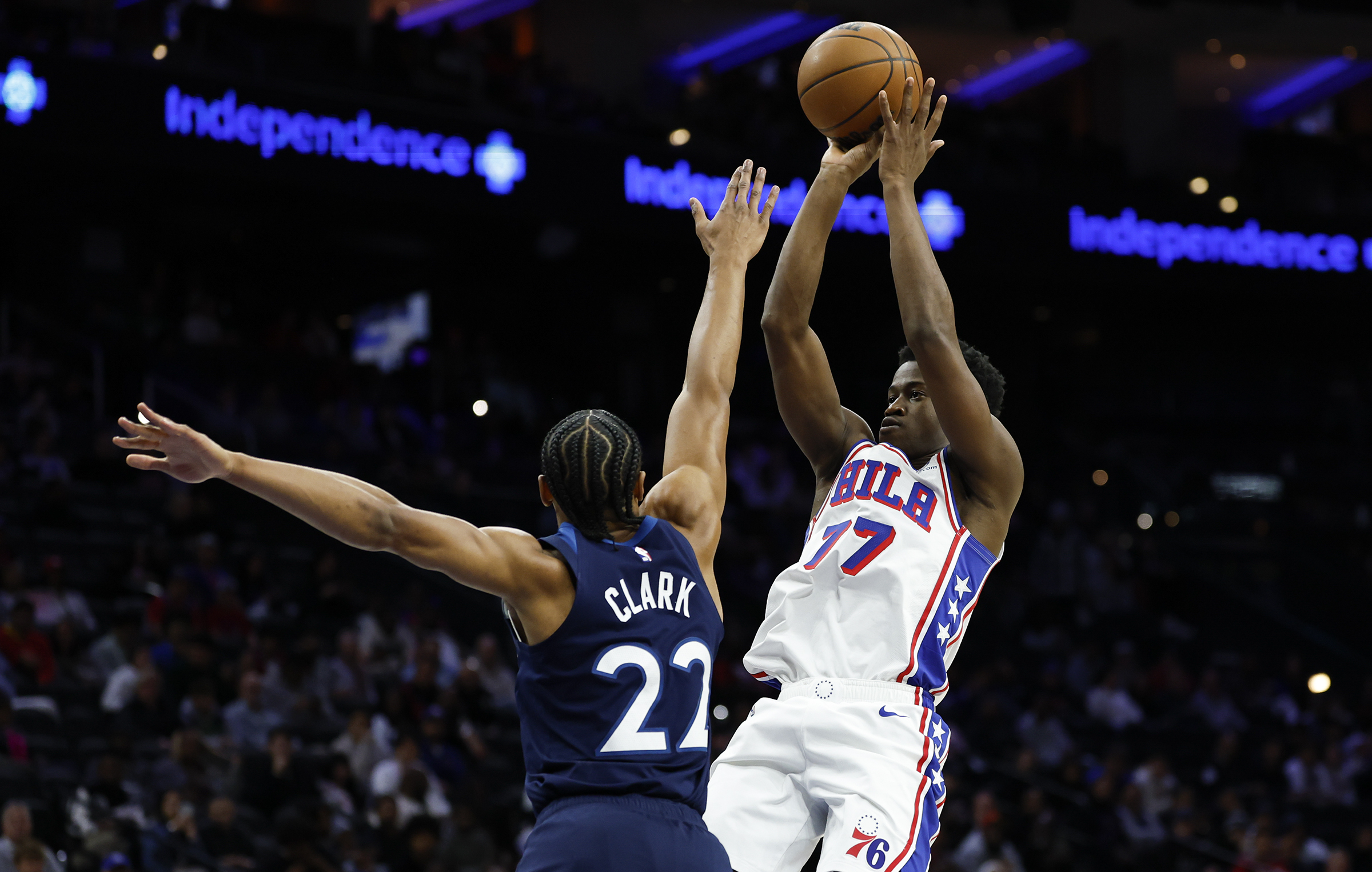
Sixers guard VJ Edgecombe shoots the basketball against Minnesota Timberwolves guard Jaylen Clark during a preseason game on Friday, Oct. 17, 2025 in Philadelphia.
Sixers start with a spark — B
Nobody in Philly was expecting the Sixers to look this good out the gate. Rookie VJ Edgecombe dropped 34 points in his debut — the third-highest in NBA history — and helped the Sixers steal a 117-116 win over the Celtics. That’s right: Wilt, LeBron, and now a 20-year-old kid who apparently sleeps like a baby before facing Boston in the Garden.
Edgecombe didn’t just show up — he looked like he’d been here for years. Calm, confident, and already saying the kind of humble stuff that makes you want to buy his jersey before Christmas. Tyrese Maxey poured in 40, and even his gentle clowning (“77 definitely got scared at the free-throw line”) couldn’t hide the fact that Philly might actually have a backcourt worth believing in.
It’s still early, but this team has something it hasn’t had in forever: fun. For once, the Sixers aren’t pretending to be contenders — they’re just hooping. No melodrama, no birthday banners about Daryl Morey being a liar, no Teletubby coats. Just fast breaks, fresh legs, and a rookie who already has his name next to Wilt’s.
We’ve been hurt before, so no one’s saying “This is the year.” But after one game, it’s hard not to feel a little something.
WASHINGTON — The Pentagon confirmed Friday that it has accepted an anonymous $130 million gift to help pay members of the military during the government shutdown, raising ethical questions after President Donald Trump had announced that a friend had offered the gift to defray any shortfalls.
While large and unusual, the gift amounts to a small contribution toward the billions needed to cover service member paychecks. The Trump administration told Congress last week that it used $6.5 billion to make payroll. The next payday is coming within the week, and it is unclear if the administration will again move money around to ensure the military does not go without compensation.
“That’s what I call a patriot,” Trump said during a White House event Thursday when he disclosed the payment from the donor.
The president declined to name the person, whom he called “a friend of mine,” saying the man didn’t want the recognition.
The Pentagon confirmed it had accepted the donation on Thursday “under its general gift acceptance authority.”
“The donation was made on the condition that it be used to offset the cost of Service members’ salaries and benefits,” said Sean Parnell, chief spokesman for the Pentagon. “We are grateful for this donor’s assistance after Democrats opted to withhold pay from troops.”
Congress is at a stalemate over the government shutdown, now on track to become one of the longest federal closures ever, in its 24th day. Neither Republicans, who have control of the House and Senate, nor Democrats, in the minority, are willing to budge in their broader standoff over health care funding.
Payment for service members is a key concern among lawmakers of both parties as well as a point of political leverage. The Trump administration shifted $8 billion from military research and development funds to make payroll last week, ensuring that military compensation did not lapse.
But it is unclear if the Trump administration will be willing — or able — to shift money again next week as tensions rise over the protracted shutdown.
While the $130 million is a hefty sum, it would cover just a fraction of the billions needed for military paychecks. Trump said the donation was to cover any “shortfall.”
What’s unclear, however, is the regulations around such a donation.
“That’s crazy,” said Max Stier, president and CEO of the Partnership for Public Service, a nonpartisan organization focused on the federal government.
“It’s treating the payment of our uniformed services as if someone’s picking up your bar tab.”
He questioned the legality of the donation and called for more transparency around it.
Pentagon policy says authorities “must consult with their appropriate Ethics Official before accepting such a gift valued in excess of $10,000 to determine whether the donor is involved in any claims, procurement actions, litigation, or other particular matters involving the Department that must be considered prior to gift acceptance.”
Two Plymouth Township police officers were hospitalized in stable condition Friday afternoon after a driver allegedly injured them intentionally with a vehicle in the parking lot of a DoubleTree Suites near the Plymouth Meeting Mall, Montgomery County officials said.
Around 12:40 p.m., Plymouth Township police received a report of a person driving erratically in the area of Hickory and Narcissa Roads, and a few minutes later, an officer found the suspect driving in the parking lot of the hotel, Thomas Nolan, deputy chief of the Montgomery County Detective Bureau, told 6abc and other news outlets at the scene.
The suspect backed into the police vehicle, and then struck the officer after he had exited his vehicle, Nolan said. The officer fired his weapon at the suspect, who drove away.
The injured officer was applying a tourniquet to an injury when the driver returned and struck the officer again several times, Nolan said.
As more police responded to the scene, the suspect struck another police vehicle, injuring a second officer before finally being taken into custody, Nolan said.
The suspect was treated and released from a hospital and was being held at the Montgomery County Correctional Facility, a spokesperson for the District Attorney’s Office said Friday night.
The University of Pennsylvania on Friday afternoon released the letter that President J. Larry Jameson sent to the U.S. Department of Education last week, explaining why the school rejected the compact proposed by President Donald Trump’s administration.
“Our university policies and practices are already aligned with many of the core principles of the Compact…” Jameson wrote. But “we find that significant portions of the Compact and its overarching framing would undermine Penn’s ability to advance our mission and the nation’s interests.”
The “Compact for Academic Excellence in Higher Education” was the latest attempt by the Trump administration to force changes in the way universities operate as the president tries to reshape higher education to match his vision. It offered colleges that sign preferential consideration for federal funding. It’s still not clear what penalty, if any, Penn — which receives about $1 billion annually in federal funding — will face for not signing.
“Institutions of higher education are free to develop models and values other than [those in the compact], if the institution elects to forego federal benefits,” the compact states.
Penn last week declined to release its letter, but Jameson in a message to the campus community Friday afternoon said “in the spirit of transparency” he would share it. He said he’d received many requests for its release.
The university has not had further discussions with the government since rejecting the compact, Jameson said, noting “we believe there remains opportunity to advance the long-standing relationship between American higher education and the federal government which has greatly benefited our community, nation and world.”
But he also was clear that Penn’s greatest partnership is with the public.
“America’s great universities already have a compact with the American people,” he said. “It is built on the open exchange of ideas, merit-based selection and achievement, and freedom of inquiry to yield knowledge. It affirms that knowledge should serve the public good, that education should remain a ladder of opportunity, and that discovery should make life better, richer, and freer.”
Jameson highlighted seven areas where he said Penn and the compact appear to be in alignment and five areas that pose concerns.
Areas of agreement include hiring and promotion standards and “merit based admissions” that comply with the law, including the 2023 U.S. Supreme Court decision that banned the use of race-based admission, Jameson said. The university also has reinstituted a standardized test score requirement for admission; Penn like many others had paused the requirement during the pandemic. And, its undergraduate student body is 13% international, Jameson said. That’s under the 15% mark that the compact would require.
Penn also is in compliance with federal foreign gift regulations and has “viewpoint-neutral rules” governing protests and expression, he said.
The university last year adopted an “institutional neutrality” policy, which states that the school will no longer make statements about world events unless they have a direct effect on Penn’s operations; the compact calls for schools to adhere to institutional neutrality.
While the university hasn’t agreed to freezing tuition for five years as the compact asks, the school has taken steps to make education more affordable, Jameson said, noting that its aid is all grants and no loans and is need based. Nearly half its students receive aid, he said.
And, Jameson said, Penn officials “share concerns about grade inflation and believe there may be an opportunity to engage the higher education community to seek a broader solution.”
But Penn objects to federal funding being meted out based on signing a compact, Jameson said.
“Research and our nation are better served by competition that rewards promise and performance,” he said. “Penn seeks no special consideration beyond fair and merit-based funding.”
The compact fails to promise or even mention academic freedom, which is “the bedrock of our national system of higher education,” Jameson said. It seeks to protect conservative thought alone, he said.
“One-sided conditions conflict with the viewpoint diversity and freedom of expression that are central to how universities contribute to democracy and to society,” Jameson wrote.
He also objected to the compact mandating free tuition to students in the “hard sciences.”
“We celebrate the sciences,” Jameson wrote. “However, we focus our financial aid efforts on those who cannot afford to pay, ensuring that a Penn education is accessible to those who are offered admission.”
Jameson also called out the compact’s financial penalties for failing to comply “based on subjective standards and undefined processes.” That could endanger teaching and research, he said.
“Universities must be accountable for their actions,” he wrote. “We believe that existing laws and policies suffice to achieve compliance and accountability.”
Many groups on campus had spoken out against the compact and were watching closely, given that the university had struck an agreement with the Education Department in July over the participation of a transgender athlete on the women’s swim team.
Penn’s announcement that it would reject the compact brought praise from local and state officials, including Democratic Gov. Josh Shapiro.
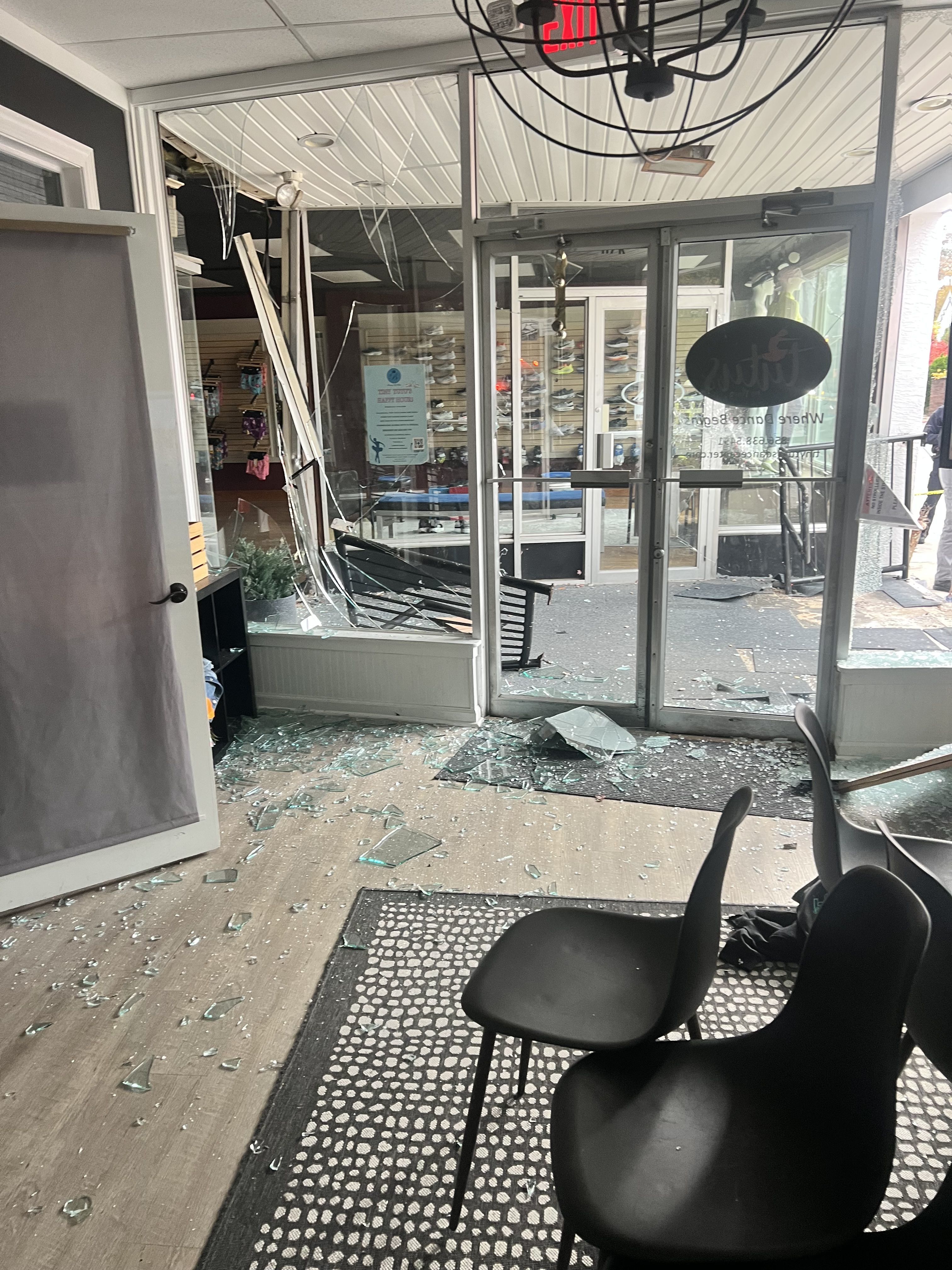
A firefighter browsing sneakers. Tots in tutus arriving for dance lessons. Manicurists.
All were at a Moorestown strip mall Thursday afternoon when a car crashed into the Main Street building, damaging a running gear store, dance studio, and nail salon.One person who was in the salon was hospitalized, Moorestown Director of Police Patrick Reilly told The Inquirer.
About 4:20 p.m., two cars collided in the shopping center parking lot, and one of the drivers, a woman in her 80s, mistakenly hit the gas pedal, slamming at least 50 feet into South Jersey Running Company, according to Reilly. An investigation into the crash is ongoing.
“It’s an accident, it’s not purposeful,” Reilly said, “it’s just bad timing, bad luck.”
💗 Tutus Update 💗
Yesterday afternoon, a car drove into the front of our Studio A at the Main Street location, causing…
South Jersey Running Company owner Dave Welsh said the car drove flew through the front glass vestibule, dressing rooms and an office.
Owner Jaclyn Adams estimated about 30 people were inside Tiny Tutus Dance Center, but no one was injured. La Moores Nail and Spa could not immediately be reached by phone Friday.
Damage to local shown businesses is apparent after a car crashed into a shopping center Thursday, Oct. 23, 2025, in Moorestown.
“A little bit of shattered glass is nothing compared to dealing with what could have been a horrible tragedy,” Adams said in a phone interview. “I’m just very lucky.”
Welsh, who operates four locations, said he doesn’t anticipate losing business and is prioritizing helping the dance studio and salon rebuild: “We’re a super small, independent, little footwear store, … and our customers are as loyal as can be.”
Adams hopes to reopen as soon as possible, and city officials are evaluating the damage to all the businesses. For now, classes are uninterrupted at the Tiny Tutus’ Union Street location.
FBI Director Kash Patel visited Philadelphia Friday to announce the results of a large-scale investigation into a Kensington-based drug gang — the latest demonstration of how President Donald Trump’s administration is seeking to highlight what it’s called a nationwide crackdown against suspected drug dealers.
The target of the investigation — which spanned several years — was a gang that had long run a 24-hour open-air drug market on the 3100 block of Weymouth Street, according to court documents. The group was sophisticated, the documents said, with dozens of members working specific schedules, performing specific roles — such as block owner, street dealer, or lookout — and seeking to control territory with the threat of violence.
Members dealt drugs including fentanyl, heroin, cocaine, and crack, the documents said, and oversaw “one of the most prolific drug blocks in the city.” They also controlled parts of other nearby streets in a neighborhood where single corners have historically been able to generate tens of millions of dollars per year in drug sales.
Prosecutors indicted 33 people in all, court records show, including Jose Antonio Morales Nieves and Ramon Roman-Montanez, whom they described as two of the group’s leaders. Most defendants were charged with conspiracy to distribute controlled substances or other drug-related crimes.
Moralez Nieves “owned” the 3100 block of Weymouth, prosecutors said, and let dealers sell there by paying him “rent.” Roman-Montanez, meanwhile, organized street-level operations — developing schedules, doling out roles, and managing profits.
U.S. Attorney David Metcalf said the investigation into the Weymouth Street group would effectively eliminate it.
U.S. Attorney David Metcalf said more defendants were indicted in this case than any other federal prosecution in the Philadelphia region in a quarter-century.
And although prosecutors did not estimate how much money the group made during its decade-long run on the block — and none of its members were officially charged with committing acts of violence — Metcalf said the arrests nonetheless “annihilated” a gang that had terrorized a long-suffering part of Kensington.
Patel said the effort was emblematic of how law enforcement — both local and federal — can work together to address chronic issues including drug dealing and gun violence.
“Everyone in America should be looking at this takedown,” Patel said “This takedown is how you safeguard American cities from coast to coast.”
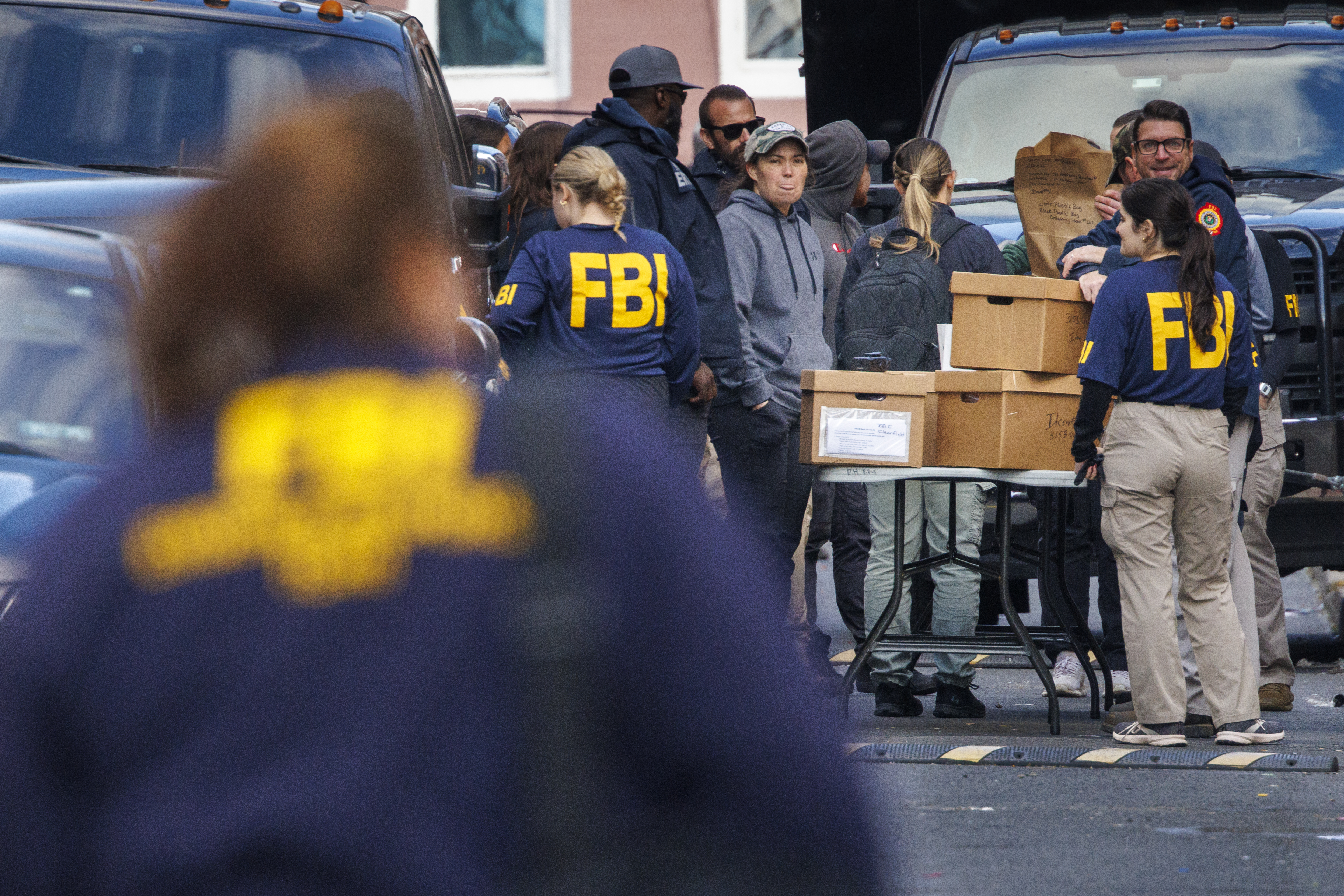
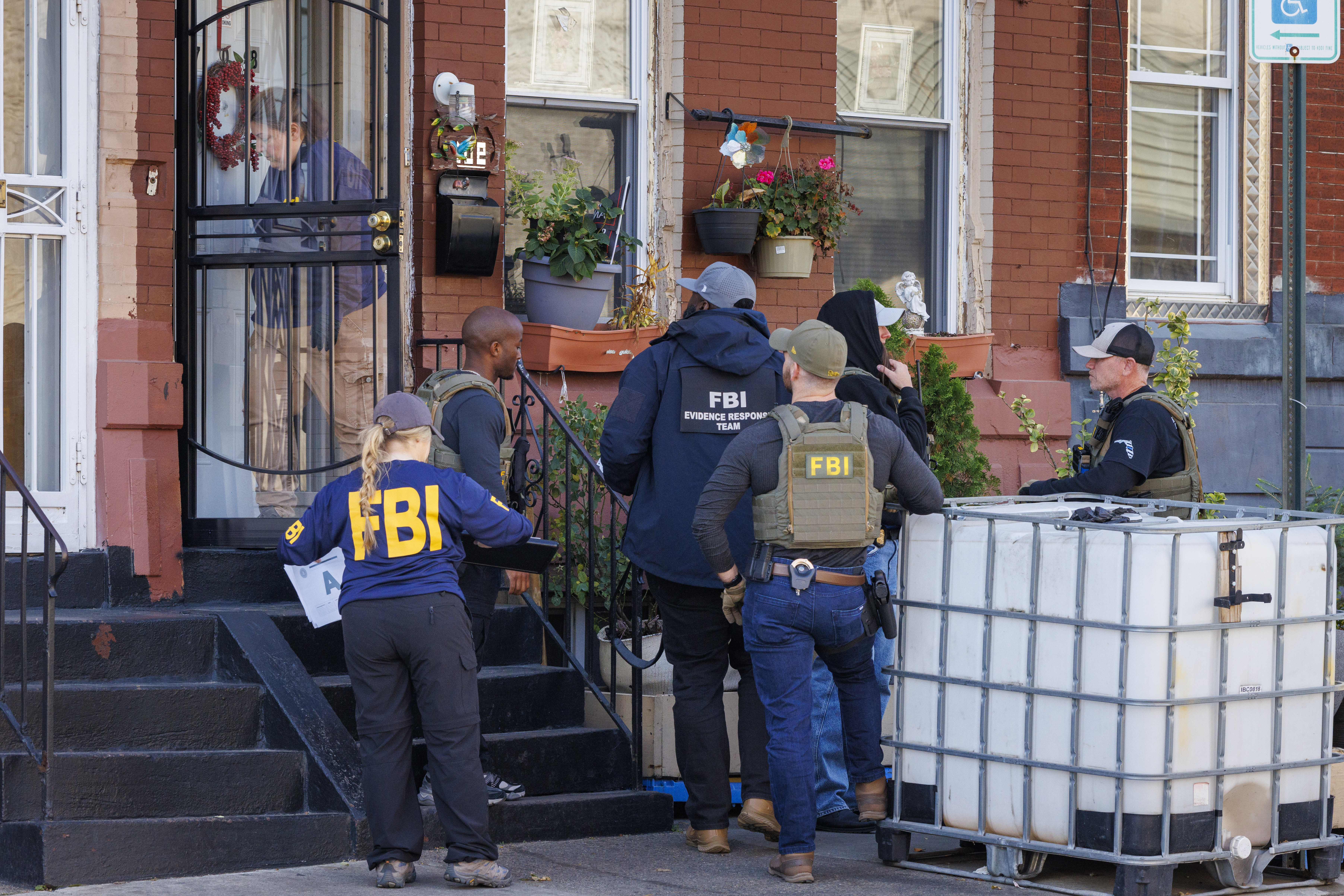
Law enforcement and FBI at Weymouth Street between Clearfield and Allegheny Avenue on Friday, October 24, 2025.
FBI agents and Philadelphia police officers conducted a series of raids in Kensington early Friday morning in support of the initiative. Wayne Jacobs, the FBI’s top official in Philadelphia, said agents served 11 search warrants, and that 30 of the 33 defendants were in custody as of Friday afternoon.
Philadelphia Police Commissioner Kevin Bethel said he was proud that the arrests might help bring “safety, dignity and peace” to Kensington — a neighborhood that Mayor Cherelle L. Parker’s administration has sought to prioritize throughout her two years in office, nearly tripling the police force in the neighborhood.
While officials acknowledged that the investigation began several years ago, the results nonetheless came as Trump and some of his top cabinet officials — including Patel, Attorney General Pam Bondi, and Defense Secretary Pete Hegseth — have sought in recent weeks to promote what they’ve cast as a concerted effort to address crime across the country, particularly involving suspected drug traffickers.
Some of the Trump administration’s initiatives have been relatively conventional, such as Friday’s raids in Philadelphia and other recent takedowns in cities such as Milwaukee and Pittsburgh.
Trump and Patel have also touted the FBI’s arrest numbers this year, saying they are “working non-stop to make America safe again.”
Dan Bongino, one of Patel’s top deputies at the FBI, said Friday that the Philadelphia arrests were part of that mission, writing on social media: “When President Trump told us to ‘go get em,’ he wasn’t kidding. And neither were we.”
FBI agents were on the 700 block of East Clearfield near Weymouth Street on Friday morning.
Still, other aspects of the campaign have been highly controversial, including Trump seeking to deploy federal troops to cities such as Chicago and Portland in response to what he’s called widespread unrest or clashes between protesters and U.S. Immigration and Customs Enforcement agents. Local officials have described Trump’s efforts as unnecessary and challenged them in court.
Trump also moved to effectively federalize law enforcement in Washington, D.C., an effort that local officials called a “baseless power grab” in a lawsuit.
And international tensions have started to rise over the military’s continued bombing of alleged drug-carrying boats in the Caribbean Sea and Pacific Ocean — strikes that have killed dozens of people and raised questions about whether the tactic is legal.
Around Weymouth Street on Friday, SWAT units had dispersed by noon. Residents by then had gathered in the street along the narrow block, where some rowhouse doors were left ajar and several neighbors peered curiously from upper windows.
Victor Ramirez, who has lived near Weymouth Street for 20 years, said police activity has become more common in the area in recent months.
“It’s a different story almost every day,” Ramirez said outside his home.
Ramirez said increased law enforcement activity has frightened his neighbors. He said most are “good people” who work to feed their families. Still, Ramirez said he feels more safe with the increased attention to crime in the neighborhood.
The FBI raid Friday morning felt like a significant escalation, he said. Ramirez was surprised to see agents armed with assault rifles hopping out of armored cars and making arrests.
The raid came on the day of a fall block party on Allegheny Avenue, which stretched between F and G Streets and intersected with neighboring Weymouth Street. The event is popular with local children, Ramirez said, and he hoped it would bring positive energy to a block that experienced an unusual morning.
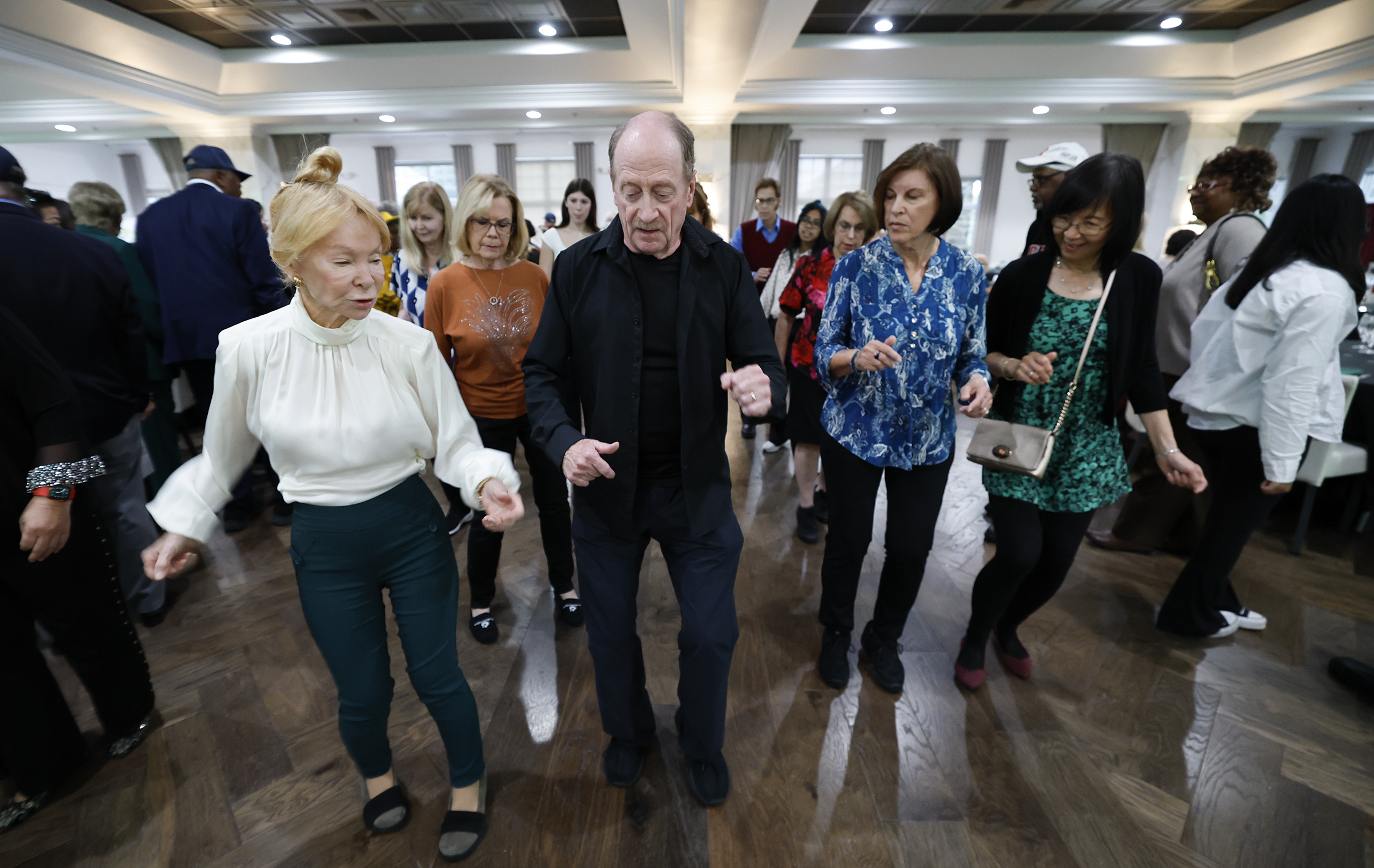
At the 12th annual Golden Age Prom in Cherry Hill, Shirley Temples were flowing, the buffet line stretched across the room, and seniors — both senior citizens and high school seniors — danced the night away to the Bee Gees’ “Stayin’ Alive” and Gloria Gaynor’s “I Will Survive.”
The event, hosted by the Cherry Hill Education Association, brings Cherry Hill’s older residents together for a night of food, dancing, and celebrating the prom king and queen.
“Prom is a very memorable moment for a lot of people, and it makes them feel young again,” saidWaleska Batista-Arias, the president of the Cherry Hill Education Association. “Just because the body ages, doesn’t mean you lose your youthful spirit.”
Though celebration is the centerpiece of the Golden Age Prom, the annual event offers Cherry Hill’s teachers union an opportunity to build support for public education among seniors, a powerful, yet sometimes overlooked, voting bloc.
According to Kathy Kiehner, 78, a retired reading specialist who has attended the prom for years, it’s about harnessing “the energy of senior citizens that forgets to get tapped.”
Attendees dance during the Golden Age Prom sponsored by the Cherry Hill Education Association at the Legacy Club in Cherry Hill on Thursday, October 23, 2025.
Dispatch from the dance floor
Though the prom has historically been held at one of Cherry Hill’s schools, the education association had to upgrade to the Legacy Club this year to meet rising demand. Even still, they had to turn people away.
Jeanne Kiefner, a retired school nurse, adjunct professor, and longtime Cherry Hill resident, said the prom “makes people healthy,” offering socialization that can be hard to come by in one’s 70s, 80s, and 90s. Many sources did not share their age with the reporter.
As the night went on, attendees enjoyed the buffet — one remarked that there’s nothing seniors love more than free food. They posed in the photo booth and line danced with student volunteers from Cherry Hill’s two high schools.
Seated by the dance floor, Cathy Jenkins, 76, and Emma Waring, 72, said they’ve been friends for longer than they can count. After doing some quick math, the two deduced they had met about 35 years ago while working in the Camden City School District. The retired educators are now involved in the Cherry Hill African American Civic Association, which uplifts Black history education and supports local students.
When the Golden Age Prom announcement drops every year, Waring said she and her friends start calling and texting each other right away. Waring likes that the event is lively and cross-cultural, bringing together seniors from across Cherry Hill’s diverse communities.
“This is something we look forward to,” she said.
Attendees stand in the dinner buffet line during the Golden Age Prom sponsored by the Cherry Hill Education Association at the Legacy Club in Cherry Hill on Thursday, October 23, 2025.
‘These people vote’
The Cherry Hill Education Association hosted the first Golden Age Prom over a decade ago at Kilmer Elementary School to help bring attention to much-needed infrastructure improvements in the district. While teachers and parents understood the district’s dire building needs, many Cherry Hill residents, including seniors who were no longer attached to the schools through their children, did not. In order to pass a bond to pay for the repairs, the education association knew it would have to physically bring voters into the schools.
“The idea was that these people vote, so if you want them supporting anything in the school system, you have to have them be a part of it,” said Kiehner, the former reading specialist.
The first bond referendum failed. But in 2022, a $363 million bond, one of the largest in New Jersey history, passed, allowing the Cherry Hill school district to make improvements to all 19 of its schools. It was the first time in 23 years that Cherry Hill voters approved a school bond.
“Thank you for your support so that we could improve our school facilities for our students and future generations,” Batista-Arias told attendees, an expression of gratitude that was met with roaring applause.
Batista-Arias said the association wanted to continue the intergenerational prom tradition and bring attention to upcoming elections. Candidates for Cherry Hill school board pitched voters from the dance floor, and some even stuck around for the “Cupid Shuffle.”
The Cherry Hill Education Association does not make endorsements in local races, but it is supporting the New Jersey Education Association’s endorsement of Democratic gubernatorial candidate Mikie Sherrill, which Batista-Arias announced to attendees (the Sherrill endorsement also received some applause).
The majority of this year’s prom was funded by the New Jersey Education Association’s PRIDE in Public Education campaign, an effort tobuild support for public education across New Jersey. The Golden Age Prom is free to attendees.
Kathy Kiehner wears her hat and sunglasses while talking to friends during the Golden Age Prom sponsored by the Cherry Hill Education Association at the Legacy Club in Cherry Hill on Thursday, October 23, 2025.
Bringing seniors out of isolation
Emerging from the photo booth in ankle-length, bedazzled dresses, Ann Alfano and Norma Galosi explained that they met just a few months ago at square dancing class and decided to come to prom together. Alfano never went to her own school dances as a teenager, so this prom was her first. When asked how their first hangout outside of dance class was going, they agreed: “Well.”
Joyce Layer, 84, moved to Cherry Hill 41 years ago after getting married. At the time, she knew no one. Line dancing classes, she thought, would be a good way to meet people. Four decades later, she dances on Tuesdays and Fridays, and she showed up to The Legacy Club ready to show off her moves.
“I’m just a person who likes people, who likes to dance,” Layer said.
“It’s a fun night,” she added. “It’s nice to do it for the seniors because so many of us are isolated.”
Joanie Broglin dances wearing her tiara during the Golden Age Prom sponsored by the Cherry Hill Education Association at the Legacy Club.
This suburban content is produced with support from the Leslie Miller and Richard Worley Foundation and The Lenfest Institute for Journalism. Editorial content is created independently of the project donors. Gifts to support The Inquirer’s high-impact journalism can be made at inquirer.com/donate. A list of Lenfest Institute donors can be found at lenfestinstitute.org/supporters.
The federal shutdown messaging war was in full swing at Philadelphia International Airport Friday, where U.S. Transportation Secretary Sean Duffy blamed airline travel disruptions on Democrats, as air traffic controllers are slated to miss their first full paycheck next week.
“If you’re seeing an increase in shutdowns right now, or delays, or cancellations, it’s because the Democrats won’t open the government back up,” said Duffy.
Travel disruptions fueled by air traffic controller absences played a major role in pressuring politicians to relent and reopen government during the last government shutdown, which started in December 2018 and bled into the new year for a total of 35 days. As that shutdown dragged on, air traffic controllers who were working without pay began calling out sick, sparking major delays across the country.
Though a PHL spokesperson said the airport has not experienced disruptions as a result of the shutdown to date, other hubs, including Newark Liberty International Airport, have. Duffy said while about 5% of delays are typically due to staffing shortages, that number has been as high as 53% since the shutdown began Oct. 1.
Joining Duffy, Nick Daniels, president of the National Air Traffic Controllers Association, described how members report taking on side gigs delivering food or driving rideshares.
Air traffic controllers were able to receive about 90% of their pay in their last check because most of theirbiweekly pay period fell before the shutdown.
As more families feel the impact of the shutdown, Daniels said air traffic controllers would feel the stress at work and “instead of focusing on the safety of the American flying public, they’re now focusing on what they can’t afford to pay.”
The visit to Philadelphia International Airport comes amid a back-and-forth between President Donald Trump‘s administration and Democrats. The White House’s official website has a “Government Shutdown Clock,” which tells visitors, “Democrats have shut down the government.” Other federalgovernment sites blame the “Radical Left” or call the shutdown “Democrat-led.”
Airports have not been immune to the shutdown messaging wars, with Homeland Security Secretary Kristi Noem blaming Democrats in a video sent to the travel hubs to play — the Transportation Security Administration is part of Noem’s department and TSA workers are not being paid during the shutdown. PHL and several other airports have refused to play the video, citing federal limits on political messaging they can display.
Just last week, Pennsylvania Gov. Josh Shapiro‘s administration pushed back with its own messaging on the state Department of Human Services website.
“Because Republicans in Washington D.C., failed to pass a federal budget, causing the federal government shutdown, November 2025 [Supplemental Nutrition Assistance Program] benefits cannot be paid,“ reads a banner on the website.
For airports and travelers, the possibility of a prolonged shutdown brings the potential for disruptions during one of the most popular times to travel.
What’s more, it could affect those in the Federal Aviation Administration’s training academy, hoping to become air traffic controllers. Those students continued to receive modest pay amid the shutdown — their instructors have not — but Duffy said money is slated to run out in as little as a week ortwo. The transportation secretary said fears of future funding issues have caused some students to drop out at a time the department is short some 3,000 air traffic controllers.
TSA employees at PHL, meanwhile, are also suffering.
Joe Shuker, Region 7 vice president for AFGE Council 100, which represents TSA employees there, said workers are being required to bring doctor’s notes if they call out, adding the cost of a copay to legitimately sick staff. Shuker, like Daniels, said employees were being encouraged to keep working.
“However, at some point running out of money will be an issue,” he said as workers struggle to pay for gas, childcare, and mortgages.
Duffy on SEPTA
Ahead of his visit to PHL, Duffy wrote a blistering letter to Shapiro, blaming the Democrat for SEPTA’s financial woes and, in particular, for five Regional Rail train fires this year involving 50-year-old Silverliner IV cars.
“Thankfully, no fatalities resulted, but the department will not stand by waiting for tragedy to strike,” Duffy told Shapiro. “If changes are not made immediately, it is only a matter of time before SEPTA’s crumbling commuter rail system erupts in flames and kills someone.”
The governor clapped back. A spokesperson noted that Shapiro has fought for new, stable state funding for SEPTA and other transit agencies in the last two budgets — only to have Senate Republicans, who hold the majority in the chamber, kill the proposals.
“Instead of issuing a press release, if Secretary Duffy actually wants to be helpful, he should call his fellow Republicans and get them to fund the governor’s mass transit funding package for SEPTA,” said Rosie Lapowsky, Shapiro’s press secretary. “We would be happy to provide their phone numbers.”
The mass-transit agency has been pulling the 225 cars off the line for extensive safety inspections and repairs, acting on an Oct. 1 order from the Federal Railroad Administration, which regulates commuter rail. SEPTA also is installing a modern thermal detection system on the Silverliner IVs, which were built in the mid 1970s.
The FRA order imposed a deadline of Oct. 31 and Duffy warned unrepaired rail cars could be ordered out of service if it is not met.
“I want a great system for Philadelphia, that’s what I want,” Duffy said when asked about the letter at PHL. “If I can be helpful, I will, if I get resistance, we can we can be great friends, or we can be really bad enemies. I think we should be in the friend business and serve in this community.”