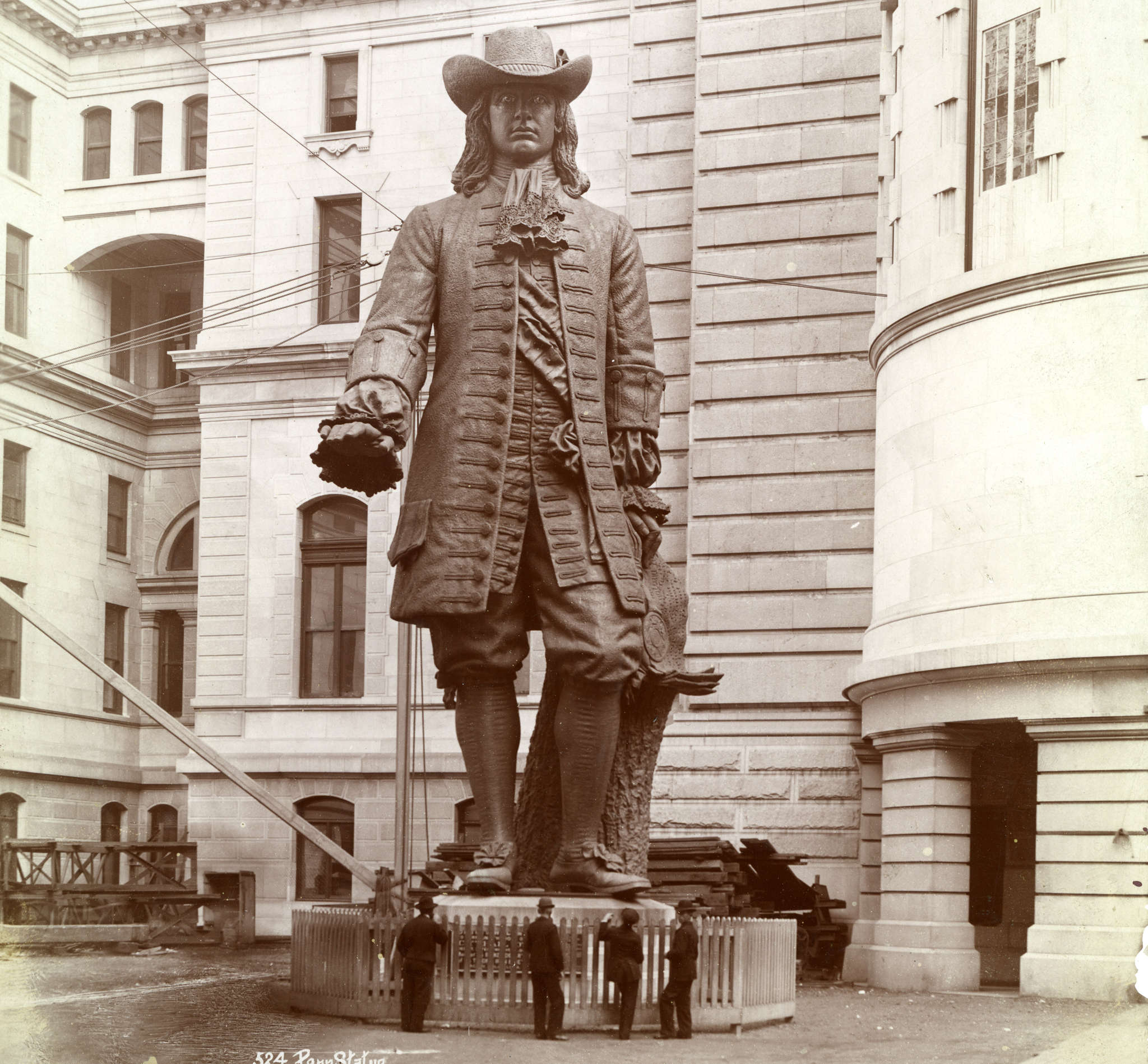
For more than quarter century, Greta Greenberger ended her tours of Philadelphia City Hall at the tower, just below the bronze buckled shoes of William Penn (1892), the shady colossus that Alexander Milne Calder sculpted.
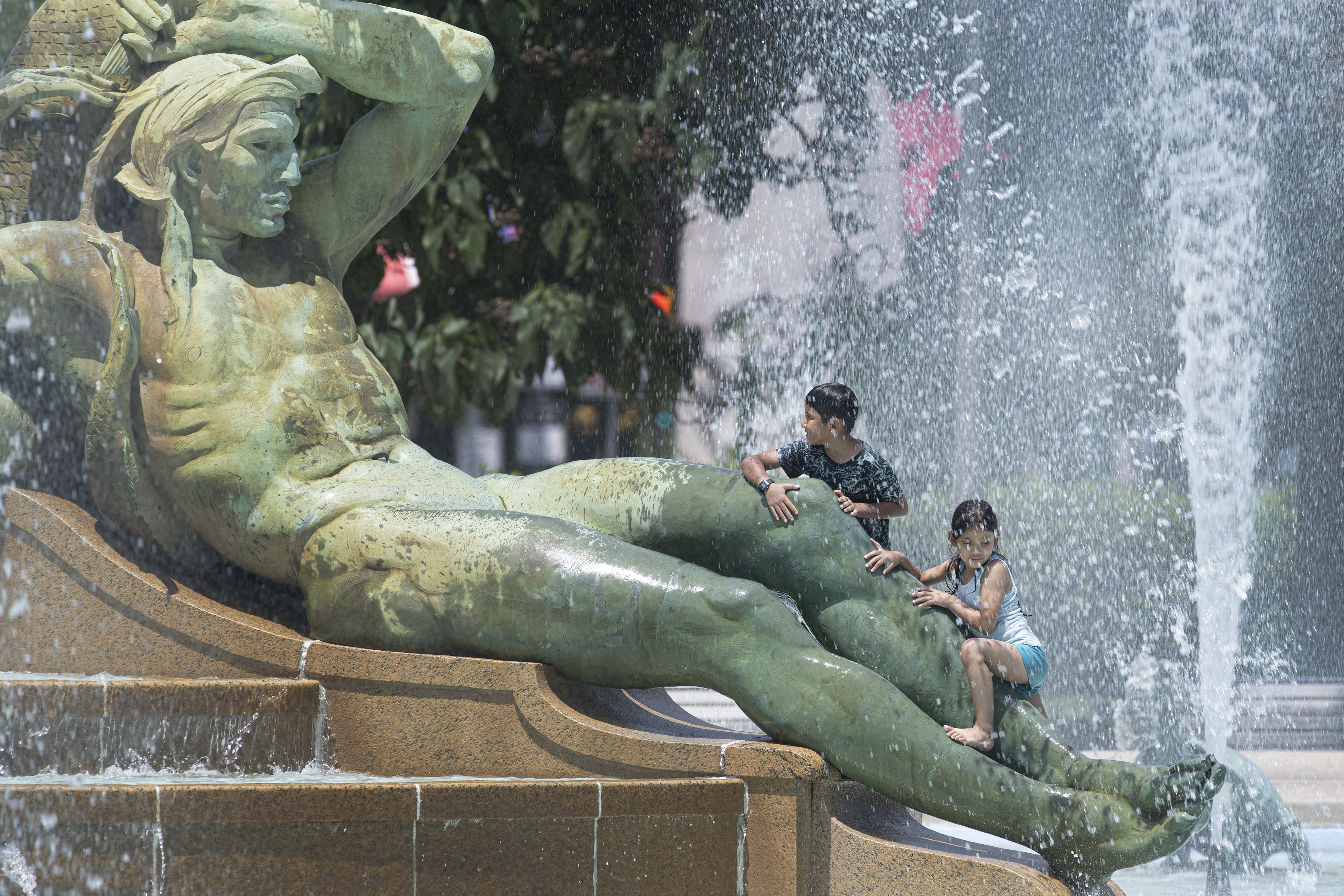
From there, she’d point up the Parkway to Logan Square, where on hot days children sneak into The Fountain of Three Rivers (1924), created by Calder’s son, Alexander Stirling Calder, to honor the Schuylkill, the Delaware, and the Wissahickon.
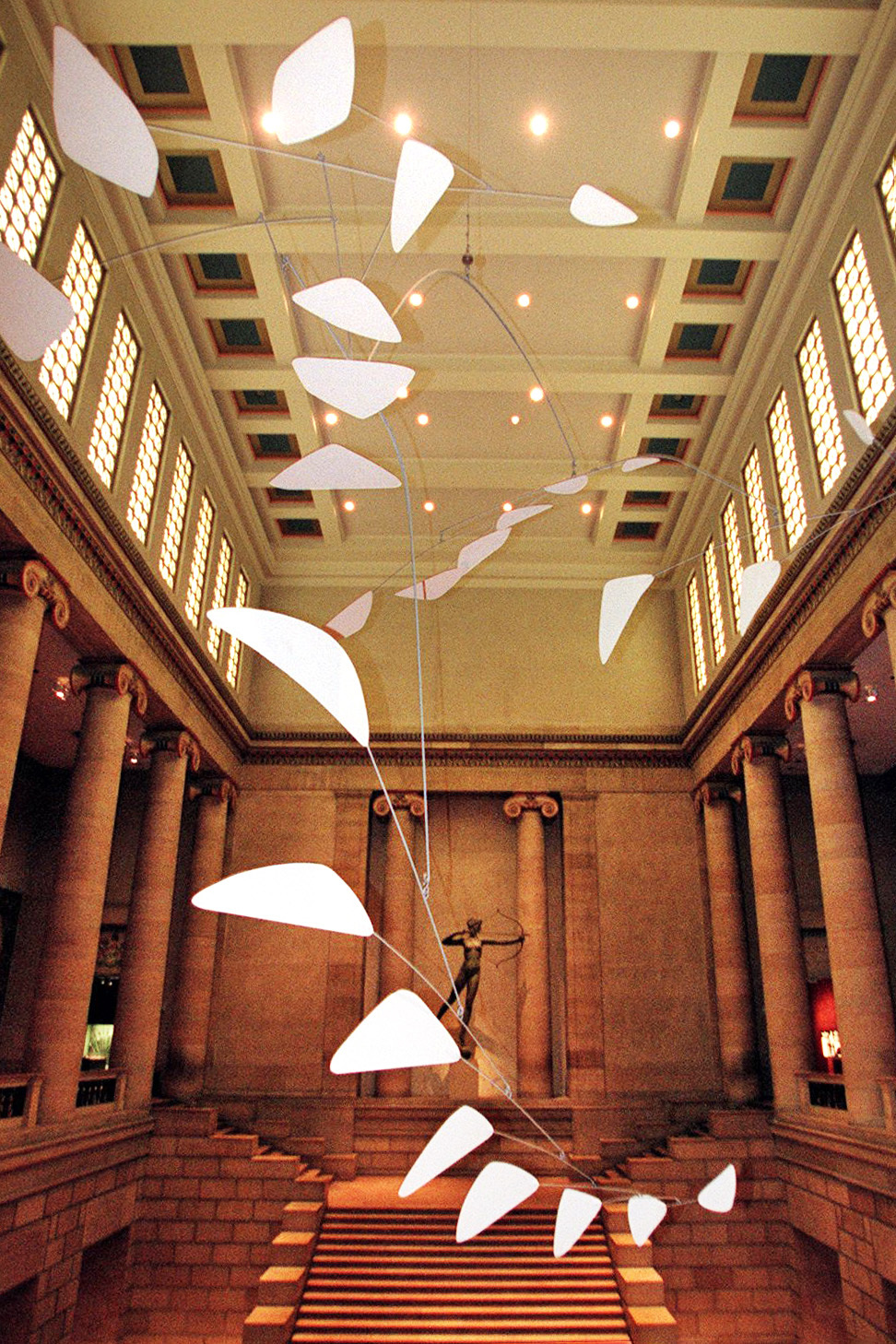
She’d finish her lesson at the Philadelphia Art Museum, where an unearthly, white mobile, Ghost (1964), designed by the third generation of Alexander Calders, Sandy, sways ever so slightly in the Great Stair Hall.
“Sometimes, I’d refer to this as ‘The Father, the Son and the Holy Ghost,’” she says. “It tells such a wonderful story.”
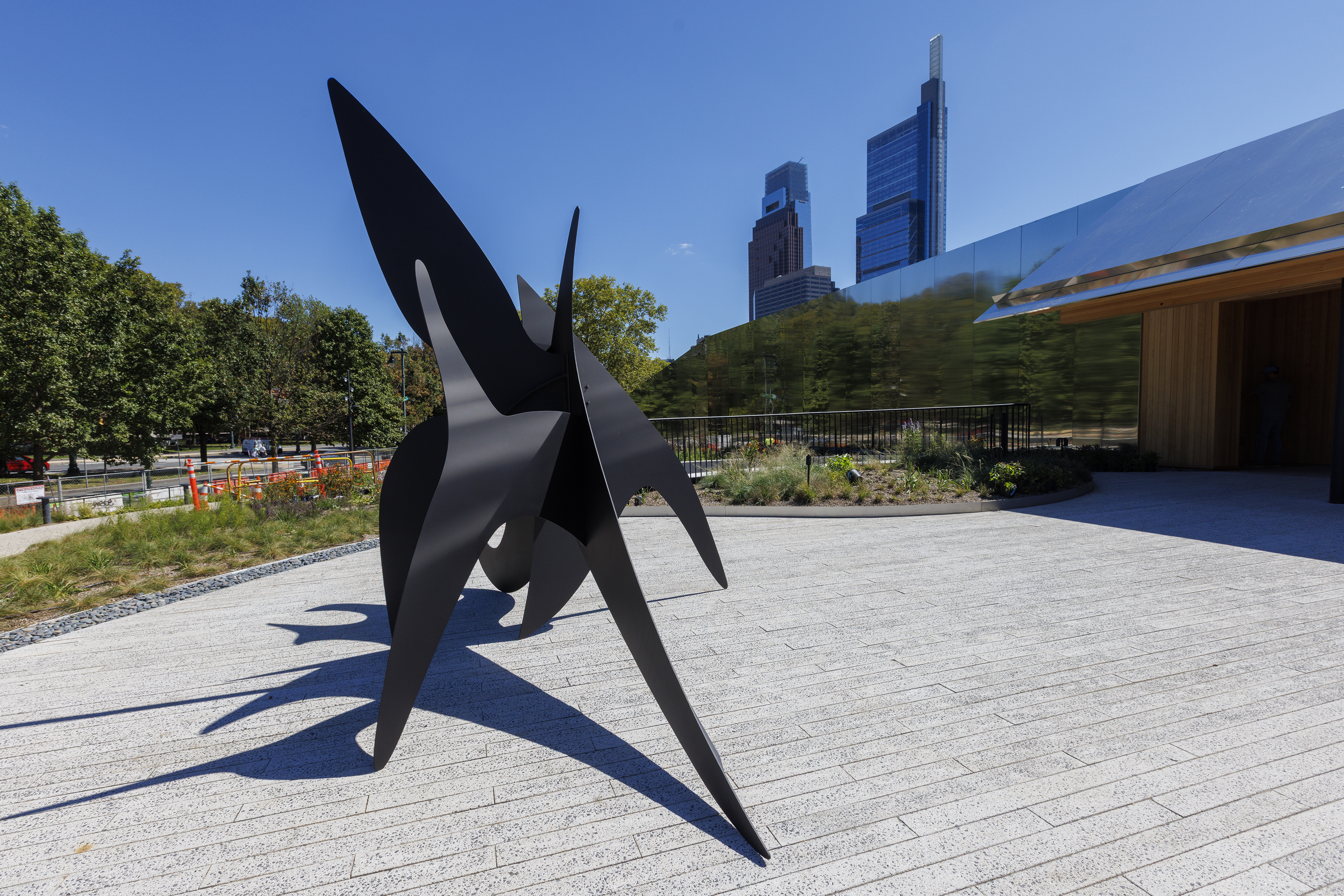
That story will be easier to tell now, with the opening of Calder Gardens at 21st Street and the Ben Franklin Parkway. The Gardens, focused on the work of the youngest Calder, known asSandy, brings another opportunity to celebrate the family dynasty’s in Philadelphia: three sculptors named Alexander Calder who have shaped the look of the city and beyond.
Exterior of the new Calder Gardens on the Ben Franklin Parkway.
“The Calder family is incredibly important to Philadelphia,” said Anna O. Marley, the former chief curator at the Pennsylvania Academy of Fine Arts (PAFA), where so many Calders studied. “They tell us so much about what it means to be an artist in the United States and how an American artistic identify was created in Philadelphia.”
And their work here offers “a pocket history of art,” in the view of Kathleen A. Foster, the Art Museum’s senior curator of American art.
“Between the three of them, you really go from the academic realism of the grandfather through kind of shift into Art Deco and modernism in the `20s with Stirling Calder, and then all the way into modern forms, completely abstract shapes and bright colors.”
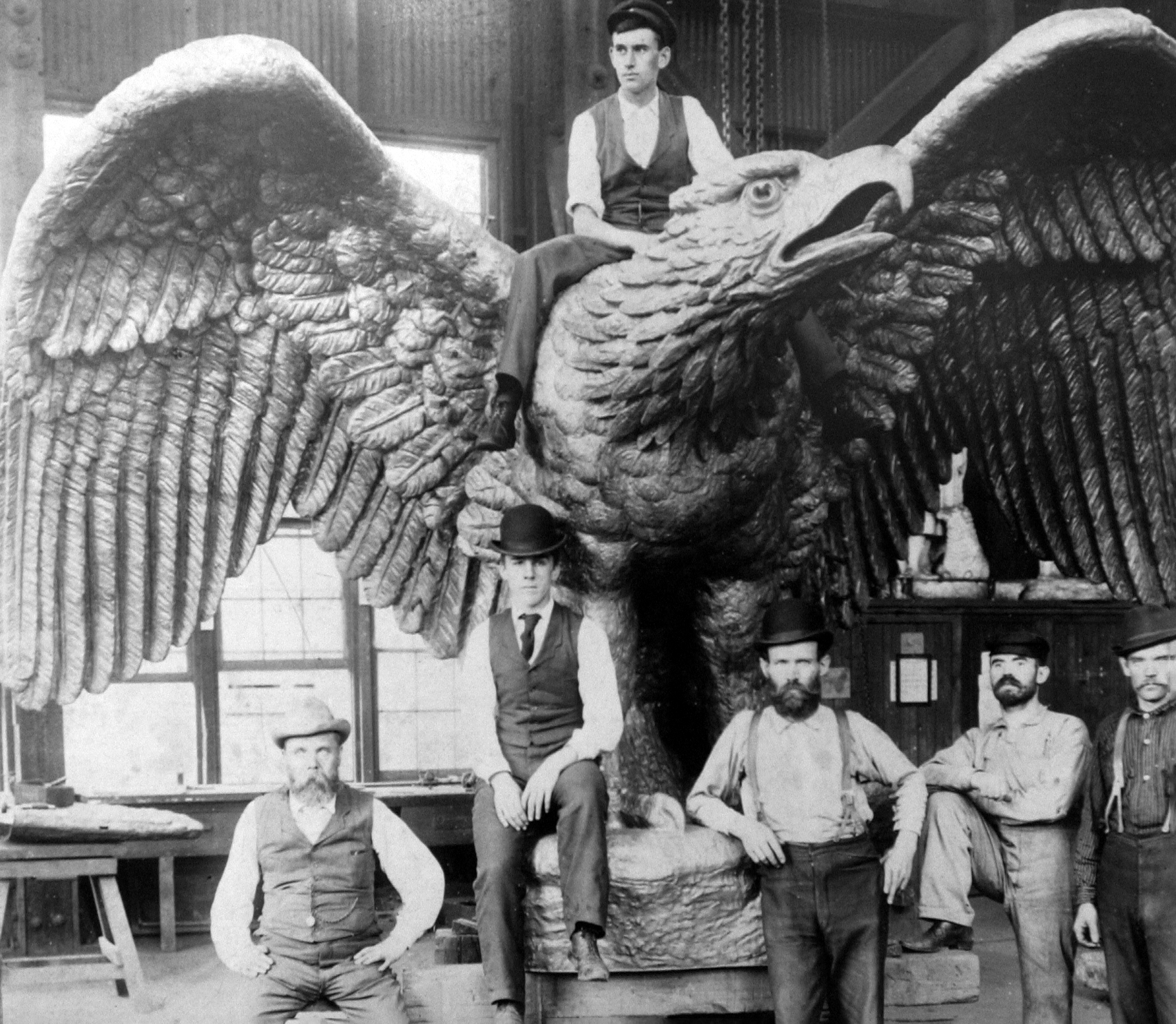
A photograph of workers and an Alexander Milne Calder eagle sculpture before installation around 1894, on display in the tower at City Hall. Calder created the statue of William Penn atop Philadelphia City Hall — and over 250 other works of sculpture on the exterior and interior of the building — from 1871-1901.
‘One of the greatest’
The Philadelphia that Alexander Milne Calder, a Scottish stonecutter’s son from Aberdeen, first saw in 1868 was sorely in need of a makeover. The sprawling metropolis was known for building big things like ships and rail engines and a wealth of small manufacturers that earned it the nickname “Workshop of the World.”
It was also filthy.
“It’s clear that there is no future for a city that is just increasingly based on its industrial might, on the dirt-producing, noise-producing, the squalor,“ says David Brownlee, emeritus professor of the history of art at the University of Pennsylvania.
The boundaries of Fairmount Park had just been established the year before and plans would soon begin for a giant celebration of the country’s 100th birthday, the 1876 Centennial, which would show the world the city’s cultural achievements. The Benjamin Franklin Parkway was unfolding, a broad boulevard lined by art and leading to what Brownlee calls “one of the greatest monumental ensembles of sculpture ever created.”
That would be City Hall, the émigré Calder’s workplace for 22 years as he presided over the creation of more than 250 sculptures from his first floor office in the building’s southwest corner — and the towering figure of the colony’s founder.
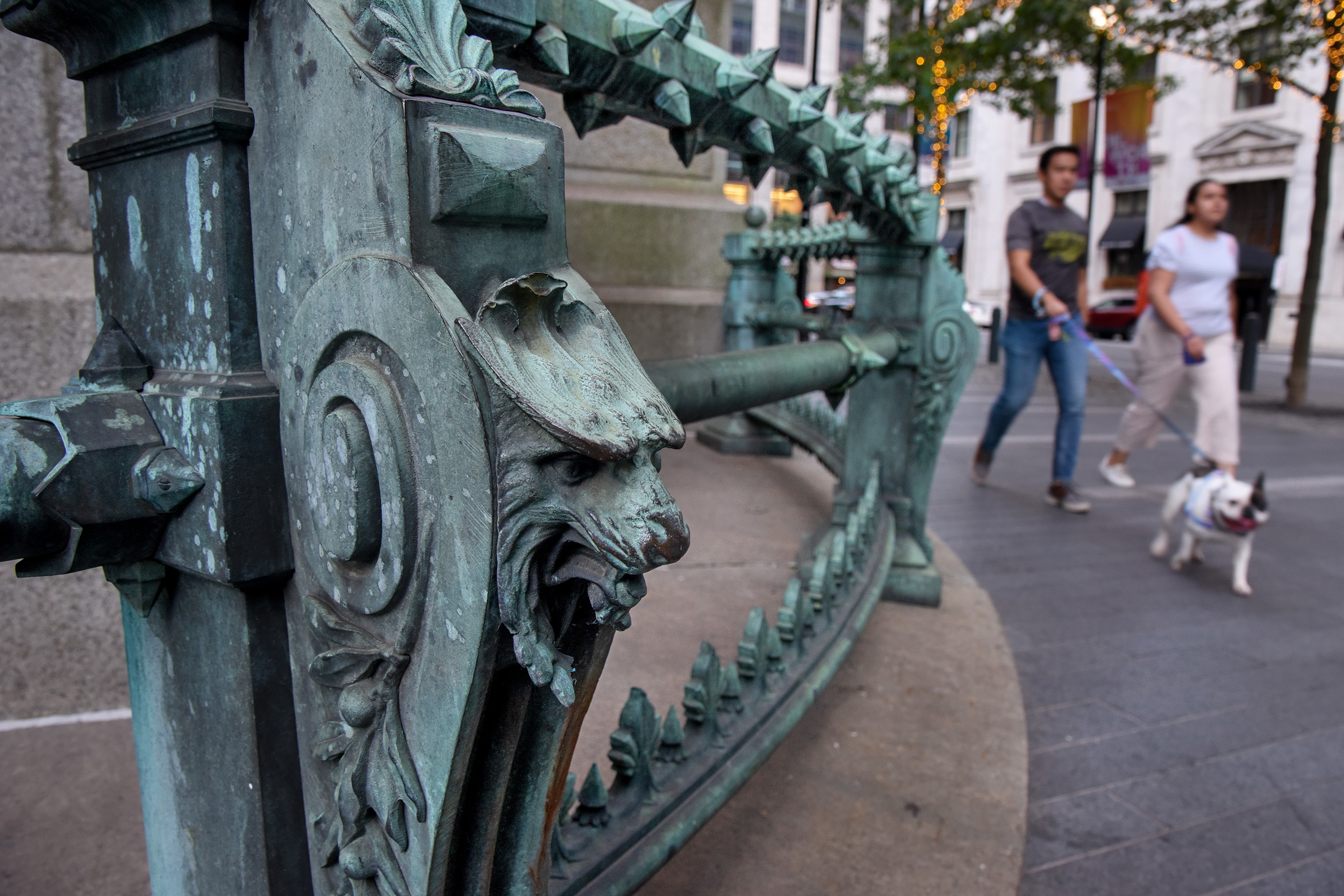
There were once almost 150 small lion heads on the ornate bronze spiked railing that surrounds City Hall. They, like most of the statuary on the building — including the big one of William Penn — were designed by Alexander Milne Calder. Less than two dozen of the lions remain after 100 years.
Calder had worked at the Royal Academy in Edinburgh and on the Albert Memorial in London before sailing to America. He stopped in New York, but chose Philadelphia, armed with a letter of introduction to the city’s most eminent sculptor, Joseph A. Bailly, and to the scion of a monument business, William Struthers. Calder was 22.
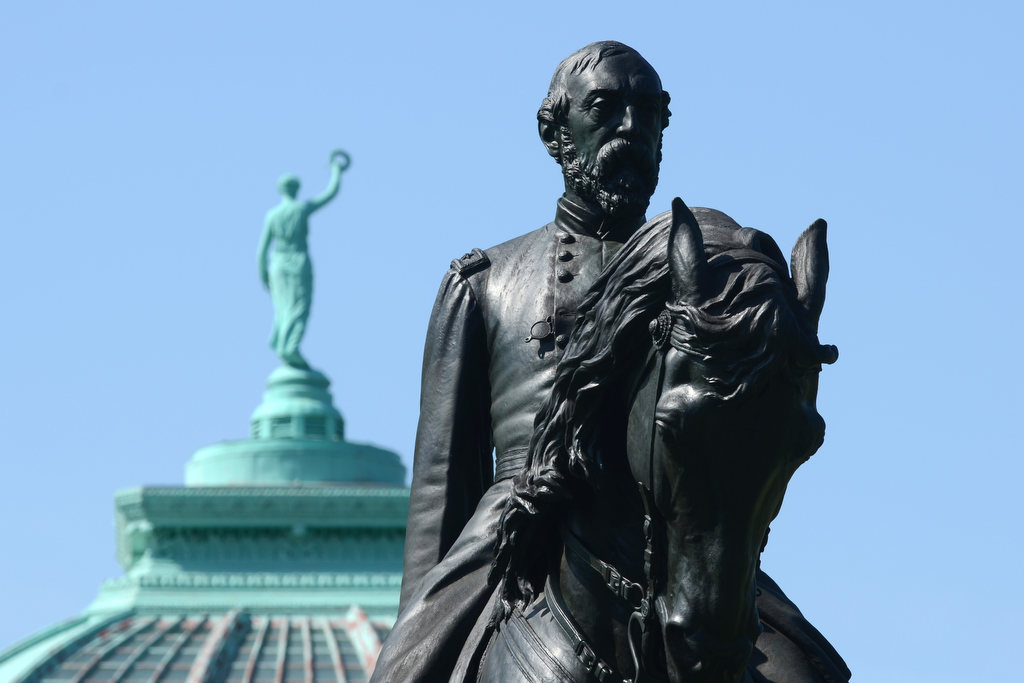
He registered that year at Pennsylvania Academy of the Fine Arts, the nation’s first art school and museum, and studied “antiques,” drawing from plaster casts of classic sculptures. It was not long before Calder won a prized commission over one of his instructors, to sculpt the likeness of Major Gen. George G. Meade atop his horse, Baldy. Meade, who’d defeated Robert E. Lee at Gettysburg, later designed many of the paths and drives of Fairmount Park. His statue stands now behind the Please Touch Museum on Lansdowne Drive.
Alexander Milne Calder’s Meade Equestrian Monument in the rear of Memorial Hall. It was cast using captured Confederate cannon for the bronze. Calder rendered Gen. Meade reining in his horse at a moment of crisis during battle.
When Greenberger gives tours of City Hall — though retired, she still volunteers one day a week — she likes to start in the north portico, where one can sample his expansive vision. Look up to the south, and there are Africans, surrounded by tobacco leaves, a lion. To the east, people from China, Japan, India, and an Asian elephant. West are the Native Americans and pioneers, and a bear. And north is Europe, people from Germany, England, France, maple leaves, and cattle. (She isn’t sure why cattle.)
Calder started on the Penn sculpture in 1886. The iconic figure, now visible from miles away, was the fourth version of the colony’s founder that the sculptor created. Calder’s models were one-tenth the size of the 37-foot high statue. His goal, according to an article at the time in The Inquirer, was to create “William Penn as he is known to Philadelphians; not a theoretical one or a fine English gentleman.”
The William Penn statue on display in the City Hall courtyard in 1893, the year before it was hoisted, bit by bit, to the top.
Four teams of horses drew massive plaster sections of the statue up Broad Street to the Tacony Iron & Metal Works. It wasn’t until Thanksgiving 1894 that the head was lifted onto the statue atop the tower, completing Calder’s colossus.
He was not happy with the result.
For most of the day, William Penn’s face is shadowed. That was not the artist’s intent. Calder had wanted Penn facing south, where the sun would light his youthful face and the intricate detail of his garb would be visible for all to admire.
But members of the Public Buildings Commission wanted Penn facing northeast, toward Penn Treaty Park, the site of the 1683 peace agreement with the Lenni-Lenape.
In a letter quoted in the Dec. 14, 1894 Inquirer, Calder wrote “I think that you will agree that is very disappointing from every point of view.”
Calder’s William Penn statue atop City Hall as seen from the Comcast Technology Center in Center City.
While Calder lived in a number of homes around the city — a home at 2020 Bainbridge St. and a studio at 337 Broad — when he registered at PAFA, the address listed was 1903 N. Park Ave., now on Temple’s campus. Decades later, his granddaughter, Margaret Calder Hayes, would remember the North Philadelphia house as “gloomy” — four floors with Empire furniture, a long dark hallway leading to a parlor where children were not welcome unaccompanied.
Calder had met his wife, Margaret Stirling, soon after his arrival in Philadelphia and married her after a brief courtship.
Three of their sons would study at PAFA and become artists — Ralph Milne Calder, and Norman Day Calder, and Alexander Stirling Calder. But it was “Stirling,” the eldest who left the biggest mark on Philadelphia.
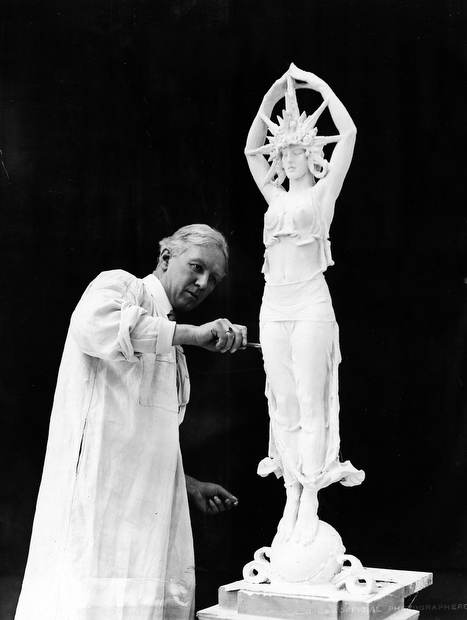
A portrait of A. Stirling Calder.
‘An idealist, somewhat withdrawn’
In a remembrance kept in the PAFA archives, Alexander Stirling Calder describes art as a fallback. Ever since he was 6 and saw the great Edwin Booth play Hamlet, Stirling Calder wanted to be an actor. But he was too shy. In 1885, he enrolled in art classes at the academy’s new building at Broad and Cherry, and years later recalled the first criticism of his teacher, the artist Thomas Eakins: “Attack all of your difficulties at once.” Eakins urged sculptors to paint, painters to sculpt, and to dissect cadavers to learn anatomy.
After studying at the École des Beaux-Arts in Paris, he returned home and won a commission to immortalize Samuel Gross with a statue that first stood on the National Mall in Washington, D.C. (It’s since been moved to the Center City campus of Thomas Jefferson University). At 25, he married a fellow PAFA student, Nanette Lederer, a painter.
To the critic Malcolm Cowley, Stirling Calder was “an idealist, somewhat withdrawn, wholly impractical, creating symbolic figures while brooding on the cruelty of nature.”
Foster says that looking at the allegorical figures in Logan Square’s Swann Fountain, you can see how Stirling inherited his father’s traditions.
Children cool off at the Swann Memorial Fountain in 2023.
“But the figures have a kind of sleek, modern simplicity to them,” she said. “They’re more stylized. So by the 1920s the Swann Fountain represents a kind of moving from the academic past into a more expressive and abstract style.”
The fence came off the Swann Fountain on a hot July day in 1924. The next evening, 10,000 revelers danced to tangos from a police band. Not everyone was pleased — some wondering if the average Philadelphian would grasp the significance of all that Calder had created.
He was unbothered.
“The meaning of works of art is just as mysterious as life itself. It can be explained in many ways by people of different philosophies. …,” he was quoted in the Evening Bulletin as saying. “There are lots of things in life we do not understand; art is no exception.”
Alexander “Sandy” Calder installs his “Big Spider” mobile at New York’s Museum of Modern Art in 1943.
‘A big child’
In his autobiography, Sandy Calder included a photograph of the sprawling mansion in Philadelphia where he says he was born. He called the place Lawnton. In 1898 when Calder was born, Lawnton was a neighborhood in East Oak Lane, served by the Reading Line and lined with grand homes where the wealthy went to escape the summer heat.
It’s unlikely Calder was born there. David Brownlee has dug into the mystery of the third and most famous Calder’s birthplace. While his family doctor lived in Lawnton, and it is possible that his mother delivered her son nearby, more likely, he was born near the edge of the growing city, at 1203 East Washington Lane in Germantown. City records showed that Stirling Calder rented that country place, while the family still owned a home on North Park Avenue.
In Margaret Calder Hayes’ memoir, she described how Sandy, two years younger, went to school in Buster Brown suits his mother had sewn and by 8 had built a Noah’s Ark of animals. He enrolled in Germantown Academy, when it was still in the city, but left at age 9 before moving to Croton-on-Hudson, N.Y.
“We love to claim him, but he only went to school here as a child,” Foster said of the youngest Calder’s time in Philadelphia.
Yet in some ways, he’s the essence of the city he was born in: practical, playful, unpretentious, no pushover.
He worked as a fireman on a steamer bound for San Francisco, spent a year keeping time in a Washington state logging camp. Trained as an mechanical engineer, he moved to New York City at age 25 to paint.
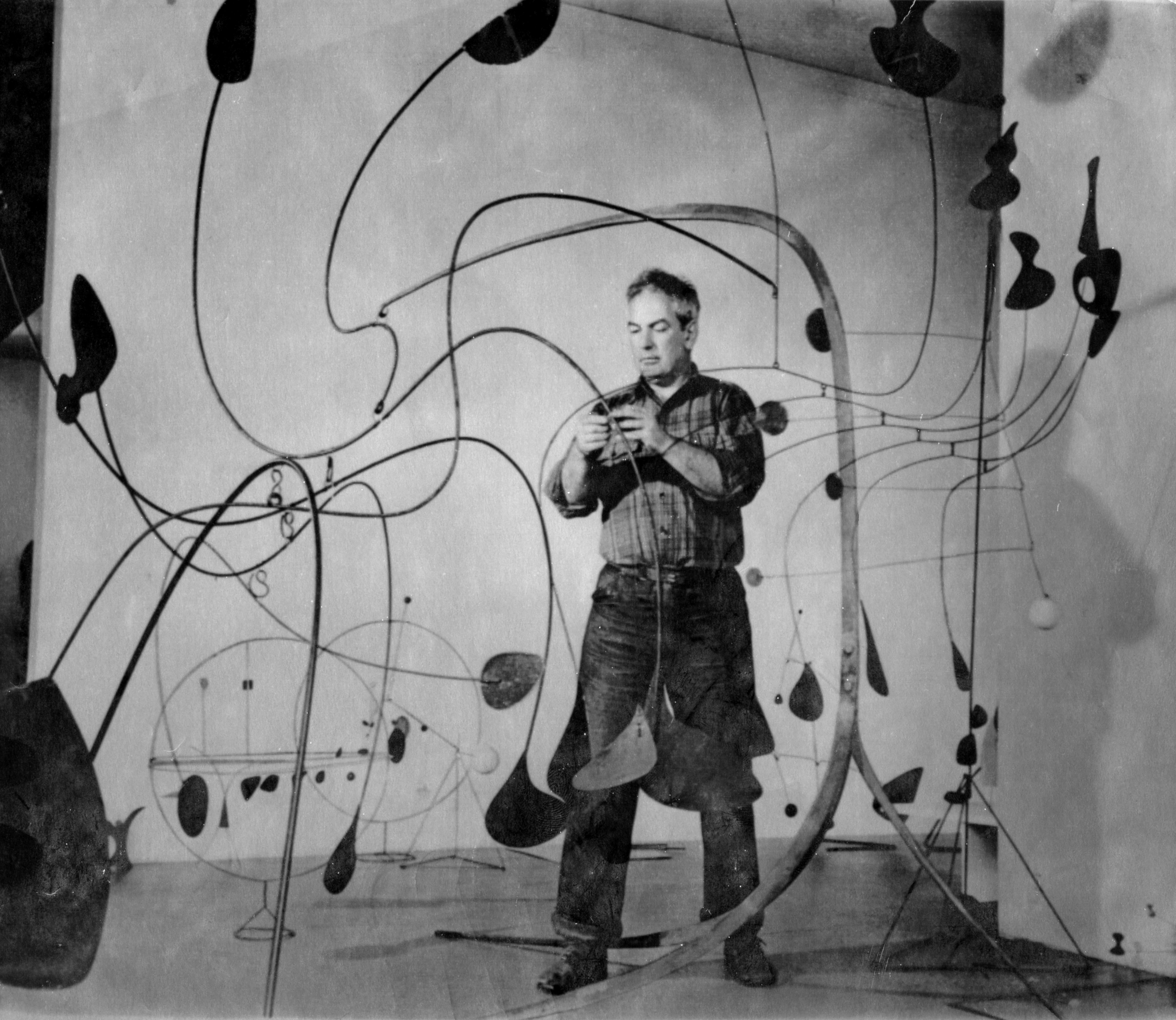
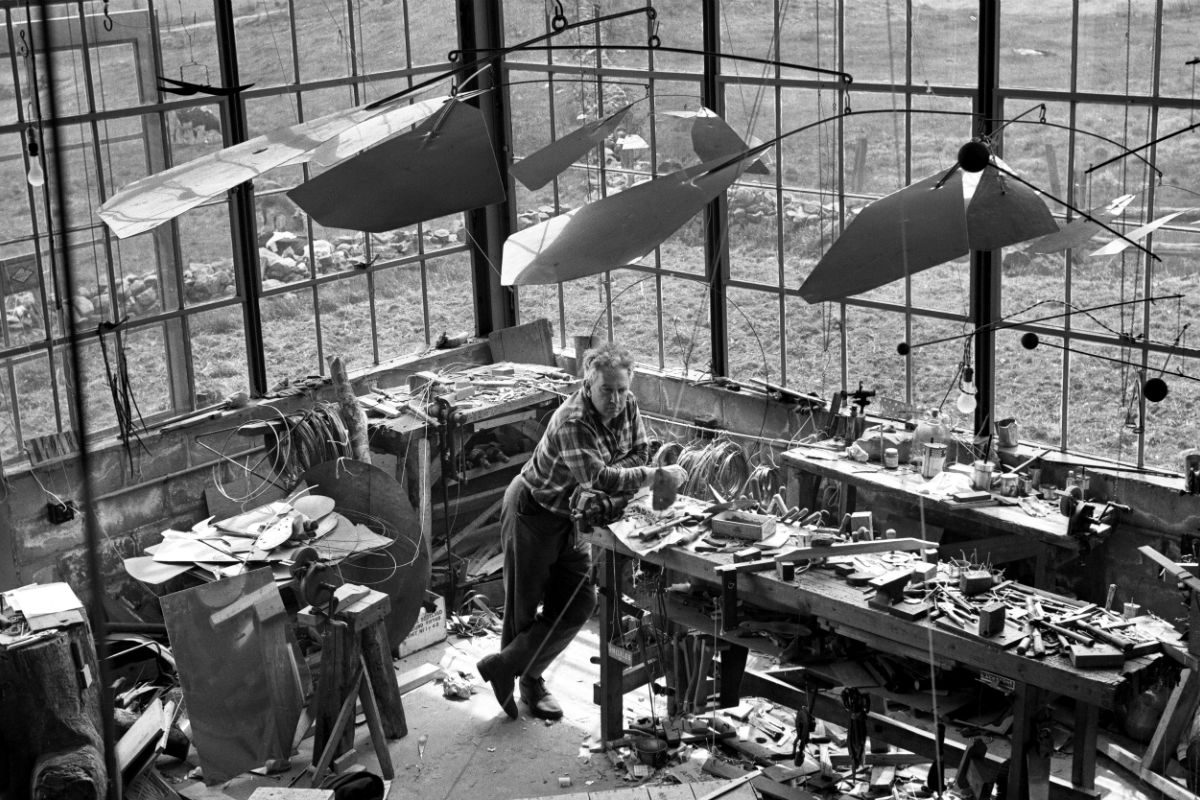
Calder with Mobile in his Roxbury, Ct., studio in 1941.
He is known as a 20th century modernist, the artist who put sculpture in motion.
After visiting Calder’s Paris studio in 1931 and marveling at his sculptures that relied on little motors, Marcel Duchamp coined the word “mobiles” for these kinetic marvels.
Parisians took to him, while they scoffed at other American artists. Cowley, in an introduction to Hayes’ Three Alexander Calders had a theory:
”Of course his work in itself, continually inventive, playful, and enchanting, was his ticket of admission.” But Sandy and his wife Louisa, “a beauty,” Cowley wrote, entertained generously and simply. Calder was in the tradition of the Noble Savage, “who disregards social conventions and judges everything by his instinctive standards.”
“A big child,” as his friend the playwright Arthur Miller once put it.
Sandy Calder created Ghost in 1964 for a retrospective at the Guggenheim in New York City, that included 400 examples of his mobiles, stabiles, toys, jewelry, carvings, tapestries, etc. The Art Museum bought the 34-foot-long showpiece a year later and brought it to the city of his birth.
Ghost, in the Great Stair Hall at the Philadelphia Museum of Art (now, Philadelphia Art Museum). It was created to hang in the center of the Guggenheim Museum in New York for Calder’s exhibition there in 1964.
“It’s a colossal example of the mobile and it’s majestic,” Foster said. “When it moves, it’s just breathtaking, because it, it almost moves like a giant dinosaur or something. In other words, it’s got long spines and fins, and it moves very slowly and grandly in the air currents in the Great Stair Hall. … It’s delightful.”
“When every baby has a mobile hanging over their crib, you don’t think about Calder as being the genesis of this. I think he would be delighted to know that … because he was such a child at heart. He managed to keep that imagination.”
Now, Philadelphia will be home to an institution that celebrates that imagination. It’s a fitting homecoming for an artist whose life and legacy was so shaped by his family, who in turn both shaped and were shaped by Philadelphia.
The weight of a name
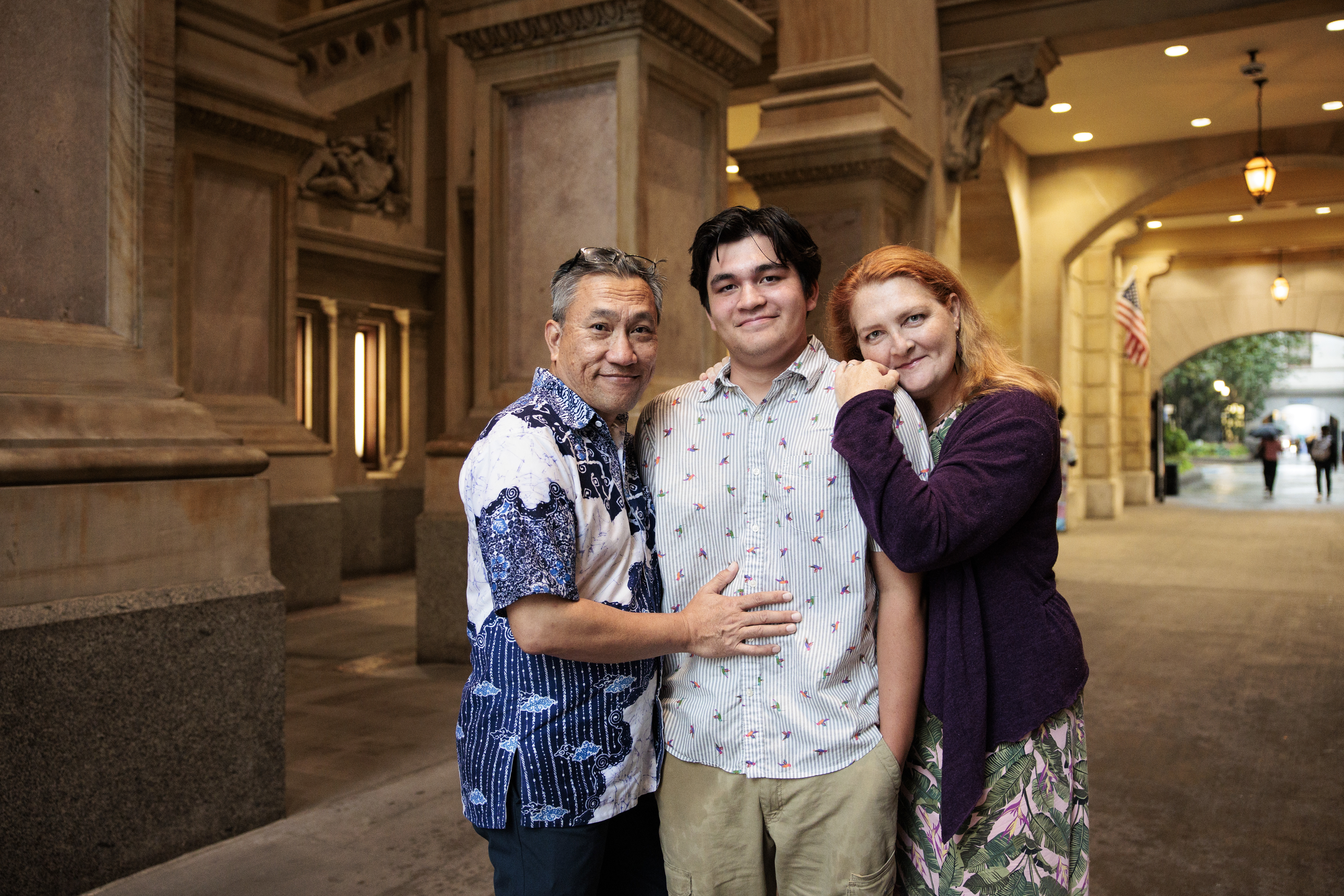
Tú Huynh was working at the National Gallery of Art in Washington, D.C., when he told a job applicant to look for him under the giant Calder mobile that hangs in the East Building.
That was in 1997. The applicant,Kaleo Bird, landed the job — and later, his heart. Three years later they moved as a couple to Philadelphia, where she started grad school. Soon they married.
In 2008, when their son was born, they didn’t take long to decide on a first name:
Calder.
He’s now 17, a senior at Penn Charter School.
Tú Huynh, Calder Huynh, 17, and Kaleo Bird at Philadelphia City Hall where more than 250 of Alexander Milne Calder’s sculptures adorn the building, topped by his statue of William Penn.
“I have yet to meet anyone my age who knows who the whole Calder family was, which is a shame because I feel they’ve had such an impact here, particularly with City Hall,” said the teen. “So many people think Ben Franklin is atop City Hall and don’t know anything about these beautiful sculptures.”
His father now runs the Art in City Hall program.
“I tell people that the true art of City Hall belongs to Alexander Milne Calder,” says Tú Huynh. “This was his Sistine Chapel. There are over 250 sculptures, leafs, busts all over this building. And that’s an homage to his ideal of what this city, state and country is supposed to be about. And he doesn’t sugarcoat anything. There are enslaved Africans, Indigenous populations, Europeans. It tells you the folks who’ve contributed to this extraordinary country.”
Calder Huynh says he feels the weight of his name — in a way that the two generations named after Alexander Milne Calder must have felt.
He paints, draws in charcoal, creates his own comic books — exploring themes with super heroes and Westerns, always with an eye on his father’s works that line the walls of their home.
“Naming me after them is such a big thing to put on someone. For me, it is a weight that Alexander Sandy Calder must have felt. A weight to achieve and create something that differs from what his family members had created, which is kind of cool. … Put something in this world that hasn’t been done yet.”
“The Magic of Calder Gardens” is produced with support from Lisa D. Kabnick and John H. McFadden. Editorial content is created independently of the project’s donors.
To support The Inquirer’s High-Impact Journalism Fund, visit Inquirer.com/giving
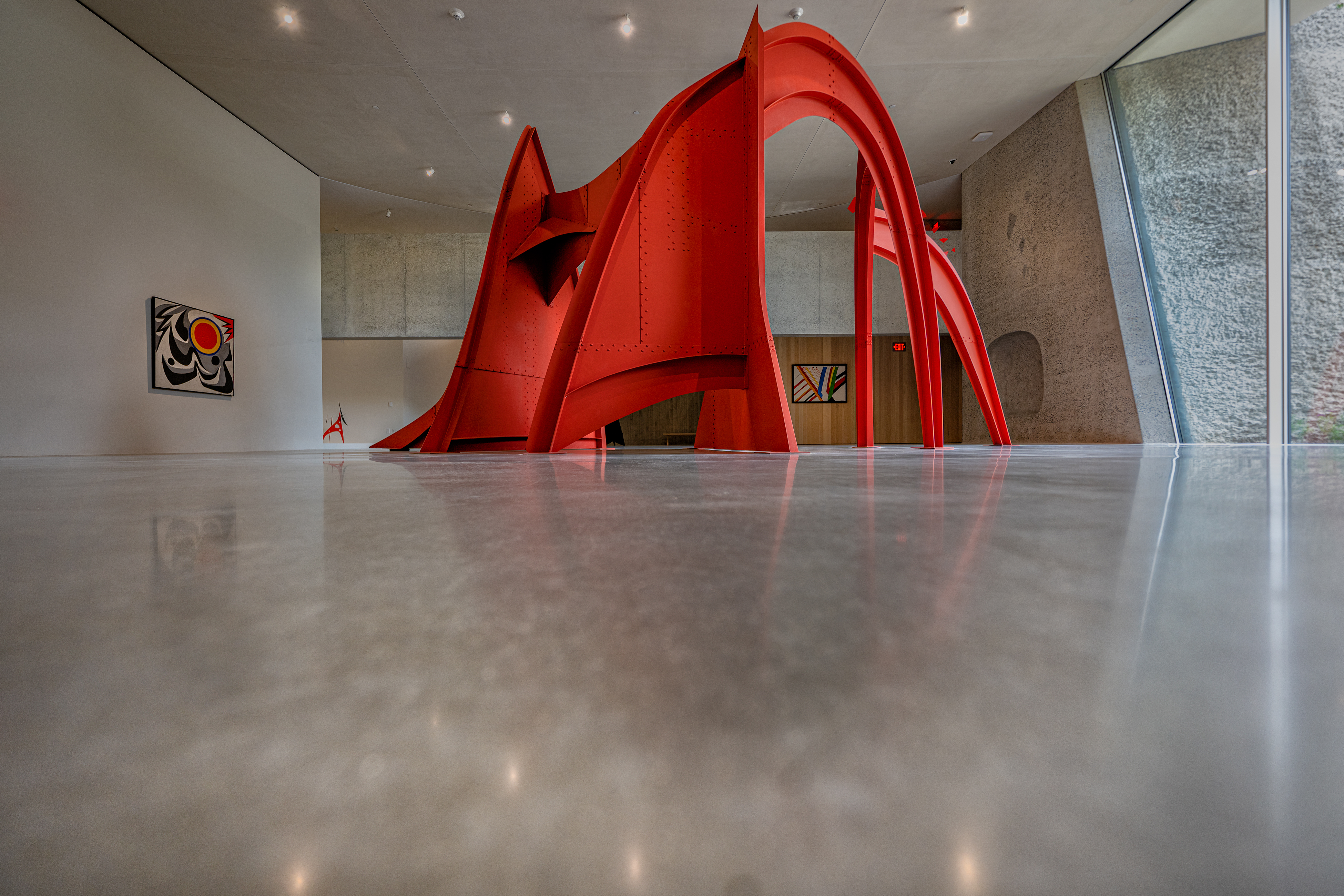
Jerusalem Stabile II, 1976 by Alexander Calder is shown on display at the Calder Museum in Philadelphia.
Ray the Nubian goat has come a long way since a parasite threatened to take his life, leaving him with three legs but not dampening his spirit. Now he’s in need of a wheelchair.
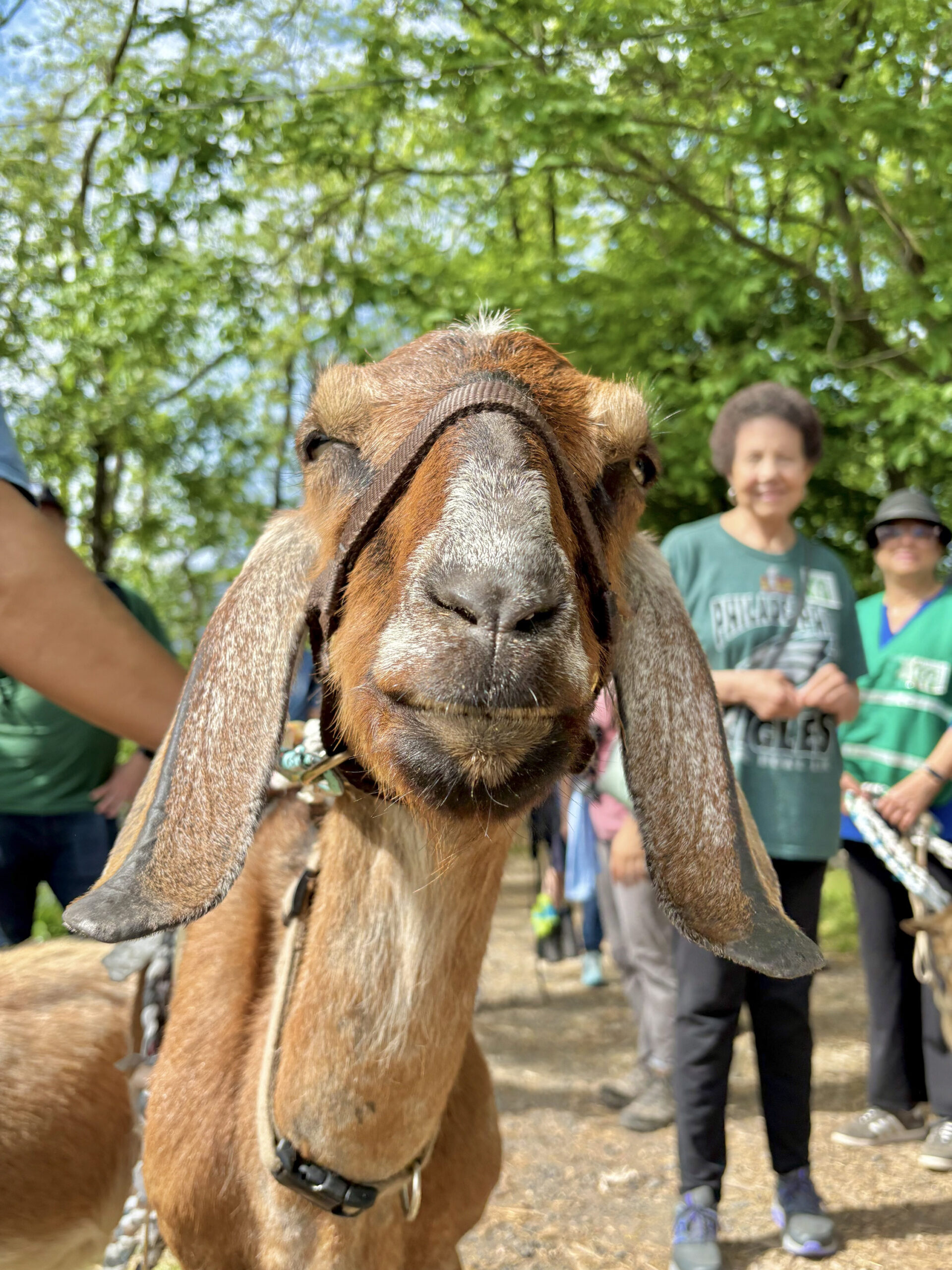
As a jolly middle-aged goat, 7-year-old Ray loved taking long strolls around Awbury Arboretum, supporting people in bereavement with hoofshakes and kisses, and taking children with cerebral palsy on rides.
The wagon was his biggest job, and he took it seriously, said Karen Krivit, the director of Philly Goat Project, an East Germantown nonprofit that provides community wellness through nature connection. So much so that he hid his pain.
“Goats tend to hide their injuries,” Krivit said. “Ray was determined to keep from showing any pain and just trying to pull his head high and be with everybody else.”
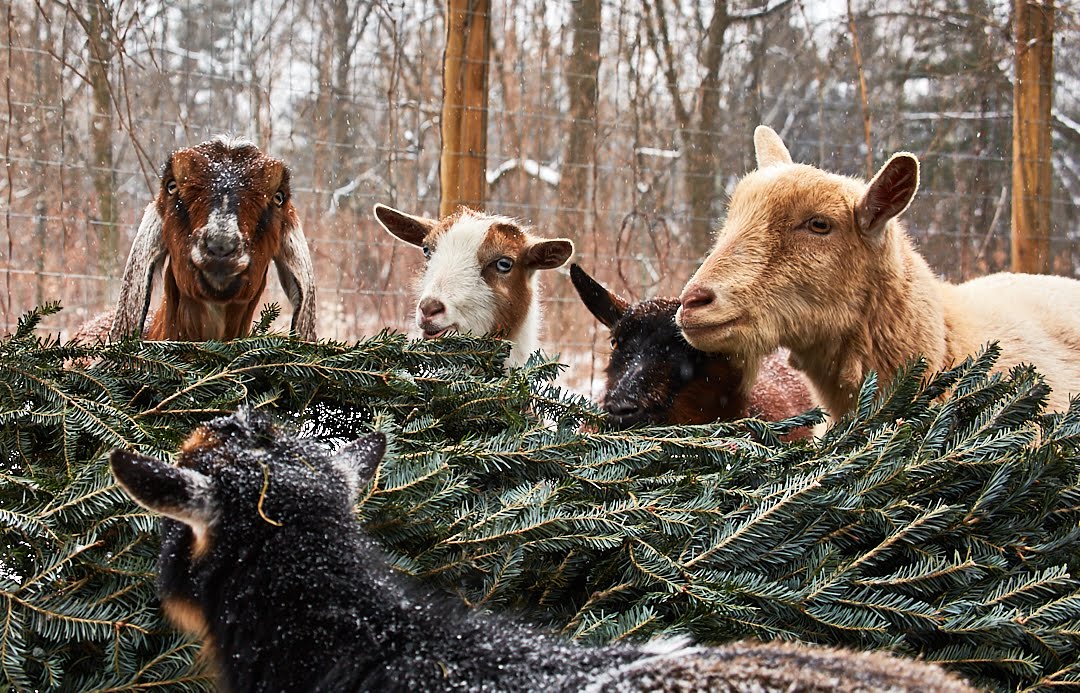
Philly Goat Project’s annual Christmas Tree-Cycle feeds old trees to goats.
Ray had been battling a parasite infection common among outdoor animals, Krivit said. But, as often happens for hisbreed, he was resistant to the medication. As his veterinarian team continued trying for a cure, a slight limp alerted the Philly Goat Project staff that his condition had worsened.
The parasite affected his bone density, causing one of his femurs to break in three places. A big problem for any goat due to their rough-and-tumble nature.
The place Ray had called home since he was 3 months old rallied around him, raising money for a titanium plate to secure the bone in place. But his anatomy once again worked against him.
With Ray standing at a little over 3 feet tall, his natural lanky composition would have made it hard for the plate and the screws to hold onto the bone. The titanium plate could have collapsed his bone in another area, causing additional damage, Krivit said.
“We were able to eliminate the parasite, but not in time enough to save his leg,” she added. “The safest long-term plan was amputation.”
For tall animals in particular, it’s hard to thrive on three legs, Krivit explained. The biggest challenges since the amputation in May have been teaching him how to move around by himself and reintegrating him into his herd of 13 goats.
“Humans tend to be mean to each other if you look different or act differently; it’s the same with goats,” Krivit said. “But humans can use their voices and talk about it; goats can only be mean and exclude another goat. Not being rejected is vital to his survival.”
Ray was placed in a nearby separate stall. His brother Teddy never stopped looking out for him.
Ten thousand dollars and months of rehabilitation later, Ray has a severe limp, but can now stand up and lie down by himself. The herd has accepted him back, but he seems to feel left behind when they go on long walks, often bellowing as the other goats head out without him.
“Because he is moving his body in three legs instead of four, he is at risk for hurting himself further if he goes on a long walk, making it harder for him to stay connected to the herd,” Krivit said.
So Ray needs a wheelchair.
For goats, that involves a metal harness with a wheel on each side of the goat, mimicking a leg. But they are expensive.
The Goat Project needs $2,000 for a custom-made wheelchair for Ray, physical therapy, and proper fitting.
For Krivit, leaving her beloved otherwise-healthy goat without a wheelchair is not an option. She is hoping to raise enough money at the group’s annual GOAToberFest to get him a chair.
The Oct. 18 event will take place at the Conservatory at Laurel Hill West Cemetery, and tickets run for $75, with free snacks, drinks, and goodie bags.
Until then, she hopes folks can see in Ray a symbol of resilience.
“A wheelchair is the missing link for him to safely go on walks that will support his body and his spirit to not be left behind,” Krivit said. “If Ray can be resilient and he can survive this, I hope that gives people hope in their times of adversity.”
Krivit hopes their upcoming annual GOAToberFest can help get Ray a wheelchair.
Lower Merion Township’s effort to limit where guns are sold violates state law, Commonwealth Court ruled Thursday.
In a case that holds major implications for the power of local governments across Pennsylvania, the court threw out the township’s zoning ordinance that sought to block holders of federal firearms licenses from operating in walkable downtown areas and residential neighborhoods.
The question at the heart of the case was whether the ordinance regulated land-use decisions, the bread and butter of local government, or the sale of firearms, which only the state can do.
A majority opinion, signed by five judges, said the township’s ordinance violated state law that prohibits local governments from regulating guns because its requirements went beyond geographic limits.
“The Township’s ordinance here is clearly intended to regulate the sale of firearms, rather than to regulate zoning,” wrote Judge Matthew Wolf in the opinion. “It is a gun regulation, not a zoning regulation.”
In a statement, Todd Sinai, the Democratic president of the Lower Merion Board of Commissioners, said the township was considering its legal and legislative options.
“We, of course, are disappointed in the Commonwealth Court’s decision today. It is a fundamental and important right of municipalities to be able to zone the location of uses to best serve their residents and property owners,” Sinai said.
Frustrated with the lack of gun-control measures out of Harrisburg, advocates and officials have sought to use local ordinances to limit gun sales and where guns can be carried, and to ban certain firearms. Philadelphia has fought for years for the ability to enact gun laws. But ordinances passed by Philly and other cities, including Pittsburgh, have largely been struck down by courts.
One strategy that has had limited success is the use of zoning ordinances to limit the locations of firearms-related activities, such as shooting ranges or gun stores. The Lower Merion case was seen by some as a test on how far zoning can go to bypass state preemption.
“The Commonwealth Court has reaffirmed once again that local forms of government cannot regulate firearms and ammunition in any manner,” said Joshua Prince, an attorney with Civil Rights Defense Firm who filed the lawsuit.
Lower Merion can appeal the decision to the Pennsylvania Supreme Court, which would have to agree to hear the case, but the ruling delivered a blow to gun-control advocates who had hoped Lower Merion’s ordinance could be replicated elsewhere in the state.
“The decision to treat firearm operations as different within zoning than any other business is unusual and concerning,” said Adam Garber, the executive director of CeaseFire PA.
The ruling, he said, creates a road map for how municipalities can zone firearm stores but also puts the impetus on the state to address gun regulations, something lawmakers in Harrisburg have refused to do.
The township approved the zoning rules for firearms dealers in 2023 after the opening of Shot Tec, a gun training facility and seller in Bala Cynwyd, sparked community outrage. The zoning rules established a set of criteria for sellers to operate under and said they could open only in strip malls and industrial-use areas.
The township argued that, while local governments are not allowed to regulate firearms, they have broad power over zoning and land use.
Grant Schmidt, the owner of the Bala Cynwyd shop, sued after the zoning ordinance impeded his ability to open a second location in his home.
He responded to the news of the ruling Thursday with a gif of Ric Flair cheering. His business, which offers training and education on firearms in addition to buying, selling, and storing them, has had four locations in five years. He said he hoped he could now focus on expanding his business rather than fighting local policies.
“Now I’m looking to just grow and be normal and invest in my staff more,” Schmidt said.
The litigation focuses on the requirements Schmidt had to adhere to for his most recent Rock Hill Road location, which is within one of the four districts that were zoned for businesses that require a federal gun license. The ordinance went beyond restricting place and imposed 12 additional requirements, such as installing smash-resistant windows, an alarm system, and internal video surveillance.
Montgomery County Court found that all but three requirements were preempted by state law. Following Schmidt’s appeal, Commonwealth Court struck down the remaining requirements and the place restrictions.
Lower Merion argued that other businesses, such as medical marijuana dispensaries, animal hospitals, and funeral homes, are subject to compatible conditions to operate. These types of requirements are “traditional local land use control not specific to firearms,” the township argued, according to the majority opinion.
To make its case, Lower Merion cited a previous, non-precedential decision by Commonwealth Court that allowed Philadelphia to limit gun shops to specific zoning districts.
The difference between the cases, Wolf wrote, is that Philadelphia limited the location of the gun shops but said nothing about how they need to operate. Lower Merion went a step further to restrict how gun shop owners “conduct their business.”
Two judges, Renee Cohen Jubelirer and Lori Dumas, disagreed with the majority’s analysis, saying the decision “strips the Township of its traditional power over land use and zoning.”
“Contrary to the Majority’s conclusion, none of the provisions of the ordinance at issue here regulate the ownership, transportation, or transfer of firearms, ammunition, or ammunition components,” Jubelirer wrote in the dissent.
Correction: An original version of this story incorrectly identified the gif sent by Schmidt. It featured Ric Flair.
This suburban content is produced with support from the Leslie Miller and Richard Worley Foundation and The Lenfest Institute for Journalism. Editorial content is created independently of the project donors. Gifts to support The Inquirer’s high-impact journalism can be made at inquirer.com/donate. A list of Lenfest Institute donors can be found at lenfestinstitute.org/supporters.
Think you know your news? There’s only one way to find out. Welcome back to our weekly News Quiz — a quick way to see if your reading habits are sinking in and to put your local news knowledge to the test.
Question 1 of 10
Which neighborhood is joining the Open Streets movement this month?
CorrectIncorrect. XX% of other readers got this question right.
Open Streets is coming to Queen Village on the next two Saturdays as the neighbors association seeks the business boost and relaxing car-free vibe of the widely popular original version on West Walnut Street.
Question 2 of 10
The Philadelphia Museum of Art has a new name and acronym. What is it?
CorrectIncorrect. XX% of other readers got this question right.
After 87 years, it’s not the Philadelphia Museum of Art anymore. As of Wednesday, the city’s largest visual arts institution has a new, slimmed-down name: Philadelphia Art Museum. The museum is now sometimes referring to itself under an even shorter sub-brand: PhAM.
Subscribe to The Philadelphia Inquirer
Our reporting is directly supported by reader subscriptions. If you want more journalism like this story, please subscribe today.
Which Pennsylvania convenience store performed best in a national customer satisfaction survey?
CorrectIncorrect. XX% of other readers got this question right.
Wawa and Sheetz tied for the No. 2 slot of a national customer satisfaction survey, fueling the long-standing local rivalry. Wisconsin-based Kwik Trip took the No. 1 slot.
Question 4 of 10
A movie about a movie is filming in parts of Philly and New Jersey. What will it be about?
CorrectIncorrect. XX% of other readers got this question right.
I Play Rocky is a dramatic, behind-the-scenes look at the filming of the Oscar-winning Rocky. New York-based Grant Wilfley Casting is looking to hire real life boxers as extras.
Question 5 of 10
“Real Housewives” star Yolanda Hadid, is selling the Bucks County farmhouse she owned, where her three children — models Gigi and Bella Hadid, and musician Anwar Hadid — would visit and stay. Which feature does the home NOT include?
CorrectIncorrect. XX% of other readers got this question right.
A lavender field, an outdoor labyrinth for meditating, and a dressage area are just some of the features of Yolanda Hadid’s farmhouse, recently listed for $10.88 million. But there’s no movie theater feature in sight.
story continues after advertisement
Question 6 of 10
Former Phillies star and current TBS analyst Jimmy Rollins won a MasterCraft X24 speedboat after sinking a hole in one during the 12th hole at the American Century Championship at Edgewood Tahoe in July. Ultimately, he decided to sell it. Who bought it?
CorrectIncorrect. XX% of other readers got this question right.
While Rollins initially said he planned to keep the boat, valued around $325,000, he ultimately decided to sell it to Pearl Jam guitarist Mike McCready. Apparently, Pearl Jam singer Eddie Vedder is a big wakeboarding fan and was helping McCready find a boat. MasterCraft knew Rollins was selling the boat he won, so one thing led to another, and now McCready has the speedboat he was looking for.
Question 7 of 10
A then 12-year-old Harrison Bader made a small cameo in this indie band’s music video:
CorrectIncorrect. XX% of other readers got this question right.
Bader is one of a group of children featured in Vampire Weekend’s music video for the song “Oxford Comma.” That’s because Bader is cousins with the band’s bassist, Chris Baio. The two grew up together in Bronxville, N.Y.
Question 8 of 10
Prime Video has a new documentary on a Philly sports favorite. Who does it star?
CorrectIncorrect. XX% of other readers got this question right.
Prime Video’s Saquon documentary premiered on Thursday, the same day the Eagles faced the New York Giants on Amazon’s streaming service. It’s no coincidence.
Question 9 of 10
24,000 bottles of this celebrity’s tequila brand were stolen on their way to Pennsylvania:
CorrectIncorrect. XX% of other readers got this question right.
About $1 million worth of Guy Fieri’s Santo Tequila went missing en route to a warehouse in Montgomery County. But now, it appears an international crime group was to blame for the booze never even making it to Pennsylvania.
Question 10 of 10
Unsurprisingly, Jason Kelce loves a lot of songs off Taylor Swift’s new album, The Life of a Showgirl. But, he said, “Opalite” and this other track are his No. 1 picks:
CorrectIncorrect. XX% of other readers got this question right.
The eldest Kelce said his other favorite track is “Eldest Daughter” because he’s “a sucker for a ballad.” He added, “I just think the expression in that song and the sentiment behind it is beautiful.”
Your Results
You have skipped .
You scored XX out of 10.
The average reader scored XX out of 10
Seems like you’ve been skimming more than reading there, buddy. There’s always next week.
You’ve read some articles (or made some educated guesses) but we wouldn’t come to you first for our local news recaps. Better luck next week!
Do you work here? You’re a local news stan with the latest updates on Philly happenings. Your friends definitely ask you for summaries on what’s going on and it shows.
Gloria Del Piano, 72, of Philadelphia, celebrated designer of silk clothing, fashion accessories, and jewelry, former Italian TV producer and public relations director, energy therapist, Italian translator, voice-over actor, and community volunteer, died Wednesday, Oct. 1, of complications from cancer at the Hospital of the University of Pennsylvania.
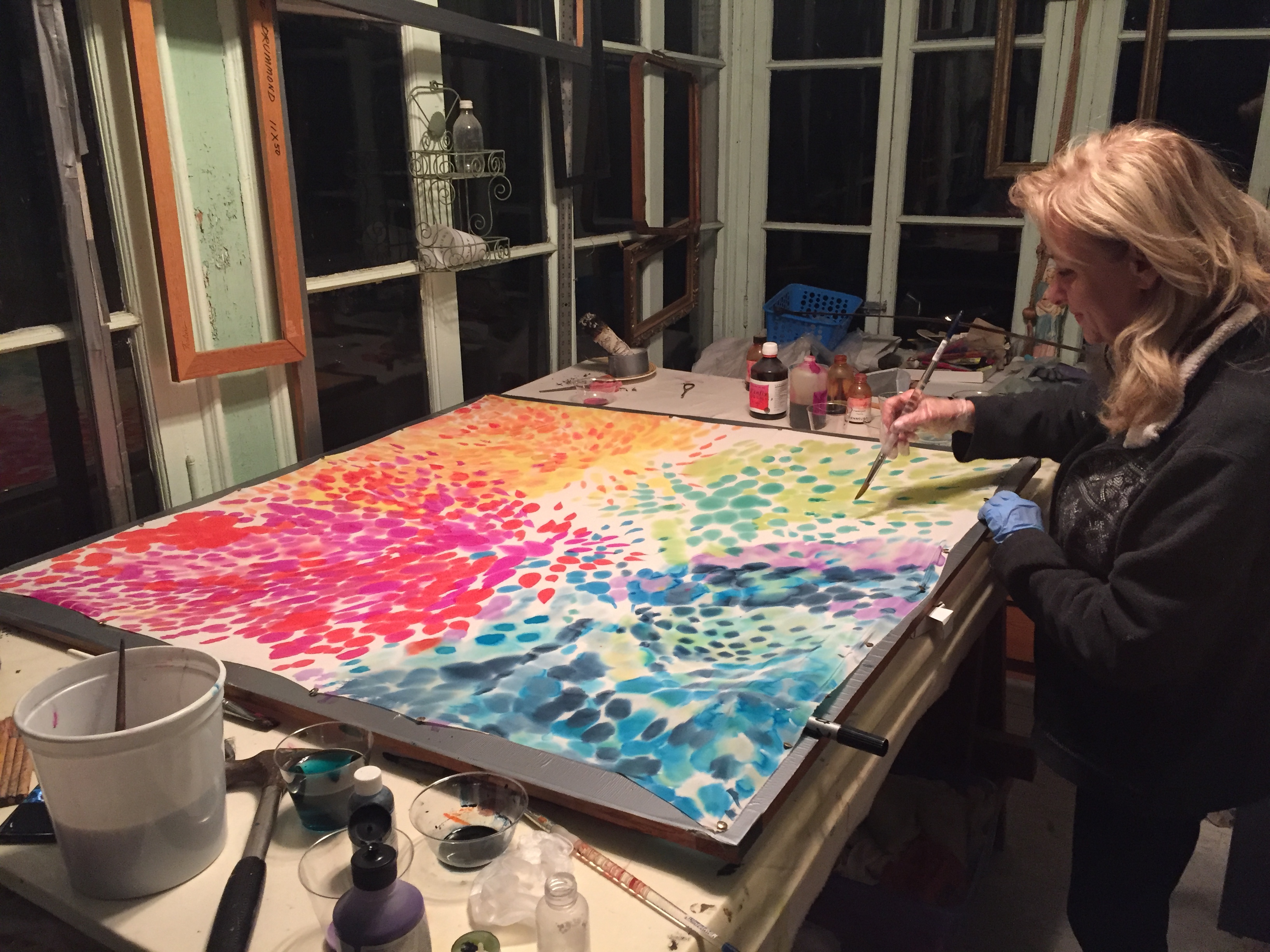
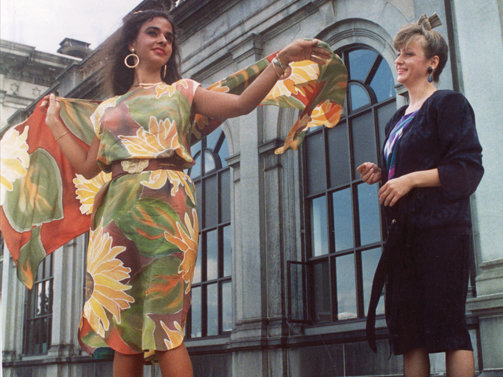
Energetic, artistic, and indomitable, Ms. Del Piano was 31 when she arrived in Philadelphia from Rome in 1984. She had little money and knew little English. But she discovered her skill for silk painting in a do-it-yourself class, and the colorful hand-painted silk scarves, evening wraps, handkerchiefs, handbags, and original jewelry she went on to create turned Gloria Del Piano Accessories LLC into a fashion powerhouse.
In just a few years, she opened a store on Bainbridge Street and contracted with Bergdorf Goodman, Neiman Marcus, Nan Duskin, Nordstrom, and hundreds of other fashion outlets to carry her designs in Philadelphia, New York, Los Angeles, San Francisco, Detroit, Minneapolis, and elsewhere around the country. Locally, her signature scarves and earrings were featured at gallery exhibits, charity benefits, private homes, and fashion shows at Penn’s Landing, Fairmount Park, the Wayne Art Center, and elsewhere.
Many of Ms. Del Piano’s designs were colorful.
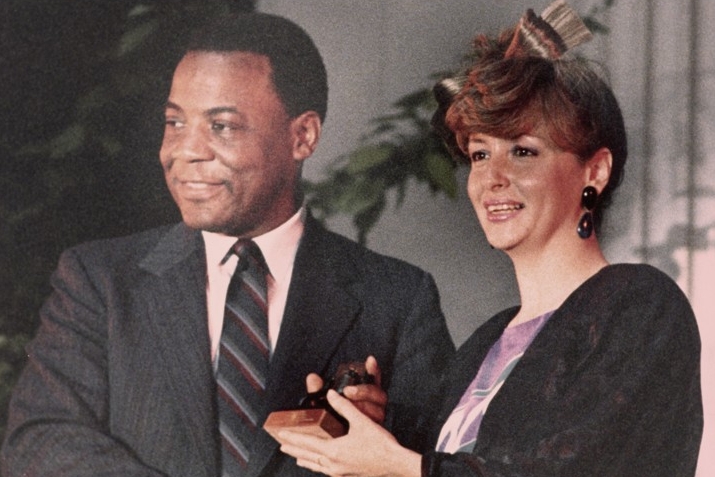
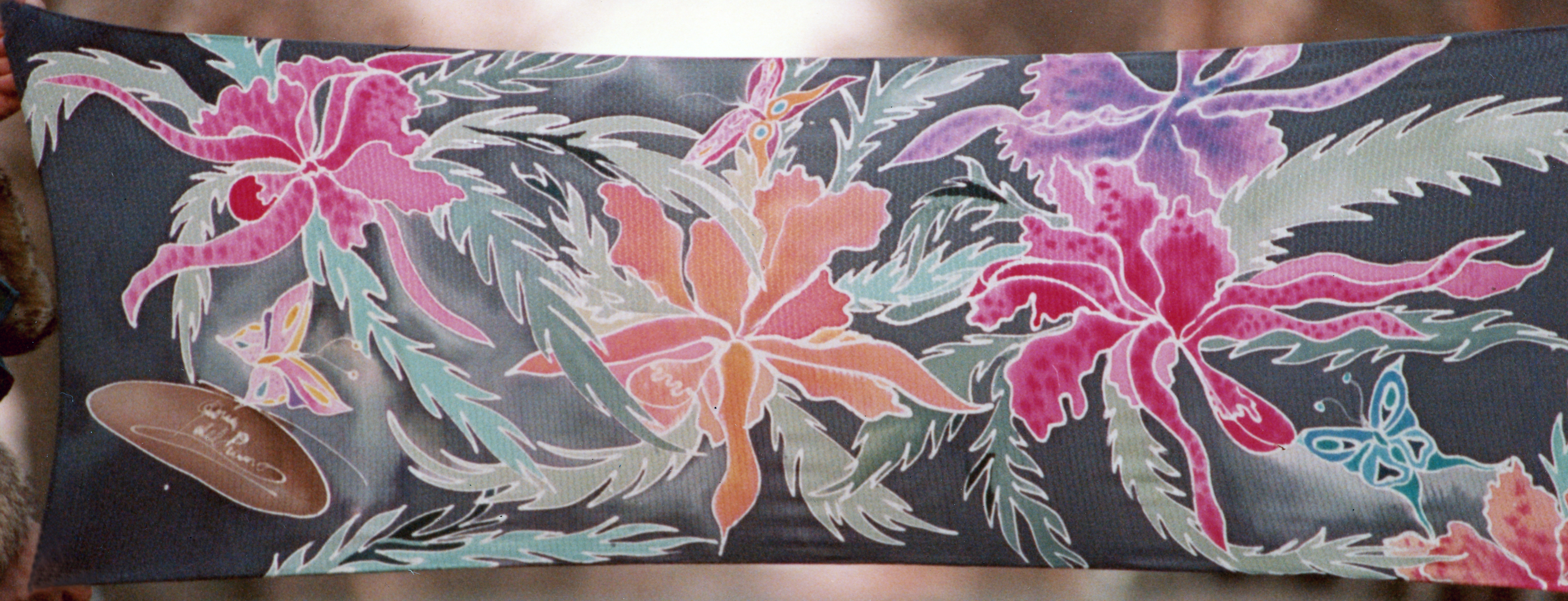
Her line of accessories won awards for excellence and creativity at the Philadelphia Dresses the World fashion expos in 1986 and ’87, and she was inducted into the Philadelphia Get to Know Us Fashion Hall of Fame in 1988. The Inquirer, Daily News, Los Angeles Times, and other outlets publicized her exhibits, and a fashion writer for Newsday called her scarves, with flower and bird patterns, “exquisite” in a 1986 story.
Some of her scarves were priced between $220 and $300 in 1986, and a black cape listed in 1988 at $495. In 1993, a gold lace-trimmed handkerchief was $45. A fellow artist exhibited with Ms. Del Piano at a Philadelphia festival and said in a fashion blog: “We watched her tie a scarf so many ways so fast it was like a magic act.”
Earlier, from 1976 to 1984, Ms. Del Piano worked as a program producer and public relations director at GBR-TV in Rome during the station’s glory years. She also did Italian voice-overs, interpretations, and translations for clients of all kinds.
Ms. Del Piano (right) smiles at a model wearing her designs at an event at Memorial Hall in Fairmount Park.
She served on the board of the nonprofit Enabling Minds, volunteered in Philadelphia as aCourt Appointed Special Advocate for Children, and raised funds for other organizations she championed. In a Facebook tribute, a friend said she was “bigger than life itself” with “a flare of the Italian opera star and the warmth of the Mother Earth itself.”
Her partner, Wainwright Ballard, said: “She was generous and empathetic. She took care of everyone, including those abandoned or forgotten by others.”
Gloria Del Piano was born Jan. 20, 1953, in Rome. She was artistic as a girl and always interested in spiritual growth and personal transformation. She studied sociology and business administration after high school in Italy, was certified by the Florida-based Barbara Brennan School of Healing in 2000, and led seminars in healing therapy for years.
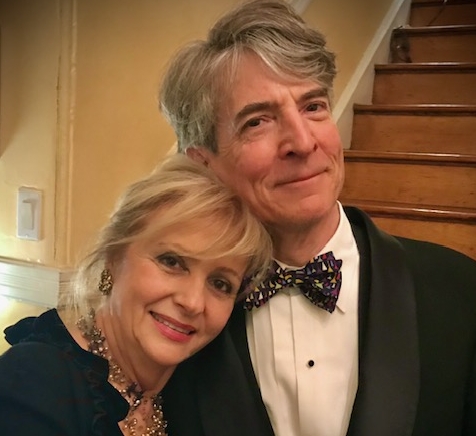
Ms. Del Piano and her partner, Wainwright Ballard, met in Chestnut Hill.
She married Roberto Borea in 1985, and they divorced in 1992. She met Ballard at the Mermaid Inn in Chestnut Hill, and they spent the last eight years dancing, traveling, and enjoying life together.
Ms. Del Piano doted on her family and friends in the United States and Italy, and returned often to Rome for reunions. She lived in Mount Airy and then a 20-room house in Germantown, and visitors marveled at her eclectic collection of art and antiques.
She enjoyed music, gardening, thrift shopping, and chatting with friends. Friends called her “a philosopher,” “a noble soul,” and “a magician in the kitchen.” She delighted in cooking and entertaining, Ballard said, and always sent guests home with armloads of leftovers.
Ms. Del Piano receives an award from then-Mayor Wilson Goode at a fashion expo in Philadelphia.
Her “fabulous parties” were “fun and adventurous,” a friend said. Ms. Del Piano said on Facebook: “You never know how wonderful what you have is when you have it. It is when you miss it that we realize how lucky we were.”
A friend said her “optimism, tenacity, enthusiasm, kindness, beauty, and elegance will always be with us.” Another friend said: “My life has been made richer having known Gloria Del Piano.”
In addition to Ballard, Ms. Del Piano is survived by a brother, two sisters, and other relatives. Her former husband died earlier.
A funeral mass is to be held at 9:30 a.m. on Tuesday, Nov. 4, at St. Vincent de Paul Church, 109 E. Price St., Philadelphia, Pa. 19144.
Donations in her name may be made to Unite for Her, 22 E. King St., Malvern, Pa. 19355.
Many of Ms. Del Piano’s designs featured flowers and birds.
HARRISBURG — Pennsylvania Treasurer Stacy Garrity stepped in on Wednesday to offer counties and early education programs $500 million in low-interest loans to hold them over until a final state budget deal is complete, sidestepping the General Assembly and Gov. Josh Shapiro as they near the start of a third month at an impasse.
Garrity, a Republican who last month announced her bid to challenge Shapiro in next year’s gubernatorial election, announced the unprecedented move to allow the state Treasury to offer the loans to county human service departmentsfor the many social services they provide, as well as for early education Head Start programs, at a 4.5% interest rate.
Counties, schools, and social service providers have pleaded for months with the legislature to finalize a budget so they can begin receiving their expected state payments, which have been on hold since the beginning of the fiscal year on July 1. Some counties have had to secure private loans to hold them over until state payments begin, while others — including those around the Philadelphia region — have relied on their reserves. Other counties have frozen hiring and spending as they await a resolution to the budget stalemate.
The move would allow counties to access millions of dollars for early education programs serving 35,000 children across the state, as well as for county social services — all of which have been operating for months without their state appropriation, with no end to the budget impasse in sight.
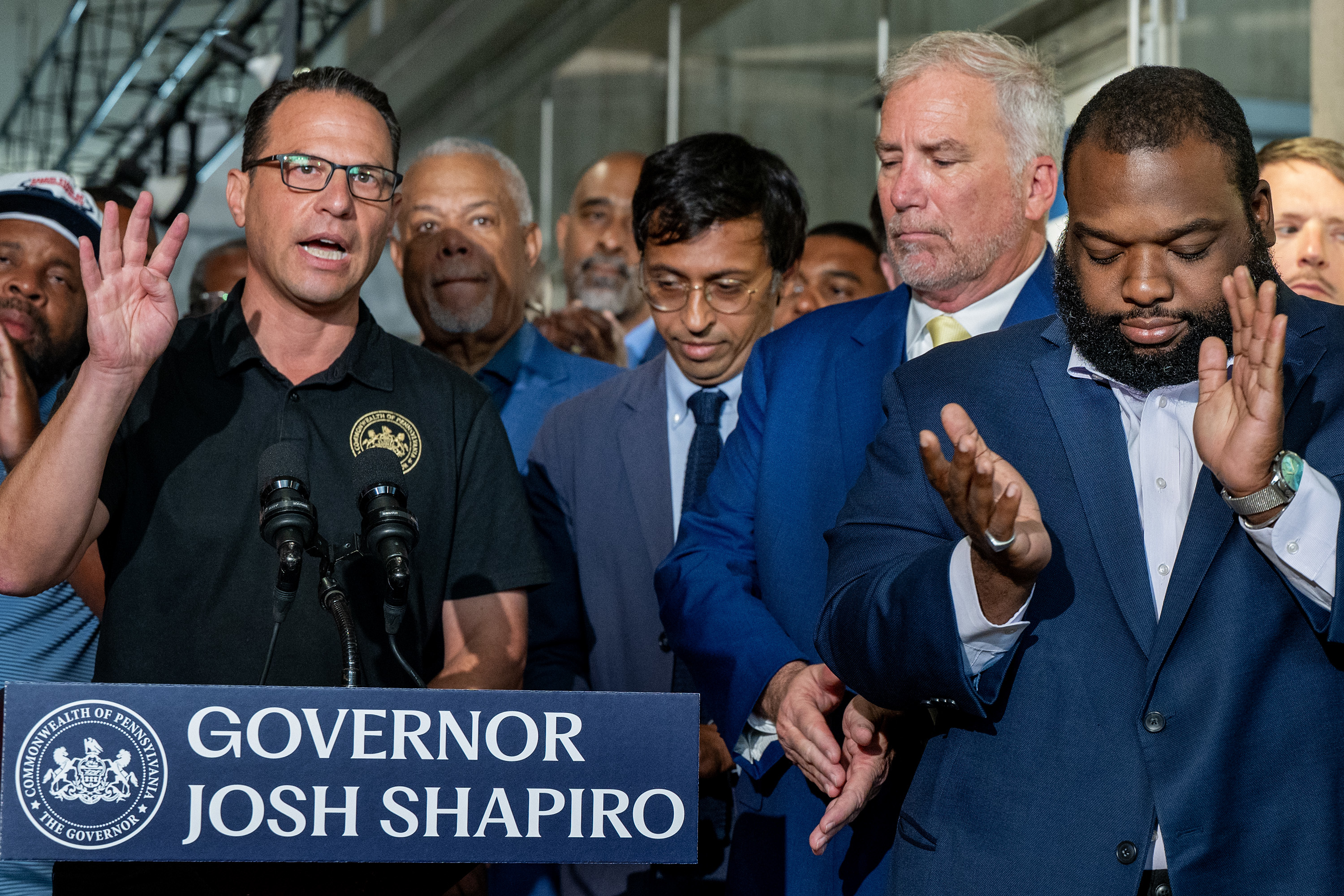
Garrity’s decision to act unilaterally without the action of the General Assembly allows her to capitalize politically on the ongoing budget crisis over Shapiro, challenging his image as a moderate Democratic governor of a politically “purple” state willing to work across the aisle in a divided legislature. That brand, which he has built nationally as he is rumored to have interest in running for president in 2028, has been tested as he has so far been unable to secure a budget deal or a recurring funding stream for the state’s beleaguered mass transit agencies, including SEPTA.
Shapiro, for his part, has described his role in budget negotiations as being a go-between for Senate Republicans and House Democrats, who control their respective chambers, and has said that the two caucuses remain “diametrically opposed” on some issues.
A spokesperson for Shapiro said in a statement Wednesday that the real solution to the budget impasse is for Senate Republicans, whose leaders endorsed Garrity last week, to return to work in Harrisburg to finalize a budget deal with House Democrats. A spokesperson for House Majority Leader Matt Bradford (D., Montgomery) echoed the sentiment, arguing that Senate Republicans “refuse to negotiate on a realistic budget agreement.”
Gov. Josh Shapiro visits SEPTA headquarters Sunday, Aug. 10, 2025 to discuss funding for the transit agency and to pressure Senate Republicans as planned service cuts are pending because of a budget shortfall. To his right, from left, are state Democratic legislators Sen. Anthony H. Williams; Sen. Nikil Saval; Rep. Ed Neilson; and Rep. Jordan Harris.
Senate Majority Leader Joe Pittman (R., Indiana), the Senate’s top negotiator, who has met for months in closed-door budget talks with Bradford and Shapiro, said in a statement that it was Democrats who caused the prolonged impasse while demanding they include mass transit funding in the state budget. After mounting pressure as SEPTA enacted major service cuts, Shapiro ultimately sought to fund the agency on his own, and the issue will need to be revisited in two years.
Garrity, who kicked off her “Help Is on the Way” introductory campaign tour around the state earlier this week, said Wednesday her decision to intervene in the state budget stalemate was not political, despite her burgeoning run against Shapiro. Rather, she said that she had been thinking about a way to do so for months, including ahead of her announcement of her run for governor, and that most Pennsylvanians don’t even realize the state budget is late. She argued that if she wanted to be political, she would not intervene and would “keep the pressure” on Shapiro over the late state budget.
“I’m standing up here as Pennsylvania’s state treasurer, not as a candidate for governor,” Garrity said from a podium in the Harrisburg building that houses the state Treasury. “I think I have a responsibility to serve Pennsylvanians, that if I have something that I can do to provide some relief, then I should do it.”
However, that didn’t stop Garrity from inviting Montgomery County Commissioner Tom DiBello — the lone Republican on the board where Shapiro once served — to the podium at the news conference to deliver some direct criticisms of Shapiro and to praise Garrity’s intervention as a “lifeline” for counties, alongside two other GOP county commissioners from south-central Pennsylvania. While Montgomery County remains one of the wealthiest counties in the state, the late budget has required Pennsylvania’s third-most-populous county to spend down its reserves, money that it usually relies upon to continue earning interest as part of its annual revenue, DiBello said.
Pennsylvania Treasurer Stacy L. Garrity gives her acceptance speech after receiving the PA GOP’s endorsement for her campaign for governor during the Republican Party of Pennsylvania’s 2025 Fall Meeting at the Penn Stater Hotel & Conference Center in State College on Sept. 20.
“It starts at the top. The governor is responsible,” DiBello said. “He’s got to pull it together. It’s his signature at the end of the day.”
In response to Garrity’s announcement Wednesday, Montgomery County Commissioners Neil Makhija and Jamila Winder, both Democrats, said in a statement that the county needs a final state budget instead of a short-term loan program, urging Senate Republicans to “do their job.”
“A short-term loan at 4.5% interest is the state profiting from a problem of their own making, at the expense of the taxpayers,” the two commissioners added.
DiBello said he did not believe his invitation to Wednesday’s event had political motivations, adding: “I didn’t even think of that.” He also noted that he has come to Harrisburg to advocate on behalf of counties multiple times before.
Senate President Pro Tempore Kim Ward (R., Westmoreland), who has been one of Shapiro’s biggest critics since his first budget in 2023 and was quick to support Garrity’s candidacy, prodded at Shapiro’s pledge to “get stuff done” while praising Garrity’s leadership.
“Today, Treasurer Stacy Garrity made a bold move that shows what ‘get stuff done’ actually looks like,” Ward said in a statement. “Treasurer Garrity’s leadership is on display as her solution-driven option is exactly what we need, but has been glaringly missing from the present administration.”
Garrity said at the news conference Wednesday that she offered the loan program specifically to Head Start programs and county governments’ human service departments because both had asked her to help them get through the budget impasse. The state budget was due by July 1, and Pennsylvania is the only state besides Michigan that has not yet passed its budget. She said she is willing to offer similar loans to schools or other state-subsidized or funded programs as requested.
The Pennsylvania General Assembly can forgive the interest accrued by counties taking out loans during the budget impasse, Garrity said, adding that shewould support legislation that does so.
This suburban content is produced with support from the Leslie Miller and Richard Worley Foundation and The Lenfest Institute for Journalism. Editorial content is created independently of the project donors. Gifts to support The Inquirer’s high-impact journalism can be made at inquirer.com/donate. A list of Lenfest Institute donors can be found at lenfestinstitute.org/supporters.
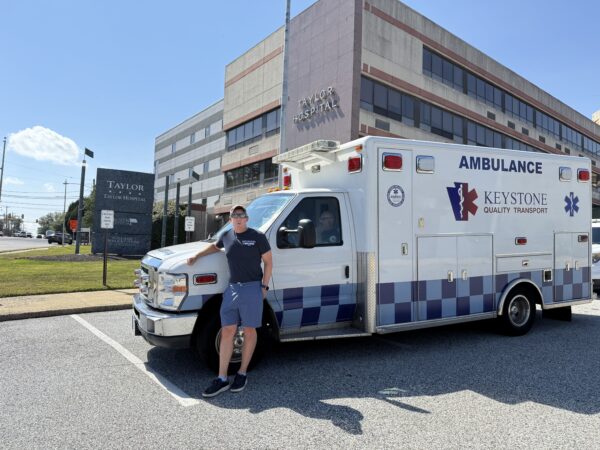
Crozer Health’s shutteredTaylor Hospital in Ridley Park will be soldto a group of local healthcare executives for $1 million, according to an agreement filed Friday in bankruptcy court proceedings for its owner, California-based Prospect Medical Holdings.
The buyer is a partnership led by Delaware County business owner Todd Strine. The group’s goal is to refill the empty property with medical services, Strine said.
“The ideal thing that could happen is we reopen an emergency room, because that’s what Delaware County needs,” said Strine, who is the majority owner of medical transport company Keystone Quality Transport.
Prospect closed Taylor in late April after the failure ofa state-led effort to find a new operator that would return the Crozer health system to nonprofit ownership. Shortly thereafter, Crozer-Chester Medical Center also closed.
Crozer was Delaware County’s largest healthcare system and a provider of critical safety-net services.For-profitProspect had previouslyclosed Springfield Hospital and Delaware County Memorial Hospital in 2022.
“It’s a fact that Delaware County is less safe today than it was when these hospitals were operating,” Strine said.
He said it seems unlikely that a full-blown hospital would return to Taylor.
Ridley Park Council president Dane Collins said he’s hopeful that an emergency department and doctors services will return to the site. “It’s no secret. The area’s in desperate need of it,” he said.
As part of the agreement, Delaware County, Ridley Park Borough, and the Ridley School District agreed to reduce the taxable value of the property from its assessed value of $60 million to a fair market value of $1 million for the next two years.
The reduced value slashes the amount of property taxes that can be earned on the property for the next two years. However, beginning in 2027, the taxing authorities would be permitted to appeal the value of the building.
The decision to reduce the building’s value so dramatically in tax rolls was opposed by some members of Ridley School District’s board of education, which only narrowly approved the measure on a 5 to 4 vote last week.
Prospect hasn’t paid property taxes on the property since 2022, according to public records.
Delaware County councilmember Christine Reuther called the new value a “tough pill to swallow” in an interview. The property was worth more than the “fire sale price” it had gone for, she said.
The building would be worth less than many homes on the county’s tax rolls, Reuther noted, at a time when property values and home costs are increasing.
She called the resolution yet another example of the negative fallout from Prospect’s abandonment of healthcare resources in the community.
“There’s literally nothing we can do that isn’t going to resolve in a worse result, and that’s wrong,” Reuther said.
Strine acknowledged that the price seems cheap, but noted the building is empty, and it’s a special-use building, making it harder to find tenants. “There’s a ton of carrying costs and a lot of uncertainty about how long it’s going to take to fill up,” he said.
The investment needed to bring the building back to life is going to be many times the price, Stine said.
“It’s positive movement to have an experienced local businessperson purchase the property instead of allowing the property to become abandoned,” said Frances Sheehan, president of the Foundation for Delaware County, whose mission is promoting health and welfare in the county.
Taylor is the second shuttered Crozer hospital to be sold in less than a month. Upper Darby School District bought the former Delaware County Memorial Hospital for $600,000 on Aug. 14. It plans to use the property for expansion of its neighboring high school.
In both cases, U.S. Bankruptcy Judge Stacey Jernigan said Prospect could abandon the properties, which means that local authorities would have had to put the real estate up for a tax sale.
Prospect had told the judge that the top offers it had received were $1.25 million for Delaware County Memorial, which closed in 2022, and $575,000 for Taylor.
Given the risk of abandonment by Prospect, county and local authorities riskeda totalloss to tax rolls ifProspect abandoned the property entirely.
Robert Strauss, an economics professor at Carnegie Mellon University who studies property tax, noted that the buyers may have backed out of a deal if they couldn’t obtain the reductions in property taxes.
“It’s hard to envision anything easy happening in the short run that would bring it back onto the tax rolls and be profitable,” he said. “The reduction in revenues seems to me to be inevitable in the next couple of years, regardless.”
This suburban content is produced with support from the Leslie Miller and Richard Worley Foundation and The Lenfest Institute for Journalism. Editorial content is created independently of the project donors. Gifts to support The Inquirer’s high-impact journalism can be made at inquirer.com/donate. A list of Lenfest Institute donors can be found at lenfestinstitute.org/supporters.
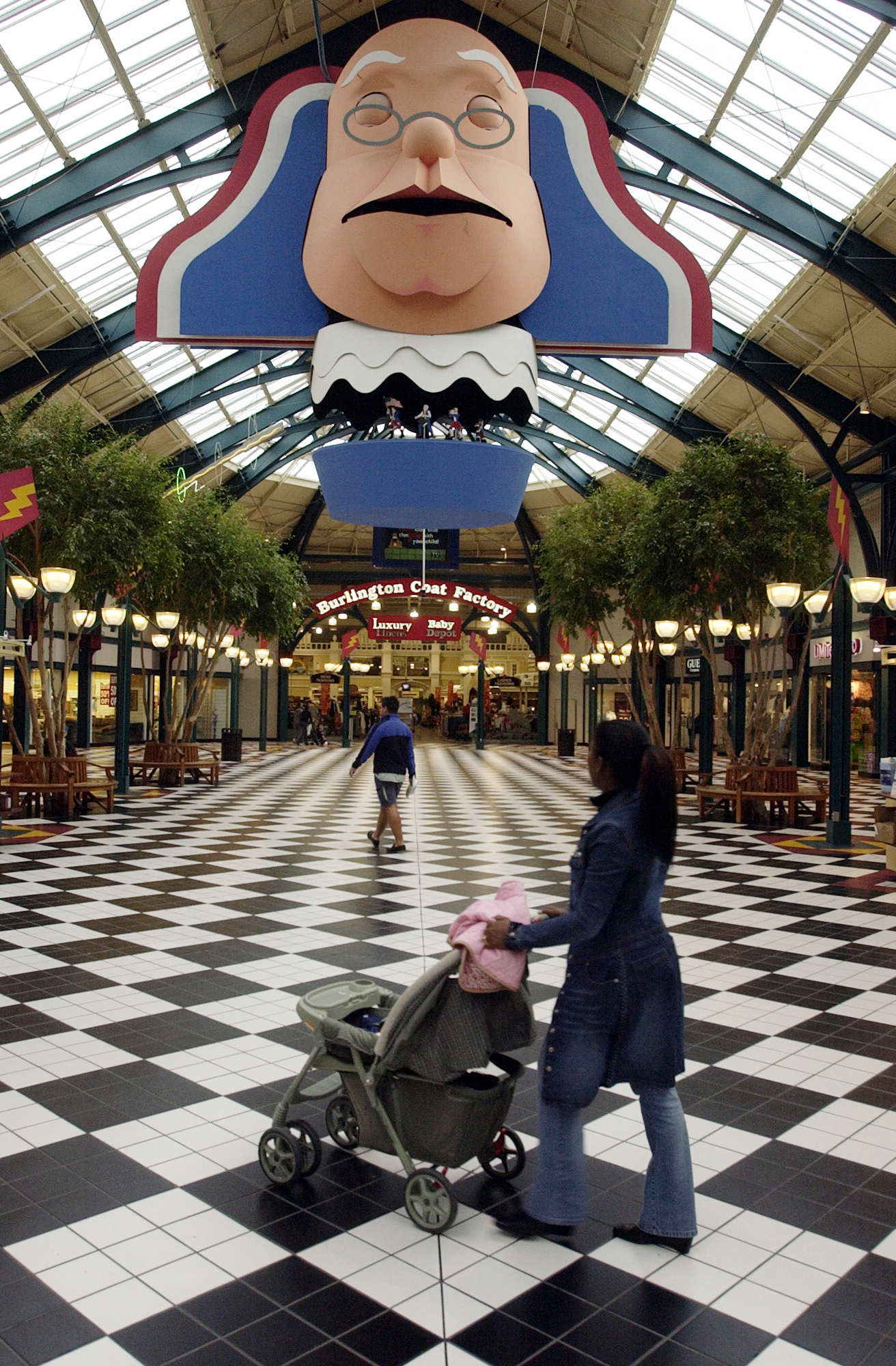
The design of the Franklin Mills mall was inspired by disaster.
“The mall was built in the fashion of a modified train wreck,” Jeffery Sneddon, the mall’s general manager, told The Inquirer in 1989, the year it opened. “There are several buildings connected at odd angles.”
Years later, the inspiration for the mall’s design underwent a little revisionist history, with publicists claiming the mall’s shape was inspired by the lightning bolts courted by Ben Franklin.
Appropriate, as change would ultimately become the story of the mall in Northeast Philadelphia.
At the outset, the goal of the design was to break up the long stretches of the single-level space.
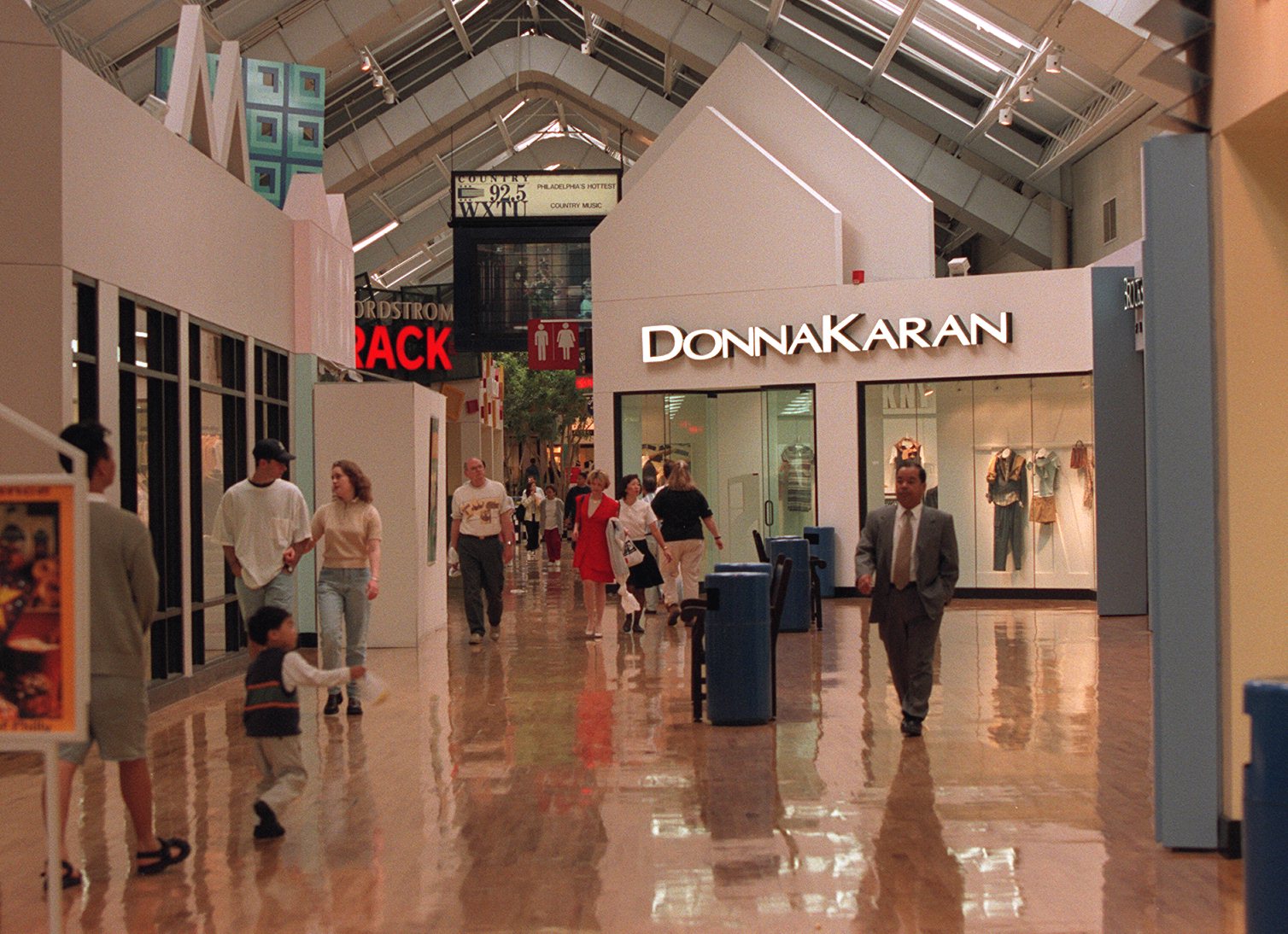
Shoppers at Franklin Mills walk through the mall in 1997.
The result was a mile of winding concourse lined with 250 storefronts, and organized so a shopper would always have merchandise shoved into their face.
The 1.8 million-square-foot mall was built at Knights and Woodhaven Roads on the former Liberty Bell racetrack site. The build cost was $300 million, about $773 million in today’s money.
When the doors opened on May 11, 1989, to the then-world’s largest outlet mall, the shops were 70% leased, with 120 stores rented by shoe and clothing outfits, restaurants, and anchor stores like a J.C. Penney Outlet and Sears Outlet.
The title of world’s largest had previously belonged to the Potomac Mills mall, which was a prototype in the suburbs of Washington, D.C. Both shopping meccas were the brainchild of Washington-based commercial real estate tycoons Herbert S. Miller and Richard L. Kramer.
The duo wanted to build destination venues withvalue stores. And they paired that with an aggressive marketing campaign that targeted tourists, as well as shoppers who lived up to 60 miles away.
And it worked. Far Northeast Philadelphia became a destination in the shopping mall era. They’d later add a movie theater, a skate park, and a Jillian’s restaurant and arcade. The mall would host autograph signings and celebrity appearances. And throughout the 1990s and early aughts, it was a popular hangout for discount shoppers and teenagers, and attracted nearly 20 million shoppers yearly.
Shoppers stroll through the Franklin Mills mall in 2014.
But by the 2010s, it started to lose its charm. It changed names multiple times, became a haven for flash mobs, and saw its share of Black Friday melees, and a fatal shooting in the food court.
The fall of the mall concept and the rise of online shopping added to its financial issues, and the building is in receivership as debt holders determine next steps, according to the Business Journal.
John Chism, manager of Granite Run Mall in Middletown Township back in ’89, didn’t see the mall’s value at the time.
“Malls are in business to sell,” he said, “not to be attractions for sightseers.”
But that was the innovation of the Franklin Mills.
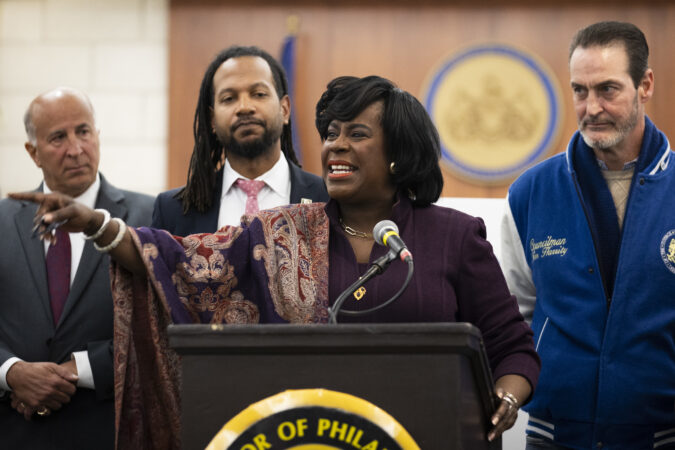
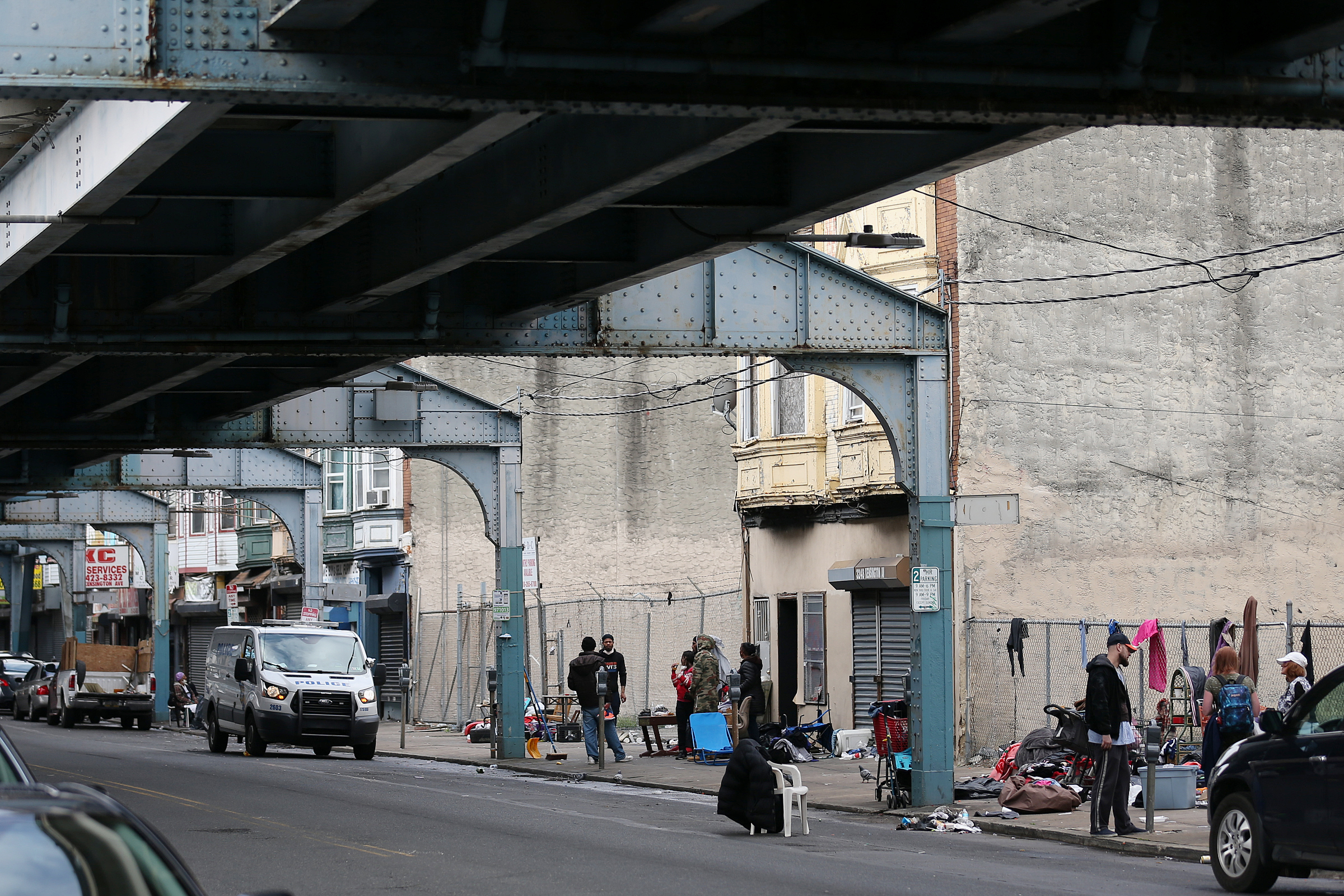
The city’s new Neighborhood Wellness Court initiative has been placed on hold amid growing concern from the leadership of Philadelphia‘s courts and judges’ mounting frustration with the city officials tasked with overseeing the program.
Wellness court, which Mayor Cherelle L. Parker’s administration launched in January as a fast-track way to arrest people in Kensington for drug-related offenses and get them into treatment, has not taken any new cases over the last three weeks, city officials said.
Supervising Municipal Court Judge Karen Simmons was nearly ready to shut the program down over frustration with the lack of coordination and communication from the Parker administration with the courts and other city agencies involved, according to sources with knowledge of conversations about the program.
Simmons was concerned that the city was treating people arrested in some neighborhoods differently from others, and that there was inconsistency in how the program was tracking its data and determining who should be eligible for treatment, according to the sources, who spoke on the condition of anonymity to discuss private conversations.
Simmons ultimately gave the city time to fix those issues, asking that officials put together a written manual and streamline the paperwork and intake procedures to ensure fairness, the sources said. The city is expected to make those adjustments so police can resume making arrests and bringing people through the program next week.
A spokesperson for the courts declined to comment and referred questions to the city.
Chief Public Safety Director Adam Geer oversees the office that runs Neighborhood Wellness Court in Kensington.
Chief Public Safety Director Adam Geer, who oversees the city office that runs wellness court, said the delays were related to “administrative protocols” that needed to be resolved but declined to provide specifics.
Geer said that he expects the program to return to normal operations next week and that the city “is fully committed to successfully implementing and sustaining the Neighborhood Wellness Court model.”
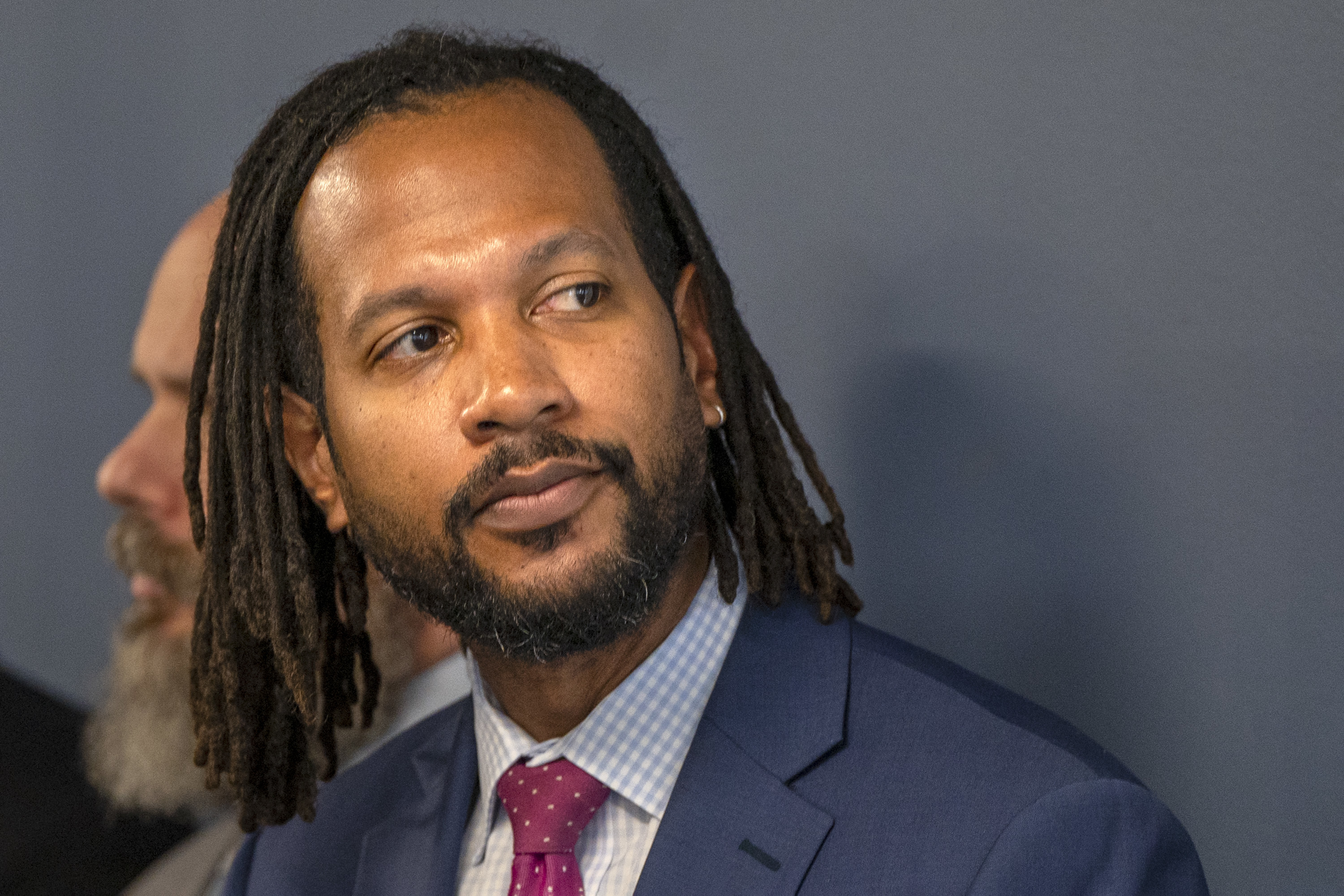
Joshu Harris, the city’s deputy director of public safety, is no longer overseeing the program‘s operations, the sources said, and Deputy Mayor Vanessa Garrett Harley is now involved.
“As with all new pilot programs of this kind, adjustments will continually be made to improve operations as time moves forward,” city spokesperson Joe Grace said Thursday.
The pause comes amid long-simmering tension between the courts and the city over how the program was launched, sources said. Leadership of the Philadelphia District Attorney’s Office, the Defender Association of Philadelphia, and even the judges tasked with overseeing the court were largely excluded from the city’s plans for the program and how it would operate, sources said. They have felt like the Parker administration did not want their input.
That conflict spilled into open court this month. Municipal Court Judge Henry Lewandowski III, who has presided over most of the wellness court cases so far, said at a hearing in early April that certain politicians in the city think they can “just wave a wand” and fix Kensington’s long-standing drug problems.
“I care way more than they ever will. They’re fake,” he said, adding that officials are trying to build new programs just so they have something to take credit for.
“If I said what I wanted to say,” he said, “I’d have to resign.”
His frustration was clear again Thursday as he oversaw more than 100 summary offense cases, most for fare evasion amid SEPTA‘s new crackdown on turnstile jumping.
“Who knows what program they’ll start by next week,” he said. “Every Wednesday, there’s new stuff, new programs, new procedures. … I’ve never been more confused, I’ve never been more uncertain what my job is.”
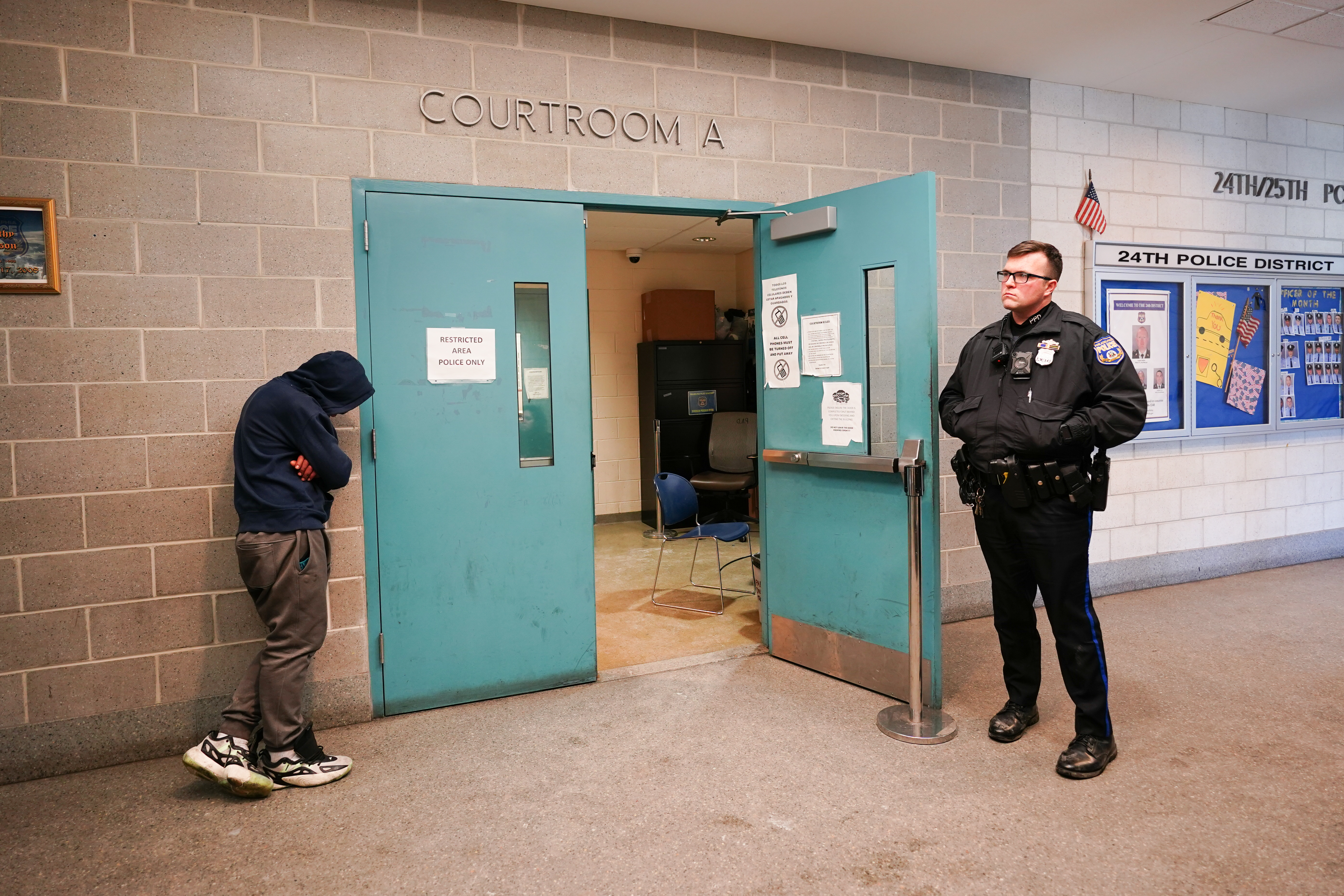
Wellness court takes place every Wednesday inside a courtroom at the 24th / 25th Police District.
Wellness court is a signature part of Parker’s plan to shut down Kensington’s notorious open-air drug market and restore quality of life for neighborhood residents.
The court runs on Wednesday afternoons. First, in the morning, police conduct sweeps of the Kensington area and arrest people in addiction for offenses like sleeping on the sidewalk, gathering around an outdoor fire, or stumbling into the street. They are typically charged with summary offenses like obstructing highways.
Those arrested are then brought to the Police-Assisted Diversion program building on Lehigh Avenue, where they are evaluated by a nurse and an addiction specialist. Officials also attempt to address any outstanding arrest warrants, and connect them with a court-appointed attorney hired by the city to discuss their rights.
Finally, they are brought before a judge — Lewandowski has heard most cases so far — inside the nearby police district. They are offered the opportunity to immediately go to rehab or face a summary trial for their alleged crimes. Those who opt to go into treatment and complete the program and terms set by the city will later have their cases dismissed and expunged.
Few in the program have asked for a same-day trial. Those found guilty have so far been ordered to pay fines and court fees ranging from about $200 to $500.
Homelessness and public drug use is widespread in Kensington, the heart of the city’s open-air drug market.
Of the more than 50 people who have come before the court so far, only two had successfully completed treatment as of early April, according to data collected by The Inquirer. The vast majority brought through the program almost immediately leave treatment and do not appear at follow-up hearings, the data show.
The city has declined to share data on wellness court, including with City Council at a recent budget hearing, saying that it is too early to judge the program on numbers alone and that more time is needed to see results.
But the Parker administration said it wants to expand the court and needs more funding for it to succeed. At a recent budget hearing, Geer asked City Council for an additional $3.7 million to operate the court five days a week and hire additional staffers.
The goal, Geer said, is to build a system where people suffering on the streets can immediately be connected with treatment and resources, avoid going to jail, and get housing through the city’s new Riverview Wellness Village. Geer has said that the program will never have a 100% success rate, but that every “touch” the program has with people in addiction increases their likelihood to eventually go into treatment.
But the First Judicial District has said wellness court will not be expanding anytime soon, according to sources.
Civil rights advocates have raised constitutional concerns over the program. In a letter to the Parker administration, the Pennsylvania chapter of the American Civil Liberties Union said the program could pose a threat to drug users’ rights and questioned whether the city could force people to make consequential legal decisions while potentially under the influence of narcotics.
Pennsylvania spent a whopping $2.53 billion at Fine Wine & Good Spirits stores from July 2023 to June of last year. From pints of whiskey and boxes of wine to cans of vodka seltzers — 156 million units were sold across the state.
Label 1
stats
Label 1
stats
Label 1
stats
Label 1
stats
Label 1
stats
Label 1
stats
Zipcode falls mostly in County, but also spans .
Raise a glass to Pa. – here’s what alcohol people loved in the state
Sales at state-run liquor stores show that was purchased more than .
Category
Number sold
Category
Number sold
Category
Number sold
loves its
There store in your zipcode. This data is based off of those sales.
Category
Number sold
Category
Number sold
Category
Number sold
Advertisement
You’re a neighborhood of brand loyalists
In , more units of were purchased here than any other brand.
stats
stats
stats
stats
stats
Folks in have a unique taste for
spent more money on this than the rest of the state on average.
Advertisement
A bottle of white? A bottle of red?
When it comes to wine, your area prefers the based on units sold.
Category
Number sold
Category
Number sold
Wine lovers of agree, is the best varietal
stats
stats
stats
stats
stats
is a –
These are the most popular liquors by units sold.
stats
stats
stats
stats
stats
Advertisement
Bottoms up to
When it comes to stiffer drinks, these are the most popular liquors sold.
stats
stats
stats
stats
stats
For the more refined palate, is flying off the shelves in
A sweeter option flavored with herbs or fruit, these liqueurs are most often purchased.
stats
stats
stats
stats
stats
That’s a wrap for , but the party doesn’t have to stop
Check out these other zip codes to see how the alcohol flows elsewhere …
Lansdale is most loyal to one Philly brand — makers of Stateside Vodka and Surfside cocktails.
Bryn Mawr, on the Main Line, loves its white wine.
See just how much State College drinks
Doylestown, staying true to its Irish roots, consumes a lot of Baileys.
Methodology
The Philadelphia Inquirer acquired a dataset from the state Liquor Control Board comprising one year of daily sales data of each product sold at each of the state-owned Fine Wine and Good Spirits. The data only include Pennsylvania, donot include beer sales, and do not include any wine or mixers sales made outside of state stores (grocery stores, etc.).
For this story, we analyzed sales data by zip code. For zip codes with no state-run liquor stores, we assigned the zip code of the nearest store. The Inquirer also categorized alcohol into four main types — wine, liquor, liqueur, and cocktails (mixed drinks) — along with subcategories of each. Our analysis includes “most unique brand”’ which was calculated as the most money spent compared to the statewide average with a minimum of 0.1% of sales in that zipcode. Across all zip-code level analysis, we only analyzed bottles over 200 ml and excluded mini-liquor bottles.
Struggling with alcohol? There are ways out. For free, anonymous help, 24 hours a day, 7 days a week:
Pennsylvania: Call 1-800-662-HELP or visit PA.gov for a live chat.
New Jersey: 1-844-732-2465
Staff Contributors
Design and Development: Garland Fordice
Data: Chris A. Williams and Lizzie Mulvey
Editing: Sam Morris and Stephen Stirling
Copy Editing: Brian Leighton
(()=>{var j1=(e,t)=>()=>(t||e((t={exports:{}}).exports,t),t.exports);var e1=j1(h=>{var N1={0:”Jan.”,1:”Feb.”,2:”March”,3:”April”,4:”May”,5:”June”,6:”July”,7:”Aug.”,8:”Sept.”,9:”Oct.”,10:”Nov.”,11:”Dec.”};function Y(e){return e===void 0&&(e=new Date),N1[e.getMonth()]}var k1={0:”Jan”,1:”Feb”,2:”Mar”,3:”Apr”,4:”May”,5:”Jun”,6:”Jul”,7:”Aug”,8:”Sep”,9:”Oct”,10:”Nov”,11:”Dec”};function G(e){return e===void 0&&(e=new Date),k1[e.getMonth()]}function g(e){return e==null}function X(e){return typeof e==”number”&&isFinite(e)}function M(e){return X(e)&&Math.floor(e)===e}var C1=[“one”,”two”,”three”,”four”,”five”,”six”,”seven”,”eight”,”nine”],H1=[“million”,”billion”,”trillion”,”quadrillion”,”quintillion”,”sextillion”,”septillion”,”octillion”,”nonillion”,”decillion”],K=[“th”,”st”,”nd”,”rd”,”th”,”th”,”th”,”th”,”th”,”th”],P1=[11,12,13];function Q(e){if(g(e))return””;var t=+e;return M(t)?P1.indexOf(t%100)>-1?K[0]:K[t%10]:””}var z1=[“first”,”second”,”third”,”fourth”,”fifth”,”sixth”,”seventh”,”eighth”,”ninth”],D1=new RegExp(/s+([^s]*)s*$/);h.apdate=function(e){return e===void 0&&(e=new Date),Y(e)+” “+e.getDate()+”, “+e.getFullYear()},h.apdatetab=function(e){return e===void 0&&(e=new Date),G(e)+” “+e.getDate()+”, “+e.getFullYear()},h.apmonth=Y,h.apmonthtab=G,h.apnumber=function(e){if(g(e))return””;var t=+e;return M(t)?t=10?e.toString():C1[t-1]:e.toString()},h.aptime=function(e){e===void 0&&(e=new Date);var t,n,o=e.getHours(),r=e.getMinutes(),i=r===0;if(i){if(o===0)return”midnight”;if(o===12)return”noon”}return o0?o:12):(t=”p.m.”,n=o===12?o:o-12),i?n+” “+t:n+”:”+(r<10?"0"+r:r)+" "+t},h.capfirst=function(e){if(g(e))return"";var t=String(e);return""+t.charAt(0).toUpperCase()+t.slice(1)},h.intcomma=function(e){if(g(e))return"";var t,n=+e;return X(n)?((t=n.toString().split("."))[0]=t[0].replace(/B(?=(d{3})+(?!d))/g,","),t.join(".")):e.toString()},h.intword=function(e){if(g(e))return"";var t=+e;if(!M(t))return e.toString();var n=Math.abs(t);if(n<1e6)return e.toString();var o=Math.ceil(Math.log(n+1)/Math.LN10)-1,r=o-o%3,i=t/Math.pow(10,r);return(i=Math.round(10*i)/10)+" "+H1[Math.floor(r/3)-2]},h.ordinal=function(e,t){if(t===void 0&&(t=!1),g(e))return"";var n=+e;return M(n)?t&&n{document.querySelectorAll(“.js-hover”).forEach(e=>{e.addEventListener(“click”,()=>{U(e)}),e.addEventListener(“mouseenter”,()=>{U(e)}),e.addEventListener(“mouseout”,()=>{J(e)})}),window.addEventListener(“scroll”,()=>{L!==null&&$1()})},$1=()=>{(L>window.scrollY+100||L{J(e)})},U=e=>{e.classList.add(“is-visible”),L=window.scrollY},J=e=>{e.classList.remove(“is-visible”),L=null},Z={init:()=>{x1()}};var T,T1=(e,t)=>{T=T||window.PMNdataLayer,T?T.push({event:”misc_event”,eventAction:e,eventLabel:t}):window.location.hostname.includes(“localhost”)?console.log(“Analytics event:”,e,t,”(not actually being sent due to localhost)”):console.log(“Failed to push analytics event”,e,t)},E={event:(e,t)=>{T1(e,t)}};var A=null,f=-1,z,E1=()=>{A=document.querySelectorAll(“.js-pane”).length-1},D=(e=”next”)=>{setTimeout(()=>{window.scroll(0,0)},1),e===”startOver”&&(f=1),e===”next”?f++:f–,!(f>A)&&(f===A?(document.querySelector(“.pane-button-forward”).classList.add(“no-next-slide”),document.querySelector(“.pane-button-start-over”).style.display=”inherit”):(document.querySelector(“.no-next-slide”)?.classList.remove(“no-next-slide”),document.querySelector(“.pane-button-start-over”).style.display=”none”),z=document.querySelector(`.js-pane-${f}`),z.classList.contains(“skip-pane”)&&(e===”next”?f++:f–,z=document.querySelector(`.js-pane-${f}`)),f>0&&E.event(“click”,`progressed to ${f}`),A1(),f===8&&document.querySelectorAll(“.js-pane-8 [data-flex-basis-size]”).forEach((n,o)=>{n.style.flexBasis=n.dataset.flexBasisSize,o===1&&(n.style.opacity=.5)}))},A1=()=>{let e=document.querySelector(“.js-panes”),t=e.className.split(” “).filter(r=>r.startsWith(“is-“));t.length&&e.classList.remove(…t),e.classList.add(`is-${f}`),document.querySelector(“.inno-panes–button-group”).classList.remove(“hide-group”),document.querySelector(“.is-showing”)?.classList.remove(“is-showing”),document.querySelector(`.inno-pane–${f}`).classList.add(“is-showing”),f>=A&&e.classList.add(“is-done”)},M1=()=>{document.body.scrollTop=document.documentElement.scrollTop=0,document.querySelectorAll(“.js-pane-button”).forEach(t=>{t.addEventListener(“click”,()=>{D(t.dataset.direction)})})},b={init:()=>{E1(),D(),M1()},incrementCurrentPane:D};var I1=e1(),t1=e=>{if(e)return e.replace(/’/,”u2019″)};var q=e=>e>=1e6?I1.intword(e):e.toLocaleString();var N=()=>/Android|webOS|iPhone|iPad|iPod|BlackBerry|IEMobile|Opera Mini/i.test(navigator.userAgent);var I=(e,t=null,n=null)=>{n||(n=document.querySelector(“head”));let o=document.createElement(“script”);o.type=”text/javascript”,o.src=e,t&&(o.onload=t),n.appendChild(o)},n1=()=>(window.PMNdataLayer?.[0]!==void 0&&window.PMNdataLayer[0])?.analytics?.user?.state===”Subscribed”,o1=()=>{let t=(window.PMNdataLayer?.[0]!==void 0&&window.PMNdataLayer[0])?.analytics?.user?.state;return window.location.host.includes(“zzz-systest”)||window.location.host.includes(“pmn.arcpublishing.com”)||window.location.host.includes(“stage.fusion.inquirer.com”)||typeof t>”u”},r1=()=>{let t=(window.PMNdataLayer?.[0]!==void 0&&window.PMNdataLayer[0])?.analytics?.user?.hasAdsFreeReading;return!!(t&&t==1)},B=()=>window.location.host.includes(“localhost”);var s1=(e,t)=>{let n=[…e.querySelectorAll(“[data-populate]”)];e.dataset.populate&&n.unshift(e);let o=n.filter(r=>{let i=r.closest(“[data-populate-context]”);return!i||i==e});for(let r of o){let u=r.dataset.populate.trim().split(/s*,s*/).map(l=>l.split(/s*:s*/));for(let[l,d]of u){let s=l.split(“.”).reduce((m,y)=>{if(y.includes(“[“)){let S=y.split(“[“),$=S&&m?.[S[0]];return $&&$[S[1].replace(“]”,””)]}return m?.[y]},t),c=s==null||s==null,p=d?.split(/s+/)||[“innerHTML”];for(let m of p)if(m.startsWith(“.”)&&r.classList.toggle(m.substring(1),c?!1:s),!c)if(m==”innerHTML”){let y=s.toString().replace(“‘”,”u2019″);r.innerHTML=y}else m.startsWith(“@”)?r.setAttribute(m.substring(1),s):m.startsWith(“–“)&&r.style.setProperty(m,s)}}};var B1=({data:e})=>{document.querySelectorAll(“.js-populate”).forEach(n=>s1(n,e))},V={init:()=>{},populate:B1};var V1=()=>{},W={Red:”red”,White:”white”,Liquor:”liquor”,Wine:”red”,Liqueur:”liqueur”,Cocktail:”cocktail”},W1=({data:e,paData:t,zip:n,noStores:o})=>{document.querySelectorAll(“.js-custom-heading”).forEach(i=>{let u=JSON.parse(i.dataset.customHeading)}),O1({paData:t,zip:n,county:e.county,alt_counties:e.alt_counties}),i1({data:t,container:”.js-top_state_categories”,categoryName:”top_categories”,labelName:”name”}),i1({data:e,container:”.js-popular_zip_categories”,categoryName:”top_categories”,labelName:”name”}),F1({data:e}),_({data:e,container:”.js-top_brands”,categoryName:”top_brands”,labelName:”brand”}),R1({data:e,winnerContainer:”.js-white_vs_red-header”,container:”.js-white_vs_red”,categoryName:”red_vs_white”,labelName:”wine_type”}),U1(e),_({data:e,container:”.js-top_wine_subcategories”,categoryName:”top_wines”,labelName:”name”}),_({data:e,container:”.js-top_liquor_types”,categoryName:”top_liquor”,labelName:”name”}),_({data:e,container:”.js-top_liquor_brands”,categoryName:”top_liquor_brand”,labelName:”brand”}),_({data:e,container:”.js-top_liqueur_brands”,categoryName:”top_liqueur”,labelName:”name”})},F1=({data:e})=>{let{unique_products:t}=e;if(!t)return;let n=document.querySelector(“.js-winner-name”);t&&n&&(n.innerHTML=`${t[0].brand}, ${t[0].sub_cat}`);let o=document.querySelector(“.js-most_unique_brand .js-winner-bottle”);o&&t&&(o.src=`https://interactives.inquirer.com/projects/2025/04/alcohol-sales/1745525400210/assets/_resized/icons/${W[t[0].category]}–650px.webp`,t[0].category==”Cocktail”||t[0].category==”Liqueur”?o.classList.add(“is-offset”):o.classList.remove(“is-offset”))},O1=({paData:e,zip:t,county:n,alt_counties:o})=>{let{by_county:r}=e,u=r.sort((a,s)=>s[“total_units,”]-a[“total_units,”]).reduce((a,s,c)=>s.county===n?[…a,{rank:c,…s,isCounty:!0}]:cs?.classList.remove(“dont-show”)),document.querySelector(“.js-top_purchasing_counties .js-bar-chart”)?.classList.add(“list-length-6”)),u.forEach((a,s)=>{let c=document.querySelector(“.js-top_purchasing_counties”);a.isCounty?(c.querySelector(`.bar-chart-text-${s}`)?.classList.add(“is-county”),c.querySelector(`.bar-chart-bar-${s} .js-bar-chart-bar`)?.classList.add(“is-county”)):(c.querySelector(`.bar-chart-text-${s}`)?.classList.remove(“is-county”),c.querySelector(`.bar-chart-bar-${s} .js-bar-chart-bar`)?.classList.remove(“is-county”));let p=c.querySelector(`.bar-chart-text-${s} .bar-chart–row-label`);p&&(p.innerHTML=`${a?.county}`);let m=c.querySelector(`.bar-chart-text-${s} .bar-chart–stats`);m&&(m.innerHTML=`${q(a[“total_units,”])} units sold`);let y=c.querySelector(`.bar-chart-bar-${s} .js-bar-chart-bar`);y&&(y.style.width=`${a[“total_units,”]/l*100}%`)});let d=document.querySelector(“.js-county-note”);if(d.classList.remove(“hide-note”),o&&o.length>0){let a=d.querySelector(“span[data-populate=’alt_counties’]”),s=()=>{if(o.length{let r=e[n],i=[2,3,1],u=r[0].total_units;i.forEach(l=>{let d=document.querySelector(`${t} .js-cat-${l}`),a=document.querySelector(`${t} .js-num-${l}`);d.innerHTML=r[l-1][o],a.innerHTML=`${q(r[l-1].total_units)} units sold`;let s=document.querySelector(`${t} .podium-${l} .podium-bottle img`);s.src=`https://interactives.inquirer.com/projects/2025/04/alcohol-sales/1745525400210/assets/_resized/icons/${W[r[l-1].name]}–650px.webp`;let c=document.querySelector(`${t} .podium-${l}.podium-item`);c.classList.remove(“podium-type-Cocktail”),c.classList.add(`podium-type-${r[l-1].name}`);let p=r[l-1].total_units/u;c.style.gridTemplateRows=`auto 245px ${p}fr`})},R1=({data:e,winnerContainer:t,container:n,categoryName:o,labelName:r})=>{let i=e[o],u=document.querySelector(`${t}`);u&&(u.innerHTML=i[0][r]);let l=[1,2],d=i[0].total_units,a=i[0].total_units/(i[0].total_units+i[1].total_units),s=document.querySelector(n).closest(“.inno-pane”),c=document.createElement(“div”);c.style.width=`${a*100}%`,c.classList.add(“inno-pane–background”),s.append(c),l.forEach(p=>{let m=document.querySelector(`${n} .js-cat-${p}`),y=document.querySelector(`${n} .js-num-${p}`);m.innerHTML=i[p-1][r],y.innerHTML=`${q(i[p-1].total_units)} units sold`;let S=document.querySelector(`${n} .compare-${p} .compare-bottle img`);S.src=`https://interactives.inquirer.com/projects/2025/04/alcohol-sales/1745525400210/assets/_resized/icons/${W[i[p-1][r]]}–650px.webp`;let $=document.querySelector(`${n} .compare-${p} .compare-bottle`),R=i[p-1].total_units/d*.8*100;$.dataset.flexBasisSize=`${R}%`})};var _=e=>{let{data:t,container:n,categoryName:o,labelName:r}=e,i=t[o],u=i[0].total_units;[1,2,3,4,5].forEach(d=>{let a=document.querySelector(`${n} .js-list-stats-name-${d}`),s=document.querySelector(`${n} .js-list-stats-stat-${d}`),c=document.querySelector(`${n} .js-list-stats-bar-${d}`);a&&(a.innerHTML=i[d-1][r].replace(“‘”,”u2019″)),s&&(s.innerHTML=`${q(i[d-1].total_units)} units sold`,c.style.width=`${i[d-1].total_units/u*100}%`)})},U1=e=>{let t=document.querySelector(“.js-red-vs-white-text”),n=e.red_vs_white[0].wine_type,o=t.dataset[`winner${n}`];t.innerHTML=o},j={init:()=>{V1()},buildCharts:W1};var a1=[15001,15003,15004,15005,15006,15007,15009,15010,15012,15014,15015,15017,15018,15019,15020,15021,15022,15024,15025,15026,15027,15028,15030,15031,15033,15034,15035,15037,15038,15042,15043,15044,15045,15046,15047,15049,15050,15051,15052,15053,15054,15055,15056,15057,15059,15060,15061,15062,15063,15064,15065,15066,15067,15068,15071,15072,15074,15075,15076,15077,15078,15081,15082,15083,15084,15085,15086,15087,15088,15089,15090,15101,15102,15104,15106,15108,15110,15112,15116,15120,15122,15126,15129,15131,15132,15133,15135,15136,15137,15139,15140,15142,15143,15144,15145,15146,15147,15148,15201,15202,15203,15204,15205,15206,15207,15208,15209,15210,15211,15212,15213,15214,15215,15216,15217,15218,15219,15220,15221,15222,15223,15224,15225,15226,15227,15228,15229,15232,15233,15234,15235,15236,15237,15238,15239,15241,15243,15260,15275,15282,15290,15301,15310,15311,15312,15313,15314,15315,15316,15317,15320,15321,15322,15323,15324,15325,15327,15329,15330,15331,15332,15333,15334,15337,15338,15340,15341,15342,15344,15345,15346,15347,15348,15349,15350,15351,15352,15353,15357,15358,15359,15360,15361,15362,15363,15364,15365,15366,15367,15368,15370,15376,15377,15378,15379,15380,15401,15410,15411,15412,15413,15416,15417,15419,15420,15421,15422,15423,15424,15425,15427,15428,15429,15430,15431,15432,15433,15434,15435,15436,15437,15438,15440,15442,15443,15444,15445,15446,15447,15448,15449,15450,15451,15454,15455,15456,15458,15459,15460,15461,15462,15463,15464,15465,15466,15467,15468,15469,15470,15472,15473,15474,15475,15476,15477,15478,15479,15480,15482,15483,15484,15486,15488,15489,15490,15492,15501,15502,15510,15520,15521,15522,15530,15531,15532,15533,15534,15535,15536,15537,15538,15539,15540,15541,15542,15544,15545,15546,15547,15550,15551,15552,15554,15555,15557,15558,15559,15560,15561,15562,15563,15564,15565,15601,15610,15611,15612,15613,15615,15616,15617,15618,15619,15620,15622,15623,15624,15625,15626,15627,15628,15629,15631,15632,15633,15634,15635,15636,15637,15638,15639,15640,15641,15642,15644,15646,15647,15650,15655,15656,15658,15660,15661,15662,15663,15665,15666,15668,15670,15671,15672,15673,15674,15675,15676,15677,15678,15679,15680,15681,15682,15683,15684,15686,15687,15688,15689,15690,15691,15692,15693,15695,15696,15697,15698,15701,15705,15710,15711,15712,15713,15714,15715,15716,15717,15720,15721,15722,15723,15724,15725,15727,15728,15729,15730,15731,15732,15733,15734,15736,15737,15738,15739,15741,15742,15744,15745,15746,15747,15748,15750,15752,15753,15754,15756,15757,15759,15760,15761,15762,15763,15764,15765,15767,15770,15771,15772,15773,15774,15775,15776,15777,15778,15779,15780,15781,15783,15784,15801,15821,15823,15824,15825,15827,15828,15829,15831,15832,15834,15840,15841,15845,15846,15847,15848,15849,15851,15853,15856,15857,15860,15861,15863,15864,15865,15866,15868,15870,15901,15902,15904,15905,15906,15909,15920,15921,15922,15923,15924,15925,15926,15927,15928,15929,15930,15931,15934,15935,15936,15937,15938,15940,15942,15943,15944,15945,15946,15948,15949,15951,15952,15953,15954,15955,15956,15957,15958,15960,15961,15962,15963,16001,16002,16020,16022,16023,16024,16025,16027,16028,16029,16030,16033,16034,16035,16036,16037,16038,16040,16041,16045,16046,16048,16049,16050,16051,16052,16053,16054,16055,16056,16057,16059,16061,16063,16066,16101,16102,16105,16110,16111,16112,16113,16114,16115,16116,16117,16120,16121,16123,16124,16125,16127,16130,16131,16132,16133,16134,16136,16137,16140,16141,16142,16143,16145,16146,16148,16150,16151,16153,16154,16155,16156,16157,16159,16160,16161,16172,16201,16210,16211,16212,16213,16214,16217,16218,16220,16222,16223,16224,16226,16228,16229,16230,16232,16233,16235,16236,16238,16239,16240,16242,16244,16245,16246,16248,16249,16250,16253,16254,16255,16256,16258,16259,16260,16262,16263,16301,16311,16312,16313,16314,16316,16317,16319,16321,16322,16323,16326,16327,16328,16329,16331,16332,16333,16334,16335,16340,16341,16342,16343,16344,16345,16346,16347,16350,16351,16352,16353,16354,16360,16361,16362,16364,16365,16370,16371,16372,16373,16374,16401,16402,16403,16404,16405,16406,16407,16410,16411,16412,16415,16416,16417,16420,16421,16422,16423,16424,16426,16427,16428,16430,16433,16434,16435,16436,16438,16440,16441,16442,16443,16444,16475,16501,16502,16503,16504,16505,16506,16507,16508,16509,16510,16511,16546,16550,16563,16601,16602,16611,16613,16616,16617,16619,16620,16621,16622,16623,16624,16625,16627,16630,16631,16633,16634,16635,16636,16637,16638,16639,16640,16641,16645,16646,16647,16648,16650,16651,16652,16654,16655,16656,16657,16659,16661,16662,16664,16665,16666,16667,16668,16669,16670,16671,16672,16673,16674,16675,16677,16678,16679,16680,16682,16683,16684,16685,16686,16689,16691,16692,16693,16694,16695,16699,16701,16720,16724,16725,16726,16727,16729,16730,16731,16732,16733,16734,16735,16738,16740,16743,16744,16745,16746,16748,16749,16750,16801,16802,16803,16820,16821,16822,16823,16825,16826,16827,16828,16829,16830,16832,16833,16834,16835,16836,16837,16838,16839,16840,16841,16843,16844,16845,16847,16848,16849,16851,16852,16853,16854,16855,16856,16858,16859,16860,16861,16863,16864,16865,16866,16868,16870,16871,16872,16874,16875,16876,16877,16878,16879,16881,16882,16901,16910,16911,16912,16914,16915,16917,16920,16921,16922,16923,16925,16926,16927,16928,16929,16930,16932,16933,16935,16936,16937,16938,16939,16940,16941,16942,16943,16946,16947,16948,16950,17002,17003,17004,17005,17006,17007,17009,17010,17011,17013,17014,17015,17016,17017,17018,17019,17020,17021,17022,17023,17024,17025,17026,17027,17028,17029,17030,17032,17033,17034,17035,17036,17037,17038,17039,17040,17041,17042,17043,17044,17045,17046,17047,17048,17049,17050,17051,17052,17053,17054,17055,17056,17057,17058,17059,17060,17061,17062,17063,17064,17065,17066,17067,17068,17069,17070,17071,17073,17074,17075,17076,17077,17078,17080,17081,17082,17084,17086,17087,17088,17090,17093,17094,17097,17098,17099,17101,17102,17103,17104,17109,17110,17111,17112,17113,17120,17201,17202,17210,17211,17212,17213,17214,17215,17217,17219,17220,17221,17222,17223,17224,17225,17228,17229,17232,17233,17235,17236,17237,17238,17239,17240,17241,17243,17244,17246,17247,17249,17250,17251,17252,17253,17254,17255,17257,17260,17261,17262,17263,17264,17265,17266,17267,17268,17271,17301,17302,17303,17304,17306,17307,17309,17311,17313,17314,17315,17316,17317,17318,17319,17320,17321,17322,17323,17324,17325,17327,17329,17331,17339,17340,17342,17343,17344,17345,17347,17349,17350,17352,17353,17355,17356,17360,17361,17362,17363,17364,17365,17366,17368,17370,17371,17372,17401,17402,17403,17404,17406,17407,17408,17501,17502,17504,17505,17506,17507,17508,17509,17512,17516,17517,17518,17519,17520,17522,17527,17529,17532,17534,17535,17536,17538,17540,17543,17545,17547,17550,17551,17552,17554,17555,17557,17560,17562,17563,17565,17566,17568,17569,17570,17572,17576,17578,17579,17581,17582,17584,17601,17602,17603,17606,17701,17702,17720,17721,17723,17724,17727,17728,17729,17730,17731,17737,17739,17740,17742,17744,17745,17747,17748,17749,17750,17751,17752,17754,17756,17758,17760,17762,17763,17764,17765,17768,17769,17771,17772,17774,17776,17777,17778,17779,17801,17810,17812,17813,17814,17815,17820,17821,17822,17823,17824,17827,17829,17830,17832,17834,17835,17836,17837,17840,17841,17842,17844,17845,17846,17847,17850,17851,17853,17855,17856,17857,17858,17859,17860,17861,17862,17864,17865,17866,17867,17868,17870,17872,17876,17878,17880,17881,17884,17885,17886,17887,17888,17889,17901,17920,17921,17922,17923,17925,17929,17930,17931,17933,17934,17935,17936,17938,17941,17943,17944,17945,17946,17948,17949,17951,17952,17953,17954,17957,17959,17960,17961,17963,17964,17965,17967,17968,17970,17972,17974,17976,17978,17979,17980,17981,17982,17983,17985,18011,18012,18013,18014,18015,18017,18018,18020,18030,18031,18032,18034,18035,18036,18037,18038,18040,18041,18042,18045,18046,18049,18051,18052,18053,18054,18055,18056,18058,18059,18062,18063,18064,18065,18066,18067,18069,18070,18071,18072,18073,18074,18076,18077,18078,18079,18080,18081,18083,18085,18086,18087,18088,18091,18092,18101,18102,18103,18104,18106,18109,18195,18201,18202,18210,18211,18212,18214,18216,18218,18219,18220,18221,18222,18223,18224,18225,18229,18230,18231,18232,18234,18235,18237,18239,18240,18241,18242,18244,18245,18246,18248,18249,18250,18252,18254,18255,18256,18301,18302,18321,18322,18323,18324,18325,18326,18327,18328,18330,18331,18332,18333,18334,18335,18336,18337,18340,18342,18343,18344,18346,18347,18349,18350,18351,18353,18354,18355,18356,18357,18360,18370,18371,18372,18403,18405,18407,18411,18413,18414,18415,18417,18419,18420,18421,18424,18425,18426,18428,18430,18431,18433,18434,18435,18436,18437,18438,18439,18440,18441,18443,18444,18445,18446,18447,18451,18452,18453,18454,18455,18456,18457,18458,18460,18461,18462,18463,18464,18465,18466,18469,18470,18471,18472,18473,18503,18504,18505,18507,18508,18509,18510,18512,18517,18518,18519,18602,18603,18610,18612,18614,18615,18616,18617,18618,18619,18621,18622,18623,18624,18625,18626,18627,18628,18629,18630,18631,18632,18634,18635,18636,18640,18641,18642,18643,18644,18651,18655,18656,18657,18660,18661,18701,18702,18704,18705,18706,18707,18708,18709,18801,18810,18812,18814,18816,18817,18818,18820,18821,18822,18823,18824,18825,18826,18828,18829,18830,18831,18832,18833,18834,18837,18840,18842,18843,18844,18845,18846,18847,18848,18850,18851,18853,18854,18901,18902,18912,18913,18914,18915,18917,18920,18921,18923,18925,18927,18929,18930,18932,18933,18935,18936,18938,18940,18942,18944,18946,18947,18950,18951,18954,18955,18960,18962,18964,18966,18969,18970,18972,18974,18976,18977,18980,19001,19002,19003,19004,19006,19007,19008,19009,19010,19012,19013,19014,19015,19017,19018,19020,19021,19022,19023,19025,19026,19027,19029,19030,19031,19032,19033,19034,19035,19036,19038,19040,19041,19043,19044,19046,19047,19050,19052,19053,19054,19055,19056,19057,19060,19061,19063,19064,19066,19067,19070,19072,19073,19074,19075,19076,19078,19079,19081,19082,19083,19085,19086,19087,19090,19094,19095,19096,19102,19103,19104,19106,19107,19108,19109,19111,19112,19113,19114,19115,19116,19118,19119,19120,19121,19122,19123,19124,19125,19126,19127,19128,19129,19130,19131,19132,19133,19134,19135,19136,19137,19138,19139,19140,19141,19142,19143,19144,19145,19146,19147,19148,19149,19150,19151,19152,19153,19154,19301,19310,19311,19312,19316,19317,19319,19320,19330,19333,19335,19341,19342,19343,19344,19345,19348,19350,19352,19355,19358,19362,19363,19365,19367,19369,19372,19373,19374,19375,19380,19382,19383,19390,19401,19403,19405,19406,19422,19425,19426,19428,19435,19436,19437,19438,19440,19442,19444,19446,19453,19454,19456,19457,19460,19462,19464,19465,19468,19472,19473,19474,19475,19477,19490,19492,19501,19503,19504,19505,19506,19507,19508,19510,19511,19512,19516,19518,19520,19522,19523,19525,19526,19529,19530,19533,19534,19535,19536,19538,19539,19540,19541,19543,19544,19545,19547,19549,19550,19551,19554,19555,19559,19560,19562,19564,19565,19567,19601,19602,19604,19605,19606,19607,19608,19609,19610,19611];var Z1=()=>{document.querySelectorAll(“.js-share”).forEach(e=>{e.addEventListener(“click”,()=>{G1(e)})})},Y1=()=>{document.querySelectorAll(“.js-share”).forEach(e=>{let t=e.dataset.url||[location.protocol,”//”,location.host,location.pathname].join(“”);e.dataset.url=t})},G1=async e=>{let t=e.dataset.text,n=e.dataset.url,o=()=>{navigator.clipboard.writeText([t,n].join(” “)),E.event(“click”,`copied share text to clipboard | ${[t,n].join(” “)}`),e.classList.add(“is-copied”),setTimeout(()=>{e.classList.remove(“is-copied”)},2e3)};if(!navigator.canShare||!N())o();else try{await navigator.share({text:t,url:n})}catch(r){console.log(r)}},K1=(e,t,n)=>{let o=document.querySelector(e);o?o.classList.contains(“inno-share__button”)?(o.dataset.text=t,o.dataset.url=n):console.warn(`${e} is not a share button`):console.warn(`${e} not found`)},k={init:()=>{Z1(),Y1()},updateTextToCopy:(e,t,n)=>{K1(e,t,n)}};var c1=[“zeroth”,”first”,”second”,”third”,”fourth”,”fifth”,”sixth”,”seventh”,”eighth”,”ninth”,”tenth”,”eleventh”,”twelfth”,”thirteenth”,”fourteenth”,”fifteenth”,”sixteenth”,”seventeenth”,”eighteenth”,”nineteenth”],l1=[“twent”,”thirt”,”fort”,”fift”,”sixt”,”sevent”,”eight”,”ninet”];function Q1(e){return e{let e=new URLSearchParams(document.location.search),t=e.get(“zip”);e.get(“skipIntro”)&&t?(document.querySelector(“.js-pane-0”).classList.add(“is-skipped-0”),H({target:{value:t}})&&C(t)):t?H({target:{value:t}})&&(document.querySelector(“.inno-addresslookup–returning”).classList.add(“returning-show”),document.querySelector(“.js-returning-zip”).innerHTML=t,document.querySelector(“.js-pane-0”).classList.add(“pane-returning-zip”),document.querySelector(“.js-pane-start-button-with-zip”).addEventListener(“click”,()=>{C(t)})):(document.querySelector(“.inno-addresslookup–returning.returning-show”)?.classList?.remove(“returning-show”),document.querySelector(“.js-pane-0.pane-returning-zip”)?.classList?.remove(“pane-returning-zip”));let o=document.querySelector(“.js-search-form”);o.addEventListener(“submit”,r=>{if(r.preventDefault(),o.classList.contains(“is-valid”)){let i=o&&o.querySelector(“.js-zip-entry”),u=o&&i.value;C(u)}else ee()}),o.querySelector(“.js-zip-entry”).addEventListener(“keyup”,r=>{H(r)}),o.querySelector(“.js-zip-entry”).addEventListener(“change”,r=>{H(r)}),document.querySelector(“.js-pane-no-zip”).addEventListener(“click”,()=>{C()}),document.addEventListener(“focusout”,function(r){setTimeout(function(){window.scroll(0,0)},1)}),document.addEventListener(“keydown”,function(r){if(document.querySelector(“.submitted-form”))r.key===”ArrowRight”&&b.incrementCurrentPane(“next”),r.key===”ArrowLeft”&&b.incrementCurrentPane(“prev”);else return})},ee=()=>{let e=document.querySelector(“.inno-addresslookup”),t=document.createElement(“div”);t.classList.add(“inno-addresslookup–error”),t.innerHTML=”Please enter a valid Pennsylvania ZIP code.”,e.appendChild(t)},C=async e=>{let t=await fetch(“https://interactives.inquirer.com/projects/2025/04/alcohol/statewide.json”).then(r=>r.json()).then(r=>u1(r));if(document.querySelectorAll(“.skip-pane”).forEach(r=>r?.classList.remove(“skip-pane”)),document.querySelector(“.js-panes”).classList.add(“submitted-form”),!e){document.querySelector(“.js-panes”).classList.add(“no-zip”),[document.querySelector(“.no-zip .js-pane-3”),document.querySelector(“.no-zip .js-pane-6”)].forEach(u=>u?.classList.add(“skip-pane”)),d1({data:t,paData:t,type:”no-zip”}),b.incrementCurrentPane(“next”);return}document.querySelector(“.no-zip”)?.classList.remove(“no-zip”),document.querySelector(“.js-pane-2”).classList.add(“skip-pane”);let n=t.zipcode_lookup[e],o=n!==e;fetch(`https://interactives.inquirer.com/projects/2025/04/alcohol/${n}.json`).then(r=>{if(r)return r.json();throwError(“Something has gone wrong. Please try again.”),console.log(r.statusText)}).then(r=>{r=u1(r),d1({data:r,paData:t,zip:e,noStores:o}),b.incrementCurrentPane(“next”)})},u1=e=>(Object.keys(e).forEach(t=>{Array.isArray(e[t])&&e[t].forEach(n=>{n.brand&&(n.brand=t1(n.brand))})}),e),d1=({data:e,paData:t,zip:n,type:o,noStores:r})=>{if(o===”no-zip”){V.populate({data:{…e,county:”Allegheny”,county_rank:”first”,zip:”Pennsylvania”,zip5:”Pennsylvania”,area_or_none:””,area_or_state:”state”,town_or_state:”state”},paData:t,type:o,zip:n,noStores:r}),j.buildCharts({data:e,paData:t,type:o,zip:n,noStores:r});return}let u=[…t.by_county].sort((a,s)=>s[“total_units,”]-a[“total_units,”]).map(a=>a.county),l={total_pa_sales:”1,000,000″,store_count_plural:e.store_count>1?”s”:””,store_count_plural_article:e.store_count>1?”are”:”is”,noStores:r,county_rank:Q1(u.indexOf(e.county)+1),area_or_none:” in your area”,area_or_state:”area”,town_or_state:”town”},d=document.querySelectorAll(“[data-alt-text]”);r&&d.forEach(a=>{let s=a.dataset.altText;s&&(a.innerHTML=s)}),V.populate({data:{…e,…l,zip:n}}),j.buildCharts({data:{…e,…l},paData:t,zip:n}),k.updateTextToCopy(“.js-share-your-zip”,””,`https://inquirer.com/food/drink/inq2/pennsylvania-fine-wine-good-spirits-sales-data-uncorked-20250425.html?zip=${n}`)},H=e=>{let t=Number(e.target.value);return a1.includes(t)&&Number.isInteger(t)?(document.querySelector(“.js-search-form”).classList.add(“is-valid”),document.querySelector(“.js-pane-start-button”).disabled=!1,!0):(document.querySelector(“.js-pane-start-button”).disabled=!0,!1)},p1={init:()=>{X1()}};var te=()=>{},m1={init:()=>{te()}};var ne=()=>{document.querySelectorAll(“.js-bubbles .inno-pane–bubble-wrapper”).forEach(t=>{t.addEventListener(“mouseover”,()=>{t.classList.add(“bubble-clicked”)},!1),t.addEventListener(“click”,()=>{t.classList.add(“bubble-clicked”)},!1),t.addEventListener(“animationiteration”,()=>{t.classList.remove(“bubble-clicked”)})})},f1={init:()=>{ne()}};var oe=()=>{let t=window.location.href.split(“?”)[0];document.querySelectorAll(“.inno-recirclinks–item-button”).forEach(o=>{let r=o.querySelector(“.js-button-label”).innerHTML,i=`${t}?zip=${r}&skipIntro=true`;o.addEventListener(“click”,()=>{window.location=i})})},h1={init:()=>{oe()}};var re=()=>{r1()&&document.querySelectorAll(“.js-adbox”).forEach(t=>{t.classList.add(“is-hidden”)})},y1={init:()=>{re()}};var w,g1,se=()=>{w=document.getElementById(“js-inno-toast”)},ie=e=>{if(!w)return;w.innerHTML=e,w.classList.add(“inno-toast–active”);let t=()=>{w.addEventListener(“transitionend”,ae,{once:!0}),w.classList.remove(“inno-toast–active”)};clearTimeout(g1),g1=setTimeout(t,5e3)},ae=()=>{w.innerHTML=””},x={init:()=>{se()},showToast:ie};var P,ce=async()=>new Promise(e=>{setTimeout(()=>{console.log(“simulating createShareLink for localhost”),e(“https://inquirer.com/interactives”),le()},100)}),le=()=>{let e=document.querySelector(“.js-gift-toast-receiver”);!e||!(e instanceof HTMLElement)||setTimeout(()=>{let t=e?.querySelector(“span”);t&&(t.innerHTML=”Gift link copied to clipboard“)},20)},ue=()=>{let e=window.services?.createShareLink;e&&(P=e),B()&&(P=ce),P&&pe()},de=async e=>{let t=”text/plain”,n=async()=>{try{return await P(window.location.pathname)}catch{e.dataset.state=”error”,x.showToast(“Hmm, we couldn’t generate a gift link…”)}},o=new ClipboardItem({[t]:n()});await navigator.clipboard.write([o]).catch(r=>{console.log(r),x.showToast(“Couldn’t copy to clipboard, try again?”),e.dataset.state=”error”}),x.showToast(“Gift link copied to clipboard!”),e.dataset.state=”complete”},pe=()=>{document.querySelectorAll(“.js-gift”).forEach(t=>{(n1()||B()||o1())&&t.classList.add(“is-available”)}),document.querySelectorAll(“.js-gift-button”).forEach(t=>{t instanceof HTMLButtonElement&&t.addEventListener(“click”,()=>{t.classList.contains(“disabled”)||(t.dataset.state=”loading”,de(t),setTimeout(()=>{t.dataset.state=”ready”},2e3))})});let e=document.querySelector(“.js-gift-toast-receiver”);!e||!(e instanceof HTMLElement)||me(e)},me=e=>{new MutationObserver(n=>{for(let o of n){let r=[…o.addedNodes].at(0);if(!(r instanceof HTMLElement))return;x.showToast(r.outerHTML)}}).observe(e,{subtree:!0,childList:!0})},b1={init:()=>{ue()}};var fe=()=>{window.addEventListener(“message”,e=>{if(e.data[“datawrapper-height”]){let t=e.data[“datawrapper-height”];for(let n in t)document.querySelector(`#datawrapper-chart-${n}`).setAttribute(“height”,t[n])}})},he=()=>{document.querySelectorAll(“.js-datawrapper-graphic”).forEach(e=>{I(`https://datawrapper.dwcdn.net/${e.dataset.id}/embed.js`,null,e)})},ye=()=>{window.addEventListener(“message”,e=>{let t=e.data;document.querySelectorAll(`iframe[src*=”${t.id}”]`).forEach(o=>{o.style.height=`${t.height}px`})},!1)},ge=()=>{document.querySelectorAll(“.js-pym-graphic”).forEach(e=>{if(typeof window{new window.pym.Parent(e.id,e.dataset.iframe)};typeof window.pym>”u”?I(“https://pym.nprapps.org/pym.v1.min.js”,t):t()}})},w1={init:()=>{fe(),he(),ge(),ye()}};var v,F,O=!0,be=()=>{v=document.querySelectorAll(“.js-video-autoplay”)},we=()=>{window.addEventListener(“resize”,()=>{v1()}),window.addEventListener(“scroll”,()=>{v1()}),v.forEach(e=>{e.addEventListener(“volumechange”,t=>{e.muted!==O&&!N()&&(O=e.muted,ve())})})},v1=()=>{let e;v.forEach((t,n)=>{let o=t.getBoundingClientRect(),r=o.height/2;o.y-r&&(e=t)}),e!==F&&(F=e,v.forEach(t=>{t.pause()}),e?e.play():F=null)},ve=()=>{v.forEach(e=>{e.muted=O})},S1={init:()=>{be(),v&&we()}};var L1={init:()=>{Z.init?.(),p1.init?.(),j.init?.(),m1.init?.(),f1.init?.(),b.init?.(),h1.init?.(),y1.init?.(),b1.init?.(),w1.init?.(),k.init?.(),S1.init?.()}};var Se=()=>{},q1={init:()=>{Se()}};var Le=document.querySelector(“.js-inno”),_1=()=>{L1.init(),q1.init()};Le?_1():new MutationObserver((t,n)=>{if(document.querySelector(“.js-inno”)){n.disconnect(),_1();return}}).observe(document,{attributes:!0,childList:!0,subtree:!0});})();