Category: News

Latest breaking news and updates

  • Jeffrey R. Holland, 85, next in line to lead Church of Jesus Christ of Latter-day Saints

    Jeffrey R. Holland, 85, next in line to lead Church of Jesus Christ of Latter-day Saints

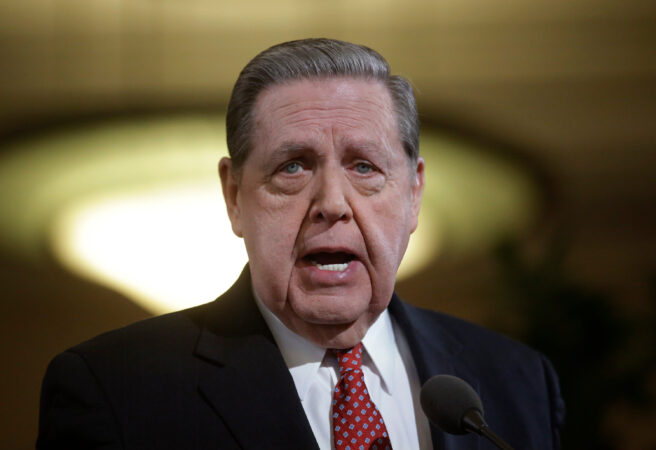
    SALT LAKE CITY — Jeffrey R. Holland, a high-ranking official in the Church of Jesus Christ of Latter-day Saints who was next in line to become the faith’s president, has died. He was 85.

    Holland died early Saturday morning from complications associated with kidney disease, the Church of Jesus Christ of Latter-day Saints announced on its website.

    Holland, who died in Salt Lake City, led a governing body called the Quorum of the Twelve Apostles, which helps set church policy while overseeing the many business interests of what is known widely as the Mormon church.

    He was the next longest-tenured member of the Quorum of the Twelve after President Dallin H. Oaks, making him next in line to lead the church under a long-established succession plan.

    Henry B. Eyring, who is 92 and one of Oaks’ two top counselors, is now next in line for the presidency.

    Holland had been hospitalized during the Christmas holiday for treatment related to ongoing health complications, the church said. Experts on the faith pointed to his declining health in October when Oaks did not select Holland as a counselor. He attended several church events that month in a wheelchair.

    His death leaves a vacancy in the Quorum of the Twelve that Oaks will fill in coming months, likely by calling a new apostle from a lower-tier leadership council. Apostles are all men in accordance with the church’s all-male priesthood.

    Holland grew up in St. George, Utah, and worked for many years in education administration before his call to join the ranks of church leadership. He served as the ninth president of Brigham Young University, the Utah-based faith’s flagship school, from 1980 to 1989 and was a commissioner of the church’s global education system.

    Under his leadership, the Provo university worked to improve interfaith relations and established a satellite campus in Jerusalem. The Anti-Defamation League later honored Holland with its Torch of Liberty Award for helping foster greater understanding between Christian and Jewish communities.

    Holland is widely remembered for a 2021 speech in which he called on church members to take up metaphorical muskets in defense of the faith’s teachings against same-sex marriage. The talk, known colloquially as “the musket fire speech,” became required reading for BYU freshmen in 2024, raising concern among LGBTQ+ students and advocates.

    Holland was preceded in death by his wife, Patricia Terry Holland. He is survived by their three children, 13 grandchildren and several great-grandchildren.

  • Winter storm snarls U.S. holiday travel across Northeast, Great Lakes

    Winter storm snarls U.S. holiday travel across Northeast, Great Lakes

    BOSTON — More than a thousand flights were canceled or delayed across the Northeast and Great Lakes regions due to snow as thousands took to U.S. roads and airports during the busy travel period between Christmas and New Year’s.

    New York City received around 4 inches of snow Friday night into early Saturday — slightly under what some forecasts had predicted. At least 1,500 flights were canceled from Friday night, according to flight-tracking service FlightAware. But by Saturday morning, both the roads and skies were clearing.

    “The storm is definitely winding down, a little bit of flurries across the Northeast this morning,” said Bob Oravec, a Maryland-based forecaster at the National Weather Service.

    Oravec said the storm was quick-moving from the northwest toward the Southeast U.S., with the largest snowfall in the New York City area reaching over 6 inches in central eastern Long Island. Further to the north in the Catskills, communities saw as much as 10 inches of snowfall.

    Newark Liberty International Airport, John F. Kennedy International Airport, and LaGuardia Airport posted snow warnings on the social media platform X on Friday, cautioning that weather conditions could cause flight disruptions.

    The National Weather Service warned of hazardous travel conditions from the Great Lakes through the northern mid-Atlantic and southern New England, with the potential for tree damage and power outages. Forecasters said the storm was expected to weaken by Saturday morning.

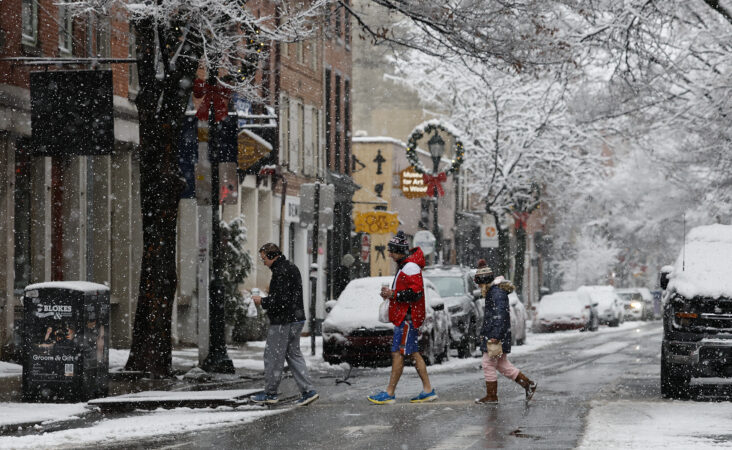
    In Times Square on Saturday, workers in red jumpsuits worked to clear the sludge and powder-coated streets and sidewalks using shovels and snowblowers.

    Jennifer Yokley, who was in Times Square on a holiday trip from North Carolina, said she was excited to see snow accumulating as it dusted buildings, trees, and signs throughout the city.

    “I think it was absolutely beautiful,” she said.

    Payton Baker and Kolby Gray, who were visiting New York City from West Virginia on Saturday, said the snow was a Christmas surprise for their third anniversary trip.

    “Well, it’s very cold and it was very unexpected,” Baker said, her breath visible in the winter air. “The city is working pretty well to get all the roads salted and everything, so it’s all right.”

    Ahead of the storm, New York Gov. Kathy Hochul declared a state of emergency for more than half of the state.

    4 dead in California

    On the other side of the country, California was experiencing a fairly dry weekend after powerful storms battered the state with heavy rains, flash flooding, and mudslides. At least four people were killed including a man who was found dead Friday in a partially submerged car near Lancaster, the Los Angeles County Sheriff’s Department reported.

    Some mountainous areas received 10 to 18 inches of rain over three days, peaking on Christmas Eve, National Weather Service meteorologist Rose Schoenfeld said. There were varied amounts of rain in other populated areas, including up to 4 inches across the Los Angeles Basin and many coastal areas.

    There was significant damage to homes and cars in Wrightwood, a 5,000-resident mountain town about 80 miles northeast of Los Angeles, as floods and mudslides turned roads into rivers and buried vehicles in rock and debris.

    Before rain reappears in the forecast later next week, California was expected to experience Santa Ana winds with gusts of over 60 mph in mountainous areas from Sunday night through Tuesday. The winds could uproot saturated trees and cause power outages.

  • Russian attack pummels Kyiv as Zelensky prepares to meet Trump

    Russian attack pummels Kyiv as Zelensky prepares to meet Trump

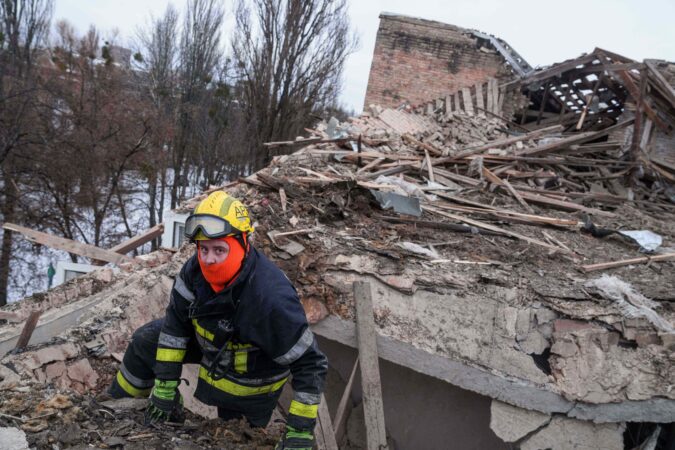
    KYIV — Russia launched a massive attack on civilian infrastructure in Ukraine early Saturday, targeting the Kyiv region’s energy grid and leaving one-third of the capital without heating, Foreign Minister Andrii Sybiha said, as residents face freezing temperatures and frost.

    The assault, which also triggered power cuts throughout Kyiv, comes just one day before Ukrainian President Volodymyr Zelensky is set to meet with President Donald Trump at his Mar-a-Lago estate in Florida to discuss the latest draft of a peace plan to end the war — a document that Russia has not signaled it is prepared to sign.

    Zelensky told journalists Saturday that he was en route to Canada, where he would meet with Prime Minister Mark Carney and speak via videoconference with European leaders ahead of the Trump meeting.

    The key issues Trump and Zelensky are expected to discuss include territorial control, future U.S. security guarantees for Ukraine, and investment in Ukraine’s reconstruction.

    “Putin deliberately ordered a massive bombing of residential areas and critical infrastructure of Kyiv just as leaders of Ukraine and the US are preparing to meet and advance peace,” Sybiha wrote on X. “ … Putin must realize that further rejection of peace will come at a very heavy price for him and his regime.”

    Zelensky pleaded for European partners to provide new air defense systems to Ukraine and described the Russian attacks as a reaction to “peaceful negotiations between Ukraine and the United States regarding ending Russia’s war against Ukraine.”

    By midmorning Saturday, Russia had launched nearly 500 Shahed drones and 40 missiles at Ukraine, including ballistic Kinzhals, Zelensky said in a post on Telegram. Several residential buildings were hit. Footage showed vehicles on fire on a major road in Kyiv.

    At least one person was killed and 28 people wounded in Kyiv, including two children, Mayor Vitali Klitschko said. One woman was killed in the nearby city of Bila Tserkva. The assault lasted 10 hours — and air raid sirens blared again throughout the afternoon as more drones closed in on Kyiv’s airspace. The attacks followed others elsewhere in Ukraine in recent days, including a glide-bomb strike on Kharkiv, the country’s second-largest city, on Friday night that killed two civilians and wounded a 9-month old girl and her mother.

    Russia has spent months targeting Ukraine’s energy infrastructure in a bid to damage the country’s economy and its people’s resolve in the coldest and darkest months of the year. In many parts of the country, including the capital, scheduled blackouts have been in place that leave civilians without power for much of the day. New emergency outages were implemented Saturday in response to the latest attack.

    The Kremlin refused Ukraine’s request for a Christmas ceasefire. Fierce battles continue across the front line in the country’s east and south. The Russian Volunteer Corps, a group of Russian soldiers fighting for Ukraine, announced Saturday that its commander, Denis Kapustin, was killed in a Russian drone attack in the southeastern Zaporizhzhia region.

    “If Russia even turns the Christmas and New Year’s time into a time of destroyed buildings and burned apartments, ruined power stations, then this sick activity can only be responded to with really strong steps,” Zelensky wrote Saturday on Telegram. “America has this opportunity, Europe has this opportunity, many of our partners have this opportunity. The main thing is to take advantage of it.”

    A frenzied effort to draft a workable peace plan has been in the works since last month, when the White House threatened to cut all aid to Ukraine unless Kyiv signed on to a controversial 28-point proposal by Thanksgiving. That draft made major concessions to Russia, stirring outrage in Ukraine and Europe. Washington eventually backed down on the threat, and delegations from Kyiv and Washington have since met several times to draft a new version, which Zelensky said Friday numbers 20 points and is 90% complete.

    The U.S. has pressured Ukraine to organize elections, including a presidential vote, which has been postponed since last year because of martial law, which has been in place throughout the war. Putin, meanwhile, changed Russia’s constitution to extend his stay in office indefinitely. Zelensky said recently that he would urge lawmakers to discuss how best to organize a presidential election but has insisted that Ukraine will require security guarantees to host any vote.

    Kyiv and European partners have repeatedly warned that Russia will attempt to disrupt any vote in Ukraine. Some elements of the latest draft peace plan, especially those regarding territory, would require a referendum in Ukraine, which also would face challenges with millions of people displaced or serving on the front line.

    “I am not clinging to the chair; we are ready for this,” Zelensky said Saturday of elections. But he insisted that the legal and security framework be established before any vote. “After today’s strikes — again, I repeat, because this happens daily, because Russia attacks us every day — the sky must be safe, and security ensured throughout our territory, at least for the duration of the elections or a referendum.”

    Any U.S. security guarantees, Zelensky said, will depend on Trump — “what he is ready to give, when he is ready to give it, for what term. Without a doubt, I will be grateful to him if his decision aligns with our wishes.”

    Ukraine continues to refuse to cede territory to Russia but has signaled openness to establishing a demilitarized zone in the Donbas region if Russia withdraws its troops — a proposal that Moscow, which remains adamant it wants to control all of Donbas, may refuse.

    Ukraine also rejected an earlier suggestion that its military be restricted to 600,000 troops, which would make it incapable of fighting off any future Russian attack, instead writing into the latest draft that its peacetime military could be capped at 800,000 troops.

    “Where is the Russian response to the proposals to end the war, which were put forward by the United States and the world?” Zelensky wrote on Telegram. “Russian representatives are having long conversations, but in reality, it’s the Kinzhals and Shaheds that speak for them. This is the real attitude of Putin and his entourage. They don’t want to end the war and are trying to use every opportunity to inflict more pain on Ukraine and increase their pressure on others in the world. And this means that the responsive pressure is not enough.”

  • Times Square to feature patriotic crystal ball for New Year’s Eve, kicking off U.S. 250th birthday

    Times Square to feature patriotic crystal ball for New Year’s Eve, kicking off U.S. 250th birthday

    After the crystal ball drops on New Year’s Eve in New York City, it will rise again, sparkling in red, white, and blue to usher in 2026 and kick off months of celebrations for the nation’s upcoming 250th birthday.

    The patriotic touches at this year’s Times Square gathering, including a second confetti drop, will offer an early glimpse of what’s ahead: hundreds of events and programs, big and small, planned nationwide to mark the signing of the Declaration of Independence in 1776.

    “I’m telling you right now, whatever you’re imagining, it’s going to be much more than that,” said America250 Chair Rosie Rios, who oversees the bipartisan commission created by Congress in 2016 to organize the semiquincentennial anniversary. “It’s going to be one for the ages, the most inspirational celebration this country and maybe the world has ever seen.”

    Rios and her group worked with the Times Square Alliance business district and One Times Square, the building from which the ball is dropped, to make the changes to this year’s ceremonies. They’re also planning a second ball drop event on July 3, the eve of the nation’s birthday, “in the same beautiful style that Times Square knows how to do it,” Rios said.

    It will mark the first time in 120 years there will be a ball drop in Times Square that doesn’t occur on New Year’s Eve, she said.

    A New Year’s Eve ball was first dropped in Times Square in 1907. Built by a young immigrant metalworker named Jacob Starr, the 700-pound, 5-foot-diameter ball was made of iron and wood and featured 100 25-watt light bulbs. Last year, the Constellation Ball, the ninth and largest version, was unveiled. It measures about 12 feet in diameter and weighs nearly 12,000 pounds.

    The only years when no ball drop occurred were 1942 and 1943, when the city instituted a nightly “dimout” during World War II to protect itself from attacks. Crowds instead celebrated the new year with a moment of silence followed by chimes rung from the base of One Times Square.

    This year, the stroke of midnight will also mark the official launch of America Gives, a national service initiative created by America250. Organizers hope to make 2026 the largest year of volunteer hours ever aggregated in the country.

    On the following day, America250 will participate in the New Years Day Rose Parade in Pasadena, Calif., with a float themed “Soaring Onward Together for 250 Years.” It will feature three larger-than-life bald eagles representing the country’s past, present, and future.

    “We want to ring in this new year from sea to shining sea. What better way to think about it than going from New York to California,” Rios said. “This has to be community-driven, this has be grassroots. We’re going from Guam to Alaska, from Fairbanks to Philadelphia, and everything in between.”

    President Donald Trump has also announced the “Freedom 250” initiative to coordinate additional events for the 250th anniversary.

    Rios said she sees the wide range of celebrations and programs planned for the coming months, from large fireworks displays and statewide potluck suppers to student contests and citizen oral histories, as an opportunity to unite a politically divided nation.

    “If we can find something for everyone … having those menus of options that people can pick and choose how they want to participate,” she said. “That’s how we’re going to get to engaging 350 million Americans.”

  • Snow, sleet, and rain moved into Philly overnight, with icy roads a concern on Saturday

    Snow, sleet, and rain moved into Philly overnight, with icy roads a concern on Saturday

    Friday’s snow, sleet, and rain brought a cold mix of precipitation to Philadelphia and surrounding areas, leaving behind slippery conditions Saturday.

    “Today looks quiet compared to last night, but watch out for the icy roads,” said Joseph DeSilva, a meteorologist in the National Weather Service’s Mount Holly office.

    Saturday looks to be mostly cloudy, with a high of 34 degrees, a low of 25, and no precipitation on the horizon, DeSilva said.

    While roads continue to be treated, the Pennsylvania Department of Transportation has already removed a 45 mph temporary speed-limit reduction for major highways in the five-county Philadelphia region, including on Interstates 76 and 95, as well as I-476, I-676, and I-295.

    The wintry mix of snow, sleet, and intermittent rain moved into the region overnight, with temperatures hovering in the mid-30-degree range.

    Regional accumulation totals varied, from .2 inch in Rittenhouse Square to .3 at Philadelphia International Airport, .4 in Mt. Holly and 1 inch in Skippack.

    window.addEventListener(“message”,function(a){if(void 0!==a.data[“datawrapper-height”]){var e=document.querySelectorAll(“iframe”);for(var t in a.data[“datawrapper-height”])for(var r,i=0;r=e[i];i++)if(r.contentWindow===a.source){var d=a.data[“datawrapper-height”][t]+”px”;r.style.height=d}}});

    Ray Martin, a meteorologist in the National Weather Service’s Mount Holly office said Friday that even without especially high accumulations, conditions would remain hazardous.

    Sleet tends to be more compact than snow, demanding more effort when it comes to shoveling or plowing it off sidewalks, entryways, and garages.

    For Martin, this is: “a lot of little ice balls, basically frozen raindrops, covering the ground. It will be like shoveling sand.”

    If possible, he recommended waiting to drive until later Saturday, when temperatures were expected to rise above freezing.

    In Northeast Philadelphia, icy roads have already claimed a life.

    A 45-year-old woman was killed when her car was struck head-on by a pickup truck, police said. The crash occurred around 2 a.m., when thepickup was traveling north on the 3500 block of an ice-covered Aramingo Avenue when the driver lost control of the truck, police said.

    The pickup was moving at an “unsafe speed for the wintry conditions,” police said, crossing into the southbound lanes and striking the woman’s car head-on.

    Fire Department medics transported both drivers to local hospitals. The cwoman was transferred to Temple University Hospital, where she was pronounced dead at 2:35 a.m. Meanwhile, the pickup driver is considered stable at Jefferson Hospital.

    A third person, a 29-year-old passenger in the truck, was taken to Temple University Hospital with non-life-threatening injuries.

    And the snowy, icy conditions aren’t just affecting Philadelphia.

    Accumulation totals were higher north of the area, with anywhere from 2 to 6 inches in northern New Jersey.

    window.addEventListener(“message”,function(a){if(void 0!==a.data[“datawrapper-height”]){var e=document.querySelectorAll(“iframe”);for(var t in a.data[“datawrapper-height”])for(var r,i=0;r=e[i];i++)if(r.contentWindow===a.source){var d=a.data[“datawrapper-height”][t]+”px”;r.style.height=d}}});
    Due to the slippery conditions, acting New Jersey Gov. Tahesha Way declared a state of emergency across her state Friday morning, urging people to monitor official updates, remain off the roads unless necessary, and stay safe.

    As of Saturday afternoon, 27 flights at Philadelphia International Airport were cancelled, and 164 were delayed, due to the storm. Those with holiday traveling around the corner, can track flight statuses at Philadelphia International Airport.

    The storm came ahead of the 30th anniversary of Philly’s massive 1996 snowfall, when the city registered 30.7 inches between Jan. 7 and Jan. 8.

    So far this season, Philadelphia has already seen more than half the snow last winter brought. This year’s seasonal total stands at 4.2 inches, while the city saw 8.1 inches during the entire 2024-25 winter.

    Slight melting is expected through Saturday, but refreezing will come overnight, bringing a rainy Sunday with a high of 43 and a low of 37 degrees.

    Conditions are set to improve in Philadelphia by early next week, with Monday expected to bring a high of 58 degrees and a low of 28, and the year waving farewell Wednesday with a high of 38 degrees and a low of 30, according to AccuWeather.

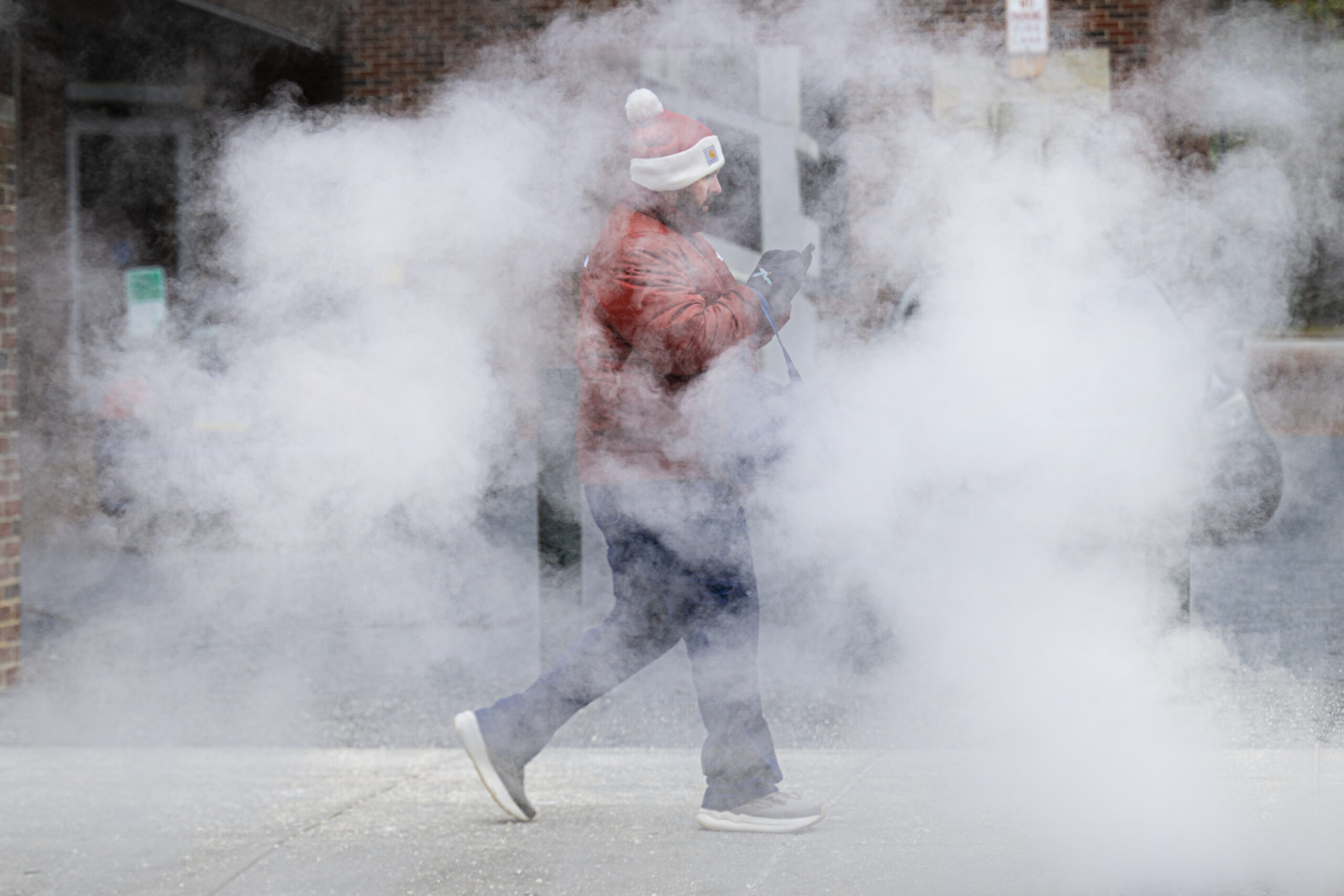
    A pedestrian walks through a cloud of steam on a cold winter day in West Philadelphia, Friday, Dec. 26, 2025, as snow and a wintry mix are forecast for the area through Saturday morning.
  • Millions of Afghans face hunger as aid cuts deepen a humanitarian crisis

    Millions of Afghans face hunger as aid cuts deepen a humanitarian crisis

    KABUL, Afghanistan — For 10 hours a day, Rahimullah sells socks from his cart in eastern Kabul, earning about $4.5 to $6 per day. It’s a pittance, but it’s all he has to feed his family of five.

    Rahimullah, who like many Afghans goes by only one name, is one of millions of Afghans who rely on humanitarian aid, both from the Afghan authorities and from international charity organizations, for survival. An estimated 22.9 million people — nearly half the population — required aid in 2025, the International Committee for the Red Cross said in an article on its website Monday.

    But severe cuts in international aid — including the halting of U.S. aid to programs such as food distribution run by the United Nations’ World Food Program — have severed this lifeline.

    More than 17 million people in Afghanistan now face crisis levels of hunger in the winter, the World Food Program warned last week, 3 million more than were at risk more than a year ago.

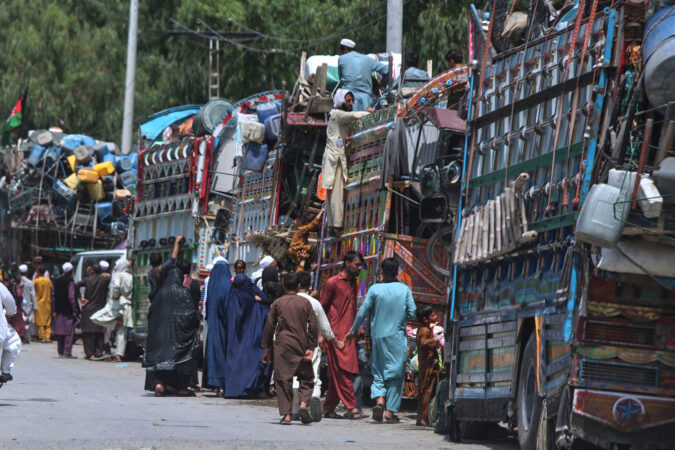
    The slashing in aid has come as Afghanistan is battered by a struggling economy, recurrent droughts, two deadly earthquakes, and the mass influx of Afghan refugees expelled from countries such as Iran and Pakistan. The resulting multiple shocks have severely pressured resources, including of housing and food.

    U.N. appeals for help

    Tom Fletcher, the U.N. humanitarian chief, told the Security Council in mid-December that the situation was compounded by “overlapping shocks,” including the recent earthquakes and increasing restrictions on humanitarian aid access and staff.

    While Fletcher said nearly 22 million Afghans will need U.N. assistance in 2026, his organization will focus on 3.9 million facing the most urgent need of lifesaving help due to reduced donor contributions.

    Fletcher said this winter was “the first in years with almost no international food distribution.”

    “As a result, only about 1 million of the most vulnerable people have received food assistance during the lean season in 2025,” compared to 5.6 million last year, he said.

    The year has been devastating for U.N. humanitarian organizations, which have had to cut thousands of jobs and spending in the wake of aid cuts.

    “We are grateful to all of you who have continued to support Afghanistan. But as we look towards 2026, we risk a further contraction of life-saving help — at a time when food insecurity, health needs, strain on basic services, and protection risks are all rising,” Fletcher said.

    Returning refugees

    The return of millions of refugees has added pressure on an already teetering system. Minister of Refugees and Repatriation Affairs Abdul Kabir said Sunday that 7.1 million Afghan refugees had returned to the country over the last four years, according to a statement on the ministry website.

    Rahimullah, 29, was one of them. The former Afghan Army soldier fled to neighboring Pakistan after the Taliban seized power in 2021. He was deported back to Afghanistan two years later, and initially received aid in the form of cash as well as food.

    “The assistance was helping me a lot,” he said. But without it, “now I don’t have enough money to live on. God forbid, if I were to face a serious illness or any other problem, it would be very difficult for me to handle because I don’t have any extra money for expenses.”

    The massive influx of former refugees has also sent rents skyrocketing. Rahimullah’s landlord has nearly doubled the rent of his tiny two-room home, with walls made half of concrete and half of mud and a homemade mud stove for cooking. Instead of 4,500 afghanis (about $67), he now wants 8,000 afghanis (about $120) — a sum Rahimullah cannot afford. So he, his wife, daughter, and two young sons will have to move next month. They don’t know where to.

    Before the Taliban takeover, Rahimullah had a decent salary and his wife worked as a teacher. But the new government’s draconian restrictions on women and girls mean women are barred from nearly all jobs, and his wife is unemployed.

    “Now the situation is such that even if we find money for flour, we don’t have it for oil, and even if we find it for oil, we can’t pay the rent. And then there is the extra electricity bill,” Rahimullah said.

    Harsh winters compound misery

    In Afghanistan’s northern province of Badakhshan, Sherin Gul is desperate. In 2023, her family of 12 got supplies of flour, oil, rice, beans, pulses, salt, and biscuits. It was a lifesaver.

    But it only lasted six months. Now, there is nothing. Her husband is old and weak and cannot work, she said. With 10 children, seven girls and three boys between the ages of 7 and 27, the burden of providing for the family has fallen on her 23-year-old son — the only one old enough to work. But even he only finds occasional jobs.

    “There are 12 of us … and one person working cannot cover the expenses,” she said. “We are in great trouble.”

    Sometimes neighbors take pity on them and give them food. Often, they all go hungry.

    “There have been times when we have nothing to eat at night, and my little children have fallen asleep without food,” Gul said. “I have only given them green tea and they have fallen asleep crying.”

    Before the Taliban takeover, Gul worked as a cleaner, earning just about enough to feed her family. But the ban on women working has left her unemployed, and she said she developed a nervous disorder and is often sick.

    Compounding their misery is the harsh cold of the northern Afghan winter, when snow halts construction work where her son can sometimes find jobs. And there is the added expense of firewood and charcoal.

    “If this situation continues like this, we may face severe hunger,” Gul said. “And then it will be very difficult for us to survive in this cold weather.”

  • Thailand and Cambodia sign a new ceasefire agreement to end border fighting

    Thailand and Cambodia sign a new ceasefire agreement to end border fighting

    BANGKOK — Thailand and Cambodia signed a ceasefire agreement on Saturday to end weeks of fighting along their border over competing territorial claims.

    The agreement took effect at noon and calls for a halt in military movements and airspace violation for military purposes.

    Only Thailand has carried out airstrikes, hitting sites in Cambodia as recently as Saturday morning, according to the Cambodian Defense Ministry.

    The deal also calls for Thailand, after the ceasefire has held for 72 hours, to repatriate 18 Cambodian soldiers it has held as prisoners since earlier fighting in July. Their release has been a major demand of the Cambodian side.

    Within hours of the signing, Thailand’s Foreign Ministry protested to Cambodia that a Thai soldier sustained a permanent disability when he stepped on an anti-personnel land mine it charged had been laid by Cambodian forces.

    Defense ministers met at the border

    The agreement was signed by the countries’ defense ministers, Cambodia’s Tea Seiha and Thailand’s Nattaphon Narkphanit, at a border checkpoint. It followed three days of lower-level talks by military officials.

    It declares that the sides are committed to an earlier ceasefire that ended five days of fighting in July and follow-up agreements.

    The original July ceasefire was brokered by Malaysia and pushed through by pressure from U.S. President Donald Trump, who threatened to withhold trade privileges unless Thailand and Cambodia agreed. It was formalized in more detail in October at a regional meeting in Malaysia that Trump attended.

    Despite those deals, the countries carried on a bitter propaganda war and minor cross-border violence continued, escalating in early December to widespread heavy fighting.

    On Saturday, U.S. Secretary of State Marco Rubio welcomed the ceasefire announcement and urged Cambodia and Thailand to fully honor it and the terms of the peace accord reached earlier in Malaysia.

    Civilians bore the brunt of the fighting

    Thailand has lost 26 soldiers and one civilian as a direct result of the combat since Dec. 7, according to officials. Thailand has also reported 44 civilian deaths.

    Cambodia hasn’t issued an official figure on military casualties, but says that 30 civilians have been killed and 90 injured. Hundreds of thousands of people have been evacuated on both sides of the border.

    “Today’s ceasefire also paves the way for the displaced people who are living in the border areas to be able to return to their homes, work in the fields, and even allow their children to be able to return to schools and resume their studies,” Cambodia’s Seiha told reporters after the signing.

    Each side blamed the other for initiating the fighting and claimed to be acting in self-defense.

    The agreement also calls on both sides to adhere to international agreements against deploying land mines, a major concern of Thailand.

    Thai soldiers along the border have been wounded in at least 10 incidents this year by what Thailand says were newly planted Cambodian mines. Cambodia says the mines were left over from decades of civil war that ended in the late 1990s.

    Following the latest injury on Saturday, Thailand’s Foreign Ministry noted that the new agreement “includes key provisions on joint humanitarian demining operations to ensure the safety of military personnel and civilians in the border areas as soon as possible.”

    Another clause says the two sides “agree to refrain from disseminating false information or fake news.”

    The agreement calls for a resumption of previous measures to demarcate the border. The sides also agreed to cooperate in suppressing transnational crimes. That’s primarily a reference to online scams perpetrated by organized crime that have bilked victims around the world of billions of dollars each year. Cambodia is a center for such criminal enterprises.

    Malaysia’s leader hails agreement

    Malaysia’s Prime Minister Anwar Ibrahim, who was instrumental in putting together the original ceasefire, said the new agreement “reflects a shared recognition that restraint is required, above all in the interest of civilians.”

    Many clauses similar to those in Saturday’s agreement were included in October’s ceasefire document, and were open to various interpretations and generally honored only in part. These included provisions concerning land mines and the Cambodian prisoners.

    The fragility of the new agreement was underlined by Thailand’s Defense Ministry spokesperson Surasant Kongsiri in a news briefing after Saturday’s signing. He said that the safe return of civilians to their homes would indicate the situation had stabilized enough to allow the repatriation of the captured Cambodian soldiers.

    “However, if the ceasefire does not materialize, this would indicate a lack of sincerity on the Cambodian side to create sure peace,” he said. “Therefore, the 72- hour ceasefire beginning today is not an act of trust nor unconditional acceptance but a time frame to tangibly prove whether Cambodia can truly cease the use of weapons, provocations, and threats in the area.”

  • Kennedy Center leader rebukes musician who canceled Christmas concert

    Kennedy Center leader rebukes musician who canceled Christmas concert

    Kennedy Center President Richard Grenell has sent a scathing letter criticizing a musician’s decision to abruptly pull out of a scheduled annual holiday performance at the institution and threatening him with legal action.

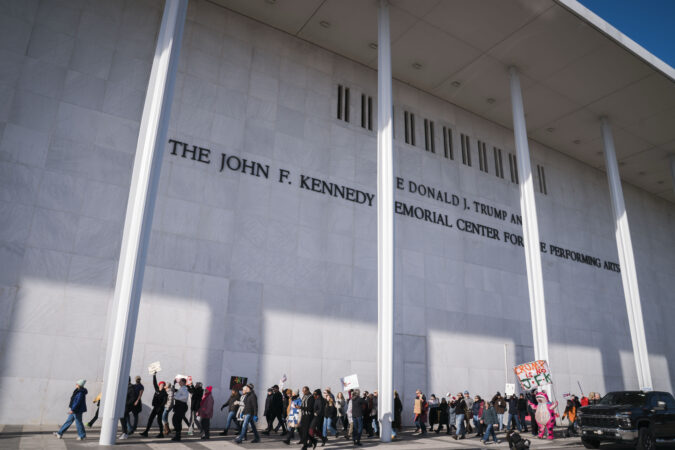
    Drummer and vibraphonist Chuck Redd is the longtime host of the center’s Christmas Eve Jazz Jam, which was canceled this year shortly after the board of the John F. Kennedy Center for the Performing Arts announced that it was renaming the storied arts institution after President Donald Trump.

    “Your decision to withdraw at the last moment — explicitly in response to the Center’s recent renaming, which honors President Trump’s extraordinary efforts to save this national treasure — is classic intolerance and very costly to a non-profit Arts institution,” Grenell said in his letter to Redd, a copy of which the center shared Friday with the Washington Post.

    He added, “This is your official notice that we will seek $1 million in damages from you for this political stunt.”

    Redd did not immediately respond to requests for comment late Friday. He told the Associated Press on Wednesday that upon seeing the name change, he had decided to call off the concert, which he described as a “very popular holiday tradition” that it was “very sad to have had to cancel.”

    Grenell, a Trump ally, was appointed to lead the Kennedy Center in February, the same month the president fired the majority of its board and became its chairperson. Grenell formerly served as the U.S. ambassador to Germany and as acting director of national intelligence during the first Trump administration. Under President George W. Bush, he was also a State Department spokesperson to the United Nations.

    His letter to Redd, which is undated, was first reported by the Associated Press.

    In it, he said Redd’s decision “surrenders to the sad bullying tactics employed by certain elements on the left, who have sought to intimidate artists into boycotting performances at our national cultural center.”

    Roma Daravi, the center’s vice president of public relations, added in an emailed statement to the Post: “Any artist cancelling their show at the Trump Kennedy Center over political differences isn’t courageous or principled — they are selfish, intolerant, and have failed to meet the basic duty of a public artist: to perform for all people.”

    The Kennedy Center, which is visited by approximately 2 million people a year, is a public-private institution that was founded to be the nation’s cultural center and was designated in 1964 as a living memorial to President John F. Kennedy following his assassination.

    Its board of trustees voted last week to rename the institution “The Donald J. Trump and the John F. Kennedy Memorial Center for the Performing Arts,” but the move was swiftly challenged by Rep. Joyce Beatty (D., Ohio), who filed a lawsuit Monday arguing that an act of Congress was required to officially change its name.

    Some members of the Kennedy family including Maria Shriver, a niece of John F. Kennedy, and Joe Kennedy, a former Democratic congressman from Massachusetts, expressed disbelief and dismay over the vote.

    The Kennedy Center has experienced a steep decline in ticket sales since Trump’s takeover of the institution compared with the same period last year, the Post reported. Sales for orchestra, theater, and dance performances are the worst they have been since the coronavirus pandemic, according to a Post analysis.

    In the weeks after the February board changes, at least 20 productions were canceled or postponed, with names such as comedian and actor Issa Rae pulling out of planned performances at the center, and musical artist Ben Folds and opera singer Renée Fleming announcing they were stepping down as artistic advisers.

  • Mother killed reportedly during a post-Christmas child custody swap in Upper Darby

    Mother killed reportedly during a post-Christmas child custody swap in Upper Darby

    A woman was killed in front of her three children reportedly by their father who then shot himself during a custody transfer early Friday afternoon in Upper Darby.

    Shortly after 1 p.m., Upper Darby police posted on social media that a man and woman had been found shot. Just after 6 p.m., Upper Darby police posted an update that the double shooting at Copley Road and Locust Street was “another senseless act of domestic violence.”

    Officers responded to a 911 call for a shooting at the location and found the woman seated in the driver’s seat of a vehicle with a gunshot wound. Lifesaving measures were attempted but unsuccessful for the woman, police said.

    The man was transported to Penn Presbyterian Medical Center, where he was listed in critical condition on life support, police said.

    Police Superintendent Timothy M. Bernhardt told the Delaware County Daily Times that the woman was 34 and the man is 45. Their identities have not yet been made public.

    Bernhardt told the Daily Times: “What we know through investigation so far is that the female was there picking up children. There’s a custody order in place. The male had the children for Christmas, he walked up to the car with the children, the children got into the vehicle, there was some type of an argument, exchange of words, he pulled out a handgun and shot her … got out of the vehicle and then shot himself.”

    Three children inside the vehicle at the time of gunfire were not injured, Upper Darby police said.

    “Yesterday’s incident was a brutal act of domestic violence,“ Bernhardt said in a statement to The Inquirer. ”A mother was killed in front of her children. Those children will live with this trauma for the rest of their lives. There is no excuse for this kind of violence, and the damage it causes is permanent.”

    Staff writer Maggie Prosser contributed to this article.

  • How Camden tells the story of Mikie Sherrill’s big win and New Jersey’s blue wave

    How Camden tells the story of Mikie Sherrill’s big win and New Jersey’s blue wave

    The story behind New Jersey Gov.-elect Mikie Sherrill’s landslide victory last month can be understood by looking at her strong performance in the city of Camden.

    The young, diverse, and working-class city exemplifies trends that played out across the state as Sherrill reversed rightward shifts among the voter groups Democrats desperately need to rebound with nationally.

    An Inquirer analysis of municipal-level data shows that Sherrill outperformed both former Vice President Kamala Harris in 2024 and outgoing Democratic Gov. Phil Murphy in 2021 across New Jersey’s 564 cities, boroughs, and townships, winning 300 — about 53% — of them as compared with Harris’ 252 last year and Murphy’s 210 four years ago.

    She reversed gains made by President Donald Trump last year that gave Republicans false hope that Jack Ciattarelli, who was aligned with and endorsed by Trump, would do much better in November than he actually did as Sherrill outperformed expectations.

    window.addEventListener(“message”,function(a){if(void 0!==a.data[“datawrapper-height”]){var e=document.querySelectorAll(“iframe”);for(var t in a.data[“datawrapper-height”])for(var r,i=0;r=e[i];i++)if(r.contentWindow===a.source){var d=a.data[“datawrapper-height”][t]+”px”;r.style.height=d}}});

    Camden’s population is more than 54% Hispanic and nearly 38% Black — Democratic-leaning voter groups that had shifted toward Trump nationally in 2024. Sherrill’s campaign had outreach operations geared toward both Black and Hispanic voters.

    Every demographic group in the state swung toward Democrats this year, but Sherrill’s most striking improvement over Murphy and Harris seemed to be among Hispanic people, who make up more than half of Camden’s population.

    She similarly made gains in areas across the state that have high populations of young voters, lower-income voters, and voters without college degrees — like Camden.

    Voters in Camden turned out for Sherrill resoundingly with 92% of the vote, more than 10 percentage points better than Harris performed in the city during her presidential run last year, and Sherrill outperformed the former vice president in every one of the city’s 40 precincts. The larger the Hispanic share of the voting district, the larger it shifted toward Sherrill.

    This was reflected statewide, with the state’s 10 largest Hispanic-majority cities moving an average of 18 points to the left while other New Jersey municipalities moved just about four points toward the Democrat.

    Latino outreach in Camden fueled Hispanic support

    window.addEventListener(“message”,function(a){if(void 0!==a.data[“datawrapper-height”]){var e=document.querySelectorAll(“iframe”);for(var t in a.data[“datawrapper-height”])for(var r,i=0;r=e[i];i++)if(r.contentWindow===a.source){var d=a.data[“datawrapper-height”][t]+”px”;r.style.height=d}}});
    Outreach to Hispanic voters was driven by a coordinated campaign between Sherrill’s campaign and the state Democratic Party, as well as independent expenditure groups. It seemed to pay off.

    In Camden’s most heavily Hispanic precinct, for example, voters gave Sherrill 92% of the vote, 12 points more than they gave to Harris.

    Sherrill’s campaign and its backers knew how important it was to win over these voters who had felt taken for granted by the Democratic Party.

    Sherrill had limited time to introduce herself to voters coming out of a six-way competitive primary in June — which she won big but with less success in some heavily Black and Hispanic areas. To many voters, especially in South Jersey, she was just another candidate.

    UnidosUS Action PAC experienced that unfamiliarity with Sherrill when its canvassers first started knocking on doors in Camden in September, said Rafael Collazo, the executive director of the PAC.

    “The question that Latino voters and voters that we spoke to had wasn’t if they were going to vote for Ciattarelli or not, because they were clearly against anyone associated with Trump,” Collazo said. “But they honestly weren’t sure if they were going to vote for Sherrill, because they didn’t feel like they knew her.”

    Sherrill’s campaign and backers tapped local leaders like pastors, nonprofit executives, and elected officials, and held events specifically catered to Latinos, said Vereliz Santana, the coordinated campaign’s Latino base vote director, who grew up in Camden.

    They spread the message through Spanish-speaking door knockers and Spanish-language ads, which Camden City Councilman Falio Leyba-Martinez, a Democrat, called “beyond impactful.”

    “She made it normal for people to understand that you don’t speak English,” he said.

    That was not always the case for New Jersey Democrats, according to Patricia Campos-Medina, a vice chair of Sherrill’s campaign and senior adviser for Sherrill’s Latino and progressive outreach. Democratic operatives in the state justified saving money on bilingual messaging over the last decade since most Latinos speak English, she said.

    “But the problem is that Latinos have to hear that you are talking to them … otherwise they feel like you’re just ignoring them,” she added.

    And it’s not just speaking Spanish. Showing cultural competency — such as using Puerto Rican slang or phrases like “reproductive healthcare” instead of “abortion rights” — is also critical, she said.

    window.addEventListener(“message”,function(a){if(void 0!==a.data[“datawrapper-height”]){var e=document.querySelectorAll(“iframe”);for(var t in a.data[“datawrapper-height”])for(var r,i=0;r=e[i];i++)if(r.contentWindow===a.source){var d=a.data[“datawrapper-height”][t]+”px”;r.style.height=d}}});
    Latino organizers in Camden said that community members who supported Trump or did not vote in 2024 have become frustrated by the high cost of living, slashed federal funding, and Immigration and Customs Enforcement’s tactics. Even those for whom immigration was not a top priority or who supported Trump’s plan to deport people who committed crimes have been dismayed, they said.

    Camden City Council President Angel Fuentes said videos circulating of immigrants being detained locally have been particularly resonant.

    “You can see the tears of these individuals,” he said. “You know, it’s so inhumane. I mean, I really want to use the f-word, but it’s so inhumane how they’re treated. Latinos … we are all family. We should not be treated like this.”

    Turnout increased compared to last race for governor

    Turnout is typically lower in cities with large numbers of lower-income voters and voters without college degrees, like Camden. But Democratic investments in the city seemed to make a difference this year.

    Camden saw a 63% increase in turnout compared with 2021. The jump in the city is more than double the 28% turnout increase statewide compared with the last race for governor.

    The city still has relatively low turnout compared with the full state, however, with only 26% of voters casting ballots in Camden compared with 51% statewide.

    Camden County as a whole was closer to the statewide turnout rate at 50%, but the county’s increase of 32% from 2021 was smaller than the city’s growth.

    Sherrill visited the city of Camden in July — early in her general election campaign — for a visit to CAMcare, a federally qualified health center that treats underserved communities, and went on to discuss it on a national podcast the next day.

    She did not return until October, at which point she visited the city three times in the lead-up to Election Day. Her campaign also held a rally outside city lines at the Camden County Democratic Party headquarters in Cherry Hill that Santana said was planned to feel “authentically Latino.”

    As part of their “scientific” strategy, Sherrill visited less-Democratic areas in the summer and early fall to try to win over swing voters before pivoting to bluer places like Camden, where they needed to motivate already-registered Democrats to cast their ballots, said Om Savargaonkar, the coordinated campaign director for Sherrill’s campaign and the New Jersey Democratic State Committee.

    As Sherrill zigzagged the state, a massive coordinated effort was underway to draw a strong Democratic turnout, bolstered by national funding from the Democratic National Committee.

    Sherrill’s coordinated campaign — the state party operation that worked with the campaign — made at least 19.5 million phone calls, door knocks, and text messages statewide, which was roughly 13 times more than the 1.5 million made for Murphy’s coordinated campaign in 2021, Savargaonkar said.

    Out of a roughly $12 million statewide investment, about $2 million to $3 million went directly to county parties to supplement the statewide turnout efforts, Savargaonkar said of the coordinated campaign.

    Sherrill did even better than previous Democrats in lower-income municipalities

    Democrats routinely score landslide wins in New Jersey’s working-class municipalities.

    Both Murphy and Harris posted double-digit margins in these communities, but Sherrill took that strong base and supercharged it. She won nearly two-thirds of the vote in the lowest-income municipalities and in places where fewer voters have college degrees — improving on Murphy’s and Harris’ performances by as much as eight percentage points.

    In Camden, fewer than one in 10 adults have a college degree and the typical household has an annual income of $40,000. That’s in a state where nearly 45% of residents are college-educated and with a median income of about $100,000.

    Sherrill’s campaign reached Latinos in Camden who voted for Trump last year because they believed he would make life more affordable but were having buyer’s remorse, organizers said.

    Her campaign spoke with locals about the negative impacts of Trump’s tariffs, engaging with everyone from distributors and manufacturers to local business groups, Santana said. Local surrogates also discussed Trump’s cuts to benefits and programs that help the community, said Camden Mayor Victor Carstarphen.

    And Sherrill’s focus on affordability and Trump resonated more broadly.

    She also won among voters in wealthier places, including the middle 50% of towns by median household income — places where Ciattarelli won four years ago and where Trump fought Harris to a near-draw last year. Like Harris before her, she managed to win the very wealthiest areas comfortably.

    While the city of Camden saw Sherrill’s biggest improvement over Harris in the county, her second-largest improvement came in nearby Runnemede, a borough in Camden County, where the typical household’s income is virtually identical to that of the state.

    Sherrill reversed losses among the youngest voters

    Trump made gains last year among younger voters across the country, and New Jersey was no different. The president won about 37% of the vote in the state’s youngest 25% of municipalities, beating Ciattarelli’s 2021 performance with that group by more than three percentage points even as he lost the state by nearly double Ciattarelli’s 2021 margin.

    This year, Sherrill reversed those inroads, improving on Harris’ performance by nearly eight points in places, including Camden, where the median age is 33. (New Jersey’s median age is 40.)

    Sherrill’s campaign made partnering with social media influencers a key part of her strategy as more young people focus their attention online. She appeared on national podcasts and in TikTok videos, on Substack, Reddit, and Instagram — often with Democratic-friendly hosts. Her team provided special access to influencers and held briefings with them.

    Sherrill appeared on 18 podcasts from January to October 2025, according to Edison Research, while Harris appeared on only eight during her campaign from July to November 2024.

    Her coordinated campaign’s statewide Latino effort also had its own social media, spearheaded by Frank Santos, a 33-year-old Camden resident of Puerto Rican and Nicaraguan descent. Santos and other staffers on the Latino outreach team represented different sub-demographics of “the larger Latino monolith,” Santana said.

    Organizers also catered their conversations to different sub-demographics through smaller and more “organic” events, she said, noting that younger voters were generally more progressive.

    “If you’re trying to connect with a community, knowing that you yourself reflect and represent that community, I think it makes the world of a difference,” she said.

    window.addEventListener(“message”,function(a){if(void 0!==a.data[“datawrapper-height”]){var e=document.querySelectorAll(“iframe”);for(var t in a.data[“datawrapper-height”])for(var r,i=0;r=e[i];i++)if(r.contentWindow===a.source){var d=a.data[“datawrapper-height”][t]+”px”;r.style.height=d}}});