TEL AVIV, Israel — The spread of famine has been averted in the Gaza Strip, but the situation remains critical with the entire Palestinian territory still facing starvation, the world’s leading authority on food crises said Friday.
The new report by The Integrated Food Security Phase Classification, or IPC, comes months after the group said famine was occurring in Gaza City and likely to spread across the territory without a ceasefire and an end to humanitarian aid restrictions.
There were “notable improvements” in food security and nutrition following an October ceasefire and no famine has been detected, the report said. Still, the IPC warned that the situation remains “highly fragile” and the entire Gaza Strip is in danger of starvation with nearly 2,000 people facing catastrophic levels of hunger through April.
In the worst-case scenario, including renewed conflict and a halt of aid, the whole Gaza Strip is at risk of famine. Needs remain immense, and sustained, expanded and unhindered aid is required, the IPC said.
Palestinians wait to receive donated food at a community kitchen in Gaza City on Thursday, Oct. 23.
The Israeli military agency in charge of coordinating aid to Gaza, known as COGAT, said Friday that it strongly rejected the findings.
The agency adheres to the ceasefire and allows the agreed amount of aid to reach the strip, COGAT said, noting the aid quantities “significantly exceed the nutritional requirements of the population” in Gaza according to accepted international methodologies, including the United Nations.
The Israeli Foreign Ministry said Friday that it also rejects the findings, saying the IPC’s report doesn’t reflect reality in Gaza and more than the required amount of aid was reaching the territory. The ministry said the IPC ignores the vast volume of aid entering Gaza, because the group relies primarily on data related to U.N. trucks, which account for only 20% of all aid trucks.
The IPC said that the report totals include commercial and U.N. trucks and its information is based on U.N. and COGAT data.
Israel’s government has rejected the IPC’s past findings, with Israeli Prime Minister Benjamin Netanyahu calling the previous report an “outright lie.”
Palestinians grab sacks of flour from a moving truck carrying World Food Programme aid as it drives through Deir al-Balah in central Gaza on Nov. 15.
Ceasefire offsets famine
The report’s findings come as the shaky U.S.-brokered ceasefire between Israel and Hamas reaches a pivotal point as Phase 1 nears completion, with the remains of one hostage still in Gaza. The more challenging second phase has yet to be implemented and both sides have accused the other of violating the truce.
The IPC in August confirmed the grim milestone of famine for the first time in the Middle East and warned it could spread south to Deir al-Balah and Khan Younis. More than 500,000 people in Gaza, about a quarter of its population, faced catastrophic levels of hunger, with many at risk of dying from malnutrition-related causes, the August report said.
Friday’s report said that the spread of famine had been offset by a significant reduction in conflict, a proposed peace plan and improved access for humanitarian and commercial food deliveries.
There is more food on the ground and people now have two meals daily, up from one meal each day in July. That situation “is clearly a reversal of what had been one of the most dire situations where we were during the summer,” Antoine Renard, the World Food Program’s director for the Palestinian territories, told U.N. reporters in a video briefing from Gaza City Thursday.
Food access has “significantly improved,” he said, warning that the greatest challenge now is adequate shelter for Palestinians, many of whom are soaked and living in water-logged tents. Aid groups say nearly 1.3 million Palestinians need emergency shelter as winter sets in.
Aid is still not enough
Displacement is one of the key drivers behind the food insecurity, with more than 70% of Gaza’s population living in makeshift shelters and relying on assistance. Other factors such as poor hygiene and sanitation as well as restricted access to food are also exacerbating the hunger crisis, the IPC said.
While humanitarian access has improved compared with previous analysis periods, that access fluctuates daily and is limited and uneven across the Gaza Strip, the IPC said.
To prevent further loss of life, expanded humanitarian assistance including food, fuel, shelter and health care is urgently needed, according to the group’s experts, who warned that over the next 12 months, more than 100,000 children between the ages of 6 months and 5 years are expected to suffer from acute malnutrition and require treatment.
Figures recently released by Israel’s military suggest that it hasn’t met the ceasefire stipulation of allowing 600 trucks of aid into Gaza each day, though Israel disputes that finding. American officials with the U.S.-led center coordinating aid shipments into Gaza also say deliveries have reached the agreed upon levels.
Aid groups say despite an increase of assistance, aid still isn’t reaching everyone in need after suffering two years of war.
“This is not a debate about truck numbers or calories on paper. It’s about whether people can actually access food, clean water, shelter and health care safely and consistently. Right now, they cannot,” said Bushra Khalidi, Oxfam’s policy lead for Israel and the occupied Palestinian territory.
People must be able to rebuild their homes, grow food and recover and the conditions for that are still being denied, she said.
Even with more products in the markets, Palestinians say they can’t afford it. “There is food and meat, but no one has money,” said Hany al-Shamali, who was displaced from Gaza City.
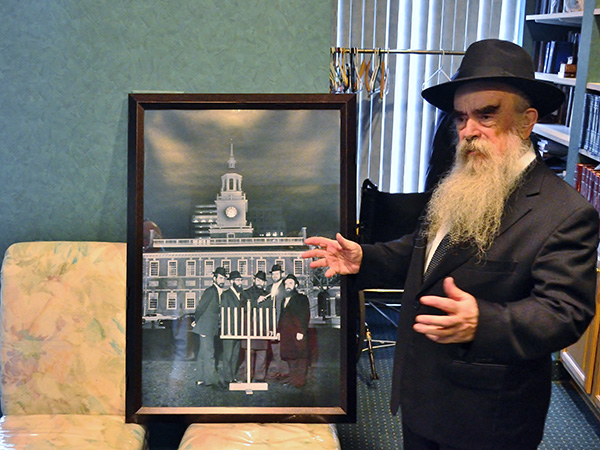
Outside the front door of Independence Hall, amid a wet and mild December in Philadelphia, a handful of devoutly orthodox Jews decided to add their light to the world.
Four men of the Lubavitcher sect of Hasidic Judaism, including renowned Rabbi Abraham Shemtov, gathered on Independence Mall on Dec. 14, 1974. Together they lit what is believed to be the first menorah, or Hanukkah candelabrum, ever illuminated on public property.
And together they watched their light spread.
“Philadelphia is where we started,” the now-88-year-old Rabbi Shemtov told The Inquirer in 2014. “Now it’s everywhere, in too many places to count.
“So, the idea caught fire,” he said, smiling through his long, gray beard.
Hanukkah is the Jewish celebration of light over darkness, and of faith and freedom over oppression and persecution. While it’s not the biggest holiday in the Jewish faith, its themes of perseverance and hope have been as synonymous with the winter solstice as any Christian tradition.
The most obvious reason that menorahs were traditionally not lit outside was because the flame would go out.
So on that breezy evening in mid-December, the flame stayed lit against all odds. Some might even call it divine intervention.
“What you need to understand,” Shemtov explained, is that Jewish tradition dictated that the candelabrum be lit at home, and placed “at the spot the house shares with the outside,” typically at the front door.
“Our sages say outside is better,” he said with a shrug. “So, we brought it outside a step further.”
In the years since, public menorahs havesprouted up across Europe and North America, from Revolution Square in Moscow to the White House in Washington.
“The simple lighting ceremony in Philadelphia,” wrote The Inquirer’s longtime religion reporter David O’Reilly, “became the foundational story of public menorahs for most of the world’s Jews.”
For centuries, menorah lighting had at times been a covert domestic ritual.
“We lit the first candle. There was some singing and dancing. It was a private event in public,” Shemtov said in 2014. “But even so, in concept we were sharing the thing with the world.”
“Do you realize you are going to end my life by doing this?”
Eliana Chernyakhovsky said she asked the question through an interpreter over and over again to the Pennsylvania Department of Human Services last week, after her 24-hour, state-funded care was cut off without warning. Her meal provider was also cut off. How would she feed herself? What if her oxygen tank ran out?
“Fear had risen in my heart,” Chernyakhovsky said in Russian during an interview through an interpreter on Wednesday. “I was genuinely afraid.”
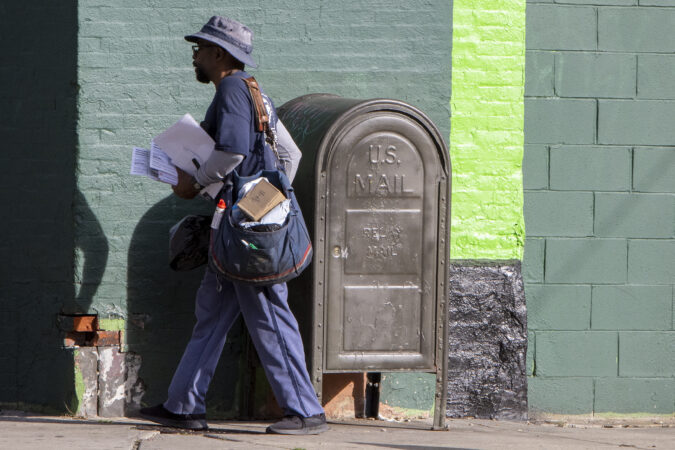
Chernyakhovsky, 73, of Northeast Philadelphia, was born with spina bifida and has a number of physical disabilities associated with the condition, and uses a wheelchair to get around. She is among the Pennsylvania residents who say they have lost their government-funded services because a state-contracted mail vendor failed to deliver a month’s worth of agency mail.
That breakdown resulted in 3.4 million letters never getting sent, 1.7 million of which were from the Pennsylvania Department of Human Services — the agency that oversees SNAP food assistance and Medicaid and is tasked with serving the state’s most vulnerable populations.
Millions of letters from state agencies — including notices of health and SNAP benefit renewal, driver’s license and vehicle registration renewal invitations, vehicle registration cards, and more — were never sent by a mail presort vendor, who was contracted by the state to tray and sort agency mail in order to save money on postage. The failure went undetected for a month until early December, when Gov. Josh Shapiro’s administration fired Harrisburg-based Capitol Presort Services and hired another vendor on a $1 million emergency contract to work through the backlog.
In Chernyakhovsky’s case, a letter dated Nov. 6 said she had failed to submit a renewal packet to continue receiving in-home care, said her attorney, Louise Hayes of Community Legal Services. Chernyakhovsky had 15 days to appeal to continue receiving services, or else her services would be shut off on Nov. 21.
But due to the monthlong lapse in state agency mail, Chernyakhovsky did not receive the letter until last week, after funding for her in-home nurses and foodservices had already been cut off, she said.
Chernyakhovsky’s home health aides opted to continue her care without pay, and with no assurance they would get paid for the time when her care was restored, because her needs are so great.
Her services restarted last week thanks to efforts by Community Legal Services while her appeal works its way through the system. As of this week, one of her home health agencies has still not received payment from her insurance company.
Alexander Aybinder, her day-shift nurse, said Wednesday it was still unclear when he would get paid. But he said he would still come to Chernyakhovsky’s home, no matter what.
“I will come tomorrow, because she cannot stay without service. I will work,” he said. “She’s absolutely helpless.”
DHS: Extended deadlines and ‘additional flexibility’
DHS spokesperson Brandon Cwalina said in a statement Thursday the agency will extend deadlines for appeals and provide “additional flexibility for affected Pennsylvanians.” Residents affected by the mail issue will receive notice of their appeal options and deadline extensions, Cwalina said.
Medicaid, CHIP, and TANF cash assistance recipients whose benefits were reduced or cut off during the mail delay will have their cases reopened, he added. These cases will be again reviewed to determine if the recipients received the necessary notification of a change in benefits. Renewals for the programs, originally due in December, are now due in January.
DHS cannot extend renewal deadlines for SNAP benefits due to federal guidelines, but affected SNAP recipients who submit the necessary documentation within 30 days of losing their benefits will be able to have them reopened and backdated, Cwalina said.
At least two dozen affected so far, with more expected
At least two dozen Community Legal Services clients have had problems with receiving their benefits because of the mail delay, said Maripat Pileggi, a supervising attorney at CLS. The delay affected state agency letters dated Nov. 3 through Dec. 3, officials have said, and all unsent mail should be received by residents in a few days.
And as the nonprofit legal agency has tried to help restore critical services to some of its most vulnerable clients, CLS attorney Lydia Gottesfeld said, legal advocates have struggled to reach the departments in DHS that could help them, with phone lines going unanswered or hour-long wait times.
“It’s been very difficult to get information about these delays,” she added.
Cwalina said Thursday that any DHS appeal hearings that were missed due to the mail disruption are being reopened and rescheduled, and the agency maintains that its callback system is accessible to recipients.
Cases like Chernyakhovsky’s are among the first and most urgent that CLS has identified since the state said that a month’s worth of agency mail to residents from DHS and the Pennsylvania Department of Transportation was never sent. Residents like Chernyakhovsky who receive care through the Medicaid-funded home and community-based services program often have the most acute health issues and significant needs, meaning a loss in healthcare services can be catastrophic.
Gottesfeld expects that more residents will realize in the coming weeks that they lost services — such as food assistance or health insurance — because of missed hearings or deadlines the next time they visit the doctor or grocery store.
When people lose state-funded services, it is not usually because they suddenly no longer need them, Gottesfeld said. Rather, it is usually due to failing to submit paperwork properly, resulting in a loss of food assistance, healthcare, or other services.
Questions remain
It remains unclear how the state agency mail piled up for more than a month before officials noticed, how the backlog was discovered, or where the millions of agency letters were located after the vendor stopped sorting them.
The reported loss of benefits stemming from the mail delay also comes after several tumultuous months for people who receive public benefits, following a federal government shutdown that cut food assistance, new work requirements to maintain benefits, and future uncertainty under federal cuts passed earlier this year. Shapiro was at the forefront of Democratic opposition to federal cuts to Medicaid and SNAP, and was a vocal critic when the department withheld benefits during the federal shutdown.
On Thursday, a group of 15 state Senate Republicans, including top legislative leaders, sent a letter to the Pennsylvania Department of General Services citing The Inquirer’s reporting and requesting more information about how the mail delivery failure was discovered, why it took a month to find the backlog, and more.
“Given the broad scope of this mail delivery failure, it is critical to ensure every effort is made to minimize the impact on our constituents and the disruption it may cause in their lives,” the senators wrote.
Shapiro’s administration is “exploring all legal options” against the fired vendor, Capitol Presort Services, Cwalina said.
Deputies from the Philadelphia Sheriff’s Office appear to have made serious tactical errors while attempting to apprehend a wanted man at his workplace in North Philadelphia on Monday morning, which enabled him to speed away in his car,according to experts in fugitive apprehension.
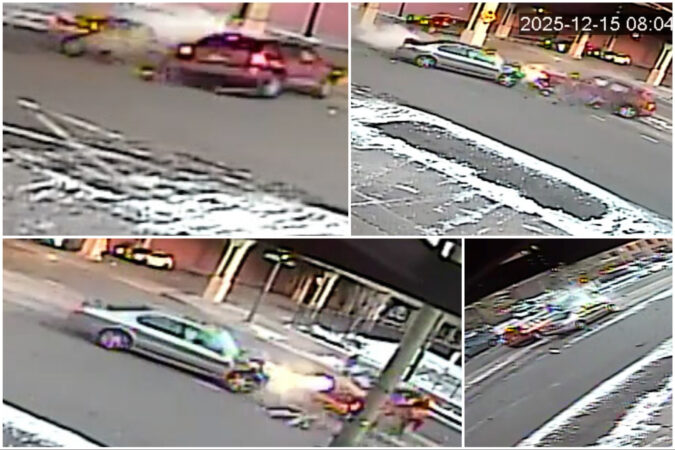
Moments later, Joseph Cini, while fleeing the deputies in his Nissan Maxima, plowed into a Jeep Patriot at Ninth Street and Girard Avenue, police say, killing an Uber passenger and seriously injuring her driver.
Cini, 35, ran from the scene but turned himself in to police Tuesday night. He is facing a slew of new charges, including homicide by vehicle.
Sheriff Rochelle Bilal has declined to answer any questions about the botched arrest. She released a short statement offering her office’s condolences to the family of Angela Cooper, the 63-year-old woman who was killed.
The Inquirer, however, was able to partially reconstruct what happened based on statements the deputies have provided to Philadelphia police.
The six-person operation by the sheriff’s office turned deadly when deputies from its warrant unit approached Cini, who was wanted for a probation violation, while he was still behind the wheel — rather than waiting until he got out of his vehicle.
Cini then backed up and, because the deputies had failed to box him in, started barreling down Girard Avenue. One member of the warrant unit, in fact, told police that he moved his unmarked vehicle to make way for the suspect’s vehicle to get by.
Four experts consulted by The Inquirer said the deputies’ statements could serve as a road map of what not to do during an apprehension. Such high-risk tactics, according to those experts, put the deputies and the public in more danger than was necessary.
“A vehicle is like a gun, almost. It can be a two-ton weapon.” said Craig Caine, a retired inspector with the U.S. Marshals Service. “And it proved to be true in this case.”
A plan gone wrong
Before sunrise Monday morning, a team of four deputies and two sergeants from the sheriff’s warrant unit laid an ambush for Cini. They had received a tip he was working at a low-slung plumbing business next to a three-way intersection on the 900 block of Watts Street, just south of Girard.
After surveilling the business, the team learned that Cini was set to arrive around 7 a.m. A sheriff’s sergeant and a deputy were outside the plumbing business, waiting to get a positive ID as others moved to block Cini’s escape paths, according to statements they later provided to police.
But when the deputies received confirmation that Cini was approaching the business, they sprang the trap before he stepped out of the car.
One deputy told police she activated the emergency lights on her car, then she and another deputy approached Cini and told him to exit his vehicle.
A sheriff’s sergeant on the team provided a similar account, telling police that the warrant unit closed in on Cini while he was still in the Maxima.
Instead of getting out of the car, Cini threw it in reverse and headed north on Watts.
As Cini backed up, a sheriff’s sergeant quickly moved his own vehicle onto Cambridge, a cross street, to avoid a collision with Cini on Watts, he later told police.
The warrant unit regrouped and began heading after Cini, but he crashed into the Jeep only five blocks away, according to the deputies.
Stephen Thompson, 51, a pastor in Kensington who was driving the Jeep for Uber, was injured in the crash and is being treated at Temple University Hospital.
The impact pinned Cooper, a Peco employee who did homeless outreach, in the back seat of the Jeep. A deputy checked her pulse and found none. She was pronounced dead at 7:24 a.m.
Days later, debris from the crash remained in the middle of Girard Avenue.
At a news conference Thursday, District Attorney Larry Krasner described Cooper as a “remarkable person” who was active with her church and “was always sacrificing for others.”
“We want the families and surviving victim to know our office will do everything we can to get justice and hold this defendant properly accountable for this terrible act,” Krasner said.
Experts on fugitive tracking and apprehension say the crash was likely preventable.
Robert Almonte, who served as U.S. marshal for the Western District of Texas during President Obama’s administration, said it is unusual for a warrant unit to confront a wanted man while he is in a car if the officers had information on where he is going to be.
“I would have waited for him to go into work and grab him there,” Almonte said. “Or, if the boss didn’t want that to happen, I’d go to Plan B: Let him walk toward the front door and grab him. But don’t let him get back to the vehicle.”
Caine, who worked on a fugitive task force in New York and New Jersey, agreed. A foot pursuit, he said, is much less dangerous than a car chase.
“Wait for him inside. Don’t have any suspicious vehicles within eyesight,” Caine said, speaking generally about best practices. “Take him at the door, or wait until he gets deeper into the building. Usually we were at the door. He comes in, boom, he’s on the ground, in handcuffs, and we take him away, no danger.”
If you have to confront a fugitive in a car, Caine said, make sure he has nowhere to go, if at all possible.
“Surround the car. Box him in nice and tight,” he said.
Krasner said Thursday that Cini may have somehow “figured out” he was about to be arrested, and then decided to flee. The deputies’ accounts to police, however, make no mention of that.
Regardless, Chris Burbank, an adviser to the Center for Policing Equity and the former police chief in Salt Lake City, said the operation was a failure that put lives at risk.
“It’s Law Enforcement Tactics 101,” Burbank said. “There is absolutely no reason to do anything while he’s mobile. This was unnecessary.”
Why was Cini wanted?
Since Monday, Philadelphia police and the sheriff’s office have provided only vague explanations of why sheriff’s deputies were attempting to arrest Cini in the first place.
Cini has a lengthy criminal history, racking up at least 24 priors in Pennsylvania and New Jersey between 2001 and 2022, including for theft, robbery, assault, and domestic abuse, according to police records.
The sheriff’s office statement on Monday said only that “deputies were attempting to serve a lawful warrant.” A police department news release on Monday described it as a “warrant for domestic assault,” leaving the impression Cini was wanted for a crime not yet prosecuted.
But two members of the warrant unit told police that they were planning to arrest Cini for a probation violation.
The Philadelphia District Attorney’s Office confirmed Thursday that Cini was being sought in connection with a 2018 casein which he had already been sentenced to jail time and probation.Assistant District Attorney Bob Wainwright said Cini was “on probation at the time for a domestic violence strangulation case” and had open warrants associated with that case.
Philadelphia law enforcement agencies have been under increased scrutiny about how they handle domestic abuse cases following the October killing of Kada Scott, allegedly by a former romantic partner.
At aCity Council hearing this month, Bilal said her office was prioritizing cases linked to domestic violence.
“We are no longer operating as a passive service agency,” she said. “We are now an active coordinator and a public safety partner in the city’s domestic violence response network.”
On Thursday, however, Bilal declined to discuss what went wrong in the Cini case.
“At this time, we cannot comment on the initial findings as the matter remains under active investigation,” Teresa Lundy, a department spokesperson, said in an email.
“Our office is conducting its own review,” Lundy said, “and will await the conclusion of the Philadelphia Police Department’s investigation before providing any further response.”
Think you know your news? There’s only one way to find out. Welcome back to our weekly News Quiz — a quick way to see if your reading habits are sinking in and to put your local news knowledge to the test.
Question 1 of 10
In Steven Spielberg’s upcoming film, Disclosure Day, which filmed in parts of New Jersey earlier this year, Emily Blunt’s character has this occupation:
CorrectIncorrect. XX% of other readers got this question right.
The trailer shows Blunt as a meteorologist who shudders as she experiences some sort of encounter live on air. It includes all the other good stuff: crop circles, deer who are absolutely shook by whatever extraterrestrial activity they’re dealing with, car chases, you know the deal.
Question 2 of 10
A performance artist from Baltimore stood nearly naked, in socks and boxers, outside the Liberty Bell last week with a sign that said:
CorrectIncorrect. XX% of other readers got this question right.
The man, who goes by Ham, said he’s been doing the underwear in cold cities routine for about two years and recently added the sign, “engagement ring savings fund,” as a way to combat people repeatedly asking him his motives.
Subscribe to The Philadelphia Inquirer
Our reporting is directly supported by reader subscriptions. If you want more journalism like this story, please subscribe today.
During her first interview on Stephen Colbert’s The Late Show, Taylor Swift referenced a photo from 2001, at age 11, performing at this local spot:
CorrectIncorrect. XX% of other readers got this question right.
“You know when you are like 11 and you have that one outfit that you just know … goes so hard … when you just put this on and it’s like I’m sorry. I’m unstoppable today,” the Berks County native said about her American flag Limited Too shirt and red duster. She rocked that outfit while performing the National Anthem at a Sixers game.
Question 4 of 10
A new South Philly crime drama, Not for Nothing, recently debuted on the big screen and Amazon Prime. The brothers who conceptualized and wrote the show owned a music venue on Ninth Street called:
CorrectIncorrect. XX% of other readers got this question right.
Back in 2006, when they first opened a live music venue on Ninth Street, Connie’s Ric Rac, Frankie and Joe Tartaglia — and their best friend and business partner, Peter Pelullo — would sit for hours after closing, spitballing script ideas. The brothers wanted to tell a South Philly story that captured the neighborhood they knew and that could make their dreams real.
Question 5 of 10
Late actor and filmmaker Rob Reiner got his start in this Pennsylvania theater as an apprentice at age 17:
CorrectIncorrect. XX% of other readers got this question right.
Reiner apprenticed at the Bucks County Playhouse in 1964, the same year Liza Minelli appeared at the Playhouse and Arthur Godfrey was in Our Town.
story continues after advertisement
Question 6 of 10
An Eagles fan went viral after his self-defeating joke on Facebook prompted a police wellness check. Where does the fan live?
CorrectIncorrect. XX% of other readers got this question right.
Jake Beckman is an Eagles fan living in St. Louis. When the Eagles won the Super Bowl last season, he and his wife made the 14-hour drive to attend the parade.
Question 7 of 10
Which book was the most checked-out print title of the year across all of Philly’s library branches?
CorrectIncorrect. XX% of other readers got this question right.
The most checked-out print book of the year across all Philly’s library branches — in any genre — was Liz Moore’s 2024 The God of the Woods, a propulsive thriller about a girl who goes missing from a summer camp in 1975, eerily mirroring the disappearance of her brother from the same place 14 years earlier. Moore is based in South Philly.
Question 8 of 10
South Philly author Liz Moore’s “The God of the Woods” has been ordered for a TV series adaptation by which streamer?
CorrectIncorrect. XX% of other readers got this question right.
Netflix announced it has ordered a series adaptation of “The God of the Woods,” a multigenerational mystery drama set in the Adirondacks. Moore will serve as a co-showrunner, writer, and executive producer, Netflix said. It marks the author’s second book that has been adapted for TV.
Question 9 of 10
Comedian Jake Shane said he had the best meal of his life at this Philly spot:
CorrectIncorrect. XX% of other readers got this question right.
“The best meal I’ve ever had in my life at Her Place in Philly,” Shane told his TikTok fans. Her Place earned one Michelin star this year.
Question 10 of 10
Why did this former Eagles fan sue the team?
CorrectIncorrect. XX% of other readers got this question right.
Jalen Hurts gave diehard Eagles fan Paul Hamilton a touchdown ball in MetLife Stadium in December 2022. Then team, NFL, and security officials accosted the Eagles fan, according to a lawsuit.
Your Results
You have skipped .
You scored XX out of 10.
The average reader scored XX out of 10
Seems like you’ve been skimming more than reading there, buddy. There’s always next week.
You’ve read some articles (or made some educated guesses) but we wouldn’t come to you first for our local news recaps. Better luck next week!
Do you work here? You’re a local news stan with the latest updates on Philly happenings. Your friends definitely ask you for summaries on what’s going on and it shows.
The U.S. Coast Guard on Thursday deleted language from its new workplace harassment policy that had downgraded the definition of swastikas and nooses from overt hate symbols to “potentially divisive,” an abrupt turnaround after the more lenient interpretation of those items was allowed to take effect this week despite objections from Congress.
In a message to all Coast Guard personnel, Adm. Kevin Lunday, the service’s acting commandant, said those revisions had been “completely removed” from the policy manual. The document, a copy of which was reviewed by the Washington Post, now shows a large black bar obscuring the relevant chapter in its table of contents and a message directing readers to a separate manual outlining the Coast Guard’s civil rights policies.
Lunday’s message also says that a separate directive he issued last month prohibiting swastikas and nooses “remains in full effect.”
The sudden turn of events appeared to satisfy Sens. Tammy Duckworth (D., Ill.) and Jacky Rosen (D., Nev.), who said after Lunday’s announcement that they had lifted their holds on his nomination to become the service’s full-time commandant. Both cited their disapproval of the new policy when explaining earlier this week why they had taken such measures.
Lunday’s announcement caps a tumultuous few weeks within the Coast Guard, following Washington Post reports detailing the service’s plan to include the incendiary language within its new workplace harassment manual, its vow to reverse course in the face of widespread criticism, and the wording’s surprising retention as the new manual took effect earlier this week.
In response to the Post’s initial reporting in late November, Lunday issued an order condemning and categorically prohibiting swastikas and nooses, and said then that his directive would supersede any other policy language. But for reasons that remain unclear, Lunday’s order was never incorporated.
Two people familiar with the policy manual overhaul said this week that the Coast Guard, which is overseen by the Department of Homeland Security, wanted to strike the “potentially divisive” wording from the document but was unable to do so. They spoke on the condition of anonymity to discuss the contentious situation.
The Coast Guard’s hazing and harassment policy was an early focus of Lunday’s after the Trump administration, upon entering office in January, fired his predecessor, Adm. Linda Fagan — the first woman to lead a branch of the U.S. military. In announcing Fagan’s removal, officials cited among other things her “excessive focus” on diversity and inclusion initiatives.
Within days, Lunday ordered the suspension of the policy manual that, among its other guidance, said explicitly that the swastika was among a “list of symbols whose display, presentation, creation, or depiction would constitute a potential hate incident.” Nooses and the Confederate flag also matched that description under the previous policy. Lunday was later nominated by Trump to lead the service as its commandant.
In a statement announcing that she had lifted her hold on his nomination, Rosen said she had put another on Sean Plankey, Trump’s nominee to be the director of Homeland Security’s Cybersecurity and Infrastructure Security Agency, and “will keep that hold in place until we see that this new policy works to protect our men and women in uniform from racist and antisemitic harassment.” She also chastised leadership within the Coast Guard and at DHS who, she said, had been “evasive, misleading, and elusive” as lawmakers sought assurances the “potentially divisive” wording would be cut from the policy manual.
Homeland Security Secretary Kristi L. Noem said in a social media post earlier Thursday that the language was being removed from the manual “so no press outlet, entity or elected official may misrepresent the Coast Guard to politicize their policies and lie about their position on divisive and hate symbols.”
Neither DHS nor the Coast Guard has addressed questions seeking to understand whether Lunday, as acting commandant, was empowered to change the manual’s wording on his own or if DHS leadership had to approve it.
The lack of action, particularly amid a rise in antisemitism, incensed an array of lawmakers, including Republicans, who said Lunday had pledged to them that the “potentially divisive” wording would be removed from the policy manual before it went into effect.
Several expressed anger at the existence of an official U.S. government document defining swastikas, inseparable from the extermination of millions of Jews in World War II, and nooses, a symbol of racial hatred, as “potentially divisive.”
Sen. James Lankford (R., Okla.) was among those who registered disapproval with what his office called the Coast Guard’s “conflicting policies.” A GOP aide said Lankford took his concerns directly to the Trump administration and urged officials to change the manual.
President Donald Trump’s administration proposed a sweeping set of rules Thursday designed to prevent hospitals from providing gender-affirming care to minors, a move that could have consequential implications for Children’s Hospital of Philadelphia.
CHOP runs one of the nation’s largest clinics providing medical care and mental health support for transgender and gender-nonbinary children and teens and their families. Each year, hundreds of new families seek care at CHOP’s Gender and Sexuality Development Program, created in 2014. The information of CHOP patients who have sought gender-affirming care had been the target of a recent unsuccessful lawsuit from the Trump administration.
The proposals constitute the most significant moves the administration has taken to restrict the use of puberty blockers, hormone therapy, and surgical interventions for transgender people under the age of 18 — including cutting off federal Medicaid and Medicare funding from hospitals that provide gender-affirming care to children and prohibiting federal Medicaid dollars from being used to fund such procedures.
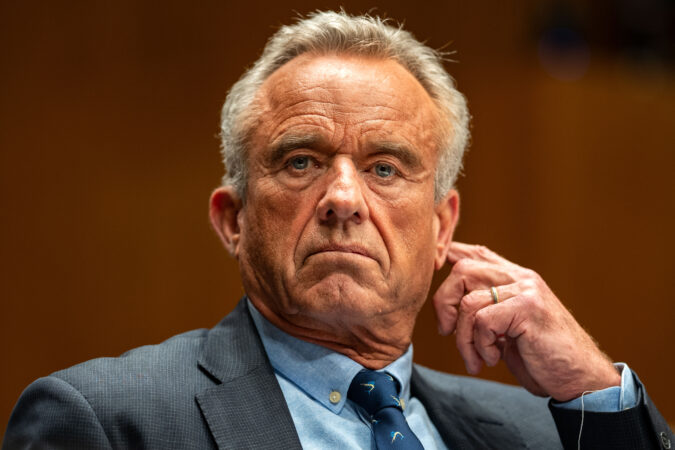
“This is not medicine, it is malpractice,” Health Secretary Robert F. Kennedy Jr. said, referring to gender-affirming procedures, at a news conference Thursday. “Sex-rejecting procedures rob children of their futures.”
CHOP, like most other hospitals in the country, participates in both Medicare and Medicaid.
CHOP declined to comment Thursday.
The renowned pediatric hospital treats children and teens with gender dysphoria — a medical condition in which a person’s body does not match their gender identity. Its doctors prescribe hormone therapy and puberty blockers.
CHOP has said its doctors do not prescribe any medication before its patients undergo extensive medical and psychological evaluations.
Gender-affirming care is legal in Pennsylvania, and states, not the federal government, regulate medicine and doctors.
But Trump has sought to criminalize this care for minors, saying doctors are engaged in “chemical mutilation,” akin to child abuse, and he has called the research “junk science.”
Just days into his second term in office, the president issued an executive order titled “Protecting Children from Chemical and Surgical Mutilation,” which contains inflammatory and misleading descriptions of largely medically approved transgender care. Kennedy has followed the president’s lead, signing a declaration Thursday rejecting these procedures.
Other actions proposed Thursday include the U.S. Food and Drug Administration issuing warning letters to 12 manufacturers and retailers for what an HHS news release claims to be “illegal marketing of breast binders to children for the purposes of treating gender dysphoria.”
The court battle over gender care for minors
In June, the U.S. Department of Justice issued subpoenas to CHOP and at least 19 other hospitals that treat transgender youth as part of an investigation into possible healthcare fraud. The federal subpoenas demanded patient medical records, including their dates of birth, Social Security numbers, and addresses, as well as every communication by doctors — emails, voicemails, and encrypted text messages — dating back to January 2020.
The subpoenas touched off a wave of legal battles that continue to play out. Several hospitals around the country, including CHOP, filed motions asking federal judges to block the release of private patient information.
So far, federal judges in Philadelphia, Boston, and Washington state have sided with the hospitals, ruling the subpoenas were politically motivated.
In Philadelphia, U.S. District Judge Mark A. Kearney last month determined that the “privacy interests of children and their families substantially outweighs the department’s need to know” such confidential and sensitive information. The federal government has 60 days to appeal the Nov. 21 ruling.
In September, patients and their parents joined the legal fight to limit the scope of the subpoenas issued to CHOP and UPMC Children’s Hospital of Pittsburgh. The Philadelphia-based Public Interest Law Center (PILC) filed separate but similar legal relief on behalf of families with children and teens who have received gender-affirming care at CHOP and in Pittsburgh.
The federal judge presiding over the Pittsburgh hospital’s case has yet to issue a ruling. Earlier this week, however, DOJ lawyers said they are willing to accept redacted medical records. They argued that would solve the dispute over patient privacy rights.
On Thursday, Mimi McKenzie, PILC’s legal director, said the center “strongly disagrees” and would fight the release of redacted medical records.
“These records are so deeply personal and contain such highly sensitive information about these young patients,” McKenzie said. “There is no anonymization or redaction that can protect their privacy interests.”
McKenzie said the proposed federal rule to ban all federal funding to hospitals that treat transgender youth would “face a myriad of legal challenges.” She described gender-affirming care as “lifesaving” for many children.
“The notion that our federal government would tell hospitals to pick which children you want to save — the children who need gender-affirming care or all the other children — is despicable. The cruelty of this administration knows no bounds.”
Other institutions have recoiled in the face of the Trump administration’s threats.
Earlier this year, Penn Medicine and Penn State Health cut back gender-affirming care for youth. Nemours Children’s Hospital in Delaware and UPMC Children’s Hospital of Pittsburgh announced they will no longer provide gender-affirming care beyond behavioral health services to new patients.
WASHINGTON — President Donald Trump’s handpicked board voted Thursday to rename Washington’s leading performing arts center as the Trump Kennedy Center, the White House said, in a move that made Democrats fume, saying the board had overstepped its legal authority.
Congress named the center after President John F. Kennedy in 1964, after his assassination. Donald A. Ritchie, who served as Senate historian from 2009-2015, said that because Congress had first named the center it would be up to Congress to “amend the law.”
Ritchie said that while Trump and others can “informally” refer to the center by a different name, they couldn’t do it in a way “that would [legally] stick.”
But the board did not wait for that debate to play out, immediately changing the branding on its website to reflect the new name.
House Democratic leader Hakeem Jeffries told reporters that legislative action was needed, “and we’re going to make that clear.” The New York Democrat is an ex officio member of the board because of his position in Congress.
Trump has teased the name change for some time
“The Kennedy Center Board of Trustees voted unanimously today to name the institution The Donald J. Trump and The John F. Kennedy Memorial Center for the Performing Arts,” said Roma Daravi, the institution’s vice president for public relations.
She said the vote recognized that Trump saved the center from “financial ruin and physical destruction,” a pair of claims denied by the venue’s ousted leadership.
“The new Trump Kennedy Center reflects the unequivocal bipartisan support for America’s cultural center for generations to come,” Daravi said.
Press secretary Karoline Leavitt announced the vote on social media, attributing it to the “unbelievable work President Trump has done over the last year in saving the building. Not only from the standpoint of its reconstruction, but also financially, and its reputation.”
Trump, a Republican who’s chairman of the board, said at the White House that he was “surprised” and “honored” by the vote.
“The board is a very distinguished board, most distinguished people in the country and I was surprised by it and I was honored by it,” he said.
Trump had already been referring to the center as the “Trump Kennedy Center.” Asked Dec. 7 as he walked the red carpet for the Kennedy Center Honors program whether he would rename the venue after himself, Trump said such a decision would be up to the board.
Earlier this month, Trump talked about a “big event” happening at the “Trump Kennedy Center” before saying, “excuse me, at the Kennedy Center,” as his audience laughed. He was referring to the FIFA World Cup soccer draw for 2026, in which he participated.
A name change won’t sit well with some Kennedy family members.
Maria Shriver, a niece of John F. Kennedy, referred to the legislation introduced in Congress to rebrand the Kennedy Center as the Donald J. Trump Center for the Performing Arts as “insane” in a social media post in July.
“It makes my blood boil. It’s so ridiculous, so petty, so small minded,” she wrote. “Truly, what is this about? It’s always about something. ‘Let’s get rid of the Rose Garden. Let’s rename the Kennedy Center.’ What’s next?”
Trump earlier this year turned the Kennedy-era Rose Garden at the White House into a patio by removing the lawn and laying down paving stones.
Another Kennedy family member, Robert F. Kennedy Jr., serves in Trump’s cabinet as secretary of the Department of Health and Human Services.
Trump showed scant interest in the Kennedy Center during his first term as president, but since returning to office in January he has replaced board members appointed by Democratic presidents with some of his most ardent supporters, who then elected him as board chairman.
He also has criticized the center’s programming and its physical appearance and has vowed to overhaul both.
Trump secured more than $250 million from the Republican-controlled Congress for renovations of the building.
He attended opening night of the musical Les Misérables, and last week he served as host of the Kennedy Center Honors program after not attending the show during his first term as president. The awards program is scheduled to be broadcast by CBS and Paramount+ on Dec. 23.
Sales of subscription packages are said to have declined since Trump’s takeover of the center, and several touring productions, including Hamilton, have canceled planned runs there. Rows upon rows of empty seats have been seen in the Concert Hall during performances by the National Symphony Orchestra.
Some performers, including actor Issa Rae and musician Rhiannon Giddens, have scrapped scheduled appearances, and Kennedy Center consultants including musician Ben Folds and singer Renée Fleming have resigned.
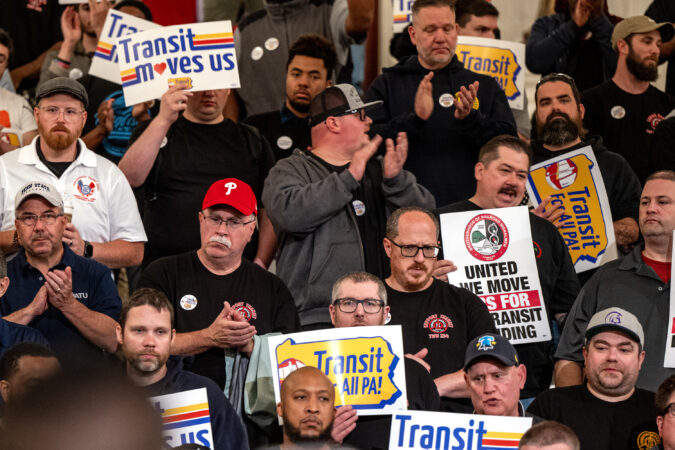
SEPTA’s board on Thursday approved a new contract with the transit agency’s largest union, Transport Workers Union Local 234, and a second smaller union representing vehicle operators in the suburbs of Philadelphia.
Members of TWU Local 234 voted Wednesday night to approve a two-year contract that will deliver a 3.5% pay raise, bolster the union’s pension funds, and expand health benefits for new employees.
SMART Local 1594, which represents approximately 350 operators, reached a deal with the transit agency earlier this month.
“These contracts are fair to our hardworking frontline employees and fiscally responsible to our riders and the taxpayers who fund SEPTA,” said SEPTA General Manager Scott A. Sauer.
For TWU Local 234, the two-year contract disrupts a pattern of three consecutive one-year contracts. TWU president Will Vera said that with the FIFA World Cup, MLB All-Star Game, and America’s 250th birthday coming to Philadelphia in 2026, both parties agreed to a two-year contract so as not to interrupt service during these global events.
The union represents 5,000 operators, mechanics, cashiers, maintenance people, and custodians who work on SEPTA’s buses, subways, and trolleys. Before this latest deal, TWU members were working without a contract since Nov. 7, and members voted unanimously on Nov. 16 to authorize leaders to call a strike if contract negotiations didn’t go as planned.
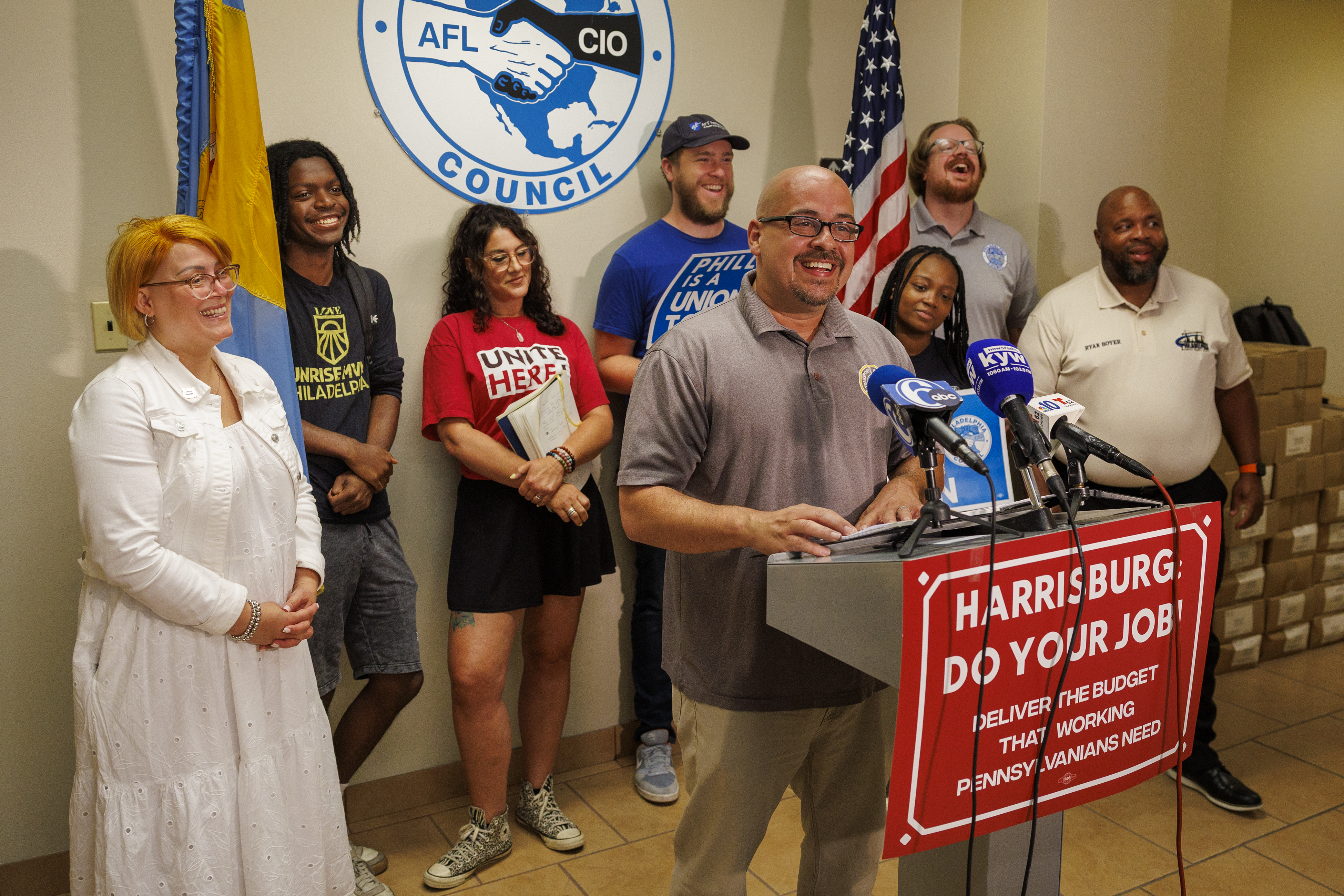
Will Vera, vice president TWU Local 234, urged lawmakers in Harrisburg to deliver a budget during a speech in July at the AFL-CIO headquarters in Philadelphia.
However, Vera said that this contract is a major win, especially for attracting new hires. Before this, new employees could not begin receiving dental and vision care until they completed 15 months on the job. The new contract shrinks that time down to 90 days.
“I really got tired of explaining to the new hires for 15 months that they just have to clean their teeth,” Vera said. “I wanted this to be a retention contract, to not only keep people here, but to make this an attractive place to come work for SEPTA.”
Philly’s transit unions don’t hesitate to strike if needs aren’t met. SEPTA unions have struck 12 times since 1975, earning SEPTA the title of one of the most strike-prone agencies in the country. Its last strike was a six-day effort in 2016 that ended one day before the presidential election.
The negotiations come on the heels of SEPTA’s worst financial period in its history, the agency said. SEPTA isn’t alone, though. Transit agencies throughout the country are in funding crises as inflation rises, federal funding shrinks, and state subsidies fail to increase each year.
Sauer, SEPTA’s general manager, added: “I am grateful to Governor [Josh] Shapiro and his team for their efforts to help us resolve differences and reach an agreement. Securing two-year contracts provides important stability as we approach the major events coming to Philadelphia in 2026.”
This year marks the 125th anniversary of the Philadelphia Mummers Parade, that colorful, boisterous procession that has come to define New Year’s Day in the city.
The festivities kick off at 9 a.m. on Thursday, Jan. 1, as more than 10,000 performers take to the streets for a daylong celebration USA Today readers recently hailed as the nation’s best holiday parade.
From parking to road closures to how to go about watching, here’s everything you need to know ahead of time.
Kasey McCullough kisses her son Finn, 5, after his appearance with Bill McIntyre’s Shooting Stars during their performance in the Fancy Brigade Finale at the Convention Center Wednesday, Jan. 1, 2025, part of the Philadelphia Mummers New Year’s Day parade. Their theme is “Legends of the Secret Scrolls.” Finn’s dad, Jim McCullough also performed, his 40th year with the Mummers. They are from Washington Twp.Washington Township, N.J.
Mummers Parade route
The mile-and-a-half route begins at City Hall, before heading south down Broad Street to Washington Avenue in South Philadelphia.
How to watch the 2026 Mummers Parade
Watch the Mummers Parade in person
The parade is free to attend. Those hoping for a more intimate experience, however, have a few options:
Reserved bleacher seats located near the judging stand just west of City Hall are available for $25 at visitphilly.com.
Additionally, tickets to the Fancy Brigade Finale — held at 11:30 a.m. and 5 p.m. inside the Convention Center — range from $28 to $43. Tickets are available at visitphilly.com or during business hours at the Independence Visitor Center.
Watch the Mummers Parade from home
The parade will be broadcast from 9 a.m. to 5 p.m. on:
Cable/Satellite: On Channel 2 (MeTV2) or Channel 69 (WFMZ). Available on Comcast, Fios, DirecTV, Dish Network, Service Electric, Astound, and Blue Ridge Cable.
Mobile: On the WFMZ+ Streaming app, available through your Apple or Android devices.
Members of the Saints wench brigade step to the judges’ stand during the 124th Mummers Parade on Wednesday, Jan. 1, 2025.
What is the Mummers Parade?
In short, it’s the longest continuously running folk parade in the country. Some 10,000 elaborately dressed performers take part in the celebration each year, part of dozens of groups spread across several divisions.
Fancies: Painted faces and elaboratecostumes.
Comics: Satirical comedy skits aimed at public figures, institutions, and current events.
Wench Brigades: Known for traditional Mummers costumes, including dresses, bloomers, and bonnets.
Fancy Brigades: Theatrical performances. (The Fancy Brigade Finale takes place on New Year’s Day with a pair of ticketed performances at the Convention Center at 11:30 a.m. and 5 p.m.)
String Bands: Marching musicians playing an assortment of string and reed instruments.
Mummers Parade performers
Fancy Division
Golden Sunrise
Wench Brigade Division
Froggy Carr
Pirates
Americans
Cara Liom
MGK
O’Malley
Oregon
Saints
Riverfront
Bryson
Comic Division
Mother Club: Landi Comics NYA
Philadelphia Pranking Authority
Mayfair Mummers
Barrels Brigade
The Jacks
Mother Club: Rich Porco’s Murray Comic Club
Holy Rollers NYB
Vaudevillains NYB
Trama NYB
Wild Rovers NYB
Mollywoppers NYB
Merry Makers NYB
Misfits NYB
Fitzwater NYB
Funny Bonez NYB
Top Hat NYB
Fiasco NYB
Golden Slipper NYB
B. Love Strutters
Madhatters NYB
Tankie’s Angels NYB
The Leftovers NYB
Finnegan NYB
Mother Club: Goodtimers NYA
SouthSide Shooters NYA
Jokers Wild NYB
Hog Island NYA
Pinelands Mummers NYB
Happy Tappers NYB
Two Street Stompers NYB
Gormley NYB
Jesters NYB
Lobster Club NYB
South Philly Strutters NYB
Jolly Jolly Comics NYB
String Band Division
Duffy String Band
Durning String Band
Quaker City String Band
Fralinger String Band
Uptown String Band
Avalon String Band
South Philadelphia String Band
Aqua String Band
Greater Kensington String Band
Woodland String Band
Polish American String Band
Ferko String Band
Hegeman String Band
Jersey String Band
Members of Froggy Carr chant as they strut to Market Street during the 124th Philadelphia Mummers Parade on Wednesday, Jan. 1, 2025.
Mummers Parade-day hacks
Navigating the heavily attended event can require a bit of planning, with entire Reddit threads devoted to parade-day tips — including the best places to park and how to access elusive public restrooms throughout the day.
A few things to keep in mind: The parade is accessible through SEPTA Regional Rail, bus, subway, and trolley lines. And though parking is free because of the holiday, it’s expected to be scarce.
While the heart of the action takes place near City Hall and Dilworth Park, performance areas will also be located along the parade route — at Broad Street at Sansom, Pine, and Carpenter Streets.
Starting at 11 a.m., meanwhile, parade attendees can gather at the staging area for the string bands to watch the performers prepare. (The staging areas are located at Market Street between 17th and 21st Streets and JFK Boulevard between 17th and 20th Streets.)
Also good to remember? Dress warm, bring a lawn chair (they’re permitted), and pace yourself — it has the potential to be a very long day.
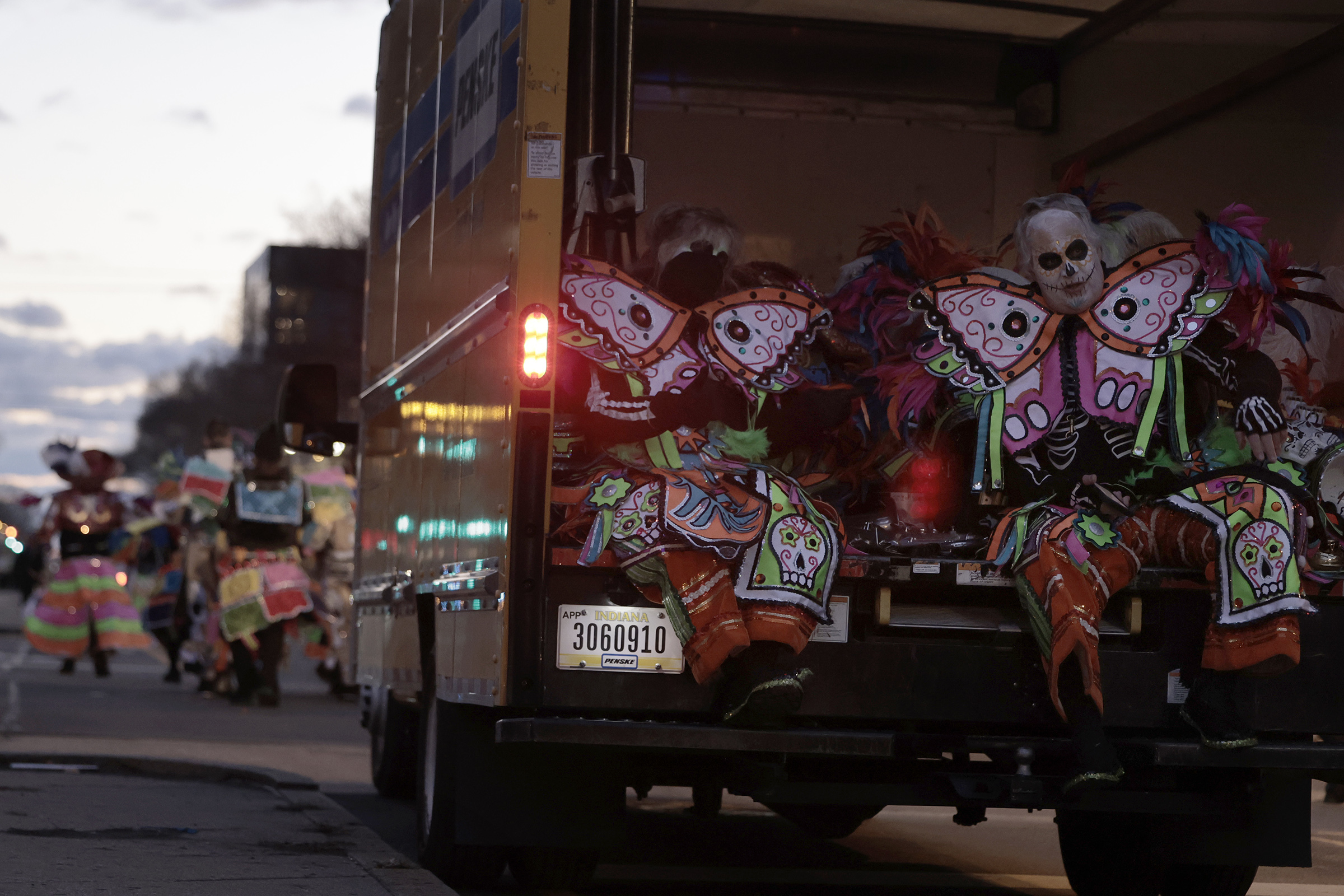
Ferko String Band tenor sax players Renee Duffy of Deptford (left) and Tom Garrity of Berlin take a break from the parade as they ride in the bands truck on South Broad Street during the Mummers Parade in Philadelphia on New Year’s Day, Wednesday, Jan. 1, 2025.
Mummers Parade road closures and parking restrictions
Friday, Dec. 26, 2025
No parking from 6 p.m. on Dec. 26 through 6 p.m. on Jan. 2, on the east curb lane of 15th Street from JFK Boulevard to South Penn Square.
Saturday, Dec. 27, 2025
No parking from 6 p.m. on Dec. 27 through 7 a.m. on Jan. 2, on the west side of 15th Street from Arch Street to Ranstead Street. Street and sidewalk vendors will also not be permitted to park in this area.
Monday, Dec. 29, 2025
15th Street will be closed to southbound traffic at JFK Boulevard. Closure begins at 8 a.m. on Dec. 29 and runs through 7 a.m. Jan. 2.
Market Street eastbound will be closed to traffic at 16th Street from 8 a.m. on Dec. 29 through 7 a.m. on Jan. 2.
Tuesday, Dec. 30, 2025
No parking on the following streets from 4 a.m. on Dec. 30 through 6 p.m. on Jan. 1:
Market Street from 15th Street to 21st Street (both sides)
JFK Boulevard from Juniper Street to 20th Street (both sides)
15th Street will be closed to southbound traffic at JFK Boulevard. Closure begins at 7 a.m. on Dec. 30 and runs through 7 a.m. Jan. 2.
Wednesday, Dec. 31, 2025
Market Street will be closed to vehicle traffic from 15th Street to 21st Street from 10 a.m. to 3 p.m. on Dec. 31. Market Street will reopen at 3 p.m. and traffic will be permitted to travel eastbound on Market Street to 15th Street and continue southbound on 15th Street.
Thursday, Jan. 1, 2026
The following streets will be closed to vehicle traffic beginning at 3 a.m. on Jan. 1 through the parade’s conclusion:
15th Street from Arch Street to Chestnut Street
Market Street from 15th Street to 21st Street
These streets will be closed to vehicle traffic beginning at 6 a.m. on Jan. 1 through the conclusion of the parade:
Benjamin Franklin Parkway from 16th Street to 20th Street
North Broad Street from Cherry Street to JFK Boulevard
16th Street from Chestnut Street to Race Street
17th Street from Benjamin Franklin Parkway to Ludlow Street
18th Street from Ludlow Street to Race Street
19th Street from Benjamin Franklin Parkway to Chestnut Street
1500 block of Ranstead Street
1300 block of Carpenter Street
1000 block of South 13th Street
Chestnut Street from 15th Street to 18th Street (north side)
Cherry Street from 15th Street to 17th Street
Arch Street from 15th Street to 17th Street
Washington Avenue from 12th Street to 18th Street
Broad Street will be closed to vehicle traffic from South Penn Square to Washington Avenue on Thursday, Jan. 1, beginning at 7 a.m. through the conclusion of the parade.
Vehicle traffic will not be permitted to cross Broad Street during the parade.
Additional Parking Restrictions
No parking from 2 a.m. to 6 p.m. on Thursday, Jan. 1 (on both sides of street unless otherwise noted):
Broad Street from Cherry Street to Ellsworth Street
Juniper Street from JFK Boulevard to East Penn Square
South/East Penn Square from 15th Street to Juniper Street
Benjamin Franklin Parkway from 16th Street to 20th Street
Logan Circle (north side)
16th Street from Chestnut Street to Race Street
17th Street from Benjamin Franklin Parkway to Ludlow Street
18th Street from Ludlow Street to Race Street
19th Street from Benjamin Franklin Parkway to Chestnut Street
1500 block of Ranstead Street
1300 block of Carpenter Street
1000 block of South 13th Street
Chestnut Street from 15th Street to 18th Street (north side)
Cherry Street from 15th Street to 17th Street
Arch Street from 15th Street to 17th Street
Washington Avenue from 12th Street to 18th Street
SEPTA detours
SEPTA hasn’t updated their schedule for the parade yet, but bus detours, alerts, and information can be found on SEPTA’s website.
Inspired by traditions brought to Philly by Swedish, Finnish, Irish, German, English, and African immigrants, the annual event has grown to feature thousands of costumed performers competing in a colorful, unique, and family-friendly daylong affair.
Despite past funding issues and occasional controversy, the Mummers Parade today stands as one of the city’s quintessential events, celebrated by locals and embraced by Philly royalty; former Eagle Jason Kelce memorably donned a traditional Mummers outfit for the team’s Super Bowl parade in 2018, and actor Kevin Bacon, along with brother Michael, has helped fundraise for the event.