Category: News

Latest breaking news and updates

  • Pentagon watchdog finds Hegseth’s use of Signal posed risk to U.S. personnel, AP sources say

    Pentagon watchdog finds Hegseth’s use of Signal posed risk to U.S. personnel, AP sources say

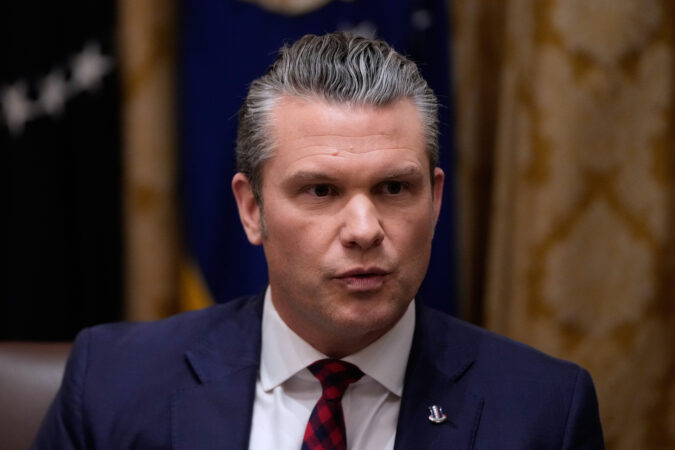
    The Pentagon’s watchdog found that Defense Secretary Pete Hegseth put U.S. personnel and their mission at risk when he used the Signal messaging app to convey sensitive information about a military strike against Yemen’s Houthi militants, two people familiar with the findings said Wednesday.

    Hegseth, however, has the ability to declassify material and the report did not find he did so improperly, according to one of the people familiar with the findings who spoke on condition of anonymity to discuss the information. That person also said the report concluded that Hegseth violated Pentagon policy by using his personal device for official business and it recommended better training for all Pentagon officials.

    Hegseth declined to sit for an interview with the Pentagon’s inspector general but provided a written statement, that person said. The defense secretary asserted that he was permitted to declassify information as he saw fit and only communicated details he thought would not endanger the mission.

    The findings ramp up the pressure on the former Fox News Channel host after lawmakers had called for the independent inquiry into his use of the commercially available app. Lawmakers also just opened investigations into a news report that a follow-up strike on an alleged drug-smuggling boat in the Caribbean Sea in September killed survivors after Hegseth issued a verbal order to “kill everybody.”

    Hegseth defended the strike as emerging in the “fog of war‚” saying he didn’t see any survivors but also “didn’t stick around” for the rest of the mission and that the admiral in charge “made the right call” in ordering the second strike. He also did not admit fault following the revelations that he discussed sensitive military plans on Signal, asserting that the information was unclassified.

    “The Inspector General review is a TOTAL exoneration of Secretary Hegseth and proves what we knew all along — no classified information was shared,” Sean Parnell, the Pentagon’s chief spokesman said in a statement. “This matter is resolved, and the case is closed.”

    Meanwhile, the Pentagon knew there were survivors after a September attack on an alleged drug boat in the Caribbean Sea and the U.S. military still carried out a follow-up strike, according to two people familiar with the matter.

    The rationale for the second strike was that it was needed to sink the vessel, according to the people familiar with the matter who spoke on the condition of anonymity because they weren’t authorized to discuss it publicly. The Trump administration says all 11 people aboard were killed.

    What remains unclear was who ordered the strikes and whether Hegseth was involved, one source said. That will be part of a classified congressional briefing Thursday with the commander that the Trump administration says ordered the second strike, Adm. Frank “Mitch” Bradley.

    The information about the follow-on strike was not presented to lawmakers during a classified briefing in September, in the days after the incident. It was disclosed later, one source said, and the explanation provided by the department has been broadly unsatisfactory to various members of the national security committees in Congress.

    In a rare flex of bipartisan oversight, the Armed Services committees in both the House and Senate swiftly announced investigations into the strikes as lawmakers of both parties raise questions.

    Hegseth is under growing scrutiny over the military strikes on alleged drug traffickers in the Caribbean and eastern Pacific. Legal experts and some lawmakers say a strike that killed survivors would have violated the laws of armed conflict. The Trump administration has said the U.S. is in “armed conflict” with drug cartels, even though Congress has not approved any authorization for the use of military force in the region.

    Journalist was added to a chat where sensitive plans were shared

    In at least two separate Signal chats, Hegseth provided the exact timings of warplane launches and when bombs would drop — before the men and women carrying out those attacks on behalf of the United States were airborne.

    Hegseth’s use of the app came to light when a journalist, Jeffrey Goldberg of The Atlantic, was inadvertently added to a Signal text chain by then-national security adviser Mike Waltz. It included Vice President JD Vance, Secretary of State Marco Rubio, Director of National Intelligence Tulsi Gabbard, and others, brought together to discuss March 15 military operations against the Iran-backed Houthis.

    Hegseth had created another Signal chat with 13 people that included his wife and brother where he shared similar details of the same strike, The Associated Press reported.

    Signal is encrypted but is not authorized for carrying classified information and is not part of the Pentagon’s secure communications network.

    Hegseth previously has said none of the information shared in the chats was classified. Multiple current and former military officials have told the AP there was no way details with that specificity, especially before a strike took place, would have been OK to share on an unsecured device.

    The review was delivered to lawmakers, who were able to review the report in a classified facility at the Capitol. A partially redacted version of the report was expected to be released publicly later this week.

    Hegseth said he viewed the investigation as a partisan exercise and did not trust the inspector general, according to one of the people familiar with the report’s findings. The review had to rely on screenshots of the Signal chat published by the Atlantic because Hegseth could not provide more than a small handful of his Signal messages, the person said.

    When asked about the investigation in August, Pentagon press secretary Kingsley Wilson told reporters that “we believe that this is a witch hunt and a total sham and being conducted in bad faith.”

    The Pentagon did not immediately respond Wednesday to a request for comment.

    Lawmakers had called for inspector general to investigate

    The revelations sparked intense scrutiny, with Democratic lawmakers and a small number of Republicans saying Hegseth posting the information to the Signal chats before the military jets had reached their targets potentially put those pilots’ lives at risk. They said lower-ranking members of the military would have been fired for such a lapse.

    The inspector general opened its investigation into Hegseth at the request of the Republican chairman of the Senate Armed Services Committee, Sen. Roger Wicker of Mississippi, and the committee’s top Democrat, Sen. Jack Reed of Rhode Island.

    Some veterans and military families also raised concerns, citing the strict security protocols they must follow to protect sensitive information.

    It all ties back to the campaign against Yemen’s Houthis

    The Houthi rebels had started launching missile and drone attacks against commercial and military ships in late 2023 in what their leadership had described as an effort to end Israel’s offensive against Hamas in the Gaza Strip. Their campaign greatly reduced the flow of trade through the Red Sea corridor, which typically sees $1 trillion of goods move through it annually.

    The U.S.-led campaign against the Houthis in 2024 turned into the most intense running sea battle the Navy had faced since World War II.

    A ceasefire in the Israel-Hamas war had begun in January before falling apart in March. The U.S. then launched a broad assault against the Houthis that ended weeks later when Trump said they pledged to stop attacking ships. The latest Gaza ceasefire began in October.

    Following the disclosure of Hegseth’s Signal chat that included the Atlantic’s editor, the magazine released the entire thread in late March. Hegseth had posted multiple details about an impending strike, using military language and laying out when a “strike window” starts, where a “target terrorist” was located, the time elements around the attack and when various weapons and aircraft would be used in the strike. He mentioned that the U.S. was “currently clean” on operational security.

    Hegseth told Fox News Channel in April that what he shared over Signal was “informal, unclassified coordinations, for media coordinations and other things.”

    During a congressional hearing in June, Hegseth was pressed multiple times by lawmakers over whether he shared classified information and if he should face accountability if he did.

    Rep. Seth Moulton, a Massachusetts Democrat and Marine veteran, asked Hegseth whether he would hold himself accountable if the inspector general found that he placed classified information on Signal.

    Hegseth would not directly say, only noting that he serves “at the pleasure of the president.”

  • Man and woman shot dead in Kensington murder-suicide, authorities say

    Man and woman shot dead in Kensington murder-suicide, authorities say

    A man and woman were shot and killed Wednesday afternoon in Kensington in what police believe was a murder-suicide, according to a law enforcement source who asked not to be identified to discuss an ongoing investigation.

    The two, whom police did not identify, were shot on the 3400 block of Hartville Street around 1:15 p.m., according to the department. They were pronounced dead just after 2 p.m.

    Investigators believe the man shot the woman with a shotgun, according to the police source.

    Police continue to investigate.

  • D-Day veteran Charles Shay, who saved lives on Omaha Beach, dies at 101 in France

    D-Day veteran Charles Shay, who saved lives on Omaha Beach, dies at 101 in France

    PARIS — Charles Shay, a decorated Native American veteran who was a 19-year-old U.S. Army medic when he landed on Omaha Beach on D-Day and helped save lives, died on Wednesday. He was 101.

    Shay died at his home in Bretteville-L’Orgueilleuse in France’s Normandy region, his longtime friend and carer Marie-Pascale Legrand said.

    Shay, of the Penobscot tribe and from Indian Island in the U.S. state of Maine, was awarded the Silver Star for repeatedly plunging into the sea and carrying critically wounded soldiers to relative safety, saving them from drowning. He also received France’s highest award, the Legion of Honor, in 2007.

    Shay had been living in France since 2018, not far from the shores of Normandy where nearly 160,000 troops from Britain, the U.S., Canada and other nations landed on D-Day on June 6, 1944. The Battle of Normandy hastened Germany’s defeat, which came less than a year later.

    “He passed away peacefully surrounded by his loved ones,” Legrand told The Associated Press.

    The Charles Shay Memorial group, which honors the memory of about 500 Native Americans who landed on the Normandy beaches, said in a statement posted on Facebook that “our hearts are deeply saddened as we share that our beloved Charles Norman Shay … has returned home to the Creator and the Spirit World.”

    “He was an incredibly loving father, grandfather, father-in-law, and uncle, a hero to many, and an overall amazing human being,” the statement said. “Charles leaves a legacy of love, service, courage, spirit, duty and family that continues to shine brightly.”

    Ready to give his life

    On D-Day, 4,414 Allied troops lost their lives, 2,501 of them Americans. More than 5,000 were wounded. On the German side, several thousand were killed or wounded.

    Shay survived.

    “I guess I was prepared to give my life if I had to. Fortunately, I did not have to,” Shay said in a 2024 interview with The Associated Press.

    “I had been given a job, and the way I looked at it, it was up to me to complete my job,” he recalled. “I did not have time to worry about my situation of being there and perhaps losing my life. There was no time for this.”

    On that night, exhausted, he eventually fell asleep in a grove above the beach.

    “When I woke up in the morning. It was like I was sleeping in a graveyard because there were dead Americans and Germans surrounding me,” he recalled. “I stayed there for not very long and I continued on my way.”

    Shay then pursued his mission in Normandy for several weeks, rescuing those wounded, before heading with American troops to eastern France and Germany, where he was taken prisoner in March 1945 and liberated a few weeks later.

    Spreading a message of peace

    After World War II, Shay reenlisted in the military because the situation of Native Americans in his home state of Maine was too precarious due to poverty and discrimination.

    Maine would not allow individuals living on Native American reservations to vote until 1954.

    Shay continued to witness history — returning to combat as a medic during the Korean War, participating in U.S. nuclear testing in the Marshall Islands and later working at the International Atomic Energy Agency in Vienna, Austria.

    For over 60 years, he did not talk about his WWII experience.

    But he began attending D-Day commemorations in 2007 and in recent years, he has seized many occasions to give his powerful testimony and spread a message of peace.

    During the COVID-19 pandemic in 2020-2021, Shay’s lone presence marked commemoration ceremonies as travel restrictions prevented other veterans or families of fallen soldiers from the U.S., Britain and other allied countries from making the trip to France

    Sadness at seeing war back in Europe

    For years, Shay used to perform a sage-burning ceremony, in homage to those who died, on a bluff overlooking Omaha Beach, where the monument bearing his name now stands.

    On June 6, 2022, he handed over the remembrance task to another Native American, Julia Kelly, a Gulf War veteran from the Crow tribe. That was just over three months after Russia’s full-scale invasion of Ukraine in what was to become the worst war on the continent since 1945

    Shay then expressed his sadness at seeing war back on the continent.

    “Ukraine is a very sad situation. I feel sorry for the people there and I don’t know why this war had to come,” he said. “In 1944, I landed on these beaches and we thought we’d bring peace to the world. But it’s not possible.”

  • Israel receives remains of possible hostage; plans to reopen Gaza crossing into Egypt

    JERUSALEM — Israel received remains of what could be one of the last hostages in Gaza on Wednesday and said it will begin allowing Palestinians to leave the war-torn territory through a border crossing with Egypt.

    Israeli Prime Minister Benjamin Netanyahu said an attack by militants earlier in the day that wounded four Israeli soldiers in southern Gaza was a violation of the ceasefire and that Israel “will respond accordingly.”

    The remains found by militants in northern Gaza were returned to Israel, where they will be examined by forensics experts. Remains militants handed over on Tuesday did not match either of the last two hostages in Gaza.

    The return of all the hostages taken on the Oct. 7, 2023, attack that started the war is a key element of the first phase of the ceasefire that began in October. In exchange, Israel has been releasing Palestinian prisoners.

    Under the terms of the ceasefire, the long-closed Rafah crossing is to be opened for medical evacuations and travel to and from Gaza. The World Health Organization says there are more than 16,500 sick and wounded people who need to leave Gaza for medical care.

    It was not immediately clear when the border crossing would be opened, however.

    Egypt wants Palestinians to be able to return to Gaza through the crossing and says it would only be opened if movement is allowed both ways. Israel says Palestinians will not be able to return to Gaza through the crossing until the last hostages’ remains are returned from Gaza.

    Once the last hostages’ remains are returned and Israel releases more Palestinian prisoners in exchange, the U.S.-backed ceasefire plan is supposed to advance to the next phases, which call for creating an international stabilization force, forming a technocratic Palestinian government and disarming Hamas.

    Last hostages in Gaza are an Israeli and Thai national

    Earlier on Wednesday, Prime Minister Benjamin Netanyahu said forensic testing showed that partial remains returned by militants on Tuesday did not match either of the hostages still in Gaza. Palestinian militants later said they had found more remains in northern Gaza and turned them over to the Red Cross, which is acting as an intermediary.

    The two hostage bodies still in Gaza are Israeli Ran Gvili and Thai national Sudthisak Rinthalak. Gvili was an Israeli police officer who helped people escape from the Nova music festival during the Oct. 7 attack and was killed fighting at another location. Sudthisak Rinthalak was an agricultural worker from Thailand who had been employed at Kibbutz Be’eri, one of the hardest-hit communities in the attack.

    A total of 31 workers from Thailand were abducted, the largest group of foreigners to be held in captivity. Most of them were released in the first and second ceasefires. The Thai Foreign Ministry has said in addition to the hostages, 46 Thais have been killed during the war.

    Opening of Rafah crossing complicated by dispute

    The Israeli military body charged with facilitating aid to Gaza, COGAT, said Israel would coordinate with Egypt on the exit of Palestinians, under the supervision of a mission from the European Union.

    Those wishing to leave Gaza will require “Israeli security approval,” COGAT said.

    The U.S. State Department’s Bureau of Near-Eastern Affairs, writing on X, cast the opening of the crossing as a measure that would afford “the most vulnerable Gazans” access to better medical care.

    Palestinians who want to leave Gaza will be able to move through Rafah if Egypt agrees to receive them, Israeli government spokesperson Shosh Bedrosian said. But the crossing won’t be open for Palestinians seeking to return to Gaza until all of the hostages in the territory are returned to Israel, she said.

    Citing an unnamed Egyptian official, Egypt’s State Information Service said, if an agreement is reached, the crossing will be opened for travel in both directions in accordance with the ceasefire plan advanced by U.S. President Donald Trump.

    Egypt fears that Palestinians allowed to leave Gaza might not be able to return.

    Egyptian President Abdel-Fattah el-Sissi has warned that Israel might prompt an exodus from Gaza as a way to permanently expel people and “eliminate the Palestinian cause” for statehood. More than 100,000 Palestinians that left Gaza after the war started, including those wounded in the conflict, have been living in Egypt, according to Egyptian authorities.

    The Rafah crossing was sealed off in May 2024 when Israel’s military invaded the area. It was briefly opened in February this year as part of a previous ceasefire for the evacuation of sick and wounded Palestinians.

    Fighting in Gaza leads to 1 Palestinian death, several injured Israelis

    In the southern city of Rafah, four Israeli soldiers were injured, one seriously, after being attacked by militants who emerged from an underground tunnel, the Israeli military said. The military called the attack in an area under its control a violation of the ceasefire, and said it responded by returning fire.

    In Gaza City, a Palestinian man was killed by Israeli fire, a hospital said, marking the latest reported Palestinian fatality in the territory.

    Israeli forces shot the 46-year-old man in the Zeitoun neighborhood, according to the Al-Ahli hospital, which received the body. Israel’s military did not immediately respond to a request for comment.

    The hospital said the man was shot while in the “safe zone,” which, under the terms of the ceasefire, is not controlled by the Israeli military. The Gaza Health Ministry says more than 360 Palestinians have been killed across Gaza since the ceasefire took effect on Oct. 11.

    Return of Palestinian bodies in flux

    Twenty living hostages and the remains of 26 others have been returned to Israel since the ceasefire began in early October.

    Israel has been releasing 15 Palestinian bodies for the remains of each hostage as part of the ceasefire agreement. The Gaza Health Ministry said the total number of remains received so far is 330. Health officials in Gaza have said they have only been able to identify a fraction of the bodies handed over by Israel, and the process is complicated by a lack of DNA testing kits.

    The exchanges have gone ahead even as Israel and Hamas have accused each other of violating other terms of the deal. Israeli officials have accused Hamas of handing over partial remains in some instances and staging the discovery of bodies in others.

    Hamas has accused Israel of opening fire on civilians and restricting the flow of humanitarian aid into the territory.

    The ceasefire aims to wind down the war that was triggered by the Hamas-led attack on southern Israel, which killed about 1,200 people and saw 251 taken hostage.

    The Gaza Health ministry says the total Palestinian death toll from the war is over 70,100. The ministry does not distinguish between militants and civilians, though it says roughly half of those killed have been women and children. The ministry operates under the Hamas-run government. It is staffed by medical professionals and maintains detailed records viewed as generally reliable by the international community.

  • Republicans brace for tough midterms after Tennessee special election

    Republicans brace for tough midterms after Tennessee special election

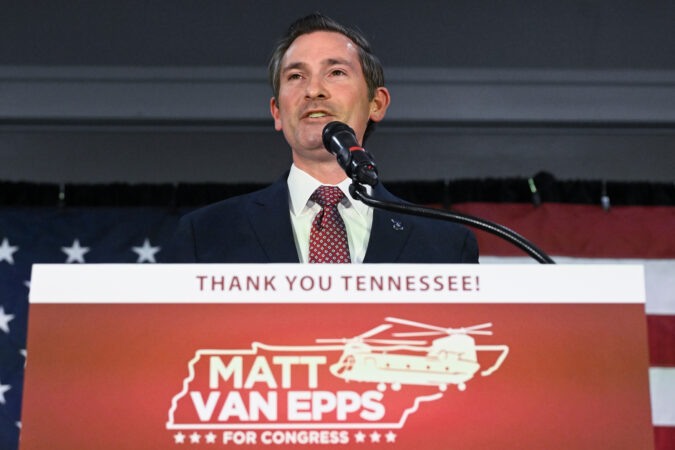
    Republicans held onto a reliably conservative U.S. House district in Tennessee’s special election, but only after a late burst of national spending and high-profile campaigning helped them secure a margin less than half of last year’s race.

    Even with that victory, the outcome contributed to a gloomy outlook for the party going into the 2026 midterms that will determine control of Congress. Republicans will need to defend much more vulnerable seats if they have any hope of keeping their House majority, while Democrats are capitalizing on President Donald Trump’s unpopularity and the public’s persistent frustration with the economy.

    “The danger signs are there, and we shouldn’t have had to spend that kind of money to hold that kind of seat,” said Jason Roe, a national Republican strategist working on battleground races next year.

    He said that “Democratic enthusiasm is dramatically higher than Republican enthusiasm.”

    Republican Matt Van Epps, a military veteran and former state general services commissioner, defeated Democratic state Rep. Aftyn Behn by 9 percentage points on Tuesday for the seat vacated by Republican Mark Green, who retired over the summer. Green had won reelection in 2024 by 21 percentage points.

    Special elections provide a limited window into the mood of voters and take place under far different conditions than regular campaign cycles. But some Republicans are acknowledging the warning signs, especially after Democrats had convincing victories in New Jersey, Virginia and elsewhere last month.

    Tennessee was the fifth House special election this year, and Democratic candidates have outperformed Kamala Harris’ showing in the 2024 presidential race by an average of 16 percentage points in the same districts.

    “We could have lost this district,” Sen. Ted Cruz (R., Texas) told Fox News after The Associated Press called the race for Van Epps. Cruz said his party must “set out the alarm bells” because next year is “going to be a turnout election and the left will show up.”

    Trump dismisses affordability concerns

    Although inflation has dropped since Democratic President Joe Biden was in office, Behn focused her campaign on the lingering concerns about prices.

    Trump has played down the affordability issue, saying during a Cabinet meeting Tuesday that it was “a con job” by his political opponents.

    “There’s this fake narrative that the Democrats talk about, affordability,” he said. ”They just say the word. It doesn’t mean anything to anybody, they just say it.”

    Roe viewed things differently. He said the Tennessee race had “better be a wake-up call that we’ve got to address the affordability problem, and the president denying that affordability is a political issue is not helpful.”

    Maintaining House control is crucial for Trump, who fears a repeat of his first term, when Democrats flipped the House and launched an impeachment inquiry. The Republican president has been leaning on GOP-led states to redraw congressional maps to improve the party’s chances.

    Trump campaigned for Van Epps, boosting him during the primary with an endorsement and participating in two tele-rallies during the general election.

    The Republican National Committee also deployed staffers and partnered with state officials to get voters to the polls. MAGA Inc., the super political action committee that had gone dark since supporting Trump in 2024, reemerged to back Van Epps with about $1.7 million.

    House Speaker Mike Johnson (R., La.) visited the Nashville-area district on Monday.

    “When you’re in a deep red district, sometimes people assume that the Republican, the conservative will win,” he said Tuesday. “And you cannot assume that, because anything can happen.”

    Chip Saltsman, a political strategist and former Tennessee Republican Party chair, said his party had brought in its heaviest hitters simply because there were not other competing contests, not because Republicans feared a loss.

    “It’s the only election going on. Why wouldn’t the speaker come?” he asked. “There was one race, and you would expect everybody to do everything they could.”

    Democrats see promise despite loss

    The House Majority PAC put $1 million behind Behn. After she lost, Democratic national party chair said Behn’s performance was “a flashing warning sign for Republicans heading into the midterms” in 2026.

    Behn said her campaign had “inspired an entire country.”

    “Let’s keep going,” she urged voters after her loss. “We’re not done. Not now, not ever.”

    Although Democrats were optimistic, the result contributed to some murmuring within the party about the best path forward as it grasps for a path back to power in Washington.

    Among special elections this year, the shift in Behn’s direction was the second smallest, providing an opening for some factions that believe more moderate candidates would fare better.

    “Each time we nominate a far-left candidate in a swing district who declares themselves to be radical and alienates the voters in the middle who deliver majorities, we set back that cause,” said a statement from Lanae Erickson, a senior vice president at Third Way, a centrist Democrat think tank.

    Republicans tried to turn Behn’s own words against her in television ads, such as when she described herself as a “radical” or claimed to be “bullying” immigration agents and state police officers. Also cited were comments Behn made about Nashville years ago, when she said, “I hate this city,” and complained about bachelorette parties.

    Several high-profile progressive leaders, including U.S. Rep. Alexandria Ocasio-Cortez (D., N.Y.) had rallied for Behn in the campaign’s final days.

  • Montco’s former chief information officer accuses county of ‘fraud, waste, wrongdoing’ in lawsuit

    Montco’s former chief information officer accuses county of ‘fraud, waste, wrongdoing’ in lawsuit

    Montgomery County‘s former chief information officer says he was terminated because he requested accommodations for his mental health, according to a lawsuit.

    But while claiming that there is “simply no question” Anthony Olivieri was terminated primarily due to his request for accommodations, the complaint takes a detour to describe instances of what it calls “fraud, waste, wrongdoing” by Montco officials since 2017.

    Olivieri suffered from “anxiety, panic and depression complications,” the suit says. He took a medical leave of absence from November 2024 to January 2025. The issues persisted when Olivieri returned to work, in part because of “mistreatment,” the complaint says.

    In July, the county fired him.

    The fraud and wrongdoing allegations are included in the complaint because they explain how Olivieri’s “whistleblowing” contributed to a hostile work environment and his eventual termination, the lawsuit says.

    “Montgomery County is steadfast in our commitment to fiscal responsibility and integrity,” a spokesperson said in a statement. “We do not comment on personnel matters or ongoing litigation.”

    The most explosive allegation in the complaint revolves around the conduct of Dean Dortone, the county’s chief financial officer.

    Montgomery County gave nearly $5 million to ePlus Inc., a company that provides a wireless communications network, in 2023 although a competitor offered the best technology solution, according to the complaint. Dortone tipped the bid in favor of ePlus, where he had been employed for about five years before joining Montco.

    The complaint accuses Dortone of sharing the competitor’s proprietary bid with ePlus to allow the company to one-up its own proposal, in exchange for “lavish trips and golf outings.”

    The relationship between Dortone and ePlus did not end when the company received the contract, the complaint alleges. The county’s CFO shared with ePlus the amount set aside in the budget for servicing the communications system, the suit says, allowing the company to charge the maximum allowed instead of invoicing according to need.

    “This was gross waste and wrongdoing,” the complaint says.

    ePlus did not respond to request for comment.

    Olivieri also alleges that the county sent $500,000 to an impostor in 2017 and concealed the wire transfer to avoid embarrassment, and that in 2024 and 2025 the county claimed to have saved over $1 million by revamping printing infrastructure in offices even though the changes “did not happen.”

    The suit also says that county officials often use personal emails to keep information from being available through right-to-know requests.

    Olivieri says that he was “very vocal” in expressing concerns, using terms such as “fraud,” “waste,” and “illegal” to describe the conduct, and experienced hostility for it.

    The original reason given to Olivieri for his termination was a broader “change of direction,” but when he sought unemployment benefits he learned that the county cited performance issues for his dismissal. But Olivieri received an unsolicited severance package of $30,000 in exchange for a legal waiver for retaliation and discrimination claims, the suit says.

    The lawsuit calls the severance offer “well-established admissible evidence of discrimination, pretext, and retaliation.”

  • DHS launches new immigration sting in New Orleans

    DHS launches new immigration sting in New Orleans

    The Department of Homeland Security announced the start of a new immigration enforcement operation in New Orleans on Wednesday, the latest in a series of sweeps that have resulted in thousands of arrests, legal challenges and protests.

    DHS said it was launching “Operation Catahoula Crunch” to target “criminal illegal aliens roaming free thanks to sanctuary policies that force local authorities to ignore U.S. Immigration and Customs Enforcement (ICE) arrest detainers.”

    The announcement included a list and photos of 10 undocumented immigrants — from Honduras, El Salvador, Guatemala, Jordan and Vietnam — who the agency said had been arrested for a variety of crimes in New Orleans and later released.

    “Sanctuary policies endanger American communities by releasing illegal criminal aliens and forcing DHS law enforcement to risk their lives to remove criminal illegal aliens that should have never been put back on the streets,” Assistant Secretary Tricia McLaughlin said in a statement. “It is asinine that these monsters were released back onto New Orleans streets to COMMIT MORE CRIMES and create more victims.”

    Immigration enforcement escalations in Los Angeles, Chicago, Boston and — for a shorter time — Charlotte have generated unrest. Residents have alleged civil rights abuses, and policing experts have questioned the tactics used and the training provided to agents in the rapidly growing U.S. immigration enforcement apparatus.

    While DHS has said the operations are targeted at capturing violent criminals, many undocumented immigrants with no record have also been arrested. In Chicago, the agency said, immigration officers arrested more than 4,000 people in “Operation Midway Blitz,” but officials have publicly identified only about 120 of those arrested as having a criminal arrest or conviction, some for major crimes such as murder and others for nonviolent offenses such as illegally crossing the border.

    In each city, whistleblowing protesters have trailed immigration agents, warning neighborhoods of their presence. In Chicago and Los Angeles especially, immigration agents were limited in their ability to manage large, hostile crowds or protesters as they worked independently of Chicago police officers, who were not permitted to assist in immigration arrests.

    Across New Orleans, residents had anticipated the operation, particularly immigrants. Some businesses had closed while others posted signs saying, “ICE not welcome here.”

    First Grace United Methodist Church posted a sign citing scripture that read, “ICE: Whatsoever you do to the least, you do unto me.”

    “A lot of people are locking their houses because it’s a scary time. We are all anticipating,” said Leticia Casildo, a co-founder of the nonprofit immigrant advocacy group Familias Unidas en Acción who immigrated to the United States from Honduras and who has lived in New Orleans for 20 years.

    New Orleans mutual aid organizations have been watching closely how immigration operations have played out in other cities, and several organizations have collaborated with like-minded entities in Chicago, Los Angeles and Charlotte to learn new strategies to adapt to increased enforcement.

    A spokesperson for the ACLU of Louisiana said the organization had consulted with the ACLU of North Carolina to fine-tune educational materials for individuals eager to document the actions of federal officers.

    Chicago organizers said they believe that a network of “rapid response” civilians who follow Homeland Security agents or respond to arrest scenes with cameras and whistles effectively warned communities of law enforcement’s presence and held agents accountable, to an extent, for violent interactions.

    “What we’ve learned is that even a street witness who is not recording makes these interactions less traumatic and less violent,” said Beth Davis, a press liaison for Indivisible NOLA. “So we need to get eyes on these people.”

    Louisiana residents’ reaction to Homeland Security actions may be complicated by a new state law punishing obstruction of immigration enforcement, said GOP state Sen. John “Jay” Morris, who represents northern Louisiana and wrote the law. While some mutual aid organizations in New Orleans have been directing people to buy whistles similar to those used in other cities, other organizations have not, anticipating immigration agents or local police may class the use of whistles as obstruction.

    “Such a law shouldn’t be necessary, but around the country and even the sheriff in Orleans Parish about a year ago indicated that she would not cooperate with ICE,” Morris said. “I hate that we have to have a law to tell people they have to cooperate with federal officials.”

    The law he wrote makes it a crime to “hinder, delay, prevent, or otherwise interfere with or thwart” federal immigration enforcement, and those in violation could face fines and up to a year in jail. Morris and other state lawmakers also expanded the crime of malfeasance in office, punishable by up to a decade in jail, to include government officials who refuse requests by ICE and prohibited police and judges from releasing anyone who “illegally entered or unlawfully remained” in the U.S. without notifying ICE.

    He said the laws could come into force if New Orleans officials or others attempt to interfere with DHS.

    New Orleans police spokesman Reese Harper said that federal officials had not notified the department about when the operation would start and that police will not be involved.

    “We handle the criminal aspect of the law. Border Patrol and ICE handle civil. So it’s unlawful for us to even touch that,” Harper said. “The only way we would even come in contact with them is if they called for backup, like a life-threatening situation.”

    He said that Superintendent Anne Kirkpatrick last month “did meet with both Border Patrol and ICE, but we don’t know much about the operation. We know that they are coming and that’s basically it.”

    New Orleans police have operated under a federal consent decree for the past 13 years that limited their cooperation with federal immigration enforcement, including the city’s jail. The Justice Department accused New Orleans of undermining federal immigration enforcement and included it on a list of 18 immigrant “sanctuary cities.”

    But a federal judge ended the consent decree last month, and Kirkpatrick said she would be a “partner” to the federal agents, although officers will not be conducting immigration arrests or asking people about their immigration status, according to a radio interview with WBOK reported by the Times-Picayune.

    Local and state leaders were split on the prospect of more immigration agents in Louisiana and Mississippi.

    New Orleans Mayor-elect Helena Moreno, who will begin her term in January as the city’s first Latina and Mexican-born mayor, criticized immigration enforcement tactics during surges in other cities in an interview with CNN on Tuesday.

    “It’s one thing if you would have a real strategic approach on going after people … who have criminal felonies or are being accused of some very serious and violent crimes. But that’s not what the public is seeing,” Moreno said. “They’re seeing people who are just trying to survive and do the right thing — and many of them now have American children who are not causing problems in our community — treated like they are violent, violent criminals.”

    The Orleans Parish Sheriff’s Office has refused to honor ICE detainers at the jail for more than a decade, but state officials last month challenged that policy under the new state law.

    A spokesman for the sheriff’s office this week referred questions about the operation to New Orleans police.

    Louisiana Gov. Jeff Landry (R) told Fox News on Monday that “we don’t talk about specific operations, but we certainly invite [Border Patrol official] Greg Bovino and [ICE Deputy Director] Madison Sheahan and [Homeland Security Secretary Kristi L.] Noem and all of President Trump’s great team that’s trying to make America safe to help make Louisiana safe.”

    “New Orleans is a crime-ridden city that we’ve been trying to keep people safe and something we’ve been working on since I became governor of Louisiana,” he said. “I’m welcoming them to come in. We’re going to take these dangerous criminals off the streets in Louisiana.”

    Asked what he thought of Kirkpatrick saying she can’t enforce immigration law, Landry conceded that “she can’t” and blamed the recently lifted federal consent decree that “decimated the New Orleans police department” and led him to create a French Quarter-based team of state police called “Troop Nola” “to get crime under control in New Orleans.”

    In September, Landry requested a National Guard deployment to New Orleans, citing an alleged increase in violent crime, even though police and city leaders say crime has decreased and federal support isn’t needed.

    Louisiana is a key hub in “Detention Alley,” a region that includes Texas and Mississippi that’s home to most of the country’s largest federal immigration detention centers. Louisiana’s centers house up to 6,000 detainees. The state opened the new “Louisiana Lockup” in September within the Louisiana State Penitentiary in Angola to hold immigrants whom federal officials consider dangerous. In a news conference, Noem said the prison’s “notorious” reputation — which includes a long, documented history of civil rights abuses — was a factor in choosing the facility to house undocumented immigrants.

    The New Orleans immigration enforcement operation, previously dubbed “Operation Swamp Sweep” in media reports anticipating the action, instead references Catahoula leopard dogs, trained by early Louisiana settlers to hunt wild boar.

  • University of Delaware student facing weapons charges after plotting attack on campus police, feds say

    University of Delaware student facing weapons charges after plotting attack on campus police, feds say

    A University of Delaware student who planned to target a campus police building with firearms was arrested last week and charged with federal weapons crimes, authorities said.

    Luqmaan Khan, 25, of Wilmington, vowed to “kill all” as he mapped out violent schemes in his journal — ones that involved Glock pistols, stun grenades, an assault rifle, and other “urban warfare setups,” according to a criminal complaint filed by the FBI.

    New Castle County police discovered the alleged plot when, authorities say, they happened upon Khan behaving suspiciously in a disc golf park late last Monday.

    When officers found Khan alone in a Toyota around midnight after the park had closed, they said, he repeatedly reached around in the vehicle and became nervous when questioned why he was there.

    Khan was arrested for resisting arrest after he refused to get out of the driver’s seat. When officers searched the car, they found a loaded Glock .357 handgun, a brace for semiautomatic pistols that have been converted into machine guns, four loaded extended ammunition magazines, body armor, binoculars, and a notebook, according to the affidavit of probable cause for his arrest.

    That notebook is now the center of an investigation being handled by agents with the FBI’s Wilmington office.

    The marble composition book was littered with references to different firearms and the ideal scenarios for their use, the affidavit said.

    Khan noted that an assault rifle was best for “open spaces,” while a Glock pistol was better for “fast transition fighting.” He suggested tear gas could be used for “room clearing,” the document said, while a sword or knife would allow for “no noise kills.”

    Khan’s notebook also included a hand-drawn map of a building that federal authorities say appears to be the University of Delaware campus police station. It included notes about entry and exit points to the building at certain times of the day, the affidavit says.

    Meanwhile, Khan named a University of Delaware police officer as a “specific target” according to the affidavit, which did not identify the officer.

    Khan, the document said, “intended to use the weapons he amassed to commit ‘ambushes’ and ‘surprise attacks’ on targets” at the university.

    Laura Carlson, the university’s interim president, said in a letter to the campus community that Khan has been “temporarily separated” from the university as the investigation continues and is barred from accessing campus buildings.

    “There are no known or immediate threats to the University of Delaware community,” Carlson wrote. “However, [police described] evidence of a plan that targeted the University of Delaware Police Department (UDPD). This is frightening to all of us.”

    Khan’s writings repeatedly mentioned becoming a “martyr,” authorities said. In an interview with the FBI after his arrest, the affidavit said, Khan told investigators that martyrdom was “one of the greatest things you can do.”

    Khan, who was born in Pakistan and emigrated to America in his youth, is a U.S. citizen who lived alone and had no criminal convictions, federal authorities said.

    Federal agents searched his residence last week and recovered an additional unregistered 9mm Glock pistol with a machine gun conversation kit, an M4 rifle with a scope and red dot sight, 10 more extended magazines, and a second body armor plate.

    Federal prosecutors charged Khan with possessing a machine gun and an unregistered firearm. If convicted, he faces a maximum sentence of 10 years in prison, according to the U.S. Attorney’s Office.

    Khan faces additional state charges for resisting arrest and other misdemeanors.

    His lawyer, Eleni Kousoulis, was not immediately available for comment.

  • A Philly man was sentenced to 33 months in federal prison for making violent and racist threats to Black women

    A Philly man was sentenced to 33 months in federal prison for making violent and racist threats to Black women

    As U.S. District Judge Gerald McHugh prepared to sentence Mark Anthony Tucci for hurling racist, violent threats at two Black women he had never met, the judge paused for a moment and teared up.

    Tucci’s vile language and promises to harm the women not only were criminally inexcusable, McHugh said, but also were a demonstration of “deeply hateful attitudes” that cannot be tolerated in society.

    “It was meant to deny their dignity and their humanity,” McHugh said. “And that’s what makes it so troublesome.”

    McHugh offered those remarks before sentencing Tucci on Tuesday to 33 months in federal prison and ordering him to pay nearly $17,000 in restitution. Tucci had pleaded guilty earlier this year to charges including threat to use a dangerous weapon, interfering with federally protected activities, and interstate communication of threats.

    U.S. Attorney David Metcalf said in a statement that the case was an example of the criminal justice system holding someone accountable for language that was both disturbing and a violation of the victims’ civil rights.

    “Every citizen is entitled to a peace and security undisturbed by the abhorrent and racist threats that took place in this case, full stop,” he said.

    Tucci’s crimes took place last year in two separate incidents: In the first, Tucci, who is white, pulled up next to a Black woman driving on I-95, rolled down his window, and threatened to kill her, court documents said. The second episode happened when he repeatedly harassed a Black employee of the Philadelphia Department of Human Services who had been assigned to an investigation involving Tucci’s daughter.

    In both instances, court documents said, Tucci used racial slurs and made bigoted, demeaning comments that played on offensive racial stereotypes. Prosecutors said he also threatened to harm both women — telling the driver on I-95 that he would kill her and throwing a coffee cup at her car, and, in the case of the DHS worker, finding her home address and cell phone number to continue his racist harassment.

    As prosecutor Samuel Kuhn, of the Justice Department’s Civil Rights Division, outlined those facts during Tuesday’s sentencing hearing, Tucci repeatedly put his face in his hands, shaking and bowing his head.

    Tucci later addressed McHugh, saying that he was embarrassed and ashamed, and that his actions were inexcusable. At the time of the crimes, he said, he had been suffering from undiagnosed mental health issues. He said that he has since been receiving treatment, and that his medications have helped him understand his past misdeeds.

    Authorities initially said Tucci had boasted during one of the episodes about his association with the far-right Proud Boys group, and his lawyer said in court documents that the group “clearly influenced” him. But there was no discussion of the group or Tucci’s politics during his sentencing hearing.

    Several of his relatives, including his mother and brother, testified and said they had seen his mental health improve over the last several months while receiving treatment in custody.

    Tucci, for his part, said he wished he could have apologized to his victims, neither of whom attended the proceeding. Kuhn, the prosecutor, read statements on their behalf. In one of them, the motorist Tucci threatened said she still experiences anxiety as a result of the attack, particularly while driving.

    “People who look like me have a right to live safely and freely,” she wrote.

    Tucci said he agreed, and lamented that there was “nothing I can do to make it right.”

    “I’m forever pegged as a racist because I said things that were racist,” he said.

    As Tucci stood to leave the courtroom at the end of the hearing, McHugh, the judge, told him: “Your future is in your hands now.”

  • Trump pardons Texas Democratic Rep. Henry Cuellar in bribery and conspiracy case

    Trump pardons Texas Democratic Rep. Henry Cuellar in bribery and conspiracy case

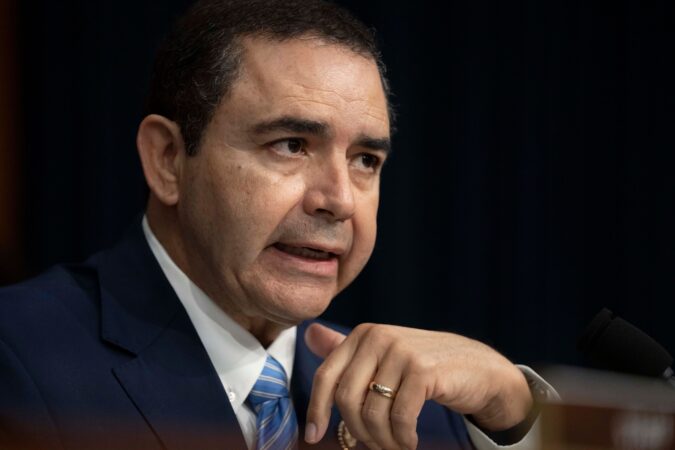
    President Donald Trump pardoned Texas Democratic Rep. Henry Cuellar and his wife in a federal bribery and conspiracy case on Wednesday, citing what he called a “weaponized” justice system.

    Trump, who has argued that his own legal troubles were a partisan witch hunt, said on social media without presenting evidence that Cuellar and his wife, Imelda Cuellar, were prosecuted because the congressman had been critical of President Joe Biden’s immigration policies.

    Trump, a Republican, said in a social media post that Cuellar “bravely spoke out against Open Borders” and accused Biden, a Democrat, of going after the congressman and his wife “for speaking the TRUTH.”

    Federal authorities had charged Cuellar and his wife with accepting thousands of dollars in exchange for the congressman advancing the interests of an Azerbaijan-controlled energy company and a bank in Mexico. Cuellar is accused of agreeing to influence legislation favorable to Azerbaijan and deliver a pro-Azerbaijan speech on the floor of the U.S. House.

    Cuellar has said he and his wife are innocent. The couple’s trial had been set to begin next April.

    “Henry, I don’t know you, but you can sleep well tonight,” Trump wrote in his social media post announcing the pardon. “Your nightmare is finally over!”

    Cuellar thanks Trump for the pardon

    Cuellar, who spoke to reporters outside his congressional office on Wednesday, thanked Trump in a brief statement.

    “I think the facts have been clear about this, but I would also say I want to thank God for standing during this very difficult time with my family and I,” he said. ”Now we can get back to work. Nothing has changed. We will continue working hard.”

    Cuellar was asked if he was changing parties and said, “No, like I said, nothing has changed.”

    A spokesperson for Biden did not immediately respond to messages seeking comment.

    The Constitution gives the president broad power to grand pardons for federal crimes. The pardons don’t erase a recipient’s criminal record but can be seen as act of mercy or justice, often in cases that further public welfare.

    Trump’s pardons this year have included a string of unlikely beneficiaries who are boldfaced names and frequently politically aligned with the president. He pardoned dozens of Republicans accused of participating in his efforts to overturn his 2020 election loss to Biden. He gave clemency to all of 1,500-plus people charged in the Jan. 6, 2021, attack on the U.S. Capitol. He’s also pardoned a former Republican governor of Connecticut, an ex-GOP congressman and reality TV stars who had been convicted of cheating banks and evading taxes.

    Cuellar’s daughters sought a pardon for him

    In Trump’s social media post, he included a copy of a letter that Cuellar’s two daughters, Christina and Catherine, had sent to him on Nov. 12 asking that he pardon their parents.

    “When you and your family faced your own challenges, we understood that pain in a very human way,” Cuellar’s daughters wrote in their letter. ”We watched from afar through the eyes of daughters who knew what it felt like to see parents under fire.”

    One of Henry Cuellar’s lawyers, Eric Reed, said Wednesday that his legal team made a “pretty substantive presentation” to the Justice Department several months ago seeking dismissal of the charges. He declined to comment on what specifically Cuellar’s legal team discussed with the department but said the arguments made were not political in nature.

    In a statement, Imelda Cuellar’s lawyers said Wednesday they were gratified by Trump’s pardon of their client.

    “She has always maintained her innocence,” the statement said.

    Henry Cuellar still faces an Ethics Committee investigation in the House. It began in May 2024 shortly after his indictment and was reauthorized in July. The committee said it was in contact with the Justice Department about mitigating the risks associated with dual investigations while still meeting its obligations to safeguard the integrity of the House.

    Cuellar, who has served in Congress for more than 20 years, is a moderate Democrat who represents an area on the Texas-Mexico border and has a history of breaking with his party when it comes to immigration and firearms.

    He was among the most vocal critics of the Biden administration’s response to a record number of migrants crossing the U.S.-Mexico border. He also is one of the last Democrats in Congress who opposes abortion rights.

    Cuellar is not the only Democrat Trump has pardoned this year. In February, he pardoned former Illinois Gov. Rod Blagojevich, five years after he had commuted his sentence in a political corruption case.

    Like in Cuellar’s case, Trump suggested that New York City Mayor Eric Adams, a Democrat, faced federal corruption charges because he made comments critical of Biden’s immigration policies.

    Trump did not pardon Adams, but after Trump took office, the Justice Department moved to drop the case against the mayor, who had begun working with the Republican administration on immigration issues.

    A top Justice Department official, who was also Trump’s defense lawyer in several of his cases, stepped in to seek dismissal in the case.