Category: News

Latest breaking news and updates

  • ‘Job performance and nothing else’ led to Cherry Hill administrator’s firing, court filings claim

    ‘Job performance and nothing else’ led to Cherry Hill administrator’s firing, court filings claim

    A former Cherry Hill principal claims he did not engage in discriminatory behavior or retaliate against a former employee following a lawsuit filed earlier this year against administrators in the South Jersey school district.

    In court documents filed last month, legal counsel for Daniel Finkle, the former principal of Cherry Hill High School East, denies claims made by former assistant principal David Francis-Maurer, who sued the school district and Finkle in September over alleged discrimination and retaliation.

    Francis-Maurer’s lawsuit claims that top Cherry Hill officials, including Finkle and Superintendent Kwame Morton, “unlawfully conspired with each other” to subject Francis-Maurer to ”retaliatory conduct” and “severe, pervasive, and continuing instances of discrimination” based on his sexual orientation and religion (Francis-Maurer is gay and practices Judaism). Francis-Maurer also claims that administrators skirted student drug testing and mental health protocols. At the crux of Francis-Maurer’s lawsuit is the allegation that he was wrongfully terminated in May for blowing the whistle on Finkle’s behavior.

    Legal counsel for Finkle says Francis-Maurer’s job performance, not whistleblowing, led to his firing.

    According to filings from Finkle’s attorneys, Francis-Maurer was argumentative and made “egregious errors” as assistant principal. Specifically, they contend, Francis-Maurer was allegedly unresponsive to feedback and unwilling to collaborate with colleagues, and he failed to complete mandatory performance reviews of employees.

    Finkle served as the principal of Cherry Hill High School East from August 2024 through his resignation in September. He was set to become principal of Hightstown High School in the East Windsor Regional School District this fall until the district rescinded its offer.

    Francis-Maurer, called “DFM” by students, was hired in 2023 as an assistant principal at East. His termination in May was met with protest in the community, including a student-led walkout and a contentious public meeting in which students implored the school board to retain Francis-Maurer, calling him a “rare talent” who advocated for their needs. He is currently serving as assistant principal of Central High School in North Philadelphia.

    Court filings by Finkle and the district dispute Francis-Maurer’s telling of numerous events over the course of the 2024-25 school year.

    In Francis-Maurer’s lawsuit, he alleges that Finkle told him to “leave his identities ‘at the door,’” referring to Francis-Maurer’s being gay and practicing Judaism.

    Finkle, who is also openly gay and Jewish, rebuts this, saying that “the insinuation that [Francis-Maurer] could not express this same identity is ludicrous.” Rather, Finkle says, he was explaining that when he walks through the school doors, he “does not assert any other identity than a high school principal” as his job is to “be there for every student regardless of their beliefs.” When Francis-Maurer asked if he was required to take the same approach, Finkle says he “told him no” but said that it has been effective, which Finkle described as an act of mentorship.

    Francis-Maurer’s lawsuit claims that Finkle appeared in a video “trivializing” and “mocking” gender identity. Finkle was featured in a video published by the student government association lip-syncing to a sound bite that stated, “My pronouns are U.S.A.” Francis-Maurer says that parents complained to him about the video, and that when he confronted Finkle, the principal was “dismissive” and brushed him off.

    In Finkle’s telling, he was “ignorant at the time” and didn’t know the sound bite was “anti-trans.” As soon as he was made aware of the video’s connotations, Finkle says, he immediately asked the student to take it down, which he did. Finkle says he then emailed the school’s Gay Straight Alliance adviser to take ownership of the incident and express that it was “never his intention to make any group feel marginalized.”

    Finkle also pushed back against Francis-Maurer’s characterization of his handling of sensitive student issues.

    Francis-Maurer claims that when a student who appeared to be under the influence was referred for drug testing, testing protocols were skirted, and that Finkle said, “I know the student doesn’t take drugs.”

    According to Finkle’s court filings, a teacher’s suspicion that a student might be under the influence is not enough to constitute required drug testing. That particular student was not tested for drugs because a parent refused the test, the filing claims.

    Francis-Maurer’s lawsuit also claims that after a student reported suicidal thoughts to a club adviser, the adviser texted the student continuously for five days without a response. Francis-Maurer says he raised concerns that an adviser was texting with a student from a personal phone, but “no disciplinary action was taken.”

    Finkle, on the other hand, says that the student’s parent was immediately contacted and that Finkle met with the club adviser to explain that he could not use his personal cell phone to contact students. Finkle was informed that the adviser did not have a school email and worked with the district technology team to get him one. Finkle states that Francis-Maurer, who was then the supervisor of the club, “should have been more aware of the situation and addressed it before an issue arose.”

    Francis-Maurer says that “the very next day” after he submitted a detailed complaint to top administrators about Finkle, outlining those concerns, Francis-Maurer was rated “partially effective” on parts of his performance review for the first time and was later placed on a performance improvement plan, despite a successful track record.

    In a separate filing, attorneys for the district say this did not happen on “the very next day.” Rather, they say, Francis-Maurer submitted his complaint on Feb. 24 and the district submitted his performance evaluation on March 17.

    Attorneys for Francis-Maurer describe his work as successful, citing an outpouring of support after his contract was not renewed. In Finkle’s characterization, however, Francis-Maurer would “argue incessantly” when told to complete a task and made “egregious errors” in his failure to properly evaluate employees.

    Francis-Maurer’s conduct “demonstrated a lack of alignment with District and building priorities and an unwillingness to fully support the collective vision of the administrative team at High School East,” court filings from Finkle’s legal counsel claim.

    This suburban content is produced with support from the Leslie Miller and Richard Worley Foundation and The Lenfest Institute for Journalism. Editorial content is created independently of the project donors. Gifts to support The Inquirer’s high-impact journalism can be made at inquirer.com/donate. A list of Lenfest Institute donors can be found at lenfestinstitute.org/supporters.


  • City Council took a rare stand against Mayor Parker by allotting more housing funds to the poorest Philadelphians

    City Council took a rare stand against Mayor Parker by allotting more housing funds to the poorest Philadelphians

    Philadelphia City Council on Tuesday amended the initial budget for Mayor Cherelle L. Parker’s signature housing initiative to direct more money to programs that will help the lowest-income Philadelphians, a move that sparked one of the most notable confrontations between Parker and city lawmakers since she took office almost two years ago.

    The amendment, which followed a weekslong standoff between the executive and legislative branches, represents a rare act of defiance for a Council that has otherwise been largely compliant with Parker’s agenda, and it appeared at first to be a major win for Philly progressives.

    But Parker is not giving up the fight, and she said Tuesday night that the amendment may have had unintended consequences that could hold up much of the housing initiative for months.

    The changes to the legislation, she said, may trigger additional procedural steps that will prevent the city from issuing $400 million in bonds to fund the initiative until March or later. The mayor did not hold back from laying the blame for the delays at Council’s feet.

    “The resolution that City Council passed out of the Committee of the Whole today contained language that our bond lawyers have repeatedly advised would prevent the administration from being able to issue the bonds,” Parker said in a statement. “That means homes are not being restored. It means homes are not being built or repaired.”

    In an unusually blunt statement late Tuesday night, Council President Kenyatta Johnson pushed back against the administration’s analysis of the situation.

    “Council’s responsibility is not to rubber-stamp legislation, but to ensure that any multi-billion-dollar public investment is legally sound and targeted to the Philadelphians who need it most,” Johnson said.

    But he also vowed to have Council quickly introduce new legislation that could ameliorate the procedural problem Parker identified, tacitly conceding that additional legislation was needed hours after lawmakers approved the resolution with no mention of that possibility.

    Johnson said Council would “resolve remaining legal and policy issues swiftly,” and that a new measure to legalize lawmakers’ most recent changes could be introduced this week.

    Council wants “shovels in the ground” and “homes repaired,” he said, but ”refuses to rush into issuing $800 million in debt without iron-clad legal protections and clear guarantees.”

    “Council members repeatedly raised concerns — directly and in good faith — about accountability, neighborhood equity, homeowner protections, and the long-term impact of the H.O.M.E legislation,” he said. “Council’s action today strengthened the H.O.M.E resolution, not sabotaged it.”

    The late-night war of words between Parker and Johnson came hours after a celebratory Council committee meeting in which lawmakers took a victory lap for standing up to the administration.

    After the vote, Councilmember Jamie Gauthier and Councilmember Rue Landau, respectively the chair and vice chair of the Committee on Housing, Neighborhood Development and the Homeless, said the amended resolution means “working and low-income families will finally be able to get the support they need sooner.”

    “With roughly $30 million in federal homelessness funding at risk, it is more important than ever that this multiyear, $800 million investment begins by prioritizing the more than 200,000 Philadelphia households on the brink of losing their homes,” Gauthier and Landau said in a joint statement, referring to a federal policy change proposed by President Donald Trump’s administration that could cost the city millions in funding for anti-homelessness programs.

    Council pushes for policy changes

    Parker, who has long championed the city’s “middle neighborhoods,” structured her sweeping Housing Opportunities Made Easy, or H.O.M.E, initiative to ensure that the myriad programs funded or created by the program would be available to homeowners and renters at a variety of income levels.

    But Johnson — in an unexpected break from his usual alignment with Parker — stood with Gauthier and other progressives who fought to ensure the neediest city residents were prioritized in the budget resolution, which sets the first-year spending allocations for H.O.M.E. The distribution of funding must be approved by Council before the administration can issue the first of two planned $400 million tranches of city bonds that will finance much of the initiative.

    Council’s Committee of the Whole, which includes all members, approved the amendment and advanced the resolution in a pair of unanimous voice votes Tuesday afternoon following hours of testimony.

    The measure would now head to the Council floor for a final passage vote in the next two weeks. Parker’s statement, however, could mean Council has additional work to do before getting the measure over the finish line. Johnson’s office said the vote is still scheduled for Dec. 11.

    “The majority of the members of City Council want to focus on the issues of those who are poor here in the city of Philadelphia when it comes to housing and equality,” Johnson told reporters after the vote.

    It’s unclear whether the vote represents a serious rupture in the tight relationship between Parker and Johnson, who have worked closely together since both took office in January 2024. Council approved the most important pieces of legislation Parker proposed as part of the H.O.M.E initiative earlier this year, and the changes adopted Tuesday do not alter the fundamentals of the program, which Parker hopes will achieve her goal of creating or preserving 30,000 units of housing in her first four-year term.

    “We support the H.O.M.E. plan,” Johnson said. “And I think the mayor did a good job in investing close to $1 billion … in supporting the issue of housing inequality here in the city of Philadelphia. This amendment represents the will of the members. … We want to specifically focus on those who are the most least well-off, those who are poor.”

    But after reading about Parker’s statement in the evening, Johnson’s attitude toward the administration sharpened. His lengthy statement included the most critical language the Council president has directed at the mayor since they were inaugurated.

    Mayor Cherelle L. Parker unveils her long-awaited plan to build or preserve 30,000 units of housing during a special session of City Council Monday, Mar. 24, 2025. Council President Kenyatta Johnson is behind her.

    Johnson rejected Parker’s claim that the legislative delays could cause the popular Basic Systems Repair Program to temporarily run out of funding, saying that there is plenty of money in the current city budget to cover shortfalls.

    “Threatening residents with a shutdown of the Basic Systems Repair Program and assigning blame does not move this process forward,” he said. “Collaboration and working together does.”

    The amendment increases the first-year budget for spending the bond proceeds from $194.6 million to $277.2 million. The increased price tag, however, does not represent new money in the housing budget; it merely allows the administration to spend more of the $400 million in bond proceeds in the initiative’s first year.

    The changes include increases in funding for housing preservation from $29.6 million to $46.2 million, and housing production from $24.3 million to $29.5 million. Additionally, the amendment boosted funding for homelessness prevention programs from $3.8 million to $8.8 million.

    But perhaps more importantly, Council altered the income eligibility levels for several programs.

    Parker, for instance, had proposed that the H.O.M.E. funding for the Basic Systems Repair Program, which subsidizes critical home improvements to prevent residents from being displaced by the costs of needed repairs, be open to any homeowner who makes Philadelphia’s area median income, or AMI, which is about $119,400 for a family of four.

    Council’s amendment, however, requires 90% of the new funding to go to families making 60% of AMI or less, about $71,640 for a family of four.

    The administration initially planned to issue the first $400 million in bonds this fall, and Parker sent Johnson’s office a first draft of the budget resolution in July. Council then delayed the committee vote on the resolution several times as Johnson negotiated with Parker on potential changes.

    The amendment adopted Tuesday appears to largely mirror Gauthier’s priorities for the spending plan, rather than a negotiated compromise, the first sign that Johnson had moved forward despite not reaching a deal with Parker.

    Bond sales potentially delayed again

    Parker’s plan to sell the initial round of bonds this fall appeared to be on schedule when Council in June approved the most important pieces of legislation associated with the H.O.M.E. initiative, including an $800 million bond authorization.

    But lawmakers at that time inserted a provision into the bond legislation that required the administration to get Council approval of its H.O.M.E. budget each year before it can spend the bond proceeds. For the initiative’s first year, that provision means the city cannot take the bonds to market at all without Council signing off on the budget resolution, city Finance Director Rob Dubow has said.

    The latest potential delay, which could set Parker’s schedule back months more, stems from the amendment approved in committee Tuesday.

    Parker did not elaborate on the procedural issue that could cause the latest delay, but her comments indicated what it may be: Because the resolution, which dictates how the bond proceeds can be spent, now includes significant differences from the bond authorization bill Council approved months ago, the city may not be able to rely on the original bill as its legal basis for taking out debt and selling the bonds.

    To make them align, Council may have to approve a new bond authorization bill, or abandon some of its changes to the spending resolution.

    In his statement Tuesday night, Johnson indicated Council has chosen the former route.

    “City Council is preparing to introduce an amendment to the H.O.M.E bond ordinance as early as this week’s Council session,” he said.

    It’s unclear if the resolution could pass by the end of the year. But Johnson’s reference to the potential of the current city budget’s surplus covering shortfalls in housing programs indicates that might not be possible.

    Council’s last meeting is scheduled for Dec. 11. Lawmakers can vote to suspend Council rules and fast-track legislation as needed.

    This story was updated to include Council President Kenyatta Johnson’s response to Mayor Cherelle L. Parker’s statement.

  • Chances dwindling for renewal of healthcare subsidies, risking premium spikes for millions

    Chances dwindling for renewal of healthcare subsidies, risking premium spikes for millions

    WASHINGTON — Hopes for an extension of healthcare subsidies were diminishing in Congress this week as Republicans and Democrats largely abandoned the idea of bipartisan talks on the issue, increasing the odds that millions of Americans could see sharp premium spikes starting Jan. 1.

    Democrats who agreed earlier this month to reopen the government in exchange for a December healthcare vote were hoping they could work with Republicans to extend the COVID-era Affordable Care Act tax credits that help many Americans pay for their health coverage. But lawmakers in both parties have spent most of the time since talking among themselves instead, while rehashing longstanding partisan arguments over the law in public.

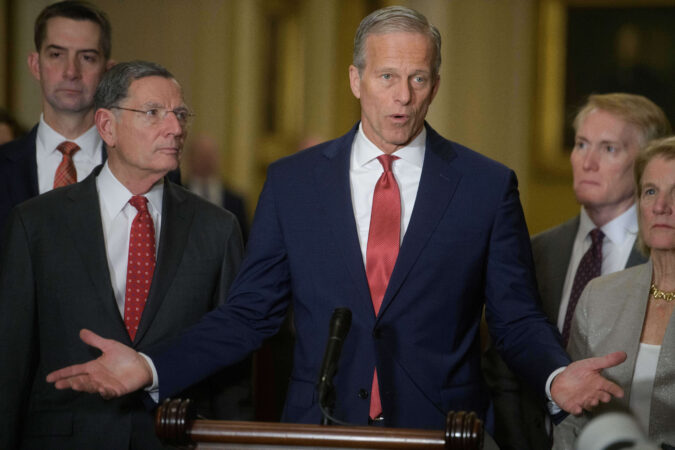
    “I don’t think at this point we have a clear path forward, I don’t think the Democrats have a clear path forward,” Senate Majority Leader John Thune said Tuesday after Republicans met and discussed different proposals to overhaul the law.

    The impasse means the Senate vote, expected next week, could be a party-line messaging exercise with no real chance of passage. Under the deal struck to end the shutdown, Democrats can determine the legislation that comes up for a vote. But Senate Democratic Leader Chuck Schumer has indicated they are leaning toward a vote on a straight extension of the subsidies with no new limits or tweaks to the law, which Republicans have already rejected.

    “So far the Republicans are in total disarray and have no plan,” Schumer said Tuesday. “We have a plan.”

    Democrats say they are willing to negotiate on the issue, and some have said they would be open to new limits on the subsidies. But they argue that two main issues are holding up talks: the lack of input from President Donald Trump, and Republicans’ insistence that abortion funding be part of the discussion.

    “Our Republican colleagues aren’t going to engage with us” unless Trump weighs in, Sen. Peter Welch (D., Vt.) said. “That’s the paralysis here.”

    Abortion issue holds up compromise

    Maine Sen. Angus King, an independent who caucuses with the Democrats, was part of the group that struck a deal to end the shutdown. He says there have been some informal bipartisan discussions since then, but says they stalled as Republicans insisted on stricter abortion restrictions on Affordable Care Act plans.

    “They have set up a red line that is also a red line for the Democrats,” King said of Republicans. “So they’re going to own these increases.”

    Missouri Sen. Josh Hawley, who has said he wants to see the tax credits extended, said the issue “should not be a deal-killer” since a ban on federal funding for abortions is already in the law.

    Democrats say current law should be sufficient. While many states ban abortion coverage from all plans in the ACA marketplaces, others allow or require abortion coverage that isn’t paid for with federal funding.

    Republicans weigh different plans

    Beyond the abortion issue, many Republicans have said for years that they want to see the ACA scrapped or overhauled. But there is still little consensus in the GOP about whether to do that or how.

    Republican senators have discussed several competing proposals in recent weeks. Louisiana Sen. Bill Cassidy and Florida Sen. Rick Scott have suggested creating different types of health savings accounts that would change the way people buy insurance — an idea that Trump has endorsed in social media posts without much detail. Other senators have suggested extending the subsidies with new limits on income.

    Thune said Tuesday that “we will see where the Republicans come down, but that conversation continues.”

    Republicans want to work on a constructive solution, he said, “but that hasn’t landed yet.”

    In the House lawmakers were also discussing different ideas. But there was no indication that any of them could be ready by the end of the year or generate enough bipartisan support.

    “Healthcare is a very complicated issue,” House Speaker Mike Johnson (R., La.) said Tuesday, while insisting that Republicans were still “pulling ideas together.”

    Trump gives little guidance

    Lawmakers in both parties have said it will be hard to move forward without Trump’s support for a plan. But the president has yet to formally endorse any legislation.

    Last week, the White House circulated a proposal to extend the subsidies with some limits, like new income caps and a requirement that all recipients pay some sort of premium. The proposal would also have allowed those in lower-tier plans, such as the bronze-level or catastrophic plans, to put money into health savings accounts.

    But the proposal was never released.

    Asked last week whether he wants to extend the subsidies, Trump appeared to refer to the leaked plan, saying that “somebody said I wanted to extend it for two years. … I’d rather not extend them at all.”

    Still, he acknowledged that some sort of extension may be “necessary.”

  • William Way services will return to Center City building after renovation, nonprofit says

    William Way services will return to Center City building after renovation, nonprofit says

    The William Way LGBT Community Center will return to the building it has called home after much-needed renovations are completed, instead of permanently leaving as had been previously announced, the leaders of the nonprofit’s board said Tuesday.

    Earlier this year, William Way announced it was planning to sell its 175-year-old building at 1315 Spruce St. because fundraising efforts for a “comprehensive redevelopment plan to renovate and expand” the Center City property had fallen short.

    The nonprofit said early last week that it was permanently closing its doors later this month and relocating services, and even had a “One Last Dance” goodbye party in the building scheduled for this Friday.

    The building will still close on Dec. 18, but the services that William Way provides will eventually return, the nonprofit said Tuesday.

    “Thanks to the support of multiple sources, including generous individual donors, and the efforts of our board, staff, and partners, we are pleased to share that the center will return to the building once redevelopment is complete,” Dave Huting and Laura Ryan, cochairs of the William Way LGBT Community Center Board, said in a statement.

    “While there are still many details to finalize, including a timeline for when we can once again welcome the community back into the building, we are thrilled to share that the center will not be leaving its longtime home,” Huting and Ryan said.

    “We look forward to sharing our vision for a reimagined facility, one that continues to be an essential resource for Philadelphia’s LGBTQ community, and which will become a reality as details are finalized,” they said.

    “We are partnering with a nonprofit developer to redevelop our building at 1315 Spruce Street, transforming it into a modern and welcoming space that better serves our vibrant and engaged community,” Huting and Ryan said.

    The center briefly closed for inspection and emergency repairs last fall, then partially reopened in January 2025.

    In June, William Way said it needed to sell the building — which it had purchased in 1997 — because the nonprofit could not move forward with the more than $3.5 million in immediate repairs that were needed “before any broader redevelopment could proceed.”

    The statement on Tuesday did not explicitly say the building would not still be sold.

    A spokesperson for William Way could not be reached for comment.

    In the meantime, William’s Way’s programs will move.

    On Jan. 5, the center’s empowerment programs, including the elder initiative, peer counseling, and trans programs, will operate out of the nearby Church of St. Luke and the Epiphany at 330 S. 13th St.

    A plan is being developed to temporarily relocate the John J. Wilcox Jr. Archives and is expected to be announced next year, the nonprofit said.

    “We have always said that the center thrives not because of its building, but because of its people. However, the rebuilding of the center will allow it to become an even more effective space to advance our mission and enhance the services and support we provide to our community,” the board cochairs said.

    As of Tuesday evening, the “One Last Dance” party was still being promoted on William Way’s website.

  • Trump appears to doze off in another meeting

    Trump appears to doze off in another meeting

    President Donald Trump closed his eyes for extended periods as cabinet officials went around the room Tuesday providing updates on their work, at times seeming to nod off.

    It was the second time in less than a month that Trump has appeared to struggle to stay awake as his advisers speak about the administration’s initiatives. A Washington Post analysis of multiple video feeds of the meeting Tuesday showed that during nine separate instances, Trump’s eyes were closed for extended periods or he appeared to struggle to keep them open, amounting cumulatively to nearly six minutes. The episode was similar to an Oval Office event on Nov. 6 when the president spent nearly 20 minutes battling to keep his eyes open.

    Trump’s apparent drowsiness during the 2-hour, 17-minute gathering with his cabinet followed pronouncements in recent days by the 79-year-old president, his advisers and his doctor that he is in excellent health and full of stamina — an assertion the president repeated early in Tuesday’s meeting.

    “Right now, I think I’m sharper than I was 25 years ago,” Trump said, criticizing a recent New York Times article that said the president was facing the realities of aging. He later resurrected a frequent insult, “Sleepy Joe,” to mock former President Joe Biden, the first octogenarian to serve as president, who faced regular scrutiny for his perceived lack of stamina.

    In response to a request for comment about Trump’s eyes being closed during the meeting, a White House official initially told the Post that he was not sleeping, though a subsequent statement from press secretary Karoline Leavitt did not specifically address whether the president had dozed off.

    Leavitt instead said he was “listening attentively and running the entire” meeting, and cited Trump’s “amazing final answer in the news conference,” in which he bashed Somali migrants, calling it an “epic moment.”

    The White House has worked to refute suggestions that Trump has slowed down since his first term eight years ago. His advisers on Monday provided private logs to the New York Post that they said revealed Trump “working up to 12-hour days” on several instances during the past few weeks, the outlet reported.

    But on Tuesday, the president appeared sleepy. Throughout Secretary of State Marco Rubio’s discussion of “the most transformational year in American foreign policy since the end of the Second World War — at least,” Trump leaned his head forward and shut his eyes. They remained closed even as Rubio discussed one of the president’s favorite topics, his efforts to broker peace between warring foreign nations.

    Trump appeared far more alert later Tuesday when announcing “Trump accounts,” new tax-advantaged investment accounts for children. Unlike the meeting that had ended an hour earlier, where Trump was seated as he appeared to battle sleep, the president, Sen. Ted Cruz (R., Texas) and other officials were standing during the 40-minute announcement.

    “I don’t think [Trump] sleeps at all,” Cruz said at one point.

    While Trump’s Oval Office drowsiness last month came a week after he returned from a trip to Asia — a journey known for causing jet lag — the episode Tuesday followed a late night and early morning of the president scrolling and posting on social media.

    Between 10 p.m. Monday and midnight, Trump made nearly 150 posts and reposts on his Truth Social account, ranging from criticisms of Democrats and screenshots of posts from right-wing conspiracy theorists to positive video clips about himself and first lady Melania Trump. Despite being a prolific and longtime user of social media, Trump’s blitz of posts that night was far more than is typical for him, though Trump’s advisers have told the Post he frequently only gets about four hours of sleep a night.

    By 5:30 a.m. Tuesday, the president was back to posting again online.

  • Flesh-eating worm in Mexico is squeezing U.S. beef supply

    Flesh-eating worm in Mexico is squeezing U.S. beef supply

    Juan Manuel Fleischer’s ancestors ranched on the borderlands before the United States existed, and the Arizona resident’s business importing Mexican cattle across the modern-day frontier has survived decades of immigration politics and the construction of a towering steel wall.

    But that work has collapsed over the past year as an insidious threat shakes U.S.-Mexico relations and the American beef industry: the New World screwworm, a flesh-eating parasite that has resurged south of the border 60 years after it was mostly eradicated in U.S. livestock.

    Around 1.2 million young Mexican cattle cross each year through a half-dozen entry ports to bulk up in American pastures or feedyards. But the gates have been shut to livestock for most of the past year, since a cow in southern Mexico tested positive in November 2024 for New World screwworm — maggots that burrow into warm-blooded animals, creating foul-smelling wounds and sometimes fatal weight loss. Mexican cattle imports have plunged to about 230,000 in 2025 as additional cases have emerged farther north, including one in September only 70 miles south of the border.

    “We’re hurting,” Fleischer said. “We’re basically going broke.”

    The unprecedented closure, when a shrinking American cattle herd is contributing to near-record-high beef prices, represents both a rare agreement on science and trade between the Biden and Trump administrations and the intense alarm shared by federal officials and the broader U.S. livestock industry. Agriculture Secretary Brooke Rollins has called keeping the parasite out of the country “a national security priority.”

    The blockade, however, has upended cross-border relationships forged over generations and has financially strained Texas cattle feeders, New Mexico importers, and Arizona ranchers.

    “We’re trying to almost beg the USDA to keep our Nogales border open,” said Jorge Maldonado, the mayor of Nogales, Arizona, where the livestock pens are empty at a port of entry that remains busy with produce imports.

    Maldonado has a small cattle operation across the border in the Mexican state of Sonora, and recently he sold about a dozen animals for $10,000 less than he would have fetched in the United States.

    But Maldonado said his larger worry is for his city of 20,000. He estimates that it has collected as much as 15% less in bed taxes this year because of the absence of Americans and Mexicans who typically stay overnight and “wine and dine” while negotiating over cattle that must be quarantined for three days on the Mexican side. And it has been “a catastrophe,” he said, for local businesses that revolve around the industry.

    One belongs to Fleischer, who in a good year brought in 80,000 cattle from small ranches in Mexico. He walked steers and heifers through the dust and through the metal border barrier, where he was known as an expert at sorting the animals by size with just a glance. When he heard about the closure, Fleischer recalled, “I said, ‘Oh, my god, it’s going to kill us. This will break us.’ ”

    Now he is surviving on savings, and his wife and son have taken on substitute teaching jobs.

    New World screwworm was a scourge in the first decades of the 20th century, costing U.S. ranchers tens of millions of dollars a year and killing thousands of deer. The federal government spent millions of dollars more to eradicate it in the 1960s through the breeding and unleashing of sterile flies, which eventually doomed the species domestically. Occasional outbreaks have since occurred among livestock in the Southwest, and, in 2016, among endangered Key deer in the Florida Keys. And in August, a rare human case was reported in a Maryland resident who had traveled to El Salvador.

    The concern today is not that New World screwworm would wipe out American cattle, but that the cost of monitoring and controlling it would be enormous, experts and industry officials said. The Agriculture Department estimates that an outbreak could cost the Texas economy alone $1.8 billion.

    “This would be a very hands-on issue if it were to emerge,” said Hunter Ihrman, a spokesman for the National Cattlemen’s Beef Association. “It makes people very nervous.”

    He said the association is supportive of the border closure and other federal efforts to hold back the pest, though it wants speedier action on plans for an $8.5 million sterile fly production facility projected to open in Texas early next year. The only such facility in North America is in Panama.

    At a meeting with Rollins last month in Mexico City, Mexican President Claudia Sheinbaum again pushed for the reopening of the border, calling it a “top priority.” But the USDA, which did not respond to questions for this article, has made clear that it does not trust Mexico to control the threat.

    Maldonado, the Nogales mayor, said USDA officials who met with him and other Arizona officials and producers last week indicated that it would stay shut at least until the end of the year.

    He and others involved in the trade say they feel confident that the New World screwworm could not slip past import protocols, which involve quarantining in Mexico, anti-parasite treatments, and inspection by U.S. and Mexican government veterinarians. They also argue that the closure is contributing to high American beef prices, which the Trump administration has pledged to address by investigating meatpacking companies and importing Argentine beef.

    Industry watchers are skeptical the blockade has driven up prices. The loss of Mexican cattle, which in typical times represent about 3 to 4% of the American calf herd, has probably had only a “marginal impact” on prices, said Derrell Peel, an Oklahoma State University agricultural economist.

    What is clear, he said, is the hardship on those who depend on the trade. “Regionally, the impacts are very severe,” Peel said.

    Among those affected is Mark Rogers. He started his Dimmitt, Texas feedyards 30 years ago with a few Mexican cattle. When the border first shut a year ago, 90% of his 50,000 animals were Mexican. Rogers found Mexican cattle hardier than domestic, a quality he attributed to the travel and the import process they underwent. After years of almost daily phone calls, he calls the Mexican producers he works with “some of my best friends.”

    These days, Rogers is down to about 27,000 head of cattle, he has cut a third of his workforce, and he says he is breaking even. His neighbors also have vacant pens, he said. “I’ve laid in bed at night thinking, ‘What the heck?’” he said. “But I’ve just got to know that one of these days that border’s got to open back up.”

    Fifteen percent of the feeder cattle in Texas come from Mexico, the state’s agriculture commissioner, Sid Miller, said in an interview. He said he has sent proposals to White House officials, urging them to allow a “test opening” of imported Corriente cattle for rodeos and to deploy a specific fly bait. They have not responded to the first idea, he said; the USDA sternly rejected the latter.

    Discontent is hardly uniform in the industry. Those who breed calves are getting top dollar for their animals. And some who import Mexican cattle say they understand the caution.

    The shift “has been painful on one side of the ledger,” said Kevin Buse, chief executive of Champion Feeders in Hereford, Texas, who runs feedyards and ranches in Texas, Oklahoma, and Nebraska. He has faith in the health surveillance of cattle on both sides of the border but said he also trusts the USDA’s approach. “We need to open slowly, we need to make sure that what we’re doing is good, and make sure we’re not stepping into a bear trap.”

    But the change to Buse’s business is felt by Alvaro Bustillos, president of Vaquero Trading, an El Paso company that before the screwworm blockade generated $400 million in annual revenue importing 250,000 Mexican cattle a year, including for Champion Feeders. Now it is shut down.

    Like many in the trade, Bustillos, who is also chairman of the board of the cattle producers union in Chihuahua, Mexico, said he worries all the American politics around beef prices have made reopening even thornier. In a September letter, Bustillos urged Rollins to reconsider. “This relationship goes beyond numbers: We share traditions, genetics, culture and families that have worked together for generations on both sides of the border.”

    Just over the New Mexico state line, the pens at the Santa Teresa port of entry, the nation’s busiest for livestock, are eerily silent. In a typical year, 500,000 cattle and horses valued at $1 billion cross at the port, according to Daniel Manzanares, who directs the livestock crossing.

    Manzanares has laid off half of the 40 employees. Truckers who transported the cattle are also out of work, he said. “There are people selling homes, people selling semis,” he said. “It’s created such a disaster for so many people.”

    But for now, he sees little reason to hope. “We are a really tiny chip in the poker game between the U.S. and Mexico,” he said.

  • U.S.-Russia talks on Ukraine were productive but work remains, Putin adviser says

    U.S.-Russia talks on Ukraine were productive but work remains, Putin adviser says

    Talks between Russia and the U.S. on ending the nearly four-year war in Ukraine were productive, but much work remains, Yuri Ushakov, a senior adviser to President Vladimir Putin, told reporters on Wednesday.

    Putin met President Donald Trump’s envoy Steve Witkoff and son-in-law Jared Kushner in the Kremlin in talks that began late Tuesday as part of a renewed push by the Trump administration to broker a peace deal. Both sides agreed not to disclose the substance of the talks.

    Ushakov called the five-hour conversation “rather useful, constructive, rather substantive,” but added that the framework of the U.S. peace proposal was discussed rather than “specific wording.”

    Putin’s aide also said that “so far, a compromise hasn’t been found” on the issue of territories, without which, he said, the Kremlin sees “no resolution to the crisis.”

    “Some of the American proposals seem more or less acceptable, but they need to be discussed. Some of the wording that was proposed to us doesn’t suit us. So, the work will continue,” Ushakov said.

    There were other points of disagreement, although Ushakov did not provide further details. “We could agree on some things, and the president confirmed this to his interlocutors. Other things provoked criticism, and the president also didn’t hide our critical and even negative attitude toward a number of proposals,” he said.

    Trump peace plan is center of effort to end the war

    The meeting came days after U.S. officials held talks with a Ukrainian team in Florida and which Secretary of State Marco Rubio described in cautiously optimistic terms.

    At the center of the effort is Trump’s peace plan that became public last month and raised concerns about being tilted heavily toward Moscow. The proposal granted some of the Kremlin’s core demands that Kyiv has rejected as nonstarters, such as Ukraine ceding the entire eastern region of the Donbas to Russia and renouncing its bid to join NATO. Negotiators have indicated the framework has changed, but it’s not clear how.

    On Tuesday, Putin accused Kyiv’s European allies of sabotaging U.S.-led efforts to end the war in Ukraine.

    “They don’t have a peace agenda, they’re on the side of the war,” Putin said of the Europeans.

    Putin‘s accusations appeared to be his latest attempt to sow dissension between Trump and European countries and set the stage for exempting Moscow from blame for any lack of progress.

    He accused Europe of amending peace proposals with “demands that are absolutely unacceptable to Russia,” thus “blocking the entire peace process” and blaming Moscow for it. He also reiterated his long-held position that Russia has no plans to attack Europe — a concern regularly voiced by some European countries.

    “But if Europe suddenly wants to wage a war with us and starts it, we are ready right away. There can be no doubt about that,” Putin said.

    Russia started the war in 2022 with its full-scale invasion of a sovereign European country, and European governments have since spent billions of dollars to support Ukraine financially and militarily, to wean themselves from energy dependence on Russia, and to strengthen their own militaries to deter Moscow from seizing more territory by force.

    They worry that if Russia gets what it wants in Ukraine, it will have free rein to threaten or disrupt other European countries, which already have faced incursions from Russian drones and fighter jets, and an alleged widespread Russian sabotage campaign.

    Trump’s peace plan relies on Europe to provide the bulk of the financing and security guarantees for a postwar Ukraine, even though no Europeans appear to have been consulted on the original plan. That’s why European governments have pushed to ensure that peace efforts address their concerns, too.

    Coinciding with Witkoff’s trip, Ukrainian President Volodymyr Zelensky went to Ireland, continuing his visits to European countries that have helped sustain his country’s fight against Russia’s invasion.

    High-stakes negotiations

    Zelensky said Tuesday he was expecting swift reports from the U.S. envoys in Moscow on whether talks could move forward, after Trump’s initial 28-point plan was whittled down to 20 items in Sunday’s talks between U.S. and Ukrainian officials in Florida.

    “The future and the next steps depend on these signals. Such steps will change throughout today, even hour by hour, I believe,” Zelensky said at a news conference in Dublin with Irish Prime Minister Micheál Martin.

    “If the signals show fair play with our partners, we then might meet very soon, meet with the American delegation,” he said.

    “There is a lot of dialogue, but we need results. Our people are dying every day,” Zelensky said. “I am ready … to meet with President Trump. It all depends on today’s talks.”

    Building on progress in Florida

    After months of frustration in trying to stop the fighting, Trump deployed officials to get traction for his peace proposals. The talks have followed parallel lines so far, with Rubio sitting down with Ukrainian officials.

    Zelensky said he met Tuesday with the Ukrainian delegation that returned from the negotiations with U.S. representatives in Florida. Rubio said those talks made progress, but added that “there’s more work to be done.”

    Zelensky said the Florida talks took as their cue a document that both sides drafted at an earlier meeting in Geneva. The Ukrainian leader said that document was now “finalized,” although he didn’t explain what that meant.

    Ukrainian diplomats are working to ensure that European partners are “substantially involved” in decision-making, Zelensky said on the Telegram messaging app, and warned about what he said were Russian disinformation campaigns aimed at steering the negotiations.

    European leaders want a say

    Zelensky met with political leaders and lawmakers in Dublin on his first official visit. Ireland is officially neutral and isn’t a member of NATO but has sent nonlethal military support to Ukraine. More than 100,000 Ukrainians have moved to Ireland since Russia launched its war on Feb. 24, 2022.

    Although this week’s consultations could move the process forward, few details have become public. It remains unclear how envoys are going to bridge the gap between the two sides on such basic differences as who keeps what territory. European officials say the road to peace will be long.

    European leaders want to make their voices heard after being largely sidelined by Washington. They are also working on future security guarantees for Ukraine.

    Zelensky was in Paris on Monday, and French President Emmanuel Macron said they spoke by phone with Witkoff. They also spoke to leaders of eight other European countries as well as top European Union officials and NATO Secretary-General Mark Rutte.

    Diplomats face a hard time trying to bridge Russian and Ukrainian differences and persuading them to strike compromises. The key obstacles — over whether Kyiv should cede land to Moscow and how to ensure Ukraine’s future security — appear unresolved.

    Zelensky under pressure

    Zelensky is under severe pressure in one of the darkest periods of the war for his country. As well as managing diplomatic pressure, he must find money to keep Ukraine afloat, address a corruption scandal that has reached the top echelons of his government, and keep Russia at bay on the battlefield.

    The Kremlin late Monday claimed that Russian forces have captured the key city of Pokrovsk in the Donetsk region of eastern Ukraine. Zelensky, however, said in Paris that fighting was still ongoing in Pokrovsk on Monday.

    Ukraine’s general staff on Tuesday also denied Russia’s claims to have captured Pokrovsk, saying it was a propaganda stunt. The Ukrainian army is readying additional logistic routes to deliver supplies to troops in the area, the Facebook post said.

  • The first big snowstorm of the winter hits the Northeast, but not Philadelphia

    The first big snowstorm of the winter hits the Northeast, but not Philadelphia

    PORTLAND, Maine — The first major storm of the winter covered parts of the Northeast and Mid-Atlantic with snow and ice Tuesday, making roads hazardous, disrupting travel, and closing schools as some areas braced for several inches of heavy snowfall.

    The storm could deliver up to a foot of snow as well as wind and heavy rain across Massachusetts, New Hampshire, Vermont, Maine, Connecticut, and New York, although some areas were spared the predicted high totals. Winter storm warnings and weather advisories were in place throughout the day.

    “It looks like winter wonderland at the moment,” said John Marino in New York’s Catskill Mountains, which could get up to 8 inches of snow. As co-owner of a ski shop, he said he’s grateful that several inches had already accumulated by Tuesday afternoon, a welcome bonus as the season gets into gear.

    Some light freezing rain, sleet, and random snowflakes were reported across the Philadelphia region around daybreak Tuesday, and several school districts in Chester and Montgomery Counties opted for two-hour delays.

    Small accumulations of freezing rain, under a tenth of an inch, were measured in the Doylestown and Pottstown areas.

    For the record, the National Weather Service in Mount Holly reported that the city recorded its second official “trace” of snow, defined as a trained spotter’s sighting at least one flake at Philadelphia International Airport.

    Hundreds of flights were delayed and roads across the region turned hazardous before sunrise, slowing commutes. In West Virginia, a tractor-trailer driver was rescued unhurt when his cab dangled off a bridge for several hours after losing control in snowy conditions early Tuesday, news outlets reported.

    The storm came just as the Midwest began to escape the snow and ice that snarled travel after the Thanksgiving holiday. Chicago O’Hare International Airport set a record for the highest single calendar day snowfall in November at the airport, with more than 8 inches, according to the weather service. The previous record was set in 1951.

    Winter weather arrives in the Northeast

    “It’s going to be the first snowfall of the season for many of these areas, and it’s going to be rather significant,” said Andrew Orrison, a meteorologist at the National Weather Service.

    Meteorological winter, which covers December through February, is used by climate scientists for consistent recordkeeping and differs from the astronomical seasons found on most calendars.

    The National Weather Service warned that snow and ice would make travel dangerous in coastal Maine from Tuesday morning until Wednesday morning and urged residents to delay trips if possible. Several Northeast states also shut schools and as the snow began falling before dawn, making roads slippery during the morning commute. Numerous highway crashes were reported.

    The first wallop of December snow brought back a new tradition in New Hampshire, where residents were invited to submit names for the state’s second annual name-a-plow competition.

    “We have orange snowplows just waiting for the perfect name,” the Department of Transportation said on social media. Last winner’s top name was Ctrl-Salt-Delete. This season’s winners will be announced in January.

    The storm’s path

    The snowstorm sweeping the Mid-Atlantic and Northeast began as a weaker system over the central U.S. but strengthened as it neared the coast, said Ashton Robinson Cook at the NWS’s Weather Prediction Center.

    These kinds of storms are uncommon but not “too far out of the realm of possibility,” he said. The next system could also bring winter weather to the Mid-Atlantic through Friday and Saturday.

    Schools closed, roads jammed, crashes reported

    Winter weather advisories remained across Ohio on Tuesday, as the icy conditions snarled traffic and shuttered schools. Snowfall overnight left accumulations of 3 to 5 inches in some southern parts of the state, according to the National Weather Service.

    A portion of I-70 West through Cleveland had to be closed as a crash was cleared, while highways around Columbus saw dangerous slowdowns. Troopers in New York also reported multiple weather-related crashes and vehicles off the road along Interstate 87 north of Albany.

    Vehicle restrictions were imposed on many interstates in the eastern half of Pennsylvania, including on the turnpike system’s Northeast Extension, from the Lehigh Valley to Clarks Summit.

    Snow was falling steadily in the Lehigh Valley by Tuesday morning.

    “We really prepare for snow all year long,” Orbanek said.

    Staff writer Anthony R. Wood contributed to this article.

  • Trump administration says it will withhold SNAP from Democrat-led states if they don’t provide data

    Trump administration says it will withhold SNAP from Democrat-led states if they don’t provide data

    WASHINGTON — President Donald Trump’s administration said Tuesday that it will move to withhold SNAP food aid from recipients in most Democratic-controlled states starting next week unless those states provide information about those receiving the assistance.

    Agriculture Secretary Brooke Rollins said at a cabinet meeting Tuesday that the action is looming because those states are refusing to provide data the department requested such as the names and immigration status of aid recipients. She said the cooperation is needed to root out fraud in the program. Democratic states have sued to block the requirement, saying they verify eligibility for SNAP beneficiaries and that they never share large swaths of sensitive data on the program with the federal government.

    Marissa Saldivar, a spokesperson for California Gov. Gavin Newsom, a Democrat, was skeptical about whether funding will really be taken away.

    “We no longer take the Trump Administration’s words at face value — we’ll see what they actually do in reality,” she said in a statement. “Cutting programs that feed American children is morally repugnant.”

    Twenty-two states and the District of Columbia previously sued over the request for information, which was initially made in February. A San Francisco-based federal judge has barred the administration, at least for now, from collecting the information from those states.

    The federal government last week sent the states a letter saying that it was time to comply, as other states have, but the parties all agreed to give the states until Dec. 8 to respond.

    Approximately 2 million Pennsylvanians receive SNAP benefits, or nearly one in six of the state’s residents.

    This fall, Gov. Josh Shapiro, a Democrat, joined 21 other states in his capacity as Pennsylvania’s governor in suing the USDA to prevent the department from withholding its SNAP payments. A federal judge in California in October ruled in favor of the Democratic-led states and temporarily blocked the USDA effort from going into effect.

    A spokesperson for Shapiro on Tuesday declined to comment.

    Administration says data is needed to spot fraud

    About 42 million lower-income Americans, or 1 in 8, rely on SNAP to help buy groceries. The average monthly benefit is about $190 per person, or a little over $6 a day.

    Rollins has cited information provided by states that have complied, saying it shows that 186,000 deceased people are receiving SNAP benefits and that 500,000 are getting benefits more than once.

    “We asked for all the states for the first time to turn over their data to the federal government to let the USDA partner with them to root out this fraud, to make sure that those who really need food stamps are getting them,” Rollins said, “but also to ensure that the American taxpayer is protected.”

    Her office has not released detailed data, including on how much in benefits obtained by error or fraud are being used.

    It’s also not clear which states have handed over the information. Rollins said 29 have complied and 21 have not. But 22 have sued to block the order.

    Additionally, Kansas, which was not part of the lawsuit, has not provided it. The USDA told the state in September that SNAP funds would be cut off. The state asked the agency to reverse the action. A spokesperson for Gov. Laura Kelly, a Democrat, said there had not yet been a reply as of Tuesday. North Carolina appears to be the only state with a Democratic governor that has handed over the information.

    Experts say that while there is certainly fraud in a $100 billion-a-year program, the far bigger problems are organized crime efforts to steal the benefit cards or get them in the name of made-up people — not wrongdoing by beneficiaries.

    Democratic officials question administration’s motives

    U.S. Rep. Jahana Hayes, a Connecticut Democrat who is a co-sponsor of legislation to undo recent SNAP changes, said Rollins is trying to make changes without transparency — or without a role for Congress — and that she is mischaracterizing the program.

    “Individuals who are just trying to buy food, those aren’t the ones who are gaming the system in the way that the administration is trying to portray,” Hayes said in an interview on Tuesday before Rollins announced her intention.

    Democratic officials responded to Rollins’ announcement by blasting the administration.

    “The Governor wishes President Trump would be a president for all Americans rather than taking out his political vendettas on the people who need these benefits the most,” said Claire Lancaster, a spokesperson for Minnesota Gov. Tim Walz, a Democrat. ”Whether it’s threatening highway funding or food assistance, the President is making malicious decisions that will raise prices and harm families.”

    In response to Rollins’ comments, New York Gov. Kathy Hochul tweeted, “Genuine question: Why is the Trump Administration so hellbent on people going hungry?”

    SNAP has been in the spotlight recently

    The program is not normally in the political spotlight, but it has been this year.

    As part of Trump’s big tax and policy bill earlier in the year, work requirements are expanding to include people between the ages of 55 and 64, homeless people and others.

    And amid the recent federal government shutdown, the administration planned not to fund the benefits for November. There was a back-and-forth in the courts about whether they could do so, but then the government reopened and benefits resumed before the final word.

    In the meantime, some states scrambled to fund benefits on their own and most increased or accelerated money for food banks.

    Staff writer Gillian McGoldrick contributed to this article.

  • Supreme Court sympathetic to antiabortion center in fight over donor names

    Supreme Court sympathetic to antiabortion center in fight over donor names

    New Jersey Attorney General Matt Platkin issued a subpoena in 2023 — part of an investigation into whether a chain of faith-based, antiabortion pregnancy centers were deceiving clients and donors by falsely suggesting they offered abortion referrals.

    First Choice Women’s Resource Centers Inc. quickly sued in federal court. The broad request for donor information and other material chilled its First Amendment rights and was an act of intimidation by an official hostile to the group’s views on abortion, the organization said.

    Tuesday, the Supreme Court appeared sympathetic to First Choice’s argument, which is backed by other religious and antiabortion groups and also by some free-press advocates. The threat of disclosure was enough to make donors think twice about giving to the group, several justices suggested.

    “You don’t think it might have a future effect on donors if their name, addresses and phone number is disclosed?” Chief Justice John G. Roberts Jr. asked an attorney for New Jersey.

    The case turns on a technical legal issue — whether First Choice has met the bar to challenge the subpoena in federal court rather than state courts — but it has potentially wide implications.

    A range of ideological groups, from LGBTQ+ advocates to firearms rights organizations, have increasingly come under scrutiny by attorneys general armed with broad powers. They say the ability to file suits against subpoenas in federal court at an early stage of litigation will give them a tool to fight politically motivated investigations. The Reporters Committee for Freedom of the Press told the justices in a friend-of-the-court brief that investigative subpoenas could be used to threaten news organizations that investigate official misconduct.

    Erin M. Hawley, an attorney for First Choice, called the subpoena in this case “sweeping,” adding there were 28 categories of documents the attorney general was seeking.

    “That is a death knell for nonprofits like First Choice,” Hawley said.

    The case began after a state probe found some of First Choice’s client-facing websites and donation pages omitted or obscured its antiabortion mission, saying it was “a network of clinics providing the best care and most up-to-date information on your pregnancy and pregnancy options.” First Choice has five centers in New Jersey, where abortion is legally protected.

    First Choice denies any wrongdoing.

    Clinics like First Choice have been operating for decades to persuade women to continue their pregnancies, and they saw a surge of financial support after the Supreme Court struck down a right to abortion in 2022. Antiabortion strategists hoped more women would turn to centers like First Choice if they could not access an abortion. Red-state leaders rushed to fund the clinics to the tune of millions.

    The clinics say they offer valuable services, but critics have accused them of masking their antiabortion mission and using false advertising to lure pregnant women, including patients who need medical care that the clinics are not properly equipped for. There are more than 2,500 pregnancy centers across the United States, according to estimates by researchers at the University of Georgia.

    In 2023, a Massachusetts woman took a pregnancy center to court saying it had failed to catch signs of her ectopic pregnancy — which can be fatal if left untreated. The clinic later settled.

    This is not the first case the Supreme Court has considered in this area.

    In a major 2018 ruling, the high court ruled that pregnancy centers could not be required to tell their clients about abortion services, saying such a mandate would probably be a First Amendment violation.

    Platkin issued his subpoena in November 2023 seeking the names of First Choice’s donors, staff information and more, sparking a protracted and complicated court fight. First Choice argued that disclosing its donors would make them less likely to give money, chilling their free speech and association rights.

    The legal question at the heart of the case is whether First Choice’s claims are “ripe.” To bring legal action in federal court, plaintiffs are required to show they have suffered an actual harm, not a hypothetical one.

    The subpoena that Platkin issued for First Choice’s records requires a state court in New Jersey to order its enforcement. To date, a state judge has told First Choice to respond to the subpoena but has yet to demand it turn over the records. For that reason, Sundeep Iyer, chief counsel to the New Jersey attorney general, said First Choice had not yet suffered a concrete harm.

    Any harm was “wholly contingent on a future court order” that had yet to materialize, Iyer said.

    But several justices pushed back on that idea, including liberal Justice Elena Kagan who said “one of the funders for this organization or for any similar organization presented with this subpoena and then told ‘but don’t worry it has to be stamped by a court’ is not going to take that as very reassuring.”

    Iyer said if the justices embraced First Choice’s arguments, groups might challenge thousands of subpoenas that state governments issue each year, creating a logjam in the courts.

    “The risk would be federal court would be inundated,” Iyer said.