Category: News

Latest breaking news and updates

  • Hegseth cites ‘fog of war’ in defending follow-on strike on alleged drug boat

    Hegseth cites ‘fog of war’ in defending follow-on strike on alleged drug boat

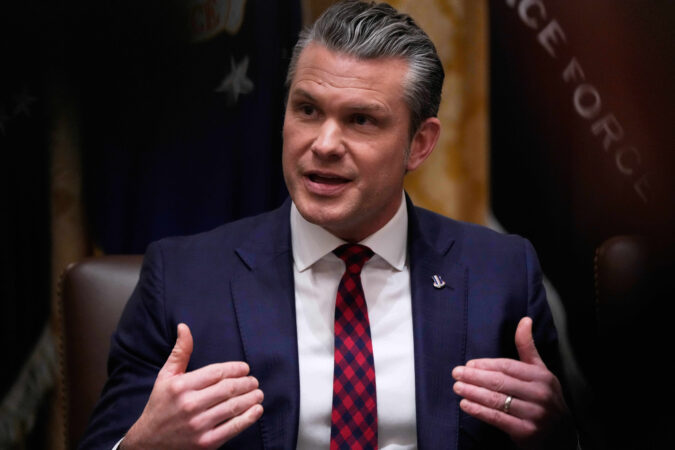
    Defense Secretary Pete Hegseth said Tuesday that “a couple of hours” passed before he was made aware that a September military strike he authorized and “watched live” required an additional attack to kill two survivors, further distancing himself from an incident now facing congressional inquiry.

    Speaking in the Cabinet Room alongside President Donald Trump, Hegseth delivered the most extensive public accounting yet of his involvement in the strike on alleged drug smugglers in the Caribbean Sea. Lawmakers and law of war experts have questioned whether the episode constitutes a war crime and, if so, who bears responsibility.

    “I did not personally see survivors,” he said in response to a reporter’s question, “ … because that thing was on fire and was exploded, and fire, smoke, you can’t see anything. You got digital, there’s — this is called the fog of war.”

    Hegseth and Trump deflected responsibility for the killing of two survivors, pointing instead to the senior military officer in charge of the operation on Sept. 2, Adm. Frank M. Bradley. And while they praised the military for conducting the mission, both sought to make clear they had not known that a second order was given to kill the survivors as they were clinging to the boat’s wreckage.

    “I didn’t know about the second strike. I didn’t know anything about people. I wasn’t involved, and I knew they took out a boat,” Trump said during a meeting with members of his cabinet.

    Spokespeople for U.S. Special Operations Command, where Bradley is the top commander, have not commented publicly on the matter.

    Hegseth said he had observed a live video of the initial attack before he “moved on to my next meeting.”

    “I watched that first strike live,” Hegseth said, noting that he did not witness the entire sequence of events that unfolded next.

    “As you can imagine,” he added, at the Defense Department “we got a lot of things to do. So I didn’t stick around for the hour and two hours, whatever. … A couple of hours later, I learned that that commander had made the — which he had the complete authority to do, and by the way, Admiral Bradley made the correct decision to ultimately sink the boat and eliminate the threat.”

    The Washington Post reported Friday that Hegseth gave a spoken order before the first missile strike to kill the entire crew of a vessel thought to be ferrying narcotics in the Caribbean, the first of nearly 20 such strikes directed by the administration since early September. When two survivors were detected, Bradley directed another strike to comply with Hegseth’s order that no one be left alive, people with direct knowledge of the matter told the Post.

    The Trump administration has said 11 people were killed as a result of the operation.

    It is unclear whether separate written orders explicitly detailed plans to kill suspected drug traffickers or contained more comprehensive information about what options were available in the event of any survivors. Military officials, in planning subsequent missions, have put greater emphasis on rescuing those who have survived the strike, according to people familiar with the matter. It is unclear who directed the change in protocol and when.

    Hegseth has called the Post’s reporting “fabricated,” even as he and other administration officials have corroborated aspects of it in recent days.

    For instance, in his remarks at the White House on Tuesday, Hegseth said he was directly involved early on as the administration began its military campaign in Latin America.

    “Now, the first couple of strikes, as you would, as any leader would want, you want to own that responsibility,” he said. “So I said, I’m going to be the one to make the call after getting all the information and make sure it’s the right strike.”

    Karoline Leavitt, the White House press secretary, said Monday that Hegseth had authorized Bradley to conduct the strikes on Sept. 2, asserting that the admiral “worked well within his authority and the law, directing the engagement to ensure the boat was destroyed.”

    Legal experts have said the survivors who were killed did not pose an imminent threat to U.S. personnel and thus were illegitimate targets. A group of former military lawyers and senior leaders who have scrutinized the Trump administration’s military activities in Latin America said in a statement issued over the weekend that the targeting of defenseless people is prohibited — regardless of whether the United States is in an armed conflict, conducting law enforcement or other military operations.

    On Capitol Hill, two Republican-led committees have opened bipartisan fact-finding inquiries into the attack. Sen. Roger Wicker (R., Miss.), who chairs the Senate Armed Services Committee, has said he spoke this week with Hegseth and the Joint Chiefs chairman, Gen. Dan Caine, and that he expects to speak with Bradley also.

    Wicker has said that he is seeking video and audio recordings of the strikes and that once those materials are received, he will decide how to proceed.

    Lawmakers in the Senate and the House have criticized the administration for withholding information related to its military campaign and the legal arguments supporting the deadly boat strikes, even as Hegseth has vowed to continue the attacks.

    In October, Wicker and his Democratic counterpart, Sen. Jack Reed (Rhode Island), published two letters they had sent to the Pentagon weeks earlier requesting videos and orders documenting the strikes, which so far have killed more than 80 people. To date, the Pentagon has not complied, Wicker and Reed have said.

  • Mass wedding in Gaza celebrates new life after years of war and tragedy

    Mass wedding in Gaza celebrates new life after years of war and tragedy

    KHAN YOUNIS, Gaza Strip — Eman Hassan Lawwa was dressed in traditional Palestinian prints and Hikmat Lawwa wore a suit as they walked hand-in-hand past the crumbled buildings of southern Gaza in a line of other couples dressed in exactly the same way.

    The 27-year-old Palestinians were among 54 couples to get married Tuesday in a mass wedding in war-ravaged Gaza that represented a rare moment of hope after two years of devastation, death and conflict.

    “Despite everything that has happened, we will begin a new life,” Hikmat Lawwa said. “God willing, this will be the end of the war,” he said.

    Weddings are a key part of Palestinian culture that have become rare in Gaza during the war. The tradition has begun to resume in the wake of a fragile ceasefire, even if the weddings are different from the elaborate ceremonies once held in the territory.

    As roaring crowds waved Palestinian flags in the southern city of Khan Younis, the celebrations were dampened by the ongoing crisis across Gaza. Most of Gaza’s 2 million residents, including Eman and Hikmat Lawwa, have been displaced by the war, entire areas of cities have been flattened and aid shortages and outbursts in conflict continue to plague the daily lives of people.

    The young couple, who are distant relatives, fled to the nearby town of Deir al-Balah during the war and have struggled to find basics like food and shelter. They said they don’t know how they’re going to build their lives together given the situation around them.

    “We want to be happy like the rest of the world. I used to dream of having a home, a job, and being like everyone else,” Hikmat said. “Today, my dream is to find a tent to live in.”

    “Life has started to return, but it’s not like we hoped it would,” he added.

    The celebration was funded by Al Fares Al Shahim, a humanitarian aid operation backed by the United Arab Emirates. In addition to holding the event, the organization offered couples a small sum of money and other supplies to start their lives together.

    For Palestinians, weddings are often elaborate dayslong celebrations, seen as both an important social and economic choice that spells out the future for many families. They include joyful dances and processions through the streets by massive families in fabric patterns donned by the couple and their loved ones and heaping plates of food.

    Weddings can also be a symbol of resilience and a celebration of new generations of families carrying on Palestinian traditions, said Randa Serhan, a professor of sociology at Barnard College who has studied Palestinian weddings.

    “With every new wedding is going to come children and it means that the memories and the lineages are not going to die,” Serhan said. “The couples are going to continue life in an impossible situation.”

    On Tuesday, a procession of cars carrying the couples drove through stretches of collapsed buildings. Hikmat and Eman Lawwa waved Palestinian flags with other couples as families surrounding them danced to music blaring over crowds.

    Eman, who was cloaked in a white, red, and green traditional dress, said the wedding offered a small moment of relief after years of suffering. But she said it was also marked by the loss of her father, mother, and other family members who were killed during the war.

    “It’s hard to experience joy after such sorrow,” she said, tears streaming down her face. “God willing, we will rebuild brick-by-brick.”

  • Eugene Hasenfus, key figure in 1980s Iran-Contra affair, dies at 84

    Eugene Hasenfus, key figure in 1980s Iran-Contra affair, dies at 84

    MADISON, Wis. — Eugene Hasenfus, who played a key role in unraveling the Iran-Contra affair after his CIA-backed supply plane was shot down over Nicaragua in 1986, has died.

    Mr. Hasenfus died on Nov. 26 in Menominee, Mich., after a nine-year battle with cancer, according to his obituary from the Hansen-Onion-Martell Funeral Home in Marinette, Wis. He was 84.

    Mr. Hasenfus was born Jan. 22, 1941, in Marinette. He served with the Marines in Vietnam and continued a private career in aviation before he became a key figure in the Cold War’s Iran-Contra scandal in 1986.

    In 1981, President Ronald Reagan authorized the CIA to support the anti-communist right-wing guerrilla force known as the Contras who were working against the Sandinistas in the Nicaraguan government. Congress cut off all military assistance to the Contras in 1984.

    Months before the cutoff, top officials in Reagan’s administration ramped up a secret White House-directed supply network to the Contras. The operation’s day-to-day activities were handled by National Security Council aide Oliver North. The goal was to keep the Contras operating until Congress could be persuaded to resume CIA funding.

    The secrecy of North’s network unraveled after one of its planes with Mr. Hasenfus on board was shot down over Nicaragua in October 1986. Three other crew members died, but Mr. Hasenfus parachuted into the jungle and evaded authorities for more than 24 hours.

    He was captured by the leftist Nicaraguan government and charged with several crimes, including terrorism.

    Mr. Hasenfus said after his capture that the CIA was supervising the supply flights to the Contras. At first, Reagan administration officials lied by saying that the plane had no connection to the U.S. government.

    Congress, spurred by controversy over the Hasenfus flight, eventually launched an investigation.

    Mr. Hasenfus was convicted in Nicaragua of charges related to his role in delivering arms to the Contras and sentenced to 30 years in prison. Nicaraguan President Daniel Ortega pardoned Mr. Hasenfus a month later and he returned to his home in northern Wisconsin.

    In 1988, he filed an unsuccessful lawsuit seeking $135 million in damages against two men and two companies linked to the Iran-Contra arms deals.

    In 2003, he pleaded guilty in Brown County Circuit Court to a charge of lewd, lascivious behavior after he exposed himself in the parking lot of a grocery store. His probation was revoked in 2005 and he spent time in jail, according to online court records.

    He is survived by his four children and eight grandchildren.

  • Former Honduras President Juan Orlando Hernández is freed from prison after a pardon from Trump

    Former Honduras President Juan Orlando Hernández is freed from prison after a pardon from Trump

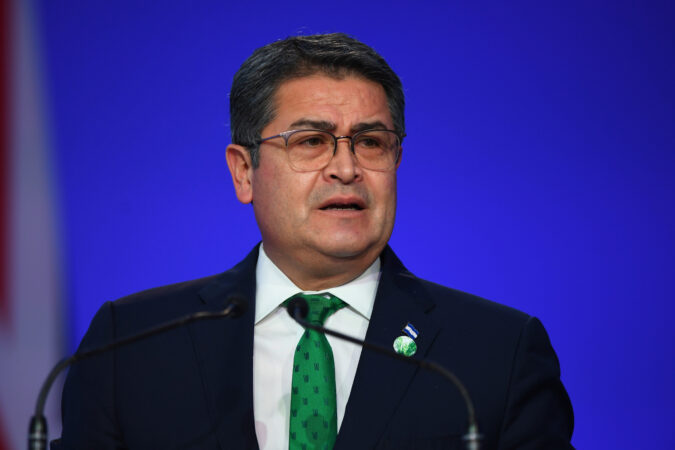
    TEGUCIGALPA, Honduras — Former Honduras President Juan Orlando Hernández, sentenced last year to 45 years in prison for his role in a drug trafficking operation that moved hundreds of tons of cocaine to the United States, was released from prison following a pardon from President Donald Trump, officials confirmed Tuesday.

    Hernández was released Monday from U.S. Penitentiary Hazelton in West Virginia, a spokesperson for the Federal Bureau of Prisons told the Associated Press. The bureau’s online inmate records also reflected his release.

    The release of Hernández — a former U.S. ally whose conviction prosecutors said exposed the depth of cartel influence in Honduras — comes just days after the country’s presidential election. Trump defended the decision aboard Air Force One on Sunday, saying Hondurans believed Hernández had been “set up,” even as prosecutors argued he protected drug traffickers who moved hundreds of tons of cocaine through the country.

    The pardon also unfolds against the backdrop of Trump’s aggressive counter-narcotics push that has triggered intense controversy across Latin America. In recent months, U.S. forces have repeatedly struck vessels they say were ferrying drugs north, a series of lethal maritime attacks that the administration argues are lawful acts of war against drug cartels — and that critics say test the limits of international law and amount to a pressure campaign on Venezuela’s President Nicolás Maduro.

    The Trump administration has carried out 21 known strikes on vessels accused of carrying drugs, killing at least 83 people. The administration has justified the attacks as a necessary escalation to stem the flow of drugs into the United States and asserted the U.S. is engaged in an “armed conflict” with drug cartels, similar to the war against al-Qaida following the Sept. 11 attacks.

    Hernández’s wife applauds his release

    Ana García thanked Trump for pardoning her husband via the social platform X early Tuesday.

    Speaking to reporters Tuesday outside her home in Tegucigalpa, she thanked Trump for pardoning her husband and drew a parallel between the two men.

    “Today the whole world realizes that, like they did with President Donald Trump, the same Southern District, the same prosecutor created a political case,” García said.

    She said Hernández called her Monday evening to say he was in the office of the prison head and had been told he will be released. García said Hernández is in an undisclosed location for his safety, but that he plans to address the Honduran people on Wednesday.

    Hernández’s attorney Renato Stabile said in an emailed statement he also would not share the former president’s current location.

    García said the process to seek a pardon began several months ago with a petition to the office of pardons. Then on Oct. 28, Hernández’s birthday, he wrote a letter to Trump. He announced he was pardoning Hernández last Friday.

    “My husband is the president who has done the most for Honduras in the fight against organized crime,” Garcia said.

    Trump’s rationale for the pardon

    Trump was asked Sunday why he pardoned Hernández.

    “I was asked by Honduras, many of the people of Honduras,” Trump told reporters traveling with him on Air Force One.

    “The people of Honduras really thought he was set up, and it was a terrible thing,” he said.

    “They basically said he was a drug dealer because he was the president of the country. And they said it was a Biden administration setup,” Trump said. ”And I looked at the facts and I agreed with them.”

    Stabile, the attorney, said Hernández is glad the “ordeal” is over.

    “On behalf of President Hernández and his family I would like to thank President Trump for correcting this injustice,” Stabile said.

    Democratic lawmakers expressed condemnation and disbelief that Trump issued the pardon.

    “They prosecute him, find him guilty of selling narcotics through these cartels into the United States. Can you think of anyone more reprehensible than that? Selling drugs to this country, finding more victims by the day,” said Sen. Dick Durbin of Illinois in a speech on the Senate floor.

    “This is not an action by a President trying to keep America safe from narcotics,” Durbin added.

    The Trump administration has declared drug cartels to be unlawful combatants and has carried out strikes in the Caribbean against boats the White House says were carrying drugs.

    The case against the former president

    Hernández was arrested at the request of the United States in February 2022, weeks after current President Xiomara Castro took office.

    Two years later, Hernández was sentenced to 45 years in prison in a New York federal courtroom for taking bribes from drug traffickers so they could safely move some 400 tons of cocaine north through Honduras to the United States.

    Hernández maintained throughout that he was innocent and the victim of revenge by drug traffickers he had helped extradite to the United States.

    During his sentencing, federal Judge P. Kevin Castel said the punishment should serve as a warning to “well educated, well dressed” individuals who gain power and think their status insulates them from justice when they do wrong.

    Hernández portrayed himself as a hero of the anti-drug trafficking movement who teamed up with American authorities under three U.S. presidential administrations to reduce drug imports.

    But the judge said trial evidence proved the opposite and that Hernández employed “considerable acting skills” to make it seem that he strongly opposed drug trafficking while he deployed his nation’s police and military to protect the drug trade.

    Hernández is not guaranteed a quick return to Honduras.

    Immediately after Trump announced his intention to pardon Hernández, Honduras Attorney General Johel Zelaya said via X that his office was obligated to seek justice and put an end to impunity.

    He did not specify what charges Hernández could face in Honduras. There were various corruption-related investigations of his administration across two terms in office that did not lead to charges against him. Castro, who oversaw Hernández’s arrest and extradition to the U.S., will remain in office until January.

    The pardon promised by Trump days before Honduras’ presidential election injected a new element into the contest that some said helped the candidate from his National Party Nasry Asfura as the vote count proceeded Tuesday.

  • Kathleen A. Case, longtime writer, pioneering medical journal editor, and award-winning historian, has died at 80

    Kathleen A. Case, longtime writer, pioneering medical journal editor, and award-winning historian, has died at 80

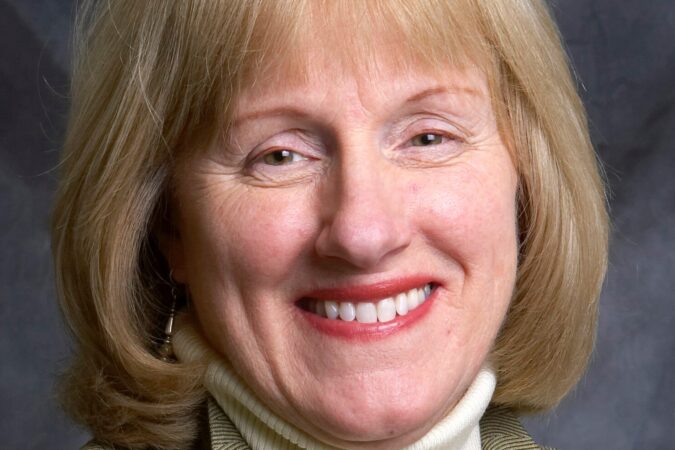
    Kathleen A. Case, 80, of Bryn Mawr, longtime writer, pioneering medical journal editor, award-winning historian, researcher, and volunteer, died Friday, Nov. 14, of heart failure at Bryn Mawr Hospital.

    A natural wordsmith who was interested in the origins and nuances of language as well as its use, Ms. Case spent 24 years as a top editor for the Annals of Internal Medicine and vice president for publishing at the Philadelphia-based American College of Physicians. Later, for 15 years, she was publisher, archivist, historian, and director of strategic planning for the publishing division of the Philadelphia-based American Association for Cancer Research.

    She was adept at understanding and organizing complex research and other medical information, and helped Annals of Internal Medicine digitize its production process and content, expand its reach, and become one of the world’s most influential and cited medical journals. “She loved precise, concise, and unambiguous writing,” her family said in a tribute.

    She was one of the few female editors in the medical publishing industry when she joined Annals as an assistant editor in 1977, and she rose to managing editor, executive editor, and senior vice president for publishing by 1998. She attended many international medical publishing conferences around the world, and other journals tried unsuccessfully to lure her away from Philadelphia.

    Ms. Case and her husband, Jacques Catudal, married in 1995.

    “She set the highest editorial standards in medical publishing and expected the best from everyone around her,” a former colleague said in an online tribute. “But she also took the time to teach. … The lessons I learned from her have shaped my work ever since.”

    Ms. Case joined the American Association for Cancer Research in 2001, served two stints as head of the publishing division, and supervised its marketing campaigns, advertising sales, and product development. She retired in 2008 but continued part time as the AACR archivist, historian, and director of strategic planning until retiring for good in 2016.

    Away from her day jobs, Ms. Case was past president of the Society for Scholarly Publishing and what is now the Council of Science Editors. She also served on boards and committees for the American Medical Association, the American Chemical Society, the American Heart Association, and the International Committee of Medical Journal Editors.

    Even in retirement, she continued to work as a board member, writer, researcher, and historian for the Haverford Township Historical Society. She served on the Haverford Township Historical Commission, was a member of the Historical Society of Pennsylvania, chaired the Friends of the Polo Field, and helped establish the Brynford Civic Association.

    Ms. Case graduated from Radnor High School and Pennsylvania State University.

    “She was always busy, always involved with some project,” said her husband, Jacques Catudal. She edited his published academic papers, he said, and routinely marked up her two sons’ school reports in red ink for years.

    In 2019, she won a historic preservation award from the Heritage Commission of Delaware County. “She was an endlessly inspiring woman whose intelligence was matched only by her sharp wit and her extraordinary cultural sensitivity,” a friend said in a tribute.

    Kathleen Ann Case was born Sept. 13, 1945, in Westfield, N.J. The youngest of three children, her family moved to Omaha, Neb., and then Radnor when she was young.

    She graduated from Radnor High School, studied journalism at Pennsylvania State University, and earned a bachelor’s degree in English in 1967. She was a reporter and editor for the Penn State student newspaper and so active that school officials waived their prohibition of female students living alone off campus so she could reside near the paper’s office. In 1987, she earned a master’s degree in technical and science communication at Drexel University.

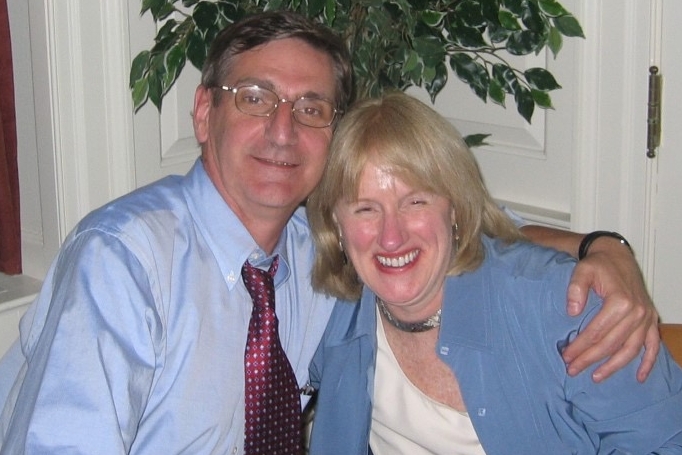
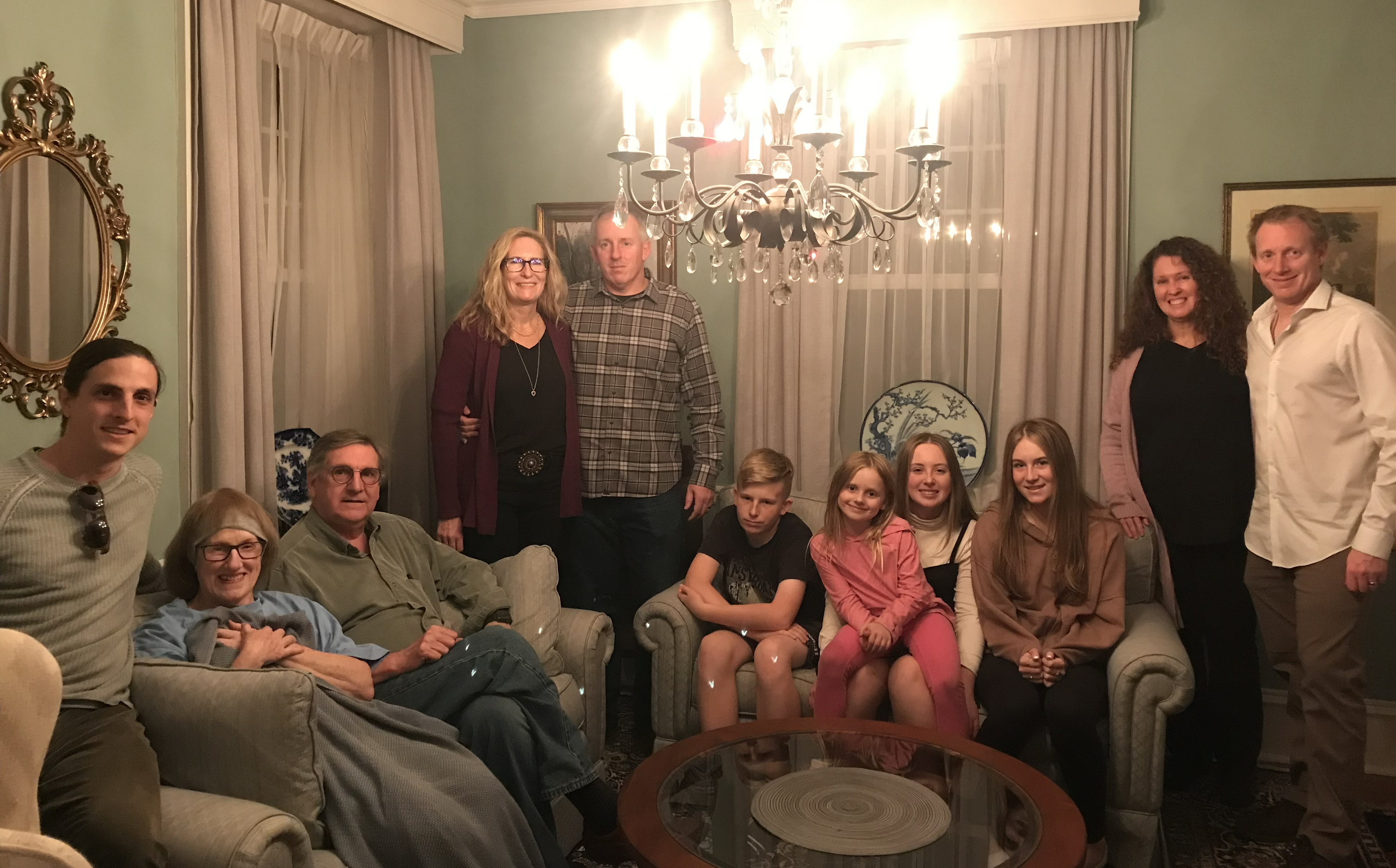
    Ms. Case (second from left) enjoyed time with her family

    She married D. Benjamin van Steenburgh III, and they had sons Ben and Jason. After a divorce, she married Peter Moor. They divorced, and she married Catudal in 1995.

    Ms. Case raised her sons as a single mother in Avondale, Chester County, for years and moved to Bryn Mawr in 1979. She read voraciously about history, collected antiques, and enjoyed travel, classic rock, and Irish folk music.

    She rode horses, was an expert archer, and followed the local sports teams. She tended her garden and investigated her genealogy.

    She liked to refinish and paint furniture and discuss current events. She and her husband camped, hiked, and canoed all over the world.

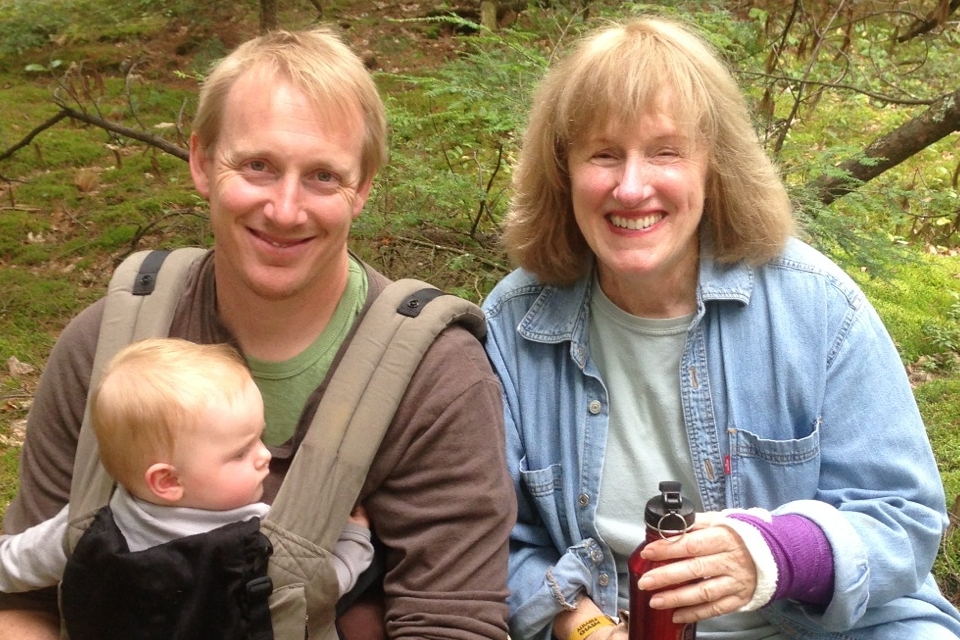
    Ms. Case enjoyed hiking and the outdoors.

    She also dealt with metastatic breast cancer and three heart attacks. “She always gave as much honesty, opinion, perspective, experience, literary acumen, word knowledge, help, advice, comfort, and love as could be needed,” said her son Jason.

    Her husband said: “She was brilliant and extremely funny. She was an organizer and always giving of herself.”

    In addition to her husband, sons, and former husbands, Ms. Case is survived by four grandchildren, a sister, a brother, and other relatives.

    A celebration of her life was held earlier.

    Donations in her name may be made to The American Association for Cancer Research, 615 Chestnut St., 17th Floor, Philadelphia, Pa. 19106; and the Haverford Township Historical Society, P.O. Box 825, Havertown, Pa. 19083.

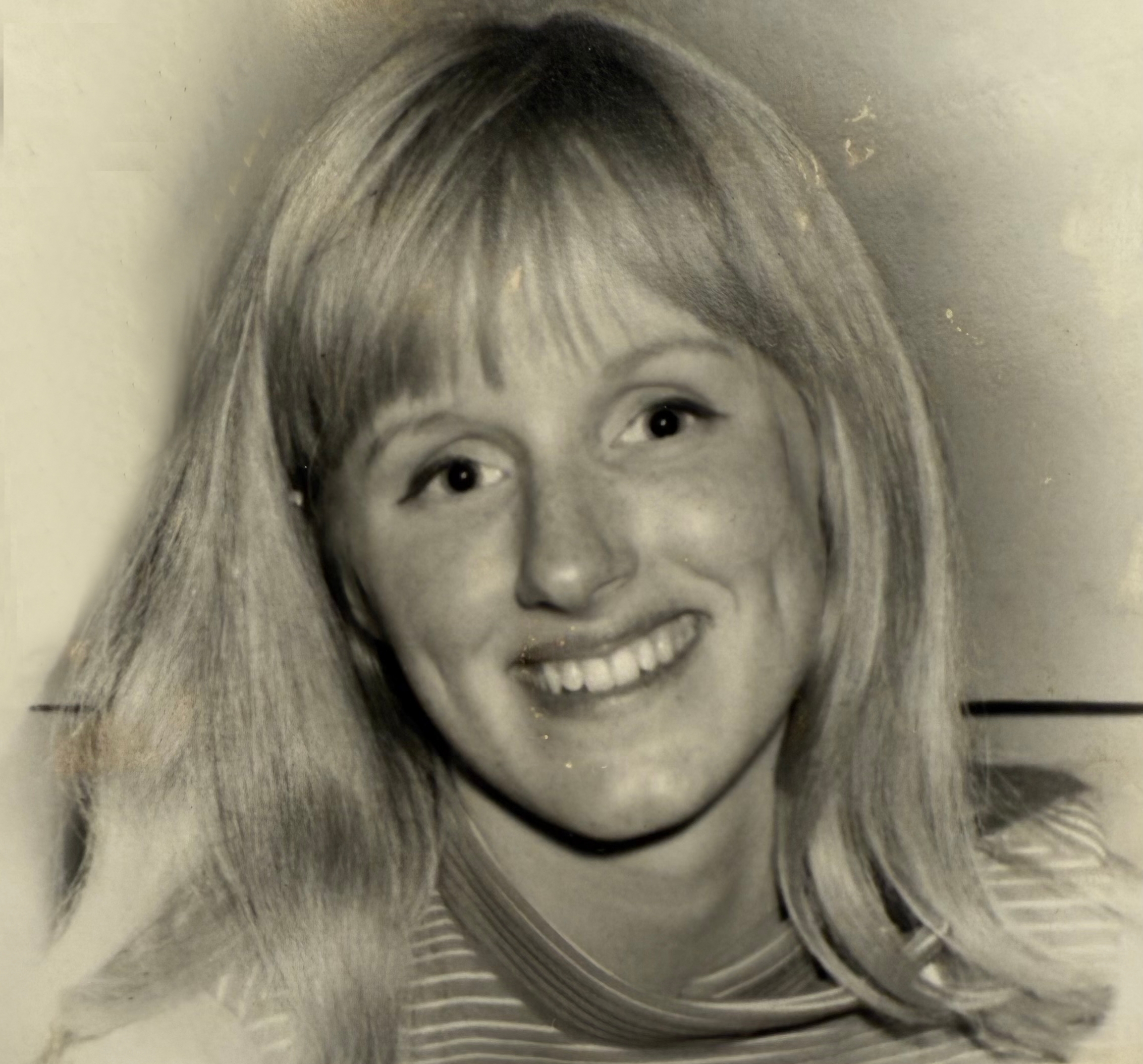
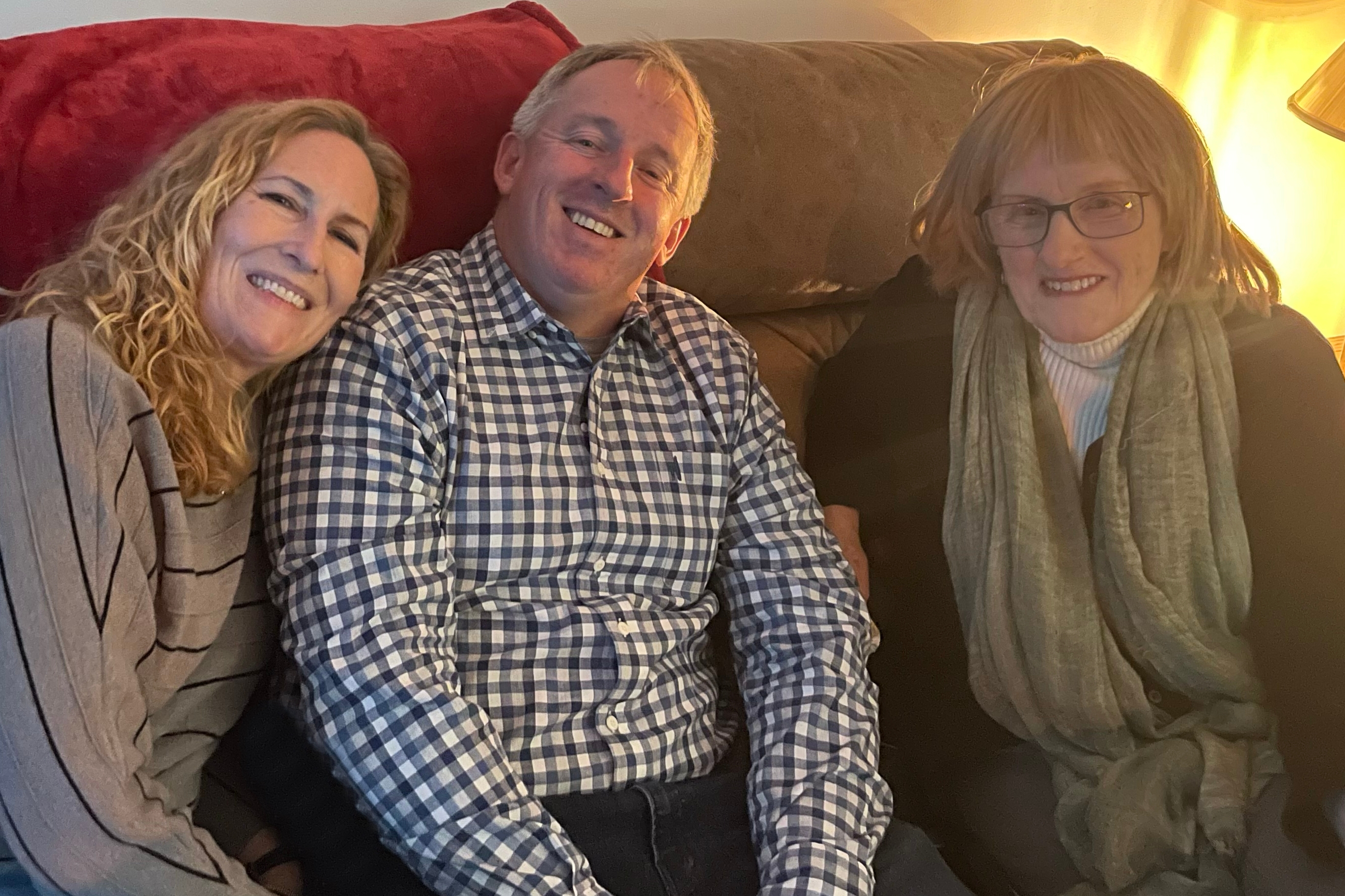
    Ms. Case (right) rode horses, was an expert archer, and followed the local sports teams.
  • A man died driving on Northwest Philly’s winding, wet roads. The neighborhood has tried addressing the danger for decades.

    A man died driving on Northwest Philly’s winding, wet roads. The neighborhood has tried addressing the danger for decades.

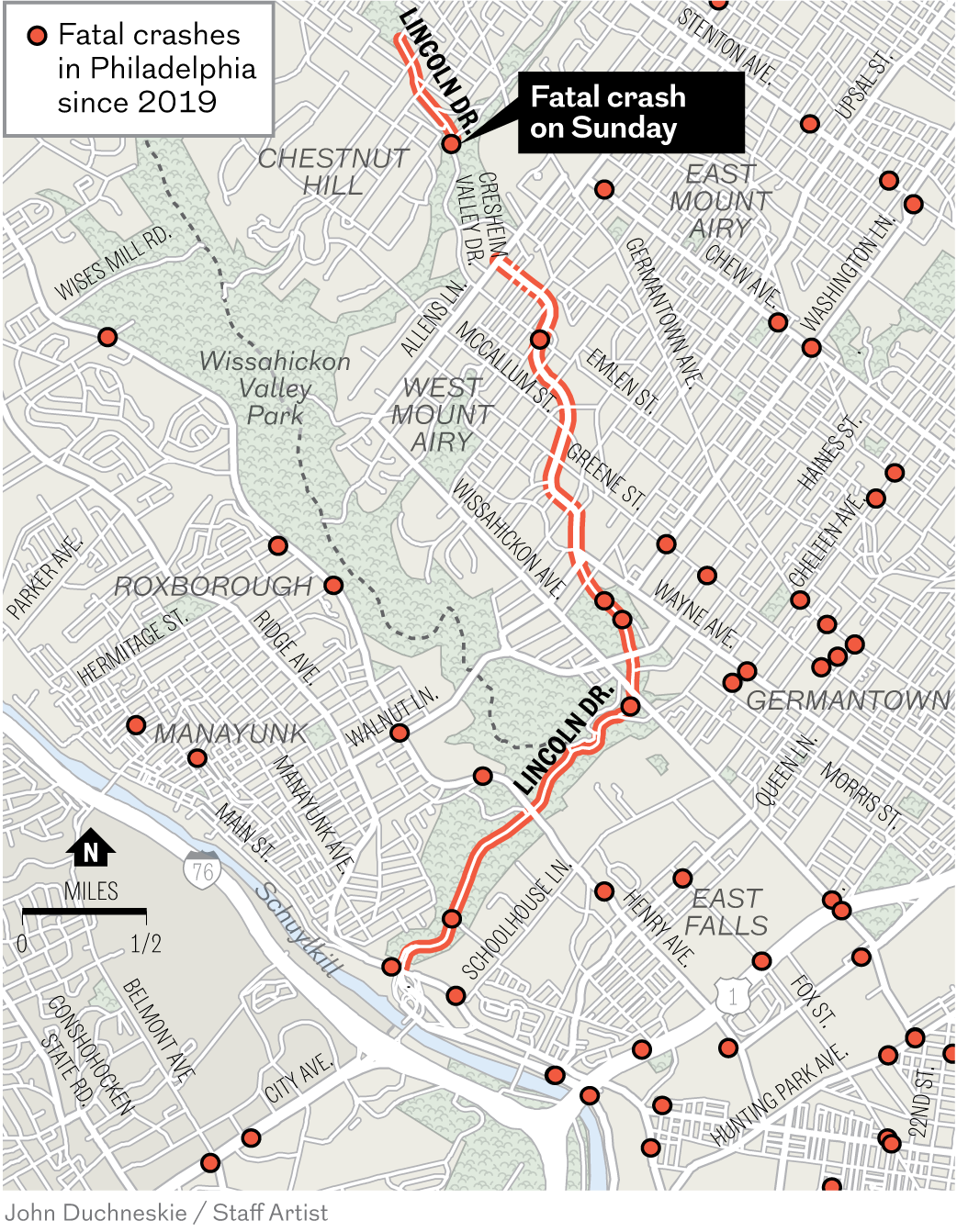
    A 65-year-old man died Sunday after he lost control of his vehicle on Cresheim Valley Drive in Chestnut Hill, striking a downed guardrail and flipping the car upside down into a creek. Just weeks before, another driver veered off the same road but survived.

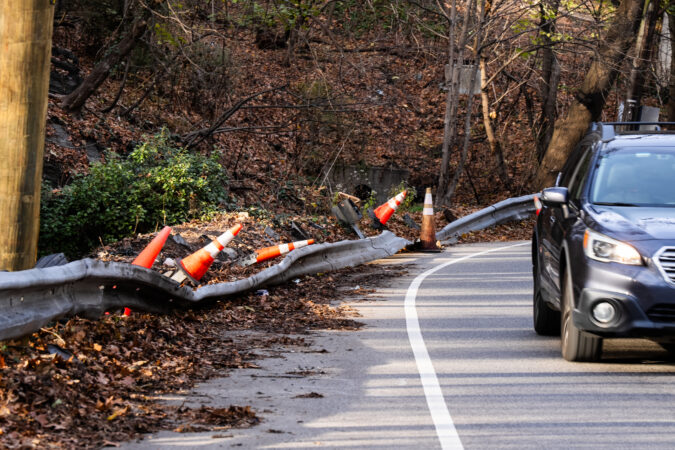
    Compounding this latest traffic death is the fact that the guardrail meant to prevent cars from swerving off the road was broken and nearly flattened from previous crashes, leaving a gap in the guardrails for months, said Josephine Winter, a Mount Airy resident and executive director of West Mount Airy Neighbors (WMAN). “The guardrail was down, and it was previously crumbled so it’s a frequent site of crashes,” she said. Images from Google Maps show the guardrail down as far back as July.

    The Philadelphia Streets Department is aware of the recent crash and is conducting an assessment of the guardrail on Cresheim Valley Road. “The streets department’s top priority is public safety,” a spokesperson said.

    A screenshot of a Google Map’s street view captured in July 2025 shows the downed guardrail on Cresheim Valley Drive in the Chestnut Hill neighborhood of Philadelphia. On Nov. 30, 2025, a 65-year-old man crashed and went over the guardrail, later succumbing to his injuries.

    Neighbors say accidents, sometimes fatal, have plagued the winding roadways in Chestnut Hill and Mount Airy for decades. These traffic safety concerns came to a head with Sunday’s deadly crash.

    “It’s a curvy, tricky road, especially when it’s wet, and people tend to speed on that road,” Winter said of roadways like Lincoln and Cresheim Valley Drives, which are lined with trees, have swooping dips and hills, and are prone to flooding.

    Map of fatal crashes in Northwest Philadelphia since 2019.

    Since 2019, according to city crash data, at least five people have died while driving on the dark, winding sections of Lincoln Drive, which intersects with Cresheim Valley Drive, prompting many neighbors to fear walking down their street or leading them to invest thousands on giant boulders to protect their home and lawn.

    Winter, who leads WMAN’s traffic-calming committee, and other neighborhood organizations have petitioned for city support, urging the streets department to slow the speed of traffic on Cresheim Valley Drive, Lincoln Drive, and Wissahickon Avenue. The group’s efforts are so ingrained in the fabric of the neighborhood that, when digging through Temple University’s Urban Archives, Winter found an advertisement from 1968 stressing the need for cars in Mount Airy to “slow down to keep kids safe.”

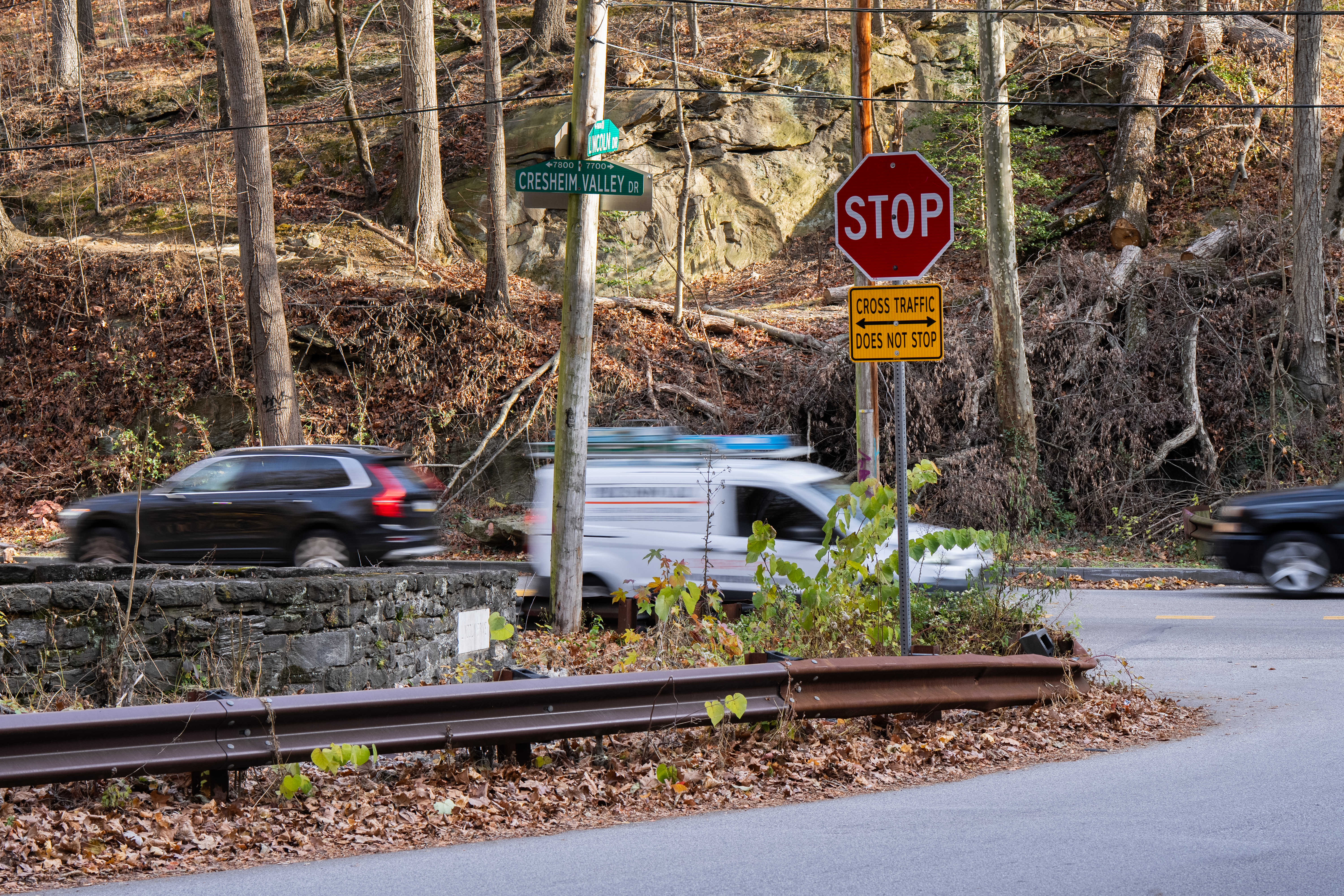
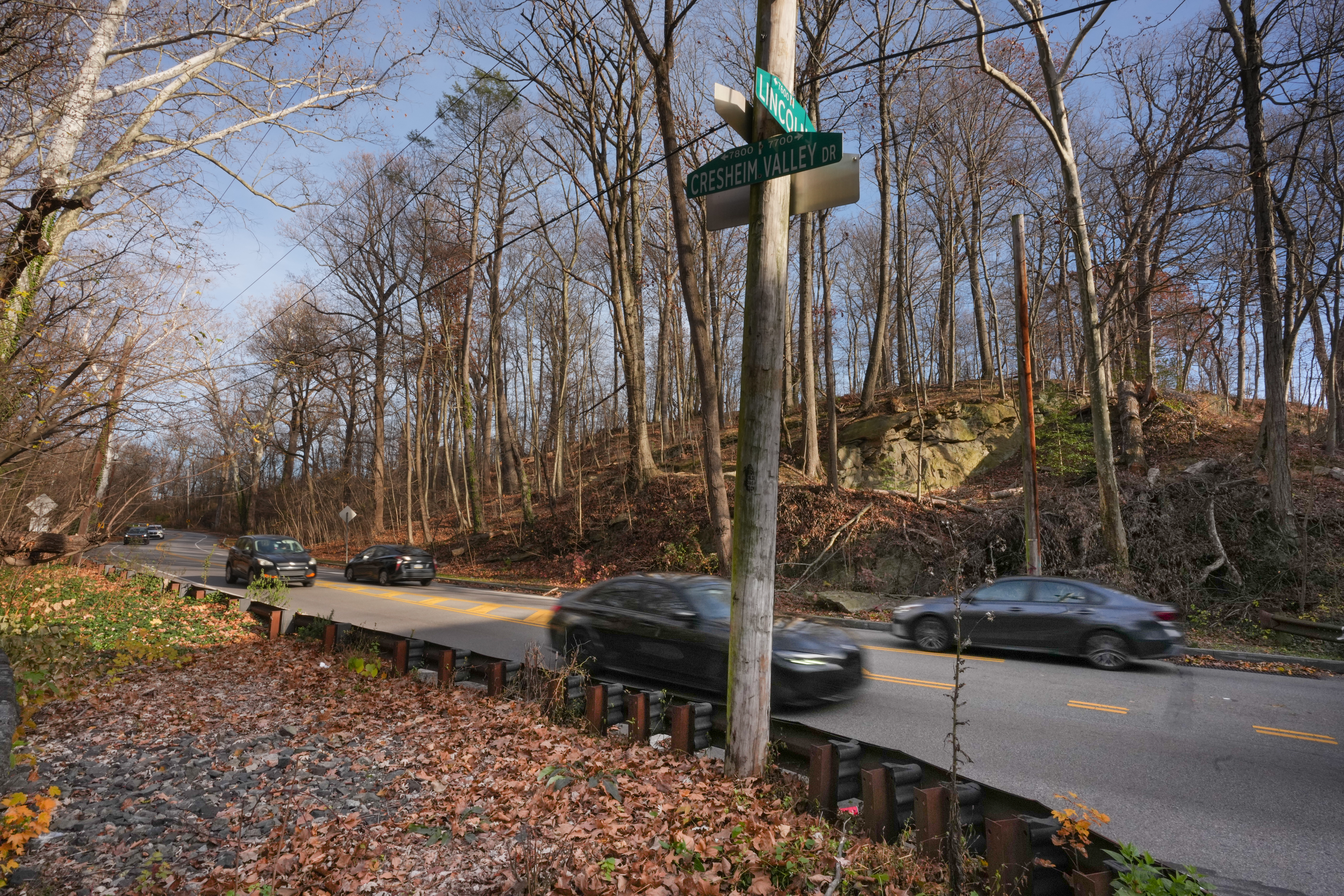
    The intersection of Cresheim Valley Drive and Lincoln Drive, in Philadelphia, PA, Dec. 1, 2025.

    The streets department installed “speed slots,” traffic-calming structures similar to speed bumps, earlier this year along Lincoln Drive between Allens Lane and Wayne Avenue. Along the same stretch of road, the Pennsylvania Department of Transportation installed rumble strips and speed tables to slow drivers down in 2023, in addition to traffic lane separators to keep drivers from using center lanes to pass other vehicles.

    In addition to the recently completed speed slots and traffic-calming measures on sections of Emlen Street, which becomes Cresheim Valley Road, signal upgrades are planned for Lincoln Drive as well.

    However, the work to improve these streets is not over, Winter said. Additionally, the streets department plans do not include changes to Cresheim Valley Drive, where Sunday’s crash happened.

    “We’ll need a collaborative approach as soon as possible to temporarily address the downed guardrail, and then see what the options are moving forward,” Winter said.

    The intersection of Cresheim Valley Drive and Lincoln Drive, in Philadelphia, PA, Dec. 1, 2025.

    Throughout the last decade, locals have suggested better-timed signals, more speed tables, and reducing the number of driving lanes from two in either direction down to one. They also want to see more roundabouts and curb bump-outs in the neighborhood to keep traffic flowing, but at a reasonable speed.

    A mere 50 to 100 feet from Cresheim Valley Drive is a parallel bike trail, where trail organizers like Brad Maule are accustomed to the crashes on the road nearby. Before Sunday’s fatal crash, he remembers two other cars that drove off the side of the road in recent months, not counting the crashes on the roadway itself. The city recently installed pedestrian crossing signs and repainted the crosswalk on nearby Cresheim Road, but Maule hopes speed bumps will follow.

    Cresheim Valley Drive near where it intersects with Lincoln Drive, in Philadelphia, PA, Dec. 1, 2025.

    While Winter said that engineers from the Philadelphia Streets Department were among the first calls she received Monday morning responding to the crash, and that the community appreciates the response, she, Maule, and other neighbors hope that more safety improvements will be considered to save more lives.

    “I’m just looking forward to the new measures of safety that come here,” Maule said. “Hopefully, people will abide by them.”

    Staff writers Max Marin and Dylan Purcell contributed to this article.

  • Eastern University to purchase nearly half of Valley Forge Military Academy’s property

    Eastern University to purchase nearly half of Valley Forge Military Academy’s property

    Eastern University has entered an agreement to buy nearly half the Valley Forge Military Academy property, which is less than a mile from the Christian university’s St. Davids campus in Delaware County.

    The planned purchase, announced by Eastern on Tuesday, includes 33.3 acres encompassing the football stadium, track, and athletic field house, as well as multiple apartment buildings that will be used to house students. Eastern had been leasing the athletic properties from the academy since 2021. The purchase also includes additional fields, buildings, and a pickleball court, the school said.

    The academy announced in September that it planned to close at the end of the 2025-26 academic year amid declining enrollment, financial challenges, and lawsuits over alleged cadet abuse, but that its college would continue to operate on the main campus. The boarding school announced last month it would go virtual after Thanksgiving and resume in-person classes on the 70-acre campus in January.

    Eastern’s current campus is 114 acres, so the addition of the Valley Forge property will substantially increase its footprint.

    “For Eastern, expanding our campus through this new property is a pivotal step in EU’s growth and vision for a flourishing future,” said Eastern president Ronald A. Matthews. “… We will be able to provide the space for our expanding student body to call Eastern’s campus ‘home.’”

    The sale is subject to approvals and regulatory requirements and is expected to be completed over the next five months, the school said.

    “Valley Forge Military Academy & College has enjoyed a mutually beneficial relationship with our neighbors at Eastern University for many years,” academy president Col. Stuart B. Helgeson said in a statement.

    Eastern’s enrollment has continued to grow over the last six years, reaching nearly 10,000 students this fall, up 14% from last year. The growth is largely fueled by its low-cost, online “LifeFlex” programs, including a $9,900 master of business administration. But on-campus enrollment also has been rising in part due to the addition of new athletic and arts programs, the school said. Its football team is competing in the NCAA Division III championships on Saturday.

  • Pope Leo XIV shares his thoughts on the conclave, reflects on spirituality and future travels

    Pope Leo XIV shares his thoughts on the conclave, reflects on spirituality and future travels

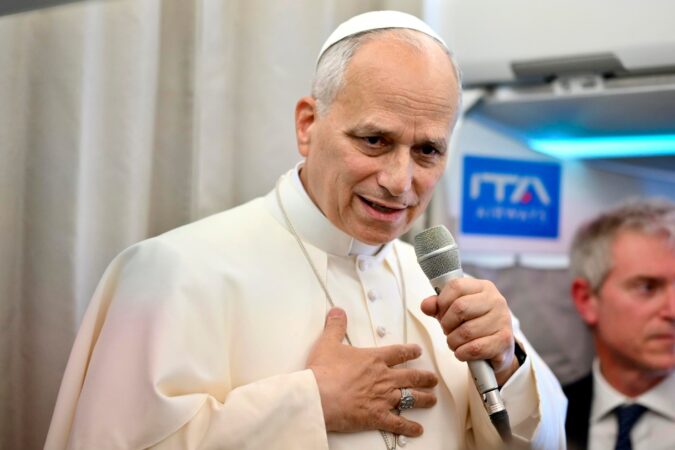
    ABOARD THE PAPAL PLANE — Pope Leo XIV on Tuesday shared for the first time what he was thinking when the votes started going his way during the conclave that elected him, saying he resigned himself to the inevitable and put the rest in God’s hands.

    “I took a deep breath. I said ‘Here we go Lord. You’re in charge and you lead the way,’” Leo told reporters during a wide-ranging airborne news conference coming home from his inaugural trip to Turkey and Lebanon.

    Leo fielded questions for a half-hour, responding easily in English, Spanish, and Italian about a variety of church and international news. He hinted at behind-the-scenes discussions about Hezbollah and Israel in Lebanon, urged dialogue rather than U.S. military threats on Venezuela and discussed his hoped-for future travels in Africa and South America, among other topics.

    But it was his remarks about the conclave and his papal learning curve that shed new light on Leo the man and what makes him tick. His responses, after seeming timid with the media early in his pontificate, showed he is much more comfortable now, is paying close attention to what is being reported about him, and that he has a good sense of humor about it.

    Leo was asked what he was thinking when he saw a huge crowd of people at one of his events in Lebanon, where it seemed as if the size had taken him by surprise. Leo suggested that wasn’t necessarily the case.

    “My face is very expressive but I’m oftentimes amused by how the journalists interpret my face,” he said. “It’s interesting. Sometimes I get really great ideas from all of you because you think you can read my mind or my face.”

    “You’re not always correct,” he added, to laughs.

    A spirituality that leaves everything up to God

    More instructive to understanding what he’s thinking, Leo said, would be to read up about his spirituality. Beyond St. Augustine, the fifth-century theologian who inspired his religious order and is Leo’s most-frequently cited church father, Leo recommended a book The Practice of the Presence of God, by a 17th-century Carmelite friar, Brother Lawrence.

    “It describes, if you will, a type of prayer and spirituality where one simply gives his life to the Lord and allows the Lord to lead. If you want to know something about me, that’s been my spirituality for many years,” he said.

    “In midst of great challenges — living in Peru during years of terrorism, being called to service in places where I never thought I’d be called to serve — I trust in God,” he said.

    That held true in the May conclave, he said, when the former Cardinal Robert Prevost was elected in a remarkably fast four ballots on the second day of voting. According to cardinals who participated, it was clear already by the third ballot that morning that the votes were going his way and that Prevost would be elected history’s first American pope.

    “I resigned myself to the fact when I saw how things were going and I said ‘This could be a reality,’” Leo said.

    Speaking to a reporter who is about to retire, Leo said he had had different plans for his future.

    “Just a year or two ago, I too thought about retiring some day,” he said. “You’ve received that gift apparently. Some of us will continue to work.”

    In Lebanon, Leo had a taste of what it’s like to be a pope on the road, and he said the enthusiasm of young Catholics was “awe-inspiring.”

    “I think to myself, ‘These people are here because they want to see the pope.’ But I say to myself, ‘They’re here because they want to see Jesus Christ and they want to see a messenger of peace,’” he said. “Just to listen to their enthusiasm and to hear their response to that message is something that I think is — that enthusiasm — is awe-inspiring.”

    “I just hope I never get tired of appreciating everything that all these young people are showing,” he said.

    On pressing international issues

    • Leo urged the United States to pursue dialogue and even exert economic pressure on Venezuela’s leaders to achieve its goals, rather than threats of military action. “The voices coming from the United States change, with a certain frequency at times,” he said. “I believe it’s better to look for ways of dialogue, perhaps pressure — including economic pressure — but looking for other ways to change, if that’s what the United States wants to do.”
    • Leo said he hopes to make his second trip as pope to Africa next year, visiting several countries but especially Algeria because of its important role in Christian-Muslim relations and its significance to St. Augustine, who inspired his religious order.
    • Leo also said he hoped to visit three countries in Latin America in either 2026 or 2027: Argentina, Uruguay and Peru, where he lived for two decades as a missionary. Argentina especially has been waiting for a papal visit after Pope Francis never went home after his 2013 election.
  • RFK Jr.’s vaccine advisers plan biggest change yet to childhood schedule

    RFK Jr.’s vaccine advisers plan biggest change yet to childhood schedule

    Federal vaccine advisers selected by Health Secretary Robert F. Kennedy Jr. are planning to vote on ending the practice of vaccinating all newborns for hepatitis B and to examine whether shots on the childhood immunization schedule are behind the rise of allergies and autoimmune disorders, the newly appointed chair of the group told the Washington Post.

    Kirk Milhoan, a pediatric cardiologist and critic of coronavirus vaccination who recently took over as chair of the influential vaccine panel, said members meeting Thursday and Friday are broadly scrutinizing vaccines recommended for children. The wide-ranging discussions on the timing of vaccines and ingredients could signal major changes to how children in the United States are vaccinated, marking the latest flash point in an accelerating reshaping of immunization policy under Kennedy.

    For decades, the childhood and adolescent immunization schedule has called for administering vaccines at set milestones. But Kennedy, the founder of an anti-vaccine group, has long linked the rise of chronic disease, autism, and food allergies in the U.S. to what he calls the “exploding vaccine schedule” — claims that have been rebutted by medical associations and extensive research into the safety of shots.

    The members of the Advisory Committee on Immunization Practices are preparing to make their most significant change to the childhood vaccine schedule yet since Kennedy purged the panel and replaced members with experts who have largely been critical of public health vaccination practices.

    The new members plan to vote Thursday on scrapping the recommendation to give babies a dose of hepatitis B vaccine within 24 hours of birth if their mothers test negative for the virus. Instead, the panel is weighing a delay in that first dose byan interval that is “still being finalized,” Milhoan said. Vaccine advisers pushed back a vote on hepatitis B vaccine recommendations at their September meeting following disagreement.

    The birth dose has been credited for a 99% drop in infections in children and teens since the 1991 recommendation from the Centers for Disease Control and Prevention and the American Academy of Pediatrics, according to a 2023 study in the official journal of the U.S. Surgeon General.

    Critics of the birth dose, including Kennedy, say that it is unnecessary to vaccinate all children for the virus when the vast majority are not at risk for infection.

    Clinicians say the birth dose acts as a safety net to give infants immediate protection if they acquire the infection from mothers whose infection status is unknown, incorrectly documented or whose test results are delayed.

    ACIP makes recommendations to the CDC director on how approved vaccines should be used. CDC directors have almost always adopted the committee’s recommendations, which compel insurers to pay for vaccines and have traditionally guided pediatricians and medical organizations.

    The committee also plans to begin public discussions on its effort to review the childhood immunization schedule and the cumulative health effects of the dozens of shots children receive.

    “We’re looking at what may be causing some of the long-term changes we’re seeing in population data in children, specifically things such as asthma and eczema and other autoimmune diseases,” Milhoan said in an interview Monday.

    “What we’re trying to do is figure out if there are factors within vaccines,” he said, such as their ingredients or unintended substances contaminating them during manufacturing.

    Milhoan said the panel is focusing on the use of aluminum as an adjuvant, an ingredient added to vaccines to help the body produce an immune response strong enough to protect the person from the disease.

    Aluminum salts are in more than a dozen routinely recommended vaccines such as hepatitis A, hepatitis B, diphtheria-tetanus-containing vaccines, Haemophilus influenzae type B, HPV, and meningococcal B and pneumococcal vaccines. Adjuvants are essential because without them, the vaccine might not be able to trigger adequate immune responses.

    Aluminum salts have been used safely in vaccines for more than 70 years, according to the CDC. Aluminum-adjuvant-containing vaccines have only uncommonly been associated with severe local reactions, according to the Food and Drug Administration, which tests vaccines containing adjuvants extensively in clinical trials before they are licensed. The agency notes that the most common source of exposure to aluminum is food and drinking water.

    Public health and medical experts have raised alarms that the panel is moving toward recommending that only vaccines without aluminum adjuvants be used, a move that health and industry experts have said would be expensive and difficult on a practical level and could lead to shots being pulled from the market. Milhoan said the panel is not calling for the removal of aluminum from vaccines.

    “We’re not saying that at all,” he said. “We’re just starting to have the discussion.”

    The FDA generally has the responsibility to direct manufacturers to remove ingredients from vaccines. Some high-level FDA officials think that it would be infeasible to take aluminum adjuvants out of vaccines and that it cannot be done on any practical timeline, according to a senior federal health official who spoke on the condition of anonymity to be candid.

    Vaccine industry officials said that removing aluminum adjuvants from vaccines would cost billions of dollars and that finding a replacement would take years, according to people involved in the drug industry who spoke on the condition of anonymity to avoid publicly antagonizing the administration. The costs and technical complexities of doing so are enormous, one of the people said.

    The two-day ACIP meeting this week follows intense upheaval in the federal vaccination system.

    The committee has come under intense criticism from public health groups who accused the new members of botching and misstating science to further an agenda to undermine vaccines.

    Sean O’Leary, who chairs the infectious-diseases committee of the American Academy of Pediatrics, said revisions to the childhood immunization schedule by the newly reformulated ACIP “should not be trusted.”

    “Any changes they do make could be devastating to children’s health and public health as a whole,” O’Leary said in a briefing with reporters.

    Andrew Nixon, a spokesman for the Department of Health and Human Services, said in a statement that the vaccine panel “remains committed to evidence based decision making, and will carefully consider all data before any recommendation is made.”

    HHS announced Monday that Milhoan would be chair because his predecessor Martin Kulldorff, a Swedish biostatistician and prominent critic of the public health response to COVID, is joining the health agency in a staff role.

    Milhoan is affiliated with an organization that promoted ivermectin as a coronavirus treatment despite trials finding it is not effective, and in March, he called for mRNA vaccines to be halted.

    Former CDC director Susan Monarez said she was fired in August after refusing to rubber-stamp recommendations from the reformulated committee, and several top CDC officials resigned in protest.

    Last week, the CDC revised its website to contradict its longtime guidance that vaccines don’t cause autism. Kennedy told the New York Times he personally directed the change.

    On Friday, the nation’s top vaccine regulator, Vinay Prasad, announced plans to impose a more stringent approach to approving vaccines, including the annual flu shot, citing his team’s conclusion — without detailing the underlying evidence — that coronavirus vaccines had contributed to the deaths of at least 10 children.

    With the exception of the vote on hepatitis B vaccine, the federal vaccine advisers have not scheduled any other votes on the childhood vaccine schedule this week. According to the draft agenda, there are no presentations about vaccine effectiveness, access, equity or practical consequences of disrupting well-established schedules, which were always included before panel membership changed.

    Milhoan said vaccine benefits are well known and have been extensively discussed.

    “Not enough attention is being paid to risk,” he said.

  • Philly gets its first winter storm of the season, but hold the shovels

    Philly gets its first winter storm of the season, but hold the shovels

    The region is experiencing a classic Philadelphia early winter storm — a touch of ice and snow, rinsed away by plenty of ice water.

    Some light freezing rain, sleet, and random snowflakes were reported across the region around daybreak Tuesday, and several school districts in Chester and Montgomery Counties opted for two-hour delays.

    Small accumulations of freezing rain, under a tenth of an inch, were measured in the Doylestown and Pottstown areas.

    For the record, the National Weather Service in Mount Holly reported that the city recorded its second official “trace” of snow, defined as a trained spotter’s sighting at least one flake at Philadelphia International Airport.

    That duly noted, Philly’s chances for its first measurable snowfall of the season remained minimal or less.

    “It’s cut and dried,” said Tyler Roys, senior meteorologist with AccuWeather Inc.

    Quite wet, actually. As temperatures rise quickly above freezing, plain, old liquid rain, possibly heavy at times, is expected to persist into the afternoon throughout the region.

    PennDot anti-icing crews have been mobilized, said spokesperson Krys Johnson, but they are also clearing leaf-clogged drains to mitigate road flooding.

    The precipitation should shut off well before the peak afternoon commuting period. However, it appears that the meteorological winter, which began officially Monday, is going to get off to a livelier start than last year’s.

    “We’re changing the script already,” said Roys, noting another storm threat later in the week. “It’s definitely an active start.”

    NOAA’s Climate Prediction Center has the odds favoring below-normal temperatures and above-normal precipitation in the Northeast in the Dec. 7 through 15 period.

    What time will any snow and ice change to rain?

    The changeover to rain should proceed quickly, forecasters say, and it should be raining everywhere by midmorning.

    Winds are from the east, and that is importing warm air off the ocean, where sea-surfaces temperatures off Atlantic City were in the upper 40s on Tuesday morning.

    How much for Philly?

    For Philly, Johnson’s reading of the forecast — “A chance of one snowflake” — was essentially correct. In fact, from King of Prussia eastward, said Roys, “You’re looking at nothing.”

    What is the outlook for the rest of the week?

    The weather community divides the seasons into tidy three-month increments, with Dec. 1 as opening day for winter.

    It will feel that way, with temperatures several degrees below normal into the weekend, with daytime highs Tuesday and Wednesday mostly in the 30s and lows in the 20s.

    A wild card would be the arrival of an Arctic front Thursday morning, said Roys, which might set off snow squalls in parts of the region.

    Another winter storm is possible on the weekend, however computer guidance has been showing just about everything and not much, said Zach Cooper, a weather service meteorologist in the Mount Holly office.

    Welcome to winter in Philly.