Category: News

Latest breaking news and updates

  • She bounced a $25 check in 2014. ICE tried to deport her.

    She bounced a $25 check in 2014. ICE tried to deport her.

    One evening last summer, Donna Hughes-Brown was handcuffed and led into a filthy holding cell somewhere in Kentucky, where insects crawled out of a drain and feces streaked the walls.

    The Missouri grandmother’s life had taken an unrecognizable turn days earlier, when federal agents pulled her off an arriving flight at Chicago’s O’Hare International Airport, arrested her and told her she would be deported.

    Her crime? Writing two bad checks, for a combined total of less than $75, more than a decade earlier.

    Hughes-Brown, a lawful permanent resident of the United States since she was a child, would go on to spend 143 days — nearly five months — in detention. She was only released at the end of last year after an immigration judge granted an application to stop her removal. Her story underscores just how far the Trump administration is willing to go in its quest to boost deportations, extending its dragnet to people who are legally present in the country with minor offenses from years earlier.

    For those swept up in the expanding deportation drive, it is also increasingly difficult to win release, resulting in lengthy detentions such as the one Hughes-Brown experienced. In November, the number of people released from Immigration and Customs Enforcement detention into the U.S. fell about 70 percent from a year earlier, according to a recent report from the American Immigration Council.

    When asked about Hughes-Brown, Tricia McLaughlin, assistant secretary at the Department of Homeland Security, defended her agency’s handling of the case. A conviction for passing bad checks does “not make for an upstanding lawful permanent resident,” McLaughlin said in an email. A spokesperson for ICE did not respond to a request for comment.

    Hughes-Brown, 59, is an Irish citizen and green-card holder who immigrated to the U.S. with her parents in 1978. Before last year, she never imagined she would become a target of the administration’s clampdown on immigration, she said, and she believed that everyone should come to the country legally, like she did.

    Now back home in small-town Missouri, Hughes-Brown said she thinks constantly of the women she left behind in detention: Jeimy, a 25-year-old from Guatemala who is married to an American citizen; Grace, a woman from Venezuela with a congenital heart condition; Beata, a Polish green-card holder with two convictions for minor retail theft more than a decade ago, her story an echo of Hughes-Brown’s.

    “It was the intent for this to happen to so many people,” Hughes-Brown said. “It doesn’t really matter how you got here, the end result is the same.”

    A $25 mistake

    Hughes-Brown’s ordeal began last July, when she made her first overseas trip in almost a decade. Her aunt had died, so Donna and her husband, Jim Brown, traveled to Ireland, gathering with family at a lighthouse overlooking an estuary as they spread her aunt’s ashes.

    At the airport in Dublin, Donna and Jim precleared U.S. Customs and Immigration. Officers pulled Donna aside and asked questions about her travel history. Then they let her proceed to her flight, she said.

    As the plane was approaching Chicago’s O’Hare airport, the flight attendant announced that all passengers would be required to show their passports as they exited. That’s odd, Donna thought. Exiting the plane, she saw armed officers waiting on the jet bridge. They were there for her.

    After a night in a cell at O’Hare, Donna received paperwork explaining why she had been apprehended. She was flummoxed. Back in 2015, she pleaded guilty to passing a bad check the previous year, a misdemeanor. The check was for $25, court records show, and made out to Krazy Korner, a gas station, and convenience store.

    She was living paycheck to paycheck and didn’t realize the check would bounce, Donna says. After it did, court records show, she paid restitution of $80 plus court fees of $117 and served a year of probation. She stabilized her finances, building a career as a home health care aide. She was certain that chapter was closed.

    The government also cited a separate 2012 misdemeanor conviction for passing a bad check. Records from that case are not available to the public because the case was either dismissed or expunged, a county official in Missouri said. Donna barely remembered it; she believes it was for less than $50 at a grocery store.

    While lawful permanent residents have considerably more protection from deportation than visa holders, the government can seek to deport green-card holders for certain nonviolent offenses. One such situation: crimes of “moral turpitude,” which include offenses with an intent to steal or defraud.

    But the government has an “immense amount of discretion” in deciding whether to exercise such powers and whether to detain someone, said César Cuauhtémoc García Hernández, a law professor and immigration expert at Ohio State University. In the past, he said, he would have expected DHS to exercise its discretion favorably in Donna’s case, given her “half a century in the United States with only one or two extremely minor hiccups.”

    To assert that passing a bad check more than a decade ago “makes you unworthy of living in the U.S. — that’s a policy decision,” García Hernández said. What’s more, detaining someone for months is “neither easy nor cheap.”

    The average cost to house an ICE detainee per day was $187, according to the most recent figures available. At that rate, detaining Hughes-Brown cost taxpayers about $27,000.

    ‘Hell from both sides’

    In early August, Donna and several other detainees were handcuffed and loaded into a van for the six-hour drive from Illinois to Campbell County Detention Center, a local jail in Kentucky that also houses ICE detainees. Four hundred miles from home, she lived in a pod with dozens of other women, she says, sleeping on metal bunks with only a thin mat and toilets that were clogged for days.

    One of the women was Beata Siemionkowicz, a lawful permanent resident from outside of Chicago who has lived in the U.S. since 1995. Federal agents arrested her at her daughter’s house in August, her lawyer, George Gomez, said, and told her they were launching deportation proceedings. The reason: two misdemeanor cases for retail theft in 2005 and 2011.

    Meanwhile, Donna’s husband, Jim, was doing everything he could think of to get her released. They’d met online and married seven years before, building a life in Cyrene, a tiny town south of Bowling Green, where they keep three horses and are active in their church. After Hurricane Helene, they twice filled a 30-foot horse trailer with supplies and drove it to North Carolina to help disaster victims.

    A combat veteran turned CT technologist, Jim describes himself as a conservative Christian and voted for Trump in 2024. He’s not against immigration: He grew up around migrant workers in Texas, hard-working people who paid taxes into the system.

    When Donna was detained, Jim wrote to every member of Missouri’s congressional delegation. He struck out, but then help came from an unexpected place: Rep. Seth Magaziner, a Democrat who represents Rhode Island. Magaziner brought Jim to Washington to speak at a panel on Trump’s immigration crackdown. At the event, Jim was asked why he had voted for Trump. He paused. “Because I was an idiot,” he answered.

    The partisan backlash has been swift, he said. Longtime friends in the ruby-red county where the couple lives have turned their back on him because he criticized Trump. Meanwhile, more liberal neighbors have said his wife’s ordeal is a fitting consequence of his vote.

    “My family and I have got hell from both sides,” Jim said.

    In December, Magaziner also asked Homeland Security Secretary Kristi L. Noem about Donna’s case during a hearing on Capitol Hill. “The Trump Administration claimed it would target the ‘worst of the worst,’ but no one understands how false that promise was more than Jim and Donna Brown,” Magaziner said in a statement.

    As the months rolled by, Donna spent two stints in an isolation cell, where the only book allowed was the Bible and she was permitted an hour outside every other day. Her requests to be released on bond were rejected by an immigration judge. But on Dec. 18, after a hearing during which family members talked about how devastating her deportation would be, the judge granted her application to cancel removal proceedings. DHS declined to appeal the decision.

    Still, Donna doesn’t intend to take chances. Her passport and green card were finally returned to her last week after the Irish consulate intervened. “I’m not even getting close to the border,” she said.

    These days, she senses an awkwardness with some friends. They’re sorry for what happened to her but still support the administration’s efforts. That’s their right, she says, and she’s not interested in cutting people off because they disagree with her.

    But she does want to talk to them. About how helpless she felt in her darkest moments in detention – labeled a criminal, locked away and unsure if she would ever return to her life in Missouri. She’s determined to fight for the women she met there.

    “I’m going to keep on keepin’ on,” Donna said. “Because it is not right. It is not right.”

  • IRS improperly disclosed confidential immigrant tax data to DHS

    IRS improperly disclosed confidential immigrant tax data to DHS

    The Internal Revenue Service improperly shared confidential tax information of thousands of individuals with immigration enforcement officials, according to three people familiar with the situation, appearing to breach a legal firewall intended to protect taxpayer data.

    The erroneous disclosure was only recently discovered, the people said. The IRS is working with officials from the Treasury Department, Justice Department, and Department of Homeland Security on the administration’s response.

    The IRS confirmed the Washington Post’s reporting in a court filing Wednesday afternoon. Dottie Romo, the tax agency’s chief risk and control officer, wrote in a sworn declaration that the IRS provided confidential taxpayer information even when DHS officials could not provide sufficient data to positively identify a specific individual.

    But in a controversial decision, Treasury, which oversees the IRS, in April agreed to provide DHS with the names and addresses of individuals the Trump administration believed to be in the country illegally, pursuant to DHS requests.

    Federal courts have since blocked the data-sharing arrangement, holding that it violates taxpayers’ rights, though the government appealed those rulings.

    Before the agreement was struck down, DHS requested the addresses of 1.2 million individuals from the IRS. The tax agency responded with data on 47,000 individuals, according to court records.

    When the IRS shared the addresses with DHS, it also inadvertently disclosed private information for thousands of taxpayers erroneously, a mistake only recently discovered, said the people familiar, who spoke on the condition of anonymity for fear of retribution.

    Romo, in her declaration, did not state when the IRS learned of its error. She said the agency notified DHS on Jan. 23, to begin taking steps to “prevent the disclosure or dissemination, and to ensure appropriate disposal, of any data provided to ICE by IRS based on incomplete or insufficient address information.”

    She declined to state if the IRS would inform people whose data was illegally disclosed to immigration officials, and said DHS and ICE had agreed to “not inspect, view, use, copy, distribute, rely on, or otherwise act on any return information that has been obtained from or disclosed by IRS” because of the pending litigation.

    The affected individuals could be entitled to financial compensation for each time their information was improperly shared. And government officials can personally face stiff civil and criminal penalties for sharing confidential tax information.

    Charles Littlejohn, an IRS contractor, pleaded guilty in 2023 to leaking the tax returns of President Donald Trump and other wealthy individuals.

    Littlejohn was sentenced to five years in prison. Trump in January sued the IRS for $10 billion in damages related to the Littlejohn leak.

    In a statement, a DHS spokesperson said that under the data-sharing agreement, “the government is finally doing what it should have all along.”

    “Information sharing across agencies is essential to identify who is in our country, including violent criminals, determine what public safety and terror threats may exist so we can neutralize them, scrub these individuals from voter rolls, and identify what public benefits these aliens are using at taxpayer expense,” the spokesperson said.

    There is little evidence that undocumented immigrants have attempted to participate in U.S. elections, nor is there a link between undocumented immigrants and higher levels of crime.

    “With the IRS information specifically, DHS plans to focus on enforcing long-neglected criminal laws that apply to illegal aliens,” the DHS spokesperson said.

    Treasury and Justice Department spokespeople declined to comment, citing agency policies not to comment on active litigation. The Office of the Deputy Attorney General is monitoring the ongoing litigation, but the office is not making any decisions on the matter, according to a person familiar with the matter who was not authorized to comment publicly.

    When the IRS began conversations with DHS over data sharing shortly after Trump returned to the White House, senior IRS employees warned administration officials that the program was likely illegal and could sweep up misidentified people, the Post has reported.

    During early meetings on the project, one agency staffer asked immigration authorities how many people with the same name may live in the same state, according to one of the people, illustrating how easy it would be for the Trump administration to inadvertently breach taxpayers’ privacy, including those who are not targets of immigration investigations.

    The IRS’s privacy department was largely sidelined from the talks, two of the people said, and its IT department took over implementing the data sharing. That team had largely been taken over by officials from Trump’s U.S. DOGE Service, the White House’s “efficiency” office charged with shrinking the federal government.

    Treasury officials justified the data-sharing agreement by arguing immigration enforcement was pursuing individuals who had violated criminal statutes, though immigration violations are generally civil, not criminal.

    Under the arrangement, DHS would provide the IRS with the name and address of a taxpayer. The IRS would then cross-reference that information with its confidential databases and confirm the taxpayers’ last known address.

    Immigration officials said the procedure was necessary because DHS lacked reliable information to locate individuals the Trump administration wanted to detain and deport, according to numerous IRS and DHS officials, who spoke on the condition of anonymity because they were not authorized to publicly discuss the matter.

    “This allegedly unauthorized viewing involves personal information that taxpayers provided to the IRS pursuant to a promise that the IRS would prioritize keeping the information confidential,” Judge Colleen Kollar-Kotelly of the U.S. District Court for the District of Columbia wrote in a November order. “A reasonable taxpayer would likely find it highly offensive to discover that the IRS now intends to share that information permissively because it has replaced its promise of confidentiality with a policy of disclosure.”

  • Chesco makes another election error, after residents said their faith in voting security was shaken

    Chesco makes another election error, after residents said their faith in voting security was shaken

    On the heels of a massive pollbook error that left thousands of voters off the rolls in the November election and prompted an independent investigation, Chester County is facing another mistake from its voter services department.

    Earlier this month, the county’s reminder notices, sent to voters who said they would like to receive an annual mail ballot application, reversed the first and last names of voters on the applications. It was not clear how many applications were affected by the error.

    “This printing error will not affect the processing of the form,” the county’s voter services department posted on its website. “Whether voters choose to submit their application online or using the paper form, all applications will be processed accordingly.”

    It was another blunder for a department that has made administrative mistakes in its elections, with residents telling county commissioners last week the errors were eroding their trust in election safety. It also comes as voters have called for the firing of the director of the department after the office has seen high numbers of turnover.

    Counties across the state are sending reminders to voters who said they would like to receive an application to vote by mail. The county became aware of the mistake on Feb. 4, after it mailed out the applications earlier that week.

    County officials alerted the Pennsylvania Department of State that day, a spokesperson for the agency said.

    “We agree with county officials that there is no need to reissue the applications,” the spokesperson said in an email.

    A county spokesperson referred to the voter services statement.

    More than 52,000 county voters cast their ballots by mail in November.

    Residents had worried during a public meeting last week that the county would make another misstep. The meeting was the first since the county released an independent report investigating a pollbook error that omitted roughly 75,000 unaffiliated and third-party voters and forced more than 12,000 voters to cast provisional ballots in the general election.

    November’s error followed another omission in May, when the county did not include the office of the prothonotary on its primary ballot, due to a legal misinterpretation from the county’s solicitor.

    The issues come as the department’s director, Karen Barsoum, has been accused of fostering a toxic workplace, leading to unusually high turnover. The independent investigation found no evidence of that, the lawyers who penned the report said last week.

    The investigation found no evidence of malfeasance in the election blunders, but rather that lack of training, poor oversight, and staffing challenges compounded to cause the pollbook error.

    This suburban content is produced with support from the Leslie Miller and Richard Worley Foundation and The Lenfest Institute for Journalism. Editorial content is created independently of the project donors. Gifts to support The Inquirer’s high-impact journalism can be made at inquirer.com/donate. A list of Lenfest Institute donors can be found at lenfestinstitute.org/supporters.

  • Lower Merion and Narberth want to make Montgomery Avenue safer. Here’s how you can weigh in.

    Lower Merion and Narberth want to make Montgomery Avenue safer. Here’s how you can weigh in.

    Lower Merion and Narberth are seeking residents’ input as they embark on an effort to make Montgomery Avenue safer for drivers, cyclists, and pedestrians.

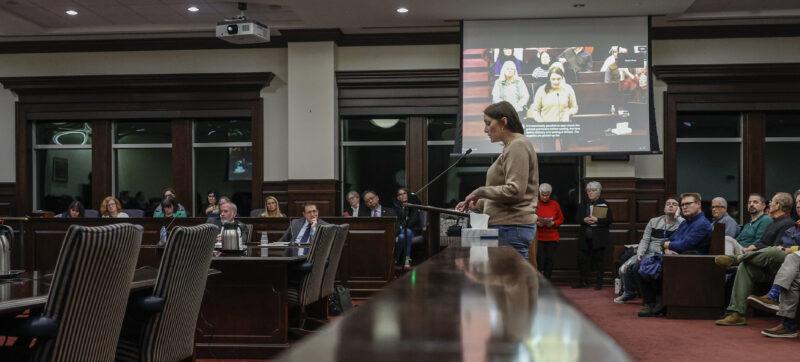
    At a meeting Feb. 3, officials from the township and the borough laid out long-standing safety issues on Montgomery Avenue and took feedback from attendees, many of whom said they no longer feel safe walking and driving along one of the Main Line’s busiest arteries.

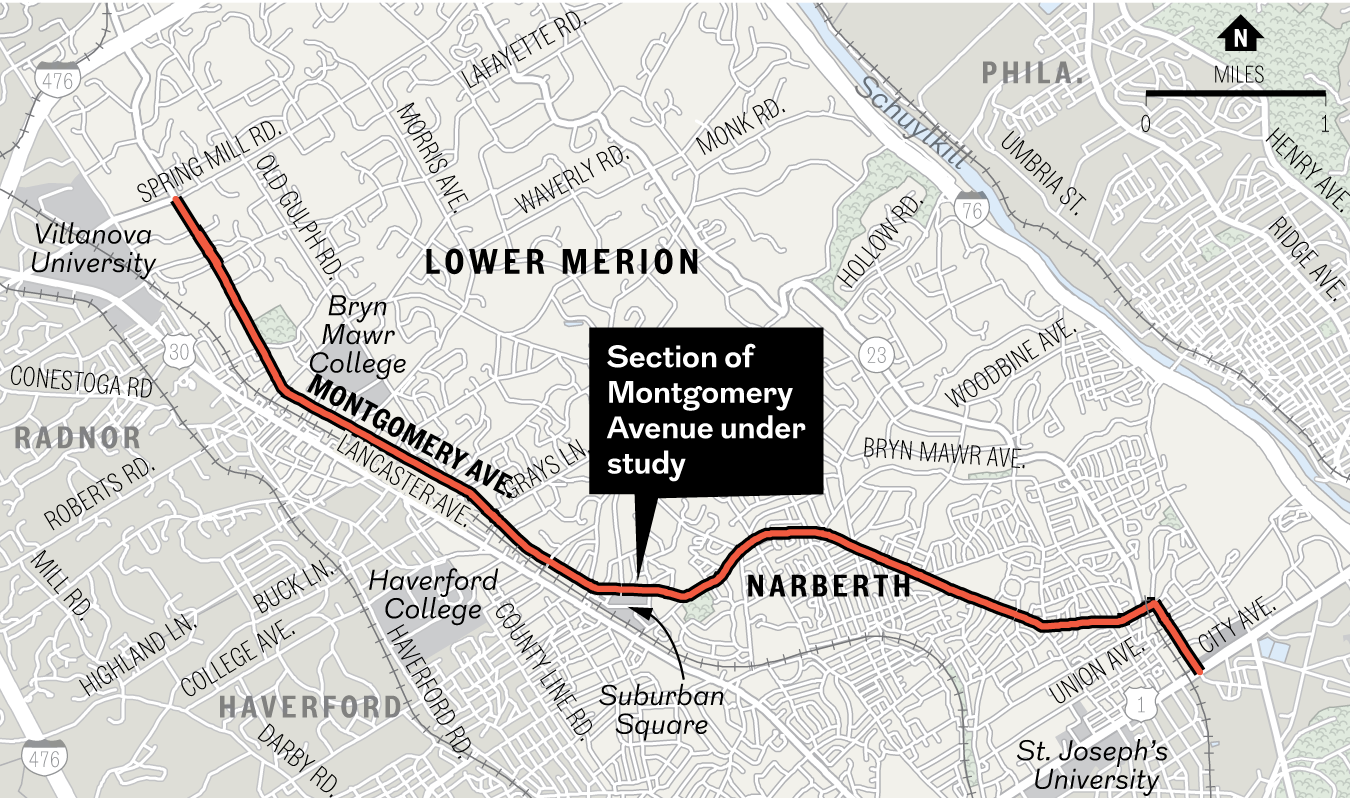
    The U.S. Department of Transportation has awarded Lower Merion and Narberth $340,540 to study a seven-mile stretch of Montgomery Avenue, from Spring Mill Road to City Avenue, through the federal Safe Streets and Roads for All program. The program awards funds to municipalities working to limit roadway deaths and serious injuries. The study will inform safety improvements at 35 intersections on that stretch of Montgomery Avenue.

    Map showing the section of Montgomery
    Avenue in Lower Merion and Narberth undergoing a comprehensive traffic safety study.

    Officials cited a long list of safety issues on Montgomery Avenue, from out-of-date pedestrian push buttons, sidewalk curb ramps, and crosswalk lighting to regular speeding and weaving by drivers. Without proper turn lanes and signals, drivers making left turns on Montgomery Avenue often slow traffic and can endanger pedestrians and other motorists, township representatives added.

    The traffic-calming effort comes at the heels of Lower Merion’s Comprehensive Safety Action Plan, which was published in 2025. The plan calls for eliminating all roadway fatalities and serious injuries in Lower Merion, with a goal of achieving a 50% reduction by 2030. Last summer, township commissioners approved a plan to install automated red-light enforcement cameras at four intersections, beginning with the intersection of Lancaster Avenue and Remington Road.

    Unlike previous traffic studies that focused on individual intersections, this project will take a more comprehensive approach, officials said.

    Between 2020 and 2024, there were 532 reportable crashes on Montgomery Avenue between Spring Mill Road and City Avenue. A reportable crash is defined as a crash resulting in an injury or vehicle damage serious enough to require towing. Around 2.5% of such crashes involved a serious injury. Just over half involved a minor injury, and the rest, around 46%, involved property damage only. In the same time frame, there were 920 minor crashes, or incidents with no injury and no need for towing.

    In total, 3,767 crashes were reported in Lower Merion at-large between 2019 and 2023. In that time frame, Lower Merion Township accounted for 8% of crashes with a fatality or serious injury within Montgomery County.

    Pennsylvania is the only state in the country where local police officers are prohibited from using radar for speed enforcement, said Andy Block, Lower Merion’s police superintendent, making it difficult for his department to enforce speed limits.

    At the meeting, residents told stories of their own crashes and near-misses on Montgomery Avenue.

    Kim Beam, a social worker at Bryn Mawr Hospital, used to walk to work along Montgomery Avenue every day before she was nearly hit by a car a few weeks ago.

    “I had an event which would have made me one of your fatalities,” Beam said, describing her walk to work as poorly lit, contributing to dangerous, and almost deadly, conditions for pedestrians like herself.

    Residents of Lower Merion and Narberth were encouraged to complete a survey that will inform officials as they develop a preliminary set of safety recommendations. A public meeting will be held once the recommendations are developed to gather additional feedback.

    Residents can fill out the survey online via www.lowermerion.org/Home/Components/News/News/5605/50 or print it out and drop it off at Narberth or Lower Merion’s municipal buildings. Completed forms can also be mailed to Brandon Ford, Assistant Township Manager, Lower Merion Township, 75 E. Lancaster Ave., Ardmore, Pa. 19003.

    This suburban content is produced with support from the Leslie Miller and Richard Worley Foundation and The Lenfest Institute for Journalism. Editorial content is created independently of the project donors. Gifts to support The Inquirer’s high-impact journalism can be made at inquirer.com/donate. A list of Lenfest Institute donors can be found at lenfestinstitute.org/supporters.

  • Grand jury refuses to indict Democratic lawmakers in connection with illegal military orders video

    Grand jury refuses to indict Democratic lawmakers in connection with illegal military orders video

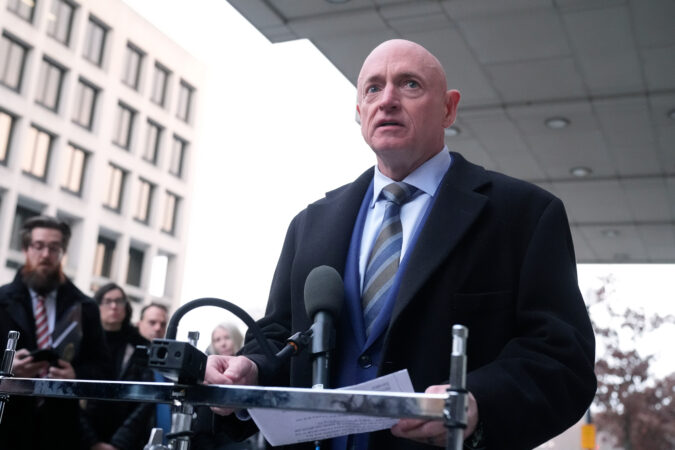
    WASHINGTON — A grand jury in Washington refused Tuesday to indict Democratic lawmakers in connection with a video in which they urged U.S. military members to resist “illegal orders,” according to a person familiar with the matter.

    The Justice Department opened an investigation into the video featuring Democratic Sens. Mark Kelly and Elissa Slotkin and four other Democratic lawmakers urging U.S. service members to follow established military protocols and reject orders they believe to be unlawful. All the lawmakers previously served in the military or at intelligence agencies.

    Grand jurors in Washington declined to sign off on charges in the latest of a series of rebukes of prosecutors by citizens in the nation’s capital, according to the person, who spoke on the condition of anonymity because they were not authorized to publicly discuss the matter. It wasn’t immediately clear whether prosecutors had sought indictments against all six lawmakers or what charge or charges prosecutors attempted to bring.

    Grand jury rejections are extraordinarily unusual, but have happened repeatedly in recent months in Washington as citizens who have heard the government’s evidence have come away underwhelmed in a number of cases. Prosecutors could try again to secure an indictment.

    Spokespeople for the U.S. attorney’s office and the Justice Department didn’t immediately respond to requests for comment Tuesday.

    The FBI in November began contacting the lawmakers to schedule interviews, outreach that came against the backdrop of broader Justice Department efforts to punish political opponents of the president. President Donald Trump and his aides labeled the lawmakers’ video as “seditious” — and Trump said on his social media account that the offense was “punishable by death.”

    Besides Slotkin and Kelly, the other Democrats who appeared in the video include Reps. Jason Crow of Colorado, Chrissy Houlahan of Pennsylvania, Maggie Goodlander of New Hampshire and Chris Deluzio of Pennsylvania.

    Slotkin, a former CIA analyst who represents Michigan, said late Tuesday that she hopes this ends the Justice Department’s probe.

    “Tonight we can score one for the Constitution, our freedom of speech, and the rule of law,” Slotkin said in a statement. “But today wasn’t just an embarrassing day for the Administration. It was another sad day for our country,” she said.

    Kelly, a former Navy pilot who represents Arizona, called the attempt to bring charges an “outrageous abuse of power by Donald Trump and his lackies.”

    “Donald Trump wants every American to be too scared to speak out against him,” Kelly said in a post on X. “The most patriotic thing any of us can do is not back down.”

    In November, the Pentagon opened an investigation into Kelly, citing a federal law that allows retired service members to be recalled to active duty on orders of the defense secretary for possible court-martial or other punishment. Defense Secretary Pete Hegseth has censured Kelly for participating in the video and is trying to retroactively demote Kelly from his retired rank of captain.

    The senator is suing Hegseth to block those proceedings, calling them an unconstitutional act of retribution. During a hearing last week, the judge appeared to be skeptical of key arguments that a government attorney made in defense of Kelly’s Jan. 5 censure by Hegseth.

  • Roadside bakeries are gaining popularity | Inquirer Chester County

    Roadside bakeries are gaining popularity | Inquirer Chester County

    Hi, Chester County! 👋

    Microbakeries are popping up around the county. Here’s where you can find some. Also this week, a teahouse and community space is planning to relocate to Exton, a former Malvern business owner has been sentenced to prison for deceptive practices, plus a new jazz cafe is opening in Coatesville.

    If someone forwarded you this email, sign up for free here.

    Roadside bakeries are filling a void across the county

    The Devon Road Made bakery cart is stocked with bread, cookies, and other baked goods.

    A small but growing number of home bakers in Chester County are looking to fill a void in the community — and in people’s stomachs.

    Microbakeries are slowly growing countywide, with 28 licensed as of last year. They’re selling goods like breads, cookies, cinnamon buns, and pancake mixes from stands outside their homes or through online ordering.

    While some of these bakers prioritize premium ingredients, many are also putting in something you won’t find on the label. “I like to put a lot of heart and soul into it,” said one baker. “I feel if you’re going to put good energy into that, people are going to feel that.”

    The Inquirer’s Brooke Schultz recently visited some of these microbakeries.

    A teahouse and community space is relocating to Exton

    Koselig Nook is planning to relocate to Exton this month.

    A Coatesville business, whose name is inspired by the Norwegian term for contentment and coziness, is relocating to Exton this month.

    The goal of moving Koselig Nook is to ensure more Chester County residents have access to the teahouse, which also functions as a third space. Visitors can reserve a time in the relaxing atmosphere — which has a no-shoes policy — for select weekday or weekend slots.

    The idea is to give people a calming place to go between work or school that’s not a bar.

    Read more about what inspired Koselig Nook.

    📍 Countywide News

    • Residents expressed anger after Enforcement and Removal Operations agents allegedly made what some described to 6abc as “violent” arrests in Phoenixville last week. Video from the confrontation shows agents dragging a person from a vehicle before being taken into custody. Shortly after the incidents, the Chester County District Attorney and the Chester County Police Chiefs Association released a joint statement saying that no police departments in the county have been deputized to carry out ICE actions, nor do they enforce immigration orders. They also noted that they will investigate any major incident to ensure no local laws were violated, adding that “Chester County law enforcement is dedicated to protecting the public, regardless of their immigration status.”
    • In case you missed it, last week the county publicly presented findings from an investigation into the error that left independent and unaffiliated voters off November’s poll books. After the report, some residents called for greater accountability and noted it fell short of addressing problems that could happen again.
    • A Democratic campaign manager was charged last week in Chester County for allegedly filing fraudulent nomination petitions in the 2024 primary race for auditor general, including the forged signatures of a Chester County judge, Coatesville city council members, and the West Goshen Township supervisor.

    💡 Community News

    • The Winter Olympics are underway, bringing curling back to the global spotlight and a familiar face along with it. Taylor Anderson-Heide, who’s competing for Team USA tomorrow night, trained at the Philadelphia Curling Club in Paoli and graduated from Marple Newtown High School. Planning to catch the action? Here’s a primer to the sport.
    • A Downingtown dog involved in four attacks since 2023, including one that seriously injured a neighbor’s 4-year-old son, was euthanized last week after the case escalated to district court. The owner has several other dogs who’ve been accused of being aggressive, leaving the boy’s parents frustrated that additional action hasn’t been taken.
    • A Coatesville couple has been found guilty of third-degree murder in the death of their 8-year-old son, who died from ingesting fentanyl, morphine, and cocaine. Mousa Hawa, 43, and Holly Back, 42, were arrested in June 2024 after an investigation found drugs and drug paraphernalia near their son’s body.
    • A Massachusetts man was arrested and charged last week after an alleged armed robbery at the Santander Bank in London Grove Township. Nicholas Casaburri, 44, is accused of taking $11,350 before fleeing in a vehicle and eventually crashing on Clay Creek Road, where he was apprehended by state police. Casaburri’s charges include robbery, fleeing and alluding, and aggravated assault.
    • The former owner of Malvern furniture store M. Kaplan Interiors was recently sentenced to six to 23 months in prison and required to pay back over $530,000 in restitution for defrauding dozens of customers. Matthew Kaplan, 37, of Rydal, previously pleaded guilty to deceptive business practices and other charges for allegedly never fulfilling paid furniture orders.
    • Heads up for drivers: PennDot has approved a new four-way stop at the South Valley Road and East and West Circular Avenues intersection in Tredyffrin Township. Work to install the stop signs and road markings is expected to take place this spring.
    • Last week, Kennett Square borough council passed a resolution declaring a phorid fly infestation and hydrogen sulfide emissions emergency, noting they are dangerous to public health and the local economy. The council addressed the phorid fly issue in 2024, resulting in a quarantine order. The borough is now urging state and federal agencies to fund mitigation research and implement additional emergency steps to address the issues that impact mushroom farming.

    🏫 Schools Briefing

    • Reminder for families: Most schools are closed Monday for Presidents’ Day and a few districts — Great Valley, Tredyffrin/Easttown, and Unionville-Chadds Ford — won’t have classes Tuesday in observance of Lunar New Year.
    • Students at Phoenixville Area High School staged a walkout Friday to protest ICE actions. A district spokesperson told NBC10 that with the help of staff and law enforcement, the district “monitored and supervised the walkout” and that students returned to class afterward.
    • Phoenixville Area School District is hosting a kindergarten information night on Tuesday from 6:30 to 7:30 p.m. at the Phoenixville Area Early Learning Center.
    • Tredyffrin/Easttown School District will form a redistricting steering committee this spring as it gears up to make changes to its elementary school boundaries ahead of Bear Hill Elementary opening next summer. Applications for the committee are expected to open in April.
    • Coatesville Area School District middle school students are set to benefit from a new initiative at West Chester University that will work with seventh and eighth graders through their first year of college. The seven-year program is being supported by a $10.26 million federal grant and is aimed at boosting graduation rates, preparing students for college, and developing “essential” skills. The grant is expected to help more than 1,800 students, including in the Chester and William Penn School Districts.
    • Last week, Kennett Consolidated School District released a draft of its Comprehensive School Counseling Plan for 2026 through 2029, which would replace the guidance counseling model with a new one requiring more data-focused planning and outcome measurement. Changes include renaming guidance counselors as school counselors and hiring one elementary counselor next school year, followed by a second counselor the following year. Families can provide feedback through March 3.

    🍽️ On our Plate

    • A new bagel shop is opening in Phoenixville on Saturday. Street Cart Bagels, which took over the former Boston Market at 240 Nutt Rd., specializes in malt-boiled, slow fermented bagels, which are available as singles or by the half-dozen or dozen. It also offers bagel sandwiches, melts, fish salads, and coffee. Street Cart is cashless and accepts credit and debit cards as well as mobile wallet payments.
    • A new jazz spot is officially opening next week. Andrea’s Jazz Cafe, located at 236 E. Lincoln Highway in Coatesville, is hosting its grand opening on Tuesday from 4 to 6 p.m.
    • Victory Brewing Company has teamed up with Visit Philadelphia to launch a new beer celebrating America’s 250th birthday. Philly First is a crisp, 4.8% ABV ale with notes of citrus, floral, tropical fruit, and pine. The Downingtown-based brewery will offer it in its taprooms starting Sunday, including in Kennett Square and Parkesburg. It will then be available at other bars and liquor stores starting around mid-March.

    🎳 Things to Do

    🌿 Garden Glow: Explore Longwood Gardens’ conservatories and Main Fountain Garden after hours when they’ll be lit in ways that show off sometimes overlooked features. ⏰ Fridays, Saturdays, and Sundays, Feb. 13-March 8, 5-10 p.m. 💵 $15-$25 for members, $25-$45 for non-members 📍 Longwood Gardens

    🎙️ America’s Sweethearts: The Andrews Sisters-inspired swing band will transport listeners back in time. ⏰ Sunday, Feb. 15, 4 p.m. 💵 $46-$60 📍 Uptown Knauer Performing Arts Center, West Chester

    🎶 Ruben Studdard: The American Idol winner and Grammy-nominated singer is bringing “The Masterpiece Tour” to town. ⏰ Wednesday, Feb. 18, 7:30 p.m. 💵 $42-$96 📍 Uptown Knauer Performing Arts Center, West Chester

    🏡 On the Market

    A three-bedroom waterfront townhome in Berwyn

    The living room has vaulted ceilings and a fireplace.

    Located in the Daylesford Lake community in Berwyn, this three-bedroom, two-and-a-half-bathroom, end-unit townhouse provides waterfront views and outdoor living space thanks to a wraparound deck. The home’s first floor features an open-concept two-story foyer, living room, and dining room; an office; and an eat-in kitchen, complete with an island, quartz countertops, and a butler’s pantry. There’s also a first-floor primary suite with deck access, a sitting or office area, a bathroom with a double vanity, and two walk-in closets. There are two additional bedrooms upstairs, and a partially finished walk-out basement downstairs. There’s an open house Friday from noon to 2 p.m.

    See more photos of the townhouse here.

    Price: $895,000 | Size: 3,658 SF | Acreage: 0.06

    🗞️ What other Chester County residents are reading this week:

    By submitting your written, visual, and/or audio contributions, you agree to The Inquirer’s Terms of Use, including the grant of rights in Section 10.

    This suburban content is produced with support from the Leslie Miller and Richard Worley Foundation and The Lenfest Institute for Journalism. Editorial content is created independently of the project donors. Gifts to support The Inquirer’s high-impact journalism can be made at inquirer.com/donate. A list of Lenfest Institute donors can be found at lenfestinstitute.org/supporters.

  • A West grad’s ode to Eagles tailgates | Inquirer Cherry Hill

    A West grad’s ode to Eagles tailgates | Inquirer Cherry Hill

    Hello, Cherry Hill! 👋

    A West grad’s latest project explores the religious-like experience of Eagles fandom. We take a peek. Also this week, we’re following the latest on the Kibitz Room closure, plus the former Lone Star Steakhouse is one step closer to being demolished.

    If someone forwarded you this email, sign up for free here.

    A West grad explores the religious-like experience of Eagles fandom

    A photo of Eagles fans tailgating from Mike Cordisco’s “Sermon on the Lot.”

    The Eagles aren’t the reigning Super Bowl champs anymore, but a new photo project by a Cherry Hill native explores a question about our fandom: Is it akin to religious fervor?

    Photographer Mike Cordisco set out to document Eagles fans and their tailgates, going beyond the stereotypical rowdy image and leaning into the religious-like experience of “sacred Sundays.” He’s compiled them into a 98-page book called Sermon on the Lot, which showcases photos of fans outside the Linc between 2018 and 2025.

    “On Sundays, you go to Mass,” Cordisco said. “But in Philly, you go to the parking lot and tailgate an Eagles game.”

    Some of Cordisco’s work is on display at Unique Photo in Center City through mid-March.

    Read more about the West grad and what inspired his latest project.

    💡 Community News

    • Reminder for residents: The extended deadline to pay the first half of this year’s township tax bills is next Wednesday.
    • A Cherry Hill man is mourning the death of his father, who died in a fire at their Main Street home on Jan. 31. In the aftermath, Hazem Abdalla, 27, wants people to remember his father, Eid, for his life, not his death. Eid was born in Egypt, where he started a construction company before moving to New Jersey for his sons to get a better education. Eid, who was 69, had previously worked as a taxi driver and a chef at the former Cherry Hill Diner. A crowdfunding campaign has raised more than $40,000 for funeral and rebuilding costs. The cause of the fire, which also damaged a neighbor’s house, is still under investigation. (NJ Pen and Fox 29)
    • After being empty for nearly 20 years, the former Lone Star Steakhouse building on Route 38 is closer to being demolished. A court recently ruled that the derelict building qualified as abandoned and that an uncontested foreclosure could move forward. The roughly 5,700-square-foot building has been vacant since 2007. (Courier Post)
    • Skechers is gearing up for a mid-spring opening at Garden State Pavilions, a company spokesperson confirmed. The shoe and apparel retailer will open between Five Below and Staples, taking over 8,500 square feet.
    • The Cherry Hill Fire Department is hosting a child safety seat event on Friday from 9 a.m. to noon at the Deer Park Station.

    🏫 Schools Briefing

    • About 500 East students walked out of school Friday morning as part of a student-organized ICE protest that lasted about one hour. “We need to make sure that ICE understands that we’re watching, we’re listening, and we’re not going to stop fighting back until they leave the innocent people in our communities alone,” one of the organizers said. (Eastside)
    • A settlement agreement has been reached between Cherry Hill Public Schools and the Zionist Organization of America, which filed a complaint in June 2024 on behalf of an East student. In the complaint, the Zionist Organization alleged that the school district retaliated against the Jewish student, who reported alleged antisemitic harassment. Under the settlement, the student’s disciplinary record is being expunged. (Philadelphia Jewish Exponent)
    • Reminder for families: Monday is a makeup day for one of last month’s snow closures. There’s no school for students on Tuesday for the Lunar New Year, but teachers will report for an in-service day. See the district’s full calendar here.

    🍽️ On our Plate

    • Two weeks after The Kibitz Room abruptly closed, former owner Brandon Parish said he is working to reopen the beloved deli “under a new entity.” An attorney for the deli, now owned by Brandon’s mom Sandy Parish, filed for Chapter 7 bankruptcy protection on Friday.
    • Fast-casual takeout eatery Rice & Spud Station opened last week at 404 Marlton Pike East in Saw Mill Village. The Halal eatery serves loaded baked potatoes, rice bowls, and desserts.
    • In case you missed it, Bahama Breeze’s parent company last week announced the upcoming closure of all the remaining tropical restaurant’s outposts by early April, including at the Cherry Hill Mall.
    • Cherry Hill real estate developer Shamikh Kazmi is looking to expand his Yum Grills brand to 200 locations, largely in the Philadelphia area, with around 15 slated to open in the next few months. The expansion of the new fast-food eatery that serves smash burgers, cheesesteaks, and loaded french fries is expected to cost $60 million. It’s unclear if any locations will be in town. (Philadelphia Business Journal)
    • The owners of Old World Italian eatery Il Villaggio are gearing up to open Duo Restaurant & Bar in Westmont this month.

    🎳 Things to Do

    🏺 Galentine’s Pottery Class: Try your hand at ceramics at this intro class, which also includes sparkling cider, for anyone 13 and older. ⏰ Friday, Feb. 13, 6 p.m. 💵 $125 📍Hugs Ceramics

    💃 Valentine’s Social Dance: If dancing is more your style, this event kicks off with a group class before segueing into a social dance with a DJ and light snacks. ⏰ Friday, Feb. 13, 7-10 p.m. 💵 $20 📍Storm BDC

    ❤️ Valen-Wine Celebration: Yogi Berra Lodge No. 3015 is hosting a Valentine’s-themed event complete with dinner, dessert, and wine. ⏰ Friday, Feb. 13, 7-11 p.m. 💵 $45 📍American Legion Post #372

    🫖 Tea Party Fundraiser: Monday is the deadline to register for this library fundraiser, which includes afternoon tea, a Jane Austen movie, and a fascinator make-and-take. ⏰ Sunday, March 1, 1-4 p.m. 💵 $35 📍Cherry Hill Public Library

    🏡 On the Market

    A four-bedroom home with an indoor hot tub

    The home’s two-story family room has a hot tub, wet bar, and ample windows.

    Located in the Ridings of Fox Run, this four-bedroom home has had just one owner since it was built in 1978. Among its most unique features is a two-story family room with an eight-seat hot tub and a wet bar. A second-floor library looks onto the airy space. There’s also a dining room, a family room with a fireplace, and an eat-in kitchen with granite countertops on the first floor. Upstairs, the primary suite has skylights, a gas fireplace, and a jacuzzi. Outside, the wooded property has a deck and a koi pond.

    See more photos of the property here.

    Price: $879,000 | Size: 3,467 SF

    🗞️ What other Cherry Hill residents are reading this week:

    By submitting your written, visual, and/or audio contributions, you agree to The Inquirer’s Terms of Use, including the grant of rights in Section 10.

    This suburban content is produced with support from the Leslie Miller and Richard Worley Foundation and The Lenfest Institute for Journalism. Editorial content is created independently of the project donors. Gifts to support The Inquirer’s high-impact journalism can be made at inquirer.com/donate. A list of Lenfest Institute donors can be found at lenfestinstitute.org/supporters.

  • Library warming centers strained workers and left people without help for complex issues, staff say

    Library warming centers strained workers and left people without help for complex issues, staff say

    The bitter and persistent cold of recent weeks was so dangerous that various Philadelphia agencies coalesced around one mission: Get the city’s most vulnerable off the streets.

    Philadelphia libraries became a key piece in these efforts, with some branches doubling as so-called warming centers for more than 20 days straight in an effort to provide a respite to people who would otherwise be living outside.

    The mobilization of what can exceed 10 branches during life-threatening cold snaps is largely, though not universally, welcomed by library staff, the community groups that support the workers, and the people who use the spaces.

    As outdoor deaths mount in places like New York City, where at least 18 people have died on the streets since Jan. 19, Philadelphia library workers see the initiative as a way to prevent similar outcomes here, where there have been three cold-related deaths since Jan. 20.

    But employees say the warming center initiative, in only its second year as a formalized network, leaves branch staff, from librarians to security, unequipped to help some of the people walking through their doors with complex mental and physical health needs.

    “People are feeling tired, feeling very burnt out, the physical, the emotional, and the mental load of not just doing our regular work, but having like this critical service, like lifesaving service, being offered on top of that for 12-plus hours a day has been really, really hard to sustain,” said Liz Gardner, a library worker, speaking as a union steward in the American Federation of State, County and Municipal Employees District Council 47’s Local 2186, which represents first-level supervisors, including those at libraries.

    There’s the “little stuff,” like how an online map sometimes listed the wrong information in December. Last-minute location changes among the South Philly branches made it confusing for even the self-described information professionals to direct people where to go. At one point, a branch that was not Americans with Disabilities Act-accessible was cast as a warming center, to the chagrin of many.

    Library workers and community groups described having to lobby the Free Library to crowdsource snacks and water. The transportation that transfers people to nighttime warming centers after the libraries close has often been late, meaning staff have to decide between staying after their shift or leaving people outside, which they don’t want to do.

    What’s more, library workers and volunteers say, some people require more than a warm space. People in mental health crises, struggling with substance abuse issues, and requiring wound care need medical support, workers say.

    “What [the city is] continuing to do is take advantage of a group of people that care so deeply about the city of Philadelphia and the communities that they serve, and they’ll continue to do it, regardless of if they have the support or not,” said Brett Bessler, business agent for DC 47 Local 2186.

    Altogether, the concerns surrounding the warming center system yield existential and moral quandaries: Is this system the best and most humane way to treat some of the city’s most vulnerable people?

    Crystal Yates-Gale, the city’s deputy managing director for health and human services, acknowledged some of the challenges described by library staff and volunteers. Many logistical issues, such as location changes, food, and transportation woes, were improving or had been resolved, she said. Some of the concerns regarding staffing might be a matter of miscommunication, she said.

    “I think everybody’s exhausted. It’s like Groundhog Day,” Yates-Gale said. “It’s the same thing: Every day you wake up, they’re all just quite exhausted, but everybody’s working toward the same goal.”

    Kelly Richards, president and director of the Free Library of Philadelphia, echoed the sentiment that staff have been saving lives. In a statement, he said he appreciated staff efforts and feedback as the Free Library continues “making improvements to better serve our communities.”

    ‘They need more than a warm building’

    Details of who uses the warming centers are limited. Visitors are not asked if they are at a library to escape the cold or for regular library programming.

    Three library workers from various corners of the city described some of the daily challenges they have faced at warming centers to The Inquirer under the condition that they remain anonymous, fearing professional repercussions.

    One worker who has lived through various iterations of heating and cooling operations involving libraries described a catatonic man being brought into their branch by first responders, left for staff to figure out his care.

    “They need more than a warm building,” the worker said. “These are human beings, and we’re the wrong department to help.”

    A worker at a different branch described trying to persuade a man with a festering wound to seek medical intervention. In another instance, when staff told a man he could not set up his sleeping bag on the library floor, he began shouting, telling workers they had to accommodate him.

    Library staff say one of the biggest challenges is the lack of consistent support for people with complex medical issues.

    Yates-Gale said the Philadelphia Department of Behavioral Health and Intellectual disAbility Services staff focuses support on what are considered “high-volume” warming centers, including the Central Library and the Northeast Regional and Nicetown branches. Mobile teams are available by request.

    In other cases, through a partnership with Project HOME, the city’s homeless services office assigns what is called a restroom attendant.

    Library workers and volunteers say the current setup is unfair to all involved.

    At the South Philadelphia Library on a recent Friday afternoon, a woman yelped in pain as she rubbed a blackened, possibly frostbitten toe. Children played with blocks in a corner as others checked out books.

    Library staffers maintain similar scenes have played out at the various warming centers, with workers left to balance the comfort and safety of people there to check out books and use their computers with those of people who might die if kicked out and sent to the streets.

    The worker who told of trying to persuade a man to seek medical attention noted that staffers are behind on work and programming has taken a hit.

    Kelsey Leon, a harm reductionist who regularly works with homeless Philadelphians with addiction, has been visiting libraries during the cold snap after hearing concerns from librarians, and working to deliver wound care kits to the centers so people there can treat themselves.

    Librarians “are so clearly beyond their capacity to handle this,” she said.

    The city says it’s listening to feedback

    A battle for snacks, workers and volunteers say, has become emblematic of the disconnect between what the Free Library and the city want warming centers to be and what they actually are.

    Most people using the service do not bring their own food.

    The city initially provided snacks at the overnight warming centers in recreation centers but made no such offerings at the daytime ones at libraries.

    When staff and volunteers noted this would mean people going 12 hours without sustenance and offered to fill that gap with crowdsourced snacks and drinks, they faced resistance.

    “We were told repeatedly that warming centers at libraries are distinct from shelters, and that is the reason they couldn’t provide food,” said a third library worker, adding the Free Library and the city eventually allowed the outside snacks to come in.

    Part of the initial hesitation, according to Yates-Gale, was based on logistical considerations, including protecting library materials and adding cleanup to the plate of security officers who handle maintenance.

    The city provided library leadership with lists of food sites, the idea being that people could leave the libraries, get a meal close by, and come back.

    Still, Yates-Gale said, the city is listening and adjusting in real time.

    Last week, after two weeks of operations, the city brought water and cereal to warming centers. The city says people also have access to water fountains.

    The city said it is not giving up on improving warming center conditions. Yates-Gale said that starting Tuesday, the Philadelphia Office of Homeless Services would send reinforcement teams to daytime warming centers to get people to connect to additional services.

    The backup cannot come fast enough.

    Ibrahim Banch, 26, has been homeless before, but the cold he has experienced recently is something different.

    “The air feels solid. It stands your hair up,” he said. He knew he couldn’t stay outside, so he sought out the warming centers as temperatures dropped. Recently released from prison, he said, he is waiting to be placed in an emergency shelter bed. But the warming centers are a last resort.

    He said the city should staff all centers with workers equipped to deal with the mental health needs that many clients have.

    “People at the library shouldn’t have to take this responsibility,” Banch said. “It’s not a shelter or a caregiving place.”

    Volunteers still eager to help

    Erme Maula, with the Friends of Whitman Library in South Philadelphia, echoed the challenging conditions described by workers. She believes it doesn’t have to be this way.

    The city’s 54 branches are full of supporters who can coalesce around the warming centers with donations, she said. Volunteers continue to collect toiletries and other essential items for people using the branches for warmth.

    As an advanced practice community health nurse, she could see healthcare workers organizing to help people and ease the load of librarians. But it is the sort of effort that would need support from the city.

    “People are kind and want to be generous, but they didn’t know you have to take care of what they expected the city to be able to take care of,” Maula said.

    Maula and others who spoke to The Inquirer emphasized they want the warming centers to be improved — not to go away.

    As with the snack issue, Yates-Gale said the city is responding to feedback in real time.

    “Now that we know that there needs to be an adjustment for support staff, we’re ready and able to immediately begin staffing the libraries,” she said.

    But that might not be felt by library staff until the next warming center activation. With daytime temperatures finally warming up, the city is slated to begin winding down warming center operations at libraries; nighttime centers will remain open until those temperatures similarly rise.

    “I’m really hopeful that we see substantial improvements to make this a more sustainable practice that helps more people in a more meaningful way,” Local 2186’s Gardner said.

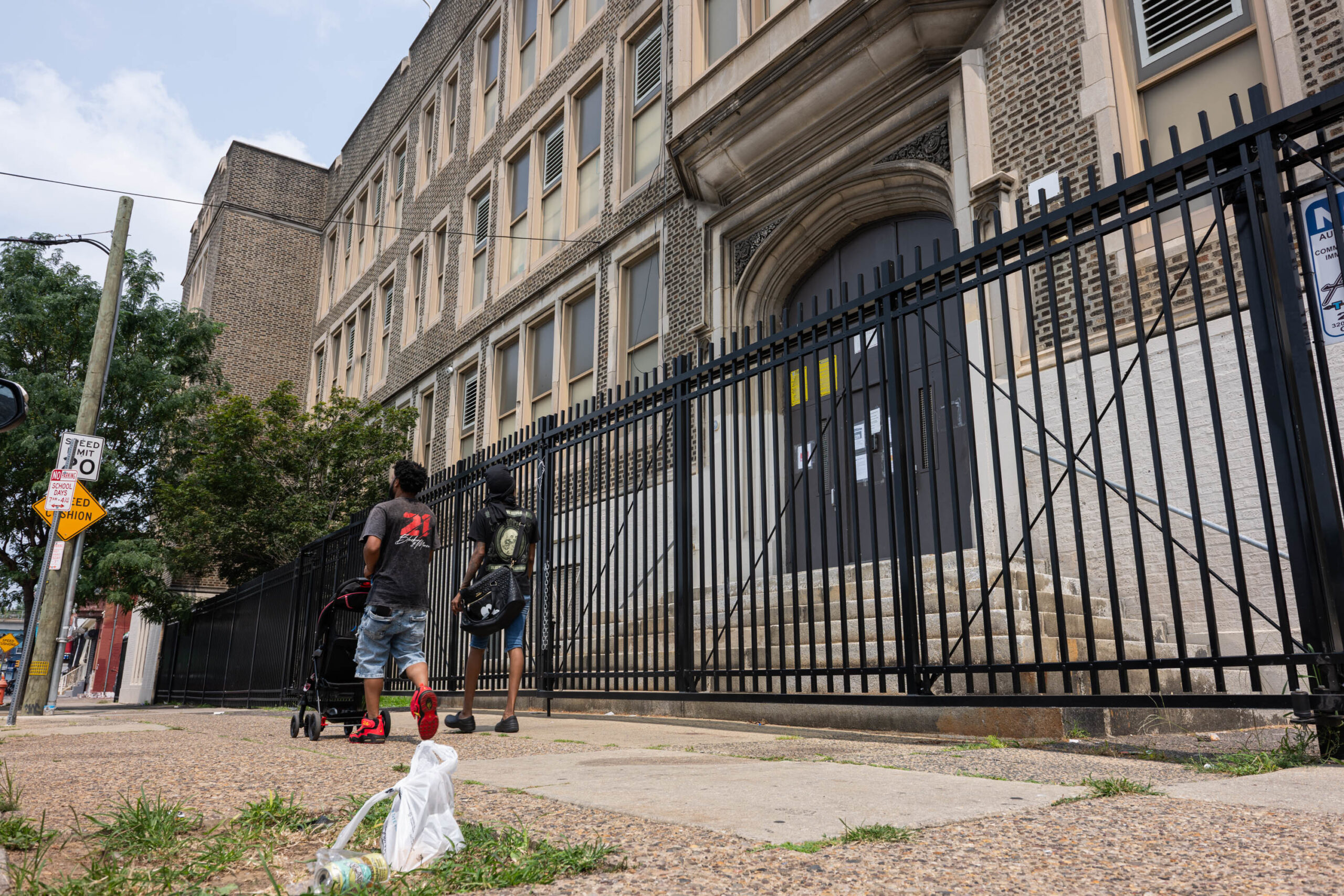
  • This beloved Kensington middle school just celebrated its 100th year. It may not be open much longer.

    This beloved Kensington middle school just celebrated its 100th year. It may not be open much longer.

    Russell H. Conwell Middle School celebrates its 100th anniversary this year.

    It may not remain open to see many more.

    The Philadelphia School District has proposed closing Conwell and 19 other schools as part of its facilities planning process, which will shake up schools citywide.

    A student-made sign hangs in the Conwell Middle School auditorium. The Philadelphia School District is attempting to close Conwell, a magnet 5-8 school in Kensington, and 19 other schools. The community is fighting the closure.

    Conwell, in Kensington, is a very small school by any standard. This year, just 109 students are enrolled in a building that holds 500. That’s down from 490 students in the 2015-16 school year and 806 in 2009-10. The school used to occupy two buildings; it has since shrunk to one.

    But it is also a rarity — a standalone magnet middle school. Community members and local officials are mounting a fight against closing the school, which they say has committed teachers and staff members who help students excel against the odds.

    The district’s plan, which the school board is expected to vote on this winter, calls for Conwell students to move to AMY at James Martin, another citywide admissions magnet in Port Richmond, which just opened in a new building with only 200 students. Meanwhile, the district has proposed closing its only other free-standing magnet middle school, AMY Northwest. No changes have been proposed for Philadelphia’s four other magnet middle schools, all of which are attached to high schools.

    Neighborhood issues, enrollment declines

    Conwell’s enrollment issues are tied closely to its setting.

    The building sits on Clearfield Street in the heart of Kensington. Fewer and fewer parents have been choosing to send their kids into ground zero of the city’s opioid epidemic, despite Conwell’s myriad partnerships, the outside investments it has attracted into its facility in recent years, and the school’s long history of excellence.

    The exterior of Conwell Middle School in Kensington, photographed in August.

    Parents, neighbors, students, and politicians, however, are furious that the district is choosing to abandon Conwell and the neighborhood.

    “If this school closes, it won’t just be students who feel the loss,” Conwell student Nicolas Zeno told officials at a district meeting Thursday. “It’ll be the community. If the concern is safety, then invest. If the concern is environment, then repair.”

    Community member Vaughn Tinsley, who runs Founding Fatherz, a nonprofit mentoring group, suggested closing Conwell would harm its students.

    “These students have been victims,” Tinsley said. “These students have seen and witnessed things they shouldn’t have witnessed. Most adults haven’t seen some of the things that these kids have seen, and yet still they come here, yet they’re still committed to excellence, yet they still stand up and still do what they’re supposed to do in the classroom. How dare we take that away from them?”

    Watlington has proposed using Conwell as “swing space” — district property that other schools can move into temporarily if their buildings require repairs.

    Tosin Efunnuga, Conwell’s nurse, wiped tears from her eyes as she beseeched district officials to keep the school open.

    “To have those doors close would be such a disservice,” Efunnuga said. “We need 100 years more.”

    Councilmember Quetcy Lozada, whose district includes Conwell, said she was “angry” and “frustrated” by the recommendation to close the school.

    “It’s underutilized because of what’s happening on the outside,” Lozada said at the Conwell meeting. “There’s nothing wrong with what is happening on the inside other than successful academic learning, support for families. We are saying to these families, we are punishing them because as a city, we can’t respond to the public safety issues that we have on the outside, and that is just not fair.”

    ‘What are y’all doing?’

    Emotions ran high inside the Conwell auditorium last week.

    Even before Deputy Superintendent Oz Hill finished his presentation about the rationale for the closures and the specific plan for Conwell, parents burst out with concerns.

    “What are y’all doing? Y’all making a mess,” one parent shouted. “You say the building is old. So what? It’s clean in here.”

    Another said her child would not be going to AMY at James Martin, formerly known as AMY5.

    “I don’t think you understand how much of a battle there is between Conwell and AMY5,” the parent said. “You don’t know the battles these kids have with each other.”

    Conwell has a strong alumni network — a rarity for a middle school — that has turned out in force to support the school since the proposed closure was announced.

    Alexa Sanchez, Class of 2017, grew up in Kensington and came to Conwell as a bright but unruly student — she acknowledges that she got in fights, egged the school, and disrespected teachers. But Conwell is rooted in its neighborhood, Sanchez said, with dedicated staff who helped her rise to earn a college degree and a good job in business.

    “They didn’t give up on students like me,” Sanchez said. “My future didn’t look promising at first, but in the long run, it did. You shouldn’t really close the school on a community that doesn’t look promising if you’re not from here.”

    Other alumni, including Robin Cooper, president of the district’s principals union, and Councilmember Isaiah Thomas, chair of Council’s Education Committee, have spoken out for Conwell.

    Conwell “shows up” for Kensington and the city, running a food pantry, hosting Police Commissioner Kevin Bethel’s swearing-in ceremony and an event marking Cherelle L. Parker’s 100th day as mayor, noted Erica Green, the school’s award-winning principal. Staff and students participate in neighborhood cleanups and advocate for help amid the opioid crisis.

    “We are what the city needs,” Green told the school board recently. During Green’s tenure, she has helped win money for a new schoolyard, a new science, technology, engineering, and math lab, and more.

    “These investments were made for Kensington students,” Green said. “We owe it to them, to their neighborhood. Do not push them out once the neighborhood changes and thrives. Conwell’s success is rooted in its people, its history, and its impact.”

    Mayor Cherelle L. Parker speaks during an event to mark her 100th day in office at Conwell Middle School in Kensington in April 2024.
  • A look at how Ventnor is completely rebuilding its boardwalk

    A look at how Ventnor is completely rebuilding its boardwalk

    VENTNOR, N.J. — They demolished the existing boardwalk from the tennis courts to the fishing pier, north to south, and now they are building their way back up.

    Financed mostly with federal funds granted to New Jersey from the COVID American Rescue Plan, Ventnor and other Shore towns like Ocean City, North Wildwood, Atlantic City, and Wildwood have set out to redo or upgrade their iconic pathways.

    Ventnor is using $7 million in federal funds and bonded for about $4 million more, officials said.

    Will this stretch of boardwalk reconstruction be done by Memorial Day?

    Construction continues on the boardwalk on Wednesday, Feb. 4, 2026, in Ventnor City, N.J.

    “It’s always a worry,” Ed Stinson, the Ventnor city engineer, said in an interview late last month. “We’ve had multiple meetings with the contractor [Schiavone Construction], one as recent as three weeks ago. In all the meetings, he’s said it’ll be complete and open before Memorial Day.”

    The reconstruction has delivered a seven-block offseason interruption in a walkway that is popular year-round.

    Work will stop for the summer, city officials say. In the fall, a second 13-block section, from Suffolk Avenue to the Atlantic City border at Jackson Avenue, will begin. There is currently no funding or plan for the boardwalk from Cambridge south to the Margate border, said Stinson.

    The biggest change people will notice is that the original and distinctive angled herringbone decking pattern of the boardwalk is being replaced with a straight board decking. Ultimately, it came down to cost over tradition.

    “There was discussion about it,” said Stinson. “There’s additional lumber that’s wasted when you do the herringbone, and the labor to cut that material. The additional material costs were significant. It’s a waste of tropical lumber. The only reason to go herringbone is tradition and appearance.”

    The reconstruction has delivered a seven-block offseason interruption in a walkway that is popular year-round. Work will stop for the summer, city officials say.

    Other differences are changes in lighting (lower, more frequent light poles) and some enhancements of accessible ramps. The existing benches, with their memorial plaques, will be back.

    To demolish the boardwalk, the contractor cut the joist and the decking in 14-foot sections, “swung it around, carried it over to the volleyball court,” Stinson said, on Suffolk Avenue.

    “That’s where they did their crushing and loading into the dumpsters. They worked their way down and followed that with the pile removing.”

    The original herringbone pattern can be seen on the left, compared with the new straight decking pattern on the new construction side.

    The other massive job was excavating the sand that had accumulated under the boardwalk. “They screened it, cleaned it, and put it down there,” on the beach in piles. It will be spread around above the tide line, Stinson said.

    Once the excavation was down, the pile driving crew set out beginning at the south end and working their way toward Suffolk Avenue. “Then the framing crew came in and started framing,” Stinson said. On Feb. 2, the third team began its work: the decking crew.

    The weather has slowed the pace, Stinson said. “They were doing about 20 to 24 piles a day,” he said, a pace that dropped to about nine piles a day after the snowstorm and ice buildup.

    The framing crew installs pile caps, 8-by-14 beams that run across the boardwalk atop the pilings. The decking crew follows behind them, installing the wood, a tropical wood known as Cumaru. The use of Brazilian rainforest lumber at one time inspired protests, but that has not been an issue this time.

    Construction continues on the boardwalk on Wednesday, Feb. 4, 2026, in Ventnor City, N.J.

    Ventnor’s boardwalk, which links to Atlantic City’s famous walkway, dates to 1910. It was rebuilt twice before: once after the hurricane of 1944 and again after the March storm of 1962. Margate, on the southern end, never rebuilt its boardwalk after 1944.

    Stinson said the tropical wood is noted for its “denseness and durability. It does not last forever.”

    In all, $100 million of American Rescue funds was set aside by Gov. Phil Murphy for a Boardwalk Fund and awarded to 18 municipalities, including, as Stinson said, “anybody who has anything close to a boardwalk.”

    Brigantine, with its promenade, received $1.18 million. Ocean City, in the process of rebuilding a portion of its north end boardwalk, received $4.85 million.

    The two biggest recipients were Asbury Park and Atlantic City, each receiving $20 million. Atlantic City has completed a rebuilding of its Boardwalk to stretch all the way around the inlet to Gardner’s Basin. Wildwood, with $8.2 million, has undertaken a boardwalk reconstruction project, and North Wildwood, receiving $10.2 million, is rebuilding its boardwalk between 24th and 26th Streets, combining the herringbone pattern with a straight board lane for the tram car.

    Although the timing of the reconstruction was no doubt prompted by the availability of the federal funds, Stinson said Ventnor’s boardwalk had shown signs of age.

    “We’ve been into some significant repairs on the boardwalk,” Stinson said. “Those have increased every year. We were getting into pile failures. It was due. I don’t know if the city would have tackled it without the [federal] money.”

    Ventnor’s boardwalk, which links to Atlantic City’s famous walkway, dates to 1910. It was rebuilt twice before: once after the hurricane of 1944 and again after the March storm of 1962.