Category: News

Latest breaking news and updates

  • Supreme Court upholds state laws banning transgender girls and women from school athletic teams

    Supreme Court upholds state laws banning transgender girls and women from school athletic teams

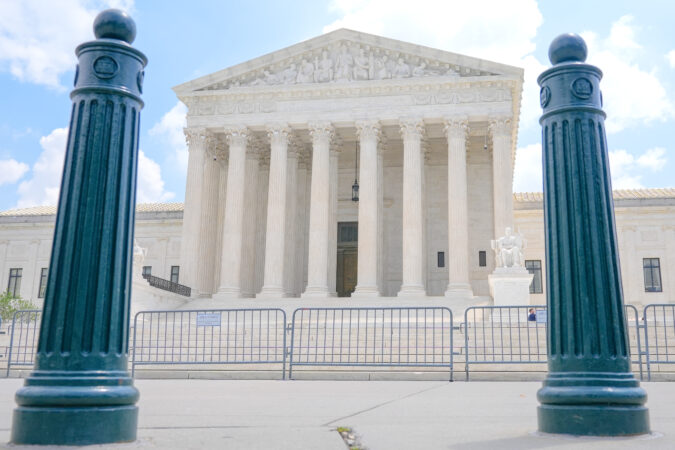
    The Supreme Court on Tuesday upheld bans in Idaho and West Virginia on transgender athletes playing on girls’ and women’s sports teams, the latest in a string of legal setbacks for the LGBTQ+ community before the high court.

    In a decision led by the court’s six conservatives — but joined in parts by its three liberals — the justices found that states can separate teams based on “biological sex” without offending the Constitution’s guarantee of equal protection and Title IX, a landmark 1972 antidiscrimination law involving education.

    “Separate sports teams for biological males and biological females are reasonable: Given the inherent physical differences between the sexes, allowing only biological females to play on women’s and girls’ teams can reduce the risk of physical injury and ensure fair competition,” Justice Brett M. Kavanaugh, who coached his daughter’s youth basketball team, wrote for the majority.

    The court’s three liberals, led by Justice Sonia Sotomayor, agreed that West Virginia’s ban did not violate Title IX. But they disagreed with the majority on several fronts, especially the conclusion that the West Virginia law withstands scrutiny under the Constitution’s guarantee of equal protection for all.

    Sotomayor wrote that a lower court should have the chance to sort out a question central to the case of the teenage plaintiff from West Virginia, Becky Pepper-Jackson: whether trans girls who have not undergone male puberty have physical advantages in sports.

    “Because of the Court’s decision today, West Virginia, and any other state actor, can deny B.P.J. and others like her these experiences simply because it thinks they have an inherent athletic advantage, even if the facts show that they do not,” Sotomayor wrote.

    The court did not address what is arguably the flip side of its ruling — whether schools and states can adopt policies allowing transgender athletes to compete on girls’ and women’s teams, as some liberal states and communities do.

    “That question is currently the subject of litigation in some lower courts,” Kavanaugh wrote in a footnote. “Nothing in this opinion is intended to decide that question.”

    The ruling is among several in recent terms that are consequential for the LGBTQ+ movement. The Supreme Court in March ruled a Colorado law banning “conversion therapy” for gay and transgender youths probably violated the free-speech rights of a religious counselor who wants to counsel such young people according to biblical teachings.

    Earlier that month, the court sided with Christian parents in blocking, for now, California policies that discourage schools from informing parents of a student’s sexual orientation or gender identity without the student’s consent. Last year, the court upheld bans on gender transition treatment for minors.

    Questions over whether transgender girls and women should play on girls’ and women’s sports teams has been a particular flash point in a broader conversation about transgender rights. Dozens of states have bans amid intense public debate about fairness at all levels of competition.

    The debate over the allowance of transgender women in collegiate athletics gained national attention in 2022 after Penn swimmer Lia Thomas won the national title in the women’s 500-yard freestyle. Thomas, who is a transgender woman, competed for the Quakers men’s team during the 2018-19 season before medically transitioning.

    In July 2025, Penn struck a deal with the Trump administration regarding Thomas’ participation. According to the deal, Penn agreed to ban transgender athletes, vacate Thomas’ records, release a statement in support of Title IX “as interpreted by the Department of Education,” and send personalized letters of apology to Thomas’ former women’s teammates. The deal came after the White House had paused $175 million in federal funding to Penn because of Thomas’ participation on the Quakers’ women’s team in 2021-22. The federal funding was restored following the agreement.

    The issue came to the high court in a pair of cases, brought separately by Pepper-Jackson, a teen from West Virginia, and Lindsay Hecox, a Boise State University student in Idaho. Both argued that the bans in their states discriminated on basis of sex and violated the Constitution’s equal protection clause. In January, the justices appeared sympathetic to arguments for keeping the bans in place as the cases were argued back-to-back.

    LGBTQ+ activists said the decision would be devastating for some young people.

    “This is a heartbreaking ruling for our clients and transgender girls like them who’ve asked for nothing more than the same opportunities afforded to their peers,” said Joshua Block, senior counsel for the American Civil Liberties Union’s LGBTQ & HIV Rights Project, who argued the case for Pepper-Jackson.

    Sasha Buchert, director of nonbinary and transgender rights at Lambda Legal, said the decision was upsetting but also narrow.

    The ruling is “a serious loss — we’re not minimizing that,” she said. But noting that the court did not impose a national ban on transgender athletes in female sports, Buchert added, “This ruling says, sure, a state may discriminate, not that they must discriminate.”

    Twenty-seven states have passed laws banning transgender student-athletes from competing on women’s or girls’ sports teams. Supporters of the bans say they are necessary to ensure fairness and safety because of inherent physical differences between males and females. Opponents say the laws discriminate against trans people and should be struck down.

    President Donald Trump early last year signed an executive order aimed at keeping transgender women out of women’s sports. The administration has argued that there are only two sexes — male and female — and that they “are not changeable.”

    Soon after the executive order on sports, the NCAA and the U.S. Olympic and Paralympic Committee updated their policies to bar trans women from playing on women’s sports teams. Since then, the administration has aggressively investigated schools that allow trans girls to participate in girls’ and women’s sports.

    Education Secretary Linda McMahon welcomed the court’s decision Tuesday.

    “For years, ideologues distorted Title IX to advance a radical transgender agenda, subjecting women to immeasurable harm,” she said in a statement.

    Nicole Neily, founder and president of Defending Education, a conservative advocacy group, called the decision an “exercise in judicial humility” and noted that it may be disappointing to conservatives in liberal states that allow transgender athletes to participate.

    “Although it’s certainly not as sweeping as parent activists would have liked, it means that the action shifts to the states and is now a persuasion game,” she said in a statement.

    Views among Americans on transgender issues are nuanced. A Pew Research Center survey published in February 2025 showed 56% of adults support policies aimed at protecting transgender people from discrimination in jobs, housing, and public spaces.

    But over the past few years, Americans also have become more supportive of restrictions for transgender people, according to the Pew survey. Fifty-six percent of Americans supported bans on providing gender transition care for minors, up 10 percentage points from 2022, the study found.

    But athletics have always stood out.

    The Pew survey found that 66% favored laws that require trans athletes to compete on teams that match their sex assigned at birth, up eight points from 2022. Even before the general shift in public opinion, a majority of Americans opposed allowing trans women to compete against other women at all levels of sports, according to a Washington Post-University of Maryland poll.

    The science concerning biological advantages of transgender girls and women in sports is evolving and remains hotly debated. The case featured competing evidence about whether transgender girls are inherently better at sports. The transgender plaintiffs presented evidence that transitioning before puberty prevents them from building enough body mass to have an advantage in high school and college sports.

    Lawyers for the states countered with studies that showed that nontransgender boys and men perform better at all ages. The study found that boys between the ages of 7 and 12 ran about 4% faster and jumped about 7% farther than girls in the same age group.

    “The legislatures and the schools are better equipped — and under the Constitution, are the more appropriate entities — to assess the competing medical and scientific considerations and draw appropriate lines,” Kavanaugh wrote in the majority opinion. “Of course, no line that the States draw will satisfy everyone.”

    While there’s no comprehensive tally of trans athletes nationally, an estimated 300,100 transgender youths between the ages of 13 and 17 live in the United States, according to the Williams Institute at the UCLA School of Law. The Human Rights Campaign, an LGBTQ+ advocacy group, has estimated that 14% of trans boys and 12% of trans girls play on a sports team.

    Inquirer Staff Writer Conor Smith contributed to this article.
  • Kean set to speak at the Capitol after mysterious absence

    Kean set to speak at the Capitol after mysterious absence

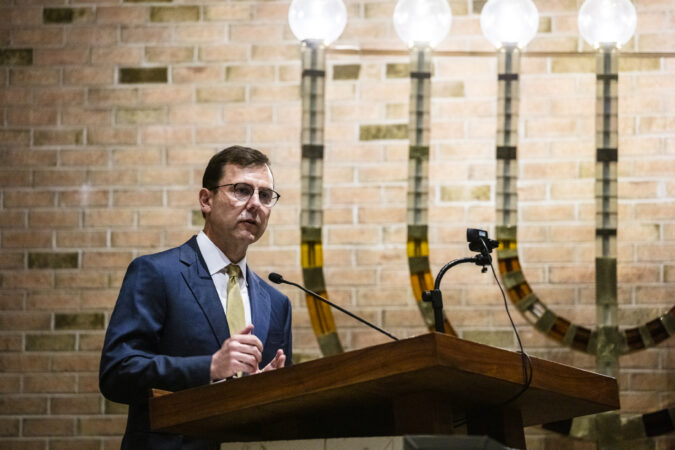
    WASHINGTON — Rep. Tom Kean Jr., the New Jersey Republican who disappeared from Congress and the campaign trail in March with almost no explanation, is set to return to the Capitol on Tuesday and address the mysterious health condition he says has kept him away.

    Kean, a 57-year-old seeking a third term in a competitive district, has missed more than 100 votes since he was last seen in public more than 100 days ago. His reemergence will be closely watched after months during which he and his staff refused to disclose anything about where he was or what was keeping him away.

    Their silence has built Tuesday’s return into a major reveal after a prolonged cliffhanger. Even last week, when a reporter for The New York Times found Kean at his home in Westfield dressed in a suit and tie around 8:45 p.m., he declined to offer any explanation, saying: “I’ll talk to you next week.”

    In the absence of official information, his own colleagues have speculated wildly about Kean’s condition, privately raising an array of possibilities for his long and unexplained absence.

    Could it be rehab for a stroke, heart condition or addiction issue? Was it a case of plastic surgery gone awry? Might he reappear on Capitol Hill as a woman? (His brief appearance at home last week put at least some of that speculation to rest.)

    Kean has said only that he is dealing with a “personal medical issue,” and until recently offered no timeline on his return, only vague assurances that when he did come back, he would be fully recovered and transparent about what he had been through.

    Kean’s office also did not provide any detail Monday about his return, though CNN reported that he planned to give a speech on the House floor. He also was scheduled to participate in a fundraising reception Tuesday evening in Washington, according to an email obtained by the Times that confirmed an earlier report by Politico.

    His chief of staff, Dan Scharfenberger, did not respond to calls and emails about the congressman’s planned schedule for Tuesday. A spokesperson for Speaker Mike Johnson said they were leaving the details of Kean’s return to him.

    Kean has invited some Republican officials to participate in a 2 p.m. conference call Tuesday, according to multiple people who were invited. The people said they expected he would have to address the health issue in some way.

    With an election in five months, Kean’s months of mysterious silence have tested the limits of what the public will tolerate in terms of privacy for its leaders.

    Presidents traditionally release the results of their annual physicals and disclose what medications they are taking, although they are not legally required to do so. But members of Congress typically provide no information to the public about the state of their health or their fitness to fulfill their duties.

    Voters tend to be forgiving about the health ailments of their leaders. And some lawmakers in the past have tried to turn their own medical challenges or experiences with mental health, alcohol or addiction into a way to relate to voters who may be struggling themselves.

    So Kean’s decision to keep his constituents and his colleagues in the dark for so long has largely been viewed as inexplicable.

    This article originally appeared in The New York Times.

  • Congress considers sidestepping filibuster to pass Trump’s voting restrictions

    Congress considers sidestepping filibuster to pass Trump’s voting restrictions

    House Republicans are considering using a fast-track process to bypass the filibuster and pass President Donald Trump’s sought-after voting restrictions.

    House Speaker Mike Johnson (R-Louisiana) said Monday that Republicans are moving forward with a plan to establish a grant program that would incentivize states to adopt stricter election rules outlined in the Safeguard American Voter Eligibility (Save America) Act, which includes a new requirement to provide documented proof of citizenship and a photo ID at the time of voting.

    The move would use the so-called reconciliation process, designed to overcome the filibuster, because it can be passed with a simple majority in both chambers, bypassing Democrats.

    “If you put it into a grant program or something similar, then it does make it part of reconciling the budget,” Johnson told reporters Monday, after meeting with Trump at the White House. “It does ultimately work that way.”

    “The only way to get that to the president’s desk, we’ve been shown many times, is to put it on reconciliation,” Johnson said.

    Doing so, Johnson argued, would allow the Save America Act to comply with Senate rules.

    However it’s not clear whether Trump would be on board with voting restrictions administered through a grant program. And many Senate Republicans have expressed doubt about passing more legislation through the fast-track process this year.

    Trump has been trying to pressure Republicans to pass the act, including refusing to sign a bipartisan bill aimed at helping Americans with housing, which was sent to his desk Monday.

    Speaking at the White House on Monday, Trump said it is “even more important” that Congress passes the Save America Act and said he doesn’t understand why Senate Majority Leader John Thune (R-South Dakota) won’t fire the parliamentarian, a nonelected, independent arbiter who advises the Senate on how to navigate laws and rules.

    “[He] has the right to immediately fire her and put somebody else there and it’s not even believable that she’s still there,” Trump complained.

    Senate Republican leaders have repeatedly told Trump that the votes are not there to pass his election bill, which would require proof of citizenship to vote in federal elections and restrict mail-in voting, among other provisions. The House passed a version of the bill earlier this year that did not include all the provisions Trump has demanded.

    Under this new plan, House Republicans said they believe that establishing a grant program that incentivizes states to implement the new election restrictions — rather than establishing them outright — should comply with Senate rules and allow them to pass the legislation with Republican votes only.

    However, Senate rules would likely prevent much of the Save America Act as written from being included as provisions passed through the process must be budgetary.

    At least four Republicans in the Senate have expressed opposition to the Save America Act and previously voted against adding the language to another must-pass measure. It is unclear whether these senators would support the new grant provision.

    Johnson said House Republicans will first attempt to pass a procedural rule that would merge the Save America Act and the National Defense Authorization Act, which is an annual defense policy bill, upon passage of the latter and send both bills together to Senate.

    Rep. Anna Paulina Luna (R-Florida) and a group of GOP hard-liners have been holding up most action on the House floor since last week as a protest against Senate inaction on the Save America Act. They have refused to vote for rules, which are necessary to bring most legislation to the floor.

    On Monday evening, Luna said she opposes the merger maneuver, and she also expressed skepticism over the grant program. The Florida Republican said Johnson had not spoken to her about either option.

  • Three words in the Declaration of Independence paint a cruel picture of Natives

    Three words in the Declaration of Independence paint a cruel picture of Natives

    McKaylin Peters, a 24-year-old Native American graduate student at Johns Hopkins University, still recalls when she first heard the words “merciless Indian savages.”

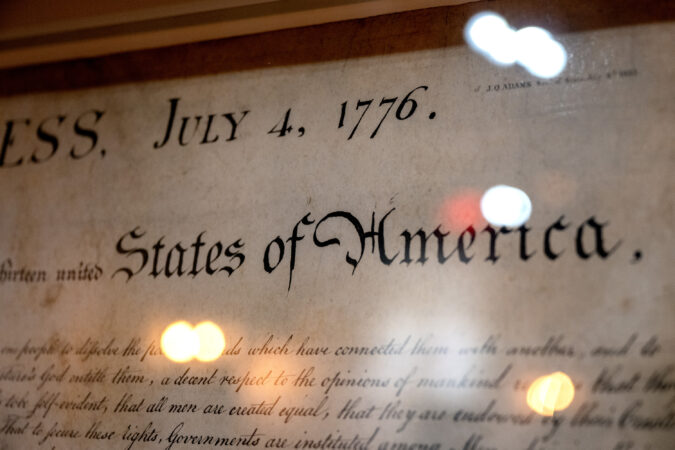
    Sitting in social studies class at her predominantly White middle school near Green Bay, Wisconsin — a school that once used an image of an Indian as its mascot, she cringed when the teacher read a passage deep in the Declaration of Independence: “He has excited domestic insurrections amongst us, and has endeavoured to bring on the inhabitants of our frontiers, the merciless Indian Savages, whose known rule of warfare, is an undistinguished destruction of all ages, sexes and conditions.”

    Peters said she and the six other Native students in the class looked quietly at one another.

    “I was upset. It just rolled off her tongue very easily,” recalled Peters, a citizen of the Menominee Nation who is getting her master’s in organizational leadership. “It seemed like no one else was shocked except for us, the Indigenous students in the classroom. We were like, ‘Did she really just say that?’”

    As the United States marks the 250th anniversary of the Declaration — a document fundamental to the nation’s founding and still revered — Peters and other Native American scholars and tribal leaders are reflecting on the Founding Fathers’ use of the derogatory description for Indigenous people in 1776. Many note that while the Declaration promises that “all men are created equal,” its ideals were not extended to everyone.

    The document’s portrayal of Indigenous people helped establish a moral and legal framework that justified decades of devastating U.S. policies toward Native communities, according to historians. Celebrations of the 250th anniversary of the Declaration’s signing come amid a striking contrast: Native tribes are working to reclaim ancestral lands, revive lost languages and preserve cultural traditions, while the Trump administration has sought to remove or downplay references to slavery, Native dispossession and other dark chapters of U.S. history in parks and museums and on government websites.

    “It’s not just a line in an old document,” Peters said. “It’s a reminder that this country was built by declaring us less than human. When the Declaration of Independence calls us that, it’s a message that Native youth sadly still hear today in classrooms, policy debates and in how society talks about us.”

    Many historians and Indigenous historians say the term “savages” did more than reflect 18th-century attitudes. It helped perpetuate stereotypes of Native Americans and contributed to their marginalization; centuries later, it adds to feelings, especially for Native youths, of being excluded from America’s national story. A 2022 study by Texas A&M University researchers found that the Declaration’s pejorative reference to Native Americans helped normalize a view of them as threats rather than as sovereign nations and peoples with rights.

    For many Native people, the meaning — and impact — of the phrase is emotional and complicated.

    Some discover the wording as adults and are appalled. Others see it as a reminder of racist attitudes and centuries of broken treaties, land theft and forced assimilation. Some young people have reclaimed the epithet, debating it on social media and displaying it on T-shirts and tattoos as a symbol of resilience and empowerment. An Indigenous-led heavy metal band intentionally used the phrase as its name.

    “It’s become sort of an ironic touchstone,” said Kevin Gover, the Smithsonian Institution’s undersecretary for museums and culture. A citizen of the Pawnee Tribe of Oklahoma, Gover said he did not encounter the term until middle age. After his initial outrage, Gover said, he responded as many Native people do: by mocking it.

    “Even we, on the side of the descendants of those who were victimized, have to take a nuanced view,” said Gover, who is also the former director of the National Museum of the American Indian in D.C. “In many respects, it’s a badge of pride that our ancestors had the wherewithal to survive and allow us to be alive in this time.

    “We can acknowledge the wrong,” he said, “and be grateful for our ancestors’ fortitude.”

    Hartman Deetz, an enrolled member of the Mashpee Wampanoag — the Massachusetts tribe that famously helped the Pilgrims survive their first Thanksgiving in 1621 — said the wording reflects the opposite of how Indigenous people treated White settlers.

    “They were fed when they were starving, given hospitality by us, but they treated us in a way that was savage and merciless in the dispossession of our homelands,” said Deetz, who served as a consultant for an exhibition at the Museum of the American Revolution in Philadelphia about the Declaration and the history behind it. “It was framed in a way that justified the treatment they brought upon us, and it continues to this day in attempts to sell our sacred sites for copper mines and to drill for oil and mining on our lands.

    “The colonial enterprise hasn’t stopped,” he said. “There’s such a disregard for Natives to exist or have rights of where we do exist. That’s the legacy of these words.”

    The words originated in an early draft of the Virginia Constitution written by Thomas Jefferson, who later included it in the Declaration of Independence, which Congress adopted.

    Ironically, some historians say, the characterization of Native people contradicts Jefferson’s own views. In “Notes on the State of Virginia,” a book Jefferson wrote that laid out many of his views on race, government and religious freedoms, he was “very sympathetic to Native people,” said Kevin Butterfield, a historian at the Library of Congress. Jefferson described Indigenous people as just, honorable and noble — a sharp contrast to the widespread European belief that Indigenous people were inferior.

    But Jefferson understood the Declaration was political rhetoric — a kind of “public relations piece,” said Butterfield, who is the acting chief of the Manuscript Division at the Library of Congress. He placed it near the end to bolster the case for independence.

    “He’s trying to paint the worst possible picture of how the king is approaching his interactions with the American colonists,” Butterfield said. “So he’s laying out horrible wartime atrocities from the Revolutionary War.”

    The description reflected colonial attitudes and the realities of frontier warfare, scholars say. Colonists were hostile toward Native Americans, who were powerful political and military figures and, just like other nations, protecting their sovereignty. Some Native nations had allied with the British — a move that many settlers resented — and many colonists also opposed King George III’s Proclamation of 1763, which barred settlement west of the Appalachian Mountains.

    Repeated violence between Indigenous people and settlers also helped shape the ideology behind the description, including the French and Indian War and Dunmore’s War in 1774, when Virginia colonists fought the Shawnee and Mingo to expand into the Ohio Valley, according to historians. In the summer of 1776, as the Declaration was drafted and adopted, a lesser-known conflict unfolded when Cherokee warriors attacked frontier settlements across parts of Virginia, North Carolina, South Carolina and Georgia. Colonists responded by burning more than 50 Cherokee towns and driving Native people from their homes.

    By 1776, the Founding Fathers “understood their need to accuse the king of what they considered the ultimate crime — partnering with Indigenous peoples and arming them,” said Ned Blackhawk, a Native American author and Yale University historian. “So they created this vilification in the Declaration that, in many ways, was at odds with their experience of living alongside Natives for generations.”

    The rhetoric was part of a broader racial ideology taking shape during the Revolutionary era, said Blackhawk, an enrolled member of the Te-Moak Tribe of Western Shoshone Indians of Nevada.

    “They were deeply committed to Enlightenment principles, but those were restricted to people similar to themselves,” he said. “Native Americans became a foil in simplified and racialized ways.”

    Tracy L. Canard Goodluck, executive director of the Center for Native American Youth at the Aspen Institute, said she is disappointed the term is either glossed over or not taught in many school curriculums, its impact not discussed.

    It wasn’t until she was a student at Dartmouth College, she said, that she fully understood the context of the description. She was angry, but the new knowledge also awakened in her a passion for educating others about Indigenous history and mistreatment. Goodluck, a member of the Oneida Nation who is also Mvskoke Creek, said in her previous work as a teacher in Seattle and Albuquerque she taught about Indigenous people and the harsh characterization in the Declaration.

    “It shouldn’t just be about White history,” she said. “It should be about all history — the good, the bad and the ugly.”

    She said it’s also important to educate the public, so every Fourth of July, she wears a T-shirt emblazoned with the phrase from the Declaration.

    “Those words served the purpose back then as a way to dehumanize Native people in this country,” said Goodluck. “We need to change that narrative. We’re still here. We’re doctors, lawyers, teachers and political leaders.

    “I am that merciless Indian savage who my ancestors prayed for to do great things.”

  • ‘No one’s coming to save us but us’: Generation Z runs for office

    ‘No one’s coming to save us but us’: Generation Z runs for office

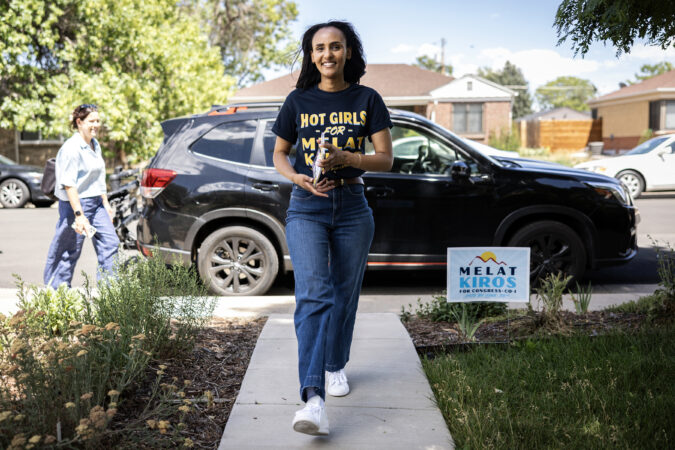
    Melat Kiros was fresh out of Notre Dame Law School in 2023 when she was fired by her New York law firm after publishing a lengthy letter sharply criticizing Israel’s government, raising questions about its historical legitimacy and challenging the firm’s response to law students engaging in pro-Palestinian activism.

    In Tuesday’s Democratic primary in Colorado, under the banner of the Democratic Socialists of America, Kiros, 29, is again challenging the establishment. This time, she hopes to defeat Rep. Diana DeGette, 68, a liberal Democrat who was elected to her Denver-area seat a year before Kiros was born.

    The showdown is the latest between the mainstream Democratic Party and its ascendant, youthful left wing, but Kiros represents more than the DSA. She is one of several Generation Z candidates this year fueled by the generational frustrations of their pandemic-marred youth, social media-fueled isolation, artificial intelligence and the war in the Gaza Strip.

    The upset pulled off by Darializa Avila Chevalier, 32, a socialist doctoral student, over Rep. Adriano Espaillat, 71, in last week’s New York Democratic primary may have only set the stage for the generational and ideological fights to come — on both sides of the political aisle.

    Melat Kiros, right, who is running for Congress and hopes to defeat Rep. Diana DeGette (D-Colo.), who was elected to her Denver-area seat a year before Kiros was born, records a video with Eric Cheng of the podcast “Wait, Say More” while campaigning in Denver, June 27, 2026. Kiros is one of several Gen Z candidates this year fueled by the generational frustrations of their pandemic-marred youth, social media-fueled isolation, artificial intelligence and the war in Gaza. (Chet Strange/The New York Times)

    “When you’re living through these kinds of moments on such a regular basis, it feels impossible to be able to change course and believe your vote actually makes a difference,” Kiros said.

    But, she added, “we’re seeing just how broken the system is, and we’re seeing that no one’s coming to save us but us.”

    DeGette sees lawmakers of all ages working together as important, citing her work with younger members of Congress like Alexandria Ocasio-Cortez, 36, and Jake Auchincloss, 38, on “Medicare for All” legislation. But DeGette still believes experience and community involvement are tantamount to age.

    “What voters look at in these races is they look at who they think is going to most effectively represent them and who can have the power and leadership to fight against Donald Trump,” she said.

    For Generation Z voters, youth and recent history have shaped their views. They did not experience the exhilaration of Barack Obama’s hope-fueled 2008 campaign or George W. Bush’s calls to service after the attacks of Sept. 11, 2001. Instead, they have weathered a decade of Trump’s “American carnage” narrative and the gerontocracy of Joe Biden. Their beefs tend to be less with the other party than their elders.

    Generation Z voters express higher levels of party alienation than any other generation; two-thirds of Generation Z respondents in a recent New York Times/Siena poll expressed dissatisfaction with both Democrats and Republicans. Among Generation Z Democrats, 68% said they were unhappy with their own party.

    But the rise of Generation Z and young millennial candidates demanding change is not limited to Democrats.

    Joe Mitchell, the founder of Run GenZ, an organization aiming to elect young conservatives, is vying to fill the seat of Rep. Ashley Hinson of Iowa, a Republican running for Senate. Mitchell, 29, who runs a real estate development company, represents a brand of young male Republicans inspired by Charlie Kirk, the slain conservative activist, and driven by their Christian faith and by values aligned with Trump’s political movement.

    “Everything I do is going to be America first,” said Mitchell, a former state representative. “Everything we do should be focused on, ‘how can we help the American worker?’”

    Brendan Trachsel remembered celebrating his 16th birthday as he watched election results come in for Trump’s first presidential win in 2016. Although he grew up in a conservative household in the San Diego suburbs, he said he was in “utter shock that someone who is completely OK with treating people so horribly would get into office.”

    After starting at Northern Arizona University in 2019, he registered with the Green Party. Now 25, Trachsel is running for the Arizona House of Representatives in a Democratic-held district near Flagstaff, focusing on labor organizing, data center moratoriums and tighter protections for online privacy.

    James Thibault, a state representative in New Hampshire, in Northfield, N.H., June 27, 2026. For Gen Z voters, youth and recent history have shaped their views. (Veasey Conway/The New York Times)

    If he wins, Trachsel would be the first third-party official in the Arizona Legislature. He cited Zohran Mamdani’s mayoral campaign in New York as an inspiration.

    “It was just so people-focused, so intent on just shutting up and hearing what people needed and want,” Trachsel said.

    Startled by Trump’s return in 2024, Leila Staton, 22, and her mother formed the Insufferable Wenches of Iowa, a progressive group designed in part to link like-minded but socially isolated rural residents. No Democrat had filed to run this year against the two-term Republican state legislator representing her district, so Staton, who lives in Stout, population around 200, decided to run herself.

    College graduates from rural Iowa tend to leave the state. Staton pointed to a state Legislature, where in 2023 the average age was 54, as unrepresentative of her generation.

    Staton has focused her campaign on public education, which has been drained of cash by a new school voucher program; family farms struggling with rising costs and corporate pressure; drinking water that is contaminated with nitrates; and Iowa’s rapidly rising cancer rates.

    “There’s a lack of opportunity, prices are rising, wages are stagnant,” she said, “and our cancer crisis has no clear solution.”

    Generation Z politicians are also the first largely born after the Columbine massacre in 1999 and raised amid the drumbeat of school shootings that followed.

    Tyler Smith, 26, was in a Los Angeles high school when, in 2018, a gunman killed 17 people at Marjory Stoneman Douglas High School in Parkland, Florida. He joined school walkouts and watched as a young breed of activists emerged from Parkland.

    While working for a gun control group, Smith decided to run as a Democrat for a Texas House seat this year in the Houston area held by a staunch conservative, insisting, “People right now are sick and tired of the same old, same old.”

    Braxton Mitchell, a 26-year-old Montana state representative, also became involved in political activism in 2018. But for him, the gun control walkouts that followed Parkland did not represent his “way of life,” so he spearheaded a counter walkout, against gun control, at his high school in Columbia Falls, Montana. After graduation, he got on a plane for the first time and flew to Washington to meet Kirk, who had been sending him messages of support.

    A year and a half later, the state Republican Party chair, Don Kaltschmidt, encouraged Mitchell to run for his local legislative seat, then held by a Democrat. He won and is now running for reelection.

    “We need all generations at the table, especially in places like the state legislature, because the decisions being made are going to impact my generation the most,” Mitchell said.

    He’s working on a school safety bill to put panic alert systems in rural schools across the state — without gun control.

    COVID-19 is another shared experience. James Thibault, the son of a landscaper and a nursing assistant in New Hampshire, had no political aspirations until the pandemic shut down schools. Then politicians reopened them with mask mandates that Thibault, a high school freshman at the time, found onerous and not conducive to learning.

    He protested at school board meetings. He was appointed to a youth legislative council. Then he filed to run for state representative before he graduated from high school. He was elected at 18 as a Republican, becoming the youngest state legislator.

    “COVID was a wake-up call,” said Thibault, 20, who is running for reelection this year.

    In Denver, Kiros also cited the pandemic as consequential to her own politics. “Stagnant” cultural norms that demanded working in offices suddenly gave way to acceptance of remote work, she said. The burning of fossil fuels plunged. Then those social benefits went in reverse.

    Her frustrations with current representatives have only grown deeper.

    “I don’t know if it’s ego,” Kiros said. “I don’t know if it’s recklessness. There really is just no sense of preparing or leaving the world better than where they found it.”

    This article originally appeared in The New York Times.

  • Florida shows how not to teach U.S. history on the republic’s 250th anniversary

    Florida shows how not to teach U.S. history on the republic’s 250th anniversary

    The state of Florida recently released a new American history high school course with a conservative tilt. Troublingly, it glosses over the relationship between the founders and slavery—a topic that should in 2026 promote a rich understanding of the U.S. past, but one that has also been a subject of controversy, including in Philadelphia at the site of the President’s House. In fact, slavery was central to the economic growth and expansion of the young republic, so much so that it would take a long and brutal war to get rid of it. As Abraham Lincoln, dealing with slavery during the Civil War, put it: “Fellow-citizens, we cannot escape history.”

    On the 250th anniversary of the founding of the American republic, it bears repeating that the history of the United States is neither the linear, uninterrupted history of American exceptionalism that the Florida framework promotes nor is it solely an unremitting story of racism and reaction. Students benefit from learning about the brutality of slavery as well as the bravery of those ordinary Americans, men and women, Black and white, who resisted it. Emphasizing just one part of this equation is incomplete and bad history.

    The Florida course framework portrays the founding generation of American revolutionists as unanimously antislavery. The truth is more complex. While most of the northern founders like Benjamin Franklin, Alexander Hamilton, and John Jay lent the prestige of their names to abolition societies, most southern founders did not. Their actions reflected the reality on the ground. Between 1779-1804, northern states gradually abolished slavery. But southern slavery not only persisted but expanded considerably in the early American republic. If the founders were unanimous, what explains this divergence?

    While Jefferson and Madison professed to abhor slavery in their writings, like most southern enslavers they did not free their slaves. Jefferson made an exception for his own progeny, freeing select enslaved people. During his presidency, George Washington famously pursued his slave Ona Judge, who had escaped enslavement, with a relentless energy. However, New Hampshire authorities refused to render her back to the President—a signal of diverging attitudes and policies about slavery in the early republic.

    Washington did become the only prominent member of the so-called Virginia dynasty of Presidents to free his slaves on his death. It was a belated gesture. As the Black abolitionist Reverend Richard Allen noted in his eulogy of Washington in 1799, “he dared to do his duty, and wipe off the only stain with which man could ever reproach him.” While Washington was lauded as the Father of the Nation, few southern slaveholders followed his example, as Allen had hoped.

    The Florida history standards also present the U.S. Constitution, which was signed in 1787, ratified in 1788, and went into effect with the launch of the federal government in 1789, as an antislavery document rather than one that contained expedient compromises on the issue of slavery. One particularly egregious example of this relates to the three-fifths clause, which counted the enslaved population at a three-fifths proportion for representation and taxes. The Florida guidelines consider this an antislavery clause because the enslaved population was not counted fully. But this compromise led to southern domination over the federal government until Lincoln’s election as it gave the slave states disproportionate representation in Congress.

    The framers of the Constitution were careful not to use the words slavery and slaves in the fundamental legal document of the republic. Instead, they employed euphemisms such as “persons held to service” or “all other persons.” But that did not prevent contemporary abolitionists from bemoaning its fugitive slave clause, a part of the Constitution that gave southern laws of slavery extraterritoriality in the free states—an endless source of political friction between the states—and the continuation of the African slave trade, an execrable commerce whose tortures were well known then, until 1808.

    While Florida students under the new guidelines would learn about a debate among abolitionists like William Lloyd Garrison and Frederick Douglass on whether the Constitution was a proslavery or antislavery document, they would miss other important context. For example, the guidelines elide the equally important debate among abolitionists on the extent of the complicity of American churches in upholding slavery. Instead, abolition is framed as a Christian movement—with no mention of the schism over the issue of slavery leading to religious divisions that still exist today, including northern and southern Methodist and Baptist denominations.

    The framework also includes words of praise for proslavery theorist John C. Calhoun, a planter politician from South Carolina, as a constitutional thinker. Confederate generals like Robert E. Lee and Thomas “Stonewall” Jackson are portrayed as “honorable,” pious, and militarily skilled with little mention of their cause of human bondage, which Ulysses Grant called “one of the worst for which a people ever fought.” Mississippi’s “Declaration of the Immediate Causes which induce and justify Secession” clearly stated: “Our position is thoroughly identified with the institution of slavery — the greatest material interest of the world.”

    Indeed, Lee’s army enslaved free Black people in Pennsylvania while retreating from Gettysburg in 1863—not a very honorable thing to do and explicitly condemned in the Bible as man stealing. But this context is missing in the new Florida guidance.

    The histories of Reconstruction and the Progressive era are not particularly well understood by the public. The Florida guidelines portray Lincoln as being at odds with Radical Republicans who implemented Reconstruction. He wasn’t. It also casts Andrew Johnson as continuing his “lenient” policy to the south, a canard that Johnson assiduously promoted to oppose Reconstruction. In fact, before his death, Lincoln became the first U.S. President to endorse Black citizenship and male suffrage, the cornerstone of Reconstruction. Radicals such as Thaddeus Stevens and Charles Sumner as well as moderate Republicans like Lincoln championed the constitutional amendments and federal laws that comprised Reconstruction.

    Echoing a viewpoint espoused by white Southern elites at the time, Reconstruction gets short shrift and is deemed a failure in Florida’s new standards. Actually, the Reconstruction amendments and the first federal civil rights laws were tremendous achievements. We know the first 10 amendments to the Constitution as the “Bill of Rights” today because the author of the consequential Fourteenth Amendment that established national citizenship by birthright or naturalization, John Bingham, gave them that moniker and it eventually stuck. And Reconstruction didn’t fail; a systematic campaign of domestic racist terror in the south and reactionary judicial decisions by the United States Supreme Court overthrew it.

    The Jim Crow era that followed became a cautionary tale of how quickly and completely a country can lose its democracy and rights gained. But the Florida guidelines casts more than half a century of Jim Crow as a blip or aberration from a national history otherwise committed to democratic ideals.

    Students will be better prepared to be citizens of the republic when presented with differentiated historical narratives rather than having sanitized versions of the past served up to them. The Florida standards not only whitewash the past, they evoke an unchanging founding moment and pristine originalism—as though Americans in the founding era did not argue, debate, or change their thinking about slavery over time.

    Made By History sponsors. FOR USE ON MADE BY HISTORY STORIES ONLY.

    It also distorts how Americans continue to fight to expand—or curtail—access to rights and democracy more broadly. For instance, Progressive era reforms that included government regulation of the economy and working conditions are portrayed as “unbound by traditional constitutional restraints.”

    Most historians argue that our modern democracy was founded during Reconstruction, whose seeds later grew in the 20th century and were expanded by the Civil Rights revolution of the 1960s. But, as in previous eras, the fundamental questions remain contested and unsettled. That is both clear in the historical record and the foundational knowledge students must understand to continue to expand or improve our democracy today.

    Manisha Sinha is the Draper Chair in American History at the University of Connecticut and author most recently of The Rise and Fall of the Second American Republic: Reconstruction, 1860-1920.

    Made by History takes readers beyond the headlines with articles written and edited by professional historians. Opinions expressed do not necessarily reflect the views of The Inquirer.

  • 26 Philly students are tour guides pointing visitors around town this summer

    26 Philly students are tour guides pointing visitors around town this summer

    Philadelphia students are among the friendly faces welcoming the expected more than 1 million visitors to the city this summer.

    Youth from Ss. Neumann Goretti High School and Girard Academic Music Program are official staff greeting tourists and giving directions and Philly recommendations over six weeks.

    Planning for the huge undertaking of celebrating America’s 250th birthday in its birthplace began years ago, and Kathryn Ott Lovell, president and CEO of the Philadelphia Visitor Center Corporation, knew that she needed reinforcements.

    “It was going to be hard to scale our mission and reach as an organization, short of building a visitor center on every corner,” said Lovell.

    Enter the Phambassadors, a corps of 10,000 Philadelphians who volunteer to be a welcome wagon of sorts for the tourists arriving in town, some of whom were trained via a Philly-themed boot camp. Lovell, who “was born with this irrational love for Philly,” she said, arbitrarily picked the number 10,000, she said, hoping to attract that number of volunteers by the end of the year. The Philadelphia Visitor Center got there months ahead of schedule.

    And when Lovell heard that Neumann Goretti had launched a hospitality program, creating the Youth Phambassador corps felt like a natural extension, both as a way to expand the welcome wagon and a means to help develop the next generation of tourism and hospitality professionals.

    Lovell, Philadelphia’s former Parks and Recreation Commissioner, wanted to make it a paid opportunity, a city summer program with training and a stipend for participating students. Twenty Neumann Goretti students signed on, plus six students from GAMP, the South Philadelphia magnet school.

    Training was held this month for the 26 Youth Phambassadors to learn both soft skills and hard skills — customer service, visitor engagement, and even citizen diplomacy via the World Affairs Council.

    The Youth Phambassadors, who are working with an adult supervisor, are stationed both inside the Visitor Center at Sixth and Market Streets and around the historic district.

    The hope is to have the students show off the city, but also “that it’s a portal into the hospitality and tourism world for the kids as they have a really wonderful experience,” Lovell said.

  • Historic First Bank of the United States reopens with a grand $43M remodel in time for July 4

    Historic First Bank of the United States reopens with a grand $43M remodel in time for July 4

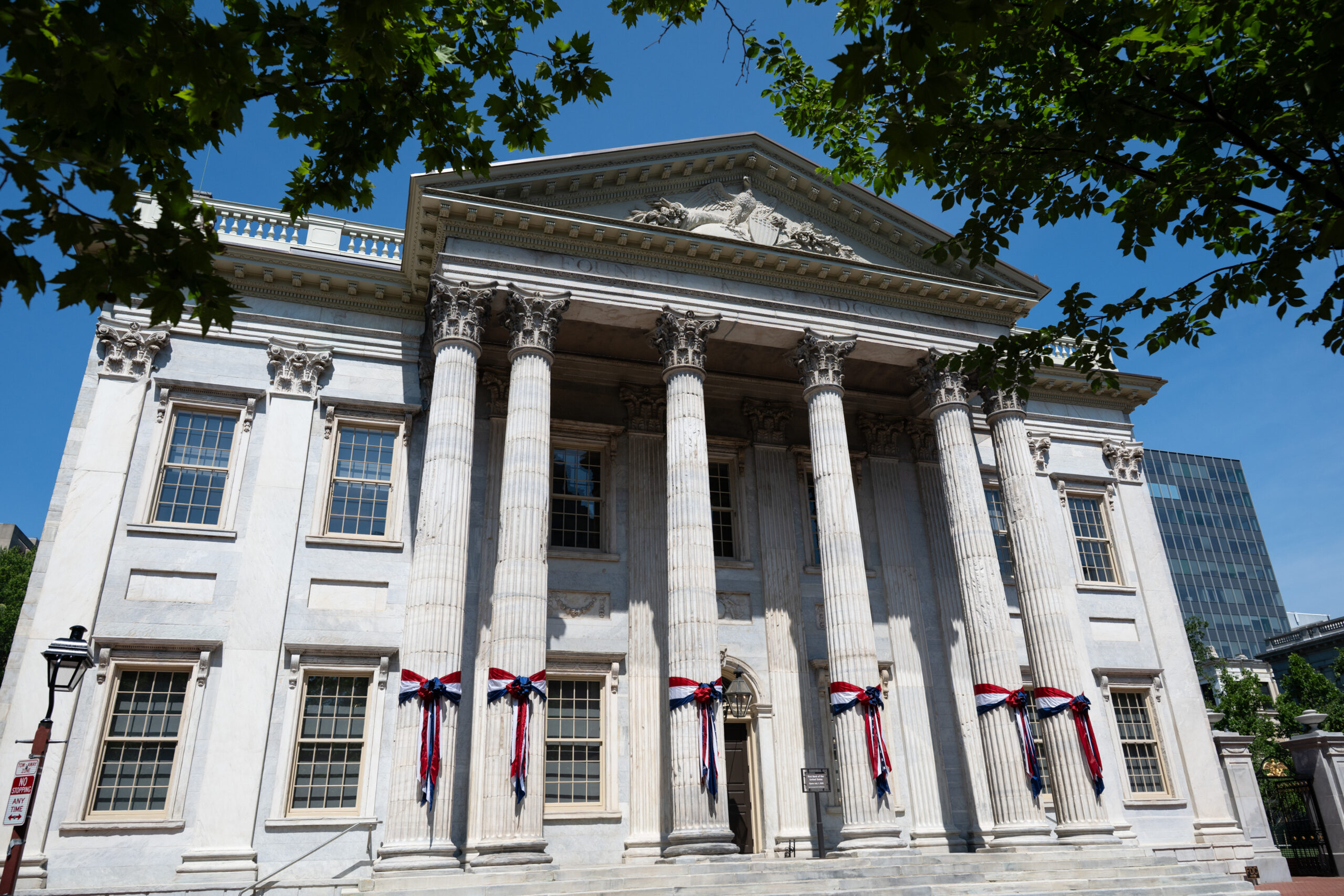
    The First Bank of the United States in Philadelphia, one of Alexander Hamilton’s signature achievements, has undergone a $43 million renovation and will be open to the public for the first time in more than 20 years starting Wednesday.

    The ribbon cutting at the building on the west side of Third Street near Chestnut comes just in time for 250th anniversary of the Declaration of Independence this weekend.

    Visitors will be able to walk through the grand rotunda and look up at the barrel-vaulted golden ceiling, lit by 240 painstakingly cleaned panes of glass around a central skylight.

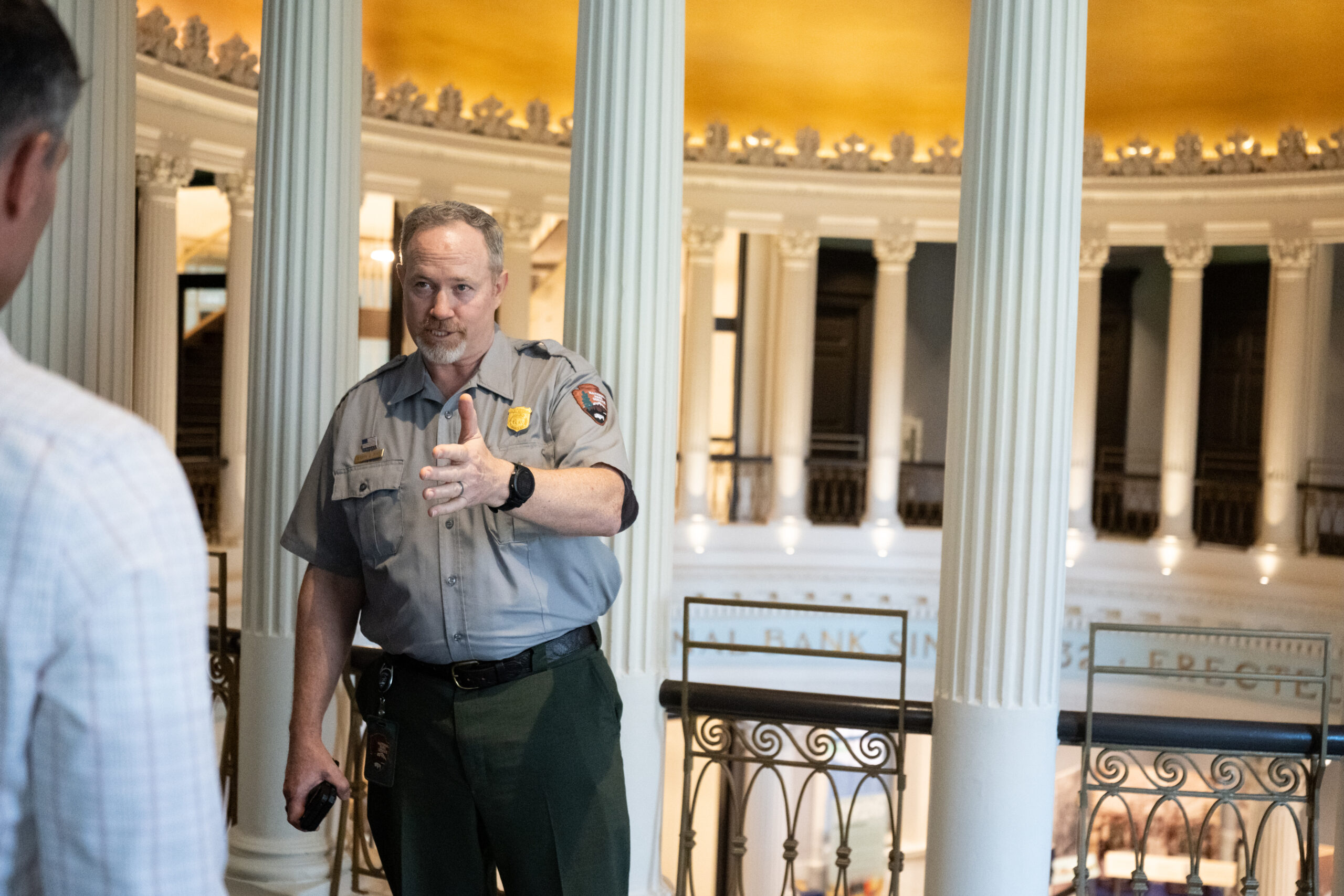
    “I’m excited to see how visitors connect to the space,” said Steve Sims, superintendent of Independence National Historical Park. “The National Park Service can talk about what’s important all day long, but what really matters is what’s relevant to our visitors.”

    Simms said the interior before the renovation was dark and dingy, marred by an old carpet that covered the marble floor. The entire interior has been painted and the ceiling restored.

    Steven Sims, superintendent of Independence National Historical Park, shows off the interior of the newly renovated First Bank of the United States.

    The air-conditioning, electrical, lighting and other systems had to be replaced and brought up to code.

    The National Park Service also built an addition on the back, which serves as a public entrance. It includes an elevator and modern bathrooms, complying with the Americans with Disabilities Act.

    The original budget for the restoration was about $30 million. But higher asbestos levels, issues with soil borings, and installation of a new stormwater management system so roof drainage would be filtered caused that total to rise.

    In all, $39.3 million for the project came from the federal Great American Outdoors Act Legacy Restoration Fund, and the Independence Historical Trust contributed $4.5 million.

    Jonathan Burton, director of development for the trust, said Chadds Ford-based John Milner Architects reimagined the interior of the First Bank, bringing it more in line with the vision held by Philadelphian Stephen Girard, who took over the bank in 1812. West Chester-based Bedwell Co. was the contractor.

    “This national historic landmark is now pristine,” Burton said. “It’s completely updated, with all new mechanical systems. It’s absolutely gorgeous.”

    Rare artifacts on display

    Two temporary exhibits, containing rare artifacts, will fill the interior until a permanent exhibit on the bank’s mission — to create a national financial system for the United States — is finished.

    Rosalind Remer, Drexel University’s senior vice provost for collections and exhibitions, said the temporary exhibit from the Atwater Kent Collection at Drexel is designed to focus on souvenirs and art collected from the 1876 Centennial Exposition in Philadelphia and the Bicentennial.

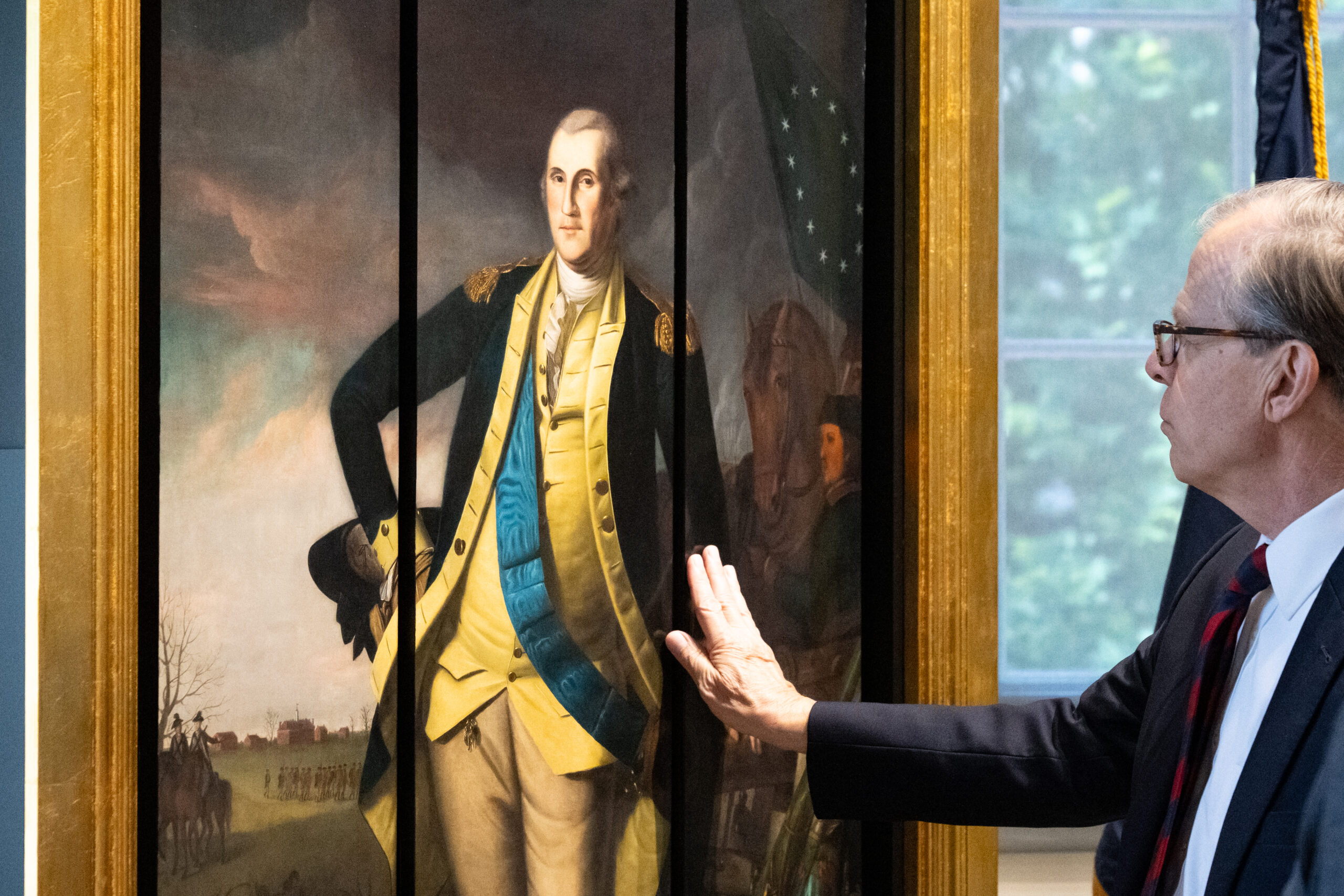
    Glyn Davies, a retired U.S. diplomat and senior Foreign Service officer, points out details of a replica of a portrait of George Washington at the First Bank of the United States.

    The America on the World Stage exhibit includes two chairs from the Chinese Pavilion at the exposition and a Bicentennial lamp with glass panes of the American flag and Liberty Bell.

    Glyn Davies, a retired U.S. ambassador and a consultant to the U.S. State Department, said the Marks of Friendship exhibit commemorates 250 years of U.S. diplomatic treasures.

    The exhibit includes an ornate Louis XVI-style mantel clock gilded in bronze from the U.S. embassy in Paris and dated to about 1725, as well as Philadelphia painter Charles Willson Peale’s 1779 portrait of George Washington in Princeton.

    First Bank’s historic design

    The bank was key to Alexander Hamilton’s push to give the fledgling federal government authority to handle its poor financial situation.

    It’s one of the nation’s first notable examples of Classical monumental design, which contains proportions and geometries of ancient Greece and Rome on a grand scale.

    The three-story brick structure features a marble front and trim has a seven-bay marble facade.

    Completed in 1797, the three-story brick structure with a marble front and trim has a seven-bay marble facade, built by Claudius F. LeGrand & Sons, stone workers, woodcarvers, and guilders. The builders used Pennsylvania blue marble quarried from Montgomery County.

    The decorative entrance, restored in 1983, contains elaborate mahogany carvings of an eagle grasping a shield of 13 stripes and stars and standing on a globe festooned with an olive branch.

    The entrance is topped by a marble keystone that depicts Mercury, the Roman god of commerce, finance, and merchants.

    The entire exterior has been repointed and damaged areas were fixed. The eagle sculpture also had to be repaired as part of the new renovations.

    Inside, the center is defined by a circular Corinthian columned rotunda on the first and second floors.

    The original cellar retains its 1795 stone-walled and brick-vaulted rooms, some still having their original sheet iron vault doors.

    Alexander Hamilton’s lasting legacy

    First Bank has a long and storied history for both the U.S. and Philadelphia.

    Visitors to the First Bank will be able to walk through the grand rotunda and look up at the barrel-vaulted golden ceiling, skylit by 240 panes of glass around a central skylight.

    At the time of Hamilton’s push for a bank, the U.S. had no national currency, and banks issued their own notes. The notion of a national bank ignited a heated national debate.

    Thomas Jefferson, who penned the Declaration of Independence just a few blocks away, was originally against the bank but later used it to finance the Louisiana Purchase. The bank’s initial 20-year charter lapsed in 1811.

    Philadelphia merchant Girard bought the bank in 1812. After Girard’s death, another bank purchased the building in 1832 and called itself Girard Bank to capitalize on its namesake’s financial fame.

    In 1902, the Girard Bank hired architect James Windrim to remodel the interior. He removed the original barrel-vaulted ceiling and installed a skylight over a glass-paned done to give tellers more light.

    The bank was vacated in 1929 and languished until the National Park Service purchased it in 1955 as part of Independence National Historical Park.

    The building served as the park’s visitor center until 1976, underwent some restoration, and was open in time for the Bicentennial in 1976. It was open off and on until being closed in 2002 — until now.

    Editor’s note: This story has been updated to correct the spelling of Steven Sims, superintendent of Independence National Historical Park.

  • This 18th-century tavern with a tainted past is now South Jersey’s American Revolution Museum

    This 18th-century tavern with a tainted past is now South Jersey’s American Revolution Museum

    An unsuspecting property in north Camden that had a front-row seat to the American Revolution has become a multimillion-dollar museum.

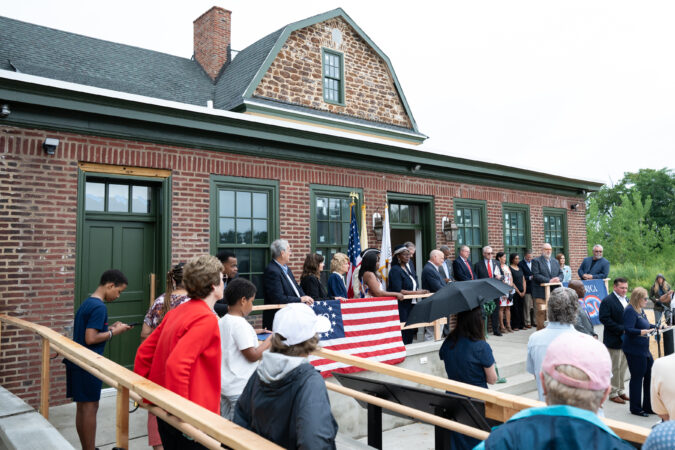
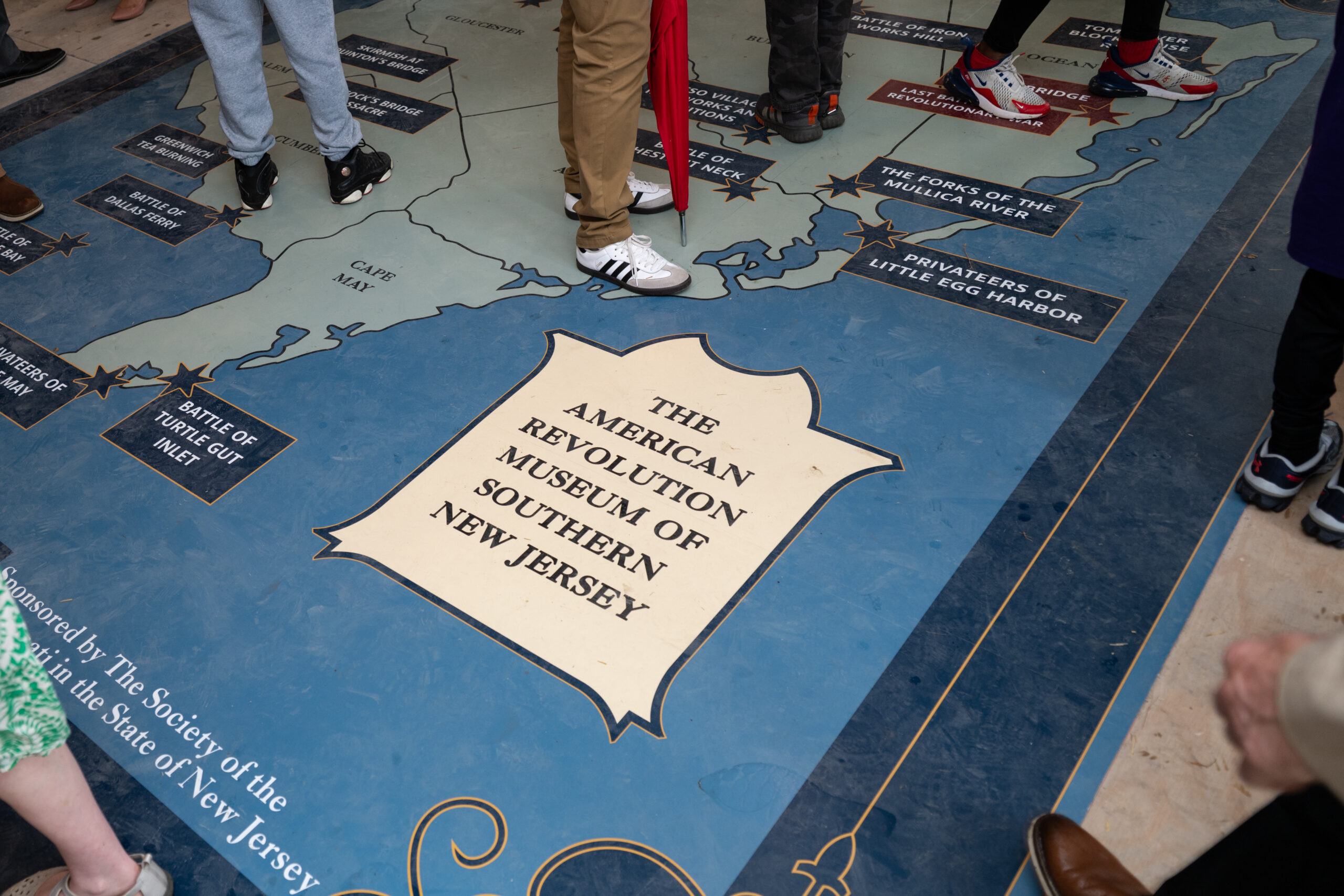
    Elected officials, history buffs, and local organizers gathered at the Benjamin Cooper Inn at 75 Erie St. on Saturday to celebrate the soft opening of the American Revolution Museum of Southern New Jersey. The project was funded by $4.6 million in grants from federal, state, and local sources, with the largest amount coming from the New Jersey Historic Trust.

    The 18th-century stone building has taken on many identities, including a private residence, tavern, British Army outpost, shipyard, luxury yacht building site, storage unit, and dumping ground for toxic materials. In the 1760s, the land was witness to the mass auction of enslaved people. Until recently, the building was abandoned.

    The museum hasn’t fully opened to the public and likely won’t for at least a little while, but leaders of the Camden County Historical Society, which has a 30-year lease with the building’s private owner, wanted to give people a taste of what the museum will be when it does. Right now, the museum is open for limited tours by appointment only.

    The Inn still needs work. The building has a temporary roof installed after a 2012 fire. The floors aren’t finished, and bathrooms have no doors. The second floor, currently sectioned off, hasn’t undergone any renovations, which will require fundraising of hundreds of thousands of dollars. Dirt piles and overgrown foliage block any view of the Delaware River.

    Visitors explore the exhibits at the soft opening of the American Revolution Museum of Southern New Jersey in Camden on Saturday.

    For the past six years, the society has planned to unveil the museum before America’s 250th, said Jack O’Byrne, the society’s executive director, but they kept running into obstacles. The project’s success came years after the society lost the Hugg-Harrison-Glover House, a Bellmawr home that survived the Revolutionary War, to a highway construction project after a preservation battle.

    “It’s been a race to the end,” said O’Byrne, who will retire from his role on July 4. “The project probably died like 13 times.”

    Zed Fox, the incoming executive director, and the society’s board will determine the future official opening date, hours, and cost. Fox said Monday that the board will meet on Wednesday to discuss those options, but he expects the museum to ready to open at full capacity by fall.

    The museum is planned to serve as the trailhead for Camden County’s LINK trail, a 34 mile shared-use path in the works across 17 municipalities, and educate people on South Jersey’s role in American history.

    A long history and a damaged home

    The new museum doesn’t showcase many historic artifacts. Many gems kept in the society’s archives, such as a letter written by George Washington at Valley Forge and a dozen other Revolutionary War-era items, wouldn’t fare well at the Inn with the sunlight streaming through the windows.

    But scattered amid walls of weapon replicas and educational text are hints of the real thing.

    There’s some 19th-century furniture originally owned by the Cooper family, a British cannon featuring wood blown off an 18th-century Royal Navy ship in Gloucester City, framed New Jersey bank notes from the 1760s and 1770s, and a front door key from when the Inn was a saloon called the “Old Stone Jug.”

    A bell hanging in one room rang to announce ferries landing at Cooper Street Ferry in 1800, and a cheval-de-frise, a sharp wooden log, once blocked British ships from sailing the Delaware River.

    In the same room, there’s a mantel from Hugg’s Tavern in Gloucester City, salvaged in 1929 before the building was demolished. Betsy Ross married her first husband, John Ross, in front of the fireplace at the tavern in 1773, though the mantel at the museum isn’t the original.

    Visitors explore the exhibits at the opening of the American Revolution Museum of Southern New Jersey in Camden on Saturday.

    But local historians say the displays aren’t the main attraction.

    “The building itself is an artifact,” O’Byrne said. “You know, it’s the most historic building in Camden.”

    Before the house was built, a teenage Benjamin Franklin was said to have slept at the property while traveling from Boston to Philadelphia.

    In 1734, Joseph Cooper, a Quaker, built a 2½-story Dutch Colonial stone home for his son and daughter-in-law, Benjamin and Hannah Cooper, at what became the historic building. Benjamin Cooper, a ferryman, also used the residence as an inn and a tavern.

    In 1777, the Benjamin Cooper Inn was used as a outpost for British Col. Robert Abercrombie. Hessian troops, German auxiliaries to the British Army, marched through Cooper Point during the war, and at one time, local historians say Benjamin Cooper’s sons, Samuel and Joseph Cooper, were jailed in Haddonfield in 1778 on suspicion of being American spies.

    But the property has a more troubling past.

    In the 1760s, the site was used for the auction of enslaved people. Though some who were forced to stay on the Cooper’s property until being sold managed to escape, “all were pursued and re-captured,” according to the Inn’s 2021 historic preservation plan.

    O’Byrne said the museum is working to educate people about that history. One of the museum’s few rooms, which the society has titled “The Declaration’s Promise,” informs visitors about how immigrants, Black people, and the Lenape, who lived in the region before white settlers arrived, shaped South Jersey’s history.

    “What we’re trying to do is make this a balanced history and not just about, you know, white people,” O’Byrne said.

    Camden’s ‘most historic building,’ under threat

    When demolition crews tore down the Hugg-Harrison-Glover House in 2017, the Camden County Historical Society viewed the outcome as a huge injustice to historic preservation.

    “That was a gut punch,” said Chris Perks, board president. “We had invested a tremendous amount of time and the community’s time into that site.”

    Then, in 2018, a private company, 75 Erie St. LLC, purchased the Benjamin Cooper House from Agathon Realty for $1.1 million without knowing the building’s history. The house was in poor condition and graffitied. The windows were boarded up. It was difficult from the street to even know the building was there, because the house faces the river instead. The waterways were the real highways back then, O’Byrne said.

    “When we heard this just got purchased, we were like, ‘Oh, my God, we can’t let Camden’s most historic house go under,’” O’Byrne said. “It took me two years, and I was able to get a 30-year lease.”

    A view of the Benjamin Franklin Bridge from the newly opened American Revolution Museum of Southern New Jersey in Camden on Saturday.

    That lease will last at least through 2051. Perks declined to share how much the historical society will pay monthly.

    The 2021 historic preservation plan for the building estimated that if the building opened in 2025 as originally projected, museum operations would have required an operating budget of $300,000 full time, or $132,000 part time.

    While several organizations came together to fund the Benjamin Cooper Inn’s restoration, O’Byrne said the society will require more revenue beyond the funding for the restorations to maintain operations. O’Byrne applied for an operating support grant from the state and is working to raise $750,000 to match a New Jersey Historic Trust grant to restore the tavern’s upper level.

    “We opened this thing, and it’s a minor miracle that we were able to pull all the funds together and make it in time,” O’Byrne said. “But in some respects, capital fundraising is easier.”

  • A Ukrainian family was welcomed to Philly when Russia attacked. Now they’re leaving as pressures rise on immigrants.

    A Ukrainian family was welcomed to Philly when Russia attacked. Now they’re leaving as pressures rise on immigrants.

    Four years ago Veronika Pavliutina and her three young children landed in Philadelphia after fleeing Ukraine, escaping the war as Russia shelled their home city of Odesa.

    Their big shock: the outpouring of care and kindness that greeted them here.

    A Mount Airy couple, strangers, invited the family to live in their home ― just move in and take the third-floor bedroom while figuring out next steps. Neighbors delivered meals and clothes and Target gift cards, and others organized events and outings.

    Pavliutina, 48, said she’ll never forget it.

    But now, she said, it’s time to leave.

    Federal pressure on Ukrainian war immigrants has created doubt about the family’s ability to stay in the United States and raised fears about what could happen if they do.

    The government designation that allows Pavliutina and her children to live here, temporary protected status, expires for Ukraine in October. There’s been no sign the Trump administration plans to renew it, fostering uncertainty among thousands who have worked to rebuild their lives in this country.

    TPS, as it’s known, is a humanitarian immigration status that can be granted to nationals of countries embroiled in war, environmental disasters, or other extraordinary circumstances. It allows people to legally live and work here and protects them from deportation.

    The Trump administration wants to end TPS for some countries ― and the Supreme Court ruled on June 25 that the administration could lawfully strip protections from more than 350,000 Haitians and 6,000 Syrians, leaving them vulnerable to removal.

    Pavliutina has felt the changed government attitude toward immigrants, the ICE arrests and detentions, the common resentment and casual hate.

    “More and more I can see, it’s becoming not safe,” she said in an interview at the family’s home in Perkasie, Bucks County. “I may not be their target for now, but we don’t know.”

    Veronika Pavliutina speaks about leaving the U.S. for Italy during an interview at the family’s home in Perkasie.

    She and her two younger children, Nina, 15, and Yegor, 12 ― Polina, 19, is studying in South Korea ― intend to move to Italy in mid-July. Pavliutina doesn’t know anyone there, but for a family that is again starting over it’s a logical choice.

    In Italy, Ukrainians escaping the war can receive a Permesso di Soggiorno per Protezione Temporanea, a fast-track residency permit that provides work authorization and access to healthcare.

    “It makes me very sad to know they’re leaving,” said Richard McIlhenny, who with his wife, Marissa Vergnetti, welcomed the then-newly arrived family to live in their Mount Airy home. “I’m excited for their new adventure, but sad that it’s not here.”

    Russia struck the southern city of Odesa on the first day of the war, Feb. 24, 2022, blowing up warehouses and air-defense systems and killing at least two dozen.

    Pavliutina told her children they needed to leave, and fast. They fled by car and eventually reached friends in Serbia.

    Meanwhile, 4,700 miles away in Philadelphia, McIlhenny, a real estate agent, and his wife, a preschool teacher, watched the war unfold on TV and decided to become actively involved in helping refugees.

    McIlhenny contacted a childhood friend who was working in Ukraine, asking if perhaps there was a family in need. The friend knew of someone, a single mother with three children.

    The Russian invasion drove a mass exodus, with an estimated 6.9 million Ukrainians leaving the country by the end of 2025, according to the Migration Policy Institute in Washington. An additional 3.7 million were displaced internally, forced from their homes to other parts of the country.

    Richard McIlhenny and Marissa Vergnetti (rear) outside their Mount Airy home May 2, 2022, where they are hosting Veronika Pavliutina (right) and her son, Yegor, then 8, and her two daughters. At the time, Pavliutina and her children had just arrived, escaping the Russian shelling in Ukraine.

    The United States opened its arms. And the Philadelphia region, home to one of the nation’s largest Ukrainian communities, helped lead that effort. Churches, civic groups, and families organized to help new arrivals navigate housing, employment, and schools.

    Now tens of thousands of Ukrainian war immigrants face uncertainty.

    “The protections Ukrainians rely on in the United States are quietly but dangerously eroding,” Krish O’Mara Vignarajah, president and CEO of Global Refuge, said in a statement earlier this year. “We’ve even seen Ukrainians swept up by immigration enforcement.”

    The Trump administration placed an indefinite pause on applications for the main Biden-era humanitarian program, “Uniting for Ukraine.”

    That effort admitted more than 200,000, but now expired work permits have left many struggling to maintain jobs and housing. Losing legal status can result in deportation, and some have left on their own.

    Meanwhile, as of March 2025, more than 100,000 Ukrainians were in the U.S. under TPS, which has faced backlogs and delays. The designation for Ukraine is due to end on Oct. 19, the prospect of renewal clouded as Trump touts his close relationship with Russian dictator Vladimir Putin and criticizes Ukrainian President Volodymyr Zelensky.

    Since 2022 TPS for Ukraine has been extended twice, each instance a nerve-fraying rise and fall of worry and relief that makes it hard to plan for the future.

    The war in Ukraine continues unabated. In this photo provided by the Ukrainian Emergency Service, firefighters put out a fire in a gas station following a Russian air attack in Sumy on Thursday.

    Last year, Pavliutina, who has worked as a chef, began thinking it might be time to, as she put it, self-deport.

    The children adjusted to the U.S., she said, learning English, making friends, and earning good grades in school. They also hear other kids talking up Trump, whose pledge to deport millions of immigrants was central to his election campaign.

    Son Yegor said he’s ready to move, “because I’m tired of America a bit.” Nina did not wish to be interviewed.

    Their mother follows the news.

    “It’s a little bit concerning, to be honest with you, because you don’t know when exactly it will be triggered to some kind of violence,” Pavliutina said. “For me it’s easier to think about a new country than to stay here with unknown status, with an unknown future.”

    She’ll miss their house in Perkasie, she said. In fact, it was a new American friend who provided the private loan for her to buy it, an example, she said, of the extraordinary kindness that’s been shown to her family.

    When she hears “Make America Great,” Pavliutina said, she thinks of the countless big and small acts of caring offered by everyday people, the Americans who help others simply because it’s their nature and think it’s a good thing to do. That’s what makes America great, she said.

    “I would definitely keep it in my heart, everything and everyone who was contributing to our life here,” Pavliutina said. “I love the country. I love the people. I just don’t feel safe to stay. And I don’t see the legal way to do so.”