Category: News

Latest breaking news and updates

  • Defense lawyers seek to block AG’s appeal of overturned murder convictions

    Defense lawyers seek to block AG’s appeal of overturned murder convictions

    Lawyers for three Philadelphia men whose murder convictions were overturned in May are asking a judge to block the Pennsylvania Attorney General’s Office from intervening in the case in an effort to reverse that outcome.

    Attorneys for Marc Brittingham, Jermal Shuler, and Rasheed Turner have asked Common Pleas Court Judge Jennifer Schultz to reject state prosecutors’ effort to appeal the decision that allowed the men to go free. The lawyers said the office did not have the right to intervene at this late stage.

    On June 16 — three weeks after the men’s convictions were vacated — the Pennsylvania Supreme Court issued a landmark decision expanding the state’s role in Philadelphia’s post-conviction cases. But that ruling, the lawyers said, doesn’t apply retroactively.

    At issue is whether the authority of the attorney general’s office extends to cases still within a window for appeal when the court issued its sweeping decision granting state prosecutors new power to step into post-conviction cases in Philadelphia.

    The answer could determine how broadly the attorney general’s office can exercise its new authority.

    Last week, the office sought to intervene in the case of Brittingham, Shuler and Turner, whose convictions in the 1997 killing of Essie Mae Thomas were vacated after Philadelphia prosecutors, defense attorneys, and the judge agreed that newly uncovered evidence had undermined their confidence in the jury’s verdict.

    The attorney general’s office filed notices seeking to intervene and appeal 29 days after Schultz vacated the convictions, prosecutors withdrew the charges, and the men were released from prison after more than 28 years.

    The move marked the office’s first effort to invoke the high court’s ruling, a sharply worded decision in which it accused Philadelphia District Attorney Larry Krasner’s office of repeatedly misleading courts while seeking to overturn convictions. The court ordered that, going forward, trial judges must notify the attorney general’s office whenever Philadelphia prosecutors concede post-conviction relief and give it an opportunity to review the case and potentially intervene.

    The filings also underscore a complication the Supreme Court anticipated. The deputy attorney general assigned to the case, Hugh Burns, previously worked in the Philadelphia District Attorney’s Office, where he opposed earlier appeals by Brittingham, Shuler, and Turner to seek DNA testing in an effort to have their convictions reversed.

    Justice Christine Donohue warned that the new intervention process could create conflicts when former Philadelphia prosecutors now employed by the attorney general’s office are asked to defend convictions they previously handled.

    Defense attorneys say Burns’ involvement highlights that concern. They also described the attorney general’s effort as part of “an ongoing political and ideological battle” between state prosecutors and the district attorney’s office, arguing that Brittingham, Shuler, and Turner “should not be caught in the crossfire.”

    The lawyers say the Supreme Court’s order forecloses the attorney general’s attempt to intervene. In its decision, the high court wrote that state prosecutors have “the right to intervene” in any case where the district attorney’s office concedes relief “before [a] ruling on the concession” is made.

    The attorney general’s office, they said in the filings, is attempting to “change the rules after the fact.”

    Attorney General Dave Sunday did not respond to questions about the case.

    In a statement Tuesday, he said, “I don’t think that it benefits anyone for criminal justice leaders to editorialize a lot of the work we do. We intend to litigate in the appropriate venue — the courts.“

    He added: “The last thing individuals who live in the community want to hear are elected officials yelling at each other. They want to see outcomes.”

    In an earlier interview with The Inquirer, Sunday said that after the high court ruling, his office would be reviewing “cases that are still going through the appellate process.”

    In this case, the district attorney’s office sided with the defense, saying in its own filing that the high court’s decision created a right to intervene “before [a] ruling,” not after. While prosecutors said they would comply with the court’s directive in future cases, they argued that nothing in the decision authorizes intervention in this case.

    In a statement filed in the men’s case, Burns acknowledged that the state Supreme Court had not yet issued its ruling when Schultz granted the men their freedom. Even so, he asked whether the court should temporarily vacate its order to allow the attorney general to intervene.

    Burns’ filing does not challenge the evidence that prompted prosecutors to support overturning the convictions.

    That evidence centered on newly disclosed information about the disciplinary history of Bennett Preston, a former assistant medical examiner whose testimony at trial helped establish Thomas’ time of death — testimony prosecutors later concluded was unreliable.

    Two forensic pathologists hired by defense attorneys and prosecutors also concluded that Preston had incorrectly estimated when Thomas died. Schultz found that the new information likely would have changed the outcome of the trial had jurors heard it before issuing their verdict.

  • Rowan’s vet school can ‘keep the lights on’ under tentative state budget deal, and other South Jersey program updates

    Rowan’s vet school can ‘keep the lights on’ under tentative state budget deal, and other South Jersey program updates

    Rowan University’s nascent veterinary school will get enough funding to “keep the lights on” under the tentative New Jersey budget deal, according to one South Jersey lawmaker.

    It’s among several South Jersey programs with a fate tied to the negotiations ahead of the state’s June 30 budget deadline.

    New Jersey Gov. Mikie Sherrill proposed completely slashing state funding for the state’s only vet school in her budget proposal rolled out in March.

    The Shreiber School of Veterinary Medicine was created with state support and its first class just finished its first year. On top of training the next generation of vets and conducting research, the South Jersey institution provides veterinary services to the region and helps address a large animal vet shortage.

    Since the four-year school only has had only one 75-student class paying tuition so far, the prospect of losing all state funding was potentially devastating.

    The state legislature will vote Tuesday on a budget that allocates $6.2 million to the school, a lower number compared to the $8 million it got this year (and much lower than the $20 million it had requested). But the amount will be sufficient enough for the vet school to survive, said Sen. John Burzichelli, a Gloucester County Democrat.

    “Will they keep the lights on? Will they continue to grow? I’m confident they can,” he said in a Monday interview.

    Veterinary students at Rowan University’s Shreiber School of Veterinary Medicine interact with a group of less than-a-week-old kids (baby goats) brought in by classmate Cana Patterson (back to camera, second from right).

    Burzichelli said he and other supporters of the school were trying to allocate $12 million to the school to provide “more resources as they grow out.”

    Rowan spokesperson Jose Cardona declined to comment because the deal has not been signed into law.

    The legislature is expected to approve the budget Tuesday, the final day before the new fiscal year begins on July 1. Sherrill has the power to veto items in the budget before signing it into law.

    As part of her March proposal, Sherrill warned that legislators must provide cuts to equal out any spending they want to add to the budget, a stance she softened more recently.

    On Friday, she said in Camden that because of cuts she identified with legislative leaders, there’s money for lawmakers to “really push into their local projects.” The state’s revenue forecasts have also gone up.

    Sherrill announced last week that she came to a budget agreement with legislative leaders with a price tag of $60.7 billion, the same rounded figure she proposed earlier this year.

    Then, on Sunday, legislators advanced a budget with $15 million more than Sherrill’s proposed total earlier this year.

    Sherrill has repeatedly touted her budget proposal as” the most fiscally responsible budget New Jersey has seen in years,” though it’s the largest in the state’s history.

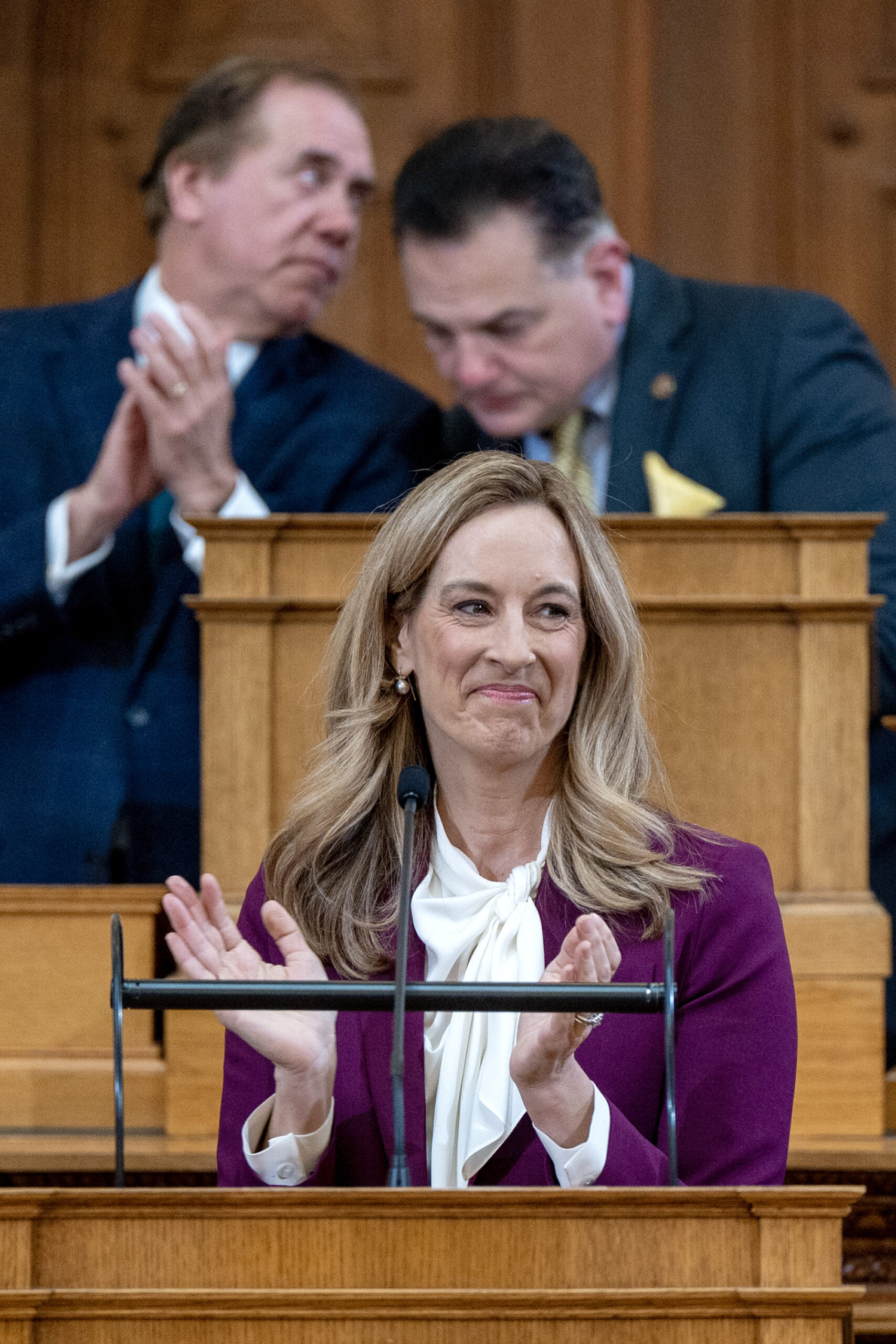
    Gov. Mikie Sherrill delivers her budget address Tuesday, Mar. 10, 2026, in the Assembly Chamber at the New Jersey State House. Assembly Speaker Craig J. Coughlin (left) and Senate President Nicholas P. Scutari (right) are behind her.

    Funding restored for child trauma care in South Jersey

    Sherrill’s original proposal also zeroed out funding for a program that provides medical and mental health care to South Jersey children who have experienced abuse in her budget proposal earlier this year. But the legislature restored funding to the same level as the current fiscal year at $1.85 million.

    The Rowan-Virtua Child Abuse Research Education and Service Institute (CARES) has locations in Stratford in Camden County and Vineland in Cumberland County. Rowan informed employees of layoffs across both locations and said the university would be closing down the more rural Vineland location as a result of the cuts.

    Cardona, the Rowan spokesperson, declined to say Monday whether the Vineland center will remain open and if the layoffs will be reversed. He said it’s “premature to comment on a budget that has not been approved.”

    Dio Tsitouras, the executive director of the American Association of University Professors Biomedical and Health Sciences union — which represents CARES employees — said the union is awaiting “an announcement from Rowan that rescinds all layoffs and indicates that the Vineland office will remain open.”

    “We are pleased that the budget the Legislature passed restores critical funding to the CARES program so that our members can continue serving the most vulnerable children of South Jersey,” Tsitouras said.

    State Rep. Anthony Angelozzi, a Burlington County Democrat, said his office advocated for CARES, one of dozens of groups at risk of funding cuts that met with his office. He called the program’s work “imperative.”

    “There were certain priorities we had to fight for because we are sorta on the ground in our districts in a way sometimes the governor is not,” he said. “There are some programs that legislators realize how profound they are at helping people that the governor may underestimate.”

    Staff members observe from back of the room during a workshop at the Hispanic Women’s Resource Center in Camden Thursday, June 11, 2026.

    Hispanic Women’s Resource Centers still at risk

    New Jersey has one of the largest wage gaps for Hispanic women in the country. Hispanic Women’s Resource Centers were established by the legislature in the early 1990s to help that disparity, providing employment training and other support to Latinas. Sherrill proposed cutting 80% of state funding for these programs, down to just $535,000 statewide.

    Legislators restored most of that funding in their tentative budget to nearly $1.8 million but program leaders say it’s still not enough, at almost 30% less than this year’s allocation of $2.5 million.

    The Latino Action Network Foundation runs these centers in partnership with six nonprofits across 14 sites, including five in South Jersey in Camden, Vineland, Hammonton, Pennsville, and Rio Grande.

    Latino Action Network president Javier Robles said that decrease will still cause the closure of centers and reduce job training, mental health services, and English language classes to thousands of families statewide.

    “At a time when Latino families across our state are being targeted by the right-wing Trump anti-immigrant agenda, these cuts will only put additional strain on our community,” Robles added.

  • Police find ‘significant amount’ of blood inside Olney house linked to investigation of missing women, sources say

    Police find ‘significant amount’ of blood inside Olney house linked to investigation of missing women, sources say

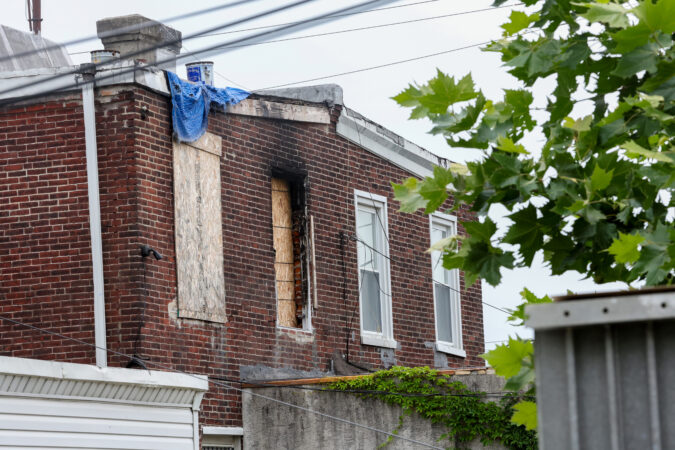
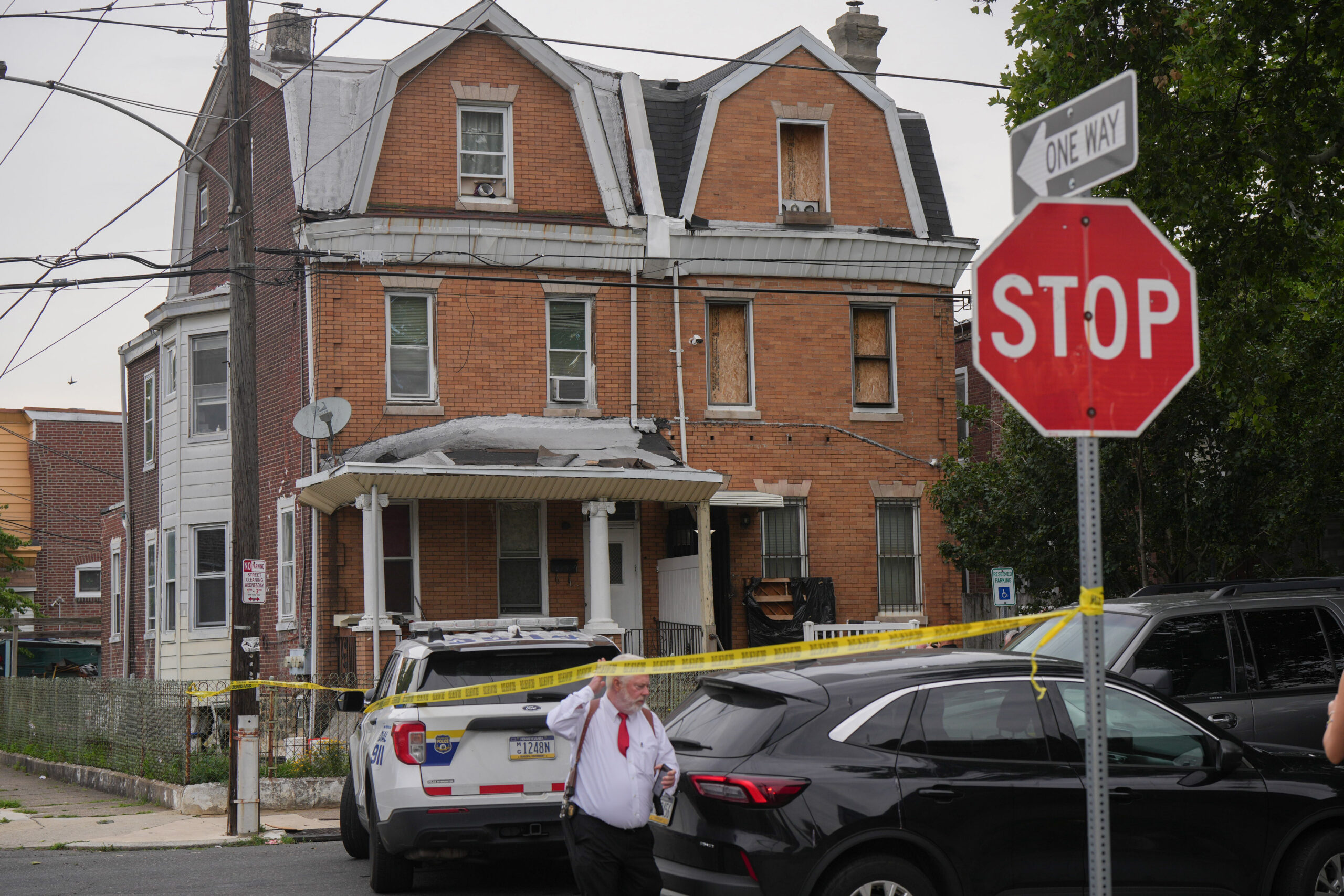
    Philadelphia police found a “significant amount” of blood inside the decrepit Olney house linked to the investigation of at least two missing women, multiple law enforcement sources said.

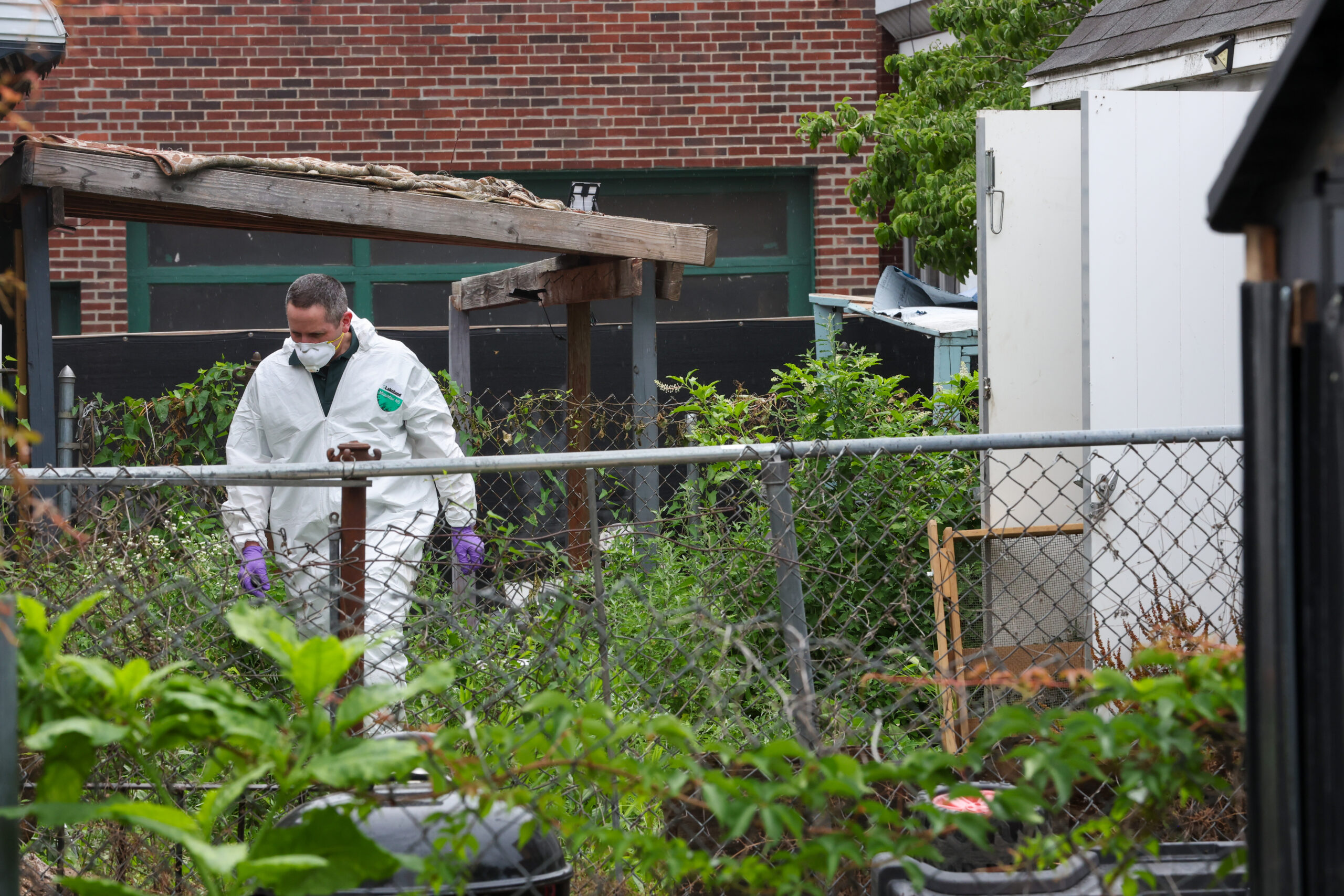
    The sources, who spoke on the condition of anonymity to discuss an ongoing investigation, said forensic testing has not yet determined whose blood it is or whether it’s even human — a process that could take several weeks to complete. But, the sources said, police are prepared to excavate the front and backyards of the West Chew Avenue home in the coming weeks in search of potential human remains.

    Deputy Police Commissioner Frank Vanore declined to confirm or comment on the discovery Monday afternoon, citing the ongoing investigation. Vanore said Friday that police had not recovered any human remains from the home and were awaiting testing of the tubs of chemicals and other materials found in the basement.

    Forensic investigators search the backyard of 417 W. Chew Ave. on June 27.

    The finding marks the latest development in an unusual saga that began after the arrest of Eugene Albert Horsch, 44, the owner of the Olney home now being searched by law enforcement for a second week in connection with the disappearance of at least two women who have been missing for years.

    Horsch was arrested June 19 after U.S. Park Police saw him parked in his black BMW near Sixth and Market Streets, acting suspiciously. When a ranger approached the car, police said, he heard a woman in the back seat say, “You’re going to hurt me” and saw drug paraphernalia.

    Police searched the car and reported recovering two guns with obliterated serial numbers, as well as cocaine, fentanyl, and marijuana, a cattle prod, switchblade knives, handcuffs, and a fake U.S. Drug Enforcement badge featuring Horsch’s photo.

    The woman with Horsch falsely identified herself to the officers as Blair Tonzelli, a 38-year-old woman who had been reported missing in Kensington in 2023, police said.

    The woman, 39, later told investigators that she gave Tonzelli’s name because she had open warrants for her arrest in ongoing drug cases and that Horsch had made her fake identification cards in that name and said she could use it if she was ever stopped and questioned by police, sources said.

    Eugene Albert Horsch, 44, was arrested June 19 for illegal gun possession and drug crimes.

    The woman said she did not know Tonzelli or even that she was missing — but the way Horsch spoke about her and other women made her feel like something bad had happened to her, the sources said.

    Philadelphia homicide detectives then began reviewing that missing woman’s case, and, alongside federal law enforcement, searched Horsch’s home at 417 W. Chew Ave. last week.

    That search produced a trove of bizarre discoveries: a basement with drums filled with chemicals, bottles of unknown substances, Tonzelli’s bank card, the death certificate of another woman, and what appeared to be urns holding at least one of Horsch’s relatives’ cremated remains.

    Investigators also found another handgun, materials used to grow marijuana, and a 55-gallon drum with connections to waterlines leading into a hole in the ground.

    Federal investigators also discovered a multipage, unsigned, handwritten letter that appeared to describe hurting people and referenced the serial killer Ted Bundy, according to the affidavit of probable cause to search the home that was obtained by The Inquirer.

    Eugene Horsch lived at 417 W. Chew Ave. with his father until he died last year.

    Law enforcement sources said police were working to determine whether the writings were part of a novel or screenplay. Horsch’s late father, Raymond “R.C.” Horsch was a known drug manufacturer and erotic filmmaker who had published several works of fiction with violent, masochistic themes, including one described as an “autobiographical memoir of a caring, empathetic serial killer.”

    The probe into the younger Horsch took another twist when investigators learned that Raymond Horsch’s ex-wife Amy McHale was last seen at the Olney property in 2016 and has not since be located. A lawyer for Eugene Horsch and his father said the two men had nothing to do with McHale’s disappearance and said she struggled with substance abuse and mental illness.

    Horsch has been charged with illegal gun possession and drug crimes by Philadelphia authorities.

    He is also facing a federal gun possession charge, court records show. The U.S. Attorney’s Office filed a complaint against Horsch on Friday, charging him with possession of a firearm by a felon and centering their allegations on the guns that park rangers found in his car during an encounter in Center City earlier this month.

    Horsch has not yet been arraigned in that matter, and he remained in a city jail, held on $500,000 bail as of Monday afternoon. But the case could give federal prosecutors an opportunity to argue to a judge that he remain in federal custody until trial.

    This is a developing story and will be updated.

    Staff writers Jesse Bunch, Max Marin, Barbara Laker, and Chris Palmer contributed to this article.

  • She disappeared from Kensington three years ago. A fake ID in her name led police to a disturbing Olney house.

    She disappeared from Kensington three years ago. A fake ID in her name led police to a disturbing Olney house.

    Blair Tonzelli had been missing from Kensington for more than three years when her name turned up somewhere unexpected: on the fake ID of a woman in the backseat of a car parked near Independence Hall.

    The woman showed the ID to U.S. Park Police on June 19 after they found her and Eugene Albert Horsch, 44, seated in his black BMW, with drug paraphernalia, guns, and knives stashed in the car, according to police records. The woman later told officers that Horsch made her the fake ID in Tonzelli’s name and urged her to use it if she ever got into trouble.

    That encounter sparked a sprawling investigation into Horsch and an ongoing search of his Olney home for connections to Tonzelli and at least one other missing woman. Amy McHale — ex-wife of Raymond Horsch, Eugene’s father — was last seen at the Horsch property on West Chew Avenue in 2016.

    Tonzelli was 35 when a friend reported her missing in early 2023. Police records now link her to Horsch following his arrest during the car stop. Philadelphia homicide detectives began probing Tonzelli’s disappearance last week and interviewed at least two women who said they believed something bad may have happened to her, according to police documents.

    One reported that Horsch was “a sociopath,” and that while he had never been violent toward her, he said things that suggested he was to others. According to the police documents, the woman told detectives that Horsch said that he knew of three chemicals needed to melt human remains and that he could make a body “so small it could be flushed down a toilet.”

    The woman told police that Tonzelli was a home healthcare aide who had worked in Horsch’s Olney house, according to the records. She believed Tonzelli and Horsch had a disagreement over money at one point, the records say, and that he still had access to a CashApp account under Tonzelli’s name.

    Horsch remains in a Philadelphia jail after officers searched his car and found two firearms with obliterated serial numbers, as well as cocaine, fentanyl, and marijuana, a cattle prod, switchblade knives, handcuffs, and a fake U.S. Drug Enforcement badge featuring Horsch’s photo. He is being held on $500,000 bail for illegal gun and drug charges.

    Jerome Brown, an attorney for Horsch, declined to comment on Monday.

    Horsch has not been charged with any crimes linked to Tonzelli’s disappearance. But the statements in law enforcement records raise concerns about her well-being and have provided local and federal investigators probable cause to search the Olney property for more than a week.

    Inside the boarded-up twin, officers recovered several fake IDs in Tonzelli’s name and her bank card, according to police records. Investigators also found drugs, guns, vats of unknown chemicals, a 55-gallon drum, and an unsigned, handwritten letter that graphically described hurting people.

    Police said they have not recovered any human remains at the house, but law enforcement sources on Monday said there was a “significant amount” of blood inside. Investigators are awaiting forensic testing to determine whose blood it is or if it’s even human, a process that could take weeks to complete.

    Police are preparing to excavate the front and backyards of the home, the sources said.

    Local and federal investigators continued to scour Horsch’s home Monday for additional evidence.

    In the years before her disappearance, Tonzelli struggled with an opioid addiction and floated through the streets of Kensington, spending time in and out of jail on drug and prostitution charges. David McCarty, 72, said that he lived with her for a time in a house on Wensley Street and that their friends would try to look out for one another.

    Even in the throes of her addiction, Tonzelli was fiercely loyal, McCarty recalled. She once threw herself in front of a tow truck to prevent the operator from illegally taking McCarty’s car, yelling “You’re not gonna do this to my friend!”

    But Tonzelli, he said, would disappear for stretches, often with a man from Olney who sold marijuana. She told McCarty she was visiting with a man named Raymond, he said.

    At the time, Eugene Horsch lived with his father, Raymond “R.C.” Horsch, a convicted drug dealer and a producer of erotic films and novels. His work often focused on serial killers and the sexual exploitation of women with substance-abuse problems. The elder Horsch, who died in the Olney house in 2025, often featured women who frequented Kensington in his films.

    Tonzelli typically returned from her trips to see Horsch, McCarty said, but then he didn’t hear from her after August 2022.

    Joseph Gunkel said in an interview that he and a friend called police to report Tonzelli missing in February 2023 after months had passed without hearing from her.

    The friend told police that Tonzelli was last seen at the Olney home of a “sketchy” man who scared her, according to police records. Tonzelli was meant to meet someone one afternoon and never showed up, and none of her acquaintances — from Philly to Florida — had heard from her since, the friend said.

    McCarty grew worried as days became weeks. He knew she needed regular medical attention because of a drug-related wound that ran from her armpit down to her knee. McCarty said he replaced the gauze and applied ointment to the open gash twice a day, and Tonzelli needed daily medication to fight off the infection.

    “I can’t tell you how many times I spent visiting her and putting her in the hospital,” McCarty said. ”People make choices. She’s an adult, and it didn’t matter what I’d say or what I’d do to help her.”

    Gunkel said he didn’t hear from police again about Tonzelli until last week, when homicide detectives asked him to come in for an interview about her disappearance. He said he was relieved someone was finally looking into her whereabouts, even if it was three years later.

    “At least reporting her missing helped out some,” he said.

    Tonzelli’s Facebook page says she attended Archbishop Ryan High School. Her mother, who grew up in Fishtown, died when Tonzelli was 18, according to an online obituary.

    Tonzelli’s family declined to speak this week. McCarty said that Tonzelli was estranged from her relatives but that she had a son who she talked about often.

    After she went missing, McCarty urged a mutual friend to file a police report, because he worried no one else would.

    “My soul just believes something was going on,” he said.

  • Near-record heat around 100 degrees is forecast in Philly this week, with July 4th storms possible

    Near-record heat around 100 degrees is forecast in Philly this week, with July 4th storms possible

    Coinciding with the climax of the nation’s 250th birthday celebration, the atmosphere may make a run at history this week as July gets off to a torrid start in much of the nation, with temperatures in Philly aiming toward 100 degrees both Thursday and Friday.

    And while the record-challenging extreme heat may ease some late in the weekend, atmospheric fireworks may threaten Fourth of July events.

    Conditions also favor tropically steamy nights when it may seem that even the fireflies are adding to the heat.

    The National Weather Service has issued an “excessive heat watch,“ in effect from Wednesday afternoon through the day Saturday, for heat indexes up to 110. The watch covers all of New Jersey, Delaware, and most of Pennsylvania.

    The Delaware Valley Regional Planning Council has posted a “code orange” air-quality alert for Tuesday, advising that pollution could affect people with respiratory and heart condtions.

    If the heat wave persists as forecast, the cumulative warmth could become dangerous for people with background medical conditions and older residents who live alone without air-conditioning in the city’s rowhouses.

    The official high in Philly reached 90 on Monday, and the forecasts are calling for highs in the 90s at least through the weekend.

    Both FIFA Fan Festival organizers and SEPTA are preparing for a pending inferno.

    The World Cup afternoon matches on Wednesday and Thursday won’t be shown at the FIFA Fan Festival, said Melissa Ferdinand, spokesperson for Philadelphia Soccer 2026, but the evening matches will be.

    Among other measures SEPTA will be reducing speeds on regional rails, lest extreme heat cause overhead wires to sag and tracks to buckle, said agency spokesperson Andrew Busch.

    The forecasts for the rest of the week

    Philly’s temperatures are likely to reach the low 90s on Tuesday, said John Feerick senior meteorologist with AccuWeather Inc., but that will be just a warm-up.

    Readings will soar well into the mid- and upper-90s on Wednesday, and likely crest at or above the century mark Thursday and Friday.

    “The humidity gets tropical, too,” he said.

    Some showers are possible Friday afternoon and evening and Saturday, the weather service says

    The so-called high-pressure heat dome is forecast to bake about two-thirds of the nation. Philadelphia will be near the eastern edge of the hot zone, and that can become a precarious place to be when the heat backs off.

    The outlook for the weekend and the ‘ring of fire’ potential

    Ring of fire” thunderstorms, which can generate prodigious amounts of rain, can form along the edges of heat-generating high-pressure systems, the weather service says. This far in advance — or even a day or even hours ahead of time — it isn’t possible to predict where and when such a storm or storms might develop.

    But in its forecast discussion Monday the weather service office in Mount Holly warned that “the environmental setup would be favorable for strong to severe thunderstorms.”

    “We’re seeing chances of thunderstorms,” said Paul Fitzsimmons, meteorologist with the weather service office in Mount Holly.

    Said Feerick, “I think there’s going to be some pretty intense storms. A lot of times, the heat waves come to an end with a bang. That’s a possibility next weekend for sure. The fireworks might be supplied by mother nature, and humans.”

    On Monday morning the weather service advised, “It is important to point out that any holiday weekend festivities could be impacted by thunderstorms — in addition to the extreme heat.”

    But, Fitzsimmons said, “By Sunday, might be getting a little bit cooler.”

    Warmer world, warmer Philly, although 100s have been less frequent

    Philadelphia’s temperature increases have tracked fairly close to the globe’s, which during the last 12 months were about 2 degrees Fahrenheit above the 20th century average. Local summers have become increasingly warmer.

    Yet 100-degree readings in Philadelphia have been relatively scarce this century. On average, temperatures of 100 or higher have occurred every four years in Philly, but when it reached 100 last summer, that was the first time in 13 years, the longest 100-less stretch on record.

    That could be mere randomness, or it could be related to increased mugginess, which can retard both daytime heating and nighttime cooling. Warmer air can hold more water vapor.

    In records dating to 1874, it has reached 100 a total of 62 times, according to an analysis of temperature data, in 40 different years. For whatever reasons, they have tended to come in clusters, including a five-year run of 100-degree readings that ended in 1955, and three years, ending in 2012.

    Said Busch, “I guess we could look forward to it next year.”

  • Democrats in half of states sue Trump administration over Medicaid work rules

    Democrats in half of states sue Trump administration over Medicaid work rules

    NEW YORK — Democrats in 25 states and the District of Columbia on Monday sued the Trump administration over its recent guidance on new Medicaid work requirements, arguing the strict rules will prevent eligible Americans from accessing the care they need.

    The attorneys general and governors who filed the lawsuit allege that an interim final rule released earlier this month by the Centers for Medicare and Medicaid Services oversteps the text of the law last summer that set in motion the changes to Medicaid.

    They claim the Republican administration’s narrow interpretation of parts of the statute, including new limits to a medical frailty exemption, will create harmful coverage barriers and chaos in states that have been rushing to implement new systems by the January deadline.

    “Added administrative burdens will cause individuals who are eligible for Medicaid to lose or be denied coverage,” the plaintiffs write. “People with disabilities, patients in the middle of cancer treatment, or those struggling with another serious or complex health condition, shouldn’t be at risk of losing the care that helps maintain their health.”

    Spokespeople for the U.S. Department of Health and Human Services and CMS, the agencies named in the lawsuit, didn’t immediately respond to a request for comment. The Trump administration has promoted the new rules as commonsense measures to eliminate government freeloading and preserve benefits for those who need them most.

    The new Medicaid restrictions, which Democrats have criticized, were part of Trump’s big tax and policy law in 2025. The change affects those covered through an expansion in most states that gave more lower-income people access to the government’s safety net healthcare program.

    Starting Jan. 1, expansion enrollees age 19 to 64 will have to show that they work or do community service at least 80 hours a month or are in school at least half the time. There are exceptions for those considered medically frail or in addiction treatment programs, among others.

    This month’s announcement from CMS caught states off guard with a new definition of medical frailty. The law had said medically frail people include those who have substance use disorders, disabilities, or serious medical conditions. But the CMS rule went further, saying someone’s condition must “significantly impair” their ability to work, volunteer, or attend school at the rates required in the law for them to be granted an exemption.

    In 2027 and once in 2028, the patient can attest that they meet this definition. But when they try to renew coverage in 2028, they’ll need to prove it. Health analysts and state Medicaid directors have said they aren’t clear on what existing documentation could prove that point.

    In the lawsuit, states allege that this change came “contrary to months of regular communications with CMS and preliminary guidance materials upon which Plaintiff States based their implementation plans.” They say CMS has still not provided states with enough clarity on how they can update their systems appropriately.

    Democratic Gov. Josh Shapiro joined the suit, continuing a trend since last year of committing Pennsylvania to these cases that the state’s Republican attorney general has sat out.

    “Donald Trump, Dr. Oz, and RFK Jr. are hellbent on trying to push aside people who rely on Medicaid to get the care they need,” Shapiro said on X. “But here in Pennsylvania, we’re going to keep standing up to protect our most vulnerable Pennsylvanians.”

    New York Attorney General Letitia James, one of the Democrats suing the administration, said the new rule puts thousands of her state’s residents at risk.

    “New Yorkers who are battling cancer, living with a disability, managing a serious mental health condition, or recovering from addiction should be able to get the healthcare they need without being buried in paperwork,” she said in a statement.

  • Supreme Court expands Trump’s power over the federal bureaucracy, with an exception

    Supreme Court expands Trump’s power over the federal bureaucracy, with an exception

    The Supreme Court greatly expanded President Donald Trump’s control over the federal bureaucracy Monday, but stopped short of allowing him to undermine the independence of the Federal Reserve in a pair of rulings that amount to one of the largest verdicts on the scope of presidential power in decades.

    In a 6-3 ideologically divided decision, the justices struck down a nearly century-old precedent that has allowed Congress to insulate the leaders of the Federal Trade Commission (FTC) and roughly two dozen other independent regulatory agencies from political influence by requiring the president have good reason to dismiss them.

    The ruling is likely to usher in major changes to the structure of the federal government, and it fulfills a major goal of the Trump administration and many conservatives who have long argued that the president should exercise nearly unfettered authority over the executive branch.

    In the other related case, a group of justices blocked Trump from removing Federal Reserve Governor Lisa Cook, at least for now, in a 5-4 ruling that found the powerful central bank has a distinct history and structure that allows Congress to carve out protections for its governors, unlike other independent agencies.

    Taken together, the cases amount to a split political decision for Trump, who has pushed aggressively in his second term to assert his authority over federal government by dismissing agency heads, restructuring departments, and firing thousands of federal workers.

    Trump hailed the ruling in the FTC case as a “BIG WIN” in a post on Truth Social, while saying he would continue the fight to try to remove Cook.

    “90 years of precedent has been COMPLETELY AND UNEQUIVOCALLY OVERRULED, greatly increasing Presidential Power at a time when it is most needed!” Trump wrote.

    Republicans said the FTC ruling would make the government more accountable to voters who elect the president, but Democrats and some former agency officials worried it would lead to the politicization of regulations on product safety, elections, nuclear energy, and much more. The ruling in the Cook case is provisional and it will return to the lower courts for additional legal wrangling.

    The majority said the Constitution’s plain language gives the president control of the executive branch, but Justice Sonia Sotomayor, joined by the court’s other two liberals, said in dissent that the nation’s founders clearly envisioned the existence of agencies whose independence would be protected by Congress. Sotomayor read her dissent from the bench to signal her strong disagreement with the majority.

    “Today, the majority replaces 90 years of proven, workable practice with a half-baked theory of executive power that is simultaneously all encompassing yet also subject to necessary but undefined exceptions,” she wrote. “The one thing that does appear to be clear going forward is that chaos will follow.”

    Sotomayor said the ruling would upset the structure of numerous agencies — such as the Federal Communications Commission and the Securities and Exchange Commission — that Congress created to make decisions based on nonpartisan expertise and technical knowledge. Most are run by bipartisan, multimember commissions.

    Gillian Metzger, a Columbia University law professor and expert on administrative law, said she was struck by the breadth of the FTC ruling, which could give Trump direct control over virtually all federal employees.

    “There’s language in the Slaughter majority opinion that is exceptionally broad,” Metzger said, referring to the case’s name. “The president has the power to remove at will his subordinates. That is extraordinarily broad.”

    Metzger said it was notable that the court cited no exceptions for the civil service protections that protect many federal workers from arbitrary dismissal or political retaliation. That could mean the court is possibly granting the president greater authority to remove federal workers, she said, although other court precedents protect them.

    Chief Justice John G. Roberts Jr. wrote the majority opinion, joined by the court’s five other conservatives. He said the congressionally-mandated protections that kept the president from firing Rebecca Slaughter, a Democratic member of the Federal Trade Commission, were unconstitutional.

    “We hold that such protection from removal is contrary to the separation of powers enshrined in the Constitution,” Roberts wrote.

    In the Federal Reserve case, the narrow majority from across the court’s ideological spectrum ruled that Cook could keep her job while a lawsuit challenging her dismissal plays out in the courts. The case could take months or years to resolve and appear again before the justices, who said Monday that Cook is likely to prevail.

    Roberts wrote the majority opinion in the Cook case as well, joined by the court’s three liberals as well as conservative Justice Brett M. Kavanaugh. Roberts wrote that Congress had created the Federal Reserve to operate with independence from the president.

    “Any change in that scheme must come from Congress, not the courts,” he wrote. “That is why we cannot accept the Government’s contentions in this case. To do so would allow the President to remove a member of the Federal Reserve at any time, for any reason, without any notice before, and without any judicial check after.”

    Four of the court’s conservatives objected. Justice Samuel A. Alito Jr., joined by Justice Neil M. Gorsuch, wrote in a dissent that the Supreme Court was premature in taking up Cook’s case. Justices Clarence Thomas and Amy Coney Barrett argued that the majority was wrong on the substance.

    “Today’s decision is an unprecedented incursion on the Executive Branch,” Thomas wrote in his dissent. “Neither the parties nor the Court can point to a single time in American history that this Court has upheld an injunction against the President’s removal of an executive officer.”

    Legal experts had long expected the court to rule against the decades-old precedent affirming Congress’ right to create independent agencies, known as Humphrey’s Executor, because the justices have been chipping away at it for years. Roberts called it a “dried husk” during oral arguments in December.

    The Supreme Court has repeatedly backed Trump’s efforts to remove the heads of independent agencies on its emergency docket, allowing him to dismiss members of the National Labor Relations Board, Merit Systems Protection Board, and the Consumer Product Safety Commission in rulings over the last year or so.

    Likewise, the ruling in the Cook case came as little surprise because some justices had signaled they were interested in carving out an exception to the president’s removal authority for the Fed.

    Trump fired Slaughter and the other Democrat on the five-member FTC, Alvaro Bedoya, without giving a cause in March 2025. The dismissals were part of a broader campaign by the president to remove perceived liberal leaders from independent agencies and replace them with loyalists.

    Slaughter challenged her dismissal in federal court, saying Trump had exceeded his authority under the law creating the FTC. The law says the president can fire members only for “inefficiency, neglect of duty, or malfeasance in office.” The agency works on antitrust and consumer protection issues.

    A federal judge cited the Humphrey’s Executor precedent in reinstating Slaughter to her position. That decision was upheld by an appeals court before the Trump administration asked the Supreme Court to intervene. Roberts paused Slaughter’s reinstatement in September so the high court could weigh the administration’s appeal.

    During arguments in December, Solicitor General D. John Sauer said regulatory agencies like the FTC had become “a headless fourth branch insulated from political accountability and democratic control,” and that curbing the president’s power to remove agency heads infringed on his constitutional powers.

    Trump has often disparaged the federal bureaucracy as a “deep state” determined to undermine his agenda. He has moved to fire thousands of federal workers, shutter agencies, and remove civil service protections to bring the government more firmly under his control.

    Many in the administration support the so-called unitary executive theory, which holds that the Constitution vests direct control of the executive branch solely in the president, and he is free to fire any of its officials at will. Since the Reagan administration, conservatives have pushed to give the president greater control over hiring and firing in the government.

    Trump initially nominated Slaughter to the FTC in 2018. She was unanimously approved by the Senate before President Joe Biden renominated her in 2023. Slaughter has become an outspoken critic of Trump’s efforts to cut the federal workforce.

    Slaughter said she was disappointed with the ruling.

    “What we have seen is a massive expansion of executive power at the expense of Congress, which has designed these agencies to work on behalf of the people and not the powerful,” Slaughter said.

    The majority wrote in its Cook ruling Monday that the Fed is different from other independent agencies because its structure echoes U.S. national banks whose genesis goes back to before the Constitution.

    Congress created the Fed to be independent of the president so it could make difficult decisions — such as raising interest rates — that are good for the health of the economy but may not be politically popular.

    Trump is the first president in the Fed’s 112-year history to try to fire one of its board members. In August, Trump alleged that Cook claimed two homes as primary residences to get a better mortgage rate. In filings with the Supreme Court, Cook “unequivocally” denied the allegations.

    The high court case revolved around whether Trump’s attempt to fire Cook complied with the Federal Reserve Act, which says Fed board members can only be ousted “for cause.”

    Days after Trump announced on social media in August that he was firing Cook, she sued in federal court, arguing that Trump’s accusations did not meet the standard for “for cause” removal because the allegations occurred before she was on the Fed board and had not been proved. Her attorneys also said she had not been given due process.

    A federal judge in D.C. sided with Cook, allowing her to remain on the job temporarily. A divided appeals court affirmed that decision, before the Trump administration appealed to the Supreme Court. The justices ruled in October that Cook could continue at the Fed while they considered her case.

    During arguments in January, Solicitor General D. John Sauer told the justices that the mortgage allegations gave Trump reason enough to fire Cook and that the courts did not have the authority to second-guess his determination.

    “The American people should not have their interest rates determined by someone who was, at best, grossly negligent in obtaining favorable interest rates for herself,” Sauer said.

    Paul D. Clement, an attorney for Cook, said the justices would be rash to rule on the Trump administration’s emergency request to oust Cook from her job without the benefit of additional fact-finding and legal proceedings.

    “There is no reason to abandon more than 100 years of central bank independence on an emergency application,” Clement said.

    After Monday’s ruling, Trump wrote on Truth Social that “we will take appropriate action immediately to make sure that someone who has committed wrongdoing will not be making vital decisions concerning the Welfare of the United States of America!”

    Cook said in a statement she was pleased.

    “Today’s ruling affirms a principle that has underpinned sound economic stewardship for generations: that the Federal Reserve must make all its policy decisions guided by evidence and independent judgment, free from political interference,” Cook said. “This bedrock principle has guided the Federal Reserve since its founding.”

    • The Supreme Court’s major cases during the 2025-26 term
    • Supreme Court justices turn children’s books into big paydays
    • There are no Supreme Court vacancies, but some judges are acting like there might be
  • Layoffs are ‘inevitable’ at Temple as school looks to cut $60 million, president says

    Layoffs are ‘inevitable’ at Temple as school looks to cut $60 million, president says

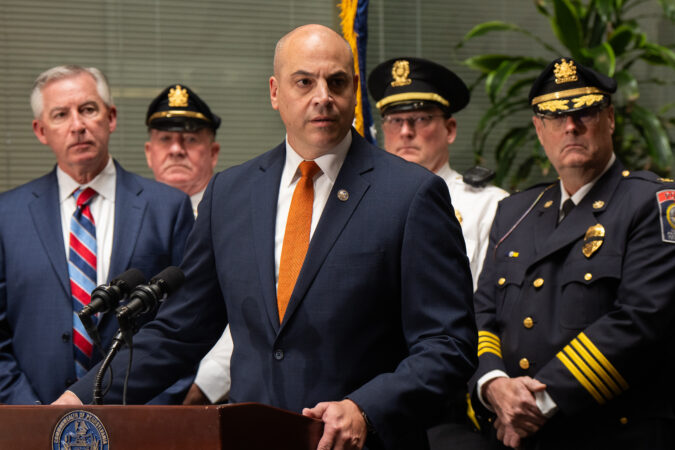
    Temple University has asked its schools, colleges, and administrative units to cut a total of $60 million to help offset a projected deficit for 2026-27.

    President John Fry shared the plan in a message to the campus community Friday and said a reduction in employees is “inevitable.”

    The message did not reveal how many layoffs the university is considering as it attempts to close the $85 million projected gap. The board of trustees’ executive committee is scheduled to meet next week to consider the proposed budget. The university’s current budget is $1.3 billion, excluding the health system.

    “Unfortunately, some reduction in force is inevitable, given that nearly 70% of Temple’s operating budget is spent on compensation and benefits,” Fry said in the message. “It is my promise that any employee’s separation from the university will be handled equitably and compassionately.”

    He noted that a faculty retirement incentive program this year drew 77 takers — 3% of full-time faculty — and will lessen the need for layoffs. Those faculty are scheduled to leave by the end of this month and their departures ultimately will save $15 million annually. The elimination of vacant faculty and staff positions also has helped, he said.

    Fry did not detail the cuts that are planned but said that colleges, schools, and administrative units each received a budget reduction target.

    Units were asked to make a 5% cut last year, but this year there is a range of percentages among schools, colleges, and administrative units, a university spokesperson said. The spokesperson declined to say how many layoffs will occur.

    Some potential cuts that have stirred discussion include a reduction in adjunct professors and a pause in doctoral student admissions by some programs.

    Jeffrey Doshna, president of the Temple Association of University Professionals, said Fry’s message seemed to address some of the issues the union has been raising, but said more information is needed, including how many people will lose their jobs and from what areas.

    “Hopefully, they will continue to respond to what we are calling for,” he said, including greater transparency, participation in decision-making, and no job cuts.

    Temple has been trying to cope with lost revenue from a precipitous slide in enrollment and uncertainty around federal funding. Fry has been warning since early April that the university “must act decisively and with a sense of urgency” to address the projected deficit. An internal Temple report obtained by The Inquirer in April said layoffs were coming.

    Last July, Temple laid off 50 employees, less than 1% of its workforce.

    Fry reported to the board of trustees last week that this year’s fall enrollment looks promising, with deposits by first-year undergraduate and transfer students up over last year at the same time.

    He said in his campus message that making the $60 million in cuts is “an important first step toward returning the university to a balanced budget over the next three years.”

    Fry acknowledged that the budget reductions “can create uncertainty and anxiety.” But he said the administration has attempted to be transparent and has held meetings with faculty senate, deans, and schools, colleges, and administrative units.

    “Navigating through this stark financial reality is not easy,” Fry said. “I recognize the difficulty of this present moment. We will emerge from this process stronger and on a more sustainable path moving forward.”

  • Whatever you do in Russia, don’t talk about the war

    Whatever you do in Russia, don’t talk about the war

    The war in Ukraine is a “Special Military Operation,” even though it’s the biggest conflict in Europe since World War II.

    Across Russia, officials blame fuel shortages on “unscheduled maintenance at refineries” without noting a cause, as Ukrainian drones attack fuel refining facilities in the country.

    And Russia’s central bank governor has talked of the “structural transformation of the economy,” as code for military spending that has spiraled and reoriented the economy around the military-industrial complex.

    For years, President Vladimir Putin has insulated Russian society from the consequences of his war in Ukraine, using euphemisms as a psychological shield. But as the war increasingly comes home, the mismatch between rhetoric and reality is becoming a source of frustration for ordinary Russians.

    For days, Putin didn’t mention the June 18 long-range strikes on Moscow, when Ukraine attacked with nearly 200 drones. He didn’t comment as Ukrainians promised to turn Crimea, the peninsula Russia illegally annexed in 2014, into an island by pounding it with drones and missiles.

    When he appeared June 23 for the first time since the June 18 strikes, which were the largest in the war, he used the moment to blame the West.

    “These drones, strikes on civilian infrastructure — what are they for? To destabilize society, to create uncertainty about the actions of the Russian armed forces,” Putin said. At that time, he did not address the fuel shortages in at least 56 regions, according to Mediazona, an independent Russian news outlet.

    On Sunday, Putin did acknowledge fuel shortages. At a meeting of top executives and officials, he said that “systemic measures that match the scale of current challenges” must be put in place, adding that a task force was working around the clock to ensure supplies, especially for agriculture.

    But Putin has not publicly delegated officials to prepare shelters or early warning systems in case of future strikes.

    In the Moscow suburbs of Kotelniki and Lyubertsy, both of which came under drone attack in mid-June, authorities said they would not disclose the locations of bomb shelters or use sirens because the country was not technically on a war footing. They would make this information public only in case of a “period of mobilization and in wartime.”

    Lyubertsy’s administrator suggested that people consult a PDF that appeared on a government website with practical instructions on what to do in case of a drone attack.

    The head of the Republic of Bashkortostan, a region with 4 million people between the Volga River and the Ural Mountains where Ukraine has attacked refineries, said his administration had decided to not always activate sirens to not stress people out, mentioning a rise in antidepressant use in Russia.

    Downplaying danger and resorting to euphemisms to discuss drone attacks and economic pain is a “performance of obedience” to Putin and his regime, said Aleksandra Arkhipova, a teaching and research fellow in social sciences at the École Normale Supérieure in Paris.

    She has compiled a list of new war-related terms and euphemisms such as “clap” instead of “explosion,” “deprived of life” instead of “killed,” and “air target” instead of “drone.”

    “Russian political authorities right now are all about pictures in the news,” Arkhipova said. They do not want “to create a huge panic which can be shown by local TV and then on the federal news with a lot of crowds crying and running through the streets.”

    On the news, the recent attacks on Moscow barely figured, in keeping with the state’s stance. Channel One, the Kremlin’s primary cultural and political megaphone, ran a short segment the morning of the June 18 attacks and then stayed quiet until Putin commented several days later. During the evening news broadcasts on June 18 on Channel One as well as on Rossiya 1, or NTV, “not a single word” about the attacks was uttered, according to Telegram channel Agentstvo News.

    Officials and state outlets use confusing and sometimes misleading linguistic formulations to describe certain war-related events, Arkhipova said. In the early days of the war, stores that closed as a result of Western sanctions bore signs for months and in some cases years saying they were “closed for technical reasons.”

    Russia’s Federal Air Transport Agency recently announced a “schedule adjustment” at the Krasnodar airport, which is about 150 miles from the front line and in the path of Ukrainian drones. At Sochi airport, authorities don’t write that flights are delayed by incoming drones but instead that the airport is operating according to the “actual schedule” — a confusing term that is meant to distinguish between the two columns on the planned departures and arrivals, “scheduled time” and “actual time.”

    When Moscow’s airports are temporarily closed because of Ukrainian drone attacks, the term used refers to accepting flights “by agreement.” Travelers are told that their flight is delayed because of delays to the incoming flight, rather than because the city is under drone attack.

    Arkhipova calls this linguistic technique “neutralization.” It is about intentional ambiguity, she said, explaining, “People can understand that something is happening, but what exactly is happening is not that clear.”

  • D.C. reaches court settlement with man detained while protesting troops’ patrol with Darth Vader song

    D.C. reaches court settlement with man detained while protesting troops’ patrol with Darth Vader song

    WASHINGTON — The District of Columbia has reached a settlement agreement for an undisclosed amount of money with a resident who claims police illegally detained him for following an Ohio National Guard patrol while playing Darth Vader’s theme song from “Star Wars” on his phone — an act of protest against the Trump administration’s federal law-enforcement surge in the nation’s capital.

    A court filing late Thursday says the plaintiff, Sam O’Hara, will drop his lawsuit’s claims against the district and four Metropolitan Police Department officers within three business days of receiving the settlement payment. The filing doesn’t specify a dollar amount for the deal between the district and O’Hara, who is represented by the American Civil Liberties Union of the District of Columbia.

    In an email on Friday, an ACLU spokesperson referred to the settlement’s financial terms as “a significant amount” that O’Hara ”is pleased with” but said they aren’t disclosing the dollar figure to protect his privacy. A spokesperson for D.C. Attorney General Brian Schwalb’s office declined to comment on the settlement.

    O’Hara’s agreement with the district doesn’t resolve his related claims against an Ohio National Guard member. Attorneys for the Guard member, Sgt. Devon Beck, has asked a judge to dismiss O’Hara’s claims against him.

    “He was there because that was his assigned duty,” Beck’s lawyers wrote. “This was not an accidental encounter or a one-time disagreement on a public sidewalk.”

    An earlier court filing, in February, said O’Hara had reached a settlement agreement “in principle” with the district. In response, a judge agreed to suspend the case while they negotiated terms.

    “The government’s efforts to silence me ultimately backfired and brought more attention to the unjust deployment of the National Guard in Washington, D.C.,” O’Hara said in a statement. “This settlement serves as a reminder that constitutional freedoms are worth defending, especially when those in power would prefer we stay quiet.”

    O’Hara sued the district last October, claiming police officers violated his First Amendment rights to free speech and his Fourth Amendment rights against unreasonable seizures and excessive force.

    The ominous orchestral music of “The Imperial March” from the Star Wars movies was the soundtrack for O’Hara’s peaceful protests against President Donald Trump’s ongoing deployment of Guard members in Washington. Millions of TikTok users have viewed O’Hara’s videos of his interactions with troops, according to his lawsuit.

    O’Hara, an artist who works in the hospitality industry, says he didn’t interfere with the Guard troops during their Sept. 11, 2025, encounter on a public street. One of the troops summoned Metropolitan Police Department officers, who stopped O’Hara and kept him handcuffed for 15 to 20 minutes before releasing him without charges, according to the lawsuit.

    “The law might have tolerated government conduct of this sort a long time ago in a galaxy far, far away. But in the here and now, the First Amendment bars government officials from shutting down peaceful protests,” the suit says.

    Trump, a Republican, issued an executive order declaring a crime emergency in Washington last August. Within weeks, hundreds of Guard troops and federal agents were helping police patrol the city. The surge inflamed tensions with residents of the heavily Democratic district. Hundreds of Guard members remain deployed in the district nearly a year later, with no clear end in sight.