Category: News

Latest breaking news and updates

  • Two relatives were killed Sunday in what police call a ‘murder-suicide’ in Abington Township

    Two relatives were killed Sunday in what police call a ‘murder-suicide’ in Abington Township

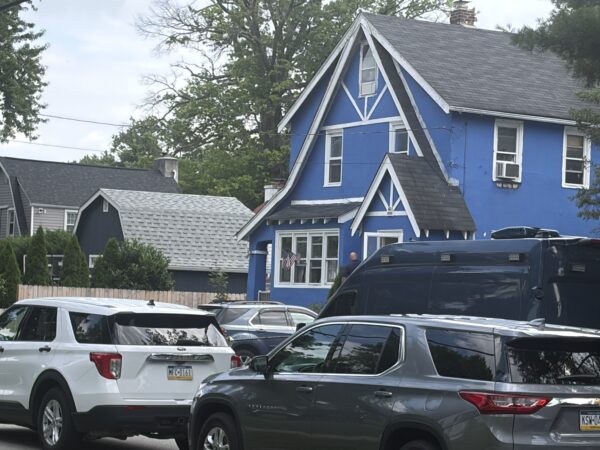
    Two men — an uncle and a nephew — were fatally wounded Sunday morning in Abington Township, Montgomery County, in what police said was a “murder-suicide.”

    Responding to a 911 call of a shooting around 11 a.m., Abington Township Police discovered William “Billy” Mauer, 54, dead from a gunshot wound inside a home on the 3000 block of Spruce Avenue.

    The two had been quarreling, police said.

    The nephew, Brandon Maurer, 28, was also found in the house, suffering from a self-inflicted gunshot wound, police said. He was taken to Jefferson Abington Hospital and pronounced dead at 11:39 a.m.

    At the time of the double shooting, police said, other unidentified family members were inside the home and were not injured. The nephew’s gun was recovered by police.

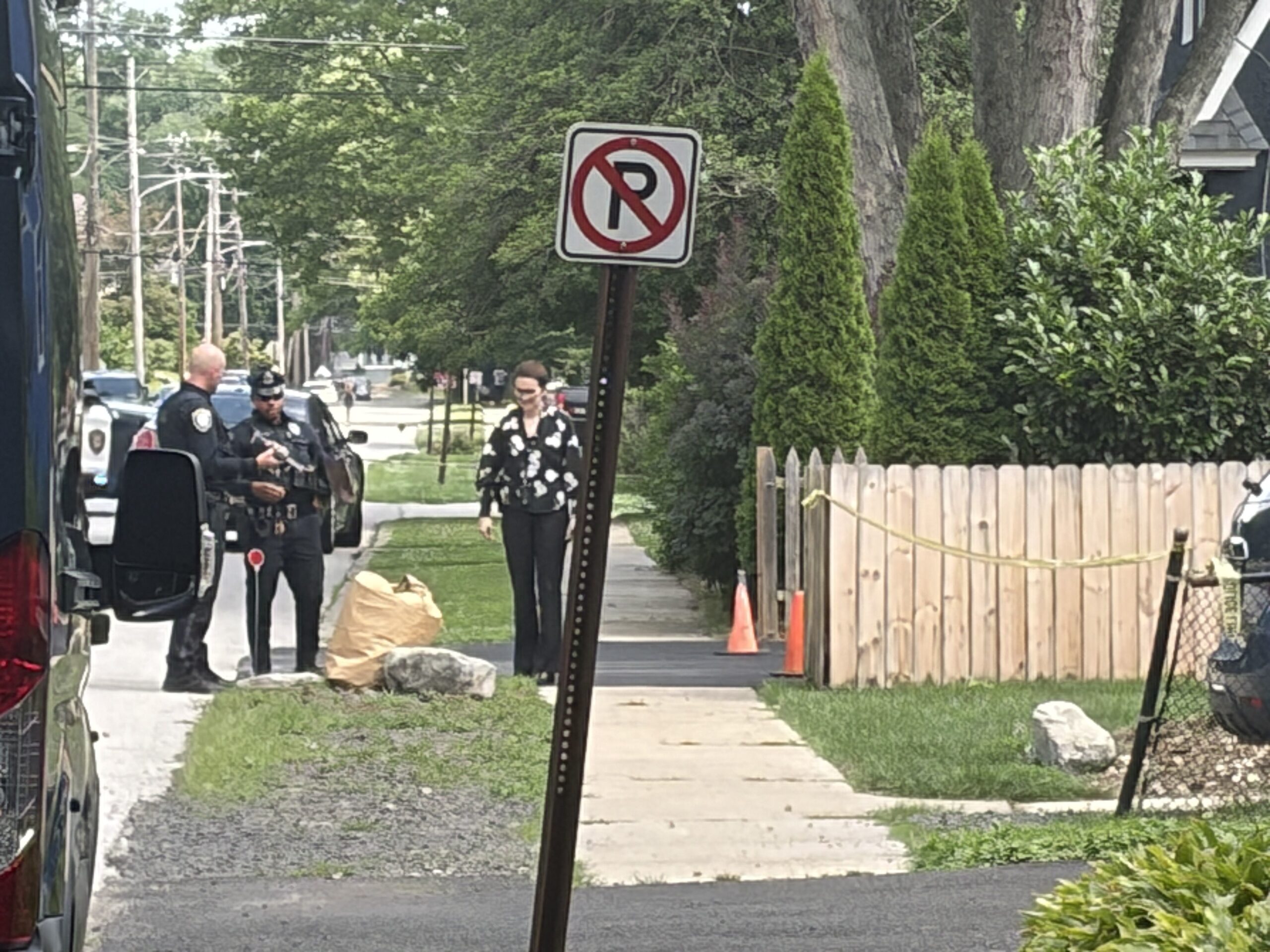
    Abington Township police closed down the 3000 block of Spruce Avenue after the shootings.

    With neighbors looking on, the block remained sealed off by police SUVs and caution tape Sunday afternoon while Montgomery County detectives and police continued to investigate.

  • Parades in New York and San Francisco wrap up LGBTQ+ Pride Month

    Parades in New York and San Francisco wrap up LGBTQ+ Pride Month

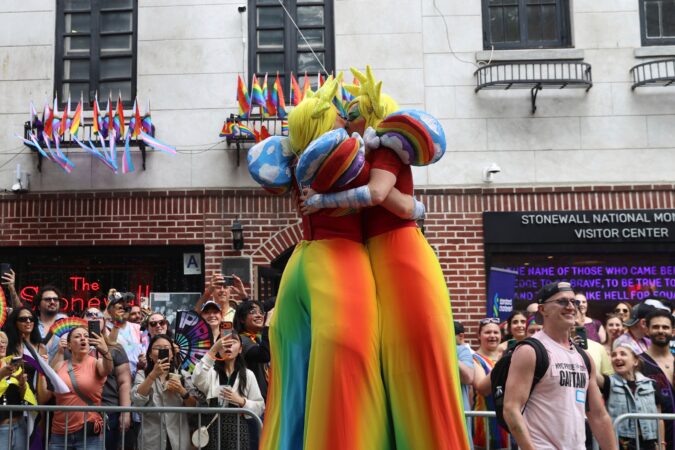
    NEW YORK — Pride Month celebrations peaked Sunday with big parades in New York, San Francisco, and some other cities on the anniversary of the 1969 Stonewall uprising, which accelerated and transformed the modern LGBTQ+ rights movement.

    Pride events often mix celebration and calls to action, reflecting the political winds, cultural climate, and news around LGBTQ+ rights.

    This month’s parades and festivals around the U.S. have unfolded as President Donald Trump works to roll back transgender rights and diversity, equity, and inclusion initiatives. Among other moves, the Republican’s administration removed a rainbow Pride flag from the Stonewall National Monument earlier this year, then ultimately relented amid a lawsuit.

    “As LGBTQIA+ events and symbols are being erased, it’s vital that our community have safe spaces to show up and march to make clear: We are here,” Chris Piedmont, a spokesperson for New York parade organizers Heritage of Pride, said in a statement Friday. “We will not be erased.”

    Carlos Duarte came in from Long Island to attend New York’s parade.

    “It’s very important for us to be here … to be all together for love, peace, and to show the world who we are,” Duarte said.

    Meanwhile, multiple Republican governors have promulgated conservative-friendly designations for June, such as “Nuclear Family Month,” sometimes openly describing them as a counter to Pride. Other prominent Republican politicians, including Vice President JD Vance, criticized Major League Baseball‘s response to some San Francisco Giants players who added Bible verses to the rainbow-themed Pride Night caps they were issued.

    Against that backdrop, the NYC Pride March and the San Francisco Pride Parade set out to further their legacies as some of the world’s largest and oldest such celebrations.

    Both trace their roots to events held in 1970 to commemorate the Stonewall rebellion on June 28, 1969, when patrons of a New York gay bar called the Stonewall Inn resisted a police raid and ended up kindling a wave of activism.

    The Stonewall Inn still is a bar; the Stonewall monument centers on a small park across the street, about half a mile from the Pride March route at its closest point.

    The newer Queer Liberation March, founded by activists who saw the Pride March as too corporate and official, also was held in Manhattan on Sunday.

    This year, some transgender rights activists pressured Pride organizers to bar some New York City hospitals’ contingents from marching because the institutions announced in recent months that they would stop providing transgender youth treatments.

    Christen Clifford, a mother of two trans children, said during a news conference before the parade that New York City needs to enforce state laws that protect gender-affirming care.

    “How can you let institutions that are actively harming queer kids march in Pride?” Clifford said. “I hope that New York City Pride will ban these hospitals from any future Pride parades until they restart care and so that families like mine know that you are listening to our concerns.”

    The cutoff came amid funding threats from the Trump administration, and at least some of the hospitals also got federal Justice Department subpoenas for transgender patients’ medical records. A judge has temporarily blocked the document demand.

    Heritage of Pride said it has been talking with the hospitals about the issue. The group also noted the parade contingents are organized by LGBTQ+ employee groups, not by the top administrators responsible for decisions about care.

    A message was sent to San Francisco Pride organizers about whether they faced similar questions.

    Other cities with Pride parades Sunday include Seattle, where a World Cup soccer match Friday took on a Pride dimension after the countries whose teams were involved — Iran and Egypt — tried unsuccessfully to get the celebrations canceled.

  • Philadelphia-area Venezuelans are donating rescue tools and medicine to aid victims of massive earthquakes

    Philadelphia-area Venezuelans are donating rescue tools and medicine to aid victims of massive earthquakes

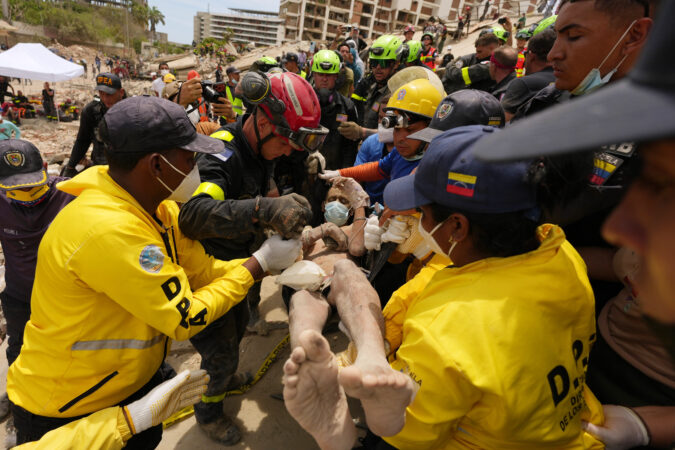
    The Cathedral Basilica of Saints Peter and Paul was a center of resilience Sunday, as dozens of Philly Venezuelans gathered to collect aid for folks affected by two earthquakes that struck the South American country on Wednesday.

    Emilio Buitrago, 52, was driving home when his brother called, telling him a 7.2 magnitude earthquake had decimated their home city of La Guaira, about 18 miles north of Caracas, the capital. Less than a minute later, a second tremor took place, this time reaching a magnitude of 7.5.

    One of his cousins was unaccounted for, for two days before being located on Friday morning.

    “My three cousins lost their homes; they are alive by a miracle. My uncle managed to get out, but he’s injured,” Buitrago said. “They are sleeping in the street because it feels safer [in case buildings collapse] and they said it’s starting to smell like decomposing bodies.”

    Since the earthquakes, Buitrago’s brother has been working nonstop, he said, removing rubble with his bare hands due to the lack of tools and machinery.

    Thousands of miles away from home, Buitrago thought the best way to help was to go to the cathedral and help with collecting donations and praying.

    By 1 p.m., 15 boxes sat on the area outside of the Cathedral’s chapel, being filled with donated masks, first aid supplies, medicine, electrolytes, nasal relief products, and more.

    Alex Moreno, president of the local nonprofit Gente de Venezuela, said the donations will be sent to Caracas, where their contacts are connecting with on-the-ground rescuers.

    “It has to be now, when we still have a chance to try to help get the people who are still trapped under the rubble out alive,” Moreno said.

    So far, the death toll has risen to 1,430 people, according to CNN, with many Venezuelans taking to social media to ask for help moving the structural debris to rescue their loved ones.

    Besides collecting physical donations, both Gente de Venezuela and another nonprofit, Casa de Venezuela, are raising funds through an umbrella group, the Venezuelan Organizations Network in the United States. By late Sunday afternoon, $16,310 had been donated for the effort, which has a goal of $75,000.

    That money, Moreno said, is destined for buying tools to help rescuers dig through the rubble. A first batch of hammers, gloves, drills, masks, and other supplies has been purchased with that money and sent to Venezuela, Moreno said.

    For future physical donations, he recommends following Gente de Venezuela and Casa de Venezuela to see where they will be receiving donations next.

    “The hope is to try and help rescue as many people as possible, because the rescuers on the ground are saying that the tragedy is too big for the number of hands able to help back home,” Moreno said.

    Despite the pain, the community is sticking together and his group plans plan to continue with their planned participation in the July 3 Salute to Independence parade in Philadelphia, to honor both the lives lost and the rescuers, Moreno said.

    “Above all, we are people of resilience, and we will continue to be here to support our community,” Moreno said.

  • Khadijah Farrakhan, ‘first lady of Nation of Islam’ as wife of famous pastor, dies at 90

    Khadijah Farrakhan, ‘first lady of Nation of Islam’ as wife of famous pastor, dies at 90

    Khadijah Farrakhan, longtime wife of Nation of Islam leader Louis Farrakhan, died on Saturday, the Nation of Islam has announced. She was 90.

    “Mother Khadijah” worked alongside her provocative and charismatic husband for decades, helping lead their religious and sociopolitical movement, which espouses Black self-reliance. Its home base was Mosque Maryam on the south side of Chicago, where the pair lived.

    “The Honorable Minister @LouisFarrakhan with deep sadness yet with profound gratitude to Allah informs you that his beloved wife of 72 years, the first lady of the Nation of Islam, Mother Khadijah has returned to Allah (may Allah be pleased),” a statement by the Shura Executive Council said.

    Her death came only seven months after devotees had marked Khadijah’s 90th birthday. The statement said funeral services are to be announced.

    Mosque Maryam remembered Ms. Farrakhan as “a devoted follower” with “a precious soul, a sweet heart.”

    In a post on Facebook, R&B artist ZaRio Son Rise recalled her as “a true queen, a righteous woman, and one of the greatest examples of dignity, faith, loyalty, and grace our generation has ever witnessed.”

    Born Betsy Ross, Khadijah Farrakhan married her husband, then named Louis Walcott, in Boston on Sept. 12, 1953. The two had nine children. Their eldest son, Louis Farrakhan Jr., died in 2018, and son Joshua Farrakhan died in 2023.

    Khadijah Farrakhan converted to Islam in 1955, the same year that her husband joined the Chicago-based movement after being heavily influenced by Malcolm X, his friend from Boston. The pair changed their names around that time.

    Louis Farrakhan stepped into the organization’s leadership vacuum shortly after Malcolm X was assassinated in 1965. Among his most significant accomplishments was the Million Man March on Washington in 1995.

    Two years later, Khadijah Farrakhan spoke before a gathering of America’s Black women in Philadelphia dubbed the Million Woman March.

    “A nation can rise no higher than its women,” she told the crowd. “We focus on women but cannot lose sight that we must rise as a family — men, women and children.”

  • Inside the Onion’s quest to turn Infowars into a comedic revenge story

    Inside the Onion’s quest to turn Infowars into a comedic revenge story

    It’s not easy to parody Alex Jones, but that’s not stopping the Onion from trying.

    The right-wing conspiracy theorist behind Infowars, Jones has spent years promoting stranger-than-fiction ideas, arguing that chemicals in water turn frogs gay, the U.S. government deploys “weather weapons” against its own citizens, and that yogurt maker Chobani imports “migrant rapists.” (Chobani sued for defamation, and Jones apologized upon settling the lawsuit.)

    Days after a gunman killed 20 students and six educators at Sandy Hook Elementary School in Newtown, Conn., Jones falsely claimed the massacre was staged.

    The insidious lie cost him dearly: Jones was ordered to pay roughly $1.5 billion to the families of the victims in a landmark defamation case forcing him to declare bankruptcy.

    The satirical news site the Onion is trying to capitalize on the rare opportunity. For Ben Collins, CEO of the Onion’s parent company, Global Tetrahedron, the idea to buy Jones’s signature site began as a bit.

    On the social media site Bluesky, he saw a reposted newspaper ad marketing the Infowars assets.

    “I thought, ‘huh, this would be the funniest thing of all time if we pulled this off,’” he said. “It was, and is, but it’s also become the world’s biggest pain in the ass.”

    Since 2024, the Onion has been locked in a legal battle to take over Infowars and transform it into a parody site. Infowars assets are still largely tied up in bankruptcy court, preventing the Onion from absorbing the URL. Still, it’s moving forward with launching its site on Thursday, which will live at theonion.info.

    “There is a whole world of like grifters and weirdos who have not been made fun of, and have taken over like the United States,” said Collins. “We need to make fun of this more efficiently, and we need professionals to do it, and what better way to do it than to do a hostile takeover of where it all started.”

    As a reporter at NBC, Collins covered a unique beat in his prior life: “disinformation, extremism, and the internet.” He even wrote about Jones’s defamation trial.

    Now, he’s left the confines of a real news organization to run a fake one.

    Collins enlisted comedian Tim Heidecker, best known as one half of the comedy duo Tim and Eric, as the creative director of this parodic Infowars. He’s also the face of it, performing as a caricature of Jones — complete with his signature rasp, cadence, and penchant for selling questionable nutritional supplements.

    Jones did not respond to a request for comment.

    The Onion has faced roadblocks to taking over Infowars: In 2024, a judge prevented the Onion from buying Infowars at a bankruptcy auction. Instead, its assets were transferred to a court-appointed receiver. So the Onion struck a licensing deal with the receiver to pay $81,000 a month for the Infowars.com domain and brand. But in April, a Texas appeals court halted any transfer of Infowars assets, again thwarting the Onion.

    Collins said he never expected the legal proceedings to take this long: “We thought it was going to be like Storage Wars, and it wound up being more like a dream that you have when you’ve taken too much NyQuil.”

    A version of the site viewable before launch featured a video of Heidecker addressing viewers as “infowarriors,” mimicking Jones, and taking a fake call from President Donald Trump. The site’s homepage was full of fake ads imploring readers to buy oxygen capsules and another obvious troll of the embattled Jones: “Turn your gold into piss. Liquidate your assets today.”

    There’s an extra motivation for Collins: helping the Sandy Hook families.

    The Onion has said it’s worked closely with Sandy Hook families and is donating $100,000 to the families through proceeds from the site. The company called the gift “the first of many.”

    “No one else was going to get these families money, and he owes them,” Collins said about Jones. “He still owes them 1½ billion dollars, and we want to get them some cash.”

    Chris Mattei, a lawyer for the families who sued Jones in Connecticut, said the families appreciate the Onion’s commitment, though he said it’s never been about the finances for them.

    “The families we represent actually never cared about money at all,” Mattei said. The verdict let them “prove to the world in an open courtroom that Alex Jones was a fraud” and “demonstrate to the world the type of real-world harm that online misinformation can cause.”

    Collins emphasized that he wants the families to be at the heart of this effort — because they’re the ones who have suffered because of Jones’s false claims. “There’s a few sacred things that we really got to protect if we want to have like a society still,” Collins said. “And these [families] are some of them.”

  • Trump says he is nominating former Oklahoma state trooper Lance Schroyer as ICE director

    Trump says he is nominating former Oklahoma state trooper Lance Schroyer as ICE director

    NEW YORK — President Donald Trump on Saturday said he is nominating Lance Schroyer, a former Oklahoma state trooper, as the next director of Immigration and Customs Enforcement.

    Trump said on his Truth Social platform that his new pick for the immigration enforcement agency is a former U.S. Marine and a “PATRIOT with real operational experience.” He called Schroyer a ”proven leader with DECADES of experience locking up the worst of the worst.”

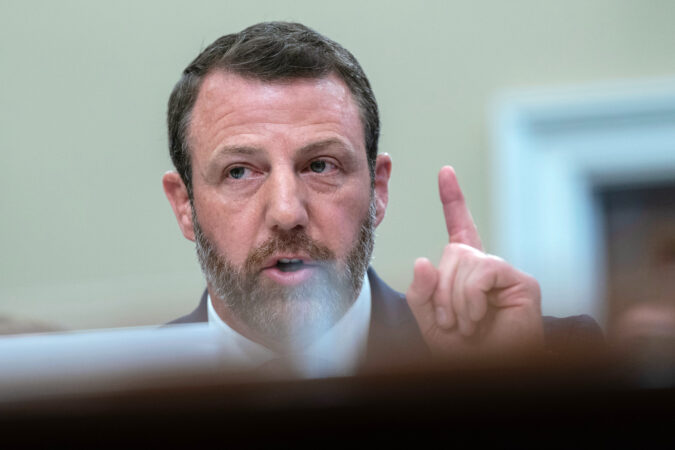
    Schroyer hails from the same home state as the new Department of Homeland Security Secretary Markwayne Mullin, a former congressman. Earlier this month, Mullin brought Schroyer onstage at a National Sheriffs’ Association event, calling him a “good friend of mine” and noting DHS had recently hired him.

    On Saturday, Mullin quickly praised Schroyer in a statement highlighting the former trooper’s 29-year career and his work with federal and state partners on a U.S. immigration enforcement program.

    “President Trump made a great pick, and I’m confident Lance’s strong leadership and firsthand experience will empower the men and women of ICE to deport criminal illegal aliens, secure the homeland, and protect the American people,” Mullin said.

    If confirmed, Schroyer will lead ICE at a time when the public mood has soured on Trump’s immigration crackdown, which sent surges of federal immigration officers into American cities to round up immigrants. Those raids sent tensions soaring and prompted clashes between protesters and law enforcement, leading to the fatal shootings of two U.S. citizens in Minneapolis earlier this year.

    Trump returned to the White House on a promise of mass deportations, and ICE has been a central executor of that vision. The agency is undergoing massive growth from a one-time injection of $75 billion last year, which has allowed for the hiring of 12,000 officers and increased detention capacity.

    Mullin, who started in his role in March, has promised to keep his department out of the headlines and has indicated a softer tone on immigration, although he is expected to align with the president’s priorities on mass deportations.

    Claire Trickler-McNulty, a former senior ICE official, said prior confirmed ICE directors have often been attorneys, though some state and local law enforcement officials have also been nominated. She said Schroyer’s background in Oklahoma suggests Mullin likely had influence over the pick.

    “I think probably given the attention on ICE, he wants to feel like he has somebody he can trust in there,” she said in an interview.

    John Torres, another senior ICE official, said Schroyer faces an uphill climb toward Senate confirmation but his experience being at the state and local level instead of the federal level might help.

    “He won’t have any of that baggage, where they’re going to turn around and say, oh, well, he worked for this administration or that,” Torres said.

    Schroyer’s nomination comes after former ICE director Todd Lyons resigned at the end of May. David Venturella, a former executive at a private prison operator, has been serving as the acting head of the agency. Venturella is expected to stay on as the acting director until Schroyer is Senate confirmed, according to a DHS official speaking on condition of anonymity.

    ICE has not had a Senate-confirmed director since the Obama administration, a result of polarizing politics around the agency and immigration policy.

  • NASA races to save Swift telescope from falling back to Earth with daring rescue mission

    NASA races to save Swift telescope from falling back to Earth with daring rescue mission

    CAPE CANAVERAL, Fla. — NASA is racing to save an aging telescope from falling back to Earth with a daring rescue mission.

    The $30 million salvage operation gets underway as soon as this week with the planned launch of a robotic lifesaver.

    NASA hired startup Katalyst Space Technologies to boost the Swift Observatory to a higher orbit where it can continue hunting for some of the universe’s biggest explosions. A three-armed spacecraft built by Katalyst will chase after Swift once it takes off from an atoll in the Pacific’s Marshall Islands aboard an airplane-launched Pegasus rocket. Liftoff could occur as early as Tuesday.

    Scanning the cosmos since its launch in 2004, Swift has been sinking faster and faster because of recent intense solar activity. It needs to get to a higher, more stable orbit as soon as possible to survive.

    NASA’s Hubble Space Telescope — also at risk — could be next.

    Like Swift, Hubble is losing altitude as the sun erupts with one flare after another. Katalyst Space CEO Ghonhee Lee said his company’s next-generation robot, still in development, could save the day for the much bigger Hubble in a couple years.

    Only China has attempted a mission like the upcoming one, successfully boosting a satellite into a higher graveyard orbit four years ago.

    “This is the first American space robot to go up and do anything like this,” Lee told the Associated Press. “NASA has all these big senior observatories … all of them can benefit from a service like this. So what we’re proving with this mission is this is a new play in the playbook that’s available.”

    It will take Katalyst’s autonomous spacecraft, named Link, about a month to rendezvous with Swift and catch it, and another couple of months to raise its orbit from the current 224 miles to the desired 373 miles.

    The 1.6-ton gamma ray observatory must be above 185 miles for the rescue to work. It’s expected to reach that point of no return in October, according to the latest estimates.

    Roughly the size of a small kitchen refrigerator with a 40-foot solar wingspan, Link sports three arms with a reach of just over 3 feet. Each arm has two fingerlike pinching grippers that resemble the hands of a Lego mini figure.

    If all goes well, Swift could be back in business by September, according to Lee.

    Worth hundreds of millions of dollars, Swift was never designed to be repaired, let alone retrieved by hands — human or otherwise. That’s what makes this so challenging, according to company officials, who stress there is no guarantee it will work.

    NASA signed a contract with Katalyst last September with only two requests: It has to be a rush job, but please don’t make things worse. Nine months later, the company is ready to rumble.

    “I have to be honest. No one thought it was going to be possible. No one thought we would get as far as we’ve already gotten today,” said Shawn Domagal-Goldman, NASA’s astrophysics director.

    NASA has bought a little more time for Swift, turning off all scientific instruments to slow its descent. Observations ceased in February.

    NASA’s science mission chief Nicky Fox said it’s worth the effort.

    “If we let Swift reenter, we would lose that telescope. We would lose a lot of capability,” she said. “We don’t currently have the budget to build another one to replace that.”

    While not everything can be saved in space, Swift is special, said Domagal-Goldman.

    True to its name, Swift is designed to pivot quickly to capture late-breaking astronomical events such as gamma ray bursts and exploding stars. With more discoveries expected by the Webb Space Telescope and soon-to-launch Roman Space Telescope, Swift, if saved, would be busier than ever as “NASA’s first responder.”

    Katalyst sees Swift as the jumping-off point for a new repair business in space. The company’s next-generation robotic rescuer, scheduled to fly next year, will tackle satellites as high as 22,300 miles up. Lee envisions hundreds of robots in orbit one day, not only fixing and hoisting satellites but also refueling them and building solar farms, data centers, and other platforms.

    Hubble, which is 36 years old and received repeat servicing by spacewalking astronauts during the shuttle era, could follow in 2028 with a life-extending Katalyst boost.

    “It’s a national treasure,” Fox said. “People love Hubble.”

  • No, Pope Leo XIV wasn’t at a ’70s Villanova University fraternity party in this viral photo

    No, Pope Leo XIV wasn’t at a ’70s Villanova University fraternity party in this viral photo

    Did Pope Leo XIV actually go to a Villanova University fraternity party?

    That’s what one user on X purported when he posted an aged photo of the leader of the Catholic Church standing with a group of young men — one wearing a Villanova T-shirt and holding a small dog — in front of a brick bungalow. “The future Pope Leo XIV at a Villanova frat party in 1976,” the caption read.

    The tweet had 1.4 million views and more than 15,000 likes as of Sunday.

    But internet sleuths were suspicious:

    “Not one of them is holding even a beer. That’s one tame frat party,” one of nearly 150 comments read.

    “Doesn’t this look more like a step ranch in/near Chicago than anything on the Main Line?” another user smartly deduced.

    The photo was actually taken at a fellow Wildcat’s house on the South Side of Chicago, where the pontiff is from, according to a classmate who has a copy. The classmate, who declined to be named for privacy reasons, assured The Inquirer it was not a frat party and dated the photo to the mid-’70s.

    Pope Leo graduated from Villanova in 1977. He’s the first U.S.-born pope, which presumably could also mean he’s the first to brush up against Greek life, but Villanova does not have fraternity and sorority housing. The Holy See, the Vatican’s governing body, did not immediately respond to an email seeking more information about the photo.

    Still, people were intrigued by the idea of the Pope at a party:

    “It’s important to me that the pope has been to a frat party even if it was a daytime frat party of eight,” one user wrote.

    Another said, “Learning your frat bro is now the pope. That’s like something from the epilogue of Animal House.”

  • Venezuela government accused of politicizing earthquake relief

    Venezuela government accused of politicizing earthquake relief

    The Venezuelan opposition party led by exiled former legislator and Nobel laureate María Corina Machado mobilized volunteers throughout the nation last week to collect donations for homeless earthquake survivors, but it encountered an unexpected obstacle: the National Police.

    On Thursday, Heidy Loicett, a leader of the opposition party, Vente, stood under a blue tarp on a sidewalk in Portuguesa, a state some 275 miles from the disaster zone, as people came by with a variety of items such as diapers, bottled water, and used clothing. The police came by, too, she said.

    Several Venezuelan National Police officers and officials from the federal Civil Protection agency tried to shut down the charity drive, she explained in a telephone interview after the encounter, adding that she was told that all donations had to be channeled through the federal government.

    “They said we couldn’t have a donation center, that the only authorized donation drop-off center was Civil Protection and the government,” Loicett said. “That was political persecution.”

    The clash over who gets to take credit for the humanitarian relief effort for the earthquake-shattered nation highlights a much larger, high-stakes battle for political survival in a fractured Venezuela.

    Last week Venezuela suffered two devastating earthquakes that killed more than 1,400 people, just six months after the U.S. military raided the country and seized the country’s former leader, Nicolás Maduro. Critics say they fear that Venezuela’s acting president, Delcy Rodríguez, will politicize the tragedy, using the disaster response to establish her legitimacy at a critical inflection point.

    Rodríguez’s government, which did not respond to requests for comment, has said the authorities are trying to impose order and keep areas and roads hit by the earthquakes clear so relief convoys and emergency responders can do their work unimpeded.

    It is also a general rule of politics that opposition figures are quick to highlight any failures of the governing party.

    Rodríguez had been vice president before the United States captured Maduro and said it was going to run the country, elevating her to the top job. Her tenure depends on the Trump administration’s approval, and her management of this crisis is also a key moment for President Donald Trump.

    White House officials have said the alliance with Rodríguez was meant to stabilize Venezuela and help revive its battered economy. The disaster is likely to put that relationship to a severe test.

    Experts say that tightening control over aid and stifling the opposition’s grassroots relief efforts is a page out of a decades-old authoritarian playbook. Rodríguez, they say, is gambling that international crisis management can mask the state’s internal decay and secure her hold on power.

    That strategy was on full display in a widely circulated video in which a police officer appears to tell volunteers where the United Socialist Party of Venezuela, the ruling government party, had authorized donation drop-offs. Donation centers set up by the opposition in other cities were told that they could not display signs reading “Donation Center,” because those words could be used only by the government’s authorized drop-off sites, political activists said.

    “They told us we could not use the words ‘donation center,’ like if they had trademarked those words,” said María Oropeza, a Vente party official. “It is inevitable that they will try to use this tragedy at their favor to stay in power.”

    Party officials said police backed off after crowds started gathering and taking videos. The volunteers took down the offending signs, and the drive continued.

    Volunteers from the opposition planned to try to make deliveries to the earthquake zone over the weekend, but the authorities announced that civilians without authorization would be prohibited from entering La Guaira, the hardest-hit coastal area.

    Government officials said the rush of volunteers in the disaster zone was blocking traffic, which was critical for the movement of heavy machinery.

    “Those who do not have rescue or security duties in La Guaira state should please refrain from traveling there, as you are obstructing the movement of personnel needed for our military, police, Civil Protection, firefighters, and rescue workers to reach the disaster zone,” Rodríguez said. “These are critical hours.”

    She called for unity in the time of crisis, and has welcomed a number of international search and rescue delegations, including from the right-wing governments of El Salvador and Argentina.

    Rodríguez’s decision to accept help from political adversaries underscored a delicate balance of projecting an image of effective disaster management while scoring political points before potential elections, said Pablo Quintero, a political consultant, who said he works mostly with the opposition in Venezuela.

    “In the face of catastrophes, governments act based on political interests,” he said. “In this case, the Chavista government is acting to gain greater prominence, to demonstrate its management capacity to the international community, and in some way to send a message to the population that they have managed to unify the country.”

    But Machado is acting in her own interests too, he said.

    “María Corina Machado has a political agenda,” he said. “And the objective reality is that her media operatives are running a campaign to demonstrate the government’s incompetence.”

    Machado was said to be trying to go back to Venezuela, which frustrated some U.S. officials, who considered a return in the wake of an emergency to be a “political stunt,” the New York Times reported Saturday.

    A spokesperson for Machado said she was not available for comment.

    Rodríguez, as Maduro’s vice president in charge of the economy, was part of a repressive government that stole a presidential election in 2024.

    After the U.S. raid in January that removed Maduro but allowed Rodríguez to stay on as interim leader, the Trump administration said Venezuela would eventually move toward elections and a restoration of democracy. The disaster engulfing Venezuela could delay such a transition, experts said.

    “It’s hard to imagine that Delcy won’t use the earthquakes to delay discussions of a democratic transition; some of that is certainly legitimate in the face of such an overwhelming humanitarian emergency,” said Cynthia Arnson, an adjunct professor at the Johns Hopkins University School of Advanced International Studies.

    But it may not work out as she hopes, Arnson said.

    “The political effects of natural disasters are often severe,” she said. “Weeks or a few short months after the immediate emergency, the quakes are likely to magnify the incapacity of the government to meet basic needs, let alone undertake any kind of reconstruction.”

    Widespread corruption of international aid sent after a 1972 earthquake in Nicaragua was among the events that led to the unraveling of a dictatorship led by Anastasio Somoza Debayle. An earthquake in Mexico City in 1985 helped lead to the end of one-party rule there more than a decade later.

    Benigno Alarcón, the former director of the Center of Government and Political Studies at Universidad Católica Andrés Bello, said there was “no doubt” that Rodríguez would try to capitalize on the catastrophe — and she would not be the first.

    He said many Venezuelans still recall the 1999 mudslides that occurred in the quake zone — including La Guaira — when the ruling party’s former leader, Hugo Chávez, refused to accept humanitarian assistance from the U.S. military.

    “Remember that these are not new people in power,” he said. “These people in the government have been in government for a long time.”

    Rodríguez and Machado would hardly be the first to politicize natural disaster recovery, said Brian Naranjo, a former top U.S. diplomat in Venezuela. He cited the words of the liberator, Simon Bolivar, amid the political machinations following a catastrophic earthquake in 1812 in Venezuela.

    “If nature opposes us,” Bolívar said, “we shall fight nature and make it obey.”

  • With time running out, Trump digs in on changing midterm election rules

    With time running out, Trump digs in on changing midterm election rules

    President Donald Trump’s efforts to alter how elections are run faced an avalanche of setbacks last week, as Republican senators rebuffed him and court after court hindered his administration’s plans to, as one judge put it, undercut “the sacred right to vote.”

    The pushback has infuriated the president, who has ramped up his threats and demands as he openly grows increasingly worried about the investigations and impeachment that could come if Democrats win control of Congress.

    But with the general elections just four months away, Trump is racing the clock as states make final preparations for early voting.

    The urgent push to change election rules by several arms of the federal government has created a volatile sea of shifting and contested election policies, many of which are before the courts. The climate of uncertainty is creating headaches for election officials and risks confusing voters, reanimating conspiracy theories about rigged elections, and spurring postelection disputes.

    “The administration is doing as much as possible to inject chaos into the election cycle,” said Wendy Weiser, vice president for democracy at the Brennan Center for Justice at New York University, a voting rights organization that has sued the administration over election policies. “A top priority for this administration is to try to interfere in this election.”

    Trump has issued executive orders on voting rules and cheered on Justice Department investigations of past elections. He’s pressed Republicans in Congress to require Americans to provide proof of citizenship to register to vote. He’s called for sharply curbing mail voting and urged ending the use of voting machines.

    He has been hampered not only by judges and reluctant GOP senators, but also a portion of the Constitution that gives states — not the federal government — primary authority over elections.

    “We can never let elections get rigged again,” Trump told supporters Tuesday during a stop in Macungie, Pa.

    Courts are ruling against Trump

    Courts dealt Trump five adverse rulings last week, the first coming on Monday when a judge barred using a federal immigration database to determine voter eligibility. U.S. District Judge Sparkle L. Sooknanan determined the use of the Department of Homeland Security database violates federal privacy laws and was responsible for revoking the voter registrations of some citizens who were wrongly listed as noncitizens.

    “The federal government has knowingly trampled on the privacy rights of American citizens in a manner that threatens the sacred right to vote,” she wrote. “This Court cannot stand idly by while that happens.”

    James Percival, the general counsel at DHS, expressed frustration with the ruling. “It’s amazing how hard the Left will fight to stop us from solving problems they insist do not exist,” he wrote on social media, responding to critics who emphasize the dearth of evidence of noncitizens voting in large numbers.

    Trump ordered the creation of the database last year in an executive order that also sought to require voters to provide proof of citizenship to register to vote. The provision on voter registration has been blocked by other judges, including one who issued a decision on Wednesday.

    Frustrated by the rulings, Trump has spent months demanding that the Senate pass a law requiring Americans to submit documents proving their citizenship to register to vote and show identification to cast a ballot. The measure remains stalled because GOP senators have declined to lift long-standing filibuster rules that would allow them to pass it with a simple majority.

    Trump on Wednesday put new pressure on the Senate by canceling the signing of a bipartisan housing bill until it acts on the election legislation. Hours later, he urged Senate Republicans to pass the voting measure in a closed-door meeting.

    “President Trump is committed to ensuring that Americans have full confidence in the administration of elections, and that includes totally accurate and up-to-date voter rolls free of errors and unlawfully registered noncitizen voters,” White House spokesperson Abigail Jackson said.

    DHS last week sought to prod states to go along with Trump’s plans by threatening to withhold federal funding from states if they don’t perform citizen checks on voters and agree to phase out some types of electronic voting systems.

    Checking citizenship records, frequently updating voter rolls, and tightening ballot deadlines would “enhance public trust in outcomes,” said Jason Snead, executive director of the conservative Honest Elections Project.

    Trump is trying to achieve those goals with powers he doesn’t have, said Dax Goldstein, senior counsel at the nonprofit States United Democracy Center, a nonpartisan group that assists state election officials.

    “It is all part of this overall effort to take power away from the states that they have constitutionally and aggrandize it to the administration so that the president can interfere in the way that elections are run,” Goldstein said.

    Elections under a microscope

    Amid the efforts to alter voting procedures, federal prosecutors have been investigating elections, often with Trump urging them along.

    Trump last week said he recently asked a federal prosecutor to “take a look” at California’s primary for governor, calling into question the state’s slow method of counting ballots. Separately, the FBI has seized 2020 ballots in Georgia, obtained images of 2020 ballots in Arizona, and questioned current and former election officials in Wisconsin about the 2020 election. The Justice Department has unsuccessfully sought 2024 ballots in Michigan, and the FBI recently raided the offices of a progressive group in Ohio that focuses on voter registration.

    Trump has argued repeatedly and falsely that the 2020 election was stolen from him, despite ample evidence that Joe Biden won fairly.

    Rattled by the investigations and worried the administration could interfere with voting, Senate Democrats said they would send election observers to the polls this fall. “We’re not waiting for the chaos to arrive,” said Senate Minority Leader Chuck Schumer (D., N.Y.). “We’re preparing now.”

    In March, Trump tried another tack by issuing an executive order that seeks to limit who can receive mail ballots. Postmaster General David Steiner told senators last week that proposed rules prompted by the order would bar mail ballots from being sent in states that don’t turn over voter information.

    But a judge put a stop to Trump’s plans on Thursday, saying the administration doesn’t have authority to impose such sweeping changes. The White House said it will appeal, and election officials said if the measure goes into effect it could impede voting, particularly in states such as Colorado that conduct almost all voting by mail.

    “Now is not the time for an experiment with people’s fundamental right to vote,” said Amanda Gonzalez (D), the county clerk in Colorado’s Jefferson County and a candidate for secretary of state.

    Time running out to adopt changes

    Election officials have little time to adjust to any new voting policies because they must start sending mail ballots for the general election to military and overseas voters by mid-September. Significant changes to rules would require them to retrain workers, buy supplies, redesign ballot envelopes, and modify their voting procedures.

    “Trump is sowing seeds of confusion into our election system,” said Rebekah Caruthers, chief executive of the Fair Elections Center, a nonprofit group focused on voting rights. “It’s confusing to young people, especially college students, who oftentimes are voting for the very first time.”

    The fight over how elections are run is particularly acute in the swing state of North Carolina, where Republicans last year took over elections boards after GOP lawmakers put a Republican official in charge of making appointments. Republicans on county election boards have sought to eliminate early voting sites or move them to more conservative areas. The GOP-controlled state elections board will have the final say on determining the location of many early voting sites.

    Supreme Court may shorten mail deadlines

    Other attempts to change the mechanics of elections have failed. The Justice Department has sued 30 states to get copies of their voter rolls but has lost each of the nine cases and one appeal that have been ruled on.

    Trump’s allies are hoping to secure a victory before the Supreme Court soon in a case that could tighten deadlines for mail ballots. Republicans want to make sure mail ballots are counted only if they are in the hands of election officials by Election Day.

    Fourteen states and D.C. allow mail ballots to be counted if they arrive after Election Day as long as they’re postmarked on time, and another 16 states allow late returns for military and overseas voters. New deadlines would prompt states to engage in costly campaigns to alert millions of voters that they’ll need to return their ballots sooner — especially amid concerns about mail delays.

    Other cases are just getting started. The Republican National Committee this month sued Nebraska and Colorado officials to prevent some citizens living out of the country — including adult children of citizens who have never lived in the U.S. — from casting ballots.

    Many Democrats see the attempts to make last-minute changes to election laws as voter suppression.

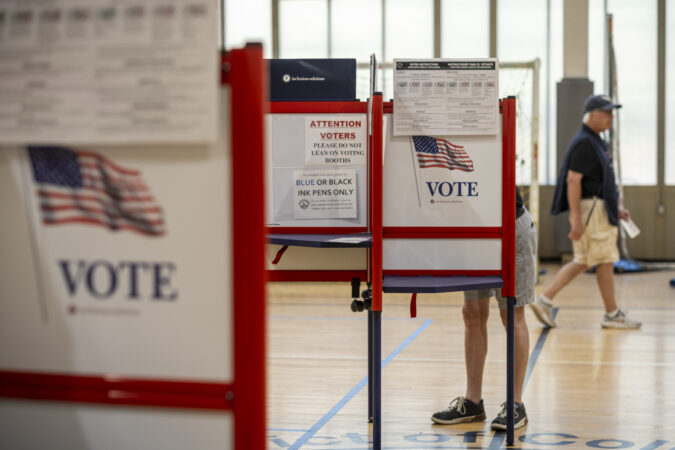
    “Less access has always been something historically that has endangered more people than helped anyone,” visual artist Nadya Yaksich, 30, said after voting in the Democratic primary at a high school in Wheaton, Md., last week.

    But book cataloger Carola Lewis, 62, said after voting in the Republican primary at the same school that she would have more confidence in election results if all voters were required to show IDs and prove that they are citizens.

    “As a citizen, I abide by the law, I pay my taxes, I do what I’m supposed to do, I go out and vote,” Lewis said. “And then to not be 100% confident that it’s only Americans that are voting is actually terrifying to me.”