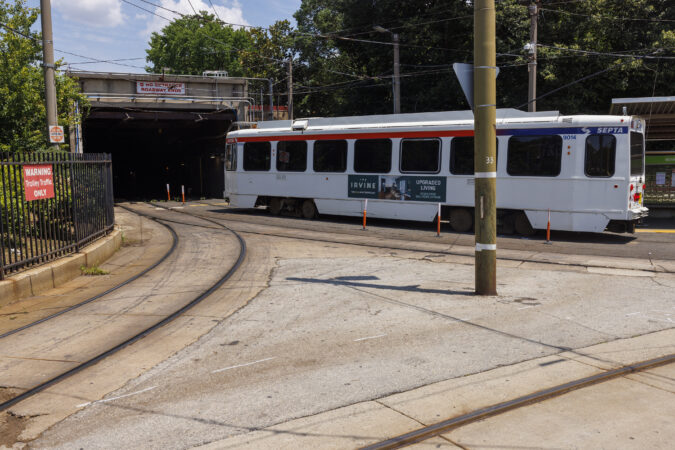
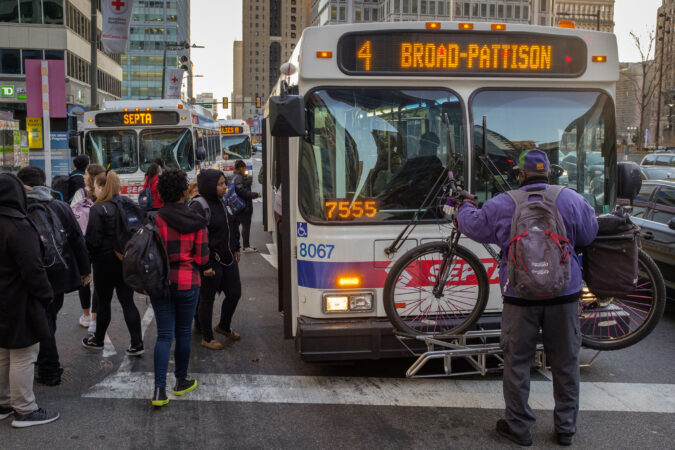
SEPTA is extending its trolley tunnel closure through at least Nov. 30, hoping to use the extra time over the Thanksgiving holiday to complete repairs to the overhead catenary power system.
The tunnel has been shut down for most of the last two weeks as crews work on the problem.
Riders should use the Market-Frankford El to travel through Center City, catching the trolleys at 40th and Market Streets.
“My wife, daughter and I are totally dependent on the trolley to get us to work and school, and with a prolonged trolley-tunnel diversion, the system has become unreliable and, frankly, unusable,” Will Tung, a Southwest Philly resident, told the SEPTA board during public comments at its Thursday meeting.
Trolley ridership is typically lower during the week of the Thanksgiving holiday so the closure should be less of a disruption, spokesperson Andrew Busch said.
SEPTA is contending with glitches in the connection between the overhead catenary wires in the tunnel and the pole that conducts electricity to the vehicle.
The issue led to two trolleys becoming stranded in October, with a total of 415 passengers needing to be evacuated.
The snow rumors notwithstanding, the Philadelphia region and most of the rest of the Northeast can pretty well rule out a white Thanksgiving, nor will Black Friday turn white.
However, the upper atmosphere evidently is in a state of upheaval with a potentially rare event unfolding, and forecasters say something resembling winter may arrive around here before the holiday weekend ends.
The National Oceanic and Atmospheric Administration’s Climate Prediction Center has chances favoring below-normal temperatures and above-normal precipitation from Thanksgiving Day through Dec. 1.
However, the meteorologists who have grappled with longer-range outlooks are cautioning against taking social media snow forecasting too seriously.
“The observed snowfall is inversely proportional to the hype,” said Judah Cohen, research scientist with the Massachusetts Institute of Technology. He is among those who have noticed the snow mentions that have popped up on X accounts and popular websites.
The next week should generally be uneventful save for rain Tuesday night possibly into getaway Wednesday, when highs are forecast to reach the 60s.
Then a developing pattern change is predicted to import colder air into the Northeast. “I do believe it will get colder as the Thanksgiving week wears on,” said Bob Larson, senior meteorologist with AccuWeather Inc.
A rare event may chill December
What has the attention of Cohen and others in the meteorological world is the potential for a “major” stratospheric warming event in the upper atmosphere over the Arctic sometime in the next several days, a disruption that could allow significant cold air to pour into the United States.
Major events have occurred on average about six times a decade, according to NOAA researchers; however, having one so early would be a rarity.
If one occurred, it would be only the second time in records dating to the early 1950s that it has happened this early, said NOAA meteorologist Laura M. Ciasto.
While computer models have been debating over just what is going to happen, Cohen, chief of seasonal forecasting for the Janus Research Group, said that such an early date has given him pause about forecasting it will happen.
What causes a stratospheric warming event?
On occasion, upward-moving waves from the troposphere, 5 to 9 miles over the Arctic, crash into the stratosphere, 10 to 30 miles up. That has the effect of compromising the polar vortex, the west-to-east winds that lock cold air in the places where the sun disappears for the winter, Ciasto said.
When the winds slacken, the vortex can weaken and allow frigid air to spill southward. In some cases it might “stretch,” or split into pieces that deliver cold air to regions of the Northern Hemisphere.
A major disruption would have longer-lasting impacts, Cohen said.
The European forecast model has consistently predicted a major event, Ciasto said, while the U.S. model has not been as impressed.
What is likely to happen if the warming event occurs?
A major warming in January 2021, when temperatures in the stratosphere suddenly jumped 65 degrees Fahrenheit, resulted in quite a snowy February in the Philadelphia region.
After a warming event, “there’s a greater chance that the jet stream will become more disrupted and dip down” over the continuous United States, Ciasto said, “bringing cold air with it.”
As for timing, the effects may show up anywhere from two to several weeks after the event.
In the meantime, she noted that “several other factors,” including patterns over the North Pacific, favor a chilling for the Northeast.
Don’t be surprised to see snow appear in an actual forecast, but not necessarily on the ground.
Cherry Hill is home to a new gaming space that takes childhood playground games and drops them into padded LED-laden arenas.
Activate Gaming is a 14,000-square-foot immersive gaming complex opening Nov. 21, where groups cantackle Mission Impossible-esque laser gauntlets and scatter from giant digital eyes in an amped-up game of hide-and-seek (Squid Game, anyone?).
Staffers (from left) Jason Shacket, Justin Dyaz, Christina Schmidbauer, and Robert Cole, prepare for the laser light gauntlet inside Active Gaming in Cherry Hill, N.J., on Tuesday, Nov. 18, 2025.
“We don’t have an age bracket or a specific demographic,” general manager Tahai Exum said. “We want to encourage everyone to come, where a lot of this is just the childhood games that we used to play out in the cul-de-sac or in our backyards with our friends after school.”
Activate will be transforming the site of a former Rite Aid, a wider trend among landlords to revitalize dormant spaces. As longtime tenants of large retail spaces start to leave these facilities, a new crop of immersive retail experiences is taking them over, including a massive entertainment center in the Moorestown Mall, Cherry Hill Mall getting a Dick’s House of Sport, and Center City’s Fashion District considering experiential retail offerings after the success of Puttshack and F1 Arcade nearby.
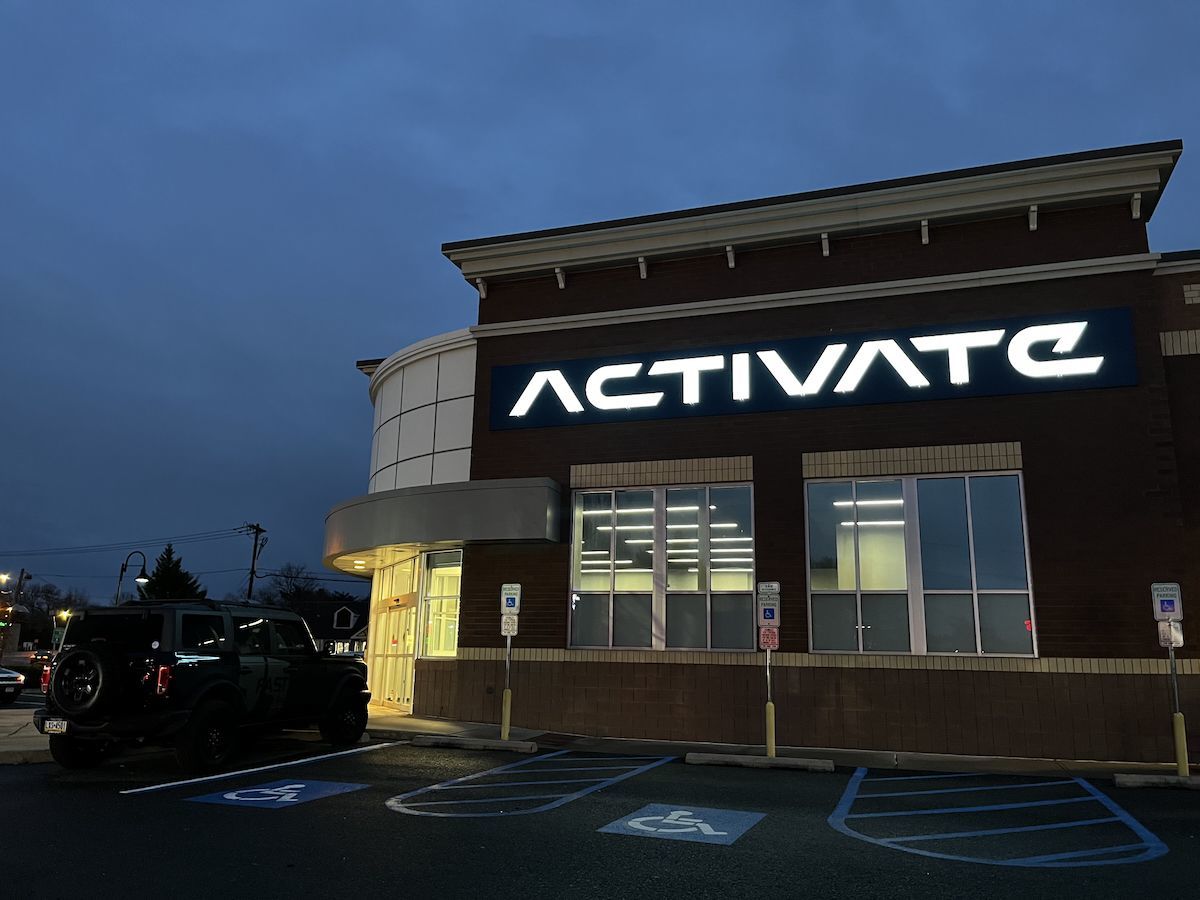
Activate Gaming, located at the site of a former Rite Aid, at 1509 Route 38 in Cherry Hill, pictured on Tuesday, Nov. 18, 2025.
What is Activate Gaming?
Walking into the complex, about a mile down the road from the Cherry Hill Mall, players are equipped with a wristband that activates the game rooms and tracks their scores. Rack up enough points and rewards like Croc accessories, portable speakers, and exclusive apparel are up for grabs.
Players are ushered into a sprawling, cushion-floored hall with 13 stalls of different games of their choosing. Each round of a game is one to three minutes long, which allows a fresh set of new players to get in.
From there, players can choose to get back in line and scan their wristband for another round, or try the other games on offer. Think of an arcade with loads of games, but instead of playing with a controller, players are part of the game themselves.
Shooting hoops, playing hide-and-seek, and the all-time childhood classic “the floor is lava” are heightened in these rooms with interactive prompts, trivia, and thumping techno music.
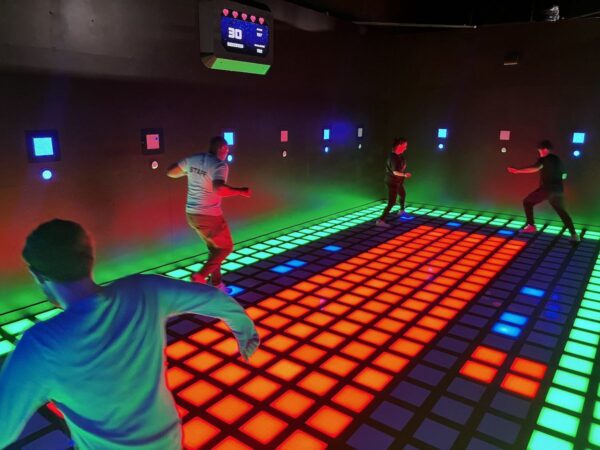
For instance, Activate trades the couch cushions and ottomans from traditional “floor is lava” for an LED tile-lined floor that illuminates squares for players to take refuge on. With each new round, players race to the next pressure-triggered tile to win.
Basketball gets turned into a trivia game where contestants are prompted with questions like “Where is the most densely populated island found?” and shoot a basketball into the correctly labeled hoop. This time the answer is “Haiti,” Exum said, referring to the Haitian island of Ilet a Brouee.
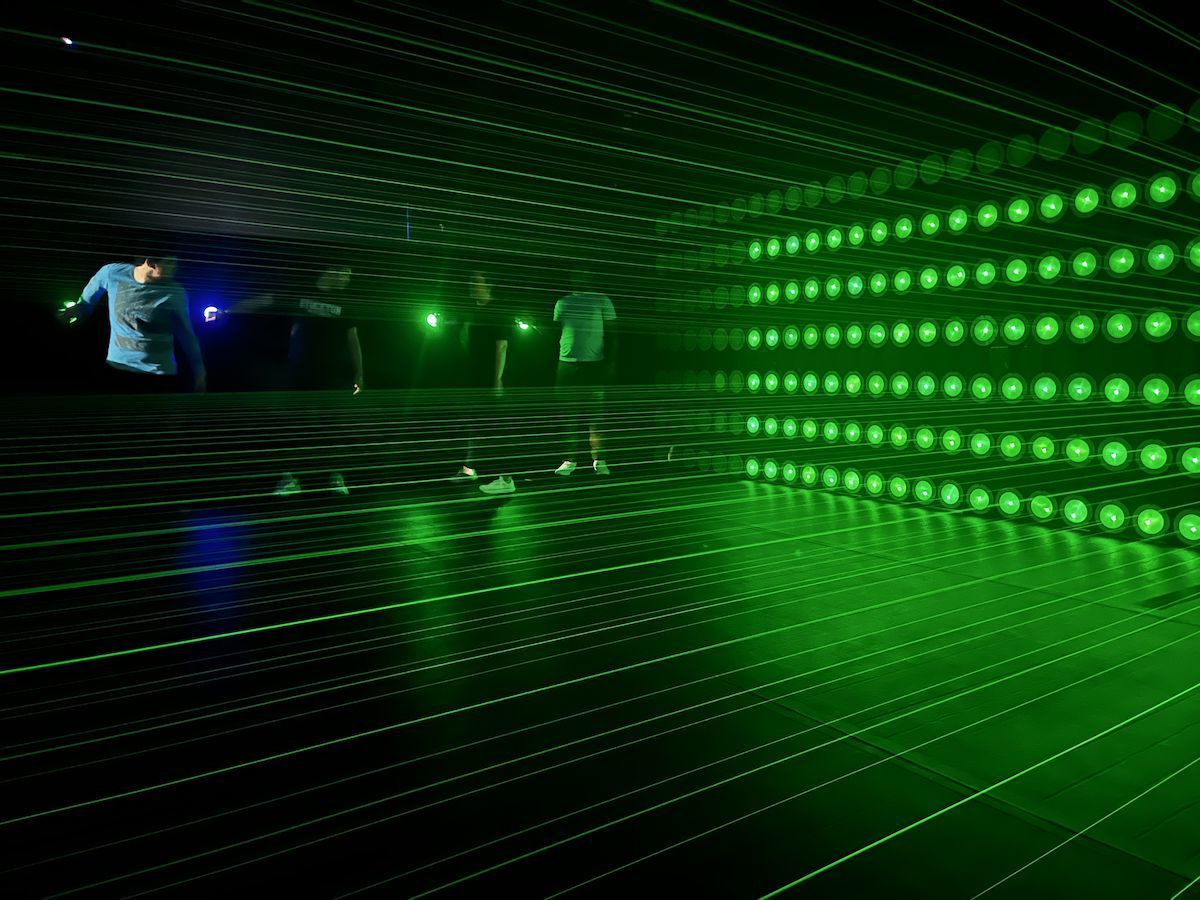
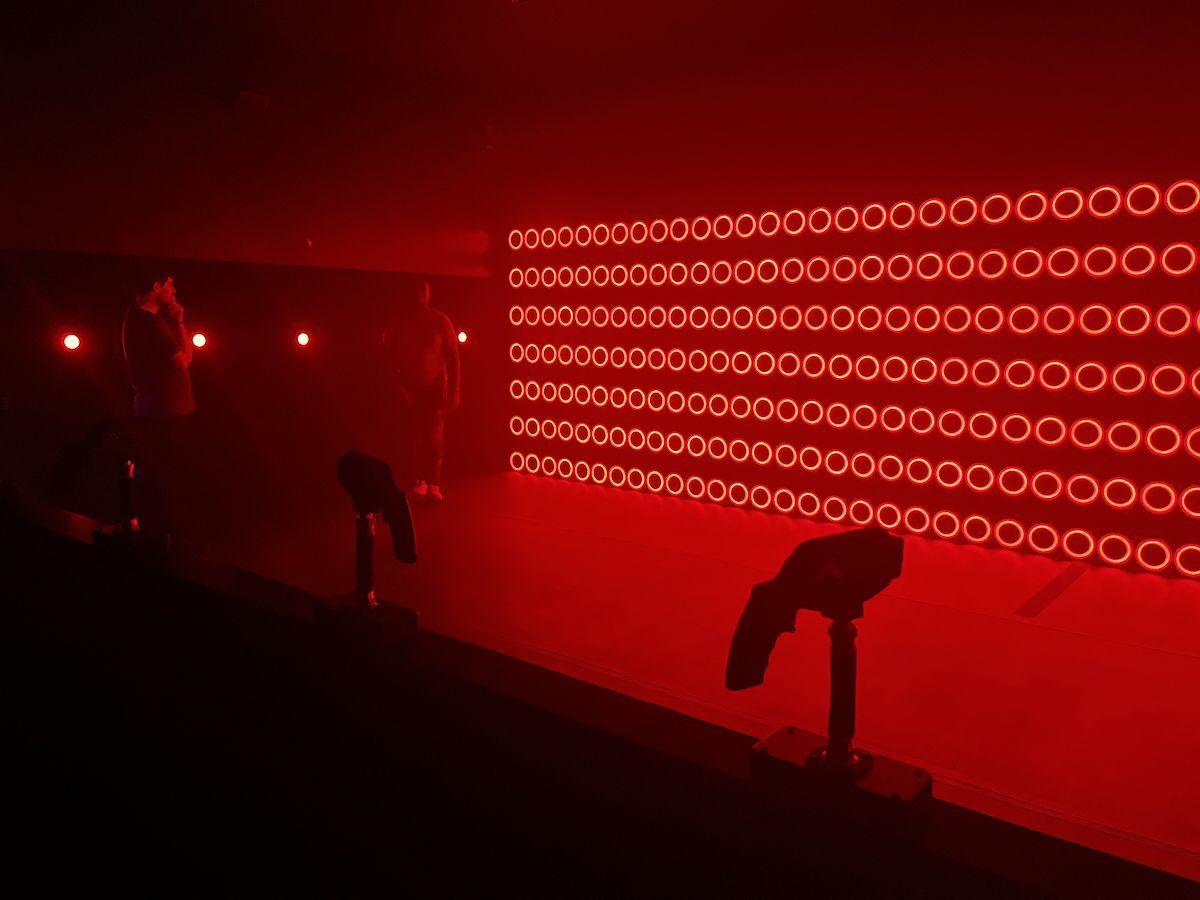
Players prepare for a race through the laser light gauntlet at Activate Gaming in Cherry Hill on Nov. 18, 2025. The immersive gaming space opens at the end of November.
In the laser gauntlet room, staffers Robert Cole from Philadelphia and Justyn Diaz from Pennsauken roll like ninjas below the lasers as a smoke machine wafts clouds throughout the room to illuminate the lasers into view. The staffers — even Cole, who previously worked at Dave & Buster’s — have never had employee training like this before.
The games that guests play are the same ones staffers play every week.
“I don’t know anywhere you can go and get paid to play games,” Exum said. “Our staff are playing these games ahead of launch, and when we’re open, to better explain and suggest games to guests, but also to provide feedback on the gaming experience.”
Activate Gaming is open to everyone ages 6 and up, and yes, Exum said, adults are encouraged to join the fun. Adults must be present at the gaming facility for the entire gaming session for children ages 6 to 13.
Pricing starts at $24.99 per person for a 60-minute session and $29.99 for 90-minute sessions on weekdays, or $34.99 per person for 60 minutes and $39.99 for 90 minutes on weekends, which should be booked online in advance. Walk-ins are welcome but are subject to availability as time slots get reserved.
For birthday parties and group visits, the price drops to $19.99 per person with a minimum of 10 guests.
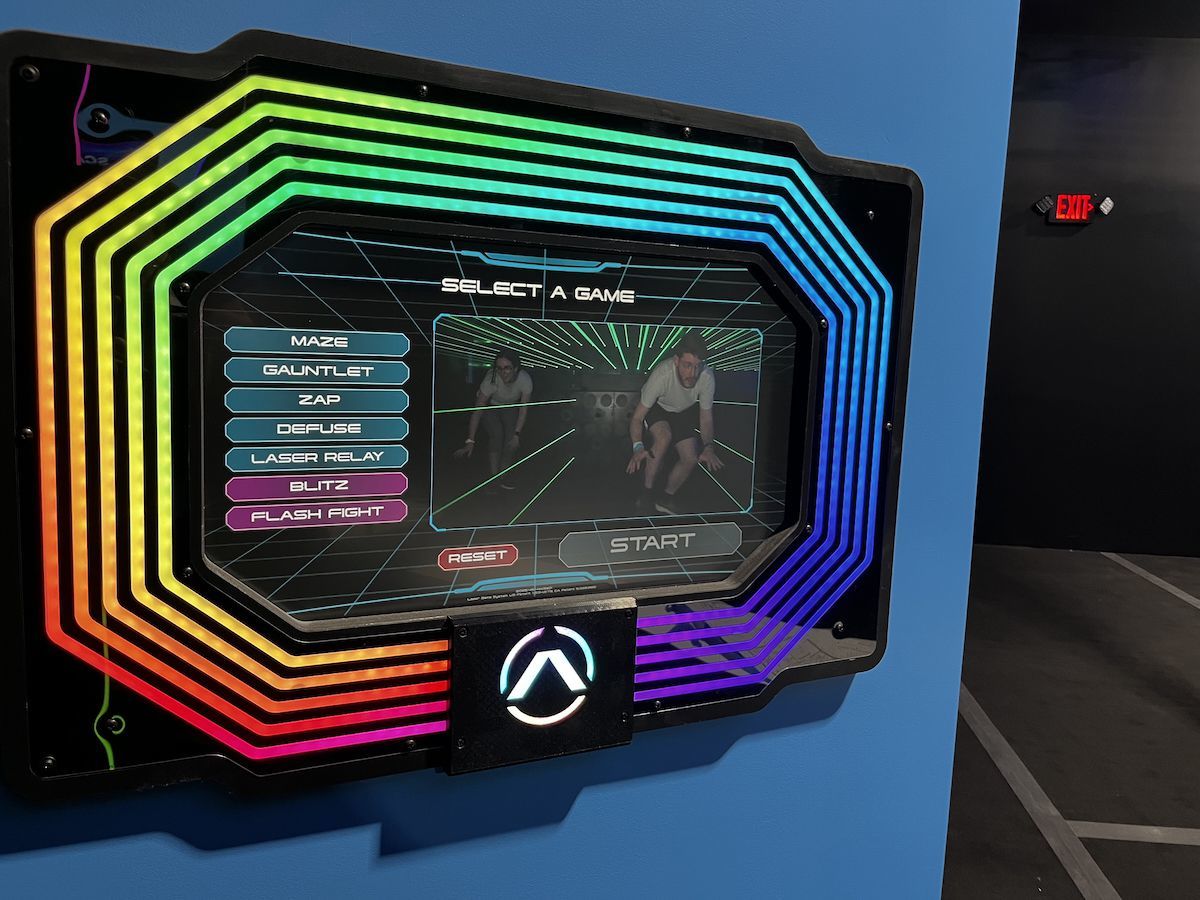
The display screen where players choose the various game modes within the laser gauntlet at Activate Gaming in Cherry Hill, N.J., on Tuesday, Nov. 18, 2025.
There are no limits to how many games you can play in your allotted sessions, so make sure to arrive early so you don’t eat up any valuable gaming time.
No food or drink is served on the premises, and usually only drinks can be brought inside the lobby or private rooms. But during birthday parties, bringing in party food and birthday cakes can be arranged.
Cherry Hill’s Activate Gaming is opening on Friday, Nov. 21, with an all-day free gaming event. They are running a limited-time offer of 50% off opening tickets when customers sign up for their newsletter.
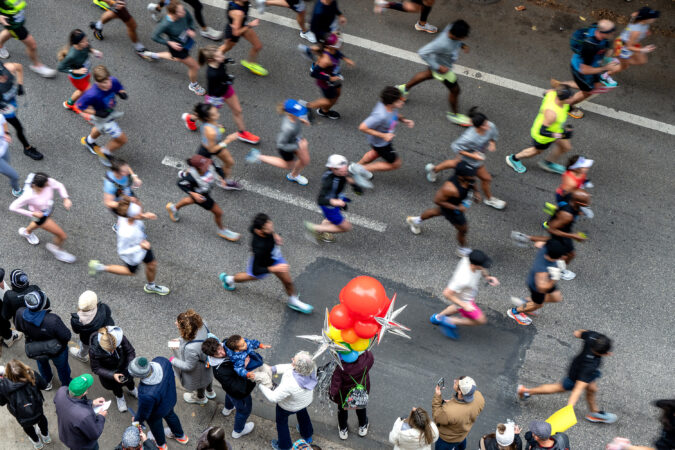
Assuming the sports scientists have it right, the temperatures should be near the performance sweet spots for the runners participating in the Philadelphia Marathon Weekend races on both Saturday and Sunday morning.
At showtimes, 6:55 a.m., just moments after daybreak, temperatures Saturday are expected to be in the upper 40s to near 50 degrees for the half-marathoners, and in the upper 30s to around 40 for Sunday’s main event.
Light rain is expected through the early-morning hours Saturday, and forecasters have been on the fence about when it will shut off. Nick Guzzo, a meteorologist at the National Weather Service said Friday afternoon that rain was likely at the start of the race, but that probabilities would drop precipitously once the event was underway.
AccuWeather Inc. and weather.com were posting about a 50-50 shot that the rain would continue through the morning. The hedging isn’t surprising; timing the onset and end of precipitation has been a longstanding forecast problem.
Nor would it be surprising for those running the 13.1-mile race to experience conditions different from those logging 26.2 miles the following day, points out Kathleen Titus, the race director and runner who has been involved with the marathon for 20 years.
This time of year is a busy one for frontal passages, this being a transition period when the atmosphere isn’t quite sure what season it wants to be. The temperature has reached 74 degreeson Nov. 22 (1883), and plunged to 14 (1880), and snowed 4.6 inches on Nov. 22-23, 1989.
However, nothing momentous is expected this weekend.
Like the rains, winds are forecast to be light, under 10 mph, from the north on Saturday, and northwest on Sunday, although runners allow that on the course, the wind can be way more capricious than the temperatures.
Various studies have concluded that temperature is the most important weather variable in runner performance and that the ideal range for marathoning is 39 to 50 degrees Fahrenheit — give or take a few degrees.
“Your body is always competing between a couple of different things,” said Philip Skiba, sports medicine specialist at ThomasJefferson UniversityHospital, who helped train Eliud Kipchoge, the Kenyan who became the world’s first runner to complete a marathon in under two hours.
During exercise, muscles demand blood to work, while for the body to stay cool, blood has to flow to the skin. If it’s too hot, more blood flows to the skin. When it’s cold, blood is diverted to heat the body’s core.
With temperates in that 39-to-50 range, the blood flow can more easily serve both the muscles and skin. Said Titus, racers love that temperature range because, “It regulates your body. It just works.”
Skiba said the temperature ranged from 51 to 55 degrees on the October 2019 day Kipchoge broke the two-hour barrier in a Vienna event that wasn’t held under record-eligible conditions.
Had the temperatures been lower, Kipchoge could have shaved a few more seconds off his time,Skiba said.
The wind also is a player in marathons
While not as dominant as temperature, “wind resistance … is worth a few seconds per mile,” said Skiba, a former triathlete.
“The more you stay out of the wind, you can save considerable energy,” he said.
“It’s really important to learn how to draft,” that is, get behind a group running close to your pace and using them for wind-breakers,he said. (Not sure how the wind-breakers feel about that.)
On the Philly course, the winds can be wild cards, especially on Kelly Drive, Titus said.
One instant, the wind “hits in your face. Now it’s at my back!”
Titus said she actually likes running uphill into the wind — and she is believed to be a member of a distinct minority — but agrees that “it is nice to have it at your back when you’re coming into the home stretch. Because it does give you a little boost.”
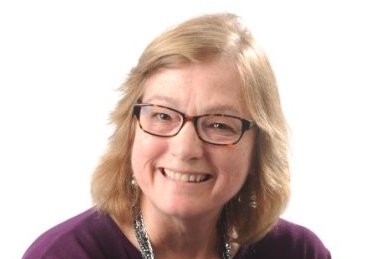
Virginia A. Smith, 75, of Philadelphia, longtime reporter and editor for The Inquirer, the Philadelphia Bulletin, the Akron Beacon Journal, and other newspapers, mentor and working-mother role model to many, and avid gardener, died Friday, Nov. 14, of interstitial lung disease at Roxborough Memorial Hospital.
Born in Philadelphia, Ms. Smith joined her hometown Inquirer in 1985 after three years at the Beacon Journal in Ohio, six months at the Bulletin in Philadelphia, and earlier stints at other papers in New York and Connecticut. Until her retirement in 2015, she covered news, health, and gardens as a reporter for The Inquirer, and served as city and Pennsylvania editor.
In her official Inquirer profile, she described her final assignment as “happily writing — and learning — about gardening full time since 2006.” Her son, Josh Wiegand, said: “She was a curious person and interested in so many different things.”
Former colleagues praised the depth and variety of her reporting, especially the detailed long-form stories she wrote about Sister Mary Scullion in 1992, the Iraq War in 2004, her own extensive garden in 2006, and the other interesting people and significant events she encountered. “She was open to reporting a story until she was confident she had all of its shadings,” Inquirer investigations editor Daniel Rubin said. “She had a gift for the stories people would talk about.”
For Ms. Smith, there was no better place than her own garden.
Ms. Smith was named The Inquirer’s garden writer in 2006, and, of course, wrote detailed previews and reviews of the annual Philadelphia Flower Show. But her favorite stories, she told colleagues, were the hundreds of others about climate change, garden gnomes, community gardens, butterflies, pruning techniques, seed banks, edible weeds, how blind people enjoy gardens, and other topics.
Her winter holiday story in 2006 was not about poinsettias or Christmas tree farms. Instead, she profiled an author who discovered a treasure trove of old black-and-white photos of gardeners tending plots in prisons, war zones, and concentration camps.
“It was her idea,” said Joanne McLaughlin, her editor then. “She wanted to write about gardens nurturing the soul under the worst of circumstances, giving hope under the worst of circumstances.”
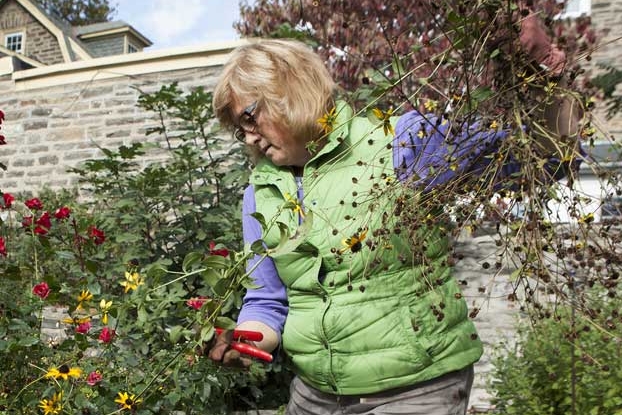
She wrote often about her own garden in East Falls and ended one story in 2006 with: “When winter arrives, maybe I’ll settle down. Oh, what are the chances? New years are for confessions, so here’s mine: Come first snow, I’ll be out there shoveling the garden pathways, hoping to sneak another peek.”
Ms. Smith wrote this two-part series in 2012.
Her column was called “Garden Scoop,” and she blogged at “Kiss the Earth” on Inquirer.com. She won two achievement awards from what used to be called the National Garden Writers Association and the 2011 Green Exemplar Award from Bartram’s Garden.
“She understood how important the topic was to this area,” said Reid Tuvim, a longtime editor at The Inquirer.
As a health reporter in the early 2000s, Ms. Smith wrote about bottled water, flu medicine, Lyme disease, organ donation, mental illness, children’s healthcare, and other issues. In 2004, she wrote a story about the Medical Mission Sisters, a progressive religious order that offered healthcare advice and full-body massages as well as spiritual guidance. In the third paragraph, she said: “But this is no spa. And that woman doing the hands-on — are you kidding me? — is a nun!”
She covered Scullion’s acceptance speech of the 1992 Philadelphia Award for community service and described it as “fiery and heartfelt, troubling and joyful.” Inquirer staff writer Amy Rosenberg said Ms. Smith “always drilled down to such emotional depths with her subjects. She defined so much of what The Inquirer meant back then.”
Ms. Smith doted on her granddaughters.
She mentored colleagues as she had been mentored and was a role model for fellow working mothers. “I watched her over and over again get up at 5 p.m. and walk out of the newsroom to get her son when he was young,” Rosenberg said. “Never mind what any of the boys in the room thought.”
Virginia Ann Smith was born Oct. 26, 1950. She graduated from the old Eden Hall high school in Philadelphia and earned a bachelor’s degree in English at Manhattanville University in New York in 1972. In 1981, she earned a master of legal studies degree at Yale University Law School through a Ford Foundation fellowship for journalists.
She married Alan Wiegand, and they had a son, Josh, and lived in East Falls. After a divorce, she married Randy Smith in 1985. He died in 2020, and she moved to Cathedral Village Retirement Community a few years ago.
Ms. Smith was a great cook, friends said. They said she was funny, stubborn, and opinionated. She was so into gardens, her son said, that she visited him in Colorado specifically to renovate his garden.
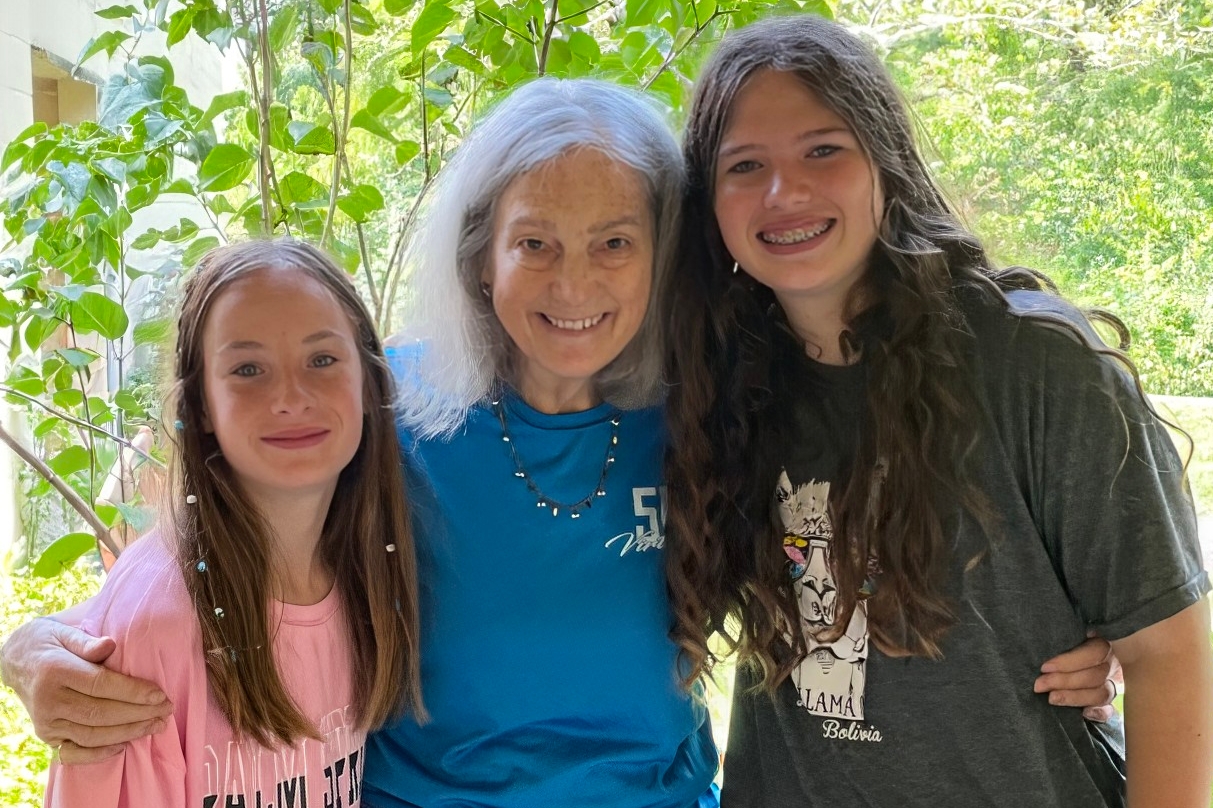
Ms. Smith poses with her husband, Randy, and her two granddaughters.
She listened to classical music and danced at blues festivals. Everyone said she made them feel as if she was their best friend.
“She was one of the most genuine people I’ve ever known,” said friend and former colleague Mari Schaefer. Friend and former colleague Mary Flannery said: “She was so creative and so brave.”
Her son said: “She was the best. I don’t know how she did it. She wanted to do it all, and she did.”
In addition to her son and her former husband, Ms. Smith is survived by two granddaughters, two brothers, and other relatives.
A celebration of her life is to be held later.
Donations in her name may be made to the Schuylkill Center, 8480 Hagys Mill Rd., Philadelphia, Pa. 19128.
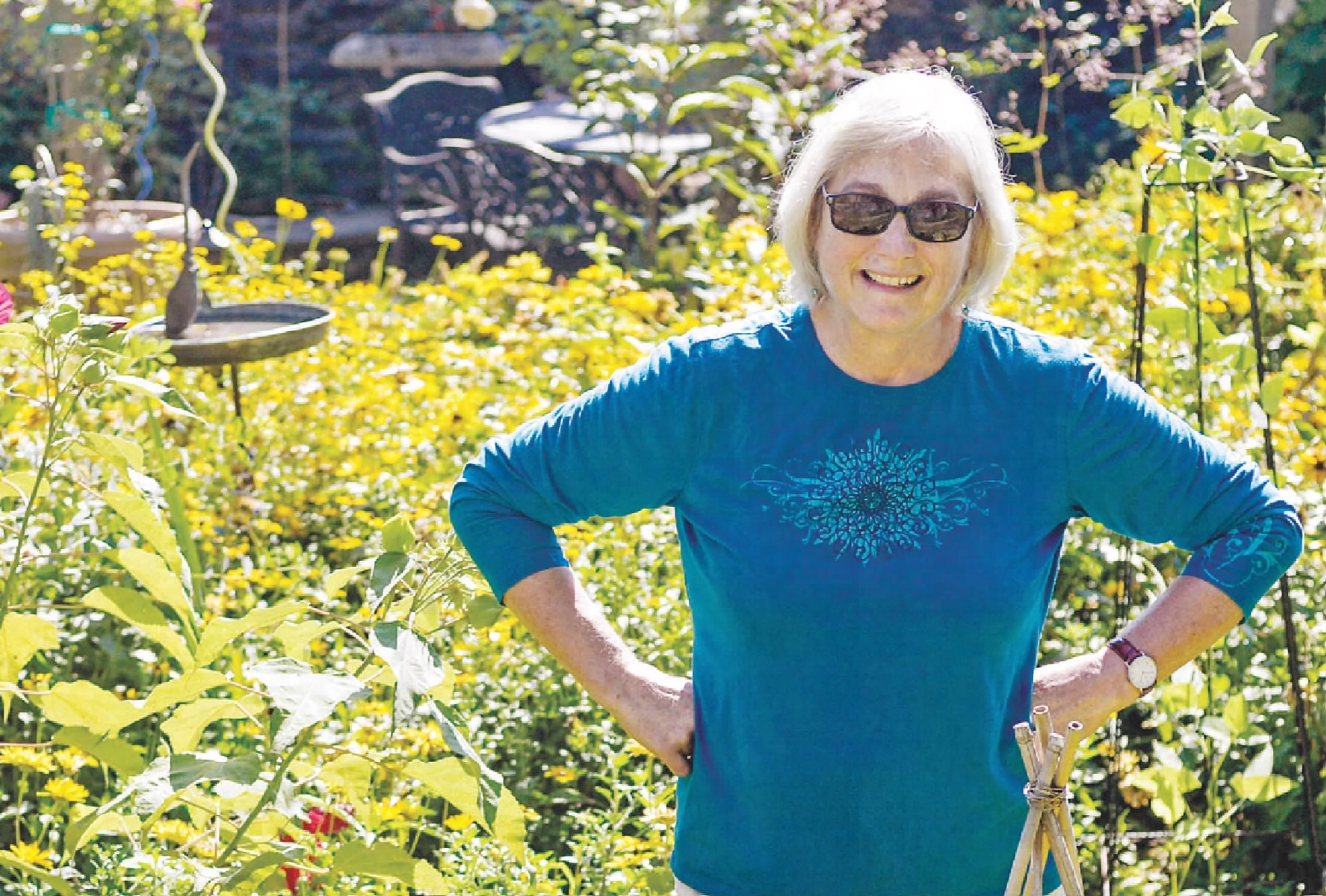
Ms. Smith tends to her garden’s black-eyed Susans in this photo.
The adage goes, “If mom says, ‘No,’ call grandma.” So if grandma says, “No,” do you call a lawyer?
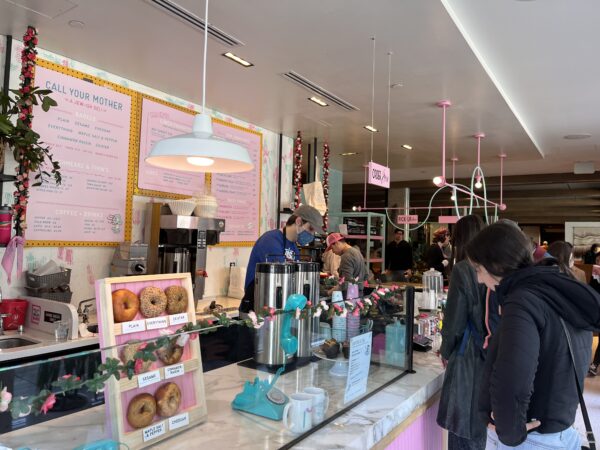
Popular D.C. bagel chain Call Your Mother is doing just that after claiming that a shop in Long Branch, N.J., is cramping their style, filing a trademark lawsuit within the U.S. District Court for the District of New Jersey.
Call Your Bubbi, a beach town cafe and kosher-certified bagel shop, opened last year within the Wave Resort and offers your classic bagel fare.
Andrew Dana and Daniela Moreira, the married couple behind Call Your Mother, say the Jersey cafe is intentionally using a “confusingly similar” name and branding, which can harm their nearly six-year-old company that has about 25 locations, in the Washington area and six in Colorado. The dispute has quickly gone viral within the food scene and bagel-loving communities.
“I cannot believe how this has blown up,” Dana said. “It has taken on a life we never expected.”
Call Your Bubbi owner David Mizrahi did not respond to multiple requests for comment from The Inquirer.
Dana said the couple first found out about the Long Branch cafe when a neighbor texted a photo of its storefront, asking if Call Your Mother had expanded to New Jersey. From there, they looked at Call Your Bubbi’s online and social media presence.
Dana and Moreira own the trademark for the phrase call your mother for use as a deli, cafe, or restaurant, according to court documents. They’ve also trademarked their logo, a rotary phone (which mimics the shape of a bagel). In its branding suite, the Call Your Mother text often circles around the rotary graphic.
Call Your Bubbi also uses a round image with its name similarly circling around its bagel logo. According to the Washingtonian, the cafe also at one point used a rotary phone motif on its merch. Both shops use hues of pink and blue in their branding.
“People might think we’re sort of hunting this stuff out — that’s not the case at all,” Dana said. “It looks just like our logo. We tried for months and months to get in touch with the owner. We got hung up on. We didn’t know what else to do.”
At one point, Dana told the Washington Post that he noticed a tagline on the top of Call Your Bubbi’s website: If Mom says, “No,” call your Bubbi.” He told the Post, “I just felt like they were goading us.”
In August, the couple sent Mizrahi a cease-and-desist letter, court documents show. They say they never heard back or saw a change in the cafe’s branding. Last Tuesday, they officially filed the lawsuit.
Call Your Mother is being represented by Philadelphia-based attorney Matthew Homyk, a partner in the intellectual property group of Blank Rome LLP. Homyk didn’t respond for comment as of publication time.
“In Jewish culture, the terms ‘mother’ and ‘bubbi’ both denote a caring and nurturing Jewish matriarch,” the lawsuit says. “Both marks evoke the same core idea — a warm and loving (but also somewhat instructive or scolding) prompt to call your mother or grandmother, and to go grab some coffee and bagels while you’re at it.”
The suit noted that Mizrahi‘s original incorporation in March 2024 was for “Bubbies Bagels,” but that “sometime thereafter,” he began using the Call Your Bubbi label instead.
The Jersey Shore cafe appears to use a blend of both names as of publication time. On Yelp, it’s Call Your Bubbi. On Google Maps, it’s billed as “Bubbi Bagels @ Wave Resort,” but its phone line and merch still identify it as “Call Your Bubbi.”
The shop’s web domain is bubbibagels.com, but the top of its website says Call Your Bubbi. Similarly, its Instagram username is @bubbibagels, but its icon is the contested Call Your Bubbi round logo.
Dana said they saw no issue with the cafe going by “Bubbi Bagels,” or something similar.
“He can call it Bubbi’s, he can call it Mother’s, I don’t really care. But Call Your Bubbi is so close, we had to sort this out,” Dana said. Still, Dana says, Mizrahi won’t return his calls.
Josh Gerben, a trademark attorney not affiliated with the litigation, says the suit makes for a captivating case study. He posted his own analysis of the brand dispute on LinkedIn and says he believes Call Your Mother has a strong case for trademark infringement.
“As a trademark attorney who grew up in a Jewish family, I can tell you that those two names draw from the same emotional well,” he said. “If this case goes to trial, the judge or jury will have to determine whether an average consumer would think these brands are owned by the same company.”
Restaurant-related trademark disputes aren’t new. In Philly, Chickie’s & Pete’s has a grip on the use of crabfriesthanks to owner Pete Ciarrocchi registering the phrase as a trademark back in 2007. Since then, his lawyers have sent cease-and-desist letters to restaurants nationwide for using the phrase.
(It has also sparked some cheeky clapbacks, like Betty’s Seafood Shack in Margate, which now calls its version of the fries “For ‘Pete’s’ Sake.“)
The lawsuit is asking for the court to rule that Call Your Bubbi illegally used Call Your Mother’s trademark materials and engaged in unfair competition and to order that they permanently stop using the name or anything similar.
They also want all infringing materials destroyed, a report proving compliance, and financial remedies, including Call Your Bubbi’s profits, along with damages, interest, attorney fees, and other appropriate penalties.
“We want him to be able to have his business and us to have ours,” Dana said. “The last thing we want to do is spend money on legal or focus on this. We want to focus on making bagels — and figure out how to finish this quickly.”
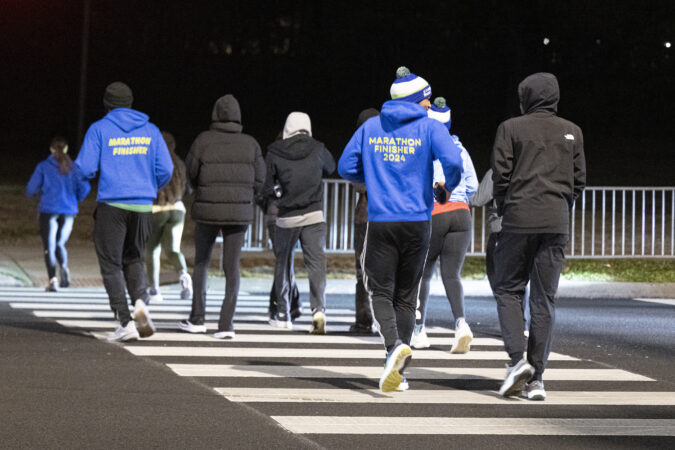
Before the start of Tuesday’s team practice on Boathouse Row, a couple of teenagers filmed their own TikTok dances. The boy was sheepish about showing his adult coaches the final product on his phone, while a group of girls compared hairstyles. After a quick warmup in the cold air, with some students moving more enthusiastically than others, the group went off on its three-mile run.
It was one of the last steps remaining for the teenagers to get their criminal records expunged.
On Saturday, the group of mostly high schoolers will complete their program by running the 13.1 miles of the Philadelphia Half Marathon.
They are members of MileUp, a juvenile diversion program operated by the nonprofit Students Run Philly Style in partnership with the Philadelphia District Attorney’s Office and Drexel University’s Center for Nonviolence and Social Justice. MileUp gives youth ages 11 to 17 who are charged with certain offenses the opportunity to learn and practice distance running to clear their criminal records.
MileUp intends to teach the students about accountability and responsibility through running, while creating a supportive community. According to Students Run Philly Style, about 92% of MileUp students have completed the program since 2020, which puts them on the path toward having their records expunged.
“You see young people change their mindset over how much control they have over what’s ahead of them,” said Students Run Philly Style executive director Lauren Kobylarz
“This is a chance to let that choice that maybe wasn’t the best … to leave that behind you and move forward,” she said.
This weekend, 128 Students Run Philly Style youth will run the half marathon, including eight from MileUp, and others will do the marathon or 8K, all wearing the same SRPS T-shirts.
For students, the program starts with a referral from the district attorney’s office, where the teenagers are identified as candidates for diversion programming. Some of the most common charges for MileUp students include auto theft, assault, and vandalism. For most, it is their first offense.
The teenagers are given their choice of diversion program. Under District AttorneyLarry Krasner, the officehas expanded the initiative to about 30 programs in sports, arts, and trades.
MileUp has cohorts in the fall and spring, where students meet for practice three times per week for 12 weeks with Students Run Philly Style staff, trained adult volunteers, and peer mentors, who are program graduates paid for their work.
District Attorney Larry Krasner has expanded the use of juvenile diversion programs since coming into office in 2018.
For the fall cohort, milestone runsinclude a 5K, the All-City 10 Miler, and the half marathon.
After the first race, they earn restitution fees associated with their case, which can often be a financial burden.
Afterthe second, the charges get dropped, as long as they ultimately complete the program.
And for a student who finishes the final race, writes a reflection, and is not arrested within six months, the case is expunged, erasing all records of it.
“These are honestly great students … they’re not beat down by what’s happened to them,” said volunteer Juan Batista, 25, whose mother works for The Inquirer in human resources. He said he fell in love with running after he began participating in Students Run Philly Style’s standard program when he was 12.
Batista grew up in Juniata under similar circumstances to many of the MileUp students, and started working with them after he finished college. Their shared background helps them connect, Batista said. He noticed that, in many cases, it has been just a matter of wrong place, wrong time.
“Sometimes bad things happen, and that could be on your record for the rest of your life,” he said.
Second chances
When Lucas from Northeast Philly joined MileUp two years ago, he struggled. It wasn’t fun, and the 16-year-old,whose full name is not being used because he is a juvenile, said that he had been treating his body poorly up to that point. But he showed up to nearlyevery practice, and felt himself maturing as he got stronger as a runner. His record was expunged, and he said having his restitution fees paid was a major help.
“It’s really worth it,” he said.
Now, Lucas is back with MileUp as a peer mentor. He enjoys serving as an example for the other teenagers, and said it feels good to encourage and give advice to those who need it. Lucas said that lots of kids don’t have enough people they can rely on.
“It’s good to have people you can go to for help,” he said.
MileUp diversion program participants have already completed a 5k and 10 mile race together. Their last milestone is the Philadelphia Half-Marathon on Saturday, Nov. 22.
He arrived at Tuesday’s practice with Na’Sean, another 16-year-old from Northeast Philly who is also being identified only by his first name because he is a juvenile. Na’Sean is a current MileUp student who said he came back from a family trip to learn there was a warrant for his arrest, stemming from a years-ago incident.
His focus at the half marathon will be on keeping a steady pace, without starting too fast. It happened to him during the 10-miler and he struggled near the end, but said one of the adult leaders helped him push through. He said he valued the support he has gotten and will miss the group after the program ends.
Na’Sean appreciated how his future remains wide open, and how his ability to get a good job one day won’t be limited by something he may have done when he was a young teenager.
SEPTA’s21.5% increase in transit fares and service cuts fell hardest on disadvantaged Philadelphians this year, showing an urgent need to make the city’s Zero Fare program permanent, CityCouncilmember Nicolas O’Rourke argues.
He touted his proposal to dedicate 0.5% of the city budget each year to pay for the initiative that provides free SEPTA passes to people living in poverty.
O’Rourke’s proposedTransit Access Fund would be written into the City Charter “so it can’t be yanked away at a moment’s notice when somebody wants to shift something around in the budget,” hetold about 150 people in a town hall at the Friends Center on Cherry Street.
O’Rourke, Democratic State Sen. NikilSaval, and the advocacy group Transit Forward Philadelphia called the meeting to push for affordable public transportation and ways to sustainably fund SEPTA after Harrisburg’s failure to provide new state money for mass transit agencies.
A broad coalition and patience are needed in Pennsylvania, Saval said. ” Every major political win comes from months, years, sometimes decades, of work,” he said.
“We pushed back hard,” said O’Rourke, a member of the Working Families Party. “People with the least income are paying a larger share of their money just to get around. That’s upside down.”
Funding is not guaranteed after June 30, when the current budget expires, however.
If enacted, a Transit Access Fund would generate an estimated $34 million in the 2026-2027 fiscal year, O’Rourke’s office calculates.
That would generateenough money — between $20 million to $25 million, according to managers of the Zero Fare program —to give free SEPTA passes to 60,000 Philadelphians at or below the federal poverty standard.
O’Rourke and his staff also are considering usingthe remaining $10 million to $14 million for matching grants to help businesses, landlords and housing developments to join the SEPTA Key Advantage program, which provides subsidized transit passes.
People living at or below the federal poverty standard are eligible for the Zero FareSEPTA passes. For 2025, that is $15,650 for an individual and $32,150 for a family of four.
Philadelphia’s poverty rate was 19.7% in 2024, the latest figure available, according to the U.S. Census.
“When we’re made to feel like we’re on opposite sides of the fight, our numbers become smaller and we focus on the wrong targets,” said Saval.
“It’s not the person in Schuylkill County frustrated about potholes and road conditions that’s to blame for lack of transit funding” he said. “That person deserves to get safely where they need to go, too.”
At the King of Prussia Mall, you can add some slime (the fun kind) to your holiday shopping experience this year.
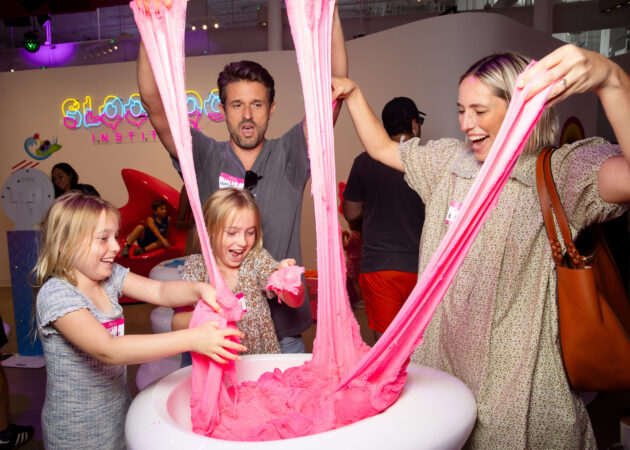
Fresh off the opening of the first-ever Netflix House, the Montgomery County mall this week welcomed the Sloomoo Institute’s first Philly-area location. The sensory slime experience’s latest outpost is called a Sloomoo MiniMoo, and it’s a scaled-down, 3,000-square-foot version of its flagship stores.
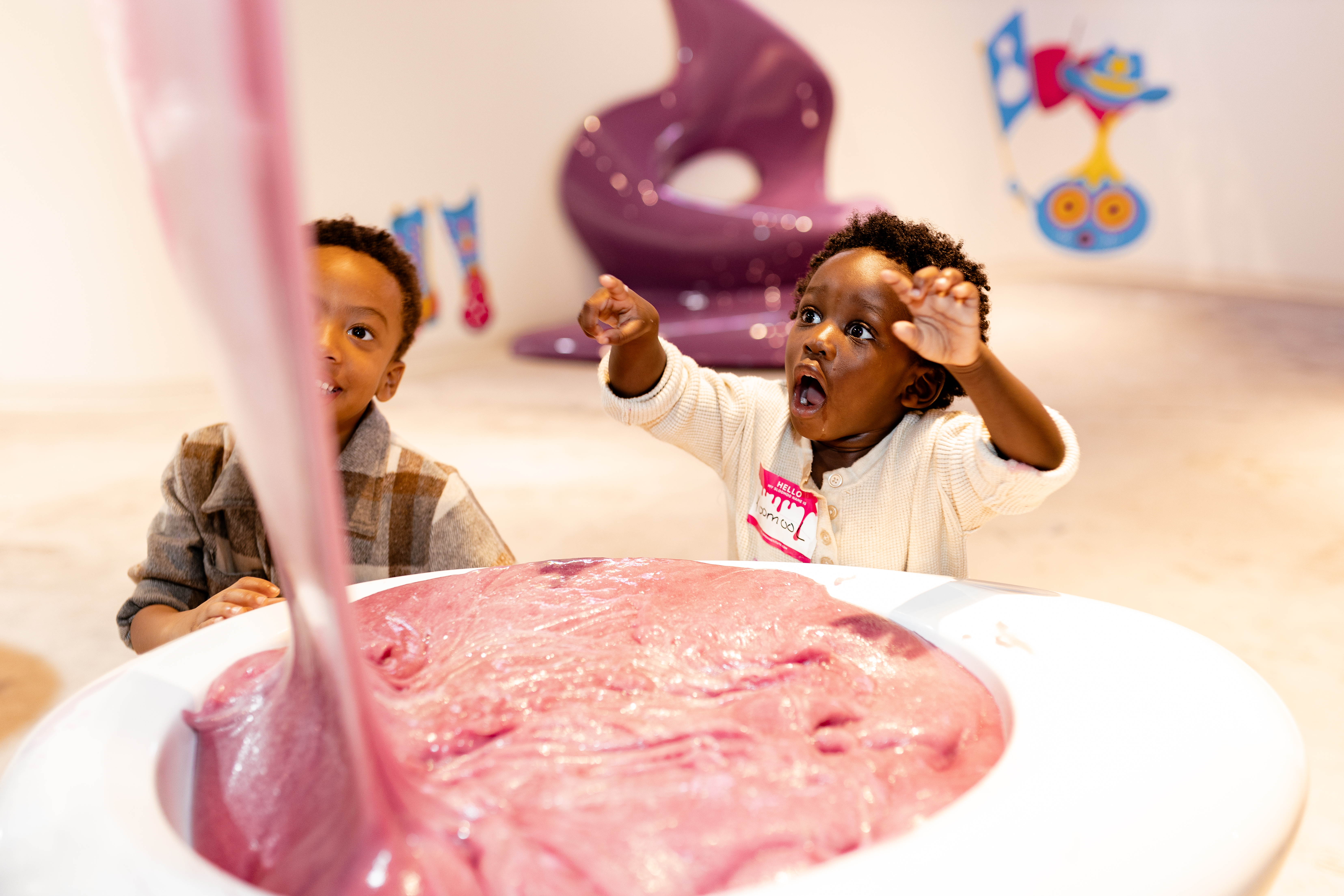
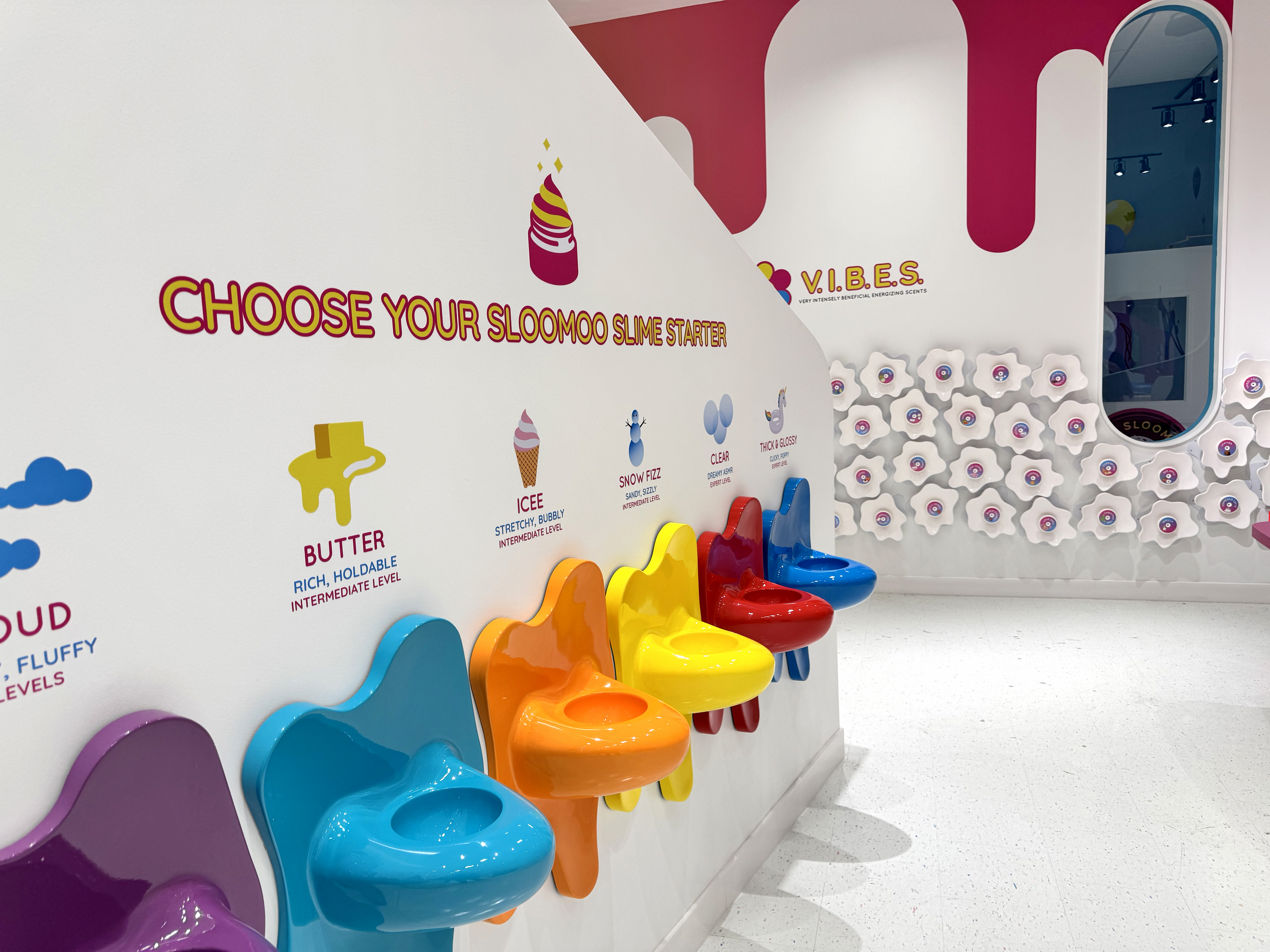
For between $24 and $26 a person, King of Prussia Sloomoo customers can design their own slime, choosing from different textures, colors, scents, and charms. They can also smush slime onto the wall, send it flying through the air with a slingshot, go elbow-deep in vats of slime, and take slime-making classes.
Guests can also browse slime toys and other squishy, sensory gifts at the Sloomoo retail store, no ticket required.
“King of Prussia is a playground for families,” cofounder Sara Schiller said in a statement, “and we’re bringing a world of slime designed to spark curiosity and pure, unfiltered joy.”
Customers play with slime at another Sloomoo Institute location. The King of Prussia Mall opened a Sloomoo MiniMoo experience this week.
They opened their first location in New York in 2019, went viral on TikTok during the pandemic, and then expanded nationwide, opening outposts in Atlanta, Chicago, Houston, and Los Angeles. A Sloomoo MiniMoo also recently opened in Boston.
Earlier this year, the founders told CNBC that Sloomoo brings in as much as $4.3 million a month in revenue from ticket sales alone.
A look inside the King of Prussia Mall’s Sloomoo MiniMoo experience, which opened this week ahead of Black Friday and the holiday shopping season.
At King of Prussia, Sloomoo MiniMoo welcomed its first customers last weekend, but it will celebrate its grand opening this Saturday, when the first 200 ticketed customers will receive a complimentary hot chocolate and “limited-edition Philly Cheesesteak-themed slime,” according to company officials. The first 100 guests on Saturday will get a bag charm.
Aside from Sloomoo, the mall has welcomed several other new stores, restaurants, and interactive experiences since August. A few retailers, including Lululemon, Abercrombie & Fitch, and Mejuri, have also expanded or relocated.
As holiday shopping season kicks into high gear, customers can check out the following new additions:
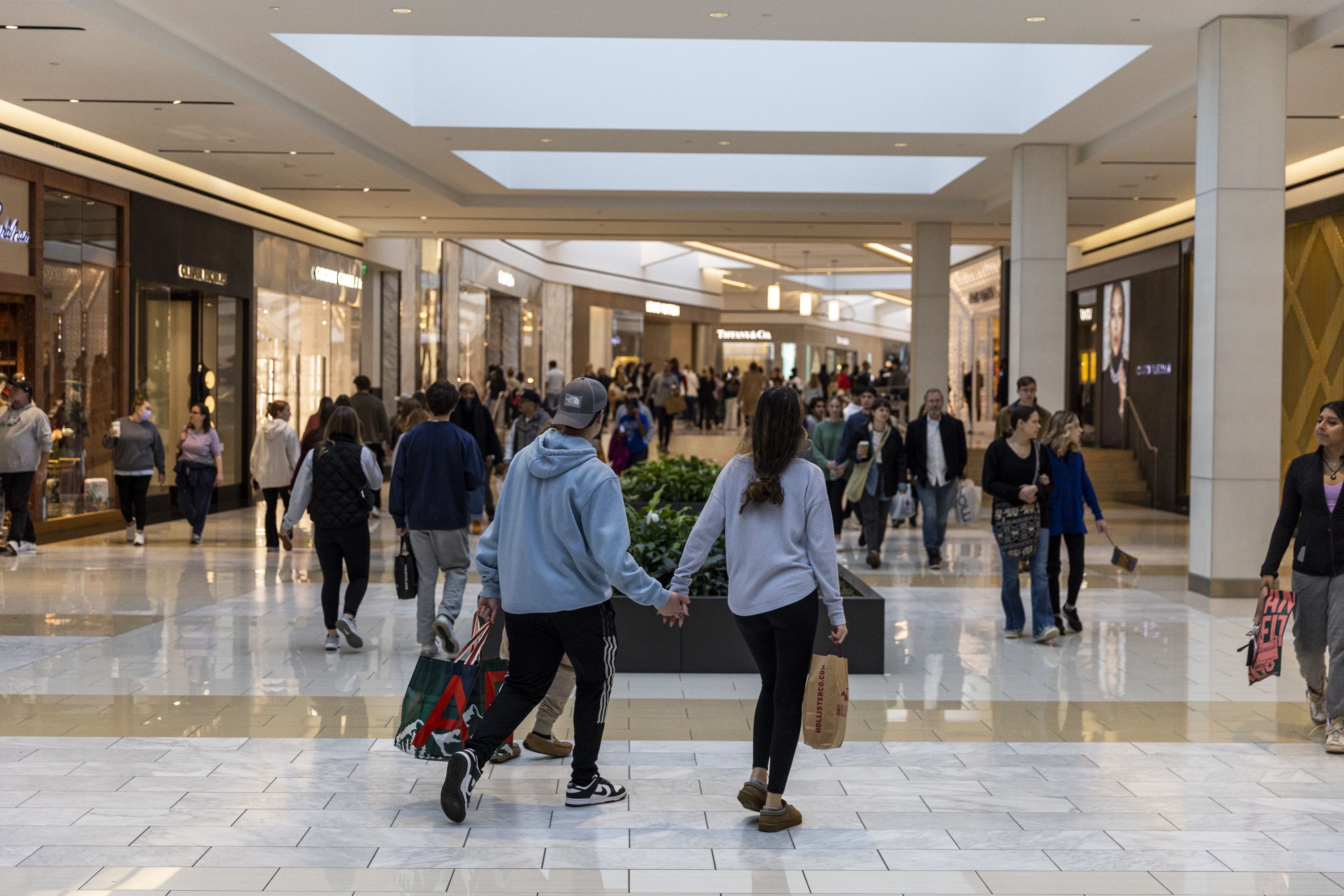
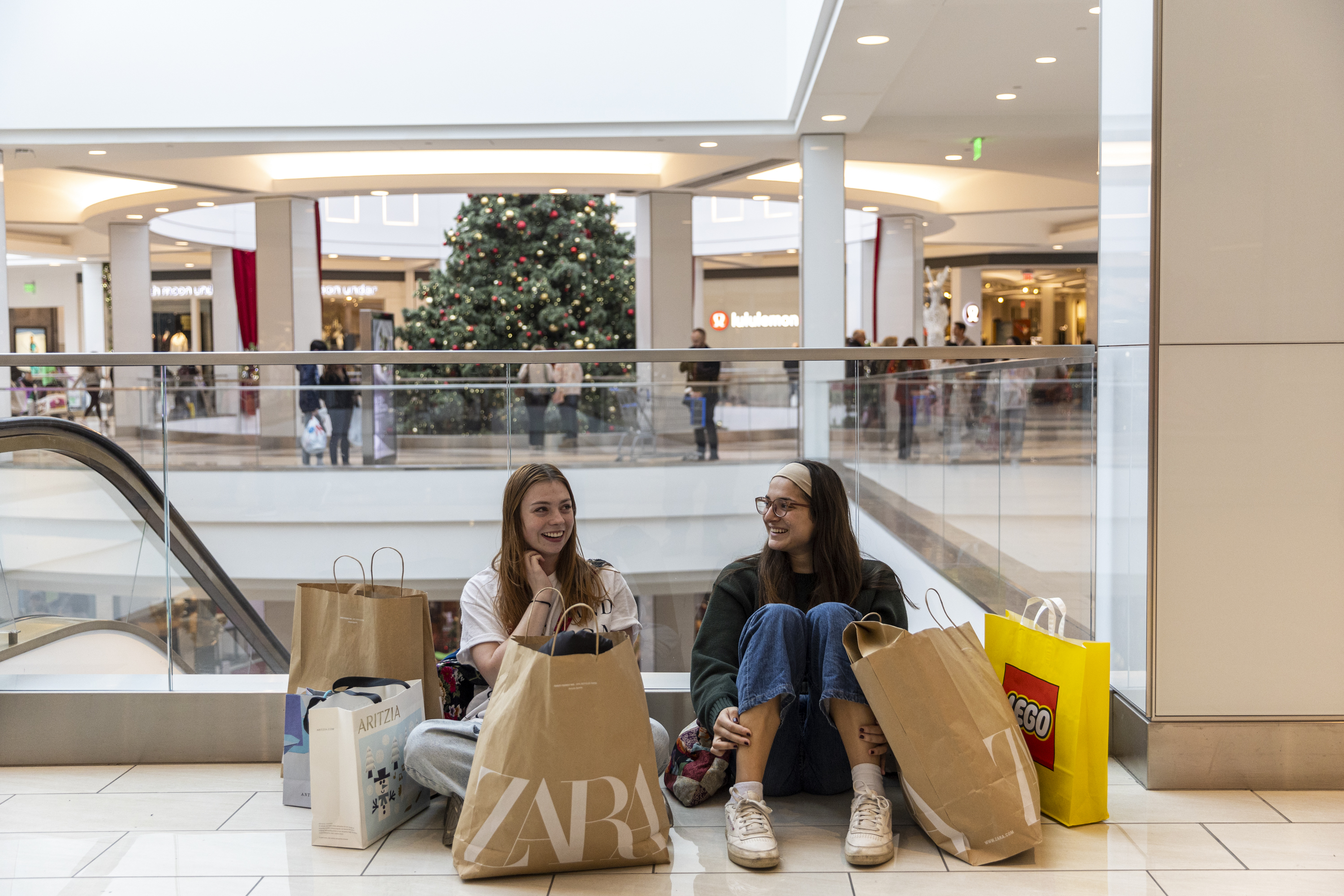
Shoppers sit with their bags at the King of Prussia Mall on Black Friday 2022.
If you’re doing holiday shopping later in the season, or taking a trip to the mall between Christmas and New Year’s, you might be able to visit the following stores. All of them are set to open their first Philadelphia-area locations this December:
In early 2026, Adidas and Columbia Sportswear are set to open stores in the King of Prussia Mall. Exact locations for those stores have yet to be announced.
The final defendant in a sweeping corruption probe that uncovered a series of bribes being lavished upon an Amtrak manager during a renovation project at 30th Street Station was sentenced Friday to two months in prison.
Khaled Dallo was an employee at an Illinois-based masonry firm and helped provide a series of extravagant gifts to the Philadelphia-based project manager, Ajith Bhaskaran, including vacations to India and Ecuador, a Tourneau watch, expensive dinners in Center City, a German shepherd puppy, and cash.
In all, prosecutors said, Dallo and supervisors at his company, Mark 1 Restoration, provided Bhaskaran with nearly $330,000 in bribes, and Bhaskaran in turn helped approve tens of millions of dollars in expenses for Mark 1, nearly doubling the cost of restoring the train station’s historic facade.
Dallo, 69, said in court that he was sorry for his misconduct, and that it stood in contrast with how he has tried to live the rest of his life.
“I knew it was wrong,” he said, “and chose to do it anyway.”
His sentencing represents the final chapter in a saga that saw federal prosecutors indict six people connected to the restoration project — four from Mark 1, and two from another contractor.
All of the Mark 1 employees have since been sentenced to prison. Dallo received the shortest term, with prosecutors crediting him for being the first person to plead guilty and saying he served a more subordinate role in the scheme.
Bhaskaran, the Amtrak manager, was charged with unrelated wire fraud, but died of heart failure in 2019.
The renovation project Bhaskaran oversaw at 30th Street was announced in 2015, when the railroad agency signed a $58 million contract with Mark 1 to repair and clean the station’s limestone facade.
Bhaskaran controlled the project’s purse strings, and prosecutors said Mark 1 employees quickly came to realize their conditions on the job site could be improved if he was happy.
About a year into the project, prosecutors said, Bhaskaran began requesting gifts, despite Amtrak rules that bar employees from receiving them. Executives at Mark 1 knew Bhaskaran’s requests were improper, prosecutors said, but went on to fulfill them anyway — in part because Bhaskaran had the ability to approve additional business on the project.
Dallo was among the Mark 1 employees who provided Bhaskaran with dinners at steakhouses, limousine rides, a $5,600 watch, the paid vacations, and a nearly $5,000 check to an Illinois breeder of German shepherds.
Over that same time frame, Mark 1 continued to receive additional funding for its work at 30th Street. In total, prosecutors said, Bhaskaran helped secure the company $52 million in new contracts, about $2 million of which was considered fraudulent overbilling.
The scheme began to fall apart in 2018, when an anonymous tipster sent a letter to Amtrak’s inspector general about Bhaskaran’s suspicious behavior. That led to an investigation involving the FBI and Amtrak’s inspector general.
Dallo acknowledged his wrongdoing about a year later, as soon asfederal agents confronted him, prosecutors said.
Still, U.S. District Wendy Beetlestone told Dallo that his actions were not a onetime lapse in judgment, but a “considered, yearslong” effort that led to taxpayer money being spent on graft.