Category: News

Latest breaking news and updates

  • The Trump administration’s push to deport pro-Palestinian activist Mahmoud Khalil landed before a Philly-based appeals court

    The Trump administration’s push to deport pro-Palestinian activist Mahmoud Khalil landed before a Philly-based appeals court

    President Donald Trump’s administration on Tuesday asked a federal appeals court in Philadelphia to overturn an order that has, for the moment, blocked authorities from deporting pro-Palestinian activist Mahmoud Khalil — the latest development in a complex legal saga that began when the administration was seeking to crack down on anti-Israeli college campus protests earlier this year.

    During a hearing before a three-judge panel in a Center City courtroom, Deputy Assistant Attorney General Drew Ensign said the earlier order, issued by a federal judge in New Jersey, was “indefensible” for several reasons — including that it was issued in the wrong jurisdiction, and that it was effectively helping Khalil’s lawyers improperly “fragment” the various legal proceedings against him and seek venues that might issue favorable rulings.

    Khalil’s attorneys, however, said the judges should uphold the lower court’s ruling because the government had illegally targeted the 30-year-old for removal over his political views — something they called a clear First Amendment violation and a situation that could have wider implications amid Trump’s push to increase deportations.

    Speaking outside the courthouse after the hearing, Khalil, a legal permanent resident who was born in Syria, told a crowd of supporters he planned to continue his legal fight to remain in the United States.

    “This shows how my case is actually just a test for everyone’s right’s here across the country,” he said. “Not only one place, not only for specific people, for immigrants or documented or undocumented people, it’s for everyone across the country.”

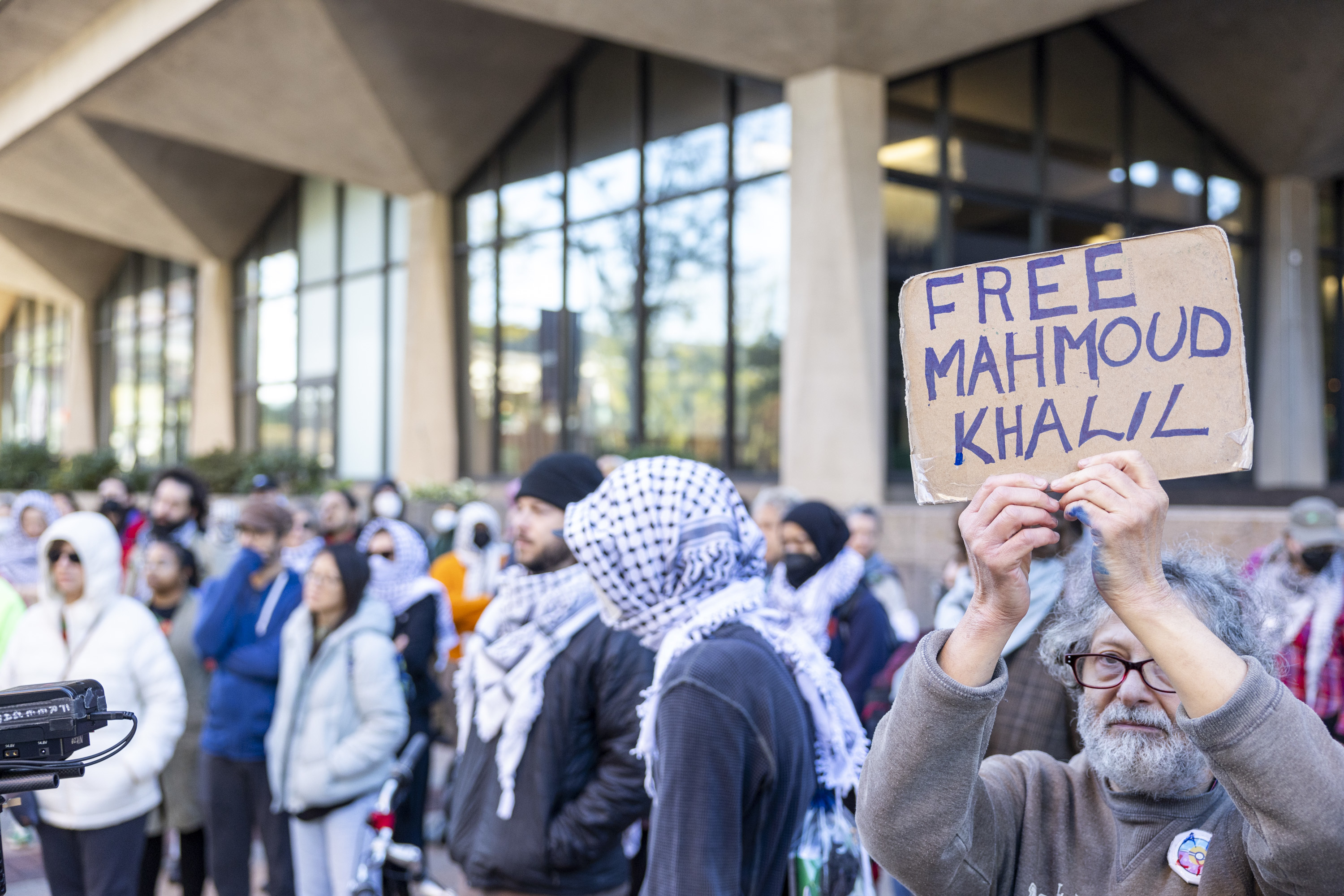
    Eric Hamell, of West Philadelphia, holds up a sign saying Free Mahmoud Khalil during a rally outside the James A. Byrne U.S. Courthouse in Philadelphia on Tuesday.

    The case against Khalil began in March, when he was arrested by immigration authorities at Columbia University, where he had recently completed a master’s degree and had become a prominent figure at pro-Palestinian protests. Authorities detained Khalil and then pushed to deport him, with Secretary of State Marco Rubio citing an obscure legal statute in contending that Khalil’s rhetoric and continued presence in the country could undermine U.S. foreign policy interests.

    Khalil’s lawyers quickly challenged the administration’s actions in court — first in New York, where he lived and was arrested, then in New Jersey, where he was detained in the immediate aftermath of his arrest.

    Within days, however, Khalil was transferred to a detention facility in Louisiana, where he was held for more than three months (he was living there this spring when his wife, an American citizen, gave birth to their son in New York).

    The issue of where Khalil was located was something Ensign, the government attorney, said was important for the appellate judges to consider: Because Khalil was primarily detained in Louisiana, Ensign said, any legal challenge seeking to have him released should have taken place in that jurisdiction.

    And in Ensign’s view, that meant the June ruling by a judge in New Jersey that ordered Khalil released — and temporarily blocked his deportation — should be overturned.

    Several judges appeared skeptical of the jurisdictional aspect of Ensign’s argument. Circuit Judge Stephanos Bibas, a Trump appointee, pointed out that authorities were moving Khalil to various jurisdictions over a weekend — and suggested attorneys couldn’t be forced to wait until the work week to file emergency challenges to what they viewed as wrongful detention.

    “The lawyers didn’t know” where Khalil was, Bibas said. “They had to do their best.”

    The judges seemed more receptive to another of Ensign’s arguments: That Khalil is currently the subject of a complex web of legal cases, with various claims being weighed in various courts.

    In addition to the matter being argued in Philadelphia on Tuesday, his immigration case remains pending in Louisiana because of a separate issue: In September, an immigration judge there ruled that Khalil be removed to Syria or Algeria because he failed to disclose information about his past work with pro-Palestinian groups on his green card application.

    While his attorneys have appealed that ruling, the appellate panel on Tuesday questioned whether it was appropriate for different jurisdictions to be weighing different aspects of his various cases — particularly when many of the legal issues in them are generally similar.

    Circuit Judge Thomas M. Hardiman asked whether doing so would give Khalil a “second bite at the apple” to challenge rulings that don’t go his way.

    It remained unclear Tuesday how or when the judges might rule.

    Khalil, meanwhile, said outside the courthouse afterward: “We are in the fight until the end.”

  • Discovery of Kada Scott’s body at Germantown middle school has reignited debate over the vacant building

    Discovery of Kada Scott’s body at Germantown middle school has reignited debate over the vacant building

    When it opened in 1973, Ada H.H. Lewis Middle School was a source of deep pride for East Germantown, the kind of state-of-the-art educational facility that only suburban kids had at the time.

    But on Saturday, when police found Kada Scott’s corpse buried in a shallow grave in the woods of the long-ago vacated school grounds, ending a two-week search for the missing 23-year-old Mount Airy woman, the Rev. Chester H. Williams saw only decades of failure.

    “It’s a disgrace,” said Williams, a pastor who runs a neighborhood civic group. “We were very hurt to hear that this happened.”

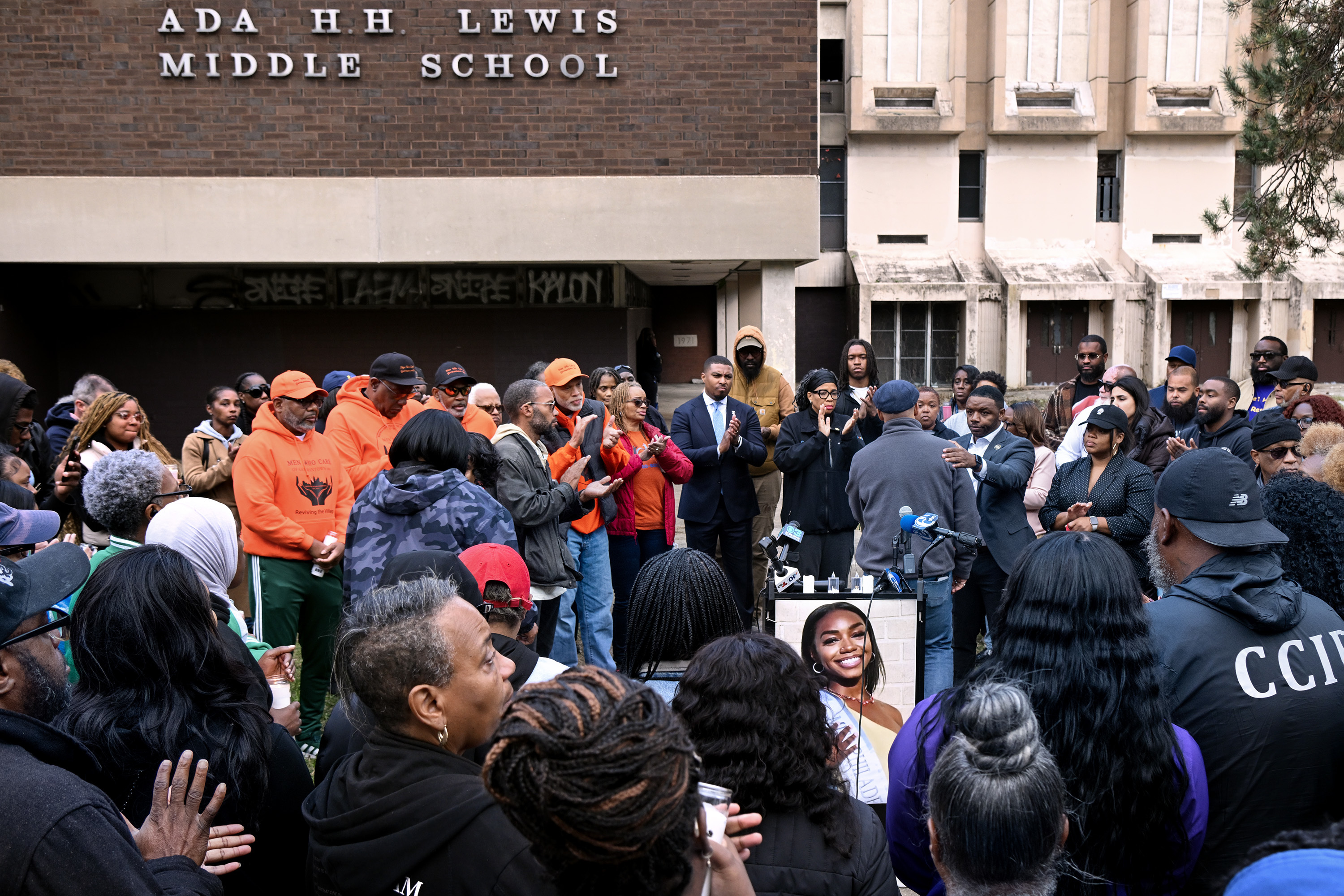
    Community members gather for a candlelight vigil in memory of Kada Scott on Monday at Ada H.H. Lewis Middle School.

    On top of the shock, Scott’s kidnapping and murder has renewed animus in some quarters about the Philadelphia School District‘s failure to repurpose the blighted property, one of dozens of schools shuttered by the district over the last 20 years.

    Since Lewis closed in 2008, local officials and civic leaders said the sprawling seven-acre campus has become a magnet for squatting, illegal dumping, and other criminal activity. City officials have cited the school district 10 times since 2020 for overgrown weeds, graffiti, and piles of trash that blanketed the property, public records show. And four years ago, the district passed on an opportunity to reverse course on the blight.

    A proposal to redevelop the land into new homes, championed by neighborhood leaders like Williams, sat before the school board for approval. But the district abandoned the plan at the eleventh hour without public explanation, which the developer alleged was due to meddling by City Councilmember Cindy Bass — a contention Bass denies.

    “The school district, for some reason, we don’t know why, they put a block on anything being built there,” Williams said.

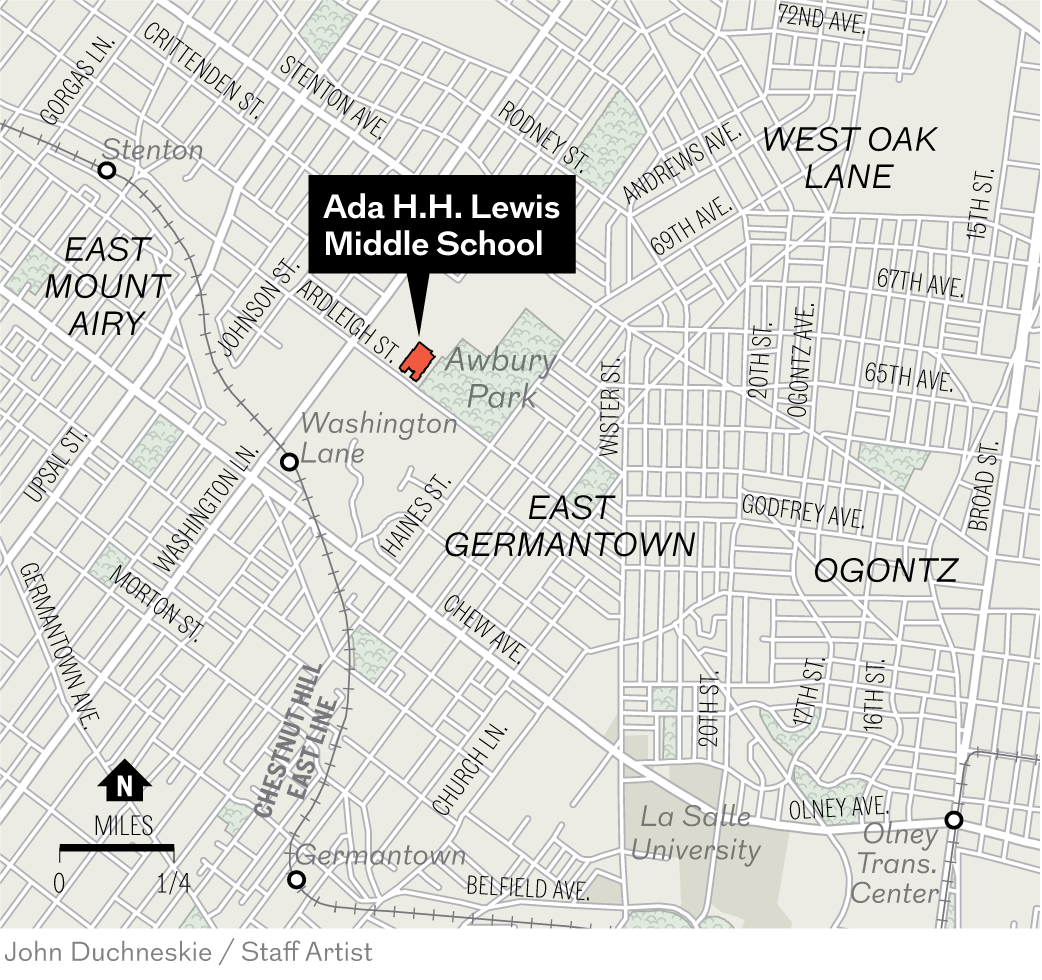
    Map of the former Ada H.H. Lewis Middle School in East Germantown

    Philadelphia Superintendent Tony B. Watlington Sr. extended “deepest sympathies” to Scott’s family and friends in a statement, and said the district’s operations and safety departments will review the vacant-property portfolio “to create and maintain safe and healthy spaces in every neighborhood.”

    While some call Lewis “abandoned,” the district is careful to call the building “vacant,” one of 20 such properties in the district’s portfolio. It says maintenance and inspection logs are kept about work on vacant properties; details were not immediately available.

    The debate over Lewis comes at a crucial time for the district: It is preparing to release recommendations about its stock of 300-plus buildings — and likely add to the list of decommissioned schools-turned-vacant public buildings. The district’s master planning process will contain recommendations for school closures and combining schools under one roof, officials have warned.

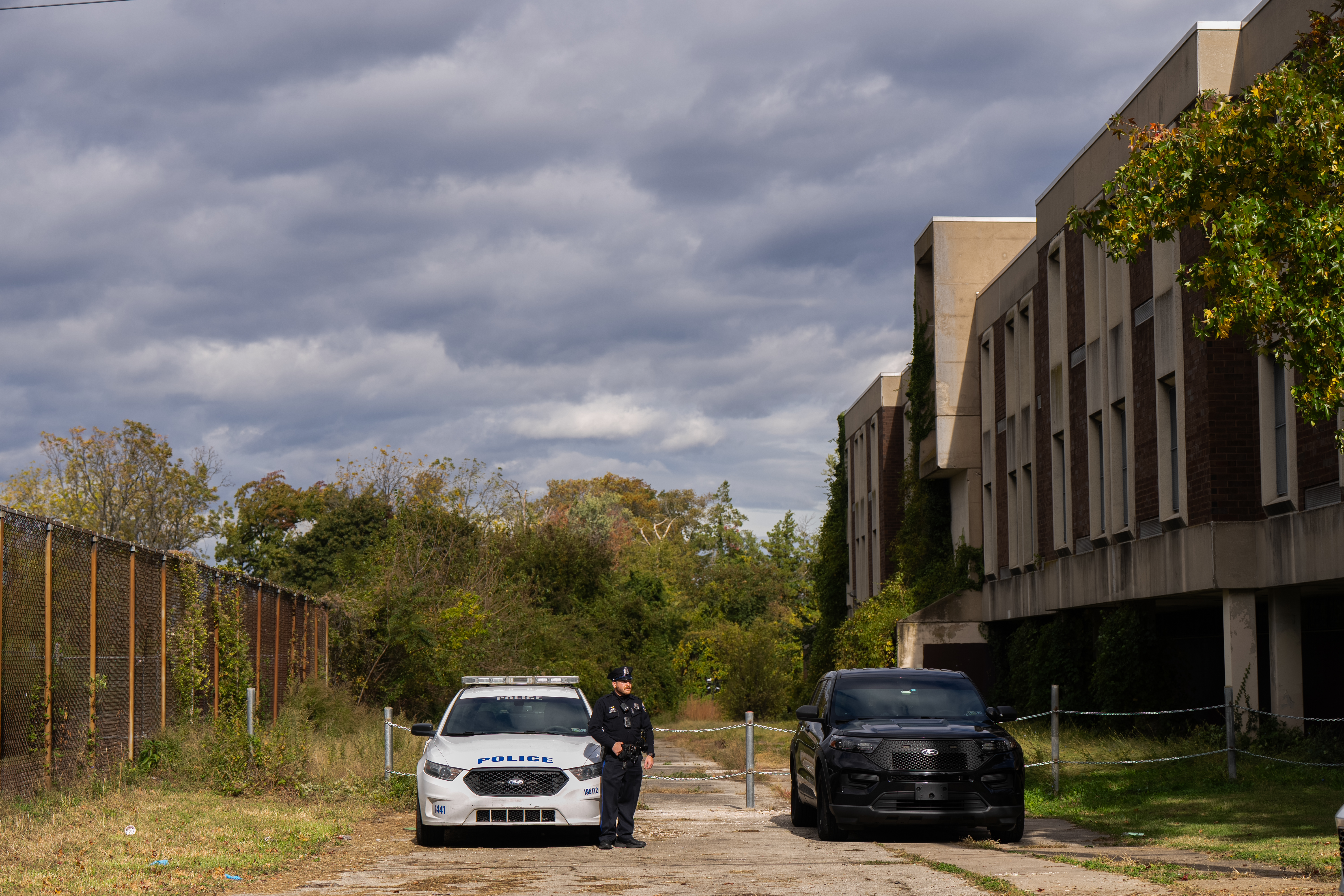
    Police at Ada H.H. Lewis Middle School.

    A fizzled redevelopment

    In 2011, then-City Controller Alan Butkovitz said the district’s vacant buildings were “catastrophes waiting to happen.

    Butkovitz, in a report released that year, said district inaction around such structures was dangerous and noted that the schools were magnets for criminal activity.

    Just before the pandemic hit in 2020, after years of pushback over Ada Lewis, the school district began accepting applications to redevelop the crumbling middle school. Germantown developer Ken Weinstein was one of three developers to place bids. He sought to buy the property for $1.4 million and build 76 new twin homes, at a density that neighbors felt complemented the surrounding area and resolved concerns about density brought by apartment buildings.

    Weinstein said he gathered letters of support from 60 neighborhood residents and elected officials, including U.S. Rep. Dwight Evans and then-State Rep. Stephen Kinsey. The school board seemed eager to move ahead and set a final vote for the proposal in May 2021.

    The vote never happened. The only explanation given that day was that “the Board had concern” about “what the long-term plan is for developing schools for the 21st century,” according to a district spokesperson.

    According to Weinstein, some school board members received calls from Bass asking them to table the vote. Bass has faced criticism for interfering in development projects, including other proposals made by Weinstein, as vacant properties languished for years in her district. Her district includes the Lewis property and parts of North and Northwest Philadelphia, where Weinstein has focused his development work.

    Bass, in an interview Monday, denied meddling in the vote. She acknowledged that she did not support Weinstein’s proposal because of the price of the homes — averaging around $415,000 — which she said would have triggered “immediate gentrification in the neighborhood.” But she said she had no involvement in the board’s reversal.

    “That was up to the school district,” Bass said. “I don’t sit on the school board.”

    While community groups in her district supported Weinstein’s project in 2021, Bass said she objected to market-rate housing as the sole alternative for East Germantown, arguing that it amounted to the district and developers saying “you should just take any old thing just so it’s not vacant.”

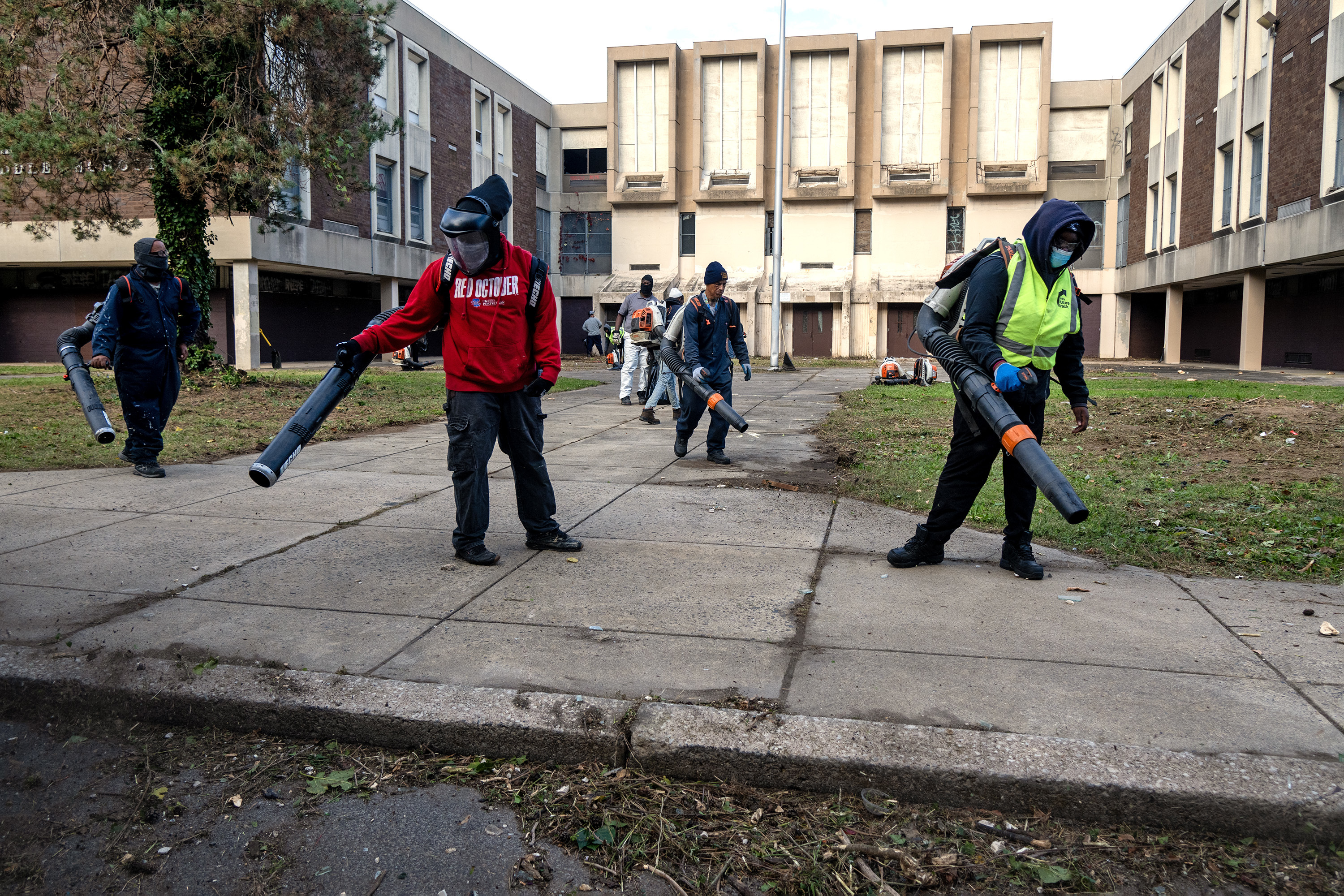
    City workers clean up in front of the vacant Ada H.H. Lewis Middle School Monday, just minutes before the start of a community candlelight vigil in memory of Kada Scott.

    A tragic turn for the property

    In a letter dated Friday, Bass called on the school district to demolish the vacant school, saying she was troubled by the evidence that led investigators to the property during the search for Scott.

    “The continued presence of this unsecured and deteriorating structure is simply unacceptable,” the Council member wrote in a statement, noting the site is now associated with “tragic violence.”

    Cell phone records and tips from the public first led police to the former Ada Lewis school last week, where they found Scott’s pink phone case and debit card, but nothing else. Then, late Friday, police received a new tip saying that they had missed something on their first search of the grounds, and that they should look along the wooden fence that divides the school from the neighboring Awbury Recreation Center. Officers returned to the property Saturday and found Scott’s body, buried in a shallow grave in a wooded area behind the school.

    Prosecutors expect to charge Keon King, 21, with the murder, though police continue searching for others who they believe may have helped dispose of evidence.

    Bass took office in 2012, when the school was already vacant. She said she pushed the school district for several years to take action, as nuisances piled up at the property. She said she still hopes that another “institution” could replace Lewis.

    “I think that having something that the community wants is not hard to figure out,” Bass said. “This is what the community’s interested in — they’re interested in another institution.”

    She said a proposal for a charter school is now in the works, though she said she was unable to provide details.

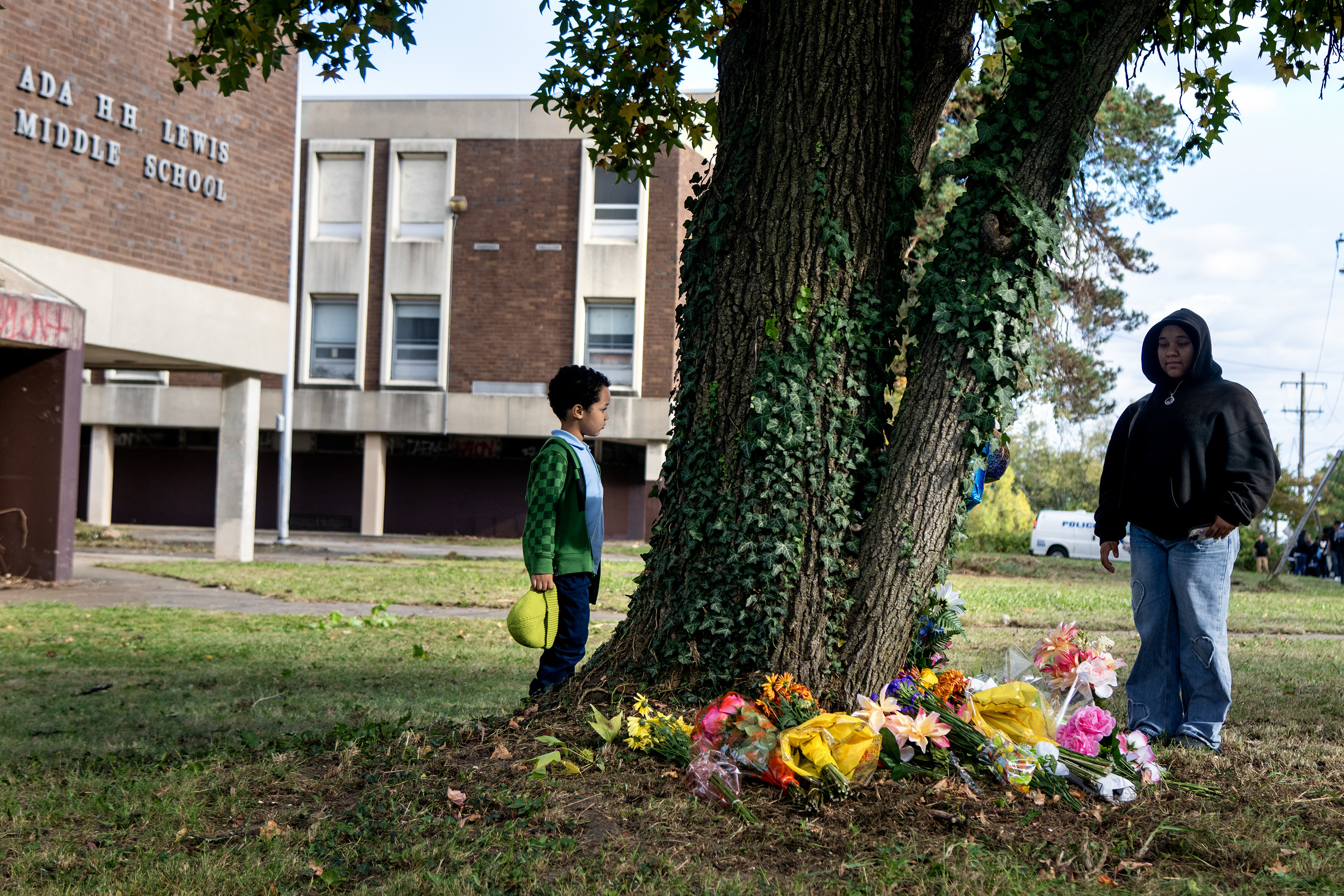
    Julius Peden, 5, and Jaihanna Williams Peden (right), 14, pause at a memorial for Kada Scott on Monday.

    A glut of vacant schools

    The school district still views Lewis as a potential “swing space” — a building that could be used to house students if another district building is closed due to environmental problems.

    There is precedent: The district has used other school buildings for such purposes, like Anna B. Pratt in North Philadelphia, which was also closed in 2013, to house early-childhood programs, and then students from other North Philadelphia schools whose buildings were undergoing renovation.

    Still, it remains unclear how much it would cost to bring the Lewis building back to an inhabitable state.

    The school system currently has about 70,000 more seats throughout the city than students enrolled. Though officials have said their first preference is to have closed schools reused for community benefit, it’s unlikely that all will be able to serve that purpose. And the timetable will surely be slow.

    City officials at times have expressed frustration with the pace at which the district is making decisions about how to manage its buildings. School leaders have said the wait is necessary given the district’s capacity and the need to make correct choices and not rush the process.

    Weinstein said the tragedy that culminated at Lewis reflected the conventional wisdom that blight breeds crime.

    “There’s always consequences to shutting down a proposal that the community supports,” Weinstein said. “In most cases, nothing bad happens. In this case, something very bad happened.”

    Staff writer Ellie Rushing contributed to this article.

  • The Rev. Carolyn Cavaness, Mother Bethel A.M.E.’s first female pastor, reflects on her first year

    The Rev. Carolyn Cavaness, Mother Bethel A.M.E.’s first female pastor, reflects on her first year

    The Rev. Carolyn Cavaness is adjusting to her new life as a celebrity.

    Any pastor of the historic Mother Bethel A.M.E. Church might get stopped and asked for a picture while walking down the street, as she sometimes does. The church is a national historic landmark, long celebrated for its role as a hub for Black activism and the oldest church property in the United States to be owned continuously by Black people.

    But in November, Cavaness, 42, was appointed as the first female pastor in the church’s 238-year history. She is a fourth-generation A.M.E. preacher from Newark, N.J., and previously led the Bethel A.M.E. Church of Ardmore for 10 years, also serving as its first woman pastor. Cavaness took over for the Rev. Mark Kelly Tyler, who had left Mother Bethel after 16 years.

    “Some days I have this moment where I say, ‘Wow, Carolyn, you are the pastor of Mother Bethel. You’re in the big chair. What if somebody else was in this spot? What would they be doing in this moment?’” she said.

    While Cavaness brings a new perspective, she is also focused on honoring the legacy of the 52 pastors and their congregations who came before. She said that the church’s first members knew immediately that they were “a big deal” who would matter greatly to the Black community. Two centuries later, that is still the case.

    “Here I am in this 21st century and having to be the caretaker, but also being called to action,” Cavaness said.

    “So what becomes our contribution?”

    Cavaness spoke with The Inquirer about her first year at Mother Bethel, what it has meant to take on her trailblazing role, and how the church’s tradition of resilience inspires her and the congregation.

    This conversation has been edited for clarity.

    Your first sermon at Mother Bethel was an emotional one, about your family’s deep Philly roots and great achievements born out of the Black struggle, even though you were only notified about your appointment just the day before. What do you remember about that day? What have you learned about what Mother Bethel means to people over the past year?

    It was surreal. I mean I literally found out less than 24 hours before. But that is being an itinerant preacher [of] Methodist tradition. You’re here to serve.

    I had very much the sentiment of “I wish my dad and my grandmothers were here to see this.”

    I think about when I walked into the pulpit for the first time, how the congregation stood up. I think about the smiles, the hugs. I think about the flowers they gave me. And the sacred trust that I’ve been given.

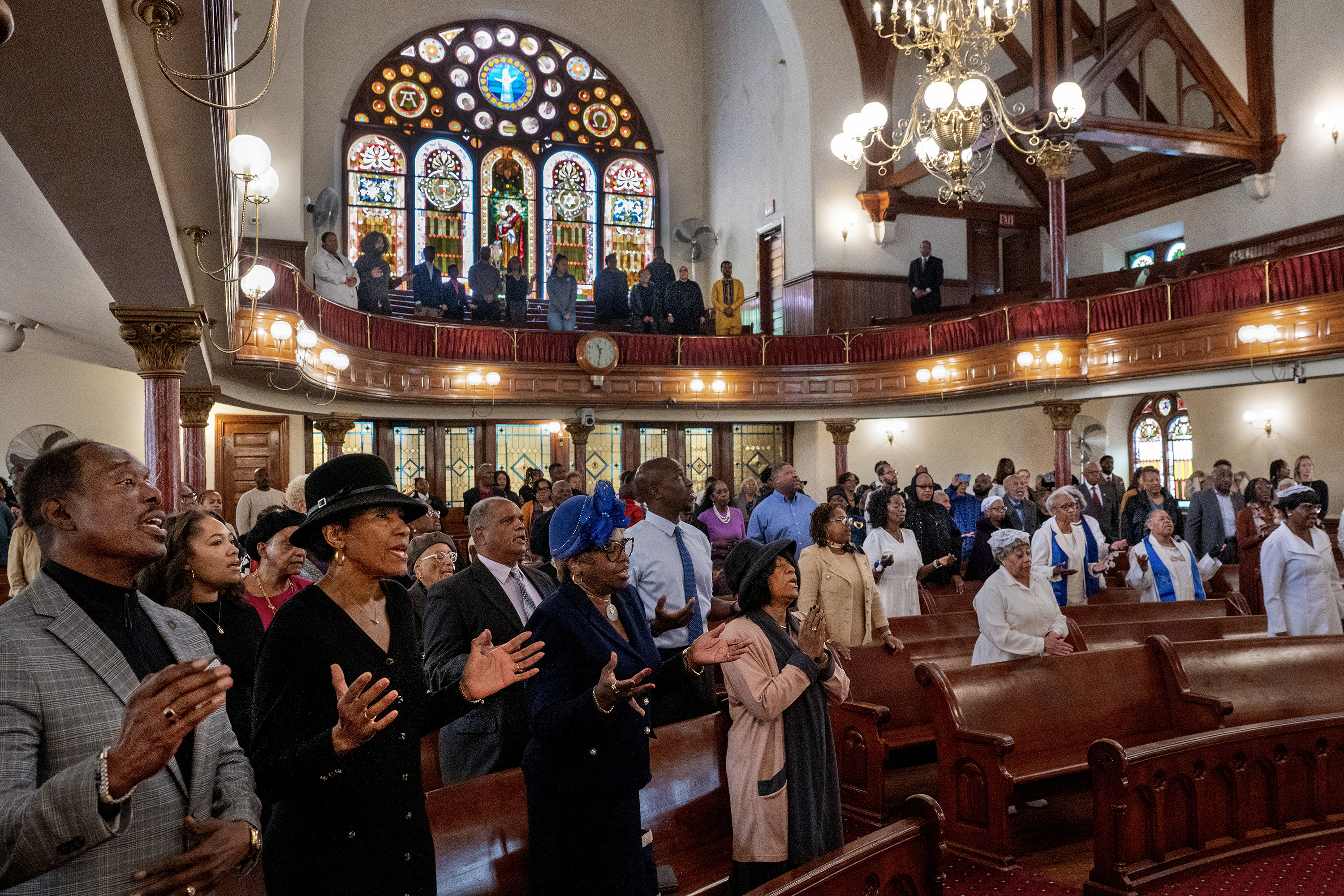
    The congregation sings as Rev. Carolyn Cavaness (not shown) celebrates her first worship service on Nov. 10, 2024.

    It’s been an amazing first year, definitely life-transforming, being entrusted with this national, this international treasure. I have just been captivated by the testament and the hope that she bears.

    There’s this connection, this affinity for her. We’ve gotta be intentional about being the light, about being a place of love, sanctuary, refuge, that people feel safe. That’s a real thing for me.

    The people I’ve come to know, the smiles, their new sense of hope — it is possible, you know? People have a sense of joy, and you can feel that and see that. Sometimes when you’re a leader, you’re in a vacuum. And so to hear and to see people smiling more, that does something. As a pastor, that’s a gift. You feel that you’re making a difference.

    You are the first woman pastor at Mother Bethel A.M.E. How has it felt to hold that distinction, and how have people received you?

    People have been very supportive. It’s about building trust and relationships. All I knew, I could only be Carolyn. I can’t be anybody I’m not. I like to laugh, I like to joke. I think I have surprised people by being accessible.

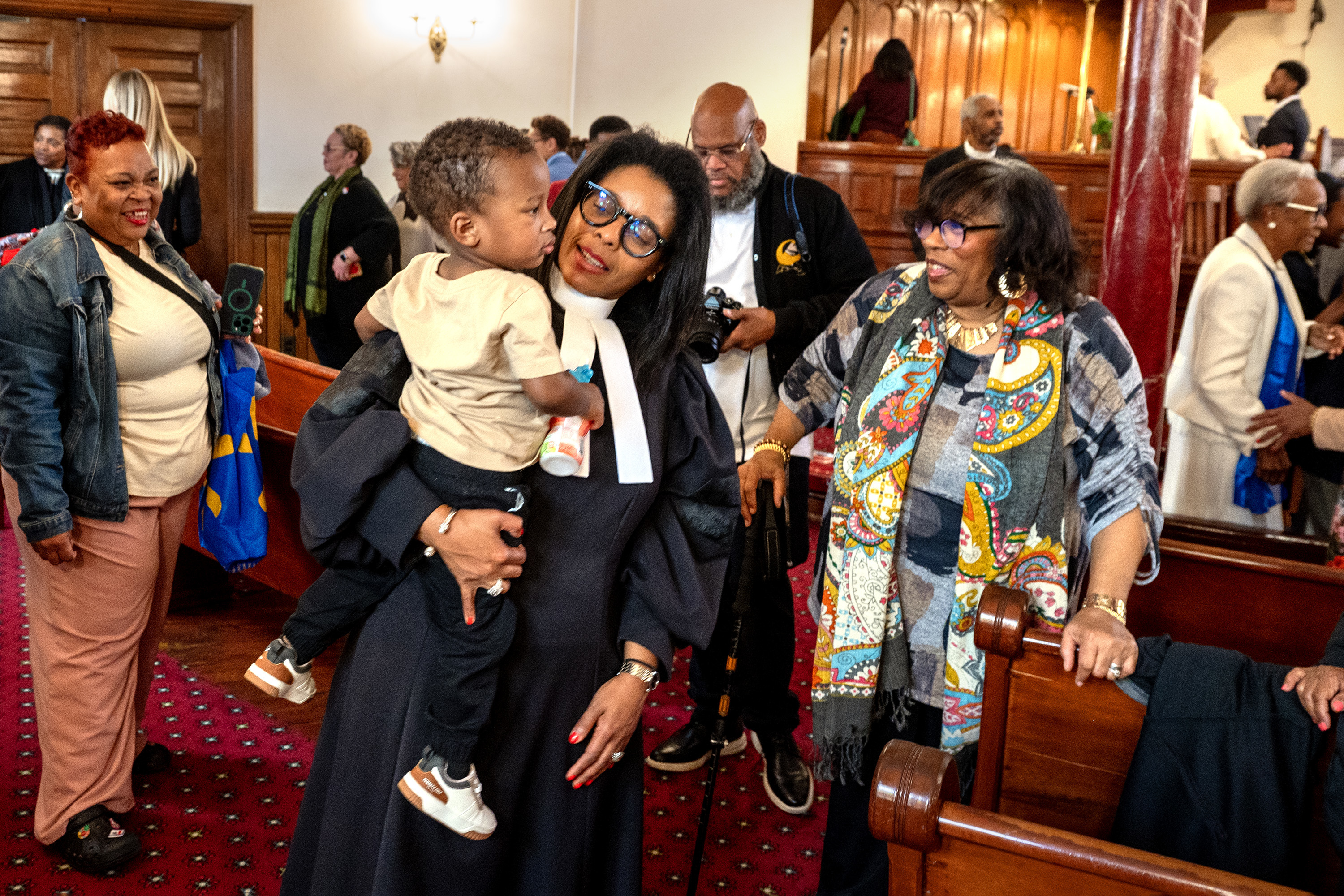
    Rev. Carolyn Cavaness holds 2-year-old Kylo Banks as she greets members of the congregation after her first service.

    Many people have reminded me, “You know, reverend, you’re a historical figure. Amongst the 53, there’s gonna be that picture of you.” It’s very humbling.

    I went to New Orleans and an older gentleman walked up and he said, “Hello, good to meet you. You’re pastor of Mother Bethel.” Fifty years ago, that would have been a different conversation.

    I have two twin nephews. They had a women’s history project, and they wrote about me being the pastor of Mother Bethel. My 5-year-old nephews are esteeming me. That was special.

    When you were appointed last year, Donald Trump had just won the election, and many of your congregation were fearful of what was to come. What is Mother Bethel’s role during this time?

    We are resilient people. This is not the first time that we have had pharaohs and tyrants and dictators.

    Here is an institution providing, a way in which government ought to, esteem and affirm and care for [people]. Democracy has ideals, but here, this place, Mother Bethel, is where it’s realized. Where you’re a safe haven and a sanctuary. The principles and the ideals of the Free African Society. We come from that legacy, from that line where we have always taken care. We have always filled a gap. We’ve always been out front.

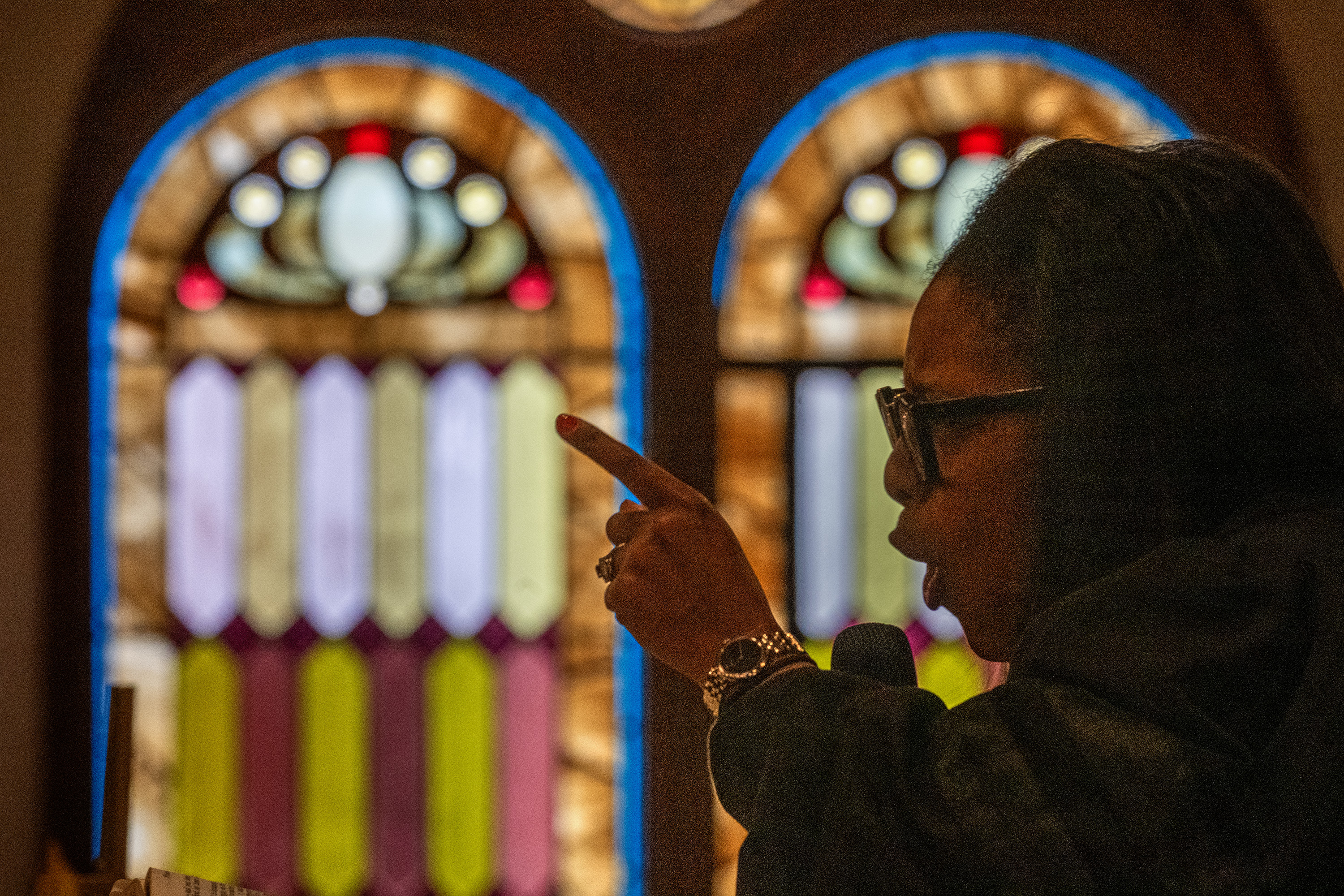
    The Rev. Carolyn Cavaness celebrates her first worship service.

    Another has definitely been around how we honor our history and legacy. I was honored to give the eulogy for Ruby Boyd — she was the first African American librarian in the city of Philadelphia. She lived to be 105, and she’s one noted for putting into a book, On This Rock, of Mother Bethel, the history of many of the stained glass window collection, pictures and little vignettes about the pastors. And so in my eulogy, I talked about that we have a responsibility to tell the story and to make it accessible.

    This regime of erasure has really amplified my efforts as the spiritual leader and also just how important Mother Bethel is.

    What are you looking forward to in year two?

    I’m looking forward to the [Semiquincentennial], the 250th. Definitely the larger preservation plan, there are some conversations that we as a congregation are gonna be having about her preservation and how accessible [it is]. And to continue to tell this story.

    I think also around community engagement. Just seeing people becoming more strengthened in their sense of witness.

    The Rev. Carolyn Cavaness (center) at the Independence Visitor Center during a September Semiquincentennial event.
  • Gov. Josh Shapiro will release a memoir in 2026

    Gov. Josh Shapiro will release a memoir in 2026

    Pennsylvania Gov. Josh Shapiro will release a memoir next year detailing his career and personal life, including when a man firebombed the governor’s mansion while Shapiro and his family slept inside and his place on the short list for Kamala Harris’ vice president.

    On Tuesday, Harper — an imprint of HarperCollins Publishing — announced the release of Shapiro’s forthcoming memoir, Where We Keep the Light: Stories From a Life of Service, which will hit shelves on Jan. 27, 2026.

    Shapiro is the latest potential 2028 Democratic presidential contender to announce a book deal, another step in building and defining a national profile.

    Shapiro, 52, has worked in some level of government for his entire career: on Capitol Hill as a staffer, in Montgomery County as a commissioner, and in Harrisburg as a state representative, attorney general, and now governor. He has noted that he has never lost an election, going back to his election as student body president his freshman year at the University of Rochester. Along the way, elected officials have whispered about his talents as a politician, orator, and rumored presidential ambitions.

    The Montgomery County native has become a key player in the national Democratic Party, touting a brand as a governor of a split legislature in the most sought-after swing state. His administration’s motto is “Get Stuff Done,” which he defines as bringing Democrats and Republicans together to accomplish long-delayed reforms, or restarting residents’ trust by improving their interactions with state government. (Pennsylvania still has not finished its state budget, which was due July 1, as legislators from the Democratic-controlled House and GOP-controlled Senate cannot agree on how much they should spend this fiscal year and causing school districts, counties, and nonprofits to take out significant loans to continue offering services during the 113-day budget impasse.)

    Shapiro’s rise through the Democratic Party ranks skyrocketed last year, when he became a front-runner for vice president during Harris’ whirlwind, 107-day presidential campaign, in which she ultimately chose Minnesota Gov. Tim Walz as her running mate. Harris also released a book this year, which includes stories from her interview with Shapiro for the role.

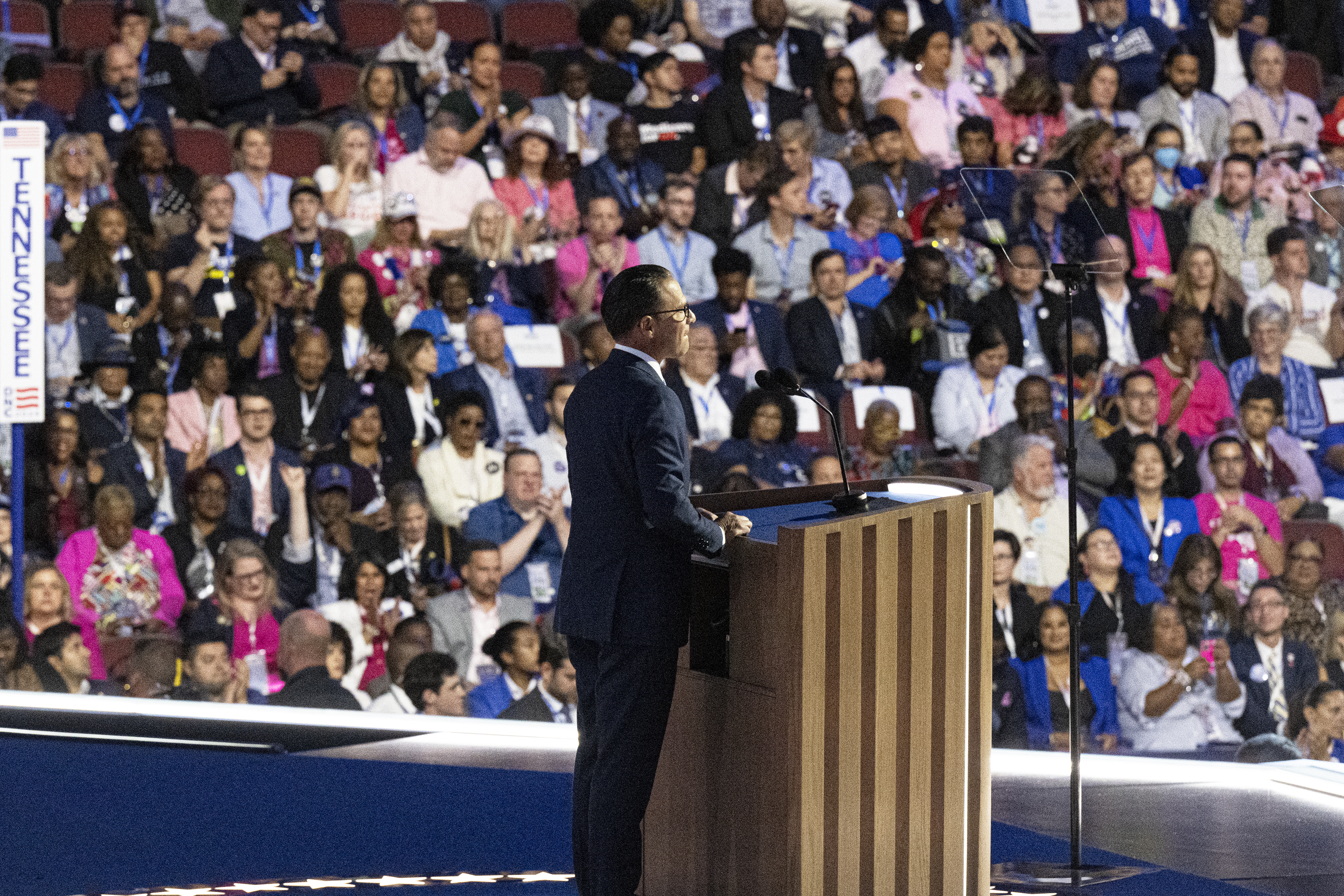
    Pennsylvania Gov. Josh Shapiro speaks during the Democratic National Convention Wednesday, Aug. 21, 2024, in Chicago.

    While book deals are often signifiers for officials hoping to take another step up in government, Shapiro still faces reelection next year. He will likely face Treasurer Stacy Garrity, a Republican who has already captured the state GOP’s endorsement. Garrity is a retired U.S. Army colonel, and has focused some of her criticisms of Shapiro thus far on his presumed eye for higher office. However, Shapiro still maintains a high approval rating in Pennsylvania, a state President Donald Trump won last year.

    Shapiro’s memoir will also detail the arson attack on the governor’s mansion, in which, just hours after Passover earlier this year, Cody Balmer set the home ablaze with incendiary devices. Balmer pleaded guilty last week to attempted murder.

    Shapiro, who was born in Kansas City, Mo., before moving to Montgomery County, has credited his upbringing by his parents — his father a pediatrician, and his mother an educator — as laying the foundation for his life in public service. Shapiro has four children and is married to his high school sweetheart, Lori. He and his family still live in Abington Township and split their time between their family home and the governor’s mansion in Harrisburg.

  • The White House starts demolishing part of the East Wing to build Trump’s ballroom

    The White House starts demolishing part of the East Wing to build Trump’s ballroom

    WASHINGTON — The White House on Monday started tearing down part of the East Wing, the traditional base of operations for the first lady, to build President Donald Trump’s $250 million ballroom despite lacking approval for construction from the federal agency that oversees such projects.

    Dramatic photos of the demolition work showed construction equipment tearing into the East Wing façade and windows and other building parts in tatters on the ground. Some reporters watched from a park near the Treasury Department, which is next to the East Wing.

    Trump announced the start of construction in a social media post and referenced the work while hosting 2025 college baseball champs Louisiana State University and LSU-Shreveport in the East Room. He noted the work was happening “right behind us.”

    “We have a lot of construction going on, which you might hear periodically,” he said, adding, “It just started today.”

    The White House has moved ahead with the massive construction project despite not yet having sign-off from the National Capital Planning Commission, which approves construction work and major renovations to government buildings in the Washington area.

    Its chairman, Will Scharf, who is also the White House staff secretary and one of Trump’s top aides, said at the commission’s September meeting that agency does not have jurisdiction over demolition or site preparation work for buildings on federal property.

    “What we deal with is essentially construction, vertical build,” Scharf said last month.

    It was unclear whether the White House had submitted the ballroom plans for the agency’s review and approval. The White House did not respond to a request for comment and the commission’s offices are closed because of the government shutdown.

    The Republican president had said in July when the project was announced that the ballroom would not interfere with the mansion itself.

    “It’ll be near it but not touching it and pays total respect to the existing building, which I’m the biggest fan of,” he said of the White House.

    The East Wing houses several offices, including those of the first lady. It was built in 1902 and and has been renovated over the years, with a second story added in 1942, according to the White House.

    Karoline Leavitt, the White House press secretary, said those East Wing offices will be temporarily relocated during construction and that wing of the building will be modernized and renovated.

    “Nothing will be torn down,” Leavitt said when she announced the project in July.

    Trump insists that presidents have desired such a ballroom for 150 years and that he’s adding the massive 90,000-square-foot, glass-walled space because the East Room, which is the largest room in the White House with an approximately 200-person capacity, is too small. He also has said he does not like the idea of hosting kings, queens, presidents and prime ministers in pavilions on the South Lawn.

    Trump said in the social media announcement that the project would be completed “with zero cost to the American Taxpayer! The White House Ballroom is being privately funded by many generous Patriots, Great American Companies, and, yours truly.”

    The ballroom will be the biggest structural change to the Executive Mansion since the addition in 1948 of the Truman Balcony overlooking the South Lawn, even dwarfing the residence itself.

    At a dinner he hosted last week for some of the wealthy business executives who are donating money toward the $250 million construction cost, Trump said the project had grown in size and now will accommodate 999 people. The capacity was 650 seated people at the July announcement.

    The White House has said it will disclose information on who has contributed money to build the ballroom, but has yet to do so.

    Trump also said at last week’s event that the head of Carrier Global Corp., a leading manufacturer of heating, ventilation and air conditioning systems, had offered to donate the air conditioning system for the ballroom.

    Carrier confirmed to The Associated Press on Monday that it had done so. A cost estimate was not immediately available.

    “Carrier is honored to provide the new iconic ballroom at the White House with a world-class, energy-efficient HVAC system, bringing comfort to distinguished guests and dignitaries in this historic setting for years to come,” the company said in an emailed statement.

    The clearing of trees on the south grounds and other site preparation work for the construction started in September. Plans call for the ballroom to be ready before Trump’s term ends in January 2029.

  • Where to find Diwali sweets in Philadelphia to celebrate the Festival of Lights

    Where to find Diwali sweets in Philadelphia to celebrate the Festival of Lights

    There’s joyous chaos inside Indian markets on Diwali — and mithai (sweets) are at the center of it. The Festival of Lights, significant for people of Hindu, Jain, Sikh, and Buddhist faiths, falls on Monday, Oct. 20. Like clockwork, laddoos, gajar ka halwa, burfi, gulab jamun, and more, have begun to fill display cases with the vibrant, colorful sweets (made with dairy, sugar, and nuts) beckoning guests to pack two or three boxes for their loved ones.

    There’s gajar ka halwa, a carrot-based treat studded with nuts; and gulab jamun, made sweet with rose water syrup and sometimes coated in coconut. Kulfi is a traditional creamy no-churn ice cream, similar to frozen custard with a distinct taste of the fruits and nuts it’s flavored with. Then you have creamy, milk-based mithai like burfi, ras malai, kalakand, and cham cham. And you can’t forget about laddoos, rava kesari or suji ka halwa — nutty, semolina-based sweets.

    Whether you’re gifting or feasting by yourself, here are a handful of Philly spots to get your mithai in time for Diwali.

    Gulab jamun and gajar ka halwa on a plate.
    Find gulab jamun, gajar ka halwa, and more at local Indian grocery stores.

    International Foods & Spices

    Diwali is big at the store near Penn’s campus.

    “Mithai is the go-to gift to bring to people or celebrate with,” said owner Paramjit Singh.

    There’s fresh, frozen, and canned mithai offered at the shop. Packaged boxes sit in the front. Canned are stacked on shelves, and frozen packages from India and Canada are in the refrigerators in the back.

    Singh has a variety of options for the area’smany students and price-conscious customers. But he noted that prices of mithai have increased as well as the cost to ship boxes from India.

    Find boxes of bundi and motichoor laddoo, gulab jamun, badam and kaju burfi, kalakand, and a variety of Bengali sweets in the fresh market up front.

    📍4203 Walnut St., 📞 215-222-4480, 🌐 facebook.com/intlfoodsandspices, 🕑 Wednesday to Monday 10:30 a.m. to 8 p.m.

    Subzi Mundi

    With the Philadelphia Sikh Society nearby, this Upper Darby store is bustling with energy on Diwali morning, said co-owner Mohinder Pal.

    “Mithai is a favorite, everybody likes it,” he said.

    Walk up to the refrigerators next to the cashier station and pick from a variety of boxed mithai. There’s gajar ka halwa, laddoos, assorted cham cham, coconut and regular gulab jamun, and more. Frozen mithai is also available.

    📍6700 Market St., Upper Darby, 📞 610-352-3400, 🌐 facebook.com/sabjimandi, 🕑 Monday to Sunday 9 a.m. to 8 p.m.

    A traditional Indian Ice Cream (Malal Kulfi) topped with poached blueberries and creme-de-cassis, at Veda in Philadelphia, Pa., on Thursday, May 25, 2023.

    Veda

    Inside this modern bistro in Rittenhouse Square, order kulfi topped with poached blueberries. The dessert is sweetened with sugar that’s added as the milk is reduced in a flat pan. It’s frozen with crushed cardamom seeds mixed in that bring an inviting texture to the kulfi. Enjoy for $7 at Veda. (The dessert is also offered at Bhasin’s four other restaurants: Indiya in Collingswood, Coriander in Voorhees, and Naan in Moorestown).

    📍 1920 Chestnut St., 📞 267-519-2001, 🌐 vedaphilly.com, 🕒 Daily, 11:30 a.m. to 2:30 p.m. (lunch) and 4:30 to 9:30 p.m. (dinner), till 10 p.m. on Friday and Saturday.

    Patel’s Grocery Store

    Grab one-pound boxes of laddoo, kalakand, gulab jamun, and besan burfi at this Mayfair grocery store. There are also frozen options.

    📍1907 Street Road, Bensalem, Pa. 19020, 📞 215-447-8154, 🕑 Monday to Sunday 9 a.m. to 8 p.m.

    Kabobeesh

    On Chestnut Street, you’ll find freshly made gulab jamun, gajar ka halwa, and ras malai. Step into the restaurant and you’ll see the tub of brown spheres soaking in a sugary bath in the display case. That’s gulab jamun. The ras malai is milky, soft, and sweet. The gajar ka halwa is creamy, filled with carrots and perfectly nutty — it’s a specialty item for the fall and winter season.

    “Ras malai is really the selling item,” said owner Asad Ghuman. “We get catering orders and families coming in to the restaurant (for food and sweets).”

    📍4201 Chestnut St., 📞 215-222-8081, 🌐 kabobeesh.com, 🕑 Monday 11 a.m. to 11 p.m., Tuesday to Sunday 11 a.m. to midnight.

    Desi Chaat House

    If you’re in West Philly, small boxes of gulab jamun, gajar ka halwa, and orange sticky, sweet jalebi wait for you. Kheer or rice pudding, and ras malai are also available.

    📍501 S 42nd St., 📞 215-386-1999, 🌐 desichaathousephilly.com, 🕑 Monday to Sunday noon to 9 p.m.

    Wah-Gi-Wah

    Wah-Gi-Wah in University City is a big fan of Crown Kulfi. Restaurant manager Muhammad Khan said they previously served housemade kulfi but switched to the premade brand. “[The brand] is very famous over here in Philadelphia,” he said. Enjoy chocolate, coconut, almond, pistachio, mango, and malai as frozen pops ($3) or in cups ($4.50).

    📍 4447 Chestnut St., 📞 215-921-5597, 🌐 wahgiwah.com, 🕒 Daily, noon to 9:30 p.m.

    Amma’s South Indian Cuisine

    Laddoos, gulab jamun, semiya payasam or vermicelli pudding, ras malai, and rava kesari or suji ka halwa are all on the menu at Amma’s in Center City.

    📍1518 Chestnut St., 📞 808-762-6627, 🌐 ammasrestaurants.com, 🕑 Monday to Saturday 11 a.m. to 9:45 p.m., Sunday 11 a.m. to 8:45 p.m.

  • This Philly charter has been roiled by upheaval and turnover. Now, its renewal is on hold.

    This Philly charter has been roiled by upheaval and turnover. Now, its renewal is on hold.

    For years, Northwood Academy Charter School was a stable Philadelphia charter — the kind of place where teachers and administrators stayed for decades, and children thrived.

    But in the last few years, the school, on Castor Avenue in Frankford, has cycled through dozens of administrators and teachers and test scores have dropped. Academics have suffered, according to interviews with a number of parents and staff, who say the school feels less safe, and staff morale is low.

    The school’s five-year charter expires this year, but Northwood’s renewal is on hold, The Inquirer has confirmed, because the district’s Inspector General’s Office is reviewing information about Northwood. The exact nature of the investigation is unclear.

    The Inquirer spoke to and reviewed testimony from more than a dozen parents and current and former Northwood staff. Nearly everyone interviewed requested anonymity for fear of reprisal; some who spoke out at meetings have received cease and desist letters threatening litigation from a consultant who provides human resources services to Northwood.

    “When we first got there, there was stability at the school — everyone was there since almost the beginning,” one parent said. “Now, in the last five years, we have had 20 administrators change over. The kids can’t get comfortable with the teachers, because they don’t know if they’re going to be there a long time.”

    Northwood, which opened in 2005, educates 800 students in grades K through 8. As a charter, it’s independently run but publicly funded; the Philadelphia school board authorizes its funding but does not manage its operation.

    School officials say the Northwood turnover is not excessive, but rather a function of its board of trustees’ move to steer the school to better outcomes.

    “Our goal here is to just move forward and help our students achieve,” said Kristine Spraga, a longtime board of trustees member who now serves as the board’s treasurer.

    The board’s challenge, human resources consultant Tracee Hunt said, “is getting the person who has that strategic focus, who doesn’t necessarily operate more like a principal than a CEO. What happens is we’ve hired what we thought were great hires, and then if they decide, ‘This is a little bit too much for me, the board doesn’t have any control over that.’”

    The board this month hired former Central Bucks School District Superintendent Steven Yanni to lead the school.

    A pivot point

    Northwood handled human resources in-house in its early days. When a principal left in 2018, there was some unrest among faculty after a number of teachers were shifted around.

    Shortly thereafter, one board member suggested bringing in Total HR Solutions, a New Jersey-based provider that had worked with some other Philadelphia charters, to manage those services.

    That was a pivot point for the school.

    Hunt was charged with examining the school’s practices. She found “a lack of fair and equitable hiring practices,” she said in an interview last week, “a massive amount of nepotism,” and inadequate staff diversity — the school educates mostly Black and Latino students but its staff was mostly white.

    “Through natural attrition, we have the opportunity to have fair and equitable hiring practices so that then you improve in your areas of diversity in just a natural way, versus feeling like you have to displace people,” said Hunt.

    Some current and former staff see things differently. The earlier version of Northwood wasn’t perfect, they said, but it was cohesive, and under Total HR, that changed.

    Adam Whitlach, a longtime Northwood school counselor, said Total HR “came in with the idea of ‘demolish, and re-create something from nothing.’ They were mixing it up for the sake of mixing it up. They treated it like it was a turnaround school, but it wasn’t, there was an existing community. They attempted to sell them a story that our school was failing and racist, but people didn’t believe that.”

    In 2021, the school’s longtime CEO, Amy Hollister, abruptly left Northwood with no notice to the staff and families with whom she had built a strong rapport.

    “It was out of the blue, and then everybody else started leaving,” another Northwood parent said. As with others, the parent asked not to be identified for fear of blowback. Parents began attending board meetings — at one, Hunt stood up, the parent said, “and began to tell us how the teachers want a more diverse school, and that’s the reason why all this upheaval was happening.”

    The parent, who is a person of color, said they were not bothered by the staff’s demographic balance. “Those teachers loved our children. Everybody knew you, you didn’t have to go past security, and they welcomed every parent, every child. There weren’t a lot of discipline issues, because they had relationships with our kids,” the parent said.

    More departures

    Changes accelerated after Hollister left.

    “Parents were grabbing me by the arm and saying, ‘Whitlach, tell me what’s going on here,’” the former counselor said. “The bullhorns came out, the security guards dressed all in black came out.”

    (Whitlach was ultimately fired after 15 years at the school after, he said, he complained publicly about the school pushing staff out. Students walked out in protest of his departure.)

    The departures affected academics too. A third parent said she was frustrated by “no curriculum, no books.”

    Administrations came and went. Audrey Powell came to Northwood as an assistant principal in 2023, following then-CEO Eric Langston, who has since left; Langston left this summer, and Powell resigned soon after.

    The reason for her departure?

    “I just didn’t agree with the direction or the choices of the board,” Powell said. She repeatedly brought concerns to the board that were ignored, she said. In particular, she was alarmed by the board’s relationship with Total HR and Hunt’s “overreach” at Northwood, Powell said.

    “I don’t think there were enough checks and balances,” Powell said. “I feel like [Total HR’s] contract incentivizes there to be turnover — she directly financially benefits from there being turnover.”

    Northwood paid Total HR $1.4 million between 2020 and 2023, according to public records. That included base fees for Total HR’s services, including an HR generalist who works at Northwood but is paid by Total HR, and also per-position search fees for administrative positions and board seats.

    “The constant turnover is a misuse of taxpayer dollars, and it’s a disservice to kids, to the teachers,” said Powell. “There can’t be progress when there is that much turnover. It’s two steps forward and four steps back.”

    Hunt dismissed the notion that she was simply out to make money.

    “We have these contracts that are negotiated,” said Hunt, whose firm works across industries. “Everything that I bring to Northwood, I bring below market rate.”

    The school district’s charter chief, Peng Chao, said Northwood’s spending on human resources appears to be more than is typical.

    “This level of spending is not what we usually see for this type of scope of work,” Chao said. “While we recognize the staffing challenges that schools are navigating, it is important for schools to remain mindful of fiscal constraints as we all work through an uncertain budget environment.”

    Yanni, who began as Northwood’s CEO Oct. 6, said while Total HR provides services, ultimately, hiring and firing decisions rest with the CEO.

    “HR is an adviser to us, so HR doesn’t make the hiring and firing decisions, they provide the guidance from the place of compliance and the law,” said Yanni.

    ‘Beyond frustrated’

    Staff and parent concerns about Northwood are not new. At board of trustees meetings, speakers often give impassioned testimony on the subject.

    At last week’s trustees’ meeting, kindergarten teacher Emily Parico told the board that “something nefarious is going on at Northwood, and you sit by, silent and complicit. Northwood used to be a learning sanctuary. It wasn’t perfect, but it was a place where students, staff, and families felt safe and loved.”

    Parico is the Northwood teachers union’s vice president. Most city charter teachers are not unionized; Northwood’s voted to form a union in 2023 amid turmoil at the school.

    Kim Coughlin, a fourth-grade teacher and the union president, said the school continues to be roiled.

    “Every day, teachers and staff are thinking of walking away, and two just did yesterday,” said Coughlin. “And our families are beginning to look elsewhere, because they feel the shift. The school that we once knew and loved has become unrecognizable.”

    Questions and threats of legal action

    When Langston, the CEO prior to Yanni, left suddenly in August, dozens of families and staff asked the board for answers, but none were forthcoming, said Kevin Donley, the school’s psychologist.

    “I’m beyond frustrated,” said Donley, who’s secretary of the union. “And deeply disappointed by the manner in which the board of trustees has governed our school in recent months and years.”

    At least 50 people sent letters to the board of trustees expressing concern about further turmoil after Langston’s departure, Donley said. As far as he knows, not one person heard back, either in a letter or any kind of message.

    Both Hunt and the board have sent letters threatening some who speak out with legal action; Hunt said she won a legal challenge against one parent who falsely said she had been fired by a previous client. (The client, Hunt said, moved HR services in-house and did not fire her.)

    “It’s not uncommon to have a few naysayers, but eventually when you start seeing the fruit of all this board’s labor, the reason I stick in here is because I watch them stay so focused on the kids,” Hunt said.

    School officials told The Inquirer that the staff and parents who have spoken out represent “a very small number of people who are quite passionate,” but not representative of all staff and parents.

    “I don’t see that the vast majority feel the same,” said Spraga, the board treasurer. “Otherwise, we would have those indicators in things like the engagement surveys, right?”

    Spraga, Hunt, and board president Warren Young said staff and community engagement surveys do not match the sentiments expressed at board meetings.

    New leadership under Yanni

    The Northwood CEO job is Yanni’s first foray into the charter sector; he was previously superintendent in the Lower Merion, Upper Dublin, and New Hope-Solebury school systems. Yanni was terminated as the Central Bucks superintendent last week over allegations that he mishandled child abuse allegations in a special education classroom — a contention he denies.

    Yanni said he’s thrilled to be at Northwood, where class sizes are small — 23, typically — and there’s a feeling of welcome.

    “There’s passion here,” Yanni said. “And it’s not just the staff, it’s the kids too — this is their school. Kids really feel like Northwood is their home, and we have engaged families.”

    Northwood is completely full, with a waitlist of 200 students per grade level, Yanni said, and applications are already coming in for the 2026-27 school year.

    In the 2018-19 school year, 64% of Northwood students met state standards in reading, and 30% in math; in the 2024-25 school year, the last year for which scores are publicly available, 31% of Northwood students hit the mark in reading and 11% in math. In 2018-19, Northwood beat Philadelphia School District scores (35% proficiency in reading, 20% in math) and in 2024-25, the district did better (34% proficiency in reading, 22% in math).

    Yanni said Northwood is a school on the rise and is beginning to implement positive behavioral supports to improve school climate. It’s also in the early days of an academic intervention process to identify and target individual students’ skill gaps.

    “I think we’re going to see dramatic gains this year,” said Yanni.

    Northwood “is a school that people stick with,” he said. And though the city has plenty of choices for families, “we’re going to start a strategic planning process, and really kind of blow the doors off. You hear about KIPP, and you hear about these large charter networks and then there’s little tiny Northwood. How do we make it the beacon, the flagship?”

  • Medicare coverage for telehealth suspended as result of government shutdown

    Medicare coverage for telehealth suspended as result of government shutdown

    Steve Hirst relies on virtual visits with his urologist, whose office is an hour away from his Broomall home, to stay on top of his treatment plan and renew medications.

    But earlier this month Hirst, 70, got a notice from his doctor’s office informing him that it could no longer schedule telemedicine visits for patients like him who have Medicare because of new federal policy changes.

    Medicare began covering telemedicine services during the COVID-19 pandemic and has maintained the popular offering through temporary waivers approved by Congress since. But the most recent of those waivers expired at the end of September when Congress failed to reach a budget deal and the government shut down.

    The change specifically affects traditional Medicare, which is administered by the government for people 65 and older and some with disabilities. People with Medicare Advantage plans, which are administered by private insurers, should check with their plan.

    Medicare coverage for virtual visits for mental health was made permanent after the pandemic and are not affected by the shutdown.

    Some of the Philadelphia area’s leading health systems, including Temple Health and Penn Medicine, have said they are continuing to provide telehealth services to people with Medicare and temporarily suspending billing for those services, with hope that coverage will be reinstated when a budget deal is eventually reached.

    But smaller provider practices may not have the luxury of delaying payment for thousands of dollars in services for an indefinite period of time.

    With the government shutdown in its third week, Republicans and Democrats seem no closer to reaching a deal. The next vote is scheduled for Monday evening, though no deal is expected.

    Another health policy issue — tax credits for people who buy insurance through Affordable Care Act marketplaces, including Pennie in Pennsylvania — has been a major sticking point in the ongoing federal budget debate. Democrats want the enhanced subsidies extended permanently as part of the budget deal, and Republicans have refused, arguing that lawmakers could address the issue separately, before the subsidies expire at the end of the year.

    Meanwhile, the waiver’s expiration has left Hirst and others who are covered by Medicare unsure how they will access needed health services.

    Telehealth’s rise

    Telehealth rose in popularity during the COVID-19 pandemic, when people were urged to avoid hospitals unless they were having an emergency and when most routine procedures were canceled.

    The approach was especially helpful to older adults and people with disabilities, who needed to stay in contact with doctors for ongoing treatment and who were considered particularly vulnerable to severe illness from COVID-19.

    After the pandemic ended, many private insurers, Medicaid, and Medicare permanently adopted telehealth coverage for certain services, such as mental health, because of its popularity during the pandemic.

    Medicare has used temporary waivers to continue telehealth coverage for other types of doctors’ visits.

    Beyond patient popularity, research has found that telehealth visits can be as effective as in-person visits for certain types of care, such as palliative care for cancer patients, while improving access to patients with transportation challenges.

    Philadelphia health systems respond

    Philadelphia’s largest health systems said they are optimistic that coverage will be reinstated — either by a new temporary waiver or a permanent change — when Congress reaches a new budget agreement and the shutdown ends.

    Temple Health will continue to provide telehealth services to Medicare patients for the next three weeks, in anticipation of Congress reaching a deal.

    Penn Medicine has not billed Medicare patients for telehealth visits since the shutdown began and has paused its process for filing claims until the government reopens, a spokesperson said.

    “Congress has been vocal in its support of telehealth and its value, and we are hopeful that legislation will be passed to ensure permanent Medicare telehealth coverage and flexibilities once the government reopens,” Penn said in a statement.

    Main Line Health has been reaching out to affected patients to help them change previously scheduled virtual visits into in-person appointments or reschedule virtual visits that can be put off.

    Jefferson Health did not respond to a request for comment in time for publication.

    Patients in limbo

    Hirst drives into Philadelphia to see his urologist in person once a year. Every three months, he has a virtual visit to check in and renew prescriptions.

    Driving to Philadelphia for every appointment would be inconvenient, but Hirst will probably do it “for now,” he said.

    But he worries about older adults and people with disabilities who can’t safely drive to the doctor’s office, and for whom virtual care is a lifeline. They could end up putting themselves or others at risk being on the road when they shouldn’t be. Or they may end up skipping needed care because they don’t have a ride.

    “It makes no sense,” Hirst said.

  • Lessons must be learned after criminal justice system fails Kada Scott | Editorial

    Lessons must be learned after criminal justice system fails Kada Scott | Editorial

    The killing of Kada Scott is tragic on many levels, but hopefully, some lessons can be learned to honor her life.

    Scott’s death is all the more painful for her family and friends because it could have been prevented. That’s because it appears District Attorney Larry Krasner and the Philadelphia court system failed her.

    The man accused of abducting Scott had been previously charged with assaulting an ex-girlfriend twice in the last year, but prosecutors withdrew the charges after the victim did not show up for court.

    After Scott’s disappearance, Krasner’s office admitted its handling of the earlier cases was a mistake. If the district attorney’s office had instead prosecuted Keon King, 21, then perhaps Scott, 23, would still be alive.

    “We could’ve done better,” Krasner said at a news conference Monday, echoing earlier comments from Assistant District Attorney Ashley Toczylowski, who said last week, “Everyone involved at this point, including the [initial prosecutor], agrees that we wish this happened differently.”

    To be sure, hindsight is 20/20. But a review of King’s legal entanglements indicates a series of miscues may have enabled Scott’s death.

    The case also offers a window into the challenges of filing domestic abuse charges, and underscores the need for prosecutors to be more aggressive in going after the accused while doing more to ensure the safety of victims.

    For starters, King’s initial assault charges last November were handled by an inexperienced assistant district attorney who was juggling multiple cases. During that incident, prosecutors said, King grabbed an ex-girlfriend by the neck and tried to strangle her after she refused to lie on the bed with him, according to the affidavit.

    But after initially cooperating with the authorities, King’s accuser stopped responding to calls from prosecutors. After she failed to appear at three court hearings, the district attorney’s office withdrew the case.

    In January, King tried to break into the woman’s home, but fled before police arrived, according to an affidavit. He returned later in the day and dragged the woman by her hair, shoved her in a car, and drove away before dropping her off on the side of the road.

    This time, the woman and her friend captured video of King trying to get into her home. He was arrested again and charged with kidnapping, strangulation, and other charges.

    But once again, the victim and her friend refused to cooperate with prosecutors, so the charges were withdrawn in May.

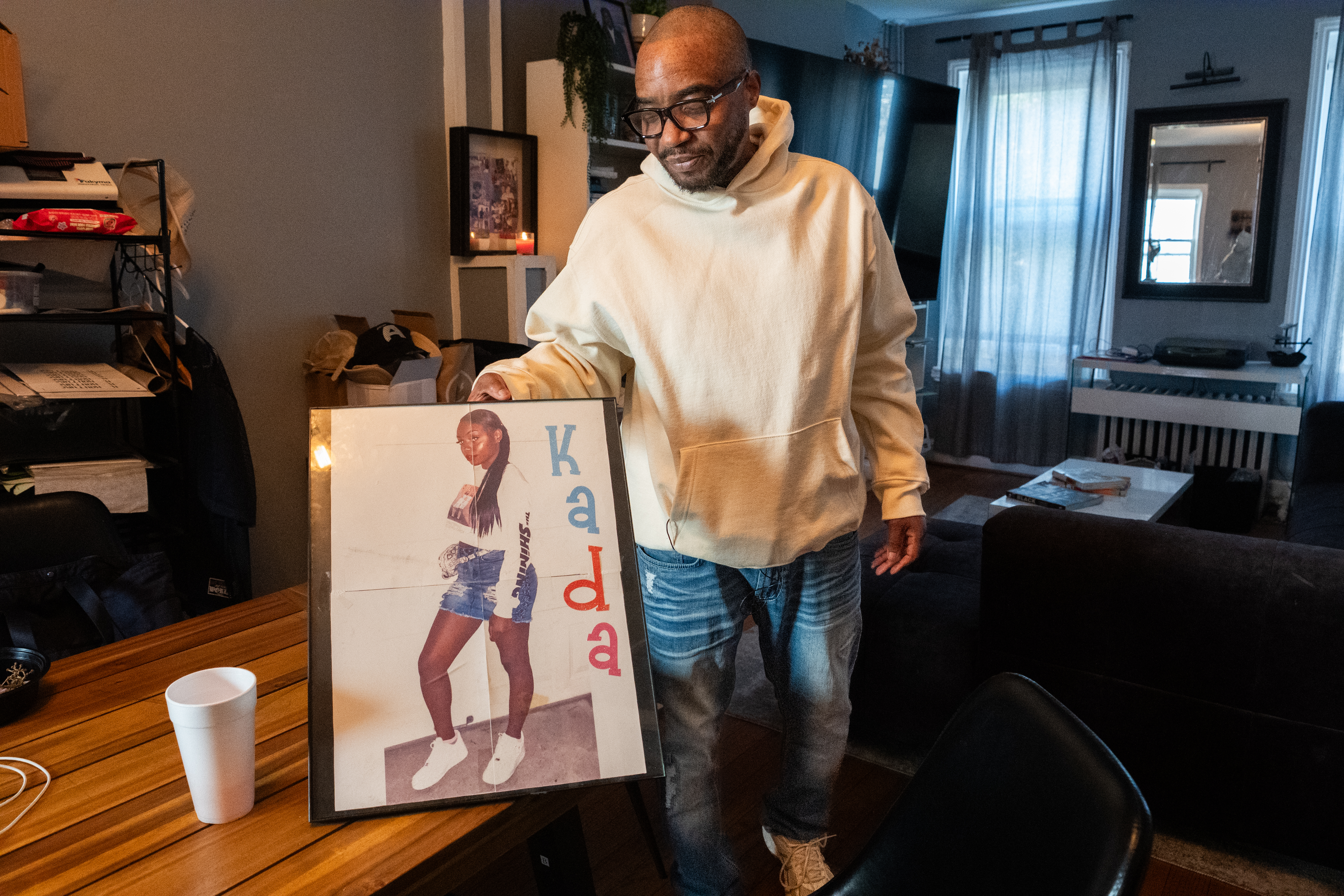
    Kevin Scott, Kada Scott’s father, with a photo of his daughter.

    This is not unusual, as victims of domestic violence often live in fear of the perpetrators. Reviewing the period between 2010 and 2020, researchers at the University of Pennsylvania found that 70% of victims of domestic violence cases failed to appear in Philadelphia’s courts.

    A big part of the problem is that the accused are often out on bail and still threatening the victims. In King’s case, after the second set of assault charges, prosecutors requested bail of $1 million, but the magistrate lowered it to $200,000.

    King posted the necessary 10% — or $20,000 — and was released in April.

    Krasner blamed the magistrate for lowering the bail, but his office could have appealed the ruling.

    There is a fine line in detaining suspects accused of crimes for months on end until a trial. But in domestic violence cases, the current system is not working and needs to be revamped.

    Prosecutors and judges must do everything possible to guarantee the safety of victims. Victims need more support within the criminal justice system to ensure their safety.

    More broadly, additional preventive steps are needed to reduce violence against women, including standing up to rape culture, empowering women, and teaching boys to respect women.

    Black women disproportionately experience higher rates of domestic abuse, including rape and homicides, studies show, further underscoring the need for more awareness, training, and preventive measures.

    In this instance, given that King had been charged once before, the magistrate and Krasner’s office dropped the ball.

    And although the victim refused to testify, the district attorney’s office could have used the video evidence to move forward with King’s prosecution — though not having the witnesses testify certainly would have made for a tougher case.

    To his credit, Krasner, a former defense attorney who faces reelection next month and has been criticized for being soft on crime, admitted his office was ultimately to blame.

    “The buck stops here,” he said.

    Sadly, a young, vibrant woman full of promise has died, and another woman was previously assaulted and traumatized. Krasner said the public played an enormous role in Scott’s case, and asked for anyone with information to call 215-686-TIPS.

    The only positive outcome will be to ensure justice is served, and a broken legal system in which victims are afraid to testify is fixed, so others do not experience the same horrific outcome.

  • Massive Amazon cloud outage has been resolved after disrupting internet use worldwide

    Massive Amazon cloud outage has been resolved after disrupting internet use worldwide

    LONDON — Amazon says a massive outage of its cloud computing service has been resolved as of Monday evening, after a problem disrupted internet use around the world, taking down a broad range of online services, including social media, gaming, food delivery, streaming and financial platforms.

    The all-day disruption and the ensuing exasperation it caused served as the latest reminder that 21st century society is increasingly dependent on just a handful of companies for much of its internet technology, which seems to work reliably until it suddenly breaks down.

    About three hours after the outage began early Monday morning, Amazon Web Services said it was starting to recover, but it wasn’t until 6 p.m. Eastern that “services returned to normal operations,” Amazon said on its AWS health website, where it tracks outages.

    AWS provides behind-the-scenes cloud computing infrastructure to some of the world’s biggest organizations. Its customers include government departments, universities and businesses, including The Associated Press.

    Cybersecurity expert Mike Chapple said “a slow and bumpy recovery process” is “entirely normal.”

    As engineers roll out fixes across the cloud computing infrastructure, the process could trigger smaller disruptions, he said.

    “It’s similar to what happens after a large-scale power outage: While a city’s power is coming back online, neighborhoods may see intermittent glitches as crews finish the repairs,” said Chapple, an information technology professor at the University of Notre Dame’s Mendoza College of Business.

    Amazon blames domain name system

    Amazon pinned the outage on issues related to its domain name system that converts web addresses into IP addresses, which are numeric designations that identify locations on the internet. Those addresses allow websites and apps to load on internet-connected devices.

    DownDetector, a website that tracks online outages, said in a Facebook post that it received over 11 million user reports of problems at more than 2,500 companies. Users reported trouble with the social media site Snapchat, the Roblox and Fortnite video games, the online broker Robinhood and the McDonald’s app, as well as Netflix, Disney+ and many other services.

    The cryptocurrency exchange Coinbase and the Signal chat app both said on X that they were experiencing trouble related to the outage.

    Amazon’s own services were also affected. Users of the company’s Ring doorbell cameras and Alexa-powered smart speakers reported that they were not working, while others said they were unable to access the Amazon website or download books to their Kindle.

    Many college and K-12 students were unable to submit or access their homework or course materials Monday because the AWS outage knocked out Canvas, a widely used educational platform.

    “I currently can’t grade any online assignments, and my students can’t access their online materials” because of the outage’s effect on learning-management systems, said Damien P. Williams, a professor of philosophy and data science at the University of North Carolina at Charlotte.

    The exact number of schools impacted was not immediately known, but Canvas says on its website it is used by 50% of college and university students in North America, including all Ivy League schools in the U.S.

    At the University of California, Riverside, students couldn’t submit assignments, take quizzes or access course materials, and online instruction was limited, the campus said.

    Ohio State University informed its 70,000 students at all six campuses by email Monday morning that online course materials might be inaccessible due to the outage and that “students should connect with their instructors for any alternative plans.” As of 7:10 p.m. Eastern, access was restored, the university told students.

    Record of past outages

    This is not the first time issues with Amazon cloud services have caused widespread disruptions.

    Many popular internet services were affected by a brief outage in 2023. AWS’s longest outage in recent history occurred in late 2021, when a wide range of companies — from airlines and auto dealerships to payment apps and video streaming services — were affected for more than five hours. Outages also happened in 2020 and 2017.

    The first signs of trouble emerged at around 3:11 a.m. Eastern time, when AWS reported on its “health dashboard” that it was “investigating increased error rates and latencies for multiple AWS services in the US-EAST-1 Region.” Later, the company reported that there were “significant error rates” and that engineers were “actively working” on the problem.

    Around 6 a.m. Eastern time, the company reported seeing recovery across most of the affected services and said it was seeking a “full resolution.” As of midday, AWS was still working to resolve the trouble.

    Sixty-four internal AWS services were affected, the company said.

    Just a few companies provide most internet infrastructure

    Because much of the world now relies on three or four companies to provide the underlying infrastructure of the internet, “when there’s an issue like this, it can be really impactful” across many online services, said Patrick Burgess, a cybersecurity expert at U.K.-based BCS, The Chartered Institute for IT.

    “The world now runs on the cloud,” Burgess said.

    And because so much of the online world’s plumbing is underpinned by so few companies, when something goes wrong, “it’s very difficult for users to pinpoint what is happening because we don’t see Amazon, we just see Snapchat or Roblox,” Burgess said.

    “The good news is that this kind of issue is usually relatively fast” to resolve, and there’s no indication that it was caused by a cyberattack, Burgess said.

    “This looks like a good old-fashioned technology issue. Something’s gone wrong, and it will be fixed by Amazon,” he said.

    There are “well-established processes” to deal with outages at AWS, as well as rivals Google and Microsoft, Burgess said, adding that such outages are usually over in “hours rather than days.”