KYIV, Ukraine — President Donald Trump said Monday that while he thinks it is possible that Ukraine can defeat Russia, he’s now doubtful it will happen.
The comments from Trump added a fresh layer of skepticism toward Kyiv as he plans to meet again in the coming weeks with Russian President Vladimir Putin for face-to-face talks in Budapest, Hungary, on ending the war.
“They could still win it. I don’t think they will, but they could still win it,” Trump told reporters on Monday at the start of a White House meeting with Australian Prime Minister Anthony Albanese.
But after a lengthy call with Putin last week followed by a meeting with Ukrainian President Volodymyr Zelenskyy, Trump made another reversal and called on Kyiv and Moscow to “stop where they are” and end their brutal war.
Asked on Monday about his whiplashing opinion on Kyiv’s position, Trump offered the dour assessment about Ukraine’s chances. He added, “I never said they would win it. I said they could. Anything can happen. You know war is a very strange thing.”
Earlier Monday, Zelenskyy said that during the White House meeting Trump informed him that Putin’s maximalist demand — that Ukraine cede the entirety of its eastern Donetsk and Luhansk regions — was unchanged.
Still, Zelenskyy described the meeting as “positive,” even though Trump also rebuffed his request for long-range Tomahawk cruise missiles.
In public comments in the weeks leading up to his meeting with Zelenskyy, Trump had appeared to warm to the possibility of sending the Tomahawks, which would allow Ukrainian forces to strike deeper into Russian territory.
But the U.S. leader’s tone changed after his latest call with Putin and he made clear that he was reluctant to send Ukraine the missile system, at least for the time-being.
“In my opinion, he does not want an escalation with the Russians until he meets with them,” Zelenskyy told reporters on Sunday. His comments were embargoed until Monday morning.
Zelenskyy also expressed skepticism about Putin’s proposal to swap some territory it holds in the Kherson and Zaporizhzhia regions if Ukraine surrenders Donetsk and Luhansk, saying the proposal was unclear. The Donetsk and Luhansk regions make up the Donbas.
Ukraine’s leader said Trump ultimately supported a freeze along the current front line.
“We share President Trump’s positive outlook if it leads to the end of the war,” Zelenskyy said, citing “many rounds of discussion over more than two hours with him and his team.”
Zelenskyy was diplomatic about his meeting with Trump despite reports that he faced pressure to accept Putin’s demands. The meeting followed the disastrous Oval Office spat on Feb. 28 when the Ukrainian president was scolded on live television for not being grateful for U.S. support.
Zelenskyy said he has not been invited to attend but would consider it if the format for talks were fair to Kyiv.
He also took a shot at Hungarian Prime Minister Viktor Orban, saying he does not believe that a prime minister “who blocks Ukraine everywhere can do anything positive for Ukrainians or even provide a balanced contribution.”
Zelenskyy said he thinks that all parties have “moved closer” to a possible end to the war.
“That doesn’t mean it will definitely end, but President Trump has achieved a lot in the Middle East, and riding that wave he wants to end Russia’s war against Ukraine,” he added.
Ukraine is hoping to purchase 25 Patriot air defense systems from U.S. firms using frozen Russian assets and assistance from partners, but Zelenskyy said procuring them would require time because of long production waits. He said he spoke to Trump about help procuring them more quickly, potentially from European partners.
Zelenskyy said the United States is interested in bilateral gas projects with Ukraine, including the construction of an LNG terminal in the southern port city of Odesa. Other projects of interest include those related to nuclear energy and oil.
A divided U.S. appeals court ruled on Monday that Donald Trump can send National Guard troops into Portland, Oregon, despite objections by the leaders of the city and state, giving the Republican president an important legal victory as he dispatches military forces to a growing number of Democratic-led locales.
A three-judge panel of the 9th U.S. Circuit Court of Appeals granted the Justice Department’s request to put on hold a judge’s order that had blocked the deployment while a legal challenge to Trump’s action plays out.
The court said that sending in the National Guard was an appropriate response to protesters, who had damaged a federal building and threatened U.S. Immigration and Customs Enforcement officers.
The unsigned majority opinion was joined by Circuit Judge Bridget Bade and Circuit Judge Ryan Nelson, who were both appointed by Trump in his first term. Nelson also wrote a concurring opinion saying that courts have no ability to even review the president’s decision to send troops.
Circuit Judge Susan Graber, an appointee of Democratic President Bill Clinton, dissented. She said that allowing troops to be called in response to “merely inconvenient” protests was “not merely absurd” but dangerous, and she said the full 9th Circuit should overturn the ruling before Trump has a chance to send troops.
White House spokeswoman Abigail Jackson welcomed the ruling, saying Trump had exercised his lawful authority to protect federal assets and personnel from protesters.
Portland’s city attorney did not immediately respond to a request for comment.
On October 4, Portland-based U.S. District Judge Karin Immergut, who Trump appointed during his first term as president, ruled that Trump likely acted unlawfully when he ordered troops to Portland. She had blocked Trump from sending any National Guard troops to Portland at least until the end of October, and has scheduled a non-jury trial set to begin on October 29 to determine whether to impose a longer-term block.
DEMOCRATIC-LED STATES SEEK TO HALT DEPLOYMENTS
In an extraordinary use of the U.S. armed forces for domestic purposes, Trump has sent National Guard troops into Los Angeles, Washington, D.C., and Memphis, and announced plans for deployments to Portland and Chicago.
Democratic-led states and cities have filed lawsuits seeking to halt the deployments, and courts have not yet reached a final decision on the legality of Trump’s decisions to send the National Guard to U.S. cities.
Trump has asked the U.S. Supreme Court to weigh his authority to send troops to Democratic-led cities, after another U.S. appeals court ruled against his decision to send troops to Chicago.
City and state officials sued the administration in a bid to stop the Portland deployment, arguing that Trump’s action violates several federal laws that govern the use of military forces as well as the state’s rights under the U.S. Constitution’s 10th Amendment.
The lawsuit accused Trump of exaggerating the severity of protests against his immigration policies to justify illegally seizing control of state National Guard units.
Trump on September 27 ordered 200 National Guard troops to Portland, continuing his administration’s unprecedented use of military personnel in U.S. cities to suppress protests and bolster domestic immigration enforcement. Trump called the city “War ravaged” and said, “I am also authorizing Full Force, if necessary.”
Police records provided by the state showed that protests in Portland were “small and sedate,” resulting in only 25 arrests in mid-June and no arrests in the 3-1/2 months since June 19.
A federal law called the Posse Comitatus Act generally restricts the use of the U.S. military for domestic law enforcement purposes. In ordering troops to California, Oregon and Illinois, Trump has relied on a law – Section 12406 of Title 10 of the U.S. Code – that allows a president to deploy state National Guard to repel an invasion, suppress a rebellion or allow the president to execute the law.
The National Guard serves as state-based militia forces that answer to state governors except when called into federal service by the president.
During arguments in the case on October 9, the two Trump-appointed judges suggested that Immergut had focused too closely on protests in the city in September without fully considering more serious protests two months before the troop deployment. Circuit Judge Ryan Nelson said that courts should not engage in a “day by day” review of whether troops were needed at any given time.
Immergut issued decisions against the administration on October 4 and October 5, first ruling that Trump could not take over Oregon’s National Guard and then ruling that he could not circumvent that decision by calling in National Guard troops from other states.
The judge said there was no evidence that recent protests in Portland rose to the level of a rebellion or seriously interfered with law enforcement, and she said Trump’s description of the city as war-ravaged was “simply untethered to the facts.”
Immergut is one of three district court judges who have ruled against Trump’s use of the National Guard, and no district court judge has yet ruled for Trump in the National Guard cases.
Appeals courts have split over the issue so far, with the 9th Circuit previously backing Trump’s use of troops in California and the 7th Circuit ruling that troops should stay out of Chicago for now.
Despite strong pressure from the Trump administration, including a call with the White House on Friday, colleges and universities are largely rejecting the president’s offer of preferential treatment for funding in exchange for compliance with his ideological priorities.
Six of nine universities offered the deal earlier this month had publicly said no to the White House request by Monday’s deadline.
The administration has said it is seeking to make sure the country’s schools are merit-based, but many universities and higher education advocates said the White House’s proposed agreement would undermine the merit-based process currently utilized to award research grants.
The “Compact for Academic Excellence in Higher Education” is a new attempt by the administration to get schools to eliminate diversity, equity and inclusion policies and ensure more conservative viewpoints and values are integrated into campus life.
The Trump administration offered it to nine colleges earlier this month, casting it as a means to gain competitive advantage for federal and philanthropic benefits and invitations to White House events in return for what the administration described as compliance with civil rights law and “pursuing Federal priorities with vigor.”
The ideological tension was reflected during a call on Friday, which the White House organized and presented as a chance to workshop the terms of the compact in partnership with colleges and universities that had not yet responded, according to a person close to the situation, who spoke on the condition of anonymity because of the sensitivity of the matter.
From the Trump administration, Education Secretary Linda McMahon; White House Domestic Policy Director Vincent Haley, Special Assistant Eric Bledsoe and adviser May Mailman; Josh Gruenbaum of the General Services Administration; and billionaire Marc Rowan were on the call, the person said.
But within a day of the call, University of Virginia and Dartmouth College rejected the compact, joining ranks with MIT, Brown University, the University of Pennsylvania and the University of Southern California. The University of Texas at Austin was invited to sign on and the chair of the University of Texas System Board of Regents expressed enthusiasm. The University of Arizona and Vanderbilt University have not publicly responded.
Echoing a term that has been often used by the Trump administration, U-Va.’s president said the agreement violated the merit-based nature of the competition for federal research funding. The federal government currently awards billions of dollars in research grants based on peer reviews and scientific merit.
On Saturday, Dartmouth President Sian Beilock wrote to McMahon, Mailman and Haley that she welcomed further engagement on enhancing the partnership between the federal government and research universities and ensuring that higher education “stays focused on academic excellence.” But, she wrote, “I do not believe that the involvement of the government through a compact-whether it is a Republican- or Democratic-led White House-is the right way to focus America’s leading colleges and universities on their teaching and research mission.”
White House spokeswoman Liz Huston described the Friday call as “productive.”
“The Administration hosted a productive call with several university leaders. They now have the baton to consider, discuss, and propose meaningful reforms, including their form and implementation, to ensure college campuses serve as laboratories of American greatness,” Huston said in a statement. “These leaders are working steadfastly to improve higher education and have been invited to the table to share ideas with the Administration, and we look forward to discussing transparent ways that, together, we will produce future generations of American excellence.”
A White House official, speaking anonymously to discuss private conversations, said universities will not lose their federal funding because they decided not to engage in the compact.
The sweeping terms of the compact called on schools to adopt the administration’s priorities, including pledging to freeze tuition for five years, cap international enrollment at 15 percent of a college’s undergraduate student body, and bar the consideration of factors such as gender, race and political views in admissions and other areas.
Some legal scholars said the terms were unconstitutional. Trump administration officials have insisted they are protecting free speech by compelling universities to reject a culture that suppresses far-right thought.
Officials asked for “limited, targeted feedback” in writing no later than Oct. 20, with hopes of a signed agreement by Nov. 21.
As schools turned it down, citing similar concerns – Christina H. Paxson, Brown’s president, wrote in a letter to the White House that provisions in the compact restricting the university’s academic freedom and institutional autonomy would impede its mission – the Trump administration invited more universities to participate. Washington University in St. Louis, the University of Kansas and Arizona State University joined Friday’s call.
In a Monday statement, Washington University Chancellor Andrew Martin said he had not endorsed or signed on to the compact but agreed to discuss it with the Trump administration. “We believe it is in the best interest of our university, and higher education more broadly, for us to participate constructively, share our experience and expertise, and help inform policies that strengthen the nation’s research and education ecosystem,” Martin said.
Some of the wording in the compact is vague. But the magnitude of the stakes is clear: The Trump administration has frozen billions of dollars of federal research funding at multiple colleges that it has accused of violating federal civil rights laws for issues such as having diversity, equity and inclusion policies and allegedly not doing enough to prevent antisemitism.
At Harvard University, which has filed two lawsuits to fight the government’s actions, the administration has tried to bar international students and scholars from campus, threatened to revoke the university’s tax-exempt status and has begun an effort to block the school from receiving any federal grants.
Faculty, alumni and students at many of the nine schools urged university leaders not to sign. Rallies against the compact occurred on multiple campuses, and student leaders from seven of the nine original schools issued a joint statement opposing it. More than 30 higher education associations issued a statement of opposition Friday, saying “the conditions it outlines run counter to the interests of institutions, students, scholars, and the nation itself.” A coalition formed of alumni groups opposed to the compact.
President Donald Trump wrote on social media that the administration would continue efforts to swiftly enforce federal law at universities that “continue to illegally discriminate based on Race or Sex,” but that “those Institutions that want to quickly return to the pursuit of Truth and Achievement” were “invited to enter into a forward looking Agreement with the Federal Government to help bring about the Golden Age of Academic Excellence in Higher Education.”
The Community College of Philadelphia’s Board of Trustees is preparing to select a new president, possibly as soon as Tuesday morning.
A special meeting has been scheduled for 8 a.m. on Zoom “to approve an offer of employment to a presidential candidate,” according to the board’s website.
The selection follows daylong interview sessions with the four finalists, who came to campus earlier this month and met with faculty, staff, students, and board members.
“Each comes with their strengths and weaknesses,” said Sandra Gonzalez-Torres, CCP’s director of articulation and transfer, who attended meetings to hear all four candidates. “At this time, the college really needs strong leadership that will guide us to a strong future. The college needs strong fundraising and ways to support our students in retention and graduation.”
Two have limited experience as a college president, including the interim CCP president. Three are candidates of color. One candidate has extensive fundraising experience, and another is a native Philadelphian who once worked at the college and has a background in counseling.
Candidates addressed the college’s low morale and said they had the skills to help it heal following the forced departure of former president Donald Guy Generals after 11 years in the post.
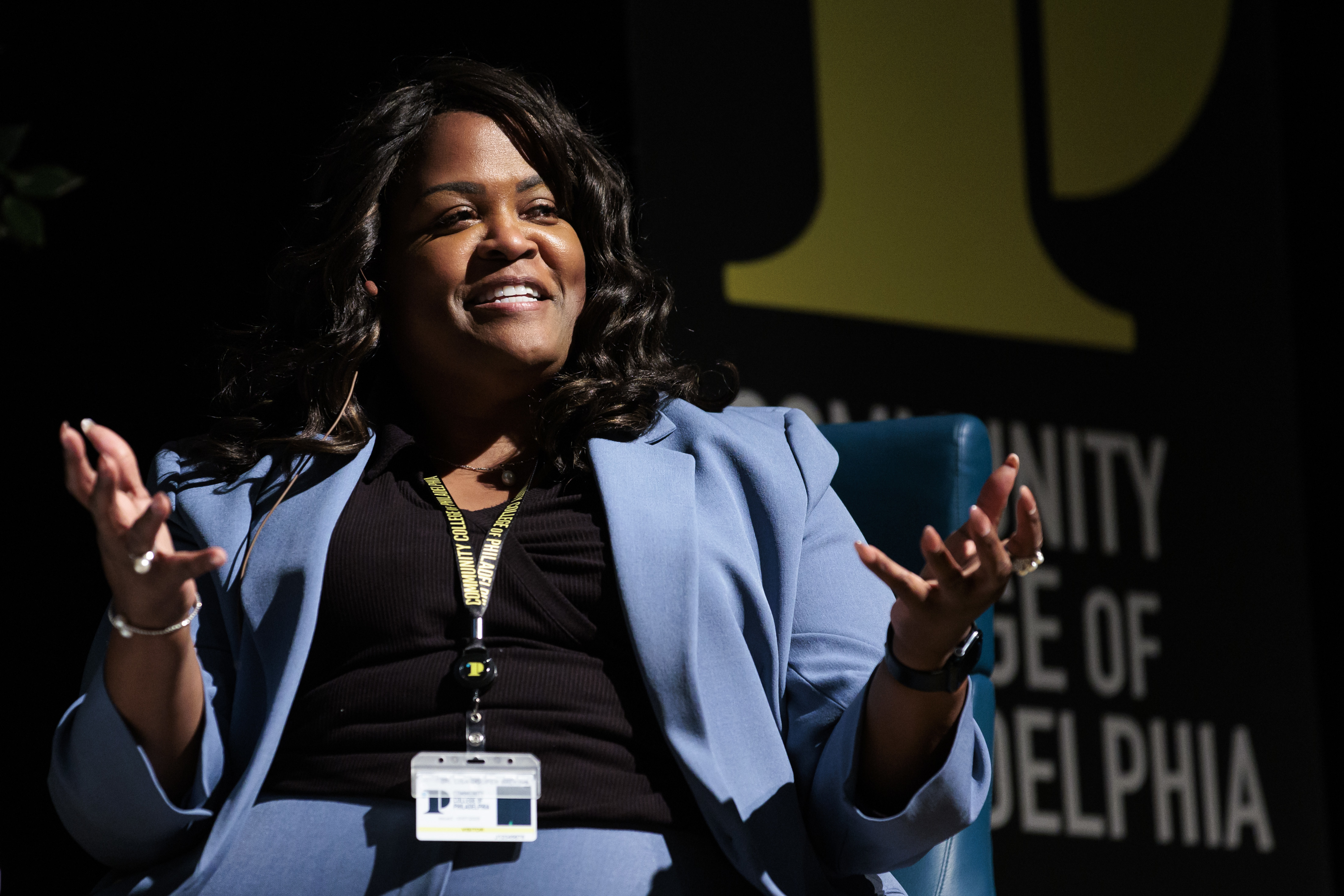
Lisa Cooper Wilkins, a finalist in the Community College of Philadelphia’s search for a president, speaks at an interview forum last week.
Lisa Cooper Wilkins touted more than 25 years of higher education experience, from faculty member to dean to her current position as vice chancellor of student affairs at City College of San Francisco — where she has worked since 2020.
“I consider myself to be a very collaborative leader and one that leans into communication as one of the primary strategies to work effectively across constituencies,” said Cooper Wilkins, a first-generation college student who grew up in a single-parent home.
Cooper Wilkins, who previously worked at San Joaquin Delta College and the University of the Pacific, cited her background in counseling as a plus. She described herself as a “very calming presence,” which could be helpful in leading CCP out of a tumultuous time.
She is the only candidate who is a native of the Philadelphia region, having attended the Philadelphia High School for Girls and later CCP.
Cooper Wilkins also served as a dean at CCP from 2008 to 2010, during which time she said she made a point of visiting the regional centers. She said she would continue to devote time to them if she became president.
“I’ve worked at institutions where, unfortunately more often than not, they feel like an afterthought,” she said.
She also wasassistant director and senior counselor for student support services at Drexel University in the mid-1990s.
Cooper Wilkins acknowledged that her fundraising experience has been “limited” but that she had some experience during her time at CCP.
She received her bachelor’s degree from Goucher College, master’s degrees from Marymount College and Villanova University, and her doctoral degree in higher education administration from George Washington University.
Alycia Marshall
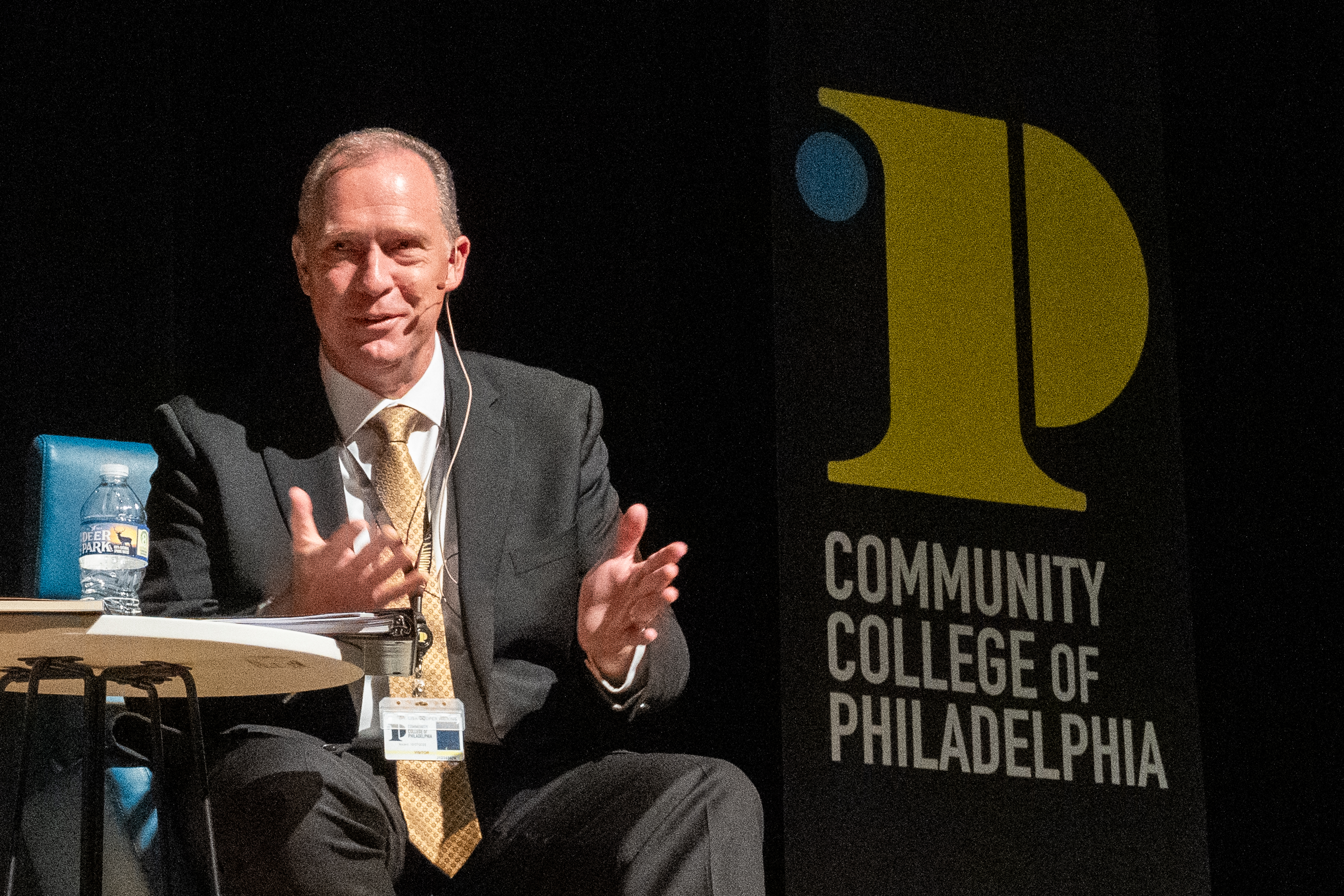
Community College of Philadelphia interim President Alycia Marshall speaks at commencement in May.
Alycia Marshall, who has been serving as interim president since Generals’ departure, leaned heavily on her experience in the role and how she stepped in to keep the college running smoothly just weeks before commencement.
“Having someone who is understanding about the particular state that the institution is in, who sees where the opportunities are, who is supportive and about ensuring a culture of inclusivity, of collaboration … would be a critical piece” for the next president, she said during an interview session.
Marshall, who wasthe college’s provost and vice president for academic and student success for nearly three years before becoming interim president, said she would lead both internally and externally, focusing on faculty and staff satisfaction as well as building relationships with funders and donors.
She said she has already met more than 20 City Council members and state legislators.
She acknowledged that an employee satisfaction survey that she commissioned when she became interim president showed low morale and promised to address it.
“Things that would be a priority to me [are] insuring transparency and frequent communication,” she said.
A native of Maryland, Marshall started her career as an adjunct professor at Anne Arundel Community College in Maryland, near Annapolis, and later became a full tenured professor and chair of the mathematics department. She was promoted to associate vice president at the Maryland community college, where she spent 23 years and founded the African American Leadership Institute.
Marshall said that over the last six months she learned to be comfortable not knowing what will happen next. After a board meeting earlier this month, a consultant who is the liaison to the presidential search committee said on a still-active microphone that Marshall had not been well-received on campus.
Marshall said at the interview session that she did not agree with that and that she has developed relationships with people across the college.
“If you have worked directly with me, you will know I am here for the students and I am here to support faculty and staff,” she said.
Marshall received her bachelor’s in mathematics from the University of Maryland, Baltimore County, her master’s in teaching from Bowie State University, and her doctorate in mathematics education from the University of Maryland.
Jesse Pisors
Jesse Pisors, a finalist applying to be president of the Community College of Philadelphia, speaks at an interview forum on Oct. 9.
Jesse Pisors most recently served as president of the 10,000-student Pasco-Hernando State College, a community college in the Tampa Bay area, but resigned after less than 18 months on the job.
“The political situation in Florida had devolved to a point where I felt I would not be able to continue to be effective as president,” Pisors told the audience at one campus meeting.
He acknowledged about a half percentage point drop in retention.
“That is exactly why one of our top 10 priorities in the strategic plan … had improving retention,” he said. “We were working on that.”
But he said he’s still proud of his time there, noting the creation of a strategic plan and an increase of more than 8% in full-time equivalent enrollment.
Citing the need for CCP to bring in more money at a time when public funding is tight, Pisors touted his experience in fundraising and marketing, noting his previous positions as a vice president at Texas A&M University-San Antonio and the University of Houston. He also had served as executive director of development and alumni relations at the University of Pittsburgh.
Though he is the lone white candidate, he noted that he had served as a principal of a school in Mexico is fluent in Spanish, and is married to a native of Mexico.
Pisors has 27 years of educational leadership experience, from kindergarten through the college level, which he said gives him “wide exposure” and broad “understanding.”
“Community colleges kind of live in the middle,” said Pisors, who got his bachelor’s in history from Oral Roberts University, a master’s from Oral Roberts, and his doctoral degree in higher education administration from Texas Tech University. “They reach back into high school. They reach forward into universities.”
Jermaine Wright
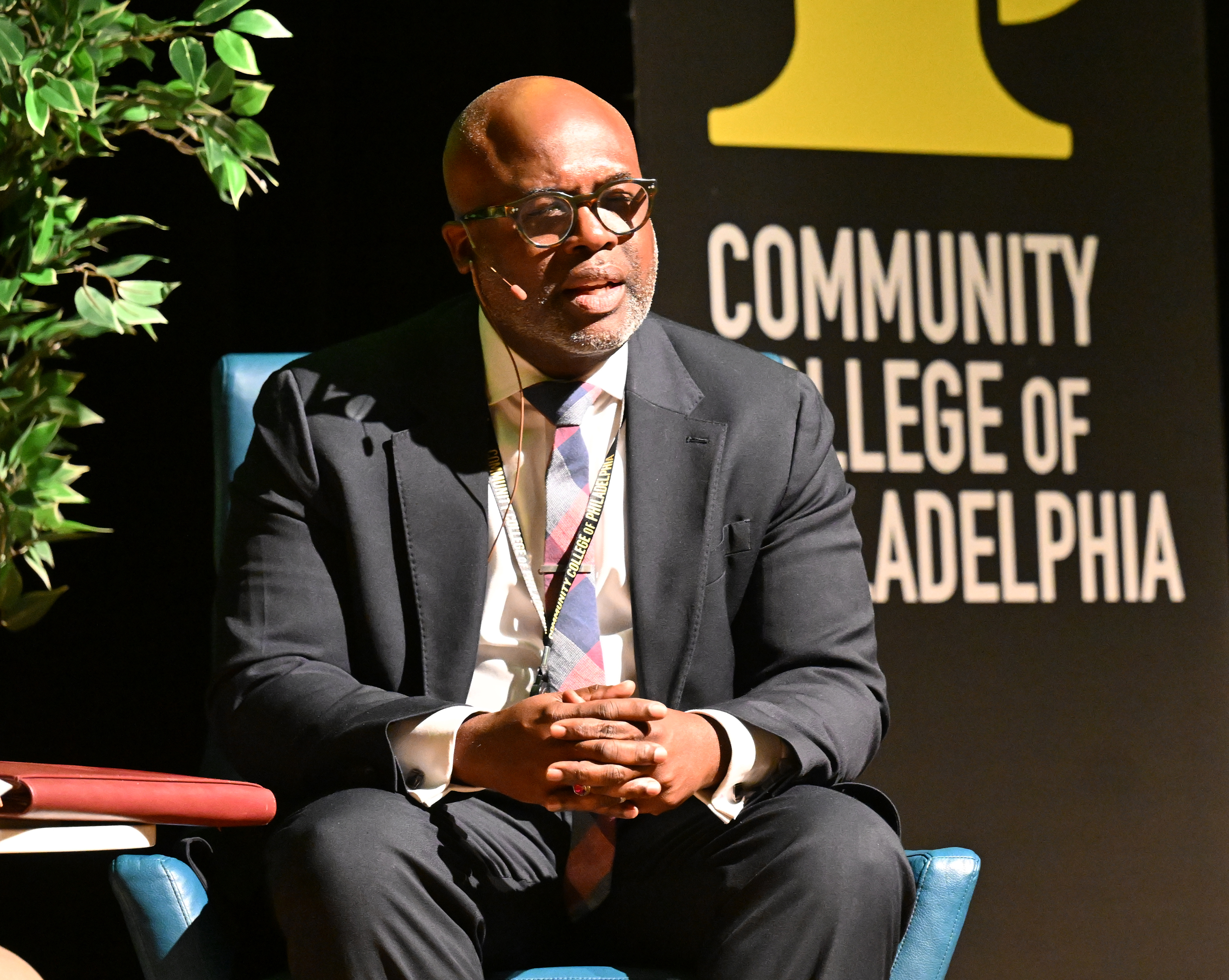
Jermaine Wright, a finalist for the presidency of the Community College of Philadelphia, speaks during his interview session with faculty, staff, students, and board members on Oct. 13.
Jermaine Wright, who is vice president for student affairs at City University of New York-Herbert H. Lehman College, said he was drawn to CCP by its mission and its students who have a similar background to his.
He said he’s a first-generation college student and an immigrant who became a naturalized citizen. His father worked as a porter. and his mother and grandmother cleaned office buildings.
“I am CCP,” said Wright, who has worked at Lehman for five years and previously held administrative positions at Southern Connecticut State University and City University of New York. “CCP is me.”
He cited his experience in workforce development and work in programs that help underrepresented students succeed.
Asked to describe his vision for the college, he cited increasing enrollment, finding different funding streams, ensuring academic excellence, and creating a more inclusive campus environment.
But he cautioned that any new vision would have to be developed with faculty and staff to get full support.
He also cited experience in fundraising and said success can be achieved by knowing where people are and meeting them there.
“We need to have constant face time,” he said.
Wright said he wouldn’t mind if members of the board of trustees showed up at the college a lot.
“That means they care just as much as I do,” he said.
Once an adjunct lecturer at Rutgers-Newark, Wright got his bachelor’s degree from Binghamton University, a master’s from CUNY, and his doctoral degree in public administration from Rutgers-Newark.
A Montgomery County judge sharply rebuked a Dresher woman Monday before sentencing her to 25 to 50 years in state prison in the murder of her son, telling her that she failed in her fundamental duties as a parent by allowing him to waste away to just 59 pounds.
During the hearing before Judge Wendy Rothstein, Sherrilynn Hawkins, 43, wept, calling Tylim Hatchett her “first love” and best friend while pleading guilty to third-degree murder, neglect, and related crimes in his September 2024 death.
She described how the 21-year-old fought all his life to overcome cerebral palsy, blindness and other debilitating medical issues, and required constant care to, among other things, feed himself.
“I made Tylim a promise to keep him safe, and after 21 years, I failed and broke that promise,” Hawkins said. “And I will always be sorry for that.”
Despite Hawkins’ professed remorse, prosecutors said, in the last three weeks of her son’s life, she frequently left him alone in her apartment, sometimes for 24 hours at a time.
All the while, she accepted funding from Aveanna, a home healthcare agency, to work as her son’s primary caregiver. She also included Lorretta Harris, one of her friends, on that payroll to receive a portion of the money to care for him part-time.
In reality, neither woman spent much time with Hatchett and falsified their records with the agency, despite being paid more than $48,000 combined, according to evidence presented in court Monday.
Prosecutors said Tylim Hatchett weighed just 59 pounds when he died last September.
Harris, 49, pleaded guilty to neglect of a care-dependent person earlier this year. Her sentencing is scheduled for December.
In handing down Hawkins’ sentence Monday, Rothstein said Hawkins had betrayed her son’s trust and, even worse, had prioritized scamming Aveanna for financial gain.
“You utilized state funding and let your child die,” she said, telling Hawkins that her conduct was despicable. “And you did all this while driving around in a Mercedes.
“I’d like to say more, but I’m left speechless that a parent could do this.”
Hatchett was found dead Sept. 18, 2024, inside his mother’s apartment at the Residences at the Promenade, according to investigators.Police were called to the apartment by the man’s father. An autopsy found that he was severely malnourished and dehydrated.
Evidence pulled from Hawkins’ phone by detectives showed that in the weeks leading up to her son’s death, she spent the majority of her time with her younger son, whom she brought with her to her boyfriend’s house in Philadelphia, according to the affidavit or probable cause for her arrest.
During this time, she texted Vernon Hatchett, her son’s father, telling him “this might be it” for their son, and later that she would let him know when to make funeral arrangements.
The elder Hatchett, 40, has been charged with neglect, abuse, and conspiracy. However, he has been a fugitive from justice for more than a year and is currently being sought by the U.S. Marshals Service.
Hawkins also lied to concerned family members, saying she had taken her son to a nearby hospital for treatment, according to prosecutors.
But First Assistant District Attorney Ed McCann said Monday that the only time Hawkins sought medical care for her son in 2024 was at the beginning of the year, when he weighed 90 pounds.
Hatchett, McCann said, had lost more than third of his body weight between then and his death and had been “left alone in that apartment to die.”
“It’s horrific. It doesn’t have anything to do with being a parent; it has everything to do with being a human being,” he said. “I think the defendant failed at the fundamentals of being a human being by allowing this to happen.”
Hawkins’ family members and friends took turns Monday imploring Rothstein to be lenient. They told the judge that Hawkins had struggled with fertility issues in her youth and that she had endeavored to keep her son healthy and happy through his many medical issues.
They said that she had frequently asked for assistance in caring for Hatchett and that those pleas had been ignored.
Hawkins’ attorney, Joseph Schultz, said she is a caring and loving mother that had simply become overwhelmed.
“Today, she took responsibility, and she’s going to have to live with this the rest of her life,” Schultz said.
Prosecutors on Monday charged Keon King, the man accused of kidnapping Kada Scott from her workplace earlier this month, with arson — and said they soon intend to charge him with murder for allegedly killing Scott, then setting on fire the car they say he used to abduct her last week.
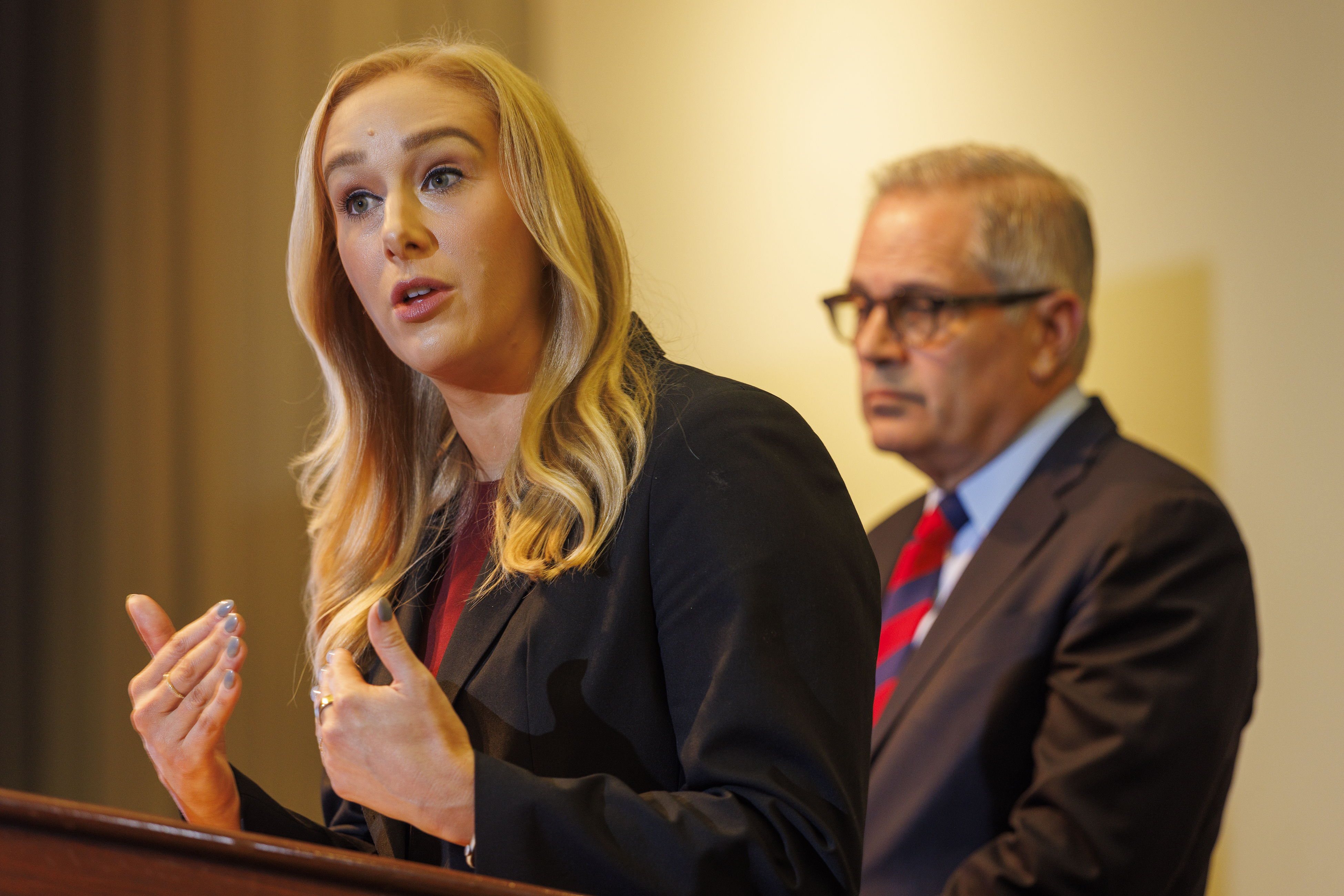
District Attorney Larry Krasner said that he expects to charge King with murder in connection with Scott’s death but that officials are awaiting additional information from the Medical Examiner’s Office and are working to “precisely confirm everything we need” to do that.
Prosecutors also said that they “have reason to believe that other people may have been involved” or helped King conceal evidence after Scott, 23, was killed and that investigators are working to identify additional suspects.
Scott’s cause of death remains under investigation.
Philadelphia District Attorney Larry Krasner said he intends to charge Keon King with murder, but awaits additional information before formally filing the charges.
King, 21, turned himself in to police last week to face charges of kidnapping, stalking, and related crimes after investigators linked him to the Oct. 4 disappearance of Scott. Cell phone data showed King was the last person in touch with Scott before she walked out of the Chestnut Hill nursing home where she worked and never returned, officials said.
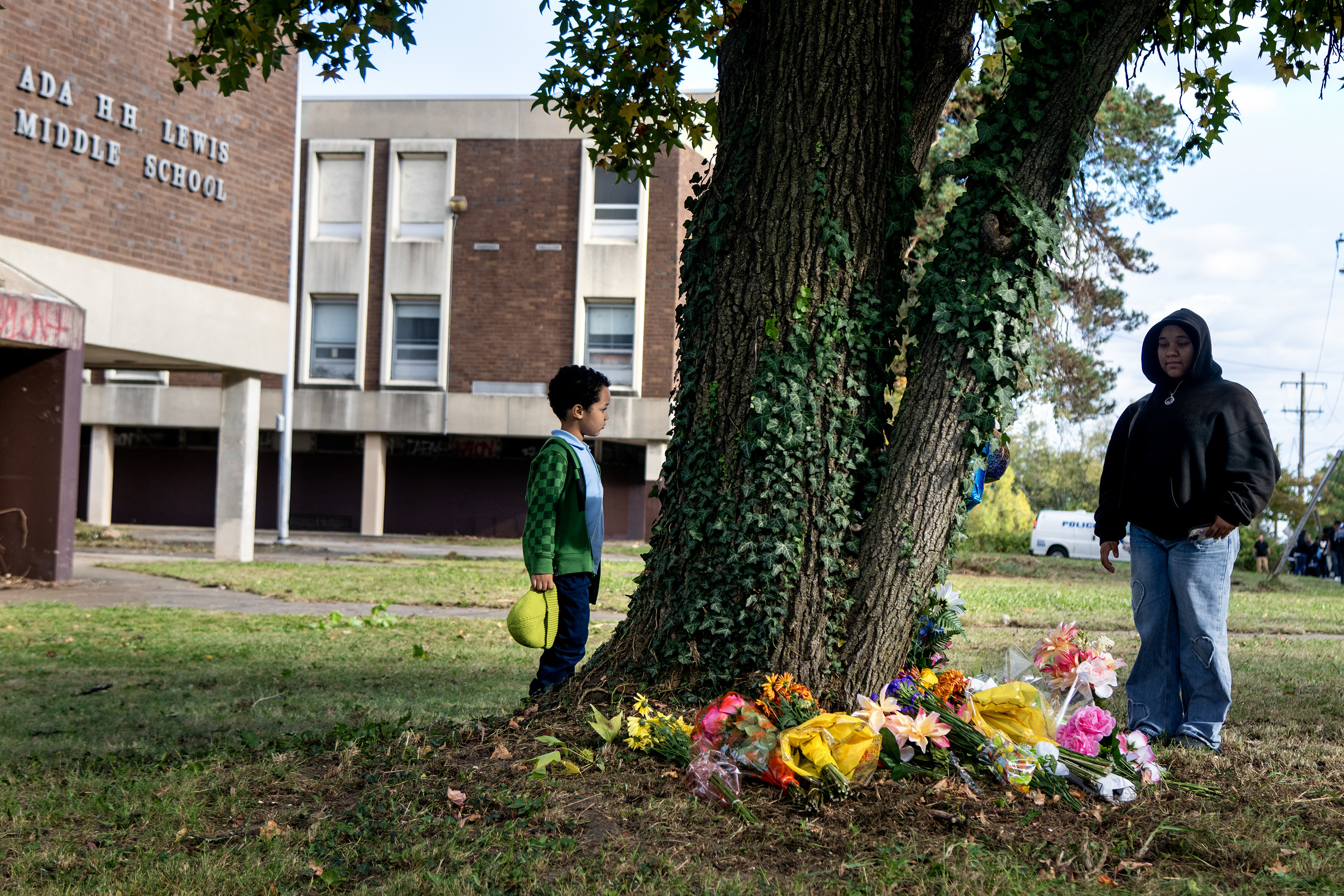
After a two-week search for the Mount Airy woman, police on Saturday found Scott’s body, buried in a shallow grave in the woods behind the abandoned Ada H.H. Lewis Middle School in East Germantown.
“There will be additional charges that are coming,” Krasner said at a news conference Monday.
In the meantime, Krasner said his office would charge King with arson, conspiracy, and related crimes for setting a black Hyundai Accent on fire near 74th Street and Ogontz Avenue on Oct. 7.
Assistant District Attorney Ashley Toczylowski said investigators believe that King used that car — which had been stolen from the 6600 block of Sprague Street in East Mount Airy on Oct. 3 — to kidnap Scott on the night of Oct. 4.
The extent of her relationship with King remains unclear, officials said.
Surveillance footage recovered late last week showed that the Hyundai Accent arrived at the Awbury Recreation Center around 10:30 p.m. the night Scott disappeared, the sources said.
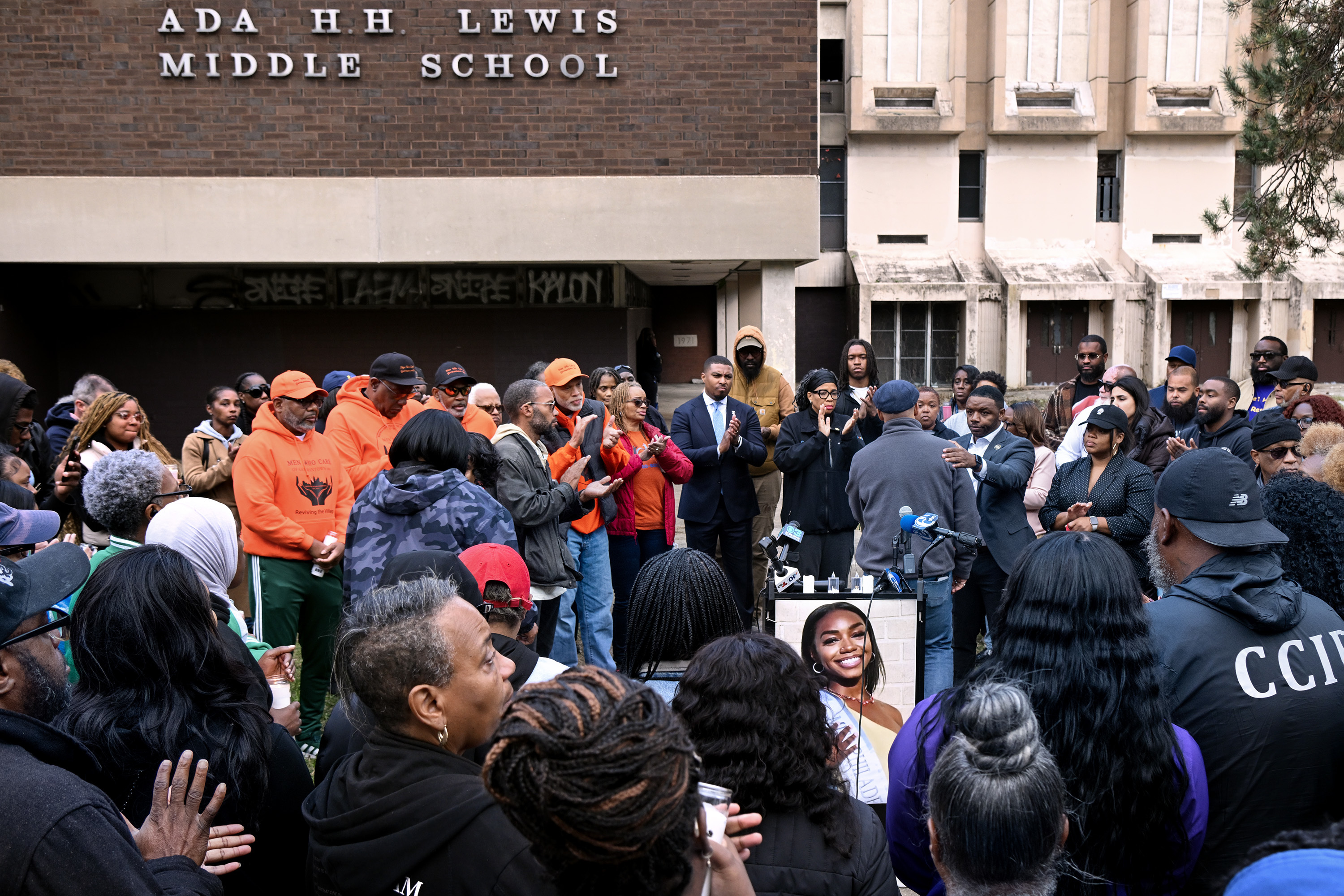
Julius Peden, 5, and Jaihanna Williams Peden (right), 14, pause at a memorial for Kada Scott at the Ada H. Lewis Middle School on Oct. 20, not far from where her body was found on Saturday. The siblings were brought by their grandmother Deborah Peden who said she felt the need to come. “My heart is broken. I feel like I lost someone in my family,” she said. “My daughter is a young Black woman. They are being targeted.”
King left the car in the parking lot, the sources said, then returned two days later — when video appears to show him moving what detectives believe was Scott’s body from the vehicle. Her corpse was buried at least 100 yards away in the woods behind the school next door.
The next day, Toczylowski said, King set the car ablaze.
Toczylowski said King’s cell phone location data shows he was at the recreation center when the car arrived Oct. 4 and again when he returned two days later. It also shows him in the area where the car was burned three days later, she said.
Detectives learned of the torched car last week after police received a tip that a car connected to her disappearance had been set on fire on the West Oak Lane block, she said. The car had already been towed, crushed, and sent to a junkyard when authorities learned of it, she said.
Assistant District Attorney Ashley Toczylowski will lead the prosecution again Keon King.
When investigators recovered video from the recreation center, she said, it confirmed that the car was used in the crime.
Krasner asked for the public’s continued help with the investigation, which he said “is developing almost hourly.”
“The community has already done tremendous work in aiding progress with this investigation,” he said. “We are simply asking for more.”
Scott’s family on Monday released their first statement since her body was found, thanking the public for its help in the investigation and asking for privacy as they grieve.
“Our hearts are shattered, yet we are deeply grateful for the outpouring of love, support, and prayers from people across the nation and around the world,” her parents wrote.
“Kada was deeply, deeply loved. Her light, kindness, and beautiful spirit will forever remain in our hearts,” they said.
They said they trust that the police department and district attorney’s office will get justice for their daughter, and that they are thankful for the “unity, leadership, and love” that has surrounded them so far.
“Please honor Kada’s memory by showing kindness and care to one another,” they wrote, “just as she did every day of her life.”
City Councilmember Anthony Phillips said his office is collecting donations to support Scott’s family, including toiletries, self-care and comfort products, and gift cards for grocery and meal delivery services.
Items can be dropped off at his office at 1514 Wadsworth Ave. from Tuesday through Friday, 8:30 a.m. to 4:30 p.m., and Saturday from 9 a.m. to noon. For questions, he said, call 215-686-3454.
Community members gather for a candlelight vigil in memory of Kada Scott on Monday. Neighborhood residents said they want the abandoned school torn down.
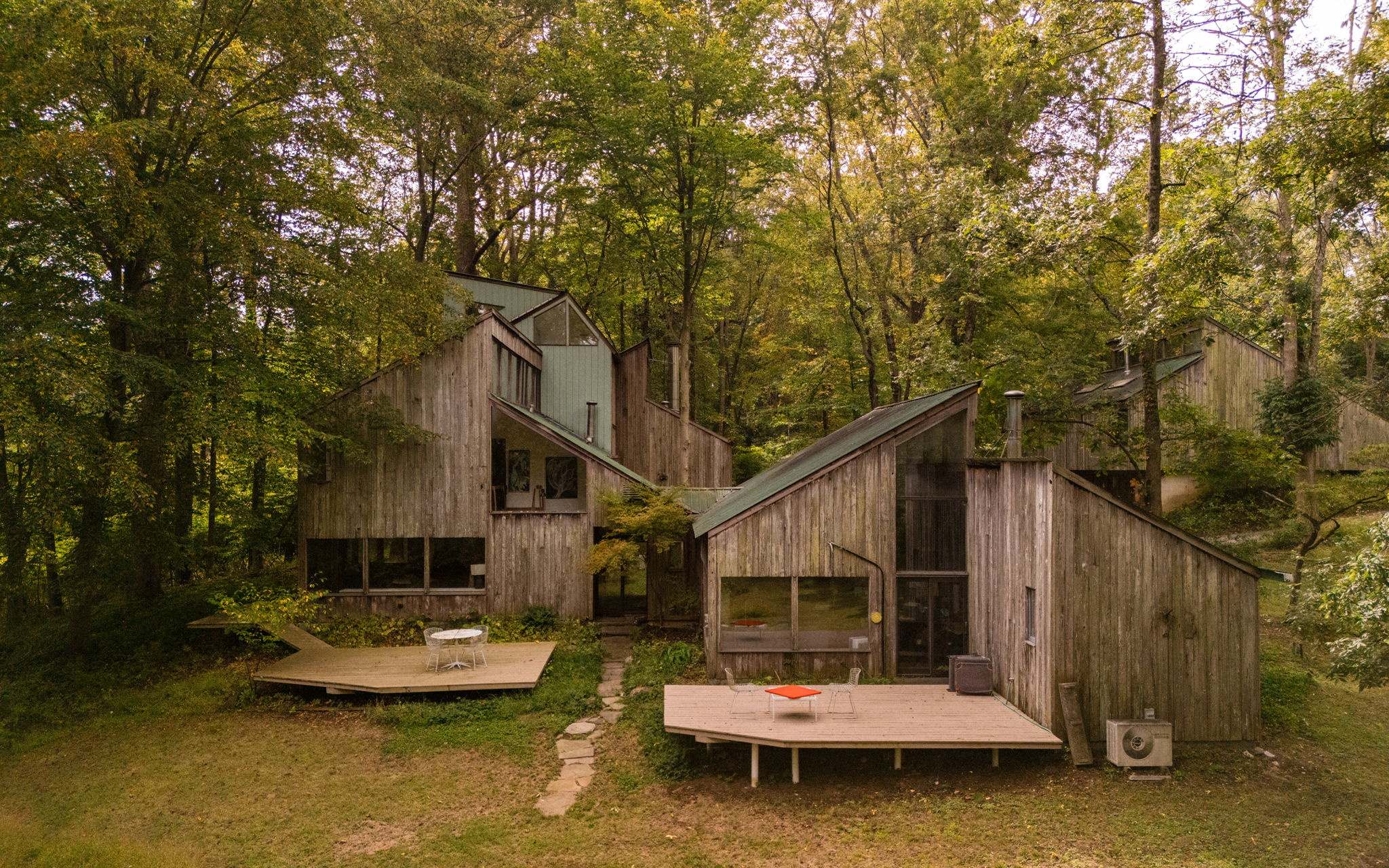
This Willistown Township home, for sale for nearly $2 million, was designed by Robert McElroy and has a wing that was devoted to his wife Annamaria’s art studio.
McElroy, who is credited with building more than 200 homes around the Main Line, designed and built this home for his own family in 1975, according to Marion Dinofa, Compass RE Realtor and modern home specialist.
Tucked far off Rabbit Run Road in Willistown Township, McElroy’s three-bedroom, 3½-bath home features a contemporary design and floor-to-ceiling windows that let in abundant natural light.
“I see a lot of really cool houses, but this one, almost more than any other house, is truly like you’re living in a work of art, between the craftsmanship of the woodworking, the views through the windows that are ever changing with the seasons, and the design of the home itself,” Dinofa said.
Wooden details make Robert McElroy’s former home in Willistown Township unique, said Realtor Marion Dinofa.
Almost every piece of wood in the home was crafted by Horace Hartshaw, who collaborated with the renowned sculptural furniture maker Wharton Esherick. This includes everything from the wood doors to the custom kitchen cabinets to the staircases, including a spiral one at its center.
McElroy wasn’t the only artist who resided in the home: His wife, Annamaria, a painter and sculptor, also left her mark, showcasing her artwork on the walls and using a wing of the home as her studio.
Dinofa noted that the house also includes a detached two-story garage that could be converted into more creative space.
The secluded home features custom wood features that were crafted by renowned artist Horace Hartshaw and lots of windows.
Between Robert’s vision and Annamaria’s artistic touches, their home “was a labor of love,” Dinofa said. “And it’s really well preserved. You can tell it hasn’t changed much.”
Annamaria and Robert lived at the home into their 90s, Dinofa said. They died in 2023 and 2024, respectively. Dinofa said the home is being sold by their daughter, Loretta.
Dinofa said she could see the property being bought by artists or by adventurous young parents who want to raise their children amid nature.
“It would be such a fun place for kids to play outside,” with a stream in the backyard and plenty of space to run around, Dinofa said. “I can only imagine the wildlife that they have viewed from that house.”
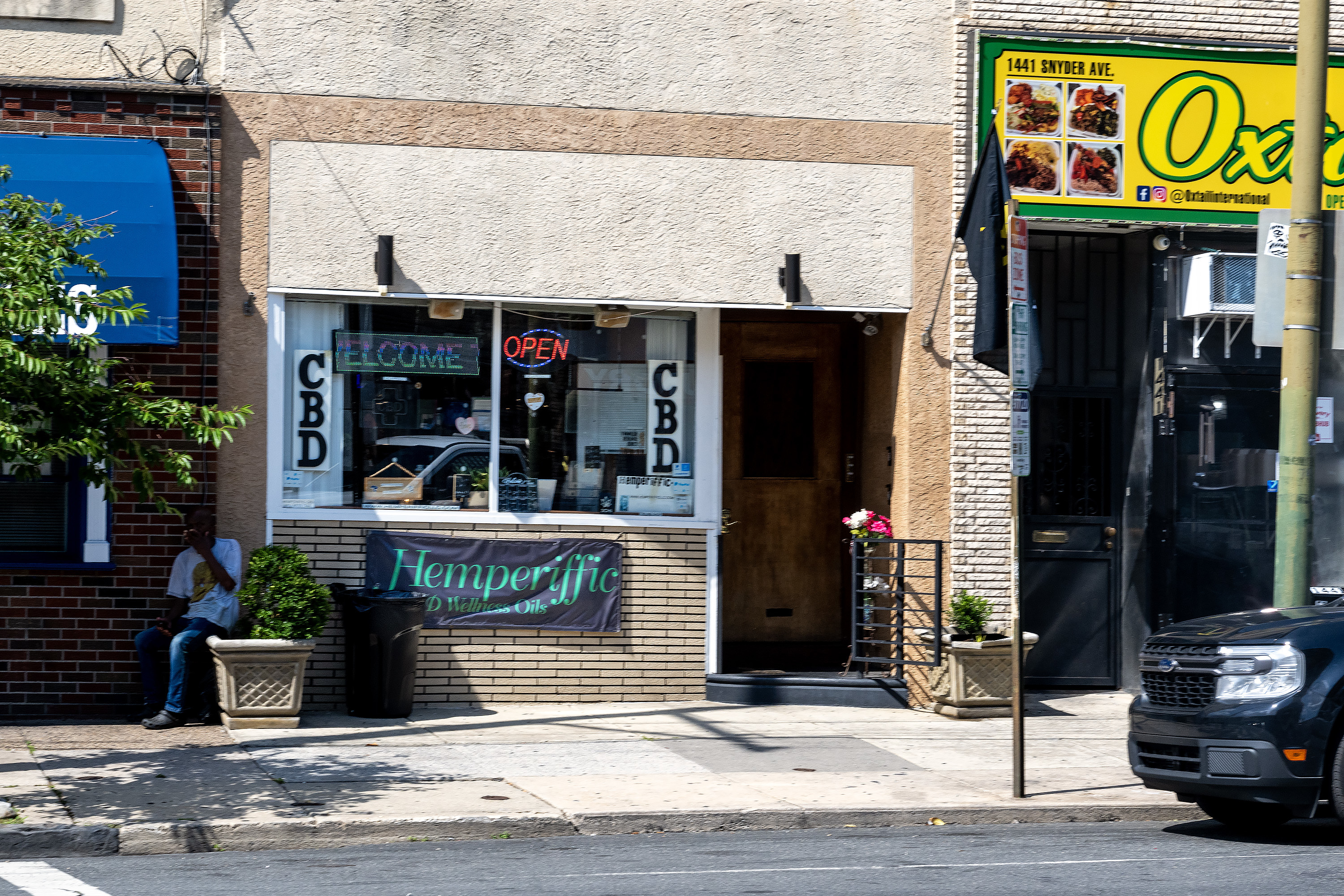
There’s a smoke shop in North Philly peddling recreational drugs across the street from a daycare. A West Philly storefront that sells loose cigarettes on a residential block. A convenience store in Spring Garden that advertises urine to people looking to pass a drug test.
These are among the so-called nuisance businesses that City Council members and neighborhood association leaders cited Monday as lawmakers advanced legislation to make it easier for the city to shut down stores that sell cannabis and tobacco products without licenses.
And legislators said their next target could be the landlords who rent space to those businesses.
“We have to work with our city departments and our state partners to clamp down on these businesses,” said City Council Majority Leader Katherine Gilmore Richardson, who represents the city at-large. “We’re just being inundated.”
Members of Council’s Committee on Licenses and Inspections passed two bills Monday that city officials say seek to close loopholes store owners exploit to avoid being cited for failing to obtain proper permits.
In introducing the legislation earlier this year, Gilmore Richardson cited an Inquirer report about Pennsylvania’s unregulated hemp stores, which sell products advertised as legal hemp that are often black market cannabis or contaminated with illicit toxins.
One bill makes it easier for the city to shut down nuisance businesses by removing language that classifies some violations as criminal matters, requiring that the police investigate them as crimes rather than civil violations that are quicker to adjudicate.
The second piece of legislation makes it illegal for businesses to essentially reorganize under a new name but conduct the same operations as a means of evading enforcement.
Both pieces of legislation could come up for a full vote in the Democratic-dominated City Council in the coming weeks. Members of Mayor Cherelle L. Parker’s administration testified in favor of them, meaning the mayor is likely to sign both.
A smoke shop in South Philadelphia.
Neighborhood association leaders also testified Monday in favor of the changes, but several said more aggressive enforcement is needed. They said smoke shops in particular have popped up throughout their commercial corridors, as have convenience stores that don’t even have licenses to operate as businesses, let alone sell recreational drugs.
“We’ve seen firsthand the selling of illegal drug paraphernalia and [loose cigarettes], many of which children walk past in order to get to the candy bars and seniors walk past to get to the milk,” said Heather Miller, of the Lawncrest Community Association. “We need to address this.”
Elaine Petrossian, a Democratic ward leader in Center City and a community activist, called for “much” higher fines and penalties for landlords. She cited progress the municipal government has made in New York City, where authorities cracked down on building owners who knowingly rented space to tenants selling cannabis or tobacco without licenses to do so.
Several lawmakers said they’d support a similar approach. Councilmember Mark Squilla, who represents a district that spans from South Philadelphia to Kensington, said landlords must be held “more accountable.”
“If they had some skin in the game, maybe they’d think twice about renting to an illegal operation,” he said.
Councilmember Jamie Gauthier, who represents parts of West Philadelphia, agreed. She said she recently attempted to meet with a building owner who rents space to a problematic smoke shop in her district, but was rebuffed.
“He was like, ‘These people pay me rent, and that’s the extent to which I basically care,’” Gauthier said. “We need something that forces property owners to be more accountable than that, because neighbors are suffering.”
Staff writers Max Marin and Ryan W. Briggs contributed to this article.
The world’s most-visited museum was closed Monday following a professional heist that resulted in the theft of priceless jewels. Within minutes, thieves entered and exited the Louvre on Sunday, taking eight treasures.
The result? One of the highest-profile museum thefts in living memory amid a climate where museum staffs — worldwide, not just at the Louvre — are complaining about crowding, thin staffing, high turnover, and strained security.
Here’s what we know so far.
How did the Louvre heist happen?
Within minutes, thieves rode up a basket lift outside the Louvre’s facade, forced open a window, smashed display cases, and fled with priceless Napoleonic jewels, officials said.
The heist took place on Sunday, only 30 minutes after opening, with visitors already inside.
The theft took four minutes inside the building and less than eight in total, according to French Culture Minister Rachida Dati, who called it a “professional” operation.
“They went straight to the display windows,” Dati said. “They knew exactly what they wanted. They were very efficient.”
Sunday’s theft focused on the gilded Apollo Gallery, where the crown jewels are displayed. Alarms brought Louvre agents to the room, forcing the intruders to bolt on motorbikes, but the robbery was already over.
It’s unclear how many people took part in the theft and whether they had inside assistance. French media reported there were four perpetrators, including two dressed as construction workers. Authorities have not commented on the specifics.
What was taken from the Louvre?
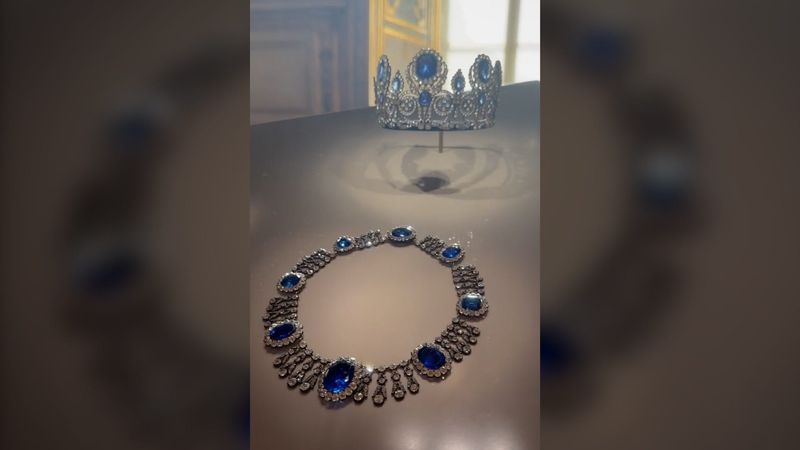
Eight pieces of “priceless” jewels were stolen from the Louvre in Paris. Here is what they were.
Eight objects were taken, according to officials:
A sapphire diadem, necklace, and single earring from a matching set linked to 19th-century French queens Marie-Amélie and Hortense.
An emerald necklace and earrings from the matching set of Empress Marie-Louise, Napoleon Bonaparte’s second wife.
A reliquary brooch.
Empress Eugénie’s diadem and her large corsage-bow brooch, a prized 19th-century imperial ensemble.
A ninth object, the emerald-set imperial crown of Napoleon III’s wife, Empress Eugénie, was also taken but apparently dropped by the thieves. The crown, with more than 1,300 diamonds, was damaged but recovered outside the museum.
All of the items are considered priceless, though officials have not disclosed an overall estimate.
What will happen to the stolen jewels?
The Louvre has been closed since the robbery on Sunday morning for the investigation.
Experts say the initial hours after a heist are critical before the scent grows colder and thieves have more time to dispose of the jewels.
The big concern is that the thieves are motivated by commodity vs. art, and will scrap the priceless works for sale on the black market, breaking the pieces for their stones and melting down the precious metals. In doing so, the thieves can make more high-ticket sales while remaining undetected.
Has this ever happened before at the Louvre?
According to National Geographic, the Louvre has a long history of bold heists — but it’s been a while until now.
In 1911, the Mona Lisa — then a lesser-known piece by Leonardo da Vinci — was taken by Vincenzo Peruggia, a former employee dressed in his old work uniform. No one noticed it was missing for over 24 hours. The painting was recovered two years later after Peruggia tried to sell it to another museum.
In 1940, a portion of the Louvre’s collection was looted by occupying Nazis, though the museum’s director had already hidden most of its collection in a safe house off-site.
There was the 1966 theft of antique jewelry, which was being transported back to France from a loan to a Virginia museum. Those jewels were recovered after being found in New York inside a grocery bag. A decade later, one group of thieves stole a Flemish painting, and months after that, another group stole French King Charles X’s jeweled sword. The sword is still missing.
The most recent string of heists occurred in the 1990s. In 1990, thieves cut a Renoir painting from its frame in broad daylight and also took ancient Roman jewelry and other paintings. In 1995, two pieces — a painting and a battle ax from a 17th-century bronze sculpture — were stolen. Finally, in 1998, a Camille Corot painting was cut from its frame and taken. It hasn’t been recovered.
What about in Philly? Any heists?
Yep. Philly-area museums have seen their fair share of art thefts over the years.
Dating back to the 1980s, several thefts or alleged thefts have occurred across the Philadelphia Art Museum, Rodin Museum, Penn Museum, and more, according to Inquirer archives.
Various thefts include a gold saw from Iraq and a 19th-century Chinese crystal ball taken from the Penn Museum in 1981 and 1988, a painting taken during a Philadelphia Art Museum after-hours party in 1984, and a bronze sculpture from the Rodin Museum in 1988 during a gunpoint robbery. The sculpture was recovered shortly afterward, and the alleged robber was arrested and charged. The crystal ball was also recovered.
There’s also Frank Waxman, the Philly-based doctor who authorities said secretly amassed the largest known private collection of stolen art: about 150 pieces worth more than $2 million. The FBI raided his Rittenhouse condo in 1982 to find Rodins, Picassos, and more. Due to the statute of limitations surrounding his thefts, he was only convicted of taking eight pieces and served eight months in prison.
In 2003, the Barnes Foundation said hundreds of items were missing from its collection, including a piece by Henri Matisse, a Jean Renoir ceramic vase, a mahogany Steinway piano, and historic recordings. It’s unclear whether the items were stolen or simply unaccounted for. No formal large-scale investigation took place.
There was also an incident in 2017 where Michael Rohana, who was attending an after-hours ugly sweater party at the Franklin Institute, broke the thumb off a life-size Chinese terracotta warrior statue.
Rohana described the incident as a “drunken mistake” and returned the thumb, which he had taken home. Still, it caused international turmoil, with Chinese officials accusing the Franklin Institute of carelessness with the artifact. The statue, which is called “The Cavalryman,” is insured for $4.5 million. Rohana went to court in 2019, eventually pleading guilty to a misdemeanor charge in 2023. He was sentenced to five years’ probation, a $5,000 fine, and community service.
Thomas Gavin admitted to targeting dozens of museums up and down the East Coast, taking valuable artifacts sometimes unnoticed for years. The Hershey Museum and Pennsylvania Farm Museum in Landis, Lancaster County, were among some of the museums impacted. Gavin’s crimeswent cold for so long that the statute of limitations expired for many, leading him to only serve a day in prison for trying to sell a historic rifle.
What does the jewel heist mean for museums’ futures?
The latest Louvre heist comes amid a tense time for museums worldwide.
Following the height of the COVID-19 pandemic, museums have been working to balance mass tourism, stretched-thin staff, and security upgrades.
Locally, the Philadelphia Art Museum and its employees reached a settlement last year after a yearlong dispute over pay raises called for in their 2022 labor contract and a nearly three-week strike.
At the Louvre, a June staff walkout over frustrations with overcrowding and chronic understaffing led to a delayed opening. Unions say mass tourism leaves too few eyes on too many rooms and creates pressure points where construction zones, freight routes, and visitor flows meet.
Officials say security updates are underway at the Louvre as part of an $800 million modernization plan. But critics say the measures are too little, too late.
MEXICO CITY – The Trump administration’s justification for blowing up suspected drug traffickers off the Venezuelan coast has been clear and consistent: These people aren’t just criminals; they’re “narco-terrorists” smuggling a “deadly weapon poisoning Americans” at the behest of terrorist organizations.
“We take them out,” Trump told the nation’s three- and four-star generals and admirals last month. “Every boat kills 25,000 on average – some people say more. You see these boats, they’re stacked up with bags of white powder that’s mostly fentanyl and other drugs, too.”
Claiming the power to summarily kill traffickers as though they’re enemy troops, Trump has authorized the U.S. military to strike at least six speedboats the administration has deemed suspicious, killing dozens of people since the beginning of September. At least half of the strikes and 21 of the killings, locals say, have transpired in the waters between Venezuela and Trinidad and Tobago – nations so close that on clear days they’re within eyesight of each other.
But records and interviews with 20 people familiar with the route or the strikes, including current and former U.S. and international officials, contradict the administration’s claims. The passage, they said,is not ordinarily used to traffic synthetic opioids such as fentanyl, present in 69 percent of drug overdose deaths last year. Nor are the drugs typically headed for the United States.
Trinidad and Tobago, a Caribbean nation more than 1,000 miles south and 1,200 miles east of Miami, is both a destination market for marijuana and a transshipment point for South American cocaine bound for West Africa and Europe, according to U.S. officials, Trinidadian police and independent analysts. The fentanyl seized in the United States, in contrast, is typically manufactured in Mexico using precursors from China and smuggled in through the land border, most often by U.S. citizens.
The military strikes are unlikely, as a result, to cut overdose deaths in the United States, officials say – but it has brought U.S. forces into striking distance of Venezuelan President Nicolás Maduro.Trump has accused the authoritarian socialist, who claimed reelection last year despite ballot audits showing he lost the vote, of leading the Venezuela gang Tren de Aragua to push lethal drugs into America.
“When I saw [an internal document on the strikes],” a senior U.S. national security official said, “I immediately thought, ‘This isn’t about terrorists. This is about Venezuela and regime change.’ But there was no information about what it was really about.”
The official, like others quoted in this report, spoke on the condition of anonymity to provide his candid assessment.
The White House declined to share evidence to support the claims that Trump has used to justify the strikes. A spokeswoman defended the killings as necessary to protect Americans.
“All of these decisive strikes have been against designated narco-terrorists bringing deadly poison to our shores,” spokeswoman Anna Kelly said. “The president will continue to use every element of American power to stop drugs from flooding into our country and to bring those responsible to justice.”
Two family members of the 11 men killed in September in the first attack acknowledged by Trump did not deny that the men aboard had been taking marijuana and cocaine from Venezuela to Trinidad. But they said Trump’s allegation in his announcement was inaccurate that they’d worked for the Venezuelan gang Tren de Aragua.
“I knew them all,” said one of the family members, who spoke on the condition of anonymity for fear of retribution. “None of them had anything to do with Tren de Aragua. They were fishermen who were looking for a better life” by smuggling contraband.
On Tuesday, Trump said, a new strike had killed“six male narco-terrorists” off the Venezuelan coast. That afternoon, one mother in the Trinidadian community of Las Cuevas received a call from her brother, a fisherman. Her son Chad Joseph, the second of her six children, had been killed in the explosion.
Speaking by phone Thursday morning, Leonore Burnley was furious. Her son had been deprived a trial. And she’d been deprived of any chance of closure.
“You can’t get the body to bury it,” she said.
Joseph had spent the last three months in Venezuela working odd jobs, Burnley said. He had written her recently to say he would be returning home.
She called Trump’s claim he had been involved in trafficking drugs a lie.
“They are judging him wrong,” she said. “He was no drug dealer. Chad was a good boy, anything you want, he would help; he was a loving child.”
“Twenty-six years he have,” she said.
Claiming the power to summarily kill traffickers as though they’re enemy troops, Trump has authorized the U.S. military to strike at least six speedboats the administration has deemed suspicious, killing dozens of people since the beginning of September.
How cocaine courses through Venezuela
In recent years, drug cartels in Colombia and other South American nations have supercharged cocaine production. The rush to bring it to market – largely the United States and Europe, but increasingly West Africa – has transformed the continent’s criminal landscape, fueling the rise of new transnational gangs and threatening weaker national governments with limited power of state.
Venezuela, too, has been swept into the boom. Economically battered by years of socialist mismanagement and punishing international sanctions, a nation that was once Latin America’s wealthiest has become increasingly involved in the trade. Along its border with Colombia, cocaine is now produced for sale and shipment abroad.
U.S. federal prosecutors in March 2020 accused senior government officials in the Maduro regime, including Maduro himself, of leading the Cártel de Los Soles – “Cartel of the Suns” – a criminal networkthat extorts drug trafficking groups and controls routes and product itself.
Venezuela, U.S. investigators say, is now a narco free-for-all filled with armed groups from throughout Latin America.
“The Mexicans are there,” one former Drug Enforcement Administration agent said. “The Colombians are there, sometimes on behalf of the Mexicans. Sometimes the Hondurans and Guatemalans have guys there, too.”
Most of the South American cocaine bound for North America flows through the Pacific, but some does depart Venezuela through the Caribbean, according to U.S. officials and analysts who track drug routes. Much of it courses overland through the western states of Zulia and Falcón before shipping northward to Puerto Rico, the U.S. Virgin Islands and the Dominican Republic. Some travels by air, departing clandestine airstrips in Maracaibo or Apure state for Central America and onward to Mexico and the United States.
It’s less common, investigators say, to ship U.S.-bound cocaine northeast into the Sucre peninsula and across the narrow Bocas del Dragón channel to Trinidad – the route the administration has targeted. Trinidad is used far more frequently as a gateway to Europe. Spanish authorities seized 1.65 tons of cocaine that had transited through the island, the State Department reported in 2024. Portuguese authorities in June recovered 1.66 tons of cocaine that traversed the same route.
“When you look at a map, countries like Trinidad and Tobago and Suriname are used as transshipment points of massive amounts of cocaine from Colombia into Venezuela [and then onward] to West Africa and Europe,” a former senior U.S. security official said. He added that routes may change based on pressure.
One recently retired senior Trinidadian police official, asked whether Sucre traffickers were bringing drugs intended for the United States, chuckled.
“Why would they use Trinidad and Tobago to transport drugs to the United States, when you have Colombia and Mexico and all of these other places that are closer?”
The waters between Sucre and Trinidad
The Sucre peninsula, known for its paradisiacal beaches and green-thatched mountains, has always been poor. But its fortunes turned decidedly for the worse in recent years, as the economy melted down and the state slipped into lawlessness.
With few opportunities to work, fishermen turned to the smuggling route that has long tethered Sucre to Trinidad, a half-hour boat ride away.
The former senior Trinidadian police official has investigated the route since 1989. It has historically carried manykinds of contraband: guns, cigarettes, alcohol, honey, exotic animals and people. But in recent years, as more drugs poured into Venezuela, it began to be used as a route to bring over marijuana and cocaine.
“It’s 80 percent marijuana,” said one Trinidad criminologist who has studied seizure data. “Cocaine is a much, much smaller amount.”
While Tren de Aragua has had a presence in Sucre, locals and drug trafficking analysts say it doesn’t control the trade. The drugs are instead moved by other local gangs.
“We have found no links between Tren de Aragua and multinational smugglers,” said Jeremy McDermott, co-founder of Insight Crime, whose team recently visited the region. “There was an attempt by them to penetrate Sucre, but they were ejected by local gangs.”
“The evidence,” he added, “does not support the claims” by the Trump administration.
One man who grew up in San Juan de Unare along the Sucre coast, but moved to Caracas after his community plunged into poverty, said his cousin Reibys Gomez was among the first fishermen to take drugs to Trinidad. He said his cousin had a young family to support.
“People are in need,” he said. “They live off fishing and hunting, and that’s it.”
Now Reibys is dead, and the man said his family has “deteriorated” in San Juan de Unare – unable to collect his body and haunted by questions over why the U.S. military killed him.
“They were going to Trinidad,” he said. “They weren’t going to the United States.”