Category: News

Latest breaking news and updates

  • Weekend to stay frigid, forecasters say, but heat wave to near 40 may arrive on Wednesday

    Weekend to stay frigid, forecasters say, but heat wave to near 40 may arrive on Wednesday

    The frigid temperatures, the blocks of ice clogging the Delaware and Schuylkill Rivers, and the mounds of snow piled high in driveways and parking lots across the Philadelphia region are not likely to change much Sunday and Monday, Zack Cooper said Saturday afternoon.

    Cooper, a meteorologist at the National Weather Service in Mount Holly, said to expect a high of just 18 degrees on Sunday, a significant drop from Saturday’s high of 28. For Monday’s return to work for many, the weather service predicts a high of 36.

    “It’s been a long time since we’ve seen this type of prolonged stretch of cold weather,” Cooper said. “It’s been about 10 years.”

    The good news, he said, is that the temperature should peak for the week at near 41 on Wednesday. More good news, he said, is that the daytime highs are expected to reach above freezing for the rest of the week, 36 on Tuesday, Thursday, and Friday, and 38 on Saturday. But the nighttime lows should still dip below the freezing point of 32 degrees.

    In that case, Cooper said, some of the ice will melt during the warmer daytime hours but not enough to cause widespread flash flooding near rivers, lakes, and streams. A slow warmup, with warmer days and colder nights, is always best, he said.

    That’s also important regarding the giant snow piles around town because Friday was the 12th consecutive day of a snowpack of at least 5 inches at Philadelphia International Airport. In 2014, the weather service issued warnings of flash floods along the Delaware River south of Trenton after a rapid warmup, and a presidential disaster declaration was needed in 1996 when melting ice jams caused major flooding along the Delaware and the Susquehanna Rivers.

    It’s been a rough February so far for Philadelphia area residents. Daily average temperatures have been below freezing every day since Jan. 23, and the region went nine days, from Jan. 24 to Feb. 2, without reaching 32 degrees at all.

    Last week, a barge heading north got stopped in the ice on the Delaware River, ferry service was halted in the Delaware Bay due to ice, and the Coast Guard had to deploy a 175-foot-long cutter to smash up ice floes in the Delaware all the way up to Trenton.

    Cooper said the recent nine-day stretch of temperatures below freezing is likely among the top 10 longest local cold snaps on record. The last period of such frigidity, he said, was an eight-day stretch in 2015.

    As for the wind chills, Saturday night could reach minus 13 degrees. Sunday could go to minus 12, and Monday could be minus 3. High wind warnings are expected to be lifted on Sunday. No snow is expected next week.

    So what should folks do until Wednesday? Hang in there, Cooper said. “We take weather as it comes,” he said. “It’s ever-changing, and you have to adapt and adjust.”

    And if it does reach 41 on Wednesday, Cooper said, “It will feel nice.”

  • Pentagon cuts academic ties with ‘woke’ Harvard to focus on training ‘warriors’

    Pentagon cuts academic ties with ‘woke’ Harvard to focus on training ‘warriors’

    Defense Secretary Pete Hegseth said his department will cut academic ties with Harvard University, claiming it is no longer the right place to develop military personnel, in the latest flash point in the Trump administration’s long-running battle with the Ivy League institution.

    “For too long, this department has sent our best and brightest officers to Harvard, hoping the university would better understand and appreciate our warrior class,” Hegseth said in a statement Friday. “Instead, too many of our officers came back looking too much like Harvard — heads full of globalist and radical ideologies that do not improve our fighting ranks.”

    The Pentagon will end graduate-level professional military education, fellowships, and certificate programs at the school in the 2026-2027 school year, Hegseth said. Those who are currently attending courses would be able to finish them, he added.

    The Pentagon would also review all graduate programs for active-duty service members at Ivy League and other civilian universities.

    “The goal is to determine whether or not they actually deliver cost-effective strategic education for future senior leaders when compared to, say, public universities and our military graduate programs,” he said.

    Hegseth’s announcement mentioned graduate programs and students but not Harvard College, the university’s undergraduate program. A department official declined to respond to a question Saturday about whether undergraduates in the Reserve Officers’ Training Corps would be affected, saying the department had nothing to add beyond the secretary’s video at this time. Harvard declined to comment on Hegseth’s remarks Saturday.

    Harvard has a long history with the military, with people connected to the school serving in militias more than 100 years before the country’s founding. In 1776, students were sent home early, the campus was given over to the Continental Army, and 1,600 soldiers moved into the school’s five buildings. Later, more than 1,600 soldiers with ties to Harvard fought in the Civil War; the campus hosted the first Army ROTC in the country starting in 1916; and the U.S. Navy Reserve began training officers at Harvard during World War II.

    Some Harvard students also protested the school’s military ties during the Vietnam War.

    As of September 2025, Harvard had more than 100 cadets and midshipmen enrolled, as well as 78 veterans, according to the university. This summer, Harvard Kennedy School announced a fellowship providing a scholarship for at least 50 military veterans or public servants to attend a fully funded one-year master’s degree program.

    Friday’s move is the latest rupture in the Trump administration’s relations with universities and Harvard in particular. President Donald Trump ran on a platform of making colleges and universities “sane,” alleging antisemitism in response to pro-Palestinian campus protests over the Israel-Gaza war. Since he took office, the government has used federal funding as leverage in an attempt to force changes on issues such as admissions, campus protests, and diversity, equity, and inclusion initiatives.

    Ties with Harvard have been particularly fraught, with the government threatening to withhold billions in federal grants and contracts, ordering sweeping changes and opening numerous investigations into the nation’s oldest university.

    Harvard has rejected allegations of antisemitism and sued the Trump administration over the funding freeze and, separately, actions to block international students from enrolling at Harvard. In September, a judge ruled the Trump administration violated the Constitution by blocking more than $2 billion in research grants, and funding has now been restored, though the final outcome is far from clear. Both cases have been appealed by the Trump administration.

    Last week, Trump said on social media that Harvard must pay $1 billion and that the administration wanted nothing more to do with the university, escalating tensions further.

    Hegseth highlighted the military’s long-standing relationship with Harvard in his statement, saying “there are more recipients of our nation’s Medal of Honor who went to Harvard than any other civilian institution in the United States.” But he also accused Harvard of becoming “one of the red-hot centers of ‘hate America’ activism … all while charging enormous tuition. It’s not worth it.”

    “We train warriors, not wokesters,” he said. “Harvard, good riddance.”

    Hegseth went to Harvard himself, earning a master’s in public policy in 2013 from the Harvard Kennedy School. In a segment on Fox News in 2022, where he worked as co-host at the time, he repudiated the degree, scribbling “return to sender” on his diploma.

    Since becoming defense secretary over a year ago, Hegseth has purged the military of DEI programs and “woke” student courses, and pushed out transgender service members. This week, the Pentagon warned Scouting America that it risks losing its partnership with the military unless it institutes “core value reforms” that have not been made public.

  • The Pa. GOP and state Dems finalize their endorsements for the 2026 governor’s race

    The Pa. GOP and state Dems finalize their endorsements for the 2026 governor’s race

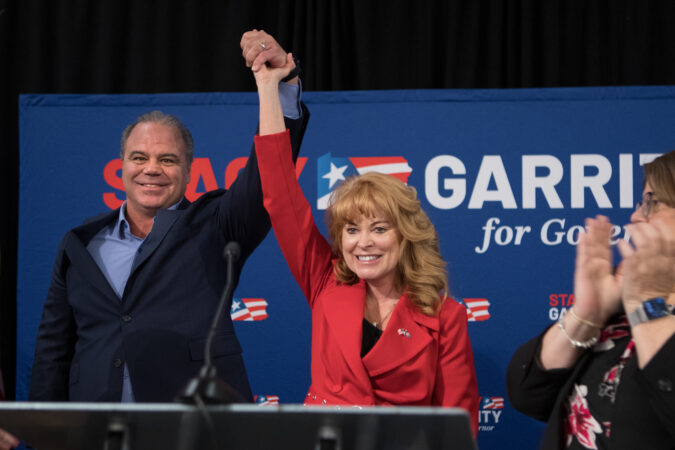
    HARRISBURG — The Pennsylvania Republican and Democratic Parties locked in their endorsements for the 2026 governor’s race Saturday at dueling committee meetings in the state’s capital, as they present different visions of the future for Pennsylvania and America.

    The state GOP endorsed Jason Richey, a longtime Pittsburgh attorney and chair of the Allegheny County Republicans, for lieutenant governor to run alongside its endorsed gubernatorial candidate, Treasurer Stacy Garrity. On the other side of town, the state Democratic Party resoundingly endorsed Gov. Josh Shapiro and Lt. Gov. Austin Davis for reelection to a second term.

    By finalizing their endorsements for governor and lieutenant governor, the November election is all but officially set. The candidates are expected to be formally nominated by their parties in the May 19 primary.

    Garrity would be the state’s first female governor and would be a strong conservative leader who will protect the state from becoming “California East,” Richey said as he described another term under Shapiro in his acceptance remarks.

    State Republicans took the unprecedented step to endorse Garrity in September 2025, in an effort to give her six additional months to campaign for governor and coalesce support. However, Garrity did not announce Richey as her choice for running mate until last month. Several candidates had turned down the job, as Garrity faces an uphill battle to challenge Shapiro, a popular moderate Democratic governor, in a midterm election already advantageous to Democrats.

    There was no shortage of attacks on Shapiro at the state GOP meeting.

    “[Shapiro] is a charlatan. He is a phony who tries to talk like [former President Barack] Obama and has done nothing to help move this state forward,” Richey said. “Today is not just another meeting. Today is not just another endorsement. Today is the moment that the Pennsylvania Republican Party stands together and resolves to take back our commonwealth.”

    Garrity last month received the coveted nod from the leader of the Republican Party, President Donald Trump, who called her an “America First Patriot.”

    Meanwhile, for state Democratic Party committee members, their attention was not on Garrity and Richey. They want to make Trump a lame-duck president by flipping four congressional seats and secure Shapiro a Democratic trifecta by retaining control of the state House and flipping the state Senate for the first time in more than 30 years.

    “These are people who are lawless. They are without a conscience, without a backbone, without any sense of right and wrong,” said U.S. Rep. Madeleine Dean (D., Pa.), describing the GOP colleagues she wants to unseat. “Four seats. That will be the U.S. House majority. We can get the gavels in our hands, and we can make Trump an even lamer duck than he already is, and we can move on with impeachments, convictions, whatever we can do.”

    Different outlooks on Pennsylvania and the U.S.

    To Republicans, Pennsylvania is falling behind, citing its U.S. News & World Report rankings as 41st in Best Overall States, 38th for its economy, and 39th for education. Trump’s White House, alternately, is heavily invested in Pennsylvania’s success, often inviting its GOP county commissioners to visit, said Lancaster County Commissioner Josh Parsons, delivering the GOP commissioners’ update to the state committee.

    “We’re going to keep Republicans in the majority in Congress, because if not, we’ve seen this show before. We know what’s going to happen: investigations, impeachments, and, worst of all, they will stop the agenda that Trump has created,” said state GOP chair Greg Rothman, noting Trump’s efforts to lower prices, end the war in Gaza, and more.

    For Democrats, it’s America that’s on the wrong track, while Pennsylvania is succeeding despite the “chaos in Washington,” as Shapiro described in his endorsement acceptance speech.

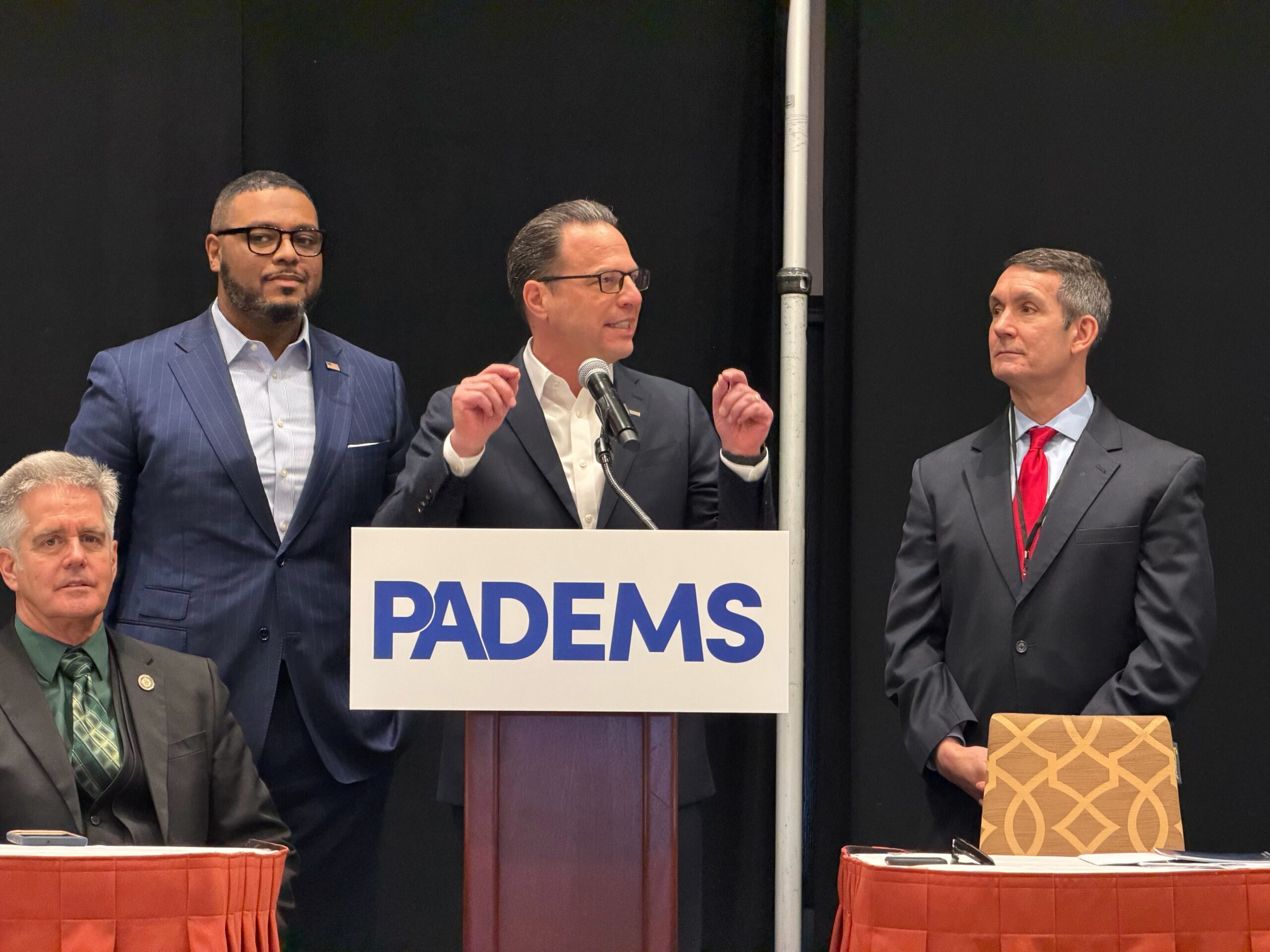
    Pennsylvania Gov. Josh Shapiro accepts the endorsement for a second term as governor at the state Democratic Party’s winter meeting in Harrisburg on Feb. 7, 2026. With him are Lt. Gov. Austin Davis (second from left) and Pennsylvania Democratic Party chair Eugene DePasquale (right).

    That positive view of Pennsylvania is due to Shapiro’s leadership in the state, said Pennsylvania Democratic Party chair Eugene DePasquale.

    “You look at the polls today, Donald Trump is at his historic low mark, while the governor is at a historic high mark,” DePasquale added. “Why is he at that high mark? They see the state heading in the right direction. They see him fighting the Trump administration to protect Pennsylvanians.”

    Candidates will begin circulating petitions later this month to secure a spot on the ballot. No candidates are expected to challenge Shapiro or Davis in the primary. There is at least one write-in campaign being run, for State Sen. Doug Mastriano (R., Franklin), who declined to challenge Shapiro for a second time. He lost to Shapiro by more than 15 percentage points in 2022.

  • Philly is seeking a quote to display on a Harriet Tubman statue at City Hall

    Philly is seeking a quote to display on a Harriet Tubman statue at City Hall

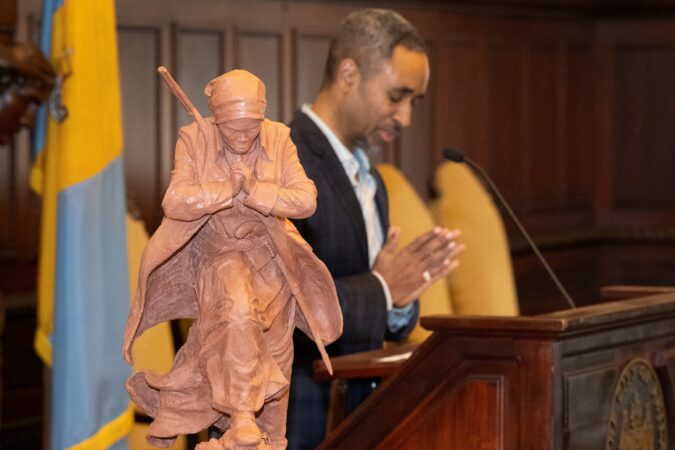
    A statue of Harriet Tubman will debut at City Hall this fall, and the city is seeking a quote from a Philadelphian that explains the famed abolitionist’s impact in 2026.

    The initiative is called “In Harriet’s Footsteps,” and Philadelphians have until March 1 to submit an original quote, answering the prompt: “What does it mean to walk in Harriet Tubman’s footsteps today?”

    The Philadelphia Art Commission approved the design of a Tubman statue by sculptor Alvin Pettit in 2024. Two of Tubman’s quotes are set to be featured at the bottom of the statue. But Creative Philadelphia, the city’s office of arts and culture, wants to include a third one made by a resident.

    “Alvin Pettit’s design, A Higher Power: The Call of a Freedom Fighter, will depict Harriet Tubman during her time serving in the military, commemorating her strength, resolve, and legacy as a soldier,” said Val Gay, chief cultural officer and executive director of Creative Philadelphia. “Now, it will also reflect a Philadelphian who is inspired by her leadership.”

    But there are some rules.

    Folks applying must live or work in Philly. And the original quote cannot have over 250 characters (about two sentences). Paraphrasing Tubman quotes does not count as original work, Creative Philadelphia warned.

    The ideal quote, organizers said, will connect the past and the present in a reflection of Tubman’s impact on future generations. Pettit offered an example: “She carved a path with a lantern of defiance for today’s society to walk in that light, bolder, freer, and forever indebted to the hands that first dared.”

    All voices are welcome so long as the quote is “clear, memorable, and insightful,” Creative Philadelphia said in a news release.

    A form including contact and demographic questions (like race and age) should be filed with the entry.

    The answers to the demographic questions will not affect the decision of which quote to use, Creative Philadelphia said, but are meant to measure the agency’s reach.

    A committee of artists, city employees, and a Philadelphia-based writer will review applications in search of a top 10. That list of quotes will be shared through a public survey, so Philly residents can vote for a winner.

    The winning quote will go on the back of the pedestal, with Tubman’s quotes “And I prayed to God to make me strong and able to fight” and “For no man should take me alive; I should fight for my liberty as long as my strength lasted” featured on the other sides.

    The winning quote will not be attributed to the applicant, but rather to “a Philadelphia citizen,” Creative Philadelphia said. And the writer will need to sign a waiver forfeiting future claims of ownership. But the writer’s name will appear on the statue’s credit panel.

    To submit an entry, go to inquirer.com/tubman.

  • Zelensky says U.S. is readying huge economic deals with Russia

    Zelensky says U.S. is readying huge economic deals with Russia

    KYIV — Days after negotiations to halt Russia’s war in Ukraine ended inconclusively in Abu Dhabi, Ukrainian President Volodymyr Zelensky said that Russia and the United States were discussing bilateral economic agreements worth some $12 trillion, including deals that would affect Ukraine.

    Zelensky said intelligence sources showed him documents that laid out a framework for U.S.-Russian economic cooperation that he called the “Dmitriev package” — named for Kirill Dmitriev, the head of Russia’s sovereign wealth fund and a close ally of Russian President Vladimir Putin who has been a central figure in negotiations over a potential ceasefire.

    President Donald Trump previously has dangled the possibility of sanctions relief and renewed economic cooperation with Russia as inducements for Moscow to agree to halt the war. Putin, however, has insisted that Russia would achieve its objectives in Ukraine one way or another.

    Dmitriev drafted a 28-point peace plan with Trump’s envoy to the talks, Steve Witkoff, and Trump’s son-in-law Jared Kushner — first revealed by Axios last November — which included sections for gradually lifting sanctions and creating long-term economic development projects between Russia and Ukraine.

    However, Zelensky, backed by European leaders and some members of Congress, has insisted that the sanctions regime against Russia must instead be tightened, to starve the Russian war machine of revenue and Western technological components.

    “We are not aware of all their bilateral economic or business agreements, but we are receiving some information on the matter,” Zelensky said during a briefing with journalists Friday, according to a transcript released Saturday.

    “There are also various signals, both in the media and elsewhere, that some of these agreements could also involve issues related to Ukraine — for example, our sovereignty or Ukraine’s security,” Zelensky said. “We are making it clear that Ukraine will not support any such even potential agreements about us that are made without us.”

    Zelensky’s concerns were made public as Moscow launched another major airstrike on Ukraine’s energy sector, plunging large portions of the country into darkness and cold Saturday. The attack also caused Ukraine’s nuclear power plants to reduce their power output as the “military activity affected electrical substations and disconnected some power lines,” the International Atomic Energy Agency wrote on X.

    Dmitriev apparently presented the package while meeting with American officials in the U.S., but Zelensky did not say when.

    Zelensky’s remarks come as talks to halt Russia’s war increasingly appear to be at an impasse, in particular over the question of who will control Ukraine’s eastern Donetsk region.

    The U.S. has proposed creating a free economic zone in Donetsk, while Putin has demanded that Ukraine surrender the entire region, including areas Russia has failed to capture militarily even as it nears the fourth anniversary of its full-scale invasion.

    Zelensky, according to the transcript, said that Washington had proposed bringing the war in Ukraine to an end “by June” and that he expected that “they will probably pressure the parties according to this timeline.”

    The main concern for the Americans, Zelensky said, was the midterm congressional elections later this year.

    “We understand that they will devote all of their time to domestic processes — elections, a shift in the attitudes of their society,” Zelensky said. “The elections are, for them, definitely more important. Let’s not be naive. They say they want to achieve everything by June, and they will do everything possible to ensure the war ends that way.”

    Separately, U.S. and Ukrainian officials have discussed a goal of March for reaching a deal, with national elections and a referendum on the proposed peace agreement taking place in May, Reuters reported, citing unnamed sources.

    “The Americans are in a hurry,” Reuters quoted one of its sources as saying, adding that U.S. negotiators had warned that Trump will shift his focus to the elections.

    U.S., Ukrainian, and Russian officials have met in Abu Dhabi twice in recent weeks to try to forge an agreement, but there has been no breakthrough. Still, Ukrainian negotiators say that the tone and substance of the talks have markedly improved.

    Zelensky said that Washington proposed that the parties meet in a week for the first time in the U.S. — “likely in Miami.”

    “We have confirmed our participation,” he said.

    Meanwhile, Russia’s strikes overnight Friday into Saturday marked a continuation of its relentless aerial onslaught against Ukraine’s power plants and electrical grid.

    Ukraine’s air force said that Russia had launched 29 missiles and 408 attack drones at locations across the country — and that 13 missiles and 21 drones struck in 19 locations.

    Russia’s Defense Ministry said in a statement Saturday that its armed forces had carried out a “massive strike using precision-guided sea and air-launched long-range weapons” at energy and transport facilities “used in the Ukrainian Armed Forces’ interests” and “defense industry enterprises.”

    However, the barrage left large swaths of the civilian population without light and heat as temperatures remained well below freezing — a regular occurrence this winter as Russia has targeted the energy infrastructure supplying the entire country.

    Ukraine’s state energy grid operator, Ukrenergo, in a post on social media said that the assault was the second major attack on the entire energy system since the beginning of the year and that “energy facilities in eight regions” were struck.

    Power outages occurred across the country, Ukrenergo said.

    Zelensky, posting on X, said that the bombardment “deliberately targeted … energy facilities on which depends the operation of Ukrainian nuclear power plants.”

    “This puts at risk not only our security in Ukraine, but also the shared regional and European security,” he wrote. “We believe that partners in America, in Europe, and in other states who want peace must view this with a clear head and act accordingly.”

  • Gaza’s Rafah border crossing has reopened but few people get through

    Gaza’s Rafah border crossing has reopened but few people get through

    KHAN YOUNIS, Gaza Strip — When the Rafah border crossing between Gaza and Egypt finally reopened this week, Palestinian officials heralded it as a “window of hope” after two years of war as a fragile ceasefire deal moves forward.

    But that hope has been sidetracked by disagreements over who should be allowed through, hourslong delays, and Palestinian travelers’ reports of being handcuffed and interrogated by Israeli soldiers.

    Far fewer people than expected have crossed in both directions. Restrictions negotiated by Israeli, Egyptian, Palestinian, and international officials meant that only 50 people would be allowed to return to Gaza each day and 50 medical patients — along with two companions for each — would be allowed to leave.

    But over the first four days of operations, just 36 Palestinians requiring medical care were allowed to leave for Egypt, plus 62 companions, according to United Nations data. Palestinian officials say nearly 20,000 people in Gaza are seeking to leave for medical care that they say is not available in the war-shattered territory.

    Amid confusion around the reopening, the Rafah crossing was closed Friday and Saturday.

    Hours of questioning

    The Rafah crossing is a lifeline for Gaza, providing the only link to the outside world not controlled by Israel. Israel seized it in May 2024, though traffic through the crossing was heavily restricted even before that.

    Several women who managed to return to Gaza after its reopening recounted to the Associated Press harsh treatment by Israeli authorities and an Israeli-backed Palestinian armed group, Abu Shabab. A European Union mission and Palestinian officials run the border crossing, and Israel has its screening facility some distance away.

    Rana al-Louh, anxious to return two years after fleeing to Egypt with her wounded sister, said Israeli screeners asked multiple times why she wanted to go back to Gaza during questioning that lasted more than six hours. She said she was blindfolded and handcuffed, an allegation made by others.

    “I told them I returned to Palestine because my husband and kids are there,” al-Louh said. Interrogators told her Gaza belonged to Israel and that “the war would return, that Hamas won’t give up its weapons. I told him I didn’t care, I wanted to return.”

    Asked about such reports, Israel’s military replied that “no incidents of inappropriate conduct, mistreatment, apprehensions or confiscation of property by the Israeli security establishment are known.”

    The Shin Bet intelligence agency and COGAT, the Israeli military body that handles Palestinian civilian affairs and coordinates the crossings, did not respond to questions about the allegations.

    The long questioning Wednesday delayed the return to Gaza of al-Louh and others until nearly 2 a.m. Thursday.

    Later that day, U.N. human rights officials noted a “consistent pattern of ill-treatment, abuse and humiliation by Israeli military forces.”

    “After two years of utter devastation, being able to return to their families and what remains of their homes in safety and dignity is the bare minimum,” Ajith Sunghay, the agency’s human rights chief for the occupied Palestinian territories, said in a statement.

    Numbers below targets

    Officials who negotiated the Rafah reopening were clear that the early days of operation would be a pilot. If successful, the number of people crossing could increase.

    Challenges quickly emerged. On the first day, Monday, Israeli officials said 71 patients and companions were approved to leave Gaza, with 46 Palestinians approved to enter. Inside Gaza, however, organizers with the World Health Organization were able to arrange transportation for only 12 people that day, so other patients stayed behind, according to a person briefed on the operations who spoke on condition of anonymity because they were not authorized to speak to the media.

    Israeli officials insisted that no Palestinians would be allowed to enter Gaza until all the departures were complete. Then they said that since only 12 people had left Gaza, only 12 could enter, leaving the rest to wait on the Egyptian side of the border overnight, according to the person briefed on the operations.

    Crossings picked up on the second day, when 40 people were allowed to leave Gaza and 40 to enter. But delays mounted as many returning travelers had more luggage than set out in the agreement reached by negotiators and items that were forbidden, including cigarettes and water and other liquids like perfume. Each traveler is allowed to carry one mobile phone and a small amount of money if they submit a declaration 24 hours ahead of travel.

    Each time a Palestinian was admitted to Egypt, Israeli authorities allowed one more into Gaza, drawing out the process.

    The problems continued Wednesday and Thursday, with the numbers allowed to cross declining. The bus carrying Wednesday’s returnees from the crossing did not reach its drop-off location in Gaza until 1:40 a.m. Thursday.

    Still, some Palestinians said they were grateful to have made the journey.

    As Siham Omran’s return to Gaza stretched into early Thursday, she steadied herself with thoughts of her children and husband, whom she had not seen for 20 months. She said she was exhausted, and stunned by Gaza’s devastation.

    “This is a journey of suffering. Being away from home is difficult,” she said. “Thank God we have returned to our country, our homes, and our homeland.”

    Now she shares a tent with 15 family members, using her blouse for a pillow.

  • Judge orders Trump administration to restore funding for rail tunnel between New York, New Jersey

    Judge orders Trump administration to restore funding for rail tunnel between New York, New Jersey

    NEW YORK — A federal judge ordered the Trump administration to restore funding to a new rail tunnel between New York and New Jersey on Friday, ruling just as construction was set to shut down on the massive infrastructure project.

    The decision came months after the administration announced it was halting $16 billion in support for the project, citing the then-government shutdown and what a top federal budget official said were concerns about unconstitutional spending around diversity, equity, and inclusion principles.

    U.S. District Judge Jeannette A. Vargas in Manhattan approved a request by New York and New Jersey for a temporary restraining order barring the administration from withholding the funds while the states seek a preliminary injunction that would keep the money flowing while their lawsuit plays out in court.

    “The Court is also persuaded that Plaintiffs would suffer irreparable harm in the absence of an injunction,” the judge wrote. “Plaintiffs have adequately shown that the public interest would be harmed by a delay in a critical infrastructure project.”

    The White House and U.S. Department of Transportation did not immediately respond to emails seeking comment Friday night.

    New York Attorney General Letitia James called the ruling “a critical victory for workers and commuters in New York and New Jersey.”

    “I am grateful the court acted quickly to block this senseless funding freeze, which threatened to derail a project our entire region depends on,” James said in a statement. “The Hudson Tunnel Project is one of the most important infrastructure projects in the nation, and we will keep fighting to ensure construction can continue without unnecessary federal interference.”

    The panel overseeing the project, the Gateway Development Commission, had said work would stop late Friday afternoon because of the federal funding freeze, resulting in the immediate loss of about 1,000 jobs as well as thousands of additional jobs in the future.

    It was not immediately clear when work would resume. In a nighttime statement, the commission said: “As soon as funds are released, we will work quickly to restart site operations and get our workers back on the job.”

    The new tunnel is meant to ease strain on an existing tunnel that is more than 110 years old that connects New York and New Jersey for Amtrak and commuter trains, where delays can lead to backups up and down the East Coast.

    New York and New Jersey sued over the funding pause this week, as did the Gateway Development Commission, moving to restore the Trump administration’s support.

    The suspension was seen as a way for the Trump administration to put pressure on Democratic Senate Minority Leader Chuck Schumer of New York, whom the White House was blaming for a government shutdown last year. The shutdown was resolved a few weeks later.

    Speaking to the media on Air Force One, Trump was asked about reports that he would unfreeze funding for the tunnel project if Schumer would agree to a plan to rename Penn Station in New York and Dulles International Airport in Virginia after Trump.

    “Chuck Schumer suggested that to me, about changing the name of Penn Station to Trump Station. Dulles Airport is really separate,” Trump responded.

    Schumer responded on social media: “Absolute lie. He knows it. Everyone knows it. Only one man can restart the project and he can restart it with the snap of his fingers.”

    At a hearing in the states’ lawsuit earlier in Manhattan, Shankar Duraiswamy, of the New Jersey attorney general’s office, told the judge that the states need “urgent relief” because of the harm and costs that will occur if the project is stopped.

    “There is literally a massive hole in the earth in North Bergen,” he said, referring to the New Jersey city and claiming that abandoning the sites, even temporarily, “would pose a substantial safety and public health threat.”

    Duraiswamy said the problem with shutting down now is that even a short stoppage would cause longer delays because workers will be laid off and go to other jobs and it’ll be hard to quickly remobilize if funding becomes available. And, he added, “any long-term suspension of funding could torpedo the project.”

    Tara Schwartz, an assistant U.S. attorney arguing for the government, disagreed with the “parade of horribles” described by attorneys for the states.

    She noted that the states had not even made clear how long the sites could be maintained by the Gateway Development Commission. So the judge asked Duraiswamy, and he said they could maintain the sites for a few weeks and possibly a few months, but that the states would continue to suffer irreparable harm because trains would continue to run late because they rely on an outdated tunnel.

  • Epstein revelations have toppled top figures in Europe while U.S. fallout is more muted

    Epstein revelations have toppled top figures in Europe while U.S. fallout is more muted

    LONDON — A prince, an ambassador, senior diplomats, top politicians. All brought down by the Jeffrey Epstein files. And all in Europe, rather than the United States.

    The huge trove of Epstein documents released by the U.S. Department of Justice has sent shock waves through Europe’s political, economic, and social elites — dominating headlines, ending careers, and spurring political and criminal investigations.

    Former U.K. Ambassador to Washington Peter Mandelson was fired and could go to prison. British Prime Minister Keir Starmer faces a leadership crisis over the Mandelson appointment. Senior figures have fallen in Norway, Sweden, and Slovakia. And, even before the latest batch of files, Andrew Mountbatten-Windsor, brother of King Charles III, lost his honors, princely title, and taxpayer-funded mansion.

    Apart from the former Prince Andrew, none of them faces claims of sexual wrongdoing. They have been toppled for maintaining friendly relationships with Epstein after he became a convicted sex offender.

    “Epstein collected powerful people the way others collect frequent flyer points,” said Mark Stephens, a specialist in international and human rights law at Howard Kennedy in London. “But the receipts are now in public, and some might wish they’d traveled less.”

    The documents were published after a public frenzy over Epstein became a crisis for President Donald Trump’s administration and led to a rare bipartisan effort to force the government to open its investigative files. But in the U.S., the long-sought publication has not brought the same public reckoning with Epstein’s associates — at least so far.

    Rob Ford, a professor of political science at the University of Manchester, said that in Britain, “if you’re in those files, it’s immediately a big story.”

    “It suggests to me we have a more functional media, we have a more functional accountability structure, that there is still a degree of shame in politics, in terms of people will say: ‘This is just not acceptable, this is just not done,’” he said.

    British repercussions

    U.K. figures felled by their ties to Epstein include the former Prince Andrew — who paid millions to settle a lawsuit with one of Epstein’s victims and is facing pressure to testify in the U.S. — and his ex-wife Sarah Ferguson, whose charity shut down this week.

    Like others now ensnared, veteran politician Mandelson long downplayed his relationship with Epstein, despite calling him “my best pal” in 2003. The new files reveal contact continued for years after the financier’s 2008 prison term for sexual offenses involving a minor. In a July 2009 message, Mandelson appeared to refer to Epstein’s release from prison as “liberation day.”

    Starmer fired Mandelson in September over earlier revelations about his Epstein ties. Now British police are investigating whether Mandelson committed misconduct in public office by passing on sensitive government information to Epstein.

    Starmer has apologized to Epstein’s victims and pledged to release public documents that will show Mandelson lied when he was being vetted for the ambassador’s job. That may not be enough to stop furious lawmakers trying to eject the prime minister from office over his failure of judgment.

    American associates

    Experts caution that Britain shouldn’t be too quick to pat itself on the back over its rapid reckoning with Mandelson. The U.S. has a better record than the U.K. when it comes to declassifying and publishing information.

    But Alex Thomas, executive director of the Institute for Government think tank, said, “There is something about parliamentary democracy,” with its need for a prime minister to retain the confidence of Parliament to stay in office, “that I think does help drive accountability.”

    A few high-profile Americans have faced repercussions over their friendly ties with Epstein. Most prominent is former U.S. Treasury Secretary Larry Summers, who went on leave from academic positions at Harvard University late last year.

    Brad Karp quit last week as chairperson of top U.S. law firm Paul Weiss after revelations in the latest batch of documents, and the National Football League said it would investigate Epstein’s relationship with New York Giants co-owner Steve Tisch, who exchanged sometimes crude emails with Epstein about potential dates with adult women.

    Other U.S. Epstein associates have not yet faced severe sanction, including former Trump strategist Steve Bannon, who exchanged hundreds of texts with Epstein; Commerce Secretary Howard Lutnick, who accepted an invitation to visit Epstein’s private island; and tech billionaire Elon Musk, who discussed visiting the island in emails, but says he never made the trip.

    Former President Bill Clinton has been compelled by Republicans to testify before Congress about his friendship with Epstein. Trump, too, has repeatedly faced questions about his ties to Epstein. Neither he nor Clinton has ever been accused of wrongdoing by Epstein’s victims.

    European investigations

    The Epstein files reveal the global network of royals, political leaders, billionaires, bankers, and academics that the wealthy financier built around him.

    Across Europe, officials have had to resign or face censure after the Epstein files revealed relationships that were more extensive than previously disclosed.

    Joanna Rubinstein, a Swedish U.N. official, quit after the revelation of a 2012 visit to Epstein’s Caribbean island. Miroslav Lajcak, national security adviser to Slovakia’s prime minister, quit over his communications with Epstein, which included the pair discussing “gorgeous” girls.

    Latvia, Lithuania, and Poland have set up wide-ranging official investigations into the documents. Poland’s Prime Minister Donald Tusk said a team would scour the files for potential Polish victims, and any links between Epstein and Russian secret services.

    Epstein took an interest in European politics, in one email exchange with billionaire Peter Thiel calling Britain’s 2016 vote to leave the European Union “just the beginning” and part of a return to “tribalism.”

    Grégoire Roos, director of the Europe program at the think tank Chatham House, said the files uncover Epstein’s “far-reaching” network of contacts in Europe, “and the level of access among not just those who were already in power, but those who were getting there.

    “It will be interesting to see whether in the correspondence he had an influence in policymaking,” Roos said.

    Norwegian revelations

    Few countries have been as roiled by the Epstein revelations as Norway, a Scandinavian nation with a population of less than 6 million.

    The country’s economic crimes unit has opened a corruption investigation into former Prime Minister Thorbjørn Jagland — who also once headed the committee that hands out the Nobel Peace Prize — over his ties with Epstein. His lawyer said Jagland would cooperate with the probe.

    Also ensnared are high-profile Norwegian diplomat couple Terje Rød-Larsen and Mona Juul, key players in the 1990s Israeli-Palestinian peace efforts. Juul has been suspended as Norway’s ambassador to Jordan after revelations including the fact that Epstein left the couple’s children $10 million in a will drawn up shortly before his death by suicide in a New York prison in 2019.

    Norwegians’ respect for their royal family has been dented by new details about Epstein’s friendship with Crown Princess Mette-Marit, who is married to the heir to the throne, Prince Haakon. The files include jokey exchanges and emails planning visits to Epstein properties, teeth-whitening appointments, and shopping trips.

    The princess apologized Friday “to all of you whom I have disappointed.”

    The disclosures came as her son from a previous relationship, Marius Borg Høiby, stands trial in Oslo on rape charges, which he denies.
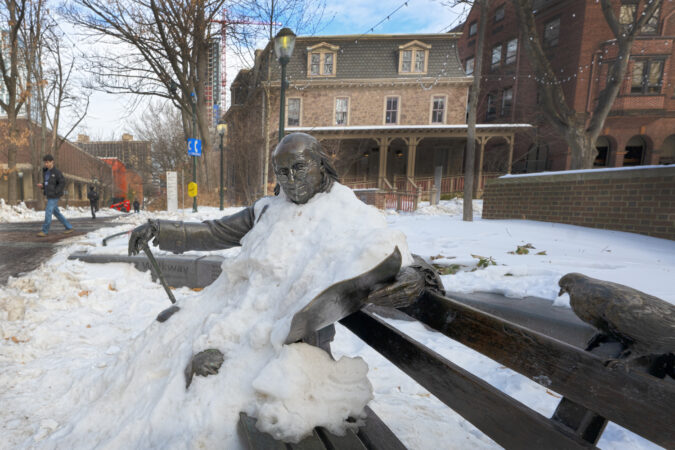

  • The hierarchy of newspaper photographs

    The hierarchy of newspaper photographs

    My assignment that day was pretty typical for a newspaper photographer: show the reader what the person a reporter is profiling looks like. And maybe what they do and where they do it.

    Newly-inaugurated Mayor Joi Washington at Media Borough Hall.

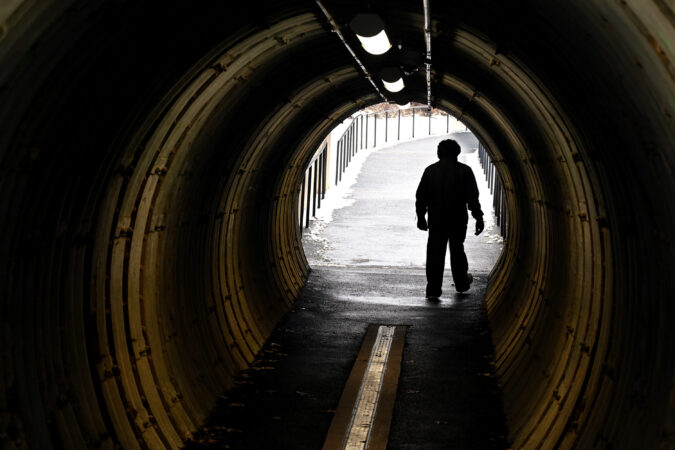
    Having accomplished that task, I headed out looking for something else to photograph in the snow, and ended up at a pedestrian passage way.

    As I made a picture of a person silhouetted in the corrugated metal culvert, the first thing I thought of was an old friend and photo editor Joe Elbert who famously said there are four categories in the “hierarchy” of newspaper photographs, lowest to highest: informational, graphic, emotional, and intimate.

    In just a few hours I had knocked out his “lower” two types.

    I made a few pictures that report “just the facts” without much flavor or fanfare. Then I found a visually appealing scene and waited until I could turn it into a well composed, interesting image. Graphic, even.

    I thought of Joe again as we learned on Wednesday that the Washington Post laid off a third of its journalists, including all of the staff photographers and half the photo editors.

    Joe was the photo editor at the Post from 1988 through 2007. Under his direction the paper won four Pulitzer Prizes, and many other awards, all for work that epitomizes that highest category of intimate photographs.

    It’s easy to feel nostalgic for those “glory days,” but I mourn that almost an entire section of the newspaper is now gone.

    Post photographers were still creating those most intimate images of Joe’s hierarchy. They were still making the reader feel something that allows us to connect with lives beyond our own, to empathize, and to care.

    Since 1998 a black-and-white photo has appeared every Monday in staff photographer Tom Gralish’s “Scene Through the Lens” photo column in the print editions of The Inquirer’s local news section. Here are the most recent, in color:

    February 2, 2026: A light-as-air Elmo balloon rolls along a sidewalk in Haddonfield, propelled by the wind as Sunday’s heavy snow starts to turn to ice and sleet.
    January 26, 2026: The President’s House in Independence National Historical Park hours Jan, 22, after all historical exhibits were removed following President Trump’s Executive Order last March that the content at national parks that “inappropriately disparage” the U.S. be reviewed. The site, a reconstructed “ghost” structure titled “Freedom and Slavery in the Making of a New Nation” (2010), serves as a memorial to the nine people George Washington enslaved there during the founding of America.
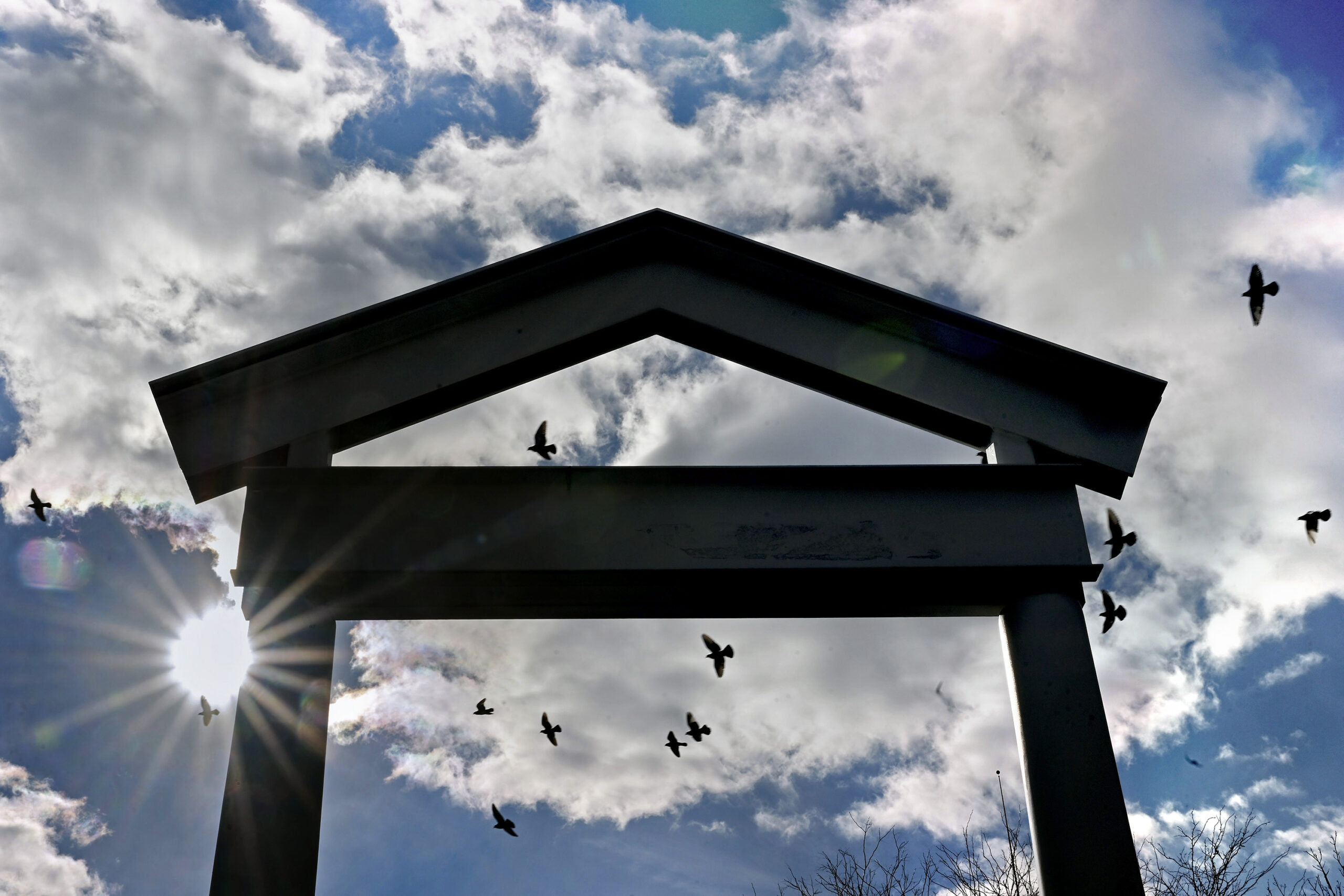
    January 19, 2026: A low-in-the-sky winter sun is behind the triangular pediment of the “front door” of the open-air President’s House installation in Independence National Historical Park. The reconstructed “ghost” structure with partial walls and windows of the Georgian home known in the 18th century as 190 High St. is officially titled, “Freedom and Slavery in the Making of a New Nation” (2010). It is designed to give visitors a sense of the house where the first two presidents of the United States, George Washington and John Adams, served their terms of office. The commemorative site designed by Emanuel Kelly, with Kelly/Maiello Architects, pays homage to nine enslaved people of African descent who were part of the Washington household with videos scripted by Lorene Cary and directed by Louis Massiah.
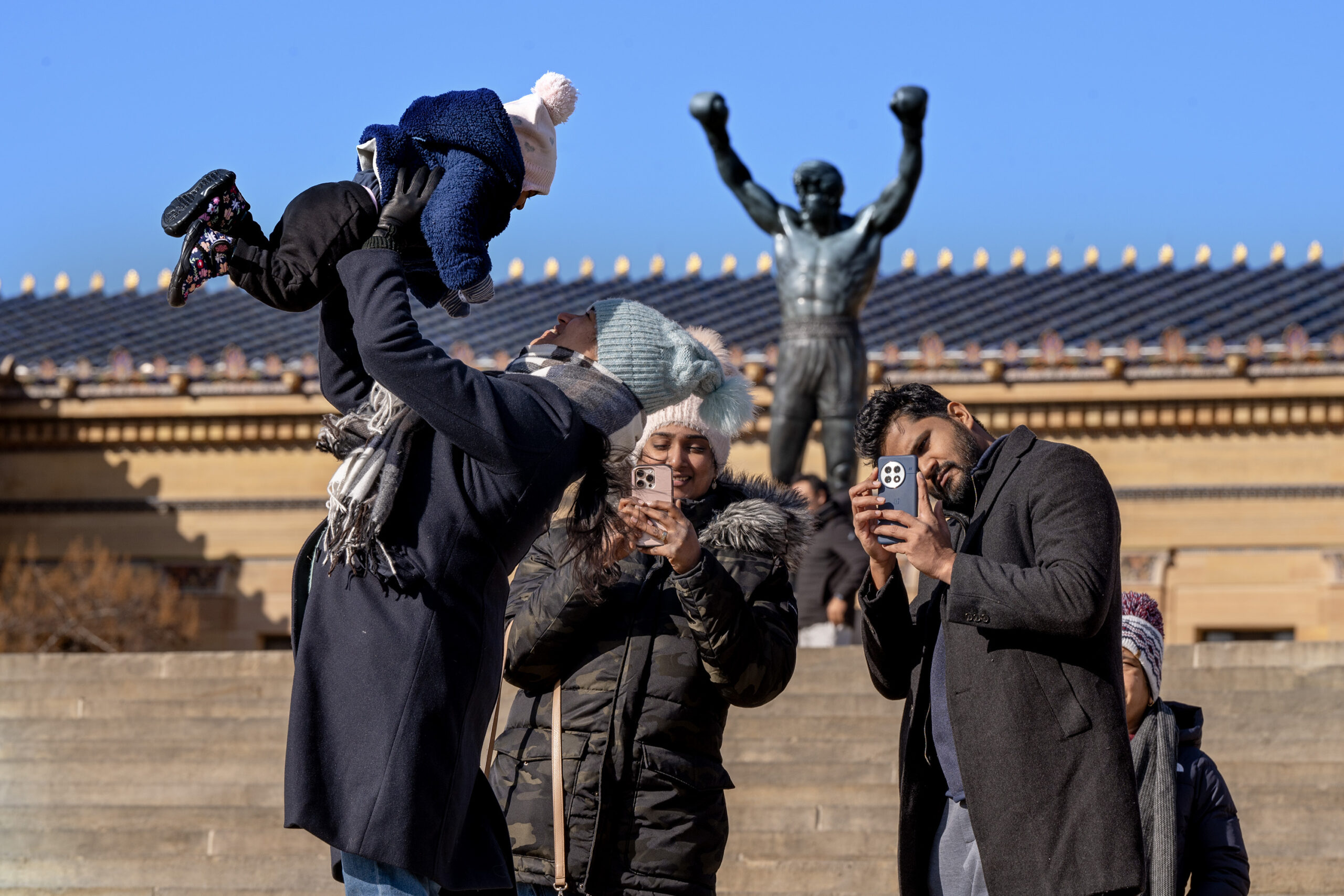
    Deepika Iyer holds her niece Ira Samudra aloft in a Rockyesque pose, while her parents photograph their 8 month-old daughter, in front of the famous movie prop at the top of the steps at the Philadelphia Art Museum. Iyer lives in Philadelphia and is hosting a visit by her mother Vijayalakshmi Ramachandran (partially hidden); brother Gautham Ramachandran; and her sister-in-law Janani Gautham who all live in Bangalore, India.
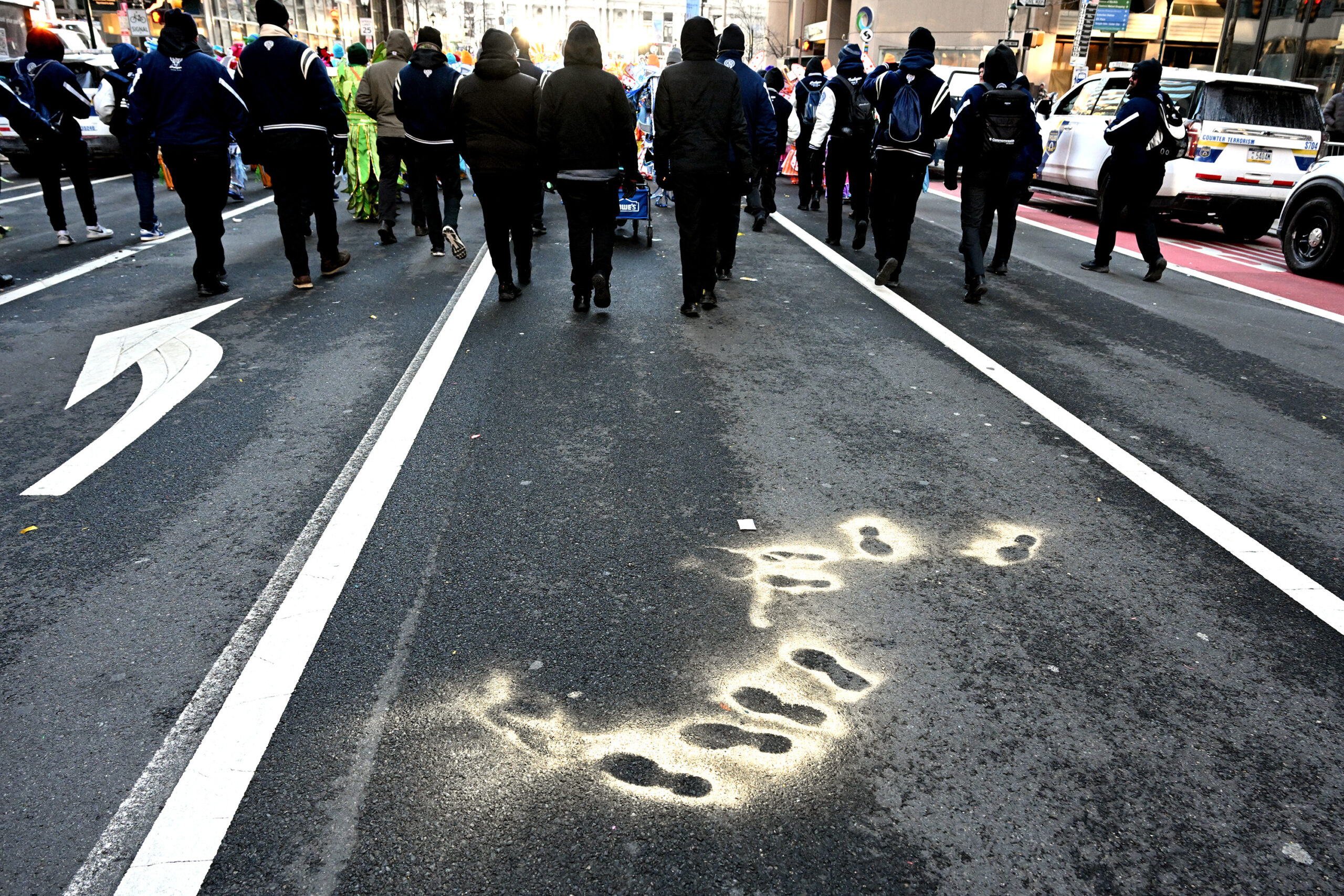
    January 5, 2026: Parade marshals trail behind the musicians of the Greater Kensington String Band heading to their #9 position start in the Mummers Parade. Spray paint by comic wenches earlier in the day left “Oh, Dem Golden Slippers” shadows on the pavement of Market Street. This year marked the 125th anniversary of Philly’s iconic New Year’s Day celebration.
    Dec. 29, 2025: Canada geese at sunrise in Evans Pond in Haddonfield, during the week of the Winter Solstice for the Northern Hemisphere.
    December 22, 2025: SEPTA trolley operator Victoria Daniels approaches the end of the Center City Tunnel, heading toward the 40th Street trolley portal after a tour to update the news media on overhead wire repairs in the closed tunnel due to unexpected issues from new slider parts.
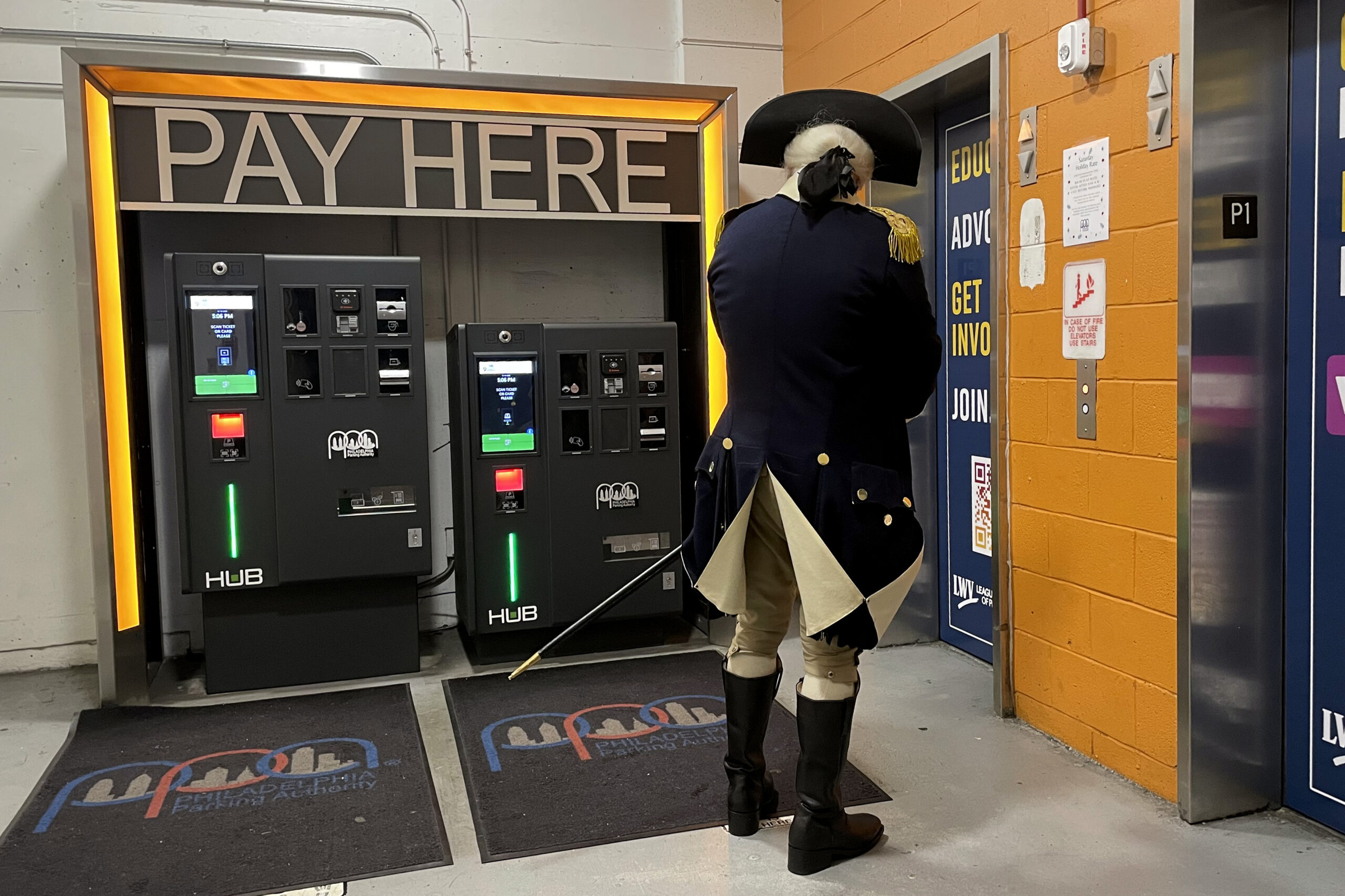
    December 15, 2025: A historical interpreter waits at the parking garage elevators headed not to a December crossing of the Delaware River, but an event at the National Constitution Center. General George Washington was on his way to an unveiling of the U.S. Mint’s new 2026 coins for the Semiquincentennial,
    December 8, 2025: The Benjamin Franklin Bridge and pedestrians on the Delaware River Trail are reflected in mirrored spheres of the “Weaver’s Knot: Sheet Bend” public artwork on Columbus Boulevard. The site-specific stainless steel piece located between the Cherry Street and Race Street Piers was commissioned by the City’s Public Art Office and the Delaware River Waterfront Corporation and created and installed in 2022 by the design and fabrication group Ball-Nogues Studio. The name recalls a history that dominated the region for hundreds of years. “Weaver’s knot” derives from use in textile mills and the “Sheet bend” or “sheet knot” was used on sailing vessels for bending ropes to sails.
    November 29, 2025: t’s ginkgo time in our region again when the distinctive fan-shaped leaves turn yellow and then, on one day, lose all their leaves at the same time laying a carpet on city streets and sidewalks. A squirrel leaps over leaves in the 18th Century Garden in Independence National Historical Park Nov. 25, 2025. The ginkgo (Ginkgo biloba) is considered a living fossil as it’s the only surviving species of a group of trees that existed before dinosaurs. Genetically, it has remained unchanged over the past 200 million years. William Hamilton, owner the Woodlands in SW Phila (no relation to Alexander Hamilton) brought the first ginkgo trees to North America in 1785.
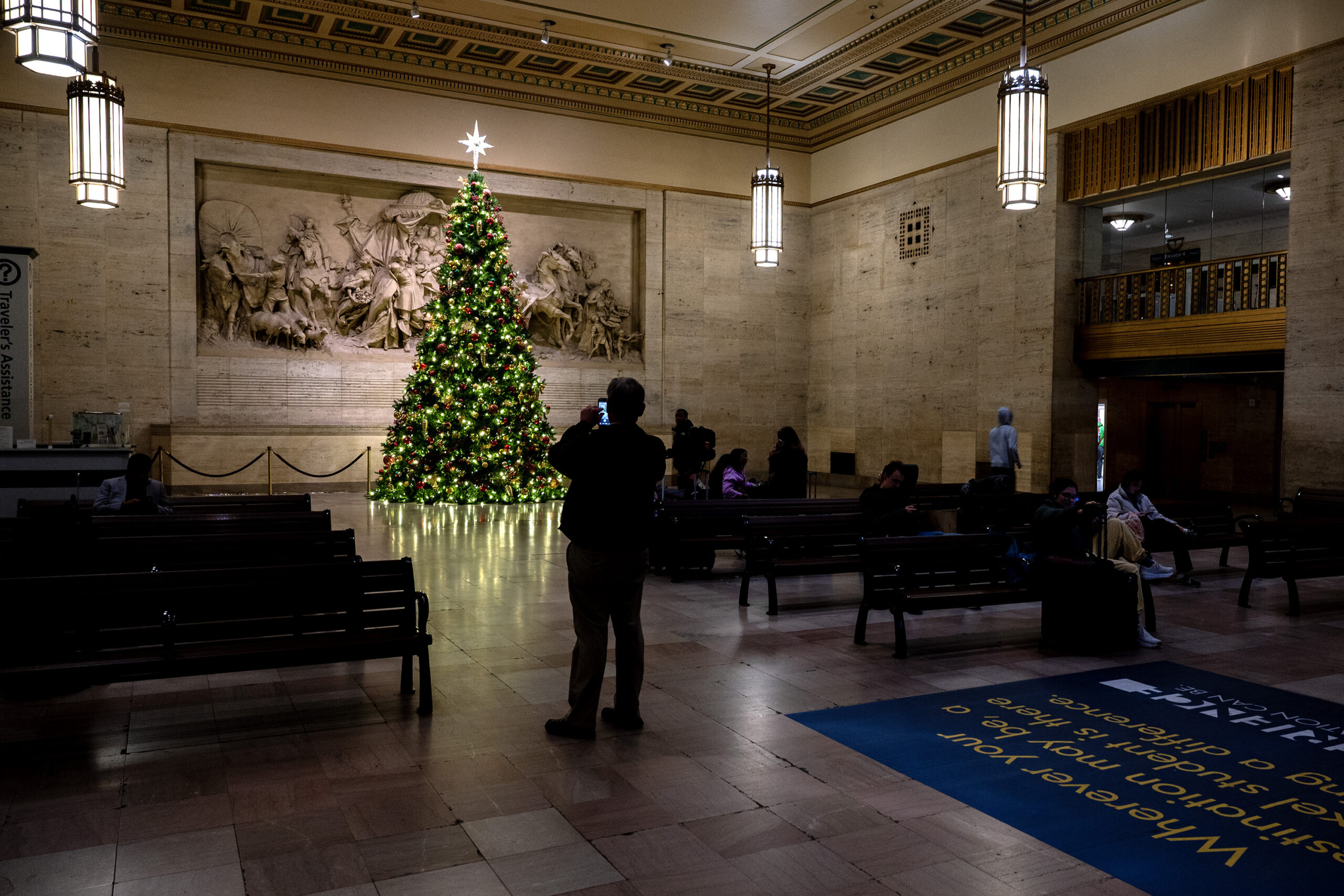
    November 24, 2025: The old waiting room at 30th Street Station that most people only pass through on their way to the restrooms has been spiffed up with benches – and a Christmas tree. It was placed there this year in front of the 30-foot frieze, “The Spirit of Transportation” while the lobby of Amtrak’s $550 million station restoration is underway. The 1895 relief sculpture by Karl Bitter was originally hung in the Broad Street Station by City Hall, but was moved in 1933. It depicts travel from ancient to modern and even futuristic times.
    November 17, 2025: Students on a field trip from the Christian Academy in Brookhaven, Delaware County, pose for a group photo in front of the Liberty Bell in Independence National Historical Park on Thursday. The trip was planned weeks earlier, before they knew it would be on the day park buildings were reopening after the government shutdown ended. “We got so lucky,” a teacher said. Then corrected herself. “It’s because we prayed for it.”
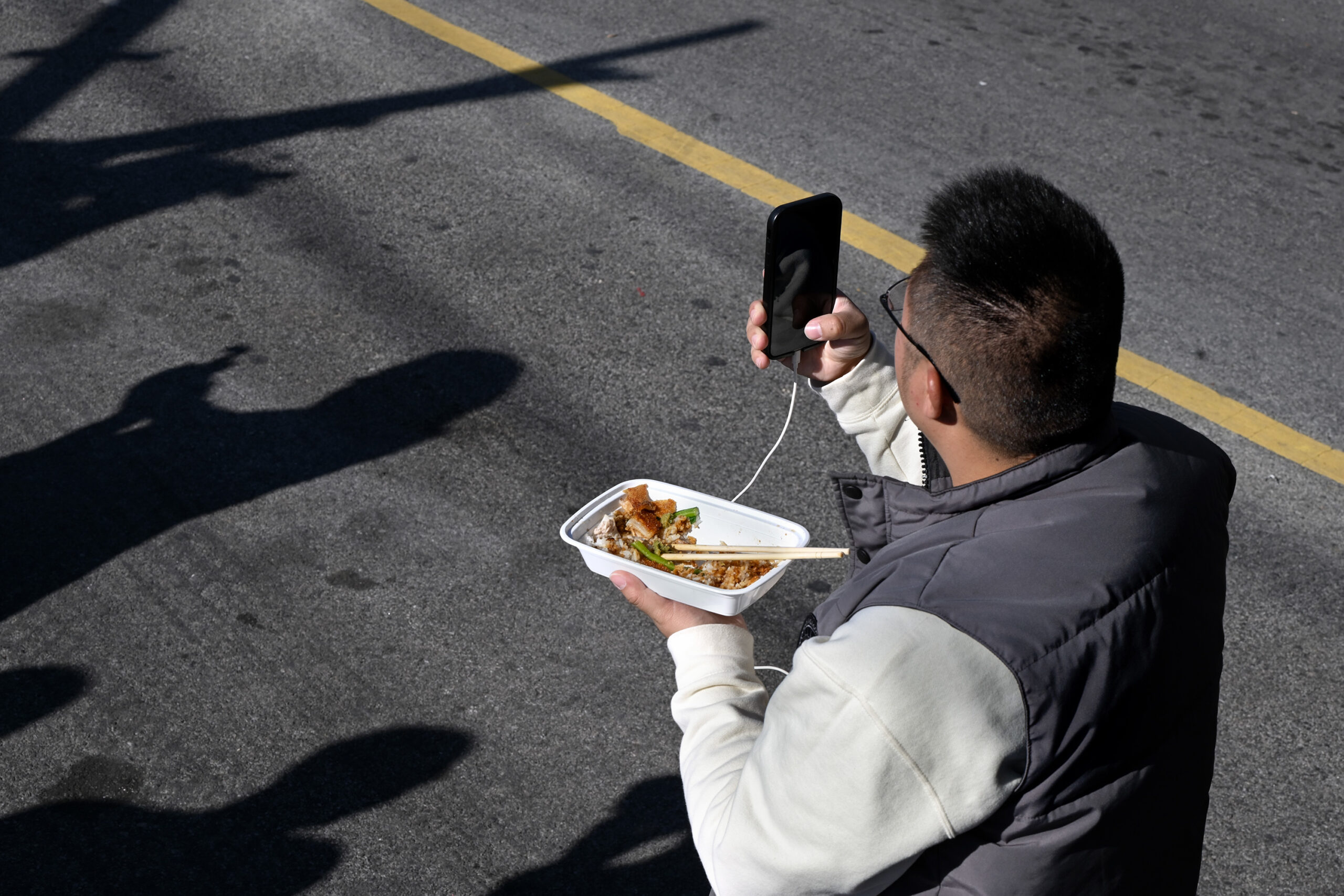
    November 8, 2025: Multitasking during the Festival de Día de Muertos – Day of the Dead – in South Philadelphia.
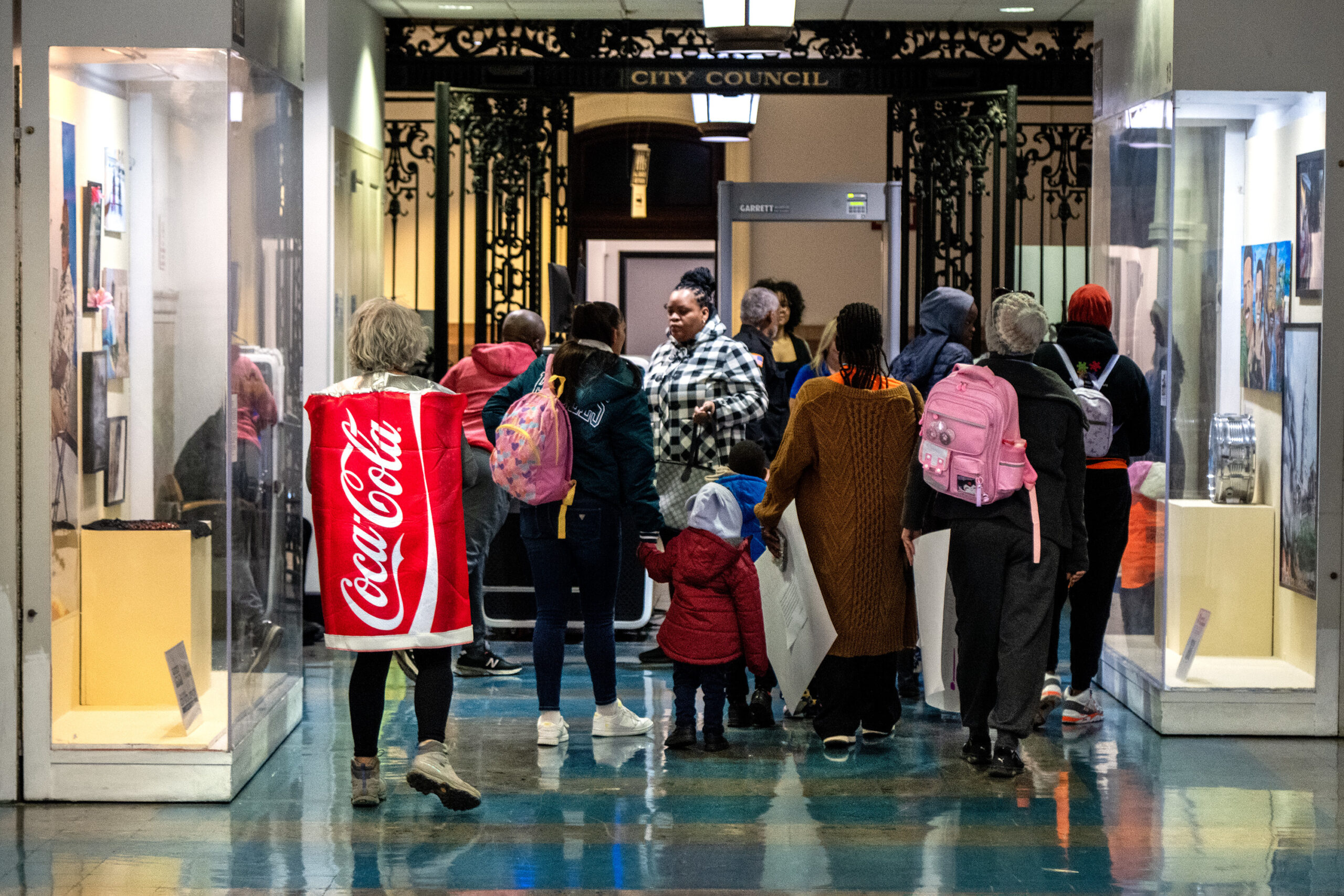
    November 1, 2025: Marcy Boroff is at City Hall dressed as a Coke can, along with preschoolers and their caregivers, in support of former Mayor Jim Kenney’s 2017 tax on sweetened beverages. City Council is considering repealing the tax, which funds the city’s pre-K programs.

    » SEE MORE: Archived columns and Twenty years of a photo column.

  • The cold’s toll: Woodcocks wiped out in Cape May, opossums frostbitten in Philly, robins struck on roads

    The cold’s toll: Woodcocks wiped out in Cape May, opossums frostbitten in Philly, robins struck on roads

    Steve Frates of Ocean View, N.J., was driving along Route 9 in Cape May County on a recent bitter cold day and noticed something strange: dead robins lying by the side of the road.

    Lots of them.

    Frates was even more startled when one flew into his Ford F-150 and died. The 72-year-old retired telecommunications manager wondered what was happening.

    “I noticed when it was really cold that I would see flocks of birds alongside of the road as I was traveling up and down Route 9 and the Garden State Parkway,” Frates said. “I would see a lot of birds that had been hit. I’d never seen anything at that scale. This was at a level I’ve never experienced before.”

    The winter has been hard on the region’s animals, wiping out 95% of the woodcocks in Cape May Point, fostering frostbite on opossums in Philadelphia, and freezing turtles in place in ponds.

    Experts say the animals are well adapted to survive the cold, but this winter has been especially harsh, producing a frozen snowpack that keeps animals from digging for food, and a prolonged cold that has pushed some to the brink.

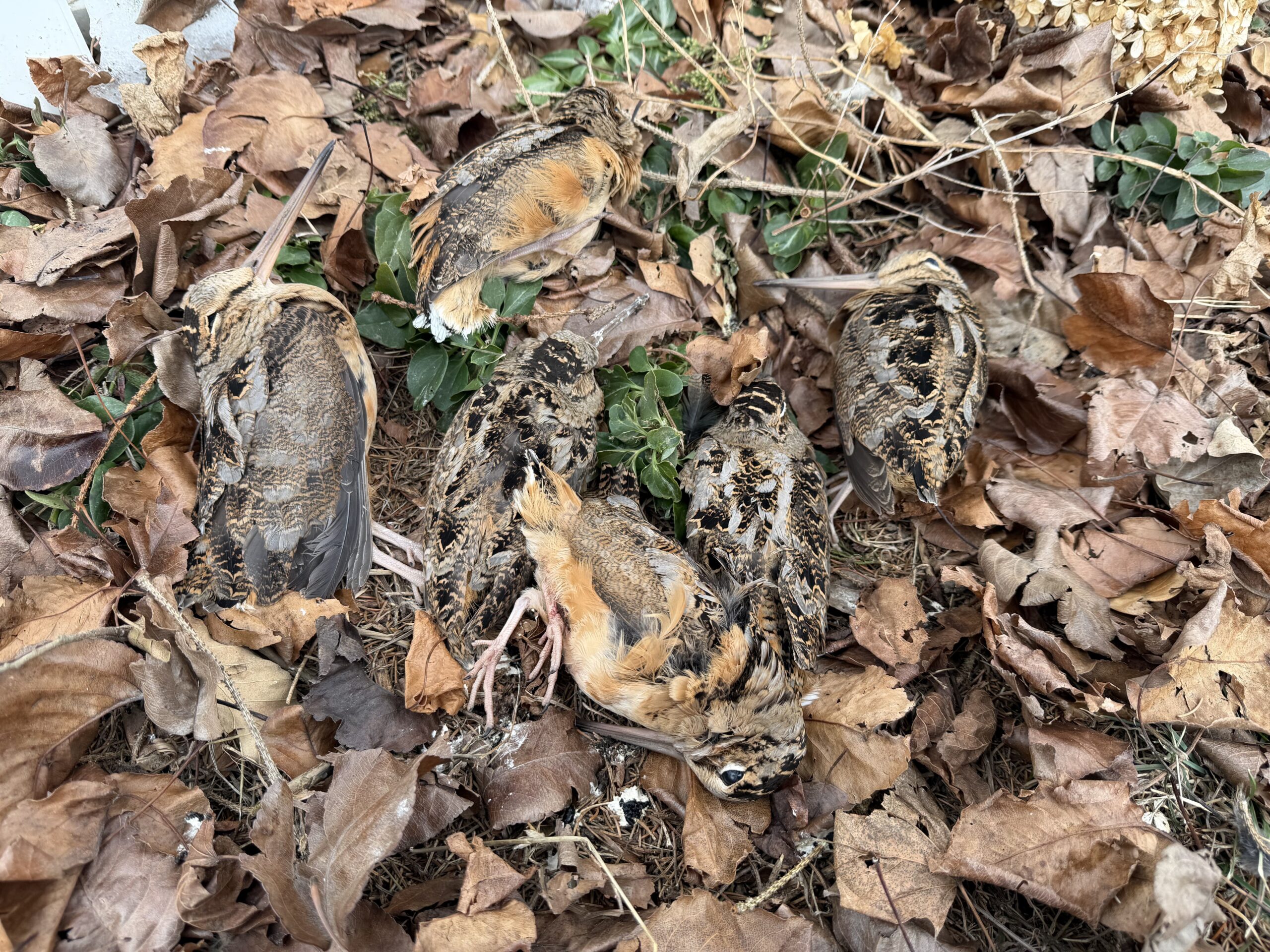
    About 200 woodcocks have died in the area of Cape May Point since the Jan. 25 snowfall that froze under a prolonged cold spell. These were found likely seeking food near the edge of homes.

    Woodcocks are starving

    Mike Lanzone, a wildlife biologist and CEO of Cellular Tracking Technologies, has been busy the last two weeks helping to gather hundreds of dead woodcocks in Cape May Point and West Cape May. His company makes products that track birds via GPS and other technology.

    He described a devastating die-off for the woodcocks, which depend on finding food by probing the ground to extract worms and invertebrates. They have been unable to penetrate the snow and ice, causing starvation.

    “They were losing a lot of muscle mass, and they weren’t able to eat anything,” Lanzone said. “We started seeing them die off. First it was just a few. Then 10. Then 15. Then 40. Then almost 100 woodcocks.”

    Lanzone said about 254 woodcocks had died as of Thursday.

    “There was at least a 90-95% die-off,” he said. “That is what we know for sure. At least in Cape May Point and West Cape May.”

    Lanzone said the woodcocks were being taken to the Academy of Natural Sciences of Drexel University in Philadelphia to be examined.

    Jason D. Weckstein, associate curator of ornithology at the academy, said such die-offs have happened before. He will examine the birds and, using chemical signatures in their bodies, determine where they were born.

    “They’re dying because they’re starving,” Weckstein said. “They can’t feed. Most of those birds were super emaciated and just died.”

    Robins are desperate

    Chris Neff, a spokesperson for New Jersey Audubon, said the robins that Frates saw along the side of the road had been driven there in search of food.

    “Birds are congregating along the melted edges of roads searching for bare ground on which to find food and even meltwater to drink,“ Neff said. ”Birds are desperate to consume enough calories each day during this extreme weather, and this makes them bolder, meaning they may not fly off when a car approaches if they have found something to eat.”

    American robins, he said, travel in large flocks. When their food is exhausted, a few will take off in search of the berries of American holly and Eastern red cedar. The rest will follow en masse, following a path that might lead them across a road.

    The chances of collisions with cars become much higher.

    Neff advises that people should slow down if they see birds congregating along a road and keep an eye out for any that might fly across.

    “Like deer,” Neff said, ”if one darts across the road, there are sure to be more following.”

    A grebe that was rescued amid the harsh winter weather and taken to the Wildlife Clinic at the Schuylkill Center for Environmental Education, where it is being fed and cared for until an open water source can be found for it to be released.

    Opossums and other animals

    Sydney Glisan, director of wildlife rehabilitation for the Wildlife Clinic at the Schuylkill Center for Environmental Education in Northwest Philadelphia, characterizes the severe winter conditions as a critical “make it or not” period for local wildlife.

    Some animals, such as deer, are well adapted to the cold and can eat fibrous bark and twigs to survive. Other species, however, struggle.

    She said Virginia opossums found in Philadelphia, despite being a native species, have physical attributes that “do not really work for this type of weather.” She has treated multiple opossums for frostbite. The latest patient arrived Friday.

    They are susceptible, she said, because their ears, tails, and paws have no fur for protection. Often, tails or fingers need to be amputated.

    Residents often find them curled up and immobile, mistakenly believing the animals are dead when they are actually just trying to stay warm or are in a state of shock.

    The weather also affects aquatic birds like grebes, which become stranded on land because they require open water to take off and cannot walk well on ice or ground.

    Even squirrels struggle, as the ice prevents them from digging up cached food, Glisan said.

    Glisan advises the public to be cautious about intervening for wildlife such as birds. She notes that even well-intentioned acts, such as providing heated birdbaths, can result in hypothermia if a bird’s wet feathers subsequently freeze in the air.

    “As much as it might sound rude, I always say doing nothing is the best thing that you can do,” Glisan said. “I recommend helping by not helping.”

    Reptiles and amphibians

    Susan Slawinski, a wildlife biologist at the Schuylkill Center, said the danger for reptiles and amphibians comes as lakes and ponds freeze over. Aquatic species such as green frogs, painted turtles, and snapping turtles overwinter at the bottom of ponds.

    There, the animals survive by slowing their metabolisms enough to eliminate the need to eat or surface for air. However, prolonged cold poses a specific danger as ponds freeze solid to the bottom. Those hibernating will perish.

    The Schuylkill Center uses a bubbler in its Fire Pond to maintain a gap in the ice to let in oxygen.

    Despite the risks, Slawinski emphasizes that native wildlife is historically resilient, though mortality is an unfortunate reality for animals that select poor hibernation spots.

    For example, the gray tree frog uses glucose to create a natural “antifreeze” that prevents its cell walls from bursting in freezing temperatures.

    “Native wildlife is very good at adapting to cold temperatures,” Slawinski said. “There have been colder winters, longer winters before. Unfortunately, there is always going to be a mortality risk.”