A Downingtown dog has been euthanized after it injured multiple people in recent months and made residents feel unsafe, officials said.
The decision, made the day of a Thursday hearing in district court, stems from a November incident in which the dog bit a child in a neighboring house on the 500 block of Thomas Road.
Whitley Coggins said her sons, ages 4 and 8, had been playing in the backyard when the neighbor’s dogs were let outside. One mixed-breed dog got through the fence, attacking her youngest son, she said. The boy was bitten on his upper arm and required stitches.
There are four dogs that had been known to neighbors for aggressive behavior, she said. Though the Coggins family had never personally experienced it until November, the mother said, she warned her sons to run back inside if they ever saw the dogs in the yard.
After the hearing and the owner’s decision to euthanize, Coggins said she was frustrated that the only positive was that one of the dogs was removed from the house.
“I feel like I’m supposed to feel like something was done, I’m supposed to feel good that the one dog that attacked my child is gone, and I do feel a small sense of replaced safety or something — that that one dog is not there,” she said. “But that one dog has never been the problem, not the whole problem.”
Coggins said her sons still feel unsafe leaving the house and are fearful of dogs.
“Following our time in court, we still had to return — and the rest of the neighbors had to return — to a neighborhood with three dogs who have registered attacks on other people and other animals, and because of the laws and the way the laws are written or interpreted, there is nothing to go forward with to remove these dogs,” Coggins said.
Reached by phone, the attorney for the dog owner declined comment.
Brendan Brazunas, Downingtown’s chief of police, said the owner’s defense counsel immediately suggested euthanasia given the seriousness of the 4-year-old’s injury, and the fact that this was the fourth documented bite involving this dog since 2023.
“The dog that created the most issues at that house is this dog that was euthanized,” Brazunas said. “Obviously, the community is very concerned and they’re afraid, and I think this was the first step with regards to dogs at that house.”
Brandywine Valley SPCA, which had assisted the Downingtown police in the case, transported and euthanized the dog, a spokesperson for the organization said.
“This was a tragic situation that never should have escalated to this point,” Erica Deuso, mayor of Downingtown, said in a statement. “I love animals, and I am heartbroken any time a dog loses its life, but public safety comes first.”
The charges were dropped, as they can only be made for live dogs, Brazunas said. But there are ongoing cases facing the owner’s other dogs.
A Jan. 20 incidentwas reported to police when the dogs escaped through an open door and injured an adult man, a tow-truck driver who was returning a vehicle. That case will be heard in the coming weeks.
The SPCA has six outstanding charges for other dogs in the owner’s home regarding rabies vaccinations, dog licenses, and the dogs getting loose, the spokesperson said.
The Delaware Valley Regional Planning Commission is working to help keep alive the city’s project to cap the Vine Street Expressway after Washington last year yanked $150 million in promised federal money.
The project was dependent on a $159 million U.S. Department of Transportation grant covering the entire cost.
Now, DVRPC, at the city’s request, is managing the process of gathering $12.5 million to replace some of the lost money, enough to complete the final design.
“We are taking this administrative action to keep the project moving,” DVRPC spokesperson Elise Turner said.
The Chinatown project involves building a cap over I-676 from just east of 10th to 13th Streets, allowing for a park as well as more developable land. It would tie together Chinatown and the neighborhood to the north, which were united until the interstate split them.
Finishing the design will advance the project as officials look for construction funding. It’s possible building the cap will be delayed.
For the design work, $10 million would be obtained from another federal program for improvements on the national highway network. That money is available in the region’s reserve controlled by PennDot, DVRPC staff said.
The city would contribute $2.5 million.
The city’s Office of Transportation and Infrastructure Systems is working to secure the money and is “confident” that will happen, a spokesperson said, while declining to disclose details.
As for construction, “funding will have to be figured out later,” said DVRPC’s Turner.
The agency determines priorities for regional transportation projects.
To receive federal funds, an infrastructure project needs the formal blessing of the DVRPC, the designated metropolitan planning organization for the Philadelphia region.
Meanwhile, preliminary engineering work is continuing, financed by the $8.4 million. The project is expected to receive environmental approvals in the spring, DVRPC said.
President Donald Trump and the GOP congressional majorities have been targeting Biden-era initiatives for elimination, including various transportation-equity programs — to fund projects like the Stitch — that began under the national infrastructure act of 2022.
In late 2023, construction of the cap was projected to begin in 2027, although at other points a groundbreaking was anticipated in 2028.
The timeline is currently unclear.
This story has been updated to clarify DVRPC’s role in the project.
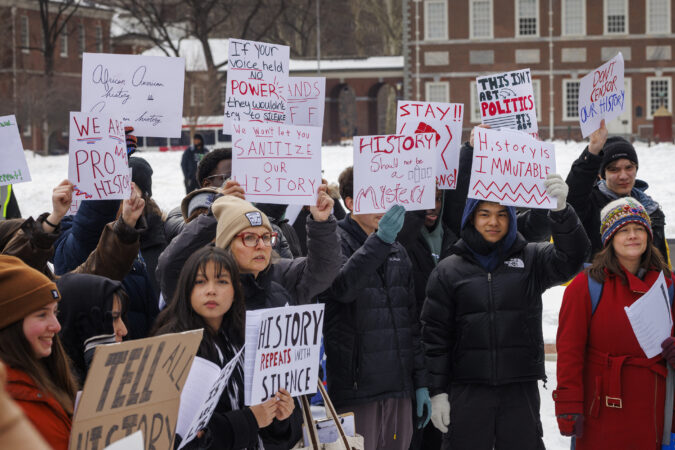
Students and teachers from two Philly area private schools joined up with activists and protesters Friday morning at the President’s House in Independence National Historical Park to demand that the site’s slavery exhibit be restored after it was abruptly dismantled last month.
“Whitewashing history is a totalitarian gimmick,” read one sign in a crowd that included young and older people. “All our stories must be told,” read another.
The “teach in” was held in front of a granite wall etched with the names of nine enslaved people owned by U.S. founding father and first president George Washington. The wall is one of the few remnants of the slavery exhibit that was dismantled by order of the Trump administration.
Standing at a lectern, the students, from Solebury School in Bucks County and Friends Select in Center City, read the biographies of the enslaved whose names had been etched on the wall.
Activist and criminal defense attorney Michael Coard told the crowd he helped to create the slavery exhibit after learning that Washington owned enslaved people — and realizing that his educators had failed to teach him about it.
“When I learned about that, I was enraged, because I’d never heard about it,” Coard said.
With the help of elected officials, the President’s House Site became a reality in 2010, Coard said.
But when the Trump administration issued its “Restoring Truth and Sanity to American History” executive order last March, Coard knew that the exhibit could be targeted. The order calls on the U.S. Department of the Interior to remove historical exhibits that “perpetuate a false reconstruction of American history” or “disparage Americans past or living.”
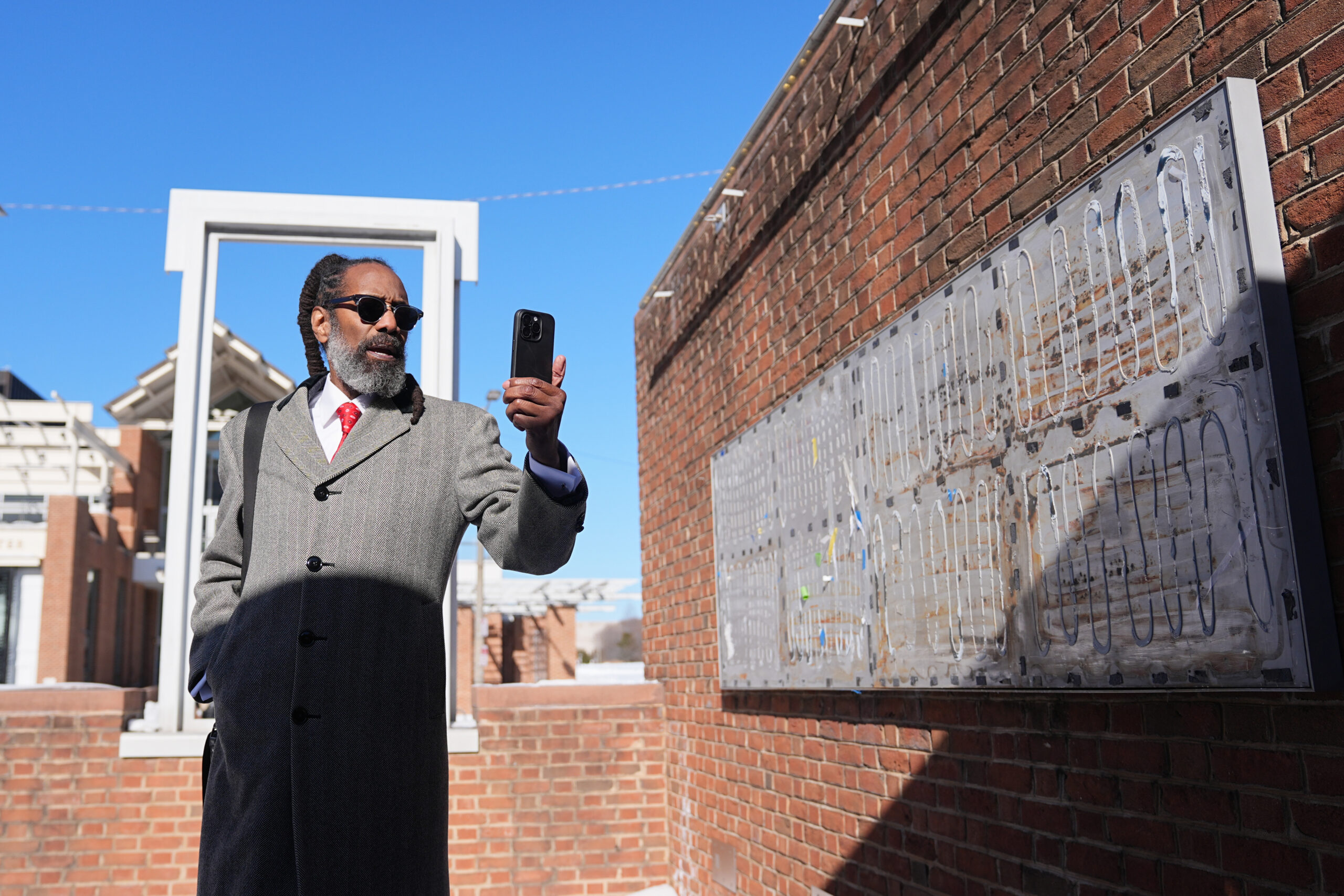
Attorney Michael Coard makes a social media post at the now removed explanatory panels that were part of an exhibit on slavery at President’s House Site in Philadelphia, Friday, Jan. 30, 2026. (AP Photo/Matt Rourke)
“Anything pertaining to Black people, he was opposed to it,” Coard said of President Donald Trump.
Since then, Coard said, there’s been a furious legal battle to have the site restored. Philadelphia Mayor Cherelle L. Parker sued the federal government. A judge ordered the government to safeguard the exhibits, which are currently in storage, while the issue plays out in federal court.
Coard encouraged people to sign a petition, attend protests, and stay involved in future protests.
“Just because you can’t do everything, that doesn’t mean you shouldn’t do anything,” Coard told the crowd, quoting poet and musician Gil Scott-Heron.
Solebury School college counselor Erin Wallace joined the 50 students who traveled by bus to the site for the teach-in.
Wallace said the students are “very active” in following national politics, and were eager to attend the protest. About 25% of the student body attended, Wallace said.
“It was an overwhelmingly positive response,” Wallace said.
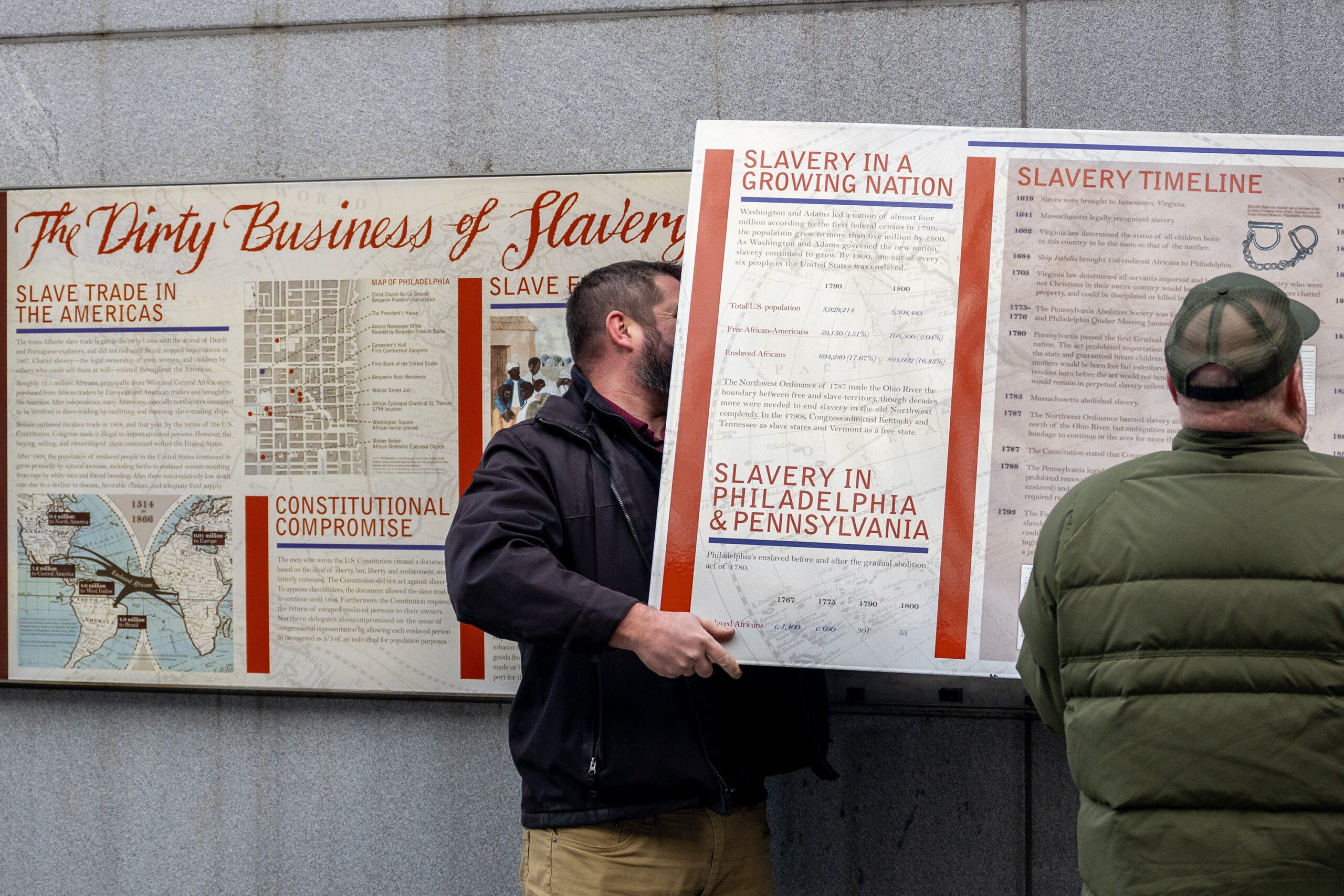
Workers remove the display panels about slavery at the President’s House Site in Independence National Historical Park Thursday, Jan. 22, 2026. The fate of exhibits at the site, which serves as a memorial to the nine people George Washington enslaved there during the founding of America, had been in limbo since President Trump’s executive order, “Restoring Truth and Sanity to American History,” directed the Department of the Interior to review over 400 national sites to remove or modify interpretive materials that “inappropriately disparage Americans past or living.”
Solebury School history teacher Don Kaplan of Elkins Park attended the first vigil after the site was shuttered. Kaplan said he organized the teach-in student protest because it is relevant to what he teaches his 9th- and 11th-grade students.
“I just thought to myself, we need to address this,” Kaplan said.
Kaplan asked that his students not be quoted directly. But after the rally, he struggled to keep his 11th graders from weighing in as he was interviewed for this story.
“We should teach all history,” two students said.
They explained that in Kaplan’s class, their research often shows that historical figures are not purely good or evil and were shaped by myriad forces.
To Kaplan, that stands in contrast to the Trump administration’s perspective on teaching history, which seeks to eliminate “negative” stories about America’s founders.
“That’s not what we do,” Kaplan said. “We have to teach every possible perspective.”
To deal with the snow, the city has deployed roughly 1,000 workers and 800 pieces of snow-removal equipment, and instituted programs to break up ice at crosswalks and streets in residential neighborhoods, among other efforts. But to some Inquirer readers, the solution has been right in front of us all along.
“I know we used to toss snow into the river,” one reader wrote via Curious Philly, The Inquirer’s forum for questions on all things local. “What happens to it now?”
In the past, the city has dumped snow into the Delaware River and the Schuylkill on various occasions. But in recent decades, that practice has been used rarely — if at all — primarily over environmental concerns. Here is what we know:
An old practice
Newspaper archives show references to dumping snow in the Delaware and Schuylkill dating back at least to the late 19th century — during a storm colloquially known as the “Great Arctic Outbreak of 1899.” That storm dumped 19 inches of snow on Philadelphia around Valentine’s Day.
In the aftermath, the city sought permission from its Board of Port Wardens to dump snow in the rivers surrounding Philadelphia, but there were concerns over the “considerable amount of dirt” that would be thrown into the water.
The practice was utilized in the winter of 1909, when 21 inches of snow fell. Initially, snow was dumped into the rivers at three points, but officials later expanded approved dumping sites to be “at any point and from any wharf” along either river.
“It was contended that this was perfectly proper, since snow is not refuse, but will readily melt after it is thrown into the water,” The Inquirer reported at the time.
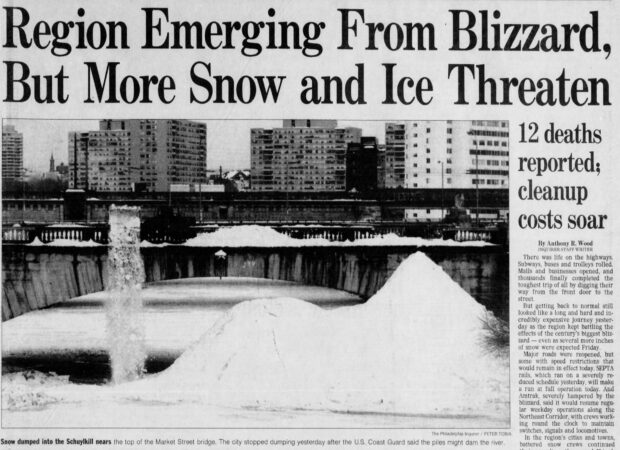
Article from Jan 10, 1996 Philadelphia Daily News (Philadelphia, Pennsylvania) <!— –>
The blizzard of ’96
Perhaps the most well-known modern use of Philadelphia’s rivers as a snow dump came in 1996, when a debilitating 30.7 inches of snow fell in early January. The city was left with few options, and got a permit from state environmental officials to dump snow in the rivers, Inquirer reports from the time indicate.
Within days, roughly 500 tons of snow were dumped into the rivers, and that total would grow into the thousands. Famously, city trucks were spotted dumping snow into the Schuylkill from the Market Street Bridge — until being asked to stop by the U.S. Coast Guard.
“We did advise the city to stop dumping snow into the Schuylkill. Our concern was the accumulation of ice in the river,” a Coast Guard spokesperson said at the time. The piles of snow in the river ran the risk of forming dams that could cause flooding.
The piles became so severe they had to be beaten back down. By mid-January, one Inquirer report noted, wrecking balls were sent in to break up at least one mountain of snow that threatened to clog the Schuylkill.
Article from Feb 22, 2003 The Philadelphia Inquirer (Philadelphia, Pennsylvania) <!— –>
An ‘option of last resort’
The city again in 2003 dumped snow into Philadelphia’s rivers, this time in an attempt to mitigate the impacts from a February storm that left about 19 inches of the white stuff. This time, though, city officials seemed to at least feel bad about it, calling it an “option of last resort.”
For this storm, roughly 400,000 pounds of snow was dumped into the Schuylkill. But along with it went road salt, antifreeze, trash, and other pollutants, prompting concerns from regional environmental groups. That pollution, they said, could harm marine life and devastate the riverbanks.
“All the stuff that’s on the road surface goes into the water,” Delaware Riverkeeper Network head Maya van Rossum told The Inquirer that year. “This is not the appropriate way to deal with the snow. There are plenty of places on the land to put it.”
The dumping, Streets Commissioner Clarena Tolson said, was limited. And the Pennsylvania Department of Environmental Protection said it asked the city to only dump “virgin snow” into the rivers.
“We’re going to take some of that down to the Navy Yard. We will not dump in the river,” Tolson said. “There are environmental concerns with placing snow in the river. The snow accumulates pollutants and salt, and dumping it in the river would be a very extreme measure.”
The Center for Environmental Policy at the Academy of Natural Sciences applauded the Nutter administration’s decision, writing in a letter to The Inquirer that the move would “prevent serious environmental damages to the river.”
“Urban precipitation, including snow, acquires a witch’s brew of contaminants such as oil, grease, litter, road salt, and lawn fertilizer,” director Roland Wall wrote. “We salute the city for making a commonsense decision that will protect one of Philadelphia’s natural treasures.”
A pedestrian walks past a large pile of snow and ice along the Benjamin Franklin Parkway days after a fierce winter storm dropped up to 9 inches of snow and sleet, with freezing temperatures leaving large banks of ice and snow on streets and sidewalks in Philadelphia, Monday, Feb. 2, 2026.
So what do we do now?
On Wednesday, Carlton Williams, the city’s director of clean and green initiatives, said the city does not dump snow in Philadelphia’s rivers, as that practice is “not an EPA standard.” Instead, the city has gravitated toward removing the snow from city streets and placing it at 37 snow dump sites around Philadelphia.
The city did not respond to a request for comment regarding those dump sites’ locations. Some of them contain mounds of snow up to 12 feet high that stretch for blocks, Williams said Wednesday. Officials also brought in a snow-melting machine from Chicago.
Pennsylvania Department of Environmental Protection guidelines, meanwhile, recommend municipalities push snow at least 100 feet away from surface waters, where it will be able to melt with less environmental impact.
“Dumping of snow directly into a stream carries with it the shock of loading de-icing chemicals and anti-skid agents,” the agency said in a recent recommendations document. “Allowing a natural melt provides a slow release of the water, dilutes the chemicals, and provides filtration of the solids through the soil.”
Members of the public in Norristown are demanding answers after a police cruiser responding to a 911 call Wednesday morning struck a naked man standing in an intersection.
The incident, captured on video, shows a police SUV apparently accelerating toward the man, who was standing on the road with other vehicles stopped around him. After being hit by the car, the man flies several feet in the air and hits the pavement. Police then rush out of the vehicle and surround the man.
Norristown police said one officer has been put on paid administrative leave while the Montgomery County District Attorney’s office investigates the matter.
Police have not released the name the officer or the victim. District Attorney’s office spokesperson Kate Delano confirmed that the man is alive, but declined to provide further details.
It’s a potential test for Norristown Police Chief Mike Trail, who has been on the job just about six months and is the fourth police chief to lead the agency in four years.
Trail took questions from community members at a public meeting Thursday. He said he wouldn’t be able to provide some details because they were part of the investigation, saying “my role here is to listen to you here tonight.”
Many of those questions centered on what residents who had seen the video perceived as the police officer’s decision to ram into the man.
Several people asked Trail whether agency policy ever would allow for a police officer to strike someone with a vehicle. Another speaker said she heard the car strike the man from her home.
Responding to questions, Trail pledged to make the police agency’s policies available to the public. He said he wants to initiate a mental health co-responder program, which would pair police officers with mental health experts trained to de-escalate situations.
“People experiencing mental health behavioral episodes are more likely to be victims of, to be subject to use of force by responding law enforcement officers because they lack the tools and the sophisticated training necessary to de-escalate.”
But according to Heather Lewis, who leads the Reuniting Family Bail Fund in Norristown, local police should already know how to work safely with people dealing with mental health issues.
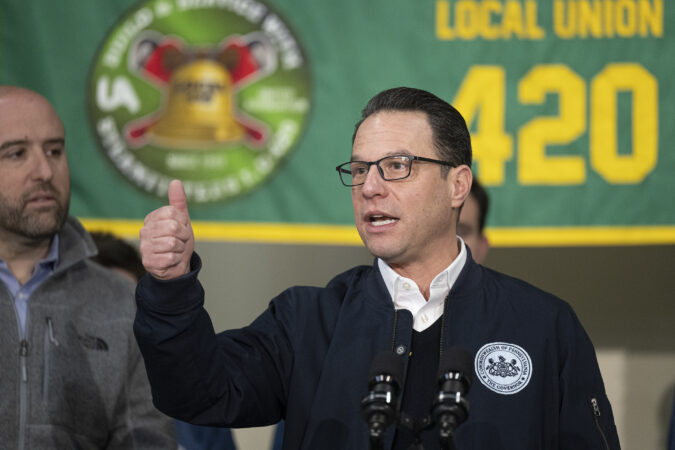
Gov. Josh Shapiro blasted U.S. Immigration and Customs Enforcement (ICE) Friday for buyinga Berks County warehouse that may be used to detain people.
“I’m strongly opposed to the purchase,” Shapiro said after speaking at an event at the Steamfitters Local 420 in Northeast Philadelphia.
Shapiro said the facility is “not what we need anywhere in Pennsylvania,” adding that he was not alerted ahead of time of ICE’s $87 million acquisition of the warehouse on 64 acres in Upper Bern Township.
“The secretive way the federal government went about this undermines trust,” Shapiro said.
Shapiro has grown increasingly vocal in his criticism of ICE and President Donald Trump in recent weeks as he’s toured the East Coast promoting his new memoir. In addition to voicing his opposition to the warehouse, Shapiro criticized Trump for sharing a racist video attacking former President Barack Obama and former first lady Michelle Obama.
The Democratic governor, who is widely seen as a contender for the White House in 2028, is in the midst of a reelection campaign against Trump-endorsed Republican Stacy Garrity, who has urged cooperation with ICE.
He said the commonwealth is exploring “what legal options we may have to stop” the ICE procurement, but he acknowledged “those options are very slim, given that the federal government is the purchaser.”
Shapiro told this audience of union workers and apprentices that the Berks County building would be better used for economic development.
At the same event, Shapiro announced a new $3 million Redevelopment Assistance Capital Program (RACP) grant to expand the Steamfitters Local Union 420 Training Center, which he said would help “train the next generation of workers.”
Shapiro criticizes Trump over racist anti-Obama video
Duringthe union hall event, Shapiro also leveled criticism at the Trump administration for sharing on social media a racist video depicting Obama, the first Black president, and his wife, as apes.
When asked for a reaction, Shapiro said, “I actually agree with [Republican] Sen. Tim Scott of South Carolina that it’s racist.”
Scott, the only Black Republican in the Senate, called the video “the most racist thing I’ve seen out of this White House,” after Trump shared it to his Truth Social account Thursday evening.
Shapiro said thatTrump “seems to always find a lower and lower common denominator. We’re not going to get sucked down into the depths that this president seems to reach for each day.”
Trump took down the video early Friday afternoon.
The governor also strongly chided Trump for recently saying the federal government should be in charge of elections.
Specifically, Trump named Philadelphia, along with Detroit and Atlanta, as cities where the federal government should step in to run elections. The predominantly Black cities are in swing states and have long been targeted with Trump’s false claims of voter fraud.
“The president of the United States doesn’t run our elections,” said Shapiro. “County officials run our elections, Republican and Democrat alike.”
“We’re not going to have interference from the White House,” added the governor, who served as attorney general when Trump tried to overturn Pennsylvania’s election results in 2020.
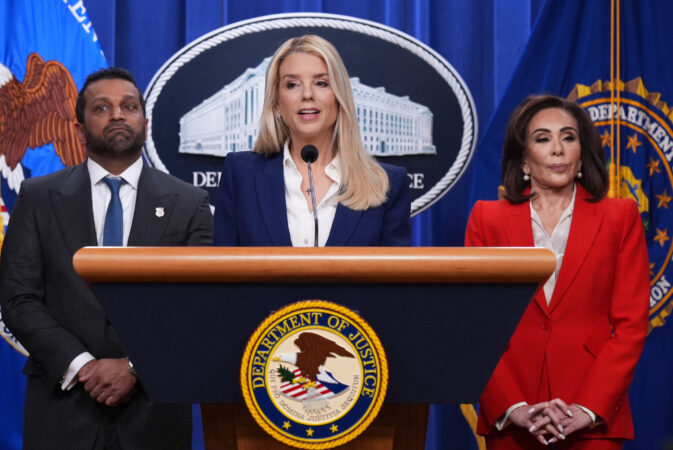
WASHINGTON — A man Justice Department officials described as a key participant in the 2012 attack that killed a U.S. ambassador and three other Americans in Benghazi, Libya, was taken into U.S. custody Friday and will face prosecution.
Zubayar al-Bakoush was arrested in an undisclosed country and flown to an airfield near Washington, where he arrived just after 3 a.m. Friday, Attorney General Pam Bondi said. He faces an eight-count indictment on charges including murder, terrorism and arson.
Bondi and FBI Director Kash Patel declined at a news conference to answer questions about where al-Bakoush was arrested and whether the operation that brought him into custody involved the assistance of foreign nations.
“We have never stopped seeking justice for that crime against our nation,” Bondi said.
In the Sept. 11, 2012, attack, at least 20 militants, armed with AK-47s and grenade launchers, stormed the U.S. mission in Benghazi, breaching its gates, forcing their way into offices and setting buildings ablaze. Ambassador J. Christopher Stevens, State Department employee Sean Smith and CIA contractors Tyrone S. Woods and Glen Doherty were killed. Stevens was the first U.S. ambassador slain while performing his duties abroad in nearly four decades
Almost immediately, the incident became a subject for partisan finger-pointing, with Republican lawmakers faulting the Obama administration and especially then-Secretary of State Hillary Clinton for alleged security failures at the facility and what they described as a slow response to the violence. References to Benghazi — nearly 14 years later — remain a potent point of political division.
Even as they announced al-Bakoush’s arrest Friday, Justice Department officials seized the opportunity to swipe at frequent Republican targets, renew old lines of attack, and credit President Donald Trump.
“Hillary Clinton famously once said about Benghazi, ‘What difference, at this point, does it make?’” Bondi said, referring to an irritated response Clinton gave during a 2013 Senate hearing at which she was repeatedly pressed about the motive for the attack.
“Well, it makes a difference to Donald Trump,” Bondi continued. “It makes a difference to those families and 14 years later, it makes a difference to law enforcement who made the difference in this case.”
A Republican-led congressional investigation into the incident later found no evidence of wrongdoing by Clinton, though it faulted the Obama administration more broadly for being slow to respond after the militants breached the gates.
Jeanine Pirro, the Trump-appointed U.S. attorney in Washington whose office is overseeing the prosecution, made reference to that frequent Republican criticism in her remarks Friday about al-Bakoush’s arrest.
In her prior role as a Fox News host, Pirro frequently waded into the debate over Benghazi, at one point accusing then-FBI Director Robert S. Mueller III of orchestrating a cover-up to protect administration officials.
“For 13 hours, the American cavalry never came,” she said Friday. “For 13, hours [the victims] waited for that help that never came.
Democrats have defended their efforts to prosecute individuals tied to the deaths of Stevens and the others, noting that the Justice Department had by late 2013 filed sealed complaints against roughly a dozen overseas militants accused of playing a role in the attack.
Pirro acknowledged Friday that the complaint that led to al-Bakoush’s arrest was first filed in 2015, during the final year of the Obama administration.
Court filings unsealed Friday described al-Bakoush as a member of an extremist Libyan militia who was identified by a cooperating FBI witness as one of the attackers caught on surveillance footage from the compound. Agents described footage showing al-Bakoush, with a firearm slung over his shoulder, attempting to break into cars of U.S. service members and following the crowd into buildings where Stephens and others were killed.
Al-Bakoush is the third man law enforcement officials have brought to the U.S. to face charges.
A federal jury in Washington in 2017 convicted Ahmed Abu Khattala, a Libyan militia leader and the accused mastermind behind the attack, on conspiracy and terrorism charges tied to the incident. A second militant, Mustafa al-Imam, was found guilty on similar charges in 2019. Both men were sentenced to prison terms of more than a decade.
“Time will not stop us from going after these predators, no matter how long it takes, to fulfill our obligation to those families who suffered horrific pain at the hands of these violent terrorists,” Pirro said.
Sonder, the buzzy short-term rental company, is no more. But some of its former properties across Philadelphia are taking on new lives.
At least three of Philly’s last five Sonder properties have new ownership and have already reopened or are about to as boutique short-term rentals.
The former competitor with Airbnb and Vrbo touted modern “apartment-style hotels” nationwide. In November, when Sonder announced that it was closing, citing “severe financial constraints,” it marked a chance for local and national operators to swoop in and snag desirable properties.
As first reported by the Philadelphia Business Journal, Wyndham Hotels & Resorts partnered with the hospitality company Reside to reopen the Sonder property at 325 N. 13th St.in Callowhill in January. The 96-unit building is now called Heid Lofts by Reside.
The Queen Hotel at 628 S. Fifth St.in Queen Village is now being managed by Sosuite, a Philly-based short-term rental company that has taken over other previous PhillySonder properties over the years. The 30-unit property reopened under Sosuite in November.
The Edison at 312 N. Second St. in Old City is working to reopen as a 24-unit rental property in the coming weeks under operator PHL Stays, the Business Journal reported. The company is run by Jake Tovey, who operates a similar business in Pittsburgh called Pittsburgh Furnished Rentals.
As for the remaining former Sonder haunts, The Arco at 1234 Locust St. in Midtown Village is still closed, while the Witherspoon Building at 130 S. Juniper St. in Center City is pivoting to become a traditional apartment building with a mix of 186 studio and multi-family units.
A skill game industry executive who took kickbacks from illegal gambling machine operators throughout Pennsylvania pleaded guilty this week in Cumberland County to money laundering.
Ricky Goodling, an ex-state police corporal and former national compliance director for Pace-O-Matic, contributed to the “disorganized and problematic” skill game market when he accepted hundreds of thousands of dollars in exchange for quashing complaints about illegal gaming machines, Attorney General Dave Sunday said in a statement.
Goodling, 59, of Mechanicsburg, also pleaded guilty in federal court to evading more than $100,000 in taxes after falsely claiming the proceeds of the scheme were business travel expenses, according to the U.S. Attorney’s Office in Harrisburg.
An attorney listed for Goodling in court records declined to comment.
Pace-O-Matic said in a statement that it was “deeply troubled” by Goodling’s guilty plea. “We are also troubled to know that he violated our trust and intentionally harmed our business interests,” the statement reads.
According to Pace-O-Matic’s statement, law enforcement has assured the company that it is “not involved in or connected with any of the actions of Mr. Goodling, and they have characterized Pace-O-Matic as a victim of these crimes.” The company terminated Goodling’s employment in November 2023 when it learned of the investigation.
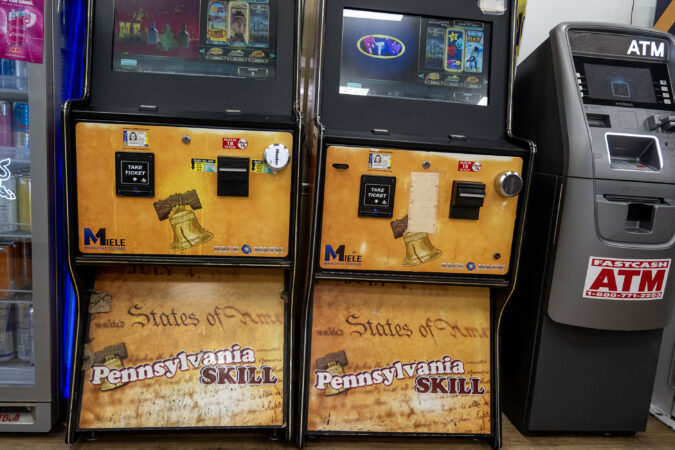
The powerful and controversial skill game industry has operated largely by its own rules in Pennsylvania for more than a decade, allowing the slot machinelike devices to proliferate in bars and gas stations across the commonwealth.
Skill games operate in a legal gray area: Courts have ruled that the so-called skill component distinguishes them from games of chance, like slot machines. The state Supreme Court is now weighing the machines’ lawfulness.
The biggest player in the skill games market, Georgia-based Pace-O-Matic, has claimed for years that its machines are the only “legal” skill games — and spent millions of dollars on campaigns and lobbying for favorable regulation and lower tax rates.
While some lawmakers want to ban the machines outright, arguing they attract crime and can be addictive, others see it as a potential new revenue stream. Last year, Gov. Josh Shapiro proposed taxing the machines at 52%, which the industry quickly rejected. In his latest budget, the governor said that regulating skill games, coupled with legalizing cannabis, could generate $2 billion annually.
Illegal gambling enterprises have sought to commingle their machines with Pace-O-Matic’s legal games, in an attempt to give their products a veneer of legitimacy and deflect law enforcement scrutiny, according to an October 2024 state grand jury presentment. Goodling acted as their ally, facilitated straw purchases of Pace-O-Matic games, and laundered the money through a fictitious company, prosecutors said.
Goodling is scheduled to be sentenced April 28 in the state case.
OSLO, Norway — Norway’s crown princess apologized on Friday for the situation she has put the royal family in as she faces scrutiny over her contacts with the late sex offender Jeffrey Epstein, part of a broader apology for all those she has “disappointed.”
Crown Princess Mette-Marit’s communications and contacts with Epstein have put her in the spotlight over the past week, adding to the embarrassment to the royals just as her son went on trial in Oslo for multiple offenses, including charges of rape.
The Epstein files contained several hundred mentions of the crown princess, who said in 2019 that she regretted having had contact with Epstein, Norwegian media reported.
The documents, which include email exchanges, showed that Mette-Marit borrowed an Epstein-owned property in Palm Beach, Fla., for several days in 2013. Broadcaster NRK reported that the stay was arranged through a mutual friend, which was later confirmed by the royal household.
The royal palace said Friday that Mette-Marit wants to talk about what happened and explain herself in more detail, but is unable to at present. It added that she is in a very difficult situation and “hopes for understanding that she needs time to gather her thoughts.”
It also issued a statement from the crown princess — her second in a week — in which she reiterated her deep regret for her past friendship with Epstein.
“It is important for me to apologize to all of you whom I have disappointed,” she said. “Some of the content of the messages between Epstein and me does not represent the person I want to be. I also apologize for the situation I have put the Royal Family in, especially the King and Queen.”
King Harald, 88, and the royals are generally popular in Norway, but the case against Mette-Marit’s son, Marius Borg Høiby, has been a problem for the family’s image since 2024 and the latest Epstein files have compounded that. Mette-Marit is married to Crown Prince Haakon, the heir to the throne.
The release of documents included an email from Mette-Marit to Epstein in November 2012 asking: “Is it inappropriate for a mother to suggest two naked women carrying a surfboard for my 15-year-old son’s wallpaper?”
He replied, “Let them decide,” and advised that the mother should, “Stay out of it.”
Mette-Marit, 52, said in a statement issued shortly after the files were released that she “must take responsibility for not having investigated Epstein’s background more thoroughly, and for not realizing sooner what kind of person he was.” She added: “I showed poor judgment and regret having had any contact with Epstein at all. It is simply embarrassing.”
The crown princess isn’t the only high-profile Norwegian who faces unflattering attention stemming from the documents on millionaire financier and sex offender Epstein released by the U.S. Department of Justice.
The Norwegian Economic Crime Investigation Service, a mixed unit of police and prosecutors, said Thursday that it would look into whether gifts, travel or loans were received by former Prime Minister Thorbjørn Jagland in connection with his positions.
Jagland was Norway’s prime minister between 1996 and 1997. He also has chaired the Norwegian Nobel Committee and was secretary general of the Council of Europe.
The files revealed years of contact between the politician and Epstein. Emails indicate that he made plans to visit Epstein’s island with his family in 2014, when he was chairman of the Nobel committee, with an Epstein assistant organizing the flights.
Norwegian authorities are also looking to lift Jagland’s immunity, which he enjoys because of his past as a diplomat. His legal representative told Norwegian broadcaster NRK that Jagland is cooperating with the investigation.
The World Economic Forum also announced on Thursday that it was opening an internal review into its CEO Børge Brende to determine his relationship with Epstein, after the files indicated the two had dined together several times and exchanged messages. Brende was Norway’s foreign minister from 2013-2017.
He told NRK that he is cooperating with the investigation, that he only met Epstein in business settings and that he had been unaware of Epstein’s criminal background.
Epstein killed himself in 2019 while awaiting trial on charges that he sexually abused underage girls at his homes in the U.S.

 –>
–>  –>
–>  –>
–>