Narberth’s borough council hasvoted unanimously to bar the municipality’s police officers from cooperating with U.S. Immigration and Customs Enforcement under the agency’s 287(g) program.
The resolution approved Thursdaymade clear that “our police department operates to protect our residents and protect the public safety here and does not have a role in immigration enforcement,” said Council President Fred Bush.
ICE’s 287(g) program deputizes local law enforcement officers to carry out immigration actions, including identifying, arresting, and deporting immigrants. ICE has signed around 1,400 such agreements with law enforcement agencies in 40 states, including dozens in Pennsylvania.
In Philadelphia’s collar counties, only the Lansdowne Borough Constable’s Office in Delaware County and the Pennsylvania State Constable Office Honey Brook Precinct 1 in Chester County are 287(g) participants. Bucks County Sheriff Danny Ceisler, a newly elected Democrat, terminated his office’s controversial partnership last month, citing negative impacts on public safety and law enforcement trust.
Neither Lower Merion nor Narberth participates in the program.
Narberth’s resolution establishes that the borough will not enter into any agreement with the federal government, including 287(g), that would commit borough time, funds, efforts, or resources toward ICE noncriminal enforcement activities.
Officials clarified that Narberth’s police department would cooperate with ICE officials if they had a judicial warrant to arrest someone. An internal memo first reported by The Associated Press last month has authorized ICE to forcibly enter people’s homes without a judicial warrant.
Narberth officials acknowledged that the resolution could be seen as “virtue signaling,” given that the borough already does not participate in an ICE partnership. Yet council members said they believe it’s important to publicly signal the municipality’s values regarding immigration enforcement.
The resolution“lets the public clearly know where we stand on the issues, helps reinforce trust, and provides that clarity of what we will do and what we won’t do,” said Dana Edwards, Narberth’s mayor. “From my standpoint, it’s a practical resolution.”
“When our community members trust their law enforcement, they feel comfortable reaching out to them for assistance,” said Councilmember Jean Burock. “We can’t afford to erode that trust.”
Bush cautioned residents against interfering with ICE operations, describing the agency as “poorly trained” and “dangerous,” citing “the actions and the images that came out of Minneapolis” in recent weeks.
Narberth’s resolution came on the heels of a Jan. 30 incident in which two people were taken into custody by ICE during a traffic stop in Penn Wynne.
Following the arrests, Lower Merion affirmed in a public statement that the township does not participate in 287(g) and encouraged residents to call 911 if they observe law enforcement activity with no Lower Merion police officers present.
This suburban content is produced with support from the Leslie Miller and Richard Worley Foundation and The Lenfest Institute for Journalism. Editorial content is created independently of the project donors. Gifts to support The Inquirer’s high-impact journalism can be made at inquirer.com/donate. A list of Lenfest Institute donors can be found at lenfestinstitute.org/supporters.
By now Arctic air may qualify for a frequent-visitor pass around here, but the version coming this weekend will be of a different quality and have a particular sting.
“It’s going to be a slap in the face,” said Cody Snell, a meteorologist with the National Oceanic and Atmospheric Administration’s Weather Prediction Center.
After a day in which highs will be around freezing on Friday — a solid 10 degrees below normal — some nuisance snow is possible late in the day or evening and early Saturday, and maybe even squalls. Then temperatures are going to tumble through the teens in the wake of another potent Arctic front.
They might not see 20 degrees in the Philly region until Monday.
Adding bite will be winds that could gust to 55 mph, and the National Weather Service says wind chills of 10 and 15 below are likely Saturday in the immediate Philly area. The agency has issued an “extreme-cold warning” — a relatively new addition to the advisory list — in effect Saturday afternoon through Sunday morning. Wind chills of 17 below zero are possible, and winds could gust to 55 mph, the weather service says.
Said Ray Martin, a lead meteorologist at the weather service office in Mount Holly, “It’s going to be awful.” Among the recent sequence of Arctic invasions, “it looks like the worst.”
What’s more, it’s likely to be a harvest weekend for the ice that is solidifying upon the region’s waterways, a growing concern.
A warm-up is due to begin Monday and pick up steam during the workweek, with highs maybe reaching 40 degrees on Thursday. But it may encounter some resistance, and another storm threat might be brewing for next weekend, forecasters say.
The snowpack already has achieved an elite status
Friday marked the 12h consecutive day in which the official snow cover at Philadelphia International Airport, measured daily at 7 a.m., was at least 5 inches.
With today's snow depth remaining at 5" for Philadelphia, there have now been 10 consecutive days with 5" or more of snow depth. This is the longest such stretch since 2010. If it remains 5" at 7 AM Thursday morning, it'll be nudging into the top 10 longest. #PAwxpic.twitter.com/x4FRHvkg8P
In the 142-year period of record, that ties for seventh place for a snow-cover duration of that depth.
“To hold on to a snowpack like this is unusual,” said Johnathan Kirk, senior hydrologist at NOAA’s Middle Atlantic River Forecast Center, in State College, Pa., which is keeping a close eye on the waterway icing.
The Schuylkill in Philly is ice-covered, as is the Delaware River from Trenton to Washington Crossing.
In addition to an eight-day stretch when temperatures failed to reach 30, the durability is related to the 2 or so inches of sleet that capped the snow on Jan. 25. Sleet is white ice that melts more slowly than snow.
The dry and cold air has been a natural preservative; snow and ice melt more readily when the air is moist.
Another factor was the impressive liquid content of the snow and sleet, Snell said. The frozen mass contained 1.39 inches of liquid, the weather service said, comparable to what is contained in 15 to 18 inches of snow.
As temperatures finally nudged above freezing, some melting did occur this week, which would explain that unsightly slushy porridge at Philly intersections. However, the official snow depth lost only an inch between Jan. 27 and Wednesday.
The snowpack may receive a fresh frosting Friday night into early Saturday with up to an inch of snow, Martin said, but it’s not going to have the same staying power.
What’s different about this Arctic air mass
Any snow that falls is likely to get blown away in a hurry, Martin said, as winds will pick up before daybreak Saturday and gusts howl to 50 mph by late morning.
Typically, cold air pours into the region from the northwest and becomes modified as it passes over land, the Great Lakes, and the mountains.
This is going to be a straight-up Arctic shot. It will come more or less from the north, and the icy lakes are not going to do much to impede it, said Matt Benz, senior meteorologist at AccuWeather Inc.
The weather center’s Snell said a weak storm system moving off the Atlantic coast is forecast to blow up as it interacts with warm Gulf Stream waters. The differences between the cold high pressure with its heavier air over the East and the lighter air of the storm are going to place the Philadelphia region in a frigid sandwich.
Heavier air tends to rush toward lighter air, like air escaping from a punctured tire.
A thaw is coming to Philly, eventually
Just how warm it gets next week remains unclear, AccuWeather’s Benz said.
“Arctic air is hard to dislodge sometimes,” he said, adding that recent model trends suggest the warm-up will not be quite as robust as expected earlier.
A wild card would be a potential storm next weekend. The European forecast model was seeing rain and 60 degrees, Martin said, while the U.S. model was suggesting a blizzard.
On Feb. 5, 2010, 6.6 inches of snow fell upon the airport, the beginning of an unprecedented siege in which 44.3 inches accumulated in a six-day period.
A man shovels cars out under mountains of snow in West Bradford Township, Chester County, during the incredible snow siege of February 2010.
Twelve days after the snow stopped, the official snow depth was down to 4 inches.
Philly will have the largest Semiquincentennial parade in the country this summer to celebrate the 250th anniversary of the signing of the Declaration of Independence, along with six nights of fireworks to keep things lit well into the evening.
Sure, Philadelphians find a reason to set off fireworks every night (what are you celebrating at 9:37 p.m. on a Thursday in February?!?), but the big difference is these will be professional.
There is new information about first-time and returning events for the 2026 Wawa Welcome America Festival, Philly’s annual 16-day Independence celebration, but details about other events — like who’s going to headline the July 4 concert on the Benjamin Franklin Parkway — still remain under wraps.
New this year will be the Salute to Independence Semiquincentennial Parade on July 3, which will feature people, performers, and personalities representing the country’s 50 states, its territories, and the District of Columbia.
Miss Philadelphia 2023 Jacqueline Means waves to the crowd near Independence Hall during the Wawa Welcome America Salute to Independence Day Parade in 2023.
Among them will be all Miss America state titleholders, several fife and drum corps, historical reenactors, dancers, 50 marching bands, unicycle riders, stilt walkers, a jump rope team from Maryland, a steel drum band from Michigan, a circus troupe from Illinois, the Milwaukee Dancing Grannies, and the Philly Drag Mafia.
The Louisiana LunaChicks, a group whose members will dress like Mrs. Roper from Three’s Company, will also be performing in “patriotic caftans,” according to a news release. The LunaChicks may want to stay clear of the Segway Riders Club of The Villages, Florida, which is exactly what you think it is and will also be rolling in the parade.
Not to be outdone, three Star Wars cosplay groups — Garrison Carida, Kyber Base, and the Mav Oya’la Clan — are teaming up to represent the lighter side of Pennsylvania (and the dark side of the force).
A storm trooper with the Garrison Carida dances during the Philadelphia Independence Day Parade in 2014.
The parade will also feature international bands from Ghana to Ireland; more than a dozen floats, including those celebrating Indigenous people and women’s right to vote; and a 20-by-40-foot Declaration of Independence.
Wawa Welcome America’s six nights of fireworks begin June 20 (and on June 21) at a new event that has not yet been announced, according to a news release.
Fireworks will also take place on June 25 at the Celebration of Black Music Month at the Dell Music Center, June 26 at the Kidchella Music Festival at Smith Memorial Playground, June 27 at a concert on the waterfront, and July 4, “following the star-studded concert” on the Parkway, absolutely no details of which were included in the release.
Fireworks over the Philadelphia Museum of Art and the statue of George Washington at Eakins Oval during the Wawa Welcome America Festival on July 4, 2023, following a free concert featuring Demi Lovato and Ludacris on the Benjamin Franklin Parkway.
Returning events include:
June 19: Juneteenth Block Party at the African American Museum
June 24: Five Points Night Market at Cottman and Rising Sun Avenues in Northeast Philly
June 27: Concillio’s Annual Hispanic Fiesta at LOVE Park
June 28: Gospel on Independence at Independence National Historical Park
July 1: Wawa Hoagie Day on Independence Mall
July 2: Red, White, & Blue To-Do parade, block party, and folk festival at sites across the Historic District
July 2: Salute to Service: The U.S. Army Field Band & Soldiers’ Chorus at Independence National Historical Park.
July 3: Pops on Independence at Independence Park
July 4: Celebration of Freedom Ceremony outside of Independence Hall
MOSCOW — A deputy chief of Russia’s military intelligence agency was shot and wounded in Moscow on Friday in an attack that follows a series of assassinations of senior military officers that Russia has blamed on Ukraine.
Lt. Gen. Vladimir Alekseyev was hospitalized after being shot several times by an unidentified assailant at an apartment building in northwestern Moscow, Investigative Committee spokesperson Svetlana Petrenko said in a statement.
She didn’t say who could be behind the attack on the 64-year-old who has served as the first deputy head of Russia’s military intelligence agency, known as the GRU, since 2011.
He was decorated with the Hero of Russia medal for his role in Moscow’s military campaign in Syria and in June 2023 was shown on state TV speaking to mercenary chief Yevgeny Prigozhin when his Wagner Group seized the military headquarters in the southern city of Rostov-on-Don during his short-lived mutiny.
The shooting came a day after Russian, Ukrainian, and U.S. negotiators wrapped up two days of talks in Abu Dhabi, United Arab Emirates, aimed at ending the nearly 4-year-old war in Ukraine. The Russian delegation was led by Alekseyev’s boss, military intelligence chief Adm. Igor Kostyukov.
President Vladimir Putin was informed about the attack, said Kremlin spokesman Dmitry Peskov, who added that law enforcement agencies need to step up protection of senior military officers during the conflict in Ukraine.
Ukrainian authorities haven’t commented on the attack.
Asked about the shooting, Russian Foreign Minister Sergey Lavrov said it would be up to law enforcement agencies to pursue the investigation but described it as an apparent “terrorist act” by Ukraine intended to derail peace talks.
The business daily Kommersant said the attacker, posing as a delivery person, shot the general twice in the stairway of his apartment building, wounding him in the foot and the arm. Alekseyev tried to wrest away the gun and was shot again in the chest before the attacker fled, the report said.
Alekseyev, who was born in Ukraine when it was part of the Soviet Union, rose steadily through the ranks to lead operations of Russian military intelligence in Syria, Ukraine, and elsewhere.
He was sanctioned by Washington for meddling in the 2016 U.S. election and also faced sanctions in the U.K. and the European Union over his alleged role in the 2018 poisoning of former Russian intelligence officer Sergei Skripal and his daughter with the nerve agent Novichok in Salisbury, England.
Since Moscow sent troops into Ukraine in 2022, Russian authorities have blamed Kyiv for several assassinations of military officers and public figures in Russia. Ukraine has claimed responsibility for some of them.
In December, a car bomb killed Lt. Gen. Fanil Sarvarov, head of the Operational Training Directorate of the Russian Armed Forces’ General Staff.
In April, another senior Russian military officer, Lt. Gen. Yaroslav Moskalik, a deputy head of the main operational department in the General Staff, was killed by a bomb placed in his car parked near his apartment building just outside Moscow.
A Russian man who previously lived in Ukraine pleaded guilty to carrying out the attack and said he had been paid by Ukraine’s security services.
Days after Moskalik’s killing, Ukrainian President Volodymyr Zelensky said he received a report from the head of Ukraine’s foreign intelligence agency on the “liquidation” of top Russian military figures, adding that “justice inevitably comes” although he didn’t mention Moskalik’s name.
In December 2024, Lt. Gen. Igor Kirillov, the chief of the military’s nuclear, biological and chemical protection forces, was killed by a bomb hidden on an electric scooter outside his apartment building. Kirillov’s assistant also died. Ukraine’s security service claimed responsibility for the attack.
A former Villanova professor says in a federal lawsuit filed this week she was fired from the Catholic university after accusing its law school of racial discrimination involving one of her students.
Stephanie Sena, who had been an anti-poverty fellow in the law school and taught at Villanova for more than 20 years, was dismissed in 2024 for what the school said were “student complaints,” according to the lawsuit.
But Sena’s lawyers say the dismissal was due to her filing an ethics complaint against the school for racial discrimination for comments that administrators made around a decision not to give her student a financial award that would have alleviated her debt, citing a speech the student made at a law school symposium.
The student, Antionna Fuller, accused Villanova of racialdiscrimination and failing to appropriately support her with financial aid during a 2021 symposium speech at the university, titled “Shifting the Poverty Lens: Caritas in Focus.” Sena hosted the symposium, during which Fuller also publicly asked for an apology from Villanova.
“How can you say caritas [which means love and charity in Latin] and Black lives matter with no thought to a Black life in front of you, systematically oppressed by your hands?” Fuller said,according to a video of the speech. “It’s not only hypocritical, but it’s embarrassing. We cannot talk about oppression and white supremacy without acknowledging its very presence here.”
Her speech drew a standing ovation, but later caused consternation among law school leadership.
Sena found out that law school dean Mark Alexander, in a letter to the scholarship committee, asked that Fuller not receive the debt relief award because she “maliciously maligned” the law school, according to the suit.
Sena‘s lawsuit alleges that then-law school vice dean Michael Risch said after the student’s speech that the student was “lucky” to have gotten into the law school and that she would not be there if she were white.
Villanova said in a statement Wednesday that Sena’s lawsuit “lacks merit” and that the university “will vigorously defend against these baseless allegations.”
“We look forward to presenting the actual facts surrounding the plaintiff’s separation from Villanova. To be clear, Villanova University does not tolerate discrimination or retaliation of any kind, and the allegations in Plaintiff’s lawsuit are contrary to our written policies and conflict with the core values of our University.”
Sena, 46, of Media, declined to comment.
Fuller, 29, who now lives with her mother in the South, said in an interview Wednesday that she feels both relieved and anxious about seeing the issue aired publicly.
“I am happy, at least relieved, that truth is coming out,” said Fuller, who graduated summa cum laude from the University of South Carolina and got her Villanova law degree in 2022. “I’ve been in such an isolated place and just carrying this trauma for so long.”
She said she sought therapy after the reaction she got to her speech from Villanova administrators and last year wrote a book, I Almost Sued My Law School, about her journey as a first-generation, low-income Black student. She no longer wants to practice law, she said, and is still figuring out her next steps.
But she said she was grateful to Sena, whom, during the symposium speech, she called “my hero, advocate, and my friend.”
“She was the first person to publicly stand up for me,” Fuller said.
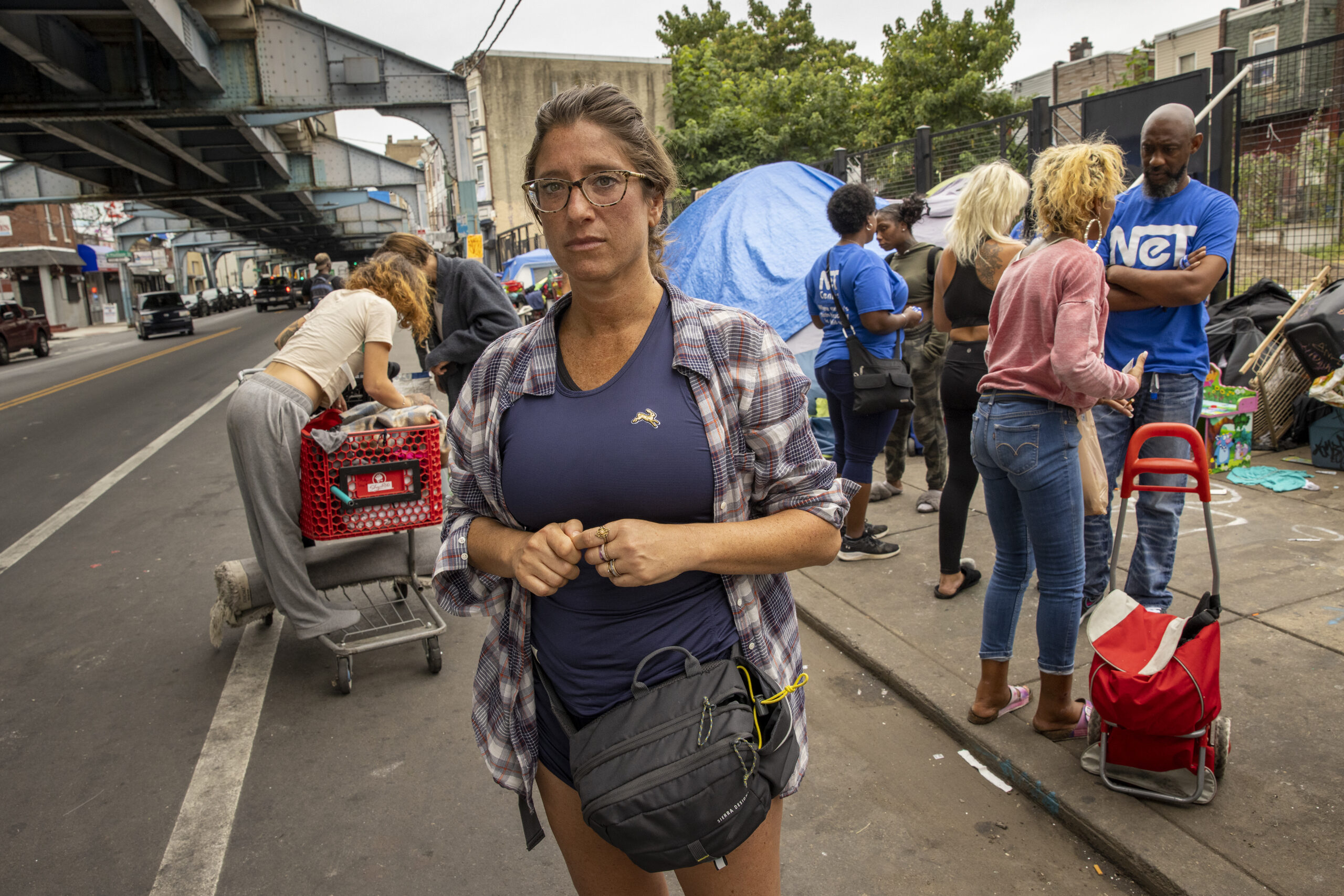
Stephanie Sena stands at site of an encampment along Kensington Avenue in 2021.
Fallout from symposium speech
Sena, a longtime activist who has worked to help people experiencing homelessness and opened a homeless shelter in Upper Darby in 2022, was fired in 2016 from her job as an adjunct professor at the Pennsylvania Academy of the Fine Arts after defending students who accused a classmate of rape. She sued PAFA and the case ended in a confidential settlement.
She also led activists in lawsuits against the city in 2021 over its intentions to remove homeless people in a Kensington encampment. In 2023, the head of Norristown’s municipal council planned to bus homeless people to Villanova’s campus because of Sena’s advocacy for the homeless in Norristown. Villanova at the time was criticized for not defending Sena and making a stronger response.
Sena was hired to teach at Villanova in 2003 and began to work at the law school in 2020, serving as a full-time faculty member and anti poverty fellow. She was also an adjunct professor at Villanova’s Center for Peace and Justice.
In herlawsuit against Villanova, Sena asserts that law school leadership met with her in 2022, several months after Fuller’s symposium speech, and asked her if she had known what Fuller planned to say. Matthew Saleh, former assistant dean for admissions, told her it would be harder to attract Black students to the school because of the speech, according to the suit. Risch, the vice dean, made the comment about Fuller not being at Villanova if she had been white, the suit says.
Saleh, who now is the senior associate dean of enrollment management and financial aid at Rutgers’ law school, said in an interview that he does not recall making that comment and that he doesn’t think it’s even the case that Fuller’s speech would hurt recruiting.
“That would not have even come to my mind,” he said. “I couldn’t reasonably see a way that it would impact recruiting.”
Sena “objected to the race discriminatory and retaliatory comments” made to her in that meeting, according to the suit.
In October 2023, she complained again about the comments in an email to two administrators who headed diversity, equity, and inclusion at Villanova,according to the lawsuit complaint. Then came the award committee meeting on Jan. 30, 2024, where the dean in a letter argued against Fuller’s receiving the award, according to the suit.
Students who were in the award committee meeting and were upset about the law school dean’s reactionapproached Sena and asked what they could do, according to the suit. Sena said the students, who are not named in her lawsuit, could contact the diversity, equity, and inclusion office and file a climate complaint.
Sena, according to the suit, complained again one day after the award committee meeting that Villanova “had engaged in a dangerous pattern of race discrimination” and filed an ethics complaint with the university. She also expressed her concerns in an email to faculty and in a meeting with a law professor, who told her the students had committed an ethics violation by revealing confidential details of the awards meeting they were in, according to the suit.
After filing the complaint, Sena said in her lawsuit, she was “treated differently,” “unjustly criticized,” and “blamed for issues outside her control.”
In June 2024, human resources informed her that she was under investigation after students said she had pressured them to file complaints against the deans, which Sena denied, the suit said.
She was fired July 30, 2024, even though, the suit said, she had no prior performance or disciplinary issues and had received awards and promotions. She is seeking damages including economic loss, compensatory and punitive, and attorneys’ fees and costs.
An apology and acknowledgement
During the symposium, Fuller had said she wished Villanova would apologize and acknowledge what happened. She said that the school had given her $15,000 in financial aid toward her annual $65,000 cost, but that she subsequently learned other students had gotten more, even though her mother worked multiple jobs as a nurse’s aide to support the family.
“I was confused,” she told the audience. “How can a student with seemingly the most need graduate with the most debt?”
She learned of a free-tuition public interest scholarship that Villanova awards to incoming students and sought it after she was enrolled, she said. She was turned down repeatedly, she said, even though Villanova had recently awarded its largest group of the scholarships.
“Am I invisible?” she asked. “To walk into this law school building every day, to be surrounded by wealth and prestige, while struggling and burdened with debt, and while expected to perform like those who are not feels inhumane.”
She said during the speech she would graduate with almost $200,000 in student debt. Villanova officials, she said Wednesday, later accused her of exaggerating because she was including her undergraduate debt, too, and maintained that the total was really $160,000 — $126,000 of which was from the law school.
Fuller said Wednesday she had apologized to law school leadership, hugged them at graduation, and thought everything had been resolved. She said she was surprised to hear that the dean wanted to block her access to the debt award, she said.
“My intent wasn’t to harm, attack or mislead,” Fuller wrote in her book, “but to share my personal experience — my fears and financial anxieties — as part of the larger conversation about finding solutions to reduce poverty, which the conference was centered around.”
Staff writer Abraham Gutman contributed to this article.
Lou Capozzoli, 86, of Southwest Philly, a dive bar owner and band front man with a penchant for telling jokes, died Sunday, Feb. 1, after battling a brief illness at Mercy Fitzgerald Hospital while surrounded by family.
Mr. Capozzoli, born April, 4, 1939, was just one year younger than the bar he would eventually take over at the intersection of East Passyunk Avenue and Federal Street, then called Ray’s after the nickname bestowed on his father, Anthony.
Almost immediately, the bar became the center of Mr. Capozzoli’s life. He grew up in the apartment upstairs and as a toddler would sit quietly on the bar downstairs, eating cornflakes, while his mom poured beers. His dad, meanwhile, would wish every customer a happy birthday, even if it wasn’t theirs to celebrate.
It was a gesture that stuck with Mr. Capozzoli, who would go on to spend the rest of his life doing whatever he could to earn smiles from strangers, whether it meant serving birthday shots of cake-flavored vodka with a candle or performing to crowds as a singer and saxophonist across Las Vegas, the Jersey Shore, and South Philly.
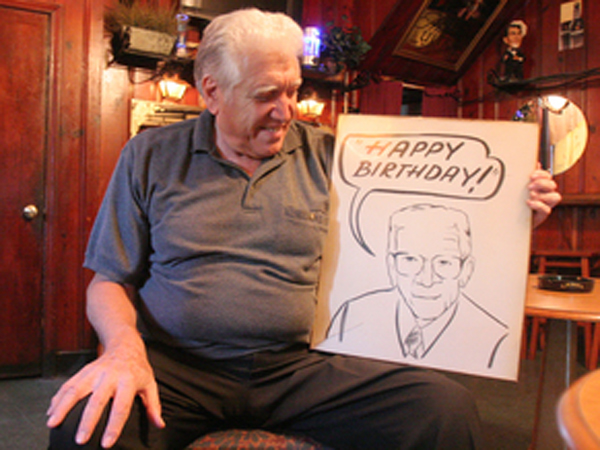
Mr. Capozzoli with a drawing of his father, Anthony “Ray” Capozzoli, who opened Ray’s Happy Birthday Bar in South Philadelphia in 1938. Mr. Capozzoli took over the bar when his father died in 1997.
“That’s all he wanted, for his father to be proud of him,” said Rose Capozzoli,Mr. Capozzoli’s wife.
As a boss, Mr. Capozzoli was “pretty silly,” said bartender T.C. Cole, who also played guitar in Mr. Capozzoli’s band. “He would call you at 1:45 in the morning when you’re trying to close just to tell you a joke.”
The inside of Ray’s Happy Birthday Bar. Mr. Capozzoli was known for calling regulars on the mornings of their birthdays.
If jokes were a currency, Mr. Capozzoli was a billionaire, friends and family said. He’d fire them off incessantly — during closing shifts, band performances, family dinners — and had enough discretion to whisper the most risqué in your ear. Mr. Capozzoli’s style was modeled after that of Buddy Hackett and Rodney Dangerfield, his favorite comedians, but the punch lines didn’t matter as much his delivery.
Mr. Capozzoli “would laugh with the person he was telling the joke to,” his son Anthony Capozzoli, 55, said. “If you weren’t laughing with the punch line, you were laughing at how much he enjoyed getting to it.”
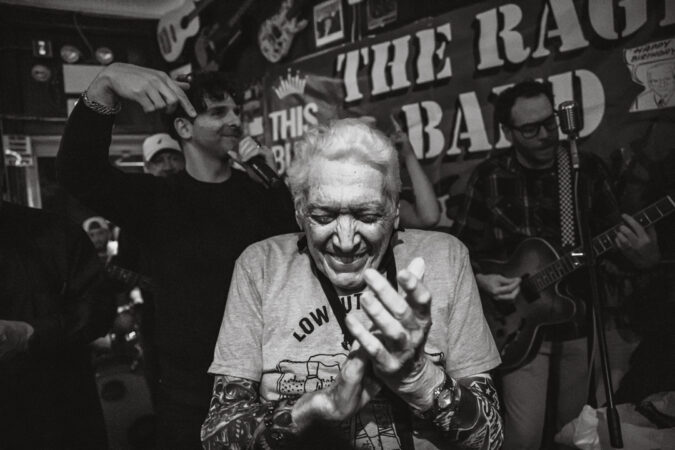
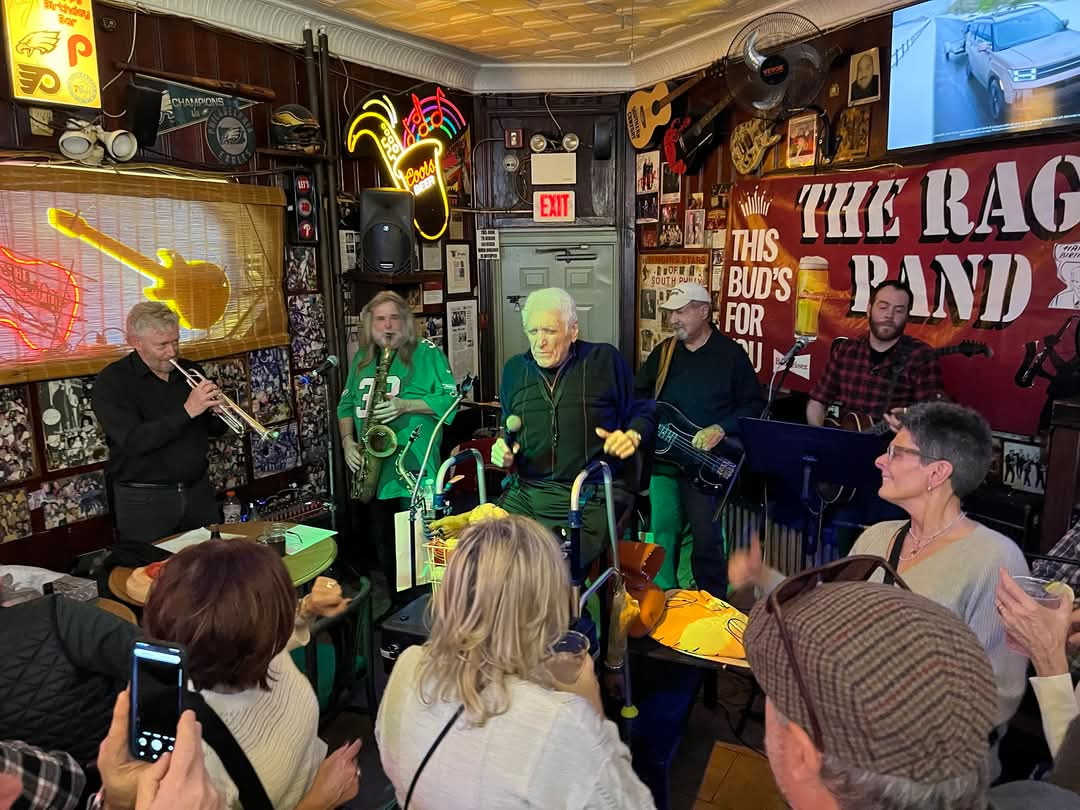
More recently, Anthony said, his father would call him just to workshop material, most of which isn’t fit to print. Mr. Capozzoli’s favorite jokes were set to music in 2023 for a five minute-long comedy track as part of a studio EP for the Rage Band, the seven-piece group that Mr. Cappozoli sang with for 41 years alongside a rotating cast of characters.
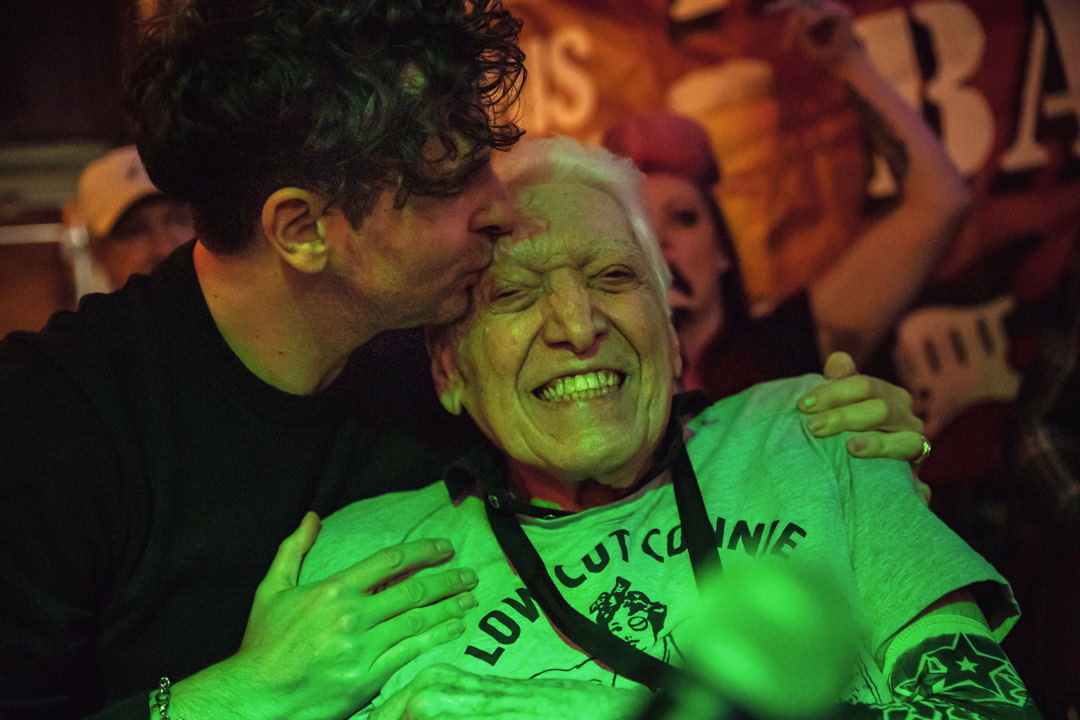
Low Cut Connie front man Adam Weiner recorded the EP. He and Mr. Capozzoli grew close after Weiner played a gig at Ray’s in 2012, bonding over their shared love of captivating a crowd.
“Not everyone is about joy when they perform … People care about their ego, people care about fashion,” Weiner said. “But Lou was always about fun, just radiating 100% joy.”
Mr. Capozzoli started performing professionally when he was 14, sneaking into clubs to accompany bands on the alto sax. The stage was a calling that helped him fall in love. It also took him to the edge of celebrity.
After serving in the military in the early 1960s and playing for Sophia Loren as part of an army band, Mr. Capozzoli told jokes and sang standards at the Stardust and Flamingo casinos in Las Vegas. At the peak of his fame, he opened for Diana Ross at the Riptide Club in Wildwood in 1965. That same year Mr. Capozzoli met his wife, Rose, who was charmed by his talents at another Wildwood concert. They wed three years later.
Mr. Capozzoli bonded with Low Cut Connie’s Adam Weiner over their shared love of performing.
Mr. Capozzoli’s steadiest gig began in 1984 with the Rage Band, once the house act for Sea Isle City’s now-shuttered Springfield Inn. There, Mr. Capozzoli settled into his larger-than-life style, commanding a crowd of roughly 1,000 people a night on summer weekends. He’d serenade Burt and Ernie puppets for a medley of Sesame Street songs and show tunes, or don outlandish masks for a Mummers tribute.Both brought down the house, but never as much as when Mr. Capozzoli would cover “Those Were The Days” or ”Sweet Caroline,” which were always punctuated with jokes.
“I call him the showman’s showman,” said Brian Saunders, one of band’s saxophonists. Tony DiMattia, a bassist for the band, concurred: “He didn’t just entertain the crowd. He entertained us as musicians.”
The Rage Band stopped their Sea Isle residency in 1999, only to pick up at new one at Ray’s in 2003, where they have performed on the first Saturday of every month from October through April ever since. The band never rehearsed, DiMattia said. Mr. Capozzoli’s stage presence could smooth over just about any kink.
Mr. Capozzoli played in The Rage Band for 42 years, performing for packed houses at the Springfield Inn in Sea Isle City and Ray’s Happy Birthday Bar.
“There is no Rage Band without Lou,” Saunders said. “He was the glue that kept us together.”
Outside of music, Mr. Capozzoli’s greatest loves were his wife and children. He was a dedicated father who enjoyed cooking large French toast breakfasts, organizing tee ball games, and ensuring the family always had a rescue dog to snuggle. Laughter — and his wife’s minding — kept Mr. Capozzoli going, even as the decades of working in a smoking bar wore on him.
“I don’t think I’ve ever seen Lou angry,” said Saunders. “I don’t think he’d ever not had a smile on his face.”
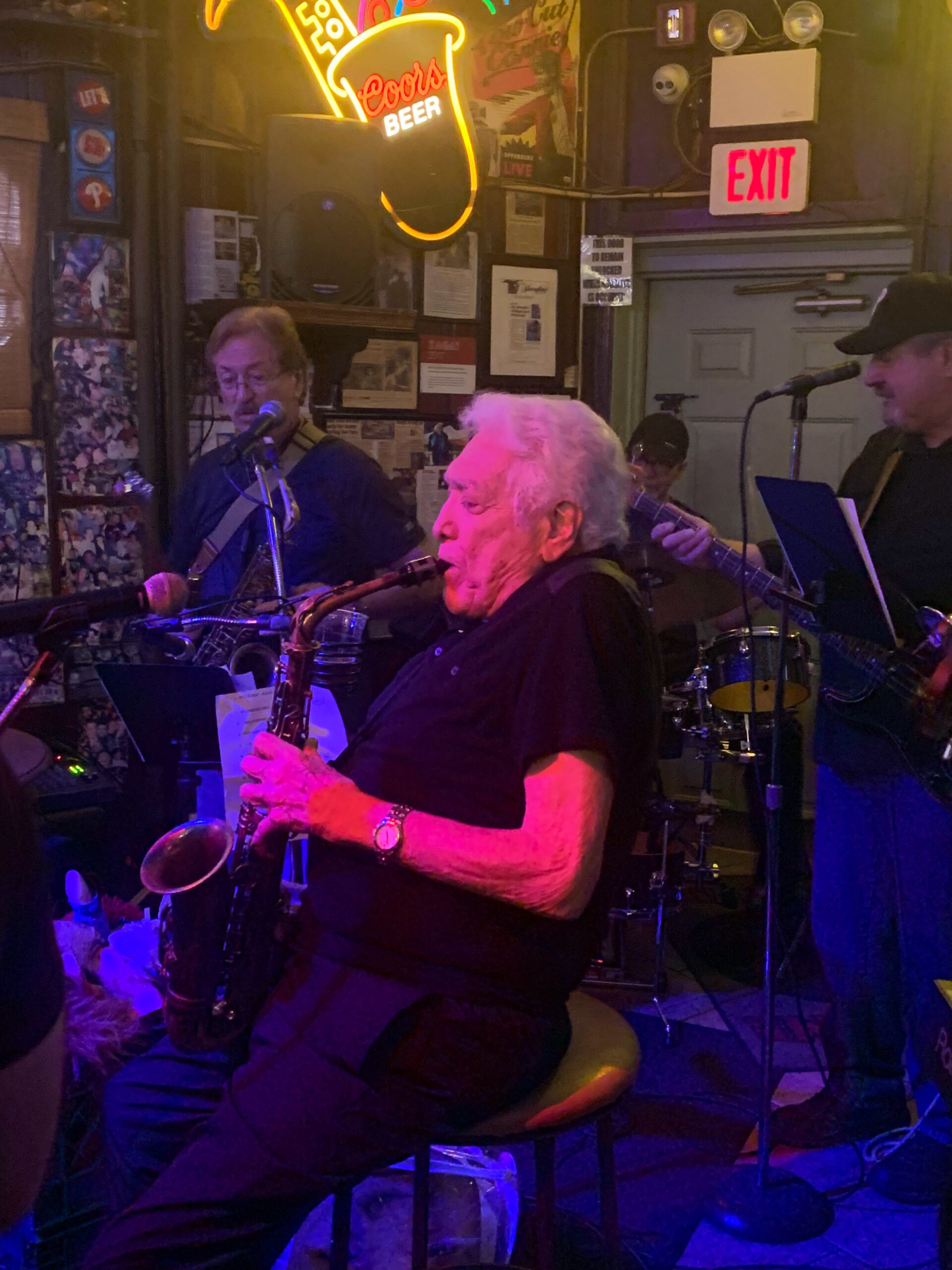
Mr. Capozzoli was an accomplished saxophonist who started playing professionally when he was 14 years old.
In addition to his wife, Rose, and son, Anthony, Mr. Capozzoli is survived by his daughters, Dyan Wixted and Luann Capozzoli, and three grandchildren: Louis, Daniel, and Delaney.
Visitation with the family will be held from 6 to 9 p.m. Feb. 6, and from 9:30 to 11 a.m. Feb. 7 at Pennsylvania Burial Company, 1327-31 S. Broad St., Philadelphia, Pa., 19147. Services will follow Saturday at 11 a.m.
An undocumented immigrant is seeking $1 million in damages after he says he was riding his bike in Melrose Park, Ill., when a U.S. Border Patrol agent suddenly tackled him, placed him in a chokehold and punched his head.
A Chicago resident says that federal agents caused $30,000 worth of property damage when they broke a lock on his wrought-iron gate and scaled a wooden fence to chase after construction workers repairing his Victorian-era home.
A Columbia University student and activist who spent 104 days in a U.S. Immigration and Customs Enforcement detention center is demanding $20 million over what he says was a false arrest.
All three should expect a long and difficult fight under the current legal landscape, lawyers warn.
These and scores of other claims expected to arise out of the Trump administration’s crackdown on illegal immigration are winding through a bureaucratic process mandated under the Federal Tort Claims Act. It is the primary legal recourse for people seeking compensation for property damage, injuries and even deaths allegedly caused by federal agencies and their employees.
First, individuals must fill out a form and submit it for review by the agency that they say caused the harm. Agencies such as ICE and Customs and Border Protection have six months to deny a claim, offer a settlement, or not respond at all. Only then can people sue in court under the Federal Tort Claims Act.
But these cases are different from civil rights lawsuits. Judges, not juries, decide the outcome. Awarded damages are likely to be much lower. And individual officers can’t be named as defendants.
“It’s absolutely bonkers,” said Brian Orozco, a Chicago attorney for Ricardo Aguayo Rodriguez, the bike-riding immigrant who was hospitalized and is now detained, awaiting deportation to Mexico. “If a Chicago police officer abuses my civil rights, I can file a claim immediately. I don’t have to wait six months [to file a lawsuit]. I have a right to a jury trial. I don’t have that when I’m up against the federal government. It’s scary to me how protected these federal agents are.”
After the Civil War, Congress passed a law that established the right to sue local and state officials for the violation of constitutional rights. Federal officials weren’t included in the law, though a 1971 Supreme Court ruling established precedence for such lawsuits. But legal experts said that the court’s decisions within the past decade have narrowed that path and made it nearly impossible to successfully sue federal agents for civil rights violations.
“It is arguably harder today in 2026 than at any other time in American history to sue federal officials for money damages if they violate your constitutional rights,” said Harrison Stark, senior counsel at the State Democracy Research Initiative at the University of Wisconsin Law School.
Relatives of both Renée Good and Alex Pretti, Minneapolis residents who were fatally shot in separate encounters by federal immigration officers in January, have hired attorneys. In a statement, Romanucci & Blandin, the law firm retained by Good’s family, said it is pursuing a tort claim and would not be deterred by “the byzantine, time-consuming processes mandated by the Federal Tort Claims Act.” The attorney hired by Pretti’s parents did not respond to a request for comment.
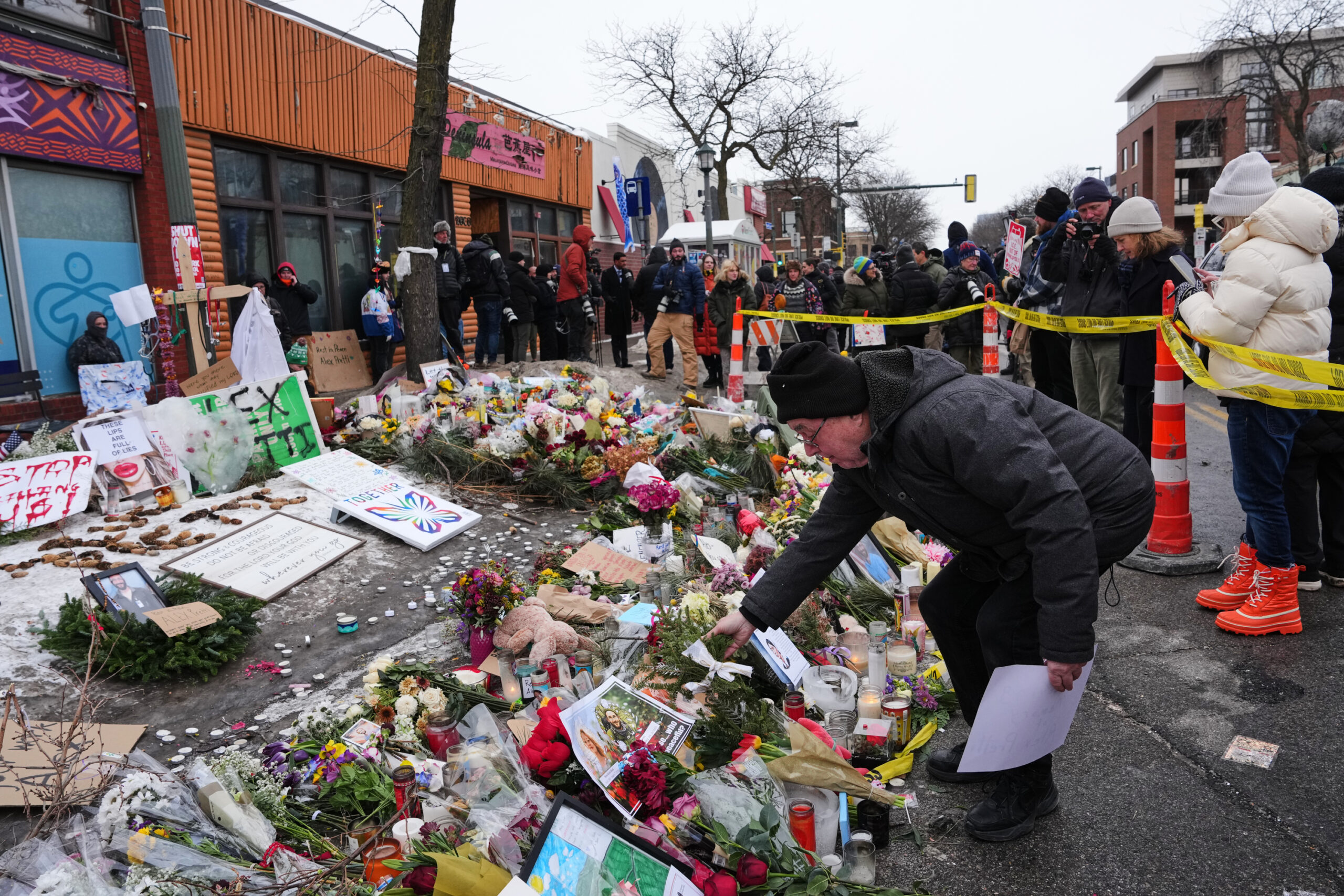
People visit a makeshift memorial on Jan. 26 in Minneapolis for 37-year-old Alex Pretti, who was fatally shot by immigration officers.
An ICE spokesperson said the agency received about 400 tort claims in fiscal 2025, which ended Sept. 30, but did not provide a breakdown of how many resulted in settlements or denials.
“Despite facing a more than 1,300% increase in assaults against them, 8,000% increase in death threats, and a 3,200% increase in vehicle rammings, the men and women of ICE continue working around the clock” to arrest and remove “the worst of the worst criminal aliens from the United States,” ICE said in an emailed statement. The Washington Post could not independently verify these numbers.
A U.S. Customs and Border Protection spokesperson declined to provide data about the number of tort claims the agency received last year.
“Rioters and agitators have created an extraordinary amount of damage to public and private property, not to mention the harm they have put our officers and the public in,” a CBP spokesperson said in a statement. “We expect these agitators will be held responsible for their actions.”
Spokespeople for ICE and CBP declined to comment on individual claims described in this story. They broadly said their agencies adhere to the Federal Tort Claims Act.
A significant settlement is not impossible. The estate of Ashli Babbitt, the woman who was shot and killed on Jan. 6, 2021, during the U.S. Capitol riot, filed a tort lawsuit and reached a nearly $5 million settlement with the government.
But the challenges of navigating the Federal Tort Claims Act — coupled with an anticipated rise in claims as violent encounters continue in cities across the United States — have put pressure on Congress to pass legislation to allow civil rights lawsuits against federal officers and agents.
Such an effort would probably face pushback, experts said. Several years ago, the National Border Patrol Council, a union that represents Border Patrol agents, warned the Supreme Court of the “potentially massive financial impact” that would occur if thousands of its agents were exposed to “liability for personal damages.”
‘Not very hopeful’
Leo Feler said he ran into challenges as soon as he decided to pursue a tort claim. For one thing, he wasn’t sure where to send it: Feler didn’t know which federal agency employed the masked men who came to his Chicago home on Oct. 24.
Feler, a 46-year-old economist, said he wasn’t there at the time. But he received a notification from his Ring security camera: Someone was on his property.
A construction crew had been repairing the windows and siding of his home in the affluent Lakeview neighborhood. As the workers ate lunch outside, armed men in green uniforms jumped from two vehicles and tried to break the locks on the gates of a nearly 6-foot-high wrought-iron fence, according to Feler, who reviewed security camera footage of the incident and a video taken by a neighbor.
The agents, Feler said, had scaled a wooden fence along the side of his house and hopped onto his balcony in pursuit of the fleeing workers.
One worker was injured as he scrambled through a construction site littered with wood and nails, Feler said, leaving a trail of blood in the home. Another worker was detained, he said.
Feler said a tenant who rented a unit on his property asked the officers to provide a warrant that authorized the raid, but they refused to do so. Through his Ring camera’s intercom system, Feler told the agents that they were trespassing and needed to leave. But they ignored him, he said.
Feler later sought legal advice. Attorneys told him he could file a tort claim for damages.
Unsure which agencies had come to his house, Feler sent the paperwork for his tort claim in December to ICE, Customs and Border Protection and the Department of Homeland Security.
He described the damage to his property — including to his locks and fence — and also wrote that the agents “robbed me and my family of the feeling of security we once enjoyed in my home.” His tenant was afraid and asked to break her lease early, which Feler said he agreed to do.
Overall, Feler estimated $30,000 in damage to his property.
He said he is “not very hopeful” that he will receive payment. If his claim is denied, he said he and his attorneys will pursue a lawsuit under the Federal Tort Claims Act.
Others caught up in Operation Midway Blitz, the administration’s immigration enforcement actions in the Chicago area last fall, also said they expect it will be difficult to recover alleged damages.
Leigh Kunkel, a 39-year-old freelance journalist, said she was documenting federal agents shooting pepper balls at protesters in late September outside an ICE facility in Broadview, Ill. An agent then aimed the weapon at her and fired pepper balls, she said, striking her in the back of the head and the nose and leaving her bloodied.
A week later, her fiancé, Kyle Frankovich, also was protesting in Broadview within an area that he said state police monitoring the scene had designated a “free speech zone.” Federal officials, including Border Patrol commander Gregory Bovino, emerged from the ICE facility and began arresting protesters, according to video footage.
Frankovich, 41, said he showed no aggression toward agents; nevertheless, he said, they took him to the ground and put him in handcuffs. They later lined him up with other detainees along a guardrail near the facility. The scene served as a backdrop to a Department of Homeland Security promotional video featuring Secretary Kristi L. Noem.
He said he was detained for eight hours before a federal agent dropped him off at a nearby gas station. Frankovich has not been charged with a crime.
Antonio Romanucci, a civil rights lawyer and founding partner at the Chicago-based firm representing Renée Good’s family, said his office plans to file federal tort claims for Kunkel and Frankovich. The couple said they understand the path may be long and their case could be unsuccessful, while also exposing them to public scrutiny.
“Ultimately, we landed on the feeling that we are privileged enough to have the opportunity to fight back against this as citizens,” Kunkel said, “and that if we can do that, if this is one little way that we can push back, that we should.”
Pushing for change
Previous efforts to change the federal law have failed to gain traction.
A law signed by President Ulysses S. Grant in 1871 established the statutory right to sue local or state officials for constitutional violations. Nearly two years ago, a group of U.S. lawmakers introduced draft legislation that would have amended that law by inserting just four words — “or the United States” — and established the right to sue federal officials as well. But the effort stalled.
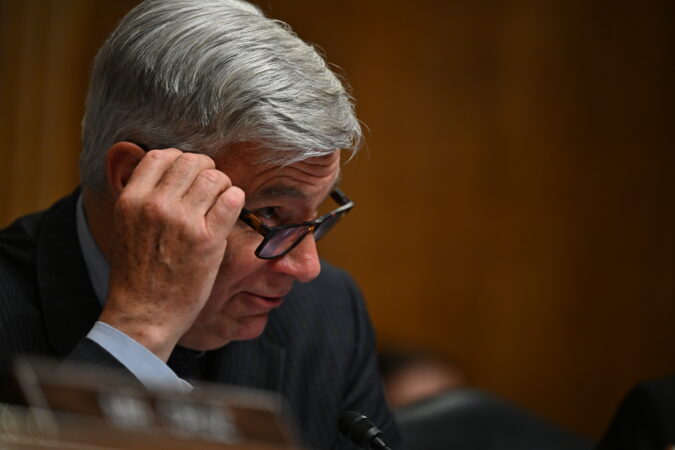
“It’s a somewhat complicated area of law across different jurisdictions,” Sen. Sheldon Whitehouse (D., R.I.) said of the challenges in garnering support for the bill, which he sponsored. “But I didn’t see any huge partisan issues.”
Whitehouse said there was a lack of urgency at the time, even though the Supreme Court had “more or less strangled” the legal pathway that had been used since the 1970s to sue federal officials for civil rights violations.
Last fall, Whitehouse and Rep. Hank Johnson (D., Ga.) reintroduced the measure. Legal experts told the Post they think it is unlikely to pass, citing anticipated concerns about exposing federal law enforcement officers to personal liability.
A handful of states already have laws that authorize claims against federal officials for the violation of constitutional rights, including New Jersey and Massachusetts, according to research compiled by Stark of the University of Wisconsin Law School. Lawmakers in other states are scrambling to draft similar bills.
Last week, the California Senate passed the “No Kings Act” to allow civil rights lawsuits against federal officers. The measure will head to the State Assembly next.
In Colorado, Mike Weissman, a Democratic state senator, recently introduced a similar bill. He described talking with state legislators in Washington, New Mexico, and Virginia, to exchange ideas.
And in Minnesota, State Rep. Jamie Long, a Democrat whose district includes part of Minneapolis, has drafted such a bill for the legislative session that begins later this month.
“We know that there is evidence of these severe constitutional violations happening, and that’s why we think it’s appropriate to create this state remedy,” Long said.
Such measures are likely to be challenged. The U.S. Justice Department has already sued Illinois, alleging that its new law authorizing civil rights claims against federal officers is an “unconstitutional attempt to regulate federal law enforcement officers.”
In the meantime, those who say they have sustained property damage or injuries during immigration enforcement efforts and their attorneys are continuing to press lawmakers to enable them to sue federal officers.
Christopher Parente, a Chicago-based lawyer, is representing Marimar Martinez, a 30-year-old teacher’s assistant who was shot five times by a Border Patrol agent in October and survived. In an interview with the Post, her attorney said he thinks that Congress should change the law.
Parente, a former federal prosecutor who plans to file a tort claim on Martinez’s behalf, said, “There is no deterrence — in fact, these agents are embraced and celebrated by this administration and their colleagues.”
Marimar Martinez (center) is greeted by her family after being released from the Metropolitan Correctional Center on Oct. 6, 2025, after being shot by immigration agents and charged with assaulting federal officers in an incident in Chicago’s Brighton Park.
A chilling effect
People seeking compensation from the federal government may face another roadblock: finding an attorney to take their case.
“I’ve met people who spent the entire statute of limitations period, which is generally two years, looking for attorneys to represent them in cases against the federal government or federal officials and not being able to find them,” said Anya Bidwell, senior attorney for the Institute for Justice, a nonprofit law firm based in the D.C. area.
Bidwell said many attorneys are deterred from taking Federal Tort Claims Act cases because the government often invokes “a very broad immunity that courts traditionally interpret to pretty much swallow any of the claims that involve any kind of a judgment or choice on behalf of an officer.”
In other words, many cases are dismissed. Bidwell said “even getting to trial is extremely difficult.”
Some people who consider filing claims ultimately decide not to, discouraged by the long and difficult process.
In Minneapolis, Gina Christ, a 55-year-old business manager, contacted a lawyer to challenge what she described as an unlawful detention. But the attorney she met with told her suing the government would be “very, very difficult,” Christ recalled.
Christ had driven to a protest that began after Border Patrol agents allegedly tried to arrest a pair of Latino teens. She said she parked along the side of the street to observe the agents, not to obstruct them.
Christ said she was soon surrounded by agents and protesters. Agents yelled at her to move before smashing the window of her Ford Escape. They opened the door, pulled her out of the car, and held her facedown on the pavement, she said.
Agents restrained her wrists with plastic zip ties, Christ said, while her eyes and throat burned from tear gas fired into the nearby crowd.
Authorities took her to a federal building for processing, she said, and placed her in metal arm and leg shackles. She said they walked her to a folding table, where there was a makeshift sign with the criminal code for assaulting an officer. They told her she would face charges and took her fingerprints and a DNA swab.
Christ said she spent nearly four hours in custody before she was released. She hasn’t been charged with a crime.
A Customs and Border Protection spokesperson did not answer questions about the agency’s interaction with Christ.
After weighing the difficulty of pursuing a tort claim, Christ said she plans to pay to fix her window herself. Given what others have lost, she said, it seems too small to pursue.
COLLINGSWOOD, N.J. — The shawarma, falafel wraps and baklava at Jersey Kebab are great, but many of its patrons are also there these days for a side of protest.
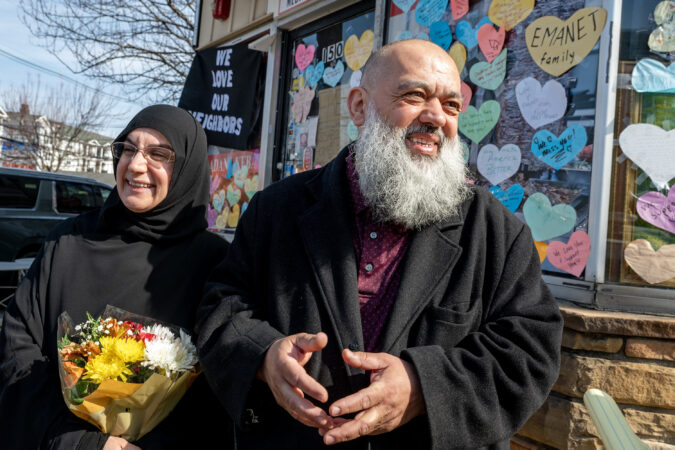
A New Jersey suburb of Philadelphia has rallied around the restaurant’s Turkish owners since federal officers detained the couple last February because they say their visas had expired.
In fact, business has been so good since Celal and Emine Emanet were picked up early in the Trump administration’s immigration crackdown that they have moved to a bigger space in the next town over. Their regulars don’t seem to mind.
Celal Emanet, 52, first came to the U.S. in 2000 to learn English while he pursued his doctorate in Islamic history at a Turkish university. He returned in 2008 to serve as an imam at a southern New Jersey mosque, bringing Emine and their first two children came, too. Two more would be born in the U.S.
Before long, Celal had an additional business of delivering bread to diners. They applied for permanent residency and believed they were on their way to receiving green cards.
When the COVID-19 pandemic began and the delivery trucks were idled, Celal and Emine, who had both worked in restaurants in Turkey, opened Jersey Kebab in Haddon Township. Business was strong from the start.
On Feb. 25, U.S. marshals and Immigration and Customs Enforcement officers arrested the couple at the restaurant. Celal was sent home with an ankle monitor, but Emine, now 47, was moved to a detention facility more than an hour’s drive away and held there for 15 days.
With its main cook in detention and the family in crisis, the shop closed temporarily.
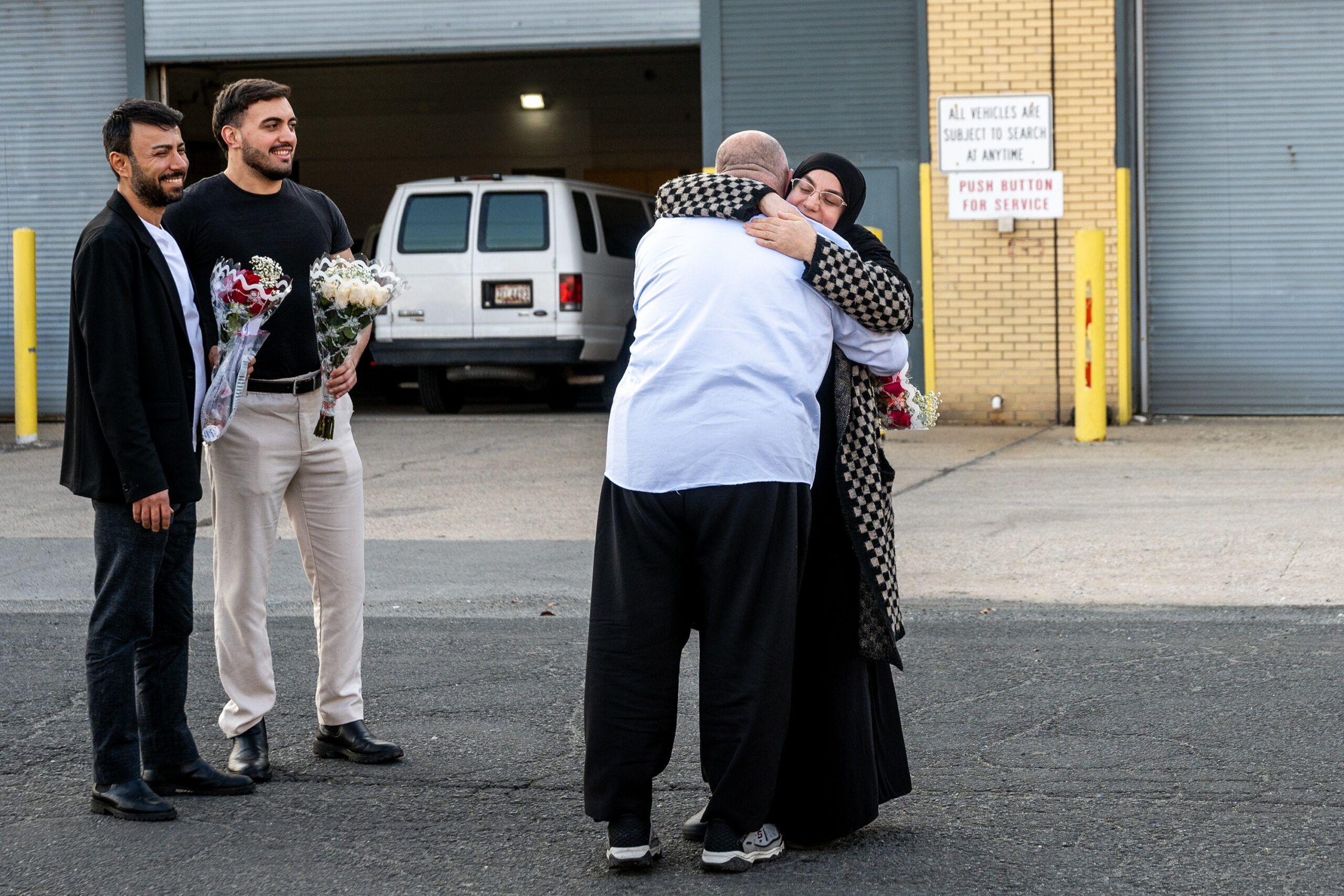
Emine Emanet hugs her husband Celal as she leaves the ICE Elizabeth Detention Facility on Wednesday, March 12, 2025.
Although the area is heavily Democratic, the arrests of the Emanets signaled to many locals that immigration enforcement during President Donald Trump’s second term wouldn’t stop at going after people with criminal backgrounds who are in the U.S. illegally.
“They were not dangerous people — not the type of people we were told on TV they were looking to remove from our country,” Haddon Township Mayor Randy Teague said.
Supporters organized a vigil and raised $300,000 that kept the family and business afloat while the shop was closed — and paid legal bills. Members of Congress helped, and hundreds of customers wrote letters of support.
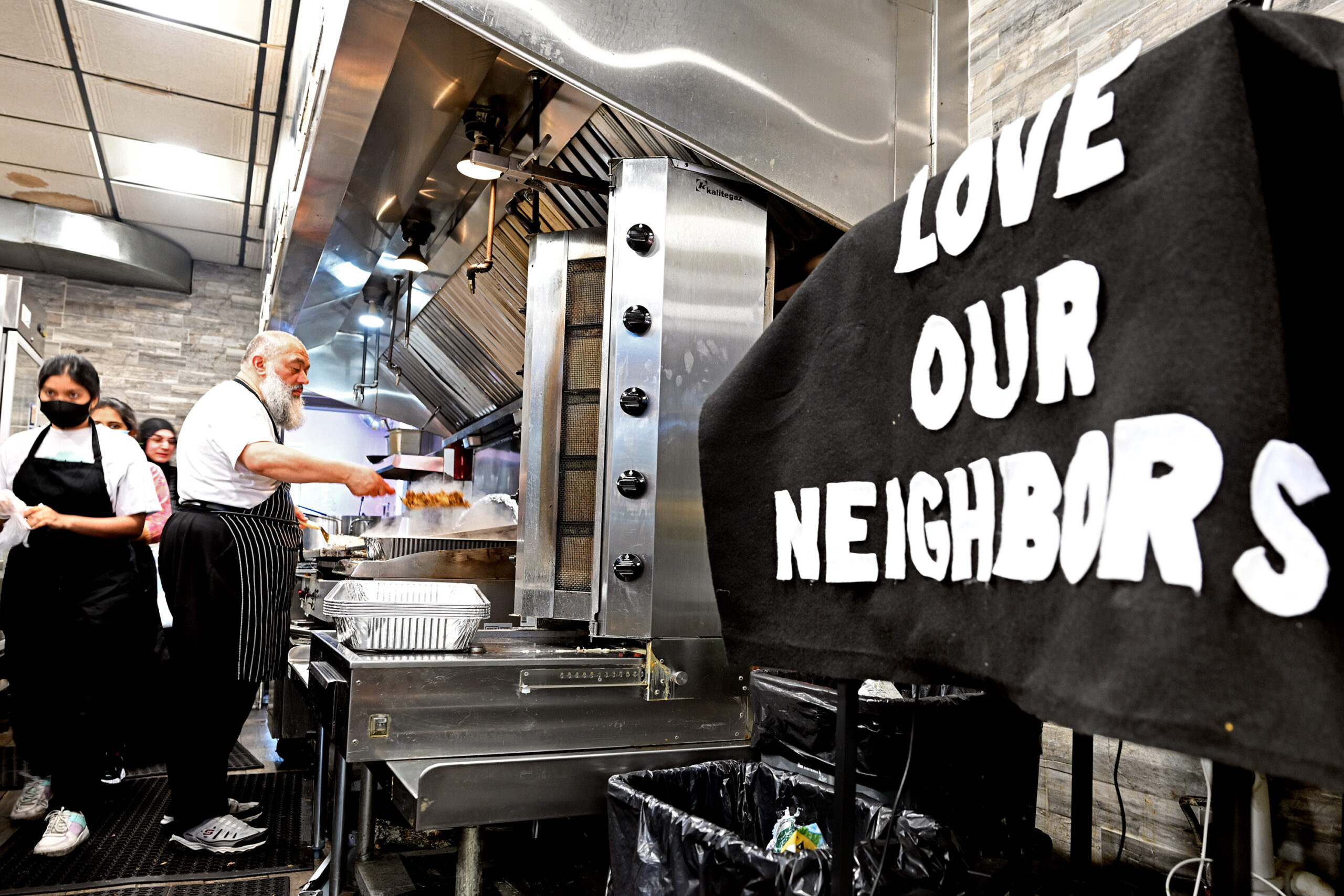
Celal Emanet works at the grill in his Jersey Kebab restaurant on Sunday, Mar. 30, 2025.
Space for a crowd
As news of the family’s ordeal spread, customers new and old began packing the restaurant. The family moved it late last year to a bigger space down busy Haddon Avenue in Collingswood.
They added a breakfast menu and for the first time needed to hire servers besides their son Muhammed.
The location changed, but the restaurant still features a sign in the window offering free meals to people in need. That’s honoring a Muslim value, to care for “anybody who has less than us,” Muhammed said.
Judy Kubit and Linda Rey, two friends from the nearby communities of Medford and Columbus, respectively, said they came to Haddon Township last year for an anti-Trump “No Kings” rally and ate a post-protest lunch at the kebab shop.
“We thought, we have to go in just to show our solidarity for the whole issue,” Kubit said.
Last month, with the immigration crackdown in Minneapolis dominating the headlines, they were at the new location for lunch.
Gretchen Seibert tapes up hearts with words of support for Celal and Emine Emanet, the owners of Jersey Kebab, after the couple was detained by ICE in February 2025.
The legal battle hasn’t ended
The Emanets desperately want to stay in the U.S., where they’ve built a life and raised their family.
Celal has a deportation hearing in March, and Emine and Muhammed will also have hearings eventually.
Celal said moving back to Turkey would be bad for his younger children. They don’t speak Turkish, and one is autistic and needs the help available in the U.S.
Also, he’d be worried about his own safety because of his academic articles. “I am in opposition to the Turkish government,” he said. “If they deport me, I am going to get very big problems.”
The groundswell of support has shown the family they’re not alone.
“We’re kind of fighting for our right to stay the country,” Muhammed Emanet said, “while still having amazing support from the community behind us. So we’re all in it together.”
A man died Thursday morning in a fire inside a North Philadelphia home.
The fire started around 5:15 a.m. on the 2500 block of North 12th Street, where crews found heavy smoke and fire coming from the two-story rowhouse, according to the Philadelphia Fire Department. Firefighters witnessed fire coming from the second floor, where they found a person dead inside the home.
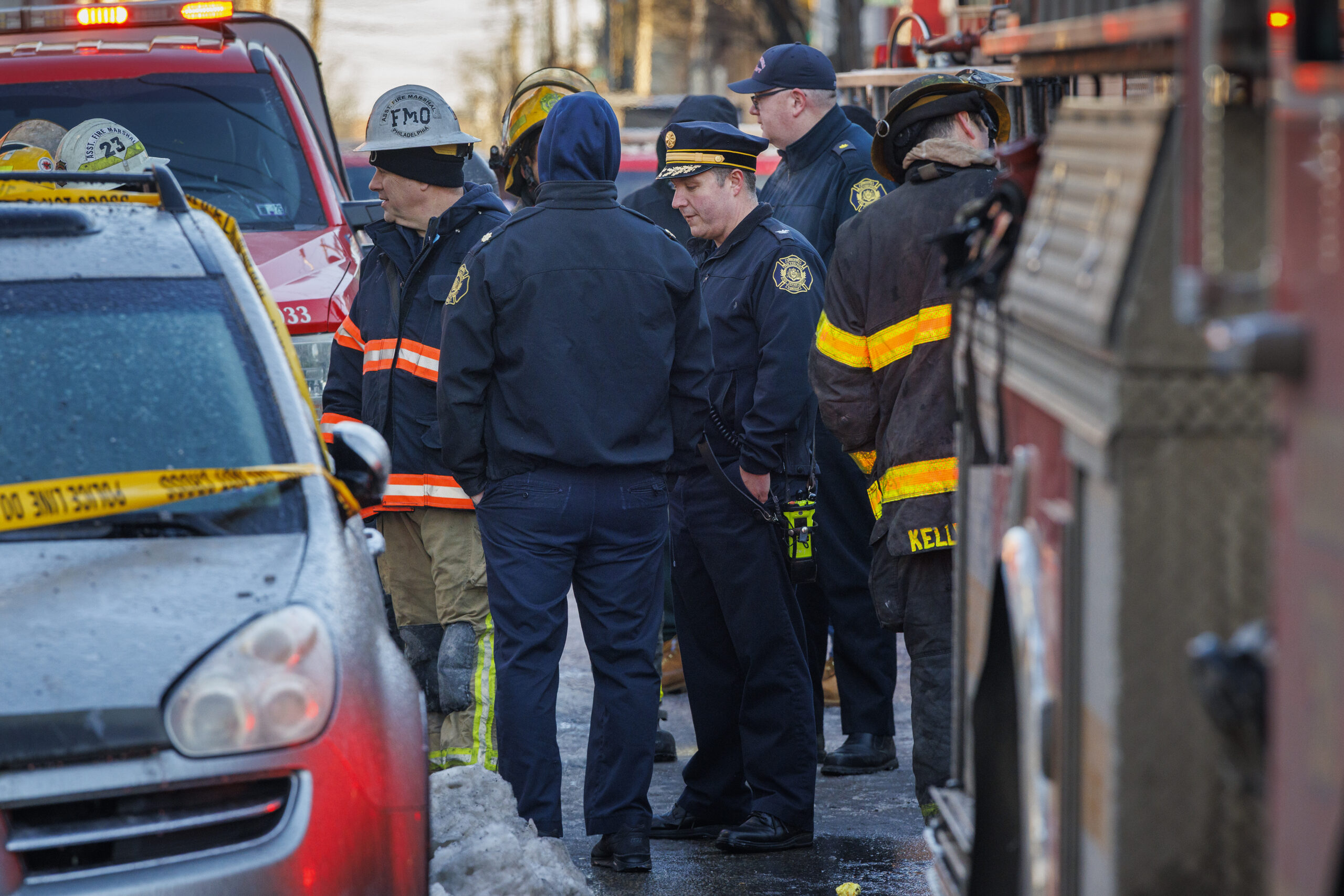
Philadelphia fire department personnel at scene of fatal fire 2500 block N. 12th Street, early Thursday, Feb. 5, 2026.
Firefighters placed the fire under control by 5:45 a.m. The cause of the fire remained under investigation.
The Thursday morning blaze followed a fatal house fire in Kingsessing on Wednesday morning, which the fire marshal’s office determined was intentionally set, and another fatal fire in early January that claimed the life of a woman in the Ogontz section.
TUCSON, Ariz. — “Today” show host Savannah Guthrie’s brother on Thursday renewed the family’s plea for their mother’s kidnapper to contact them, hours after an Arizona sheriff said investigators don’t have proof Nancy Guthrie is alive but believe “she’s still out there.”
“Whoever is out there holding our mother, we want to hear from you. We haven’t heard anything directly,” Camron Guthrie said in a video posted on social media.
“We need you to reach out and we need a way to communicate with you so we can move forward,” but first the family needs to know the kidnapper has their mother, he said, echoing a statement his famous sister read the day before.
Five days into the desperate search for 84-year-old Nancy Guthrie, authorities have not identified any suspects or persons of interest, Pima County Sheriff Chris Nanos said.
Authorities think she was taken against her will from her home in Tucson over the weekend. DNA tests showed blood found on Guthrie’s front porch was a match to her, the sheriff said.
“Right now, we believe Nancy is still out there. We want her home,” Nanos said at a news conference earlier Thursday. He acknowledged, however, that authorities have no evidence she’s OK.
Demands for ransom
Investigators said they are taking seriously notes seeking ransom that were sent to some media outlets.
It’s unclear if all of the notes were identical. Heith Janke, the FBI chief in Phoenix, said details included a demand for money with a Thursday evening deadline and a second deadline for Monday if the first one wasn’t met. At least one note mentioned a floodlight at Guthrie’s home and an Apple watch, Janke said.
“To anyone who may be involved, do the right thing. This is an 84-year-old grandma,” Janke said.
At least three media organizations reported receiving purported ransom notes, which they handed over to investigators. Authorities made an arrest after one ransom note turned out to be fake, the sheriff said.
A note e-mailed Monday to the KOLD-TV newsroom in Tucson included information that only the abductor would know, anchor Mary Coleman told CNN.
“When we saw some of those details, it was clear after a couple of sentences that this might not be a hoax,” she said.
The sheriff said it’s possible Nancy Guthrie was targeted, but if she was, investigators don’t know if that’s because her daughter is one of television’s most visible anchors.
Authorities say any decision on whether to fulfill ransom demands ultimately is up to the family.
A day earlier, Savannah Guthrie and her siblings released a message to her mother’s kidnapper, saying they are ready to talk but want proof their mom is still alive. There’s been no response to their pleas so far.
New timeline of Guthrie’s disappearance
Investigators gave a more detailed timeline from the hours after Nancy Guthrie was last seen Saturday night. She was eating dinner and playing games with family members before one of them dropped her off at her home in a upscale neighborhood that sits on hilly, desert terrain, the sheriff said.
About four hours later, just before 2 a.m. Sunday, the home’s doorbell camera was disconnected, Nanos said. But Guthrie did not have an active subscription, so the doorbell company was unable to recover any footage.
Software data recorded movement at the home minutes later, the sheriff said, acknowledging that the motion could have come from an animal.
Then at 2:28 a.m. the app on Guthrie’s pacemaker was disconnected from her phone.
Search enters a fifth day
Guthrie was reported missing shortly before noon Sunday after she didn’t show up at a church.
While she is able to drive and her mind is sharp, the sheriff said she has difficulty walking even short distances. She also requires daily medicine that’s vital to her health, he has said.
A sheriff’s dispatcher said during the search Sunday that Guthrie has high blood pressure, a pacemaker and heart issues, according to audio from broadcastify.com.
Investigators searched in and around Guthrie’s home again for several hours Wednesday.
Authorities are bringing more resources and people into the investigation, and the FBI announced Thursday it was offering up to $50,000 for information. A day earlier, President Donald Trump posted on social media that he was directing federal authorities to help where they can.
Savannah Guthrie has hosted “Today” — NBC’s flagship morning show — for more than a decade and had been set to co-anchor the network’s coverage of Friday’s opening ceremony for the Winter Olympics. For now, she’s staying close to her mother’s home.
She joined her two siblings in an emotional plea on social media Wednesday to say they’re ready to talk to whoever sent the ransom notes.
“We need to know without a doubt that she is alive and that you have her. We want to hear from you and we are ready to listen. Please reach out to us,” she said while fighting off tears.
With her voice cracking, she addressed her mother directly, saying the family was praying for her and that people were looking for her. She was flanked by Camron and their sister, Annie.
“Mamma, If you’re listening, we need you to come home. We miss you,” Annie Guthrie said.