Category: News

Latest breaking news and updates

  • 🏓 Ping-pong prowess in Phoenixville | Inquirer Chester County

    Hi, Chester County! 👋

    The USA Table Tennis Pennsylvania Open is coming to Phoenixville this weekend. Local players say the sport is about winning glory, but also forming community. Also this week, the county announced a new voter services director, the man accused of randomly shooting a CHOP nurse in Tredyffrin Township appeared in court, and the Spring-Ford school district is moving to fire a teacher supported by community members.

    If someone forwarded you this email, sign up for free here.

    ‘I’m finally trying to live my childhood dream’

    About 40 to 50 table tennis players will compete for rankings, cash prizes, and trophies in Phoenixville on June 27 as part of the USA Table Tennis Pennsylvania Open.

    Dozens of Philly-area ping-pong enthusiasts will take to the Phoenixville Recreation Center on Saturday for the USA Table Tennis Pennsylvania Open.

    Local players will square off for cash prizes, trophies, and rankings, gathering official points that could even help to one day elevate their USA Table Tennis standing high enough to qualify for the Olympics. Categories include women’s singles, juniors, and over 40.

    But aside from the fame and glory, many Chester County ping-pongers are building community and living out their childhood dreams via the sport. Deepak Gupta, the owner of Exton Table Tennis, said he has built friendships as he plays against other local fathers.

    “Once I started playing table tennis with some of the other dads, we started getting to know each other more as individuals and more as friends,” the 52-year-old said, “and then taking that spirit and … expanding it to a community.”

    The Inquirer’s Brooke Schultz has the details, including on which popular table tennis movie has elevated the sport the most.

    Chester County hires new voter services director
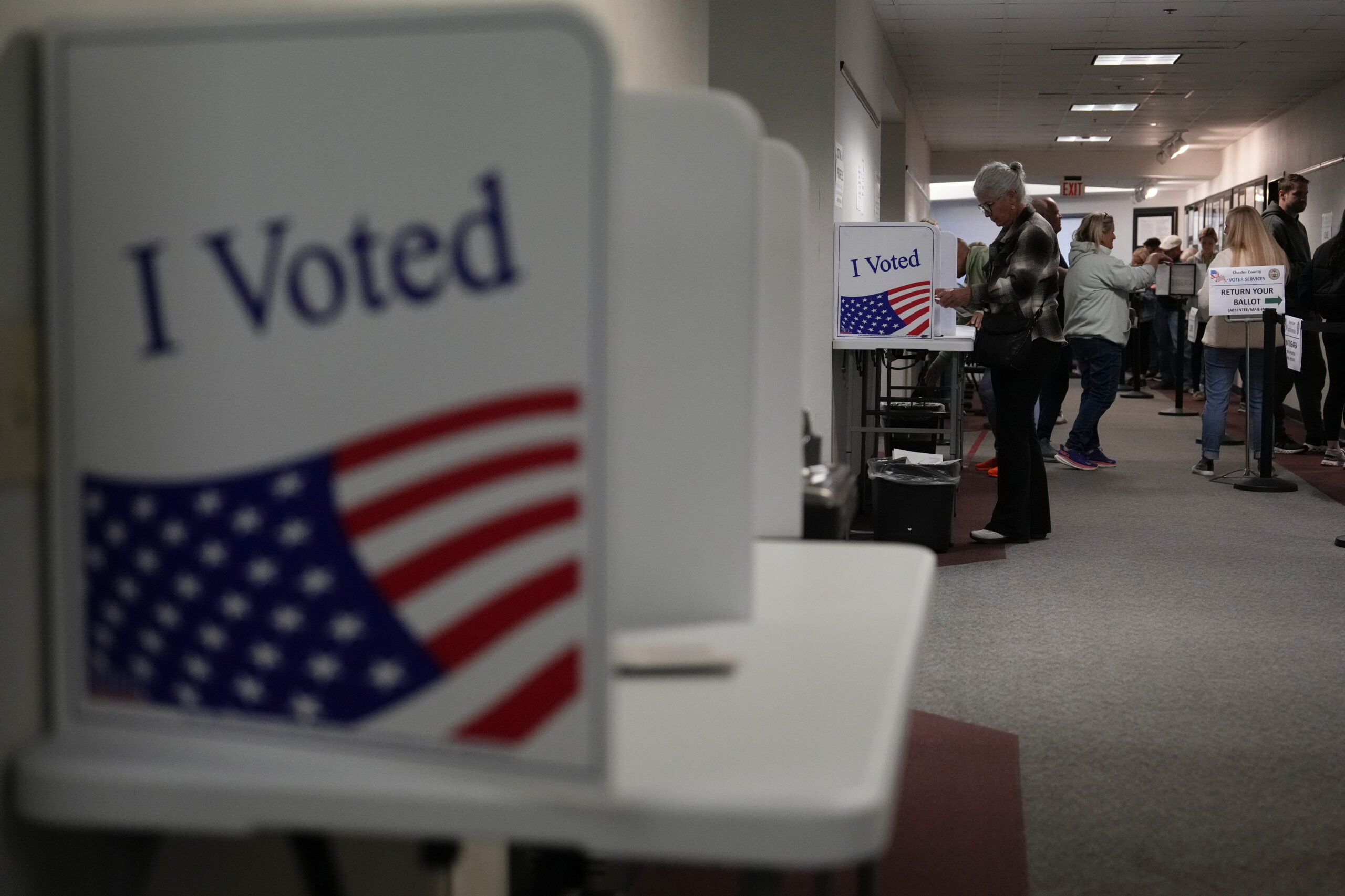
    People fill out mail-in ballots for the 2024 general election at a Voters Services satellite office at the Chester County Government Services Center, Friday, Oct. 25, 2024, in West Chester, Pa.

    West Chester resident Michele DiCaprio will soon take over as Chester County’s new director of voter services, inheriting an office recently marred by controversy, including staff turnover, hostile work environment allegations, and election administration-related issues.

    DiCaprio’s experience as a former foreign service officer sets her up for success in the role, the county said in a news release.

    She replaces Karen Barsoum, who announced her resignation in March and ended her tenure on June 12. DiCaprio will begin the role on July 20.

    Reporter Fallon Roth has more on DiCaprio and what’s on her plate when it comes to repairing residents’ trust in the county’s voting security practices.

    📍 Countywide News

    💡 Community News

    • Steve Jahn, the Berwyn man accused of fatally shooting Children’s Hospital of Philadelphia nurse Megan Nieberle, 53, in Tredyffrin Township in March, appeared for the first time in court Monday. The apparently random act shocked the Chester County community and incited conversation about mental illness and firearms. Jahn, 44, has been charged with first- and third-degree murder, among other crimes.
    • The Chester County District Attorney’s Office is investigating after an officer with the North Coventry Township Police Department was involved in a shooting Monday. Few details were available about the incident as of Tuesday, including whether anyone was injured.
    • Coatesville couple Mousa Hawa and Holly Back were sentenced to decades in prison last week for the murder of their 8-year-old son. Prosecutors said Hunter died of an overdose in 2023 after ingesting drugs in their home, The Inquirer’s Vinny Vella reports.
    • Wawa has filed for a liquor license for its forthcoming location at 799 Valley Forge Rd. in Schuylkill Township.
    • The Borough of West Chester is seeking feedback about a potential shared shuttle bus program with West Chester University. Take the survey here.

    🏫 Schools Briefing

    • Spring-Ford Area School District is moving to fire an eighth-grade Spanish teacher, Jasmine Ewing, for reasons it has not made public. The school board vote to approve a statement of charges came amid an outpouring of community support shared during a public meeting Monday, The Inquirer’s Maddie Hanna reports.
    • Phoenixville Area School District’s board approved Kathryn “Kate” Pacitto as its next assistant superintendent at its most recent meeting. Pacitto currently serves as executive director of curriculum and pupil services for the district. She’s been signed to a five-year contract and will assume the new role July 1.
    • Registration is open for West Chester Area School District’s school safety summit, which will take place Aug. 6 at Rustin High School.

    🍽️ On our Plate

    🎳 Things to Do

    🎙️ Sound of Summer Free Concert Series: Delaware rock band Too Tall Slim and the Guilty Pleasures headlines this week’s show. There will also be food trucks. ⏰ Wednesday, June 24, 6:30-8:30 p.m. 💵 Free 📍 Anson B. Nixon Park, Kennett Square

    🎹 Tredyffrin Township Summer Concert Series: Philadelphia-area band The Sin Brothers headline this week’s show. ⏰ Thursday, June 25, 7 p.m. 💵 Free 📍 Wilson Farm Park, Wayne

    🍿 Movie Night: West Bradford will screen Wicked: For Good outdoors. There will also be $1 ice creams. ⏰ Thursday, June 25, 8:30 p.m. 💵 Free 📍 Broad Run Park, Downingtown

    🍺 Rhythm & Brews: There will be live music, food trucks, and yard games at this recurring New Garden event. ⏰ Tuesday, June 30, 6-8 p.m. 💵 Pay as you go 📍 New Garden Park, Landenberg

    🎶 Eagleview Summer Concert Series: Hear local cover band LeCompt, along with special guest and fellow local Lia Menaker. ⏰ Tuesday, June 30, 7-9 p.m. 💵 Free 📍 Eagleview Town Center, Exton

    🗞️ What other Chester County residents are reading this week:

    By submitting your written, visual, and/or audio contributions, you agree to The Inquirer’s Terms of Use, including the grant of rights in Section 10.

    This suburban content is produced with support from the Leslie Miller and Richard Worley Foundation and The Lenfest Institute for Journalism. Editorial content is created independently of the project donors. Gifts to support The Inquirer’s high-impact journalism can be made at inquirer.com/donate. A list of Lenfest Institute donors can be found at lenfestinstitute.org/supporters.


  • Cherry Hill is home to these iconic dishes | Inquirer Cherry Hill

    Cherry Hill is home to these iconic dishes | Inquirer Cherry Hill

    Hello, Cherry Hill! 👋

    The township is home to some of the most iconic dishes in the region, according to our food reporters. Here’s what makes the cut. Also this week, meet the Knicks exec who got his start at East, learn about free legal services for military members and veterans, and find soft-shell crabs at a local eatery.

    If someone forwarded you this email, sign up for free here.

    Get hungry

    Find the panzarotti at Tarantini Panzarotti.

    Earlier this month, The Inquirer dropped our list of the 76 most iconic dishes in the region, a handful of which can be found right here in the township.

    Ranking at No. 61 is Santucci’s upside-down pizza, a pie so distinctive reporter Michael Klein said it helps give the region its own pizza identity. You can snag your own square pie with the sauce on the top at the outpost on Springdale Road.

    Head a few miles down Springdale and you can order a panzarotti at Tarantini Panzarotti. The calzone-adjacent food ranks No. 29 on our list.

    Also making the cut at No. 51 is gelati, the decidedly Philly spin on water ice (on its own, it ranks No. 2) and custard. Reporter Beatrice Forman reups the tastiness of a Dubai chocolate dupe at Cherry’s Ice Cream & Water Ice.

    Check out the full list here. But be warned: You’ll be hungry after you finish reading it.

    The Knicks exec with local roots

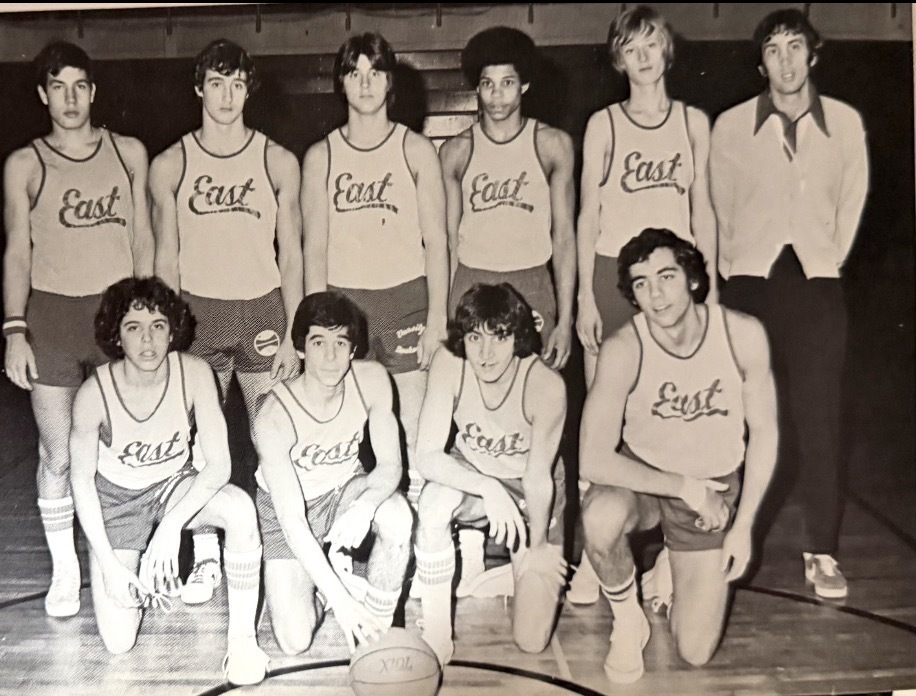
    Leon Rose (front row, far left) played for Cherry Hill East’s junior varsity as a freshman.

    Meeting Leon Rose today means knowing him as president of the New York Knicks, the team that has catapulted to the top of the headlines after clinching its first NBA title since 1973. But when many longtime South Jersey residents think of Rose, memories of a force-to-be-reckoned-with “gym rat” playing and coaching at Cherry Hill East are what come to mind.

    Rose played under head coach John Valore from 1975 to 1979 before joining Valore’s staff in the early ‘80s while studying at Temple University’s law school. Even after attracting clients as famous as 76ers legend Allen Iverson and LeBron James, Rose could be found volunteer coaching at Katz JCC, where his 88-year-old father is still a regular.

    From pickup hoops in Cherry Hill to the Larry O’Brien Championship Trophy, take a deep dive into Rose’s basketball legacy with Inquirer reporter Alex Coffey.

    💡 Community News

    • The zoning board is holding a special meeting tomorrow night, which will include discussion about BAPS Cherry Hill’s application to expand its building. The Hindu temple at 1 Carnegie Plaza is looking to add a 15,350-square-foot second story for a gym and classrooms, in addition to a 2,930-square-foot lobby. It’s also looking to add 23 new parking spaces and make some changes to its existing interior and exterior. BAPS’ space now spans over 65,000 square feet.
    • Camden County military members, veterans, and their spouses can access free legal services at the township’s One-Stop Career Center starting this month. The first Veterans Will Clinic, offering last will and testament, power of attorney, and an advance directive, is today. The second will be on July 29, The Inquirer’s Sarah Nicell reports.
    • The community is mourning Robin Cogan, a West alum who became a Camden City School District school nurse and national health and safety advocate. She died of cancer at Cooper University Hospital earlier this month.
    • Camden County residents have reported a spate of roving peacocks in recent weeks. Reporter Sarah Nicell reminds that in March, Cherry Hill had its own rogue peacock sighting.
    • Heads up for drivers: Work continues on Kresson Road, which will have a partial closure westbound between Springdale Road and Ravenswood Way from 7 p.m. to 5 a.m. through Friday.
    • Ready for spooky season? Summer just began, but Spirit Halloween is already preparing its return to the Plaza at Cherry Hill. (42 Freeway)

    🏫 Schools Briefing

    • More than 500 East students graduated in a ceremony at Temple University’s Liacouras Center last week. South Jersey Media has photos from the event.
    • East has a relatively high summative rating, according to data from the state Department of Education’s annual School Performance Reports, which gave it an 83.98. The score factors in graduation rates, standardized test scores, student academic growth, and chronic absenteeism, among other things. West’s rating falls considerably lower at 32. (NJ.com)

    🍽️ On our Plate

    • Soft-shell crab season is officially here. Looking for a spot to snag the sweet, briny dish? The Inquirer’s Michael Klein suggests trying the dish at Caffe Aldo Lamberti, where the presentation regularly changes.
    • The “lucky six” soup dumplings at Nan Xiang Xiao Long Bao are the best dumplings in the state, according to a ranking from NJ.com. The outlet noted that they come in a rainbow of colors and are filled with ingredient combinations like truffle and pork, scallops and pork, and shrimp and pork.

    🎳 Things to Do

    🛼 Summer Kickoff Skate Party: Celebrate the end of the school year and the state of summer with face painting, a glam station, relay races, and hidden beach balls. ⏰ Thursday, June 25, noon-8 p.m. 💵 $5 admission 📍 Hot Wheelz

    🗓️ In My Bag: Summer Social: This women’s-only event includes line dancing, singalongs, and networking. ⏰ Saturday, June 27, 2-5 p.m. 💵 $24.71 📍 Vera

    🦖 Jurassic Park: Teenagers can catch a screening of the popular 1993 film. Registration is required. ⏰ Tuesday, June 30, 6-8:30 p.m. 💵 Free 📍 Cherry Hill Public Library

    🏡 On the Market

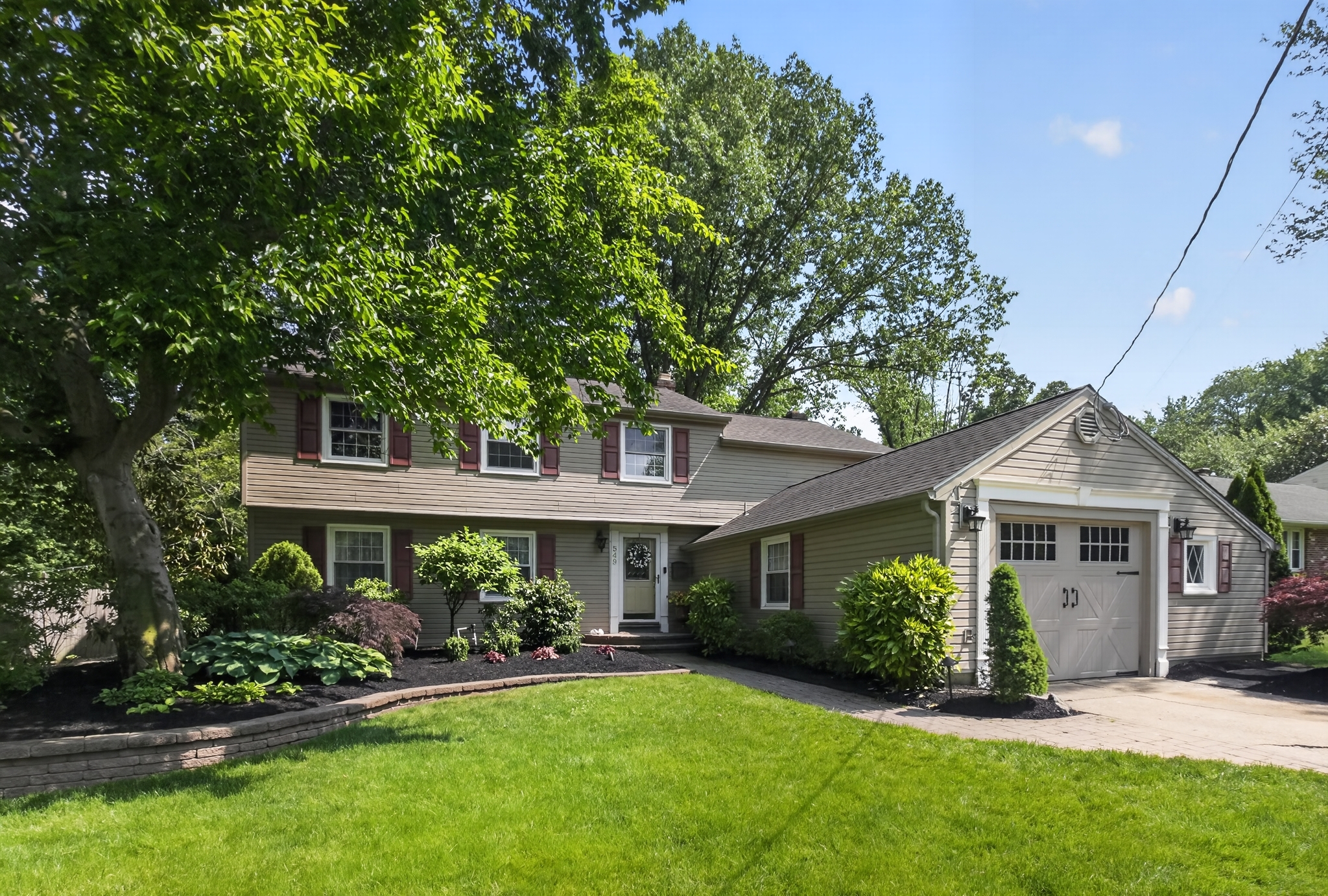
    An updated Barclay home with curb appeal

    The front of the home features landscaping and hardscaping.

    Located in the Barclay section of Cherry Hill, this four-bedroom, two-and-a-half-bathroom home has undergone a number of updates recently, including a full renovation to the kitchen. The space features stainless steel appliances and a subway tile backsplash. Also on the first floor is a living room, dining room, a den with a fireplace, and a bonus room. Upstairs there’s an office as well as all four bedrooms, including the primary suite with a walk-in closet. Out back, there’s a stone water feature and landscaping.

    See more photos of the property here.

    Price: $625,000 | Size: 2,366 SF | Acreage: 0.27

    🗞️ What other Cherry Hill residents are reading this week:

    By submitting your written, visual, and/or audio contributions, you agree to The Inquirer’s Terms of Use, including the grant of rights in Section 10.

    This suburban content is produced with support from the Leslie Miller and Richard Worley Foundation and The Lenfest Institute for Journalism. Editorial content is created independently of the project donors. Gifts to support The Inquirer’s high-impact journalism can be made at inquirer.com/donate. A list of Lenfest Institute donors can be found at lenfestinstitute.org/supporters.
  • Philly police union defends questionable expenses, blaming city ‘ineptitude’ for delayed funeral payouts for officers killed in the line of duty

    Philly police union defends questionable expenses, blaming city ‘ineptitude’ for delayed funeral payouts for officers killed in the line of duty

    Philadelphia’s police union issued a statement criticizing city officials for failing to promptly reimburse expenses incurred for officers who died in the line of duty, and disputed the city’s claim that it did not use tax dollars to cover a roughly $11,500 funeral luncheon, which included a 94% “gratuity.”

    The Fraternal Order of Police Lodge 5’s statement, which was posted on Facebook last week and emailed to its members, followed an Inquirer investigation that found the union has for years billed the city following an officer’s death for expenses that are unrelated to funeral home and cemetery costs.

    “The problem has always been and continues to be the city of Philadelphia’s ineptitude to pay bills in a timely fashion,” the FOP wrote. “Which leads to the survivors’ families having to make large financial decisions for funerals, services, luncheons, transportation, cemeteries, funeral attire, and cremations within days of suffering a traumatic life-changing event.”

    Since 2014, the city has contributed up to $75,000 in tax dollars for each line-of-duty death, up from $15,000. The FOP’s contract with the city calls for the union to be reimbursed for “reasonable and necessary funeral expenses.” But there is no further explanation of what would qualify, and The Inquirer found the union has asked the city to pay tens of thousands of dollars for everything from bar and restaurant tabs to socks and underwear.

    The FOP has also billed the city for at least eight events at its own bar, 7C Lounge, located inside its sprawling headquarters in Northeast Philadelphia. One of those events was a luncheon in May 2020 for Cpl. James O’Connor IV, a 23-year veteran and married father of two, who had been shot and killed in March of that year.

    His funeral had to be postponed for eight weeks due to the COVID-19 pandemic and only a limited number of people, all in masks, were permitted inside the church.

    Pallbearers carry the body of slain Philadelphia Police Cpl. James O’Connor IV outside Our Lady of Calvary on May 8, 2020. O’Connor was killed in the line of duty.

    Even though the city had restricted bars and restaurants to takeout and delivery service, the FOP held a 2½-hour lunch for O’Connor at its own bar.

    Records show the FOP billed the city for $5,700 worth of bottled beer, an open bar, and food for 160 people. The union added a $5,375 gratuity.

    Sharolyn L. Murphy, the city’s risk manager and deputy finance director, wrote in an email to The Inquirer that the city did not reimburse the FOP for the O’Connor luncheon.

    The FOP statement claims otherwise. The union wrote that it provided the city with comprehensive documentation and was fully reimbursed.

    The FOP statement also says that the $5,375 was not all a gratuity — which is how it is listed on the bill — but just $925 for a tip while the rest was payment for kitchen and catering workers, bartenders, servers, and managers.

    “This was the only way to add the payroll and gratuity expense to the catering invoice,” the FOP wrote. “This was all documented and explained in timestamped email records and provided to the city which is why they approved the reimbursement.”

    The FOP attached to its statement copies of six emails listing the amounts paid to the staffers, all of whose names are redacted. Names of the senders and recipients are also redacted, except for then-FOP president John McNesby’s.

    The emails were not included in the Right-to-Know records The Inquirer received from the city. The city did not respond to questions about whether the risk management team had gotten them and, if so, why they were not among the documents previously provided to the newspaper.

    But Murphy on Tuesday e-mailed The Inquirer a breakdown of the items the city denied from a $32,600 reimbursement request, including the cost of the O’Connor luncheon, as well as liquor bills totaling $800 and $50 in miscellaneous beverages.

    “The city provides expeditious payment of funeral expenses to support families of those who made the ultimate sacrifice to service to Philadelphia,” Murphy wrote in an e-mailed response to The Inquirer. “At the same time, the city has a responsibility to ensure that taxpayer funds are spent appropriately.”

    Current FOP president Roosevelt Poplar and McNesby, who served as the union’s president for 16 years before stepping down in 2023, did not respond to multiple requests for comment before The Inquirer published its investigation. In its June 13 statement, the FOP called The Inquirer’s investigation a “hatchet job hit piece.”

    The Inquirer’s examination of the funeral expenses underscored questions about the FOP’s nonprofit Charitable Foundation, commonly known as the Survivors’ Fund, which raises money to pay for funerals and support the families of officers who were killed or seriously injured in the line of duty.

    A 2025 Inquirer investigation found that the FOP reported spending hundreds of thousands of dollars on “funerals and special events” in years when no officers died in the line of duty, and that its expenditures and cash donations had been loosely documented and were difficult to track.

    The Inquirer sought further clarity by filing Right-to-Know requests with the city for more than 1,000 pages of invoices, bills, emails, and other public records concerning 17 police line-of-duty deaths since 2014. Eight of the deaths were attributed to COVID.

    The FOP publicly criticized The Inquirer’s records request.

    Included in the documents were FOP submissions of receipts from businesses such as Target, Home Depot, Walmart, Acme, 7-Eleven, and CVS that include no explanation as to why they were funeral expenses. The union has also forwarded statements of corporate credit cards requesting reimbursement for restaurants and beer stores.

    Some reimbursement requests lacked receipts or itemized breakdowns, and at least two were for cash. The FOP did not address the cash requests in its statement.

    The Inquirer found that the city has covered the bulk of the FOP’s requests, although in almost all cases, the documents do not point to which specific reimbursements were approved or denied. An FOP request for $1,870 to cover two bar tabs and pipes and drums after a dinner is the only explicit denial in the records.

    The FOP wrote in its statement that its “finance office and accounting firm have comprehensive, accurate, and detailed records for all financial transactions for our multiple accounts. There are no missing or incomplete records.”

  • The son of the Jersey Kebab restaurateurs now faces his own fight to stay in the U.S.

    The son of the Jersey Kebab restaurateurs now faces his own fight to stay in the U.S.

    The son of the Jersey Kebab restaurant owners whose ICE arrests sparked wide condemnation last year now confronts his own battle to stay in the United States.

    Muhammed Emanet, 26, said he is trying to be upbeat as he faces the prospect of being separated from his wife and two sons, ages 4 and 1, all American citizens.

    “I try not to dwell on what I can’t control,” said Emanet, who with his parents operates the popular South Jersey eatery in Collingswood. “I still have a restaurant to run, employees that depend on me, customers, family. I have no other choice but to be positive.”

    Still, his situation feels disorienting, as what seemed to be settled is now newly unsettled.

    In spring the Department of Homeland Security ended its effort to deport Emanet, which seemed to clear the path for him to stay in the U.S. But this month, a different federal immigration agency told him it plans to deny his request for legal permanent residency, what is known as a green card.

    That intended denial carries a 30-day window for Emanet, who came here from Turkey as a boy, to present new or additional evidence to try to change the minds of officials at U.S. Citizenship and Immigration Services.

    The government also told him that under a new Trump administration policy, he and other immigrants who are pursuing green cards while living in the U.S. must leave the country and apply from their home nations. Emanet hasn’t been in Turkey since he was 12.

    It’s unclear what will happen when the 30-day deadline expires around July 2.

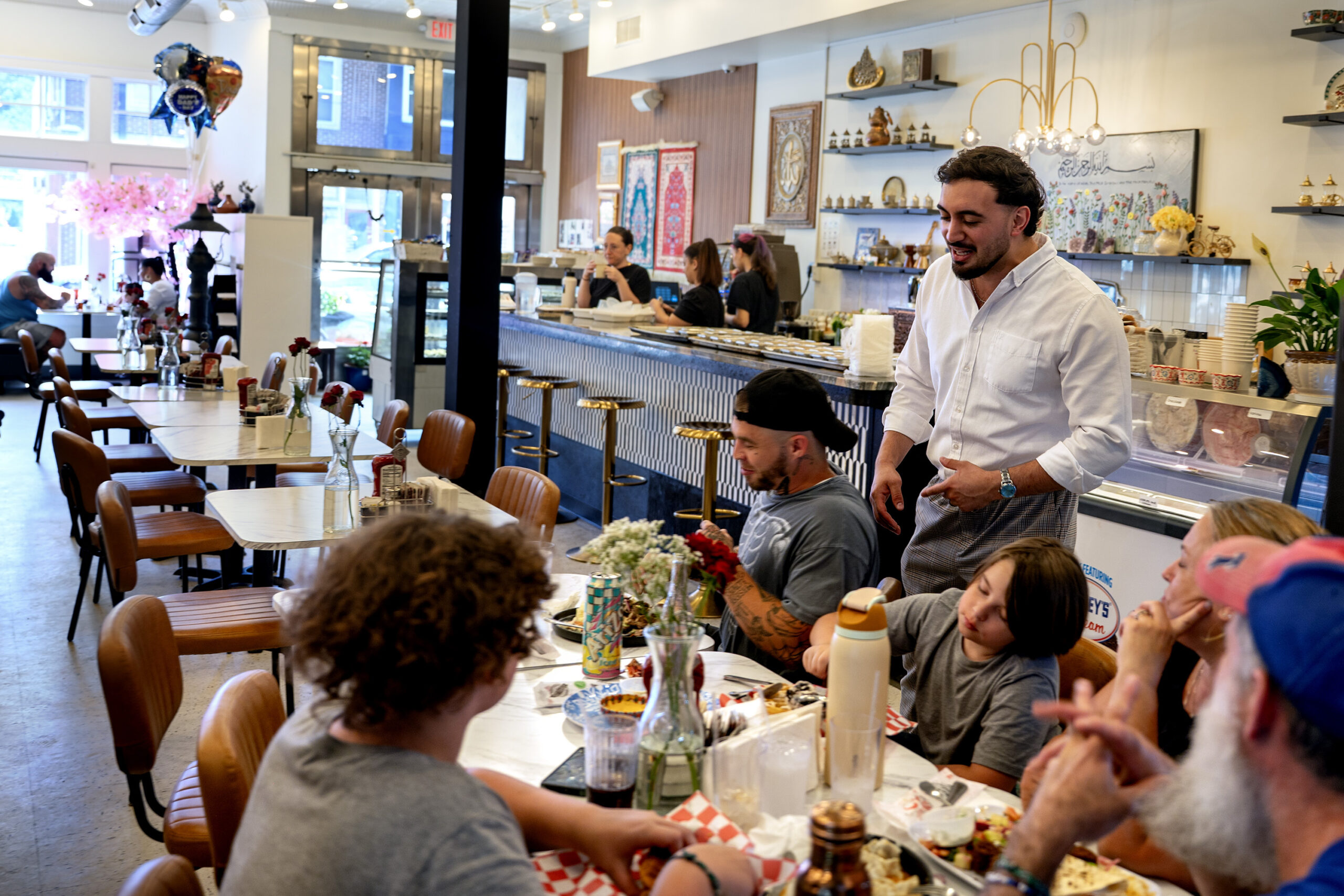
    Muhammed Emanet greets Elijah Brown, a friend from high school, and his family, at Jersey Kebab in Collingswood on Sunday.

    A little more than a year ago, on Feb. 25, 2025, the small Mediterranean restaurant on Haddon Avenue generated national headlines. Immigration advocates and local leaders railed against what they saw as government injustice, after ICE agents arrested owners Celal Emanet and his wife, Emine.

    Celal Emanet was released after being fitted with an electronic ankle monitor ― later removed ― while his wife was held at an ICE detention center in Elizabeth. She was released on bond after two weeks and a day.

    Their arrests angered a South Jersey community that has long known the couple as caring people who offer free food to the hungry. A GoFundMe campaign to pay family costs and expenses raised $327,000, drawing donations from across the country and beyond, including from Ireland, Germany, and England.

    Now, a community effort to help Muhammed Emanet is driving a new letter-writing campaign, with person after person attesting to his good character and his importance to his neighbors. Hundreds of letters have been signed and gathered to be presented on his behalf, said Lori Leonard, who organized the GoFundMe campaign last year.

    “People are rallying behind Muhammed,” she said.

    State Assemblyman Bill Moen, a Democrat who represents parts of Camden and Gloucester Counties, signed a letter of support. He said on social media that Emanet “has touched the lives of many people throughout South Jersey” as a husband, father, neighbor, friend, and businessperson.

    “While I don’t make immigration decisions,” Moen said, “I do believe decision-makers should understand the character of the people whose lives are affected by those decisions.”

    U.S. Rep. Donald Norcross, a South Jersey Democrat, met with the family soon after Emine Emanet was released from ICE detention, and as her son’s situation emerged this month he stressed in a statement that the family had been long “rooted in our community.”

    In response to questions on Muhammed Emanet’s situation, USCIS said it does not comment on individual immigration cases.

    Being removed to Turkey would likely separate Emanet from his wife and children for years. It also could subject him to reprisals from the Turkish regime, where repressive human-rights conditions under President Recep Tayyip Erdogan has driven an exodus.

    Marriage to a U.S. citizen by someone who legally entered the country ― as Emanet did ― has long been a reliable route to an adjustment of status and acquisition of a green card.

    But the Trump policy change announced in May said adjustment should be an “extraordinary” relief, one that depends on government discretion, not merely on having a valid marriage and submitting the proper forms. Failing to depart the U.S. under the policy can by itself be treated as a negative factor in the government’s decision-making.

    Emanet’s immigration lawyer, Joseph Best, said that change in administration policy does not alter the law around eligibility for green cards.

    “If USCIS follows the law,” Best said, “he will attain his lawful permanent resident status just as Congress intended. It is not some fluke or exceptional ‘ask’ here.”

    Discretionary factors, he said, all favor Emanet, who was brought legally to the U.S. as a child, was admitted under a valid visa, and has no criminal history. He is loved in his community, and a key person in a successful family business that is known for helping others, Best said.

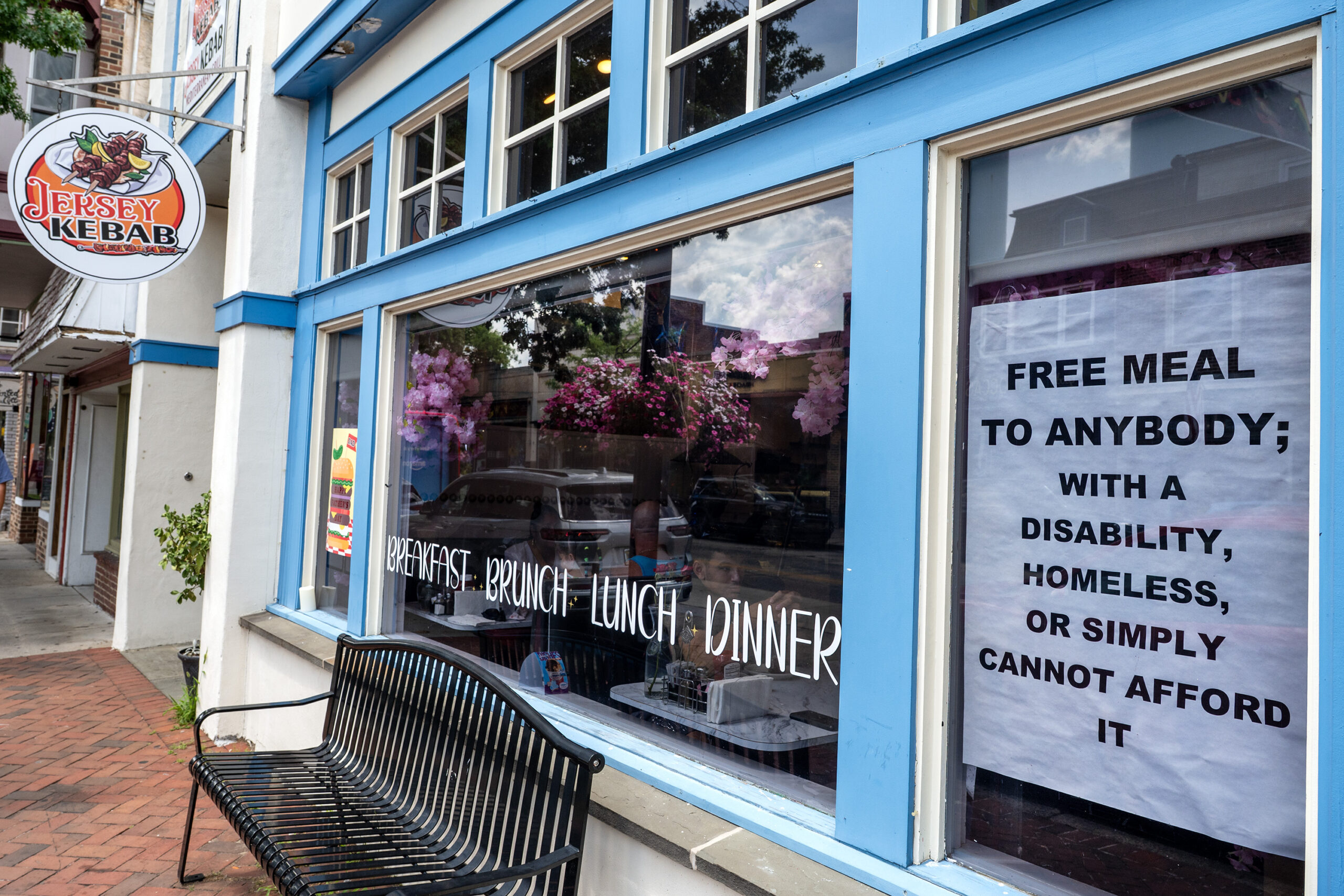
    The Jersey Kebab restaurant in Collingswood where Muhammed Emanet works is seen on Sunday, June 21. It offers the same “Free Meal” policy as at the prior location in Haddon Township.

    Celal and Emine Emanet came legally to the United States with two young children in 2008, entering under a religious visa that allowed the father to work at a New Jersey Islamic center.

    They said that they sought green cards before that visa expired in 2013, but that the application has been in government limbo for years.

    In 2021, they founded Jersey Kebab in Haddon Township, and the restaurant recently moved west on Haddon Avenue to a new location in Collingswood.

    The couple’s immigration cases continue. Celal Emanet’s next hearing is scheduled for December, while his wife is to appear in April 2027.

    The family stands among roughly 386,000 Turkish immigrants and people of Turkish ancestry who live in the United States, according to Inquirer computations of U.S. Census figures. That includes about 15,000 in Philadelphia and surrounding suburban Pennsylvania and New Jersey counties.

    Turkey is a longtime U.S. ally, a rectangular land bridge between Europe and Asia that is surrounded by sea on three sides. It is a Muslim nation, a country of tea drinkers, the place where Julius Caesar is said to have immortally proclaimed “Veni, vidi, vici” ― “I came, I saw, I conquered” ― after a decisive battle victory near what is now the modern town of Zile.

    Today, people are leaving the country amid economic instability and political purges, with many trying to get to the United States.

    U.S. government apprehensions of Turkish nationals at the Mexican and Canadian borders surged from 67 in 2020 to more than 15,000 in 2022 and another 15,000-plus in 2023, dropping to 10,500 in 2024. Figures for 2025 were not immediately available.

    President Donald Trump is expected to be in Turkey next month to attend the NATO summit in Ankara.

    Muhammed Emanet works at his family’s restaurant, Jersey Kebab, in Collingswood on Sunday, June 21.

    During Trump’s second term, USCIS has repeatedly paused the processing of applications for all types of immigration benefits, including those for legal permanent residency.

    Last month, the administration announced it would require foreigners who are living in the U.S. and want to obtain green cards to leave the country to do so. The administration said they must now apply in their homelands, a departure from longstanding policy that has sowed confusion and concern.

    For decades, foreign nationals who meet requirements have been able to complete the green-card process in the United States, including those married to U.S. citizens, holders of work and student visas, and refugees and asylum seekers.

    USCIS spokesperson Zach Kahler said in a statement that entering the U.S. on a visa should not be a first step toward obtaining a green card, that tourists and temporary workers are permitted to come here for limited times.

    “Our system is designed for them to leave when their visit is over,” he said.

    Making people leave the country to apply for green cards “reduces the need to find and remove those who decide to slip into the shadows and remain in the U.S. illegally,” he said.

    The administration instructed immigration officers to consider violations of immigration laws, including overstaying a visa, as negative factors in their decision-making.

    Since the uproar, though, USCIS has seemed to walk back the policy, saying it would be implemented on a case-by-case basis. That could mean that some immigrants will be able to stay in the U.S. while they seek green cards.

    Emanet said his immigration case started in 2020, when two plainclothes ICE officers arrived at the family home and said he was in the country illegally.

    In spring, his attorney persuaded an immigration court in Newark to terminate Emanet’s court case ― with no opposition from the DHS Office of the Principal Legal Adviser, the ICE prosecutors. That termination seemed to clear the way for Emanet to adjust his status.

    Instead, on June 3 he received a Notice of Intent to Deny from federal immigration officials, indicating they plan to reject his application to adjust his status. He is not sure what will happen when the 30-day deadline for new information expires.

    “I have children here who need my support ― American citizens who depend on me,” Emanet said. “I thought I was that one, that I did everything exactly how I was supposed to, that I should receive my green card. … It feels like a punch in the gut.”

  • Man fatally shot while driving in Northeast Philly

    Man fatally shot while driving in Northeast Philly

    A man was fatally shot while driving a car Tuesday afternoon in Northeast Philadelphia, police said.

    Just after 3:50 p.m., police responded to reports of gunfire on the 9000 block of Frankford Avenue and found the victim in a Honda Accord crashed outside an AutoZone store at Frankford and Academy Road.

    The man, who had been shot in the face and shoulder, was transported by medics to Jefferson Torresdale Hospital, where he was pronounced dead at 4:22 p.m.

    The shots were fired from a tan-colored SUV that fled on Interstate 95.

    Police found spent shell casings on Frankford Avenue in front of a 7-Eleven across the street from the AutoZone.

    No other information was released.

  • Pennsauken’s Yaxel Lendeborg selected by Golden State Warriors in first round of NBA draft

    Pennsauken’s Yaxel Lendeborg selected by Golden State Warriors in first round of NBA draft

    Yaxel Lendeborg went from playing one varsity season at Pennsauken High School to an NBA lottery pick.

    The 23-year-old forward, who was the Big Ten Player of the Year this season at national champion Michiganwas picked No. 11 by Golden State in the first round on Tuesday night.

    Expressing emotion when hearing his name called at the Barclays Center in Brooklyn, Lendeborg embraced his mother, Yissel, in tears.

    He said on the ESPN telecast that “I don’t deserve to be here right now. I didn’t have the traditional path. … I can’t believe it.”

    Lendeborg thought his basketball career was over in high school. He played in just 11 games his senior year after being academically ineligible to play for his sophomore and junior seasons.

    That was until an opportunity arose — thanks to his mother — at the junior college level with Arizona Western College.

    “That kid got here because of her,” Lendeborg said on the telecast. “She pushed a dream, forced me to go out there and become a man.”

    He spent three seasons at Arizona Western, including a COVID-19 season, where he emerged in his third year, averaging 17.2 points and 13 rebounds. In 2023, he transferred to Alabama-Birmingham and played two seasons with the Blazers.

    Yaxel Lendeborg celebrates with his family after being selected by the Golden State Warriors.

    In his final season at UAB, he averaged 17.7 points and 11.4 rebounds. He also was named the American Conference’s Defensive Player of the Year and an all-conference selection twice.

    Lendeborg, who is 6-foot-9, graduated from UAB in 2025 and entered the transfer portal for his final year of eligibility, which brought him to Michigan. Lendeborg averaged 15.1 points and 6.8 rebounds in 40 games for the Wolverines.

    Tuesday was the second time in Michigan program history that three players were drafted in the first round.

    Center Aday Mara was picked by the Oklahoma City Thunder at No. 12 after forward Morez Johnson Jr. went ninth overall to the Mavericks, reuniting with his college coach, Dusty May, who on Tuesday was named Dallas’ head coach.

    After he was selected, Lendeborg said his mother told him, “We did it. All the sacrifice we made, we finally accomplished it — you did it.”

    He’ll join a Golden State team that finished 10th in the Western Conference, with a 37-45 record this season.

  • CBS News hired an independent watchdog. What’s he doing?

    CBS News hired an independent watchdog. What’s he doing?

    When news organizations around the world have faced criticism, they have historically turned to specialists: ombudsmen, in-house critics empowered to investigate their employers’ coverage and report their findings to the public.

    But when CBS News appointed one last year, under an agreement with the Federal Communications Commission, it took a different tack. It tapped Kenneth Weinstein to flag complaints privately to its executives, pitching him in the hiring announcement as “an independent, internal advocate for journalistic integrity and transparency.”

    As CBS News has been shaken by infighting between management and its star correspondents this year, Weinstein’s silence is being criticized by media experts. They say Paramount, the parent company of CBS News, has essentially hired a watchdog who doesn’t bark.

    In the nine months since he was hired, Weinstein has issued no public statements about CBS News’ coverage or its controversies. He has not issued any guidance or feedback in staffwide emails or memos, three employees said. He has told some employees that he is scheduled to work only one day per month, two people said, though one said he responded to queries outside his monthly workday.

    Most ombudsmen are much more public facing, said Jeffrey Dvorkin, a former NPR ombudsman who wrote the handbook for the Organization of News Ombuds and Standards Editors. That handbook says ombudsmen should report to the public, usually in a weekly column or mutually agreeable time slot.

    Part of “stewarding public trust,” as Weinstein promised to do in his hiring announcement, is addressing the public, Dvorkin said.

    “What’s the point then?” he said of CBS News’ decision not to require Weinstein to publish anything. “How is an ombudsman going to convey the public’s concerns, both internally and externally?”

    Paramount said in a statement that Weinstein had been doing his job.

    “He’s there to review concerns about CBS News’ reporting and coverage through a process that has been clear from the beginning,” the statement said. “Since September, he’s independently assessed the issues brought to him and, when appropriate, discussed them with CBS News and Paramount Skydance leadership.”

    After Weinstein flags potential problems to Paramount’s executives, they decide whether to raise them with CBS News.

    Since Weinstein was hired, Bari Weiss, the new editor-in-chief of the network, has been accused of injecting political bias into stories by three high-profile journalists for CBS’s 60 Minutes. She fired them all as part of a broader shake-up of the show. The remaining three correspondents said they would stay only because they didn’t want the show to die. (CBS News has denied the allegations of editorial meddling.)

    Many newsrooms have done away with their ombudsmen. Some, like the New York Times, which dropped the position in 2017, argued that they were anachronisms in an era of instant online criticism. Others have cited dwindling resources. In addition to the Times, the Washington Post, ESPN, and the Boston Globe did away with their in-house critics in the last quarter-century; NPR and PBS are among the last remaining U.S. news organizations that employ a full-time public editor.

    The FCC announced the creation of the CBS News ombudsman when it approved Skydance’s acquisition of Paramount in July. The agency’s chair, Brendan Carr, had been investigating a complaint about a 60 Minutes interview with Vice President Kamala Harris from the previous fall, but allowed the deal after the company agreed to employ, for two years, an ombudsman who would evaluate claims of bias. (President Donald Trump sued Paramount over the interview. Press freedom advocates said the controversy was baseless.)

    Carr said the move would “promote transparency and increased accountability.”

    In September, Paramount announced that it had found its pick: Weinstein, a veteran of the Hudson Institute, a right-leaning Washington think tank. Though he had no experience overseeing news coverage, Weinstein had served on the board of the U.S. Agency for Global Media, an independent federal agency that oversees U.S. government-supported civilian media such as Voice of America. There, he worked alongside Jeff Shell, who would become Paramount’s president.

    Though Weinstein does not respond to complaints publicly, he is easy to reach. CBS News set up a website where viewers can submit their concerns, anonymously or by name. One of the people said that many of the notes Weinstein received focused on the network’s coverage of the war in the Gaza Strip.

    At least one inquiry to Weinstein has been made public. Rep. Jamie Raskin (D., Md.) sent him a letter in December to ask for a full accounting of the network’s decision-making around a November interview with Trump.

    But Weinstein did not reply. Instead, Paramount’s general counsel sent a letter to Raskin explaining that the interview had been edited for length.

    In December, after a 60 Minutes correspondent, Sharyn Alfonsi, accused Weiss of meddling in one of her stories, media critics mused publicly about whether Weinstein would weigh in.

    “I wonder if the CBS News ombudsman will have anything to say about this,” Brian Stelter, CNN’s chief media analyst, wrote on social media. Eric Deggans, the Knight professor of journalism and media ethics at Washington & Lee University, posted: “Wonder if Weiss will ever say exactly why she pulled the story? Or if CBS News new ombudsman will somehow surface?”

    Carr, at least, does not seem concerned by the public silence from Weinstein.

    This month, after Weiss fired the three 60 Minutes correspondents, Carr was asked directly whether Weinstein would look into their complaints of editorial interference.

    Jake Tapper, an anchor on CNN, sat down with Carr and pointed out that the FCC had pushed for an ombudsman to evaluate claims of bias, and asked whether Weinstein should investigate.

    “I don’t think so,” Carr said.

    This article originally appeared in the New York Times.

  • Why a Boston-based appeals court ruling matters for President’s House

    Why a Boston-based appeals court ruling matters for President’s House

    President Donald Trump’s administration is closer to getting its way after a Boston-based appeals court said it doesn’t have to restore exhibits it removed — at least for now.

    The Boston-based U.S. Court of Appeals for the First Circuit ruled the National Park Service does not have to restore all exhibits it removed as part of its “restoring sanity to American history” push before the nation’s 250th anniversary celebration, issuing an administrative stay on a lower court’s order.

    That order protected the historic site of George Washington’s Philadelphia residence on Sixth and Market Streets from further changes after the U.S. Court of Appeals for the Third Circuit ruled last week that Philadelphia does not have the right to dictate the content of exhibits at the President’s House. The exhibits were dismantled by the Trump administration earlier this year.

    But it remains to be seen whether the stay allows the Trump administration to install the newly proposed panels, which historians say whitewash Washington’s culpability in enslaving nine people at his Philadelphia home.

    In a statement, the Department of the Interior responded: “We are confident that as this inferior ruling from an activist lower court judge receives further scrutiny, they will be further restrained.”

    Administrative stays are common steps federal courts take to buy time while judges assess the arguments.

    The First Circuit judges intend to rule “promptly” on a request for a more permanent stay during the appeal, the order says.

    Either way, the ruling marks a second blow in a week to the City of Philadelphia and stakeholders who developed the President’s House Site.

    Michael Coard, attorney and founder of Avenging the Ancestors Coalition, which is leading efforts to protect the President’s House, emphasized that the First Circuit action was not a final decision.

    “The stories of enslaved African descendants and other historically marginalized communities are American history and deserve to be preserved and told truthfully,” he said.

    Here is what you need to know about the status of the President’s House exhibits.

    The President’s House in Independence National Historical Park March 11, 2026.

    What do Boston-based courts have to do with the President’s House?

    Earlier this year, conservation groups sued the Trump administration in federal court in Massachusetts challenging Interior Secretary Doug Burgum’s 2025 order implementing the president’s directive to ensure that no displays at national parks “inappropriately disparage Americans past or living.”

    U.S. District Judge Angel Kelley this month temporarily blocked the National Park Service from removing or altering content at parks across the country, and required the agency to restore before July 4 all exhibits that had been removed.

    The Trump administration’s changes to exhibits “seek to rewrite the Nation’s history with a white-out pen,” wrote Kelley, a nominee of former President Joe Biden.

    At least 50 exhibits were removed from more than 30 sites nationwide, according to court records.

    Justice Department attorneys appealed the ruling to the First Circuit and asked the higher court to issue an administrative stay or a stay for the duration of the appeal.

    The three judges assigned to the case — Chief Judge David J. Barron, appointed by Barack Obama, and Biden appointees Gustavo A. Gelpí Jr. and Julie Rikelman — issued the administrative stay Tuesday pausing the majority of Kelley’s order, including the directive to restore sites such as the President’s House.

    The order is not explicit on whether the National Park Service can make changes to sites, but administrative stays are viewed as a way to preserve the status quo while the appeals court can review the facts and arguments in a case.

    “The administration’s decision not to reinstall and reinstate censored materials, particularly in advance of our nation’s upcoming 250th anniversary, is a disservice to every park visitor this summer and to the broader American public,” the conservation groups, represented by Democracy Forward, said in a statement.

    What did the Third Circuit rule?

    The First Circuit ruling comes on the heels of the Third Circuit’s reversal of a February order entered by a Philadelphia federal judge.

    Judge Cynthia M. Rufe issued an injunction that required the Trump administration to restore the President’s House to its form before the abrupt Jan. 22 removal of exhibits.

    A three-judge panel disagreed with Rufe, finding that Philadelphia gave up its rights over the President’s House when it donated the site to the National Park Service. The judges further said the federal government’s proposed replacement panels were “full of historical context.”

    Mayor Cherelle L. Parker thanks workers as the President’s House site in Independence National Historical Park Thursday, Feb, 19, 2026 during a brief visit to the site as they began to return the slavery displays.

    What are the city’s options?

    After the Third Circuit ruling, Mayor Cherelle L. Parker said she would “pursue every legal action possible in efforts to reverse this decision.”

    The city has a few options, but time is running out for a favorable ruling before July 4.

    The city could ask for a rehearing in front of the same three judges who unanimously ruled to overturn the injunction. It can also ask for a hearing in front of the full Third Circuit court, known as en banc, or ask the U.S. Supreme Court to intervene.

    Philadelphia Law Department attorney Anne Taylor argued at the Third Circuit hearing that the federal government’s attack on these exhibits has caused irreparable harm as the city tries to tell its story ahead of next month’s 250th celebrations.

    Philadelphia is expecting a flood of visitors for the Semiquincentennial celebration, Taylor said, adding: “The President’s House is at the doorway to the Liberty Bell. That history is not being told to all the people who are expected to come here.”

    It could be challenging, or even impossible, to get a new panel of circuit judges or the Supreme Court justices briefed on the case to get a ruling in less than two weeks, legal experts said.

  • Pa. State Police investigating death of dialysis patient in Chester County

    Pa. State Police investigating death of dialysis patient in Chester County

    The Pennsylvania State Police are investigating the death last week of a person in Chester County whose connection to a dialysis machine apparently had been “cut.”

    On June 16, troopers from the Embreevile Station were called to the 400 block of Glen Run Drive in Atglen Borough, where paramedics responded to a hemorraging incident but was unable to save the person’s life, the state police said Tuesday.

    The preliminary investigation “determined the hemorrhaging was the result of a dialysis port being cut,” the state police said.

    The state police are investigating in coordination with the Chester County District Attorney’s Office.

    No other information about the deceased person were released.

  • Iranian singer sentenced to 74 lashes for performing without hijab

    Iranian singer sentenced to 74 lashes for performing without hijab

    An Iranian court has sentenced an outspoken female singer to 74 lashes for performing at a concert without wearing a hijab, according to a family member and state media news reports. The punishment indicated a possible tightening of religious rules for women under an Iranian political order reshaped by war.

    The singer, Parastoo Ahmadi, was sentenced last week at a closed trial in Qom province along with eight band and crew colleagues.

    A video of the 2024 performance, in which the singer’s hair, arms, and shoulders are uncovered, in defiance of Iranian law, went viral on YouTube.

    Ahmadi and her colleagues were also banned from performing or leaving the country for two years, said the family member who asked to remain anonymous, fearing reprisal for speaking to the media. Two of the nine individuals sentenced were not in Iran when the verdict was announced, the family member said.

    The sentencing came just days after Iran and the United States tentatively agreed to end a monthslong conflict that has killed thousands across the Middle East and sent shock waves throughout the global economy.

    The government’s crackdown on artistic expression and women’s dress has dampened hopes among some Iranians for a more moderate postwar order.

    “Besides being an inhumane and humiliating punishment, the 74-lash sentence against Parastoo Ahmadi simply for singing without compulsory hijab is a dangerous signal that the regime, emboldened by the peace deal with the U.S., may intensify its crackdown on women,” said Mahmood Amiry-Moghaddam, director of the Norway-based Iran Human Rights.

    The strikes against Iran by the United States and Israel that began in February killed several key figures, including Ayatollah Ali Khamenei, who oversaw the violent and repressive theocracy over nearly four decades.

    President Donald Trump justified the war, in part, by saying the United States intended to help Iranians overturn their leaders. “Iranian Patriots, KEEP PROTESTING — TAKE OVER YOUR INSTITUTIONS!!!” he wrote on social media in January.

    That month, Iranian authorities responded to widespread protests by killing thousands of people. Raha Bahreini, a lawyer and an Iran researcher at Amnesty International, called it a “state-orchestrated massacre.”

    Now, it is not clear that the war has left Iran in less restrictive hands than before. Khamenei’s son, Mojtaba Khamenei, has succeeded his father as supreme leader, and a group of hard-line senior members of the Revolutionary Guard has assumed an expansive role in running the country.

    In 2022, there were also hopes that change might come for Iranian women. Large protests erupted after the death of a young woman who was in the custody of the country’s morality police for violating the hijab law. The state responded by killing hundreds of people.

    During the “Women, Life, Freedom” movement that followed, more Iranians decided to flout the hijab rules, and violent crackdowns appeared to abate slightly, according to a U.N. report documenting the aftermath of the protests.

    It was in that context that the video of Ahmadi’s 2024 performance, in which she crooned a set of patriotic folk songs while wearing a simple black dress, went viral. The caption read: “I am Parastoo, a girl who wants to sing for the people I love. This is a right I could not ignore; singing for the land I love passionately.”

    Ahmadi and two of her collaborators were briefly detained after the video was posted.

    Now, with a postwar political order appearing to solidify in Iran, some in the country are looking at the sentencing of Ahmadi and her bandmates and wondering what it may mean for the future.

    “Will this country ever be fixed one day?” said Mariam, 30, a teacher in Mashhad who asked that her last name be withheld for fear of reprisals. “Where in the world is a woman’s singing punishable by lashes?”

    Iranian authorities have attempted to “project an image of normalcy” after the war, said Bahar Ghandehari, director of advocacy at the Center for Human Rights in Iran. But, she said, “cases like Parastoo’s expose the reality of the human rights situation in Iran: Women continue to face profound discrimination under the law, and defiance results in punishment and state violence.”

    It was unclear when the authorities planned to lash Ahmadi and the other defendants. Since the 2022 protests, there have been multiple documented cases of the authorities whipping women accused of violating hijab rules or speaking out against them.

    Court documents related to the trial have not been made public.

    This article originally appeared in the New York Times.