Category: News

Latest breaking news and updates

  • Federal citizenship data tool cannot be used to screen voters, judge rules

    Federal citizenship data tool cannot be used to screen voters, judge rules

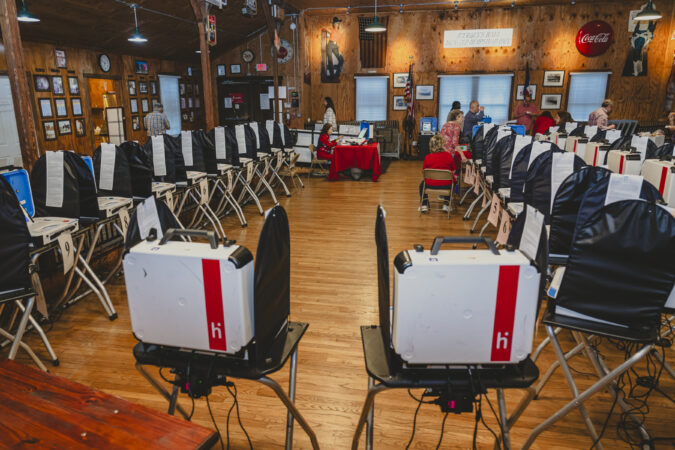
    WASHINGTON — A federal judge on Monday barred the Trump administration from letting states query a centralized national database of citizens built for checking immigration status to screen their voter rolls, finding that the repurposing of the federal data to monitor voting violated at least three laws.

    In a sharply worded ruling, Judge Sparkle L. Sooknanan ordered the Department of Homeland Security to stop permitting states to search the data, which also incorporates Social Security records.

    President Donald Trump had ordered several agencies last year to pool data that states could use to verify citizenship. The combined data set allows state and local election officials to search immigration records stored by Homeland Security about migrants, as well as a much larger database of information maintained by the Social Security Administration.

    Sooknanan, who was appointed by former President Joe Biden, wrote that the executive order had resulted in a rush by agencies to “haphazardly” adopt a system that they knew was flawed and that would flag eligible voters along with those who might have registered illegally. She warned that states were already “actively” using it to potentially purge eligible voters before an election.

    “All in all, the federal government has knowingly trampled on the privacy rights of American citizens in a manner that threatens the sacred right to vote,” she wrote. “This court cannot stand idly by while that happens.”

    Repurposing the immigration database — known as the Systematic Alien Verification for Entitlements, or SAVE, system — into a tool to check voter eligibility unlawfully abused sensitive data stored by the government for other purposes, Sooknanan wrote. She added that federal agencies were joining to together over the last year to “create a centralized federal database that contains the private information of United States citizens, including Social Security numbers, citizenship status and other sensitive data” that violated protections Congress had intended to guard personal data.

    Sooknanan wrote that evidence presented in the case showed Homeland Security officials acknowledged in internal communications that the infrastructure it had built violated federal privacy law and could incorrectly flag eligible voters as noncitizens. She wrote, for instance, that the database included outdated information that could result in naturalized citizens who had been assigned Social Security numbers long ago incorrectly appearing as ineligible to vote.

    James Percival, the department’s general counsel, responded to the ruling on social media, calling it the “latest example” of “how hard the Left will fight to stop us from solving problems they insist do not exist.”

    At Trump’s direction, the federal government has intensified efforts this year to intervene in state administration of elections, as he pushes discredited theories about voter fraud and claims that immigrants in the U.S. illegally and others who are ineligible to vote can be found on state rolls.

    The Justice Department has also contributed to efforts to build a national voter database, suing a number of Democratic-led states that resisted the push to obtain their records.

    Earlier on Monday, a federal judge in Maryland dismissed a lawsuit by the department seeking the state’s voter records, the latest of more than half a dozen decisions that have gone against the Trump administration.

    The lawsuit before Sooknanan dates to an executive order Trump signed in March 2025 requiring more aggressive federal oversight of elections, inserting the federal government into roles historically reserved for states. Among other things, the order required Homeland Security and Social Security to collaborate to verify the immigration status of registered voters or new voters signing up.

    The lawsuit was brought by the League of Women Voters, the Electronic Privacy Information Center and several members of those organizations who argued the Trump administration had unlawfully pooled their sensitive personal data into a tool that could be abused for voter suppression.

    “As the Trump-Vance administration continues its attack on the right to vote, this is an important victory for the American people and our democracy,” said Skye Perryman, president of Democracy Forward, which helped represent the coalition.

    In November, Sooknanan initially denied a request by the groups to halt the overhaul of the SAVE system, writing that while she “doubts the lawfulness of the government’s actions,” it was unclear that the Trump administration had actually misused the data. But on Monday, she wrote that states, including Texas and Louisiana, had now started using the system to check voter registrations and had flagged eligible voters for removal.

    Separately, at Trump’s direction, the U.S. Postal Service submitted a plan this month under which it could refuse to deliver mail ballots in states that decline to share their voter rolls with the federal government. The Postal Service is also facing pressure to assist with the creation of state-by-state voter lists that it could consult and use to justify refusing mail-in ballots of people left off the lists.

    In May, Judge Carl J. Nichols declined to immediately block Homeland Security from compiling and distributing those lists to state election workers.

    This article originally appeared in The New York Times.
  • Yaxel Lendeborg’s untraditional path to becoming an NBA draft pick was fueled by his mother

    Yaxel Lendeborg’s untraditional path to becoming an NBA draft pick was fueled by his mother

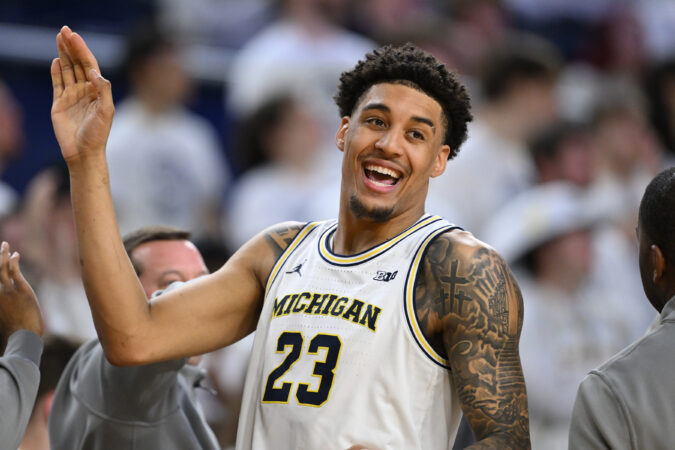
    On Tuesday night, Yaxel Lendeborg will likely be a first-round pick in the NBA draft.

    But the Pennsauken High graduate’s basketball career nearly ended after playing just 11 varsity games. If not for his mom, Yissel, Lendeborg might not ever have played Division I basketball, much less become a lottery pick.

    “Seeing him, and seeing his mother, and how much she has [meant] to him, and how much work she’s done to be able to help guide him mentally, and obviously on the court, it’s been the honor of my coaching career,” Pennsauken coach Harrison Carsillo said.

    Lendeborg wasn’t academically eligible to play basketball for a large portion of high school. He played on Pennsauken’s freshman team, but was held out for his sophomore and junior seasons, and most of senior year. He trained in the summer with coaches and friends from Pennsauken, but watched from the sidelines during the school year.

    In a Players’ Tribune article, Lendeborg said that the turning point for him was during his senior year. One night, after staying out late with his friends playing video games, his mom confronted him and told him that he needed to focus to even graduate from Pennsauken, much less play basketball.

    “This is no joke right now,” Lendeborg said in the article. “Nobody is smiling here. You have your mom up in this minivan crying her eyes out because you don’t know how to be a good son. Your own mom! Who does everything for you. Works two jobs. Shows you love no matter what. And this is how you’re being?!?!?!”

    Yaxel Lendeborg averaged 15.1 points and 6.8 rebounds in 40 games for Michigan last season.

    During that final year, Lendeborg improved his grades enough to play the final 11 games of the high school season, even competing in the NJSIAA playoffs. But he thought his basketball career was over, until his mom set him up to attend junior college at Arizona Western College. Lendeborg wrote that she planned the going-away party without even telling him he was going, because she knew he needed that push.

    From there, Lendeborg had one of the most improbable rises to the draft, transferring to Alabama-Birmingham in 2023 and then Michigan before last season, where he won Big Ten Player of the Year and an NCAA title. Lendeborg, a 6-foot-9 forward, averaged 15.1 points and 6.8 rebounds in 40 games for the Wolverines.

    Lendeborg was always talented, Carsillo said. His biggest problem was not believing in himself. Carsillo and Lendeborg’s mom forced him to pick up the phone after Division I schools started calling him about transferring, because he wasn’t sure if that was the right fit for him.

    “He didn’t answer the phone, and I said to him, ‘If you don’t answer that phone call, I’m going to take your phone, and I’m going to smash it, or rip your sneakers.’ I [was] going to be so upset, because he didn’t believe in himself that he could actually do what we knew he could do, if he put his mind to it,” Carsillo said.

    “It was a really funny moment. I obviously wasn’t going to rip his sneakers or smash his phone, but I was very upset, because it was almost just a mental thing going into it, because he had so much potential that he didn’t even see himself.”

    After two years at UAB, Lendeborg was a fringe first-round prospect. He could have ended his college career there, but instead spent another year in college to develop further, and prove to himself and to NBA draft scouts that he could succeed at that highest level. Carsillo said that Lendeborg’s year at Michigan has him more confident and aware of his sky-high potential.

    But what’s stood out the most to Carsillo over the years is Lendeborg’s selflessness, on and off the court. In the Final Four, Lendeborg suffered an MCL and ankle sprain. Some advised him not to play to protect his draft stock, but Lendeborg insisted on helping his teammates see it through and vowed, “I’m playing no matter what.”

    At halftime of the national championship game on April 6, he said he felt “awful,” but still gritted out a 13-point, 36-minute performance in the 69-63 win over UConn.

    Yaxel Lendeborg spent two seasons at UAB after attending Arizona Western College.

    “That’s him,” Carsillo said. “He could have easily just said, ‘No, I’m good.’ He knows he’s going to get drafted. He knows he’s changed his family’s life. It’s amazing. That’s exactly who he is, 100%, and he was like that at Pennsauken, just much lower stakes.”

    Lendeborg even has a chance to reunite with his college coach, Dusty May, who reportedly accepted the Dallas Mavericks’ head coaching job on Monday. The Mavericks hold the No. 9 pick in the draft, slightly above where Lendeborg has been projected, but Lendeborg joked Monday that he’s “going to tell him he better pick me up. If he doesn’t, I’m going to be mad. I might block him.”

    The forward has grown up a lot since high school. He’s one of the oldest prospects in the draft, but he’s played only about six seasons of organized basketball. He grew up playing baseball, and told ESPN that he first learned how to play basketball through the NBA 2K video game.

    “He still has so much room to grow, and he’s still learning how to become a better basketball player; it’s remarkable,” Carsillo said. “He has a little bit of self doubt, but not much anymore. This whole process with the NBA and Michigan turned his eye and turned his mindset around to be able to prove to himself, like, ‘I can do what my mother has always told me I could do.’”

    Lendeborg’s mom can’t attend as many games as she used to. She’s currently nearing the end of her treatment cycle for appendix cancer, which she initially kept hidden from Lendeborg to keep him focused on his season at Michigan. But planned to be in Brooklyn on Tuesday to watch her son’s NBA journey begin — a journey he’d never have come close to if not for her pushing him every step of the way.

  • The Savannah Bananas are building on one of baseball’s oldest traditions, barnstorming

    The Savannah Bananas are building on one of baseball’s oldest traditions, barnstorming

    One of the more striking sports stories of the last few years has been the dramatic rise in popularity of the Savannah Bananas. Founded as a collegiate summer league team in 2016, the Bananas began playing exhibition games in 2018, when they debuted their signature “Banana Ball,” a fast-paced, acrobatic, comedic, participatory style of baseball. Since 2023 they have dedicated themselves entirely to traveling exhibition games against other “Banana Ball” teams, and their popularity has continued to grow. On May 2, as part of the ongoing Banana Ball World Tour, they played before their largest audience yet, a crowd of 102,000 at Kyle Field in College Station, Texas.

    The Bananas and Banana Ball represent a compelling innovation in baseball and American sports—but at the same time, they’re building on one of the sport’s oldest and most enduring traditions: barnstorming, alternatives to professional and major leagues that have long brought community and inclusivity to baseball and America.

    Most histories of baseball focus on its professional leagues: the U.S. Major Leagues and sometimes other prominent professional organizations such as the Negro Leagues and Japan’s Nippon Professional Baseball. But starting in the mid-19th century, there was an equally popular alternative version of baseball that existed outside of those more established sites. Known as barnstorming, probably because many of its games took place in rural communities that might well have featured farm structures, the reference that also connected these baseball teams to other traveling performers who also used the term. This version of baseball saw touring collections of players—sometimes part of an established team, but just as often cobbled together from across multiple teams—visit communities and stage exhibition games. These games were played against local teams and players, fellow barnstorming teams, or as part of other unique entertainments.

    In the first half of the 20th century barnstorming came to be especially associated with the Negro Leagues and represented a way both for those Black athletes to showcase their talents in front of more diverse and widespread audiences. It also allowed them to play against—and, even at times, alongside—white athletes during a time in which the Major Leagues excluded Black players. Building on the legacy of late 19th century, Black barnstorming teams like Bud Fowler’s All-American Black Tourists, legendary 20th-century players like the great Satchel Paige organized teams that toured constantly and brought baseball to every corner of the nation. It also inspired one of the great sports movies, 1976’s The Bingo Long Traveling All-Stars & Motor Kings, with Billy Dee Williams’s Bingo a clear Satchel Paige type.

    In the 1920s and 30s another American community that was excluded from the era’s professional leagues formed their own prominent barnstorming teams and leagues. Japanese baseball dated back to both Hawaii and Japan in the late 19th century, and the first Japanese American semi-pro clubs formed on the mainland United States in the early 1900s. But it was with the rise of barnstorming teams in the late 1920s that these Japanese American players gained truly national and international fame.

    In 1935, the Japanese World Series prominently featured the Japanese American barnstorming team, the Los Angeles Nippons, in a best-of-three series against Japan’s famous Tokyo Giants. Although the Tokyo squad took two of the three games, at the end of their barnstorming tour of the U.S. a team spokesperson noted that “the Los Angeles Nippons were the best of the Japanese Nines.”

    These early 20th century barnstorming teams and games also captured the attention of the sport’s biggest stars. In October 1927, just after winning the World Series and at the height of their success and fame with the New York Yankees, Babe Ruth and his teammate Lou Gehrig took part in a highly competitive barnstorming game in Fresno against Japanese American semi-pro stars, including the powerful slugger Johnny Nakagawa who was known as the “Nisei Babe Ruth.” With each captaining a different team, and as the only white players in the game, Ruth and Gehrig played both against and alongside the Japanese American players, a reflection of how much barnstorming could break down the period’s policies and practices of segregation.

    The single most famous barnstorming baseball team, the House of David, broke down such barriers consistently and purposefully. Formed in the late 1910s by members of the Michigan religious commune of the same name, the House of David—famous for its long hair and equally impressive beards—gained a reputation for baseball prowess over the next four decades before it dissolved in 1955. It featured former Major Leaguers like Grover Cleveland Alexander, other famous athletes like Mildred “Babe” Didrickson and Satchel Paige, and rising stars like Jackie Mitchell, the teenage pitching phenom who was the first woman to play for a minor league team.

    The House of David also partnered with Negro League teams and players: traveling together, playing exhibition games against each other, and challenging segregation policies inside and outside the stadium along the way. Before the House of David would take on the local team, they demanded a chance to play the Negro League team with whom they had arrived (a request smartly made after the audience was already in the stadium to watch the featured exhibition game). They then ate in the same restaurant and stayed at the same hotel with them as well, pushing the boundaries of racial segregation.

    Made By History sponsors. FOR USE ON MADE BY HISTORY STORIES ONLY.

    The House of David ended its barnstorming tours in 1955 for the same reasons the practice largely faded out during that decade: the racial integration of the Major Leagues. Beginning with Jackie Robinson in 1947, integration meant that more of the best players had the chance to join the Majors; and the growing popularity of television allowed audiences around the country to see those players and games. Some Japanese American semi-pro teams did continue to barnstorm, as Japanese Americans didn’t join Major League teams until the late 1960s, a continued legacy of the earlier segregation policies. But by the late 20th century the practice was generally found only in historical depictions like Bingo Long.

    Recently, the Savannah Bananas announced the reforming of a historic Negro Leagues team, the Indianapolis Clowns, against whom they’ll play barnstorming exhibition games. In that way, as in so many others, this 21st-century team builds on the legacies of barnstorming baseball, on the important role of athletes of color in making it more inclusive, and of the communal and inclusive sides of the sport and nation it represents.

    Ben Railton is Professor of English and American Studies at Fitchburg State University, and the author of six books, two podcast seasons, and numerous columns on the worst and best of American history and identity.

    Made by History takes readers beyond the headlines with articles written and edited by professional historians. Opinions expressed do not necessarily reflect the views of The Inquirer.

  • With win in Washington, socialists have momentum in urban America

    With win in Washington, socialists have momentum in urban America

    The biggest city in the country is led by a democratic socialist, and another is in the running to lead the second biggest. Seattle has a socialist mayor. And in 2027, a democratic socialist will almost certainly be taking the reins of the nation’s capital.

    With her convincing victory in the Democratic primary in Washington last week, Janeese Lewis George, 38, became the latest candidate to claim victory with the once-forbidden “S word” in her biography and an ambitious left-wing agenda, promising to harness the power of municipal government to tackle the costs and challenges of urban living.

    Tapping into frustrations about housing and the cost of raising children, Lewis George pledged to greatly expand childcare assistance, build tens of thousands more homes and expand rent stabilization. Her critics derided those promises as unrealistic; voters ate them up.

    “I think people were like, ‘I don’t buy that the status quo is all we can do,’” Lewis George said in an interview. Instead, she said, they thought, “‘I want to see leaders do something more than tell people what they can’t do.’”

    Lewis George, who in a city as blue as Washington is close to a lock in the general election, joins a vanguard of young democratic socialists, including the new mayors of New York City and Seattle. Some are formal members of the organized Democratic Socialists of America, some not, but all have won on platforms of robust government action, arguing that the older Democratic establishment has failed.

    Democratic socialists say that solutions to challenges like the rising costs of childcare and housing lie in community organizing and direct government action, not the free market or timeworn tax incentives. While they cast themselves more in the mold of a mayor from Stockholm than Leningrad, they do not shy from confrontation with business interests, whether that means private utilities or landlords, oligarchs or plutocrats.

    Not everyone running from the left in big blue cities has won, as losers of the most recent mayoral races in San Francisco and Philadelphia can attest.

    But socialist success indicates an ascendant left — a generational movement as much as a political one — might have considerably more room to run.

    “We’re seeing real opportunities open up here,” said Kurtis Hagans, chair of the DSA chapter in the Washington metro area. “It’ll be interesting to see how the Democratic establishment wants to move forward into the midterms.”

    Zohran Mamdani, 34, who twice beat Andrew Cuomo, the former New York governor, in his unlikely rise to the New York City mayor’s office, is in many ways the lodestar for the rising brigade of democratic socialist candidates. He unapologetically pledged in his inauguration speech to “replace the frigidity of rugged individualism with the warmth of collectivism.”

    He has since moderated positions in deference to the political realities of governing a city of 8 million. He retained Jessica Tisch, a relatively moderate billionaire heiress, as police commissioner and ceded significant policy control to her. He has backed away from his vow to give up unilateral control of the school system, and from his pledge to expand an expensive housing subsidy program.

    He has developed a strong working partnership with New York Gov. Kathy Hochul, a relative moderate in the Democratic Party, and he has struck up a surprisingly amiable relationship with President Donald Trump, despite once characterizing him as a despot. “Sewer socialism,” with images of an army of volunteers shoveling snow or squads of pothole fillers, has become as much a Mamdani calling card as his campaign promise of free buses.

    The act of governing is the big test for a movement propelled by idealism and bold promises, along with a disenchantment with the compromises that its followers believe are too often made by those in power.

    But fiscal constraints on municipal government can be strict, particularly in Washington, a federal enclave subject to extensive congressional oversight. And at a time when Washington’s finances are suffering from the impacts of federal job cuts as well as a lingering pandemic downturn, the city has had a hard enough time paying for the social programs already in place.

    “Especially at the local level, governing is a practical affair,” said Mary Cheh, a former council member who endorsed Lewis George’s main rival in the primary but acknowledged the appeal of her message.

    “There will be some change, I’m sure,” she said. “But it’s not going to be all that they hoped for.”

    The limits of idealism have inevitably led to compromise and, at times, friction.

    In Los Angeles, Nithya Raman, 44, a City Council member and a democratic socialist, is in a runoff against Karen Bass, the Democratic mayor who is running for reelection. Raman’s ascent in 2020 coincided with the Black Lives Matter protests that rippled through big cities across the country.

    Support for Raman in her first race that year, against an incumbent on the City Council, became a kind of social shorthand for progressive politics at a moment when flying a Black Lives Matter flag outside of a home was de rigueur among Los Angeles’ wealthy liberals.

    But in recent years, Raman, as a council member, has broken with the DSA on some issues, including how to alleviate Los Angeles’ crushing housing crisis. While she and her DSA-aligned colleagues have both sought protections for poor tenants, Raman has also backed more development-friendly housing policies.

    Up the coast in Seattle, Katie Wilson, a self-identified socialist but not a DSA member, has largely avoided the ideological battles many had expected after her upset victory in November.

    Tension between Wilson and a Seattle City Council that is more moderate has so far led to negotiations rather than conflict, as when she agreed to turn on newly installed security cameras in the city’s stadium district during the World Cup, despite her initial opposition.

    Like many of her fellow politicians of the left, Wilson has made housing a priority. She promised to open 500 new shelter beds or emergency housing units by the start of the World Cup but appears to have fallen short by more than 400. She has pledged to build 1,000 new units by the end of her first year and 4,000 by the end of her four-year term, a tall order.

    “I certainly have a learning curve, but I don’t want to portray myself as coming in with some kind of unrealistic idea that this would be easy,” she said in an interview last month. “There’s the way things have been done for a very long time, and it takes a very long time to change that. I’m not surprised at where we’re at.”

    But at a time when voters across the political spectrum feel like government has stopped working for them, the promises of a robust and responsive public sector have clearly resonated among voters, regardless of the fiscal or partisan realities.

    “When people see you deliver on the small things,” Lewis George said, “they trust that you can also deliver on the big things.”

    This article originally appeared in The New York Times.

  • Iranian president lands in Pakistan as US-Iran teams work to finalize a war-ending deal

    Iranian president lands in Pakistan as US-Iran teams work to finalize a war-ending deal

    ISLAMABAD — Iran’s president arrived in Pakistan for talks Tuesday with officials who have been mediating negotiations between Tehran and Washington on a permanent end to the war in the Middle East, even as discrepancies emerged on what had been agreed so far and violence broke out again in Lebanon.

    President Masoud Pezeshkian’s visit to Islamabad comes as technical teams were working on details of the deal following high-level negotiations in Switzerland on Monday led by U.S. Vice President JD Vance and Iran’s parliamentary speaker, Mohammad Bagher Qalibaf.

    In Tehran, Iran’s capital, Foreign Ministry spokesperson Esmail Baghaei told reporters that no visits have been scheduled for the U.N. watchdog — the International Atomic Energy Agency — to examine Iranian nuclear sites bombed by the United States last year. Vance previously said the negotiations in Switzerland won an agreement for the IAEA to inspect the sites.

    The IAEA has been in and out of Iran since Israel’s 12-day war in 2025, but has not been granted access to the bombed enrichment sites targeted by the U.S. at the time.

    Meanwhile, violence flared again in southern Lebanon as Israeli soldiers opened fire, killing two people. The reports of violence came after two days of calm following a ceasefire brokered on Saturday. Any renewal of heavy fighting could threaten the broader diplomatic talks, since Iran has demanded that a full truce in Lebanon be part of any comprehensive deal.

    Iran’s president makes his first visit to Islamabad since the war started

    President Asif Ali Zardari, Prime Minister Shehbaz Sharif and other senior officials received Pezeshkian upon his arrival in Islamabad amid tight security, according to Pakistani state media. Television footage showed Pezeshkian embracing Zardari and Sharif as they welcomed him.

    This is the Iranian president’s first visit since the conflict started with the U.S. and Israeli attack on Iran on Feb. 28.

    Pezeshkian and Sharif were to hold a joint news conference after their discussions.

    In the initial talks, marking the start of a 60-day diplomatic process that seeks to reach a permanent deal to end the Iran war, Iran and the U.S. agreed to create a “de-confliction cell” to address the fighting in Lebanon between Israel and the Iranian-backed Hezbollah militant group. The U.S. said negotiators also discussed “mechanisms” to ensure that the Strait of Hormuz, a key waterway for oil transit that Iran had effectively blocked during the war, remains open.

    Ahead of his meetings in Pakistan, Pezeshkian cautioned that “the effectiveness of the talks depends on full commitment to the agreed obligations and their precise implementation.”

    “Progress on this path will be measured by practical adherence to accepted responsibilities,” he wrote on X. “Statements outside the agreed text do not help advance the negotiations.”

    Iran says negotiation groups focused on sanctions relief, nuclear issues and more

    Iran suggested that the ongoing technical talks in Switzerland have led to the creation of specific negotiation groups, including those focused on sanctions relief, nuclear issues, reconstruction, and monitoring, according to the state-run IRNA news agency.

    The report quoted Kazem Gharibabadi, a deputy foreign minister leading the technical talks, saying that the countries involved also formed a contact mechanism over ships moving through the Strait of Hormuz and over the fighting in Lebanon between Israel and Hezbollah.

    It remains unclear whether the deconfliction cell being created will be enough to stop fighting between the Lebanese militant group Hezbollah and Israel, which occupies part of Lebanon and insists it must maintain a free hand to attack militants launching attacks into northern Israel.

    Israeli forces opened fire and killed two men in the southern Lebanese town of Nabatiyeh al-Fawqa on Tuesday, Lebanon’s state-run National News Agency reported, adding the pair were next to a bulldozer that was clearing the road at the time.

    Separately, the agency said Israeli troops fired on residents on the outskirts of the town of Hadatha as they were heading to carry out a burial in the town’s ceremony with a Lebanese army escort.

    There was no immediate comment from Israel.

    Discrepancy on Iran’s use of unfrozen funds

    Following the high-level talks in Switzerland, Vance had said if Iranian financial assets were unfrozen, they would be used to buy American-grown food.

    Vance said that the U.S. and Qatar would have approval over the process, but if Iranian money becomes accessible as sanctions are lifted, it “would actually go to buy American soy, American corn and American wheat for the benefit of the Iranian people.”

    However, Iran has no current demand for U.S. crops and Baghaei said on Tuesday that Tehran’s decisions on what to import would be based on “prices and quality.”

    “It is interesting that the philosophy and goal of the war, which was the destruction of the Iranian civilization and the collapse of Iran, has become enriching American farmers,” Baghaei said at the news conference in Tehran.

    Iran’s ambassador in Geneva, Ali Bahreini, also questioned Vance’s contention that the U.S. and Qatar would have to approve how Iran uses unfrozen funds.

    “Iran is the only country who decides what to do with those assets,” he told reporters.

    Netanyahu raises new questions over fragile Lebanon ceasefire

    Mediators Pakistan and Qatar said the cell would include the Lebanese government and would “ensure the adherence of the termination of military operations in Lebanon,” but Israeli Prime Minister Benjamin Netanyahu raised new questions late on Monday, saying his military still has “full freedom of action to thwart any direct or emerging threat to them or to the residents of the north.”

    Neither Israel nor Hezbollah is a signatory to the U.S.-Iran deal, and Netanyahu has vowed to keep his forces in southern Lebanon until any threat to Israel is eliminated. Hezbollah has refused to halt attacks unless Israel commits to withdrawing.

    When asked about Netanyahu’s comments, U.S. President Donald Trump later said “we’re going to take a look at it,” adding that he wouldn’t say what action he would take but that the situation would “get solved.”

    “I’m a problem solver, I get problems solved real fast, including with Bibi,” he said, using a nickname for Netanyahu.

    No Israeli airstrikes or shelling have been reported since Sunday, a day after a ceasefire was reached, and Hezbollah also has not claimed any attacks in what has been the longest halt in the fighting since the latest Israel-Hezbollah war erupted on March 2.

    Lebanon and Israel planned another round of direct talks in Washington on Tuesday, which are expected to focus on developing a plan for an Israeli withdrawal.

  • Judge blocks bans on using food stamps for sugary drinks and candy

    Judge blocks bans on using food stamps for sugary drinks and candy

    WASHINGTON — A federal judge on Monday blocked the Trump administration from barring the use of food stamps to buy sugary drinks and candy.

    Since last year, the Agriculture Department has approved waivers in more than 20 states that allow them to bar participants in the federal Supplemental Nutrition Assistance Program from using their benefits to buy soda, energy drinks, candy or other prepared desserts. In March, recipients in five states sued the agency over the waivers, arguing that the limits were unlawful and confusing and made it difficult to manage health conditions such as diabetes.

    Judge Amy Berman Jackson of the U.S. District Court in Washington, in a 68-page decision, agreed with the recipients that the Agriculture Department did not have the authority to approve the waivers and also failed to abide by a notice period. Monday’s decision was a rollback of restrictions that officials have characterized as a major achievement of the Make America Healthy Again movement.

    Jackson wrote that while the law allows for the department to approve projects related to the administrative and logistical efficiency of the SNAP program, the agency essentially “purports to waive not just a mere administrative or technical obstacle, but the very definition of ‘food’ as it was laid down by Congress.”

    “The federal defendants and the states may have a genuine desire to improve the health of SNAP households by encouraging healthy choices at the store, and they can take lawful steps to meet those goals,” she wrote. “But what they cannot do is violate the law and their own regulations along the way.”

    The case was brought by the National Center for Law and Economic Justice, a nonprofit that advocates on behalf of low-income people, and Shinder Cantor Lerner, an antitrust law firm.

    Katharine Deabler-Meadows, a senior attorney at the National Center for Law and Economic Justice, said in a statement that the decision was “a major step in restoring essential food assistance to the millions of families that rely on SNAP nationwide.”

    The Agriculture Department did not immediately respond to a request for comment about the ruling. A spokesperson for the agency had earlier told The Associated Press that it “will not be backing down from the fight to Make America Healthy Again.”

    This article originally appeared in The New York Times.

  • Military members and veterans in Camden County can now get free legal services. Here’s what to know.

    Military members and veterans in Camden County can now get free legal services. Here’s what to know.

    Current and former military personnel can now receive free estate planning assistance in Camden County to help support their families’ futures.

    The Camden County Board of Commissioners launched the new clinic last month, one of several no-cost legal services available to vulnerable South Jersey residents.

    The clinic, currently scheduled monthly, gives active service members, veterans, and their spouses living in Camden County access to certain legal services at no charge. The county will provide a last will and testament, power of attorney, and an advance directive, which documents a person’s preferences for medical treatment in case they become unable to make their own healthcare decisions.

    Sixteen veterans are signed up for the first Veterans Will Clinic on Wednesday at the Camden County One-Stop Career Center in Cherry Hill Township, said Morgan Callan, the county’s external communications manager. There is no current cap for how many veterans can participate.

    The Camden County Office of Veterans Affairs is now accepting registrations for the second clinic, on July 29. Anyone interested should contact the office by calling 856-374-5801, or by visiting the office at 1 Collier Drive in Blackwood, part of the Camden County Lakeland Complex.

    Help for veterans

    Camden County has nearly 19,000 veterans, according to the most recent estimate available from the U.S. Census Bureau.

    The Camden County Office of Veteran’s Affairs has partnered with Susan Purvin, an attorney from Gloucester County, to help provide the services. Louis Cappelli Jr., one of Camden County’s three commissioners, said in a statement that he hopes everyone eligible takes advantage of the program.

    “Our veterans and servicemembers have sacrificed so much in service to our nation, so have their families,” Cappelli Jr. said. “The least we can do is help them get their affairs in order, giving them the confidence that their last wishes will be protected.”

    The cost to Camden County for the program is $50 per will, $25 per power of attorney, and $100 per hour for every legal information session, with the total cost varying based on how many people show up for the clinics, said Dan Keashen, the county’s public affairs director.

    Other counties in South Jersey provide similar services. All active military personnel and veterans in Gloucester County can receive assistance with a simple will, a legal document for those not looking to involve complicated estates or trusts in their end-of-life plans.

    About 20 attorneys recently volunteered for a free event in Cape May County that helped veterans and their spouses prepare a will, power of attorney, and healthcare directive free of charge.

    More free legal services

    You don’t have to be a veteran to find free legal services in Camden County.

    The Camden County Bar Association hosts Wills for Heroes, a small, volunteer-led clinic that provides free wills and estate planning documents to firefighters, police officers, and paramedics, and their spouses annually. The 2026 clinic, which took place in March, was full at 21 participants.

    Kara Edens Graser, the association’s executive director, said she hopes to run the same clinic next year.

    Camden County also offers free legal workshops, which cover the same services as those now available to veterans, for seniors and residents with disabilities aged 18 and over.

    Plus, about 300 attorneys volunteer on an as-needed basis for the Volunteer UP Legal Clinic, a Camden-based nonprofit that provides legal expertise to those who need it. The nonprofit spent more than $300,000 in 2024 to provide legal services for tenants, criminal record expungement, estate planning, and name changes, according to its 2024 tax filing.

    Volunteer UP also provides same-day eviction defense for tenants in Burlington, Camden, Cumberland, Gloucester, and Salem Counties, CEO Steven Salinger said via email.

  • Storms move through the Philly area, bringing heavy rains, tornado warnings, and flooding

    Storms move through the Philly area, bringing heavy rains, tornado warnings, and flooding

    After 10 months of precipitation deficits, the Philadelphia region was due for some drought relief — but maybe not this much relief, this fast.

    Powerful thunderstorms that set off tornado and severe-storm warnings and waterfall-like downpours arrived in the region Monday just in time for the peak afternoon commute and the France vs. Iraq World Cup match in South Philly.

    And while the tornado warnings and the worst of the storms had backed off by nightfall, the rains were reluctant to give it up, and the National Weather Service warned that more heavy showers are possible Tuesday.

    “It’s been a while since we had rains like this,” said Patrick O’Hara, a meteorologist at the National Weather Service Office in Mount Holly, which issued multiple flood warnings into the evening. Flooding occurred on the Schuylkill Expressway near Gladwyne, and several water rescues were reported in Cheltenham Township.

    Frankford Creek in Philadelphia rose well into moderate flood stage.

    The agency also had issued two tornado warnings for parts of Chester, Delaware, and Montgomery Counties after Doppler radar had detected radar signatures.

    Multiple uprooted trees were reported in the Valley Forge area, officials said. Several reports of downed wires and trees branches and hailstones came from across the region from Chester County and South Jersey.

    The timing could have been worse, but maybe not much worse for World Cup participants and the nearly 70,000 fans who came to watch the rain-interrupted match.

    A severe-storm warning for Philly popped up just as the World Cup match between France and Iraq in South Philly was underway. That was quickly followed by one for Southwest Philadelphia, parts of Delco, and South Jersey.

    The weather service’s flash flood watch remained in effect until 6 a.m. Tuesday.

    On Monday afternoon an early arriving strong storm passed through parts of Philadelphia and Burlington County, snapping trees and taking down “multiple branches” in the Holmesburg section of the city, the weather service said.

    That was followed by a potent storm that generated strong winds and torrential rains north and west of the city and then even stronger storms and flooding downpours throughout the region.

    Will the rains end the Philly region’s drought conditions?

    Not likely. Life is not fair, and neither is summer rain, which by its nature is capricious.

    About 1.2 inches of rain was measured at Philadelphia International Airport on Monday, with over an inch of that falling between 6 p.m. and 8 p.m.

    The rains weren’t evenly distributed across the region, but the Philly total is of some significance: It brought the city’s total close to the normal for June.

    Based on the forecasts of the potential for more substantial rains Tuesday, Phllly stands to break an impressive streak of 10 consecutive months of below-normal precipitation.

    Most of the region is in “moderate drought” according to the inter-agency U.S. Drought Monitor, and Cape May County, most of Delaware, and New Jersey areas along the Delaware Bay are in “extreme drought.”

    State-declared drought emergencies are in effect for New Jersey and Chester County.

    It is unclear how helpful Monday’s rains were in terms of dousing the drought condtions.

    Downpours aren’t known for their attention spans, and rains can run off rapidly.

    “If the rain doesn’t penetrate the soil, it doesn’t help,” said O’Hara, “Ideally, it would soak into the ground over a couple-day period. That would really help.”

  • In Harrisburg, Philadelphia Mayor Parker asks lawmakers to double school renovation fund to $250 million

    In Harrisburg, Philadelphia Mayor Parker asks lawmakers to double school renovation fund to $250 million

    HARRISBURG — Philadelphia Mayor Cherelle L. Parker called on Pennsylvania’s General Assembly to double what it sets aside for school districts to update their aging facilities, as the Philadelphia School District embarks on a $3.3 billion plan to modernize 169 school buildings.

    Parker hosted a two-hour news conference at the state Capitol on Monday, asking Pennsylvania’s split legislature and Gov. Josh Shapiro to increase the amount of money available for school facility renovations from its current $125 million to $250 million as part of this year’s state budget, which is due at the end of the month.

    The school district is on track to close 17 schools as part of the larger modernization efforts, following months of protest and controversy over the facilities plan.

    Parker appeared alongside City Council President Kenyatta Johnson, Philadelphia School Superintendent Tony B. Watlington Sr., and school board president Reginald L. Streater, following several weeks of tensions with state and city legislative leaders over her proposed tax plans to raise revenue for the city and the school district, which ultimately failed.

    But on Monday, the city leaders appeared as a united front in Harrisburg, showcasing their commitment to “rightsizing” Pennsylvania’s largest school district, which is the ninth-largest in the nation.

    “We are here united to let you know that we are proud that the City of Philadelphia has some skin in the game, and we are not coming here simply with our hat in hand, asking the Commonwealth of Pennsylvania to come save the School District of Philadelphia,” Parker said, noting that the city was able to stave off classroom cuts.

    “It is the General Assembly who told us last year we will not give additional funding until you come back with a facilities plan. So we went to work,” Johnson said during the news conference Monday.

    Now it is on the state to set aside additional funding to help school districts update their facilities, Parker and Johnson said.

    Shapiro, a first-term Democrat, proposed keeping the pot of money at $125 million for the coming fiscal year, as part of his $53.2 billion budget proposal.

    Pennsylvania is facing its own budget problems, as the state is on track to spend more than it brings in in revenue this year and in future years. Shapiro’s budget proposal would spend $4.3 billion more than the state’s projected revenue for the coming fiscal year, meaning Parker’s funding increase request faces an uphill battle.

    The event highlighted a coalition of advocates, from labor leaders to recent graduates to public education advocates — all calling on the state to increase the state’s capital fund, in addition to continuing to increase the city’s adequacy funding.

    The school district is facing a $300 million structural deficit and had planned to cut more than 300 school-based positions before city officials cut a deal to keep funding the positions with a yet-to-be-determined revenue source.

    Several of the speakers recalled recent times when their young children did not have access to bathrooms, or instances when schools had to shift to virtual learning because the buildings are unequipped to handle cold or hot weather.

    The speakers, including Parker, emphasized that the issue of aging school buildings is not exclusive to Philadelphia. It is an issue faced by school districts around Pennsylvania, including rural and suburban ones.

    “So goes the decision-making in this building, so goes the future of rural, urban, and suburban Pennsylvania, and all of our children,” Parker said.

    In a letter sent Monday to members of the General Assembly, top leaders from the Pennsylvania League of Urban Schools and the Pennsylvania Association of Rural and Small Schools echoed the calls.

    “Safe, modern school buildings should not depend on a community’s zip code, and we stand with Mayor Parker in calling for Harrisburg to make that needed commitment to students in every corner of the Commonwealth,” the letter said.

    In a letter to Shapiro in January, ahead of his annual budget pitch, Parker requested that the state double the amount available for school facility improvements, and she sought a revision to the guidelines to allow a single district to receive up to 25% of the total grant funding in a given year. That would open approximately $50 million to $60 million annually for the district to tap into to improve school buildings, according to the letter.

    Parker, who served as a state representative for 10 years before joining City Council and her election as mayor, received a major blow to her tax plans from Harrisburg in the final days of city budget negotiations. Three sources with knowledge of the closed-door state budget talks told The Inquirer then that lawmakers would not approve increases to the city’s hotel and long-term rental taxes she requested to help expand the city’s homelessness services.

    Only one state lawmaker joined the mayor’s event: Sen. Art Haywood (D., Philadelphia/Montgomery). Parker met separately in a private meeting with Philadelphia’s House delegation to Harrisburg.

  • Authorities ID 3 people killed in Maryland crash of plane from Ocean City, N.J.

    Authorities ID 3 people killed in Maryland crash of plane from Ocean City, N.J.

    Maryland State Police on Monday released the names of three young men killed when a plane that took off from Ocean City, N.J. crashed late Saturday night east of Washington D.C.

    Around 11:30 p.m. Saturday, a single-engine Piper Cherokee piloted by Yoav Bomrind, 26, of Israel, with two passengers, David Rabinovich, 19, or Israel, and Elad Naidik, 20, of Canada, crashed in a wooded area in Bowie, Md.

    Maryland State Police said Prince George’s County Public Safety Communications received an iPhone crash alert around 11:45 p.m. indicating the plane went down in the area of U.S. Routes 50 and 301 in Bowie.

    The plane was headed to the Montgomery County Airpark in Gaithersburg, Md., approximately 20 miles northwest of Bowie, apparently as part of a training flight, the state police said.

    Based on preliminary information, investigators believe the plane was owned by a flight school in Montgomery County, Maryland, the state police said.

    Multiple agencies responded to the crash area and the plane was located around 3:45 a.m. Sunday near a residential neighborhood. All three men were pronounced dead at the scene.

    No one else was injured, the state police said.

    The National Transportation Safety Board is investigating the crash.