Category: News

Latest breaking news and updates

  • U.S. oil blockade means children in Cuba are missing school

    U.S. oil blockade means children in Cuba are missing school

    HAVANA — Axisa and Aron Alfonso, 6- and 7-year-old siblings in western Cuba, are luckier than most of their classmates: Their father takes them on their 1-mile commute to school on horseback.

    The children and teachers who live farther away rely on a spluttering, yellow Soviet-era school bus that no longer shows up. Teachers often do not make it to class, so the Alfonso family and their horse, Chocolate, turn around and go home.

    A U.S. oil blockade has set off an increasingly agonizing energy crisis that has brought transportation largely to a standstill. Fewer cars and buses are on the streets, and, as a result, fewer students and teachers are in school.

    “My children rarely go to school. They go, but the teachers don’t come,” said Sergio Alfonso Vásquez, 33, a farmer and the father of Axisa and Arona. “I’m afraid because they aren’t learning anything.”

    To save energy, the Cuban government in February cut school to half-days and resorted to COVID-era remote learning for college students.

    Then Cuba decided to end the school year two weeks early and scrapped college entrance exams for high school seniors after acknowledging that sleepless nights without electricity and a lack of school meals were exhausting students and teachers alike.

    The Cuban government’s measures are the latest blows to the country’s once vaunted public education system, which had long been a signature triumph of the country’s socialist revolution.

    Schools were already reeling from Hurricane Melissa last fall, which damaged hundreds of buildings; a mass departure of teachers in recent years; and shortages of textbooks, uniforms, and even pencils and paper.

    The extreme gasoline shortage finally brought the strained system to a stop.

    The Trump administration’s pressure campaign, including an executive order that prohibited countries from delivering oil to Cuba, is aimed at forcing Cuba’s government into making political and economic changes.

    But experts say the damage to the educational system is a striking example of the negative consequences of U.S. measures on regular Cubans and that, in the case of schools, amounts to a serious long-term threat.

    “Education in Cuba is at risk due to the current energy crisis,” Anne Lemaistre, the regional director of UNESCO, the United Nations education organization, said on Instagram. “It jeopardizes the future of an entire generation.”

    All 240 of Cuba’s boarding schools had to close this semester, Lemaistre, who is based in Havana, told the New York Times.

    The Cuban government did not respond to requests for comment, but government officials have publicly discussed the schools crisis.

    “After a night without electricity, getting a kid to school, figuring out how to engage him, and the class itself, is a challenge,” Naima Ariatne Trujillo Barreto, Cuba’s minister of education, said in February on state television. “And for the teachers, who also suffer just as much, without electricity or with the problem of whether or not they have water at home, concentrating on giving classes has been quite a challenge.”

    Even before the Trump administration started imposing stricter measures against the Cuban government, the country had already been in a steep economic decline for several years.

    The Cuban government said the school system was facing a shortage of roughly 26,000 teachers, many of whom had quit for better-paying jobs in the private sector.

    In Camagüey, a city in eastern Cuba, nearly 1,000 teachers had left the country for good in recent years, state-run media reported.

    After the COVID-19 pandemic, the country experienced a record-breaking exodus. More than 1 million people, including thousands of teachers who earned an average of $11 a month, left the country.

    President Donald Trump cut off international fuel deliveries in January and introduced a new package of aggressive economic measures aimed at starving the Cuban government of cash.

    The Trump administration argues that the United States is not to blame for Cuba’s energy crunch, but instead faults Cuban officials for not investing enough in infrastructure while diverting “energy resources to line their own pockets.”

    The State Department, in a statement, questioned why the Cuban regime claims it has no fuel for schools, while Interior Ministry officials who quash protests have enough gas to carry out their operations.

    Remote learning for college students, one of the austerity measures adopted by the Cuban government, has proved all but impossible. Blackouts stretch over 20 hours a day, and most students and teachers cannot pay for enough data on their phones to support remote classes.

    Instead, professors have sent lessons using WhatsApp voice notes.

    Leonard Gómez León, a third-year law student at the University of Havana, described the semester as “hellish.”

    “The power outages have been constant, the lack of internet connection, and so on, and it’s truly terrifying to see how badly we students are doing,” he said. “I feel like this is almost a lost semester.”

    Gómez, 21, is the vice president of the University Student Federation of Cuba, a state-run organization that has traditionally toed the government line. But he helped organize a protest in March outside the university, demanding the semester be canceled until in-person classes could resume.

    The vice minister of education, Modesto Ricardo Gómez, told the protesting students that the Trump administration was “massacring an entire society.”

    The collapse of education is a stark contrast to the gains that the country made after Fidel Castro toppled a U.S.-aligned dictator and seized power in 1959.

    He made education a priority at a time when the illiteracy rate was higher than 20% and mobilized 250,000 students and teachers to teach adults to read, particularly in the countryside.

    Illiteracy was all but eradicated. The island’s universal, free university system steadily expanded over the decades, churning out doctors and engineers.

    But the government, which has a near monopoly on such professions, has for decades paid minuscule salaries, undercutting economic incentives to study or teach. And the quality of Cuba’s education has deteriorated since the fall of the Soviet Union, the country’s main benefactor, which led to budget shortfalls.

    Katrin Hansing, an anthropologist at the City University of New York’s Baruch College who has written extensively about Cuba, said the education system is now “a shell of its former self.”

    University education in particular, she said, is largely on pause.

    “What is happening online is very poor in quality,” she said. “There’s only one, or two, or less, hours of electricity a day, and people in that time are trying to do everything to survive, from washing to cooking.”

    Alejandro Paradero Almenarios, 20, had enrolled at the University of Guantánamo, hoping to become a biology teacher, but dropped out in January, five months into his freshman year. He decided the effort was not worth it given the paltry wages he would earn teaching high school, the equivalent of $7 a month.

    “I was studying and studying for nothing,” he said.

    He now works full time making charcoal, which people now rely on to prepare meals because cooking gas is unavailable.

    Raúl Cabrera Oliva, 18, was in his last year at a vocational high school in Artemisa, west of Havana, that specialized in veterinary medicine.

    With few transportation options for most students, the school closed.

    “No transportation, no school,” Cabrera said.

    The government’s push to reduce school hours to half a day caused another set of problems. By the time parents and children, many of whom hitchhiked, arrived at school, there was no time for parents to go home and then return in time for dismissal.

    Mothers killed time waiting outside.

    Yaymaris Rodríguez López said she would leave her house in a village in western Cuba every morning at 7 a.m. with her two sons, ages 12 and 4, and stood on the side of the road, hoping someone would drive by offering a ride to her children’s school.

    Sometimes, 10 a.m. came and went, and they would still be waiting.

    “What am I going to do? I have to take them to school,” Rodríguez said. “They can’t grow up to be dumb.”

    This article originally appeared in the New York Times.
  • Trump-endorsed de la Espriella holds slim lead in Colombia’s election as rival challenges vote

    Trump-endorsed de la Espriella holds slim lead in Colombia’s election as rival challenges vote

    BOGOTA, Colombia — Conservative political outsider Abelardo de la Espriella held a narrow lead Monday with almost all votes counted in Colombia’s polarized presidential runoff, as the ruling party’s progressive candidate vowed to challenge the results.

    De la Espriella, a business owner and lawyer who earned U.S. President Donald Trump’s endorsement despite never having run for office, led with 49.7% of the votes over lawmaker Iván Cepeda, with 99.9% of results released by electoral authorities. Cepeda, ally of outgoing President Gustavo Petro, had 48.7%.

    Election officials have not formally announced a winner.

    A victory by de la Espriella is expected to usher in policies that will reverse Petro’s agenda, including a contentious plan to hold parallel peace negotiations with illegal armed groups. Cepeda, Petro’s protégé, had pledged to push forward that strategy and other social reforms if he won Sunday’s vote.

    The election was colored by people’s fears of renewed internal conflict.

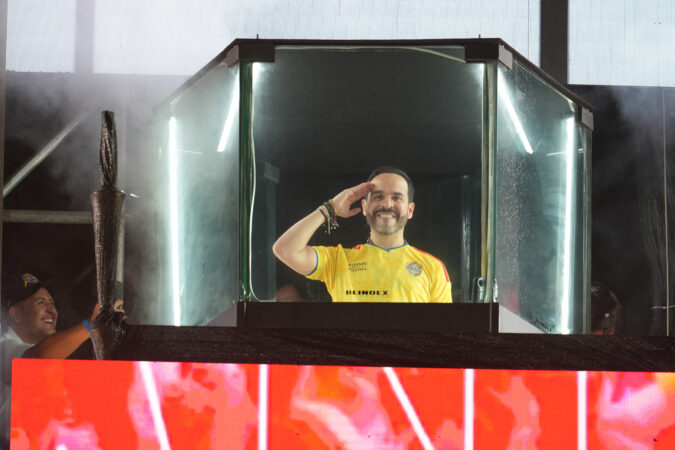
    “I will govern for all Colombians,” de la Espriella, nicknamed “The Tiger,” told thousands of supporters as he stood behind bulletproof glass in the northern city of Barranquilla on Sunday night. But his conciliatory tone changed as he spoke.

    “Pack your bags and prepare to become the opposition,” he added. “Make no mistake, Mr. Cepeda. You already know how fiercely the tiger roars.”

    Progressive candidate calls count “unofficial”

    Cepeda on Monday responded to de la Espriella’s remarks, warning him against threats, veiled or otherwise.

    “Let me be perfectly clear: We are half of this country in political terms, and we have a long history of resistance,” Cepeda said in the capital, Bogota. “We are very hardened. Don’t come threatening us. Neither your roars nor your screams frighten us.”

    He asked supporters to remain calm and maintain “exemplary behavior.” Hours earlier, people in the western city of Cali took to the streets, damaging a public bus, several surveillance cameras, and an ATM.

    The vote count showed that the municipality that includes Cali favored Cepeda with nearly 60%. Authorities there said four police officers were injured in the protest and two demonstrators were arrested.

    After the results became public Sunday, Cepeda characterized the count as “unofficial and non-binding” and announced that his team was challenging results from more than 30,000 voting stations. Petro also vowed to challenge the outcome.

    No recount has flipped the results of a presidential election in Colombian history.

    Sunday’s winner will begin a four-year term Aug. 7.

    The candidates pitched voters widely different strategies to protect the South American country from the nonstop violence, such as car bombs, kidnappings, disappearances, and forced displacements, that Colombians have lived with in previous decades.

    De la Espriella, 47, promised a heavy-handed approach to crime-fighting, including drug trafficking. He also said he plans to end Petro’s attempts to establish dialogue with multiple armed groups — an effort that has largely failed — and to build mega-prisons, emulating Salvadoran President Nayib Bukele’s aggressive policies. Those tactics have lowered homicide rates in the Central American country but have fueled accusations of human rights abuses.

    De la Espriella holds dual Colombian and U.S. citizenship. He’s a Trump supporter and a member of the Republican Party.

    “He Won, BIG!” Trump said on social media.

    ‘It’s always the same violence’

    Yolanda Hernández, who recycles trash for a living, voted for Petro in 2022 but cast her ballot for de la Espriella this time. While she acknowledged that Petro was unable to deliver on promises meant to help the poor because of congressional gridlock, she said Colombia cannot afford another four years under his vision for the country.

    “We want change in Colombia because it’s always the same violence, always the same thing,” Hernández, 49, said. “(Petro) said he was going to lower the cost of services, that he was going to lower the price of food, and everything is more expensive.”

    More than 426,000 voters chose a third, no-name option on the ballot meant to allow people to express dislike of both candidates. Another 29,000 voters cast blank ballots.

    Will Freeman, a fellow for Latin American Studies at the Council on Foreign Relations, said Sunday’s result shows the country “has not shifted overwhelmingly or decisively” against Petro’s project or for de la Espriella’s outsider “iron fist showmanship.”

    Freeman said the result also underscored Colombia’s regional divisions.

    “It’s regional, not just ideological, polarization; or rather, the two overlapping,” he said. “Ironically, de la Espriella’s iron-fist message performed best in the core of the country, not the periphery, which bears the brunt of Colombia’s violence.”

    Colombia’s illegal groups have more than 27,000 members.

    Last year, authorities recorded 14,780 homicides, the most since at least 2015, driven by clashes among illegal armed groups. Among those killed was conservative presidential hopeful Miguel Uribe.

  • ‘Snuffed her life out’: Man accused of randomly shooting CHOP nurse in Tredyffrin Township appears in court

    ‘Snuffed her life out’: Man accused of randomly shooting CHOP nurse in Tredyffrin Township appears in court

    Hours before Steve Jahn shot Megan Nieberle to death on a March evening this year, prosecutors said, he drove around Tredyffrin Township for hours with a gun in his hand.

    In dashcam videos played in a Chester County courtroom Monday, Jahn is seen gripping a semiautomatic handgun in his Chevy Silverado truck, muttering to himself and glancing back and forth erratically as cars pass by.

    Those utterances, prosecutors said, offer a view into the mindset of a man about to commit murder.

    “Get out of the [expletive] way,” Jahn says an one point, one hand on the wheel, another on his firearm. “You don’t belong here.”

    “Ya’ll [expletive] are dead,” the 44-year-old says in another clip.

    Though it would be hours before Jahn, who police said was homeless, encountered Nieberle, a 53-year-old mother of three and a nurse at Children’s Hospital of Philadelphia, prosecutors used the videos from Jahn’s dashcam to bolster their contention that he had been prepared to harm someone that Saturday.

    Jahn, a Berwyn native, was arrested a day after the March 7 shooting and charged with first- and third-degree murder, aggravated assault, and reckless endangerment.

    The hearing marked the first time Jahn appeared in a case that shocked the Chester County community and kick-started a conversation about mental illness and firearms.

    Some residents questioned why police did not act more forcefully to ensure that Jahn, who had been in a mental health crisis that day, was checked into a nearby psychiatric unit.

    Jahn, wearing a red prison jumpsuit and sporting a beard, showed little emotion during the hearing, as Nieberle’s loved ones looked on, some in tears.

    Assistant District Attorney Kathleen Wright said prosecutors had linked Jahn to the crime scene using GPS data from his vehicle, gunshot residue recovered from his hands and clothing, and remarks he made while in police custody.

    Though the footage of Jahn was illuminating, Wright said, the shooting itself was not captured on the dashcam because Jahn had removed the device shortly before the shooting.

    Wright called Tredyffrin police officers and county detectives to the stand to testify about the scene they had encountered near the intersection of Old State Road and Contention Lane, where Nieberle was found in the driver’s seat of her silver Acura SUV around 10:47 p.m. with a gunshot wound to the head.

    She was bleeding heavily, the officers said, and was taken to a nearby hospital, where she died the next morning.

    Chester County Det. Matthew Shumway of Chester County said data recovered from Jahn’s truck allowed investigators to identify him driving down the dimly lit residential street that night.

    Approaching Nieberle’s vehicle, Jahn slowed his truck to 6 mph, Shumway testified. He fired once through her driver’s side window, the detective said, a shot captured on a neighbor’s doorbell camera.

    Played in court, the short video showed Jahn’s headlights cut through the darkness and illuminate an approaching vehicle. Within seconds, a loud bang rang out.

    Jahn’s attorney, Brian McCarthy, did not contest many of prosecutors’ assertions about how events unfolded that night, but he argued that first-degree murder was not appropriate because Jahn had not shown premeditation and intent to kill, conditions required to meet the threshold for that crime.

    “What we did see does not establish murder in the first degree,” McCarthy said of the dashcam footage. The person in that video, he said, was a “troubled man looking back and forth, not a cold-blooded killer.”

    Wright, the prosecutor, countered that Jahn’s actions were premeditated. She said Jahn had rolled down his window, aimed his weapon, and would have “had to have known” that there was someone inside an oncoming vehicle.

    Of Nieberle, Wright said, Jahn “snuffed her life out and left her there to die.”

    District Judge Patricia A. Zaffarano ruled that prosecutors had presented sufficient evidence for the case to proceed to trial on all charges.

    Jahn will be formally arraigned on July 2. He remains in custody in the Chester County Correctional Facility after being denied bail in March.

  • Rubio will visit Gulf allies amid scrutiny of his position on Iran deal

    Rubio will visit Gulf allies amid scrutiny of his position on Iran deal

    ABU DHABI — Secretary of State Marco Rubio will head to the Middle East this week for meetings with Arab Gulf allies, a high-stakes diplomatic assignment for a prominent Iran hawk who largely kept a low profile as the Trump administration pursued its fragile ceasefire deal with Tehran.

    Rubio will travel to the United Arab Emirates, Kuwait, and Bahrain from Tuesday to Thursday. All three countries faced heavy targeting from Iranian strikes after U.S. and Israeli forces began the Iran war in late February, and they suffered some of the most acute economic fallout from Tehran’s move to block traffic through the Strait of Hormuz, a vital shipping lane for export-dependent countries in the region.

    In addition to his bilateral meetings during the three stops, Rubio will meet in Bahrain with the Gulf Cooperation Council (GCC), a regional body for the Arab Gulf nations.

    The secretary’s trip follows Vice President JD Vance’s meeting with Iranian officials in Switzerland on Sunday, beginning a 60-day effort to build upon the ceasefire announced in a controversial memorandum of understanding signed by President Donald Trump last week. The meeting was delayed by several days after Israeli attacks on Lebanon prompted Iran to say it would reimpose its closure of the Strait of Hormuz.

    The outcome of U.S. talks with Iran would have significant impact across the Middle East. As part of the Trump administration’s proposed compromise with Tehran, the Iranian regime would give up its highly enriched uranium, which could be used to make a nuclear weapon, in exchange for a number of economic benefits, including the lifting of sanctions, access to frozen assets, and a $300 billion fund for reconstruction.

    That Vance, and not Rubio, has been the face of the deal has been widely noted in Washington.

    “I think Marco just sees a bad deal when he knows one,” said Sen. Chris Coons, (D., Del.), speaking at a roundtable with journalists hosted by Bloomberg News last week. Coons asserted that Rubio, his former colleague on the Senate Foreign Relations Committee, was not discussing the subject publicly to avoid being associated with a deal that the senator called a “near-total capitulation” to Tehran.

    The State Department dismissed this sentiment as ill-informed speculation. “Secretary Rubio and the entire administration is 100% in lockstep behind President Trump,” said Tommy Pigott, a spokesperson.

    Any public defense of the negotiations with Iran from Rubio could carry weight, as he was a fierce critic of the 2015 nuclear agreement with Iran, the Joint Comprehensive Plan of Action, that was secured by the Obama administration. In one speech before that agreement was struck, Rubio said that “a bad deal [with Iran] almost guarantees war, because Israel is not going to abide by any deal that they believe puts them and their existence in danger.”

    “I think many will be waiting with bated breath to see how one of the most internationalist and hawkish members of this administration will be making sense of this document,” said Behnam Ben Taleblu, an expert at the Foundation for Defense of Democracies, a D.C. think tank that has argued for more aggressive action against Tehran.

    Brett Bruen, who served on the White House National Security Council during the Obama administration, said Vance’s position as the public face of the deal was notable and may be because “the vice president so badly wanted to push peace, having been so ideologically at odds with the war.”

    “But it’s also because Rubio knows a dumb diplomatic deal from a distance and this one with Iran has ‘disastrous’ emblazoned all over,” Bruen added.

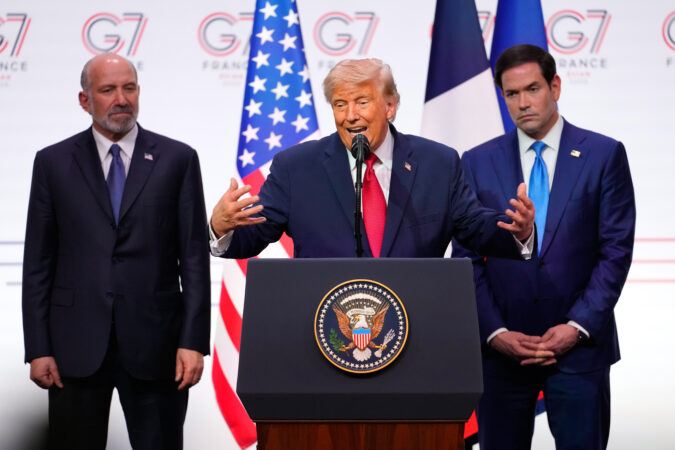
    Officials close to both Rubio and Vance have downplayed the significance of Vance’s role as the public face of the agreement, arguing that much of it was timing. The vice president, these people noted, had a book coming out and was already doing a press tour, whereas Rubio was traveling with Trump to the Group of Seven meetings in France, where naturally his boss took center stage.

    “From what I can tell, he’s supportive of the deal,” said one person familiar with Rubio’s thinking, who spoke on the condition of anonymity because they were not authorized to speak to the media. This person added that the secretary, who also serves as White House national security adviser, was also “clear-eyed about the fact that we are talking about the Iranians here.”

    Vance’s ownership of the issue has political implications, given that he and Rubio are widely expected to become political rivals in the race to succeed Trump as president.

    Jon Hoffman, a policy analyst at the libertarian Cato Institute think tank, said Rubio and Vance represented “the divide between the traditional neoconservative worldview and the growing constituency weary of foreign entanglements,” particularly in the Middle East.

    All three nations that Rubio is visiting were impacted by Iranian military retaliation after it was attacked. Bahrain, the smallest country in the region, saw major damage near the U.S. Navy’s 5th Fleet based in Manama, while the UAE was reported to have seen more attempted strikes than the five other Gulf Cooperation Council nations combined.

    Experts said that while all three appeared to welcome the ceasefire, across Arab Gulf nations there were major concerns about the memorandum of understanding’s lack of provisions addressing nonnuclear threats like Iran’s ballistic missiles and the prospect of large sums of money going to Tehran with few strings attached.

    Rubio will need to “reassure them that this is not some harbinger of a U.S. decision to leave the region or to abandon their security,” said William V. Roebuck, executive vice president of the Arab Gulf States Institute in Washington and a former U.S. ambassador to Bahrain. “In fact, it’s an opportunity to enhance it.”

  • U.K. Prime Minister Starmer to resign as Labour Party seeks reboot

    U.K. Prime Minister Starmer to resign as Labour Party seeks reboot

    LONDON — British Prime Minister Keir Starmer announced Monday that he will resign, succumbing to pressure from lawmakers within his own Labour Party, after crushing losses in nationwide local elections last month triggered a mutiny.

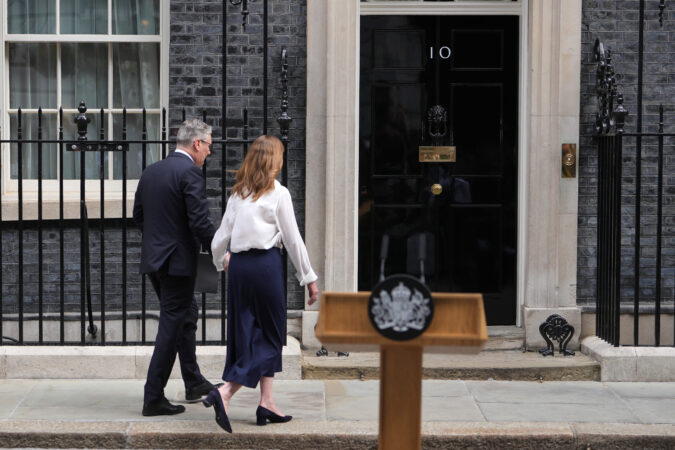
    An emotional Starmer said he would leave office after a new Labour leader — and therefore a new prime minister — is selected in a leadership election that will begin in July. Standing outside 10 Downing Street, Starmer recounted his government’s achievements during its two years in office and then grew tearful after saying that he had informed King Charles III of his decision Monday morning and would soon devote himself to his own family.

    “The question my party is asking now is whether I am best placed to lead us into the next general election,” Starmer said with his staff and some — but notably not all — of his cabinet looking on. “I have heard the answer of my parliamentary party to that question, and I accept that answer with good grace.”

    Starmer, 63, had struggled to define his agenda while contending with economic stagnation, fallout from the Epstein scandal, and turbulent relations with President Donald Trump.

    The discord with Trump was punctuated by a final jab on Sunday when the U.S. president proclaimed that Starmer would resign — shoving the British leader to the door before Starmer had made any announcement of his own.

    Starmer’s surrender came fast on the heels of a special parliamentary election in Makerfield on Thursday, in which Greater Manchester Mayor Andy Burnham won a decisive victory, returning him to the House of Commons and positioning him to mount a Labour Party leadership challenge that Starmer seemed all but certain to lose.

    Burnham’s victory gave him momentum in a challenge to Starmer that has been brewing for months. And his status as a front-runner neared shoo-in levels on Monday when another likely candidate for a leadership race, former Health Secretary Wes Streeting, pulled out of contention and threw his support to Burnham.

    To become the new Labour leader, any challenger must first secure the written backing of at least 81 of Labour’s 403 elected members of Parliament. Once that threshold is crossed, the contest goes to a broader vote of party members who rank candidates in order of preference until one of them clears 50%.

    Starmer could have effectively anointed Burnham as his replacement, avoiding what could be a bruising intraparty battle for the top job. But some have argued that Labour, and the country, would be better served by a leadership contest that demanded candidates defend their vision for leadership.

    Starmer opted for an open contest, saying he would instruct Labour’s executive committee to begin accepting nominations on July 9 with an eye to completing the election in time for a new prime minister to take office by the end of parliament’s summer recess in September.

    It was unclear if that schedule would hold given the accelerating support for Burnham among lawmakers.

    “He’s the next prime minister,” said Tim Bale, a professor of politics at Queen Mary University of London. “It’s going to be something like a coronation.”

    Starmer’s resignation extends a remarkable era of political turmoil in Britain and will usher in the country’s seventh prime minister in the past 10 years.

    Starmer spent less than two years at No. 10 Downing Street. His departure ends a troubled tenure marred by failures to deliver on campaign promises, ousters of senior advisers, criticism of his handling of the wars in Ukraine and Iran, and recriminations over his appointment as U.S. ambassador of former Labour power broker Peter Mandelson, whose entanglement with Jeffrey Epstein, the convicted sex offender, is now under investigation by the Metropolitan Police.

    These and other missteps contributed to the undoing of a staid politician who led Labour to a landslide victory in 2024, promising competence and centrist polices that he said would reinvigorate the British economy and shield the country from the polarizing forces tearing other democracies apart.

    After nearly 15 years of Conservative Party rule, Labour also benefited in that race from widespread unhappiness over the economic malaise that followed Brexit, the country’s Tory-led departure from the European Union.

    And yet Starmer soon became caught in the same currents of voter discontent that he had exploited. Starmer, a former prosecutor who lacked the flair of Britain’s most famous prime ministers, faced persistently abysmal approval ratings and barely concealed scheming in the upper ranks of his party.

    More broadly, Starmer’s resignation underscores the extent to which British politics is entering a turbulent new period in which insurgent parties — including Reform UK, whose anti-immigrant posture echoes the MAGA movement in the United States, and the populist Green Party — are gaining strength amid eroded support for the Conservative and Labour parties that have dominated U.K. politics for generations.

    The bloodbath in local elections suffered by Labour on May 7 — a loss of more than 1,500 of the approximately 2,600 seats it held on local councils and other bodies — was widely expected. And with national parliamentary elections not due until mid-2029, Labour retains a strong majority in the House of Commons. But rank-and-file MPs quickly called for Starmer’s head, fearing a potential wipeout if they did not replace him in time for a dramatic turnabout.

    On paper, at least, the looming leadership contest looked to be Burnham’s to lose even before Streeter pulled out Monday.

    Burnham’s decisive win last week in Makerfield, a working-class constituency Labour strategists feared it might lose outright to Reform UK, handed him a fresh mandate as the figure best positioned to blunt the new right-wing party’s advance in the postindustrial seats Labour needs to hold onto power.

    Burnham’s camp has said he has already secured the backing of more than 201 Labour MPs, half the 402-member parliamentary party. That tally, if it holds, would make him the prevailing favorite from the outset. Coming from local politics, he is seen as largely untainted by the compromises of Starmer’s government.

    Streeting, 43, who served as health secretary under Starmer, resigned his cabinet post last month to launch his own leadership bid. His quick endorsement suggested that Burnham was building perhaps insurmountable support.

    Streeting, who hails from the more centrist Labour wing identified with former prime minister Tony Blair, would have challenged Burnham from the right, and had built a profile as a sharp-elbowed media figure willing to break publicly with Starmer’s government. That’s a contrast to Burnham’s more staid, institutional brand of working-class populism, built over three terms as mayor of Greater Manchester and 16 years before that in the House of Commons.

    Streeting has stressed the need for Labour to win back swing voters defecting to Reform UK and had pointed to his record of NHS reform as proof of a pragmatic governing style. In withdrawing, he acknowledged that a divisive leadership contest could prove costly by stressing disagreements rather than unity.

    “We could spend the summer exaggerating small differences, or we can roll up our sleeves and help him to deliver the change our Party and our country needs,” Streeting said in a statement.

    Starmer’s struggles were compounded by strains in the “special relationship” between Britain and the United States.

    Starmer’s early attempts to appease Trump upon his return to the White House — including a trip to Washington in which he carried an invitation from King Charles III for an “unprecedented” second state visit to England — did not shield Britain from steep tariffs imposed by Trump or from a steady stream of insults.

    In recent weeks, Trump has lashed out at Starmer, saying he is “no Winston Churchill,” for his refusal to thrust Britain’s military more directly into the U.S.-Israeli war with Iran.

    Seeking to avoid the fate of Blair, whose support for the 2003 U.S. invasion of Iraq is still seen as a stain on his legacy, Starmer initially refused to allow U.S. forces to stage attacks on Iran from British bases. He later softened that position to allow “defensive” strikes meant to blunt Iran’s ability to retaliate on British territories or allies. Starmer’s shifting positions added to perceptions of him as indecisive.

    Still, it was another U.S. crisis — the Epstein scandal — that seemed most damaging. Starmer has no known direct ties to Epstein but was pilloried for the ambassadorial appointment of Mandelson, who maintained ties with the Epstein long after his 2008 conviction on solicitation of prostitution and shared with him sensitive U.K. government documents, according to U.S. Justice Department files.

    In February, police arrested Mandelson on suspicion of misconduct in public office, raising the pressure on Starmer over his judgment in appointing him. Weeks earlier, a government review had found evidence in the Epstein files that sensitive information about the 2008 financial crash appeared to have been shared with the financier by a government official. Mandelson was a government minister at the time.

    Starmer’s resignation is likely to add to a general sense that the political fallout related to Epstein has been far more severe in Britain and Europe than in the United States, where neither Trump nor other American politicians revealed to have had close ties with Epstein over the years have faced significant consequences.

    In Britain, Starmer faced calls for his resignation. And Andrew Mountbatten Windsor, a brother of King Charles, was stripped of his royal titles and forced to leave his longtime royal residence following new revelations about his own Epstein connection.

    Starmer weathered those initial calls to step down, but ultimately bowed to reality as the numbers among Labour’s rank-and-file turned against him. In his resignation speech on Monday, he claimed credit for bringing Labour back from the dead.

    “Six years ago, I inherited a Labour Party that was politically, financially, and morally bankrupt,” Starmer said. “I was told time and time again that my part was finished, that we were consigned to history, that a majority at the general election let alone a landslide majority was impossible. But we proved those people wrong.”

  • U.S. temporarily lifts sanctions on Iranian oil

    U.S. temporarily lifts sanctions on Iranian oil

    The Treasury Department on Monday issued a 60-day license allowing the production, delivery, and sale of Iranian oil as part of the preliminary U.S.-Iran deal signed last week.

    Iran stands to reap significant financial rewards from the reprieve, which represents a sharp reversal of U.S. policy. Most importantly, it clears a path for the country to export its oil at market rates after many years of being forced to sell at a discount to find buyers willing to take the risk of running afoul of U.S. economic restrictions.

    But the Trump administration has signaled that it’s ready to provide Iran with financial rewards for opening the Strait of Hormuz and ending the war, which has destabilized the global economy.

    Treasury Secretary Scott Bessent said on social media that the sanctions exemption was the result of “ongoing productive” talks with Iran that are taking place in Switzerland.

    “Iran has committed to free and open transit in the Strait of Hormuz and to permit International Atomic Energy Agency (IAEA) inspectors into their country,” Bessent wrote in a post on social platform X.

    The Trump administration provided Iran with temporary sanctions relief earlier this year as it tried to curb oil prices by allowing more crude supplies to flow to global markets. The U.S. then ramped up sanctions and created a military blockade preventing the sale of Iranian oil as part of an effort to cripple its economy.

    The new license, which expires Aug. 21, gives Iran greater access to U.S. currency by allowing the country to conduct oil transactions using U.S. dollars. It also allows U.S. importers to buy Iranian crude oil, petrochemical products, and petroleum products.

    Iran produced less than 5% of the world’s oil before the war, with the vast majority of its exports going to China. But it was forced to sharply curtail production in recent months because of a U.S. blockade. Time will tell how quickly the country will be able to restart those wells, which can be a tricky process. Iran will also have to repair energy infrastructure damaged in the war.

    The Trump administration has faced criticism for striking an initial agreement with Iran that critics say is overly accommodating and more generous than the 2015 Joint Comprehensive Plan of Action that the Obama administration and other world powers reached with Iran to curb its nuclear program.

    “It’s also important to note that sanctions relief was not provided immediately when the JCPOA was enacted, it happened at ‘Implementation Day’ — six months after the IAEA verified the nuclear commitments were fulfilled,” said Daniel Tannebaum, a senior fellow at the Atlantic Council who previously served as the Office of Foreign Assets Control compliance coordinator for the Federal Reserve Bank of New York.

    This article originally appeared in the New York Times.
  • Federal judge halts Trump administration effort to subpoena Walz in immigration enforcement probe

    Federal judge halts Trump administration effort to subpoena Walz in immigration enforcement probe

    A federal judge has blocked an attempt by the Trump administration to subpoena Minnesota Gov. Tim Walz and other state officials, calling it an effort to “harass and retaliate against them.”

    In a ruling unsealed Monday, U.S. District Judge Patrick Schlitz found the “dominant purpose” of the subpoenas was to “coerce Minnesota officials into assisting the federal government with enforcing civil immigration law and to harass and retaliate against them for failing to do so.”

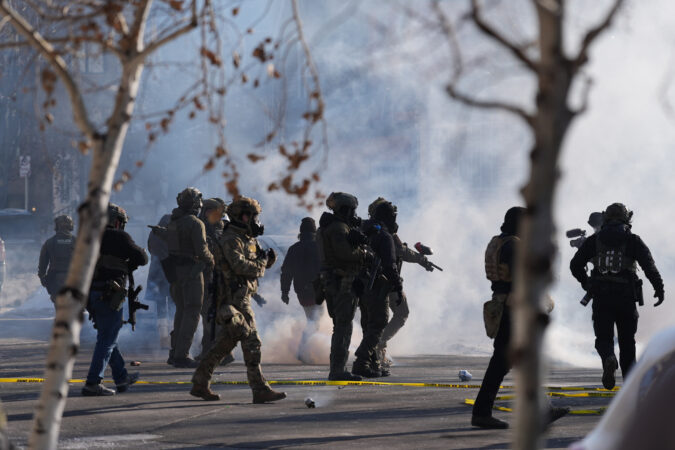
    The subpoenas seeking records were served in January as part of an investigation into whether Walz and other officials obstructed or impeded law enforcement during a sweeping immigration operation in the Minneapolis-St. Paul area. They were sent to the offices of Walz, Attorney General Keith Ellison, Minneapolis Mayor Jacob Frey, St. Paul Mayor Kaohly Her, and officials in Ramsey and Hennepin counties.

    The ruling is the latest rebuke by the federal judiciary of Justice Department efforts to aggressively implement the Trump administration agenda in courts and target the president’s political adversaries through subpoenas and similar demands.

    The judge ruled that there appeared to be “extremely weak to nonexistent” connections between the information sought in the subpoenas and any possible criminal violation. The subpoenas seek materials “that largely if not entirely relate to constitutionally protected conduct,” the judge wrote, noting that Minnesota has the legal right not to devote its resources to enforcing federal immigration law.

    The Justice Department “is not conducting a criminal investigation,” the judge wrote, “but is instead using the grand jury process for other (unlawful) purposes.”

    The evidence that the subpoenas were issued for unlawful reasons is overwhelming, the judge said, arguing that the Justice Department “has struggled — without success — to identify a single plausible investigatory justification” for them.

    The Justice Department didn’t immediately respond to an email seeking comment.

    Walz, in a statement, called the ruling “a victory for the rule of law and our democracy.”

    “The U.S. Justice Department is pursuing criminal investigations into the President’s political opponents,” said Walz, the 2024 Democratic nominee for vice president. “This case was just one example of that, but we are seeing daily reminders of this administration’s lawlessness — in Minnesota and around the country. We all must continue to seek justice and uphold the rule of law.”

    Ellison said “it should disturb every American that Donald Trump is weaponizing the criminal justice system against people he disagrees with.”

    The subpoenas were “a politically motivated retaliation against our city for lawfully standing up to ICE and fighting for our residents,” Her said in a statement, referring to U.S. Immigration and Customs Enforcement.

    Frey said the investigation was “never about justice, law, and order, but the absence of it.”

    “Subpoenaing political opponents because they spoke on behalf of their constituents violates the core tenets of our democracy and human decency,” he said.

    Frey also observed that criticizing government action is not a crime.

    “One of the defining strengths of our democracy is the ability to challenge those in power without fear of retribution. Elected officials have both the right and the responsibility to speak honestly about how government decisions affect the people they serve,” he said.

    Over the last year, judges have dismissed indictments against two prominent Trump foes, former FBI Director James Comey and New York Attorney General Letitia James, and grand juries have repeatedly refused to return indictments sought by the Justice Department.

    The moves reflect mounting public concerns that the Justice Department, an institution meant to make investigative and prosecution decisions independent of the White House, is being politicized under the current Trump administration.

    Vice President JD Vance has separately called on the Justice Department to investigate Walz and Ellison over allegations they failed to stop widespread social services fraud, though the department has not said whether it will open an investigation. Walz and Ellison have described those allegations as politically motivated and defended their efforts to combat fraud in Minnesota.

  • AristaCare at Meadow Springs is keeping patients in-house for a lung procedure that used to require a transfer to a hospital

    AristaCare at Meadow Springs is keeping patients in-house for a lung procedure that used to require a transfer to a hospital

    AristaCare at Meadow Springs, a Plymouth Meeting nursing home that specializes in patients who need ventilators to help them breathe, has started doing a key lung procedure in-house that used to require patients to be transferred to a hospital.

    The effort is part of a broad trend in healthcare to provide more care outside of hospitals, which are the most expensive sites of care.

    Meadow Springs’ goal in doing the lung-clearing procedures in-house is reducing the number of times its residents are hospitalized, the facility’s administrator Rob Nealon said.

    Keeping residents in the facility benefits Meadow Springs financially even though it doesn’t charge for the treatment because it doesn’t lose revenue to hospitals, Nealon said. It’s also better for residents to avoid difficult transitions and long hospital stays, he said.

    The treatment, called a bronchoscopy, uses suction tubing with video to go deep inside a patient’s lungs to clear out secretions and mucus plugs that make it hard for ventilator patients to breath, said Lejoy Mathew, respiratory director for the facility.

    The nursing home with 153 licensed beds has the capacity to care for 72 people on ventilators.

    AristaCare did its first bronchoscopy in February and has done four more since then, Mathew said.

    Patients who are dependent on ventilators often have a chronic respiratory disease, neuromuscular or neurodegenerative diseases, or traumatic brain injuries.

    The company, based in Cranford, N.J., also owns AristaCare at East Falls, another ventilator facility it acquired in 2024, and plans to start doing bronchoscopies there as well. The East Falls facility has 66 beds.

  • Virtua Mount Holly nurses approve contract after threatening to strike

    Virtua Mount Holly nurses approve contract after threatening to strike

    Nurses at Virtua Mount Holly Hospital have voted in favor of a new contract ensuring raises and safety enhancements under a deal reached with employers at the South Jersey hospital after their union threatened to strike last week.

    Under the contract approved Friday, the hospital will enforce minimum staffing ratios to ensure a certain number of nurses are caring for a given patient at all times, and hire new staff in some areas.

    Nurses will receive pay raises at an average of 16.5% through June 2028.

    The three-year contract also includes provisions for new safety measures at the hospital, including panic buttons and wearable devices for staff, and increased visitor screening for weapons, the union said. The hospital will also implement a visitor ID system. Protocols will be improved to notify nurses when they have been exposed to an infectious disease.

    “HPAE nurses are not willing to tolerate the status quo anymore so we are proud that we have won strong language to ensure nurses can care for their patients the way they were trained,” HPAE president Debbie White said in a statement.

    The contract ratification comes after Mount Holly nurses, a local chapter of the Health Professionals and Allied Employees union, voted earlier this month to strike on June 16 if they could not come to an agreement with Virtua officials.

    Both sides had been negotiating for two months, including in a 21-hour session the night before the strike vote. More than 700 unionized nurses work at the Burlington County hospital.

    Staffing levels, a concern raised by nursing unions across the country, were a particular sticking point in bargaining. Many nurses say that the number of nurses assigned to care for a given patient is a safety issue.

    Nurses last week said the strike vote — in which 92% of nurses threatened to walk off the job — helped the union reached a tentative contract agreement with Virtua.

    In a statement Monday, Chrisie Scott, senior vice president and chief marketing officer, said the three-year contract “will enable Virtua Mount Holly to continue delivering safe, high-quality care for our patients, while providing wage increases, enhanced safety measures, and updated staffing levels for our nurses.”

    “We look forward to moving ahead together,” she said.

  • The Norristown school board plans to hire Delaware’s Superintendent of the Year

    The Norristown school board plans to hire Delaware’s Superintendent of the Year

    The Norristown school board plans to vote Monday to hire Delaware’s Superintendent of the Year as the district’s next leader.

    The board announced Sunday that it had selected Dorrell Green, the superintendent of the Red Clay Consolidated School District in New Castle County as its pick for superintendent.

    Green is expected to start as superintendent in the Norristown Area School District on July 20, under a five-year term with an initial salary of $270,000, according to an agenda for Monday’s meeting.

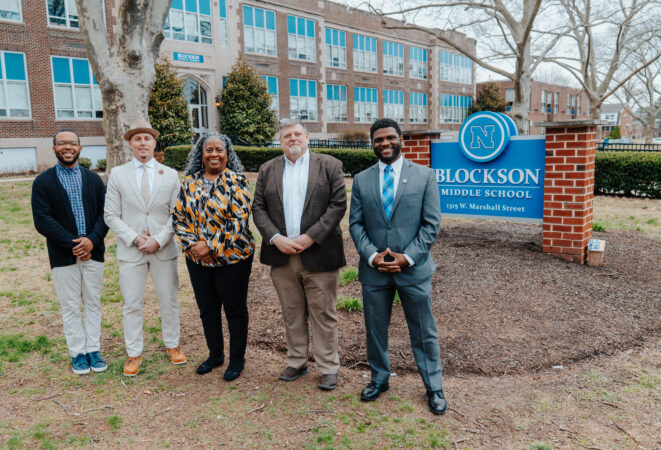
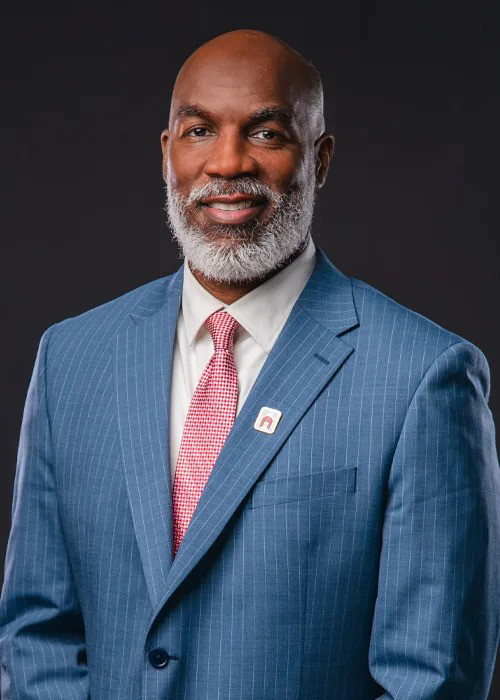
    Dorrell Green, the superintendent of the Red Clay Consolidated School District in New Castle County, Del., is to join Norristown Area School District as superintendent on July 20, 2026.

    Green’s selection comes after the board, which has a new majority after November’s school board elections, moved this spring to oust Superintendent Christopher Dormer, citing poor test scores. The board has since sparked controversy with other changes, including eliminating its DEI director.

    Throughout the superintendent search process, “our community made it clear that they were seeking a visionary leader who is committed to student achievement, educational excellence, and meaningful engagement with all stakeholders,” the board’s president, Jeremiah Lemke, said in a statement.

    He said Green’s “experience, leadership record, and commitment to serving diverse school communities” set him apart during a search process that was led by a consulting group and attracted 88 applicants.

    Green has worked in public education for more than 25 years, including as a teacher, principal, and assistant superintendent.

    In Red Clay, Delaware’s largest school district with 15,000 students, Green has served as superintendent since 2019. He expanded early childhood education during his tenure there and increased access to advanced course work, according to the Norristown board.

    Before that, Green was the first executive director of the Delaware Department of Education’s Office of Innovation and Improvement, an office created by former Delaware Gov. John Carney to support the state’s neediest schools.

    Green has a bachelor’s degree in elementary education and master’s degree in educational leadership from the University of Delaware. He has a doctoral degree in organizational leadership from Wilmington University.