Category: News

Latest breaking news and updates

  • Inside the $70 million makeover of Roosevelt Mall

    Inside the $70 million makeover of Roosevelt Mall

    As Brixmor Property Group executives began transforming the Roosevelt Mall, they briefly debated whether to change the name.

    After all, the 60-year-old Northeast Philly shopping center is undergoing a more than $70 million makeover that promises to bring it into the modern age with new tenants, upgraded facades, and a better layout.

    As Brixmor executives walked around the 620,000-square-foot complex on a recent day, they said they already see the outdoor mall becoming a community hub — with a gym, an organic grocer, and new fast-casual dining options.

    Despite these changes, they have decided the Roosevelt Mall should not be rebranded.

    “It’s an iconic name,” said David Vender, Brixmor Property Group’s executive vice president for the north region, who is based in Conshohocken. “People know it as a landmark.”

    Brixmor operates about 350 shopping centers nationwide, but some of its top executives — including new CEO Brian Finnegan, who grew up in Roxborough — have soft spots for Philly, forged by personal or family connections to the region.

    During a visit to the Roosevelt Mall last week, they said they were proud of their local properties.

    Those include the Village at Newtown in Bucks County and Pilgrim Gardens in Drexel Hill, where the company recently built an artful “Delco” sign to tap into local pride.
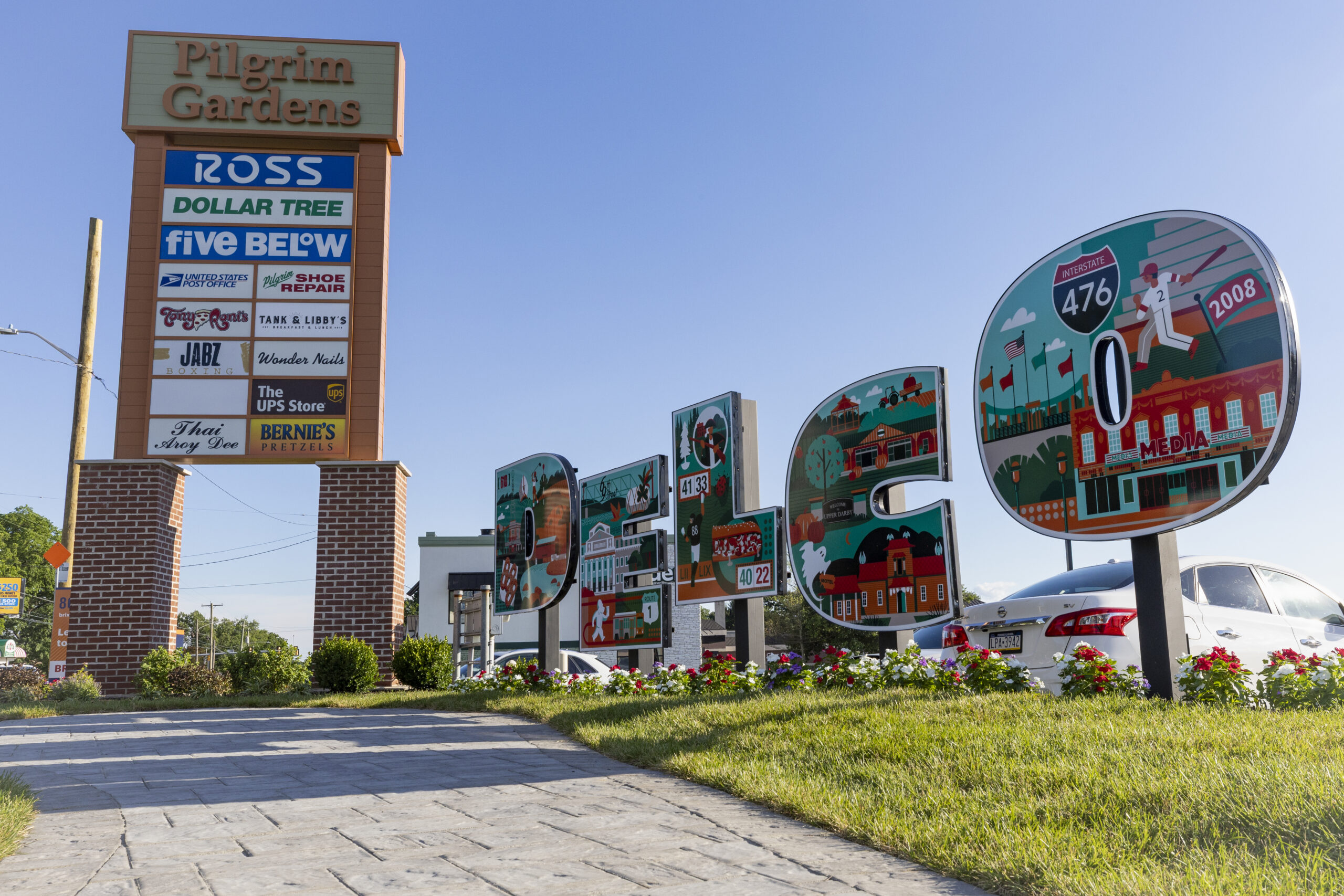
    A new Delco sign is shown at Pilgrim Gardens in Drexel Hill on June 16.

    And they said their connection to the community around the Roosevelt Mall has only grown stronger since last year’s plane crash, which killed eight people, injured two dozen, damaged nearby homes, and left an 8-foot-deep crater in front of the mall.

    Even before the tragedy, they said, they considered how their local redevelopments affected the Philly-area residents who shop, eat, and drive by their centers every day.

    At the Roosevelt Mall — which sits on 36 acres between Cottman Avenue, Roosevelt Boulevard, and Bustleton Avenue — these decisions have begun to pay off.

    In the last year, the center logged 6.3 million visits, a 5% year-over-year increase and a 19% jump when compared with the 12 months before Sprouts Farmers Market’s 2024 opening, according to company executives.

    Occupancy was over 98% this spring, they said, and customers spend about 35 minutes there on average, on par with the national average for all Brixmor complexes.

    When you’re able to bring together “higher-quality food and beverage, fitness, service … then you’re also able to attract more elevated retail” stores, said Finnegan, noting that Ulta Beauty and Victoria’s Secret are among the tenants signed on for the next phase of the Roosevelt Mall’s redevelopment.
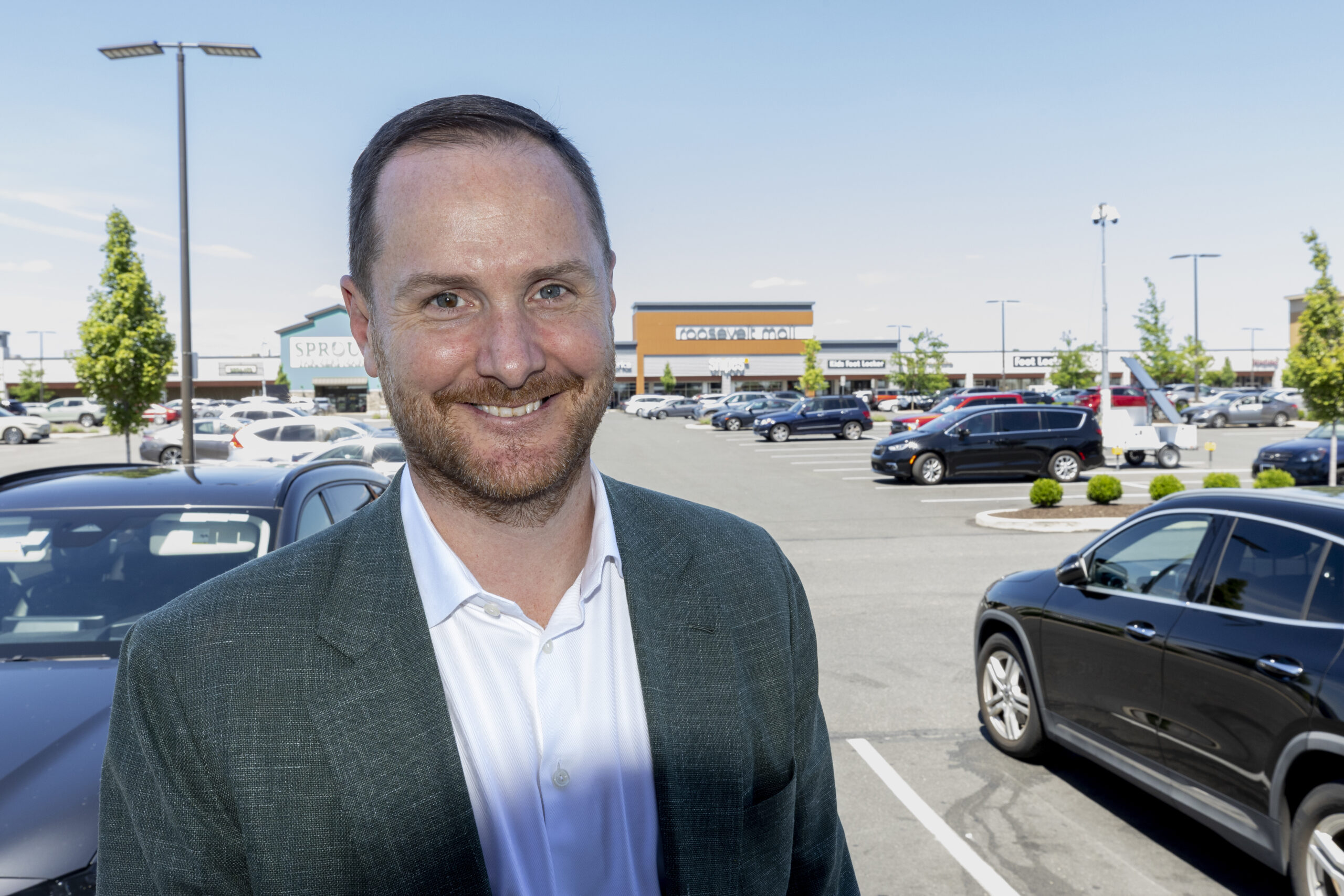
    Brian Finnegan, CEO and president, at Brixmor Property Group, at the Roosevelt Mall in Northeast Philadelphia.

    Achieving the tenant mix of a modern shopping center

    When the Roosevelt Mall opened in 1964, its main promenade was referred to as “Chestnut Street Northeast,” with several outposts of Center City clothing stores, according to an Inquirer article from the time.

    The shopping center had apparel shops, such as Baker Shoes and Famous Maid, as well as “the Cavalier, a cafeteria-style restaurant with a game room and a retail bakery,” The Inquirer reported. It was anchored by an S. Klein’s discount department store.

    The Roosevelt Mall was built as part of the Roosevelt Boulevard shopping complex, bordered by Cottman and Castor Avenues. The larger development — which also had Gimbels and Lit Bros. department stores — was called the country’s largest “in-town” shopping center at the time.

    Roosevelt Mall in Northeast Philadelphia is shown in earlier days, long before Brixmor Property Group remodeled the property.

    Decades later, consumers can buy clothes, home goods, even groceries online with just a few clicks. So shopping centers need more than just retail stores, said executives at Brixmor, which became the Roosevelt Mall’s owner more than a decade ago.

    They said they have intentionally brought in tenants that customers may visit multiple times a week and added more pedestrian walkways, open-air plazas, and outdoor seating.

    “Historically, shopping centers were very utilitarian, and now they’re really becoming more community assets, so we’re really careful about our merchandising mix,” said Ryan Guheen, Brixmor’s senior vice president of development.
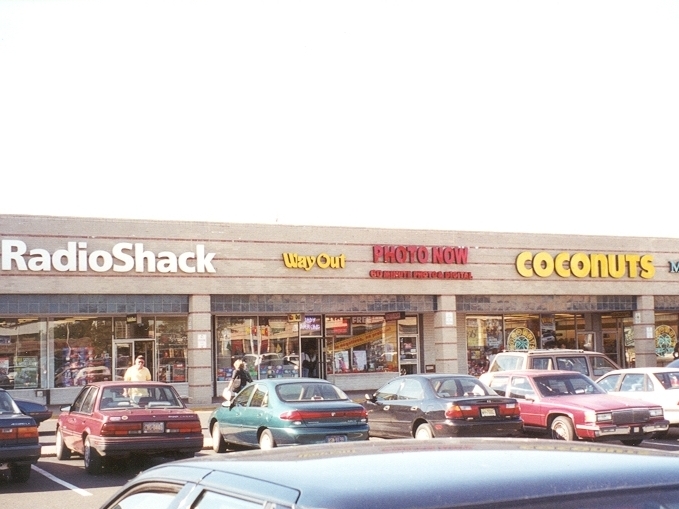
    Roosevelt Mall in Northeast Philadelphia is shown in earlier days, long before Brixmor Property Group remodeled the property.

    The latest redevelopment push began around 2020, when Brixmor opened an LA Fitness outpost on the site of a former Turf Club off-track betting venue, near a new Oak Street Health clinic.

    Since then, the company has constructed buildings in underused sections of the parking lot and filled them with popular chain eateries like Raising Cane’s chicken; the American-Chinese food spot Panda Express; and Tous les Jours, a Korean-French bakery and coffee shop.

    The Sprouts organic grocer has driven traffic to the center since it opened in 2024, and a nearby Wonder dine-in food hall and delivery kitchen opened last year.

    Annual customer visits to Roosvelt Mall have increased 13% since Sprouts organic grocer opened there in 2024.

    The 37,000-square-foot under-construction building, set to house a Victoria’s Secret and an Ulta, will also include fast-casual staples like Shake Shack and Cava, which serves Mediterranean bowls and pitas.

    Tenants like these, Guheen said, provide “multiple opportunities for people to stay on property to shop retail, get their workout in, go to the bakery, get a coffee.”

    Some mall retailers have found homes in shopping centers

    As Brixmor executives diversify the tenant mix at their shopping centers, they say they do not see retail stores going extinct.

    In fact, as some indoor malls deteriorate or become residential-focused town centers, “the open-air strip centers benefit,” Vender said, as traditional mall retailers look to open more stores in outdoor complexes.

    Elsewhere in the Northeast, the Franklin Mall, formerly Franklin Mills, has been in decline for years and was recently listed for sale. Real estate investor Dean Adler has said he wants to buy the 137-acre mall and turn it into a youth sports complex with a hotel and Margaritaville-themed water park.

    Seven miles away, the Roosevelt Mall is home to several shops that were once found almost exclusively in enclosed malls, such as Bath & Body Works, Foot Locker, and the forthcoming Victoria’s Secret. These companies’ higher-ups have pivoted in recent years, adding more locations in open-air centers.

    “It’s not like retailers are leaving malls en masse … at least in the best malls,” Finnegan said. But “as they open stores in open-air shopping centers with grocery stores, with fitness uses, with elevated food and beverage, they’re seeing the sales performance” — and then want to keep investing in shopping centers.

    Longer-standing retail tenants are continuing to see success, too. Finnegan said the Roosevelt Mall’s 300,000-square-foot standalone Macy’s is among the company’s top-performing locations in the region, rivaling the King of Prussia Mall store.

    The department store is the center’s largest driver of traffic, recording more than 900,000 annual visits, said Brixmor executives, who are not worried about the department store closing as the Center City store did last year.
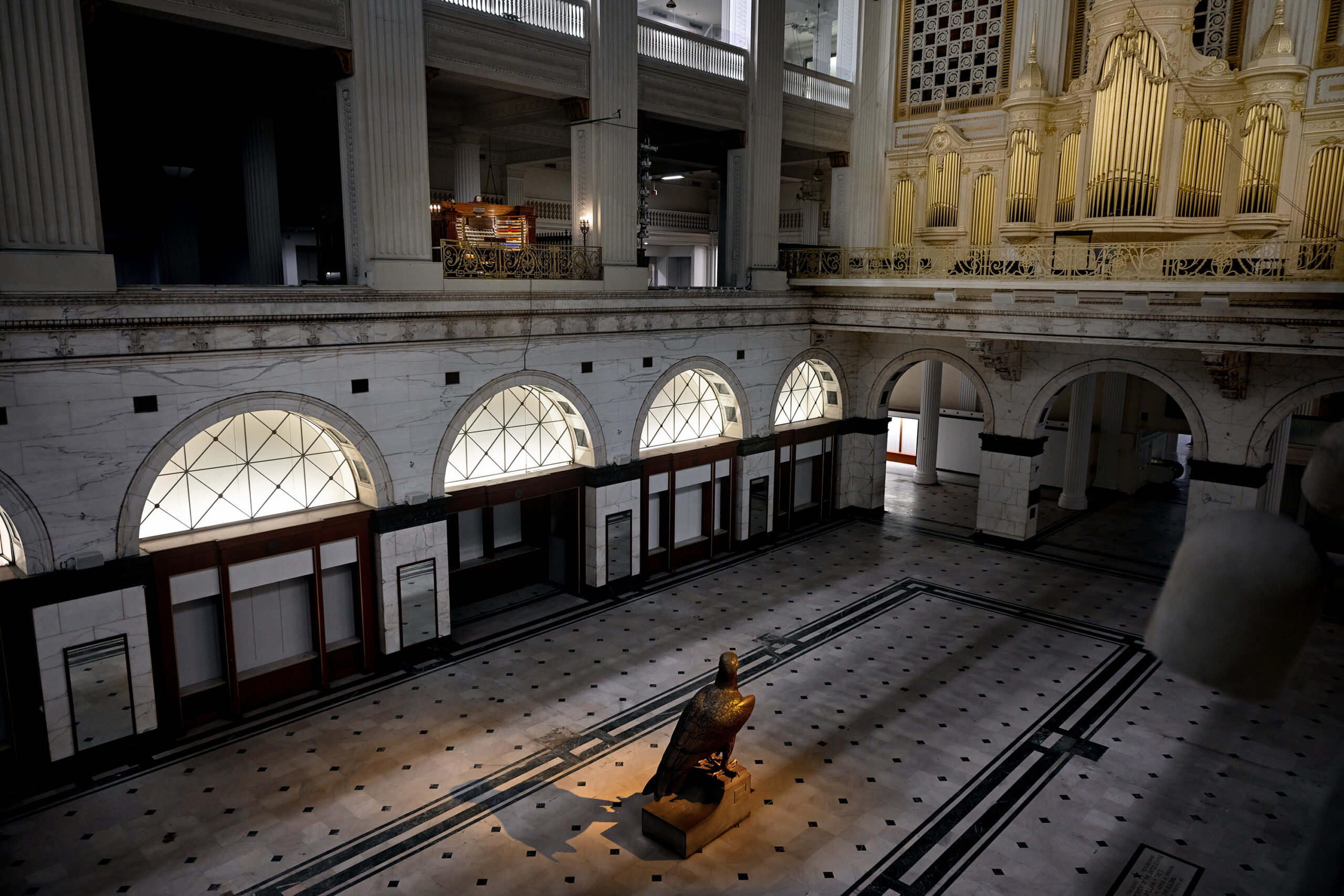
    As seen in September, the Macy’s in the Wanamaker Building in Center City now sits empty. It closed last year.

    A Rita’s Water Ice franchise has also stayed put in the Roosevelt Mall for decades, Finnegan said.

    Company executives said they are optimistic this momentum will continue. Along with the under-construction section, redevelopment plans also include another standalone building that has yet to break ground — and the cost of which is not included in the current price tag.

    Finnegan put it simply: “Opportunity begets opportunity.”

  • The city’s graffiti cleanup program doesn’t cover areas where residents request it the most

    The city’s graffiti cleanup program doesn’t cover areas where residents request it the most

    To make its best first impression on the droves of visitors expected this summer in Philadelphia, the city has launched an anti-graffiti cleanup campaign. But those cleanup areas do not match up with where Philadelphia residents actually ask for it the most.

    In the fall, the city began an $11.5 million beautification project ahead of this summer’s series of major events — the World Cup, the nation’s 250th celebration, and the MLB All-Star Game — that included new landscaping and graffiti cleanup. The Gateways to Philadelphia project focused on seven major transit areas that could be a visitor’s first glimpse of the city, where new murals and fresh flowers replace sparse medians and graffiti.

    Those gateways were:

    • 26th Street Gateway at Penrose Avenue.
    • South Street Bridge, walls, medians, and ramps.
    • 30th Street Station walls, medians, and ramps.
    • I-676 interchange at 15th and 16th Streets and Vine Street.
    • I-676 interchange at Sixth and Eighth Streets and Callowhill/Vine Streets.
    • I-76 and I-95 interchange at Second and Third Streets and Callowhill/Vine Streets.
    • CSX/Amtrak wall at Spring Garden Street.

    Meanwhile, the hot spots for graffiti cleanup requests through 311 last year were most densely clustered in West Philly, South Philly, and Northern Liberties. Despite three gateway locations being a short distance from high-density areas, they are on the opposite side of the Schuylkill from the hot spots.

    In 2025, residents submitted 10,141 requests for graffiti removal, and nearly all of them have since been marked closed. There was a seasonal spike in the spring, with residents filing over 1,100 requests each in March and April.

    (function() {
    var l2 = function() {
    new pym.Parent(‘iframe_test’,
    ‘https://media.inquirer.com/world_cup_graffiti/iframe_graffiti_wc_map.html’);
    };
    if (typeof(pym) === ‘undefined’) {
    var h = document.getElementsByTagName(‘head’)[0],
    s = document.createElement(‘script’);
    s.type = ‘text/javascript’;
    s.src = ‘https://pym.nprapps.org/pym.v1.min.js’;
    s.onload = l2;
    h.appendChild(s);
    } else {
    l2();
    }
    })();

    Sara Lorenz, 45, lives in one of the corridors with a high amount of graffiti cleanup requests, along Baltimore Avenue in West Philly. She said graffiti typically gets cleaned up fairly quickly in the area, particularly near businesses, but sometimes it lingers and becomes an eyesore. Lorenz makes a distinction between artful graffiti and careless markings, and said it would do some good if the city had an initiative targeting the latter on blocks like hers.

    Lorenz said she understands the city’s desire to make its best appeal to tourists this summer, but it would be nice if the beautification efforts went toward the typical Philadelphian, too.

    “As residents, we also deserve respect,” she said.

    The city has painted a new, wide postcard style mural to cover graffiti.

    Efficient response time

    It could be that some Philly residents also want graffiti removed from the city’s chosen gateways, and that people are less likely to contact 311 for what they witness while driving on major roadways. Some other residents living near Lorenz said they had not noticed graffiti much around them and were not bothered about the city’s beautification plans.

    The city is clear that the gateways project was prompted by visitors, but there are plans for at least some of it to continue after the guests leave. The beautification project is expected to be completed sometime this summer, and a maintenance plan has been put in place for the new installations, according to Keisha McCarty, a spokesperson for the Philadelphia Office of Clean and Green Initiatives.

    “If you want the city to look clean, you want to do it where it’s most visible,” said Fikru Bekele, 75, the owner of multiple properties along Baltimore Avenue, who said he understands the city’s focus on visitors. He said he has gotten used to residents not receiving as much attention as higher-profile projects do.

    “It’s not the right thing but it’s the way it is. … Neighborhoods need to be taken care of, too,” he said.

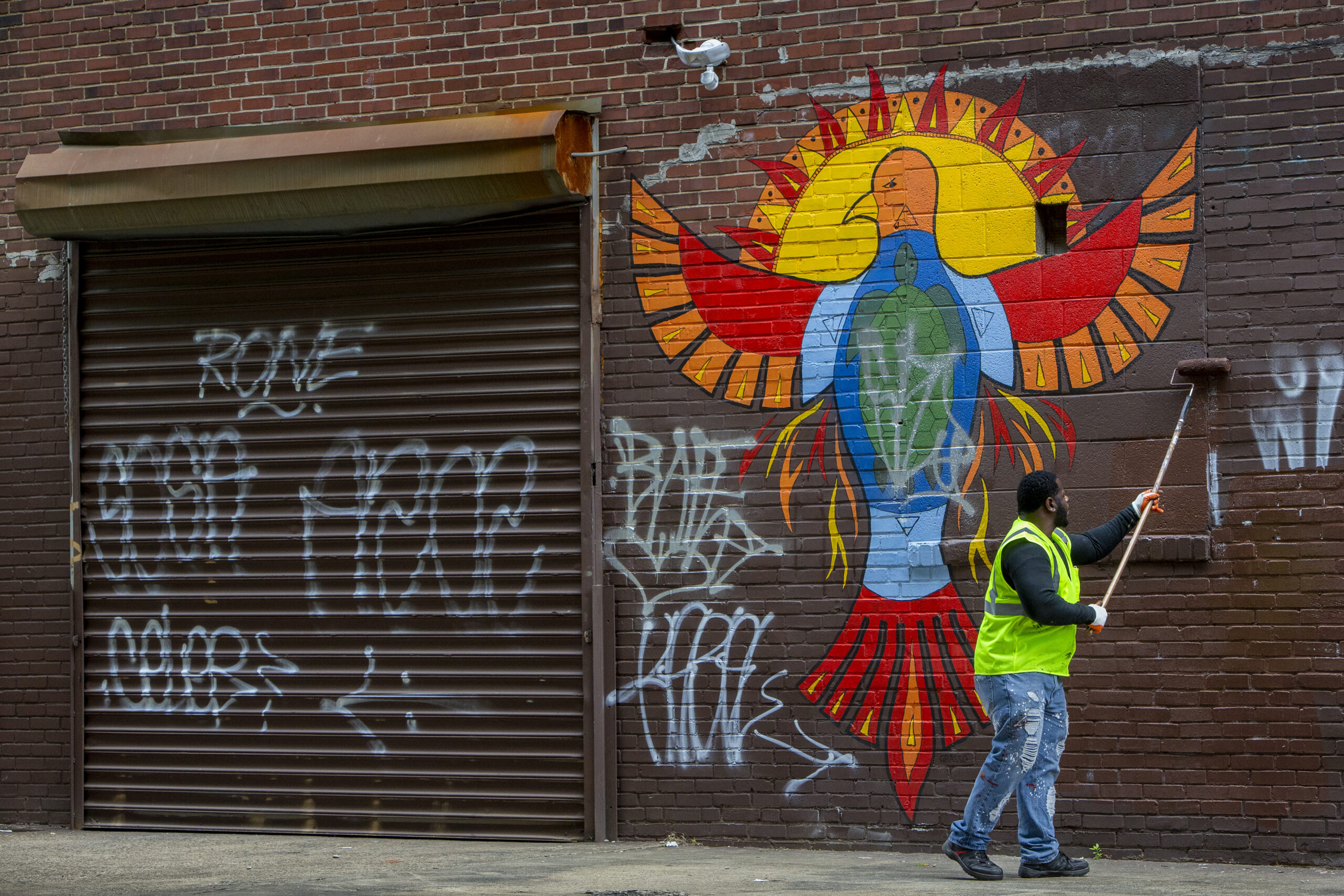
    William Scott with the CLIP, Community Life Improvement Program, removes graffiti from wall around a colorful bird along North 9th Street near Jefferson on Tuesday, April 20, 2021.

    However, graffiti removal in Philadelphia neighborhoods might not need additional focus, because the city’s existing program appears to be working efficiently. Graffiti removal requests submitted to 311 are passed along to the Philadelphia Community Life Improvement Program, known as CLIP. It took 311 and CLIP crews eight days on average to close graffiti removal requests last year, with five days as the median closure time.

    If there is a 311 submission in South Philly, there is a decent chance it’s coming from Joe Eastman. The retired Navy veteran is a 311 neighborhood liaison, part of a city program that trains certain residents how to report issues more effectively. Eastman, 75, goes on walks and reports what he sees in the neighborhood, and often finds himself alerting 311 to the same spots, like a stop sign near Broad Street and Snyder Avenue.

    “I’m sure if I go back in two weeks it’ll have graffiti again,” he said.

    Eastman is pleased with 311 and CLIP’s responsiveness, and said he has no problem with the anti-graffiti focus on visitors if CLIP continues at its current pace.

    “I get what they’re doing. And as long as they are being as responsive as they have been, I think we can all get along with this,” he said.

  • Mutant mice resistant to pest control found in Philly, its suburbs, and NYC. Are rats next?

    Mutant mice resistant to pest control found in Philly, its suburbs, and NYC. Are rats next?

    Pest control companies routinely use traps baited with rodenticide to kill rats and mice found in homes, restaurants, and businesses throughout the Philadelphia area, but a recent Rutgers University study suggests those companies face a gnawing problem.

    Researchers discovered that mice in Philadelphia, Trenton, and suburbs like Levittown and New Hope harbor genetic mutations that shield them from standard chemical baits.

    In fact, a majority of house mice sampled from Northeast urban areas, including Manhattan and other New York City boroughs, carried at least one mutation linked to rodenticide resistance — a clear sign that pests are actively evolving to survive common poisons.

    Rats presented a different problem. While they lacked the chemical-resistant mutations found in mice, the study’s author suggests they possess the cognitive sophistication to outsmart and evade traps entirely.

    Lead author Jin-Jia Yu, a postdoctoral researcher in Rutgers’ entomology department, said the findings indicate that pest control companies might need to develop different strategies.

    Yu conducted his research with the supervision of another of the paper’s authors, Changlu Wang, an entomologist in the same department.

    Published in the April issue of Pest Management Science, the peer-reviewed study was launched after frustrated pest control professionals repeatedly approached the Rutgers lab, reporting that rodents routinely survived multiple treatments.

    “For the house mouse, we saw much more mutations rather than Norway rats,” Yu said. Norway rats are the common brown rat often seen in sewers. “Genetic mutation is not that special in these creatures. But we found that the house mouse shows a lot of genetic mutations related to rodenticide resistance.”

    Rodents are a bigger problem in cities

    This study focused on urban rodents. It found that mice in big cities such as Philly and New York had a high frequency of mutations of a certain gene.

    Rodents are a bigger problem in cities than more rural areas. Data cited in the study indicate that an average of 12% of all households experience rodent sightings. But major metropolitan areas reporter higher rates, including Philadelphia (29%), Washington (20%), and Manhattan (15%).

    Yu said that similar studies of mutations in house mice and Norway rats were conducted in Europe and that research in the U.S. has been limited. One study in 2009 did find some rats in England with mutations that made them resistant.

    However, Yu said there had been no such studies in the Northeast.

    It has long been known that rodents developed resistance to the rodenticides developed in the 1950s. So more potent compounds were created in the 1970s and include brodifacoum, bromadiolone, difenacoum, and difethialone.

    The poisons contain anticoagulants that interfere with the activation of vitamin K reductase (VKOR), an enzyme essential for blood to clot. Eating the bait leads to fatal internal bleeding.

    The Rutgers team looked for mutations in the gene known as VKORC1 that makes the enzyme.

    Pest control companies, as well as the Philadelphia Department of Public Health, sent the researchers the tails of caught rodents. Yu said his research was possible only with their help.

    A rare mouse mutation in Philly

    The researchers analyzed DNA from 147 house mice and 143 Norway rats collected in New York, New Jersey, Pennsylvania, and Washington, D.C.

    Among house mice, 84% carried at least one mutation in the VKORC1 gene. Nearly 70% carried mutations known to help mice survive rodenticides.

    Of 24 mice collected in Philadelphia, the majority had a mutation and five had two. One mouse had a rare mutation.

    Of 20 mice collected in Trenton, 10 had two mutations. Lansdale, Levittown, and New Hope had one mouse each with a mutated VKORC1 gene.

    About 35% of the Norway rats also carried mutations. However, scientists do not yet know whether those mutations result in resistance in the rats.

    Mice, Yu said, might be genetically adapting faster than rats because they are curious and more likely to eat unfamiliar food, including rodent bait.

    However, rats will avoid new objects, including live traps, and learn from their encounters.

    In other words, not only are mice mutating to survive, but rats may be learning to avoid entrapment.

    “They’re pretty smart,” Yu said of rats.

  • Patrols grow as paint peels at the  Reflecting Pool

    Patrols grow as paint peels at the Reflecting Pool

    WASHINGTON — National Guard service members and U.S. Park Police patrolled the deck around the Lincoln Memorial Reflecting Pool on Monday as President Donald Trump’s administration faces a self-imposed deadline to fix a botched renovation before the nation’s 250th anniversary celebration.

    The patrols came two days after Trump said authorities had made “multiple arrests” of people he insisted were responsible for damage to the peeling coating after an algae bloom occurred. The liner was installed as part of his $14 million-plus project.

    The president has confirmed the problems most likely require draining the pool again for liner repairs and he promised a quick fix. Without offering substantiation, he also said vandals dumped fertilizer in the pool and slashed the coating with a box cutter.

    But the timeline was not clear Monday, and the administration did not immediately respond to questions about a new round of work. Contractors and federal workers in recent days have been using chemicals and ozone nanobubbles to combat the algae.

    Trump pitched the original improvements as intended to clean, beautify and reinforce an iconic site that he said had become dilapidated and dirty because of previous presidents’ neglect. Algae has plagued the pool for a century, and Trump insisted that a newly installed “American flag blue” coating, which he selected himself, would turn the pool into a gleaming expanse along the National Mall.

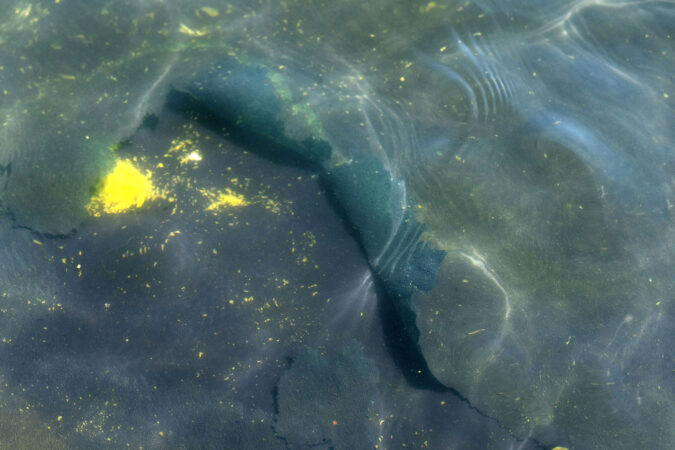
    Yet within weeks of Trump declaring the rehabilitation completed in time for Independence Day, the water was plagued by a vivid green algae bloom that clouded the pool’s coating. A piece of liner, about 4 square feet, was observed Friday partially floating in the pool. The Associated Press saw additional pieces in the water Monday.

    Via social media, the president has blamed the problems on “SICK, DERANGED PEOPLE!” He asserted Monday on Truth Social that intentional damages include a “300 foot long gash” and that “chemicals have been illegally placed in the water.” A day earlier, Trump posted, “Work will begin immediately on fixing the seriously vandalized Reflecting Pool.”

    At an executive order signing on Monday, the president said five people had been arrested and five more were under suspicion, and he deflected blame for the pool’s maintenance issues: “I can’t help it if somebody goes in with a knife and starts hacking it up.” He has not backed up those claims, and even if anyone has deliberately peeled or cut the lining, that would not explain the algae bloom that appeared more intensely than what typically occurred before the renovation.

    Images showing that Trump’s project had apparently backfired boomeranged across social media last week, drawing crowds of onlookers eager to see the effects themselves. An unknown number ended up being detained by federal authorities.

    One man arrested was David Hearn, 67, of Bethesda, Md. A former Olympic canoe racer, Hearn told the Associated Press that he reached into the pool because he wanted to examine the peeling new coating. He said he briefly touched a chunk that was still attached to the side of the pool, then let go shortly after a park worker told him to. Hearn said he was then detained by National Guard troops and Park Police for five hours before being released Friday night.

    “I’m a curious citizen,” Hearn said in a telephone interview. “I reached down to see what it felt like. It was very rubbery.”

    The Park Police did not immediately respond Monday to AP’s questions about how many arrests were made and whether any charges had been filed. Washington’s Metropolitan Police Department said Monday that the agency is not involved.

    It was not immediately apparent what criminal or civil violation someone might commit reaching into the pool. Trump, in one of his Truth Social posts, cited laws against defacing monuments as grounds for imprisoning anyone harming the pool.

  • Margaret Kerry, body and soul of Disney’s Tinker Bell, dies at 97

    Margaret Kerry, body and soul of Disney’s Tinker Bell, dies at 97

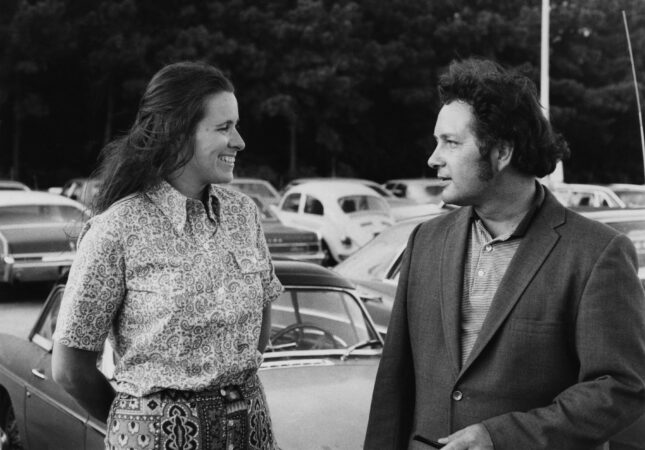
    Margaret Kerry, who through months of graceful and poignant pantomime inspired the portrayal of the Peter Pan fairy Tinker Bell that the world knows best, died on June 11 at her home in Wilmington, N.C. She was 97.

    The cause was lung cancer, her family announced on social media.

    Tinker Bell’s origins lie in Peter Pan, or The Boy Who Wouldn’t Grow Up (1904), a play by the British writer J.M. Barrie later expanded into a novel, Peter and Wendy (1911). Barrie invented “fairy dust” to explain how Tinker Bell could enable children to fly, but in his story, she was “quite a common fairy” who fixes pots and pans. Peter ultimately forgets about her, and in stage performances, she was only a spotlight.

    With Ms. Kerry’s help, Disney’s original animated film adaptation, Peter Pan (1953), produced a version of Tinker Bell that became definitive.

    In the movie, the fairy communicates only through movement and expression; she does not speak.

    To reinvent and animate the character, Marc Davis — the illustrator behind Snow White, Cinderella, and Cruella de Vil — oversaw an industrial equivalent of the modeling demanded by perfectionist painters like Jean-Auguste-Dominique Ingres or Paul Cézanne. Along with a few prop specialists, a camera operator, a makeup artist, and one or more directors, he spent more than six months having an actor act out everything he wanted Tinker Bell to do.

    “Marc Davis is a man’s man — how does he know how a 3½-inch sprite is going to move, get angry, or stamp her foot?” Ms. Kerry said to the Los Angeles Times in 2002. “And how does he know what kind of emotion would go behind that?”

    Ms. Kerry brought a record player to her audition for Davis and director Gerry Geronimi. With musical backing, she did a pantomime of making breakfast: Peering into a refrigerator, juggling eggs, closing the fridge door with her foot — “as much variety of movement as I could do in the context of a little story,” she said in a 2003 interview with historian Jim Korkis.

    She got the job. The first time she stepped onto Disney’s enormous, empty soundstage, she asked Davis who he wanted her to be — ditsy like Betty Boop? Above it all, like the Queen of the Fairies?

    “He said, very quietly, ‘Margaret, we want her to be you,’” Ms. Kerry recalled in an interview with author and YouTube host Jonathan Rosen.

    “At that moment,” she told Parade in 2016, “Tinker Bell and I became one.”

    One day she was asked, What would it look like if Tinker Bell landed on a mirror and saw herself? Ms. Kerry thought perhaps she would never have seen her reflection, so she began a preening once-over — until she reached her hips, got upset and stormed off. That became a scene in Peter Pan.

    She was asked to fall onto a mattress — which, she soon discovered, was rather thin, causing her to thud on impact. Her look of pained surprise also made it into the film.

    She was asked to pout. She demonstrated a whole menu of pouts and asked, What kind do you want?

    She imagined Tinker Bell as a 13-year-old girl. That helped Davis capture one of the character’s most distinctive traits: Barrie’s idea that fairies are so small that they “have room for one feeling only at a time.” Davis’ Tink is consumed by competitiveness with Wendy, or consumed by fear for Peter — always just one feeling, felt to the utmost.

    Margaret Kerry was born Margaret McCarty on May 11, 1929, in Springfield, Ill. Her mother died in childbirth and her father was unable to take care of his five children, Parade reported. She was adopted at 3 by Frederick and Grace (Lynch) Robb, who lived in Los Angeles.

    Robb was a salesperson for Durametallic Corp., an industrial manufacturer. The couple decided their adoptive daughter was “as cute as Shirley Temple,” Kerry later recalled, and by the time she was 4 she was in Central Casting. She found a lot of work in Hollywood, including appearing in eight of the Our Gang short films about the Little Rascals.

    Her stage name was originally Peggy Lynch. In 1948, she played the daughter of Eddie Cantor’s character in the movie If You Knew Susie. She changed her name to Margaret Kerry at Cantor’s suggestion.

    In later years, she did voice-over work and hosted a weekly Christian talk show on Los Angeles radio.

    She married Dick Brown, a television producer and director, in 1951. They divorced in the 1980s. Her marriage to Jack Willcox, in 1987, ended with his death in 1999. She is survived by three children from her first marriage, Eric Norquist, Christina McCarty, and Ellen Seibel, as well as several grandchildren.

    In 2019, a veteran of D-Day, Robert Boeke, visited Europe to mark its 75th anniversary. He passed a store in Amsterdam called Tinker Bell Toys and said to a travel buddy, “I have been in love with Tinker Bell all my life.”

    He was being literal: Boeke and Kerry dated when he was a college student in Los Angeles. A friend of his promptly found her email address and sent her a note. He assumed she had forgotten him.

    But the email, like a bit of fairy dust, caused something to improbably take flight. Ms. Kerry had saved a piece of jewelry that Boeke gave her all those years ago.

    On Valentine’s Day 2020, they married. They got together just in time to keep each other company through the coronavirus pandemic, and Boeke lived until just 2½ weeks before Kerry’s death. She told Rosen, “It was love at second sight.”

    This article originally appeared in the New York Times.

  • Mark Singer, longtime writer for the New Yorker, dies at 75

    Mark Singer, longtime writer for the New Yorker, dies at 75

    Mark Singer, a staff writer at the New Yorker from the age of 23 who extended the magazine’s franchise of rich reporting and witty prose about offbeat, complicated, and quintessentially American characters, died Friday in New York City. He was 75.

    The cause of death, in a hospital, was cancer of the salivary gland, his son Tim said.

    Mr. Singer wrote urbane “Talk of the Town” pieces for the front of the magazine, reflected on serious national matters like the Affordable Care Act, and did a hitch traveling the country as the correspondent for the “U.S. Journal” column.

    But he was best known as a profiler. His subjects included magician Ricky Jay, whom he called “perhaps the most gifted sleight of hand artist alive”; a set of four door attendant brothers in New York; and a braggadocious real estate developer, Donald Trump, years before he ran for office.

    “He came out of the tradition of A.J. Liebling and Joseph Mitchell and Calvin Trillin, which is to say he combined meticulous reporting and a very distinctive comic voice, which is extremely rare,” David Remnick, the magazine’s editor, said in an interview.

    An Oklahoma native, Mr. Singer moved back to the state for an immersive series of articles in 1985 that became a book, Funny Money. It is about a small suburban bank that wildly pumped up its balance sheet during an energy boom, led by a buffoonish cast of executives, including one who wore Mickey Mouse ears to work.

    A 2005 collection of Mr. Singer’s profiles, Character Studies, was subtitled Encounters with the Curiously Obsessed, a description that matched the author himself.

    The book included pieces about a group of Texans searching for the missing skull of Pancho Villa and a family of fanatic California farmers, the Chinos, who grew vegetables for chef Alice Waters of Chez Panisse (who happened to be married to Mr. Singer’s brother Stephen).

    “Singer’s voice is pitched perfectly to the register of The New Yorker: cool and intelligent, with a wry and artful skepticism uncorrupted by cynicism,” Jeff Macgregor wrote in The New York Times Book Review. “Neither aloof nor Olympian, he maintains instead an efficient distance from his subjects. He is a terrific reporter, with a receptive ear for dialogue and a painter’s eye for the salient detail.”

    The collection included Mr. Singer’s 1993 profile of Jay, with accounts of his performing mind-boggling card tricks and memory feats, which Mr. Singer witnessed over a two-year acquaintance.

    “He has small hands — just large enough so that a playing card fits within the plane of his palm,” Mr. Singer observed. “There is a slightly raised pad of flesh on the underside of the first joint of each finger.”

    He was much less stoked to be assigned by Tina Brown, then editor of the New Yorker, to profile Trump in 1997.

    Observing him over several months on construction sites, in his Trump Tower office, and on a private plane, Mr. Singer concluded that Trump, in the period before he became a reality TV star, was a man “who had aspired to and achieved the ultimate luxury, an existence unmolested by the rumbling of a soul.”

    “That profile,” Remnick said, “got everything about Trump 20 years before he ran for president: the vanity, the casual cruelty, the outsized selfishness. It was all there.”

    The profile was included in Character Studies, and after the Times review mentioned it, Trump wrote a letter to the editor attacking Mr. Singer as “not born with great writing ability.”

    Mr. Singer sent a mock thank you to Trump for the publicity, which apparently bumped his book higher on the Amazon book charts. He also enclosed a check for $37.82, “a small token of my enormous gratitude,” he wrote.

    Trump returned the letter with an all-caps note at the bottom, reading, in part, “MARK — YOU ARE A TOTAL LOSER.”

    Trump also cashed the $37.82 check, Mr. Singer later said. Singer framed a photocopy of it for his apartment.

    In 1999, Mr. Singer took on the challenge of solving the mystery of Joseph Mitchell, the magazine’s revered, Joycean profiler of New York eccentrics, who came to the office for 32 years without publishing a piece after 1964. Mr. Singer, who never quite solved the reasons for Mitchell’s epic writer’s block, quoted Philip Hamburger, a friend of Mitchell’s: “Why didn’t he write more? Well, he wrote enough.”

    Mark Jay Singer was born Oct. 19, 1950, in Tulsa, Okla., the middle of five children of Alexander and Marjorie (Teller) Singer. His father ran an oil and gas business, Singer Brothers, which had been founded by his own father and an uncle, whose family members were Jewish immigrants from Russia.

    Mr. Singer attended Yale University, where he found a mentor in William Zinsser, a nonfiction writing teacher whose classic guide, On Writing Well, preaches cutting clutter from sentences and choosing the precise word. (He also first introduced Mr. Singer to Mitchell’s work.)

    Mr. Singer received his bachelor’s degree in English in 1972. Two years later, he was hired by the New Yorker, at a time when the magazine offered an on-ramp to promising but inexperienced young writers, who sank or swam by writing unbylined pieces for “The Talk of the Town.”

    Mr. Singer married Rhonda Klein, a lawyer, in 1972. The marriage ended in divorce, as did a second marriage, to Caroline Mailhot.

    Besides his son Tim, from his first marriage, he is survived by his partner, Lisa Brody; his sons Jeb and Reid, also from his first marriage; a son, Paul Mailhot-Singer, from his second marriage; two grandchildren; and his siblings George, Stephen, and Sandra Anderson.

    Singer is also the author of Citizen K: The Deeply Weird American Journey of Brett Kimberlin (1996), an expanded version of a New Yorker profile of a drug smuggler, murder suspect, and media manipulator that was a finalist for a National Magazine Award; and the collection Somewhere in America: Under the Radar with Chicken Warriors, Left-Wing Patriots, Angry Nudists and Others (2004).

    The New Yorker writer Ian Frazier, who shared an office with Singer when both were tyros, recalled that his colleague and friend once buttonholed William Shawn, the magazine’s famously reserved former editor, at a wedding reception. Singer told Shawn a long-winded anecdote about his own first wedding.

    As the editor seemed to recoil, searching the ceiling, Singer itemized an elaborate menu he had requested from a Jewish caterer — bagels, herring, etc. — after which the caterer said, “So far, you’re giving them nothing.”

    Laughter ensued.

    “Mark and I,” Frazier said, “would talk about, What is writing? That’s writing,” he said of Singer’s lengthy tale delivered with confidence to a defensive audience. “When you can sense a real wind and just keep going with it.”

    This article originally appeared in the New York Times.

  • Strong storms and downpours Monday could affect Philly’s next World Cup match

    After 10 months of precipitation deficits, the region is expected to experience severe storms and much-needed rain on Monday — unfortunately, the worst might coincide with the timing of the France vs. Iraq World Cup match in South Philly.

    The strongest could arrive around the scheduled start of the match, at 5 p.m., said Brian Hurley, senior branch meteorologist with the federal Weather Prediction Center in College Park, Md.

    Given how daytime heating can add volatility to the atmosphere, with severe-thunderstorm threats in the Mid-Atlantic region, he said, in the late afternoon “we’re always asking for it.”

    The Storm Prediction Center in Norman, Okla., which issues those severe storm watches, listed a 2% chance of tornadoes, and an “isolated” twister can’t be ruled out, said Nick Guzzo, meteorologist with the National Weather Service in Mount Holly.

    The storm center listed a 15% chance of damaging straight-line winds with gusts approaching 60 mph.

    With the anticipated moisture capacity of the atmosphere on Monday, localized downpours that could wring up to 2 inches of rain in a hurry could set off localized flooding.

    “Not everyone will get them,” said Hurley.

    He said a round of heavy showers is likely in the late afternoon or early evening, and then it’s possible that rains will shut off, with even an outside shot at a rainbow.

    But more rain is likely later at night and during the overnight hours.

    Overall, forecasters said, just about every area of the region should get a half-inch of rain.

    Officially, Philadelphia has had 10 consecutive months of below-normal precipitation. All of New Jersey and Chester County are under state-declared “drought emergencies,” although conditions have been improving.

    Most of the rest of the region is in “moderate drought,” according to the interagency U.S. Drought Monitor.

    On the plus side, no more extreme heat is in the forecast, with highs topping out in the 80s through next Sunday.

  • Jean Houston, ‘midwife of souls’ who advised Hillary Clinton, dies at 89

    Jean Houston, ‘midwife of souls’ who advised Hillary Clinton, dies at 89

    Jean Houston, a spellbinding figure in the human potential movement of the 1960s who used guided imagery to inspire unmoored suburbanites, burned-out executives, and even Hillary Clinton, helping Clinton conduct imaginary conversations at the White House with Eleanor Roosevelt, died on May 16 at her home in Ashland, Ore. She was 89.

    Her death was confirmed by her friend and business partner, Constance Buffalo.

    The daughter of a gag writer for Bob Hope, George Burns, and Henny Youngman, Ms. Houston rejected any association with the word “guru,” viewing it as an intellectual demotion. She called herself an “evocateur of the possible” and a “midwife of souls.”

    “In my definition, guru is spelled ‘Gee, You Are You,’” she said on the Oprah Winfrey television show Super Soul Sunday. “I seem to be a process. I seem to be a verb of becoming, and held by the lure of becoming that keeps us going on.”

    As the founder of numerous organizations, including the Human Capacities Corp., Mystery School, Social Artistry School, and the Possible Society, Ms. Houston led workshops at empowerment retreats, in corporate boardrooms, at her geodesic-domed house in Oregon, and in far-flung countries with the United Nations.

    “She had a remarkable capacity to be present to others,” Robertson Work, a U.N. policy adviser who accompanied her on trips around the world, said in an interview. “You felt like you were being seen. You could discover: ‘What is my greatness? What is my potential?’”

    Ms. Houston synthesized mythology, the psychology of Carl Jung and Joseph Campbell, and the experiential ethos of Esalen, the California retreat that shaped the human potential movement.

    During her multiday workshops, participants engaged in imaginary conversations with historical figures like Mahatma Gandhi and Pablo Picasso, acted out the stages of evolution while pretending to be a fish or a monkey, and translated their dreams into elaborate dances.

    “The idea was that it’s possible to cultivate a higher power within yourself,” Marion Goldman, a professor emeritus of sociology and religious studies at the University of Oregon and the author of The American Soul Rush: Esalen and the Rise of Spiritual Privilege (2012), said in an interview. “By making the self a better place, you make the world a better place.”

    In addition to her workshops, Ms. Houston published more than two dozen books, including The Possible Human: A Course in Enhancing Your Physical, Mental and Creative Abilities (1982), which sold more than 400,000 copies.

    “The imaginal realms of inner space proliferate and spill over into the external world in a phenomenal growth of new science, art, music, literature, politics, and above all in a new vision of mankind and world that is the glory of humanism,” she wrote in the book’s introduction.

    There were dissenters.

    Writing in Skeptical Inquirer magazine, Martin Gardner, a critic of pseudoscience, called Ms. Houston’s workshops “bewildering” and judged her “flowery New Age jargon” to be “so vague and murky that it is often difficult to understand.” (Adding insult to injury, the article’s headline labeled her a guru.)

    Still, her pull was gravitational — even at the White House. In 1994, Ms. Houston was among a group of motivational speakers whom President Bill Clinton and the first lady invited to Camp David for a series of pick-me-up conversations after their universal healthcare initiative failed and Republicans took control of Congress.

    She and Hillary Clinton hit it off.

    “Jean wraps herself in brightly colored capes and caftans and dominates the room with her larger-than-life presence and crackling wit,” Hillary Clinton wrote in her memoir Living History (2003). “She is a walking encyclopedia, reciting poems, passages from great works of literature, historical facts and scientific data all in the same breath.”

    Ms. Houston helped Hillary Clinton prepare for a visit to India, Nepal, and Bangladesh in 1995. That year, the first lady invited her to the White House to brainstorm ideas for It Takes a Village, Hillary Clinton’s book about the well-being of children.

    Hillary Clinton was physically and mentally exhausted. Perhaps, Ms. Houston suggested, she should speak with her hero, Eleanor Roosevelt. The idea was for Clinton to talk as herself and then answer back as Roosevelt — the sort of role-playing exercise that Ms. Houston had conducted thousands of times.

    At some point, she described the sessions with Clinton to the Washington Post reporter Bob Woodward, who recounted the details in his 1996 book, The Choice. After an excerpt appeared in the Post, tabloids and Republican opponents of the Clintons accused the first lady of holding seances at the White House.

    Hillary Clinton released a lengthy statement in her defense. “This was an interesting intellectual exercise to help spark my own thoughts,” she said. “It was a brainstorming session for my book — not a spiritual event.”

    In an appearance on the Today show, Ms. Houston told Katie Couric that she was simply helping the first lady focus her mind by imagining “what she would say to Eleanor Roosevelt should she have the occasion to do so.”

    Houston felt that she had been unfairly maligned.

    “I’m not a psychic,” she said. “I’m not a guru.”

    Jean Houston was born on May 10, 1937, in Brooklyn. Her mother, Mary (Todaro) Houston, was an actor, interior designer, and stock analyst. Her father, Jack Houston, was a comedy writer.

    Growing up, she found inspiration in a dummy. When she was 8, she accompanied her father to deliver a script to the ventriloquist Edgar Bergen. Upon arriving, they found Bergen talking to his plastic-and-wood buddy, Charlie McCarthy.

    “Charlie, what is the meaning of life?” Bergen asked the dummy, as Ms. Houston recalled in her memoir, A Mythic Life (1996). “What is the nature of love? Is there any truth to be found?”

    The dummy mumbled some answers.

    “At that moment,” Ms. Houston wrote, “my skin turned to gooseflesh, an electric hand seemed to touch mine, and a fractal wave of my future activities crashed on the shore of my 8-year-old self. For I suddenly knew that we all contain ‘so much more’ than we think we do.”

    Her epiphanies proliferated. On a school trip, she met Helen Keller and marveled at how happy she seemed despite being blind and deaf. She joined an international pen pal club and corresponded about the scriptures of Sikhs, Hindus, and Buddhists. She had long conversations with an old man in Central Park; later, she discovered that she had been talking to philosopher Pierre Teilhard de Chardin.

    “When you befriend your own brain,” she said, “a great deal becomes possible.”

    At Barnard, she studied religion and theater, acting in off-Broadway plays at night. She attended a doctoral program in religion offered by Columbia University and the Union Theological Seminary, but did not receive a degree. (She later received one in psychology from Union Institute in Cincinnati.)

    During graduate school, while conducting studies on LSD use, she met Robert E.L. Masters Jr., a writer. They married in 1965 and spent their honeymoon writing The Varieties of Psychedelic Experience, which was reviewed on the cover of the New York Times Book Review.

    Also in 1965, the couple founded the Foundation for Mind Research, the first of many organizations that Ms. Houston started to promote and study human potential.

    “We are living at the beginnings of the golden age of brain, mind, and body research,” she told the Washington Post in 1978. “We may well be standing, with regard to these, where Einstein stood in the year 1904 with his discovery of the special theory of relativity.”

    Masters died in 2008. Ms. Houston has no immediate survivors.

    Among her fondest memories was her childhood meeting with Keller, who was then in her late 60s — a story she recounted often.

    Keller put her hand on Jean’s face to read her lips.

    “Why are you so happy?” Jean asked.

    “My child,” Keller responded, “it is because I live my life each day as if it were my last. And life in all its moments is so full of glory.”

    This article originally appeared in the New York Times.

  • James Bradley, co-author of ‘Flags of Our Fathers,’ dies at 72

    James Bradley, co-author of ‘Flags of Our Fathers,’ dies at 72

    James Bradley, who turned his curiosity about his father’s time in the Navy during the Battle of Iwo Jima — and the long-held but ultimately mistaken belief that he was in the iconic photograph of six servicemen raising the American flag on Mount Suribachi — into the bestselling book Flags of Our Fathers (2000), died on June 5. He was 72.

    His daughter Alison Cinnamond confirmed the death but declined to provide further details.

    Flags of Our Fathers, which Mr. Bradley wrote with Ron Powers, a Pulitzer Prize-winning journalist, spent 46 weeks on the New York Times bestseller list, climbing to No. 1, and was adapted into a 2006 film directed by Clint Eastwood. Ryan Phillippe played his father in the movie.

    Flags tells the stories of the six flag-raisers — John (Doc) Bradley and five Marines — through the brutal, five-week-long battle against Japanese forces on Iwo Jima, a tiny volcanic island.

    The battle claimed the lives of some 6,800 American service members, including three of the flag raisers. Bradley’s narrative followed the survivors — his father, Rene Gagnon, and Ira Hayes — on the national war bonds tour that they starred in upon their return to the United States and their sometimes difficult postwar lives.

    Doc Bradley, who became a funeral director in Antigo, Wisc., told his family little about his time in combat, or the fact that he had received the Navy Cross, the branch’s second highest award for valor, for treating and rescuing a wounded Marine while under mortar and machine-gun fire on Iwo Jima.

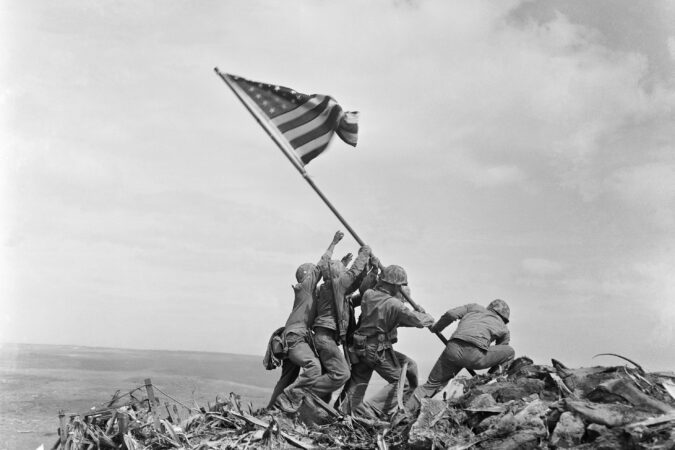
    But after his death in 1994, his family rummaged through boxes he had left behind. One of the items was a letter to his parents, postmarked Feb. 26, 1945, three days after the flag-raising photo was taken by Joe Rosenthal of the Associated Press. An image of the Pulitzer-winning photo appeared on the 3-cent stamp and on millions of war-bond drive posters. The picture also inspired the design of the Marine Corps War Memorial in Arlington, Va.

    In his letter, Doc Bradley wrote, “I had a little thing to do with the raising of the American flag and it was the happiest moment of my life.”

    The letter stunned his family.

    “If that was the happiest moment of his life,” James Bradley told the Times in 2000, “why had he never talked about it?”

    For nearly 70 years, there was little, if any, dispute that Doc Bradley was in Rosenthal’s brilliantly composed picture. The Marine Corps had, after all, named the six participants. James Bradley had no doubt of his father’s role, describing in Flags how he had dropped a handful of bandages before joining the other five men at the flagpole where he “gripped the pole in the cluster’s center.”

    But in 2014, an article in the Omaha World Herald described serious doubts raised by amateur historians that Doc Bradley was in the photograph. James Bradley was, at first, dubious.

    “Listen, I wrote a book based on facts, told to me by guys who had actually been there,” he told the newspaper. “That’s my research. That’s what I trust. At the end of the day, the truth is the truth. Everything is possible. But really?”

    He eventually took a deeper look at the paper’s findings and became convinced that his father had not been in Rosenthal’s picture but had been in a less dramatic one, with a smaller flag, taken earlier in the day on Feb. 23 by a Marine photographer, which the service branch confirmed.

    In 2016, a Marine Corps investigation — prompted by findings in a documentary, The Unknown Flag Raiser of Iwo Jima — concluded that Harold Schultz, a private first class, was the man in the image long identified as Doc Bradley.

    Cinnamond, James Bradley’s daughter, said in an interview that her father didn’t feel that the book was diminished by the finding, but that he wanted the Marine Corps to get its facts straight about who was actually in the photo.

    Indeed, it was not the only misidentification in the photo. In 1947, the Marine Corps said it had credited Henry Hansen for being in the photo when it had actually been Harlon Block. In 2019, the Marines determined that Gagnon, one of the Marines featured in Bradley’s book, had “contributed to the flag-raising,” but that Harold Keller was actually in the photo.

    James Joseph Bradley was born on Feb. 18, 1954, in Antigo. He was one of eight children of John and Elizabeth (Van Gorp) Bradley. James received a bachelor’s degree in East Asian history from the University of Wisconsin-Madison in 1977.

    Mr. Bradley was, at first, a traveling cookware salesperson, then built a career as a corporate events and video producer. Without training as a writer or researcher, he began writing Flags on his own, but his proposal was rejected by 27 publishers, one of whom told Mr. Bradley that “no one wants to read a book about old men weeping into the telephone.”

    One of his agents then brought Powers on as a collaborator; he had won the 1973 Pulitzer for criticism while writing for the Chicago Sun-Times. Bantam Books soon acquired the book.

    The book was one of several successful works during a decade that detailed the bravery of American soldiers during World War II, among them Stephen Ambrose’s D-Day: June 6, 1944 (1994); Tom Brokaw’s The Greatest Generation (1998); Steven Spielberg’s film Saving Private Ryan (1998); and the HBO miniseries Band of Brothers.

    In his review of Flags of Our Fathers in the Times, journalist Richard Bernstein called it “most affecting not because of its graphic portrayal of men at war, although its portrayal rivals Saving Private Ryan in its shocking, unvarnished immediacy.”

    Mr. Bradley continued to write about Asia in three subsequent nonfiction books. In Flyboys: A True Story of Courage (2003), he told the stories of nine American pilots, including the future President George H.W. Bush, who were shot down by the Japanese near the island of Chichijima during World War II. While Bush was rescued by an American submarine, the other eight were captured and executed by the Japanese.

    In The Imperial Cruise: A Secret History of Empire and War (2009), Mr. Bradley wrote critically about what he saw as President Theodore Roosevelt’s diplomatic mistakes in Asia.

    “Bradley explores the racist underpinnings of Roosevelt’s policies and paradoxical embrace of the Japanese as ‘honorary Aryans,’” Publishers Weekly wrote in its review, but added, “Bradley’s critique of Rooseveltian imperialism is compelling but unbalanced.”

    And in The China Mirage: The Hidden History of American Disaster in Asia (2015), Mr. Bradley described what he viewed as America’s long-running misunderstanding of China, dating to the early 1800s.

    He also wrote a novel, Precious Freedom (2025), set during the Vietnam War.

    Mr. Bradley’s three marriages ended in divorce. He is survived by two daughters, Cinnamond and Michelle Bradley, from his marriage to Eileen Heywood; two more children, Jack Bradley and Ava Bradley, from his marriage to Laura Shuler; two sisters, Kathleen and Barbara Bradley; five brothers, Steven, Mark, Patrick, Joseph and Thomas; and two grandchildren. He was also married to Shelley Tupper.

    In 1998, Mr. Bradley, his mother, and three of his brothers traveled to Iwo Jima at the invitation of Gen. Charles C. Krulak, the Marine Corps commandant. After climbing to the spot on Mount Suribachi where the celebrated Rosenthal photo was taken, Mr. Bradley asked that everyone, including the Marines in attendance, sing the only songs that Doc Bradley said he knew: “Home on the Range” and “I’ve Been Working on the Railroad.”

    “I knew, without looking up, that everyone standing on the mountaintop — Marines young and old, women and men; my family — was weeping,” Mr. Bradley wrote in Flags. “Tears were streaming down my own face. Behind me, I could hear the hoarse sobs coming from my brother Joe.”

    This article originally appeared in the New York Times.

  • Trump, claiming vandalism, says Reflecting Pool will be drained

    Trump, claiming vandalism, says Reflecting Pool will be drained

    WASHINGTON — President Donald Trump said on Saturday that “multiple individuals” had been arrested for vandalizing the Lincoln Memorial Reflecting Pool, and that problems with a more than $14 million renovation project had become so severe that the pool would have to be at least partly drained for “necessary repairs.”

    The president’s announcement late Saturday, made on social media, was his starkest acknowledgment of the pool’s rapid deterioration in recent days. The water this week became covered by clouds of blooming algae, which were obscuring a floor that had just been painted a shade that Trump has called “American flag blue.” The paint then began to peel off, making it a tourist destination for unusual reasons.

    Among those accused of vandalism was David Carter Hearn, 67, a cyclist and three-time Olympian as a canoeist who says he stopped at the site Friday just to have a look, then reached down to touch a strip of peeling blue paint mixed with the algae.

    The U.S. Park Police arrested Hearn shortly after, accusing him of destroying government property, a crime that can carry up to a 10-year prison sentence. Hearn denies the charge.

    “I was just a curious, concerned citizen,” he said in an interview. “I guess I was there at the wrong place, wrong time.”

    The administration has not released the names of others accused of vandalizing the pool, a crime that Trump said Saturday could lead to “years in jail.” In a later post, he said without evidence that vandals had “poured corrosive and destructive chemicals into the Pool.”

    The project, one of many Trump is undertaking around the capital as the United States nears its 250th birthday, has faced intense scrutiny, including from engineers and other experts who warned that the hastily undertaken project was unlikely to undo the problems that have plagued the pool for decades. A construction company tied to Trump was awarded a no-bid contract and painted the bottom of the pool.

    Trump said Saturday that he had met with contractors earlier in the day to discuss the state of the pool.

    The Interior Department said this week that agency workers had “killed the algae” that had expanded with heat and humidity. But on Friday afternoon, the water was stained by clumps of algae where National Park Service staff members had scrubbed away bright green blooms along the bottom of the basin. The pool’s new coating was also missing large sections, including a gap roughly the size of a park bench. Underneath appeared to be the original concrete basin.

    Hearn, of Bethesda, Md., said that he was on a 50-mile bike ride before stopping at the pool, and that Park Police officers detained him for more than four hours Friday at a facility south of the National Mall without allowing a phone call. They also did not say more about why he had been arrested, he added. The White House and Park Police did not respond to requests for comment.

    Late Friday, Trump claimed on social media that the “inside surface that was just installed” had been damaged by vandals.

    Hearn said that he had “reached into the water to feel the characteristics” of a dislodged paint piece “still attached to the bottom.” He compared his actions to those of Jonathan Karl, an ABC News reporter who lifted a detached piece of paint at the pool Thursday in a video the news organization published.

    “I didn’t remove anything,” Hearn said. “I was bending and feeling this 2-millimeter-thick, rubbery flap.”

    Until his retirement 18 months ago, Hearn ran a company selling special materials for building canoes. That, he said, made him particularly interested in the materials contractors had used before the paint at the base of the pool began peeling.

    Hearn said that he had already received offers of pro bono representation following his arrest.

    “I’m getting a lot of support from my community,” he added.

    This article originally appeared in the New York Times.