Category: News

Latest breaking news and updates

  • Sheraton Philadelphia Downtown workers went on strike Sunday while FIFA World Cup fans are filling hotels

    Sheraton Philadelphia Downtown workers went on strike Sunday while FIFA World Cup fans are filling hotels

    Unionized hotel workers at Sheraton Philadelphia Downtown went on strike and walked off the job Sunday morning after the union and management failed to come to an agreement.

    The union, Unite Here Local 274, is bargaining for a $30 per hour minimum wage to be established by 2028, as well as improved benefits, including healthcare coverage for workers’ family members.

    The strike comes just one day before France and Iraq compete in a FIFA World Cup soccer match at Lincoln Financial Field (aka “Philadelphia Stadium” for soccer fans) and a few days before another match between Curacao and Ivory Coast. Previous World Cup matches have flooded the city with tourists from around the world.

    “These hotel rooms are selling, and they’re charging exorbitant rates,” said Unite Here Local 274 Vice President Briheem Douglas.
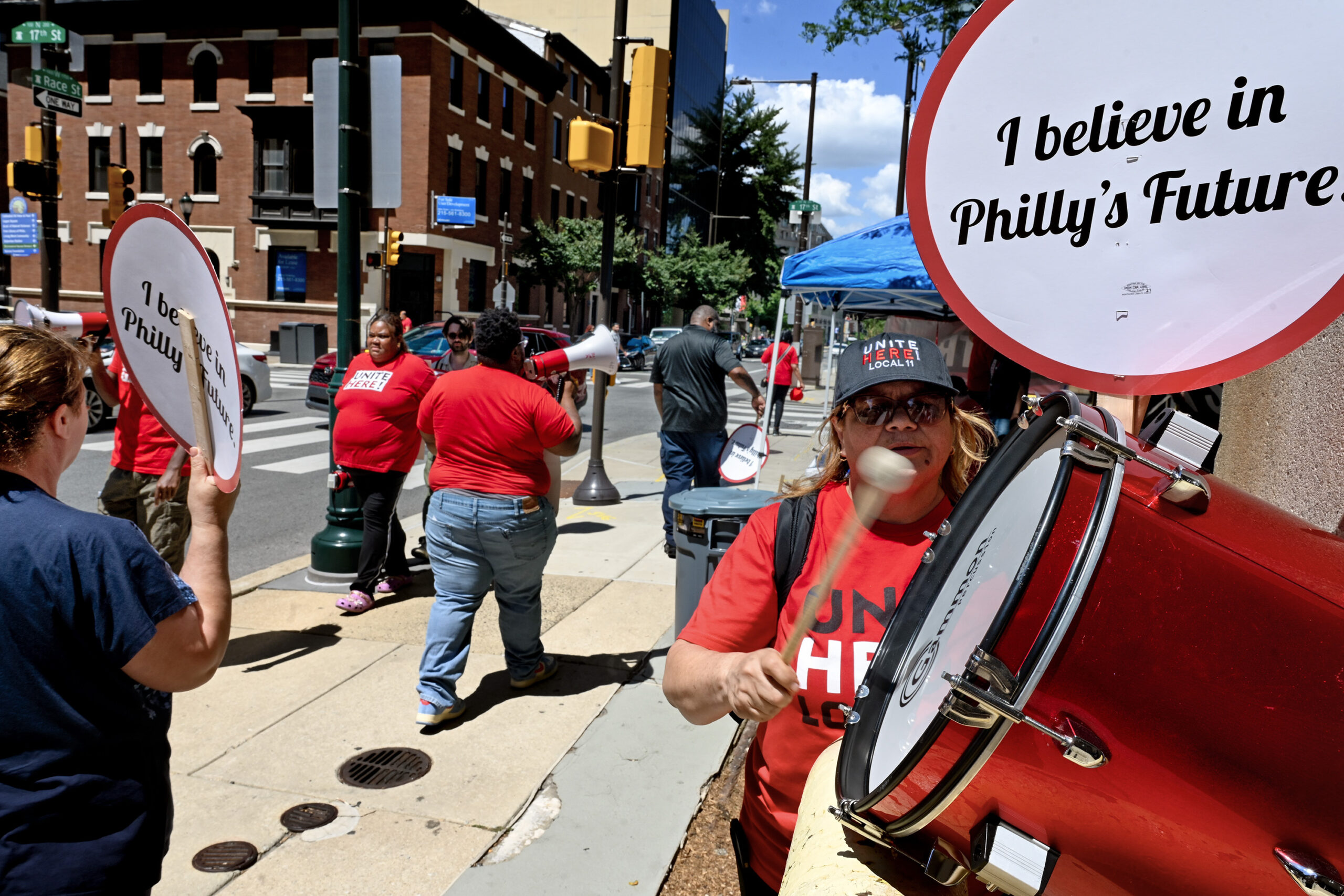
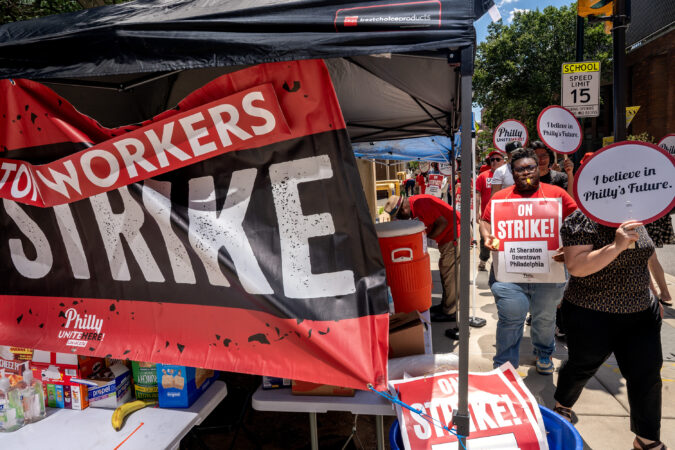
    Priscilla Vasquez bangs a drum as employees at the Sheraton Philadelphia Downtown hotel represented by Unite Here Local 274 picket outside the hotel Sunday morning, June 21, 2026, after they walked off the job demanding $30 per hour wages by 2028, additional healthcare resources, and other benefits that would put them on par with what other hotel workers have recently gotten in new union contracts.

    The prospect of a busy summer tourist season provided the union with leverage to get hotel owners to agree to contracts at five other unionized hotels in the city, Douglas said.

    “Workers have bargained in good faith with this company way before the World Cup started,” Douglas said. “Other hotels have gotten there, and this place hasn’t.”

    Eight unionized hotels in Center City had been without a contract since 2024, Douglas noted. However, within the last year, workers have successfully bargained contracts, locking in the $30 hourly wage and improved benefits, at the Hilton Philadelphia at Penn’s Landing, Wyndham Philadelphia Historic District, Sonesta Philadelphia Rittenhouse Square, Sheraton Philadelphia University City Hotel, and Hampton Inn Philadelphia Center City-Convention Center.

    Douglas noted that the Sheraton Philadelphia Downtown is the biggest unionized hotel in the city, with about 200 Unite Here employees.

    “For our workers to not be at the standard is disrespectful,” Douglas said.

    Douglas said workers face added pressure to secure healthcare after the Trump administration’s “One Big Beautiful Bill” reduced access to Children’s Health Insurance Program (CHIP) benefits.

    Francine Eason, a unionized housekeeper at the Sheraton Philadelphia Downtown, said nearly every union employee at the hotel has children.

    Eason has an adult daughter, a grandchild, and a teenaged niece in her household in Wilmington. But swelling gasoline prices and spiking grocery bills have eaten away at the buying power of her $22 per hour wage over the last year.

    “Everybody is on hard times,” Eason said. With gas prices backing off, she said this weekend was the first time in a while she’d been able to fill the gas tank on her 2017 Kia Optima — she’d been in the habit of only filling it halfway, in case she needed money for food.

    “Oh, my gosh, it was lovely,” Eason said, and recalled musing, “This is a full tank.”

    The union also is seeking a reduction in the number of rooms housekeeping staff are required to prepare per shift for guests, from 16 to 15.

    The hotel is owned by Miami-based CL Hotels and is run by Aimbridge Hospitality.

    In a statement, the Sheraton’s management said: “We respect our team members’ rights to engage in legally protected activities and look forward to reaching a fair contract. While discussions are ongoing, we remain committed to ensuring our guests enjoy their stay.”

    In addition to this summer’s surge of World Cup fans and tourists, Sheraton’s regular business includes flight attendants, said Keturah Johnson, the international vice president for the Association of Flight Attendants, a union.

    Johnson participated in the strike as a show of solidarity with the hotel workers. She said the flight attendants’ union made the decision to have flight attendants stay elsewhere in the city during the strike as a show of support.

    “We don’t cross picket lines,” Johnson said. “We join them.”
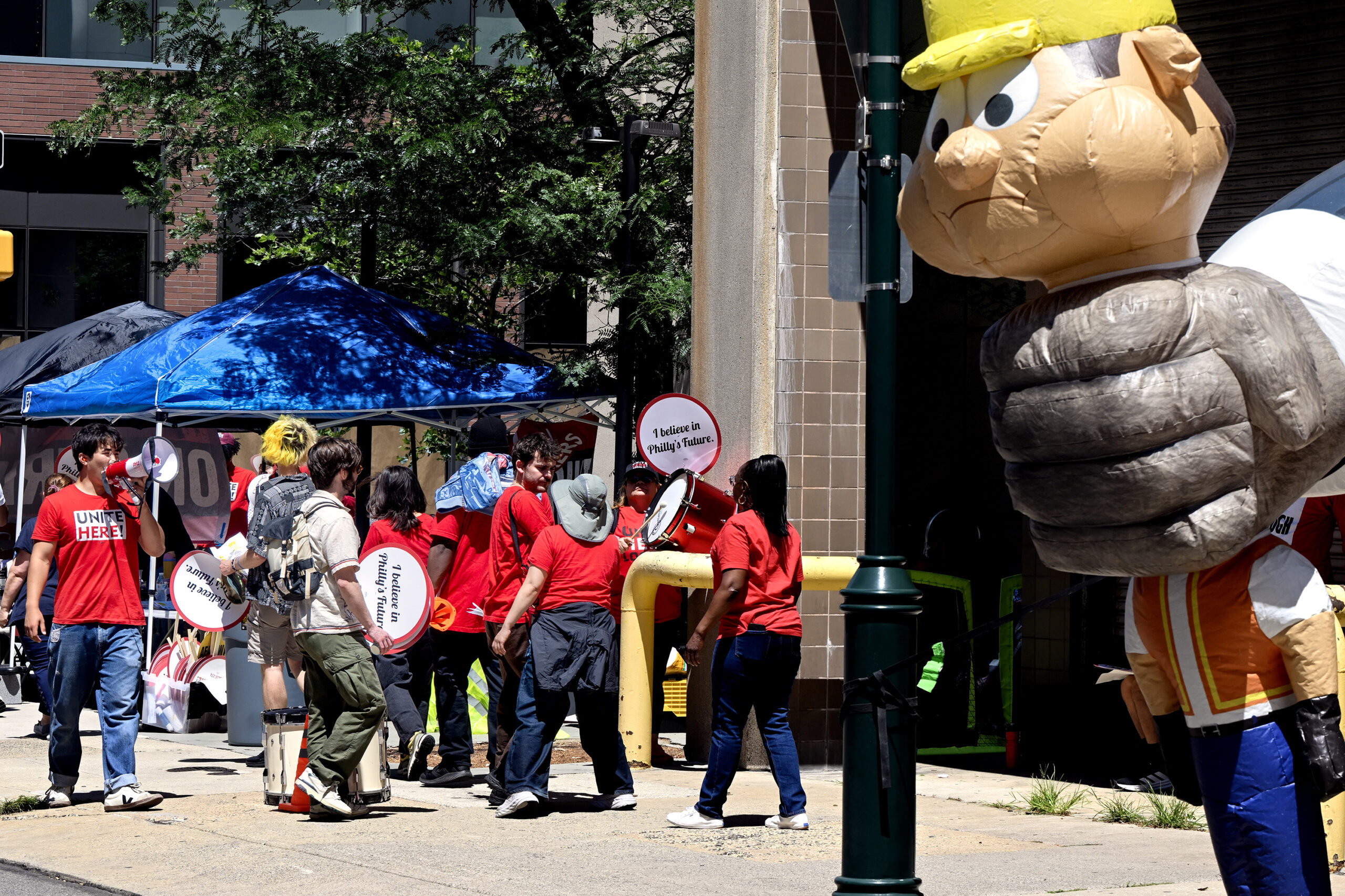
    Employees at the Sheraton Philadelphia Downtown hotel represented by Unite Here Local 274 picket outside the hotel Sunday morning, June 21, 2026, after they walked off the job demanding $30 per hour wages by 2028, additional healthcare resources, and other benefits that would put them on par with what other hotel workers have recently gotten in new union contracts.
  • France restricts public drinking and outdoor sports as heat wave bakes parts of Europe

    France restricts public drinking and outdoor sports as heat wave bakes parts of Europe

    PARIS — France sizzled Sunday, canceling trains, concerts, and sports events and cracking down on public drinking as an exceptional heat wave unfurled across parts of Europe. Multiple drownings were reported as people sought relief in whatever water they could find.

    About a third of France is under ‘’red alert″ heat and temperatures reached 104 degrees Fahrenheit in some areas, in a country where air-conditioning isn’t widespread. The forecast for Monday is even hotter.

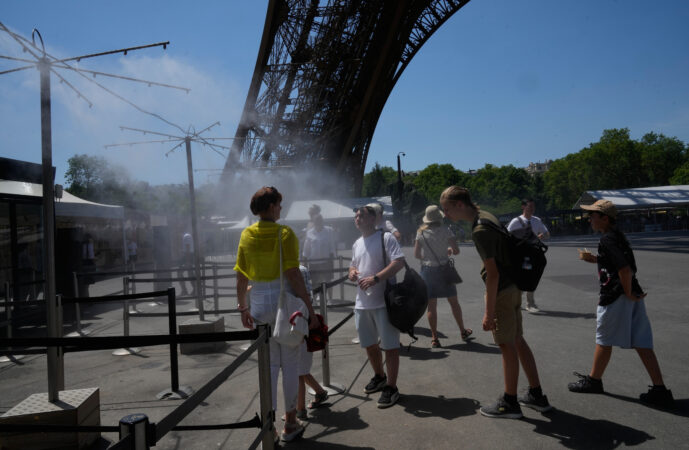
    The Eiffel Tower and other Paris venues set up misting stations to cool crowds, among a raft of measures introduced by authorities to minimize risks. Tourists in Rome dunked in fountains. Spain’s Basque Country canceled some sports and cultural events.

    More than 200,000 people across Europe died from heat-related causes over the last four years, and most of the fatalities were preventable, the World Health Organization’s Europe office said this month. More above-average temperatures are expected this summer, which can cause heat exhaustion and life-threatening heat stroke.

    Human-caused climate change is tied to increasing extreme weather events and U.N. climate agency projections say the next five years should shatter more heat records. A rapid study found that human-caused climate change was responsible for killing about 1,500 people in an unusually early European heat wave in May.

    In this latest European hot spell, French media reported that four children drowned Saturday. Summer drownings are an annual problem that health authorities say worsens during hot spells.

    Solstice parties draw large crowds in extreme heat

    France’s annual Music Day on Sunday was of particular concern. The nationwide summer solstice celebration involves thousands of concerts in village squares, rave venues, and Paris clubs, bringing communities together and increasingly drawing British and other international visitors. Some of the concerts outside Paris were canceled.

    The French government banned public drinking in ’’red alert″ zones, and ordered organizers of music day events to limit alcohol consumption to “preserve emergency services and allow medics to concentrate on taking care of the most vulnerable.”

    Scores of French trains were canceled, and the national rail authority dispatched thousands of extra staff to deal with potential problems as the heat threatened rails and electrical cables.

    Authorities are notably worried about people living in the baking streets, and elderly people in nursing homes or isolated in their homes. About 15,000 older people died in France in a 2003 heat wave that became a national reckoning.

    The government mobilized emergency services and military forces for reinforced wildfire readiness, imposed tightened surveillance of water supplies to France’s many nuclear reactors, and ordered 845 schools to close Monday.

    Spain, Italy, Germany swelter as tourists seek relief

    Spain kicked off the summer with large parts of the country on alert due to temperatures expected to hover around 104 F — even in the interior of Basque Country, a northern region that typically experiences cooler temperatures.

    Authorities have suspended outdoor sports and cultural activities in the region. The heat wave is expected to scorch Spain at least through Wednesday.

    In Italy, authorities expanded heat warnings — referred to locally as “red flags” — to eight cities Sunday in northern and central parts of the country. Temperatures there are mostly in the high 90s to low 100s F.

    At one farm outside Milan, owners set up fans and sprinklers to keep cows cool, while visitors to Milan Fashion Week huddled under parasols and clutched fans. In Rome, tourists dunked their arms and occasionally their faces into the city’s famed fountain pools.

    The German Weather Service is forecasting temperatures of up to 98 F for Monday and Tuesday, and up to 102 F Wednesday.

    A 23-year-old man drowned Saturday in a lake near Rheinstetten in the southwestern region of Baden-Württemberg, the German news agency dpa reported. Three other people are missing after swimming in the Rhine River, a police spokesperson told dpa.

    Britain’s weather office has issued an “extreme heat” warning for much of southern England and parts of Wales from Monday until Thursday, saying temperatures could reach 100 F. The current record for a June day is 96 F, reached in 1976.

    Thunderstorms also threatened regions in Germany and Poland.

    French Prime Minister Sebastien Lecornu convened a new government heat crisis meeting Sunday, and ordered government ministers to plan for better adapting France to heat waves in the future — including “via air-conditioning, if necessary.”

  • Vance meets top Iranian officials as U.S. tries get negotiations back on track

    Vance meets top Iranian officials as U.S. tries get negotiations back on track

    OBBUERGEN, Switzerland — High-level U.S.-Iran talks on their interim deal to end the war had a tense start Sunday in Switzerland as Tehran took offense at comments by President Donald Trump, who threatened to attack and told Iran’s president to watch what he says.

    The comments from afar — on social media and to news outlets — complicated efforts by Vice President JD Vance and mediators Pakistan and Qatar to keep Iran engaged in discussions meant to address thorny issues like Tehran’s nuclear program, the Strait of Hormuz, and the unfreezing of billions of dollars in Iranian assets.

    Before anything, however, Iran wants to discuss Lebanon, where Israel’s military has been fighting the Iranian-backed Hezbollah militant group, since the deal halts conflict on all fronts.

    “Iran must immediately stop their highly paid PROXIES in Lebanon from causing trouble,” Trump said on social media. “If they don’t, we’ll hit Iran very hard again, just like we did last week, only harder!!!”

    “They would do better to be careful about their statements,” Iran’s lead negotiator, Mohammad Bagher Qalibaf, said on X after Trump’s comments. “Our armed forces are prepared to respond to them in a different manner. They may keep talking, it is we who act.”

    Iranian state media said talks had entered a “difficult phase” and recessed after the “publication of an insulting message by the U.S. President.” The Iranian delegation then met with Qatari mediators and left the negotiating site, state media said.

    Vance and U.S. negotiators including Steve Witkoff and Jared Kushner, Trump’s son-in-law, had met with Qalibaf and Foreign Minister Abbas Araghchi for what Iranian state media said was about 80 minutes.

    An official with knowledge of the talks later told the AP the Iranian delegation remained engaged in the talks and has not indicated to mediators any intention to leave. The official requested anonymity due to the sensitivity of the talks.

    Iran’s focus on Israeli strikes in Lebanon

    Negotiators are in a 60-day sprint to reach an agreement on the technical details that hold massive implications for the world economy and global security.

    “The question before us now is how much more can we accomplish together? Can we turn over a new leaf?” Vance said as the talks began, and asked whether they could “change relations in the Middle East permanently.”

    The U.S. wants Iran locked into negotiations over its nuclear program amid concerns it may be used for military purposes, which Iran denies. Vance also wants Tehran to commit to keeping open the Strait of Hormuz, which Iran on Saturday claimed to close. The U.S. has disputed that, saying shipping traffic continued Sunday.

    But Iranian Foreign Ministry spokesperson Esmail Baghaei told the state news agency that Tehran first wants talks to focus on the conflict in Lebanon.

    A renewed ceasefire in Lebanon, brokered on Saturday, appeared to be holding, and Israel’s military said it would lift movement restrictions for residents near the border with Lebanon on Monday morning — another sign of calm.

    But neither Israel nor Hezbollah is a signatory to the U.S.-Iran deal, and Israeli Prime Minister Benjamin Netanyahu has vowed to keep his forces in southern Lebanon until any threat to Israel is eliminated. Hezbollah has refused to halt attacks unless Israel commits to withdrawing.

    Sharp words exchanged over Iran’s nuclear program

    The agreement signed by Trump and Iranian President Masoud Pezeshkian immediately allows Tehran to sell its oil freely and paves the way for Iran to tap into billions of dollars in assets that are currently frozen.

    It also calls for Iran to dilute its stockpile of highly enriched uranium, believed to be buried under nuclear sites that were targeted in U.S. strikes a year ago.

    Pezeshkian, however, declared Sunday that “we will never back down from the right to enrich uranium, and the other side is also forced to accept it,” according to Iran’s state media.

    Trump, in a telephone interview with Fox News, later warned that the Iranian president should watch what he says and threatened to take over Iran, in comments relayed by a Fox correspondent.

    Iran had cautiously approached the talks given its previous experience with U.S. negotiations on the nuclear issue, which twice in the past year were interrupted by military strikes.

    The deal has stirred much controversy

    Vance has said he planned to be in Switzerland for “a day or two,” leaving much of the detailed negotiations to be led by Witkoff and Kushner. His role in the talks has heightened scrutiny at a time when he’s considering a 2028 presidential campaign.

    Trump and Vance have come under searing criticism from parts of their own party for the deal, with Republican hard-liners unfavorably likening it to the nuclear agreement signed by the Obama administration that Trump and Republicans have insisted did nothing to terminate Iran’s nuclear program.

    The new agreement says commercial vessels can pass through the Strait of Hormuz for 60 days without charge, but does not preclude future fees imposed by Iran. Trump made his own threat Saturday to levy U.S. tolls if there is no deal with Iran in 60 days, insisting that the money would be for “services rendered as the Guardian Angel to the countries of the Middle East.”

    The Trump administration has been working to reassure global markets that the war has been merely a blip on oil prices, as Americans complain about high gasoline prices ahead of peak summer travel. After the deal was announced, oil futures dropped almost 8%.

    Markets were expected to closely track the progress of talks when they opened for trading Sunday evening.

  • When in New Jersey for the World Cup, do as the locals do. (Go to a mall.)

    When in New Jersey for the World Cup, do as the locals do. (Go to a mall.)

    EAST RUTHERFORD, N.J. — Benjamin Klevge, a soccer fan from Pamiers, France, had the front-facing camera open on his phone and a wide smile on his face. He crouched down, struggling to fit the Statue of Liberty into the frame.

    It wasn’t the actual Statue of Liberty, though. It was a 60-foot replica, encrusted with more than 1 million green jelly beans, towering above the entrance to a three-story candy store.

    And Klevge wasn’t in New York. He wasn’t even outdoors. He was roaming the gaping halls of the American Dream, a three-million-square-foot megamall in East Rutherford, N.J. He took more pictures in front of an indoor water park a few steps away as a Backstreet Boys song from the previous century played over the loudspeakers.

    “C’est magnifique,” he said, before switching to English. “It’s beautiful.”

    Fans who attended the opening match of this World Cup this month in Mexico City could wander a warren of neighborhood streets alive with music and the smell of grilled meat on their way to the iconic Estadio Azteca.

    Other citadels of soccer — whether Maracanã Stadium in Rio de Janeiro, which hosted the 1950 and 2014 finals, or Madrid’s Santiago Bernabéu, where the final was played in 1982 — are similarly embedded in dense, urban landscapes, helping to animate the heartbeats of their respective cities.

    Then there’s MetLife Stadium — or “New York New Jersey Stadium,” as World Cup officials have poetically rebranded it for the summer — which will host eight matches in this tournament, including the final.

    For fans accustomed to ballparks with more of the local flavor outside, it has become a punchline. They deride it as a remote island in a sea of asphalt, an inaccessible behemoth surrounded by swampland and a tangle of highway. And for the most part they’re right.

    But there’s another island out there.

    On Tuesday, before a match between France and Senegal, Klevge and thousands of others fans flooded the American Dream mall, which is connected to the stadium by an elevated footpath, and tried to make the best of an odd situation.

    Children from France kick play during a World Cup watch party at American Dream earlier this month.

    “Exit?” Klevge asked a reporter after taking his selfies and apologizing for his limited English. He tapped two fingers on his lips. “For smoking?”

    Erected in 2021, the American Dream is the second-largest shopping mall in the country. It has hundreds of stores, several dozen eateries and a host of attractions not commonly found indoors: a go-kart track, a water park, a ski slope and five roller coasters.

    This month, the air-conditioned cathedral to commerce represents the only public gathering space — besides the generic official “fan zones” immediately outside the stadium — accessible to the 82,500-capacity stadium by foot.

    “It’s kind of confusing. We’re just in a mall,” said Dawda Daye, 30, a Senegalese fan from Houston, who arrived there by taxi with his wife. “But it’s convenient, and everyone seems to be enjoying it and having fun.”

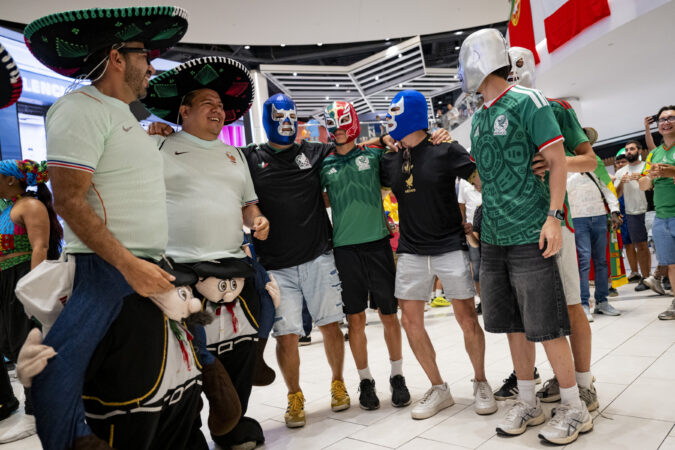
    Indeed, fans of both teams on Tuesday — just like the crowds supporting Brazil and Morocco over the weekend — seemed open to embracing the weirdness of the setting. The resulting rowdy energy was similar to the atmosphere at any major soccer match around the world — just entirely different.

    Three hours before kickoff, four men in French jerseys juggled a plush soccer ball, purchased moments earlier from an Ikea kiosk, outside a Verizon store.

    A Senegalese drum troupe rapped out a mesmerizing beat for a swaying group of soccer fans marching near the cash register of a Mrs. Field’s cookie stand.

    The sunlit space normally containing the mall’s NHL regulation-size ice rink had been converted into a sort of simulation of a beer garden, filled with picnic tables where scores of fans clapped and sang. Above them towered a screen roughly the size of the penalty area on a soccer field that displayed a video feed of the very same picnic zone they were in — meaning the fans were cheering real-time images of themselves cheering.

    “In the U.S., everything is bigger,” said Benoit Berthier, 39, a Frenchman working in Montreal, who was eating a pastry at a cafe a few steps away. “But what they did inside is good. If you have one thing you know how to do in America, it’s entertain.”

    In a food court connected to H Mart, the Korean American grocery chain, two men wearing the jersey of Rayan Cherki, a young French star, blew into vuvuzelas as they squeezed between groups munching on traditional Korean snacks.

    On the third floor — there are five levels to the American Dream — a trio of Frenchman puzzled over a digital map of the shopping center, tapping on the screen to find a place to eat.

    “This kind of mall is unusual for French people,” said Gérald Grégoire, 52, one of the fans. “What’s most surprising is the size of the parking lot.”

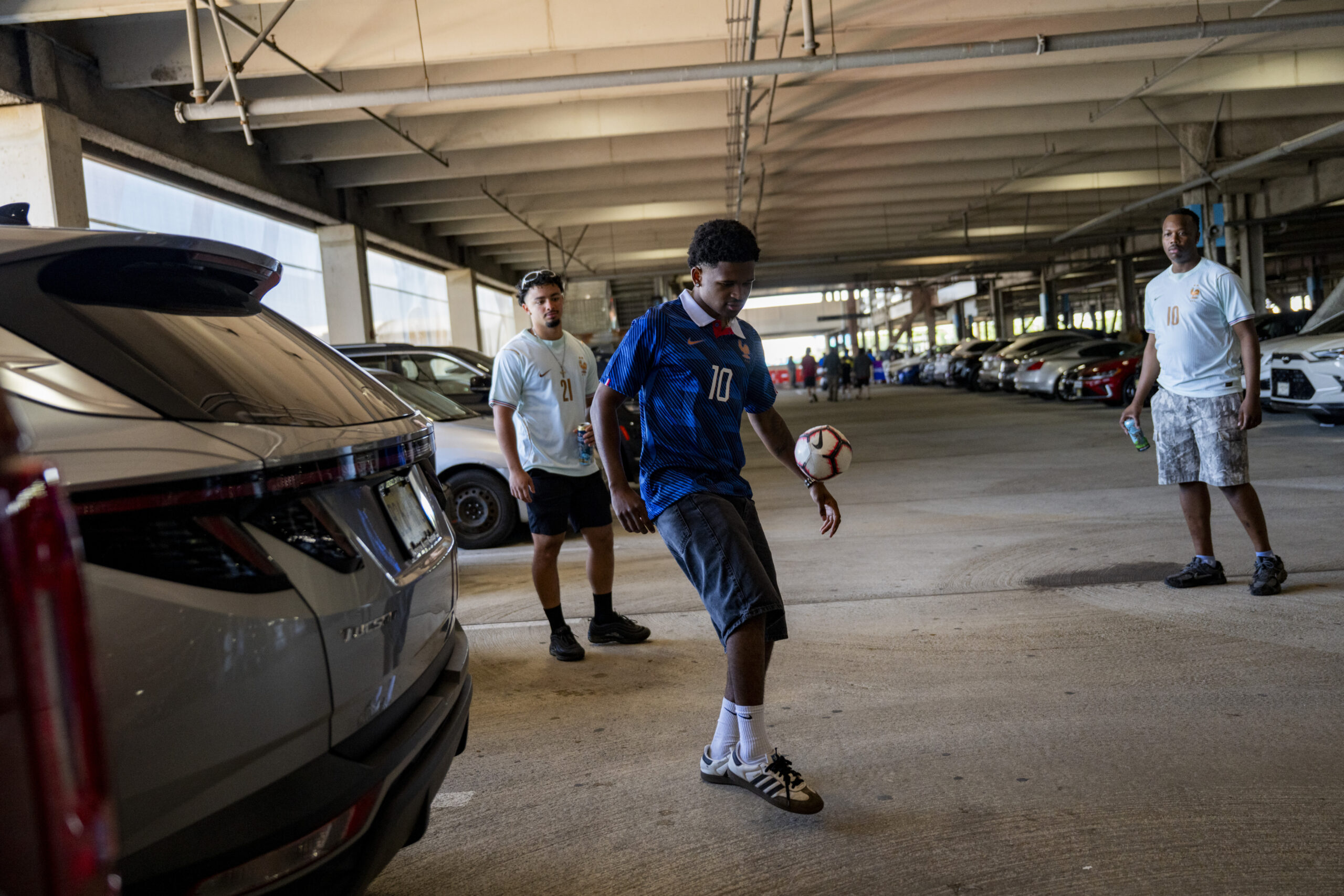
    Three friends kick a small soccer ball in the American Dream parking garage.

    During American football season, when the New York Jets and the New York Giants share MetLife Stadium, the parking lots there can hold close to 30,000 cars, a perfect setting for that quintessentially American sports tableau: tailgating.

    A handful of World Cup stadiums — like Lincoln Financial Field, where opposing fans played drinking games together before a match — are allowing tailgating this summer. MetLife is not one of them.

    “We heard there was no tailgating, so we said, ‘OK, we’re not going to the stadium, we’re going to the mall,’ ” said Carlos Orbe, 35, who was visiting from Tampa, Fla., with his fiancée, Julia Szenberg.

    Undeterred, the two grabbed a case of hard seltzers, took a cab to the American Dream and found some space between a row of parked cards in the mall’s indoor parking complex.

    They stood in a circle with a dozen or so other fans, sipping their drinks and periodically kicking a soccer ball that bounced their way. Asked about the people in the juggling circle, Szenberg, 36, who was born in Paris, shrugged.

    “We don’t know them,” she said. “But now they’re our family. This is the real American dream, happening in the mall parking garage.”

    This article originally appeared in The New York Times.

  • Trump, claiming vandalism, says reflecting pool will be drained

    Trump, claiming vandalism, says reflecting pool will be drained

    WASHINGTON — President Donald Trump said on Saturday that “multiple individuals” had been arrested for vandalizing the Lincoln Memorial Reflecting Pool, and that problems with a more than $14 million renovation project had become so severe that the pool would have to be at least partly drained for “necessary repairs.”

    The president’s announcement late Saturday, made on social media, was his starkest acknowledgment of the pool’s rapid deterioration in recent days. The water this week became covered by clouds of blooming algae, which were obscuring a floor that had just been painted a shade that Trump has called “American flag blue.” The paint then began to peel off, making it a tourist destination for unusual reasons.

    Among those accused of vandalism was David Carter Hearn, 67, a cyclist and three-time Olympian as a canoeist who says he stopped at the site Friday just to have a look, then reached down to touch a strip of peeling blue paint mixed with the algae.

    The U.S. Park Police arrested Hearn shortly after, accusing him of destroying government property, a crime that can carry up to a 10-year prison sentence. Hearn denies the charge.

    “I was just a curious, concerned citizen,” he said in an interview. “I guess I was there at the wrong place, wrong time.”

    The administration has not released the names of others accused of vandalizing the pool, a crime that Trump said Saturday could lead to “years in jail.” In a later post, he said without evidence that vandals had “poured corrosive and destructive chemicals into the Pool.”

    The project, one of many Trump is undertaking around the capital as the United States nears its 250th birthday, has faced intense scrutiny, including from engineers and other experts who warned that the hastily undertaken project was unlikely to undo the problems that have plagued the pool for decades. A construction company tied to Trump was awarded a no-bid contract and painted the bottom of the pool.

    Trump said Saturday that he had met with contractors earlier in the day to discuss the state of the pool.

    The Interior Department said this week that agency workers had “killed the algae” that had expanded with heat and humidity. But on Friday afternoon, the water was stained by clumps of algae where National Park Service staff members had scrubbed away bright green blooms along the bottom of the basin. The pool’s new coating was also missing large sections, including a gap roughly the size of a park bench. Underneath appeared to be the original concrete basin.

    Hearn, of Bethesda, Maryland, said that he was on a 50-mile bike ride before stopping at the pool, and that Park Police officers detained him for more than four hours Friday at a facility south of the National Mall without allowing a phone call. They also did not say more about why he had been arrested, he added. The White House and Park Police did not respond to requests for comment.

    Late Friday, Trump claimed on social media that the “inside surface that was just installed” had been damaged by vandals.

    Hearn said that he had “reached into the water to feel the characteristics” of a dislodged paint piece “still attached to the bottom.” He compared his actions to those of Jonathan Karl, an ABC News reporter who lifted a detached piece of paint at the pool Thursday in a video the news organization published.

    “I didn’t remove anything,” Hearn said. “I was bending and feeling this 2-millimeter-thick, rubbery flap.”

    Until his retirement 18 months ago, Hearn ran a company selling special materials for building canoes. That, he said, made him particularly interested in the materials contractors had used before the paint at the base of the pool began peeling.

    Hearn said that he had already received offers of pro bono representation following his arrest.

    “I’m getting a lot of support from my community,” he added.

    This article originally appeared in The New York Times.

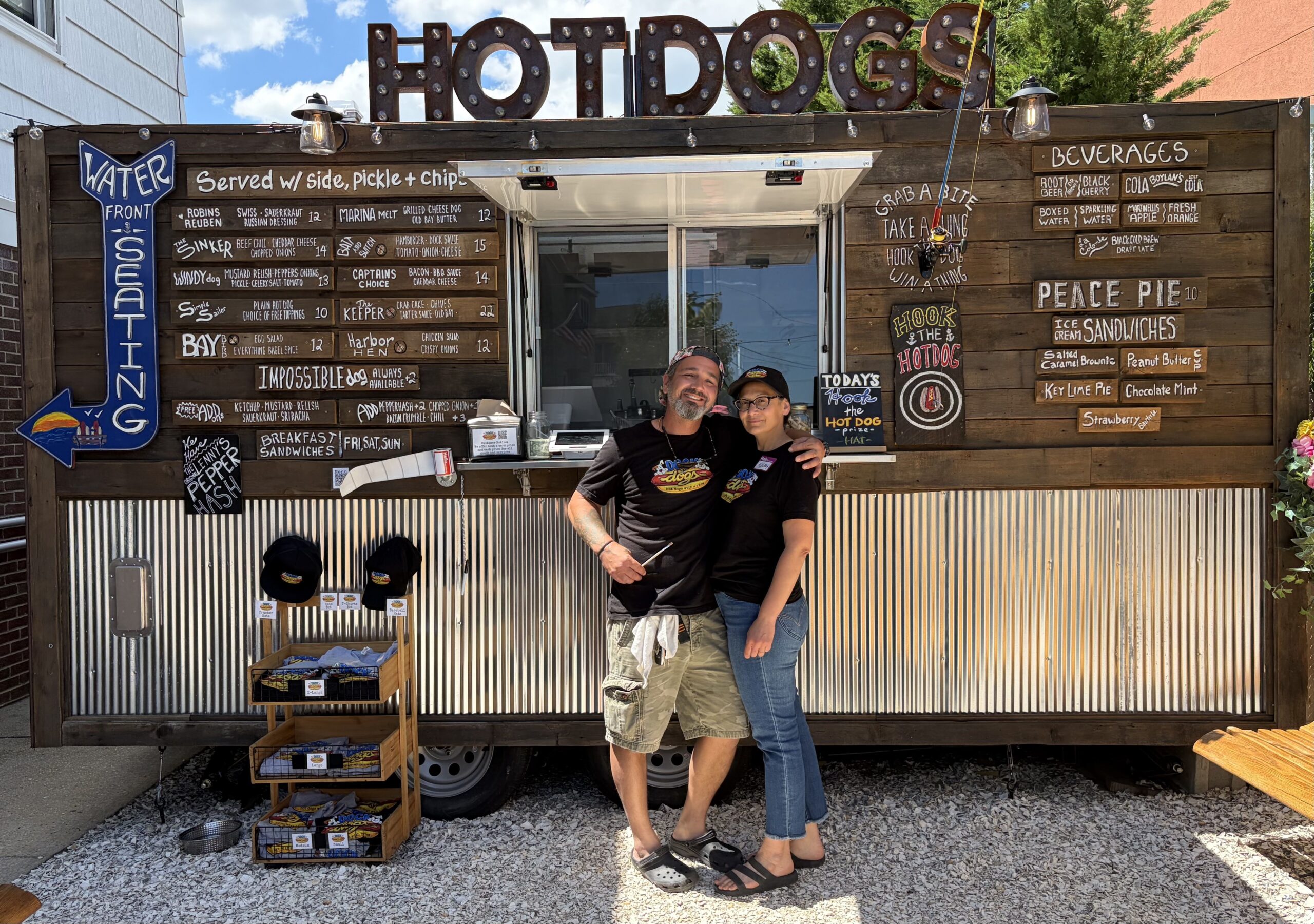
  • Hillary Bor closed Philly’s Pumpkin BYOB in 2024 and moved down the Shore. Now, she’s selling hot dogs.

    Hillary Bor closed Philly’s Pumpkin BYOB in 2024 and moved down the Shore. Now, she’s selling hot dogs.

    MARGATE, N.J. — Hillary Bor had had enough of running the acclaimed Pumpkin BYOB in Philly after two decades.

    Around the time Pumpkin closed in 2024, she uprooted her life and moved to the Shore full time. Also around this time, she fell in love with Tim Nedzwecky, whom she met through their respective white pit bulls, Piggy and Loki.

    They hadn’t planned to launch a food venture, but when Scott Bonar, of Scott’s Dock on the bay in Margate, talked about wanting a food option, the pieces fell together.

    Dogs. The Shore. A view.

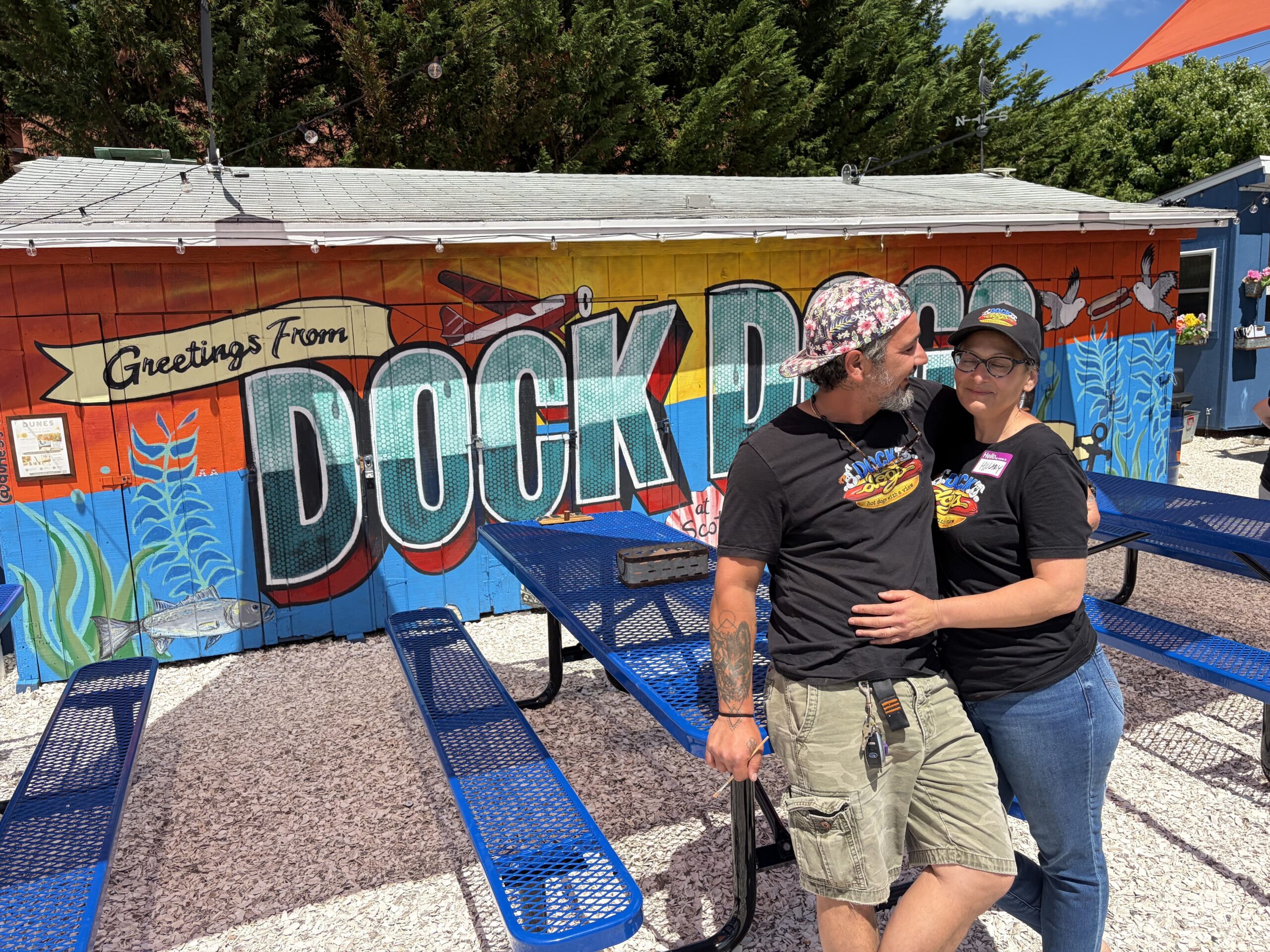
    Thus was born Dock Dogs (hot dogs with a view), a permanent fixture next to Scott’s Dock, with a complimentary lovely sunset over the bay.

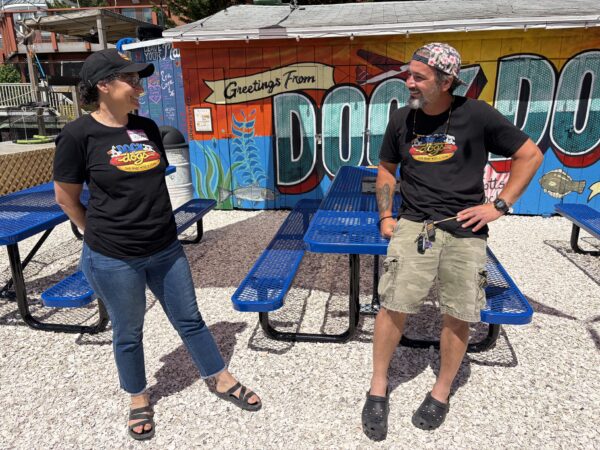
    Tim Nedzwecky and Hillary Bor, the former owner of Pumpkin BYOB in Philadelphia, opened Dock Dogs on the bay in Margate.

    “We wanted to do something together,” Bor said. “He asked us, ‘You guys want to do food?’”

    Hot dog stands have a history in Margate. There’s Junior’s nearby and the old Lenny’s, famous for its pepper hash, which was set up back in the 1960s and 1970s near Lucy the Elephant. Now, Dock Dogs has started carrying — by popular demand — the pepper hash from the original Lenny’s outside Philadelphia.

    But does running a hot dog cart, even one with a beautiful view, offer fulfillment after owning Pumpkin BYOB with its elevated cuisine and prime South Street Graduate Hospital location, for 20 years?

    Bor does not hesitate to answer.

    “This is so fulfilling,” said Bor, who rides a bike everywhere and still doesn’t own a car. Plus, “I get to be with my soulmate. I get to be with wonderful people to work with. We get to be on the water.”

    “It’s a dream come true,” said Nedzwecky.

    Tim Nedzwecky and Hillary Bor at their hot dog stand on the bay in Margate, Docks Dogs. Bor is the former owner of Pumpkin BYOB in Philadelphia, which closed in 2024.

    Dock Dogs has a menu item in memory of Scott’s mother, Robin, a familiar face around the marina, who died in 2021: Robin’s Reuben with Swiss cheese, sauerkraut, and Russian dressing. ($12).

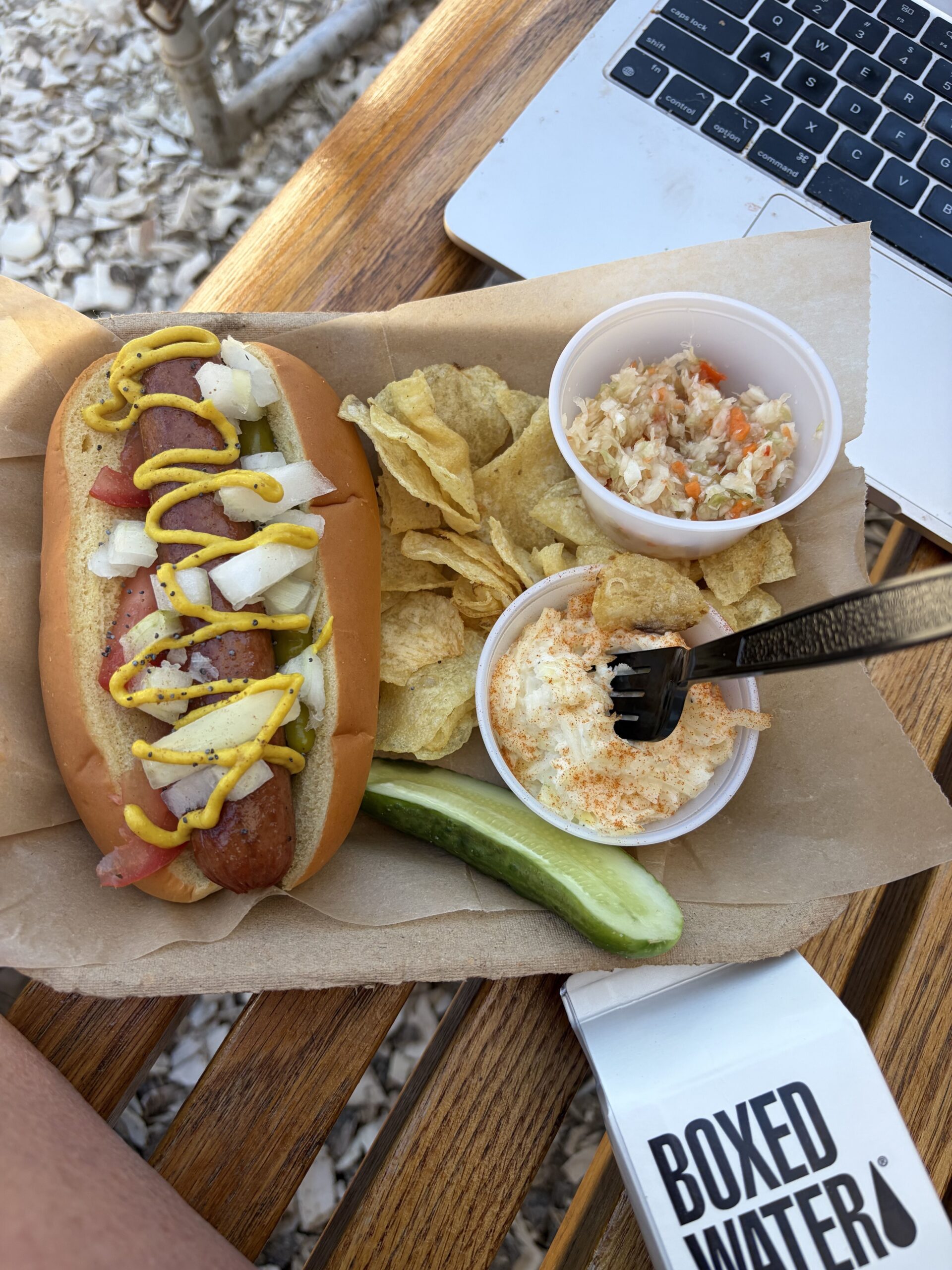
    The Windy Dog with mustard, relish, onions, peppers, pickles, celery salt, tomatoes, and a side of Lenny’s pepper hash, at Dock Dogs in Margate, opened by Hillary Bor, the former owner of Pumpkin BYOB in Philadelphia, and partner Tim Nedzwecky.

    All hot dogs are Hebrew National and served on Martin’s potato rolls with kettle chips, pickles, and coleslaw.

    There’s chicken and egg salad options (no hot dog) as well, and the Keeper, a crab cake shaped like a hot dog ($22). The Captain’s Choice ($14) has bacon, barbecue sauce, and cheddar and a “simple sailor” hotdog with choice of ketchup, mustard, relish, sauerkraut, and sriracha is $10.

    They’re hoping people come for the food as well as the vibe. Mondays are for families, with face painting and other kid-friendly activities out back, where picnic tables line the docks. You can come by boat. Wednesdays feature a house band.

    There’s also a “Hook the hot dog” game that carries a prize.

    The response has been enthusiastic.

    “Saturday night, the vibe here, it was so special,” said Nedzwecky. “Everybody, the kids, were dancing.”

    “We were looking at each other like, ‘Oh my God it’s amazing.’, ” said Bor.

    “It makes us really happy,” said Nedzwecky. “People are saying this is exactly what this area needed.”

  • New Jersey’s new e-bike law is causing confusion down the Shore. Pennsylvanians are exempt.

    New Jersey’s new e-bike law is causing confusion down the Shore. Pennsylvanians are exempt.

    VENTNOR, N.J. — The e-bike revolution will not be coming to Ventnor’s famously chaotic boardwalk. The city banned motorized bicycles decades ago, and raised the penalties in 2023, citing dangers from the speeds and heavier bicycles.

    Ocean City tried doing the same in 2024, but reversed course on the lowest speed e-bikes after an outcry, particularly from seniors who have grown to cherish the electric bikes that take them farther and faster, and against the wind without breaking a sweat.

    Wildwood allows them but has a 10 mph speed limit for any vehicle. Atlantic City prohibits them.

    But while boardwalk rules vary, the state’s e-bike law, passed in January with a grace period through July 19, requires New Jerseyans with e-bikes to register them and, in some cases, purchase insurance.

    The law was adopted amid a sense of urgency after a 13-year-old Scotch Plains boy on an electric bike was killed in a collision with a landscaping truck. Earlier this month, Chase Sudano, 16, a rising wrestling star at St. Augustine Prep, was killed after he collided with a UPS delivery truck in Southhampton, Burlington County.

    The law defines two classes of e-bikes: low-speed, where the motor assists only while pedaling and shuts off when the bicycles reaches 20 miles per hour, and a motorized bicycle that is throttle-capable of assisted speeds up to 28 miles per hour.

    All users of both categories must have a permit or driver’s license and wear helmets. Nobody under 15 can ride one at all.

    ‘It’s a mess’

    So far, there is no way to actually comply. The state’s own Motor Vehicle Commission website has no way to register an e-bike. The state now says it will begin taking appointments only after the grace period ends.

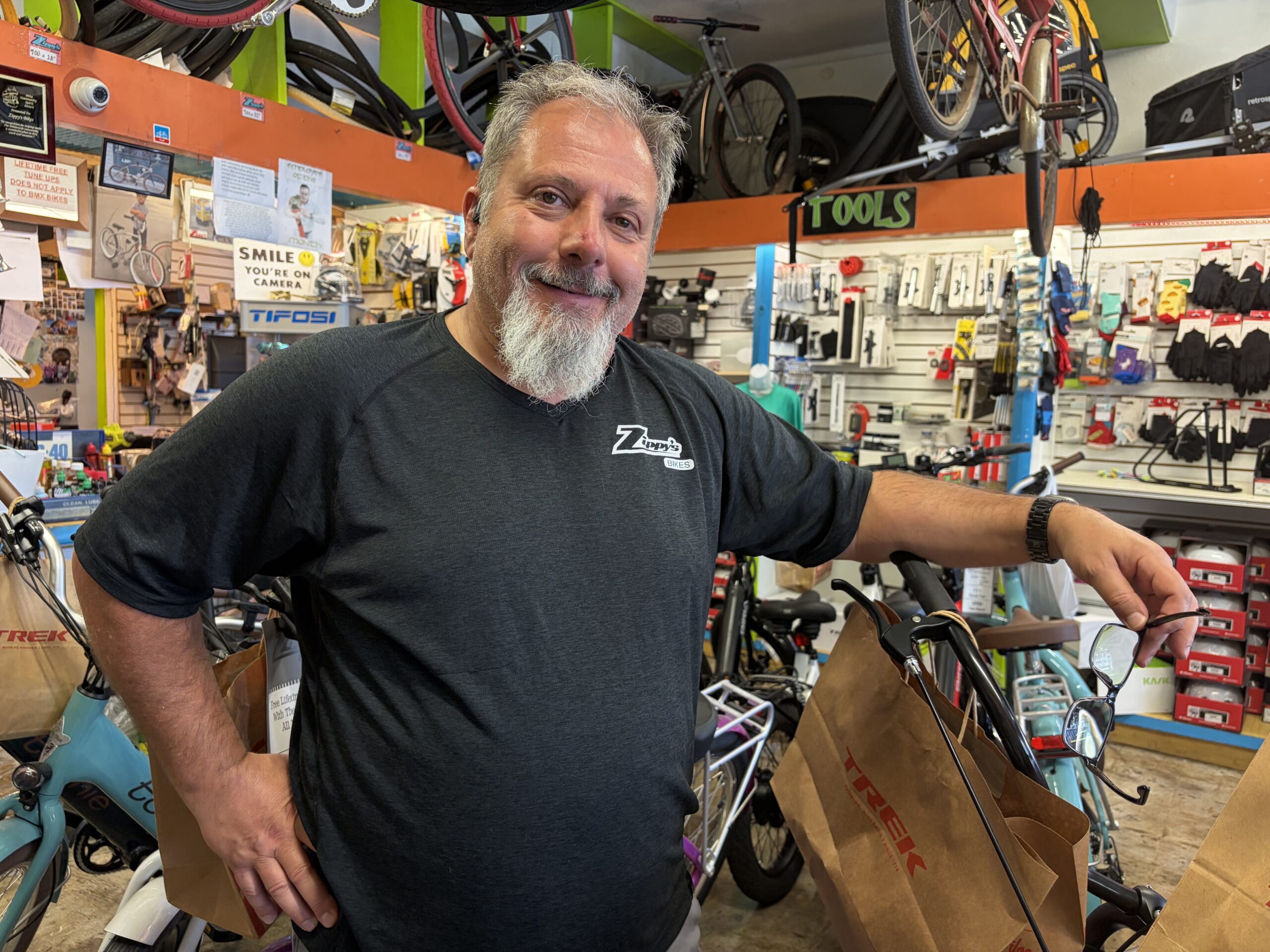
    Scott Chambers, owner of Zippy’s Bikes in Wildwood, says the new e-bike law in New Jersey “is a mess,” with no way for people to comply with registration requirements, and confusion over other issues.

    “It’s a mess,” said Scott Chambers, owner of Zippy’s Bikes in Wildwood. “It’s so overwhelming because they created this law, I don’t want to say haphazardly, but they rushed it.”

    Crawford said his customers are reluctant to buy an e-bike until they know they can ride it in compliance with the law.

    He says the law doesn’t mention e-tricycles, so it’s not clear where those might fall. (The state now says the law does not apply to e-tricycles.)

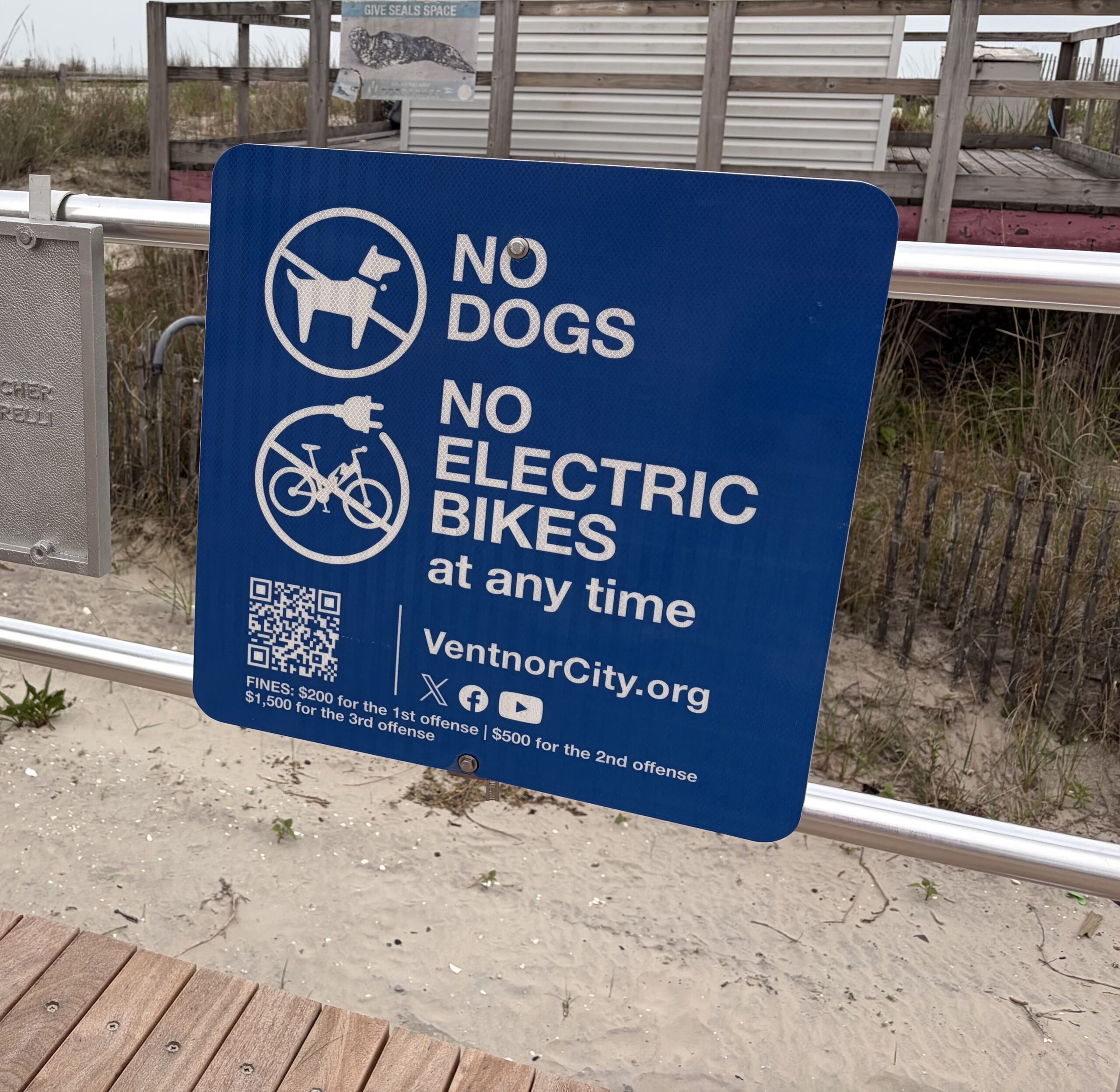
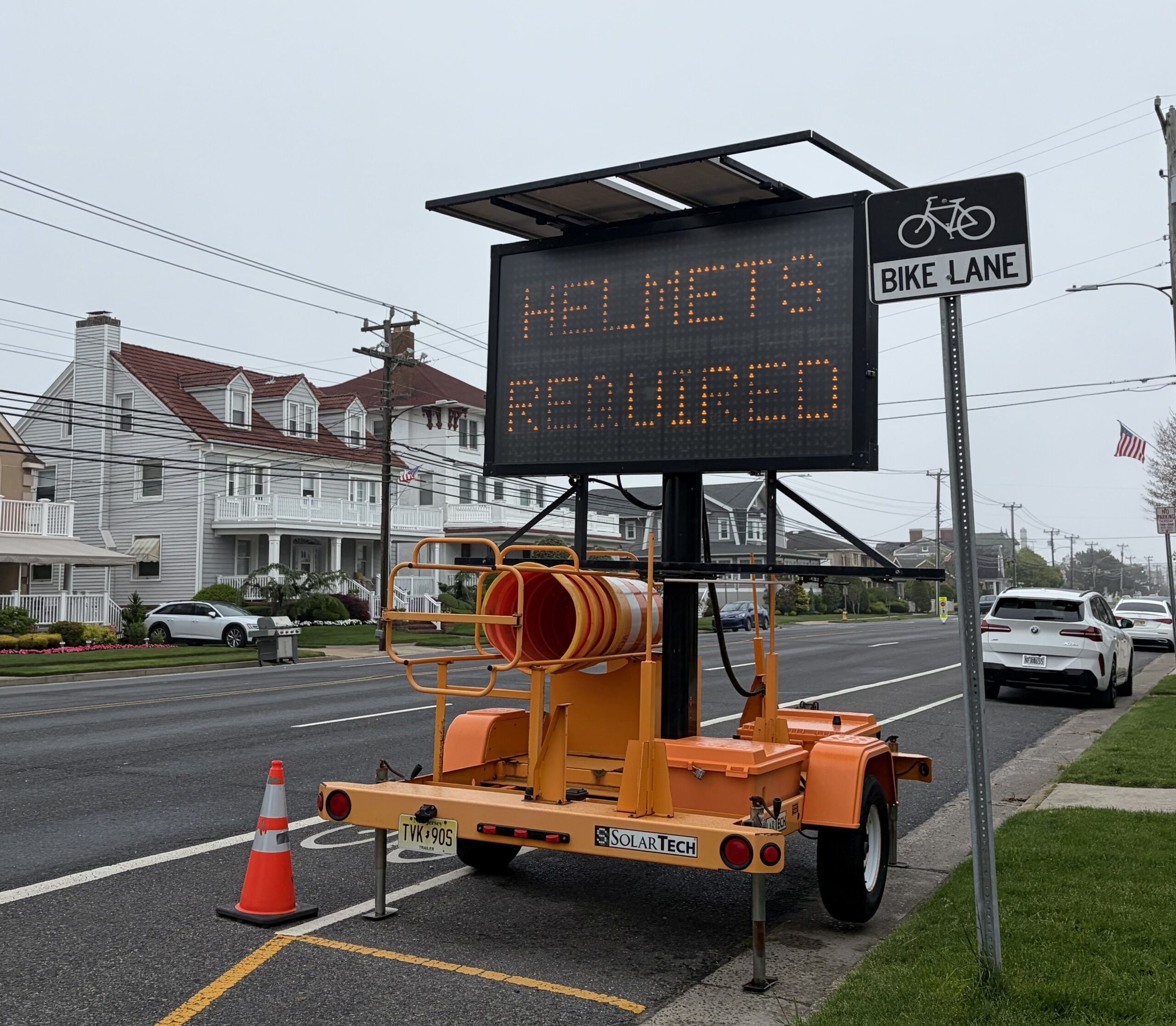
    In Ventnor, there’s a big electronic sign on Atlantic Avenue alerting people to the new law’s helmet, insurance, and registration requirements. A new sign was added to the Boardwalk itself, highlighting two prohibited categories: e-bikes and dogs.

    Ventnor police Lt. Bryan Gaviria says the department will have its hands full, educating and, at some point, enforcing the new e-bike law.

    But first, he said, they need some answers themselves.

    “We’re absolutely waiting for clarity all around,” he said, adding that the city’s bicycle officers are choosing to ride on non-electric bikes because they don’t want to be out of compliance themselves, and they don’t want to be on e-bikes while enforcing an e-bike ban.

    Ventnor installed this sign on the Boardwalk warning that electric bikes were prohibited (as well as dogs). The state’s new e-bike law goes into effect July 19, but Pennsylvanians will not be required to register their e-bikes while in New Jersey, the state says.

    Waiting on the state

    The state recently clarified some of the issues that were causing confusion.

    William Connolly, the press secretary for the N.J. Motor Vehicle Commission, says the MVC will begin offering appointments for e-bike licensing and registration in July. The law’s grace period ends July 19.

    “We will be making an announcement later this month about when appointments will become available, along with offering newly updated resources and step-by-step guidance for e-bike licensing and registration,” he said.

    He said the delay was due to the “extensive IT upgrades” required for new licensing and registration systems, educational resources and testing procedures, not to mention buying new materials such as “specialized license plate stickers,” that will have to be displayed on the registered bikes.

    “We are establishing a first-of-its-kind, comprehensive process for e-bikes,” he said.

    Ventnor installed this electronic sign on Atlantic Avenue to educate people about the state’s new e-bike law. Pennsylvanians will not be required to register their e-bikes while in New Jersey, the state says.

    Connolly said there is one category of e-bikes that will not require insurance, though they will still require registration: the lowest speed e-bikes.

    “These are the low-speed e-bikes with a motor that provide pedal assist only when the rider is pedaling and cease to provide assistance when the e-bike reaches 20 mph,” he said.

    So what if you’re visiting the Shore and bring an e-bike?

    Connolly said: “E-bike registration through the New Jersey MVC is only available to New Jersey residents.” Meaning, Pennsylvanians can bring their bikes and use them without registering them.

    But bicycle advocates say the law is confusing, because it also states that any bike must display a sticker showing that it is registered.

    While the law was prompted by a series of crashes, and particularly by the ubiquitous use by teenagers, it has been seniors that have taken to the e-bikes and urged towns to let them ride on their boardwalks.

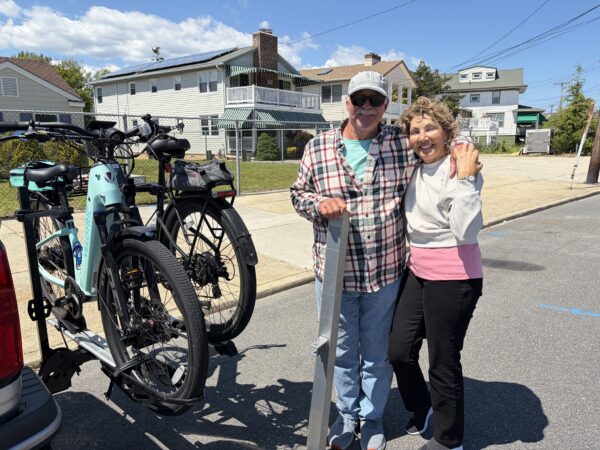
    Annamarie, 70, and Mike Carr, 71, of Ventnor are best known for the Jagielky’s candy shops they own, but it’s e-bikes that have become their passion.

    Loading their bikes back onto their truck in Ocean City, where they began and ended a bike ride around various bridges, Mike Carr said he’d be sure to wear a helmet, because he believes that will be the thing that officers will focus in on in the beginning.

    Annamarie said, “Sure we’re upset,” about not being able to ride on Ventnor’s boardwalk, but they recognize the risks from people going too fast, particularly on electric scooters.

    E-bikes have allowed the couple to go on numerous bike rides a week, for upward of 30 or more miles. They’d never do that on a regular bike.

    “We parked here, we went the whole length of the boardwalk, we went down to 29th Street, we went back to Haven Avenue, came back and went over the bridge to go see the birds,” Mike said, describing the couple’s route that day.

    With the e-bikes, they don’t have to worry about the wind, he said. The couple will typically go 13 miles an hour.

    They are hooked on the freedom, distance, and exhilaration that e-bikes have given them, even as they passed 70. They ride all over the bridges of the barrier islands.

    Mike’s got some of his regular routes timed so that he can get over the bridge without getting a red light and without automobile traffic catching him from behind. “When we’re going into Longport, you turn around, you look at the light. When it’s red, you have four minutes to get over. You hit the throttle and you go as fast as you can.”

    He said they’ll try to register the bicycles and comply with the law, once they’re able to:

    “I’ll have to wear a helmet because I’m guessing they’ll look for the guys with no helmet, pull them over.”


    E-bike riders can sign up for direct updates from MVC here.

  • 150 years, 2 world wars, 32 mayors, and 28 presidents later, a store still thrives in a bankrupt city

    150 years, 2 world wars, 32 mayors, and 28 presidents later, a store still thrives in a bankrupt city

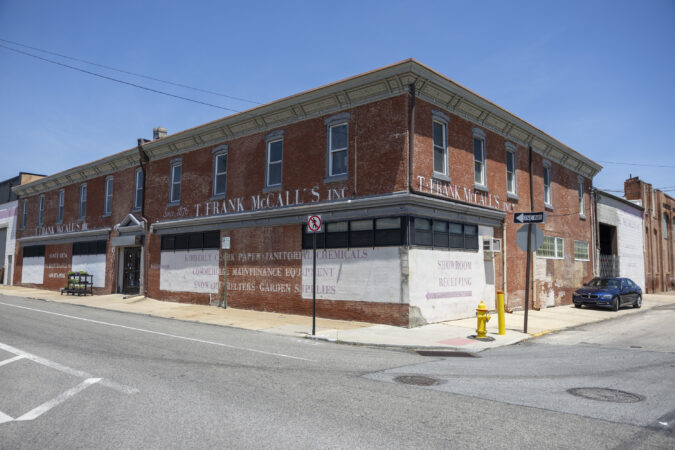
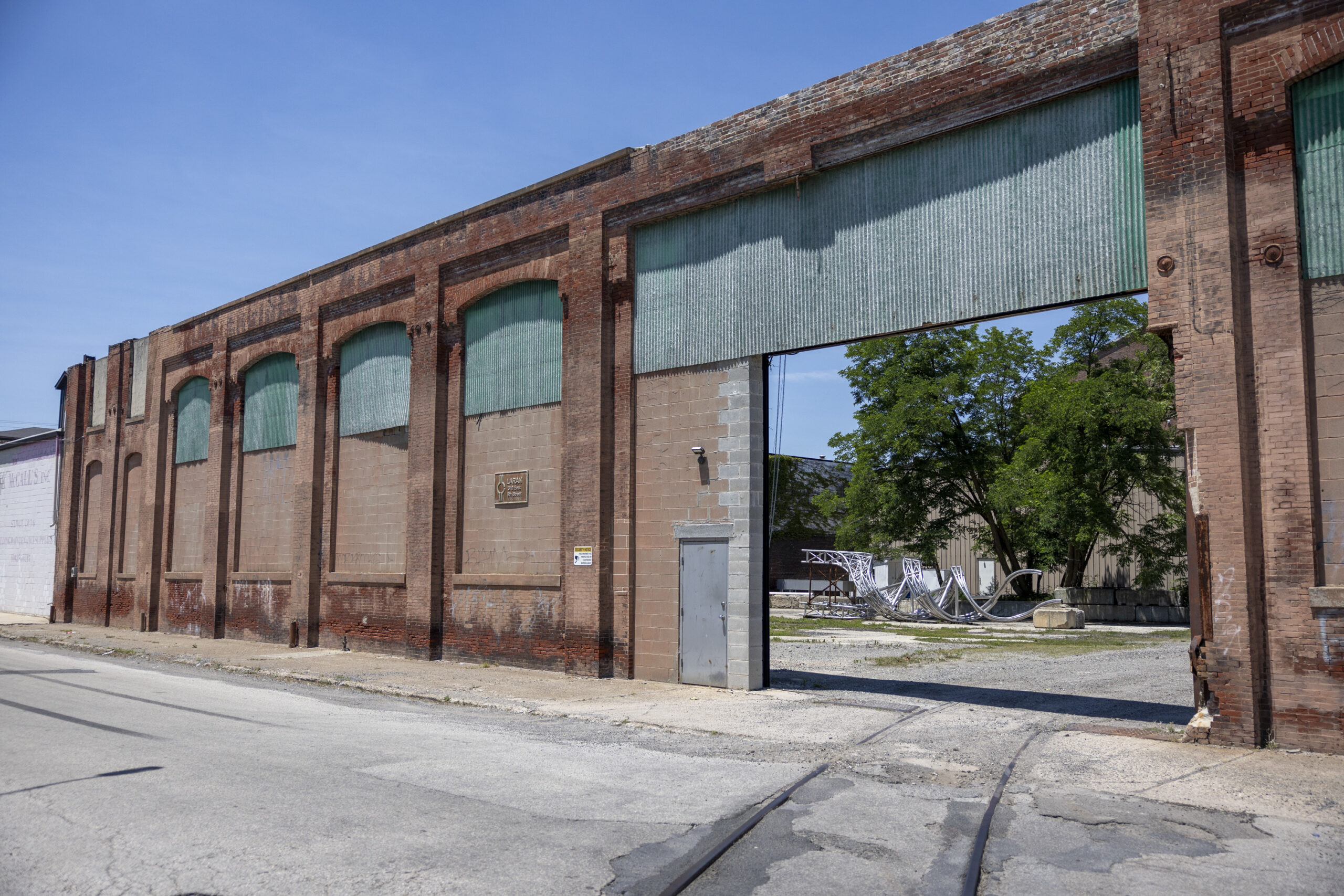
    Humans still answer the phones. The business is family-owned and run by women. But perhaps the most remarkable aspect of T. Frank McCall’s is the reality that the store is still there, next to the railroad tracks in the Delaware County riverfront city of Chester, where it has been since 1876.

    It has somehow survived through the administrations of 28 presidents, 32 governors, and 32 mayors; two world wars; the Great Depression; and the collapse of Chester’s economy that has climaxed with a rare municipal bankruptcy, By the time the Philadelphia Phillies played their first game in 1883, McCall’s had been in business for seven years at Sixth and Madison Streets.

    The building has retained the faint odors of the company’s seed-and-grain roots. But these days the houses that had lined the streets are long gone. The nearest neighbor is a remnant of a factory that once was part of the city’s industrial might. The store’s owners are bemused by the unused bicycle lane on the other side of Madison Street, and the superfluous parking restrictions.

    The remnants of an abandoned factory building sit next to McCall’s.

    McCall’s sells janitorial and cleaning supplies, but rather than a traditional “jan/san” business, it is more like a hybrid wholesale general store. That its website features a snowfall image is fitting: It made a killing selling ice-melters this winter to SEPTA, Philadelphia, and other customers.

    The assortment evidently continues to work; McCall’s generates about $10 million in annual revenue, said owner Lisa Witomski, whose father bought the company from the family of the original owners in 1957 in a decade when businesses were pulling out of Chester.

    What explains the staying power?

    In part, Witomski said, McCall’s sells things people have to have. “Nobody really wants to buy janitorial supplies, but if you have customers or employees, you need them.”

    Staying in the one location in Chester, even though only a tiny percentage of the revenue comes from in-store sales, has been an asset, Witomski said. Customers know where to find them, and the company owns the 50,000-square-foot facility outright; the mortgage was paid off in 1880.

    The county estimates the property’s value at about $850,000, and the company contributes about $17,000 annually to the city and the Chester-Upland School District in property taxes. It also pays a 6% sales tax to the city, and the 16 employees pay earned-income levies. The size of the workforce has not changed much through the years.

    Most of the building’s space, which includes a former stable for the horses that delivered the company’s goods in the wayback when Chester was transforming from a rural outpost to an industrial power, is devoted to warehousing. About 95% of the company’s business is shipped on McCall’s trucks, Witomski said, and the location has outstanding road access, close to I-95 and the Blue Route.

    When customers call during business hours, “a human being always answers the phone,” she said. “People are shocked when you say, ‘Hello,’ and they’re waiting for ‘press 1.’”

    Being a family business that has resisted corporate takeover has given McCall’s an edge with customers, said Witomski, who recalled playing hide-and-seek among the store’s galvanized trash cans as a kid.

    “Unlike almost all our competition, we haven’t sold out.”

    The original McCalls

    George McCall started his feed-and-grain business in 1876, when Chester’s population was growing rapidly. He eventually turned over the keys to his son Thomas, who later passed on the business to his sons under the name T. Frank McCall.

    A breakthrough came in the 1880s when nearby Scott Paper — on the Chester riverfront, the company that is believed to have been the first to market toilet paper on a roll and disposable paper towels — hired McCall’s as its distributor. (The plant now bears the Kimberly-Clark name, but the Scott brand name survives.)

    Along with Scott products, through the years it would sell and distribute a wide variety of janitorial and other products while remaining in the seed-and-grain business.

    The McCalls would run the company for 80 years.

    McCall’s today

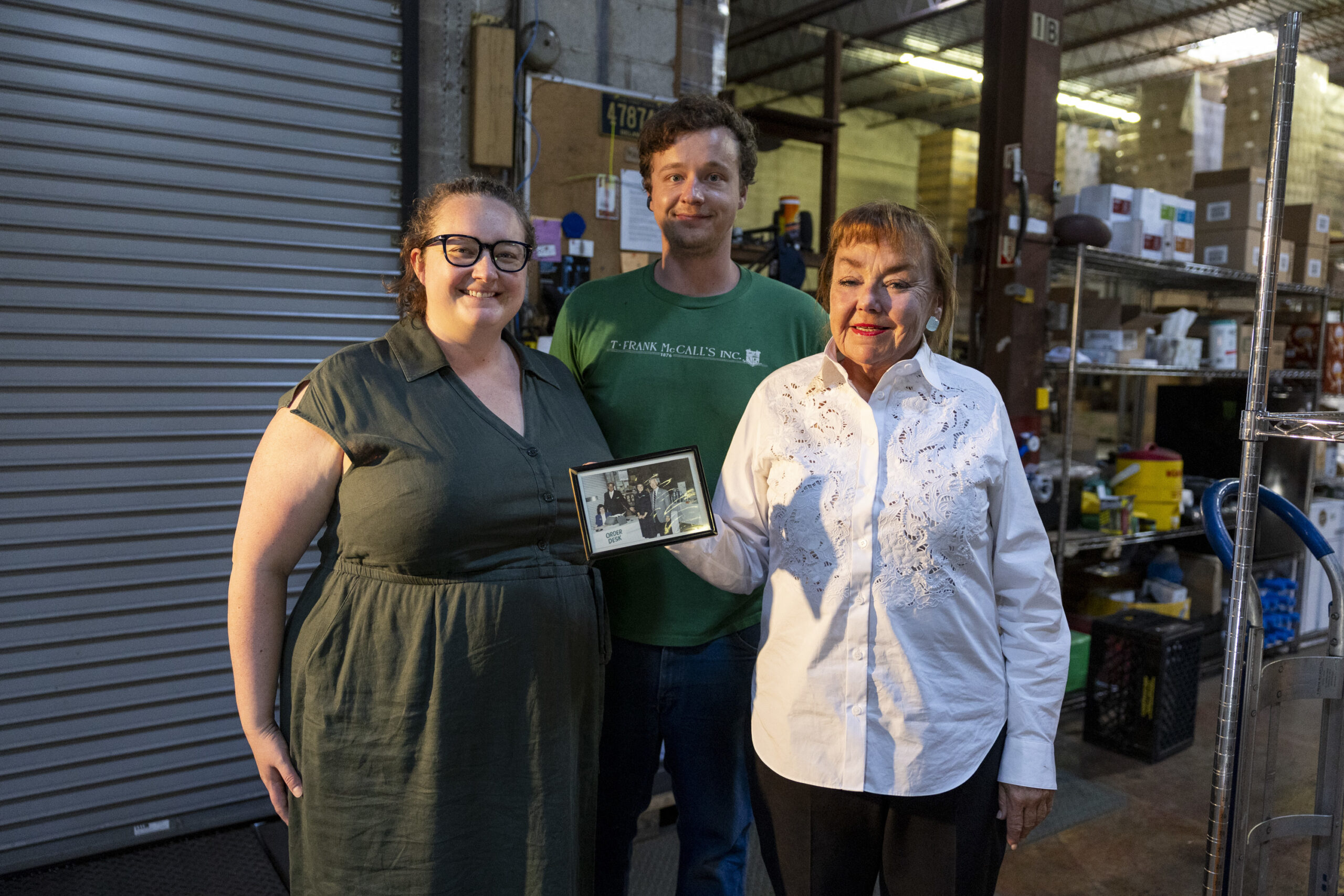
    Owner Lisa Witomski (right) with her niece Lisa Claire, McCall’s office manager, and nephew Chas Wiley, warehouse manager, inside the store.

    They sold the company in 1957 at a time when Chester was entering a postwar decline: In the 1950s, the number of apparel and general merchandise stores in the city fell from 68 to 19, according to Chester Planning Commission documents.

    Brothers Edward and Charles Witomski purchased the business on the advice of a member of the legendary Pew family, founders of the Sun Oil empire. The brothers had owned a bar in Essington and were looking for an enterprise that would be more family-friendly, Lisa Witomski said.

    Like the McCalls, they continued the tradition of selling and distributing a wide variety of products, including paints and even baby chicks at Easter time. Eventually the business was passed on to Charles Witomski’s daughters, Marcie and Lisa, the company president. Marcie Witomski’s daughter, Lisa Claire, is the office manager; Marcie’s son Chas Wiley manages the warehouse.

    In recent years their regular customers have included casinos throughout the region that have needs for paper and enzyme cleaning products. (Gamblers have been known to make a mess.)

    And ice melter has been a source of considerable cold cash — this winter in particular.

    “It was a doozy,” Claire said. It wasn’t just the 30 inches of snow, but the subsequent Arctic freezes that locked in the snow-and-ice coverage. The result was the sale of mass quantities of calcium chloride melter.

    On occasion, a motorist along Madison Street, which is part of Route 320, stopped in to buy some melter, Lisa Witomski said, but the store never was heavily trafficked even when the neighborhood was well-occupied in the 1950s and ’60s.

    Save for a few incidents — one person tried to walk off with a lawn mower, another tried to make off with a 100-pound barrel that he couldn’t carry — crime has not been an issue, Lisa Witomski said, even when the city went through a period a decade ago when it had the nation’s highest per capita homicide rate.

    “We are not exactly in a populated area,” she said.

    Cars parked in front of the store these days are anomalies. “We think the two-hour parking is very funny,” she said.

    Said Michelle Cubler, the purchasing manager, “We’ve never seen them actually ticket on this street.”

  • Indigenous chef and author Sean Sherman delivers the lost history and sublime story of Indigenous American foods

    Indigenous chef and author Sean Sherman delivers the lost history and sublime story of Indigenous American foods

    Kids today can “name more Kardashians than types of trees,” according to Sean Sherman, a James Beard Award-winning Oglala Lakota Sioux chef, activist, and cookbook author.

    They — and their parents, for that matter — know almost nothing about the forests, plants, and animals that fed Sherman’s Native American ancestors and cultivated whole nations of Indigenous people, he said in a talk Saturday at the Academy of Natural Sciences of Drexel University.

    Sherman was on hand to discuss his new book, Turtle Island: Foods and Traditions of the Indigenous Peoples of North America, which includes 100 ancestral and modern recipes.

    In his career, Sherman has won the 2018 James Beard Award for Best American Cookbook for his book, The Sioux Chef’s Indigenous Kitchen; the James Beard Leadership Award in 2019 for his dedication to revitalizing Indigenous food systems; and the 2022 James Beard Award for Best New Restaurant, for his Minneapolis restaurant, Owamni (co-owned with Dana Thompson).

    Sherman is famous for, among other dishes, wild rice-crusted walleye, cedar-braised bison, and hunter’s stew with bear meat (or lamb if bears are scarce).

    He said he learned his craft the hard way.

    “I couldn’t very well go online to learn how to do Native American cooking,” said Sherman, 52, who was born on the Pine Ridge reservation in South Dakota, and now lives in Minneapolis. “Nothing was there. So much of it was lost to history so quickly.”

    He read academic books on plants that were used as food and medicines by Native Americans. He learned how to prepare the game meats that provided protein to long-ago ancestors. And he worked in Minnesota restaurants to cook what he calls “colonial food,” derived from European cuisines, to hone his chops in the kitchen.

    Many Native Americans have long been unaware of the knowledge gleaned by their forebears. Showing a slide of a bologna sandwich on white bread, Sherman told the 240 people in his audience, “This was Lakota food when I was young.” Also on the menu: unadorned cans bearing the words, “Beef with juices.”

    Sherman is wry with a biting wit — “lawns are [expletive] stupid, aren’t they?”

    He also shows little reverence for the 250th celebration of the signing of the Declaration of Independence, dismissing the document as a “break-up letter to King George” that described Sherman’s ancestors as “merciless Indian savages.”

    When Sherman was done, the crowd moved outside to the Benjamin Franklin Parkway, where ethnobotanist Linda Black Elk, director of education for NATIFS (that’s North American Traditional Indigenous Food Systems), was holding court.

    Ethnobotanist Linda Black Elk talks plants with people attending chef Sean Sherman’s event at the Academy of Natural Sciences.

    She showed visitors a garden of plants used by Indigenous people that grow easily in Philadelphia, and can be harnessed for use.

    Anise hyssop can be made into a tea that’s “good for the lungs, and helped during COVID,” Black Elk said.

    Mountain mint, which battles indigestion, was growing near elderflowers, “one of the most antiviral plants in the world,” according to Black Elk. “And you can simply grow it in your yard.”

    Black Elk added that the well-known “three sisters” — squash, corn, and beans — easily grow at Philadelphia’s latitude as well.

    Impressed by the plants, as well as Sherman himself, Lucas Figueroa, 28, of South Philadelphia, an AmeriCorps VISTA volunteer, said, “Food connects everybody to culture and the land. I’m so very passionate about this.”

    Sara Marine, 51, an archeologist from Lancaster, praised Sherman for not merely trying to recreate the past, but for “bringing it to life.”

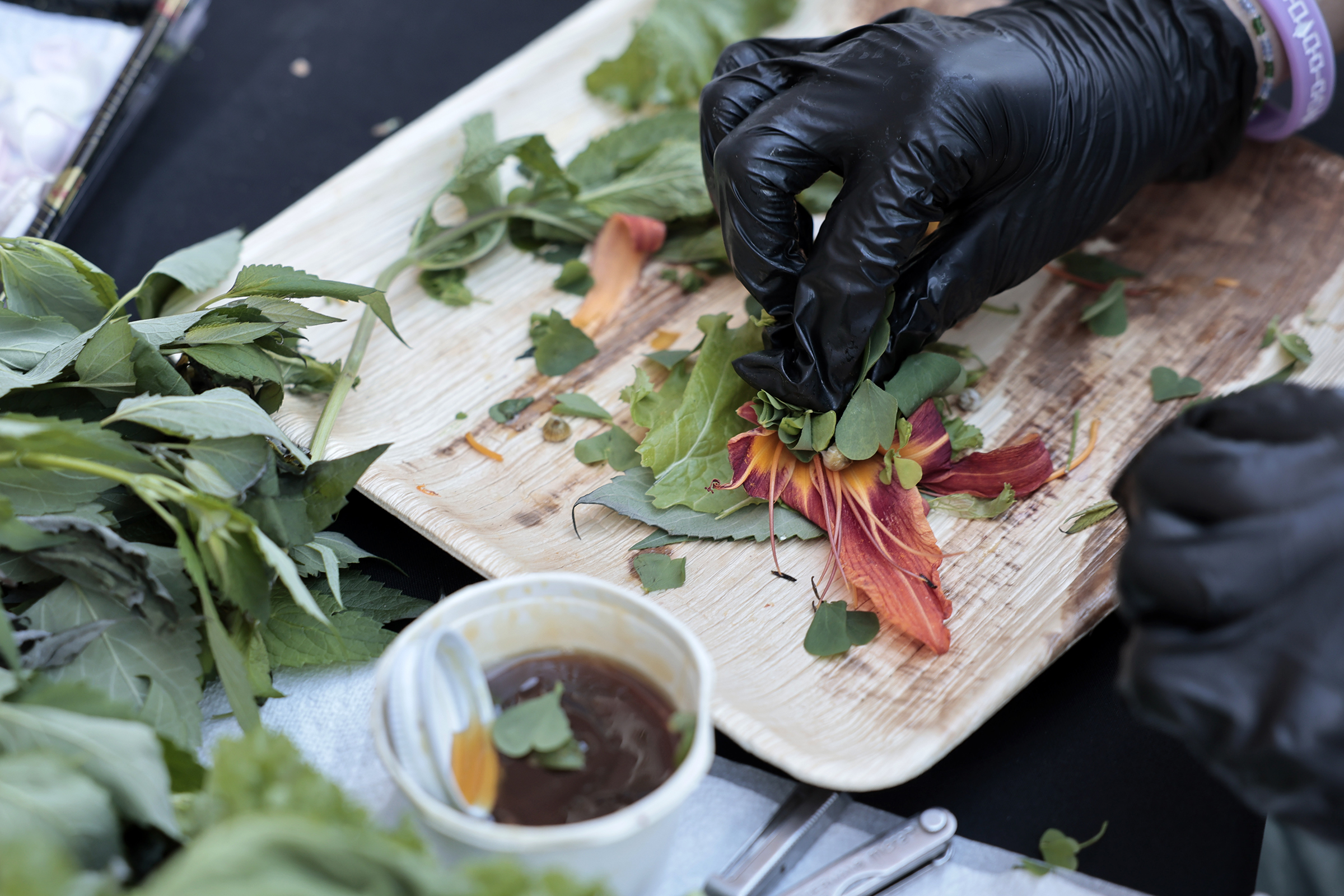
    Salad wraps that included mustard greens, daylilies, and rose petals were sampled during chef Sean Sherman’s event at the Academy of Natural Sciences.

    Steps from the garden, visitors were treated to snacks with Native American roots that can be made today with local ingredients: aronia berry granola (with oats and flax seed); sumac honey spritz (made with seltzer); and cornmeal elderberry cookies (sweetened with maple sugar).

    Sherman said he wanted his audience to understand that he doesn’t like simply telling people, “this is how we cooked in 1491.” Rather, he said, “I want to show people that we’re moving forward … coming up with food that can be beautiful and hopeful.

    “This is real American food. That label isn’t just for the hamburger.”

    Sherman’s appearance was presented in partnership with ArtPhilly’s What Now: 2026 festival and WHYY. The event is connected to the Academy’s new exhibition Botany of Nations, on view through Feb. 14, 2027.

  • A rideshare service driver was shot Saturday while waiting for a customer in Fairmount

    A 38-year-old woman who was working for a rideshare service was hospitalized after being shot during an attempted robbery in Fairmount just after midnight Saturday, police said.

    Around 12:30 a.m., police responded to a call on the 2800 block of Poplar Street, where they found the victim suffering from a gunshot wound to the shoulder. She is in stable condition at Temple Hospital, police said.

    The woman was working as a driver and waiting for her passenger to show up when two young men approached her, police said.

    “One of the suspects tapped on her driver-side window with a small handgun,” police said in a statement. “Without a word exchanged, the victim immediately attempted to drive away to escape, prompting the suspect to fire a shot through her window, striking her shoulder.”

    Police said the two men fled west toward 29th Street, while the injured driver drove to 28th Street to wait for an ambulance.

    Police said the men are in their late teens to early 20s with slim builds, wearing all-black clothing and masks. The motive was robbery, police said.