Category: News

Latest breaking news and updates

  • Indigenous chef and author Sean Sherman delivers the lost history and sublime story of Indigenous American foods

    Indigenous chef and author Sean Sherman delivers the lost history and sublime story of Indigenous American foods

    Kids today can “name more Kardashians than types of trees,” according to Sean Sherman, a James Beard Award-winning Oglala Lakota Sioux chef, activist, and cookbook author.

    They — and their parents, for that matter — know almost nothing about the forests, plants, and animals that fed Sherman’s Native American ancestors and cultivated whole nations of Indigenous people, he said in a talk Saturday at the Academy of Natural Sciences of Drexel University.

    Sherman was on hand to discuss his new book, Turtle Island: Foods and Traditions of the Indigenous Peoples of North America, which includes 100 ancestral and modern recipes.

    In his career, Sherman has won the 2018 James Beard Award for Best American Cookbook for his book, The Sioux Chef’s Indigenous Kitchen; the James Beard Leadership Award in 2019 for his dedication to revitalizing Indigenous food systems; and the 2022 James Beard Award for Best New Restaurant, for his Minneapolis restaurant, Owamni (co-owned with Dana Thompson).

    Sherman is famous for, among other dishes, wild rice-crusted walleye, cedar-braised bison, and hunter’s stew with bear meat (or lamb if bears are scarce).

    He said he learned his craft the hard way.

    “I couldn’t very well go online to learn how to do Native American cooking,” said Sherman, 52, who was born on the Pine Ridge reservation in South Dakota, and now lives in Minneapolis. “Nothing was there. So much of it was lost to history so quickly.”

    He read academic books on plants that were used as food and medicines by Native Americans. He learned how to prepare the game meats that provided protein to long-ago ancestors. And he worked in Minnesota restaurants to cook what he calls “colonial food,” derived from European cuisines, to hone his chops in the kitchen.

    Many Native Americans have long been unaware of the knowledge gleaned by their forebears. Showing a slide of a bologna sandwich on white bread, Sherman told the 240 people in his audience, “This was Lakota food when I was young.” Also on the menu: unadorned cans bearing the words, “Beef with juices.”

    Sherman is wry with a biting wit — “lawns are [expletive] stupid, aren’t they?”

    He also shows little reverence for the 250th celebration of the signing of the Declaration of Independence, dismissing the document as a “break-up letter to King George” that described Sherman’s ancestors as “merciless Indian savages.”

    When Sherman was done, the crowd moved outside to the Benjamin Franklin Parkway, where ethnobotanist Linda Black Elk, director of education for NATIFS (that’s North American Traditional Indigenous Food Systems), was holding court.

    Ethnobotanist Linda Black Elk talks plants with people attending chef Sean Sherman’s event at the Academy of Natural Sciences.

    She showed visitors a garden of plants used by Indigenous people that grow easily in Philadelphia, and can be harnessed for use.

    Anise hyssop can be made into a tea that’s “good for the lungs, and helped during COVID,” Black Elk said.

    Mountain mint, which battles indigestion, was growing near elderflowers, “one of the most antiviral plants in the world,” according to Black Elk. “And you can simply grow it in your yard.”

    Black Elk added that the well-known “three sisters” — squash, corn, and beans — easily grow at Philadelphia’s latitude as well.

    Impressed by the plants, as well as Sherman himself, Lucas Figueroa, 28, of South Philadelphia, an AmeriCorps VISTA volunteer, said, “Food connects everybody to culture and the land. I’m so very passionate about this.”

    Sara Marine, 51, an archeologist from Lancaster, praised Sherman for not merely trying to recreate the past, but for “bringing it to life.”

    Salad wraps that included mustard greens, daylilies, and rose petals were sampled during chef Sean Sherman’s event at the Academy of Natural Sciences.

    Steps from the garden, visitors were treated to snacks with Native American roots that can be made today with local ingredients: aronia berry granola (with oats and flax seed); sumac honey spritz (made with seltzer); and cornmeal elderberry cookies (sweetened with maple sugar).

    Sherman said he wanted his audience to understand that he doesn’t like simply telling people, “this is how we cooked in 1491.” Rather, he said, “I want to show people that we’re moving forward … coming up with food that can be beautiful and hopeful.

    “This is real American food. That label isn’t just for the hamburger.”

    Sherman’s appearance was presented in partnership with ArtPhilly’s What Now: 2026 festival and WHYY. The event is connected to the Academy’s new exhibition Botany of Nations, on view through Feb. 14, 2027.


  • A rideshare service driver was shot Saturday while waiting for a customer in Fairmount

    A 38-year-old woman who was working for a rideshare service was hospitalized after being shot during an attempted robbery in Fairmount just after midnight Saturday, police said.

    Around 12:30 a.m., police responded to a call on the 2800 block of Poplar Street, where they found the victim suffering from a gunshot wound to the shoulder. She is in stable condition at Temple Hospital, police said.

    The woman was working as a driver and waiting for her passenger to show up when two young men approached her, police said.

    “One of the suspects tapped on her driver-side window with a small handgun,” police said in a statement. “Without a word exchanged, the victim immediately attempted to drive away to escape, prompting the suspect to fire a shot through her window, striking her shoulder.”

    Police said the two men fled west toward 29th Street, while the injured driver drove to 28th Street to wait for an ambulance.

    Police said the men are in their late teens to early 20s with slim builds, wearing all-black clothing and masks. The motive was robbery, police said.

  • For these military veterans, Brazilian jiujitsu is a path to healing and finding a new community

    For these military veterans, Brazilian jiujitsu is a path to healing and finding a new community

    As a U.S. Army soldier in Afghanistan in 2013, Dan Kovalik got used to the adrenaline rush of bullets whizzing by while on patrol. Risking his life was part of his job as he radioed in Apache helicopters to protect other soldiers.

    But by the time he retired from the Army in 2018, his 23 years of military service had taken their toll. He had been diagnosed with post-traumatic stress disorder and was rated 80% disabled by the U.S. Department of Veterans Affairs. Kovalik moved back to his hometown of Johnstown, Pa., where he struggled to find the sense of purpose and camaraderie that had come so easily in the military.

    “I was looking for ways to be part of the community,” Kovalik said. “Church. The VFW. Then I tried jiujitsu.”

    Kovalik, 49, shared his story Saturday from the deck of the USS New Jersey, the decommissioned Navy battleship in Camden. The battleship was host to dozens of fans of and participants in Brazilian jiujitsu — a martial art that uses grappling and leverage to subdue opponents — for a day of competition.

    It was part of a two-day jiujitsu seminar and fundraiser put on by the We Defy Foundation, a Texas-based nonprofit that provides qualified combat veterans with free local jiujitsu classes and mentors who help them reintegrate into civilian life. Veterans must have been honorably discharged and have a VA disability rating of at least 80%.

    “The physical execution and mental chess game helps me to focus,” Kovalik said. “That, and just going out for a beer or dinner with friends afterwards.”

    Omar Feliciano, a 33-year-old Marine Corps veteran from Brooklyn, wins his match against Matthew Castillo, with Prodigy BJJ, at the We Defy Foundation jiujitsu event at the USS New Jersey in Camden on Saturday, June 20, 2026.

    The program has over 500 veterans currently enrolled, We Defy Foundation executive director Kevin Linderman said. About 70% of those who enroll complete the one-year program.

    “What makes it so different is, you have to do it with someone else,” Linderman said of jiujitsu. “When you’re grappling, you’re connecting with someone deeply. You’re both getting better through the process. It’s physical, and you’re learning how to operate under stress.”

    It’s also one more way to fight an ongoing crisis, Linderman said. Though military veterans made up 7.6% of the U.S. population in 2020, they accounted for 14% of suicides, according to research published in the National Library of Medicine. The suicide rate among veterans is 1.5 times higher than that of the overall population, after adjusting for age and sex, researchers noted.

    Though prevention efforts have shown some success, nearly 6,400 veterans died by suicide in 2023 — the most recent year for which data were available — according to the Department of Veterans Affairs.

    Omar Feliciano of Brooklyn, N.Y., said he found Brazilian jiujitsu after struggling to process a traumatic event he witnessed while in the Marines.

    “It really affected my sleep, my relationships with people,” Feliciano said. “I was irritable for no particular reason.”

    After another Marine recommended the We Defy Foundation, Feliciano applied. Now, Feliciano benefits from the structure of attending jiujitsu class twice a week, keeping him physically active and building camaraderie with other people in his community.

    The 33-year-old mechanical engineer said jiujitsu is helping him be a better father. He fought — and won — a jiujitsu match Saturday.

    “We’ve seen that it has a significant impact in reducing PTSD, depression, and anxiety,” said Linderman, 52, who came to the sport in 2015 while dealing with multiple deaths among his family and friends. Much like the veterans he helps, Linderman said, he was caught in a “rumination cycle,” and he quickly learned that an evening of grappling with opponents was a great way to break that cycle.

    Ethan Wanner, 21, of Williamsport, Pa. and Tried and True Gym, celebrates after winning his match against Josh Newhart, with 10P Bethlehem, at the We Defy Foundation jiujitsu event at the USS New Jersey in Camden on Saturday, June 20, 2026.

    The foundation was formed in 2015 by Army veterans Alan Shebaro and Joey Bozik. Though Bozik lost part of one arm and both legs from the blast of a roadside bomb in Iraq, he learned how to adapt his body to the martial art. In the process, Bozik regained much of the community he had been missing, Linderman said.

    As the COVID-19 pandemic waned, interest in the group accelerated, Linderman said. The organization has gotten $250,000 a year in financial backing from Facebook head Tom Alison. With 2,000 people moving through the program so far, interest is only growing. Linderman estimated that there are hundreds of thousands of Iraq or Afghanistan veterans who qualify for the program — including some who are struggling to find connection in civilian life.

    “I think that a way for people to stay connected to each other is one of the most important things right now,” Linderman said.

  • No end in sight for U.S. military mission along border with Mexico

    No end in sight for U.S. military mission along border with Mexico

    WASHINGTON — For more than a year, the Pentagon has deployed about 9,000 active-duty troops along nearly 2,000 miles of the southwest border to confront migrants, smugglers, and drug cartels.

    The troops are still there — at a cost of tens of millions of dollars each week — even though the Trump administration months ago largely achieved its goal of slashing illegal crossings.

    The military patrols, working closely with Customs and Border Protection as well as the Mexican military, have pushed Mexican cartels and smugglers into more remote mountainous areas to evade detection.

    But threats to U.S. troops are on the rise, U.S. officials say.

    Some members of Congress have questioned whether the patrols are the best use of active-duty troops who would otherwise be training for deployments to Eastern Europe, the Middle East, or the Indo-Pacific. Lawmakers and independent analysts have voiced concerns that the border missions will distract from training, drain resources, and undermine readiness.

    The mission marked a milestone late last month when its third commander, Maj. Gen. Curtis D. Taylor of the Army’s 1st Armored Division, took control of one of the centerpieces of the Trump administration’s Western Hemisphere security policy.

    Challenges abound for the troops involved in the mission, which the military calls Ardent Vanguard.

    Cartel activity increased along the border in February after Mexican forces, aided by the CIA, killed a notorious Mexican cartel leader known as El Mencho. Soon after, U.S. service members discovered that their phones had been hacked, and they began receiving threatening messages, congressional officials said.

    “I’m very concerned about this operation and the safety of our Marines,” Rep. Sara Jacobs (D., Calif.), who sits on the Armed Services Committee, said at a hearing in March. “Our service members did not sign up for immigration enforcement, and this political stunt is putting their lives at risk.”

    While U.S. forces deployed to the southern border use several counterdrone systems, the general in charge of helping defend U.S. territory said that many troops lacked adequate technology for patrols.

    “It presents us a different challenge,” Gen. Gregory M. Guillot, head of the military’s Northern Command, said at a security conference in Tampa, Fla., last month. He noted the overall increase in anti-drone technology.

    Unlike the drone wars on the battlefields of Ukraine or Iran, there have been no drone attacks on either side of this border conflict and no U.S. casualties, military officials say.

    The mission to detect and interdict illegal activity across hundreds of miles of desert and mountainous frontier has also become a high-stakes proving ground for emerging technology, including counter-drone devices, remotely guided sea vessels, and advanced sensors.

    Guillot said at a change-of-command ceremony in Arizona last month that the military had for the first time conducted joint patrols with Mexican soldiers using encrypted radios and high-energy lasers to knock down potentially hostile cartel-operated drones.

    “My mission is to control the border,” Maj. Gen. David W. Gardner, commander of the 101st Airborne Division, said in a phone interview from Fort Huachuca, Ariz., before handing off the operation to Taylor. “We remain focused on the mission of sealing the border.”

    Asked about confronting the drones and other security threats posed by Mexican cartels, Gardner said that U.S. forces had disabled or knocked down drones that the cartels use to find new smuggling routes around the U.S. patrols.

    “The illicit actors are finding it more and more difficult to accomplish their objectives,” Gardner said.

    Sen. Jack Reed (D., R.I.), the top Democrat on the Armed Services Committee, expressed concern at a hearing last month that the border mission was siphoning money from important training missions. He said the Army faced a nearly $2 billion budget shortfall largely because the Department of Homeland Security had not reimbursed it for border-support missions.

    “I have received concerning reports about the potential for canceling training rotations, grounded flight hours, and reduced Guard and Reserve training resources,” Reed said, referring to the National Guard and Army Reserve. “These are real costs for real units.”

    But several commanders and some troops stationed along the border said in interviews — some of them recent — that serving in one of Trump’s highest-priority missions gave them purpose. They are using many of their skills — route planning, mission rehearsals, patrols, and surveillance flights — in the real world against criminal smuggling gangs and Mexican drug cartels, instead of just practicing at their home bases or in exercises, they said.

    There is no end in sight for the military mission on the border. The Pentagon said last May that the first four months of the operation cost $525 million. But the department declined to say what the total cost was now.

  • James Burrows, master of the TV sitcom, dies at 85

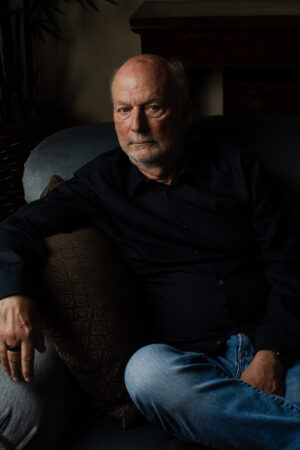
    James Burrows, master of the TV sitcom, dies at 85

    James Burrows, the genre-shaping master of the television situation comedy who was a creator of Cheers and directed more than 1,000 episodes of that show and other TV classics like The Mary Tyler Moore Show, The Bob Newhart Show, Taxi, Frasier, Friends, and The Big Bang Theory, died Friday. He was 85.

    His agent, Rick Rosen, confirmed the death but did not say where he died or specify a cause.

    Mr. Burrows earned a reputation as the “Steven Spielberg of sitcoms,” winning 11 Emmy Awards and receiving 47 nominations in a career that spanned five decades. In 1995, Bill Carter, writing in the New York Times, described him as “the man whose visual style and comedic instincts have helped create more comedy hits than anyone else in television.”

    With a unique flair for the multicamera sitcom, Mr. Burrows won audiences by focusing on the laughs.

    “When I direct a television show, I try to reach that sweet spot where the best script meets the best performance and the best chemistry between performers,” Mr. Burrows wrote in his 2022 autobiography, Directed by James Burrows, written with Eddy Friedfeld. “Hitting that exact moment, where these factors land in combination, results in the sweetest and most enduring laugh.”

    Whatever the setting, whether a New York taxi garage or a neighborhood bar in Boston, he sought to nurture his actors into ensembles. “I guess I have a gift for creating families,” he told the Times in 2023.

    Distinctly different from film directors, who control every aspect of a movie’s creative development, television directors often act as traffic cops on a set and toil in relative anonymity. They are part of a creative team led by a writer and executive producer, who also acts as the showrunner.

    Television directors don’t usually exert control ahead of the writers. But Mr. Burrows defied that tradition. He was so skilled that he became the most sought-after and highly paid sitcom director during the golden age of network comedies in the 1980s, ’90s, and early aughts.

    “I’m concerned about believability and the economy of the comedy, the shortest distance between the character and the laughter,” Mr. Burrows wrote in his autobiography. “When I direct an episode, I have lots of notes. I am apt to tell writers: ‘50 percent of what I say is gold and 50 percent is garbage. It’s your job to figure out which is which.’”

    He grew up immersed in the world of New York City theater as the son of Broadway playwright and director Abe Burrows, who helped create such hits as Guys and Dolls and How to Succeed in Business Without Really Trying.

    He even started his career approaching television episodes as if he was directing a stage play, and the ensemble casts, including such stars as Mary Tyler Moore, Bob Newhart, Judd Hirsch, Ted Danson, Jennifer Aniston, Sean Hayes, and Kelsey Grammer, loved working with him.

    “He is without a doubt the person any actor wants calling the shots when the cameras are rolling,” Grammer, who played psychiatrist Frasier Crane on Cheers and Frasier, said in a 2019 episode of Inside the Actors Studio.

    Because of his intuitive understanding of the timing and structure of a successful sitcom episode, Mr. Burrows was in constant demand, often working on more than one series at a time. He directed a staggering 75 pilot episodes that became series.

    “I try to break down those barriers between writer and actor and director, and make everybody feel like they’re all a part of the process, without incurring the wrath of a writer,” Mr. Burrows said in a 2023 interview on the public radio station KCRW.

    In 1994, for example, Mr. Burrows not only directed but also helped cast Friends. Before shooting the pilot, he gathered the group of mostly unknown young actors — Lisa Kudrow, Courteney Cox, Matt LeBlanc, David Schwimmer, Matthew Perry, and Aniston — and flew them on a private plane to Las Vegas for a dinner at Spago at Caesars Palace.

    He wanted to ensure that the cast members bonded. At dinner, he told them, “This is your last shot at anonymity. Once the show comes on the air, you guys will never be able to go anywhere without being hounded.”

    James Edward Burrows was born in Los Angeles on Dec. 30, 1940, to Abe and Ruth (Levinson) Burrows. When he was 5, the family moved to New York City, where he grew up. His mother was a homemaker and social activist who instilled a lifelong sense of social justice in James and her daughter, Laurie.

    His parents divorced when Mr. Burrows was 8, a trauma he said he carried into adulthood. His father’s success exposed him to theater luminaries. Having a famous father, however, was a mixed blessing.

    Mr. Burrows knew he would always be considered “Abe’s kid,” so to avoid his father’s long shadow, he decided he had no interest in a theater career. Nonetheless, he attended New York’s High School of Music and Art and eventually found himself unable to resist show business. Countless visits to his father’s productions and rehearsals left an indelible impression about how to work with actors and crews.

    Mr. Burrows graduated from Oberlin College in 1962 and the Yale School of Drama in 1965. There, he realized he couldn’t sing, dance, or write, but he became intrigued with the idea of directing.

    After graduating, he became an assistant stage manager for Breakfast at Tiffany’s, a short-lived 1966 musical that featured Moore. After working as a stage director at dinner theaters for the next few years, Burrows realized that television situation comedies — which in essence are short stage plays in front of a camera — might be a perfect outlet for his skills.

    In 1974, he wrote to Moore asking for a chance to work for her company, MTM, which produced her hit show. Her husband, Grant Tinker, invited Mr. Burrows to come to Los Angeles, where he was given his first shot at directing a sitcom. There, he met veteran TV director Jay Sandrich, who became a mentor.

    After The Mary Tyler Moore Show, he directed episodes of the spinoffs Rhoda and Phyllis and later The Bob Newhart Show, Laverne & Shirley, and Taxi. In 1982, he teamed up with writer-producer brothers Glen and Les Charles, whom he knew from Taxi, to create Cheers, which changed the trajectory of his career and eventually brought him vast wealth through syndication and residuals.

    Of the 275 episodes of the series over 11 seasons, Burrows directed all but 35. Its finale, in 1993, drew the second-largest audience for a series finale in television history. (Only the finale of M*A*S*H in 1983 drew more viewers.)

    In 1981, he married Linda Solomon, with whom he had three daughters, Kat, Ellie and Maggie. The couple divorced in 1993. Mr. Burrows married Debbie Easton in 1997; she survives him, along with his daughters; a stepdaughter, Paris; and seven grandchildren.

    Working into his 80s, Mr. Burrows maintained unabated enthusiasm for his craft.

    “The laughter behind me is so rewarding for my soul, I would almost do it for free,” he told the Times in 2023. “And it’s nice to be able to go back to what happened to me 50 years ago and still have this feeling of creativity. When pilot season comes this year, I hope there is a pilot that I like.”

    This article originally appeared in The New York Times.

  • Zelensky returns Poland’s highest honor after Polish leader revokes it in a spat over history

    Zelensky returns Poland’s highest honor after Polish leader revokes it in a spat over history

    WARSAW, Poland — Ukrainian leader Volodymyr Zelensky has returned Poland’s highest state honor, after the Polish president stripped him of the award as a politically charged dispute over World War II history resurfaced.

    Ukrainians believed the order “was meant for the Ukrainian People and our army,” Zelensky wrote in a social media post explaining the gesture. “Today, I sent the Order back to the President of Poland. I believe the future will confirm the respect Ukrainians deserve.”

    The message published on X is accompanied by photos of the Polish order and a postal receipt that it was about to be mailed to the Polish presidential office.

    President Karol Nawrocki decided to strip Zelensky of the Order of the White Eagle over the Ukrainian leader’s decision to name a military unit after a Ukrainian paramilitary organization accused of massacring Poles during WWII.

    Former Polish President Andrzej Duda bestowed the award on Zelensky in 2023 for services to security, resilience, and the defense of human rights.

    Zelensky issued a decree on May 26 naming a unit of Ukraine’s Special Operations Forces after the Ukrainian Insurgent Army, or UPA, which operated during the 1940s and 1950s and has been accused in Poland of mass killings.

    “For the majority of Polish society, the Ukrainian Insurgent Army remains above all a formation responsible for cruel crimes against the citizens of the Polish Republic during World War II,” Nawrocki said in a 13-minute address on social media.

    Zelensky’s move reopened old wounds in Poland

    The Ukrainian decree was met with widespread criticism in Poland, which has hosted millions of Ukrainian refugees and is a key supporter of Kyiv as it has battled Russia’s four-year invasion. However, Nawrocki is a nationalist politician who has exploited anti-Ukrainian sentiment for electoral gain. Ukrainians in Poland have been facing increasing prejudice despite their contributions to the economy.

    The decision to revoke the honor did not mean Poland’s support for Ukraine in its defense against Russia would decrease, Nawrocki said.

    Ukraine is grateful to Poland for its support, and would stay open to resolve historical differences with Poland, Zelensky wrote Saturday in his post. “I am proud of our people and of EVERY Ukrainian warrior.”

    Ukrainian Presidential Office chief Kyrylo Budanov wrote on Telegram that Nawrocki’s decision was “an unfriendly act toward our people” and “a gift to the Moscow aggressor, which will certainly use it against both of our countries.”

    Four Ukrainian officials including Budanov said they would return state honors that Poland had issued them.

    Some in Ukraine criticized the decision to return the Polish honors.

    Arseniy Yatsenyuk, Ukraine’s former prime minister, wrote on X that one “harmful and incorrect decision by the current president of Poland cannot be corrected by other incorrect decisions of ours.”

    Calls to resolve differences

    Poland is scheduled to host a major event on Ukraine’s postwar reconstruction next week, which Zelensky was expected to attend.

    Polish Prime Minister Donald Tusk, a political rival of Nawrocki, urged the two leaders to “tone down emotions, not stoke tensions.”

    “The front line runs elsewhere,” Tusk wrote on social media Friday night, adding that the row between Poland and Ukraine “delights Putin and shocks our allies.”

    Zelensky’s May decree said the designation was meant to restore military traditions and recognize the unit’s performance in defending Ukraine’s territorial integrity and independence.

    The UPA fought for Ukrainian independence against both Nazi Germany and Soviet forces. But it has been accused of killing tens of thousands of Poles, mostly in the Nazi-occupied regions of Volhynia and Eastern Galicia. In 2016, the Polish Parliament recognized the crimes committed by UPA as genocide.

    Ukrainians say armed formations on both sides, including the UPA and Polish underground forces, were involved in attacks and reprisals that led to large-scale civilian casualties among Poles and Ukrainians.

    Poland and Ukraine had recently made progress on the issue of exhumation of Polish victims. A December meeting between the two presidents in Warsaw had signaled progress on historical reconciliation.

  • Trump deepens the dustup with Italy’s Meloni, who says his ‘unprovoked attacks are senseless’

    Trump deepens the dustup with Italy’s Meloni, who says his ‘unprovoked attacks are senseless’

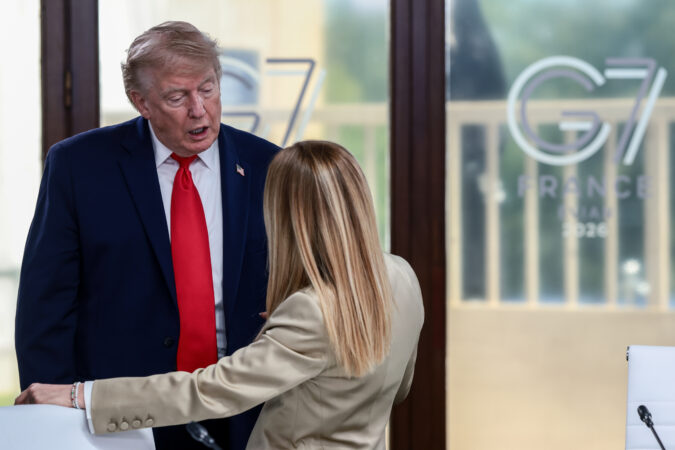
    WASHINGTON — President Donald Trump on Saturday lashed out at Italian Prime Minister Giorgia Meloni, insisting that she asked “over and over” for a photo with him at the recent Group of Seven summit and criticizing what he said was Italy’s lack of cooperation during the Iran war.

    The remarks deepen the spat that began this week with the Republican president’s interview with an Italian broadcaster, during which Trump claimed Meloni “begged” for the photo during the G7 meeting in France. Meloni has called that “completely fabricated.” The dustup led Italy’s foreign minister to cancel a planned trip to the United States as Meloni’s government lined up in her defense.

    “Italian Prime Minister Gigiorgia Meloni asked, over and over, for a picture with me during the G-7 meeting in France,” Trump wrote on his social media platform while spending the weekend at the Camp David presidential retreat. He misspelled her first name in the initial post, which he later corrected.

    He continued: “She is doing poorly in Italy with her level of popularity, possibly because she turned down the United States of America, a Country that truly loves and protects Italy, when it came to denying Iran from obtaining or developing a Nuclear Weapon (But so did NATO, for that matter!).”

    Meloni soon responded, saying in a statement to Trump that “these constant, unprovoked attacks are senseless.”

    “As for my popularity, being your friend certainly has not helped it, nor does it depend on my relationship with you. My popularity depends on my ability to defend Italy’s national interest, and that is exactly what I have always done,” Meloni said in a post on Instagram. She added that “in any case, my popularity is none of your concern. I suggest you focus on yours.”

    Trump’s initial comments were aired Friday on the La7 network. A correspondent had asked the president about Ukraine, but Trump raised Meloni and made the claim about the photo. Trump said he was not obliged to take the picture with her but that he felt sorry for her and agreed, La7 said. The broadcaster put a dubbed version of the conversation online, but not the original English audio.

    In his post, Trump also complained that Meloni would not allow the U.S. to use Italy’s landing strips or runways during the Iran war even though the U.S. is a leader in defense spending among NATO allies. That is a long-standing complaint about the military alliance and one that Trump raised before his White House meeting Wednesday with NATO Secretary-General Mark Rutte and the NATO summit in Turkey next month.

    Italy, a key logistics hub for the U.S., declined in March to allow American bombers headed for the Middle East to use a base in Sicily without parliamentary approval. It was a decision reflecting constitutional constraints and strong domestic opposition to the war. Meloni has insisted that any use of Italian bases for offensive operations would require parliamentary backing.

    Trump vented his frustration about Meloni and on Saturday claimed that she “wants to be friends again” in light of the initial deal between the U.S. and Iran to end the war.

  • Trump tries to blame Reflecting Poll woes on vandalism, announces ‘multiple arrests’

    Trump tries to blame Reflecting Poll woes on vandalism, announces ‘multiple arrests’

    WASHINGTON (AP) — President Donald Trump on Saturday announced that federal authorities had made “multiple arrests” of people he said were vandalizing the Reflecting Pool as he struggled to explain why the $14-million-plus rehabilitation project he launched for the nation’s 250th anniversary seemingly backfired.

    Trump said his predecessors had let the pool turn an algae-stained green and that he’d line it with “American flag blue” so it better reflected the Washington Monument. But after the new pool was unveiled, its blue tinge quickly became a familiar green. Workers treated it with chemicals to kill the algae, but then the painted blue lining on the bottom began to peel.

    On Friday night, Trump posted about the pool.

    “We’ve had some real problems with Vandalism at the beautiful Reflecting Pool,” he posted on his social media site Friday night. ”Just like three days ago, they destroyed the grass outside of the Pool, they’ve also done everything possible to hurt the inside surface that was just installed.”

    He offered no details to substantiate his claim.

    Agencies responsible for law enforcement and upkeep on the National Mall — the U.S. Park Police, National Park Service and Interior Department — did not respond to requests for comment. Trump on Saturday followed up by saying Park Police “have arrested multiple individuals for vandalizing our Nations magnificent Reflecting Poll,” meaning Pool.

    He went on: “Who would do such a thing? These are very serious crimes having to do with the destruction of National Monuments. Years in jail!”

    One man arrested was David Hearn, 67, of Bethesda, Md., who owned a company that made composite used to build watercraft. He said he stopped by the pool during his 64-mile bike ride Friday to see what was going on.

    Hearn, a former Olympic canoe racer, told the Associated Press that he reached into the pool because he wanted to examine the peeling new coating. He said he briefly touched a chunk that was still attached to the side of the pool, then let go shortly after a park worker told him to.

    But, Hearn said, he was then detained by National Guard troops and Park Police for five hours before being released Friday night.

    “I’m a curious citizen,” Hearn said in a telephone interview. “I reached down to see what it felt like. It was very rubbery.”

    The Washington Post first reported Hearn’s arrest, and he said he has a date to appear in court next month and is looking for legal help.

    Even if someone pulled ribbons of paint from the side of the pool, it would not explain the clouds of algae in green water and swaths of loose blue paint detached from the bottom.

    Trump insisted something nefarious has been going on at the scene. “No different than the chemicals that were used on the National Mall, they used something similar in the Reflecting Pool to try to destroy and demean our beautiful work,” he posted Friday evening.

    That was an apparent reference to the discovery of large numbers etched in discolored grass on the National Mall the week before: “86 47.” Authorities said the numbers could have been meant as a threat to Trump, the 47th president. The number 86 can be slang for “getting rid of.” They are investigating.

    Trump’s claims came after days of negative attention to the state of the pool, which has drawn television cameras and curious onlookers.

  • Trump threatens to charge U.S. tolls in Strait of Hormuz if final Iran deal not reached in 60 days

    Trump threatens to charge U.S. tolls in Strait of Hormuz if final Iran deal not reached in 60 days

    TYRE, Lebanon — Iran on Saturday said it closed the Strait of Hormuz because of Israel’s attacks in Lebanon and warned that while negotiators were going to Switzerland for talks with the United States on their interim agreement, not much is likely to happen if the fighting doesn’t stop.

    U.S. President Donald Trump, in response, threatened to impose American tolls in the crucial waterway if a final deal with Iran isn’t reached in 60 days, saying the money would be for “services rendered as the Guardian Angel to the countries of the Middle East.” His social media post underscored that the agreement calls for toll-free travel for 60 days.

    The announcements indicated a rough start to technical-level U.S.-Iran talks that key mediator Pakistan said will begin Sunday, with Qatari mediators also participating.

    U.S. Vice President JD Vance left for Switzerland on Saturday evening, just as Iranian state TV posted video showing Iran’s negotiators arriving there. They include parliamentary Speaker Mohammad Bagher Qalibaf, Foreign Minister Abbas Araghchi, and central bank and oil officials, among others. The deal calls for billions of dollars of Iran’s assets to be unfrozen.

    Talks were meant to start Friday, but the Iranians initially canceled their plans to attend because of escalating fighting in Lebanon. Negotiators for the U.S. and Qatar, with help from Iran, worked out an agreement between Israel and Hezbollah to tamp down hostilities, according to U.S. and regional officials who were not authorized to comment publicly and spoke on the condition of anonymity.

    Vance told reporters he would be in Switzerland “for a day or two” but was optimistic on making progress in the nuclear talks and on a ceasefire in southern Lebanon.

    Negotiations toward a final agreement will begin once key commitments are upheld, Iranian Foreign Ministry spokesperson Esmail Baghaei said. If they are not, “the memorandum of understanding as a whole will be jeopardized.”

    Strait once again becomes a challenge

    But the strait has emerged again as a focus. Iran’s joint military command said it was closed because of the U.S. “clear breach of its commitments” by failing to end the war. The interim deal is meant to stop fighting on all fronts.

    The U.S. disputed Iran’s announcement.

    “Iran does not control the Strait of Hormuz. Traffic continues to flow, and U.S. forces are monitoring the situation to ensure this remains the case,” said Capt. Tim Hawkins, a spokesperson for U.S. Central Command. The military said that 55 merchant ships transited Saturday with more than 17 million barrels of oil.

    The global economy braced for more uncertainty.

    Ships began transiting after the interim U.S.-Iran agreement was signed earlier in the week, a milestone that left plenty of questions unanswered. The U.S. lifted its blockade of Iran’s ports and now allows Tehran to sell its oil freely — terms that have left some in the U.S. Congress asking whether the war was worth it.

    Vance earlier confirmed that top negotiators Jared Kushner and Steve Witkoff were already in Switzerland and working through technical details of anticipated negotiations on Iran’s nuclear program. The interim deal gives negotiators 60 days to reach a nuclear agreement, but the issue is intricate and the time can be extended.

    Israeli attacks in Lebanon kill at least 16

    A Hezbollah official told the Associated Press that Iran informed the militant group that Tehran will not reopen the strait until Israel announces publicly that it will comply with a “comprehensive ceasefire” in Lebanon and an end to military operations there. The official spoke on condition of anonymity because he was not authorized to speak publicly.

    The official said Hezbollah will commit to a ceasefire if Israel does.

    An Israeli military official, speaking on condition of anonymity in line with regulations, later said the military had received “updated directives from the political echelon to cease fire.” The official said the military is operating in a defensive manner in Lebanon, which includes the right to respond to Hezbollah attacks.

    The official also said five Israeli soldiers had been killed in the past 48 hours in southern Lebanon.

    Earlier Saturday, Israeli strikes on southern Lebanon killed at least 16 people, including two children, hours after reports emerged of a ceasefire agreement there. Seven people were trapped under rubble after strikes hit the southern city of Nabatiyeh and nearby villages, Lebanon’s National News Agency said.

    The death toll in the latest war between Israel and Hezbollah has surpassed 4,000, Lebanon’s health ministry later announced.

    An Israeli military official said Hezbollah fired more than 50 projectiles at Israeli forces in southern Lebanon overnight. Israel’s army said it struck dozens of Hezbollah targets and militants.

    On Friday, the Israeli ambassador to Washington, Yechiel Leiter, said Israel “remains firmly committed to an immediate ceasefire” if Hezbollah honors the agreement and ceases hostilities.

    Earlier Saturday, Hezbollah said it had committed to the ceasefire but blamed Israel for violating it Friday night and said it would repel attacks by Israeli troops.

    Conflict could sink the US-Iran deal

    Neither Israel nor Hezbollah are signatories to the deal between the U.S. and Iran.

    Hezbollah and Israel went to war two days after the U.S. and Israel launched strikes on Iran on Feb. 28, with Hezbollah firing rockets and drones at northern Israel and Israel seizing large swaths of southern Lebanon.

    A new round of U.S.-backed talks between the Lebanese government and Israel is expected in Washington next week.

    Israeli Prime Minister Benjamin Netanyahu has vowed to keep Israeli forces in southern Lebanon until any threat to Israel is eliminated. Hezbollah has refused to halt its attacks unless Israel commits to withdrawing from Lebanon.

    Fighting continues near the Israel-Lebanon border

    A strike on Lebanon’s Barish village killed four members of a family: parents and two children. In Arab Salim village, a body was pulled from a destroyed house, and in Doueir and Kfar Rumman villages, drone strikes killed a person on a motorcycle and a Lebanese soldier. Nine people were killed in strikes in Qannarit, Sohmor, and Shehour villages.

    Israeli jets flew low over the coastal city of Tyre. Residents told the Associated Press they were relieved that Tyre had been spared in recent days, but now they were reminded that the war is not over.

    “Our entire lives would change if there’s a ceasefire,” said one resident, Hussein Khoshman.

    Some residents of northern Israel doubted the fighting would stop. “I don’t believe in a ceasefire because it doesn’t exist,” said Miriam Hod in Metula.

  • Summer arrives officially Sunday in Philly, with El Niño, drought, and the moon as major players

    Summer arrives officially Sunday in Philly, with El Niño, drought, and the moon as major players

    Given the atmosphere’s impatience, it would be understandable if some folks believe that the summer of 2026 began weeks ago.

    But officially, the astronomical summer does not start until 4:24 a.m. Sunday, the instant of the solstice, when the sun beams its most direct light on the Tropic of Cancer. (That’s the one that bisects Mexico.)

    Perhaps the pleasant temperatures this weekend are an overdue solstice gift to the region.

    Officially, on 14 days this year, the temperature has reached at least 90 degrees at Philadelphia International Airport. While not a record — this happened 21 times before the 1991 summer solstice — that is a total more appropriate to midsummer. The annual average is about 30, and usually this kind of heat doesn’t get a jump start in mid-April.

    Is it going to get hot again?

    A woman walks past Swann Memorial Fountain as the sun rises last month.

    Are polar bears white?

    At least three veteran seasonal forecasters have commented that they expect the burgeoning El Niño event to work against punitive hot spells in the region.

    During El Niño, sea-surface temperatures remain above normal in the tropical Pacific for several months, agitating the overlying air and affecting weather across the globe. This one may be among the strongest and is forecast to mature during the summer, earlier than usual.

    During six early-developing strong El Niños, summer temperatures in Philadelphia were near or below average.

    However, the scientists at the government’s Climate Prediction Center evidently are not buying it. In both the July and the July 1-through Aug. 31 outlooks posted Thursday, they saw the odds favoring above-normal temperatures.

    On average Philly has a combined 20 days of 90-degree highs in July, when the Earth is the farthest it gets from the sun, and August. (Along with a September bonus of two more.)

    How come it’s warmer, if we’re farther from the sun?

    On average the Earth is about 93 million miles from the sun, but since its orbit is an imperfect circle the distance varies by roughly 3 million miles.

    At 1 p.m. on July 6 our planet will be 94.5 million miles from the sun, by EarthSky’s calculation, its farthest distance of the year. It makes its annual closest approach in January, which is why winter in the Northern Hemisphere is the shortest season; the gravitational bump speeds up the trip, and February gets shortened.

    The seasonal weather rhythms are about the Earth’s axial tilt, not distance from the sun, and the planet takes its time responding to the changes in solar energy. Just as January is colder than December on average, July is more than 5 degrees warmer in Philly than June on average. Just how warm it gets the rest of this summer may have a lot to do with how much drier it gets.

    Will the drought conditions ever end?

    They always have, but this has been quite an extraordinary run, even if the plant life has managed to avoid major distress.

    The entire region, save for extreme northeastern Bucks County, is in a state of “severe drought,” according to the U.S. Drought Monitor, with Cape May County in “extreme drought.”

    The promised rain to start the workweek should help, but Philadelphia has experienced 10 consecutive months of below-normal precipitation, a rarity in an area in such proximity to bodies of water that are sources of rainfall. All of New Jersey and Chester County remain under drought emergencies.

    Dryness can promote heating, since the sun does not have to divert energy evaporating water.

    However, unusual coolness also can accompany dryness, said Sarah Johnson, warning coordination meteorologist at the National Weather Service office in Mount Holly. Having lived in North Dakota for 20 years, she knows her dry air.

    A lack of moisture can be a boon for cooler nights. Water vapor in the air inhibits nighttime cooling by blocking heat from escaping into the atmosphere.

    It also happens that less vapor in the air is ideal for sky-watching, and that could come in handy in August.

    This could be a big year for the Perseids

    In this long exposure photo, a Perseid meteor streaks above Madrid.

    Last year, you may recall that the moon showed its big face during the peak of the annual Perseid meteor showers, the most popular of the year.

    This time around, the moon is getting out of the way, and will be in its “new” phase during the peak early mornings of Aug. 12 and 13.

    While the Geminids, which occur in December, are considered the most prolific showers of the year, according to the American Meteor Society, they are not as popular as the Perseids: People tend to prefer August nights to December’s.

    The Perseids are so named because the cometic detritus that is ignited by the atmosphere appears to radiate from the constellation Perseus. In the early-morning hours, that typically is low in the northern sky.

    Under ideal conditions — ultra-dark, light-pollution free skies — as many as 90 meteors an hour might be visible, EarthSky says.

    But the moon will be the star in late August

    Billy Penn waves at the moon during a lunar eclipse.

    Two weeks after the Perseid peak, Philadelphia and most of the rest of the Western Hemisphere will be treated to a lunar eclipse in which just about all of the moon will be in shadow.

    The show begins at 9:24 p.m. Aug. 28, and more than 90% of the moon will be obscured by Earth’s shadow three hours later. It will be all over around 4 a.m.

    Chances are excellent that the region will still be needing rain, but may it choose another night.