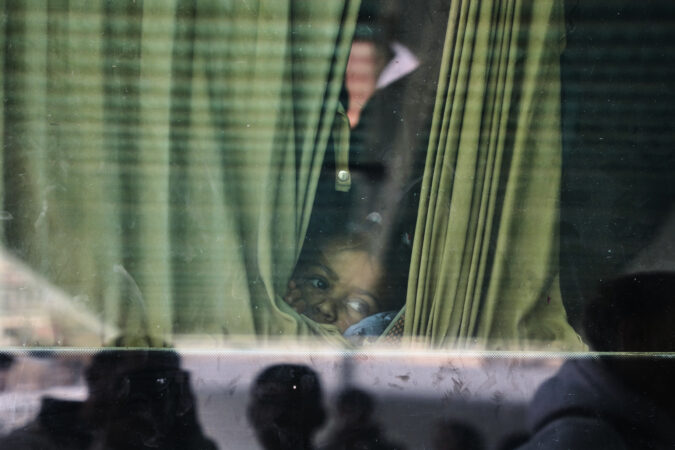
CAIRO — The first medical evacuees from Gaza entered Egypt on Monday as the Rafah border crossing reopened. It marked a key step in the Israel-Hamas ceasefire but a mostly symbolic one, as few people will be allowed to travel in either direction and no goods will pass through.
Ambulances waited for hours at the border before ferrying patients across after sunset, Egypt’s state-run Al-Qahera News satellite television channel showed. The crossing had been closed since Israeli troops seized it in May 2024.
About 20,000 Palestinian children and adults needing medical care hope to leave the devastated territory via the crossing, according to Gaza health officials. Thousands of other Palestinians outside the territory hope to enter and return home.
The number of travelers is expected to increase over time if the system is successful. Israel has said it and Egypt will vet people for exit and entry.
The office of the North Sinai governor confirmed that the first Palestinian patient crossed into Egypt.
Before the war, Rafah was the main crossing for people moving in and out of Gaza. The territory’s handful of other crossings are all shared with Israel. Under the terms of the ceasefire, which went into effect in October, Israel’s military controls the area between the Rafah crossing and the zone where most Palestinians live.
Violence continued across the coastal territory Monday, and Gaza hospital officials said an Israeli navy ship had fired on a tent camp, killing a 3-year-old Palestinian boy. Israel’s military said it was looking into the incident.
Egypt prepares to receive the wounded
Rajaa Abu Mustafa stood Monday outside a Gaza hospital where her 17-year-old son Mohamed was awaiting evacuation. He was blinded by a shot to the eye last year as he joined desperate Palestinians seeking food from aid trucks east of the southern city of Khan Younis.
“We have been waiting for the crossing to open,” she said. “Now it’s opened and the health ministry called and told us that we will travel to Egypt for (his) treatment.”
About 150 hospitals across Egypt are ready to receive Palestinian patients evacuated from Gaza through Rafah, authorities said. The Egyptian Red Crescent said it has readied “safe spaces” on the Egyptian side of the crossing to support those evacuated from Gaza.
Israel has banned sending patients to hospitals in the Israeli-occupied West Bank and east Jerusalem since the war began, cutting off what was previously the main outlet for Palestinians needing medical treatment unavailable in Gaza.
The Rafah crossing will be supervised by European Union border patrol agents with a small Palestinian presence.
Historically, Israel and Egypt have vetted Palestinians applying to cross. Fearing that Israel could use the crossing to push Palestinians out of the enclave, Egypt has repeatedly said it must be open for them to enter and exit Gaza.
Palestinian toddler killed by Israeli fire
A 3-year-old Palestinian was killed when Israel’s navy hit tents sheltering displaced people in Khan Younis, Palestinian hospital authorities said.
According to Nasser hospital, which received the body, the attack happened in Muwasi, a tent camp area on Gaza’s coast.
More than 520 Palestinians have been killed by Israeli fire since the ceasefire went into effect on Oct. 10, according to Gaza’s health ministry. The casualties since the ceasefire are among the over 71,800 Palestinians killed since the start of Israel’s offensive, according to ministry, which does not say how many were fighters or civilians.
The ministry, which is part of Gaza’s Hamas-led government, keeps detailed casualty records that are seen as generally reliable by U.N. agencies and independent experts.
Rafah’s opening represents ceasefire progress
Israeli troops seized the Rafah crossing in May 2024, calling it part of efforts to combat arms smuggling for the militant Hamas group. The crossing was briefly opened for the evacuation of medical patients during a ceasefire in early 2025.
Israel had resisted reopening the Rafah crossing, but the recovery of the remains of the last hostage in Gaza cleared the way to move forward.
The reopening is seen as a key step as the U.S.-brokered ceasefire agreement moves into its second phase.
The truce halted more than two years of war between Israel and Hamas that began with the Hamas-led attack on southern Israel on Oct. 7, 2023. Its first phase called for the exchange of all hostages held in Gaza for hundreds of Palestinians held by Israel, an increase in badly needed humanitarian aid, and a partial pullback of Israeli troops.
The second phase of the ceasefire deal is more complicated. It calls for installing the new Palestinian committee to govern Gaza, deploying an international security force, disarming Hamas and taking steps to begin rebuilding.
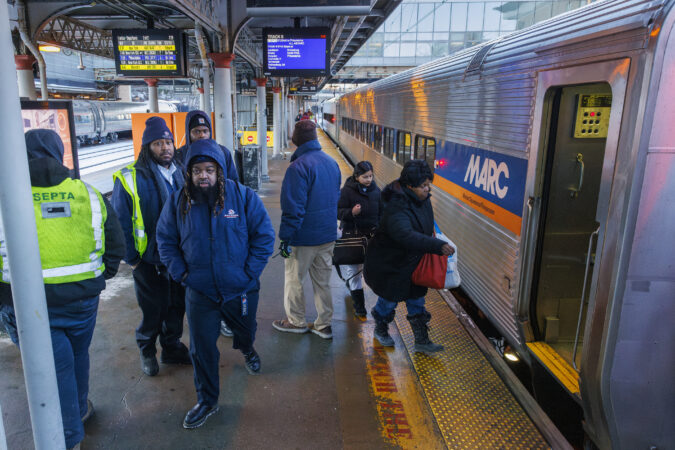
As Train 9710 pulled out of the Trenton Transit Center at 7:25 a.m. Monday, something looked out of place.
Five passenger coaches in the Philadelphia-bound Regional Rail train bore foreign “MARC” logos and orange-and-blue markings, all pulled by a properly labeled SEPTA electric locomotive.
The substitute cars initially will be running on the Trenton and West Trenton lines, where riders for months have endured packed trains due to a shortage of available 50-year-old Silverliner IVs.
The transit agency is paying $2.6 million to lease the new coaches for a year.
SEPTA’s records show it canceled at least 2,544 Regional Rail trips in the last three months of 2025. Delays and skipped stops also have plagued commuters for months.
SEPTA is using its ACS-64 electric locomotives, which it bought in 2019, to pull the MARC coaches and its own fleet of 45 coaches.
Silverliner cars do double duty; they carry passengers and have motors that provide their own locomotion through electricity drawn from overhead wires.
SEPTA said in a statement that the schedules will add trips on the Wilmington, Trenton, and Chestnut Hill East lines and increase the frequency of service from Wayne Junction directly to the Philadelphia International Airport on the Airport line.
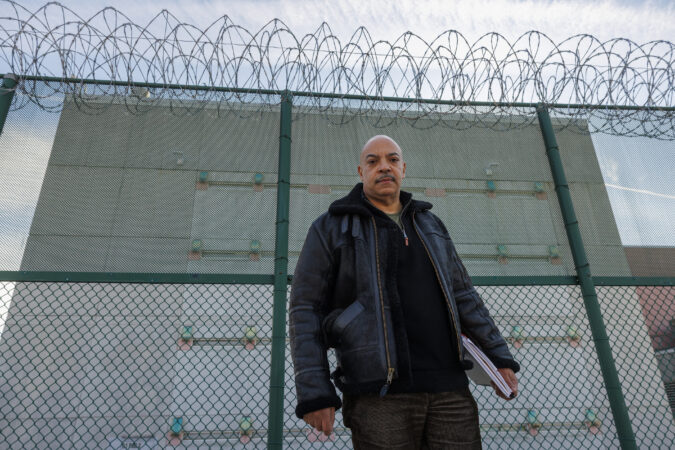
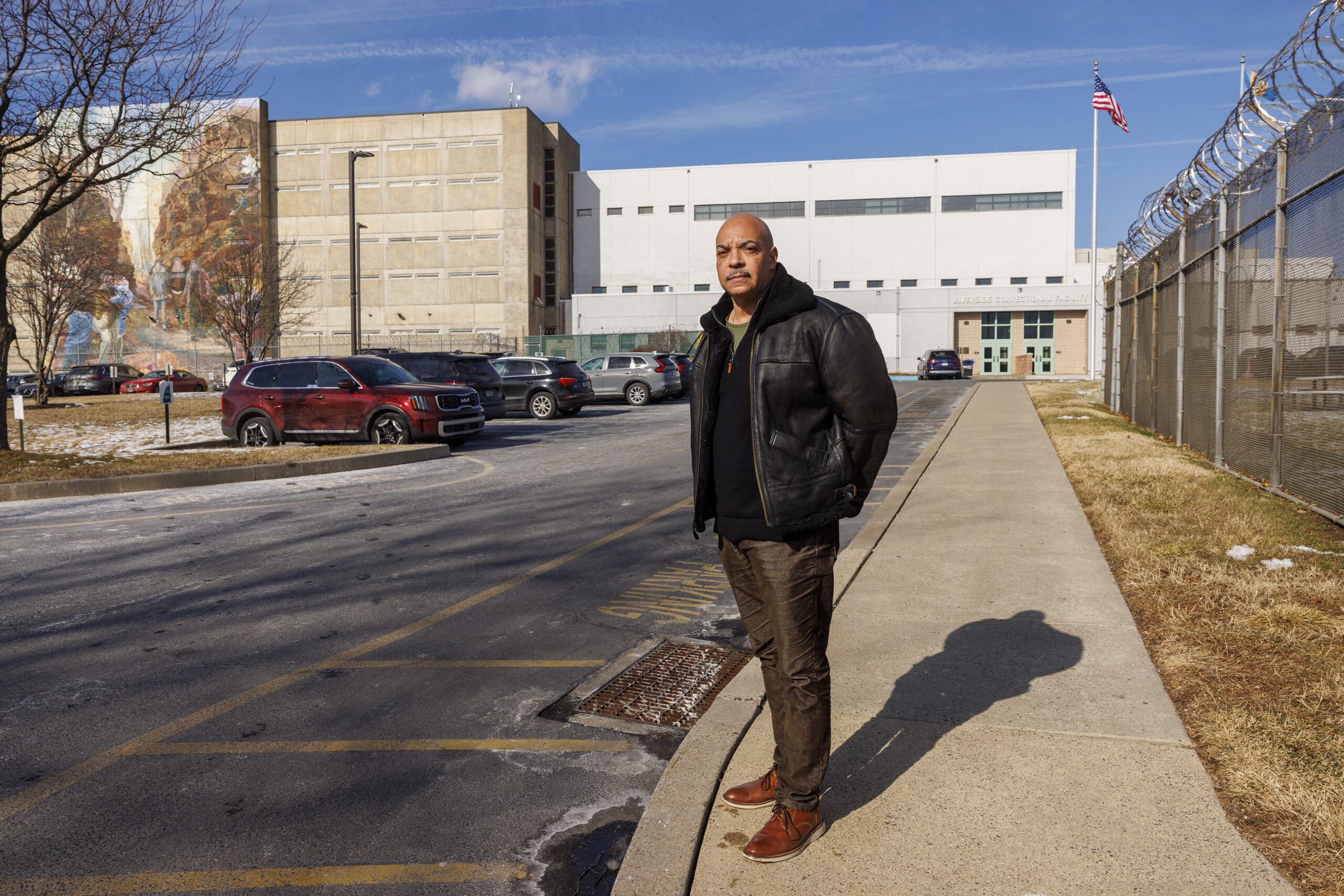
He walked toward the cellblock in Riverside Correctional Facility, pulling a cart of books behind him.
For a moment, it was quiet. The only sounds that echoed off the jail’s cinder block walls were the squeaks of his cart’s wheels.
But as a heavy door to a busy unit swung open, Seth Williams’ work was set to begin.
“Chaplain up!” one of the inmates inside yelled.
Williams smiled at the crowd of prisoners who began walking toward him and his squeaky cart, which was filled with Bibles, Qurans, and other religious texts.
“Step into my office,” he said, placing his hand on an inmate’s shoulder.
The role’s expectations are modest. He offers spiritual counseling and religious programming to the 600 or so prisoners held at Riverside. It is part-time and pays about $21 per hour.
Still, for Williams, the position was uniquely appealing. After putting people in jail as the city’s top prosecutor, then spending five years in federal prison as an inmate himself, he believes he can use what he learned from that journey to help young men avoid committing crimes in the future.
“I can be a better advocate, a better vessel, to help prevent crime and reduce recidivism … by helping people learn the skills they need to keep jobs and de-escalate conflict,” Williams said. “The best use of my experience … is helping people who are incarcerated the way I was.”
Williams believes his efforts now can help reduce recidivism among young men in jail.
It is a long way from the halls of power that Williams once inhabited as the city’s first Black district attorney — and from his standing as a politician who was viewed as a possible future mayor.
Still, Williams says, he is fulfilled by this more humble form of service. And becoming chaplain is not the only role he has taken up behind bars: For the last two years, he has also volunteered at Curran-Fromhold Correctional Facility, teaching weekly classes on career preparedness and poetry, and at State Correctional Institute Phoenix, where he directs a volunteer program about Christianity.
Last month, Williams agreed to allow an Inquirer reporter to join him inside the city’s jails as he counseled inmates. He shared stories about his time in prison, delivered socks and toothpaste to indigent inmates, gathered a group to recite the rosary, and gave books to men who expressed interest in spiritual counseling.
He was energetic, open, and passionate. He spoke openly about his past misdeeds, but remained defiant about his federal prosecution — saying he was wrong for not reporting gifts he received as DA, but insisting that he did not sell his office to his benefactors, as the U.S. Attorney’s Office alleged.
Williams acknowledged that his path to becoming a jailhouse chaplain and volunteer has been unusual. He pointed out, for instance, that the room where he teaches his Career Keepers course is just down the hall from the jail’s print shop — which once printed the DA’s letterhead with his name at the top.
Prisons Commissioner Michael Resnick said Williams’ transformation is one of the key attributes he brings to the job.
“He just has a passion for this work, to get people on the right path,” Resnick said.
And Williams said he feels as if he is doing more to help people now than he ever has.
“What if the worst thing that happens in your life,” he said, “could be used for good?”
From rising star to ‘criminal’
To understand where Williams is now, it helps to recall where he came from.
After he was elected district attorney in 2009, Williams, then 42, promised to reform the office where he had spent a decade working as a line prosecutor. He said he would assign lawyers to handle cases by neighborhood, place greater emphasis on charging crimes correctly at the outset, and divert minor offenses into community-based treatment programs.
His policy positions were part of his appeal, but he also leaned into a compelling personal story: Abandoned in an orphanage at birth, Williams was adopted at age 2 and raised in Cobbs Creek. He went on to graduate from Central High School, Pennsylvania State University, and Georgetown University’s law school before returning to his hometown to work as an assistant district attorney.
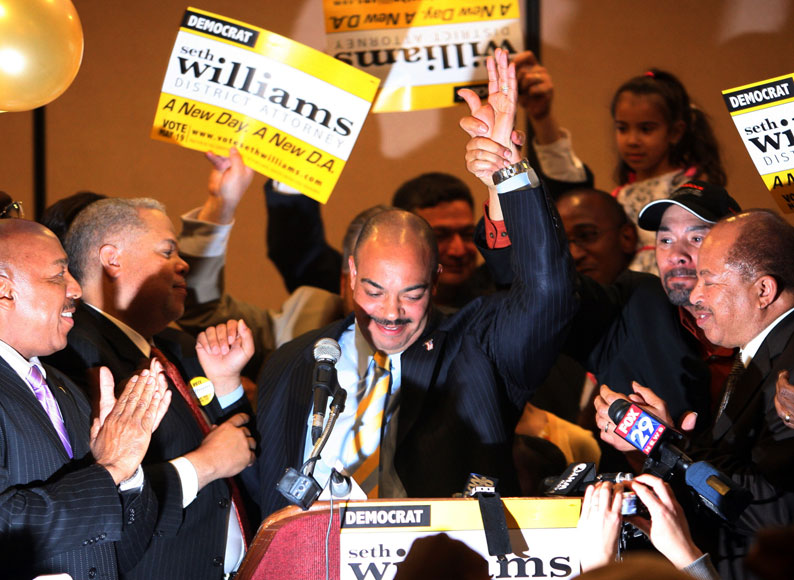
When he ran to become the city’s top prosecutor in 2009 — his second attempt after a narrow loss four years earlier — he had a campaign slogan that matched his aspirations: “A new day, a new D.A.”
Williams thanks supporters after winning the Democratic primary for district attorney in 2009.
And for a while, some political observers said, he was living up to that mantra. In addition to engineering an ambitious restructuring of the office, he made headlines during his first term by charging West Philadelphia doctor Kermit Gosnell with killing babies during illegal late-term abortions, and by charging Msgr. William Lynn, a top official in the Archdiocese of Philadelphia, with shielding sexually abusive Catholic priests.
Charismatic and camera-friendly, Williams was easily reelected to a second term in 2013, and homicides began falling to their lowest levels in decades. Some began wondering if he might leverage his success as DA into a run for City Hall.
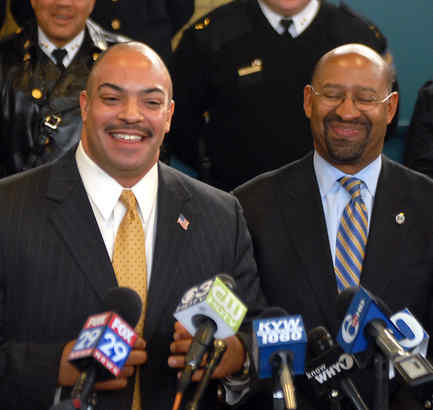
Williams and then-Mayor Michael Nutter at a press conference in 2010.
Beneath the surface, though, challenges in Williams’ personal life began to mount.
He now admits he was also drinking too much, “numbing myself from the daily trauma with too much Jack Daniel’s and martinis and Yuenglings.”
By 2015, the FBI was investigating whether he had been misusing campaign funds to live beyond his means. And two years after that, he was indicted on charges of wire fraud, honest services fraud, and bribery-related crimes.
Federal prosecutors said he not only misspent political money but also sold the influence of his office to wealthy allies who showered him with vacations, clothing, and a used Jaguar convertible.
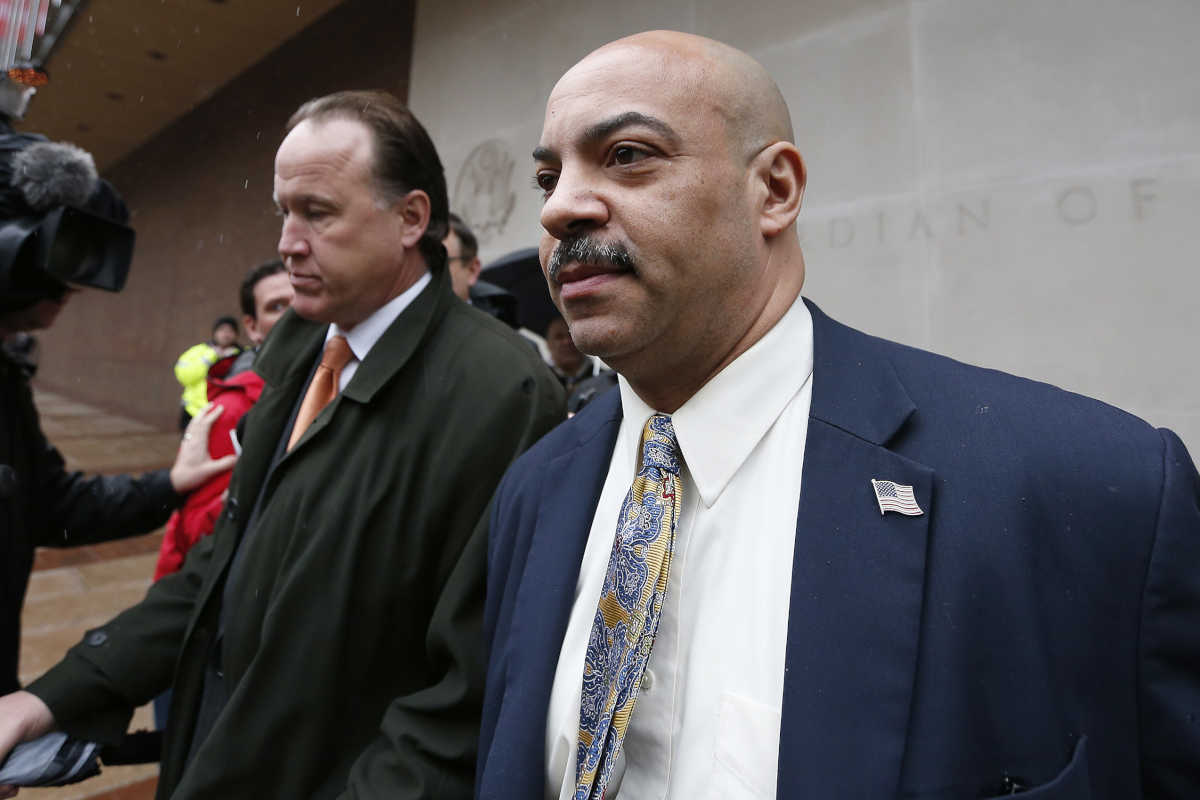
Williams outside of federal court, where he was charged with bribery and related crimes.
Williams insisted he was not guilty and took his case to trial. But midway through the proceedings, he accepted an offer from prosecutors to plead guilty to a single count of violating the Travel Act.
U.S. District Judge Paul Diamond showed no mercy — jailing Williams immediately, then imposing a five-year prison term, the maximum allowed by law. The judge called Williams a “criminal” who surrounded himself with “parasites” and “fed his face at the trough” of public money.
A mentor in solitary
During the first five months of Williams’ incarceration, he was held in solitary confinement at Philadelphia’s Federal Detention Center. That was intended to protect him — former law enforcement officers can become targets behind bars — but it left him confined to a cell for 23 hours a day.
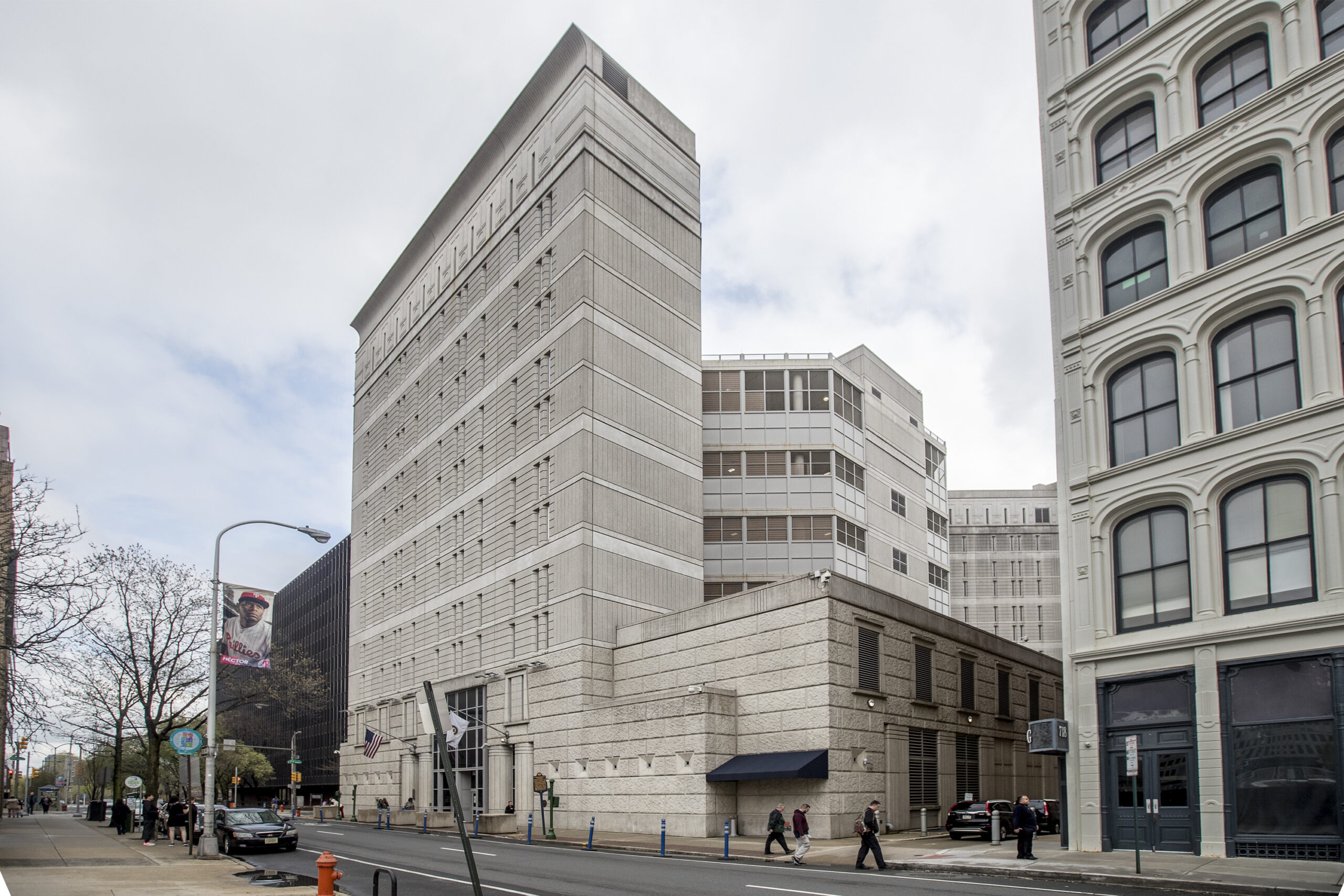
The Federal Detention Center, at 7th and Arch Streets.
Beyond the once-monthly 15-minute phone call he was allowed to make to his daughters, Williams said, there was one thing that helped him endure isolation: Friar Ben Regotti.
Regotti, then a resident at Center City’s St. John the Evangelist Catholic Church, served as the detention center’s chaplain. And when Williams was in solitary, he said, Regotti came to his cell every day and offered an escape: praying with him through a slit in the thick steel door, hearing his confession, and offering him books, including the Bible, which Williams — who was raised Catholic — said he finally read cover-to-cover for the first time.
“I’d lost everything,” Williams recalled. “But Father Regotti was the kindest person to me.”
When he was transferred to a prison camp in Morgantown, W.Va., Williams continued his spiritual journey by attending weekly Masses, Bible studies, and services for other religions. He also completed substance abuse classes, taught classes to help prisoners get high school diplomas, and learned how to play the saxophone.
He made some unlikely friends while he was locked up, including Michael Vandergrift of Delaware County, who is serving a life sentence plus 20 years for killing a rival drug dealer as part of a hired hit; and Bright Ogodo of Brooklyn, N.Y., who was sentenced to more than six years in prison for running a sophisticated identity-theft ring out of TD Bank branches.
Williams said Ogodo later told him he was considering taking his own life — he had even written a letter to his family, convinced they would be better off without him. But when Ogodo saw that Philadelphia’s former DA was in jail, too, Williams said, Ogodo changed his mind.
“He said, ‘I saw you walking with your head up, and [thought], if you can survive, so shall I,’” Williams said.
Three years ago today, I walked out of prison. My friend Bill, picked me up in Morgantown, WV and drove me home. In many ways being incarcerated was less difficult than Re-Entry. I am grateful for all that I have learned. Thank you God. 🙏🏽 pic.twitter.com/393p8KQXmg
Williams was released from prison in 2020, but said almost no one was willing to help him get back on his feet. Before he was incarcerated, he said, he had visited the governor’s mansion and taken his daughters to the Easter egg roll on the White House lawn. But afterward, few people would even take his calls.
“Nobody would hire me,” he said, describing people’s default position toward him as “the Heisman,” the college football statue with an arm extended to keep opponents away.
So Williams — whose law license was suspended when he was convicted — found work at a Lowe’s Home Improvement store in Havertown, unloading trucks and fulfilling online orders from 7 p.m. until 5:30 a.m.
Most of his coworkers, he said, had also recently been released from prison. And while working, he said, he was “kind of providing pastoral care [to them] daily,” similar to his teaching of GED courses in prison, or participating in Bible studies.
In time, he said, he began developing his ideas about self-improvement into formal programs for nonprofits, providing ways for recently incarcerated people to learn the skills needed to maintain consistent employment — developing a resumé, for instance, but also focusing on topics like conflict de-escalation.
Much of his motivation for doing that work, he said, came from research showing that recidivism is greatly reduced among people who receive substance abuse counseling, career coaching, and regular spiritual practice.
“What all three have in common,” Williams said, “is changing the hearts and minds of people.”
Federal Supervised Release ended Friday. First time at the beach since 2016. First time going outside of the Eastern District of Pennsylvania WITHOUT having to ask for permission since ‘17 made me cry! If you want to know my thoughts on Judge Diamond or federal prosecution ask me pic.twitter.com/pwzb9Qa0IR
In 2023, he ran into Terrell Bagby, then a deputy commissioner in Philadelphia’s jail system, and the two discussed the possibility of bringing Williams’ teachings into the jails. That’s how he ended up bringing his volunteer courses — Career Keepers and Prison Poets — into Curran-Fromhold, the city’s largest jail, he said.
In a recent session of Career Keepers, Williams was at the head of the class as nine prisoners sat at a U-shaped table around the room. They took turns practicing public speaking by delivering updates on the weather, sports, and news, then discussed topics including how to reward positive behavior — rather than linger on bad choices — and how to display gratitude.
In the moments after the prisoners were escorted back to their blocks, Williams said the men he has taught over the years have often been more open and vulnerable than he expected. Some have shared stories about traumatic experiences — such as being shot or sexually abused — and then discussed how those experiences affected their lives.
“I spent all this time trying to get out of prison,” he said, “and then I found myself loving being there, trying to help the inmates themselves.”
Becoming a presence
Inside his spare chaplain’s office at the jail, Williams has a desk, a few shelves, and scores of religious books. He keeps packs of white T-shirts, socks, and toothpaste to put into care packages for prisoners and, before making his rounds, keeps a list of people he wants to see.
His time on the cellblocks can be brief. During his rounds on a recent day, his presence did not always seem to have much of an impact. As he passed through each unit’s main expanse, where dozens of prisoners have cells overlooking a bustling common area, some prisoners were more interested in getting their lunch or hanging out by the phones than in checking out what Williams had to offer.
But other times, during several different stops, Williams sat and prayed with prisoners. And the care packages he hands out have become a frequent request, he said.
He wound down his shift in a room near the law library, reciting the rosary with a half-dozen men who had expressed interest in praying with him.
Williams’ chaplaincy is centered at the Riverside Correctional Facility in Northeast Philadelphia.
Regotti, the chaplain Williams had encountered in solitary, said in an interview that even though they first met while the former DA was behind a thick steel door, Regotti could immediately sense his curiosity, intellect, and desire to better himself.
“Going from feeling absolutely desperate to finding ways to cope, it was kind of a mark of his own personal resilience,” Regotti said. “He really developed into somebody that was in touch with God’s grace.”
Williams said he now aspires to be for people what Regotti was for him — a comforting presence in a dark place, and someone who, he hopes, can help provide guidance that can last well beyond someone’s time in confinement.
“The cheapest way to do that is by spreading the gospel,” he said. “People don’t want you to preach to them. They just want your presence — they want you to be there.”
WASHINGTON — President Donald Trump says he will move to close Washington’s Kennedy Center performing arts venue for two years starting in July for construction.
Trump’s announcement on social media Sunday night follows a wave of cancellations since Trump ousted the previous leadership and added his name to the building.
Trump announced his plan days after the premier of Melania, a documentary about the first lady, was shown at the storied venue. The proposal, he said, is subject to approval by the board of the Kennedy Center, which has been stocked with his hand-picked allies.
Leading performing arts groups have pulled out of appearances, most recently composer Philip Glass, who announced his decision to withdraw his Symphony No. 15 “Lincoln” because he said the values of the center today are in “direct conflict” with the message of the piece.
“This important decision, based on input from many Highly Respected Experts, will take a tired, broken, and dilapidated Center, one that has been in bad condition, both financially and structurally for many years, and turn it into a World Class Bastion of Arts, Music, and Entertainment,” Trump wrote in his post.
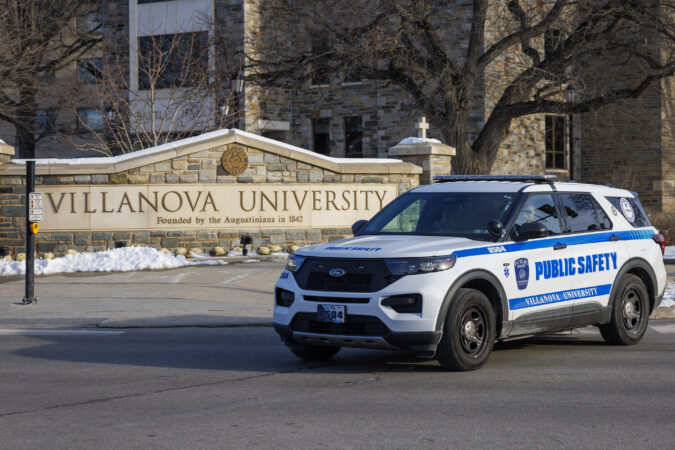
A freshman football player at Villanova University has been charged with rape and sexual assault stemming from a December incident on campus, a university spokesperson said Sunday.
D’Hani Cobbs, 20, faces charges of rape, sexual assault, and related offenses in Delaware County, court records show. He is accused of assaulting another student on Dec. 7, the university said in a statement, which did not provide any additional details about the alleged incident. The arrest was first reported by student newspaper The Villanovan.
Cobbs was arraigned Friday and held on $250,000 bail, according to court records.
A university spokesperson said school leaders reported the incident to law enforcement and “removed” Cobbs from campus shortly after the incident in December.
“Sexual violence of any kind is not tolerated on our campus and we are committed to both supporting the victim and fostering a safe environment for all of our students,” the university said in the statement.
A player bio page on Villanova’s website was out of service with an error message on Sunday, but according to social media and sports news outlets, Cobbs graduated from Camden High School in 2025 and played wide receiver at Villanova. Recruiters for the Villanova Wildcats posted a “welcome to the family” message on social media after recruiting Cobbs in December 2024.
An attorney for Cobbs did not immediately respond to a request for comment Sunday.
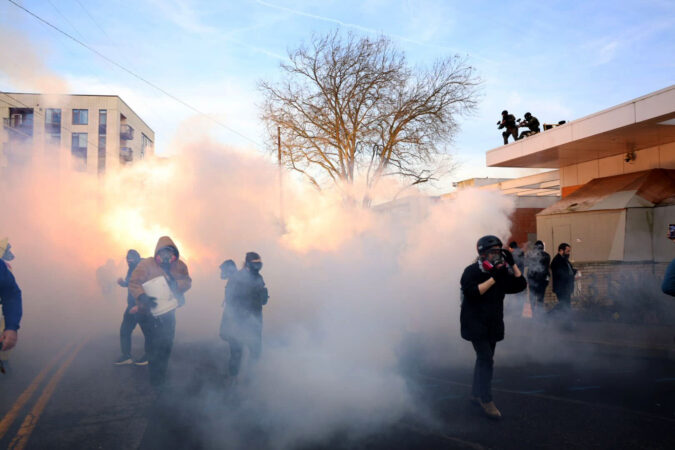
PORTLAND, Ore. — The mayor of Portland, Ore., demanded U.S. Immigration and Customs Enforcement leave his city after federal agents launched tear gas at a crowd of demonstrators — including young children — outside an ICE facility during a weekend protest that he and others characterized as peaceful.
Witnesses said agents deployed tear gas, pepper balls, and rubber bullets as thousands of marchers arrived at the South Waterfront facility on Saturday. Erin Hoover Barnett, a former OregonLive reporter who joined the protest, said she was about 100 yards from the building when “what looked like two guys with rocket launchers” started dousing the crowd with gas.
“To be among parents frantically trying to tend to little children in strollers, people using motorized carts trying to navigate as the rest of us staggered in retreat, unsure of how to get to safety, was terrifying,” Barnett wrote in an email to OregonLive.
Portland Mayor Keith Wilson said the daytime demonstration was peaceful, “where the vast majority of those present violated no laws, made no threat, and posed no danger” to federal agents.
“To those who continue to work for ICE: Resign. To those who control this facility: Leave,” Wilson wrote in a statement Saturday night. “Through your use of violence and the trampling of the Constitution, you have lost all legitimacy and replaced it with shame.”
The Portland Fire Bureau sent paramedics to treat people at the scene, police said. Police officers monitored the crowd but made no arrests on Saturday.
The Portland protest was one of many similar demonstrations nationwide against President Donald Trump’s administration’s immigration crackdown in cities like Minneapolis, where in recent weeks federal agents killed two residents, Alex Pretti and Renee Good.
Federal agents in Eugene, Ore., deployed tear gas on Friday when protesters tried to get inside the Federal Building near downtown. City police declared a riot and ordered the crowd to disperse.
Trump posted Saturday on social media that it was up to local law enforcement agencies to police protests in their cities. However, Trump said he has instructed Homeland Security Secretary Kristi Noem to have federal agents be vigilant in guarding U.S. government facilities.
“Please be aware that I have instructed ICE and/or Border Patrol to be very forceful in this protection of Federal Government Property. There will be no spitting in the faces of our Officers, there will be no punching or kicking the headlights of our cars, and there will be no rock or brick throwing at our vehicles, or at our Patriot Warriors,” Trump wrote. “If there is, those people will suffer an equal, or more, consequence.”
Wilson said Portland would be imposing a fee on detention facilities that use chemical agents.
The federal government “must, and will, be held accountable,” the mayor said. “To those who continue to make these sickening decisions, go home, look in a mirror, and ask yourselves why you have gassed children.”
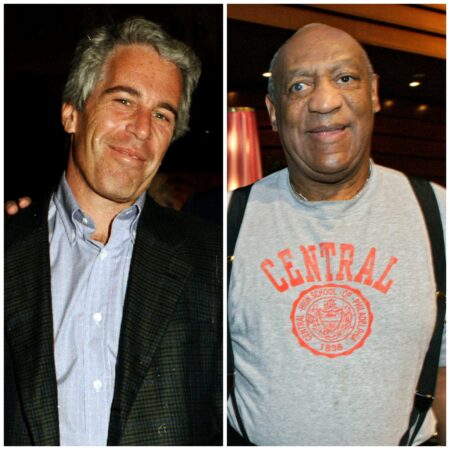
In the mid-2010s, well after he was already a convicted sex offender, Jeffrey Epstein began closely following the sexual assault case against another prominent figure: Philadelphia-born actor and comedian Bill Cosby.
Among the millions of documents released Friday by the U.S. Department of Justice — in the latest tranche of what’s become known as the Epstein files — are emails detailing a neighborly relationship between the disgraced financier and the entertainer, who both owned townhouses on East 71st Street in Manhattan.
Epstein and his representatives corresponded with Cosby, invited him to dinner parties, and at one point sought to retain Cosby’s personal chef as his own.
When Cosby’s prosecution gained steam in 2015, Epstein and his inner circle became devout followers of the legal proceedings in Montgomery County, where Cosby was ultimately sentenced to three to 10 years in prison for sexual assault. (The Pennsylvania Supreme Court overturned the sentence in 2021 after Cosby served nearly three years.) Emails indicate Epstein often saw parallels to his own ongoing legal issues — and also viewed the Cosby case as a valuable distraction from his own misconduct in the news.
“im getting bad press again,” Epstein wrote to a friend in January 2015, days after a new legal development emerged against him in Florida. “as i predicted. now that cosby was off the sex headline they need to resuurect a new one.”
Before their separate criminal troubles escalated, the two men were neighbors, living among other Wall Street elites and big Hollywood names. On Jan. 4, 2013, Epstein ordered his assistant to deliver a typo-strewn dinner invitation to Cosby’s home, with a who’s-who guest list.
“Take this note to bull cosby s house. dear neighbor. woody allen, lewis black, bobbly slayton are having, dinner at my house, thought you might like to join. a neighborhood event,” Epstein said.
Days later, another person, whose name has been redacted from the records, wrote Epstein to say that he heard Cosby was traveling and could not attend the Jan. 23 dinner. “Otherwise, he would have loved to come,” the person wrote, relaying a secondhand message through Cosby’s “house man.”
Attempts to reach Cosby on Sunday were not successful.
Epstein’s interest in Cosby’s case was intertwined with his apparent desire to do business with the comedian. Between 2017 and 2018, he had his real estate broker aggressively pursue Cosby’s team about buying his house across the street from Epstein’s own seven-story home.
Around October 2017, Richard Kahn, a lawyer who worked closely with Epstein, sent the financier an email with the subject line “Bill Cosby is reportedly going broke paying for multiple legal bills.” Epstein asked his New York-based real estate broker David Mitchell to begin looking into purchasing “the Cosby house.”
For more than a year between Cosby’s trial and retrial in Montgomery County, Epstein hounded Mitchell for updates on Cosby’s interest in selling the residence. He even emailed a former New York Times reporter in 2018, saying that he was “trying to buy Cosby.”
Cosby’s attorney eventually told Mitchell the property wasn’t for sale, emails show, but that a good offer might “get a conversation started.” Mitchell did not immediately respond to a request for comment Sunday.
Cosby, now 88, went into foreclosure on both of his Manhattan homes. He listed the East 71st Street address for sale in 2025 for $29 million.
In Cosby, Epstein sees parallel
The records show that by 2015, Epstein and his inner circle were trading emails of news stories about Cosby and analyzing court filings from litigation against the entertainer.
As the case mounted, Epstein and his longtime friend and co-conspirator, Ghislaine Maxwell, looked for rulings that they could use in their own favor.
“Does the new Cosby information cause any issues for you?” someone, whose name is redacted in the files, wrote to Epstein in July 2015. The email was sent shortly after Montgomery County prosecutors reopened a criminal investigation against Cosby for the 2004 sexual assault of Andrea Constand.
In October that year, Epstein emailed Maxwell with a judicial memorandum responding to a motion to get one of the sexual assault lawsuits against Cosby thrown out. (Maxwell’s attorneys would later use Cosby’s overturned conviction in 2021 to argue for the dismissal of her own sex trafficking case.)
Others in Epstein’s network were interested in Cosby as well. Epstein’s accountant emailed him a link to a news story about Cosby’s arrest in December 2015 and continued to send his client updates on the trial over the next several years.
At one point, the case even kindled a creative idea. Epstein emailed film producer Barry Josephson in 2015 with an idea for a movie that was “a fictionalized account of what happens to people falsely accused,” taking inspiration from the Cosby case as well as debunked sexual assault allegations on college campuses that occurred years prior.
“Few willing to stand up and say that these girls are liars,” Epstein wrote. (Josephson did not immediately respond to a request for comment Sunday.)
Allen has faced public criticism for his relationship with Previn — a daughter adopted by his former partner, actress Mia Farrow. Farrow also publicly accused him of sexual abuse of their adoptive daughter, Dylan Farrow, which Allen has repeatedly denied.
In May 2016, while inviting Previn to dinner with Noam Chomsky via email, Epstein offered a seemingly unsolicited take on the Cosby case.
“Whether guilty or not, [he’s] being burned at the stake,” Epstein wrote.
“They all want blood,” Previn responded.
The topic dominated their email correspondence for the next two years.
Allen, now 90, also took the side of Cosby in conversations with Epstein.
“[He] is being persecuted. Ok, even if he’s guilty no one died,” the filmmaker wrote in a 2016 exchange with Epstein. “He’s been publicly humiliated, stripped of honors at schools, forced to cancel comedy tour, dropped from tv series that was in the works, old show taken off the air. Do they want his head on a pike?”
The Inquirer messaged Allen’s last known publicist for comment on Sunday and did not receive an immediate response.
Epstein committed suicide in a Manhattan jail following his 2019 arrest on child sex trafficking charges.
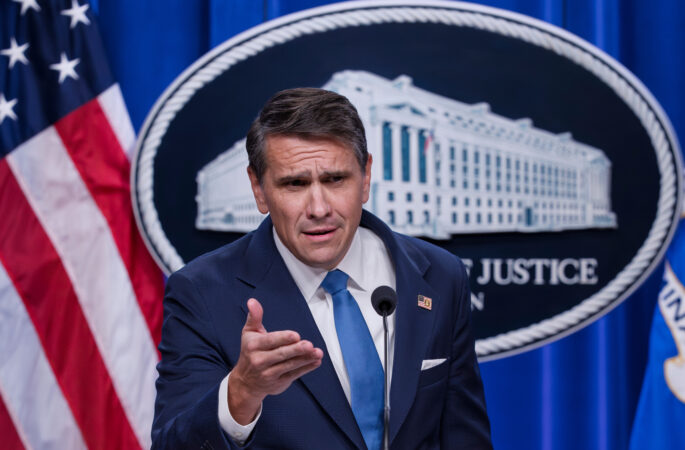
WASHINGTON — A top Justice Department official played down the possibility of additional criminal charges arising from the Jeffrey Epstein files, saying Sunday that the existence of “horrible photographs” and troubling email correspondence does not “allow us necessarily to prosecute somebody.”
Department officials said over the summer that a review of Epstein-related records did not establish a basis for new criminal investigations.
That position remains unchanged, Deputy Attorney General Todd Blanche said, even as a massive document dump since Friday has focused fresh attention on Epstein’s links to powerful individuals around the world and revived questions about what, if any, knowledge the wealthy financier’s associates had about his crimes.
“There’s a lot of correspondence. There’s a lot of emails. There’s a lot of photographs. There’s a lot of horrible photographs that appear to be taken by Mr. Epstein or people around him,” Blanche said Sunday on CNN’s State of the Union. “But that doesn’t allow us necessarily to prosecute somebody.”
He said that victims of Epstein’s sex abuse “want to be made whole,” but that “doesn’t mean we can just create evidence or that we can just kind of come up with a case that isn’t there.”
President Donald Trump’s Justice Department said Friday that it would be releasing more than 3 million pages of documents along with more than 2,000 videos and 180,000 images under a law intended to reveal most of the material it collected during two decades of investigations into Epstein.
The fallout from the release of the files has been swift. A top official in Slovakia left his position after photos and emails revealed he had met with Epstein in the years after Epstein was released from jail. British Prime Minister Keir Starmer suggested that longtime Epstein friend Andrew Mountbatten-Windsor, formerly known as Prince Andrew, should tell U.S. investigators whether he knows about Epstein’s activities.
The revelations continue
The files, posted to the department’s website, included documents involving Epstein’s friendship with Mountbatten-Windsor, and Epstein’s email correspondence with onetime Trump adviser Steve Bannon, New York Giants co-owner Steve Tisch, and other prominent contacts with people in political, business, and philanthropic circles, such as billionaires Bill Gates and Elon Musk.
The Epstein saga has long fueled public fascination in part because of the financier’s past friendships with Trump and former President Bill Clinton. Both men said they had no knowledge Epstein was abusing underage girls.
Among the newly released records was a spreadsheet created last August that summarized calls made to the FBI’s National Threat Operation Center or to a hotline set by prosecutors from people claiming to have some knowledge of wrongdoing by Trump. That document included a range of uncorroborated stories involving many different celebrities, and somewhat fantastical scenarios, occasionally with notations indicating what follow-up, if any, was done by agents.
Blanche said Sunday that there were a “ton of people” named in the Epstein files besides Trump and that the FBI had fielded “hundreds of calls” about prominent individuals that were “quickly determined to not be credible.”
Some of Epstein’s personal email correspondence contained candid discussions with other people about his penchant for paying women for sex, even after he served jail time for soliciting an underage prostitute. Epstein killed himself in a New York jail in August 2019, a month after being indicted on federal sex trafficking charges.
In one 2013 email, a person whose name was blacked out wrote to Epstein about his choice “to surround yourself with these young women in a capacity that bleeds — perhaps, somewhat arbitrarily — from the professional into the personal and back.”
“Though these women are young, they are not too young to know that they are making a very particular choice in taking on this role with you,” the person wrote. “Especially in the aftermath of your trial which, after all, was public and could be — indeed was — interpreted as a powerful man taking advantage of powerless young women, instead of the other way around.”
In another email written in 2009, not long after Epstein had finished serving jail time for his Florida sex crimes, another woman, whose name was redacted, excoriated him for breaking a promise that they would spend time alone together and try to conceive a baby.
“I find myself having to question every agreement we have made (no prostitutes staying in the house, in our bed, movies, naps, two weeks Alone, baby…),” She wrote. “Your last minute suggestion to spend THIS weekend with prostitutes is just too much for me to handle. I can’t live like this anymore.”
‘This review is over’
Blanche said in a separate appearance on ABC’s This Week that though there are a “small number of documents” that the Justice Department is waiting to release when it receives a judge’s approval, when it comes to the department’s own scouring of documents, “this review is over.”
“We reviewed over six million pieces of paper, thousands of videos, tens of thousands of images,” Blanche said.
House Speaker Mike Johnson (R., La.) told NBC’s Meet the Press on Sunday that he thinks the Department of Justice is complying with the law requiring public disclosure of the Epstein files.
But Rep. Ro Khanna (D., Calif.), co-sponsor of the law requiring the Justice Department to release its Epstein files, said he did not believe the department had fully complied. He said survivors are upset that many of their names accidentally had come out without redactions and they want to make sure the rest of the files come out.
Blanche said each time the department has learned that a victim’s name was not properly redacted, it has moved quickly to fix the problem but that those mistakes account for a tiny fraction of the overall materials.
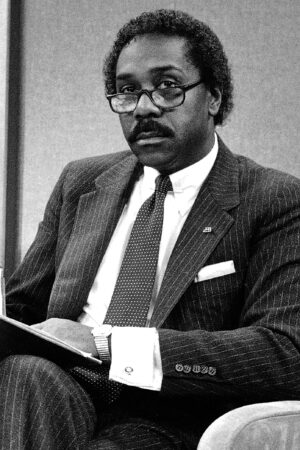
Demond Wilson, who found fame in the 1970s playing Lamont on Sanford and Son and went on to become a minister, has died. He was 79.
Mark Goldman, a publicist for Mr. Wilson, confirmed to the Associated Press that he died following complications from cancer on Friday.
“A devoted father, actor, author, and minister, Demond lived a life rooted in faith, service, and compassion. Through his work on screen, his writing, and his ministry, he sought to uplift others and leave a meaningful impact on the communities he served,” Goldman said in an emailed statement.
Mr. Wilson was best known as the son of Redd Foxx’s comically cantankerous Fred Sanford character in a sitcom that was among the first to feature a mostly Black cast when it began airing in 1972.
The thoughtful Lamont had to put up with his junkyard owner father’s schemes, bigotry, and insults — most famously, and repeatedly, “You big dummy!”
The show was a hit for its six seasons on NBC but ended when ABC offered Foxx a variety show.
Mr. Wilson was born in Valdosta, Ga., and grew up in the Harlem section of Manhattan, according to the biography on his website.
He served in the U.S. Army in Vietnam and was wounded there, and he returned to New York and acted on stage before heading to Hollywood.
A guest appearance on All in the Family in 1971 led to his best-known role. Norman Lear produced both shows.
Mr. Wilson told AP in 2022 that he got the role over comedian Richard Pryor.
“I said, ‘C’mon, you can’t put a comedian with a comedian. You’ve got to have a straight man,’” he said he told the producers.
After Sanford and Son ended, Mr. Wilson starred in the shorter-lived comedies Baby I’m Back and The New Odd Couple. He later appeared in four episodes of the show Girlfriends in the 2000s, along with a handful of movie roles.
Though he returned to the screen at times, he told the Los Angeles Times in 1986 that the acting life was not for him: “It wasn’t challenging. And it was emotionally exhausting because I had to make it appear that I was excited about what I was doing.”
Mr. Wilson became a minister in the 1980s.
He is survived by his wife, Cicely Wilson, and their six children.
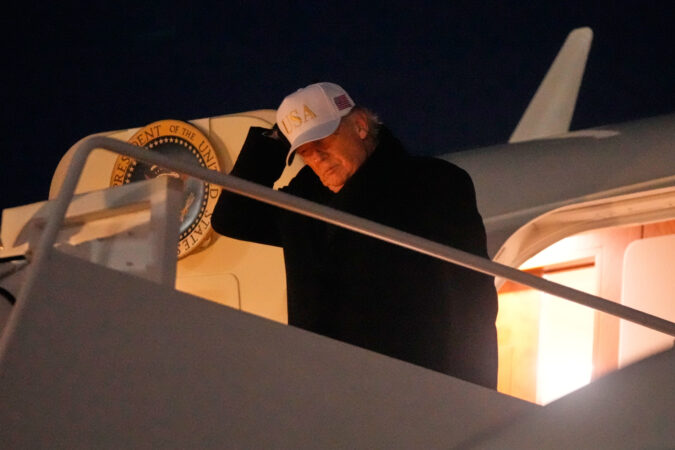
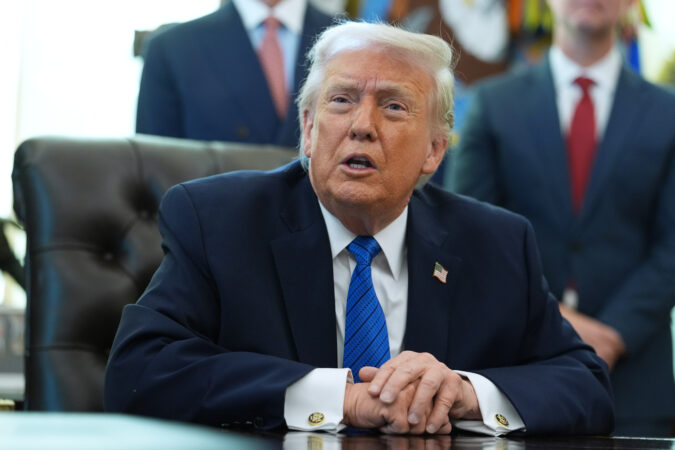
ABOARD AIR FORCE ONE — President Donald Trump said the United States was beginning to talk with Cuban leaders as his administration puts greater pressure on the communist-run island and cuts off key oil supplies.
He made the comment to reporters on Saturday night as he was flying to Florida. It comes in the wake of his moves in recent weeks to cut off supplies of oil from Venezuela and Mexico, which he suggested Saturday would force Cuba to the negotiating table.
His goals with Cuba remain unclear, but Trump has turned more of his attention toward the island after his administration in early January captured Venezuela’s then-President Nicolás Maduro and has been more aggressive in confronting nations that are adversaries of the U.S.
Trump has predicted that the Cuban government is ready to fall.
The Republican president did not offer any details on Saturday about what level of outreach his administration has had with Cuba recently or when, but simply said, “We’re starting to talk to Cuba.”
His recent moves to cut off its oil supplies have squeezed the island.
Last week, Trump signed an executive order to impose a tariff on any goods from countries that sell or provide oil to Cuba. The move put pressure on Mexico, which Cuba became dependent on for oil after Trump halted oil shipments from Venezuela in the wake of Maduro’s ouster.
Mexican President Claudia Sheinbaum warned that it could cause a humanitarian crisis. She said on Friday that she would seek alternatives to continue helping Cuba.
“It doesn’t have to be a humanitarian crisis. I think they probably would come to us and want to make a deal,” Trump said Saturday. “So Cuba would be free again.”
He predicted they would make some sort of deal with Cuba and said, “I think, you know, we’ll be kind.”