The Justice Department on Thursday publicly posted additional records related to convicted sex offender Jeffrey Epstein, including some that include allegations against President Donald Trump, following sharp criticism of the agency’s handling of the issue.
The agency said the files, which include detailsfrom FBI interviews with a woman who told authorities she had been sexually assaulted by Trump and Epstein, had not been previously released because they were incorrectly determined to be duplicates of other records. The Justice Department has posted millions of pages of Epstein-related records online, including investigative materials, following the passage of a law last year mandating their release.
The woman, who was interviewed by the FBI in 2019, accused Trump of sexually assaulting her decades earlier when she was a minor. No evidence has emerged publicly to corroborate that accusation. The White House called the allegations against Trump “completely baseless accusations, backed by zero credible evidence.”
The additional records were posted as Trump and his administration have struggled to combat controversies involving the release of files connected to Epstein, who died in federal custody in 2019 while facing charges of sex-trafficking and abusing girls.
The Justice Department has faced particular criticism over its response to the Epstein Files Transparency Act, a measure passed by Congress last year that demanded the agency make public a wide array of records by mid-December. While the agency did release more than 100,000 pages by that point, it did not make public most of its files until weeks later, well after the deadline.
Lawmakers have faulted the Justice Department for missing the deadline, failing to redact some information related to victims’ identities and redacting other information. Last month, after multiple media outlets reported thatsummaries of the woman’s account had not been included, the Justice Department said it was examining whether it wrongly withheld records containing allegations against Trump, who had been friends with Epstein for years before they had a falling out.
On Thursday, the Justice Department said in a social media post that it had discovered that “15 documents were incorrectly coded as duplicative.” Among these records were notes from multiple FBI interviews with the woman, who spoke to authorities following Epstein’s arrest in 2019.
According to the interview notes, the woman told investigators that she had been sexually assaulted by Epstein and Trump during separate incidents in the 1980s, when she was a minor. The Washington Post has been unable to corroborate these allegations or reach the woman.
Though summary reports of three of her FBI interviews were not included in files previously released by the administration, the Justice Department had already posted a report on one of the interviews as well as a summary file referencing the woman’s allegations against Trump.
Karoline Leavitt, the White House press secretary, pushed back against the allegations in a statement Friday.
“The total baselessness of these accusations is also supported by the obvious fact that Joe Biden’s [Justice Department] knew about them for four years and did nothing with them — because they knew President Trump did absolutely nothing wrong,” Leavitt said. “As we have said countless times, President Trump has been totally exonerated by the release of the Epstein Files.”
The Justice Department this week said it had “not deleted any files from the library,” and a spokeswoman called it “the most transparent Department of Justice in history.”
In addition to the FBI interviews, the Justice Department said Thursday that federal officials in South Florida had separately concluded that five prosecution memos “initially marked as privileged could be released while still protecting the privileged materials.” Those were also released, the agency said.
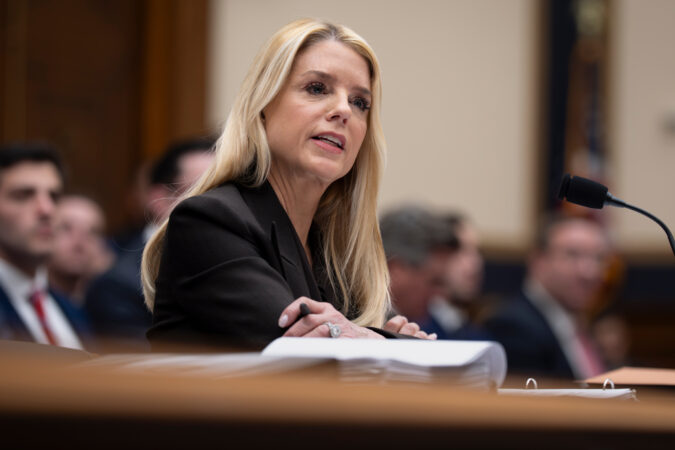
The release of the FBI interviews and other documents came a day after the House Oversight and Government Reform Committee voted to subpoena Attorney General Pam Bondi, escalating tensions between Congress and the administration.
Bondi, testifying last month before Congress, said the Justice Department “spent thousands of hours painstakingly reviewing millions of pages to comply with Congress’s law.”
It was not clear how Bondi intends to respond to the subpoena, which compels her to appear before the committee for a closed-door deposition about the Justice Department’s release of the Epstein records.
JERUSALEM — Satellite images, expert analysis, a U.S. official and public information released by the U.S. and Israeli militaries suggest an explosion that killed scores of Iranian students at a school was likely caused by U.S. airstrikes that also hit an adjacent compound associated with the regime’s Revolutionary Guard.
The Feb. 28 strike, which had the highest reported civilian death toll since the war began, has come under staunch criticism from the United Nations and human rights monitors. More than 165 people were killed, most of them of children, in the blast during school hours at Shajareh Tayyebeh Elementary School, according to Iranian state media.
Satellite images taken Wednesday and reviewed by the the Associated Press show most of the school in the city of Minab, about 680 miles southeast of Tehran, reduced to rubble, a crescent shape punched into its roof. Experts say the tight pattern of the damage visible on the satellite photos is consistent with a targeted airstrike.
Iran has blamed Israel and the United States for the blast. Neither country has accepted responsibility. Asked about the strike at the school at a Pentagon press briefing Wednesday, Defense Secretary Pete Hegseth said, “All I can say is that we’re investigating that. We, of course, never target civilian targets. But we’re taking a look and investigating that.”
Several factors point to a U.S. strike.
One is the launching of an assessment of the incident by the U.S. military. According to the Pentagon’s instructions on processes for mitigating civilian harm, an assessment is launched after a group of investigators make an initial determination that the U.S. military may bear culpability. A U.S. official told the AP that the strike was likely U.S. The official spoke anonymously because they were not authorized to comment publicly on the sensitive matter.
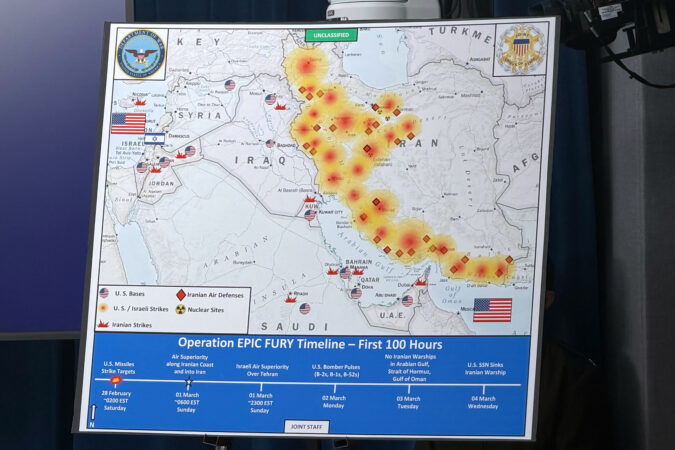
Another is the location of the school — next to a base of the Revolutionary Guard in Hormozgan Province and close to a barracks for its naval brigade. The U.S. military has focused on naval targets and acknowledged strikes in the province, including one in the vicinity of the school.
Israel, which has denied conducting the strike, has focused on areas of Iran closer to Israel and hasn’t reported conducting any strikes south of Isfahan, 500 miles away. The U.S. is operating warships in the Arabian Sea, including the USS Abraham Lincoln aircraft carrier, within range of the school.
When asked by the AP about its findings, U.S. military Central Command spokesperson Capt. Tim Hawkins said, “It would be inappropriate to comment given the incident is under investigation.”
White House press secretary Karoline Leavitt told reporters Friday that she had no updates on the investigation and did not directly answer a question about whether Trump was satisfied with the pace of the probe.
“My assumption is that probably there were some activities recently there and they detected and tracked them, but … they weren’t aware or didn’t have an up-to-date database that a girls school was there and they bombed it,” said Farzin Nadimi, a senior fellow at the Washington Institute for Near East Policy who studies Iran’s military.
Satellite images show damage
The school is adjacent to a walled compound labeled on maps as the Seyyed Al-Shohada Cultural Complex of the Guard, which included a pharmacy, gym, and sports field.
In addition to the school, satellite photos show that blasts struck at least five buildings in the Guard compound, leaving the area pocked with craters, charred holes in roofs, and piles of rubble. Historical satellite imagery shows the school building was not separated from the Guard compound until about a decade ago when a wall was built between them.
Iranian online map applications show a living quarters for the Assef Brigades about 165 yards from the school, inside the Revolutionary Guard compound. The 16th Assef Coastal Missile Group is part of the Guard’s navy, Nadimi said. The 1st Naval District, which the Assef Brigades belong to, is responsible for the Strait of Hormuz, the narrow mouth of the Persian Gulf through which a fifth of all oil and natural gas traded passes. The strait has been a particular point of conflict in the war.
In the aftermath of the strike, video from Iran’s state broadcaster verified by the AP using satellite imagery showed dozens of fresh graves dug at a nearby cemetery. Nadimi said it is likely the school taught daughters of Guard personnel.
The London-based conflict monitoring organization Airwars is reviewing three other school strikes that caused casualties. In addition to those, in the last 48 hours the U.S.-based Human Rights Activists News Agency reported at least two more schools were struck.
Targeting schools would be a clear violation of international laws governing armed conflict, said Elise Baker, a senior staff lawyer at the Atlantic Council, a Washington-based nonprofit think tank.
“Strikes can only legally target military objectives and combatants, but the school was a civilian object and the students and teachers were civilians,” Baker said. “The school’s proximity to [Guard] facilities and the attendance of children of [Guard] members at the school does not change that conclusion: It was a civilian object.”
Pattern of damage suggests targeted strike
Three experts told the AP the satellite imagery and videos from the scene strongly suggested multiple munitions hit the compound. Complicating any assessment is the lack of images of bomb fragments from the blast. No independent agency has reached the site during the war to investigate, either.
There are no craters or evidence of bombs hitting in the surrounding neighborhood, suggesting a great degree of accuracy, said Corey Scher, a researcher who uses satellite imagery and radar data to study landscape changes in armed conflict zones.
“All the strikes are clustered within the walled-off compound,” Scher said. ”That’s one level of precision at the block level. And then most of the strikes are basically leading to direct hits on buildings. That’s another level of precision.”
Scher said the school and the other buildings struck in the compound showed damage consistent with the use of air-to-surface munitions.
“They didn’t explode in the air above the building,” he said. “It looks like the explosion happened at the time they hit the surface, whether it was the building or the ground.”
Sean Moorhouse, a former British Army officer and explosive ordnance disposal expert, said the available satellite imagery was insufficient to determine exactly what type of munitions were used in the strike, but he said the visible damage was consistent with what would be expected with impacts from multiple 2,000-pound high-explosive warheads. He said the multiple precise impacts would undercut any suggestion that a malfunctioning Iranian missile hit the school.
N.R. Jenzen-Jones, the director of Armament Research Services, said the school and Guard compound were targeted with “multiple simultaneous or near-simultaneous strikes.” He said in videos of the school taken immediately after the strike, smoke can be seen rising from the Guard compound. There were also impacts on multiple buildings visible in satellite images and media reports citing witnesses who said they heard multiple explosions.
“If indeed it is confirmed that an American or Israeli strike hit the school, there are several potential points of failure in the targeting cycle,” Jenzen-Jones said. “We might be seeing an intelligence failure, likely rather early in the process, which misidentified the target or failed to update a targeting list following the building’s change in use.”
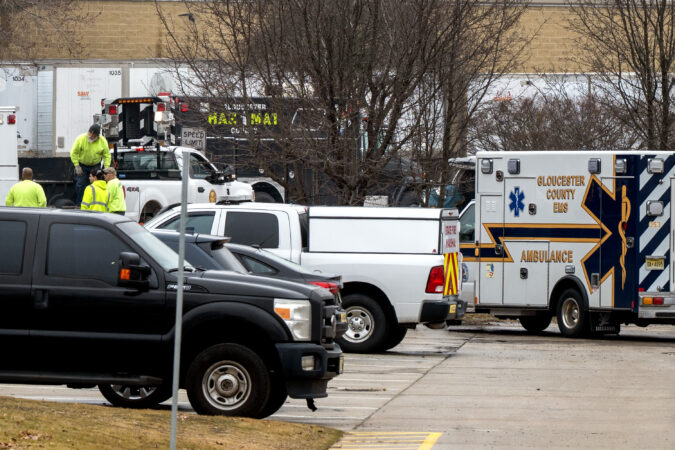
Emergency responders extinguished the fire at Savita Naturals in Logan Township, N.J., late Thursday, and sealed off the cocoa butter processor’s remaining propane tanks, marking a step forward in the investigation into the massive explosion that rocked the region.
Concerns about the structural integrity of the building at 617 Heron Drive remain, and a detailed look into the site remains pending, Gloucester County officials said at a Friday news conference.
“It’s going to be a lengthy process,” said Logan Township Fire Chief Scott Oatman. “Especially as they get into the building to try to secure everything up.”
The blast occurred at about 2:35 p.m. Wednesday. In the wake of the explosion, four employees of Savita Naturals were taken by ambulance to area hospitals, three additional employees transported themselves to medical facilities, and one person from an adjacent business was taken to a hospital for an undisclosed medical emergency.
Three Savita Naturals employees remain in critical condition, and one was stable, officials said Friday. Conditions for the others injured were not immediately available.
“Our thoughts and prayers continue to go out to those that were injured, and their families,” said Logan Township Police Chief Joseph Flatley. “This is going to be a long road for them, we’re aware. And that’s the highest priority.”
At the time of the explosion, there were 14 employees on the site — a majority of whom were working in a structure at the front of the property. The explosion occurred in a rear structure, where three employees were located, officials said.
No criminal activity is suspected in the explosion, and no hazards were present to the community surrounding the facility as of Friday morning, officials said. Emergency responders continue to monitor air quality in the area.
In addition to the Savita Naturals building sustaining suspected structural damage, two adjacent businesses — fluid engineering firm Sulzer and a food bank known as Bishops’ Storehouse and Home Storage Center — were deemed uninhabitable, and cannot resume operations until repairs are completed. Officials said they had received reports of potential property damage as far as a mile away from the site, and continue to field calls from individuals who believe their buildings may have been impacted.
At the site of the explosion, however, several large propane tanks remain. Though not leaking, the tanks contain a total of about 500 gallons of liquid propane that will need to be burnt off or otherwise removed before the investigation can progress.
Officials on Friday described the explosion as an unfortunate accident, noting that Savita Naturals had incurred some fire inspection violations in the past, but the company was responsive and corrected issues quickly. No violations, Oatman said, were out of the ordinary, and none caused major concerns.
The building itself, Oatman added, was constructed in such a way that it would contain an explosion. Part of its construction included “blow out panels” that served their intended purpose.
“If it wasn’t for that type of construction they had there, there might have been more injuries,” Oatman said. “So, we’re fortunate that there were no more additional injuries at the facility.”
Officials also corrected reports that the building was used to process CBD, or cannabidiol, a nonintoxicating component of hemp and marijuana that has risen in prominence in recent years. While the facility has processed CBD in the past, none has been produced or extracted there since 2023, Oatman said. The propane on the site, as well as ethanol, he added, is used in cocoa extractions.
The cause of the explosion remains unclear. Officials said they were aware of speculation that a propane tank exploded, but investigators think the explosion occurred as a result of the processes inside the building, though that belief is preliminary.
How long that investigation might take was unclear Friday. The look into the blast remains in its early stages, and involves a number of state and federal partners.
“I’m not sure what happened in the building,” Oatman said. “That’s why investigators are going to do the investigation.”
An 11-year-old boy shot and killed his mother’s boyfriend during a fight in her Southwest Philadelphia home Thursday evening, police said.
They did not identify the child because of his age.
Officers were called to the scene at a rowhouse on the 1100 block of South Peach Street around 11:30 p.m., police said. There they found a 30-year-old man suffering from a gunshot wound to the face in a back bedroom on the second floor.
Police later identified the man as Jaimeer Jones-Walker of Lansdowne.
Chief Inspector Scott Small said that based on preliminary evidence, police believe Jones-Walker showed up at the home, where the woman lives with family, and began to argue and physically assault her.
In response, he said, the child pulled a semiautomatic handgun and fired one shot, striking Jones-Walker.
Jones-Walker is not the boy’s father, Small said.
The gun was registered to the child’s mother, according to police, who are continuing to investigate the shooting.
The boy and his mother are cooperating with authorities, Small said.
The stretch of South Peach Street was quiet Friday morning, and neighbors walking along the block or sitting outside said they did not recall hearing gunshots Thursday night.
Neighbors said they often saw the woman with her daughter and son outside the home, and occasionally saw Jones-Walker, too.
Incidents in which a child fatally shoots an adult are rare, Small said.
“It’s unusual,” he said.
However, pediatricians have warned that children are increasingly gaining access to firearms at home, often with deadly consequences.
In Philadelphia, the number of people 18 and younger who have shot themselves soared from 2 in 2019 to 20 in 2021, and the number has remained elevated.
Children as young as 2 are strong enough to pull the trigger of a gun, pediatricians said, underscoring the need for parents of young children to secure their firearms using gun locks and storage safes.
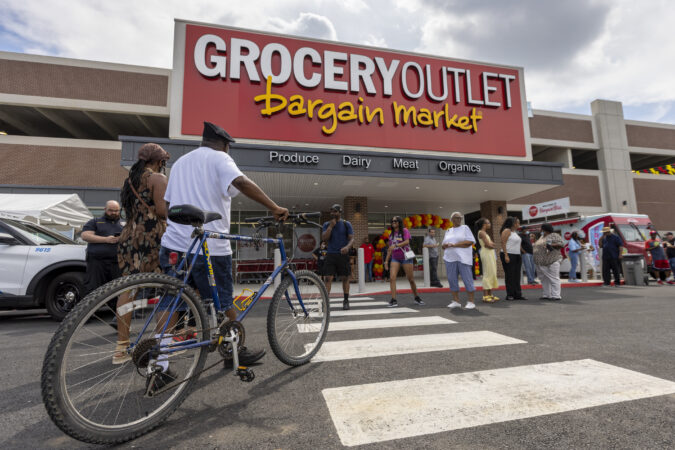
Grocery Outlet bargain market is closing dozens of stores nationwide, including eight in the Philadelphia area.
The closures were first referenced earlier this week in the company’s earnings report. The California-based grocer recorded an operating loss of $221.7 million last year, much of which it attributed to “certain underperforming stores” that will now close.
These include five Grocery Outlets in South Jersey, two in Philadelphia, and one in Kennett Square, according to real estate marketing released Thursday.
A company spokesperson did not return a request for comment about when the stores would close.
The impacted Philly-area stores are located at:
4004 U.S. Route 130, Delran
401 Harmony Rd., Gibbstown
345 Scarlet Rd., Kennett Square
190 Hamilton Commons Dr., Mays Landing
2017 W. Oregon Ave., Philadelphia
2524 Welsh Rd., Philadelphia
3174 U.S. Route 9 S., Suite 5, Rio Grande
677 Berlin-Cross Keys Rd., Sicklerville
People shop at a Grocery Outlet in Philadelphia in 2022.
After the closures, the chain will still have several locations in the city, collar counties, and South Jersey.
Grocery Outlet calls itself an “extreme value retailer.” It was founded in 1946, and has expanded from 128 stores to 570 stores over the past two decades. Many locations are operated by entrepreneurs who live nearby.
“Consumer pressure intensified, federally funded benefits were delayed, and competition grew more promotional in the fourth quarter,” Potter said in a statement. “In response, we have begun to sharpen our focus on what matters most: delivering clearer value and a better in-store experience.”
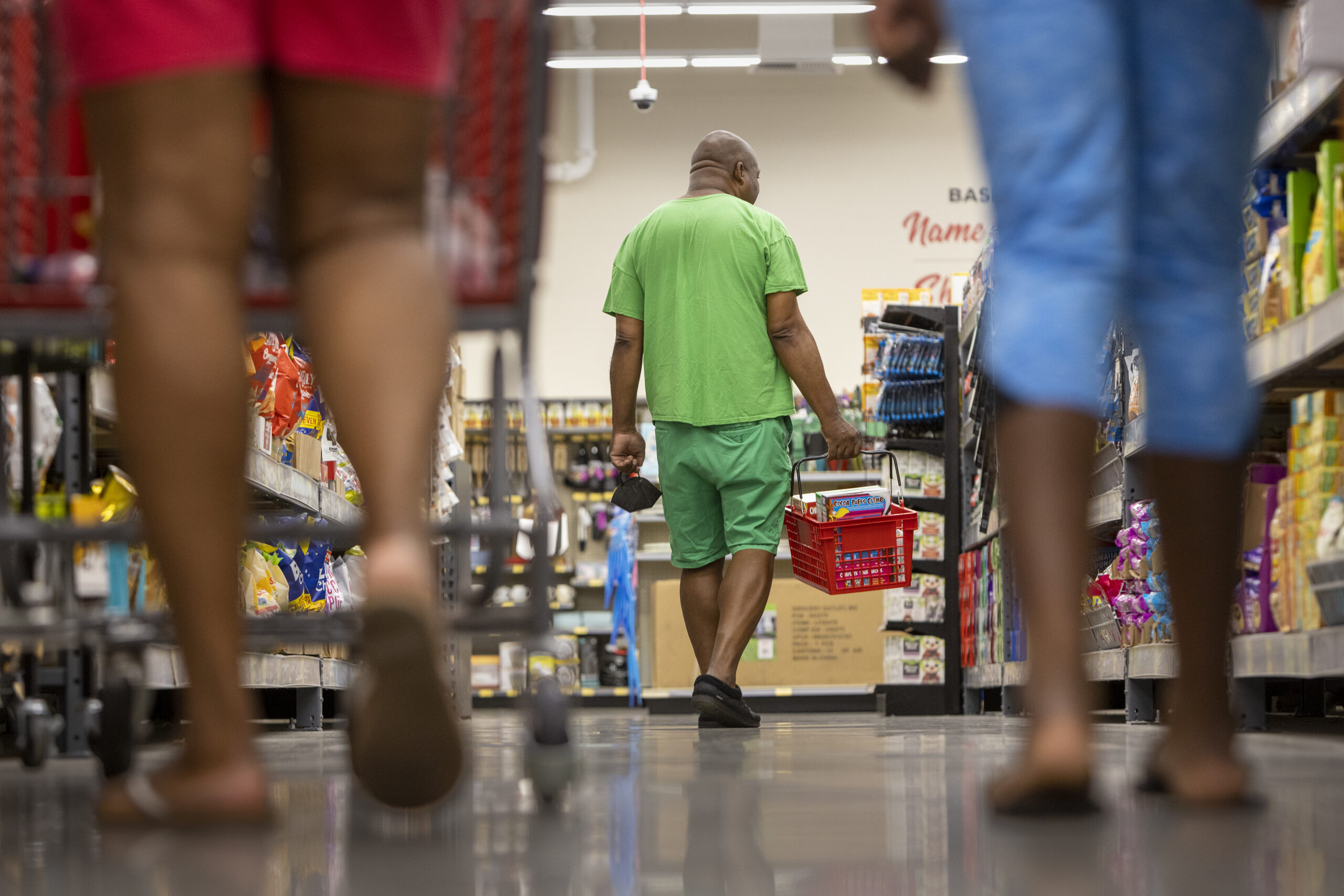
Customers and employees inside a Grocery Outlet in Philadelphia in 2023.
A Wakefern spokesperson said the company planned to refocus on its flagship stores in South Philadelphia and Rittenhouse, as well as its growing online business. The move, spokesperson Maureen Gillespie said, would be “a positive reset that allows us to preserve and elevate the in‑store tradition while growing the brand’s reach in meaningful new ways.”
The conversation reared its head again this week after a New Jersey Girl Scout troop set up shop outside of a Mount Laurel recreational marijuana dispensary to sell Thin Mints and Caramel deLites. Owners of Daylite Cannabis dispensary had been trying for years to make this possible, and were excited to share the news of a “pilot program” at their store, owner Steve Cassidy said in an article for NJ.com.
“Being community-minded is a core part of our mission at Daylite. We’re a locally and family-owned business, so supporting local organizations and helping them raise funds in the community is very important to us,” Cassidy said, who runs the dispensary alongside his wife and parents.
What they didn’t expect was for it to become a national and global headline, upsetting higher-ups at the Girl Scouts of America. A representative for the Girl Scouts of Central and South Jersey said that there was no formalagreement to allow Girl Scouts to sell cookies in front of a dispensary and don’t approve of the practice.
“Our guidance for Girl Scout cookie booths is that girls should not set up booths in front of any businesses that they themselves could not legally patronize,” the representative said. “It’s just unfortunate that [the owner] was quoted as saying this is a ‘trial’ because that is factually incorrect.”
The Girl Scout troop, which Cassidy did not identify, sold cookies outside the dispensary on NJ Route 73 in February to much enthusiasm from customers, Cassidy said. Some customers even bypassed the marijuana to go to the cookies first, he told NJ.com.
Girl Scouts of Central and South Jersey said they do not know how the miscommunication occurred. Cassidy said he was told by a member of a local Girl Scout organization that a “small pilot program” had been approved.
“Our intention was simply to support a local troop and be part of our community. We’ve seen an overwhelmingly positive response from people who enjoyed supporting the girls, and we hope that enthusiasm helps encourage similar community partnerships in the future.”
Girl Scout cookie season runs from January to April, providing young girls the chance to exercise the entrepreneurial spirit and engage with their community. Girl Scouts started selling cookies in 1917, but Girl Scouts selling cookies in front of weed dispensaries has been making headlines for more than a decade.
At the time, Lei’s mom told press that she encourages her daughters to “set up shop at various points around San Francisco so they can learn about different environments while earning some cash” and to use it as an opportunity, “to start a conversation about drugs and how some people use marijuana as medicine while others just get high.”
Spirit, the docuseries on George Washington High School national cheerleading championship run, is now available for streaming on Peacock.
The four-part series follows the underdog team’s rise to become the first cheer squad from the School District of Philadelphia to compete in the National Cheerleaders Association High School Nationals, the biggest cheerleading event anywhere.
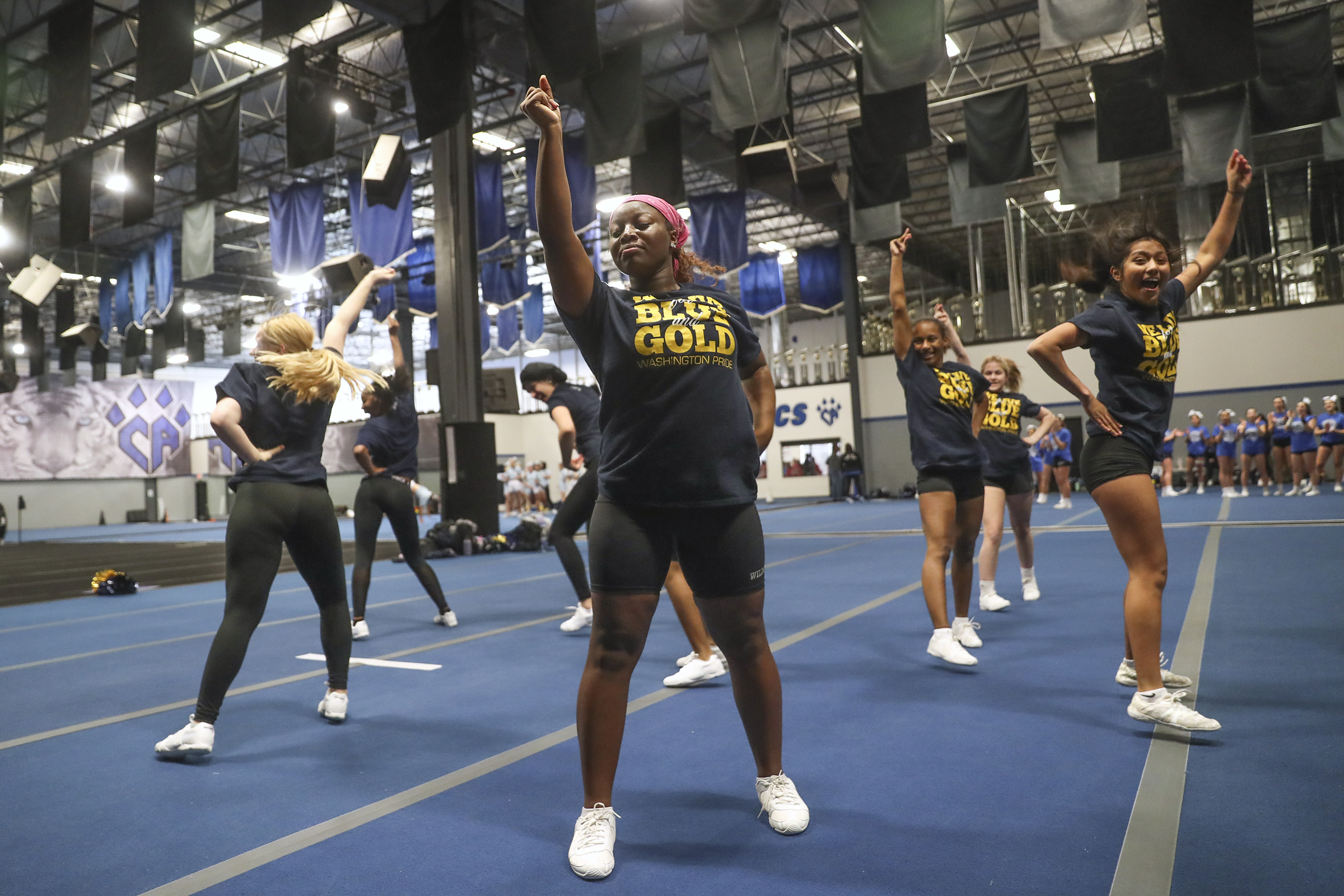
Aaliyah Armour, center, and the George Washington High School cheer team practicer their routine at Cheer Athletics in Plano, Texas on Friday, Jan. 20, 2023. Cheer Athletics is regarded as one of the best cheerleading gym in the worlds. The George Washington High School cheer team became the first Philadelphia School District cheerleaders in history to qualify for nationals, where they spent the weekend competing in Dallas.
Produced by basketball star Steph Curry, the series had previously aired to limited audiences on Comcast’s Black Experience platform.
Directed by Philadelphia filmmaker and La Salle University alum, Matt Howley, who learned about the team through a 2022 Inquirer story, the series tracks the 15-person coed squad from its humble beginnings, including collecting change to scrape their way to the nationals.
The series delves into the trying home lives of students, like star player AdamarisLopez, who competed while successfully fighting her father’s deportation.
“A lot of us come from poverty,” Lopez, who now studies nursing at the University of Pennsylvania, says in the first episode. “People don’t really expect us to come from low-income houses to win a national championship.”
Other players discuss traumatic home lives and the loss of loved ones from gun violence. Despite placing 10th in the nation, many of the George Washington students had no previous experience in cheerleading, a pricey sport where many children begin young.
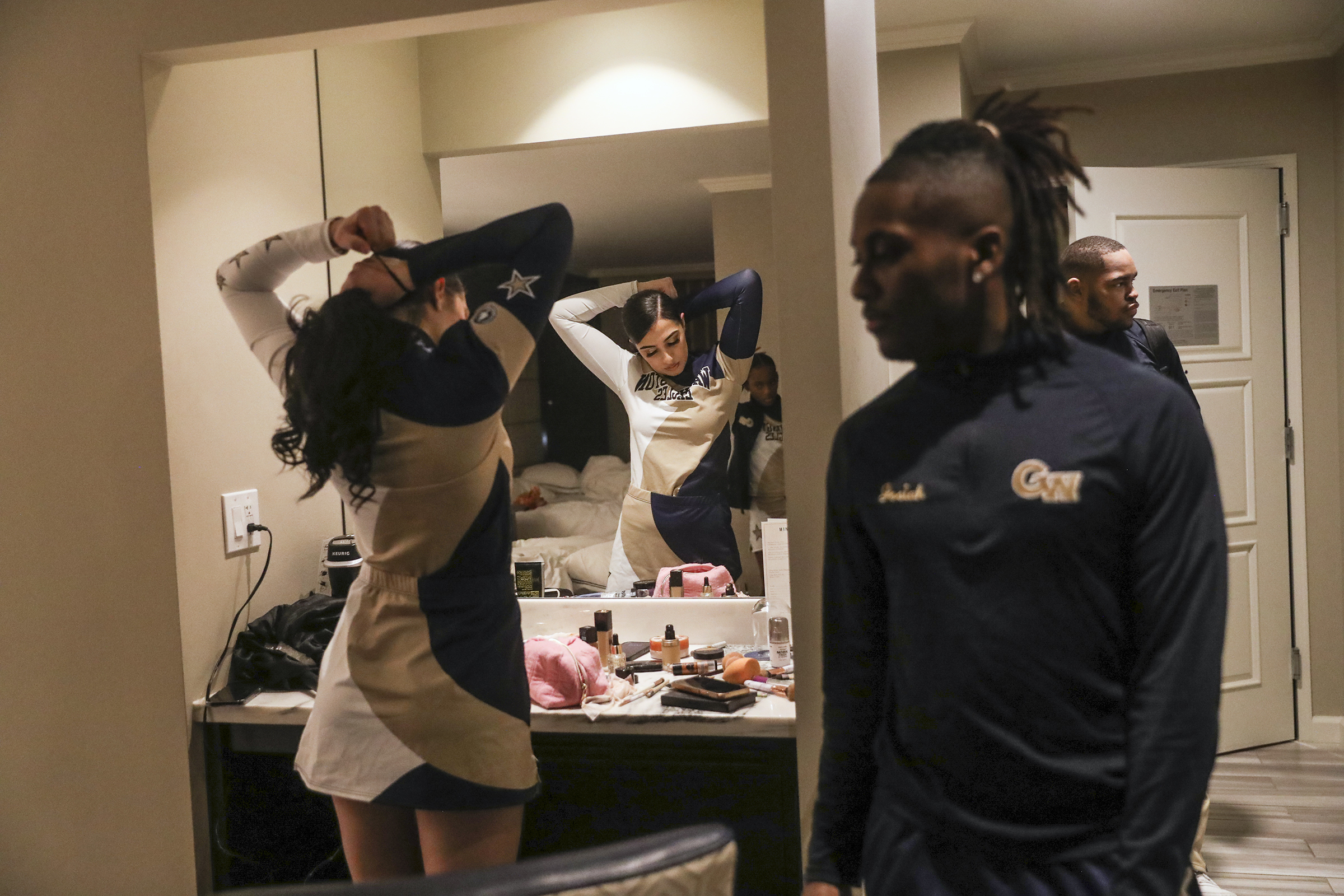
Irsida Kola gets ready in the mirror for the first day of competition as teammates Josiah Jeudy, front, and Roland Williams enter the room before the team departs at The Adolphus Hotel in Dallas, Texas on Saturday, Jan. 21, 2023. The George Washington High School cheer team became the first Philadelphia School District cheerleaders in history to qualify for nationals, where they spent the weekend competing in Dallas.
“Matt did a tremendous job capturing the dynamic of the team and the individual stories,” said Coach Michelle Sorkin-Socki. “It really showed that it was more than just cheerleading. They were able to overcome their individual adversities. They found that power within each other.”
The team, which placed fourth in the nation this year, and has been to nationals now five years in a row, attended a ritzy red carpet premier of the series at the Franklin Institute last year.
Many of the players have moved onto college, but keep in contact about the film, said Sorkin-Socki.
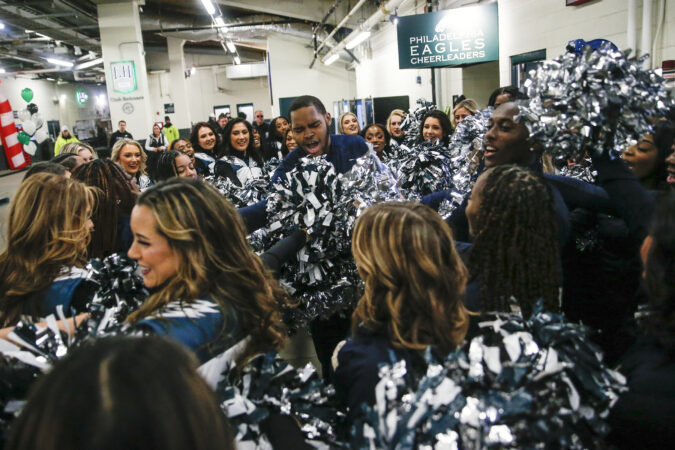
(L-R) George Washington High School’s Josiah Jeudy, Sarai Jeudy, Irsida Kola and Roland Williams before the premiere of “Spirit,” at the Franklin Institute in Philadelphia, on Thursday, February 27, 2025. “Spirit,” is the story about the George Washington HS cheer team, the first Philly public school team to make it to nationals in a sport that’s dominated by wealthy suburban (and majority white) teams.
“It’s bonded us,” she said.
All of it — the national rise, the series, the attention — has been surreal, said Sorkin-Socki.
“But I think the students felt heard,” she said. “I think they felt seen.”
The series has not only had an impact on the former players, the coach said. But on younger ones too.
“They know they can do great things,” she said. “Their trauma doesn’t define them.”
FORT LAUDERDALE, Fla. — The Florida Bar on Friday walked back what it said was an erroneous earlier statement its representatives had made indicating that it had an open investigation into Lindsey Halligan, a former top federal prosecutor in Virginia.
A letter from a bar association representative to an advocacy group that had requested an inquiry into Halligan said that there was an “investigation pending” in response to the group’s complaint.
Jennifer Krell Davis, a spokeswoman for the Florida Bar, also said Thursday that there was an “open file” but declined to comment further “as active Florida discipline cases are confidential.”
On Friday, however, Davis issued a new statement saying, “The Florida Bar wrote a letter to the complainant erroneously stating that there is a pending Bar investigation of member Lindsay Halligan. There is no such pending Bar investigation of Lindsay Halligan.”
She said the Florida Bar had received a complaint and was monitoring the “ongoing legal proceedings” but did not explain the discrepancy.
Halligan, a former White House aide for President Donald Trump, pursued cases against the president’s opponents but ultimately left the job after her appointment was deemed unlawful.
The Campaign for Accountability, a nonprofit watchdog that had sought the bar inquiry, published a letter on its website in which a representative of the Florida Bar confirmed that the organization had an investigation pending.
A spokesperson for the Florida Bar had told the Associated Press on Thursday that there was an open file on Halligan but declined to comment further because disciplinary cases are confidential.
On Friday, Michelle Kuppersmith, the executive director of CfA, said the Florida Bar had not directly told them that the Feb. 4 letter contained an erroneous mention of a pending investigation. She said it’s “hard to reconcile” the Bar’s latest statement.
“If there is no longer an investigation into Halligan, the question is why not, given that three judges indicated she engaged in conduct that appears to violate ethics rules,” Kuppersmith said in a statement.
Halligan did not immediately respond to several email requests for comment about the investigation.
The complaint centers on Halligan’s brief but turbulent time as the acting U.S. attorney for the Eastern District of Virginia, historically one of the Justice Department’s most elite and prestigious prosecution offices.
Halligan secured both indictments but ran into difficulty right away as lawyers for Comey raised questions about a series of what they said were irregularities in the grand jury presentation of the case, including legal and factual errors that tainted the process. A judge in November scolded Halligan for “fundamental misstatements of the law,” including what he said was her suggestion to the grand jury that Comey did not have a Fifth Amendment right to not testify in the case.
A different judge subsequently dismissed both the Comey and James prosecutions after concluding that Halligan’s appointment by the Justice Department had been unlawful. Halligan left the position in January.
The complaint rehashes that chronology and also suggests that Halligan may have violated rules of professional conduct by continuing to hold herself out in court filings as acting U.S. attorney for the district after a judge had ruled that she was serving in the position illegally.
“In this way, Ms. Halligan appears to have issued false or misleading communications regarding herself and her services,” the complaint said.
BATON ROUGE, La. — The ambitious liver doctor would go just about anywhere in his home state to give people the hepatitis B vaccine.
Bill Cassidy offered jabs to thousands of inmates at Louisiana’s maximum-security prison in the early 2000s. A decade before that, he set up vaccine clinics in middle schools, a model hailed nationally as a success.
“He got that whole generation immunized in East Baton Rouge,” said Holley Galland, a retired doctor who worked with Cassidy vaccinating schoolchildren.
About the same time, a lawyer and environmental activist with a famous last name was starting to build the loyal anti-vaccine coalition that, two decades later, would move President Donald Trump to nominate him as the nation’s top health official.
Today, a year after now-Sen. Cassidy warily cast the vote that ensured Robert F. Kennedy Jr.’s ascension to that role, the Louisiana Republican’s life’s work — in medicine and in politics — is unraveling.
Newborn hepatitis B vaccination rates in the U.S. had plunged to 73% as of August, down 10 percentage points since a February 2023 high, according to research published in JAMA last month. In December, the Centers for Disease Control and Prevention’s Advisory Committee for Immunization Practices — remade by Kennedy — voted to revoke a two-decade-old recommendation that all newborns get the shot.
The next month, Trump endorsed U.S. Rep. Julia Letlow, a Cassidy challenger in what’s shaping up to be a competitive Republican Senate primary. Letlow’s foray into politics began in 2021 when she took the seat won by her husband, left vacant after he died from COVID.
KFF Health News made multiple requests for comment from Cassidy over three months. His staff declined to make him available for an interview or provide comment. Letlow’s campaign did not respond to requests for comment.
Rise of the skeptics
As the May primary nears, some Louisiana doctors are worried they’ve begun a long trek down a dark road when it comes to vaccine-preventable diseases.
Last year, on the day Kennedy was sworn in a thousand miles away in Washington, Louisiana’s health department stopped promoting vaccines, halting its clinics and advertising. Its communications about an ongoing whooping cough outbreak in the state have nearly ceased. It took months for the state to announce last year that two infants had died from the illness. A Louisiana child’s death from the flu was confirmed this January, and a couple of cases of measles were reported last year.
Spokespeople for the Louisiana Department of Health did not respond to questions.
When parents have concerns about vaccines, pediatrician Mikki Bouquet of Baton Rouge, La., offers them a handmade folder she created that addresses common misconceptions or fears about vaccines.
“It’s so hard to see children get sick from illnesses that they should have never gotten in the first place,” said Mikki Bouquet, a pediatrician in Baton Rouge. “You want to just scream into the void of this community over how they failed this child.”
As anti-vaccine forces have taken hold of the state and federal health departments, Cassidy has lamented the consequences.
“Families are getting sick and people are dying from vaccine-preventable deaths, and that tragedy needs to stop,” he wrote on social media last fall.
But while it is Cassidy’s duty as chairman of the Senate’s Health, Education, Labor, and Pensions Committee to conduct oversight of the health department, Kennedy has appeared before the committee just once since he was confirmed.
The secretary speaks at a “regular clip” with Cassidy, said Department of Health and Human Services spokesperson Andrew Nixon.
Kennedy’s department has elevated Louisiana vaccine skeptics. The state surgeon general who terminated Louisiana’s vaccine campaign, Ralph Abraham, was named deputy director of the CDC. (He left the role in February.) And Kennedy handpicked Evelyn Griffin, a Baton Rouge OB-GYN who later replaced Abraham as the state surgeon general, for an appointment to ACIP. Griffin has suggested the COVID vaccine had dangerous side effects for young patients.
Research has shown that serious side effects from the vaccinations are rare and that the shots saved millions of lives during the pandemic.
Cassidy “has really not had an outspoken chorus of policy supporters” when it comes to inoculating people, said Michael Henderson, a professor of political communication at Louisiana State University. “There’s not a lot of political stakes in doing that in Louisiana if you’re a Republican.”
Louisiana Gov. Jeff Landry reprimanded Cassidy after the senator called for the state’s health department to ease access to COVID shots.
“Why don’t you just leave a prescription for the dangerous COVID shot at your district office and anyone can swing by and get one!” the Republican quipped on X in September.
On ‘eggshells’ in the exam room
On a sunny February afternoon, as Carnival floats were readied to parade the streets of New Orleans, pediatrician Katie Brown approached a basement apartment on a well-child visit. Cowboy boot pendants dangled from her ears, and a pack of diapers were clutched tightly in her arms.
The patient, a toddler who waved at the sight of visitors, was up to date on her immunizations. But when Brown suggested a COVID vaccine, the girl’s mother quickly declined, noting she had never gotten the shot either.
Many of Brown’s young patients — seen through Nest Health, which offers in-home visits covered by Louisiana’s Medicaid program — are current with their vaccines. Brown said home visits make parents more comfortable immunizing their children, but she’s still spending more time these days explaining what they’re getting in those shots.
“After COVID vaccines, that’s when some people just decided, ‘I don’t know if I trust vaccines, period,’” she said.
Across the state, vaccination rates have declined since the pandemic, falling short of the levels scientists say are required to achieve herd immunity for some deadly diseases, including measles. About 92% of Louisiana’s kindergartners have had the recommended two doses of the measles, mumps, and rubella vaccine.
The New Orleans Health Department has tried to step up with a $100,000 immunization campaign of its own, with clinics and billboards, during this year’s flu season, said Jennifer Avegno, the department’s director.
But the state’s absence is felt. Other parishes across Louisiana have not taken similar action, leaving doctors largely on their own to promote immunizations.
“I’ll say that with certainty,” Avegno said. “It’s been a blow to not have a statewide coordination.”
A day after Brown’s home visit, a mother in Baton Rouge shook her head when Bouquet offered a flu shot for her 10-year-old daughter in an exam room.
In the waiting room, parents could thumb through a handmade book that offers scientific facts to counter fears about vaccines. A laminated guide placed in each exam room explained the benefits of each recommended immunization.
Bouquet said she’s experimenting with ways to educate parents about vaccines without seeming overbearing. She still hasn’t figured out a surefire formula. Some parents now shut down any vaccine talk, and she worries others skip scheduling appointments to avoid the topic entirely.
“We’re having to walk on eggshells a bit to determine how to get that trust back,” Bouquet said. “And maybe these discussions can come up in future visits.”
Pro-Vax, pro-anti-Vaxxer
Children’s Health Defense, the nonprofit that Kennedy helmed, worked to erode vaccine trust during the pandemic — falsely claiming, for instance, that COVID shots cause organ damage and that polio vaccines were at fault for a rise in the disease. The organization also sued the federal government over the mRNA-based COVID shots, hoping to get their emergency authorizations from the Food and Drug Administration revoked.
When Kennedy came before Cassidy’s committee in January 2025 as Trump’s nominee for health secretary, the senator-doctor saw risks if the prominent anti-vaccine lawyer was confirmed.
Cassidy described a time years ago when he loaded an 18-year-old onto a helicopter to get an emergency liver transplant. The young woman had acute hepatitis B, an incurable disease that is spread primarily through blood or bodily fluids and can lead to liver failure.
It was “the worst day of my medical career,” he said, addressing Kennedy at the witness table in front of him. “Because I thought, $50 of vaccines could have prevented this all.”
Cassidy started in politics in 2006 as a state senator, winning election to the U.S. House two years later. When he first ran for the U.S. Senate, in 2014, he charmed Louisiana voters with campaign ads showing him dressed in scrubs and a white lab coat, talking about his work with Hurricane Katrina evacuees and patients at Baton Rouge’s public hospital.
But some Republicans soured on Cassidy after he voted to convict Trump on an article of impeachment charging him with inciting the Jan. 6, 2021, insurrection at the U.S. Capitol.
The impeachment vote has hampered Cassidy’s reelection bid this year in a state where Trump captured 60% of the vote in 2024.
“Cassidy has things that are associated with his name: the impeachment vote in 2021,” Henderson said.
Cassidy’s loyalty to Trump was tested again with Kennedy’s nomination. Cassidy said he endorsed Kennedy after extracting pledges that he wouldn’t tinker with the nation’s vaccination program.
But since taking office, Kennedy has largely ignored those promises, and Cassidy hasn’t publicly rebuked him.
Former Texas congressman Michael Burgess served for years with Cassidy in the House, where they were founding members of the GOP Doctors Caucus, started in 2009. He said Cassidy’s discomfort with some of Kennedy’s actions is palpable.
“You could hear some of the pain in Sen. Cassidy’s voice when he was addressing that the secretary wanted to drop the birth dose of hepatitis B,” Burgess said. “You got cases to nearly zero on hepatitis B. It was painful to him to think about taking this away from the population.”
Retired Baton Rouge nurse-practitioner Elizabeth Britton has switched her party affiliation so she can vote in the closed Republican primary for Cassidy, with whom she vaccinated inmates decades ago.
She doesn’t quite understand the “mess” in Washington that resulted in the senator voting to confirm a vaccine critic.
Watching Kennedy and others promulgate doubts about shots she once administered has made her “profoundly sad” and “angry,” she said, but most of all worried.
“It puts a pit in my stomach, because I know the consequences of people not getting the vaccine,” she said.
KFF Health News is a national newsroom that produces in-depth journalism about health issues and is one of the core operating programs at KFF — the independent source for health policy research, polling, and journalism.
Philadelphia’s oldest wine school says a competitor is attempting to erase its existence from the internet through a “cyberbullying” campaign and trademark infringement, according to a federal lawsuit.
In the suit, PhillyWine LLC alleges that Keith Wallace and Alana Zerbe, the husband-and-wife duo behind the Wine School of Philadelphia, took extraordinary steps to confuse customers and piggyback on PhillyWine’s prestige, causing PhillyWine economic and reputational damage. The suit, filed Feb. 26 in the Eastern District of Pennsylvania, also accuses Wallace, the founder of the Wine School of Philadelphia, of fabricating his credentials and using aliases to open businesses that promote his school.
Wallace and Zerbe “have made it their mission to destroy” PhillyWine “by attempting to erase its existence and take over its name,” the suit says. The two schools have coexisted since the early 2000s — “although not always peacefully,” the suit notes — but tensions escalated at the end of 2025, when Wallace secured what the suit calls a “fraudulently obtained trademark” for the name “Philly Wine School.”
A screenshot from the Philadelphia Wine School’s website using the Philly Wine School name, which PhillyWine alleges infringed on their brand.
Armed with the trademark, Wallace convinced Instagram to suspend PhillyWine’s account in December, according to the complaint, and he has since attempted to take over the school’s Google business listing and shut down its website. Meanwhile, he was propping up his own business through a “self-legitimizing web of deception,” the suit says.
PhillyWine’s enrollment and attendance have been down since December, co-owner Matt Kirkland said in an interview, declining to share specific figures.
“The name confusion has disrupted student registration and appears to be redirecting traffic” to Wallace’s sites, said Kirkland. “I think there needs to be clarity in naming and clarity for students so they sign up for the classes they think they’re signing up for.”
PhillyWine is asking a federal judge to issue an injunction that would prohibit Wallace from using Philly Wine School, or any other confusingly similar name, and from attempting to disable PhillyWine’s online accounts. Without an injunction, the request said, PhillyWine would face an “existential threat.”
“These attacks must end now, and PhillyWine must be allowed to resume its business under normal conditions without further harassment,” the LLC said in court filings.
The lawsuit seeks profits the Wine School of Philadelphia earned from misappropriating PhillyWine’s name through trademark infringement, unfair competition practices, and false advertising. It also asks a judge to nullify the trademark.
Wallace denied the allegations and characterized the complaint as a way for PhillyWine to “bully” him out of the business he spent decades building.
A wine war ferments
Created by former owner Neal Ewing in 1999, PhillyWine is the city’s only wine educator fully accredited by the Wine & Spirits Education Trust, a nonprofit organization which sets international standards for alcoholic beverage education. PhillyWine is one of 47 programs globally — and the only in the tri-state area — approved to teach the trust’s full wine diploma, which PhillyWine has leveraged to host classes with Drexel and James Madison universities.
The Wine School of Philadelphia, founded in 2001 by Wallace,is not accredited by the Wine & Spirits Education Trust. It hosts wine tastings as well as semester-long sommelier courses using curricula from the National Wine School, which Wallace also founded. About 3,000 people attend Wine School of Philadelphia classes annually, according to Wallace.
In 2019, the education trustsent Wallace a letter asking him to cease comparing his school with PhillyWine on his site, the suit says. Wallace said he had “no idea” if he ever received such a letter.
When Ewing retired in 2022, he sold the business to current co-owners Kirkland, a Penn surgeon, and Noelle Allen, a former banking executive andcertified wine educator. Then, a digital wine war began to ferment.
That August, the school learned that Wallace had claimed the Instagram handle @PhillyWine to “antagonize” Ewing, the suit said, and it had to compromise for the now-defunct @PhillyWineSchool. The account @PhillyWine currently has a photo of Wallace as its profile picture and features videos of Wallace and Zerbe filming their wine podcast.
Wallace denied obtaining the Instagram handle togrind an axe, but acknowledged a rift between the two wine schools. “Everyone knows — including my wife and therapist — that I have a sharp tongue, and I have always been critical of certain ways of [teaching] … but I have never said anything nasty or even a little mean” about PhillyWine, he said. “They just do not like me.”
In late 2024, Wallace filed an application with the U.S. Patent and Trademark Office to trademark “Philly Wine School” for use alongside food and wine classes. He obtained the name in December; it had no prior trademarks.
Themove blindsided PhillyWine’s owners. “We frankly saw no reason and anticipated no need for a reason to try to trademark something,” Kirkland said.
The lawsuit alleges Wallace lied in his trademark application by attesting that the Philly Wine School name “has acquired distinctiveness in the marketplace through nearly two decades of continuous use.” But there is no evidence he used that name on his school’s website before filing the application in November 2024, according to the suit.
Wallace chalked the sudden use of “Philly Wine School” on his website up to pride in having the trademark. “When you get something, you show it off,” he said.
Bringing a ‘bazooka’ to a ‘wine fight’
Once the trademark was issued, Wallace “immediately used the document to inflict cyberbullying on PhillyWine,” the suit said.
Wallace successfully asked Instagram tosuspend PhillyWine’s account, according to the complaint, and has attempted to claim the school’s Google Business profile. He also filed a takedown request with SquareSpace, the host of PhillyWine’s website, and created a Google Maps listing for a “Philly Wine School” at 109 S. 22nd St., the Wine School of Philadelphia’s address. Kirkland said the latter action has led to PhillyWine, which teaches three blocks away at the Fitler Club, receiving negative reviews for classes taken at Wallace’s Wine School of Philadelphia.
“A review like that — where someone posts about us and they’re not our student and have never taken our classes — is direct reputational damage,” said Kirkland. Lawyers representing PhillyWine sent a cease and desist on Dec. 31, asking Wallace to abandon his trademark and “discontinue his efforts to take over” or remove the school’s online accounts,according to documents reviewed by The Inquirer.
Wallace confirmed receiving the cease and desist, but rejected allegations of using the trademark to bully PhillyWine or its owners. Instead, Wallace said, he’s the true victim.
“If they wanted these things, they could’ve done them too,” Wallace said. “We’re nothing but peace, love, and happiness. They just have this tiny little lawsuit, and they filled it with all this nastiness.”
A negative PhillyWine review on SOMM, a website operated by Keith Wallace, owner of The Wine School of Philadelphia.
The lawsuit also alleges that Wallace has been untruthful about his credentials and used aliases to start businesses such as the National Wine School and the website somm.us in order to promote his school. (Wallace said he founded somm.us in 2015 and maintains a relationship with the website, but doesn’t control its ratings or content.)
Wallace’s biography on the Wine School of Philadelphia website previously stated he graduated from University of California Davis and was a professional winemaker in Napa Valley. Neither are true, according to the suit.
Wallace declined to say when he matriculated at or graduated from UC Davis or elaborate on his stint in Napa Valley. UC Davis has no record of a person with Wallace’s name or date of birth ever attending, a representative for the university said via email.
The lawsuit’s allegations, he said, have him fearful for the future of his school.
“They brought a bazooka to a knife fight,” Wallace said. “This isn’t even a knife fight, it’s a wine fight.”