Category: News

Latest breaking news and updates

  • Justice Dept. charges 16 Minneapolis protesters with assault, interference

    Justice Dept. charges 16 Minneapolis protesters with assault, interference

    The Trump administration on Wednesday announced criminal charges against 16 people in Minneapolis whom it accused of assaulting officers or interfering with federal immigration enforcement operations as tensions in the city continue to escalate.

    Attorney General Pam Bondi announced the Justice Department prosecutions in a social media post, naming those who were charged and indicating she expects more arrests.

    “I’ve said it before and I’ll say it again: NOTHING will stop President Trump and this Department of Justice from enforcing the law,” Bondi wrote on X, adding that she was in Minneapolis.

    Already this month, federal prosecutors had charged 17 people in Minneapolis with crimes tied to protests or related to the administration’s surge in immigration enforcement.

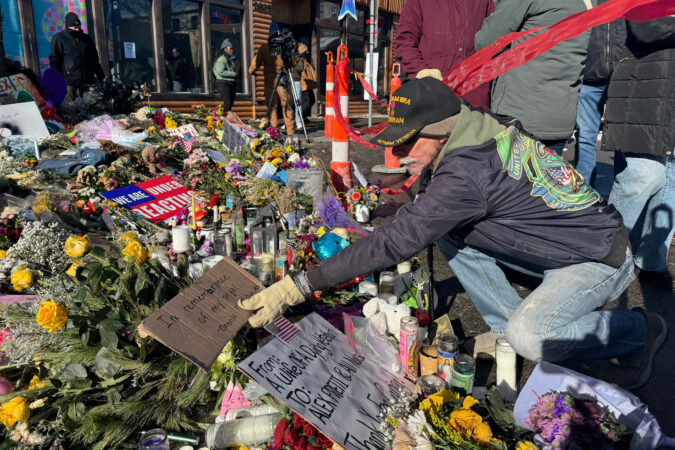
    Bondi’s defiant posture came despite what appeared to be a shift in tone from President Donald Trump and other senior aides amid widespread outrage over immigration officers’ fatal shootings of two U.S. citizens in the city this month. Authorities said the two federal agents who fired at Alex Pretti, 37, on Saturday have been placed on administrative leave, per standard agency protocol.

    Those developments came a day after the Department of Homeland Security provided the first official timeline of the deadly encounter in a statement sent to some members of Congress. The document, which was based on preliminary review, made no mention of Pretti brandishing a weapon, contradicting Trump administration comments in the immediate aftermath of the shooting, when senior officials described Pretti as a direct threat to federal agents and officers.

    The Trump administration has begun to back away from some of its inflammatory rhetoric about the shooting and replaced Greg Bovino, the Border Patrol commander who was overseeing the Minneapolis operation, with border czar Tom Homan.

    “I think the whole thing is terrible,” Trump said Tuesday in an interview with Fox News when asked about events in Minnesota over the past week and Pretti’s killing. “I don’t like the fact that he was carrying a gun that was fully loaded. … Bottom line, it was terrible.”

    The news that two immigration agents involved in Pretti’s shooting are on leave undercuts Bovino’s previous claim that “all agents that were involved in that scene are working, not in Minneapolis, but in other locations.”

    The broader shift in the White House’s tone on Pretti’s killing comes as a growing number of Republicans challenge the Trump administration’s handling of the shooting and become more critical of Homeland Security Secretary Kristi L. Noem. It also reflects concern that without a significant course correction, Republicans are likely to lose control of Congress in November’s midterm elections.

    Stephen Miller, Trump’s White House deputy chief of staff, called Pretti an “assassin” in the immediate aftermath of his killing. On Tuesday, Miller said the administration was evaluating whether Customs and Border Protection “may not have been following” official protocol before the shooting.

    Noem also initially portrayed the circumstances surrounding the fatal shootings of both Pretti and Renée Good in Minneapolis as assaults on federal law enforcement, despite video evidence to the contrary.

    A woman who said she filmed Pretti’s shooting rebutted DHS’s initial claims that Pretti had brandished a weapon or was acting in a threatening manner.

    Speaking to CNN’s Anderson Cooper on Tuesday, Stella Carlson, who estimated she was no more than 10 feet from Pretti when he was shot, said he was filming immigration enforcement personnel and trying to direct traffic.

    Carlson said she got out of her car and started filming Pretti, whom she had never met, as he directed traffic. She said that Pretti was acting “calm” and “definitely without threat,” and that she did not see him brandish a weapon. “If I had, I maybe wouldn’t have stayed so close” to him, she said.

    Pretti’s death has prompted bipartisan calls for an independent investigation. Top Justice Department officials said previously that they saw no basis for a civil rights investigation into Good’s Jan. 7 shooting. The department, however, has sought to pursue an investigation into Good’s partner, the Washington Post has reported.

    On Tuesday, Rep. Ilhan Omar (D., Minn.), a frequent target of the Trump administration, was attacked during a town-hall meeting and Immigration and Customs Enforcement agents tried to enter the Ecuadoran Consulate before being turned away.

    A man used a syringe to spray an unknown liquid in Omar’s direction, police said, shortly after Omar called on Noem to “resign or face impeachment.” The man, later identified as 55-year-old Anthony Kazmierczak, was immediately tackled and arrested, and Omar later said she was “OK.”
  • More ‘No Kings’ protests planned for March 28 as outrage spreads over Minneapolis deaths

    More ‘No Kings’ protests planned for March 28 as outrage spreads over Minneapolis deaths

    A third round of “No Kings” protests is coming this spring, with organizers saying they are planning their largest demonstrations yet across the United States to oppose what they describe as authoritarianism under President Donald Trump.

    Previous rallies have drawn millions of people, and organizers said they expect even greater numbers on March 28 in the wake of Trump’s immigration crackdown in Minneapolis, where violent clashes have led to the death of two people.

    “We expect this to be the largest protest in American history,” Ezra Levin, co-executive director of the nonprofit Indivisible, told the Associated Press ahead of Wednesday’s announcement. He predicted that as many as 9 million people will turn out.

    “No Kings” protests, which are organized by a constellation of groups around the country, have been a focal point for outrage over Trump’s attempts to consolidate and expand his power.

    “This is in large part a response to a combination of the heinous attacks on our democracy and communities coming from the regime, and a sense that nobody’s coming to save us,” Levin said.

    Last year, Trump said he felt attendees were “not representative of the people of our country,” and he insisted that “I’m not a king.”

    ‘No Kings’ shifts focus after Minneapolis deaths

    The latest round of protests had been in the works before the crackdown in Minneapolis. However, the killing of two people by federal agents in recent weeks has refocused plans.

    Levin said they want to show “support for Minnesota and immigrant communities all over” and oppose “the secret police force that is murdering Americans and infringing on their basic constitutional rights.”

    “And what we know is, the only way to defend those rights is to exercise them, and you do that in nonviolent but forceful ways, and that’s what I expect to see in ‘No Kings’ three,” Levin said.

    Trump has broadly defended his aggressive deportation campaign and blamed local officials for refusing to cooperate. However, he’s more recently signaled a shift in response to bipartisan concern over the killing of Alex Pretti in Minneapolis on Saturday.

    Previous ‘No Kings’ protests have drawn millions across the U.S.

    In June, the first “No Kings” rallies were organized in nearly 2,000 locations nationwide, including cities, towns and community spaces. Those protests followed unrest over federal immigration raids and Trump’s deployment of the National Guard and Marines to Los Angeles, where tensions escalated with protesters blocking a freeway and setting vehicles on fire.

    They were organized also in large part to protest a military parade in the nation’s capital that marked the Army’s 250th anniversary and coincided with Trump’s birthday. “No Kings” organizers at the time called the parade a “coronation” that was symbolic of what they characterized as Trump’s growing authoritarian overreach.

    In response, some conservative politicians condemned the protests as “Hate America” rallies.

    During a second round of protests in October, organizers said demonstrations were held in about 2,700 cities and towns across the country. At the time, Levin pointed to Trump’s sweeping immigration crackdown, his unprecedented promises to use federal power to influence midterm elections, restrictions on press freedom and retribution against political opponents, steps he said cumulatively represented a direct threat to constitutionally protected rights.

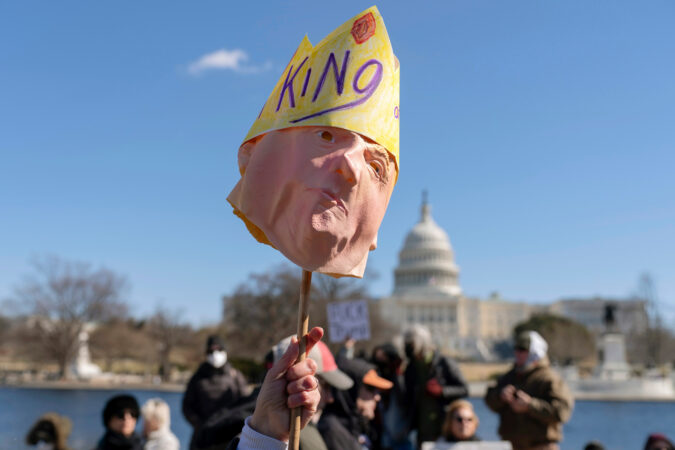
    On social media, both Trump and the official White House account mocked the protests, posting computer-generated images of the president wearing a crown.

    The big protest days are headline-grabbing moments, but Levin said groups like his are determined to keep up steady trainings and intermediate-level organizing in hopes of growing sustainable resistance to the Trump administration’s actions.

    “This isn’t about Democrats versus Republicans. This is about do we have a democracy at all, and what are we going to tell our kids and our grandkids about what we did in this moment?” Levin said. ”I think that demands the kind of persistent engagement. ”

  • Trump administration reveals location of dismantled slavery exhibits from the President’s House in new legal filing

    Trump administration reveals location of dismantled slavery exhibits from the President’s House in new legal filing

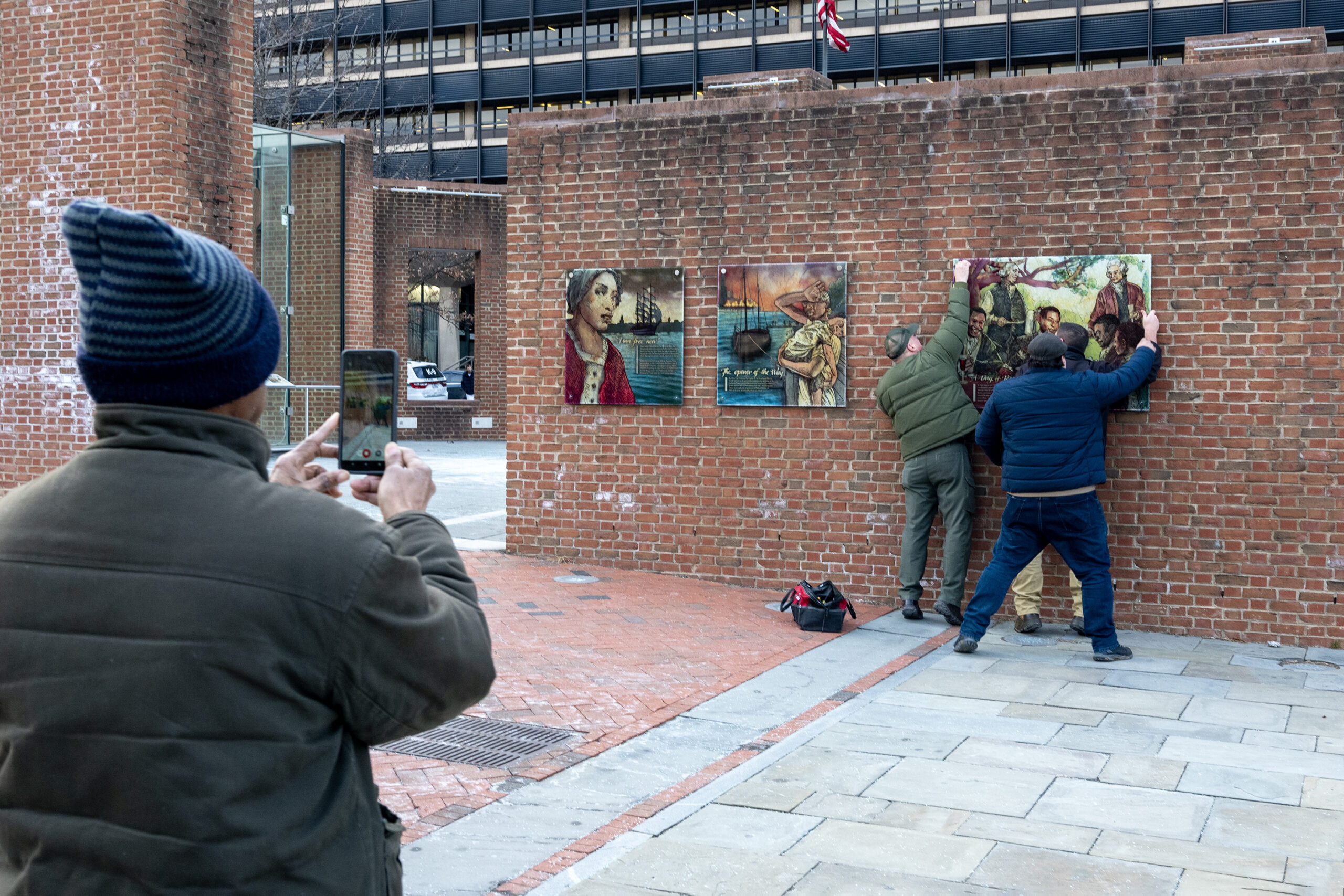
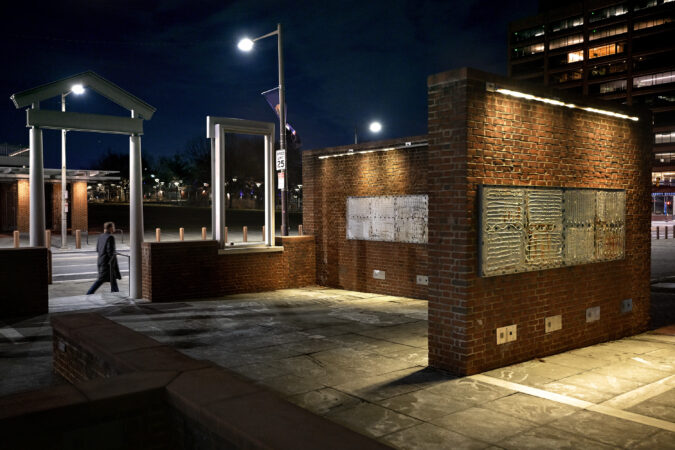
    Informational exhibits about slavery removed by the National Park Service from the President’s House Site last week are being kept in storage at a facility adjacent to the National Constitution Center, according to a legal filing from the Trump administration.

    The exhibits will remain in the park service’s custody at the center, down the street from the President’s House, pending the outcome of the City of Philadelphia’s federal lawsuit against the Department of Interior and the National Park Service for taking down the exhibits.

    But the center said it has no role in storing the exhibits.

    “The storage facility [where the exhibits are being kept] is entirely under control and operation of the Park Service,” said a spokesperson for the Constitution Center, adding that the center does not have possession of or access to the space.

    Mayor Cherelle L. Parker’s administration is seeking an injunction to return the exhibits to the President’s House, which aims to educate visitors on the horrors of slavery and memorializes the nine people George Washington enslaved at the site during the founding of the United States.

    Jali Wicker records NPS workers remove interpretive panels at the President’s House site in Independence National Historical Park Thursday, Jan. 22, 2026. More than a dozen educational displays and illustrations about slavery were removed from the site, which serves as a memorial to the nine people George Washington enslaved there during the founding of America.

    The location of the removed exhibits was revealed Wednesday in a motion objecting to the city’s injunction. The motion was filed by U.S. attorneys and assistant Attorney General Brett Shumate, representing Interior Secretary Doug Burgum, acting National Park Service Director Jessica Bowron, and their respective agencies.

    The legal filing also provides further details into what transpired last Thursday when park service employees removed exhibits about slavery at the President’s House.

    Park service employees dismantled the exhibit after Bowron ordered Steve Sims, the park service’s acting regional director, to have workers remove the panels and turn off video displays at the site, according to the filing. Sims said the takedown was carried out the same day that Bowron requested it.

    There is also a remaining sign made of wood in a metal structure that was not removed last week because additional tools were needed.

    “When and if NPS removes the sign, it will be stored with the other panels,” Sims said in a declaration included in the legal filing.

    The footprints embedded in the site and the Memorial Wall featuring the names of the nine people Washington enslaved will stay at the President’s House, he said.

    Last year, Burgum and President Donald Trump ordered content at national parks that could “inappropriately disparage Americans past or living” to be reviewed and potentially removed.

    In addition to the actions in Philadelphia, the National Park Service has reportedly removed signage about the mistreatment of Native Americans from the Grand Canyon, among other changes implemented under the orders.

    Tuesday’s filing previews the Trump administration’s legal argument for a hearing scheduled Friday on Philadelphia’s suit, which could be used in other cases around the country.

    The attorneys claim in the filing that this case is “fundamentally a question of Government speech,” and they accuse the city of trying to “censor” the federal government.

    “Such interests are especially weighty where, as here, the City effectively seeks to compel the Federal government to engage in speech that it does not wish to convey,” the attorneys wrote.

    The city’s suit has received legal backing from Gov. Josh Shapiro and the Avenging the Ancestors Coalition, an advocacy group that helped establish the President’s House in the early 2000s.

    The exhibit takedown has been a heartbreak for those who helped develop the site and for Philadelphians who have left artwork memorializing what the site used to be.

    In a video posted to social media Tuesday, Parker said that her administration would keep “fighting” to have the panels restored to the site as the city prepares to play a central role in the nation’s 250th anniversary celebrations in July.

    “This history is a critical part of our nation’s origins, and it deserves to be seen and heard, not just by the people of Philadelphia, but by every person who comes to Philadelphia from around our nation and the world to see and learn from, especially as we celebrate our Semiquincentennial 250th birthday, I want the world to know you cannot erase our history,” she said.

    This story has been updated to include a comment from the National Constitution Center.

  • Philly’s unplowed snow has slowed SEPTA and frustrated residents and businesses

    Philly’s unplowed snow has slowed SEPTA and frustrated residents and businesses

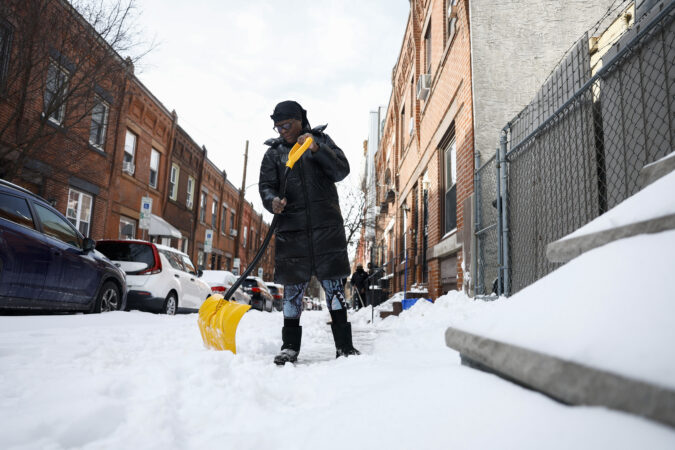
    With more than 60 hours since the last bit of snow descended upon Philadelphia, the widespread complaints about the conditions of secondary and tertiary streets have reached a fever pitch.

    The Philadelphia Streets Department has tried to quell the public’s concerns with daily videos of excavators diligently filling dumpsters with snow. Yet evidence of icy streets and snow banks blocking lanes dominate social media, with city data showing the street conditions vary block by block.

    Between 3 p.m. Tuesday and 3 p.m. Wednesday, the city’s GPS data show, about 30% of city streets had been visited by plows. Some areas, like Center City and South Philadelphia west of Broad Street, saw most numbered streets and cross streets hit by plows during that time. Meanwhile, South Philly and Center City neighborhoods east of Broad Street saw little to no reported activity.

    The same was true for large swaths of North and West Philadelphia. And neighborhoods like Overbrook, Wynnefield, and Nicetown, which have seen the fewest reported visits from city plow trucks since the storm began, saw only a handful of streets plowed between Tuesday and Wednesday afternoon, according to city data.

    On the neighborhood line of Grays Ferry and Devil’s Pocket, Dani Hildebrand was one resident who felt forgotten as the streets around him were plowed and garbage picked up. Hildebrand’s block was supposed to have trash collection come through Tuesday with the one-day delay announced by the city. But on Wednesday, bags of garbage lined his block.

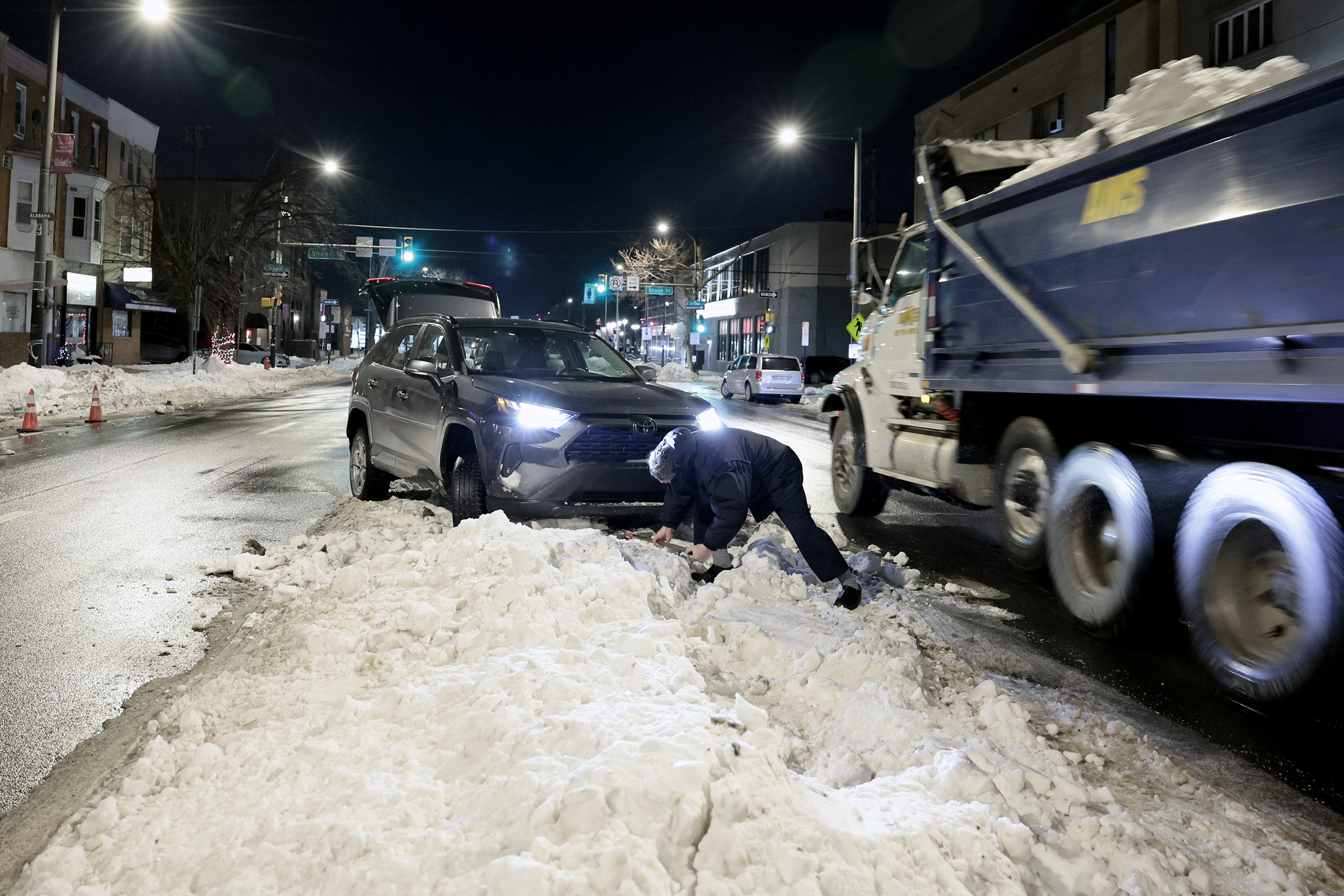
    An unidentified man shovels snow from underneath his car after it became hung up when he was trying to park in the middle of South Broad Street in Philadelphia in the early morning hours of Wednesday, Jan. 28, 2026. Dump trucks filled with snow from the city’s snow removal operations were zooming by as he worked to get his car free.

    The 41-year-old father of three said his school-age children yearn to leave the house, even if for an errand, but it’s not in the cards.

    “Between piles of snow, trash, and dog pee and poop, it’s not ideal,” he said. “We’ve been stuck in since Sunday, and while I’m close to a market, it’s not safe to walk there with my three kids and I can’t get my car out.”

    The city, for its part, has said the snow clearing would take as long as it needs to and the work would continue until all roads are dug out. Residents should expect trash-collection delays as crews navigate the snow and ice. At the same time, officials have consistently asked for patience, noting that the frigid temperatures were not aiding snow-removal efforts.

    They have pointed to the 14 teams with more than 200 vehicles and excavators that are trying to move the snow and ice into storage facilities using dumpsters. Future Track trainees with the Philadelphia Streets Department have also taken up shovels to help clear crosswalks in the city.

    But, the city notes, this is time-consuming work.

    Wanted: Private plowers

    Chris DiPiazza, owner of the Passyunk Square bakery Mighty Bread, could not afford to wait for city plows and paid for a private service to clear his street Tuesday afternoon.

    After the storm, the bakery was unable to make or receive deliveries because the city had not plowed Gerritt Street, the narrow road it’s on. Adding to frustrations, DiPiazza said, snowplows that had come through the adjacent 12th and 13th Streets had left giant snow piles on both ends of the block.

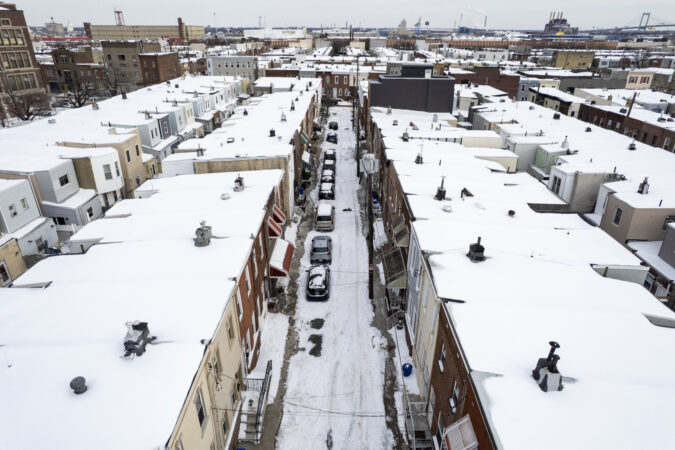
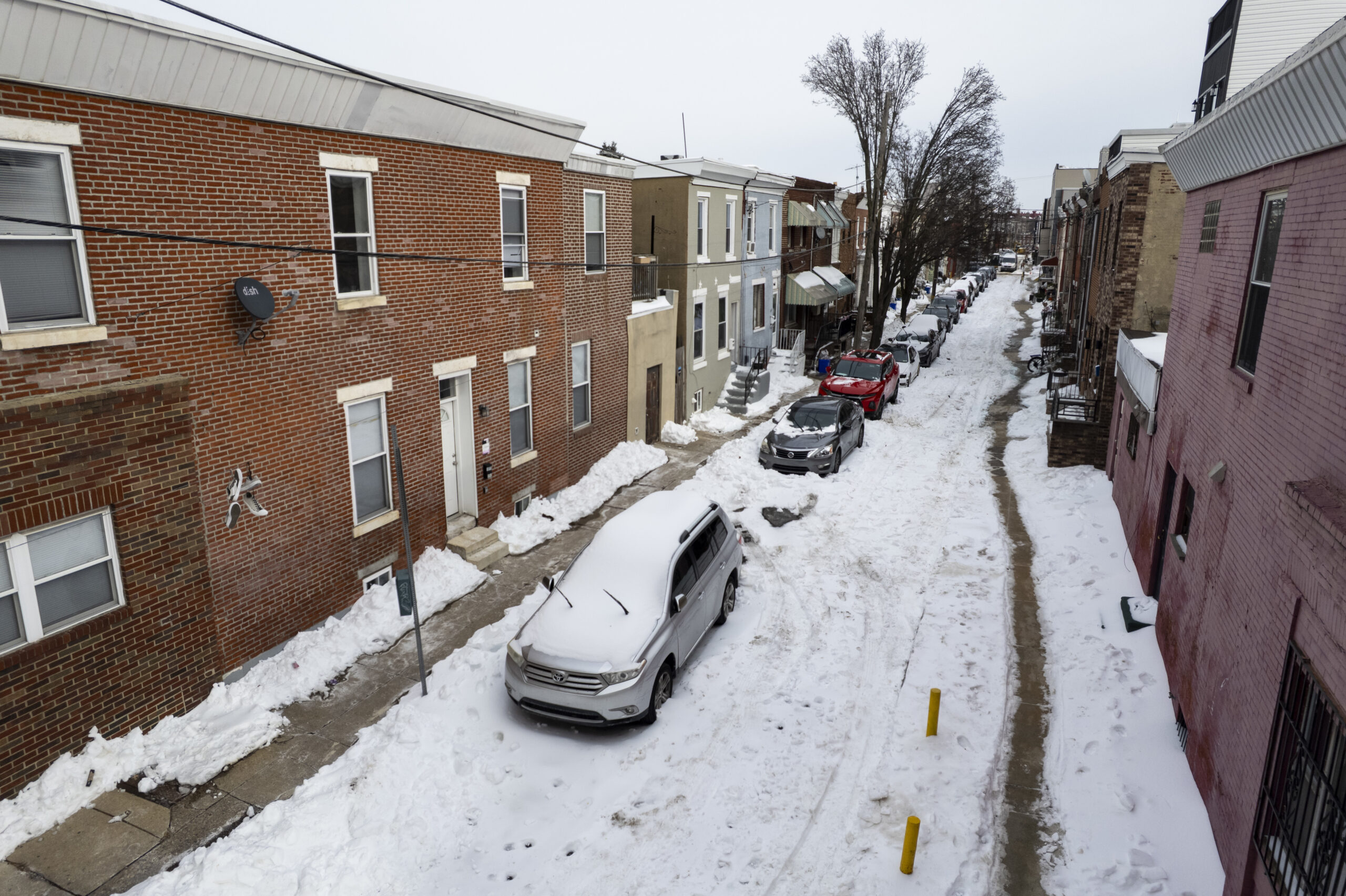
    The 700 block of Hoffman is still covered in snow on Wednesday, Jan. 28, 2026 in South Philadelphia.

    A 311 operator said it could take upward of three days for plowing to occur, DiPiazza said.

    That news was especially frustrating when residents are expected to do their part by shoveling sidewalks in front of their homes within six hours of snowfall stopping, but the city is not fulfilling its own end of that promise, DiPiazza said.

    “The city’s responsibility is to make the streets safe for people to drive, and they didn’t do that,” he said.

    SEPTA vs. ice

    For SEPTA’s size and reach, the organization is not so different from the average Philadelphian living without a plowed street.

    The snow-covered roads were especially difficult for bus routes through secondary and tertiary streets after the storm, SEPTA spokesperson John Golden said.

    “Those streets are hard to navigate on a good day,” he said.

    The lagging plow service made SEPTA pause service for many bus routes.

    “Some of our buses just aren’t able to navigate the streets because of lack of plowing,” Golden said.

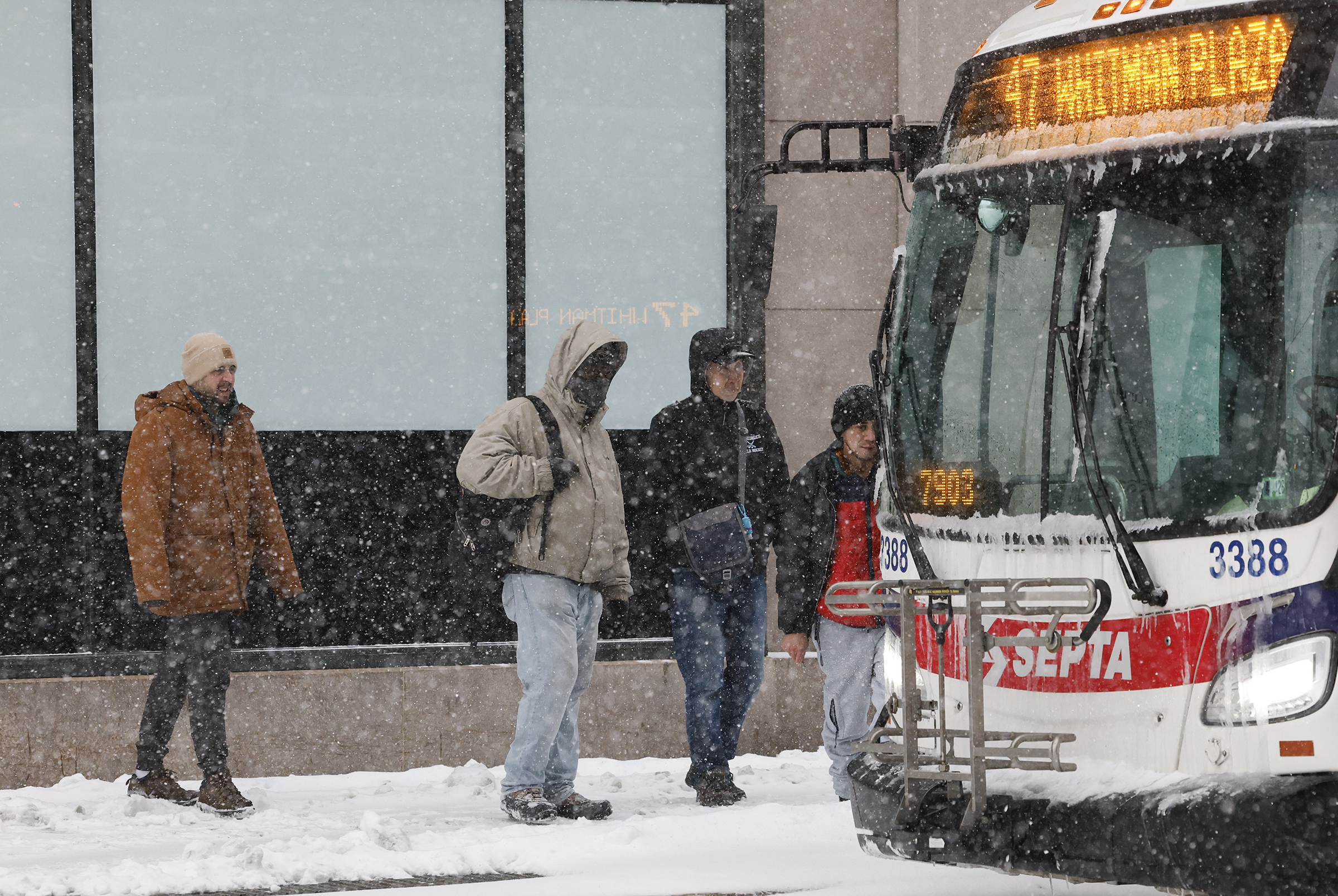
    SEPTA riders board the 47 bus at 8th and Market Streets with the snow falling on Sunday, January 25, 2026.

    But service had returned to all but a handful of routes by Wednesday afternoon. The weekend storm was not particularly onerous for SEPTA compared with other large storms in years past, Golden said, but he noted the frigid temperatures in the days following have made things difficult. Ice is not melting as quickly as it usually does, leaving the roads treacherous.

    Golden said that while SEPTA officials have been in frequent contact with the streets department about problem spots, they don’t have any special recourse besides waiting for the city to clear the streets.

    How does 2026 compare with 2016?

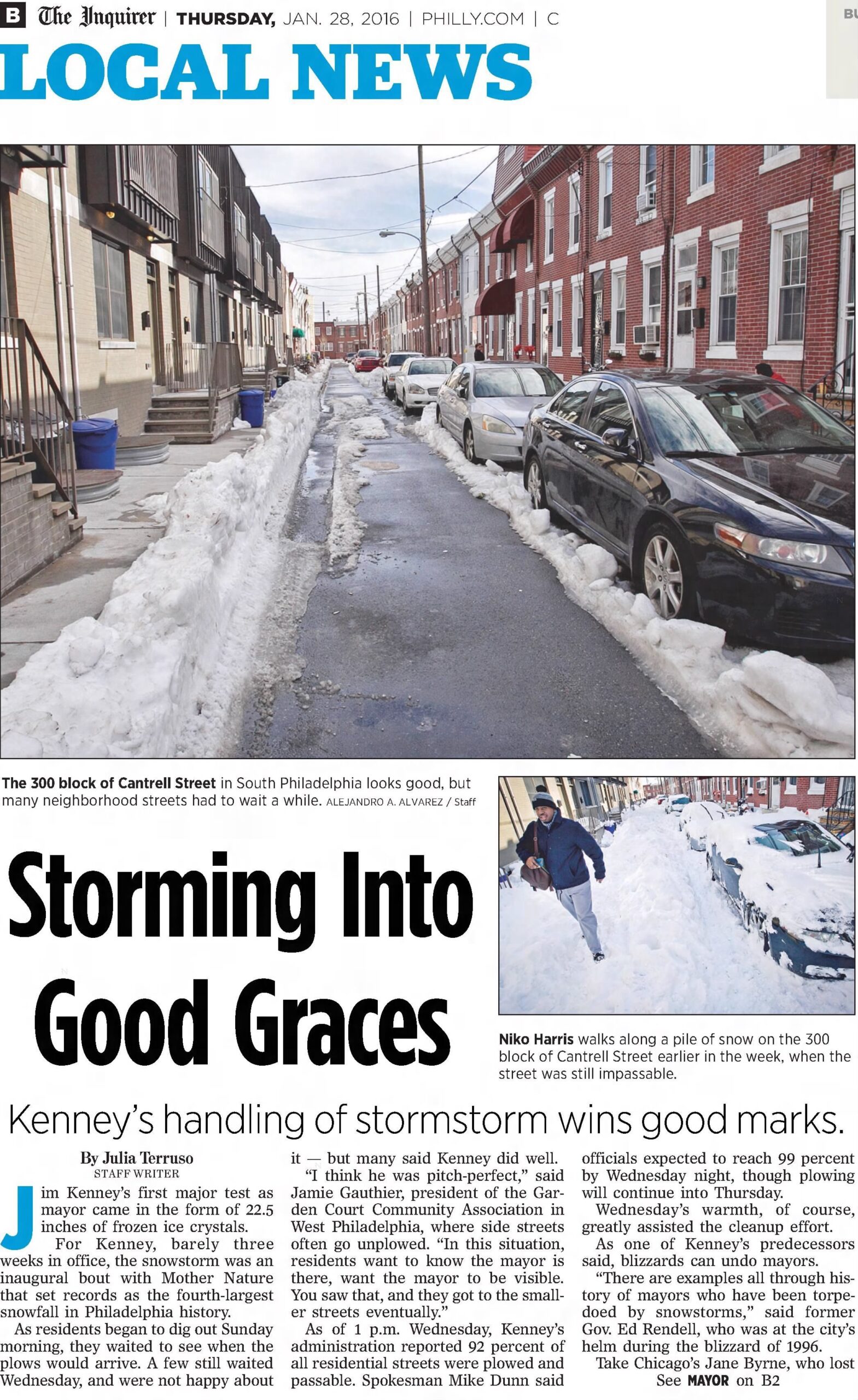
    When the city was smacked with 22.5 inches of snow in January 2016, it was the fourth-largest snowfall in Philly history, and newly sworn-in Mayor Jim Kenney’s first major test in office.

    At the time, many side street residents issued the same complaints heard with this most recent storm — they were the last to be dug out, and entire blocks were locked in.

    But by the fourth day of storm cleanup, a Kenney spokesperson claimed 92% of all residential streets “were plowed and passable” and the administration was taking in kudos for what many — though not all — said was a job well done.

    The front page of The Philadelphia Inquirer’s B section in January 2016, following a major snowstorm that was similar to the January 2026 storm. The article reported some complaints of snow plow delays, but residents were largely complimentary of then new Mayor Jim Kenney’s handling of the storm.

    Though 9.3 inches fell this time around, city officials have said the conditions were very different. The temperature drop has been the largest hurdle so far, providing no help in melting the ice. The city still urges patience and says teams are working nonstop.

    For parents whose children took part in virtual learning Wednesday and residents who were sick of parking wars and icy crosswalks with another potential snowfall on the way, patience was almost gone.

    Residents in North and West Philly shared frustrations on social media of parking shortages because mounds of ice left people nowhere to go; some were even parking at an angle in parallel spots, to the chagrin of others. Bus stops were piles of dirty, frozen ice, and crosswalks remained icy.

    For Hildebrand, it was all very discouraging.

    “A plan could have been made and implemented, since the city knew about this a week before it happened, but it truly seems like bare minimum effort,” he said.

  • Philly snow cleanup: What to know about plowing, parking, schools, and more

    Philly snow cleanup: What to know about plowing, parking, schools, and more

    As Mayor Cherelle L. Parker put it earlier this week, we’re not out of the woods yet.

    The storm that hit Philadelphia Sunday brought with it 9.3 inches of snow for the city proper — the most we’ve seen at one time in a decade. And while that really sells the wintery vibe — especially when combined with the bitter cold we’re experiencing — cleanup efforts are ongoing.

    Highways and public transportation in the region are largely restored, but some city streets remain packed with snow and ice. City school buildings Wednesday were in their third day of snow-related closures. And we might even be looking at more snow to come.

    Here is what you need to know:

    Roads (mostly) cleared

    PennDot’s vehicle and speed restrictions have been lifted on all interstates and major highways across the Philadelphia region, as were those on state roads in New Jersey. But street plowing in the city remains a work in progress.

    Residents from around the city told The Inquirer many side streets and some secondary streets remained coated in several inches of snow and ice, making traveling on them difficult or impossible. Data from PlowPHL, a service that tracks plow movement, indicated Tuesday that roughly a quarter of city streets had not received any snow treatment since the storm.

    Parking enforcement resumes

    The Philadelphia Parking Authority reopened its offices Wednesday, and began on-street parking enforcement for safety violations including parking in bus zones and in front of fire hydrants. The 24-hour $5 emergency garage parking rate was also rescinded, with PPA garages returning to their usual rates, the authority said.

    Public transit resuming

    SEPTA on Monday restored all of its subway, trolley, and suburban trolley services, and as of Wednesday was running Regional Rail lines on their normal weekday schedules. Bus service, SEPTA notes online, is largely operational, though several routes remain suspended due to road conditions.

    Among the suspended buses Wednesday were routes 3, 5, 40, 41, and 115, according to the agency’s alerts page. The suspended routes, SEPTA indicated, would be restored “once it is safe to do so.”

    PATCO, meanwhile, returned to its normal weekday schedule Tuesday.

    Airport operational

    Philadelphia International Airport experienced hundreds of flight cancellations and delays due to the storm, but remained open despite the inclement weather, Parker said at a news conference this week.

    As of early Wednesday afternoon, the airport had experienced about 87 delays and 57 cancellations, according to flight data tracking website FlightAware. On Monday, the day after the storm, there were 326 delays and 290 cancelations, followed by 255 delays and 156 cancelations Tuesday, FlightAware indicated.

    Schools go virtual

    Philadelphia school buildings are slated to reopen Thursday after three straight days of being closed in the wake of the storm. A full snow day was declared Monday, followed by two days of virtual learning Tuesday and Wednesday.

    Archdiocesan high schools and city parochial schools will also go back to in-person classes Thursday.

    Students and staff who arrive late to class due to weather-related issued would not have their lateness counted against them, Superintendent Tony B. Watlington Sr. said.

    This week’s disruption to the usual school schedule had begun taking its toll on some parents. Outside the city, many suburban districts had already reopened by Wednesday.

    More snow possible

    Post-storm, the Philadelphia region faces frigid temperatures that are expected to remain well below freezing until at least Feb. 4. Highs were expected to top out around the teens, and lows consistently in the single digits — along with wind chills reaching down into the negatives.

    And then, of course, there is the potential for more snow this weekend.

    Forecasters said Wednesday that it remained unclear exactly what we should expect, but a major coastal storm is likely to appear during the weekend. Early computer models indicated that the system would remain far offshore enough to spare the Philadelphia area from major snowfall, but accumulation predictions remain in flux.

  • Most New Jersey public schools have reopened, and here’s how they’re making up missed days

    Most New Jersey public schools have reopened, and here’s how they’re making up missed days

    After the major snow storm that shut down many New Jersey public schools for at least two days, the big question for students and teachers is how districts will make up missed time.

    Most South Jersey districts reopened Wednesday, many with two-hour delays because of frigid temperatures and icy neighborhood streets and side roads.

    Winslow schools in Camden County remained closed for a third consecutive day, citing ongoing hazardous road and sidewalk conditions. The sprawling 58-square-mile municipality is one of the largest in New Jersey. Parents have complained in social media posts about icy streets and bus stop routes.

    Meanwhile, Eastside High School in Camden was also closed due to icy conditions near the school, while the rest of the district reopened. Camden has many students who walk to school. The district said the day would be made up.

    Late Wednesday, Davida Coe-Brockington, Camden’s acting state district superintendent announced that all city schools would be closed Friday.because of road conditions. She said the district plans to reopen Friday with a two-hour delay.

    School officials consider factors such as road conditions, snow and ice accumulation, and readiness of the campus, sidewalks, and parking lots, said Haddon Heights Superintendent Carla Bittner. Her district used its only built-in emergency closing day.

    “The safety of our students and staff is our absolute priority,” Bittner said.

    With 50 days left of winter and the possibility of another storm looming this weekend, additional snow days may be on the horizon, further disrupting school calendars, parental work days, and vacation plans. And districts must still meet the state requirement of 180 school days.

    How do districts make up snow days?

    Some districts have days built into the calendar for the school year for inclement weather, or tack on additional days as needed at the end of the school year. The state leaves it to local districts decide how many days to set aside.

    In Cherry Hill, where schools were closed for two days this week, the district will use days already designated as holidays. That means students will go to school Feb. 16, President’s Day and March 30, which was supposed to be the first day of spring break.

    If needed, Cherry Hill would use March 31 to make up another snow day, according to Nina Baratti, a district spokesperson. Even with inclement weather days, the last day of school (June 18) has not changed, she said.

    Haddon Heights will convert a March 13 in-service day for teachers into a full instruction day for students, according to its calendar. Additional days would be pulled from spring break in April if needed.

    Woodbury Superintendent Andrew Bell said his district would use two days set aside for professional development for teachers to make up snow days this week.

    How many school days are required?

    The New Jersey Department of Education requires schools to be open for a minimum of 180 days in order to qualify for state funding.

    The school year must align with the state’s fiscal year and end on June 30 or earlier. Most union contracts with local districts require schools to close by June 30. Districts typically try to avoid keeping schools open late into June, when unairconditioned buildings can become unbearable.

    According to Timothy Purnell, executive director of the New Jersey School Boards Association, the number of snow days also can be determined during negotiations between the district and union leaders.

    What about virtual learning?

    Like most states, New Jersey allowed virtual and hybrid instruction when the pandemic shut down schools. However, state law now strictly limits remote learning.

    While Philadelphia and New York City shifted to remote classes because of snow closings, New Jersey only allows virtual instruction under limited circumstances, according to the state Department of Education.

    School districts may seek approval for virtual learning for school closures lasting more than three consecutive days because of a declared state of emergency, declared public health emergency, or a directive by a health agency or officer ordering a public health-related closure.

  • Temple has released its plan for the next decade. See what the North Philadelphia university has in mind.

    Temple has released its plan for the next decade. See what the North Philadelphia university has in mind.

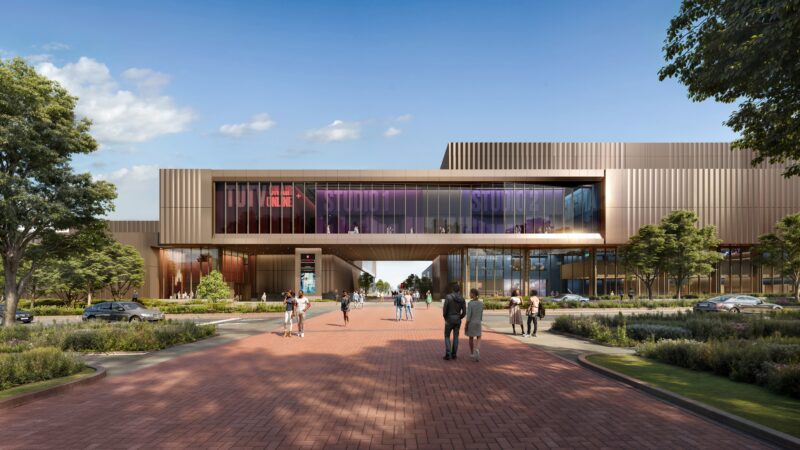
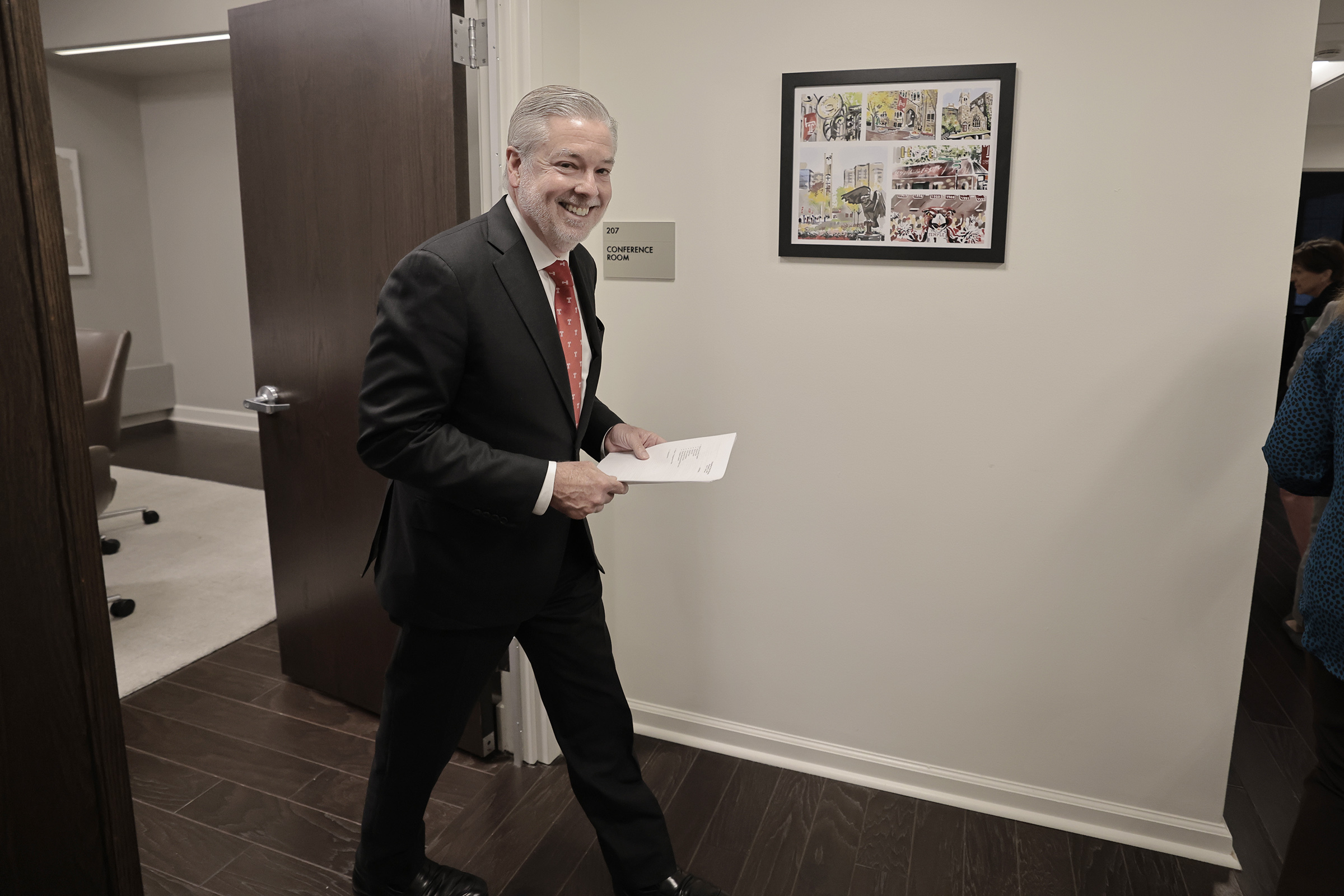
    Temple University on Wednesday released its plans for the school’s future, including a new 1,000-bed residence hall, STEM complex, quad with green space, and more attractive and defined entrances to its North Philadelphia main campus.

    That’s just part of the 10-year strategic plan, which will take the more than 33,000-student university through its 150th anniversary in 2034 and includes supports for students and learning, a campus development plan, and a new vision for Broad Street both near and beyond its campus.

    It emphasizes the student academic experience, with plans to elevate its honors program to an honors college, implement systems to identify and help students who are at risk of failing early on, increase online offerings to accommodate non-traditional students, and require career development and experiential learning for all students.

    And the 20-year campus development plan, which is part of the strategic plan, also reiterates President John Fry’s desire to create an “innovation corridor” stretching from the recently acquired Terra Hall at Broad and Walnut Streets in Center City to Temple’s health campus, a little more than a mile north of main campus on Broad Street.

    Temple is in the quiet phase of a $1.5 billion capital campaign — its largest to date — to raise money for faculty support and student financial aid, but also for initiatives outlined in the plan.

    “What we’re trying to do is build on the momentum we think we have right now as already one of the most consequential urban research universities that wants to go to the next level,” said Temple President John Fry.

    “What we’re trying to do is build on the momentum we think we have right now as already one of the most consequential urban research universities that wants to go to the next level,” Fry said in an interview before trustees approved the plan Wednesday. “This is a very ambitious plan that I think honestly will be a very big lift for us. But I think it’s achievable.”

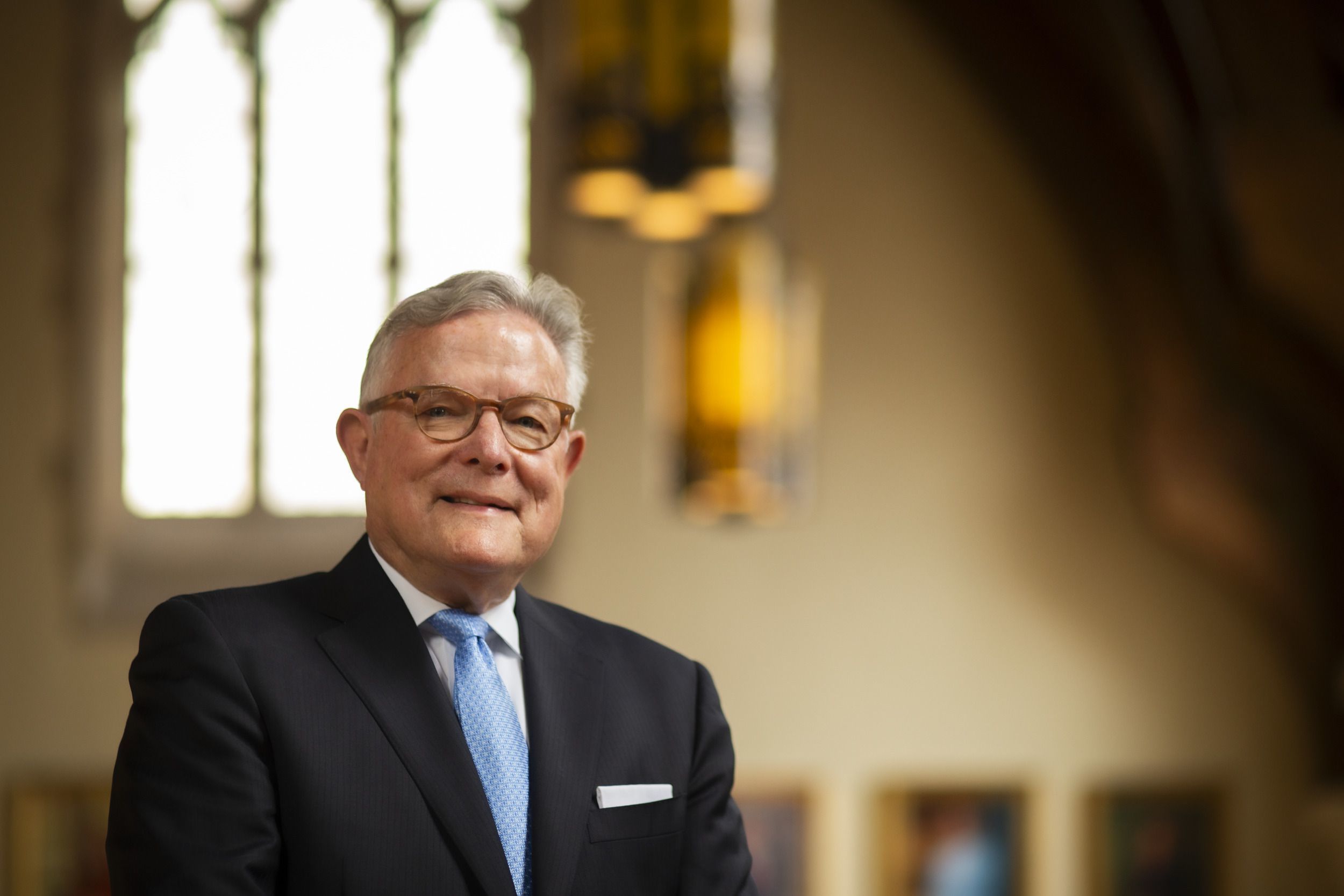
    Interim Provost David Boardman, who led the strategic planning effort, emphasized that the top priority is student success and new buildings and development are meant to support that.

    “That, more than anything, is the heart of what we do,” Boardman said. “This is about providing meaningful research … It’s about us becoming the most important academic institution and partner in this community and really partnering for the future of Philadelphia and the region and the Commonwealth.”

    David Boardman, Temple University’s interim provost

    The planning effort, which included input from more than 2,000 Temple faculty, staff, students, and community members, started as an update of the 2022 plan that Fry initiated after becoming president in November 2024. But Temple officials realized a new plan was needed, Fry said.

    More greenery for campus and Broad Street

    Fry envisions more green space for recreation and events and for making North Broad Street more aesthetically pleasing.

    “It is a really harsh streetscape,” Fry said. “It’s really not inviting. Traffic is moving very quickly. …That street needs to be calmed down, and the best way … is to create medians, plants — both sides of Broad Street — making it a much more civilized area than it is now.”

    The effort, he said, is modeled after the recently announced $150 million streetscape plan to make the Avenue of the Arts in Center City greener. Temple also is involved with that through its ownership of Terra Hall, which will become Temple’s Center City campus, he said.

    “But we can’t do that without other public and private partnerships,” he said. “It’s beyond the institution’s capacity to fund that.”

    To start, Temple will fund “significant greening” around the entrance to the under-construction Caroline Kimmel Pavilion for Arts and Communication, he said. More green work is planned at Burk Mansion at Broad and Oxford, which Temple owns, as development occurs there, he said.

    With a large green lawn and courtyards, a quad is planned for the campus center, surrounded by Paley Hall, Tyler School of Art, the Charles Library, and the biology life sciences building.

    Temple in December purchased the former McDonald’s site at 1201-1219 N. Broad St., by Girard Avenue, which is adjacent to the Temple Sports Complex. Fry envisions using that property to create a major campus gateway.

    “Right now, you don’t really know when you come onto the Temple campus,” he said. “We would like Broad and Girard to announce you’re starting to enter Temple’s campus district.”

    More on-campus student housing

    Temple wants more on-campus residential space to improve the student experience and safety, Fry said.

    “We think we’re at a minimum several thousand beds short of where we need to be,” he said. “A stronger residential experience really does make for a much more fulfilling undergraduate experience. The more kids living on campus, the more dense campus is, I think the better we’re going to do on safety.”

    The plan calls for beginning to build a 1,000-bed residence hall along Broad Street on the former Peabody Hall site, south of Johnson and Hardwick Halls, in 2027. That would increase the current 5,000-bed capacity on the main campus by 20%. When that opens, Temple would upgrade Johnson and Hardwick, which have another 1,000 beds, he said.

    The Annenberg Hall/Tomlinson Theater building, which will relocate to the new arts and communication building in 2027, could also be converted into more residential space if needed, Fry said.

    An emphasis on STEM

    Temple intends to upgrade facilities for science, technology, engineering and math.

    “We just don’t have the research space, the wet lab space in particular, to accommodate the work that our faculty are doing,” Fry said.

    Several buildings, including the biological life sciences facility, will be renovated, and the school plans a new STEM building, perhaps behind the engineering building, or the conversion of an existing facility, Fry said. The decision on whether to build new will come within six months, he said.

    Temple needs to close some current science facilities to gain more space, he said.

    The Beury building, next to the Bell Tower and across from the new Barnett College of Public Health, will begin to be demolished this summer, he said.

    “Think of that as sort of the first down payment on this quad,” he said.

    That would be the first step toward developing an innovation district, Fry said. While not on the scale of University City’s, it would be “a very good attempt to begin to build that capacity in North Philadelphia,” he said.

    Terra Hall will nurture an arts hub, and both would contribute to creating an innovation corridor, he said.

    The plan also calls for a new ambulatory care center to better serve North Philadelphia. Fry said those plans are in very early stages.

    “A lot of outpatient care is occurring within the hospital right now,” Fry said. “It’s not great for patients… It also puts a real strain on our capacity to serve people who need inpatient services.”

    A new academic home for star students

    Temple aspires to make its honors program into an honors college, like Pennsylvania State University’s popular Schreyer Honors College, though with different parameters.

    Boardman said that effort would require major fundraising. Currently, the program exists within the college of liberal arts and enrolls more than 2,200 students.

    Elevating it to a college would require more programming, study-abroad and research stipends, experiential learning opportunities, and an option for those enrolled to live together in a residential community.

    Temple’s college would consider more than grade-point averages and SATs for admission, Boardman said. Various talents and leadership potential would be considered, with interdisciplinary studies and public service infused, he said.

    Staff writer Peter Dobrin contributed to this article.

  • Search warrant FBI served at elections office near Atlanta seeks records tied to the 2020 elections

    Search warrant FBI served at elections office near Atlanta seeks records tied to the 2020 elections

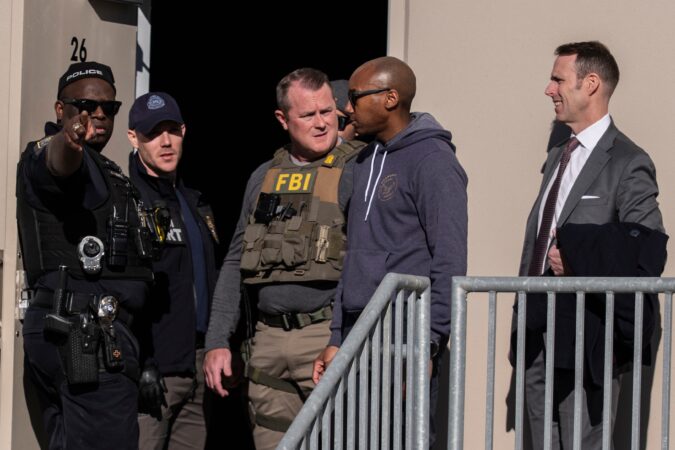
    ATLANTA — The FBI on Wednesday searched the election office of a Georgia county that has been central to right-wing conspiracy theories over President Donald Trump’s 2020 election loss, acting just one week after the Republican leader predicted prosecutions over a contest he has baselessly insisted was tainted by widespread fraud.

    The search at Fulton County’s main election facility in Union City sought records related to the 2020 election, county spokesperson Jessica Corbitt-Dominguez said. It appeared to be the most public step by law enforcement to pursue Trump’s claims of a stolen election, grievances rejected time and again by courts and state and federal officials, who found no evidence of fraud that would have altered the outcome.

    It also unfolds against the backdrop of FBI and Justice Department efforts to investigate perceived political enemies of Trump, including former FBI Director James Comey and New York Attorney General Letitia James.

    Trump has for years focused on Fulton, Georgia’s most populous county and a Democratic stronghold, as a key example of what he claims went wrong in the 2020 election. His pressure campaign there culminated in a sweeping state indictment accusing him and 18 others of illegally trying to overturn the vote.

    An FBI spokesperson said agents were “executing a court authorized law enforcement action” at the county’s main election office in Union City, just south of Atlanta. The spokesperson declined to provide any further information, citing an ongoing matter.

    Corbitt-Dominguez said a warrant “sought a number of records related to 2020 elections,” but declined to comment further because the search was still underway.

    The Justice Department had no immediate comment.

    Trump has long insisted that the 2020 election was stolen even though judges across the country and his own attorney general said they found no evidence of widespread fault that tipped the contest in Democrat Joe Biden’s favor.

    The president has made Georgia, one of the battleground states he lost in 2020, a central target for his complaints about the election and memorably pushed its secretary of state to help “find” enough votes to overturn the contest.

    Last week, in reference to the 2020 election, he asserted that “people will soon be prosecuted for what they did.” It was not clear what in particular he was referring to.

    Fulton County District Attorney Fani Willis in August 2023 obtained an indictment against Trump and 18 others, accusing them of participating in a wide-ranging scheme to illegally try to overturn the results of the 2020 presidential election. That case was dismissed in November after courts barred Willis and her office from pursuing it because of an “appearance of impropriety” stemming from a romantic relationship she had with a prosecutor she had hired to lead the case.

    The FBI last week moved to replace its top agent in Atlanta, Paul W. Brown, according to people familiar with the matter who spoke on condition of anonymity to discuss a nonpublic personnel decision. It was not immediately clear why the move, which was not publicized by the FBI, was made.

    The Department of Justice last month sued the clerk of the Fulton County superior and magistrate courts in federal court seeking access to documents from the 2020 election in the county. The lawsuit said the department sent a letter to the clerk, Che Alexander, but that she had failed to produce the requested documents.

    Alexander has filed a motion to dismiss the suit. The Justice Department complaint says that the purpose of its request was “ascertaining Georgia’s compliance with various federal election laws.” It also says the attorney general is trying to help the State Election Board with its “transparency efforts under Georgia law.”

    A three-person conservative majority on the State Election Board has repeatedly sought to reopen a case alleging wrongdoing by Fulton County during the 2020 election. It passed a resolution in July seeking assistance from the U.S. attorney general to access voting materials.

    The state board sent subpoenas to the county board for various election documents last year and again on Oct. 6. The October subpoena requested “all used and void ballots, stubs of all ballots, signature envelopes, and corresponding envelope digital files from the 2020 General Election in Fulton County.” A fight over the state board’s efforts to enforce the 2024 subpoena is currently tied up in court.

    The Justice Department sent a letter to the county election board Oct. 30 citing the federal Civil Rights Act and asking for all records responsive to the October subpoena from the State Election Board. Lawyers for the county election board responded about two weeks later, saying that the records are held by the county court clerk. They also attached a letter the clerk sent to the State Election Board saying that the records are under seal in accordance with state law and can’t be released without a court order.

    The Justice Department said it then sent a letter to Alexander, the clerk, on Nov. 21 requesting the documents and that she failed to respond.

    The department is asking a judge to declare that the clerk’s “refusal to provide the election records upon a demand by the Attorney General” violates the Civil Rights Act. It is also asking the judge to order Alexander to produce the requested records within five days of a court order.

    The State Election Board in May 2024 heard a case that alleged documentation was missing for thousands of votes in the recount of the presidential contest in the 2020 election. After a presentation by a lawyer and an investigator for the secretary of state’s office, a response from the county and a lengthy discussion among the board members, the board voted to issue a letter of reprimand to the county.

    Shortly after that vote, there was a shift in power on the board, and the newly cemented conservative majority sought to reopen the case. The lone Democrat on the board and the chair have repeatedly objected, arguing the case is closed and citing multiple reviews that have found that while the county’s 2020 elections were sloppy and poorly managed there was no evidence of intentional wrongdoing.

  • Cabin fever sets in for Philly parents snowed in: ‘It’s an emotional regression to that terrible time’

    Cabin fever sets in for Philly parents snowed in: ‘It’s an emotional regression to that terrible time’

    On the second day her kindergartener was off from his Philadelphia public school because of snow, Karen Robinson shut herself away in her Fairmount home, hoping to take a 15-minute meeting for an important work project.

    Her husband had put up a baby gate to signal to 5-year-old Sam that mom was briefly off limits.

    Naturally, “my son crawled under the baby gate to come find me,” said Robinson, whose son attends Bache-Martin Elementary. “If I’m working, he wants to be right next to me.”

    For thousands of Philadelphia parents, Wednesday was day three of school buildings being shut — a real snow day on Monday, and virtual school Tuesday and Wednesday.

    Superintendent Tony B. Watlington Sr. gave beleaguered parents a reprieve Wednesday afternoon, saying schools would re-open for in-person learning Thursday. But the week was tough for many to navigate.

    For parents who rely on hourly work, or jobs that have no remote flexibility, the inclement weather-forced school changes have meant either foregoing pay or figuring out childcare arrangements that are often costly, complicated, or both.

    But for others, the cabin fever is real. Many are getting into existential angst territory — and conjuring up memories of the pandemic, as parents juggled work and online school, often feeling they were failing at both.

    North Philadelphia mom Asjha Simmons’ son attends a charter school that’s been closed — no virtual learning — since Monday.

    Simmons runs her own business, so is able to be flexible with her schedule and stay home with her son. But she’s getting antsy.

    “I feel forced to be in the house and it’s killing me,” Simmons said. “I would rather be in the gym than in the house. And I don’t even go to the gym.”

    Simmons’ son, who’s 12, relishes the down time since “he has every screen known to man on,” she said. She keeps the snacks coming, and it’s all good. (He was less than thrilled when Simmons made him shovel snow, she said.)

    Leigh Goldenberg said she was having uncomfortable flashbacks to the pandemic, when her daughter completed virtual kindergarten.

    “For me, it’s an emotional regression to that terrible time,” said Goldenberg. “And I feel for the people that didn’t build up that muscle before.”

    Virtual school with a fifth grader is much easier than virtual school with a kindergartener, said Goldenberg, whose daughter attends Kirkbride Elementary in South Philadelphia. Her daughter spent 30 minutes on Tuesday completing schoolwork, and managed to keep herself busy socializing with friends online and outside, a short walk away in their neighborhood.

    Goldenberg is trying to keep things in perspective — this is not forever, this is not the pandemic.

    But, she’s still frustrated.

    “All the suburban schools around us went back already, but here in the city, we’re stuck with a giant pile of snow at the end of our street, and it feels pretty unfair,” she said.

    Coral Edwards was prepared for Monday’s snow day, but when the district announced a virtual day Tuesday, she began to panic.

    “I was like, oh my gosh, there’s a real possibility the entire rest of the week will be virtual,” said Edwards, who lives in Graduate Hospital and has a seven-year-old son who attends Nebinger Elementary and a four-year-old daughter in a private prekindergarten program.

    Her daughter’s pre-K is reopened Wednesday with a two-hour delay. And that means dropoff time came when Edwards would have needed to be helping her first grader with virtual learning. So instead, she paid to send both children to Kids on 12th, a Center City school open the full day, so she can get her work done as a marketing consultant and leadership coach.

    The scramble has also summoned up emotions and frustrations she last experienced during the pandemic, when her son was 1 and his daycare shut down. While she acknowledged that she is “incredibly privileged,” she said the fact that parents like herself are in such a bind speaks to a larger systemic problem with childcare, Edwards said.

    “There’s literally no one to help us,” she said. “There’s just no systemic support whatsoever.”

    Streets are being plowed, SEPTA is running, and trash is getting picked up, “but there’s nothing in press conferences about how we’re supporting parents and students,” Edwards said. “The schools are like, ‘we have this virtual learning environment’ — are we just supposed to pull another parent out of our butts?” she said.

    Edwards’ husband works in-person as a research physician running a lab, and the burden of childcare logistics falls to her.

    “There’s a lot of rhetoric about supporting parents, and raising women up, … but when push comes to shove, something about our kids’ childcare is changed or tightened, it falls on those people,” she said.

    Hannah Sassaman, a West Philadelphia parent of a district fourth grader and ninth grader, is making it through.

    “We had another fourth grader live here for 24 hours randomly. I think they went to school? My ninth grader seems to be going to school. We’re just lucky we don’t have little kids,” said Sassaman.

    But the storm has Sassaman thinking: how is it that New York, which got a foot of snow in some neighborhoods, had kids back in its (much larger) public school system by Tuesday?

    “The questions that I have knowing that the storm was coming for over a week,” Sassaman said, “is what could the administration have done to help resource our sanitation workers and the rest of our incredible city servants to really focus on what it would take to get our kids back in schools, our teachers and the other staff back in their buildings safety to support not just the economy, but also all of the important supports and services kids access at schools every day?”

  • Ten people die in NYC’s frigid cold, raising questions about the city’s preparedness

    Ten people die in NYC’s frigid cold, raising questions about the city’s preparedness

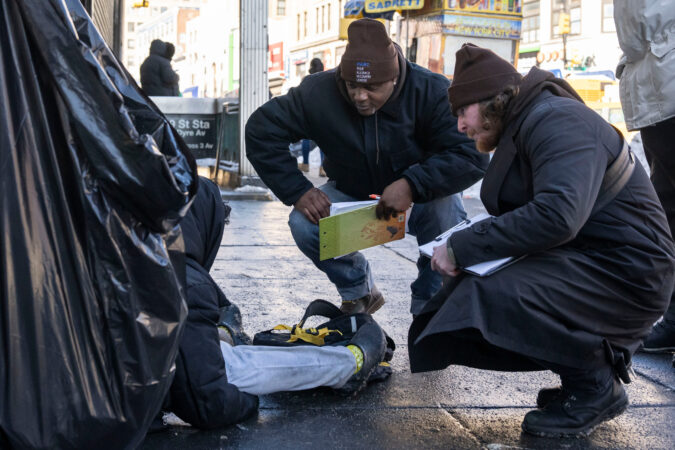
    NEW YORK — One man was discovered under a layer of snow on a park bench in Queens. Another was found just steps from a Manhattan hospital. Yet another was pronounced dead on the ground beneath an elevated train line in the Bronx.

    Each is among a growing number of people — at least 10, as of Tuesday — who died after being exposed to the bitter cold that has persisted in New York City since late last Friday.

    Their causes of death are still under investigation, but some showed signs of having succumbed to hypothermia. Officials said several victims were believed to have been living on the streets. At least six of the fatalities came early Saturday, as the temperature in the city fell to 9 degrees.

    With the frigid weather expected to continue, Mayor Zohran Mamdani said the city was adding homeless outreach workers, opening new warming centers, and instructing hospitals to limit discharges “to ensure that people who have nowhere to go are kept indoors.”

    But the rising death toll has also prompted questions about whether Mamdani’s nascent administration could have done more to protect the city’s most vulnerable residents ahead of the Arctic blast and the snowstorm that hit early Sunday.

    One of the victims, a 52-year-old man living in Queens, was found Sunday morning with discharge papers in his pocket showing he had been released from Elmhurst Hospital, a city-run facility, on Friday, according to State Senator Jessica Ramos.

    By the time of his release, the city had already activated its Code Blue protocols, a set of extreme weather policies that include precautions meant to ensure homeless patients are not released back onto the street.

    It was not immediately clear if the man, who is originally from Ecuador, had been living outside at the time of his death. Inquiries to City Hall, the Department of Homeless Services, and the city’s public hospital system were not returned.

    The city has yet to release the names of any of those who died during the storm.

    Studies have shown that around 15 people suffer from cold-related deaths in New York City each year. But homeless advocates said they could not remember another storm in recent memory that resulted in so many deaths outside in such a brief period.

    “The fact that this many people have passed away shows the city needs to do a much better job of making people feel safe when they come inside,” said David Giffen, the executive director of the Coalition for the Homeless. “It’s not that most of the people on the streets are unaware of the shelter system, but that they’ve had experiences there that make them not want to return.”

    In the lead-up to the storm, city-contracted outreach teams fanned out across the five boroughs, attempting to coax residents to accept placements in shelters, transitional housing or even heated buses. Mamdani and his deputies have repeatedly urged New Yorkers to look out for those in need of help.

    “Extreme weather is not a personal failure, but it is a public responsibility,” Mamdani said on Tuesday. “We are mobilizing every resource at our disposal to ensure that New Yorkers are brought indoors during this potentially lethal weather event.”

    The city’s social services commissioner, Molly Wasow Park, said at least 200 people have voluntarily accepted shelter since the storm began. She said the city has also moved to involuntarily hospitalize a handful of people, including those who were wet, inappropriately dressed or “unable to acknowledge that there are real dangers.”

    Ramos said the man discovered on the park bench was wearing only a thin jacket. His body appeared to be frozen when it was found by police under a layer of snow on Sunday morning.

    “It’s devastating to know the government could have done more and didn’t,” she said. “There are real questions here that demand answers.”