Category: News

Latest breaking news and updates

  • Israel steps up airstrikes in Tehran, as Iran widens its response across the region

    Israel steps up airstrikes in Tehran, as Iran widens its response across the region

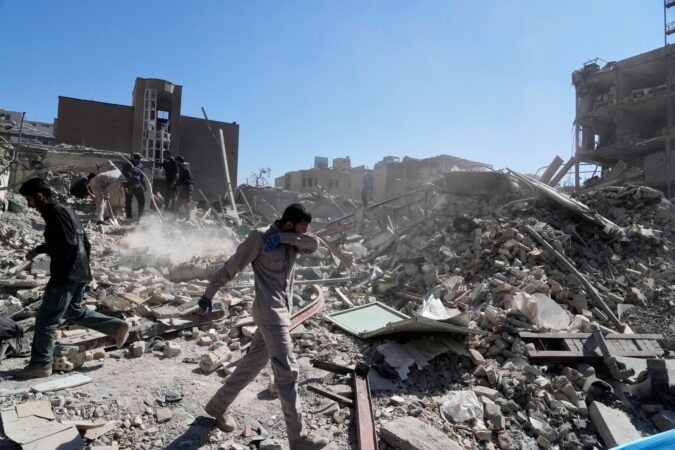
    DUBAI, United Arab Emirates — Israel said it launched airstrikes against Iranian missile launchers and a nuclear research site Tuesday, and Iran struck back against Israel and across the Gulf region, targeting U.S. embassies and disrupting energy supplies and travel.

    Four days into a war that President Donald Trump suggested would last several weeks or perhaps longer, nearly 800 people have been killed in Iran, including some Trump said he had considered as possible future leaders of the country.

    Explosions rang out Tuesday in Tehran and in Lebanon, where Israel said it retaliated against Hezbollah militants. The American embassy in Saudi Arabia and the U.S. consulate in the United Arab Emirates came under drone attacks. Iran has fired dozens of ballistic missiles at Israel, though most of the incoming fire has been intercepted. Eleven people in Israel have been killed since the conflict began.

    In other developments, the Pentagon identified four U.S. Army Reserve soldiers who were killed in a drone strike at a command center in Kuwait. The strike also killed two other service members.

    The spiraling nature of the war raised questions about when and how it would end.

    The administration has offered various objectives, including destroying Iran’s missile capabilities, wiping out its navy, preventing it from obtaining a nuclear weapon, and ensuring it cannot continue to support allied armed groups.

    While the initial U.S.-Israeli strikes killed Iranian Supreme Leader Ayatollah Ali Khamenei and Trump urged Iranians to overthrow their government, senior administration officials have since said regime change was not the goal.

    Trump on Tuesday seemed to downplay chances of the war ending Iran’s theocratic rule, saying that “someone from within” the Iranian regime might be the best choice to take power once the U.S.-Israel campaign is finished.

    Trump says people the U.S. had in mind to lead Iran are dead

    Speaking Tuesday from the Oval Office, Trump said Reza Pahlavi, the exiled son of Iran’s toppled shah, is not someone that his administration has considered in depth to take over.

    As far as possible leaders inside Iran, “the people we had in mind are dead,” Trump said.

    “I guess the worst case would be do this, and then somebody takes over who’s as bad as the previous person, right? That could happen,” Trump said. ”We don’t want that to happen.”

    Iran’s leaders are scrambling to replace Khamenei, who ruled the country for 37 years. It’s only the second time since the 1979 Islamic Revolution that a new supreme leader is being chosen. Potential candidates range from hard-liners committed to confrontation with the West to reformists who seek diplomatic engagement.

    Israel and U.S. strike nuclear facilities and other targets in Iran

    Information coming out of Iran has been limited because of poor communications, round-the-clock airstrikes, and tight restrictions on journalists. But across Iran’s capital, aircraft were heard overhead, and explosions rang out.

    The Israeli military said it conducted a wave of airstrikes on sites that produce and store ballistic missiles, in Tehran and Isfahan. It also said it destroyed what it called Iran’s secret, underground nuclear headquarters. Without providing evidence, it said the site was used for scientific research “to develop a key component for nuclear weapons.”

    “The regime attempted to rebuild its efforts and conceal them, thinking we wouldn’t notice. They were mistaken,” said Israeli military spokesman Brig. Gen. Effie Defrin.

    There was no immediate public comment from the U.S. or Iran about the site Israel named.

    Iran has said it has not enriched uranium since June, though it has maintained its right to do so and says its nuclear program is peaceful.

    The United Nations’ nuclear watchdog said Iran’s Natanz nuclear enrichment site had sustained “some recent damage,” though there was “no radiological consequence expected.” The U.S. hit Natanz during the 12-day war in June, when Israeli and American strikes greatly weakened Iran’s nuclear program.

    Fears rise in Tehran as bombardment of capital intensifies

    New rounds of U.S. and Israeli airstrikes rattled Iran.

    “Since midnight, I and my wife are hearing sound of explosions,” said Ali Amoli, an engineer living in north Tehran.

    Satellite images published Tuesday by Colorado-based company Vantor showed the domed roof of Iran’s presidential complex in Tehran had been destroyed, supporting Israel’s claim of an overnight strike. Iran did not acknowledge the damage or report any casualties.

    A north Tehran resident who spoke on condition of anonymity for fear of retaliation described growing fears in the capital as it comes under heavy bombardment. The resident said most stores in the normally bustling area of Tajrish were closed, though bakeries and supermarkets remained open.

    Iran hits the U.S. Embassy in Riyadh and Washington pulls out staff

    An attack from two drones on the U.S. Embassy in Riyadh caused a “limited fire,” according to the Saudi Arabian Defense Ministry, and the embassy urged Americans to avoid the compound.

    An Iranian drone struck a parking lot outside the U.S. consulate in Dubai, sparking a small fire, Secretary of State Marco Rubio said in Washington. He said all personnel were accounted for.

    The United Arab Emirates said it has intercepted the vast majority of more than 1,000 Iranian missile and drone attacks against it.

    U.S. embassies in Saudi Arabia, Kuwait, and Lebanon said they were closed to the public.

    The U.S. State Department ordered the evacuation of non-emergency personnel and family in Kuwait, Bahrain, Iraq, Qatar, Jordan, and the United Arab Emirates. The U.S. also urged its citizens to leave more than a dozen Middle Eastern countries, though with much of the airspace closed, many were stranded.

    The State Department said Tuesday it’s preparing military and charter flights for Americans who want to leave the Middle East. Several other countries also arranged evacuation flights for their citizens.

    The U.S.-Israeli strikes have killed at least 787 people in Iran, according to the Red Crescent Society. In Lebanon, where Israel launched retaliatory strikes on the Iranian-supported militant group Hezbollah, 50 people were killed, including seven children, Lebanon’s health ministry said.

    The U.S. military has confirmed six deaths of American service members. In addition, three people were killed in the United Arab Emirates, and one each in Kuwait and Bahrain.

    The four dead American soldiers who were identified Tuesday were assigned to the 103rd Sustainment Command in Des Moines, lowa. Killed were Capt. Cody A. Khork, 35, of Winter Haven, Fla.; Sgt. 1st Class Noah L. Tietjens, 42, of Bellevue, Neb.; Sgt. 1st Class Nicole M. Amor, 39, of White Bear Lake, Minn.; and Spc. Declan J. Coady, age 20, of West Des Moines, Iowa.

    Turkish Foreign Minister Hakan Fidan on Tuesday criticized Iran’s attacks against Gulf neighbors that had worked to prevent war as an “incredibly flawed strategy” that threatened to widen the war if those states decide to retaliate.
  • Inside Philly’s high-stakes charm campaign to lure the 2028 Democratic National Convention

    Inside Philly’s high-stakes charm campaign to lure the 2028 Democratic National Convention

    It was at the end of last year in the hazy stretch between Christmas and New Year’s when time doesn’t feel real, and some of Philly’s top Democrats were huddled around a secret proposal, racing to meet a deadline.

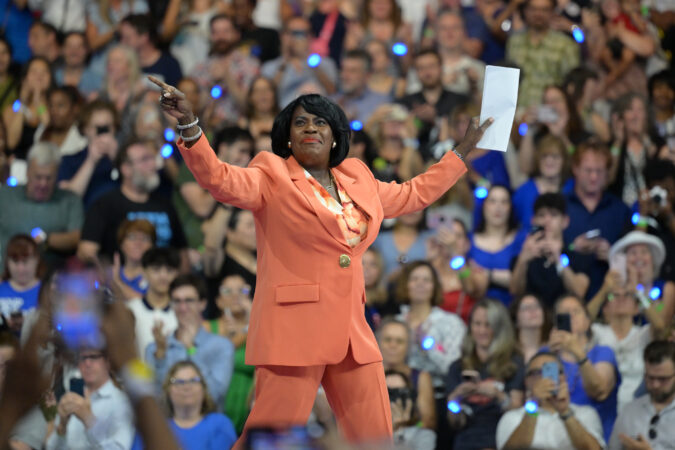
    The group — convened by Mayor Cherelle L. Parker, her aides, and some key Philadelphia boosters — was preparing a lengthy bid to bring the Democratic National Convention back to the city in either 2028 or 2032, a potential economic boon and a chance to show off in front of lawmakers, celebrities, and international media.

    The confidential proposal to the Democratic National Committee included everything from the city’s hotel space to police outfitting to nitty-gritty details about the electrical grid and voltage capacity at Xfinity Mobile Arena. SEPTA officials drafted a section about the public transportation Philadelphia could offer visitors, and tourism agencies chipped in with insights on hotels and restaurants.

    David L. Cohen, a longtime Democratic fundraiser and the president of the recently formed nonprofit host committee called Pick Pennsylvania, said that while the mayor led the effort, the bid also emphasized the “unity of the region and the commonwealth.”

    “She wanted it to be really clear this is more than a Philadelphia bid,” he said. “This is a unified Pennsylvania bid.”

    It appears the Democratic National Committee was impressed. On Monday, the DNC announced that it is considering five cities, including Philadelphia, to host the 2028 convention, where a Democratic presidential nominee will be coronated. The party is also looking closely at Atlanta, Denver, Chicago, and Boston to hold the early August event.

    What comes next is a campaign to lure the convention to Philly, complete with a carefully coordinated public relations effort and a significant fundraising push. Philadelphia’s host committee for 2016, the last time the city held a presidential nominating convention, raised more than $85 million.

    The DNC has asked host cities to raise $5 million before being selected. Philly’s fundraising, Cohen said, “will be substantially higher than that number.”

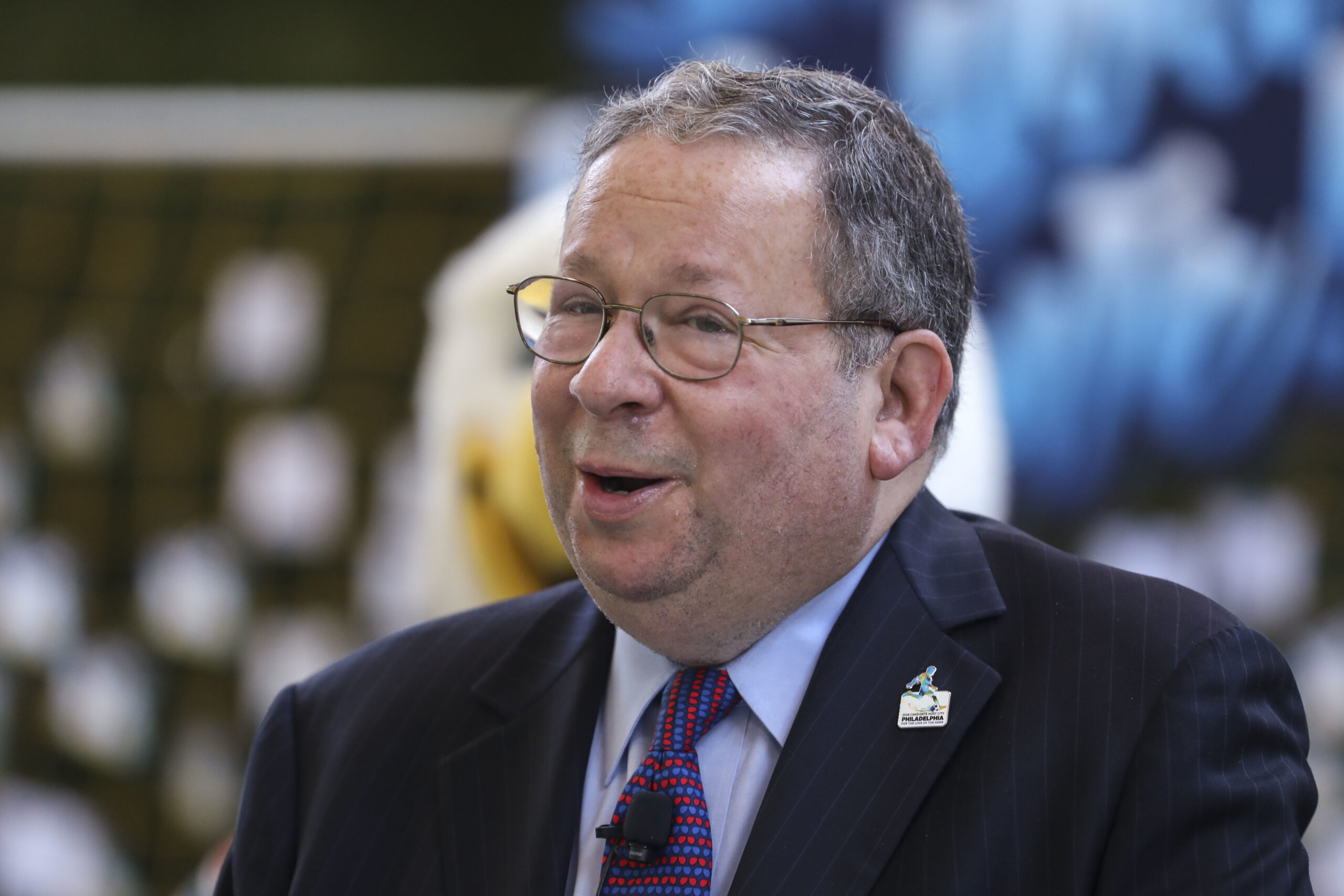
    In this 2021 file photo, David L. Cohen speaks as Philadelphia Soccer 2026, the city’s World Cup 2026 bid committee, launched an interactive exhibit at the Independence Visitors Center in Philadelphia. He is now heading an effort to bring the Democratic National Convention to Philadelphia.

    Cohen, a former Comcast executive and erstwhile chief of staff to former mayor Ed Rendell, is leading the effort alongside Daniel J. Hilferty, now the CEO of Comcast Spectacor.

    Hilferty and Cohen have worked together repeatedly over the last two decades to bring major events to Philadelphia, including a successful bid to become one of a handful of North American cities to host World Cup games this year.

    Also involved in coordinating the DNC proposal was Erin Wilson, a Philadelphia native who was a top aide to former Vice President Kamala Harris. She was the national political director for former President Joe Biden’s campaign and planned his 2021 inauguration.

    When the DNC comes to town

    DNC officials are expected to make a final decision on the 2028 site later this year. That call will likely be made by chair Ken Martin in consultation with top advisers and the committee’s Technical Advisory Group, which assesses logistics and operational matters.

    Philadelphia could also have an advocate in State Rep. Malcolm Kenyatta, who represents parts of North Philadelphia and is a DNC vice chair. He is known to have a close relationship with Martin.

    Committee officials and the advisory group will tour each of the five finalist cities for a yet-to-be-scheduled site visit this spring.

    If history is any indication, the city will roll out the red carpet. In 2014, when 18 members of the DNC came to Philly to check out the city ahead of the 2016 convention, the host committee spent six figures to charm them.

    The trip included a tour of Philly’s most popular sites, like Reading Terminal Market and the Philadelphia Museum of Art, as well as a swanky rooftop party and a breakfast at the Comcast Center. Predictably, cheesesteaks were also involved.

    “The site visits are as much about feel as they are about technical details,” Cohen said. “After site visits, the teams who are making choices leave here and they have their socks knocked off. They can’t believe how vibrant the city is.”

    In this 2014 file photo, Congressman Bob Brady, left, talks with DNC CEO Amy Dacey, center, as they have lunch at Pat’s Steaks in South Philadelphia.

    Ryan Boyer, the head of the Philadelphia Building and Construction Trades Council and a close Parker ally, said one of Philadelphia’s best assets might be its mayor. Parker is an unabashed cheerleader for the city and is leading preparations for several major events this year, including World Cup games, the MLB All-Star Game, and the commemoration of America’s 250th anniversary.

    “She’s the most effective advocate for bringing people together,” Boyer said, “with just her level of passion, her love of the city, and her love of the job.”

    Cohen said he spoke to Parker last year about the potential to bid for the convention, and when she asked him to lead the host committee, he said yes because the city has “a serious chance.”

    “As a friend and longtime supporter of hers, if I didn’t think we had a legitimate shot, I would try to talk her out of it,” Cohen said. “If anything, I have poured gasoline on her flames of enthusiasm and said, ‘We should be all in for this.’

    ”I said, ‘Do what you do best,’” he added. “Get everyone excited about this.’”

    Gov. Josh Shapiro could also play a role in wooing the party. He is one of the most well-known Democratic governors in the country, and is seen by many as a contender for the 2028 Democratic nomination for president.

    That means there is a chance that Shapiro, who was raised in Montgomery County and whose family still lives there, could be nominated in what is essentially his hometown.

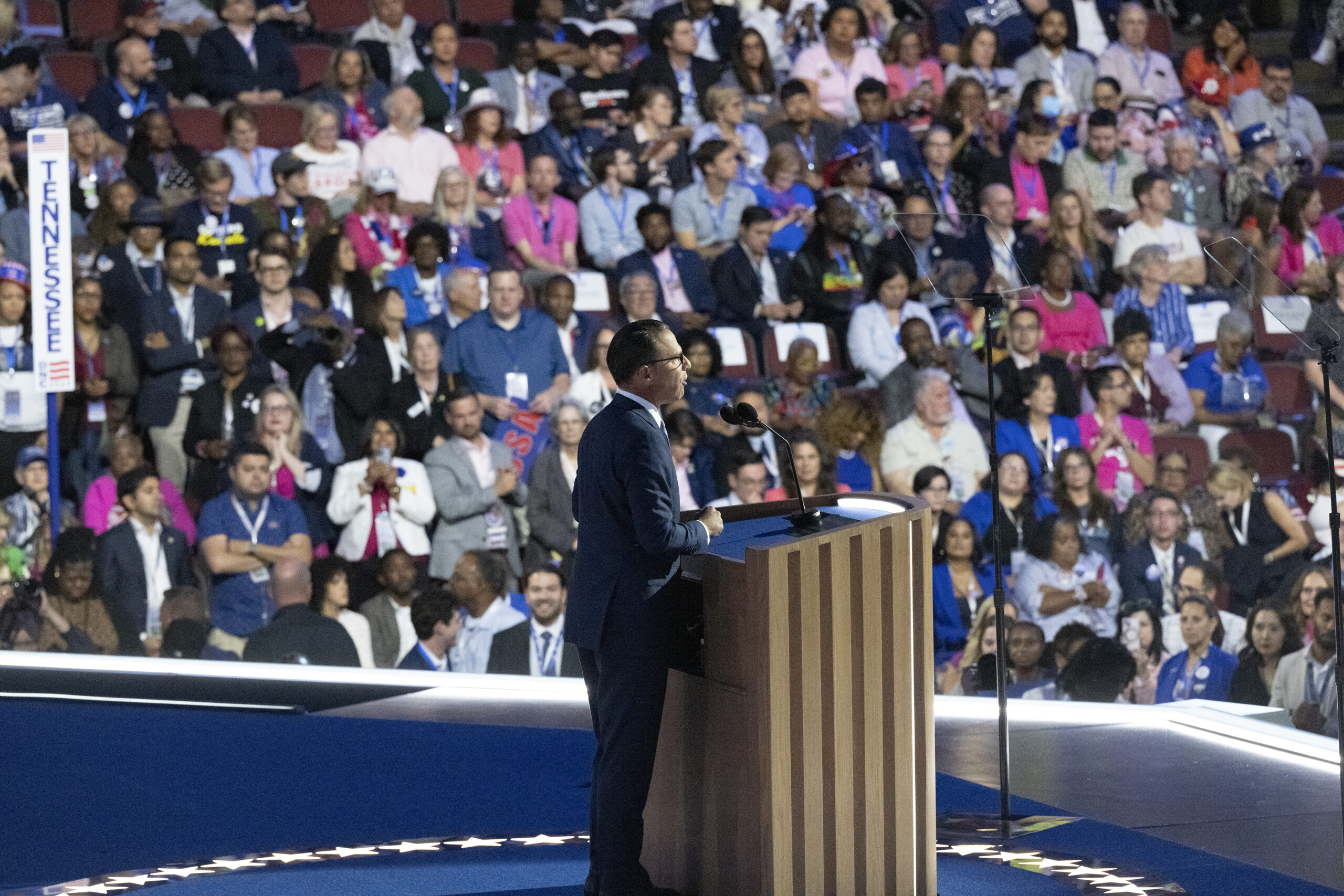
    Pennsylvania Gov. Josh Shapiro speaks during the Democratic National Convention Aug. 21, 2024, in Chicago.

    In a letter to Martin, Shapiro wrote that Philadelphia “would see substantial economic benefits” from hosting the convention and vowed that the state would be “prepared to ensure our infrastructure, public safety agencies, workforce, and business community are equipped to host thousands of delegates and attendees.”

    What’s next: a close look at security and logistics

    Behind the pomp of the DNC’s spring site visit will be a serious evaluation of security, transportation, hotels, and arena logistics.

    The DNC said in a statement Monday that it will value “new and innovative approaches” to hosting a large-scale event that is likely to bring thousands of tourists. In 2016, the convention drew more than 5,000 attendees and an additional 29,000 visitors — nearly 20,000 of whom were media members.

    Nominating conventions are typically designated as National Special Security Events, meaning the federal government leads security because the event is deemed at high risk for terrorism or other criminal activity. That means planners need to know specifics about law enforcement staffing, gear, and other capabilities.

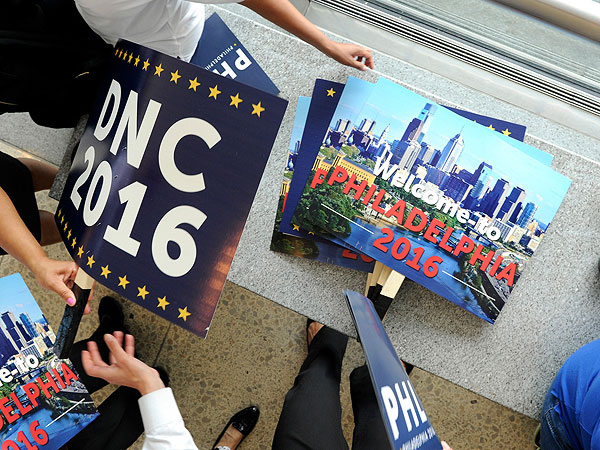
    Placards promoting Philadelphia as the host city of the Democratic National Convention in 2016, while the Democratic National Committee was touring the city in August.

    Support will also have to come from outside the city. During past conventions, federal law enforcement teamed up with Philadelphia police to secure the venue, and they were joined by officers from across the region.

    The DNC also said in its announcement Monday that the committee would prioritize “the importance of forging a strong partnership between the DNC and the host city, including its community, political, and business leaders.”

    To that end, the host committee and Parker asked elected officials and civic leaders from across the state to write letters of support that accompanied the city’s bid.

    Authors ranged from City Council President Kenyatta Johnson, whose district includes the South Philadelphia stadium complex, to labor leaders to Democrats from the Philadelphia collar counties.

    Montgomery County Commissioner Neil Makhija, who wrote a letter to the DNC boosting the bid, said it is important for the committee to see that local governments and law enforcement agencies outside the city are willing to offer support, because “pulling something like this off requires a lot of cooperation on many different fronts.”

    “A real concern now when you’re thinking about hosting a political convention is ‘How are we going to manage public safety and a threat environment?’” he said. “There are a number of reasons to point to our region and see a level of collaboration that inspires confidence.”

  • Commerce Secretary Lutnick to appear before House panel investigating Epstein

    Commerce Secretary Lutnick to appear before House panel investigating Epstein

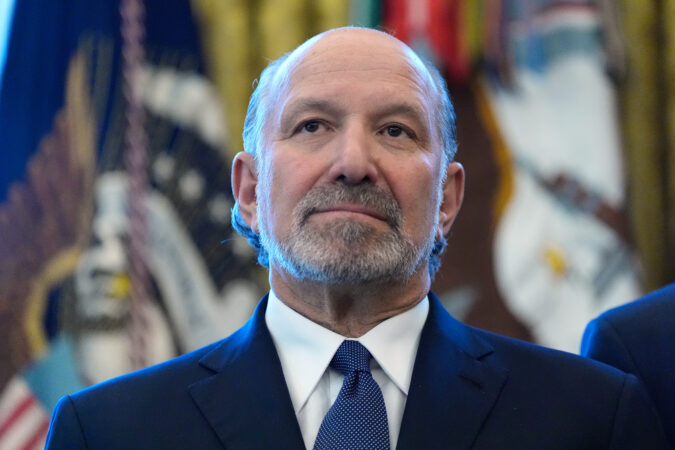
    Commerce Secretary Howard Lutnick, a former Manhattan neighbor of Jeffrey Epstein, has agreed to voluntarily testify before the House Oversight Committee as part of its investigation into the convicted sex offender, the panel’s chairman announced Tuesday.

    Lutnick has faced growing bipartisan pressure to testify about his ties to Epstein following the Justice Department’s release of a tranche of documents that suggested Lutnick maintained contact with Epstein years after claiming to have distanced himself from him.

    “Secretary Lutnick has proactively agreed to appear voluntarily before the House Committee on Oversight and Government Reform,” Rep. James Comer (R., Ky.), the committee’s chairman, said in a statement. “I commend his demonstrated commitment to transparency and appreciate his willingness to engage with the Committee. I look forward to his testimony.”

    Lutnick’s connection to Epstein also has caused controversy at Haverford College, where president Wendy Raymond is considering convening a committee that would review whether the mega donor’s name should remain on the campus library.

    Lutnick will soon become the latest participant in a series of high-profile interviews conducted by the committee for its Epstein probe — the most recent of which included former President Bill Clinton and former Secretary of State Hillary Clinton. They took part in a pair of contentious, closed-door depositions in New York last week.

    The Department of Commerce did not immediately respond to a request for comment about Lutnick’s interview.

    “I look forward to appearing before the committee. I have done nothing wrong and I want to set the record straight,” Lutnick said in a statement to Axios, which first reported his planned appearance.

    Testifying before Congress last month, the commerce secretary said he recalled meeting with Epstein three times over the course of 14 years. Lutnick also said he and his family had lunch with Epstein on his Caribbean island in 2012 — after previously claiming that he and his wife had distanced themselves from Epstein around 2005.

    The exchanges made public by the Justice Department show that Lutnick, a former chairman of the financial services firm Cantor Fitzgerald, and Epstein kept communicating years after Epstein pleaded guilty to two charges of soliciting prostitution, including one involving a minor, and was sentenced to 13 months in jail.

    Their last known exchange in the Justice Department documents came in 2018, when Lutnick reached out to Epstein about the Frick Collection, a museum near their neighboring homes, planning construction.

    “Are you aware as to them building to block our park views,” Lutnick wrote in an email that his assistant forwarded to Epstein, “What should we do about it? Time is of the essence.” Lutnick also urged Epstein to involve a lawyer, to which Epstein replied, “Will do.”

    The following year, Epstein was arrested on federal sex trafficking charges and later died in federal custody. His death was ruled a suicide.

    Some lawmakers, including Rep. Robert Garcia of California — the top Democrat on the House Oversight Committee — as well as Rep. Thomas Massie (R., Ky.), have called for Lutnick to step down over his connection to Epstein. But President Donald Trump last week signaled he remained confident in Lutnick.

    “Howard would go in and do whatever he has to say,” Trump told reporters on Friday about possible Epstein testimony. “He’s a very innocent guy. He’s doing a good job.”

    The Oversight Committee has already scheduled depositions for Darren Indyke and Richard Kahn, the co-executors of Epstein’s estate, this month. And Rep. Anna Paulina Luna (R., Fla.) has said she plans to ask the committee to bring in “some of the [Epstein] co-conspirators that were given lesser sentences that were known to have trafficked young girls.”

    Garcia told the Washington Post that if Democrats retake the House in November and become the majority next year, they will “absolutely” pursue an interview with Trump regarding Epstein. “There’s a long list of subpoenas that we will be engaged in,” Garcia added.

  • Pentagon dispute bolsters Anthropic reputation but raises questions about AI readiness in military

    Pentagon dispute bolsters Anthropic reputation but raises questions about AI readiness in military

    Anthropic’s moral stand on U.S. military use of artificial intelligence is reshaping the competition between leading AI companies but also exposing a growing awareness that maybe chatbots just aren’t capable enough for acts of war.

    Anthropic’s chatbot Claude, for the first time, outpaced rival ChatGPT in phone app downloads in the United States this week, a signal of growing interest from consumers siding with Anthropic in its standoff with the Pentagon, according to market research firm Sensor Tower.

    The Trump administration on Friday ordered government agencies to stop using Claude and designated it a supply chain risk after Anthropic CEO Dario Amodei refused to bend his company’s ethical safeguards preventing the technology from being applied to autonomous weapons and domestic mass surveillance. Anthropic has said it will challenge the Pentagon in court once it receives formal notice of the penalties.

    And while many military and human rights experts have applauded Amodei for standing up for ethical principles, some are also frustrated by years of AI industry marketing that persuaded the government to apply the technology to high-stakes tasks.

    “He caused this mess,” said Missy Cummings, a former Navy fighter pilot who now directs the robotics and automation center at George Mason University. “They were the No. 1 company to push ridiculous hype over the capabilities of these technologies. And now, all of a sudden, they want to be for real. They want to tell people, ‘Oh, wait a minute. We really shouldn’t be using these technologies in weapons.’”

    Anthropic didn’t immediately respond to a request for comment. The Defense Department declined to comment on whether it is still using Claude, including in the Iran war, citing operational security.

    Cummings published a paper at a top AI conference in December arguing that government agencies should prohibit the use of generative AI “to control, direct, guide or govern any weapon.” Not because AI is so smart that it could go rogue, but because the large language models behind chatbots like Claude make too many mistakes — called hallucinations or confabulations — and are “inherently unreliable and not appropriate in environments that could result in the loss of life.”

    “You’re going to kill noncombatants,” Cummings said in an interview Tuesday with the Associated Press. “You’re going to kill your own troops. I’m not clear whether the military truly understands the limitations.”

    Amodei sought to emphasize those limitations in defending Anthropic’s ethical stance last week, arguing that “frontier AI systems are simply not reliable enough to power fully autonomous weapons. We will not knowingly provide a product that puts America’s warfighters and civilians at risk.”

    Anthropic, until recently, was the only one of its peers to have approval for use in classified military systems, where it has partnered with data analysis company Palantir and other defense contractors. President Donald Trump said Friday, around the same time he was approving Saturday’s military strikes on Iran, that the Pentagon would have six months to phase out Anthropic’s military applications.

    Cummings, a former Palantir adviser, said it’s possible that Claude has already been used in military strike planning.

    “I just fundamentally hope that there were humans in the loop,” she said. “A human has to babysit these technologies very closely. You can use them to do these things, but you need to verify, verify, verify.”

    She said that’s a contrast to the messaging from AI companies that have suggested that their technology is evolving to the point where it is “almost sentient.”

    “If there’s culpability here, I’d say half is Anthropic’s for driving the hype and half is the Department of War’s fault for firing all the people that would have otherwise advised them against stupid uses of technology,” Cummings said.

    One social media commentator this week described Anthropic’s government problems as a “Hype Tax” — a message that was reposted by President Donald Trump’s top AI adviser, David Sacks, a frequent critic of the company.

    And while it has caused legal hassles that could jeopardize Anthropic’s business partnerships with other military contractors, it has also bolstered its reputation as a safety-minded AI developer.

    “It’s applaudable that a company stood up to the government in order to maintain what it felt were its ethics and were its business choices, even in the face of these potentially crippling policy responses,” said Jennifer Huddleston, a senior fellow at the libertarian-leaning Cato Institute.

    Consumers have already spoken, leading to a surge of Claude downloads that made it the most popular iPhone app starting on Saturday and for all phone systems in the U.S. on Monday, according to Sensor Tower. That’s come at the expense of OpenAI’s ChatGPT, which saw its consumer reputation damaged when it announced a Friday deal with the Pentagon to effectively replace Anthropic with ChatGPT in classified environments.

    In the Apple store, the number of 1-star reviews — the worst rating — of ChatGPT grew by 775% on Saturday and continued to grow early this week, forcing OpenAI to do damage control.

    “We shouldn’t have rushed to get this out on Friday,” OpenAI CEO Sam Altman said in a social media post Monday. “The issues are super complex, and demand clear communication. We were genuinely trying to de-escalate things and avoid a much worse outcome, but I think it just looked opportunistic and sloppy.”

    Altman was planning to gather employees for an “all-hands” meeting on Tuesday to discuss next steps.

    “There are many things the technology just isn’t ready for, and many areas we don’t yet understand the tradeoffs required for safety,” Altman said. “We will work through these, slowly, with the [Pentagon], with technical safeguards and other methods.”

  • Who leads Iran now? An uncertain path to new supreme leader after Khamenei’s death.

    Who leads Iran now? An uncertain path to new supreme leader after Khamenei’s death.

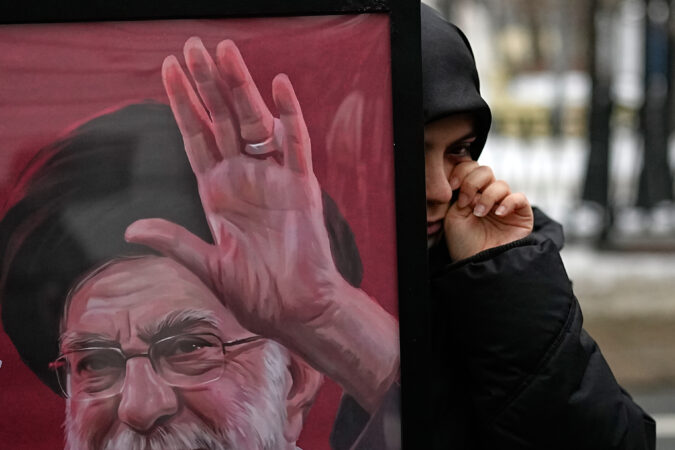
    Iran announced the first step in a succession process that remains opaque and fraught with uncertainty Sunday after the government confirmed the killing of Supreme Leader Ayatollah Ali Khamenei in U.S. and Israeli attacks.

    What comes next is uncertain. Iran’s constitution calls for an assembly of experts to choose the next supreme leader, but that may not be possible in wartime. And with so many of the country’s top leadership reportedly targeted in the U.S. and Israeli strikes, it is unclear who remains among the country’s power brokers and those considered candidates to replace Khamenei.

    “The martyrdom of the Supreme Leader at the hands of Israel and the criminal America was a great disaster for our country,” said Iranian President Masoud Pezeshkian in an address to the nation Sunday, his first since the conflict erupted.

    An interim leadership council assumed its duties and began leading the country, Pezeshkian said. “With the power of God, we will continue the path of the Imam, the path of the dear leader, and the path of all those who seek justice in the world with power,” he said.

    Long anticipated, the succession of Iran’s 86-year-old supreme leader was always expected to bring with it a degree of regime instability. But now, that will likely be magnified, with various rivals and factions jockeying for wartime power amid vastly diminished popularity and perhaps support among Iran’s military establishment.

    Iran has only held one other supreme leader succession, that which brought Khamenei to power in 1989 after the death of Ayatollah Ruhollah Khomeini, the founder of the Islamic Republic. Though the process is outlined in the country’s constitution and the Iranian system has had years to prepare, experts caution that a smooth process is nearly impossible.

    “Irrespective of what the guidelines say and what the politics may have been, it was always going to be improvisational,” said Suzanne Maloney, a vice president at the Brookings Institution who has advised both Democratic and Republican administrations on Iran policy.

    “Under the circumstances of an existential conflict, the succession process is going to be very much dictated by the context of the moment,” Maloney said. In the near term, she expects Iran to keep the temporary council in place.

    The supreme leader is both the head of state in Iran and a religious figure, believed to be a representative of God by his Shiite followers. Khamenei served in the position for 37 years, during which time he greatly expanded the power and scope of rule over the democratically elected civilian government. As supreme leader, Khamenei had the last say on all matters in the country, but often only arrived at decisions after a lengthy consultative process.

    Iran’s former president, Ebrahim Raisi, had long been considered the next in line to Khamenei. But after Raisi’s death in a 2024 helicopter accident, the question of succession has remained open, creating a kind of power vacuum. Several names have been considered front-runners, but most lack a significant public profile.

    One of the top contenders on the interim council appointed Sunday is Ayatollah Alireza Arafi, who has deep ties to the Iranian system and security establishment. He is a member of the guardian council and the assembly of experts, the body that chooses the next supreme leader.

    After Raisi’s death, one of Khamenei’s sons, Mojtaba, was widely expected to be the favored successor, but Khamenei was reportedly against the idea of transferring the position along hereditary lines. Others in Iran feared such a move would echo the very ruling system — the shahs of the Pahlavi dynasty — that the Islamic republic under Khomeini toppled in 1979.

    It’s unclear how many figures from Khamenei’s inner circle were killed alongside him or elsewhere during U.S. and Israeli strikes. The status of his son Mojtaba remains unclear, but state media confirmed Khamenei’s son-in-law and daughter-in-law were killed Saturday.

    “The structure of the Islamic Revolution has been designed in such a way that after the martyrdom of any commander, at any rank or level, qualified and capable individuals immediately replace them,” read a report Saturday from the state-run Fars News Agency.

    As long as the war continues, the succession process could remain a secondary concern to Iran’s remaining leadership, according to Alex Vatanka, an Iran analyst with the Middle East Institute.

    “The succession process is not key in the short term because they’re going to try and fight on. Firing off missiles does not require a supreme leader,” he said. But if Iran’s regime survives war with the United States and Israel, the supreme leader’s role could be critical to holding the system together in a weakened state.

    Already this year, Iran faced massive nationwide protests that began in response to economic grievances but quickly morphed into thundering calls for an end to the regime. The protests plunged the country into crisis and Iran’s leadership chose to respond to the unrest with overwhelming violence, killing thousands of people in a matter of days.

    In the aftermath of the protests, many Iranians reached by the Washington Post described deep, simmering anger toward their government. And some said they were eagerly anticipating a U.S. attack as President Donald Trump threatened Iran with an expanding military buildup over the past month.

    Celebrations broke out in Tehran and other parts of the country after news of Khamenei’s death Saturday night. Amid the ongoing near-total internet blackout it was impossible to determine how widespread the celebrations were. But Iranians reached inside the country by the Post reported that security forces were deployed Saturday night to break up the revelers.

    When Trump announced the initial waves of U.S. and Israeli attacks against Iran he issued a direct call to the Iranian people.

    “Bombs will be dropping everywhere. When we are finished, take over your government. It will be yours to take,” Trump said. “This will be probably your only chance for generations.”

    Prominent members of Iran’s opposition are hoping Khamenei’s death will build momentum for protests and demonstrations. Reza Pahlavi, the son of Iran’s deposed shah and a prominent opposition exile, has repeatedly called on Iranians to rise up against the regime. After Khamenei’s death he issued a renewed call to the country’s security forces to defect.

    “Any attempt by the remnants of the regime to appoint a successor to Khamenei is doomed to fail from the outset,” he wrote. Though he has lived in exile for most of his life, Pahlavi is Iran’s most prominent opposition leader, and in recent mass protests inside the country Iranians chanted for his return.

    “To the military, law enforcement, and security forces: any effort to preserve a collapsing regime will fail,” he said in a social media post.

  • K-9 Ivan makes 40-pound drug bust in Delco

    K-9 Ivan makes 40-pound drug bust in Delco

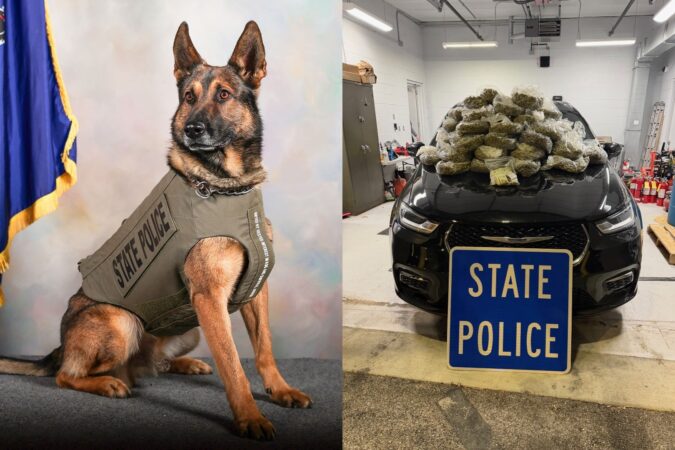
    A drug-sniffing K-9 dog helped the Pennsylvania State Police make a 40-pound marijuana bust during a traffic stop on I-95 in Delaware County, the law enforcement agency said Tuesday.

    Around 11:20 p.m. on Thursday, state troopers stopped a vehicle on southbound I-95 in Ridley Township for multiple alleged traffic offenses, state police said.

    Troopers suspected something was up and asked for consent to search the vehicle, but the driver allegedly refused, so troopers called for Ivan, a state police K-9 dog.

    Ivan was “alerted to the odor of narcotics in the vehicle,” and a search warrant was obtained while the driver was detained for the investigation, state police said.

    The vehicle was towed to the state police barracks in Media, where troopers allegedly discovered about 40 pounds of marijuana concealed in boxes and buckets, and around $6,000 cash.

    The driver, who was not identified, was arrested and charged with multiple offenses, state police said.

  • Montco school bus driver arrested with Tito’s vodka, charged with DUI for erratic driving

    Montco school bus driver arrested with Tito’s vodka, charged with DUI for erratic driving

    A Douglass Township school bus driver was charged with driving under the influence and related crimes after she drove more than 50 elementary school-age children while intoxicated, officials said.

    Kelly Weber, 46, of Boyertown, drove her school bus “erratically” on Feb. 6 while children were inside, narrowly missing vehicles and nearly hitting a telephone pole, the Montgomery County District Attorney’s Office said.

    Police responded in the rural township north of Pottstown after receiving calls about Weber’s driving, officials said.

    They searched the bus and found an open 750ml bottle of Tito’s vodka, two empty Tito’s bottles, and a liquor store receipt for the alcohol from 9:22 a.m. that day.

    Investigators found that 54 children had ridden on Weber’s bus that day, and that multiple children had called or texted their parents expressing fear about the manner in which she was driving.

    One of the children got off the bus before arriving at school and was picked up by their parents, officials said.

    Police tested Weber’s blood-alcohol content and found it was 0.331, which is four times the legal threshold for intoxication in Pennsylvania.

    In addition to DUI, Weber was charged with 54 counts of endangering the welfare of children and 54 counts of reckless endangerment.

    Weber voluntarily entered a rehab facility after she was issued an arrest warrant, according to officials.

    She is working with police to arrange a time to turn herself in, when her bail will be set and she will be formally arraigned, officials said.

  • New York’s congestion toll into Manhattan upheld by a federal judge over Trump’s objections

    New York’s congestion toll into Manhattan upheld by a federal judge over Trump’s objections

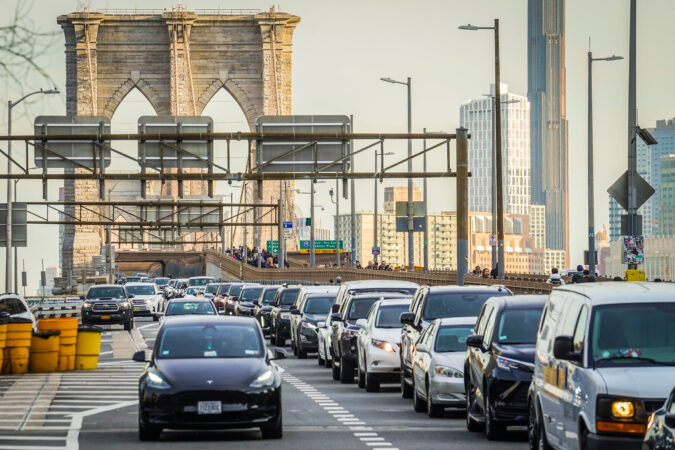
    NEW YORK — A federal judge has blocked President Donald Trump’s administration’s efforts to halt New York’s first-in-the-nation congestion fee meant to reduce traffic and pump revenue into the region’s aging transit system.

    U.S. District Judge Lewis Liman on Tuesday ruled that the U.S. Department of Transportation lacked the authority to unilaterally rescind approval of the $9 toll, which former Democratic President Joe Biden initially green-lit.

    Instead, he sided with the Metropolitan Transportation Authority, which had argued that the department’s reversal was “unlawful” because the agency had not adequately explained its reasoning.

    “The Secretary’s actions were arbitrary and capricious, an abuse of discretion, and not in accordance with law,” Liman wrote in his 149-page ruling, referring to Trump’s Transportation Secretary Sean Duffy.

    The judge noted that New York’s legislature passed the toll, which its governor signed into law and received the necessary federal approvals before launching.

    “The democratic process worked,” Liman wrote, even as he left the door open for future attempts by Trump and other opponents to kill the program, which took effect on Jan. 5, 2025.

    Gov. Kathy Hochul said the decision vindicates a “once-in-a-lifetime success story” that’s “yielded huge benefits” in its first year of operation, including reducing gridlock and unlocking critical funding for mass transit.

    “The judge’s decision is clear: Donald Trump’s unlawful attempts to trample on the self-governance of his home state have failed spectacularly,” the Democrat said in a statement. “Congestion pricing is legal, it works, and it is here to stay.”

    The U.S. DOT said it’s reviewing its legal options, including appealing.

    “Once again, working-class Americans are being sidelined under Governor Kathy Hochul’s policies, which impose a massive tax on every New Yorker,” the agency said in a statement.

    New York’s congestion toll is imposed on most vehicles driving into Manhattan south of Central Park.

    The toll varies depending on vehicle type and time of day, and is added to tolls drivers already pay to cross bridges and tunnels into Manhattan, but generally costs about $9.

    Congestion pricing schemes aimed at reducing traffic pollution and encouraging public transit use have long existed in other global cities, including London, Stockholm, Milan, and Singapore, but not in the U.S.

    But Trump, whose namesake Trump Tower and other properties are within the congestion zone, has strongly opposed the idea. During his presidential campaign, he vowed to kill New York’s plan as soon as he took office.

    Then last February, Duffy rescinded the toll’s federal approval, calling the fee “a slap in the face to working-class Americans and small business owners.” He threatened to withhold federal funding for projects in New York if the toll weren’t discontinued.

    But Liman temporarily blocked the administration from following through on those threats until he issued a final decision. The Manhattan judge previously dismissed a series of lawsuits brought by local opponents, including New Jersey’s governor, unionized teachers in New York City, a trucking industry group, and local suburban leaders.

    Hochul had been a vocal supporter of the toll but paused its planned rollout in 2024, a move widely seen as an attempt to help suburban Democrats in congressional races where the toll was divisive. She then reinstated the fee after the election, but lowered it from $15 to $9.

    As the program marked its first anniversary in January, Hochul, who is up for reelection, joined the MTA in touting the toll’s benefits.

    According to a recent MTA report, the toll has led to some 27 million fewer vehicles coming into the heart of Manhattan, resulting in 22% less air pollution and 23% faster commute times for those opting to drive and pay the fee.

    The toll has also generated more than $550 million in revenue for the region’s creaky and cash-strapped transit system — exceeding projections, the MTA has said.

    Sales tax revenues, office leases and foot traffic in the congestion zone have all increased since the toll took effect, disproving concerns it would hurt the local economy, according to the agency.

    “Traffic is down, business is up, and we’re making crucial investments in a transit system that moves millions of people a day,” Janno Lieber, the MTA’s CEO, said Tuesday. “New York is winning.”

  • War with Iran strains the U.S.-U.K. relationship as Starmer and Trump disagree

    War with Iran strains the U.S.-U.K. relationship as Starmer and Trump disagree

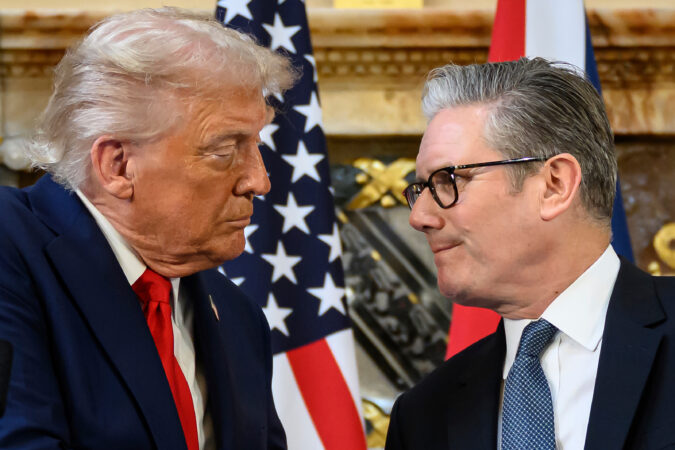
    LONDON — Keir Starmer has never had a bad word to say in public about Donald Trump.

    That is not being reciprocated now as the American president lambasts the British prime minister over his reluctance to join the U.S.-Israeli strikes on Iran.

    “This is not Winston Churchill that we’re dealing with,” Trump said Tuesday at the White House, blasting Britain’s reluctance to let U.S. warplanes use its bases.

    The dispute is roiling a relationship that Starmer worked hard to forge, and further straining trans-Atlantic ties frayed by Trump’s “America first” foreign policy and transactional approach to international relations.

    Britain is in Trump’s bad books

    “This was the most solid relationship of all. And now we have very strong relationships with other countries in Europe,” Trump told British tabloid the Sun in an interview published Tuesday.

    “I mean, France has been great. They’ve all been great,” Trump said. “The U.K. has been much different from others.”

    “It’s very sad to see that the relationship is obviously not what it was,” he said.

    Starmer initially blocked American planes from using British bases for the attacks on Iran that started on Saturday. He later agreed to let the United States use bases in England and on Diego Garcia in the Indian Ocean to strike Iran’s ballistic missiles and their storage sites, but not to hit other targets.

    Even after the British base at Akrotiri in Cyprus was hit by an Iran-made drone over the weekend, Starmer said that the United Kingdom “will not join offensive action.” He said Tuesday that a Royal Navy destroyer, HMS Dragon, and Wildcat helicopters with counter-drone capabilities were being sent to the region as part of “defensive operations.” British forces have also shot down drones in Jordanian and Iraqi airspace, the government said.

    Starmer has offered a rare, though implicit, rebuke of the U.S. president, saying Monday that the U.K. government doesn’t believe in “regime change from the skies.”

    “Any U.K. actions must always have a lawful basis and a viable, thought-through plan,” Starmer told lawmakers in the House of Commons on Monday.

    “President Trump has expressed his disagreement with our decision not to get involved in the initial strikes, but it is my duty to judge what is in Britain’s national interest,” Starmer added.

    The Financial Times called it Starmer’s “Love Actually moment” — a reference to the 2003 movie scene in which a British prime minister played by Hugh Grant stands up to a bullying U.S. president played by Billy Bob Thornton.

    Friction has grown over Greenland and Diego Garcia

    Friction between the two leaders has been building for months. Trump’s threat to take over Greenland was denounced by Starmer and other European leaders earlier this year. Recently, Trump has condemned Britain’s agreement to hand over the Chagos Islands, home to the Diego Garcia base, to Mauritius, despite his administration earlier backing the deal.

    Peter Ricketts, a former head of the U.K. Foreign Office, told the Observer newspaper that under Trump, “the Americans have effectively given up on any effort to be consistent with international law.”

    That is a red line for the law-abiding Starmer, a barrister and former chief prosecutor for England and Wales.

    The spat is a setback for Starmer’s efforts to woo Trump since the president’s return to office in 2025. The British government rolled out the red carpet to the president for a state visit as the guest of King Charles III, and Starmer consistently has praised Trump’s efforts — so far unsuccessful — to broker an end to the Russia-Ukraine war.

    The Iran war has also divided European leaders, who fall along a spectrum from condemnation to support.

    NATO Secretary-General Mark Rutte said that he unreservedly approves of Trump’s decision to attack Iran and kill its supreme leader, and called the war crucial for Europe’s security.

    The U.K., France, and Germany jointly said that they weren’t involved in the strikes, but were prepared to enable “necessary and proportionate defensive action to destroy Iran’s capability to fire missiles and drones at their source.”

    Spanish Prime Minister Pedro Sánchez condemned the strikes as “unjustifiable” and “dangerous.”

    Polling suggests many Britons are skeptical of the U.S. justification for war. But politicians to the right of Starmer’s Labour Party slammed the prime minister for not joining the offensive. Conservative leader Kemi Badenoch said that her party “stands behind America taking this necessary action against state-sponsored terror.”

    Foreign Office Minister Stephen Doughty denied the U.S.-U.K. “special relationship” was on the ropes.

    “Our relationship with the United States is strong,” he said Tuesday in the House of Commons. “It has endured, it continues to endure, and it will endure into the future on both the economic and the security fronts.”

  • Father who gave gun to Georgia school shooting suspect for Christmas is guilty of 2nd-degree murder

    Father who gave gun to Georgia school shooting suspect for Christmas is guilty of 2nd-degree murder

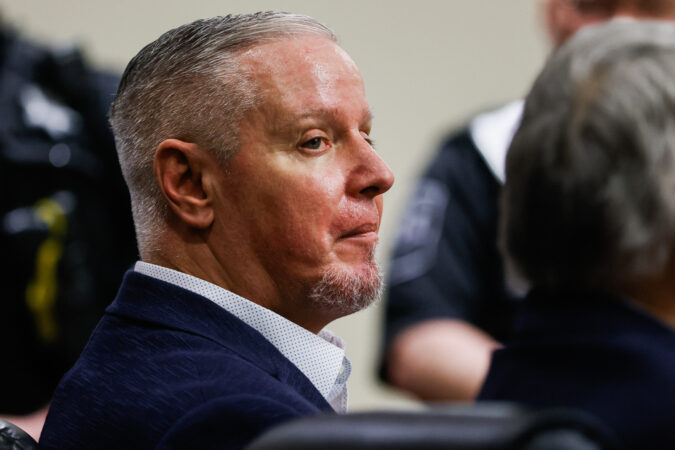
    WINDER, Ga. — A Georgia man who gave his teenage son the gun he’s accused of using to kill two students and two teachers at a high school was convicted Tuesday of second-degree murder and involuntary manslaughter.

    Jurors took less than two hours to find Colin Gray guilty of all charges in the September 2024 shooting at Apalachee High School in Winder, northeast of Atlanta. Gray now joins a growing number of parents being held responsible in court after their children were accused in shootings.

    Colin Gray was found guilty of second-degree murder in the deaths of two 14-year-old students, Mason Schermerhorn and Christian Angulo. Georgia law defines second-degree murder as causing the death of a child by committing the crime of cruelty to children. Gray was found guilty of involuntary manslaughter in the killings of teachers Richard Aspinwall, 39, and Cristina Irimie, 53.

    Another teacher and eight other students were wounded. Gray was also convicted of multiple counts of reckless conduct and cruelty to children.

    Reactions to the verdict

    Gray showed little emotion as the verdict was read and each juror was polled by the judge. Deputies then cuffed his hands behind his back as he stood at the defense table, speaking with his lawyer. He will be sentenced at a later date. Second-degree murder is punishable by at least 10 but no more than 30 years in prison, while involuntary manslaughter carries a penalty of one to 10 years in prison.

    Some relatives of victims wept as the verdicts were read. They declined to comment after court. Gray’s defense lawyers left without speaking to reporters.

    “We talk a lot about rights in our country,” Barrow County District Attorney Brad Smith said after the verdict. “But God gave us a duty to protect our children, and I hope that we remember that, as parents, as community members, to protect our children because that is our God-given duty.”

    The teen’s mother, Marcee Gray, wasn’t charged. She testified that she had urged her estranged husband to take any guns and lock them inside his truck so they would not be accessible to their son. She and Colin Gray were separated in the months leading up to the shooting, and Colt Gray lived mostly with his father during that time. She declined to comment when reached by phone after the verdict.

    The shooting

    Prosecutors said Gray gave his son the gun as a Christmas gift and allowed him access to it along with ammunition despite the boy’s deteriorating mental health. They said he had “sufficient warning that Colt Gray would harm and endanger” other people.

    Fourteen at the time of the shooting, Colt Gray has pleaded not guilty to a total of 55 counts, including murder. A judge has set a status hearing for mid-March.

    Investigators said Colt Gray carefully planned the Sept. 4, 2024, shooting at the school attended by 1,900 students.

    He boarded the school bus with a semiautomatic, assault-style rifle in his book bag, the barrel sticking out and wrapped in poster board, investigators said. He left his second-period class and emerged from a bathroom with the gun and shot people in a classroom and hallways, investigators said.

    Parents’ responsibility

    Colin Gray knew his son was obsessed with school shooters, even having a shrine in his bedroom to Nikolas Cruz, the shooter in the 2018 massacre at Florida’s Marjory Stoneman Douglas High School, prosecutors said.

    “It wasn’t like one parent missed one warning,” Smith told reporters. “This was multiple warnings over a lengthy period of time and, like we said, you just had to do one thing — take that rifle away and this would have been prevented.”

    Jennifer and James Crumbley, the first U.S. parents held criminally responsible for a mass school shooting committed by a child, are serving 10-year prison terms for involuntary manslaughter after their son Ethan killed four students and wounded others in Michigan in 2021.

    Colin Gray was the first such parent to be charged in Georgia. Smith said Marcee Gray had seen what happened in Michigan and asked her husband to remove the weapons as a result. “So Michigan was able to move the needle to the point that it almost stopped this tragedy,” he said. “We hope we’ve moved the needle a little further.”

    Legislative changes

    Georgia lawmakers last year passed a school safety bill in response to the shooting. It directs state officials to create an alert system, including the names of students who an investigation has found threatened violence or committed violence at schools.

    It also requires law enforcement to notify schools when officers learn a child has threatened death or injury to someone at a school, the implementation of mobile panic alert buttons at schools, quicker transfers of records when students switch schools and mental health coordinators in each of the state’s 180 school districts.

    Legislators also approved a request by Gov. Brian Kemp to spend an extra $50 million on school safety.