Category: News

Latest breaking news and updates

  • National Park Service database flags hundreds of items that might ‘disparage’ America

    National Park Service database flags hundreds of items that might ‘disparage’ America

    At the Emmett Till and Mamie Till-Mobley National Monument in Mississippi, staff members asked the Trump administration to review an entire exhibit on the Black teen’s brutal 1955 killing by white men and his mother’s decision to publicize it — though the park’s staff warned that its removal would leave the site “completely devoid of interpretation.”

    At Arches National Park in Utah, park managers wondered whether a sign about the damage that graffiti and invasive species leave on the iconic red rock landscape violates a Trump directive to focus solely on America’s natural beauty.

    In Philadelphia, displays at a house where George Washington once lived that presented the history of people enslaved by him were taken down, only to have a federal judge order their restoration.

    And at Harpers Ferry National Historical Park in West Virginia, staff members have asked federal officials to decide whether a document that describes an abolitionist’s murder by a mob might “denigrate the murderers.”

    These displays and materials are among several hundred that managers have flagged at hundreds of national park locations since last summer in response to administration orders to scrub sites of “partisan ideology,” descriptions that “disparage” Americans, or materials that stray from a focus on the nation’s “beauty, abundance, or grandeur.” The submissions were compiled in an internal government database and reviewed by the Washington Post, which confirmed its authenticity with current federal employees.

    The database does not make clear which of the plaques, maps, films, and books ultimately will be removed or recast by the Interior Department, though some have already been axed. But the submissions provide a sweeping portrait of the scope of President Donald Trump’s bid to reconsider how national park sites address the historic legacy of racism and sexism, LGBTQ+ rights, climate change, and pollution — or whether to acknowledge them at all.

    A group describing itself as “civil servants on the front lines” posted the database on two public websites Monday, saying in an attached note that it did so to show Americans how the administration is “trying to use your public lands to erase history and undermine science.”

    Asked for comment, the Interior Department issued a statement Monday saying that the “draft, deliberative internal documents” in the database “are not a representation of final action taken.” The statement, from spokesperson Charlotte Taylor, asserted that the documents were “edited before being inappropriately and illegally released to the media in ways that misrepresented the status of this effort.”

    The department did not respond to questions about the status or process for the reviews, nor about specific examples in the submissions.

    The tone and content of the materials described and submitted to Interior by park managers vary widely, reflecting a mix of careful attempts to obey administration orders, confusion about what might violate them, and, at times, apparent skepticism about the entire endeavor.

    Staff members identified a brochure at Cape Hatteras National Seashore, in North Carolina, for “possible disparaging of a prominent American” because it mentions that aviator and onetime Smithsonian Institution secretary Samuel Langley failed to achieve flight. A park staffer at Glen Canyon National Recreation Area in Arizona asks for clarification about whether displays on California condors’ return from the brink of extinction disparage hunters “or tell a success ??”

    Several submissions ask for reviews of book covers, book chapters, and entire books on sale at gift shops, including Incidents in the Life of a Slave Girl, an autobiography by abolitionist Harriet Jacobs.

    “They are mostly on slavery and the black experience in Washington DC as well as a few on Lincoln’s assassination,” wrote a park official at Ford’s Theatre National Historic Site. “Not sure they all disparage historical figures, but they do cover dark periods in American history.”

    Another inquiry came from the Thomas Jefferson Memorial in Washington, where employees shared a list of books on the third president. “I am not sure if they really disparage Thomas Jefferson, but they do aknowledge [sic] that he had children with Sally Hemings,” the inquiry notes.

    Bill Wade, executive director of the Association of National Park Rangers, said the breadth of the submissions revealed the many hours of work that Trump’s order imposed on already overextended park employees, who “probably should’ve been doing other things most of us believe would be more important.”

    The exercise, Wade added, runs counter to the reasons many National Park Service employees gravitated toward their work in the first place. “Park rangers everywhere, and all park employees for that matter, have been passionate about telling true stories about history, and about science,” said Wade, a former superintendent of Shenandoah National Park in Virginia. “It’s a real affront to the values that rangers have.”

    Others have embraced Trump’s effort, including Sen. Jim Banks (R., Ind.), who last summer wrote to top officials at Interior and the Park Service over concerns about “woke” projects he said appeared to violate the president’s order.

    “The President’s executive order rightfully opposes a decades-long effort by our institutions to usurp American history with an ideology-based narrative that casts America’s founding and history in a negative light,” Banks wrote at the time.

    In nearly a year since Trump’s order, National Park sites have responded by removing exhibits that address slavery and the challenges overcome by minority and marginalized groups, as well as signs about the science of climate change.

    But there also has been sustained pushback.

    Last month, a federal judge in Pennsylvania ordered the Trump administration to restore displays that discussed slavery at a site in Philadelphia where Washington lived as president.

    U.S. District Judge Cynthia M. Rufe of the Eastern District of Pennsylvania compared the displays’ removal earlier this year to the mind control employed by the government in George Orwell’s novel 1984.

    Rufe’s ruling — issued on Presidents Day — granted an immediate injunction, requiring the reinstallation of 34 educational panels removed in January by the Park Service from a site at Independence National Historical Park in Philadelphia.

    Two weeks ago, a coalition of scientific, preservation, and historical groups sued the Trump administration over changes that already have been made, arguing that the removal of information about civil rights, climate change, and other topics at multiple national parks amounts to illegal censorship.

    That lawsuit, filed in a federal court in Massachusetts, argues that Interior officials ignored well-established principles and legal requirements when seeking to overhaul information presented at national parks.

    Democratic members of Congress have also sharply criticized the effort, which they describe as a bid to whitewash the American story. “It is absurd that any president would go down this road of trying to retrofit history and culture in their own image instead of getting actual historians to tell us these stories,” said Rep. Jared Huffman of California, the ranking Democrat on the House Natural Resources Committee.

    The hundreds of submissions reviewed by the Post run the gamut, from signs and exhibits about slavery and the civil rights movement, to how the effects of climate change already are altering American landscapes, to how the nation remembers Indigenous people who inhabited lands long before there was a United States.

    Not every park flagged materials that needed reviewing under the executive order. The documents review by the Post show that at many locations, officials logged a simple entry: “Nothing to report.”

    It is clear that as government workers across hundreds of national parks and other historical sites scoured thousands of signs, read through publications, and surveyed countless educational films, they struggled with what exactly might violate Trump’s order not to “inappropriately disparage Americans past or living.”

    At Cape Hatteras, staff members asked whether information on the effect of light pollution on turtles might be “disparaging against park users.” The park also pointed out a Junior Ranger booklet’s mention of female pirates in the 17th and 18th centuries dressing like men to hide among ship crews. “Please review for appropriateness,” the park’s staff asked.

    But many of the submissions involve weightier topics in the nation’s history.

    At Cane River Creole National Historical Park in Louisiana, park staff members flagged a planned exhibit about the history of the train depot that is used as the site’s visitor center. The depot was still segregated when it ended rail service in 1965, and the exhibit relied on extensive consultation and oral history collection with Black community members, according to a former park employee who worked on the project.

    “For the community, it means for the first time having that story being told in an honest way — and actually just being told,” said the former employee, who was laid off from the Park Service last year.

    It is now unclear whether the exhibit will be installed.

    At Harpers Ferry, site of abolitionist John Brown’s raid in 1859, an employee singled out a document that describes how a “mob murders” an abolitionist. “Does this denigrate the murderers?” the employee wrote. “We can reword to: ‘Abolitionist editor Elijah Lovejoy is murdered for his views.’”

    A Civil War battlefield driving tour map was also flagged for its inclusion of direct quotes about the cause of the war from secession documents and Alexander Stephens, vice president of the Confederacy. The quotes cite slavery as the cause. “True, but is this considered cherry picking and denigrating southerners?” the park’s staff wrote.

    Those quotes were used to provide context and avoid downplaying the role of slavery in the Confederate rebellion, according to a former Harpers Ferry media specialist who inserted them.

    Changing the documents and the map would amount to “pulling us back into a position of supporting white supremacy and supporting the ‘Lost Cause’ narrative and erasing the importance of African American history,” said the specialist, who retired last year and spoke on the condition of anonymity for fear of retaliation.

    Along the Selma to Montgomery National Historic Trail, staffers highlighted signs and literature that discuss segregation in the South and how “non-violent civil rights demonstrators” crossing the Edmund Pettus Bridge on “Bloody Sunday” in 1965 “were attacked” by armed officers.

    “While these statements are historically accurate and supported by firsthand accounts,” staffers noted in the submissions, “they may be perceived as disparaging by individuals who are less familiar with the history of the Civil Rights Movement.”

    Amid the numerous materials submitted for review at Arlington House, the Robert E. Lee Memorial, just across the Potomac River from the District, was a line in a Junior Ranger book that reads, “In 1829, Robert E. Lee promised to serve in the Army and protect the United States. In 1861, he broke his promise and fought for slavery.”

    Staffers at Arches National Park raised questions about a sign devoted to the effects of human-caused climate change already visible in the park. “The park seeks guidance on whether this entire panel is within the scope of Secretary’s Order 3431 and should be covered or removed,” the submission reads.

    In other places, it appears that park officials are wrestling with whether entire exhibits — or even entire sites — somehow conflict with Trump’s order to “focus on the greatness of the achievements and progress of the American people.”

    At the Mississippi site commemorating Till, the very place deals with one of the grimmest examples of racial violence in the United States.

    Without this exhibit to share the difficult Till story, the new NPS site would be almost completely devoid of interpretation,” an employee notes in an inquiry shared with the Post. “The exhibit emphasizes ‘progress of the American people’ toward a better future.”

    Wade said he was encouraged by the ruling that ordered the Trump administration to restore displays that discussed slavery at the site in Philadelphia. Wade’s group was also among the plaintiffs in the recently filed lawsuit seeking to halt the administration’s changes and deletions at national parks, saying they amount to censorship.

    But if such legal avenues ultimately fail, Wade said, he suspects the push to alter the telling of history at many sites will continue.

    “The impact is that the visitors are just not going to get true, accurate stories,” he said. “I just think the public ought to be really concerned about that.”

    In some places, such as the preserved home of civil rights activist Medgar Evers or the Manzanar National Historic Site in California, where the U.S. government once incarcerated Japanese Americans during World War II, the entire site exists to commemorate painful moments in the nation’s history.

    “If you take away the stories, you take away the purpose of the park itself,” Wade said.
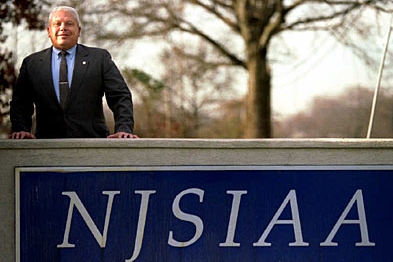
  • Boyd Sands, Hall of Fame educator and retired executive director of the New Jersey State Interscholastic Athletic Association, has died at 88

    Boyd Sands, Hall of Fame educator and retired executive director of the New Jersey State Interscholastic Athletic Association, has died at 88

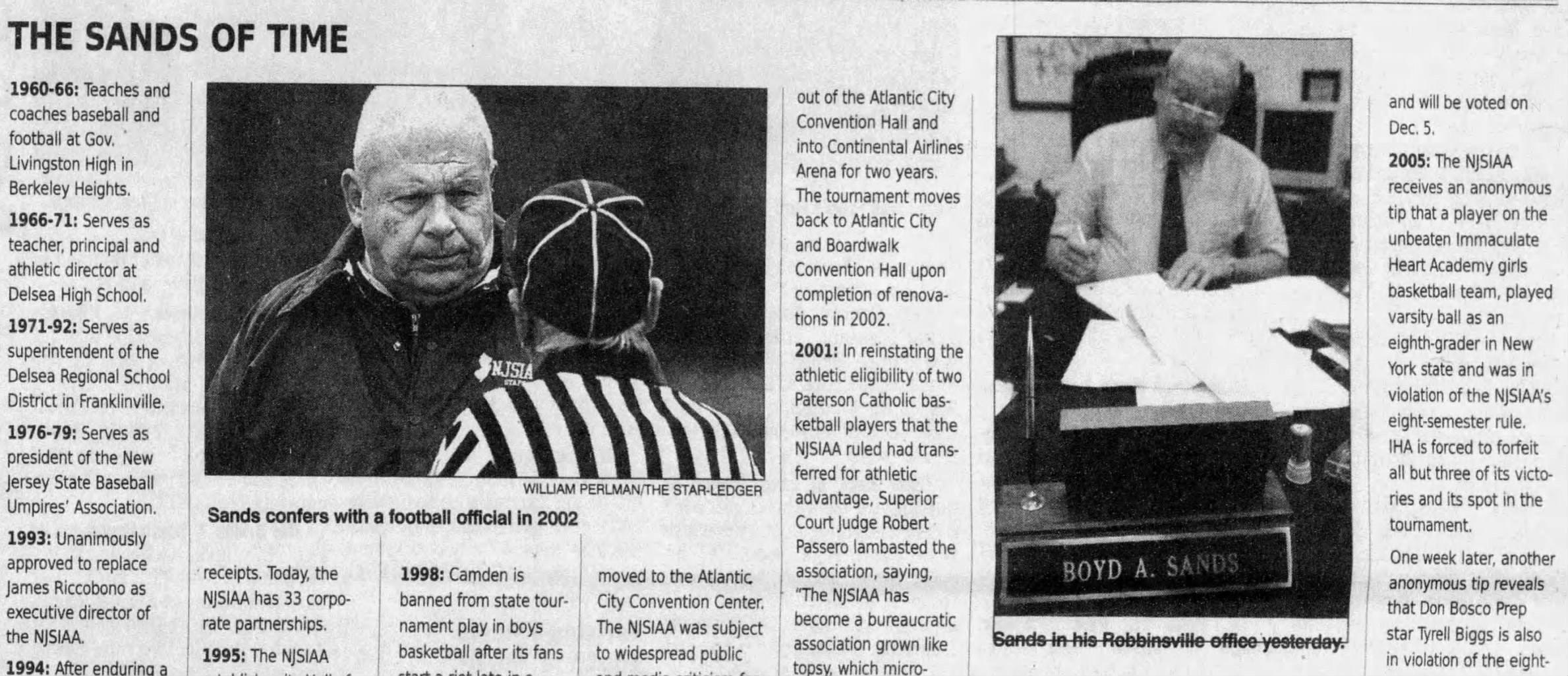
    Boyd Sands, 88, formerly of Glassboro, Gloucester County, retired teacher, coach, principal, and superintendent of the Delsea Regional School District, and Hall of Fame former executive director of the New Jersey State Interscholastic Athletic Association, died Saturday, Jan. 17, of complications from a stroke at Cape Canaveral Hospital in Florida.

    An All-Star football player in high school and college, and a longtime baseball umpire and basketball referee, Mr. Sands directed the NJSIAA from 1993 to his retirement in 2006. He and the association’s executive committee organized hundreds of statewide championship playoff tournaments, hired thousands of game officials, and enforced eligibility and sportsmanship rules for high school athletes in more than 30 sports at more than 400 public and private high schools.

    He was an expert on all kinds of rules and a champion of the state’s expanded football playoff format and more programs for girls. He oversaw ever-changing conference alignments and supervised the association’s multimillion dollar budget.

    He attracted dozens of corporate sponsorships to fund new initiatives regarding improved officiating, violence at sports events, and drug education. He forged working relationships with the state’s Sports and Exposition Authority, Boardwalk Hall in Atlantic City, the NHL’s New Jersey Devils, and other organizations.

    Overall, Mr. Sands served more than three decades as a member of the NJSIAA advisory committee and executive committee, and executive director. In an online tribute, former colleagues there called him “a respected leader in education and sport. A consummate professional.”

    Steve Timko, his successor as executive director, told the Times of Trenton in 2005: “He has taken the association to the next level.” In 2003, Mr. Sands told the Record of Hackensack: “I really just enjoy high school athletics.”

    He joined Delsea in 1966 as assistant principal, was promoted to principal, and served as district superintendent from 1971 to 1994. Before school, he was known to greet students as they exited the buses in the morning. After school, he handed out programs at events, prowled the sidelines at Delsea, and officiated games at other high schools.

    He taught social studies and coached football for six years at two high schools in North Jersey before going to Delsea. He oversaw the building of the district’s middle school in the 1970s, and colleagues named the entrance road leading to the new building after him.

    The Star-Ledger of Newark featured Mr. Sands when he announced his retirement from the NJSIAA in 2005.

    “His influence lives on in the students he inspired, the educators he mentored, and the community he helped shape,” Delsea superintendent Fran Ciociola said in a tribute.

    Mr. Sands was onetime president of the Camden County chapter of the New Jersey Baseball Umpires Association. He won achievement awards from the NJSIAA, the National Federation of Interscholastic Athletic Officials, and the Union County Interscholastic Athletic Conference.

    He was an executive committee member of the National Federation of State High School Associations and lifetime member of the International Association of Approved Basketball Officials. “His spirit, kindness, and dedication will be remembered always,” colleagues at the IAABO said in a tribute.

    Mr. Sands was inducted into the Gloucester County Sports Hall of Fame in 1989, the NJSIAA Hall of Fame in 2007, and the South Jersey Baseball Hall of Fame in 2009. He attended many continuing education classes and earned certifications at Rowan, Rutgers, and Seton Hall Universities, and elsewhere.

    Mr. Sands liked nothing more than attending a football game.

    He never changed his signature flattop crew cut. “Bear of a man, great guy,” a former student said in a Facebook tribute. A friend said online: “Boyd was a wonderful man and terrific mentor.”

    Boyd August Sands was born Feb. 16, 1937, in Newark, N.J. He played football and basketball in high school, and earned a bachelor’s degree in education at Colby College in Maine and a master’s degree in administration at what is now Kean University in New Jersey.

    He met Frances Curto at a New Year’s Eve party, and they married in 1958. They lived in North Jersey, moved to Glassboro when he worked at Delsea, and had daughters Susan, Nancy, Karen, and Lori, and a son, Michael. His son died earlier.

    Mr. Sands studied history and enjoyed road trips to family reunions in Florida and stops at historical sites along the way. He loved his dogs, followed the Eagles and Phillies closely, and was sure to be greeted by former students and old colleagues whenever the family went out.

    Mr. Sands (right) became friendly with baseball star Bryce Harper when he worked at the Washington Nationals’ spring training complex in Florida.

    He and his wife moved to Cape Canaveral in 2006, and he helped run spring training for the Washington Nationals baseball team and worked security for a cruise line. He had bypass surgery in 2015.

    “My father was a man who found joy in two of life’s greatest gifts: family and sports,” said his daughter Nancy. “My dad was a man who always showed up and pushed us hard to do our best.”

    His daughter Susan said: “He saw everyone as a person.”

    Nearly everyone has a memorable umpiring story about Mr. Sands, like the time he got drilled by a line drive down the first base line. In 1994, he told The Inquirer that he enjoyed officiating high school baseball and basketball games more than anything.

    “It was my hobby and outlet,” he said. “I tried golf, and I figured I’d rather get hit by a hard ball.”

    Mr. Sands and his wife, Frances, married in 1958.

    In addition to his wife and daughters, Mr. Sands is survived by 16 grandchildren, 28 great-grandchildren, a brother, and other relatives. A brother died earlier.

    Services were held earlier.

    Donations in his name may be made to the Brevard County Sheriff’s Office Animal Care Center, 5100 W. Eau Gallie Blvd., Melbourne, Fla. 32934; and the Church of Our Saviour, 5301 N. Atlantic Ave., Cocoa Beach, Fla. 32931.

    Mr. Sands enjoyed time with his dogs.
  • Melania Trump presides at U.N. Security Council meeting on children in conflict as U.S. attacks Iran

    Melania Trump presides at U.N. Security Council meeting on children in conflict as U.S. attacks Iran

    UNITED NATIONS — U.S. first lady Melania Trump presided over a U.N. Security Council meeting on Monday focusing on children in conflict, one of her signature issues, and acknowledged she was doing so at “challenging times” as the United States has joined Israel in attacking Iran.

    “The U.S. stands with all of the children throughout the world,” she said, speaking generally and not specifically about the new war in the Middle East. ”I hope soon peace will be yours.”

    Hanging over Monday’s meeting was what Iranian state media says was an airstrike that hit a girls’ school in southern Iran, killing at least 165 people and wounding dozens more. The Israeli military said it was not aware of strikes in the area. The U.S. military said it was looking into the reports.

    Shortly before Monday’s session began, Iran’s ambassador to the U.N., Amir Saeid Iravani, said it was “deeply shameful and hypocritical” for the U.S. to convene a meeting on protecting children during conflict while launching airstrikes on Iranian cities.

    “For the United States, ‘protecting children’ and ‘maintaining international peace and security’ clearly mean something very different from what the U.N. Charter provides,” he told reporters.

    U.N. political chief Rosemary DiCarlo said the world body was aware of the reports of the deaths at the girls’ school. She noted the impact the U.S.-Israeli strikes and the Iranian retaliatory strikes were having on children across the region.

    “We have been reminded of this truth over the last two days,” she told the Security Council. ”Schools in Israel, the United Arab Emirates, Qatar, Bahrain, and Oman have closed and moved to remote learning owing to the ongoing military operations in the region,” she said.

    Melania Trump was the first spouse of a world leader to take the president’s seat at the United Nations’ most powerful body, which is charged with ensuring global peace and security, according to the U.N.

    The wife of President Donald Trump was given the opportunity as the United States takes over the council presidency for the month of March. In the past, presidents, prime ministers, and foreign ministers have often wielded the gavel.

    In her address, Melania Trump said, “Peace does not have to be fragile.”

    “Enduring peace will be achieved when knowledge and understanding are fully valued within all our societies,” she said, urging members of the Security Council to “safeguard learning.”

    U.S. has cut funding to U.N. agencies that protect children

    While the first lady spoke of a need to protect children and their access to education and technology in conflict, her husband’s administration has cut funding for a number of U.N. agencies and other international organizations that address these issues.

    Among them is the U.N. Office of the Special Representative of the Secretary General for Children in Armed Conflict, which provides detailed reporting on the impact that conflicts have on children around the world. This information can help trigger action to prevent rape and violence against women and children. President Trump withdrew U.S. support in January.

    The U.S. has also dramatically cut funding for the U.N. children’s agency, UNICEF, and has withdrawn from the U.N. Educational, Scientific, and Cultural Organization, UNESCO.

    DiCarlo told the council the world is facing the highest number of armed conflicts since World War II. “The number of civilians killed in these conflicts is the highest in decades,” she said. ”Our reality is clear: When conflicts erupt, children are among those most severely affected.”

    The first lady arrived at U.N. headquarters in a motorcade and was greeted by U.N. Secretary-General António Guterres. She shook hands with each of the 15 Security Council members and posed for a group photo.

    The rotating president of the council gets to choose the subject and participants for some meetings. Monday’s meeting was scheduled before the war began.

    The council’s last meeting, on Saturday, was a contentious emergency session called in response to the start of the war. Guterres condemned the U.S. and Israeli airstrikes as violations of international law, including the U.N. Charter. He also condemned Iran’s retaliatory attacks for violating the sovereignty and territorial integrity of nations in the Mideast.

    Melania Trump’s support of Ukrainian children

    Melania Trump took the unusual step last summer of writing a letter to Russian President Vladimir Putin before his summit with her husband and later announced that the effort had led to a group of children displaced by the Russia-Ukraine war being reunited with their families.

    Putin’s invasion of Ukraine in 2022 resulted in Russia taking Ukrainian children out of their country so they could be raised as Russian. Ukrainian President Volodymyr Zelensky has lobbied world leaders for help reuniting families.

  • Cuba’s president pushes for ‘urgent’ changes to island’s economic and social model

    Cuba’s president pushes for ‘urgent’ changes to island’s economic and social model

    HAVANA — Cuban President Miguel Díaz-Canel said Monday that his government should “immediately” focus on implementing urgent transformations to the island’s economic and social model as oil reserves in the Caribbean country dwindle.

    The comments made during a meeting of the Council of Ministers come as Cuba feels the squeeze of a recent oil blockade coupled with a halt in oil shipments from Venezuela after the U.S. attacked the South American country in January.

    “We must focus, immediately, on implementing the urgent, most necessary transformations that must be made to the economic and social model,” he was quoted as saying by state-owned media.

    Díaz-Canel said the push to transform Cuba’s economic and social model is tied to business and municipal autonomy and the resizing of the state apparatus, government, and institutions, among other things, according to state-owned media.

    He called on municipalities to manage issues including foreign direct investment; economic partnerships between the state and nonstate sectors; and investments with Cubans residing abroad, according to state-owned media.

    Prime Minister Manuel Marrero Cruz said Cuba’s priorities are focused on food production and changes to the island’s power grid as severe outages and interruptions in fuel supply persist.

    The minister of energy and mines, Vicente de la O Levy, was quoted by state media as saying that progress in developing a transition strategy by municipalities is still slow despite the distribution of solar panels to doctors, teachers, and children. He said municipalities need to have a sustainability strategy that relies on their own resources.

    Last month, Cuba implemented austere fuel-saving measures, including halting some public transportation and moving classes online.

    Last week, the U.S. Treasury Department slightly eased restrictions on the sale of Venezuelan oil to Cuba, but the island’s energy and economic crisis is expected to persist.

    In addition to its energy woes, Cuba is struggling with a sharp increase in U.S. sanctions that have stripped the island of nearly $8 billion in revenue from March 2024 to February 2025, a loss that is nearly 50% higher compared with the previous period, according to government statistics.

  • Rev. Jesse Jackson returns home to South Carolina to lie in state

    Rev. Jesse Jackson returns home to South Carolina to lie in state

    COLUMBIA, S.C. — After a long career of fighting for civil rights, the Rev. Jesse Jackson Sr. is visiting his home for one last time to lie in state at the South Carolina Capitol on Monday.

    The final full honors from the state where he was born is a far cry from his childhood in segregated Greenville, where in 1960 he couldn’t go inside the local library’s much better funded whites-only branch to check out a book he needed.

    Jackson led seven Black high school students into that segregated branch, where they sat down and read books and magazines until they were arrested. The branches closed, then quietly reopened for all.

    With that action, Jackson launched his career — and crusade — fighting for equality for all. He would catch the attention of the Rev. Martin Luther King Jr. and join the voting rights march King led from Selma to Montgomery, Ala.

    Jackson died Feb. 17 at age 84 after battling a rare neurological disorder that affected his mobility and ability to speak in his later years.

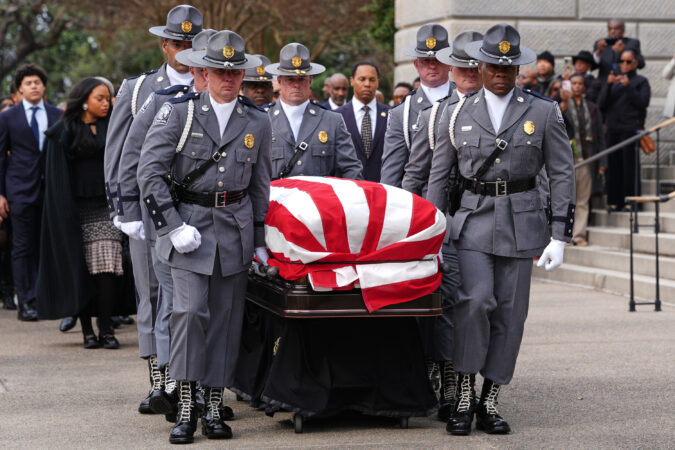
    His casket, draped in an American flag, arrived at the South Carolina Statehouse on a horse-drawn caisson on a chilly, cloudy morning. A special white-gloved Highway Patrol honor guard brought Jackson inside the Statehouse and to the second floor, where well over 100 people packed under the rotunda for a ceremony before the public would be invited in to pay their respects.

    “Today we’re here to celebrate a life well lived, a job well done,” said Democratic state Rep. Jermaine Johnson, who led the ceremony.

    The service began with a rousing version of the civil rights anthem “Lift Every Voice and Sing” that reverberated through the Statehouse — a building that was partially destroyed in 1865 during the Civil War started by South Carolina to keep slavery.

    The South Carolina services are part of two weeks of events. They began with Jackson’s body lying in repose and the public invited last week to his Rainbow PUSH Coalition’s Chicago headquarters.

    After South Carolina, Jackson will be returned to Chicago for a large celebration of life gathering at a megachurch and the final homegoing services at the headquarters of Rainbow PUSH. Plans for a service in Washington, D.C., to honor him have been postponed until a later date.

    Nationally, Jackson advocated for the poor and underrepresented for voting rights, job opportunities, education, and healthcare. He scored diplomatic victories with world leaders.

    Through his Rainbow PUSH Coalition, he channeled cries for Black pride and self-determination into corporate boardrooms, pressuring executives to make America a more open and equitable society. He stepped forward as the Civil Rights Movement’s torchbearer after King’s assassination, and would run for the Democratic presidential nomination in 1984 and 1988.

    Jackson continued to be active in his home state, pushing in 2003 for Greenville County to honor King by matching the federal holiday in his honor and in 2015 by advocating for removing the Confederate flag from South Carolina Statehouse grounds after nine Black worshipers were killed in a racist shooting at a Charleston church.

    Jackson is just the second Black man to lie in state at the South Carolina Capitol. State Sen. Clementa Pinckney was honored in 2015 after he was killed in the Charleston church shooting.

  • Macron says France will allow temporary deployment of nuclear-armed jets to European allies

    Macron says France will allow temporary deployment of nuclear-armed jets to European allies

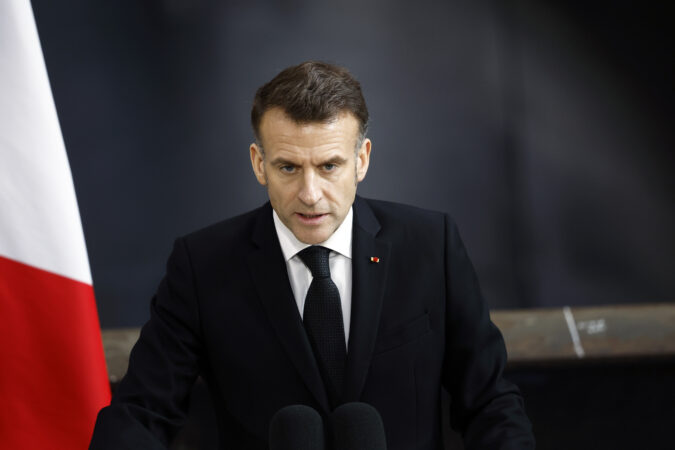
    L’ILE LONGUE, France — French President Emmanuel Macron announced Monday that France would for the first time allow the deployment of its nuclear-armed aircraft to allied countries in a new nuclear strategy aimed at strengthening Europe’s independence.

    Macron also announced the first increase in his country’s nuclear arsenal in decades during a speech outlining the strategy at a military base at L’Ile Longue in northwestern France that hosts the country’s ballistic missile submarines.

    “To be free, one needs to be feared,” Macron said.

    Macron said the new posture could “provide for the temporary deployment of elements of our strategic air forces to allied countries,” but said there would be no sharing of decision-making with any other nation regarding the use of the nuclear weapons.

    Talks about such arrangements have started with Britain, Germany, Poland, the Netherlands, Belgium, Greece, Sweden, and Denmark, Macron said.

    Macron’s long-planned speech, scheduled before the most recent outbreak of hostilities in Iran, was aimed at spelling out how French nuclear weapons fit into Europe’s security amid concerns raised on the continent by recurring tensions with U.S. President Donald Trump and Russia’s full-scale invasion of Ukraine.

    France also will allow partners to participate in deterrence exercises and allow allies’ non-nuclear forces to participate in France’s nuclear activities, said Macron, who is the commander-in-chief of the armed forces under the French constitution.

    European partners welcomed the new strategy of France, which has been the only nuclear power in the European Union since Britain’s exit from the bloc in 2020.

    In a joint statement, Macron and German Chancellor Friedrich Merz said the two countries would deepen integration in deterrence starting this year, “including German conventional participation in French nuclear exercises and joint visits to strategic sites.”

    In a letter to Dutch lawmakers, Defense Minister Dilan Yesilgöz-Zegerius and Foreign Minister Tom Berendsen said the Netherlands was in strategic talks with France on nuclear deterrence as “a supplement to, and not a replacement for, NATO’s collective defense and nuclear deterrence capabilities.”

    Polish Prime Minister Donald Tusk wrote on X that “we are arming up together with our friends so that our enemies will never dare to attack us.”

    Macron also announced that France will increase its number of nuclear warheads from the current level of below 300, but did not give a figure for the increase. It will be the first time France increases its nuclear arsenal since at least 1992.

    “I have decided to increase the numbers of warheads of our arsenal,” Macron said. “My responsibility is to ensure that our deterrence maintains — and will maintain in the future — its assured destructive power.”

    “If we had to use our arsenal, no state, however powerful, could shield itself from it, and no state, however vast, would recover from it,” Macron said.

    European leaders have voiced growing doubts about U.S. commitments to help defend Europe under the so-called nuclear umbrella, a policy long intended to ensure that allies — particularly NATO members — would be protected by American nuclear forces in the event of a threat.

    Macron said that recent changes in U.S. defense strategy amid the emergence of new threats have demonstrated a refocusing of American priorities and have encouraged Europe to take more direct responsibility for its own security. He said Europeans should take their destiny more firmly into their hands.

    Some European nations have already taken up an offer Macron made last year to discuss France’s nuclear deterrence and even associate European partners in nuclear exercises.

    Last month, Merz said he’d had “initial talks” with Macron on the issue and had publicly theorized about German Air Force planes possibly being used to carry French nuclear bombs. But Macron ruled out any such possibility in Monday’s speech.

    France and Britain also adopted a joint declaration in July that allows both nations’ nuclear forces, while independent, to be “coordinated.” The U.K., no longer an EU member but a NATO ally, is the only other country in Western Europe with a nuclear deterrent.

    Macron has consistently insisted any decision to use France’s nuclear weapons would remain only in the hands of the French president.

    Macron added that the evolution of France competitors’ defenses, the emergence of regional powers, the possibility of coordination among adversaries, and the risks linked to proliferation led him to the conclusion that it was essential for France to enhance its nuclear arsenal.

  • War widens as Israeli and U.S. planes pound Iran and Tehran and its proxies hit back

    War widens as Israeli and U.S. planes pound Iran and Tehran and its proxies hit back

    DUBAI, United Arab Emirates — The war in the Middle East spiraled further Monday as Israel and the U.S. pounded Iran. Tehran and its allies hit back against Israel, neighboring Gulf states, and targets critical to the world’s production of oil and natural gas.

    The intensity of the attacks, the killing of Iranian Supreme Leader Ayatollah Ali Khamenei, and the lack of any apparent exit plan indicated the conflict would not end anytime soon. It was already having far-reaching consequences: Safe havens in the Mideast like Dubai have seen incoming fire; hundreds of thousands of airline passengers are stranded around the globe; oil prices shot up; and U.S. allies pledged to help stop Iranian missiles and drones.

    Iran has long threatened, if attacked, to drag the region into total war, including targeting Israel, the Gulf Arab states and the flow of crude oil crucial for global energy markets. All of these came under attack on Monday.

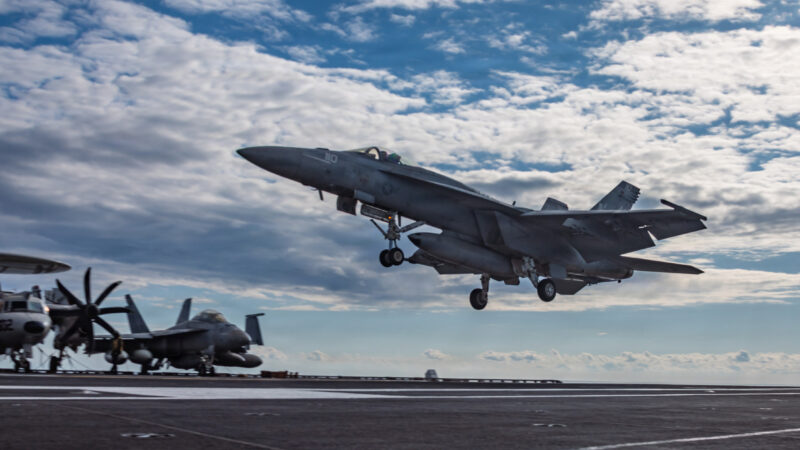
    The chaos of the conflict became apparent when the U.S. military said Kuwait had “mistakenly shot down” three American F-15E Strike Eagles while attacks from Iranian aircraft, ballistic missiles, and drones were underway. U.S. Central Command said all six pilots ejected safely and are in stable condition.

    Israel and the U.S. bombed Iranian missile sites and targeted its navy, claiming to have destroyed its headquarters and multiple warships. As several airstrikes hit Iran’s capital of Tehran, the top security official Ali Larijani vowed on X: “We will not negotiate with the United States.”

    The death toll grew on all sides. The Iranian Red Crescent Society said that the U.S.-Israeli operation has killed at least 555 people. In Israel, where several locations were hit by Iranian missiles, 11 people were killed. The Iranian-backed Hezbollah militant group also targeted Israel, which responded with strikes on Lebanon, killing more than two dozen people. Meanwhile, four American troops have been killed, and three people were reported killed in the United Arab Emirates and one each in Kuwait and Bahrain.

    In Kuwait City, fire and smoke rose from inside the U.S. Embassy compound, shortly after the U.S. issued a warning to Americans to take cover and stay away from the complex. There were no immediate reports on damage or casualties.

    Iran expands attacks to regional oil infrastructure

    Iran targeted the lifeblood of the area’s economy.

    With world markets already rattled by the fighting, QatarEnergy said it would stop its production of liquefied natural gas, taking one of the world’s top suppliers off the market. It offered no timeline for restoring its production. European natural gas prices surged by 40% in response.

    Meanwhile, Saudi Arabia’s Ras Tanura oil refinery came under attack from drones, with defenses downing the incoming aircraft, a military spokesman told the state-run Saudi Press Agency. The refinery has a capacity of over half a million barrels of crude oil a day.

    A drone also targeted an oil tanker in the Gulf of Oman, killing one mariner, the sultanate said, while debris fell on an oil refinery in Kuwait.

    Several ships have been attacked in the Strait of Hormuz, the narrow mouth of the Persian Gulf through which a fifth of all oil trade passes and where Iran has threatened attacks.

    “The attack on Saudi Arabia’s Ras Tanura refinery marks a significant escalation, with Gulf energy infrastructure now squarely in Iran’s sights,” said Torbjorn Soltvedt, an analyst at the risk intelligence company Verisk Maplecroft. “An extended period of uncertainty lies ahead.”

    The region is also a hub for air travel, and passengers have been stranded around the world as carriers based in the Gulf grounded flights. But long-haul carriers Etihad and Emirates restarted limited flights Monday.

    Iran says nuclear site was targeted

    Reza Najafi, Iran’s ambassador to the International Atomic Energy Agency, told reporters that airstrikes targeted the Natanz nuclear enrichment site on Sunday.

    “Their justification that Iran wants to develop nuclear weapons is simply a big lie,” he said.

    Israel and the U.S. have not acknowledged strikes at the site, which the U.S. bombed in the 12-day war between Iran and Israel in June. Israel has said that it is targeting the “leadership and nuclear infrastructure.”

    Iran has said it has not enriched uranium since June, though it has maintained its right to do so while saying its nuclear program is entirely peaceful.

    Hezbollah fires on Israel, prompting massive response

    Hezbollah said it fired missiles on Israel early Monday in response to Khamenei’s killing and “repeated Israeli aggressions.” It was the first time in more than a year that the militant group has claimed an attack.

    There were no reports of injuries or damage.

    Lebanon’s government said Hezbollah’s overnight attacks against Israel were “illegal” and demanded the group hand over its weapons.

    Rescue services in Israel said several locations have been hit by Iranian missiles, including Jerusalem and a synagogue in Beit Shemesh. In all, 11 people have been killed.

    Israel retaliated with strikes on Lebanon, killing at least 31 people and wounding 149 others, according to Lebanon’s Health Ministry. Associated Press journalists in Beirut were jolted awake by loud explosions that shook buildings and shattered windows.

    Iran’s proxies were a chief concern for American and Israeli officials before they moved ahead with strikes over the weekend.

    The Iraqi Shiite militia Saraya Awliya al-Dam claimed a drone attack Monday targeting U.S. troops at the airport in the Iraqi capital, Baghdad. It claimed another drone attack on Sunday against a U.S. air base in Iraq’s north.

    No end in sight to the US-Israeli campaign

    The U.S. military said B-2 stealth bombers struck Iran’s ballistic missile facilities with 2,000-pound bombs. President Donald Trump said on social media that nine Iranian warships had been sunk and that the Iranian navy’s headquarters had been “largely destroyed.”

    “Combat operations continue at this time in full force, and they will continue until all of our objectives are achieved,” Trump said in a video message Sunday.

    Defense Secretary Pete Hegseth said Monday that the U.S. is not engaged in a nation-building effort in Iran, and there is a clear mission. “This is not Iraq. This is not endless,” Hegseth said.

    He didn’t give specifics when asked about the ultimate goals of the operation, how long it might last or what success would look like, saying doing so would disadvantage U.S. forces.

    It’s not completely clear what the U.S. objectives are. In announcing the initial strikes, Trump referred to the threat posed by Iran’s nuclear and missile programs. But he also listed various grievances dating back to Iran’s Islamic Revolution in 1979 and urged Iranians to “take over” their government. There have been no signs yet of any such uprising.

    The American leader, however, has also signaled he would be open to dialogue with Iran’s new leadership — which could be chosen soon.

    In an indication that the conflict could draw in other nations, Britain, France and Germany said Sunday they were ready to work with the U.S. to help stop Iran’s attacks.

    Early Monday, Cyprus said a drone “caused limited damage” when it hit a British air base there.

    Tehran’s streets are deserted

    Tehran’s streets have been largely deserted with people sheltering during airstrikes. The paramilitary Basij force, which has played a central role in crushing recent nationwide protests, set up checkpoints across the city, according to witnesses.

    In the northern Iranian city of Babol, a student, speaking anonymously over concerns of retribution, told the AP that armed riot police were on the streets Saturday night and into the early hours of Sunday after the death of Khamenei.

    “We don’t know whether to be happy about the elimination of the criminals who oppress us or to remain silent in the face of the U.S. and Israel’s war against the country and its interests and the terror that is taking place,” he said.

  • Lankenau Medical Center’s new president is Anna Michelle Brandt

    Lankenau Medical Center’s new president is Anna Michelle Brandt

    Main Line Health appointed Anna Michelle Brandt president of its Lankenau Medical Center in Wynnewood, the nonprofit health system announced Monday.

    Brandt mostly recently worked as chief operating officer at University Hospital, a 519-bed academic medical center in Newark, N.J., which Main Line’s new CEO Ed Jimenez led before taking over at Main Line.

    The new Lankenau president also worked previously with Jimenez at UF Health Shands Hospital in Florida.

    Brandt succeeds Katie Galbraith, who left Lankenau in September after about three years to lead New England Baptist Hospital in Boston.

    Lankenau, a level 2 trauma center, sits in Lower Merion Township at the intersection of West Philadelphia and Montgomery and Delaware Counties.

    It also has the Lankenau Institute for Medical Research, which has programs in cancer, cardiovascular, autoimmune, and other diseases.

  • Where things stand after the U.S. and Israeli strikes on Iran

    Where things stand after the U.S. and Israeli strikes on Iran

    The United States and Israel targeted Iran in coordinated attacks over the weekend that killed Supreme Leader Ayatollah Ali Khamenei and dozens of other senior figures and kicked off a furious Iranian response that threatens a wider regional war.

    Allies of the U.S. pledged to help stop Iran’s missile and drone strikes. The Lebanese militant group Hezbollah claimed strikes on Israel for the first time in more than a year, and Israel fired back.

    The first U.S. military deaths have been reported. Other deaths have been confirmed in Israel and Gulf nations, while Iran has said hundreds of people have been killed there.

    With Khamenei’s death, the Islamic Republic must now choose a supreme leader for the first time since 1989. U.S. President Donald Trump has urged Iranians to seize the moment and overthrow the theocracy that cracked down on nationwide protests early this year. There was no sign that was happening.

    Around the world, some protested. Others cheered.

    The attacks came two days after the latest U.S.-Iran talks aimed at putting controls on Tehran’s nuclear program. They echoed the events of last year, when talks were cut short by an Israeli attack that led to a 12-day war and U.S. bombing of Iranian nuclear sites. Washington has claimed that Iran was rebuilding its nuclear program in recent months.

    Iran has said it hasn’t enriched since June, but it has blocked IAEA inspectors from visiting the sites America bombed.

    Here’s where things stand.

    Iran

    The 86-year-old Khamenei was killed when his compound was bombed Saturday morning. Iran’s ballistic missile sites, navy headquarters and warships were attacked as well. Iran said strikes also targeted the Natanz nuclear enrichment site. Israel and the U.S. have not acknowledged strikes at the site, though Israel has said it is targeting the “leadership and nuclear infrastructure.”

    Khamenei had no designated successor. Iran has set up a three-member leadership council, and Foreign Minister Abbas Araghchi has said a new supreme leader would be chosen in “one or two days.” On the streets, there have been scattered celebrations over Khamenei’s death. Internet restrictions in Iran have complicated efforts to monitor what’s happening.

    In retaliation, Iran’s military has struck Israel, where several people have been killed. Iran has also targeted U.S. bases in the region. The U.S. military said three service members were killed, the first known U.S. casualties. Other Iranian strikes have killed a handful of people in Gulf nations including the United Arab Emirates and Kuwait, and hundreds of flights have been affected at some of the world’s busiest airports.

    What to watch for: further military strikes, the selection of a new supreme leader, and reactions from the Iranian people.

    United States

    The strikes came after the U.S. built up its biggest military presence in the region in decades. Israeli and U.S. authorities spent weeks tracking the movements of senior Iranian leaders. Trump has said the “heavy and pinpoint bombing” in Iran would continue through the week or longer.

    U.S. military bases throughout the region remain a potential target of Iranian attacks.

    The U.S. has signaled it is willing to talk to Iran’s new leaders, eventually. Meanwhile, some leaders in Congress have protested at the launch of the strikes without congressional authorization.

    What to watch for: further military strikes, effects on U.S. bases and forces, and any diplomacy with Iran’s new leadership.

    Israel

    Israel sees Iran as an existential threat and has long sought to end its nuclear and ballistic missile programs, while also targeting armed allied groups like Hamas in Gaza and Hezbollah in Lebanon. Israeli attacks have weakened those groups since Hamas’ Oct. 7, 2023, attack on Israel that started the war in Gaza.

    Israel launched strikes in Lebanon early Monday in retaliation for missiles that Hezbollah launched across the border.

    Now Israel has pledged “nonstop” strikes and at one point said 100 fighter jets were simultaneously striking targets in Tehran. During last year’s war, Israel pitched Trump a plan to kill Khamenei. Now they have.

    Israelis dashed to shelters for safety all weekend, but most of Iran’s attacks have been intercepted. Prime Minister Benjamin Netanyahu, under international criticism for the war in Gaza, is claiming a win for Israel’s security.

    But risk remains from Iranian-backed groups like the Houthi rebels in Yemen who have vowed to resume attacks on Red Sea shipping routes and on Israel.

    What to watch for: further military strikes, as well as attacks by and against Iranian proxies.

    The Middle East and beyond

    The current conflict is already far more intense than last year’s Israel-Iran war, where the U.S. inserted itself near the end by bombing Iranian nuclear sites and Iran responded with a calculated attack on a U.S. military base in Qatar.

    Now, hundreds of Iranian missile and drone strikes have sent people scrambling across Gulf nations that had previously been relatively insulated from the volatility in the region.

    The United Arab Emirates said Dubai’s main airport had been affected, and tourists and others flinched at the booms of interceptors. Saudi Arabia said it intercepted attacks, and summoned Iran’s ambassador. Top diplomats of six Gulf states said they had the “right to self-defense.”

    Oil prices rose sharply when market trading began Sunday as traders bet that supply from the critical region would slow or stop. Attacks on and near the Strait of Hormuz, the world’s most critical oil chokepoint, are also raising concerns about supply.

    In response, eight countries that are part of the OPEC+ oil cartel said they would boost production of crude.

    And on Monday, the world might learn the first details about any effects on Iran’s nuclear program as the International Atomic Energy Agency’s Board of Governors holds a meeting on the conflict.

    What to watch for: oil prices, details on Iran’s nuclear program, and diplomatic efforts.

  • Oil prices surge as Strait of Hormuz tanker disruptions rattle global supply

    Oil prices surge as Strait of Hormuz tanker disruptions rattle global supply

    FRANKFURT, Germany — Oil prices rose sharply Monday as disruptions in tanker traffic through the Strait of Hormuz chokepoint raised uncertainty about how U.S. and Israeli attacks on Iran would affect supply to the world economy.

    US oil traded 7.4% higher at $71.97 per barrel, while international standard Brent was up 7.7% at $78.46 per barrel.

    Higher oil prices raise the prospect of costlier gasoline prices for U.S. drivers as well as for other goods at a time when people in many countries have been stung by inflation.

    A key focus was the situation around the strait at the southern end of the Persian Gulf, through which 20% of the world’s oil supply passes. Tanker traffic dropped sharply amid disruption of satellite navigation systems, data and analytics firm Kpler said on X, while the UK Maritime Trade Operations Centre reported attacks on several vessels in the area on either side of the strait and warned of elevated electronic interference to systems that show where ships are.

    A bomb-carrying drone boat struck a Marshall Islands-flagged oil tanker in the Gulf of Oman on Monday, killing one mariner on board, Oman said. Iran has been threatening vessels approaching the Strait of Hormuz and is believed to have launched multiple attacks.

    Saudi authorities reported they intercepted Iranian drones that attacked the Ras Tanura oil refinery near Dammam and the refinery was shut down as a precaution, Saudi state television reported. Market attention has focused on whether the conflict would widen to other oil-producing countries in the region.

    Monday’s price increase was within the $5-$10 per barrel range expected by analysts based simply on the fear factor associated with the outbreak of war. And some war concerns were already reflected in the price before the conflict started.

    However, long-term disruption to ship traffic in the strait could send prices even higher, and so could damage to oil infrastructure in other Gulf countries. Meanwhile, a shorter conflict in which disruptions are easily reversible could mean the current price spike won’t last.