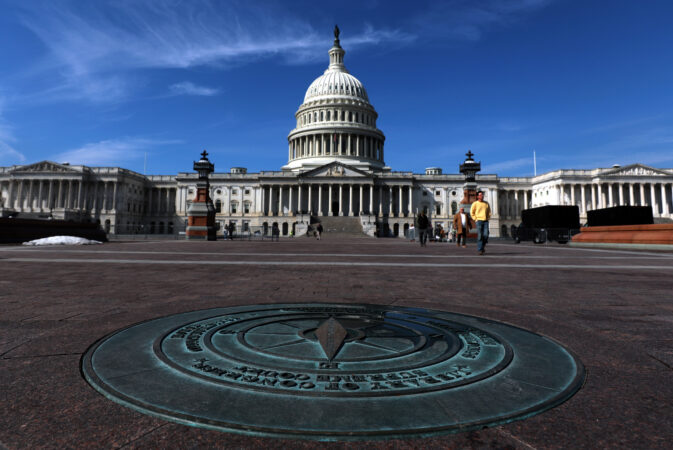
WASHINGTON — The U.S. Congress is about to launch a war powers debate over President Donald Trump’s authority to bomb Iran under largely unusual circumstances — he has already done it, and the country is essentially already at war.
Bombs are falling, people are dying and vows of revenge and retribution are being lobbed in escalating threats, all while untold taxpayer dollars are being spent on a military strategy that’s expected to continue for weeks with an undefined goal and conclusion. Unlike the run-up to the Iraq War in 2003, which included long debates in Congress in the aftermath of the Sept. 11, 2001, attacks, or the more recent U.S. military strikes on Venezuela that proved to be limited, the joint U.S.-Israel military attack on Iran, called Operation Epic Fury, is well underway, with no foreseeable end in sight.
The moment is a defining one for Congress, which alone has the authority under the U.S. Constitution to declare war, and for the Republican president, who has consistently seized power during his second term with an apparent limitless view of his own executive reach.
“The Constitution is intended to prevent the accumulation of power in any one branch of government — and in any one person in government,” said David Janovsky, acting director of The Constitution Project at the Project on Government Oversight, a watchdog organization.
“Congress is the people’s representatives in a way that the president isn’t, even though we tend to focus on the president,” he said. “We need the people’s representatives to weigh in on whether we, the people, are going to war right now.”
War powers as a check on presidential power
In the U.S., the Congress would need to affirmatively approve wartime operations, with a declaration of war, or with an authorization for the use of military force, to essentially approve of the actions. But this rarely happens.
In fact, Congress has declared war just five times in the nation’s history, most recently in 1941, to enter World War II a day after the Pearl Harbor attack. Congress approved an AUMF for the 1990 Gulf War and did so again in 2001 and 2002 to launch the 9/11-era wars into Afghanistan and then Iraq.
But Congress also created the war powers resolution during the Vietnam War-era, as something of a tool of last resort — deployed to slap back a president who had embarked on military excursions without congressional approval.
Both the House and the Senate have prepared war powers resolutions for votes this week.
Sen. Mark Warner, the top Democrat on the Senate Intelligence Committee, said Trump, as president, “does not have the right to do this on his own.”
“When the president commits American forces to a war of choice, he needs to come before Congress and the American people and ask for a declaration of war,” Warner said on CNN’s “State of the Union.”
While lawmakers have criticized the Iranian regime and its nuclear ambitions, Democrats said Trump has not provided a rationale for the war or outlined its strategy for what comes next, and Trump’s MAGA coalition is splintering over what it sees as the president’s failure to keep his “America First” campaign promise by leading the U.S. toward an overseas war. Many lawmakers are wary of a longer entanglement as the operation killed Iran’s Supreme Leader Ayatollah Ali Khamenei and hundreds of people in the region.
White House officials are scheduled to brief congressional leaders and lawmakers this week, but the question-and-answer sessions will be behind closed doors, without a watchful public.
Power of the purse can stop wars
Over time, presidents of both major political parties have accumulated vast authority to engage in what are often more limited U.S. military strikes to accomplish strategic national security goals without approval from Congress. Democrat Barack Obama’s military operations over Libya and Republican George H.W. Bush’s incursions into Panama were conducted without the nod from Congress.
But restraining a president’s war powers is something lawmakers past and present have rarely been able to accomplish. Even if Congress is able to pass a war powers resolution to curb Trump in Iran, the House and the Senate would be unlikely to tally the two-thirds majority needed to overcome a presidential veto.
Trump has shrugged at the power of Congress to dictate what he can and can’t do, in war and other matters. He made only a brief mention of Iran in his State of the Union address last week, treating lawmakers’ support as an afterthought.
John Yoo, a law professor at the University of California, Berkeley, said the Founding Fathers set up a constitutional system in which the president and Congress would battle it out over these issues — but with Congress having one particularly powerful tool, because it controls the federal funding.
“Congress, they know how to stop this if they want to,” said Yoo, who helped draft the Bush administration’s 2001 and 2002 use of force authorizations. The Vietnam War ended once Congress pulled funding, he said.
But Congress is controlled by a Republican majority that largely shares Trump’s view of focusing military power against Iran, and it recently approved massive new funds for the Pentagon, some $175 billion, in the big tax cuts bill that he signed into law last yar.
With the Republican president’s party in power in the House and the Senate, it’s no surprise they are unlikely to object, Yoo said: “They agree with him.”
Debate in Congress begins
Ahead of debates, Republican Sen. Tom Cotton, the chairman of the Senate Intelligence Committee, said Trump already laid out his vision for Iran.
Cotton said Sunday that Trump has made it clear the U.S. won’t be sending ground forces inside Iran. Instead, Americans should expect to see an “extended air and naval campaign” in the region, which could result in pilots being shot down, though he said the military personnel would be recovered.
He expects a weekslong campaign as Iran names a new leader and determines how it will react to the U.S. attack.
“There’s no simple answer for what’s going to come next,” Cotton said on CBS’ “Face the Nation.”
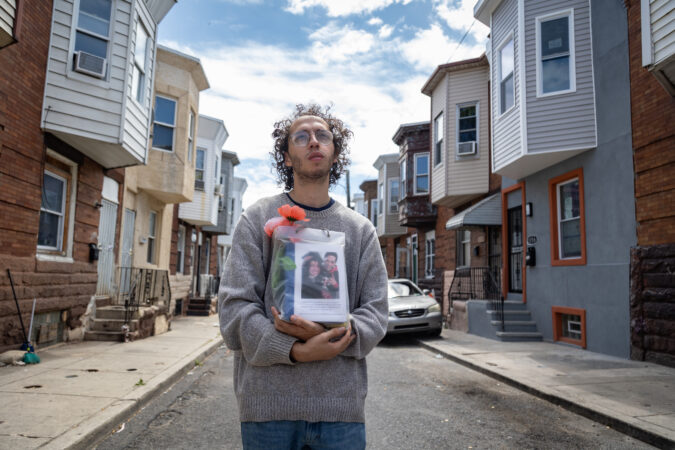
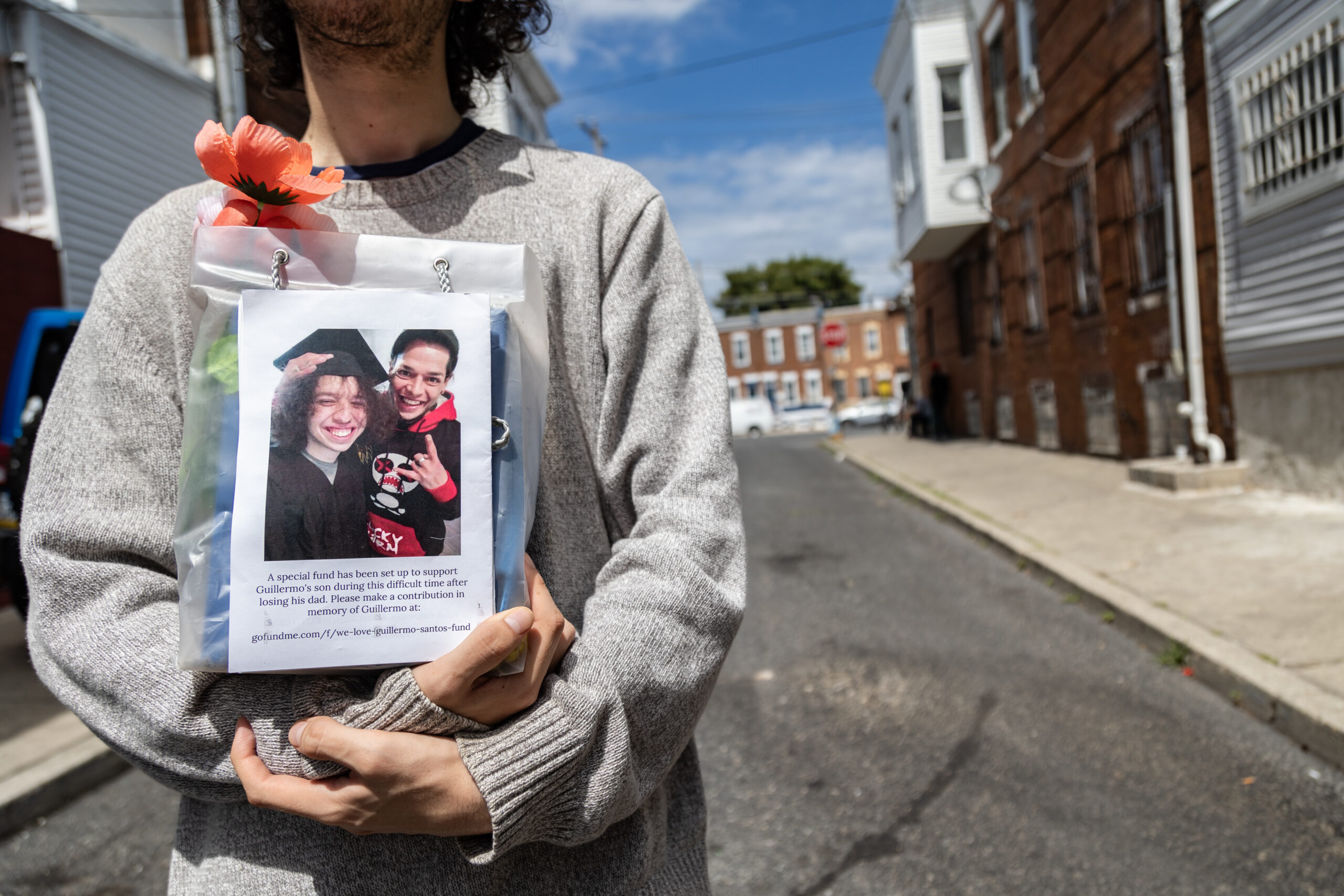
The box is heavier than he thought it would be. Outside his childhood home, Guillermo Santos Jr. looks down.
“This is the longest I’ve ever held him,” Santos says.
His father — Guillermo Santos Sr. — died of a fentanyl overdose in 2021, months after his virtual high school graduation. The elder Santos moved from Puerto Rico to Philadelphia after his father sent him to the city to learn English. There, he met Cheri Honkala and, soon after, Guillermo Santos Jr. was born.
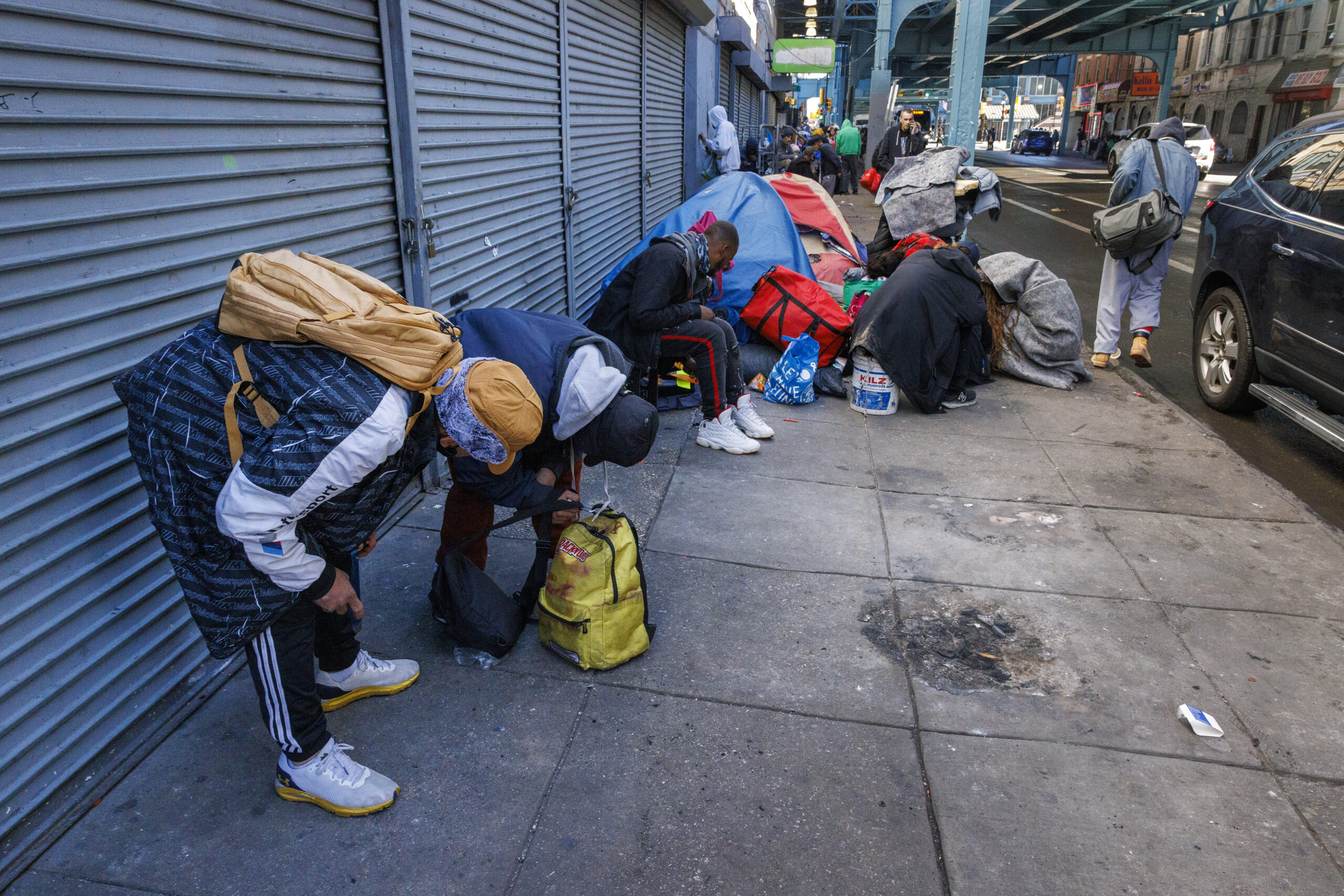
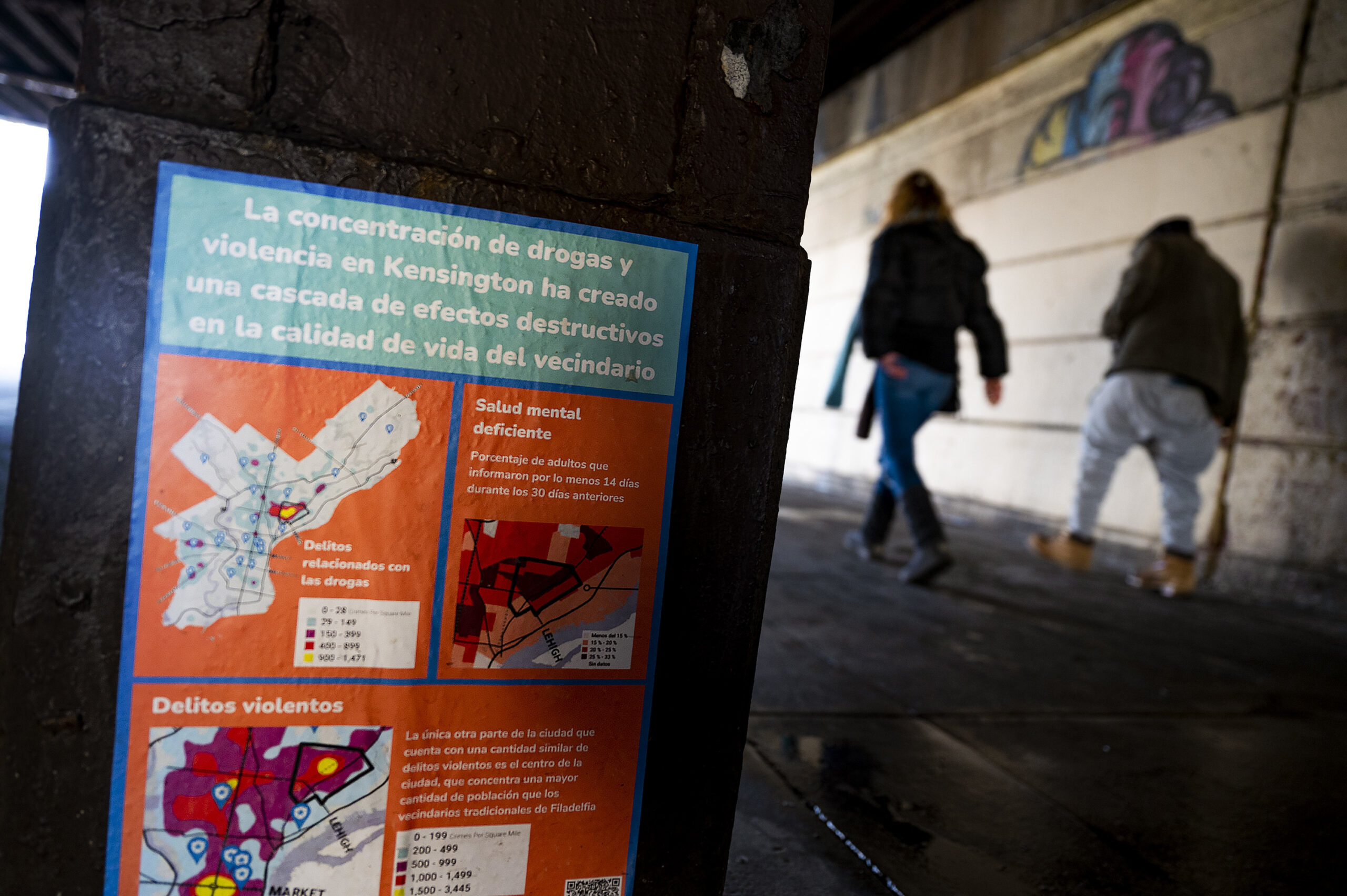
Raised in the heart of Kensington, a working-class Philadelphia neighborhood with a longstanding Puerto Rican community, the younger Santos recalls the caw of his neighbor’s roosters waking him for school. Walking to Market-Frankford Line, the city’s elevated train known locally as “The El,” he passed people lying out on the sidewalks.
“It wasn’t odd to me that my father was a heroin addict because everyone around me was, because of my neighborhood,” Santos said.
He describes Kensington as tight-knit. Although gunshots were constant, neighbors knew his mom, a housing rights activist, and protected their home.
Guillermo Santos Jr. stands at the intersection of Kensington and Allegheny, near his childhood home, on Aug. 19, 2025.
Guillermo Santos Jr. is among the roughly 33% of people in Philadelphia who personally know someone who has died by overdose, according to Pew Heritage Trust’s most recent data. The Pennsylvania Department of Health’s tally from 2024 reveals that Latinos make up 9.7% of total overdose deaths; city public health data from 2023 put the overdose death rate at 77.9 per 100,000 residents. Nationwide, more than 42% of people have been impacted in some way by an overdose death.
Today, the young Philadelphian lives in New York City. During visits to Philly, he notices that his neighborhood is in the same condition as when he left, while new development crops up.
“The way that Philadelphia keeps itself frozen and doesn’t actually deal with a lot of the issues that are torturing its residents is so mind-boggling to me,” he added. “It is really devastating.”
His mom agreed.
“I raised a son after his dad died from an overdose in a city that didn’t have s— to offer,” Honkala said.
The city’s death certificate data reveal that unintentional overdoses were the second-leading cause of death among Puerto Rican residents for two years in a row. An analysis by Centro de Periodismo Investigativo (CPI) of 2023 public health data reveals men die of overdoses at double the rate of their female counterparts — across all racial and ethnic groups.
window.addEventListener(“message”,function(a){if(void 0!==a.data[“datawrapper-height”]){var e=document.querySelectorAll(“iframe”);for(var t in a.data[“datawrapper-height”])for(var r,i=0;r=e[i];i++)if(r.contentWindow===a.source){var d=a.data[“datawrapper-height”][t]+”px”;r.style.height=d}}});
Within the last 10 years, drug overdose deaths were highest among Puerto Rican men ages 45 to 54, according to a research paper in the International Journal of Drug Policy.
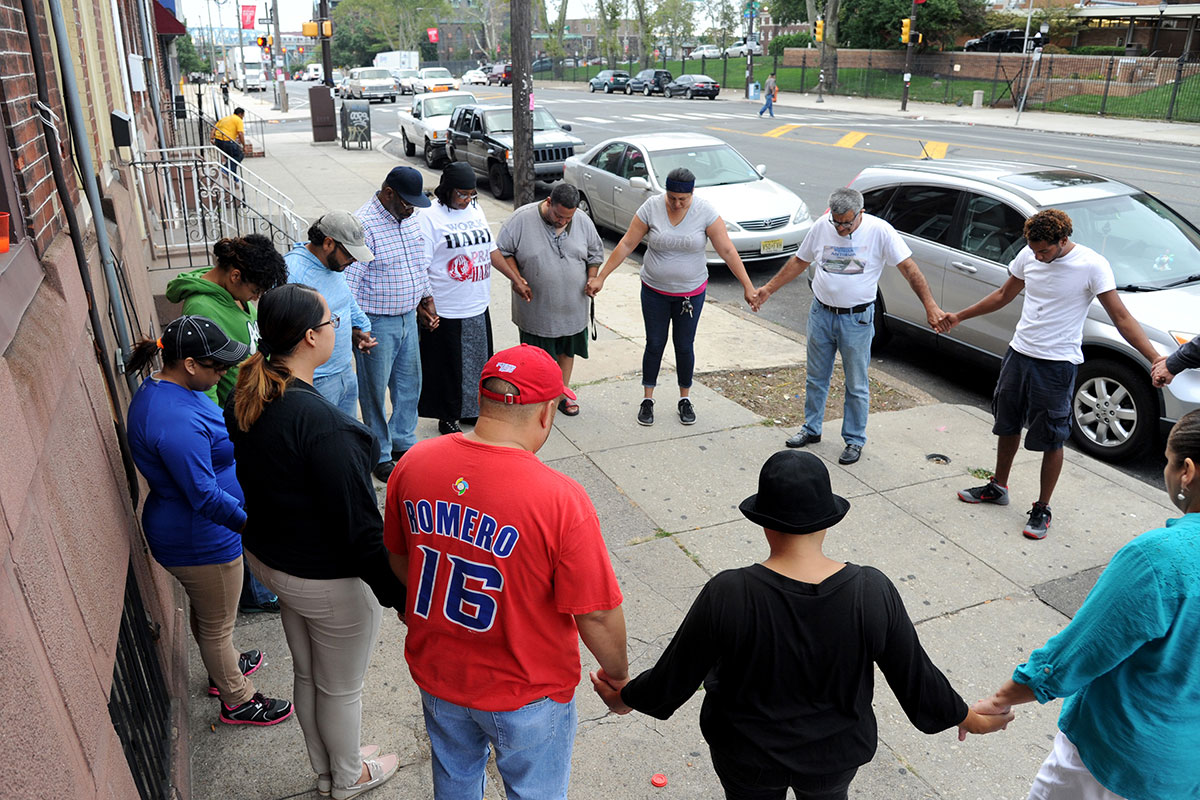
Charito Morales praying in 2016 with a group on Lehigh Avenue in Kensington, before heading into “El Campamento,” along the Conrail tracks where many heroin addicts lived.
Air Bridge: One-way tickets and promises of rehabilitation
This crisis isn’t new. Its roots trace back to the city’s economic crisis in the 1970s, which disproportionately impacted Black and Latino residents of industrialized neighborhoods like Kensington. In the 1980s, North Philadelphia became a hub for open-air drug markets.
“The drug economy was a very real financial attraction for young people whose families had few options for survival,” according to American Quarterly, a journal published by Johns Hopkins University Press.
When factories shut down in the late 1980s, unemployment rates soared, hitting racially segregated and economically disadvantaged areas the hardest. What began as a way out of poverty drew younger generations into drug use and homelessness.
In the 1990s, a movement known as “Air Bridge,” run by pastors and government officials, gave people with substance use disorders one-way tickets from Puerto Rico to cities such as New York, Chicago, and Philadelphia.
In Philadelphia, Air Bridge areas included Kensington and Fairhill, which compose the zip codes 19125, 19133, and 19134, some of the city’s poorest. A 2017 BBC report estimated that thousands landed in Philly from Puerto Rico through the Air Bridge movement.
Charito Morales, a community advocate in Philadelphia, witnessed Air Bridge’s false promises in real time when her brother was sent for rehab 30 years ago, but the care never came.
Morales’ family sent her brother, Alvin Luis Morales-Soto, to the U.S. under the guise of quality rehabilitation and medical care that did not exist in Puerto Rico and Air Bridge promised. When the family lost contact, she went undercover on her own and experienced the living conditions firsthand.
An Inquirer investigation from 2016 illuminated harrowing practices. People living in squalor, 20 men stuffed into tiny bedrooms in a small rowhouse that should fit no more than 10. SNAP benefits held hostage. No phones.
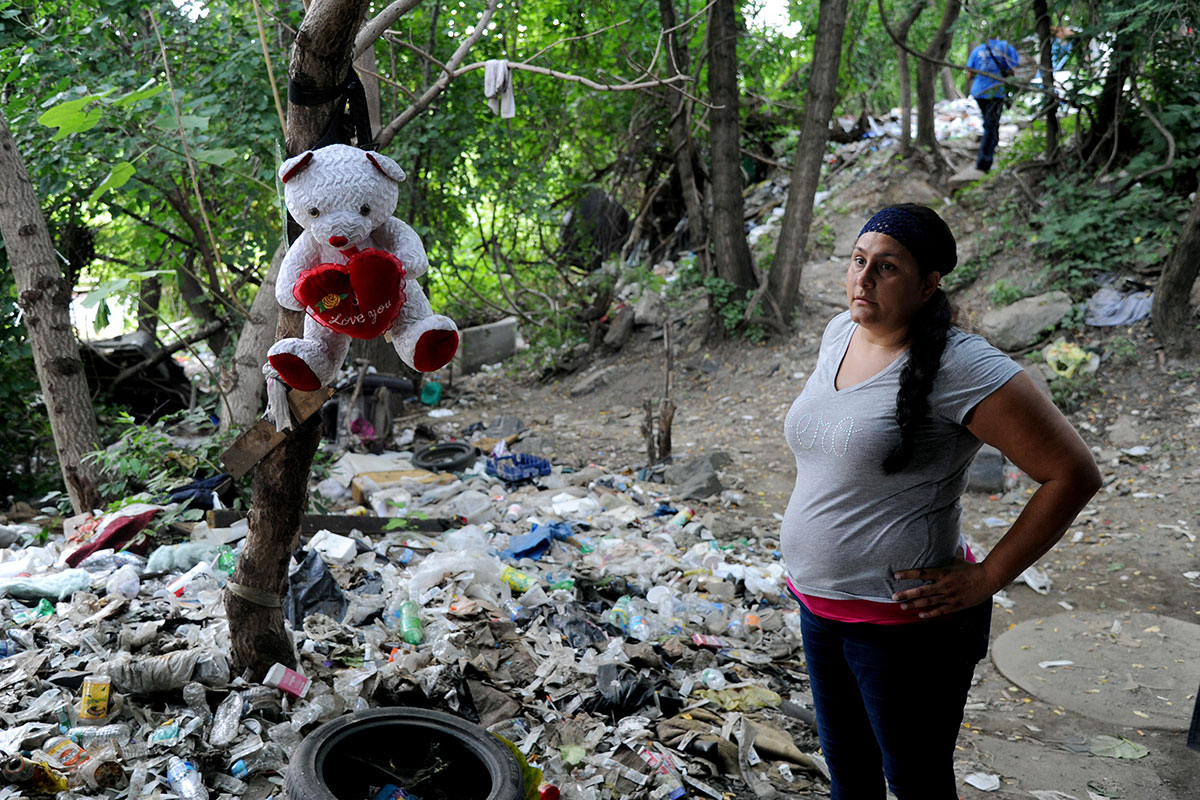
Charito Morales, a registered nurse and advocate for addicts, photoraphed in 2016 at “El Campamento,” a camp of homeless drug users along the Conrail tracks in Fairhill.
Morales served as a key source for The Inquirer, motivated to understand what happened to her brother.
“They brought him here — what did they offer him? Rehabilitation and all sorts of things,” Morales said. “My family, unaware and uninformed, believed this was the ideal place because it was the United States, and there are so many benefits, so many resources compared to Puerto Rico, and he would have everything within reach.”
He died of an overdose on June 18, 1998.
A former outreach worker with Asociación de Puertorriqueños en Marcha (APM), a nonprofit organization dedicated to Latino health and community services, identified as “AJ” for privacy purposes, told CPI that some unregulated recovery house managers connected to Air Bridge were driven by greed, as they intercepted and pocketed government benefits.
“Well, there was money to be made,” he told CPI.
AJ recalls a specific case involving a Christian ministry that operated as a recovery house. He said that one day, when the pastor was away, he found mail tucked above a cabinet in the church’s administrative office. The letters, he said, were addressed to program participants. AJ said he suspected that the mail may have been redirected from the recovery house to another address. In his view, that could have made it easier for third parties to access public benefits.
Tracy Esteves Camacho, a harm reductionist who met with Puerto Ricans who arrived by way of Air Bridge, heard the same thing firsthand.
“A lot of people were telling me the same story,” she said. “No one knows exactly if it’s the recovery houses here or if it’s someone in Puerto Rico trying to move these people around. A lot of them would end up here with nobody.”
With nowhere to go, many program participants ended up unhoused, some living beneath a bridge, covering themselves with cardboard boxes to stay warm in the winter. AJ said these conditions worsened the substance use issues they had left the island hoping to fix.
The few who found legitimate help, however, recovered and found stable housing. Today, AJ said, wraparound services such as housing and regulated addiction treatment seem out of reach, or less of a priority, particularly for Spanish-speakers.
“It’s a human disaster, the result of human error, an error by the Department of Health. A failure to classify narcotics use as a mental illness; instead, they criminalize it and continue to criminalize it,” Morales said.
People near Allegheny Station at Kensington and Allegheny Avenue. Philadelphia Councilperson Quetcy Lozada (not shown) held a news conference October 16, 2023 in front of the Russell Conwell Middle School. She spoke about neighborhood clean up and the opioid epidemic.
A neglected crisis
Overdose deaths have steadily increased over the years in Philadelphia, disproportionately impacting Black and Hispanic residents, deemed to be an overlooked health crisis since 2023.
Guillermo Santos Jr. says the barriers his father faced in the ’90s persist today.
“We’re not doing anything about it because throughout my entire childhood, he kept wanting to get better. He was putting in active steps and he was shown that there was no place to go except back under the El train,” he said, referring to the bridge area where some unhoused people would go.
Honkala, his mom and a licensed medical care provider, agreed. She runs a rehab program part-time. Santos’ father is one of many who have been failed by disconnected social and health networks.
He was on and off city housing lists for 18 years, survived nine overdoses, and lived with worm-infested infections on his limbs. He was also HIV-positive.
Cheri Honkala poses for a portrait at McPherson Square Park in Kensington on Sept. 3, 2025. The park holds memories of her late husband, Guillermo Santos Sr., who died in 2021.
“He had a lot of people around him that tried to get him whatever was available to get him the help that he needed, and there was nothing,” she said. “Every time that he was sick and he was going into withdrawal and he’d go to Episcopal or Kensington Hospital, he would have to sit in the waiting room for 13 hours, s— himself, throw up on himself, and convince himself that, ‘Oh, yeah, I want to stay here and get clean.’”
In 2020, Esteves Camacho worked closely with Puerto Rican communities living with HIV who use intravenous drugs, providing care in a medical clinic integrated within a syringe exchange program at Prevention Point Philadelphia.
She knew Guillermo Santos Sr. and recalled him showing her photos of his son. The elder Santos had plans to become a barber in the future.
“It makes me want to cry. He was such a good person,” Esteves Camacho said.
He began using drugs again after his girlfriend’s overdose death, and his visits to the addiction treatment center, Prevention Point, became more unpredictable.
“It wasn’t his personality. He was hurting,” she added. “It was really heartbreaking when he passed away, knowing he had a son and that now this person is going to have to live without their father.”
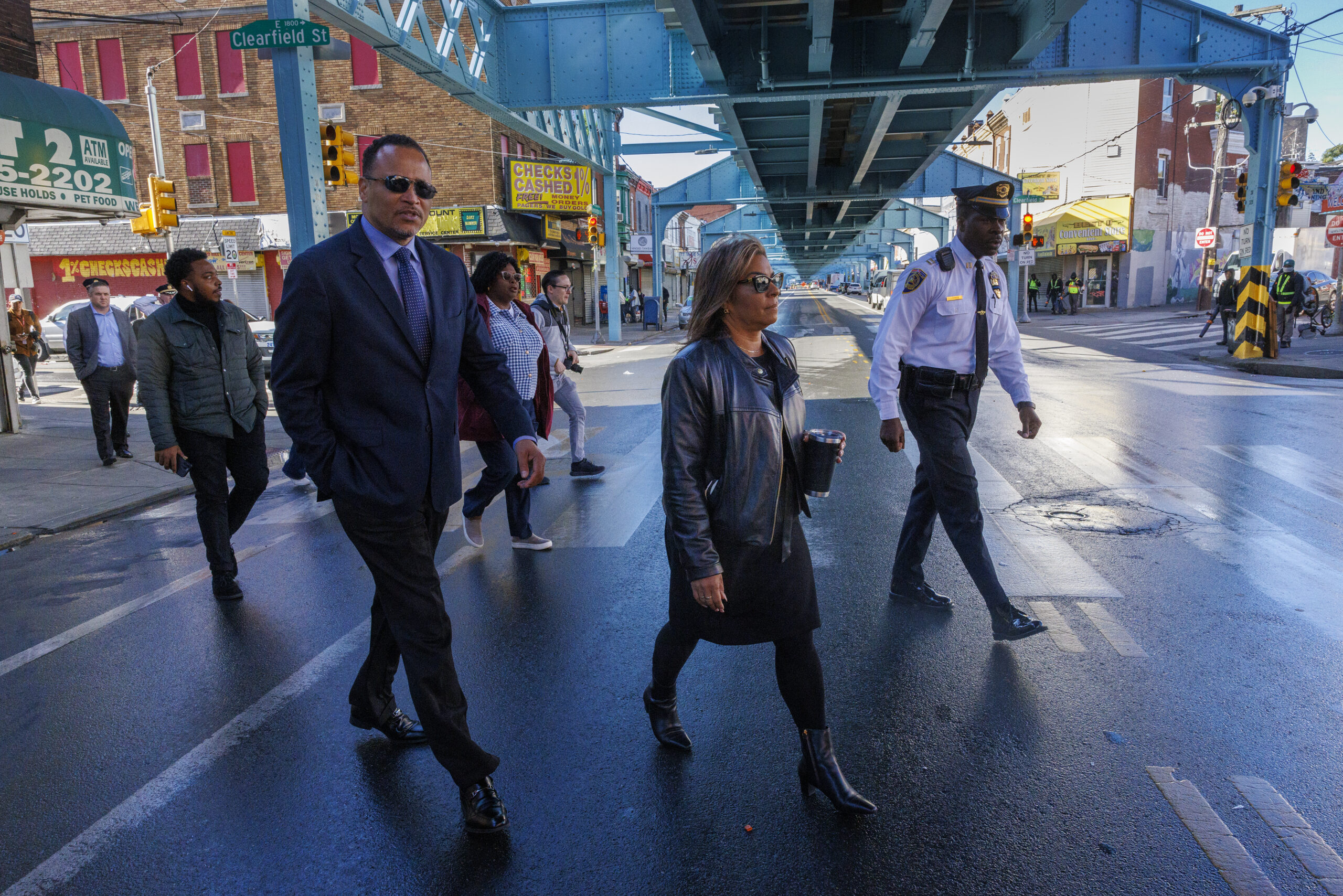
Kenneth A. Divers, SEPTA’s Director of Outreach Programs (left), walking across Kensington Avenue with Councilperson Quetcy Lozada in 2023. She spoke at a news conference about neighborhood clean-up and the opioid epidemic.
‘No one is turning a blind eye now’
The needs of the community in the throes of the opioid crisis are colliding with local and federal funding cuts.
On Jan. 13, the Trump administration abruptly canceled, then 24 hours later restored, nearly $2 billion for mental health and addiction treatment. In July 2025, the Trump administration issued an executive order to reevaluate and halt discretionary Substance Abuse and Mental Health Services Administration grant funds for harm reduction programs or “safe consumption” sites. Despite public health reports lauding their benefits, the administration falsely claimed that these methods “only facilitate illegal drug use and its attendant harm.”
Instead, federal dollars will be prioritized for drug courts and mental health courts. This is happening in Philadelphia already. In June 2024, Philadelphia Mayor Cherelle L. Parker ceased funding needle exchange programs, deferring to local nonprofits and philanthropic groups. Parker’s administration opted for a law-enforcement-heavy approach and changed how opioid settlement funds are distributed.
In the last two years, Philadelphia City Councilmember Quetcy Lozada, who represents the 7th District, has introduced resolutions and new bills that limit certain efforts, such as safe injection sites, and where mobile care units can provide services. The 7th District includes neighborhoods hardest hit by the opioid epidemic, such as Harrowgate, Kensington, and Olde Richmond.
She told CPI that she believes safe injection sites “keep them in that vicious cycle.”
Research shows that safe injection sites help reduce HIV transmission, infections, and other diseases caused by sharing needles. Public health experts explain that harm reduction is one tool to reduce health risks and overdose deaths.
Advocates warn that limiting where outreach workers and mobile care units can operate will delay critical care, putting more people at risk of infection or medical crises. Lozada told CPI her office is working with providers and community organizations to better understand what she can do to support the people in her district.
“No one is turning a blind eye now,” Lozada said. “Folks need to understand that this is not a ‘Let’s have a conversation today’ type of situation. It is very much still a crisis and we are still ground zero. That has not changed. The focus has been, and continues to be, prevention and education and making sure that everybody’s on the same page and that we continue to grow in the same direction.”
Roz Pichardo, founder of Sunshine House, a resource hub on Kensington Avenue, sees nearly 80 people by 9 a.m. on some days. Recently, Pichardo doubled the number of nurses on site, prompted by confusion surrounding the mobile care unit operation. People searched for her.
“We already feel like we’re triage here. There’s too much red tape,” Pichardo said. “How do we reduce stigma in a community that’s plagued with addiction? Just keep talking, keep showing people what empathy and compassion look like. Maybe they will pick up on it.”
She reiterates that care is not one-size-fits-all.
Roz Pichardo with Operation Save Our City holds her bible on March 7, 2024, with names of 2232 people she saved with narcan since 2018. Harm reduction activists gathered outside Philadelphia City Hall to ask for seat at table and funding for the opioid crisis.
Some reports suggest that programs like Police Assisted Diversion and Case Management, Assessment, Re-entry and Empowerment Services (PAD CARES) and “wellness courts” may not be working as intended.
Lozada proposes government-run medical programs, such as triage centers and “stabilization centers,” that address the physical symptoms and barriers to recovery, including open wounds.
“For a long time, the voices of those who were on substance abuse or those who are living in substance abuse were prioritized over those who are just trying to live day by day in that community,” Lozada told CPI.
She says residents want a better quality of life, for children not to be exposed to people with gaping wounds, and for elders in the neighborhood to feel safe walking around.
“The government created this. Government needs to respond to it,” she added.
In a follow-up interview, Lozada told CPI: “We’re constantly meeting and having conversations about what is working, what is not working. What needs to be adjusted? Where do we need more services? Who are the providers that are actually providing the work and the services and who are not? And those who are not, how do we reallocate or readjust values to those programs that are actually having a positive impact?”
City officials’ plans remain unclear, but Lozada said partnerships are still evolving.
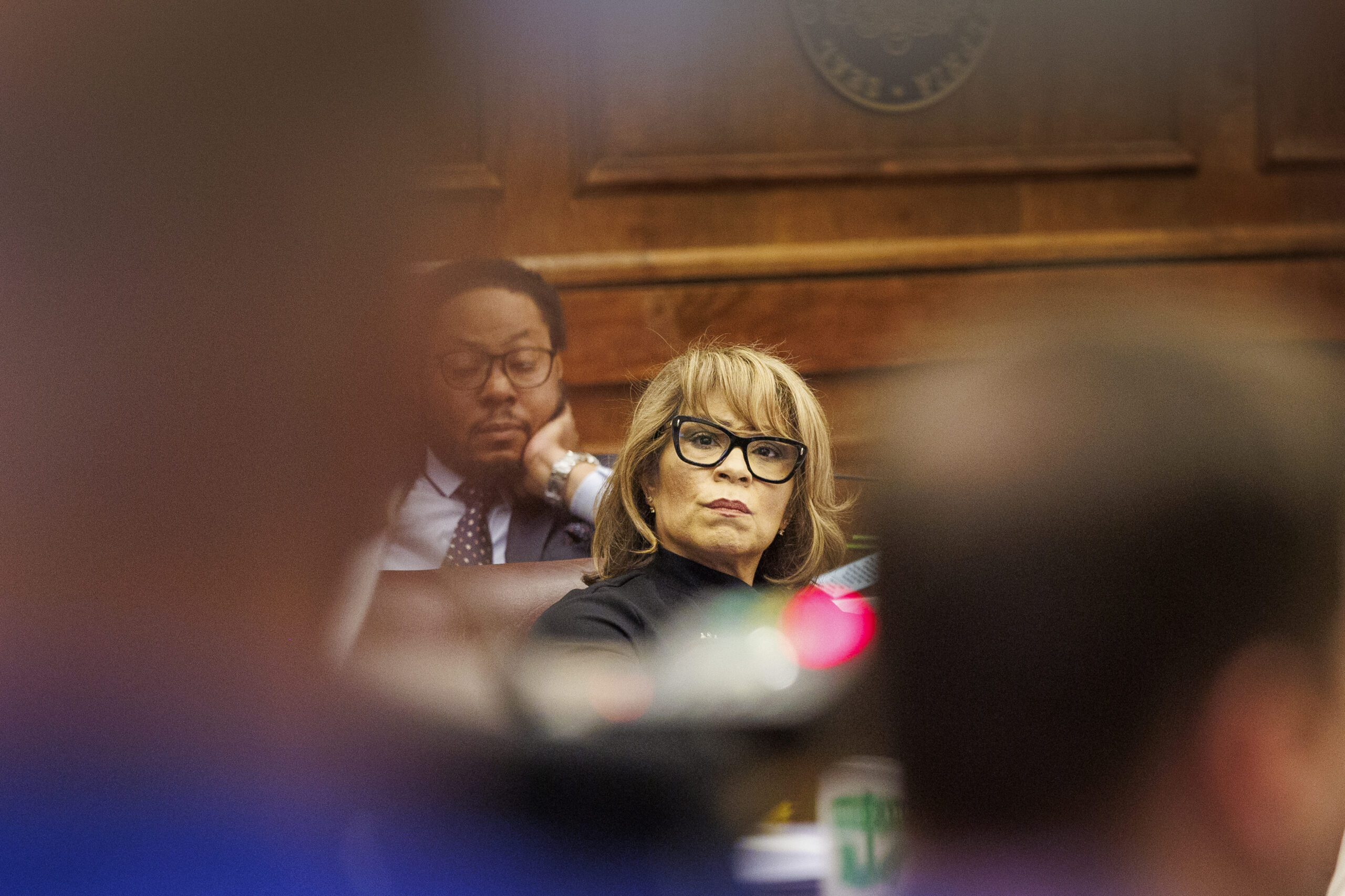
Philadelphia Councilperson Quetcy Lozada listens to public comment on her bill limiting medical providers in Kensington during public comment, City Council Chambers Philadelphia, Thursday, May 8, 2025.
Policy shifts and the limits of enforcement
Yet, researchers like Luis Valdez, an assistant professor in community health and prevention at Drexel University and founder of the GANAS Health Initiative, have concerns.
“Can we stop looking at this as a wasted budget line item?” Valdez asked. “People are dying. Those people are also constituents, folks that have families and hopefully futures, and people that grew up in these districts, right? The problem wasn’t created by drug use. The drug use is a symptom of all these other things that are happening.”
Some experts say officials’ decisions to restrict certain programs have complicated outreach efforts. Multiple harm reduction advocates claim city leaders are disregarding medical advice on addiction care.
“Our own health and human services [department] is not using evidence-based practices. We’re on a really s— trajectory from the top down,” said Nicole O’Donnell, a peer recovery specialist with the Center for Addiction Medicine and Policy (CAMP) at the University of Pennsylvania Health System. CAMP provides patients with a prescription for buprenorphine via telehealth services.
“People view substance use as a choice instead of an illness. The people out there using are also victims of the opiate problem, and so is the neighborhood. We’re trying to figure out … how do we support both?” added O’Donnell, who is in recovery and lost a sister to an overdose.
She testified before City Council in May, explaining that CAMP prioritizes connecting people to low-barrier rehabilitation treatment options and to a physician for continued care.
Meanwhile, new mixtures of street drugs, like xylazine, have complicated treatment and harm reduction efforts. In August 2024, a city health alert reported the emergence of an even more potent substance: medetomidine. Mixed with fentanyl, this drug can trigger potentially life-threatening symptoms — such as muscle rigidity and slowed breathing — that require admission to an intensive care unit.
Those shifts in the drug supply are showing up in hospitals. In the last two years, healthcare workers have experienced a sharp increase in emergency room visits related to substance use injuries and withdrawals, according to city data. Patients have also exhibited complications with wound infections and severe withdrawal symptoms.
“[That data is] a sign and symptom of other things that we’re tracking,” said Jeannmarie Perrone, an emergency room physician and director of medical toxicology and addiction medicine at the University of Pennsylvania.
Perrone presented this data to City Council’s Kensington Caucus in May. Between January and September of 2024, more than 200 patients with addiction were admitted to intensive care units at Temple University Hospital, Penn Medicine, and Jefferson Health.
“[That] is really unheard of for opioid withdrawal,” Perrone told City Council.
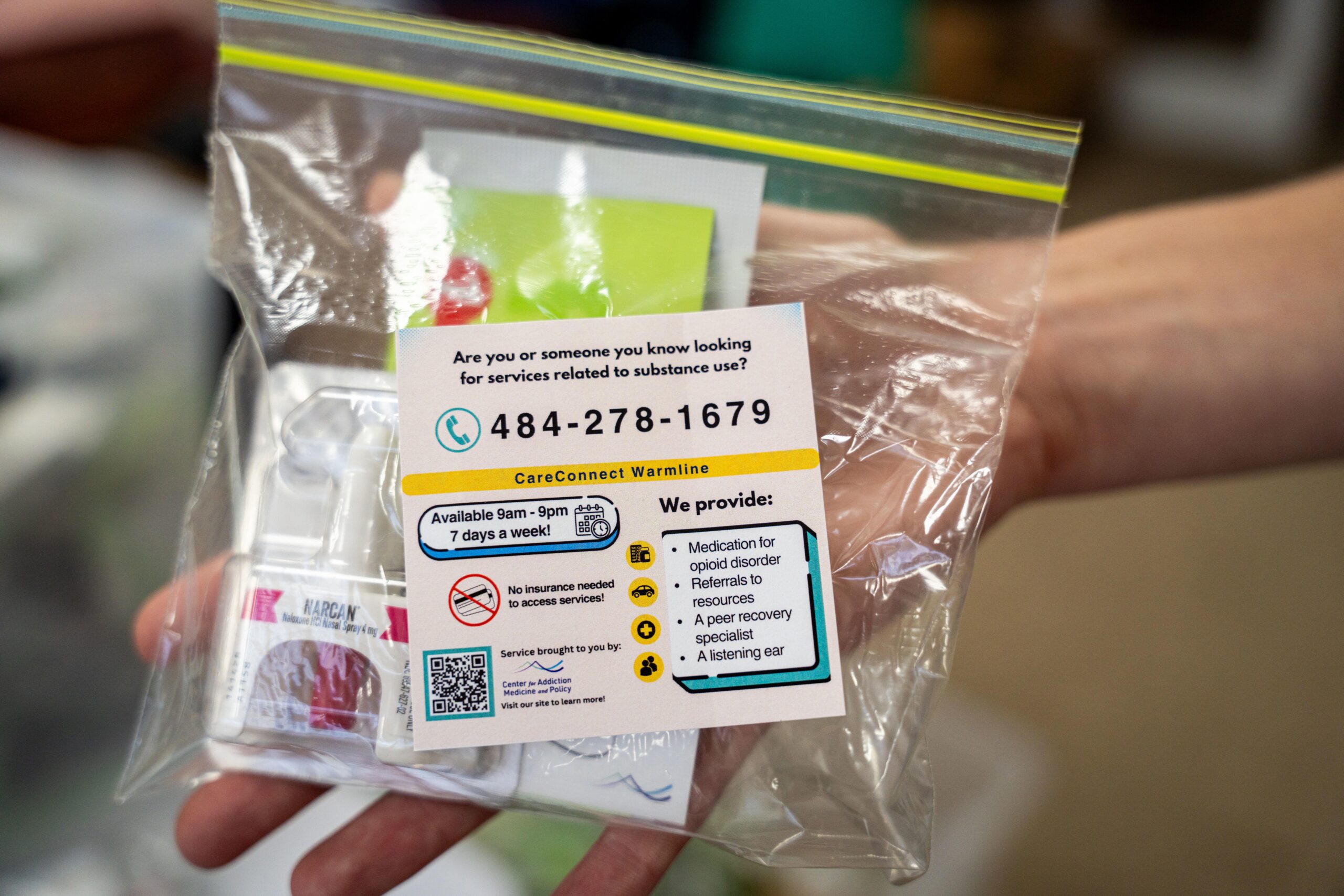
This packet, distributed by the Center for Addiction Medicine and Policy, contains Narcan, a medication used to reverse opioid overdoses.
Language barriers, access gaps
Spanish-speaking Puerto Rican populations already struggled to access healthcare, a previous CPI investigation found. Latino providers are even rarer in substance use programming.
Esteves Camacho, who is from Caguas, Puerto Rico, was one of those providers. She was raised in Philadelphia and saw people lit up when she spoke in their language.
“It’s important to have the cultural context of being Puerto Rican,” she said.
But language is not the only barrier. After Hurricane María, Puerto Rican migration to Philadelphia increased, driven in part by people seeking medical care and social services. Experts told CPI that some arrivals include people with substance abuse problems, often low-income and eligible for Medicaid, a pattern also reflected in multiple studies.
In those cases, access to treatment often depends on Medicaid, the public program that funds a significant share of behavioral health services, and one that is now under threat. Government medical assistance covers nearly half the cost of treatments for people with substance use disorder, according to the Kaiser Family Foundation (KFF).
A 2017 state hearing revealed that 1,626 Hispanic Philadelphia residents from Air Bridge neighborhoods sought drug or alcohol treatment programs through the city’s Medicaid-funded behavioral health service, Community Behavioral Health (CBH). Today, residents in those same areas are more likely to use Medicaid-funded centers, especially for substance use disorder.
In 2021, 114,268 Pennsylvanians with substance use disorder relied on the aid, KFF data show. As of July 2025, Philadelphia topped the list for total Medicaid behavioral health spending, tallying $151,422,117, according to Pennsylvania health department data.
However, Latinos in the city are more likely to be underinsured or enrolled in Medicaid.
Medicaid funding hangs in the balance as the Trump administration slashes budgets dedicated to harm reduction services and raises barriers to enroll or renew benefits.
Pennsylvania is expected to be among the hardest-hit states, with an estimated $46 billion decrease over the next decade, according to KFF. Peer support, inpatient and outpatient rehabilitation, and mental health support could be destabilized for nearly 18 million people across the U.S.
“La cuerda parte por lo más finito [The rope always breaks at its weakest point]. Who are those 18 million Americans? Are they drug users? Probably. People who are on methadone. People who are using drugs,” sociologist Camila Gelpí-Acosta said.
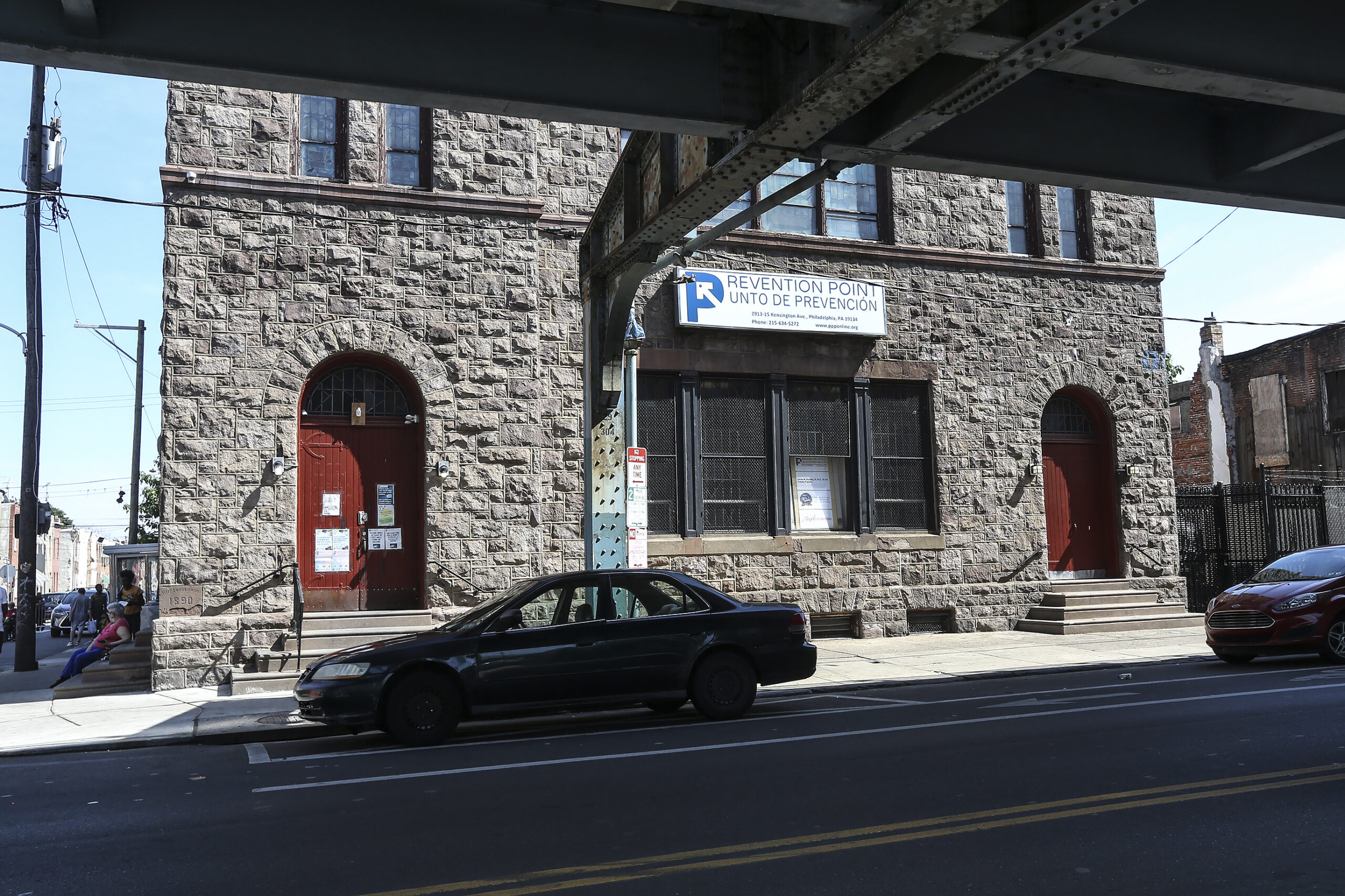
Prevention Point 2913 Kensington Avenue on June 14, 2022.
‘A blueprint of what not to do’
Puerto Rico, along with the Dominican Republic, has some of the highest rates of injection drug use in the Caribbean. Those areas also see increased demand for selling and buying drugs, says Josh Romig, assistant special agent in charge at the Drug Enforcement Administration’s Philadelphia field office, who has tracked drug trafficking for 26 years.
“Puerto Rico is positioned closely to the Dominican Republic, [which] sees Puerto Rico as a very viable and much easier option to import drugs, especially small amounts,” he said.
The drug trade has collided with a layered public health crisis, Gelpí-Acosta said.
“We’re talking about these six decades of using Puerto Rico as a launch pad toward the Northeast,” Gelpí-Acosta said. “It’s created a humongous drug-using population on the island in the archipelago.”
Limited addiction programs in Puerto Rico have pushed people to relocate to cities like Philadelphia, while drug trafficking organizations thrive on demand, as documented by an academic study in Centro Journal. Gelpí-Acosta and her wife founded El Punto en La Montaña, one of the few syringe exchange programs in Puerto Rico, seeing how drug use contributes to other health conditions such as HIV and hepatitis C. She underscored that weakened healthcare systems act as a catalyst for migration.
“They left the island because there were no services, because of many other complicated reasons,” Gelpí-Acosta said. “And here in the United States, they find services, but they end up homeless anyway, and they continue to use drugs. And then the HIV, overdose, and hepatitis C vulnerabilities remain unaddressed.”
Without treatment, people living with HIV or hepatitis C face chronic health complications, cancer, and death. Advocates and scholars say that failing to treat these conditions overlooks critical pieces of harm reduction.
“It’s not just an opioid crisis. … It’s a syndemic of overdose displacement. It’s structural neglect,” Valdez said.
The GANAS Health Initiative supports Latino men in Philadelphia, addressing overlapping needs such as housing, education and poverty.
A recent major drug bust illuminates those connections. In late October 2025, federal and state officials indicted 33 alleged members of a prominent drug trafficking ring in Kensington, led by dealers from Puerto Rico based in Philadelphia.
Allegedly, the head of the trafficking group allowed members to sell drugs “in exchange for rent,” according to the Department of Justice.
The drug economy in North Philadelphia persists in the zip codes with the highest poverty rates and the least social services funding.
“We have a blueprint of what not to do with alcohol from 1920 to 1932,” sociologist Gelpí-Acosta said, referring to the Prohibition era. “And yet, here we are. We continue to illegalize drugs, creating more dangerous drugs out there, not under our control. [Except] they’re not trafficking whiskey, they’re trafficking fentanyl.”
Valdez said health conditions that arise from substance use disorders emerge from what he calls “maladaptive coping skills” to stress. For example, suppressed trauma and limited access to Latino providers can exacerbate issues leading to self-medication.
Latinos often face complications with providers who are unfamiliar with their migration stories, family values, or cultural taboos around mental health and addiction.
“Language and cultural competency or responsiveness is not there,” Valdez said, rattling off other complications such as health insurance limitations and poor-quality housing. “Folks in power, whether we like it or not, would prefer an easy solution to a problem that’s really complex.”
“Culture is such a big part of our health context,” Seeburger said. “To not have that, we are not equipped in the city to provide adequate healthcare.”
Kensington Avenue on Feb. 22, 2024. Mayor Cherelle L. Parker vowed to end Kensington’s open-air drug market for good.
`No other way’
In Portugal, addiction specialists have identified possible solutions such as decriminalizing drugs, aiming to eliminate barriers to housing and jobs. Portugal’s program changed how law enforcement interacts with users: Rather than arrest people who use or have drugs on them, police officers work as social workers do and connect people to treatment options. In addition, the government provides free healthcare to expand access to methadone treatment.
“If we are dealing with a chronic relapsing disease, we must keep the investment that equates to this situation,” Portugal’s drug policy pioneer, João Goulão, said in a 2023 panel discussion at Georgetown University. He acknowledged doubt of the policy’s effectiveness and decreased participation in the program but blamed a lack of government-backed funding in social services.
Unintentional overdoses and long-term rehabilitation efforts require a health-first approach, he insisted.
This stands in stark contrast to Mayor Parker’s strategies.
“The single biggest risk factor for drug overdose death is a period of incarceration,” Seeburger said. “We’re not telling the whole story if we’re looking at acute overdose.”
Despite multiple requests, Parker remained unavailable for comment.
In 2024, Lozada told CPI the city must “respond aggressively” to address addiction.
“There are people we are allowing to die on those streets because we are afraid of what the optics will look like. We have to bring people into our system. There’s no other way,” she said. “We have to make people healthy in our system. … In a way, the optics are not going to look good.”
Pichardo, who helps people living on the streets and reverses multiple overdoses weekly, called these methods “retraumatizing.”
“They’re going to relapse because there’s no real structure. There’s no desire. It was forced upon them,” she said. “Twenty years of addiction does not equal 16 days of treatment.”
Luis Soto, a peer specialist, agrees. While he applauded Lozada’s efforts, he rejected the idea of coercing people into treatment.
“We cannot force recovery to no one,” he said. “That’s not the way.”
After his infant son died in 1995, Soto began using drugs. Between 1996 and 2011, he was incarcerated off and on, becoming entrenched in the drug trade along Kensington Avenue. For a few years, he was unhoused, until an outreach worker — whom he calls a mentor — helped him.
“In 2011, that’s when I opened my eyes,” Soto recalled.
The following year, Soto began working as a peer specialist. But he noticed a lack of Latino-focused services and shelters.
“There are no substance use treatment [or] resources specifically for women who speak Spanish. There is nowhere in the city of Philadelphia,” Seeburger confirmed. “There is one program for men who speak Spanish.”
“The city [doesn’t] have the background to provide services to this population,” he said.
But Roz Pichardo, Luis Valdez, and Luis Soto do, and they aim to fill that gap. Soto wants city officials to invest in more Latino peer specialists who can reach people where they are.
Guillermo Santos Jr. holds the ashes of his father, Guillermo Santos Sr., who died of a fentanyl overdose in 2021, outside his childhood home near Kensington and Allegheny on Aug. 19, 2025.
In August, Santos prepared to move into a new apartment with friends in New York City. He has been away from home for two years, during which cycles of addiction lured in a new wave of people, some of them his friends in their early 20s.
Determined, he won’t give up. Santos says he draws strength from the solidarity he sees in Kensington, where his mother, families, neighbors, and advocates keep pushing for help that matches the scale of the crisis.
“That plea for unity is what keeps me so alive to this kind of stuff,” Santos said.
With the sun setting, he strategizes how to get his record collection to his new home.
As he closes the door to his childhood home, his father’s ashes remain on the mantle above the fireplace.
This article was produced by Centro de Periodismo Investigativo, a nonprofit center for investigative reporting in Puerto Rico, and made possible by a fellowship from the Centro de Periodismo Investigativo’s Journalism Training Institute.
Half days are disappearing in the Philadelphia School District.
Beginning in the 2026-27 school year, the district won’t have a single early dismissal — for teacher planning, report card conferences, or any other purpose.
Student attendance tumbles whenever Philadelphia has a half day, and parents scramble to plan for childcare when they happen, Superintendent Tony B. Watlington Sr. said.
At the superintendent’s request, the board amended the 2026-27 calendar, changing eight previously scheduled half days to zero.
Some days previously scheduled for professional development will now be full days off for students, and report card conferences — previously held over two half days — will now be scheduled on a single day off for students.
“When we have half days in the school district, it significantly impacts our student attendance,” Watlington told the board. “We now have clear data over 3½ years that when we have half days for professional development and the like, it lowers our overall student attendance.“
Watlington has emphasized student attendance as a key driver of academic improvement, and overall, Philadelphia’s student and teacher attendance has risen during his tenure, which began in 2022.
But half days were responsible for the largest single year-over-year drop in attendance in recent years. In December 2025, 54% of district students attended school 90% of the time or more, down from 66% over the same time period in 2024.
In January 2026, regular student attendance was 51%, down from 53% in January 2025, a dip Watlington said was “largely attributed to disruptions in the calendar.”
Controlling for half days, regular student attendance would have been 70% last month — proof, Watlington said, that half days need to disappear.
“This is very important,” the superintendent said, “because we know if we can get student regular attendance up, kids just learn more when they’re in school more.”
Half days planned for March, April, and May this school year will remain on the calendar, but the half day planned for students’ last day of the school year, June 11, is now a full day.
Amid a historic drop in violent crime, homicides have fallen to lows not seen in decades. But in what researchers say is an alarming trend, homicides related to domestic violence are on the rise.
There were 37 such killings in Philadelphia last year, up from 28 the previous year. And even as homicides have fallen sharply overall, domestic killings remain stubbornly intractable. In all, deaths related to domestic violence accounted for about one in six homicides in the city last year, records show.
To address that, the police department is adding specialized training for officers and others who deal with victims of such crimes and adding staff in its Office of Community Advocacy and Engagement. When the unit expands this spring, staffers will be trained to spot signs of domestic abuse and advocate for victims of intimate partner violence, among other crimes.
That work mirrors efforts in cities such as New York, which launched a new police unit last year dedicated to combating the surge in domestic violence as such crimes rise nationwide.
“The numbers are moving in the wrong direction,” said Marian Braccia, a professor at Temple University’s Beasley School of Law and a former prosecutor in the district attorney’s family violence and sexual assault unit. “It’s terrifying.”
In Philadelphia last year, the slaying of Kada Scott drew attention to the issue after The Inquirer reported that her accused killer, Keon King, had previously been accused of stalking and kidnapping another woman. But two criminal cases against him fell apart when the victim failed to appear in court and prosecutors withdrew the charges.
And last month, calls for awareness surrounding domestic violence were renewed when Yuan Yuan Lu, 28, was killed one day after reporting that her ex-boyfriend had sexually assaulted her in his Pennsport home. Police say 32-year-old Yujun Ren followed Lu to her Levittown home and shot her in the head, killing her.
According to prosecutors, Lu told police the day before she was killed that Ren carried a gun and she feared for her safety.
Philadelphia’s new unit would work to support victims in just such circumstances, officials said. The office launched last spring with 10 victim advocates with backgrounds in social work and behavioral health.
In March, those staffers will begin working with victims of sexual assault and domestic violence, said Ayanna Greene-Davis, executive director of the Office of Community Advocacy and Engagement.
And the unit will add 10 more members — sworn police officers with law enforcement experience — who will complete similar victim-oriented training, she said.
Ayanna Greene-Davis, 47, Executive Director for Office of Community Advocacy and Engagement, of Northwest Philadelphia, Pa., poses for a portrait at the Philadelphia Police Headquarters in Philadelphia, Pa., on Tuesday, Feb. 17, 2026. .
“We’re not going to take days and days and days” to respond to reports of domestic violence, Greene-Davis said. “In the past, that happened.”
Victims of such crimes will be able to call the office’s advocates to voice concerns about their cases as they are investigated, according to Greene-Davis. And advocates will be trained to connect them with resources such as domestic abuse shelters and provide information on ways to remove themselves from dangerous living situations.
The unit will also oversee a broader effort to train patrol officers throughout the department to better assess the dangers victims of domestic violence face and work to keep them safe.
“Every victim is going to be in a different stage, but we can talk to them,” Greene-Davis said. “We can provide a safety plan.”
Three U.S. troops were killed and five others seriously wounded amid ongoing hostilities withIran, military officials said Sunday, the first known American casualties in a campaign that has quickly heightened concerns about the Pentagon’s ability to protect its personnel.
An unspecified number of troopsalso sustained“minor shrapnel injuries and concussions” and are in the process of returning to duty, according to a statement from U.S. Central Command, which oversees operations in the region.
The three slain Americans were part of a sustainment unit in Kuwait, two U.S. officials told The Washington Post. One of the officials said the three troops served in the Army. The military’s official statement on the deaths did not specify where the service members were killed, a deviation from the Defense Department’straditional notification procedures when announcing U.S. combat fatalities.
The secrecy underscored how fraughtthe situation has becomefor service members deployed in the Middle East as Iran attacked U.S. facilities and interests in a half-dozen countries following the death Saturday of its supreme leader, Ayatollah Ali Khamenei.
Spokespeople for the Pentagon and Central Command declined to comment for this article.
The three fatalities – in its statement, Central Command referred to the fallen troops as “killed in action” – return the United States to a familiar footing in the Middle East, where successive U.S. administrations prosecuted costly, devastating wars over the 20 years that followed 9/11. In announcing the start of Operation Epic Fury overnight Saturday, President Donald Trump acknowledged the possibility that American lives may be lost, saying, “That often happens in war.”
In a video statement released by the White House on Sunday, the president praised the three troops who “made the ultimate sacrifice for our nation” and said that “sadly, there will likely be more before it ends.” He told the Daily Mail that the campaign could last for four weeks.
Numerous U.S. facilities throughout the region have come under attack since U.S. and Israeli forces began attacking targets in Iran – a mission, Trump has said, that is intended to topple the theocratic government in Tehran and destroy its military capabilities.
Central Command said Sunday that U.S. forces have destroyed more than 1,000 targets so far, including naval ships and submarines, missile sites, communications links and the command and control centers for the Iranian Revolutionary Guard.
The astonishing figure after less than two days of military operations reflected what one U.S. official described as a “very aggressive” effort to knock out as many of Iran’s capabilities to launch missiles and drones as quickly as possible. Like others, this person spoke on the condition of anonymity because they are not authorized to speak to the news media.
Still, overnight, military officials in U.S. operations centers tracked“dozens and dozens” of missiles and attack drones launched by Iran throughout the night, said anotherperson familiar with the situation.
“Iran is in full retaliation,” this person said.
The vast number of retaliatory attacks – and the array of sites being targeted, including nonmilitary sites in Arab nations across the Middle East – is concerning after so much of the regime’s top leadership was killed, this person continued. Officials are worried about the command and control of those weapons, the person added.
Inside the Pentagon, and among some members of the Trump administration, there was deepening concern Sunday that the Iran conflict could spiral out of control, said people familiar with the situation.
“The mood here is intense and paranoid,” one person said.
There is anxiety among senior leaders that the fighting will extend for weeks, further stressing limited U.S. air defense stockpiles, people familiar with the situation said.
“There is concern about this lasting more than a few days,” said another person. “I don’t think people have fully absorbed yet, like, what that hasdone with stockpiles,” they added, noting that it often takes two or three air defenseinterceptors to ensure that an incoming missile is stopped.
The House Armed Services Committee’s top Democrat, Rep. Adam Smith (Washington) said this operation will force the U.S. to further expend munitions supplies that are already strained.
“At this point, it’s on. It’s not like we can say: ‘Hey, Iran, we’re out of missile defense systems now so we’re going to pause for a moment. Is that okay?’ It will stretch our ability to defend everything that we need to defend,” Smith said, characterizing U.S. resources as “stretched thin.”
As The Post reported last week, the president’s senior military adviser, Joint Chiefs Chairman Gen. Dan Caine, warned the White House that munitions shortfalls and a lack of broad military support from other U.S. allies would add considerable risk to any operation in Iran and to the U.S. personnel put in harm’s way.
The U.S. has a vast amount of firepower in the region, including nine destroyers capable of shooting down missiles. But videos circulating online show that one of the other major threats U.S. troops face is from Iran’s fleet of Shahed drones, which fly slow and low, and arenot optimal targets for U.S. air defenses.
Trump has said in multiple social posts since the operation began that he is committed to a long-term military operation against Iran. Unlike the precision operation in June targeting Iran’s nuclear program, the president has said U.S. “heavy and pinpoint bombing” would continue for days, uninterrupted, “to achieve our objective of peace” throughout the Middle East.
The descriptions of shrapnel and concussions noted in Central Command’s statement Sunday point to missiles or drones, which produce blast injuries. While U.S. and regional allies have intercepted much of the incoming fire, some attacks have broken through, including numerous salvos that blasted a U.S. naval base in Bahrain.
In 2024, three U.S. soldiers were killed and others wounded in a drone attack on their base in Jordan. Commanders and personnel failed to properly detect and intercept an Iranian-made drone that smashed into the troops’living quarters. Investigators later found senior leaders denied a request to position an air defense system there.
Noah Robertson and Laura Meckler contributed to this report.
CARACAS, Venezuela — Venezuelan opposition leader and winner of the 2025 Nobel Peace Prize María Corina Machado said on Sunday that she will return to Venezuela in the coming weeks and that elections will be held in the South American country.
Machado did not set a date for her return but said that one of the objectives will be to prepare “for a new and gigantic electoral victory.”
In a message shared on social media, the politician called on her supporters to “strengthen the unity of Venezuelans that began with the primaries,” a reference to the 2023 process in which she won the vote aimed at establishing a single candidate to compete at the polls against former President Nicolás Maduro.
Acting President Delcy Rodríguez — in power since Maduro and his wife were captured in a U.S. military operation in January — has warned that Machado “will have to answer” if she returns to the country.
U.S. Secretary of State Marco Rubio has said that change in Venezuela must go through phases of stabilization, economic recovery, and transition. He has not indicated that elections could be held in the short term.
The 58-year-old politician, a key figure in the Venezuelan opposition, was awarded the Nobel Peace Prize last year for her fight for democratic transition in Venezuela.
She controversially later presented her medal to U.S. President Donald Trump after the military intervention that deposed Maduro, who now faces drug-trafficking-related charges in U.S. courts. He has pleaded not guilty.
After Maduro was declared the victor of the July 2024 elections, protests erupted that sparked widespread repression. The opposition claimed it had credible evidence that the real winner was Edmundo González, who replaced Machado after she was barred from participating.
About 100 people gathered on the steps of the Philadelphia Museum of Art on Sunday to stand with Ukraine, marking the recent fourth anniversary of the Russian war on the European nation.
“You don’t have to be Ukrainian to know what’s right and wrong,” said Iryna Mazur, 50, honorary consul of Ukraine in Philadelphia. “You don’t have to be Ukrainian to have a heart, and to stand for justice.”
The event also drew a second group: a small crowd of less than 10 people with a pre-Revolutionary Iranian flag stood alongside Ukraine supporters. While a joint protest had not been planned, Mazur expressed support for the Iranian demonstrators.
“What happened to the dictator in Iran should have happened a long time ago,” Mazur said.
Nazanin Saleh, 42, said she supported the attack on Iran’s supreme leader. She said she was getting ready for a birthday party when she got a notification that Ayatollah Ali Khamenei was dead.
After years of sorrow, she said felt hope for a motherland she hasn’t seen since 2016.
“There is hope now, to be able to have a democracy and be able to have basic human rights, to vote,” Saleh said, pausing. “There is hope to be able to live as a free woman.”
She said the U.S intervention was necessary for the future of her loved ones back home.
“This war isn’t against the people of Iran,” Saleh said. “It is against an Islamic regime that’s forcefully killing people and taking away their freedom.”
After more than an hour at the Art Museum, the group marched down Benjamin Franklin Parkway, cheering for drivers who waved in support as they passed by.
The United Arab Emirates has sold itself to foreigners for years as a sunny, safe, tax-free oasis.
That peaceful image was shattered Saturday as Iranian weaponry rained down on Dubai, setting fire to a five-star resort, threatening the world’s tallest building, and killing one person and injuring seven others at the airport in the capital city of Abu Dhabi.
“This is Dubai’s ultimate nightmare, as its very essence depended on being a safe oasis in a troubled region,” Cinzia Bianco, an expert on the Persian Gulf at the European Council on Foreign Relations wrote on X. “There might be a way to be resilient, but there is no going back.”
Officials tried to reassure residents and visitors that the country’s air defense system was among the best in the world, blasting down drones and missiles.
“I know it’s a scary time for a lot of the residents,” Reem Al Hashimy, minister of state for international cooperation, told CNN. “We don’t hear these types of loud sounds. But at the same time, those are sounds of interception. And where there has been damage — that has been primarily debris.”
Fallout from the attacks has undermined the Emirates’ efforts to de-escalate tensions with Iran despite longtime suspicions of its neighbor across the Gulf. The UAE closed its embassy in Tehran on Sunday.
The oil-rich federation of seven sheikhdoms has relied on its image as a place of serenity to lure wealthy tourists, businesspeople, and future residents who want to live largely tax-free in luxury in the desert by the sea. Nearly 90% of the estimated 11 million residents are foreigners.
Real estate firms sell glimmering high-rises and poolside villas to rich Europeans and Americans by promoting a welcoming climate and business-friendly policies, and touting it as one of the safest places on earth.
Hundreds of drone and missile attacks later, though, that reputation has been rocked.
“Last night was pretty surreal,” said British racehorse trainer Jamie Osborne, who was in Dubai for the Emirates Super Saturday. “You’re standing in the paddock watching missiles get shot through the sky.”
The Ministry of Defense said Sunday that air defenses had dealt with 165 ballistic missiles, two cruise missiles, and more than 540 Iranian drones over two days.
While officials said they intercepted all air attacks Saturday, debris from the knocked-down weapons sparked blazes at some of Dubai’s most iconic locations.
Social media videos and photos showed a fire outside the Fairmont hotel on the prestigious human-made Palm Jumeirah island, flames licked at the facade of the famous Burj Al Arab hotel, and smoke rose into the sky near Burj Khalifa, the 2,723-foot skyscraper.
There also was a fire at Dubai’s Jebel Ali Port, the city’s main sea terminal and a major shipping hub, and the Dubai International Airport was damaged and four employees were injured, according to the Dubai Media Office.
Kristy Ellmer, who was on a business trip from New Hampshire, said she was staying away from the windows of her hotel but felt relatively safe despite the numerous blasts.
“You hear a lot of explosions at times, you know, there’s hundreds of them,” she said. “It’s unsettling. We’re not used to hearing bombs, right, or missiles.”
Louise Herrle, an American tourist whose flight home with her husband from Dubai was scrapped, said it was her third time trying to visit the area. Previous trips were canceled by the COVID-19 pandemic and the Hamas attack on Israel in October 2023.
With their current Abu Dhabi and Dubai tour over, she is less likely to return to the Emirates or the region.
“I would probably be inclined to avoid this part of the world when there’s increased tensions, it just explodes so quickly,” Herrle said.
Maybe, she said, “the universe was trying to tell us something.”
WASHINGTON — President Donald Trump, his Treasury secretary, and his choice to lead the Federal Reserve believe they can coax the U.S. economy into partying like it’s 1999.
They are putting their faith in artificial intelligence to duplicate what happened when another technology arrived in the 1990s: the internet. Back then, the American economy surged as businesses became more productive, unemployment tumbled, and inflation remained in check.
Trump is confident that his nominee to become Fed chair, Kevin Warsh, can unleash an even greater economic bonanza by jettisoning what the president sees as the central bank’s hidebound reluctance to slash interest rates.
Many economists are skeptical.
The world looks a lot different today than it did when the Spice Girls ruled radio and Titanic dominated the box office. And the story the Trump team is telling — that a visionary Fed chair, Alan Greenspan, fueled the ‘90s boom by keeping interest rates low — is incomplete at best.
“The administration is offering a rather distorted version of what actually happened in the 1990s,’’ economist Dario Perkins of TS Lombard said in a commentary.
Nonetheless, the Trump administration believes history can repeat itself. All that’s been missing, in the president’s view, is a Fed chair with Greenspan’s foresight.
AI’s influence over interest rates
Trump has repeatedly attacked current Fed chief Jerome Powell, whose term as chair ends in May, for his reluctance to lower rates aggressively while inflation hovers above the central bank’s 2% target. Treasury Secretary Scott Bessent said on social media in January that the president sought to replace Powell with someone with “an open, Greenspan-like mind.”
“Our nation can see productivity boom like we did in the ’90s when we are not encumbered by a Federal Reserve which throws the brakes on,’’ Bessent said.
In speeches and writings, Warsh has argued that AI-driven improvements in productivity could justify lower interest rates.
These views align with Trump’s desires for Fed rate cuts but mark a break with Warsh’s own past as an inflation hawk. In the aftermath of the 2007-2009 Great Recession, Warsh — then a Fed governor — objected to some of the central bank’s efforts to help the struggling economy by pushing down rates even though unemployment exceeded 9%. Warsh warned then, wrongly, that inflation would soon accelerate.
At issue now are gains in productivity and the possibility that AI will make them bigger — much bigger.
To economists, productivity improvements are almost magical. When companies roll out new machines or technology, their workers can become more efficient and produce more stuff per hour. That allows firms to earn more and to raise employees’ pay without raising prices. In short: Surging productivity can drive economic growth without spurring inflation.
Greenspan and the internet
In the mid-1990s, Greenspan was contending with a strange set of economic circumstances: Wages were rising, but inflation wasn’t heating up.
Big productivity gains might have explained things, but government data showed no sign of them. Other Fed policymakers worried that surging wages and tame inflation couldn’t coexist and that higher prices were coming. They wanted to raise interest rates.
But Greenspan suspected the official productivity numbers were missing something. For one thing, they didn’t jibe with the amazing tales of efficiency improvements the Fed was hearing from companies investing in computers and turning to the internet.
So he ordered his lieutenants to dig through decades of productivity numbers. The official statistics they assembled told an implausible story: Services firms — from retailers to legal practices — had supposedly seen productivity fall over the years, despite intense competitive pressure and massive investments in technology.
Greenspan didn’t believe it. He persuaded his Fed colleagues that the government’s numbers were wrong and were understating productivity. They agreed in September 1996 to hold off on raising rates.
The economy took flight.
Tardily, productivity advances began to show up in the official data. Overall, American economic growth surpassed 4% every year from 1997 through 2000, something it would do again only once in the next quarter century. The unemployment rate plunged to 3.8% in April 2000, lowest in three decades. Inflation stayed in its cage, coming in below 2% — later the Fed’s official target — for 17 straight months in 1997-1999.
History repeats itself … maybe?
American productivity certainly looked strong in the second and third quarters of 2025, and some economists attribute the improvements to early adoption of AI; they see bigger gains and stronger economic growth ahead.
Others aren’t so sure.
Joe Brusuelas, chief economist at the consulting firm RSM, wrote that the 2025 productivity improvements “are not because of artificial intelligence’’ but reflect investments in automation that companies made when they couldn’t find enough workers during and after the COVID-19 pandemic. “Those investments are starting to pay off,’’ Brusuelas wrote.
Economist Martin Baily, senior fellow emeritus at the Brookings Institution, believes it will take time for AI to have a big impact on the way companies do business and on the nation’s productivity.
“Companies don’t change that fast,” said Baily, chairperson of President Bill Clinton’s Council of Economic Advisers. “It’s expensive to change. It’s risky to change. The managers don’t necessarily understand the new technology that well. So they have to learn how to use it. They have to train their staff. All that stuff takes a long time.’’
A productivity boom can raise the economy’s speed limit — how fast it can grow without pushing prices higher. But it might not justify lower interest rates, Federal Reserve Gov. Michael Barr said in a speech earlier this month.
Businesses will borrow to invest in AI, putting upward pressure on interest rates. Likewise, American workers and their families likely would save less and borrow more in anticipation of higher wages, the payoff for being more productive; that would put still more pressure on rates to rise.
Bottom line, Barr said: “The AI boom is unlikely to be a reason for lowering policy rates.’’
Even Greenspan’s Fed eventually came to the same conclusion, reversing course and starting to raise its benchmark rate in mid-1999, taking it from 4.75% to 6.5% in less than a year. (The rate Trump complains about now is around 3.6%.)
“Warsh and Bessent talk only about the dovish 1995/96 version of Greenspan; they overlook the hawkish 1999/2000 variant,’’ Perkins wrote.
Then and now
Many of Warsh’s potential future colleagues on the Fed’s interest-rate setting committee see the late 1990s experience differently than he does, setting up what could be a clash at the central bank if the Senate confirms Warsh as chair.
Austan Goolsbee, president of the Federal Reserve Bank of Chicago, said earlier this week that “the analogy to the late 90s is a little harder for me to understand.” Greenspan’s insight was that productivity gains meant the Fed could hold off on raising rates, not that it should slash them, Goolsbee noted.
“It wasn’t, ‘Should we cut rates because productivity growth is higher?’” he said.
The economic backdrop that awaits Warsh is also far less friendly than the one Greenspan enjoyed.
Greenspan was avoiding rate hikes at a time when the usually profligate U.S. government was running rare budget surpluses and didn’t need to borrow so desperately. Now, after a series of spending hikes and tax cuts, deficits are piling up year after year, and the Congressional Budget Office expects federal debt to hit a historic high of 120% of America’s GDP by 2035.
Nor was productivity the only thing controlling inflation in the 1990s. Countries were lowering tariffs and dismantling trade barriers. Immigration was surging.
Now, thanks largely to Trump’s own policies, notably his sweeping taxes on imports and his crackdown on immigration, the world is much different. “Trade barriers are going up,’’ Perkins wrote. “Globalization has given way to de-globalization.’’
“That benign era is clearly behind us,’’ said Michael Pearce, chief U.S. economist at Oxford Economics.
JEFFERSON CITY, Mo. — To receive Medicaid health coverage, some adults will soon have to show they are working, volunteering, or taking classes. But to gather that proof, many states first will have to spend millions of dollars improving their computer systems.
Across the nation, states face an immense task and high costs to prepare for the Jan. 1 kickoff of new Medicaid eligibility mandates affecting millions of lower-income adults in the government-funded healthcare program.
The first half of a $200 million federal allotment has already begun flowing to states to help implement the new requirements. But the tab for the needed technology improvements and additional staff is likely to exceed $1 billion, according to an Associated Press analysis of budget projections in more than 25 states. That extra cost will be borne by a mixture of federal and state tax dollars.
The task is not as simple as pushing through a software update on your smartphone or personal computer. That’s because each state has its own system for managing Medicaid, often requiring experts to make customized changes.
“Our current eligibility systems are pretty old, and the ability to change them is very, very difficult,” said Toi Wilde, chief information officer for the Missouri Department of Social Services.
New requirements affect millions, but not all
The big tax-cut law signed last year by Trump is financed, in part, by sweeping Medicaid changes intended to cut government spending. Two of the most prominent will apply in four-fifths of the states, affecting Medicaid enrollees ages 19 through 64, without young children, whose incomes are above the typical eligibility cutoff.
Those Medicaid participants will have to work or do community service at least 80 hours a month, or enroll at least half-time as a student. They also will face eligibility reviews every six months, instead of annually, meaning they could lose coverage more quickly when their circumstances change.
The two provisions together are projected to save the federal government $388 billion over the next decade, resulting in 6 million fewer people with health insurance, according to the Congressional Budget Office.
But states first must update their online portals used by Medicaid participants, their aging computer systems used by state workers, and their methods of verifying information through various databases.
Most will have to turn to private contractors to meet the time crunch. At least 10 companies have agreed to offer discounted services, according to the federal Centers for Medicare and Medicaid Services.
Making those technology upgrades “is going to be a lift. It’s not something straightforward. It’s not easy,” said Jason Reilly, a partner at Guidehouse, a firm that is advising several states on the Medicaid requirements.
Most states don’t currently collect employment or education information about Medicaid participants. So states are looking to tap into outside sources to verify job and school data. But there’s no database of community volunteers.
And states are still waiting on federal rules — not due until June — to define some of the exceptions to the work requirements, such as how to determine who qualifies as “medically frail.”
States face extra pressure to get it right because the federal government will start penalizing states with too many Medicaid payment errors in October 2029.
States will be angling for extra federal money
Congress guaranteed all states a share of the $200 million allotted for Medicaid work and eligibility changes. But states must apply for additional federal money. The federal government covers up to 90% of states’ costs to develop systems for determining Medicaid eligibility, 75% of costs to maintain those systems, and half of most other administrative costs.
Missouri won early approval for the 90% federal funding rate. State lawmakers now are fast-tracking a $32 million appropriation needed to solicit bids for vendors to start upgrading technology platforms and improving a chatbot for Medicaid participants. Over the next year, the state’s social services agency expects to need about 120 additional workers — at a cost of $12.5 million — to handle the extra administrative workload.
Other states also project large costs. Maryland expects to spend over $32 million in federal and state funds to implement the Medicaid changes, Kentucky more than $46 million, and Colorado over $51 million. Arizona estimates it could cost $65 million — and require 150 additional staff — to implement the new federal requirements.
Some states surveyed by the AP reported even higher expected costs, though they didn’t always provide a breakdown for how much is due to new Medicaid mandates and how much pertains to Supplemental Nutrition Assistance Program changes also contained in Trump’s big law.
Several states, including Arkansas, said they are still working on cost estimates for the Medicaid changes. Arkansas instituted a Medicaid work requirement in 2018-2019, and thousands of people were dropped from the rolls before a federal court ended it. Many of the technology changes required by the new federal mandates could be covered under an existing vendor contract and have “a minimal financial impact on our Medicaid budget,” the Arkansas Department of Human Services said in an email.
Nebraska has said it plans to launch Medicaid work requirements in May, seven months ahead of the federal deadline. But the state has not detailed any associated costs and did not respond to inquiries from the AP.
Georgia’s work requirement prompts concerns
Georgia is currently the only state requiring some Medicaid recipients to work, after receiving special federal approval several years ago to expand coverage to some adults not otherwise eligible.
The Georgia Pathways to Coverage program racked up more than $54 million of administrative costs from 2021 through the first part of 2025 — twice the amount of medical assistance paid out over that same period, according to the U.S. Government Accountability Office. Almost all of those costs came from technology changes to its eligibility and enrollment system.
Some Medicaid analysts point to Georgia’s costs and Arkansas’ enrollment losses as reasons for caution as work requirements roll out in other states.
“A huge amount of funding is going to go to vendors to construct these complicated red-tape systems that prevent people who need it from getting healthcare,” said Joan Alker, executive director of the Center for Children and Families at Georgetown University. “In my view, that is a big, big risk.”