Category: News

Latest breaking news and updates

  • U.S. carries out first known strike on alleged drug boat since Maduro’s capture

    U.S. carries out first known strike on alleged drug boat since Maduro’s capture

    WASHINGTON — The U.S. military said Friday that it has carried out a deadly strike on a vessel accused of trafficking drugs in the eastern Pacific Ocean, the first known attack since the raid that captured Venezuelan President Nicolás Maduro earlier this month.

    U.S. Southern Command said on social media that the boat was “engaged in narco-trafficking operations” and that the strike killed two people and left one survivor. It said it notified the Coast Guard to launch search and rescue operations for that person.

    A video accompanying the post announcing the latest strike shows a boat moving through the water before exploding in flames. The U.S. military has focused lately on seizing sanctioned oil tankers with connections to Venezuela since the Trump administration launched an audacious raid to capture Maduro and bring him to New York to face drug trafficking charges.

    With the latest military action, there have been 36 known strikes against alleged drug smuggling boats in South American waters since early September that killed at least 117 people, according to announcements from the U.S. military and Trump. The majority of those of strikes have occurred in the Caribbean Sea.

    The last reported boat strikes occurred in late December, when the military said it struck five alleged drug-smuggling boats over two days, killing a total of eight people while others jumped overboard. Days later, the Coast Guard suspended its search.

    The U.S. conducted a large-scale operation in Caracas, the capital of Venezuela, on Jan. 3 that led to the capture of Maduro and his wife, who were then flown to New York to face federal drug trafficking charges.

    Maduro, before his capture, said the U.S. military operations were a thinly veiled effort to oust him from power.

    President Donald Trump has repeatedly said that the U.S. strikes targeting alleged smugglers are having an enormous impact on slowing drug trafficking routes in the Caribbean and eastern Pacific.

    “We’ve stopped — virtually stopped almost 100% of all drugs coming in by water,” Trump said in remarks on Thursday at the World Economic Forum at Davos.

  • Getting ready for the snow and cold? Here are tips to prepare yourself, your house, and your car.

    Getting ready for the snow and cold? Here are tips to prepare yourself, your house, and your car.

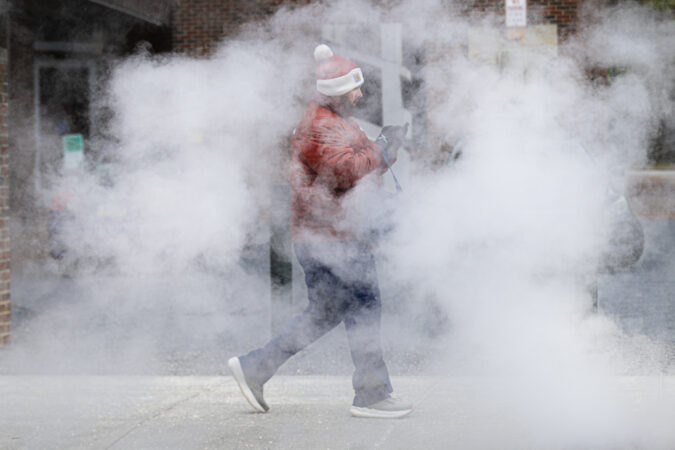
    Brace yourself for the cold, Philadelphians, because the first double-digit snowfall in 10 years is potentially heading our way, followed by sub-freezing temperatures that could last the rest of the month.

    Since nowhere is safe from the cold, here are some tips on how to keep yourself from freezing and your property from damage (no burst pipes in sight):

    How to prevent frostbite or hypothermia

    Staying indoors is the best way to keep frostbite and hypothermia at bay, but some must brave the temperature for work, other needs, or emergencies, as even waiting for the bus can take longer if SEPTA experiences storm-related service delays.

    With temperatures forecast in the teens and lower 20s, it is important to keep an eye on your core temperature.

    When you rapidly lose heat or stay wet for too long, it can cause hypothermia, even indoors. This can affect your brain and body, causing slurred speech, confusion, clumsiness, and extreme tiredness.

    Continued exposure to the cold can cause frostbite, as blood stops reaching your fingers, nose, ears, and extremities properly. You can get frostbite even under winter clothing, and it can lead to losing the affected body parts. If you start feeling tingling, numbness, or your skin looks gray or pale, head indoors.

    Frostbite can happen without hypothermia symptoms, and vice versa. Children, older adults, and people with circulation issues are especially at risk

    To prevent both afflictions, stay dry, covered, and layered up, keeping your skin from being exposed.

    Read more for additional tips on staying warm.

    Where to stay warm if you have no heat or are experiencing homelessness

    Four out of five warming centers reached capacity on Thursday, but the city plans to open more and add beds as needed.

    The warming centers remain open at select libraries from 9 a.m. to 9 p.m. And shelter beds have been added under the Code Blue declaration.

    Some recreation centers will also serve as warming centers from 9 p.m. to 9 a.m. Find the selected libraries and recreation centers closest to you on the city’s interactive map of warming centers.

    Folks in need of a warm place can go to their local police precinct to be transported to the nearest warming center.

    Read more about the warming centers.

    Avoid slips and falls

    Broken bones and head trauma are no fun. Stay grounded by wearing footwear with enough traction (no sneakers or dress shoes), or traction cleats.

    You can’t control the city roads, but salting your sidewalk properly can help avoid starting your day on the ground, or worse, in the emergency room. As you walk, make sure to lean slightly forward and take shorter steps. You may look like a penguin, but it’s worth it to avoid the pain and medical bills.

    Doing some balance exercise can also help.

    Tips to prevent frozen pipes and safely heat your home

    Much like your body, your home also loses heat in the cold, putting pipes at risk for freezing and bursting. Disconnecting garden hoses and shutting off the valve that feeds them, and keeping faucets slightly open and running can prevent expensive repairs.

    Pipes will begin to freeze when a thermostat is at 39 degrees and lower. Maintaining the thermostat at 50 degrees or above is ideal.

    Read more for tips on how to spot a freezing pipe or what to do if it bursts.

    How to prep your car for freezing weather

    Though they won’t burst, cars get cold too, reducing battery power and creating a risk of being left stranded, especially if the battery is older than two or three years.

    Be ready to jump-start your car. Jumper cables and a portable jumper pack can be helpful. Remember, red clamps to the positive post of the dead battery; black clamps to the negative post of the working battery and to the unpainted metal surface on the engine of the dead car.

    Here is a step-by-step guide on how to jumpstart a car.

  • Why was the slavery exhibit removed from the President’s House? A historian gives context.

    Why was the slavery exhibit removed from the President’s House? A historian gives context.

    For some, the removal of exhibits about slavery at the President’s House Site at Independence National Historical Park on Thursday came as a shock.

    For John Garrison Marks, a historian and author who writes and researches about America’s early years, it looked like history repeating itself.

    In April, Marks will publish his book Thy Will Be Done: George Washington’s Legacy of Slavery and the Fight for American Memory. The book delves into George Washington’s life, his relationship with slavery, and how that relationship has been manipulated by politicians and activists over the last 2½ centuries to serve various narratives.

    Marks talked to The Inquirer about how the removal of the slavery exhibits at the President’s House will become another chapter in the nation’s struggle to reconcile how a man renowned for fighting for freedom forced so many into bondage.

    The following interview has been edited for clarity and brevity.

    Can you tell me a little about the specific history of this site?

    While [Washington] was there, he enslaved at least nine people. He had enslaved people for the entirety of his adult life. He had grown accustomed to being served by enslaved people at his home in Virginia.

    So he brought these people from Mount Vernon to the President’s House in Philadelphia while he was serving as president there, and the major complication that came up with this, and this is one of the things that the historic site did a great job of explaining, is that the state of Pennsylvania passed a law to gradually abolish the institution of slavery in 1780.

    As part of that law, any enslaved person who remained in residence in Pennsylvania for more than six months would be entitled to their freedom. George Washington discovered this soon after assuming the presidency and relocating to Philadelphia, and he also learned, as many future presidents would learn, that the law also would apply to him. He wanted to keep the labor of these people that he enslaved, and so he devised a scheme he very much wanted to be kept secret to rotate enslaved people in and out of Pennsylvania before they had arrived at that six-month mark and would be entitled to their freedom.

    Sometimes he would send people back to Virginia. Sometimes he would just take them across the river to New Jersey for a little while, but he was very aware of this gradual abolition law and worked very hard to make sure that it wouldn’t apply to the people he personally enslaved.

    The tragic irony in that is, at the very same time, George Washington was expressing in letters to people, in private correspondence, how much he supported these Northern gradual abolition laws.

    Was there some sort of moral struggle that we have evidence of that he was experiencing? How was he reconciling these things?

    He writes to people in private, talking about how he recognizes the hypocrisy inherent in him leading a revolution to found a nation dedicated to liberty and equality and his own involvement with slavery.

    There were these statements that he made limiting the nature of his involvement, of trying to establish some limits for himself of how he would and would not engage with the institution of slavery, but he also proved flexible on that point.

    Hercules Posey, the chef that he enslaved in Philadelphia, escapes from slavery and escapes from the Washingtons.

    After that happens, Washington writes in a letter that he’s disappointed because he vowed never to gain another enslaved person by purchase but then says, “Now this is a vow I must break.” So it seems he never even considered the possibility of hiring and paying a free chef.

    How has Washington’s experience with slaves, in general but particularly there, been sort of warped over time?

    In the months after Washington’s death, almost every American would have known that he freed the people he enslaved in his last will and testament, and yet almost no one talked about it.

    There are dozens of biographies of Washington that get published in the decade after his death, and almost none of them acknowledge slavery in any way.

    But there have always been people in America who are dedicated to lifting up that history, to resurfacing Washington’s involvement in slavery. So during the 1932 bicentennial [of Washington’s birth] you have Black educators and activists, Black newspapers who say, if this is going to be about getting back to the real George Washington, now is the time that we have to reckon with his involvement in slavery.

    It happens again, to varying extents, during the Civil Rights Movement as there’s a greater scholarly attention to the histories of slavery and African Americans. You’ve seen it over the course of the last couple decades about what kinds of things can and can’t be taught in American schools.

    Always, the conversation is about Washington, but it’s never just about Washington. It is always about America and what America stands for, and depending on people’s assessment of what the nation is and what it means, that often dictates how they think the story of George Washington and slavery should be treated.

    Why do you think it’s important we have the President’s House as a memorial with the plaques that have been removed? What do you make of the removal of them?

    Trying to hide the nation’s history of slavery has never worked. We’ve been trying it over and over again throughout American history, but there have always been other people who insist that we reckon with this past, that we face it head on, that we include the full story so we can learn from it.

    As we approach the nation’s 250th anniversary, I can’t help but think how many people are going to be visiting Independence Hall, are going to be visiting Independence National Historical Park, who would have had the opportunity to encounter this history of slavery that is so closely tied to our history of the founding and maybe learned it for the first time.

    Eliminating the ability for people to learn from that history, to have conversations about that history, to reckon with what that history should mean for us today is only going to set us farther back. It is going to make much more challenging any effort to move the United States to becoming a more just society.

  • Vance touts the Trump administration’s record against abortion at a Washington rally

    Vance touts the Trump administration’s record against abortion at a Washington rally

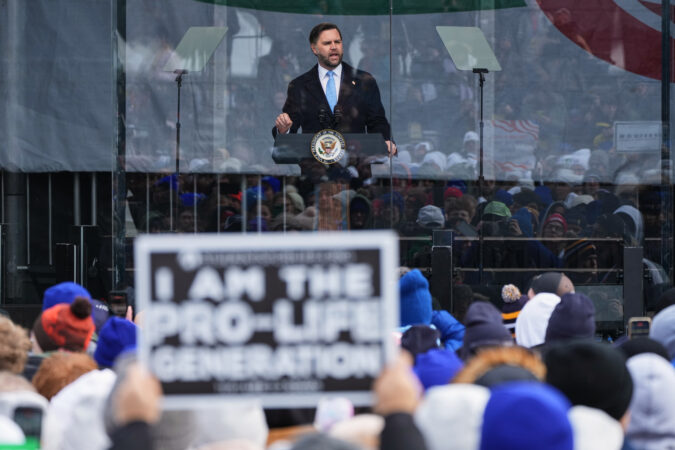
    Vice President JD Vance on Friday encouraged anti-abortion activists to “take heart in how far we’ve come” on the quest to limit the practice, listing the Trump administration’s accomplishments including an expansion of a ban on U.S. foreign aid for groups supporting abortion services.

    “There is still much road ahead to travel together,” Vance told attendees at the annual March for Life demonstration, which draws tens of thousands of people annually to Washington. Attendees rallied on the National Mall before heading to the Supreme Court.

    Vance, a Republican, has spent years passionately advocating for Americans to have more children. He repeatedly expressed alarm about declining birth rates as he launched his political career in 2021 with a successful bid for the U.S. Senate in Ohio, and as vice president he has continued on that mission.

    “I want more babies in the United States of America,” Vance said in addressing last year’s March for Life.

    Earlier this week, Vance and his wife, second lady Usha Vance, announced in a social media post they are expecting a son, their fourth child, in late July.

    “Let the record show, you have a vice president who practices what he preaches,” Vance said Friday.

    Vance cited the Supreme Court’s 2022 Dobbs decision, which overturned Roe v. Wade, calling it “the most important Supreme Court decision of my lifetime.” He said President Donald Trump’s leadership and appointment of conservative jurists “put a definitive end to the tyranny of judicial rule on the question of human life.”

    He also lauded the “historic expansion of the Mexico City policy,” the broadening of a ban on U.S. foreign aid for groups supporting abortion services, to include assistance going to international and domestic organizations and agencies that promote gender identity as well as diversity, equity and inclusion programs.

    “We believe that every country in the world has the duty to protect life,” Vance said, to a sea of supporters waving signs reading “Choose Life,” “Make More Babies,” and “I am the Pro-Life Generation.”

    “It’s not our job as the United States of America to promote radical gender ideology,” he said. “It’s our job to promote families and human flourishing.”

    From the Vatican, Pope Leo XIV — the first U.S.-born pope — sent a message of support to participants in the march.

    “I would encourage you, especially the young people, to continue striving to ensure that life is respected in all of its stages,” Leo wrote in a letter shown on a video at the march. “May Jesus, who promised to be with us always, accompany you today as you courageously and peacefully march on behalf of unborn children.”

    On Thursday, an official said the Trump administration was implementing new rules, halting foreign assistance from going not only to groups that provide abortion as a method of family planning but also to those that advocate “gender ideology” and DEI. The official spoke on the condition of anonymity ahead of the rules’ publication in the Federal Register on Friday.

    First established under President Ronald Reagan, a Republican, the policy was rescinded by subsequent Democratic administrations and was reinstated in Trump’s first term.

    With its origins in the 1973 Roe v. Wade decision that nationally enshrined federal protection for abortion rights, the March for Life developed an entrenched presence among conservatives arguing against abortion. In 2017, Trump addressed the march by video, becoming the first sitting U.S. president to make live remarks. Three years later, he attended the event in person, further cementing its role in conservative politics.

    In a video address to this year’s crowd, Trump recounted his administration’s “unprecedented strides to protect innocent life and support the institution of the family like never before,” enumerating his appointment of “judges and justices who believed in interpreting the Constitution as written” and “reflecting on the Dobbs decision that overturned Roe v. Wade.

    Since the June 2022 Supreme Court ruling that overturned Roe, the march has become more celebratory, with organizers relishing a state-by-state fight in legislatures around the country and urging a continued fight until abortion is eliminated.

  • ‘The favorite Auntie’: Woman who died after a car struck her wheelchair remembered at sentencing for the vehicle’s driver

    ‘The favorite Auntie’: Woman who died after a car struck her wheelchair remembered at sentencing for the vehicle’s driver

    She was more than just an unhoused person.

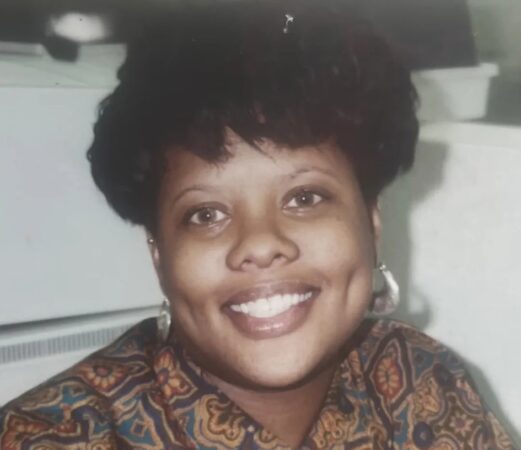
    That’s the way Sharon Cary-Irvine would like the world to remember her sister, Tracey.

    In 2024, Tracey Cary was struck and killed by a 39-year-old driver in Lower Merion as she crossed City Avenue in a wheelchair.

    The driver, Jamal McCullough, assessed his vehicle for damage before fleeing the scene without helping her or calling police, prosecutors said. He turned himself in to authorities after reports of the collision — and his photograph — aired across local news outlets.

    On Friday, McCullough was sentenced in Montgomery County Common Pleas court to serve three to six years in a state prison, the mandatory minimum for such a crime. While prosecutors said he was not at fault in the fatal collision because Cary was crossing outside of a posted crosswalk, they said his actions after the crash were criminal.

    For Cary-Irvine, the hearing was a chance to offer the public a more complete image of her late sister.

    Cary, 61, was an avid reader who loved children, traveling, and the outdoors, according to Cary-Irvine. She was a fan of spelling bee competitions, and she had a sense of humor: she was known for calling up her nieces and nephews and speaking to them as Cookie Monster, her sister said.

    “She had a love of people — babies were her specialty,” Cary-Irvine said. “She was the favorite Auntie. To know Tracey was to love Tracey.”

    Cary was also a mother to a son who is in his 20s, her sister said, and she held a variety of jobs throughout her life, working for the Philadelphia School District, St. Joseph’s University, and later UPS.

    She was a singer of gospel songs, and grew up attending Union Tabernacle Baptist Church in West Philadelphia.

    Before Cary’s death, the siblings’ father died from COVID-19, leading Cary to struggle with mental illness, her sister said. Soon she was living on the street.

    It was on the street where McCullough struck Cary shortly after 2 a.m. on Nov. 11, 2024.

    Surveillance footage showed that McCullough, of East Germantown, struck Cary with enough force to eject her from her wheelchair. After checking on his vehicle, he walked within feet of Cary’s body but did not stop to help her, prosecutors said.

    The father of two was en route to a shift as a sanitation worker with Waste Management.

    During his sentencing, McCullough apologized for the incident, which he said was an accident.

    “I want to apologize for my ignorance, apologize for maybe how I went about things,” McCullough said.

    “If I could take it back, I definitely would.”

    Minutes earlier, Cary-Irvine read a victim impact statement aloud, telling the court that, in her view, McCullough acted “entitled and without remorse” that morning.

    “This sentence is not about revenge — it’s an opportunity, perhaps your last, to reflect honestly on your life,” Cary-Irvine told McCullough.

    “If you do not learn from your mistakes,” she continued, “you will repeat them.”

  • Philly judge was correctly ejected from the bench for political Facebook posts, Pa. Supreme Court says

    Philly judge was correctly ejected from the bench for political Facebook posts, Pa. Supreme Court says

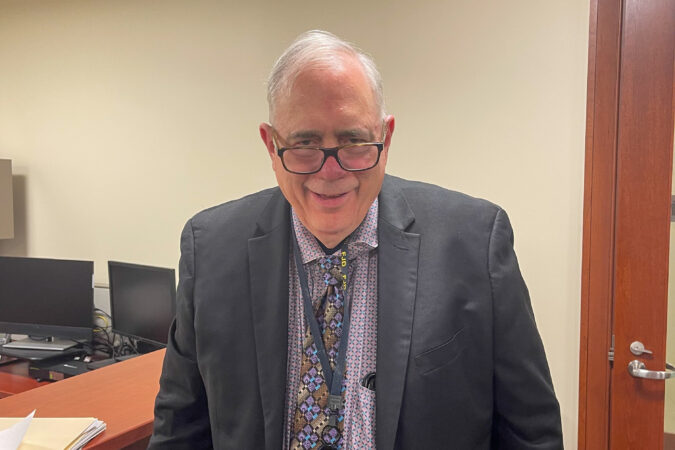
    The Pennsylvania Supreme Court upheld the suspension of former Philadelphia Common Pleas Judge Mark B. Cohen, who was ejected from the bench in 2024 after refusing to stop posting political statements on Facebook.

    Justice Kevin Dougherty, writing for a unanimous court, said that “protecting the efficiency of justice” including the “independence, integrity, and impartiality of the judiciary” is more important than “Cohen’s interest in posting partisan political content on Facebook where the volume and tone of his posts cast him as little more than a spokesperson for the Democratic Party.”

    The former judge was suspended without pay for the remainder of his term in October 2024 by the Pennsylvania Court of Judicial Discipline. The court said Cohen violated the Code of Judicial Conduct when he posted Facebook comments that skewered Republicans and praised Democratic politicians or left-leaning causes.

    The Court of Judicial Discipline’s opinion called Cohen’s behavior unprecedented, especially his refusal to stop posting after having been warned by his superiors.

    “No other case in the history of the Court of Judicial Discipline has involved such defiance post decision,” the opinion reads. “Judges are not allowed to broadcast their political leanings. People appearing before judges deserve fair, unprejudiced jurists.”

    Cohen, 76, is a former member of the statehouse who represented lower Northeast Philadelphia for 42 years. He was elected to the bench in 2017 and was suspended months before the end of his term. Regardless of his suspension, Cohen was ineligible to run for a second term because of Pennsylvania’s judicial mandatory retirement age, which is 75.

    The Inquirer was unable to reach Cohen based on publicly available contact information.

    Cohen appealed his suspension to the Pennsylvania Supreme Court, telling The Inquirer at the time, “this is a pathbreaking case seeking to severely limit freedom of speech.”

    The exact limit on the First Amendment rights of sitting judges is an open question of law that neither the Pennsylvania Supreme Court nor the U.S. Supreme Court has ruled on previously.

    Judges have the right to free speech, including some degree of political speech during their own elections, wrote Dougherty, who campaigned vigorously for his own retention on the state’s highest bench this fall.

    The task of the Supreme Court was to balance the right of a sitting judge freedom of speech with the integrity of the courts in Pennsylvania.

    Cohen “advocated for legislation,“ ”cheered on Democratic politicians,” and “criticized the policies of predominately Republican legislatures,” Dougherty wrote. The former judge made more than 60 posts that were of concern, all from a Facebook page identifying himself as a judge.

    “An ordinary citizen comparing Judge Cohen’s posts with the posts of our state politicians would likely see little distinction,” Dougherty wrote.

    The ruling does not intend to muzzle judges or dissuade all social media use, the opinion said. But judges should, like everyone else, make sure that their social media use “comports with the rules of the position they have voluntarily attained or the organization they have voluntarily chosen to join.”

    Justice David Wecht also wrote a concurring opinion in which he said it was important to distinguish whether political speech from a judge was made during a retention campaign, in which avoiding politics completely is impossible.

    “If the people of this Commonwealth wish to imagine their judiciary to be as pure as the driven snow, and if the people are under some impression that elimination of judicial elections would advance such purity, they are free to alter their Constitution,” Wecht wrote.

  • New grocery stores are coming to Chester County. Here’s what and where.

    New grocery stores are coming to Chester County. Here’s what and where.

    From national chains to homegrown operations, as Chester County continues to grow, so too do the grocery store offerings.

    Here’s a look at some of the stores opening around the county.

    Kimberton Whole Foods expanding

    This spring, locally owned Kimberton Whole Foods will open its largest location in the county in Eagleview Town Center. Construction began in 2024, roughly 20 years after the location in Kimberton Village opened at a former hardware store.

    “We look forward to serving Eagleview and the surrounding communities with healthy, locally sourced grocery options in a customer-focused environment,” Ezra Brett, chief operations officer for Kimberton Whole Foods, said in a statement.

    The new 14,000-square-foot facility will continue the store’s offerings of organic produce, grass-fed meats, specialty cheese, grab-and-go meals, and more.

    The store will join the growing Eagleview Town Center, which offers restaurants, salons and spas, professional offices, daycares, and more.

    West Chester Cooperative slated for opening

    West Chester is slated to get a brick-and-mortar member-owned grocery this year, with West Chester Cooperative at 204 W. Market St.

    Permits were submitted to the borough in December, according to the grocery’s website.

    The cooperative kicked off more than a decade ago, formed by a group of borough residents who wanted sustainable, local alternatives to chain grocery stores.

    Over the next 10 years, the group launched outreach efforts, opened a pop-up market, and did curbside pickup and limited in-store shopping hours. In 2022, it reached 500 member-owners.

    The grocery will be open to all shoppers, but member-owners will receive select benefits.

    Kennett Square is also getting its own cooperative grocery store

    West Chester isn’t the only municipality in Chesco getting a different model of grocery store. Also nearly a decade in the works, Kennett Square’s Kennett Community Grocer is expected to open this spring at 625 E. Cypress St.

    Renovations began in 2025, and the store will offer locally grown produce; dairy, eggs, and meat from county farms; local baked goods and prepared foods; pantry staples from local producers; and a cafe for community members. It will also hold educational and other events led by healthcare professionals and farmers.

    “It felt like doing this was to highlight for everyone that we have this precious land that’s quite beautiful, that is very bountiful with products, not just mushrooms, but meat, dairy, produce, fruit, vegetables,” said Edie Burkey, president of the nonprofit board leading the grocer. “We felt that bringing people together for the common cause of supporting the land that we’re very, very proud to be part of was a good thing.”

    Farmers will get a free cup of coffee at the cafe, which will sell locally roasted coffee, and local teas and honey. The store hopes to partner with the high school’s culinary students for an internship program. Products that don’t sell will be donated to organizations like Philabundance’s Mighty Writers, Children’s Advocacy Centers of Pennsylvania, and others, Burkey said.

    “We all eat, and to create a community around eating — things that are grown around here — and protecting the land so that maybe farmers don’t sell their land to developers, you’re just creating a sense of community in and around an activity that is so vital to every part of your day, every day of the year,” Burkey said.

    Other national chains coming to the county

    Meanwhile, bigger chains are also looking to call the county home. Phoenixville could see two national stores coming in the coming months.

    Construction for an Aldi, an international discount supermarket, began over the summer at 297 Schuylkill Road.

    Meanwhile, Sprouts Farmers Market, the Arizona-based organic and natural grocery store, is also eyeing a location in Phoenixville. Most of the grocer’s local footprint is within Philadelphia, but a Phoenixville location would broaden the store’s reach further west.

    The Phoenixville location is proposed at 808 Valley Forge Road, where the former Royal Bank used to sit. It would operate 7 a.m. to 10 p.m. daily, next to an indoor self-storage facility.

  • Is Wegmans collecting shoppers’ biometric data at its Philly-area stores? The company won’t say.

    Is Wegmans collecting shoppers’ biometric data at its Philly-area stores? The company won’t say.

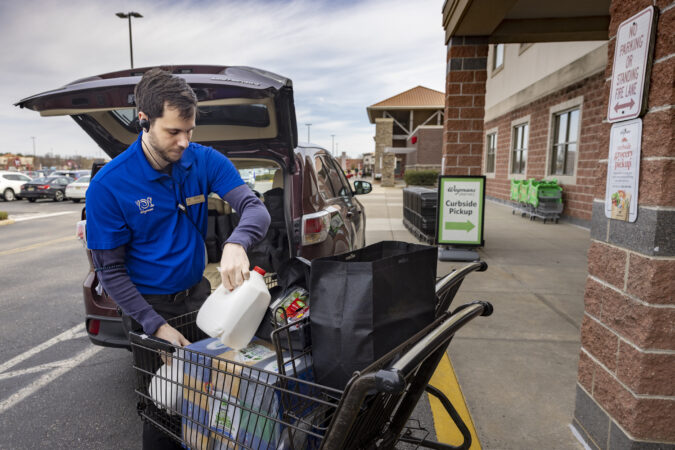
    Grocery chain Wegmans came under fire earlier this month after signage at its New York City stores revealed it was collecting biometric data on shoppers.

    But the Rochester, N.Y.-based supermarket chain won’t say whether it’s collecting biometric data on shoppers at eight Philly-area stores. There are Wegmans stores in Cherry Hill and Mount Laurel in New Jersey and in Glen Mills, Malvern, King of Prussia, Collegeville, Warrington, and North Wales in Pennsylvania.

    Patrons at some New York City Wegmans locations learned earlier this month that the supermarket chain had begun to collect, retain, store, and share data on their faces, eyes, and voices. The information, Wegmans said, was being used for “safety purposes.”

    “This is information that can be used to identify or help identify you,” a sign posted at Wegmans in New York City said, according to reporting from the online news site Gothamist. “We use facial recognition technology to protect the safety and security of our patrons and employees, and do not lease, trade or otherwise profit from the transfer of biometric identifier information.”

    Wegmans does not “get into the specific measures used at each store” for “safety and security purposes,” Wegmans spokesperson Marcie Rivera said in an email.

    Rivera said Wegmans has deployed cameras equipped with facial recognition technology in “a small fraction of our stores that exhibit an elevated risk.” Wegmans is using the technology in a “handful of states.” It posted mandated signage in New York City to comply with local regulations, Rivera said.

    Wegmans has previously said that the surveillance software is used to help identify individuals who “pose a risk to our people, customers, or operation.”

    Biometric surveillance is becoming increasingly common but is not yet widespread, said Gus Hurwitz, senior fellow and academic director of the Center for Technology, Innovation and Competition at Penn’s Carey Law School.

    Companies that use biometric surveillance do so for a number of reasons, but seldom tell consumers what their data is being collected for. Data collection can help companies understand what consumers are purchasing and how they’re moving through stores, Hurwitz said. Biometric data collection can also be used for dynamic pricing, when retailers change prices in real-time depending on a number of factors, including time of day, demand, weather, and consumer behavior.

    Hurwitz said it’s important to distinguish between real-time and non-real-time biometric screening. Non-real-time screening has been happening for decades in the form of security cameras and other data collection tools, often used for market research purposes.

    Real-time screening, however, is a newer frontier with a far murkier regulatory landscape.

    Businesses in New York City that collect biometric data are required to post signage notifying customers, per a 2021 city law, however the agency in charge of implementing the law has no enforcement mechanism for noncompliant businesses, a city official told Gothamist.

    A bipartisan bill regulating biometric data collection is currently moving through the Pennsylvania legislature. A recently introduced bill in the New Jersey Legislature would require any entity collecting biometric information to post a “clear and conspicuous notice” at every entryway to their business, like in New York City.

    Hurwitz said we’re “still very much in the development era of these sorts of technologies,” and that he expects more and more government entities to hone in on regulating them in the near future.

  • Ukraine, Russia, U.S. to discuss fraught issue of territorial concessions in Abu Dhabi

    Ukraine, Russia, U.S. to discuss fraught issue of territorial concessions in Abu Dhabi

    Ukrainian President Volodymyr Zelensky said the future of Ukraine’s eastern Donbas region will be a key focus as negotiators from Ukraine, Russia, and the United States meet in Abu Dhabi on Friday for talks to end Russia’s nearly four-year full-scale invasion.

    The UAE’s foreign ministry said the talks commenced on Friday and are scheduled to continue over two days “as part of ongoing efforts to promote dialogue and identify political solutions to the crisis.”

    The White House described the talks as productive and said conversations would continue on Saturday.

    The three-way talks come hours after Russian President Vladimir Putin discussed the settlement in Ukraine with President Donald Trump’s envoys Steve Witkoff and Jared Kushner during marathon overnight talks. The Kremlin insisted that to reach a peace deal, Kyiv must withdraw its troops from the areas in the east that Russia illegally annexed but never fully captured.

    Zelensky said after meeting with Trump that while the future status of land in eastern Ukraine currently occupied by Russia remains unresolved, the peace proposals are “nearly ready.”

    He also reiterated his openness to establishing a free trade zone under Ukraine’s control in the country’s east, adding that he discussed the proposal with Trump in Davos, Switzerland, on Thursday: “I think it will be positive for our business,” Zelensky told reporters.

    Friday is the first known time that officials from the Trump administration simultaneously meet with negotiators from both Ukraine and Russia. While it’s unclear how the talks will unfold and many obstacles to peace remain, some see it as a sign that the parties are making headway in closing a deal.

    Speaking in his evening address to the nation late Friday, Zelensky said the Ukrainian delegation attending the talks reported to him “almost every hour.”

    “They are discussing the parameters for ending the war,” Zelensky said. ”Now, they should at least get some answers from Russia, and the most important thing is that Russia should be ready to end this war, which it itself started.”

    He added that “it’s too early to draw conclusions about the content of today’s negotiations — we’ll see how the conversation goes tomorrow and what the results will be. It’s not just about Ukraine’s desire to end this war and achieve full security — it’s also about Russia somehow developing a similar desire,” Zelensky said.

    Kremlin insists on ‘solving territorial issue’

    “Today’s meeting will be in the format of Ukraine, Russia and the United States, and afterward the Europeans will certainly receive feedback from us,” Zelensky told journalists in a WhatsApp audio message.

    The Kremlin offered little detail beyond calling Friday’s meeting a “working group on security issues.”

    Kremlin spokesman Dmitry Peskov reaffirmed Friday that Russia’s demand for the Ukrainian troops’ withdrawal from the eastern Donbas region is an “important condition,” adding that there are also other “nuances” on the talks agenda that he wouldn’t specify.

    Kremlin foreign affairs adviser Yuri Ushakov, who participated in Putin’s meeting with Witkoff and Kushner, said “it was reaffirmed that reaching a long-term settlement can’t be expected without solving the territorial issue.” He described the talks with the U.S. as “frank, constructive,” and “fruitful.”

    Russia’s state Tass news agency reported that the discussions included possible buffer zones and control measures.

    Peskov told reporters that the Russian delegation, headed by Adm. Kostyukov, is comprised of military officials. Separately, Putin’s envoy Kirill Dmitriev will hold talks with Witkoff on economic issues, Peskov added.

    The U.S. has confirmed Witkoff and Kushner are attending the talks in Abu Dhabi along with Army Secretary Dan Driscoll and NATO’s top general, U.S. Air Force Gen. Alexus Grynkewich.

    The Ukrainian team includes Rustem Umerov, head of Ukraine’s national security and defense council; Andrii Hnatov, chief of the general staff; and Kyrylo Budanov, head of the presidential office.

    Trump’s meeting with Zelensky

    Hours before the Kremin talks, Zelensky met with Trump behind closed doors for about an hour at the World Economic Forum in Davos, describing the meeting as “productive and meaningful.”

    Speaking to reporters aboard Air Force One as he flew back to Washington from Davos, Trump said his meeting with Zelensky went well, adding that both Putin and Zelensky want to reach a deal and that “everyone’s making concessions” to try to end the war.

    He said the sticking points in talks remain the same as they’ve been during talks held during the past six or seven months, noting “boundaries” was a key issue. “The main hold-up is the same things that’s been holding it up for the last year,” he said.

    Russia’s bigger army has managed to capture about 20% of Ukraine since hostilities began in 2014 and its full-scale invasion of 2022. But the battlefield gains along the roughly 600-mile front line have been costly for Moscow, and the Russian economy is feeling the consequences of the war and international sanctions.

    Ukraine is short of money and, despite significantly boosting its own arms manufacturing, still needs Western weaponry. It is also short-handed on the front line. Its defense minister last week reported some 200,000 troop desertions, and draft-dodging by about 2 million Ukrainians.

    Zelensky blasts European allies

    Addressing the World Economic Forum on Thursday after meeting with Trump, Zelensky listed a litany of grievances and criticisms of Europe.

    He chided Europe for being slow to act on key decisions, spending too little on defense, failing to stop Russia’s ”shadow fleet” of oil tankers that are breaking international sanctions, and balking at using its frozen assets in Europe to finance Ukraine, among other things.

    “Europe looks lost,” Zelensky said in his speech, urging the continent to become a global force. He contrasted Europe’s response with Washington’s bold steps in Venezuela and Iran.

    The former comic actor referred to the movie “Groundhog Day,” in which the main character must relive the same day over and over again.

    “Just last year, here in Davos, I ended my speech with the words: Europe needs to know how to defend itself. A year has passed. And nothing has changed. We are still in a situation where I must say the same words again,” Zelensky said.

  • Ryan Wedding, a former Olympic snowboarder on the FBI’s ‘Most Wanted’ list, has been arrested

    Ryan Wedding, a former Olympic snowboarder on the FBI’s ‘Most Wanted’ list, has been arrested

    ONTARIO, Calif. — Former Canadian Olympic snowboarder Ryan Wedding, a top FBI fugitive accused of moving some 60 tons of cocaine from Latin America into the United States annually and orchestrating several killings, was arrested in Mexico and then flown to California, officials said Friday.

    Wedding, 44, turned himself in Thursday at the U.S. embassy in Mexico City. FBI Director Kash Patel said his arrest came after U.S. investigators worked with authorities in Mexico, Canada, Colombia, and the Dominican Republic for more than a year.

    Officials say Wedding used semitrucks to move cocaine between Colombia, Mexico, Canada, and Southern California, and they believe he was working under the protection of the Sinaloa Cartel, one of Mexico’s most powerful drug rings. Authorities said his aliases included “El Jefe,” “Public Enemy,” and “James Conrad Kin.”

    “He’s the modern-day El Chapo,” Patel told a news conference in California, comparing Wedding to the legendary former Sinaloa cartel kingpin Joaquín “El Chapo” Guzmán, who is imprisoned in the U.S. after pleading guilty to drug trafficking charges.

    An image of former Canadian Olympic snowboarder Ryan Wedding is displayed on a video monitor along with bricks of cocaine during a news conference at the FBI offices in Los Angeles on Oct. 17, 2024.

    Wedding was previously convicted in the U.S. of conspiracy to distribute cocaine and was sentenced to prison in 2010, federal records show. He now faces charges related to running a multinational drug trafficking ring as well as the killings of a federal witness and three other people.

    It was not immediately known if Wedding had an attorney who could comment on his behalf. He had no lawyers listed in federal court records for the cases pending against him.

    ‘It takes a united front’

    U.S. authorities believe the former Olympian, who competed in a single event for his home country in the 2002 Winter Olympics in Salt Lake City, had been hiding in Mexico for more than a decade before his apprehension.

    Wedding was added to the FBI’s Ten Most Wanted Fugitives list last March, and authorities had offered a $15 million reward for information leading to his arrest and conviction.

    “When you go after a guy like Ryan Wedding, it takes a united front, and that’s what you’re seeing here,” said Patel, who declined to give details about the arrest. He praised Mexico’s government and “global partnerships” for their roles in the operation.

    Mexico’s Security Secretary Omar García Harfuch wrote on X earlier Friday that a Canadian citizen had turned himself in at the U.S. embassy. A member of Mexico’s Security Cabinet later told the Associated Press that individual was Wedding. The person spoke on condition of anonymity because they were not authorized to speak publicly.

    Wedding is expected to appear in federal court Monday, said Akil Davis, assistant director in charge of the FBI field office in Los Angeles.

    Davis said 36 people have been arrested in connection with the drug ring Wedding is accused of running, and authorities seized large volumes of drugs, weapons, and cash, as well as millions of dollars worth of automobiles, motorcycles, artwork, and jewelry from Wedding and others charged in the case. Rewards of up to $2 million are available for information leading to additional arrests and convictions.

    Charges of ordering killings

    Wedding was indicted in 2024 in the U.S. on federal charges of running a criminal enterprise, murder, conspiring to distribute cocaine, and other crimes. Prosecutors said Wedding’s drug ring moved large shipments of cocaine from Colombia through Mexico and California to Canada and other U.S. locations.

    The murder charges accuse Wedding of directing the 2023 killings of two members of a Canadian family in retaliation for a stolen drug shipment, and for ordering a killing over a drug debt in 2024.

    Last November, U.S. Attorney General Pam Bondi announced that Wedding had also been indicted on charges of orchestrating the killing of a witness in Colombia to help him avoid extradition to the U.S.

    Authorities said Wedding and co-conspirators used a Canadian website called “The Dirty News” to post a photograph of the witness so he could be identified and killed. The witness was then followed to a restaurant in Medellín in January and shot in the head.

    Wedding faces separate drug trafficking charges in Canada that date back to 2015, according to the Royal Canadian Mounted Police.

    Second FBI fugitive also apprehended

    Patel identified a second apprehended fugitive as Alejandro Rosales Castillo, a 27-year-old U.S. citizen charged with murder in the 2016 killing of a North Carolina woman. He also faces a federal charge of unlawful flight to avoid prosecution. According to the FBI, Castillo was arrested a week ago in Mexico.

    Mexico has increasingly sent detained cartel members to the U.S. as the country attempts to offset mounting threats by President Donald Trump, who said last month U.S. forces “will now start hitting land” south of the border to target drug trafficking rings.