Category: News

Latest breaking news and updates

  • All charges dropped against personal injury attorney Leonard Hill in Center City shooting case

    All charges dropped against personal injury attorney Leonard Hill in Center City shooting case

    All charges were dropped against Leonard Hill, a prominent personal injury attorney accused of aggravated assault and related crimes for shooting and injuring a man during an altercation outside a Center City cigar bar in 2023.

    Prosecutors dropped the charges Friday morning shortly before Hill, 56, was set to go to a bench trial before Common Pleas Judge J. Scott O’Keefe.

    In addition to aggravated assault, Hill will not face charges of possessing an instrument of a crime, simple assault, recklessly endangering another person, and tampering with evidence.

    Aggravated assault, a felony and the most serious of those offenses, carries a sentence of up to 20 years in prison if convicted.

    Hill’s attorney, Fortunato N. Perri, declined to comment on the decision.

    The outcome marks a victory for Hill, who had previously hoped to resolve his case through the city’s diversion program rather than a courtroom.

    Last year, in a highly unusual move in an aggravated assault case, the District Attorney’s Office offered to admit Hill to the diversion program instead of going to trial.

    Had Hill participated, his case would have been expunged after completing a period of probation and community service, surrendering the legally owned firearm police recovered from his Bala Cynwyd home, and donating $25,000 to an anti-violence group.

    District Attorney Larry Krasner said in an interview at the time that request was “specifically my decision.” The district attorney called information about the case, some of it revealed after Hill’s arrest, both unique and highly unusual, though he declined to elaborate.

    A spokesperson for the District Attorney’s Office declined to comment Friday.

    After prosecutors sought diversion last February, Municipal Court Judge William Austin Meehan Jr. denied prosecutors’ request.

    The judge said Hill’s case was not appropriate for diversion, which is typically reserved for cases involving relatively minor offenses, and urged prosecutors to resolve the case through different means.

    It’s rare for those accused of shootings to be offered diversion, otherwise known as the Accelerated Rehabilitative Disposition. Several nonfatal shooting cases have ended with diversion since 2011: participants usually include those charged with nonviolent offenses such as DUIs, petty theft, or drug possession.

    Attorneys for Hill — whose billboards advertising his legal services feature prominently on Philadelphia’s freeway system — maintained their client acted in self-defense when firing twice at a man outside the Ashton Cigar Bar on the 1500 block of Walnut Street.

    The episode began when Hill and a bar manager tried to separate a woman and another man she said was intoxicated and accosting her, according to court documents.

    The confrontation spilled outside, where Hill and the man began to argue. Hill drew a firearm and fired once during the argument, the court documents said. Hill fired again as the man ran away, striking the 38-year-old in the calf.

    Hill left the scene and changed his clothes before returning, and did not tell officers who responded to the bar that he had fired shots, according to the documents. Investigators recovered video of the shooting and interviewed the bar manager, who identified Hill as the shooter but said he had fired in self-defense.

    Perri, Hill’s attorney, later said the man who Hill shot had been wielding a knife — a detail not included in his arrest paperwork — and said his client made a “split-second decision” to defend himself and others in a dangerous situation.

    Prosecutors’ decision to offer Hill diversion last year did not come without criticism.

    Keisha Hudson, head of the Defender Association of Philadelphia, told the Inquirer in February 2025 that she could not recall a single instance in which one of the organization’s clients was offered diversion after shooting someone.

    She said the case’s handling was emblematic of a justice system that treats poor defendants and those with money differently. She did not immediately respond to a request for comment Friday.

    Staff writer Ellie Rushing contributed to this article.

  • Cheltenham is considering switching school photo companies after claims related to Epstein

    Cheltenham is considering switching school photo companies after claims related to Epstein

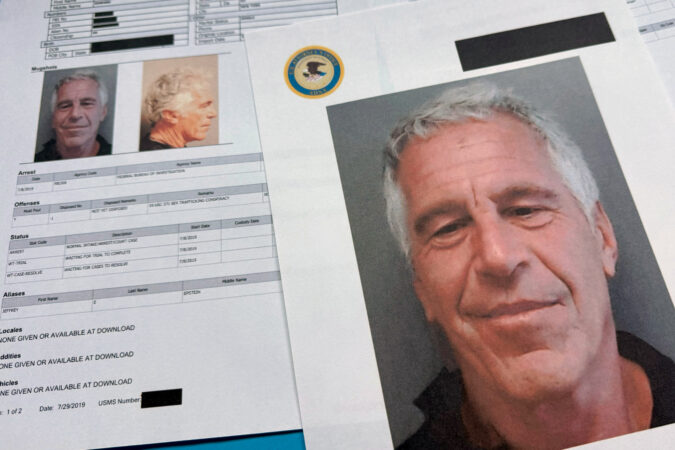
    The Cheltenham School District said Friday it’s considering a change in school picture companies following social media posts linking its current provider to a billionaire associated with Jeffrey Epstein.

    In light of news reports about Lifetouch, “the district is exploring all options for future student portrait services,” Superintendent Brian Scriven said in a message to the community Friday.

    A number of school districts nationally have canceled plans for photos by Lifetouch after posts connecting the company to Leon Black, former CEO of Apollo Global Management, who met regularly with Epstein, the Associated Press reported.

    Under Black’s leadership, funds managed by Apollo bought Lifetouch’s parent company, Shutterfly, in 2019.

    Posts outlining that link have spread across social media, some telling parents they should worry about where their children’s images are being stored.

    Lifetouch has said it has no connection to Epstein, and cited news reports that the company’s name hasn’t appeared in the Epstein files.

    “Claims of any relationship between Epstein and Lifetouch are completely false,” the company said in an FAQ on its website. It noted that Epstein died before Apollo acquired Shutterfly in September 2019, and said it has “never shared student images with any third party, including Apollo Global Management.”

    Cheltenham hadn’t received complaints from parents, but issued Friday’s message “proactively,” said spokesperson Kevin Kaufman.

    In the message, Scriven said Lifetouch would still take K-8 pictures this spring, but told parents they could opt out of photos by talking with their principal. He also pointed families to instructions on how to request that Lifetouch delete images of their children.

    “We understand that media reports such as these about business associations involving prominent individuals can raise questions for families and staff,” Scriven said.

    He noted Lifetouch’s stated commitment to student privacy, and said “at this time, there is no indication of any impact on student safety, district operations, or the services provided in our schools. Nevertheless, we are conducting appropriate due diligence consistent with policies.”

  • Jeffrey Epstein claimed he championed Penn’s ‘quantum gravity program’ — but he confused the university with Penn State

    Jeffrey Epstein claimed he championed Penn’s ‘quantum gravity program’ — but he confused the university with Penn State

    People mix up the University of Pennsylvania with Pennsylvania State University so often, alumni at the Ivy started making novelty T-shirts that read “Not Penn State.”

    You can add another name to the list of offenders: Jeffrey Epstein.

    The convicted child-sex solicitor was also a prolific donor to scientific research programs through the Jeffrey Epstein VI Foundation. A tranche of the disgraced financier’s emails released by the U.S. Department of Justice contains descriptions of dozens of pet projects the foundation supported at elite institutions.

    But one of them, the “Quantum Gravity Program” at the University of Pennsylvania, is something of a whodunit involving theoretical physicists in three different countries.

    Epstein was a self-proclaimed backer of “cutting-edge science,” and the Quantum Gravity Program is mentioned dozens of times in his personal records. The program and its affiliation with Penn are even referenced today on the Wikipedia page for his foundation.

    But there is no other evidence a program by that name ever existed at Penn.

    After a series of at-times-uncomfortable calls with confused spokespeople and academics, The Inquirer discovered that Epstein was, in fact, involved with financing researchers in the 1990s at a similarly named program based at Penn State — sometimes referred to as the “loop quantum gravity program.”

    A spokesperson for the state-funded university said Epstein’s name was attached to a 1990s grant made through an intermediary nonprofit in support of former PSU physics professor Lee Smolin, who helped lead the loop quantum gravity program and maintained ties with Epstein for years afterward.

    German theoretical physicist Olaf Dreyer sought out a doctorate at PSU at that time in hopes of working on the loop gravity program, and said Epstein’s decades-old claim that he had supported such a program at Penn was a classic case of mistaken academic identity.

    “The ‘quantum gravity program’ is the program at Penn State,” Dreyer said via email Thursday from Frankfurt, Germany. “It was the loop quantum gravity program that brought me to Penn State.”

    Dreyer said that Smolin helped lead the program during his time at the state university, and that the scientist had procured funding from Epstein for the Penn State program.

    “Smolin had the connections to Epstein,” he said. “Lee stayed connected to Epstein long after Epstein‘s conviction.”

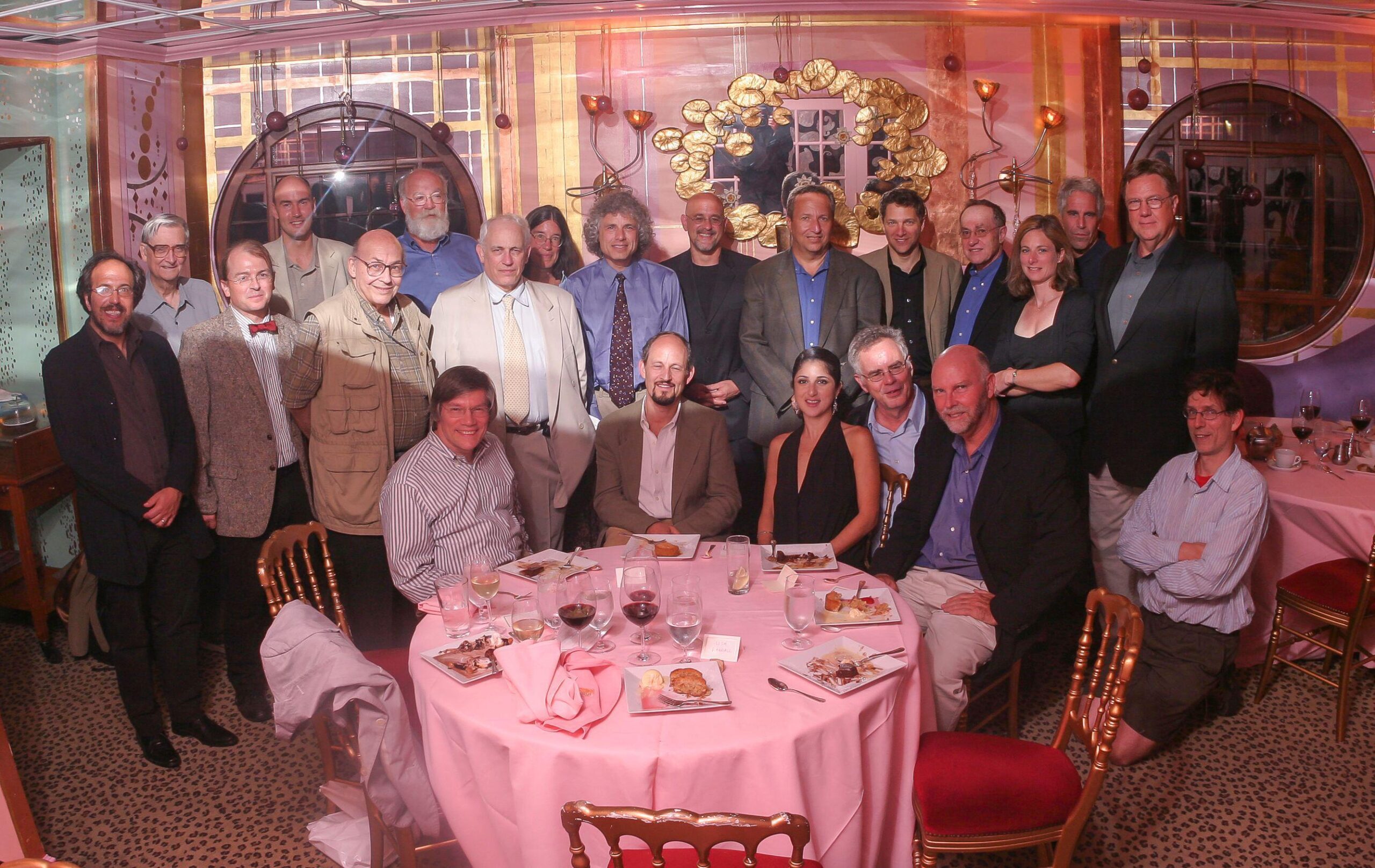
    Jeffrey Epstein at a dinner he hosted at Harvard University on Sept. 9, 2004 with Harvard Professors Alan Dershowitz, Stephen Pinker, Princeton Professor Robert Trivers, Larry Summers, E.O. Wilson,, Marvin Minsky, Lisa Randall, Martin Nowak. and Alan Guth. Epstein is in the back row, second from the right. Lee Smolin, a former PSU physics professor, is in the middle row, far left.

    A spokesperson for Penn State cited a publicly available research paper from 1999 that showed Smolin’s quantum gravity research was funded by the “Jesse Philips Foundation.” But after reviewing the university’s grants database at The Inquirer’s request, the spokesperson confirmed that Epstein’s name appeared on paperwork related to that foundation gift.

    The Jesse Philips Foundation was created by the eponymous Dayton industrialist, who died in 1994. After his death, his widow, Caryl Philips, took over the foundation, which is now known as the Jesse and Caryl Philips Foundation. A request for comment from the foundation was not immediately returned.

    A record of another philanthropic donation made in 1998 was described as coming from “J. Epstein Foundation and Jesse Philips Foundation.” And Epstein’s emails indicate Caryl Philips was in contact with both Epstein and his confidant, convicted child sex trafficker Ghislaine Maxwell, as late as 2010.

    Dreyer said it was his understanding that Smolin was being funded by Epstein directly.

    “He used money from Epstein to pay for grad students,” Dreyer said.

    Reached by email, Smolin confirmed Epstein was behind the foundation grant at the time, which allowed him to leave PSU to pursue his research abroad. “These arrangements had nothing to do with UPenn,” he said.

    Smolin’s ties to Epstein are now well documented. He was quoted praising Epstein’s support for his research on an Epstein Foundation website.

    “I was extraordinarily fortunate to encounter someone who asked me, ‘What would you really like to do? What is your most ambitious and crazy idea?,’” the quote reads. “Then, unexpectedly and generously, Jeffrey Epstein gave me the chance to try to make good on my answers.”

    After his time at PSU, Smolin went on to cofound the Perimeter Institute for Theoretical Physics, in Toronto, Canada, now one of the top research programs for theoretical physics in the world. Dreyer followed the physicist to the Perimeter Institute after obtaining his doctorate in 2001, and recalled Smolin taking a group photo of his team to send to Maxwell for inclusion in Epstein’s now-infamous 50th “birthday book.”

    “You can imagine how happy I am to be included in that book,” he joked.

    Newly released emails from the U.S. Department of Justice (DOJ) disclosed Smolin had kept up a relationship with the financier during this time — and well after Epstein’s 2008 conviction — which led to his ouster in February from the Perimeter Institute.

    Epstein’s professed involvement at Penn came as a shock to administrative faculty and longtime physics professors at the West Philadelphia university.

    The financier first alluded to the supposed Penn program in a rambling email to his personal assistant in 2006, according to emails released as part of the Epstein Transparency Act. He later commissioned a more detailed description of the foundation’s activities, including a mention of the Penn program on an official philanthropic website that debuted in 2010.

    The original text, which was often appended to Epstein’s curriculum vitae ahead of speaking engagements, was likely written in the 2000s by literary agent John Brockman, according to later email exchanges attributing the writing to him. Brockman, who could not be reached for comment, helped Epstein cultivate scientific relationships and promote his foundation.

    Epstein’s description of his foundation’s activities underwent several rewrites or revisions, including one iteration alluding to the foundation supporting science programs at a “Penn University” — which also does not exist.

    While Epstein’s personal records mention the program at Penn dozens of times, a Penn spokesperson said the university was unfamiliar with Epstein’s long-claimed affiliation until the DOJ record release in December.

    “Penn is not aware of a so-called ‘Quantum Gravity Program’ referenced in Jeffrey Epstein’s bio and has no records of his involvement,” said university spokesperson Matthew Grossman in a statement.

    Burt Ovrut, a theoretical physicist who helped lead the physics department at Penn, said he would have known if such a program ever existed.

    “I would have heard of this,” said Ovrut, who remains a professor emeritus. “We don’t tend to have private grants in theoretical physics.”

    The fallout from the Epstein saga has ensnared numerous other universities with ties to the billionaire investor, rocking institutions like Princeton, the Massachusetts Institute of Technology, and Harvard, where the Epstein scandal led to resignation of former president Larry Summers, who was raised in Penn Valley, a Philadelphia suburb.

    The lure of Epstein’s wealth and interest in obscure academic fields was powerful.

    While Penn had no official relation with Epstein’s foundation, its staffers were not immune to his temptations. In 2012, for instance, a Penn professor wrote to Epstein seeking funding for immersive research on African hunter-gatherer societies. There was no response.

    Dreyer, the German physicist, also solicited Epstein for his own research funding in 2009 on the advice of a colleague. While he, too, was never funded, he regrets that he did not do his own due diligence on Epstein.

    “If only I had done some research,” he said.

    Editor’s note: This article has been updated to include a comment from Smolin regarding the grant.

  • ‘Our heroes are dying.’ Why Jesse Jackson’s death leaves a void.

    ‘Our heroes are dying.’ Why Jesse Jackson’s death leaves a void.

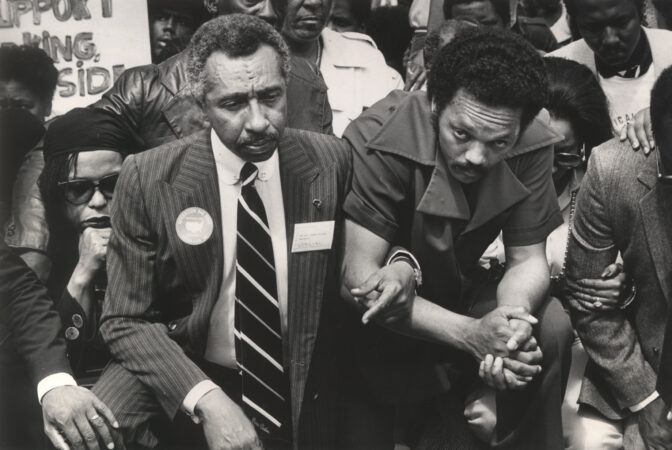
    In the early-morning hours after the Rev. Jesse Jackson died on Feb. 17, his family called another prominent pastor for prayer and solace. “A mighty lion has passed,” Bishop William Barber recalled the family saying.

    “I’ve been thinking about that imagery,” said Barber, who leads Repairers of the Breach, an organization that aims to bring moral and religious language to causes such as safeguarding voting rights and alleviating poverty. “Because lions, they protect the pride, but they also expand the territory of the pride.” And Jackson expanded the notion of civil rights in America, he said: from the Black community to the full spectrum of people seeking justice.

    Thousands are expected to pay respects Friday as Jackson’s remains lie in repose at Rainbow/PUSH headquarters in Chicago, following the decision by House Speaker Mike Johnson (R., La.) to decline to allow Jackson to lie in honor at the U.S. Capitol.

    Jackson’s death at age 84 comes at a perilous time for the civil rights crusade he helped lead for decades. Most of his iconic contemporaries are gone as President Donald Trump attacks their hard-fought principles, declaring war on diversity, equity, and inclusion initiatives while the foundational achievement of the civil rights movement, the 1965 Voting Rights Act, may be on the verge of being overturned by the U.S. Supreme Court.

    “Our heroes are dying, and the question has to be asked: Who comes next or what comes next?” said author and political commentator Bakari Sellers. “This new era of regression, this new era of Trumpism, has shown clearly that … our new leaders [are] not able to meet the moment.”

    It’s a major test of the movement in a fragmented landscape of social media and political division with no clear successor generation to rally a response. The wellspring that produced leaders such as Jackson and the Rev. Dr. Martin Luther King Jr. — the Black church — no longer plays the same role. Institutional religion doesn’t have the authority or power it once did in the United States, experts said, and the religious right for decades has been more loudly — and successfully — merging its view of Christianity and politics.

    “The Black church isn’t as important as it was. It’s harder to have a figure come out of that tradition and command the power and respect that Jesse Jackson did,” said Claflin University historian Robert Greene II. “It’s hard to imagine someone today being able to enter the political realm already seen as a moral authority.”

    If there is to be a robust defense of civil rights, many believe it will come from Jackson’s legacy of expansion — using the Voting Rights Act to get more people of color into voting booths and into elected office; broadening the definition of civil rights to include all marginalized communities, such as LGBTQ people and people with disabilities, in a common cause; and pushing beyond political rights to economic rights.

    In some ways, the fact that there is no obvious individual to take the mantle is part of Jackson’s legacy, say civil rights activists, elected leaders and scholars. He advocated for leaders at all levels of government and activism carrying out different parts of the mission.

    “We have democratized leadership in the civil rights movement and spread it throughout the country,” Virginia lawmaker Don Scott said.

    Scott said his own life found a new purpose when he was a college sophomore in 1984 and met Jackson, who was running for president. Forty years later, Scott became the first Black person elected speaker of the Virginia House of Delegates.

    “That’s the legacy of Jesse Jackson — he empowered a whole lot of folks to lift up their voice,” Scott said.

    Bryan Stevenson, a lawyer and founder of the Equal Justice Initiative, said it’s important to remember the historical arc of the civil rights movement. After the Civil War, Black men had a brief moment when they were able to participate in democracy. Then Jim Crow swooped in and disenfranchised Black voters in the South for more than half of the 20th century.

    During that time, without access to elected office, Black Americans looked elsewhere for leadership and resistance. Black churches filled that void, giving rise to the civil rights movement, Stevenson said, exemplified by King and other figures — such as Claudette Colvin, John Lewis and Fannie Lou Hamer — who blended the tone of the pulpit with politics.

    The Rev. Al Sharpton speaks on the final day of the 2024 Democratic National Convention in Chicago.

    Younger generations of pastors — including those from more conservative traditions — were “inspired to be not just pastors but prophets as well,” said Tyler Burns, a Florida pastor and director of the Witness, a multimedia organization aimed at elevating the voices of Black Christians.

    Today there are some figures who echo Jackson in their focus on combining Black Christianity and politics to serve the disenfranchised, including U.S. Sen. Raphael G. Warnock (D., Ga.) and Barber, a North Carolina organizer who founded the Center for Public Theology & Public Policy at Yale University.

    But Jackson was one of a kind, said Jemar Tisby, a historian, writer, and podcaster on race and religion. He represented “the longer Black freedom struggle,” Tisby said, and harnessed a blend of charisma, ambition, and eloquence to an unusual moment of political opportunity.

    The Voting Rights Act of 1965, and Jackson’s immediate recognition of the door that it opened, “radically changed the opportunity for Black leadership,” Stevenson said. Jackson was particularly effective at voter registration, preaching the power of politics.

    “It’s a different landscape today as a result,” Stevenson said.

    The Supreme Court has already weakened much of the 1965 Voting Rights Act and will rule on whether to strike down its last major pillar in the coming months. The court could further limit the use of race in drawing legislative maps, which would most likely lead to a decline in the number of minorities holding public office.

    Maryland Gov. Wes Moore, the state’s first Black governor and among only three African Americans ever elected governor of any state, said that “an attack on the VRA is in many ways an attack on decades of progress.”

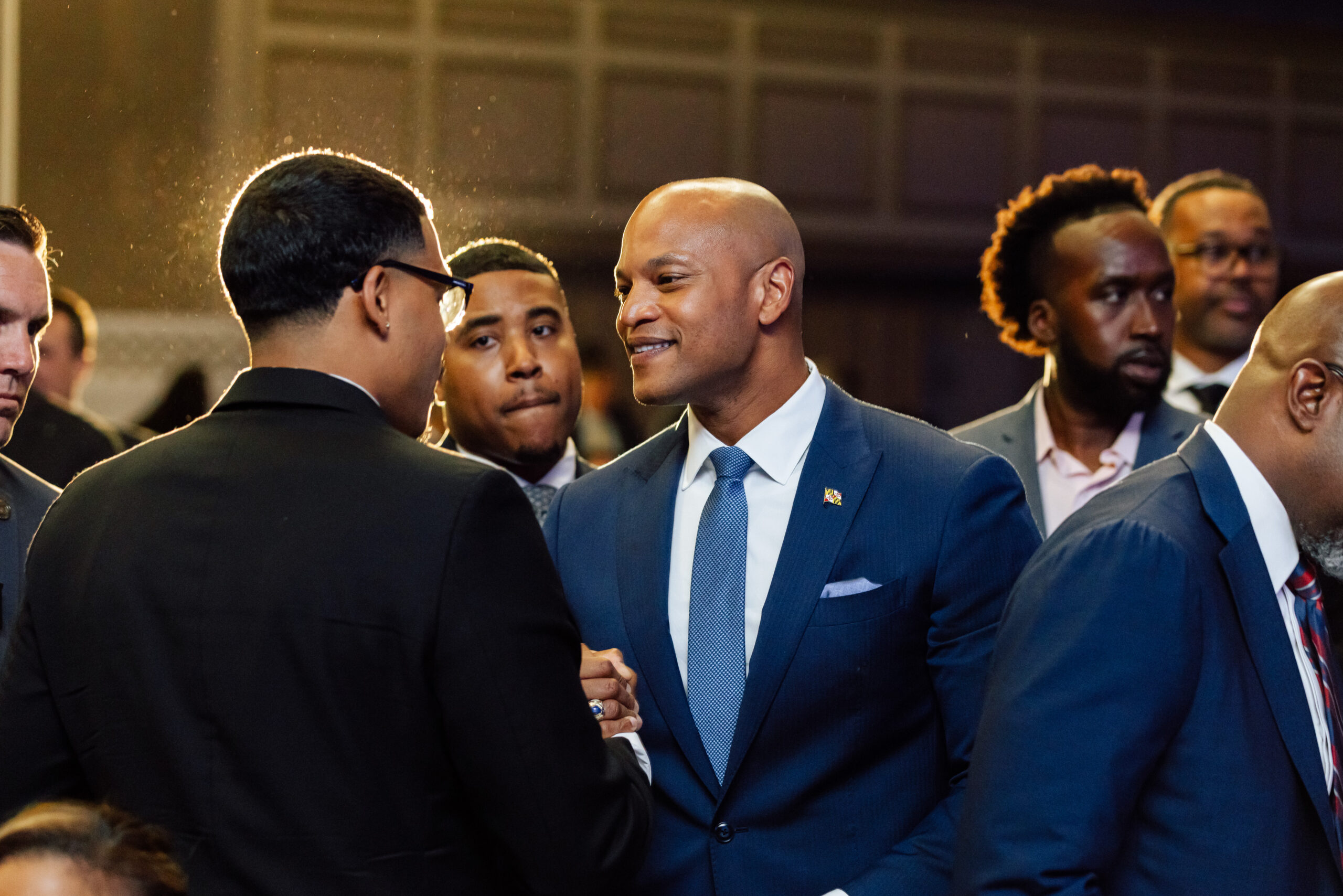
    Maryland Gov. Wes Moore speaks with supporters at a Democratic Party gala in Baltimore last June.

    Jackson’s pivot after the passage of the law, which helped Black officials win congressional and legislative seats, spurred the movement’s success, Moore said. “He was able to make the transition from demanding change to saying, ‘I want to be one of the people to help make it,’ right? Because he understood that part of the power of the civil rights movement was the fact that they were able to get into rooms.”

    The Brennan Center for Justice at the NYU School of Law has tracked efforts to roll back access to the ballot box around the country, including states imposing voter ID laws, making registration more difficult, and aggressively purging voter rolls. Those actions are part of what Georgia politician Stacey Abrams calls “the exercise of diminishing democracy … [and] a wholesale attack on the pluralism of America.”

    Abrams, a former Georgia state lawmaker and gubernatorial candidate, said Jackson’s legacy is key to fighting back. His Rainbow/PUSH Coalition framed the fight for civil rights broadly, as “how do we make America meet its obligations to all its people,” Abrams said.

    That not only brought more marginalized groups into the struggle, she said, but it expanded the idea of civil rights beyond the political realm. “Now that we had voting rights and civil rights, we also had to have access to economic rights,” Abrams said.

    For all the years Jackson carried on his fight, “the through line was always that he worked to bring more people into the process … [so that] as many people as possible believe they have the right to participate,” she said.

    Former Richmond Mayor Levar Stoney — who, until term-limited out of office in 2025, was part of a new generation of young Black mayors around the country — said the effectiveness of Jackson’s work can be seen in state and local offices in the South, where minorities and women have made huge strides in representation.

    The phenomenon cuts across generations, Stoney said, pointing out that in Virginia, 82-year-old L. Louise Lucas is the first Black woman to serve as president pro tempore of the state Senate; Scott, 60, is the first Black speaker; and Jay Jones, 36, is the first Black person elected as the state’s attorney general.

    Apart from President Barack Obama, Stoney said, “I can’t foresee us ever looking to one singular leader.” He added, “There’s a collective of leaders now, [and] we expect to be represented by someone who looks like us.”

    What might be lost, though, is the unifying emotional resonance of a figure such as Jackson. One element that gets overlooked, Sellers said, is that Jackson, King, and other leaders of the day “were more patriotic than most.”

    They were able to “look at this country and call out its failures, call out its broken promises, and then try to reimagine her for what she should look like, which is an inclusive society built in the image of us all.”

    Jackson was able to lend that stature to others, which is what several remembered this week in the lead-up to his memorial services.

    Stevenson said he regularly conferred with Jackson in creating the National Memorial for Peace and Justice in Montgomery, Ala., which recognizes more than 4,000 African Americans lynched during the Jim Crow era. At the dedication for an affiliated memorial in 2024, Jackson had traveled to the ceremony but by then was using a wheelchair and had difficulty communicating. As Stevenson spoke before the crowd, he looked out and saw Jackson, who held his fingers in the shape of a heart.

    A work by Ghanaian artist Kwame Akoto-Bamfo depicting enslaved people in bondage is on display at the National Memorial for Peace and Justice in Montgomery, Ala.

    “It was so moving to me,” Stevenson said. “And I told him, you know, you had me almost in tears.”

    Abrams recalled the night in 2018 when it became clear that she had narrowly lost the election for Georgia governor. Jackson was on hand as she prepared to concede before supporters, and some of her staff tried to get him to move into a VIP area backstage. He refused.

    “He said: ‘I want to be here when she comes downstairs. I know what [defeat] feels like, and I need her to know that the work she’s done continues and she should still be proud,’” Abrams said.

    Barber said he intends to honor Jackson’s legacy by convening a group in the coming weeks to study his speech at the 1988 Democratic convention — when his performance in the primaries brought him closer to the presidential nomination than anyone thought possible — to galvanize a new voter movement.

    In the speech, Jackson called for unity to “keep hope alive,” and said he cherished America not as a uniform blanket but as a quilt.

    “My prayer and hope,” Barber said, “is that we’re working toward that end and bringing folk together. And that the dying of Jesse will not cause us to just say, ‘Woe is us’ and ‘Oh, just look at what he did.’ Because commemoration is not how you remember people like him. You remember people like him by engagement. By recommitting yourselves.”

  • Aramark is out as food provider for new South Philly arena slated for 2030

    Aramark is out as food provider for new South Philly arena slated for 2030

    Aramark will not be the official food, beverage, and hospitality provider at the new South Philadelphia arena where the 76ers, Flyers, and the city’s new WNBA team are expected to play.

    Harris Blitzer Sports & Entertainment, which owns the Sixers, and Comcast Spectacor, which owns the Flyers and Xfinity Mobile Arena, announced that Levy Restaurants will take over food and beverage duties in the new arena, which is slated to open by 2030.

    “Very few cities are as devoted to their teams as Philadelphia, the loyalty and passion are part of the DNA that make the community so special. It’s both an honor and an invigorating opportunity to help amplify the best of Philadelphia,” Levy CEO Andy Lansing said in a statement.

    Smoked chicken cheesesteak is on the 2025-26 menu at the Xfinity Mobile Arena.

    Aramark has overseen hospitality at the Sixers’ and Flyers’ arena since it opened in 1996. Lincoln Financial Field and Citizens Bank Park hospitality services are still operated by the Philadelphia-based food services provider.

    A spokesperson for the arena said that the decision to go with a new provider was not based on Aramark’s performance, but was the result of a standard pitch process.

    “We have a great relationship with our friends at Aramark,” Comcast Spectacor chairman and CEO Dan Hilferty told SportsBusinessJournal. “We have, on both sides, committed that while Xfinity Mobile Arena is still in operation, we’re going to deliver the best possible product.”

    Aramark will continue its tenure at Xfinity Mobile Arena until the new arena opens. The new arena was announced last year after plans to build a Center City arena for the Sixers were abandoned in favor of a new building at the South Philly sports complex.

    Xfinity Mobile Arena used to be known as the Wells Fargo Arena, from 2010 into August 2025.

    “Our team is fully committed to delivering memorable game day experiences, and we are grateful for the many decades spent fueling the passion and energy of the fans,” an Aramark spokesperson said in a statement.

    The hometown food service provider has come under fire in recent years over labor disputes with the thousands of people who work in the stadiums. Before Unite Here Local 274 won its latest contract, fewer than 100 workers represented by the union had year-round healthcare. The contract, signed last March, increased wages and brought hundreds of workers onto the union healthcare plan.

    Levy’s portfolio includes nearly half the NBA/NHL shared arenas, such as Los Angeles’ Crypto.com Arena, according to a Sixers spokesperson. Levy, which has headquarters in Chicago, also provides services for such large events as the Kentucky Derby and the Grammys.

  • King of Prussia’s David’s Bridal is staging an AI-fueled, post-bankruptcy comeback. Next up: a docuseries.

    King of Prussia’s David’s Bridal is staging an AI-fueled, post-bankruptcy comeback. Next up: a docuseries.

    David’s Bridal, the King of Prussia-based wedding dress retailer, is getting into the documentary business.

    Next week, the company will drop the first episode in its new series Breaking Bridal, which follows real-life couples and focuses on unique elements of their weddings.

    The show’s trailer teases some of the stories: One couple said, “I do,” on an active volcano, and another tied the knot at a Universal Studios theme park.

    The series is also set to feature a Philly couple whose nuptials David’s Bridal CEO Kelly Cook officiated in Times Square on Valentine’s Day.

    “‘Breaking Bridal’ reflects how we’re evolving David’s Bridal into a content-driven, culture-focused ecosystem, not just a retailer,” company president Elina Vilk said in a statement.

    Company executives said in a news release that the show represented the start of a “new era” for the company and would be “the first installment in a growing slate of original programming to come.”

    It also marks something of a comeback for the 76-year-old retailer that three years ago filed for Chapter 11 bankruptcy amid declining demand for formal wear. It was the company’s second bankruptcy in five years.

    Since 2023, David’s Bridal has laid off thousands of employees, reduced its store count by about a third, and relocated its headquarters. In 2024, it moved from a building it owned in Conshohocken to a smaller leased space in nearby King of Prussia.

    David’s Bridal is now owned by business development company CION Investment Corp., which bought the retailer for $20 million in 2023.

    The company still operates several physical stores in the Philadelphia region, including in Deptford, Feasterville, Maple Shade, and Plymouth Meeting.

    David’s Bridal is known for its relative affordability in an industry rife with extravagance. Weddings in the Philadelphia region can easily cost between $40,000 and $50,000. A section of David’s Bridal website is dedicated to dresses under $500.

    A woman shops for a wedding dress at David’s Bridal in Feasterville in 2023.

    Cook, formerly David’s Bridal’s president of brand, technology, and finance, took over as chief executive officer in April and has spearheaded a new AI-fueled personalization of the wedding planning experience. The company calls the strategy “Aisle to Algorithm.”

    “We’ve done an AI analyzer on your Pinterest boards,” Cook told the New York Times in June. “So we’re taking AI and we’re building an experience around everything that you’ve told us that you want to see.”

    Cook added: “We have a machine learning tool that’s saying, ‘OK, when girls watch Aruba videos and then they search for beachwear and then they buy a dress with no sleeves, the odds are they’re going to want these kinds of other dresses and these shoes.’”

    Cook told the Times that she wants future David’s Bridal customers to be able to see a lifelike mock-up of their wedding day on a digital screen using augmented reality.

    As part of the company’s strategy shift, it has also rolled out an AI-powered wedding planning platform called Pearl By David’s and a targeted-ad system called Pearl Media Network. Next week, it will add streaming series to the list.

    “We’re leaning into original programming because modern couples aren’t following a template; they’re writing their own,” Cook said in a statement.

    Breaking Bridal is set to premiere Wednesday on the company’s YouTube channel (youtube.com/@davidsbridal) and on its website (DavidsBridal.com/breakingbridal).

    New episodes will be released every other Wednesday, according to the company. Later this year, plans call for the show to be available for streaming on Amazon Prime Video, Sling, Roku, and Tubi.

  • The hypothetical nuclear attack that escalated the Pentagon’s showdown with Anthropic

    The hypothetical nuclear attack that escalated the Pentagon’s showdown with Anthropic

    As a standoff between artificial intelligence firm Anthropic and the Pentagon deepened this week, the two sides offered starkly different accounts of a key discussion about a hypothetical nuclear strike against the United States, revealing the intensity of their showdown over the American military’s potential use of lethal autonomous weapons.

    A defense official said the Pentagon’s technology chief whittled the debate down to a life-and-death nuclear scenario at a meeting last month: If an intercontinental ballistic missile was launched at the United States, could the military use Anthropic’s Claude AI system to help shoot it down?

    It’s the kind of situation where technological might and speed could be critical to detection and counterstrike, with the time to make a decision measured in minutes and seconds. Anthropic chief executive Dario Amodei’s answer rankled the Pentagon, according to the official, who characterized the CEO’s reply as: You could call us and we’d work it out.

    An Anthropic spokesperson denied Amodei gave that response, calling the account “patently false,” and saying the company has agreed to allow Claude to be used for missile defense. But officials have cited this and another incident involving Claude’s use in the capture of Venezuelan leader Nicolás Maduro as flashpoints in a spiraling standoff between the company and the Pentagon in recent days. The meeting was previously reported by Semafor.

    A face-to-face meeting Tuesday between Amodei and Defense Secretary Pete Hegseth escalated the situation, the Washington Post reported. The two sides are now careening toward a defining power struggle over whether the U.S. government should have the freedom to spy on or kill humans using the potent new technology, based in part on extreme hypotheticals and games of telephone.

    The Pentagon had given Anthropic until 5:01 p.m. Friday to drop its objections to using Claude in relation to autonomous weapons and mass surveillance of U.S. citizens. If not, officials had said they may use government authority to force Anthropic to hand over the technology anyway — while also blacklisting the company from future defense work.

    Sean Parnell, the Pentagon’s chief spokesman, said in an X post Thursday that the department had no interest in conducting mass domestic surveillance nor deploying autonomous weapons, but wanted to use AI for “all lawful purposes.”

    “This is a simple, common-sense request that will prevent Anthropic from jeopardizing critical military operations and potentially putting our warfighters at risk,” Parnell said.

    Amodei said in a statement late Thursday that his company was ready to continue working with the Pentagon, but would not change its stance. Current AI systems are not reliable enough to power robotic weaponry without putting troops and civilians alike at risk, he said, and existing laws on domestic surveillance do not account for the sweeping potential of AI snooping tools.

    “In a narrow set of cases, we believe AI can undermine, rather than defend, democratic values,” Amodei said in his first public comments on the battle. “Two such use cases have never been included in our contracts with the Department of War, and we believe they should not be included now.”

    Anthropic did not expect to end up in a fight with Pentagon leaders when it became the first major AI lab to strike a deal to work on classified U.S. military networks in late 2024. But the dispute highlights how the startup, founded in 2021 by safety-minded refugees from ChatGPT-maker OpenAI, has struggled to deftly navigate Washington in the second Trump administration. (The Washington Post has a content partnership with OpenAI.)

    Anthropic recently added a former deputy chief of staff to President Donald Trump to its board and explored taking investment from a fund led by Donald Trump Jr., according to people familiar with the pitch. Yet its leaders have also repeatedly clashed with the White House in public.

    In a coruscating post on X in October, David Sacks, Trump’s top AI adviser, accused the company of “fear-mongering” and pursuing “regulatory capture” in an attempt to bend the government to its will. Anthropic leaders have criticized one of the administration’s key AI policies in recent weeks, even as the dispute with the Pentagon was brewing.

    “There’s the subtext of Anthropic not being aligned with the MAGA agenda,” said Steven Feldstein, a senior fellow at the Carnegie Endowment, who researches the use of AI in war. “This is as much of a political fight as a military use issue.”

    Experts say the outcome of the clash could shape the trajectory of the burgeoning relationship between the AI industry and the U.S. military, potentially signaling to other leading firms that the cost of doing business with the Pentagon could be losing control of their innovations.

    Unlike a gun or a jet engine, the uses that AI might find on future battlefields keep changing. The U.S. already pushes autonomy into its weapons and AI-enabled systems are a part of almost every drone, ship, or aircraft under production or envisioned in the future force. The Trump administration is embarking upon a vast expansion of the military’s use of AI.

    But leading figures in the development of the technology have long had ethical and legal concerns about giving AI the power to make life-and-death decisions or turbocharging surveillance.

    Emil Michael, a former Uber executive who is now undersecretary of defense for research and engineering, has taken the lead in the discussions with Anthropic. He has argued the government and not individual tech firms should have the final say in how the technology is used, according to a person familiar with the discussions, who spoke on the condition of anonymity to describe internal deliberations. Michael did not respond to a request for comment.

    To the Pentagon that means having a policy permitting what Parnell called “all lawful purposes.” Amodei has held firm that Anthropic has red lines around autonomous weapons and surveillance, a stance that has won support from his employees and could serve as a recruiting tool for idealistic engineers as the company heads toward an expected initial public offering.

    Late Thursday, Michael accused Amodei of having a “God-complex” in a post on X. “He wants nothing more than to try to personally control the US Military and is OK putting our nation’s safety at risk,” Michael wrote.

    The escalating dispute has baffled people who study how the military uses AI.

    Dean Ball, a former Trump administration AI adviser, said he hoped the two sides could still find a way to step back from the brink. “The solution to that problem is to cancel the contract,” Ball said. “Going on a jihad against Anthropic is whole other layer of escalation.”

    Leapfrogging off Amazon

    Anthropic owes its head start at the Pentagon in part to a partnership the intelligence community forged with Amazon in 2013, which paved the way for classified material to be handled in Amazon’s cloud. Over the course of the next several years, the tech giant built out secure computing infrastructure for the intelligence community, beating out rivals for coveted contracts to house classified and top secret data.

    In 2023 and 2024, Amazon invested billions into Anthropic. The relationship greased the AI start-up’s path into the military’s closely guarded systems, according to a person familiar with the relationship, who spoke on the condition of anonymity to describe it. Amazon declined to comment. (Amazon founder Jeff Bezos owns the Post.)

    Anthropic also found an ally in software analytics firm and longtime defense contractors Palantir, which in 2024 teamed up with the AI firm and Amazon to offer Claude on its systems used by military and spy agencies. Anthropic said the partnership would boost the military’s ability to process huge amounts of data and make good decisions, saying it was proud to take on the work.

    Anthropic has “first mover status and their product is good,” said another person familiar with the military’s work with AI companies, who spoke on the condition of anonymity to describe sensitive issues relating to national security.

    Since Claude’s deployment with the Pentagon, Anthropic said Thursday, its technology has been put to use analyzing intelligence, planning operations and in cyberwarfare. The company has deepened its work with the government since Trump returned to office and pushed federal agencies to rapidly scale up their use of AI. In July it signed a $200 million contract with the Defense Department and made a deal the following month to provide its system to civilian agencies for a dollar apiece.

    But the company’s advantage has eroded as competitors like Google, OpenAI and xAI make deals of their own with the Pentagon. Officials say the other leading firms have agreed to its “all lawful purposes” policy for unclassified work, and that xAI has also signed a deal for classified systems. The three companies did not respond to requests for comment.

    Anthropic has differed from its rivals in simultaneously courting the administration for contracts while opposing it in other areas of policy.

    When the White House was pushing an executive order that would preempt restrictive state-level AI laws this winter, Anthropic was promoting a safety-oriented AI bill in California.

    Amodei has also criticized the Trump administration’s drive to allow exports of American AI chips to China. On the sidelines of the World Economic Forum in Davos, Switzerland last month, Amodei compared the policy to “selling nuclear weapons to North Korea.” After meeting with Amodei this month on Capitol Hill, Sen. Elizabeth Warren (D., Mass.) said she would introduce legislation to sharply limit any exports.

    Anthropic has also hired several former Biden administration officials.

    “The administration just wants everyone to bend the knee and [Amodei] won’t,” said an investor who works on defense technology, who spoke on the condition of anonymity to avoid getting into conflicts with any of the parties.

    In the past year, Anthropic has made moves that could smooth its relationship with the Trump administration. The company ramped up its lobbying in Washington, spending $3.1 million and bringing on a former senior aide to Secretary of State Marco Rubio, according to disclosures compiled by transparency group Open Secrets. It announced this month that it was adding Chris Liddell to its board, a former tech executive who served in the first Trump White House.

    The company also recently explored an investment from the Trump-allied venture capital firm 1789 Capital for funding, but was turned down, according to two people familiar with the pitch, who spoke on the condition of anonymity to describe private business discussions. Donald Trump Jr. is a partner at the firm, alongside Chris Buskirk, an ally of Vice President JD Vance.

    ‘Once and for all’

    Insiders in the world of defense technology argue that the current fight between the Pentagon and Anthropic appears to be more philosophical than technical, and that the administration had already soured on the AI company — even as rank-and-file military personnel were finding its services increasingly useful.

    “The administration and the Republicans are looking for ways to get rid of Anthropic once and for all,” the person familiar with the military’s work with AI companies said. The Pentagon clash could provide an opportunity to carry that through. In January, Hegseth issued a directive for the military to embrace AI as though the country were at war.

    The U.S. has committed to some guardrails on autonomous weaponry. France, the United Kingdom, China, and the U.S. all previously said they would require a human to be involved in all decisions to deploy nuclear weapons. In a statement to the Post, the Pentagon said the Trump administration intends to maintain that pledge.

    “It remains the Department’s policy that there is a human in the loop on all decisions on whether to employ nuclear weapons,” a senior defense official said. “There is no policy under consideration to put this decision in the hands of AI.”

    But that still leaves room for AI to influence decisions on targets and speed of response. In a recent nuclear war game at King’s College London, many leading language models including versions of ChatGPT, Claude and Google’s Gemini all quickly favored launching warheads. That could influence a human’s decision to fire, said Paul Dean, vice president of the global nuclear program at the nonprofit Nuclear Threat Initiative.

    “It’s not simply ensuring that there’s a human being in the decision-making loop,” Dean said. “The question is, to what extent will AI impact that human decision-making?”

    Neither side in this week’s faceoff knows for certain what AI’s use in war will ultimately look like, but both seem unwilling to trust in the other’s future decisions.

    “The Pentagon does not trust that Anthropic will be a reliable vendor, and Anthropic worries about misuse of its technology,” said Michael C. Horowitz, a director at the University of Pennsylvania who oversaw AI weapons policy during the Biden administration.

    Because Claude is already in use across the Defense Department, exiling Anthropic and switching to a rival could prove costly. Although Defense officials have suggested they could use the Defense Production Act to force the AI company to share its systems, experts are split on whether the law could be applied.

    Doing so would send a chilling message to the AI firms the Pentagon hopes to lean on that they may risk of having their own innovations seized if the government sees something it wants.

    That would cross a troubling line, said Katie Sweeten, a former liaison for the Justice Department to the Pentagon, and a partner at Scale LLP. “This is a literal nuclear option which I think rightfully companies should be very concerned about.


  • Noel Mayo, groundbreaking Black industrial designer and college professor, has died at 88

    Noel Mayo, groundbreaking Black industrial designer and college professor, has died at 88

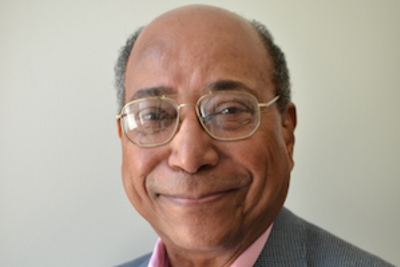
    Noel Mayo, 88, formerly of Philadelphia, widely recognized as the first Black owner of an American industrial design firm, first Black American college chair of an industrial design department, first Black industrial design graduate of Philadelphia College of Art, award-winning super mentor, and champion of professional diversity, equity, and inclusion, died Thursday, Jan. 29, of a probable heart attack at an assisted living center in Delaware County.

    Rejected for an industrial design job after college because he was Black, Professor Mayo went on to found Noel Mayo Associates Inc. in Philadelphia in 1964. He spent 11 years in the late 1970s and ’80s as a professor and first Black chair of the industrial design department at what became the now-defunct University of the Arts, and 27 years, from 1989 to 2016, as a governor-appointed eminent scholar in art and design technology at Ohio State University.

    “Dr. Mayo leaves behind a transformative legacy,” former colleagues at Ohio State said in a tribute, “whose impact shaped generations of students, elevated the field of design, and advanced diversity and inclusion across the profession.”

    As the trailblazing owner and president of Noel Mayo Associates for decades, he and his staff designed all kinds of products, interiors, exteriors, graphics, mobile exhibits, and signage systems for companies and private clients around the world. He worked with NASA, IBM, Black & Decker, Philadelphia International Airport, museums, government agencies, and public institutions.

    He collaborated with Lutron Electronics for 45 years and is named on hundreds of its design and utility patents. In 1984, he remodeled the mayor’s City Hall office after Wilson Goode replaced Bill Green. In 1988, he advised officials at the old Spectrum on the placement of a Julius Erving statue in South Philadelphia.

    He designed computer-driven telephones in the 1980s that could dial 96 phone numbers automatically and leave messages. “I realize how pressured this is,” he told the Daily News for a 1984 story about design and technology’s effect on modern life. “But people want it.”

    Professor Mayo was featured in a 1977 story by Inquirer design critic Ellen Kaye, and she praised the “visual fluidity” he created in a refurbished Bala Cynwyd high-rise condo. She wrote about his work again in 1978, and he said design “revolves around problem-solving from a logical point of view.”

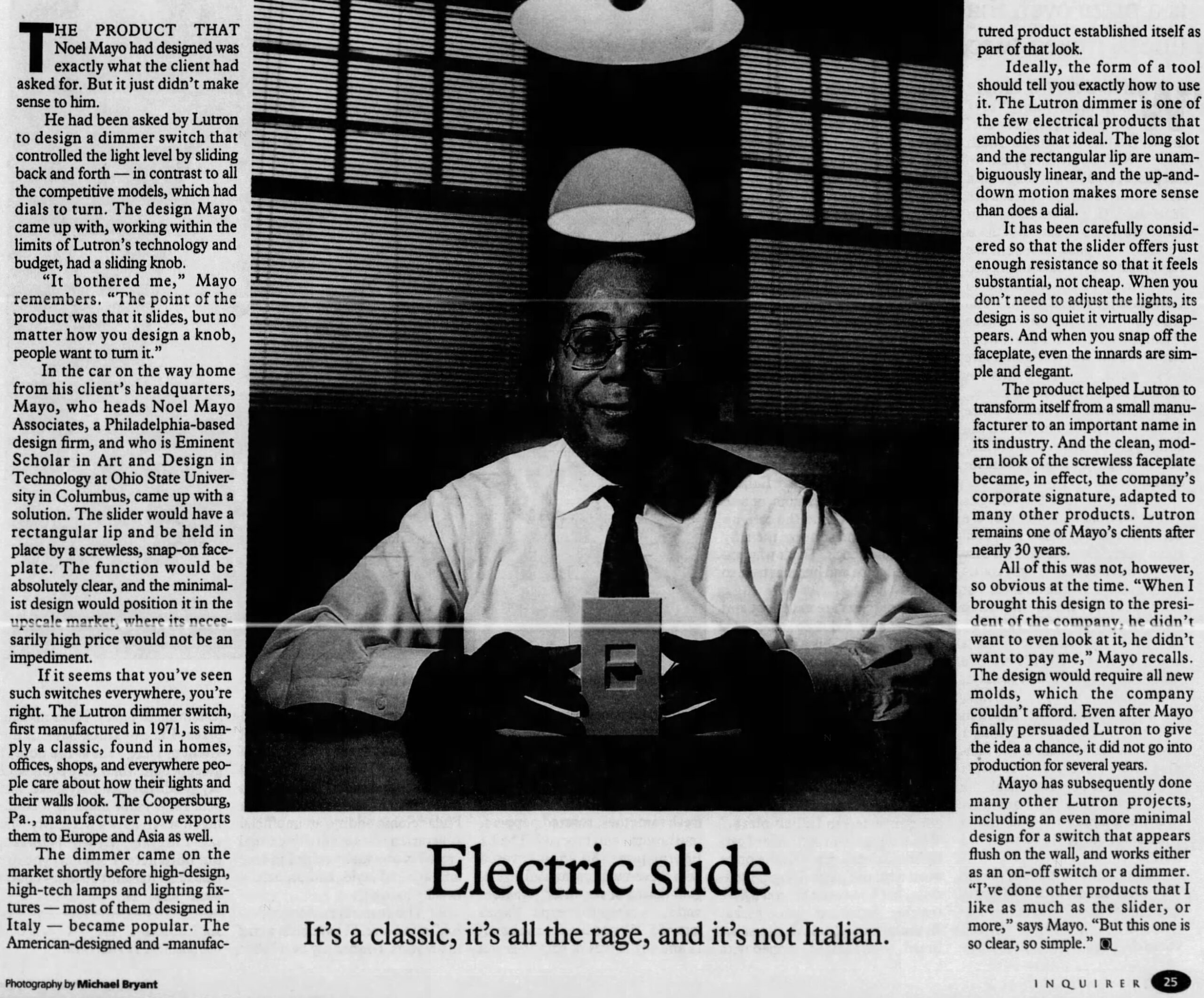
    In a 1995 story, Inquirer design critic Thomas Hine noted his commercial success with early light-dimmer switches and said it “helped Lutron to transform itself from a small manufacturer to an important name in its industry.” In a recent video interview, Professor Mayo said: “I see the problems as kind of opportunities that other people didn’t see. … So I look for opportunities for innovation.”

    Professor Mayo was featured in The Inquirer in 1995.

    As chair at Philadelphia College of Art and its successor, University of the Arts, he grew the industrial design department from the school’s ninth largest to its third largest. In online tributes, former students called him “a true icon” and “a doorway into a world of possibility, dignity, and community.”

    He told The Inquirer in 1978: “Something looks good when it looks rational. That is how I work myself, and that is what I try to teach my students.”

    At Ohio State, Professor Mayo taught product, interior, and graphic design courses, and researched accelerated learning processes using music, color, relaxation techniques, interactive computers, and video. Former colleagues there praised “his blend of rigor, generosity, calmness, and mentorship” in a tribute.

    Professor Mayo worked hard to recruit Black and other minority designers and students to his company and college courses. He created mentoring programs and developed an extensive network of minority business contacts.

    Professor Mayo designed this telephone.

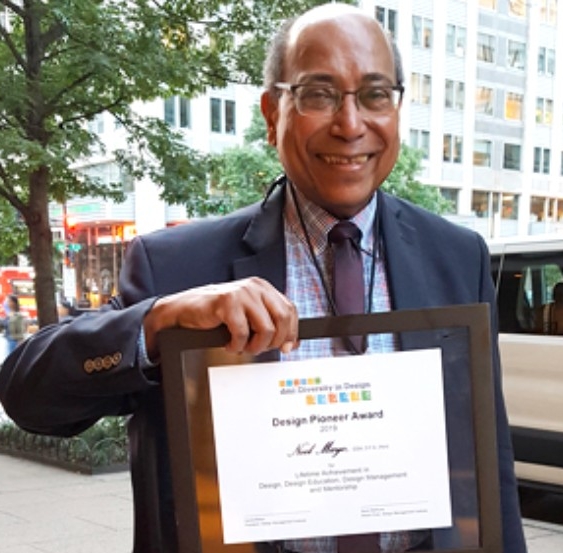
    “He did not treat diversity as a slogan,” a former colleague said in an online tribute. He earned lifetime achievement awards from the Industrial Designers Society of America in 2006 and the Design Management Institute in 2019. In 2021, Ohio State alumni created and funded the Mayo Mentoring Program.

    He was one-time president of the Philadelphia Economic Council and the Greater Philadelphia Community Development Corp. He wrote articles for many publications and served on boards at University of the Arts, the Society for Environmental Graphic Design, and other groups.

    He was a fellow of the Interior Design Council of Philadelphia, a juror for art and design competitions, and a member of the Philadelphia Art Commission. Asked to advise young designers in the recent video interview, he said: “Try to be as innovative as you can. … Ask questions. … Being open is critical.”

    Noel Mayo was born Dec. 30, 1937, in Orange, N.J. He attended a boarding school in Chester County and earned a bachelor’s degree in design in 1960 at what became Philadelphia College of Art and then University of the Arts.

    Professor Mayo designed this exterior.

    He married, divorced, and later married Leslie Butler.

    Professor Mayo enjoyed roller skating, was good at darts, and earned an honorary doctorate from Massachusetts College of Art and Design.

    “He was easygoing with a great sense of humor,” said Virginia Gehshan, a design colleague and longtime friend. “He was really an amazing genius. He was ahead of his time.”

    In addition to his wife, Professor Mayo is survived by other relatives.

    A celebration of his life is to be held later.

    Professor Mayo received the Design Pioneer Award in 2019.
  • Fletcher Cox’s $1.5 million Mullica Hill home is on the market

    Fletcher Cox’s $1.5 million Mullica Hill home is on the market

    The South Jersey home of Eagles great Fletcher Cox is on the market for $1.5 million.

    The dominant defensive tackle, who retired in 2024 after 12 seasons with the Birds, lived in the nearly 6,000-square-foot Mullica Hill home for most of his career.

    “It’s got him all over it,” said Lynne Stamm, a sales associate with Berkshire Hathaway HomeServices Fox & Roach, Realtors. “He put his heart and soul into the house as a young kid” who moved into the property when he was in his early 20s.

    Cox, a Mississippi native, bought the house for $550,000 in 2014, according to Gloucester County property records.

    Fletcher Cox’s design touches are seen throughout his Mullica Hill home, said the listing agent. They include this $15,000 chandelier in the foyer.

    Since then, Cox, now 35, has regularly updated the home, Stamm said. He installed a $15,000 chandelier in the foyer and created “a complete resort area” in the backyard with a dark-finish pool, a built-in bar, and an outdoor kitchen with a pizza oven.

    The home has four bedrooms, three full bathrooms, and two half bathrooms.

    The first floor features a marble foyer, gourmet kitchen, comfortable living areas, and two-story windows that Stamm said let in abundant natural light.

    The first floor of Fletcher Cox’s $1.5 million Mullica Hill home features two-story windows that let in abundant natural light.

    On the second floor, the bedrooms include a large primary suite and a new Jack-and-Jill suite.

    The basement, referred to in the listing as an “entertainment hub,” could be outfitted as a gym, home theater, and game room, with a pool table included as part of the sale. The house also has an epoxy-finished three-car garage.

    With its open floor plan and indoor and outdoor gathering spaces, Stamm said the home would be ideal for a buyer “who really likes high-end entertaining.”

    The property is also turnkey, she said, due to all the upgrades Cox made over the years.

    Fletcher Cox’s Mullica Hill home includes an epoxy-finished three-car garage.

    He loved the house so much that he was “reluctant” to sell, Stamm said. But the agent said Cox is excited about his new home, just a few miles away and nearly double the size, with an expansive pole barn for his race cars. Cox has owned a drag-racing team for about a decade and started driving in retirement.

    His Mullica Hill home made headlines in 2019 when a man tried to break in with a baseball bat in search of his ex-girlfriend. Cox called 911 and told an operator that he was armed with a shotgun. The assailant fled but was later arrested and indicted on charges related to the incident, according to New Jersey court records.

  • Jeff Galloway, Olympic runner who inspired ‘Jeffing’ technique, has died at 80

    Jeff Galloway, Olympic runner who inspired ‘Jeffing’ technique, has died at 80

    Jeff Galloway, an Olympic distance runner who inspired hundreds of thousands of Americans to exercise by extolling the virtues of taking walking breaks during races — or “Jeffing,” as adherents called his signature method — died Feb. 25 in Pensacola, Fla. He was 80.

    Mr. Galloway died in a hospital after suffering a stroke, his son Westin Galloway told the Washington Post.

    Mr. Galloway described himself as an average runner as a teen who enrolled in his first marathon in Atlanta “because of the size of the trophy” and, by persistence more than talent, ascended to the U.S. Olympic team. For the 1972 Olympics in Munich, he qualified for the 10,000-meter race and was an alternate for the marathon. The next year, he set a U.S. record in the 10-mile road race.

    Despite reaching the peaks of his grueling discipline, Mr. Galloway became most widely known for a training program with an everyman philosophy that spoke to reluctant runners and preached, of all things, walking.

    Mr. Galloway began pioneering what he called a “Run Walk Run” technique — taking breaks to walk during training runs and even races — in the 1970s as he taught running to beginners. He championed the method as a way to reduce injury, control fatigue and, most importantly, motivate newcomers to “get off of the couch and run.”

    Legions of new runners did just that. Mr. Galloway’s philosophy, espoused in books and an online training program, has reached more than a million people, his organization has said, and changed how athletes approach distance running.

    Mr. Galloway had “the ability to empower runners, or people that didn’t even see themselves as runners,” his son Westin said, “giving them the space to be the athlete or the person that they never thought they could be through the benefits of exercise.”

    John Franks Galloway was born in Raleigh, N.C., on July 12, 1945. His father was an educator and a sailor in the Navy; his mother worked at a private school in Atlanta that his father founded.

    Mr. Galloway, who grew up in Atlanta, was not initially a prodigious running talent. He enrolled in a track conditioning program in eighth grade because his school required sports participation each quarter and the track coach was rumored to be the most lenient of the sports instructors, he wrote on his website.

    “I can identify with the struggles of sedentary, overweight adults and kids, for I was one,” Mr. Galloway wrote.

    Two months of running through forest trails got him hooked. Mr. Galloway qualified for the state high school championships in Georgia his senior year, then attended Wesleyan University, where he studied history and was an all-American runner.

    Mr. Galloway served for three years in the Navy after college, a tour that sent him to Vietnam. Upon returning to the United States in 1970, he enrolled in graduate school at Florida State University with the goal of qualifying for the upcoming Olympics.

    Even after years of training, it felt like a long shot, Mr. Galloway wrote. On a 90-degree summer day at the 1972 national championship in Seattle, he squeaked onto the 10,000-meter Olympic team in a close race — perhaps because he took it slow.

    “Many of the runners had started too fast, and I did not,” Mr. Galloway recalled on his website. “I found myself catching up to the stragglers, passing one, then another.”

    As a fitness boom took hold in the U.S. after the Munich Olympics, Mr. Galloway founded a running store, Phidippides, opened vacation fitness camps, and wrote several books about running. “Jeffing,” or “the Galloway method,” became his most famous innovation.

    At running clinics across the country, Mr. Galloway promoted his framework. Giving runners permission to take walking breaks while training encouraged beginners, he said, and the staggered runs could help even veteran marathoners improve their times. His charm and relentless focus on reaching novice runners set him apart from other instructors, Westin Galloway said.

    “A lot of coaches were very focused on faster times and pushing people’s bodies to do the best that they could,” he said. “And he kind of looked at it from the other perspective of, running has an amazing way of changing a person’s life, and if he could get more people out there doing it, the world would be a better place.”

    Mr. Galloway remained a fixture of the running community and continued to run and help organize races as he grew older. At 70, he ran the Marine Corps Marathon in Arlington in honor of a Marine killed in the 2015 Chattanooga, Tenn., shooting at a Navy operations center. He returned to running after suffering a heart attack in 2021 that kept him hospital-bound for almost a month.

    In the months before his death, Mr. Galloway had been fixated on run-walking another race at the age of 80. He had planned to run the Honolulu Marathon in December but fell and broke his kneecap. That didn’t discourage him, either, he told the New York Times in December.

    “Doing another marathon, to me, feels like the strongest goal I’ve ever had in my life,” Mr. Galloway said to the Times.

    Mr. Galloway is survived by his wife, Barb, 72; his sons Westin and Brennan; and six grandchildren. They are all runners, and Westin manages Mr. Galloway’s organization that continues to share his training program with runners around the world.

    “Jeffing” has recently seen a renewed surge of interest, Westin Galloway said, as more people have taken up running since the coronavirus pandemic. Asked whether the influx of new adherents made Mr. Galloway proud, Westin demurred.

    “He was happy talking to a single individual,” Westin said. “He didn’t care about numbers. He didn’t care about getting on the news or having big stories published about him. He cared about helping one person at a time.”