ST. PAUL, Minn. — Their family spent years opposing Venezuela’s socialist system.
The government retaliated by sending men to beat the father, a state oil company worker whom it accused of being uncooperative. Other relatives were threatened.
The situation became so untenable that the family fled the country for the United States in 2021 after it obtained refugee status, according to one of the daughters, a 24-year-old clothing salesperson who was interviewed by The Associated Press.
The six siblings and their parents settled in Minnesota in 2023, living peaceful lives until the Trump administration said it was casting new scrutiny on refugees. One priority is those admitted to the U.S. under former President Joe Biden, whom the government accuses of prioritizing quantity over detailed screening and vetting, with an initial focus on 5,600 refugees who settled in Minnesota and are not yet permanent residents, making them particularly vulnerable.
Last month, three masked officers got out of a black SUV with tinted windows outside a St. Paul apartment complex, handcuffed the Venezuelan woman and her mother and told them their legal status was under review, according to the woman, who asked for anonymity for fear of retaliation.
In January, a federal judge ordered a temporary halt to the arrest and detention of refugees in Minnesota while a lawsuit challenging the “revetting” continues. The judge ordered the immediate release of all refugees detained in Minnesota, and those taken to Texas.
Three refugees told The Associated Press that whatever happens, the rounds of inconclusive interviews with immigration authorities well after they thought their status was safe has them questioning their futures in the U.S. and living in constant fear.
The young woman from Venezuela hasn’t returned to her job at a clothing factory. A man who fled persecution in Myanmar won’t walk on the streets of Minneapolis without a letter from his church appealing for immigrants to “be treated humanely.” A Congolese refugee arrested in St. Paul despite her refugee status says “everything that’s happened feels like a movie.”
A change in US treatment of refugees
Welcoming refugees has been a source of bipartisan agreement in the U.S. since Congress passed the Refugee Act with overwhelming support in 1980.
The act helped make refugee applications some of the immigration system’s most heavily scrutinized. Government decisions that someone was persecuted for who they are or what they believe are rarely second-guessed, and revisiting refugee status that’s already been granted is a major blow to legal tradition, advocates say.
“They’ve been heavily vetted and were admitted by the government with approval,” said Beth Oppenheim, chief executive officer of HIAS, a major refugee aid group.
Once a refugee is admitted to the U.S. through the resettlement program, the only way to strip them of their status is to prove that they should never have been admitted, Oppenheim said. That is why the Trump administration is interviewing people again, she said.
Matthew Tragesser, a spokesman for U.S. Citizenship and Immigration Services, said in a written statement refugees “are REQUIRED to be subject to a full inspection after a year within the United States.”
“This is not novel or discretionary; it is a clear requirement in law,” he wrote.
While it is correct that refugees must apply for green cards one year after admission — a change of status that brings a renewed layer of scrutiny — the administration is breaking with decades of tradition by revisiting initial decisions to admit people as refugees, and then detaining them while they are under review.
“Arresting, detaining, and rescreening refugees are all new changes which will inflict grave harm on vulnerable populations,” said Smita Dazzo, deputy director of U.S. programs at HIAS.
Venezuela to Minnesota to Houston and back
In January, U.S. Immigration and Customs Enforcement took the Venezuelan women to Houston on a flight where migrants were shackled at the wrists and ankles and forbidden from talking. The daughter said she was told she was there for green card interviews and isolated in a cold room with no food, water or anything warm to cover her. She said she refused to sign documents without an attorney present.
“They told us, ‘Your status is worthless. You’re illegal,’” she said. “What we went through is something I wouldn’t wish on anyone … We were supposed to arrive in this country with refugee status, and we thought we would be protected here. But right now, at this moment, it is quite the opposite.”
The women were released after successfully filing habeas corpus petitions in federal court, part of a flood of last-ditch attempts at freedom under a Trump policy denying bond hearings in immigration court. Friends of their attorney drove them back to Minnesota at their own expense. Since then, the younger woman has been too afraid to leave the house.
The pastor who received a letter and went to the interview
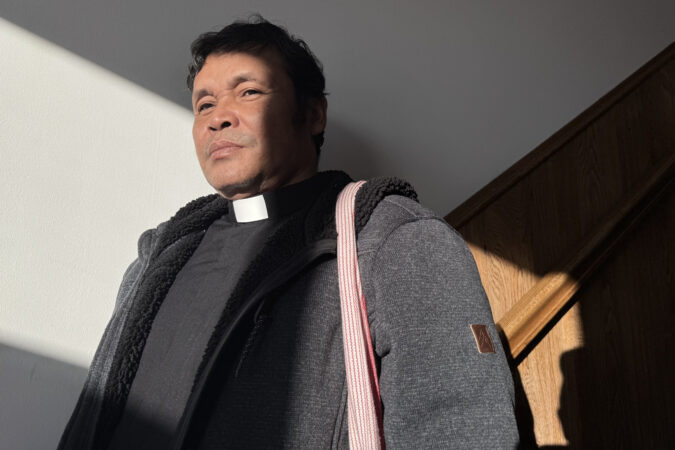
Saw Ba Mya James, a 46-year-old ethnic Karen father of three who fled military persecution in Myanmar, arrived in St. Paul last year after obtaining refugee status with help from a local church.
Despite a pending green card application, the Anglican pastor did not attend church for weeks after friends advised him to avoid going outside.
“I was told to stay at home, so I listened, and I prayed to God with my family,” James said.
James received a letter Feb. 2 ordering a “post-admissions refugee reverification” at the U.S. Citizenship and Immigration Services St. Paul field office, according to a copy reviewed by The Associated Press.
During an interview that lasted several hours, an officer pressed James with questions he said he already addressed extensively before being admitted to the U.S. The officer said the review was needed because an inexperienced employee handled James’ initial vetting.
Within two weeks of the interview, James got another letter asking that he and his family provide fingerprints, which his attorney took as a positive sign.
Still, James remains wary of being detained. He faithfully carries his church sponsors’ letter appealing for him and other immigrants to “be treated humanely as fellow image-bearers of God.”
The Congolese refugee arrested arriving at work
A Congolese woman settled in the Twin Cities area in November 2024 with refugee status, working in the hospitality business as the breadwinner for her husband and four children.
She said an immigration officer approached her parked car when she arrived for work at 7 a.m. on Jan. 14 in St. Paul, saying he knew her name and that she was a refugee. After telling her to exit the vehicle to answer questions, he handcuffed her despite her efforts to show a work authorization document and identification.
The woman, who spoke on condition of anonymity because she fears reprisals, was flown to Houston to be questioned in detail about her experiences in the Congo, Uganda and the United States. She and other refugees refused to sign documents to be sent back to their home countries. She was released Jan. 18 without any ID documents to book a flight to Minneapolis. A manager at her company flew to Houston and drove her 17 hours back home.
“If I told you I’m feeling OK, I’d be lying to you,” she said.
Pennsylvania’s one and only witch trial started over cow’s milk.
“If your cow is not giving milk, it’s obvious that somebody put a hex on it,” Doug Miller, who runs William Penn’s estate Pennsbury Manor, said to explain the thinking of the time.
In the 1680s, neighbors accused Margaret Mattson, who was of northern European descent and didn’t speak English, of putting a hex on local people.
Although Pennsylvania was William Penn’s colony, it was still part of England. And in English rule, witchcraft was a capital offense.
Witch trials had been held throughout England and elsewhere in Europe, but only a few had been held in the colonies. And this would be the first in Pennsylvania.
He arranged for a prominent citizen, Lasse Cocke, who was also Penn’s chief negotiator with the Lenni-Lenape, to act as an interpreter.
Three witnesses testified that Mattson had cast a spell over her neighbor’s cattle, which had not been giving milk. Over a daylong trial in Philadelphia, a jury ultimately found Mattson guilty of having “the common fame of a witch, but not guilty in the manner in form that she stands indicted.”
So, yes, she had the reputation of being a witch, but there was no evidence she participated in any witchcraft.
“This was a crafty way on his part to avoid harsh punishment for her and any hint of a death penalty under English law,”Miller said.
Mattson and a co-defendant, Yesro Hendricksen, whom we don’t know much about, wereeach fined 50 pounds, which was a chunk of change back then, Miller said.
Quakers at this time would expect the person to put forth a bond similar to bail today.
It was called a peace bond, and it was good for six months.
Eight years later, witch hysteria would hit Salem, Mass., and kick off the infamous witch trials.
“The fact that he really didn’t want to encourage the idea that there were witches,” Miller said, “or inflict a penalty on somebody he felt was not guilty of what she was accused, speaks highly of Penn.”
“They are definitely not just sitting there getting dusty in a room,” Hortz Stanton said.
In storage getting dusty?
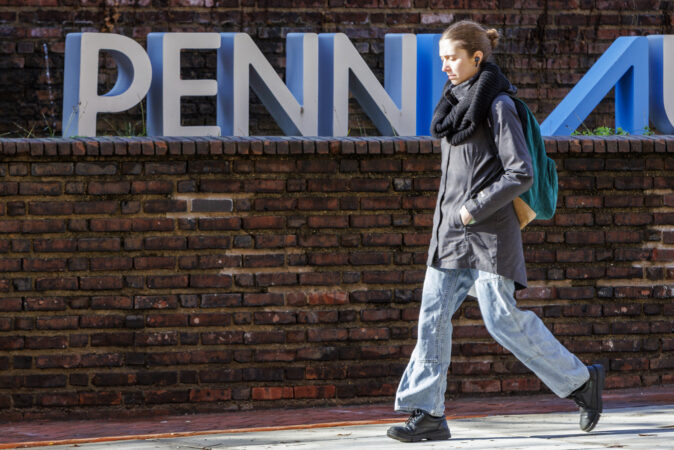
Hortz Stanton said thousands of non-exhibited items in the Penn Museum’s collections found other purposes last year. And, 5,000 college students were able to use them for classes and research.
“A lot of things happen when objects aren’t on display, everything from conservation to research to documentation,” said Hortz Stanton.
Museums aim to protect their inventory, while still keeping items available.
The Museum of the American Revolution has a collection of 5,000 historical objects, such as archaeological material, documents, paintings, prints, and other items. But only about 300 items are on exhibit.
“They are not buried away and never to be seen again; we store all the collection here at the museum,” said Matthew Skic, director of collections and exhibitions. “Many of our documents are not on display because they are extremely light-sensitive, but we take them on rotations.”
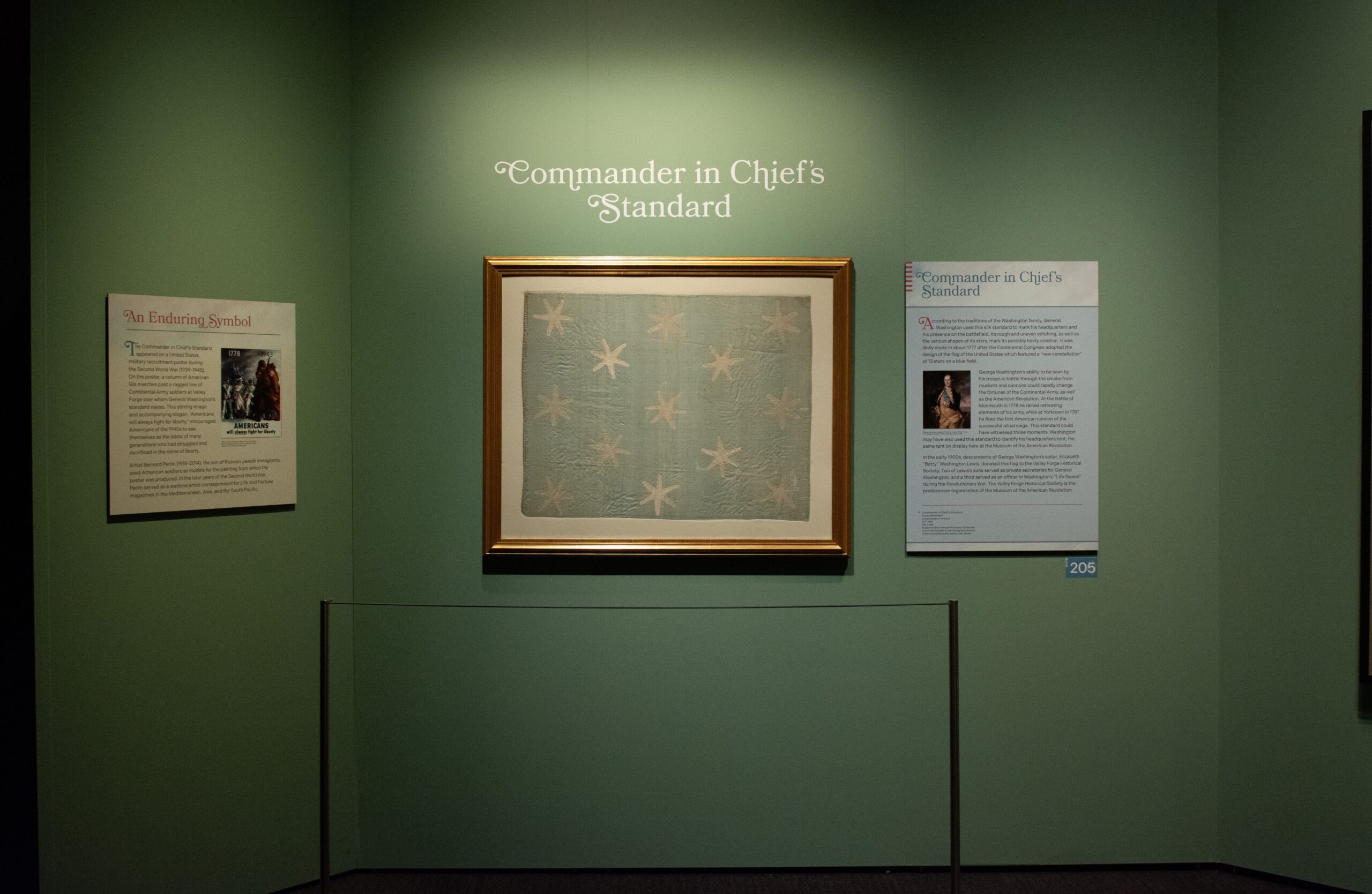
George Washington’s headquarters flag, for example, was put out for a special exhibition in 2025. The display was short-lived due to the brittleness of the silk. It’s now back in storage.
George Washington’s Headquarters Flag (also known as the Commander-in-Chief’s Standard). This flag has been on display only twice at the Museum of the American Revolution.
They are not the only ones keeping a rotation of unexhibited items for preservation. The Independence Seaport Museum keeps 60% to 80% of its 10,000 items in storage throughout the year.
”People often will say: Why are you hoarding all this stuff?” said Peter Seibert, the museum’s president and CEO. “That’s not the case; we want to get them out, it’s just that sometimes that is not always possible.”
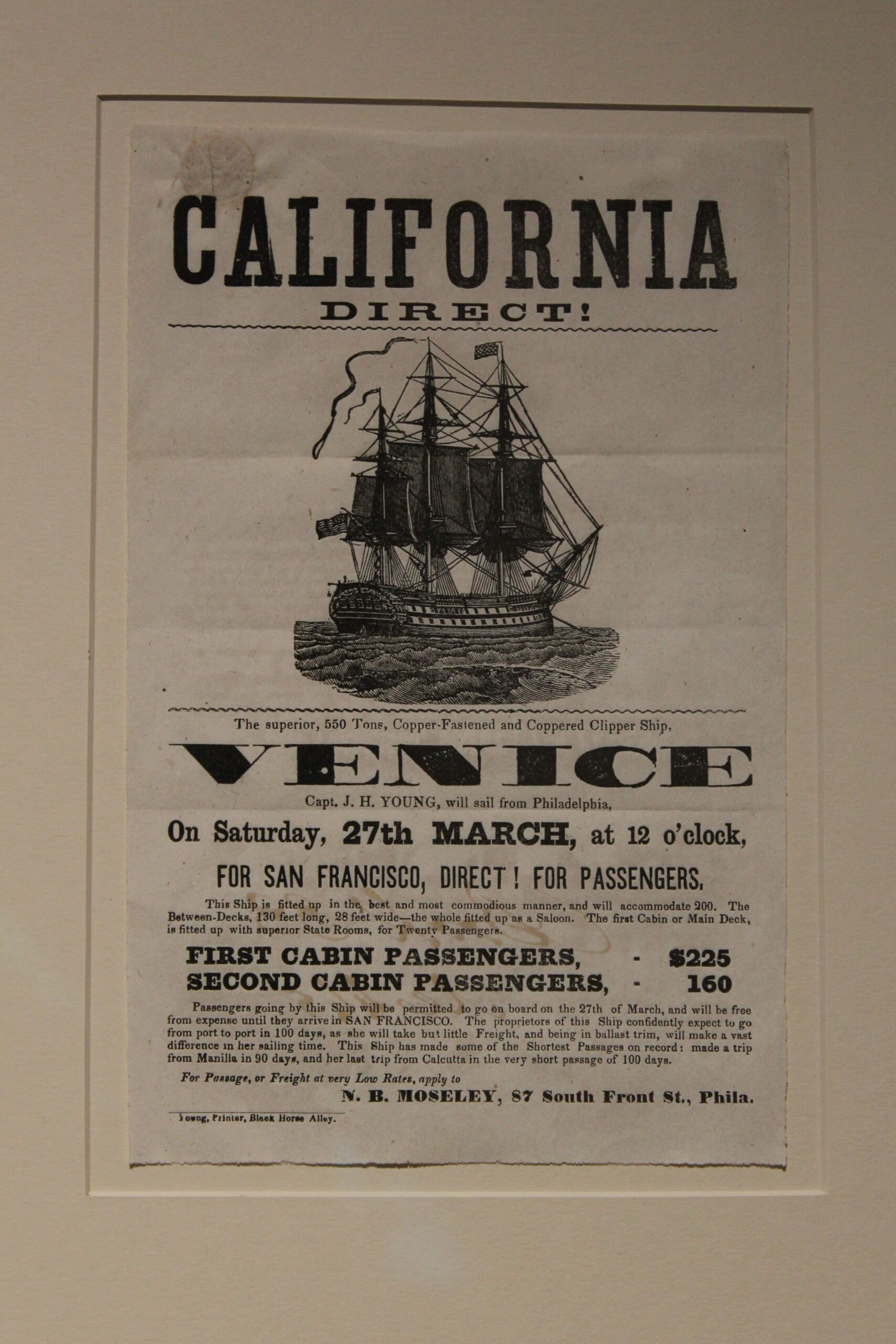
His museum has items as small as a thimble and as big as a submarine and the cruiser Olympia. Keeping textiles safe from moths and documents from crumbling requires proper conditions, including acid-free boxes.
Broadside advertising for Philadelphians to go to California in 1848. Handout: Independence Seaport Museum.
For less-fragile items, life can go places.
Museums often loan storage items to one another. Penn Museum, for example, recently loaned part of its collection to the Zayed National Museum in Abu Dhabi.
This doesn’t mean Philadelphians have lost the chance of seeing those items.Philly museums have benefited from getting items from other institutions — such as the lunar module, which the Smithsonian lent to the Franklin Institute for 49 years. These days, however, lending contracts are much shorter, typically a year or two, Hortz Stanton said.
“Collections are not storage; they are a living resource,” said Paul Callomon, the Academy of Natural Science malacology collections manager.
He views the 21 million items in the academy’s collection as an active resource to scientists all over the world. His department, in particular, has the third-largest shell collection in the world, he said, as well as a variety of fish, plants, and microscopic algae that are not usually available to everyday visitors.
Ornithology collection manager Jason Weckstein sees the non-exhibited items being put to use daily.
”We make study skins, so we actually skin the bird, and we retain the skin and dissect the body,” he said. “We take tissue samples and take data on the internal organs of the body.”
Conservation matters
For years, Penn Museum had two large 14th-century Buddhist murals on display in its rotunda space, but construction forced them to be pulled down for their protection. What began as a precaution turned into a multiyear mural conservation project.
“Over time, things may crack or materials may weaken; our conservationists are able to stabilize this object so they can be stored safely or eventually reinstalled,” Hortz Stanton said.
The conservation process involves documenting the condition of the items, looking at what it needs for long-term care, cleaning, and taking measures to stabilize an object, said Skic.
How to access things in storage
The Academy of Natural Sciences and Penn Museum have many of their items cataloged in an online database. Researchers and students anywhere can request to see materials.
For Hortz Stanton, this conserves resources and protects fragile items.
”We are just one short part of the history of the things we are taking care of, a blip in time,” Hortz Stanton said. “The hope is that these objects are preserved for future generations.”
To make the items more available to the public, the academy holds a members’ night once a year. Animals, field books, photographs, and experimental projects not normally on exhibit become available for a night of knowledge.
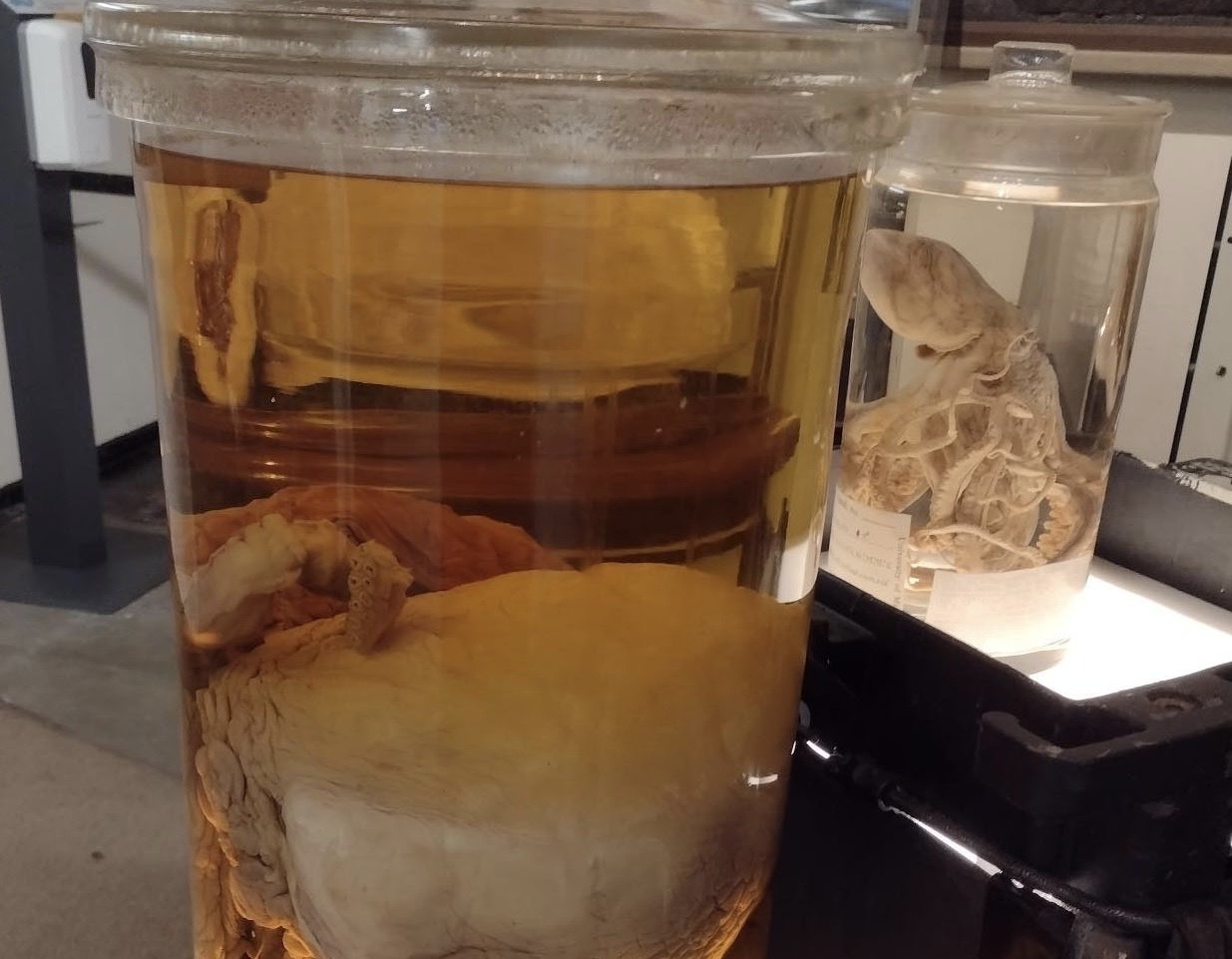
Octopus not normally exhibited at the Academy of Natural Science. People can see it during members’ night.
Not a member? Callomon said anyone can tour the collection if they make arrangements.
“Bird clubs come for behind-the-scenes tours, and artists actually use our collection for bird field guides to study specimens,” Weckstein added.
The Museum of the American Revolution is also a bit more flexible with its collection, even granting access to descendants of Revolutionary War soldiers and people working on historical projects, Skic said.
“These items are tangible connections to America’s founding era,” Skic said. “They serve as a way to learn about those events and make sure people know these are real people, real events, and that those events continue to shape our lives today.”
The nonpartisan Economy League of Greater Philadelphia issued an immigration analysis this week that on the surface might look like a boatload of numbers, but in fact offers fresh insight and a warning about the future.
The organization looked at immigration not just as the coming and going of people but also as a key part of the city’s economic infrastructure.
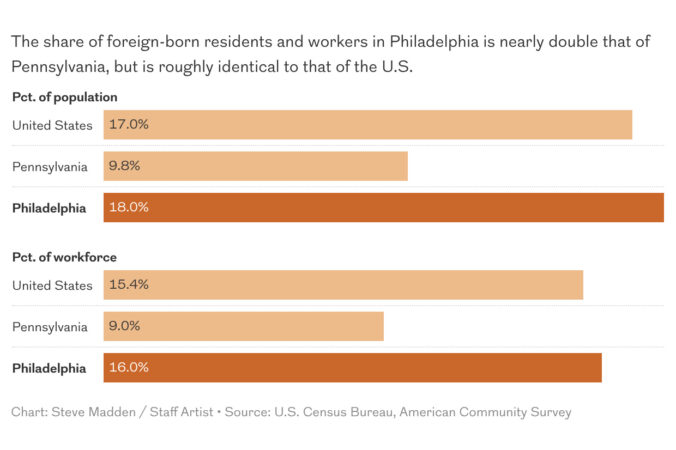
Immigrants comprise nearly one in five workers and contribute $7.4 billion in consumer spending, filling critical roles in everything from research labs to restaurant kitchens.
Still, the analysis said, without ever mentioning President Donald Trump by name, “the federal policy pressures continue to mount,” and that puts some local gains at risk.
How crucial are immigrants to the city’s population growth?
“It is the only reason we’ve grown,” said league executive director Jeff Hornstein. “It’s the only reason we don’t have population decline.”
The analysis said that without foreign-born residents, Philadelphia would be shrinking.
As of 2024, immigrants comprised 16% of the city population, about 251,000 residents, the primary engine of net population growth since 2000. The arrival of newcomers has been enough to offset the loss in native-born residents, which dropped by about 59,700 between 2010 and 2020.
“Philadelphia’s 21st-century demographic stabilization,” the analysis said, “is an immigration story.”
window.addEventListener(“message”,function(a){if(void 0!==a.data[“datawrapper-height”]){var e=document.querySelectorAll(“iframe”);for(var t in a.data[“datawrapper-height”])for(var r,i=0;r=e[i];i++)if(r.contentWindow===a.source){var d=a.data[“datawrapper-height”][t]+”px”;r.style.height=d}}});
How much do immigrants contribute?
A lot. In Philadelphia, immigrants comprised nearly 20% of the workforce in 2024. That’s double the rate of Pennsylvania as a whole, where immigrants were 9% of the workforce. The city’s institutional anchors — its universities and hospitals — as well as established ethnic communities, serve as draws.
That year the city’s foreign-born residents, both documented and undocumented, spent an estimated $7.4 billion on goods and services and paid $2.3 billion in taxes ― including federal income taxes, payroll taxes, state income taxes, sales taxes, and property taxes.
Do some industries depend on immigrants more than others?
Yes. Local healthcare services rely not just on doctors, the analysis showed, but also on immigrants across different jobs and skill levels. About 26% of all Pennsylvania physicians are foreign-born, and nationally the same is true for nearly 40% of nursing aides and home health aides.
In the Philadelphia region, foreign students earn 40% of doctoral degrees, the report said, and research institutions depend heavily on that talent. Traditionally these students transition from F-1 visas, to Optional Practical Training, then compete for H-1B visas that enable long-term employment.
That’s where things have gotten rough for immigrants, as in December the Trump administration halted processing for several groups of people and categories of applications, including those for anyone from any of the 19 countries covered in the spring travel ban.
The administration has also raised the possibility of reopening cases that were already approved by the government.
The city’s hospitality and restaurant trades also depend on foreign-born workers. Immigrants make up 25% to 30% of restaurant workers and 30% to 35% of hotel staff. At some restaurants the foreign-born staff can exceed 40%.
Don’t many immigrants opt to work for themselves, starting their own businesses?
In Philadelphia, foreign-born entrepreneurs own roughly 30% of small businesses ― nearly twice their representation in the population. Those 47,800 businesses include everything from corner stores to tech startups.
So what’s the bad news?
It’s more like a warning. At 16%, Philadelphia’s foreign-born population exceeds the national average, which hovers around 13%. But traditional gateway cities like New York, Houston, Miami, and San Francisco maintain foreign-born populations as high as 35%.
Philadelphia, the analysis said, is “no longer an immigration laggard,” but it’s not yet competing with top-tier global cities for international talent.
Moreover, without sustained immigration, Philadelphia faces the prospect of renewed population decline. Native-born residents are aging, fertility remains below replacement levels, and U.S. domestic migration favors metro areas in the Sunbelt.
“Immigration provides the only plausible mechanism for population stability,” the study said, but federal policies that reduce legal immigration, slow visa processing, and intensify enforcement risk causing the opposite.
The question isn’t whether Philadelphia needs immigration ― the demographic math makes that undeniable, the study said. The question is whether policymakers will embrace supportive policies and investments.
“Given the stakes,” it said, “getting immigration policy right isn’t optional ― it’s existential.”
Think you know your news? There’s only one way to find out. Welcome back to our weekly News Quiz — a quick way to see if your reading habits are sinking in and to put your local news knowledge to the test.
Question 1 of 10
The city got its biggest snowfall in a decade during a storm that officially dumped this much powder at Philadelphia International Airport Sunday into Monday:
CorrectIncorrect. XX% of other readers got this question right.
Although the 14 inches measured officially at Philadelphia International Airport dwarfed the 9.3 inches of snow and sleet that accumulated in January’s storm, fears that the snowfall would reach what the National Weather Service called “potentially historic” levels didn’t quite materialize.
Question 2 of 10
According to recently released U.S. Census Bureau data, which county in the Philadelphia area was home to six of the 10 wealthiest towns in the region for the five-year period that ended in 2024?
CorrectIncorrect. XX% of other readers got this question right.
Chester County towns held six of the top 10 spots, including the top four — Pocopson Township, West Pikeland, Birmingham, and Easttown. Pocopson, in fact, is in a rarified zone for wealth, with an annual median household income of $230,000.
story continues after advertisement
Question 3 of 10
When Team USA beat out Canada for the men's hockey gold medal in the 2026 Winter Olympics, how did they honor late New Jersey native Johnny Gaudreau?
CorrectIncorrect. XX% of other readers got this question right.
Auston Matthews, Matthew Tkachuk, and Zach Werenski carried Gaudreau’s No. 13 jersey as they glided across the ice. And two players, Dylan Larkin and Werenski, scooped up Gaudreau's two oldest kids — Noa and Johnny Jr. — and carried them back out to the ice for a team photo.
Question 4 of 10
Veteran publicans, including Fergus Carey and Jim McNamara, will soon open Monto, a Celtic bar in the former Mac's Tavern in Old City. This Philly restaurateur will oversee the kitchen:
CorrectIncorrect. XX% of other readers got this question right.
Poe, the proprietor of Poe’s Sandwich Joint and Poe’s Side Piece, plans to blend his South Philadelphia sensibility with Irish pub fare — a mashup he calls the “Poe-gues” menu. His existing lineup of cutlet sandwiches, cheesesteaks, and burgers will serve as the backbone of Monto's food offerings.
Question 5 of 10
Why did Saladine Sharad, a 34-year-old handyman from North Philly, recently go viral?
CorrectIncorrect. XX% of other readers got this question right.
Sharad remembers one driver shouting at him “out of concern” as he rode his scooter. He let them know he was OK with a nod, and they drove off. But unbeknownst to Sharad, the driver had filmed him and uploaded the video to Instagram. “WHO MANS IS THIS??? Only in Philly. [an] electric scooter seen driving on Lincoln Drive,” the caption read.
Subscribe to The Philadelphia Inquirer
Our reporting is directly supported by reader subscriptions. If you want more journalism like this story, please subscribe today.
A Gettysburg theme park is closing and everything must go — including this type of animal, of which 30 will be available for auction:
CorrectIncorrect. XX% of other readers got this question right.
Sparkle, Pumpernickel, Russel’s Majestic Princess Gingerbread, Summer Wish, Shortcake and the other miniature horses will head for greener pastures at the Saturday morning auction, which will mark the end of the 55-year-old Land of Little Horses. Cameo, an 11-year-old chocolate mare with a bald face is expected to be the most popular and collect the highest bid.
Question 7 of 10
From national champions to top-50 contenders, a tight-knit club in Delco has quietly built one of America’s most competitive scenes to meet up and play this game on a weekly basis:
CorrectIncorrect. XX% of other readers got this question right.
The Delco Scrabble Club is a weekly gathering with some of the best players out there. Soon, it’ll draw national attention when two of the club’s members compete on CW’s Scrabble game show, hosted by comedian and former late-night show host Craig Ferguson.
Question 8 of 10
This Doylestown native has been nominated for the Rock and Roll Hall of Fame:
CorrectIncorrect. XX% of other readers got this question right.
The city’s biggest pop star, Pink, is among the 17 nominees in the running to be inducted later this year. Along with the Doylestown-born “Get the Party Started” singer, the list of potential inductees includes another artist with Philly ties in Lauryn Hill.
Question 9 of 10
Tired Hands Brewing’s Ardmore brewpub location is limbo as its owner navigates the future of the beer company. For now, it’s serving as this:
CorrectIncorrect. XX% of other readers got this question right.
While the Ardmore Fermenteria location remains open, the brewpub has pivoted to a private event space. The owner said the decision to shift to private events was born out of a number of factors: having two Tired Hands locations in Ardmore was confusing for customers; ongoing construction in Ardmore created a “prohibitive environment” for doing business; and the changing landscape of brewing has prompted Tired Hands to begin reimagining parts of its business model.
Question 10 of 10
Kylie Kelce attended the Winter Olympics for work, but Jason Kelce was just along for the ride, enjoying his time as a spectator. A CBS tweet identifying the couple as “Kylie Kelce and her husband” went viral. Jason said he had no problem with it, but would’ve preferred if they referred to him as this instead:
CorrectIncorrect. XX% of other readers got this question right.
“I really was just there to have fun and enjoy the Olympics,” Kelce said on the latest episode of New Heights. “So, I was 100% — [her husband] was the correct way to say it. I wanted to tell them I prefer ‘ball and chain.’”
Your Results
You have skipped .
You scored XX out of 10.
The average reader scored XX out of 10
Seems like you’ve been skimming more than reading there, buddy. There’s always next week.
You’ve read some articles (or made some educated guesses) but we wouldn’t come to you first for our local news recaps. Better luck next week!
Do you work here? You’re a local news stan with the latest updates on Philly happenings. Your friends definitely ask you for summaries on what’s going on and it shows.
State Rep. Steven Malagari (D., Montgomery) plans to introduce a bill that could put THC drinks in beer stores, while State Sen. Dan Laughlin (R., Erie), a major proponent of weed legalization — unlike his party’s leaders — is working on legislation that would open the door to hemp-derived THC being regulated like medical marijuana. Pennsylvania hemp businesses look toward these efforts with optimism, but as the clock races down, stakeholders are asking for urgency.
Representatives from the hemp, medical marijuana, and beer wholesaler industries spoke to state regulators at January’s Pennsylvania Farm Show about shielding the hemp industry from the Nov. 12 deadline that would outlaw all intoxicating hemp products, including Delta-9 THC and CBD, which is what the majority of hemp is grown for in Pennsylvania. Under new rules, many of the state’s hemp farmers would be out of business by fall.
Across all competing interests, industry representatives said one thing was clear: Lawmakers need to regulate the billion-dollar state hemp market.
Testifying before the Center for Rural Pennsylvania, stakeholders, including Montgomery County District Attorney Kevin Steele, agreed, stressing the need for safeguards.
“It’s not about taking away people’s livelihoods in hemp farming and people working in this industry,” Steele said during his testimony. “It’s about community safety and establishing guardrails through legislation to oversee that safety.”
But, as Congress disagrees on when and if it will regulate hemp-derived THC — including if the ban deadline should be extended — those delays cascade to the states, where local lawmakers await federal guidance before regulating it themselves. While any state proposals for regulation are purely speculative until Congress passes hemp legislation, Laughlin’s and Malagari’s efforts in Pennsylvania imagine what is possible.
It is important to note, however, that regulating intoxicating hemp products is an uphill battle in a state where recreational marijuana legalization is opposed by Republican state leadership.
Whether these bills become law or save the state’s hemp industry as it currently stands is up in the airwith federal delays, but local hemp businesses choose to be optimistic.
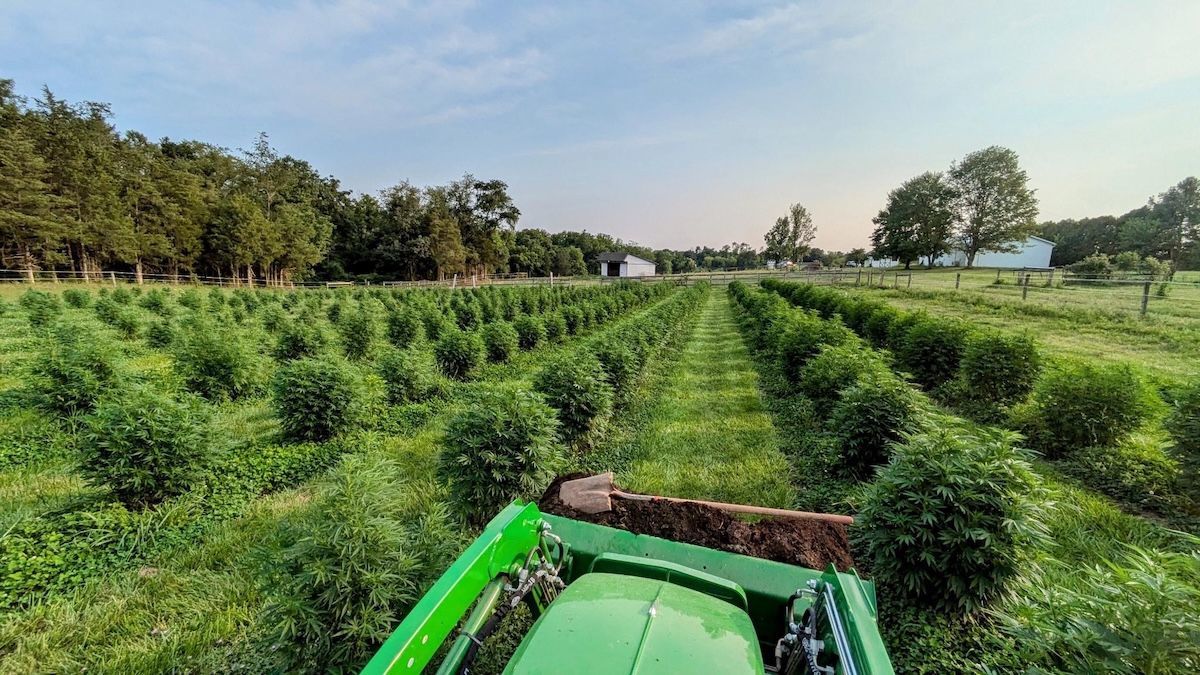
A view of Tyler Shannon’s Adams County hemp farm. Unless regulations change, he will have to shut down his hemp farm by next year.
What does any of this mean for Pennsylvania hemp?
For Tyler Shannon, an Adams County hemp farmer, a full ban on hemp products would be devastating. With the vast majority of Pennsylvania’s hemp grown for cannabinoids, such as Delta-9 THC and CBD, it means that “if hemp is not saved, my family will lose everything, including our farm,” Shannon said.
Shannon is not alone. Beau Whitney, a leading cannabis market analyst who testified at the January hearing, estimated that Pennsylvania’s cannabinoid market generates just under $1 billion in revenue annually. In his latest report, he found that the majority of Pennsylvania’s hemp-derived THC and CBD products were sold “legally” through semi-regulated channels, in stores or online. “As a result, there were 9,500 jobs, generating $382 million in wages in Pennsylvania,” Whitney said.
Those in the local hemp industry are confident that a deadline extension will help protect them, but planting season is fast approaching, while hemp farmers have no reassurance that their crops will be legal come fall, Shannon said. His family farm is holding off on a planned $175,000 facility expansion due to the looming ban.
As of now, no federal or state legislation has been passed to avert the impending doomsday scenario for hemp, and despite the constant regulatory discussions, small hemp farmers and businesses don’t feel on solid ground, Sebastian Stelmach of Manayunk’s Keystone Dispensary said.
“It’s just scary to think that come November, I might be unemployed and close up shop,” Stelmach said. “A lot of lawmakers realize that we can’t let this industry die. I believe that they’re going to do something, but what that is, I don’t know.”
Trade organizations, like the U.S. Hemp Roundtable, are lobbying Congress to extend the federal ban deadline by one year, giving regulators time to flesh out less restrictive standards for hemp products.
“Even [federal agencies] said they don’t have enough time to enforce the rules under the current bill,” said Jonathan Miller, U.S. Hemp Roundtable’s general counsel. “We’ve created a mess here, and we really need this extension to be more deliberate and responsible.”
In this 2019 file photo, Steve Groff is getting ready to harvest his first crop of hemp plants at his farm in Holtwood, Lancaster County.
Intoxicating hemp regulated like marijuana
Laughlin’s bill to establish a Cannabis Control Board would see the state’s medical marijuana program come under new oversight, similar to the liquor and gaming control boards.
While hemp is not the primary focus of that legislation, organizations like the Pennsylvania Cannabis Coalition (PCC), which represents the state’s medical marijuana industry, hope to see hemp included in Laughlin’s bill to open the doors for more responsive hemp regulation.
“The Cannabis Control Board would have the authority to deal with hemp products and decide what is safe for consumers as a single regulatory body,” said Meredith Buettner, executive director of PCC. Buettner said it makes the most sense for intoxicating hemp products to be regulated alongside cannabis.
Laughlin argues that “if it’s a consumable cannabis product, it should fall under one clear regulatory structure.”
How and where specific hemp THC products would be sold will be worked out in the legislation, but “intoxicating products should be sold through appropriate, regulated channels,” he said.
Jake Sitler, who owns Lancaster-based Endo THC drinks and testified at the January regulatory hearing, is ready to support any regulation that saves the current hemp framework, like incorporating hemp into a control board, but worries small businesses will get cut out of the deal.
“The hemp industry concern is where our seat is at the table and to make sure new laws are appropriate for our farmers and our industry,” Sitler said. “And that any new regulation isn’t used as a guise to out-regulate small business down the road.”
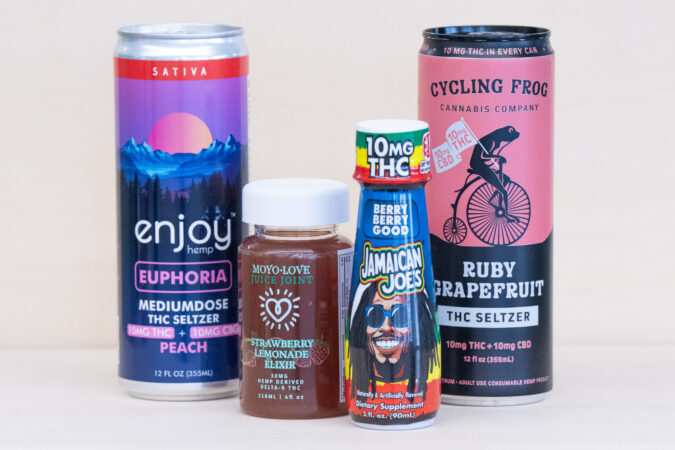
THC and CBD-infused beverages on the shelves of Free Will Collective, an Ardmore smoke shop and wellness store owned by Will Angelos. As Congress moves to ban most intoxicating hemp products, business owners like Angelos aren’t sure they will be able to keep the doors open long past 2027 if current regulations go into effect.
Delta-9 THC drinks in Pennsylvania beer stores
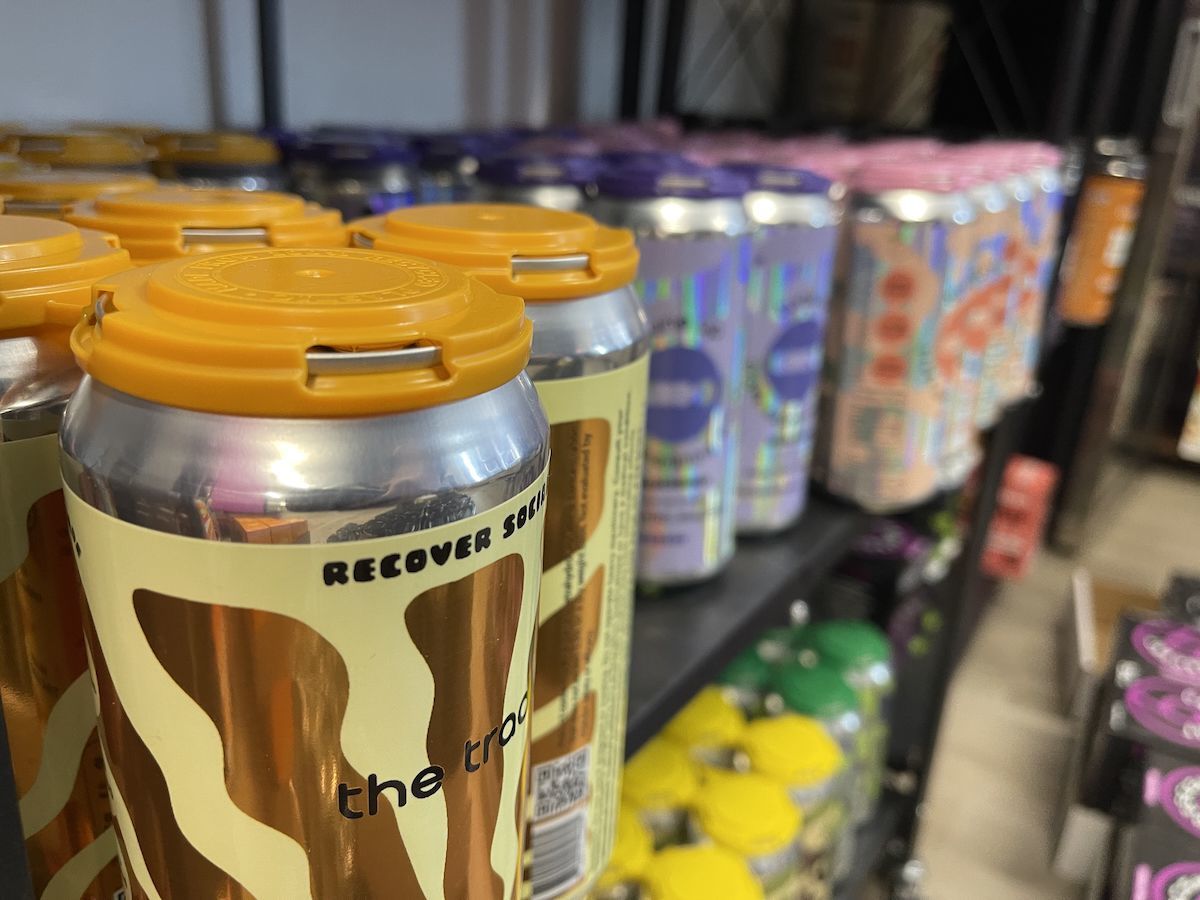
The bill from Malagari would carve out regulation for hemp-derived Delta-9 THC drinks, which are among some of the most popular intoxicating hemp products, with a national market of $1.5 billion in annual sales.
Malagari, who previously worked in beverage wholesale, wants to see THC drinks regulated similarly to beer and malt-beverage products in Pennsylvania.
Pennsylvania operates a three-tiered system for beer, with licenses at the manufacturing level, distribution level, and retail level. THC drinks would be incorporated into this system, which would begin by allowing established three-tiered license holders to manufacture and sell hemp-derived Delta-9 THC drinks.
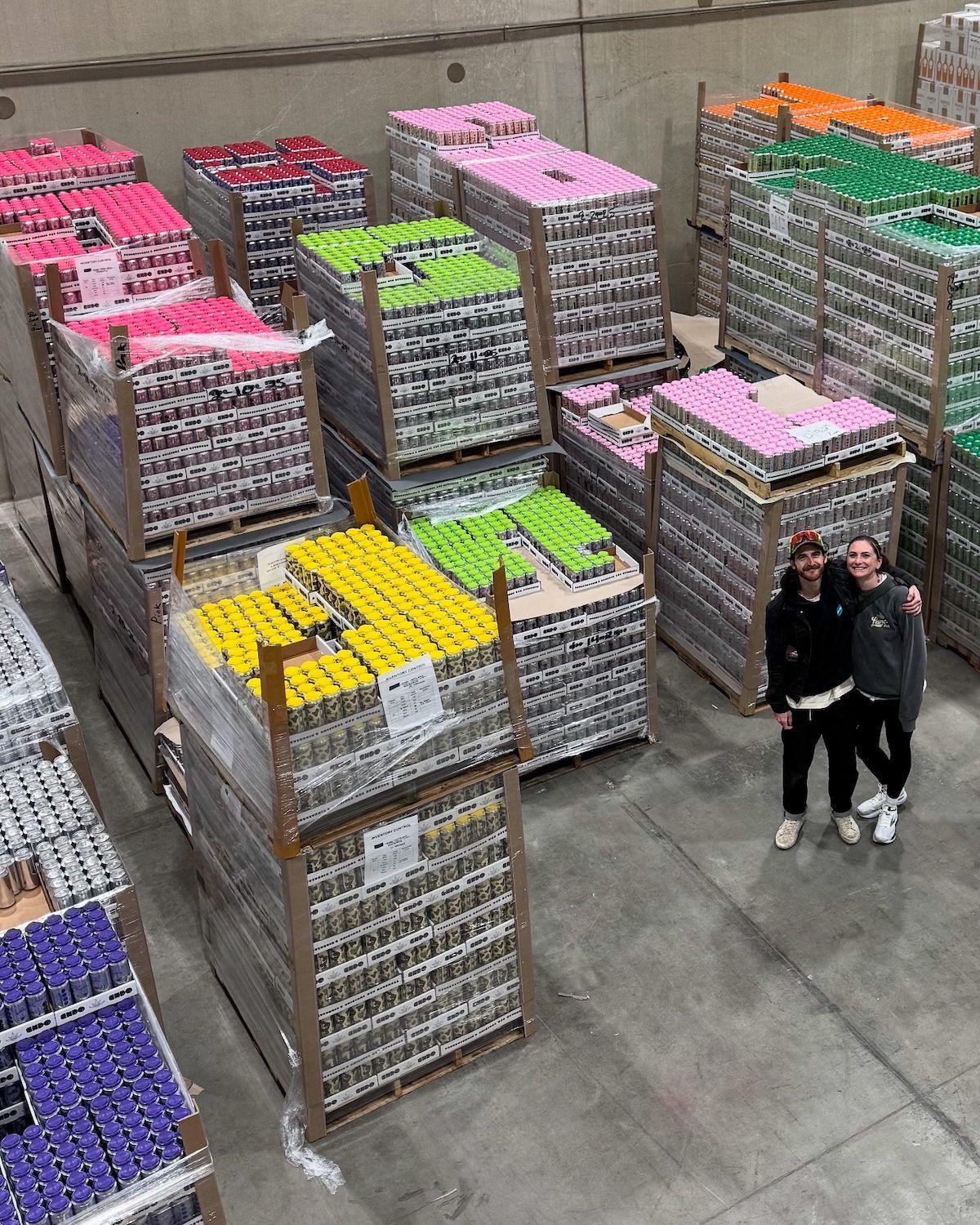
Jake Sitler and his wife, Jamie, standing inside the Endo drinks warehouse. The Lancaster couple founded one of Pennsylvania’s first hemp-derived THC drinks and is grappling with the fact that their business might have to shut down if Congress doesn’t rework its hemp regulations.
Common retail spaces for beer and malt beverages include beer distributors, grocery stores, restaurants, and bars.
This legislation, if passed and signed into law, would not prohibit THC drinks from being sold in medical marijuana dispensaries and could work alongside Laughlin’s CCB bill, Malagari said. But he believes that lawmakers should approach THC beverages differently from hemp-derived flower and vapes.
As an owner of a hemp beverage company, Sitler could benefit from Malagari’s bill, but also wonders if it is too early for beverage carve-outs before a fuller state framework is in place. “A hemp beverage bill with no overarching regulation is putting the cart a bit before the horse,” Sitler said.
NEW YORK — A social media content creator was arrested Thursday after New York City police said he was one of a number of people who pelted officers with snow and ice during a massive snowball fight in Washington Square Park this week.
Gusmane Coulibaly, 27, was charged with obstructing governmental administration, a misdemeanor, and harassment, a non-criminal violation.
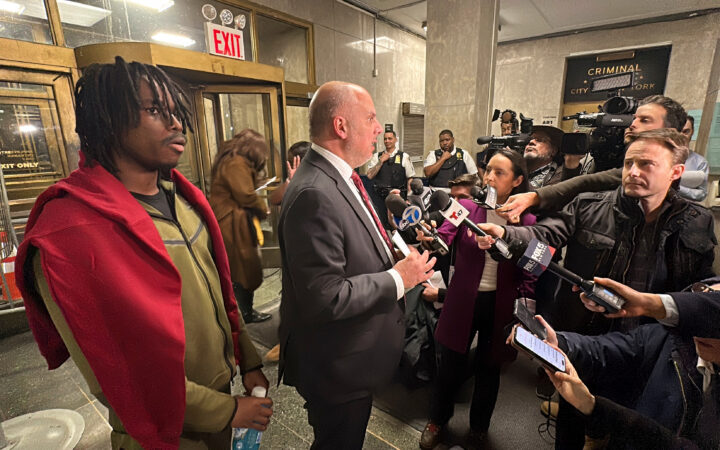
He appeared in handcuffs and wearing an olive-green sweat suit during his arraignment Thursday evening in Manhattan criminal court. He wasn’t asked to enter a plea, and was released, pending his next court date on April 9.
Coulibaly didn’t speak during the brief hearing, which was attended by at least a dozen uniformed police officers and police union officials.
But George Vomvolakis, his attorney, told the judge that the “circumstances surrounding his arrest have been politicized.” He suggested Coulibaly was caught in the middle of a rift between the police department and City Hall.
“I don’t want to minimize what happened to the officers, but I think the police department is using this because of their dislike or disdain for the mayor,” Vomvolakis said. “I think they’re taking it out on Mr. Coulibaly. They want to pick a fight with the mayor.”
Mayor Zohran Mamdani, a Democrat, played down the fracas earlier this week as a “snowball fight that got out of hand” and suggested he did not think criminal charges were warranted.
Monday’s snowball fight, which appeared to be organized by social media content producers, caused a chaotic scene as a large crowd amassed at the popular park to wing snowballs at each other during a winter storm.
Prosecutors said in court that officers arrived at the park after a 911 call about a disorderly group, including people climbing on a roof.
Video from the incident shows a large group of people following police officers, showering them with snowballs and jeering, as they retreat to their vehicles outside the park. Videos also showed officers shoving at least two people to the ground while getting hit from all directions by snowballs.
“The notion that this was a playful snowball fight obviously is not true,” Patrick Hendry, a police union president, told reporters after the proceeding. “This was an attack on the uniform that these police officers wear so proudly every day. They came after these police officers, pelting them with ice, rocks.”
Hendry said he was disappointed prosecutors didn’t charge Coulibaly with assaulting an officer — the felony offense police originally proposed.
“It sends a horrible message to these police officers right here that the mayor is not going to have our backs,” he said, standing alongside other officers. “You’re putting a target on these police officers’ backs.”
Vomvolakis maintained there was no evidence that rocks or ice were packed into the snowballs.
“What I saw in the video didn’t look like an attack,” Vomvolakis said. ”Did it go a little past, you know, jokes and fun? Was it possibly a little disrespectful to the police? Yes.”
Assistant District Attorney Victoria Notaro said video showed Coulibaly throwing a snowball that struck Officer Nicholas Johnson in the face, but prosecutors did not find evidence showing that the officer’s injuries were caused “directly by this defendant’s conduct.”
The officer sustained injuries including redness, tenderness, and pain to his eye, head and neck, Notaro said.
“We will continue to investigate,” she added.
Vomvolakis said Coulibaly is a content creator who makes “elaborate videos” including a recent one in which he approached a stranger in a Bronx subway, acted as if he knew him and said he was owed money.
That interaction got Coulibaly arrested for attempted robbery — a charge that Vomvolakis said he was confident would be dismissed.
Coulibaly has hundreds of thousands of followers across Instagram, TikTok, YouTube, Snapchat, and other social media platforms, where he posts under the moniker Diaper Man.
The city’s police department has released images of three other people it is seeking in connection with the snowball fight. Police Commissioner Jessica Tisch has called the treatment of officers at the fight “disgraceful” and “criminal.”
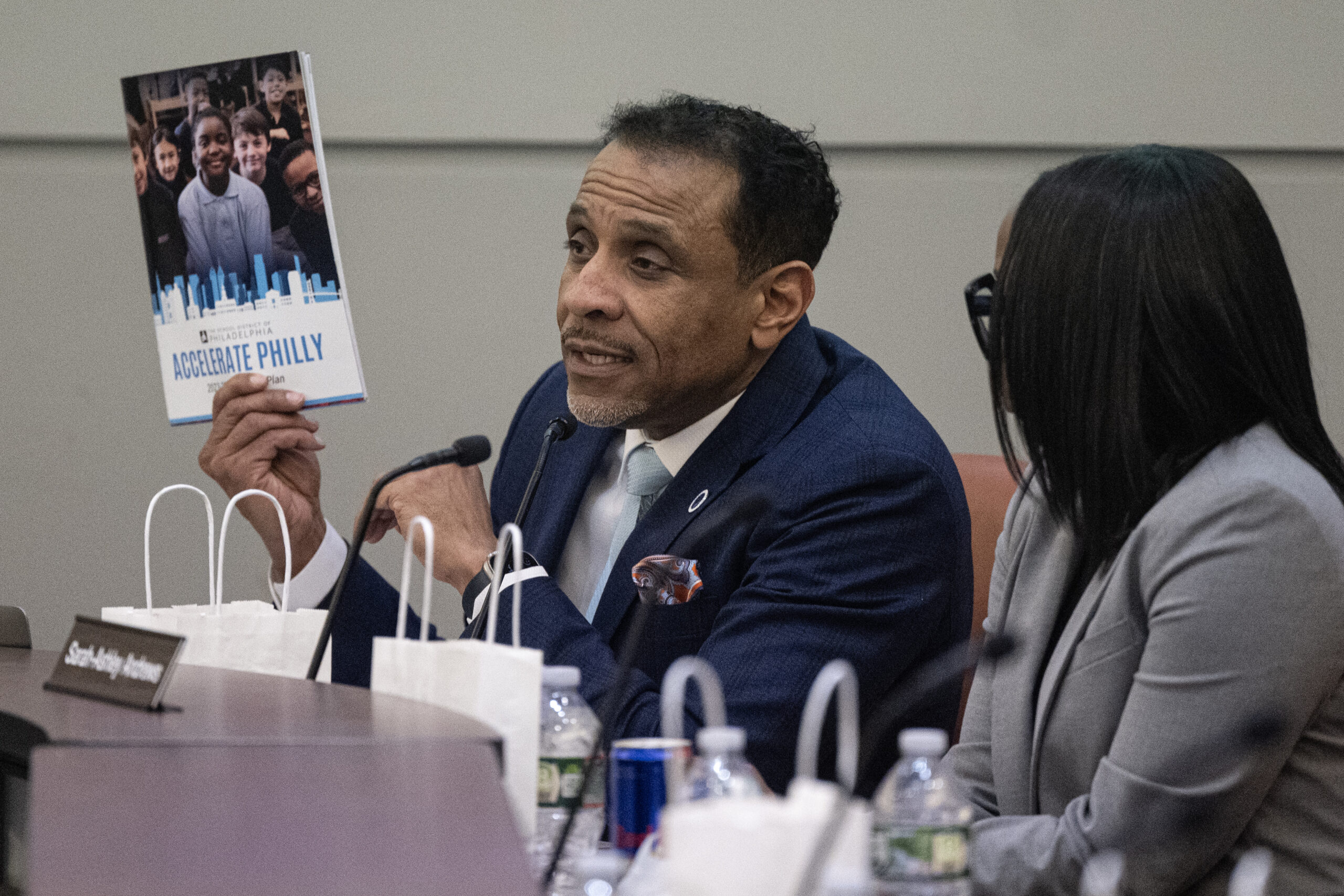
Frustration and anguish spilled over Thursday night as Superintendent Tony B. Watlington Sr. presented his sweeping, $2.8 billion facilities plan to the school board at a heated, lengthy meeting.
Watlington revised the plan to include 18, not 20 school closings — saving Conwell Middle School and Motivation High — and still wants to modernize 159 schools over a decade. He pitched it as a “once-in-a-lifetime” opportunity to drive academic improvement.
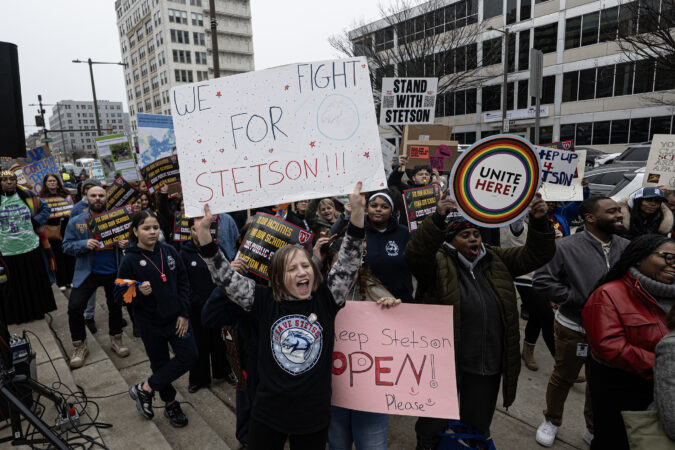
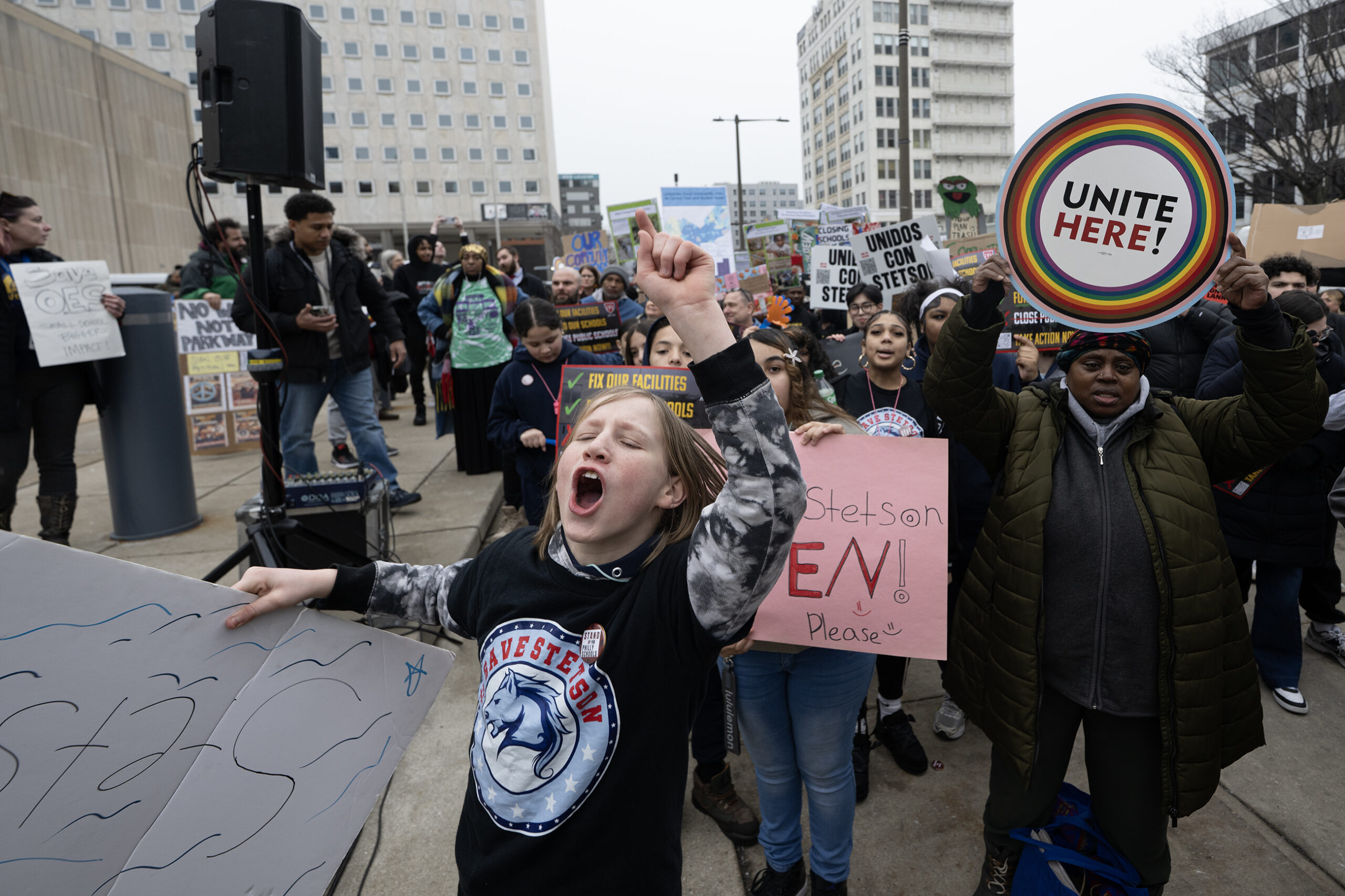
But the community did not seem impressed — at an anti-school-closure rally prior to the meeting, and at the public session itself, which stretched on for more than eight hours, into the early hours of Friday morning.
Tony B. Watlington Sr., superintendent of the School District of Philadelphia, presents his facilities plan during Thursday’s board meeting.
“Dr. Watlington, you’re breaking my heart,” said Amanda Chandler, a teacher at Harding Middle School, one of the schools on the chopping block.
The district’s plan “isn’t an opportunity — it’s calculated abandonment,” said Beth Cole, a teacher at Stetson Middle School, which is also slated to close.
Watlington first unveiled the facilities plan, which was years in the making, in January. After weeks of community meetings, the superintendent formally presented the blueprint — with some tweaks — to the school board Thursday. The board has not yet said when it will vote on the plan, but has scheduled a March 12 town hall to hear more public feedback.
‘Massive upheaval’
The district has 70,000 empty seats in schools citywide. For example: Watlington said he recently watched a recording of a 1969 Overbrook High graduation. The school educated 5,000 students then. Now, it has fewer than 500.
And while some schools are underenrolled, some are overfull, particularly those in the Northeast. Inequities are widespread, also. For instance, only half of city students have access to Algebra 1 in eighth grade, barring them from admission to Masterman, a top city magnet that requires algebra for admission.
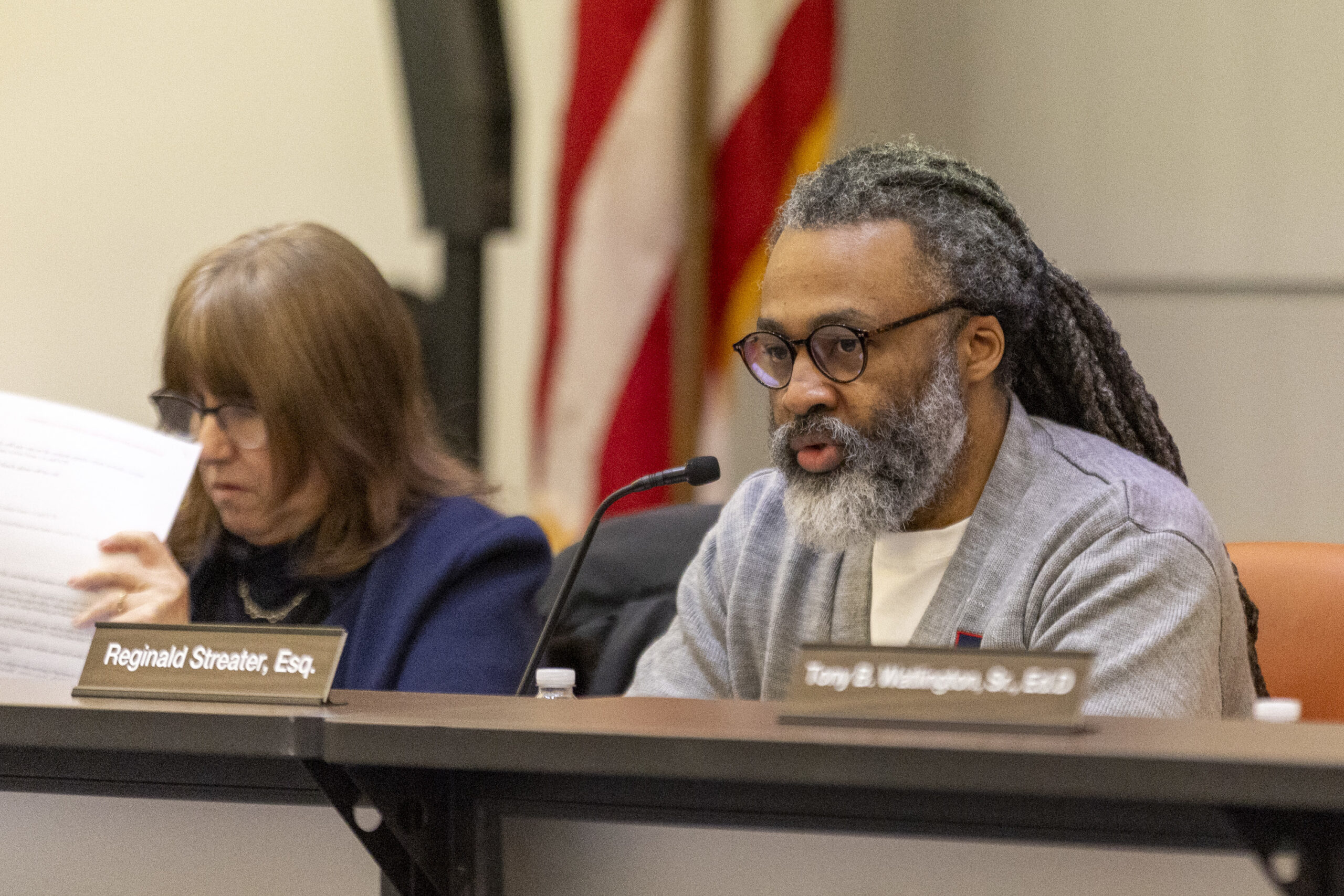
The board must address all those issues, said Reginald Streater, school board president.
School board president Reginald Streater said the board must deal with 70,000 empty seats in city schools.
“We have chronic underfunding, coupled with enrollment shifts that have materially created structural challenges that no district board can simply absorb without consequence to the district,” Streater said. “These realities have materially affected our ability to accelerate our fight against systemic chronic underachievement within the School District of Philadelphia.”
Streater did not weigh in on the details of the plan, but some other board members did, indicating there may be some pushback when it comes time to vote.
Board memberCrystal Cubbage said she wanted a “bolder plan” including more new buildings. (Watlington’s version proposed a single new building in the lower Northeast for the Arts Academy at Benjamin Rush.)
“I’m struggling to reconcile this massive upheaval, and the $2.8 billion price tag, with the fact the plan is not explicitly designed to produce better outcomes for all of our children,” Cubbage said.
Audience members in the packed board room cheered as board member Wanda Novales voiced criticisms of the plan.
Novales said she recognized the complex challenges the board and district face, but “the standard cannot simply be operational efficiency,” Novales said. “I am struggling to see the heart …that sees the lived realities of our neighborhoods.”
Areas like Kensington and Fairhill have long been underresourced, Novales said, and the plan falls short in providing opportunities to students there.
“This conversation cannot just be about buildings. It must be about students,” Novales said.
Joyce Wilkerson, the longest-serving member of the school board, and a member of the School Reform Commission, the board’s predecessor, said the district has known it had to “rightsize” for years.
“We can’t afford to be locked in inaction,” Wilkerson said.
More pushback
Students from the affected schools spoke pointedly about the proposed changes.
Jade Colon, a student at Stetson Middle School, in Kensington, said her school’s roof has leaked for years. It’s never been properly fixed.
“We are told this plan is about equality, yet we see our neighborhood — one that has already faced decades of disinvestment — being asked to sacrifice yet again,” said Colon. “True equality isn’t found in a swing space or a longer walk to a different building across dangerous intersections like Kensington and Allegheny. True equality is found in investing in schools we already have.”
Students rally before a School District of Philadelphia board meeting Thursday outside the district’s headquarters in Philadelphia, as community members protest proposed school closures.
David Samuel, who attends Parkway Northwest, another school on the closing list, said the school is “building strong children.”
Virtually all Parkway Northwest students are on track to graduation.
“Those are lives being moved forward,” Samuel said. “Closing Parkway Northwest wouldn’t be closing a school; it would be closing my home.”
The plan drew pushback from a number of politicians who showed up to voice displeasure to the board.
“I do not have the words to describe how disappointed I am by the district’s proposal today,” City Councilmember Jamie Gauthier said, underscoring concerns about harm to Black and brown students.
Removing Motivation from the closing list is a good step, said Gauthier, who represents a West Philadelphia district. But she wants Watlington to consider removing Robeson, Blankenburg, and Parkway West, too.
The superintendent said the district has done its best to spread opportunity, but he acknowledged the difficulty of the decisions in front of the board.
“In an ideal world, I never believe in closing schools,” Watlington said, a remark met with some groans from the crowd. “I would never want my child’s school to be closed, to be frank.”
While the school district attempted to cancel last Friday’s planned walkout after receiving what officials called a credible threat, some members of the public said school officials could have offered students the opportunity to protest on Quakertown Community High School’scampus, knowing they were likely to walk out anyway.
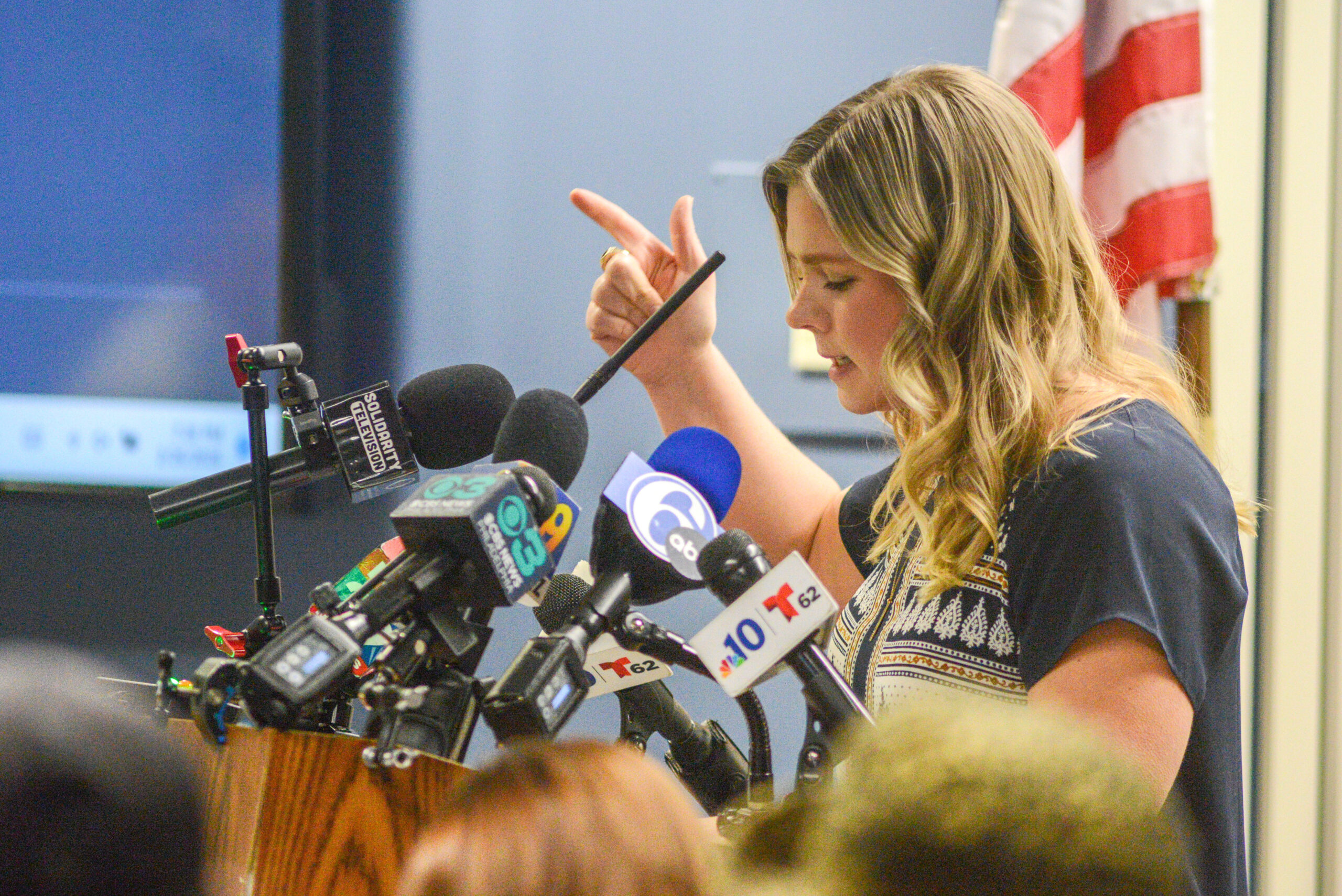
“Instead of guiding them to a safer option, we left them to navigate it on their own,” said Jessica Buhman, a parent of two children in the district who addressed the school board before a packed room Thursday. “The risks were foreseeable and unfortunately they materialized.”
Parent Jessica Buhman speaks to the board at the Quakertown school board meeting Thursday.
Some others faulted the district for allowing students to walk out at all. In the “real world … people don’t walk off their jobs to protest,” said Amalia Ritter. “You walk off the job, you’re fired. You want to protest, you do that on your own time.”
School officials have said they had no authority to stop about 35 students who left the high school Friday, walking off campus.
In town, a confrontation broke out. Video footage appears to show Quakertown’s police chief — dressed in plainclothes — putting a girl in a chokehold.
The five students were charged with aggravated assault, a felony-level crime, and jailed. By Thursday night, all five teenagers had been released.
Lawyers for two of the students denied that their clients hit McElree. Witnesses have said McElree didn’t identify himself as the police chief before engaging with the teenagers.
Anger over district’s handling of protest
Much of the attention in the aftermath of the incident has focused on McElree, but on Thursday, residents voiced their frustrations with the school district.
“How does an administrator …not know these kids were going to do something?” said Wes Comes, who also questioned why the district didn’t hold the protest on its own property. “We missed the whole ball. We whiffed.”
A number of speakers, Comes included, questioned what the threat was that prompted the district to try to cancel the protest — saying there had been a lack of transparency with the community.
Some faulted the district for not making any statement of support for the arrested students, who were in custody for days.
“It seems the school is wiping its hands of the kids who were injured and arrested,” said Lisen Cummings.
Laura Foster, an organizer with the liberal Upper Bucks United group, said the district’s communications were “tone deaf.”
“Thanking the students for staying in school while ignoring your students who were out there getting brutally attacked by the police …everyone on this board should have been like, what are we doing?” Foster said.
The meeting was at times tense, with arguments breaking out as speakers took their turns at the podium to share their perspectives. A Pennsylvania State Police trooper stationed at the meeting defused an argument between two women in the lobby.
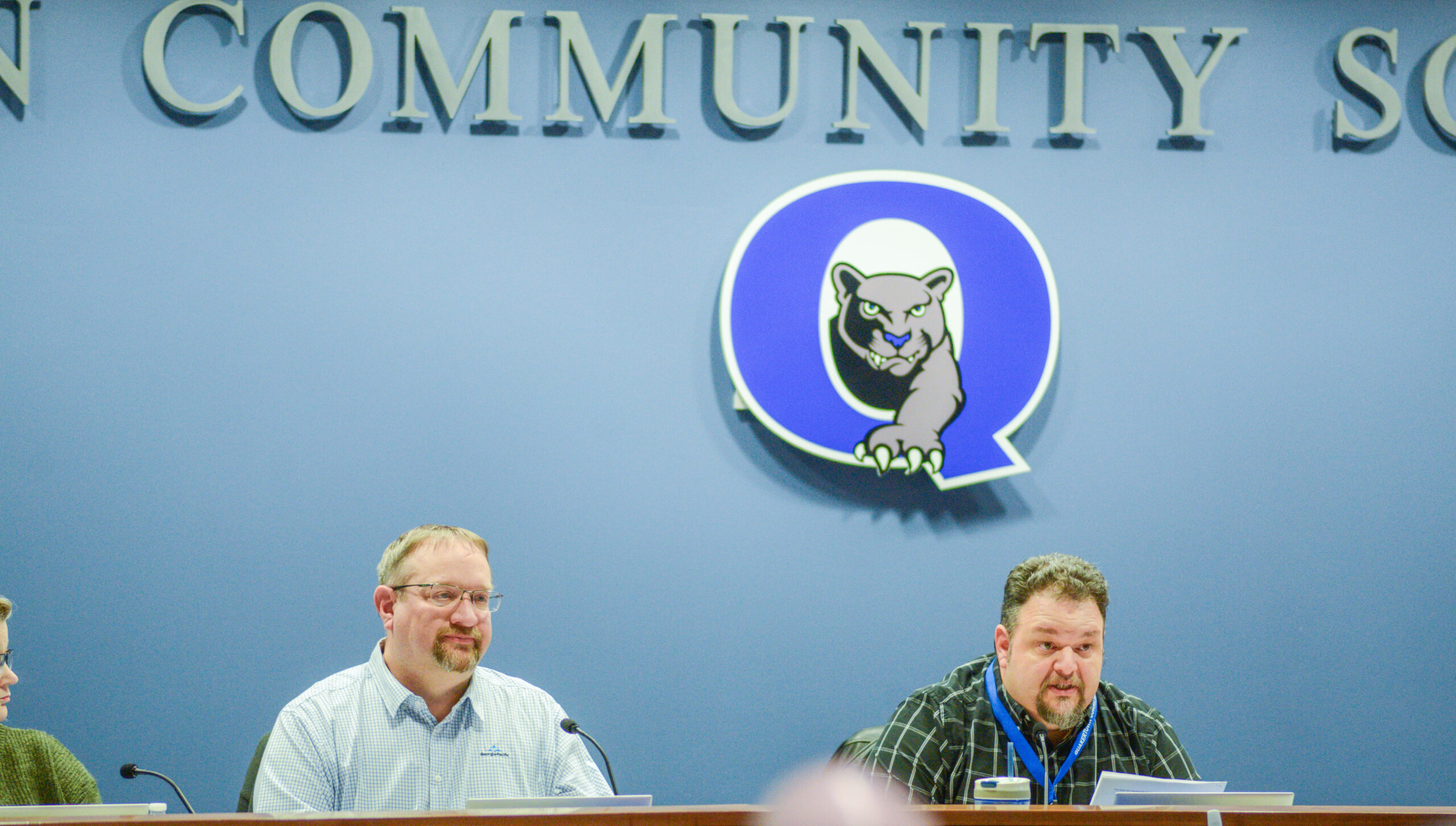
The board’s president, David O’Donnell, told the crowd that “the emotions up here are just as raw as they are out there.”
“No one up here would celebrate violence against children,” O’Donnell said. “I acknowledge that we probably have a lot to learn from how we handled the situation.”
From left, school board member Todd Hippauf and board president David O’Donnell at the Quakertown school board meeting Thursday.
Pre-meeting gathering
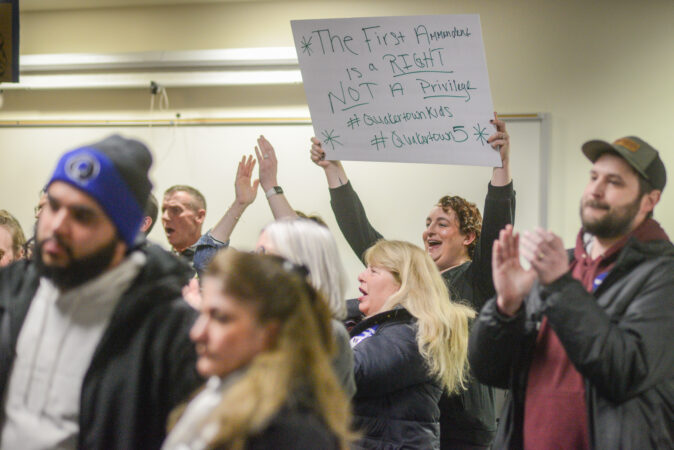
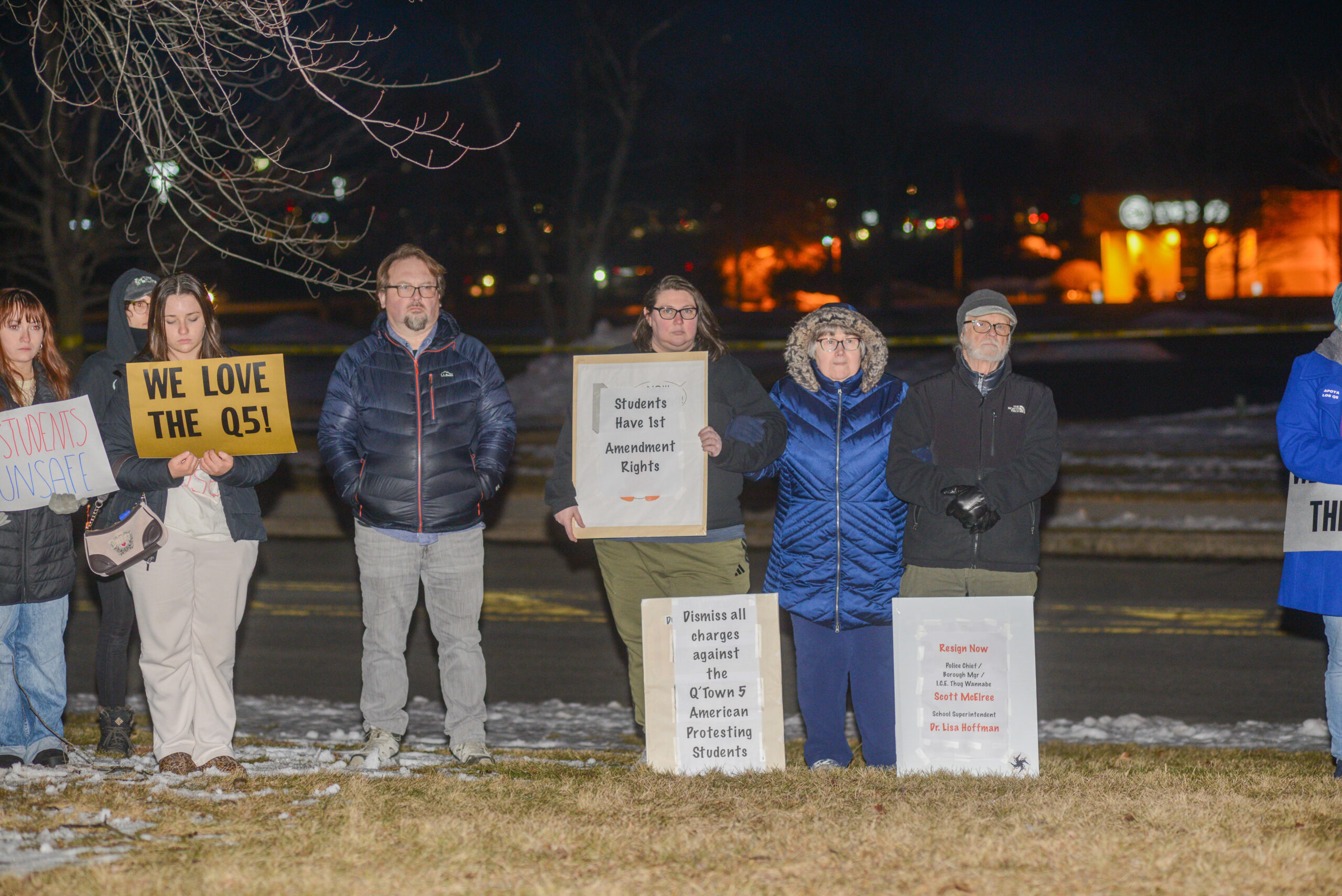
Outside the school before the meeting, a few dozen people attended agathering organized by Upper Bucks United. Stickers reading “support Q5” and “Apoya Los Q5” — referring in English and Spanish to the five teens who spent several nights in jail — were available at folding tables next to a gas burner providing hot chocolate to the protesters.
A parent holds a sign outside the Quakertown School Board Meeting Thursday.
“The First Amendment is a right, not a privilege,” read one of the signs protesters carried.
In the crowd, Wayne Codner — the mayor of neighboring Richlandtown Borough, which is in the Quakertown CommunitySchool District — shook hands with friends in the Democrat-aligned Upper Bucks group.
“I’m a Black, first-generation immigrant from Jamaica in a town that is 95% white — and I’m mayor,” Codner said. “And this doesn’t represent us,” he said of the Friday incident.
Numerous speakers inside the boardroom tied the incident to a broader climate of intolerance and racism in the Quakertown community.
Ashley Crowell, a “single parent and gender queer individual” with kids in the district, told the board that shehad been threatened by men in loud pickup trucks while running in her neighborhood, “because I look offensively masculine” based on her haircut.
Crowell said she believed the escalation during the walkout “was brought about by similar behaviors, also by men in loud trucks — maybe even the same people that made the threats which triggered your decision to cancel the walkout.”
“Our students spoke up …and that resulted in mismanagement of the situation by white men, with ignorance of other people’s lived experiences with discrimination,” Crowell said.
One student grew teary as she spoke about fears that “something would happen to my family” while she was at school, and how “35 students were fighting for my rights.”
After the comments, one board member, Chris Spear, said the board had “heard a lot of accusations of racism” and suggested the district should bring in a consultant, as he said it had in the past.
Spear also noted the criticisms that “this was predictable.”
“As much as the students are going to learn something, the adults are going to learn something as well,” Spear said.
Parents hold signs before the start of the Quakertown School Board Meeting.
Franklin Mall will reopen Friday after being temporarily shut down since a small fire last weekend at the once-popular Northeast Philadelphia retail destination, property management said Thursday.
The mall has been closed since a fire on Saturdaywithin a single tenant space, management said. The city Department of Licenses and Inspections “issued a temporary closure notice while required inspections are completed to ensure building safety and building structural integrity.”
Management said on Thursday that “following this due diligence Franklin Mall has officially been granted permission to reopen” from L&I.
Franklin Mall will be open for normal business hours, but the management requested “patience with the property’s appearance while teams are actively making repairs to the affected areas within the mall while preserving a safe environment for shoppers.”
The Inquirer reported in early December that Franklin Mall, which many locals still call Franklin Mills, was listed for sale and that the 36-year-old, 1.8-million-square-foot facility at Knights and Woodhaven Roads could be repurposed or demolished for non-retail uses.
The mall opened in 1989 to great fanfare as the largest outlet mall ever, with a zigzag-shaped, one-story-tall concourse that stretched for 1.2 miles.
Franklin Mills once attracted 20 million visitors annually, but now the current version of the mall has less than a third of that traffic.
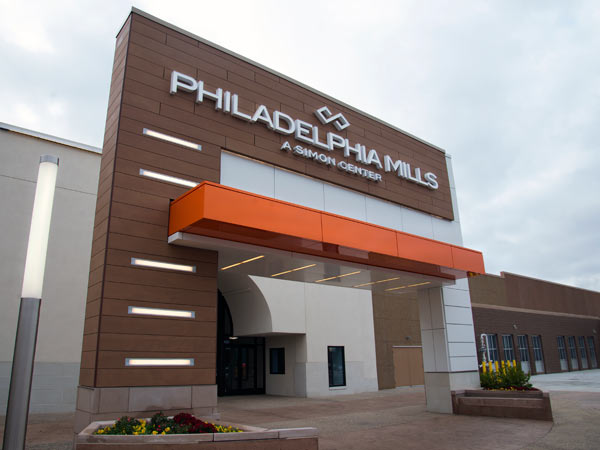
Under new ownership, it was renamed Philadelphia Mills, and most recently it has been called Franklin Mall, though a main entrance sign still says Philadelphia Mills.