Category: Pennsylvania News

  • Sandra Schultz Newman, the first woman elected to the Pa. Supreme Court, has died at 87

    Sandra Schultz Newman, the first woman elected to the Pa. Supreme Court, has died at 87

    Sandra Schultz Newman, 87, of Gladwyne, Montgomery County, the first woman elected to the Pennsylvania Supreme Court, the first female assistant district attorney in Montgomery County, the first woman named to the board of directors of the old Royal Bank of Pennsylvania, longtime private practice attorney, role model, mentor, and colorful “Philadelphia icon,” died Monday, Feb. 2. Her family did not disclose the cause of her death.

    Reared in South Philadelphia and Wynnefield, and a graduate of Drexel, Temple, and Villanova Universities, Justice Newman, a Republican, was elected to the Commonwealth Court of Pennsylvania in November 1993 and to the state Supreme Court in 1995. She won a second 10-year term on the Supreme Court in 2005 but, having to step down in just two years due to a mandatory retirement age, left at the end of 2006.

    “I love the court. I love my colleagues. The collegiality was great, and I’m going to miss that,” Justice Newman told The Inquirer. “But I just felt like I wanted to move on.”

    During her 10-year tenure, Justice Newman was chair of the Supreme Court’s Judicial Council Committee on Judicial Safety and Preparedness and the court’s liaison to Common Pleas Court and Municipal Court in Philadelphia. She ruled on hundreds of issues and wrote opinions about all kinds of landmark cases, from environmental protections to school funding to clergy privilege to the Gary Heidnik and John E. du Pont murder cases.

    She had worked in criminal and family law and handled many divorce and custody cases as a private attorney in the 1980s, and was praised later by court observers for her attention to Philadelphia Family Court matters. Lynn Marks, of Pennsylvanians for Modern Courts, told the Daily News in 2005: “She’s been a wonderful justice, and she’s made herself accessible to the public interest community.”

    In 2025, her colleagues on the Supreme Court named their Philadelphia courtroom after her. “She was a remarkable jurist, public servant, and trailblazer for women, whose work and impact will leave a legacy beyond the bench,” Supreme Court Chief Justice Debra Todd said in a tribute.

    News outlets across the state covered Justice Newman’s election to the Supreme Court as she campaigned in 1995, and she easily collected more votes in the Nov. 7 election than any of the other three candidates, all men. She told the Daily Item in Sunbury, Pa., in September ’95: “I don’t think anyone should be elected solely on their gender. But I don’t think anybody should not be elected because of it, either.”

    Justice Newman touted her collegiality and feminine life experience during the 1995 campaign and told The Inquirer she wanted to be a “role model for everyone in Pennsylvania.” She told the Press Enterprise in Bloomsburg, Pa.: “I think I can bring a sensitivity and understanding on many issues, such as criminal issues like rape. I have a deep sense for the need of a safe society.”
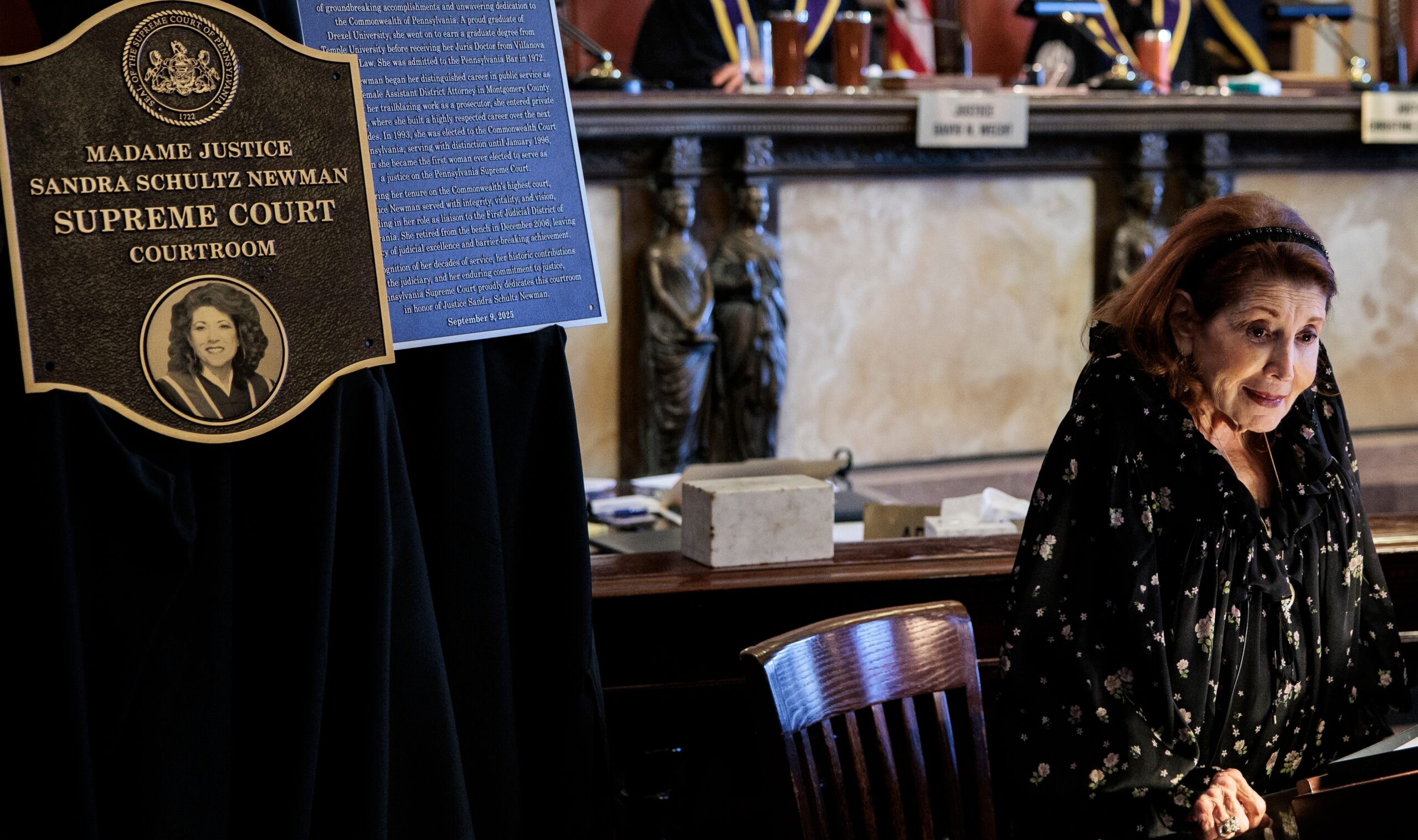
    Justice Newman speaks in 2025 during the ceremony in which the Supreme Court named its Philadelphia courtroom after her.

    After her election, Inquirer staff writer Robert Zausnersaid: “Wealthy yet down-to-earth, Newman talked often during the campaign about her grandchildren and insisted that people ‘call me Sandy’ once she was outside her courtroom.”

    Former Gov. Tom Ridge called Justice Newman a “pioneering legal giant” and said she “inspired generations of legal professionals across the Commonwealth.” Ezra Wohlgelernter, chancellor of the Philadelphia Bar Association, noted her “pathbreaking career” and “valuable service to our city and to the Commonwealth” in a tribute.

    Either “the first” or “the only” in many of her professional pursuits, Justice Newman was called a “Philadelphia icon,” “a force of nature,” and a “beautiful and radiant star” in online tributes. She flirted with running for political office several times and was colorfully profiled in Philadelphia Magazine in 1988. In that story, writer Lisa DePaulo called her “part woman/part tigress.”

    She famously endorsed a controversial cosmetic product on TV in 2006 and attended many galas and charity auctions, and her name appeared in the society and opinion pages nearly as often as the news section. In a 1983 feature, Inquirer writer Mary Walton described Justice Newman as “beautiful … with tousled auburn hair and a slender figure that she liked to cloak in expensive designer clothes.”

    Justice Newman was the only woman on the state Supreme Court in 2002.

    A friend said online she was “irrepressible in an Auntie Mame sort of way.” Another said: “The world has become a little quieter.”

    Justice Newman served as the first female assistant district attorney in Montgomery County from 1972 to 1974 and was an in-demand, high-profile partner at Astor, Weiss & Newman from 1974 to 1993. She returned to private practice in 2006 and handled mostly alternative dispute resolution cases until recently.

    She told the Press Enterprise in 1995 that colleagues in the Montgomery County District Attorney’s Office had adorned her desk with a green plant on her first day in 1972. “It was marijuana from the evidence room,” she said.

    She wrote papers and book chapters about trial practice, death penalty statutes, and the electoral system in Pennsylvania. She spoke about all kinds of legal topics at seminars, conferences, and other events.
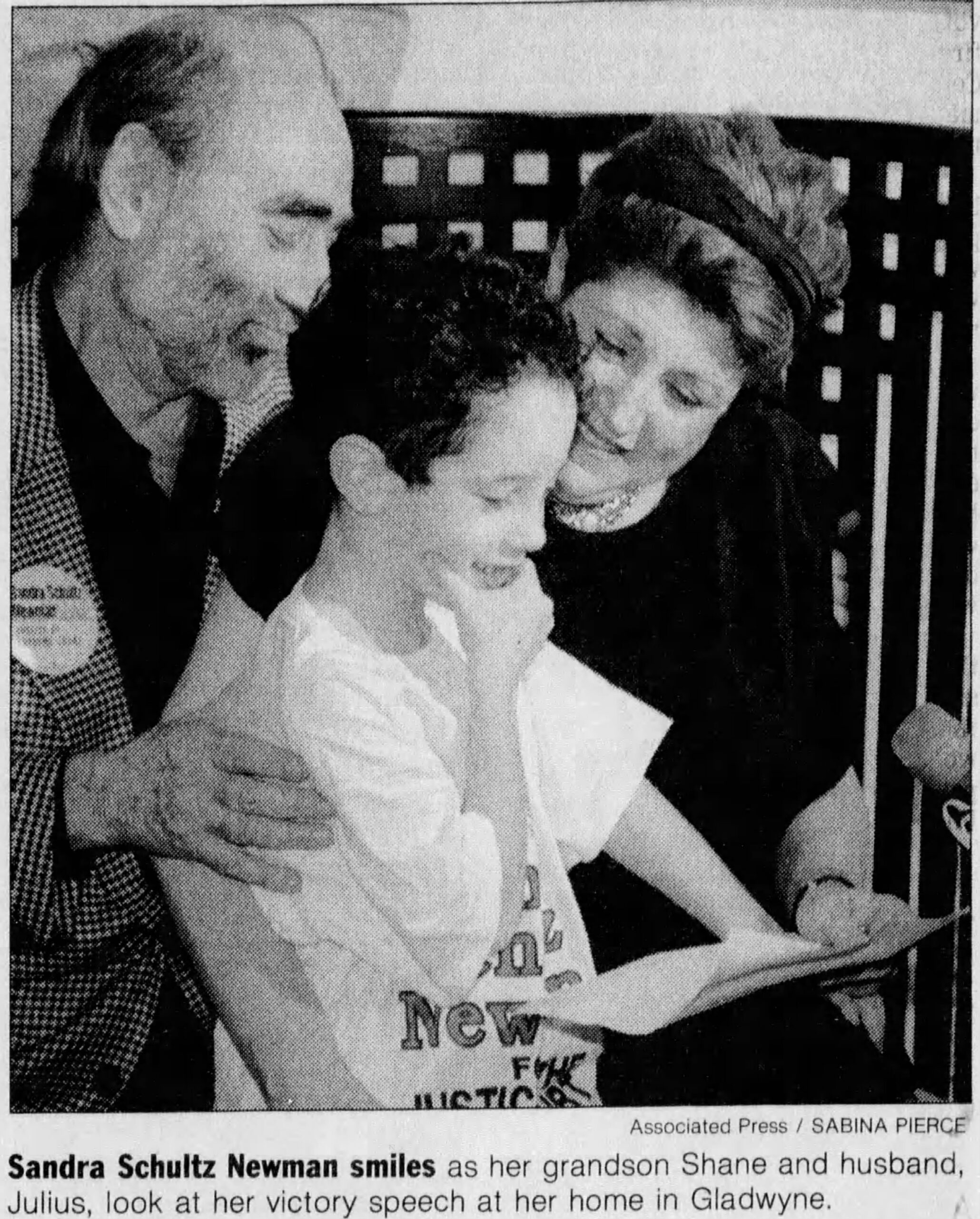
    This photo of Justice Newman, her husband, Julius, and grandson Shane was taken for The Inquirer after she won on Election Day in 1995.

    She cofounded what is now the Drexel University Thomas R. Kline School of Law in 2006, was a trustee for Drexel’s College of Medicine, and received dozens of service and achievement awards from Drexel, Villanova, the Pennsylvania and Philadelphia Bar Associations, the Women’s Bar Association of Western Pennsylvania, the Pennsylvania Association for Justice, and other groups.

    She was the president of boards, chair of many committees, and active with the National Association of Women Justices, the Juvenile Law Center, the American Law Institute, and other organizations. She taught law classes at the Delaware Law School of Widener University in 1984 and ’85, and at Villanova from 1986 to 1993.

    She earned a bachelor’s degree at Drexel in 1959 and a master’s degree in hearing science at Temple in 1969. In 1972, she was one of a handful of women to get a law degree at what is now Villanova’s Charles Widger School of Law. Later, she received four honorary doctorate degrees and was named a Distinguished Daughter of Pennsylvaniaby then-Gov. Ridge in 1996.

    Outside the courtroom, Justice Newman volunteered for charities and legal associations. She was part of a group that tried unsuccessfully to buy the Eagles from then-owner Leonard Tose in 1983, and she was criticized in the early 2000s for her financial involvement in a bungled long-running effort to fund a new Family Court Building in Philadelphia.

    Justice Newman chats with philanthropists and business leaders Raymond G. Perelman (middle) and Joseph Neubauer at the gala opening of the new Barnes Museum in 2018.

    “Justice Newman filled every room she entered with her strength, energy, and exuberance for life and for the law,” Supreme Court Justice P. Kevin Brobson said in a tribute. “She lived with intention and spent her entire career focused on creating and expanding opportunities for future generations of legal professionals, especially women.”

    Sandra Schultz was born Nov. 4, 1938. She graduated from Overbook High School and married cosmetic surgeon Julius Newman in 1959. They had sons Jonathan and David, and lived in Wynnefield, Penn Valley, and Gladwyne.

    Her husband and son David died earlier. She married fellow lawyer Martin Weinberg in 2007, and their union was annulled 11 months later.

    Justice Schultz was a longtime fashionista. She reveled in shopping trips to New York, and DePaulo reported in 1988 that her closet in Gladwyne was 800 square feet. She was also funny, generous, and kind, friends said.
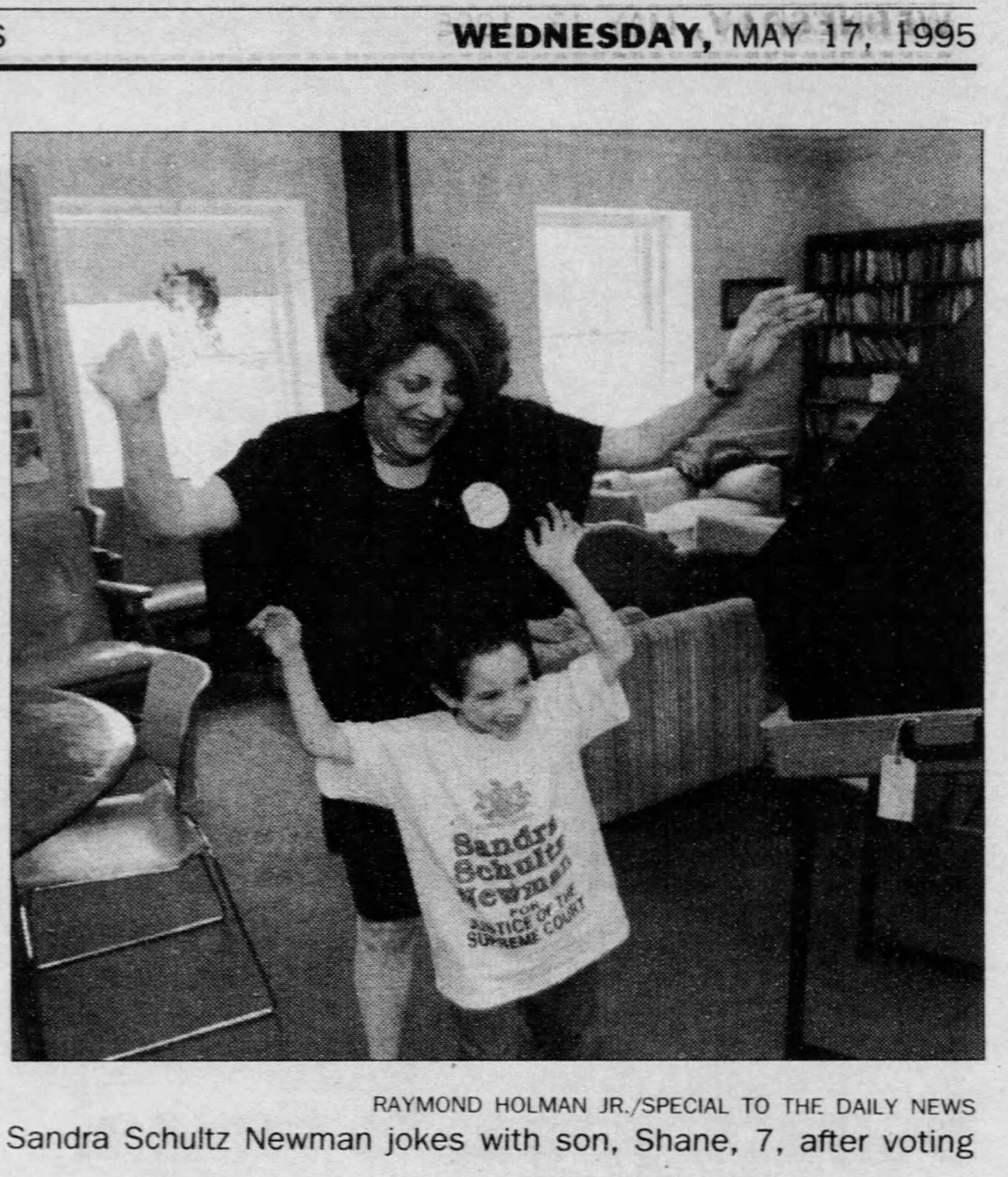
    Justice Newman dances with her grandson on Election Day in 1995. This photo appeared in the Daily News.

    She funded several college scholarships, collected art, owned racehorses, cooked memorable matzo balls, enjoyed giving gifts, and tried to have dinner every night with her family. Sometimes, DePaulo reported, in the 1970s, she took her young sons to her law school classes at Villanova.

    “Despite how busy she was, her family was always her priority,” said her brother, Mark. “She was also a true bipartisan who fought for equal rights and preserving our democratic institutions.”

    In 2003, she was asked by Richard G. Freeman, editor in chief of the Philadelphia Lawyer, to describe her judicial decision-making process. She said: “There are beliefs that you have to put aside. One of the wonderful things about being on our court is that you can make new law where your beliefs fit into the law.”

    In addition to her son Jonathan and brother, Justice Newman is survived by four grandchildren and other relatives. A grandson died earlier.
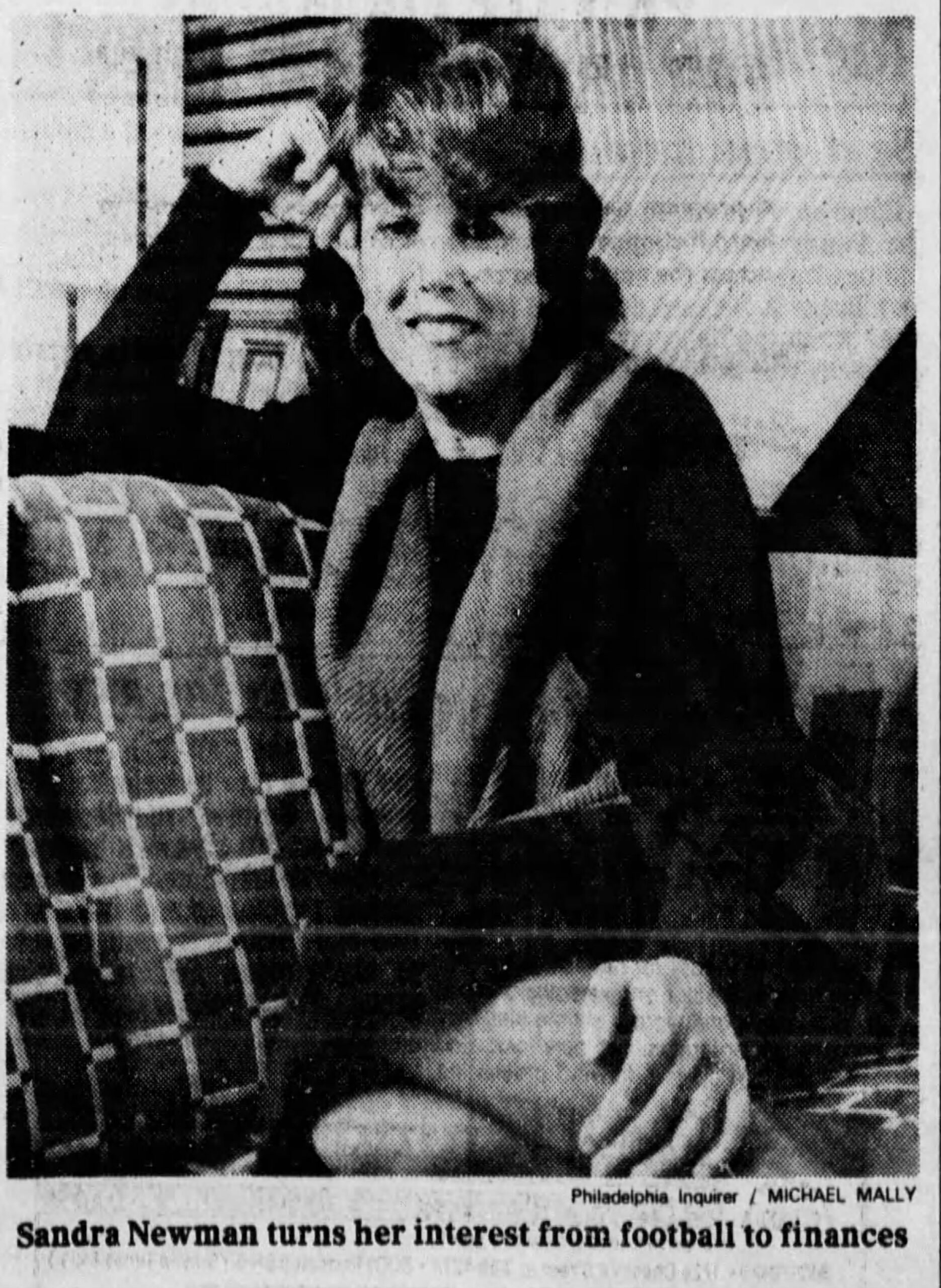
    This photo of Justice Newman appeared in The Inquirer in 1983.

    Services are private.

    Donations in her name may be made to the Crohn’s and Colitis Foundation, 733 Third Ave., Suite 510, New York, N.Y. 10017.

    Correction: One of the communities that Justice Schultz grew up in has been corrected.
  • A Michigan man who set fire to a Bensalem house to target his ex’s new boyfriend is sentenced to 20 to 40 years in prison

    A Michigan man who set fire to a Bensalem house to target his ex’s new boyfriend is sentenced to 20 to 40 years in prison

    A Michigan man who drove across the country to set fire to a Bensalem family’s home in a targeted attack on a romantic rival was sentenced Thursday to 20 to 40 years in prison.

    Harrison Jones, 22, pleaded no contest to six counts of attempted murder and two counts of animal cruelty for the killing of the family’s two dogs, which perished in the blaze. He also pleaded guilty to a slew of related crimes in connection with the February 2025 incident.

    Bucks County prosecutors said Jones drove more than 700 miles from his native Rockford, Mich., that winter to set the blaze at the home of Alex Zalenski, a man Jones’ ex-girlfriend and high school sweetheart had recently begun a long-distance relationship with.

    Zalenski, along with his father, mother, sister, and grandparents, was sleeping when Jones broke in and set off an incendiary device in the living room and kitchen around 5 a.m. Their dogs, Jett and Trey, barked, waking up the family, who all managed to escape.

    Members of the Zalenski family suffered non-life-threatening burns and injuries, though in court they recounted traumatic memories that they said would not soon heal.

    Alex Zalenski’s sister, Ava, recalled being awakened to the sound of yelling and heavy smoke clouding her room, choking her airways.

    “My dad told me to get down to breathe,” she said. “At age 20, I was ready to accept death.”

    The family had just minutes to escape the blaze, which consumed the property and left them without a home.

    Andrew Zalenski, the father of Alex and Ava Zalenski, recalled telling them to crawl on the floor to avoid inhaling smoke.

    He forced them out of a window before going to look for his wife, Stacy, he said, but could not find her and fled.

    It was challenging to describe the feeling of watching your home ablaze “believing your wife is burning to death inside,” he tearfully recounted.

    Stacy Zalenski had been trying, unsuccessfully, to save the dogs. The woman, who is battling breast and lung cancer, ultimately jumped from a second-floor window to survive.

    Andrew Zalenski suffered from severe smoke inhalation and was put in an induced coma in the hospital, he said.

    Meanwhile, Alex Zalenski — the young man whose relationship with Jones’ ex had enraged the Michigan man — said the attack “shredded any normalcy I had.”

    He had to withdraw from college after the incident, he said, and has since had trouble sleeping.

    “It felt as if my entire world had been set ablaze,” he told the court.

    Jones, wearing a yellow prison jumpsuit and shoulder-length hair, showed little emotion during the Zalenski family’s remarks.

    Given the opportunity to speak, however, Jones took full responsibility for the crime.

    “I need to take accountability,” Jones said, his voice breaking. “I’m guilty — I’ve done what I’ve done.”

    Jones’ family, including his father, mother, sister, stepfather, stepmother, and stepbrother, were in the gallery behind him.

    Jones’ attorney, Paul Lang, said Jones had no previous criminal record and had suffered physical abuse growing up. To cope, he had turned to abusing Xanax and marijuana, Lang said.

    Jones, for his part, alluded to being under the influence of drugs during the attack.

    In addition to sentencing Jones to decades in prison, Bucks County Court Judge Matthew D. Weintraub ordered him to pay more than $500,000 in restitution to the Zalenski family.

    Weintraub told the Zalenskis that the trauma of the attack had clearly bonded their family.

    Addressing Jones, the judge said he believed the young man had attempted to “effectuate maximum damage” that day.

  • Swarthmore Public Library closes the chapter on overdue book fees

    Swarthmore Public Library closes the chapter on overdue book fees

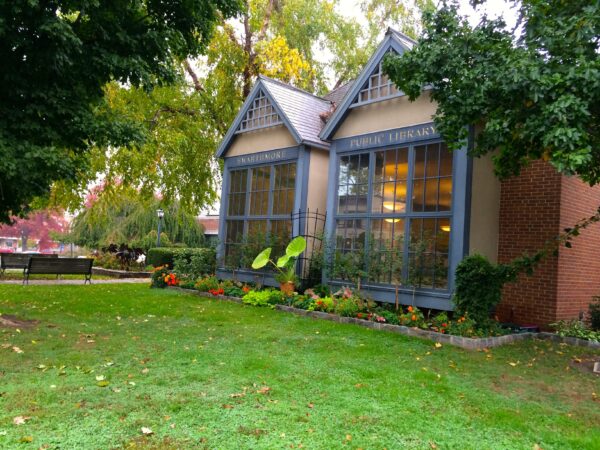
    The Swarthmore Public Library has officially done away with overdue fees, joining a growing contingent of libraries that say the fines do more to drive patrons away than to get them to return their books on time.

    Swarthmore’s library serves residents of Swarthmore and neighboring Rutledge and is a member of the Delaware County Public Library System. A nonprofit, the library is powered by private donations and government funding. It served around 3,100 cardholders in 2024.

    Overdue fines can actually deter library use, all while bringing in marginal financial benefits, said Alec Staley, the library’s director.

    Case studies have shown that library fees ultimately can discourage people from returning books. After the Chicago Public Library dropped fees in 2019, it saw a 240% increase in return of materials within three weeks. During a six-week fine-forgiveness program at the San Francisco Public Library in 2017, nearly 700,000 items were returned (the items returned were valued at $236,000).

    Once late fees start accruing, many people, especially low-income library patrons, will stay away to avoid paying them, forfeiting their library access entirely. Oftentimes, late fees burden the people who need library resources the most.

    Collecting fees has also become taxing for library staff, Staley said. Turning away families because of overdue fees has weighed heavily on Swarthmore’s librarians.

    “We were just punishing [people] for no reason at all,” he said.

    The new policy means any outstanding late fees will be wiped from cardholders’ balances.

    Elizabeth Brown, president of the library’s board of trustees, said fine revenue is “not a meaningful source of our budget.”

    Swarthmore Borough is set to contribute $277,000 to the library this year, up 17% from the year prior.

    Late fees make up only around 1%, or $5,000, of the Swarthmore Public Library’s annual revenue. Library officials believe they can close the gap with fundraising.

    Does this mean people will be able to take the books and run? Not really.

    “We’ll still have a lost-item charge,” Brown said. “This is by no means a free-for-all.”

    Unreturned items will be marked “lost” after three weeks and a fee will be charged. However, fees will be dropped if the “lost” book is returned.

    The Swarthmore Public Library joins a growing group of Philly-area fine-free libraries.

    The Free Library of Philadelphia went fine-free in 2020, a move the library system said would increase equity and bring back 88,000 cardholders who were unable to access library services due to fines.

    In Delaware County, the Upper Darby Township and Sellers Memorial Free Public Library, Newtown Public Library, Media-Upper Providence Free Library, and Ridley Park Public Library are fine-free.

    Ultimately, Staley said, imposing fines runs counter to the heart of what a public library is supposed to be.

    “We champion that we’re one of the last free spaces in the United States,” he said. “But then we have this secret where we’re still charging fines.”

    This suburban content is produced with support from the Leslie Miller and Richard Worley Foundation and The Lenfest Institute for Journalism. Editorial content is created independently of the project donors. Gifts to support The Inquirer’s high-impact journalism can be made at inquirer.com/donate. A list of Lenfest Institute donors can be found at lenfestinstitute.org/supporters.

  • $29M in federal and private funds to go toward Delaware River watershed projects

    $29M in federal and private funds to go toward Delaware River watershed projects

    Federal and private grants totaling nearly $29 million were announced Wednesday for conservation projects within the Delaware River Watershed, including a South Philadelphia wetlands park, a water trail in Camden County, and support of the Lights Out Philly program to keep birds from crashing into buildings.

    The money comes from nearly $12.5 million in grants to the Delaware Watershed Conservation Fund from the National Fish and Wildlife Foundation (NFWF) and the U.S. Fish and Wildlife Service. An additional $17 million comes in matching funds from nonprofits such as the Philadelphia-based William Penn Foundation.

    The total is about $9 million less than last year’s grant awards of $38 million. A representative for the two federal agencies did not state a reason for the decline.

    However, the reduction comes as many federal grants have been cut or reduced by President Donald Trump’s administration.

    What’s being funded?

    In all, the new funds will flow to 30 conservation projects, including local trail creations, stream restorations, shoreline enhancements, and wildlife habitat improvements. The money will go toward planning, hiring for, and construction of projects in Pennsylvania, New Jersey, Delaware, and New York.

    Jeff Trandahl, executive director and CEO of NFWF, said the projects “demonstrate the impact that public-private partnerships can have at a landscape scale and will help ensure a healthier and cleaner future for the Delaware River watershed and the communities and species that depend on it.”

    The watershed is within a densely populated corridor but remains 50% forested. Four hundred miles of it is classified as a National Wild and Scenic River, largely undeveloped but accessible for recreation.

    The grants cover a wide range of projects.

    For example, $498,800 will go toward reducing migratory bird collisions into buildings throughout the Delaware Watershed, which includes Philadelphia and New Jersey. The project of the Wildlife Management Institute, along with Bird Safe Philly, will identify and retrofit buildings to be bird-friendly, inform the public about built-environment hazards, and how to mitigate them.

    Leigh Altadonna, coordinator for Bird Safe Philly, a collaborative of five organizations, welcomed the grant.

    “These funds will reinforce Bird Safe Philly’s continuing work with nature centers, libraries, arboretums and other buildings as part of our mission to mitigate bird collisions with glass,” Altadonna said.

    She said money would go toward educating the public about how to make their homes and communities bird-friendly.

    Bird Safe Philly coordinates with owners of the city’s skyscrapers to turn off or dim lights, which can attract birds during the spring and fall migration seasons.

    A sample of grants with total federal and private funding

    Pennsylvania

    • $650,000 for South Philadelphia Wetlands Park II, a project of the Delaware River Waterfront Corp. The money will go toward completing needed documentation for the park located just south of the base of Tasker Street through Pier 70. The goal is to restore wetland habitat and increase public access to piers and berths, add a kayak launch and a natural pier park, and restore two acres of forested upland, meadow and wetlands.
    • $2 million for stream channel restoration in the south branch of French Creek, a project of the French and Pickering Creeks Conservation Trust. The stream channel and surrounding wetland will be improved as a habitat for brook trout and bog turtle, restore 6.7 acres of riparian buffer, and more than 13 acres of surrounding wetland and flood plain.
    • $900,400 to reintroduce wild brook trout in restored agricultural watersheds in Chester County, a project of the Stroud Water Research Center, which will monitor the re-establishment effort and implement agricultural best management practices to give trout the best chance of recovery.

    New Jersey

    • $3.5 million for horseshoe crab and shorebird habitat at the Kimbles Beach and Bay Cove area in Cape May Court House, a project of the American Littoral Society. The money will go toward restoring one mile of critical habitat along the Delaware Bay, by placing 49,000 tons of sand to stabilize the beach, reverse coastal erosion, and protect the shoreline.
    • $1.2 million for restoration and recreational projects on the Cooper River Water Trail, which is spearheaded by the Upstream Alliance. The money will go toward engaging 3,000 community members through hands-on recreational programming, hiring local youth, and promoting public access on the new trail in Camden County. It will include paddling and fishing programs for the community and create a Friends of the Cooper River Water Trail group.
    • $487,400 for ecological restoration and wildlife habitat improvements at Swede Run Fields in Moorestown, Burlington County, for a project by the township to eradicate invasive species and establish native plant communities within the wetlands, riparian forest, and upland meadow buffers.
  • Why Di Bruno’s downsizing isn’t a huge surprise | Inquirer Lower Merion

    Why Di Bruno’s downsizing isn’t a huge surprise | Inquirer Lower Merion

    Hi, Lower Merion! 👋

    Di Bruno Bros. announced it was closing three of its stores last week, but the news wasn’t a surprise to some shoppers. Here’s why. Also this week, Narberth is home to one of the region’s under-the-radar romantic eateries, final construction on SEPTA’s Ardmore station is underway, plus one woman’s dismay at Lifecycle Wellness’ closing.

    We want your feedback! Tell us what you think of the newsletter by taking our survey or emailing us at lowermerion@inquirer.com.

    If someone forwarded you this email, sign up for free here.

    Di Bruno Bros.’ downsizing wasn’t a huge surprise to some

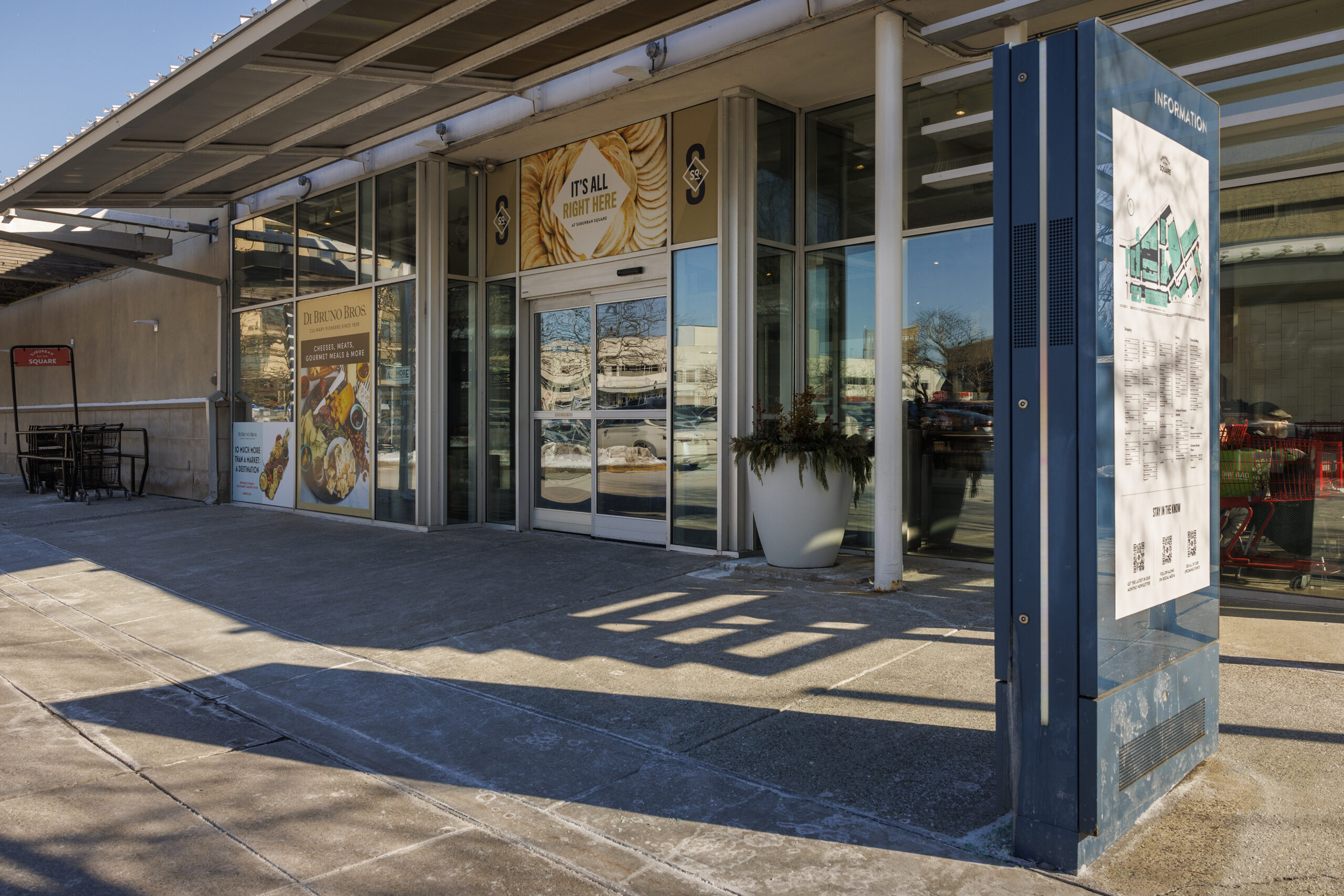
    Di Bruno Bros. is closing three of its five locations, including at the Ardmore Farmers Market.

    Some Di Bruno Bros. shoppers were saddened last week to learn that the longtime beloved specialty grocery store was closing three of its locations, including at the Ardmore Farmers Market. But it didn’t come as a shock to everyone, with some who say there’s been a noticeable decline in quality in recent years.

    “Why am I going to pay upmarket prices for a midmarket product?” one former shopper told The Inquirer’s Denali Sagner.

    Some blamed the decline on Di Bruno’s new owner, Brown’s Super Stores, which purchased a stake in the stores in 2024. Its brand was later brought under the Wakefern Food Corp. portfolio. But Brown’s executive vice president said Di Bruno’s was “very distressed” and despite its efforts was unable to bring back lost business.

    Here’s what other shoppers had to say about Di Bruno’s shrinking footprint.

    💡 Community News

    • The final phase of construction on the Ardmore SEPTA station got underway on Sunday and is expected to continue through the next few weeks, though a SEPTA spokesperson said the agency doesn’t yet have a date for completion. Work will take place weekdays from 6 a.m. to 3 p.m. and on weekends from 8 p.m. to 5 a.m. and will include finishing the roof, installing message boards, adjusting and testing elevators, making ADA-compliant adjustments, and painting.
    • Lower Merion police said two people were taken into custody by ICE during a vehicle stop Friday. In response to community concerns, LMPD yesterday reiterated that it doesn’t participate in programs deputizing local police as federal immigration agents. The department added that residents who see police activity but no marked LMPD presence can call 911 so it can verify the legitimacy, but added that officers will not interfere if federal agents are acting legally.
    • Lankenau Medical Center and Bryn Mawr Hospital both recently ranked among America’s 250 Best Hospitals by Healthgrades. The rankings, released last week, are awarded to the top 5% of institutions in the nation for “overall clinical excellence.”
    • In an opinion piece, a local physician lamented the loss of Lifecycle Wellness in Bryn Mawr, which is closing its doors on Feb. 15 after facing financial pressure. Cara Lea Smith is one of the thousands who gave birth there and found comfort in its “homelike” setting. Read more about the physician’s experience and why she feels the closure is devastating.
    • A former Villanova University professor has filed a federal lawsuit claiming she was fired in 2024 after accusing the law school of racial discrimination involving one of her students. The Inquirer’s Susan Snyder delves into the details.
    • Main Line Today recently took a look inside a 1980s Gladwyne home that’s been updated with a timeless look, complete with a neutral color palette. The 8,000-square-foot home’s dining room has a hand-painted de Gournay wallcovering inspired by Japan’s Kiso Mountains and a large dressing room off the primary suite.
    • Philadelphia Jewish Exponent recently profiled Rabbi Daniel Levitt, the director of adult Jewish learning at Gratz College. The Bala Cynwyd resident reflected on his passion for connecting people to “Jewish intellectual heritage.”

    🏫 Schools Briefing

    • Lower Merion and Harriton won’t be merging their football teams anytime soon. Lower Merion School District’s board of directors last week declined to add a vote to merge to the agenda, keeping in line with Superintendent Frank Ranelli’s previous recommendation not to merge the teams.
    • Lower Merion High School’s winter drama, Eurydice, kicks off tonight and runs through Sunday. Penn Wynne is hosting its “Special Persons Dance” for second and third graders tomorrow evening. There are school board committee meetings Monday evening and home school association meetings on Tuesday. There are no classes next Thursday, which is a staff professional development day, and the district is closed on Friday. See the district’s full calendar here.
    • Students in third through eighth grade who have a sibling with special needs can join an upcoming “SibShops” Zoom, where they can connect, share experiences, and play games. The six, one-hour sessions will take place Wednesdays from 5 to 6 p.m., starting on Feb. 18. Registration is required.
    • Families interested in having a table at next month’s Taste of Penn Wynne must sign up by Feb. 7.

    🍽️ On our Plate

    • Looking for a place to dine this Valentine’s Day? Coco Thai Bistro in Narberth is among the region’s under-the-radar romantic dining spots, according to The Inquirer’s food reporters. The menu at the tropical greenhouse-inspired BYOB combines homestyle Thai curries with street food, Beatrice Forman reports.

    🎳 Things to Do

    🐉 The Neverending Story: Catch a screening of the 1984 cult classic. There’s another screening later this month. ⏰ Saturday, Feb. 7, 11 a.m. 💵 $6.75-$7.75 📍 Bryn Mawr Film Institute

    🍪 Teen-Time Cookie Decorating: Teens 13 to 17 can decorate cookies then take some home. Registration is required. ⏰ Monday, Feb. 9, 7-8 p.m. 💵 Free 📍 Penn Wynne Library

    🐎 Lunar New Year Crafternoon: Celebrate the start of the Year of the Horse by making a themed craft at this drop-in event. ⏰ Wednesday, Feb. 11, 3-5 p.m. 💵 Free 📍 Gladwyne Library

    📜 Remember the Ladies: The Legacy of the Women of Stoneleigh: This presentation will highlight some of the most impactful women who lived or worked at Stoneleigh over the centuries. ⏰ Thursday, Feb. 12, 6:30-7:30 p.m. (Snow date: Feb. 19) 💵 $2-$20 📍 Stoneleigh, Villanova

    🏡 On the Market

    A newly built five-bedroom Penn Valley home with an impressive wine cellar

    A living room adjoining the kitchen features coffered ceilings, built-ins, and a fireplace.

    This newly built home blends classic design with modern amenities. The first floor features two living rooms, both with fireplaces, a dining room, an office, and an eat-in kitchen with an island and high-end appliances, plus an adjoining butler’s pantry and a wine cellar. There are five bedrooms upstairs, including a spacious primary suite with an oversized walk-in closet outfitted with built-ins, and a bathroom with a double vanity, marble floors, and a soaking tub. It also has a rear patio and a three-car garage. There’s an open house Sunday from noon to 2 p.m.

    See more photos of the home here.

    Price: $2.995M | Size: 4,830 SF | Acreage: 0.86

    🗞️ What other Lower Merion residents are reading this week:

    By submitting your written, visual, and/or audio contributions, you agree to The Inquirer’s Terms of Use, including the grant of rights in Section 10.

    This suburban content is produced with support from the Leslie Miller and Richard Worley Foundation and The Lenfest Institute for Journalism. Editorial content is created independently of the project donors. Gifts to support The Inquirer’s high-impact journalism can be made at inquirer.com/donate. A list of Lenfest Institute donors can be found at lenfestinstitute.org/supporters.

  • Joi Washington’s ‘whirlwind’ first weeks as mayor | Inquirer Greater Media

    Joi Washington’s ‘whirlwind’ first weeks as mayor | Inquirer Greater Media

    Hi, Greater Media! 👋

    What have the first few weeks of Joi Washington’s time as mayor looked like? We recently caught up with her to discuss her path to the office. Also this week, the former Providence Village general store, which has since turned into a single-family home, is for sale, Media has one of the region’s most romantic under-the-radar restaurants, plus a new cheesesteak joint is opening.

    We want your feedback! Tell us what you think of the newsletter by taking our survey or emailing us at greatermedia@inquirer.com.

    If someone forwarded you this email, sign up for free here.

    Joi Washington dives in headfirst as Media’s new mayor

    Joi Washington was sworn in as Media’s mayor last month.

    Joi Washington’s first few weeks as the mayor of Media have been a whirlwind. Less than three weeks after being sworn into office, the largest snow storm in years hit the region, forcing a snow emergency declaration and swift action on her part.

    While Washington might have had to dive into running the borough headfirst, she’s no stranger to Media or local government. Washington was elected to borough council in 2021 and is described by Media’s tax collector as being civically and politically engaged.

    The Inquirer’s Denali Sagner recently caught up with Washington to talk about what drew her to Media and what the last few weeks have looked like.

    💡 Community News

    • A historic five-bedroom Media home that was once the Providence Village general store is on the market for $785,000. The couple who live there expected to stay far longer than two years, but when one of them landed a dream job, those plans changed. Spanning over 4,300 square feet and three stories, the home has a newly renovated kitchen and a formal dining room with built-ins and a fireplace. Take a peek inside.
    • The Delaware County housing market got a slow start to the year, with pending sales down 4% as of Jan. 25, compared to the same time a year ago, according to new Redfin data. While home sales were slow, prices were on the rise, with median sale prices in the county and Philadelphia up 10% from the same timeframe last year.
    • Riddle Hospital was recently ranked among America’s 250 Best Hospitals by Healthgrades. The rankings, released last week, are awarded to the top 5% of institutions in the nation for “overall clinical excellence.”
    • Speaking of Riddle, the hospital is expanding its gastroenterology care this month, offering routine screenings, digestive issue care, and minimally invasive treatments.
    • Delaware County Council recently voted to increase the hotel occupancy tax for non-residents from 3% to 5% beginning April 1. The county projects the change will result in $6.4 million in revenue this year, funds which will be used to support the marketing of Delaware County elsewhere. The increase comes ahead of an anticipated influx of visitors to the region for events like the FIFA World Cup, the MLB All-Star Game, the PGA Championship, and celebrations for the nation’s 250th birthday. The hike also puts Delco on par with neighboring Bucks and Chester Counties.
    • L.L. Bean is targeting an early May opening for its Glen Mills store. The apparel retailer is opening a 20,000-square-foot store in the Concordville Town Centre at 901 Byers Dr., taking over the former Staples space.
    • The future of the Eddie Bauer location at The Shoppes at Brinton Lake in Glen Mills is uncertain with the outdoor apparel brand’s parent company planning to file for bankruptcy. When it does, most stores are expected to close. (Retail Dive)

    🏫 Schools Briefing

    • Some Rutledge Elementary School students were left standing in freezing temperatures last week after a miscommunication over an earlier bus pickup time. Wallingford-Swarthmore School District said it has reviewed its protocols to ensure it won’t happen again. (Fox 29)
    • In the Wallingford-Swarthmore School District, tonight kicks off performances of Strath Haven Middle School’s musical, The Music Man, which runs through Sunday. Tomorrow and Saturday, Strath Haven High is hosting the Pennsylvania Music Educators Association District 12 band festival, which includes a free concert at 7 p.m. on Saturday.
    • In the Rose Tree Media School District, Glenwood Elementary is hosting its Olympics opening ceremonies on Monday. There are Valentine’s parties for Indian Lane kindergartners on Wednesday and Media Elementary kindergartners on Thursday. The high school is also holding a student blood drive next Thursday. See the full calendar here.

    🍽️ On our Plate

    • After spending months converting the former House space at 110 S. Jackson St., Jackson St. Steaks is hosting its grand opening next Wednesday. Its menu includes cheesesteaks, pizzas, cutlet and focaccia sandwiches, grinders, and burgers, as well as drinks from Fishtown-based Meyers Brewing Co.
    • Looking for a great date night spot? La Belle Epoque in Media is one of the region’s under-the-radar romantic dining spots, according to The Inquirer’s food reporters. It has an extensive wine list, bistro-style entrees like steak frites, and a dining room befitting Emily in Paris. If you really want to impress your date, try the escargots de Bourgogne, pan-roasted duck, or bucatini, reporter Beatrice Forman suggests.
    • Amid shifting dining habits and increasing food costs, Harvest Seasonal Grill recently made changes that its leadership team said are paying off. Instead of raising prices, the restaurant, which has a location in Glen Mills, changed some of its meat and seafood sourcing and did away with garnishes to slash prices. The result has been an increase in visitors and revenue that founder Dave Magrogan said doesn’t sacrifice quality.

    🎳 Things to Do

    🩰 Ballet of Lights: Tickets are going fast for this take on Cinderella, which gives the classic fairytale a little extra shine thanks to dancers performing in glow-in-the-dark costumes. ⏰ Friday, Feb. 6, 9 p.m. 💵 $43-$69 📍The Media Theatre

    🎭 And Then There Were None: See the Agatha Christie classic come to life on stage. ⏰ Friday, Feb. 6-Sunday, Feb. 8, and Thursday, Feb. 12-Saturday, Feb. 14, times vary 💵 $21.50-$23.50 📍Players Club of Swarthmore

    🏛️ I Love Media Day: The borough event includes a scavenger hunt to find hidden hearts. There will also be board games, snacks, and bingo. Advanced registration is required. ⏰ Saturday, Feb. 7, 10 a.m.-9 p.m. 💵 Free 📍Downtown Media

    ❤️ Galentine’s Brunch: Towne House is hosting a themed brunch that includes dueling pianos. ⏰ Sunday, Feb. 8, noon-3 p.m. 💵 $40; minimum purchase of four tickets 📍Towne House, Media

    💌 Dear Jack, Dear Louise: Catch the regional premiere of Ken Ludwig’s show about an unlikely courtship between two strangers exchanging letters during World War II. ⏰ Wednesday, Feb. 11-Sunday, March 1, times vary 💵 $20-$35 📍Hedgerow Theatre, Rose Valley

    🏡 On the Market

    A split-level Wallingford home with two family rooms

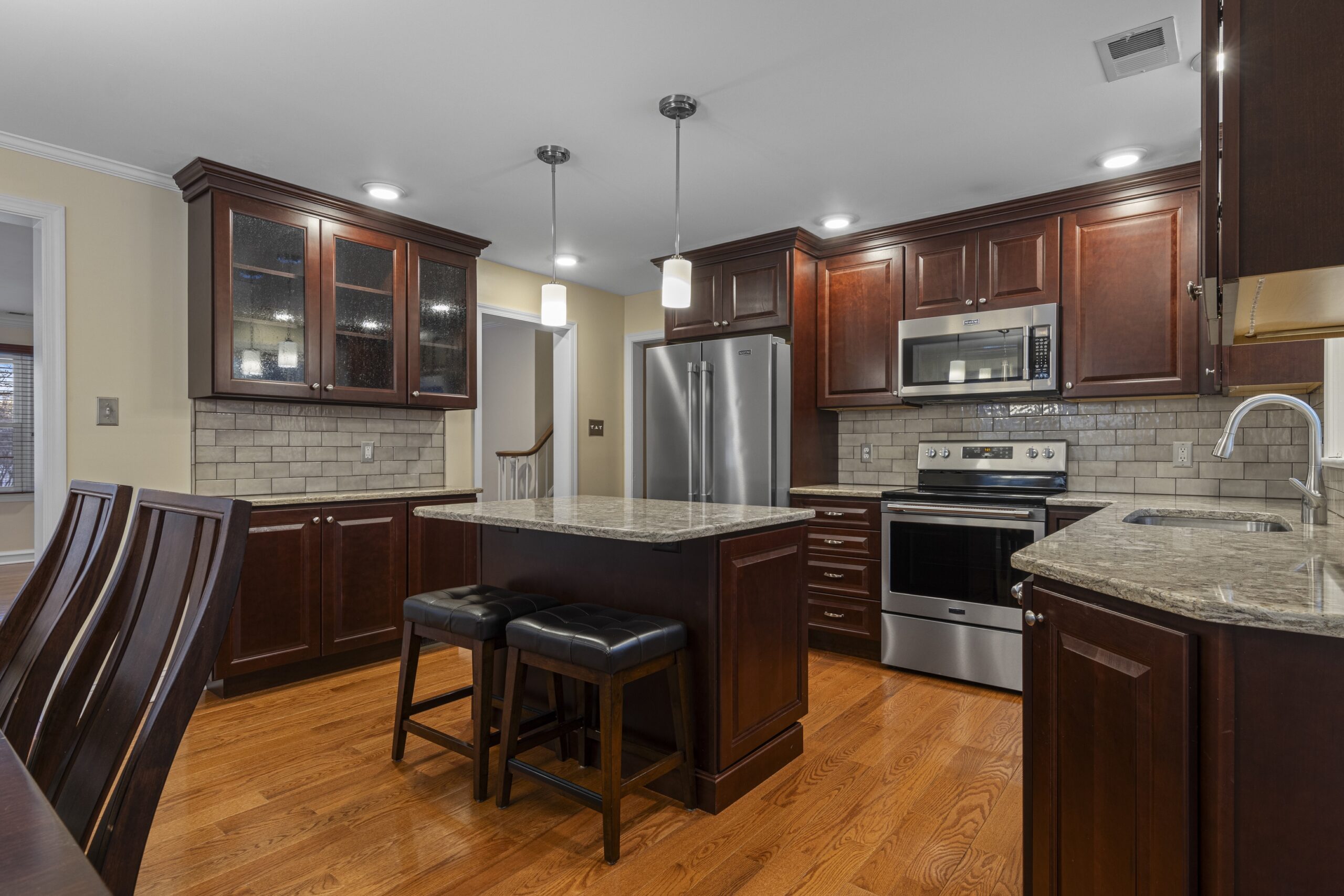
    The updated kitchen has an island with pendant lights.

    Located in Sproul Estates, this split-level home has hardwood floors throughout its main level, including the living room, eat-in-kitchen, and family room, which has a vaulted ceiling and a fireplace. It has an additional family room at ground level and three bedrooms upstairs. Other features include a walk-up attic, a patio, and a one-car garage.

    See more photos of the home here.

    Price: $625,000 | Size: 2,219 SF | Acreage: 0.33

    🗞️ What other Greater Media residents are reading this week:

    By submitting your written, visual, and/or audio contributions, you agree to The Inquirer’s Terms of Use, including the grant of rights in Section 10.

    This suburban content is produced with support from the Leslie Miller and Richard Worley Foundation and The Lenfest Institute for Journalism. Editorial content is created independently of the project donors. Gifts to support The Inquirer’s high-impact journalism can be made at inquirer.com/donate. A list of Lenfest Institute donors can be found at lenfestinstitute.org/supporters.

  • Other Pa. transit systems are dealing with the fiscal crunch that hit SEPTA last year

    Other Pa. transit systems are dealing with the fiscal crunch that hit SEPTA last year

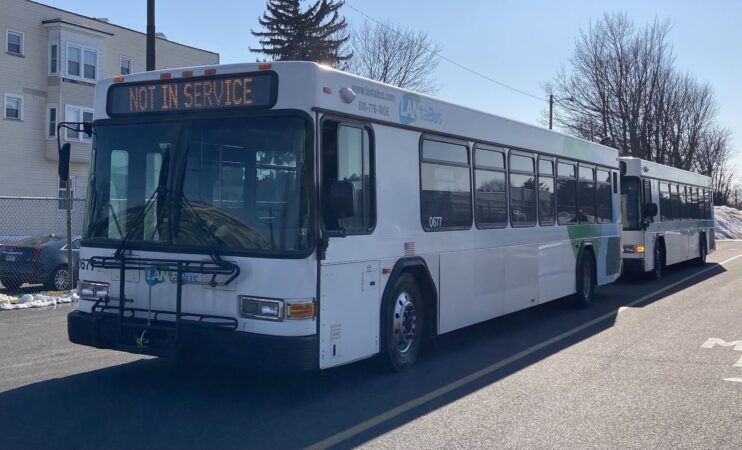
    The bus system serving 11,000 daily riders in Lehigh and Northampton Counties cut its service 5% last week, a result of the continuing uncertainty around state funding for mass transit.

    LANTA did not eliminate any routes but has reduced the number of trips on 13 bus lines.

    “If there’s no solution coming, we’ll have to make deeper cuts,” Owen O’Neil, executive director of LANTA, said in an interview.

    Gov. Josh Shapiro last fall used executive authority to flex long-term funding for capital projects to cover daily operations at SEPTA and Pittsburgh Regional Transit (PRT) for two years, following an impasse with lawmakers.

    Most of the state’s 33 smaller public transit systems did not get that big an assist and now are facing unpleasant belt-tightening choices amid rising costs and years of underfunding from Harrisburg.

    LANTA is planning to raise fares in March.

    But the agency was able to make smaller cuts than the 20% it had budgeted because the Pennsylvania Department of Transportation granted it $13 million to stabilize service over two years, O’Neil said.

    With federal COVID-19 relief funds, LANTA was able to expand service to 11 popular new worksites in the fast-growing Lehigh Valley. It’s the third-largest system in Pennsylvania.

    In the state budget unveiled Tuesday, Shapiro proposed increasing the share of sales tax revenue reserved for SEPTA and its fellow mass transit agencies, raising a projected $319 million a year.

    If the idea is enacted, however, new money would not begin flowing until July 1, 2027 — the start of the 2028 fiscal year. The tax rate itself would stay the same but transit would get 6.1% of the revenue, up from 4.4%.

    O’Neil said LANTA likely could wait that long if needed. But “we don’t have the stable source of funding,” he added. It would be difficult to continue to operate the expanded routes without one, O’Neil said.

    “Our governor is not meeting the moment,” said Connor Descheemaker, statewide campaign manager of Transit for All PA!, a nonprofit advocacy group.

    “Adjusting the sales tax allocation does not meet the structural deficit facing a single one of Pennsylvania’s public transportation systems,” they said.

    Postponing a change for 18 months gives lawmakers and the governor a longer runway to reach agreement on a stable, recurring source of money for transit — either via Shapiro’s proposal or through a new revenue stream.

    State funding for transit operations has declined steeply since the 2013 passage of Act 89, which used toll revenue from the Pennsylvania Turnpike to raise $450 million a year through 2022.

    SEPTA, which got $394 million from the state-sanctioned flex of capital dollars last year, has said it is not considering major service cuts or fare increases this year.

    Executives figure that SEPTA can provide current levels of service until summer 2027.

    The transit agency estimates that it would get $183 million in the first year if the governor’s Tuesday proposal is enacted, said Erik Johanson, SEPTA’s chief financial officer.

    With a local match of $27 million, “the difference between what the governor is proposing and how much we need is getting closer and closer to being sufficient,” Johanson said.

    Yet there has been no proposal to replace the capital money that the transit agency and PRT essentially borrowed against.

    “Those dollars are gone, and they have to be replenished,” he said.

    Descheemaker’s group estimates that seven smaller transit systems, including in the State College area, will have to cut service or raise fares if no solution is in the offing.

    “It’s disappointing that we continue to hear about transit as if it is something that only affects Philadelphia and a little bit of Pittsburgh,” Descheemaker said.

  • Penn State’s Gavin McKenna, a top 2026 NHL draft prospect, charged with aggravated assault

    Penn State’s Gavin McKenna, a top 2026 NHL draft prospect, charged with aggravated assault

    Penn State winger Gavin McKenna, the projected No. 1 pick in the 2026 NHL draft, was charged with aggravated assault and related crimes Wednesday, after allegedly assaulting a 21-year-old man during an altercation in State College over the weekend, according to a statement released by the State College Police Department.

    The arrest, first reported by Onward State, a Penn State student-run blog, stemmed from an incident hours after McKenna played in Penn State’s outdoor game against Michigan State at Beaver Stadium on Saturday afternoon. According to the local police department, at approximately 8:45 p.m. in the 100 block of South Pugh Street, he allegedly punched the male in the face twice, resulting in a fractured jaw and a lost tooth and requiring corrective surgery and his mouth being wired shut.

    McKenna, 18, has been charged with aggravated assault, simple assault, harassment, and disorderly conduct for fighting, court records show.

    The felony, which is defined as “attempts to cause serious bodily injury or causes injury with extreme indifference,” carries a 20-year maximum sentence in Pennsylvania. The misdemeanor carries a maximum of two years, and fines are also attached to each of the four counts.

    McKenna, a freshman at Penn State, was arraigned before District Judge Casey M. McClain and released on $20,000 unsecure bail. He is scheduled for a preliminary hearing the morning of Feb. 11 at the Centre County Courthouse in Bellefonte, Pa.

    Penn State officials acknowledged the arrest on Wednesday evening, telling The Inquirer, “We are aware that charges have been filed; however, as this is an ongoing legal matter, we will not have any further comment.”

    McKenna’s adviser, Pat Brisson, was not immediately available for comment.

    Penn State forward Gavin McKenna was projected to be the No. 1 pick in the 2026 NHL draft.

    Hours before the alleged assault on Saturday, McKenna scored a goal and added two assists in the No. 6 Nittany Lions’ 5-4 overtime loss to the No. 2 Spartans.

    A native of Whitehorse, Yukon, McKenna is ranked No. 1 on the NHL’s 2026 Central Scouting list among North American skaters.

    After a new rule was passed granting Canadian Hockey League players NCAA eligibility this season, McKenna left the CHL this summer to play college hockey. The freshman, who is one of the biggest recruits to ever play college hockey and one of the faces of the changing landscape of the sport, has 11 goals and 32 points in 24 games this season.

    This is a developing story. Check back for updates.

  • Democratic campaign manager charged in Chester County for allegedly filing fake signatures in 2024 primary race

    Democratic campaign manager charged in Chester County for allegedly filing fake signatures in 2024 primary race

    A Democratic campaign manager was charged Monday in Chester County with filing fraudulent nomination petitions in the 2024 primary for auditor general, including the forged signature of a Chester County judge, authorities said.

    Mariel Kornblith-Martin, 40, of Philadelphia, is accused of filing the false nomination petitions when serving as campaign manager for Mark Pinsley, the Lehigh County controller, as he sought to secure a place on the competitive Democratic primary ballot.

    Petitions for Pinsley’s campaign included the names of people who said they had not signed them, including Chester County Judge Alita Rovito, Coatesville City Council members Carmen Green and Khadija Al-Amin, and West Goshen Township Supervisor Nate Wolman, The Inquirer reported.

    Rovito reported the forgery to the Chester County District Attorney’s Office at the time, saying the signature was not hers and she did not sign nominating petitions for any candidate, “as to do so would be a violation of judicial ethics,” according to charging documents.

    Rovito, a Democrat, told The Inquirer at the time that “the use of my name and signature is concerning to me due [to] the potential implications on my role as a member of the independent judiciary.”

    Alita Rovito, a Chester County judge, poses for a portrait in West Chester, Pa. in 2020.

    In the criminal complaint filed against Kornblith-Martin, the Chester County District Attorney’s Office alleges that she gave three college students “stacks of pages containing signatures of supporters” and asked them to sign the required sworn declaration at the bottom of each page. Among the charges filed against Kornblith-Martin was solicitation to false swearing.

    Prosecutors say she paid the students, who are not named in the charging documents, $50 on at least three occasions to sign the petitions.

    “That’s disgraceful,” former U.S. Rep. Bob Brady, the chair of the Philadelphia Democratic Party, said of the charges against Kornblith-Martin. “She’s not one of our favorites.”

    The three college students were all working part-time on several campaigns run by Kornblith-Martin, according to the complaint.

    The students were previously identified by The Inquirer as paid volunteers attending Temple University.

    Kornblith-Martin described herself to investigators as a “political operative” in Philadelphia with 13 years of experience who had worked on 16 campaigns, according to the criminal complaint. She previously served in Philadelphia’s 39th Democratic Ward, but resigned last year, according to its ward leader, Traffic Court Judge Michael Sullivan.

    Kornblith-Martin did not respond to requests for comment on Wednesday or Thursday.

    She turned herself in on Wednesday and has been released on bail, which was set at $50,000.

    Kornblith-Martin said in 2024 that the campaign was conducting an “internal investigation” when asked about the alleged fraudulent signatures.

    Pinsley told The Inquirer on Wednesday evening his campaign “reviewed what was brought to our attention but did not have enough verified information to reach independent conclusions” when concerns were raised.

    “Petition drives can involve invalid or questionable signatures for many reasons, and we were not in a position to determine intent,” he added in a text message. “I was not personally involved in the signature collection, and I believe the legal process is the appropriate place for the facts to be established. If anyone knowingly falsified signatures, that would be wrong and should carry consequences.”

    Pinsley said he has “not been involved” with Kornblith-Martin since his auditor general campaign and does “not know the facts of this situation.” Pinsley is now running in the crowded Democratic primary to challenge Republican U.S. Rep. Ryan Mackenzie in the Lehigh Valley.

    Pinsley’s campaign was not the only one with signatures that came under scrutiny.

    State Sen. Nikil Saval’s 2024 campaign complained about signatures on then-candidate Allen King’s petitions, which included two of the same student circulators and contributed to his being booted from the ballot.

    King, an entrepreneur who still has political aspirations, told The Inquirer the incident had disillusioned him about the two-party system and inspired him to reapply to law school.

    “When ballot access becomes a game of shortcuts and challenges, democracy loses before voters ever enter the booth,” he said.

    The February 2024 revelation that Pinsley’s campaign may have submitted fraudulent petitions shook up the race for a little-known office responsible for conducting audits to ensure that state money is spent properly.

    Pinsley failed to secure the Democratic nomination over State Rep. Malcolm Kenyatta, who ultimately lost to incumbent Republican Auditor General Tim DeFoor as the GOP swept the state’s row offices in the general election.

    Kenyatta did not formally challenge Pinsley’s nominating petitions to remove him from the ballot during the primary. Reached Wednesday, Kenyatta said in a statement: “Fraud occurring within any stage of our electoral process is a direct assault on our democracy.”

    “The charges brought today are a first step in the legal process but accountability must not end here: the buck always stops with the candidate,” added Kenyatta, the vice chair of the Democratic National Committee.

    Investigators found at least nine pages of alleged forgeries of Chester County voters, according to the complaint.

    To get on the ballot in Pennsylvania for a statewide row office like auditor general, a candidate must submit 1,000 signatures, including at least 100 from at least five counties.

  • The new Norristown school board plans to oust its superintendent, citing poor test scores

    The new Norristown school board plans to oust its superintendent, citing poor test scores

    The Norristown Area School District’s board is moving to oust its superintendent, saying the district needs a new leader to reverse years of poor test scores.

    The move to replace Superintendent Christopher Dormer, who has led the Montgomery County district since 2018 and whose contract expires June 30, comes after five new members were elected to the nine-person school board in November. The board voted unanimously Jan. 20 to give Dormer notice they would not renew his contract.

    Some community members expressed shock at the decision to part ways with Dormer, who is also the president of the Pennsylvania Association of School Administrators. Dormer has been a vocal advocate for increasing funding to Norristown, which is considered underfunded by the state, and where nearly three-quarters of students are economically disadvantaged.

    Jeremiah Lemke, who joined the Norristown school board in December and is now its president, acknowledged Dormer as “a leader statewide” in advocating for a new school funding system and a superintendent who has done “many good things for the district.” But, he said at the Jan. 20 meeting, test scores are a concern.

    “Student achievement in Norristown hasn’t been winning, under Mr. Dormer, for years, not months, but years — seven to be exact,“ Lemke said in an emailed statement Wednesday. ”If the Eagles didn’t win for seven years, regardless of what positive developments happened in the organization, there would be no questions asked when the head coach was replaced.“

    Norristown, a majority Hispanic district, enrolls about 8,000 students.

    About 28% of Norristown’s third-through-eighth graders scored proficient or above in English language arts on the Pennsylvania System of School Assessment standardized tests last year, compared to 48.5% statewide. In math, 27.4% of Norristown students were proficient, compared to 41.7% statewide.

    Over the last few years, changes in Norristown’s test scores have largely tracked Pennsylvania’s as a whole, with ELA scores sliding, and math scores improving. In 2023, 30.7% of Norristown students scored proficient in ELA, compared to 53.7% of students at the state level. In math, 21.6% of Norristown students scored proficient in 2023, compared to 39.4% statewide.

    In a message to staff and families after the Jan. 20 vote, Dormer said he was proud of what the district had accomplished during his tenure — “including consecutive years with minimal to no tax increases, the sizable and significant additions in staffing after years of reductions, the sustained investment in new instructional resources and educational opportunities after years of unaffordability, the development and implementation of our facilities master plan after decades of deferred maintenance, and the commitment to the principles of equity, inclusion, and belonging as we navigated a worldwide pandemic and an increasingly politically divided country.”

    Dormer, who began his career in education as an educational assistant in the Lower Merion School District, spent 13 years as a teacher, coach, and athletic director in the Upper Darby School District before moving into administration in 2005. He became Upper Darby High School’s principal in 2008, a role he held for five years, and came to Norristown in 2016.

    Performance reviews on the district’s website show Dormer was rated “proficient” by the board in 2021-22 and 2022-23. More recent reviews were not listed online.

    On Wednesday, Dormer declined to comment.

    Lemke — who works for a Philadelphia nonprofit, Jounce Partners, that has coached charter school leaders to improve teacher performance — said in a statement Wednesday that the decision was “thoughtful, reflective, data-informed, and unanimous, amongst new and continuing board members.”

    The board last week voted to approve a $79,500 contract with Alma Advisory Group, a Chicago-based firm, to conduct a national search for a new superintendent.

    Jordan Alexander, another new school board member, said during that board meeting that members “often have to make decisions that are very unpopular.”

    “I’m gonna be honest, I wasn’t so sold,” Alexander said. A former Norristown student, Alexander said that when Dormer “came to the scene, the pride did go up, and it was a breath of fresh air.”

    But “we cannot advocate ourselves to be the best if our performance does not reflect that,” Alexander said.

    Community reaction to the ouster

    Some community members accused the board of a predetermined decision.

    “Staff were not aware of these changes … the community was not aware, or anybody. You guys just threw it out there,” Ericka Wharton, a parent and leader of a Norristown community center, told the board at last week’s meeting. Wharton warned the decision could create instability, including a decline in student achievement.

    Carmina Taylor, a local advocate, told the board that community members deserved “a full explanation with dates and details that led to your decision.”

    “This decision is short-sighted, abrupt, without consideration as to how the students will be impacted by this major shift in leadership,” said Taylor, co-founder of the Movement for Black and Brown Lives in Montgomery County.

    The election of the new board came after infighting in the local Democratic Party. Chris Jaramillo, the former board president, lost the local Democratic Party’s endorsement for reelection last year. Jaramillo had opposed a tax break for a senior affordable housing development. Last week, the new board voted to rescind a November district policy that restricted tax abatements, saying it would replace it.

    Jaramillo is also a co-founder of the Movement for Black and Brown Lives in Montgomery County. In an interview Wednesday, he described the board’s new leaders as inexperienced and questioned how it could quickly replace Dormer without causing disruption.

    “I don’t think it’s a sound decision,” said Jaramillo. He said he worried the board would pick someone “without any sort of knowledge of how diverse Norristown and its surrounding area are.”

    Taylor said Wednesday she wasn’t speaking on behalf of Jaramillo. She accused the board of “plotting” to remove Dormer.

    “How in the world, if they didn’t have a sense of what they wanted to do, could they have even attempted to do that in the last 45 days?” said Taylor, who has filed a complaint with the school board, alleging insufficient transparency.

    Lemke said it is “categorially false” that the board acted too quickly and without transparency. “Once we were installed, we had a short time period in which to make a decision because we knew that if we didn’t renew his contract it would not be a quick task to do a national search for a superintendent,” he said.

    Taylor noted that while the district’s test scores “are bad,” Norristown has only been receiving additional state money under a new formula intended to remedy constitutional underfunding for the past two years. (The budget proposed by Gov. Josh Shapiro Tuesday would give underfunded districts their third installment of a nine-year plan.)

    “It’s not enough to address the systemic issue, period,” she said.