Category: Pennsylvania News

  • The USA Table Tennis Pennsylvania Open is coming to Phoenixville this month, with rankings and cash prizes — and community — up for grabs

    The USA Table Tennis Pennsylvania Open is coming to Phoenixville this month, with rankings and cash prizes — and community — up for grabs

    For Deepak Gupta, playing Ping-Pong is something of living out a childhood dream for him.

    Later this month, he’ll be taking that dream to the next level, as he makes his tournament debut at the USA Table Tennis Pennsylvania Open in Phoenixville.

    “I’ve never met two people who play the same … they have a unique style of playing, and every player has strengths and weaknesses, the way they spin the ball, the way they serve,” he said. “I’m looking forward to playing against more people whom I’ve never met, so that’ll be challenging.”

    Gupta, 52, will be among the 40 to 50 players from the region competing; the tournament has six events and will be held at the Phoenixville Recreation Center.

    Players will compete in women’s singles, juniors, over 40, the open, or skill-capped events. On the line: cash prizes, trophies, and national ratings points.

    It’s the fourth time the Phoenixville Table Tennis Club, established in 2009, is holding a USA Table Tennis tournament, and its second Pennsylvania Open.

    “We do have a lot of lower-level players participating in those events, and one, it gives them the opportunity to win trophy and money, but two, it gives them the opportunity to continue to compete … and get better in their games,” said Nick Flor, organizer and one of the founders of the Phoenixville club. “Say you come across your archnemesis that you play at the club in the tournament. … It’s going to give you that drive to learn to beat them, to learn to get better.”

    Gupta will be playing in the “under 1200″ event, for beginner to intermediate players whose rating is below 1200. A rating represents their skill level and determines where a player is seeded in an event. Low-level players would be rated around 900 or 1000, while high-level players approach 3000, Flor said. As players win matches and tournaments, up goes their rating. The tournament will have several events split by rating level.

    Players will also be competing for ranking points as part of the USA Table Tennis’ system. Depending on how many tournaments players win, they earn points. Top-point earners are considered for the Olympics, or the sport’s World Cup.

    Aside from rankings, players are drawn to the community the sport has given them.

    Serving up community

    Gupta loved the game passionately as a child, but it faded into the background after high school. Some 30 years later, he started playing against a couple of friends in the basement. He found out about the Phoenixville club, which meets twice a week at the recreation center, hosts a smattering of smaller tournaments and competitions, and provides support for new players. But it wasn’t enough; he ended up opening his own club in Exton, called Exton Table Tennis.

    The club is run by friends, for friends, he said. Before he started playing table tennis a few years ago, he had few of them. He met other parents in school groups, but those social interactions were limited to talking about their kids.

    “Once I started playing table tennis with some of the other dads, we started getting to know each other more as individuals and more as friends,” he said, “and then taking that spirit and … expanding it to a community.”

    Flor, 53, caught the bug in high school, when he’d play with his friends in the senior lounge. They started playing before and after school. They were “terrible,” Flor recalls. But they kept playing, deciding to enter a tournament. They got crushed and had the experience he’s seen in many players: the shock and awe at the level of gameplay, of technique, and skill it takes. The group began going to a club in Pottstown, getting tutelage from an older gentleman, and eventually opened their own club, he said.

    He’s seen the sport change over time, fluctuating in popularity. They see surges around the Olympics, and during the colder months. Marty Supreme drummed up excitement among players but didn’t seem to inspire a new generation. (Forrest Gump has probably done more for the sport, he noted.)

    A game for all

    Flor’s love of Ping-Pong has seeped into his marriage, as he slowly turned his wife, Janel Flor, into a convert. Now the two are evenly matched.

    It’s been a journey for Janel, whose first experience was in the place that makes or breaks anyone’s love of sport: gym class. It put her off table tennis for years. She was supportive of her husband but felt it was “kind of a dumb sport.” But, ever persistent, he coaxed her into a lesson. About a month later, she felt it sink in and sent the ball exactly where she wanted it to go. She was hooked.

    She was not very competitive until she was able to beat Nick. “Once I could do that,” she said, “I was like, you know what, I actually really like this game.”

    It’s been her goal to get more women into the game and to have fun doing it.

    “My goal is always to help build confidence and help get them playing, so that they’re not overthinking everything,” she said.

    Janel, 50, will compete in the women’s event in the upcoming tournament, against roughly six others. She has gotten over some of the initial fears of tournament play but said she still gets butterflies when she steps up to the table.

    Despite those butterflies, it’s often an encouraging, but still competitive, game, she said.

    For Gupta, it’s a game where people of all ages, genders, and abilities can thrive. The clubs welcome kids, whom they have watched level up over time.

    “Table tennis is one game where it evens everything out. It doesn’t matter,” he said. “If you have skills, you can become really good, that’s one thing that I really love about this game. … I think now I’m finally trying to live my childhood dream, and I hope other kids can enjoy the same passion that I had as a child.”

    This suburban content is produced with support from the Leslie Miller and Richard Worley Foundation and The Lenfest Institute for Journalism. Editorial content is created independently of the project donors. Gifts to support The Inquirer’s high-impact journalism can be made at inquirer.com/donate. A list of Lenfest Institute donors can be found at lenfestinstitute.org/supporters.


  • How Haverford High’s national teacher of the year is coaching aspiring teachers, on topics from racism to connecting with students

    How Haverford High’s national teacher of the year is coaching aspiring teachers, on topics from racism to connecting with students

    As the newly appointed National Teacher of the Year, Haverford High School’s Leon Smith has been celebrated on television: from CBS Mornings and Good Morning America to the Kelly Clarkson Show.

    But as the lone Black teacher when he started teaching at Haverford 25 years ago, Smith got a different reception. He experienced racism, he told a group of young people interested in teaching, and if it weren’t for a Black vice principal that listened and supported him, he might not still be teaching today.

    “She would just be very honest with me, and be like, ‘First of all, you’re an excellent educator. … Keep being you. Somebody calls and says something crazy, I’m just hanging up,’” Smith told teaching fellows gathered in Germantown on Wednesday with Breakthrough of Greater Philadelphia, a nonprofit that trains aspiring teachers to lead enrichment programs for middle-school students.

    The event, sponsored by the Equitable Foundation, was just one of many for Smith during his yearlong stint as Teacher of the Year, a platform he was awarded in April by the Council of Chief State School Officers. In that role, he’s spending the year traveling the country to advocate for the teaching profession and growing its ranks.

    Smith, who teaches Advanced Placement U.S. History and Advanced Placement African American Studies at Haverford, spoke passionately to the fellows Wednesday about his motivation to be the teacher he didn’t have growing up, and the immense impact teachers can have on students’ lives — presenting the profession as a deeply rewarding opportunity to help kids recognize their talents.

    But he was also honest about the challenges. Fielding questions about his career from fellows gathered in an auditorium on the Germantown Friends School campus, Smith said he had struggled to find his way as a new teacher, staying up too late trying to perfect lessons.

    He described the sometimes lonely experience of being his predominantly white high school’s only Black teacher, and how he developed strategies to respond to racism, including learning when to walk away and when to speak out.

    He told fellows to find supportive colleagues and to be selective when they considered job offers.

    “Do your research. Make sure it’s a space that’s going to take care of you,” he said.

    Smith also described feeling self-conscious when he was younger about some of his lessons — worrying that students would say, “‘Oh, all he does is talk about Black history,’” Smith said. But he began hearing from students about how grateful they were to have learned about subjects that hadn’t been covered in other classes; an audit later identified African American studies as a class community members wanted to see added.

    ‘My why’

    His comments resonated with the teaching fellows, some of whom said they’re committed to careers in education.

    Dominique Sidae, a 23-year-old rising senior at Florida A&M University, is planning to become a special-education teacher. She said she was inspired by her appreciation for a teacher who helped her younger brothers, who have autism.

    Sidae said she is often the only Black person in teaching spaces. “It feels good to know this isn’t only happening to me,” she said. “You don’t really learn that in college.”

    Dominique Sidae, 23, a fellow with the Breakthrough of Greater Philadelphia, listens to a talk by Leon Smith last week.

    Miles Baldwin, an 18-year-old graduate of Harriton High School in Lower Merion, isn’t sure he wants to become a teacher. But he enjoyed working with students last summer in the Breakthrough program — “a lot of kids came in hating it, and left wanting more,” he said — and Smith’s pitch about being a mentor was compelling to him.

    “Honestly, yeah,” he said, when asked if hearing from Smith made him more interested in teaching.

    That’s part of the goal of Smith’s role as Teacher of the Year, as a dwindling pipeline has challenged recruitment efforts.

    Smith’s agenda this summer includes attending the National PTA Convention in Pittsburgh and giving a keynote speech at the Smithsonian’s National Education Summit. He also will be joining other state teachers of the year at Space Camp in Alabama and participating in professional development.

    But addressing the Breakthrough teaching fellows Wednesday “reminds me of my why,” Smith said in a brief interview. He said the fellows’ eagerness to ask questions “shows they want to be the best they can be,” and reflects qualities of good teachers: “You have to be curious, sometimes silent … often humbled,” Smith said.

    Leon Smith, a teacher at Haverford High School, was named National Teacher of the Year this spring.

    Teaching students to lead

    In a model lesson after his talk, Smith put some of those skills on display. He started by gathering the 34 fellows in a circle, asking them each to share their name and a brief story about it; the group periodically broke into laughter at humorous anecdotes.

    Smith then outlined the objectives for his lesson about assessing the credibility of sources. He passed out copies of a photo, asking fellows to silently write and then discuss in small groups whether it provided strong evidence of the Fukushima power plant explosion.

    “I always tell my students, you want to be a leader,” Smith said, encouraging fellows to stand by their analyses, even if others disagreed. He then called on people, asking them to explain their thinking while challenging some of their points.

    Leon Smith talks to fellows at Breakthrough Collaborative last week.

    Matt Greenawalt, co-dean of faculty for the Breakthrough summer program and a teacher at Germantown Friends — which supports Breakthrough — was planning to breakdown Smith’s approach for the fellows after the lesson. He noted how Smith was walking through the room, engaging with the fellows as they talked, and Smith’s ability to affirm and redirect them when an answer wasn’t on point.

    Smith’s visit came on day three of a two-week orientation for the fellows, before they would begin teaching students during Breakthrough’s six-week free summer program.

    While access to academics is key for the program’s students, many of whom come from Germantown, “a big piece of it too is having role models,” Greenawalt said.

    Smith told fellows that when the students arrived, “they’re going to just admire you so much.”

    “You’re going to be able to see the light inside of them, and sometimes it just takes someone else to notice, right? … They’ll just kind of be doing their work, and then as you get to know them, you’ll notice certain characteristics and you’ll just pour into it.”

    What really helps make a connection with kids, Smith said, is “just you being yourself.”

    “You walking in there and walking in your own life, and bringing your passion and all the reasons why you wanted to become a teacher,” he said. “Your students are going to feel that.”

  • 150 years, 2 world wars, 32 mayors, and 28 presidents later, a store still thrives in a bankrupt city

    150 years, 2 world wars, 32 mayors, and 28 presidents later, a store still thrives in a bankrupt city

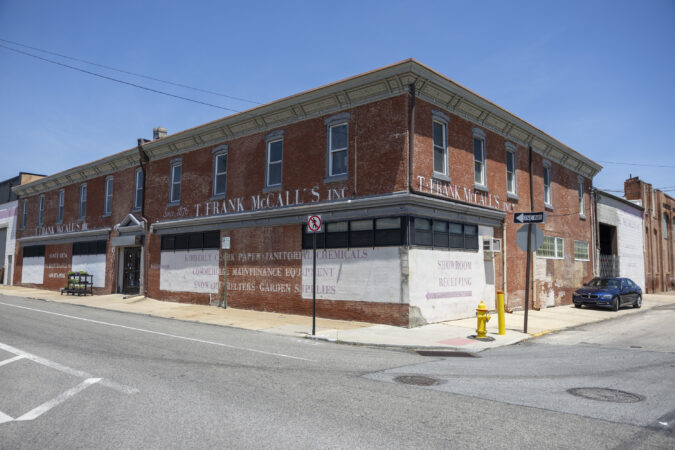
    Humans still answer the phones. The business is family-owned and run by women. But perhaps the most remarkable aspect of T. Frank McCall’s is the reality that the store is still there, next to the railroad tracks in the Delaware County riverfront city of Chester, where it has been since 1876.

    It has somehow survived through the administrations of 28 presidents, 32 governors, and 32 mayors; two world wars; the Great Depression; and the collapse of Chester’s economy that has climaxed with a rare municipal bankruptcy, By the time the Philadelphia Phillies played their first game in 1883, McCall’s had been in business for seven years at Sixth and Madison Streets.

    The building has retained the faint odors of the company’s seed-and-grain roots. But these days the houses that had lined the streets are long gone. The nearest neighbor is a remnant of a factory that once was part of the city’s industrial might. The store’s owners are bemused by the unused bicycle lane on the other side of Madison Street, and the superfluous parking restrictions.

    The remnants of an abandoned factory building sit next to McCall’s.

    McCall’s sells janitorial and cleaning supplies, but rather than a traditional “jan/san” business, it is more like a hybrid wholesale general store. That its website features a snowfall image is fitting: It made a killing selling ice-melters this winter to SEPTA, Philadelphia, and other customers.

    The assortment evidently continues to work; McCall’s generates about $10 million in annual revenue, said owner Lisa Witomski, whose father bought the company from the family of the original owners in 1957 in a decade when businesses were pulling out of Chester.

    What explains the staying power?

    In part, Witomski said, McCall’s sells things people have to have. “Nobody really wants to buy janitorial supplies, but if you have customers or employees, you need them.”

    Staying in the one location in Chester, even though only a tiny percentage of the revenue comes from in-store sales, has been an asset, Witomski said. Customers know where to find them, and the company owns the 50,000-square-foot facility outright; the mortgage was paid off in 1880.

    The county estimates the property’s value at about $850,000, and the company contributes about $17,000 annually to the city and the Chester-Upland School District in property taxes. It also pays a 6% sales tax to the city, and the 16 employees pay earned-income levies. The size of the workforce has not changed much through the years.

    Most of the building’s space, which includes a former stable for the horses that delivered the company’s goods in the wayback when Chester was transforming from a rural outpost to an industrial power, is devoted to warehousing. About 95% of the company’s business is shipped on McCall’s trucks, Witomski said, and the location has outstanding road access, close to I-95 and the Blue Route.

    When customers call during business hours, “a human being always answers the phone,” she said. “People are shocked when you say, ‘Hello,’ and they’re waiting for ‘press 1.’”

    Being a family business that has resisted corporate takeover has given McCall’s an edge with customers, said Witomski, who recalled playing hide-and-seek among the store’s galvanized trash cans as a kid.

    “Unlike almost all our competition, we haven’t sold out.”

    The original McCalls

    George McCall started his feed-and-grain business in 1876, when Chester’s population was growing rapidly. He eventually turned over the keys to his son Thomas, who later passed on the business to his sons under the name T. Frank McCall.

    A breakthrough came in the 1880s when nearby Scott Paper — on the Chester riverfront, the company that is believed to have been the first to market toilet paper on a roll and disposable paper towels — hired McCall’s as its distributor. (The plant now bears the Kimberly-Clark name, but the Scott brand name survives.)

    Along with Scott products, through the years it would sell and distribute a wide variety of janitorial and other products while remaining in the seed-and-grain business.

    The McCalls would run the company for 80 years.

    McCall’s today

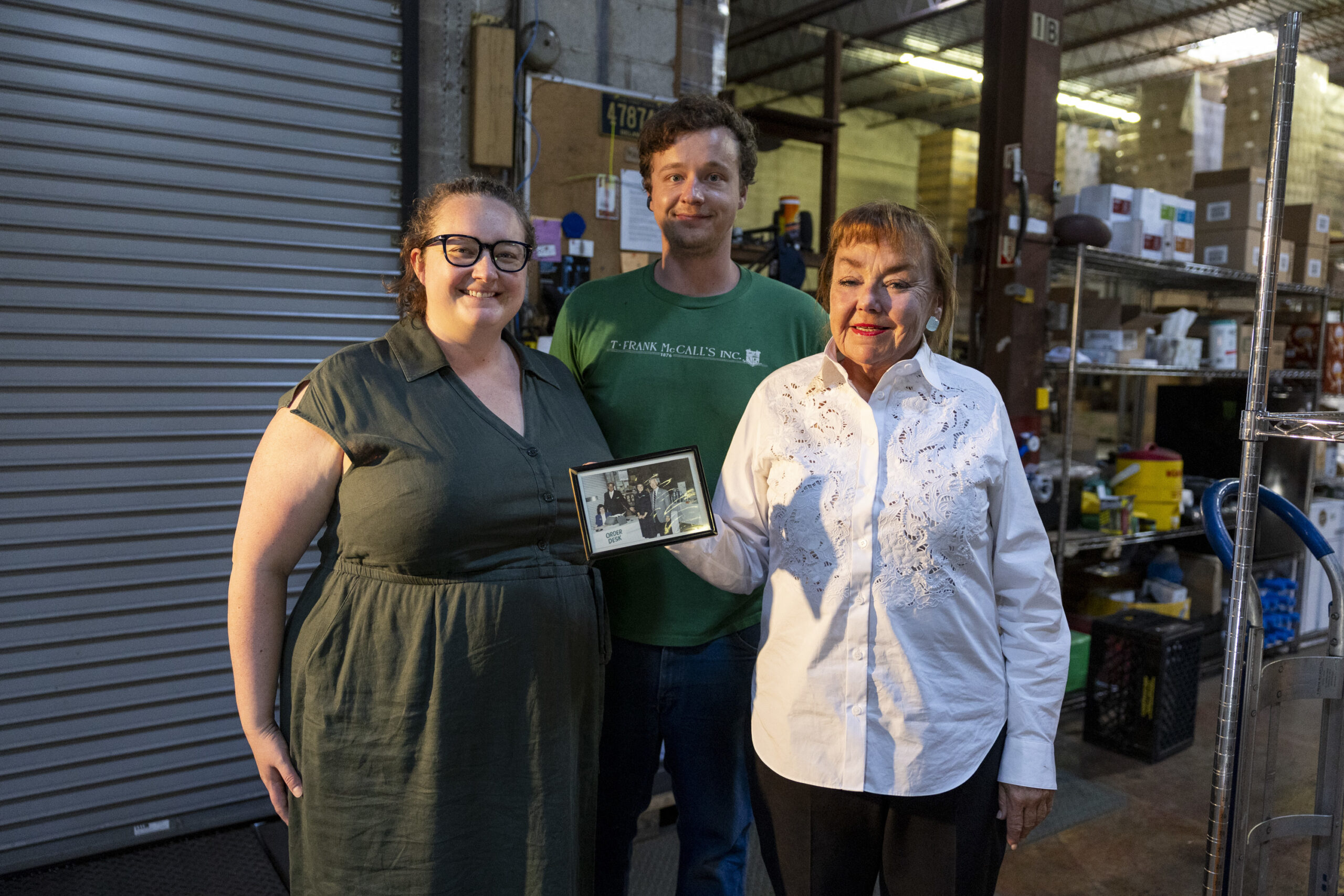
    Owner Lisa Witomski (right) with her niece Lisa Claire, McCall’s office manager, and nephew Chas Wiley, warehouse manager, inside the store.

    They sold the company in 1957 at a time when Chester was entering a postwar decline: In the 1950s, the number of apparel and general merchandise stores in the city fell from 68 to 19, according to Chester Planning Commission documents.

    Brothers Edward and Charles Witomski purchased the business on the advice of a member of the legendary Pew family, founders of the Sun Oil empire. The brothers had owned a bar in Essington and were looking for an enterprise that would be more family-friendly, Lisa Witomski said.

    Like the McCalls, they continued the tradition of selling and distributing a wide variety of products, including paints and even baby chicks at Easter time. Eventually the business was passed on to Charles Witomski’s daughters, Marcie and Lisa, the company president. Marcie Witomski’s daughter, Lisa Claire, is the office manager; Marcie’s son Chas Wiley manages the warehouse.

    In recent years their regular customers have included casinos throughout the region that have needs for paper and enzyme cleaning products. (Gamblers have been known to make a mess.)

    And ice melter has been a source of considerable cold cash — this winter in particular.

    “It was a doozy,” Claire said. It wasn’t just the 30 inches of snow, but the subsequent Arctic freezes that locked in the snow-and-ice coverage. The result was the sale of mass quantities of calcium chloride melter.

    On occasion, a motorist along Madison Street, which is part of Route 320, stopped in to buy some melter, Lisa Witomski said, but the store never was heavily trafficked even when the neighborhood was well-occupied in the 1950s and ’60s.

    Save for a few incidents — one person tried to walk off with a lawn mower, another tried to make off with a 100-pound barrel that he couldn’t carry — crime has not been an issue, Lisa Witomski said, even when the city went through a period a decade ago when it had the nation’s highest per capita homicide rate.

    “We are not exactly in a populated area,” she said.

    Cars parked in front of the store these days are anomalies. “We think the two-hour parking is very funny,” she said.

    Said Michelle Cubler, the purchasing manager, “We’ve never seen them actually ticket on this street.”

  • Pennsylvania and N.J. Turnpikes choose a design for a new $1.6 billion Delaware River bridge

    Pennsylvania and N.J. Turnpikes choose a design for a new $1.6 billion Delaware River bridge

    Officials of the Pennsylvania and New Jersey Turnpikes have chosen a design to replace the 70-year-old bridge over the Delaware River linking the toll roads: a six-lane span that would be built about 195 feet north of the existing one.

    Called a ”tied-arch” bridge, the $1.6 billion replacement would be cheaper than other styles considered and can be built fastest, said John Boyer, senior engineer for the Pennsylvania Turnpike Commission.

    “Shorter time frames mean less disruption to local businesses and daily life for the communities in this area,” said Boyer, the manager of the joint project.

    Because the new bridge would be farther from the existing Delaware River Bridge than alternatives, traffic can keep flowing as it’s built, he said.

    Planners for years have known that the region would need a new turnpike bridge because of exponential growth in traffic volume, especially trucks.

    Freight volumes nationally are projected to grow by 73% by 2050, with warehouses on both sides of the river relying on crossing.

    Before the nearby I-95/Pennsylvania Turnpike interchange opened in 2018, an average of 42,000 vehicles a day crossed the four-lane Delaware River Bridge. Now, that’s up to around 70,000. By 2050, projections say an average 93,000 vehicles will need to traverse the replacement.

    The surface of a tied-arch bridge provides tension to resist the horizontal forces pressing on either end of the arch, like the taut string that connects a bow. It requires less sturdy foundations than a bridge supported by cables.

    “You can be build those river piers while you’re building the arch structure off-site,” Boyer said. When the piers are ready, the arch can be brought in by barge and “you can essentially jack it and elevate it up into place,” he said.

    Federal authorities approved a new span in 2003, but the project was put on hold because of problems paying for it.

    In 2017, a crack was discovered in a truss supporting the existing bridge’s roadway, and it was closed for about two months.

    As congestion increased on the repaired bridge, more traffic capacity became imperative, officials said.

    Because the earlier federal approval was so old, officials had to start again with a new environmental impact statement and design studies. Last year, turnpike officials settled on two options.

    Now, they’re finishing up the environmental impact statement, with formal public hearings scheduled for the winter.

    Turnpike officials expect the Federal Highway Administration to make a decision on the project around April 2028.

    In March, Pennsylvania’s U.S. senators announced a $600 million federal grant for construction of the new bridge connecting Bristol, Pa., and Florence, N.J. New Jersey’s congressional delegation also worked on getting the grant.

    The two states’ turnpike agencies will finance the balance. Borrowing would be backed by toll revenue, but both say the bridge project won’t increase tolls for drivers.

  • Five Chester County centenarians, ranging from 99 to 104, give their life secrets

    Five Chester County centenarians, ranging from 99 to 104, give their life secrets

    From horses giving way to cars and the invention of television, to the election of more than a dozen presidents, World War II, and even the sale of sliced bread — the 45 Chester County centenarians who gathered for an annual luncheon this week have watched the world remake itself time and time again.

    “I saw a lot of things. A lot of wars, and a lot of popes. There’s a lot of good things,” said Anne Caporale, who will turn 100 in July. “I got married, had a family. I had a good life.”

    The annual luncheon celebrated Chester County’s group of centenarians — a total of 57 residents reaching or surpassing the milestone. Tuesday’s celebration saw a dozen who would turn 100 this year, plus quite a few returning attendees, including 108-year-old Evelyn Fair, who still writes poetry.

    “You are the builders, the teachers, the parents, the neighbors, and the foundation of the Chester County community,” Josh Maxwell, chair of the board of county commissioners, told attendees. “Every single comfort and freedom we enjoy today is a direct result of the hard work, sacrifice, and grace you poured into the world decades and decades ago. We are walking today on paths that you have all cleared.”

    Meet some of Chester County’s longest residents.

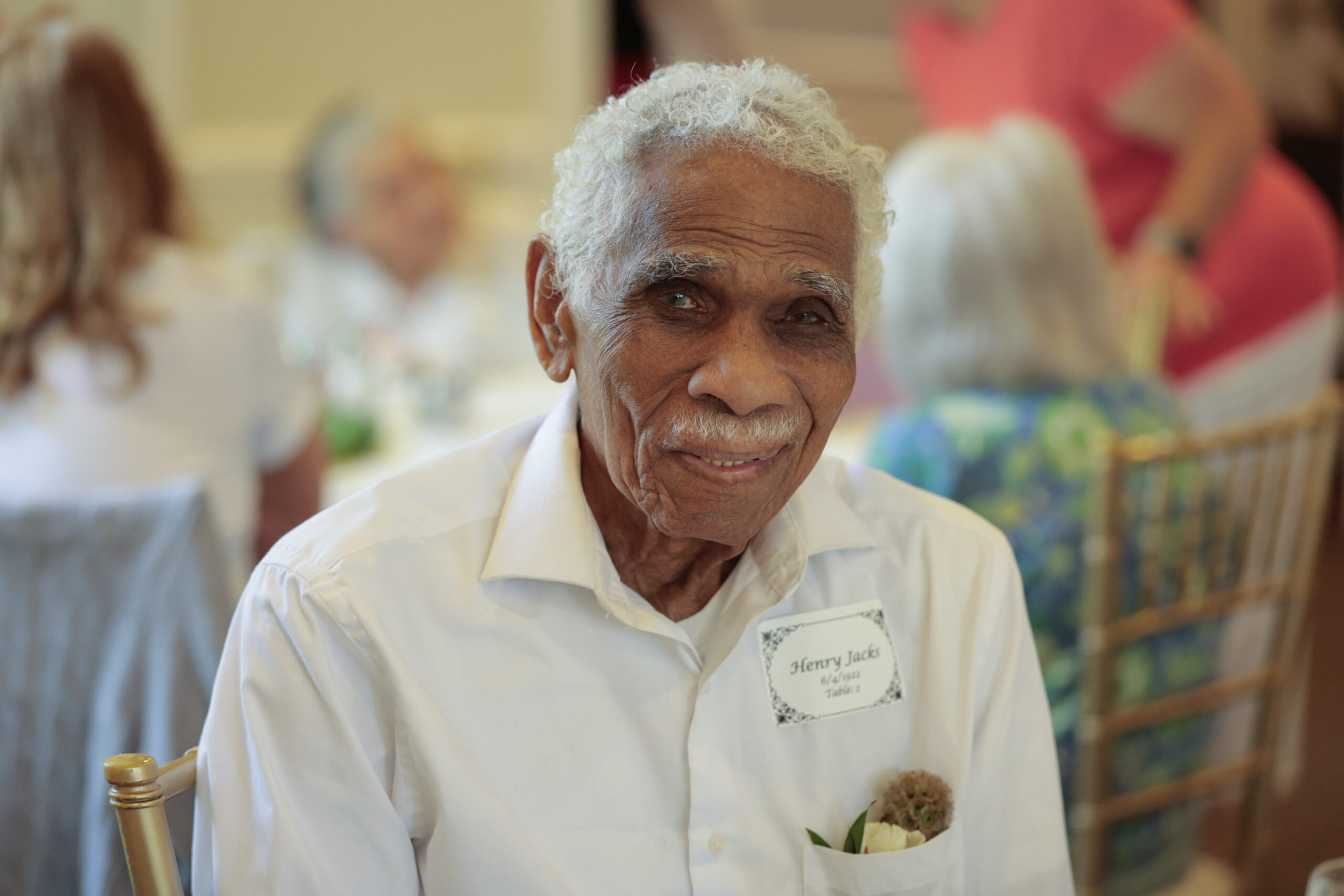
    Henry Jacks, 104

    Henry Jacks, 104, enjoys the annual centenarian luncheon hosted by the Department of Aging.

    Henry Jacks moved to South Coatesville when he was 4 years old, and has called it home ever since. He’s witnessed “quite a bit of change.”

    He remembers watching deliveries come by horse and wagon and recalls the hard days of the 1930s during the Great Depression (“cost of living wasn’t as bad as it is now,” he noted). Jacks joined the Army in 1940 during World War II, serving in the 92nd Engineers Regiment, and was stationed in Africa and Italy. He came back home to have three children, a boy and two girls.

    He was a Boy Scout leader, the first Black mail carrier in Coatesville, a city council member, and a judge of elections. He still sings in the church choir. (His advice: “Treat people right. Go to church.”)

    “So many changes that I’ve seen in the days,” he said. “I remember when I first saw TV; one of the neighbors had one, and all of the kids used to watch through his window. I’ve seen from the horses, to the cars, to the jet airplanes. And it’s been a wonderful life.”

    Letitia Hemphill, 103

    Letitia Hemphill, 103, at Tuesday’s luncheon.

    Letitia Hemphill started her working life at the candy counter at the former F.W. Woolworth’s five-and-dime in her hometown of West Chester. Though her father remarked she wasn’t good at math, she’d go on to have a long career using her skills while filling the registers and doing the end-of-day count in a department store and later at the treasurer’s office.

    She retired in 1986 but had trouble sitting still.

    “I got bored of not working,” she said.

    She started cleaning houses. It was something she’d always done: help her mother clean in the morning, and then go to the park in the afternoon. She kept up the tradition with her two grandkids and her two great-grandkids, whom she babysat for 14 years.

    An active life has been key to Hemphill, who did 10 years of ballroom dancing and more than 20 years at the gym.

    “Keep your body moving and keep your mind moving,” she said.

    She keeps her mind active by painting landscapes in watercolor, a hobby she took up in 1995.

    Hemphill was born in West Chester to a stonemason father and a stay-at-home mother. Once, someone asked Hemphill if she had a lot of friends. With 11 brothers and sisters, she remarked she didn’t need any.

    When she journeys through West Chester, she points out all the stores that have changed over time.

    Still, Chester County is “beautiful,” and much of her family is still around to keep her moving: two children, two grandchildren, and two great-grandchildren.

    Joseph Donia, 100

    Joseph Donia, 100. There were 45 centenarians in attendance at Tuesday’s luncheon.

    Up until last year or so, Joseph Donia’s hobby was building boats. He constructed a 20-foot wooden cabin cruiser from scratch. He had it for 40 years.

    “The only reason I sold it — my wife couldn’t get on it anymore,” he said.

    He had a lifelong love of boats, and spent five years at sea for the U.S. Merchant Marine in World War II. His time in service was the only time he wasn’t living in West Chester, where he bought a house and raised three kids. He also has six grandkids and three great-grandkids.

    His most recent project was a 35-foot sailboat. It’s still sitting behind his West Chester home, but he’s given it to his son to finish.

    It kept the 100-year-old active — something he advises.

    Eleanor Hammond, 101

    Eleanor Hammond, 101, enjoys Tuesday’s annual luncheon.

    Eleanor Hammond has always been a fan of creative pursuits: a voracious reader who knitted and sewed. She stitched her daughter’s wedding gown, and, perhaps more memorably, a jacket for her husband.

    “He insisted I make him a jacket because I sewed for everyone else. He picked out the material; looked like Liberace. It was horrible,” she said. “I wouldn’t go out with him when he wore it.”

    A graduate of Coatesville High School, Hammond would go on to work there until she was 81, in the principal’s office. She was once a disciplinarian, and truancy officer. She’s watched the county change over time, marveling at the amount of development. And, less positively, the traffic.

    “The way to get here, I used to zip here,” she said. “But I can’t do that now.”

    Still, she likes it, and the changes that have come with time.

    “I’ve been here a long time. Everything about it is beautiful. The people are friendly, and it’s a beautiful place,” she said.

    And as much as she loves home, she recommends travel. If you don’t know the language, be nice, smile, and “use your arms” to convey your meaning.

    Anne Caporale, 99

    Anne Caporale, who turns 100 in July.

    Anne Caporale graduated alongside Hammond at Coatesville High School. She went on to raise six kids, and has 10 grandchildren, 27 great-grandchildren, and three great-great-grandchildren.

    “We have quite a group,” she said. “I love them.”

    She has found Chester County to be a good place to live and “wouldn’t want to live anywhere else.”

    She lives at home, right by one of Downingtown’s high schools, which she loves because “the kids are great.” She still does her laundry and cooks every day. The luncheon Tuesday was a treat for her. “Let somebody else do the cooking,” she said.

    Keeping active is the secret, she said.

    “I know we’re here for a reason, but I don’t know it. I don’t question it,” she said.

    This suburban content is produced with support from the Leslie Miller and Richard Worley Foundation and The Lenfest Institute for Journalism. Editorial content is created independently of the project donors. Gifts to support The Inquirer’s high-impact journalism can be made at inquirer.com/donate. A list of Lenfest Institute donors can be found at lenfestinstitute.org/supporters.
  • A Bucks County music teacher and serial molester of 18 boys sentenced to decades in prison

    A Bucks County music teacher and serial molester of 18 boys sentenced to decades in prison

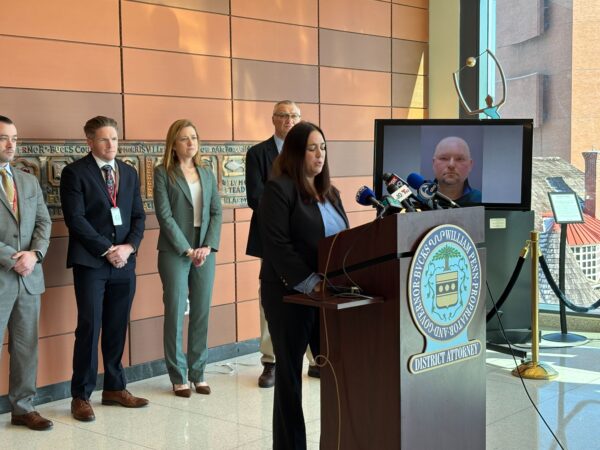
    Over three decades, in music shop backrooms and, sometimes, his own home, Timothy Shay molested 18 boys whose parents trusted him to teach them piano and saxophone lessons.

    On Tuesday, as Shay, 50, was sentenced to 18 to 54 years in state prison, Bucks County Court Judge Stephen Corr expressed outrage over his crimes.

    “You stole from these boys their childhoods, you stole from them their love of music, you stole from them their ability to love, and you stole from them their adulthood, because they are still living with this,” Corr said.

    “Quite frankly, if someone hadn’t spoken up and given these men the courage to speak up, you might still be out there perpetrating your crime on other victims,” he added.

    Shay, of Middletown Township, pleaded no contest in September to corruption of minors and related crimes in connection with the assaults, which began in the late 1990s and ended only with his arrest in February 2025, prosecutors said. That arrest came after one victim, decades after his abuse occurred, filed a police report.

    For years, Shay advertised himself as a piano and saxophone teacher based at music stores throughout Central Bucks County, including D-Town Guitars & Skateboards in Doylestown and Coyle’s in Richboro, according to First Assistant District Attorney Kristin McElroy.

    During those lessons, she said, Shay groomed his young students. The 18 men who came forward described a similar pattern: Shay targeted them when they were preteens, and would start each lesson by massaging their wrists as a way of “warming them up” before gradually moving his hands toward other parts of their body.

    In subsequent lessons, they said, Shay touched their genitals or performed sex acts. Some said Shay would use neurolinguistic programming to put them into a meditative state before groping them. Others said Shay touched them dozens of times.

    One man who spoke in court Tuesday said the abuse ended only when he begged his parents to stop sending him to music lessons.

    “Timothy Shay took his position of trust with me as a child, in a closed setting, to satisfy his own perversions,” he said. “Today marks a sense of closure I thought I’d never receive.”

    Another man said his ability to form lasting relationships or be intimate with women was destroyed by Shay’s abuse. He struggled, he said, to trust even his family.

    A third told the judge Shay was a friend of his family’s and molested him while serving as his babysitter. He dropped out of school, struggled with drug addiction, and isolated himself from his family, he said.

    “Tim Shay stole my self-esteem, my libido, and my faith in God and left me with a head full of passive ideation about my death,” he said.

    Shay’s manipulation extended to the boys’ parents, according to McElroy, the prosecutor. He would wait until their parents trusted him, and no longer attended the music lessons, before beginning to assault the boys.

    “The families were literally paying this defendant to enrich their children’s lives through music, and he took it as an opportunity to abuse them,” she said. “It speaks to the level of cruelty he showed.”

    And she noted that as county detectives were investigating Shay, they found a cache of child pornography on his cell phone.

    Shay’s attorney, Stephanie Moyer, asked the judge for leniency, noting that Shay had been the victim of sexual abuse as a child.

    But Corr was not swayed, and fashioned a prison sentence for Shay that took into account each victim.

    “You don’t get a bulk discount for coming here with 18 victims,” Corr said. “We have to bring justice for each of these men.”

  • Haverford College president declines to consider removing Howard Lutnick’s name from the library

    Haverford College president declines to consider removing Howard Lutnick’s name from the library

    Haverford College will not consider removing U.S. Commerce Secretary and mega donor Howard Lutnick’s name from its library despite student calls to do so, the school announced Wednesday.

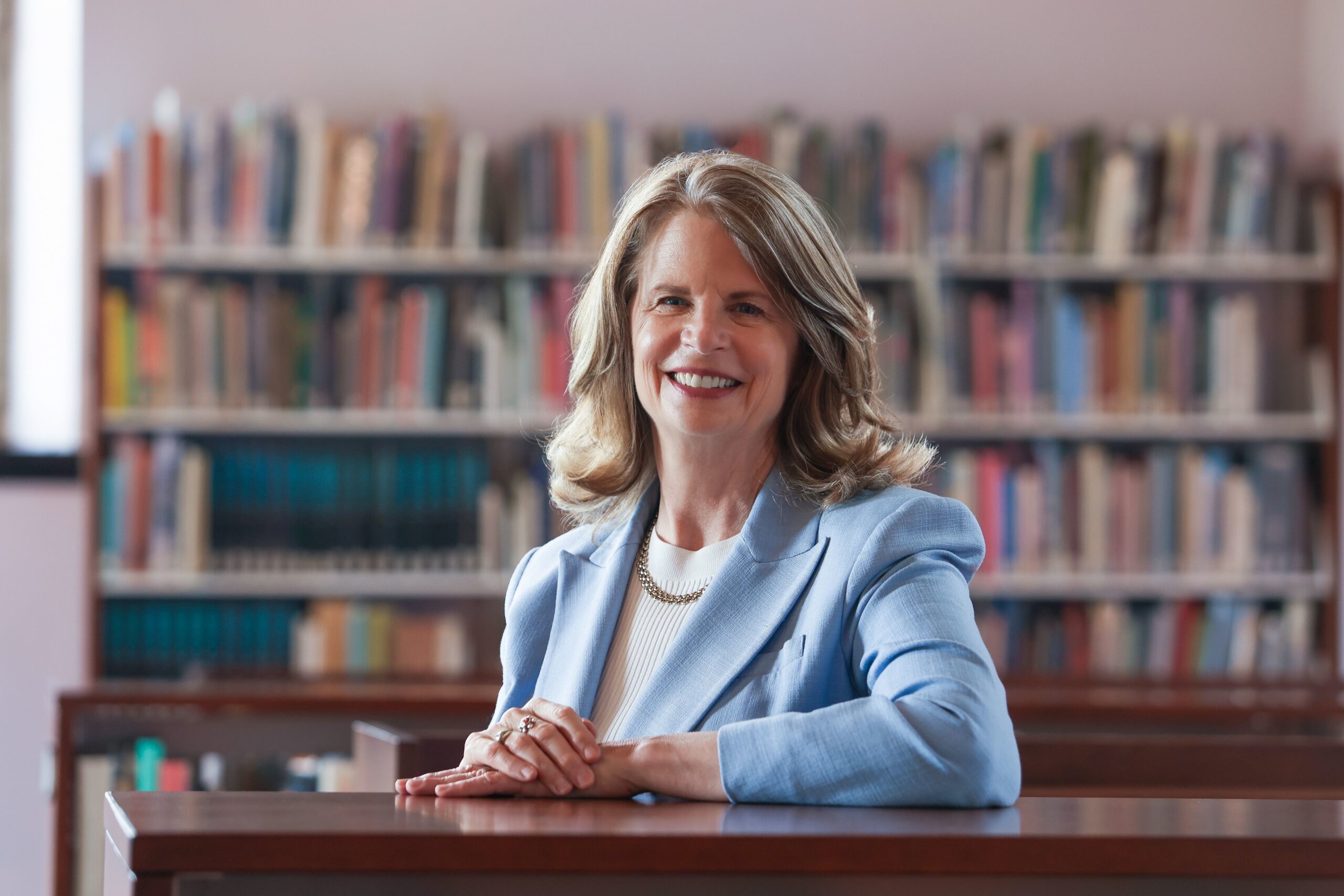
    President Wendy Raymond’s announcement came 30 days after the student body voted by an overwhelming majority to ask that she establish a review committee to consider removing his name. But Raymond said she will not accept the student body’s resolution.

    “I do not believe this matter meets the threshold necessary to move forward with a committee,” Raymond wrote in an email to the students’ council copresidents.

    Haverford College President Wendy Raymond announced she would not consider removing Howard Lutnick’s name from the school’s library.

    Concern has been mounting about Lutnick, the former chair of Haverford’s board of managers, since Department of Justice documents released earlier this year showed he had contact with sex offender Jeffrey Epstein as recently as 2018, long after Epstein pleaded guilty to obtaining a minor for prostitution and soliciting a prostitute.

    Raymond did not elaborate on her reasons and declined to comment through a spokesperson, but the decision was immediately panned by students.

    The council copresidents expressed their “deep disappointment” in an email to students.

    “The committee would have been a valuable step in our college’s ongoing reckoning with sexual assault,” wrote Ben Fligelman and Sarah Weill-Jones. “We hope that in the coming weeks and months, President Raymond will reevaluate her decision and understand the profound importance of convening a review committee.”

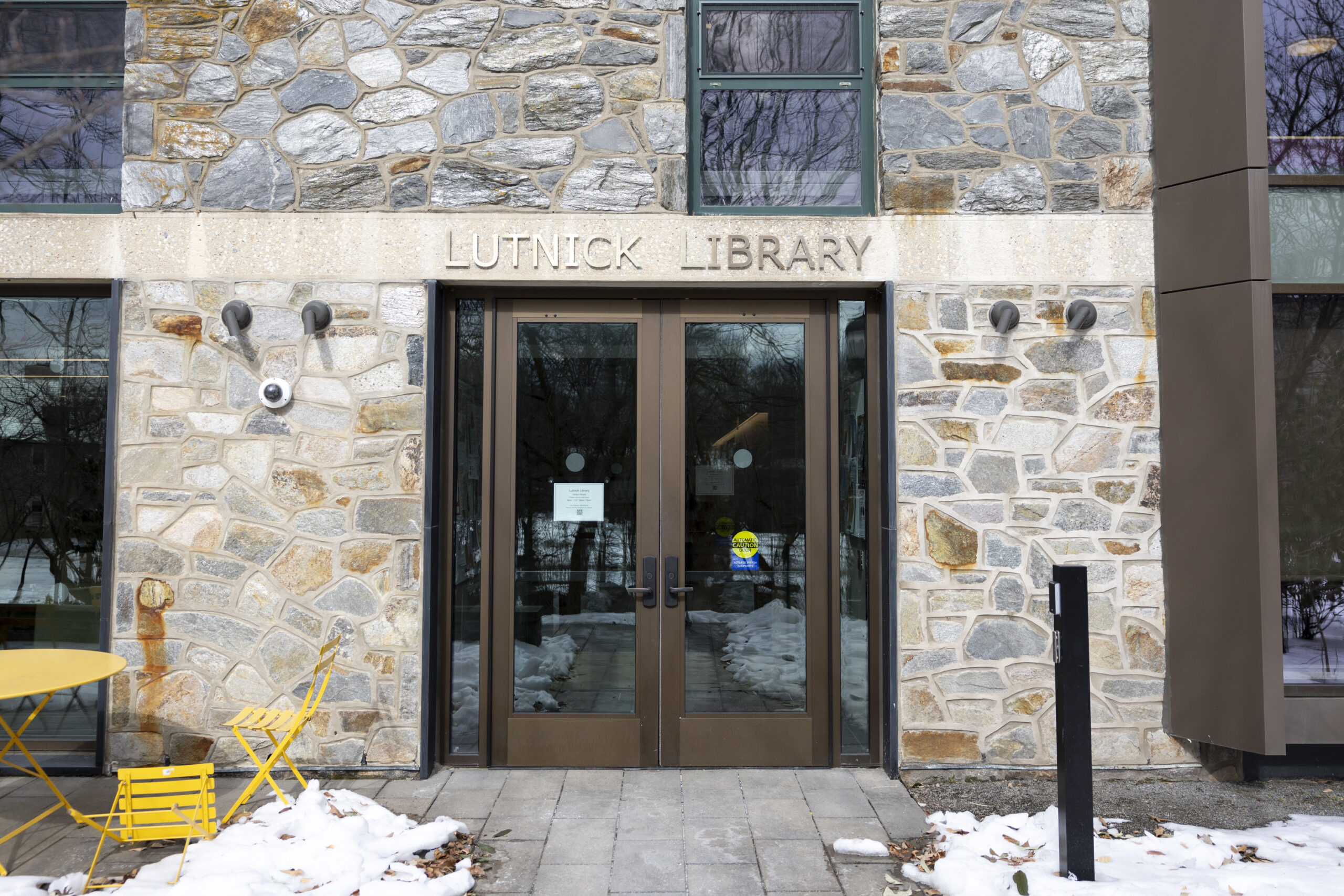
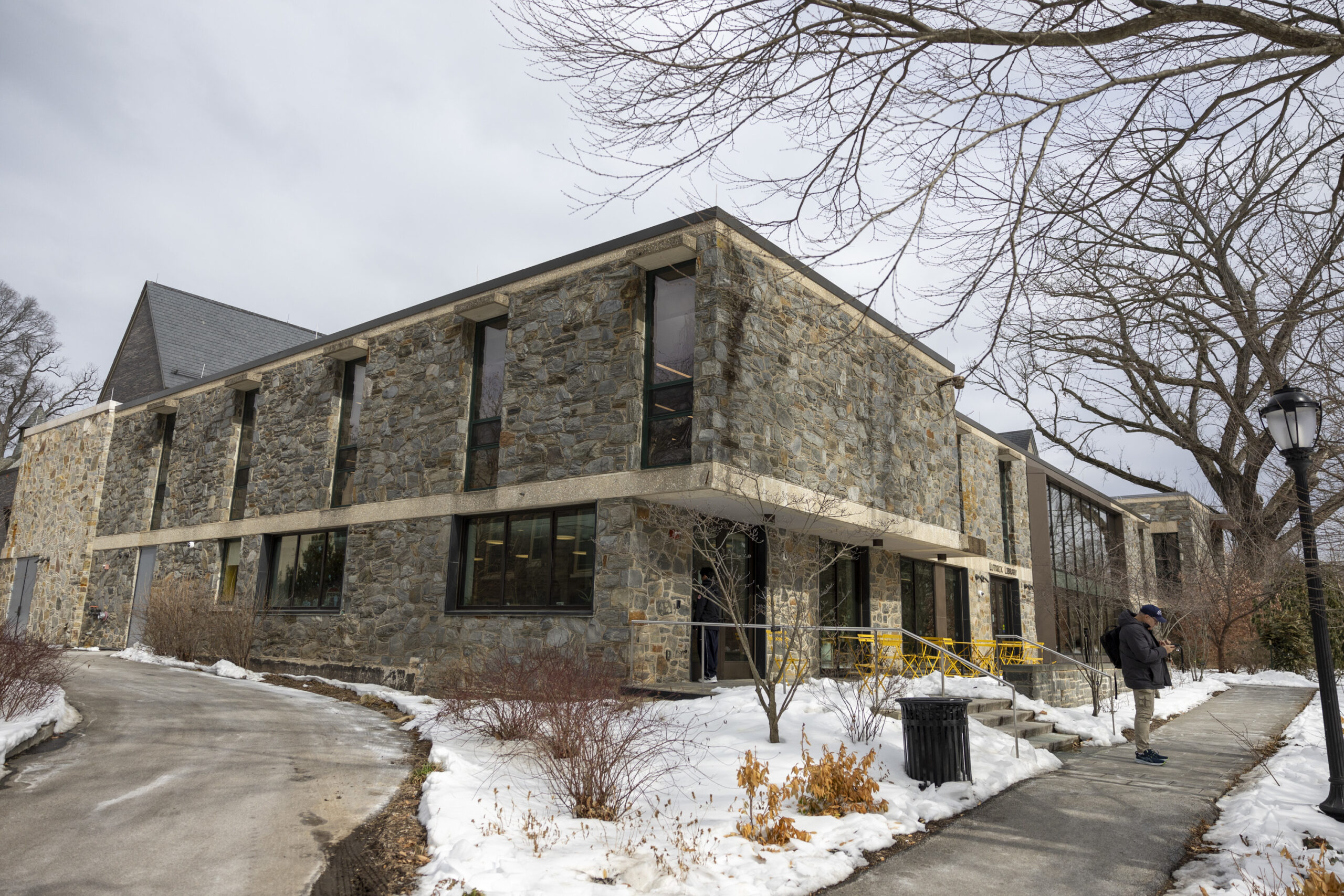
    The outside of the Lutnick Library at Haverford College.

    The Haverford Survivor Collective, which started in 2023 and is led by Haverford students and survivors of sexual assault, called the decision “disappointing, unsurprising and categorically insulting” in a statement. It is even more painful that the decision was released on Denim Day, an international day of support for survivors, the collective wrote.

    “What should have been a meaningful day of solidarity and collective support has instead become a stinging reminder of how far Haverford still has to go,” the group wrote.

    Senior English major Paeton Smith-Hiebert, co-founder of the collective, said Raymond in a meeting with some students Tuesday shared her reasoning for why the Lutnick situation did not meet the threshold.

    Raymond said, according to Smith-Hiebert, there needed to be “pretty unambiguous evidence of harm being directly committed” and that “association wasn’t enough.”

    Arshia Seth, another student who is a member of the collective board, said when pressed by those present, Raymond said the threshold would be if Lutnick had “direct ties to trafficking.”

    The president also told students she wished she had had more time to make the decision, but plenary rules require that she respond within 30 days, Smith-Hiebert said. Whether that means she will continue to weigh the matter is unclear.

    “Looking forward, … I — and future presidents — will retain the ongoing responsibility to consider the relevant facts at any given moment in time, and to act in consideration of the best interests of Haverford’s educational mission,” Raymond, who announced in November she would retire as president in June 2027, said in her statement. “…The board of managers too will remain engaged.”

    Raymond’s announcement Wednesday also said she and the college “stand in solidarity with survivors of sexual violence.”

    Raymond previously said she had heard from “a growing number” of Haverford alumni “who have written to express their dismay” about Lutnick’s ties to Epstein, which included a visit by Lutnick and his wife to Epstein’s private island. She said in February that she would consider forming a review committee.

    Lutnick’s name was put on the library after a then-record $25 million donation he and his wife made in 2014. Lutnick, a 1983 Haverford graduate, has given the school $65 million and is one of its biggest donors.

    If Raymond had established a committee, it would have kick-started a multistep process that the school follows when considering changing building names. Raymond would have considered the committee recommendation before then making her own recommendation to the external affairs committee of the board of managers, as well as to its chair and vice chair. The external affairs committee then would have made its recommendation to the full board of managers, who ultimately decide whether a building should be renamed.

    Under Haverford’s gift policy, the school can rename a building if “the continued use of the name may be deemed detrimental to the college, or if circumstances change regarding the reason for the naming.”

    The students’ vote came during their plenary session on March 29. At least 66% of the student body living on campus had to be present at the session for discussion and votes to occur, and to pass, the resolution needed to win a simple majority. That 66% represents almost 900 students.

    “Students feel harmed and hurt by the presence of his name and association on campus,” Milja Dann, a sophomore psychology major from Woodbury, N.J., said in March, after attending the session.

    The Haverford Survivor Collective had been urging the college to form a committee even before the plenary.

    “Given the gravity of this situation, survivors are among those most directly affected,” Smith-Hiebert had written to Raymond earlier this year. “Many are feeling significant harm and institutional betrayal … While I understand there are many stakeholders to consult, it is difficult to reconcile the stated commitment to engagement with the apparent absence of those most impacted.”

    The student resolution asked the college to include student representation on the review committee, along with staff from several offices, including institutional diversity, equity, and access. It also called on college leadership “to stand in solidarity with victims of assault.”

    And it asked the board of managers to consult directly with students before making final decisions to rename the library and or whom it would be named for.

    The resolution also called into question Lutnick’s leadership at Cantor Fitzgerald, the New York City financial firm where he formerly served as chairman. The Securities and Exchange Commission charged the firm in 2024 with violating laws related to regulatory disclosure, and Cantor agreed to pay a civil penalty. Cantor Gaming in 2016 agreed to pay $16.5 million in penalties to the federal government “to resolve a criminal investigation into the company’s past involvement in illegal gambling and money laundering schemes,” according to a release from the U.S. Attorney’s Office.

    During congressional testimony, Lutnick said he visited Epstein’s island with his family in 2012. Lutnick previously said he had not been in a room with Epstein, whom he found “disgusting,” since 2005.

    A Commerce Department spokesperson told The Associated Press in January that Lutnick had had “limited interactions” with Epstein, with his wife in attendance, and had not been accused of “wrongdoing.” Lutnick told lawmakers during his testimony: “I did not have any relationship with him. I barely had anything to do with him.”

    The outside of the Lutnick Library at Haverford College.

    In addition to the library, which also bears the name of Lutnick’s wife, Allison, Haverford’s indoor tennis and track center is named for his brother Gary Lutnick, a Cantor Fitzgerald employee who was killed on 9/11, and the fine arts building carries the name of his mother, Jane Lutnick, a painter. Lutnick also funded the college’s Cantor Fitzgerald Art Gallery.

    Students, however, said they were focusing on the library in the resolution because of its prominence.

    Before Raymond’s decision was announced, Adam Marcello, a Haverford student, in an opinion piece for the Haverford Clerk, the student newspaper, said students needed to keep the pressure on.

    “If students want the renaming to succeed, they will need to sustain visible, organized pressure,” Marcello wrote. “Epstein posters scattered across the library or letters tacked to the doors are not enough. We need to make inaction more costly than action.”

  • Two Jenkintown ‘psychics’ will face a county judge in $600,000 theft case

    Two Jenkintown ‘psychics’ will face a county judge in $600,000 theft case

    Two Montgomery County women, in times of personal turmoil, turned to two self-proclaimed psychics in Jenkintown for comfort and guidance.

    Instead, they testified Monday, Gina Marks and Steve Nicklas strung them along, persuaded them to hand over a combined $600,000 in money and luxury goods, and threatened to attack and blackmail them when they tried to get the items back.

    One woman said at Nicklas’ preliminary hearing that she felt compelled to work with them because they told her that her ex-wife was being targeted by “black magic” and that her life was in danger.

    “As someone who loved my wife and my family, I felt like I had no choice,” she said. “I wanted to save them.”

    District Judge R. Emmett Madden dismissed four charges against Nicklas, 41, including racketeering and dealing in unlawful proceeds, but held him for trial on theft and related crimes. Marks, his paramour and business partner, waived her preliminary hearing and will face a county judge on all of the charges.

    Marks, 53, has been convicted of similar fraud before, in Florida and Maryland, including stealing $340,000 from clients she promised to rid of “curses.”

    Nicklas’ attorney, Elizabeth Lippy, argued that Marks, not he, was the one who ran Jenkintown Psychic Visions and directed the transfer of money and high-priced items, including designer purses and watches.

    “This is not the Jenkintown mafia,” Lippy said, referencing the use of racketeering charges to disrupt organized crime rings. “This is a storefront psychic who advertised her own abilities, and giving money to Mr. Nicklas doesn’t create a corrupt organization.”

    Assistant District Attorney Christian Taffe presented evidence that between 2022 and their arrest in October, Marks and Nicklas encouraged the two women to make multiple wire transfers to bank accounts and a CashApp account operated by Nicklas. Marks also instructed them to withdraw large amounts of cash and to store the money in pillowcases as part of various rituals with supposedly paranormal purposes.

    One woman said she hired Marks in hopes that her ex-fiancé, who had called off their wedding, would reach out to her and come back into her life.

    She said Marks initially told her to keep the money in her home, but later asked her to bring it to her and Nicklas in person as part of a “marriage ritual.”

    That ritual, the woman said, also required a $6,000 Chanel purse that Marks told her to purchase after asking her to extend a higher line of credit with her bank.

    Marks, she said, promised to return both the purse and money to her.

    “She told me not to worry about money,” the woman said, “because ‘money comes and money goes.’”

    After months of cajoling Marks, the woman received a fraction of her money and the purse, which she was able to return to the store for a partial refund.

    When the women pressed for more money to be returned, she said Marks threatened to contact her ex and create fake social media accounts for her, using personal information she had shared during their psychic readings.

    The other victim said Marks placed similar demands on her: In addition to a pillowcase full of money, she was directed to buy expensive Rolex and Cartier watches, again as part of a ritual.

    When the woman tried to get her money back, Marks became irate, she testified. Nicklas would then join the conversation, telling her to “trust the process” and promising that everything would be returned to her if she completed the ritual.

    Lippy, Nicklas’ attorney, asserted that no theft had occurred. Both women, she said, believed in the paranormal and had agreed to pay for psychic services.

    “Both of these victims have free will,” she said. “When a psychic promises their services, it’s a service nonetheless.”

  • This is one of Philly’s biggest illegal dumps. Cleaning it up is a logistical nightmare.

    This is one of Philly’s biggest illegal dumps. Cleaning it up is a logistical nightmare.

    Viewed from below, the scale of the illegal dump is daunting, spanning the length and depth of a steep ravine for at least one block, spilling along before coming to a dirty halt near a clear stream.

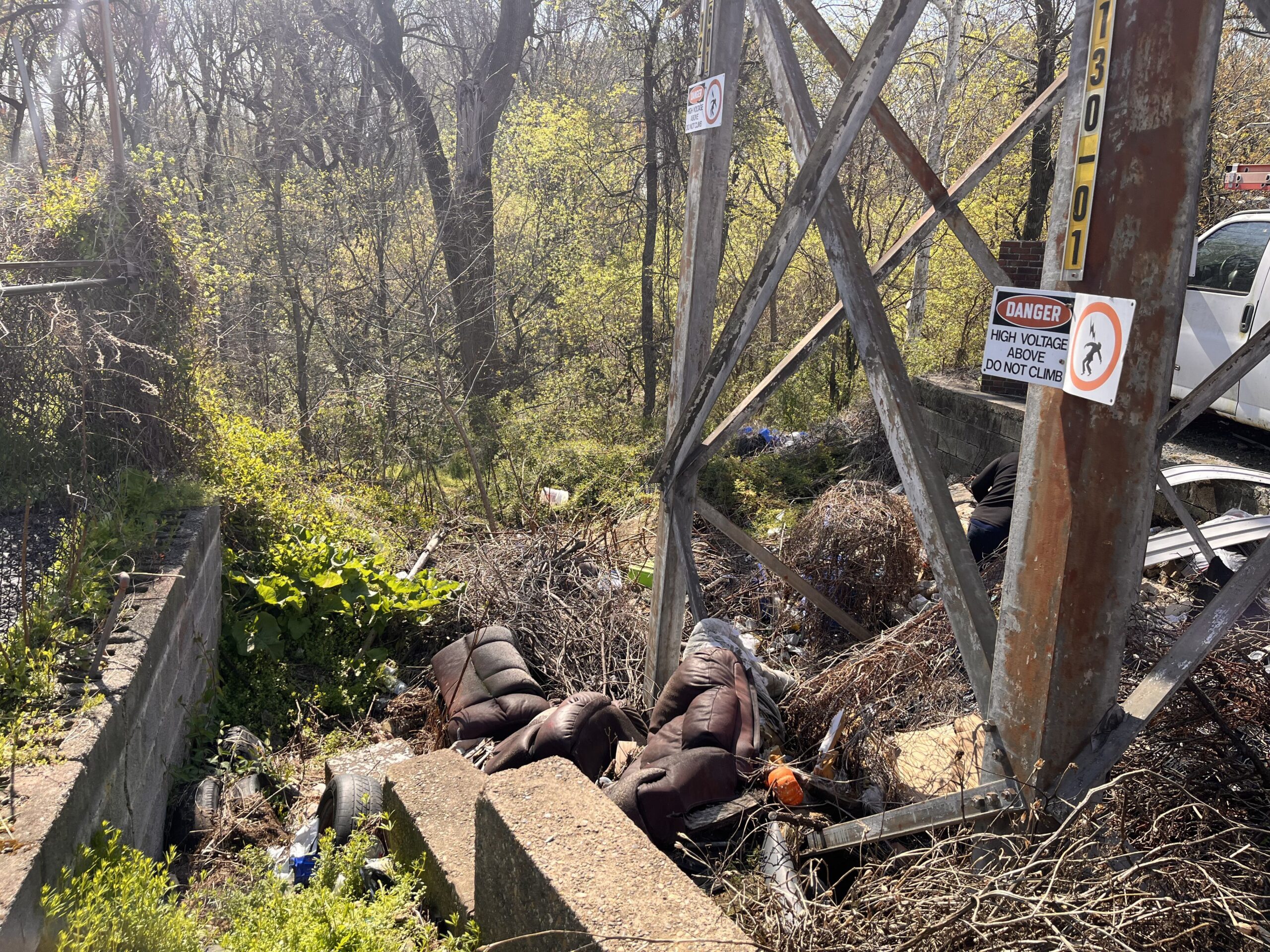
    Viewed from above, it’s a vertiginous array of broken appliances, ratty furniture, dirty toys, old tires, used mattresses, and other detritus. The rear hatch of a white Toyota RAV4 pokes through weeds. A boat is still hitched to a trailer loaded with rusting liquid propane tanks.

    City officials don’t know how long the slope off Pennway Street in Northeast Philadelphia has been the site of illegal dumping. But they know it presents a big logistical task to clean it out.

    “It’s certainly one of the larger dumps we’ve had to deal with,” said Carlton Williams, director of the city’s Clean and Green Initiatives Office.

    Williams expects that it will be far more difficult to clean than the 4,000 tires found in last April in Tacony Creek Park. Those were hauled out by city workers and 200 volunteers.

    “We’ll probably have to get cranes. And it’s going to be challenging to get equipment back there,” Williams noted. “This has been a hidden place for people to illegally dump for some time.”

    window.addEventListener(“message”,function(a){if(void 0!==a.data[“datawrapper-height”]){var e=document.querySelectorAll(“iframe”);for(var t in a.data[“datawrapper-height”])for(var r,i=0;r=e[i];i++)if(r.contentWindow===a.source){var d=a.data[“datawrapper-height”][t]+”px”;r.style.height=d}}});

    A treacherous location

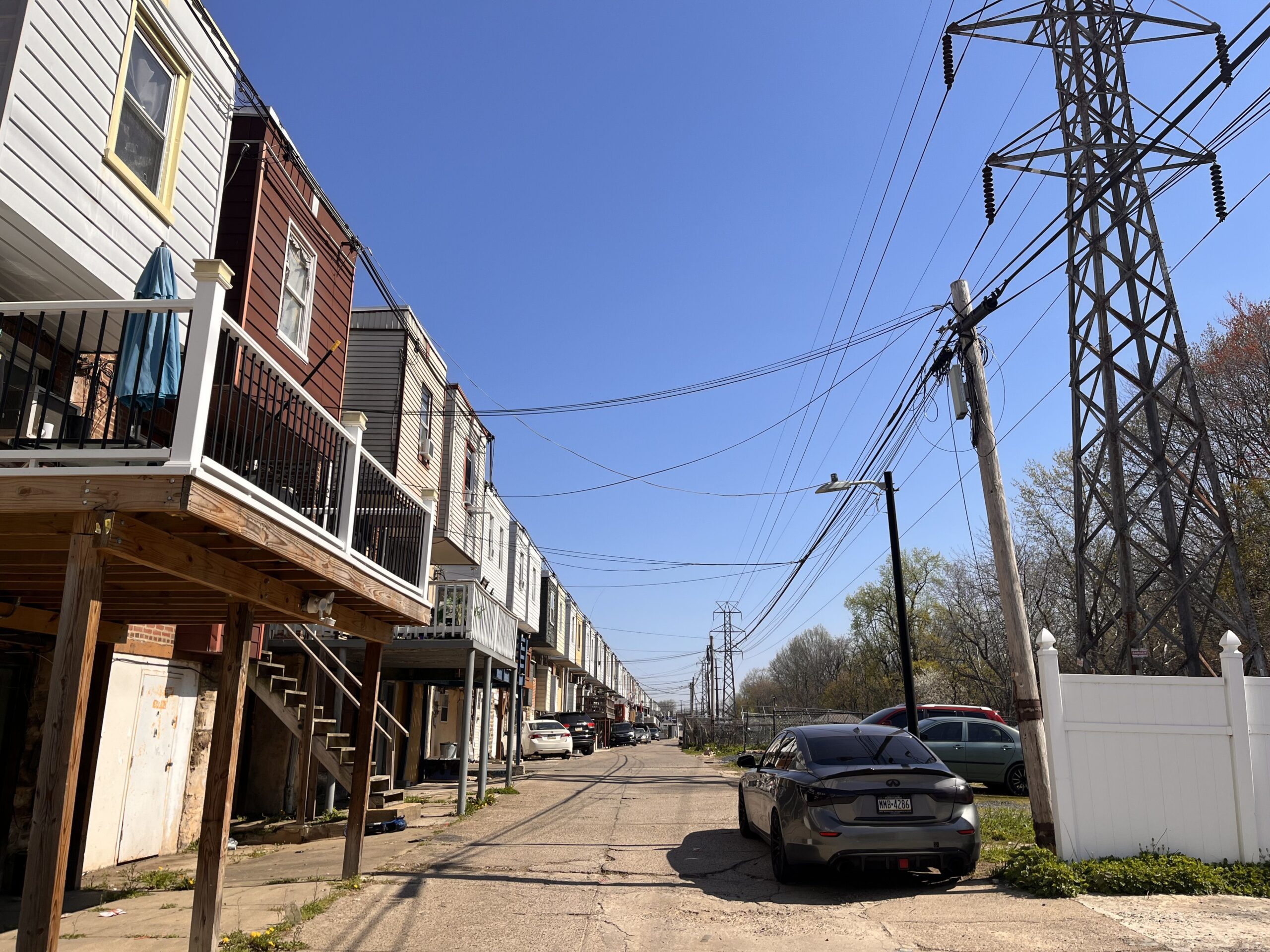
    The first obstacle to cleaning out the dump is its location. It begins at the edge of an alley under high-voltage wires. Area residents park their cars in the alley and some have erected sheds.

    The top of the slope is treacherous, filled with trash, chunks of concrete, and thickets of bramble that are easy to snag or trip on.

    A view of the top of the illegal dump under power lines off Pennway Street in Philadelphia.

    Using volunteers to haul things out is probably not practical given the potential danger, Williams said.

    From below, the dump is hidden by woods that adjoin the grounds of Friends Hospital. To view it, you have to leave a small trail, walk down a vegetation-choked embankment, ford a spring-fed tributary of Tacony Creek, and trudge through wetlands.

    There is no direct access road from the bottom.

    On a recent day, a man was picking through the rubble.

    “Looking for metal,” he mumbled.

    The top of a ravine that serves as an illegal dump off Pennway Street in Northeast Philadelphia as viewed April 10, 2026.

    Who owns the land?

    The second major obstacle will be untangling ownership of the property, sorting out responsibility, and paying for it.

    Williams said the city is currently tracking down ownership of whatever parcels might be involved.

    Peco did not respond to an Inquirer email by deadline about whether any of the dump falls on its property or easements.

    It’s not clear who is doing the dumping — construction crews, residents, or both.

    “We’re still trying to figure out a plan,” Williams said. “We need to identify the property owner. Then we have to gain access.”

    Williams also said it will be a challenge to prevent dumping in the future.

    Philadelphia already has 400 surveillance cameras used to monitor known dump sites and can tap a broader network operated by the police department and other agencies. It anticipates purchasing an additional 100 cameras.

    It has also installed bollards and gates that prevent vehicles from entering dump locations and is more aggressively pursuing and fining violators.

    The rear of Pennway Street in Northeast Philadelphia as viewed April 10, 2026.

    ‘A huge psychological impact’

    The dump was first reported to the city by the nonprofit Tookany/Tacony Frankford Watershed Partnership (TTF), which helps manage the city-owned Tacony Creek Park.

    TTF has an office at the Friends Hospital complex off Roosevelt Boulevard. The nonprofit is helping with a yet unnamed 50-acre preserve on the hospital grounds that connects to Tacony Creek Park.

    A portion of the dump is behind a broken fence at the edge of the grounds.

    The dump off Pennway Street spills to the edge of a broken fence.

    “This is one of the harder ones to tackle,” said Justin DiBerardinis, executive director of TTF. “We’re at the beginning of a journey to take care of one of the biggest dumps that a lot of us have seen.”

    DiBerardinis suspects contractors are dumping there, but also residents.

    Cleaning it up, he says, will be “extremely complex.”

    He’s also heartened by what he sees as the city’s willingness to address the logistical challenges presented by illegal landfills.

    DiBerardinis said the dump mars the landscape, and rests only yards from a tributary of Tacony Creek that serves as the edge of the 50-acre preserve.

    A spring-fed tributary of Tacony Creek flows between the illegal dump off Pennway Street in Northeast Philadelphia and the grounds of Friends Hospital as viewed April 10, 2026.

    “That stream is really clear, like spring-fed water coming from the earth,“ DiBerardinis said. ”To have that in our city is such a rare and special thing.“

    He senses growing community support for tackling litter and a backlash against dumping. Last Saturday, about 100 volunteers came to the preserve to help clean it, though the dump remained inaccessible.

    He thinks the community can play a role in the cleanup, if even for moral support and watchful eyes in the future.

    “I’m seeing people getting inspired at the possibility of the restoration and the protection of those places, and to have access for them and their children,” DiBerardinis said. “Dumping like that has a huge psychological impact on a community.”

  • Gov. Shapiro says dispute over security fence with Abington neighbors has no place in federal court

    Gov. Shapiro says dispute over security fence with Abington neighbors has no place in federal court

    While Gov. Josh Shapiro was showing the Dutch royal couple around Independence Mall this week, his general counsel was taking steps to quell a dispute that hit Pennsylvania’s first couple close to home.

    Shapiro asked a U.S. district judge to dismiss a federal lawsuit filed by his Abington neighbors over a parcel of land between their residences.

    Jeremy and Simone Mock accused the governor and his wife, Lori Shapiro, of illegally occupying part of their yard to build an eight-foot security fence last summer in what the Mocks claim in the lawsuit was an “outrageous abuse of power.”

    On the same February day the Mocks filed their lawsuit, the Shapiros sued their neighbors in Montgomery County Court, asking a judge to declare the disputed 2,900-square-foot strip of lawn as part of their property.

    The Mocks’ lawsuit has no place in federal court, Monday’s filing contends, as a controversy over a property boundary is a common matter for state courts.

    Plus, the Mocks cannot bring a lawsuit against Shapiro as governor or against the Pennsylvania State Police because the couple’s claims are against Shapiro as a property owner, not action he took in his official capacity as governor, according to the filing.

    “That the Shapiros allowed [state police] to access the disputed parcel in a manner similar to that which the Shapiros access that parcel does not magically convert this private dispute to ‘state action,’” the motion says.

    The motion also argues the state police are immune from litigation in federal court as a state agency.

    The Shapiros have lived in the sleepy Montco neighborhood for more than 23 years, with the Mocks as their neighbors for less than a decade.

    The feud began when security updates were proposed to Shapiro’s home after a man firebombed the state-owned governor’s residence in Harrisburg in April 2025 while Shapiro and his family slept inside, according to court filings.

    In response, state police proposed security upgrades to the governor’s personal residence in Abington, which included the installation of an eight-foot fence along the property’s perimeter.

    <div data-analytics-viewport="autotune" data-analytics-label="shapiroyard" id="shapiroyard__graphic" data-iframe-fallback="https://media.inquirer.com/storage/inquirer/ai2html/shapiroyard/fallback-mobile.jpg" style="width: 0; min-width: 100% !important; border: none;" data-iframe-fallback-height="643" data-iframe="https://media.inquirer.com/storage/inquirer/ai2html/shapiroyard/index.html" data-iframe-height="620.999999999999" data-iframe-resizable></div> <script type="text/javascript">(function() { var l = function() { new pym.Parent( 'shapiroyard__graphic', 'https://media.inquirer.com/storage/inquirer/ai2html/shapiroyard/index.html'); }; if(typeof(pym) === 'undefined') { var h = document.getElementsByTagName('head')[0], s = document.createElement('script'); s.type = 'text/javascript'; s.src = 'https://pym.nprapps.org/pym.v1.min.js'; s.onload = l; h.appendChild(s); } else { l(); } })(); </script>

    A land surveyor discovered in summer 2025 that the Mocks actually owned about 2,900 square feet of land that the Shapiros had believed was a part of their property since they bought the home in 2003.

    The Mocks, whose property is adjacent to the Shapiros’, say in their suit that the planned location of the fence is on their property unlawfully and would violate their rights.

    The Shapiros began planting arborvitae-type trees and other plants on the Mocks’ property, flying drones over it, threatening to remove healthy trees, and “chasing away” contractors who came to work in the Mocks’ yard, the Mocks’ suit says.

    The complaint also accuses Shapiro of directing state police to patrol the property. Troopers instructed the Mocks to leave the area of the yard multiple times, calling it a “disputed” area or “security zone,” the suit says.

    The Shapiros say they are the rightful owners of the land through adverse possession, a legal mechanism that extends a person ownership of a property they have actively used for at least 21 years.

    The governor and his wife are asking a Montgomery County Court judge to find them the “legal and equitable owners” of the area in dispute. Until the state judge makes a determination, the federal court should abstain from considering the Mocks’ federal lawsuit, the new filing says.

    Outside of court filings, Shapiro attacked the lawsuit as politically motivated.

    The Mocks are represented by Wally Zimolong, a Delaware County attorney who describes himself on his website as the “‘go-to’ lawyer in Pennsylvania for conservative causes and candidates.” Zimolong previously represented the political campaigns of President Donald Trump and U.S. Sen. Dave McCormick (R., Pa.).

    “The Governor looks forward to a swift resolution and will not be bullied by anyone trying to score cheap political points, especially at the expense of his family’s safety and well-being,” Will Simons, a spokesperson for Shapiro, a Democrat running for reelection, said in a statement in February.

    Zimolong did not comment on the new filing, but previously said the Mocks are open to resolving the dispute outside of court.

    “At base, this is a straightforward defense of the property rights of two innocent owners, who were living peacefully next to the Shapiros for over nine years,” the attorney said in a February statement.

    Staff writer Gillian McGoldrick contributed to this article.