A failed exam and getting cut from University of Rochester’s basketball team led Gov. Josh Shapiro to his first political endeavor: student government.
Decades of politicking later — winding his way from Pennsylvania state representative, to county commissioner, then attorney general, and now the commonwealth’s highest executive — Shapiro says he still looks at leadership through the prism of basketball.
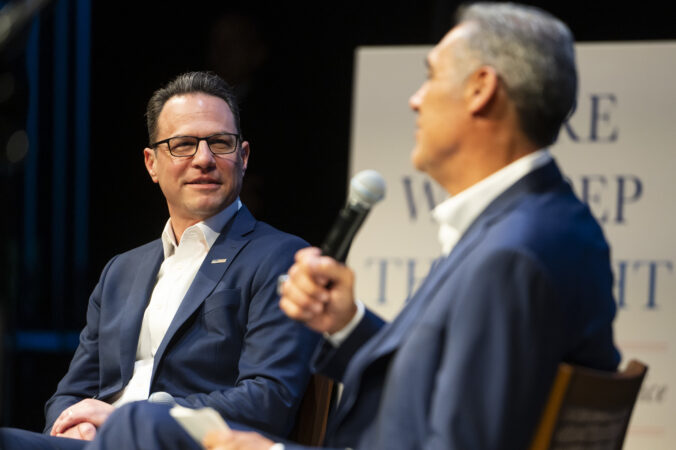
At the latest event to promote his memoir, Where We Keep the Light, Shapiro discussed his love of the sport Saturday evening at Villanova University alongside decorated former men’s basketball coach Jay Wright. While Shapiro is often floated as a likely 2028 presidential candidate, the conversation was largely apolitical, instead focusing on core themes of the book — family, faith, and the governor’s ethos.
Shapiro, once a point guard with a midrange jumper, talked about his “get stuff done” mentality and putting “points on the board” for Pennsylvanians.
“Teams win when every single player, every coach — even the players on the bench who don’t have a role on the floor — each operates at their highest level,” Shapiro said. “My job is to get the most out of myself and all the people around me so we can be successful for others.”
The governor spoke extensively about his propensity to listen: to constituents on the campaign trail; to his wife and children; to his beliefs. Shapiro said his family and Jewish faith have driven him to a life of public service.
A premier Catholic basketball school, Villanova was an apt venue for the event, as Shapiro described how he sees religion as a way to bridge divides. (Shapiro, however, incorrectly identified Villanova as Jesuit — not Augustinian. The crowd jeered, and Wright assured him it was a common mistake. “Even the Catholics don’t know all the orders,” Wright said.)
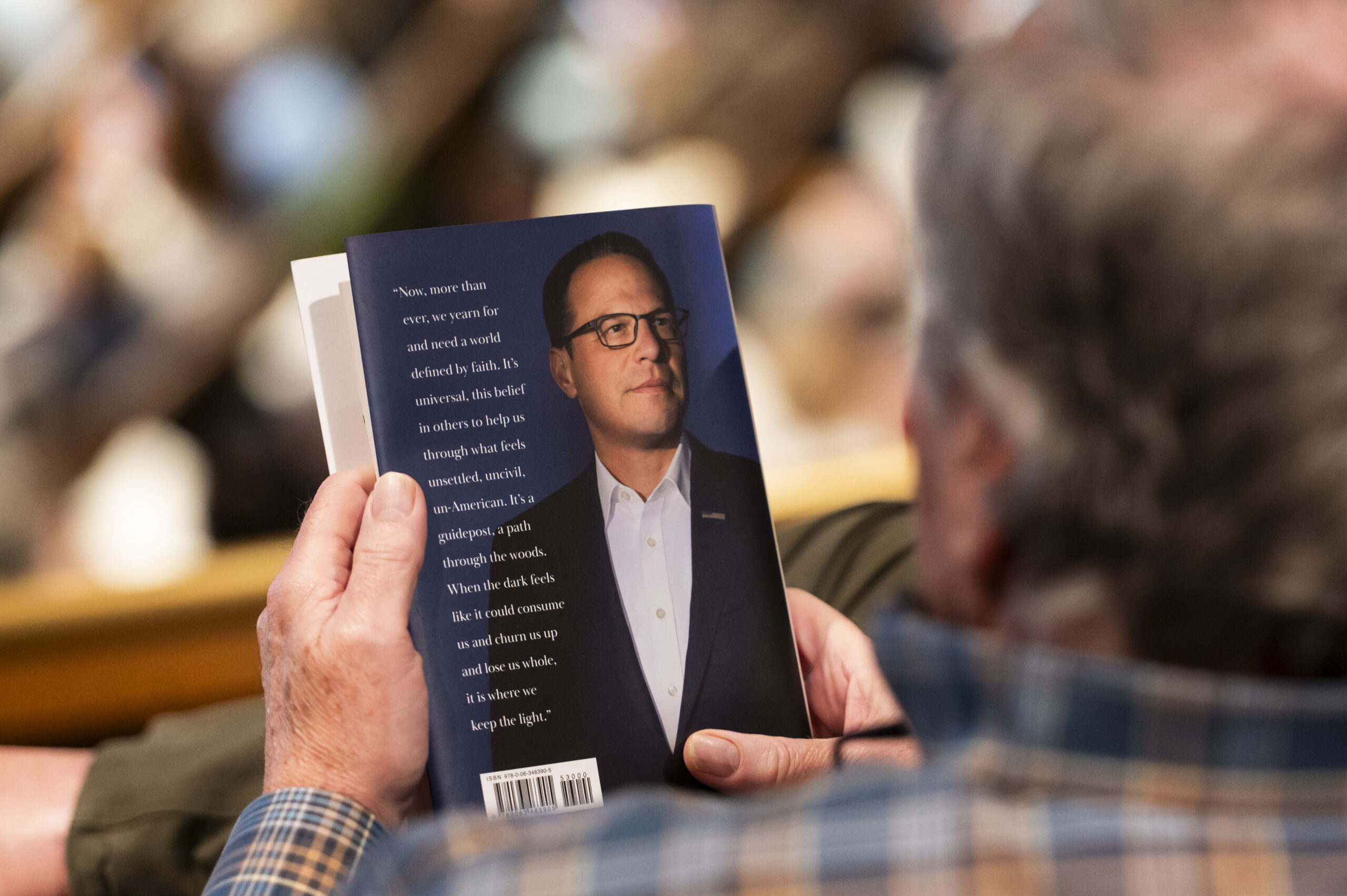
An attendee looks at the back of Gov. Josh Shapiro’s new book, “Where We Keep the Light,” before a book discussion with Jay Wright, former head men’s basketball coach, at Villanova University on Saturday, Feb. 28, 2026.
“By being close to my faith, it allows me to understand people of other faiths better,” Shapiro said. “There’s different ways religions go about their practice, there’s different customs, there’s different ceremonies. But there really is a shared through line of faith.
“Love thy neighbor, feed the hungry, clothe the naked — these are all universal teachings that I think sometimes we end up losing sight of, and frankly, I think that leads to a lot of division in our society.”
“There’s an emotional toll. … [My family] all had to be in,” Shapiro said. “They were all in because you can’t let the bad guys win. We can’t let those who try to intimidate good people from doing this work prevail. You’ve got to stay in the arena, and you’ve got to keep fighting.”
While the conversation largely steered away from politics, Shapiro promised fair midterm elections, discussed views on capital punishment, and touched on civil discourse and unrest nationwide.
“I’m still betting on the people of Pennsylvania — betting on the American people — to help us through this challenging moment that we’re in,” he said. “If the people really continue to rise up, … demand more, seek justice, try and build a world that has more equity in it, eventually politicians are enough to hear those voices, and that’s going to correct our politics. That’s going to help us find more light.”
Staff writer Katie Bernard contributed to this article.
Elizabeth Killough remembers the beginning of Media’s Fair Trade history as follows: She was sitting at her desk at UnTours, an unconventional Media-based travel company, next to her boss and UnTours founder Hal Taussig.
Taussig, sitting in his beloved rickety desk chair, began to share a vision with Killough: What if his hometown of Media could become a hub for Fair Trade, a global trading system that prioritizes quality products and fair wages for farmers in the developing world? What if Media’s shops and restaurants could stock products made and sold with equity and respect?
“I couldn’t even begin to imagine what that would be [like],” Killough remembers.
To humor Taussig, she googled “Fair Trade towns” (the internet was remarkably slow in the mid-2000s, so it took a few minutes to populate the results, she said). An email for Bruce Crowther, the father of Fair Trade in Garstang, England, popped up. Killough sent him a note. Despite the fact that it was 10 p.m. in England, Crowther wrote right back. He wanted to help make Taussig’s dream a reality.
In the months that followed, Taussig and Killough would help spearhead an effort to make Media the first Fair Trade town in the United States, a push that took the cooperation of local business owners, civic leaders, and borough council members. As Media marks 20 years of its Fair Trade Town status, Fair Trade products, and Taussig’s formidable footprint, can be found all over the Delaware County community.
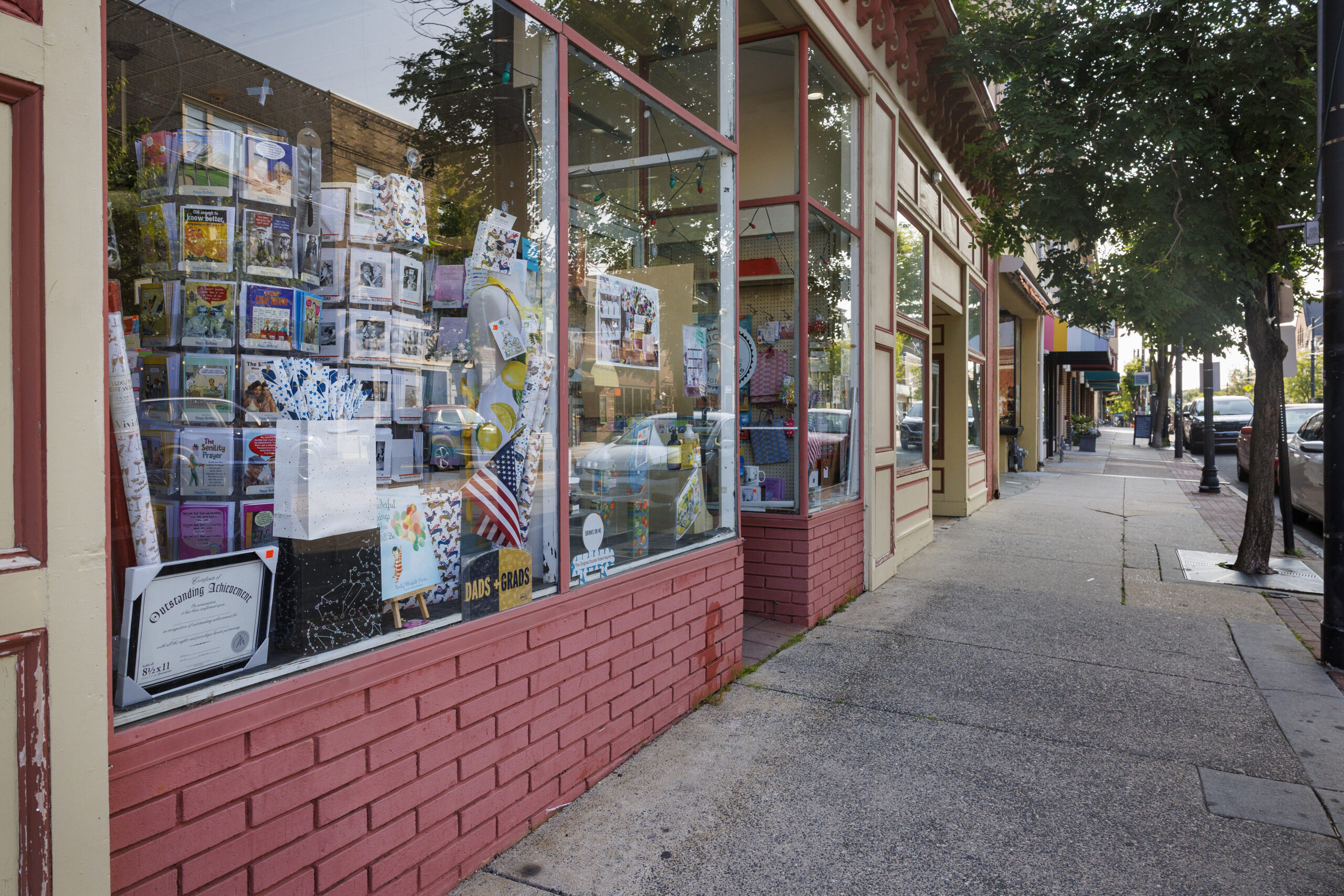
State Street, near Olive Street, on Wednesday, June 4, 2025, in Media, Pa. Businesses that sell Fair Trade products dot Media’s main commercial artery, a sign of the enduring legacy of Hal Taussig and Media’s Fair Trade advocates.
What is Fair Trade?
Fair Trade is a global trading arrangement under which farmers are paid higher wages in exchange for assurances that they will use eco-friendly practices, ensure safe working conditions, and invest in their communities. The trading practice seeks to uplift producers in the developing world, where environmental exploitation and forced labor can be common in the agriculture business. Common Fair Trade products include coffee, chocolate, and bananas.
Fair Trade guarantees farmers can charge minimum prices for goods, acting as a safety net against market instability. Some Fair Trade suppliers receive a “premium fund,” or an additional sum of money put aside to invest in education, healthcare, infrastructure, or business improvement products in their communities. In exchange for economic security, Fair Trade producers must provide workers with reasonable work hours, safe working conditions, and maternity leave, and are barred from using child and forced labor.
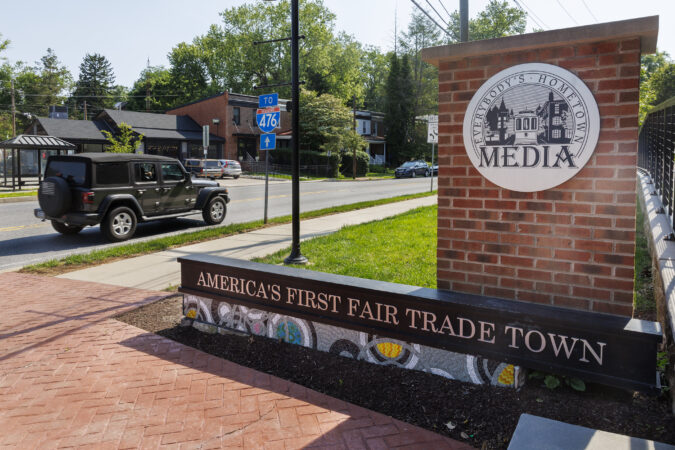
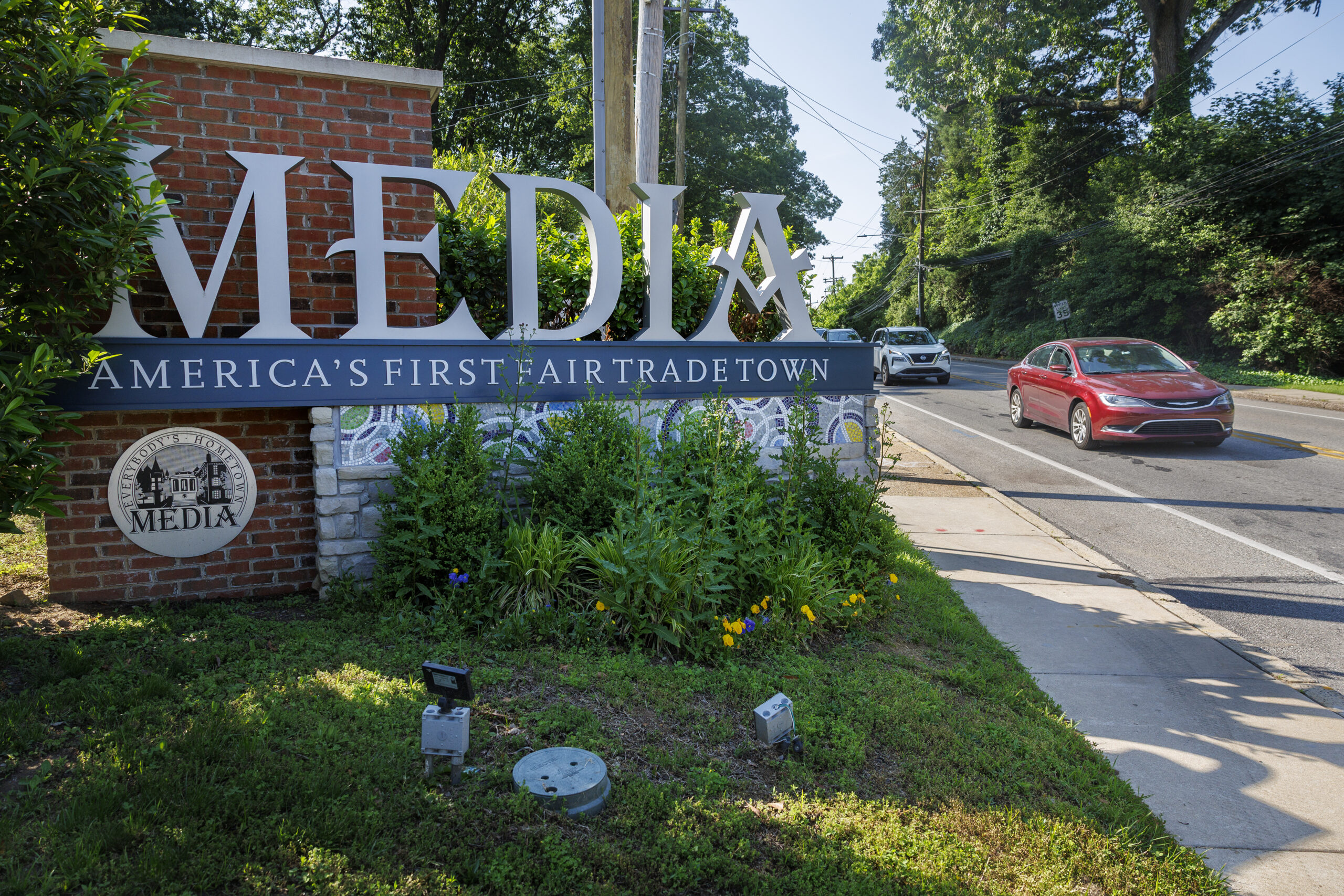
Killough’s email to Crowther set off a monthslong campaign to make Media the United States’s first Fair Trade Town, a moniker now proudly displayed on “Welcome to Media” signs on the borough’s outskirts.
Taussig had been thinking about sustainability in the global economy for decadesbefore Media’s formal designation. In 1992, Taussig and his wife, Norma, founded UnTours, an unconventional “slow travel company” that helped people connect to faraway lands through community engagement and sustainable tourism practices. Friends described Taussig as unique and empathetic. He was famously averse to making a profit, sharing UnTours’ returns with customers, staff, and, later, the UnTours Foundation, which invests in sustainable business ventures.
Taussig, who died in 2016, was “a really sweet man that cared about the world a lot,” said Ira Josephs, the executive director of the Media Fair Trade Committee.
Taussig and Killough began meeting with a group of stakeholders who shared the goal of bringing Fair Trade to Media. At the time, there was no organization overseeing Fair Trade communities in the U.S., so the Media group decided to “self-declare” under the criteria used by Garstang, the first Fair Trade Town in the world. They needed to persuade a certain number of Media retailers to sell Fair Trade-certified items and ask local schools and businessesto use Fair Trade goods. The guidelines also required Media to establish a Fair Trade committee; have an elected body pass a resolution supporting Fair Trade; and promote media coverage and education around Fair Trade.
A number of stores in Media already carried Fair Trade products, and many of its churches and Quaker meetinghouses used Fair Trade coffee and sugar. The working group made a website and brought on board Monica Simpson, a borough council member who helped convince the governing body to pass a Fair Trade resolution. The borough council saw it as a way for “this local community to make an international connection,” Killough said.
Once all of the criteria were met, “we just self-declared that we were the first Fair Trade town,” Josephs said.
At the time, New York City and Los Angeles were working on their own Fair Trade proposals. Yet Media, a 5,000-resident borough in the heart of Delco, beat them to the punch.
“It was rebellious,” Josephs said.
On July 12, 2006, Media held a public ceremony unveiling its status as a Fair Trade town.
Many of Media’s businesses got on board.
When Tara and Brent Endicott, the owners of downtown Media’s Burlap & Bean, first got into the coffee business, they knew they wanted “to feel like we were making a difference,” Tara Endicott said.
All of the coffee sold at Burlap & Bean is Fair Trade-certified and organic, a decision the Endicotts made in 2006 when they opened their first location in nearby Newtown Square,inspired in part by Media’s Fair Trade push.
Though their coffee-industry friends told them they were crazy for stocking only Fair Trade products, which are more expensive and harder to source, the Fair Trade beans won over the coffee purveyors and their Media-area customers.
Signage that reads, America’s First Free Trade Town, Media, PA., Wednesday, June 4, 2025. This sign is at N. Providence Road where it crosses N. Monroe Street.
Fair Trade in Media, two decades later
Fair Trade lives on in the stores, restaurants, and coffee shops that dot Media’s bustling downtown.
All of the international products at Earth & State, a pottery and craft shop, are from Fair Trade groups. Bittersweet Kitchen, a pizza and brunch spot, serves Fair Trade hot chocolate and coffee. Mom-and-daughter-owned yarn shop Homesewn sells yarn from Fair Trade Federation members and other companies that follow Fair Trade principles. Even Trader Joe’s, located in Media’s old armory building, stocks Fair Trade coffee.
On Valentine’s Day, the Media Fair Trade Committee hosted its annual Fair Trade chocolate tasting. The committee also hosts an annual juggling contest with Fair Trade soccer balls at Dining Under the Stars.
Fair Trade’s future is not entirely certain.
Fair Trade groups have come under scrutiny in recent years for corporatizing a once mission-driven practice. It has been hard at times to get businesses to splurge on Fair Trade goods, first during the 2008 recession and then again during the pandemic, Killough said. As rents rise in Media, there is a “constant turnover of store owners and restaurateurs,” Killough added, making it an ongoing effort to keep Fair Trade practices alive.
“It’s going to continue to require a lot of work, a lot of commitment, and a lot of education,” she said.
Last year was “the worst year financially that we’ve ever had,” Tara Endicott of Burlap & Bean said. Despite having the highest customer counts in Burlap & Bean’s history, high coffee prices and tariffs left the Endicotts taking home meager profits at the end of the day. They have thought about opening up their business to non-Fair Trade coffee but have not yet, relying on the hope that economic conditions will improve.
Ultimately, Brent Endicott said, he and his wife are proud to be in Media and to be serving Fair Trade beans.
“We’re thrilled to be able to do our part to help Media stay a certified Fair Trade town,” he said.
This suburban content is produced with support from the Leslie Miller and Richard Worley Foundation and The Lenfest Institute for Journalism. Editorial content is created independently of the project donors. Gifts to support The Inquirer’s high-impact journalism can be made at inquirer.com/donate. A list of Lenfest Institute donors can be found at lenfestinstitute.org/supporters.
“Why would you not want to study the thing that lets you study,” said Schechtman-Taylor, a senior from New York City. “The brain, that’s our entire world.”
Neuroscience has become the most popular major on the highly selective liberal arts campus on Philadelphia’s Main Line, counting nearby Bryn Mawr College students who also take classes at Haverford. And it’s only been around since 2021 when the two colleges — which have had a minor in the discipline since 2013 — decided to administer the joint major.
At Haverford, there were 24 majors the year it started; now there are 60. Bryn Mawr saw similar growth and currently has 49. Enrollment in Haverford’s neuroscience classes including both Bryn Mawr and Haverford students grew from 154 in 2014 to nearly 800 last fall.
“We knew that neuroscience was going to be popular, but we did not anticipate this growth,” said Helen White, Haverford’s provost, who noted the school recently hired another neuroscience professor to accommodate more students.
The major’s popularity is also growing at schools around the Philadelphia region — and across the country. Students and professors say neuroscience is popular because it’s interdisciplinary, involving psychology, biology, and chemistry, and can lead to a variety of careers. It can also be personal, because it involves studying diseases like Alzheimer’s and Parkinson’s, which have no cures, and the treatment of strokes and traumatic brain injuries.
“I would say about 90% of my students are coming into my lab because they have someone in their family with one of these diseases,” said Rob Fairman, a Haverford biology professor whose research focuses on neuroscience.
Haverford senior Alina Schechtman-Taylor, 21, of New York City, works as a teacher assistant in professor Laura Been’s lab.
A growing major
In 2008, 110 colleges nationally offered neuroscience majors; now, it’s about 330, said Raddy Ramos, associate professor in the Department of Biomedical Sciences at the New York Institute of Technology. Ramos, who coauthored studies on the topic, said there were more than 2,000 neuroscience graduates in 2008; in 2019, that number had grown to more than 7,200.
window.addEventListener(“message”,function(a){if(void 0!==a.data[“datawrapper-height”]){var e=document.querySelectorAll(“iframe”);for(var t in a.data[“datawrapper-height”])for(var r,i=0;r=e[i];i++)if(r.contentWindow===a.source){var d=a.data[“datawrapper-height”][t]+”px”;r.style.height=d}}});
Pennsylvania is a hot spot, with 36 colleges having programs in 2022-23, Ramos said — more than than any other state.
Drexel University, which has had a minor since 2015, launched its undergraduate major in neuroscience in 2024.
“We have seen a 45% increase in applications over the last two years,” a university spokesperson said.
Pennsylvania State University in November announced it was launching two new undergraduate majors in neuroscience, one offered by the biology department and the other by the biobehavioral health department.
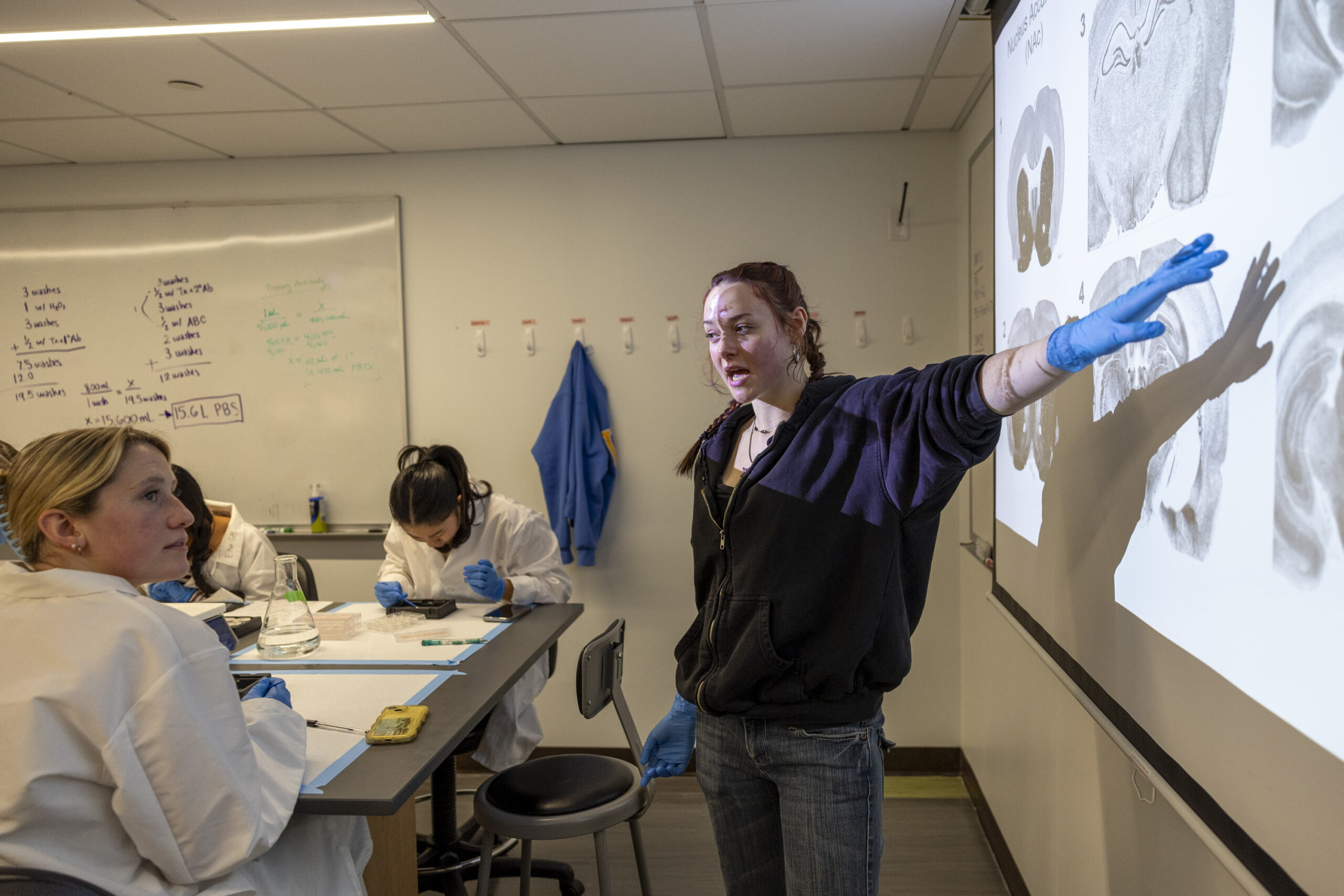
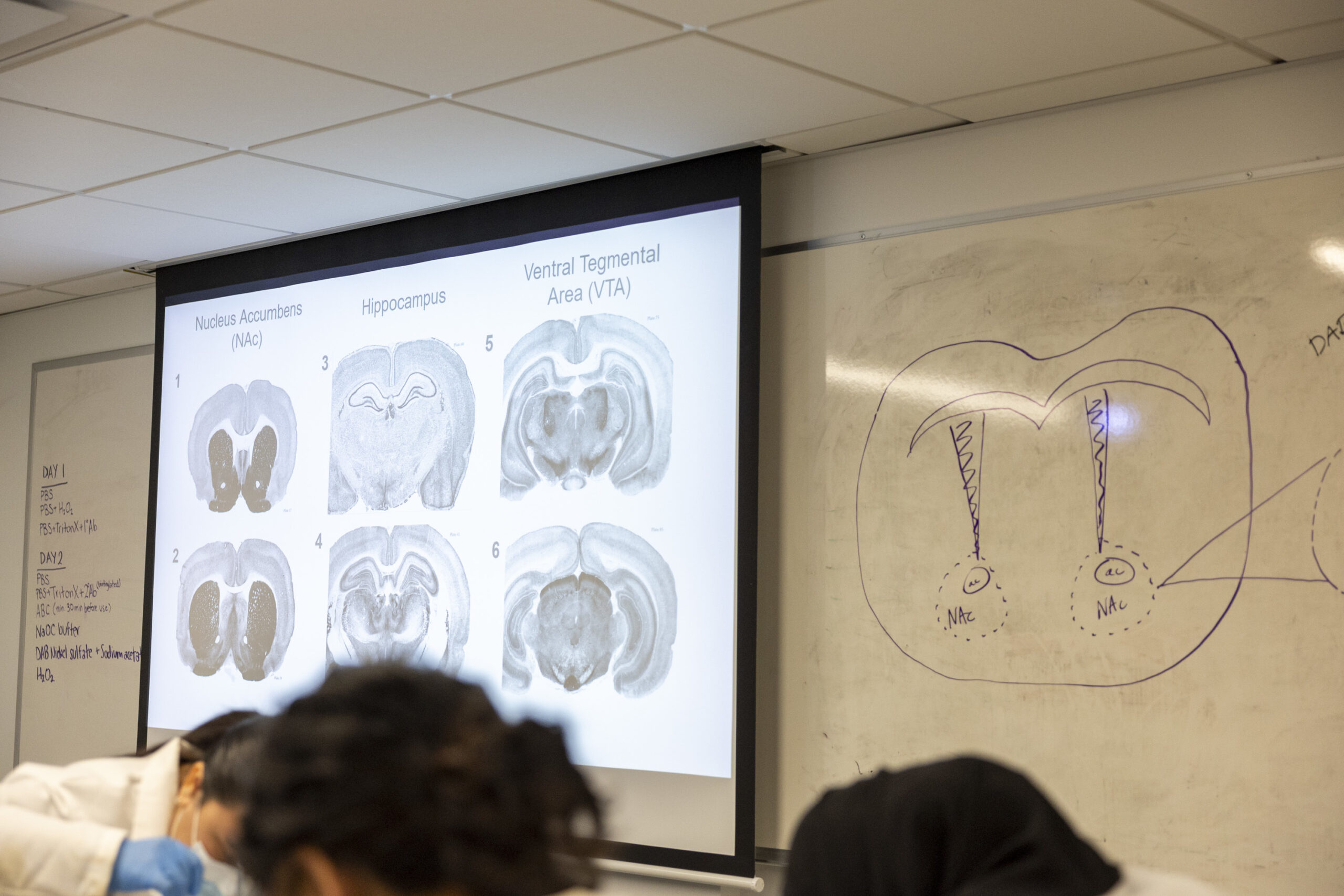
Students look for sections of rat brains that match the sections projected on the screen in a Haverford College lab.
Neuroscience has become especially popular among pre-med majors, school officials say. Otherpotential career paths include biotechnology, pharmacology, psychology, and neuroengineering, while somestudents go on to law school, business, or public policy.
“There’s a lot more awareness that mental health conditions are due to changes in the brain, and people want to understand that,” said Lisa Briand, associate professor and program director for Temple University’s neuroscience program.
At Temple, neuroscience has become the fourth largest of 30 majors in liberal arts, Briand said. The psychology department a few years ago changed its name to psychology and neuroscience, she said.
At the University of Pennsylvania a decade ago, 100 to 120 neuroscience majors graduated annually, said Lori Flanagan-Cato, associate professor of psychology and codirector of the undergraduate neuroscience program.
“Twice in the past 3 years we have had over 150,” she said.
Swarthmore College, a highly selective small liberal arts college, graduated 10 to 12 neuroscience majors a year about a decade ago, said Frank Durgin, professor of psychology who oversees the program.
“This year, we anticipate graduating 24 majors,” he said. “Next year, it’s 30.”
The college has added two professors in the last two years to accommodate growth, he said.
Why students study neuroscience
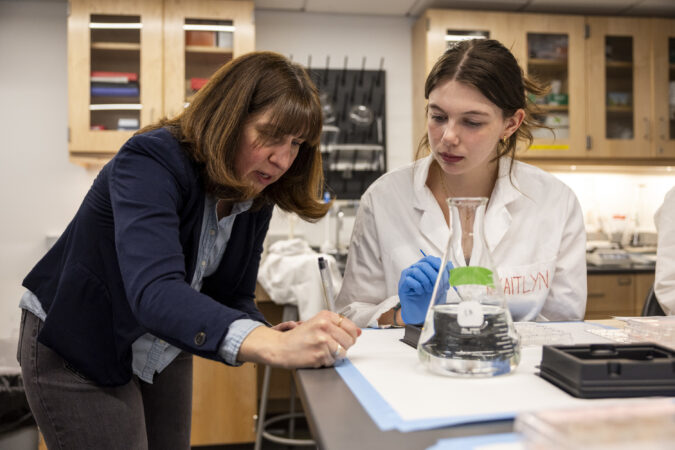
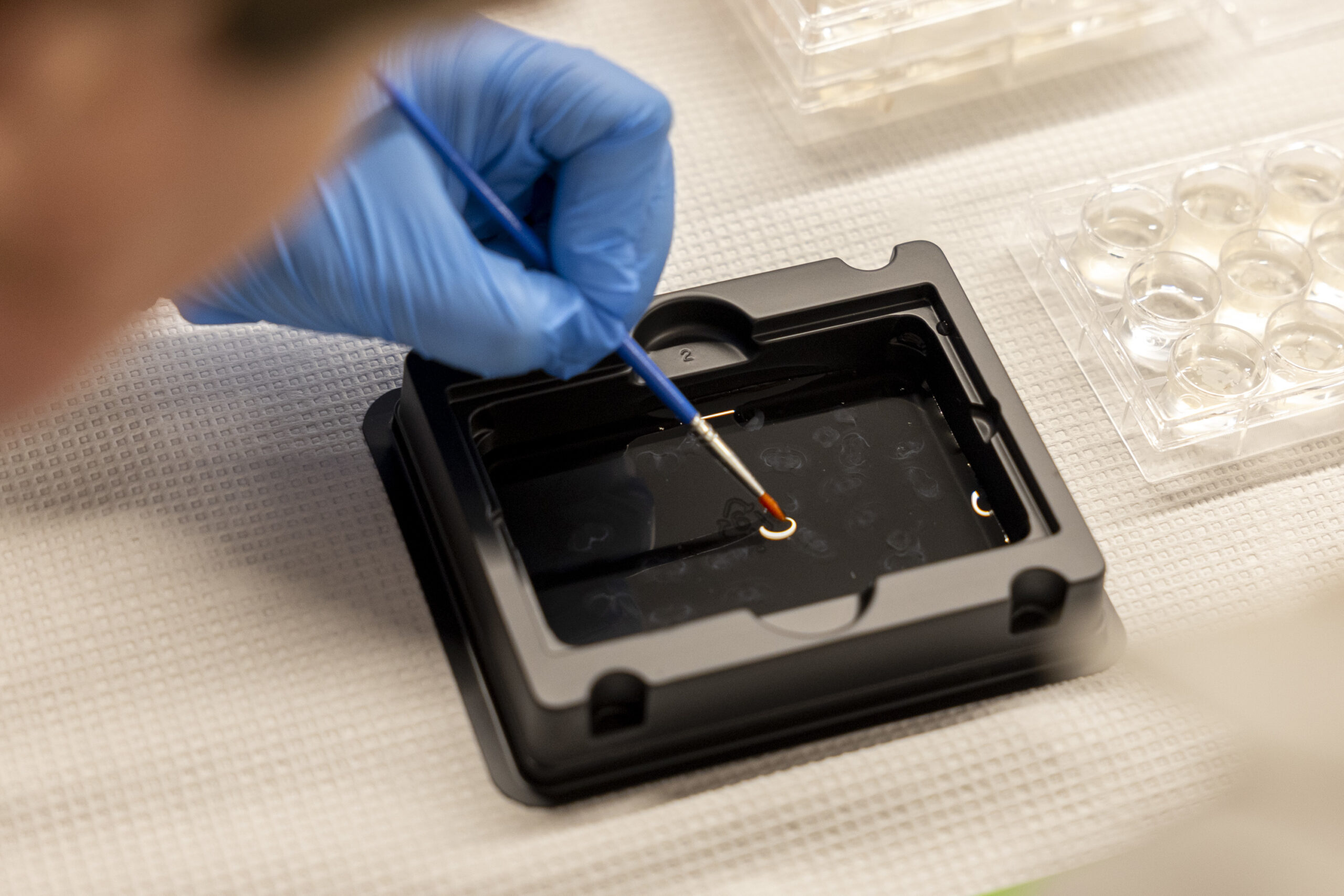
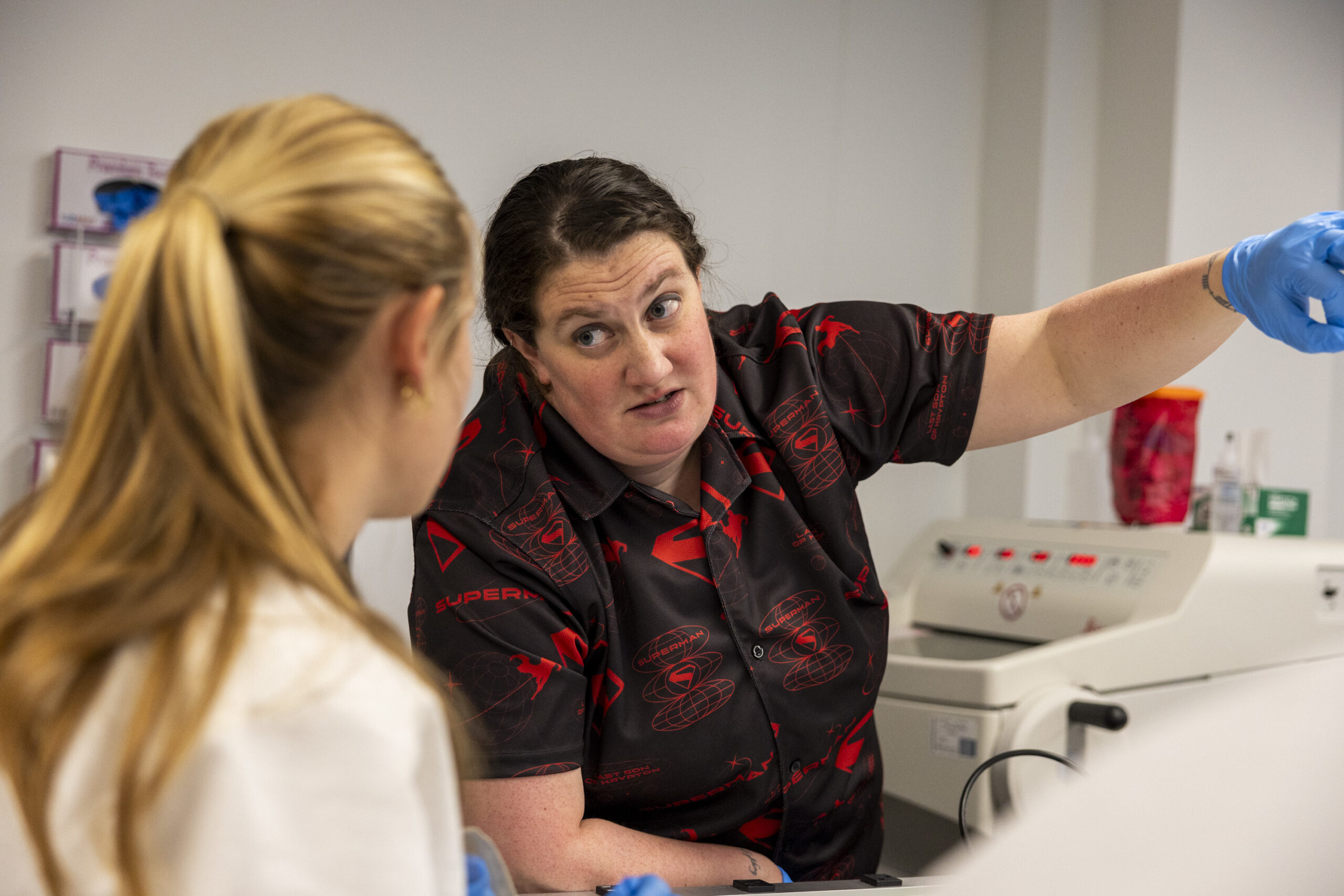
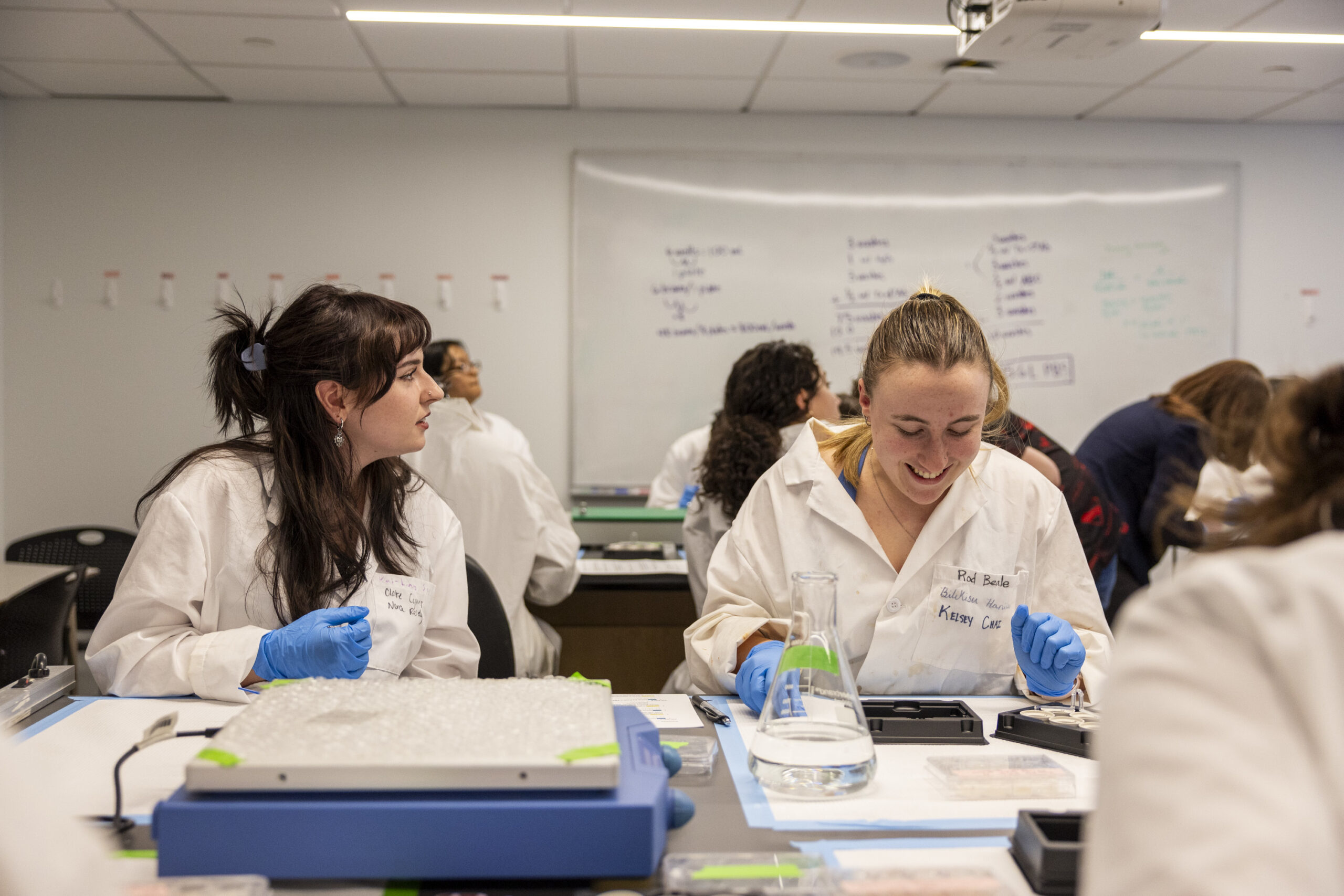
In a lab at Haverford one afternoon last month, 16 students in white lab coats poked with paintbrush tips at thin slices of rat brain in preservative fluid, preparing to stain them to look for which neurons were activated. Some of the rats received the drug Ritalin, commonly used for attention deficit disorder, while others did not. Students were trying to discern differences in their brains when they performed certain tasks, said Laura Been, associate professor of psychology and director of the bi-college neuroscience program.
A neuroscience student works with sections of rats’ brains in a lab at Haverford College.
“We can … try to learn something more about how this sort of drug treatment impacts the brain,” said Been, whose area of interest is behavioral neuroendocrinology, which looks at the relationship between hormones, the brain, and behavior.
Students in Been’s class had varied reasons for studying neuroscience.
Emily Black, visiting assistant professor of neuroscience at Haverford College, helps Savannah Shaw, 22, of Downingtown, during neuroscience lab work. “I really like the variety of the classes we can take in the major,” said Shaw, a senior who plans to go to medical school, possibly to become a neurologist. “You can go more the psychology route or go more biology.”
Sophia Lipari, 21, a junior from Jacksonville, Fla., whose father is a reproductive endocrinologist, is interested in hormones and the field of fertility.
Riley Fass, 20, a junior from Claremont, Calif., wants to be a special-education teacher. She already sees the connection between neuroscience and her job as a teacher’s assistant at a school where children have traumatic brain injuries and cerebral palsy.
“The topics we discuss — an injury here will result in this — I can actually see it in my students,” she said.
Iris Goxhaj (left), 21, of Northeast Philadelphia, and Riley Fass, 20, of Claremont, Calif., work with sections of rats’ brains in a lab at Haverford College.
Deeya Abrol’s interest was stoked when she worked with a child on the autism spectrum as a swim instructor. Abrol, 22, a senior from Los Gatos, Calif., plans to go to medical school.
Schechtman-Taylor meanwhile wants to pursue biomedical engineering and specifically developing medicines for the treatment of neurodegenerative disorders.
“I want to work on the treatment side,” she said.
Fairman, the Haverford biology professor, said a recent graduate’s mother had died of Huntington’s disease, meaning she has a 50% chance of getting it, he said. She worked in his lab and wanted to be involved in hisresearchon protein clumping in the brain and its effect on diseases such as Parkinson’s and Alzheimer’s.
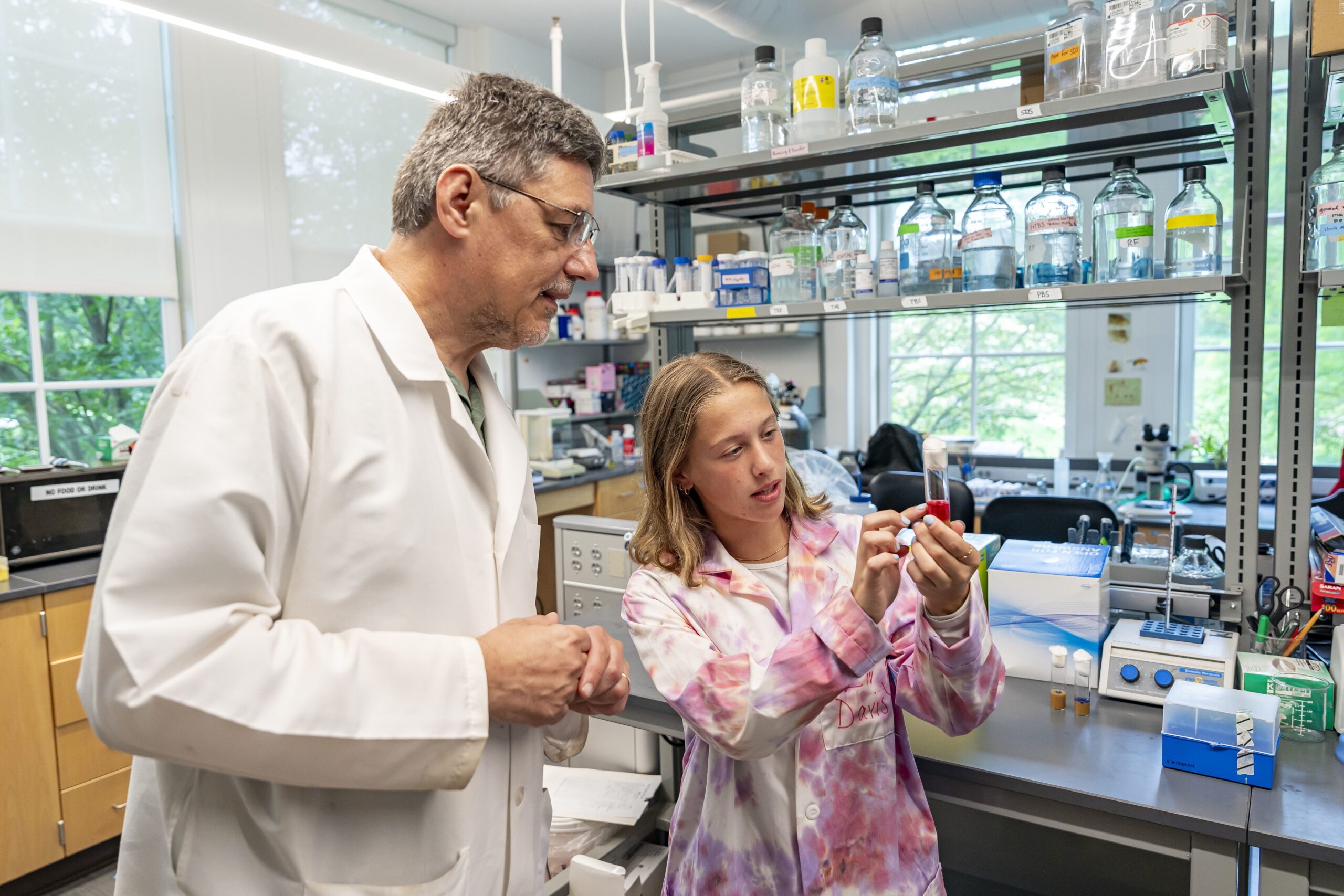
Rob Fairman, a professor of biology at Haverford College, and student Liv Davis are testing the effects of natural products on animal models with neurodegenerative diseases.
Junior Liv Davis, 21, wanted to help find a cure for Parkinson’s, which struck her grandmother in 2020.
“She’s had two falls in the last year and a half because it’s progressed pretty quickly,” said Davis, of Lanoka Harbor, N.J. “It’s hard to see someone you love so much live with it, but it makes it all the more rewarding to work toward fixing it.”
Davis, who has worked in Fairman’s lab since her freshman year, tried to get into an introduction to neuroscience class early on. But there wasn’t room. She ended up majoring in biology, which she thinks probably would have happened anyway.
About half the students working in Fairman’s lab are neuroscience majors, he said.
Davis is currently studying the effect of a chemical on sleeping fruit flies that have been genetically modified to carry the protein associated with Parkinson’s.
Last summer, she received an inaugural research fellowship funded by Shamir Khan, a Haverford alumnus and psychologist who was diagnosed with early-onset Parkinson’s.
Her grandmother was glad she could continue the research, said Davis, who plans to become a doctor.
“She always jokes with me,” Davis said. “‘Give me a spoonful of that chemical, whatever it is. If you need a test subject, you let me know.’”
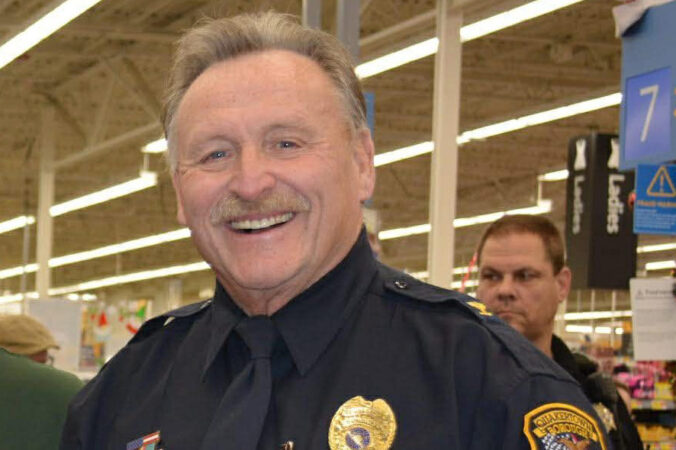
Quakertown Police Chief Scott McElree, a center of controversy for his role in a confrontation with anti-ICE protesters last week, has been placed on leave.
In response to a request for comment, McElree said Saturday he is “out with workman’s comp injuries.” He did not elaborate on what the injuries entailed.
On Friday, the Bucks County District Attorney’s Office said it was continuing its investigation into the Feb. 20 incident that resulted in the arrest of five teenagers on assault charges.
Quakertown’s solicitor said that McElree, who also is the borough manager, was placed on workers’ compensation leave for both positions, according to NBC10 and the Bucks County Courier Times. Efforts to reach other borough officials for comment were unsuccessful.
McElree had no record of alleged police abuses before the incident on Feb. 20, when bystander footage showed him apparently putting a teenage girl in a chokehold on a sidewalk as other youths scuffled with him.
Videos show McElree arriving at the protest, not in uniform, and confronting a group of students. In the footage, teenagers appear to strike McElree as he attempts to grab a student.
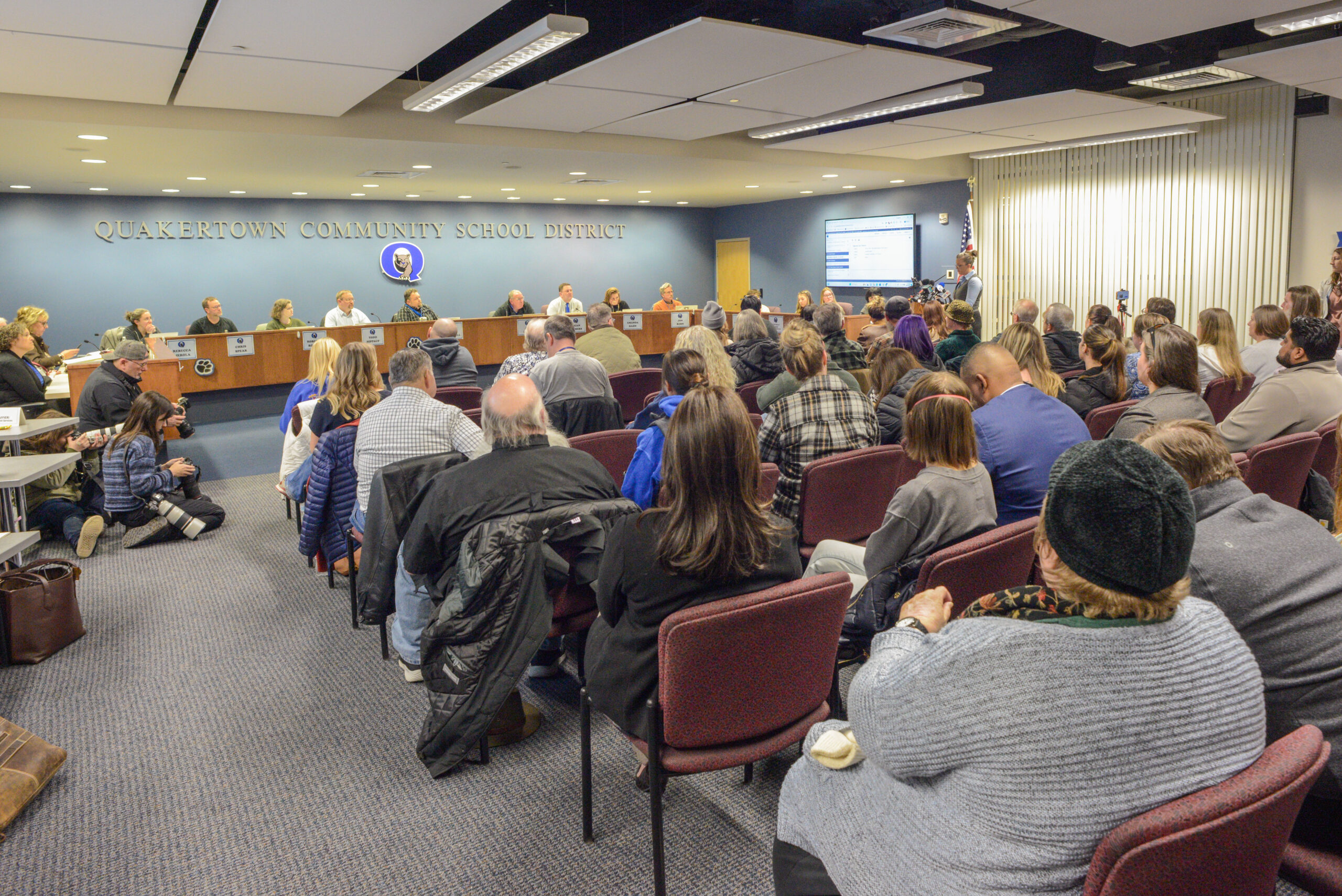
A parent makes remarks to the Quakertown Community School District Board at its meeting Thursday, Feb. 26, 2026, in Quakertown, Pa. Critics who addressed the board accused the district of not doing enough to support the students arrested during last week’s ICE protest.
A GoFundMe campaign was created to raise money for the arrested students’ legal fees, court costs, and medical and other expenses. So far, over $130,000 has been donated.
On Friday, the district attorney’s office encouraged anyone with cell phone footage or photos of the incident to come forward and contact county detectives.
It was unclear who would assume McElree’s duties as chief and borough manager.
Staff writer Brett Sholtis contributedto this article.
Robert Koopmeiners is up to here with this winter and is among the masses more than ready for the atmosphere to flip the switch.
“It’s getting kind of old,” he said. But he wasn’t complaining about Arctic freezes, or winter storms, or black ice, or hideously darkening mountains of plowed snow.
He was talking about the weather in Colorado, where he is a National Weather Service meteorologist, where bone-dry Denver has set nine high-temperature records since Dec. 1, where wildfire alerts were in effect, and water is getting scarce.
Warm West, cold East, and vice versa are standard fares in the great national atmospheric seesaw that hasn’t been doing much seesawing lately, as if a boulder has been placed atop our end of it.
That’s the result of an atmospheric roadblock for the ages in the high latitudes around Greenland, meteorologists say, that has allowed winter to reappear with a ferocity not experienced in several years in the Northeast, and a winterlong spring in parts of the West. The cold in the East may even be related to rising global temperatures.
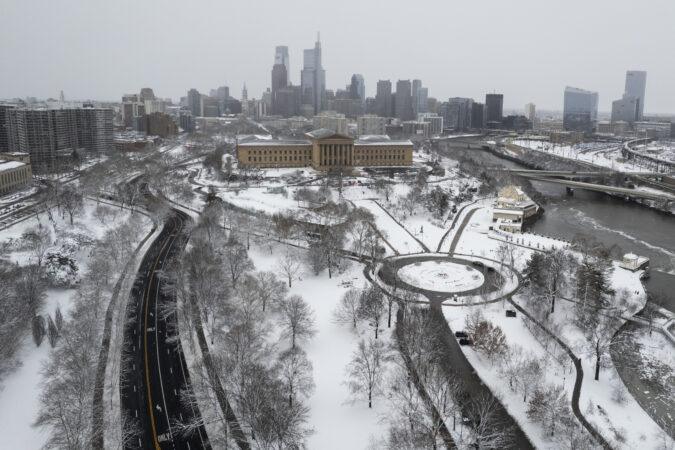
The result for the Philadelphia region has been one of the colder and snowier meteorological winters — the Dec. 1 to Feb. 28 period — on record. Officially Philadelphia has had more days of snow cover of an inch or more than in the five seasons ending with the winter of 2023-24 combined.
After quite a wintry start to the new week, with even some more snow possible, a major warmup is due to begin with a spring teaser possible next weekend. (It may turn colder the second half of the month, but that can wait.)
In the meantime, the atmosphere is enjoying a belly laugh over the preseason outlooks for the winter of 2025-26.
Philadelphia’s winter scorecard
By convention, the weather community divides the seasons into three-month increments. In part that’s in recognition of the fact that weather often has an adversarial relationship with astronomy. For example, it has snowed, and hit 90 degrees, in the astronomical spring, the period between the vernal equinox and summer solstice.
The day before Easter in 1915, Philadelphia was socked with 19 inches of snow, despite a forecast of “Unsettled, rain likely.”
For the three-month 2025-26 winter period, official temperatures at Philadelphia International Airport have averaged a shade over 33 degrees, putting it in the top third for coldest winters in the period of record dating to the late 19th century.
The official snow total is in the top 20% of all winters on record. The normal through February is just under 20 inches.
AccuWeather Inc. and 6abc went with 14 to 18 inches. Fox29 called for16 inches, and 17 days of snow cover. At last count, that snow-cover count was up to at least 35. Other forecast services called for normal — 23.1 inches — or slightly above-normal snowfall.
Regarding temperatures, all the outlooks foresaw normal — thethree-month averageis 36.1 degrees — to above-normal temperatures for the Philly region, save for Arcfield Weather, a private-sector company, which went for below.
Nicole Swinson looks into Penn’s Landing while standing in the snow on Monday, Feb. 23, 2026.
‘Blocking’ has been the leitmotif of Philly’s winter
If it seemed that what happened kept happening, that was more than perception.
It was the result of particularly vigorous “blocking” in the vicinity of Greenland in which high pressure, or heavier air, persistsin the upper atmosphere. It was a massive obstruction that kept directing cold air and storms toward the East while toasting the West, said Climate Prediction Center branch chief Jon Gottschalck.
The East got stuck under a “trough” of upper-air low pressure that favored storminess and cold, he added. The West, quite the opposite.
“The blocking pulled the storms eastward, and the cold followed,” said Paul Pastelok, Accuweather’s longtime seasonal forecaster. “We should have caught on to that.”
In addition, an upper-air pressure pattern over the Arctic — the Arctic Oscillation — was stuck in its negative phase from December until recently, said climate center meteorologist Laura Ciasto, with negative consequences for local winter-phobes.
When it’s negative, the weather-moving west-to-east jet stream winds can become more active at the midlatitudes where we live, and the conditions colder and stormier. The oscillation has had “an interesting winter,” she said. “Typically,” she said, “we expect the AO to fluctuate.”
Related to the oscillation’s behavior were episodes of “polar vortex stretching,“ said Ciasto. The vortex’s powerful winds usually trap cold air in the Arctic, but on occasion they weaken and ”stretch,“ allowing cold air to spill southward.
Another explanation for why the forecasts went awry may be an obvious one: We’re not used to this level of Arctic cold or prodigious snowfalls like the Sunday-Monday event that creamed parts of the region with 20 inches or more. “We have simply gone many years without experiencing a storm like this,” said Owen Shieh, warning coordination meteorologist at NOAA’s Weather Prediction Center.
Did the world suddenly grow colder?
No, the planet didn’t cool off precipitously. In fact, said Pastelok, the blocking may have been related to warming-related sea-ice reductions near Greenland. The solar energy absorbed by freshly freed waters could have effects on pressure patterns in the high atmosphere, he said, adding that for now, that’s only a hypothesis.
While the world evidently cooled slightly last year after a record 2024, according to NOAA’s database, it’s still about 2 degrees Fahrenheit warmer than the 20th-century average, the supply of Arctic air isn’t quite as it used to be.
As it turns out, Philly’s winters in the 21st century have trended milder, with average temperatures about 2 degrees Fahrenheit above long-term averages.
The overall warming trend has been one reason the climate center has had the odds favoring above-normal winter temperatures for Philly for the last seven consecutive winters. And they indeed were above normal for six straight years — but not seven.
Retired climate center forecaster Mike Halpert once remarked that while sticking with the trend can be a smart bet, “some years you’re going to be woefully wrong.”
When Nora Murphy Kramp walked away from her veterinary assistant career to pet sit full time, she didn’t expect that years later, a large chunk of her clientele would be chickens.
And goats. And pigs. Oh, my.
“It’s more common than not,” said Murphy Kramp, founder of Chester County Canines, based near Malvern. “Basically, if it’s, ‘Hey, come take care of my dogs,’ if they happen to have a nice backyard, a year later, it’s like, ‘Oh, hey, come take care of my dogs. We have six chickens now — them, too.’”
But for some of her clients, chickens are just the start: Some have added goats and sheep to their little homesteads, too.
Chester County is a ripe place for it, merging its strong agricultural past and the growing number of residents.
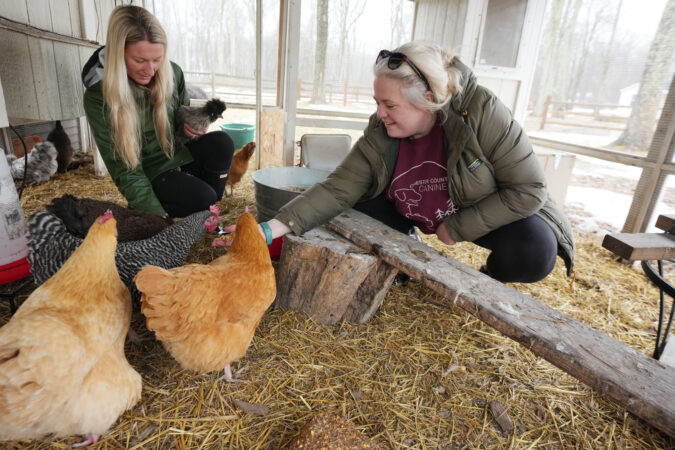
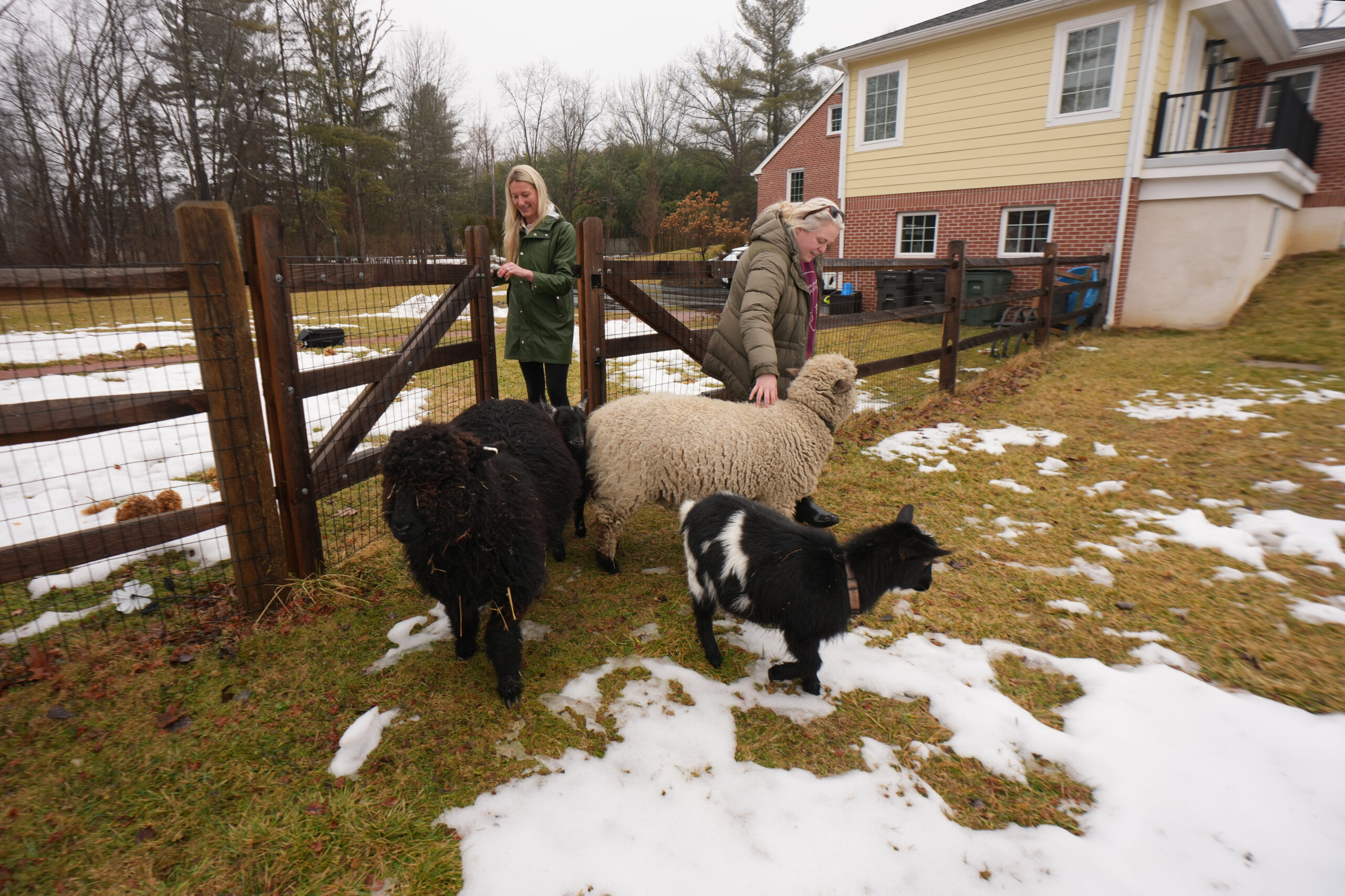
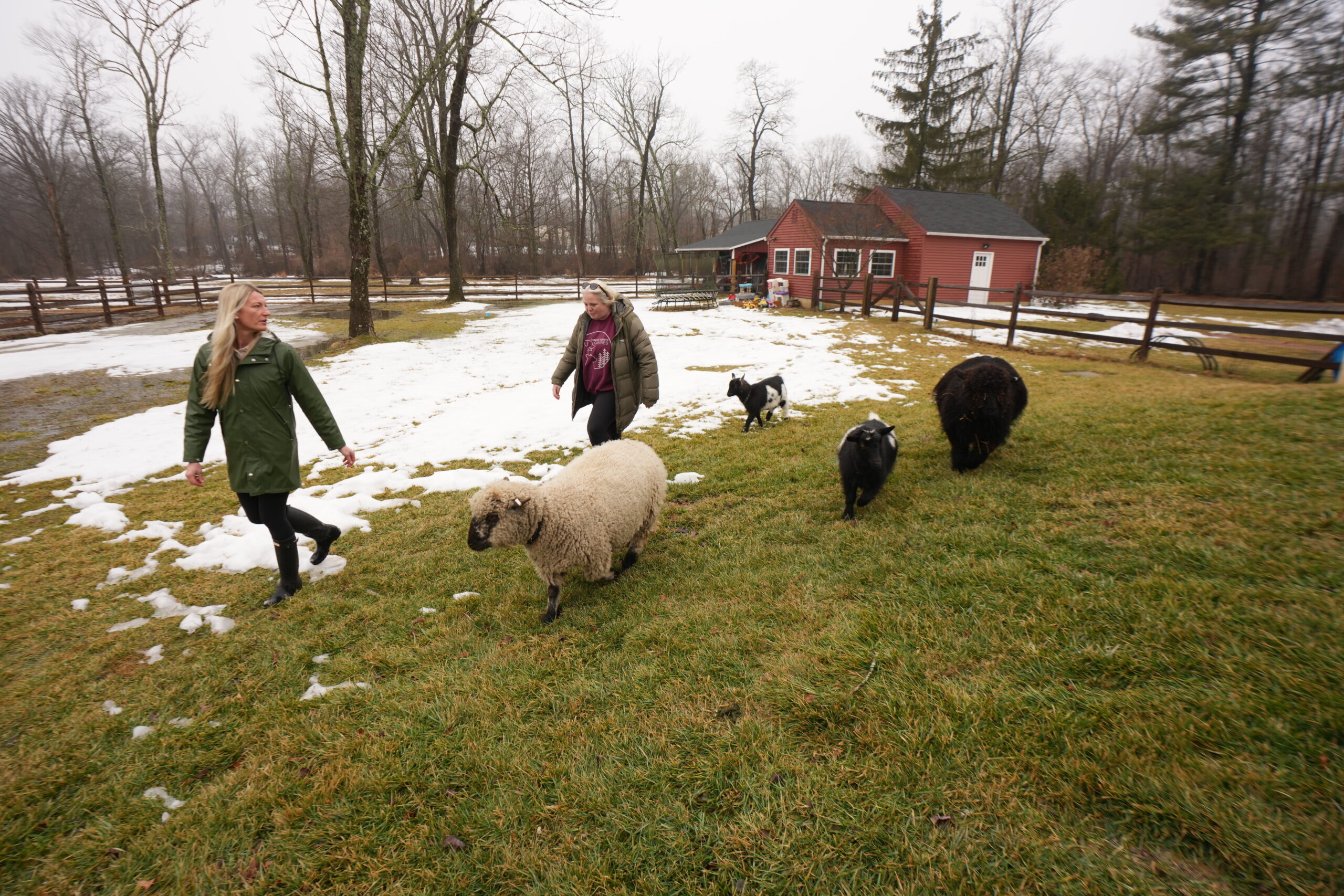
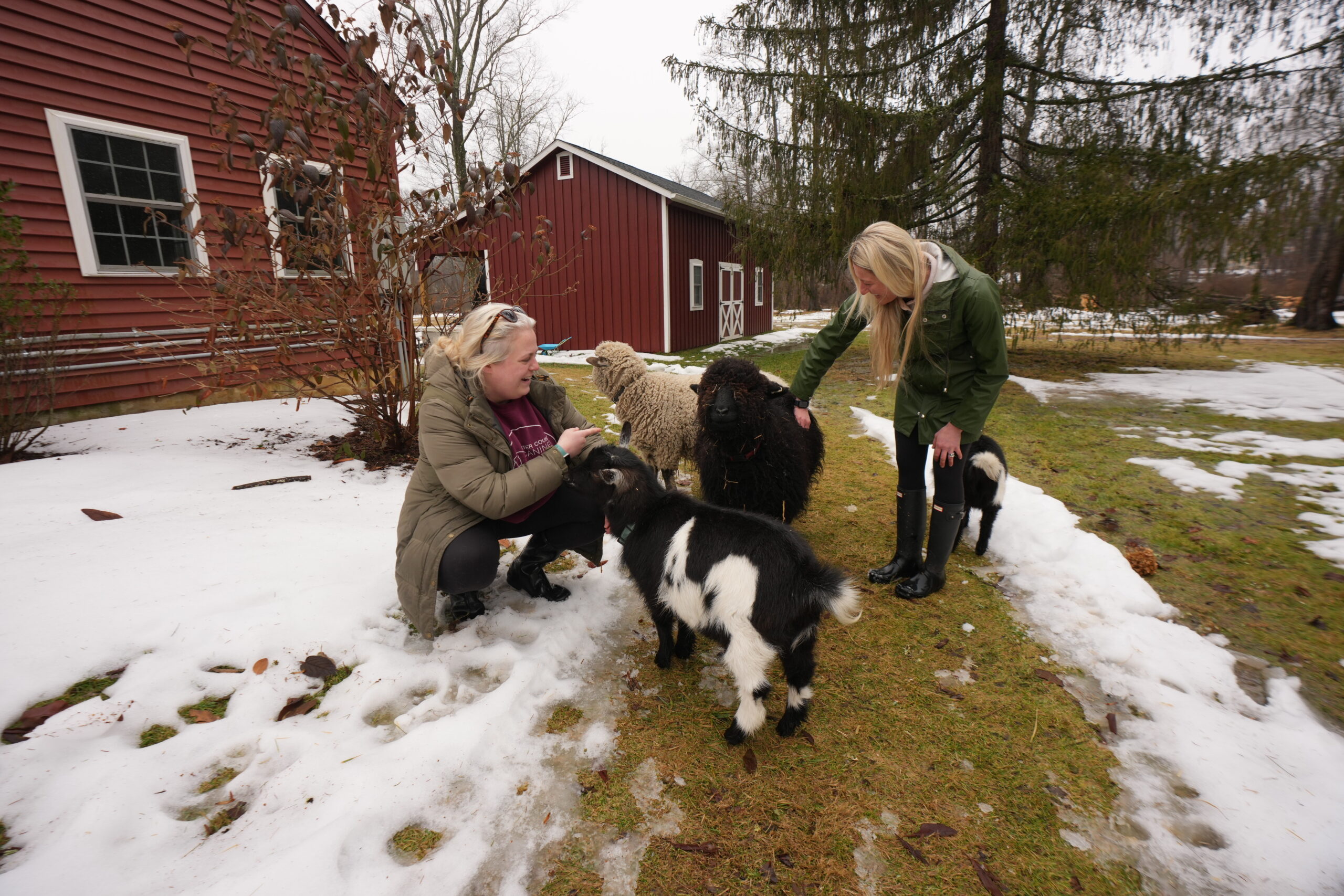
Julie Gunderson, left, and her pet sitter Nora Murphy Kramp, right, at Gunderson’s house with her farm animals, in Chester County, Pa., Feb. 20, 2026.
Over time, development has increased along with population — the county is one of the fastest-growing in the state — bringing all the amenities one could ask for. But with many municipalities having ordinances friendly to homesteading, allowing residents to farm animals with enough acreage, or chickens if the coop can be far enough from the house, more and more people have been embracing the so-called country life. (Murphy Kramp had to enter a “chicken lottery” to secure her own chickens last spring, due to the surge in popularity. A study last year found that there are more than 85 million backyard chickens nationwide, rivaling the population of cats and dogs.)
When people leave Philadelphia, with its tightly packed rowhouses or apartments, getting chickens can be one of the first things they do, observed Shiena Powelson, the owner of I Sit, They Stay, a pet-sitting business based in Chester County near Pottstown.
“There’s a lot of open spaces out this way, where there’s purposely no building going on, so it allows people to have these animals without being on top of the neighbor,” Powelson said. “On my road, I have these young families that have the chicken coops, but then there’s also a 15-acre horse farm four houses down from me. It’s a nice mix.”
Powelson, who grew up in an animal-loving family that ran a pet store in Pottstown, started her career as an educator at the Philadelphia Zoo. On the side, she fostered her pet-sitting business, and movedto it full time about 15 years ago. From the jump, she has had an interesting assortment of pets to care for: reptiles and exotic birds. She used to sit for full-on farms, mucking horse stalls or caring for sheep, but now she is finding more of a hybrid: people who live in residential communities but have chickens, ducks, and even pot-bellied pigs.
Julie Gunderson, left, and her pet sitter Nora Murphy Kramp, right, at Gunderson’s house with her farm animals in Chester County.
“When you pull in this development, you would never expect there would be two pot-bellied pigs living in the development,” she said.
Chickens, she has found, tend to be a familial thing, where parents teach their kids where the food comes from and how to care for the animals.
John Marshall, one of Powelson’s clients, grew up in Montgomery County and had a friend whose family had chickens. He thought it was awesome. With his own land, he decided to get his own. Now, the 54-year-old has had chickens on his couple of acres in the Pottstown area for about 30 years.
“It’s amazing, because it’s like having a dog. People just fall in love,” Marshall said. “They just become your little buddies. A lot of people think they’re real hard to take care of, but they’re not, if you set the coop up right.”
Caring for farm animals requires a different part of Powelson’s brain — digging back into her zoo background. Does she have her boots for muddy coops? Does she have her heavy jacket to work outside when it’s 10 degrees?
Nora Murphy Kramp, left, and her client Julie Gunderson, right, at Gunderson’s house with her farm animals, in Chester County, Pa, Feb. 20, 2026.
“It feels very different when I’m going to let someone’s dog out and can just hang out with them,” she said. “It’s a nice variety.”
With chickens and other farm critters, there are stalls to clean and muck. Murphy Kramp gets there at the crack of dawn to feed the animals.
During one hot summer, she told a client, Julie Gunderson, that she probably needed a fan for the chicken coop. From vacation, Gunderson ordered one, and Murphy Kramp assembled it and set it up. It gave Gunderson peace of mind, knowing someone was that hands-on with her chickens while she was away.
“I had talked to a lot of people along the way who have slightly bigger operations — still backyard farms — but they would tell me, ‘Oh, you’ll never get away together, someone’s always going to have to stay home to take care of the animals,’” Gunderson said. “I just feel very fortunate to have found Nora. I really trust her.”
Gunderson, 38, didn’t grow up on a farm, or with pets other than dogs. But she had an early appreciation of farm animals, spending time at the barn with her grandfather in Rhode Island. She decided to give chickens a try during the COVID-19 pandemic, after she went from working full time to staying at home with her first child to everything shutting down in rapid succession.
With five acres of land, and a county friendly to backyard farms like hers, it felt seamless to add two goats and two sheep a few years later.
It has been a way for her to learn a new skill, and to do something with her family, she said.
“It was kind of just like, how do I kind of get something new that educates me and teaches me something similar to how I felt when I was working, where I feel like I’m growing in some way,” she said.
With her three kids, all under age 6, they gather eggs and clean up the goat and sheep barn.
“If people are on the fence, I say do it,” she said. “There are plenty of pet sitters to help you when you need to get away.”
The Cheltenham School District said Friday it’s considering a change in school picture companies following social media posts linking its current provider to a billionaire associated with Jeffrey Epstein.
In light of news reports about Lifetouch, “the district is exploring all options for future student portrait services,” Superintendent Brian Scriven said in a message to the community Friday.
A number of school districts nationally have canceled plans for photos by Lifetouch after posts connecting the company to Leon Black, former CEO of Apollo Global Management, who met regularly with Epstein, the Associated Press reported.
Under Black’s leadership, funds managed by Apollo bought Lifetouch’s parent company, Shutterfly, in 2019.
Posts outlining that link have spread across social media, some telling parents they should worry about where their children’s images are being stored.
Lifetouch has said it has no connection to Epstein, and cited news reports that the company’s name hasn’t appeared in the Epstein files.
“Claims of any relationship between Epstein and Lifetouch are completely false,” the company said in an FAQ on its website. It noted that Epstein died before Apollo acquired Shutterfly in September 2019, and said it has “never shared student images with any third party, including Apollo Global Management.”
Cheltenham hadn’t received complaints from parents, but issued Friday’s message “proactively,” said spokesperson Kevin Kaufman.
In the message, Scriven said Lifetouch would still take K-8 pictures this spring, but told parents they could opt out of photos by talking with their principal. He also pointed families to instructions on how to request that Lifetouch delete images of their children.
“We understand that media reports such as these about business associations involving prominent individuals can raise questions for families and staff,” Scriven said.
He noted Lifetouch’s stated commitment to student privacy, and said “at this time, there is no indication of any impact on student safety, district operations, or the services provided in our schools. Nevertheless, we are conducting appropriate due diligence consistent with policies.”
David’s Bridal, the King of Prussia-based wedding dress retailer, is getting into the documentary business.
Next week, the company will drop the first episode in its new series Breaking Bridal, which follows real-life couples and focuses on unique elements of their weddings.
The show’s trailer teases some of the stories: One couple said, “I do,” on an active volcano, and another tied the knot at a Universal Studios theme park.
“‘Breaking Bridal’ reflects how we’re evolving David’s Bridal into a content-driven, culture-focused ecosystem, not just a retailer,” company president Elina Vilk said in a statement.
Company executives said in a news release that the show represented the start of a “new era” for the company and would be “the first installment in a growing slate of original programming to come.”
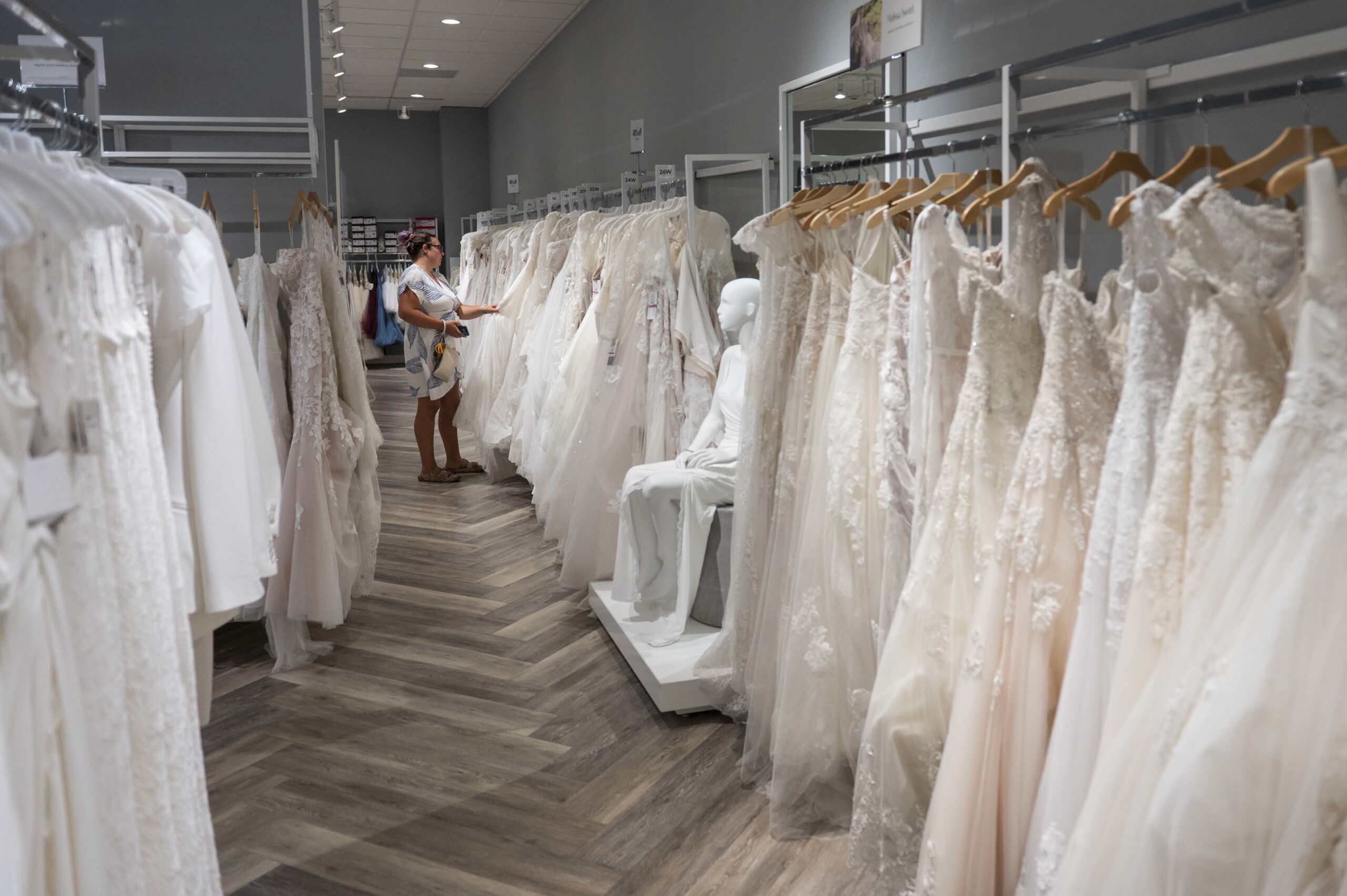
A woman shops for a wedding dress at David’s Bridal in Feasterville in 2023.
Cook, formerly David’s Bridal’s president of brand, technology, and finance, took over as chief executive officer in April and has spearheaded a new AI-fueled personalization of the wedding planning experience. The company calls the strategy “Aisle to Algorithm.”
“We’ve done an AI analyzer on your Pinterest boards,” Cook told the New York Times in June. “So we’re taking AI and we’re building an experience around everything that you’ve told us that you want to see.”
Cook added: “We have a machine learning tool that’s saying, ‘OK, when girls watch Aruba videos and then they search for beachwear and then they buy a dress with no sleeves, the odds are they’re going to want these kinds of other dresses and these shoes.’”
Cook told the Times that she wants future David’s Bridal customers to be able to see a lifelike mock-up of their wedding day on a digital screen using augmented reality.
As part of the company’s strategy shift, it has also rolled out an AI-powered wedding planning platform called Pearl By David’s and a targeted-ad system called Pearl Media Network. Next week, it will add streaming series to the list.
“We’re leaning into original programming because modern couples aren’t following a template; they’re writing their own,” Cook said in a statement.
New episodes will be released every other Wednesday, according to the company. Later this year, plans call for the show to be available for streaming on Amazon Prime Video, Sling, Roku, and Tubi.
Noel Mayo, 88, formerly of Philadelphia, widely recognized as the first Black owner of an American industrial design firm, first Black American college chair of an industrial design department, first Black industrial design graduate of Philadelphia College of Art, award-winning super mentor, and champion of professional diversity, equity, and inclusion, died Thursday, Jan. 29, of a probable heart attack at an assisted living center in Delaware County.
Rejected for an industrial design job after college because he was Black, Professor Mayo went on to found Noel Mayo Associates Inc.in Philadelphia in 1964. He spent 11 years in the late 1970s and ’80s as a professor and first Black chair of the industrial design department at what became the now-defunct University of the Arts, and 27 years, from 1989 to 2016, as a governor-appointed eminent scholar in art and design technology at Ohio State University.
“Dr. Mayo leaves behind a transformative legacy,” former colleagues at Ohio State said in a tribute,“whose impact shaped generations of students, elevated the field of design, and advanced diversity and inclusion across the profession.”
As the trailblazing owner and president of Noel Mayo Associates for decades, he and his staff designed all kinds of products, interiors, exteriors, graphics, mobile exhibits, and signage systems for companies and private clients around the world. He worked with NASA, IBM, Black & Decker, Philadelphia International Airport, museums, government agencies, and public institutions.
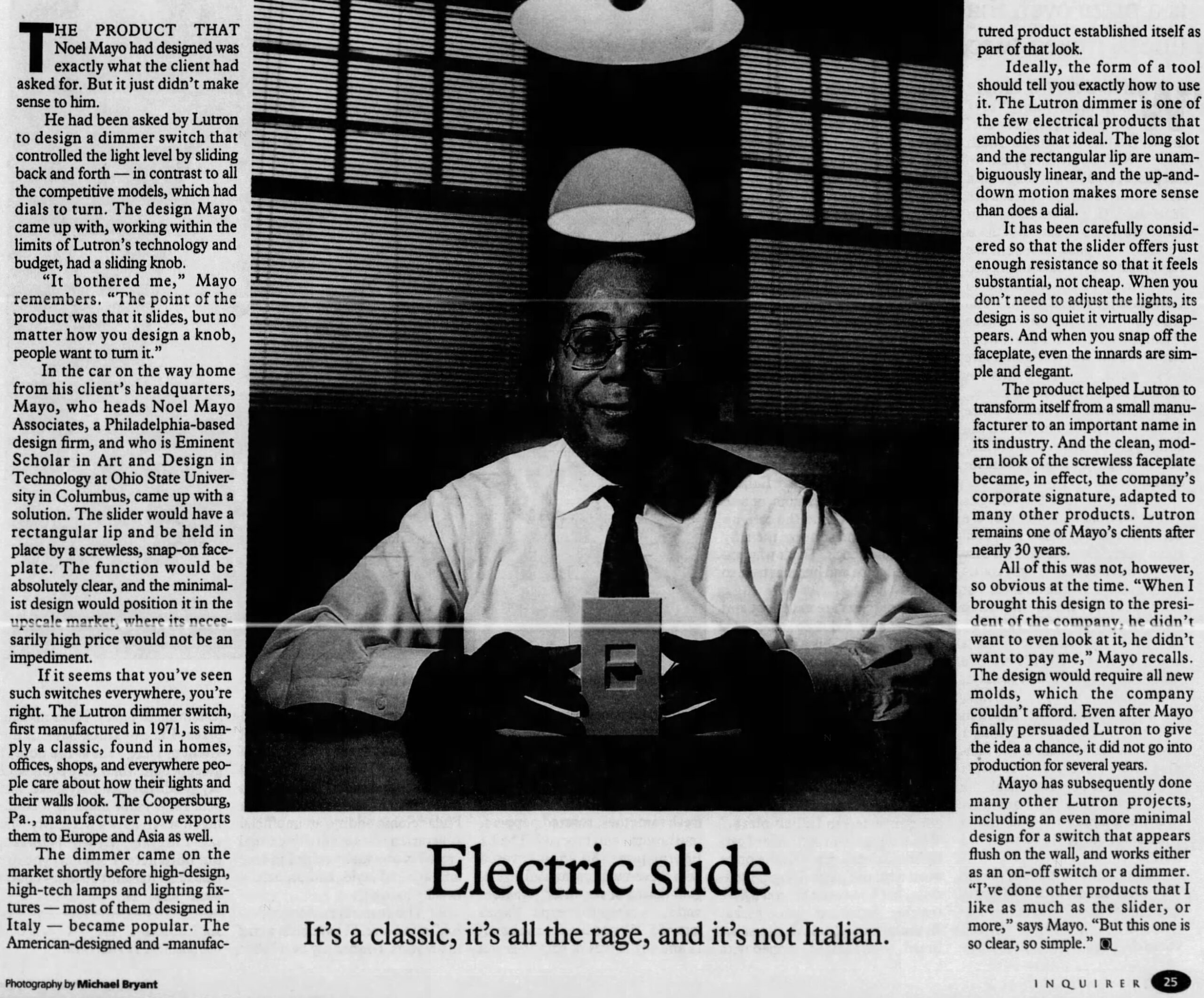
He collaborated with Lutron Electronics for 45 years and is named on hundreds of its design and utility patents. In 1984, he remodeled the mayor’s City Hall office after Wilson Goode replaced Bill Green. In 1988, he advised officials at the old Spectrum on the placement of a Julius Erving statue in South Philadelphia.
He designed computer-driven telephones in the 1980s that could dial 96 phone numbers automatically and leave messages. “I realize how pressured this is,” he told the Daily News for a 1984 story about design and technology’s effect on modern life. “But people want it.”
Professor Mayo was featured in a 1977 story by Inquirer design critic Ellen Kaye, and she praised the “visual fluidity” he created in a refurbished Bala Cynwyd high-rise condo. She wrote about his work again in 1978, and he said design “revolves around problem-solving from a logical point of view.”
In a 1995 story, Inquirer design critic Thomas Hine noted his commercial success with early light-dimmer switches and said it “helped Lutron to transform itself from a small manufacturer to an important name in its industry.” In a recent video interview, Professor Mayo said: “I see the problems as kind of opportunities that other people didn’t see. … So I look for opportunities for innovation.”
Professor Mayo was featured in The Inquirer in 1995.
As chair at Philadelphia College of Art and its successor, University of the Arts, he grew the industrial design department from the school’s ninth largest to its third largest. In online tributes, former students called him “a true icon” and “a doorway into a world of possibility, dignity, and community.”
He told The Inquirer in 1978: “Something looks good when it looks rational. That is how I work myself, and that is what I try to teach my students.”
At Ohio State, Professor Mayo taught product, interior, and graphic design courses, and researched accelerated learning processes using music, color, relaxation techniques, interactive computers, and video. Former colleagues there praised “his blend of rigor, generosity, calmness, and mentorship” in a tribute.
Professor Mayo worked hard to recruit Black and other minority designers and students to his company and college courses. He created mentoring programs and developed an extensive network of minority business contacts.
He was one-time president of the Philadelphia Economic Council and the Greater Philadelphia Community Development Corp. He wrote articles for many publications and served on boards at University of the Arts, the Society for Environmental Graphic Design, and other groups.
He was a fellow of the Interior Design Council of Philadelphia, a juror for art and design competitions, and a member of the Philadelphia Art Commission. Asked to advise young designers in the recent video interview, he said: “Try to be as innovative as you can. … Ask questions. … Being open is critical.”
Noel Mayo was born Dec. 30, 1937, in Orange, N.J. He attended a boarding school in Chester County and earned a bachelor’s degree in design in 1960 at what became Philadelphia College of Art and then University of the Arts.
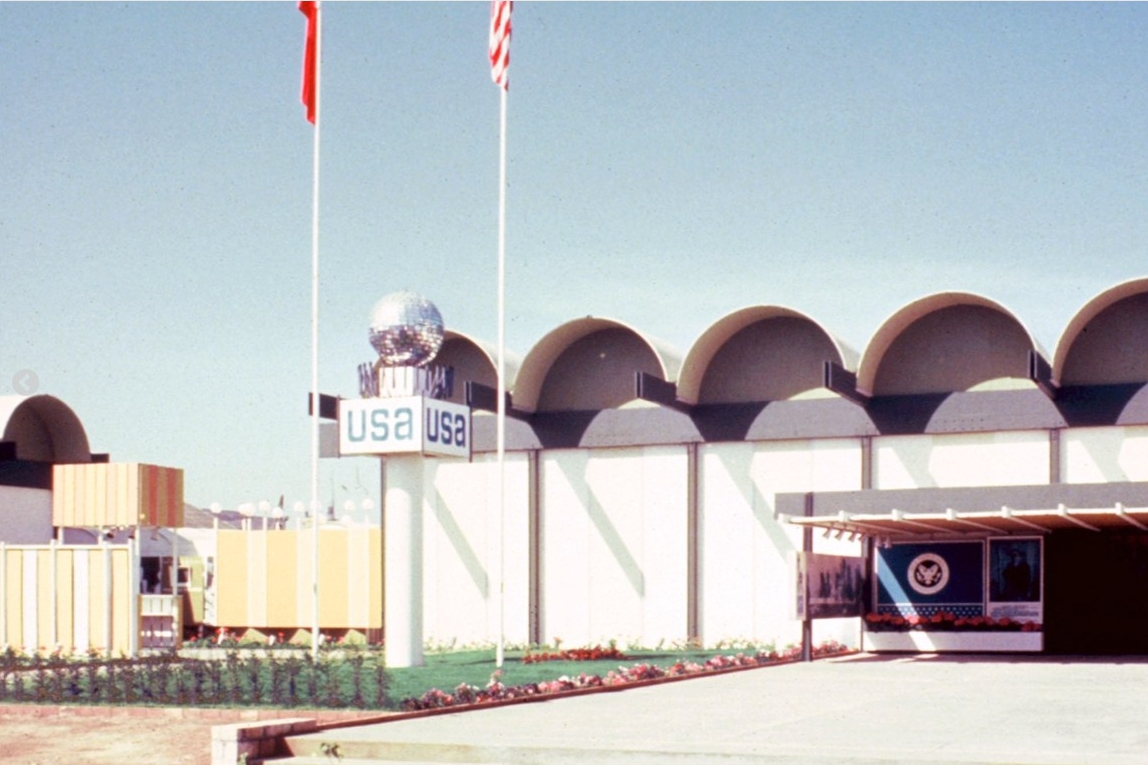
Professor Mayo designed this exterior.
He married, divorced, and later married Leslie Butler.
Professor Mayo enjoyed roller skating, was good at darts, and earned an honorary doctorate from Massachusetts College of Art and Design.
“He was easygoing with a great sense of humor,” said Virginia Gehshan, a design colleague and longtime friend. “He was really an amazing genius. He was ahead of his time.”
In addition to his wife, Professor Mayo is survived by other relatives.
A celebration of his life is to be held later.
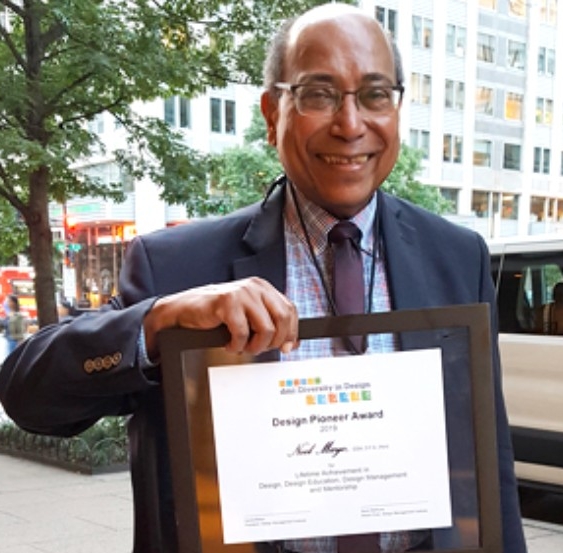
Professor Mayo received the Design Pioneer Award in 2019.
Pennsylvania’s one and only witch trial started over cow’s milk.
“If your cow is not giving milk, it’s obvious that somebody put a hex on it,” Doug Miller, who runs William Penn’s estate Pennsbury Manor, said to explain the thinking of the time.
In the 1680s, neighbors accused Margaret Mattson, who was of northern European descent and didn’t speak English, of putting a hex on local people.
Although Pennsylvania was William Penn’s colony, it was still part of England. And in English rule, witchcraft was a capital offense.
Witch trials had been held throughout England and elsewhere in Europe, but only a few had been held in the colonies. And this would be the first in Pennsylvania.
He arranged for a prominent citizen, Lasse Cocke, who was also Penn’s chief negotiator with the Lenni-Lenape, to act as an interpreter.
Three witnesses testified that Mattson had cast a spell over her neighbor’s cattle, which had not been giving milk. Over a daylong trial in Philadelphia, a jury ultimately found Mattson guilty of having “the common fame of a witch, but not guilty in the manner in form that she stands indicted.”
So, yes, she had the reputation of being a witch, but there was no evidence she participated in any witchcraft.
“This was a crafty way on his part to avoid harsh punishment for her and any hint of a death penalty under English law,”Miller said.
Mattson and a co-defendant, Yesro Hendricksen, whom we don’t know much about, wereeach fined 50 pounds, which was a chunk of change back then, Miller said.
Quakers at this time would expect the person to put forth a bond similar to bail today.
It was called a peace bond, and it was good for six months.
Eight years later, witch hysteria would hit Salem, Mass., and kick off the infamous witch trials.
“The fact that he really didn’t want to encourage the idea that there were witches,” Miller said, “or inflict a penalty on somebody he felt was not guilty of what she was accused, speaks highly of Penn.”