Everything at Land of Little Horses animal theme park in Gettysburg must go this weekend. That means tractors, picnic tables, porta potties, and about 30 miniature horses.
Sparkle, Pumpernickel, Russel’s Majestic Princess Gingerbread, Summer Wish, Shortcake, and the others will head for greener pastures at the Saturday morning auction, which will mark the end of the 55-year-old park.
In December, the park owners announced on social media that they’d decided to retire and close the facility, which hosted horse shows, trail rides, and grooming activities. They declined to be interviewed for this story.
Selling horses, let alone miniature horses, is a first for auctioneer Larry Swartz.
“We have had strong interest from really across the nation, even a breeder from Hawaii has reached out,” Swartz said.
(If you’re wondering if a mini horse can be transported on an airplane, it can, Swartz said.)
Swartz predicts one particular miniature horse, an 11-year-old chocolate mare with a bald face, to fetch the highest price.
“Cameo was the star of their show here,” Swartz said. “We expect her probably to be the high seller.”
Cameo, an 11-year-old miniature horse for sale at the Land of Little Horses auction, can wave, smile, untie, and sit down.
Not only does she have distinctive markings, she can wave, smile, untie, lay down, and sit.
As of Wednesday afternoon, she was already going for $3,550 in the online prebidding which started Feb. 14 and ends when the live auction starts Saturday at 10 a.m. at the Gettysburg farm at 125 Glenwood Dr. The auction will also be available to view on livestream. Swartz expects each miniature horse to sell for around $2,000 to $3,000.
The origins of miniature horses in the United States may date back to the 1800s, according to the American Miniature Horse Association, a Texas-based nonprofit that sets regulations and compiles registries of miniature horses around the country and world.
Sparkle, a 16-year-old miniature horse who will be available at the Land of Little Horses auction, is food motivated.
The horses were originally brought over from Britain to assist in the mining industry for hauling wagons of coal, said Valerie Shingledecker, the association’s operations manager. The United States now has around 100,000 of them, according to the association’s registry.
Texas, California, and Florida have the largest number of association-registered miniature horses in the country as of this month. States along the Appalachian Mountain range, where much 19th-century coal mining activity was concentrated, have the next-highest number. Pennsylvania has the fifth-largest population of association-registered miniature horses at about 3,800.
Can you own a miniature horse?
In recent decades, miniature horses are more commonly seen at petting zoos and in horse shows performing tricks, like pulling people in wagons.
They can also be kept as pets. In Philadelphia, residents can apply for a license to own a horse if they have a stable or one quarter acre of land per horse, according to a 2013 law. If residents have neither, they can still keep one so long as they have fewer than three horses in the same space and submit an equine veterinarian-approved exercise plan for the horses.
Most importantly manure must be disposed of every 24 hours.
Macy is a 30-year-old Falabella miniature horse who knows how to smile. She’ll be up for auction at the Land of Little Horses sale.
Under the Americans with Disabilities Act, a miniature horse can function as a service animal for people with disabilities. Facilities covered by the ADA are required to adopt policies detailing where and when service miniature horses are permitted. Facilities may elect to not allow them inside if they’re not housebroken.
If you’re interested in owning one, get ready for a long-haul commitment, Shingledecker said. These horses “cannot exceed 34 inches in height at the withers as measured from the last hairs of the mane,” according to the American Miniature Horse Association. They’re about a quarter the size of a regular horse and can live for over 30 years. However, they’re “easy keepers,” she said, meaning they don’t require a lot of food — about $2 of hay a day or $730 a year.
They also need vaccines and have to have their feet trimmed every six weeks by a farrier, but they don’t need horseshoes.
All in all, Shingledecker estimates one miniature horse costs about $1,500 a year to take care of.
Though they’re generally well-behaved, it’s important to remember they’re still animals with their own set of defense mechanisms.
“It is a horse, it’s not a dog,” she said. ”They can kick and they can bite if they were not socialized well. Don’t put them in the house.”
If they become afraid, they’ll either run, kick, or bite, Shingledecker said. “On the whole, they’re very friendly, very easy to work with.”
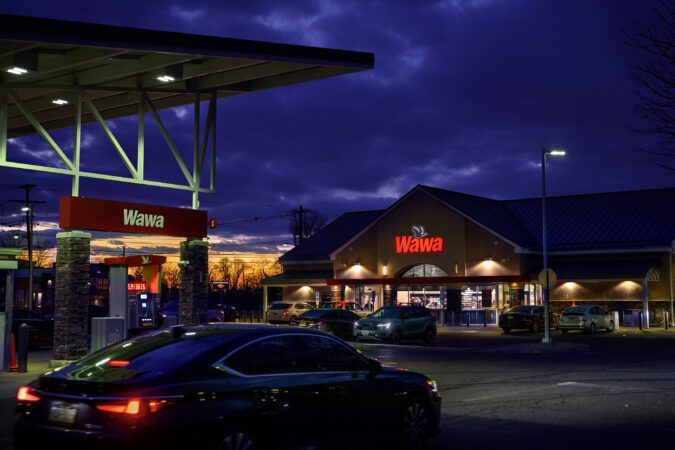
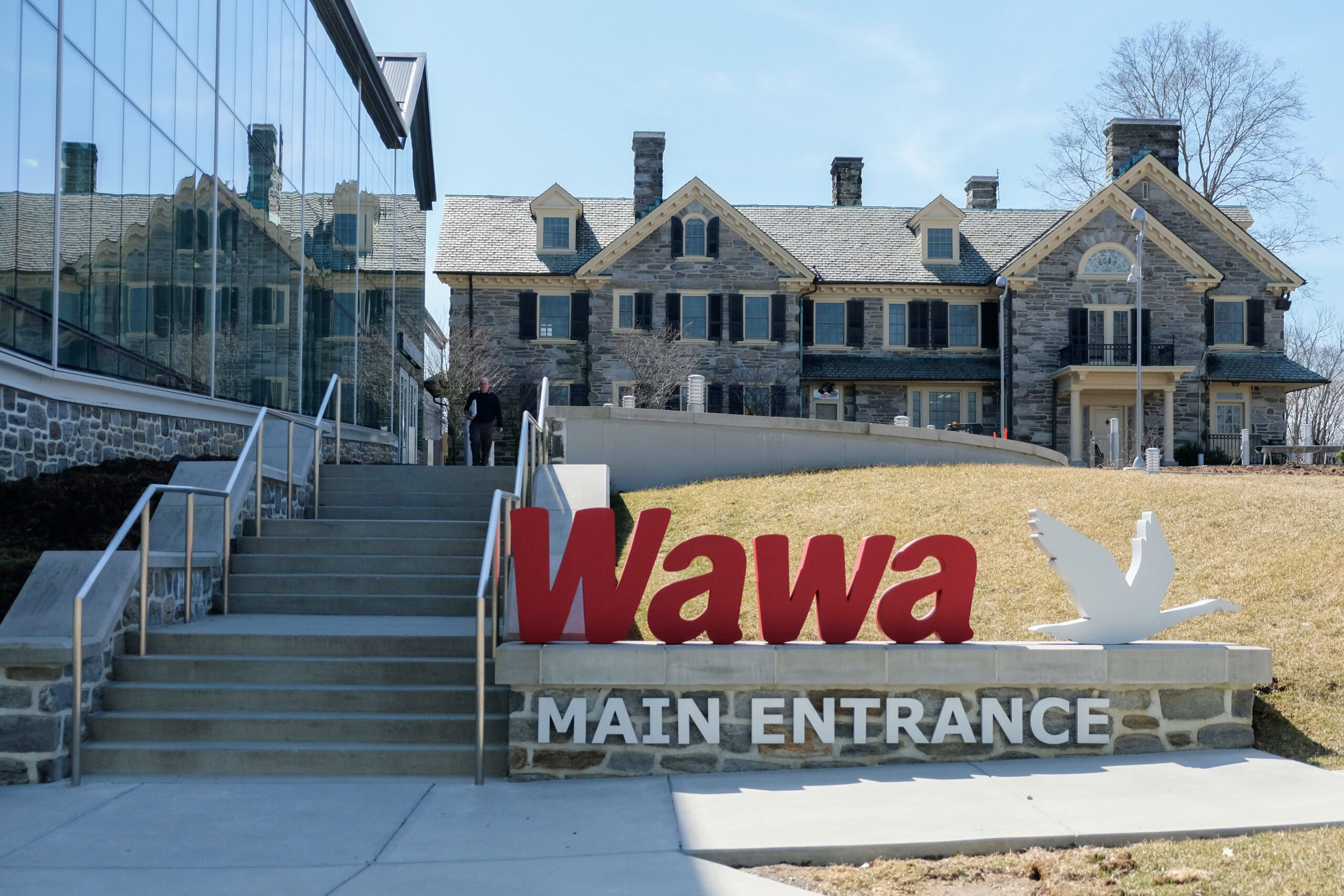
Wawa’s corporate headquarters is located in Delaware County.
Wawa’s stores and menu offerings look quite different than they did a couple of decades ago, but despite the many changes the Delco-rooted company has made over the years, leadership says it’s still taking cues from its hometown base.
“For a lot of people, it’s their daily routine,” CEO Chris Gheysens told The Inquirer’s Erin McCarthy recently.
While some bemoan the loss of freshly sliced meats (more on that below), other changes to Wawa have been consumer-driven, like introducing coffee, adding gas, and delivering protein-packed menu items.
Wawa has expanded to nearly 1,200 stores across 13 states and Washington, D.C., and some wonder if it’s lost a little bit of its luster all these years later.
Three Inquirer staffers recently shared what they still love about the convenience chain and what they miss (including the freshly sliced deli meat and the spicy cherry relish).
The region saw widely ranging snowfall totals from the storm earlier this week thanks to heavy banding, but Nether Providence and Swarthmore topped the lists locally, according to figures reported to the National Weather Service. Both recorded a foot of snow, while Media clocked in at 7.8 inches. See a map of how much snow fell near you.
Middletown Township is not moving forward with plans for the proposed “loop road” that was intended to be built behind the Chick-fil-A and CVS to ease congestionnear the busy intersection of Route 1 and Pennell Road. With PennDot planning to widen the road and add turn lanes, the project would be unnecessary. (Daily Times)
Delaware County Council voted last week to end a disaster emergency related to Prospect Medical’s closure of Crozer Health last year, including Crozer-Chester Medical Center. Council enacted the resolution last summer, allowing it to allocate funds that ensured residents had continued access to emergency medical services, such as ambulances. It also gave local municipalities time to establish their own EMS contracts, which, according to council, all have since done.
Swarthmore College President Valerie Smith announced this week that she will step down from her role in June 2027, when her contract ends. Smith has served as president since 2015, leading the liberal arts school through the pandemic, student protests, and funding threats from the federal government.
Eight Swarthmore College students face possible expulsion after distributing a “zine” criticizing seven members of the college’s board of managers for their ties to companies invested in Israel. The school says the students used imagery and language that “threatened, intimidated, and/or promoted potential violence on campus.” (WHYY)
Heads up for trolley riders: Trips on the D1 line, which starts at Orange Street in Media, could be up to 15 minutes longer after SEPTA launched a new safety system this week. The new system includes upgraded signals that require more gradual accelerations and decelerations, which are aimed at improving safety.
Media Mayor Joi Washington said she knows that her office carries weight beyond policy-making. The first woman and person of color to be mayor of Media, she said in a recent interview with CBS News Philadelphia, “What I want young Black girls to see, what I want Black residents to see, is that we’re still here. There are a lot of things that are stacked against us, but we can’t succumb to negativity.”
Swarthmore Borough residents can purchase a tree to go along or near their curb through March 9. Trees are $250 and include mulching and planting.
📸 Local residents embrace the snow
Josh Jordan and his 3 year-old daughter, Louise, took advantage of the snow earlier this week to build a snowman near their home in Media.
🏫 Schools Briefing
On Tuesday, Wallingford-Swarthmore School District’s board approved a reorganization plan that would eliminate nearly 20 jobs as it looks to trim spending. The plan, which goes into effect in July, is expected to save the district about $2 million byeliminating five administrative positions, some instructional assistants, and other roles. The measure comes as the district faced a budget deficit for the 2027-28 school year.
WSSD is hosting a pair of community conversations today at Strath Haven Middle School at 9 a.m. and 6 p.m. to discuss the budget development for next school year.
Also in Wallingford-Swarthmore, tomorrow is Strath Haven Middle School’s sixth and seventh grade dance, and Monday is the start of pre-season for spring athletics. There’s a policy committee meeting Tuesday night. See the district’s full calendar here.
In Rose Tree Media School District, there’s a school board meeting tonight at 6:30 p.m. at Penncrest High School, and Springton Lake Middle School’s musical kicks off tonight and runs through Saturday. Tomorrow, there’s a pep rally and science fair atIndian Lane. There are early dismissals for elementary school students on Wednesday for parent-teacher conferences. See the district’s full calendar here.
🍽️ On our Plate
Media Restaurant Week is just a few weeks away, and eateries are offering special pricing for the occasion. See the restaurants that have signed up so far here.
🎳 Things to Do
🎷 Tino Serrano and His Latin Jazz Quintet: Hear the band play Latin jazz tunes as part of the Friday Night Live Concert series. ⏰ Friday, Feb. 27, 7-9:30 p.m. 💵 $10-$15 📍Community Arts Center, Wallingford
😂 Delco Improv Night: ComedySportz Philadelphia returns for another unscripted night of comedy. ⏰ Saturday, Feb. 28, 7:30-9 p.m. 💵 $20.50 📍Park Avenue Community Center, Swarthmore
🎵 Rust: Hear tunes from the Neil Young tribute band. ⏰ Saturday, Feb. 28, 8:30 p.m. 💵 Free 📍Shere-e-Punjab
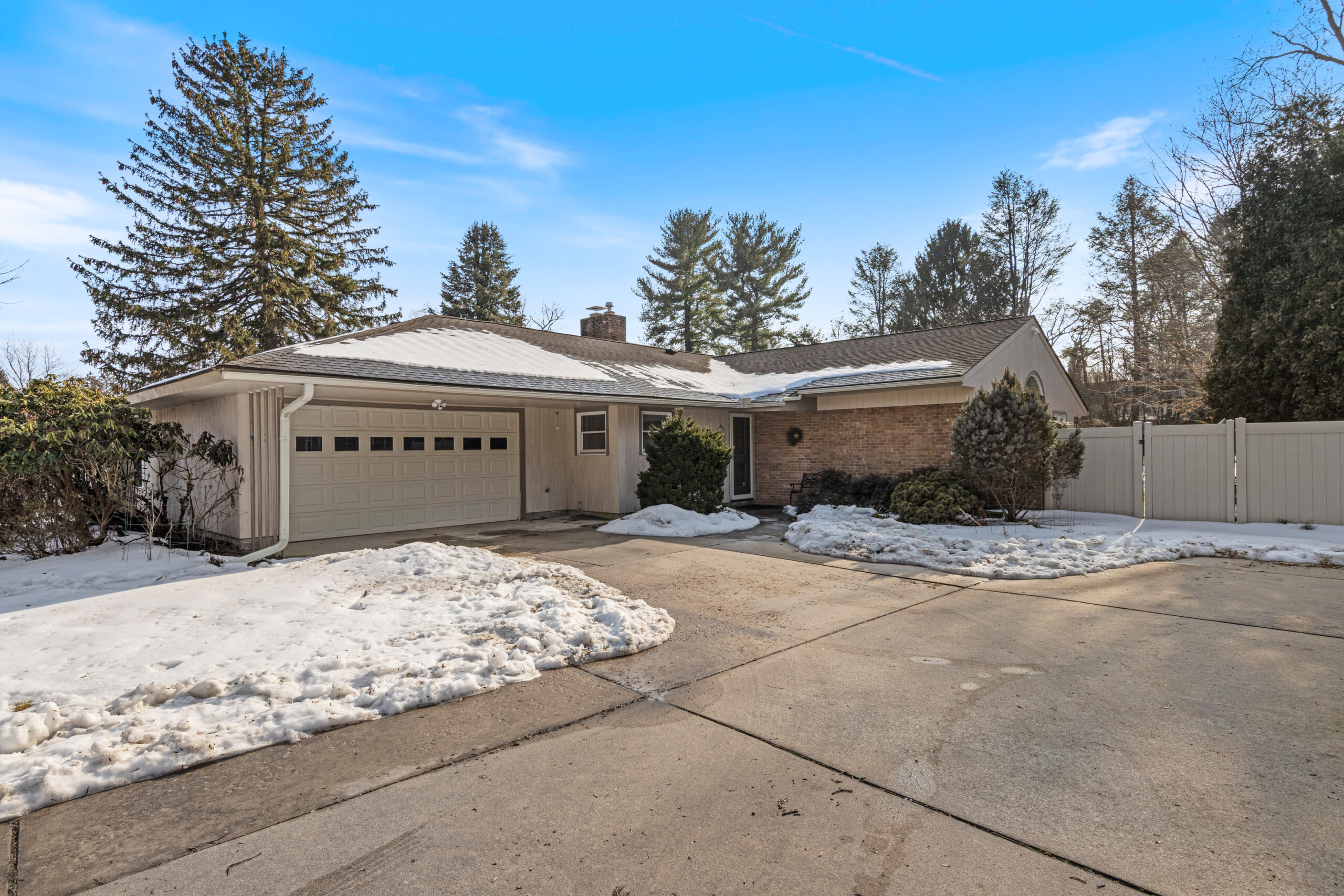
Built in 1950, this four-bedroom Media ranch hasmid-century elements but has also been updated and expanded. Brick walls and original oak flooring give nods to the past, along with a brick fireplace that has space for wood storage, while stainless steel appliances, granite countertops, and a peninsula with seating give the kitchen a 21st-century feel. The home has a living room, family room with vaulted ceilings, a dining room with a dry bar area, and an office. There’s also a three-season room, a back patio, and a fenced yard.
By submitting your written, visual, and/or audio contributions, you agree to The Inquirer’s Terms of Use, including the grant of rights in Section 10.
This suburban content is produced with support from the Leslie Miller and Richard Worley Foundation and The Lenfest Institute for Journalism. Editorial content is created independently of the project donors. Gifts to support The Inquirer’s high-impact journalism can be made at inquirer.com/donate. A list of Lenfest Institute donors can be found at lenfestinstitute.org/supporters.
The Franklin Mall, which many locals still call Franklin Mills, is temporarily closed due to required city inspections after a small fire over the weekend at the once-popular Northeast Philadelphia retail destination that is now listed for sale, the property management said Wednesday.
No injuries were reported after the fire occurred on Feb. 21 within a single tenant space, the management said in a Facebook post.
The Philadelphia Department of Licenses and Inspections “issued a temporary closure notice while required inspections are completed to ensure building safety and building structural integrity,” the post said.
The management said it “immediately engaged licensed professionals and qualified vendors to evaluate the affected area and confirm that all life-safety systems are fully operational.”
City officials could not be reached for comment Wednesday.
The management of Franklin Mall said it was “working closely with city officials to complete all necessary inspections and secure the approvals required to safely reopen the property as quickly as possible. The safety of our tenants, employees, and visitors remains our top priority.”
In the meantime, Walmart, Marshalls and HomeGoods, and Dave & Buster’s remain open for business, according to the mall’s website.
The Inquirer reported in early December that the mall was listed for sale and the 36-year-old, 1.8-million-square-foot facility at Knights and Woodhaven Roads could be repurposed or demolished for non-retail uses.
The mall opened in 1989 to great fanfare as the largest outlet mall ever, with a zigzag-shaped, one-story-tall concourse that stretched for 1.2 miles.
Franklin Mills once attracted 20 million visitors annually, but now has less than a third of that traffic.
Under new ownership, it was renamed Philadelphia Mills, and most recently it has been called Franklin Mall, though a main entrance sign still says Philadelphia Mills.
A former Morton Borough police officer is dead after Lower Merion police shot and killed him when he exchanged gunfire with officers in Bala Cynwyd Wednesday morning, authorities said.
Francis Connell Collier, 38, who previously served as a part-time officer in the Delaware County borough, was wanted on charges of rape and other sex crimes involving children at the time of the shooting.
Authorities said Lower Merion police spotted Collier’s vehicle on Old Lancaster Road in the Bala Cynwyd section of the township around 3:48 a.m. When they saw him return to his car, police said, officers confronted him, and he shot at the officers, who returned fire, fatally wounding him.
The officers had not been serving a warrant for Collier’s arrest at the time of the shooting, but the department was aware of the charges against him, said Lower Merion Police Capt. John Tucci.
Charges in the rape case had been filed Tuesday in Upper Darby, according to a spokesperson for the Attorney General’s Office, which brought the case against him.
In addition to serving in Morton, Collier was previously a member of the Delaware County District Attorney’s Office’s Child Abuse and Exploitation Task Force, a spokesperson for District Attorney Tanner Rouse said.
Collier’s appointment in 2022 was not made during Rouse’s tenure, and he was removed from the task force the following year during a leadership change within the unit, the spokesperson said.
When the sex abuse allegations against Collier were reported to authorities late last year, Rouse’s officeinitially investigated, but later referred the case to state prosecutors because of a conflict of interest.
In a statement on Collier’s shooting death Wednesday, the Delaware County DA’s Office said he ”reportedly engaged in actions that led to what has been described as ‘suicide by cop.’”
Police have not released the names of the officers involved in the shooting, which is under investigation by the Montgomery County District Attorney’s Office. It was unclear whether the officers had been placed on leave, as is customary, as the inquiry continues.
Morton Borough police learned of the criminal investigation in December, department officials said, and Collier was placed on unpaid administrative leave.
He resigned from the department on Dec. 19, they said.
The criminal case against Collier began late last year, authorities said, when Delaware County investigators learned that he may have sexually abused children.
Two women told investigators Collier had touched them inappropriately in the early 2000s, when they were five and six years old and Collier was a teenager, according to the affidavit of probable cause for his arrest. The women said the abuse began in 2001 and 2003, the affidavit said.
Collier was 15 when he assaulted the first victim the document said.
The second woman said Collier had assaulted her as well, framing the abuse as a “game” that involved sex toys and sex acts. She said she told her mother at the time that Collier was touching her inappropriately but when confronted, she said, he denied the abuse.
Years later, the women said, they learned that Collier worked with Delaware County’s child abuse task force, which investigates sex crimes against children. They said they grew worried when they saw social media posts showing Collier posing with children, the document said.
When investigators interviewed Collier about the allegations in early December, the affidavit said, he failed a polygraph test, but told detectives he “never intentionally touched the girls inappropriately.”
Investigators referred the case to the Pennsylvania Attorney General’s Office that month because of a possible conflict or interest, the affidavit said. State investigators later interviewed people who said the women had told them of the abuse years ago when they were children, and prosecutors filed the criminal charges against Collier on Tuesday, just hours before his death.
Lower Merion police said the shooting took place in the area of Old Lancaster Road and City Avenue, a block from St. Joe’s University and not far from Edgehill Court, the apartment complex where Collier lived.
A neighbor, Liam Riley, said he heard at least seven shots ring out when police confronted Collier.
“I saw a officer run up, grab something out of his trunk, and then run back up to [Collier’s] car,” Riley, a St. Joe’s University senior, said. “Then I heard them yelling to the guy, ‘Put your hands out of the window, put your hands out of the window.”
Juliette Palasol, a student at Drexel University who lives a block away with her family, said they didn’t hear the early morning gunfire, but her father left for work at 5 a.m. to find that many of the neighborhood roads closed.
“I couldn’t believe it — my brother, my cousins — none of us heard it,” Palasol said, outside the Edgehill Court. “I was just surprised to see police bring out firetrucks, drones, and robotic dogs to the scene.”
Around noon on Wednesday, police officers, assisted by Union Fire Association, raised a ladder to Collier’s third-story apartment, where officers broke through the window and piloted a drone inside to conduct an initial search of his residence. Officers also used a robotic dog to search the apartment “out of an abundance of caution,” police said.
The Wallingford-Swarthmore school board on Tuesday approved a plan that would eliminate nearly 20 positions as it tries to reverse what officials have called a trend of unsustainable spending in the affluent suburban district.
The reorganization plan, which was approved by the board 8-0 and takes effect July 1, will save the district about $2 million, said Superintendent Russell Johnston. Five administrative positions will be eliminated, along with positions for instructional assistants at the middle and high schools, a high school special education teacher, high school secretary, and high school part-time guidance counselor, among other roles.
Some of those positions are currently unfilled. And not everyone whose position is being eliminated will be leaving the district: Employees with seniority will be able to bump less senior staff, Johnston said.
Overall, the changes will result in three to four layoffs, Johnston said Tuesday. Seven long-term substitutes will also no longer work in the district.
“This is not about solving a problem in this year’s budget,” but ensuring the district can sustain its programs in the future, Johnston said Tuesday.
“Bottom line: the district has a spending problem,” DeJuana Mosley, the district’s business administrator, said at a November finance committee meeting. She said there had been “considerable increases” in staffing since 2021 — and the district’s budget grew by 18%, from $89 million to $105 million — despite no increase in enrollment.
The district also lacked adequate inventory management, Mosley said — describing a “culture of just ordering stuff” — and faces other mounting pressures, including deferred maintenance and a lack of curricular investments, including some course materials not aligned to Pennsylvania or Advanced Placement standards.
Mosley described the district’s $164 million capital plan as “added pressure,” but not the source of budget troubles.
Meanwhile, the district’s tax base — which is heavily residential, with limited commercial properties — has declined, Mosley said. Taxable assessed value dropped by $6 million from 2024 to 2025, resulting in a loss of $175,000 in annual tax revenue for the district.
Even if the district raised taxes for the coming year by 3.5%, the maximum amount allowed by state law, it would still be short $2.6 million, Mosley said.
The school board parted ways with former superintendent, Wagner Marseille, in 2024, after an opposition campaign from parents that accused Marseille of excessive spending, among other allegations. Marseille, who had led the district since 2021, was replaced on an interim basis in August 2024 by Jim Scanlon, a former West Chester superintendent.
The board hiredJohnston, a former Massachusetts education commissioner, in May.
In an interview this week, Johnston said that in planning for the fiscal year starting July 1, he “began to see more and more signs that we needed to make this adjustment.”
He said that in November, “I brought the full scope of the problem before the board.”
Which positions are being cut?
Five administrative positions will be cut under the plan approved Tuesday: director of assessment, compliance, and federal programs; supervisor of counseling and wellness; safety and security coordinator; communications and community relations liaison; and supervisor of buildings and grounds.
Other cuts include: two high school and one middle school instructional support positions; a high-school part-time guidance counselor; a high school secretary; a high-school special education teacher; a middle-school safety aide; a middle-school long-term substitute; a middle-school substitute custodian; and six teachers on special assignment helping with new curriculum rollouts. (The plan also includes the creation of two new curriculum supervisor positions.)
In outlining the cuts Tuesday, Johnston said, “This is really about a change in positions, not people.” He said responsibilities from discontinued administrative positions would be shifted to other administrators.
“What’s good for students is sometimes hard for adults,” he said.
The district is also eliminating “Cultural Proficiency Equity Teacher Leader” positions, which were created in 2022-23 and gave additional money to teachers working on equity initiatives.
Johnston said at a finance committee meeting last week that “this is no way a backing off of our commitment to equity,” and responsibilities would be absorbed elsewhere.
What happens next?
The reorganization plan isn’t the only way the district is trying to save money. At last week’s finance meeting, Johnston said the district would eliminate redundant software programs and increase oversight of supply purchases. He also said he would be sending a memo to staff to cut back on snacks at after-school events.
The district, which taxes residents at a relatively high rate compared to others, will be limited in how much it can increase taxes in future years, with the Act 1 index that dictates how much they can increase taxes projected to decline, Johnston said. The board directed district officials to prepare a budget for 2026-27 with an increase between 3-3.4%, under the 3.5% state-imposed limit.
“We want to make sure what we live with next year, we can live with in future years,” he said last week.
Hair stylist Artur Kirsh, who has long served clients out of his Saks Fifth Avenue salon in Bala Cynwyd, will be relocating to Narberth in April as Saks prepares to close. Kirsh will open a second salon at Boyds in Center City this fall.
Kirsh’s relocation comes after Saks Global, the owner of Saks Fifth Avenue and Neiman Marcus, announced the closure of numerous department stores, including the Bala Cynwyd Saks, in February. Saks Global filed for bankruptcy in January.
Kirsh said he was surprised to hear about the closure, but decided to take the opportunity to “do something huge” and open two new studios, expanding his presence in the region.
Kirsh will open Artur Kirsh Hair Studio, his new Narberth location, in April at 948 Montgomery Ave. He described the studio as “very artsy” and “very hip.” The Narberth outpost will have ample parking, a “fun and intimate” vibe, and will allow clients to move beyond traditional salon hours and schedule based on their availability, according to a news release. Kirsh called the Narberth studio a “boutique concierge salon concept.”
The hair stylist will continue to see clients at Saks through March to ensure a “seamless transition” ahead of the department store’s closure in April.
Kirsh said he chose Narberth because it’s minutes from his old Saks studio and would allow him to maintain some continuity for Main Line clients.
Kirsh will also expand his footprint in Center City in September, where he plans to open Artur Kirsh Salon on the fourth floor of Boyds department store at 1818 Chestnut St.
“I’ll have best of both worlds,” he said. “I’ll have the suburbs and the city.”
Though the changes happened quickly, Kirsh said he’s ultimately looking forward to the next chapter.
“When you’re in an old place, you kind of get stale,” he said. “Things happen for a reason.”
Kirsh was born and raised in Russia and moved to New York in the mid-1990s. After training at a Manhattan salon, Kirsh relocated to the Philadelphia area. He has worked out of the Bala Cynwyd Saks for six years. Kirsh specializes in coloring and “dry cutting” and describes himself as the ”go-to stylist for models and local celebrities.”
In addition to his Bala Cynwyd salon, Kirsh sees clients at the Rittenhouse Spa & Club in Center City, John Barrett Salon in New York City, and Oasis Salon & Med Spa in Boca Raton, Fla. Over the years, Kirsh has styled a number of celebrity clients, including Dorinda Medley, Betsey Johnson, Carolina Herrera, Celine Dion, Kathy Griffin, and Ken Downing.
This suburban content is produced with support from the Leslie Miller and Richard Worley Foundation and The Lenfest Institute for Journalism. Editorial content is created independently of the project donors. Gifts to support The Inquirer’s high-impact journalism can be made at inquirer.com/donate. A list of Lenfest Institute donors can be found at lenfestinstitute.org/supporters.
Homes along Yorkshire Way in Birmingham Township, one of the wealthiest communities in the Philadelphia region.
Chester County is home to six of the 10 wealthiest spots in the Philadelphia area, according to the latest U.S. Census American Community Survey, which compiles self-reported income data.
Topping the list is Pocopson Township, which had a median annual household income of $230,000 during the five-year period ending in 2024. It’s followed by West Pikeland ($226,100), Birmingham ($215,000), and Easttown ($214,900). West Vincent ($202,600) and Charlestown ($202,200) were the other two Chesco spots in the top 10, ranking No. 7 and 8, respectively.
The county saw widely ranging snowfall totals from this week’s storm thanks to heavy banding. According to figures reported to the National Weather Service, Malvern saw the largest total in Chester Countyat 12.3 inches, while East Coventry came in at the lower end, with 5.5 inches. See a map of how much snow fell near you earlier this week. Keep an eye out for a bit more snow today.
Former Chester County detective Christine Bleiler, who was a technical adviser on HBO’s popular drama Mare of Easttown, is suing the county and her former supervisor over alleged sex discrimination. Bleilerwas a police officer in Oxford Borough before becoming a county detective in 2015. She resigned from her post in September.
💡 Community News
In case you missed it, East Vincent’s planning commission recommended last week that the township’s board of supervisors deny a proposed data center at the Pennhurst site when it comes in front of them next month. The commission said the proposal, which calls for five two-story data center buildings, a sixth building, an electrical substation, and a solar field, was not in compliance with the zoning ordinance. The board of supervisors is holding a public hearing on March 16 at 6:30 p.m. at East Vincent Elementary School.
Pennhurst isn’t the only data center proposed in the area that’s getting pushback from local officials and residents. Envision Land Use has decided to look elsewhere to develop what it’s calling a “boutique” data center after public outcry over its plans, which called for building a 120,000-square-foot, three-story center at 299 Schuylkill Rd. On Monday, North Coventry Township’s board of supervisors took a preemptive vote that they’d reject the proposal, before it was even formally submitted.
The developer looking to build a data center on a remediated Superfund site in East Whiteland Township has submitted updated plans following last month’s planning commission meeting. The applicant is expected to attend tonight’s planning commission meeting, which will begin at 7 p.m. at the township building, and will also be live streamed.
Last week, Constellation Energy Group withdrew its application for data center code amendments, which were set to come before the East Coventry Township board of supervisors next month. The energy company was seeking changes that would have allowed data centers on five properties.
Lincoln University in Lower Oxford Township is planning to implement new safety measures for large events after a shooting at homecoming in October left one dead and six others injured. The university said it won’t host outdoor events after dusk, and events will be held within “a controlled environment” so visitors can be screened.
A group of residents is trying to save a deteriorating West Goshen fieldstone home from being demolished, with hopes of restoring it and converting it into an education center about the county’s Quaker history and involvement in the Underground Railroad. A judge will decidethe fate of the property, which was built in 1900 and has been left to deteriorate for the past two decades.
John Michael Bontrager, founding head of investment-risk adviser Chatham Financial, is focused on revitalizing Kennett Square, including spaces like beer garden The Creamery. He recently sat down withThe Inquirer’s Joseph N. DiStefano to talk about the projects he’s focusing on.
West Chester-based home shopping giant QVC Group, parent company to HSN, is being sued for $30 million by fashion designer and longtime former HSN host, Antthony Mark Hankins, who says he was abruptly and unjustifiably terminated last July.
Heads up for drivers: A monthslong Peco project to improve natural gas infrastructure in Willistown Township is set to get underway Monday. Work will take place on Paoli Pike between Frazer Avenue and South Cedar Hollow Road and on Fairview Road between Paoli Pike and Gable Road. Paoli Pike will be closed weekdays from 9 a.m. to 3 p.m. until the end of July. During the closures, drivers will be directed to use Devon and Darby Roads and Lancaster Avenue. The project is expected to wrap up by July 31. In Caln Township, Olive Street between South Caln Road and 13th Avenue will continue to be closed on weekdays from 8 a.m. to 4 p.m. for utility construction. Work is now expected to wrap up on April 30.
A new gating system at the Oxford Borough parking garage at 2nd Street and Octoraro Alley will go into effect Monday. The system will have 24-hour enforced payments, though free or reduced-cost parking may be implemented in the future.
Enrique Lopez-Gomez, 32, of West Grove,pleaded guilty this month to third-degree murder after allegedly punching a 9-month-old baby who was in his care in 2024 and not seeking medical attention for the child afterward. Lopez-Gomez will remain in prison while he awaits sentencing.
A few pieces of early childhood education news: In Downingtown, a new Kiddie Academy is opening this weekend at 595 Bell Tavern Blvd.Also, The Learning Experience is planning to open two new Chester County locations. They will be at 715 Pike Springs Rd. in Phoenixville and 43 Lancaster Pike in Malvern. A timeline for opening hasn’t been announced yet. (Philadelphia Business Journal)
🏫 Schools Briefing
Great Valley School District is discontinuing its use of the Bus Status app and will instead send communications through ParentSquare.
The Octorara Area School District is looking for a resident of Sadsbury or West Fallowfield Townships to fill an open board director seat. Applications are due Monday.
Tredyffrin/Easttown School District will open applications for a redistricting steering committee April 6 to 24. The committee will be comprised of 10 parents or guardians who will work with Wendy Towle, the district’s director of curriculum, instruction, staff development and planning, plus an external facilitator and “observers,” on a redistricting process in anticipation of the opening of the new Bear Hill Elementary School.
Cup of Dreams Coffee and Tea in the Paoli Village Shoppes is closing on Saturday as its lease ends.The owner is looking for a new location.
Tasty Table Catering has opened a new storefront known as The Table: Kitchen + Market for private events for up to 40 people. It’s located at its headquarters at 10 Leopard Rd. in Berwyn.
West Chester Restaurant Week continues through Sunday. See all the participating restaurants here.
🎳 Things to Do
🎭 Twelfth Night: William Shakespeare’s comedy gets a modern twist. ⏰ Wednesday, Feb. 25-Sunday, March 29, times vary 💵 Prices vary 📍People’s Light, Malvern
🍸 Hush: An Immersive Speakeasy Experience: TheFranklin Follies will perform parlour noir-style music, while cocktails featuring Bluebird Distillery libations will be served. ⏰ Friday, Feb. 27, 8 p.m. 💵 $35 📍The Colonial Theatre, Phoenixville
🍺 Kennett Winterfest: Over 60 craft breweries will be at this annual event, along with food trucks, live music, and vendors. ⏰ Saturday, Feb. 28, 12:30-4 p.m. 💵 $20.80 for non-alcoholic tickets, $62.40 for regular admission 📍South Broad Street, Kennett Square
🪈 Family Concert with BVS Woodwind Quintet: This family-friendly and interactive performance features woodwind instruments. ⏰ Saturday, Feb. 28, 2-3 p.m. 💵 $10-$30 📍Kennett Library, Kennett Square
The home has a covered porch that looks out on the surrounding property.
Built in 2021, this sprawling Chester Springs estate has plenty of privacy thanks to both conservation land and surrounding pastures. The home features a two-tone kitchen with a quartz-topped island and a walk-in pantry that opens onto a dining and living room with a fireplace. Spanning six total bedrooms, the home has two primary suites, one on the first floor and another upstairs. The first-floor suite has a double vanity and a large walk-in shower, while the second-floor suite also has a soaking tub. Other features include a walk-out finished basement, a five-car garage, and a whole-house backup generator.
By submitting your written, visual, and/or audio contributions, you agree to The Inquirer’s Terms of Use, including the grant of rights in Section 10.
This suburban content is produced with support from the Leslie Miller and Richard Worley Foundation and The Lenfest Institute for Journalism. Editorial content is created independently of the project donors. Gifts to support The Inquirer’s high-impact journalism can be made at inquirer.com/donate. A list of Lenfest Institute donors can be found at lenfestinstitute.org/supporters.
When a messy land dispute between Gov. Josh Shapiro and his backyard neighbor poured into public view via federal court filings earlier this month, it jolted his sleepy Montgomery County neighborhood.
The picturesque suburban community tucked behind Penn State Abington is usually quiet and boring, current and former neighbors said, just the way they like it. It’s a great place to raise their kids, and where Shapiro’s four children have grown up. Among the biggest points of contention is when one neighbor fails to say hello to another. Many houses in the neighborhood sit a quarter-mile away from the main road, behind winding, tree-lined driveways. Some of the homes have been purchased in recent years for upward of $1 million. In many ways, the neighbors said, it’s the perfect picture of the suburban American dream.
But this month, the neighborhood also became the battleground for dueling lawsuits between Shapiro and his neighbors, Jeremy and SimoneMock, bringing tension to atranquil community.
What’s more: Shapiro’s office alleges the lawsuit against him is a political hit job to hurt him as he runs for reelection, citing the Mock family’s communications with the top Republican in the state Senate and his frequent sparring partner, President Pro Tempore Kim Ward. The family’s attorney in the lawsuit is also a local lawyer known to represent Republican causes, and whose former clients include the political campaigns of President Donald Trump and U.S. Sen. Dave McCormick.
The Mocks, meanwhile, argue in their lawsuit — filed in the U.S. District Court for the Eastern District of Pennsylvania — that Shapiro has used his powerful position as governor to infringe on their constitutional rights and take their land.
The disputed land — a 2,900-square-foot strip between Shapiro and his neighbor’s lawn — had not been an issue between them until security updates were proposed to Shapiro’s home after a Harrisburg man firebombed the state-owned governor’s residence last April while Shapiro and his family slept inside, both the Shapiros and Mocks said in court filings. The man, Cody Balmer, later pleaded guilty to attempted murder and related crimes for the attack, and was sentenced to 25 to 50 years in prison.
Afterward, state police proposed security upgrades to Shapiro’s personal residence and the state-owned governor’s mansion in Harrisburg, suggesting the installation of an eight-foot fence along the perimeter of Shapiro’s personal property, along with tree trimming, a new security system, and other landscaping efforts expected to cost more than $1 million, Spotlight PA reported. The proposed taxpayer-funded improvements to the Montgomery County home — criticized by the Republican-controlled state Senate — came in addition to the more than $32 million in repairs and security upgrades made to the governor’s mansion in Harrisburg, which included the replacement of an existing security fence there.
(function() { var l = function() { new pym.Parent( ‘shapiroyard__graphic’, ‘https://media.inquirer.com/storage/inquirer/ai2html/shapiroyard/index.html’); }; if(typeof(pym) === ‘undefined’) { var h = document.getElementsByTagName(‘head’)[0], s = document.createElement(‘script’); s.type = ‘text/javascript’; s.src = ‘https://pym.nprapps.org/pym.v1.min.js’; s.onload = l; h.appendChild(s); } else { l(); } })();
The Shapiros allege in a countersuit that they believed the disputed piece of lawn was theirs, and that they had maintained it for 22 years. When a land surveyor hired by the state to help with the security upgrade projects found that the Shapiros did not own the disputed part of the land, the Shapiros approached the Mocks in July to purchase or lease it.
Ultimately, the talks fell apart, as the neighbors blamed one another for being unwilling to make a deal.
Any resolution is now likely to be decided in court.
The Mocks in their lawsuit — represented by Delaware County attorney Wally Zimolong, who describes himself on his website as the “‘go-to’ lawyer in Pennsylvania for conservative causes and candidates” — accused Shapiro in his official capacity as governor of an “outrageous abuse of power” by illegally occupying a part of their yard that they pay taxes on. The Shapiro family quickly filed a countersuit in the Montgomery County Court of Common Pleas, arguing they have control of the land through adverse possession, a legal mechanism through which a person can gain ownership of a property they’ve actively used for at least 21 years.
The Mocks have asked a federal judge to find that Shapiro, as governor, violated their constitutional rights; as well as prohibit state officials from trespassing on their property moving forward; and to award them damages. Private attorneys representing Shapiro have asked the Common Pleas Court to find they are the owners of the disputed part of the yard and refund attorney fees.
‘Everybody got along’
Shapiro and his wife, Lori, have lived in the same home in the neighborhood for 22 years, purchasing the four bed, three-and-a-half bath property in June 2003 for $465,000 as the young couple wanted to move back to the Philadelphia suburbs after spending several years working as staffers on Capitol Hill. Shapiro ran for state House the following year and represented the area until 2011, in what was the beginning of his decades-long political career that has helped flip Montgomery County, the state’s third-most populous county, from red to blue.
Several current and former neighbors in the Philadelphia suburb raced to defend the Shapiros as great neighbors, adding they don’t mind the additional state police presence as his star rises as a top Democrat and after the governor and his family were victims of political violence. Others said they’ve had a good relationship with the Mocks so far.
“We had nothing but pleasant experiences with Josh. I have nothing that I can say negative in any way, shape, or form,” said Eileen Simon, who used to live next door to Shapiro until 2020. Simon lived in the neighborhood for 48 years. She hasn’t spoken to the Shapiro family in a few years, but recalled that her grandchildren would often play on the Shapiro’s backyard swing set.
“We were all neighbors together, and everybody got along,” Simon added. “I’m devastated that this has happened.”
Cathy Keim, who moved out of the neighborhood seven years ago and shared a boundary line with the Shapiros for some of the nearly 40 years she lived there, also recalled a neighborhood where everyone got along. Keim said she believes the current dispute is petty, and added thatwhen Shapiro first built his swing set behind her pool fence, he mistakenly put it on her property. When the Keims alerted him to it, Shapiro quickly moved it back onto his own backyard, she said.
“That area, it looked like it should be theirs because of the pool fence,” she said. “I had to tell them, ‘that’s our property,’ and they very quickly moved it.”
Stephanie Berrong, whose backyard also abuts the Shapiro’s property, said in a text message that after the arson attack, the Shapiros asked if they could remove a tree on her property to build the security fence. Berrong and her husband agreed, and said the Shapiros were “respectful of our time and our property” throughout the tree-removal process. She did not comment on the Mocks.
“We just felt it was the right thing to do, considering someone tried to burn down the governor’s mansion with them, and their kids, inside,” Berrong added.
This image provided by Commonwealth Media Services shows damage after a fire at the Pennsylvania governor’s mansion while Democratic Gov. Josh Shapiro and his family slept inside on April 13, 2025, in Harrisburg.
State police never built the security fence that started the land feud, instead opting to surround Shapiro’s home with updated landscaping. That escalated the conflict with the Mocks. In their lawsuit, the Mocks allege that despite ongoing negotiations over the strip of land, the Shapiros began planting arborvitae-type trees and other plants on the Mocks’ property, flying drones over it, and threatening to remove healthy trees. The lawsuit also accuses state police of “chasing away” contractors who came to work in the Mocks’ yard.
The Shapiros, meanwhile, argue in court filings that the Mocks’ alleged harassment is causing them irreparable harm and further threatening their safety. According to a source briefed on the conflict, the Mocks at one point posted a series of signs on the land and a tree that read “Hippity hoppity, stay off my property,” and “This is my property,” among other efforts to antagonize the Shapiros.
John Ginsberg grew up in the home now owned by the Mocks during the 1970s and ‘80s, and said he never thought of their property as stretching into the land now owned by the Shapiro family.
“It just wasn’t an area that was used,” said Ginsberg, who now works as an attorney in Washington. “It wasn’t maintained, and it was brambly.”
Another man, who requested anonymity to speak freely about his neighbors, said he lived next to the Shapiros for more than 21 years, and has for decades shared the upkeep on a portion of the property highlighted in the lawsuit with Shapiro, taking turns clearing and replanting the area.
“I don’t think either of us thought twice about that little strip of land,” he said.
The Shapiros have been great neighbors, he said, and the Mocks have been “good neighbors to us,” describing them as a “nice young family.”
Political allegations
Shapiro has faced ongoing scrutiny from the state Senate for implementing the $1 million in security upgrades to his personal home, in addition to $32 million in repairs and security upgrades to the governor’s mansion following the arson attack. All of the upgrades were implemented without legislative approval due to their urgent nature.
A Senate committee in December took the unprecedented step to subpoena Shapiro over the security upgrades to his personal home, arguing that his administration had not been transparent in previous inquiries about how state taxpayer dollars were being used to upgrade security at Shapiro’s personal home.
Ward, the top official in the state Senate, has been critical of the state spending on security upgrades, saying that taxpayer dollars should not be funding security upgrades to Shapiro’s private residence.
Shapiro’s office is quick to note that Ward has been in contact with the neighbors taking the governor to court — saying that helps show the land dispute lawsuit is politically motivated.
Ward, of Westmoreland County, told ABC27 earlier this month that she had had contact with the Mock family on two occasions. A person close to Ward said that the senator is an acquaintance of the Mocks, but that the family had already obtained legal counsel by the time Ward reached out to them, and that the lawmaker did not encourage Shapiro’s neighbors to take any legal action against him.
Senate President Pro Tempore Kim Ward leaves the House chamber Feb. 3 following Gov. Josh Shapiro annual budget proposal in Harrisburg.
Jeremy Mock has owned a small coffee business in Ward’s legislative district in western Pennsylvania since 2022, according to public business filings. He and his wife moved to the Abington Township neighborhood in 2017, and have had no issues with the Shapiros until the fence feud, according to both parties’ lawsuits.
“This dispute over a small piece of the Shapiros’ backyard has been turned into a shameless political stunt by their neighbors and members of the Republican State Senate, who are now harassing and exploiting the Shapiros,” said Rosie Lapowsky, a spokesperson for Shapiro, without directly naming Ward.
Zimolong, the Mocks’ attorney, said the fact that the couple was willing to work with the Shapiros to find a solution dispels any claim that their suit is politically motivated. The Mocks could have said “no” from the outset when the Shapiros approached them, he argued, but instead participated in negotiations.
“At base, this is a straightforward defense of the property rights of two innocent owners, who were living peacefully next to the Shapiros for over nine years,” Zimolong added in a statement.
“Even today, the Mocks remain open to resolving the dispute,” Zimolong said.
Gov. Josh Shapiro and his wife, Lori Shapiro, depart a talk for his new memoir “Where We Keep the Light” on Jan. 29 in Washington, D.C
Zimolong says he has never discussed the lawsuit with Ward or coordinated with her staff over the issue, “and I have no intention of doing so.”
He saidhe is one of few attorneys in southeastern Pennsylvania who is “not afraid to hold a powerful governor accountable” and does not have work before the state that would present an ethical conflict.
Erica Clayton Wright, a spokesperson for Ward, noted that taxpayer funds have now been used to pay for security upgrades to Shapiro’s personal residence and the property of his neighbors, and argued that it’s “not the first time Gov. Shapiro’s team has been put in the awkward position of pointing fingers to distract from Gov. Shapiro’s questionable methods of operation.”
“It is important not to lose sight of the need to ensure the governor and his family are safe while also safeguarding the processes in place to manage taxpayer funds,” Clayton Wright said.
“Absolutely no one but Gov. Shapiro himself is responsible for trying to take his neighbor’s property via squatter rights, which has resulted in federal and state lawsuits,” she said.
Staff writer Abraham Gutman contributed to this article.
Lights shine from a window of the abandoned Greyhound intercity bus terminal on Filbert Street as construction crews demolish fixtures and begin renovations ahead of a May reopening.
While the old depot is ready for crowds of travelers attending high-profile special events this year, the city Department of Planning and Development has identified three possible locations for a permanent intercity bus station.
Officials sifted through 208 possible locations over the past two years before zeroing in on the three sites:
Eighth and Arch Streets: A pair of parking lots on Arch Street near Eighth Street next to the African American Museum. The lots, at 701-709 and 721-737 Arch St., are owned by the city and Parkway Corp.
15th and Vine Streets: The Philadelphia Gateway Garage at 1540 VineSt. along with an adjoining parking lot. They are owned by the Pennsylvania Department of Transportation and the Philadelphia Parking Authority.
Near 30th Street Station: A parking lot just north of 30th Street Station, at 2931 ArchSt., near the Cira Centre office tower.
On Wednesday, the city Planning Commission is holding a public open house at Independence Visitors Center from 6to8 p.m. People can learn about the sites, share their ideas, and ask questions about the future home of an intercity bus facility.
There’s also an online survey collecting opinionsaboutwhat the intercity bus station needs andwhere it should go, due March 13.
The former Greyhound terminal at 1001 FilbertSt. “is not a long-term solution for the city’s intercity bus needs,” city officials say, though it will provide a safe and comfortable indoor station for travelers, as opposed to the current, haphazard outdoor curbside loading zones along Spring Garden Street near Columbus Boulevard.
It is scheduled to reopen in plenty of time for eventscelebrating America’s 250th birthday and World Cup soccer tournament matches in the summer.
The city says its goal is a modern “transportation hub” with amenities for travelers and bus operators and, ideally, some development built around the facility. It would be owned by the city.
“Public ownership means it won’t be closed down by a landlord or private bus company,” the planning department said in a statement. In addition, the forever depot “could be designed to have housing in the floors above the station or retail spaces within the station. These uses could help support … construction and operation.”
Why was Philly’s Greyhound terminal moved?
Greyhound ran the terminal at 10th and Filbert for more than three decades but pulled out in June 2023, ending its lease with the owners amid the bus company’s push to cut costs by shedding real estate it owned or rented nationwide.
Other intercity bus carriers have done the same, operating from curbsides in a number of cities.
When those plans fell through, the building was empty again, while Greyhound, its parent company FlixBus, and family-owned Peter Pan Bus Lines were operating at curbside on the 600 block of Market Street. That site, chosen by city officials, lacked benches, bathrooms, or shelter for customers.
Traffic was a mess, and SEPTA had to reroute some of its metro bus routes for a time.
In November 2023, Greyhound and the other carriers moved operations to a corner in Northern Liberties along Spring Garden Street with more space than the Market Street block. City officials promised it was temporary, but the “station” is still there, with attendant trash and disruptions to local business.
Consultants and city planners picked 35 potential sites for closer analysis. They were looking for places that could accommodate a multistory, mixed-used development in addition to a station and that were close to Center City or University City, transit, and highway ramps.
Strengths: Proximity to several transit stops and to I-676 and I-95, as well as the potential to build public parking above the station and to use the African American Museum building when that entity moves to the Parkway.
Challenges: The ownership, split between the city and a private corporation, could require coordinating with the Federal Detention Center there on the southwest corner, and buses may need to be routed through Chinatown.
Challenges: Amtrak owns the property, however, and the city would have to coordinate with the company to develop over the railroad tracks and the structural work needed to strengthen the lot and ramps for heavy bus traffic. PennDot also has said there would have to be substantial work to the entrance and exit ramps to the Schuylkill Expressway.
What’s next?
The city plans to consider the feedback it gets Wednesday, update the schematics, and then hold another public event later in the year. It hopes to have a final report by the end of 2026 that names the site.
And then begins the long process of acquiring the site, designing the project, and figuring out how to pay for it.
Five teenagers arrested during a protest in Quakertown last week face charges of aggravated assault and related crimes after a judge ruled Tuesday that prosecutors had presented sufficient evidence for the case against them to proceed, according to sources.
The teenagers had been held since Friday, when they were taken into custody after a scuffle with Quakertown police officers — including the department’s chief, Scott McElree.
Officials have released few details about the arrests, but two people with knowledge of the case who asked not to be identified to discuss an ongoing investigation confirmed the charges. The police department and the district attorney’s office have declined to disclose the teens’ names, ages, or charges they face.
After the more than three-hour hearing in Doylestown, which was closed to the public, prosecutors left the courtroom without answering questions. The teenagers’ parents, speaking through intermediaries, also declined to comment Tuesday.
But Ettore Angelo, a lawyer representing one of the teenagers, said his 15-year-old client had been released to her parents and placed on house arrest. He said she faces an aggravated assault charge — a felony offense that, if sustained in juvenile court, can carry a penalty of up to five years in a detention facility.
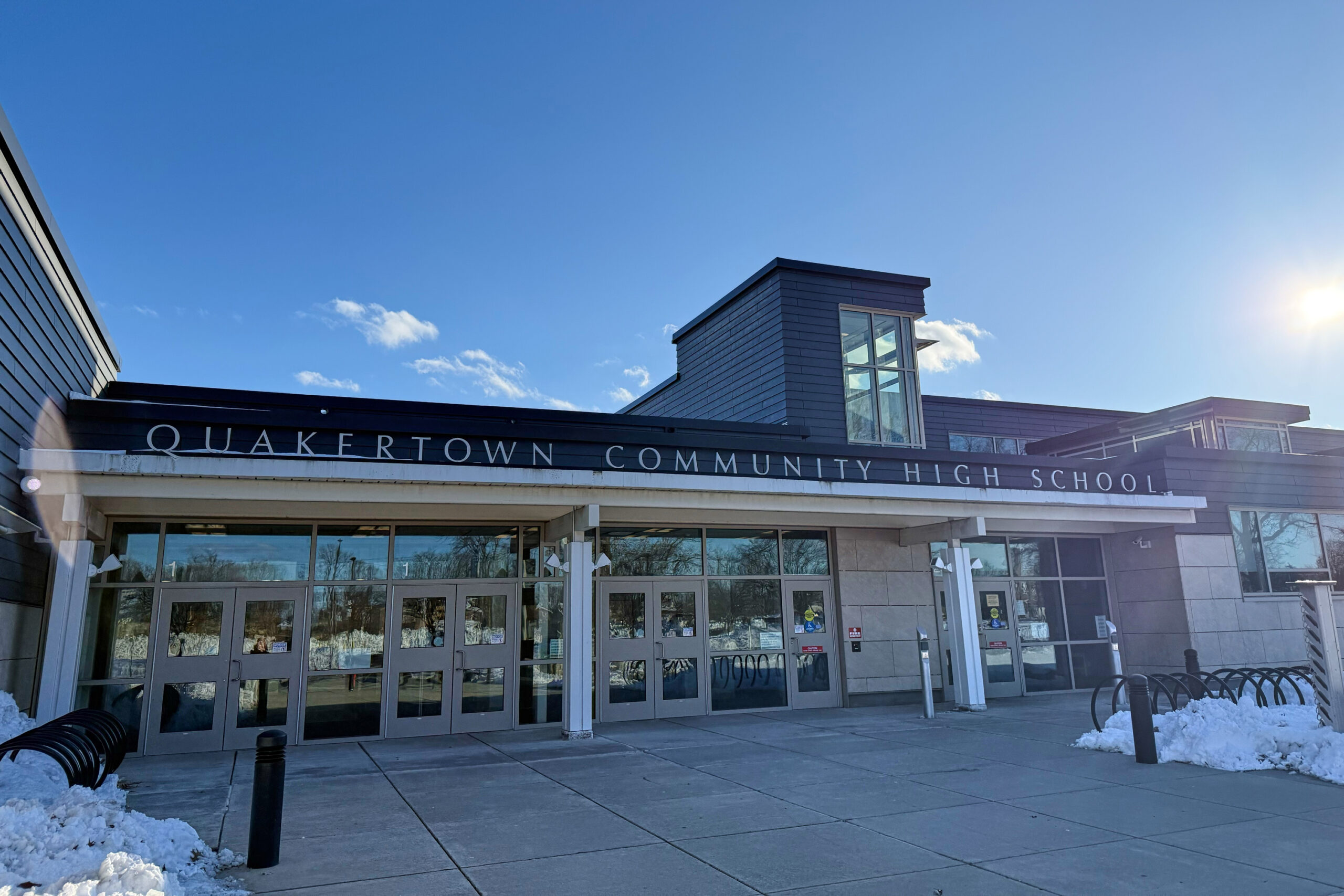
The teenagers who were arrested had been taking part in a protest of Immigration and Customs Enforcement that began at Quakertown Community High School and moved off campus to Front Street. Witnesses have said that a confrontation erupted there, in front of Sunday’s Deli and Restaurant.
Students at Quakertown Community High School took part in a protest of Immigration and Customs Enforcement that began at the school and moved off campus to Front Street.
McElree, the police chief, who was dressed in plain clothes, grabbed a teenage boy and placed a teenage girl in a chokehold, they said, prompting other students to intervene and a larger scuffle to break out.
Angelo said the central allegation against his client is that she struck McElree during the melee, an accusation she denies. He contended that students reacted in confusion and fear when a man rushed into the crowd.
He said McElree “put himself smack in the middle and created a melee” when he charged up to the teenagers while out of uniform and without announcing who he was. “I think he owes the community and these teenagers an apology,” the lawyer said.
He added that, in his view, some of the teenagers had acted instinctively to protect one another.
Speaking by phone Tuesday afternoon, a 17-year-old girl who participated in the protest but was not among those arrested described what she said had been a peaceful demonstration even as counterprotesters drove past in vehicles, honking and shouting.
The teen, who asked not to be identified for fear of retaliation, said teenagers were gathered on the sidewalk and speaking with a uniformed officer when a man pushed through the crowd and “barged onto the sidewalk.”
The man — whom she later learned was McElree — grabbed a teenage boy by the back of the neck, she said. “All the kids thought he was a counter protester,” she said. “So everyone started to protect their friends.”
The girl said she saw McElree throw one student to the ground and place another in a chokehold. At least three students were injured, she said — one with a broken nose and another who required stitches to his chin. McElree, too, was injured, she said, and left the scene bleeding from his head.
She recorded portions of the confrontation and shared the videos with The Inquirer.
“It was really scary, because it was a group of kids versus this really angry man,” the teen said, adding that it took what felt like several minutes for uniformed officers to step in. “It was the kids doing what the police should have.”
The girl said she did not realize that the man at the center of the fight was the police chief until she returned home and showed the footage to her father, who recognized McElree.
Manuel Gamiz, a spokesman for the district attorney’s office, said Monday that the investigation remains ongoing and that no additional information was available.
Police initially said an adult had also been arrested during the confrontation. But the district attorney’s office later said no adults had been charged in the melee.
Outside the courthouse and along the hallway leading to the courtroom of Denise M. Bowman, more than two dozen community members gathered in quiet support Tuesday. Some held handmade signs: “We support Quakertown students” and “Keep families together.”
Among them was Lolly Hopwood, 47, of Doylestown, who held a poster reading, “We stand with you.” She said she and others wanted to counter what she described as harsh online criticism directed at the families.
“There’s a lot of negativity online right now that the parents are seeing,” Ms. Hopwood said. “We wanted to show them the community is really here for them.”
On Monday night, the episode had spilled into borough politics. At a Quakertown council meeting, several residents called for the teenagers’ release and demanded the resignation of McElree, who also serves as the borough manager. After the public session, the council met privately with its attorney. As of Tuesday morning, it was unclear whether any action would be taken against the chief.
Members of the borough council and the borough’s attorney, Peter Nelson, did not respond to requests for comment on Tuesday.
A GoFundMe campaign created to help cover the teenagers’ legal expenses had raised more than $41,000 by Tuesday afternoon. The funds will be divided evenly among the five families, said Heidi Roux, director of immigrant justice at the Welcome Project PA, which organized the drive.