Category: Pennsylvania News

  • Haverford College vows to make changes to its events policy following disturbance at Israeli journalist talk

    Haverford College vows to make changes to its events policy following disturbance at Israeli journalist talk

    During a talk by an Israeli journalist at Haverford College earlier this month, a group of about a dozen masked people sat and stood in the audience.

    At one point, one of them began shouting through a bullhorn, “Death to IOF,” or Israeli Occupying Forces, a name critics use to refer to Israel Defense Forces, and “Shame,” according to a video of the incident and people who attended the event. The protesters’ faces were covered by masks or keffiyehs, a symbol of Palestinian identity.

    “When Gaza has burned, you will all burn, too,” the protester shouted at the audience of about 180 people, many of them members of the local Jewish community, according to another video viewed by The Inquirer.

    An audience member grabbed at the bullhorn and appeared to make contact with the protester as the protester yelled in his face, according to a video. The college’s campus safety personnel ejected both the bullhorn user and the audience member and has since banned both from campus, college officials said, noting that neither is an employee, student, or alumnus of Haverford.

    The event sparked renewed charges of antisemitism on the highly selective liberal arts campus, which already is under scrutiny by a Republican-led congressional committee for its handling of antisemitism complaints and is the subject of an open investigation by the U.S. Department of Education.

    It will also lead to changes in Haverford’s policies. In a message to the campus after the event, president Wendy Raymond — who faced intense questioning from the congressional committee about the school’s response to antisemitism last year — said “shouting down a speaker whom one does not agree with is never acceptable and stands outside of our shared community values.”

    College officials acknowledged that Haverford needs to upgrade its event policies and said changes would be rolled out no later than after spring break.

    Some people who attended the event to hear journalist Haviv Rettig Gur said they were afraid because they did not know who the masked attendees were or what they had in their belongings, and in light of recent mass violence at Jewish events around the world.

    “I was scared to walk back to my car by myself, which is the only time I ever felt that way in Lower Merion, where I live,” said Susan Taichman, a resident of Bala Cynwyd, who was in the audience.

    Barak Mendelsohn,professor of political science at Haverford College

    Several students in attendance that night said most of the protesters sat or stood silently during the event — which is permitted under campus policy.

    “I went into that event not with hatred for Jewish people, as some … have claimed was the intention of the protesters at the event,” said one Haverford student protester who asked that her name be withheld for safety reasons. “I went in with love, empathy, and deep concern for the Palestinians experiencing abhorrent amounts of violence in their homeland, as well as an understanding of the historical contexts that led to this violence, including the historic persecution of Jewish people that led to the development of Zionist thought.

    “This context, in my opinion, is not an excuse for the genocide. It’s something really tragic that is going on, and I feel really strongly that it has to be stopped.”

    Cade Fanning, the associate editor of the Clerk, Haverford’s student newspaper, cited three interruptions by protesters. One early on argued with Gur for an extended period, followed by the bullhorn incident less than an hour into the event, and then some banging on doors and yelling outside the room, said Fanning, 21, a senior history major from Annapolis, who attended the event.

    Haverford professor Barak Mendelsohn, who helped organize the nearly three-hour event and has complained about the college’s handling of antisemitism in the past, said attendees were terrified as disruptions continued.

    “I can’t tell you how ashamed I am as one of the organizers,” said Mendelsohn, an Israeli-born professor of political science and a terrorism scholar.

    Leaders of Haverford’s students’ council, meanwhile, voiced concerns that an audience member had initiated physical contact with the protester, “which deeply frightened and disturbed members of Students’ Council,” they wrote. “We believe it is paramount to prioritize the safety of members of our college community. Actions like this have no place in our community.”

    Some community members also interrupted and “heckled” protesters, Fanning said, adding that Gur belittled the activists as “children” who did not know enough about the world. The college, Fanning said, should have addressed that in its statement to the community.

    “It would have been beneficial had they at least acknowledged that he wasn’t the most conducive to respectful, honest, open debate either,” Fanning said of Gur. “He didn’t treat the students with the most respect.”

    But Anna Braun, 21, a senior English major from New York City who attended the event, said she was impressed with how Gur handled the protesters.

    “He decided to engage with them one on one to really ask them questions and try to deconstruct why they were protesting,” she said. “The only way we can have any hope for peace is for people to listen to each other and to find some middle ground. And if you’re ignoring each other or if you are interrupting each other, then there is no potential for seeing eye to eye.”

    An effort to ensure safe events

    “It has become clear that there are gaps in how events are reviewed, supported, and managed on campus,” Raymond said in her message to campus. “We are actively revising our event management and space use policies to improve clarity and processes.”
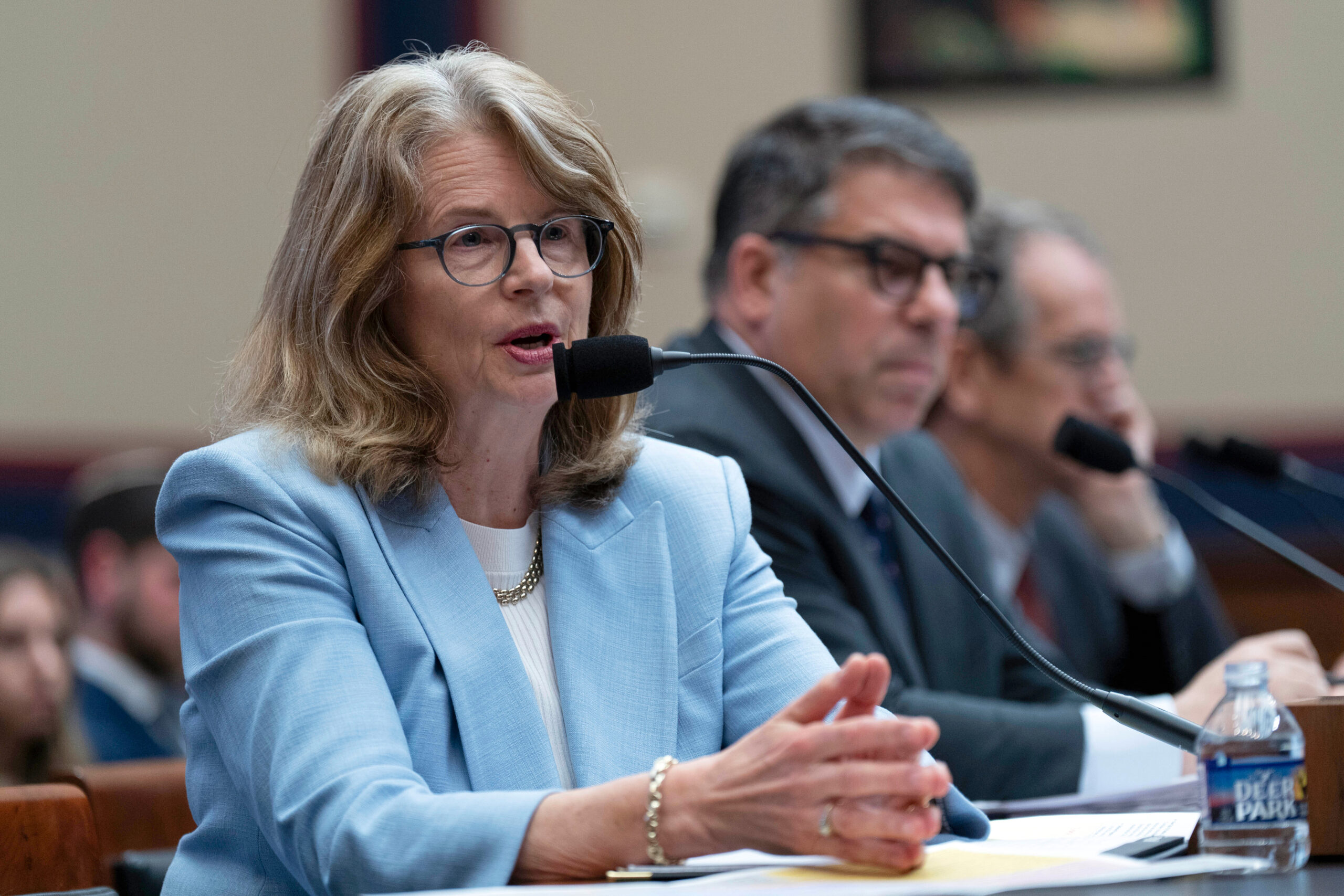
    Wendy Raymond, president of Haverford College, testifies before the House Committee on Education and Workforce hearing on antisemitism on American campuses on May 7, 2025.

    The new policy, she said, “will clarify expectations for different types of events, strengthen coordination among College offices, and establish additional planning and support for events that require heightened attention.”

    Factors such as “significant attendance or operational complexity, heightened public visibility, safety, security, or crowd-management considerations, media presence or external participation, and increased likelihood of disruption or protest activity” may trigger the need for additional review to determine whether more resources are needed, said Melissa Shaffmaster, Haverford’s vice president for marketing and communication.

    “Our intention … is not in any way to restrict free speech or restrict access for different speakers or topics to be discussed on campus,” she said. “We want to make sure that the proper resources are allocated so events can happen safely, people can have really thoughtful discourse, and these events can go off the way they are intended.”

    The indoor use of bullhorns violated the school’s “expressive freedom” policy put in place last spring, she said.

    The college is participating in the Hillel Campus Climate Initiative, touted as an effort to help college leaders counter antisemitism. A survey “to better understand the current climate for Jewish students” will be part of the effort.

    Haverford also is preparing for a major change in leadership. Raymond said in November she would step down as president in June 2027; John McKnight, the dean of the college, also announced he would be leaving at the end of this semester for a new role at Dartmouth College; and the college’s vice president for institutional equity and access also will exit that post in May.

    ‘The howling cry of an uneducated child’

    Gur’s talk was titled “Roots, Return, and Reality: Jews, Israel, and the Myth of Settler Colonialism.” In an opinion piece for the Free Press after the talk, Gur said he had gone to Haverford to talk “about the Jewish history that forged Israeli identity.”

    While he saw the audience “tense up” when protesters entered, he wrote, he saw it as “a chance to explore managing an encounter with the abusive ideologues.”

    During the event, Gur called the bullhorn protester’s disruption “the howling cry of an uneducated child.”

    He said he invited protesters to stay, but told them they had to remove their masks, which they did not do. Most protesters remained for the entire talk, he said, some even crying and engaging in dialogue with him.

    “The more I treated them like neglected children hungry for knowledge, the more likely they were to respond in healthy and productive ways,” he wrote.

    The event was organized by Kevin Foley, a 1983 Haverford graduate. Foley said he was impressed with Gur, a political correspondent and senior analyst for the Times of Israel, after seeing a video of him teaching.

    “I thought I could do something good for Haverford by having him teach there,” said Foley, who lives in Connecticut and New York City and spent his career running electronic trading businesses at Bloomberg and Cantor Fitzgerald.

    Foley’s best friend was killed in the 9/11 attacks and he said he experienced Hamas’ October 2023 attack on Israel as an “echo trauma.” To see concerns at Haverford about its handling of antisemitism “was disappointing,” he said, and what happened at Gur’s talk reinforced those concerns.

    “What I can’t believe is that Haverford has so abandoned its liberal values of academic freedom, freedom of inquiry, that it’s considered acceptable for protesters to come in and disrupt and shut down an educational class,” Foley said.

    Foley called on the college to ban masks and have metal detectors available when needed, and to apologize to Gur’s audience.

    Shaffmaster said the college’s policy allows people to wear masks, but they must remove them if they are asked by campus safety officers or administrators for identification purposes.

    Ongoing tensions on campus

    Several students in attendance, who asked not to be named because of tensions on campus over the issue, said they thought campus safety and the college handled the event as best they could without silencing either side.

    “No matter what they had done, people would be mad at them,” one said.

    Fanning, the student editor, understood why older community members may have been fearful, but said protesters also have fears of being harassed or doxed for their pro-Palestinian advocacy if their identity is known.

    “They are not fearless themselves,” Fanning said. “Nobody is.”

    But Mendelsohn, the professor, was disturbed that Haverford seemed to equate the actions of the audience member who grabbed the bullhorn with those of the protester.

    “The person acted in self-defense and managed to get the bullhorn from her hands,” he said. “If someone turned to you with a microphone and screamed, you would not sit there and do nothing.”

    Mendelsohn has been at the forefront of allegations that Haverford has not done enough to address antisemitism, and the college has investigated him for speaking out on social media and in emails, according to a lawsuit filed against the college last year by a Jewish group. Much of the complaint was dismissed, but the judge allowed a portion involving breach of contract that would result in nominal damages to proceed, and that is in mediation, court records show.

    The actions at Gur’s speech were just one of several ongoing problems with antisemitism on the campus, Mendelsohn said. His mezuzah — an object signifying the Jewish faith — was stolen from his office door a couple of months ago, he said. And he referred to a bias complaint over comments made around funding for the Haverford Chabad board. That remains under review, the college said.

    Braun, the English major, said that she was heartened to see improvement in Haverford’s handling of the Gur event and that the campus has been more welcoming to Jewish students. Most people she has spoken with, she said, did not think the use of the bullhorn was appropriate.

    “That’s not something I would have heard two years ago on this campus,” she said. “I sincerely believe there is more of a desire to create an inclusive environment.”

  • ‘I was vulnerable’: Women testify against head of Delco addiction nonprofit accused of trading money for sexual favors

    ‘I was vulnerable’: Women testify against head of Delco addiction nonprofit accused of trading money for sexual favors

    The woman, then battling an addiction to heroin, said she sought help at the Opioid Crisis Action Network, a beacon of hope for those struggling with substance abuse disorder in Delaware County.

    But instead of providing compassionate care, Larry Arata, the nonprofit’s founder, offered her gift cards in exchange for oral sex in his car in 2024, the woman testified Thursday in a Delaware County courtroom.

    The experience traumatized her, she said, and within a month she had dropped out of recovery and overdosed.

    “I was still on heroin, and I needed help,” the woman said, her voice breaking as she recalled the encounter. “I didn’t expect to have to do that.”

    As she spoke, Arata, 65, sat in the courtroom for a preliminary hearing in a sweeping prostitution and trafficking case that Delaware County prosecutors brought against him late last year.

    He has denied any wrongdoing, and his lawyers said Thursday that they would present a robust defense at trial.

    In emotional testimony, six women took the stand and accused Arata of criminal behavior. The Inquirer is not naming the women because the newspaper does not identify victims of sex crimes without their permission

    One woman said Arata hired her to clean the Opioid Crisis Action Network’s office as she was trying to get sober. Almost immediately, she said, he began complimenting her appearance. Eventually, they began having sex in Arata’s private office at the nonprofit and at a nearby hotel, she said, where he sneaked her in a back door.

    Afterward, she said, Arata would give her a $300 paycheck, as well as extra cash and gift cards.

    Other women who sought the Action Network’s help said Arata made comments about their appearance and offered them financial incentives after sexual encounters in parks, hotels, and in one case, his father’s home.

    Arata founded the Opioid Crisis Action Network after his son died of an overdose in 2017, and he became something of a figurehead for issues surrounding addiction in the suburban county.

    But Arata abused his position of influence, prosecutors said in November as they charged him with multiple counts of trafficking, patronizing prostitutes, promoting prostitution, obstruction, and one count of harassment.

    They said Arata twisted his nonprofit’s mission, using cash, gift cards, and rent payments to elicit sex from vulnerable women who relied on him for help.

    In one case, a woman testified that Arata told after a sexual encounter that “secrets are meant to be kept.” Others said he worried that his wife would find out about the sexual encounters and asked them to delete sexually explicit images they had texted him.

    And one woman — who said Arata had cornered her in his office and tried to kiss her — said that when he later learned that she had spoken to county investigators about the incident, called her a liar and told her to recant.

    Arata’s attorneys did not call any witnesses. They told the judge their client’s alleged behavior did not meet the legal standards for many of charges against him, including trafficking and obstruction.

    After hearing nearly four hours of testimony, Delaware County Court Judge Benjamin Johns said prosecutors had presented sufficient evidence for all charges against Arata to stand.

    Brandi McLaughlin, an attorney for Arata, told reporters that her team would try the case in a “courthouse, not the media.”

  • David J. Farber, celebrated Penn professor emeritus and pioneering ‘uncle’ of the internet, has died at 91

    David J. Farber, celebrated Penn professor emeritus and pioneering ‘uncle’ of the internet, has died at 91

    David J. Farber, 91, formerly of Landenberg, Chester County, celebrated professor emeritus of telecommunication systems at the University of Pennsylvania, former professor of computer science at Carnegie Mellon University and the University of Delaware, professor at Keio University in Japan, award-winning pioneer in pre-internet computing systems, entrepreneur, and known by colleagues as the “uncle” and “grandfather” of the internet, died Saturday, Feb. 7, of probable heart failure at his home in Tokyo.

    A longtime innovator in programming languages and computer networking, Professor Farber taught and collaborated with other internet pioneers in the 1970s, ’80s, and ’90s. He helped design the world’s first electronic switching system in the 1950s and ’60s, and the first operational distributed computer system in the 1970s.

    His work on the early Computer Science Network and other distributive systems led directly to the modern internet, and he taught many influential graduate students whom he called the “fathers of the internet.” He was thinking about a World Wide Web, he said in a 2013 video interview, “actually before the internet started.”

    “Farber may not be the father of the internet. But he is, at least, its uncle,” Penn English professor Al Filreis told the Daily News in 1998. “Few have paid such close attention for so long to new trends in the information age.”

    Colleagues called him “part of the bedrock of the internet” and a “role model for life” in online tributes. Nariman Farvardin, president of the Stevens Institute of Technology in Hoboken, N.J., said: “Professor Farber did not just witness the future, he helped create it.”

    In 1996, Wired magazine said Professor Farber had “the technical chops and the public spirit to be the Paul Revere of the Digital Revolution.”

    He joined Penn as a professor of computer science and electrical engineering in 1988 and was named the endowed Alfred Fitler Moore professor of telecommunication systems in 1994. He left Penn for Carnegie Mellon in 2003 and joined Keio in 2018.

    Gregory Farrington, then dean of Penn’s School of Engineering and Applied Science, told The Inquirer in 1996: “He’s one of the most engaging, imaginative guys who sometimes alternates between great ideas and things that sound nuts. And I love them both. His life is an elaboration on both.”

    He was a professor at Delaware from 1977 to 1988 and at the University of California Irvine from 1970 to 1977. Among other things, he created innovative computer software concepts at UC Irvine, studied the early stages of internet commercialization at Delaware, and focused on advanced high-speed networking at Penn. He also directed cyber research laboratories at every school at which he worked.

    He earned lifetime achievement awards from the Association for Computing Machinery, the Board of Directors of City Trusts of Philadelphia, and other groups, and was inducted into the Internet Society’s Hall of Fame in 2013 and the Stevens Institute of Technology Hall of Achievement in 2016.

    Stevens Institute also created a “societal impact award” in 2003 to honor Professor Farber and his wife, Gloria. “I think the internet has just started,” he said in 2013. “I don’t think we’re anywhere near where it will be in the future. … I look forward to the future.”

    Professor Farber earned grants from the National Science Foundation and other organizations. He received patents for two computer innovations in 1994 and earned a dozen appointments to boards and professional groups, and an honorary master’s degree from Penn in 1988.

    He advised former President Bill Clinton on science and engineering issues in the 1990s and served a stint in Washington as chief technologist for the Federal Communications Commission. Clinton called him a “pioneer of the internet” in a 1996 shoutout, and Professor Farber testified for the government in a landmark technology monopoly court case against Microsoft Corp.

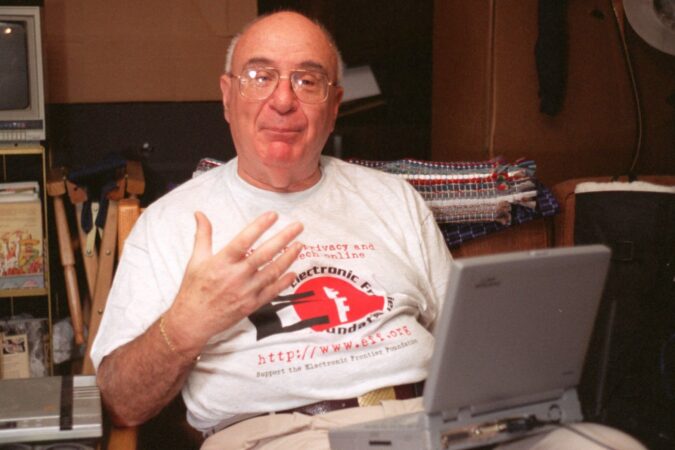
    Professor Farber (left) worked with Professor Jiro Kokuryo at the Keio University Global Research Institute in Tokyo.

    He championed free speech on the internet, served on technical advisory boards for several companies, and wrote or cowrote hundreds of articles, papers, and reports about computer science.

    He was featured and quoted often in The Inquirer and Daily News, and lectured frequently at seminars and conferences in Japan, Europe, Australia, and elsewhere around the world. He wrote an email newsletter about cutting-edge technology that reached 25,000 subscribers in the 1990s, and he liked to show off his belt that held his cell phone, pager, and minicomputer.

    He cofounded Caine, Farber, & Gordon Inc. in 1970 to produce software design tools and worked earlier, from 1957 to 1970, on technical staffs for Xerox, the Rand Corp., and Bell Laboratories. In a recent video interview, he gave this advice: “Learn enough about technology so that you know how to deal with the world where it is a technology-driven world. And it’s going to go faster than you ever imagined.”

    David Jack Farber was born April 17, 1934, in Jersey City, N.J. Fascinated by gadgets and early computers in the 1940s, he built radios from wartime surplus components as a boy and helped make a unique relay device with a punch card in college. “The card reader was three feet big, but it worked,” he told the Daily News in 1998.

    Professor Farber enjoyed time with his family

    He considered being a cosmologist at first but instead earned a bachelor’s degree in electrical engineering and a master’s degree in math at Stevens.

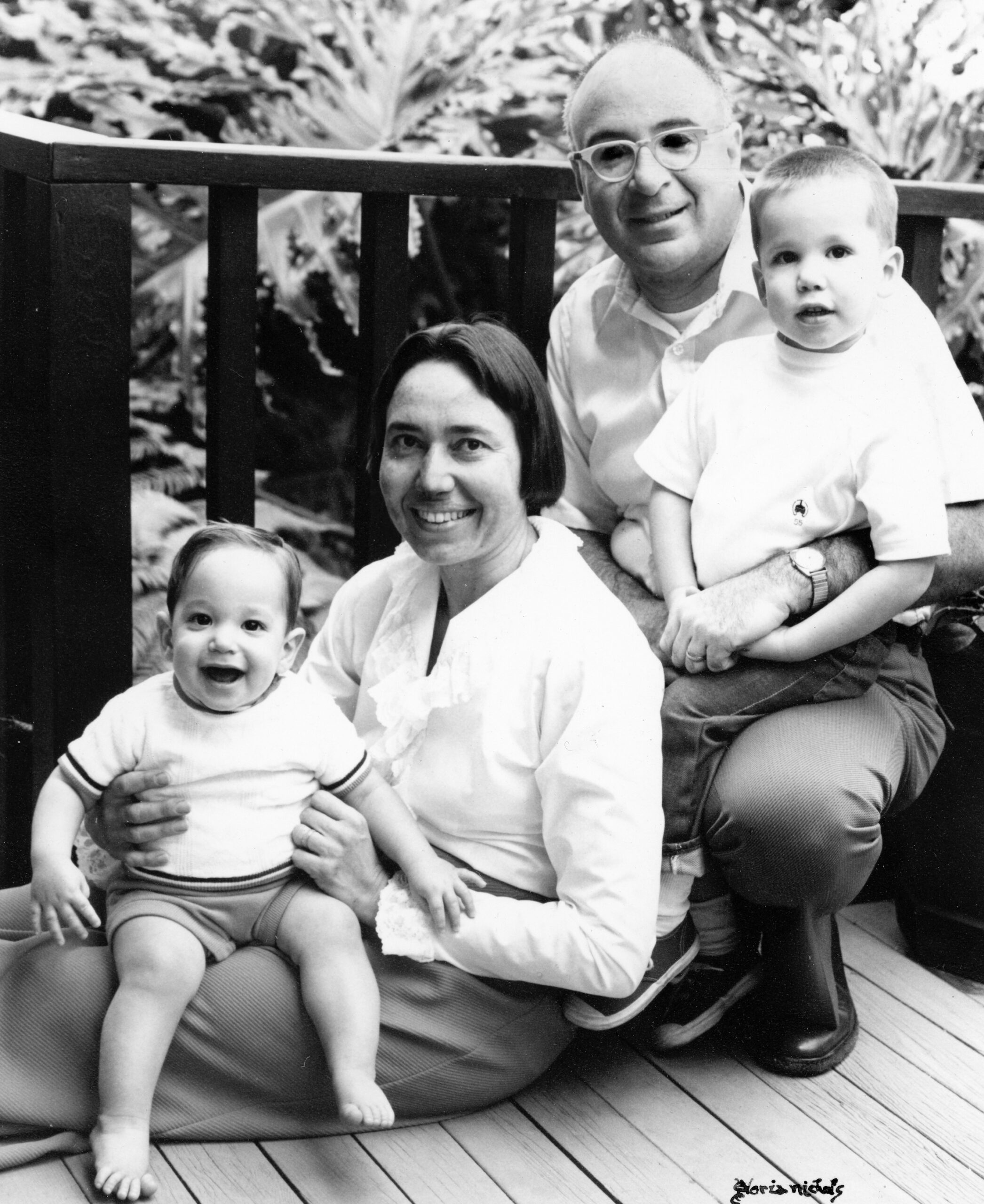
    He met Gloria Gioumousis at Bell Labs, and they married in 1965. They had sons Manny and Joe, and lived in Landenberg from 1977 to 2003. His son Joe died in 2006. His wife died in 2010.

    Professor Farber enjoyed iced coffee and loved gadgets. He was positive and outgoing, and he mixed well-known adages into humorous word combinations he called “Farberisms.”

    He was an experienced pilot and an avid photographer. In 2012, to honor his son, he established the Joseph M. Farber prize at the Stevens Institute for a graduating senior.

    Mr. Farber was an experienced pilot who could fly solely on cockpit instruments.

    “He was bold,” his son Manny said. “He connected to a lot of people and was close to his friends. He worked on big projects, and it wasn’t just theoretical. He built things that work.”

    In addition to his son, Professor Farber is survived by his daughters-in-law, Mei Xu and Carol Hagan, two grandsons, and other relatives.

    A memorial service is to be held later.

  • Two rival sex traffickers arrested in Norristown following shooting, police say

    Two rival sex traffickers arrested in Norristown following shooting, police say

    A street shooting in Norristown last week led investigators to discover two sex-trafficking operations that transported women from New York to Montgomery County to engage in prostitution, prosecutors said Thursday.

    A dispute between two men who ran rival enterprises erupted in gunfire on Feb. 13, police said, when one shot the other in the thigh during a confrontation on the 400 block of Sandy Street.

    On Tuesday, authorities arrested both men.

    Efran Flores-Rodriguez, 24, of Norristown, and Fernando Meza-Ramirez, 42, of Corona, Queens, are each charged with trafficking individuals and involuntary servitude. Flores-Rodriguez faces additional charges, including attempted murder, in connection with the shooting.

    Officers responding to reports of gunfire found Meza-Ramirez inside a bullet-riddled Toyota RAV4, police said. He had been shot in the thigh.

    Meza-Ramirez told police that a stolen white Acura TLX had followed him from Lafayette Street to Sandy Street. When he pulled over, he said, the sedan pulled up beside him and someone opened fire. A witness identified Flores-Rodriguez as the shooter, according to the affidavit of probable cause for his arrest.

    But investigators say the shooting exposed more than a personal feud.

    At the hospital where Meza-Ramirez was treated, officers found business cards in his wallet bearing photographs of scantily clad women posing on beds, according to the affidavit.

    Days later, on Feb. 17, police searched Flores-Rodriguez’s home and encountered a woman from Flushing, Queens, who told them she had worked as a prostitute under his direction last summer.

    She said Flores-Rodriguez, whom she knew as “Guerro,” drove her to Norristown six days a week, provided her a room and charged clients $60 for 10-minute sexual encounters. She told police she sometimes had as many as 15 encounters a day and kept half the money he collected.

    The woman said she also worked this year for Meza-Ramirez, whom she knew as “Leo,” under the same arrangement, according to the affidavit.

    Both men were denied bail at arraignment and are being held at the Montgomery County Correctional Facility.

  • Some Delco SEPTA riders will have 15 minutes added to their commutes, beginning Monday

    Some Delco SEPTA riders will have 15 minutes added to their commutes, beginning Monday

    Rides on the two trolley lines serving Delaware County promise to be safer but longer with a modern signal system scheduled to go live on Monday, SEPTA said.

    The upgraded signals on the D1 and D2 trolley lines will require operators to make more gradual accelerations and decelerations. They will also enforce speed limits and stop signals with automatic braking if needed.

    “It will reduce the possibility of operator error,” SEPTA general manager Scott A. Sauer said. “They won’t be able to speed and risk derailment. They won’t be able to violate stop signals or misaligned switches.”

    But the computer won’t replace the judgment of the people operating a trolley, Sauer said. Operators will get an alert, and the system provides backup if they cannot correct it in time, he said.

    Trips will be up to 15 minutes longer on the D1 route and 10 minutes on the D2 route, depending on where a passenger boards and gets off the trolley.

    The trolleys operate between Media and the 69th Street Transportation Center in Upper Darby, and between Sharon Hill and the transit hub. They were formerly called Routes 101 and 102.

    The transit agency also is releasing new spring schedules for all elevated-subway and bus transit, using the new “Metro” way-finding nomenclature, which uses letters for the various services.

    SEPTA accounted for the increased Delaware County trolley travel times in the new schedules, which begin Monday.

    It took about a decade and $75 million to install the system, called Communications-Based Train Control, on the Delco trolleys, said John Frisoli, SEPTA’s top rail signals engineer. Radios communicate between the control system and the trolleys.

    A similar system has operated in the Center City trolley tunnel since 2005. SEPTA has been adding safety features to its rail-signal systems for about 20 years, including the installation of Positive Train Control on Regional Rail, which controls train speed and applies automatic brakes to prevent crashes caused by human error.

  • Sledgehammer-wielding thieves stole $11,000 worth of Lululemon in Ardmore’s Suburban Square

    Sledgehammer-wielding thieves stole $11,000 worth of Lululemon in Ardmore’s Suburban Square

    Two men have been arrested after breaking into a Lululemon store in Ardmore and allegedly stealing nearly $11,000 in merchandise, police said.

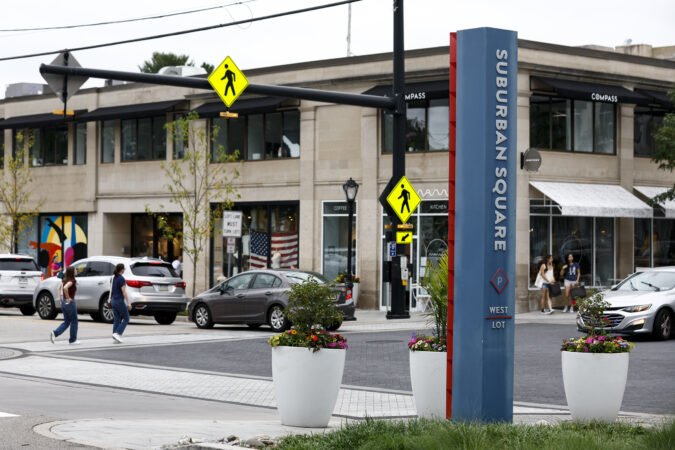
    Quran Harmon, 23, and James Jordan, 49, both of Philadelphia, used a sledgehammer to break through the front door of the Lululemon in the Suburban Square shopping center on Jan. 6 at 1:52 a.m., according to the Lower Merion Township Police Department.

    Within five minutes, surveillance footage shows, Harmon and Jordan cased the Lululemon, broke the front door, and grabbed as much clothing from the men’s section as possible, said Lower Merion Police Superintendent Andrew Block. Afterward, police said, they fled the scene in a U-Haul pickup truck.

    Lower Merion detectives soon identified the suspects and, with the help of Philadelphia police, tied them to a similar sneaker burglary at a Famous Footwear store in Philadelphia the night before.

    Police served a search warrant five days after the robbery at a residence in Philadelphia, where merchandise from the Lululemon and Famous Footwear thefts was recovered, authorities said. Harmon turned himself in to Lower Merion police on Jan. 29 and is being held at the Montgomery County Correctional Facility.

    Jordan was arrested on Feb. 6 by Upper Moreland police in connection with a separate theft-related crime and is also being held at the Montgomery County Correctional Facility while awaiting burglary and theft charges in the previous robberies.

  • Another weekend snow threat is in the outlook for the Philly region

    Another weekend snow threat is in the outlook for the Philly region

    You may have read this somewhere before: Computer models are seeing the potential for a significant winter storm to affect the Philly region on yet another weekend.

    Those ingenious machines continue to predict that a storm will intensify off the Southeast coast Sunday into Monday. But “a large amount of uncertainty” remains about whether it will generate accumulating snow in the Philadelphia region, the National Weather Service said in its morning discussion Thursday. In the early going, areas south and east of Philly were the likeliest targets.

    Based on past experience, not to mention the nonlinear chaos of the atmosphere, about the only thing certain was that they would be changing their stories multiple times in the next few days, as would their virtual peers.

    In the short term, it is highly likely that, along with a certain dreariness, the region will be getting something that has been mighty scarce lately — rain. Philly’s rain total this month is under 15% of normal. Over the last 60 days throughout the region, it has been 40% to 50% below normal.

    The forecast for the rest of the workweek in Philly

    The freshness date on the snowpack has about expired and about now looks like it could use a good scrubbing, along with the air.

    Atop the remnants, generally light winds have been aiding and abetting a rather stagnant air mass. A “code orange” air quality alert was in effect for South Jersey Thursday, and health officials advised those with respiratory conditions to limit outdoor exposure.

    The primary irritants were tiny particulates, about 30 times smaller in diameter than a human hair.

    Rain is likely to be in the air Thursday night into Friday, and it could be a substantial amount, on the order of a half-inch or more. So far this month, officially 0.25 inches have been measured at Philadelphia International Airport.

    The moist air and the rain should erase more of the snowpack, “but we don’t want the snow and ice to melt too quickly,” said Ray Martin, a lead meteorologist at the National Weather Service Office in Mount Holly. No significant flooding is expected, just some potential damage to footwear.

    Temperatures are expected to top out in the 40s Thursday and Friday.

    About the weekend storm potential

    It may hit 50 degrees on Saturday with an appearance of the sun. So much for the easy part.

    Come Sunday, “there could be some rain or snow,” said Matt Benz, senior meteorologist with AccuWeather Inc.

    A storm is due to slide across the South and eventually regroup off the Atlantic coast on Sunday.

    But Benz pointed out that a key feature of the potential storm still was over the Pacific and not due to make landfall until sometime later Thursday, when it would be captured by land-based observation and give the machines a clearer idea of its intentions.

    And it is not at all clear how much cold air would be available for snow, Benz said, but if the storm intensifies sufficiently, “it can manufacture its own cold.” Another factor is just where off the coast the storm would be when it matured.

    In case you’re wondering why the atmosphere seems to pick on Sundays, having storms show up in seven-day cycles is a common phenomenon.

    They often migrate in 3½-day cycles, which has to do with the rhythms of storm movements as they travel across the country, and it so happens that the more significant one has been arriving on the seventh day.

    It keeps happening until it doesn’t, and it’s still very possible that it doesn’t this time around.

    Said Benz: “We have a long way to go to Sunday.”

  • Carlino’s has your back following Di Bruno’s closure | Inquirer Lower Merion

    Carlino’s has your back following Di Bruno’s closure | Inquirer Lower Merion

    Hi, Lower Merion! 👋

    Missing Di Bruno’s? Don’t worry — we’ve still got Carlino’s Market. Also this week, a popular gluten-free bakery has opened in Bryn Mawr, a Narberth artist used the recent snow to craft Swedish-inspired sculptures, plus a new hotel with a tavern and rooftop terrace is opening this spring.

    If someone forwarded you this email, sign up for free here.

    Carlino’s Market remains a Main Line go-to for Italian goods

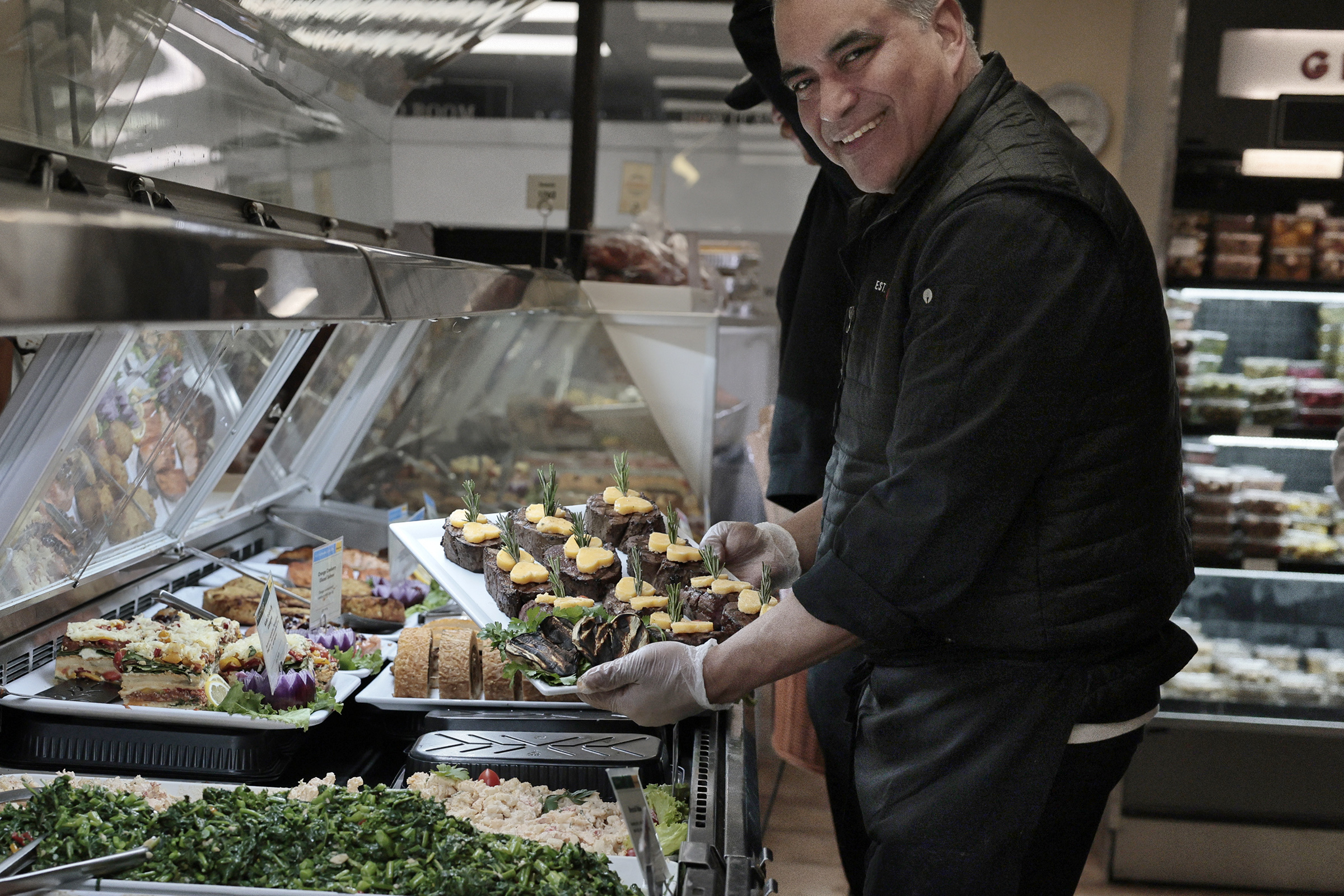
    Alejandro Perez is the executive chef at Carlino’s Market.

    While Di Bruno’s recent downsizing left a hole in the Ardmore Farmers Market — and in some shoppers’ hearts — a longtime staple continues to serve Main Liners in search of Italian goods.

    Founded in 1983 in Ardmore by husband and wife Nicola and Angela Carlino, who immigrated from Italy, Carlino’s Market has grown over the years and expanded into wholesale.

    In the past two decades, the family-operated market, now led by their son Pat Carlino, has added a location in West Chester but continues to serve its core customers, some of whom Pat grew up with.

    The Inquirer’s Denali Sagner checked in with the family on its measured growth plans.

    Gluten-free bakery Flakely opens in Bryn Mawr

    Lila Colello is the owner of gluten-free bakery Flakely.

    Main Liners can get fresh gluten-free pastries closer to home now that Flakely has opened in Bryn Mawr.

    The popular bakery held a soft opening for its new storefront this past weekend at the former Grand Middle East hookah lounge. The new space means more offerings than were possible at its previous home in Manayunk, including fresh gluten-free croissants.

    “It’s a totally different experience,” said owner Lila Colello, an Ardmore native and Shipley School alum.

    Read more about what you can find at the new bakery.

    💡 Community News

    • The Montgomery County District Attorney and the Police Chiefs Association of Montgomery County recently released a joint statement underscoring that they don’t enforce immigration action. Earlier this month, the LMPD released its own statement, reiterating that it doesn’t enforce or participate in immigration enforcement. The joint statement comes after recent ICE action in the area, including an arrest in Norristown that some local officials condemned.
    • Montgomery County commissioners covered a wide range of topics during their annual State of the County address last week, from potential federal funding cuts to immigration concerns. While the top officials remain divided by party lines, they did underscore some bipartisan achievements, like the 2026 budget, as well as upcoming goals like opening more shelters for those experiencing homelessness. The Inquirer’s Fallon Roth recaps the key takeaways.
    • The Ardmore Avenue Pool won’t be reopening in time for Memorial Day weekend this year. The township’s parks and recreation department said at a meeting that it expects the pool, which was closed last summer for construction of the Ardmore Avenue Community Center, to not open until late June or early July. The good news: Membership fees won’t be going up for the township’s pools this year, despite a proposal from the finance committee to increase rates at Belmont Hills by 4.25% for residents and 6.5% for non-residents. Commissioners decided against the increase for 2026, albeit not unanimously.
    • Narberth artist Emily Stewart used the lingering effects of last month’s snowstorm to craft icy sculptures in her yard, where three Swedish lanterns glowed. More than looking cool, these pieces of public art provide a “little communal social interaction” among neighbors.
    • A new hotel is coming to the Main Line. Brandywine Realty Trust plans to open a 121-room Marriott Tribute Portfolio hotel at 165 King of Prussia Rd. that will be called The Brandywine. The $60 million Radnor hotel is expected to open in time for college graduations this spring and will have a ground floor tavern and a rooftop terrace.
    • A Lower Merion High School alum has thrown his hat into the ring to represent the 148th district after State Rep. Mary Jo Daley announced she will not seek reelection. Leo Solga, who graduated LMHS in 2022 and the University of Pennsylvania in December, is a criminal justice researcher at Penn’s Carey School of Law, and served on LMHS student council and Model UN. He will face Jason Landau Goodman, Andrea Deutsch, and Megan Griffin-Shelley in the May Democratic primary. (The Merionite)
    • Tuesday is the last day to submit responses to the township’s Montgomery Avenue safety study survey, which you can find here.
    • A note about last week’s newsletter: We’ve updated the photo accompanying details on the Montgomery Avenue safety study to better reflect the story.

    🏫 Schools Briefing

    • Black Rock’s home-school association is hosting an ice cream social tonight and tomorrow Penn Wynne has a fourth grade social. Tomorrow is also “Panther Pride” day at Penn Valley and Tuesday is STEM Night at Black Rock. Next Thursday, the Lower Merion High School Black Student Union is hosting its fourth annual “Shades of Black” showcase, featuring dancing, singing, and spoken word performances. See the district’s full calendar here.
    • The 2026 Prom Boutique kicks off tomorrow at Lower Merion High School, where students attending prom can browse free dresses and accessories. It’ll be open tomorrow from 3:30 to 6 p.m. and again on Monday from 3:30 to 7 p.m. See all the upcoming dates here.
    • The deadline to submit applications for the Lower Merion Township Scholarship Fund has been extended one week to Feb. 27. To be eligible, recipients must graduate from a Lower Merion School District high school, have attended one of the district’s high schools for at least two years, have been a student in the district for at least four years, and be a full-time student at an accredited post-secondary education institution.

    🍽️ On our Plate

    • Middle Eastern restaurant Malooga opened its Narberth outpost this week at 203 Haverford Ave. This is the second location for the Old City Philadelphia restaurant that specializes in traditional Yemeni dishes like lamb fahsah, made with potatoes, okra, and herb fenugreek; and saltah, a potato and okra dish.

    🎳 Things to Do

    🧊 Bryn Mawr on Ice: Ice sculptures will dot Lancaster Avenue between Roberts Road and Bryn Mawr Avenue. ⏰ Friday, Feb. 20, 4-7 p.m. 💵 Free 📍 Downtown Bryn Mawr

    🔍 Best-Laid Plans: A Murder Mystery: Try your hand at sleuthing in this immersive whodunit at Stoneleigh’s main house. There will also be light food and drinks available. ⏰ Saturday, Feb. 21, 4:30-7:30 p.m. 💵 $75-$85 for standard tickets 📍 Stoneleigh

    📽️ Ordinary People: Catch a screening of the 1980 Robert Redford-directed film starring Donald Sutherland, Mary Tyler Moore, and Timothy Hutton in 4K. ⏰ Monday, Feb. 23, 7:15 p.m. 💵 $11.75-$16.25 📍 Bryn Mawr Film Institute

    ☪️ Ramadan Crafternoon: Celebrate the holiday with themed crafts at this drop-in event. ⏰ Wednesday, Feb. 25, 3-5 p.m. 💵 Free 📍 Gladwyne Library

    🏡 On the Market

    A four-bedroom Wynnewood home with a screened-in porch

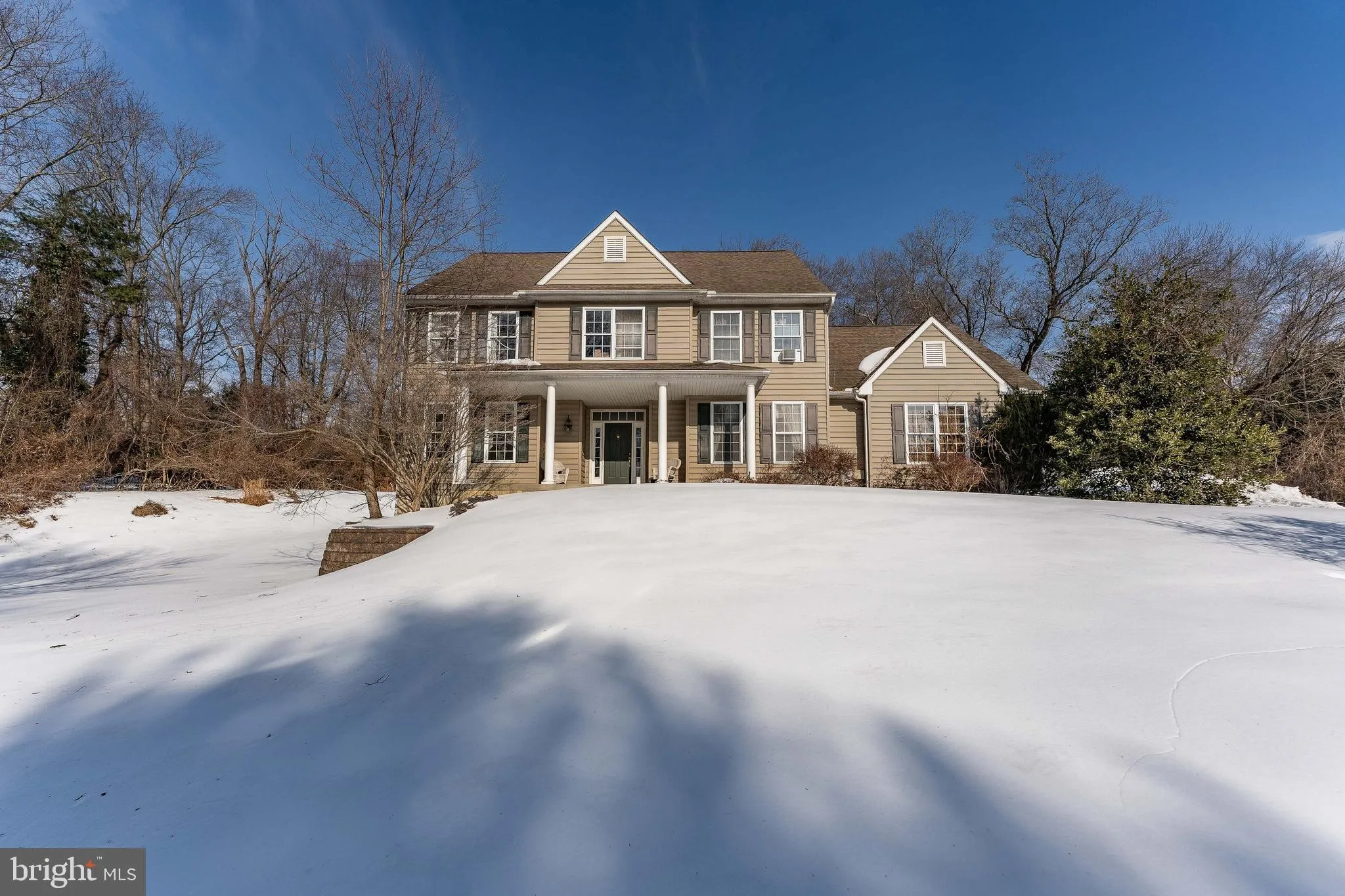
    The home spans more than 3,700 square feet and sits on a half-acre lot.

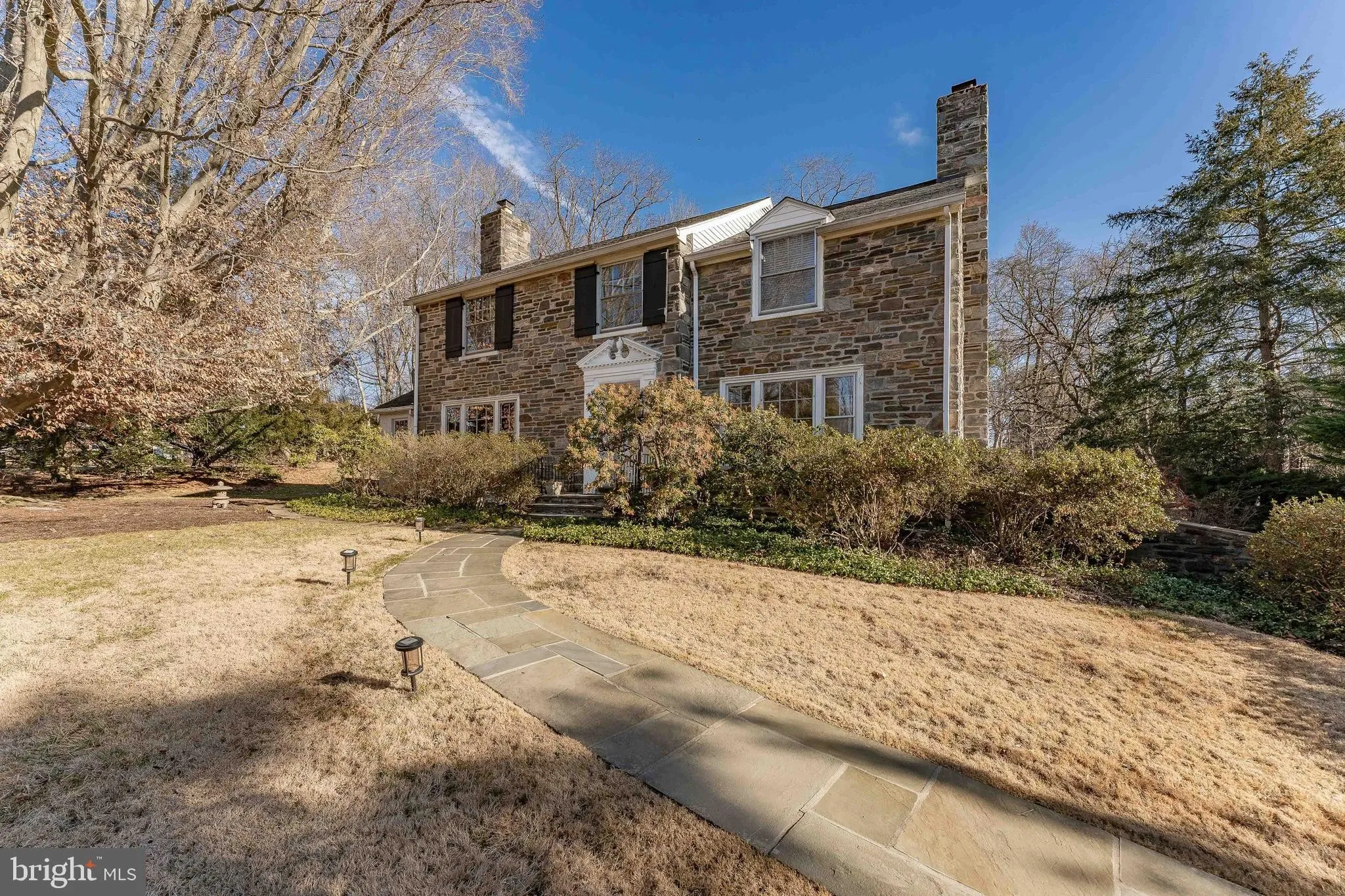
    Built in 1952, this four-bedroom Wynnewood home blends past and present thanks to its classic stone exterior. The home’s first floor features a living room with a fireplace, a dining room, a home office with an exterior entrance, a family room with vaulted ceilings and built-ins, and an eat-in kitchen with an island and double ovens. The bedrooms are all on the second floor, including the primary suite, which has two closets and a bathroom with marble floors and a steam shower. Other features include a screened-in porch, a flagstone patio, and a finished walk-out basement.

    See more photos of the home here.

    Price: $1.6M | Size: 3,724 SF | Acreage: 0.52

    🗞️ What other Lower Merion residents are reading this week:

    By submitting your written, visual, and/or audio contributions, you agree to The Inquirer’s Terms of Use, including the grant of rights in Section 10.

    This suburban content is produced with support from the Leslie Miller and Richard Worley Foundation and The Lenfest Institute for Journalism. Editorial content is created independently of the project donors. Gifts to support The Inquirer’s high-impact journalism can be made at inquirer.com/donate. A list of Lenfest Institute donors can be found at lenfestinstitute.org/supporters.

  • Racism in a restaurant spurred a woman’s life mission | Inquirer Greater Media

    Racism in a restaurant spurred a woman’s life mission | Inquirer Greater Media

    Hi, Greater Media! 👋

    The co-founder of Media Fellowship House is being recognized this month by the local branch of the NAACP. Here’s why. Also this week, Sheetz is looking to plant its flag in the heart of Wawa country, a new stir-fry and salads eatery is coming to Granite Run, plus, we’re keeping an eye on another potential snowstorm this weekend.

    If someone forwarded you this email, sign up for free here.

    The local NAACP branch is remembering a woman who championed inclusion in Media

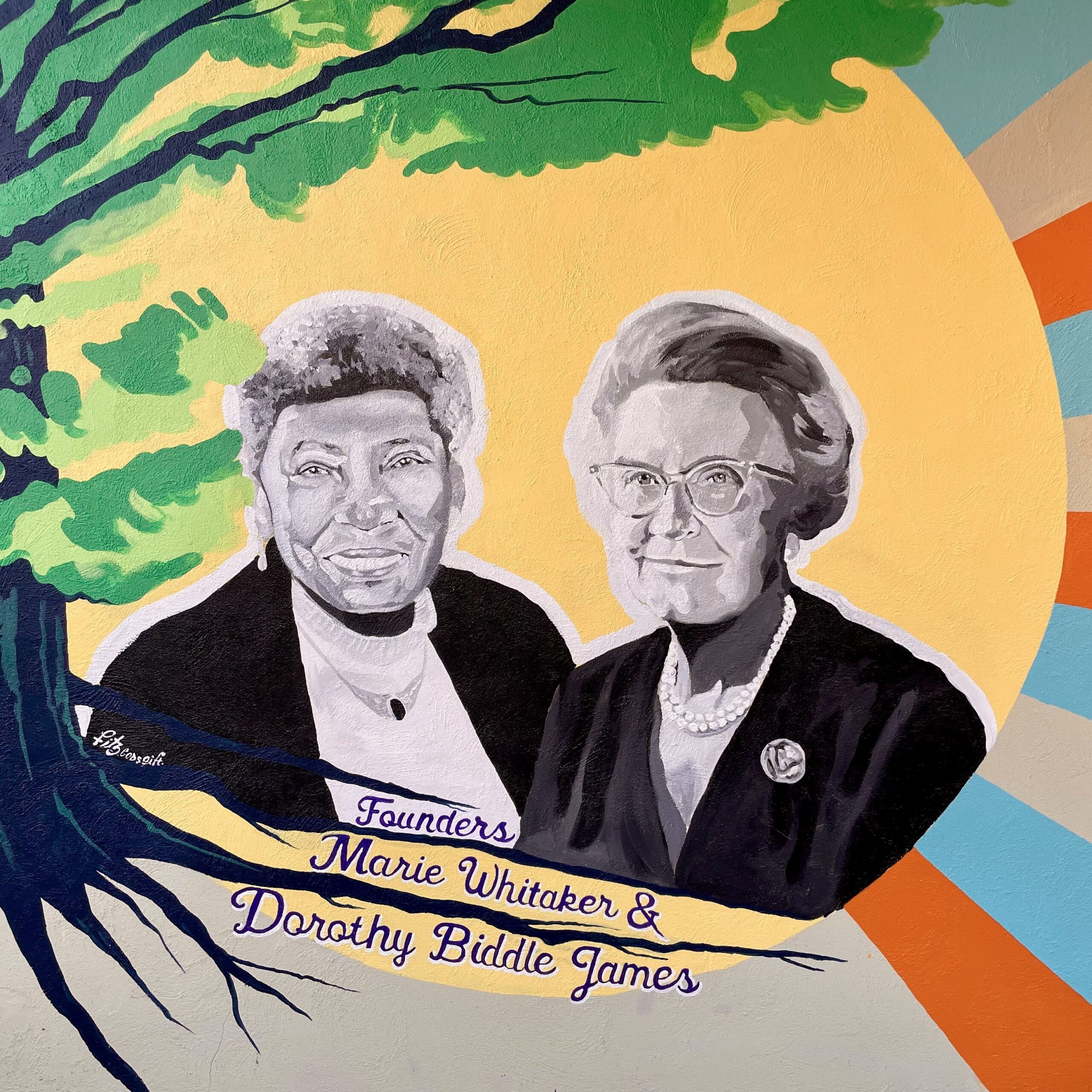
    A mural of Marie Whitaker and Dorothy James, co-founders of Media Fellowship House.

    It’s been 82 years since Marie Whitaker co-founded Media Fellowship House and 73 years since the organization opened on South Jackson Street, but its founding principles of inclusion, resilience, and courage live on.

    She and another woman, Dorothy James, launched the organization after Whitaker was denied service at the Tower Restaurant at the corner of State and Olive Streets. James, a white Quaker woman, witnessed the interaction and approached a worker there, who said the waitresses did not serve Black people. Whitaker and James left the restaurant soon after and became fast friends. They later formed the Media Fellowship as a place where residents of all races and religions could gather.

    Its mission has since expanded, but remains rooted in “bringing people together and having people speak across what seems now to be a chasm of our differences,” said Whitaker’s son, Bill, a 60 Minutes correspondent for CBS.

    Read more about Whitaker’s legacy and why the NAACP Media Branch is spotlighting her this Black History Month.

    💡 Community News

    • Cross-state rival convenience chain Sheetz is looking to enter the heart of Wawa country and has submitted a proposal to open a store just five miles from Wawa’s corporate campus. The Altoona-based competitor wants to put its first Delaware County location in the Village at Painters’ Crossing, with plans to build a 6,000-square-foot store at the site of the vacant Carrabba’s Italian Grill and Wells Fargo. Plans call for indoor and outdoor seating, two mobile-order pickup windows, and six gas pumps, but still require approvals.
    • Swarthmore’s planning and zoning committee will discuss Swarthmore College’s Cunningham Fields proposal at tonight’s meeting. The college is looking to redevelop its aging facilities at College Avenue and North Chester Road.
    • After dropping for four consecutive years, underage drinking offenses picked back up in Delaware County in 2024, according to the latest available data, which was released this month. The county had 192 offenses of individuals under 21 purchasing, consuming, possessing, or transporting alcohol in 2024, accounting for about 3% of the statewide total. It’s among the top 10 counties in the state with the highest percentage of offenses. Locally, Montgomery and Philadelphia Counties surpassed Delco at 4% each, and Chester County had the region’s highest total, accounting for 8% of cases statewide.
    • Lingering snow from the storm a few weeks ago is melting, but there’s a chance for even more white stuff this weekend. Here’s what we know about a possible snowstorm on Sunday.
    • Five couples who live at Upper Providence Township retirement community Rose Tree Place renewed their vows last week. Each of the couples have been married for at least 50 years and some for over 70 years. 6abc’s Alicia Vitarelli spoke to two of them. See the segment here.
    • Swarthmore College has thrown its support behind Harvard University, which is suing the Trump administration for its efforts to block international students from enrolling at U.S. colleges and universities. Twenty-seven percent of Swarthmore’s latest incoming class consisted of international citizens, people with dual citizenship, or permanent residents. (WHYY)

    🏫 Schools Briefing

    • In Rose Tree Media, there’s a districtwide technology presentation from 6:30 to 8 p.m. tonight at Springton Lake Middle School. Tomorrow night is Penncrest High School’s choir cabaret, and Saturday is the high school’s sports fest and jazz night. See the district’s full calendar here.
    • Wallingford-Swarthmore School District is hosting eighth grade orientation tonight from 7 to 8 p.m. It’s also the Strath Haven Middle School student-faculty basketball game. On Monday, there’s a board of education meeting at 7 p.m. See the district’s full calendar here.
    • Yan Weng, an eighth grader at Mother of Providence Regional Catholic School in Wallingford, won first place in the National Society Sons of the American Revolution’s Sergeant Moses Adams Memorial Brochure Contest for her design of the Bill of Rights. The contest was open to middle school students, who designed brochures based on the United States’ foundational documents. (Daily Times)

    🍽️ On our Plate

    • A new fast-casual restaurant is coming to the Promenade at Granite Run later this year. Honeygrow, the Philadelphia-born eatery known for its made-to-order stir-fries and and salads, plans to open at 1127 West Baltimore Pike this summer, a company spokesperson said. Honeygrow is looking to expand its footprint this year as part of a push to become a more national brand.
    • If this week’s great thaw has you hankering for summer, good news: Scooped Ice Cream & Gelato has reopened for the season, and it has more than just sweets on offer. The shop in the heart of Media has added an outpost of Backroom Records, which buys, sells, and trades vinyl records.
    • Taste and Sea is hosting a four-course winter wine tasting dinner next Thursday at 6 p.m. The meal at the Glen Mills restaurant is $99 per person.

    🎳 Things to Do

    🗓️ Lunar New Year Celebration and Lion Dance: Celebrate the Lunar New Year by catching a lion dance that will loop through the borough of Media. ⏰ Saturday, Feb. 21, 2-4 p.m. 💵 Free 📍Downtown Media

    🇨🇴 Colombian Festival: Learn more about Colombian culture through dancing, music, food, and crafts. ⏰ Saturday, Feb. 21, 5:30 p.m. 💵 Suggested donation of $5 per person or $25 per family 📍Park Avenue Community Center, Swarthmore

    🎭 Rapunzel! Rapunzel!: See the classic fairy tale come to life on stage. ⏰ Sunday, Feb. 22, 11 a.m., and Saturday, Feb. 28-Sunday, March 1, 11 a.m. and 3 p.m. 💵 $13.50-$18.50 📍Players Club of Swarthmore

    🌱 Winter Gardening: Vegetable Seed Starting: Learn how to get a jump-start on your vegetable gardening. Registration is required. ⏰ Sunday, Feb. 22, 1-2:30 p.m. 💵 $21.25-$25 📍Tyler Arboretum, Media

    🗓️ A Celebration of Black History Month: Delaware County Council is celebrating the 100th anniversary of Black History Month with music, art, and a keynote address. Registration is required. ⏰ Thursday, Feb. 26, noon-2 p.m. 💵 Free 📍Towne House, Media

    🏡 On the Market

    A four-bedroom Media home with a covered porch

    The home spans over 4,700 square feet and sits on more than an acre.

    Built in 2006, this four-bedroom, three-and-a-half-bathroom Middletown Township home has had just one owner. It features hardwood across part of the first floor, including the foyer, a living room, and a dining room. It also has a family room with a gas fireplace, a home office, an eat-in kitchen with stainless steel appliances, and a wet bar area in a hallway. The bedrooms are upstairs, including the primary suite, which has a walk-in closet, a jetted tub, dual vanities, and a separate sitting room. The home also has a partially finished basement and a three-car garage.

    See more photos of the home here.

    Price: $800,000 | Size: 4,756 SF | Acreage: 1.02

    🗞️ What other Greater Media residents are reading this week:

    By submitting your written, visual, and/or audio contributions, you agree to The Inquirer’s Terms of Use, including the grant of rights in Section 10.

    This suburban content is produced with support from the Leslie Miller and Richard Worley Foundation and The Lenfest Institute for Journalism. Editorial content is created independently of the project donors. Gifts to support The Inquirer’s high-impact journalism can be made at inquirer.com/donate. A list of Lenfest Institute donors can be found at lenfestinstitute.org/supporters.

  • In the 1940s, she was denied service at a Delco restaurant. She spent the rest of her life bridging racial divides in Media.

    In the 1940s, she was denied service at a Delco restaurant. She spent the rest of her life bridging racial divides in Media.

    When the Media-area NAACP was selecting a few Black figures to spotlight throughout Black History Month, adding Marie Whitaker to the list was a no-brainer, said Cynthia Jetter, president of Media’s NAACP chapter.

    Within the community, “I think most people know the story,” Jetter said.

    The story, that is, of when Whitaker sat down for a meal at the Tower Restaurant at the corner of State and Olive Streets with her baby in her arms and her sister by her side in 1943.

    No one waited on them.

    This bothered Dorothy James, a white Quaker woman who was dining at the restaurant. So she approached a worker there who explained that the waitresses did not serve Black people, James recounted in a letter she wrote a few days after the incident.

    Whitaker soon left the restaurant with her baby and sister and went elsewhere. Soon, James joined them, she wrote.

    Whitaker and James became fast friends and cofounded Media Fellowship House the following year. The goal was to bring together Media residents of all races and religions for events and meals. It grew over the course of its first decade, and in 1953, they raised enough money from community members to buy a property on South Jackson Street, where the organization flourished.

    Whitaker died in 2002, but the fellowship house lived on. In its 82 years, it has gone from hosting sewing circles and childcare events to helping Black people buy homes in restricted neighborhoods to now offering assistance to first-time homebuyers and helping those facing foreclosure.

    For Amy Komarnicki, who now runs the Media Fellowship House, the values Whitaker championed — inclusion, resilience, and courage — are always guiding her.

    “I think you have to move toward the injustice that you see and not ignore it,” Komarnicki said.

    That is especially difficult to do when you’re on the receiving end of the injustice, she added.

    “Being willing to accept an invitation to talk about it takes enormous bravery and trust,” Komarnicki said. “It’s good to be uncomfortable. It’s good to make people uncomfortable for the greater good. It opens up space for dialogue.”

    Whitaker’s legacy stretches beyond the bounds of Media. Her daughter, Gail Whitaker, once the infant with her at the restaurant where she did not get served, became the first Black woman to practice law in Delaware County and served on the Media Borough Council. She died in 2024. Her son, Bill Whitaker, is a 60 Minutes correspondent for CBS.

    Living in Media and going to Fellowship House growing up exposed him to people from all kinds of demographics and religions, Bill Whitaker said. And that was no accident; it was something his mother and Fellowship House helped lay the groundwork for.

    “She was resolute and knew what she wanted, not just for her family, but for her community and for her world,” Whitaker said. “She had a vision of what Fellowship House stands for, bringing people together and having people speak across what seems now to be a chasm of our differences — she wanted people to speak across that, to reach across that and come together.”

    As long as Fellowship House stands, that work, just as important now as then, will continue, Bill Whitaker said.