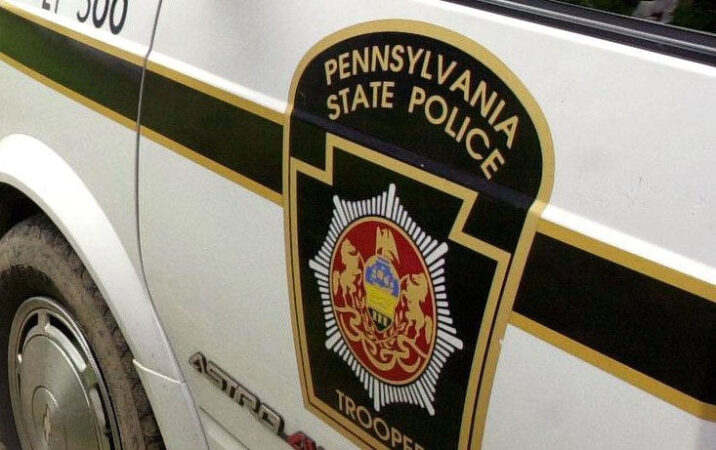
Pennsylvania State Police identified the teen who died in a crash while allegedly fleeing from troopers in a stolen vehicle in Montgomery County early Saturday.
Zachery Carbo, 18, of Norristown, was pronounced dead at the scene of the crash, which happened around 12:10 a.m. on Route 422 eastbound at Route 202 in Upper Merion Township, state police said.
Two 19-year-old men and one 20-year-old man who were passengers in the Kia Soul, which had been reported stolen in West Norriton Township, were transported to Paoli Hospital for treatment, state police said.
Troopers had attempted to stop the Kia for traffic violations on eastbound 422 near Lewis Road in Limerick Township.
The vehicle did not stop and a pursuit ensued, state police said.
The pursuit ended when the Kia hit a concrete barrier on the right side of the road.
State police said Wednesday that no charges had been filed and the investigation was continuing.
Northampton police went to the first-floor condominium on Beacon Hill Drive for a welfare check onDolores Ingram, an 82-year-old grandmother of three known for gifting her sewn and crocheted creations to family, friends, and those in need.
Inside, officers found the living room in disarray, a heap of household items stacked haphazardly. They moved the things aside — a flipped-over futon, glass plates, a shattered aquarium that once housed two lizards — until they uncovered a bare foot. It was cold to the touch.
The body was that of Dolores Ingram, who authorities say died from blunt-force trauma, asphyxiation, and lacerations inflicted by her son, William Ingram, before he fled in her car.
On Wednesday, nearly two years later, a Bucks County judge sentenced WilliamIngram, 51, to 30 to 64 years in prison for killing her inside the home they shared.
Ingram pleaded guilty in December to third-degree murder in the June 2024 killing of his mother, as well as abuse of a corpse and related crimes. He also pleaded guilty to a string of drug offenses, including possession with intent to distribute.
Investigators said that as they continued searching the pile atop Dolores Ingram that day, they found approximately six pounds of marijuana and more than $53,000 in cash — proceeds, prosecutors said, from a marijuana and psilocybin distribution business that William Ingram ran from the home.
They also found the family’s pet reptiles dead on the floor.
“The money you threw on top of her was more than most people make in a year in this country,” said Bucks County Court Judge Stephen Corr, adding that it illustrated Ingram’s “disrespect” for his mother.
In court on Wednesday, Dolores Ingram’s two daughters described their mother as “generous” and “kind, a “good example of how to treat people.” She loved yard sales and thrift stores, they said. She also had “lifelong anxiety,” including over her son, who suffered from mental illness, they said.
Authorities initially charged Ingram with first-degree murder, which carries a potential life sentence. In exchange for a guilty plea to the lesser charge of third-degree murder, Bucks County prosecutors agreed to a sentence of 26 to 54 years in state prison.
Corr used his discretion when he sentenced Ingram to four to 10 years in prison for the drug crimes. He also sentenced Ingram to consecutive terms, calling the move “necessary” given the circumstances of the crimes and the need to “protect the community” from Ingram.
At the sentencing hearing, Downs asked Ingram if he missed his mother. “Yeah,” Ingram replied. He added: “I didn’t mean for this to happen. It doesn’t even seem real to me.”
Ingram denied hitting his mother and said he did not remember piling things on top of her. However, in an affidavit of probable cause for Ingram’s arrest, Northampton Township police said he confessed to hitting his mother in the head during an argument, then throwing “all this stuff” on top of her body.
Then, police said, Ingram stole his mother’s Honda Civic and drove to Washington. There, authorities said, he assaulted a local police officer while naked and was taken into custody about a day after the killing.
Downs asked the judge to sentence Ingram to 26 years, arguing that he would be 75 years old at his first chance at parole — an amount of time he called “significant” for a man Ingram’s age.
Prosecutor Monica Furber pressed for consecutive sentences. While she acknowledged Ingram’s mental illness, she countered that it “did not stop him in any way from running a criminal enterprise” or covering his mother’s body “in the drugs and proceeds.”
Before announcing the sentence, Corr said Ingram had “turned” on “the one person who was trying to help him.”
He added: “I hope you have an opportunity to grow while you spend what is likely the rest of your life in prison.”
A Chester County man pleaded guilty to murder and related crimes earlier this month after he punched a 9-month-old infant and did not seek medical care for the child, prosecutors said Wednesday.
Enrique Lopez-Gomez, 32, of West Grove, pleaded guilty to third-degree murder and endangering the welfare of a child on Feb. 11, according to prosecutors.
He remains incarcerated in the Chester County Prison and awaits sentencing.
Announcing the charges, Chester County District Attorney Christopher de Barrena-Sarobe called the crime “unthinkable.”
Prosecutors say Lopez-Gomez was the child’s caregiver at the time of the 2024 incident, when he fell on the infant at a residence in Kennett Square. As the baby began to cry in pain, Lopez-Gomez punched the child in the abdomen, prosecutors said.
He did not seek help or tell anyone about the child’s injuries, according to prosecutors, nor did he offer medical care as the child’s condition worsened that evening.
First responders who were later called to the scene removed the baby from the home, and the child was pronounced dead at Nemours/A.I. DuPont Hospital for Children.
Medical examiners determined that the child had died from blunt force trauma, leading to an intestinal rupture and soft tissue bleeding, prosecutors said.
The baby had also suffered large bruises around the abdomen.
Prosecutors have yet to set a date for Lopez-Gomez’s sentencing. He is being held on $10 million bail.
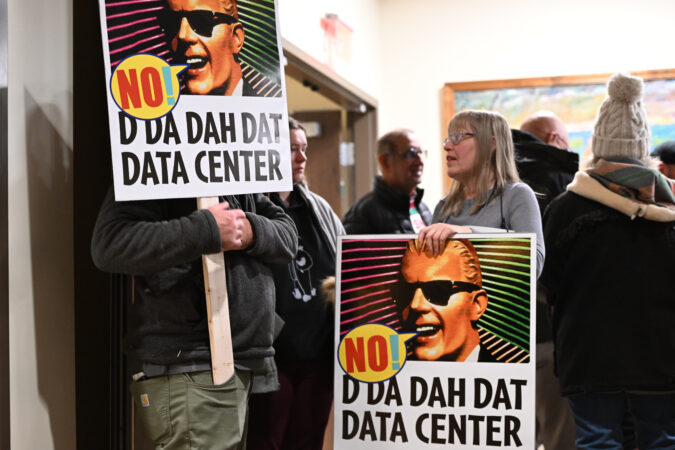
Calling a developer’s plan for a data center at the historic Pennhurst site “technically deficient” and not in compliance with the zoning ordinance, East Vincent’s planning commission voted Tuesday to recommend that the township’s board of supervisors deny the proposal.
The decision, which passed the commission unanimously and saw enthusiasm from residents who had been vehemently pushing back against the project for months, doesn’t hit the brakes completely. The township’s board of supervisors will still have a hearing for the project in March.
The developer declined to appear at the meeting Tuesday, insteadsending a letter indicating they intended to revise the submitted plan and pressing the commission for a positive vote.
Their absence rankled the commission.
“I take exception to the fact that the applicant and the applicant’s lawyers have declined to present this evening, and they informed us by letter” that morning, said vice chairman Lawson Macartney. “This is especially germane, given the lamentably poor technical quality of detail presented in the plans.”
The commission’s vote is a win for the residents in the township — and surrounding municipalities — who have decried the plan that would bring five two-story data center buildings, a sixth building, an electrical substation, and a solar field, totaling more than 1.3 million square feet, according to sketch plans.
The data center would sit on the property of the former Pennhurst State School and Hospital — known as Pennhurst Asylum during the Halloween season. It’s situated near the Schuylkill and borders Spring City, andwould be a close neighbor to the Southeastern Veterans’ Center.
“Based on the materials presently before the township, there is no factual or legal basis to conclude that the proposed development would create impacts greater than those ordinarily associated with a permitted conditional use,” Matthew McHugh, the developer’s attorney, wrote in the letter.
But the commission found the plans lacking in detail and explanation of what impact it’d have on water, trees, employment, and more, saying the materials were “significantly technically deficient and do not comply with our zoning ordinance in some major ways.”
The letter indicated the developer would submit a revised plan that would add private power generation consisting of natural gas and battery storage installation, and relocate the proposed substation. The overall square footage and building heights wouldn’t change, the letter said.
“I just think this is the biggest, most impactful development that’s been proposed in our community since I’ve been on the planning commission,” said the commission’s chairwoman, Rachael Griffith. “I’m just shocked at the minimal detail that has been provided and just doing the absolute bare minimum, especially when data centers are just such a hot topic these days…I’m just sort of dumbfounded as to why they thought we might be interested in recommending this in the first place.”
Residents praised the commission’s decision.
“This is the kind of stuff that keeps people up at night, especially those of us who are impacted,” resident Larry Shank told the board. “You really made my night. Thank you.”
State Sen. Katie Muth, who represents the township and is a resident, said commissioners protected the community.
“I think that you all made the right decision tonight on a multitude of fronts,” she told them.
In a statement, Kevin A. Feeley, a spokesperson who represents the developer, rejected the commission’s assertions, saying that they had “exchanged information about the development on a regular basis throughout this period.”
He added that the developer would submit revised plans to “address some of the review comments, particularly with respect to onsite power generation and water usage.”
Despite pushes at the federal and state level, 42% of Pennsylvanians say they would oppose the centers being built in their area, according to a recent survey.
With the state’s strong private property rights, it creates a bind for township officials, who are struggling with residents’ pushback and zoning allowances.
“Pennhurst LLC owns the land, so they can do what they want with it, as long as it aligns with our ordinances and what they’re allowed to do,” Griffith told attendees Tuesday. “They’re trying to do something that is not really allowed. It’s our role to uphold our zoning ordinance so that they stick to that.”
In December, the township’s board of supervisors declined to move forward with a draft ordinance it had been penning for months that would govern data center development in the township, allowing the application to come before the planning commission and continue on to the conditional use hearings.
The township’s solicitor said the scheduled March 16 conditional use hearing for the project would move forward. If the developer submits an updated plan, the proposal could come back before the planning commission.
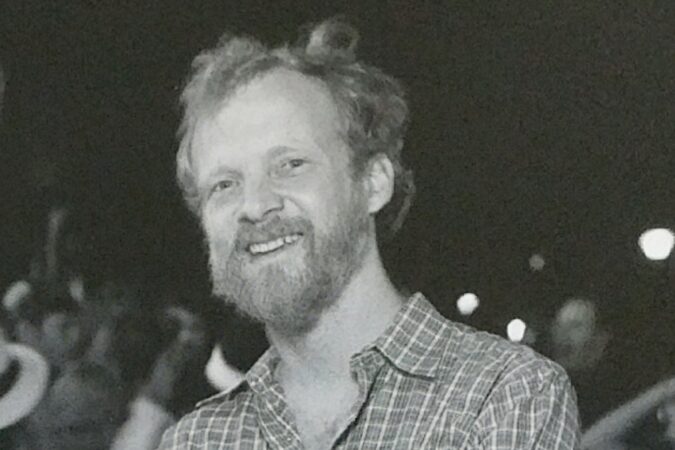
Fred Mann, 75, formerly of Wayne, retired vice president of communications at the Robert Wood Johnson Foundation, former vice president of national programming at Knight Ridder Digital and assistant managing editor at The Inquirer, freelance reporter, mentor to many, onetime baker, and longtime pickup baseball player, died Friday, Feb. 13, of complications from Alzheimer’s disease at Woodridge Rehabilitation & Nursing Center in Berlin, Vt.
Mr. Mann was many things to many people all the time. He advocated for hundreds of healthcare-related philanthropic projects for the Princeton-based Robert Wood Johnson Foundation and, as vice president of communications, served as its liaison with the media and public from 2006 to his retirement in 2019. “Health is more than just going to the doctor or staying out of the hospital,” he told The Inquirer in 2016. “Health is reflected in everything we do.”
At The Inquirer from 1983 to 2006, Mr. Mann was features editor, editor of the Sunday magazine, assistant managing editor, and the first general manager of Philly.com, now Inquirer.com. He championed women’s ascension in the newsroom and established online standards and practices in the 1990s that remain relevant in today’s digital landscape.
“Fred was the best boss I ever had,” said Avery Rome, who succeeded him as editor of the Sunday magazine. “Working for him was a team effort and a pleasure. He readily gave credit to other people and appreciated their input.”
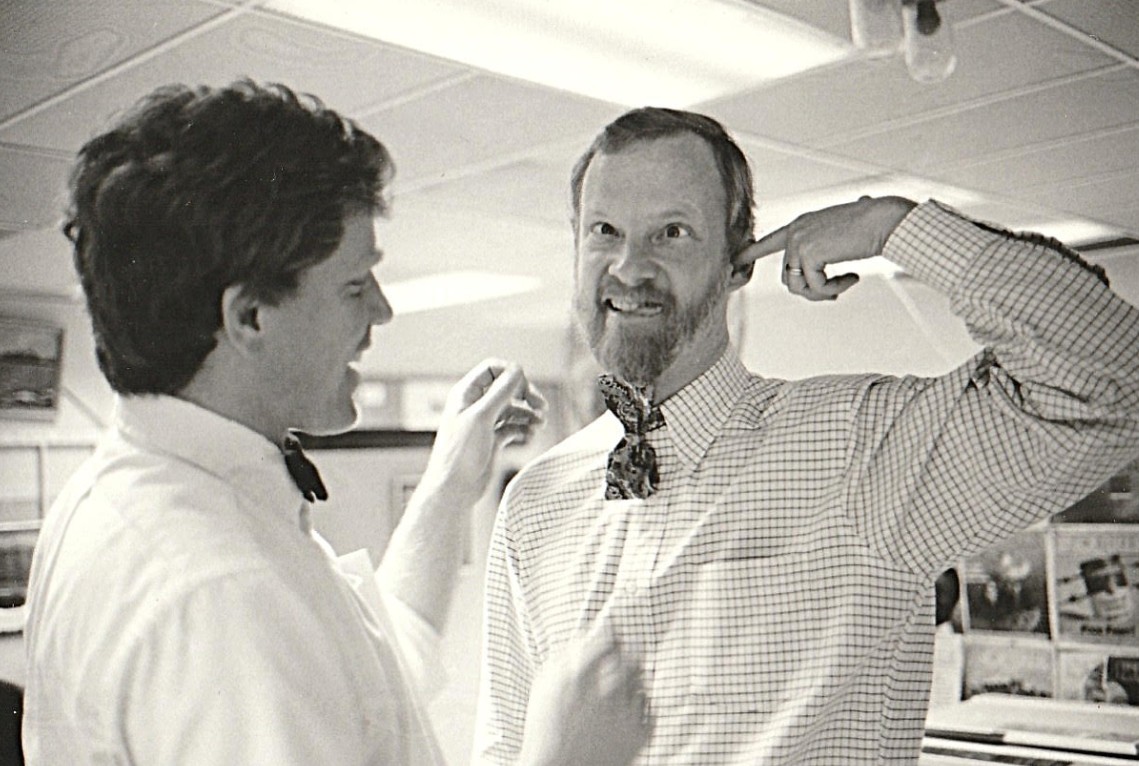
Mr. Mann (right) and Inquirer colleague Art Carey both wore bow ties on this day.
Other former colleagues called Mr. Mann a “talent magnet” and “one of a kind” on Facebook. His son Ted said: “He was good at taking leaps. He was bold, always looking for something different.”
In a 2006 letter of recommendation for a former colleague, Mr. Mann said: “I have learned that hiring the right people is probably the single most important accomplishment an executive can make. Find great talent, nurture it, let it bloom, and then try to keep it. That was my strategy. And I must say, it was a recipe that worked and brought a great deal of reflected glory and success to me personally.”
As editor of The Inquirer’s Sunday magazine from 1986 to 1992, Mr. Mann penned a weekly message to readers on Page 2. In November 1986, he wrote about the differences in celebrating Thanksgiving in California as a boy and in Philadelphia as an adult. “Thanksgiving was made for crispness,” he said, “for changing seasons, for wood stoves. … It’s the day that makes the hassles of life back East all worthwhile.”
He wrote his farewell Sunday magazine column on Jan. 19, 1992, and praised his staff for “offering important, in-depth stories that teach and inform our readers, and mixing in others that entertain and delight. … I think we’ve taught. I hope we’ve delighted a few times.”
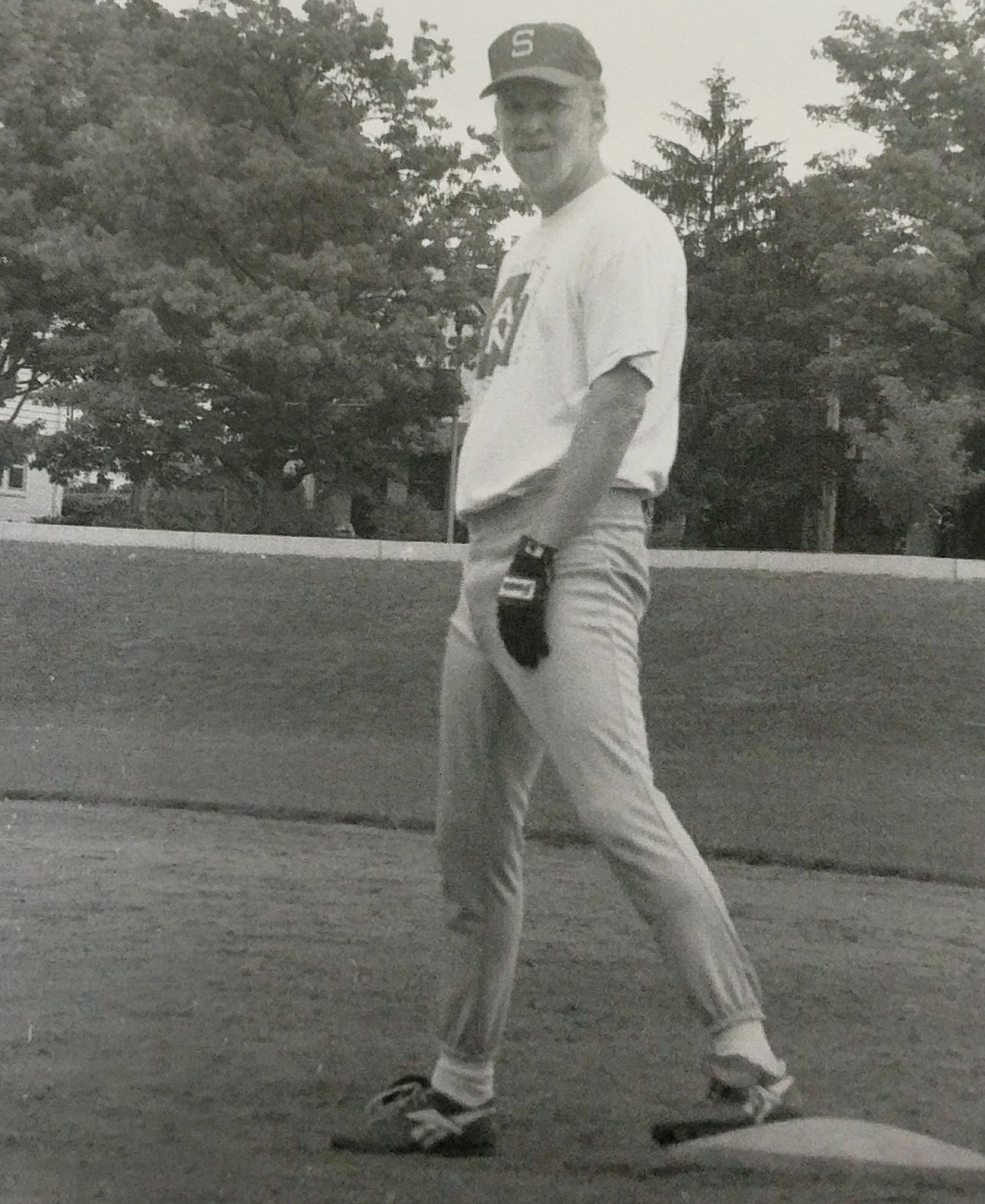
Mr. Mann spent a lot of time on baseball fields.
He worked on several Pulitzer Prize-winning projects at The Inquirer and edited its annual fall fashion supplement as features editor. In 1995, he started managing what was then Philly.com and Knight Ridder’s national innovations in online publishing.
Former Inquirer colleagues noted his “smile and easy manner,” “integrity and good judgment,” and “easy grace, puckish humor, and boundless devotion to family and friends” in Facebook tributes. Longtime friend and colleague Dick Polman said: “He had great story instincts and could sell the stories to reporters. He was good at managing up and down.”
Former Inquirer writer Joe Logan called him “a prime example of everything that was right and good and rewarding about working at The Inquirer during those years.”
Before The Inquirer, Mr. Mann spent three years as national editor and opinion editor at the Hartford Courant. In the mid-1970s, he worked for the Day in New London, Conn., cofounded the California News Bureau, and sold stories from Los Angeles, San Diego, and elsewhere to The Inquirer, the Courant, and other newspapers around the country.
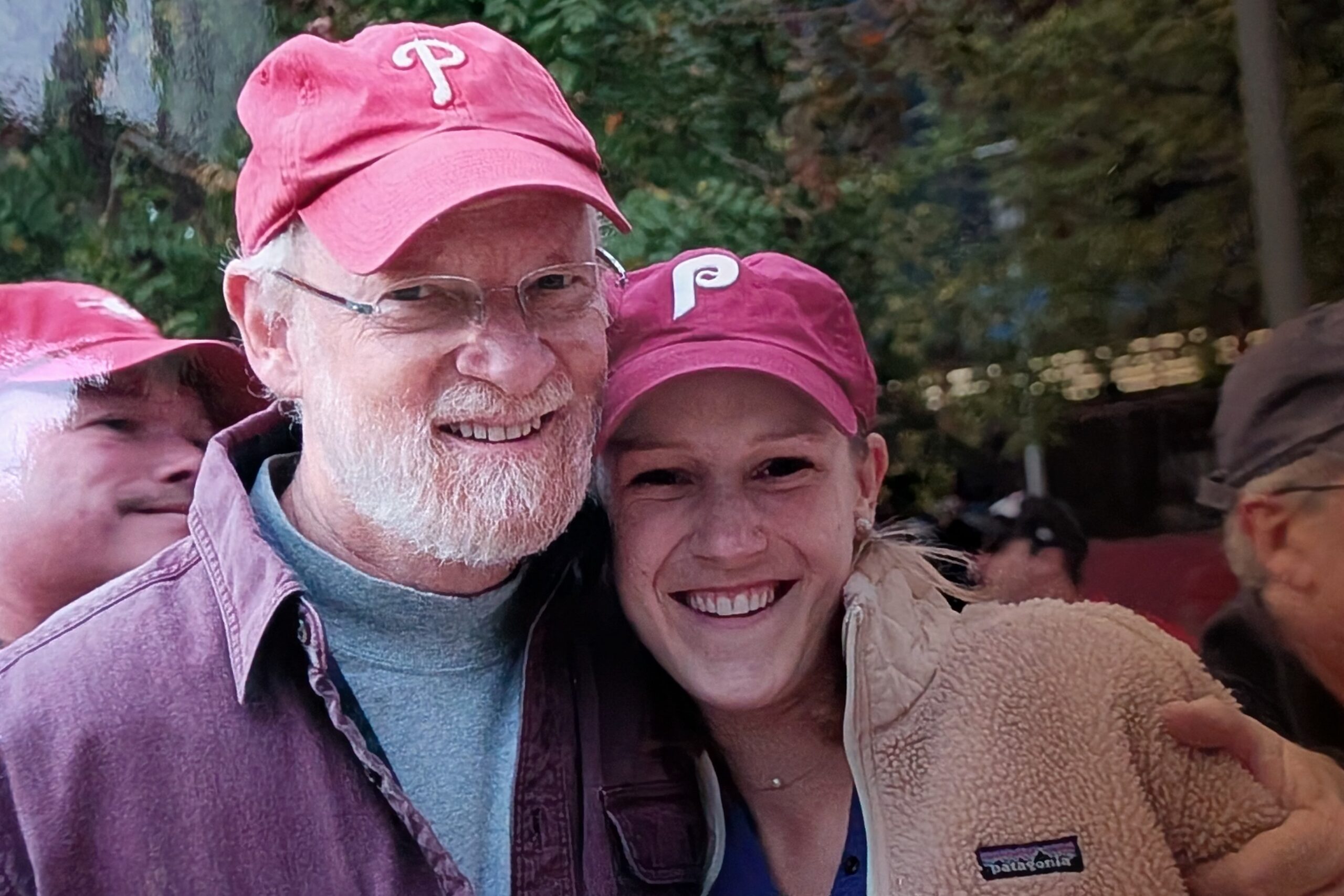
Mr. Mann and his daughter, Cassie, watched the Phillies in World Series games together.
He also wrote freelance articles for Time magazine and was press secretary for Connecticut Sen. Lowell P. Weicker Jr. for three years. Later, he was a founding board member of the Online News Association, onetime president of the Sunday Magazine Editors Association, and on boards of the Communications Network, the Internet Business Alliance, and other groups.
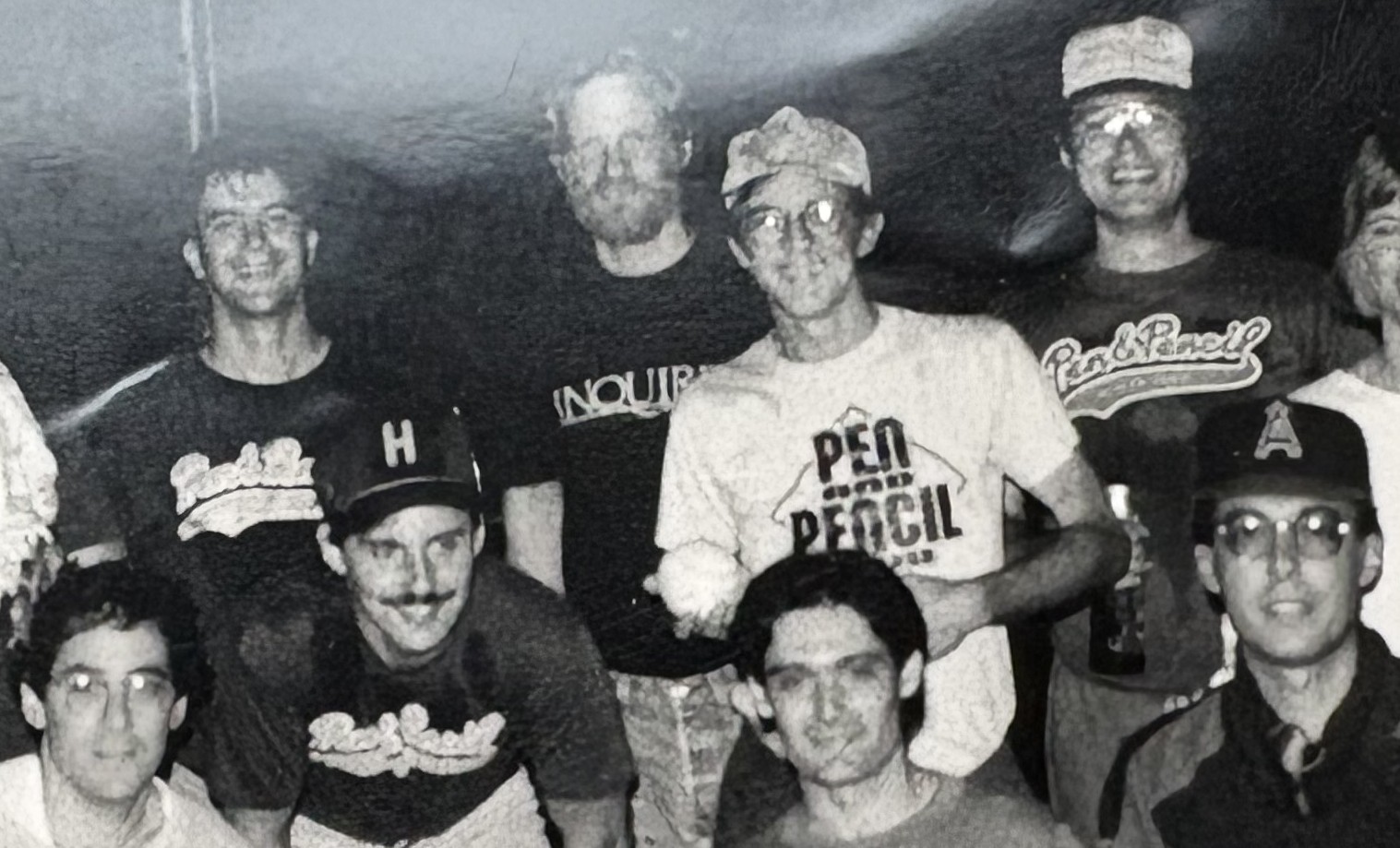
He bounced around the world for a few years after graduating from Stanford University in 1972 and even opened a bakery with friends in Connecticut. He played third base in dozens of Sunday morning slow-pitch baseball games over the years and won a league championship with the Pen and Pencil Club softball team in the early 1980s.
“I don’t know why he loved baseball so much,” said his son Jason. “But I know I love it because of him.”
Frederick Gillespie Mann was born Nov. 28, 1950, in Yonkers, N.Y. His father was Delbert Mann, an Oscar-winning TV and film director, and the family moved to Los Angeles when Mr. Mann was young.
Mr. Mann (rear, second from left) won a softball championship with the Pen and Pencil Club team in the early 1980s.
He delivered newspapers, graduated from Beverly Hills High School, and earned a bachelor’s degree at Stanford. He married Robin Layton, and they had sons Ted, Jason, and Lindsay and a daughter, Cassie.
After a divorce, he married Nicole O’Neill in 1994, and welcomed her children, Andy, Hilary, and Brette, and their children into his family. He and his wife lived in Wayne before moving to Greensboro, Vt., in 2019.
Mr. Mann enjoyed hikes in the woods with his dogs, card games and board games with family and friends, reading about history, and touch football games on Thanksgiving. He listened to the Beatles and knew every word to the soundtrack of My Fair Lady.
He reveled in his “long days of glorious raking” in Rosemont and Wayne, and said in a 1989 column: “When all you’ve known is palm trees, piling up tons of autumn foliage is more blessing than burden.”
He coached Little League baseball players, followed the Boston Red Sox closely, and attended memorable Phillies games with his children. On many Monday afternoons, he impressed teammates and opponents alike with his corner jump shots in basketball games at the Philadelphia Athletic Club.
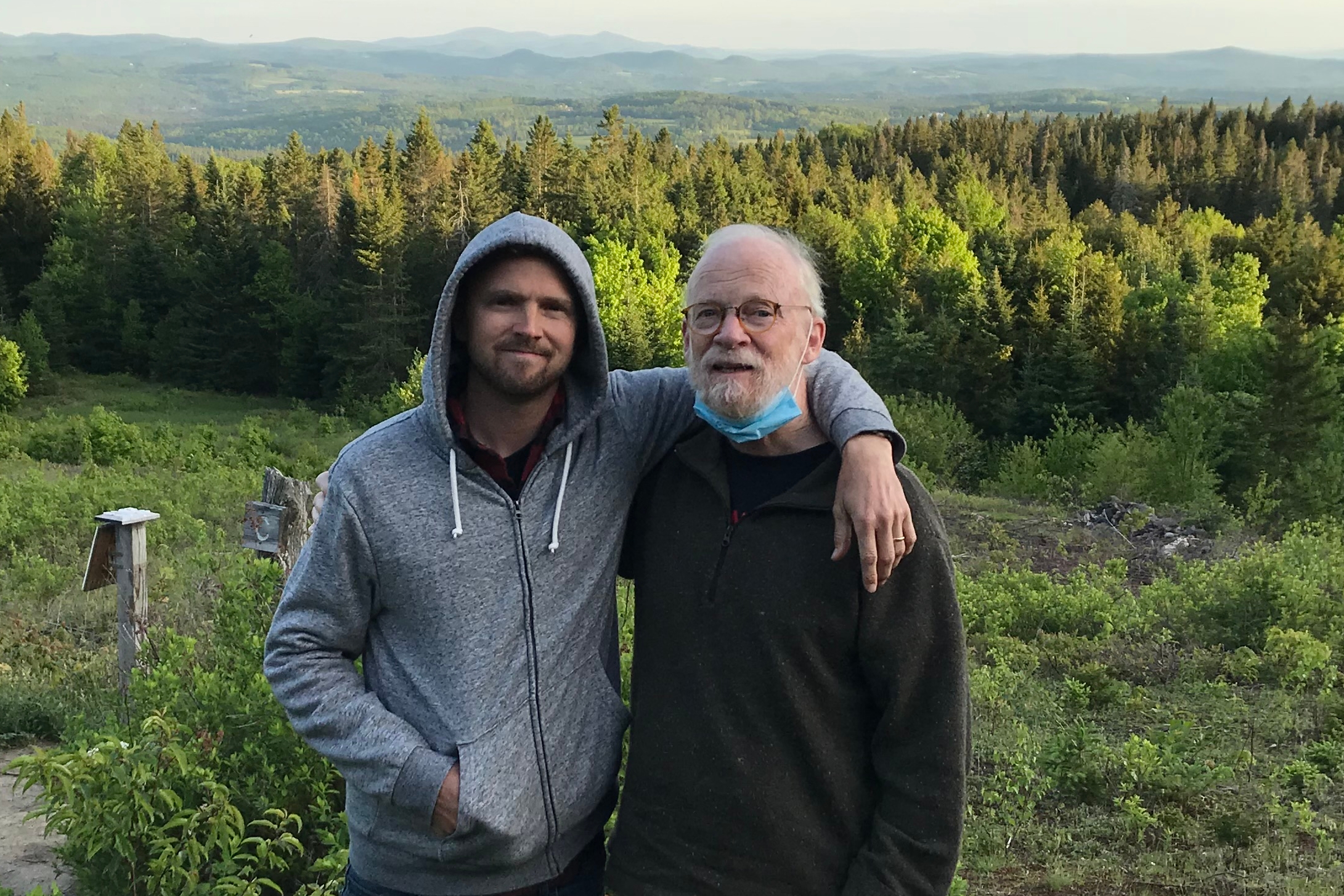
Mr. Mann and his son Lindsay enjoyed time in the countryside.
“He was fun and funny,” his daughter said, “loved and loving.”
Former Inquirer managing editor Butch Ward said on Facebook: “Fred Mann brightened every room he entered.” Former Inquirer columnist Steve Lopez said: “The very thought of Fred puts a smile on my face.”
In addition to his wife, children, and former wife, Mr. Mann is survived by grandchildren, two brothers, and other relatives. A sister died earlier.
Antthony Mark Hankins, a Savannah, Ga.-based fashion designer who had a 31-year on-air career with HSN until he was terminated in July, filed the lawsuit last week against the network and its parent company, QVC Group, according to federal court documents.
Hankins seeks at least $30 million in damages for what his attorneys describe in the documents as an “abrupt and unjustified termination” that “reflects a pattern of discriminatory treatment, retaliatory conduct, and operational mismanagement.” The lawsuit is filed in the U.S. District Court for the Eastern District of Pennsylvania.
A show is filmed at QVC’s studios in West Chester in 2023.
Between 2023 and 2025, HSN executives reduced Hankins’ airtime and decreased promotion of his brand, Antthony Design Originals, to focus on a “TikTok-centered business model,” according to the designer’s lawsuit. As a result, he says his gross sales last calendar year were $13.24 million, more than $2 million less than projected. When he was more supported by the network, he said, his sales outperformed expectations.
Hankins, who is Black, also says the company discriminated against him based on race, including by promoting him more heavily during Black History Month, firing him without cause, and immediately pulling him off the air despite decades of strong performance, according to the lawsuit.
In the documents, Hankins also alleges breach of contract, defamation, interference with third-party business relationships, and misappropriation of his name and likeness in advertisements.
In a Facebook post on his business page, Hankins said the lawsuit “is about standing up for the values my brand was built on, protecting my legacy, and ensuring that fairness and accountability matter — especially for creators who have given decades of their lives to their work.”
Hankins’ attorney, Samuel B. Fineman of Semanoff Ormsby Greenberg & Torchia in Huntingdon Valley, did not return a request for additional comment.
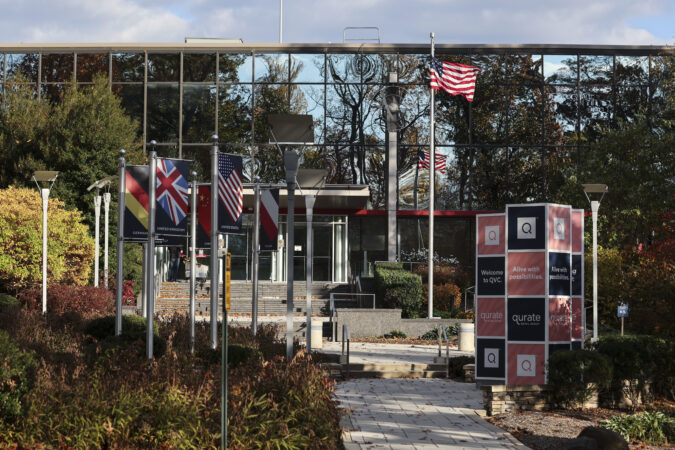
A QVC logo is shown outside its studios in an undated file photo. The company has been based in West Chester for more than 30 years.
The networks’ parent company, which rebranded as QVC Group last year, has struggled recently amid stiff competition from e-commerce and social-media platforms like TikTok Shop.
Its revenue and operating income have been on the decline, and fewer people are shopping. As of September, about 7 million customers had made a purchase on the networks in the past year, down from 8.1 million in fiscal year 2023.
According to Bloomberg’s report last week, company executives were talking with creditors about a potential bankruptcy, but had not made a decision on whether to file.
A search for “QVC Group” in online court records did not show any bankruptcy filings as of Wednesday.
The contentious national discussion over the rapid expansion of ICE came to the doorstep of the Philadelphia region on Wednesday, as the Bucks County commissioners voted to oppose having any processing or detention facilities in the county.
Commissioners said they learned that the federal government had recently approached warehouse owners in two communities, Bensalem Township and Middletown Township, about possible conversions. Neither owner is going forward, they said.
The commissioners voted 3-0 ― including the board’s lone Republican ― to approve a resolution that said such a center would be harmful for county residents and the people who would be confined there.
ICE officials did not immediately reply to a request for comment.
The commissioners voted a day after U.S. Rep Brian Fitzpatrick said that he would oppose such a facility ― and that he had received federal assurances none was planned in his district, which covers Bucks County and parts of eastern Montgomery County.
Fitzpatrick, a Republican who is seeking reelection in the purple district, faces a likely November challenge from Democratic Bucks County Commissioner Bob Harvie, who also opposes ICE sites.
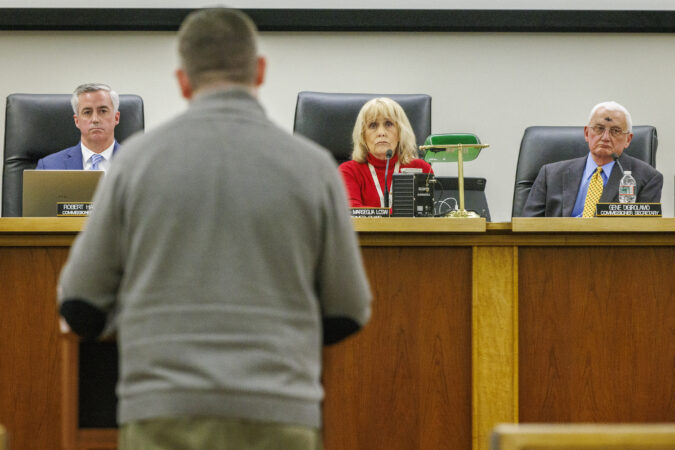
In Doylestown on Wednesday, Commissioner Gene DiGirolamo, a Republican who serves with two Democrats, said he heard about the federal interest in two local sites and strongly disapproved.
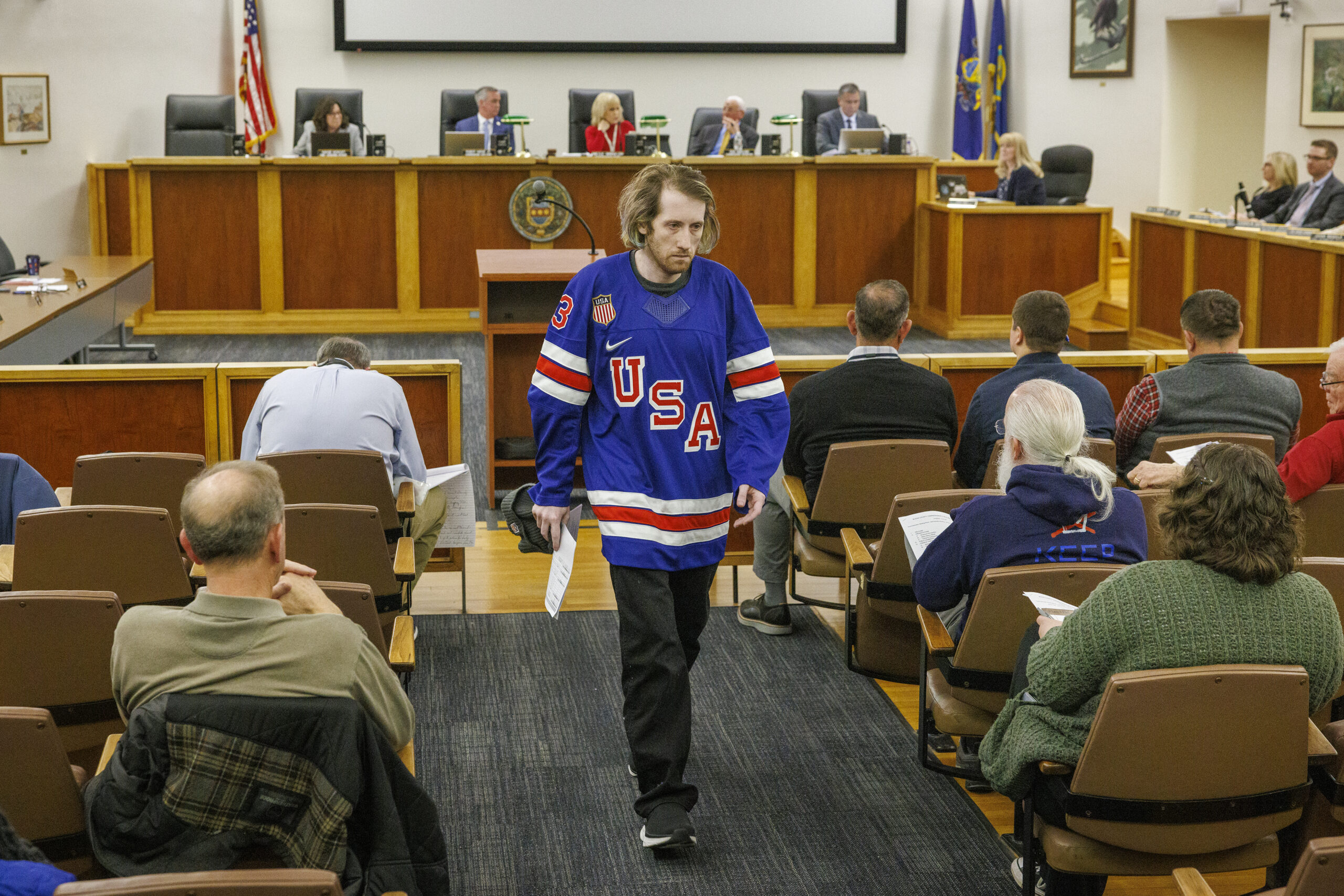
Jake Didinsky of Southampton, said he opposes ICE warehouses in his county, comparing them to Japanese interment camps.
“Bucks County is not a county that needs or wants a detention facility,” he said.
Harvie, the board’s vice chair, said Bucks County “is no place for these kinds of facilities” and cautioned: “We have been down this road before, with Japanese Americans. And with Italian Americans.”
During World War II the U.S. government forcibly incarcerated thousands of people of Japanese descent, holding them in concentration camps mostly in the western part of the country. About two-thirds of those confined were American citizens.
Some Italian Americans endured the same treatment.
A resolution conveys the opinion and wishes of the board, but holds no force of law.
The Bucks resolution said the county opposes “the use of warehouses or similar industrial facilities not intended for human occupancy as facilities to hold, jail, detain, house or otherwise store human beings.”
In addition to humanitarian concerns, the resolution says, “such facilities, being hastily erected in areas and structures not intended for human occupation, would place unanticipated demands upon water and sewer systems, creating hazards to public health, as well as heaping new strain upon public safety services.”
The vote came as the growth of ICE leasing and purchases has become contentious in Pennsylvania and across the United States.
U.S. Immigration and Customs Enforcement expects to spend $38.3 billion to acquire warehouses around the country and retrofit them into immigrant detention centers to hold tens of thousands of people, the Washington Post reported. The newspaper analyzed agency documents that were provided to New Hampshire’s governor and published on the state’s website.
ICE intends to buy and convert 16 buildings to serve as regional processing centers, each holding 1,000 to 1,500 immigrant detainees. An additional eight detention centers would hold 7,000 to 10,000 detainees and serve as primary sites for deportations.
Last week Gov. Josh Shapiro formally asked Homeland Security Secretary Kristi Noem in a letter to reconsider the conversion of the Berks and Schuylkill sites, citing “real harms” to the communities.
He questioned the legality of the facilities and hinted at a possible lawsuit, saying if DHS goes forward, his administration will “aggressively pursue every option to prevent these facilities from opening.”
DHS spokesperson Tricia McLaughlin confirmed the plans for the Pennsylvania sites, saying that they would undergo community-impact studies and a rigorous due-diligence process, and that they would bring 11,000 jobs to the two Pennsylvania communities.
The two sites would hold a combined 9,000 people.
On Tuesday, Fitzpatrick’s office said it had received assurances from DHS and ICE that they had no plans or intention to open a detention facility within the First Congressional District.
“After hearing from concerned residents, our office immediately contacted U.S. Immigration and Customs Enforcement, and we have received assurances that no such facility is planned,” Fitzpatrick said.
After the biggest snowstorm in a decade dumped more than nine inches of snow on the Philadelphia region, Narberth artist Emily Stewart woke up to a blank canvas.
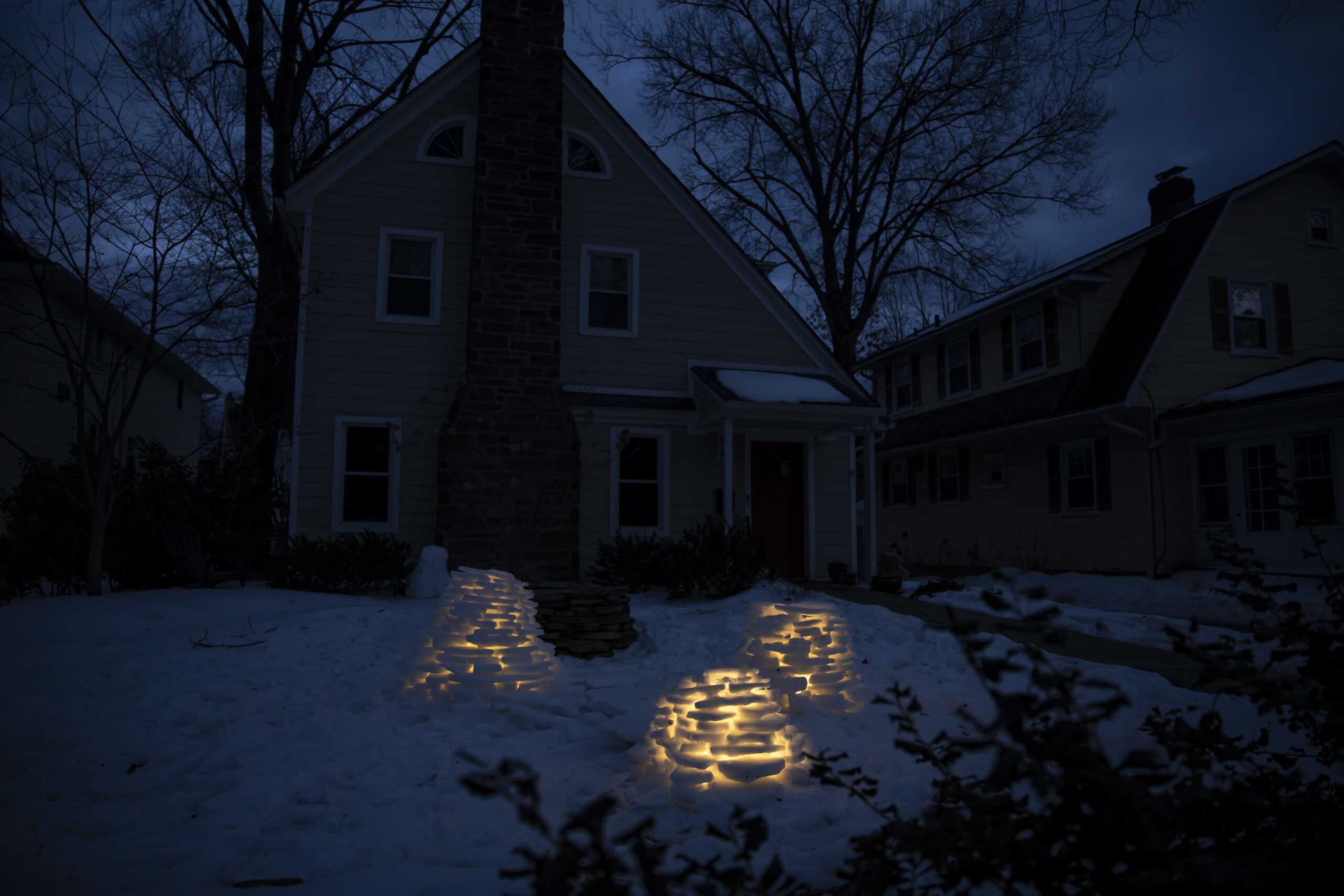
With her front yard dusted in snow, Stewart zipped up her coat, laced up her boots, and braved the cold to build three Swedish lanterns out of snow and ice. Set against the darkness of winter, the lanterns have offered a glimmer of warmth during the coldest days of a historically frigid period in and around Philly.
Ice sculptures made by artist Emily Stewart outside her Narberth home on Wednesday, Feb. 11. Stewart said she was inspired to make the structures after reading about Swedish lanterns. “I love working with snow in my yard or other public places because it is inherently social,” Stewart said. “As I work, people walk by, cars pull over, I get to have conversations with neighbors and meet new friends.”
Stewart is a Main Line-based artist and community organizer who works with ink, graphite, wood, and, yes, snow. She is a lover of art and community building, passions that arose from her time in art school and serving in the Peace Corps. She is also the coordinator of Narberth Public Art, a community group that brings public art displays to downtown Narberth.
An Ohioan by birth, Stewart isn’t bothered by the snow. In fact, she prefers a long, snowy winter to the Philly area’s increasingly hot summers.
“I love, love winter,” Stewart said, adding that she has the “opposite of seasonal depression disorder.”
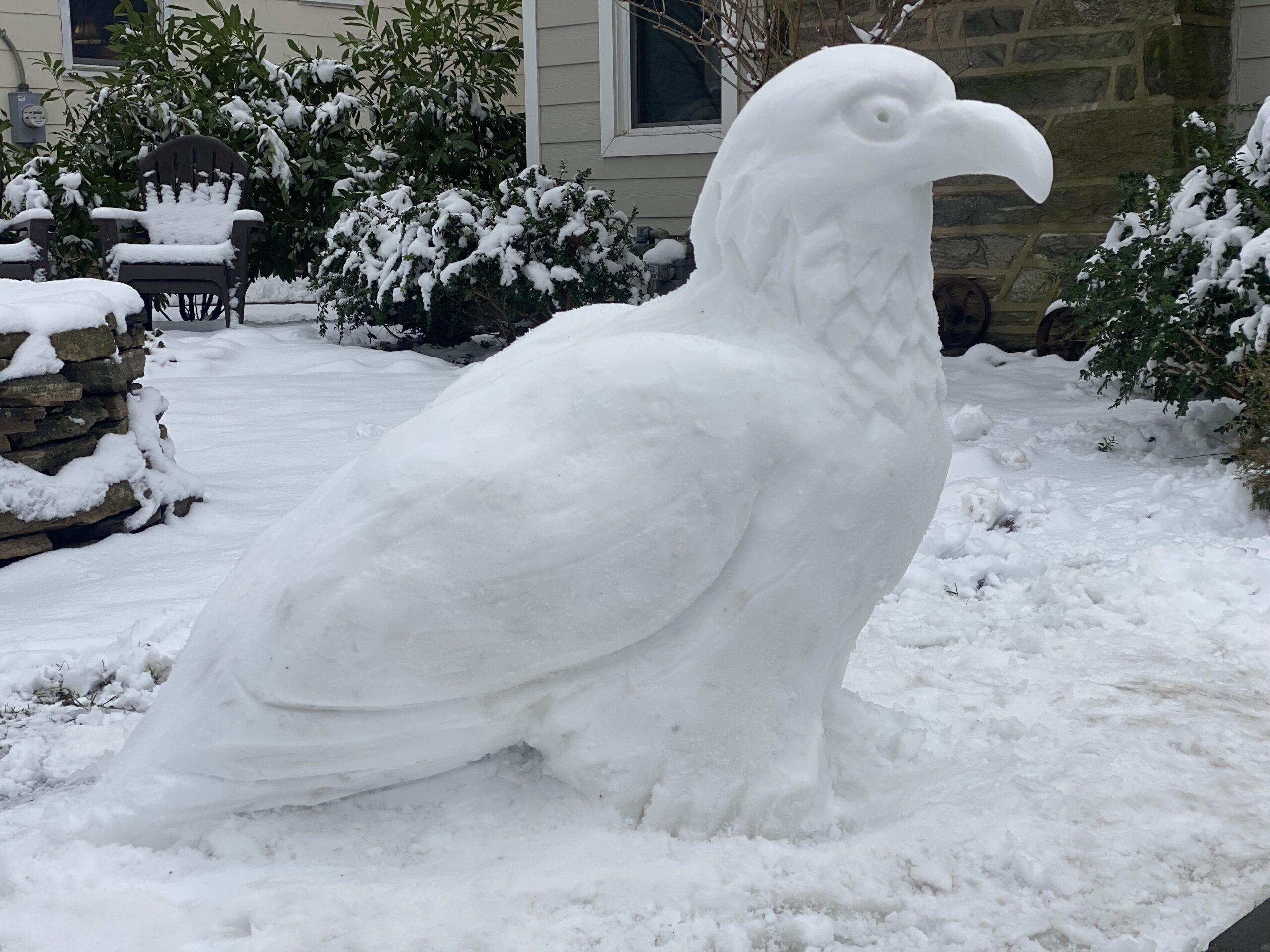
Stewart grew up making snow sculptures in her hometown of Cleveland. In 2021, as pandemic measures kept Stewart and her family cooped up in their home, she picked up her kitchen spatula and began sculpting snow once again. She built life-size bears, an owl, a giant horse, and an eagle (go Birds). Neighbors began stopping by to ask about the sculptures, and people from outside Narberth even started paying visits to Stewart’s yard after hearing about her art through the grapevine.
A creature built out of snow by artist Emily Stewart at her home in Narberth in February 2021.
Though her snow sculptures began as a low-stakes artistic outlet, Stewart says they have become something deeper — a point of connection among neighbors in increasingly polarized and technologically dominated times. Public art provides a “cool little communal social interaction” that “detracts from all the negativity in the world,” she said.
There’s much that Stewart loves about working with snow. It’s free, abundant, and surprising.
When asked about the fleeting nature of her snow works, Stewart said it’s part of the beauty. Snow is temporary, as is everything.
“It’s ephemeral,” she said. “Like, enjoy it, and it’s not yours to keep.”
An eagle built out of snow by artist Emily Stewart in her Narberth backyard in February 2025.
This suburban content is produced with support from the Leslie Miller and Richard Worley Foundation and The Lenfest Institute for Journalism. Editorial content is created independently of the project donors. Gifts to support The Inquirer’s high-impact journalism can be made at inquirer.com/donate. A list of Lenfest Institute donors can be found at lenfestinstitute.org/supporters.
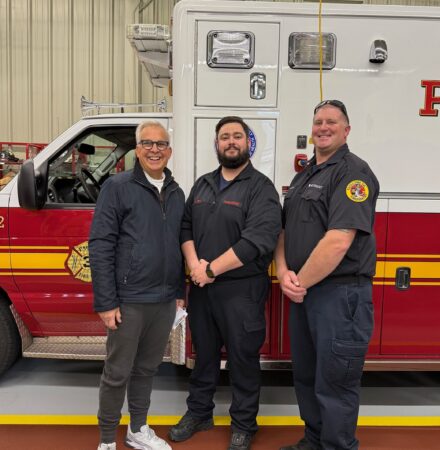
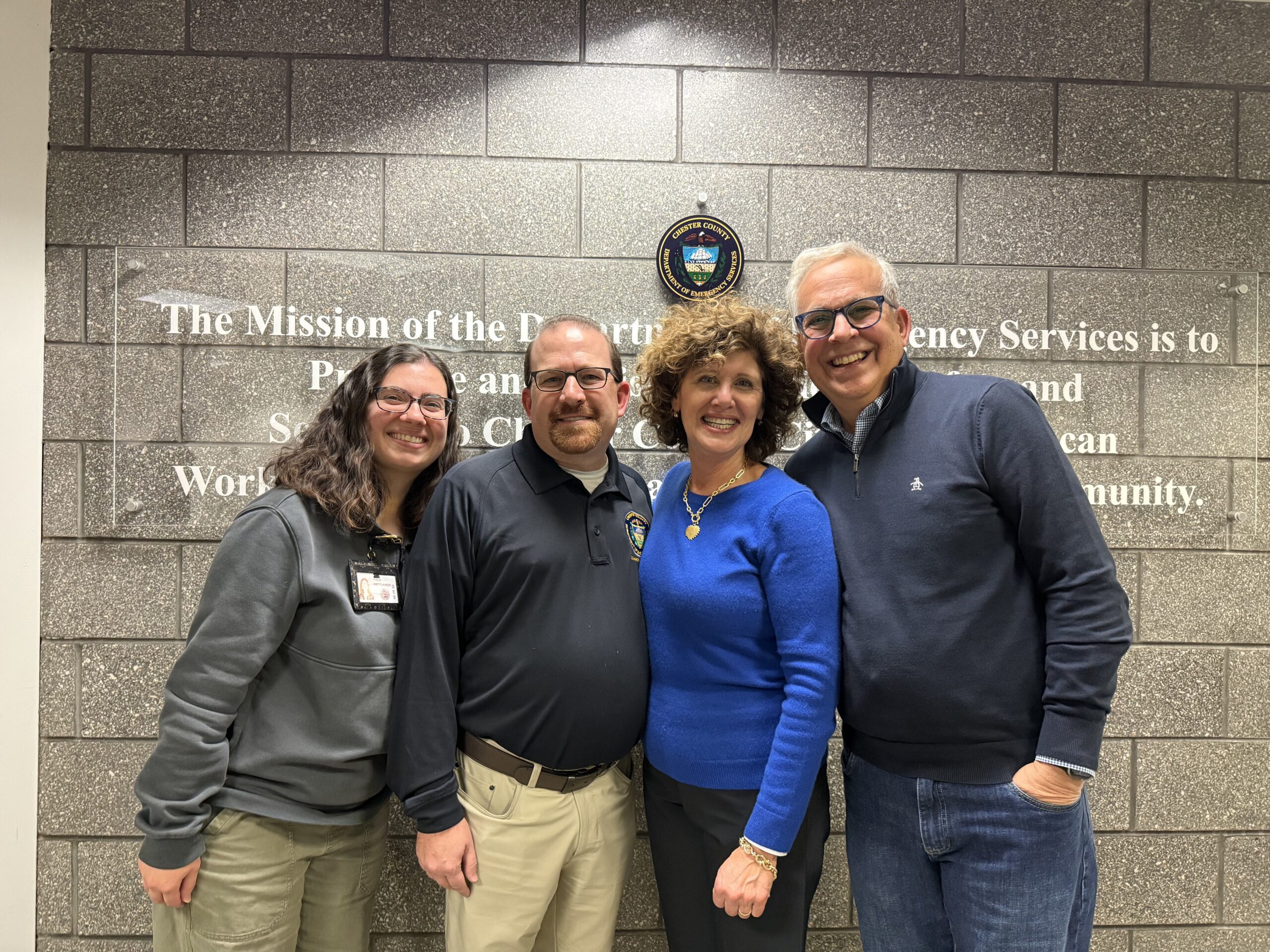
Chester County 911 dispatcher Kayla Wettlaufer (left) guided Terri Borzillo (center right) through CPR on the phone when Bob Borzillo (right) went into cardiac arrest in November.
When Willistown residents Terri and Bob Borzillo returned from a trip to Barcelona last fall, neither had expected that Terri would soon be holding “the balance of his life” in her hands.
But that’s what happened one November evening when Bob, 65, went into cardiac arrest. With guidance from county dispatcher Kayla Wettlaufer, Terri, also 65, was able to perform compressions on her husband of more than 40 years years while she waited for EMTs to arrive.
Wettlaufer’s direction helped saved Bob’s life in an often fatal situation, earning her honors from the county this month.
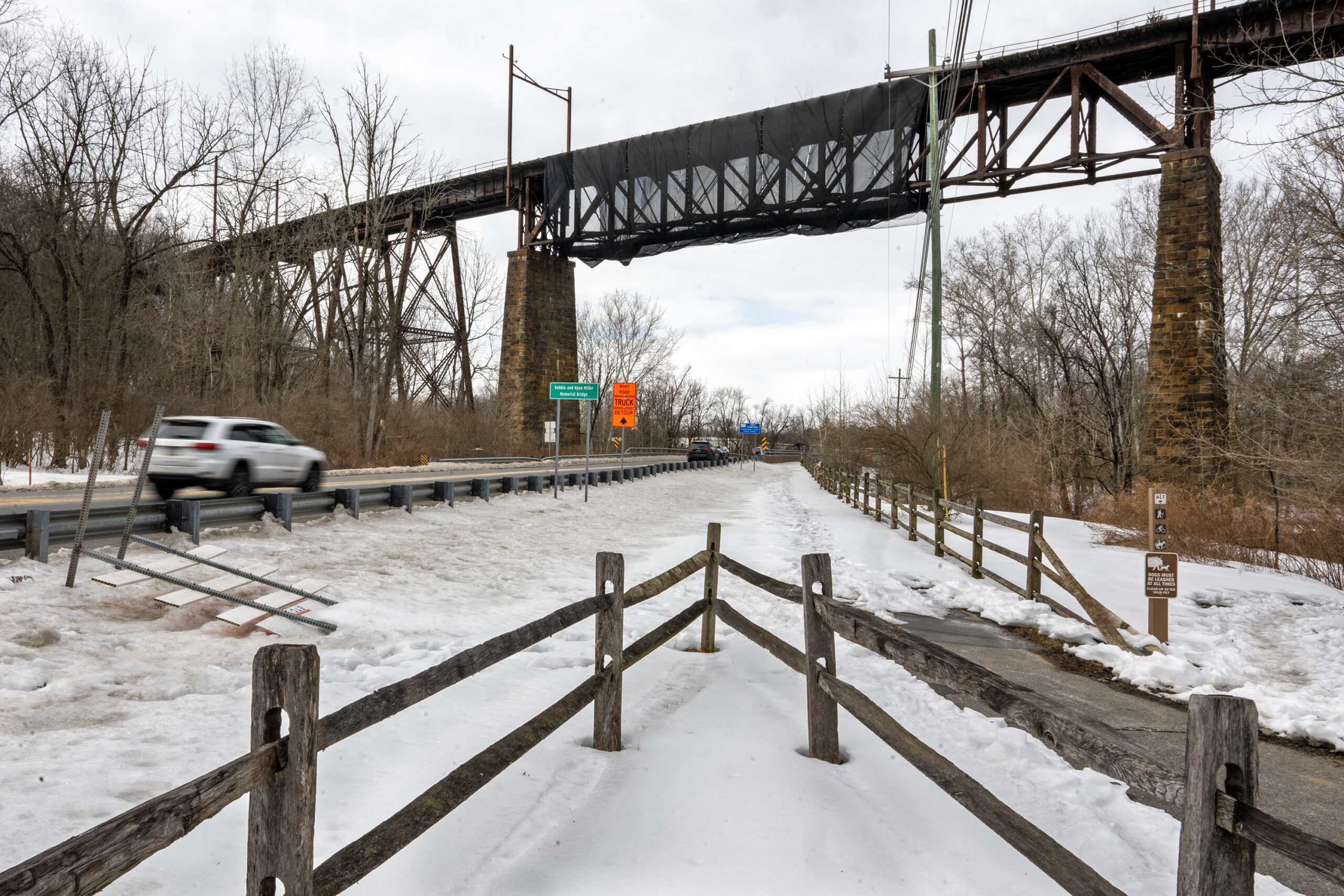
The Brandywine Valley Viaduct, better known as the Downingtown Trestle Bridge, will eventually help extend the Chester Valley Trail.
The more than century-old bridge known as the Downingtown Trestle is set to be rehabilitated, a move that will eventually help extend the Chester Valley Trail. Work on the overall extension project is estimated to take five to seven years, with the design phase starting next year.
The nearly 19-mile multi-use trail currently runs from Atglen to Exton and the trestle bridge is a “keystone” of the extension project, said Chester County’s director of facilities and parks department.
In case you missed it, an unknown number of annual mail ballot applications went out to county residents with the first and last names reversed earlier this month. Officials said the error won’t affect processing of the forms, but it comes at a time when some voters have expressed concerns after tens of thousands of independent and unaffiliated voters were left off November’s poll books.
In an address to the Senate floor, Sen. Dave McCormick used the county’s recent poll book blunder as an example of why there should be nationwide rules mandating proof of citizenship and photo identification for voters, like those outlined in the proposed SAVE Act. But the senator painted an incomplete and inaccurate picture of what happened in November and the SAVE Act wouldn’t have solved those problems, The Inquirer’s Katie Bernard reports.
💡 Community News
Michael Phillips, a 44-year-old Coatesville man, was taken into custody last week after allegedly stabbing his 3-month-old son and then throwing him into the snow. The infant was taken to Children’s Hospital of Philadelphia for surgery and was later listed in critical but stable condition. Phillips faces charges of attempted homicide and aggravated assault.
Tredyffrin Township officials have responded to community concerns after the Department of Homeland Security, which oversees ICE, leased about 10,000 square feet of space at the Westlakes Office Complex. In a statement, they reiterated that local law enforcement agents don’t enforce immigration orders or work with ICE. The space “will not house ICE agents or support their operations. It is strictly for back-office officials, such as lawyers and analysts,” a spokesperson for the property told Wired.
There have been recent leadership changes at two area police departments. Brian Barber, who previously spent over 26 years with the Pennsylvania State Police, is the new deputy police chief of Caln Township. In Uwchlan Township, James Fisher has been appointed as the department’s new head following Chief of Police Scott Alexander and Lieutenant Maureen P. Evans’ recent retirements.
The Netflix comedy show Tires has been awarded $6 million in tax credits for production of its third season. The Shane Gillis-led show takes place in a fictional West Chester auto shop and is expected to generate $24 million in the local economy.
Alisan Road Mercantile, a new general store stocking Pennsylvania-made goods, is now open at 89 N. Main St. in Spring City.
A new bookstore opened over the weekend in Kennett Square. Located at 121 W. State St., Forage Books also offers a selection of gifts.
Heads up for drivers: There are several construction projects causing delays around the county. In Uwchlan Township, there will be traffic restrictions on Route 113 between Gordon Drive and Lionville Station Road today from 9 a.m. to 3 p.m. for utility work. In East Pikeland Township, Rapps Dam Bridge will be closed today for maintenance. In West Whiteland Township, there’s a temporary new traffic pattern in effect for the next three weeks on Valley Creek Boulevard between Swedesford Road and the entrance of the Church Farm School. The southbound lanes will be closed from 7 a.m. to 5 p.m. for sewer line construction. In Easttown Township, Chester Road between South Fairfield and South Waterloo Roads is expected to be closed to non-local traffic from 9 a.m. to 3 p.m. through Friday for sewer improvements. And in and around East Marlborough Township, there may be delays on U.S. 1 between Schoolhouse Road and the Kennett Oxford Bypass tomorrow from 7 p.m. until 5 a.m. Friday as PennDot installs overhead signage.
After multiple power outages in East Marlborough and Pocopson Townships,Peco will be upgrading and installing new equipment as well as trimming treesover the next month. The $1.5 million project includes work along Folly Hill Road, East Doe Run Road, East Street Road, Brooks Road, Huntsman Lane, Schilling Drive, Windovr Way, Gideon Drive, and Valley Road.
🏫 Schools Briefing
Kennett Consolidated School District’s finance committeeis considering a 4.17% real estate tax hike in its 2026-27 preliminary budget, which would cost homeowners of the average assessed home an extra $268 annually. The hike would help to fund special education and student services, according to the finance committee. The proposed hike requires a referendum exception and could change between now and June when the board is expected to approve the final budget.
A WesttownSchool teenager is balancing being a kid with a burgeoning collegiate athletic career. As Jordyn Palmer looks ahead to college ball, the 6-foot-2 junior guard who’s averaged 23 points and 12 rebounds this season, “has not even scratched her full potential,” one coach said. Joseph Santoliquito recently profiled Palmer for The Inquirer.
Palmer scored 19 points in Westtown’s victory over Friends’ Central on Friday, clinching the team’s sixth Friends Schools League title. Westtown’s boys’ team similarly won its game against Academy of the New Church, giving the Moose its first league title in four years.
🍽️ On our Plate
The Original Hot Bagels, a Delaware eatery specializing in bagels, breakfast sandwiches, and omelets, is opening its first Pennsylvania location in Landenberg. It will take over the former home of The Landenberg Store, at 100 Landenberg Rd., which closed in September.
West Chester Restaurant Week kicks off on Sunday and runs through March 1. Over two dozen restaurants will offer $40 to $60 specials during the eight-day event. See the full list of participating restaurants and their menus here.
🎳 Things to Do
🏠 Cabin Fever: This family-friendly event includes arts and crafts as well as a mobile zoo, where you can get up close to animals. Registration is requested. ⏰ Saturday, Feb. 21, 1-4 p.m. 💵 Free 📍 Malvern Borough Hall
🎤 The Best of Carole King and James Taylor: Listen and sing along to hits from these iconic musicians at this benefit for Marvin’s Home, an organization that supports youth after foster care. ⏰ Saturday, Feb. 21, 7 p.m. 💵 $15 📍 Steel City Coffeehouse and Brewery
🎶 Mad Dogs and Englishmen: A 20-piece band will recreate Joe Cocker’s live album and tour, Mad Dogs and Englishmen. ⏰ Saturday, Feb. 21, 8 p.m. 💵 $41.78-$83.18 📍 The Colonial Theatre, Phoenixville
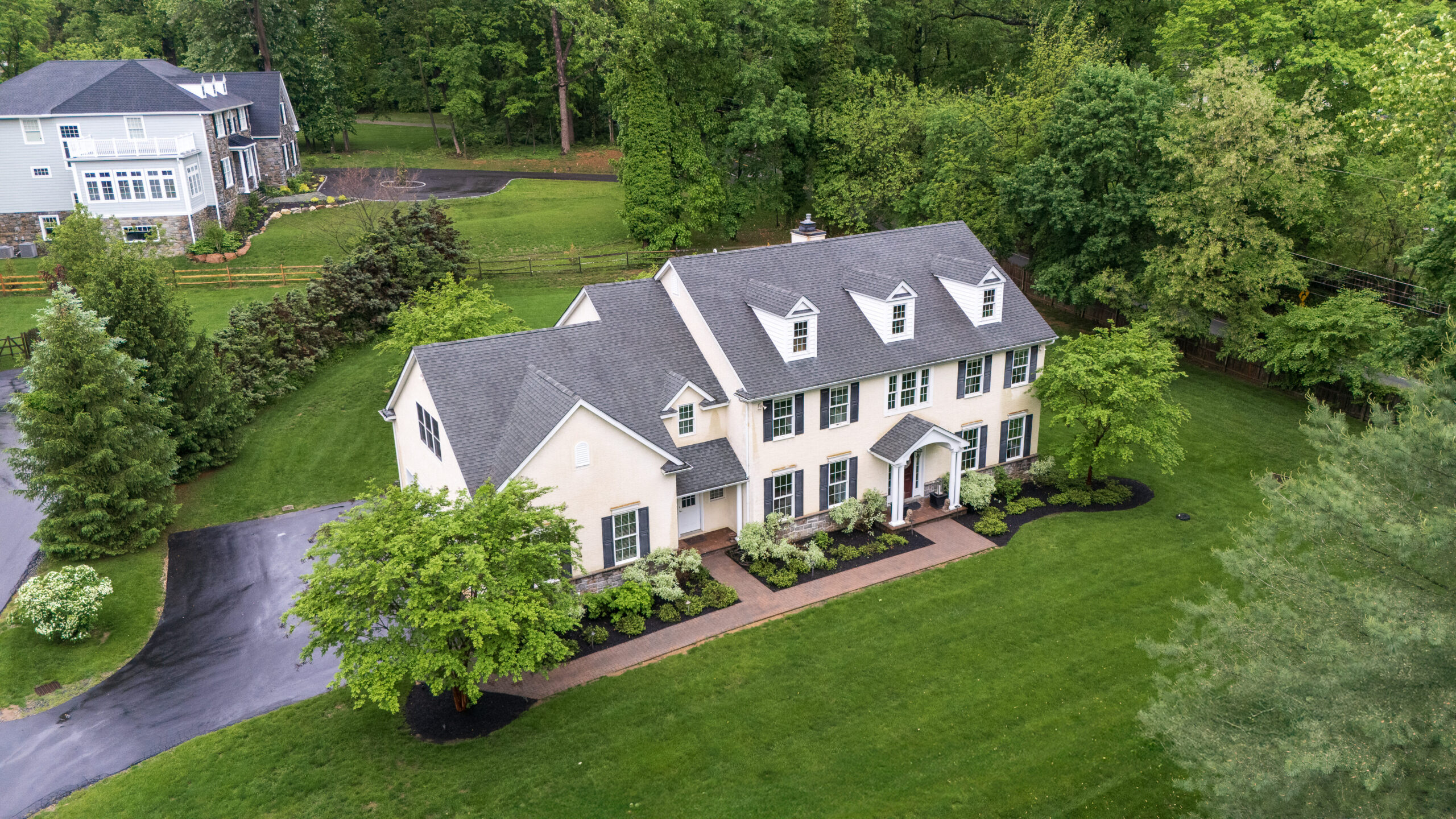
This spacious five-bedroom Paoli home is a blend of classic details and modern amenities. Its first floor features a two-story foyer flanked by dining and living rooms; an office; an eat-in kitchen with cherry cabinetry, an island, and a butler’s pantry; and a family room with vaulted ceilings and a gas fireplace. There are four bedrooms upstairs, including the primary suite, which has a sitting area, two walk-in closets, and a bathroom with a soaking tub. Other features include a finished basement with a wet bar, wine storage, a full bathroom, a fifth bedroom, and another office. Outside, there’s a fenced yard and a brick patio with a firepit. There’s an open house Saturday from noon to 2 p.m.
By submitting your written, visual, and/or audio contributions, you agree to The Inquirer’s Terms of Use, including the grant of rights in Section 10.
This suburban content is produced with support from the Leslie Miller and Richard Worley Foundation and The Lenfest Institute for Journalism. Editorial content is created independently of the project donors. Gifts to support The Inquirer’s high-impact journalism can be made at inquirer.com/donate. A list of Lenfest Institute donors can be found at lenfestinstitute.org/supporters.
As the Main Line contends with the recent abrupt closure of Di Bruno Bros. markets in Ardmore and Wayne, ahomegrown Italian-specialties purveyor — just as storied as its South Philly-rooted counterparts — remains open for business.
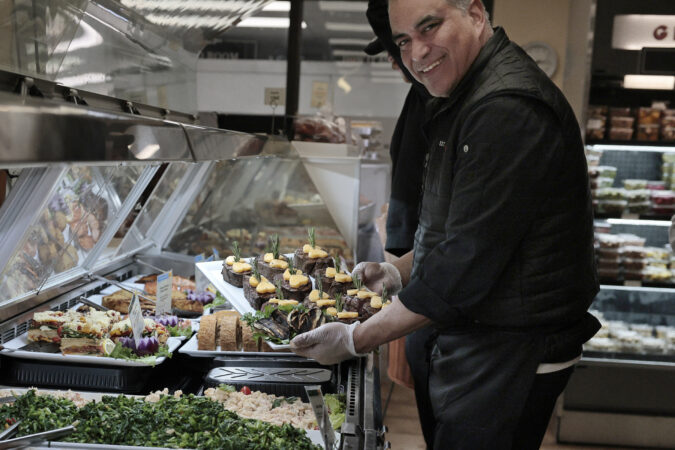
On the day before Valentine’s Day, shoppers at Carlino’s Market on County Line Road tucked heart-shaped macarons and chocolate-dipped cannoli into baskets already full with marinara sauce, freshly packed chicken cutlets, and imported cheese. Regulars stopped by for their pre-weekend deli orders, and shoppers took refuge from the cold amid aisles of driedpasta and prepared foods.
Carlino’s is an Ardmore institution, founded in 1983 as a small, family-owned pasta shop serving Lower Merion’s Italian community. In the decadessince, the market has grown into a suburban powerhouse, supplying Ardmore, West Chester, and the surrounding towns with prepared foods, baked goods, and high-end groceries seven days a week.
The Carlino’s brand has started to transcend its Ardmore roots: In recent years, the family-run operation has expanded its wholesale business to hundreds of grocery stores, from New York to Delaware and as far as Texas. Even as the company grows, its second- and third-generation leaders remain grounded in its origins as a mom-and-pop shop.
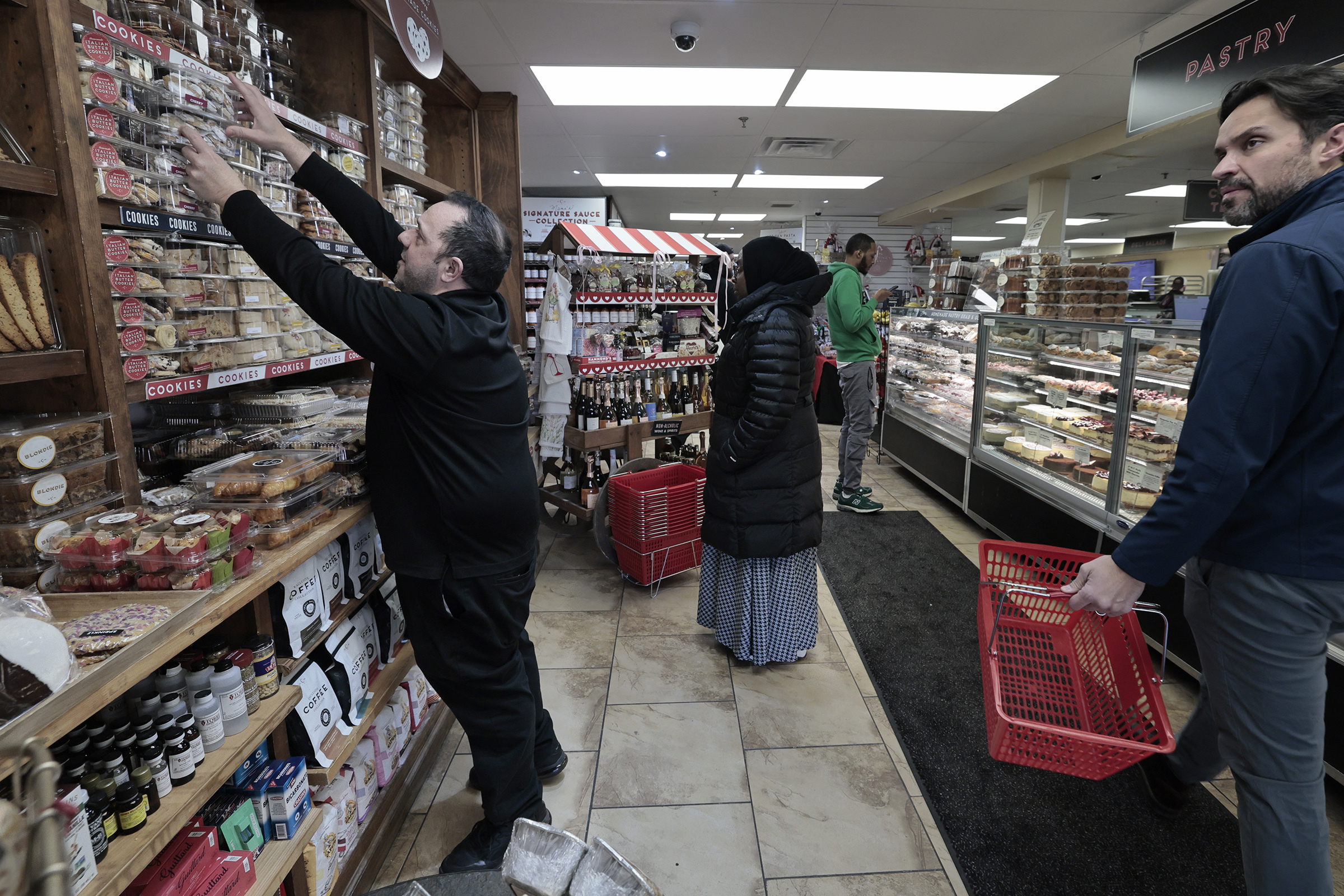
Carlino’s Market general manger Bruno DiNardo (left) restocks cookies, pastries and treats, all homemade, at Carlino’s Market in Ardmore on Friday, Feb. 13, 2026.
From Abruzzo to Ardmore
Carlino’s was founded by Nicola and Angela Carlino, who left Abruzzo in 1968 to move to the United States with their two sons, Pasquale (“Pat”) and Carmen. In Abruzzo, the Carlinos tended to olive groves and grape vineyards and raised livestock on Nicola’s family farm. They left in search of better opportunities for their sons, landing in Ardmore, where Nicola initiallyworked as a bus driver and groundskeeper at Mitchell Prep, a private school, while Angela sold cookies, fresh pastas, and sauces out of their home.
When Mitchell Prep closed in the early 1980s, Nicola and Angela decided to take a chance on a family business. They opened Carlino’s Homemade Pasta in a former barbershop on East County Line Road in South Ardmore — at the time, an Italian American enclave. Residents in search of a taste of home regularly patronized Carlino’s, and the family started wholesaling some products to local restaurants and casinos.
According to Pat Carlino, 63, now the company’s CEO, it’s easy to take the Philly area’s formidable Italian-food scene for granted. But when his parents opened Carlino’s in the 1980s, Pat said, you could barely find marinara sauce in the grocery store. No one knew what tiramisu was, or how to tell the difference between high-quality Parmigiano Reggiano and grocery-store sprinkle cheese. Mention of ciabatta would prompt blank stares.
Carlino’s was “an education to the public,” he said.
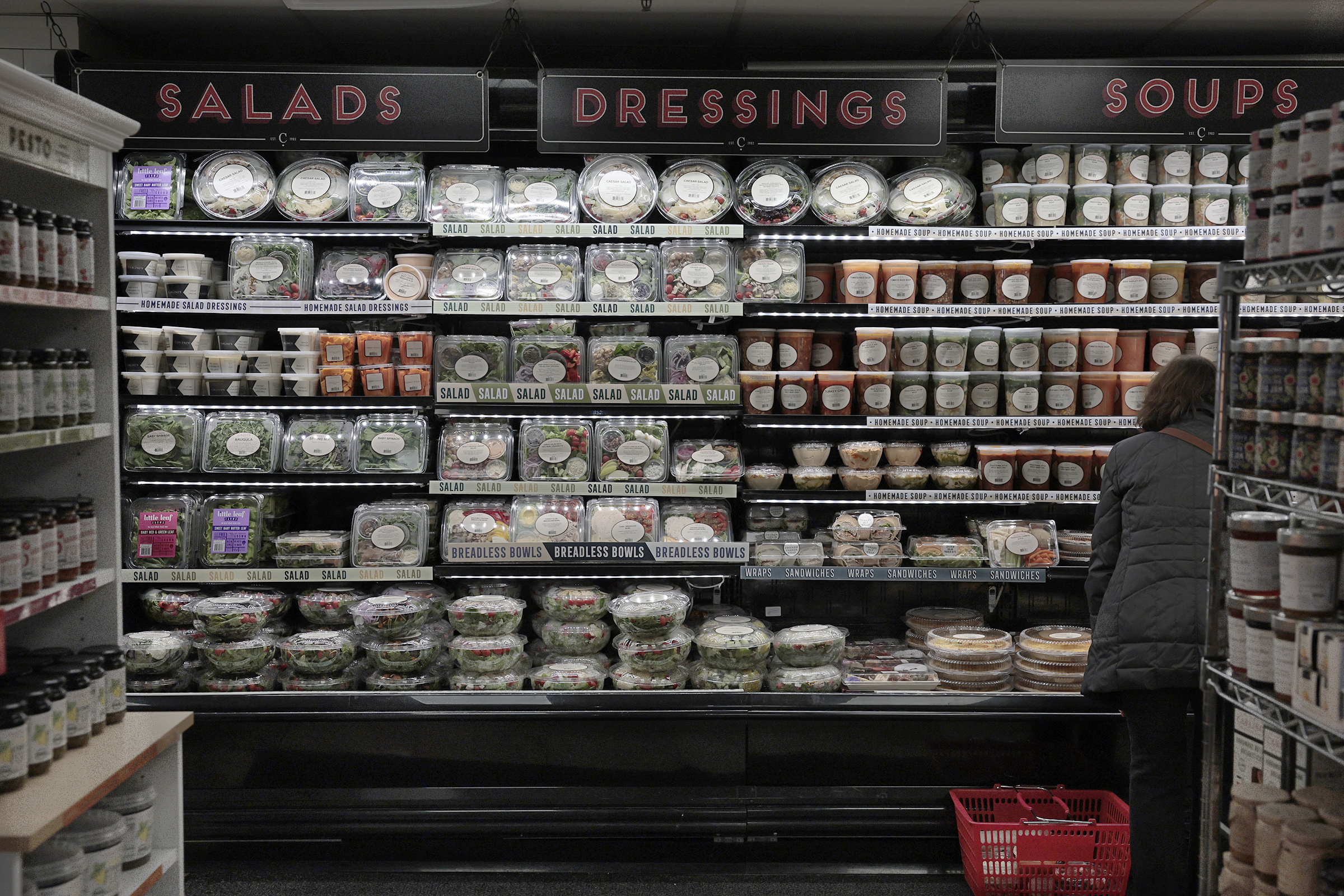
Customers look over some of the homemade soups, salads and ready to go meals available at Carlino’s Market in Ardmore on Friday, Feb. 13, 2026.
As time went on, the store expanded, subsuming other houses on its block, and shifted to a retail focus. The family renamed it Carlino’s Market andexpandedofferings to include baked goods, pizza, sandwiches and wraps, imported meats and cheeses, and groceries like sauces, olive oils, and coffee. By the mid-1990s, Carlino’s selection and specialties — handmade ravioli, freshly stuffed sausage, garden-grown bruschetta on house-baked bread, tiramisu cake, and more — attracted savvy customers from as far as New York City and Washington, D.C.
In 2022,Carlino’s began wholesaling its sauces, dry pastas, and pestos — which you can now find at other small, local retailers like Riverwards Produce and Kimberton Whole Foods, as well as large grocery chains like Wegmans and Giant. Carlino’s products are available in parts of Pennsylvania, Delaware, New Jersey, Maryland, Virginia, Washington, D.C., Florida, Texas, New York, and Massachusetts, and will soon be on shelves in California and the Chicago area.
While Carlino’s business is growing, Pat said his core customers are still people he knows—“people that I grew up with.”
Carlino’s also remains a family operation. Pat and his wife, Laura, are the company’s top executives, and their children — now the third generation of Main Line Carlinos — help manage marketing, wholesaling, importing, and manufacturing.
Talking about Carlino’s products, a word Pat comes back to regularly is “clean.”
Before influencers and foodies popularized the idea of “clean eating,” Carlino’s was doing it, Pat said. Nicola cooked with fresh tomatoes, cucumbers, and herbs he grew in his Ardmore garden. Pat said Carlino’s continues to rely on fresh produce, organic flour, and high-quality olive oil and French butter.
“Things that are trending now, we were doing 40 years ago,” Pat said.
“You can pick up anything and it’s clean,” he added, just like how your grandma would make it (or at least how a Carlino grandma would).
This suburban content is produced with support from the Leslie Miller and Richard Worley Foundation and The Lenfest Institute for Journalism. Editorial content is created independently of the project donors. Gifts to support The Inquirer’s high-impact journalism can be made at inquirer.com/donate. A list of Lenfest Institute donors can be found at lenfestinstitute.org/supporters.