Category: Pennsylvania News

  • 2 dead, multiple people injured after explosion and fire at nursing home in Bucks County

    2 dead, multiple people injured after explosion and fire at nursing home in Bucks County

    Two people were killed and more than a dozen were injured after a possible gas explosion rocked a Bucks County nursing home Tuesday, triggering a widespread emergency response and dramatic rescues and causing destruction that Gov. Josh Shapiro described as “quite catastrophic.”

    Just before 2:20 p.m., an explosion and fire were reported at the Bristol Health & Rehab Center — formerly known as Silver Lake Healthcare Center and Silver Lake Nursing Home — at 905 Tower Rd. in Bristol Township, Bristol Fire Chief Kevin Dippolito said at a news conference with Shapiro and other officials Tuesday night.

    Bristol Police Chief CJ Winik said during an update Wednesday morning that two women — one resident and one employee — had died. Nineteen people remained hospitalized, he said, including one person in critical condition.

    As of Wednesday, he said, all residents and employees of the facility had been accounted for.

    Emergency responders who rushed to the scene Tuesday found a major structural collapse, with parts of the first floor falling into the basement and people trapped, Dippolito said. Firefighters immediately went into rescue mode.

    “They pulled many residents out of the building via windows, doors, stuck in stairwells, stuck in elevator shafts,” Dippolito said.

    The people rescued from the building were handed off to police officers who “came from every direction, and I believe every municipality around here,” Dippolito said.

    “There was one police officer who literally threw two people over his shoulders and ran with people to help,” the fire chief said.

    Gov. Josh Shapiro comments on the explosion at Bristol Health & Rehab Center, at Lower Bucks Hospital on Tuesday, Dec. 23, 2025, in Bristol, Pa.

    Many people were injured, but the number was unknown early Tuesday night, Dippolito said. Two people were rescued from the collapsed area in the basement.

    At one point, Dippolito said, there was a heavy odor of gas and the firefighters evacuated the building. Within 15 to 30 seconds, there was another explosion and fire, he said.

    “There’s still a lot of unanswered questions,” Shapiro said.

    Peco crews responded shortly after 2 p.m. to reports of a gas odor, a spokesperson for the utility said.

    “While crews were on site, an explosion occurred at the facility,” Peco spokesperson Greg Smore said.

    “Peco crews shut off natural gas and electric service to the facility to ensure the safety of first responders and local residents,” Smore said.

    After the blast, a patient bleeding from his head was wandering the campus saying to himself how he had repeatedly told staff of a gas smell that lingered throughout the day, said a passerby who did not wish to be identified. The man was eventually treated and transported from the site, the passerby said.
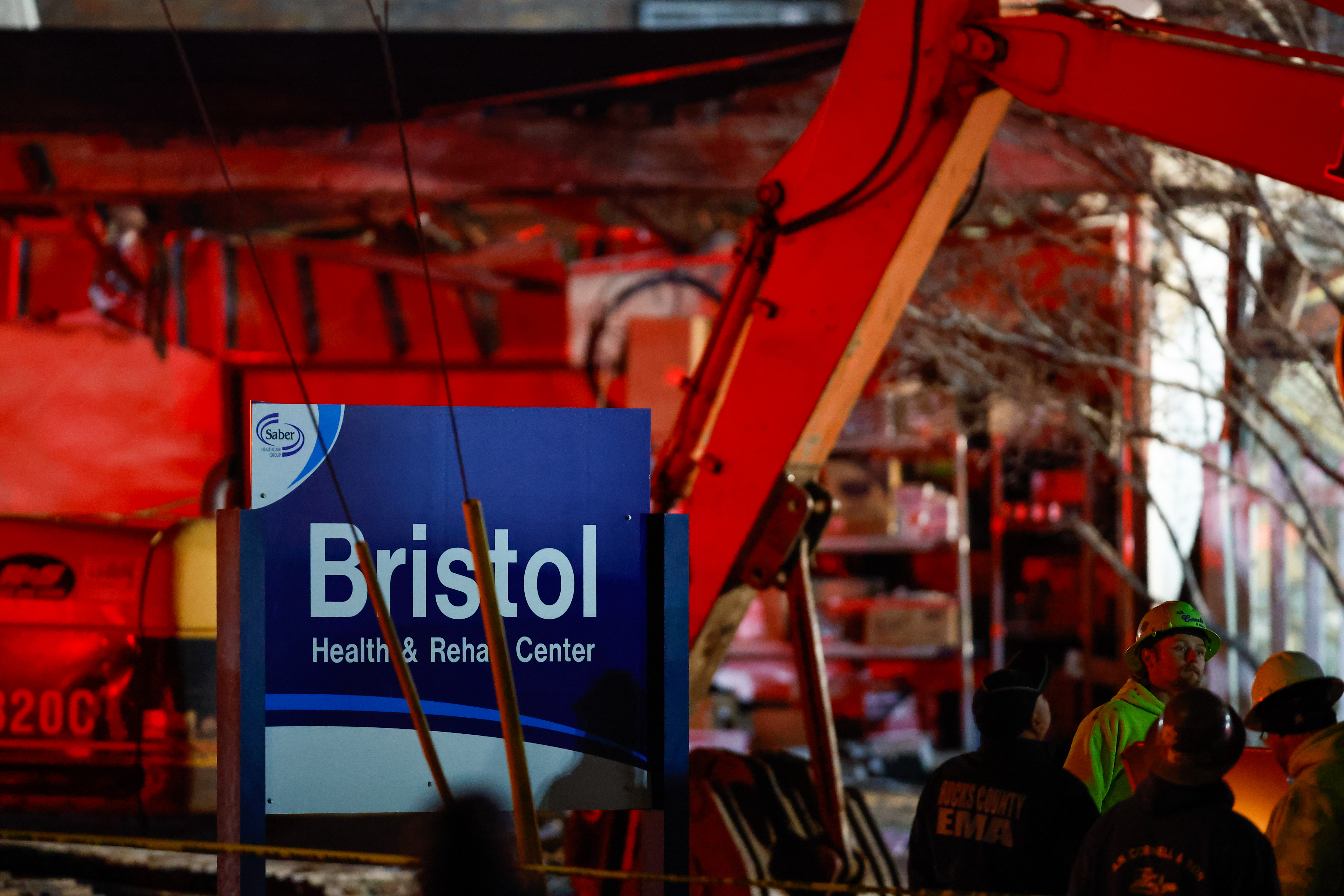
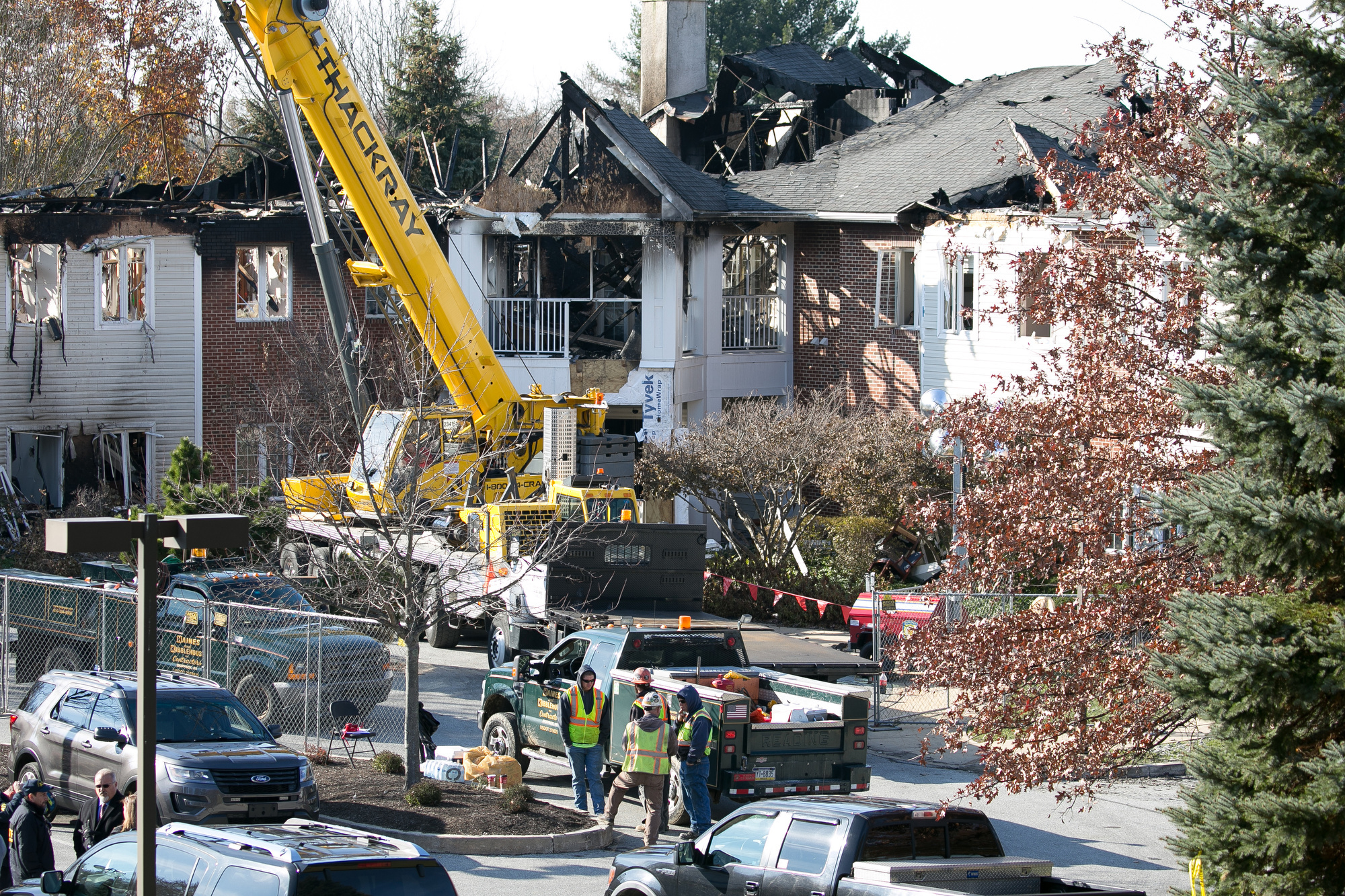
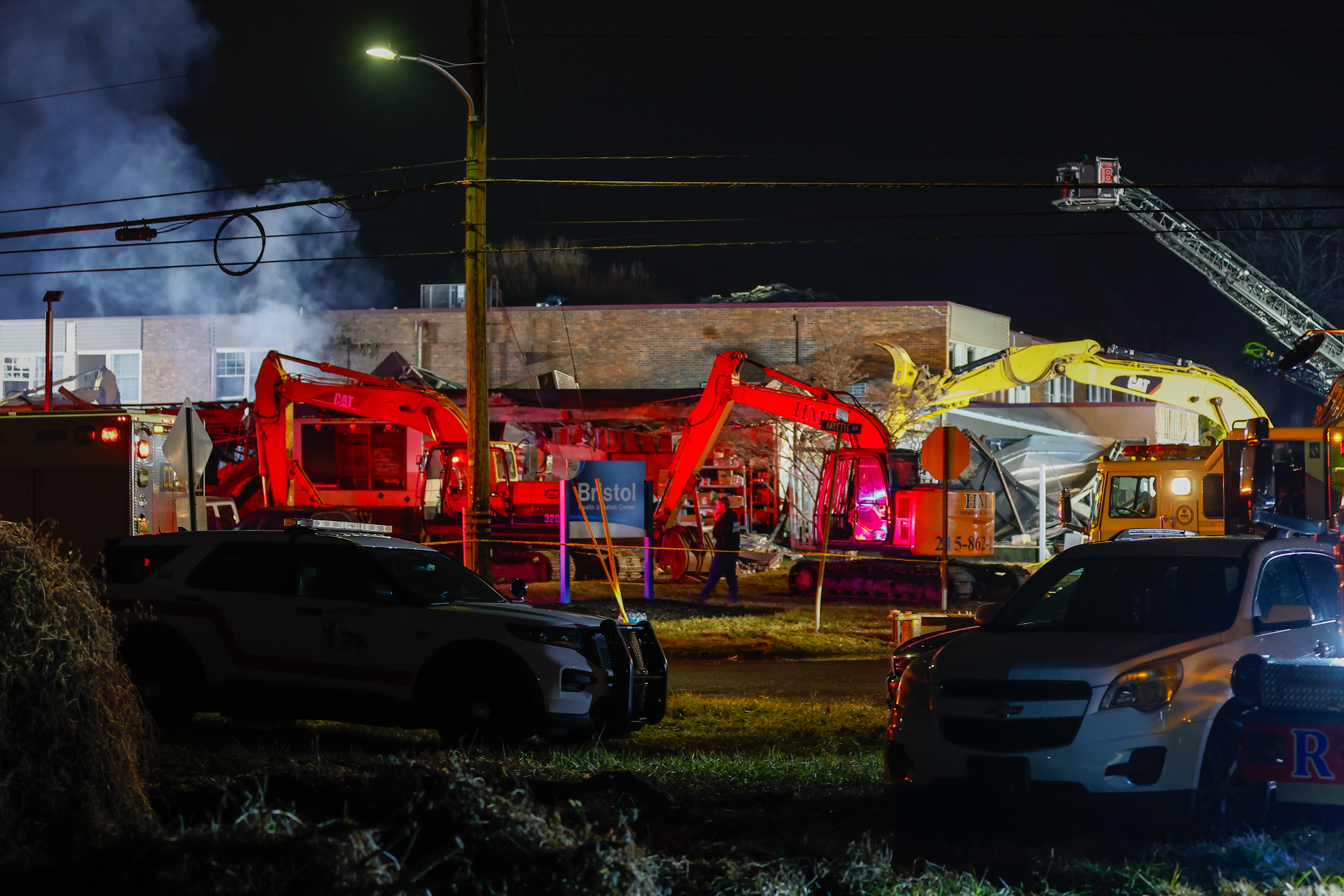
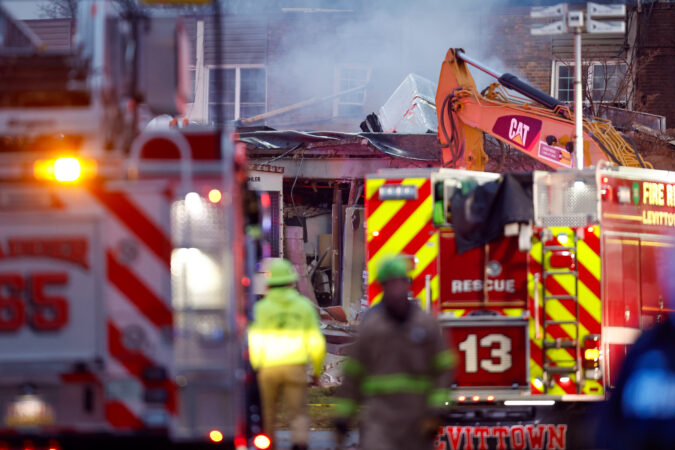
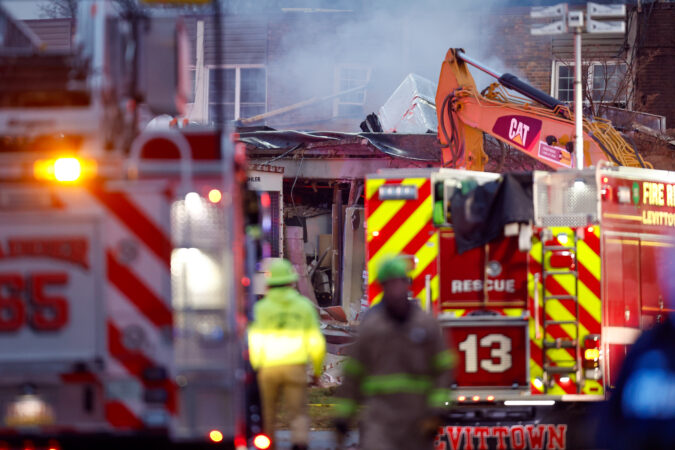
    First responders work the scene of an explosion and fire at Bristol Health & Rehab Center, Tuesday, Dec. 23, 2025, in Bristol, Pa.

    The nursing home said in a Facebook post: “Emergency crews are responding to the incident here at Bristol Health & Rehab. We are currently working with local emergency authorities.”

    As of 2024, the facility housed 162 residents — more than 75% of whom were 60 years or older — and had 129 full- and part-time staff members, records show.

    The facility was recently acquired by Saber Healthcare Group and rebranded as Bristol Health & Rehab Center, which announced the new ownership and name in a Facebook post this month.

    At the news conference, Shapiro noted the change of ownership.

    “The Department of Health at the state level conducted a visit here on Dec. 10, and there was a plan put in place in order for these new facility owners to upgrade the standards at this facility. That work will obviously continue with the new owners to ensure that they do what is necessary to keep residents safe,” Shapiro said.

    In an emailed statement Tuesday night, Saber Healthcare Group confirmed that workers at the nursing home “reported a gas smell to PECO. PECO personnel were on site investigating the matter prior to the explosion.”

    Saber Healthcare Group thanked the first responders: “We are forever grateful for their bravery and support in protecting our staff and residents.”

    The statement added: “Just 23 days ago, Saber Healthcare Group became affiliated with Bristol Health and Rehab Center — formerly Silver Lake Nursing Home. We have worked to improve and fix prior issues, and we will continue that work in the wake of this tragedy.”

    The former owner, CommuniCare Health Services, a privately run for-profit nursing home operator based in Cincinnati, took over operations at the nursing home in 2021. The company manages more than 80 healthcare centers across five states.

    The nursing home had been cited for unsafe living conditions, including the absence of a fire safety plan and adequate extinguishers, according to state inspection records.
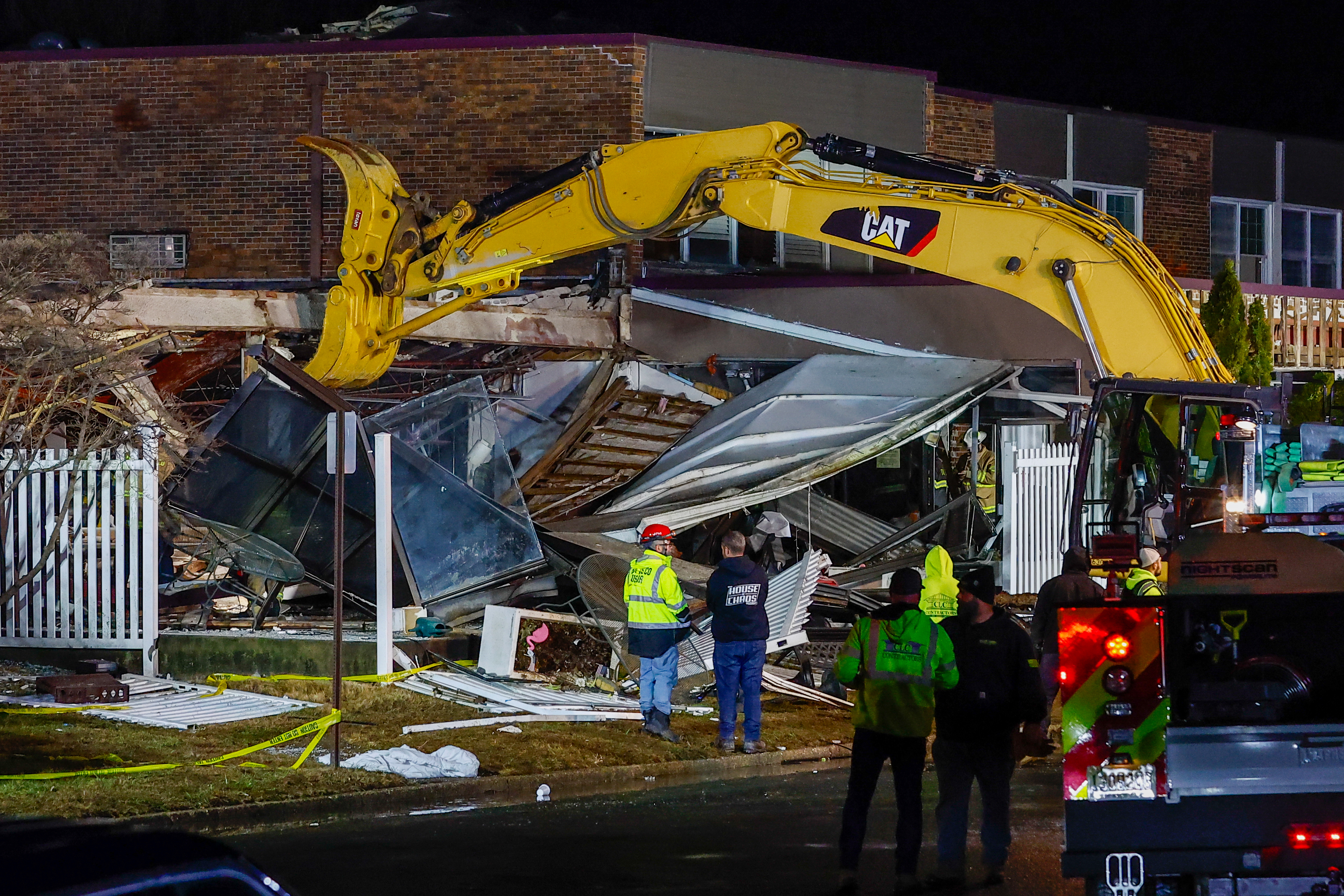
    First responders work the scene of an explosion and fire at Bristol Health & Rehab Center, Tuesday, Dec. 23, 2025, in Bristol, Pa.

    During an Oct. 29 site visit, Pennsylvania Department of Health inspectors flagged the facility for failing to provide a floor map showing fire exits, fire barriers, and smoke barriers.

    Officials also found the facility “failed to maintain portable fire extinguishers” on all floors. The state ordered corrections by Nov. 30.

    It remained unclear whether those fixes were made before the blast, or whether the deficiencies affected residents’ ability to escape on Tuesday.

    Other fire safety deficiencies have been documented. A 2024 inspection report found the nursing home hallways were not equipped to handle heavy smoke.

    “The facility failed to ensure corridor doors were maintained to resist the passage of smoke, affecting two of four smoke compartments,” inspectors wrote.

    Federal inspectors have cited the facility for deficient healthcare and management, issuing dozens of violations for substandard care. The most recent inspection, in March, indicated the center had failed to maintain proper infection prevention among residents and inadequately maintained medical records, among other problems.

    The U.S. Department of Health and Human Services awarded the facility a one-star rating — far below the national average — based on recent inspections. The nursing home’s operators were fined more than $418,000 in penalties in 2024, records show.
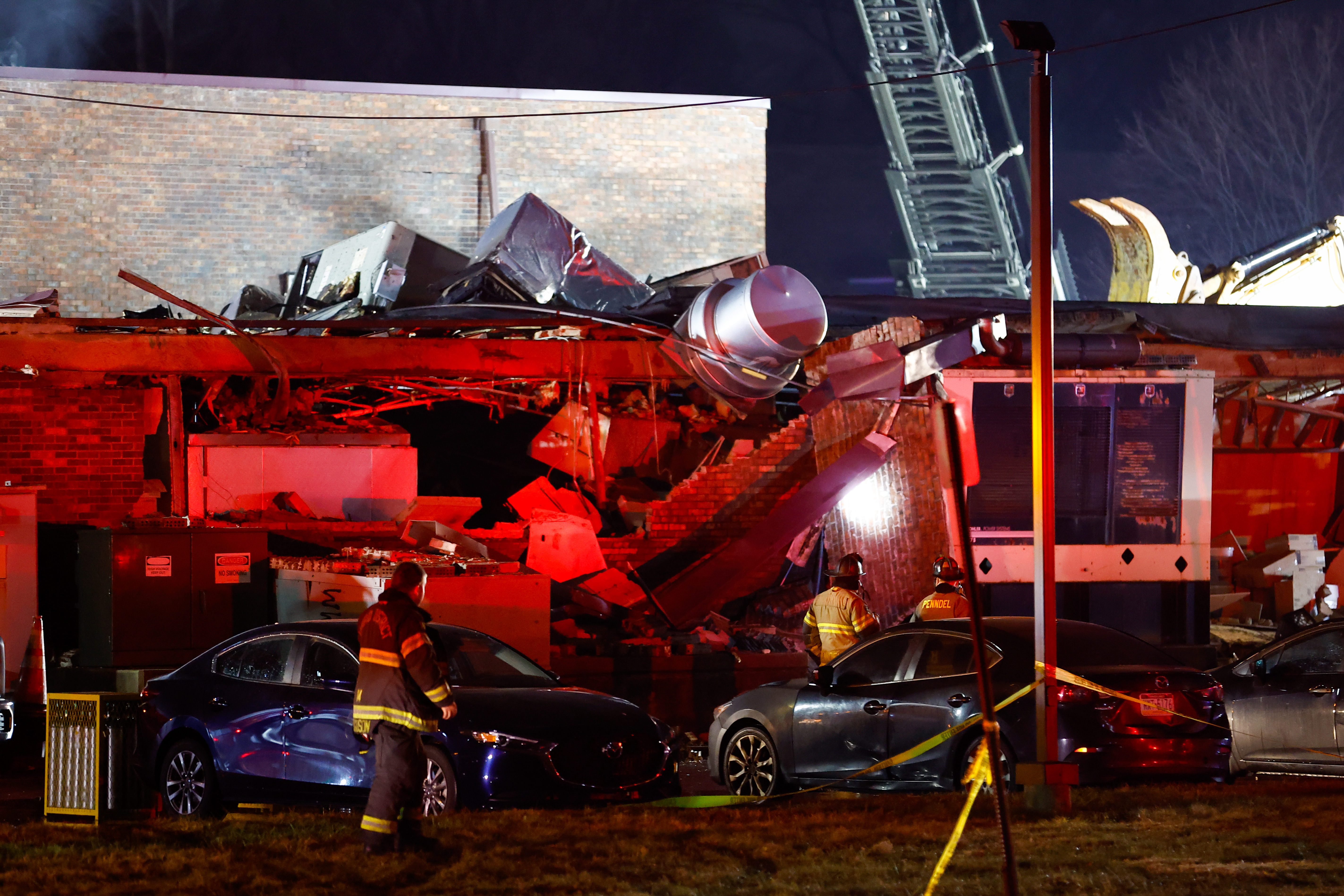
    First responders work the scene of an explosion and fire at Bristol Health & Rehab Center, Tuesday, Dec. 23, 2025, in Bristol, Pa.

    In a statement, a spokesperson for CommuniCare Health Services, the former owner, said: “Our hearts go out to all those affected by the incident at the Bristol nursing home facility, formerly known as Silver Lake Nursing Home. We want to extend our deepest sympathies to the residents, families, and staff impacted, and are keeping all of them in our thoughts during this difficult time.”

    The statement continued: “While we are not affiliated in any way or operate the facility, and it is no longer part of our organization, we recognize the severity of this incident and the profound impact it is having on the community. We are monitoring the situation closely and our thoughts remain with everyone impacted by this tragedy.”

    Federal records indicate the building had an automatic sprinkler system.

    The facility, composed of low-slung brick buildings, sits on a two-acre campus in Lower Bucks County. As of 2024, the facility housed 162 residents, more than 75% of whom were 60 years or older, according to the most recent inspection records.

    The facility had 129 full- and part-time staff members as of 2024, records show.

    On Tuesday evening, the smell of smoke and the sound of sirens from ambulances and fire trucks pierced the blocks surrounding the facility hours after the explosion led to a mass evacuation of nursing home patients.

    Kim Wilford, 60, was visiting family for the holidays roughly two blocks from the facility when she felt the house shake, as though something had fallen on the roof.
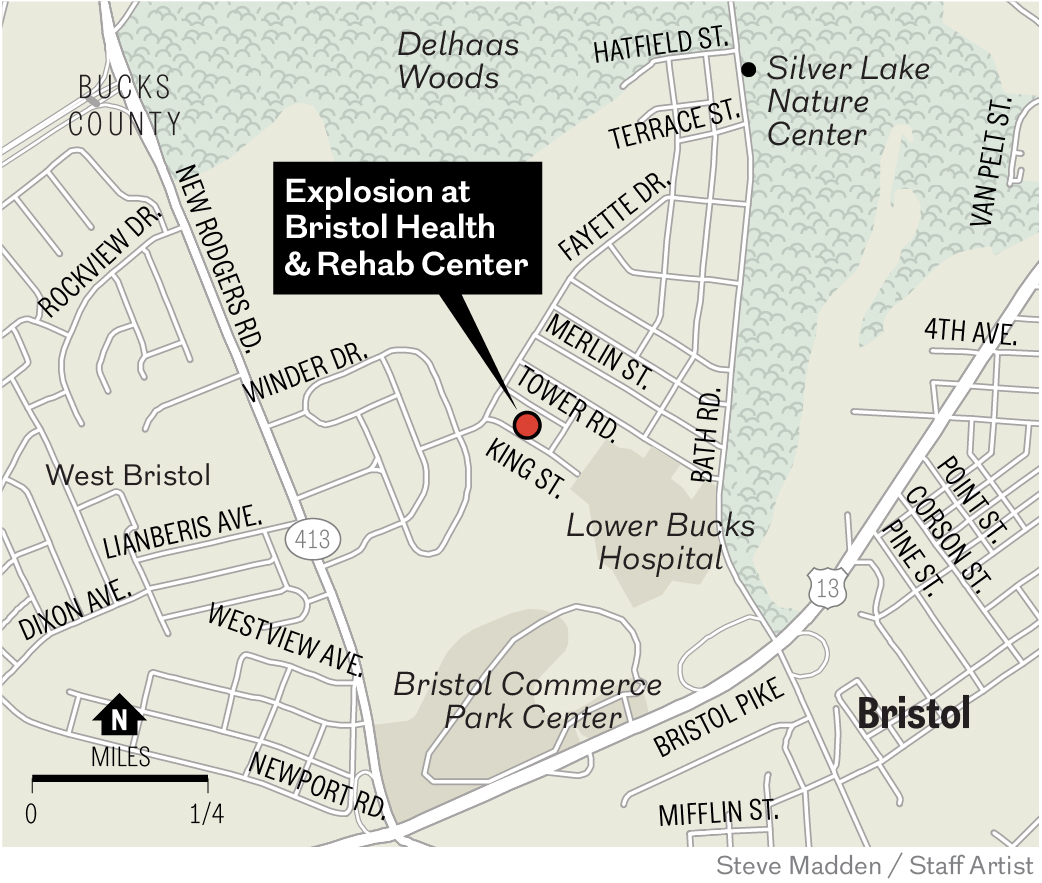
    Bristol Health & Rehab Center

    When Wilford and relatives realized the explosion came from the nursing home, where her 87-year-old mother lives, they rushed to the campus and were met with chaos.

    “It was something out of a Die Hard movie,” said Deanna Rice-Bass, 59, one of Wilford’s relatives, who recognized local nurses, not affiliated with the nursing home, evacuating people.

    Patients were being wheeled out of the facility, but in some cases they were simply placed on mats outside, Wilford said.

    First responders were instructing the able-bodied to take those with non-life-threatening injuries to nearby Lower Bucks Hospital.

    Wilford panicked as she saw the outside of her mother’s room.

    “Her window was blown out,” she said. “Naturally I freaked out.”

    Wilford would later find her mother among the crowd of evacuees cleared to go to Lower Bucks Hospital.

    “She said she and her roommate were lifted from their beds and back down,” said Wilford, adding she had never had issues with the nursing home before.

    A reunification center was established at Truman High School, officials said.

    Langhorne Police Chief Kevin Burns said about 35 families came in and filled out forms with their loved ones identifying information along with details such as their room number.

    Greg Wolnomiejski, 59, spent Tuesday night trying to find out what happened to his 86-year-old father, who has been a resident at the nursing home since 2021.

    Wolnomiejski, who lives in Florida, finally got a call from a police officer that his father was transported to Lower Bucks Hospital, but the officer had no other information.

    “I know he’s alive,” Wolnomiejski said in a phone interview. “That’s all the information I have so far.”

    Wolnomiejski said ​he had no complaints or concerns about the nursing home, which he visited on Saturday with his wife as part of a holiday trip to see his father.

    “There was nothing that led me to suspect it was going to blow up in a couple days,” he said.

    Staff writer William Bender contributed to this article.
  • 2 dead, several unaccounted for after Bucks nursing home explosion; gas odor reported shortly before incident

    2 dead, several unaccounted for after Bucks nursing home explosion; gas odor reported shortly before incident

    • What you should know
    • At least two people died in an explosion and fire at the Bristol Health & Rehab Center in Bucks County on Tuesday afternoon.
    • Several people remained unaccounted for Tuesday evening, officials said, and multiple people were injured. The total number of injured was not clear, as patients were sent to multiple hospitals.
    • Residents of the facility were evacuated by emergency responders, bystanders, and staff.
    • The cause of the explosion was not immediately known. Peco said it had responded to the scene for reports of a gas odor shortly before the explosion occurred.
    • The facility was previously known as the Silver Lake Healthcare Center, but was recently acquired by Saber Healthcare Group and rebranded.

    // Timestamp 12/23/25 8:53pm

    Recap: 2 dead, multiple people injured after explosion and fire at nursing home in Bucks County

    At least two people were killed and multiple people injured after a possible gas explosion rocked a Bucks County nursing home Tuesday, triggering a widespread emergency response and dramatic rescues and causing destruction that Gov. Josh Shapiro described as “quite catastrophic.”

    Just before 2:20 p.m., an explosion and fire were reported at the Bristol Health & Rehab Center — formerly known as Silver Lake Healthcare Center and Silver Lake Nursing Home — at 905 Tower Rd. in Bristol Township, Bristol Fire Chief Kevin Dippolito said at a news conference with Shapiro and other officials Tuesday night.

    Emergency responders found a major structural collapse, with parts of the first floor falling into the basement and people trapped, Dippolito said. Firefighters immediately went into rescue mode.

    “They pulled many residents out of the building via windows, doors, stuck in stairwells, stuck in elevator shafts,” Dippolito said.

    The people rescued from the building were handed off to police officers who “came from every direction, and I believe every municipality around here,” Dippolito said.

    “There was one police officer who literally threw two people over his shoulders and ran with people to help,” the fire chief said.

    Robert Moran, Ximena Conde, Max Marin


    // Timestamp 12/23/25 8:45pm

    Majority of families have been connected with loved ones, police chief says

    The ebb and flow of families seeking information about loved ones who’d been at Bristol Health & Rehab Center slowed to a trickle at Truman High School by 8:30 p.m.

    The Levittown high school had been serving as a reunification center for families.

    Langhorne Chief of Police Kevin Burns said about 35 families came in and filled out forms with their loved ones’ identifying information along with details such as their room number.

    An officer would then relay that information to another officer stationed at Lower Bucks Hospital who would then find the person.

    Burns said it took some time but the majority of the families were connected with their loved ones.

    The reunification center will likely close this evening, he said.

    Operations at the site of the explosion also slowed with many emergency vehicles leaving as excavation equipment stayed behind and police continued to block the perimeter.


    // Timestamp 12/23/25 8:11pm

    State officials repeatedly cited Bristol nursing home over fire safety deficiencies

    The Bristol nursing home rocked by an explosion and fire on Tuesday had been repeatedly cited for unsafe living conditions, including the absence of a fire safety plan and adequate extinguishers, according to state inspection records.

    During an Oct. 29 site visit, Pennsylvania Department of Health inspectors flagged Silver Lake Healthcare Center — now operating as Bristol Health & Rehab Center — for failing to provide a floor map showing fire exits, fire barriers, and smoke barriers.

    Officials also found the facility “failed to maintain portable fire extinguishers” on all floors. The state ordered corrections by Nov. 30.

    It remained unclear Tuesday whether those fixes were made before the blast, or whether the deficiencies affected residents’ ability to escape after an explosion leveled a portion of the building at 2:19 p.m.

    Bristol Township Fire Chief Kevin Dippolito said Tuesday that a second explosion — and subsequent fire — erupted at the nursing home while firefighters attempted to rescue people.

    Other fire safety deficiencies have been documented for years. A 2024 inspection report found the nursing home hallways were not equipped to handle heavy smoke.

    “The facility failed to ensure corridor doors were maintained to resist the passage of smoke, affecting two of four smoke compartments,” inspectors wrote.

    State and federal officials have also repeatedly cited the facility for substandard medical care.

    Ownership of the nursing home has shifted among for-profit operators in recent years. CommuniCare, an Ohio-based company, acquired Silver Lake in 2021. Earlier this month, Saber Healthcare Group took over and rebranded the facility as Bristol Health & Rehab Center.

    Saber manages 140 assisted living facilities across six states. At a Tuesday night news conference, Gov. Josh Shapiro said the health department visited the facility again on Dec. 10. New owners agreed to make more fixes, though the governor did not provide details.

    “There was a plan in place in order for these new facility owners to upgrade the standards,” Shapiro said. “That work will obviously continue.”

    Max Marin


    // Timestamp 12/23/25 7:18pm

    2 people dead, multiple hurt, and some maybe missing as rescue effort continues

    Gov. Josh Shapiro speaks about the explosion at Bristol Health & Rehab Center.

    Two people were killed, several others were injured, and as many as five people were unaccounted for after an explosion at a Bucks County nursing home, where officials continued a search-and-rescue operation into Tuesday evening.

    The deceased have not been identified.

    Gov. Josh Shapiro said investigators were still working to determine what caused the explosion and to locate anyone who may be missing, urging the public to remain patient as crews work to identify victims.

    The total number of injured residents remains unclear because victims were transported to multiple hospitals. Bucks County officials said up to five people were unaccounted for, though Shapiro cautioned that the figures are preliminary and could change as the investigation continues overnight.

    “There are still a lot of unanswered questions,” Shapiro said at a news conference Tuesday night. “You’ll have to bear with us as we work to confirm who was injured and who may be missing.”

    First responders arrived at a harrowing scene shortly after the 2:19 p.m. explosion. Part of the brick nursing home had collapsed, and residents were streaming out of the burning facility.

    Firefighters pulled people from windows, doors, stairwells, and elevator shafts. While crews searched through the rubble, a second explosion erupted inside the building, helping officials identify the source of the gas fueling the fire.

    “[They] were literally carrying the patients,” said Bristol Township Fire Chief Kevin Dippolito. “There was one police officer who literally threw two people over his shoulders and ran” them to get medical help.

    Max Marin


    // Timestamp 12/23/25 6:36pm

    Photos from the Bucks County nursing home explosion


    // Timestamp 12/23/25 6:33pm

    Shapiro heading to explosion scene


    // Timestamp 12/23/25 6:21pm

    Peco crews were responding to gas odor when explosion happened

    Peco said Tuesday evening that its crews had responded “shortly after 2 p.m.” to reports of a gas odor at the Bristol Health & Rehab Center on Tower Road — minutes before an explosion rocked the nursing home.

    “While crews were on site, an explosion occurred at the facility,” Peco spokesperson Greg Smore said in an emailed statement. “Peco crews shut off natural gas and electric service to the facility to ensure the safety of first responders and local residents.”

    Bucks County emergency management officials said they received the report of an explosion at approximately 2:17 p.m., according to the Associated Press.

    Shortly after the blast, a patient bleeding from his head was wandering the campus saying to himself how he’d repeatedly told staff of a gas smell that lingered throughout the day, said a passerby who did not wish to give their name.

    The man, they said, was eventually treated and transported from the site.

    William Bender, Ximena Conde


    // Timestamp 12/23/25 5:44pm

    Timely investigations key in reconstructing explosion events

    Investigators and workers at the scene of the Barclay Friends Senior Living Community on North Franklin Street in West Chester.

    Daniel Purtell, whose law firm, McEldrew Purtell, represented the families of two victims in the 2017 Barclay Friends senior living complex fire in West Chester, said there are several possible causes of a fire in a nursing home, including those involving medical equipment, combustible gases and utilities.

    He said preserving evidence at the Bristol Health & Rehab Center — and obtaining witness interviews before memories fade — will be key to reconstructing what happened.

    “The timely investigation in cases like this is absolutely imperative,” Purtell said. “Was it electrical? Were there fuel sources? Were there sparks? Was there ongoing work in the facility? What in the facility is combustible?”

    These investigations can take months or years.

    In the November 2017 Barclay Friends fire, the U.S. Bureau of Alcohol, Tobacco, Firearms, and Explosives did not release its final report until January 2019. The ATF did not determine the cause, but found that Barclay’s main sprinkler valve was turned off when investigators arrived, and is believed to have been off during the fire. Four residents died.

    Purtell, whose firm has already received a call about the Bristol explosion from a possible witness, said he has noticed a trend toward cost cutting among for-profit operators of nursing homes.

    “What you see in the for-profits is everything is scrutinized from a corporate perspective and everything is cost-benefit,” he said.

    Purtell said the Bristol investigation should look closely at whether the facility’s fire prevention and suppression systems were adequate and functioning.

    William Bender


    // Timestamp 12/23/25 5:28pm

    Relative describes feeling house shake, seeing windows blown out

    The smell of smoke and sirens of both ambulances and fire trucks pierced the blocks surrounding the Bristol Health & Rehab Center hours after an explosion led to a mass evacuation of nursing home patients.

    Kim Wilford, 60, was visiting family for the holidays, roughly two blocks from the facility when she felt the house shake, as though something had fallen on the roof.

    When Wilford and relatives realized the explosion came from the nursing home, they rushed to the campus, where they were met with chaos.

    “It was something out of a Die Hard movie,” said Deanna Rice-Bass, 59, one of Wilford’s relatives who recognized local nurses, not affiliated with the nursing home, evacuating people.

    Patients were being wheeled out of the facility, but in some cases they were simply placed on mats outside, said Wilford.

    First responders were instructing the able-bodied to take those with non-life-threatening injuries to nearby Lower Bucks Hospital.

    Wilford panicked as she saw the outside of her mother’s room.

    “Her window was blown out,” she said. “Naturally I freaked out.”

    Wilford would later find her 87-year-old mother among the crowd of evacuees cleared to go to Lower Bucks Hospital.

    “She said she and her roommate were lifted from their beds and back down,” said Wilford, adding she’d never had issues with the nursing home before.

    Ximena Conde


    // Timestamp 12/23/25 5:27pm

    Bristol Township Police: Multiple injuries reported

    Authorities said there were injuries, but had yet to say whether there were any fatalities.

    Bristol Township Police Lt. Sean Cosgrove said there were injuries, but that he wasn’t aware of any critical injuries.

    “A lot of the details at this point are still unknown,” he told reporters at the scene.

    Residents had been evacuated by emergency responders, bystanders and staff, he said.

    — Associated Press


    // Timestamp 12/23/25 4:44pm

    Nursing home has been repeatedly cited, federal records show, and recently changed ownership

    First responders work the scene of an explosion and fire at Bristol Health & Rehab Center, Tuesday, Dec. 23, 2025, in Bristol, Pa.

    Federal records indicate the building had an automatic sprinkler system.

    The 174-bed facility, comprised of low-slung brick buildings, sits on a two-acre campus in Lower Bucks County. As of 2024, Silver Lake housed 162 residents, more than 75% of whom were 60 years or older, according to the most recent inspection records. The facility had 129 full- and part-time staff members as of 2024, records show.

    CommuniCare Health Services, a privately run for-profit nursing home operator based in Cincinnati, took over operations at Silver Lake in 2021. The facility was recently acquired by Saber Healthcare Group, and rebranded as Bristol Health & Rehab Center. Operators announced the new ownership and name in a Facebook post this month.

    Federal inspectors have repeatedly cited Silver Lake for deficient healthcare and management in recent years, issuing dozens of violations for substandard care. The most recent inspection, in March, indicated the center had failed to maintain proper infection prevention among residents and inadequately maintained medical records, among other problems.

    The Department of Health & Human Services awarded the facility a one-star rating — far below the national average — based on recent inspections. Silver Lake’s operators were fined more than $418,000 in penalties in 2024, records show.

    In 2023, inspectors wrote that management “failed to ensure a clean, homelike environment” for residents on both floors of the two-story facility. They saw dirty floors, paint peeling off the walls, and holes punctured in bathroom doors.

    Max Marin, Robert Moran


    // Timestamp 12/23/25 4:41pm

    ‘Car after car after car was a fire truck or ambulance from all over the city’

    State Rep. Tina Davis, whose district includes the center, said she got near the scene in her car but did not want to interfere.

    “I saw smoke and I saw car after car after car was a fire truck or ambulance from all over the city, from all over,” Davis said.

    She said there was talk of using a nearby school as a temporary evacuation area.

    Jim Morgan, president of the Bristol Township School Board, said district buses will be taking people from the emergency scene at the nursing home to a reunification center at Truman High School. He said officials were working on setting up beds and providing water and other needs to residents. As of 4 p.m. no one had showed up at the school, Morgan said.

    “It’s just so sad — it’s that hopeful time of year. This is just something that is sad for everybody and the families and the workers that are there. I hope there’s positive results from this. We don’t know at this point,” Davis said.

    — Associated Press


    // Timestamp 12/23/25 4:09pm

    Rep. Brian Fitzpatrick urges residents to avoid the area

    U.S. Rep. Brian Fitzpatrick, who represents the area, said on social media that he had been briefed on reports of an explosion at the nursing home.

    “My team and I are in direct communication with local officials and emergency responders, and we are closely monitoring developments as authorities work to secure the scene and care for those affected. We will continue to stay engaged and share updates as more verified information becomes available,” Fitzpatrick said.

    “For everyone’s safety, I urge you to please avoid the area. Please also join me in praying for the safety of the residents of the nursing home, the dedicated staff who care for them, and our brave first responders who rushed to the scene and ran toward danger without hesitation,” Fitzpatrick said.

    Robert Moran


    Explosion reported at a Bucks County nursing home

    // Timestamp 12/23/25 4:06pm

    Emergency responders reported multiple injuries after an explosion rocked a nursing home Tuesday afternoon in Bristol Township in Bucks County.

    Firefighters and police responded to the explosion and fire at the Bristol Health & Rehab Center, formerly known as Silver Lake Healthcare Center, at 905 Tower Rd.

    It was not immediately known how many people were injured.

    Firefighters from neighboring Pennsylvania counties and from New Jersey have responded to the scene.

    Robert Moran

  • Lower Merion commissioners approve 8% tax hike, citing ‘looming cliff’ after 13 years of no increase

    Lower Merion commissioners approve 8% tax hike, citing ‘looming cliff’ after 13 years of no increase

    Lower Merion residents will see an 8% increase on their property tax bill in 2026, a move commissioners say is a necessary remedy to the “mistake” of keeping tax rates stagnant for over a decade.

    The township board of commissioners on Dec. 17 approved an 8% property tax increase for next year. The increase will bring the property tax millage rate from 4.462 mills to 4.819 mills. The median single-family homeowner in Lower Merion will pay around $1,386 in real estate taxes, a $103 increase from 2025.

    The 8% tax increase approved by commissioners is lower than the 9.5% increase proposed by staff and supported by board President Todd Sinai. The board landed on the 8% hike after a protracted discussion about how much of an increase residents could, and should, shoulder in 2026.

    Commissioners acknowledged the “sticker shock” of the tax hike but said years of stagnant tax revenue had put the township in an impossible position. Real estate taxes did not increase for 13 consecutive years in Lower Merion, from 2011 to 2024. The township voted to raise taxes by 6.5% for 2025, the first increase in over a decade.

    “Those years of no tax increase have proven to be a mistake, given that each year we were presented with a structural deficit and a looming cliff,” Commissioner Ray Courtney said. “By holding out on increases as long as we did, we have painted ourselves into a corner.”

    Under the proposed 9.5% tax hike, Lower Merion projected $83.8 million in general fund expenditures in 2026 against a revenue of $79.3 million. With the 8% tax hike passed by the board, revenue will be lower and the township will have to lean more heavily on its general fund reserves to cover the deficit.

    Around half of Lower Merion’s revenue comes from real estate taxes, yet township residents continue to pay taxes calculated on property values established in 1998, the last time Montgomery County conducted a property reassessment.

    The decades-old property values have kept tax revenue low, relative to the high market costs of a home in Lower Merion. The median sale price for a home in Lower Merion was $803,500 in 2024, according to data from Montgomery County.

    Notably, only 10% of Lower Merion residents’ property taxes goes to the township. Around 12% goes to Montgomery County and 78% goes to the school district.

    Montgomery County will be increasing taxes by 4% in 2026.

    In a Nov. 7 report addressed to the board of commissioners, Township Manager Ernie McNeely wrote that, while Lower Merion has weathered the post-pandemic economy with relative success, its general fund has run a deficit multiple times since 2020.

    McNeely’s report points to three major burdens on Lower Merion’s budget in 2026: healthcare premiums, staffing costs, and the Solid Waste Fund.

    The township is expected to see a 20% increase in healthcare premium costs in 2026. McNeely’s report said the increase is due, in part, to the costs associated with nondiabetic weight-loss drugs and other “specialty pharmaceuticals.”

    Lower Merion Township’s employment vacancy rate is also expected to fall in 2026. While a lower vacancy rate is good for departments needing to fill positions, each percentage-point improvement in the employment vacancy rate costs the township $520,000. On top of the falling vacancy rate, over 35% of township staff are set to receive a salary boost in 2026.

    And the town’s Solid Waste Fund is in dire straits. Even with the 5% solid waste fee rate hike planned for 2026, the fund is set to face a $700,000 deficit. Rising costs for disposal, equipment, and personnel, as well as a declining regional market of mills able to purchase paper recycling material, were identified as the main reasons for cost increases.

    The major challenges outlined by McNeely are set to the backdrop of persistent inflation, which is putting cost pressures on local governments.

    This suburban content is produced with support from the Leslie Miller and Richard Worley Foundation and The Lenfest Institute for Journalism. Editorial content is created independently of the project donors. Gifts to support The Inquirer’s high-impact journalism can be made at inquirer.com/donate. A list of Lenfest Institute donors can be found at lenfestinstitute.org/supporters.

  • Amtrak can’t fully run its new fleet of next-gen trains in 2026 due to facility upgrade delays

    Amtrak can’t fully run its new fleet of next-gen trains in 2026 due to facility upgrade delays

    Some of Amtrak’s fleet of next-generation Acela and Airo trains will likely sit idle in 2026 as the national railroad company faces delays in upgrading maintenance facilities.

    Amtrak is behind schedule on completing the necessary facilities upgrades to maintain its newest fleet of trains, inspectors told Amtrak in a new report. Delays in next-gen fleet rollouts, of which there have been several, cost the company millions in lost revenue.

    Early missteps in planning, like starting its fleet upgrade efforts in 2010 but its facilities upgrades in 2016, led to a “schedule misalignment,” inspectors said in the report.

    Amtrak is in the process of acquiring three fleets of trains from manufacturers — NextGen Acela, Airo, and Long Distance — to the tune of $8 billion. The national railroad corporation rolled out a handful of NextGen Acela trains in August. Airo trains are scheduled to roll out in 2026 and Long Distance trains in the early 2030s, according to Amtrak.

    In a recent review of the NextGen Acela trains, The Inquirer lauded the train for its smoother, faster ride, comfortable seats, and above all, its cleanliness, but lamented its infrequency and cost as the older Acela trains on Keystone and Northeast Regional services still carry the bulk of trips for a cheaper ticket.

    NextGen Acela and Airo trains offer faster travel with speeds of up to 160 mph and 125 mph, respectively, and modernized cabins featuring upgraded seats, improved Wi-Fi, and expanded dining options.

    A business-class car in the NextGen Acela in Washington on Aug. 27.

    The latest report from the Amtrak Office of Inspector General details that under its current facility construction schedule, Amtrak will only be able to operate the first 24 out of 28 NextGen Acela trains and the first 12 out of the planned 83 Airo trains hitting the tracks in 2026.

    Facilities in Philadelphia; Seattle; Boston; New York; Washington, D.C.; and Rensselaer, N.Y., are being upgraded to maintain this new fleet, which is the most substantial upgrade since Amtrak introduced the Acela in 2000. Amtrak broke ground on Philadelphia’s new $462 million facility in October 2024.

    Amtrak Acela trains sit in the Amtrak yard adjacent to 30th Street Station in Philadelphia in August 2023.

    While the company began considering plans to replace its aging trains 15 years ago, Amtrak didn’t start addressing facility upgrades until 2016 for NextGen Acela and 2021 for Airo. Additionally, Amtrak took a targeted individual site approach to facility planning instead of an “overarching” one, according to inspectors.

    Amtrak approved a new strategic fleet and facilities plan to align both efforts last month. However, inspectors found the company failed to appropriately define the scope of the six years of work that remains.

    In the report, a senior Amtrak official described the current system as “building a house without ensuring the garage fits the vehicles.”

    Amtrak officials agreed to implement a new management framework to streamline facility upgrade efforts by the end of March 2026.

  • The lower Schuylkill is up for Pennsylvania’s River of the Year. Voting is open.

    The lower Schuylkill is up for Pennsylvania’s River of the Year. Voting is open.

    The lower Schuylkill winds 36 miles from Phoenixville in Chester County to its tidal meeting point with the Delaware River at Philadelphia’s Navy Yard, sheltering more than 40 species of fish along the way.

    In Center City, the river doubles as a striking urban backdrop, bordered by a trail that can draw thousands of hikers and cyclists daily.

    This year, the waterway is vying for the title of Pennsylvania’s River of the Year, an annual competition spotlighting the state’s most significant waterways.

    Online voting, which began Dec. 9, runs through Jan. 16, giving Pennsylvanians the chance to select the 2026 winner from three contenders: Chillisquaque Creek, the Conestoga River, and the lower Schuylkill in the Philadelphia region.

    The River of the Year program is administered by the Pennsylvania Organization for Watersheds and Rivers, with funding from the Pennsylvania Department of Conservation and Natural Resources (DCNR).

    The contest is meant to draw public attention to rivers and their environmental importance. The winning river’s nominating organization receives a $15,000 DCNR grant to fund yearlong celebrations, including paddling events and community activities. The DCNR produces a commemorative poster in honor of the river.

    Jackson Quitel, river programs coordinator for the nonprofit LandHealth Institute, said his organization nominated the Schuylkill along with a plan to educate the public “in the many wonders in this unique body of water.”

    “While the Schuylkill River is widely known, not many people are aware of the immense recreational activities and ecological wonders that are present on the river today,” Quitel said.

    The LandHealth Institute helps increase awareness of the river through guided walks, fishing, and kayaking, taking more than 500 people out on the water in 2025. If the Schuylkill wins, Quitel said, it would allow the group to double its reach.

    Joe Syrnick, executive director of the nonprofit Schuylkill Development Corp., which helped develop the Schuylkill Banks trail along the river, called the river “a great asset to the region.”

    “It would be nice to see it get the recognition it deserves,” Syrnick said.

    Once a vital waterway for the Lenni-Lenape, the river later endured severe pollution from upstream coal mining and industrial waste, eventually rebounding through years of efforts, including the protections of the federal Clean Water Act.

    The Schuylkill became the nation’s first municipal‑scale water system through Fairmount Water Works and continues to provide drinking water to 1.5 million people through two intakes along its banks.

    The Schuylkill River Trail, a continuous corridor running alongside most of the lower Schuylkill, has broadened access to the river’s views for residents, giving them more insight into a river many were once cut off from.

    Most recently, the Schuylkill Banks section in Center City debuted a new $48 million cable‑stayed, pedestrian‑only bridge, anchoring a trail extension known as the Christian to Crescent Trail Connector. The 2,800‑foot segment delivers sweeping, unobstructed views of the river.

    The DCNR describes the lower Schuylkill as an “urban oasis surrounded by bustling roads and a backdrop of a gorgeous skyline.”

    Pennsylvania has 25 rivers. Of those, six are federally designated as wild and scenic and 13 are state-designated scenic rivers.

    Contest nominees can also include tributaries within river watersheds. For example, Chillisquaque Creek is a 20 mile-long tributary of the Susquehanna River’s west branch. It flows through Northumberland and Montour Counties.

    The Conestoga, meanwhile, feeds Chesapeake Bay.

    Overall, Pennsylvania has 85,000 miles of waterways, which is the highest stream density in the continental United States.

    The Delaware was the 2025 river of the year.

  • Chesco has seen ‘entrepreneurial spirit’ this year, with more new businesses to start 2026

    Chesco has seen ‘entrepreneurial spirit’ this year, with more new businesses to start 2026

    As major retailers made Chester County home in 2025, start-ups were the fastest-growing group that the Chester County Economic Development Council found itself providing support for this year.

    The region saw interest in expansions from big manufacturers — think chemical tech company Johnson Matthey, or coffee manufacturer Lavazza — and major retailers, like a Trader Joe’s in Berwyn and Exton, or even a Sheetz deep in Wawa country in Downingtown.

    But in a continued trend from the pandemic, which saw a surge in “entrepreneurial spirit,” the county has seen a continuation of new, small businesses taking shape, said Mike Grigalonis, president and COO for the county’s economic development council.

    “That’s our biggest area of growth, services that we’re providing to start-up businesses and entrepreneurs,” Grigalonis said. “That ranges from a salon, or a cafe, or a retail shop — any of those Main Street mom-and-pop businesses that you might think of — all the way to very kind of cutting-edge high tech, emerging tech — whether that be a new med device, a new drug, a new app, and everything in between.”

    The county’s wide-ranging restaurant scene saw a number of businesses planning new locations.

    Here’s a look around the county at some of the comings and goings in the final stretch of 2025.

    New local spots

    Expansions are on the menu. Stubborn Goat Brewing — which boasts craft beers, food, and a live music lineup — opened its doors this year in West Grove, and is planning an expansion into Kennett Square in 2026.

    Our Deli & Cafe, which has enjoyed four decades in Paoli, opened a second location in Phoenixville this month at 498 Nutt Road.

    The borough also recently welcomed The Local, a breakfast and lunch restaurant at 324 Bridge St.

    In West Chester, Olive & Meadow, a business focused on charcuterie boards and grazing tables, opened its brick-and-mortar location at 1388 Old Wilmington Pike this month.

    The business, which began in 2020 when Ariel LeVasseur dropped off charcuterie boards for her friends to enjoy while they chatted from afar on Zoom, grew from custom orders prepared in a commercial kitchen to a spot where customers can seek grab-and-go board items.

    “I love Chester County. I’m from Delco, but I think Chester County is so historic and beautiful,” she said. “I feel like everybody is very welcoming, and I know that a lot of people like supporting small businesses.”

    The new shop near the former Dilworthtown Inn offers all that, and everything else LeVasseur hopes will make hosting a breeze. Coming next year, she hopes to partner with local wineries and host workshops.

    “I just want them to feel like they stepped into my home, and grab some gourmet cheeses and meats and like, share the love of charcuterie that I have,” she said.

    Others close their doors

    As new businesses enter the scene, the community is also losing some favorites: Bookstore Bakery, a bookstore that offers gourmet pastries at 145 W. Gay St., will be closing its doors by the end of the year after having opened in 2024.

    LaCava Coffee, a neighbor on Gay Street, is also winding down its brick-and-mortar, but will continue selling its coffee beans online.

    “I always wanted to create something that connects my roots and that I can be connected to my home country,” said its owner, Jose Oliva, who is from Honduras. “I started the dream of creating a brand, and by 2022 we were able to accomplish a dream, and by personal efforts, we opened a very beautiful store that we ran and operated into November 2025.”

    Oliva said the increased cost of coffee, a lack of substantive foot traffic, and the initial difficulty in opening the location, which sapped his capital, ultimately led to the decision. He is eyeing a relocation to Virginia.

    “In a business if you don’t have a working capital for innovation, for development, for marketing, it is very difficult. Even so, we did it for almost two years and a few months,” he said. “We did it very successfully and with a lot of pride and we always maintain our customer service at its fullest.”

    This suburban content is produced with support from the Leslie Miller and Richard Worley Foundation and The Lenfest Institute for Journalism. Editorial content is created independently of the project donors. Gifts to support The Inquirer’s high-impact journalism can be made at inquirer.com/donate. A list of Lenfest Institute donors can be found at lenfestinstitute.org/supporters.

  • Can’t score a Longwood Gardens reservation this week? See these other festive Philly-area options.

    Can’t score a Longwood Gardens reservation this week? See these other festive Philly-area options.

    Deanna Baker made reservations for A Longwood Christmas in late summer.

    The 32-year-old Downingtown resident has been gifted a Longwood Gardens membership each of the past five years, but even the member reservations for the annual holiday light show book up well in advance. So she secures her family’s time slots while the weather is still warm.

    “Yes, it’s ridiculous this time of year,” she said of the Longwood demand at Christmastime. But “yes, it’s worth it.”

    Baker, who works in operations for Victory Brewing Co., said there is “a magical element” to the experience, whether she’s going with her toddler or her adult friends and relatives. She went once in early December and plans to return in the afternoon on Christmas Day.

    Every holiday season, hundreds of thousands of people visit A Longwood Christmas, which serves as an “economic engine” for the business communities in Kennett Square and surrounding towns, as Cheryl B. Kuhn, CEO of the Southern Chester County Chamber of Commerce, recently described it.

    Longwood Gardens’ holiday attendance has increased nearly 42% since pre-pandemic times. Last year, 650,000 people visited the gardens at Christmas, up from 609,000 the prior holiday season and from 458,000 during the 2019-2020 event (the show ends in the beginning of January).

    Many of these guests book months in advance, leaving last-minute planners few options for afternoon and nighttime visits during the holiday week.

    More than 500,000 lights shimmer at Longwood Gardens’ A Longwood Christmas through Jan. 11, 2026.

    “We open ticketing in July, and there are always a few early planners that buy tickets and make reservations then,” Longwood Gardens spokesperson Patricia Evans said in a statement. “By late Octoberish, the most desirable evening time slots on the weekends and the week of and following Christmas tend to be sold out.”

    But as of Monday, Evans noted, some tickets were available for time slots before noon and after 8:30 p.m. for the remaining days of December. Availability opens up in January, she added. The holiday lights stay on through Jan. 11.

    If nonmembers snag tickets, the experience will cost $45 a person for adults and $25 a person for kids, which Evans said is a $2-$3 per person increase from last year. Children 4 and under are free.

    window.addEventListener(“message”,function(a){if(void 0!==a.data[“datawrapper-height”]){var e=document.querySelectorAll(“iframe”);for(var t in a.data[“datawrapper-height”])for(var r,i=0;r=e[i];i++)if(r.contentWindow===a.source){var d=a.data[“datawrapper-height”][t]+”px”;r.style.height=d}}});

    Philly-area holiday attractions that have availability

    For Philly-area residents who want to enjoy a festive experience before 8 p.m., or at a slightly lower price point, other options have availability this week.

    As of Monday afternoon, the ice skating rinks at City Hall and Penn’s Landing had online reservations available for any day this week, though spokespeople said some time slots can sell out around the holidays. Both cost about $20 per person for admission and a skate rental.

    LumiNature at the Philadelphia Zoo also still had tickets available every operating night through Jan. 3 as of Monday afternoon.

    A family walked into the Philadelphia Zoo’s LumiNature holiday light display in this December 2021 file photo.

    “While tickets are available, the most popular times that guests reserve their tickets for are from 5-6 p.m., and it is likely that that particular hour will sell out on our most popular nights,” zoo spokesperson Maria Bryant said.

    Last year, LumiNature saw nearly 70,000 guests, according to Bryant, and it is on pace to exceed that number this season.

    Depending on the day, tickets cost between $25 and $29 per nonmember 12 and over, and $20 and $24 per child between the ages of 2 and 11. Younger children are free.

    Nighttime turned the Philadelphia Zoo into a wonderland of lights as LumiNature returned for its third year in December 2022.

    In the suburbs, the Elmwood Park Zoo’s Wild Lights “will not sell out,” with “plenty of tickets for each day of the rest of the event,” marketing director Kyle Gurganious said. Guests can buy at the gate, he added, or book online to save $1 per person.

    For nonmembers, online tickets are $27 per person 13 and older and $24 per child between the ages of 3 and 12. Children under 3 are free.

    Last season, the Norristown attraction brought in about 50,000 visitors, a number Gurganious said the zoo is “on track to eclipse … significantly” this year.

    Throughout the region, there also free events, such as the Wanamaker Light Show and the Comcast Holiday Spectacular. But be prepared: They can come with long lines and large crowds at popular times.

    Another holiday sellout in Philly

    A miniature Art Museum was on display in the Holiday Garden Railway at the Morris Arboretum & Gardens in 2023.

    At least one other Philly-area holiday attraction is completely sold out this week: The Holiday Garden Railway Nighttime Express at the Morris Arboretum & Gardens.

    Because it’s “so popular and because we only have a limited number of nights, the Nighttime Express sells out every year,” said Christopher Dorman, the director of visitor experience for the arboretum, which is part of the University of Pennsylvania.

    Those looking to snag tickets for next year may want to mark their calendars: Holiday tickets go on sale at the beginning of November for arboretum members and a week later for the general public.

    Added Dorman: “While the Nighttime Express is sold out, folks can still see the trains all lit up [and the rest of the garden] during normal daytime hours through Dec. 30.”

    And for those turned off by the planning — and expense — required for these paid festivities, there’s always the low-cost, low-commitment option: touring your neighborhood’s home light displays.

  • Twenty years into fracking, Pennsylvania has yet to reckon with its radioactive waste

    Twenty years into fracking, Pennsylvania has yet to reckon with its radioactive waste

    This article originally appeared on Inside Climate News, a nonprofit, nonpartisan news organization that covers climate, energy and the environment. Sign up for their newsletter here.

    When John Quigley became the secretary of the Pennsylvania Department of Environmental Protection (DEP) in 2015, he knew that he would be busy trying to keep up with the consequences of the state’s rapid increase in natural gas production. But when reports landed on his desk that trucks carrying oil and gas waste were tripping radioactivity alarms at landfills, he was especially concerned.

    “There was obviously a problem that the state was not dealing with,” Quigley said. “Which was the threat to not only public health, but to the folks driving the trucks and people handling the waste in the oil and gas industry. They were unnecessarily put at risk.”

    Ten years after the alarms first unsettled Quigley, fracking in Pennsylvania has continued to grow, generating huge volumes of oil and gas waste and wastewater in the process. Seventy-two percent of the solid waste ends up in landfills within state borders, and a truck carrying it sets off a radioactivity alarm every day on average, an Inside Climate News analysis found.

    Radioactive elements such as radium, uranium, and thorium in rocks deep underground come to the surface as a byproduct of oil and gas drilling. Experts have long worried about the potential health and environmental impacts of this waste. Radium exposure is linked to an increased risk for cancer, anemia, and cataracts.

    New research from the University of Pittsburgh suggests that the wastewater created by fracking the Marcellus formation, the ancient gas deposit beneath Pennsylvania, is far more radioactive than previously understood. And there is also evidence that some of it is getting into the environment: Researchers have found radioactive sediment downstream from some landfills’ and wastewater treatment plants’ outfalls.

    But the state has barely shifted its approach to regulating the waste. “Nothing material has been done,” said Quigley, who left in 2016. “Nothing has really changed.”

    In 2023, radioactivity alarms were triggered more than 550 times at Pennsylvania landfills because of oil and gas waste, according to an analysis of landfills’ annual operations reports conducted by Inside Climate News. The vast majority of this waste was disposed of on-site; landfills rejected the waste only 11 times. Radium-226 was the most common isotope cited as the reason for the alarm.

    DEP issued a new guidance document for solid waste facilities and well operators that handle radioactive materials in 2022, with some of the changes specifically aimed at the fracking industry. Landfills have been required to submit a Radiation Protection Action Plan to the state since 2001, covering protocols for worker safety, monitoring and detection, and records and reporting, and DEP may require sites to test regularly for the long-lasting radium-226 and radium-228 if they have received large volumes of radioactive oil and gas waste.

    But DEP has fallen behind on many other aspects of regulating this waste.

    In 2021, then-Gov. Tom Wolf said the state would require regular radium testing of landfills’ leachate, a liquid byproduct created when rainwater passes through waste, accumulating contamination. Wolf’s announcement came more than five years after DEP had recommended adding radium to leachate testing requirements. But leachate testing results from 2021 through 2024 acquired by Inside Climate News via a right-to-know request do not contain results for radium.

    In an email, DEP spokesperson Neil Shader said the agency does not currently require landfills to test for it. He did not explain why the policy has not yet been implemented.

    “DEP is still finalizing a policy around radiological material in leachate,” he said.

    Understanding the scope of the problem is difficult because Pennsylvania’s tracking of oil and gas waste and leachate remains disorganized and piecemeal, an Inside Climate News investigation found. Landfills are supposed to turn away waste that is too radioactive based on the total volume of waste they have already accepted that quarter. If the volume estimates are inaccurate or misreported, it could mean that some sites are exceeding the allowable amounts.

    Meanwhile, DEP’s last comprehensive study of radioactivity in oil and gas waste is more than nine years old, even though the agency said at the time that follow-up investigations were needed. DEP confirmed to Inside Climate News that it is studying the radioactivity of landfill leachate but offered no timeline for publication.

    The Marcellus Shale Coalition, an industry trade group, maintains that the solid waste and wastewater generated by fracking in Pennsylvania are well managed and pose no health risks to the public or workers. Landfill employees face less danger from oil and gas waste than someone getting a routine CT scan, the group argues, and landfill permits contain restrictions on how much oil and gas waste they can accept in any given year.

    In a statement to Inside Climate News, the coalition’s Patrick Henderson said there is “no greater priority” for the industry “than worker and community safety, which is delivered through recurrent trainings, development and sharing of best practices, and strict adherence to modern regulatory standards.”

    “Operators follow stringent protocols for handling, managing, and transporting waste — including radioactive screening, characterization, and reporting,” he said.

    The industry also frequently notes that DEP’s 2016 investigation into radioactivity in oil and gas waste concluded that there is “little or limited potential for radiation exposure to workers and the public” from natural gas development.

    Quigley called this study, the initial version of which was published just before he took office as DEP secretary, “the big mistake,” because in his view it falsely suggested that there was “nothing to worry about.”

    He thought that another study was warranted to investigate the true scope of the issue, but he said he was not able to push forward a new one before he left office.

    The study was limited in some ways by its size and distribution: Between 2013 and 2014, DEP sampled 38 well sites, only one in the northeast, which researchers now say is a radioactivity hot spot. Sixteen of the sampled sites were in the southwest.

    David Allard was the lead health physicist overseeing the study’s design and execution. He retired from DEP in 2022 after 23 years as the director of the Bureau of Radiation Protection, where he oversaw the management of radioactivity in the oil and gas industry. In 2001, he fought for the radiation protection plans and radioactivity monitoring at landfills that are required today.

    These rules and Pennsylvania’s rules for landfills in general are stricter than most other states’, he said. Ohio, for instance, stopped requiring landfills to report on the oil and gas waste they accept.

    Scientists learned about the radioactivity of oil and gas fields more than a century ago, not long after the discovery of radium in 1898. Waste predating the fracking era had been triggering radiation alarms in Pennsylvania landfills for years.

    But the waste created by fracking is different from conventional drilling wastes. In the 2010s, as fracking increased oil and gas waste volumes, Allard wanted to investigate how radioactive it was and what possible dangers it might pose to the public and the environment.

    The 2016 study concluded that the radioactivity levels found in the waste at the time posed little danger to truck drivers and workers. But it warned of potential radiological risks to the environment from spills, waste treatment facilities, and long-term disposal in landfills, a point that is often overlooked in summaries of the study’s contents. All of these things remain a problem today, Allard said.

    “I fought very hard to get this thing going,” he said of the study. “I will stand behind all of the science.” But he said that one of the reviewers, a political appointee, had argued for language in the synopsis that he felt obscured the nuances of the study’s conclusions: “little or limited potential for radiation exposure.”

    “It’s a true statement. But I think it did downplay the need for additional work,” he said. Variations of this phrase appear at the beginning of each bullet point in the summary. Each one is followed by caveats.

    DEP used computer modeling from Argonne National Laboratory to determine whether a closed landfill that had accepted this waste and other toxic material would still be dangerous to a farmer living on the site far into the future. Even 1,000 years from now, DEP found, a farmer digging a drinking well on top of such a site would not want to drink the water.

    “It’s not going to be pretty,” Allard said. “It’s not going to be very palatable.”

    Pennsylvania’s guidance for how much radioactive oil and gas waste a landfill can accept each year, updated a few years into the fracking boom in the 2010s, is supposed to prevent the hypothetical future farmer from being exposed to harmful levels of radiation. But this guidance is not codified into law, Allard said. It also relies on regular radioactivity monitoring and accurate tracking of waste quantities at landfills.

    Recent research from Pennsylvania State University and the University of Pittsburgh showing that radium is getting into the environment also concerned him. These radioactive discharges into waterways are unregulated, he said.

    “I think the EPA really needs to stand up,” he added. In 2020, Allard was part of a committee formed by the National Council on Radiation Protection and Measurements that highlighted the need for national, standardized regulations for oil and gas waste because the rules are so inconsistent among states.

    Road-spreading, the practice of using salty oil and gas wastewater as a dust suppressant, is another area where he says the study could have done more to figure out how much radioactivity was ending up in the environment as a result. Although the state has largely banned the practice, there is evidence that companies continue it.

    Landfills’ leachate also deserves more study, he said, and he sees testing it for radium and releasing the results to the public as an important step.

    “We tried to make it as comprehensive as possible,” Allard said of the study. “But I think it is timely to go back and visit some of these things.”

    Environmentalists have long clamored for an updated government study of radioactivity in oil and gas waste using more recent data. Pennsylvania’s fracking industry is much larger and more geographically dispersed now than it was when the information for the first study was collected.

    Forthcoming University of Pittsburgh research suggesting that oil and gas wastewater produced by fracking in Pennsylvania is more radioactive than previously thought involved samples from 561 well pads between 2012 and 2023. The wastewater contained much more radium than was found by studies early in the fracking boom.

    The median radium values were four times the level of those published by the U.S. Geological Survey in 2011 and twice that of DEP’s findings in 2016, said Daniel Bain, an associate professor of geology and environmental science at the University of Pittsburgh who was involved in the research.

    The maximum value that Bain found was above 41,000 picocuries per liter — a measure of radioactivity in a substance. For comparison, the EPA’s limit on total radium in drinking water is 5 picocuries per liter.

    Radium is a naturally occurring material, and surface and groundwater can contain between 0.01 and 25 picocuries per liter. Natural levels above 50 picocuries per liter are rare.

    “I think it necessitates a reevaluation of the kind of personal protection that specific jobs require. If you’re in contact with this waste every day, you need to be monitored,” Bain said. “They probably also have to rethink how they’re going to manage their waste streams.”

    Bain’s research also found that radioactivity was far higher in the Marcellus formation’s wastewater than in wastewater from drilling in other parts of the country, including Texas and North Dakota.

    He said that the finding echoes earlier industry realizations that the Marcellus is different from other natural gas formations. “One of the first hard lessons of the Marcellus was that it’s not like some of the Texas shales. They came up here and tried to use the methods they used in Texas, and they had issues,” he said. “They’re basically learning as they’re doing. It’s a big experiment, and sometimes you wish you could redo the experiment.”

    Marcellus wastewater has higher than expected levels of barium, strontium, and lithium, a discovery that spurred industry interest in 2024 because of lithium’s status as a critical mineral.

    Wells in the northeastern part of Pennsylvania contained much higher concentrations of radium than others, suggesting that earlier conclusions based on drilling in the state’s southwestern region might be misleading.

    Bain’s research did not focus on the radioactivity of solid oil and gas waste, the lion’s share of what Pennsylvania landfills take from the industry. But he did look at what kind of waste would be created if companies were to start treating Marcellus water with the goal of removing valuable components like lithium.

    His analysis found that this process could create a solid, highly radioactive byproduct that would exceed U.S. Department of Transportation transport limits for radium in sludge. Although questions remain about the financial viability of extracting lithium from fracking wastewater, at least one company in Pennsylvania has already tried to do so.

    In 2021, environmentalists were heartened when Wolf announced that landfills would be required to test their leachate for radium and report the results to the state quarterly. The new requirement would “improve public confidence that public drinking water and our precious natural resources are being appropriately protected,” Wolf said at the time.

    Josh Shapiro, now governor and then attorney general, commended Wolf’s announcement, which came after Shapiro’s office had “urged Gov. Wolf to direct DEP to prevent harmful radioactive materials from entering Pennsylvania waterways.”

    “The improved monitoring and promised analysis by DEP is a step in the right direction,” Shapiro said at the time. Other states with active fracking, including North Dakota, West Virginia, and Colorado, require this kind of leachate testing.

    John Stolz, a professor at Duquesne University who has studied oil and gas waste and fracking contamination for years, said he was “very disappointed” that DEP was still not requiring this testing or releasing it to the public.

    “We were told they were going to start monitoring for these additional parameters, and it just hasn’t happened,” he said.

    Stolz would like DEP to go beyond radium and require testing at landfills for other oil- and gas-related substances that could help scientists better trace fracking’s impact, such as lithium, strontium, and bromide. “They’re still only monitoring parameters that you would monitor if you were looking at a discharge from, say, a wastewater treatment facility,” he said.

    Bain, who has collaborated with Stolz on research, said he has tried without success to get DEP to rethink the issue of its testing requirements missing many key indicators for fracking.

    “If you don’t look, you don’t see,” he said. “This is really something that DEP should be doing.”

    The radium levels Stolz has discovered in testing landfill leachate are relatively low, but not when considering the millions of gallons of leachate produced every year. “That’s a lot of radium,” Stolz said. “It doesn’t seem like a lot [at first], but then you realize the volumes involved, right? It’s a huge amount of water going on for years and decades.”

    Radium’s tendency to be “sticky” and to accumulate — in stream sediment, for example — could create problems over the long term for the environment and for public health, Stolz said.

    Those most at risk from this radioactivity are the workers at landfills, wells, and treatment facilities that handle and transport large quantities of oil and gas waste. “The levels can be high,” said Sheldon Landsberger, a professor in nuclear and radiation engineering at the University of Texas at Austin who has studied the radioactivity of oil and gas waste. “I would not say that they are dangerous levels, to the tune of Chernobyl or Fukushima or anything like that. However, if you are a worker and you do work in the field, you need to be monitored.”

    Landsberger reviewed records from Pennsylvania landfills that showed radioactivity measurements for truckloads of oil and gas waste coming in and for workers exposed to those shipments. “They are definitely above background,” he said, though none of the measurements are above the legal limits for radiation exposure.

    Landsberger said it was hard to deduce much from the records about long-term impacts because there are too many unknowns about how the measurements were taken and what happened to the waste after it was disposed of in the landfill. This is why he advocates for workers wearing radiation dosimeters, which measure the radiation dose that a person receives.

    Jack Kruell lives a quarter-mile south of the Westmoreland Sanitary Landfill in Belle Vernon, a site in the southwestern part of the state that has taken hundreds of thousands of tons of oil and gas waste over the years. Stolz’s testing of the landfill’s leachate in 2019 showed that it was consistent with contamination from oil and gas operations and that it had elevated levels of radium-226, radium-228, and bromide, all likely linked to the landfill’s acceptance of that waste. (Westmoreland did not respond to requests for comment.)

    In 2012, when the fracking boom was well underway, Kruell noticed strange smells in the air. “The odors were so horrific, and it was constant. I did some work for one of the oil and gas exploration companies, and I was familiar with smells, and this was not a normal landfill smell,” he said.

    Over the next few years, he experienced medical symptoms he hadn’t before: fatigue, bone pain, respiratory reactions, mental fog. As the odors worsened, he avoided going outside. Later, when he got involved with advocating for changes at the landfill, Kruell learned about something that alarmed him even more: the radioactivity in the landfill’s liquid waste.

    “When you look at the half-life of radium-226, it’s 1,600 years,” Kruell said. “This is never going to go away.”

  • Man in Bucks County dies after getting stuck in wood chipper, police say

    Man in Bucks County dies after getting stuck in wood chipper, police say

    A man in his 60s was killed Monday afternoon when he became stuck in a wood chipper in Bucks County, police said.

    Emergency responders were dispatched just after 4:40 p.m. to the unit block of Valley View Road in Lower Southampton Township for an industrial rescue, said Police Chief Ted Krimmel.

    The man, whose name was not released, was pronounced dead at the scene.

    “Our thoughts and prayers are with the family at this difficult time,” Krimmel said.

    Krimmel referred questions about the incident to the Bucks County Coroner’s Office, which could not be reached for comment Monday night.

  • Longtime teacher at Catholic school in Bucks County admits to child porn charges

    Longtime teacher at Catholic school in Bucks County admits to child porn charges

    A former longtime teacher at a Catholic grade school in Bucks County pleaded guilty Monday in federal court in Philadelphia to receiving and possessing child pornography, U.S. Attorney David Metcalf said.

    Richard Adamsky, 66, taught seventh and eighth grades and also served as a sports coach at Nativity of Our Lord Catholic School in Warminster. He had worked at the school for 38 years.

    His sentencing is set for April 14.

    Christopher J. Serpico, a lawyer representing Adamsky, said his client faces a mandatory minimum of five years in prison for downloading child pornography.

    Serpico said he intends to present mitigating evidence in hopes of keeping the final sentence not far beyond that minimum.

    Serpico said Adamsky had “developed an addiction” to child pornography that destroyed his career.

    However, Serpico said, “there’s no evidence that he molested any children.”

    Adamsky was arrested in June and charged in state court, then was indicted in federal court in September. His state case was withdrawn in October.

    The prosecution’s memorandum for Adamsky’s plea deal said his crimes involved images in which at least one child was a prepubescent minor or a minor under the age of 12.

    His crimes also involved more than 2,100 child pornography images, the memo said.

    When asked how long he had been engaging in his criminal conduct, he replied, “too long,” the memo said. When asked how many images he had downloaded, he stated, “too many.”

    “He was adamant that he never touched any of his students or any minors — stating that touching children was ‘a line you do not cross,’” the memo said.