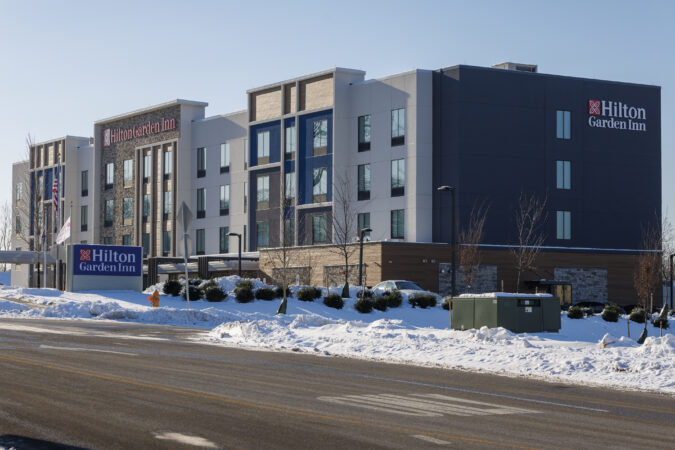
On a frigid Tuesday morning, stakeholders from across Delaware County toasted champagne and popped mini pastries under the roof of Middletown Township’s new Hilton Garden Inn.
“We may be the only Hilton Garden Inn in the world that serves Wawa coffee and drinks it all the time,” quipped hotel owner Patrick J. Burns, standing before a sea of family members, hotel staffers, business associates, and elected officials.
The 107-room, 67,000-square-foot Hilton, located off Baltimore Pike at the former Franklin Mint site, is open and welcoming guests. It’s the 42nd hotel in Delaware County and first full-service hotel in Middletown Township.
The hotel features app-to-room device integration, mobile key and contactless check-in, meeting and banquet spaces, an outdoor patio with fire pits, a fitness center, and the Garden Grill, a restaurant serving “American cuisine with local flair” that will be open to the public.
The hotel is long awaited, borne from a yearslong planning process and delayed by pandemic-era construction slowdowns. On Tuesday, attendees expressed gratitude that what was once an economic dream for the township was finally becoming reality.
The Hilton marks an important expansion of the collar county’s tourism economy, according to Delaware County’s major economic stakeholders. And as far as tourism in Delco, they say, it’s only up from here.
The bar area off of the lobby at the new Hilton Garden Inn of Middletown Township on Tuesday, Dec. 16, 2025.
Delaware County hosted 4.5 million visitors in 2024, according to Steve Bryne, executive director of Visit Delco. Those visitors spent $860 million, generated $1.2 billion in economic impact, and sustained 13,000 jobs. In 2025, the county is on track to sell more than one million hotel room nights for the first time in its history.
Representatives from the Hilton say it created 200 construction jobs and 40 new hospitality jobs.
Bryne said tourism to Delaware County is a “combination of everything.” The county doesn’t have one major anchor (like Longwood Gardens in Chester County, for example). Rather, it’s home to 12 colleges and universities, major corporate employers like Wawa, and sports complexes like IceWorks and Subaru Park, home of the Philadelphia Union. That means regular tournaments, business conferences, parents weekends, homecomings, and graduations — events that, collectively, help power the county’s economy.
Already, Penn State Brandywine, located down the road, has named the Hilton Garden Inn its host hotel.
Delaware County also gets spillover from visitors to Philadelphia, especially those who want proximity to Philadelphia International Airport.
The hotel is a property of Metro Philly Management, owned by Burns. Burns’ management company also owns the Courtyard by Marriott in Springfield, the Fairfield Inn & Suites in Broomall, and the Springfield Country Club, as well as numerous grocery stores and restaurants.
Patrick J. Burns, pictured at Middletown Township’s new Hilton Garden Inn on Tuesday, Dec. 16, 2025. The hotel is owned by Burns’ company, Metro Philly Management.
Stakeholders lauded the hotel’s location in a central, and rapidly developing, part of Middletown Township.
The former Franklin Mint complex, now home to the Hilton, has been a hotbed of development in Middletown Township since the mint shuttered in 2004. Two newer housing developments — Pond’s Edge and Franklin Station — have added over 450 units of housing to the site. Middletown Township outpaced its neighbors — Media, Nether Providence, and Upper Providence — in populationgrowth in 2024.
“Middletown Township is such a vital corridor of Delaware County,” Burns said.
The hotel’s opening coincides with major events coming to the region in the coming months: semiquincentennial celebrations in Philadelphia and in Delco, the FIFA World Cup, the PGA Championship at Aronimink Golf Club, and the MLB All-Star Game. For the PGA Championship alone, Delaware County is expecting 200,000 visitors and $125 million in economic impact.
This suburban content is produced with support from the Leslie Miller and Richard Worley Foundation and The Lenfest Institute for Journalism. Editorial content is created independently of the project donors. Gifts to support The Inquirer’s high-impact journalism can be made at inquirer.com/donate. A list of Lenfest Institute donors can be found at lenfestinstitute.org/supporters.
Part of Wonder’s sales pitch is that it offers something for everyone, from pizza and cheesesteaks to Mediterranean and steak.
That flexibility, with parents of finicky kids in mind, is part of what drew Eddie Jefferson to Wonder.
“The picky eater thing kind of sits with me,” said Jefferson, senior operations leader for Wonder’s Media location. “I have children who never really could settle on the same food. So it was like, ‘Oh, this makes sense.’”
Steve Skalis, of Springfield, picks up an oder of drunken noodles during Wonder’s soft opening in Media on Tuesday, December 16, 2025.
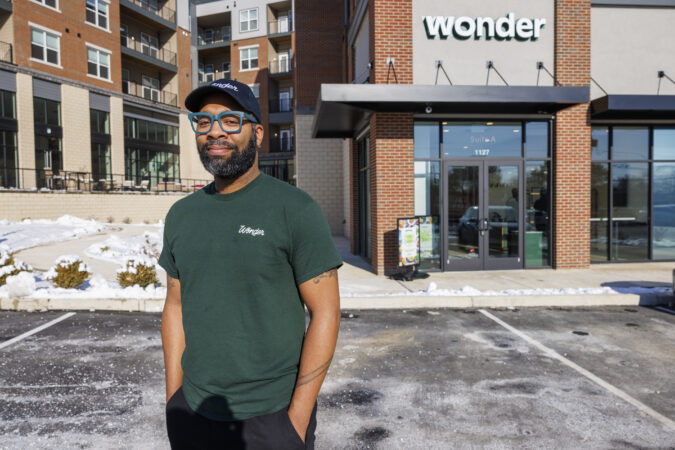
Jefferson said he wants Wonder to be more than just a chain takeout restaurant.
“I want to make sure we’re a staple of the community,” Jefferson said. “I do want to be here for a very long time.”
Wonder is donating $1 to Philabundance for every order at the Media location this week. Jefferson said he hopes that’s just the first local partnership and he will be able to be active in the community.
“Once we settle in to this community I’ll be able to be outside shaking hands and kissing babies.”
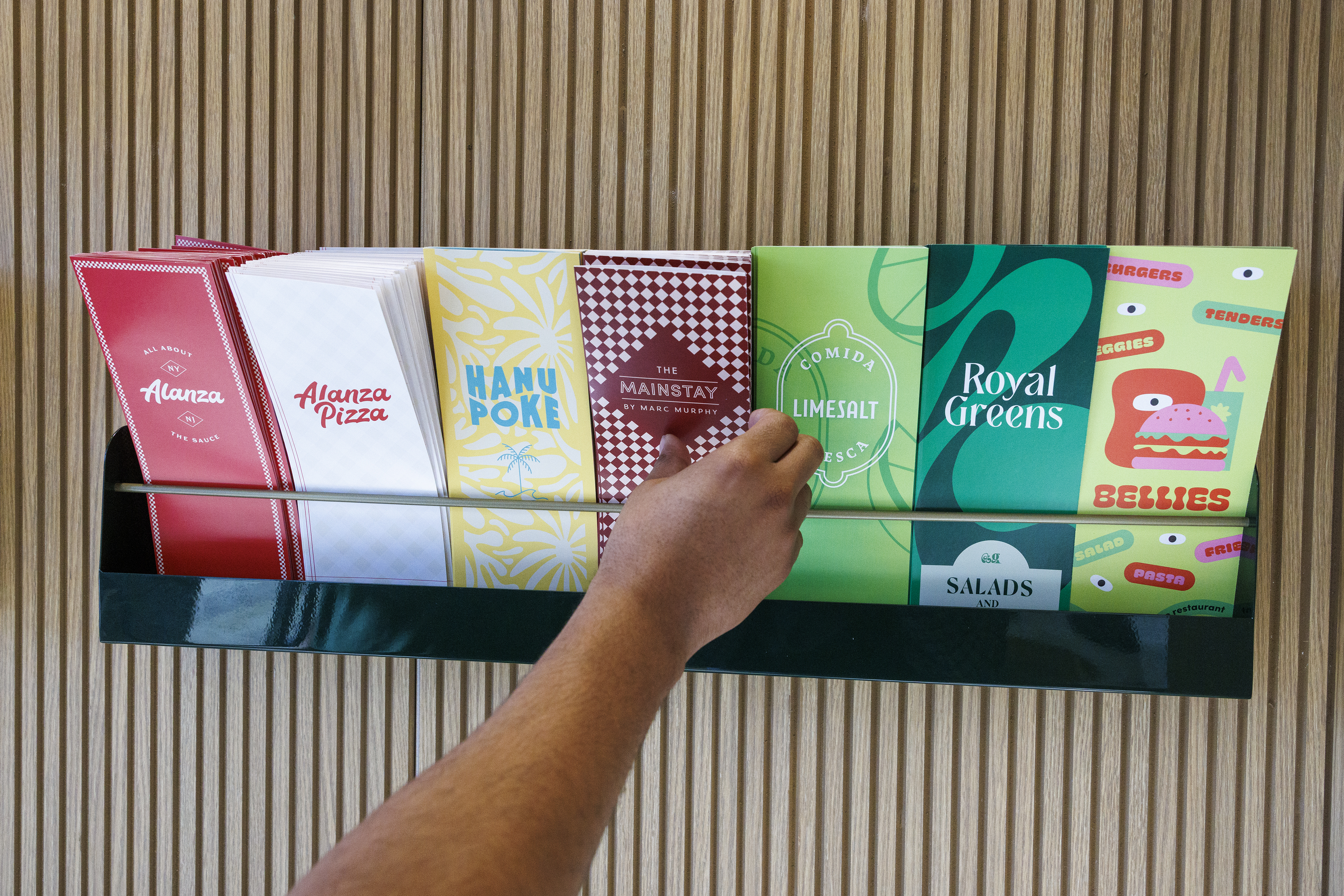
Restaurants available at the Media Wonder include:
Alanza
Alanza Pizza
Bobby Flay Steak
Burger Baby
Detroit Brick Pizza Co.
Di Fara Pizza
Fred’s Meat & Bread
Hanu Poke
Kin House
Limesalt
Maydan
Royal Greens
SirPraPhai
Streetbird by Marcus Samuelsson
Tejas Barbecue
Yasas by Michael Symon
Bellies
Room for Dessert
Wonder’s Media location brings the total to 91 sites across the Northeast, from Rhode Island to Virginia. The plan for 2026 is to more than double that, according to Jason Rusk, head of restaurant operations.
“Our plan is to grow 110 locations, so we’ll go from 91 locations to just over 200 locations by the end of next year,” Rusk said.
Eddie Jefferson, senior operations leader at Wonder in Media, reaches for one of many menus Tuesday, December 16, 2025.
Wonder plans to open locations in Drexel Hill and Roxborough in early 2026, a representative said. It is also planning a foray into Allentown and the rest of the Lehigh Valley.
Rusk said sales have been good across the Philly area’s 20-plus stores, with Cherry Hill one of the strongest openings.
“There is no sign of stopping,” Rusk said. ”I have no doubt in my mind that we will fully have a Wonder that services nearly every part of the broader Philly [area].”
This suburban content is produced with support from the Leslie Miller and Richard Worley Foundation and The Lenfest Institute for Journalism. Editorial content is created independently of the project donors. Gifts to support The Inquirer’s high-impact journalism can be made at inquirer.com/donate. A list of Lenfest Institute donors can be found at lenfestinstitute.org/supporters.
Nearly 30 employees have left Chester County’s election office since 2021.
Several former Chester County election office workers have raised concerns over what they say is a hostile workplace, with one filing a grievance against its director. Another former employee believes she’s suffered from PTSD after working in the office.
As of November, 29 employees had left the office since Karen Barsoum took over as voter services director in 2021, reports The Inquirer’s Katie Bernard. Barsoum said employees left for a number of reasons, and while she noted the departures were a challenge for the office, she helped to train staff on various positions.
It’s unclear if the culture or turnover impacted last month’s general election, in which independent voters were omitted from county poll books.
Turnover in election offices has gone up in recent years due to election denialism and threats, but Chesco’s departure rate is nearly twice that of Delaware and Montgomery Counties.
Chester County saw plenty of snow during last weekend’s storm. Exton and Malvern reported 8.2 inches each — the largest recorded totals in the county. They were followed by Berwyn (8 inches), Atglen (7.8) and Glenmoore (7.5). Check out this map of snowfall totals to see how much your town got.
Chester County Hospital is among the quietest hospitals in the region at night, according to newly released federal data. Patients from October 2023 to September 2024 reported the hospital as being “always quiet” overnight 62% of the time, “usually quiet” 30% of the time, and “sometimes or never quiet” 8% of the time. See how it compares to other regional hospitals.
Phoenixville Hospital will close its 14-bed post-acute rehabilitation center on Jan. 6 as its parent company, Tower Health, faces financial pressures. The unit helps patients with neurological disorders, orthopedic issues, or who have suffered a stroke. Its closure is expected to displace 55 employees. (Philadelphia Business Journal)
Two individuals died in separate incidents last week. A 48-year-old pedestrian died after being struck by a driver last Tuesday night while attempting to cross Route 202 near the Shoppes at Dilworthtown Crossing in Birmingham Township. And on Saturday, a man was found dead in an Easttown Township basement after a fire broke out in the home. Neither victim has been publicly identified. (Daily Local News)
Two Chester County crop farms — the 21-acre Primitive Hall Foundation in West Marlborough Township and the 59-acre Samuel and Barbara E. Townsend in West Nantmeal Township — will be preserved forever thanks to easements approved by the State Agricultural Land Preservation Board.
Two Coatesville organizations scored grants recently. The Coatesville Bureau of Fire is getting a $58,700 state grant that will go toward buying CPR and other equipment, and The Creative Club of Chester County plans to implement its Future Innovators project with the $47,500 it was awarded in T-Mobile’s latest Hometown Grants.
The owner and brewer behind popular Phoenixville kombucha brand Baba’s Brew has launched a new skincare line. A Culture Factory’s toners, masks, scrubs, and serums are made with surplus scoby, the mother culture used to start kombucha, which Olga Sorzano says are full of enzymes.
Heads up for drivers: Pottstown Pike will continue to have a lane closure at the Park Road intersection in Upper Uwchlan Township through Friday as PennDot repairs the inlet. The closures are from 9 a.m. to 3 p.m.
Refuse fees are set to rise next year in Downingtown from $240 to $360. The increase is due to higher costs from the borough’s contracted hauler.
Santa will join the Phoenixville Fire Department on Saturday as he ventures around the borough starting at 8 a.m. And Liberty Fire Company has pushed its ride with Santa, Mrs. Claus, and Rudolph around Spring City and East Vincent Township to this weekend. They’ll now visit on Sunday at 11 a.m.
The Devon Senior Living at 445 N. Valley Forge Rd. has been renamed Juniper Village at Devon after a recent acquisition. The nearly 91,000-square-foot facility has 65 personal care apartments and 13 secured memory care apartments.
🏫 Schools Briefing
Last week, Coatesville Area School District’s school board approved a new map that it says redraws its geographic regions to better keep communities together and maintain ethnic and socio-economic balance. The approval of the four new regions comes ahead of the closure of Caln and East Fallowfield Elementary Schools at the end of this school year and the opening of the new Doe Run Elementary School.
🍽️ On our Plate
In search of Christmas Eve dining options? Several Chester County restaurants will be open, including Cedar Hollow Inn Restaurant & Bar in Malvern, Duling-Kurtz House Restaurant in Exton, Roots Cafe in West Chester, Sedona Taphouse, which has locations in Phoenixville and West Chester, and Ron’s Original Bar & Grille, in Exton. Prefer to dine in? Carlino’s Market in West Chester has everything from appetizers to a seven fishes feast available, while White Dog Café in Chester Springs is offering a “Christmas at Home” package with options for beef tenderloin, glazed ham, and beef lasagna. (Main Line Today)
🎳 Things to Do
🎅 Tinsel on the Town: The family-friendly event includes train rides, street vendors, hot chocolate, mulled wine, and visits with Santa. ⏰ Thursday, Dec. 18, 5-8 p.m. 💵 Pay as you go 📍 State Street, Kennett Square
🩰 The Nutcracker: Catch one of five performances of the holiday favorite, performed by the Brandywine Ballet. ⏰ Friday, Dec. 19-Sunday, Dec. 21, times vary 💵 $30-$50 📍 Brandywine Ballet, West Chester
🎄 Christmas Village: Fitzwater Station is hosting the final weekend of its first Christmas Village, which includes local vendors, food, drinks, and bonfires. Santa will make an appearance both days and be joined by Mrs. Claus on Sunday. ⏰ Saturday, Dec. 20 and Sunday, Dec. 21, 3-7 p.m. 💵 Pay as you go 📍 Fitzwater Station, Phoenixville
⛄ Wits and Pieces Workshop: Paint a festive ornament while sipping wines. Registration is required. ⏰ Sunday, Dec. 21, 1 p.m. 💵 $40 📍 Harvest Ridge Winery, Toughkenamon
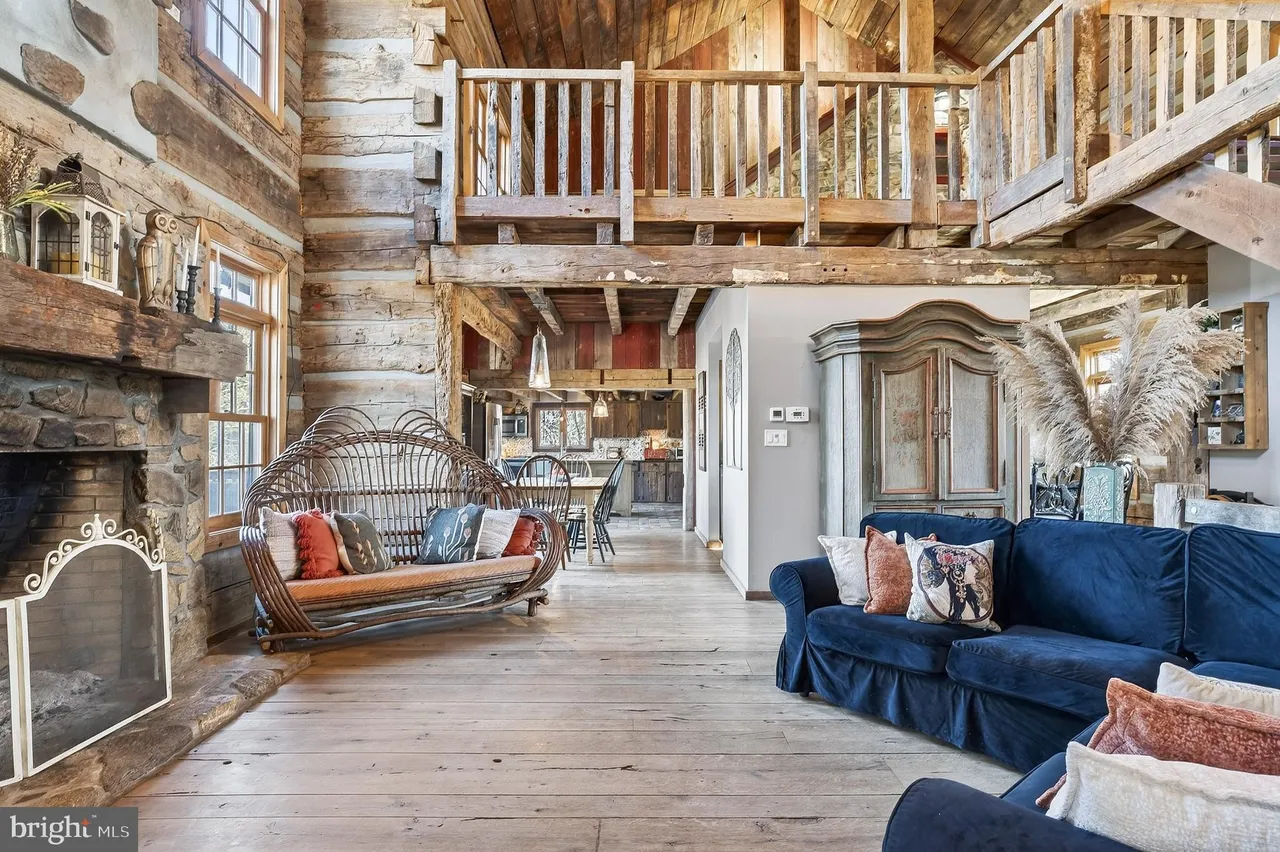
The inside of the farmhouse is a mix of modern and historic elements.
Built in 1770 and since expanded, this Colonial farmhouse blends modern and historic elements like stainless steel appliances with stone walls and exposed beams. The four-bedroom home has a finished walkout basement with a full bathroom, an above-ground saltwater pool, a deck, and a two-story treehouse. The 7.6-acre property is split into two parcels, which can accommodate another house. The property has a chicken coop, paddocks, and a five-stall barn.
By submitting your written, visual, and/or audio contributions, you agree to The Inquirer’s Terms of Use, including the grant of rights in Section 10.
This suburban content is produced with support from the Leslie Miller and Richard Worley Foundation and The Lenfest Institute for Journalism. Editorial content is created independently of the project donors. Gifts to support The Inquirer’s high-impact journalism can be made at inquirer.com/donate. A list of Lenfest Institute donors can be found at lenfestinstitute.org/supporters.
Taking a direct route, Santa has to travel 3,400 miles from the North Pole to Philadelphia. In comparison, your Christmas tree will have barely moved. That’s because there’s a high likelihood that your tree is one of the approximately 720,000 grown in the state of Pennsylvania.
Christmas tree lore runs deep around these parts. Don’t take our word for it, Taylor Swift grew up on an 11-acre Christmas tree farm in Reading – she even wrote a song about it.
That’s because Pennsylvania and New Jersey played a significant role in shaping the Christmas tree industry. Pennsylvania is still home to 1,301 Christmas tree farms, the second most in the nation, according to the U.S. Department of Agriculture.
Christmas trees harvested by county annually in Pennsylvania and New Jersey
0
0 – 5k
5k – 20k
20k – 50k
50k – 110k
Indiana, Pa. was once known as the "Christmas Tree Capital of the World."
Columbia, Pa. was where the technique of shearing Christmas trees was invented.
Mercer, N.J. was where the first commercial Christmas trees were grown.
Philly
Pittsburgh
Data: U.S. Department of Agriculture
America’s very first Christmas tree farm was established just outside of Trenton, according to Henry H. Albers and Ann Kirk Davis, authors of the Wonderful World of Christmas Trees. In 1901, a farmer named William McGalliard planted 25,000 Norway spruce trees on his farm in Mercer County, and would later sell his trees seven years later for $1 each.
Before McGalliard’s innovation, most yule trees were wild evergreen conifers (think green cones) cut from forests or abandoned farm land.
A 2000 Inquirer article on Philly and Pennsylvania’s role in establishing the Christmas tree tradition. The Christmas tree in the early illustration is indicative of how wild Christmas trees were far less dense and conical before tree shaping was invented.newspaper.com
Although the origins of decorating Christmas trees indoors are uncertain — often attributed by historians to early German immigrants — archival Inquirer articles have claimed that Philadelphians were among the first Americans to promote the tradition.
Although the growing industry began in Jersey, Pennsylvania farmers were instrumental in improving Christmas tree cultivation through the invention of techniques that are still practiced to this day.
story continues after advertisement
Fred Musser of Indiana County, Pa., started growing seedlings that he sold to other Christmas tree farmers in order to improve the quality of the trees, becoming the nation’s first ever Christmas tree nursery in the late 1920s. Andrew Abraczinskas, who first planted trees in Columbia County in 1915, invented the widely adopted process of shearing the sides of trees such that the resulting trees would keep a dense, conical “Christmas tree” shape.
McGalliard, Musser, and Abraczinskas’s work effectively ended the practice of harvesting wild trees and heavily influenced how trees are grown today:
Many growers buy young plants from tree nurseries where they were raised from seeds that have been genetically curated for the best chance of survival, either in seedbeds or as individual plugs.
Planting happens as soon as the ground thaws in the spring, typically in March. Trees establish themselves better if planted by mid-April, when temperatures rise and new growth begins to emerge.
After about the third growing year, growers wait until August for the new growth to harden before trimming the tree. Every year, the tree must be trimmed again, the base around the trunk pruned, and sprayed with pesticides.
Growers trim the sides to form the classic conical Christmas tree shape. This directs the tree’s energy upward and encourages denser needle foliage.
Trees reach their ideal marketable height of six or seven feet after about seven years, depending on the species. In the holiday harvest season, retail customers can select and cut their own tree, which is then netted by a mechanical baler for easy transport home to be adorned and adored.
While most of the growing process is the same, there are in fact a few different species of trees used for Christmas trees: notably: Firs, Pines, and Spruces. Each region will be better at growing specific subspecies within those three.
“Christmas tree species that you'll find growing in any production region reflect the climate and what grows well there. For instance, in the Pacific Northwest, they grow a lot of Noble Fir and Douglas fir,” said Rick Bates, Associate Professor or Horticulture at Penn State, who also advises growers on Christmas tree management.
“Here in Pennsylvania, we grow a lot of Fraser fir and Douglas fir and a handful of other species.”
Fir trees make up 60–70% of Christmas trees from Pennsylvania. They have flat, soft, long-lasting needles and some, like Douglas firs, have a citrus scent. Fraser firs are currently the most popular yule tree in the country, with European varieties like Turkish, Nordmann, and Korean firs introduced in the past 20 years.
Pine trees with slender, bundled needles and a sharp, earthy scent. They have a long history in Pennsylvania Christmas tree cultivation. Scotch pines, promoted by early innovator Musser, along with Eastern white and red pines, were once the state’s most popular Christmas tree.
Spruce trees, including the bluish-green Colorado spruce, have square, stiff needles that hold ornaments well but can be prickly and shed quickly. Norway spruces were the first commercially grown Christmas trees near Trenton.
Managing a Christmas tree farm can be fun, says Gerrit Strathmeyer II, a tree farmer in York County and president of the Pennsylvania Christmas Tree Growers Association, but the work is also a years-long endeavor that is logistically and physically demanding.
“Think of farming Christmas trees like farming corn or soybeans. They’re on what’s called a one year rotation — we’re on a 10 year rotation.”
The work is tough and labor-intensive. Planting begins in the still-chilly early spring, while growers wait until the hottest late summer months to start manually shearing, as Strathmeyer recounts: “I remember my high school days growing up, my summer jobs were just working in the field for eight, nine, ten hours a day.”
Subscribe to The Philadelphia Inquirer
Our reporting is directly supported by reader subscriptions. If you want more journalism like this story, please subscribe today
Come the winter months, while everyone else enjoys the festive season, this is the busiest time for growers, who take inventory and harvest trees.
Russell Wagner, a former board member of the Pennsylvania Christmas Tree Growers Association, whose farm is located 45 miles north of Harrisburg, has been monitoring the snow forecast in preparation for a busy work week.
“If we get a lot of snow, it can really hamper things, though light snow just makes it more Christmassy.”
story continues after advertisement
Strathmeyer said that his dad and uncles were at their Christmas tree peak in the late ‘90s and early 2000s. “They had 2,500 acres of Chrstmas trees and were selling around 120,000 cut Christmas trees.
Today, Strathmeyer sells around 22,000 trees a year, and the industry is no longer at its pinnacle. In the most recent USDA Census of Agriculture (2022), Pennsylvania had only 60% as many Christmas tree farms as it did 20 years ago.
Wagner attributes this to the fact that “the initial cost to get into the business is prohibitive. Unless you’re already a Christmas tree grower and another generation is going to continue it, it’s very difficult to get started.”
The industry was also disrupted by the advent of the artificial tree in the last 30 to 40 years, which are becoming increasingly more realistic — some even simulate the smell of a yule tree.
A 1972 Inquirer article about the artificial Christmas trees and Indiana County, once known as the "Christmas Tree capital of the world" at the time.newspaper.com
Strathmeyer, who is 38, said that “the popularity of the real Christmas tree has kind of plateaued off. It's a generalization, but our generation I think, people don't want to deal with the mess of a tree, and so that deters them from getting a real tree.”
However, Strathmeyer is optimistic. He is currently transitioning one of his wholesale farms to a choose-and-cut farm – where customers visit the farm, select a tree to cut, and take it home. He credits the recent popularity of these on-site experiences to social media. “People want that experience,” said Strathmeyer, “they want to take pictures out on the farm.
“Maybe they'll put up with the mess of a real tree because their kids want to go out to the farm and ride the wagon and run through the field.”
Support That Keeps Our Journalism Evergreen
Rooted in the field and committed to the facts, our newsroom brings you in-depth reporting. Support quality journalism by making a donation today.
Bates said Pennsylvania has a thriving choose-and-cut scene and that “a lot of those retail choose-and-cut farms also have other activities, like they may have a corn maze or some kind of agritainment.”
Combined with Pennsylvania’s proximity to major cities along the eastern seaboard, this growing popularity of experience-forward farms suggests the industry will remain viable for the foreseeable future.
It might be too late for you to grow up on a Christmas tree farm like Taylor Swift, but it’s not too late to ride a wagon and run through local Christmas tree fields. Whether you’re going to cut your own, or pick one up from a parking lot, we’ve got you covered with guides on where to go and how to get one delivered.
Methodology
Christmas tree data comes from the U.S. Department of Agriculture (USDA) Census of Agriculture data, which was most recently conducted in 2022, and accessed via the USDA’s National Agricultural Statistical Service. The data accessed cover farms that produce Christmas trees, including the number of farms, trees harvested, and acres planted.
Staff Contributors
Design, Development, and Data: Jasen Lo, Sam Morris
When it’s time to go, it’s time to go, and perhaps nobody knows that better than Christina Solometo, whom the region nicknamed the “Delco Pooper” after she was captured on video rage-pooping on a car during a roadway dispute in April.
And so, when Solometo’s time in Delaware County Court came on Tuesday, she went, but instead of bringing her case to trial, she entered into a rehabilitation program for first-time offenders.
As part of the Accelerated Rehabilitative Disposition program, Solometo must complete 24 months of probation, community service, anger management classes, and not post about her case on social media. If she meets those conditions, the charges against her, which include indecent exposure and depositing waste on a highway, will be dismissed and she could have her case expunged and her record wiped clean.
In courtroom gallery conversations with her attorney prior to the hearing, Solometo at times seemed torn about the conditions of the program and the facts of her case as detailed by the Prospect Park Police Department. She could be heard cursing and, at one point, left the courtroom in tears.
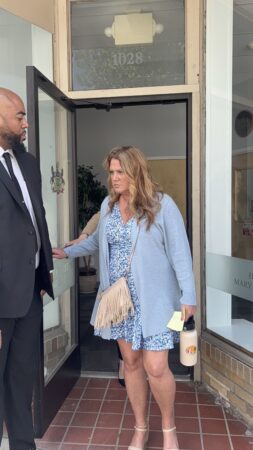
This was a marked change in her demeanor from shortly after her arrest, when she smiled in her mugshot and laughed in front of news cameras as she was led away in handcuffs.
Solometo, 44, of Ridley Park, said little before Judge Richard Cappelli as he agreed to enter her into the diversionary program and she declined to speak to The Inquirer after the hearing, except to say “The truth will come out” and that her story would cost money. The Inquirer does not pay for interviews.
It was a rather subdued ending to what was perhaps the most absurd local news story of the year.
Prospect Park Police said it was around 4 p.m. on April 30 that Solometo got into a dispute with another driver at the intersection of Fourth and Madison Avenues in the borough.
Solometo told police that she was in a line of cars to turn left at a light and honked at a driver in front of her who did not move when the arrow was green.
According to her affidavit, Solometo said the other motorist mocked her in her rearview mirror. Solometo said she was having stomach issues, so she drove around the car and turned left. She told police she believed the other vehicle started following her, which is why she got out to confront them. The driver of the other car allegedly insulted Solometo, which she told police made her angry.
“Solometo said, ‘I wanted to punch her in the face, but I pooped on her car instead and went home,’” according to the affidavit.
Police said she later told them: “It was a clean poop. I didn’t even have to wipe.”
Cell phone video of the incident was taken by 17-year-old Greg Ferrari who testified in May at Solometo’s preliminary hearing that he was driving to his friend’s house when he was forced to stop his vehicle because two motorists were arguing in the intersection.
“I thought they were going to fight so I pulled out my phone to take video,” he said. “And one of the people ended up going to the bathroom on the other’s car.”
Ferrari’s video, which he said he shared with his baseball group chat and was then posted to Facebook by someone else, subsequently went viral and was picked up by outlets like TMZ, the New York Post, and People.
When Aaron Clark’s soon-to-be-ex-girlfriend ignored his 200 calls in December 2022, he sent her a simple text message: “Pick up before I do something crazy.”
Clark, unable to handle the impending end to what Delaware County prosecutors described Tuesday as a toxic, abusive relationship, later made good on that threat, they said.
The West Philadelphia resident set fire to Amira Rogers’ home in Darby Township, killing Olivia Drasher, her wheelchair-bound sister, and forever tearing her family apart, Assistant District Attorney Danielle Gallaher said at the beginning of Clark’s trial for murder and related crimes.
“The breakup was the match that lit this fire, and the defendant was going to burn her and everything she cared about down to the ground,” Gallaher told jurors in her opening statement.
Just after midnight on Dec. 4, 2022, Clark, 33, sprayed accelerant on the front porch of Rogers’ home on Sharon Avenue, directly underneath her sister’s bedroom, the prosecutor said. Witnesses told 911 dispatchers that the fire spread quickly, and soon the entire house was engulfed.
Rogers’ mother, other sister, and Drasher’s full-time nurse were able to escape. But Drasher died in the blaze.
Gallaher promised the jury that “physical evidence, digital evidence and the defendant’s actions” will prove Clark was the only one who had the motivation and will to target Rogers and her family.
A man wearing distinctive clothing similar to what Clark was seen wearing that day was recorded on surveillance footage near the scene of the fire, Gallaher said. And cellphone data shows he was in the area of the blaze when it was set.
But Clark’s attorney, Michael Dugan, challenged Gallaher’s theory of the case, saying investigators had “tunnel vision” and focused in on Clark at the insistence of Rogers and her family.
Authorities failed, Dugan said, to find any witnesses who said he set the fire, and instead relied on “assumption and supposition.”
“At the end of the day, this is a tragic case,” the defense lawyer said. “But also at the end of the day, you have to understand that emotion doesn’t prove a case, evidence does.”
At the start of testimony, prosecutors chronicled the tumultuous 10 months during which Rogers and Clark dated. They met as co-workers at the United States Postal Service’s facility in Southwest Philadelphia.
But their relationship turned sour toward the end of 2022.
Hours before setting the deadly blaze, prosecutors said, Clark attacked Rogers when she confronted him over his infidelity and ended their relationship. He choked her so hard, she testified Tuesday, that she was afraid he was going to kill her.
“I begged him to stop,” Rogers said, her voice filled with emotion. “I felt terrified, because I didn’t know what he was doing.”
That attack came weeks after another, similar assault, she said, in which Clark struck her so hard that he bent the laptop computer she was carrying at the time.
Rogers later took steps to avoid Clark, changing her scheduled shift at work and reporting his continued harassment to their supervisors, she said Tuesday.
For hours on the day of the crime, Clark called her nonstop, his requests to speak with her turning to demands and, eventually, threats, according to text messages displayed in court.
Clark made an Instagram account through which he shared nude photos of Rogers, and shared the account with her family and friends.
Rogers continued to ignore Clark. Then he sent her a cryptic message not long before the fire was set: “Hope you don’t miss the show.”
The trial is expected to last through Friday before Delaware County Court Judge Deborah Krull.
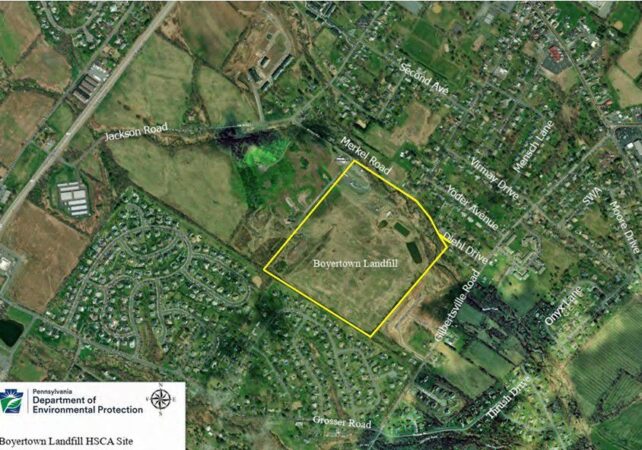
Residential waste, construction and demolition debris, as well as sewage treatment plant sludge, were dumped for decades at the 30-acre Boyertown Sanitary Landfill in northern Montgomery County until it was capped in 1987.
As state and federal officials mull whether to add the landfill to the national Superfund list, a well used by nearby Gilbertsville Elementary School has tested positive for human-made polyfluoroalkyl substances, known as PFAS.
The school is about 3,000 feet from the landfill property border and is within the Boyertown Area School District. Minister Creek passes through the property, and two residential neighborhoods are nearby.
Scott Davidheiser, the district’s superintendent, sent a letter to staff and students’ families Monday alerting them to the test results, which were made known during a Pennsylvania Department of Environmental Protection (DEP) public information session on the landfill on Dec. 10.
Gilbertsville Elementary tested at an annual average of 6.7 parts per trillion (ppt) for PFAS. That falls under acceptable limits by current state standards of 14 ppt.
However, it would exceed federal maximum contaminant level standards of 4 ppt set to go into effect in 2031 if not addressed.
Davidheiser’s letter said the district “remains committed to safety in all areas, including water safety.” The districthas hired Suburban Water Technology Inc. to develop a water safety planto lower annual average PFAS levels to within federal standards.
District officials plan in January to discuss a plan to lower the levels.
<iframe title="Boyertown Sanitary Landfill and PFAS contamination" aria-label="Locator map" id="datawrapper-chart-1kgam" src="https://datawrapper.dwcdn.net/1kgam/1/" scrolling="no" frameborder="0" style="width: 0; min-width: 100% !important; border: none;" height="581" data-window.addEventListener(“message”,function(a){if(void 0!==a.data[“datawrapper-height”]){var e=document.querySelectorAll(“iframe”);for(var t in a.data[“datawrapper-height”])for(var r,i=0;r=e[i];i++)if(r.contentWindow===a.source){var d=a.data[“datawrapper-height”][t]+”px”;r.style.height=d}}});
What are PFAS?
PFAS are a group of chemicals manufactured by industry for use in consumer products since the 1940s. There are thousands of different PFAS, some of which have been more widely used and studied than others.
Exposure to them hasbeen shown to impact the health of humans and lab animals, but the extent is still being studied.
Standards for maximum acceptable levels of the compounds in drinking water have created confusion in recent years.
The EPA was slow to set standards, so states began setting their own. Pennsylvania set different levels to start in 2024 for various types of PFAS:14 ppt forperfluorooctanoic acid (PFOA) and 18 ppt for perfluorooctane sulfonic acid (PFOS).
However, the EPA, under the Biden administration, then set the first federal standards, which would supersede state standards. The rule said that PFOA and PFOS can’t exceed 4 ppt. And, it set standards for other compounds within the PFAS family. The regulations were set to go into effect in 2027.
However, the EPA, under the Trump administration, rolled back some provisions by announcing it would keep the standards for PFOA and PFOS, but delay enforcement until 2031. And, it said it would reconsider the limits on the other compounds.
As a result, the PFAS level at Gilbertsville Elementary School’s current level would exceed the federal level if not brought down by 2031.
What’s the Boyertown Landfill?
Officials with the state Department of Environmental Protection and U.S. Environmental Protection Agency have been deciding since 2023 whether the Boyertown Landfill, in Douglass Township, should be named a Superfund site after test samples showed PFAS in nearby private wells.
The landfill and surrounding property are owned by the Boyertown Sanitary Disposal Co. It is set on a wider 60-acre parcel at 300 Merkel Roadin Gilbertsville. The property contains raw and pretreated leachate storage lagoons, buildings housing leachate pretreatment facilities, and stormwater management basins and swales.
The unlined landfill stopped accepting solid waste in 1985. It had accepted municipal waste, office trash, and construction debris. It took in significant amounts of municipal sewage treatment plant sludge and industrial waste.
In last week’s informational session, the DEP said water sampling around the area of the landfill in 2024 and 2025 showed multiple locations containing various PFAS compounds.
State officials said they have installed carbon-activated filtration systems in residential wells within a half-mile of the landfill that tested above 4 ppt, according to an account of the meeting in Pottstown’s local newspaper, The Mercury.
The newspaper reported that the DEP, however, will not provide similar assistance to Gilbertsville Elementary School because it is part of a small public water system and is required to remediate contamination.
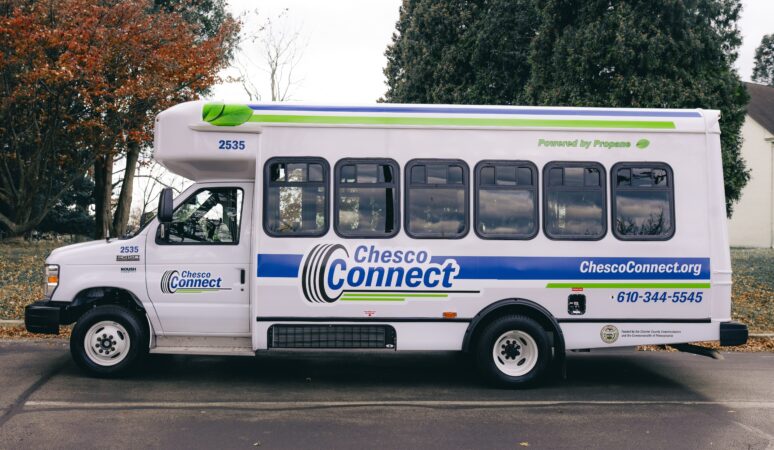
The county will run 16 propane Chesco Connect buses by February, with seven already on the roads. The majority of the 74-bus Chesco Connect fleet, a door-to-door shared ride transportation system that covers the county, is gasoline-fueled, but the county plans on adding more propane buses in 2027, said Gene Suski, director of transportation for the Chester County Department of Community Transit.
Propane is a cleaner fuel source than gasoline or diesel, and costs$1 to $1.50 less than gasoline per gallon.
“On any given day, our buses go anywhere between 150 and 250 miles a day, so when you can save that kind of money per gallon, it’s a significant factor,” Suski said.
A propane bus costs roughly $33,000 more than a gas bus, but with $20,000 saved in fuel costs annually, “it pays for itself” in 18 months, a county spokesperson said. The buses being replaced were “well past their useful life.”
Chester County’s new propane buses follow similar moves made by neighboring Montgomery and Lancaster Counties, which in recent years have embraced propane for part of their fleets. School districts across the state have also used the model, with more than a thousand propane school buses on the streets through the state, said Tony Bandiero, executive director of Eastern Pennsylvania Alliance for Clean Transportation, an organization that works with 34 counties to encourage alternate fuels.
It’s a relatively easy–and cheap–change for municipalities to make, Bandiero said.
“There’s a little bit of upfront cost, but usually that could be recuperated within a year just by fuel saving, cost savings, and maintenance on the vehicles,” he said.
Propane buses “hit a niche” about seven years ago, Bandiero said. Under President Joe Biden’s administration, his organization saw a ton of interest in electric projects. But that shifted with President Donald Trump’s return to office and the president slashing electric goals. Bandiero expects to see more projects focused on propane and natural gas in response.
In Chester County, the buses are part of the county’s climate action plan, approved by the commissioners in 2021. The county worked with ROUSH CleanTech, which has developed propane buses, vans, and pick up trucks since 2010.
The county was drawn to propane buses for the environmental benefits, and operating more efficiently, said David Byerman, the county’s chief executive officer.
“We believe that we have a duty as a county to be good environmental stewards, and this initiative is a way for us to demonstrate that leadership, and we’re very much looking forward to continuing to realize the goals we laid out in our climate action plan, and continuing to provide a model for sustainability for southeastern Pennsylvania,” he said.
Despite a recent state of emergency over propane woes in neighboring New Jersey, Suski said the county hasn’t had issue with fueling the current supply of buses. A tanker arrives each morning to fuel the buses. But in the next three to six months, the county plans to build its own propane fueling station in Coatesville to directly fuel its fleet.
This suburban content is produced with support from the Leslie Miller and Richard Worley Foundation and The Lenfest Institute for Journalism. Editorial content is created independently of the project donors. Gifts to support The Inquirer’s high-impact journalism can be made at inquirer.com/donate. A list of Lenfest Institute donors can be found at lenfestinstitute.org/supporters.
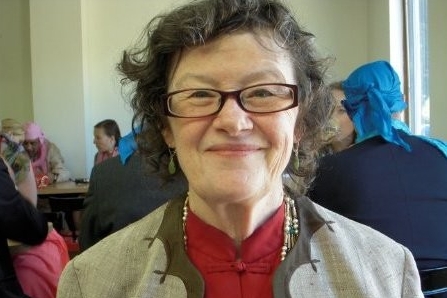
Roberta Fallon, 76, of Bala Cynwyd, cofounder, editor, and longtime executive director of theartblog.org, prolific freelance writer for The Inquirer, Daily News, and other publications, adjunct professor at St. Joseph’s University, artist, sculptor, mentor, and volunteer, died Friday, Dec. 5, at Thomas Jefferson University Hospital of injuries she suffered after being hit by a car on Nov. 24.
Ms. Fallon’s husband, Steven Kimbrough, said the crash remains under investigation by the police.
Described by family and friends as empathetic, energetic, and creative, Ms. Fallon and fellow artist Libby Rosof cofounded the online Artblog in 2003. For nearly 22 years, until the blog became inactive in June, Ms. Fallon posted commentary, stories, interviews, reviews, videos, podcasts, and other content that chronicled the eclectic art world in Philadelphia.
The site drew more than 4,500 subscribers and championed galleries and artists of all kinds, especially women, LGBTQ and student artists, and other underrepresented innovators. “I think we have touched base with every major arts organization in Philadelphia at one point or another, and many of the smaller ones,” Ms. Fallon told The Inquirer in May. “We became part of the arts economy.”
She earned grants from the Knight Foundation and other groups to fund her work. She organized artist workshops and guided tours of local studios she called art safaris.
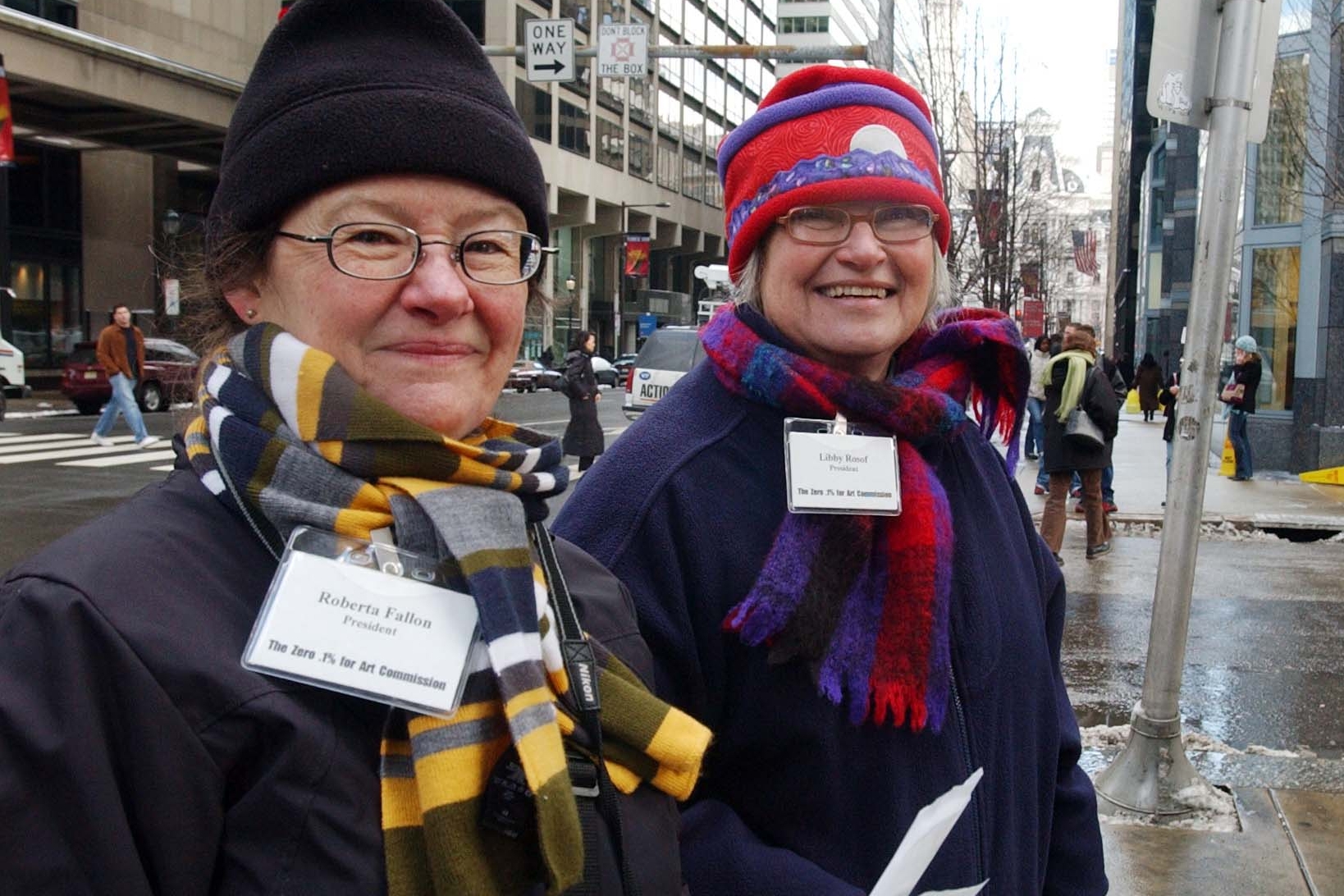
For years, she and Rosof raised art awareness in Center City by handing out miniatures of their artwork to startled passersby. She said in a 2005 Inquirer story: “We think art needs to be for everyone, not just in galleries.”
She mentored other artists and became an expert on the business of art. “She was so generous and curious about people,” Rosof said. “She was innovative and changed the way art reached people.”
Artist Rebecca Rutstein said Ms. Fallon’s “dedicated art journalism filled a vacuum in Philadelphia and beyond. Many of us became known entities because of her artist features, and we are forever grateful.” In a 2008 Inquirer story about the city’s art scene, artist Nike Desis said: “Roberta and Libby are the patron saints of the young.”
Ms. Fallon never tired of enjoying art.
Colleague and friend Gilda Kramer said: “The Artblog for her was truly a labor of love.”
In November, Ms. Fallon and other art writers created a website called The Philly Occasional. In her Nov. 12 article, she details some of her favorite shows and galleries in Philadelphia and New York, and starts the final paragraph by saying: “P.S. I can’t let you go without telling you about what I just saw at the Barnes Foundation.”
She worked at a small newspaper in Wisconsin before moving to West Philadelphia from Massachusetts in 1984 and wrote many art reviews and freelance articles for The Inquirer, Daily News, Philadelphia Weekly, Philadelphia Citizen, and other publications. In 2012, she wrote more than a dozen art columns for the Daily News called “Art Attack.”
She met Rosof in the 1980s, and together they curated exhibits around the region and displayed their own sculptures, paintings, and installations. Art critic Edith Newhall reviewed their 2008 show “ID” at Projects Gallery for The Inquirer and called it “one of the liveliest, most entertaining shows I’ve seen at this venue.”
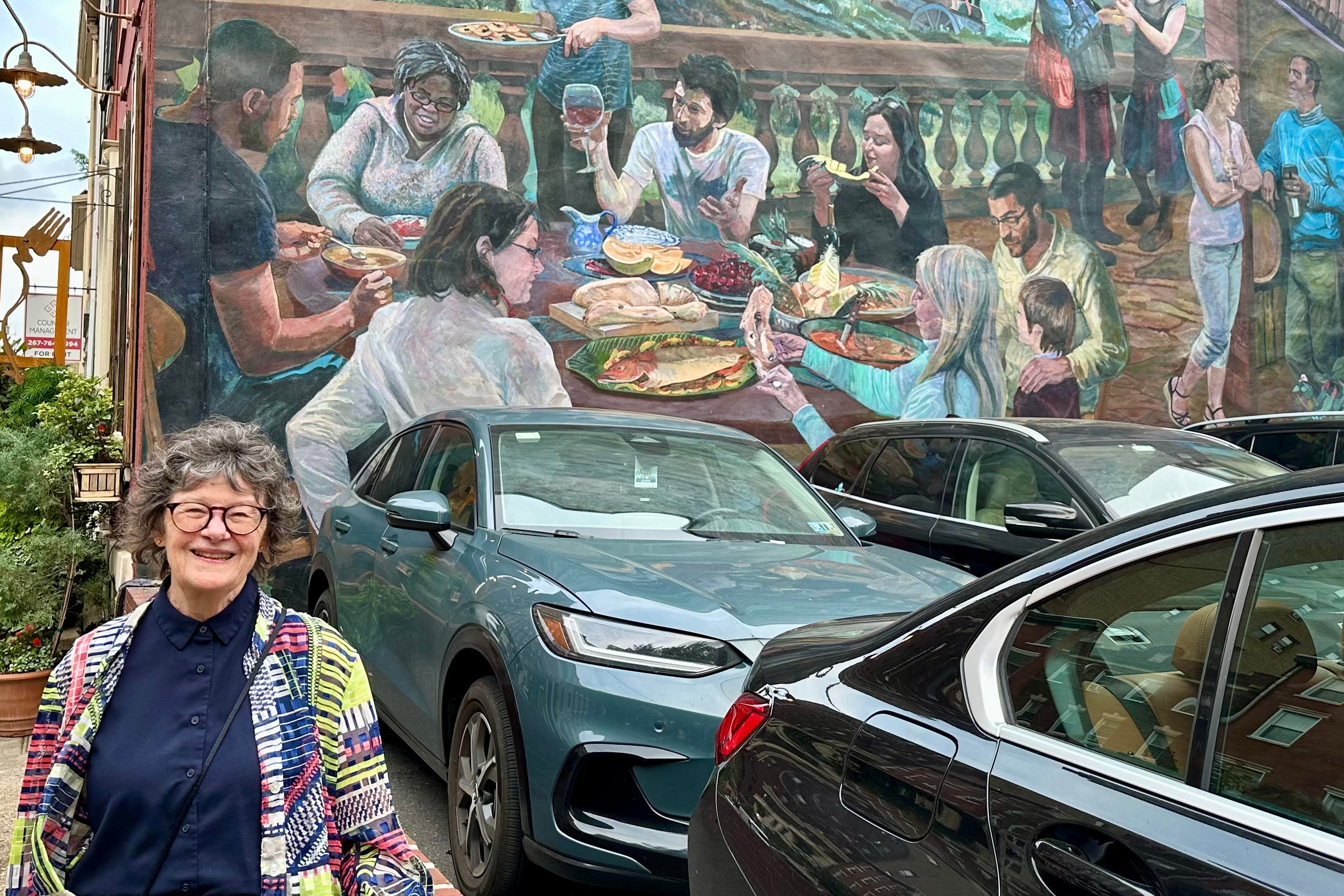
Ms. Fallon stands in front of a mural at 13th and Spruce Streets. She is depicted as the figure profiled in the lower left in the white blouse.
Most often, Ms. Fallon painted objects and sculpted in concrete, wood, metal, textiles, and other material. She was a founding member of the Philadelphia Sculptors and Bala Avenue of the Arts.
She studied at the Pennsylvania Academy of the Fine Arts and Temple University’s Tyler School of Art and Architecture, and later taught professional practice art classes at St. Joseph’s. Moore College of Art and Design, which will archive Artblog, awarded her an honorary doctorate.
“Roberta was an exceptional creative artist” and “a force,” artist Marjorie Grigonis said on LinkedIn. Artist Matthew Rose said: “Robbie was a North Star for many people.”
Her husband said: “Her approach to life was giving. She succeeded by adding value to wherever she was.”
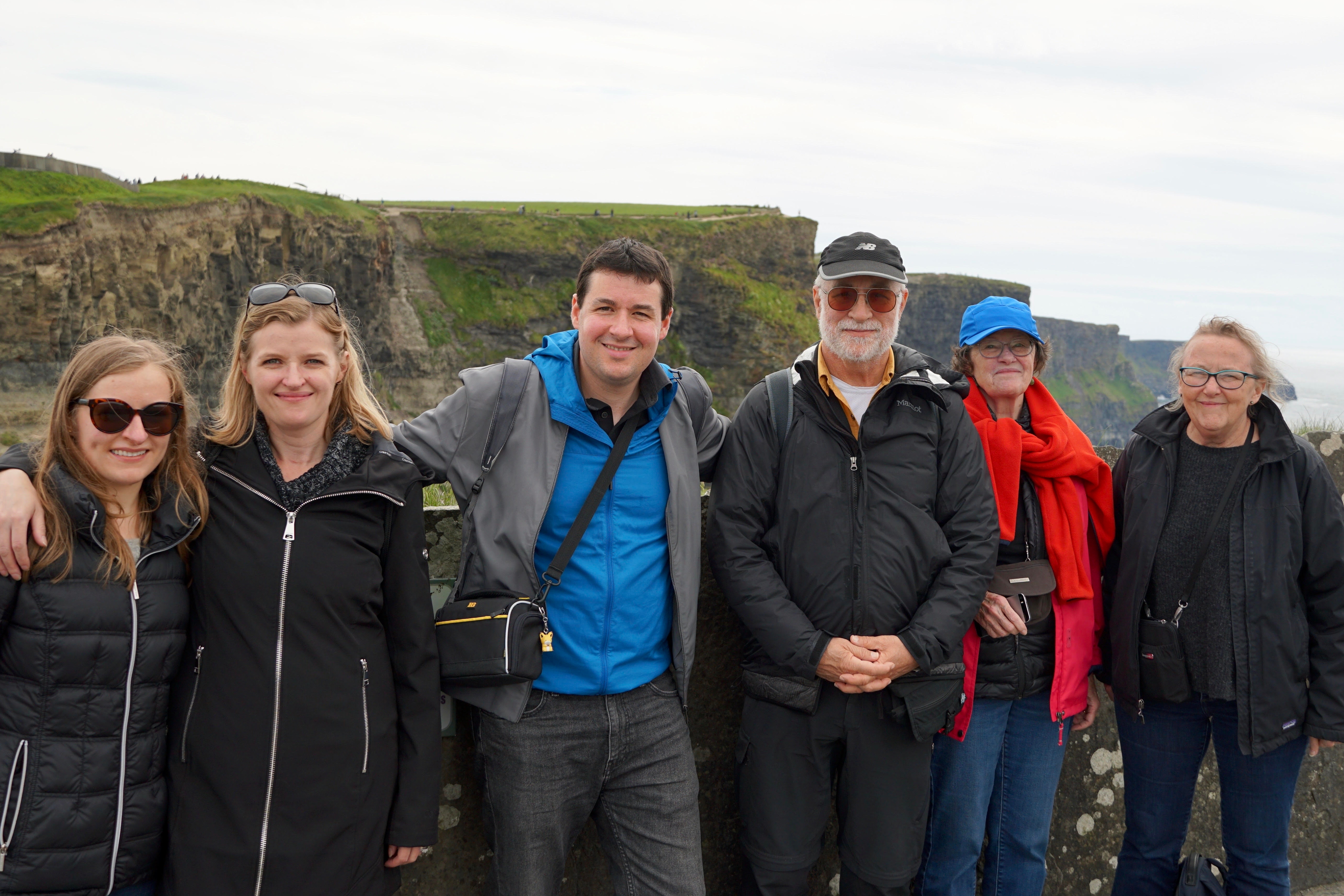
Ms. Fallon (second from right) enjoyed time with her family.
Roberta Ellen Fallon was born Feb. 8, 1949, in Milwaukee. She went to the University of Wisconsin-Madison to study sociology after high school and dropped out to explore Europe and take art classes in Paris. She returned to college, changed her major to English, and earned a bachelor’s degree in 1974.
She met Steven Kimbrough in Wisconsin, and they married in 1980, and had daughters Oona and Stella, and a son, Max. They lived in West Philadelphia for six years before settling in Bala Cynwyd in 1993.
Ms. Fallon was a neighborhood political volunteer. She enjoyed movies and reading, and she and her husband traveled often to museums and art shows in New York and elsewhere.
They had a chance to relocate to Michigan a few years ago, her husband said. But she preferred Philadelphia for its art and culture. “She was like a local celebrity in the art scene,” her daughter Stella said.
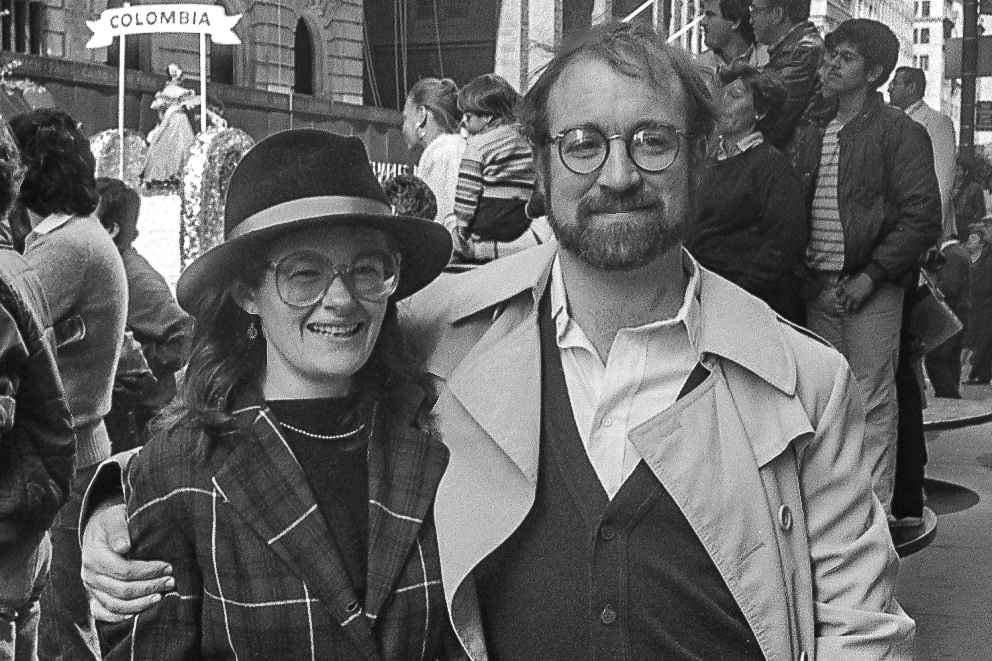
Ms. Fallon and her husband, Steven Kimbrough, visited New York in 1982.
Her husband said: “Everybody likes her. Everybody wants to be around her. She made a difference for a lot of people.”
Her daughter Stella said: “The world would be a better place if we all tried to be like my mom.”
In addition to her husband and children, Ms. Fallon is survived by four grandchildren, a sister, a brother, and other relatives.
More than two years ago, a Chester County Voter Services employee made a dire prediction.
In an eight-page grievance against Voter Services Director Karen Barsoum, the employee described a hostile work environment in which election workers were subjected to “bullying” from the department’s director.
At the time of the complaint, the employee wrote, 15 people had left the 25-person department since Barsoum was hiredin 2021.
“I have very legitimate fears that there will be a mass exodus from voter services in the coming months,” the employee, who asked not to be named for fear of retaliation, wrote in the grievance document he provided to The Inquirer. “My concern is how this will impact the 370k voters of Chester County.”
Two years later, it appears that his prediction had come true. The number of staff departures since Barsoum took over grew to 29 by November of this year, according to a Chester County spokesperson.
Election offices across the nation have experienced a high level of turnover and staff burnout in recent years in the face of election denialism and threats, but Chester County’s churn-rate is nearly double the number of departures in Montgomery and Delaware Counties’ elections departments that have lost 16 and 15 people respectively in the same time period. Both departments are larger than Chester County’s election office.
Accounts and records from three former staffers at Chester County Voters Services Department, two of whomasked not to be named, paint a picture of a hostile work environment where employees were often made to feel as though management had placed a target on their back.
These concerns have been raised to elected and non-elected county leaders for more than two years.
Barsoum saidin an interview that she couldn’t respond to allegations from employees but described her management style as collaborative.
Employees, she said, had left for a variety of reasons including jobs in other Southeast Pennsylvania election offices that pay better than Chester County. Others, she said, left to pursue other opportunities or for family reasons.
Some, she said, left because of the increased pressures of election work as state law changes and the intensity increases.
“I encourage everyone to do what is the best for them,” Barsoum saidThursday.
Though Barsoum acknowledged it was challenging for the office when people left, she said she and other managers were very hands-on in training staff and ensuring that staff members knew the ins and outs of various positions.
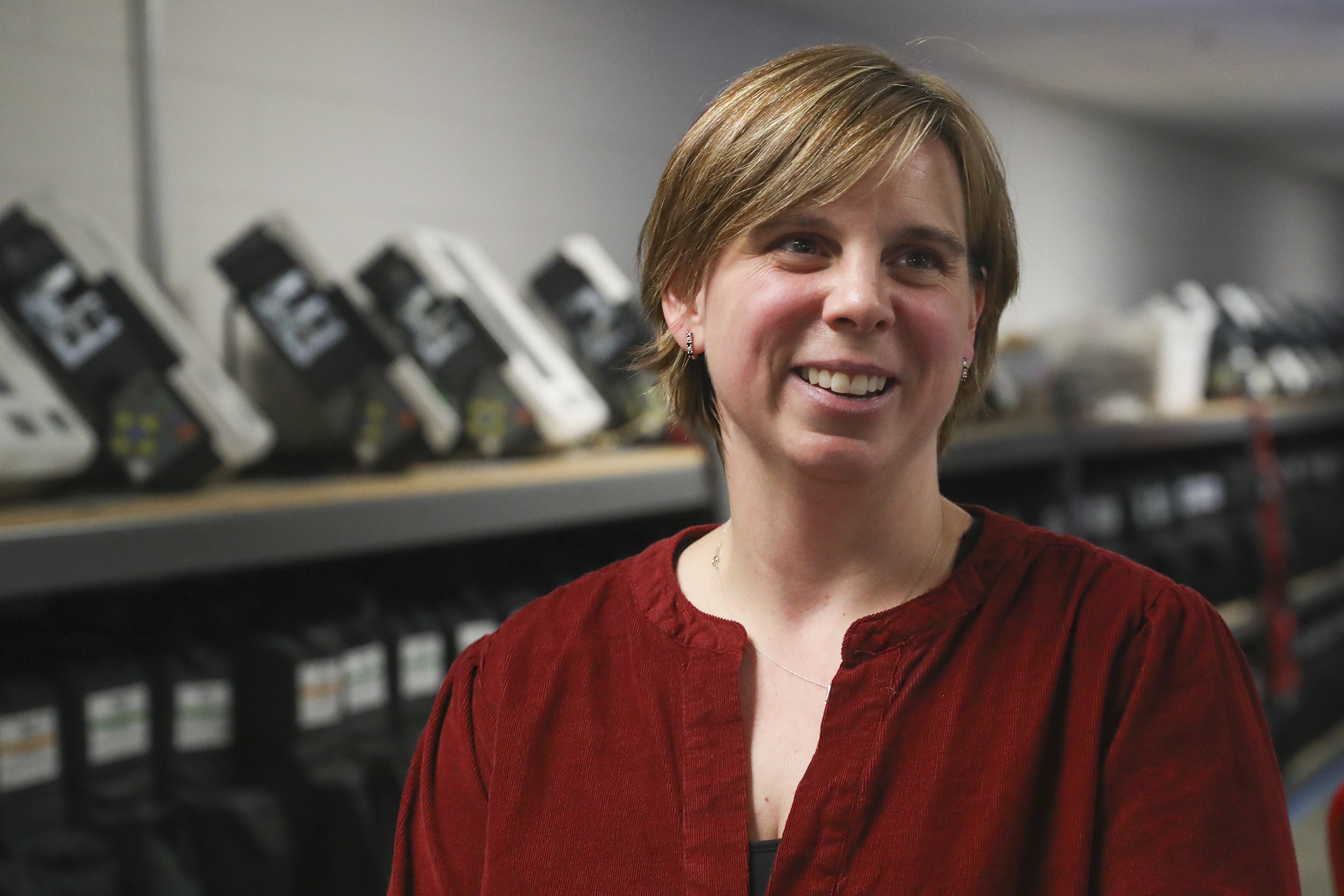
Karen Barsoum, Chester County’s director of voter services, at the Chester County Government Services Building in 2022.
The employee who filed the grievance said he feared that the attrition would leadto mistakes during the 2024 presidential election, when the eyes of the nation were on Pennsylvania.
Ultimately, everyone who wanted to vote was able to, county officials said. But the error created a chaotic scene as the county kept polls open two additional hours and more than 12,000 voters were asked to cast provisional ballots — which require more steps from election workers and voters to be counted.
The county hired a WestChester law firm to investigate how and why the poll book error occurred.
Chester County’s CEO David Byerman, the county’s top unelected official, said that turnover across all departments can be attributed to a variety of factors in the county including pay and managers.
He described working in elections today as a “pressure cooker” as a result of the political climate.
The investigation, he said, would look closely at management in the department and whether factors existed that would have hindered staff from identifying or reporting concerns.
“The very fact that we’re doing an investigation into what happened last month … indicates that we want to learn more about what happened in this particular election,” Byerman said. “Part of that investigation is looking at the performance of our management team in voter services.”
It’s unclear at this stage whether the error can be attributed to the turnover and environment in voter services, but Paul Manson, a professor at Portland State University who researches challenges faced by election workers, said the turnover seen in Chester County is unusual and alarming.
Often, Manson said, staff tends to be relatively stable in election offices because they care deeply about the work. Stressors of reduced staffing and the toxic environment described by threeformeremployees, he said, could create a dynamic that makes mistakes more likely.
“When we have these periods of turnover local election officials really sort of grit their teeth because they worry about these small errors turning into big errors,” he said.
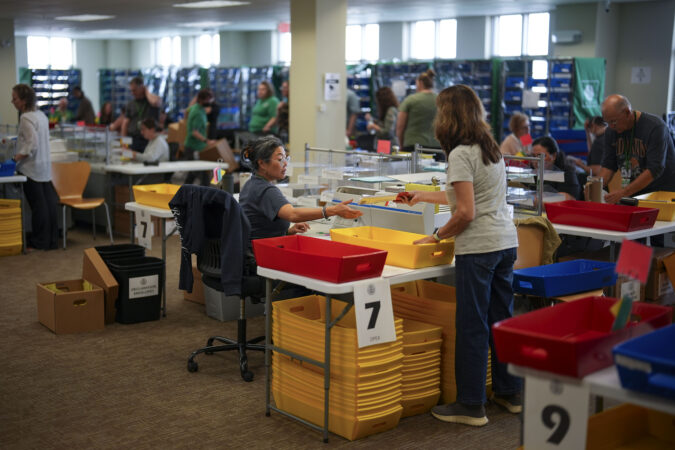
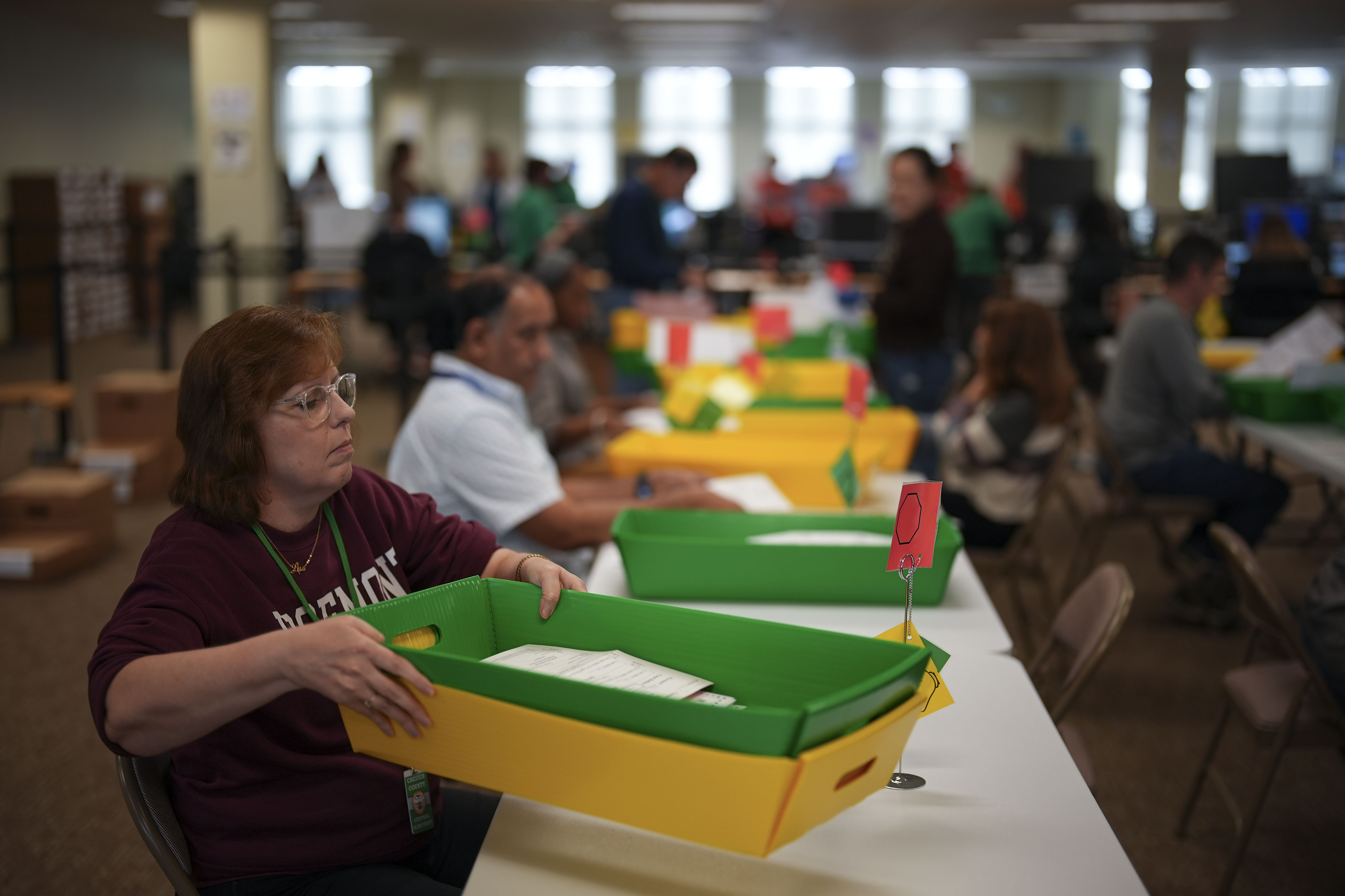
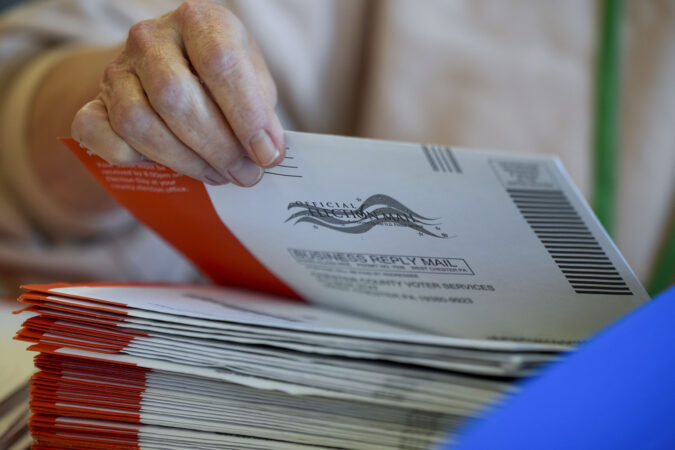
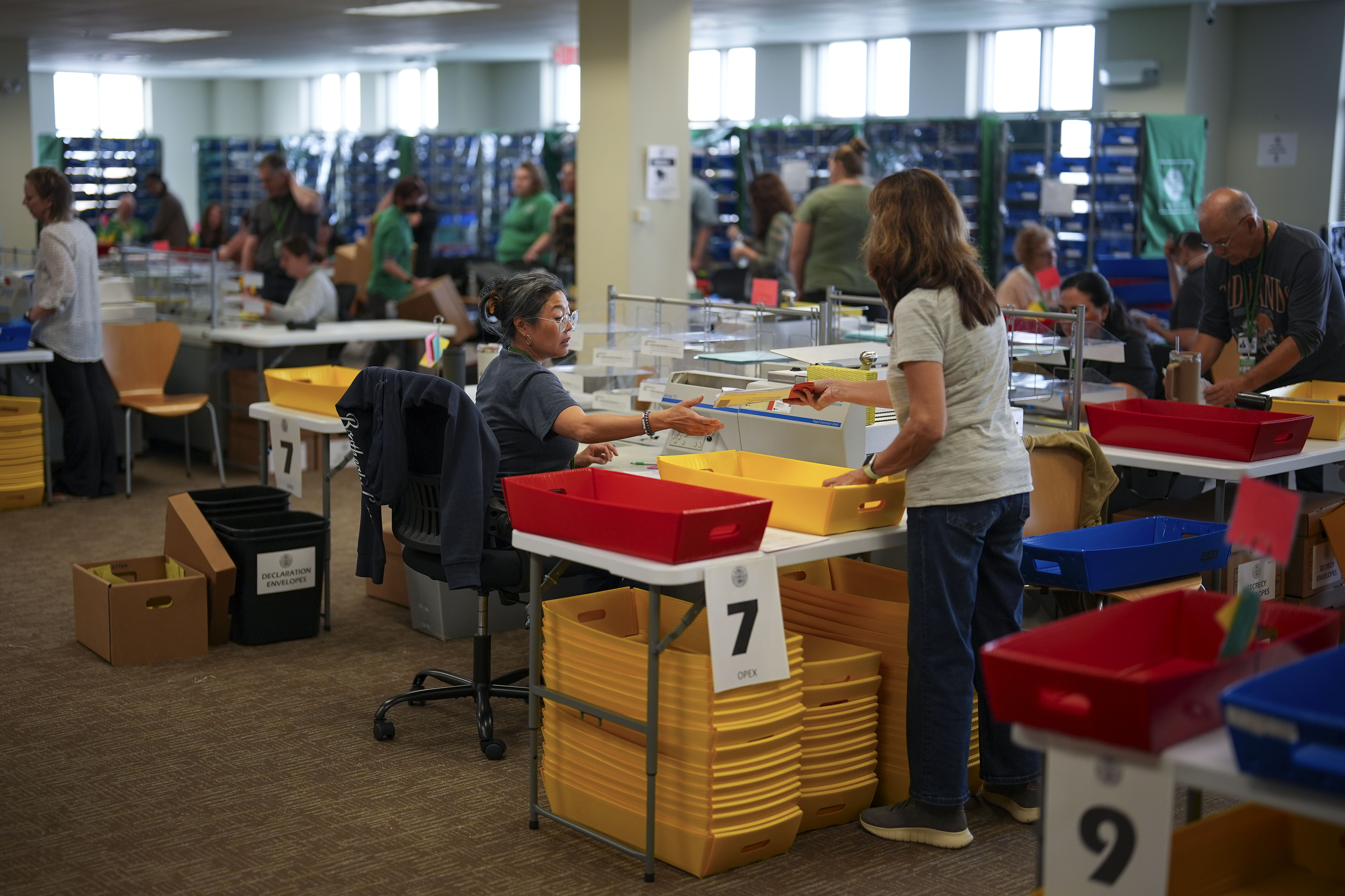
Election workers process mail ballots for the 2024 general election at the Chester County, administrative offices in West Chester. (AP Photo/Matt Slocum)
Allegations of ‘hostility’ toward staff
Barsoum, who came to Chester County from Berks County in 2021, has earned respect in the election field nationally and within Pennsylvania. Barsoum had been the assistant director in the Berks election office.
“Karen Barsoum has an extraordinary knowledge that is a resource both statewide here in Pennsylvania and has been a resource nationally. I don’t think anyone doubts her knowledge of election processes,” said Byerman, the Chester County CEO.
“At the end of the day I think any manager needs to combine two abilities. An ability to manage an office effectively and an ability to be knowledgeable and an expert.”
Byerman said each manager in the county is evaluated on these criteria regularly, but when asked whether Barsoum possessed both qualities, Byerman did not respond.
Former county employees said Barsoum’s high reputation outside Chester County did not align with what they experienced in their jobs.
The employee who filed the grievance against Barsoum said he got along with her well when she started and he received high marks on performance reviews, according to documents provided to The Inquirer.
But after a reorganization in the department in 2022, he said, he noticed that more and more staff members were leaving. The employee was promoted to a new role and during the 2022 election did that job while maintaining responsibilities from his prior role.
He said he expressed concern about being overworked and received little support in the new role. After the employee said he dropped the ball on a minor item and reported it to Barsoum, she began treating him differently.
“In Karen’s eyes you’re either 100% right or 100% wrong,” he said in an interview.
The employee filed his grievance in August of 2023 after a meeting where, he said, Barsoum listed accomplishments of staff members and refused to acknowledge any of his work.
Barsoum’s “hostility” toward him in the meeting was so noticeable, he wrote in the complaint, that eight colleagues approached him afterward to say they noticed it.
“After so many months of mistreatment and disrespect in such a hostile work environment, it eventually gets to the point that something needs to be said. If the Presidential Election were to not run smoothly next year and ChesCo voters were disenfranchised due to the Voter Services, I would forever regret not sending this grievance,” the employee wrote in his grievance.
That employee left the department the next year. He was placed on a performance-improvement plan weeks after submitting his grievance, and, after completing that plan, he was placed on another as a result of a low performance review and quit before he could be terminated.
Elizabeth Sieb, who worked at the election office for eight years before leaving in 2022, said she had similar experiences with Barsoum to those detailed in the grievance. For the past year and a half she has been telling county officials about her concerns.
In 2022, Barsoum reorganized the office to respond to the new stressors of elections and new responsibilities that come with mail voting. Since then, she said, she and staff work to evaluate after each election what worked and what didn’t so adjustments can be made.
But Sieb said Barsoum didn’t take constructive criticism well when changes were made and stifled discussion among staff members.
Sieb was fired from the department in 2022. She said she was placed on a personal-improvement plan that demanded that she seek mental health treatment and subsequently placed on a three-day unpaid suspension.
Following the suspension, Sieb said, she was directed not to speak to her colleagues if it was not directly related to her work. She said she was fired for violating that rule when she reported to a lower-level manager concerns about another manager speaking disparagingly about a job applicant in earshot of other employees.
Sieb, who at times questioned Barsoum’s decisions, said she felt that the director was threatened by long-term staff and was prone to outbursts when employees would correct her.
“She was slowly but surely wearing down and getting rid of all the people that had been there a long time,” Sieb said.
Jennifer Morrell, the CEO of the Elections Group, a company that assists local election officials, said turnover in election offices happens for a variety of reasons — including the long hours and relatively low pay civil servants receive.
She noted that training programs from state agencies and associations are designed to help prevent errors as a result of turnover and that a larger department, like Chester County, may be able to fill rolls with election workers from other counties.
“Karen is highly respected in the election community, super professional,” Morrell said. “Our hearts just ached with what happened because it could have happened to anybody.”
Commissioners respond to concerns
After leaving the department, Sieb said, she believed she suffered from PTSD related to her experience.
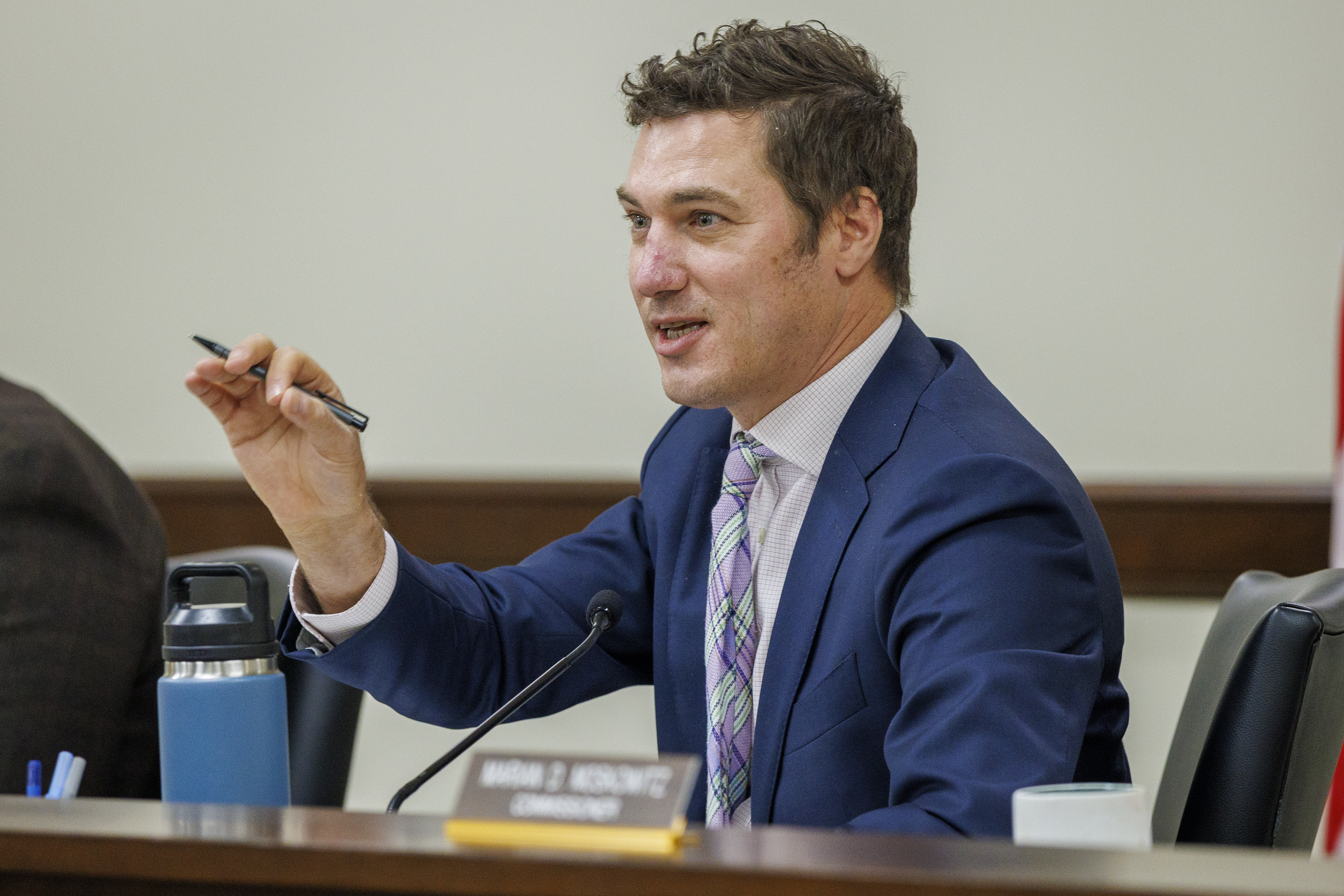
Beginning in 2024 she began reaching out to Republican Commissioner Eric Roe with her concerns. Roe, Sieb said, investigated the complaints and brought them to the other commissioners, Democrats Josh Maxwell and Marian D. Moskowitz. The commissioners also serve as the county’s election board.
“I have had a lot of people come to me with various concerns throughout county government, and voter services is certainly one of them,” Roe told The Inquirer, explaining that his role as minority party commissioner makes him a frequent recipient of workforce complaints.
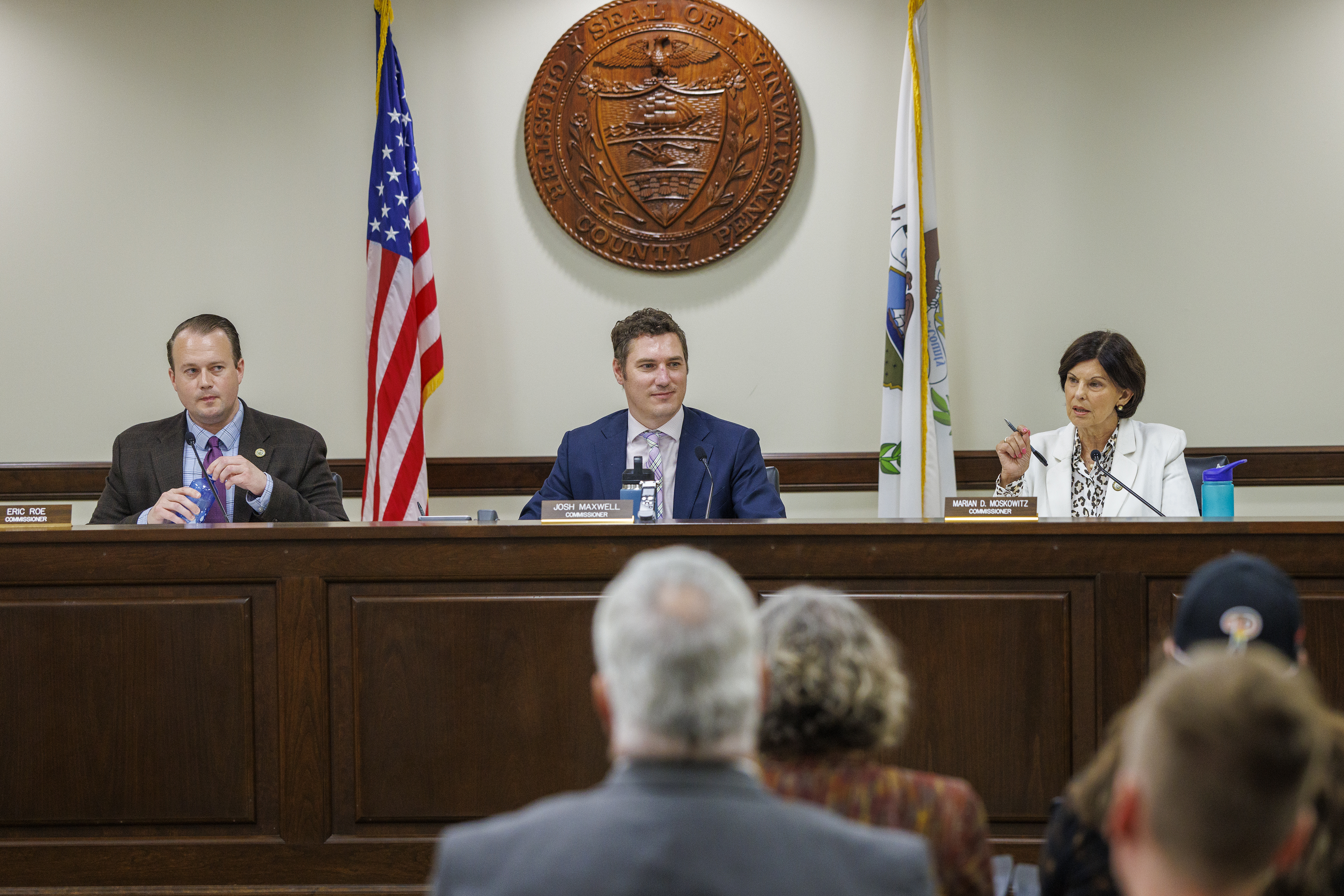
Chester County Commissioners (from left) Eric M. Roe, Josh Maxwell, and Marian D. Moskowitz at a board meeting in September.
But a year and a half later, Barsoum remained in her role and Sieb continued to hear from her former colleagues with concerns. Twice this year, Sieb went before the Chester County Election Board to raise public concerns about turnover under Barsoum.
Maxwell, who chairs the Chester County Election Board, said the county reviews reports from departments when they receive them. He said he was unable to comment on specific departments or personnel matters but said the county needed to do everything it could to support its election workers.
“We need to do a better job, I think, making sure that people feel valued. Including the folks that unfortunately we’ve lost,” he said.
Election work in Pennsylvania and elsewhere has gotten increasingly fraught. The work itself is more intense than it once was with more mail voting, and workers now deal with threats, longer hours, and a camera on them when they’re working with ballots.
“We were seen as clerical people, maybe, in the past; now we are wearing many different hats,” Barsoum said.
Moskowitz attributed much of the turnover in the county to burnout and noted the threats that election employees have faced in her years on the job.
Barsoum became emotional as she said she had worked to ensure that her staff had the resources they needed to feel safe, including mental health resources through the Human Resources department, team building outside election cycles, and a space for workers to step off camera.
“We can count on each other; we lean on each other. It’s a strong bond, a camaraderie,” she said.
When hiring new staffers, Barsoum said she warns them of what’s to come — that they’re not walking into a normal 9-to-5 job, that they won’t be able to plan vacations through about half of the year, and that they’ll be asked to take phone calls from irate people.
It’s a lifestyle, she said, that isn’t right for everyone — including some parents.
“If you’re leaning on a daycare and that is your sole, the go-to, it will be very hard to work in the department because there is 24/7 operations, and there are so many things that are going off and beyond the regular work schedule.”
Josh Maxwell, chair of Chester County Commissioners and the county Elections Board, presides over a September commissioners meeting.
Maxwell and Moskowitz declined to comment specifically when asked if they were confident in Barsoum’s leadership, but Maxwell has repeatedly asked residents to direct their anger at November’s error at him rather than Barsoum or her staff.
“I think it’s important that we protect these folks and we empower them to make the best decisions possible,” Maxwell said at an election board meeting last week.
Speaking to The Inquirer, he reiterated that point.
“We want to make sure that people feel welcomed and empowered and are in a working environment they appreciate,” Maxwell said in an interview.
“Elections have changed so much in five years it’s not surprising to me that some people want to find something new to do.”
This suburban content is produced with support from the Leslie Miller and Richard Worley Foundation and The Lenfest Institute for Journalism. Editorial content is created independently of the project donors. Gifts to support The Inquirer’s high-impact journalism can be made at inquirer.com/donate. A list of Lenfest Institute donors can be found at lenfestinstitute.org/supporters.






 on Philly and Pennsylvania’s role in establishing the Christmas tree tradition. The Christmas tree in the early illustration is indicative of how wild Christmas trees were far less dense and conical before tree shaping was invented.](https://interactives.inquirer.com/secondbank/arc/23HWJ4UDIZGPPALTU5ZPZVNUD4/325.webp)


 about the artificial Christmas trees and Indiana County, once known as the "Christmas Tree capital of the world" at the time.](https://interactives.inquirer.com/secondbank/arc/3L6UHPXXHNHYFITN64ON5QSIMI/325.webp)