Another experiential retail concept is coming to the region. This time it’s a live social-gaming venue at the King of Prussia Mall.
Massachusetts-based Level99 announced this week that it plans to bring its next “sprawling adult playground” to the Montgomery County shopping destination in 2027. The move marks the company’s first foray into the Philadelphia market.
The 46,000-square-foot venue will include 50 “life-size mini games” geared toward adults, according to a news release, and a full-service restaurant and bar serving local craft beer.
“Level99 goes beyond your conventional entertainment venue — it’s a place to play, explore, and actively connect,” Matthew DuPlessie, founder and CEO of Level99, said in a statement.
The venue is moving into the ground floor of the former JCPenney, which closed in 2017.
It will be across the mall from the 100,000-square-foot Netflix House. The immersive experience for fans of the streaming service’s shows is set to open Nov. 12 in the former Lord & Taylor department store.
Level99 customers race through the venue’s signature “Axe Run” game, one of 50 mini-challenges set to be part of King of Prussia’s location when it opens in 2027.
“We’re thrilled to welcome Level99 to King of Prussia, further elevating our commitment to delivering dynamic, experience-driven destinations,” Mark Silvestri, president of development for mall owner Simon Property Group, said in a statement. ”This innovative concept brings a new layer of interactive entertainment to King of Prussia and is a perfect complement to our growing lineup of immersive offerings.”
In the Philadelphia region, Cherry Hill Mall is set to open a Dick’s House of Sport next year. The 120,000-square-foot space will include a climbing wall, golf simulators, a running track, and batting and soccer cages.
And along with the forthcoming Netflix House, the King of Prussia Mall recently opened the Philadelphia area’s first Eataly, a 21,000-square-food Italian-centric marketplace and wine shop.
At Level99 venues, customers can choose from 50 mini-games that test mental and physical skills.
At existing Level99 locations, pricing starts at $29.99 per person for two hours of play, according to its website. Prices increase on weekends and holidays, and if a customer wants more time.
Level99 is supported by Act III Holdings, a $1.5 billion private-equity investment firm led by Panera Bread cofounder and Cava chairman Ron Shaich. Last month, Act III executives announced a $50 million commitment to the chain’s expansion into new markets, including Philadelphia.
Two Plymouth Township police officers were hospitalized in stable condition Friday afternoon after a driver allegedly injured them intentionally with a vehicle in the parking lot of a DoubleTree Suites near the Plymouth Meeting Mall, Montgomery County officials said.
Around 12:40 p.m., Plymouth Township police received a report of a person driving erratically in the area of Hickory and Narcissa Roads, and a few minutes later, an officer found the suspect driving in the parking lot of the hotel, Thomas Nolan, deputy chief of the Montgomery County Detective Bureau, told 6abc and other news outlets at the scene.
The suspect backed into the police vehicle, and then struck the officer after he had exited his vehicle, Nolan said. The officer fired his weapon at the suspect, who drove away.
The injured officer was applying a tourniquet to an injury when the driver returned and struck the officer again several times, Nolan said.
As more police responded to the scene, the suspect struck another police vehicle, injuring a second officer before finally being taken into custody, Nolan said.
The suspect was treated and released from a hospital and was being held at the Montgomery County Correctional Facility, a spokesperson for the District Attorney’s Office said Friday night.
For five glorious Sundays this summer, there was peace in Chester.
In places like the William Penn Homes and Chester Apartments, where children are often encouraged to stay indoors, shut away from the threat of gang violence, it was finally safe to play outside during the height of what is normally the most dangerous time of the year.
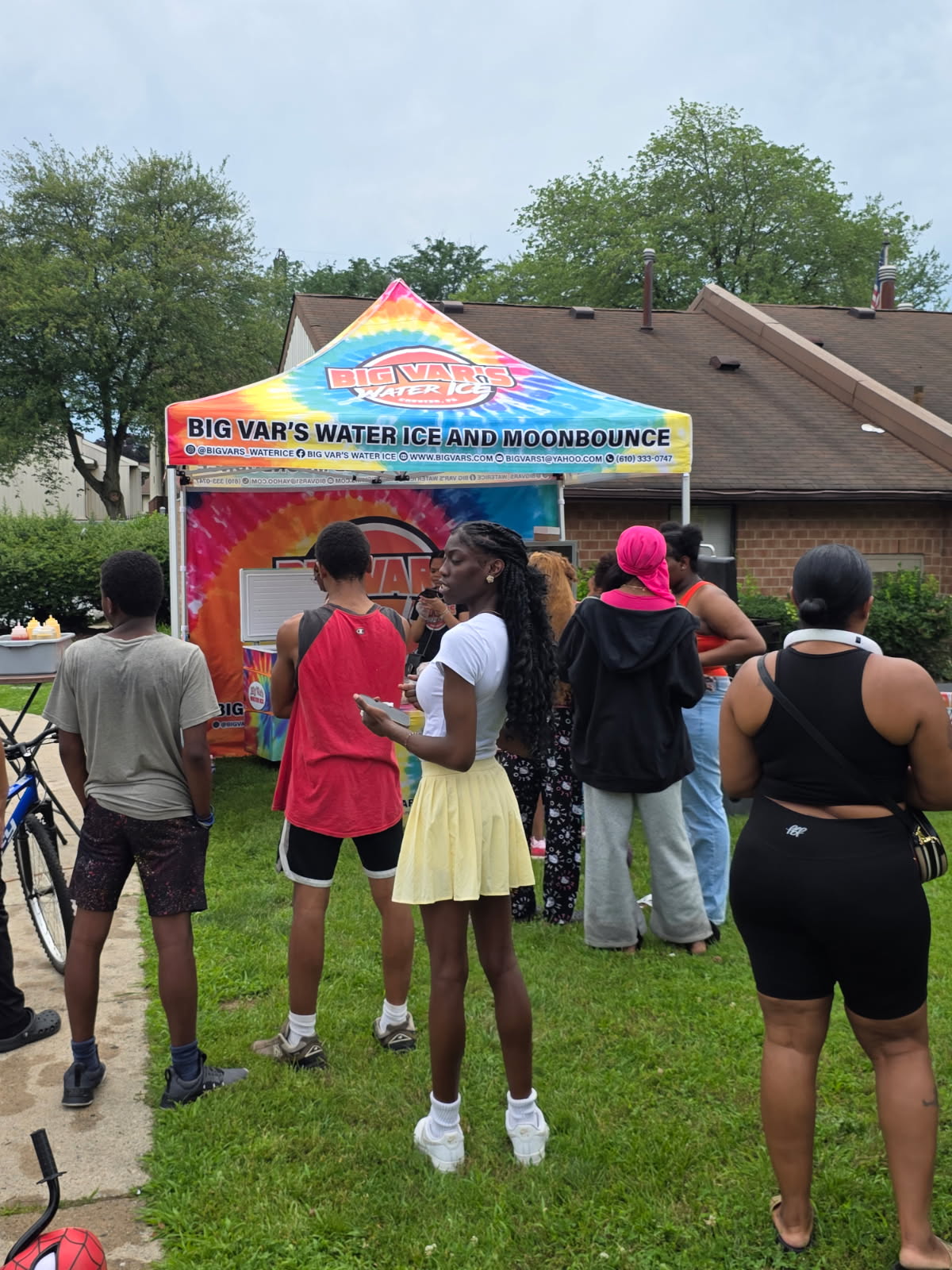
Roving carnivals nicknamed “Sunday Fun Days” were organized and held in Delaware County’s lone city, in areas that had weathered a surge in violence in recent years. A few bounce houses, some water ice, and communities breathing sighs of relief were rewards for keeping the peace, and motivation to continue that trend.
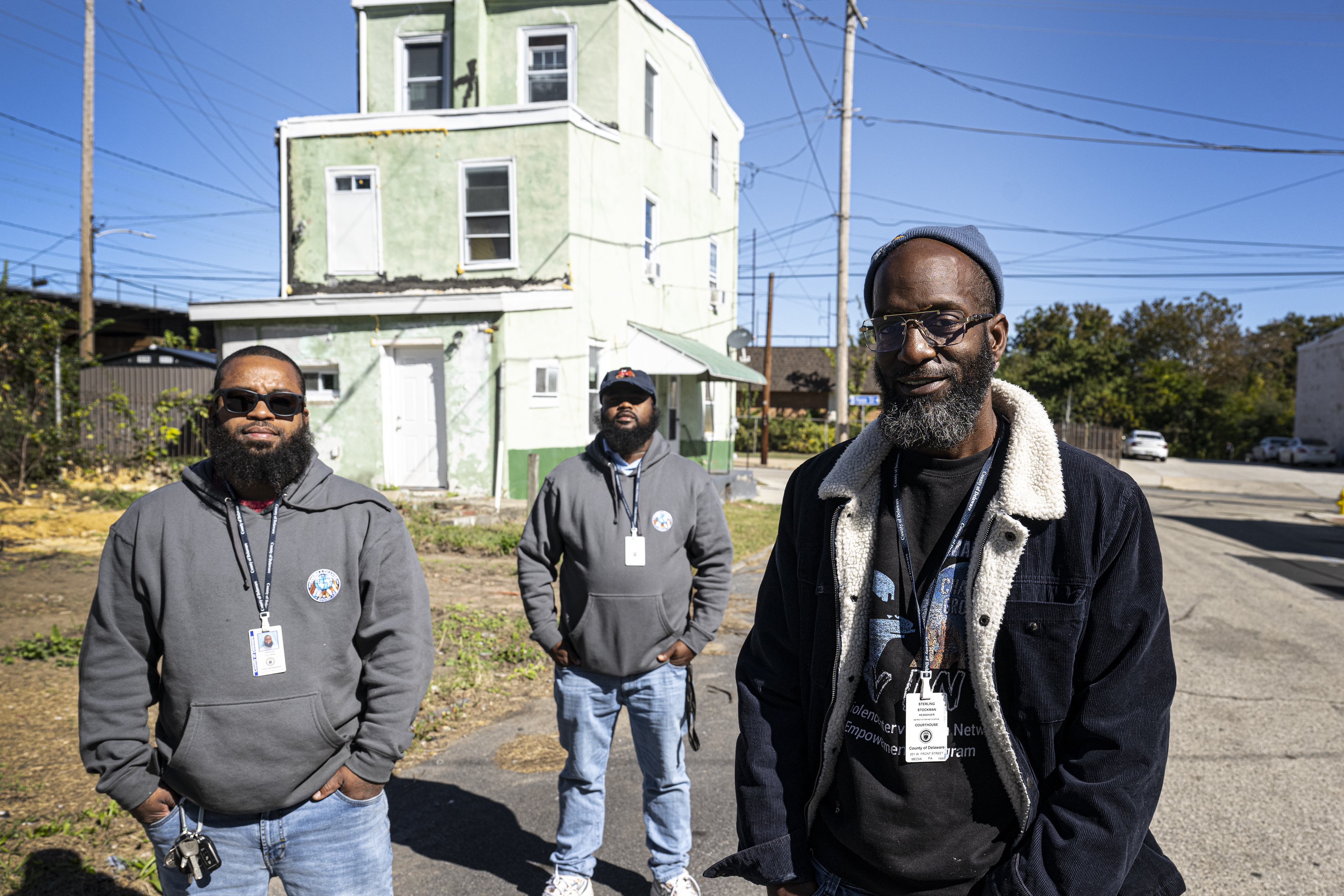
The parties, according to Geo Stockman, the lead gun violence interventionist with Making a Change Group, came during one of the safest summers on record in the city: Not a single fatal gunshot was fired in Chester during that time.
It was a result that local police and county prosecutors say they have been working toward these last few years, through a combination of advocacy work and interventions by groups like Stockman’s.
“This opened up the neighborhoods. It gave them a reason to say, ‘Let’s try something else, people are really looking out for us now, maybe we should put this down,’” Stockman said. “People are always telling people to stop doing something without offering them something in this place. So that’s what we did this summer. We offered them something in its place.”
Gregory Cottman left, Gregory Graves, center, and Geo Stockman say the Sunday Fun Day block parties sponsored by the Delaware County District Attorney’s Office served as both a reward for neighborhoods that have curbed gun violence, and an incentive to continue that trend in the years to come.
In its five years of operation, CPSN has seen a 65% reduction in shootings overall and a 74% reduction in fatal shootings. And since the summer, only two fatal shootings have been recorded in Chester, which prosecutors say still puts the city on pace for one of its most peaceful years on record.
“Violence comes from a place of, of hopelessness, of despair. Just anger, resentment, and feeling like you’ve been left behind, like nobody cares,” Stockman said.
window.addEventListener(“message”,function(a){if(void 0!==a.data[“datawrapper-height”]){var e=document.querySelectorAll(“iframe”);for(var t in a.data[“datawrapper-height”])for(var r,i=0;r=e[i];i++)if(r.contentWindow===a.source){var d=a.data[“datawrapper-height”][t]+”px”;r.style.height=d}}});
He spoke from experience, as a lifelong Chester resident who spent time in prison for mistakes made on the streets of his hometown.
“That’s what makes what we do so effective. Most of us want to be stopped, but nobody stops us,” he said. “Nobody takes the time to say, ‘I’m gonna be the one to calm you down.’ It really only takes somebody with a clear mind that they understand to say, ‘Nah, that ain’t it.’”
Stockman said he and his team have successfully mediated 130 disputes between rival neighborhoods in the last two years. They settled petty arguments, usually started on social media, that were clearly heading toward a violent conclusion.
“This is a small community, so your reputation goes further than just the neighborhood you’re from,” said Gregory “G-Code” Graves, who works with Stockman.
Graves said the anti-violence messaging works because it’s coming from people the intended audience can identify with.
“We’ve been through the vetting process in all these neighborhoods, so even if it’s a little hesitation at first, it doesn’t take a great deal of persuasion to get them to come to us,” Graves said. “And we come in with meaningful things that’s going to help the situation.”
Residents of the Chester Apartments line up for water ice at a “Sunday Fun Day” block party held this summer in Chester.
For District Attorney Jack Stollsteimer, those results are exactly what he envisioned when he brought CPSN to the county five years ago, building it on models used successfully in other cities, including Boston.
And he is confident that the program will continue to thrive without him, as he runs for a county judgeship in the Nov. 4 election.
“People have bought into the strategy. They’ve seen it work now, and they just wanna keep it going,” he said.
Stollsteimer said making Chester safe was one of his priorities when running for district attorney in 2019. Similar programs, he said, had failed before because of a lack of buy-in from officials.
This time was different — Mayor Stefan Roots became a fixture at the Sunday Fun Day parties.
Roots said the weekly parties presented a rare opportunity for residents to meet the people making decisions that affect their everyday lives. And, in turn, allowed him and other officials to have open, honest dialogue with people living in communities most affected by gun violence.
The conversation flowed naturally, he said. No pressure. No pretense.
“This is something that’s never, never happened before,” he said. “The relationship between the city and the county is really welcome. And the results are showing themselves.”
Roots said he lost count of how many residents came up to him at the parties to talk about their own efforts to curb violence in their neighborhoods. People, he said, who told him that the block parties, and the gun violence interventions that preceded them, were a welcome sigh of relief.
“They told me that, sometimes, they don’t want to be ‘the man with the cape.’ They want to go on and have a life, too,” Roots said.
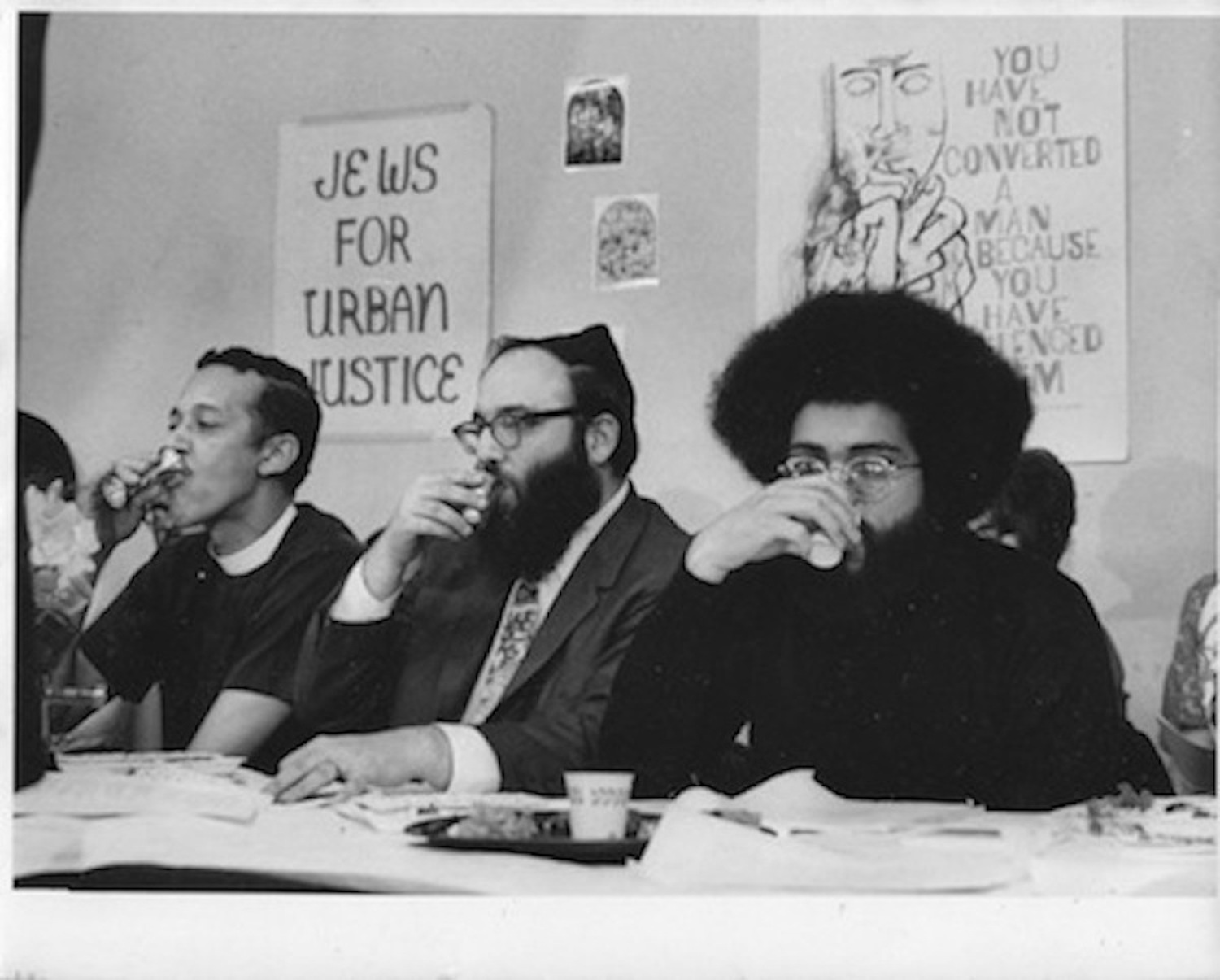
Arthur Waskow, 92, of Philadelphia, longtime social activist, pioneering Jewish scholar and rabbi, founder of the Shalom Center for public prophetic action, religion teacher, mentor, and prolific author, died Monday, Oct. 20, of chronic respiratory failure at his home in Mount Airy.
A longtime expert in Judaism, prophetic justice, and peaceful civil disobedience, Rabbi Waskow was so disturbed by the 1968 assassination of the Rev. Dr. Martin Luther King Jr. and the social unrest that followed that he protested, wrote about, and lectured around the country on what he called the “overwhelming crisis” of whether humanity will “build a decent society or will poison or burn it empty.”
For more than five decades, starting in Washington and then in Philadelphia, he connected contemporary social issues with Jewish traditions and championed prophetic justice regarding peace, nuclear disarmament, feminism, LGBTQ rights, same-sex marriage, environmental sustainability, and interfaith collaboration. “He consistently held that Judaism is not meant to stand above and apart from ordinary life, but rather to guide our actions in this life,” Rabbi Jill Jacobs said in a tribute.
Colleagues at the Shalom Center said he dramatically “fused social justice with traditional Jewish themes and spirituality.” Jacobs praised his “legacy of non-violent protest, his prophetic writing, and his courageous leadership.”
He established the Shalom Center for prophetic Judaism in Philadelphia in 1983, cofounded the Alliance for Jewish Renewal in 1993, and helped establish the National Havurah Committee, T’ruah: the Rabbinic Call for Human Rights, and other organizations. “He’s one of the most important figures to merge spirituality and politics since the 1960s,” Rabbi Tsvi Blanchard told The Inquirer in 2001. He “transcends categories and, as a result, he’s always crossing boundaries, but for good.”
Strategic action with compassion was usually his favorite tactic. He called his many disagreements with Jewish orthodoxy “a continuous loving debate” and told The Inquirer in 1970: “Jews have a radical role and mission to join with other communities to remake American society.” In 1993, he said: “In our generation, the people of the earth at last have to learn to share the great round earth or risk ruining it.”
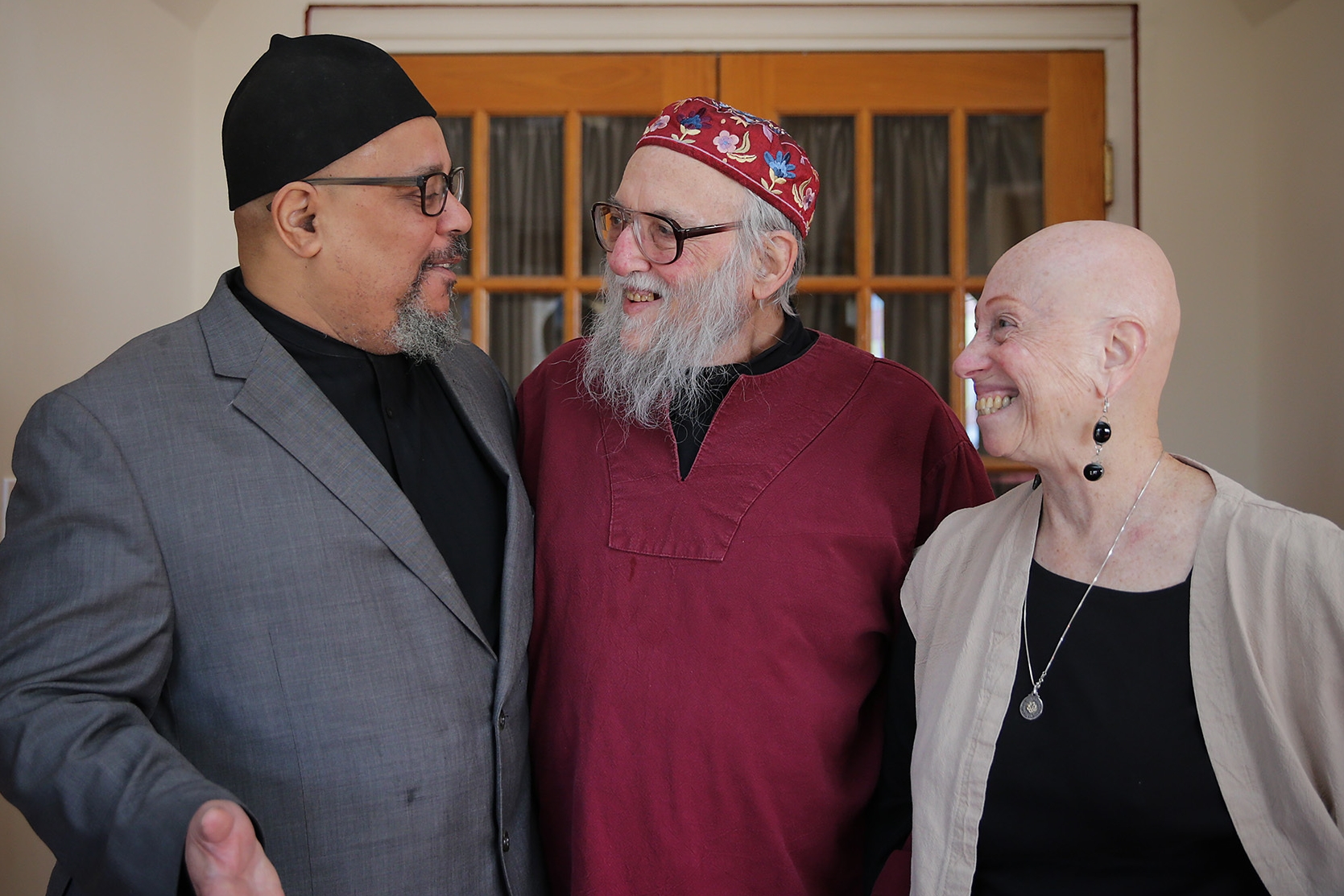
He worked closely on social projects with Sister Mary Scullion of Project HOME, Rabbi Leonard Gordon of the Germantown Jewish Centre, and Imam Abdul-Halim Hassan of the Masjidullah Community Center Mosque. His embrace of the Jewish Renewal movement drew critics, but he never wavered in his support.
“There’s an unpredictability to him, a drama to him, a charisma to him,” Rabbi Gordon said in 2001. “That is who he is and has to be in challenging the community. We would lose too much without it.”
Rabbi Waskow celebrated the 50th anniversary of his Freedom Seder in 2019.
Rabbi Waskow was arrested dozens of times for peacefully protesting about segregation, immigration, and other issues. He wrote so many books he lost track of how many were published. “It’s either 19 or 20,” he told The Inquirer in 2007. “My wife said it’s the same number as the times I’ve been arrested.” He never retired.
He wrote and organized the first Freedom Seder in 1969 to recognize contemporary liberation efforts as well as the Exodus of the ancient Israelites. He was invited to President Clinton’s Middle East peace ceremony at the White House in 1993 and appeared in a TV ad in 2004 that denounced prisoner abuse in Iraq. “He found joy in reimagining Jewish holidays and prayers in ways that spoke to contemporary issues,” his family said in a tribute.
He came to Philadelphia from Washington in 1982 as a new faculty member at the Reconstructionist Rabbinical College and went on to teach religion at Swarthmore, Temple, Drew University in New Jersey, Vassar College in New York, and the Hebrew Union College-Jewish Institute of Religion in New York.
He wrote articles and op-eds for The Inquirer, Daily News, and other publications, and authored more than 25 books on all kinds of topics. His 1978 book Godwrestling and 1982’s Seasons of Our Joy are religious classics. In 1993, he wrote Becoming Brotherswith his younger brother, Howard.
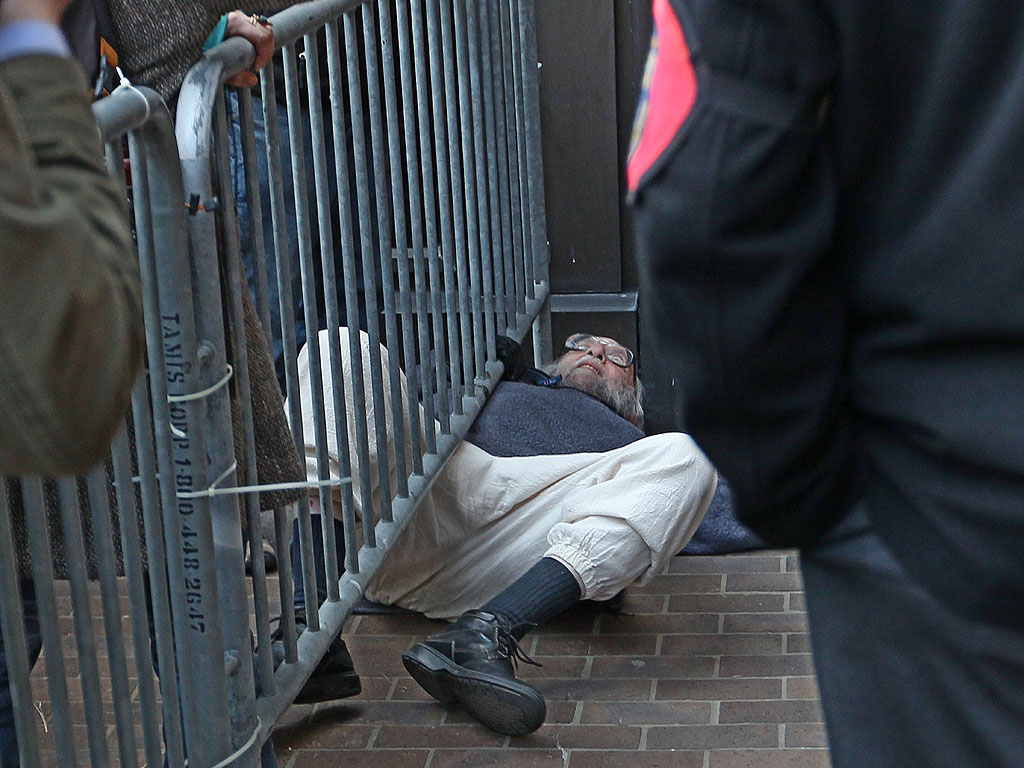
Rabbi Waskow crawls under a barricade so he could get arrested at a protest in 2014.
Rabbi Waskow won many awards and was recognized for his leadership and lifetime achievements by the Jewish Peace Fellowship, Neighborhood Interfaith Movement, and other groups. Newsweek named him one of the fifty most influential American rabbis in 2007.
Recently, he focused on describing God in traditional ways with modern insights. “Watching your kids begin to parent feels like there is a spiral to life,” he said in 2001.
Arthur Irwin Waskow was born Oct. 12, 1933, in Baltimore. He was always an avid writer and reader, especially science fiction, and fascinated by words.
His father was a high school history teacher, and, with his help, Rabbi Waskow won a newspaper history contest that paid part of his college tuition. He earned a bachelor’s degree in history from Johns Hopkins University in 1954 and a doctorate in American history from the University of Wisconsin in 1963.
Rabbi Waskow (center) celebrates the first Freedom Seder in 1969.
He protested against the Vietnam War and other hot topics in the 1960s, and worked in Washington after college as an aide to U.S Rep. Robert Kastenmeier, and a fellow at the Institute for Policy Studies.
He married Irene Elkin, and they had a son, David, and a daughter, Shoshana. After a divorce, he met Rabbi Phyllis Berman at a conference, and they married in 1986, and both adopted the middle name Ocean.
Over the last 18 months, even though he couldn’t see, Rabbi Waskow wrote two more books. “He was very determined in the fullest sense of that,” his son said. His daughter said: “He was passionate about what he was passionate about.”
His wife said: “He was playful, brilliant, creative, and fierce. He was generous in every way.”
In addition to his wife, children, and former wife, Rabbi Waskow is survived by five grandchildren and other relatives. His brother died earlier.
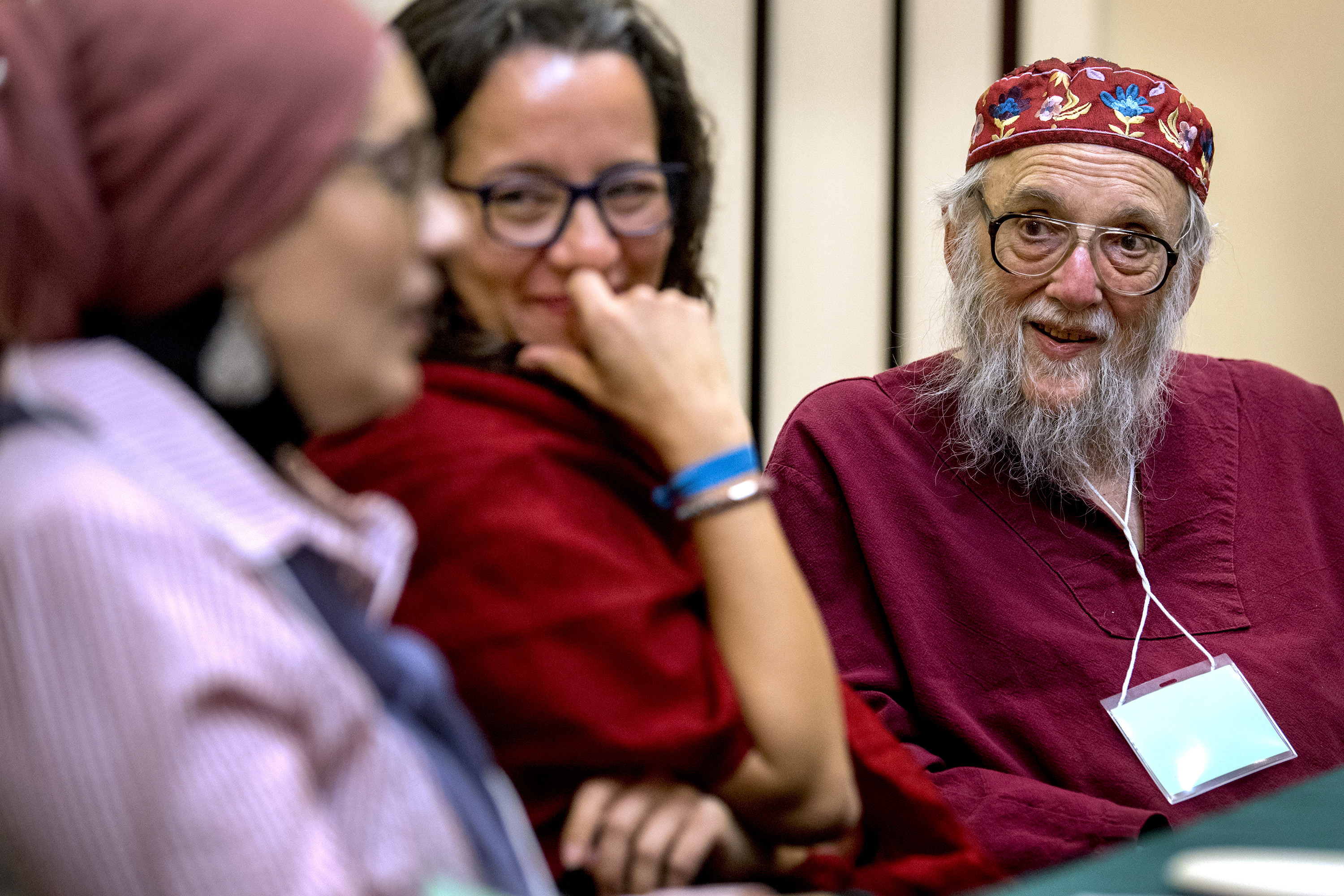
Rabbi Waskow (center) talks with his wife, Phyllis, and Imam Abdul-Halim Hassan in 2019.
Services were held on Oct. 22.
Donations in his name may be made to the legacy fund at the Shalom Center, 6711 Lincoln Dr., Philadelphia, Pa. 19119.
Bob Yantorno, a Republican candidate for a seat on the Upper Darby Township Council, is facing scrutiny over material he posted three years ago that Democrats have decried as racist.
Yantorno, 65, is a former commanding officer of the Narberth Police Department,a former paramedic, and a veteran of other law enforcement agencies. He’s running in the township’s 3rd District.
Yantorno denies that anything he has ever posted was motivated by racism andsaid his social media comments reflected his outrage over incidents of violence.
The controversy stems from posts Yantorno made in 2022 on Twitter, now known as X, in response to crime news stories from Fox 29 that involved Black suspects.
“Take him out back n bullet in occipital section,” Yantorno wrote about a suspect from Drexel Hill charged with two homicides.
“Arrest convict bury,” Yantorno wrote in response to a booking photo of a Camden man accused of rape.
In a 2022 reply to an Upper Darby Police Department statement about a rash of thefts from automobiles, Yantorno wrote under four photos of young men in hoodies walking near cars but not stealing anything, “Common denominator?”
The race of the men was not obvious from the photos posted by the department.
Democrat Noah Fields, 25, who is running for one of two at-large council seats, neither of which Yantorno is seeking, condemned Yantorno in an interview for what he said was “shocking” and “hateful” speech, as well as “violent rhetoric.”
Fields said that “racism has no place in Upper Darby.” He added that “this guy is calling for the execution of people without due process. The violent rhetoric we’re hearing on the national level is trickling down to local politics.”
State Rep. Heather Boyd (D., Delaware), who represents Upper Darby, said the posts were “really upsetting, offensive, and disappointing.”
She added, “We don’t want anyone in a position of influence to not consider people’s right to due process and the rule of law.”
Asked about the posts in an interview Wednesday, Yantorno initiallysaid he was unaware of their existence.
“I have no idea what you’re talking about. What Democrats are saying is slanderous. People put stuff out there about me that’s not true,” Yantorno said. “All I can tell you that in the Narberth Police Department, my reputation was stellar.”
Yantorno said he didn’t know how posts with his name, photo, and personal details got onto X.His page says he joined the platform in 2022 and features a profile photo of him in police uniform.
He bristled at being called racist. He added, “I would never put a picture of somebody of any color and disparage them because of their race.”
Yantorno said that personal experience has made him sensitive to race bias. He said that when he and his first wife, whom he identified as a woman of color, moved into a house in Stonehurst, an Upper Darby neighborhood, someone stuck a cross in their lawn.
It was, Yantorno said, a symbol of hatred aimed at his then-wife.
Similarly, he said, when he was a police officer in Yeadon, he and hisformer wife “fell in love” with a house they wanted to buy, but had to back out of the deal because their real estate agent said if they moved in, “someone would burn down the house and the real estate office.”
Yantorno added without being asked: “You will never see anything from me online using the N-word. That’s not how I roll, brother.”
A statement emailed Thursday by the Upper Darby Republican Campaign Committee included remarks attributed to Yantorno that differed from his original explanation.
In the new statement, Yantorno no longer said he was unaware of the posts. Instead, he said, “those comments reflected my frustration and anger over the senseless violence in our community and had nothing to do with race.” He added that “claims of racism are offensive and absurd.”
A GOP committee statement, which was not attributed to a specific person, emphasized Yantorno’s commitment to public service and said that he does not deserve a “fabricated inference that has no basis in reality.”
Jeff Jones, an Upper Darby real estate developer who has been a Republican candidate for the council in the past, defended Yantorno.
“I read the tweets. They were comments made by a gentleman 35 years in law environment who’s seen criminals and victims at their worst, and the frustration came through in those tweets,” said Jones, who is Black.
Melissa DiNofia-Bozzone, Yantorno’s Democratic opponent for the 3rd District seat, declined to comment on the posts, saying, “I’m focused on running a positive campaign.”
Friends describe Yantorno, a veteran, as a gregarious person with a desire to help his community.
In 2020, he biked across the United States to raise money for families of slain police officers. He also did the ride, he said, for the family of Daniel Faulkner, the Philadelphia police officer who was killed in 1981. Mumia Abu-Jamal received the death penalty for the shooting, which was later reduced to a life sentence without parole.
Yantorno is also the author of a 1995 crime novel set in Philadelphia called Brutal Mercies. According to the publishing company, Trafford, the story opens with “a horrific act of mutilation” in Overbrook that “leaves the police asking, ‘Why?’”
Staff writers Katie Bernard and Ryan W. Briggs contributed to this article.
Pennsylvania and New Jersey turnpike officials have settled on two alternative plans for replacing the Delaware River Bridge that has linked their toll roads for 70 years.
Traffic has mushroomed since the interchange with I-95 opened in 2018, and the four-lane span is often congested, along with highways and roads in Bucks and Burlington Counties.
“We have a lot more traffic here … and it will keep growing,” said engineer John Boyer, the Pennsylvania Turnpike Commission’s project manager. “We need additional capacity.”
Before the I-95 connection was finished, about 42,000 vehicles a day crossed the Delaware River Bridge. Now, that’s up to around 67,000. Average daily traffic is projected to be 90,000 vehicles by 2050.
What are the two ‘finalist’ options for a new bridge?
In one scenario, the new bridge would be constructed at once about 75 feet north of the existing span over four years. Pennsylvania- and New Jersey-bound lanes (six in all) would be built 15 feet apart. When finished, all traffic would be moved to the new bridge. The existing bridge would be removed.
The other option: constructing the new bridge in stages, about 40 feet north of the existing bridge — over eight years. Initially, the first half of the new span would go up. Then four lanes of traffic would be diverted to the new half while the old bridge is demolished, after which the second half of the new bridge would be built. When complete, there would be six traffic lanes.
What are the next steps?
Turnpike officials are preparing a new environmental impact statement, required for federal approval and funding. The 2003 version is outdated.
The plan is to unveil the site decision in the spring. Then would come final design and the rest of the bureaucratic steps in building transportation infrastructure.
Construction could start in 2031.
The final cost of the project has not yet been estimated, officials said, but it won’t be cheap.
What’s the history of the project?
Talk of fixing the crossing started more than 30 years ago, and by 2003, after exhaustive environmental impact and engineering studies, authorities proposed building a modern bridge alongside the old one, which would be refurbished.
Federal highway officials signed off, but it never came together.
In 2010, the Pennsylvania Turnpike Commission formally deferred the project “due to funding constraints,” spokesperson Marissa Orbanek said.
A crack in a steel truss supporting the bridge closed the span for six weeks in 2017 and rekindled the idea. Engineers combed through nine possible sites north and south of the bridge and decided to replace rather than refurbish the span, as first planned.
The Pennsylvania Turnpike Commission and New Jersey Turnpike Authority are working together on the project.
In addition, the turnpike prioritized the connection to I-95 and widening the roadway to accommodate the additional traffic, as well as other projects — including removal of toll booths and switching to gantries that charge drivers by reading an EZ-Pass or snapping a picture of a vehicle’s license plate.
Act 44 was a workaround for a state constitutional prohibition on the use of the gas tax for public transit and legislators’ reluctance to hike that tax for highways and bridges.
The turnpike would contribute $750 million a year to the Pennsylvania Department of Transportation, split evenly between transit and roads.
That formula was tweaked in 2013 with Act 89, which raised the gas tax to finance roads and bridges and cut the turnpike’s annual payment to $450 million — with all of it going to transit — through 2022.
The toll road’s obligation to PennDot then dropped to $22 million a year.
Will the Pa. Turnpike need to acquire properties? Where?
It’s too early to say. Officials working on the project said they would have a better idea after the final proposal is chosen, expected in spring 2026. The two northern options are seen as likely to have fewer impacts than other alternatives considered.
What about a shared-use path for bikers and walkers?
Pennsylvania Turnpike officials have ruled that out, citing regulations barring pedestrians or nonmotorized vehicles on turnpikes and interstates — the connector is part of I-95 — as well as future maintenance costs. Advocates still want access.
John Boyle, a staffer for the Bicycle Coalition of Greater Philadelphia, pointed to several toll bridges with free paths that accommodate cyclists and pedestrians.
The Great Egg Harbor Bridge on the tolled Garden State Parkway, for instance, has bike and pedestrian lanes.
And the Gordie Howe International Bridge, a toll facility between Detroit and Windsor, Ontario, nearing completion, will have separate shared-use lanes.
What considerations guide the choice?
Boyer said they boiled itdown to picking a site that would have the lowest negative impact on the built and natural environments.
“We’re looking at it from a 10,000-foot view in the entire corridor: commercial impacts, industrial impacts, residential impacts, and potential impacts to billboards or cell towers in the area,” Boyer said.
Despite the public fall from grace, the voter said he missed John Dougherty’s leadership in Philadelphia, adding that he believed Dougherty had been good for workers in the city. They are brothers, Kevin Dougherty confirmed.
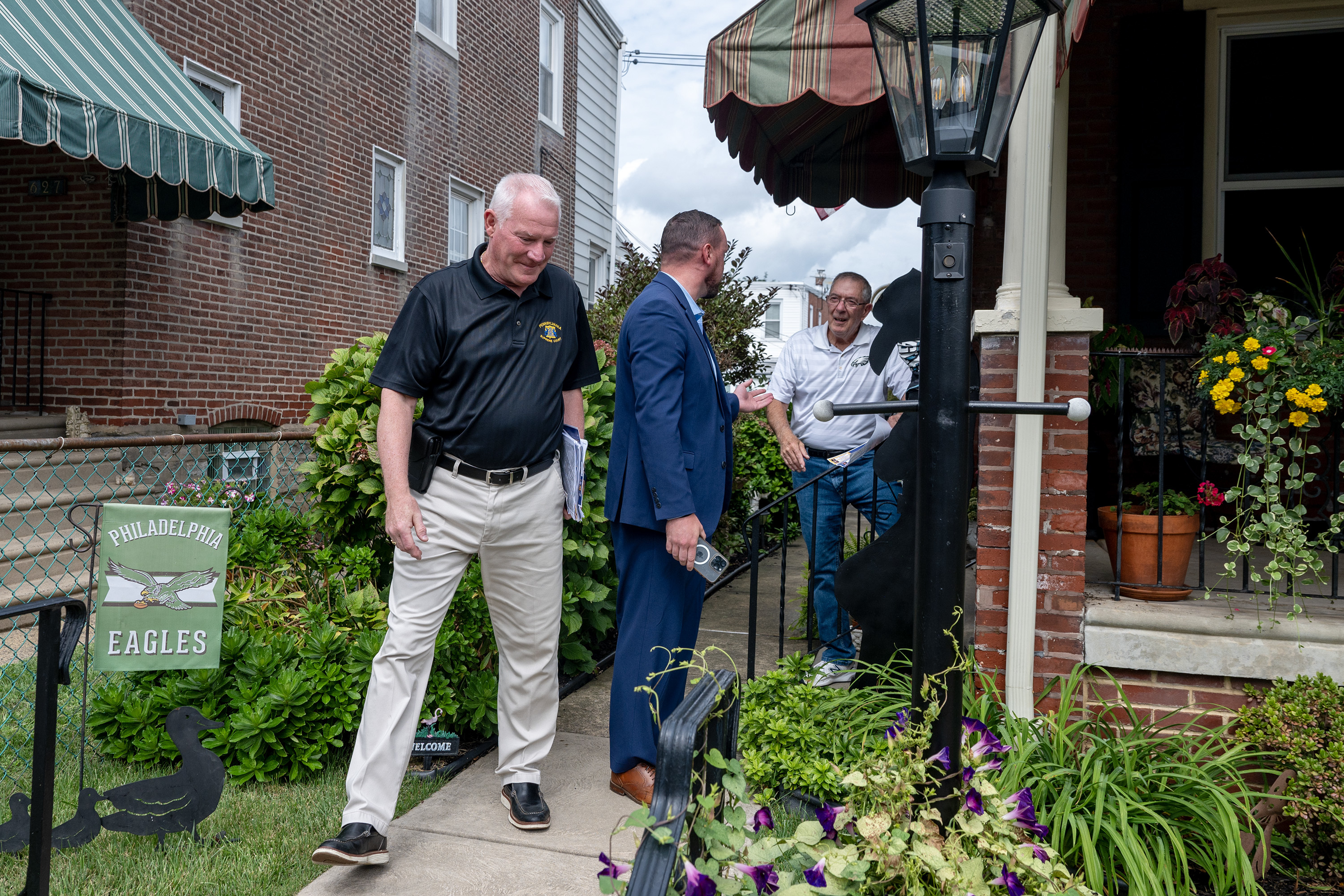
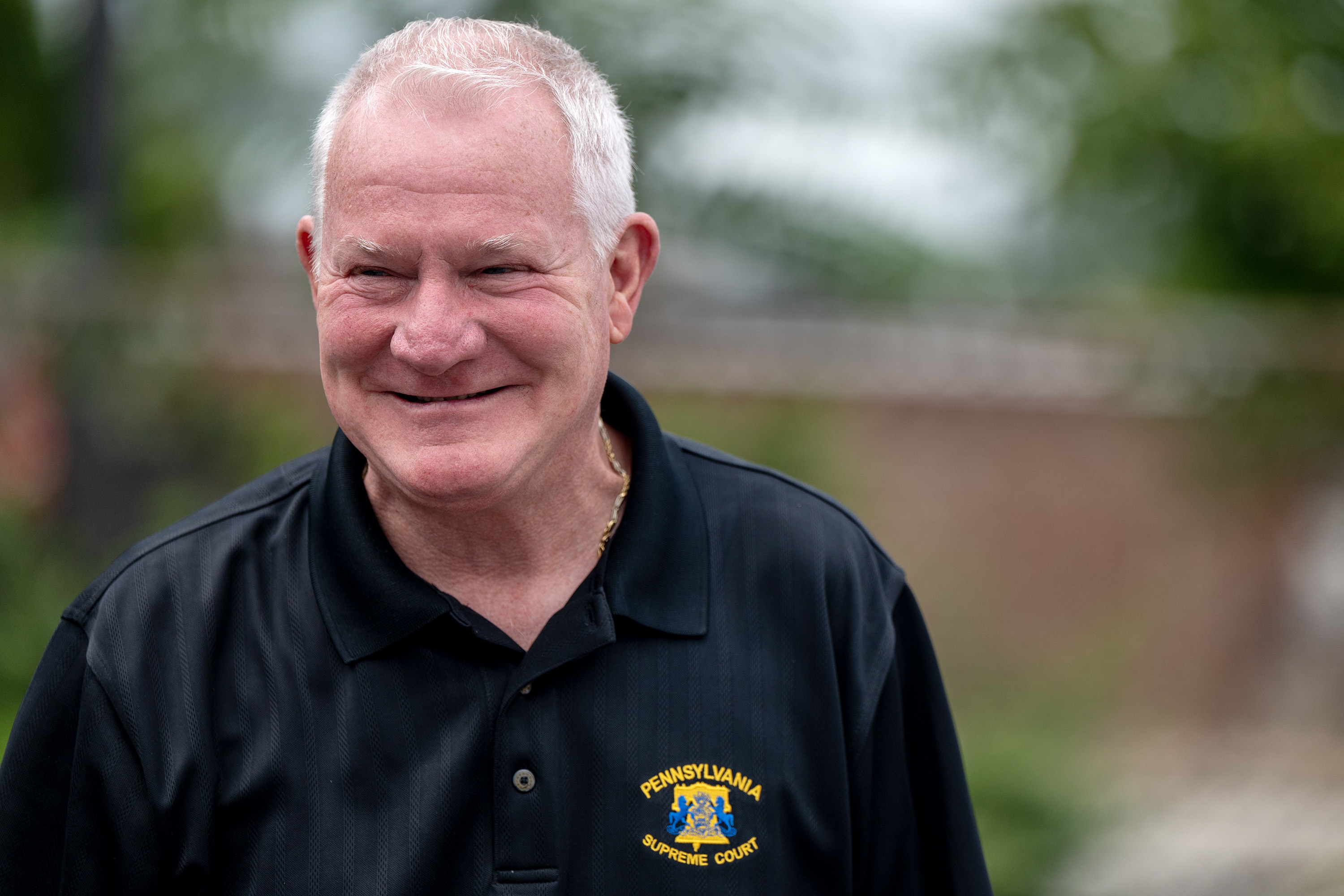
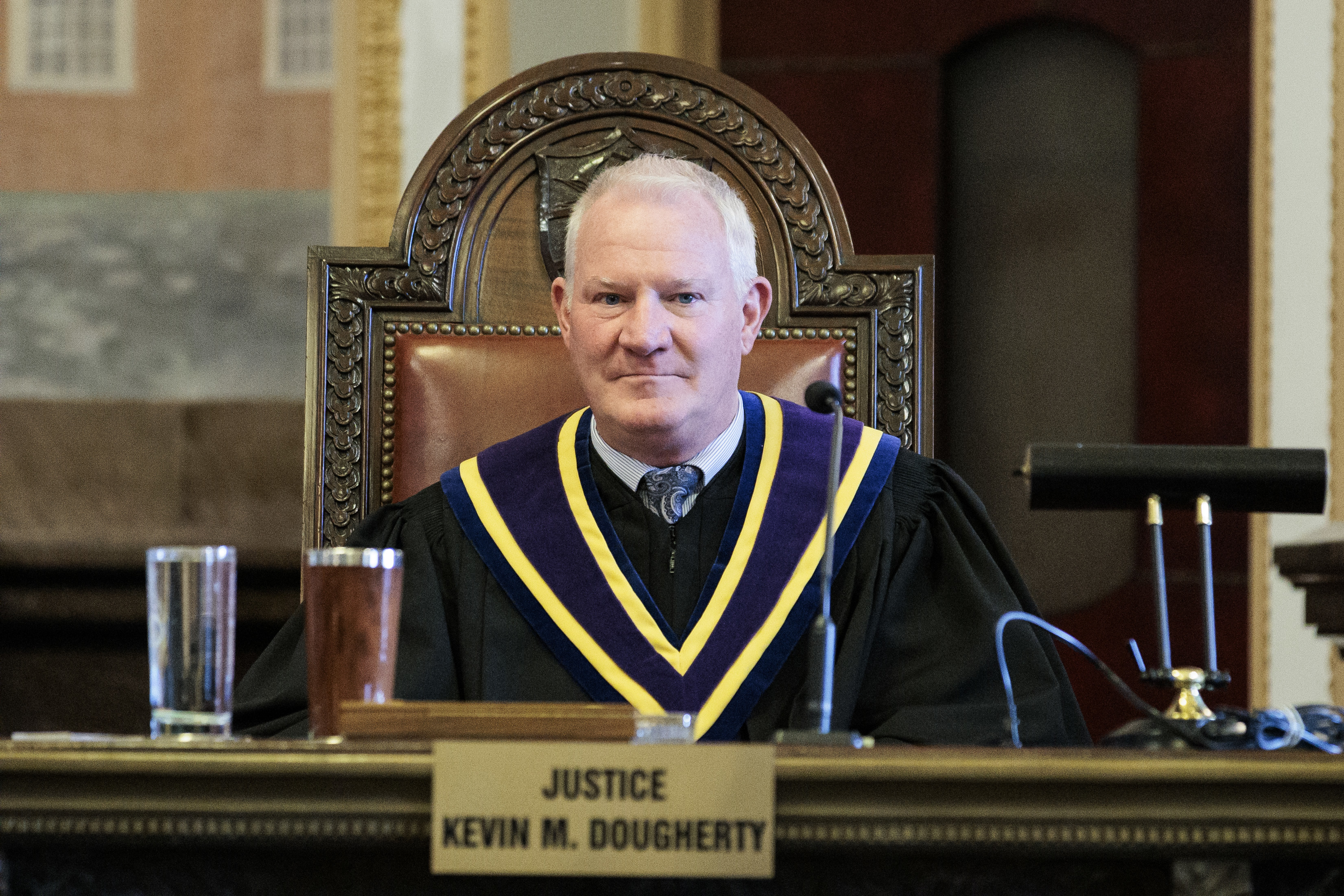
Justice Kevin Dougherty (left) canvasses with his son, State Rep. Sean Dougherty (center) in Fox Chase Sunday Sept. 7, 2025, stopping at the home of a voter. The elder Dougherty is one of three Pennsylvania Supreme Court justices up for retention.
But in this year’s unusually high-profile state Supreme Court retention race, the connection has, in some circles, become unavoidable. Republicans seeking to oust Kevin Dougherty and two of his colleagues, all initially elected as Democrats, have sought to tie the judge to his brother’s misdeeds. The justice, a son of South Philadelphia who previously led Philadelphia’s Family Court, has sought to distance himself, and has seen the continued support of labor unions in his retention campaign.
“Over the course of 25 years as a judge, including ten years as a Justice on the Supreme Court, Justice Dougherty has had the privilege and the benefit of meeting a multitude of Pennsylvanians including the working men and women of organized labor,” Shane Carey, Kevin Dougherty’s campaign manager, said in a statement. “Our campaign is proud to receive their support, as well as the support from almost 5,000 other individual donors.”
How Johnny Doc helped elect his brother to the Supreme Court in 2015
Kevin Dougherty didn’t choose to be related to one of the city’s most prominent power brokers, but he certainly benefited from his brother’s former union’s help, with significant support from the politically powerful Local 98 during his 2015 campaign for the state bench.
Local 98, where John Dougherty was the longtime business manager, contributed more than $620,000 during Kevin Dougherty’s 2015 campaign for the Pennsylvania Supreme Court. Local 98’s spokesperson at the time also served as Kevin Dougherty’s campaign manager and appears from campaign finance filings that year to have been paid by Local 98. The union also spent more than $480,000 on in-kind contributions for “professional services,” mailers, merchandise,and more.
Justice Kevin Dougherty talks with volunteers before they head out the canvass in Fox Chase Sunday Sept. 7, 2025. Dougherty is one of three Pennsylvania Supreme Court justices up for retention.
Kevin Dougherty is the only justice up for retention from Southeastern Pennsylvania. The other justices, Christine Donohue and David Wecht, live in Pittsburgh. They will each appear on the November ballot with no party and no home county. Voters will simply be asked “yes” or “no” whether each individual justice should be retained for another term.
Republicans working to oust the three justices this year have tried to leverage Kevin Dougherty’s past support from his brother to encourage voters to oppose his retention.
Scott Presler, an influencer aligned with President Donald Trump who has more than 2.4 million followers and runs a political action committee aimed at registering Republican voters, posted an AI-generated image of John Dougherty behind bars, tying, without evidence, Local 98’s contributions to Kevin Dougherty’s 2015 campaign to his brother’s convictions.
“Coincidence?” Presler wrote.
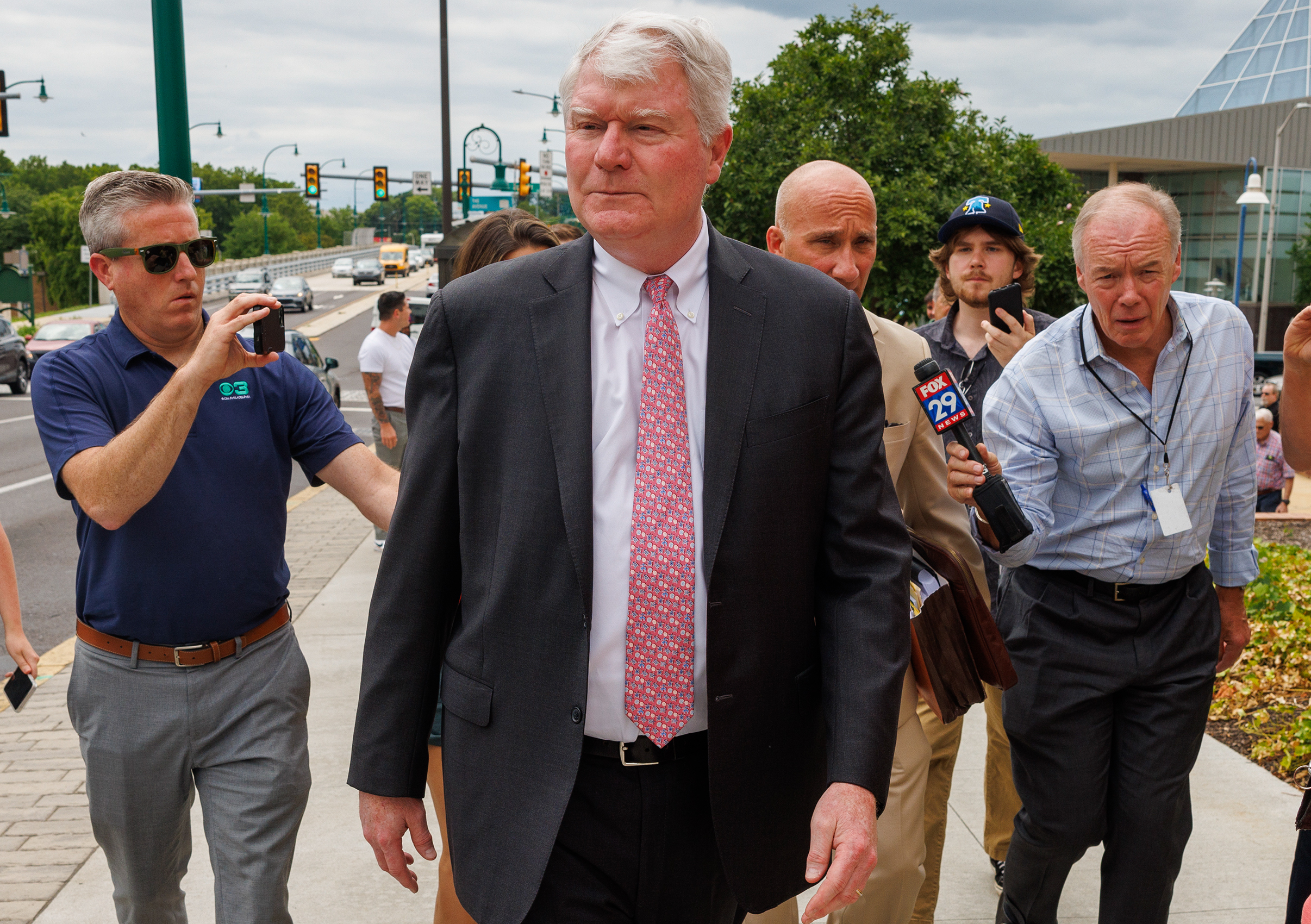
Johnny Dougherty, the former IBEW business manger, and his attorney Gregory J. Pagano as they leave the U.S. District Court, Reading, Pa. on the day he was sentenced to 6 years in prison Thursday, July 11, 2024.
For months, the conservative influencer has posted on social media urging followers to vote against retaining Kevin Dougherty and his colleagues, citing the times his name was mentioned during John Dougherty’s trials, such as when prosecutors alleged the justice received free home repairs or snow removal on the union’s dime. Kevin Dougherty’s lawyer at the time of the embezzlement trial said the judge never knowingly accepted services paid for with union funds.
While door-knocking in September, Kevin Dougherty dismissed attacks against him related to his brother as “misinformation,” noting his decades-long career as a judge.
Kevin Dougherty, 63, spent more than a decade as a Common Pleas Court judge in Philadelphia before his election to the state Supreme Court. During his tenure on the state’s highest court, he has authored majority opinions and is leading a statewide initiative to improve how Pennsylvania’s judicial system interacts with people with behavioral health issues.
“I spent close to a quarter of a century being a judge,” Dougherty said on a sidewalk in Northeast Philly. “I just don’t accept people’s comments and judgment. I want to know what the motive behind those comments are. Some of these comments are just partisan … and I believe in my reputation.”
The justice should be vetted on his own merits, said John Jones, a former U.S. District Court judge for the Middle District of Pennsylvania who was appointed to the bench by former President George W. Bush.
“You can pick your friends, but you can’t pick your relatives,” Jones, now president of Dickinson College, added. “You have to judge the justice on his own merits. This is not a country where we favor guilt by association.”
Kevin Dougherty still has broad union support, including from Local 98
With John Dougherty no longer at the helm of Local 98, labor unions in Pennsylvania this year still overwhelmingly supported the justice for retention, contributing $665,000 to Kevin Dougherty’s campaign as of September. While trades unions contributed the most of any interest group to all three justices — for a total of $903,000 as of the latest filings — Kevin Dougherty is the largest beneficiary of that support.
Among those contributors: Local 98. The union, which has reorganized and distanced itself from John Dougherty since he was first convicted in 2021, gave $70,000 to Kevin Dougherty’s retention campaign.
“IBEW Local 98 does not support candidates based on personal relationships,” said Tom Lepera, Local 98’s political director, in a statement. “We support candidates who understand and stand up for the needs of working men and women in organized labor. Justice Dougherty, along with Justices Donohue and Wecht, have consistently demonstrated their commitment to protecting the rights and interests of middle-class workers across this commonwealth.”
Kevin Dougherty’s campaign did not respond to several questions this weekabout his brother’s role in his 2015 campaign or whether his brother’s reputation has influenced the retention campaign.
Anti-retention material featuring President Donald Trump as Uncle Sam was on display at Republican rally in Bucks County last month headlined by Treasurer Stacy Garrity, a candidate for governor. The material is from Early Vote Action, a group led by GOP influencer Scott Presler.
Union leaders insist their support for Kevin Dougherty this year has nothing to do with his brother and is a reflection of his quality work in the judiciary. Labor unions often support Democratic candidates, who are often seen as more beneficial to unions and their priorities.
“It’s about keeping good judges on the bench,” said Ryan Boyer, leader of the Philadelphia Building and Construction Trades Council, an umbrella organization of local trades unions once commanded by John Dougherty. This year, the building trades gave just over $33,000 to each justice.
“We don’t live on Mars where we don’t know that sometimes familial connections can be there,” Boyer said, “and they try to exploit those things.”
Nonpartisan and Democratic groups favor Dougherty’s tenure on the bench
Like his colleagues running for retention, Kevin Dougherty has earned broad support from nonpartisan and partisan groups alike.
Lauren Cristella, CEO of the Committee of Seventy, the Philadelphia-based good-government group, noted that the justice was never charged or found guilty of wrongdoing.
Justices David Wecht, Christine Donohue and Kevin Dougherty sit onstage during a fireside chat at Central High School on Monday, Sept. 8, 2025 in Philadelphia.
“The Committee of Seventy relies on the findings of law enforcement and professional oversight organizations, such as the Bar Association, when evaluating judicial candidates. This year, the Pennsylvania Bar Association has evaluated Justice Dougherty and recommended him for retention. Our focus remains on transparency, accountability, and maintaining public trust in Pennsylvania’s courts,” Cristella said in a statement.
Dougherty and his fellow justices have also gained the support of Gov. Josh Shapiro, Pennsylvania’s popular Democratic governor, who in a fundraising email to Pennsylvania Democrats on Thursday urged voters to mark “yes” on retaining Dougherty, Donohue, and Wecht.
Justice Kevin M. Dougherty listens during a Courtroom Dedication Ceremony at the Supreme Court Courtroom in Philadelphia City Hall on Tuesday, Sept. 9, 2025 in Philadelphia.
“The threats to our freedoms are coming from all directions, and we need a Court that stands up for what’s right,” Shapiro said in the email. “Justices Donohue, Dougherty, and Wecht have proven that we can count on them to protect freedom, reproductive rights, and the rule of law.”
In a statement to The Inquirer, Kevin Dougherty didn’t mention his brother by name.
“With regard to my personal relationship I love my big brother. For obvious reasons, my brother is not participating in my Retention campaign,” he said.
A Malvern man who was arrested for bringing a gun and other weapons to a “No Kings” protest in West Chester over the summer was taken into federal custody Thursday morning.
Kevin Krebs, 31, will be prosecuted by the U.S. Attorney’s Office on charges that include making and possessing explosives, according to a law enforcement source.
State charges had been filed against Krebs after investigators serving a search warrant at his home found multiple homemade pipe bombs and other explosive devices.
The case was taken over by federal authorities after months of investigation. Krebs was arrested by federal agents during his arraignment on the gun charges at the Chester County Justice Center.
Thomas G. Bellwoar Jr. and Christian J. Hoey, the attorneys representing Krebs, said in an emailed statement Thursday night: “Kevin was adopted at a very young age from a desperate environment in an orphanage in Lithuania. He has been diagnosed with significant mental health issues, including autism and Asperger syndrome. We believe his condition will be a central focus of his defense in Federal Court.”
On June 14, Krebs was arrested after other participants in a “No Kings” protest in West Chester reported to police that he was carrying a gun.
Officers confronted Krebs, who allegedly was carrying a loaded Sig Sauer handgun without a permit to carry a concealed firearm, a bayonet, pepper spray, and other weapons, police said.
Krebs was also carrying several magazines of ammunition for an assault-style rifle that was in his car nearby, police said.
When authorities searched his home on Conestoga Road, they found 13 handmade pipe bombs, along with components used to make detonators, and tactical vests and bullet-resistant armor, according to court filings.
Krebs had 21 guns total, according to authorities.
He had been released initially after posting bail, but that was later revoked and he has been in custody since.
Chester County District Attorney Chris de Barrena-Sarobe said previously that investigators were still trying to determine whether Krebs’ arrest was a “thwarted act of domestic terrorism.” The prosecutor said the case does not necessarily fit neatly into existing political narratives.
Krebs is a licensed electrician and former Home Depot employee who is registered as a Democrat but had been registered as a Republican. In recent months, he had been posting violent rhetoric against President Donald Trump and police.
Ursinus College president Robyn E. Hannigan, who was in her fourth year at the small liberal arts school in Collegeville, was abruptly removed from the job Thursday and her Ursinus webpage was removed.
”I met with the board this morning,” said Hannigan, 60, who was reached by phone. “I was let go. It’s the board’s decision. It’s not for cause. The board wanted to go in a different direction.”
She declined to disclose what the board told her at the meeting.
In a statement, the college said it was a board decision “made in the best interests of the college’s long-term success.”
Joseph DeSimone, chair of the college’s board of trustees and a 1986 Ursinus grad, declined in an interview to say why the board chose to part ways with Hannigan, saying it was a personnel decision. The leadership change is happening just as the college is about to celebrate homecoming weekend.
The move comes after the college experienced a 10% decline in first-year enrollment this fall and a 6.4% decline in overall enrollment, which stands at 1,406.
The college also was coping with financial challenges, in part because of the enrollment decline, but also because the retention rate last year for returning freshmen was 77%, six percentage points lower than the school’s average, Hannigan told the student newspaper, the Grizzly, in an interview published Oct. 2.
“We have a structural deficit, which means that we’re not living within our means and our revenues are not enough to cover our expenses,” she told the Grizzly. “So we have to fix that.”
She told the student newspaper that Ursinus took steps last year to “right the ship” financially and launched APEX, a program designed to better align academics with experiential learning and career prep. That is expected to bring enrollment back up, she said.
The college is offering students up to $2,000 for internships, team-based career coaching and advising, and a week for first-year students devoted to real world problem-solving.
The college plans to hold a town hall for faculty and staff at noon Friday.
“This decision should not reflect in any way on the strength of the college and its direction,” Hannigan told The Inquirer. “It is the nature of the business that we are in.”
The news stunned the campus community.
“I was just baffled,” said senior Renee Washart, editor in chief of the Grizzly. “I did not see this coming at all.”
She said she met with Hannigan on Monday, as she does once every month in her role as editor, and there was no indication of the change.
“She was talking about future plans for Ursinus,” said Washart, a chemistry and English major from Frederick, Md.
Washart said she was in class when an email came to campus about the change in leadership and her phone “started blowing up.” Her professor, she said, was hearing it for the first time, too.
Hannigan, an academic in the sciences who holds several patents, said that she was under a contract that goes for “another couple years” and that she would be on leave for a few weeks while a separation agreement is worked out.
DeSimone, a professor of Translational Medicine and chemical engineering at Stanford University, said in an announcement to the campus shortly before 11:30 a.m. that Gundolf Graml, the provost, will serve as interim president.
“The board has full confidence in Dr. Graml to ensure continuity of operations and to advance the college’s strategic priorities,” the college said in a statement. “The college’s mission, values, and commitment to our students remain unchanged.”
In an interview, DeSimone said there were no current plans to launch a search for a new president and that Graml and the executive team were well positioned to lead the college forward. Applications and donations are up, he said.
Hannigan came to Ursinus in July 2022 from Clarkson University in Potsdam, N.Y., where she was the provost. She was the first permanent female leader of Ursinus and the first of Native American descent.
In a 2022 interview with The Inquirer, she said she was a first-generation college student whose parents scraped to save enough to pay for her first year of college and whose older brother chose to forgo college so that she could go.
She grew up in New Jersey and received a bachelor’s degree in biology from the College of New Jersey, a master’s in geology from SUNY Buffalo, and a doctoral degree in earth and environmental science from the University of Rochester.
Hannigan described her departure from Ursinus as “a friendly separation.”
“The college has been doing great work in trying to turn around and do what it needs to do to thrive in the future,” she said.
William B. Starks, 96, of Philadelphia, pastor emeritus at Community Baptist Church in Chester, former associate pastor at Greater Ebenezer Baptist Church in Philadelphia, retired supervisor for the Philadelphia Parks and Recreation Department, Montford Point Marine, lifelong singer, and volunteer, died Saturday, Oct. 4, of age-associated decline at Germantown Home rehabilitation center.
Born and reared in Nashville, Tenn., the Rev. Starks grew up singing in church every Sunday. So his wife and two daughters were not surprised that he was ordained in 1966, served 31 years as pastor at Community Baptist, and continued to sing in choirs and elsewhere for the rest of his life.
He was energetic and empathetic, they said, and he became so effective as a spiritual and practical mentor in Chester that city and church officials dedicated part of West Seventh Street in his honor on June 1. They renamed a segment of the street as Rev. William B. Starks Way, installed a sign at Fulton and West Seventh Streets, and called it “a lasting tribute to his selfless service and deep impact on our community.”
The Rev. Starks was recruited from Greater Ebenezer Baptist by Community Baptist in 1978 and commuted every Sunday, and sometimes three nights a week, from his home in West Oak Lane to the church in Chester. His family said he never missed a Sunday service.
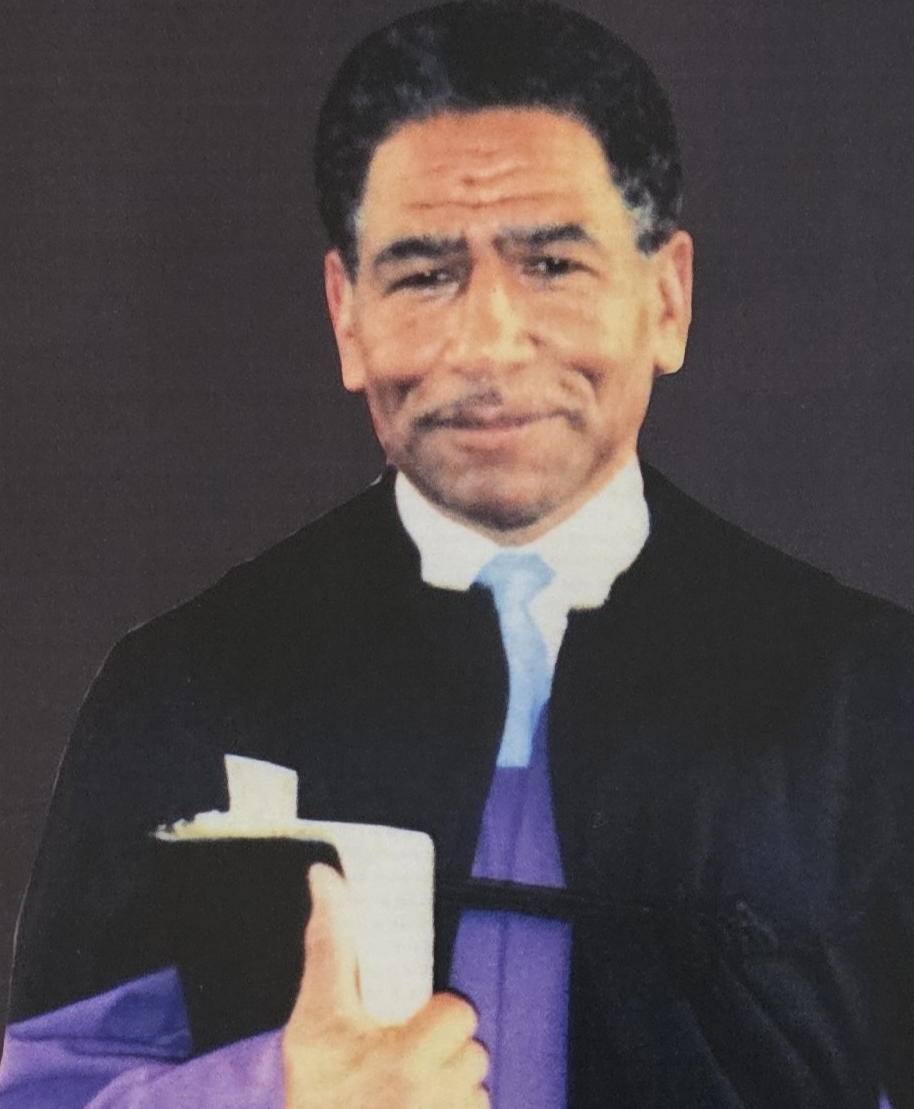
Rev. Starks ministered at Community Baptist Church in Chester from 1978 to 2009.
“His love for the Word of God encouraged him,” his family said in a tribute.
The Rev. Starks was direct and serious in the pulpit, and willing to “roll up his sleeves and fight your fight,” his daughter Rhonda said. He created a Presidents Council to better organize church affairs, celebrated when the church paid off the mortgage, and encouraged its use as a satellite location for the Manna Bible Institute.
He invited women and young pastors to preach, and induced the Rev. Jesse Jackson, Gov. Ed Rendell, Rep. Robert Brady, and other notables to address his congregation. His outreach and ministry were recognized in awards and honors from the Four Chaplains Memorial Foundation and other church groups.
In the community, he monitored schools and families for discord, and confronted street-corner problems he encountered. He spoke out often against violence, injustice, crime, and drug abuse.
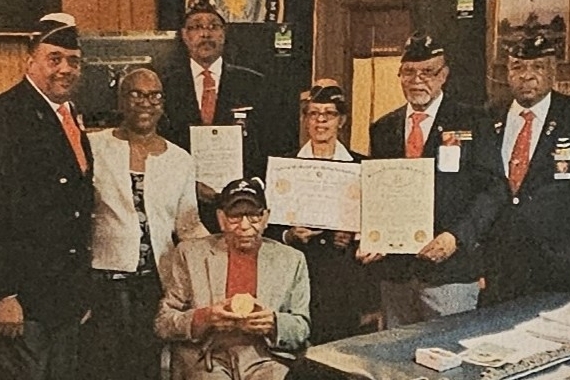
Rev. Starks (front center) is honored by the Philadelphia chapter of the National Montford Point Marine Association.
“He truly believed in the church being involved spiritually, socially, and politically,” his family said. “He truly had a heart for the people.” Earlier, he attended Tenth Memorial Baptist Church and studied theology at what is now Cairn University in Langhorne.
The Rev. Starks worked at Philco and Whitman’s Chocolates in Philadelphia after he left the Marines in 1952. He spent 25 years with the Philadelphia Parks and Recreation Department, earned service commendations from the Fairmount Park Commission, and left when he became pastor at Community Baptist. He retired from the church in 2009.
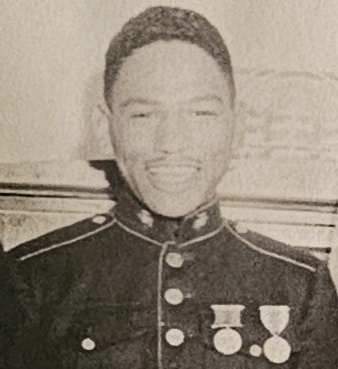
He enlisted in the Marines after high school in 1948 and became one of the celebrated Montford Point Marines in North Carolina. He spent four years in the Corps, sang with the Marine choir, rose to corporal, and was transferred to Philadelphia. He never left.
In 2012, he and other Montford Point Marines were awarded the Congressional Gold Medal for enduring racism, segregation, and discrimination during their military tours and still serving with honor and distinction.
Rev. Starks joined the Marines in 1948.
His mother’s cousin was a church pianist and singer, and she regularly took him along to sing at church in Nashville when he was young. Later, he took music classes in high school and studied voice with professor John W. Work III at nearby Fisk University.
In retirement, he volunteered at Eleanor C. Emlen Elementary School and elsewhere in the community. “He was very humble, generous, loving, and caring,” his daughter Rhonda said.
William Barton Starks was born Nov. 2, 1928. He grew up with two brothers, and it was obvious early that his singing voice was exceptional.
He met fellow singer Inez Baldwin at a recital, and they married in 1951. They had daughters Cheryl and Rhonda, and lived in North Philadelphia and West Oak Lane.
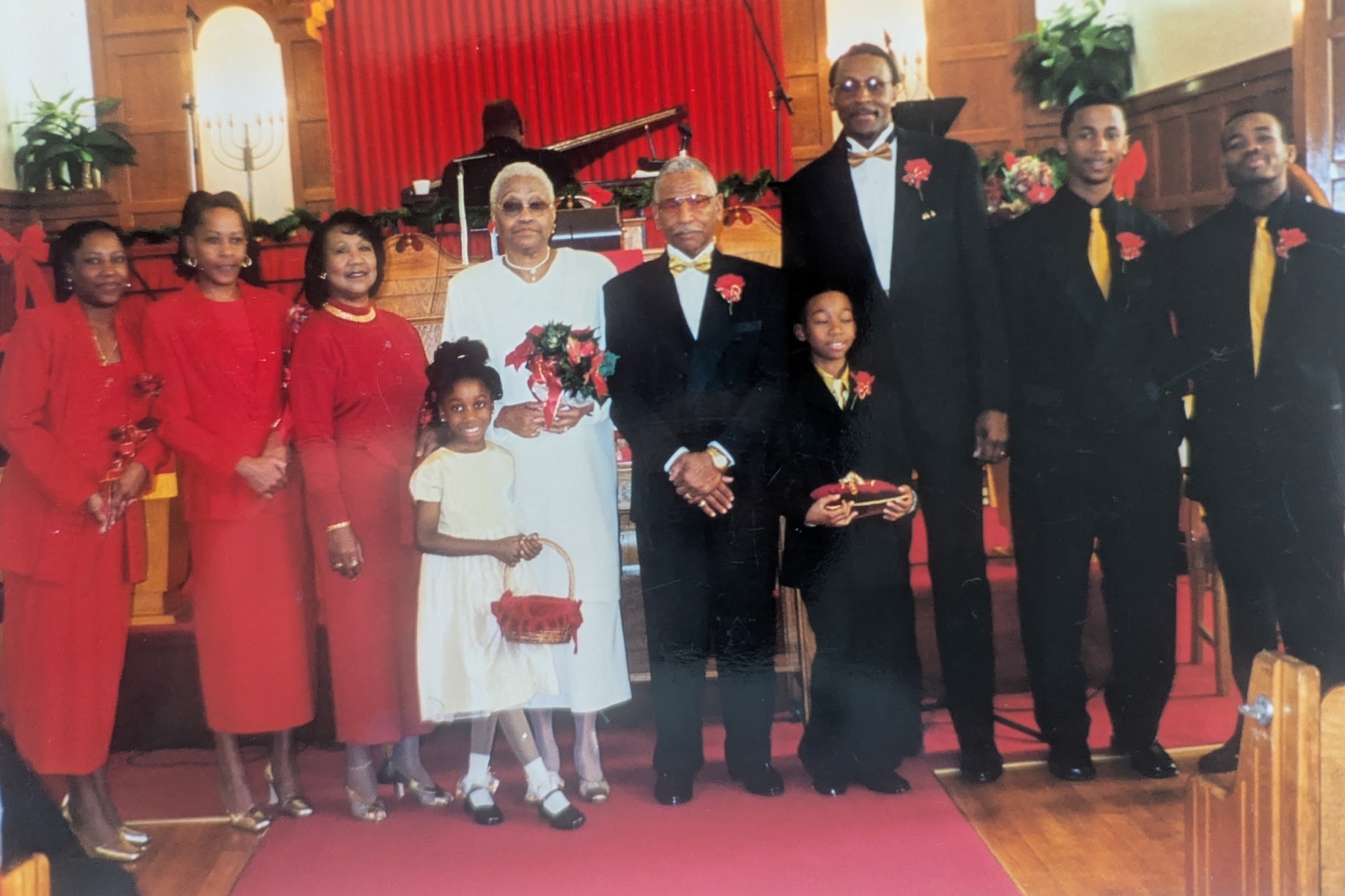
Rev. Starks (fifth from right) “would give you anything,” his daughter Cheryl said.
The Rev. Starks and his wife enjoyed annual summer cruises to the Bahamas. He was known as Big Daddy, his family said, “because he was like a father to so many people.” His wife died in 2016.
“He meant the world to me,” said his daughter Cheryl. “He would give you anything.”
His daughter Rhonda said: “He always told us he would do anything and everything for his family, and he did.”
In addition to his daughters, the Rev. Starks is survived by four grandchildren, five great-grandchildren, and other relatives. His brothers died earlier.
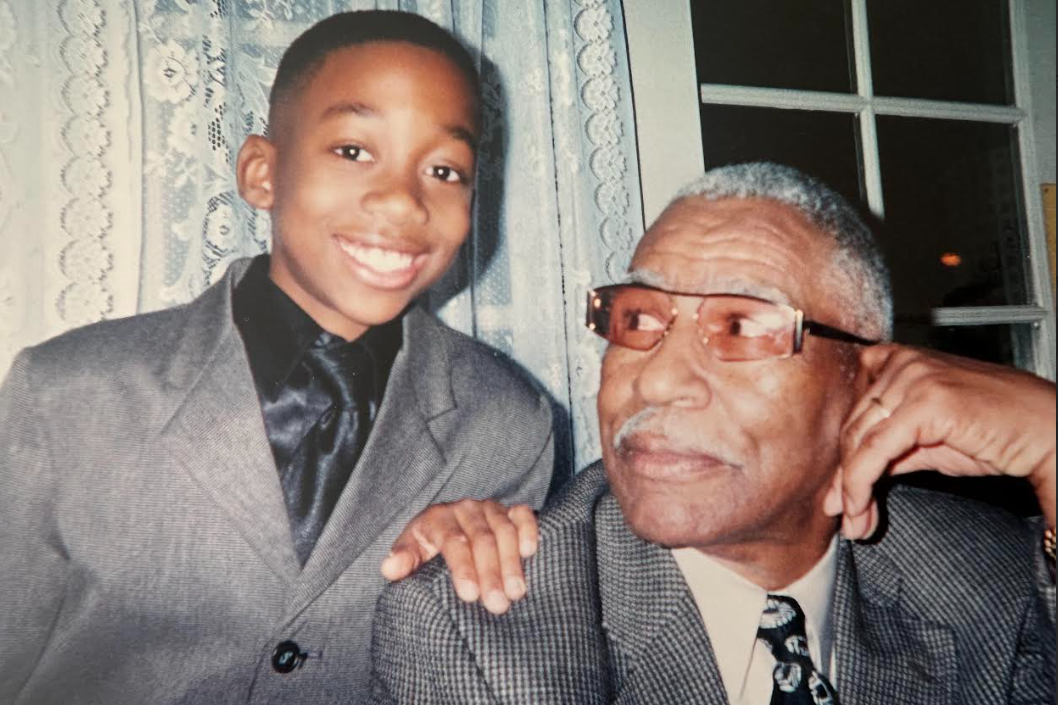
Rev. Starks (right) doted on his daughters and grandchildren.
Services were held on Oct. 17 and 18. Interment was Oct. 23 at Washington Crossing National Cemetery.