Category: Philadelphia News

  • Pa. officials push back as Trump targets Philly in call to nationalize elections ahead of 2026 midterms

    Pa. officials push back as Trump targets Philly in call to nationalize elections ahead of 2026 midterms

    Pennsylvania Secretary of State Al Schmidt on Wednesday rejected President Donald Trump’s false claims about voter fraud in the state as Trump targeted Philadelphia in his push to nationalize elections.

    The state’s top election official said Trump’s proposal would violate the Constitution, which he noted clearly gives states exclusive authority to administer elections.

    “Pennsylvania elections have never been more safe and secure,” said Schmidt, who served as Philadelphia’s Republican city commissioner in 2020, when the city was at the center of Trump’s conspiracy theories.

    “Thousands of election officials — Democrats, Republicans, and Independents alike — across the Commonwealth’s 67 counties will continue to ensure we have free, fair, safe, and secure elections for the people of Pennsylvania,” he said in a statement.

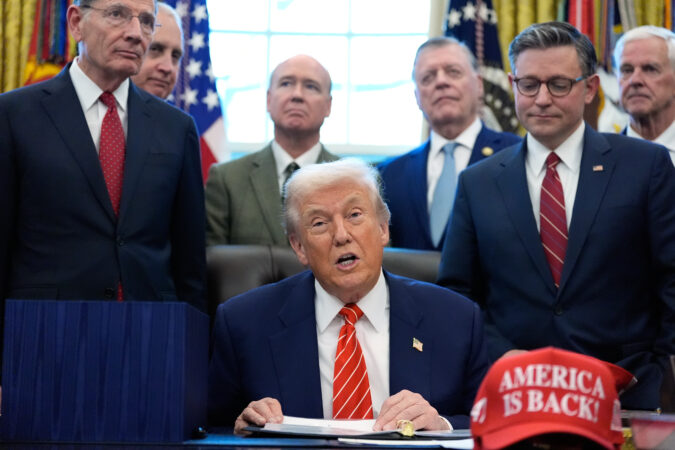
    Speaking to reporters Tuesday in the Oval Office, Trump cited Philadelphia, Detroit, and Atlanta as examples of where the federal government should run elections. He singled out three predominantly Black cities in swing states but offered no evidence of voter fraud or corruption to support his claims of a “rigged election.”

    “Take a look at Detroit. Take a look at Pennsylvania, take a look at Philadelphia. You go take a look at Atlanta,” Trump said. “The federal government should get involved.”

    Philadelphia has been a frequent target of Trump’s false claims of election fraud for several years, going back to his efforts to overturn his loss in the 2020 election. City and state officials have persistently pushed back on those claims, and there is no evidence that elections in the city have been anything but free and fair.

    Trump is advocating for taking control of elections in 15 states, though his administration has not named which ones.

    “The Republicans should say, ‘We want to take over,’” Trump said in December. “We should take over the voting, the voting in at least many — 15 places. The Republicans ought to nationalize the voting.”

    But, Pennsylvania officials and experts noted, he lacks the power to do so unilaterally.

    Congress has limited power to set rules for elections, but the U.S. Constitution grants control of elections to the states.

    “The president has zero authority to order anything about elections,” said Marian Schneider, an election attorney who was Pennsylvania’s deputy secretary of elections during the 2016 election.

    White House press secretary Karoline Leavitt claimed to reporters early Tuesday the president was referring to the SAVE Act, legislation proposed by House Republicans require citizens to show documents like a passport or driver’s license to register to vote.

    But Trump didn’t mention the legislation Tuesday.

    Trump will face an uphill battle in nationalizing elections as even some Republicans in Congress are already pushing back. Senate Majority Leader John Thune (R., S.D.) told reporters Tuesday he disagreed with Trump on any attempt to nationalize elections, calling it “a constitutional issue.”

    “I’m not in favor of federalizing elections,” Thune said.

    Still, Trump’s comments raised alarm as his administration continues to sow doubt in the nation’s elections.

    “This is clearly a case of Trump trying to push the boundaries of federal involvement in election administration because he has a problem with any checks on his power, democracy being one of them,” said Montgomery County Commissioner Neil Makhija, an attorney and a Democrat who chairs the Montgomery County Board of Elections.

    Trump’s comments came a week after the FBI seized ballots and voting records from the 2020 election from the Fulton County election hub in Georgia. In a statement, Fulton County Commissioner Marvin Arrington Jr. said the county will file a motion in the Northern District of Georgia challenging “the legality of the warrant and the seizure of sensitive election records, and force the government to return the ballots taken.”

    Lisa Deeley, a Democratic member of the Philadelphia city commissioners, who oversee elections, accused Trump of trying to distract from federal agents killing two civilians in Minnesota last month.

    “We all know the President’s playbook by now. His remarks on elections are an effort to change the conversation from the fact that the Federal Government is killing American citizens in Minneapolis,” Deeley said in a statement.

    Trump has been making similar claims since 2016, when he erroneously blamed fraud for costing him the popular vote.During a debate with his 2020 opponent, Joe Biden, Trump said, “Bad things happen in Philadelphia, bad things,” viewed at the time as an attempt to sow doubt about the election results and mail voting during the peak of the COVID-19 pandemic.

    Despite losing to Biden in Pennsylvania in 2020 by a little more than 80,000 votes, Trump has repeatedly claimed he actually won, lying about mail-in votes “created out of thin air” and falsely stating there were more votes than voters.

    “Every single review of every single county in the commonwealth has come back within a very small difference, if any, of the results reported back in 2020,” Kathy Boockvar, who served as Pennsylvania’s secretary of state during the 2020 election, told The Inquirer in 2024.

  • Penn’s October data breach impacted fewer than 10 people, despite hackers’ claims it was 1.2 million

    Penn’s October data breach impacted fewer than 10 people, despite hackers’ claims it was 1.2 million

    The data breach that anonymous hackers claimed had compromised data for 1.2 million students, donors, and alumni at the University of Pennsylvania actually impacted fewer than 10 people, according to a legal filing in a proposed class action lawsuit against Penn over the breach.

    A Penn source confirmed Tuesday that fewer than 10 people received notifications that their personal information had been affected in the Oct. 31 incident.

    “Penn conducted a comprehensive review of the downloaded files to determine whose information may have been involved,” the university said in a statement. “That review is now complete. Penn sent notifications to the limited number of individuals whose personal information was impacted as required by applicable notification laws.”

    A second data breach weeks later involving Oracle E-Business Suite was much more widespread and affected more than 100 companies. Penn’s notifications to impacted individuals in that incident were more widespread, though the school hasn’t released the number.

    In the first case, Penn quickly said it could not verify the hackers’ claim about the number of people whose records were obtained. The incident drew widespread attention because the hackers sent an offensive email, which claimed to be from Penn to alumni and students.

    “We have terrible security practices and are completely unmeritocratic,” the email read. “Please stop giving us money.”

    The school hired cybersecurity specialists to help investigate the breach, which accessed systems related to development and alumni activities. Penn said at the time it was taking steps to prevent future attacks and would be instituting mandatory training.

    A series of proposed class-action lawsuits were filed in U.S. Eastern District Court following the hack, alleging that Penn failed to protect users’ sensitive data and in turn allowed it to fall into “the hands of cybercriminals who will undoubtedly use [the information] for nefarious purposes.”

    A federal district judge consolidated 18 lawsuits in December into a single proposed class-action case, but eight members of the Penn community who filed lawsuits dropped out in recent weeks.

    The exodus of plaintiffs is the result of Penn’s disclosure to attorneys involved with the litigation that fewer than 10 people were impacted by the breach, and none of those who sued were among them, attorneys for the plaintiffs said in a Monday court filing.

    The small impact of the breach could be detrimental for the cases if they continue on their own, the attorneys said. They proposed incorporating the remaining cases with the Oracle-breach litigation that is ongoing in Western Texas District Court.

    Another faction of attorneys involved in the case disagree.

    A judge is expected to decide which attorneys will lead the litigation and coordinate among all the litigants, a decision that could determine whether the case will be heard in Philadelphia or Texas.

  • 300 ‘ambassadors’ to chip away at ice on Philly’s crosswalks

    300 ‘ambassadors’ to chip away at ice on Philly’s crosswalks

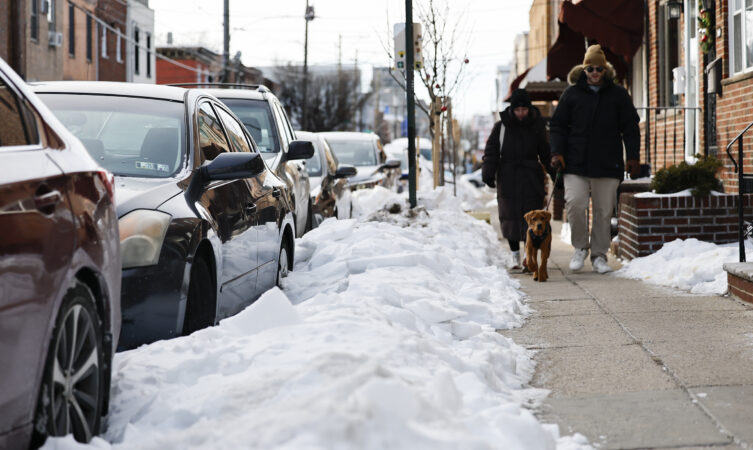
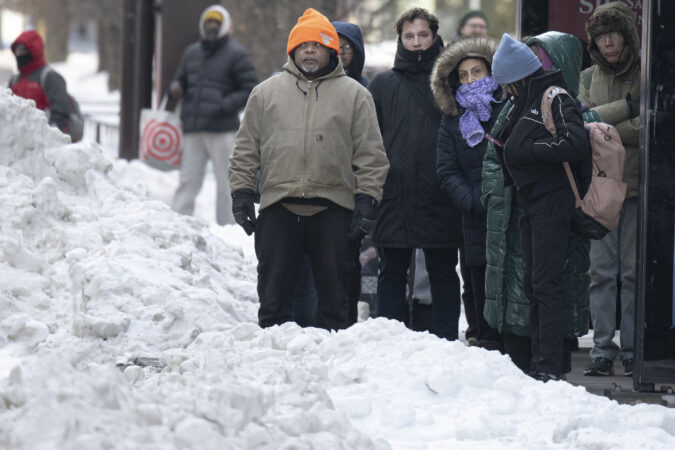
    Those stubbornly frozen crosswalks with mounds of snow and ice across Philadelphia are getting chipped away with the assist of a 300-person workforce, starting Tuesday.

    The 300 ambassadors, as they are called, are tasked with manually breaking up ice at crosswalks and streets in residential neighborhoods, according to Mayor Cherelle. L Parker.

    “We are not resting and stopping until every street in the city of Philadelphia is walkable and drivable, and that people feel it when they are driving it and they see it in their neighborhoods,” she said Monday, highlighting the nonstop work municipal workers had been doing since the largest snowfall in a decade blanketed the city with 9.3 inches on Jan. 25.

    The dayslong cold snap that followed, however, has complicated dig-out efforts for the city and led to widespread complaints from residents. Photos of commercial corridors with piles of ice on crosswalks, unplowed side streets, untreated SEPTA bus and trolley stops, and unshoveled sidewalks next to public parks and recreation centers flooded social media after the storm as the city asked for patience.

    Still, Parker said Monday that the city has melted 4.7 million pounds of snow, put down 15,000 tons of salt on streets and roadways, and treated at least 85% of streets at least one time.

    The city has deployed snowplows, compactors, front-end loaders, backhoes, and a snow melter that came from Chicago, the mayor said. And just this weekend, the city made a “coordinated pedestrian safety push,” working across city agencies as well as SEPTA and the Philadelphia School District to clear bus stops, school crossings, crosswalks, and ADA ramps.

    The Philadelphia Streets Department has also tapped into its Future Track Program for snow-removal efforts. The trainees are typically at-risk young adults who are not enrolled in higher education and are unemployed. They get job experience, as well as other services, and they help in beautification projects. In the snow cleanup, Parker said, the trainees cleared more than 1,600 ADA ramps.

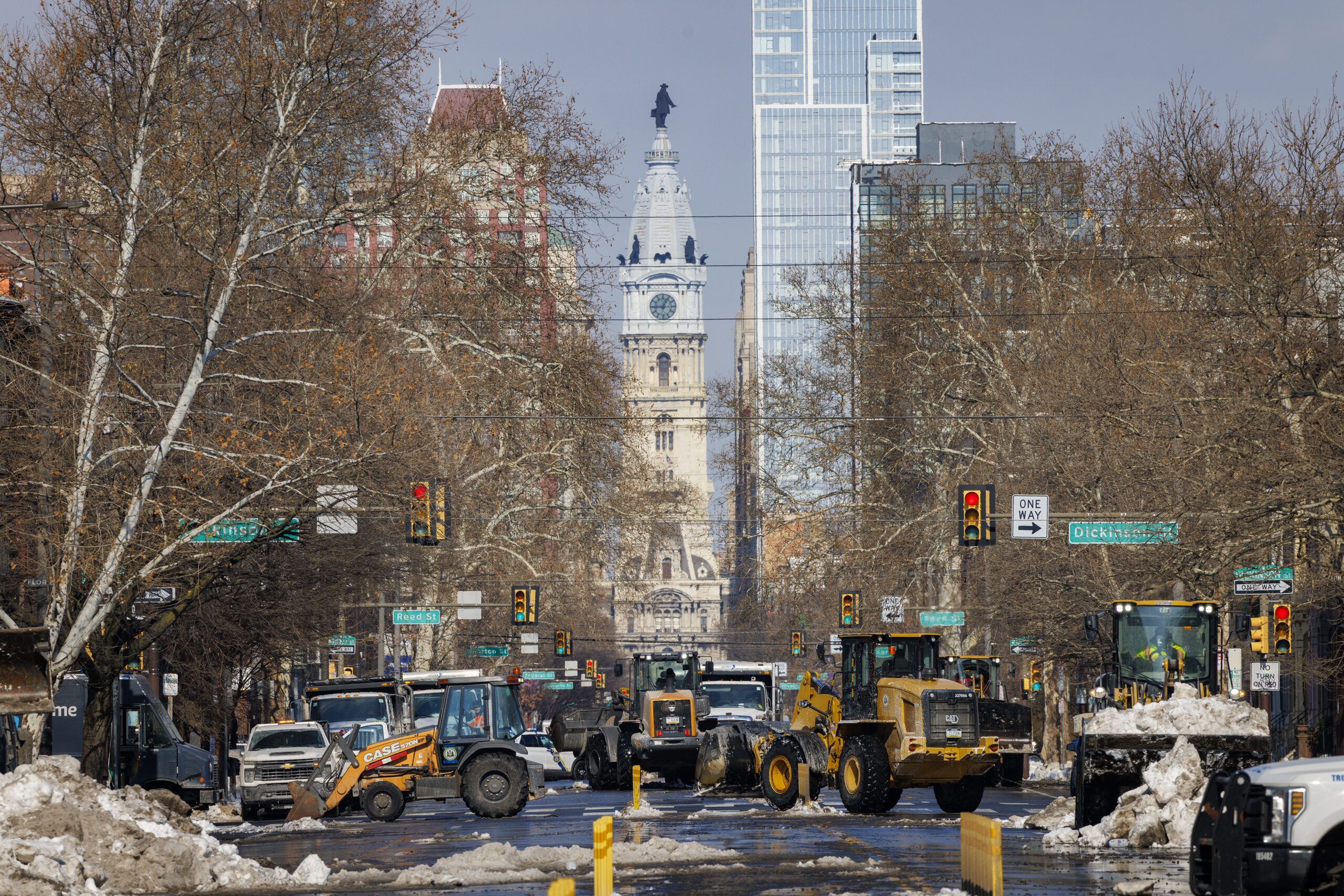
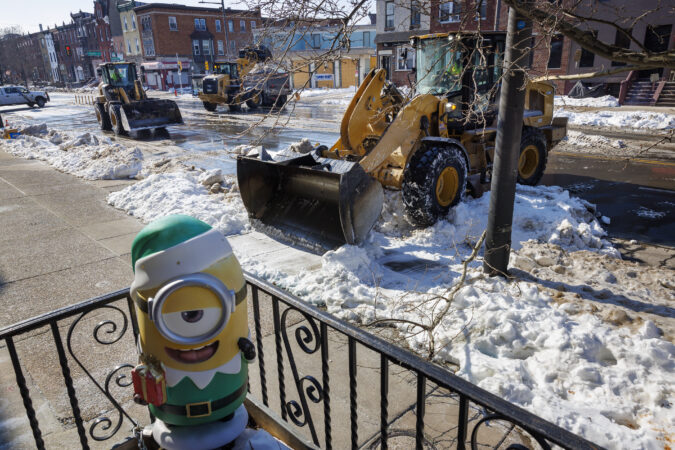
    Heavy equipment clearing snow along S. Broad Street at Dickinson Street.

    Carlton Williams, the city’s director of clean and green initiatives, said the hundreds of workers aiding in the cleanup have made significant progress in areas like North Philadelphia; South Philadelphia, which was the epicenter of 311 complaints days after the snowfall; and Manayunk, which posed a challenge because of its hills.

    He noted the complexity of the city’s narrow residential streets, which required bringing in specialized equipment, and where he previously said cleanup was further complicated by illegal parking.

    Throughout the week, the city had also conducted lifting operations where machines dumped snow and ice into dumpsters to be hauled to storage sites across the city.

    A Facebook video on the mayor’s social media page, along with responses to clips of the dig-out update shared online, offered a glimpse of how residents feel. Parker, many said rising to her defense, cannot control the freezing temps. Others were less forgiving, listing their blocks as forgotten sections in the cleanup.

    Philly is far from alone in the continued cleanup efforts hampered by below-freezing temperatures. At the request of Washington, D.C., officials, 50 National Guard members were deployed over the weekend to help clear schools of snow. Baltimore was able to get a snow melter on loan from D.C. this week, a machine officials told WBAL-TV the city had not needed in a decade.

    Even New York Mayor Zohran Mamdani, who received generally good marks on cleanup from the media in the early days after the storm, was pressed by reporters Monday on lingering snowbanks and delays in trash pickup.

    In Philadelphia on Tuesday, the city conducted a snow-clearing operation along a 1.5-mile stretch of Broad Street through 6 p.m., towing cars along the street in South Philly to make way for equipment on the major corridor.

    City workers received the slightest respite as they continued snow-clearing efforts as temperatures reached the mid-30s Monday and Tuesday.

  • Carl W. Schneider, longtime celebrated attorney and former SEC adviser, has died at 93

    Carl W. Schneider, longtime celebrated attorney and former SEC adviser, has died at 93

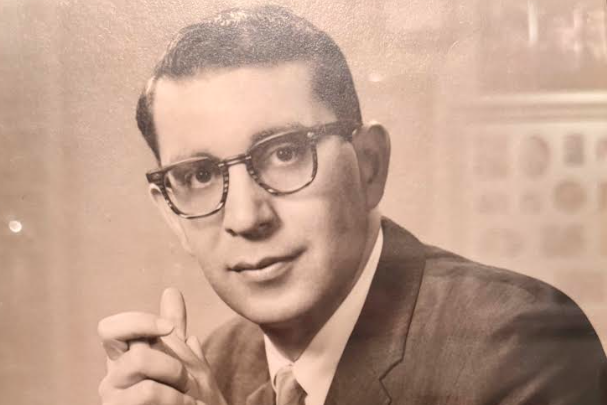
    Carl W. Schneider, 93, of Philadelphia, retired longtime attorney at the old Wolf, Block, Schorr, & Solis-Cohen law firm, former special adviser to the Securities and Exchange Commission, visiting associate professor at what is now the University of Pennsylvania Carey Law School, writer, poet, mentor, and volunteer, died Thursday, Dec. 18, of pneumonia at Pennsylvania Hospital.

    Mr. Schneider was an expert on corporate, business, and securities law, and he spent 42 years, from 1958 to his retirement in 2000, at Wolf, Block, Schorr, & Solis-Cohen in Philadelphia. He was adept at handling initial public offerings and analyzing stock exchange machinations, and he became partner in 1965 and chaired the corporate department for years.

    Although he did not plan to specialize in securities law after graduating from Penn’s law school in 1956, Mr. Schneider told the American Bar Association in 1999: “I found this type of work to be challenging, gratifying, stimulating, and educational.”

    He spent most of 1964 on leave from the law firm as a special adviser to the Securities and Exchange Commission’s Division of Corporation Finance in Washington. His recommendations to SEC officials regarding its public-offering process, disclosure system, civil liability rules, and arbitration procedure, many of which were ahead of their time, eventually led to modernization and reforms in the administration of federal securities laws. “I was cast in the role of the constructive critic,” he said in 1999.

    He chaired committees for the Philadelphia and American Bar Associations and was active in leadership roles with the American Law Institute and other groups. He clerked for Supreme Court Justice Harold H. Burton and Judge Herbert F. Goodrich of the U.S. Court of Appeals for the Third Circuit for two years after graduating from law school.

    He also taught classes as a visiting associate professor at Penn’s law school and lectured extensively elsewhere on the continuing legal education circuit. “I am aware of two personality traits that have shaped my career,” he said in 1999, “a need to fix things and a love of teaching.”

    He spent the 1978-79 school year as head of Penn’s Center for Study of Financial Institutions and said in 1999 that he would have taught full time had he not enjoyed his legal work so much. “I was a practitioner,” he said, “and I tried to give my classes useful training to do what most practitioners do.”

    Mr. Schneider wrote, cowrote, and edited dozens of scholarly articles, books, and pamphlets, including the celebrated Pennsylvania Corporate Practice and Forms manual in 1997. He also penned poetry, and used this stanza to open a chapter about boilerplate clauses in the Pennsylvania Corporate Practice and Forms manual:

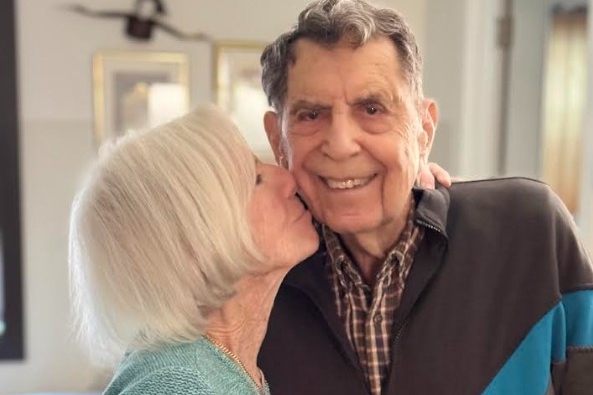
    Mr. Schneider and his wife, Mary Ellen, were inseparable for 68 years.

    “The ending stuff gets little thought/Like notice, gender, choice of laws/If badly done you may get caught/With a provision full of flaws.”

    He volunteered with what is now Jewish Family Service, the Jewish Federation of Greater Philadelphia, Abramson Senior Care, and Congregation Rodeph Shalom. He mentored countless other lawyers and students, and agreed in 1972 to a request by The Inquirer’s Teen-Age Action Line to be interviewed in his office for a high school student’s research project.

    “He was often described as brilliant, humble, a dry wit, and a great listener,” his family said in a tribute. “He gave everyone he spoke to the same time, attention, and respect.”

    He was quoted often in The Inquirer and lectured about legal matters at conferences and panels. He earned several service and achievement awards and said in 1999: “I suppose I am one of those compulsives who cannot see something in the world important to him that is broken without feeling the need to repair it.”

    Mr. Schneider and his wife, Mary Ellen, married in 1957.

    Carl William Schneider was born April 27, 1932, in the Wynnefield section of Philadelphia. His family later moved to Elkins Park, Montgomery County, and he graduated from Cheltenham High School in 1949.

    He knew he wanted to be a lawyer, like his father and grandfather, when he was young and said in a 2014 video interview at Penn that school was his favorite place. He earned a bachelor’s degree at Cornell University in 1953 and served on the law review at Penn.

    He met Mary Ellen Baylinson through a mutual friend, and they married in 1957. They had sons Eric, Mark, and Adam and a daughter, Cara, and lived for years in Elkins Park. He and his wife moved to Center City in 2005.

    Mr. Schneider enjoyed reading, bird-watching, photography, swimming, tennis, and springtime strolls through Rittenhouse Square. His favorite song was “The Gambler” by Kenny Rogers.

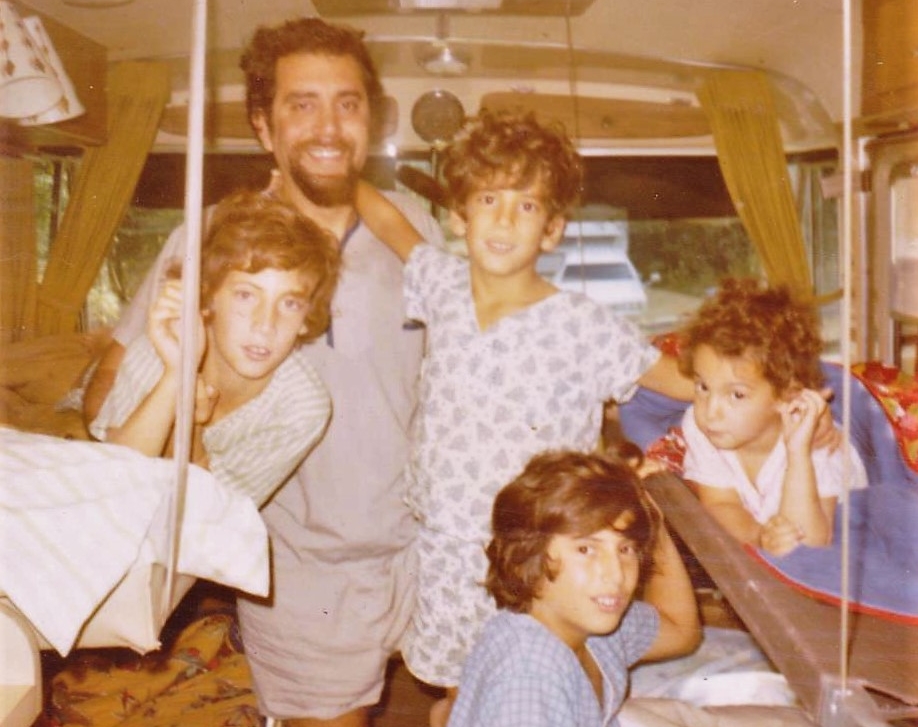
    Mr. Schneider drove his family across the country in a motorhome he nicknamed Herman.

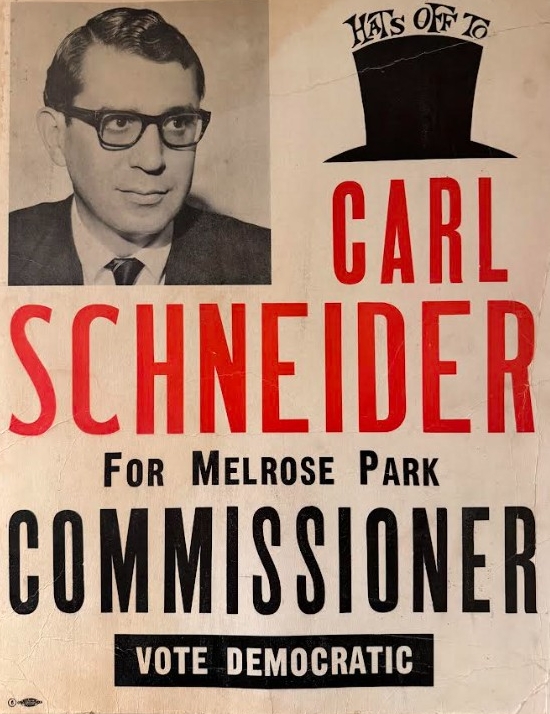
    He collected old-fashioned scales, spent quality time with family and friends on Long Beach Island, N.J., and drove cross-country on a family road trip in a motorhome he nicknamed Herman. He ran unsuccessfully for commissioner in Melrose Park in the 1960s.

    He made sure to be home every night for dinner and drew smiley faces inside the capital C when he signed his name. “He never judged, never overreacted,” his daughter said.

    His son Adam said: “He was a gentle man but forthright and direct.” His son Mark said: “He had a moral code on how to live a life and never deviated from it.”

    His son Eric said: “He left the world a better place.”

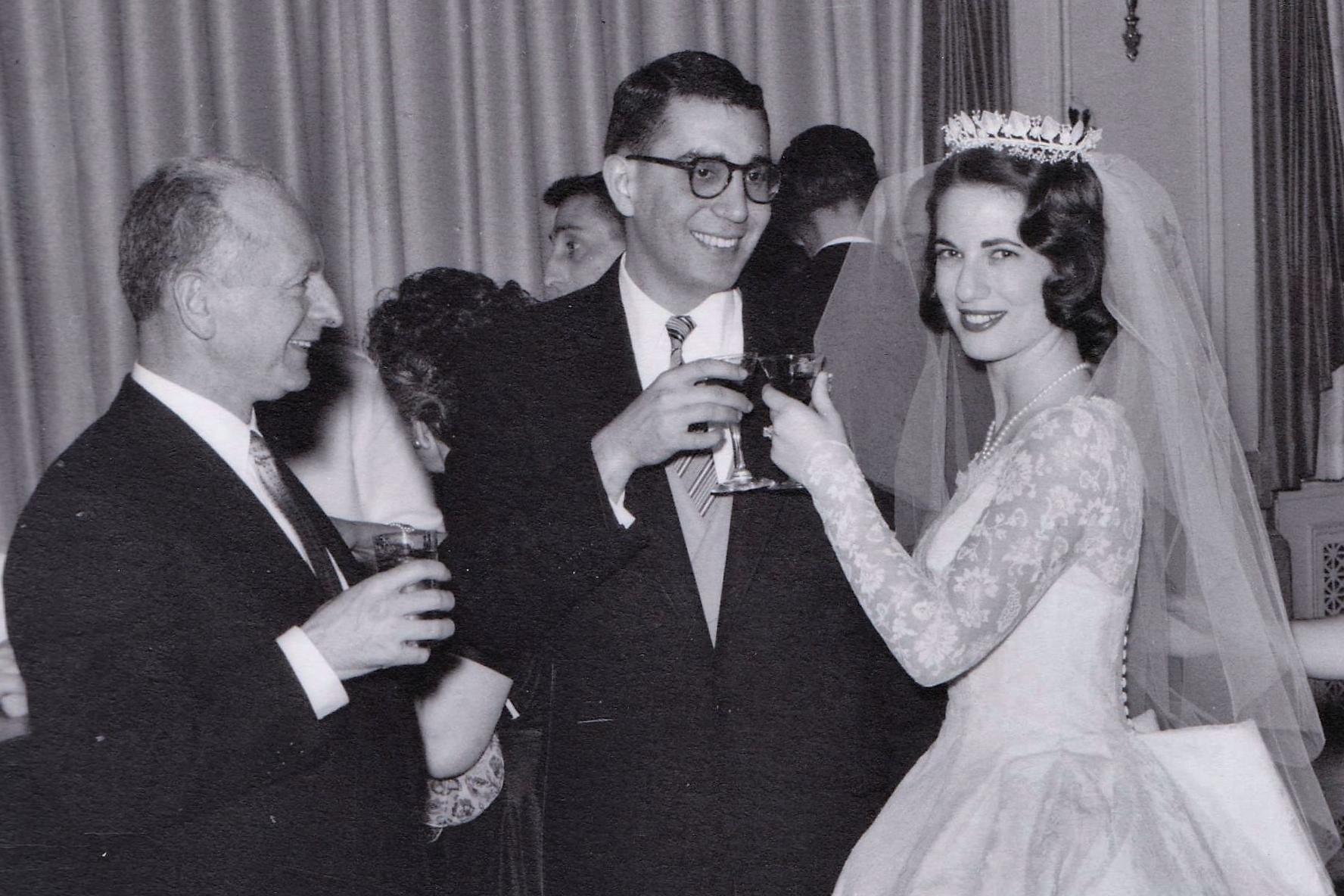
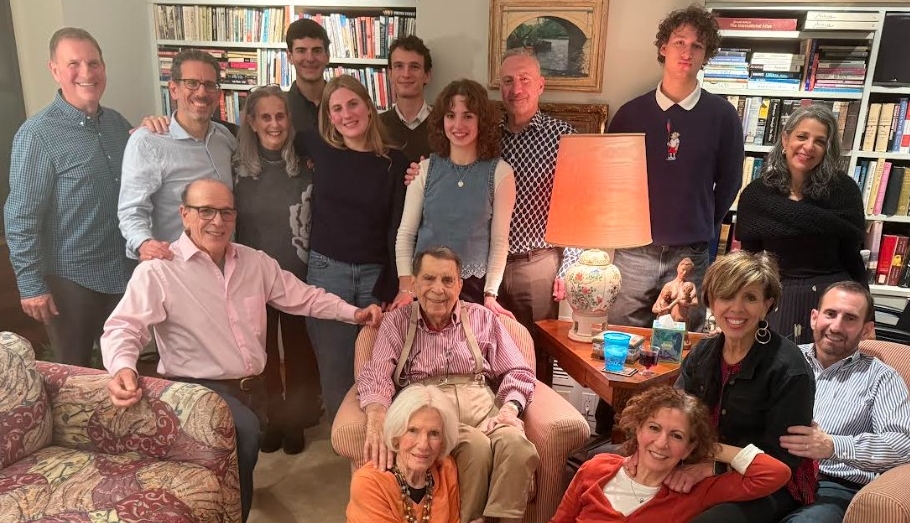
    Mr. Schneider (center) and his family spent many Thanksgivings together.

    In addition to his wife and children, Mr. Schneider is survived by three grandchildren; a sister, Julie; and other relatives.

    Services were held Monday, Dec. 22.

    Donations in his name may be made to Congregation Rodeph Shalom, 615 N. Broad St., Philadelphia, Pa. 19123.

    Mr. Schneider was interested in civic and community issues as well as legal affairs.
  • Temple student arrested for anti-ICE protest at Minnesota church in case involving journalist Don Lemon

    Temple student arrested for anti-ICE protest at Minnesota church in case involving journalist Don Lemon

    A 21-year-old Temple University student was arrested Monday on charges that he conspired with nine other people, including journalist Don Lemon, to interfere with the First Amendment rights of worshipers during a Jan. 18 anti-ICE protest at a church in St. Paul, Minn.

    Jerome Richardson, 21, a senior at Temple who is a native of St. Paul, turned himself in Monday morning to federal authorities in Philadelphia, according to a post on a GoFundMe page created to pay for his legal defense. A photo was posted showing Richardson entering the United States Custom House with several federal law enforcement officers apparently waiting for him at the entrance.

    The arrests of Richardson and Ian Davis Austin, an Army veteran from Montgomery County, were announced at 9:10 a.m. on X by Attorney General Pam Bondi. Austin was arrested Friday.

    “If you riot in a place of worship, we WILL find you,” Bondi wrote. “We have made two more arrests in connection with the coordinated attack on Cities Church in St. Paul, Minnesota: Ian Davis Austin and Jerome Deangelo Richardson.”

    The arrest of Don Lemon was made public on Friday.

    The protesters went to Cities Church because a pastor there is also a U.S. Immigration and Customs Enforcement official.

    Lemon entered the church while livestreaming and said repeatedly: “I’m not here as an activist. I’m here as a journalist.” He described the scene before him, and interviewed churchgoers and demonstrators.

    A magistrate judge had rejected prosecutors’ initial bid to charge the veteran journalist. Lemon was charged, as were Richardson and seven others, by grand jury indictment last Thursday.

    The indictment described the protest as a “coordinated takeover-style attack” on the church that caused people to flee in fear. Protesters chanted “ICE out!” and “Hands up! Don’t shoot!” The indictment quotes Lemon, who in the moment described the scene as “traumatic and uncomfortable.”

    Before his arrest, Richardson shared a video online in which he said he feared for his safety and needed help to pay legal bills.

    Richardson said he assisted Lemon “by helping with logistics and connecting him with local contacts.”

    “Don was reporting on the situation,” Richardson said, adding that he was proud to help.

    “As a consequence of this support, I am now being targeted by Trump and the federal administration,” Richardson said, adding that he was proud of the other defendants in the case.

    “This is the price of being unapologetic about humanity and love of Christ,” he said.

    Richardson, who traced his activism to the murder of George Floyd in 2020, said he still hoped to complete his degree and graduate from Temple in May.

    In a statement, Temple University said it was aware of media reports about the arrest of a student.

    “We understand that the circumstances surrounding this matter are developing. Out of respect for the privacy of the student and the ongoing legal process, the University will not comment on the specifics,” the statement says.

    “As we’ve shared previously, we deeply value the First Amendment, including the rights of free speech, a free press, and the freedom to exercise religion,” the statement says. “We encourage and educate our students to engage thoughtfully and lawfully to advocate for their beliefs and values, raise awareness and contribute to constructive dialogue.”

    This article contains information from the Associated Press.

  • Philadelphia Parking Authority says citywide enforcement resumes on Tuesday

    Philadelphia Parking Authority says citywide enforcement resumes on Tuesday

    The Philadelphia Parking Authority will begin enforcing all parking regulations and resuming the towing and impoundment of illegally parked vehicles on Tuesday, the authority said.

    PPA enforcement of meter and time-limit violations has been relaxed since the night before the Jan. 25 snow and sleet storm, when the city declared a snow emergency. Only safety violations, such as parking next to fire hydrants, were enforced.

    Enforcement remained limited because the city still had piles of curbside snow throughout the city.

    Full enforcement will begin at 8 a.m. Tuesday, the authority said. Towing and impoundment of illegally parked vehicles also will resume Tuesday.

    The snow removal efforts are continuing, with the Streets Department announcing a temporary parking ban along a 1½-mile stretch of South Broad Street that will start at 7 a.m. Tuesday.

  • Dozens of surveillance videos and cell phone data led Philadelphia police to Kada Scott’s accused killer

    Dozens of surveillance videos and cell phone data led Philadelphia police to Kada Scott’s accused killer

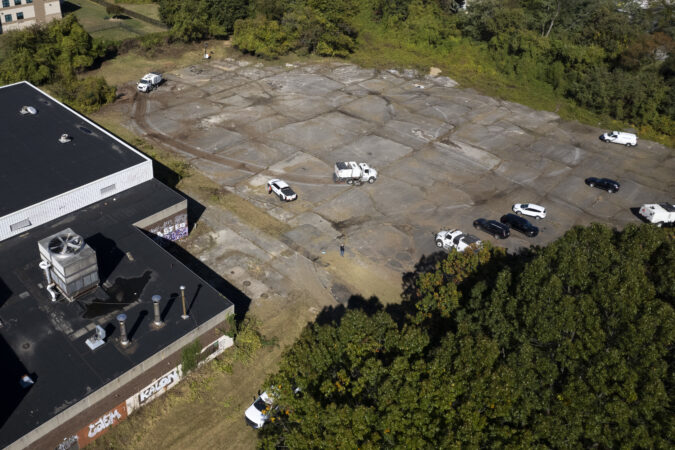
    Two weeks after Kada Scott vanished, Philadelphia Police Detective Joseph Cremen stood over a patch of disturbed ground in a wooded stretch near an abandoned school in East Germantown.

    He pushed aside a layer of loose twigs and pressed a six-foot branch into the soil. It sank only a few inches before stopping short.

    That, Cremen testified Monday, was when he realized he’d found a shallow grave.

    The Oct. 18 discovery ended a two-week search for Scott, 23, who disappeared on Oct. 4 after leaving the Chestnut Hill senior living center where she worked. An autopsy later determined that she had been shot in the head.

    Cremen testified that the location of the grave was not discovered at random, but emerged from weeks of reviewing surveillance footage, digital data, and tips that helped authorities trace a path from the Awbury Arboretum to the wooded area where Scott was buried — and that linked her killing to Keon King, who is charged with murder, abuse of a corpse, and related crimes.

    During a preliminary hearing Monday that stretched nearly five hours, prosecutors methodically laid out that evidence, replaying video after video on a courtroom TV as detectives testified about how they tracked Scott’s final movements and King’s efforts, they say, to conceal her death.

    At the conclusion of the hearing, Common Pleas Court Judge Karen Simmons ruled that prosecutors had presented sufficient evidence for the case to proceed and ordered it held for court.

    An attorney for Scott’s parents, Brian Fritz, called the ruling a “first step” in getting justice for their daughter.

    “Kada Scott’s family is grieving,” he said. “In fact, their grief is unimaginable. But, so is their commitment for accountability and justice for Kada.”

    Detectives testified that surveillance cameras at the Awbury Arboretum recorded a silver hatchback vehicle pulling into a parking lot less than an hour before Scott’s Apple Watch transmitted its final location at 1:14 a.m. on Oct. 5. Footage from the same cameras appeared to show two men removing an object from the car and walking in the direction investigators later followed to Scott’s burial site.

    An anonymous tip helped lead investigators into the woods nearby the Ada H.H. Lewis Middle School in East Germantown.

    Kim Matthews (second from left), mother of Kada Scott, holds a image of her daughter before a Domestic Violence Awareness walk at the Philadelphia Art Museum on Oct. 26, 2025.

    Additional street cameras, prosecutors said, captured the same hatchback parked in a driveway behind homes on the 2300 block of 74th Avenue. Moments later, video showed a sudden flash of light and flames as the car was set on fire, destroying what authorities believe may have been physical evidence inside.

    Investigators did not rely on any single camera, prosecutors emphasized. Instead, detectives testified that they reconstructed the timeline by stitching together footage from dozens of surveillance systems across the city. That effort, they said, led them to King, 21.

    Street cameras recorded a 1999 gold Toyota Camry registered to King traveling in the vicinity of the arboretum around the same times activity was captured there, they said. Police also tracked the movements of one of Scott’s Apple devices after she left work, comparing its location data with license plate readers and surveillance video, detective Robert Daly testified.

    “Everywhere this device went, Mr. King’s car went,” Daly said.

    Cell phone records presented at the hearing showed that King and Scott had exchanged text messages in the hours before her disappearance, Daly testified.

    The last message Scott sent asked King to call her when he arrived at the senior living center. The final incoming call on her phone, at 10:12 p.m. on Oct. 4, was from King, according to police.

    Before Simmons ruled, King’s defense attorney, Robert Gamburg, argued that the prosecution’s case relied too heavily on circumstantial evidence and failed to place his client directly at the scene of the killing.

    The surveillance footage, he said, did not clearly identify any faces and could not establish who was inside and around the vehicles.

    He also pointed to testimony from a senior living center employee who said she saw Scott leave work that night and noticed a dark-colored Jeep parked outside the facility, not a silver hatchback.

    “There is absolutely nothing connecting this young man to what happened to Ms. Scott,” Gamburg said, urging the judge to dismiss the case.

    “At this level, with this quantum of evidence, for this type of case, it should be discharged today,” he said.

    Assistant District Attorney Ashley Toczylowski countered that investigators had assembled a detailed and corroborated account of Scott’s final hours, one that showed not only King’s proximity to her disappearance, she said, but also steps taken afterward to destroy evidence.

    “This isn’t coincidence,” she told the court. “It’s corroboration.”

  • Parking restrictions planned for snow removal Tuesday on South Broad Street

    Parking restrictions planned for snow removal Tuesday on South Broad Street

    Parking restrictions along a 1½-mile stretch of South Broad Street will take effect at 7 a.m. Tuesday so the Streets Department can begin removing piles of curbside snow, the city said.

    Snow removal has gone slowly since the storm more than a week ago because of the ongoing deep freeze across the region.

    Parked vehicles must be moved from Broad between Washington and Oregon Avenues ahead of 7 a.m. to clear the way for a Streets Department “lifting operation” that will remove the snow, the city said.

    Free off-street parking will be available at lot U near Citizens Bank Park between 7 a.m. and 6 p.m. Tuesday, the city said. All vehicles must be moved from the parking lot by 6 p.m.

    The operation, which will involve excavators and loaders, may temporarily disrupt traffic, the city said.

    “The Streets Department urges everyone traveling near this lifting operation, and others taking place across Philadelphia, to plan extra travel time, slow down, and help keep our crews safe by giving them plenty of space to do their work,” the department said.

  • It’s ‘Groundhog Day’ in Philly this week as snow and ice persist

    It’s ‘Groundhog Day’ in Philly this week as snow and ice persist

    If it appears that the tenacious meringue of snow and ice that landed on the region two weekends ago hasn’t budged, it hasn’t.

    Among Philadelphia winters, this one is approaching a rarefied status.

    Not long after Phil predictably saw his shadow in Punxsutawney, the National Weather Weather Service contractor at Philadelphia International Airport reported a snow depth of six inches on Monday.

    That marked the eighth consecutive day of a snow cover of at least six inches, a streak unmatched since February 2010 — which included a five-day period in which 44 inches of snow had fallen.

    And what’s out there now may get a fresh frosting on Tuesday night that could affect the Wednesday morning commute, and perhaps snow squalls on Friday with the approach of another Arctic front as the freezer reopens.

    Don’t be surprised if next Monday morning looks a lot like this one.

    “The snowpack is not going anywhere,” said Amanda Lee, meteorologist at the weather service office in Mount Holly.

    What explains the durability of the snow cover

    The primary factor locking in the regional glacier has been the obvious — the cold. Sunday marked the ninth consecutive day that temperatures failed to surpass freezing, the longest stretch since 2004. The temperature did reach above freezing at Philadelphia International Airport on Monday.

    Temperatures since Jan. 24 have averaged 14 degrees below normal in Philly. January temperatures ended up finishing 2.2 degrees below normal, even though the month had a nine-day warm spell in which the highs went past 55 on five days.

    In addition to the cold, the icy layers of sleet that have put a cap and a patent-leather sheen on the several inches of snow that fell Jan. 25, have limited melting. Ice is way slower to melt than snow.

    Eight days after an official 9.3 inches of snow and ice was measured officially, about two-thirds of it has survived.

    The forecast for the next several days

    The region is in for a modest — very modest — warming trend. Readings cracked freezing Monday, reaching 35 degrees at 4 p.m. and are forecast to top out near 32 on Tuesday and Wednesday, and hold in the upper 20s Thursday. Those readings still would be several degrees below normal.

    Some light snow is possible Tuesday night, “maybe up to an inch,” Lee said. The weather service on Monday was listing a 72% probability of something measurable — defined as 0.1 inches or more — falling in Philly.

    Given the cold and the solidly frozen paved surfaces, “it could make things slippery for the morning commute on Wednesday,” said Matt Benz, senior meteorologist with AccuWeather Inc.

    Friday afternoon, he said, the region could see snow squalls — brief, mini-blizzards that can come on without notice and reduce visibility dangerously.

    Then it’s back to the freezer with expected weekend lows in single digits and highs struggling to reach 20.

    For those ready for something completely different, NOAA’s Climate Prediction Center on Monday suggested the potential for significant pattern change, although this may require a little patience around here.

    Its extended outlook for the six-to-10 day period that begins Sunday has most of the nation warmer than normal, with odds strongly favoring below-normal readings in the Philadelphia-to-Boston corridor. But a “rapid warmup” in the Philly region is possible around mid-month, the climate center says.

    In the short term, it appears that Philly is in for a repetitive sequence evocative of the 1993 movie classic Groundhog Day.

    “We’ve had lots of very similar days,” Lee said.

    We’ve noticed.

  • President’s House slavery exhibits were ‘not destroyed’ in storage, judge says after inspection

    President’s House slavery exhibits were ‘not destroyed’ in storage, judge says after inspection

    The exhibits about slavery dismantled from the President’s House have not been “destroyed,” a federal judge said Monday after inspecting the panels in a storage room that’s inaccessible to the public on the property of the National Constitution Center.

    “I did not see anything that concerned me about the condition, because there are some marks, but I can’t portray where they are from, and I do not believe that they’re in a worsened condition now,” Judge Cynthia M. Rufe told reporters after spending about 30 minutes in the storage facility, which is controlled by the National Park Service even though the center is not part of the agency.

    Rufe’s visit to the exhibits and the President’s House were the latest development in the high-profile lawsuit Mayor Cherelle L. Parker’s administration filed in the Eastern District of Pennsylvania against the federal government.

    After the inspection, Rufe ordered the government to safeguard the removed exhibits and mitigate any potential harm to them.

    The suit came after National Park Service employees took down educational panels about slavery from the President’s House at Independence National Historical Park on Jan. 22.

    It also follows a hearing in federal court Friday in which city attorneys and U.S. attorneys sparred over the removal of the exhibits. During the hearing, Rufe, a George W. Bush appointee, chastised a U.S. attorney representing President Donald Trump‘s administration for talking out of “both sides of his mouth” and making “dangerous” arguments.

    Rufe issued an order Monday preventing further removals or changes to the President’s House until further notice. The judge also instructed the city to file a new injunction request to clarify what it is seeking, and gave the U.S. attorney’s office another week to respond.

    Michael Coard, leader of advocacy group Avenging the Ancestors Coalition, which helped develop the President’s House in the early 2000s and is providing legal backing to the city’s suit, told reporters that he didn’t see any damage to the panels, but “there was desecration.”

    What he saw was “completely disrespectful, demoralizing, defiling, and desecration,” Coard said, noting that the signs, many of which are fragile, were not cushioned and that some were against the wall on a cement floor.

    Coard joined the judge and attorneys in the storage facility as a representative for the coalition’s legal support of the lawsuit. Members of the press were not allowed to review the exhibits.

    Before going to the storage facility Monday, Rufe and the attorneys gathered in the lobby of the Constitution Center, which has a direct view to Independence Hall from Arch Street to Chestnut.

    Rufe invoked the iconic building Friday to set the stakes for the city’s suit against Interior Secretary Doug Burgum, acting National Park Service Director Jessica Bowron, and their respective agencies.

    “It’s threatening to think that that could happen to Independence Hall tomorrow,” Rufe said during the hearing. “It’s frightening to think that the citizenry would not be involved in such an important change.”

    After having been in limbo for months, the informational panels were removed by Park Service employees using wrenches and crowbars on orders from the Trump administration, provoking outrage from Philadelphians. The displays were then piled into the back of a pickup truck and transported to the storage facility.

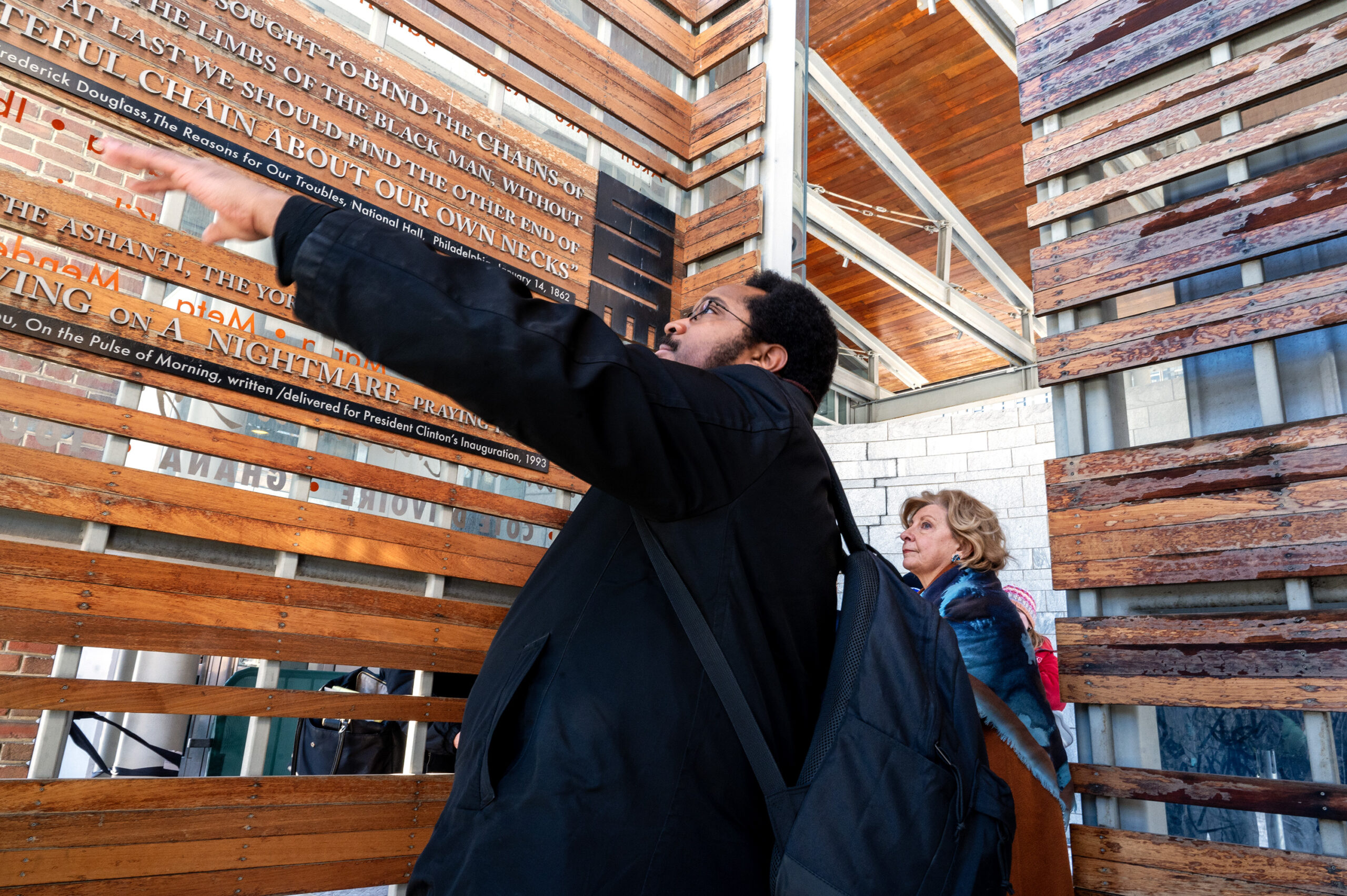
    Mijuel Johnson (left), a guide with The Black Journey: African-American Walking Tour of Philadelphia, shows Judge Cynthia Rufe (right) around the President’s House in Independence National Historical Park on Monday.

    The exhibits are stored by the National Parks Service in a room accessible through the National Constitution Center, but the civics-nonprofit “does not oversee that space, and Center staff have no knowledge of what materials may be stored there,” a spokesperson said in a statement.

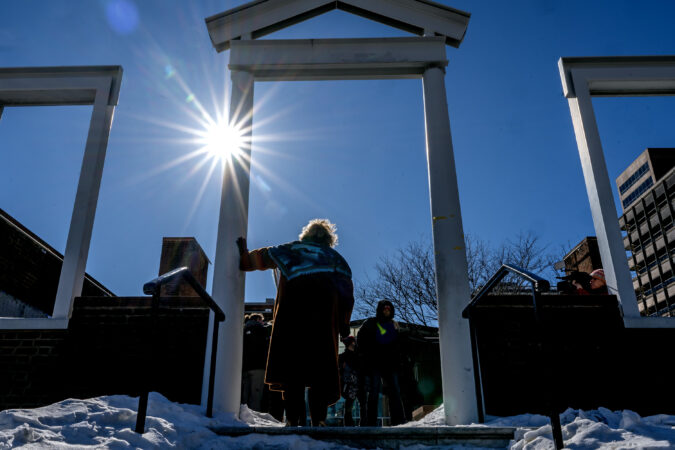
    After reviewing the removed exhibits for roughly 30 minutes, Rufe and her law clerks walked across Independence Mall toward the President’s House, a block away at Market Street. The judge stood at the site of the former home of Presidents George Washington and John Adams, as a guide from The Black Journey explained the historical significance of the slavery exhibit.

    “This is the first of its kind memorial on federal property to the enslaved people of the United States,” said Mijuel Johnson, who led the tour.

    Johnson directed the judge’s attention to panels telling the story of the presidency and the enslaved Africans who lived on the property, part of the routine tour script, but the walls were bare.

    Rufe asked questions about the removed panels and what exhibits could be further removed. She walked around the site, still not cleared of the previous weekend’s snow, to review a wall in which the names of the President’s House enslaved residents are etched into the stone.

    Judge Cynthia Rufe views the “Memorial to Enslaved People of African Descent in the United States of America,” during a visit to the President’s House in Independence National Historical Park on Monday. This exhibit was not removed with other panels at the site on Jan. 22. The judge visited the site while hearing the Parker administration’s suit to have President Trump’s administration restore the panels.

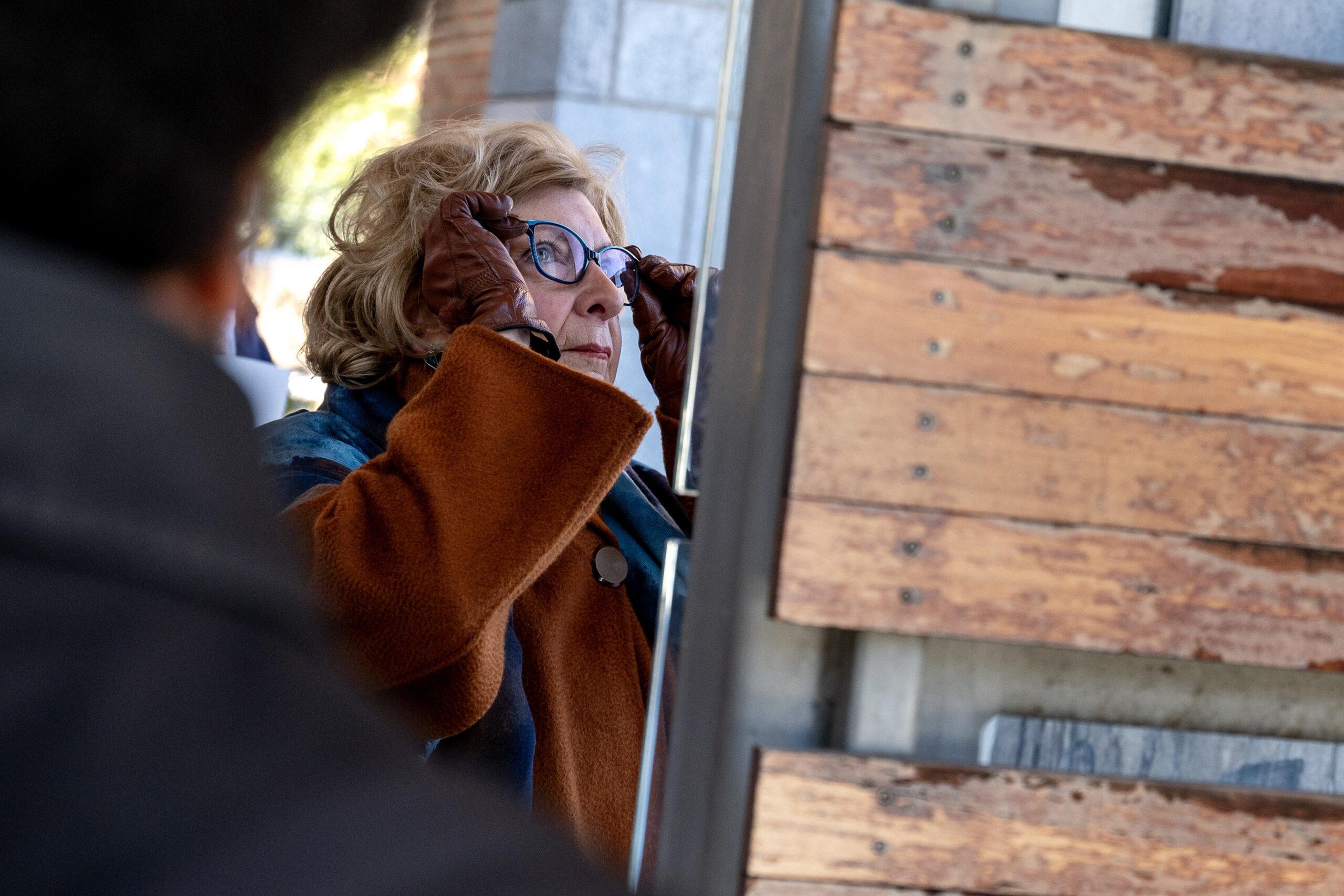
    Outside the location that served as the slaves’ quarters, adjacent to the Liberty Bell, Rufe paused and took out her glasses to read a memorial panel.

    “This enclosed space is dedicated to millions of men, women and children of African descent who lived, worked and died as enslaved people in the United States of America,” the panel read. “They should never again be forgotten”

    Relevant to the core disagreement in the lawsuit, about who has the right to change the site, the bottom of the memorial panel bears the names of two entities: the National Park Service and the City of Philadelphia.