Amy McHale and Raymond “R.C.” Horsch met on the streets when she was battling pneumonia and needed medical care.
She had long struggled with mental health issues and drug and alcohol addiction. She saw Horsch, an erotic photographer and filmmaker 30 years her senior, as her rock, said her mother, Gloria McHale.
“He was like her savior.”
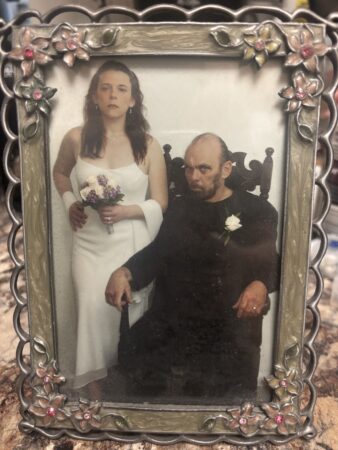
They held their wedding reception beside a greenhouse in the sprawling, serene backyard of his Chalfont home in September 2004. The marriage lasted only a few years, but Amy McHale kept going back to Horsch after he moved to a house on West Chew Avenue in the Olney section of Philadelphia with his son, Eugene Albert Horsch.
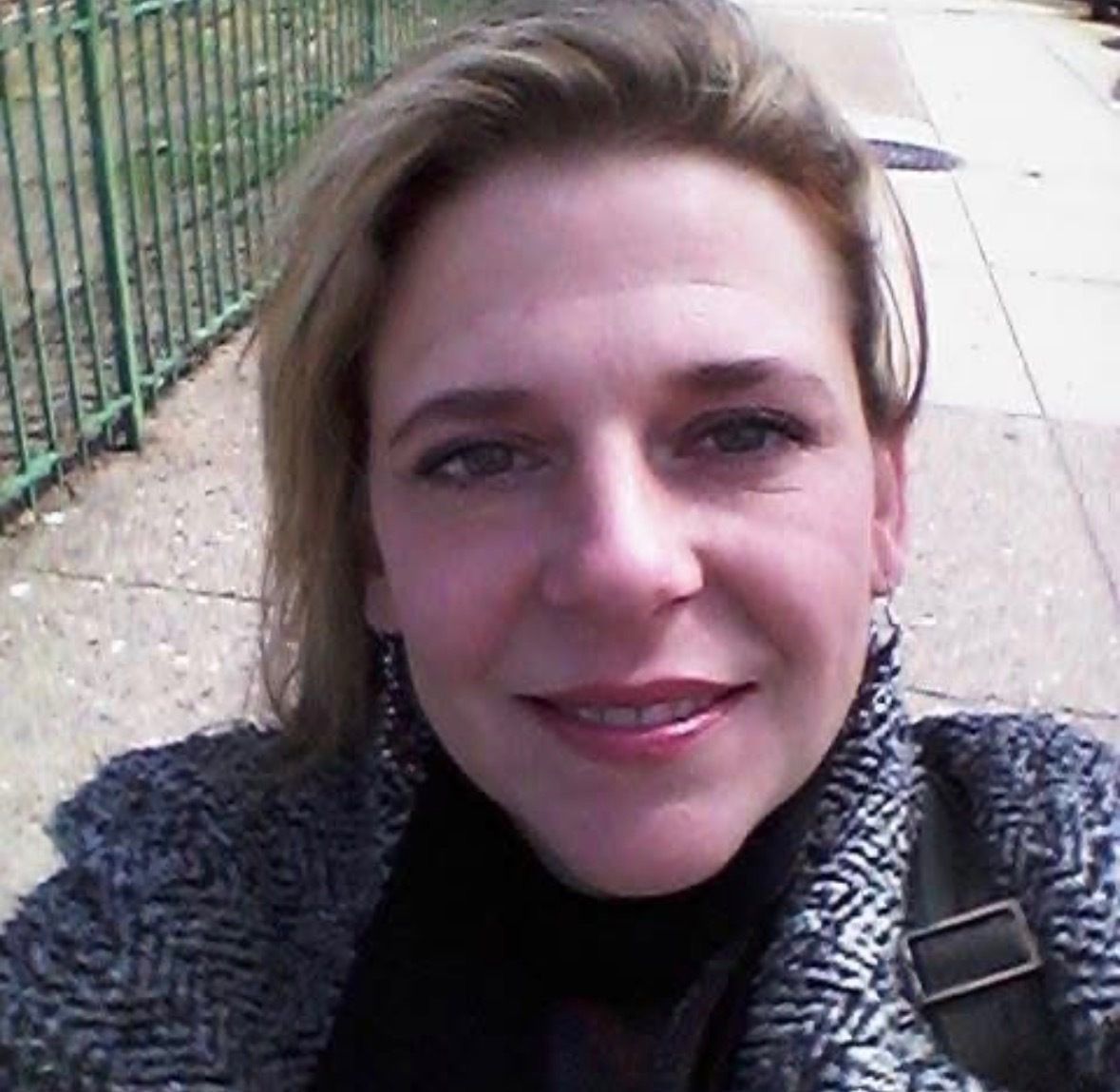
She was staying there on June 14, 2016, when she left a voicemail message for her daughter, Amanda Stofer, saying all was OK. At the time, Amy McHale was a 44-year-old mom and grandmother of three.
She has been missing ever since.
“She would never leave her daughter and grandchildren,” Gloria McHale, 79, said by phone after news broke this week that authorities had been combing through that house for days. “She loved them, adored them.”
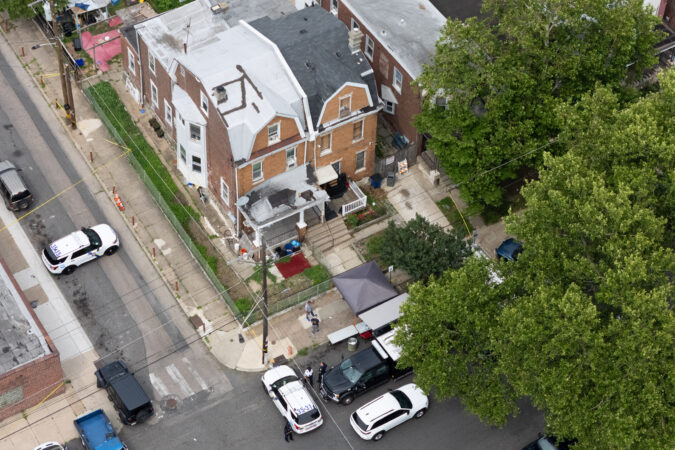
For more than a week, Philadelphia police and federal authorities have been searching the crumbling Horsch twin home to determine if there is any connection to the disappearance of Amy McHale and one other woman.
R.C. Horsch was a controversial figure who had been convicted of forgery and drug manufacturing when he died in May 2025 of chronic obstructive pulmonary disease at age 82. Police have not named him as a person of interest in a missing-person investigation.
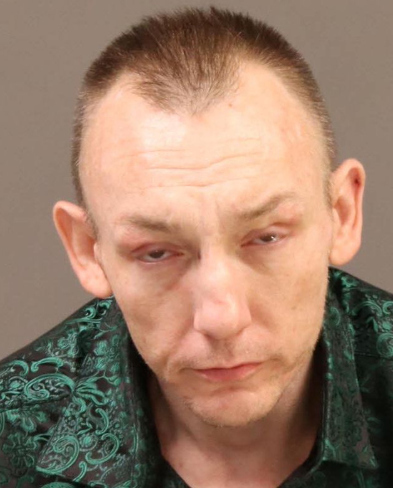
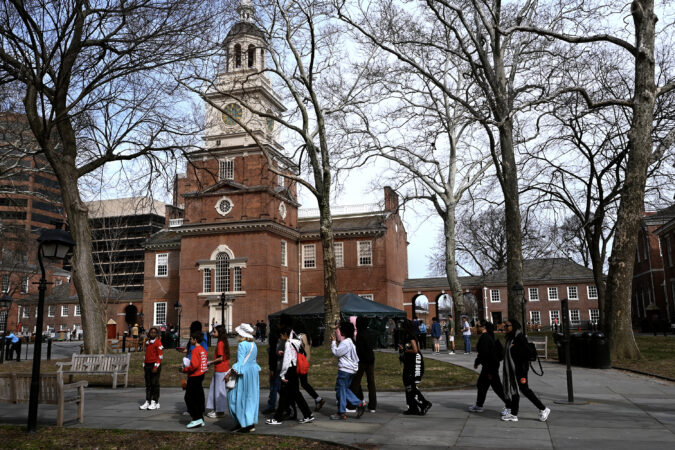
His son, Eugene Albert Horsch, is being held on $500,000 bail at Curran-Fromhold Correctional Facility on charges of illegal gun possession and drug crimes. He had a criminal history that included at least 10 other arrests for drug possession, dealing, assault, and drunken driving when he was arrested earlier this month near Independence Hall after his actions drew the attention of U.S. Park Police.
“This is much ado about nothing,” said Eugene Horsch’s attorney, Jerome Brown, of his client’s connection to any missing-person investigation. “They’re barking up the wrong tree.”
When the news broke, McHale’s mother and daughter thought they might finally discover what happened.
“But I don’t feel much closure, and today is an emotional low,” McHale’s daughter, Amanda Stofer, said Saturday. “I was hoping for some answers about my mother from the home, but I’m doubtful that will happen.
“It just feels heavy and sad.”
The case came to light under bizarre circumstances. U.S. Park Police stopped Horsch, 44, near Sixth and Market streets on June 19. In his black BMW, officers recovered two firearms with obliterated serial numbers and a phony drug enforcement badge with Horsch’s photograph under the name “Eugene Frederick Steiner.” He also had large amounts of cocaine, fentanyl, and marijuana, according to an affidavit of probable cause for his arrest.
A woman with Horsch gave officers a false name, one that belonged to a 38-year-old woman who had been reported missing in Kensington in February 2023. Horsch’s passenger told investigators that he had made her fake ID cards with that name before and advised that if she was ever stopped by police, she could use them.
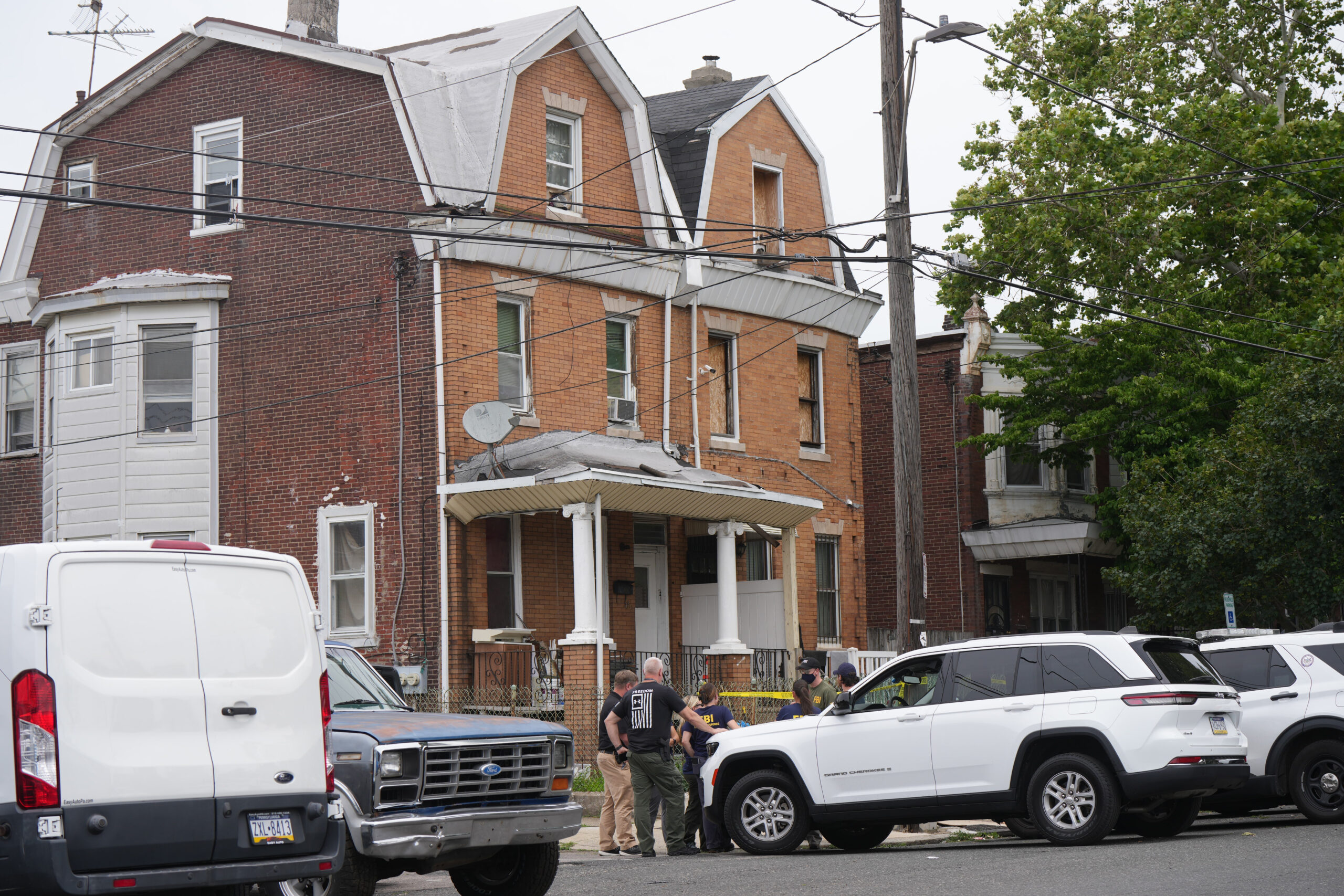
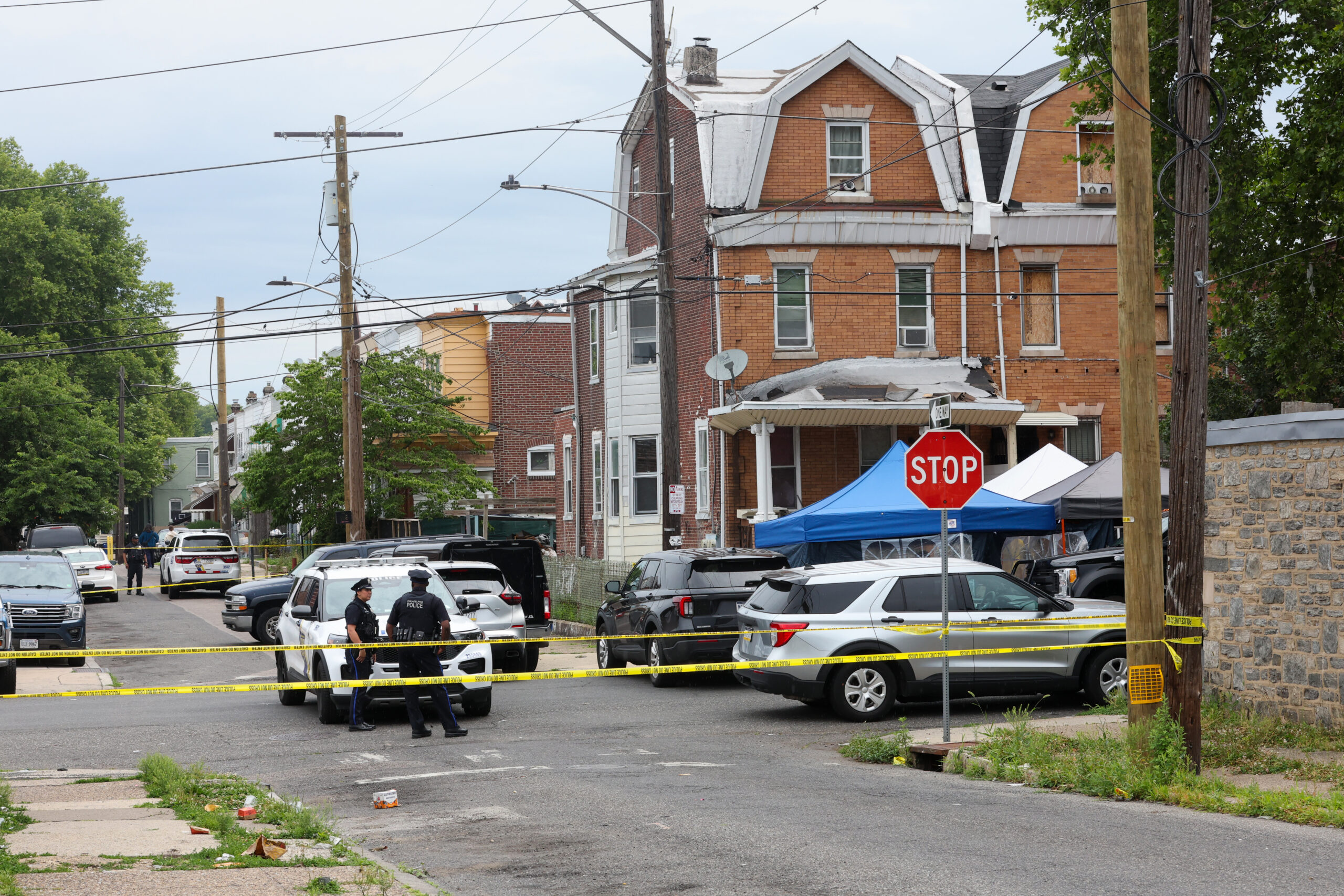
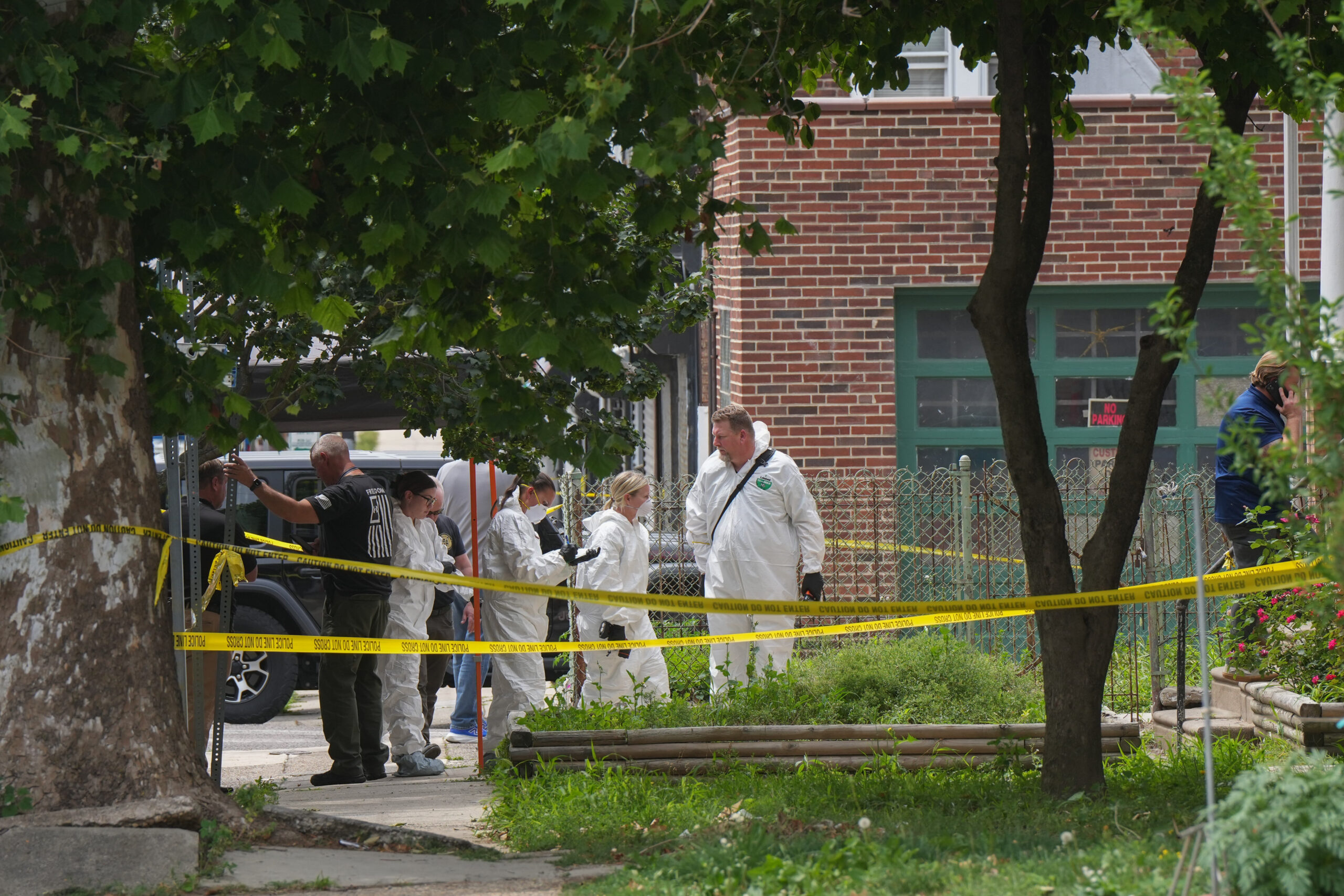
Law enforcement wearing FBI clothing at the scene of an ongoing investigation in the 400 block of West Chew Avenue, searching a home in Olney.
In Horsch’s dilapidated home, investigators found another handgun, hidden compartments, a 55-gallon drum with connections to water lines leading to a hole in the ground, and chemicals and bottles of liquid that forensics investigators are working to identify. There were also what appeared to be urns holding remains, one set of which was apparently his father’s. The basement resembled some sort of chemical lab.
Federal investigators also found a unsigned and handwritten letter that referenced hurting unspecified people and the serial killer Ted Bundy, according to an affidavit of probable cause obtained by The Inquirer.
Investigators are working to verify the authenticity of the letter, and whether it was meant to serve as a portion of a novel or screenplay.
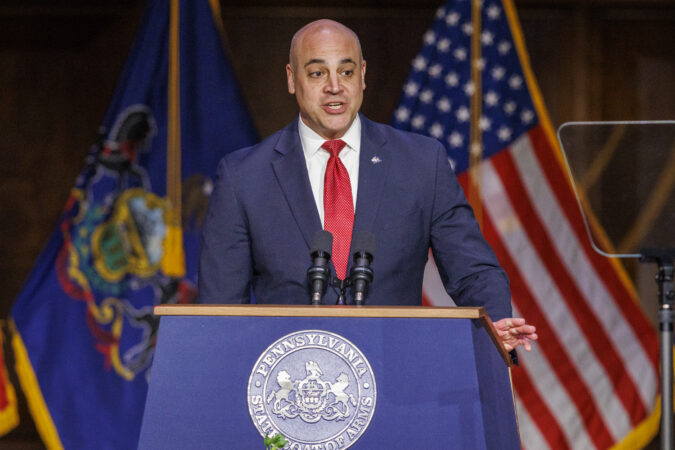
Under a gloomy sky Saturday, about 15 FBI agents, some wearing hazmat suits, streamed in and out of the boarded-up twin home. “They’ve begun processing the scene,” Philadelphia Deputy Police Commissioner Frank Vanore said. Forensic experts were determining what evidence had to be sent away for scientific analysis, he said. “It’s going to take some time.”
Art and weed
R.C. Horsch, who was born in East Stroudsburg, Monroe County, in 1943, is described in an author’s biography as “an artist, filmmaker, composer, writer, porn performer, drug smuggler, sometime political activist, art forger, counterfeiter, pot grower, air show pilot, army deserter, fugitive, sociopath, ex-convict and all-out villain.”
Throughout his life, R.C. Horsch worked on avant-garde artwork and erotica, often focused on scantily clad women in sadomasochistic settings, including a book described as an “autobiographical memoir of a caring, empathetic serial killer.” He directed his first film, The Erotic Memoirs of a Male Chauvinist Pig, in 1973.
A 1968 news report identified Horsch, then in his mid-20s, as the operator of a theater on the 2000 block of Sansom Street known as “Underground Cinema 16” — later the Roxy — which screened avant-garde films, including his own, but was shut down for operating without a license.
Horsch was married at least three times. He married Anna Ferkuniak, a native of Nant-y-moel, Wales, who was Eugene Horsch’s mother. She died in 1989 at age 39 after a lengthy illness, according to her obituary.
R.C. Horsch also had an extensive criminal history.
He pleaded guilty to passing bad checks in North Carolina in 1973, and the following year the Secret Service charged him and another man in Doylestown with passing nearly $180,000 in fake 10-dollar bills and possessing phony driver’s licenses.
In 1977, federal authorities raided what was described as his home laboratory, seizing equipment they alleged was meant to make methamphetamine. But Horsch left for New Zealand, later returning to California, according to court records, and operating under the alias “Richard Harris.”
Eugene Horsch was born in 1981, while his father was still a fugitive.
Authorities captured R.C. Horsch in Florida in 1985. A psychologist hired by his defense attorney claimed Horsch had a 140 IQ, according to court records, but had “deep rooted emotional problems.”
He was sentenced to three years’ imprisonment, plus probation. He later settled in Chalfont but acquired the Chew Avenue house after his aunt died in 2004. In 2007, he used power of attorney to legally transfer ownership to his son for $1.
In 2009, R.C. Horsch was indicted in Chalfont for growing “455 marijuana plants.” Investigators also confiscated two shotguns. The feds seized his suburban home and he was sentenced to 54 months in prison.
Federal inmate records show he was released from prison in 2013, and later moved into the Chew Avenue property, where he would reside until his death. He authored several erotic novels in the 2010s, often focused on women battling substance abuse or mental health issues.
Krista Marie Killen is credited as appearing in multiple erotic films that he directed, including one released as recently as 2021, and at times listed the Chew Avenue house as her residence.
In 2025, a motorist sued R.C. Horsch, Killen, and an unidentified man, claiming the trio crashed their Chrysler 300 into her SUV near Adams Avenue and Montour Street in 2023. Court papers list Killen’s occupation as “caregiver” and the “adult in charge of residence.”
She died the next month, according to an obituary, three months after Horsch.
In searching the home recently, investigators found a death certificate for Killen. According to the affidavit of probable cause, the cause of death was drug intoxication.
‘People don’t vanish’
R.C. Horsch and Amy McHale had become a couple in the 1990s.
“I was a young kid when they started dating, and I want to say he had been around for at least 10 years by the time they got married,” Stofer recalled.
They divorced after a few years and McHale moved in with her mother on South Hutchinson Street in Philadelphia. She went to Peirce College, became a paralegal, and was trying to get her life back on track, said Gloria McHale, 79.
But she could not kick her drug and alcohol addiction, she said. She would periodically return to Horsch’s home on Chew Avenue.
“They stayed friendly with each other,” Stofer said. “I’m sure it had something to do with the drugs and alcohol. I think he enabled her with things that weren’t really permitted in my grandmother’s house.”
On June 13, 2016, she went to Horsch’s. She called her mom that night to tell her she was on her way home. “She was obviously very drunk and I told her to stay where she was, because to get home she would have to take the subway, and she was in no shape to take the subway.”
The next day, she called Stofer and left a message. “She told me she was at Ray’s house and she was OK.”
That’s the last they heard from her.
Amy McHale would sometimes be gone for a couple of days, but never for much longer, they said. Stofer had three children, and her mother doted on them. Stofer was planning her September wedding.
“My mom had her struggles with addiction,” said Stofer, 38. “But my mom would not want to disappear in my life. She would never do that. She always came back around. She never missed big things like my kid’s kindergarten graduation.”
Gloria McHale searched all over for her daughter. “I put signs up all over Kensington,” she said.
Detectives interviewed Horsch. He told police and the McHale family that she was drinking vodka and he went to bed. “He said when he woke up, she was gone,” McHale said.
And Horsch stopped reaching out to her family.
“When she would disappear before, Raymond would always keep calling me. ‘Did you hear from her?’ And after this I never heard from him.”
McHale is hoping someone will come forward now with new information.
“Somebody has to know something,” she said.
“People don’t vanish into thin air.”
Amy McHale.
Staff writers Brett Sholtis, Michelle Myers, and Isabel Maney contributed to this article.
A law enforcement search continued Saturday at a dilapidated three-story brick twin in Olney, where police are investigating the homeowner’s connection with at least two missing women.
The house belongs to Eugene Albert Horsch, 44, who was arrested June 19 and charged with illegal gun possession and drug-related crimes.
Horsch’s initial arrest sparked questions: Why did he have a fake ID showing himself to be a DEA agent? Why did a woman with Horsch identify herself as someone else who was reported missing in 2023?
More questions unspooled as city police investigators and federal agents looked inside Horsch’s house, where they found hidden compartments, a 55-gallon drum, chemicals, unknown liquids, a woman’s death certificate, and a handwritten letter that seemed to describe hurting people.
On Saturday, Philadelphia police closed off the block and FBI forensic experts entered the property in hazmat suits.
In addition to these questions, there’s an older mystery — the June 2016 disappearance of Amy McHale.
Here’s what we know so far.
What prompted the investigation?
The morning of Friday, June 19, a U.S. park ranger near Independence Hall in Old City heard “a disturbance” coming from a black BMW, Philadelphia Police Department Deputy Commissioner Frank Vanore said Friday.
The ranger heard a woman say she was concerned that Horsch was going to hurt her, Vanore said.
The woman gave the ranger an identification card bearing her photo but the name of another woman who had been reported missing, Vanore said.
“And the park ranger felt that there was illegal drug activity going on inside the vehicle,” Vanore said.
Other law enforcement officers in the area were called to the scene, he said. In the car, police found cocaine, fentanyl, marijuana, two firearms with serial numbers removed, a collapsible baton, a cattle prod, and switchblade knives, sources told The Inquirer Friday.
Eugene Albert Horsch, 44, of Philadelphia.
Why did Horsch have fake DEA credentials?
Law enforcement also found a fake U.S. Drug Enforcement Agency badge with Horsch’s photograph under the name “Eugene Frederick Steiner” in the car, sources told The Inquirer.
Police haven’t spoken publicly about why they believe Horsch had the fake ID. However, they soon brought real DEA agents to the scene, Vanore noted.
Soon, those agents were among those searching his Olney home.
What did police find inside the Chew Avenue house?
Police searched Horsch’s home on the 400 block of West Chew Avenue, where they found a 9mm firearm, ammunition, and a marijuana grow operation on one of the floors, Vanore said.
“The further search of this property produced some other things that we have a lot of questions about,” Vanore said.
Police brought in homicide investigators — who are now leading the investigation with FBI assistance — due to their experience and because several urns, possibly from deceased family members, were found, Vanore said.
Investigators found at least one more fake ID presenting someone as federal law enforcement, Vanore said, as well as “computer evidence” that the DEA took for analysis.
They also found bank cards in the name of the woman who went missing in 2023, and recovered what appeared to be a death certificate for another woman who died last year, The Inquirer reported Friday.
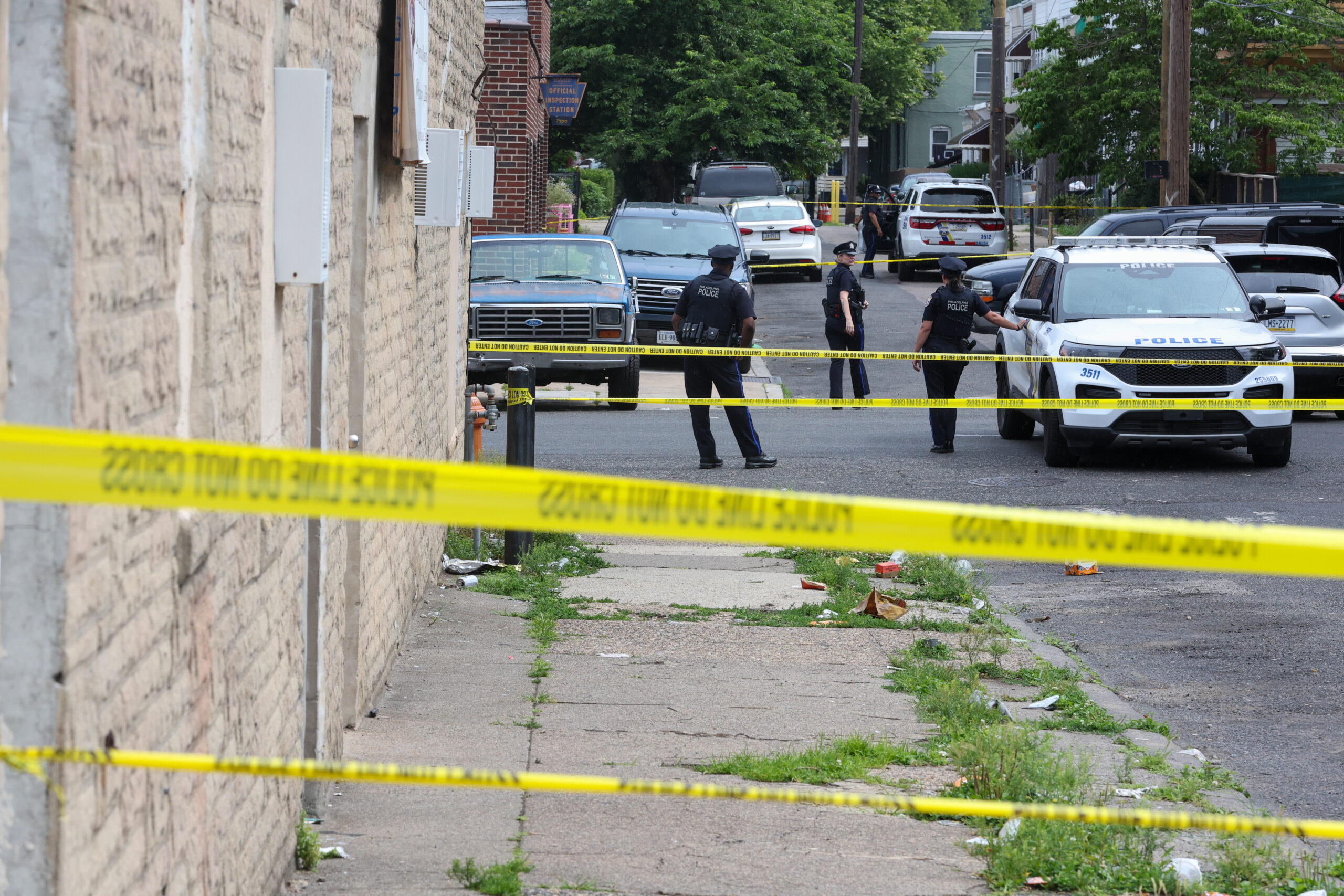
Police have officially blocked off access to the street at 417 W Chew, in Olney home in Philadelphia, June 27, 2026. Residents in the area are unable to access the street since Saturday morning.
Why is the FBI involved?
Investigators also found hidden compartments, “hoses coming from barrels,” and bottles containing chemicals and unknown liquids, Vanore said.
Some of the chemicals, if combined and ignited, could pose hazards, he said. The chemicals are what led investigators to ask for help from FBI experts, Vanore said.
“There’s chemical work being done, but we just don’t know if he was trying to produce narcotics, or some other work,” Vanore said.
What is the handwritten letter investigators found?
Federal investigators also found an unsigned handwritten letter that described references to hurting unspecified people, and references to the serial killer Ted Bundy, The Inquirer reported Friday.
“Acting on emotion is where problems occur. What I don’t think I told you was that the first time it was planned ahead of time. The threat was made before you know who came over and I already had a 2ft zip tie in my pocket and a drum set up,” the letter said.
“I had been ready and waiting and I damn sure showed no hesitation. And it was fun,” the letter said, according to an affidavit of probable cause for a search of the home obtained by The Inquirer.
Law enforcement sources said investigators were working to learn who wrote the letter and whether it may be part of a work of fiction.
Have police found bodies at the house?
Rumors spread quickly online Friday, with one of the most widespread ones being that human bodies or remains had been found at the house.
Speaking to reporters, Vanore dismissed these rumors.
“There’s no apparent bodies inside the house,” Vanore said. “Now, we’re going to further search. There’s a sump pump that looks like a hole in the ground, but there’s no bodies.”
Who are the missing women?
Police have not released the names of any missing women connected to Horsch.
The woman whose name was on the fake ID went missing in February 2023 from the Kensington area, sources told The Inquirer Friday. The woman who was with Horsch when he was arrested told police she used the fake ID because she had outstanding arrest warrants. She didn’t know the missing woman, but feared that something bad happened to her.
Vanore said he didn’t know if the missing woman had known Horsch.
“I have nothing to say she was ever inside the house, but of course, that’s why we’re still holding it and we’re still going to look,” Vanore said.
Vanore noted that Horsch had enough information about the missing woman to create a convincing fake ID.
Another woman who disappeared was Amy McHale, of South Philadelphia, who went missing in June 2016. McHale was the ex-wife of Horsch’s father, R.C. Horsch. Police questioned R.C. Horsch about the disappearance at the time.
Who is Eugene Albert Horsch?
Horsch has a long criminal record including a May 2025 arrest for possession of marijuana and amphetamines, which got him three years’ probation.
In March, he was charged with aggravated assault after police said he stabbed a man in the stomach at Eighth and Market Streets. Prosecutors withdrew the charges in May after a witness failed to appear in court, court records show.
Horsch had at least 10 previous arrests for drug possession, dealing, assaults, and drunken driving. He was sentenced to four to eight years in prison after police discovered $1.9 million worth of cannabis inside the Chew Avenue home in 2013, court records show.
Horsch appeared to be living at his house on Chew Avenue, despite its boarded-up windows and rundown look. Vanore said Friday that the woman who had the fake ID also was believed to have been staying there.
What do we know about R.C. Horsch, Eugene Horsch’s father?
R.C. Horsch, born Raymond C. Hoersch, was an erotic photographer and filmmaker who was convicted of forgery and drug manufacturing. R.C. Horsch changed the spelling of his last name.
R.C. Horsch pleaded guilty to passing bad checks in South Carolina in 1973 and the following year was charged in Doylestown by the Secret Service with passing nearly $180,000 in fake 10-dollar bills and possessing phony drivers’ licenses.
In 1977, federal agents raided what was described as R.C. Horsch’s home laboratory, seizing equipment they alleged was meant to manufacture and distribute methamphetamine. But R.C. Horsch absconded to New Zealand, later returning to California, and operating under the alias “Richard Harris.”
Eugene Horsch was born in 1981, while his father was still a fugitive.
R.C. Horsch was captured by authorities in Florida 1985. A psychologist hired by his defense attorney said he had an 140 IQ but had “deep rooted emotional problems.”
He was sentenced to three years imprisonment, plus probation, and settled into a home in Chalfont, Bucks County.
What was R.C. Horsch’s connection to the Chew Avenue house?
R.C. Horsch acquired the Chew Avenue house after the death of his sister, Helen M. Hoersch, in 2004. In 2007, R.C. Horsch used power of attorney to legally transfer ownership of the property to his son for $1.
In 2009, R.C Horsch was indicted in Chalfont for growing 455 marijuana plants. Investigators also seized two shotguns. The feds seized his suburban home and he was sentenced to 54 months in prison.
Federal inmate records show he was released from prison in 2013.
Are investigators examining R.C. Horsch’s role?
R.C. Horsch died in 2025, and Vanore told reporters Friday that investigators were looking at a lot of different angles. Vanore declined to go into specifics about R.C. Horsch, and said he wasn’t going to name “other missing people” potentially connected to the house.
“We’re certainly looking into the activities that went on at the house, even before he was there,” he said, referring to Eugene Horsch.
Police have officially blocked off access to the street at 417 W Chew, in Olney home in Philadelphia, June 27, 2026. Residents in the area are unable to access the street since Saturday morning.
What’s the latest from the investigation?
Under a gloomy sky Saturday, about 15 FBI agents went in and out of the boarded-up home, some wearing protective suits.
Next to the tent installed Friday outside Horsch’s home were four portable fabric shelters, with all sides shielded from public view.
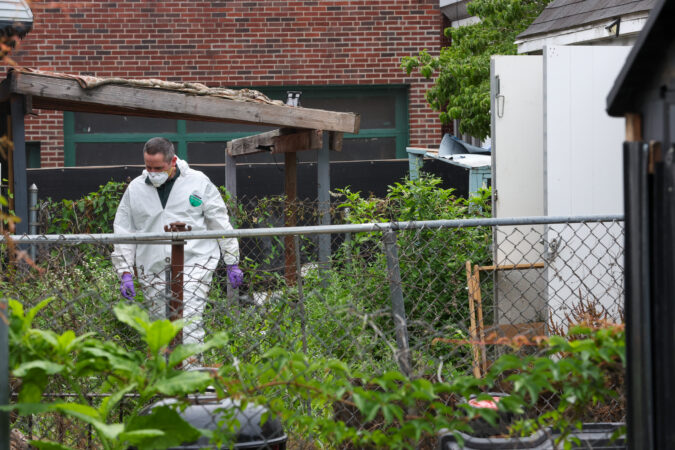
Neighbors walked around the sealed perimeter asking for information, while men in protective suits came and went from Horsch’s backyard shed.
“They’ve begun processing the scene,” Vanore said Saturday. Forensic experts now are determining what evidence had to be sent away for scientific analysis, he said. “It’s going to take some time.”
Inquirer staff writers Max Marin, Ellie Rushing, Barbara Laker, Michelle Myers, Chris Palmer, and Isabel Maney contributed to this article. For more details, read this story.
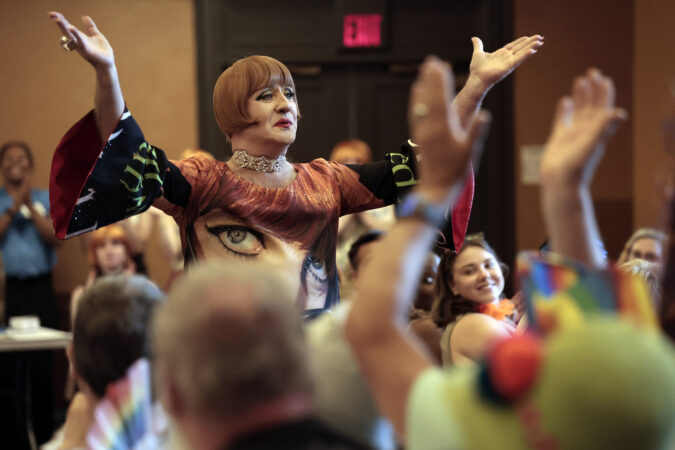
The legendary redheaded drag queen Carlota Ttendant donned a baby-blue Eva Gabor-inspired gown — its plunging neckline revealing tasteful chest hair — and sensible black heels.
At 65, arthritis stifles her strut in stilettos.
“Drag is a young girl’s game,” she said.
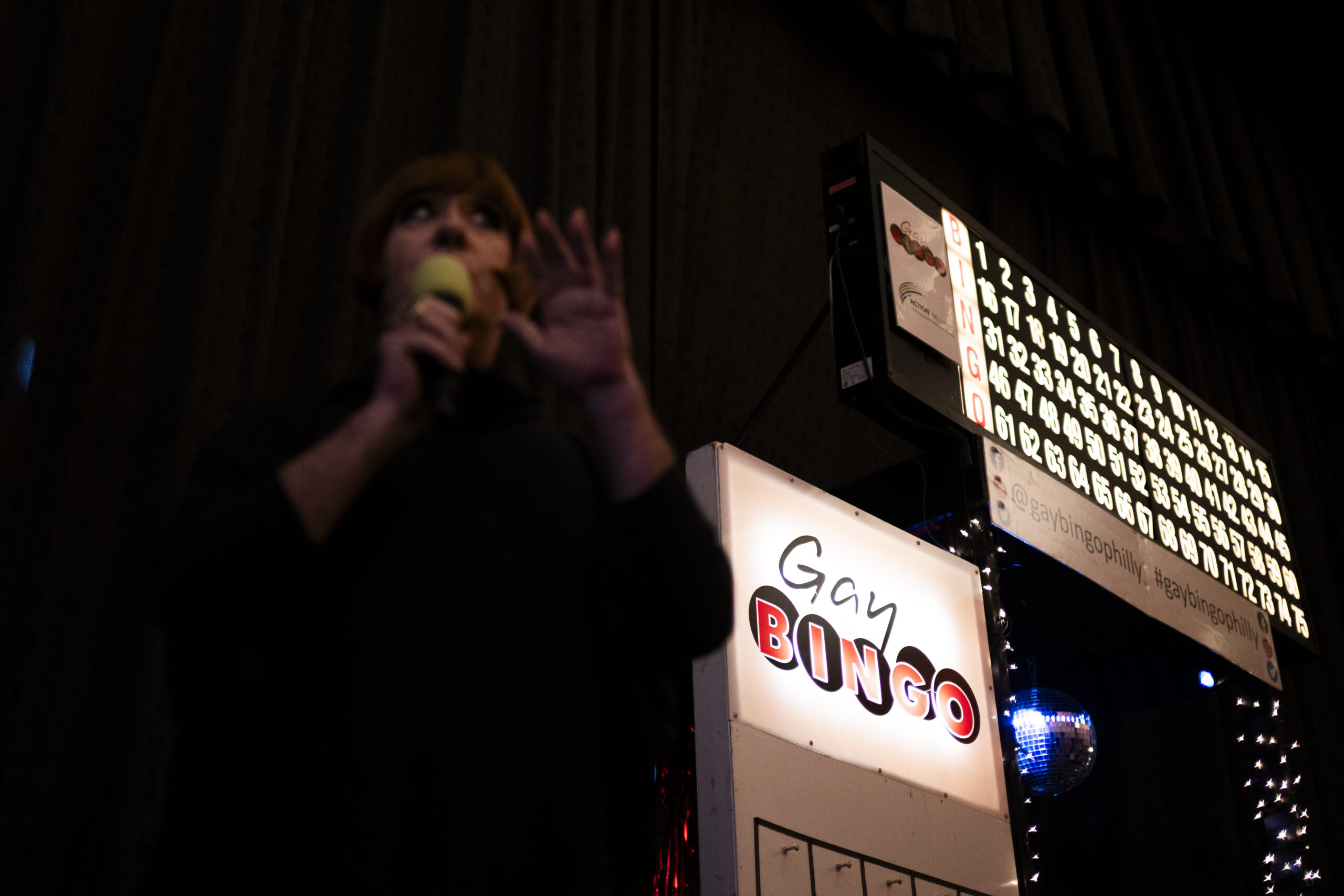
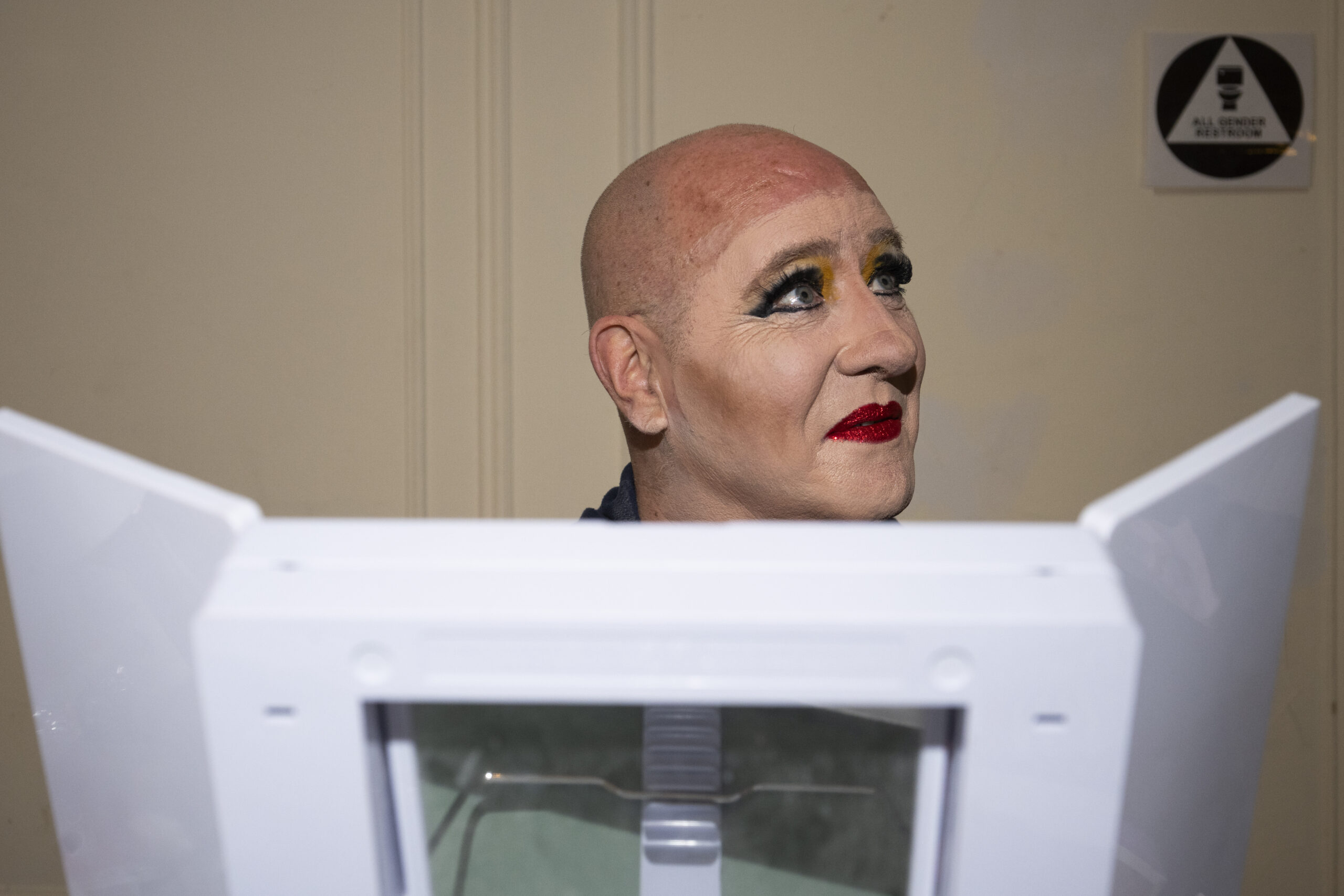
This was her swan song. At the close of its 30th season this Pride Month, the man behind the makeup, Michael Byrne, hung up his heels and bid adieu to his drag persona and his longtime gig hosting Gay Bingo, the camp, irreverent, slightly profane, and undoubtedly silly monthly HIV/AIDS fundraiser.
“I know it’s time,” Byrne said. And, “I’m excited to never wear Spanx ever again.”
Across three decades, Carlota Ttendant has called hundreds of games and elicited endless laughs, all while raising millions for people living with HIV/AIDS across the Delaware Valley. She helped steer a community through crisis, providing a respite to those experiencing immense loss and stigma. Even as medicine has advanced and HIV/AIDS has become manageable, she’s crafted a safe space for queer Philadelphians. For one night each month, she’s been an entertainer and an equalizer, responsible for uniting people — gay and straight, from Haddonfield to Phoenixville — around a common goal.
And since Carlota came into Byrne’s life, she’s taught him to lead with courage, practice gratitude, and be unabashedly unafraid. He’s gone from being the “worst waiter ever” and selling cosmetics, to being a performer, licensed clinical social worker counseling older LGBTQ+ folks through their own next phases of life, and president of Philly AIDS Thrift’s board.
“None of it would have been possible without all of you,” Carlota told the 400-person crowd — the biggest turnout in years — at her last Gay Bingo on June 13 in the basement ballroom at Congregation Rodeph Shalom. “In the ’90s there was horror happening, and today there is horror happening.
“But please, let’s do some laughing,” Carlota said.
“Let’s play bingo!”
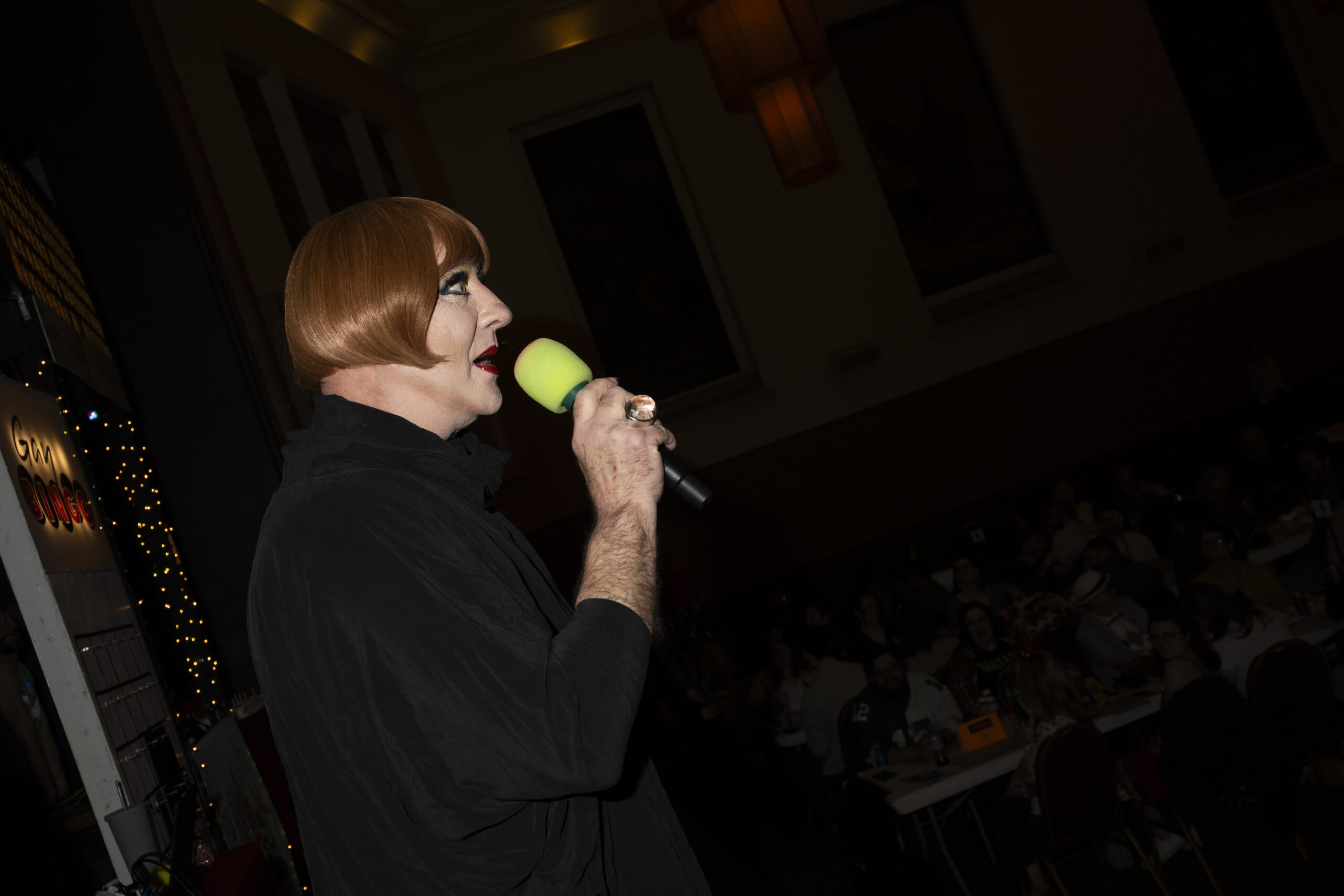
Michael Byrne, as his drag persona Carlota Ttendant, during Gay Bingo on Saturday, May 9, 2026, at Congregation Rodeph Shalom in Philadelphia.
Act I
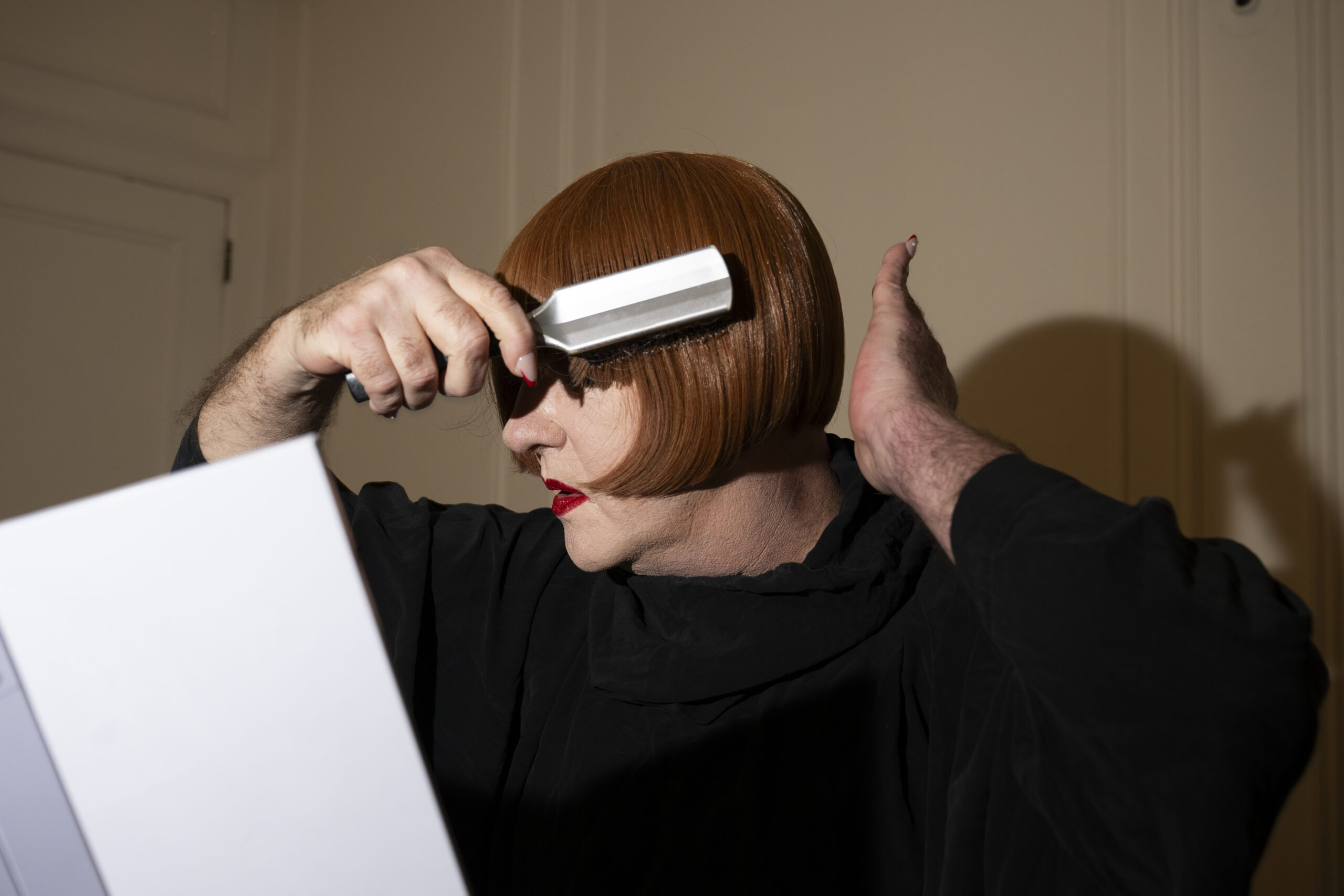
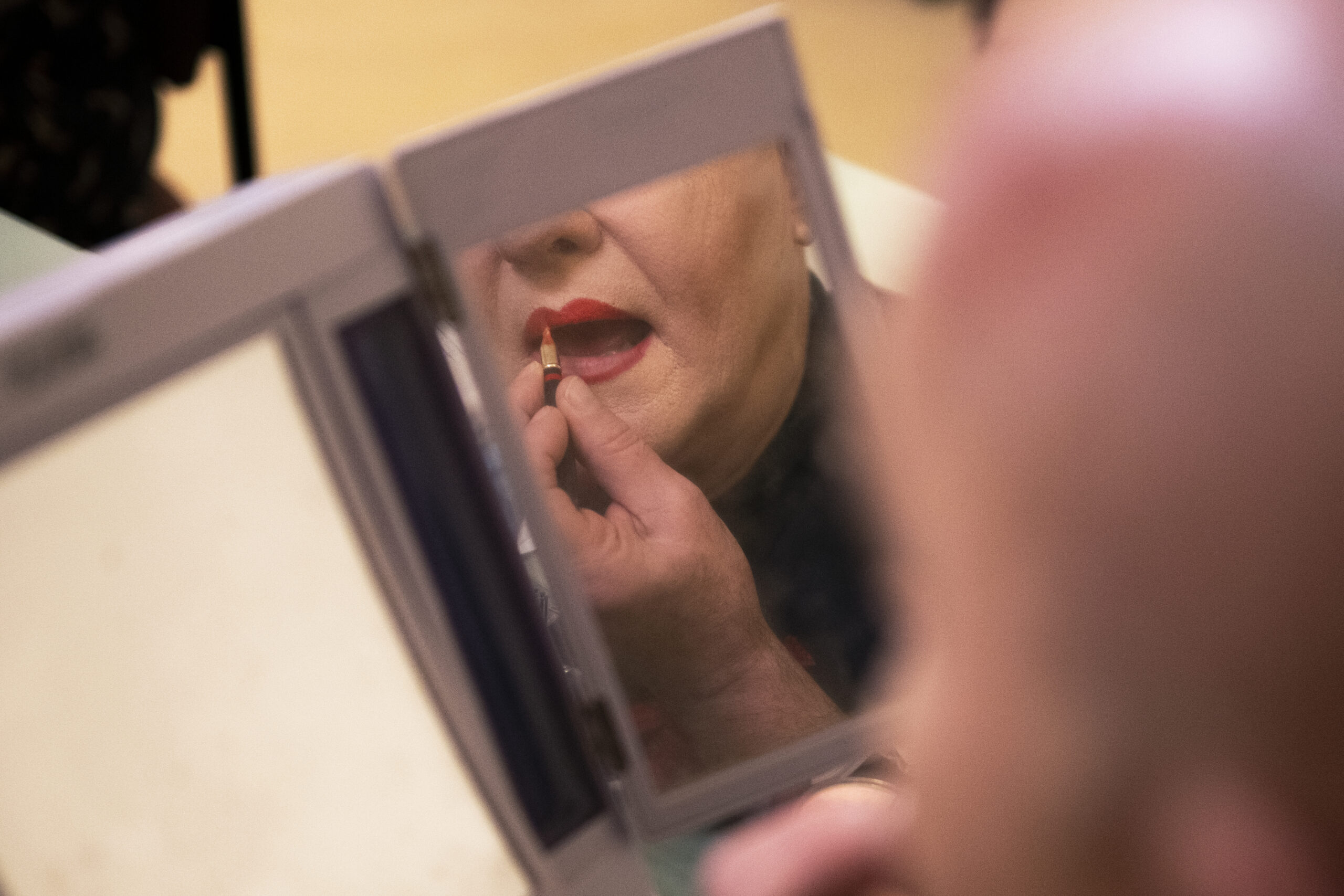
Like so many Saturdays before, Byrne, on June 13, slathered his face with foundation, carved out his cheeks, deepened his eyes, and painted on his red lip. There was haze — from the dusting of loose setting powder, bronzer, and blush — and musk — from sweat and heat and hairspray — in a Rodeph Shalom classroom, which moonlights as a bridal suite and a boudoir for the Bingo Verifying Divas or BVDs. At 10 minutes till curtain, he futzed with his press-on nails, shimmied into a mod swing dress, straightened the back seams of his tights, and dabbed on some glitter. With each gender-bending step, he transformed into his “twin sister,” Carlota.
Michael Byrne transforms into his drag persona Carlota Tendant ahead of Gay Bingo on May 9 at Congregation Rodeph Shalom in Philadelphia.
Like all classy ladies, Carlota’s exact age is lost to time. In the 1990s, Byrne was organizing a fundraiser for Big Mess Theatre, an avant-garde troupe that he helped establish as the spinning axis of Philadelphia’s alternative performance scene, complete with vaudeville acts, an oompah orchestra, and live auction with a striptease routine. Byrne was to host and make his drag debut, and Carlota Ttendant (read as car lot attendant) was conjured up over bourbon and blackjack. (He learned, years later, that there was a ’60s stripper at the famed Trocadero Theatre with the same name.)
Byrne never aimed to create a perfect, feminine illusion with Carlota. He left his chest unshaven and unstuffed, but short, thrifted dresses showed off his long and feminine legs. Carlota’s makeup was an extension of the exaggerated theater paint Byrne, who has been on stages since he was 10, knew; cheap wigs hid his sideburns. Nothing could mask his deep, raspy, anything-but-ladylike voice.
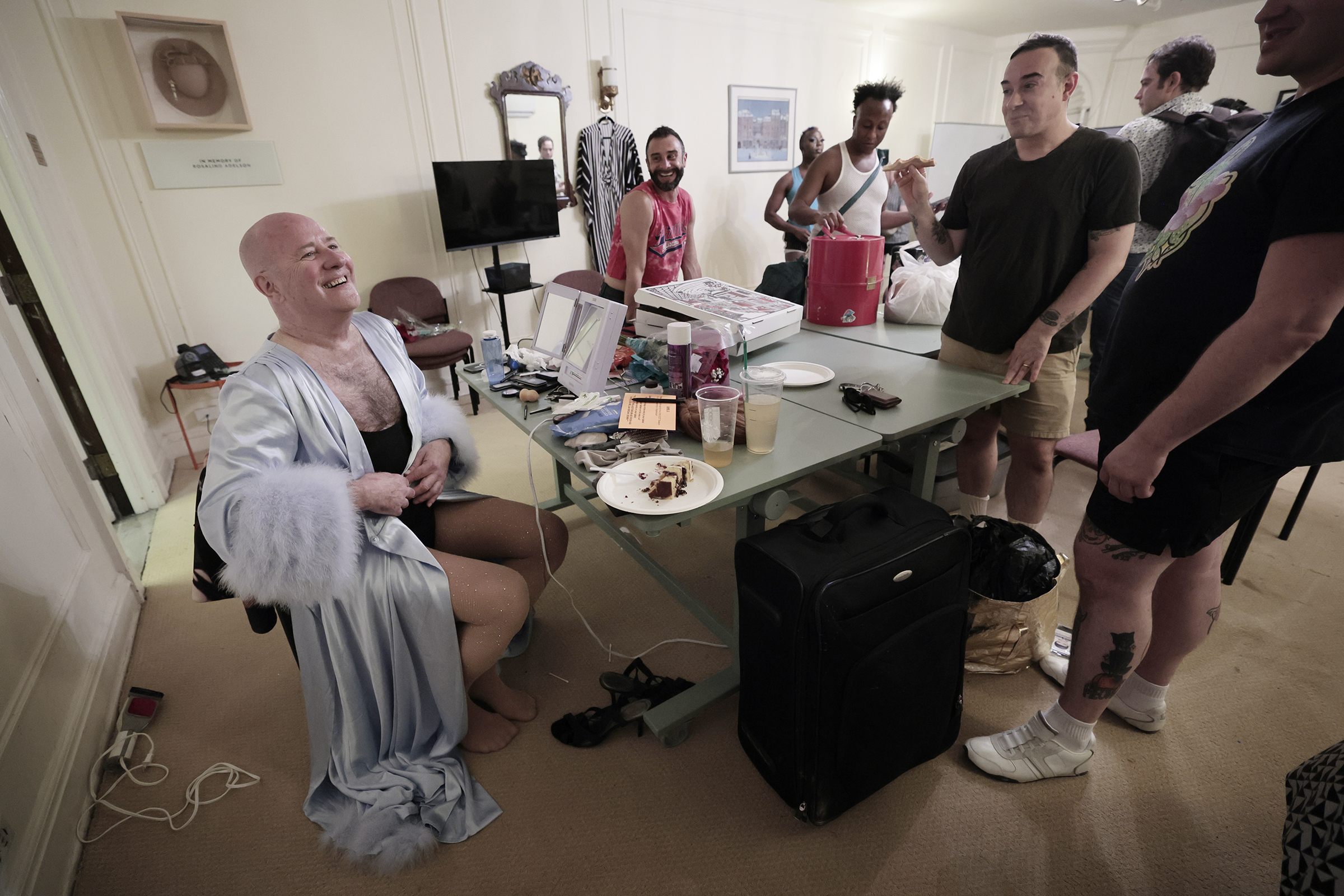
Carlota Ttendant (Michael Byrne) (at left) laughs with friends and fellow performers after Carlota’s final evening cohosting Gay Bingo at Congregation Rodeph Shalom in Philadelphia on June 13. Michael Byrne transforms into his drag persona Carlota Ttendant ahead of Gay Bingo on May 9 at Congregation Rodeph Shalom in Philadelphia.
Carlota could be bossy and profane but never vulgar; she could poke fun at audiences without being cruel. She became the “drag queen you could bring your grandma to,” Byrne said.
Around the time Carlota came to be, the number of new AIDS diagnoses and deaths peaked in Philadelphia. In 1992, new AIDS cases surpassed 1,500; in 1994, AIDS deaths topped 900, according to city data.
(function(){function e(){window.addEventListener(`message`,function(e){if(e.data[`datawrapper-height`]!==void 0){var t=document.querySelectorAll(`iframe`);for(var n in e.data[`datawrapper-height`])for(var r=0,i;i=t[r];r++)if(i.contentWindow===e.source){var a=e.data[`datawrapper-height`][n]+`px`;i.style.height=a}}})}e()})();
Misinformation about the disease, which strips the body of its natural defenses and leaves it vulnerable to life-threatening infections and ailments, was rampant. People alienated gay men, wrongly fearing HIV/AIDS could be transmitted through a handshake, a hug, or across a dinner table, The Inquirer and Philadelphia Daily News wrote. Diagnostic testing took weeks; what rudimentary treatments were available sometimes made people sicker; and HIV often progressed to AIDS within a few years.
“It was not unusual to have people dying every month,” said Kevin Burns, who as a case manager with the nonprofit ActionAIDS (now called Action Wellness) connected clients to hospice care. Burns later served as Action Wellness’ executive director.
The need for resources was rife, and in 1996, Philly’s nonprofit AIDS Fund set out to supplement the money it made from its annual AIDS Walk, according to Sandra Thompson, former chair of its board of directors. An article in City Paper about an irreverent bingo-drag night sweeping Seattle — which, by one report in the Seattle Times, raised $10,000 a night — caught the attention of Mark “Chumley” Singer, then a fledgling events producer, who pitched the idea to the AIDS Fund. (The fund folded in 2024 due to the decrease in new AIDS cases, and turned ownership of Gay Bingo over to Action Wellness.)
Singer recalled thinking at the time: “I’ve been doing sad, mopey, candlelight vigil fundraisers. … Why can’t we raise money and have fun?”
Singer and Byrne had never met before the latter was tapped to host Gay Bingo, but their chemistry was kismet.
“There was never a show where we weren’t having more fun than everybody,” said Singer, who cohosted until the early aughts. Byrne and Singer left Gay Bingo around that time, but Byrne later returned.
Byrne remembers the magic of those early years of Gay Bingo. He remembers when 600 seats would sell out in 10 minutes, and he remembers doing his glittered red lip from the floor of the Gershman Y’s mirrored dance studio. He remembers two-show Saturdays and how six hours in heels would make him catatonic on Sunday. He remembers riffing with and ribbing Singer and the laughs their off-color jokes and mild profanity elicited. He remembers the constant movement of the bold and bawdy BVDs, on Rollerblades, or the electricity when O-69 was called and hundreds stood up, shaking and shouting with the fervor of their libidos.
But Byrne also remembers the solemn moments: the steelworker who told a documentarian about watching his bodybuilder son become emaciated; the families who sponsored games on the anniversary of their loved one’s death; the pharmacist who learned all he could about HIV drugs; Byrne’s own friends who were infected.
“Our community was in crisis,” Byrne said, “while we focused on it, we also focused on being fun and laughing.
“And we all needed that at that point.”
Act II
The “Rainbow Bombshell” Gay Bingo on June 13 doubled as a Pride extravaganza and an homage to all things Carlota. Her first outfit of the night was crafted from a promotional banner from her years hosting the Philadelphia Orchestra’s Halloween Concert. Alongside her, the BVDs dressed as Big Mess-era Carlota, Norma Kamali-inspired Carlota, Phillies Carlota, and fuzzy caftan-wearing Carlota. Attendees, ushers, volunteers, and even the American Sign Language interpreter wore that signature red bob — wigs that Action Wellness bought in bulk. One wore a T-shirt that read, “Dibs on the ginger.”
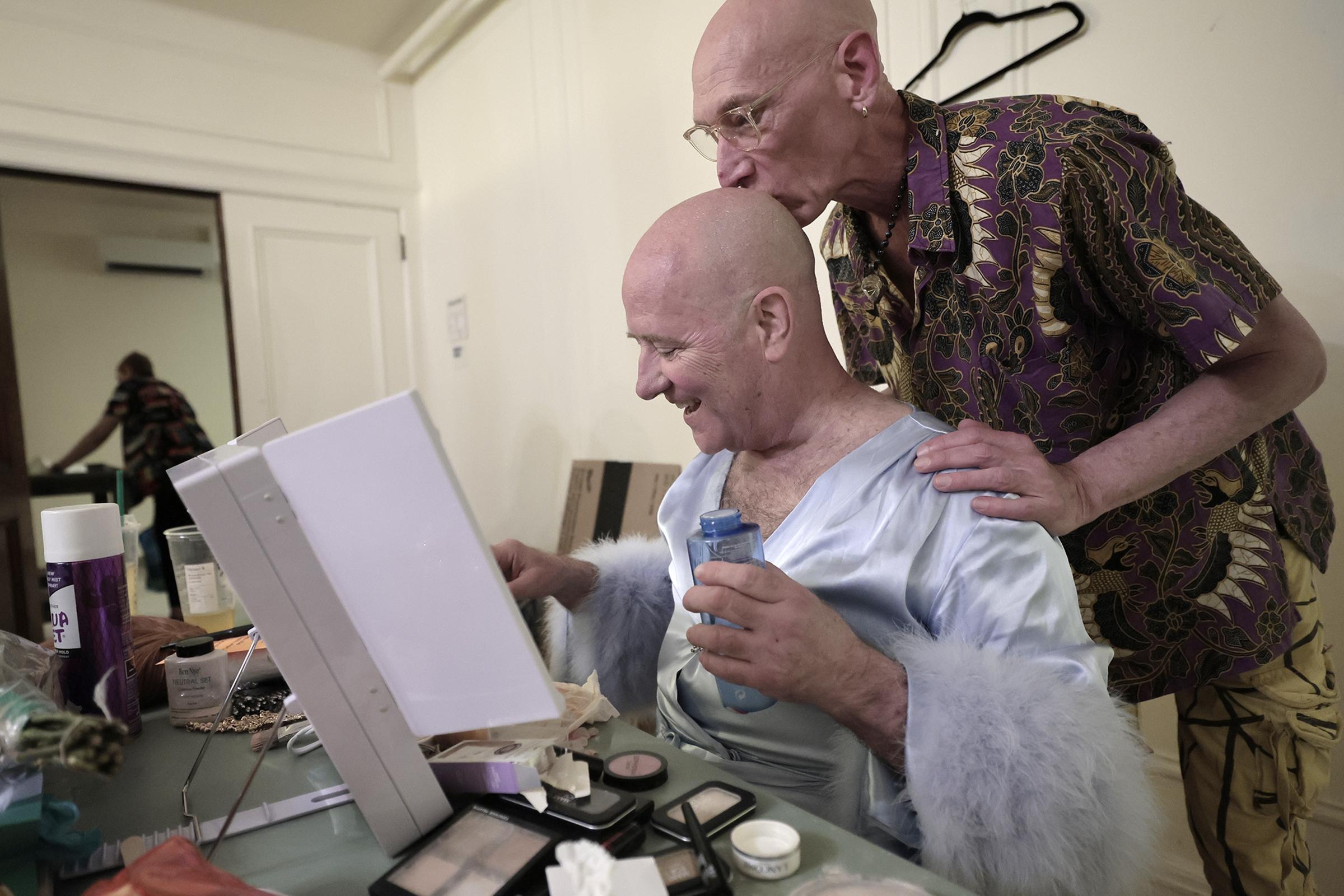
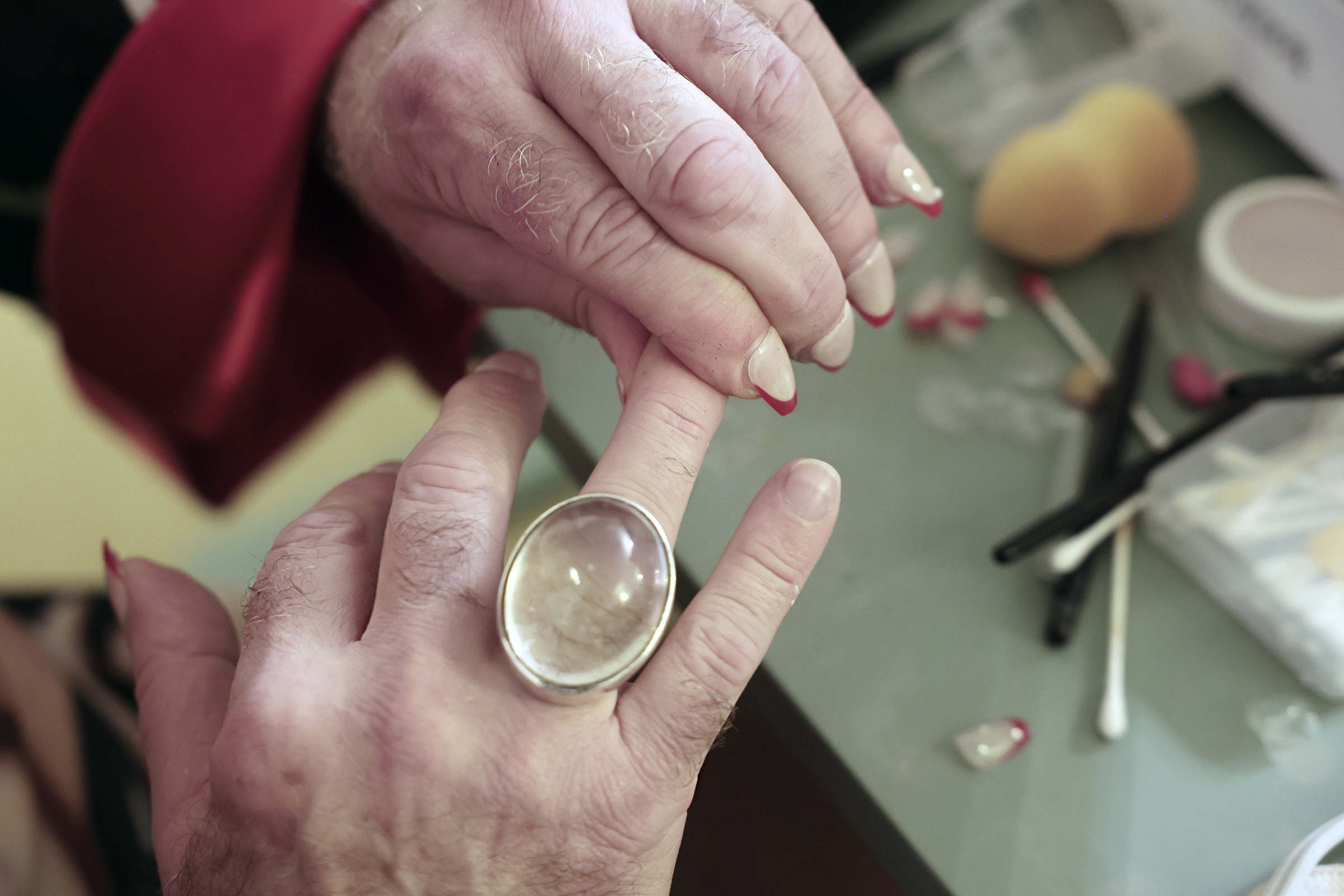
In the dressing room, Tess Tickle (Paul Struck) kisses Carlota Ttendant (Michael Byrne) on the head after Rainbow Bombshell Gay Bingo at Congregation Rodeph Shalom in Philadelphia on Saturday, June 13, 2026. “I love him” said Struck as he walked out of the dressing room.Carlota Ttendant (Michael Byrne) puts on a favorite crystal ring and fake nails before cohosting Rainbow Bombshell Gay Bingo on June 13.
“Are we ready to win some money?” Carlota said, hyping up the crowd before the first of 12 rounds of bingo. Councilmember Rue Landau, the Philadelphia City Council’s first openly LGBTQ+ member, called the first game:
I-28.
I-26.
G-52.
B-14.
O-63.
B-3.
“Bingo!” someone cried out, as the audience let out an audible wave of disappointment, exasperation, and defeat, and the BVDs rushed over to authenticate.
“Did you just get bingo, girl?” Carlota wisecracked.
For 30 years, these Gay Bingo players have pledged each month to “keep on playing Gay Bingo until this crisis is over.” And today, HIV/AIDS deaths and new diagnoses have stagnated, according to the most recently available health department data, and drug cocktails have made it so people with HIV can live long, healthy lives and may never pass the disease onto others or have their illness advance to AIDS. Preventative medications, like PrEP, can also dramatically decrease the risk of becoming infected.
Michael Byrne, as his drag persona Carlota Ttendant, on May 9 at Congregation Rodeph Shalom in Philadelphia.
But there are still obstacles to ending the epidemic. HIV/AIDS disproportionately affects Black and brown communities and low-income people who experience barriers to healthcare, according to Action Wellness executive director Mary Evelyn Torres. The geographic disparities are also stark: Current drug regimens may be readily available in well-resourced countries, like the United States, but access is scarce in the world’s vulnerable pockets. These problems have only been exacerbated by President Donald Trump’s proposed cuts to domestic and foreign HIV/AIDS programs. The withdrawal of American dollars overseas, United Nations officials warned, could lead to more than 4 million AIDS-related deaths and 6 million more HIV infections by 2029.
(function(){function e(){window.addEventListener(`message`,function(e){if(e.data[`datawrapper-height`]!==void 0){var t=document.querySelectorAll(`iframe`);for(var n in e.data[`datawrapper-height`])for(var r=0,i;i=t[r];r++)if(i.contentWindow===e.source){var a=e.data[`datawrapper-height`][n]+`px`;i.style.height=a}}})}e()})();
“We’ve come a long way, but there’s still work to be done,” Torres said, “and that work is being threatened by this administration.”
As the epidemic has changed, so has Gay Bingo: The money raised — more than $5 million since its inception — now goes toward Action Wellness’ social services and programming. The BVDs ditched their roller skates at the Gershman Y (because of the new, carpeted venue). Tickets cost $50-$60, compared to $10-$12 in May 1996, and these days, attendance averages between 150 and 200 a month.
Drag has evolved, too. Spending centuries on the periphery as proto-punk-beatniks and after-midnight acts, queens disrupted and challenged the mainstream with wit and wonder. Then, the exploding popularity of RuPaul’s Drag Race, a drag reality-TV competition, seismically changed the culture, snubbing scrappiness for silicon and kitsch for couture. The show ushered drag into the zeitgeist: Its lingo became commonplace and its contestants turned into social media stars, with businesses, makeup brands, books, and podcasts, as the art form continues to face political bans and threats nationwide.
The show “has taken everything to a whole other planet,” Byrne said, “and that’s amazing and that’s really great.
“That’s also not what I do.”
Carlota was never concerned with “affecting female mannerisms” or “trying to be this woman or this drag queen,” Singer said. To Byrne, she’s come to embody the fiercest, most unafraid, and righteous versions of himself. But “Michael was never far from Carlota,” Singer said.
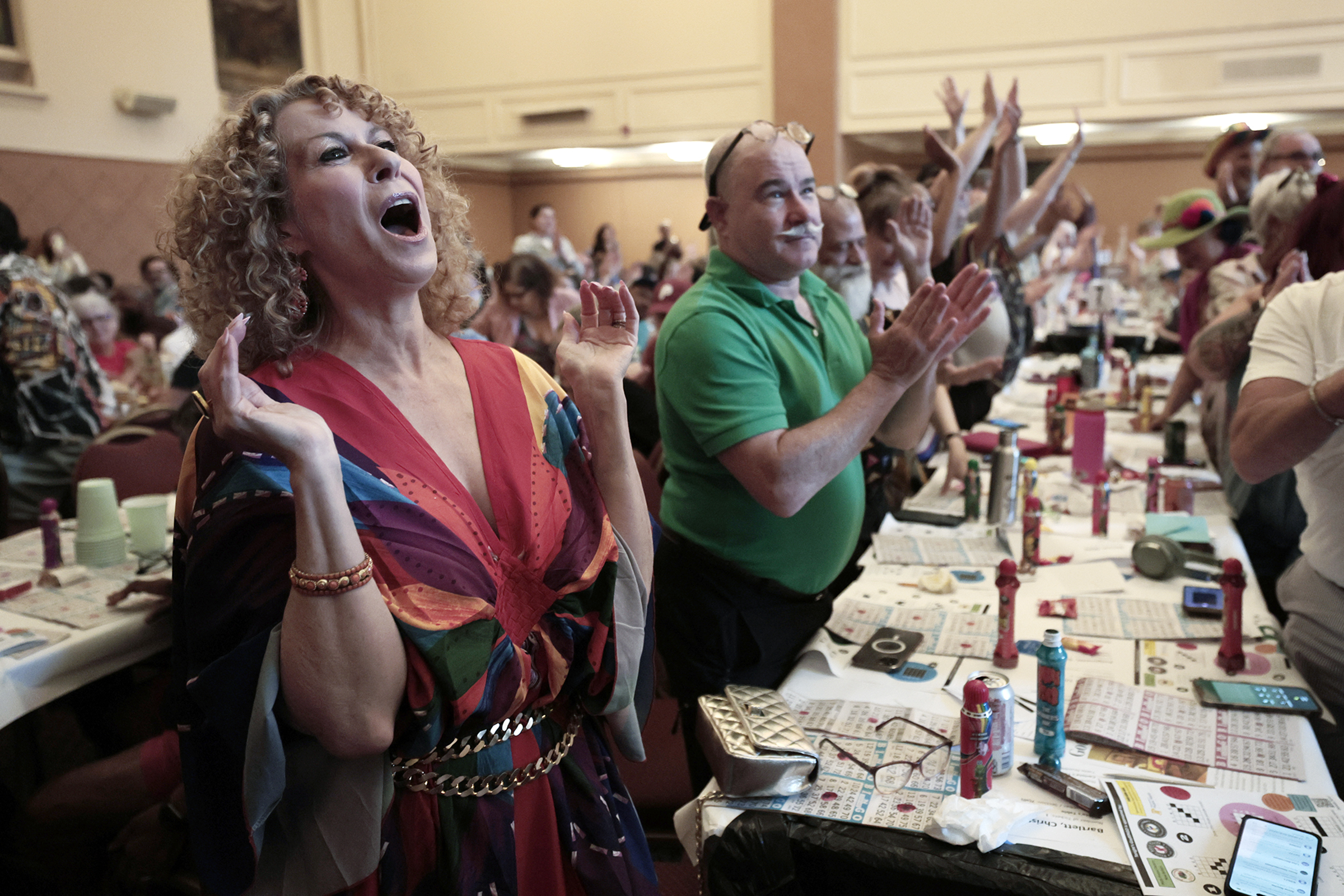
Janie Lopez of Philadelphia cheers for her friend Carlota Ttendant during Gay Bingo at Congregation Rodeph Shalom.
To those who know Byrne, Carlota’s come to represent someone purer and more singular, a testament to what joyful resistance and defiant resilience can achieve amid tragedy. Her ingenuity and authenticity have made her synonymous with Gay Bingo, according to Action Wellness event planner and cohost Tim Johnson (otherwise known as Stella D’Oro); her playfulness is what’s engaging, Burns said; the safe space she’s cultivated for the queer community is what keeps people coming back season after season, said regulars Cat Johnson, 47, and Katie Dickerson, 38, of Roxborough.
“It’s going to be really different without Carlota,” Johnson said. “No one’s going to fill her shoes, but I think that the vibe and the energy is going to live on.”
“It’s a lot easier to raise money when everyone is having fun,” said Amber Schlesman, 38, of Point Breeze, who’s been coming to Gay Bingo since its Gershman Y days. “And for the shoes, I’m guessing it’s a size 12.”
All those shoes will be donated to Philly AIDS Thrift soon enough, Byrne said.
Byrne’s voice cracked as he thought of the people who made Carlota’s run possible: the AIDS Fund organizers, Singer, the original cast of BVDs, the volunteers, those who came back monthly, the victims, their families. Many sent her off June 13 with a trove of well wishes, notes that read, “thanks for the memories,” and “so proud of all you’ve done.” They told her, “I love you,” and “hang up those high heels, baby.”
At the end of the night, Byrne’s best friend gifted him a throw pillow.
“Don’t be a lady,” it said. “Be a legend.”
Michael Byrne transforms into his drag persona Carlota Ttendant ahead of Gay Bingo on Saturday, May 9, 2026, at Congregation Rodeph Shalom in Philadelphia.
Next week, Philadelphia will begin a centuries-long stint as the host of a time capsule that is not meant to be unearthed for a quarter of a millennium.
Set to be buried on July Fourth at Independence National Historical Park, the time capsule comes to the city as part of the celebrations surrounding the United States’ Semiquincentennial. After its burial, it is not slated to be seen again until 2276.
Known officially as “America’s Time Capsule,” it features items from every U.S. state and territory, as well as contributions from the three branches of government. Its creation was led by America250, a national, nonpartisan organization that Congress placed in charge of the 250th birthday celebrations.
Weighing in at 900 pounds, the time capsule — a massive cylinder emblazoned with an “America250” logo on its side — was sealed shut last week at a ceremony in Gaithersburg, Md. Its unveiling 250 years from now is intended to show future generations “the care, pride, and optimism with which Americans marked our 250th anniversary,” said America250 chair Rosie Rios in a statement.
Inside the capsule, which is constructed of stainless steel, archival contents sit organized largely in small boxes, with paper documents in a separate compartment. Many states submitted hundreds of letters, postcards, posters, poems, and other printed material for inclusion.
America250 has posted a detailed list of all the items included in the time capsule. Pennsylvania, for example, contributed a letter from Gov. Josh Shapiro, as well as an archival booklet. New Jersey, meanwhile, ponied up a stainless steel plate inscribed with a greeting for the time capsule’s future openers. And Delaware sent in a set of a dozen notecards from residents detailing their thoughts on what the state means to them.
There were some guidelines on what states could submit, as items that could degrade or rust were not allowed. Maryland, as a result, was not able to submit Old Bay seasoning, the Associated Press reported.
Some items were innovative. A “molecular data storage device” from the Library of Congress was included, and it contains synthetic DNA encoded with copies of several items from the library’s collection — including a draft of the Declaration of Independence, handwritten lyrics for “The Star-Spangled Banner,” and a 3-D rendering of President Abraham Lincoln’s hand, America250 said.
Items were sealed inside at 35% relative humidity to make sure they did not dry out or disintegrate, as well as to keep them from decaying due to moisture issues. The capsule is slated to be buried 10 feet below ground, which should keep it from being damaged by swings in temperature or storms.
“Philadelphia would have to be six feet underwater in order for this time capsule to even possibly take on water,” Michael Berilla, director of fabrication technology at the National Institute of Standards and Technology, told the AP. ”And if Philly is six feet underwater, you’ve got way bigger problems in the world.”
“For those who have the privilege to work here in the Capitol, you get a sense that you are just one chapter in a long history book,” Austin said. “The U.S. Capitol is a symbol of that history. In fact, it is the symbol of that American history.”
This is not the first time capsule project undertaken by the United States. In 1976, President Gerald Ford opened a “Century Safe” that had been created a century before, and the country that year created a Bicentennial capsule that is to be opened in 2076.
The time capsule set to be buried in Philadelphia on July Fourth, meanwhile, will be marked with a capstone that includes information about its contents and creation. Additional details about the time capsule’s burial were still forthcoming Friday, according to the America250 website.
This article contains information from the Associated Press.
Philadelphians have spent decades developing an inferiority complex about New York.
Maybe we’ve been comparing ourselves to the wrong city.
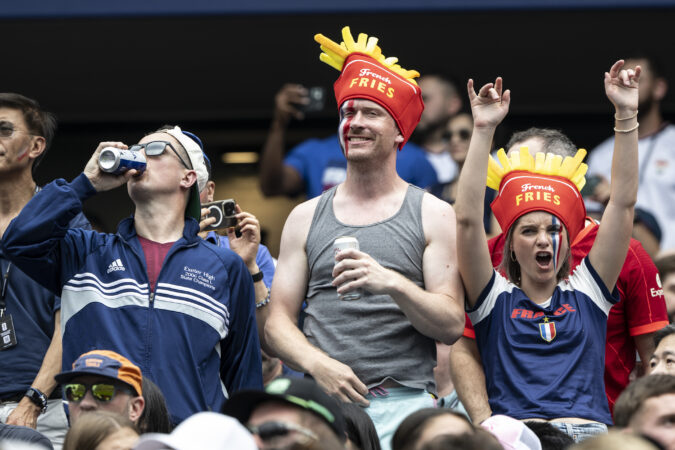
French soccer fans visiting for the World Cup spent this week looking around Center City and noticing something many locals overlook: Philadelphia is surprisingly French. The Parkway was modeled after the Champs-Élysées. City Hall looks like it belongs in Paris. Even Michelin once called Philadelphia the “Frenchest city” in America.
We’ll take it.
Most American cities get compared to other American cities: Philadelphia gets compared to one of the most beautiful and romantic cities in the world.
Sure, Paris has the Eiffel Tower. But Paris doesn’t have roast pork sandwiches, Gritty, or people arguing over parking permits at 7 a.m.
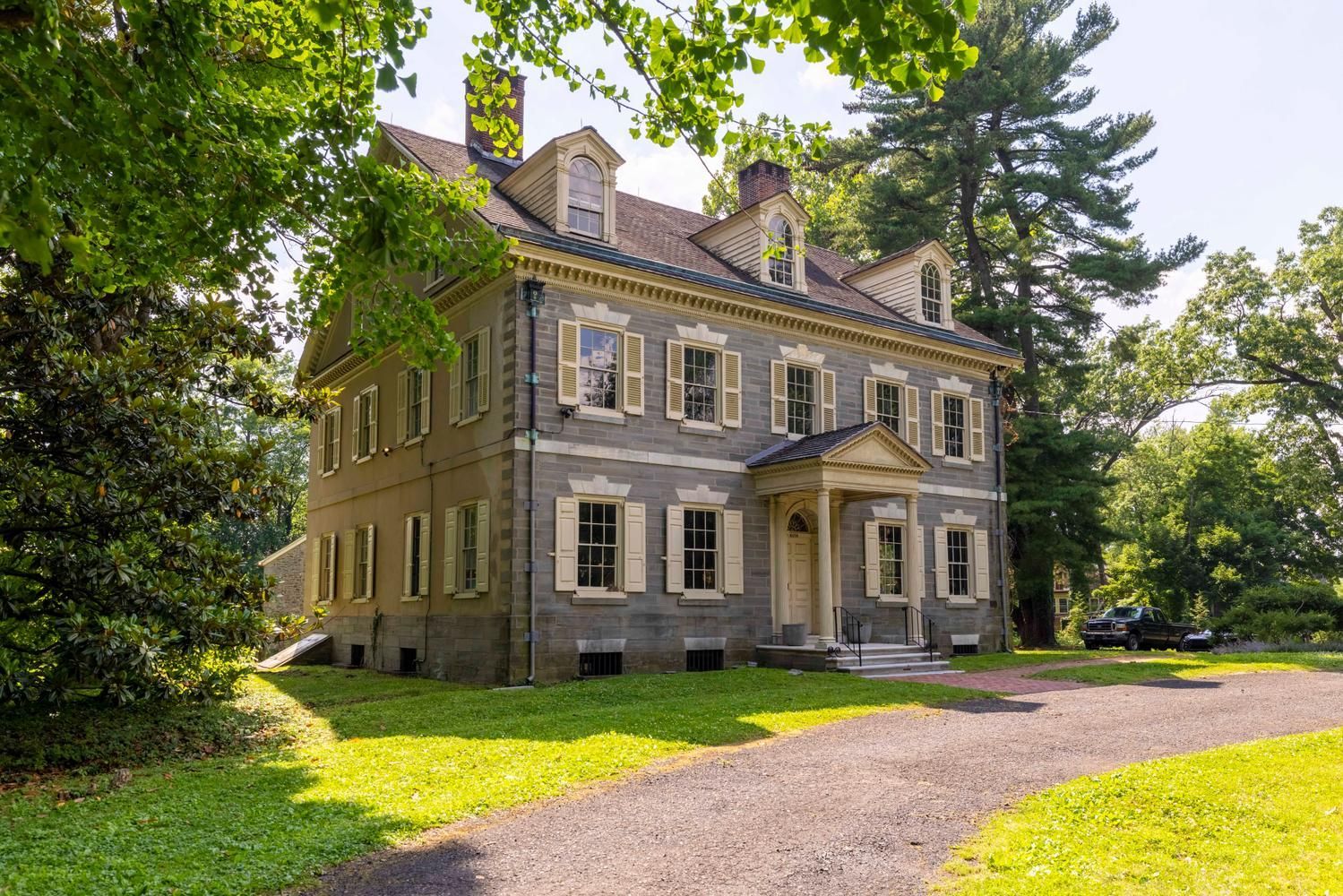
Upsala mansion on the 6400 block of Germantown Avenue was built in 1798 and is currently up for sale.
A house that comes with Revolutionary War reenactments: A
Philadelphia real estate listings can get weird.
You might get a rowhouse with a hidden speakeasy, a church converted into condos, maybe even a former firehouse.
The owner of Upsala, a historic estate now listed for sale, revealed this week that the property’s easement requires future owners to allow reenactments of the Battle of Germantown. The reenactments haven’t happened since 2019, but the obligation remains, preserved in a 70-page legal document waiting for some future homeowner.
For a city preparing to celebrate America’s 250th birthday, this is a nice reminder that in Philadelphia, history isn’t always tucked away in museums. Sometimes it’s written into the paperwork.
A Phanatic-themed apartment: A+
There are plenty of ways Major League Baseball could have celebrated the All-Star Game coming to Philadelphia.
A logo, banners, a commemorative beer.
Instead, someone decided to create an apartment that appears to have been designed by the Phillie Phanatic after consuming several energy drinks, Philly Voice reported.
The result is a two-bedroom rental covered in green fur, baseball memorabilia, Phillies decor, and what can only be described as mascot maximalism. Two lucky fans can stay there for $19.78 a night and get tickets to All-Star festivities.
The obvious question is why this exists. The Philly answer is why wouldn’t it?
There’s a baseball glove chair, fuzzy green barstools, and a photo op with the Phanatic.
Every detail sounds made up, but they’re not! Which is amazing.
Philadelphians spend an awful lot of time explaining themselves. We feel underrated, maybe overlooked. And we’re not New York, D.C., or Boston.
A Chicago man posted a lengthy love letter to Philadelphia recently after a trip that included cheesesteaks, hoagies, roast pork, dive bars, the Barnes Foundation, Reading Terminal Market, Magic Gardens, and City Hall, which he declared his favorite building in America.
The review was so thorough that it started to feel like Visit Philadelphia had hired him.
But the most revealing part was that he kept comparing Philadelphia to Chicago.
Another city full of neighborhood pride, old bars, great sandwiches, beautiful architecture, and residents who spend half their time insisting everyone else overlooks them.
The commenters understood immediately. One called Philadelphia a mini New York. Another argued Chicago and Philadelphia people have more in common with each other than either would like to admit. They’re probably right.
But there’s no compliment Philadelphians love more than hearing someone came here expecting very little and left wondering why nobody told them how great it is.
Ronnie Gunter, a lacrosse athlete and Drexel grad known for looking a lot like Eagles QB Jalen Hurts, is the latest bombshell on “Love Island USA.”
The Jalen Hurts look-alike on Love Island: B+
Philadelphia has reached a level of cultural dominance where even our quarterback’s doppelgänger is getting reality TV opportunities.
Honestly, that feels very Philadelphia. We don’t just have celebrities, we also have backup celebrities.
The funniest part is that nobody on the show seems to have noticed yet. Viewers back home immediately saw Jalen Hurts. The contestants on a tropical island in Fiji just saw a handsome guy in swim trunks. Give it time.
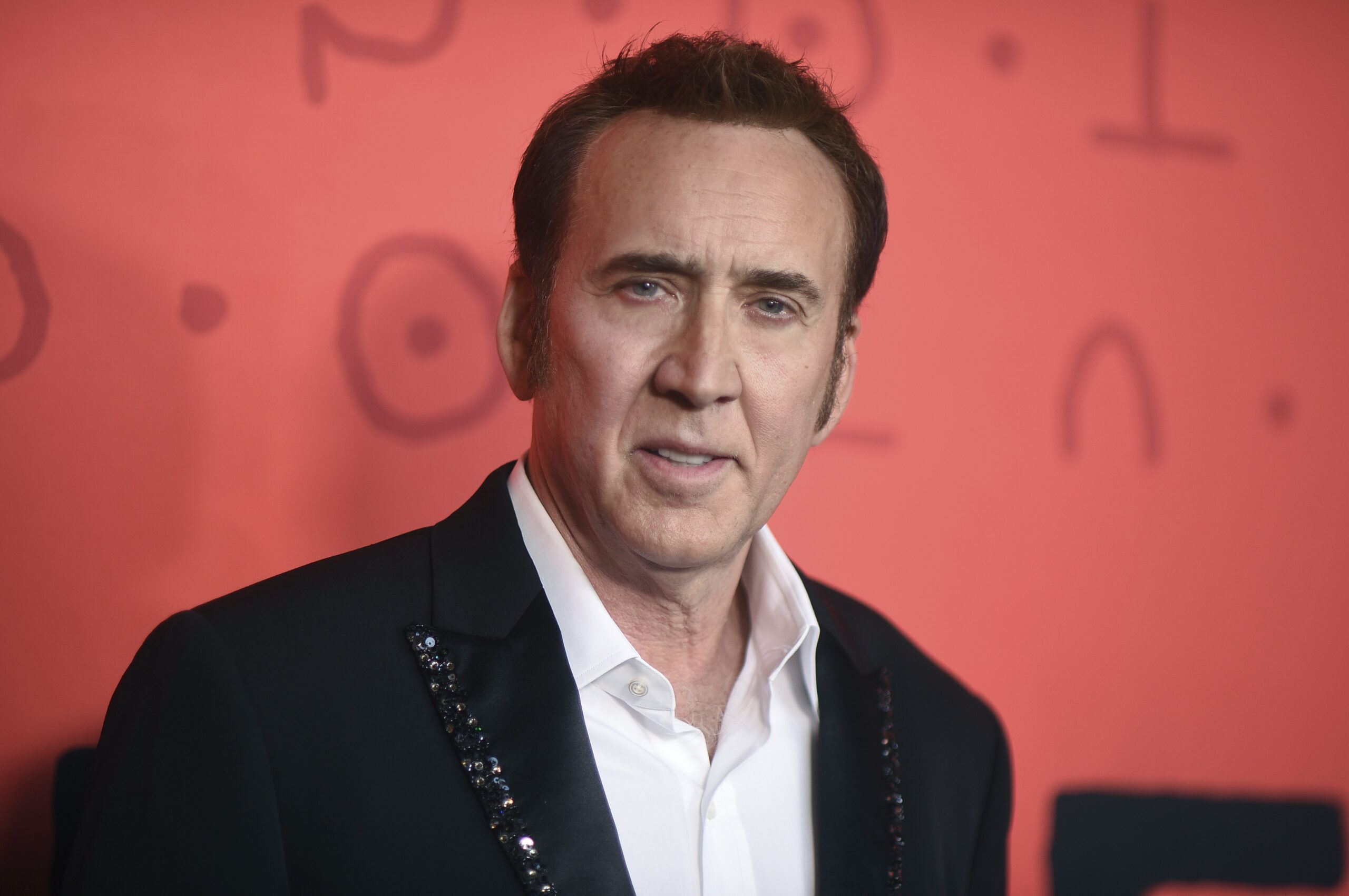
Nicolas Cage arrives at the premiere of “Longlegs” at the Egyptian Theatre on Monday, July 8, 2024, in Los Angeles. (Photo by Richard Shotwell/Invision/AP)
A Nicolas Cage bar crawl: A+
Philadelphia spent years planning America’s 250th birthday celebration. And somehow nobody thought to include the man who stole the Declaration of Independence.
Fortunately, Jenkintown stepped in.
This weekend’s Nicolas Cage-themed bar crawl features Cage cocktails, Cage trivia, Cage competitions, Cage masks, Cage movies, and what appears to be a community-wide commitment to a bit that has gotten completely out of hand.
The genius of Nicolas Cage is that nobody can quite agree whether he’s a great actor, a bizarre actor, or some third category that exists only for Nicolas Cage.
The same could be said for this event.
Jenkintown is hosting an evening built around a man whose filmography includes stealing national treasures, fighting John Travolta while wearing John Travolta’s face, and getting punched repeatedly in a wicker bear costume.
Frankly, if we’re celebrating America this year, Nicolas Cage probably deserves a seat at the table.
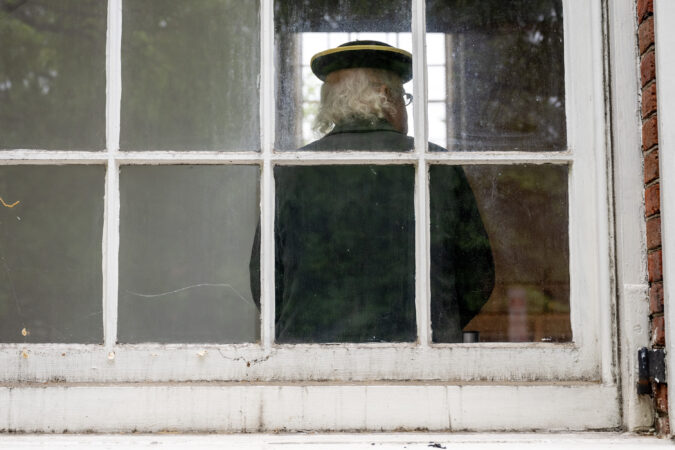
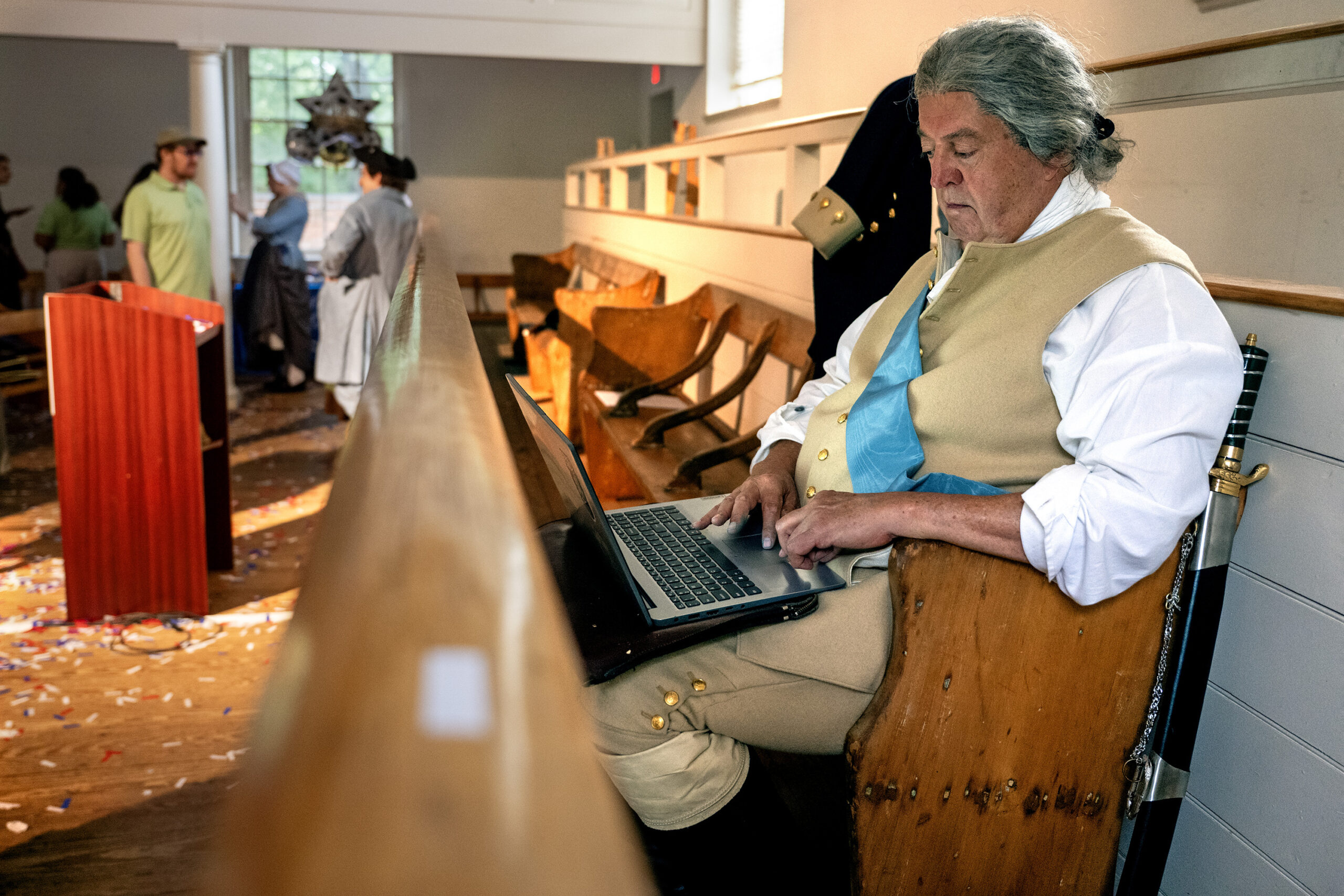
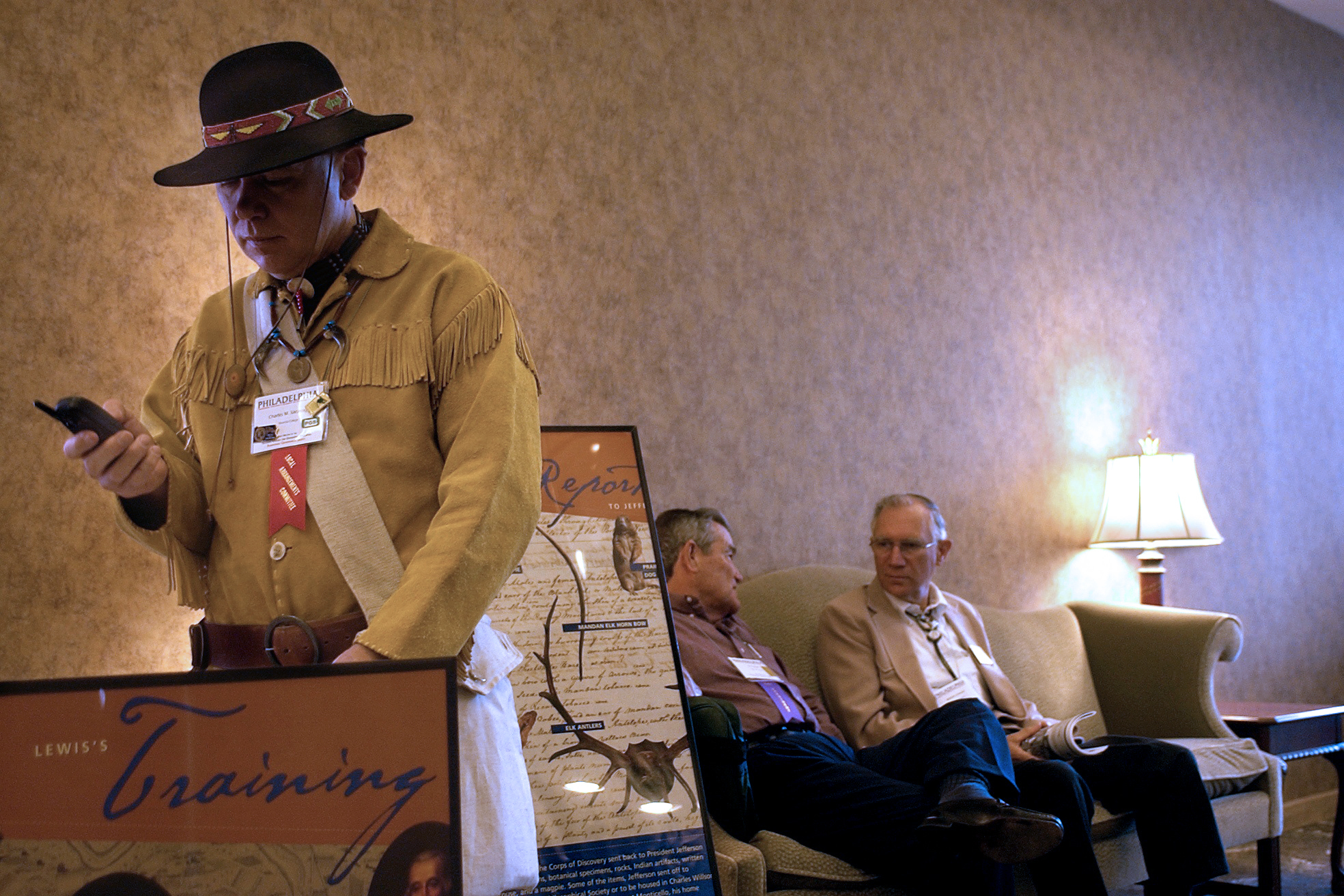
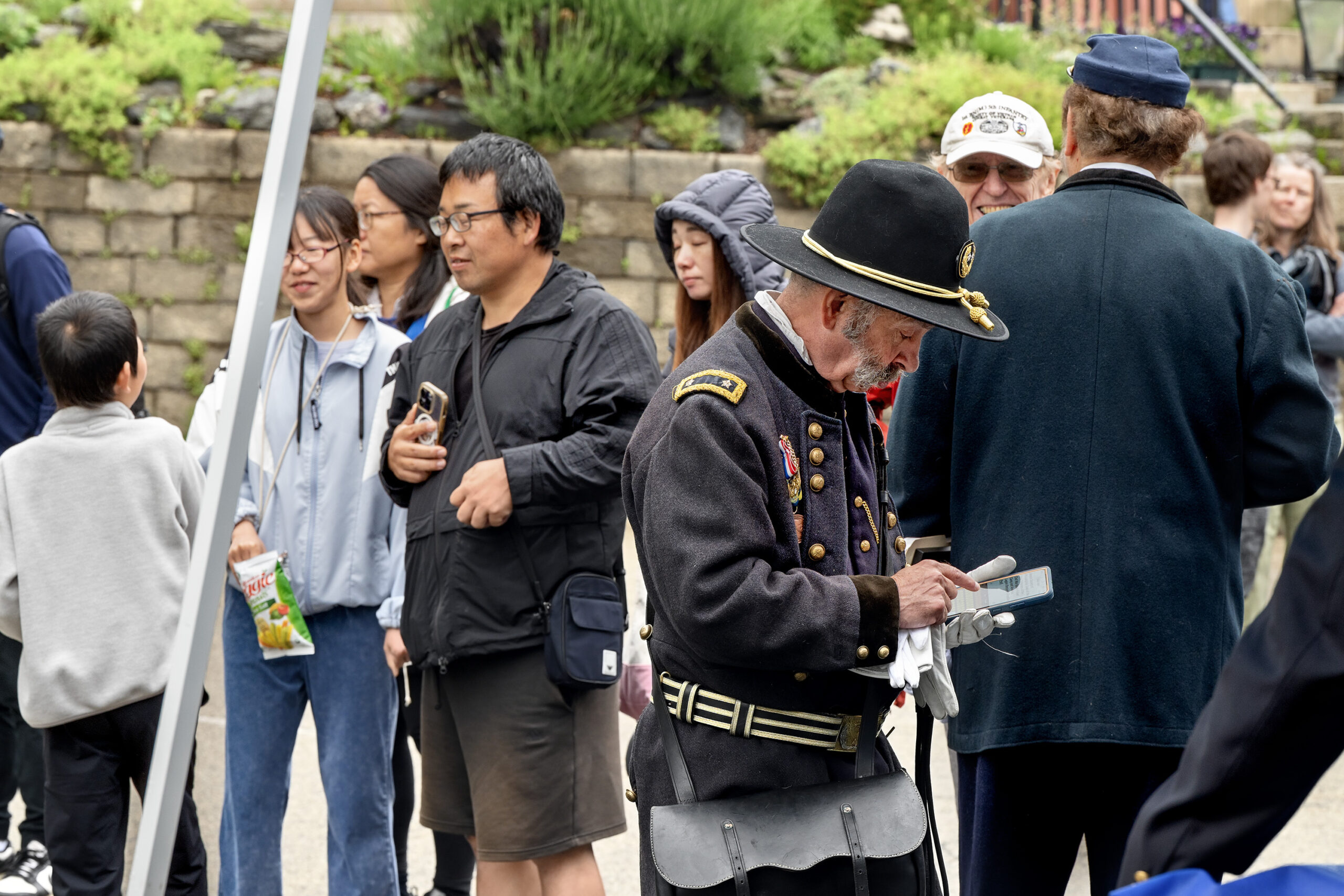
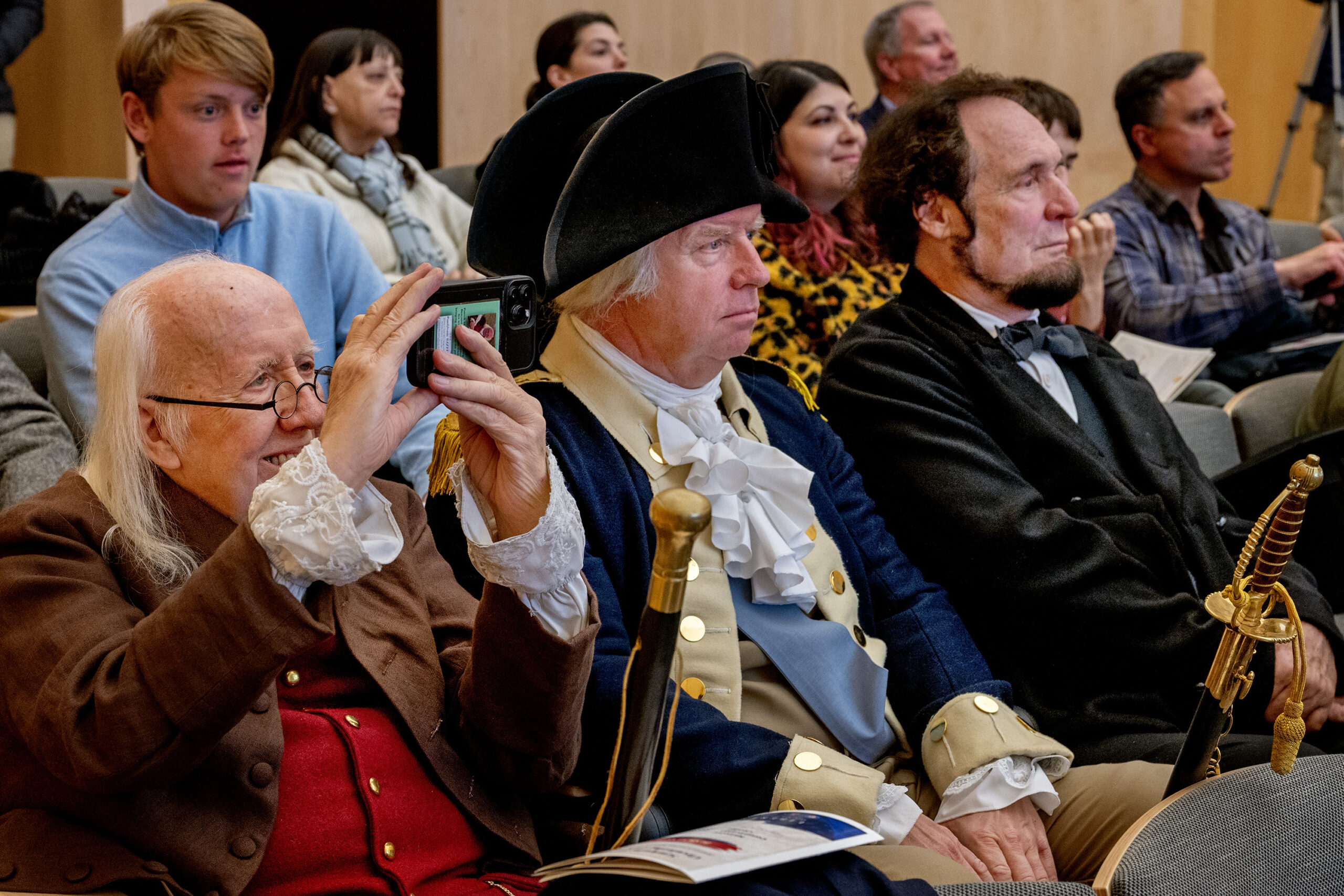
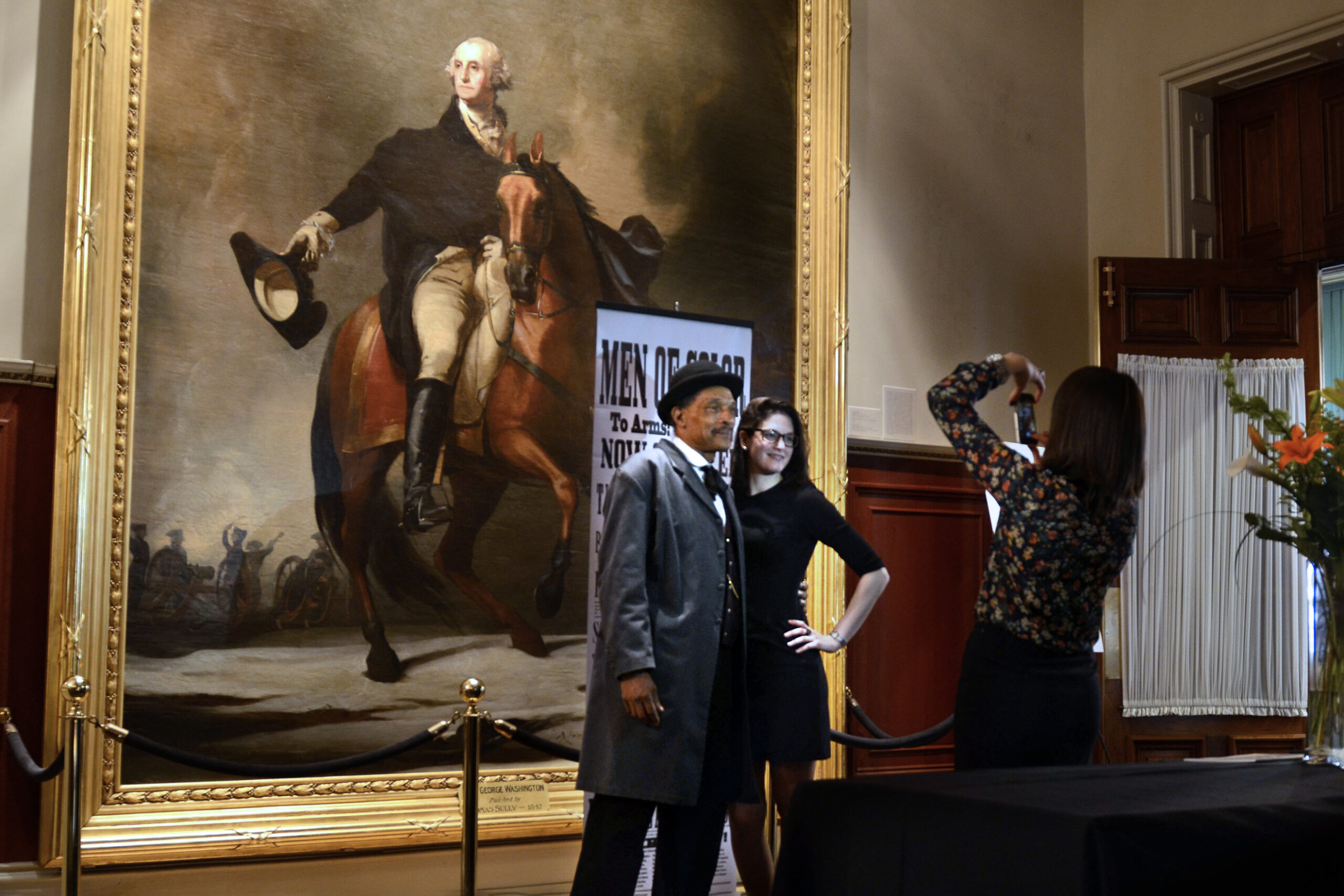
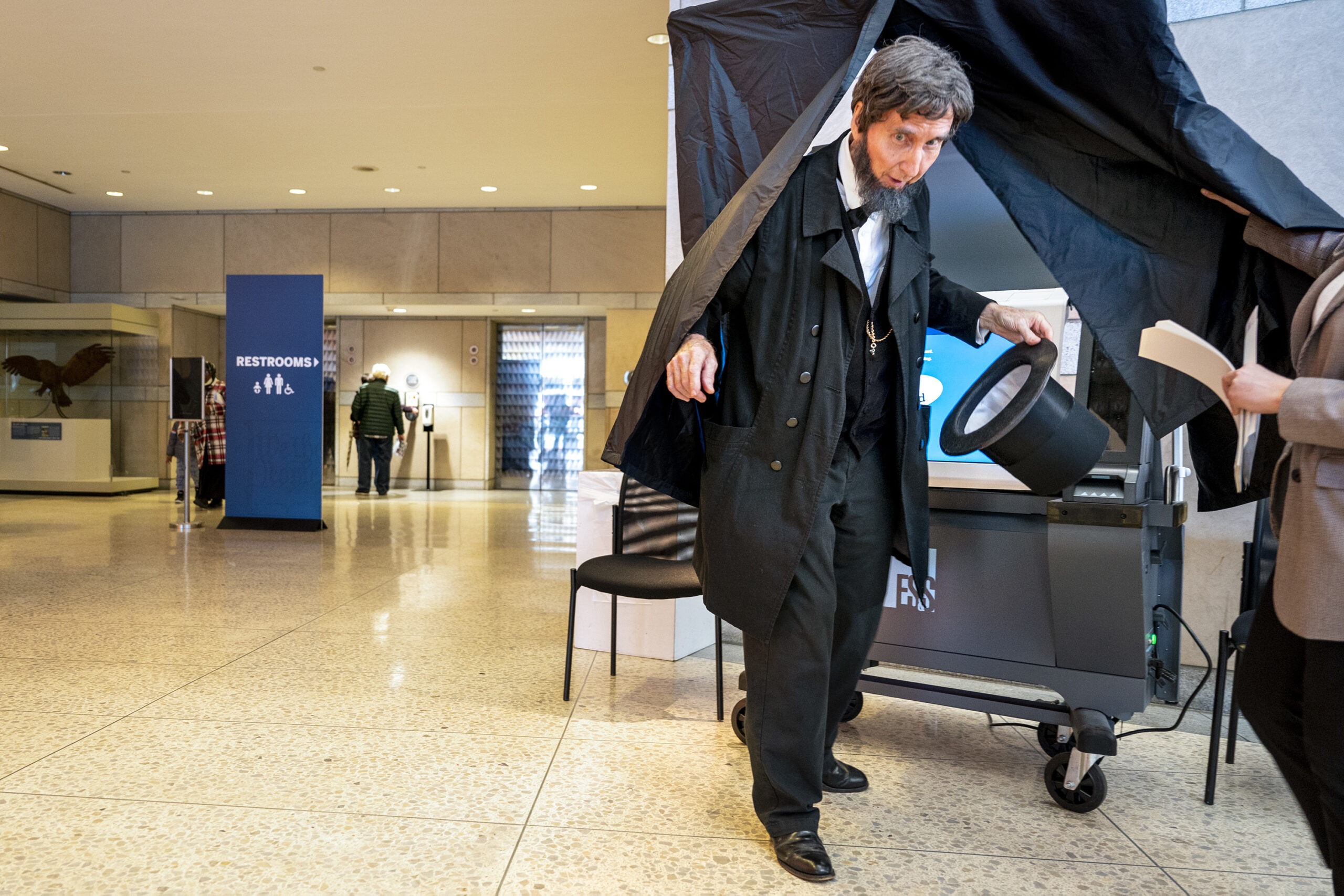
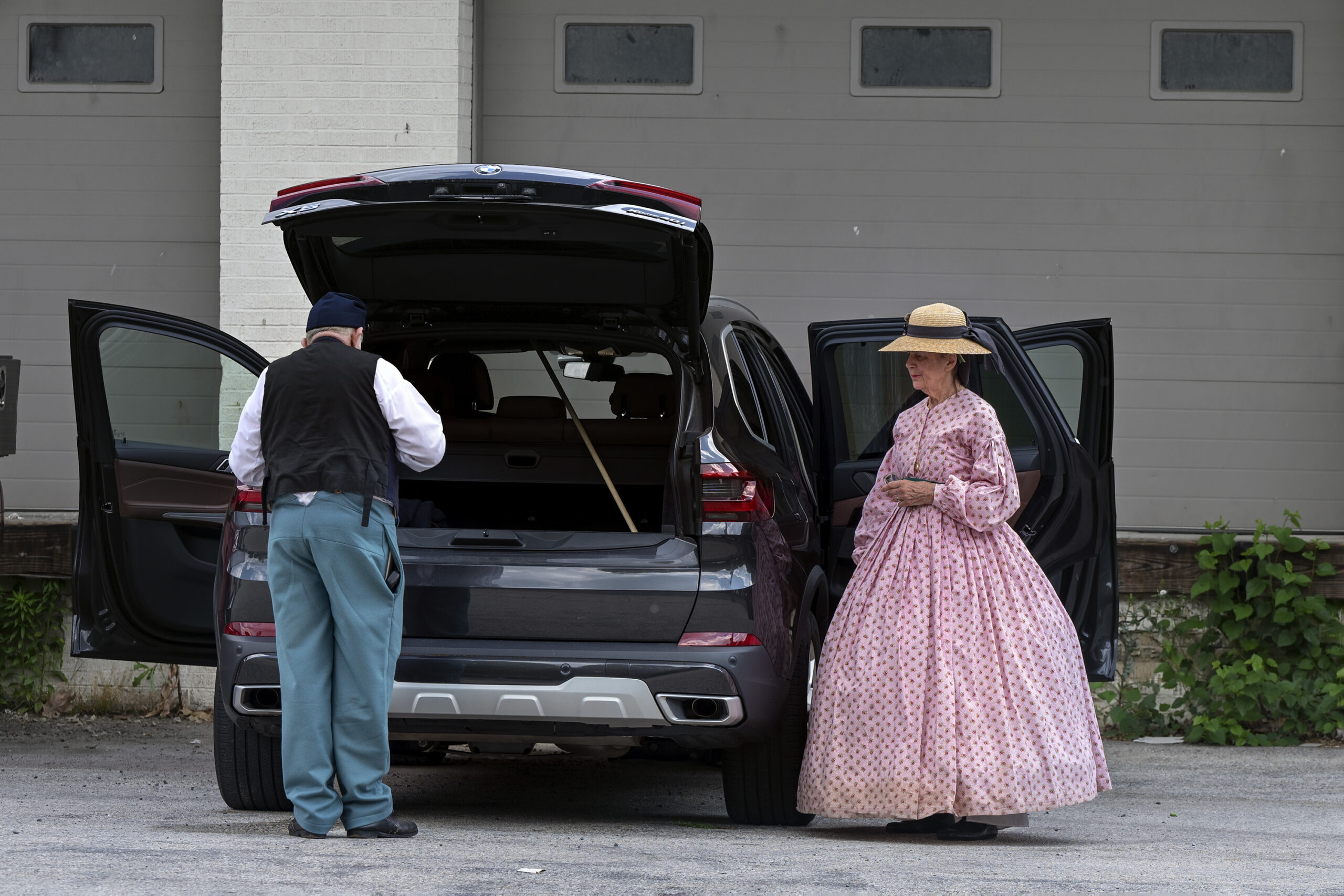
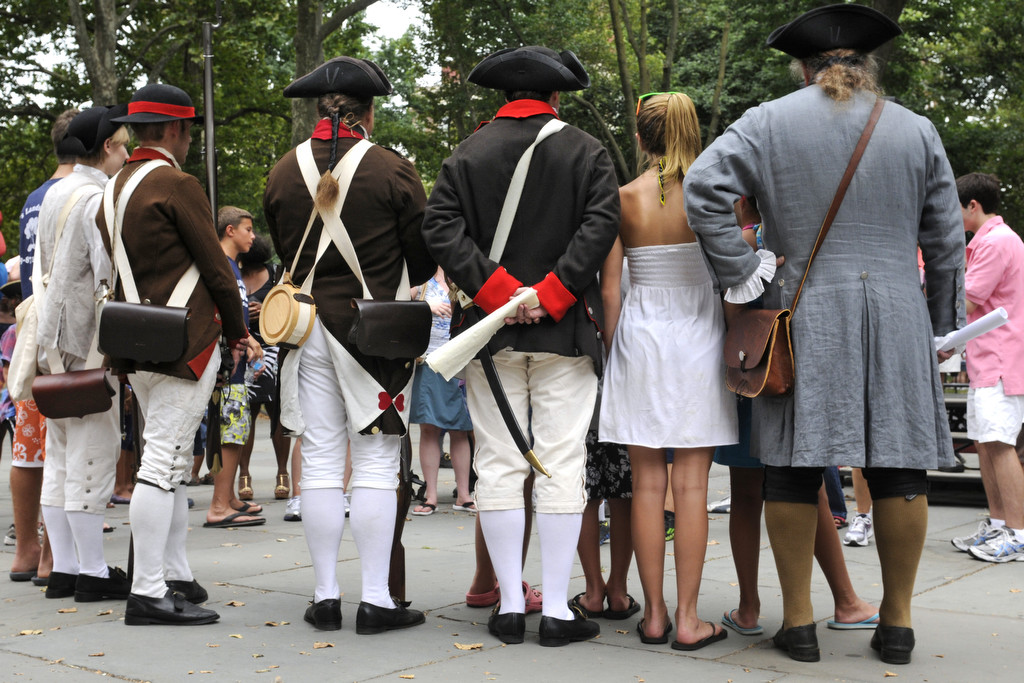
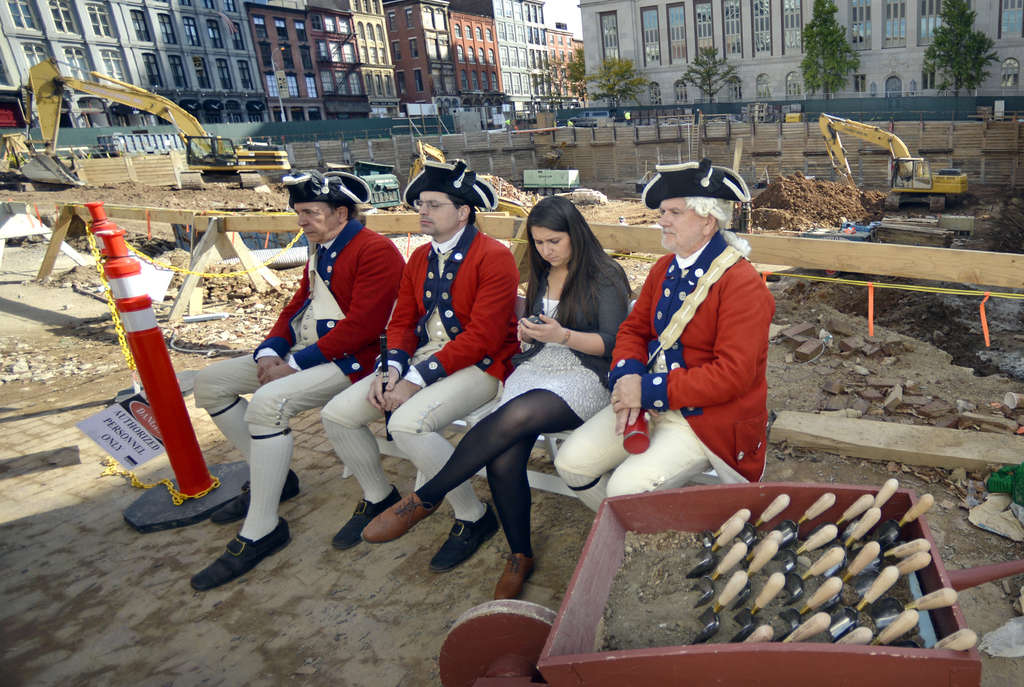
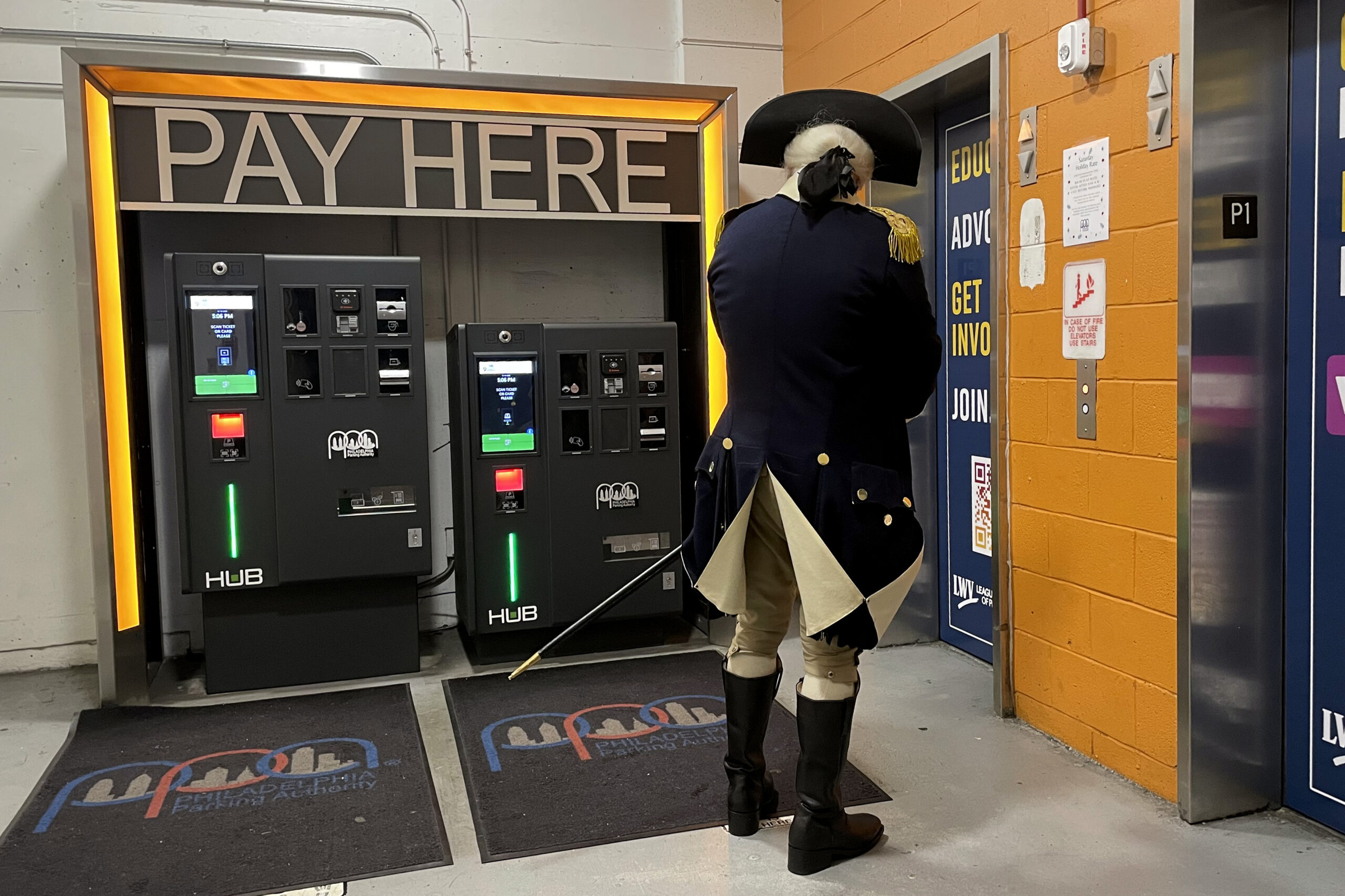
Besides shadows, reflections, silhouettes, pigeons, umbrellas, or hats one of my favorite photo gimmick-clichés is finding juxtapositions. Like catching historic reenactors in moments of chronological inconsistency.
The image of Ben above and George below was made on assignment for an upcoming story on the 21st season of Historic Philadelphia’s Once Upon a Nation program — where costumed actors perform first-person interpretations of real 18th-century Philadelphians in the Historic District and at Valley Forge National Historical Park.
May 21, 2026: Jim Fryer as George Washington.
The photo of the actor portraying Franklin was made from outside the Free Quaker Meeting House at 5th and Arch Streets. It was established during the Revolution when a rift occurred among the Society of Friends. As pacifists they would not take up arms, pay war taxes, or take an oath of allegiance. A group calling themselves “Free” Quakers supported the American cause and were expelled or “read out of meeting” by the mainstream Friends.
Among those Free Quakers was Timothy Matlack, a clerk in the Pennsylvania Statehouse known for his excellent penmanship. He was chosen by the Continental Congress to produce the handwritten copy of the Declaration of Independence — the engrossed parchment version that we all recognize as the “original” — that was signed by the 56 delegates in August 1776. (Matlack, who was born in Haddonfield, N.J. was also one of the earliest opponents of slavery in America, and he felt that the Quakers were not moving quickly enough to abolish it.)
I only mention the Declaration as, along with many other stories, I have been photographing for in the Historic District and at the President’s House, I’ve been working on a photo essay on some of the direct descendants of the men who were in the room in Independence Hall (then the Pennsylvania State House) as America was born. Their photos, along with interesting and little known facts about the 17 local Signers from Pennsylvania, New Jersey, and Delaware will be published later this week as part of The Inquirer’s coverage of the 250th.
As promised in a previous column, I’ve collected a bunch of my Philly photo-anachronisms from over the years.
October 17, 2002: Charles Sacavage as Meriwether Lewis (of the Lewis & Clark Expedition).May 24, 2026: Mike Gabriele as Civil War General Ambrose E. Burnside.December 10, 2025: Benjamin Franklin (from left) Gen. George Washington and President Abraham Lincoln.January 15, 2014: Robert Branch (left) as 19th Century educator, intellectual, and civil rights activist Octavius V. Catto.February. 20, 2023: President Abraham Lincoln votes.May 26, 2024: Civil War reenactors Kathy and Ed Berna.July 8, 2012: After the annual reenactment of the first public reading of the Declaration of Independence.October 9, 2014: Ceremonial groundbreaking for the Museum of the American Revolution.December 10, 2025: George Washington.
Since 1998 a black-and-white photo has appeared every Monday in staff photographer Tom Gralish’s “Scene Through the Lens” photo column in the print editions of The Inquirer’s local news section. Here are the most recent, in color:
Summer is here, and there’s no better way to cool off than at Philly’s water features. We’ll show you a photo of a pool or splash park, you drop a pin where you think it was taken. Closer to the location results in a better score. Good luck!
Round #39
Question 1
Where is this lifeguard?
Loading…
ClickTap on map to guess the location in the photo
ClickTap again to change your guess and hit submit when you're happy
You will be scored at the end. The closer to the location the better the score
Olivia Sandom / Staff Photographer
Pretty good/Not bad/Way off! Your guess was from the location.Spot on! Your guess was exactly at the location. Here's also where a random selection of Inquirer readers guessed.
Lifeguard Khadijah Davis watches over swimmers at Kelly Pool in West Fairmount Park on June 25, 2019. Located behind the Please Touch Museum, Kelly Pool is an Olympic-sized swimming pool and was the first pool to open this year on June 12 as part of Philadelphia's pool-opening schedule.
Quiz continues after ad
Question 2
Where is this spray feature?
Loading…
Allie Ippolito / Freelance
Pretty good/Not bad/Way off! Your guess was from the location.Spot on! Your guess was exactly at the location. Here's also where a random selection of Inquirer readers guessed.
A child runs across the splash pad at Love Park on July 28, 2023. According to Philadelphia Parks & Recreation, Philly has more than 90 spray features to help residents cool down.
Quiz continues after ad
Question 3
Where is this pool and mural?
Loading…
Heather Khalifa / Staff Photographer
Pretty good/Not bad/Way off! Your guess was from the location.Spot on! Your guess was exactly at the location. Here's also where a random selection of Inquirer readers guessed.
Ford Pool and Recreation Center, located at 6th Street and Snyder Avenue in South Philadelphia, features A Step Ahead, a mural by Kein Nguyen that was completed in 2008. More than 250 people participated in painting the mural, according to Mural Arts Philadelphia.
Your Score
ARank
🏊♀️Amazing work. A *stroke *of genius!
BRank
🤿Good stuff. That went swimmingly!
CRank
🌊C is a passing grade, you’re making some waves.
DRank
🛶 D isn’t great. You were barely afloat.
FRank
🛟 We don’t want to say you failed, but buoy oh buoy.
You beat % of other Inquirer readers.
We’ll be back next Saturday for another round of Citywide Quest.
A man was fatally shot in a car Friday night in West Philadelphia during a possible transaction arranged online, police said.
The shooting happened around 8:40 p.m. on the 800 block of North Palm Street, police said. The man was taken to Penn Presbyterian Medical Center, where he was pronounced dead.
A woman and two young children who also were in the car may have been injured by broken glass caused by the gunfire, Inspector D.F. Pace said.
The man, who was not identified, was possibly in the area as part of a transaction arranged through Facebook Marketplace, Pace said.
No other details about the shooting were immediately available.
A Philadelphia wedding photographer who has been the target of complaints from so many couples in Pennsylvania and New Jersey that they created their own Facebook group was sued on Friday by the Pennsylvania Attorney General’s Office for allegedly ripping off her customers for at least $75,000.
Christina Garcia, who also did business as Christina Hernandez Artistry LLC and Wandering Stardust Collective, allegedly failed to provide contracted photo and video services and refused to refund deposits, the attorney general’s office said.
Attorney General Dave Sunday vowed in a statement Friday to make sure “this photographer never again conduct[s] business in the Commonwealth.”
Sunday said in his statement: “A wedding day is one of the most precious and cherished moments in the lives of a couple, and this business darkened those days by neglecting appointments, then refusing to refund customers.”
Attorney General Sunday announced a lawsuit against Philadelphia-based photographer Christina Hernandez Artistry LLC — a.k.a. Wandering Stardust Collective — for allegedly failing to provide wedding photos and videos to consumers. https://t.co/qQtjyt6bgvpic.twitter.com/3mH6un14sJ
— PA Attorney General Dave Sunday (@PAAttorneyGen) June 26, 2026
Garcia has been the focus of reports from the Washington Post, NJ.com, and CBS New York.
She could not be reached for comment Friday. Her Instagram account and business website are now set on private.
In that Post story, Robson said it was “an unfortunate situation” where Garcia faced a “perfect storm that included a health emergency regarding her husband, significant technological issues, and becoming so sought after that there were not enough hours in the day for her to finish her work as promptly as she would have liked.” Robson said Garcia was trying to “do right by her clients.”
The Post reported that nearly 50 unhappy customers were part of a private Facebook group called “Brides Wronged by WSC.” It was unclear on Friday if the group still exists.
A customer posted on Reddit about Garcia last June and said she was a member of the Facebook group. The customer said Garcia, with the help of a lawyer, supposedly was trying to deliver some of her contracted photos and videos. It was unclear what happened after that Reddit post.
The Pennsylvania Attorney General’s Office alleged that Garcia had represented that she would personally photograph their weddings. Instead, Garcia allegedly double- or triple-booked herself on wedding dates and canceled at the last minute, sending replacement photographers instead.
Customers who believe they were victimized by Garcia were urged to contact the Pennsylvania Attorney General’s Office to file an online complaint.
The 400 block of West Chew Avenue in Olney was largely shut down Friday afternoon as Philadelphia and federal law enforcement officials searched a home on the block to determine if its owner had connections to at least two missing women.
Residents of the block had effectively been sealed in as caution tape and Philadelphia Police Department vehicles cordoned off the street. Some residents gathered on their porches or sidewalks as federal officials produced equipment from the back of a black, unmarked utility truck.
“I have been living here all my life,” Larry Alosi, 56, said. “It used to be a safe place, but it changed with time.”
Consisting largely of rowhouses and small businesses, the North Philadelphia neighborhood of Olney is among the city’s most diverse, with large Korean American and Latin American populations calling the area home.
The search had been ongoing for nearly a week, and came after U.S. Park Police encountered Eugene Albert Horsch, 44, acting suspiciously in a black BMW near Sixth and Market Streets on June 19, police said. Investigators recovered two firearms with obliterated serial numbers from Horsch’s vehicle, as well as cocaine, fentanyl, and marijuana — along with a baton, a cattle prod device, a switchblade, and a falsified U.S. Drug Enforcement Administration badge with Horsch’s photograph depicting a falsified name.
Officials took Horsch into custody following the stop, and charged him with illegal gun possession and drug crimes. Searches of his home began last week.
Horsch was being held Friday at Curran-Fromhold Correctional Facility with bail set at $500,000.
A passerby called the West Chew Avenue residence “a house from a scary movie,” with boarded-up windows on its second and third floors. A camera on the exterior points to the street. The windows on the first floor have bars from top to bottom. Pink flowers remain on the lawn, decorated with pieces of broken glass from the door.
Neighbors on Horsch’s block said the area is a quiet one, though it occasionally has its issues. Fabin Ingram, an area resident, said he never saw anyone coming or going at the corner of West Chew near Horsch’s home, and he largely worked to avoid the intersection.
“I’m big on energy and feelings,” Ingram said. “If I get an eerie feeling, I act on it.”
Investigators at 417 W Chew, searching a home in Olney neighborhood in Philadelphia, June 26, 2026.
One neighbor, Sid Brunson, who used to cut Horsch’s grass, described Horsch as a quiet, jittery man who “had a lot on his mind.” Brunson said that Horsch’s father, R.C. Horsch, a convicted drug manufacturer and erotic filmmaker, died in 2025, leaving a pall over the home.
“You will never see a man other than him coming or leaving the house after that,” Brunson said. “If there was visitors at the home, it was always a female, never a male.”
Another neighbor, who asked not to be identified for fear of reprisal, said Horsch was someone who got into disagreements with neighbors over parking and trash. He had long driven an impeccably maintained gold 1980s Lexus, and in recent years had started driving a new black BMW — and was often seen bringing women home with him, the neighbor said.
The ongoing search of Horsch’s home this week was the latest in a series of odd developments at the property, with investigators saying that several urns had been found inside the home, including one that was labeled with the name of a deceased relative. Officials also discovered a 55-gallon drum with connections to water lines leading into a hole in the ground, as well as materials to grow marijuana, though it was not immediately clear if the items in the home were connected to drug manufacturing or more violent purposes.
On Friday, law enforcement officials wearing hazmat suits were seen entering and exiting the property.
During Horsch’s arrest last week, a woman falsely identified herself using the name of a 38-year-old woman who had been reported missing in Kensington in February 2023, sources told The Inquirer. Deputy Police Commissioner Frank Vanore declined to identify the woman who had been reported missing, but reports indicate that Horsch’s father had been questioned in the 2016 disappearance of his ex-wife, Amy McHale, of South Philadelphia.
By late Friday afternoon, the investigation into Horsch’s home had not ceased, but a large FBI truck was spotted leaving the scene. Late in the day, the area had been largely left quiet, with the crime-scene tape on the home’s door serving as conspicuous evidence of the day’s events.
Staff writer Andrea Padilla contributed to this article.